Happy birthday drawings do not need to be another plain cake and candle on the front of a card. Give the party to the animals instead and suddenly there is a story on the page: someone blowing out candles badly, someone stealing frosting when nobody is looking, someone popping out of the cake entirely. These are the ones that make a birthday card worth keeping.
Below are 28 small scenes you can draw with your kids at the kitchen table or finish alone on your lunch break. Each one has a simple version young hands can manage and a small extra for whoever wants to push it further, all built from the same easy shapes: circles, ovals and a few confident outlines before the color goes on.
Using these images: free for personal projects such as printing, coloring, cards, journals and gifts. Handmade items that include them may be sold up to 30 pieces per design. More than that is commercial use and is not permitted, and neither is selling or sharing the images themselves or passing them off as your own. Please ask before any other use.
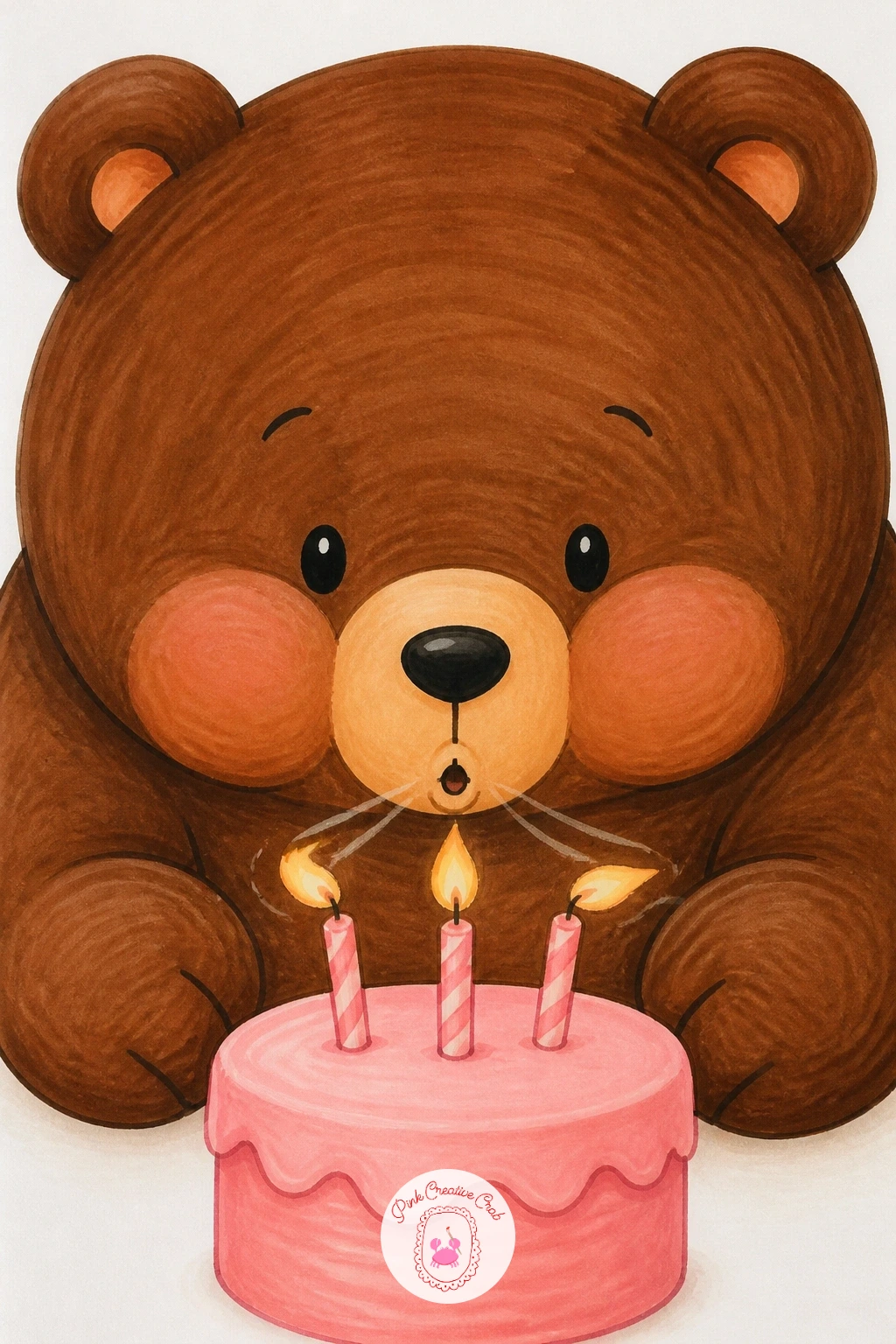
Start simple: a bear is just two circles, a big round head and a rounder belly, so this is the friendliest place to begin a whole page of birthday animals. Sketch the head and body in pencil first, add two small round ears on top, then draw a plain round cake under the chin with three or four candle sticks poking up.
Go over your pencil lines with a fineliner once you are happy with the shapes, then let kids color the bear’s fur with a warm brown marker and the cake with pink or yellow. If the cheeks look flat, puff them out a little rounder than feels natural, since a bear mid-blow always looks a bit silly and that is the joke.
If a child is drawing this alone, keep the candles to two or three and skip the flame details entirely, just a small orange dot on each tip. An adult finishing the same page can add a light blush of pink marker on the cheeks and a thin trail of marker for the candle smoke after one candle goes out.
Try it today: draw the bear’s mouth as a small round “o” instead of a smile, it reads instantly as blowing rather than smiling.
Palette: Burnt Sienna,Warm Pink,Butter Yellow,Charcoal Black
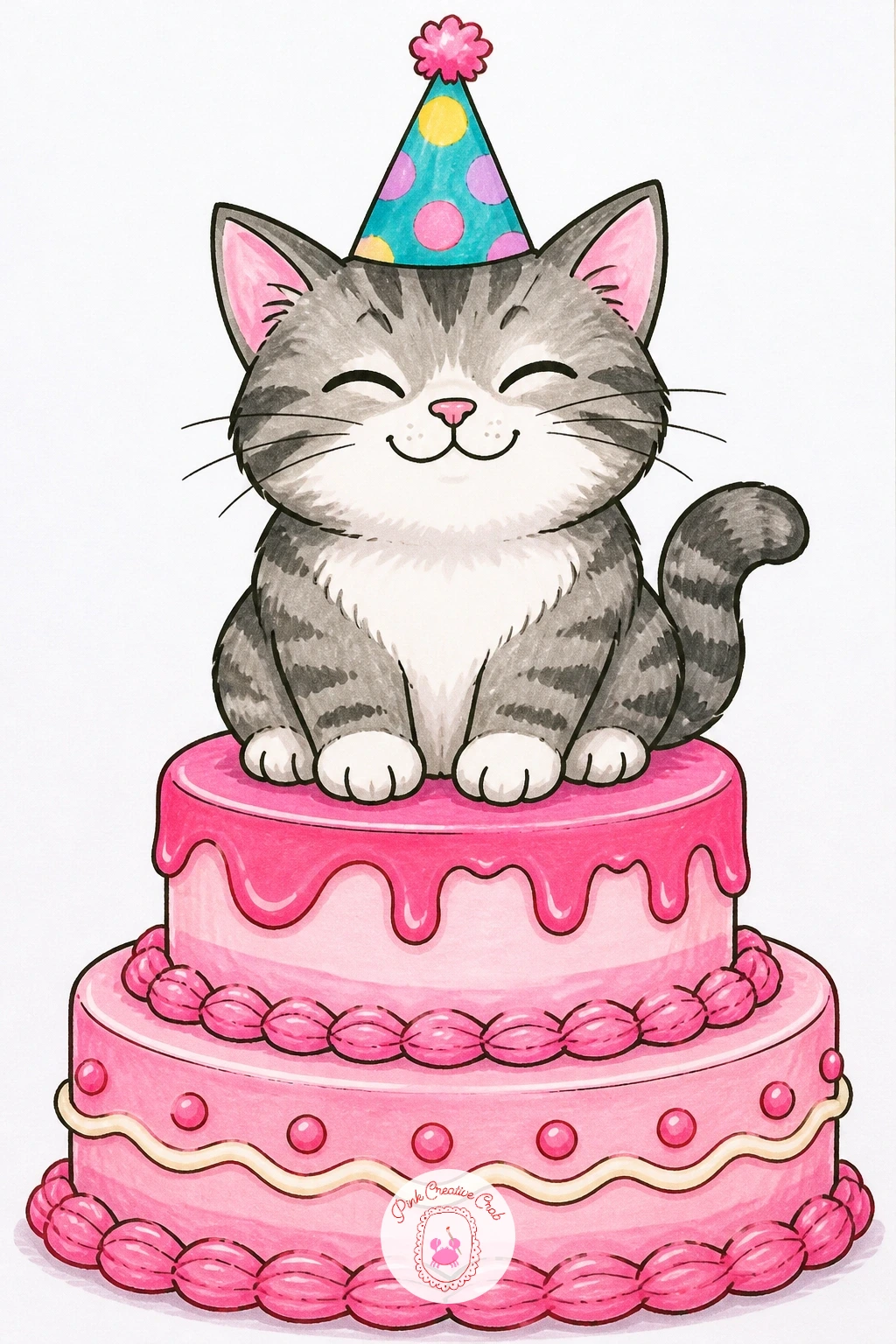
Once the bear feels comfortable, try balancing a cat on top of an actual cake, which is a fun jump in silliness without any jump in difficulty. Draw the cake first as a wide oval base with a straight front edge, then sketch the cat sitting on top as one soft oval body with a round head and triangle ears.
Add the party hat as a simple cone shape tilted on one ear before you ink anything, since getting the hat angle right in pencil saves a messy eraser moment later. Ink with your fineliner, then color the cake in two or three layers of frosting color and the cat in any solid shade, leaving the hat a bright contrasting color so it pops.
The tricky part is keeping the cat’s balance believable: if it looks like it is sliding off, widen the base of the cake slightly and tuck the cat’s paws in under the body rather than out to the sides. For a child’s version, skip the frosting layers and just use one flat color for the whole cake.
An adult can add a thin white gel pen outline around the hat’s pom-pom for a little shine once the marker is fully dry.
You Will Need
- white gel pen
Palette: Soft Cream,Rose Pink,Mint Green,Charcoal Black
Give the dog from this idea somewhere to go: draw it mid-trot with a cluster of balloon strings pulling up and slightly back, as if the wind is tugging at them. Block in the dog’s body as a simple oval with four short legs and floppy ears, then add the balloons above as four or five overlapping circles of different sizes.
Draw the strings last, in pencil first so you can space them evenly before committing to ink, since crossed or crowded strings are the one thing that makes this drawing look cluttered rather than happy. Color each balloon a different shade and keep the dog in a single warm color so it still reads as the main character.
For eye level, place the dog slightly below the balloons and angle its nose upward, which instantly suggests it is looking at them bob overhead. Kids can draw just three balloons and skip the string tangle, using straight lines instead of curves.
Adults adding detail can curve each string slightly differently so they feel caught by a breeze rather than drawn with a ruler.
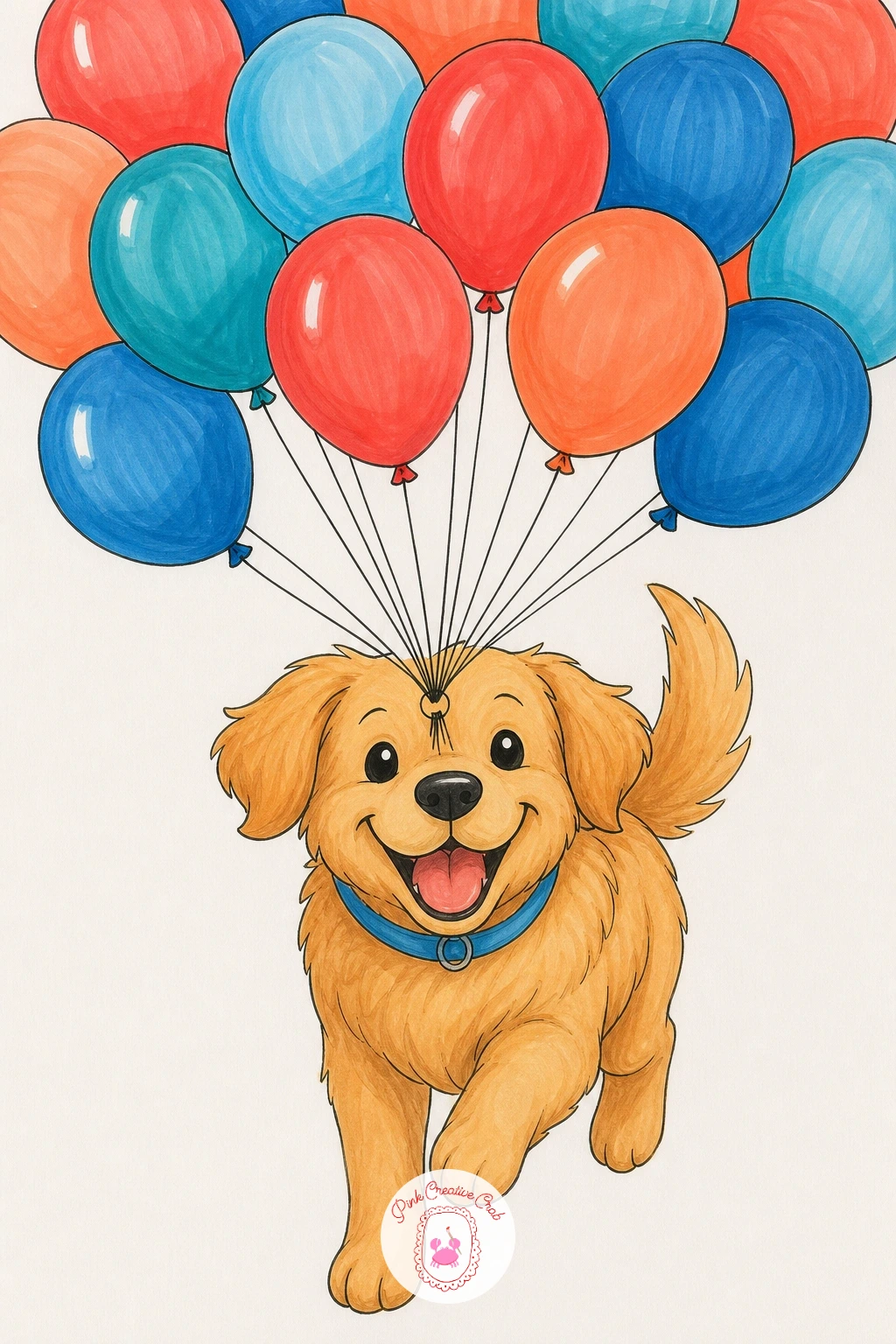
Palette: Golden Tan,Sky Blue,Coral Red,Sunny Yellow
Try a dog breed with longer ears, like a spaniel, next time and let them flap sideways from the pulling motion for even more movement.
Height is the whole joke here, so before you draw anything, pencil in a light horizontal guideline near the top of the page and let the giraffe’s cake reach almost to it while the giraffe’s head barely peeks over the top tier. Draw the giraffe’s long neck first as two parallel curved lines, then stack three or four cake tiers beside it, each one a little narrower than the one below.
Ink the cake tiers before the giraffe so the layering stays crisp, then add the giraffe’s spots last with small irregular ovals rather than circles, which looks far more natural. Color the cake tiers in alternating pastel shades so each layer reads clearly from a distance.
If the giraffe ends up too short against the cake, you can always add another tier, that is the forgiving part of this one. For a faster ten minute version, draw only two cake tiers and a shorter neck; the forty minute version adds candles on every tier and a full set of spots down the neck.
Keep the giraffe’s expression wide-eyed and surprised, which sells the joke of the cake towering over it.
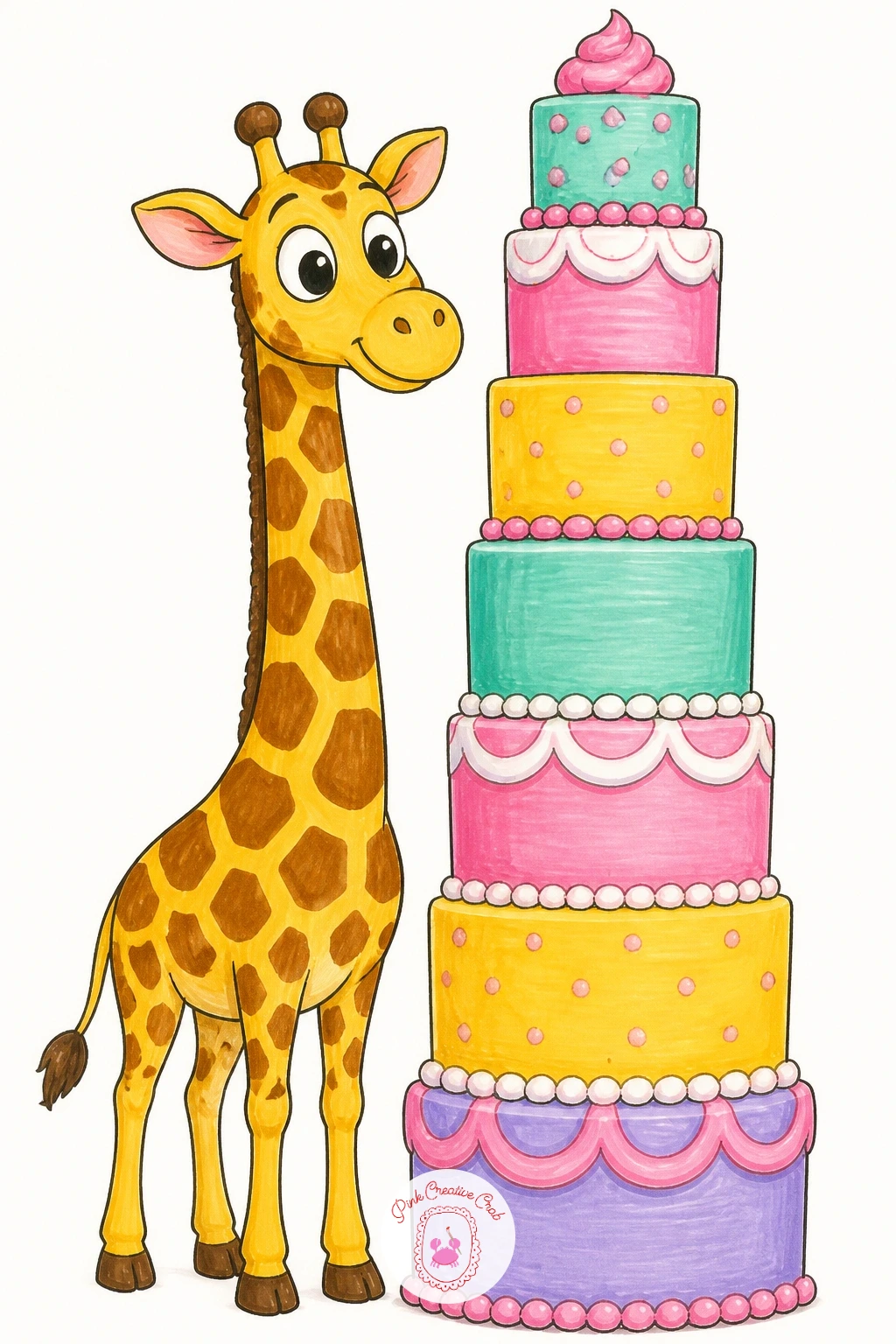
Palette: Golden Ochre,Chocolate Brown,Lilac,Soft Peach
Move from food to gifts with a bunny tearing paper off a box, which is a great subject for practicing hands and motion without drawing full arms. Draw the bunny sitting back on its haunches first, round body and long ears, then a simple square gift box in front with one triangular flap of torn paper lifting off one corner.
Ink the torn paper edge as a jagged rather than smooth line, that single detail makes it obvious the bunny has already started tearing. Color the box in a bold pattern like stripes or dots and keep the bunny itself a soft neutral so the gift stays the star of the scene.
The paws are where this one usually goes wrong: keep them as simple rounded mitten shapes rather than trying to draw individual fingers, which looks cleaner at this scale anyway. A child drawing this can skip the torn paper flap and just draw a ribbon and bow instead.
Adults can add a few confetti-like paper scraps scattered near the box for extra energy.
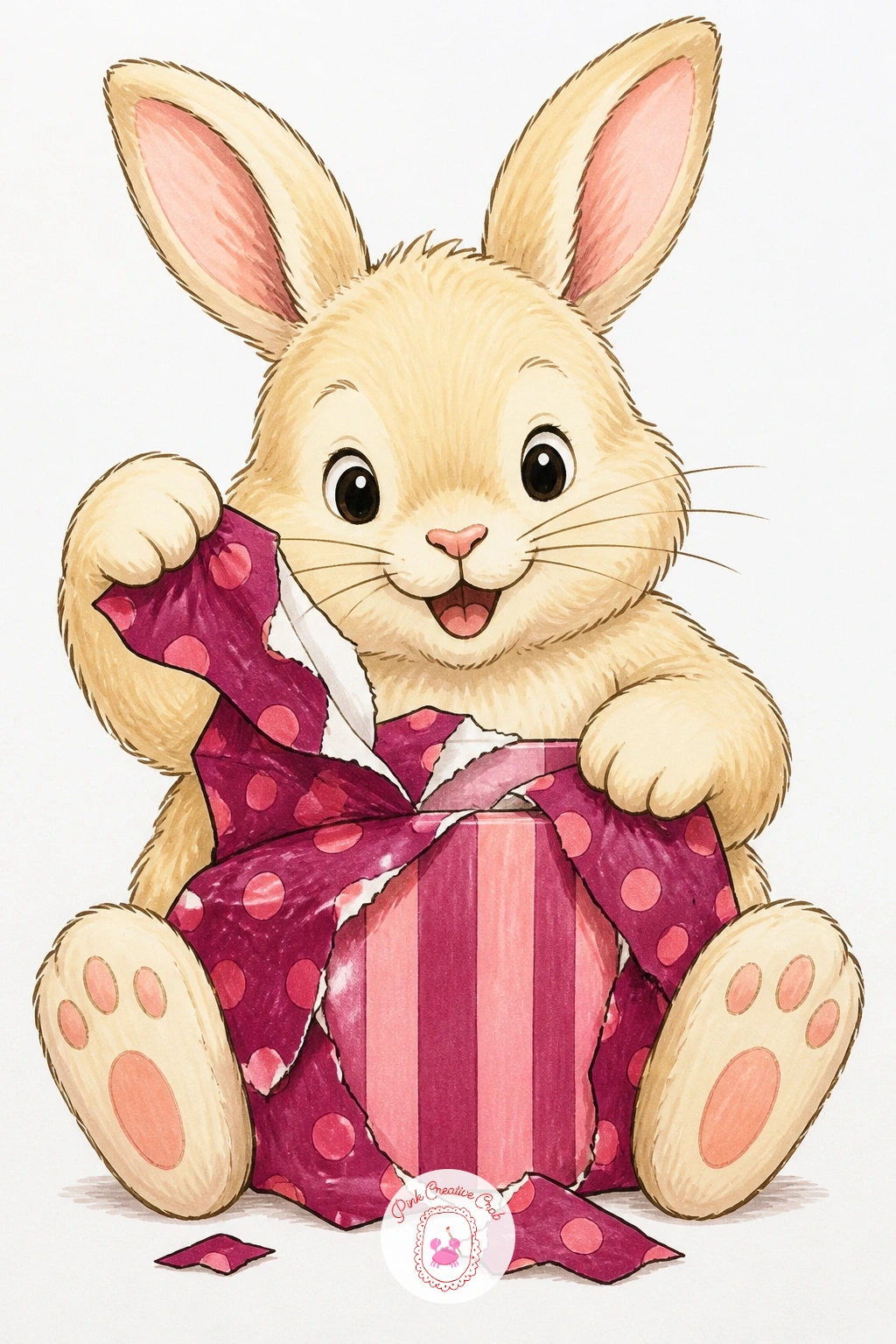
Palette: Cream White,Blush Pink,Sage Green,Deep Plum
Hedgehogs are a nice change of texture after all the smooth-furred animals so far, and the trick is in the spines rather than the overall shape. Draw a simple domed oval body and a small pointed snout, then instead of filling the back with fur, add short straight lines radiating outward from the dome, like a sunburst.
Place one single cupcake with one candle balanced between the front paws before you ink, since getting the cupcake small enough to look held rather than placed beside the hedgehog takes a little adjusting first. Color the spines in two alternating browns for depth and keep the cupcake frosting a single bright color so it stands out against all those lines.
If the spine lines start looking like fur instead of quills, make them straighter and slightly longer, quills are stiffer than fur and the straightness is what sells it. For a simpler child’s version, draw fewer, thicker spine lines spaced further apart.
One concrete tip: draw the candle flame as a tiny teardrop in orange marker last, after everything else is dry, so it stays crisp.
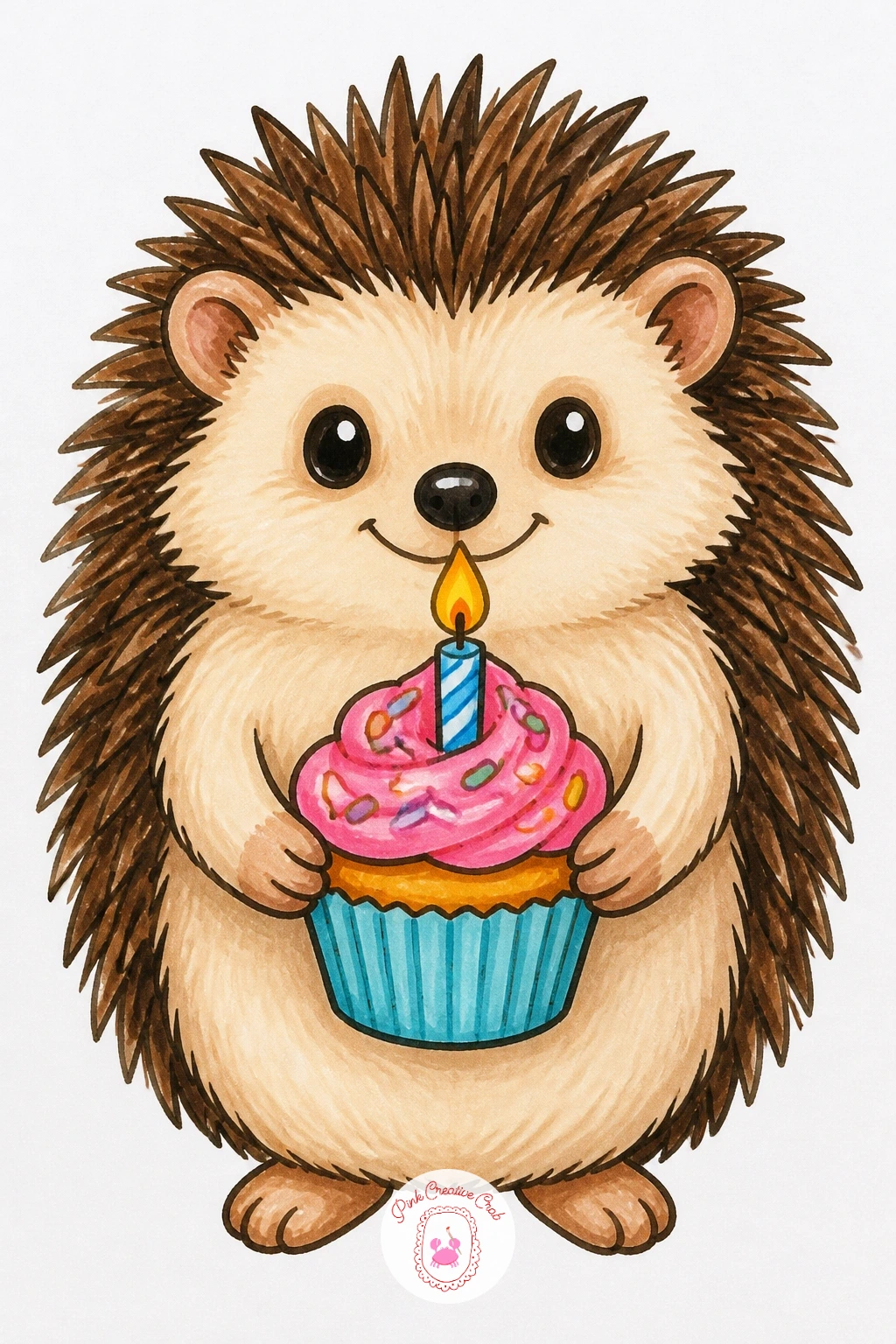
Palette: Warm Brown,Tan,Cherry Red,Soft Orange
After a quiet hedgehog, bring in some chaos: a penguin standing in a small flurry of falling confetti is mostly about that scattered confetti rather than the penguin itself. Draw the penguin’s simple rounded body and belly patch first, then before adding any confetti, pencil in a loose, uneven scatter pattern around it so the shapes do not line up in a grid.
Ink the penguin fully, then switch to several marker colors for the confetti, drawing each piece as a small rectangle, triangle or circle rather than repeating the same shape everywhere. Keeping that variety is what stops confetti from reading as dots or snow instead.
If the page starts to feel too busy, leave more white space around the penguin itself and cluster the confetti more toward the top and sides. A child’s version can use just two confetti colors and fewer pieces; an adult can layer three or four colors and vary the sizes more.
Try drawing a few confetti pieces mid-air and a few already settled near the penguin’s feet for a stronger sense of motion.
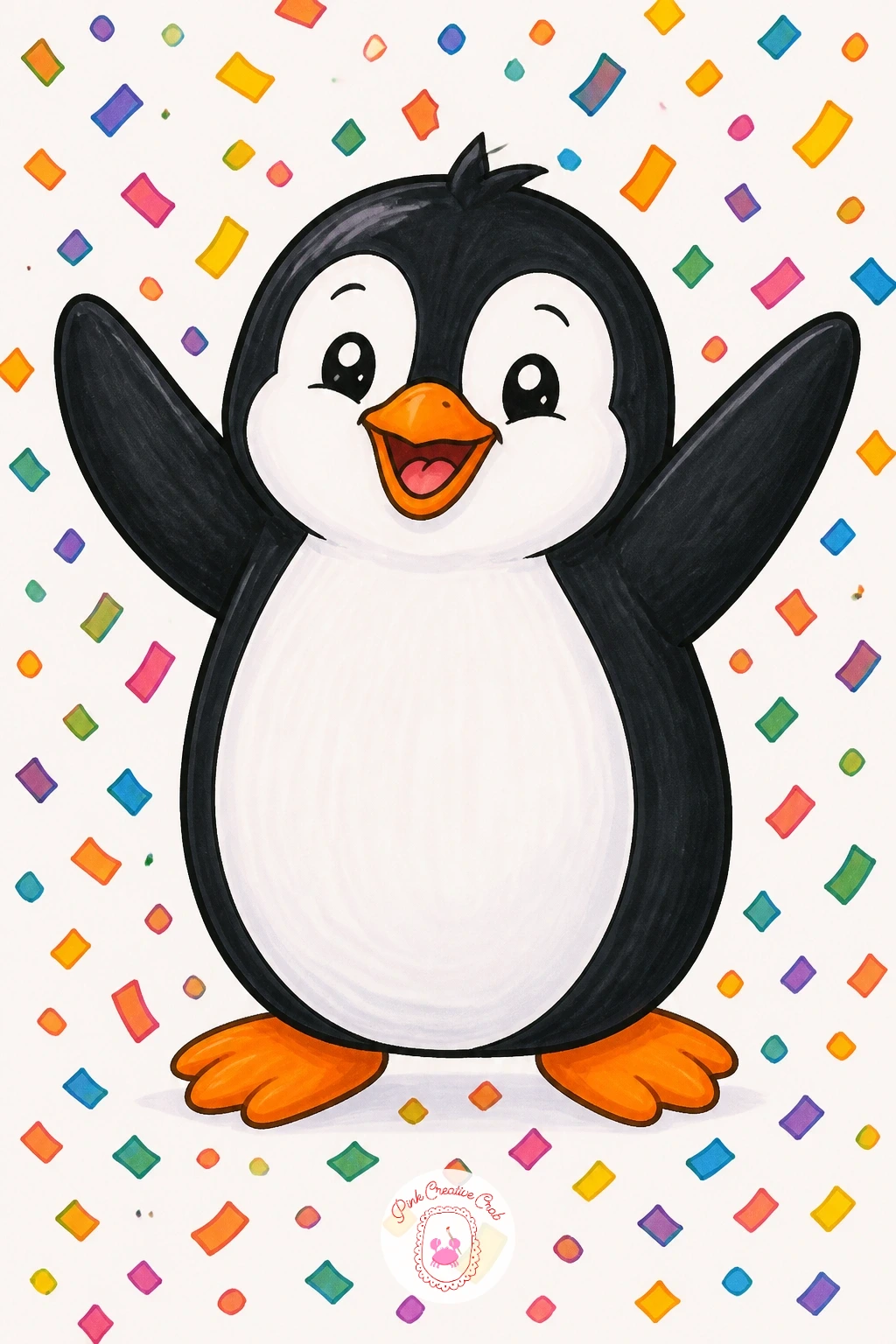
Palette: Charcoal Black,Snow White,Coral Red,Turquoise
This one plays with perspective since the frog needs to look like it is bursting upward and forward out of the cake rather than just sitting beside it. Draw the cake first as a simple round shape with a visible hole or crack in the top, then draw the frog’s body stretched upward with front legs reaching ahead and back legs still tucked near the cake, as if caught mid-leap.
Ink the cake’s torn opening with a slightly jagged edge to suggest the frog just burst through it, then color the frog a bright green that contrasts sharply against the cake’s pastel frosting. A few small crumb shapes flying near the hole help sell the motion.
If the jump looks static, angle the frog’s whole body diagonally across the page instead of straight up, diagonal lines always read as more active than vertical ones. For a simpler version, just show the frog’s head and front legs poking out rather than a full leap.
One tip for today: draw motion lines as two or three short curved strokes behind the frog’s back legs to push the jump even further.
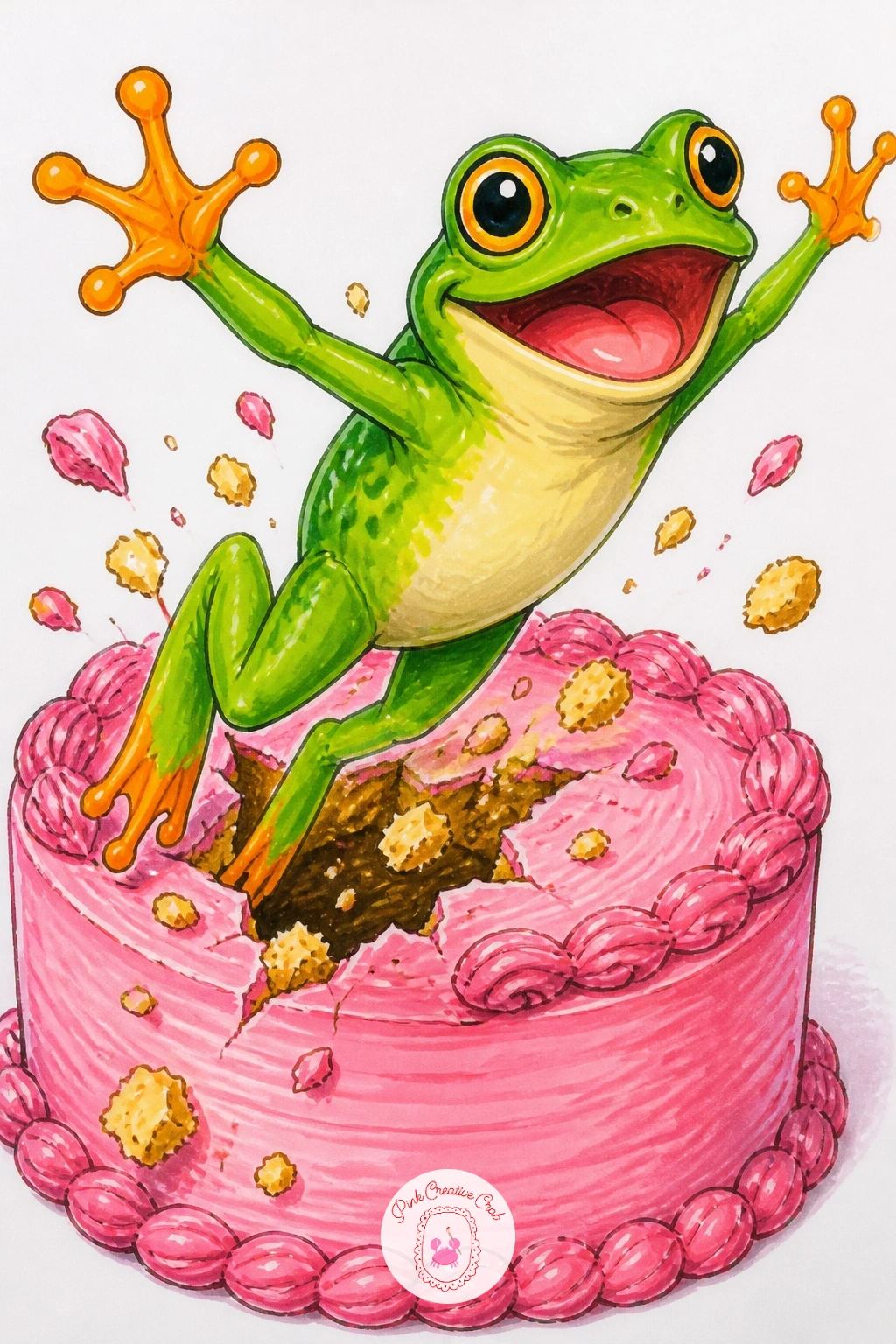
Palette: Leaf Green,Lemon Yellow,Soft Pink,Cream
Give the party a bit of scenery with a llama standing under a triangle-flag banner strung between two unseen points above its head. Draw the llama’s long neck and fluffy body first, a simple oval with a long oval neck on top, then pencil in a gently curved line above for the banner string before adding the triangle flags evenly along it.
Ink the llama’s fluffy texture with small scalloped lines along the body rather than a smooth outline, which gives it that woolly look without much extra effort. Color each banner flag a different shade and keep the llama a soft neutral so the colorful flags frame it nicely.
Spacing the flags evenly is the part that trips people up: lightly mark dots along your pencil string line first, then draw one flag per dot so they stay consistent. For a child’s version, use only four or five flags in two colors.
An adult extending this can add a little tassel hanging from each flag point for a handmade look.
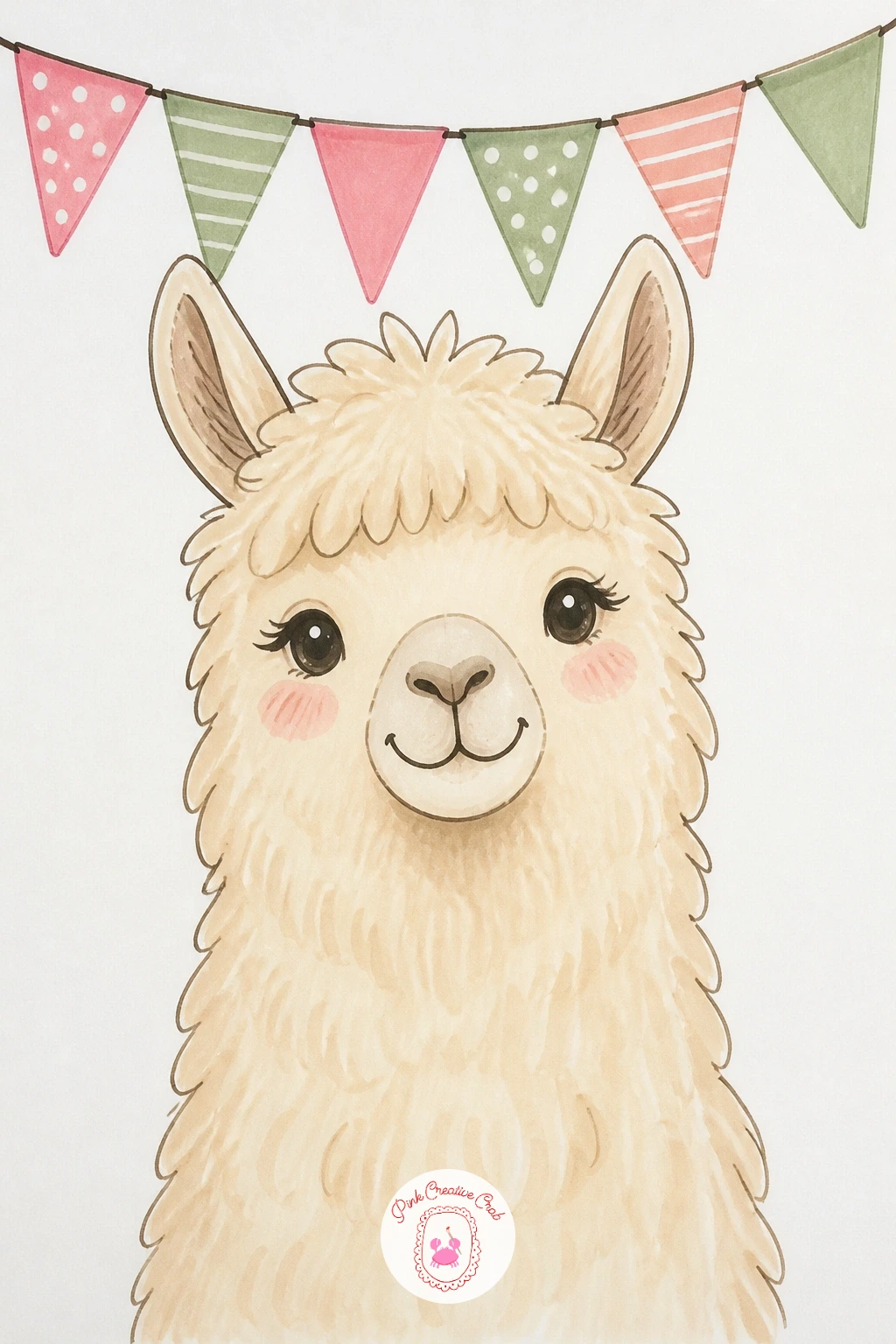
Palette: Cream Wool,Dusty Rose,Sage Green,Mustard Yellow
Swap water for confetti and the classic elephant-with-trunk pose becomes an instant party joke. Draw the elephant’s round body and big ears first, then curve the trunk upward and outward, ending in a small opening where the confetti bursts out in a fan shape.
Pencil the confetti spray as a widening triangle of small shapes before inking, so the burst feels directional rather than scattered randomly. Color the elephant a soft grey and let the confetti carry all the bright color in the piece, which keeps the contrast strong and the eye drawn right to the spray.
If the trunk looks stiff, add one soft curve in the middle rather than drawing it as a single straight tube, trunks always bend somewhere. A simpler child’s version can spray just a handful of confetti dots; a more detailed version fans out a dozen pieces in varied shapes and sizes.
Keep the elephant’s eyes half-closed and pleased looking, like it is enjoying its own trick.
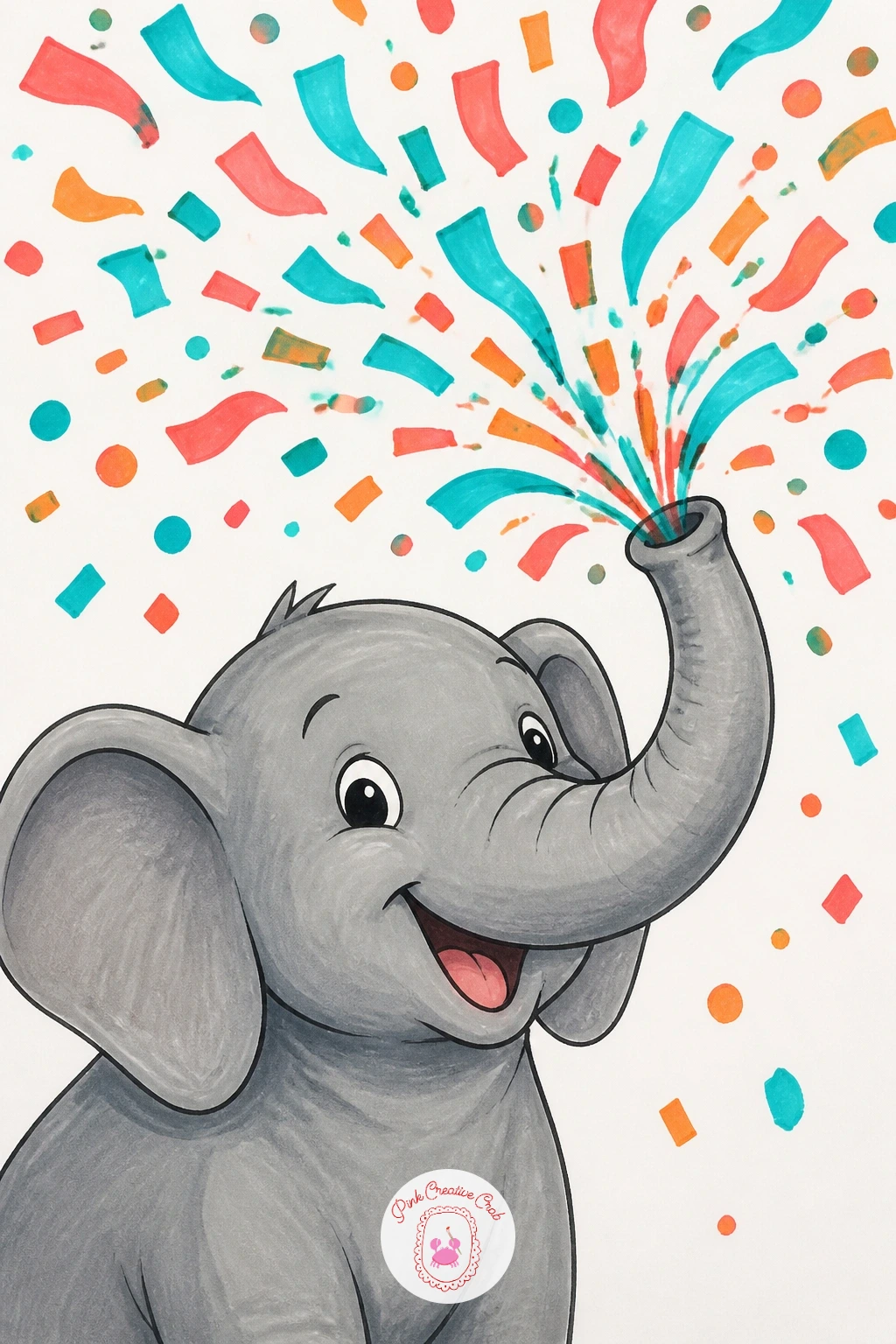
Palette: Soft Grey,Coral,Turquoise,Sunny Yellow
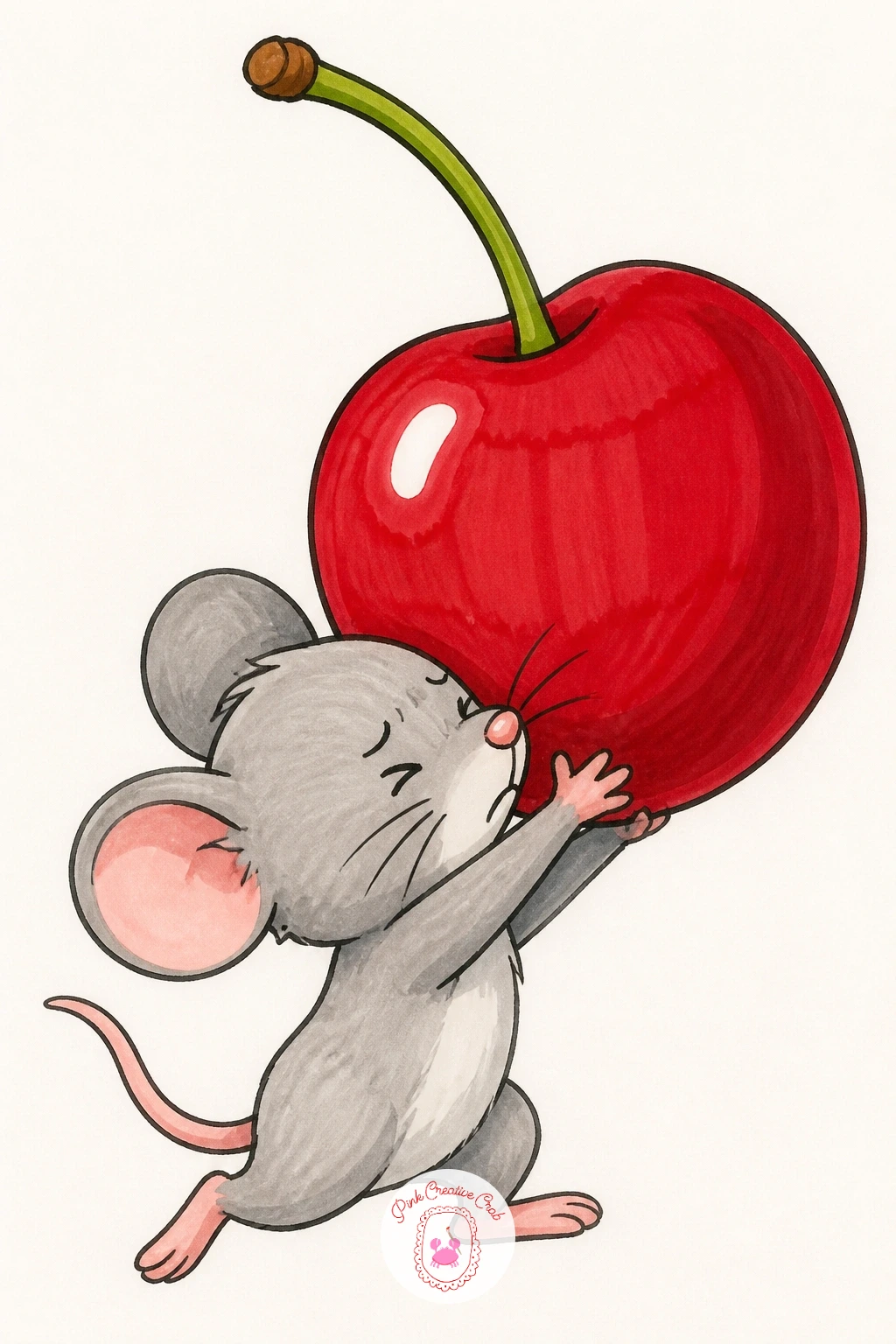
Scale down for a moment with a tiny mouse struggling to carry one oversized cherry, which works because of the size difference rather than any complicated drawing. Draw the mouse small, a simple pointed oval body with round ears and a thin tail, then draw the cherry noticeably larger than the mouse’s head, held up in both front paws.
Ink the cherry’s stem as a single curved line and keep the mouse’s paws simple rounded shapes wrapped around the cherry’s sides. Color the cherry a deep glossy red with one small white highlight left unmarked or added later in gel pen, and keep the mouse in soft grey or beige so the red pops.
Getting the size contrast right is the whole trick: if the cherry looks only slightly bigger than the mouse, redraw it larger until the mouse genuinely looks like it is struggling. A child can simplify by making the mouse sit down with the cherry resting in its lap instead of held up.
Add a tiny strained expression, eyebrows pinched, for extra comedy.
You Will Need
- white gel pen
Palette: Soft Grey,Cherry Red,Leaf Green,Cream
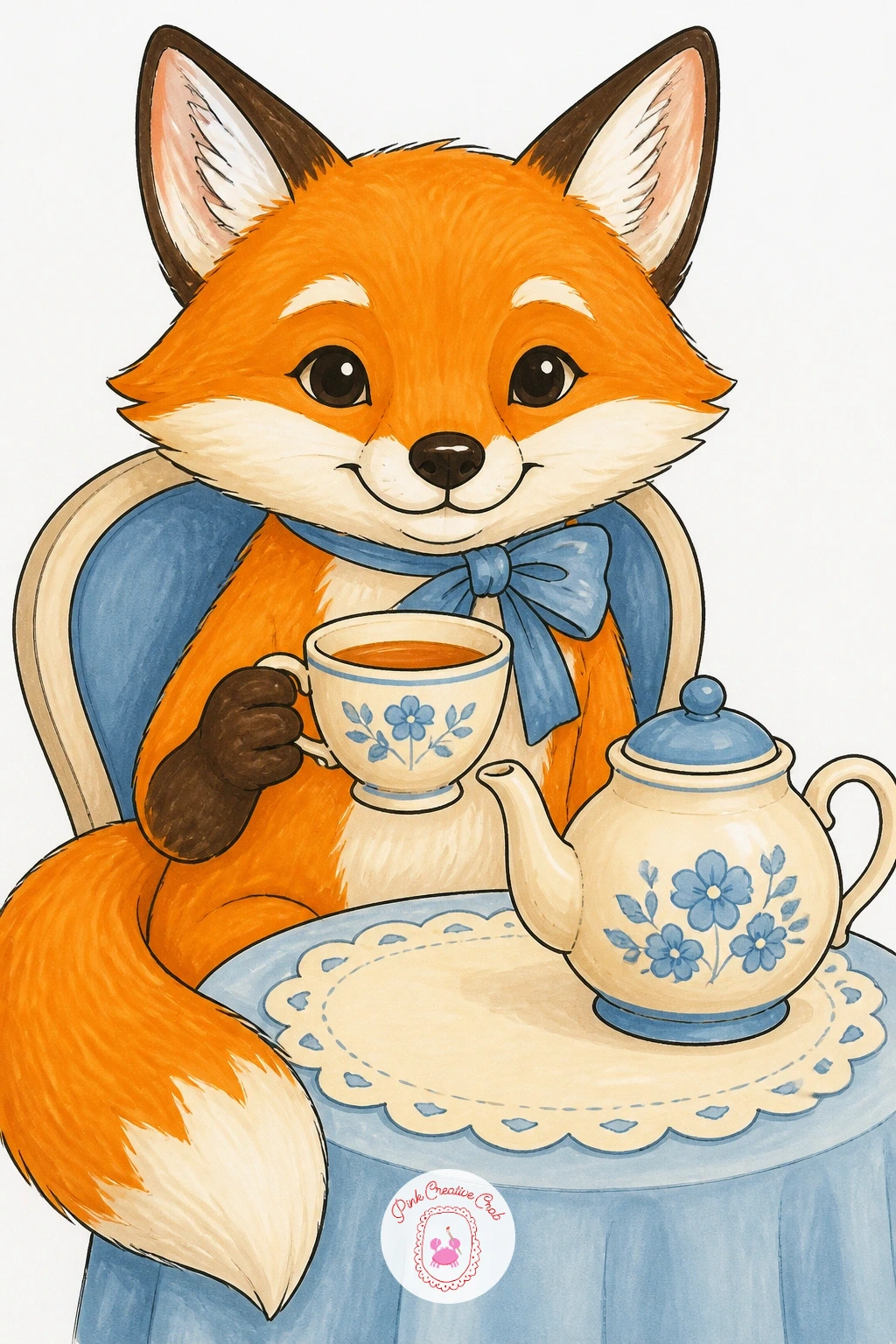
Build a small scene here rather than one animal alone: a fox sitting properly at a little table with a teapot and a single cup in front of it. Draw the fox’s pointed face and bushy tail first, sitting upright, then add a simple round table in front with a teapot shape and one teacup, keeping both objects small and tidy so the fox stays the focus.
Ink the table and tea set before coloring the fox, since clean straight edges on the teapot read better when drawn with a steady hand before anything else competes for attention. Color the fox a warm orange with a white chest patch and let the teapot carry one other accent color, like dusty blue or sage.
tea party scenes like this one are worth revisiting with different table settings once you are comfortable with the basic layout.
If the table looks like it is floating, add a short straight line under each leg to ground it on the page. A simpler version for kids skips the teapot and just shows the fox holding one teacup.
One tip: tilt the fox’s head slightly as if mid-sip for a more relaxed, playful pose.
Palette: Warm Orange,Cream White,Dusty Blue,Sage Green
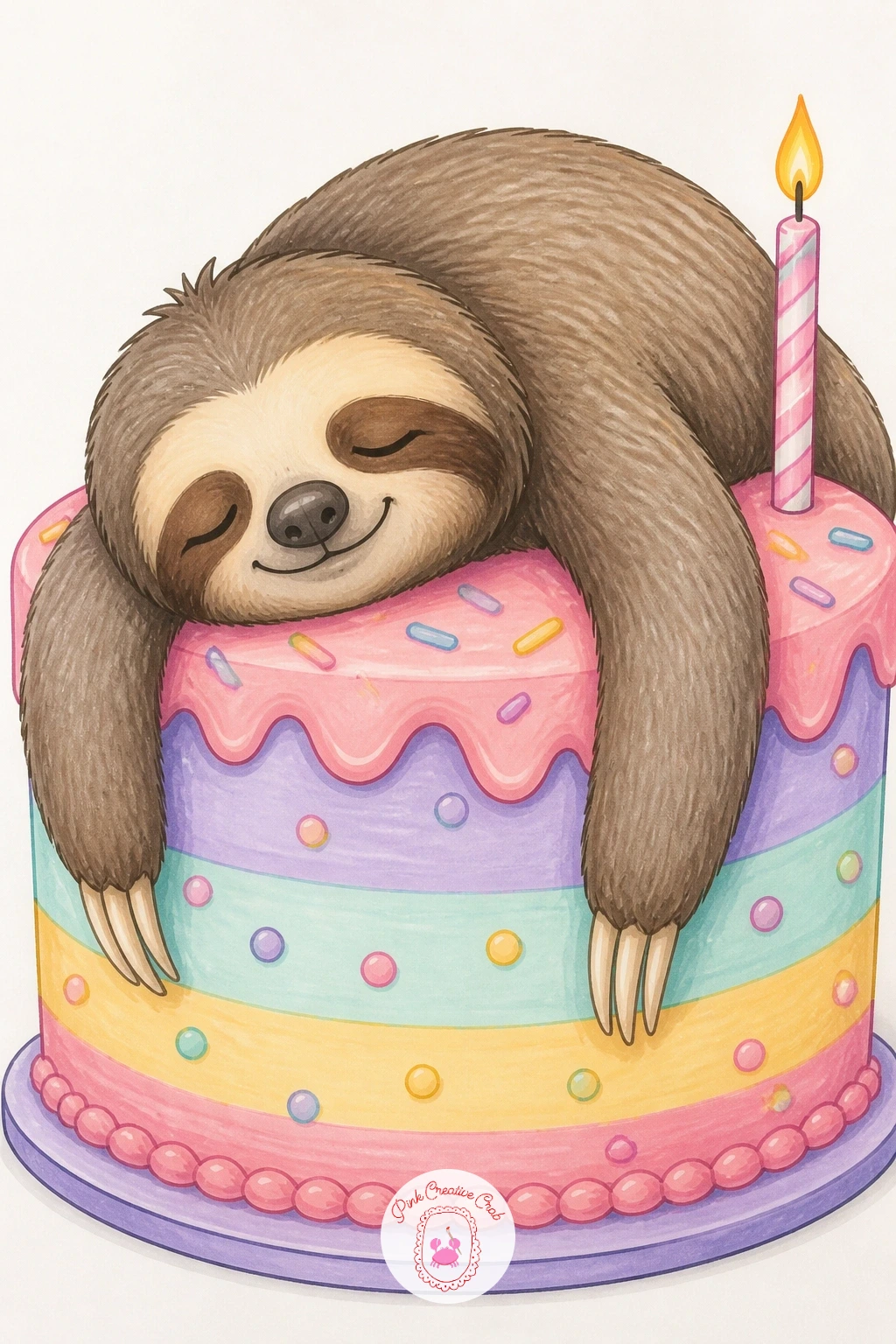
Keep the energy low after that busy tea party: a sloth sleeping draped over the top of a cake is all soft curves and closed eyes. Draw the cake first as a simple round shape, then drape the sloth’s long arms and legs over the sides of it, with the head resting face-down on the top tier.
sleepy animal poses like this one translate well to other slow-moving subjects too, if this becomes a favorite kind of drawing.
Ink the sloth’s face with closed, curved eyes and a small open mouth, then color the fur in two shades of beige or brown for a bit of shading without much extra effort. Keep the cake frosting light and pastel so the sloth’s darker fur stands out clearly against it.
If the pose looks stiff, loosen the arms and legs into longer, more relaxed curves that drape rather than bend sharply, sloths have almost no stiff angles anywhere on their bodies. A child’s simpler version can show just the sloth’s head resting on the cake with arms tucked out of sight.
Add one candle still lit beside the sleeping sloth for a nice bit of irony.
Palette: Warm Beige,Dark Brown,Soft Pink,Cream
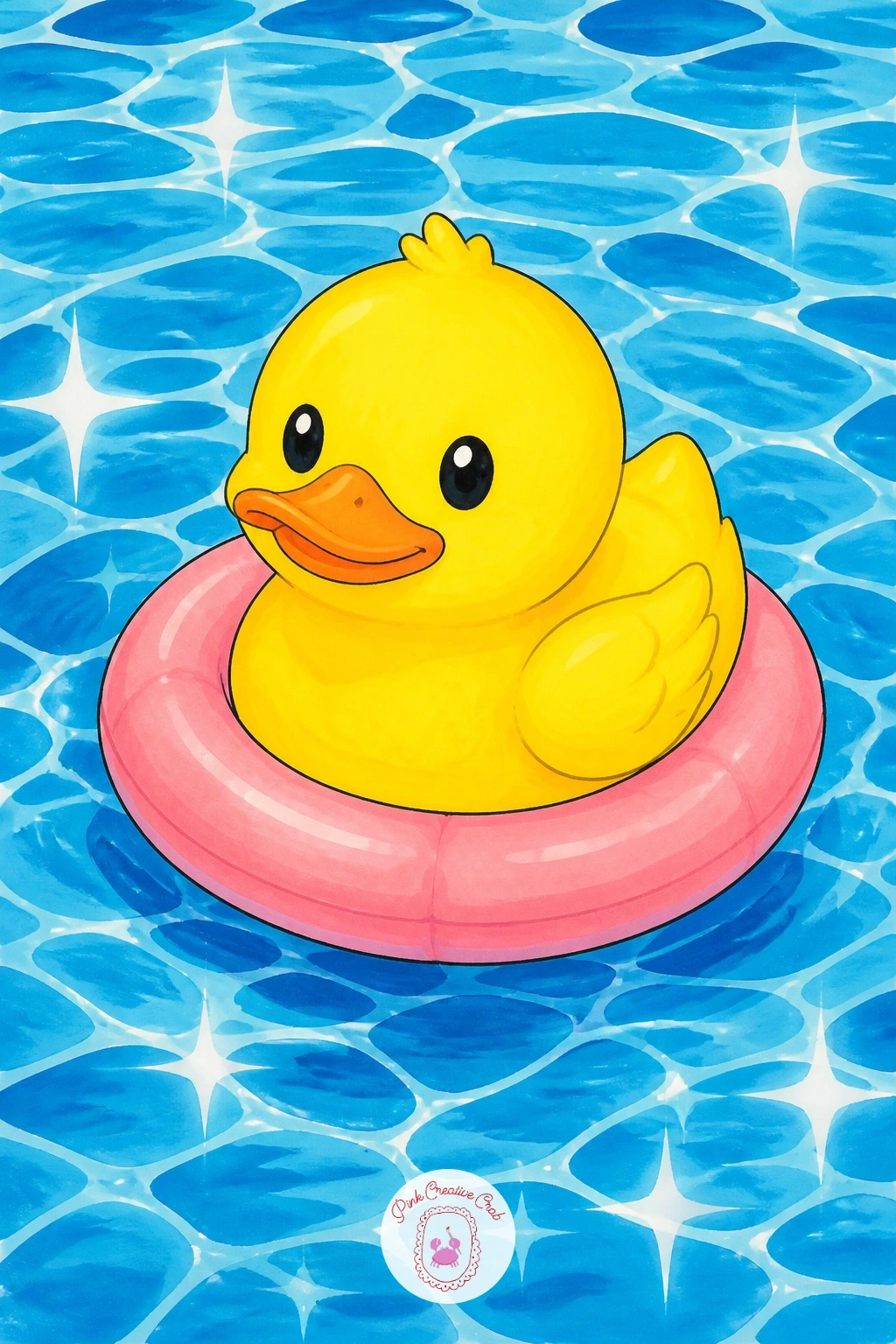
Bring in water for a change of setting: a duck floating in a small round pool with a drink or inflatable nearby keeps the birthday theme while adding something new to draw. Sketch the pool as a simple circle or oval first, then place the duck floating on top with a tiny inner tube or pool ring around its middle.
Ink the water’s edge with a few short wavy lines rather than a hard circle, which reads as liquid instead of a solid ring. Color the water in light blue with a slightly darker blue in a few spots for depth, and keep the duck’s yellow bright so it stands out against the cool water tones.
If the duck looks like it is standing rather than floating, lower it slightly into the water line and add a small ripple shape just in front of it. A simpler child’s version skips the ripples and inflatable ring entirely, just a plain yellow duck on blue water.
One tip: add two or three small white highlight dashes on the water’s surface with a gel pen once dry, for a bit of sparkle.
You Will Need
- white gel pen
Palette: Sunny Yellow,Sky Blue,Deep Blue,Orange
Add a bit of action here with a pig mid-swing at a hanging pinata, which is a fun chance to draw a body twisted in motion. Draw the pig’s round body leaning to one side with a small stick or bat raised above its head, then draw the pinata as a star or animal shape hanging just above and slightly out of reach.
Ink the pinata with bold zigzag or scalloped edges along each point to suggest its paper fringe texture, then color each section a different bright shade for that classic pinata look. Keep the pig itself a simple pink so it does not compete with the pinata’s busier coloring.
If the swinging pose looks flat, tilt the pig’s whole body diagonally and bend the back legs slightly, as if caught mid-motion rather than standing still. A child’s version can simplify the pinata to a plain star shape in just two colors.
Add a few small candy shapes already scattered on the ground below for a sense of anticipation.
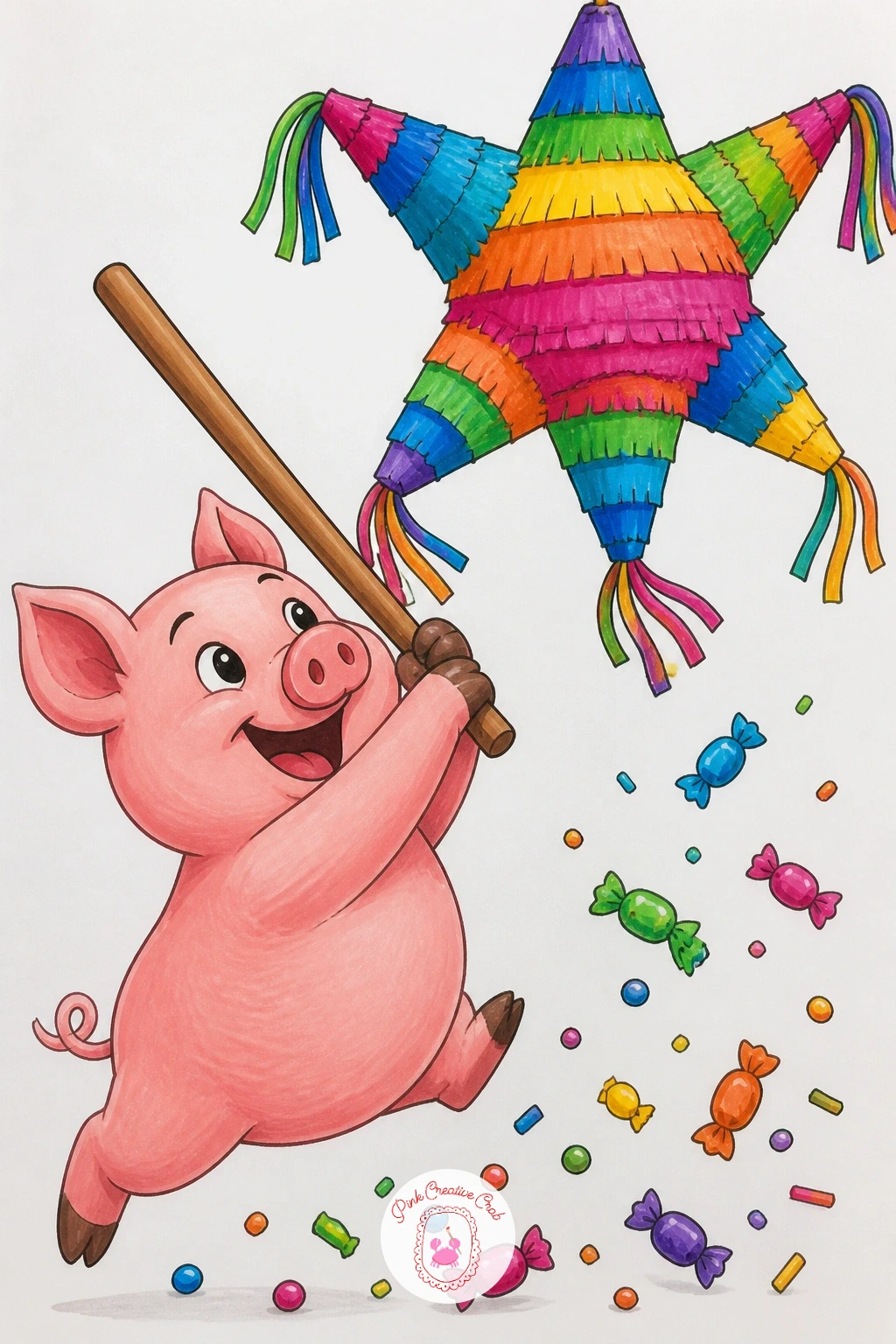
Palette: Pink,Hot Pink,Turquoise,Sunny Yellow
Give this one a guilty look, since the whole joke of a raccoon with its paw in the frosting depends on the expression rather than the action alone. Draw the raccoon’s body first, round with the classic dark eye mask, then draw one paw reaching into a small bowl or the side of a cake with a smear of frosting already on its fingers and face.
Ink the frosting smear as a loose, slightly messy shape rather than a clean dab, messiness is what sells the mischief here. Color the raccoon in grey and black with its ringed tail curled behind it, and use a bright frosting color like pink or white so the smear is easy to spot at a glance.
If the raccoon looks too innocent, widen its eyes slightly and raise one eyebrow line, a small change that reads instantly as caught in the act. A simpler child’s version can skip the tail rings and just draw a plain striped tail.
One concrete tip: dot a little frosting smear on the raccoon’s nose too, not just its paw, for extra humor.
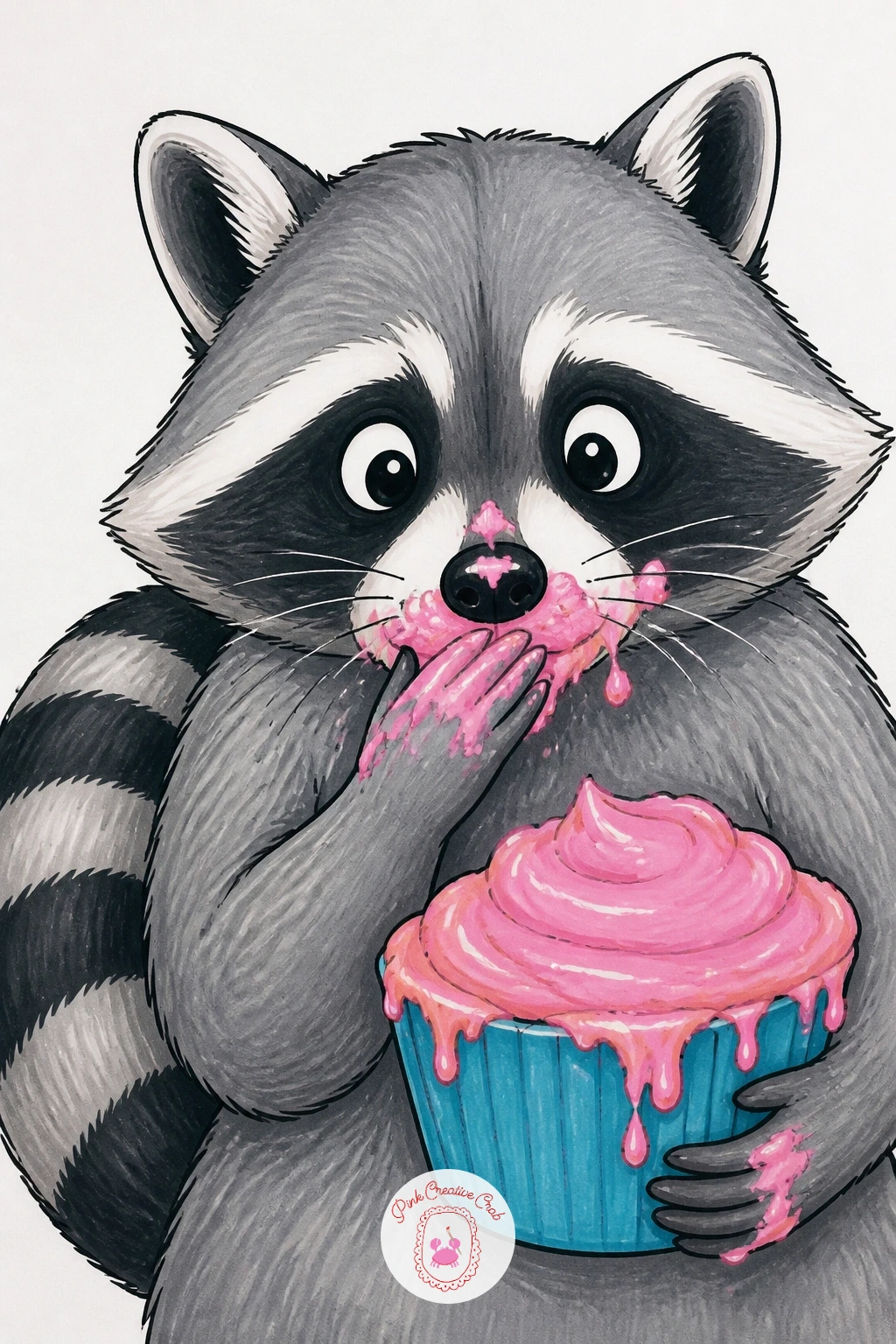
Palette: Grey,Charcoal Black,Blush Pink,Cream White
Slow things down with an owl perched quietly, reading a small card held in its wings, which is a nice contrast after all that mess and motion. Draw the owl’s round body and large face first, big circular eyes taking up much of it, then add two simple wing shapes folded forward holding a small rectangular card.
Ink the owl’s feather texture with short curved lines layered down the chest, working from the top down so each row overlaps the one above like real feathers do. Color the owl in warm browns and leave the card itself plain white or cream with a tiny heart or star drawn on the front, nothing more, since a full message would clutter such a small space.
If the wings look too flat to be holding anything, curve them slightly around the card’s edges rather than drawing them flush and straight. A child’s simpler version can skip the feather layering and use one flat brown color for the whole body.
Add round glasses perched on the owl’s face for a bit of extra personality if there is time.
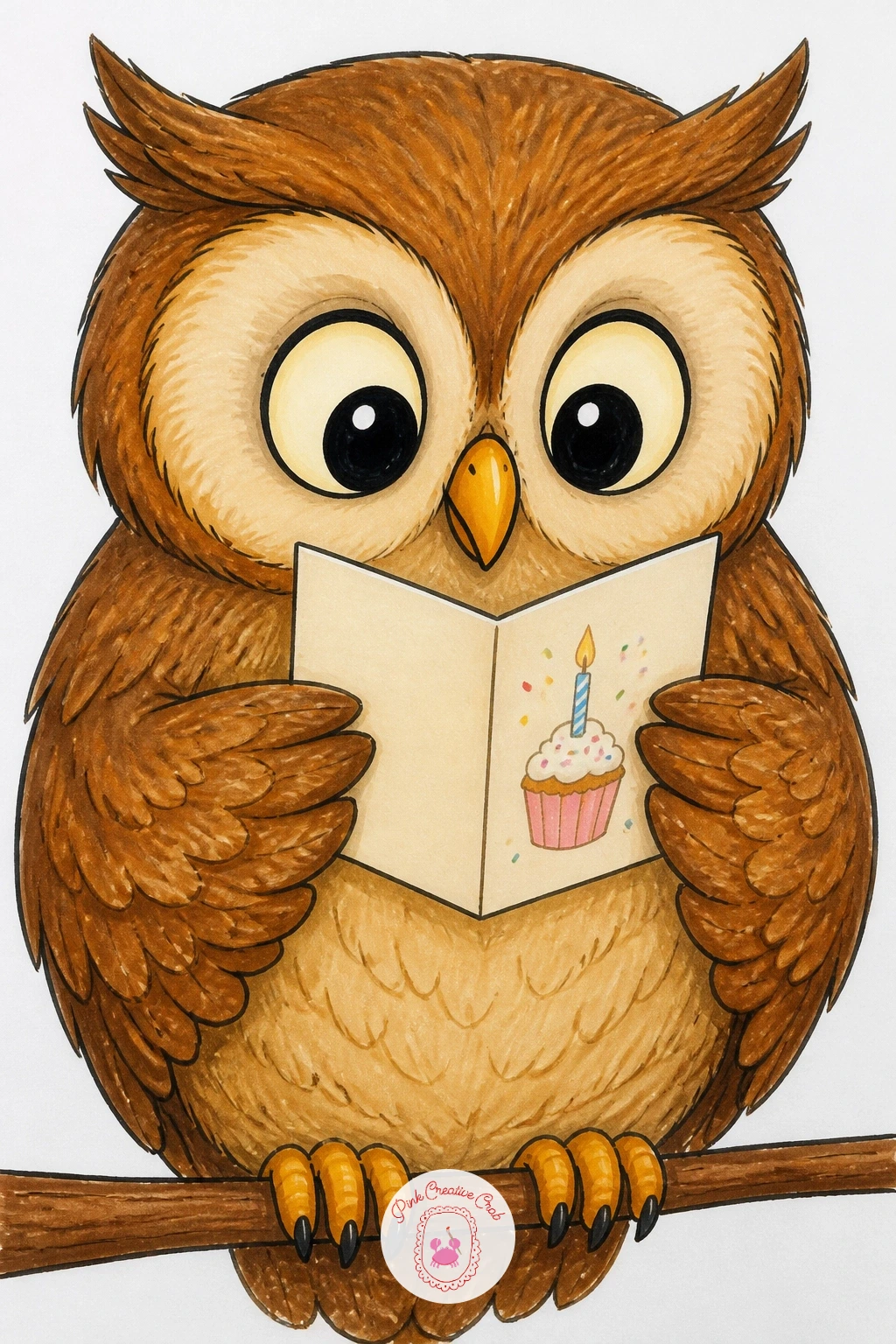
Palette: Warm Brown,Tan,Cream White,Soft Orange
Reference a real owl photo for the eye placement if this is your first time drawing one, since getting both eyes forward-facing and evenly sized makes the biggest difference to how convincing it looks.
Corgis are mostly about the ears and the short legs, so lean into both here with a corgi standing proudly in a small crown. Draw the body low and long first, short legs barely visible underneath, then add the large pointed ears on top of the head before placing a simple crown shape balanced between them.
Ink the crown with a few small triangle points and a tiny circle or gem shape in the center, then color it gold or yellow so it stands out clearly against the corgi’s fur. Color the body in the classic orange and white pattern, keeping the white chest and face patches clean and the orange sections solid.
If the crown looks too big or slides off visually, narrow its base so it sits snugly between the ears rather than floating above them. A faster version for kids skips the fur pattern entirely and uses one flat orange color; the more detailed version adds the white chest patch and a little pink tongue sticking out.
Give the corgi a confident, slightly smug expression, it suits the crown.
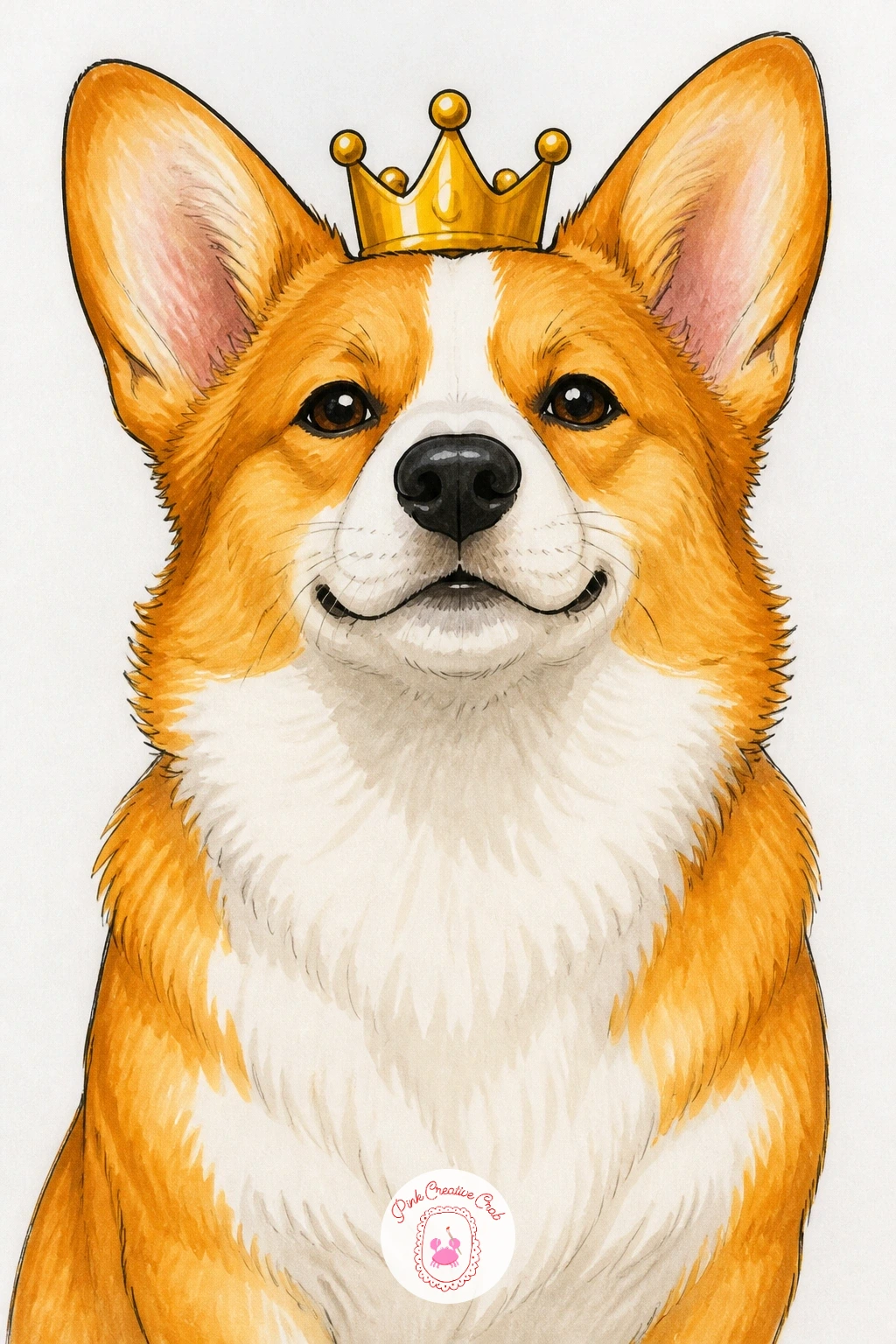
Palette: Orange,Cream White,Gold,Charcoal Black
After the quieter corgi, bring back a bit of mess with a squirrel holding a cake slice nearly as big as itself. Draw the squirrel’s body small and upright, sitting on its haunches with its bushy tail curled up behind, then draw the cake slice as a simple triangle with two or three visible layers, held in both front paws.
Ink the layers of the cake slice with clean horizontal lines separating each one before adding color, so the layering stays crisp rather than blending together. Color the squirrel in warm reddish brown and give the cake slice contrasting pastel layers so it reads clearly as the focal point.
If the slice looks like it is floating rather than held, overlap the squirrel’s paws slightly over the front edge of the triangle. A simpler child’s version can draw just one plain-colored slice with no visible layers at all.
Add a few crumbs falling from the slice’s edge for a sense that the squirrel has already taken a bite.
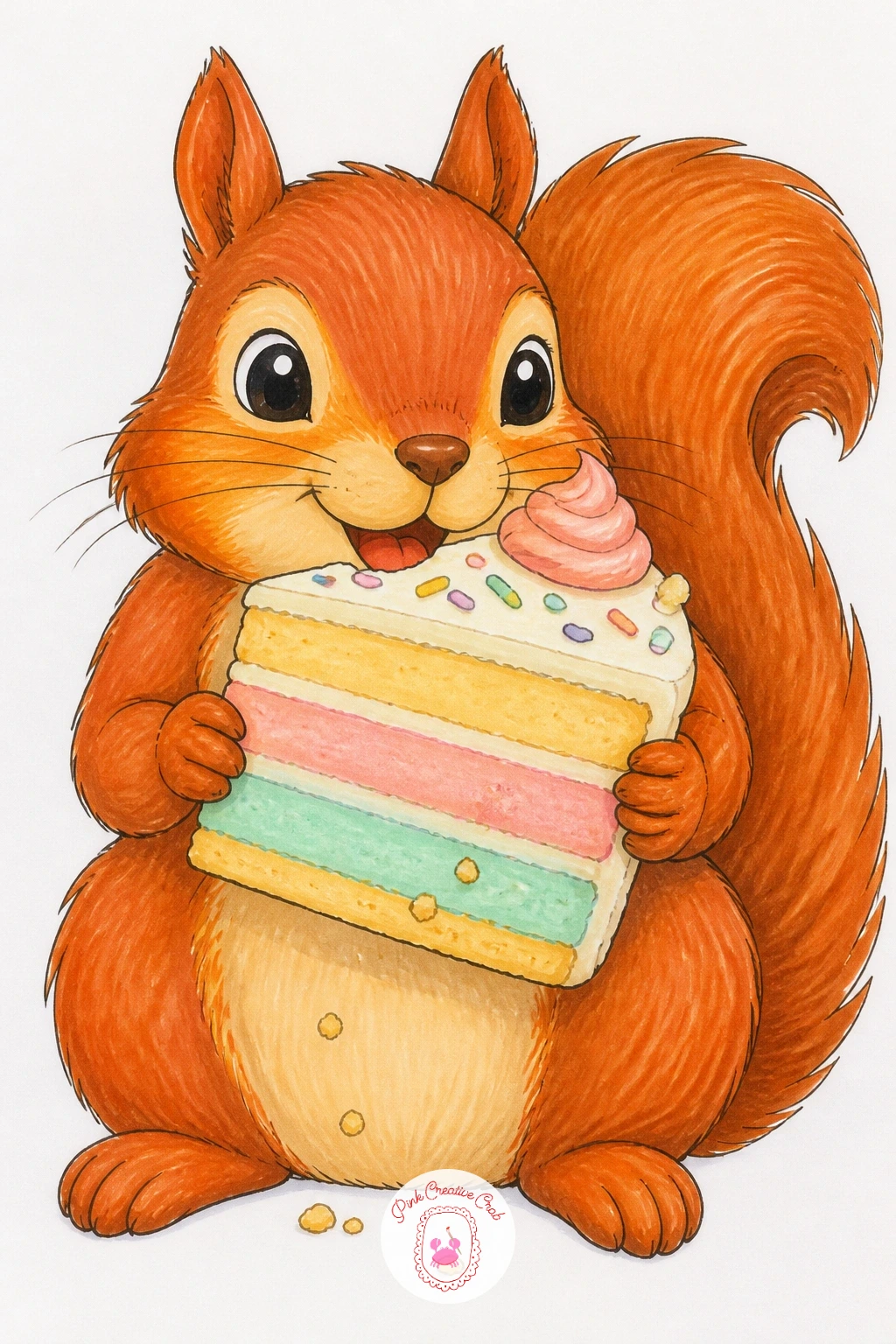
Palette: Rust Red,Tan,Soft Pink,Butter Yellow
Scale back up for a bigger, bolder subject: a whale spouting a cluster of balloons instead of water through its blowhole. Draw the whale’s large curved body first, filling most of the page, then draw the balloon strings rising from a small hole on top, each balloon a different size clustered together like a bouquet.
Ink the whale’s body with a few simple curved lines along the belly to suggest its ridged underside, then color it in deep blue or grey with a lighter underside for contrast. Color the balloons in a bright mix of colors so they pop clearly against the whale’s cool, solid tones.
If the balloons look too small against such a large whale, draw at least five or six clustered tightly together rather than two or three spread out, since the imbalance is part of the joke. A child’s version can simplify the whale’s body to one smooth curve without the belly ridges.
One tip: curve the balloon strings slightly as they rise, straight strings look stiffer and less playful.
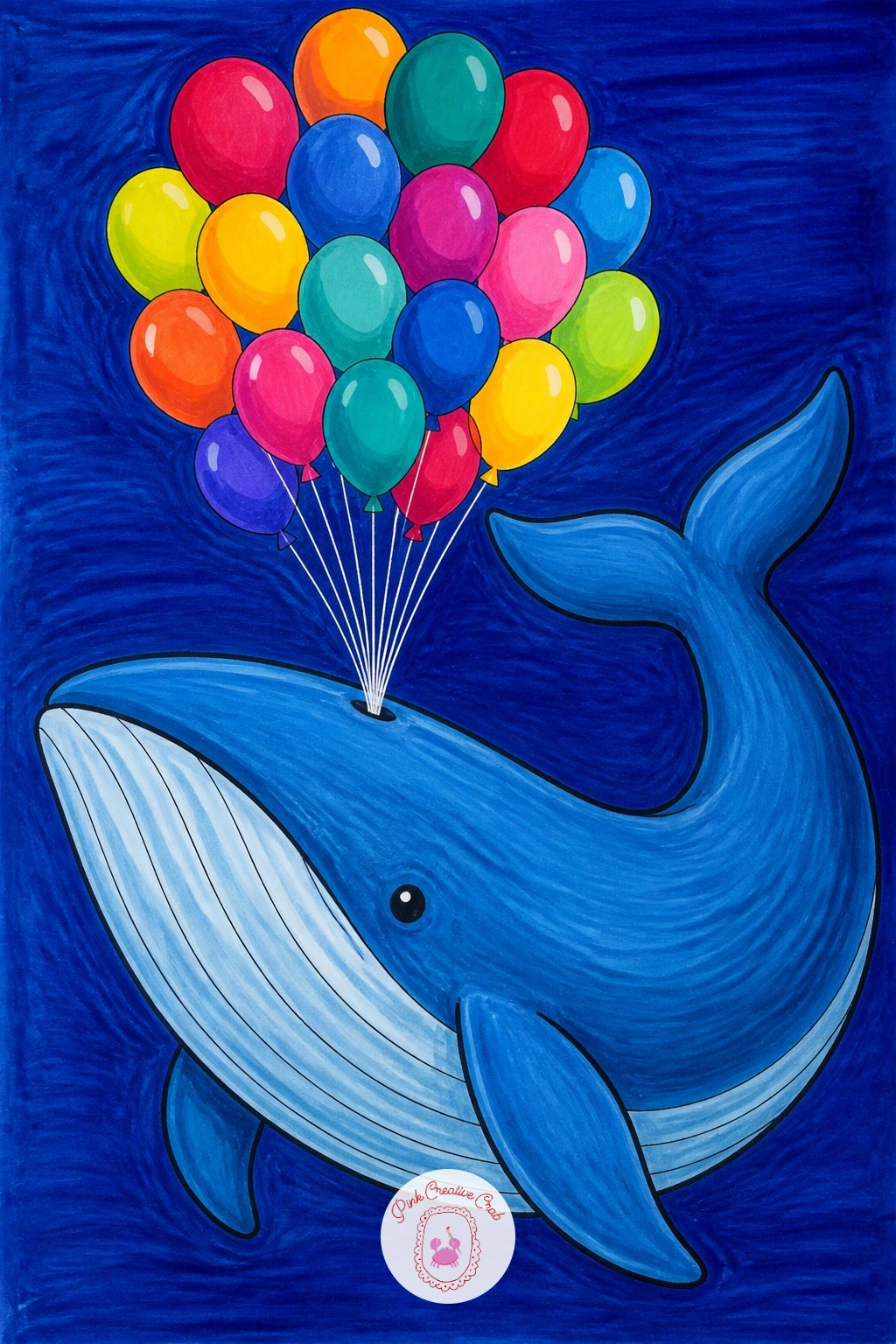
Palette: Deep Blue,Soft Grey Blue,Coral,Sunny Yellow
Keep this one calm and sweet: a koala hugging a small wrapped gift close to its chest, sitting on a branch or simply on the ground. Draw the koala’s round fluffy head and body first, big round ears on either side, then draw a small square or rectangular gift held in both arms, wrapped with a simple ribbon crossing over the top.
Readers who enjoy this gentle style might also like more koala and Australian animal ideas to work through afterward.
Ink the koala’s fur texture with small scalloped lines around the ear edges only, keeping the rest of the body smooth to avoid overworking such a small drawing. Color the koala in soft grey with a lighter chest patch, and give the gift a bright contrasting color so it stands out against the muted fur.
If the arms look stiff around the gift, curve them slightly inward as if genuinely hugging it rather than just resting flat against the sides. A simpler child’s version can skip the ribbon and just draw a plain colored box.
Add a small closed-eye, content expression for a gentler, sleepier feel than the other party scenes.
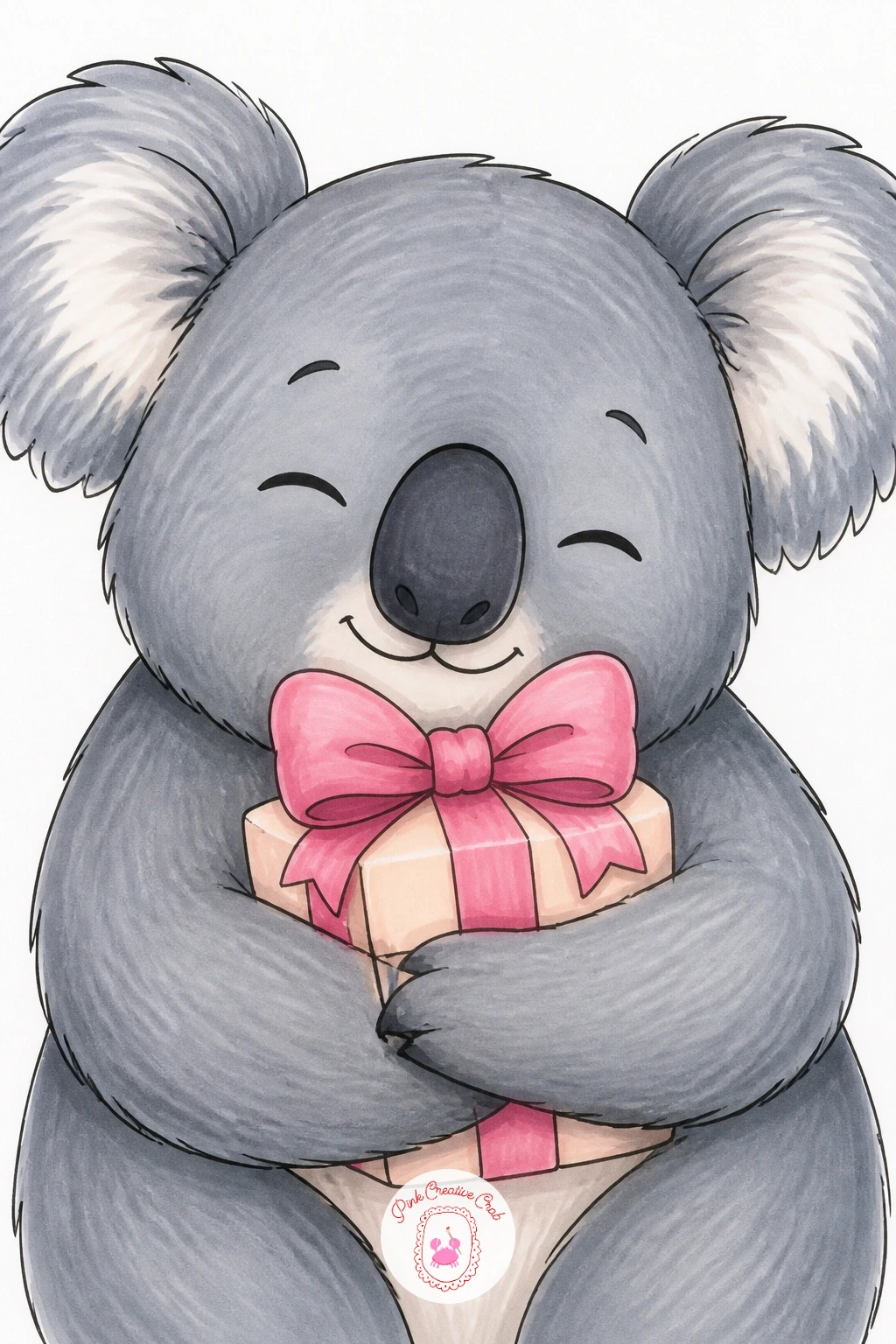
Palette: Soft Grey,Cream,Dusty Pink,Charcoal Black
Widen the scene slightly with a small group moment: two or three teddy bears sitting around a tiny picnic blanket with cupcakes between them. Draw the blanket first as a simple square with a checkered pattern, then add each bear sitting around its edge, keeping their poses varied, one leaning forward, one sitting upright.
Ink the blanket’s checker pattern in light pencil guide lines first so the squares stay even, then go over with fineliner before adding color. Color each bear a slightly different shade of brown or tan so they read as individuals rather than copies of each other, and keep the cupcakes between them bright and simple.
If the scene feels crowded, stick to two bears instead of three and give them more space around the blanket’s edge. A child’s version can draw just one bear and one cupcake on a plain blanket with no checker pattern at all.
One tip: vary the bears’ ear and nose sizes slightly, it is a small thing that makes each one feel like its own character.
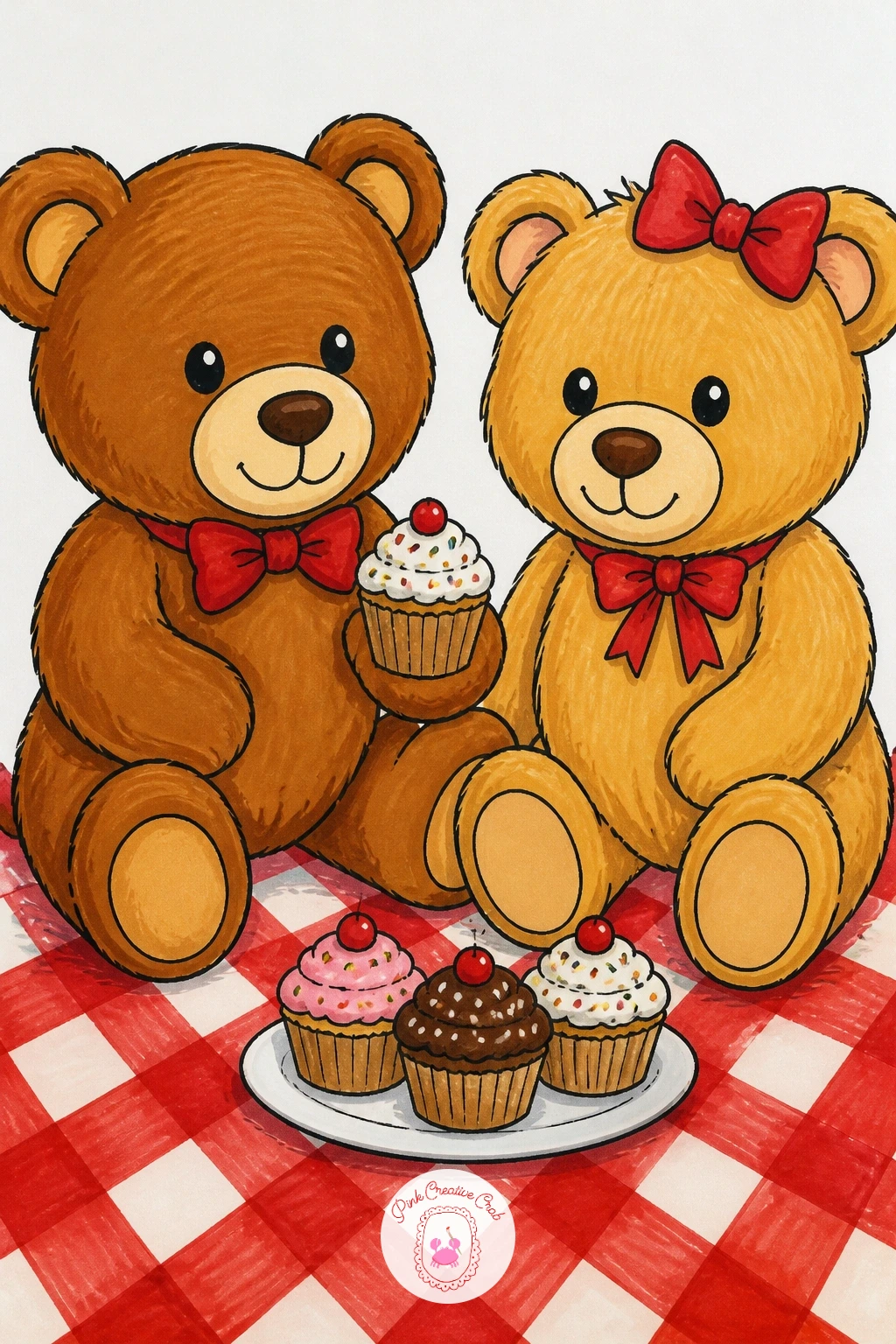
Palette: Warm Brown,Tan,Cream White,Red
Bring the chaos back with a kitten completely wound up in a loose length of ribbon, batting at the end of it. Draw the kitten’s small round body first, one paw raised mid-swat, then draw the ribbon as a single wavy continuous line looping loosely around the body and legs several times before trailing off to one side.
Ink the ribbon in one pass as a smooth continuous curve, since starting and stopping it in sections is what tends to make it look disconnected rather than wrapped. Color the kitten in any soft solid shade and make the ribbon a bold contrasting color like red or purple so its winding path stays easy to follow.
If the tangle looks confusing, reduce it to two or three loops instead of many, fewer loops drawn confidently always reads better than lots of messy overlapping ones. A simpler child’s version can show the kitten simply batting at one ribbon end with no tangling at all.
Give the kitten wide, mischievous eyes to match the mess it has made.
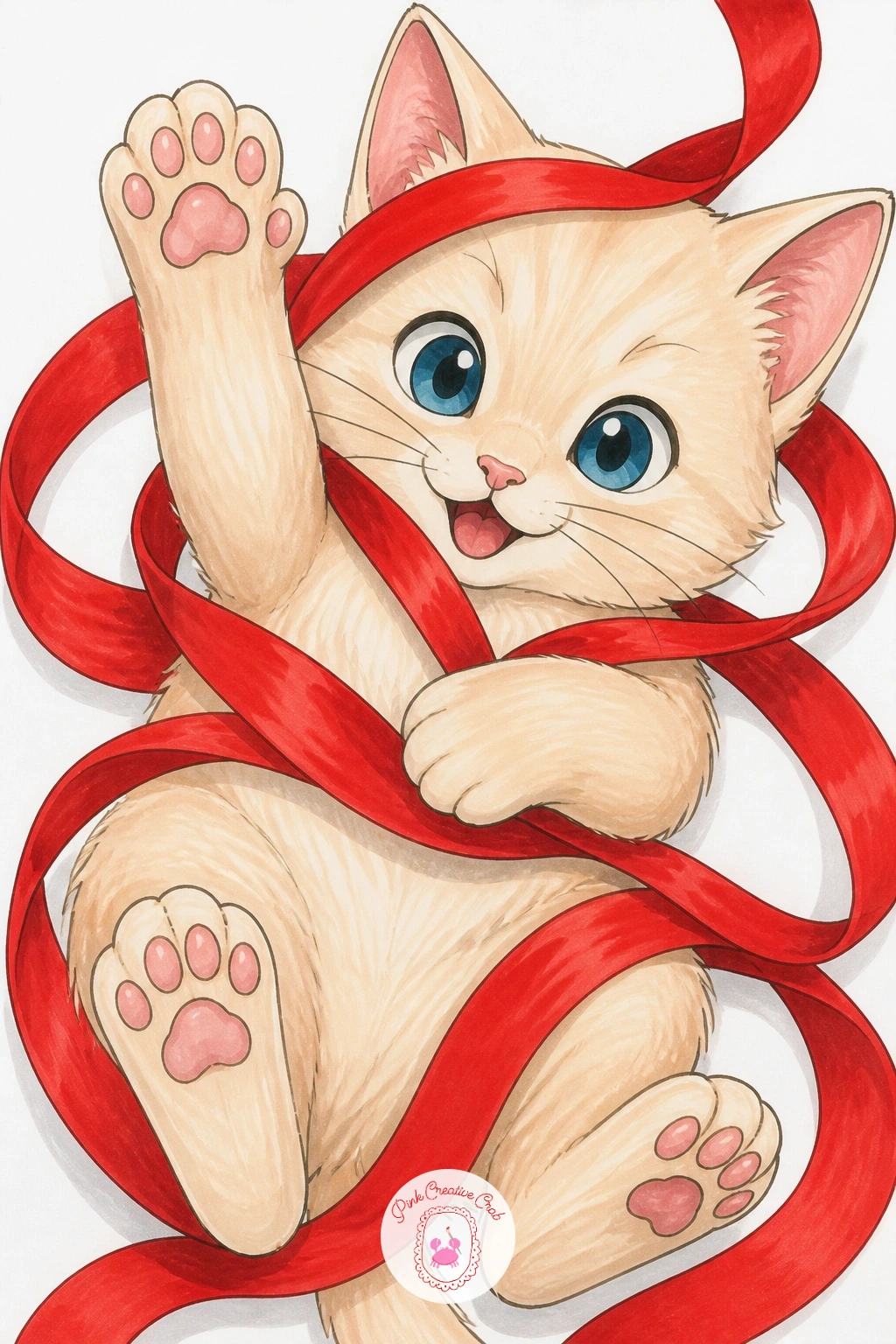
Palette: Cream White,Soft Grey,Ribbon Red,Charcoal Black
Return to something small and sweet: a hamster sitting inside an empty cupcake liner as if it were a tiny bathtub or chair. Draw the cupcake liner first as a simple fluted cup shape with a wavy top edge, then draw the hamster’s round body nestled inside it, paws resting over the liner’s edge.
Ink the liner’s fluted edge with short repeated curves around the entire rim before adding color, keeping the curves even in size so the pattern stays tidy. Color the liner in a bright paper color like pink or yellow with thin white lines left unmarked for the pleated texture, and keep the hamster itself a simple warm tan.
If the hamster looks too large for the liner, narrow its body slightly or widen the liner’s top edge until the proportions feel snug rather than overflowing. A child’s simpler version can draw the liner as a plain cup shape with no pleated texture at all.
One tip: add a few crumbs scattered around the base for a sense that the liner once held a cupcake.
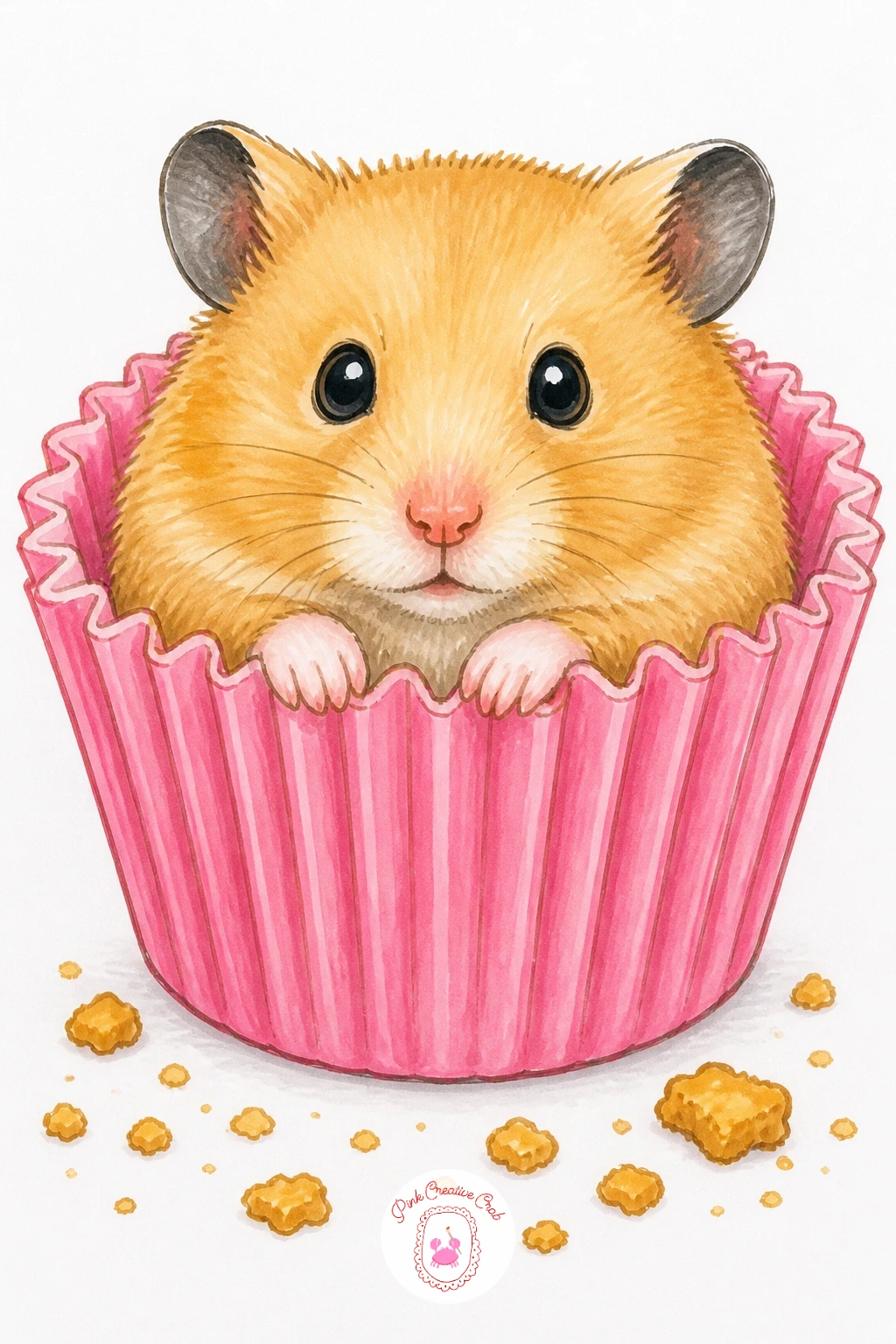
Palette: Tan,Cream White,Bubblegum Pink,Butter Yellow
Circus trick energy works nicely here: a seal balancing a small round cake on the tip of its nose, flippers raised for balance. Draw the seal’s smooth tapered body first, propped upright on its tail end, then draw a small round cake balanced directly above the snout, with one or two candles on top.
Ink the seal’s body with minimal lines since seals are naturally smooth and shiny, a few short curved highlight lines along the back are enough to suggest wet skin. Color the seal in grey or deep blue-grey with a lighter belly patch, and keep the cake a cheerful contrasting pastel so it stands out clearly against the dark, smooth body.
If the balance looks unconvincing, center the cake directly above the nose tip rather than off to one side, even a slight offset reads as about to fall rather than steadily balanced. A simpler child’s version can rest the cake on the seal’s flippers instead of its nose.
Give the seal a pleased, confident expression, eyes closed, enjoying the trick.
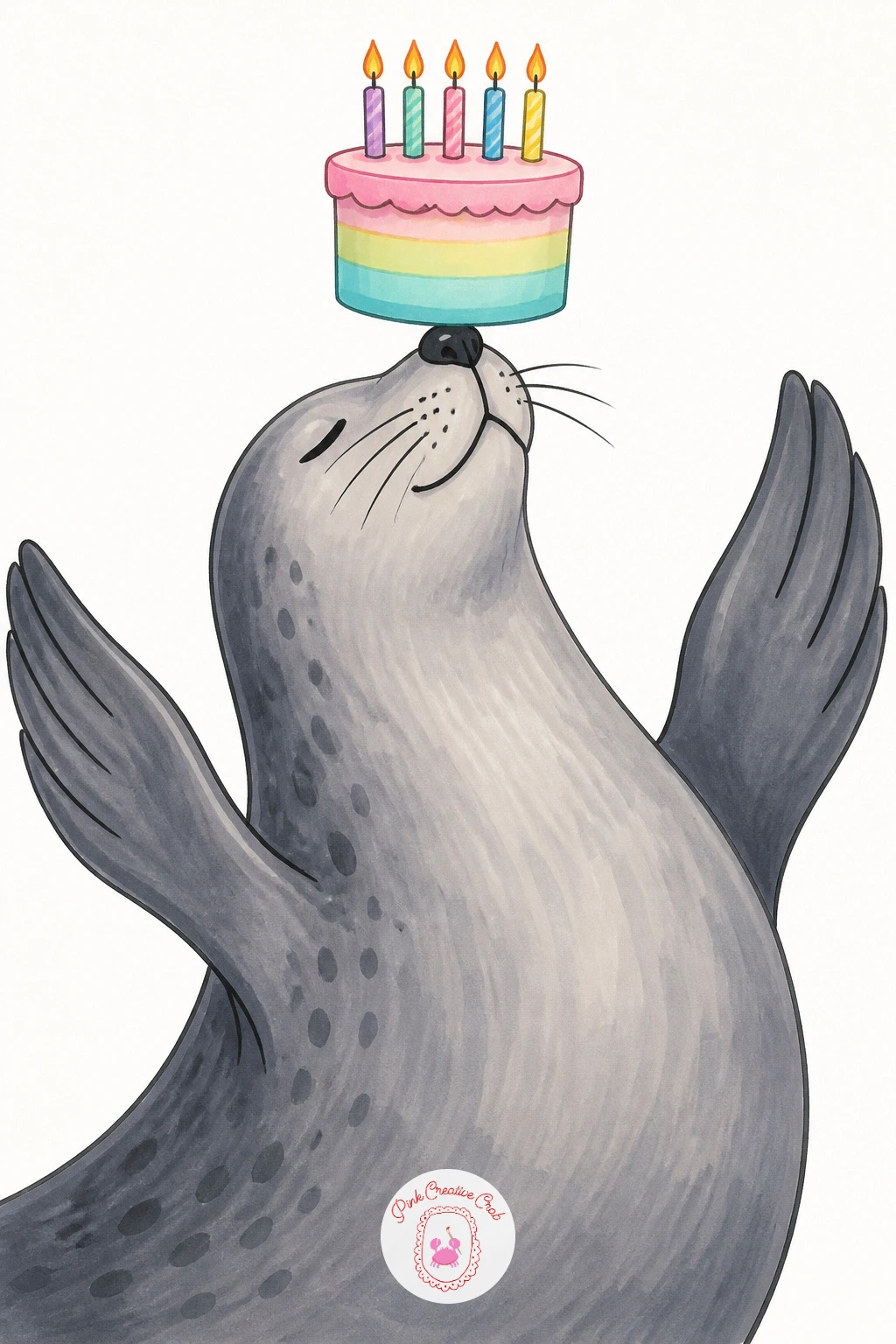
Palette: Grey Blue,Cream White,Soft Pink,Charcoal Black
Give the gift a little journey this time: a goose waddling along with a gift box held in its beak or balanced on its back. Draw the goose’s long neck and oval body first, then place the wrapped gift either gripped gently in the beak or strapped across the back with a simple ribbon line.
Ink the goose’s wing feathers with a few layered curved lines along the side, then color the body in white or soft grey with an orange beak and feet for contrast. Keep the gift wrapping a bold solid color so it is the clear focal point against the goose’s muted feathers.
If the gift looks awkwardly placed, nestle it slightly into the curve of the neck or wing rather than floating separately beside the body, visual overlap always reads as more secure. A child’s version can simplify the goose’s feathers to one flat white shape with no layered lines at all.
One concrete tip: angle the goose’s feet mid-step, one forward and one back, to suggest it is actively on its way somewhere.
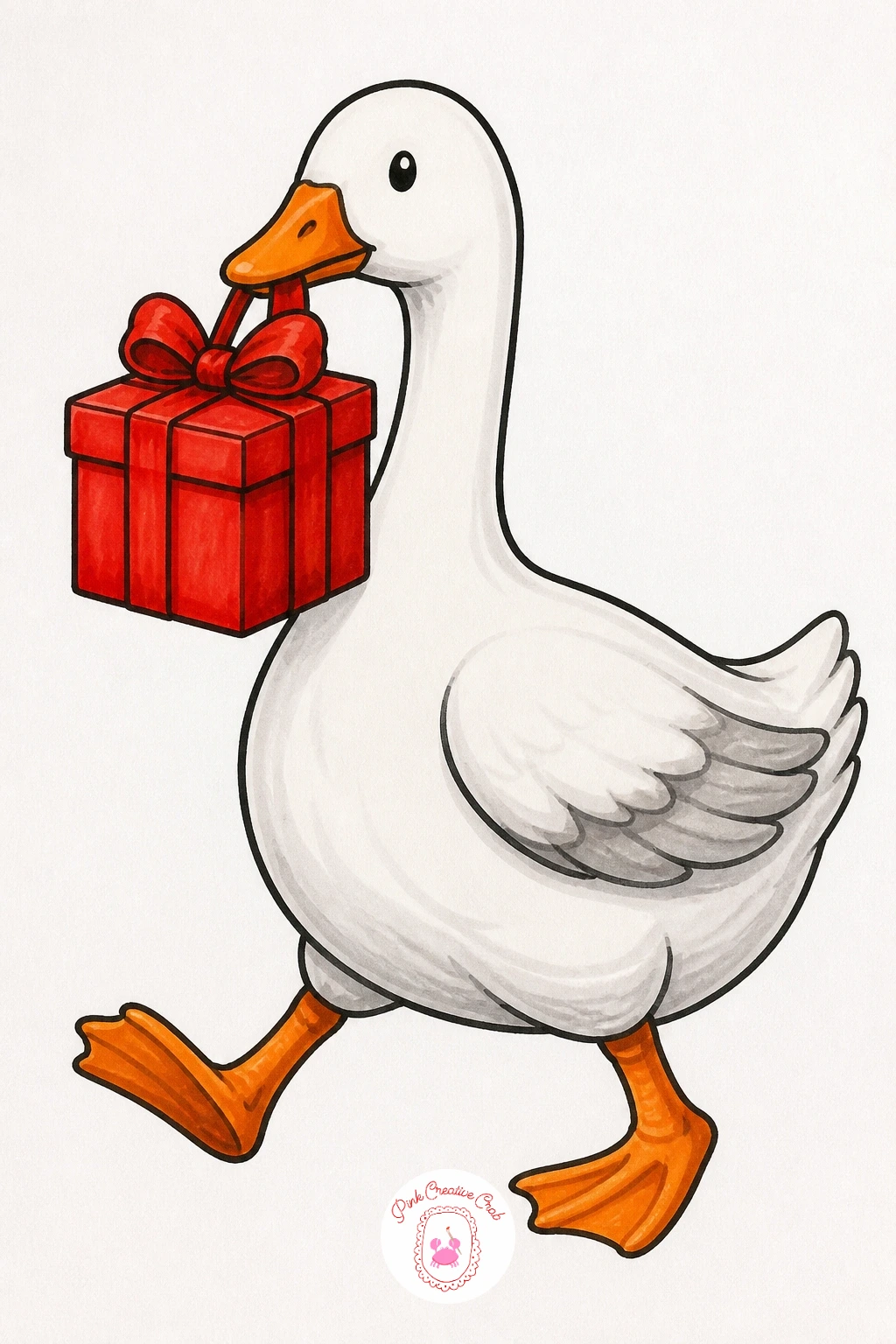
Palette: Snow White,Soft Grey,Orange,Red
Bring back the bears from the very first idea, but now as a small group singing together, mouths open, maybe one holding a party horn. Draw three bear heads and shoulders in a loose row, varying their sizes slightly so one reads as a cub, then give each one an open round mouth and raised paws, as if mid-song.
A scene like this works nicely alongside other birthday card ideas kids love if you want to build out a whole set of cards together.
Ink each bear with slightly different ear shapes and sizes so they read as distinct individuals rather than copies, then color them in varying shades of brown so the group has some visual rhythm. Add a single party horn held by the smallest bear, colored brightly so it draws the eye even among three figures.
If the group looks too flat and lined up, overlap the shoulders slightly so one bear sits a touch in front of the others. A simpler child’s version can draw just two bears instead of three, with simple round open mouths and no horn at all.
Give each bear slightly different eye shapes, some wide and excited, one more relaxed, for extra personality.
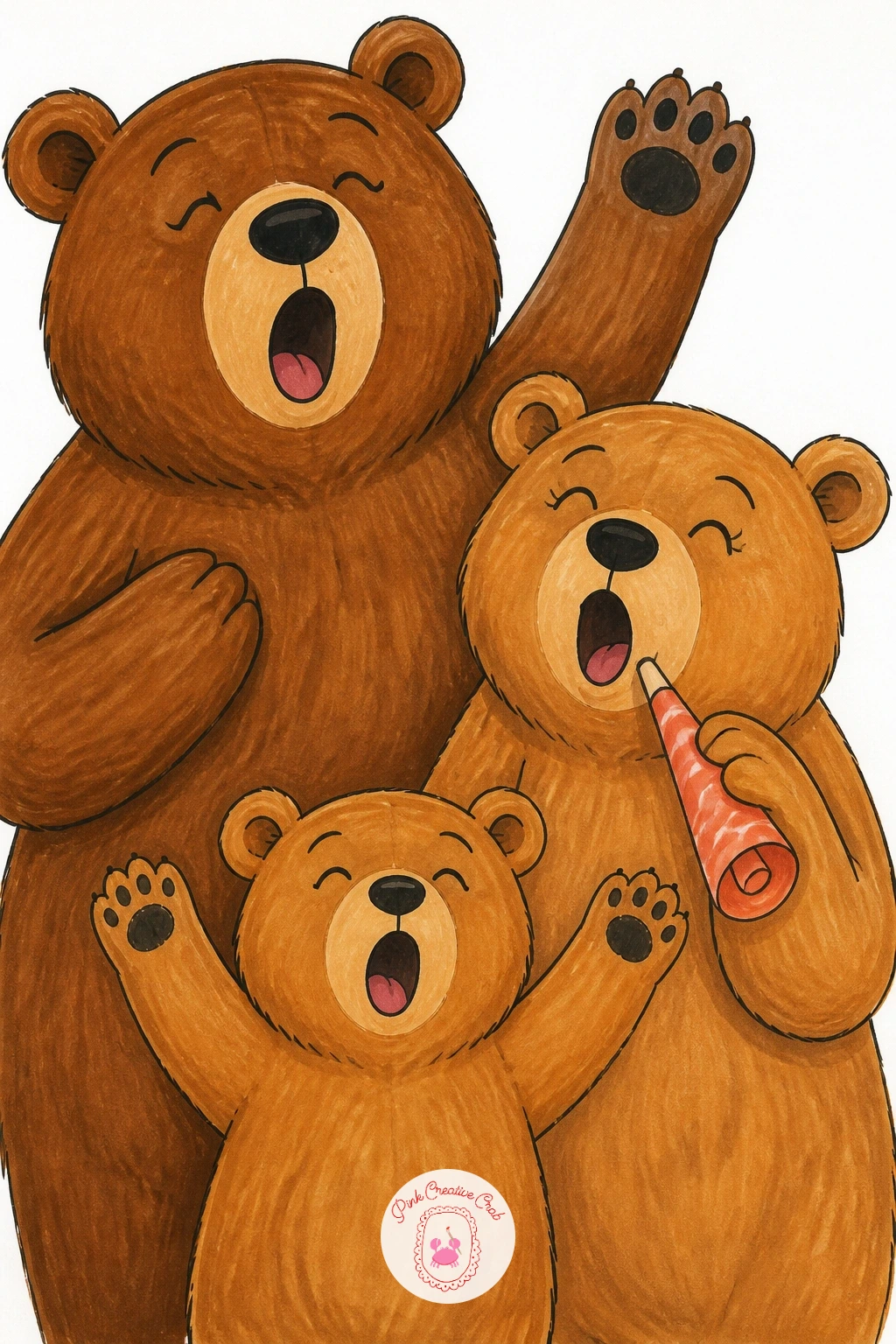
Palette: Warm Brown,Tan,Dark Chocolate,Coral Red
Close the set by returning to the giraffe, this time simply wearing its own party hat perched at the very top of that long neck. Draw the giraffe’s full body in a relaxed standing pose, then place a small cone-shaped party hat tilted on top of the head, with a thin elastic string drawn curving under the chin.
If this collection becomes a regular habit, more animal sketchbook ideas are worth keeping on hand for whenever a new card is needed.
Ink the hat’s cone shape with a small pom-pom circle at the tip, then color the giraffe in its usual golden tan with irregular brown spots, saving one bright contrasting color for the hat so it stands out clearly at the very top of such a tall subject.
If the hat looks like it is floating above the head instead of worn, make sure the elastic string line touches the chin on both sides, that small connection is what grounds it visually. A faster child’s version can skip the spots entirely and use one flat tan color for the whole giraffe.
End with a wide, pleased giraffe smile, it is a nice simple note to finish a whole set of party animals on.
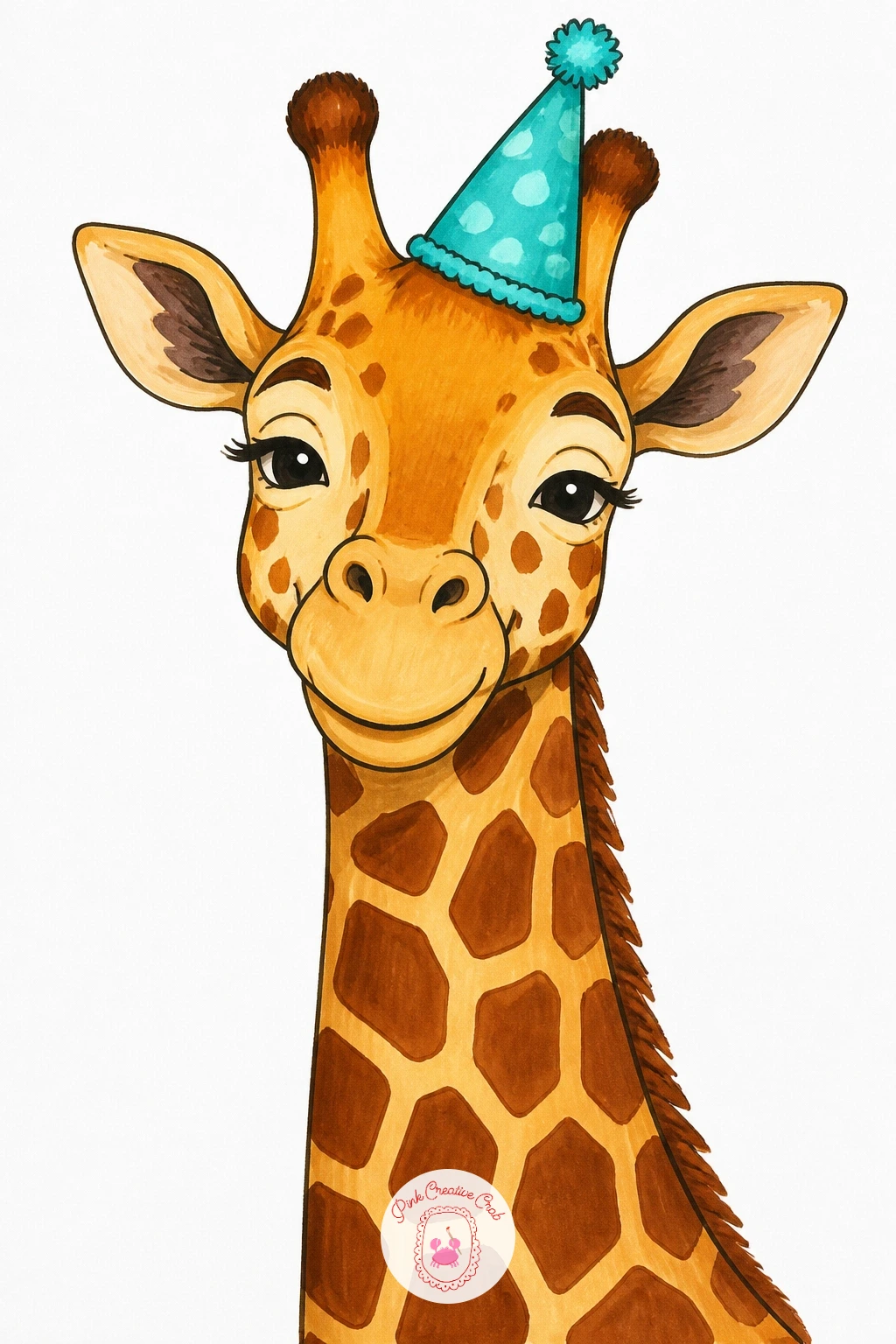
Palette: Golden Tan,Chocolate Brown,Turquoise,Cream
What to Do Next
Pick one animal that made you smile and start there, on a plain sheet of smooth marker paper or straight onto a folded card. Keep your fineliner light at first, let the color do the heavy lifting, and work through the rest of the list whenever the next birthday comes around.
Frequently Asked Questions
What is the easiest animal to start with for happy birthday drawings?
A bear is the easiest, since its whole body breaks down into two simple circles. Start there before moving to animals with longer necks or more limbs, like the giraffe or llama.
What markers work best for these happy birthday drawings?
Alcohol-based markers blend the smoothest and give the flattest, cleanest color for this style. A basic set of twelve to twenty-four colors covers every animal and cake in this list without needing anything specialized.
How do I stop my fineliner lines from bleeding under marker?
Let the ink dry fully for a minute or two before coloring over it, and use a marker-safe paper rather than regular printer paper. Thin, light pressure with the fineliner also helps the ink set faster.
Can young kids really do these happy birthday drawings too?
Yes, every idea has a simplified version built from basic shapes and fewer details, suited to a child’s hand. An adult can then add the small extra touch, like a highlight or extra texture, once the child’s version is done.
How do I make a birthday card from one of these drawings?
Draw the finished animal scene on the front half of a folded piece of cardstock sized to fit an envelope. Leave the inside blank for a handwritten message, or draw a small matching detail, like one balloon, inside as well.
Have any thoughts?
Share your reaction or leave a quick response — we’d love to hear what you think!
-
 0
-
0
-
0
-
0
-
0
-
0


