

Table of Contents
A watercolor sunset is one of the kindest subjects for a beginner because the sky forgives almost everything: colors bleed, blend and soften into each other and it still reads as evening light. This collection gives you twelve different sunset scenes, each built from a few big simple shapes so there is nothing fiddly to draw and nothing tiny to trace.
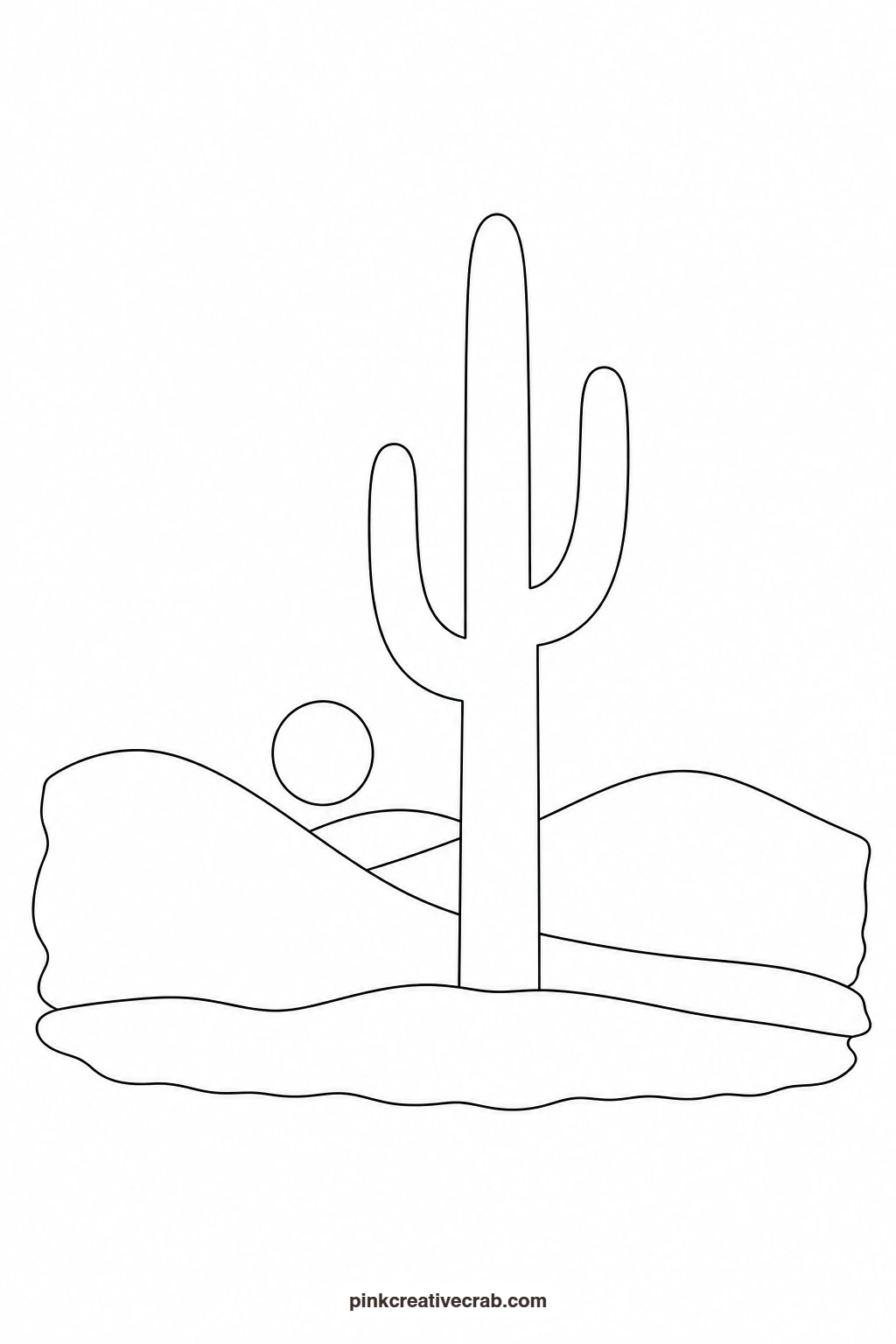
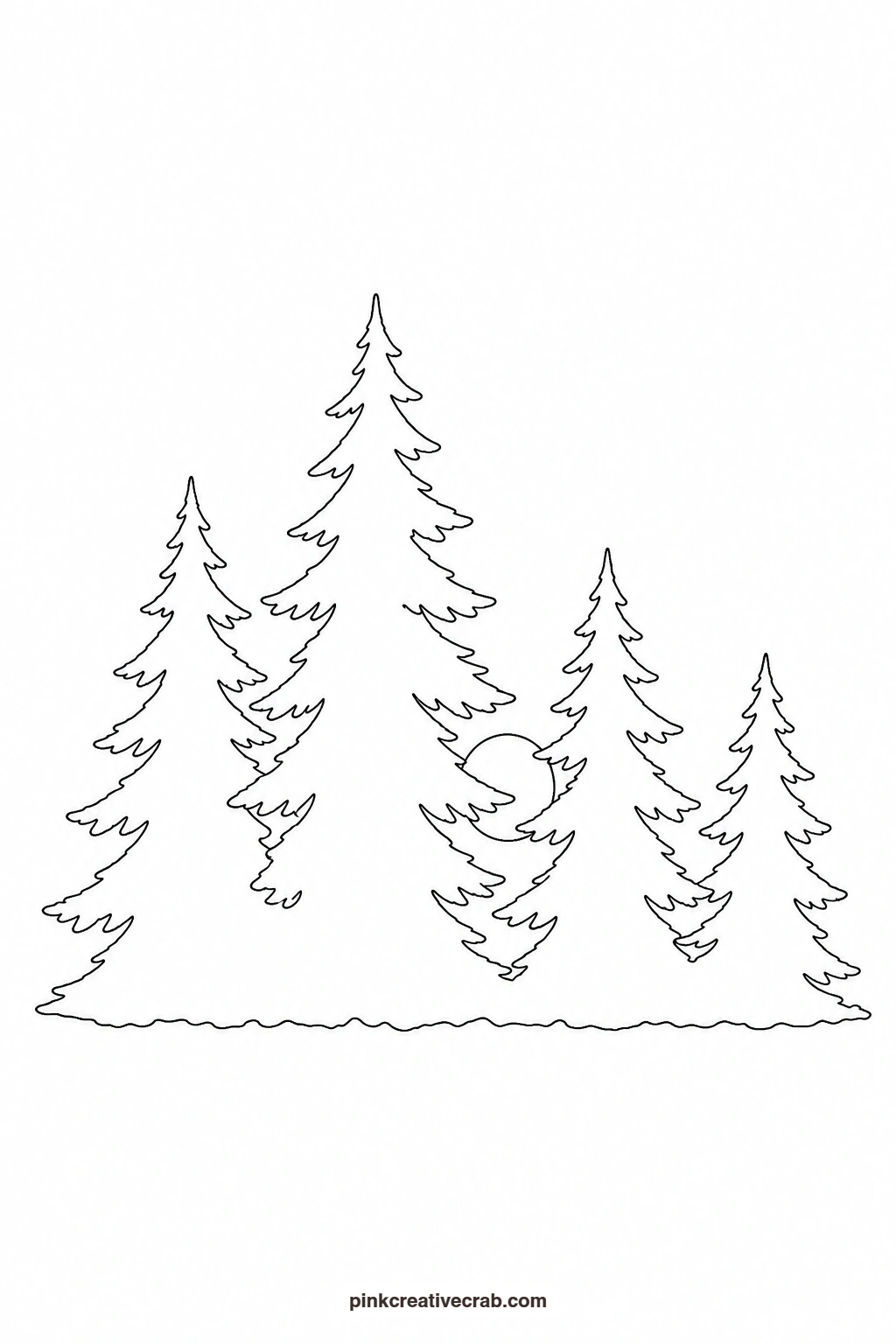
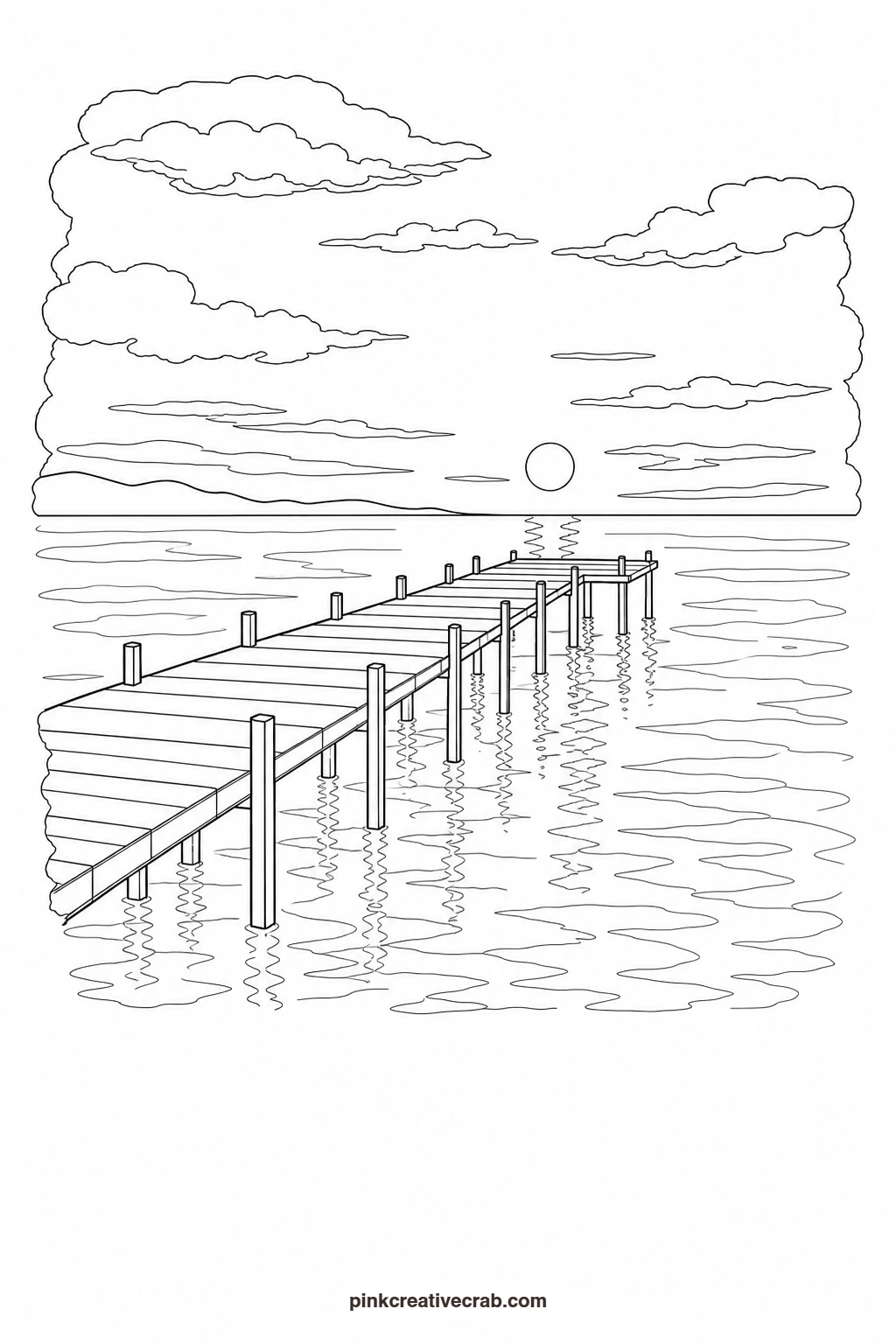
Print the outline, then transfer it to your watercolor paper by holding both sheets against a sunny window or a light pad, or slide a piece of graphite transfer paper between them and trace over the lines with a pencil. Keep the painted example next to you as you work through the washes, and you have a finished picture today without ever starting from a blank page.
Using these images: free for personal projects such as printing, coloring, cards, journals and gifts. Handmade items that include them may be sold up to 30 pieces per design. More than that is commercial use and is not permitted, and neither is selling or sharing the images themselves or passing them off as your own. Please ask before any other use.
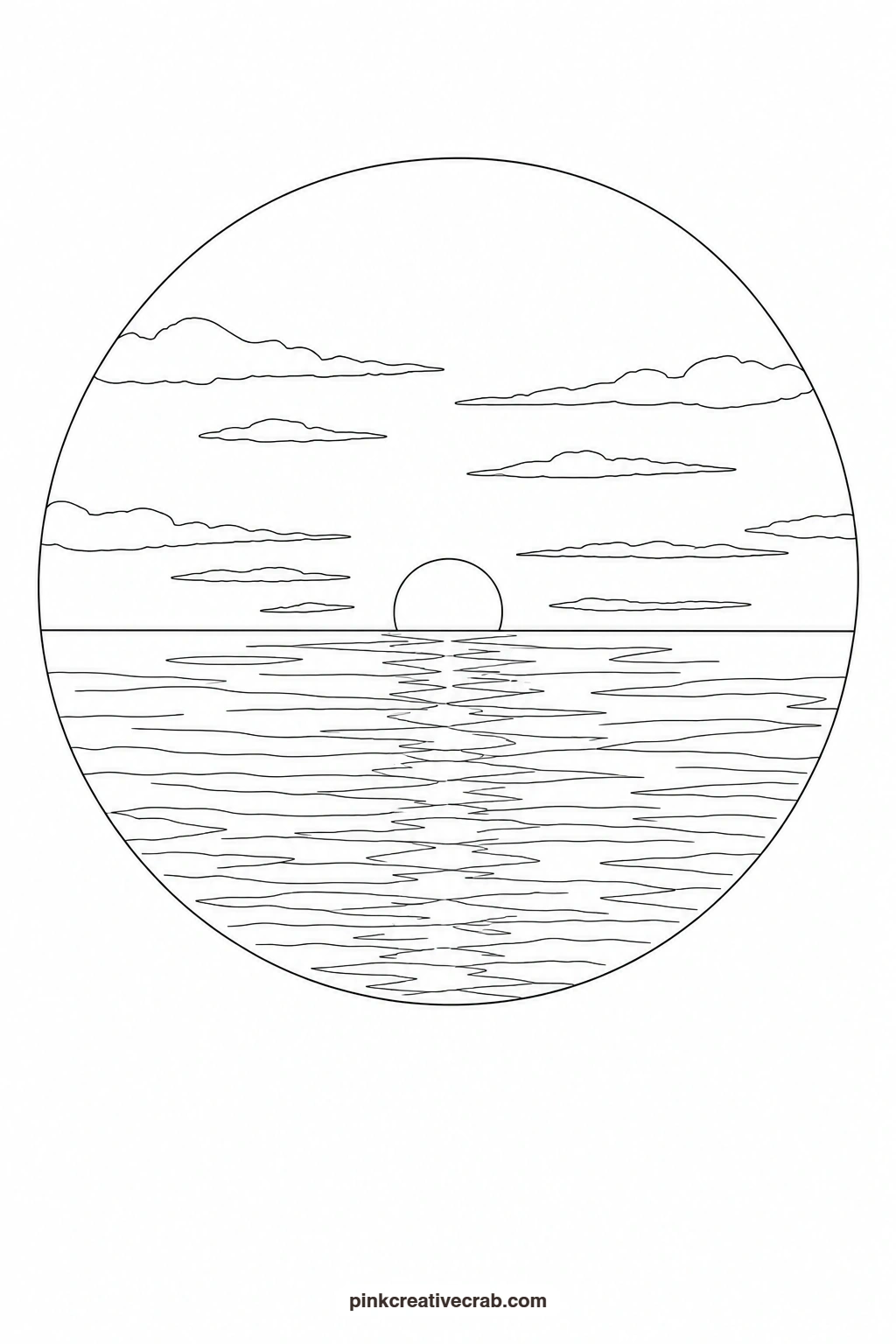
Sunset Over The Sea
Wet the sky first and drop in yellow near the horizon, then pink and lavender higher up, letting the colors meet and blend on the damp paper. Paint the sun as a flat golden circle while the sky around it is still slightly wet so the edge softens. Once the sky is dry, paint the sea in horizontal strokes of blue-grey with a loose vertical strip of yellow and orange left unpainted or glazed thin for the reflection. The one touch that finishes it: a few short dry-brush horizontal lines across the reflection to suggest gentle ripples.
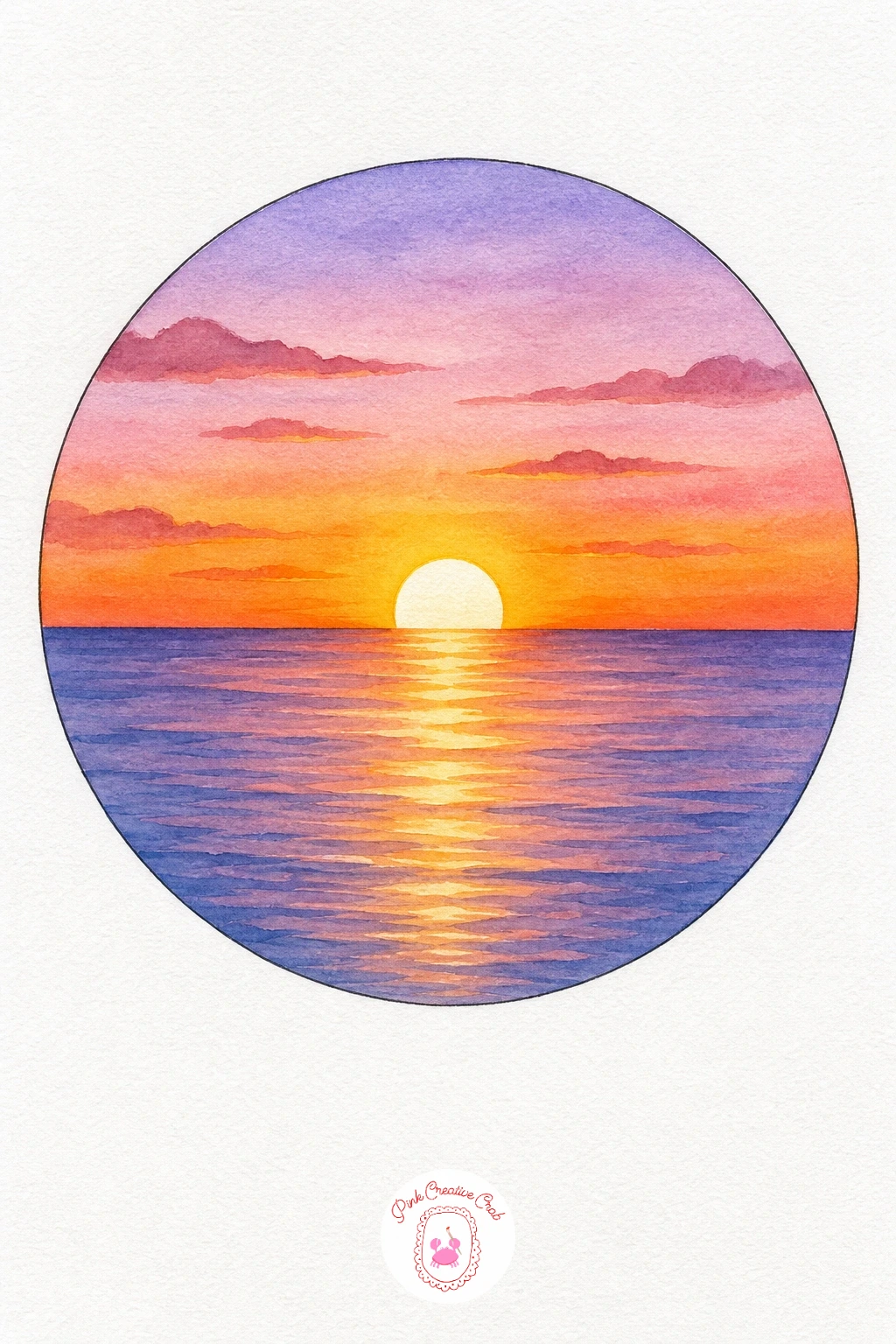
Palette: Cadmium Yellow,Permanent Rose,Cobalt Blue,Payne’s Grey
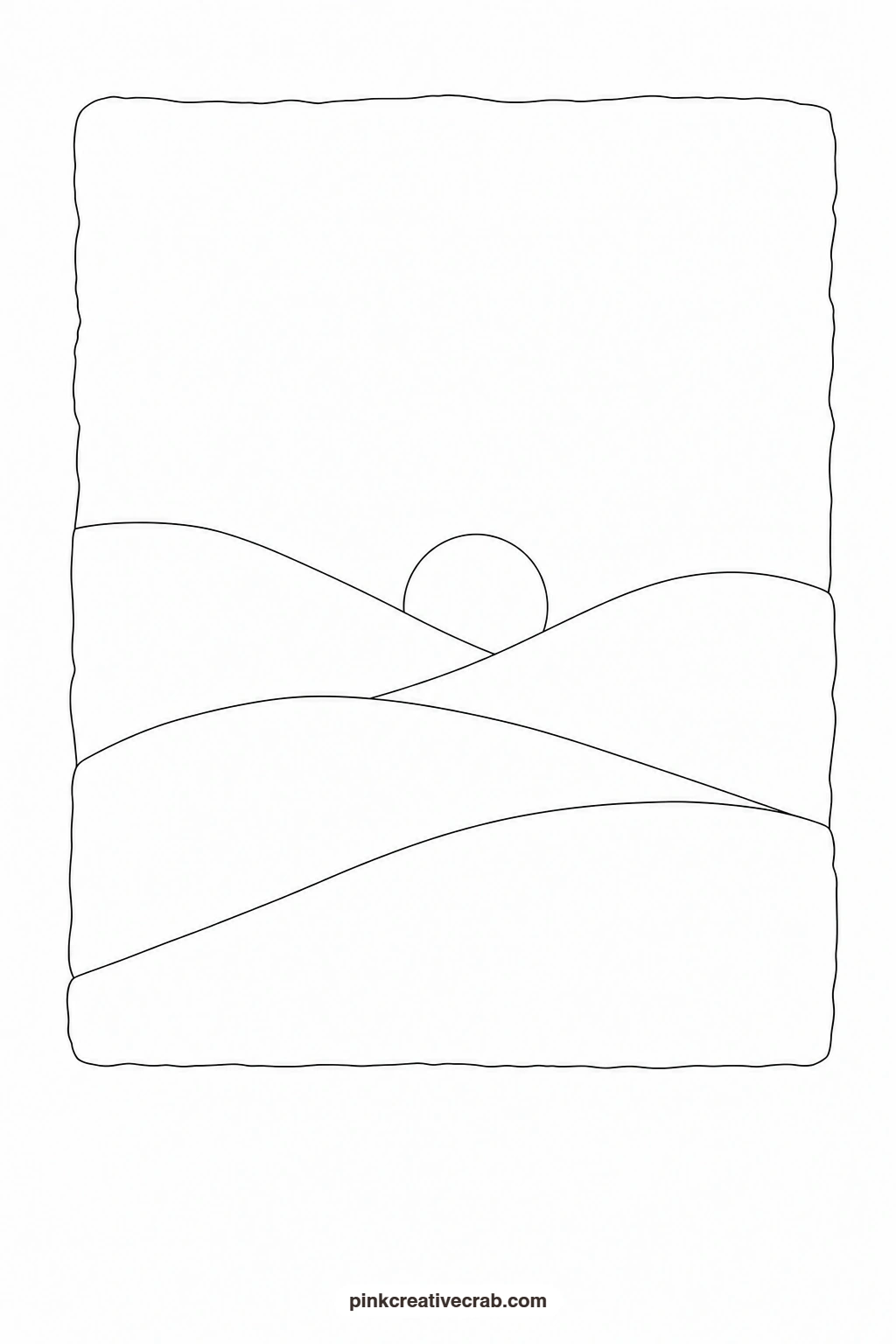
Sunset Behind Hills
Paint the sky wash first in horizontal bands of orange near the horizon fading up into pink, keeping the sun area a clean unpainted circle. Once dry, paint the farthest hill in a pale lavender wash, the middle hill a stronger violet, and the nearest hill the darkest plum so the layers read clearly from back to front. Let each hill dry before adding the next so the edges stay crisp rather than bleeding together. The finishing touch is a thin warm line of orange along the top edge of the nearest hill where the last light catches it.
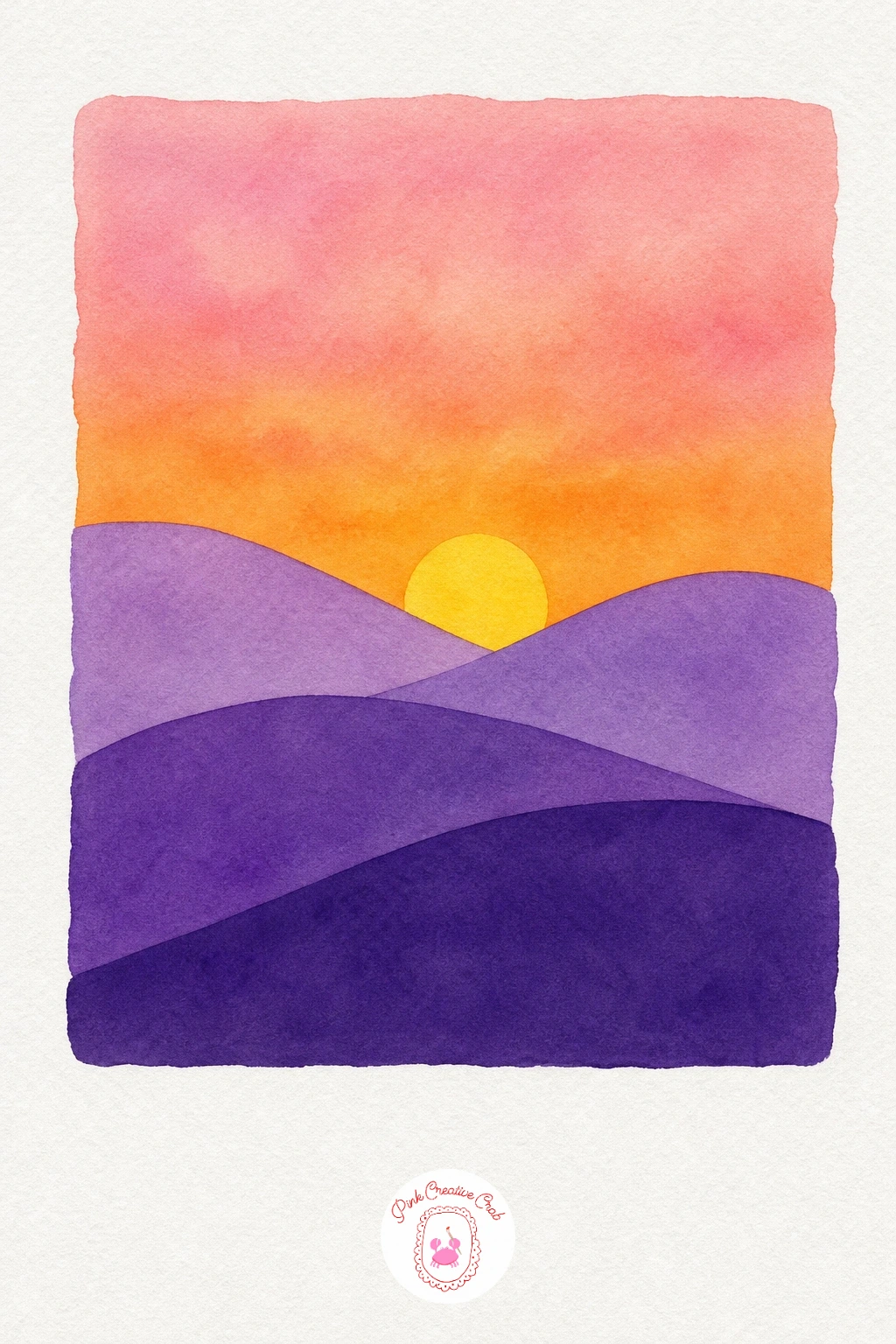
Palette: Orange,Light Pink,Lavender,Dioxazine Violet
Sunset With A Palm Tree
Lay the sky wash first in warm orange and coral, keeping it loose, and paint the sun as a flat circle before the palm goes in. Once the sky is fully dry, paint the trunk and fronds as one flat silhouette in a dark warm brown-black, working from the base up and fanning the brush out for each frond in a single confident stroke. Keep the trunk curve gentle so it reads as a simple shape rather than something fussy to draw. Finish by softening the very tip of each frond with a slightly drier brush so they do not look cut off.
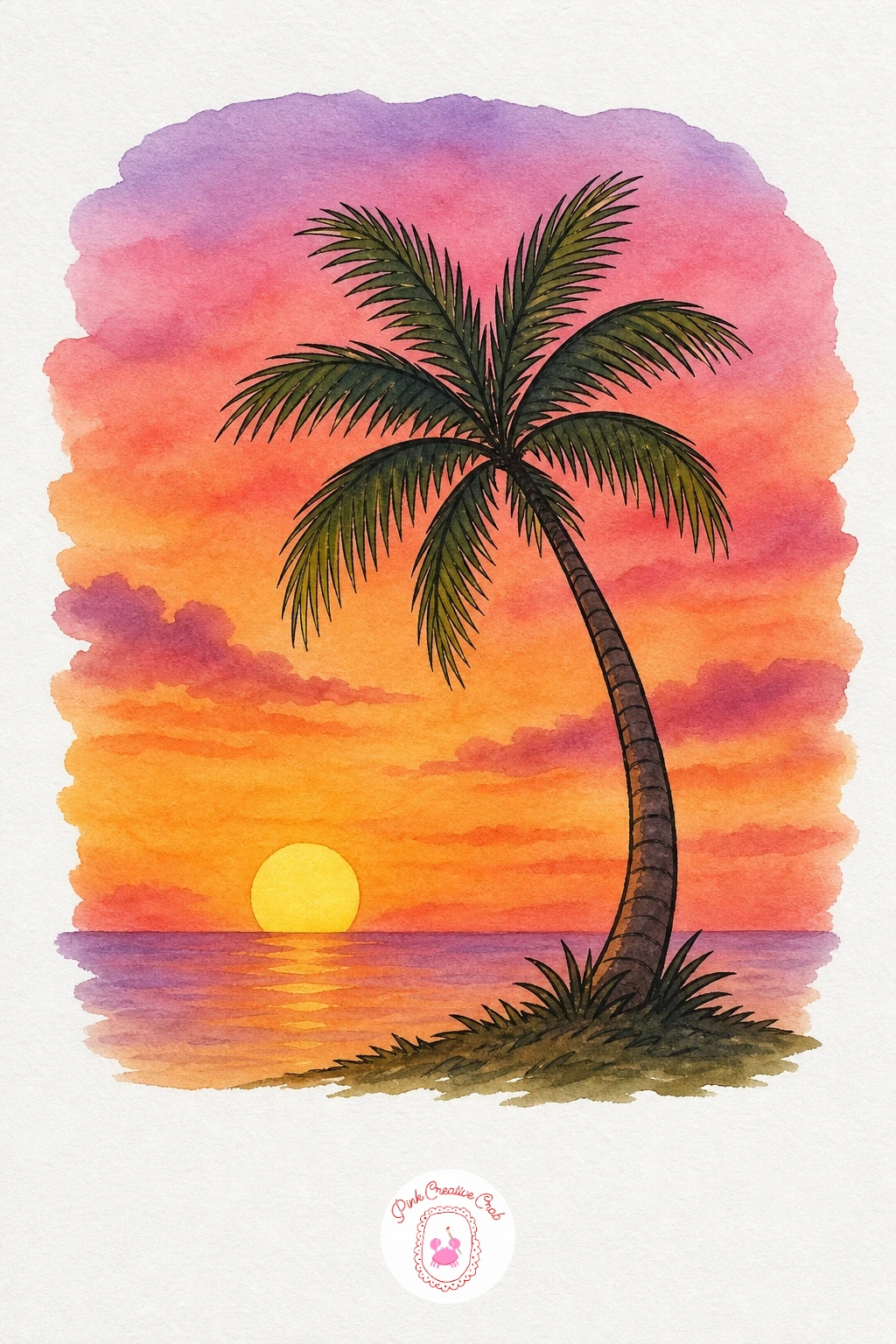
Palette: Coral,Orange,Violet,Burnt Umber
Paint the palm silhouette with a flat brush held on its side for the trunk, then switch to the tip for each frond, so the whole tree takes only five or six strokes.
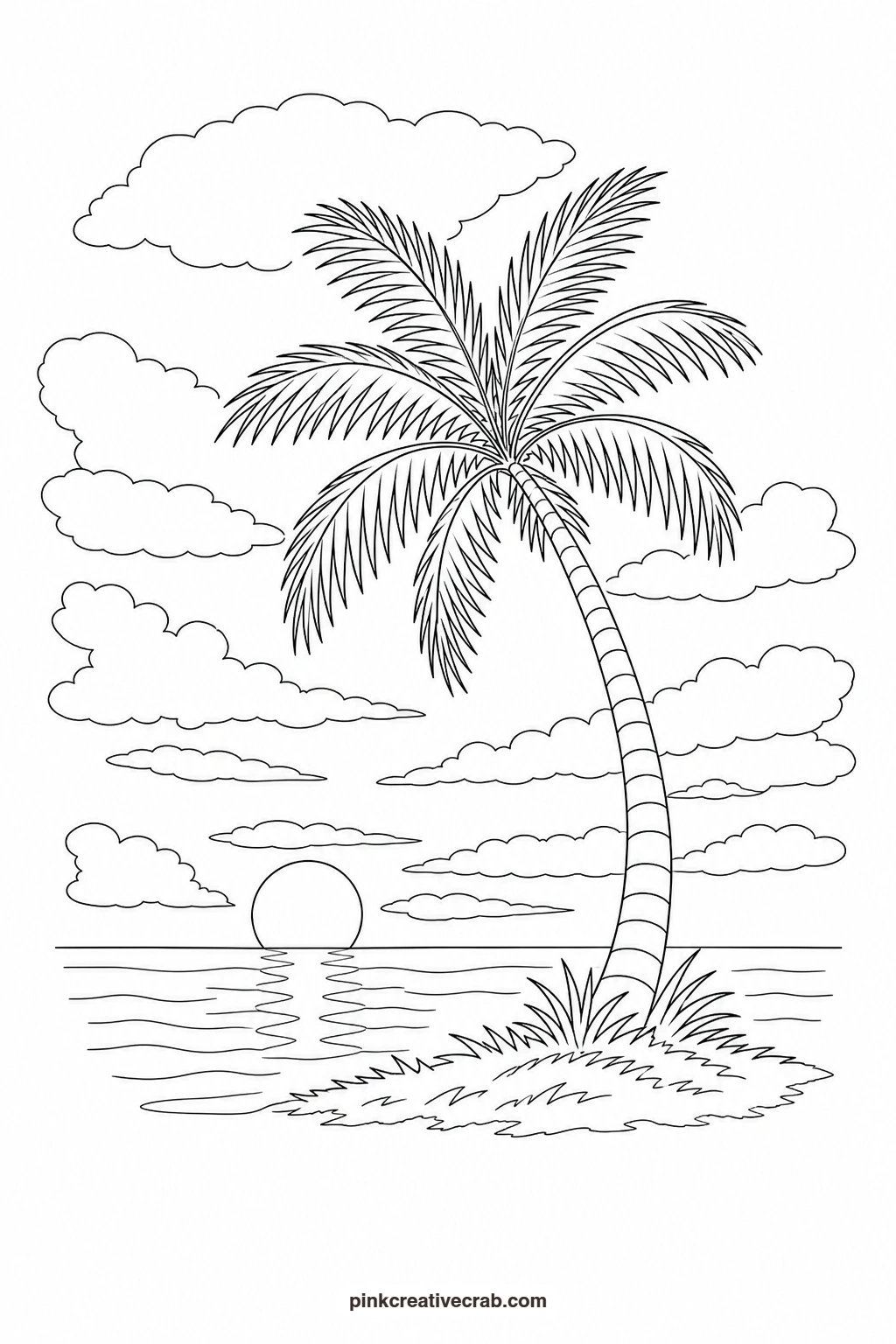
Sunset Over A Lake With A Boat
Wash the sky in soft orange and pink, then flip the same colors below the horizon line for the water so the reflection matches the sky above it. While the water wash is still a little damp, paint the boat’s reflection as a soft grey smudge directly underneath it. Once everything is dry, paint the boat itself in a flat warm brown with a thin darker line along its top edge for the rim. The finishing detail is a tiny vertical line rising from the boat for a mast, which anchors the whole scene and gives the eye somewhere to land.
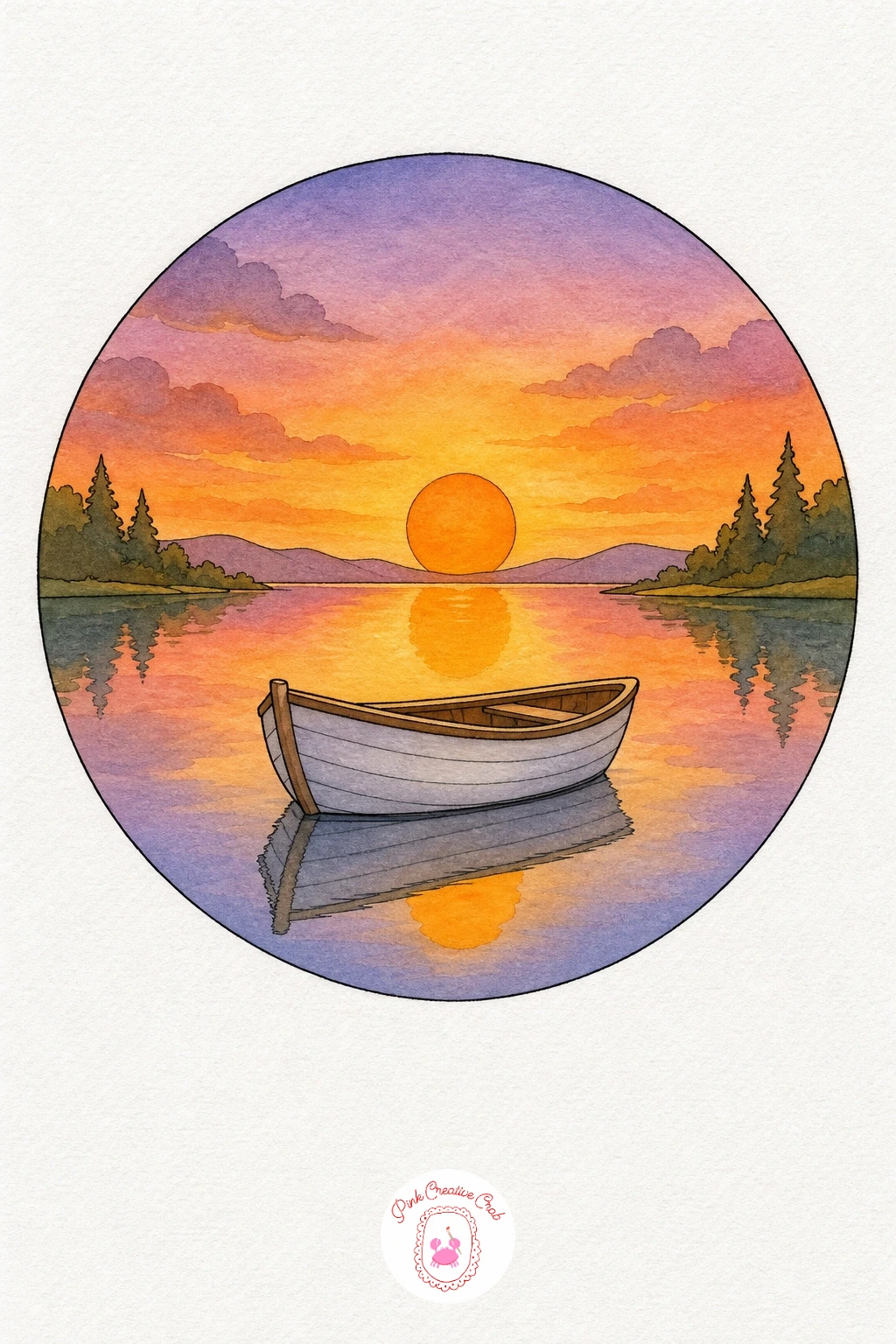
Palette: Orange,Rose Pink,Raw Sienna,Payne’s Grey
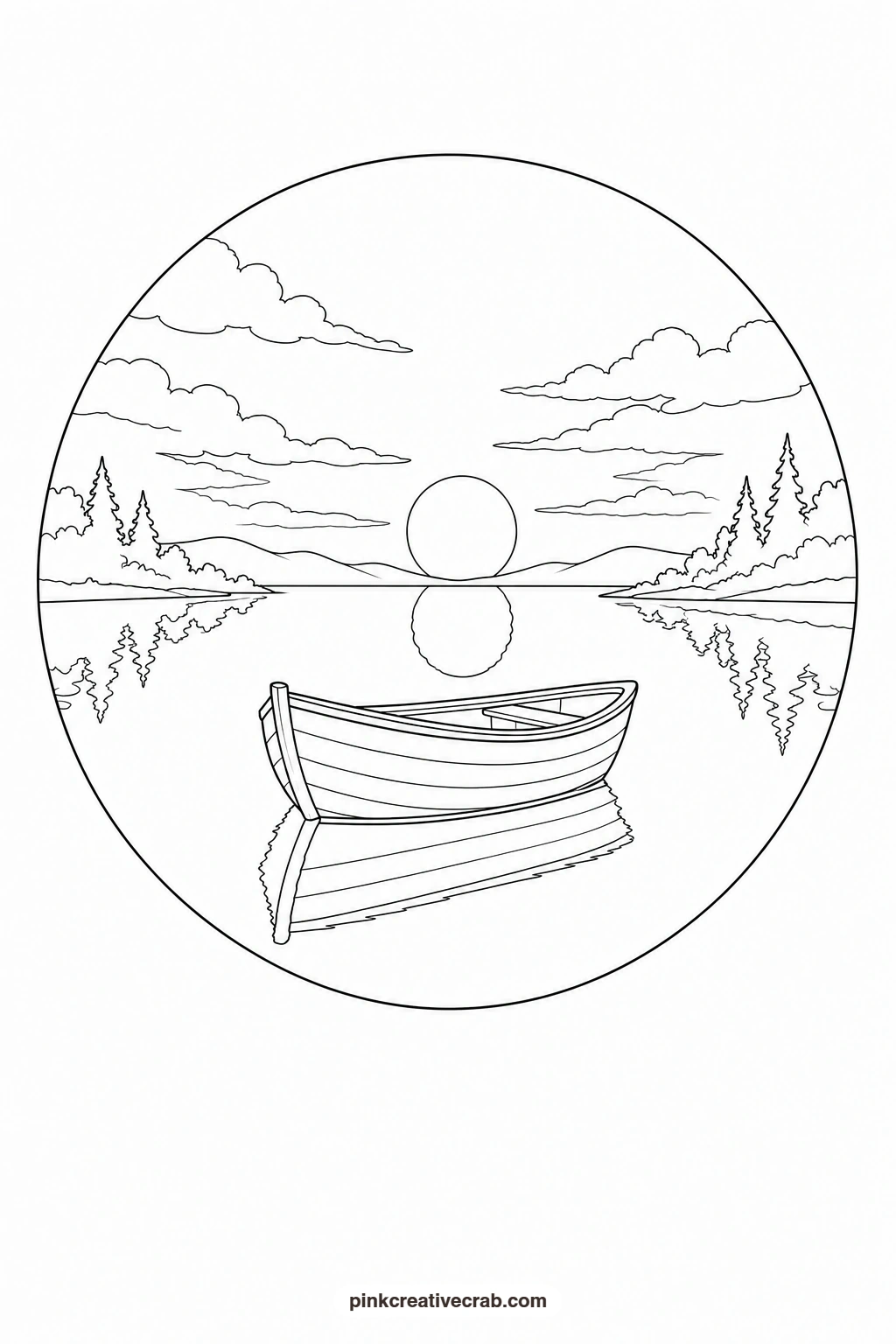
Sunset With Flying Birds
Fill the whole sky with a graduated wash, warm gold at the bottom rising into coral and soft violet at the top, blending the colors into each other while the paper is still wet. Let it dry completely before adding anything else, since the birds need a crisp edge against the color beneath them. Paint each bird as one small flat V-shape in dark grey or black, varying their size slightly so the farther ones read as smaller and higher. Keep the birds few and spaced apart: four or five is plenty, and crowding them is the one thing that makes this picture look cluttered instead of calm.
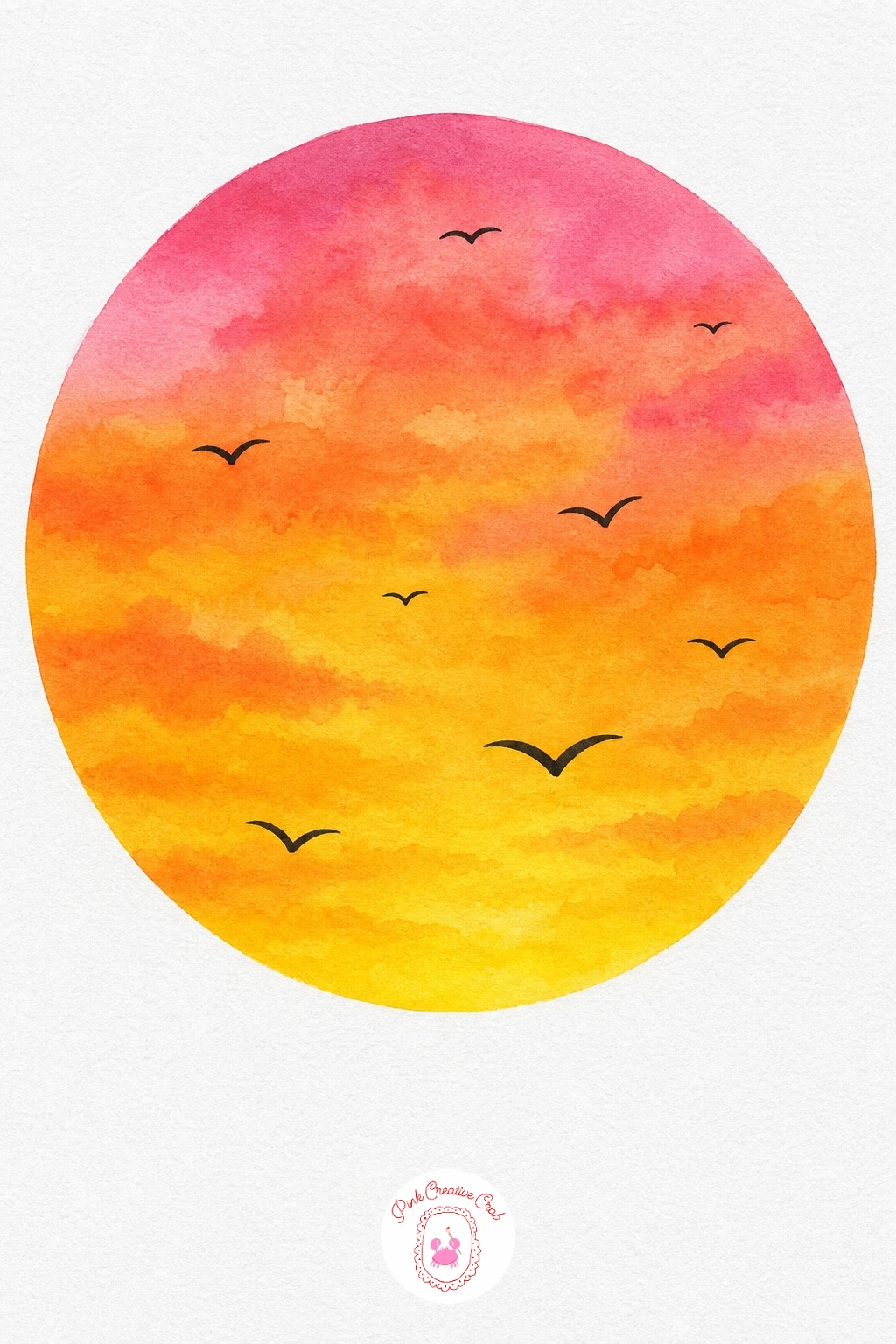
Palette: Golden Yellow,Coral,Violet,Charcoal Grey
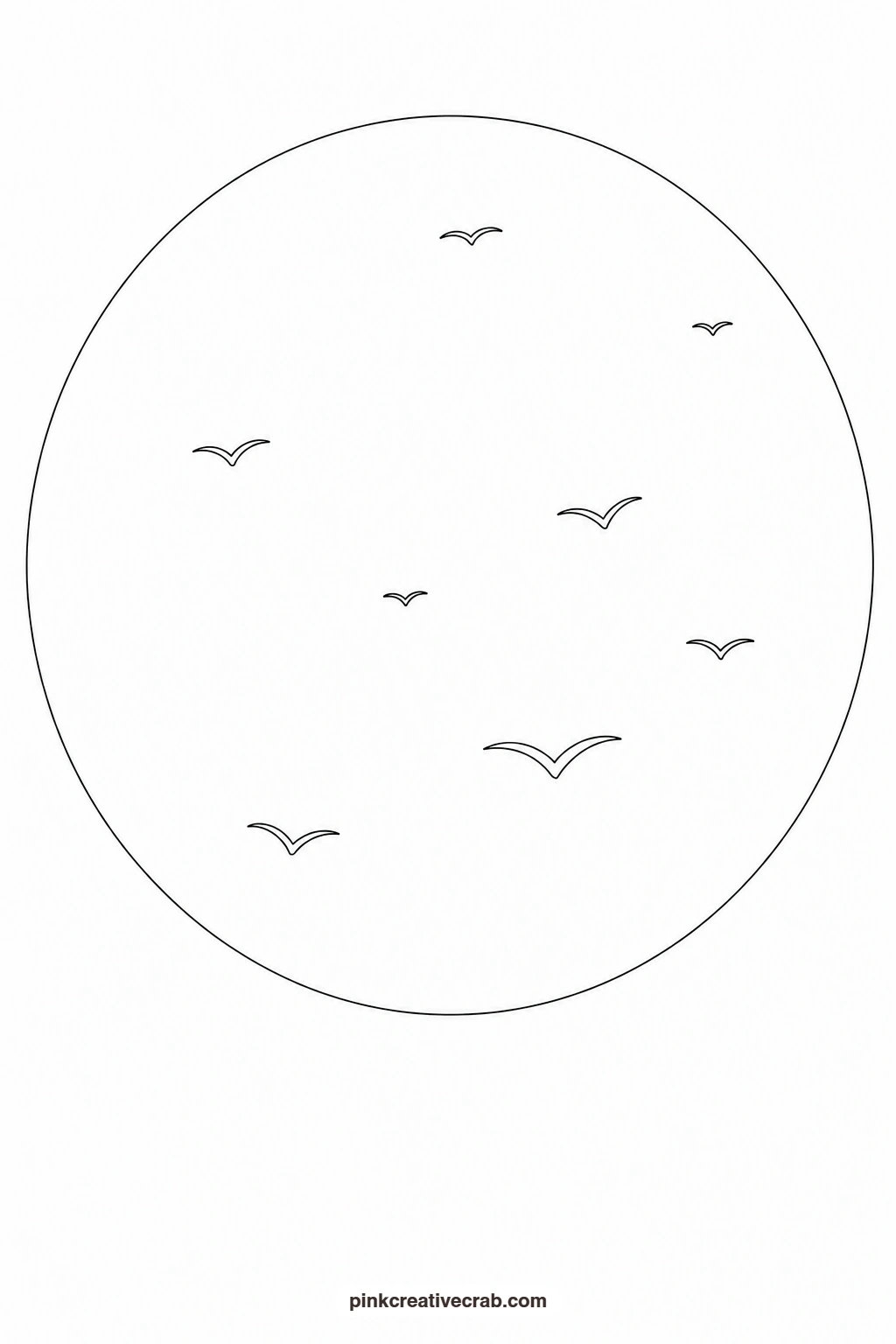
Sunset Behind Mountains
Paint the sky first in bold horizontal bands, deep red near the horizon rising into orange and then a pale warm yellow higher up, keeping the sun a clean reserved circle. Let the sky dry fully, since the mountains need sharp edges to look solid against it. Paint both peaks as one flat dark silhouette, leaving small triangular notches unpainted near the top for the snow caps, then go back and fill those notches with a very pale cool grey. The finishing touch is a thin strip of warm orange glazed along the base of the mountains where the sunset light would catch the lower slopes.
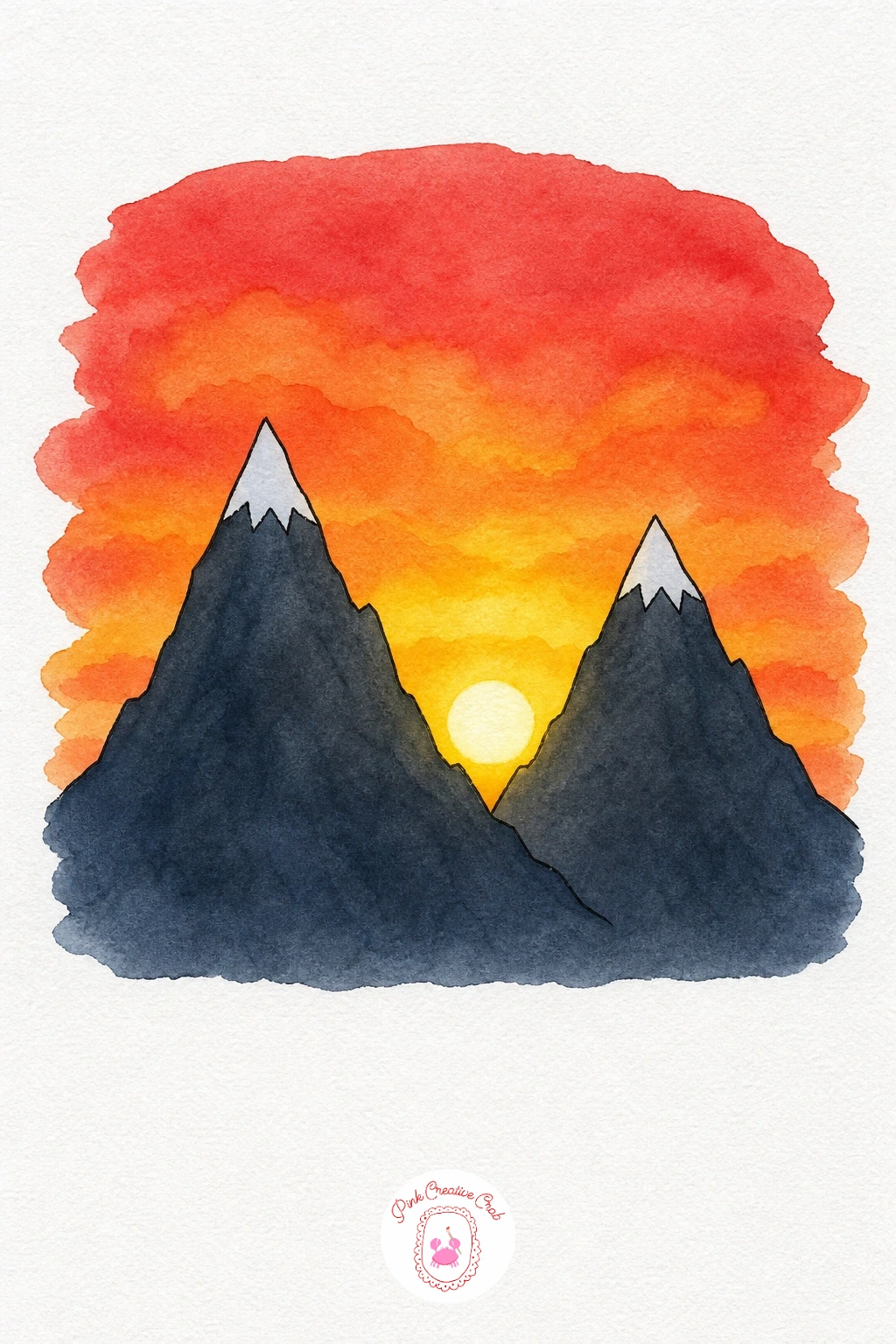
Palette: Alizarin Crimson,Orange,Naples Yellow,Payne’s Grey
If jagged peaks feel tricky, draw them as two simple overlapping triangles first in pencil before tracing the final outline, so the angles stay even on both sides.
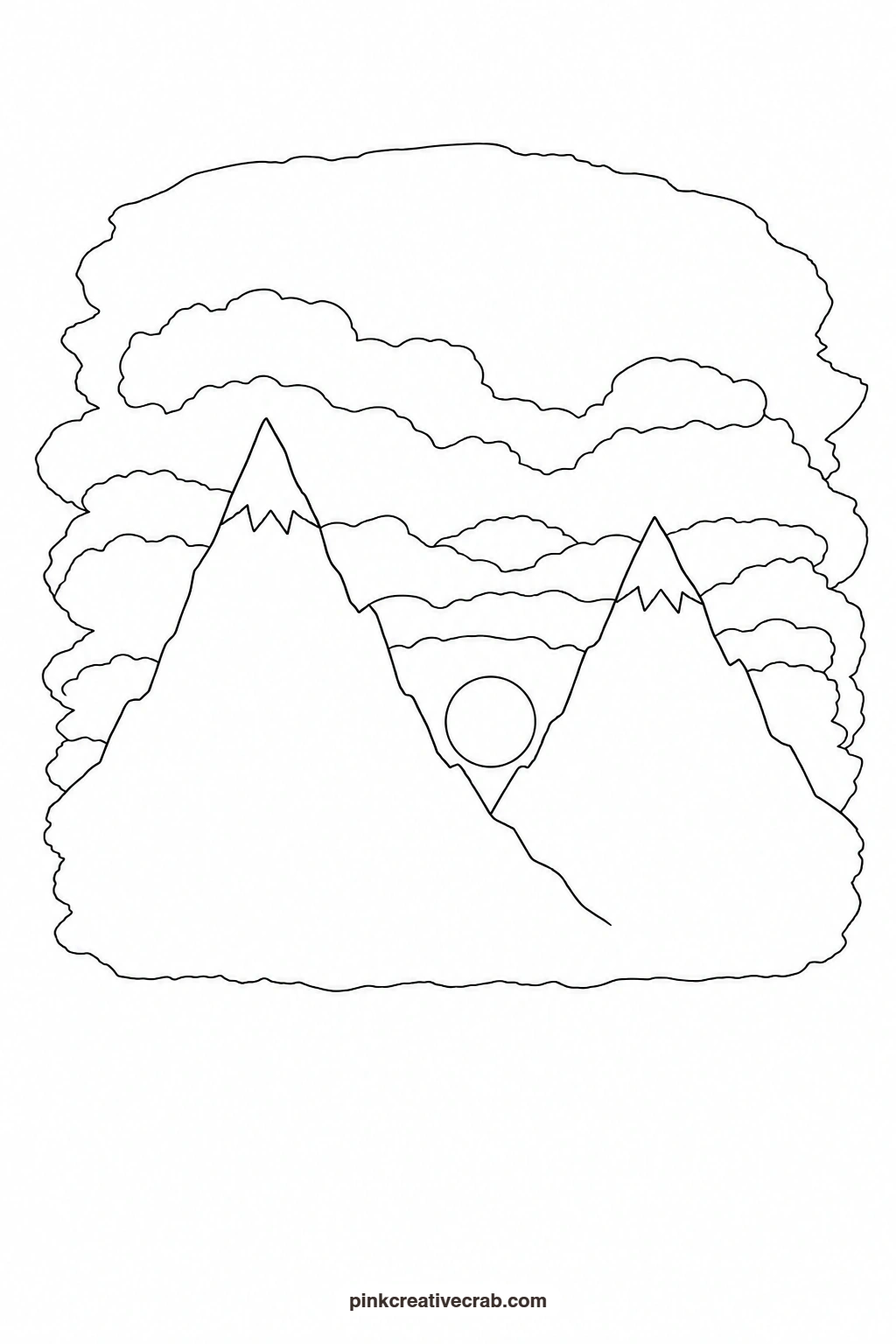
Sunset Over A Field With A Tree
Wash the sky in warm orange and soft yellow, then paint the field in one flat stroke of muted olive green across the bottom third while the sky is still slightly damp so the horizon line softens just a little. Once dry, paint the tree trunk as a thin dark vertical line and the canopy as one rounded flat shape in a deep green-brown, darker than the field so it reads clearly as a silhouette against the glowing sky. Add a few short blades of grass near the base of the trunk with the tip of a fine brush as the last and only detail in the whole piece.
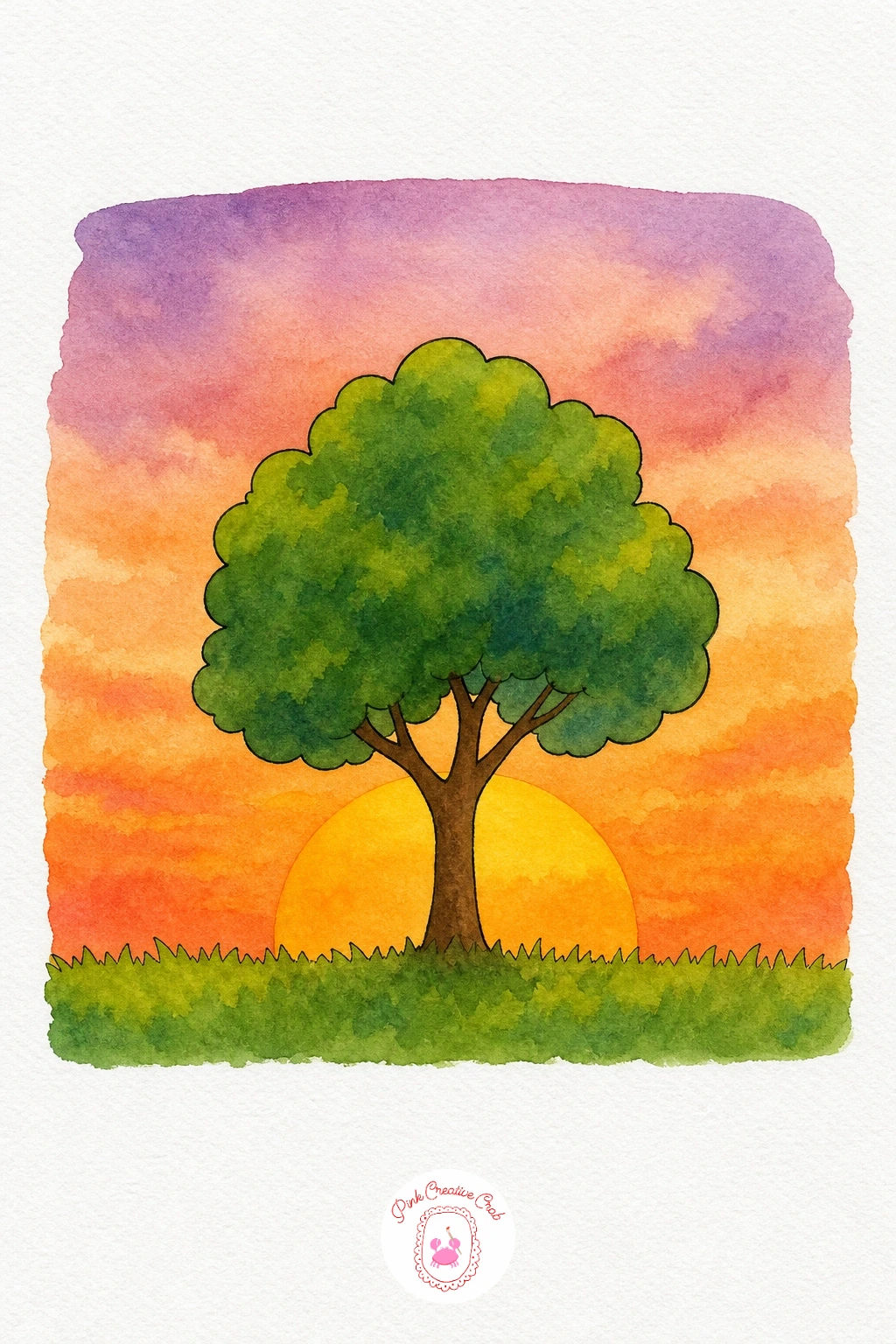
Palette: Orange,Naples Yellow,Olive Green,Burnt Sienna
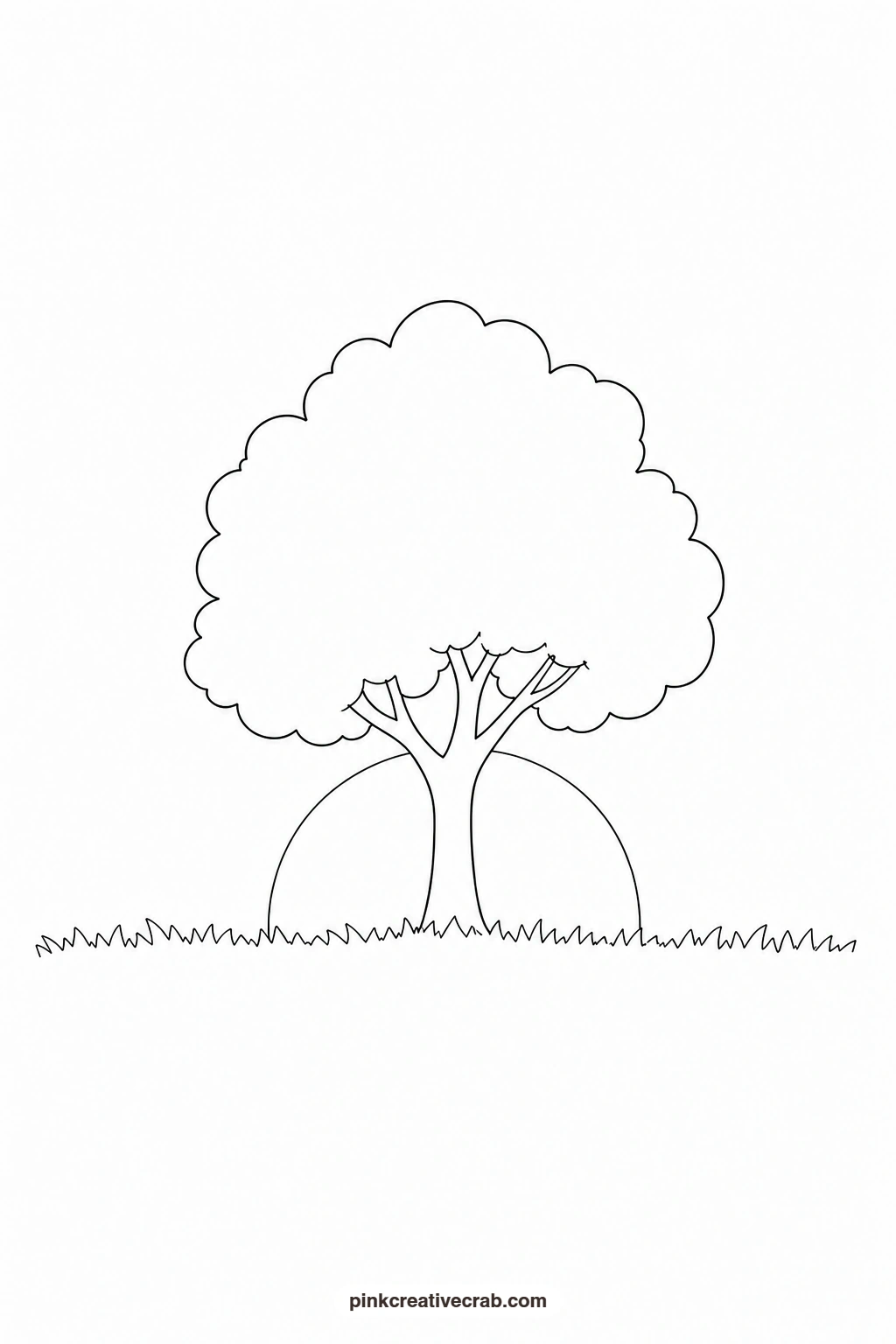
Sunset With A Lighthouse
Paint the sky and sea in soft orange and pink washes first, letting the horizon blend gently where they meet. Once dry, paint the lighthouse tower in white (leave the paper bare) and add one bold horizontal red stripe partway up, then a small dark flat roof shape on top. Paint the rocks beneath it in a few flat strokes of grey-brown, keeping the shape simple and blocky rather than detailed. The finishing touch is a tiny dot of pale yellow at the top of the lighthouse for the lamp, which gives the whole scene a warm focal point against the cooling sky.
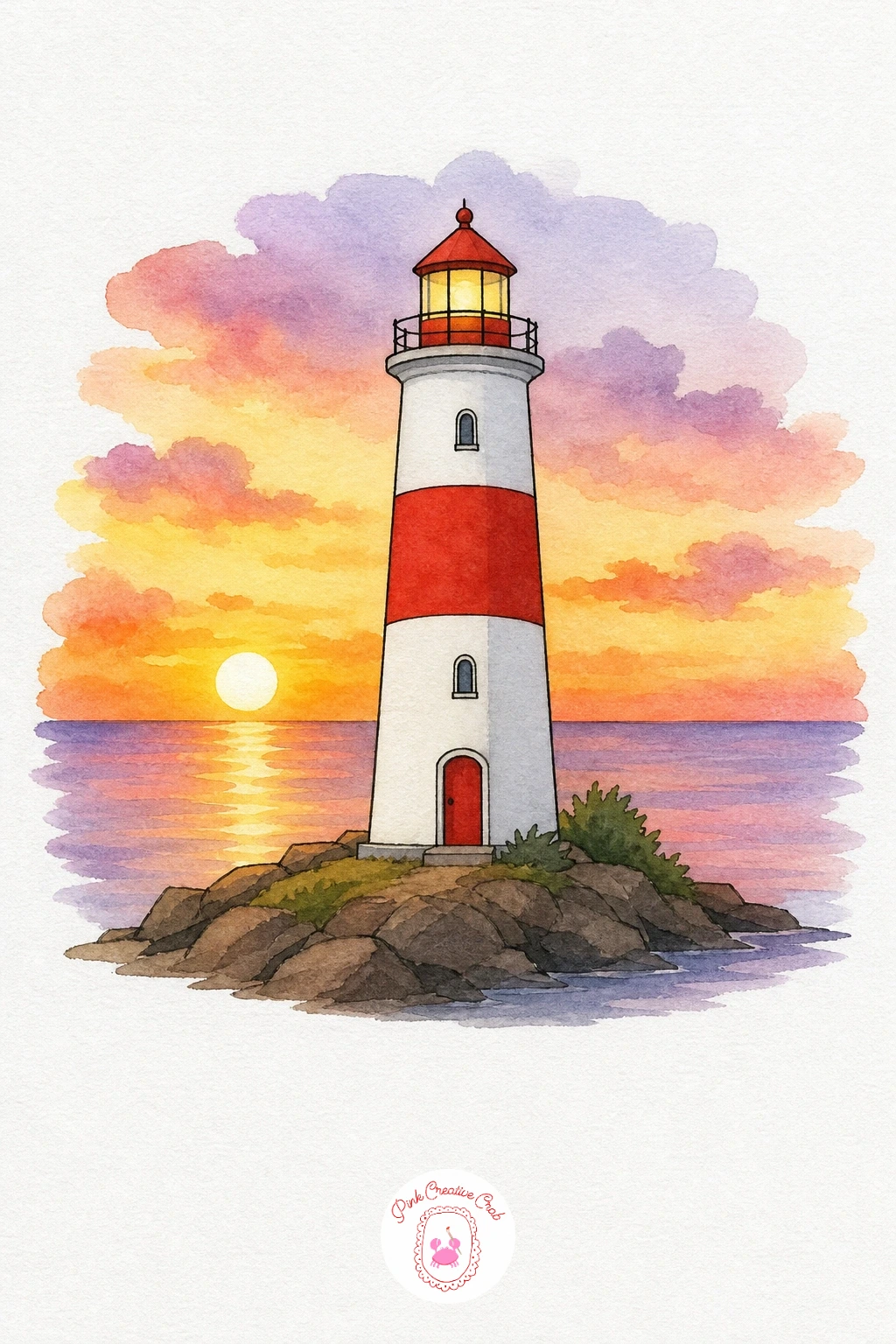
Palette: Orange,Rose Pink,Cadmium Red,Grey-Brown
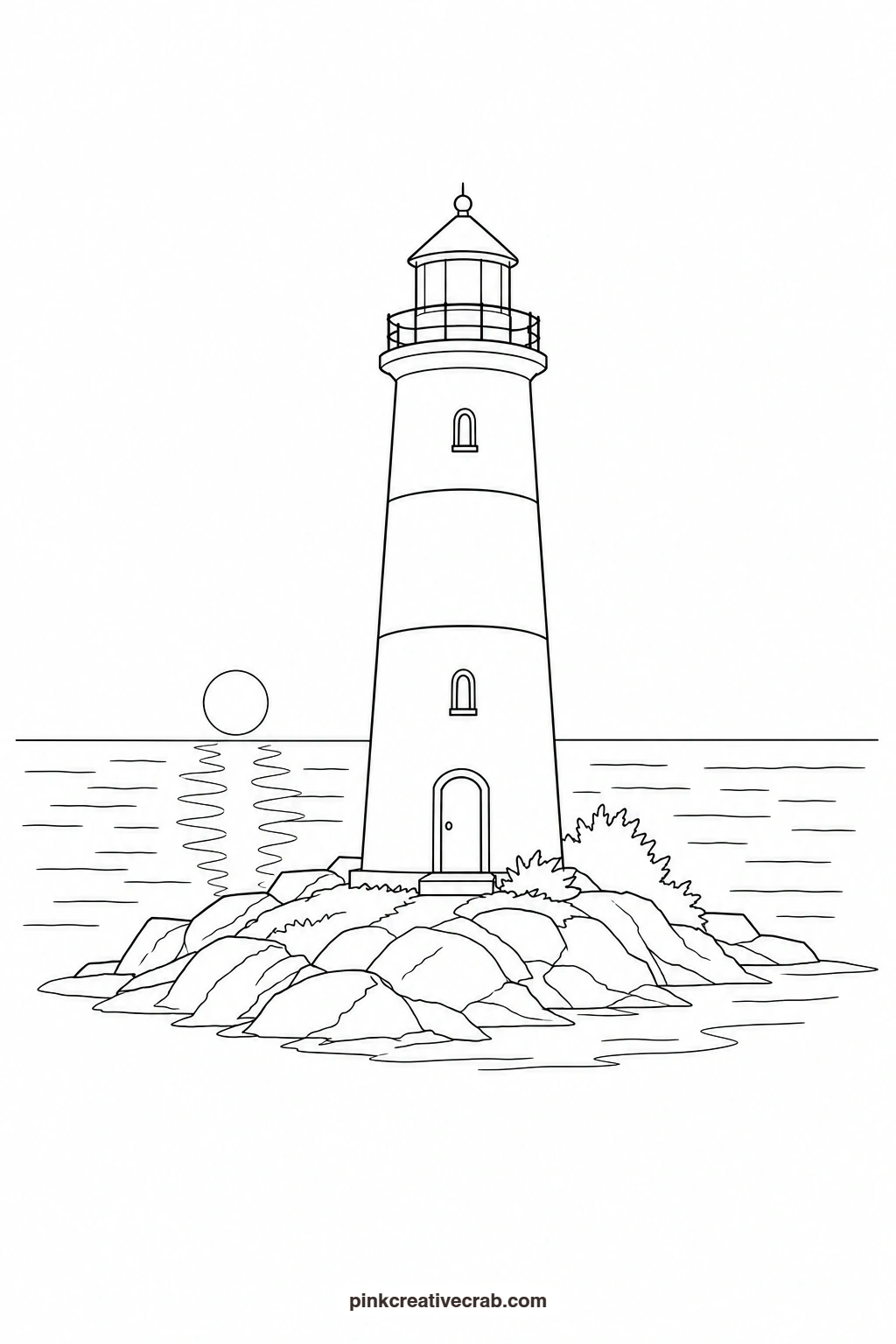
Desert Sunset
Wash the sky in bold warm tones, orange low down rising into magenta and deep purple at the top, since desert sunsets carry more saturated color than coastal ones. Let it dry, then paint the dunes as two or three overlapping flat shapes in warm sandy ochre, each one slightly darker than the one behind it. Paint the cactus last as one flat dark green silhouette with two simple curved arms, keeping the shape blocky rather than detailed. Finish with a thin warm orange line along the top ridge of the nearest dune where the last light would catch the sand.
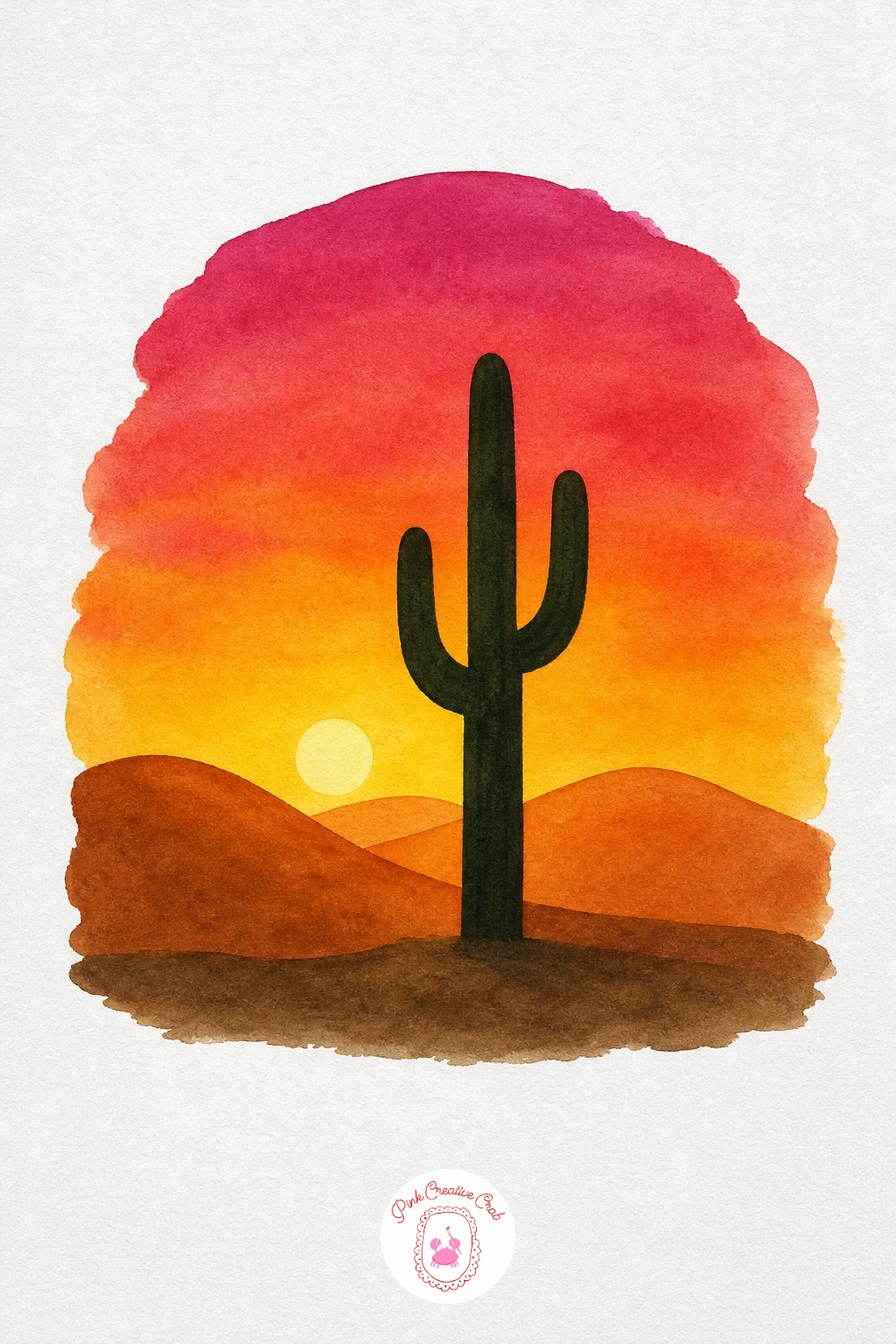
Palette: Orange,Magenta,Dioxazine Violet,Yellow Ochre
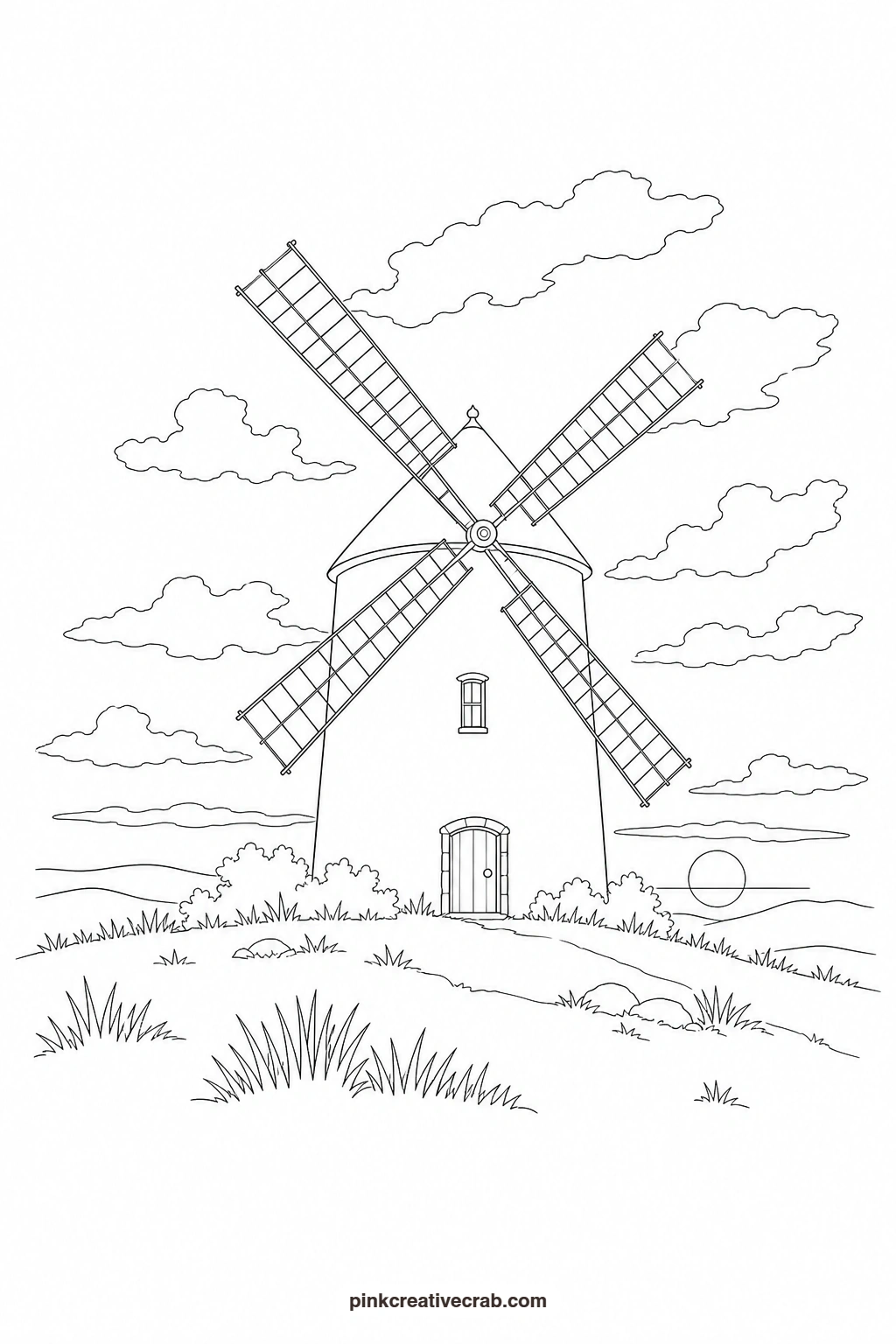
Sunset With A Windmill
Paint the sky and a flat strip of soft green ground first, letting the two washes meet softly at the horizon. Once completely dry, paint the windmill tower as one tapered flat shape in warm grey or cream, then add the four blades as thin crossed lines radiating from a small center point, keeping them perfectly even so the shape reads clearly. A fine brush and a steady hand matter most here since the blades are the thinnest part of this whole collection. Finish with a small dark doorway shape at the base of the tower to ground it on the rise.
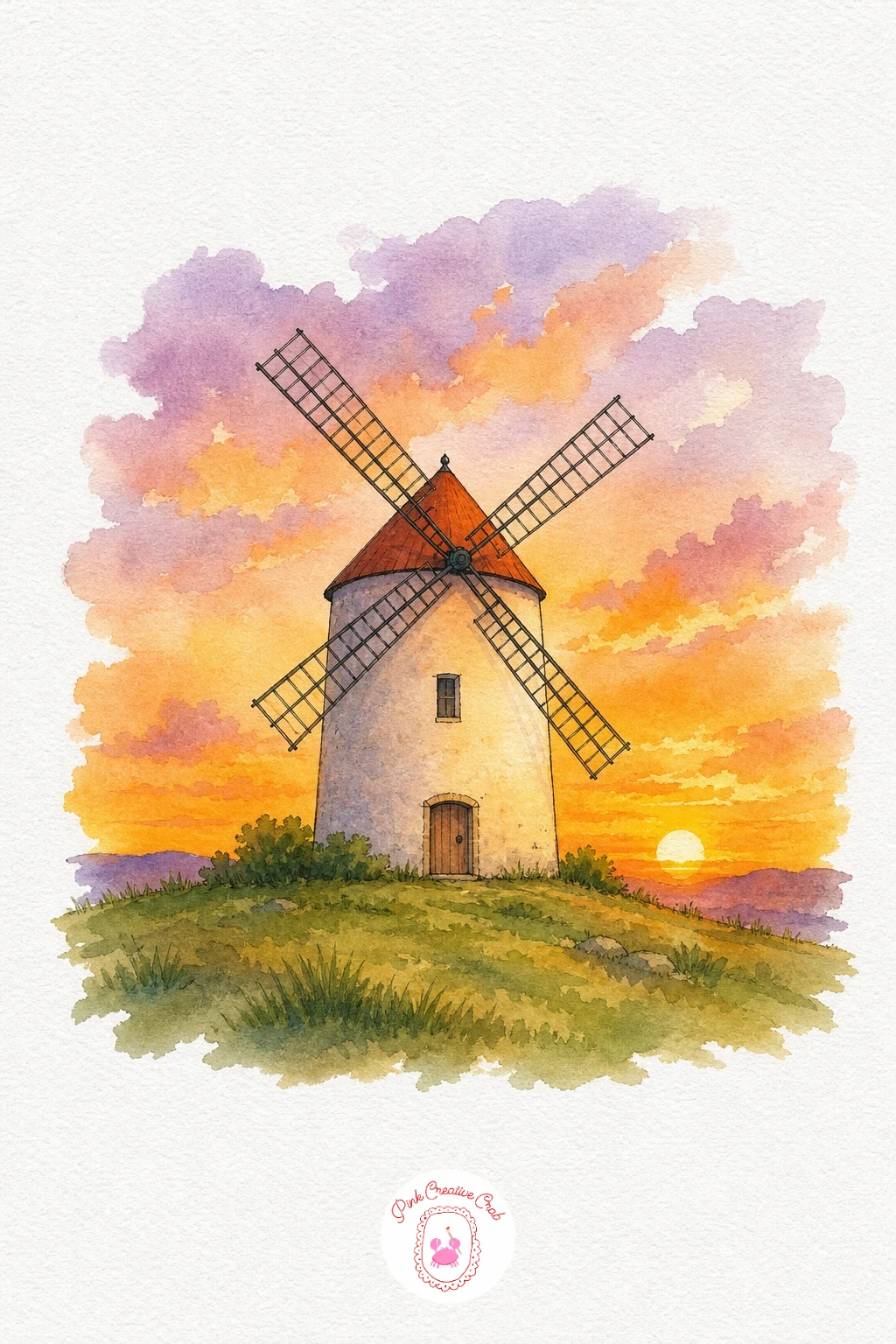
Palette: Orange,Lavender,Sage Green,Warm Grey
Trace the windmill blades slowly and in one direction each, since shaky thin lines show more here than anywhere else in the set.
Sunset Behind Pines
Wash the sky in warm bands, gold near the horizon rising into soft rose and violet higher up, and let it dry fully before adding the trees. Paint each pine as one flat dark triangle, varying the height and width slightly so the row feels natural rather than stamped from the same shape. Keep the edges of each triangle clean rather than feathering them, since a pine silhouette reads best with a crisp outline against a soft sky. For more on getting that sky right before the trees go in, the easy watercolor skies and sunset ideas cover several ways to blend the same warm bands.
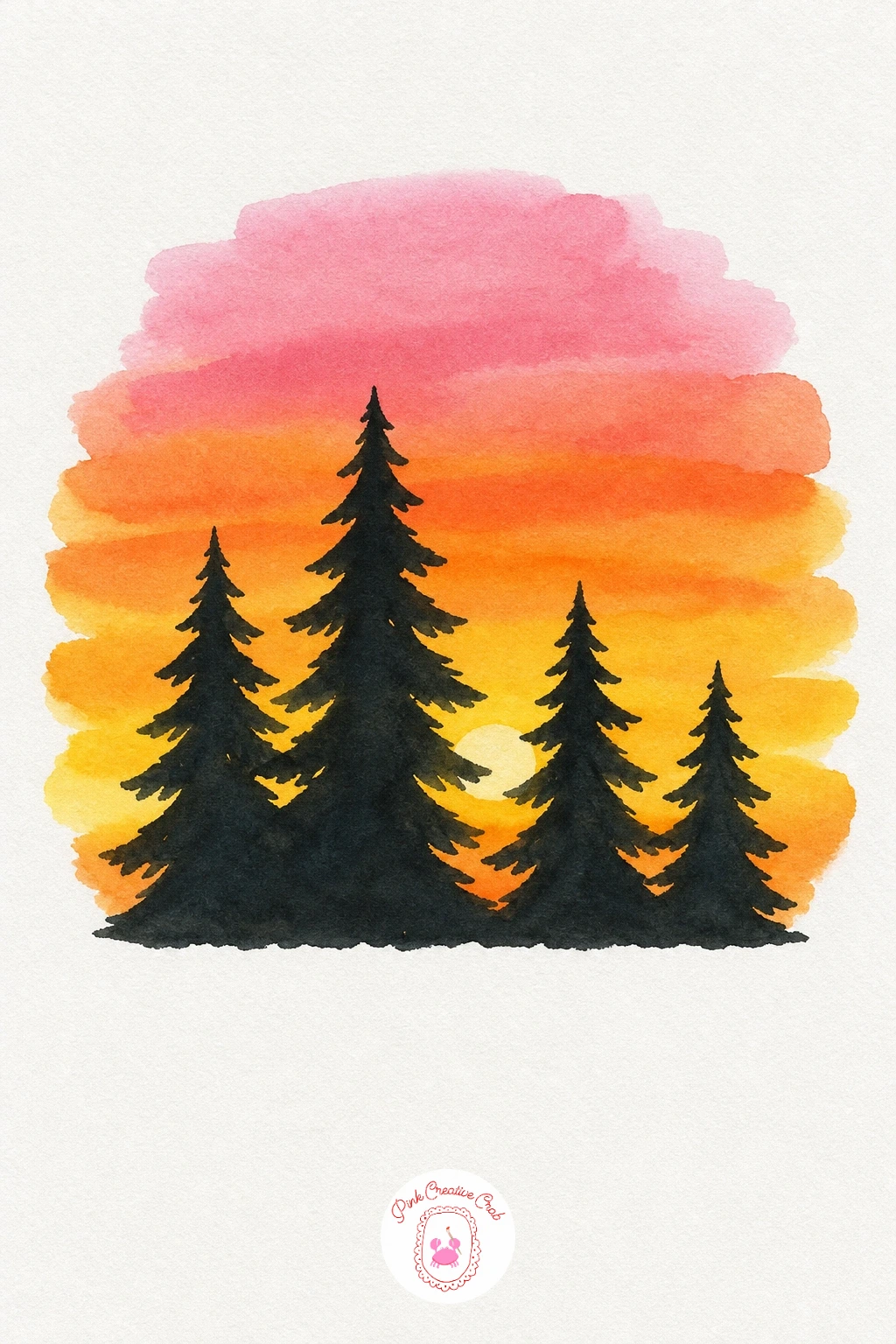
Palette: Golden Yellow,Rose Pink,Violet,Deep Green
Sunset With A Pier
Paint the sky and water in matching warm washes, orange and pink above, the same colors echoed below the horizon for the sea, so the whole scene glows evenly. Once dry, paint the pier deck as one flat horizontal brown shape running from the bottom edge out toward the horizon, narrowing slightly as it recedes. Add the supporting posts as a few short vertical lines beneath the deck, spaced evenly, which is the only part of this piece that needs any real care when transferring. Finish with a thin dark line along the top edge of the deck to separate it clearly from the glowing water. For more calm water and shoreline ideas afterward, browse the easy beach watercolor ideas.
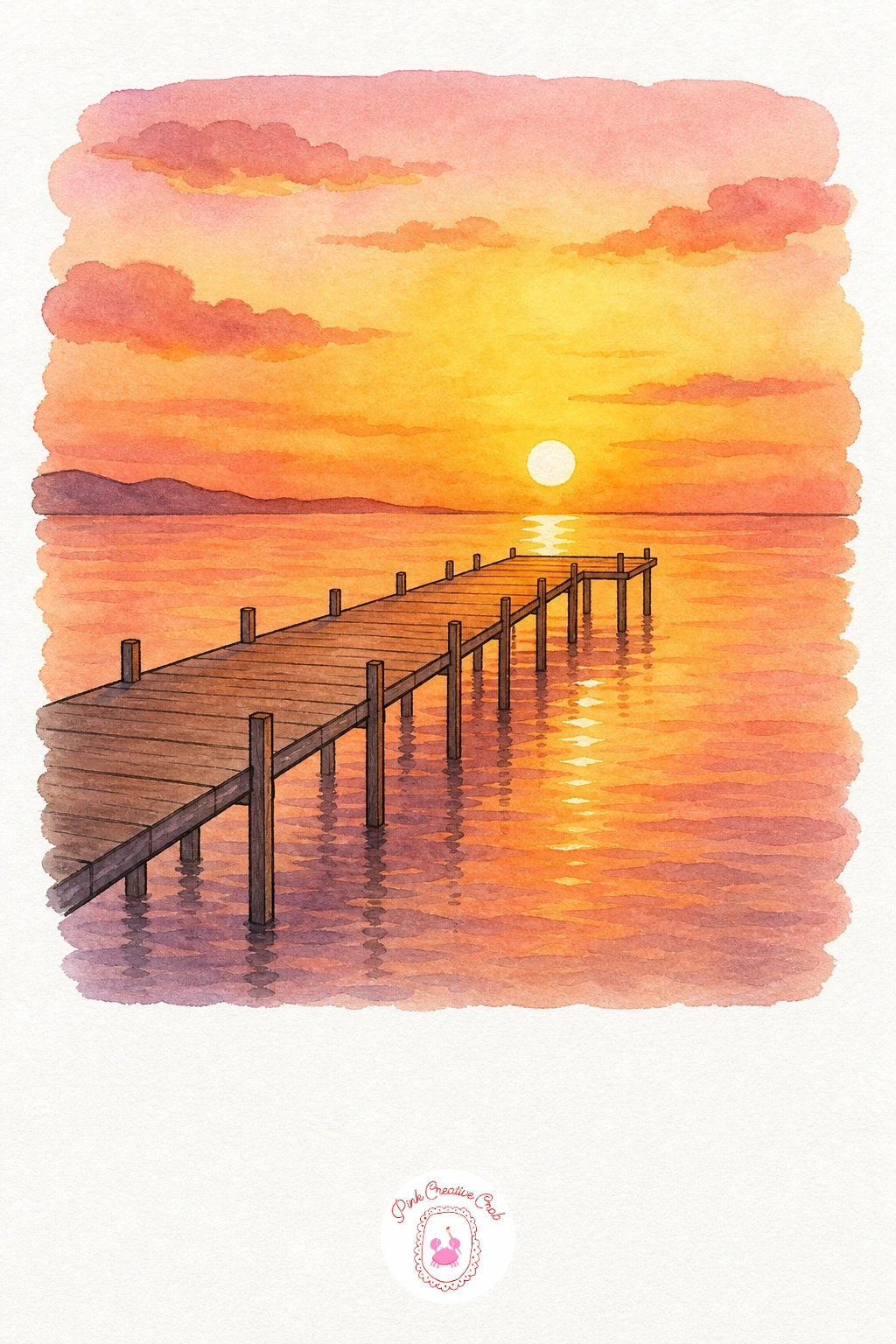
Palette: Orange,Rose Pink,Raw Umber,Payne’s Grey
What to Do Next
Pick whichever sunset calls to you first, print its outline, and transfer it to your paper today: the washes are forgiving and every one of these twelve can be finished in a single relaxed sitting.
Frequently Asked Questions
What size should I print these sunset outlines?
Print them at standard letter or A4 size to match most watercolor pads, or scale up on a home printer’s settings if your paper is larger. Keep the proportions locked so the shapes stay even.
What paper works best for these washes?
Use a cold press watercolor paper of at least 140lb so the wet-in-wet sky blending does not warp or pill the surface. Hot press works too if you want slightly crisper edges between colors.
How do I transfer the outline without tracing freehand?
Tape the printed outline and your watercolor paper together against a sunny window or a light pad and trace the lines through with a pencil. Graphite transfer paper slipped between the two sheets works just as well on thicker paper.
Can I color these with pencils or markers instead of paint?
Yes, the same outlines work well with colored pencils for soft blended skies or markers for bolder flat color. Build pencil layers slowly for a sky gradient, and let marker strokes overlap slightly while still wet for smoother blends.
Why keep the palette so limited for each sunset?
A narrow palette of three or four colors keeps every wash harmonious and stops the sky from turning muddy where colors overlap. It also makes each scene faster to finish in one sitting.
Have any thoughts?
Share your reaction or leave a quick response — we’d love to hear what you think!
-
 0
-
0
-
0
-
0
-
0
-
0


