A monkey painting is really a tiny story waiting for a setting: a hot spring, a market stall, a vine swinging through the canopy. Gouache suits these little scenes perfectly, because its flat matte color lets you build a whole monkey from a handful of confident shapes, no messy blending required.
Below are 28 monkeys from around the world, each doing something funny or sweet, ordered from the simplest poses to the ones with a bit more going on. Pick whichever one makes you smile first and work through it start to finish on your phone, your coffee cup and your paper all within reach.
Using these images: free for personal projects such as printing, coloring, cards, journals and gifts. Handmade items that include them may be sold up to 30 pieces per design. More than that is commercial use and is not permitted, and neither is selling or sharing the images themselves or passing them off as your own. Please ask before any other use.
Start the whole project with a baby monkey clinging to its mother’s back, because the shapes stay simple and forgiving. Block in the mother’s body first as one rounded silhouette in a warm brown gouache, then add the baby as a smaller overlapping oval riding higher on her back, arms wrapped around her neck.
Work largest shape to smallest: body, then head, then baby, then face details and fingers last with a fine round brush. If the baby ends up looking pasted on rather than held, tuck one of its paws behind the mother’s shoulder so the shapes properly overlap.
If your gouache set runs thin on browns, mix a warm brown from your reds and greens rather than buying a new tube. Keep the background a flat cream so the two bodies read as one connected shape against it.
Measure the baby against the mother before you paint: its whole body should fit inside the space between her shoulder and hip, which keeps the proportions believable and sweet rather than oddly large.
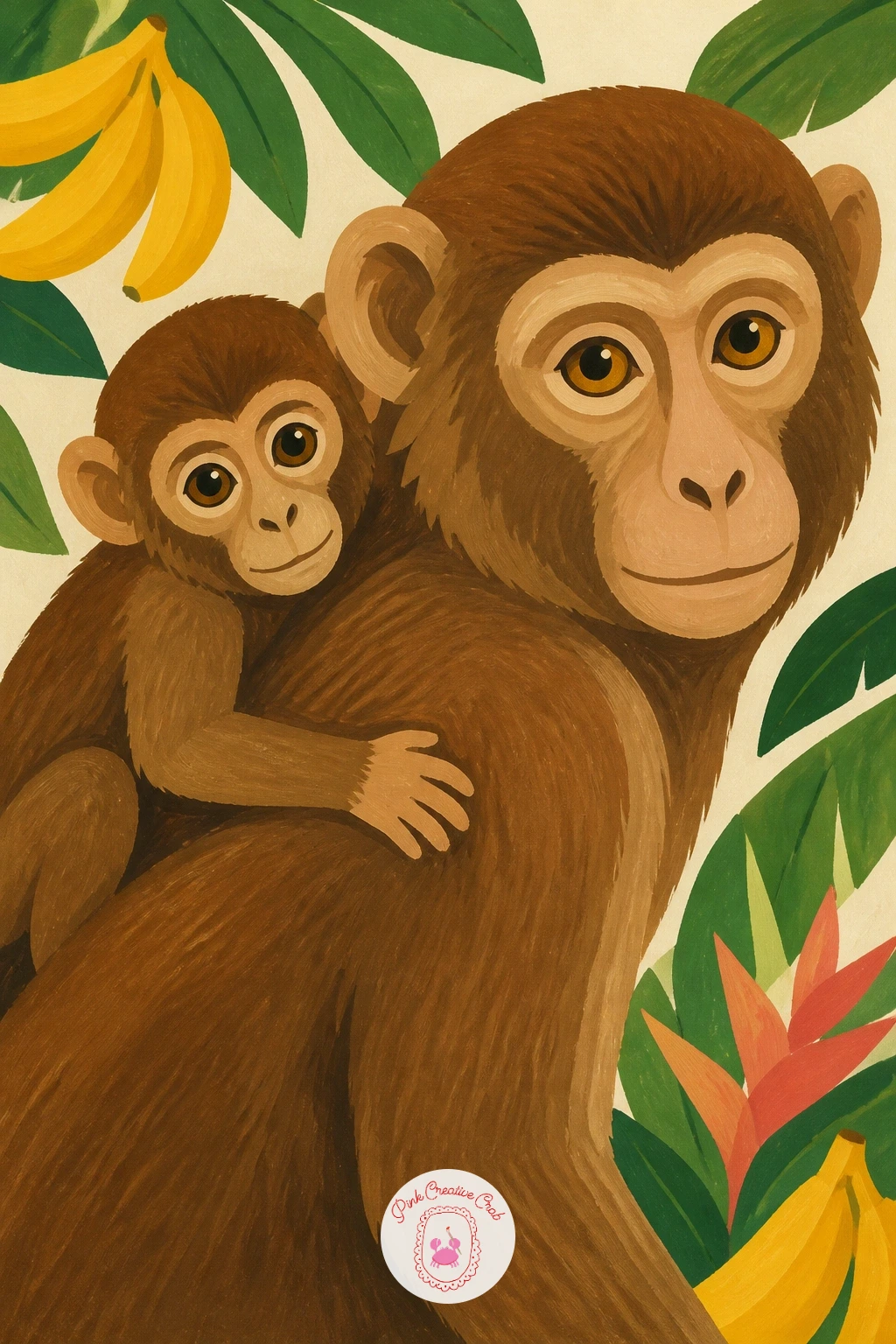
Palette: Burnt Sienna,Banana Yellow,Cream White,Deep Umber
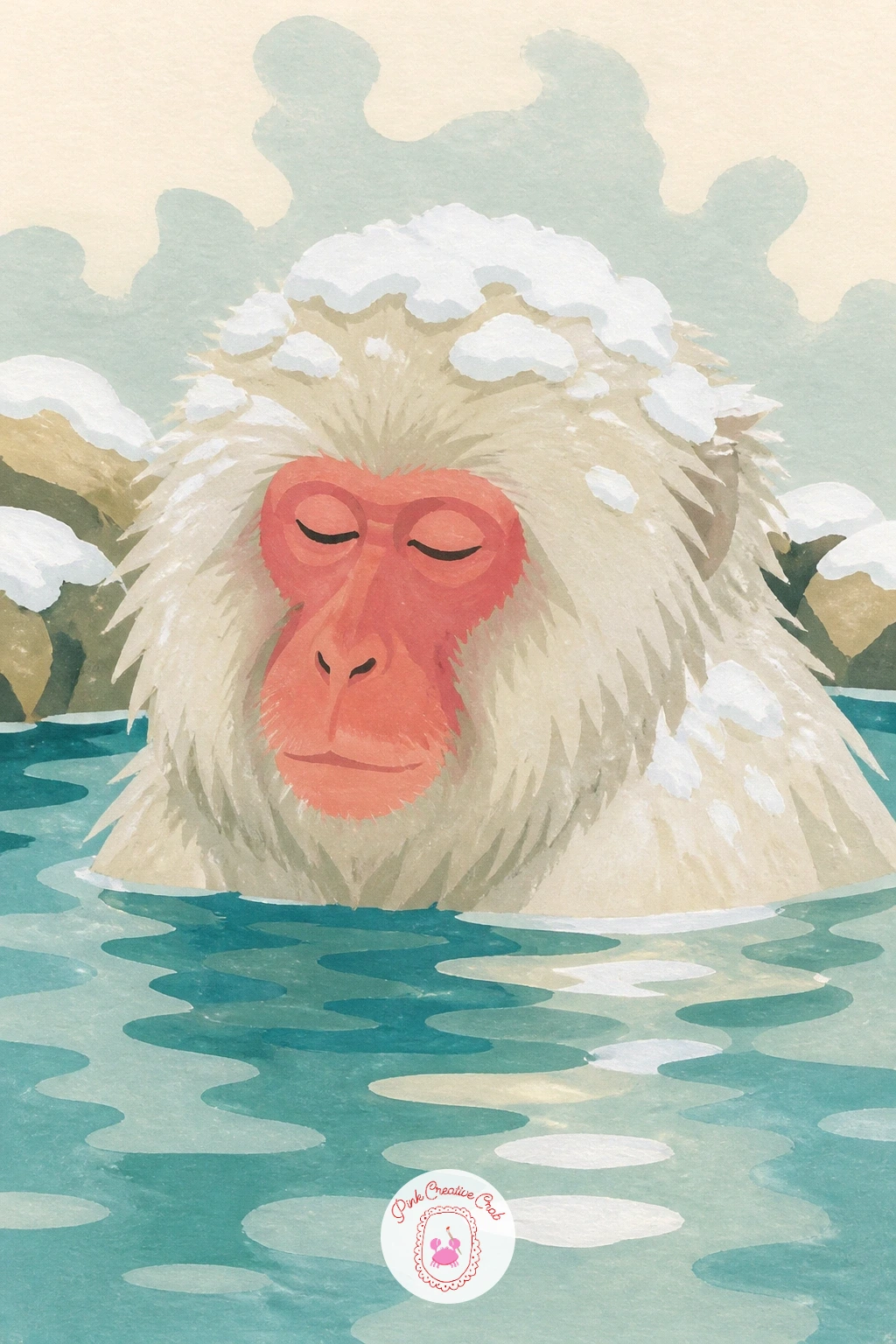
Move next to a snow monkey soaking in a hot spring, a scene that rewards a calm, simple approach. Paint the water first as a flat pale blue-grey pool filling the lower half of the page, then drop in the monkey’s pink face and ears while that area is still your focus, saving the thick white fur for last.
Build the fur with short dry-brush strokes of white gouache over a light grey undercoat, letting some grey show through so it reads as texture rather than a flat white blob. This dry-brush trick is the one move that saves the whole painting if the fur looks flat.
Dot a few snowflakes on the monkey’s head with the tip of the brush or a white gel pen once the paint is dry. If you don’t have a dedicated grey, mix it from black and white gouache right on the page.
Keep the water edge soft and the monkey’s outline crisp, which is exactly the contrast that makes this one of the most relaxing ideas on the list to paint.
You Will Need
- white gel pen (optional)
Palette: Pale Grey Blue,Titanium White,Flesh Pink,Charcoal Grey
Try painting the steam rising off the water as a few soft, loose white shapes behind the monkey’s head for a gentler, more atmospheric version of this scene.
Swing into some movement with a monkey hanging from a vine by one arm, body stretched into a long diagonal curve. Sketch the curve of the vine first in light pencil, then build the monkey’s body along it, stretching the far arm up to the vine and letting the legs trail loosely below.
Paint the body as one connected shape in a mid-brown green gouache, then add the vine in a darker green over the top so it reads as being in front of the arm. The pose goes wrong most often when the stretched arm looks disconnected from the shoulder, so keep that joint slightly thicker than feels natural.
Give the monkey a leaf or two trailing off the vine for a bit of jungle context without adding a whole background. If your green feels too flat, mix a touch of yellow into it for the vine and keep the body cooler and darker for contrast.
Tip for today: paint the whole body in one sitting before the gouache dries fully, so the brown and green edges stay crisp rather than patchy.
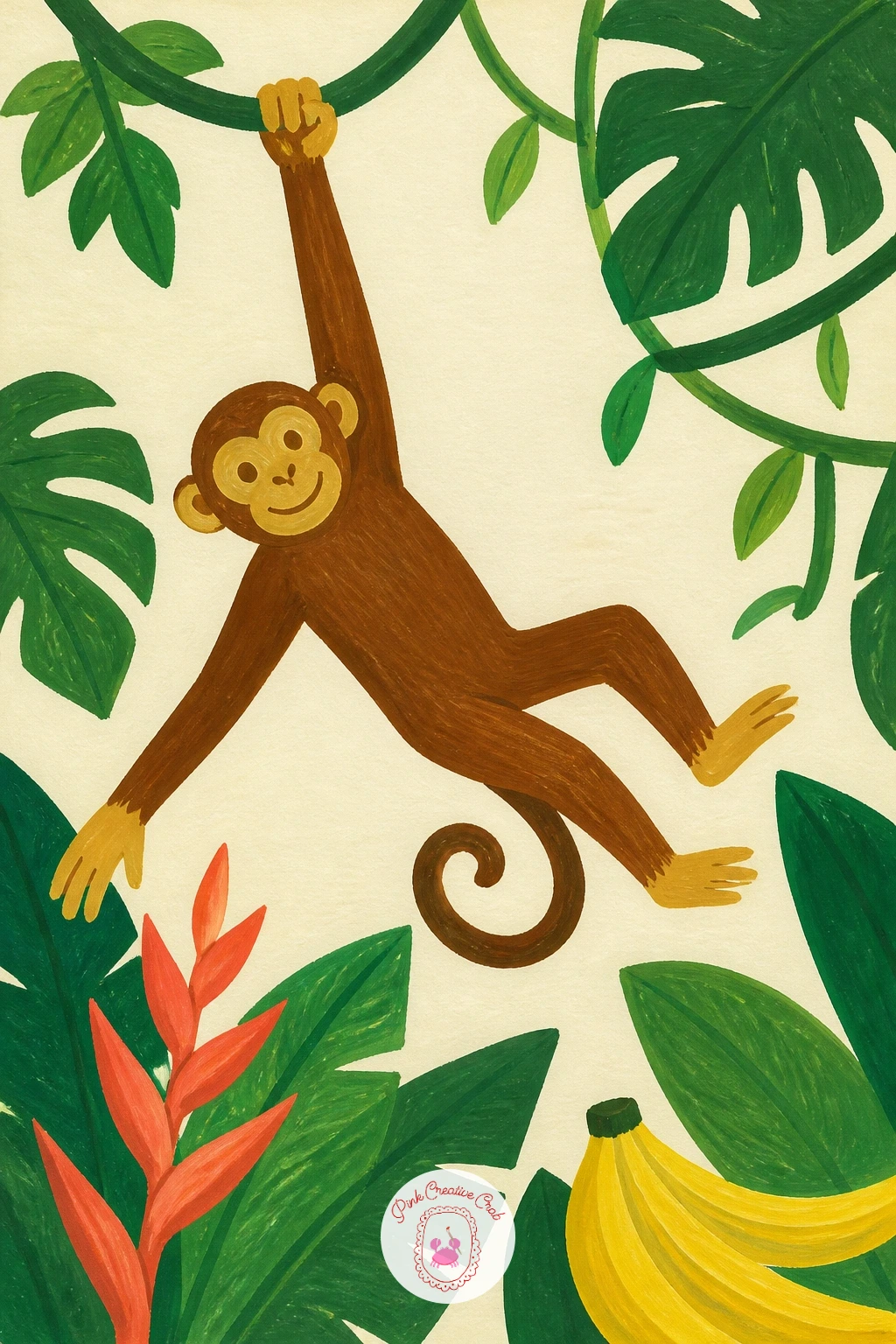
Palette: Olive Green,Warm Brown,Jungle Green,Cream White
Give yourself a satisfying prop painting with a capuchin peeling a banana, sitting upright with the fruit held in both hands. Block in the monkey’s cream-and-brown body first as two simple shapes, head and torso, then paint the banana last so its bright yellow pops forward from the composition.
Work the peel as separate curved strips pulled back from the fruit, painted in a slightly duller yellow than the flesh so the two parts read apart from each other. This is the place beginners usually lose the shape, so keep the peeled-back strips thin and curved rather than wide and straight.
If you don’t have a true banana yellow, mix cadmium yellow with a touch of white gouache to lighten it. Finish with a small coral accent somewhere nearby, a flower or a bit of fruit skin, to tie into the rest of the series.
Hold the banana up next to the monkey’s head in your reference or imagination first: it should be roughly as long as the head is tall, which keeps the proportions convincing.
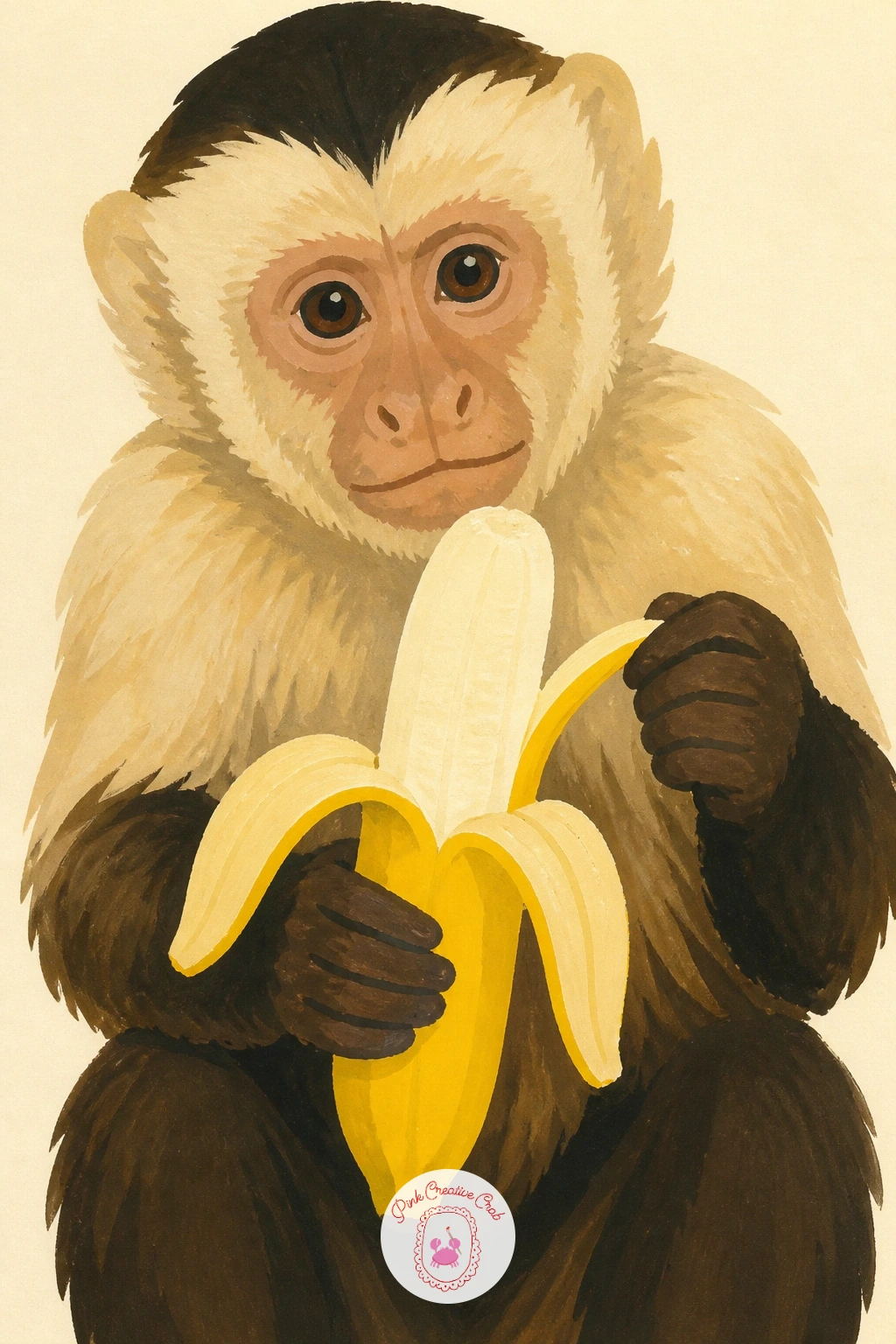
Palette: Banana Yellow,Cream White,Warm Brown,Coral
Build on that sitting pose with two monkeys grooming each other on a branch, a gentle scene full of quiet affection. Paint the branch first as a simple horizontal shape across the lower third of the page, then place both monkeys sitting on it, one slightly behind the other so their bodies overlap.
Work the nearer monkey first in full detail, then the farther one slightly smaller and a touch darker in value, which pushes it back in the space without any real perspective drawing. If the two bodies start to blend into one shape, separate them with a thin line of cream background showing between their arms.
Keep both monkeys’ faces turned toward each other rather than out at the viewer, since that’s what sells the grooming action. A short list of gouache painting ideas for beginners is worth a look if layering two overlapping shapes like this still feels new.
Swap the branch for a flat rock if you’d rather skip painting bark texture altogether.
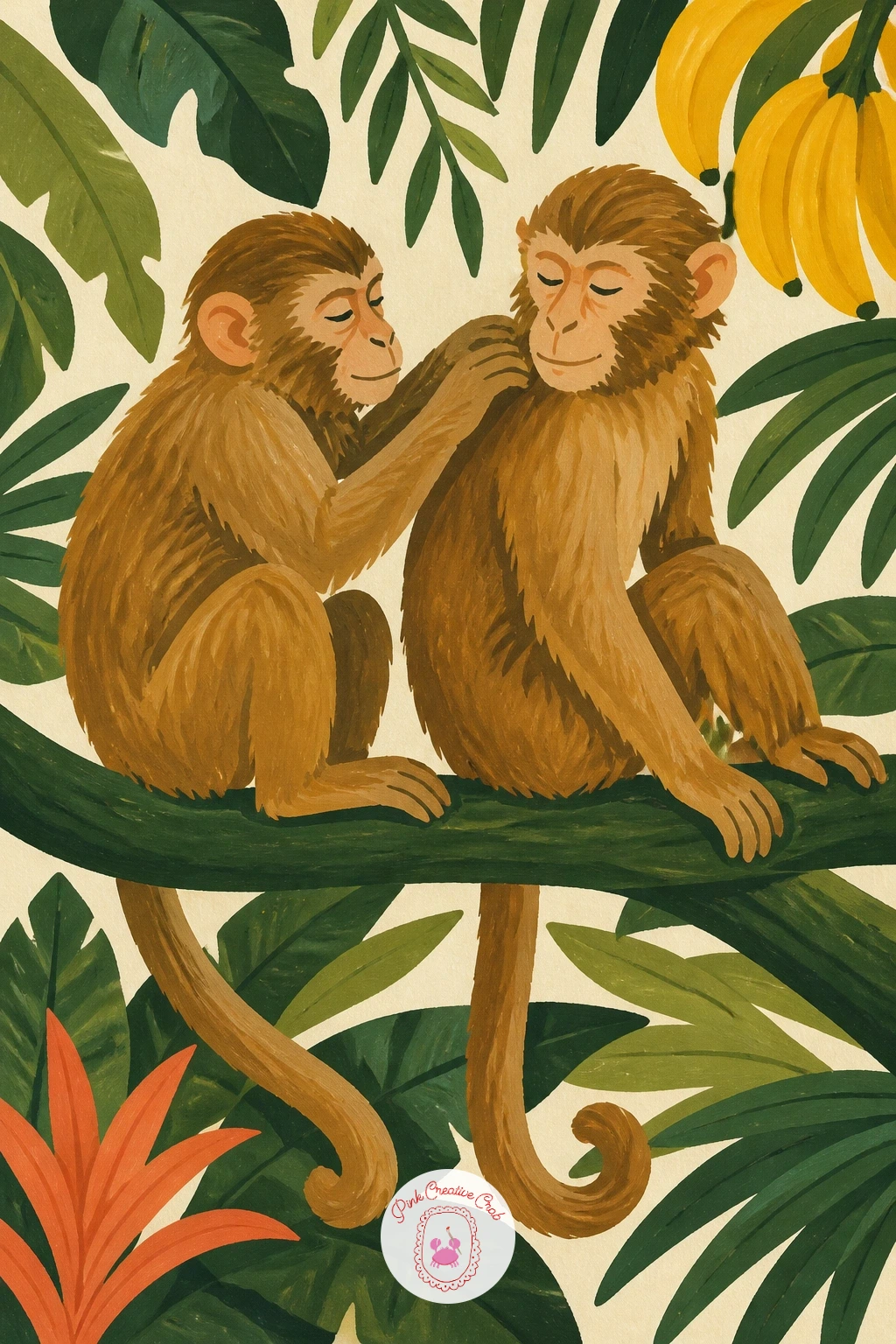
Palette: Warm Brown,Deep Umber,Jungle Green,Cream White
Paint a monkey wearing a leaf as a hat in the rain for a composition that leans on light and water. Place the light source directly above, so the leaf hat casts a small shadow across the monkey’s forehead and the rain falls in thin diagonal streaks lit faintly from that same overhead source.
Paint the monkey’s body first in flat brown, then the leaf hat in a bright jungle green sitting at a jaunty angle on its head, and finish with the rain as thin white or pale grey diagonal lines added last with a fine brush. Too much rain clutters the shape, so keep the lines sparse and only around the edges of the monkey.
If your paper buckles from too much water in the rain lines, switch to a dry white gel pen for those final streaks instead. Dampen your brush only slightly for crisp, controlled lines.
One tip for today: paint the leaf hat slightly oversized, since a leaf that’s too small reads as decoration rather than as actual shelter.
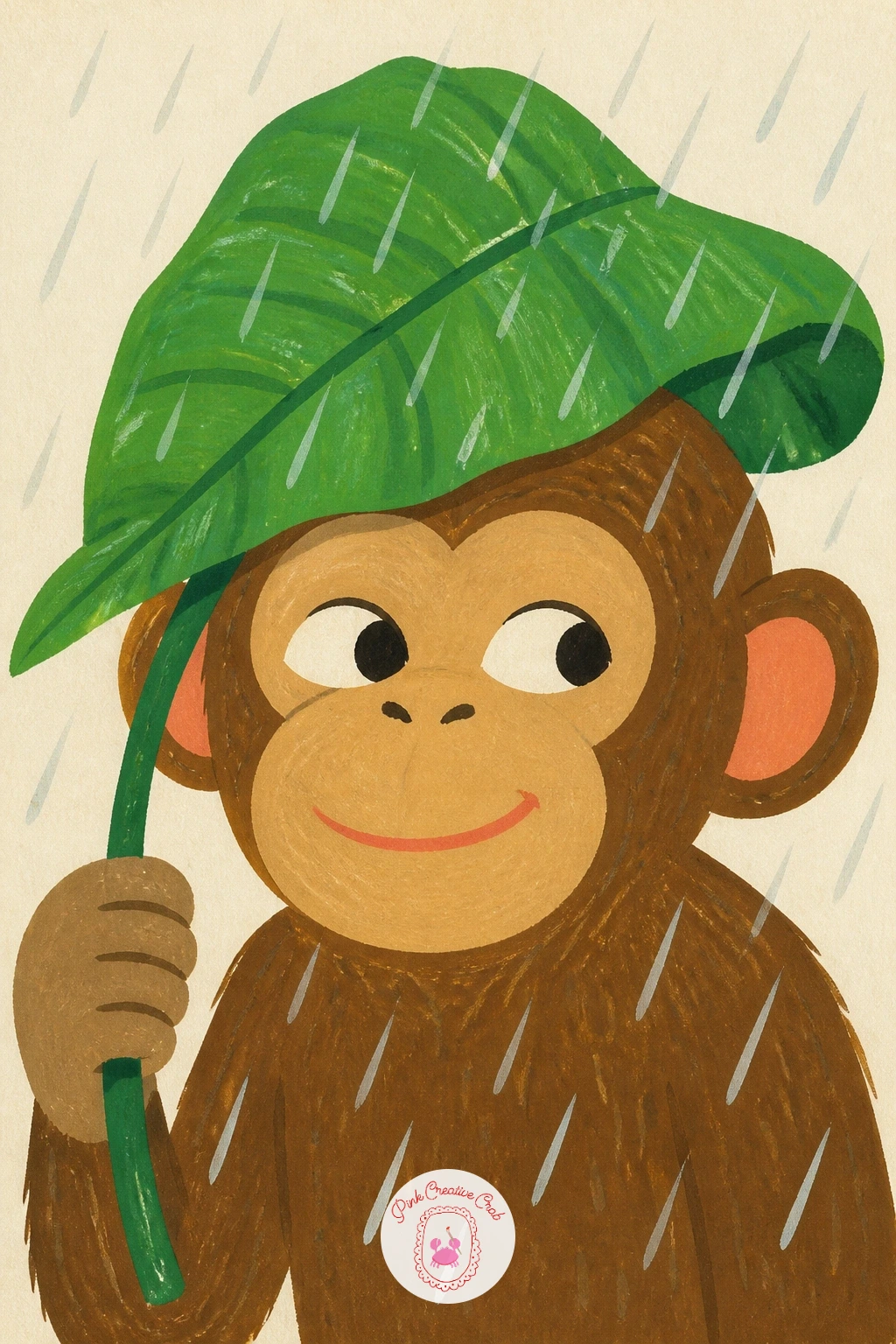
You Will Need
- white gel pen (optional)
Palette: Warm Brown,Jungle Green,Pale Grey,Cream White
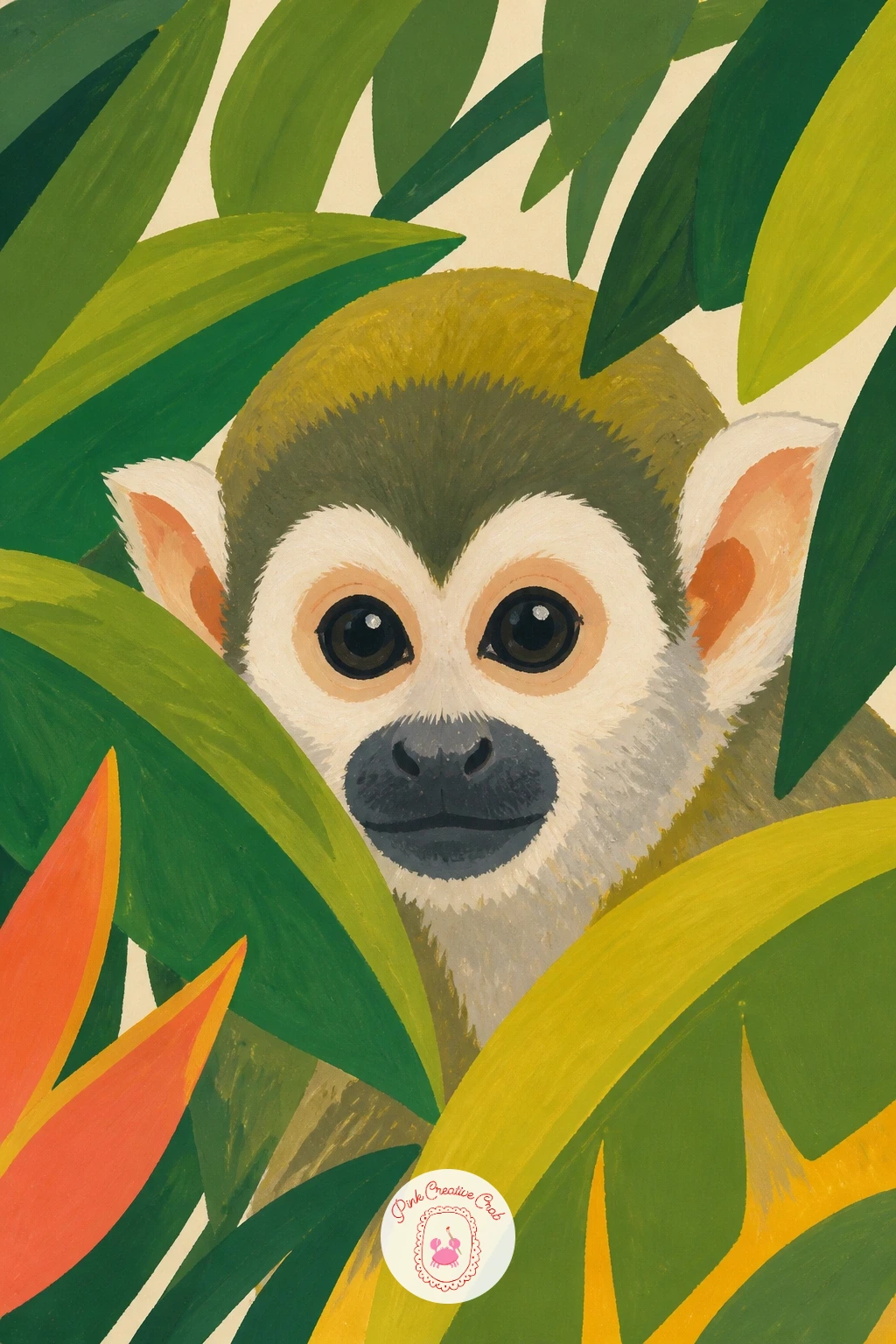
Try a squirrel monkey peeking through leaves next, a close-up composition that fills the page with just a face and some foliage. Paint two or three large leaf shapes first in varied greens, overlapping them loosely, then tuck the monkey’s small round face and white muzzle into the gap between them.
This pose depends entirely on edges, so use a fine round brush to keep the monkey’s outline crisp against the softer leaf shapes behind it. If the face gets lost in the green, outline it with a thin line of darker brown to separate it clearly from the leaves.
Squirrel monkeys have a distinctive white patch around the eyes and mouth, so paint that lighter area before the darker fur around it, working light to dark rather than the other way round. A toothbrush flick of pale yellow gouache across the leaves adds a nice dappled-light touch if you want it.
No squirrel monkey reference handy? Any small monkey with a round face and big eyes works just as well here.
You Will Need
- old toothbrush (optional, for splatter)
Palette: Jungle Green,Olive Green,Warm Brown,Cream White
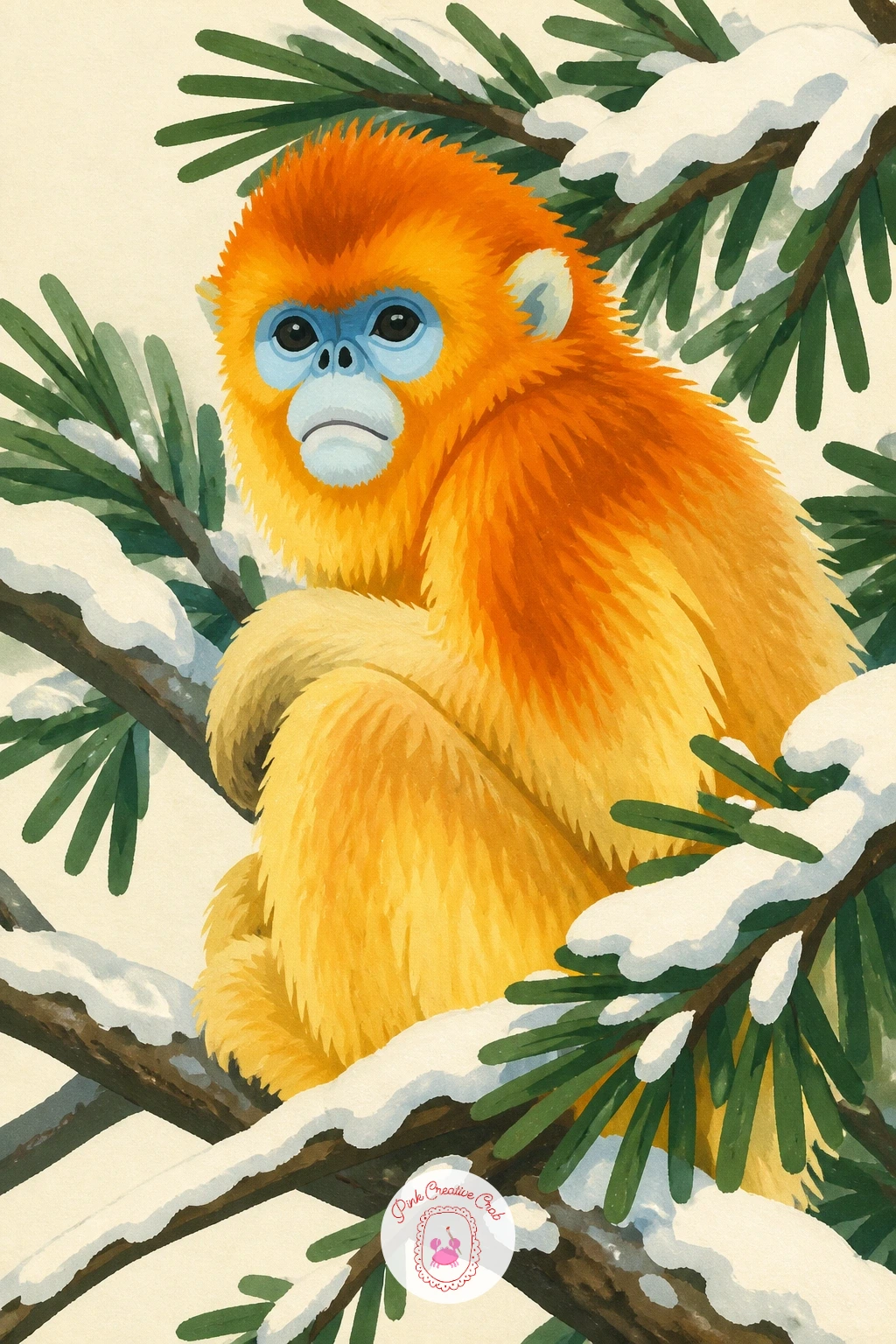
Shift into winter with a golden snub-nosed monkey in snowy pines, one of the most striking color combinations on this list. Block in a simple pine tree shape first in dark jungle green, then paint the monkey’s distinctive golden-orange fur and pale blue face sitting on a branch in front of it.
Work the gold fur with loose, slightly textured strokes rather than one flat shape, since the real animal has a shaggy coat that benefits from visible brushwork. Add snow last as flat white patches on the branch and a few dabs caught in the fur, keeping the white crisp against both the gold and the green.
If the gold looks too orange next to the green pine, cool it slightly with a touch of white gouache mixed in. The pale blue face is the detail that makes this monkey unmistakable, so don’t skip it even if you simplify everything else.
Today’s tip: paint the pine needles as soft clustered triangles rather than individual lines, which keeps the whole tree calm and fast to finish.
Palette: Golden Orange,Jungle Green,Pale Blue,Titanium White
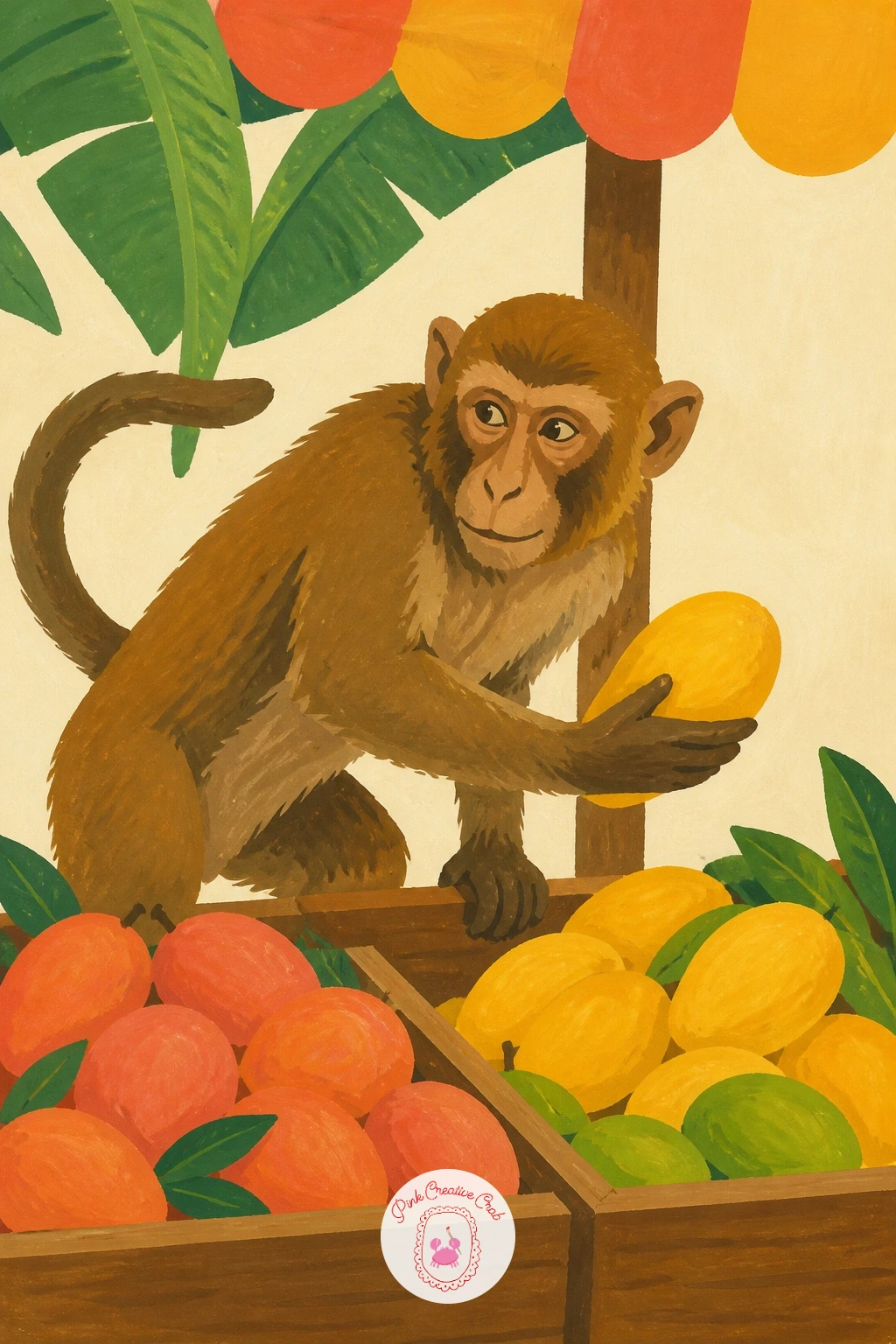
Build a small narrative with a monkey stealing a mango from a market stall, which brings in a bit of setting without demanding a full background. Paint a simple stall shape first, a flat wooden counter with a striped awning corner, then add a pile of mangoes in warm coral and yellow before placing the monkey mid-grab at one side.
Give the monkey a slightly crouched, alert pose with one hand already closed around a mango, which tells the whole story in a single frozen moment. Keep the stall simple, just enough wood and stripe to suggest a market rather than painting every plank.
If the scene feels cluttered, drop the pile of mangoes down to two or three and let the rest of the stall stay plain cream. The watercolor food approach to painting fruit, blocking the basic shape before adding highlights, works just as well here in gouache.
Tip for today: angle the monkey’s body leaning away from the stall, as if mid-escape, to add energy to an otherwise still composition.
Palette: Coral,Banana Yellow,Warm Brown,Cream White
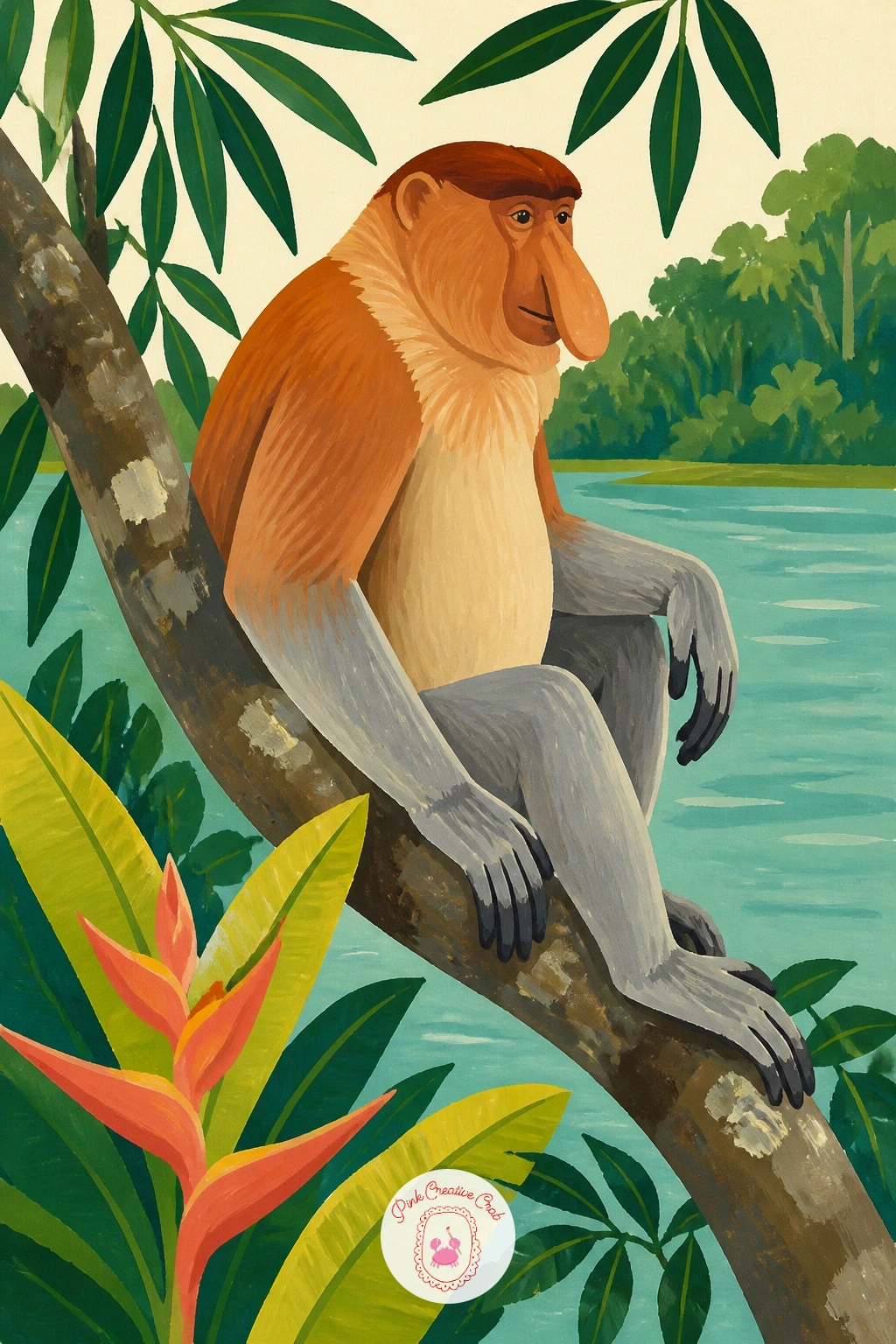
Paint a proboscis monkey by a river for a profile portrait built entirely around one unmistakable feature, its long nose. Set the eye level low, roughly at the monkey’s chest, looking slightly up at it perched on a riverbank branch, which makes the nose read as even more prominent against the sky.
Block the body in reddish-brown first, then the pale belly, and paint the nose last as a long soft shape hanging past the mouth, slightly darker pink at the tip. Keep the river behind it as a flat band of blue-green so the monkey’s warm colors stay the clear focus.
The proportion trick here matters: the nose should run roughly as long as the whole head, which feels exaggerated until you paint it and then looks exactly right. If that feels too bold, shorten it slightly for a gentler, more cartoon-friendly version.
No proboscis monkey reference on hand? Use any long-nosed profile as your rough stand-in and adjust the color.
Palette: Rust Brown,Pale Cream,River Blue,Flesh Pink
Take on a spider monkey hanging by its tail, a pose built on one long sweeping curve from the branch to the head. Paint the tail first as a thin, strong curve wrapped around a branch, then build the body hanging from it upside down or at an angle, limbs splayed loosely outward.
Spider monkeys have notably long, thin limbs compared to their torso, so measure the arm length against the body before committing to paint: each arm should stretch nearly as long as the torso itself. This is the proportion check that keeps the whole pose convincing rather than stubby.
Work the dark brown body first, then the lighter belly patch, and finish the tail last since it overlaps everything else in the composition. If the hanging pose feels too complex to start with, simplify it to a side view with the tail looped simply around the branch.
Finish today with a flat jungle green background shape behind the branch so the long limbs have something to read against.
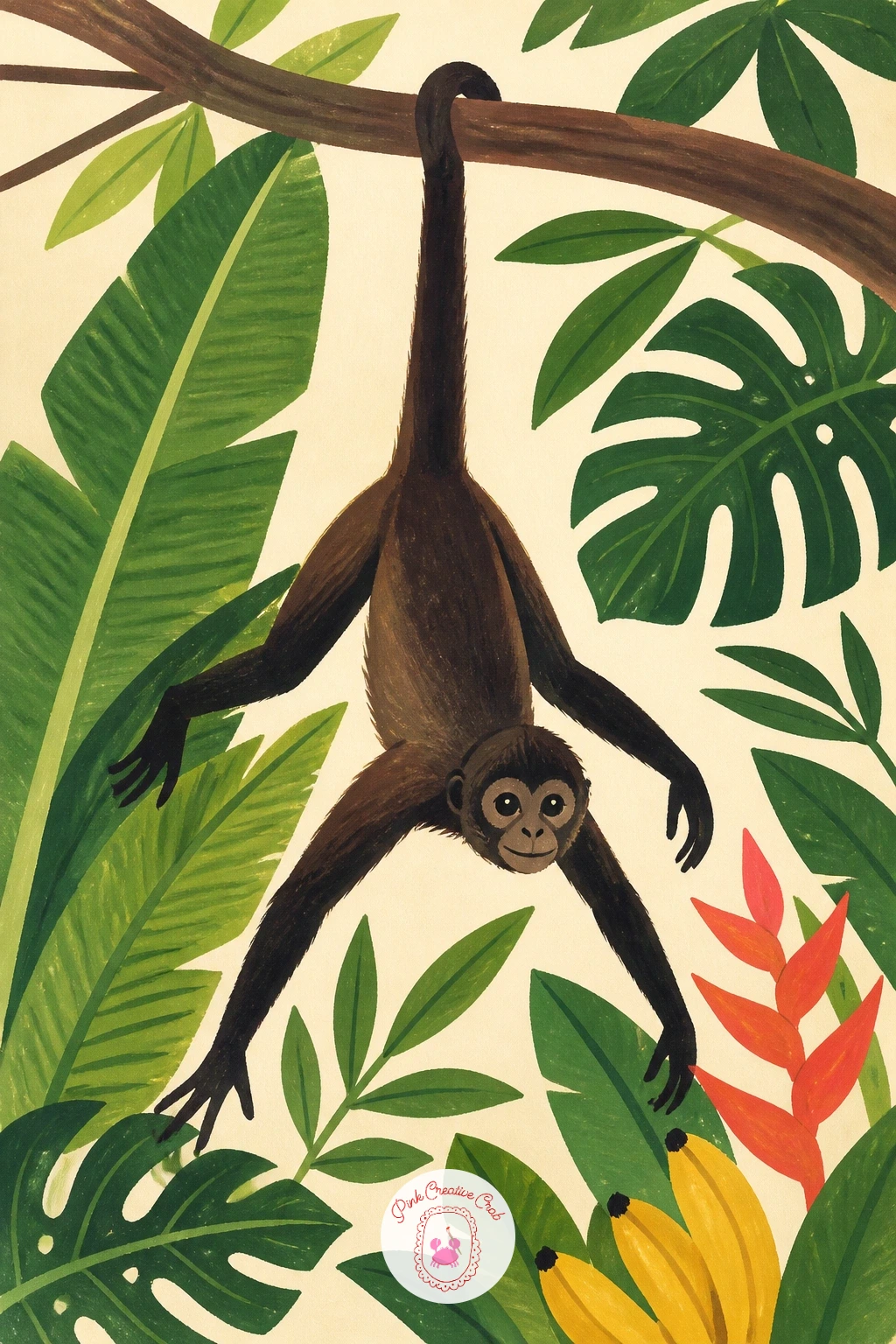
Palette: Dark Brown,Tan,Jungle Green,Cream White
Soften things with a baby monkey hugging a mango nearly as big as its own body, a composition that leans entirely on charm. Paint the mango first as one large coral-and-yellow oval filling most of the lower frame, then build the baby monkey’s small round body wrapped around it, arms barely reaching across.
Keep the baby’s head slightly oversized compared to its body, the usual trick for reading as young rather than adult, and give it big simple eyes looking at the fruit rather than out at the viewer. The mango should dominate the composition, so resist the urge to shrink it down to a more realistic size.
Paint the mango’s blush with a soft coral edge blending into yellow while both are still wet, which gives it a believable ripened look without extra blending work later. If coral isn’t in your set, mix it from red and a touch of yellow gouache.
Tip for today: leave a thin sliver of cream background between the baby’s arms and the mango so the overlap stays readable rather than merging into one blob.
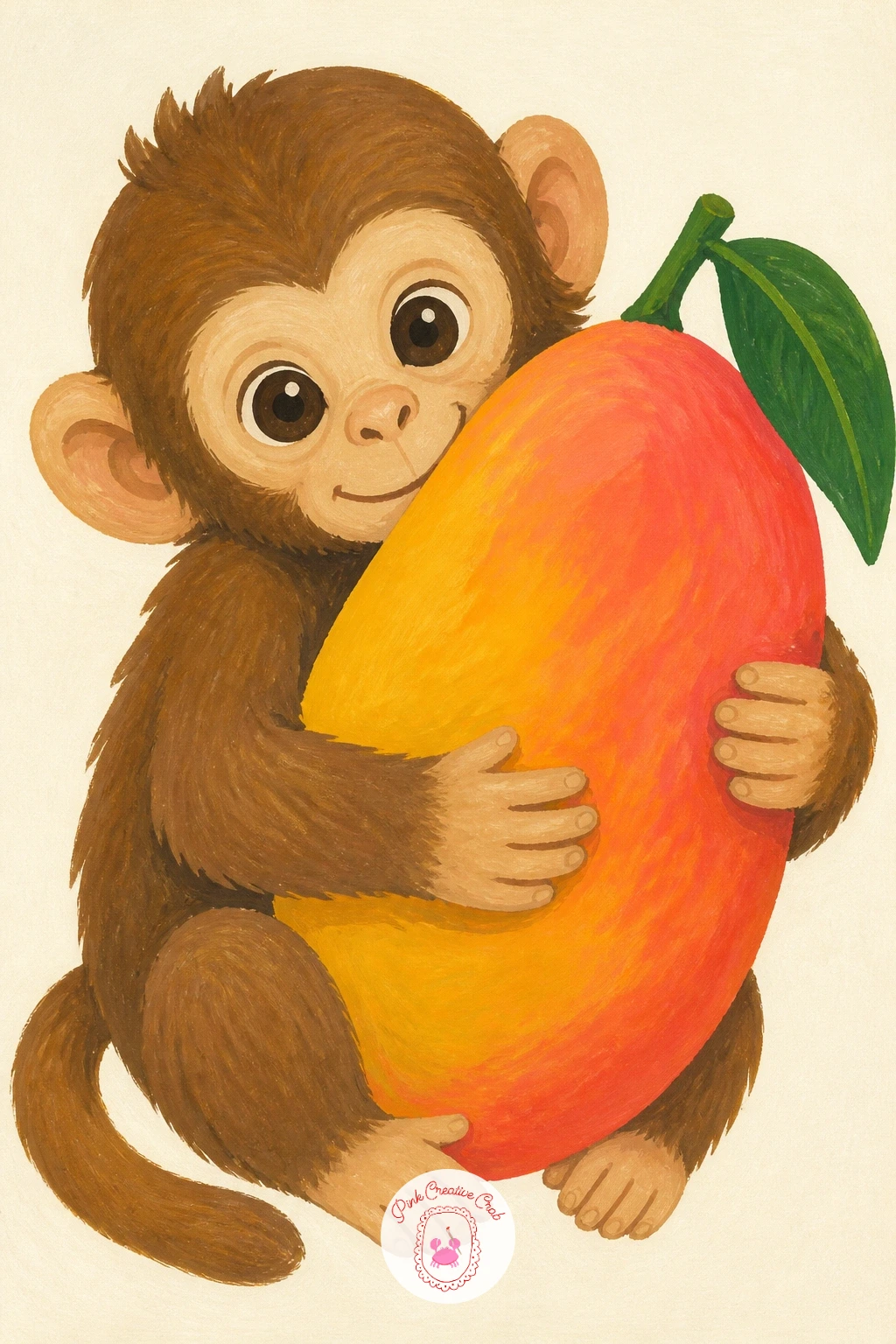
Palette: Coral,Banana Yellow,Warm Brown,Cream White
Take on a mandrill with its bright blue and red face, the boldest color moment in the whole series. Paint the face shape first, since the colors need to sit side by side cleanly: blue ridges down the nose, red tip, and a pale gold ruff of fur framing the whole thing.
Work each color block separately and let one dry before painting the next if they share an edge, which keeps the blue and red crisp rather than muddy where they meet. This is the one subject on the list where clean, separated color blocks matter more than soft blending, so don’t rush the drying time.
Paint the dark fur around the face last, framing the bright center so it reads as the clear focal point of the piece. If your blue looks too cool against the red, warm it slightly with a touch of white rather than more pigment.
No true cadmium red on hand? A warm coral works nearly as well and ties this piece into the rest of the series.
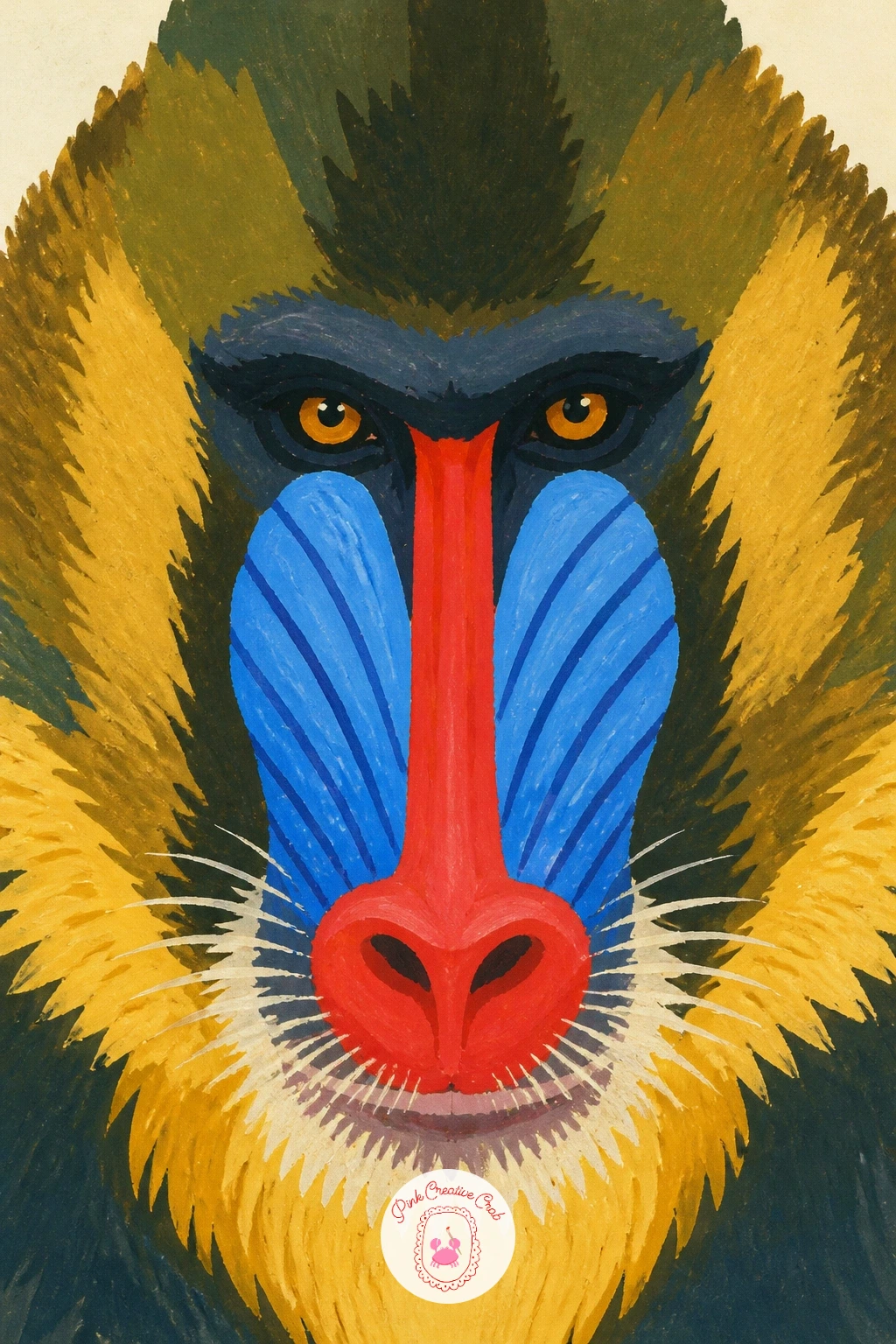
Palette: Royal Blue,Coral Red,Golden Tan,Deep Umber
Set a monkey sitting on a temple wall at sunrise for a scene built around warm backlighting. Place the light source low and behind the monkey, painting the sky first as a graded wash of coral into soft yellow, then silhouette the stone wall and temple roofline as a darker flat shape against it.
Paint the monkey last, sitting on the wall mostly as a dark silhouette with just a rim of warm light along its back and ears where the sunrise catches it. This backlit treatment is far faster than painting full fur detail and gives the whole piece real atmosphere.
If the sky gradient looks patchy, work quickly while the paper is still damp so the coral and yellow blend softly into each other. Keep the temple shapes simple, a wall, a curved roofline, nothing more detailed than that.
Today’s tip: leave the monkey’s silhouette almost entirely flat and dark, since that contrast against the warm sky is what makes the whole scene work.
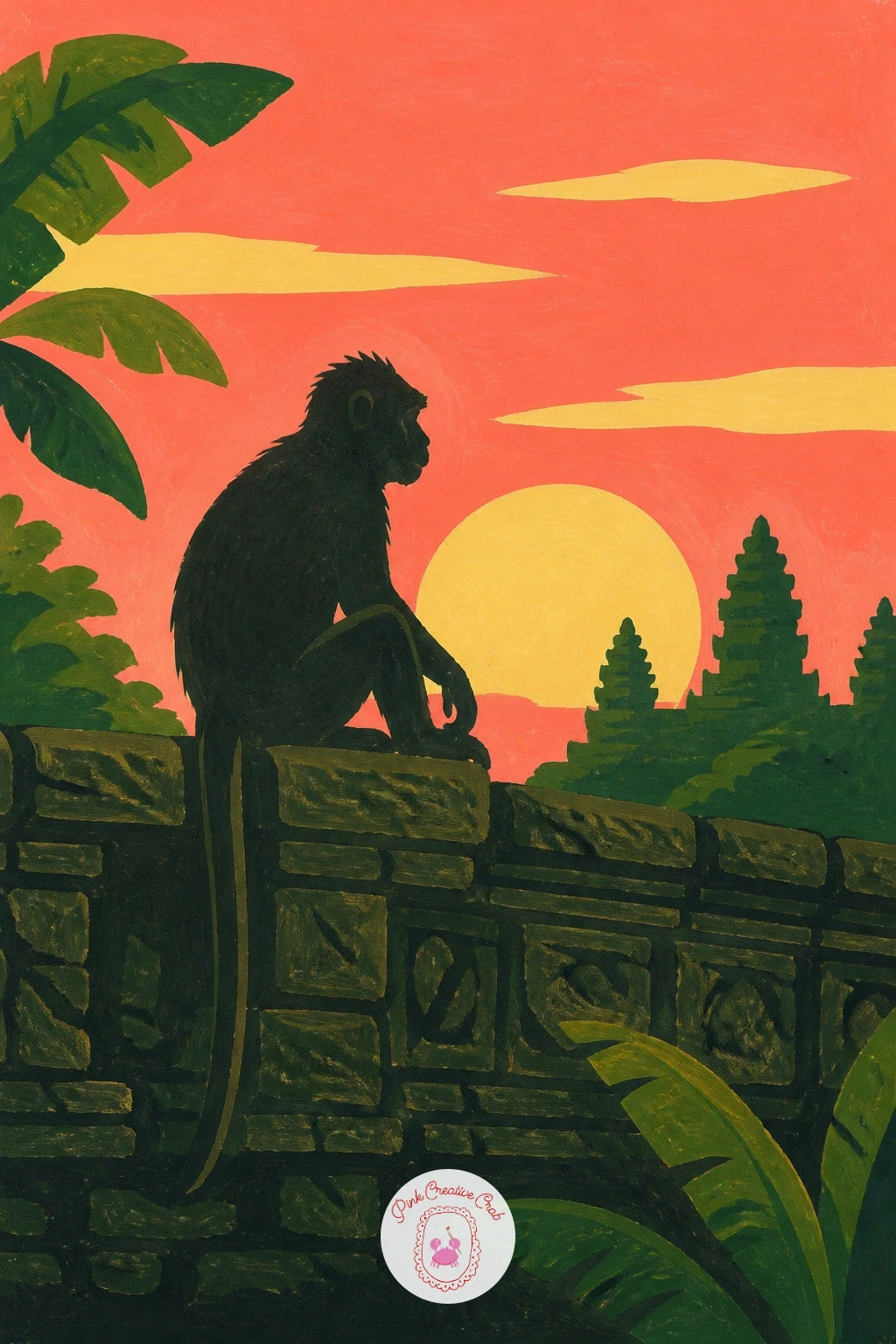
Palette: Coral,Banana Yellow,Deep Umber,Stone Grey
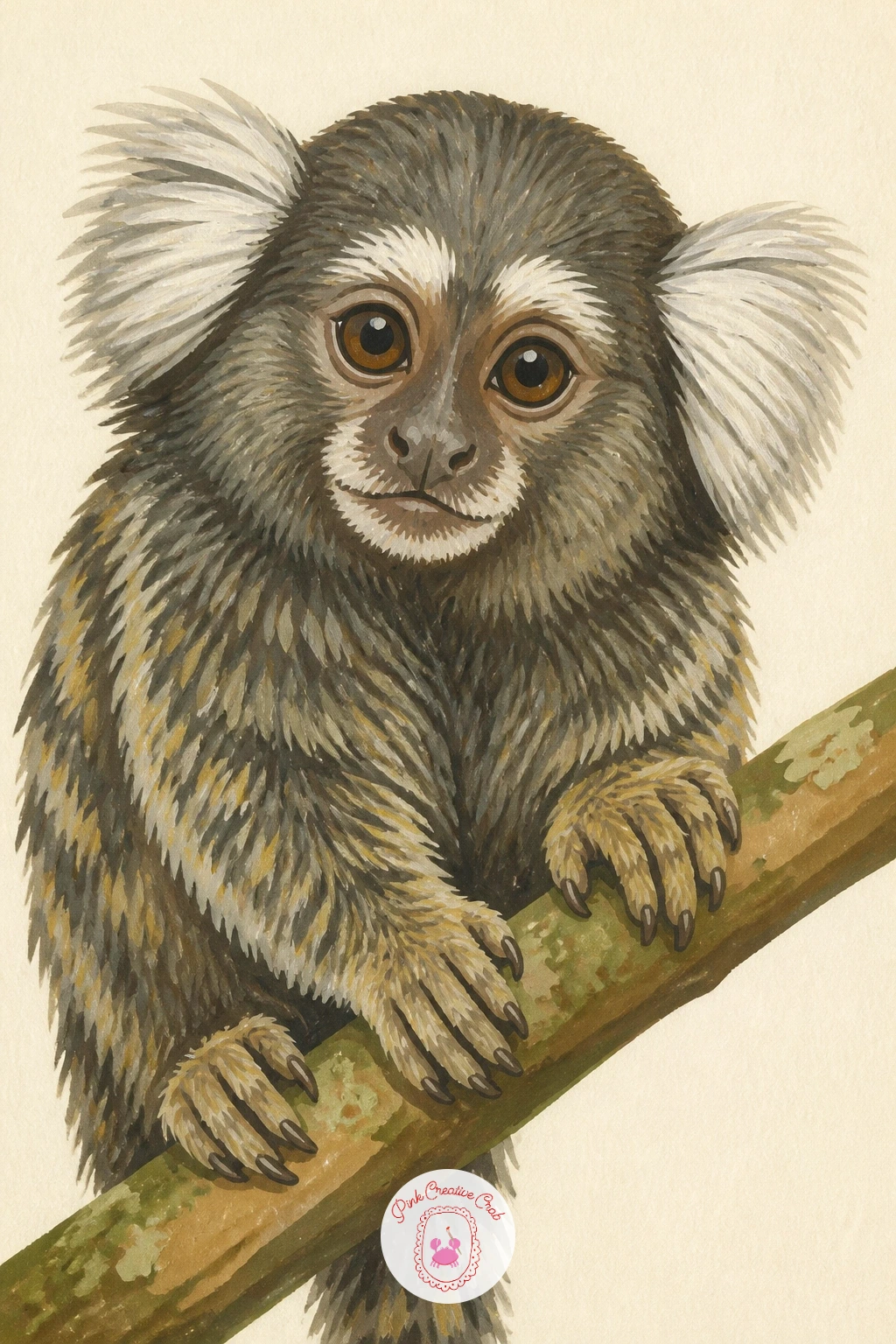
Go small-scale with a tiny marmoset perched on a branch no thicker than a finger, a piece that works beautifully as a close, tight composition. Paint the thin branch first as a single curved line, then build the marmoset’s round body and tufted ears around it, keeping the whole animal in proportion to that slender perch.
Marmosets have distinctive furry ear tufts and a small flat face, so paint those details with a fine round brush after the body color is dry, using confident small strokes rather than fussing over them. If the ear tufts look stuck on, soften their base into the head color while it’s still slightly damp.
Quick version: block the whole marmoset in one flat grey-brown shape with simple dark eyes and call it done in about ten minutes. The forty-minute version adds the textured ear tufts, a second small branch with a leaf, and a touch of shading along the belly.
Swap a toothpick for your smallest brush if you don’t own one fine enough for the face details.
Palette: Grey Brown,Cream White,Deep Umber,Jungle Green
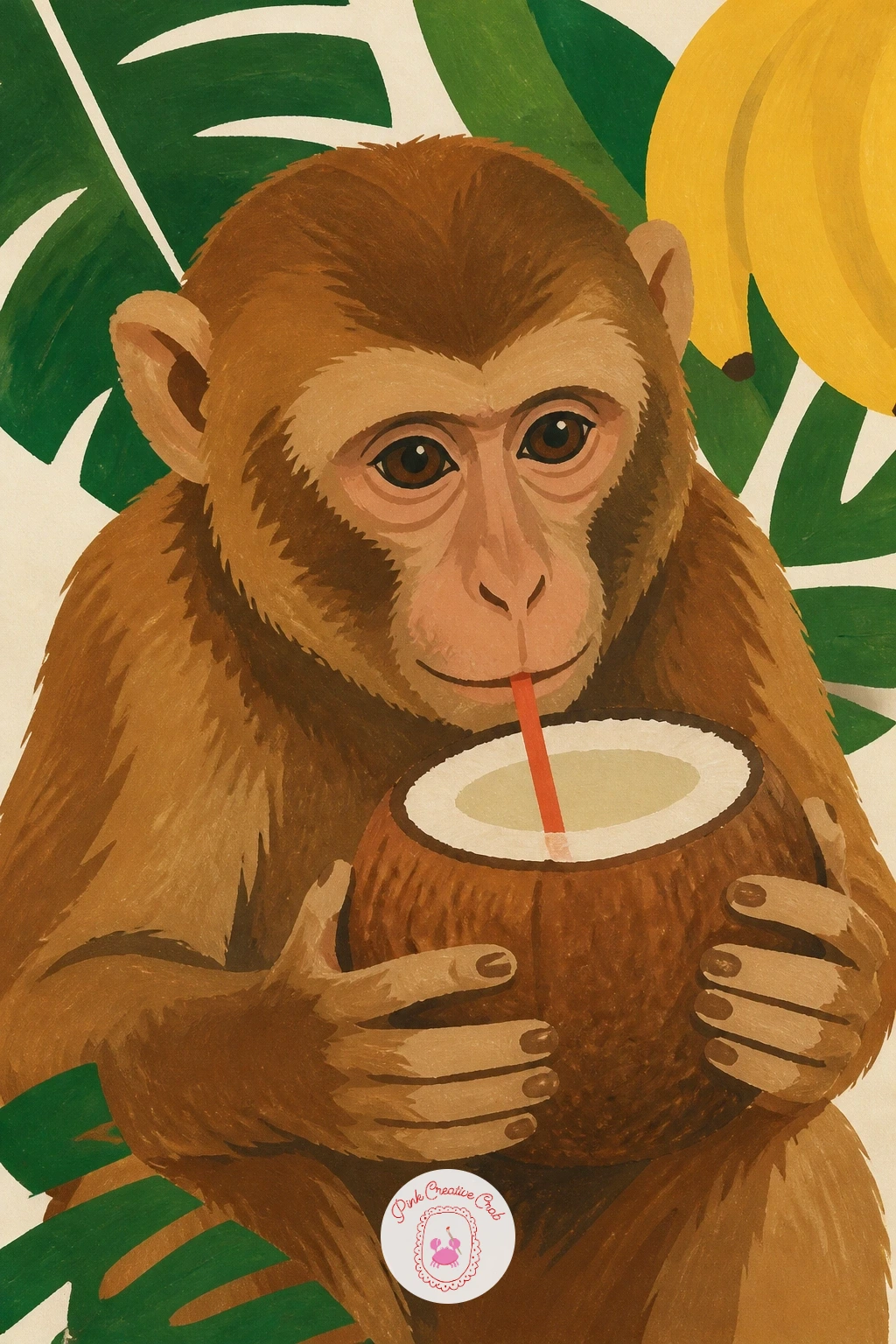
Paint a monkey drinking from a coconut for a simple, satisfying prop composition. Block in the monkey’s seated body first, then paint the coconut held up to its mouth with both hands, a rough brown shell shape with a lighter cut opening at the top.
Keep the coconut slightly tilted toward the monkey’s mouth, which sells the drinking action better than holding it perfectly upright. If the hands covering the coconut look confusing, simplify them to simple rounded shapes gripping the sides rather than painting individual fingers.
Paint the coconut’s rough texture with small dry-brush dabs of darker brown over the base color once it’s dry, which reads as husk texture without much extra effort. A plain banana works as a swap prop if coconuts feel fiddly to paint.
Finish with a small coral flower or leaf tucked near the monkey’s feet to carry the accent color through this piece too.
Palette: Warm Brown,Coconut Brown,Cream White,Coral
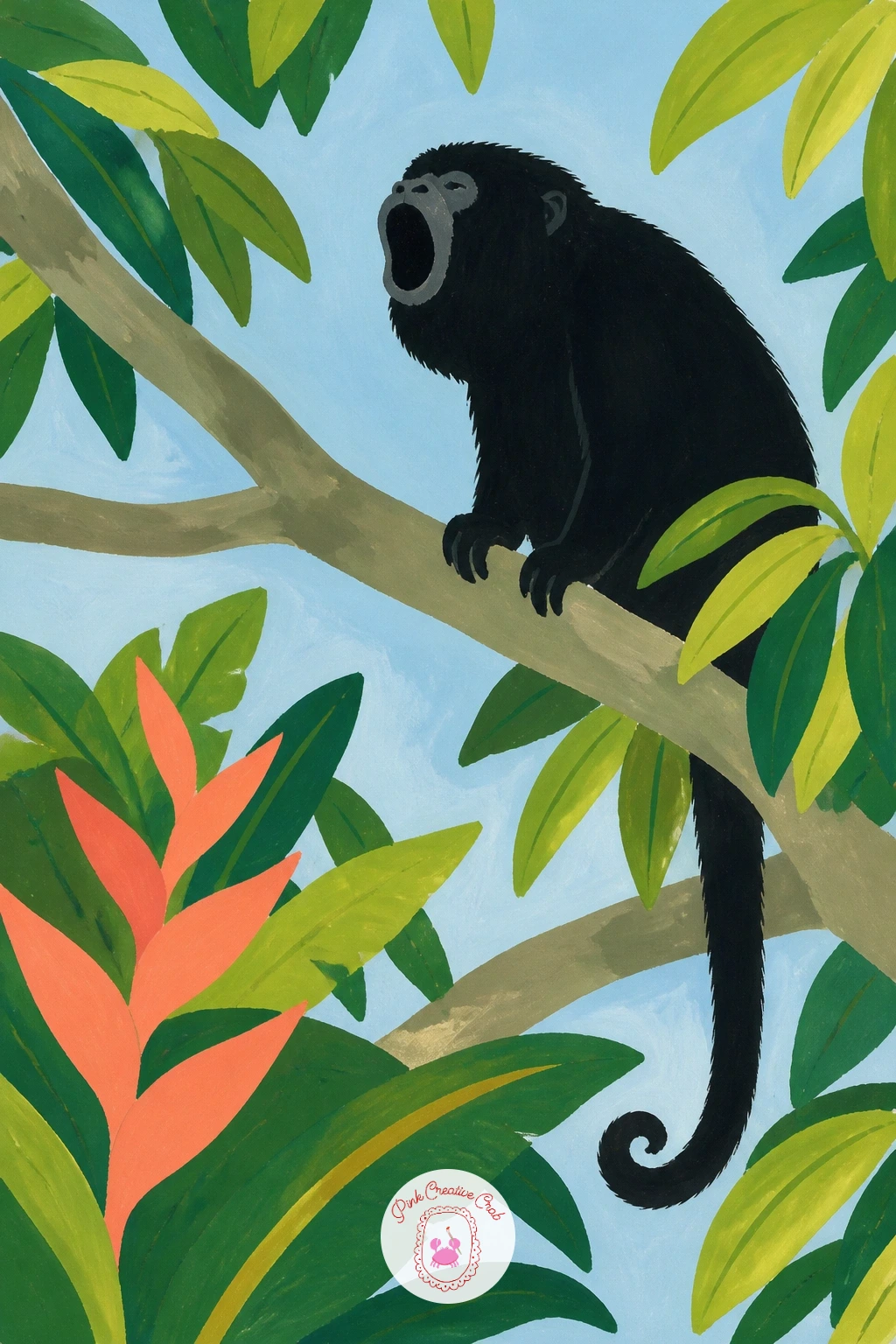
Capture a howler monkey calling from a treetop, mouth wide open mid-call, for a pose full of energy. Set the eye level looking up at the monkey from below, which naturally shows off its throat and open mouth while the body silhouettes against a bright sky.
Paint the sky first as a flat pale blue or early-morning coral, then the dark silhouette of the branch and body, leaving the open mouth as a small pale pink shape that catches the eye immediately. This low eye level is what gives the painting its sense of a loud call drifting down through the canopy.
If the open mouth reads as a strange blob rather than a call, narrow it into more of an oval and add a hint of a dark tongue shape inside. Keep the surrounding leaves loose and simple so they don’t compete with the howling pose.
Tip for today: tilt the monkey’s head back further than feels natural, since a subtle tilt barely reads as a call at all.
Palette: Dark Brown,Pale Sky Blue,Flesh Pink,Jungle Green
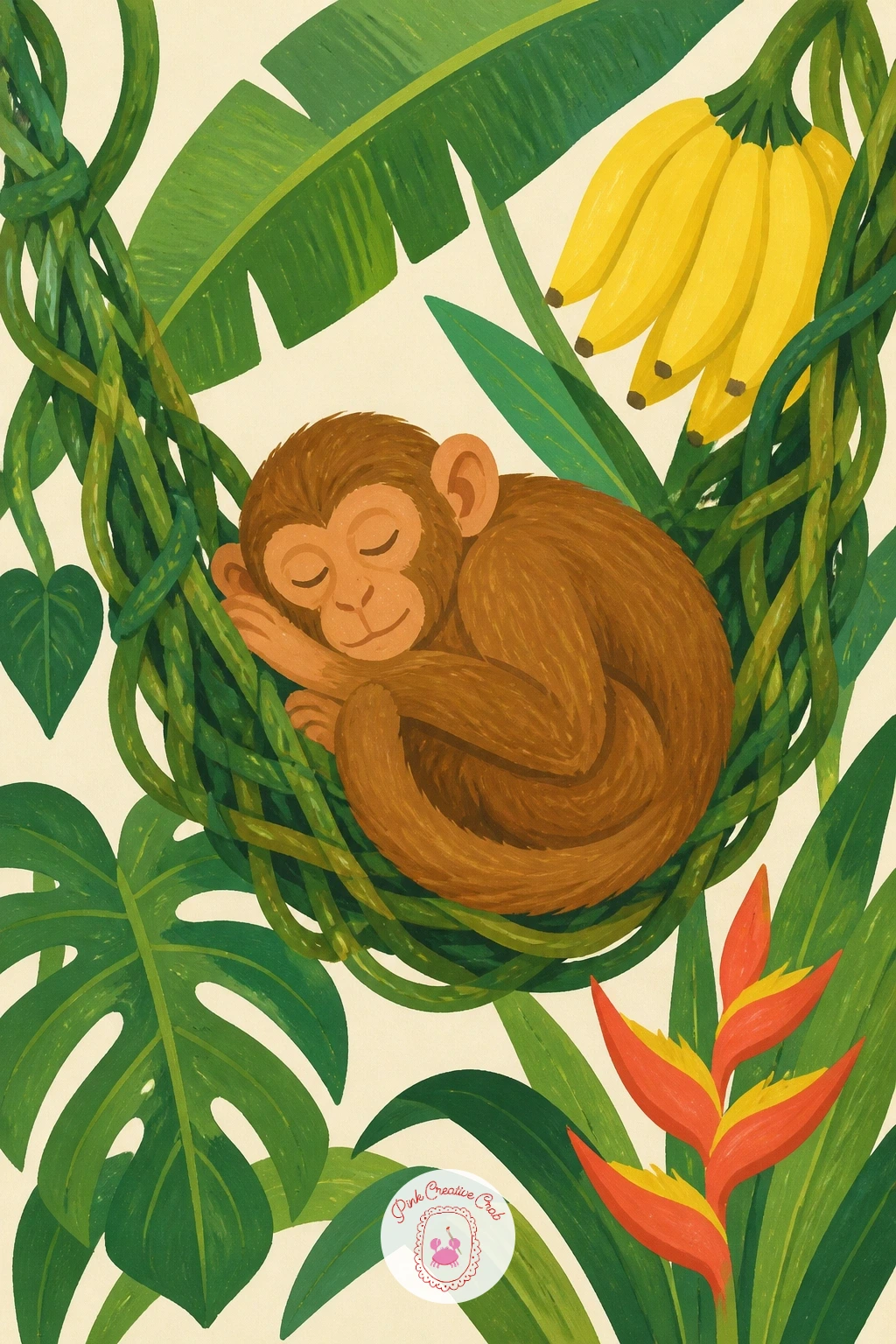
Slow the pace with a monkey asleep in a hammock made of woven vines, a cozy scene that leans on soft curves. Paint the hammock first as a simple curved net shape slung between two unseen points, a few crossing vine lines in dark green, then nestle the sleeping monkey’s curled body into the dip of it.
Curl the monkey’s body into a tight round shape with its tail wrapped loosely around itself, eyes closed with just two simple curved lines. If the hammock shape looks stiff, loosen the vine lines so they sag naturally under the monkey’s weight rather than staying perfectly straight.
This is a gentle subject for anyone newer to gouache, since the forgiving curled pose hides a multitude of small proportion errors. For more relaxed poses like this one, the ideas in easy acrylic painting ideas for beginners offer a similar calm, flat-shape approach worth borrowing from.
Finish today by adding one leaf draped over the monkey like a blanket corner for extra coziness.
Palette: Jungle Green,Warm Brown,Cream White,Olive Green
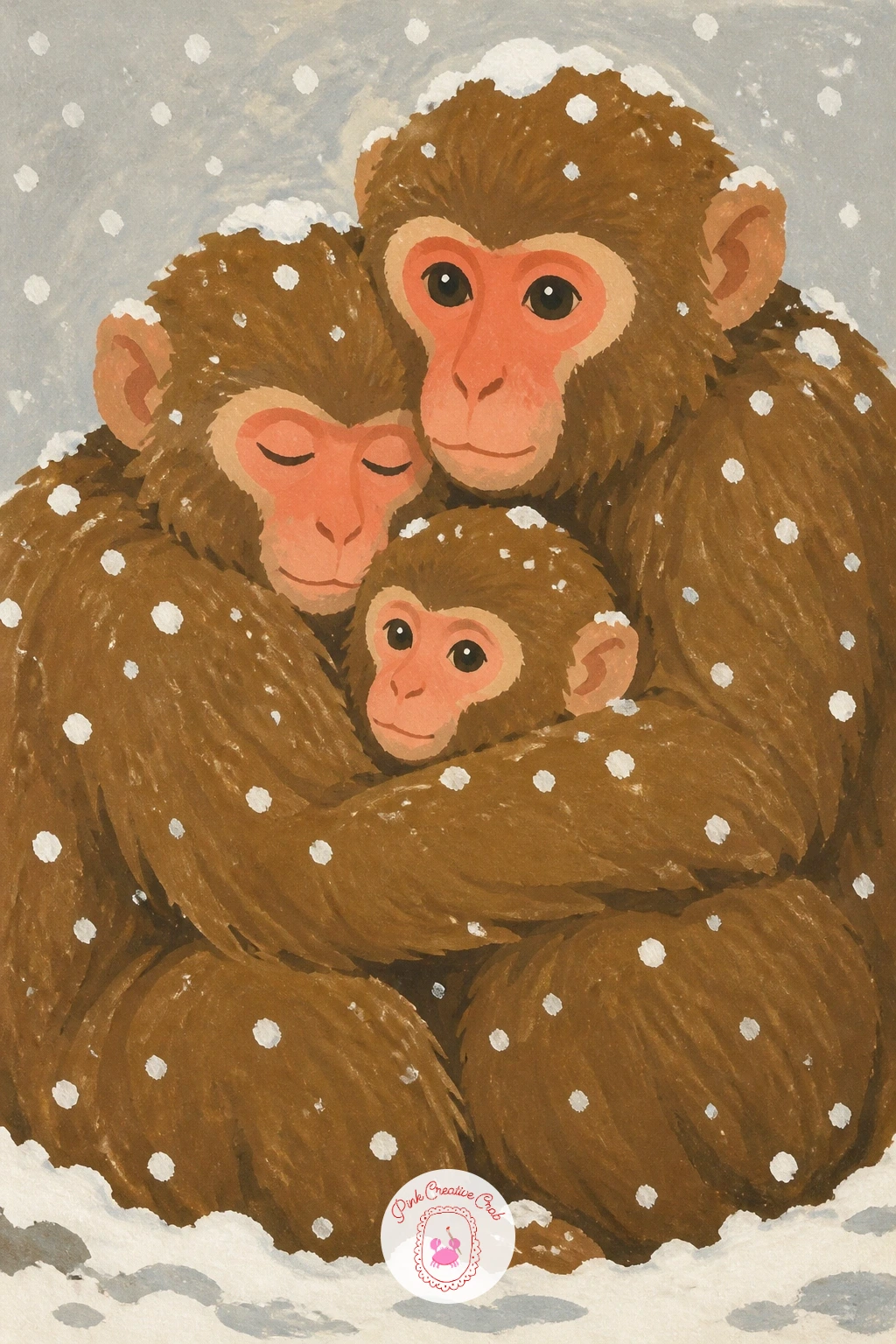
Return to winter with a monkey family huddled together in the snow, three or four bodies pressed close for warmth. Build this one from the back forward: paint the farthest, most hidden monkey first as a simple dark shape, then layer the others in front of it, each slightly larger and lighter as they come closer to the viewer.
Keep the whole huddle as one connected silhouette rather than separate circles, since real warmth-seeking animals press their bodies together with barely any gap showing. Snow falls last, a scatter of small white dots flicked on with a nearly dry brush or a toothbrush over the finished group.
If the group starts looking like a single shapeless blob, separate individual heads clearly even while keeping the bodies merged, since faces are what make a group read as a family rather than a furry pile.
Swap the snow for scattered petals or leaves if you’d rather paint this same huddled pose in a warmer season.
You Will Need
- old toothbrush (optional, for splatter)
Palette: Warm Brown,Titanium White,Pale Grey,Deep Umber
Capture motion with a gibbon swinging across the canopy, long arms stretched in full mid-swing brachiation. Sketch the arc of the swing first with a light pencil line, then place the gibbon’s body at the midpoint of that arc, one arm reaching forward and one trailing back for a true sense of momentum.
Paint the body in a flat black or dark grey gouache, since gibbons often have a striking plain silhouette that reads beautifully as a bold flat shape against green leaves. Leave the long arms slightly longer than instinct suggests, since gibbons have proportionally the longest arms of any primate and shortening them flattens the whole sense of swing.
Add the surrounding canopy as loose overlapping leaf shapes in two or three greens, painted after the gibbon so they can tuck behind its silhouette convincingly. If pure black feels too stark, soften it with a touch of deep umber mixed in.
One tip for today: angle the whole body diagonally across the page rather than centering it upright, which keeps the sense of speed alive.
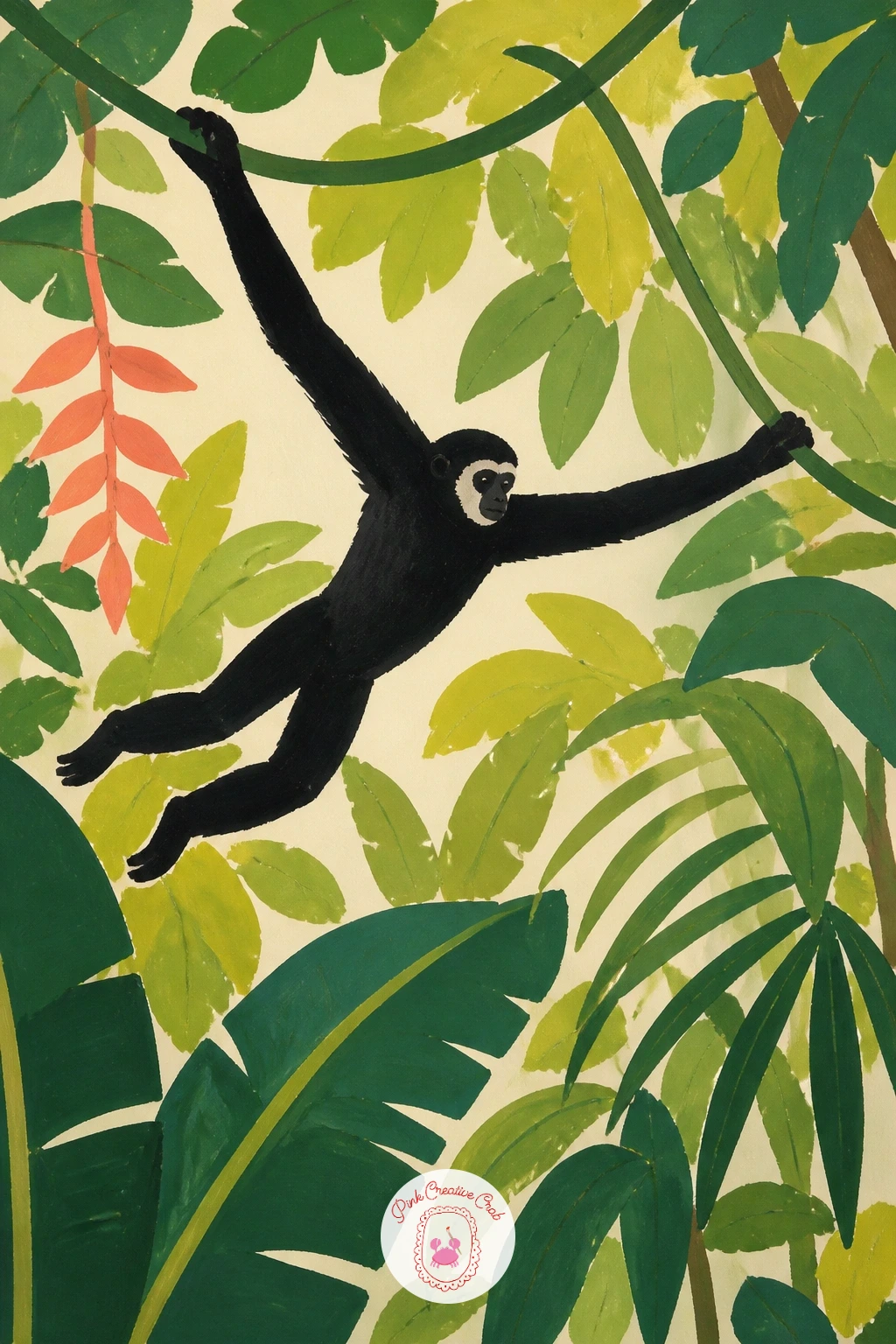
Palette: Charcoal Black,Jungle Green,Olive Green,Cream White
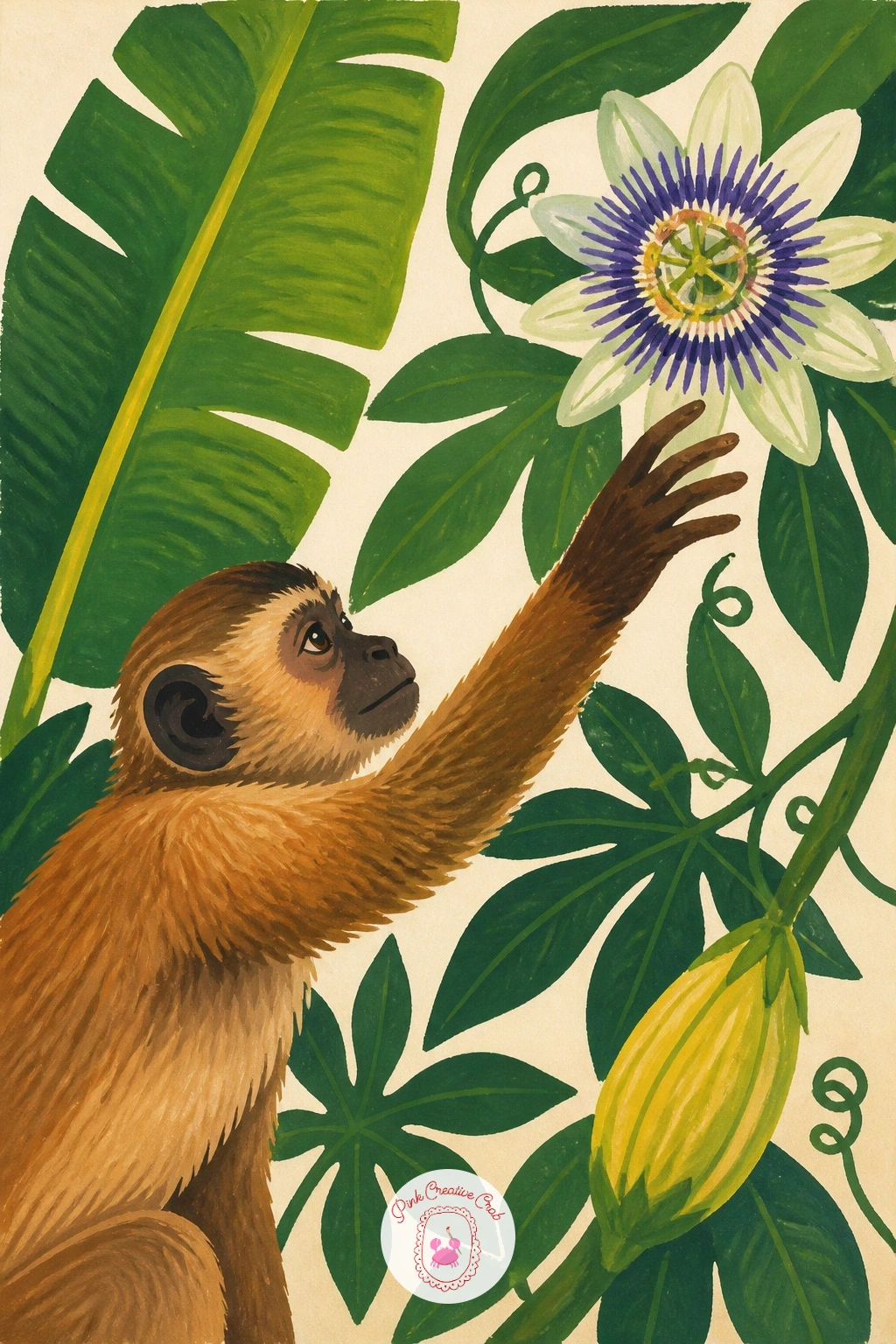
Paint a monkey reaching for a passion flower for a composition built around one delicate focal detail. Place the flower first, a few pointed petals in white or pale lavender with the distinctive fringed center painted as fine radiating lines, then build the monkey reaching toward it with one arm extended.
Keep the monkey’s body weight shifted slightly back, as if balancing while leaning forward, which reads as a more active reach than a flat standing pose. Paint the flower’s fringed center last with a very fine brush, since that detail is what makes a passion flower recognizable rather than a generic blossom.
If the fine center lines feel too fiddly for gouache, switch to a fine liner pen for just that detail once the paint is dry. Keep the rest of the piece loose so that one crisp detail stands out.
For more flower-painting groundwork in gouache, the techniques in gouache painting flowers apply directly to getting this bloom right.
You Will Need
- fine liner pen (optional)
Palette: Lavender White,Coral,Jungle Green,Warm Brown
Try a monkey looking at its own reflection in a still pool, a composition that depends on a convincing mirror image. Paint the monkey above the waterline first in full color and detail, then paint the reflection below as the same shape flipped vertically, slightly softened and cooler in tone to suggest water rather than solid ground.
Keep the reflection’s edges looser and less detailed than the monkey above, since a crisp mirror-perfect copy actually looks less convincing than one with a bit of soft blur at the waterline. A thin horizontal line of slightly darker water marks exactly where the two halves meet.
If flipping the pose accurately feels tricky, simplify the reflection to just the head and shoulders rather than the whole body, which still reads clearly as a reflection. Mix a cooler, greyer version of your main colors for everything below the waterline.
Finish today by adding one or two ripple lines breaking up the reflection, which adds realism without extra painting time.
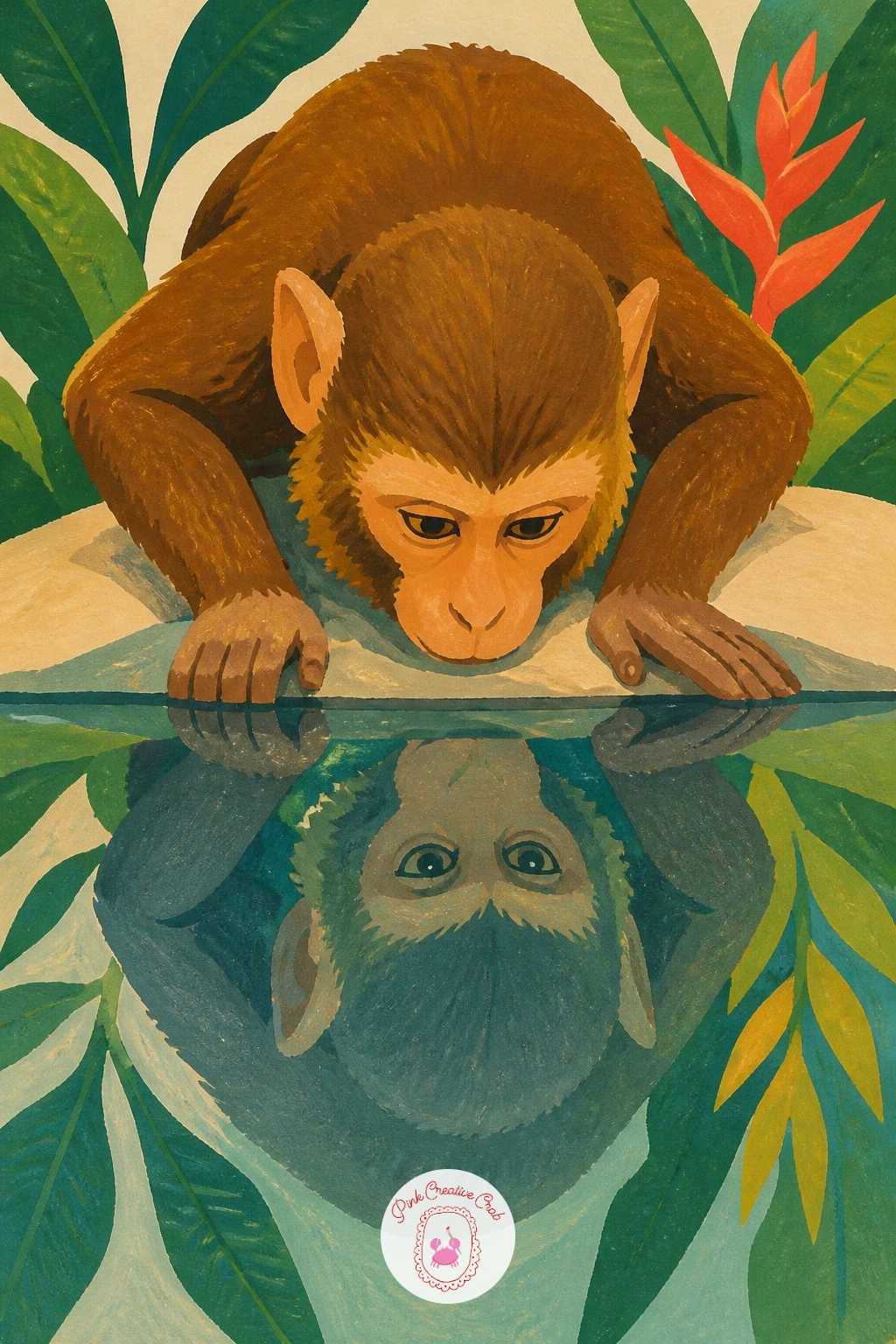
Palette: Warm Brown,Cool Grey Brown,Pool Blue,Cream White
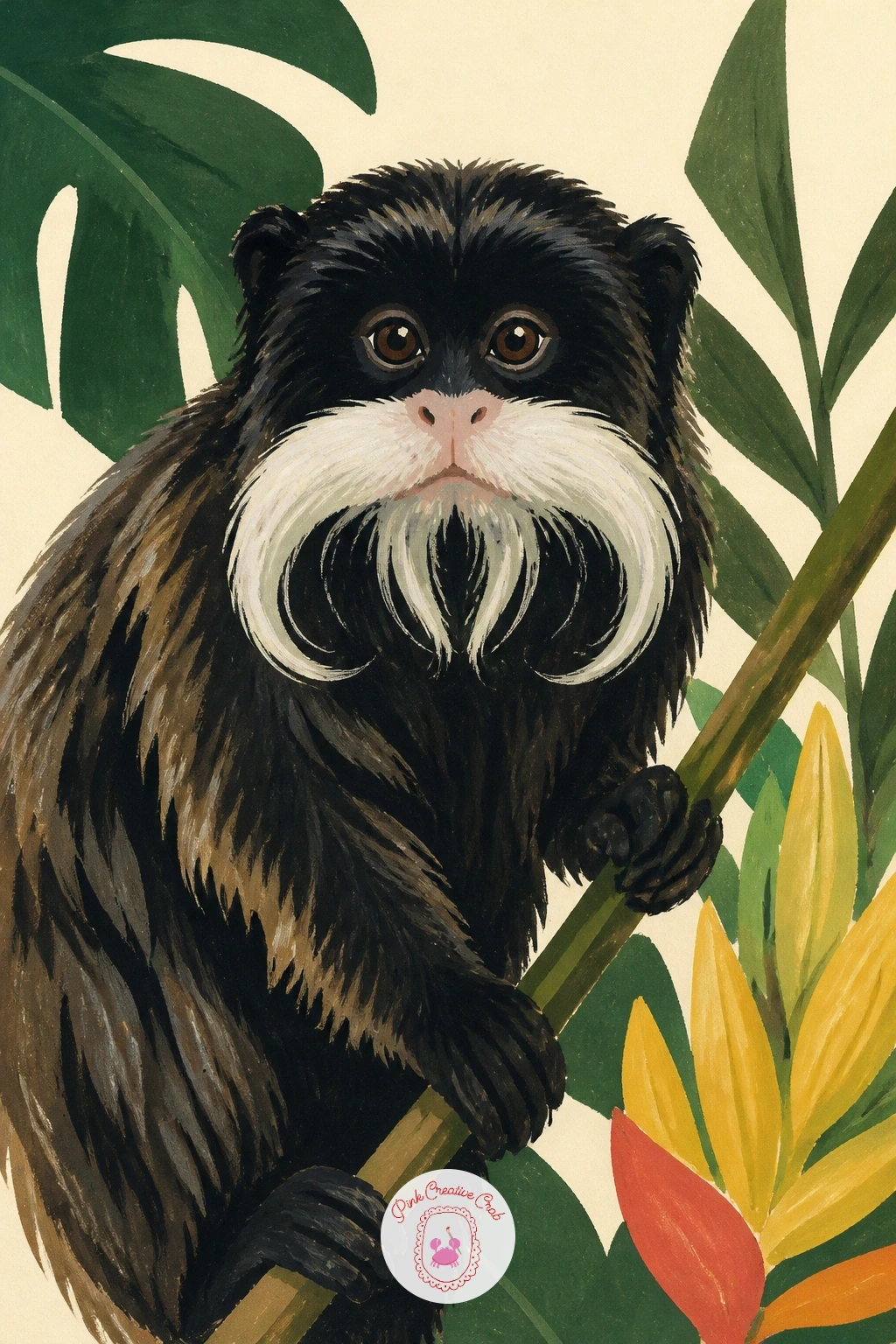
Paint a tamarin with its distinctive white mustache next, a small portrait that lives or dies on that one facial detail. Block in the dark body and face first, then paint the white mustache last as two curved sweeping strokes framing the mouth, kept crisp and clean against the dark fur beneath.
Load the brush generously for the mustache strokes and commit to them in one confident pass each, since hesitant overlapping strokes muddy the crisp white into a grey smear. If that happens, let it dry completely and paint one clean white layer back over the top.
Give the tamarin wide, alert eyes and a small upright body perched on a thin branch, keeping the rest of the piece simple so the mustache stays the clear star. A fine white gel pen works as a backup for crisp mustache lines if your gouache keeps picking up the dark fur underneath.
Tip for today: curl the mustache ends slightly upward for extra personality.
You Will Need
- white gel pen (optional)
Palette: Deep Umber,Titanium White,Jungle Green,Cream White
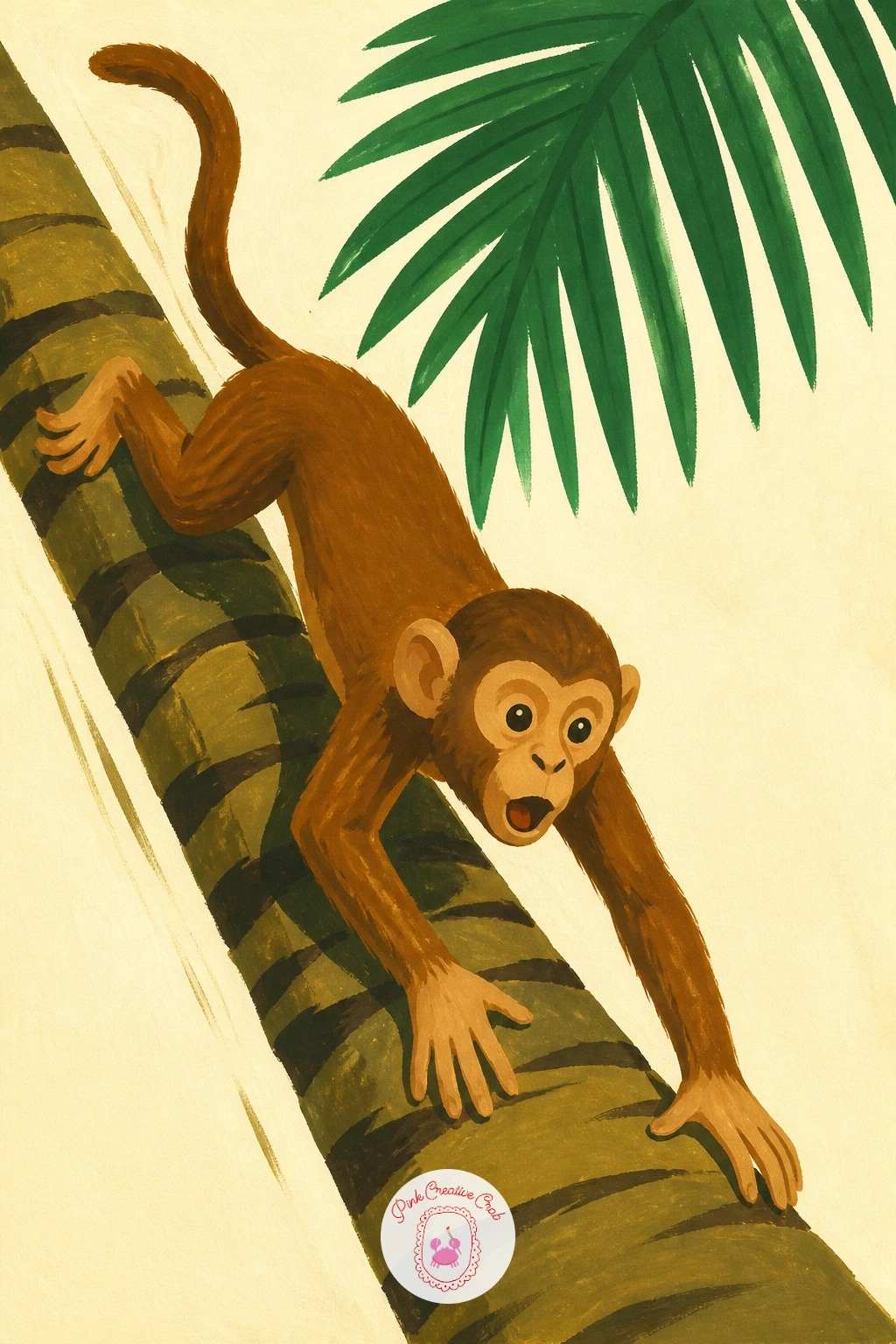
Paint a monkey sliding down a palm trunk for a fast, playful action pose. Paint the trunk first as a long diagonal shape running corner to corner across the page, then place the monkey mid-slide along it, limbs splayed slightly outward and tail curved up behind for balance.
Give the palm trunk simple horizontal texture marks in a darker brown once the base color dries, just enough to suggest bark without slowing you down. The monkey’s fur can stay almost entirely flat color here since the diagonal composition itself carries all the energy.
If the sliding pose looks static rather than fast, exaggerate the back leg trailing up and behind rather than tucked neatly underneath. A single palm frond at the very top corner is enough context, no need for a full tree.
Quick version: paint just the trunk and monkey in ten minutes flat. The forty-minute version adds bark texture, a frond, and a small splash of dust or leaves kicked up at the base.
Palette: Warm Brown,Deep Umber,Jungle Green,Cream White
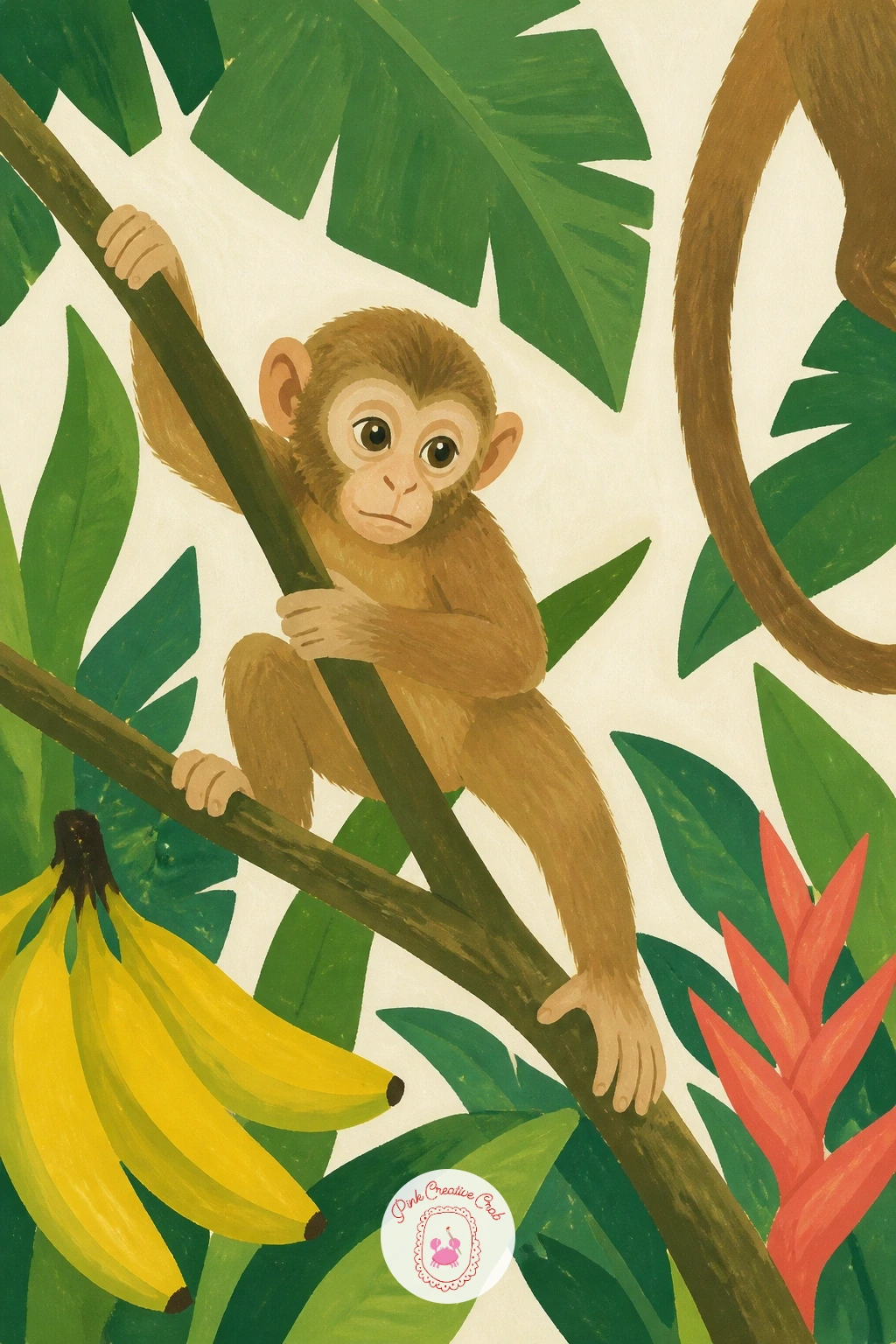
Paint a baby monkey learning to climb, caught in an uncertain, slightly wobbly pose partway up a branch. Give the baby a slightly oversized head and shorter limbs compared to an adult monkey, the usual proportion markers that read instantly as young, and set its grip on the branch a little loose and uneven rather than confident.
Paint the branch first, then the baby’s body gripping it with one hand higher than the other, as if still finding its balance. A single parent’s tail or hand entering the frame from one edge, steadying or hovering nearby, adds a sweet narrative touch without painting a whole second figure.
If the pose looks too static, tilt the baby’s whole body slightly off the vertical axis of the branch, which reads as motion and uncertainty rather than a monkey simply posing. Keep the fur color soft and a shade lighter than an adult’s for a youthful look.
Finish today with simple wide eyes looking down, which sells the sense of a brand new, slightly nervous climb.
Palette: Light Brown,Warm Brown,Jungle Green,Cream White
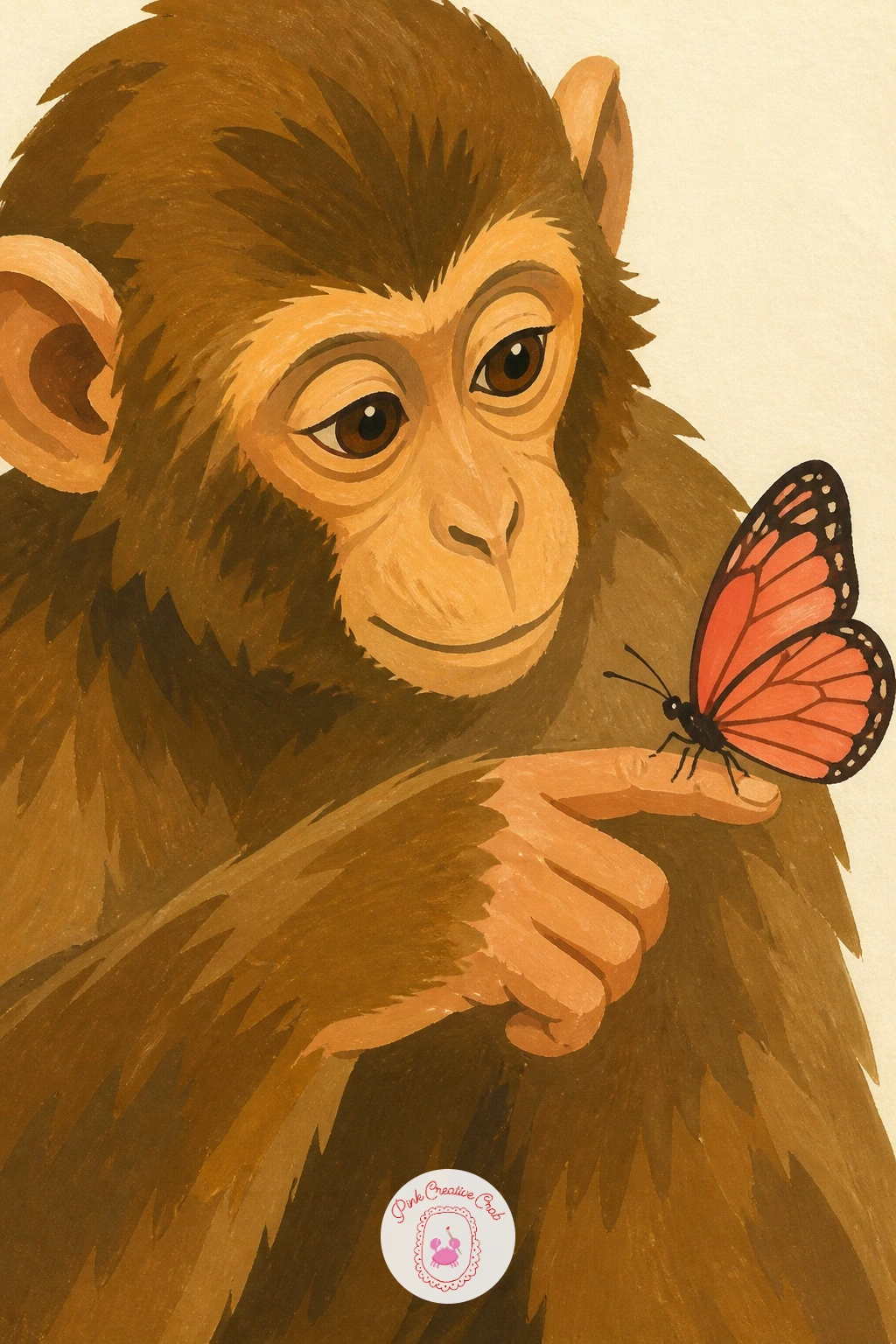
Paint a monkey with a butterfly resting on its finger for a quiet, detailed close-up moment. Paint the monkey’s hand and extended finger first, then add the butterfly perched right at the tip, wings held open flat so the full pattern shows clearly against the fur behind it.
Keep the monkey’s face turned slightly downward, watching the butterfly, which focuses the whole composition on that small point of contact. Paint the butterfly wings in your coral accent with a few simple dark spots or lines, since a butterfly works best here as a bold flat shape rather than a fussy detailed one.
If the wings look too thin and sharp, round out the outer edges slightly, since real wings are softer and more rounded than most people’s first instinct when painting them. A fine liner pen can add the antennae and spot details crisply once the gouache has dried.
Today’s tip: leave a sliver of pale negative space between the fingertip and the wing so the two shapes don’t visually merge.
You Will Need
- fine liner pen (optional)
Palette: Warm Brown,Coral,Deep Umber,Cream White
Paint a monkey wrapped in a big leaf like a blanket for one of the coziest scenes on this whole list. Paint the leaf first, one large rounded shape in jungle green with visible veins, wrapped loosely around the seated monkey’s body so just the head and maybe one hand peek out at the top.
Build the monkey’s visible face and shoulders in warm brown before painting the leaf over the edges of its body, letting the green overlap the fur slightly to sell the wrapped, tucked-in feeling. If the leaf looks flat rather than wrapped, add one or two soft fold lines in a darker green where it bends around the body.
Keep the monkey’s expression sleepy or content, small closed or half-closed eyes, since this scene is all about warmth and shelter rather than activity. Swap the single leaf for a cluster of smaller ones if a single giant leaf feels like too large a shape to commit to.
Finish with a raindrop or two outside the leaf’s edge to suggest it’s sheltering from the rain, same as the earlier leaf-hat idea but cozier.
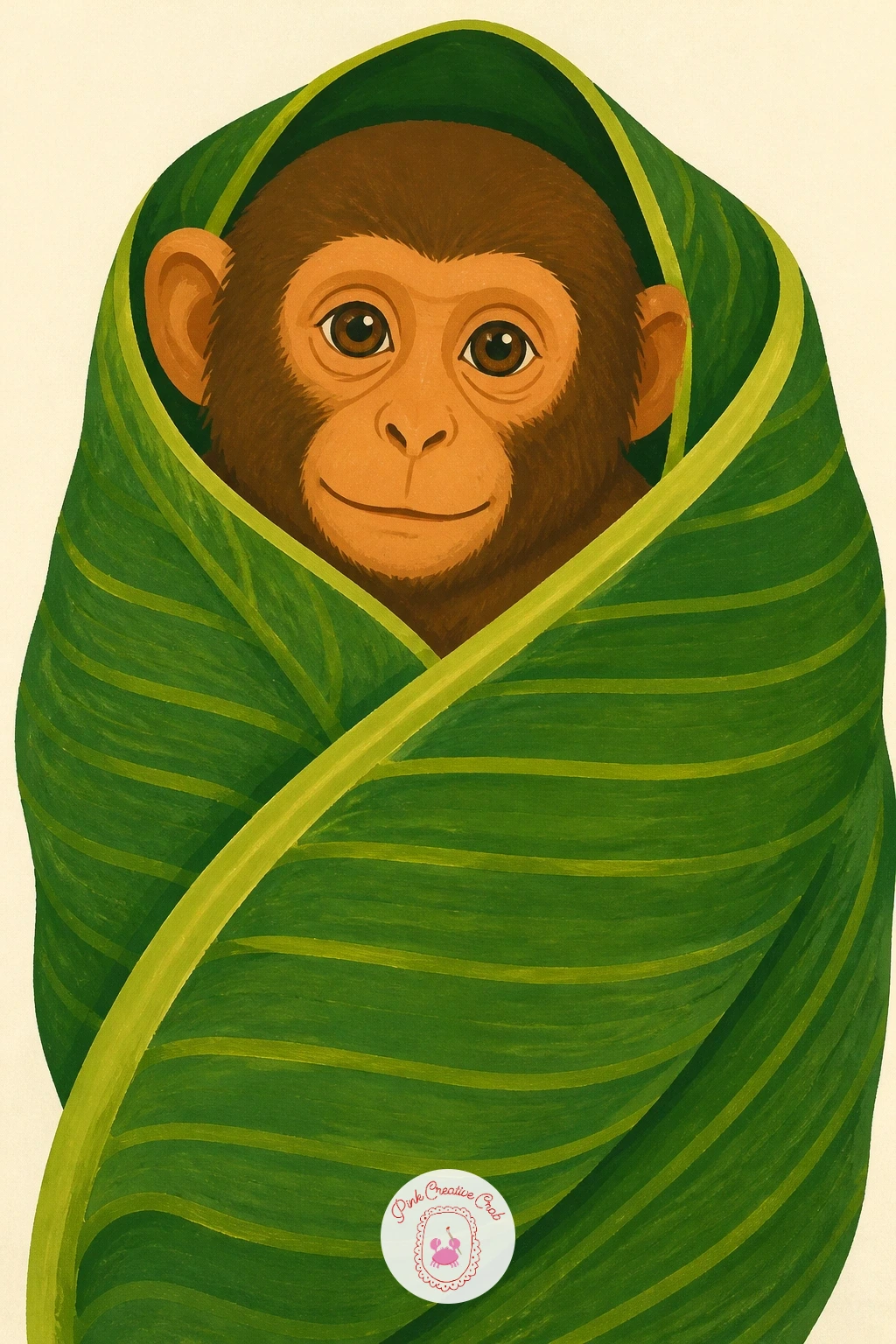
Palette: Jungle Green,Dark Green,Warm Brown,Cream White
Close the series with two baby monkeys sharing a fig, a sweet final scene full of small overlapping shapes. Paint the fig first, one split-open purple-brown fruit showing its pink interior, placed between the two baby monkeys who each hold one side of it.
Keep both babies similar in size and color so they read clearly as a pair rather than a parent and child, and give them mirrored poses leaning toward the fruit from either side. Paint the fig’s pink interior while the outer skin is still slightly damp, letting the two colors blend just slightly at the cut edge for a convincing ripe look.
If the two babies start to look identical and flat, vary their poses slightly, one leaning further in than the other, so the composition has a bit of natural asymmetry. A plum or a small orange works as a swap fruit if fig shapes feel unfamiliar to paint.
One last tip: finish this final piece with the same coral accent used earlier in the series, tying the whole set of 28 together.
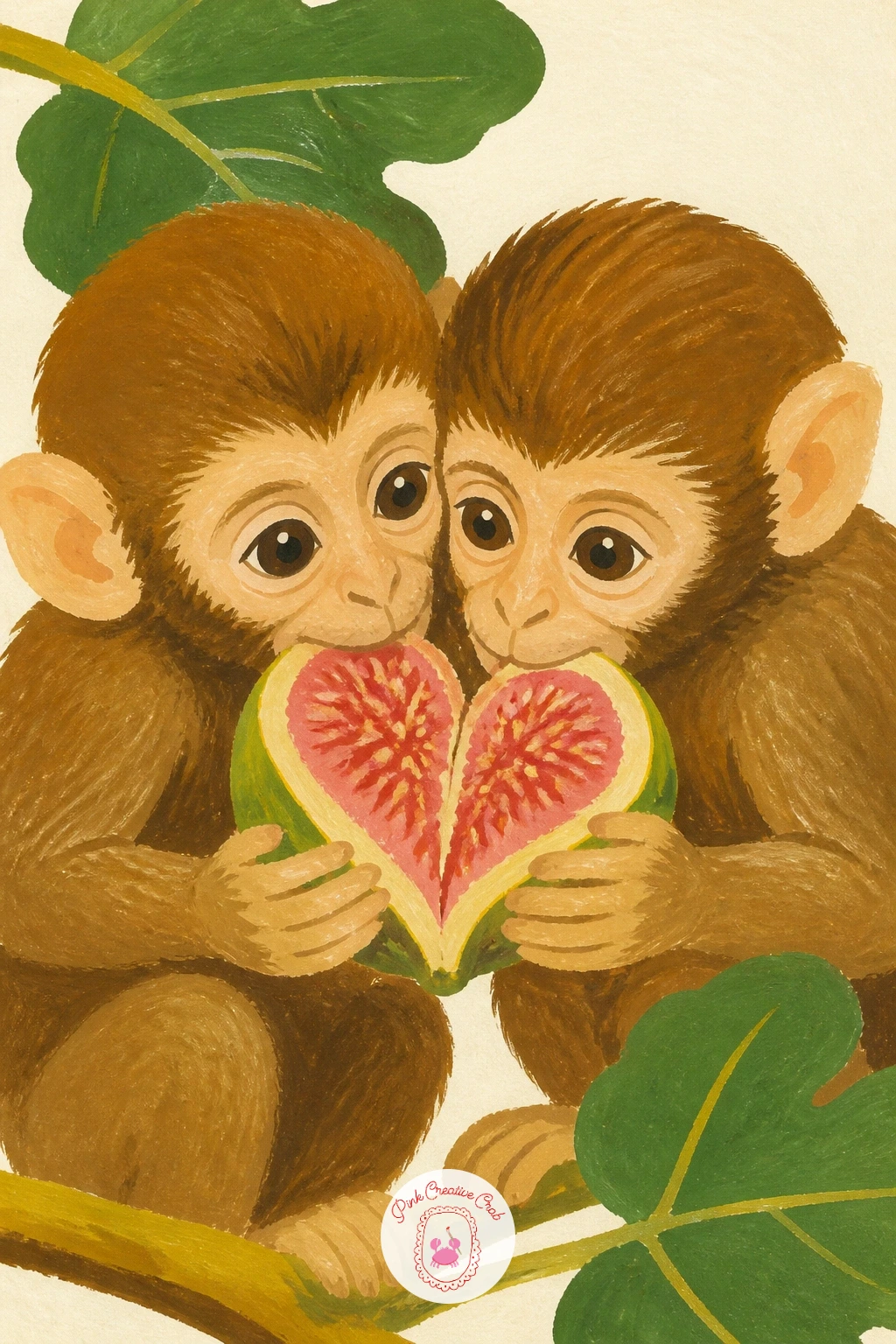
Palette: Fig Purple,Fig Pink,Warm Brown,Cream White
What to Do Next
Pick whichever monkey made you smile first, tape a sheet of cold press paper to your board, and work the shapes in the order each idea lays out: largest first, small details last. One finished monkey today is plenty, the rest of the jungle will still be here tomorrow.
Frequently Asked Questions
What paint works best for a monkey painting in gouache?
Student or artist grade gouache both work well, since the flat matte finish is the main thing you need. Look for a set with a good warm brown, jungle green, banana yellow and a coral or red for accents.
How do you keep monkey fur from looking flat in gouache?
Use short dry-brush strokes over a slightly darker undercoat rather than one single flat color. Loading the brush with less water and more pigment gives a textured, broken stroke that reads as fur instead of a solid block.
What paper suits gouache monkey paintings best?
A cold press watercolor paper of at least 140 pound weight handles gouache well without buckling. Its slight texture also helps dry-brush fur strokes catch and separate naturally.
How do you paint a monkey’s face so it looks right?
Work light areas first, since most monkey faces have a paler patch around the eyes, nose or mouth that needs to go down before the darker fur around it. Keep the eyes simple and slightly large for a friendly, approachable look.
Can beginners paint these monkey scenes in one sitting?
Yes, every idea on this list uses simple overlapping shapes that build quickly in gouache’s flat, fast-drying color. Starting with the earlier, simpler poses builds confidence before trying the more detailed scenes later in the list.
Have any thoughts?
Share your reaction or leave a quick response — we’d love to hear what you think!
-
 0
-
0
-
0
-
0
-
0
-
0


