Cute painting ideas do not get much sweeter than a sleepy baby animal curled up inside a flower, and that is exactly what fills this list. Each one is a single scene, a soft creature and one kind of bloom, flat gouache shapes with clean edges and a little cream background behind them.
These are made for nursery walls, gift cards and that one print you keep meaning to frame, so nothing here needs fancy blending or hours at the easel. Scroll through, pick the flower or the animal that pulls you in first, and paint your way down the page whenever you want another.
Using these images: free for personal projects such as printing, coloring, cards, journals and gifts. Handmade items that include them may be sold up to 30 pieces per design. More than that is commercial use and is not permitted, and neither is selling or sharing the images themselves or passing them off as your own. Please ask before any other use.
Start the whole list with a bunny asleep in a tulip, the easiest shape on this page and the best warm up for flat gouache. Pencil one tulip cup large enough to cradle the bunny, then block the petal in one mixed pink or cherry red before the bunny goes in on top once that layer is dry.
Keep the bunny as three soft shapes: a rounded body, a tucked head with closed eyes, and two long ears folded flat against its back. Paint it in a single flat cream or grey, add the ears and closed eye lines last with a fine brush loaded with a darker tone.
If the petal edge comes out wobbly, a thin outline in a slightly darker pink painted along the rim will straighten it instantly and look intentional. No cherry red on hand, hot pink mixed with a touch of white gives the same punch.
Measure the tulip against the page first: if it fills less than two thirds of the height the bunny will look lost, so sketch big before you paint.
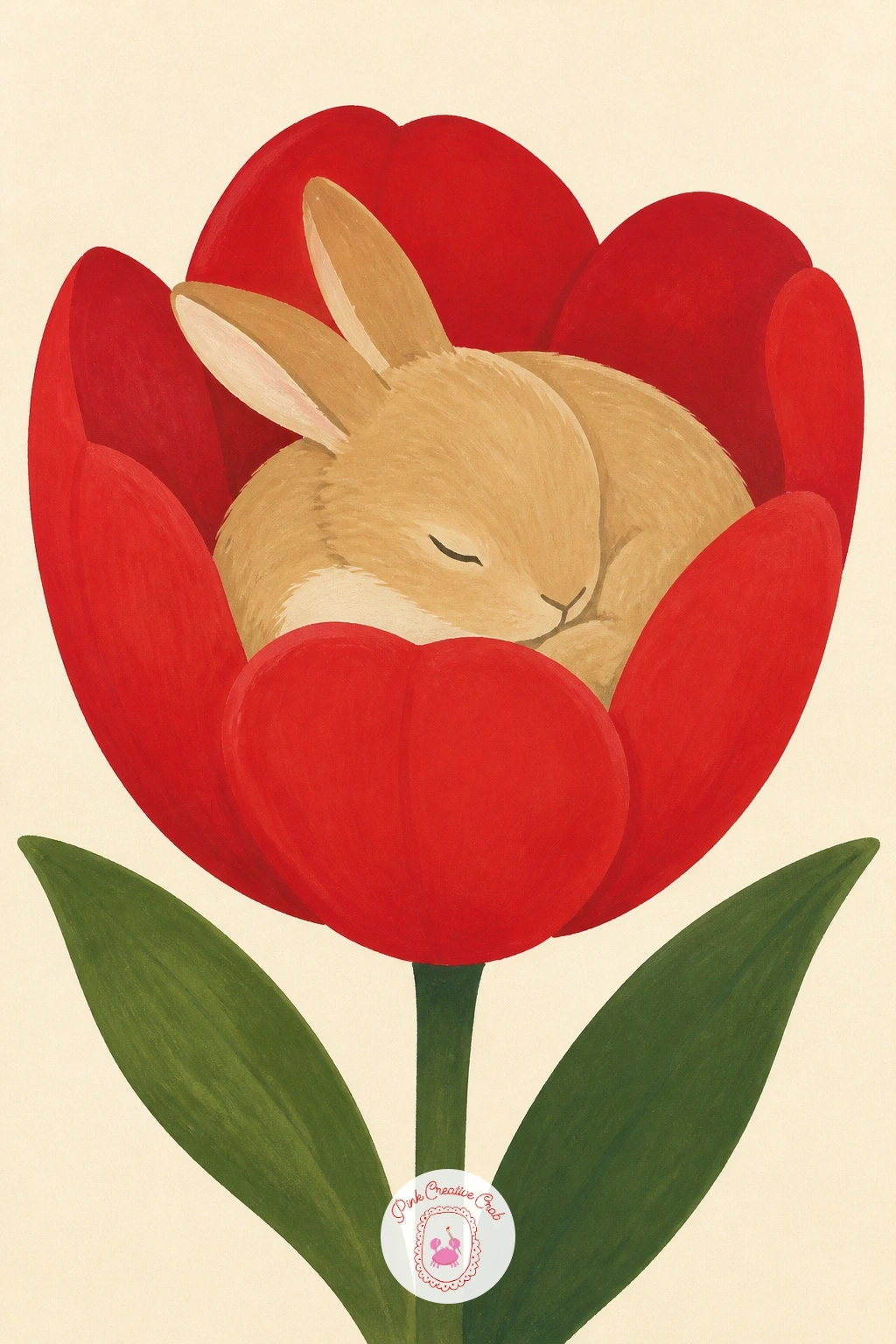
Palette: Cherry Red,Cream White,Soft Grey,Leaf Green
Move from the tulip to a kitten in a peony, where the challenge shifts from one petal to many soft layered ones. Build the peony from the back forward: lay in three or four overlapping petal shapes in a pale pink first, then a slightly deeper pink on top for the petals nearer the center so the flower reads as rounded rather than flat.
Drop the kitten into the open center once the petals are dry, painted as one curled cream shape with two small triangle ears and a closed eye line, no whiskers needed at this scale. Keep every petal edge crisp by letting each layer dry fully before the next touches it.
Peonies can turn muddy fast if you blend wet into wet, so mix each pink ahead of time in its own puddle rather than adjusting on the paper. If pink paint runs thin, add a touch of white gouache rather than water to keep the coverage flat and opaque.
Try loading just a little less water than usual for this one, since gouache needs to stay thick to cover in one pass.
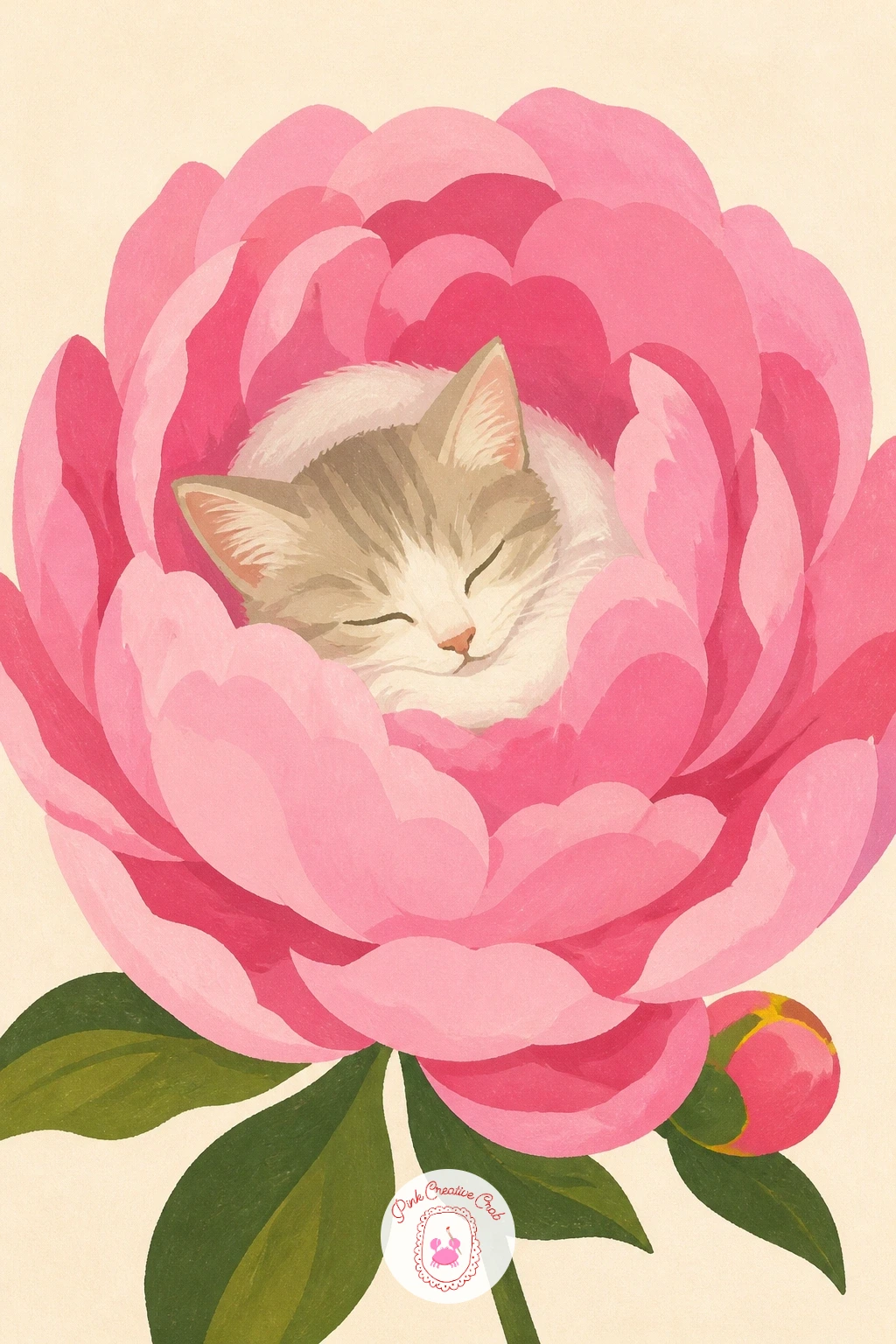
Palette: Butter Yellow,Blush Pink,Deep Rose,Cream White
Switch to a duckling under a daisy next, a nice contrast after the fuller peony since a daisy is really just one circle and a ring of simple petals. Paint the center as a flat butter yellow disc, then add six to eight white petal shapes around it with a touch of grey mixed in to keep them from looking too stark against the cream page.
Tuck the duckling under the edge of the flower rather than inside it, as a small yellow oval body with a closed eye and a tiny folded bill resting on its chest. Paint the duckling in the same butter yellow as the daisy center so your eye reads them as one warm family of shapes.
If the petals bunch together, count them out in pencil first and space them like clock numbers before any paint touches the page. A fine liner brush keeps the gaps between petals clean if a round brush feels too wide.
This piece suits a quick ten minute version well: skip the petal shading and keep every petal pure white, saving the shaded version for when you want more depth.
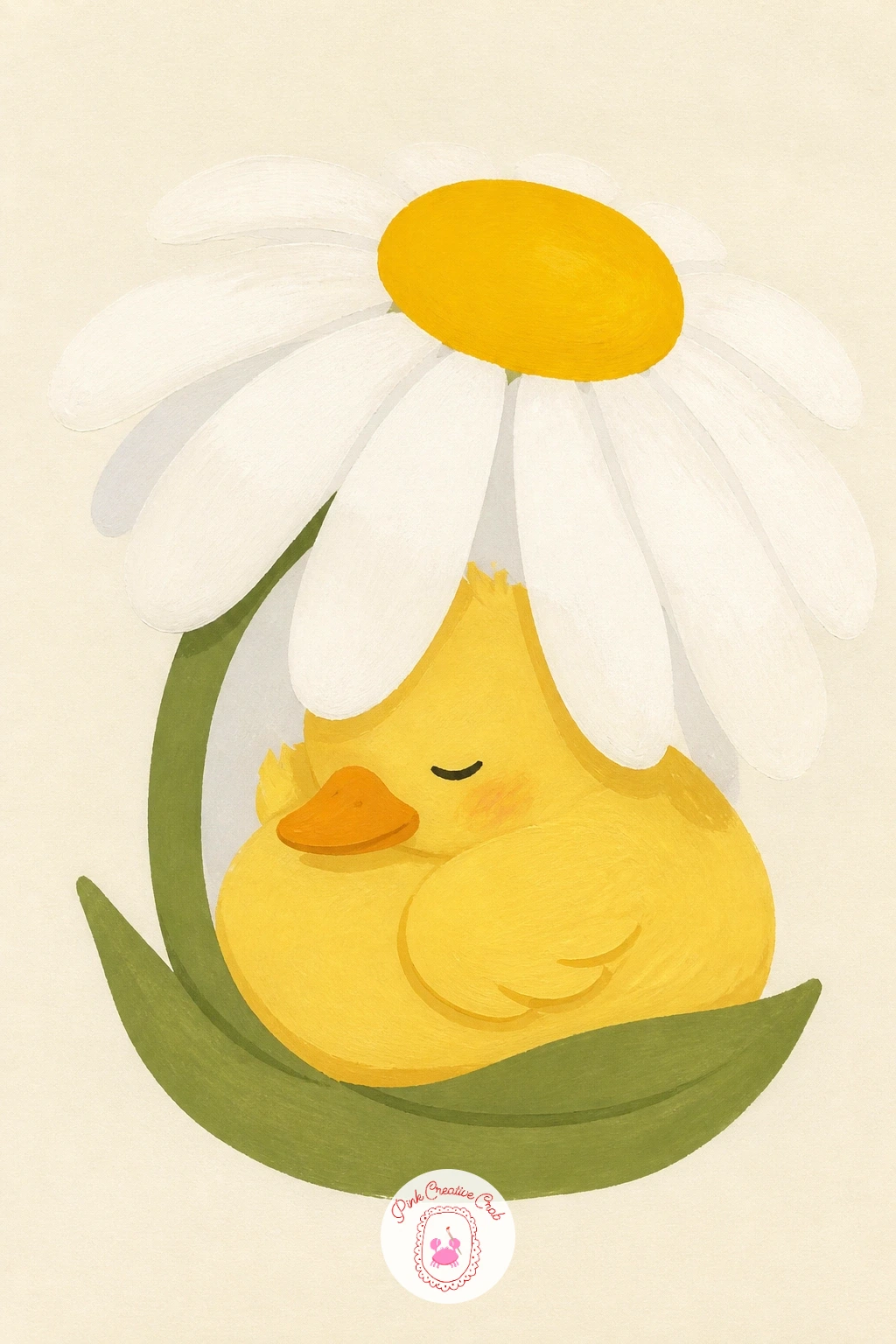
Palette: Butter Yellow,Soft White,Pale Grey,Olive Green
A hedgehog in a rose brings in a new texture problem worth solving early: how do you paint spines without the whole shape turning spiky and busy. Paint the rose first as a swirl of four or five overlapping petal shapes in cherry red, working from the outer petals in toward a tighter curled center.
For the hedgehog, block in one solid brown dome shape for the back, then use a dry, almost paint-starved brush to drag short flicks outward from that dome rather than painting each spine as a separate line. This keeps the texture readable from a distance without turning muddy up close.
Paint the small pointed face and closed eye last in a lighter tan, tucked at the front edge of the dome. If the dry brush spines come out too heavy, a kneaded eraser can lift a few back once the paint is fully dry, thinning the texture without smearing it.
Try this one today with your roundest brush held almost flat for the petals, then switch to your smallest flat brush for the spine texture.
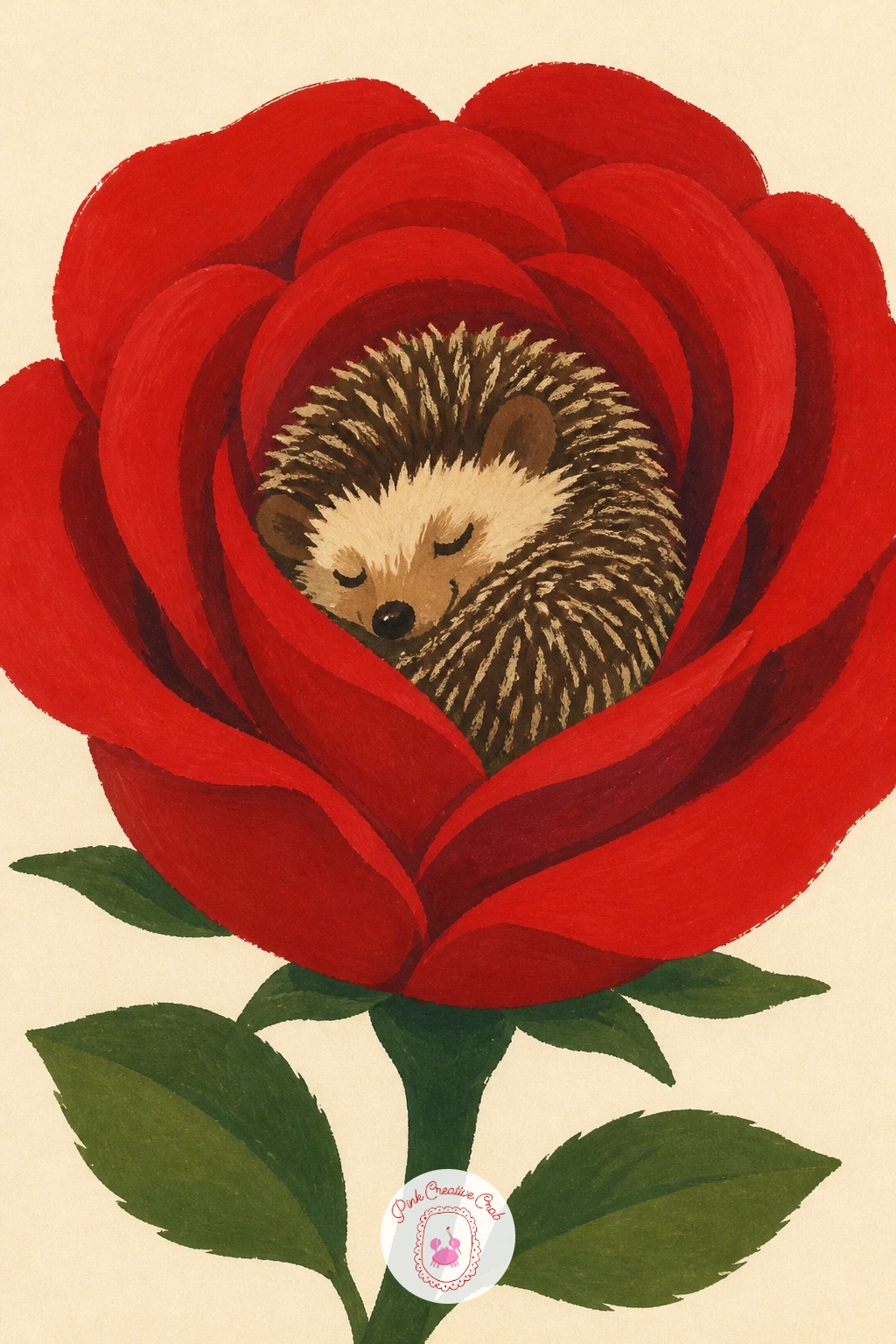
Palette: Cherry Red,Warm Brown,Tan,Cream White
Load the brush with almost no water for the spine flicks and test the stroke on scrap paper first; too wet and the dry brush effect disappears into a solid blob.
Give yourself more room with a fox cub in a poppy field, the first scene on this list rather than a single bloom, so think about where the eye lands first. Paint two or three poppies at different sizes across the lower half of the page, the nearest one large and close to the fox, the others smaller and set further back to suggest distance.
Block the fox cub as one orange teardrop body with a lighter cream belly patch, curled with its nose tucked under its tail, closed eye a single short line. Keep the poppies loose and simple, four rounded petals each in cherry red with a small dark center dot.
Scale is what sells this scene: make the nearest poppy roughly as tall as the fox cub’s whole body so it reads as a field rather than a single oversized flower. If your poppies start looking identical, vary the tilt of each one slightly so they do not line up in a row.
One tip to use today: paint the furthest poppy slightly smaller and a touch paler than the nearest one, and the whole field reads as deeper without any extra work.
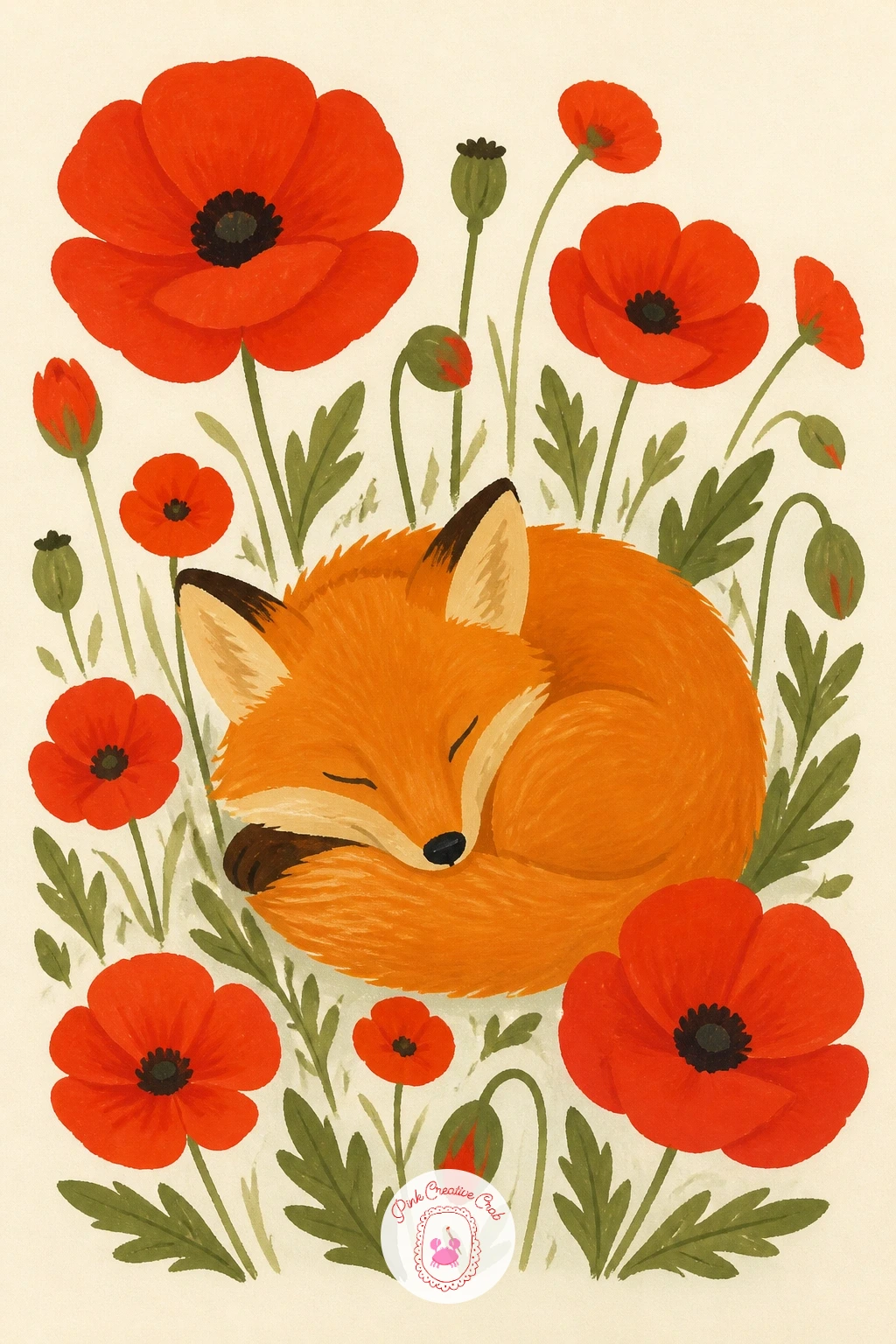
Palette: Cherry Red,Burnt Orange,Cream White,Charcoal
Cool the palette down with a fawn in bluebells after the warm poppy field, and this time let the light decide where the darkest blue sits. Paint a cluster of bell shaped flowers hanging from a few thin stems, keeping the bluebells on the side of the page that is away from your chosen light source so they sit in gentle shadow while the fawn stays brighter.
Build the fawn as one soft tan curve with small white spot shapes dotted across its back, legs tucked completely out of sight under the body. Add the closed eye and tiny ears last, keeping both simple ovals rather than anything pointed.
Decide early where your light comes from, even if it is just an imagined window to one side, and paint the bluebells slightly deeper in tone on that far side. This single choice gives the whole piece a sense of soft morning light without any real shading technique.
If blue feels too cool next to the warm fawn, warm it very slightly with a touch of violet rather than reaching for a colder blue.
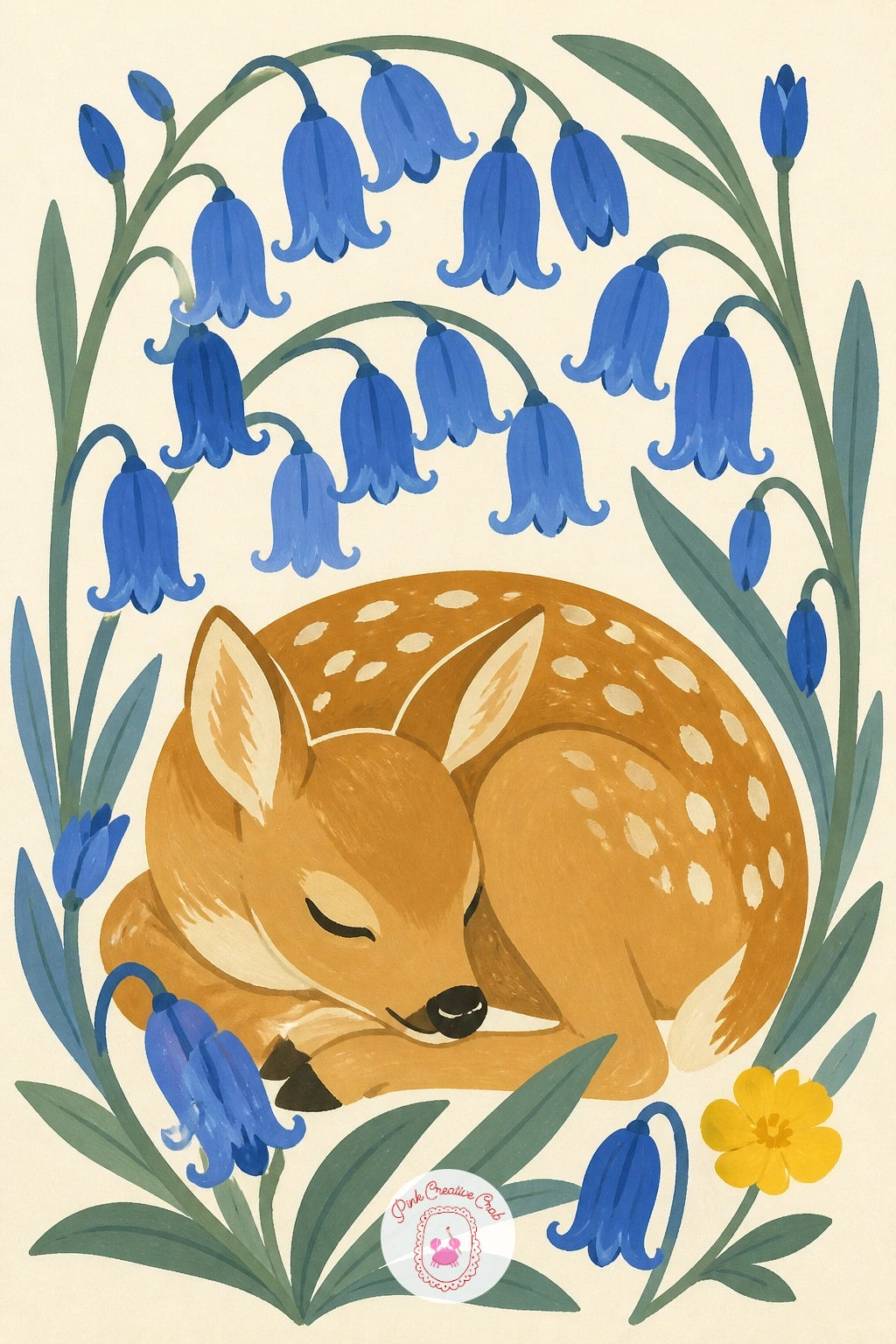
Palette: Soft Blue,Deep Violet Blue,Warm Tan,Cream White
Bring the energy back up with a puppy in sunflowers, a good excuse to practice a bold butter yellow against a soft brown. Paint one large sunflower head behind the puppy first, a dark brown center disc surrounded by long pointed petals radiating outward like a simple sun.
Keep the puppy as a rounded golden body with one floppy ear draped down and one small triangle ear standing up, since that small asymmetry is what reads as puppy rather than any other animal. Paint the closed eyes as two short curved lines and leave the nose as one small dark dot.
If the sunflower petals come out uneven, paint them in pairs working around the circle rather than one at a time all the way round, which keeps the spacing even. For an inch of extra texture, you might enjoy browsing other acrylic painting flowers ideas for beginners for petal shapes that translate well into gouache too.
In ten minutes you can block the puppy and one simple sunflower; give yourself forty and add a second smaller sunflower bud peeking in from one corner.
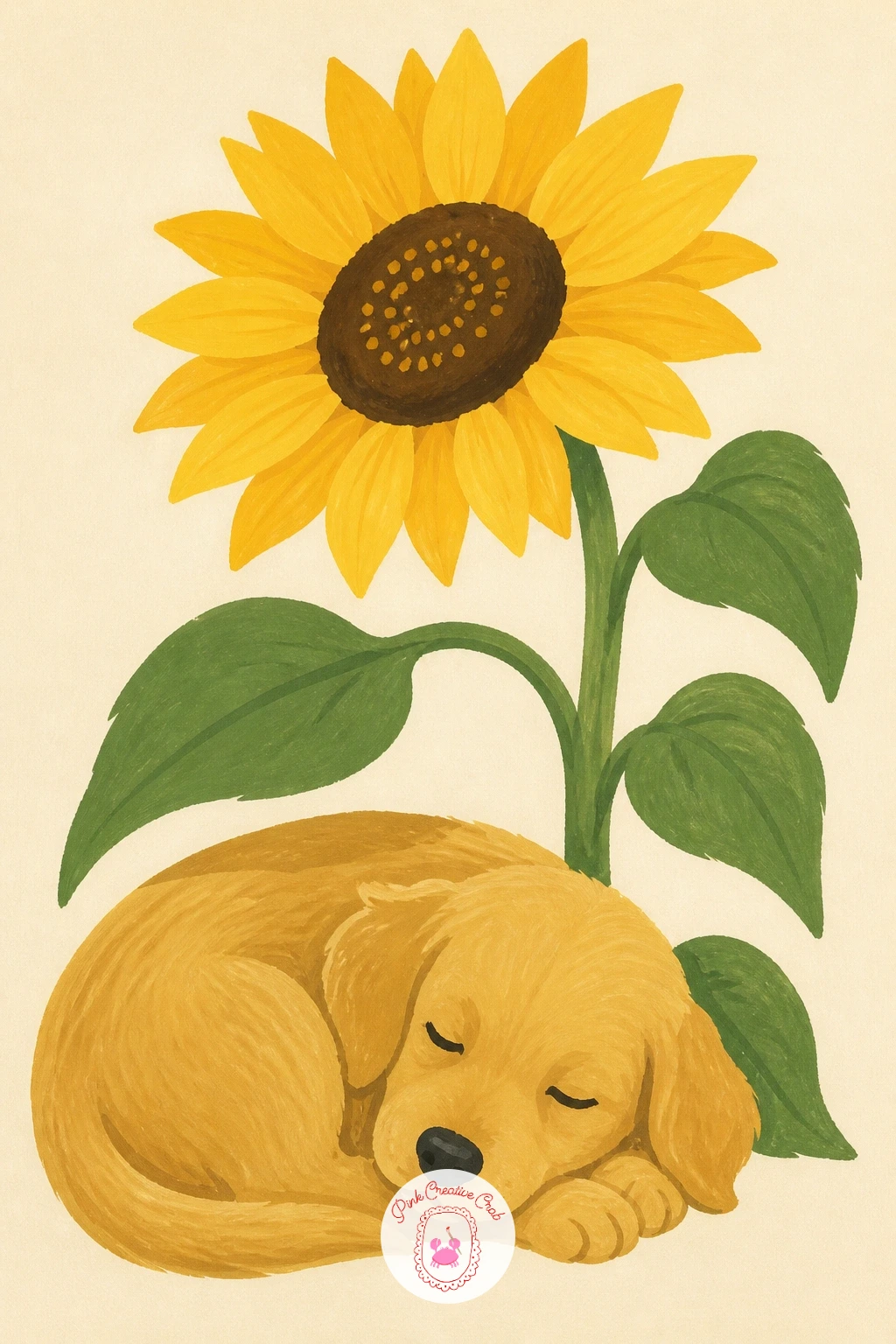
Palette: Butter Yellow,Warm Brown,Golden Tan,Cream White
A chick in a daffodil pairs two yellows that are close enough in tone to need a clear boundary between them, which makes this a nice lesson in edges. Paint the daffodil’s trumpet center in a deeper, more orange yellow first, then surround it with six flatter petal shapes in a paler lemon yellow once the center is fully dry.
Paint the chick as one round fluffy yellow body tucked just in front of the trumpet, with a small closed eye and a tiny triangle beak resting against its chest. Because chick and flower sit so close in color, a thin line of white gouache traced along the edge where they meet keeps the two shapes from blurring into one blob.
If your yellows look too similar even with the white line, cool the petal yellow slightly with a touch of green rather than reaching for a different hue entirely.
Try this trick today on any two similar colors that touch: a hairline of white or cream between them does more to separate shapes than any amount of outline in black.
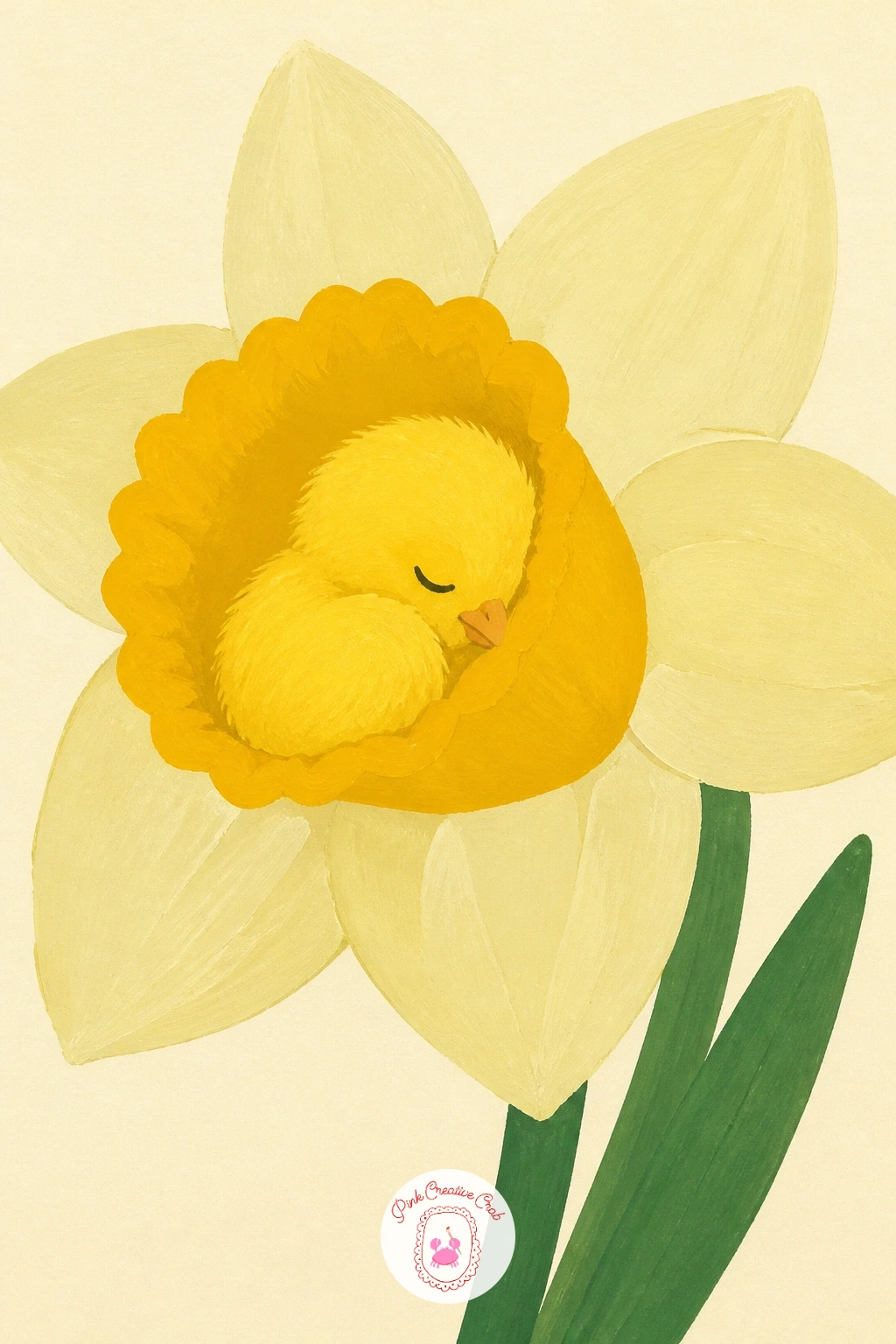
Palette: Deep Yellow,Lemon Yellow,Cream White,Olive Green
Slow the pace down with a bear cub in lavender, where the whole flower is really just a rhythm of small repeated marks rather than individual petals. Paint a handful of thin green stems first, spaced unevenly so they do not look ruled, then load a small flat brush and dab short violet strokes up each stem to build the lavender spikes without ever painting a single flower shape.
Sit the bear cub low among the stems as one chunky brown oval with small round ears and a lighter tan muzzle, curled nose to tail with a single closed eye line. Keep the cub’s edges clean even though the lavender around it stays loose and dabbed.
If the lavender dabs start to look like a solid purple smear, leave visible gaps of cream background between dabs rather than trying to fill the stem completely. Switching to a stiffer, almost dry brush gives crisper individual dabs if your usual brush feels too soft and blends the marks together.
A ten minute version needs only three or four lavender stems behind the cub; a forty minute version can fill the whole background with them for a fuller field.
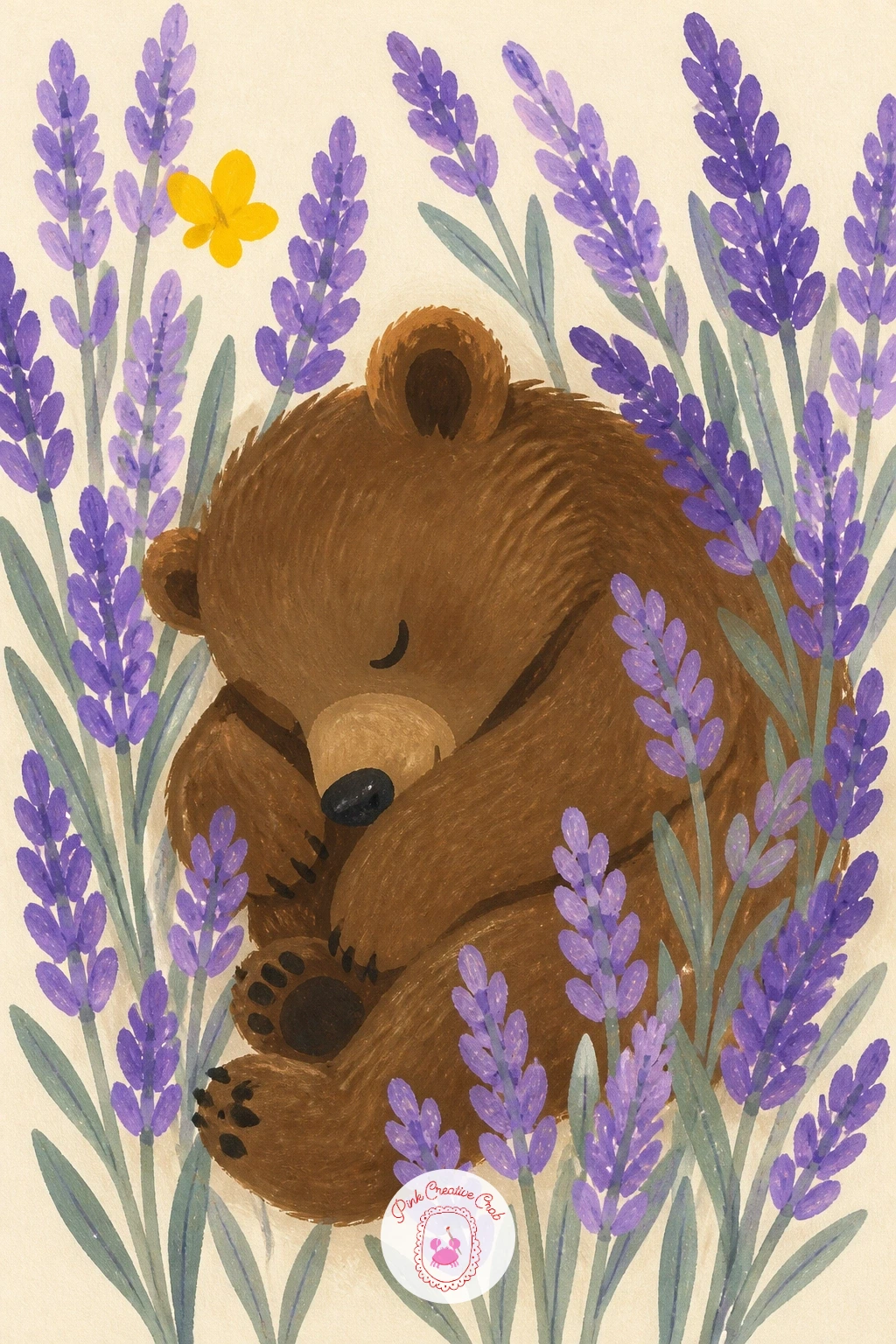
Palette: Lavender Purple,Sage Green,Warm Brown,Tan
Keep the texture play going with a lamb in clover, a good chance to practice tiny repeated shapes without letting them take over the page. Paint the lamb’s body first as one large soft cream cloud shape with gently bumpy edges, since a lamb’s wool reads better as a slightly uneven outline than a smooth one.
Once the lamb is dry, scatter a handful of three leaf clover shapes around its base in a fresh green, each clover just three small rounded lobes on a short stem, and add one or two tiny white clover flowers among them as small round puffs. Keep the clover count modest, six or eight clusters is plenty, so the ground does not compete with the lamb for attention.
If the wool edge looks too smooth and more like a cloud than a lamb, go back in with small dabs of a slightly darker cream around the outer rim once the base coat is dry. This single pass of texture is usually enough without overworking the shape.
Paint the small black legs and face last in one quick confident stroke each, since hesitant lines here tend to wobble more than bold ones.
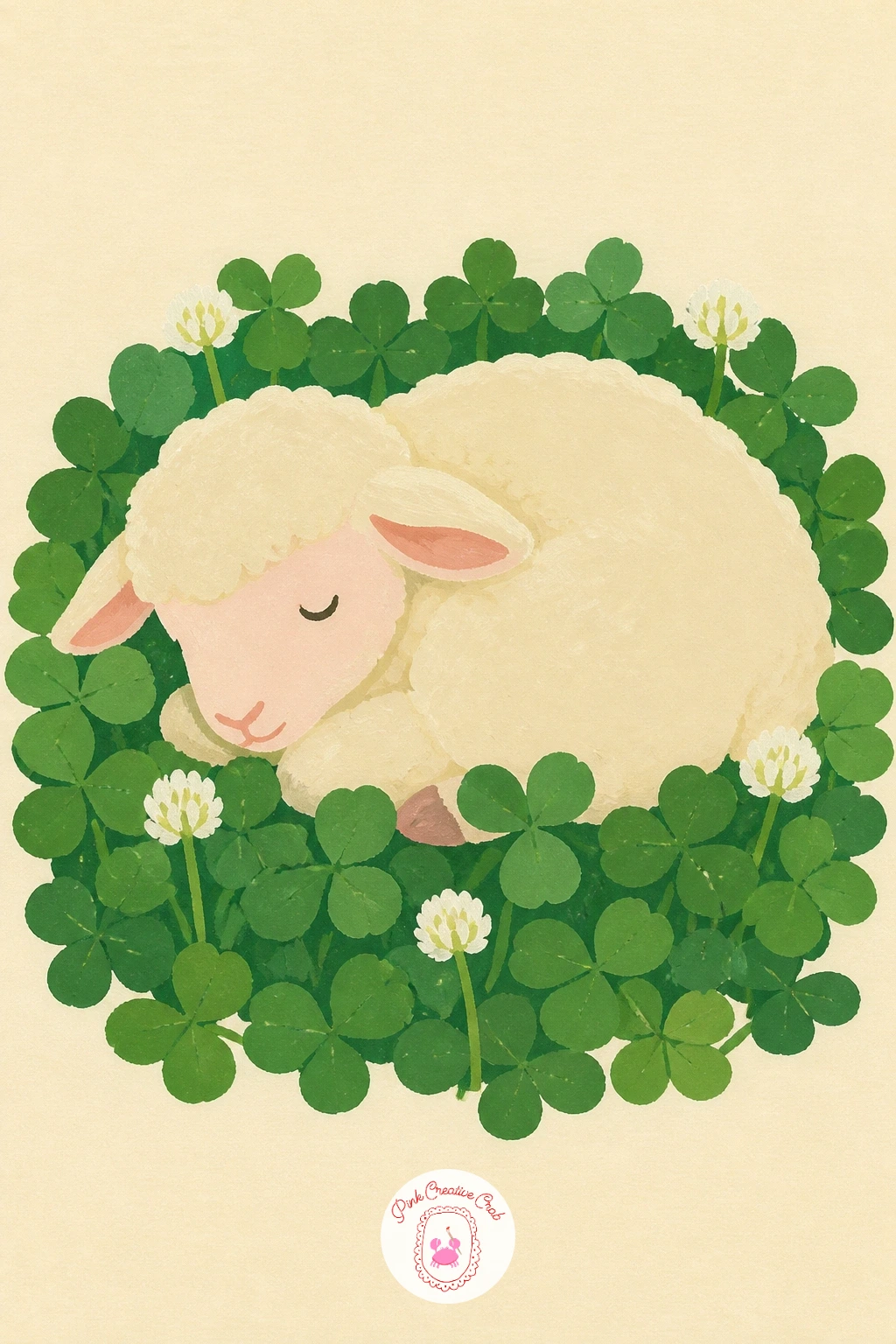
Palette: Cream White,Fresh Green,Charcoal,Soft White
Take on a hamster in a hydrangea next, which is really a lesson in painting one flower made of many small flowers without losing patience halfway through. Divide the hydrangea head into loose clusters first with light pencil marks, then fill each cluster with four small petal shapes in slightly varying blues so the whole head reads as one bloom made of many tiny ones rather than a flat circle.
Curl the hamster into a tight round ball at the base of the cluster, one warm golden body with tucked paws barely visible and a closed eye near the front. Its small size against the full hyduangea head is what makes the flower feel enormous and nursery sweet.
If the small petal clusters start blurring together into mush, let each cluster dry before painting the one beside it, working across the head in sections rather than trying to cover it in one continuous wash. A flat little brush keeps each small petal shape crisp where a round brush tends to round off the corners too much.
Vary this one next time by shifting the hydrangea from blue to a soft pink, since the same technique works for either color family.
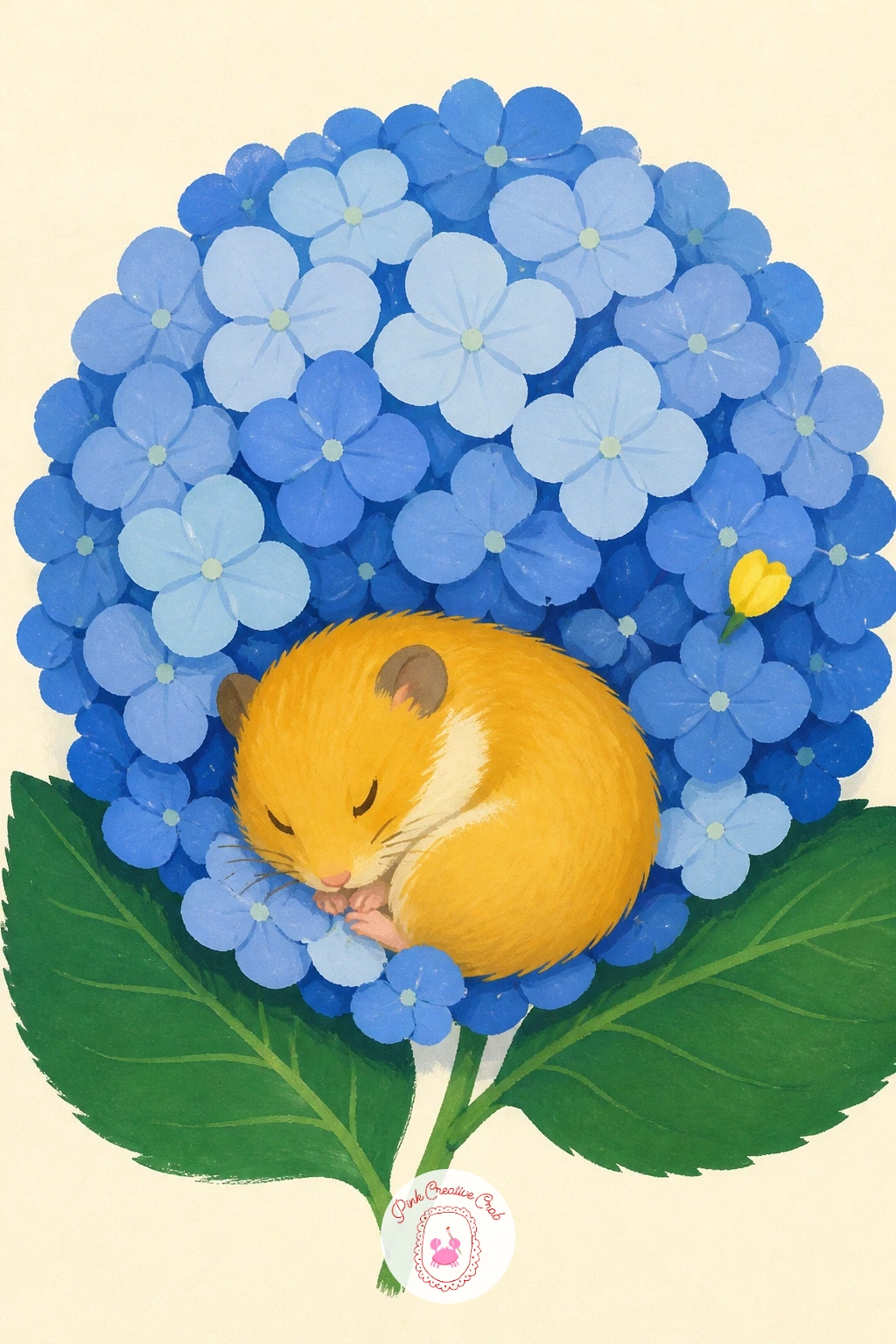
Palette: Soft Blue,Deep Blue Violet,Golden Tan,Cream White
A koala in eucalyptus blossom asks for a slightly different leaf shape than most of this list, long and silvery rather than round, so look at how the light sits across a curved leaf before you start. Paint two or three long eucalyptus leaves first in a cool grey green, leaving one edge of each leaf a touch lighter where an imagined light source would catch it.
Add a few small round blossoms among the leaves as soft starburst shapes in cream or pale pink, then settle the koala into the crook of a branch as one grey rounded body with large soft ears and a wide flat nose, eyes closed in two short lines.
Because koala grey can look flat against grey green leaves, keep the koala’s grey slightly warmer and the leaves slightly cooler so the two shapes stay distinct even without an outline. If you enjoy this pairing, there is a whole set of koala painting ideas and other Australian animals worth a look for more ways to paint the fur and leaves.
Today’s tip: mix your koala grey with a touch of brown and your leaf grey with a touch of blue, a small shift that keeps the two from fighting for the same space.
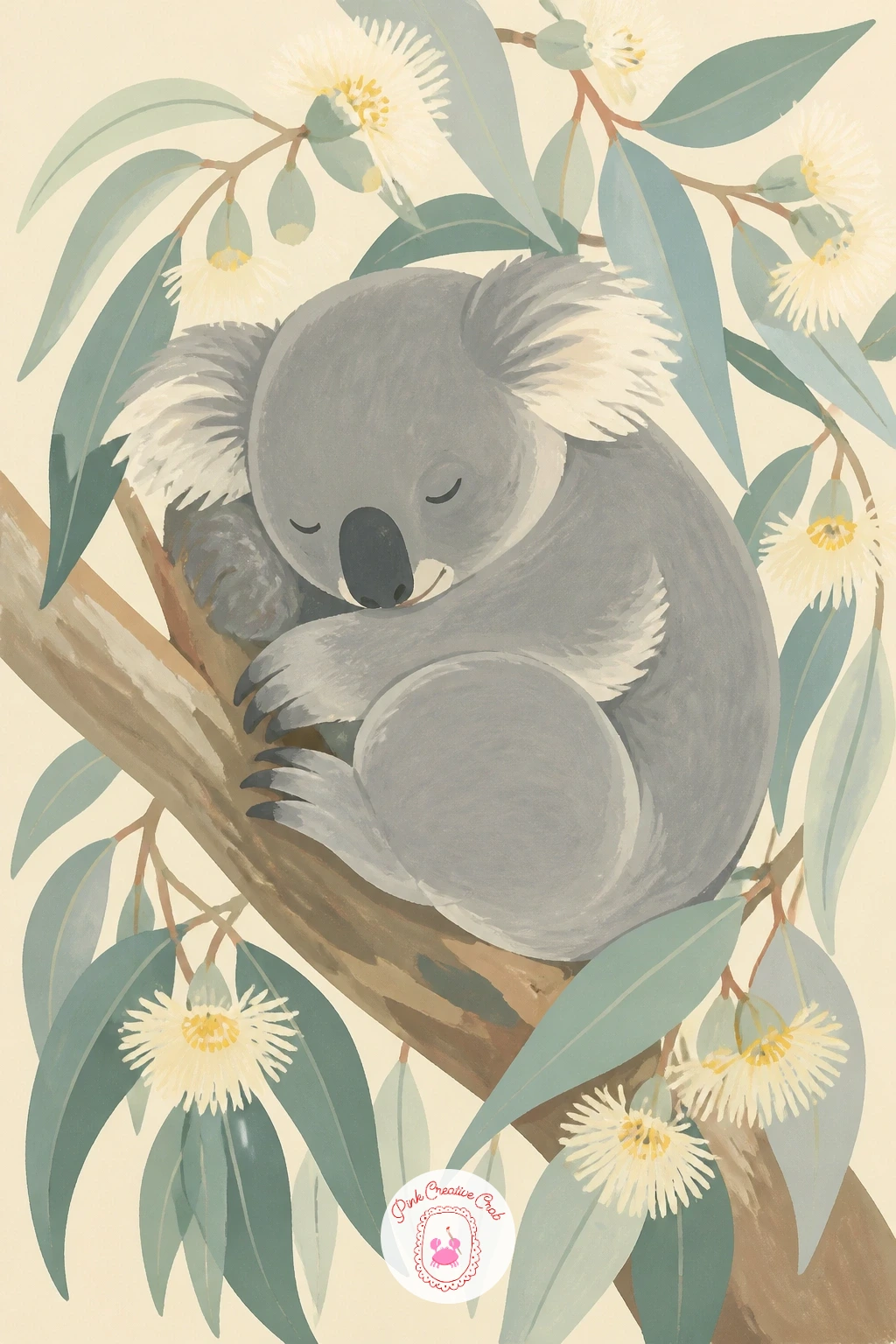
Palette: Grey Green,Warm Grey,Soft Pink,Cream White
A bee asleep in a cosmos is one of the smallest subjects here, so work larger than feels natural and let the flower fill almost the whole page. Paint eight thin, slightly pointed petals in a soft pink or white radiating from a small yellow center, keeping every petal the same length so the flower sits evenly rather than lopsided.
Tuck the sleeping bee right into the yellow center, just a small oval body in black and butter yellow stripes with two tiny folded wings, far too small to need any real detail beyond those stripes and one closed eye dot. Because the bee is so small next to the flower, resist the urge to add more to it, the simplicity is what makes it read as asleep rather than busy.
If the thin cosmos petals look stiff, loosen your wrist and paint each one in a single fast stroke rather than two careful edges, letting a tiny bit of unevenness stay.
This is a genuine ten minute painting even at full effort, so it is a good one to keep in reserve for a day with very little time.
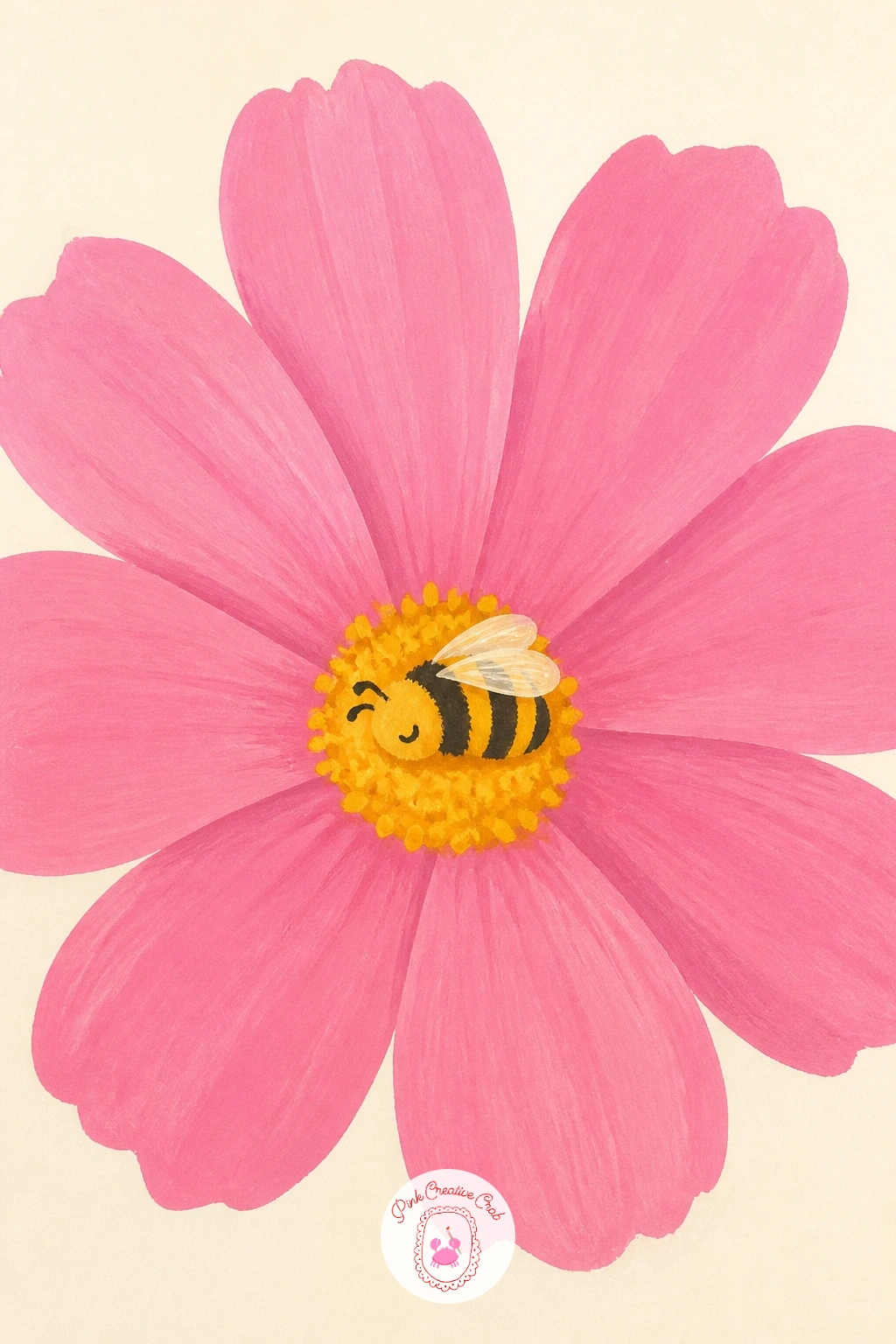
Palette: Soft Pink,Butter Yellow,Charcoal,Cream White
A piglet in pink blossom is a nice palette exercise since pig and flower sit so close in hue, pink against pink, which means the real work happens in the edges. Paint a small cluster of five petal blossoms first in a clean pale pink, each one a simple rounded cup shape with a tiny darker pink center dot, scattered loosely rather than lined up.
Give the piglet a slightly deeper, warmer pink than the blossoms so the two tones sit near each other without merging, one round body with a flat snout, two small triangle ears, and the usual closed eye line. A curled tail in one quick loop finishes the shape.
If piglet and blossom start blending into one pink mass, add a thin line of white or cream along wherever their edges touch, the same trick as the daffodil and chick earlier in this list. No pale pink on your palette, mix white into whatever pink you have on hand rather than buying a new tube.
Try keeping the blossom petals slightly cooler and the piglet slightly warmer today, a small shift that does most of the separating work for you.
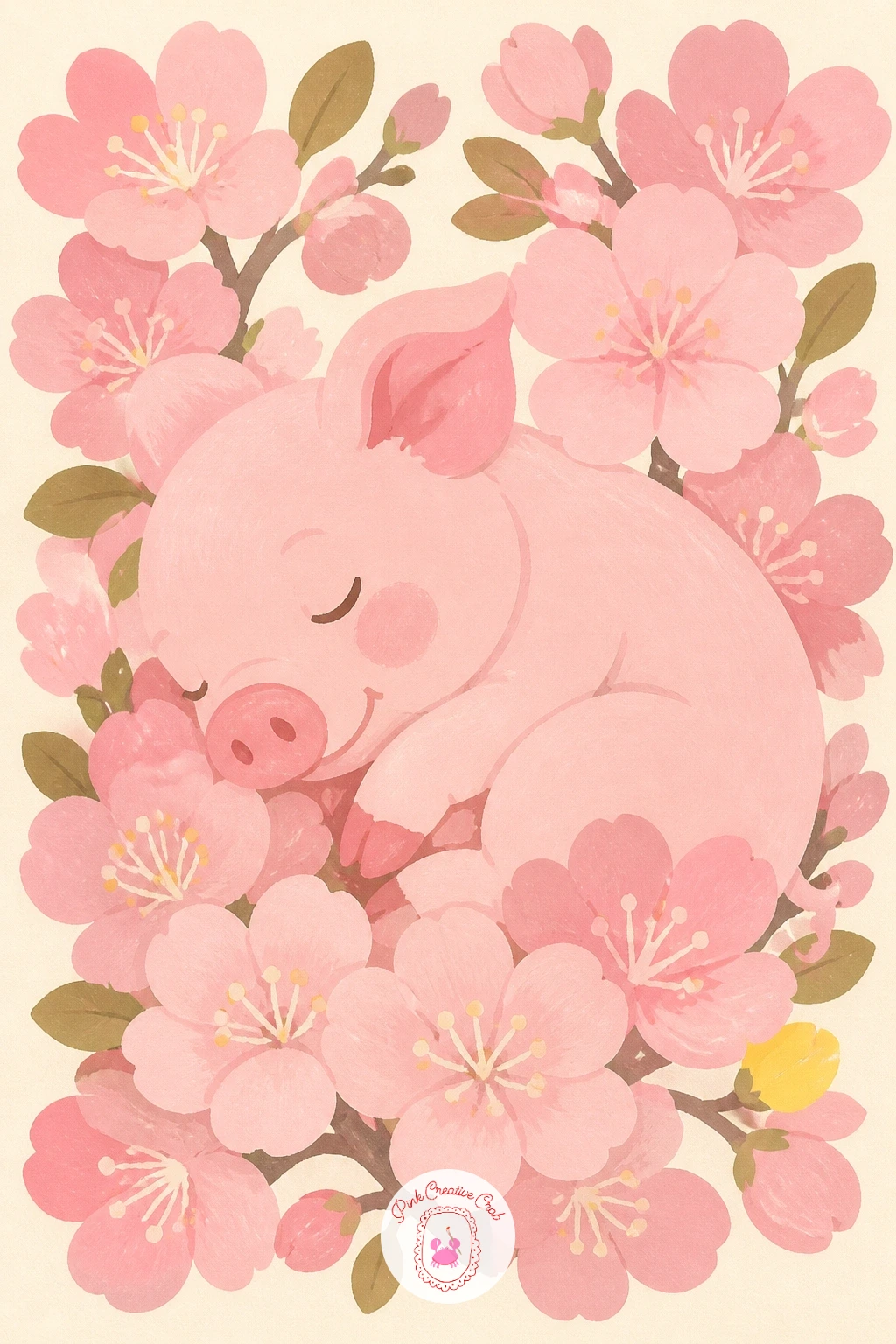
Palette: Pale Pink,Warm Pink,Cream White,Soft Green
An owlet in apple blossom moves the scene up onto a branch, so think about the eye level before you paint, since a branch scene usually sits slightly below the viewer looking up into it. Paint one curved branch across the lower third of the page first, then cluster five petal apple blossoms along it in soft white with just a blush of pink at the base of each petal.
Perch the owlet above the blossom cluster rather than inside it, a round grey brown body with a flat face, two closed eye crescents, and a small triangle beak, feet hidden under a puffed chest. Looking slightly up at the branch from below makes the blossoms read as if they hang naturally rather than being pasted flat on the page.
If the blossom petals look too uniform in white, warm the base of each petal with the faintest pink before it dries fully, letting the two tones meet softly only at that one spot.
One more gouache painting flowers idea for beginners worth trying afterward uses this same soft blush technique on a larger bloom if you want more practice with it.
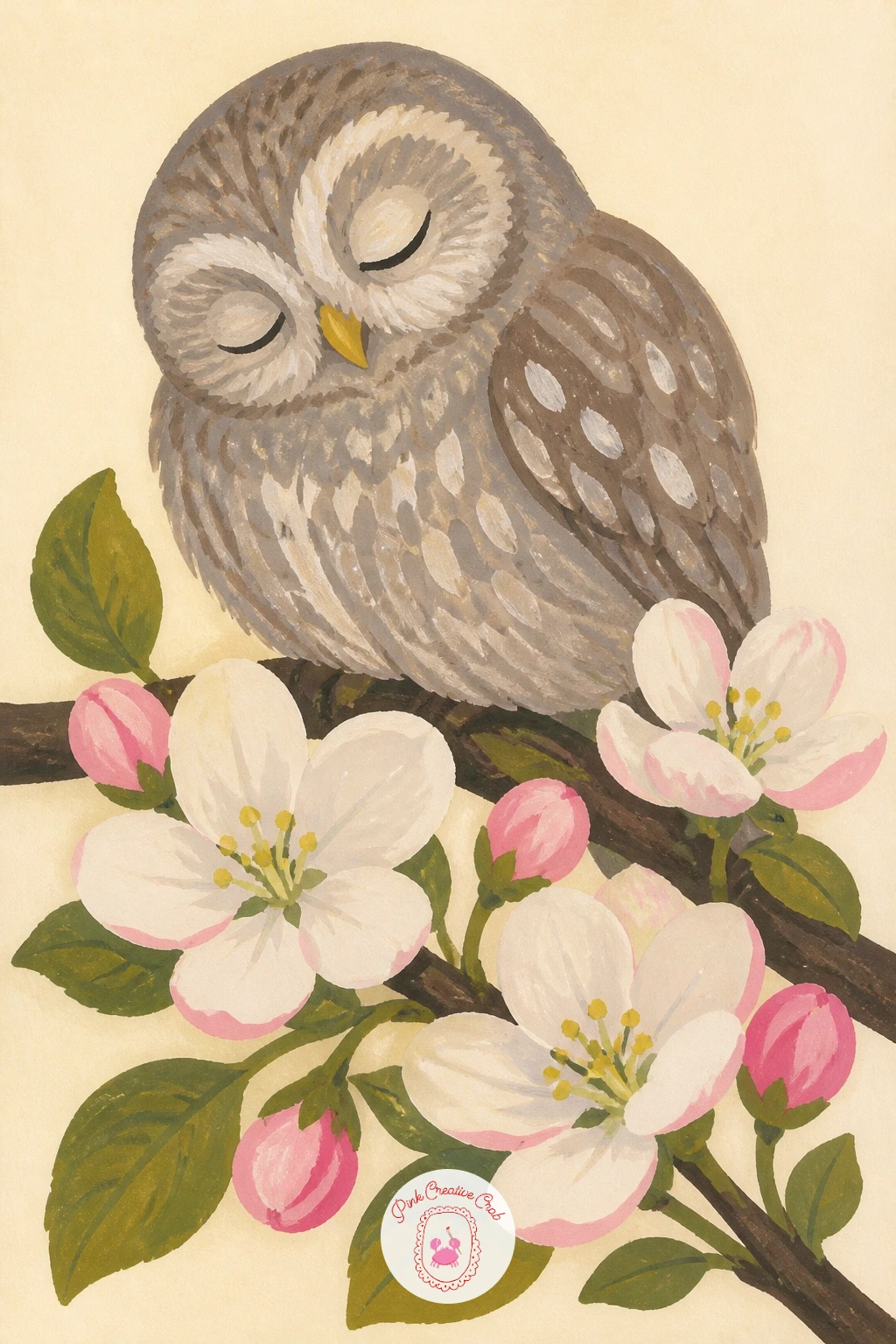
Palette: Soft White,Blush Pink,Warm Grey Brown,Cream White
A seal pup on a water lily asks you to balance a round grey body on a flat round leaf, which is really a simple lesson in overlap: whatever sits in front gets painted last and over the top of what sits behind. Paint the lily pad first as one large flat green disc with a single notch cut into its edge, then the open water lily flower resting just beside it in soft white with a yellow center.
Once both are fully dry, paint the seal pup draped across the pad as one smooth grey white oval, flippers tucked to the sides as two small curved shapes, whiskers skipped entirely at this scale to keep the face simple. The pup should overlap the edge of the pad slightly, which is what makes the two shapes feel like they are resting together rather than just placed side by side.
If the pup’s grey looks flat against the green pad, a single thin shadow shape in a darker green painted just where the pup’s body meets the pad grounds it instantly.
Give the lily pad a slightly darker green rim and a lighter center today, a quick two tone fill that reads as rounded without any real shading.
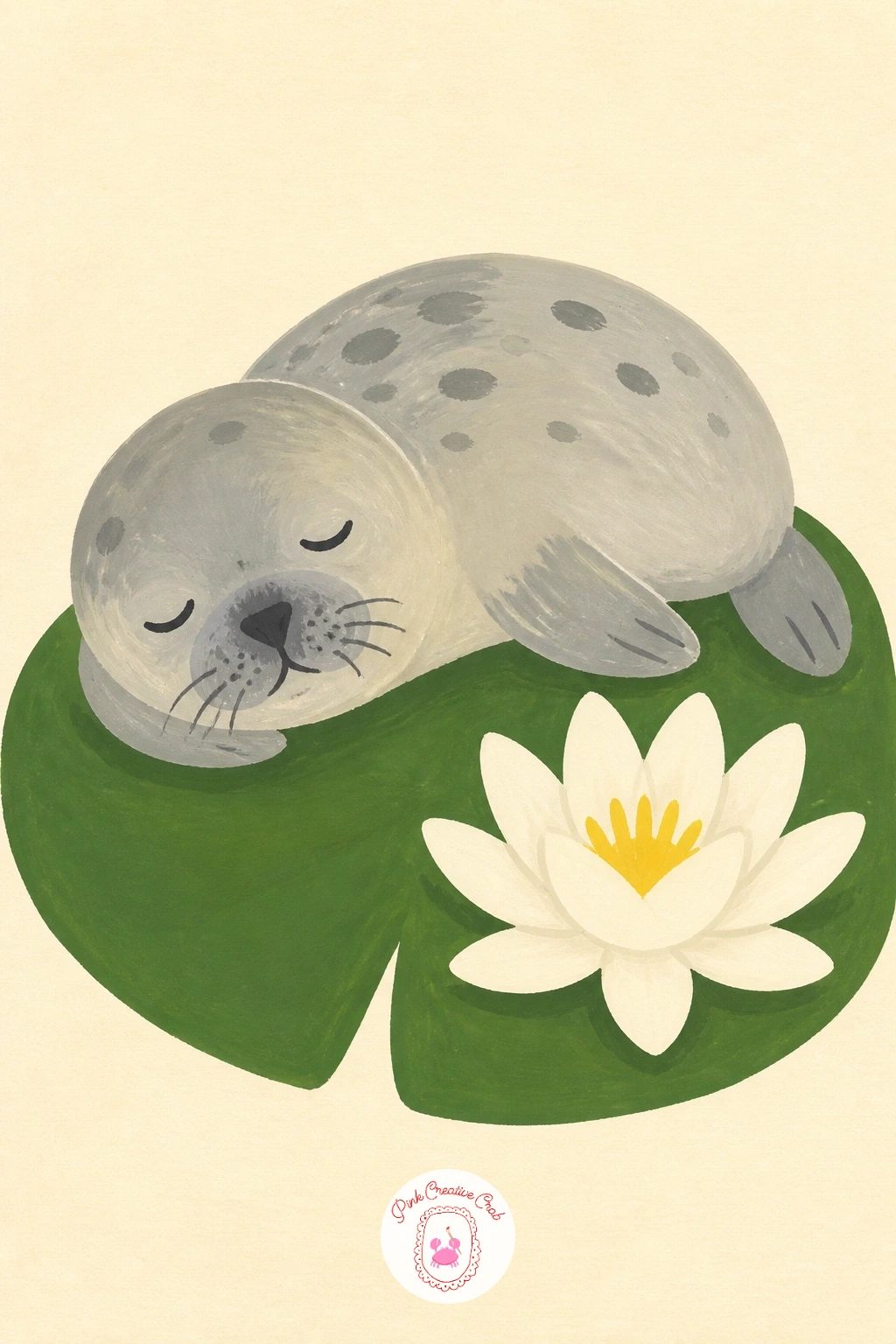
Palette: Lily Pad Green,Soft White,Butter Yellow,Warm Grey
A squirrel kit in magnolia is a good chance to paint one large dramatic petal shape rather than many small ones, since magnolia petals are thick, curved and few. Paint three or four broad petal shapes in a warm cream white, each one slightly cupped like a shallow bowl, overlapping so the flower reads as open and full rather than flat.
Curl the squirrel kit into the base of the bloom as one russet orange oval with its bushy tail wrapped forward over its own body, a trick that keeps the shape compact and lets you skip painting separate legs entirely. One closed eye and two small rounded ears finish the face.
Measure the petal against the squirrel before you commit to paint: the lowest petal should be roughly twice the length of the kit’s curled body so the flower feels grand enough to cradle it convincingly. If the petals look too flat and plain, a single curved line of warm pink gouache along the base of each one, where petals would naturally shadow each other, adds depth without any real blending.
Try this proportion check today on paper before committing to final paint: a light pencil sketch first saves a repaint later.
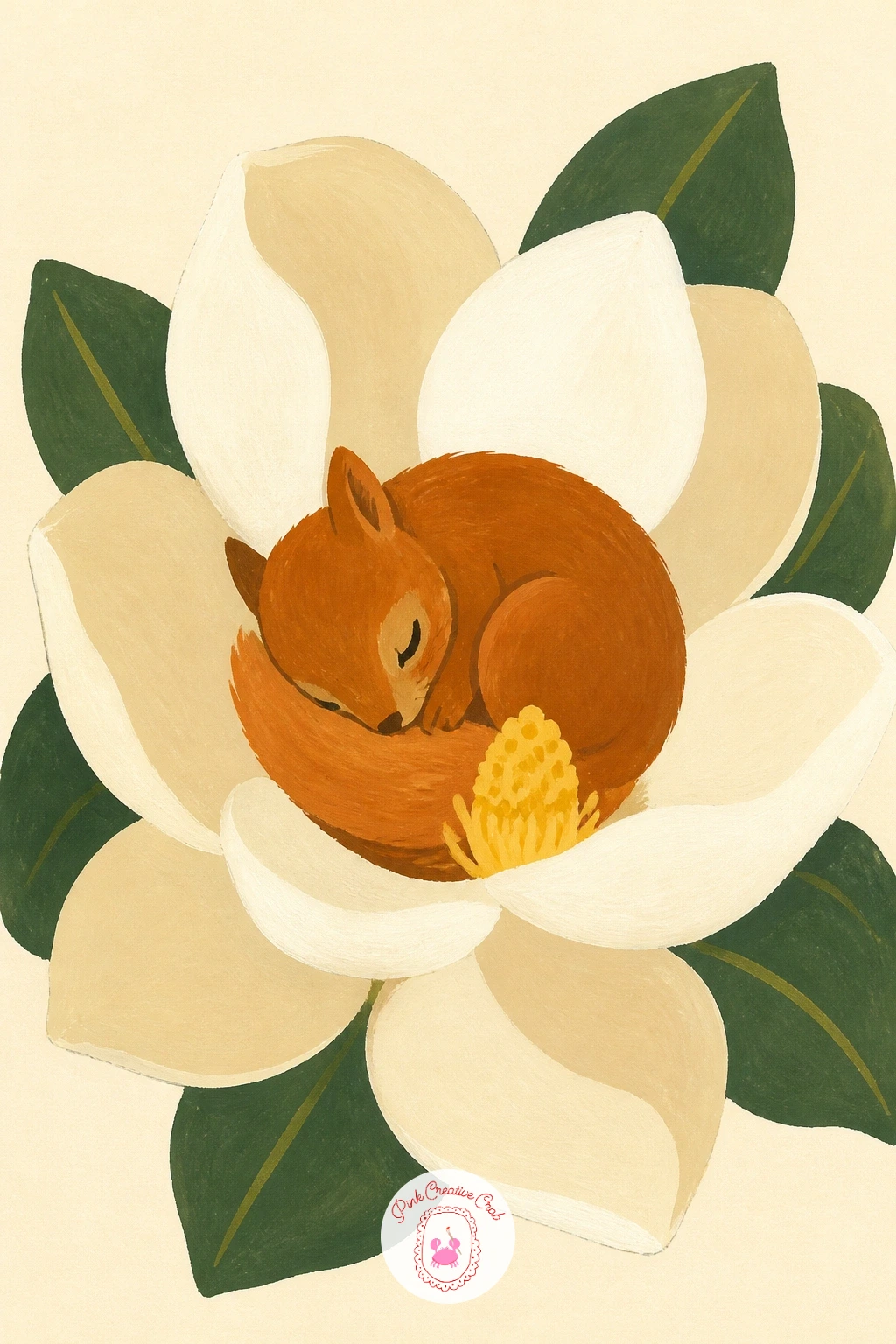
Palette: Cream White,Warm Pink,Russet Orange,Charcoal
A red panda in cherry blossom pairs naturally with the accent color running through this whole list, so let the panda’s own rust red do double duty as your cherry red moment. Paint a thin branch first, then scatter small five petal cherry blossoms along it in pale pink, each flower just a simple ring of rounded petals around a tiny yellow center.
Build the red panda as one plush rust red body with a cream belly patch, a ringed tail curled around its front, and the usual closed eye lines and small rounded ears. Place it resting along the branch rather than hanging below it, which keeps the pose calm and believable for a sleeping scene.
If the cherry blossom pink and the red panda’s rust start to clash rather than complement, cool the blossom pink very slightly toward lilac so the two warm colors have a little visual breathing room between them. Short on pale pink, white gouache with the faintest touch of red mixes one in seconds.
Vary this piece next time by scattering a few loose petals falling past the branch rather than keeping every blossom attached, a small change that adds motion without more painting time.
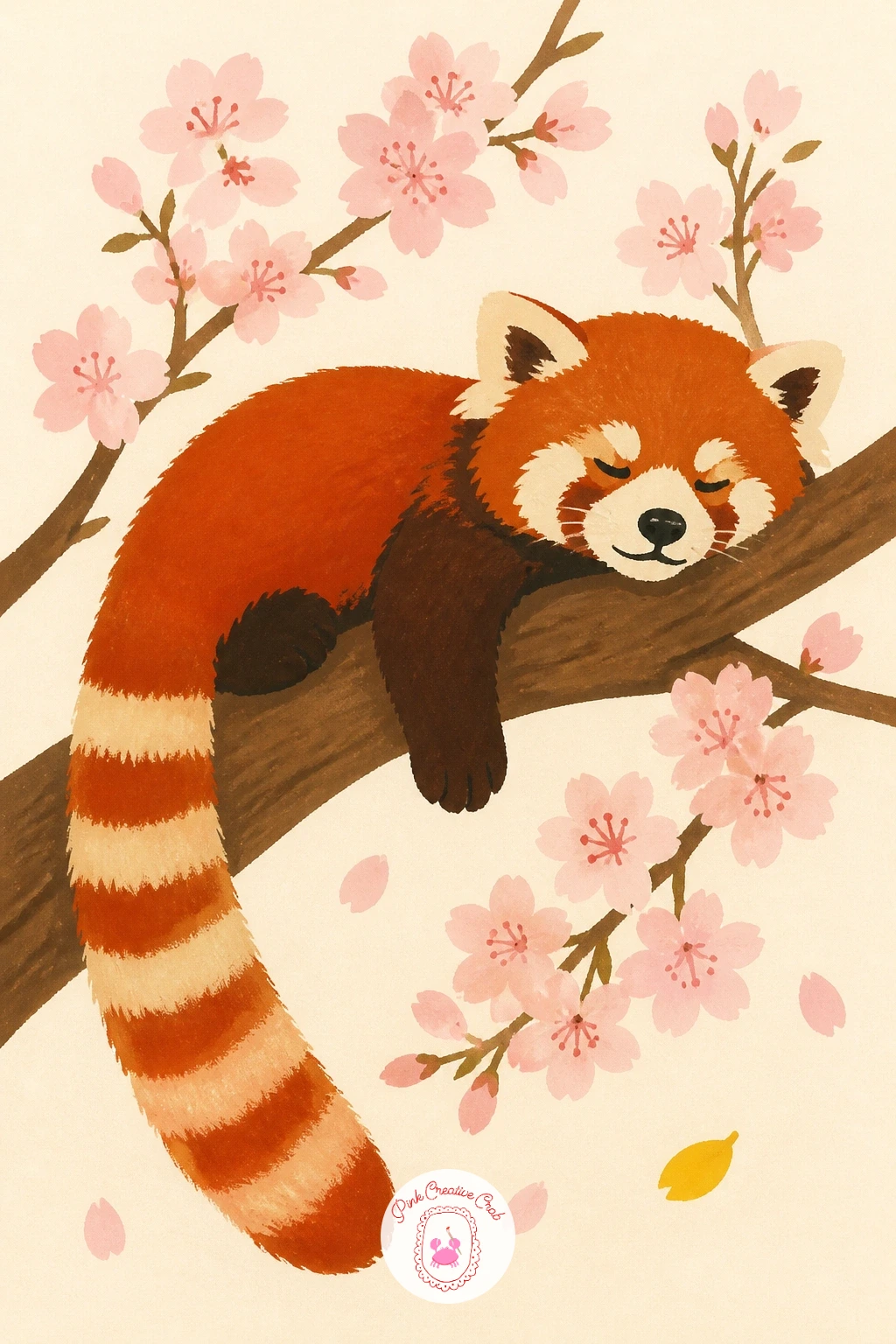
Palette: Rust Red,Cream White,Pale Pink,Charcoal
A mouse under lily of the valley is one of the quietest subjects on this list, built almost entirely from small repeated bell shapes hanging off one gently curved stem. Paint the stem first as one thin green line, then add six or seven tiny white bell shapes along it, each just a small curved dome with a scalloped bottom edge, evenly spaced but not perfectly identical.
Tuck the mouse beneath the lowest bells as a small grey oval with a pointed nose, round ears, and a long thin tail curled once around its own body. Keep the mouse noticeably smaller than every other animal on this list, since its tiny scale next to the delicate bells is what gives the whole piece its hush.
If the little bell flowers start looking like plain dots rather than flowers, add one thin curved line at the base of each to suggest the scalloped edge, a small mark that reads as a bell shape from a normal viewing distance. For more ways to handle this exact flower, there are further ideas in this lily of the valley painting list worth bookmarking.
Paint the stem leaves as two broad simple blades behind the bells today, which anchors the whole arrangement without adding real complexity.
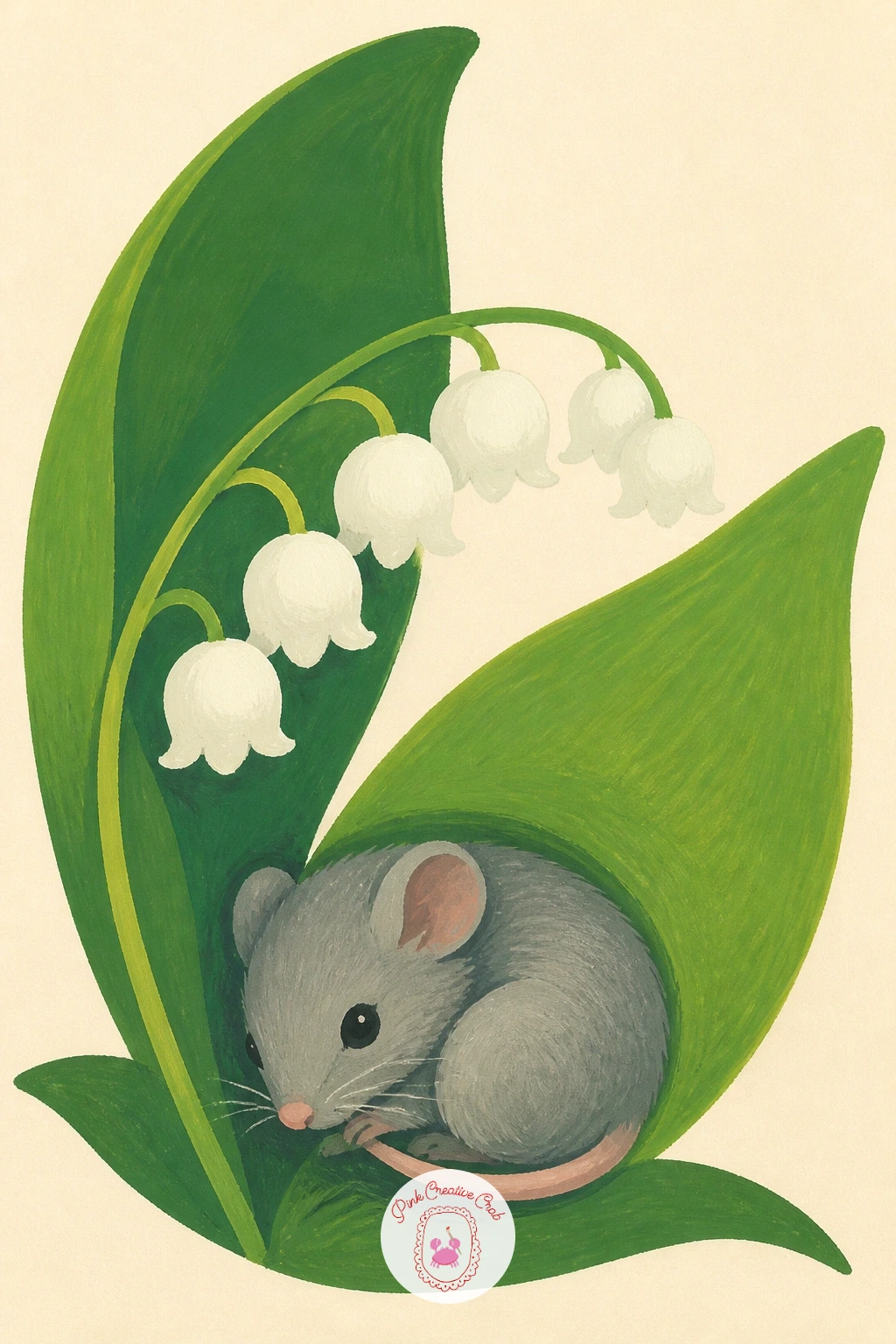
Palette: Soft White,Fresh Green,Warm Grey,Cream White
A baby otter in floating petals drifts away from a single flower shape into a loose scatter, a nice break after several structured blooms in a row. Paint the otter first as one long cream brown oval lying on its back, small paws folded on its chest, round head tucked with a closed eye and tiny nose, the whole pose relaxed and horizontal.
Once the otter is dry, scatter loose petal shapes around and over parts of its body in soft pink and white, some whole small petals and some simple curved slivers, letting a few overlap the otter’s edge so it looks like it is truly floating among them rather than lying beside a pile.
If the scattered petals start to look randomly thrown rather than composed, group most of them loosely around the otter’s middle and let only a few drift toward the corners, which keeps the eye anchored on the animal first.
A forty minute version can add a thin ripple line or two beneath the otter to suggest water; the ten minute version skips the ripples entirely and still reads perfectly well.
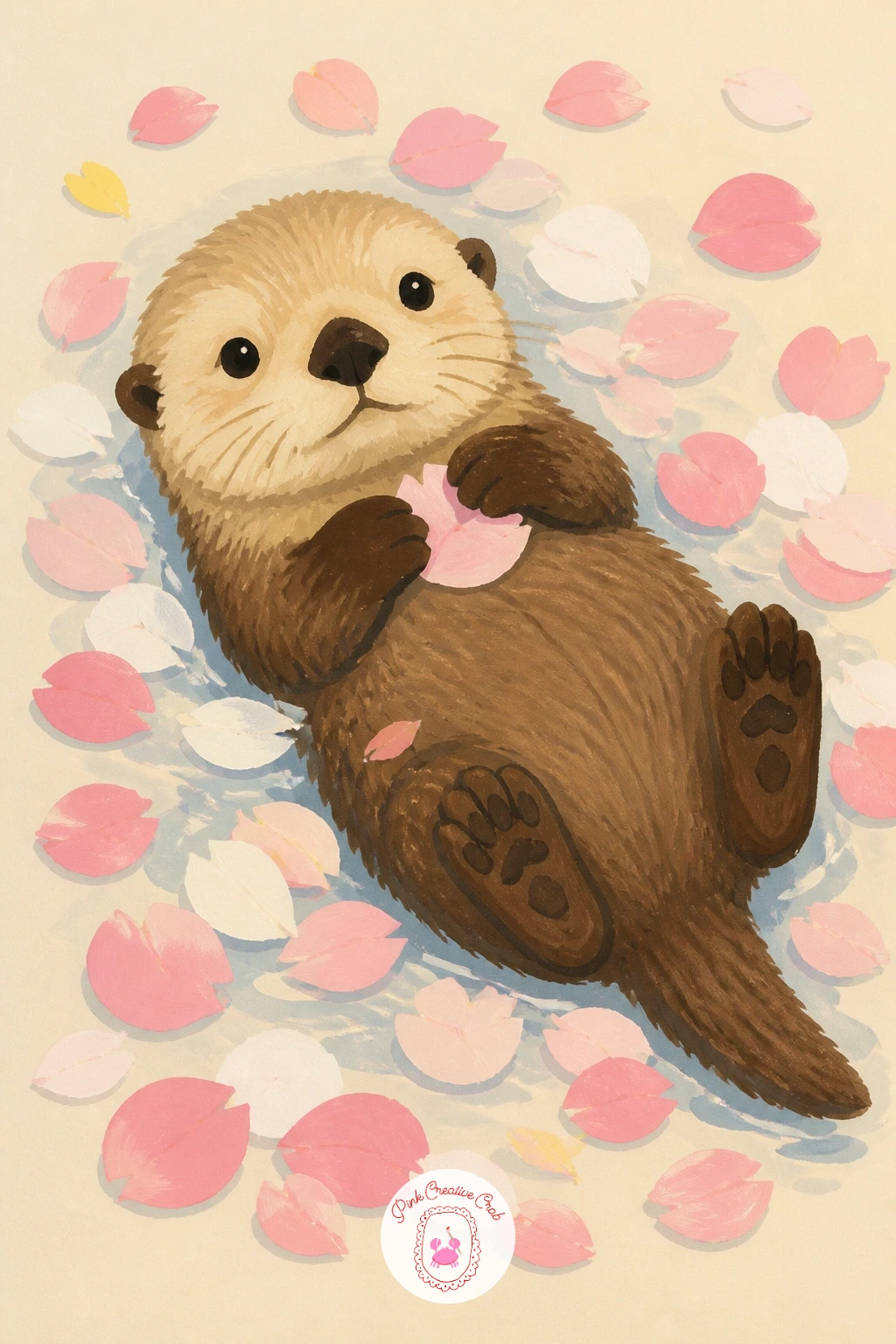
Palette: Cream Brown,Soft Pink,Soft White,Pale Blue
A hummingbird nest in a fuchsia is the most layered flower shape on this list, since fuchsia blooms hang with a flared skirt beneath a narrow tube, so take it in two clear stages. Paint the hanging tube shape first in a deep pink, then the flared skirt beneath it in a brighter violet or magenta, letting the two colors meet in one clean line rather than blending.
Nestle a tiny round nest just beside or beneath the hanging bloom, painted as a simple woven looking brown oval with a soft rim, and tuck one sleeping hummingbird chick inside as barely more than a small grey puff with a closed eye, no need for wing or beak detail at this scale.
If the two fuchsia tones look disconnected rather than part of one flower, carry a thin line of the darker pink down into the top of the violet skirt where they join, which stitches the two shapes together visually. Short on magenta, mix your cherry red accent with a touch of blue for a near match.
Try hanging two fuchsia blooms rather than one today if you want a fuller feeling scene, simply repeating the same two stage method at a smaller scale for the second flower.
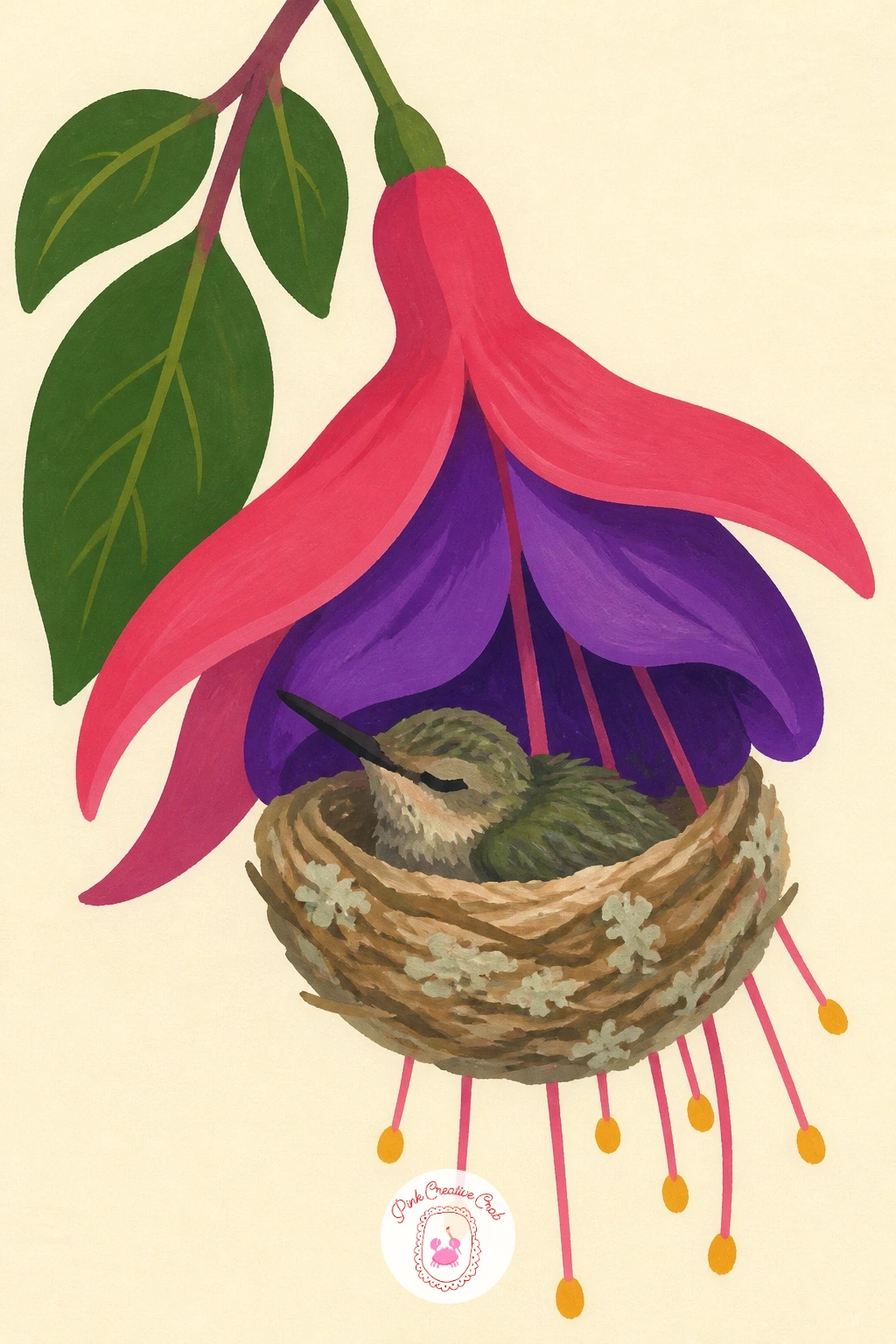
Palette: Deep Pink,Violet Magenta,Warm Brown,Soft Grey
A baby tortoise under a marigold leans on pattern, since a marigold’s many layered petals ask for the same patience as the hydrangea earlier in this list but in warm tones instead of cool. Paint a ring of short ruffled petal shapes in deep orange first, then a second smaller ring in butter yellow layered just inside it, working from the outer ring in so each layer sits cleanly on top of the dry one before it.
Rest the baby tortoise half tucked under the lowest petals as one small domed shell in olive green with a simple segmented pattern of darker green lines, a small head and closed eye peeking out from the front edge of the shell.
If the petal ruffles start blurring into a solid orange mass, leave a thin sliver of the layer beneath showing between each petal in the top ring, which keeps the ruffled look crisp rather than mushy. A fine round brush dabbed rather than dragged gives the cleanest small ruffles if a flat brush feels too blunt.
One concrete tip for today: paint the shell pattern lines only after the base shell color is completely dry, since wet on wet here turns the lines into soft orange brown blurs instead of crisp dark ones.
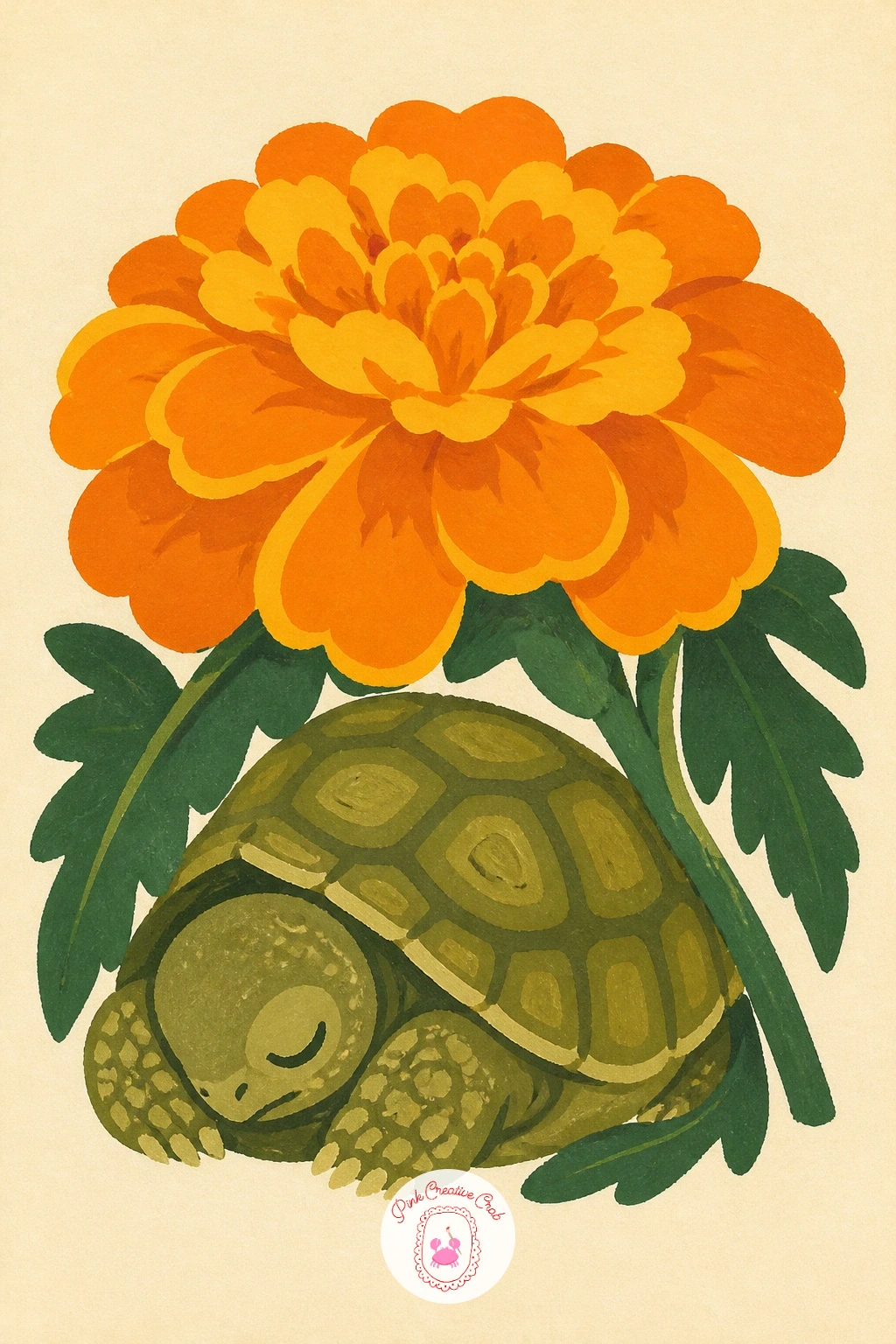
Palette: Deep Orange,Butter Yellow,Olive Green,Dark Green
A puppy in a flower basket swaps a single bloom for a whole little container of them, so think of the basket as the anchor and let the flowers be the loose part. Paint the basket first as one simple woven shape in warm tan, a few curved lines across its front enough to suggest the weave without drawing every strand.
Fill the top of the basket with five or six small simple flowers in a mix of cherry red, butter yellow and soft white, each just a rounded cluster of four or five petals with a tiny center dot, varied in size so they do not read as a repeated stamp. Once the flowers are dry, settle the puppy curled into the basket among them as one golden oval with a floppy ear and closed eyes, small enough that a few flower shapes can overlap its back edge.
If the basket weave looks too fussy next to the simple flowers, reduce it to just three or four curved lines total, since a hint of texture reads better here than a fully detailed pattern. This scene also pairs nicely with ideas from gouache painting ideas for beginners if you want more small container subjects to try next.
Vary the flower mix each time you repaint this one, since the basket and puppy stay simple enough to support a different bloom combination every attempt.
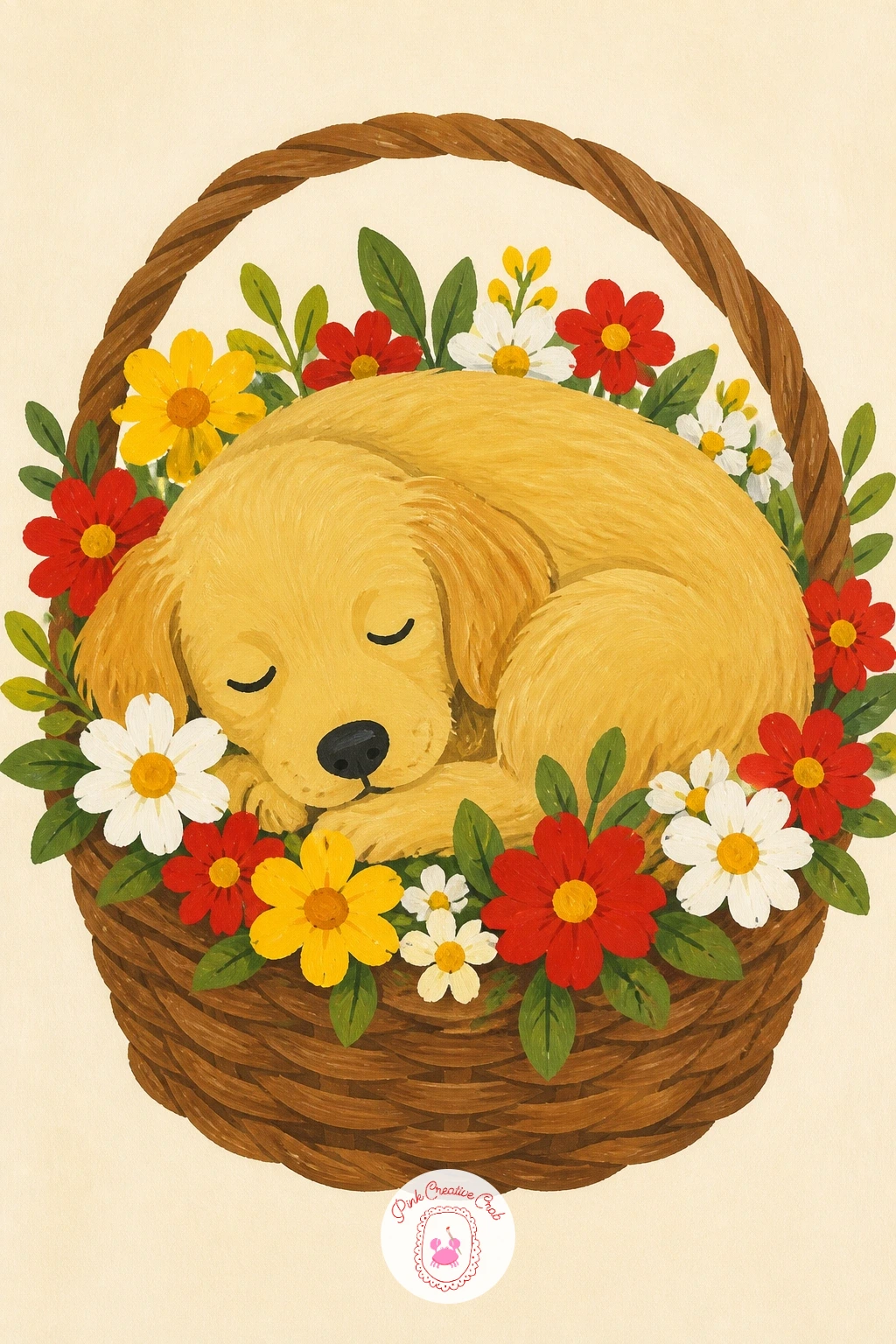
Palette: Warm Tan,Cherry Red,Butter Yellow,Golden Tan
Two bunnies in forget-me-nots brings a second animal into the frame for the first time on this list, so plan the pair before any paint touches the page. Paint a loose scatter of tiny five petal blue flowers first across the lower portion, each just a small ring of pale blue petals around a yellow center dot, kept deliberately small and plentiful since forget-me-nots read best in number rather than size.
Nestle the two bunnies close together just above the flower scatter, one slightly larger and one slightly smaller so the pair reads as related rather than identical, both curled with ears folded back and eyes closed, overlapping slightly at the shoulder so they feel like one warm cuddled shape rather than two separate animals placed side by side.
If the pair looks stiff or symmetrical, turn one bunny’s head very slightly compared to the other and shift one body a touch lower, small asymmetries that make a pair feel natural rather than stamped twice from the same template.
Try painting the smaller bunny first today, since getting its scale right against the larger one is easier before the bigger shape is already locked onto the page.
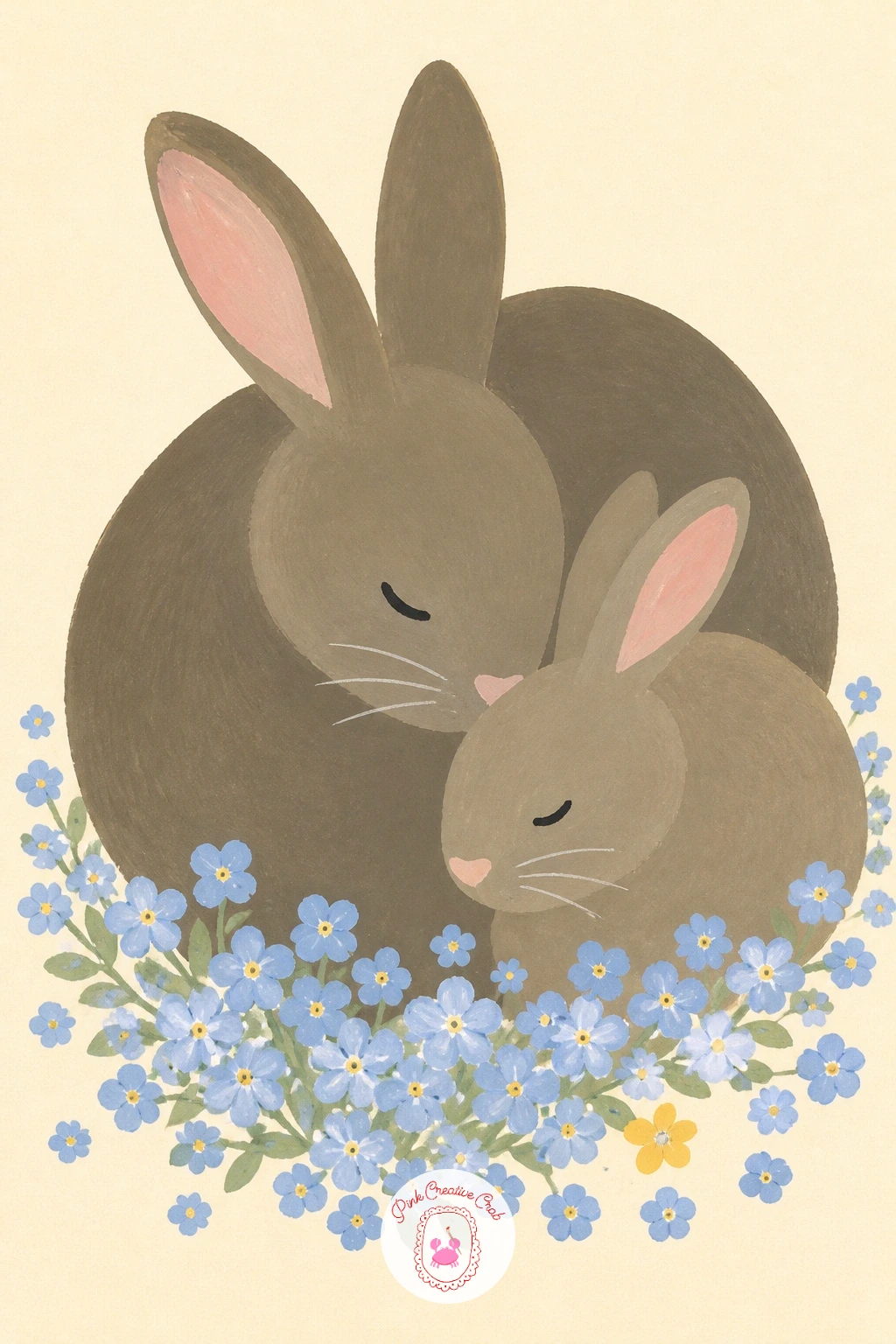
Palette: Pale Blue,Butter Yellow,Cream White,Soft Grey
A duckling in a teacup of pansies turns a flowerpot moment into something a little more whimsical, so get the teacup shape solid before adding anything soft on top of it. Paint the cup as one simple rounded shape with a small curved handle, a thin line near the rim to suggest its edge, filled in a flat soft color that will not compete with the pansies going on top of it.
Fill the top of the cup with three or four pansies in a mix of deep violet and butter yellow, each flower just five overlapping rounded petals with a small dark center mark, and settle the duckling curled on top of the blooms as one small yellow oval with a closed eye and tucked bill.
If the teacup looks flat and plate like rather than round, add a thin curved shadow shape along its lower edge once the base color is dry, a quick two tone trick rather than real shading. No real teacup on hand to reference, any curved mug or bowl in the kitchen gives the same basic proportions to study.
Try shrinking this whole scene onto a small card today, since the teacup’s tidy shape fits a gift card format especially well.
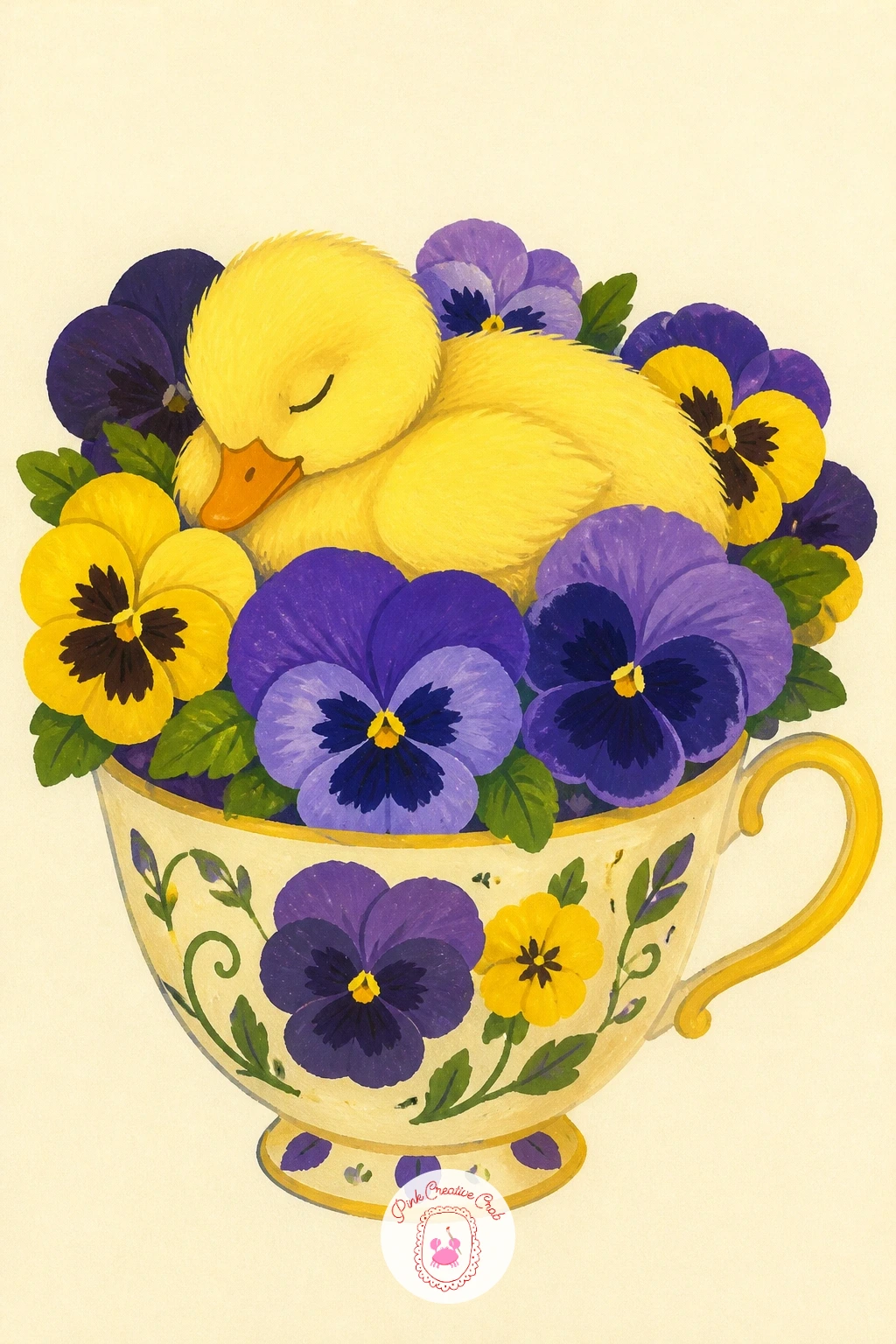
Palette: Soft White,Deep Violet,Butter Yellow,Soft Blue
A fox kit in heather asks for the same dry brush dabbing skill as the earlier lavender idea, but in a cooler pink violet rather than true purple, which is worth noticing side by side if you painted that one too. Paint several thin stems first, then dab small clusters of tiny flowers along each one in a dusty pink violet, keeping the dabs tighter and smaller than the lavender’s so heather reads as finer and more delicate.
Curl the fox kit low among the stems as one small rust orange oval with a lighter cream chest patch, tail wrapped forward, ears folded flat and eyes closed in two short lines. Keep the kit noticeably smaller than the earlier poppy field fox, since heather grows low and this scene should feel tucked into undergrowth rather than open field.
If the heather dabs look too uniform in color, mix two batches of dusty pink violet at slightly different strengths and alternate between them as you dab, which reads as natural variation rather than careful blending. A worn or slightly splayed old brush often gives better heather texture than a brand new one.
Vary this piece next time by swapping the dusty pink violet for a cooler lilac, the same dabbing method carrying the whole idea regardless of exact hue.
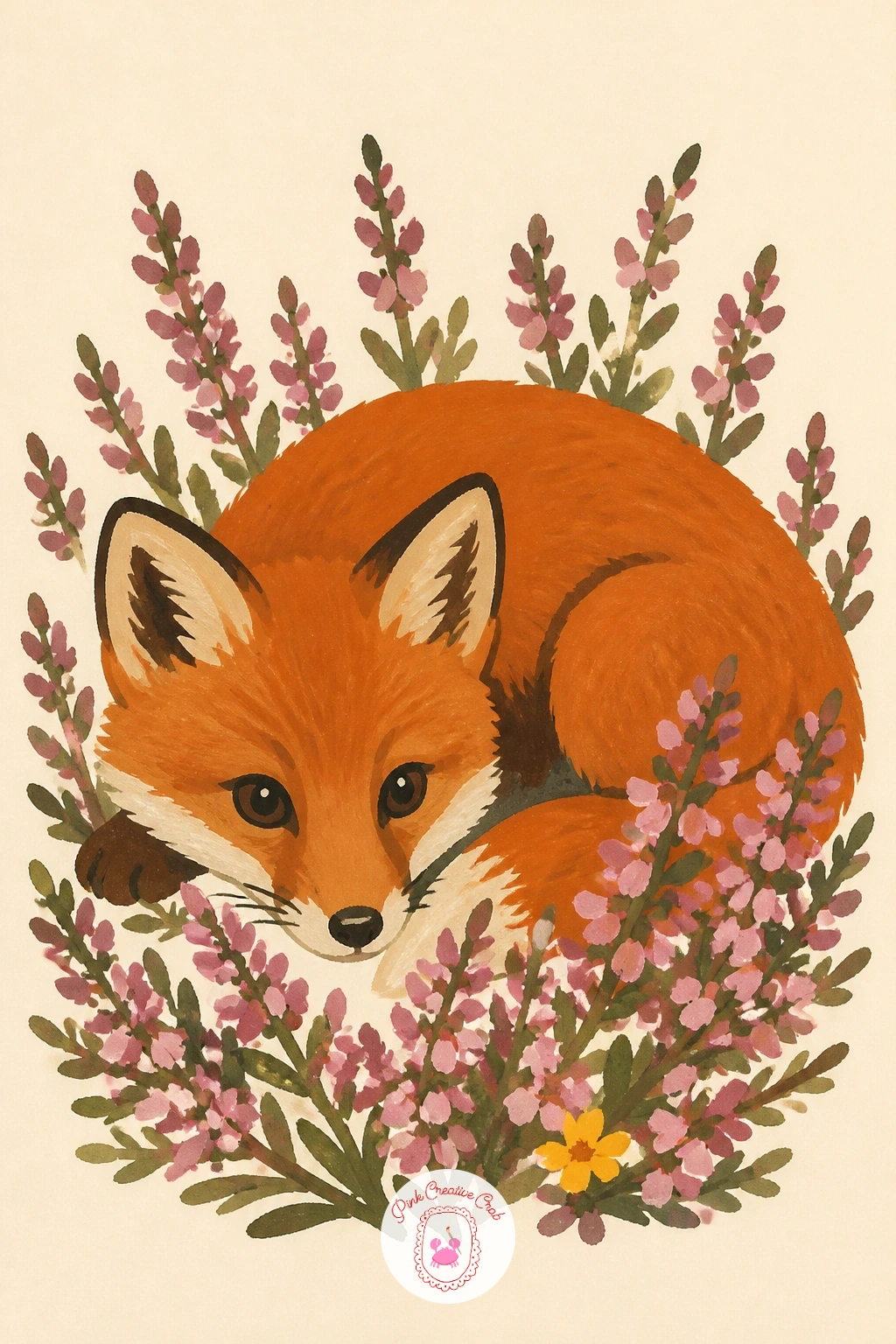
Palette: Dusty Pink Violet,Rust Orange,Cream White,Sage Green
A calf in wildflowers closes out the scene subjects with the biggest body shape on this list, so give the proportions a proper check before committing to paint. Sketch the calf first as one large rounded oval with a slightly blockier head than any bunny or fox so far, comparing its height in pencil against a scattering of small wildflowers sketched loosely around its feet to confirm the flowers stay clearly smaller than the animal.
Paint the calf in a warm cream or soft brown with a few irregular darker patches scattered across its back, legs tucked fully out of sight beneath the body, ears relaxed to the sides and eyes closed. Scatter the wildflowers last in a loose mix of small blooms, a few in cherry red, a few in butter yellow, a few in soft white, none of them painted with much detail since their job is just to frame the calf rather than compete with it.
If the calf’s patches start looking too regular or spotty, paint them as irregular connected shapes rather than separate round dots, which reads as a natural hide pattern instead of a polka dot print.
Measure twice on this one today: a calf painted even slightly too small next to its flowers loses the calm, oversized nursery feeling the whole piece relies on.
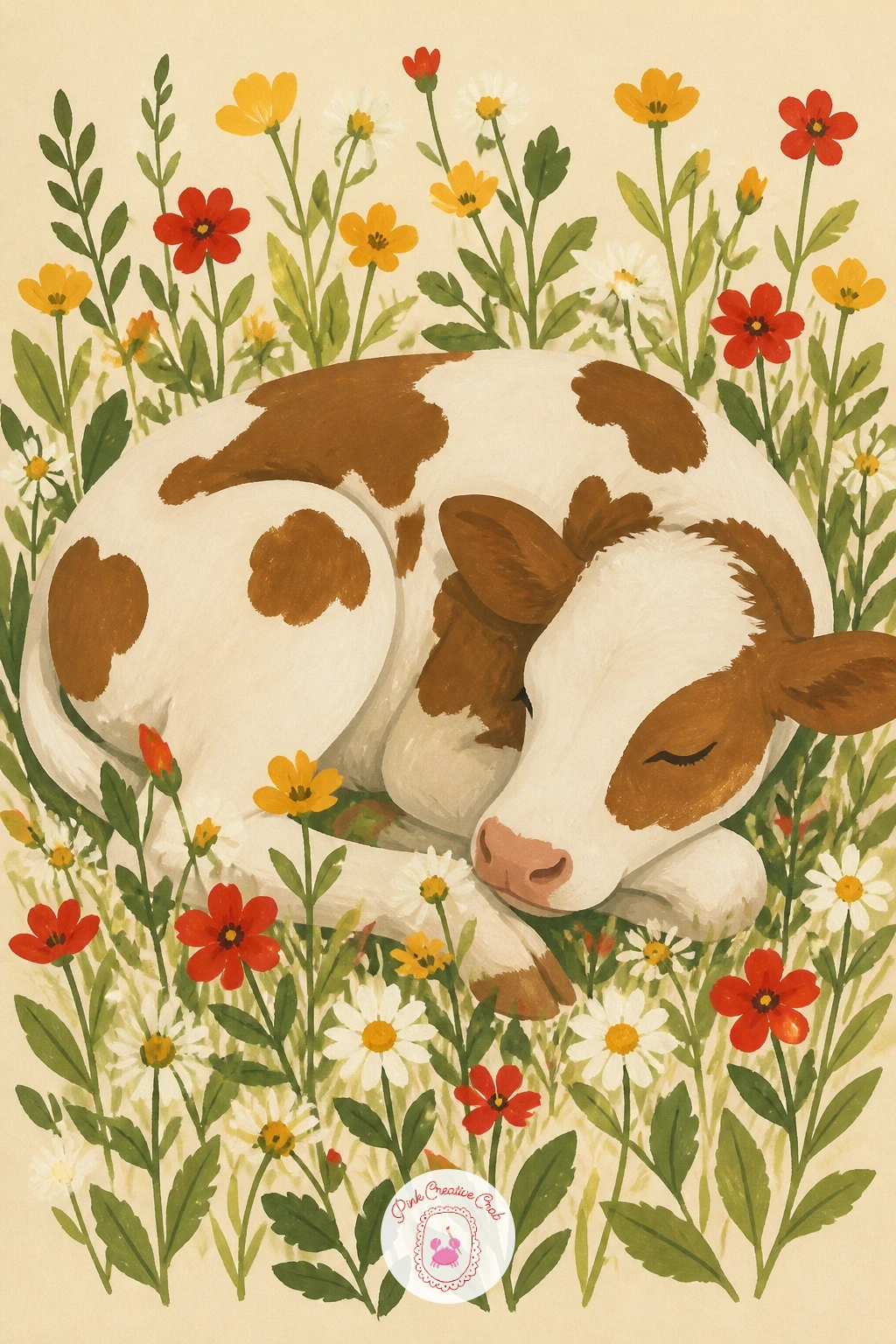
Palette: Cream White,Warm Brown,Cherry Red,Butter Yellow
A kitten in a camellia circles back to the layered petal technique from the earlier peony, a good chance to compare how a tighter, more structured bloom changes the feel of the same basic method. Paint the outer ring of camellia petals first in a deep cherry red, rounder and more overlapped than the peony’s, then a tighter inner ring in a slightly brighter red once the outer ring is fully dry, working from outside in just as before.
Curl the kitten into the flower’s center as one cream oval with small pointed ears and a closed eye, noticeably smaller and tighter in pose than the earlier peony kitten so the two pieces do not feel repeated if painted side by side. A single small pink nose dot is all the face detail this scale needs.
If the inner ring of petals looks too busy against the outer one, simplify it to just three or four petals rather than matching the outer ring’s count, since camellias naturally tighten toward the center and a one to one match looks stiff.
Try this one today as a direct comparison piece: paint it right after the peony kitten and notice how a tighter bloom naturally produces a cozier, smaller feeling scene.
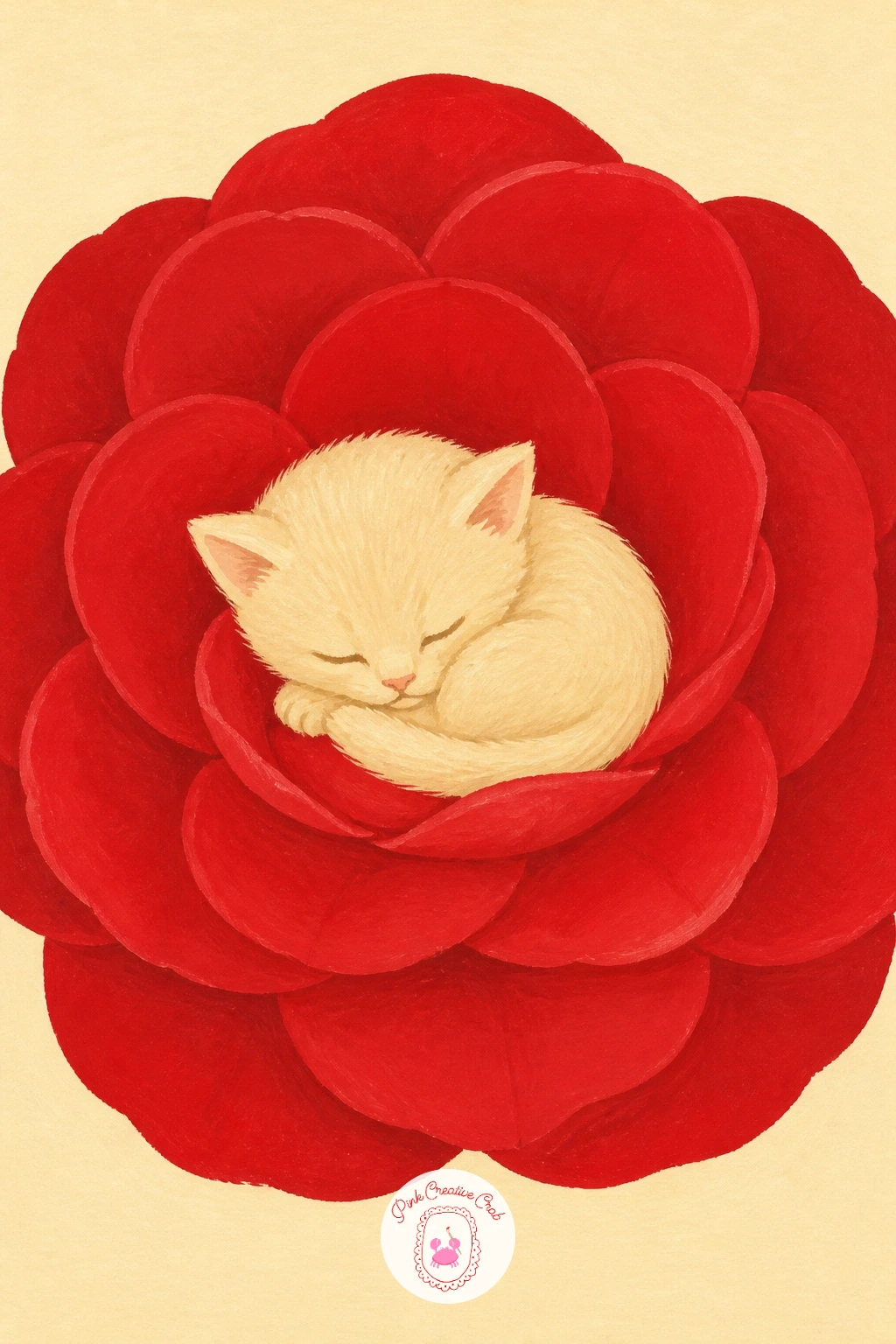
Palette: Cherry Red,Bright Red,Cream White,Soft Pink
Close the whole list with a fawn under a wisteria arch, the most architectural scene here, so sketch the arch shape first as two simple curved lines meeting overhead before any flowers go near it. Hang loose clusters of small purple petals down from the arch in drooping teardrop shapes, each cluster just a stack of tiny petal dabs getting narrower toward the bottom, painted in a soft lavender purple with a touch more violet near the top of each cluster where it would naturally sit in more shadow.
Place the fawn resting beneath the arch as one soft tan curve with the familiar scattered white spots from the earlier bluebell piece, curled small and centered so the arch frames it the way a doorway frames a room. Keep the arch itself understated, just enough structure to hang the wisteria from, since the flowers and the fawn are doing the real work here.
If the hanging clusters look stiff or too evenly spaced, vary their length slightly along the arch and let one or two overlap the fawn’s edge just slightly, tying the whole scene together the way the earlier floating petals did for the otter.
As a last concrete tip across this whole list: keep every background behind every one of these animals the same simple light cream, since it is that one consistent choice that makes a full set of them look like one coherent collection once they are all finished.
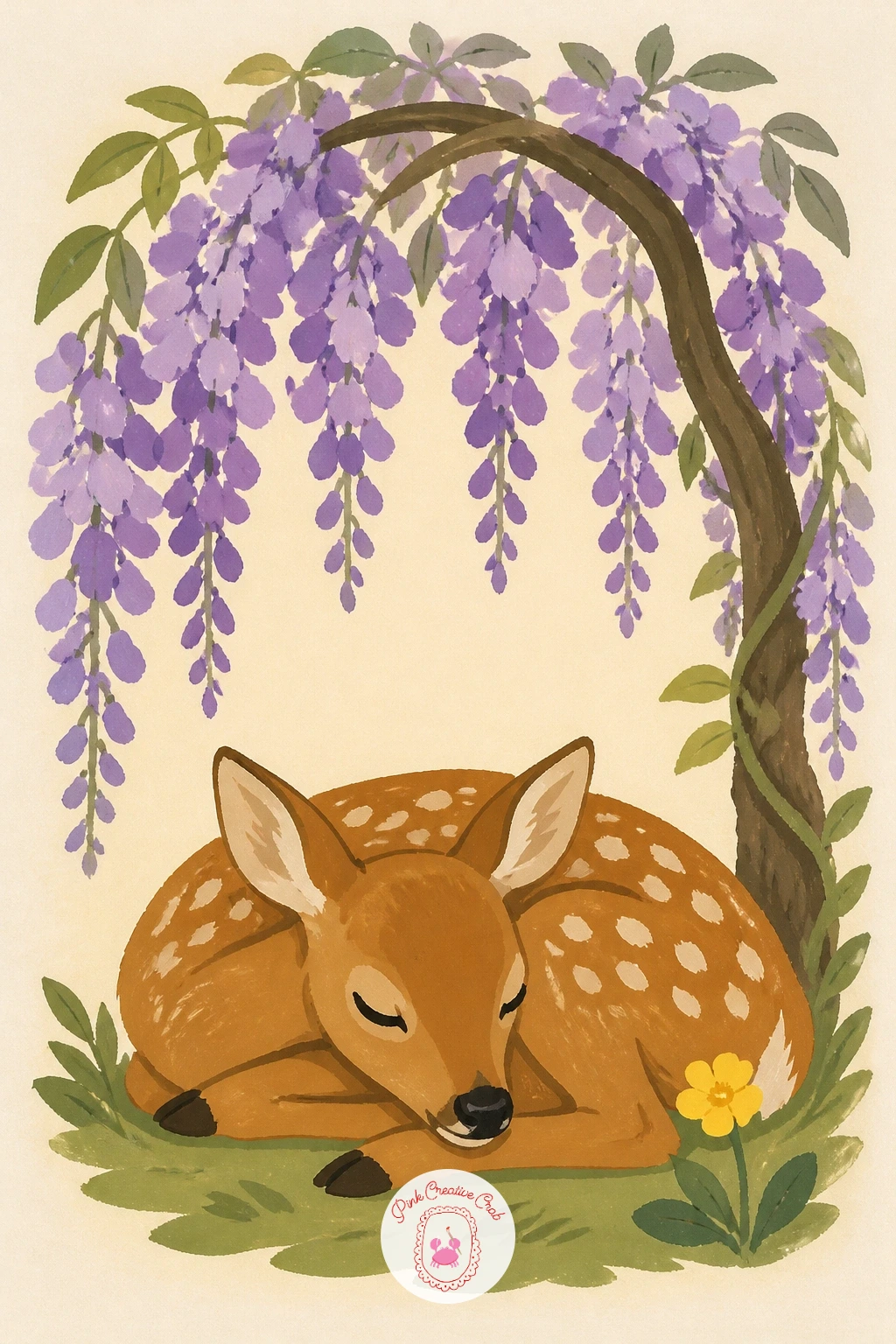
Palette: Lavender Purple,Deep Violet,Warm Tan,Cream White
What to Do Next
Pick whichever sleepy animal pulled at you first, mix your cream background color before anything else, and let the first flower shape go down while the page is still fresh. Keep a smooth paper pad nearby for the next one, since once you finish one of these you will likely want to work straight down the list.
Frequently Asked Questions
What paint works best for cute painting ideas like these baby animal flower scenes?
Gouache works best because it covers in flat, opaque shapes with crisp edges, which suits the simple nursery look. Thick acrylic can substitute if that is what you already own.
Do I need to be good at drawing animals to paint these ideas?
No, every animal here is built from a few rounded shapes like an oval body and simple ears. A light pencil sketch first keeps proportions right before any paint goes down.
How do I stop the flower and the animal from blending into one blob?
Let each shape dry fully before painting the one beside it, and add a thin line of white or cream wherever two similar colors touch. This single trick keeps every edge crisp and readable.
Can these cute painting ideas be finished in one sitting?
Yes, each one is sized for a single session, with a simpler ten minute version and a slightly fuller forty minute version described in the steps. Flat gouache dries fast between layers too.
What if I do not have the exact flower color shown in the palette?
Mix the nearest color you have with white or a touch of its neighbor on the color wheel, since gouache mixes easily to match most of these soft, slightly muted tones.
Have any thoughts?
Share your reaction or leave a quick response — we’d love to hear what you think!
-
 0
-
0
-
0
-
0
-
0
-
0


