A watercolor giraffe has a way of softening a whole room: those long lashes, the gentle spots, the wobbly legs that make even a grown animal look like a baby. This list leans into that, with giraffes front and center and a soft cast of safari friends following behind, each one painted in a small, calm storybook moment rather than a stiff portrait.
You will find 28 ideas here, starting easy and building up, every one sized for a single sitting and friendly to a beginner’s brush. Keep your palette gentle (ochre, cream, baby blue, blush) and let the paper do some of the work. Scroll, pick the one that makes you smile, and paint it today.
Using these images: free for personal projects such as printing, coloring, cards, journals and gifts. Handmade items that include them may be sold up to 30 pieces per design. More than that is commercial use and is not permitted, and neither is selling or sharing the images themselves or passing them off as your own. Please ask before any other use.
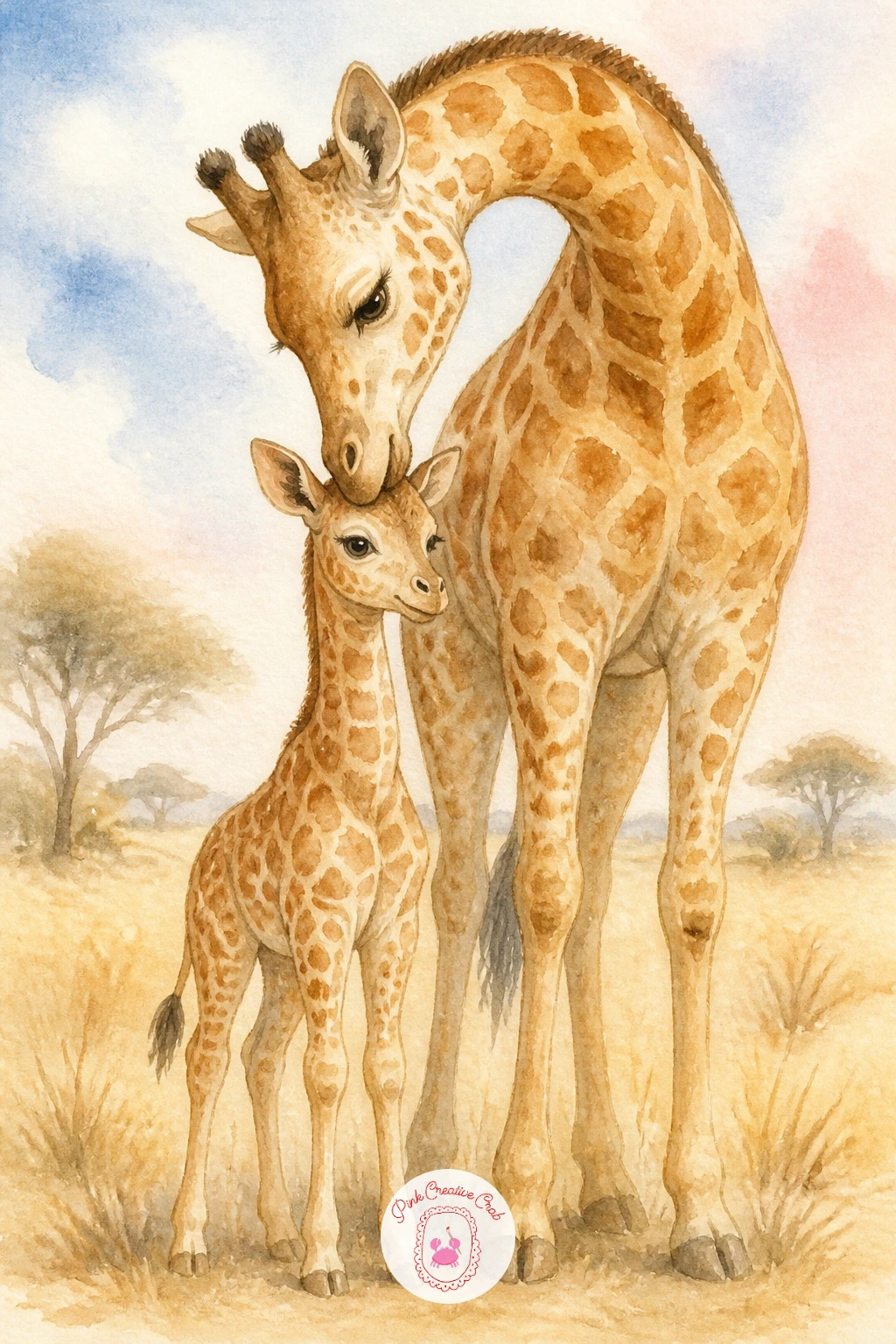
Start the whole list with the pairing that sells every giraffe nursery print: a baby giraffe pressed close to its mother. Sketch two simple giraffe shapes in pencil first, the calf noticeably smaller and shorter-necked, standing just under the mother’s chin. Keep the legs loose, almost like soft sticks, rather than stiff and straight.
Paint the bodies wet-into-wet with a warm ochre wash, then drop in a slightly darker ochre or burnt sienna while the paper is still damp so the color blooms softly instead of forming hard patches. Add the spots last, once the paper is dry, using a small round brush and a mix of burnt sienna and a touch of grey.
The easiest way to keep proportion right on this one is to compare heights before you paint a single spot: the calf’s whole body should fit under the mother’s neck line. If your calf comes out too big, simply add a touch more height to the mother’s legs to restore the balance.
If you only have one ochre in your set, mix it yourself from yellow ochre and a touch of burnt sienna.
Palette: Yellow Ochre,Burnt Sienna,Payne’s Grey,Cream
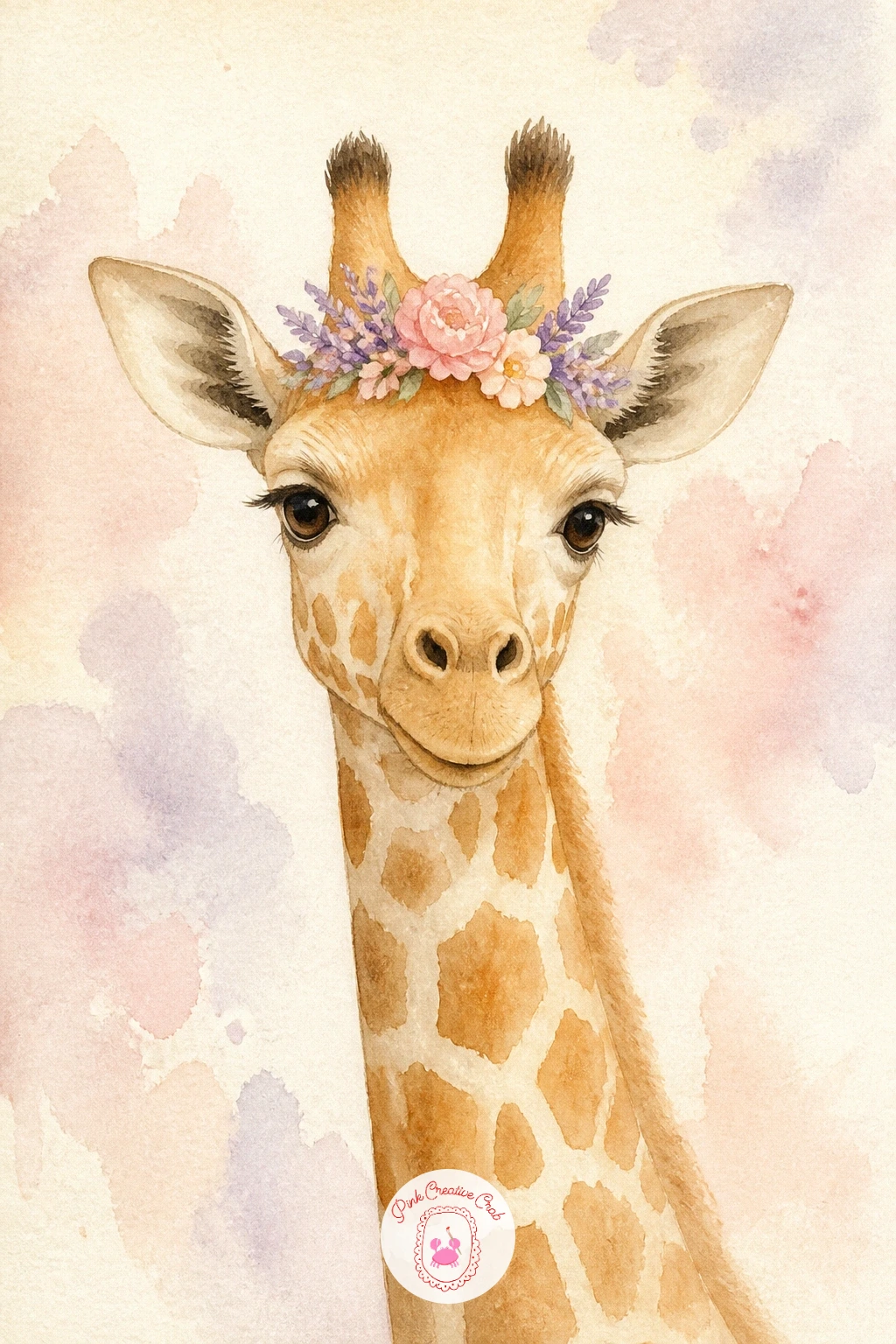
Give the giraffe a sweet accessory next: a small flower crown sitting between its ears. Paint the head and neck first in your usual ochre wash, letting it dry fully before you add anything else, since wet flowers on wet fur will just turn to mud.
Once dry, paint tiny rounded petals in blush pink and soft lavender around the base of the ears, using the tip of a small round brush and just dabbing color rather than drawing outlines. Add a few leaf shapes in sap green between the flowers to break up the pink.
The edges of the flowers are where this one can go wrong: if they come out too crisp and cut-out, soften one or two edges with a clean damp brush right after painting them, lifting a little color so they blend gently into the background. This single hands-on trick keeps the crown looking painted, not pasted on.
No lavender in your set? Mix a touch of blush with Payne’s grey for a similar dusty purple.
Palette: Blush Pink,Sap Green,Yellow Ochre,Cream
Try a damp cotton swab instead of a brush to soften petal edges; it lifts color more gently and gives a fuzzier, more floral look.
Move from a portrait to a little scene: a giraffe peeking over a window ledge as if it wandered right up to the nursery. Think about eye level here, since it changes the whole feel of the picture. Paint the window ledge at the bottom third of your paper, and let only the giraffe’s head, neck and the very top of its shoulders show above it, looking slightly down or sideways at the viewer.
Paint the window frame first in a pale baby blue, keeping the lines loose rather than ruler-straight, then let that dry before painting the giraffe’s neck rising up from behind it. A single soft shadow under the chin, painted in diluted grey, is what makes the giraffe feel like it is really leaning over the ledge rather than floating beside it.
Keep the sky behind the window a flat wash of pale blue or cream so the giraffe stays the clear focus.
No blue paint handy? A very diluted Payne’s grey gives a similar soft, pale sky.
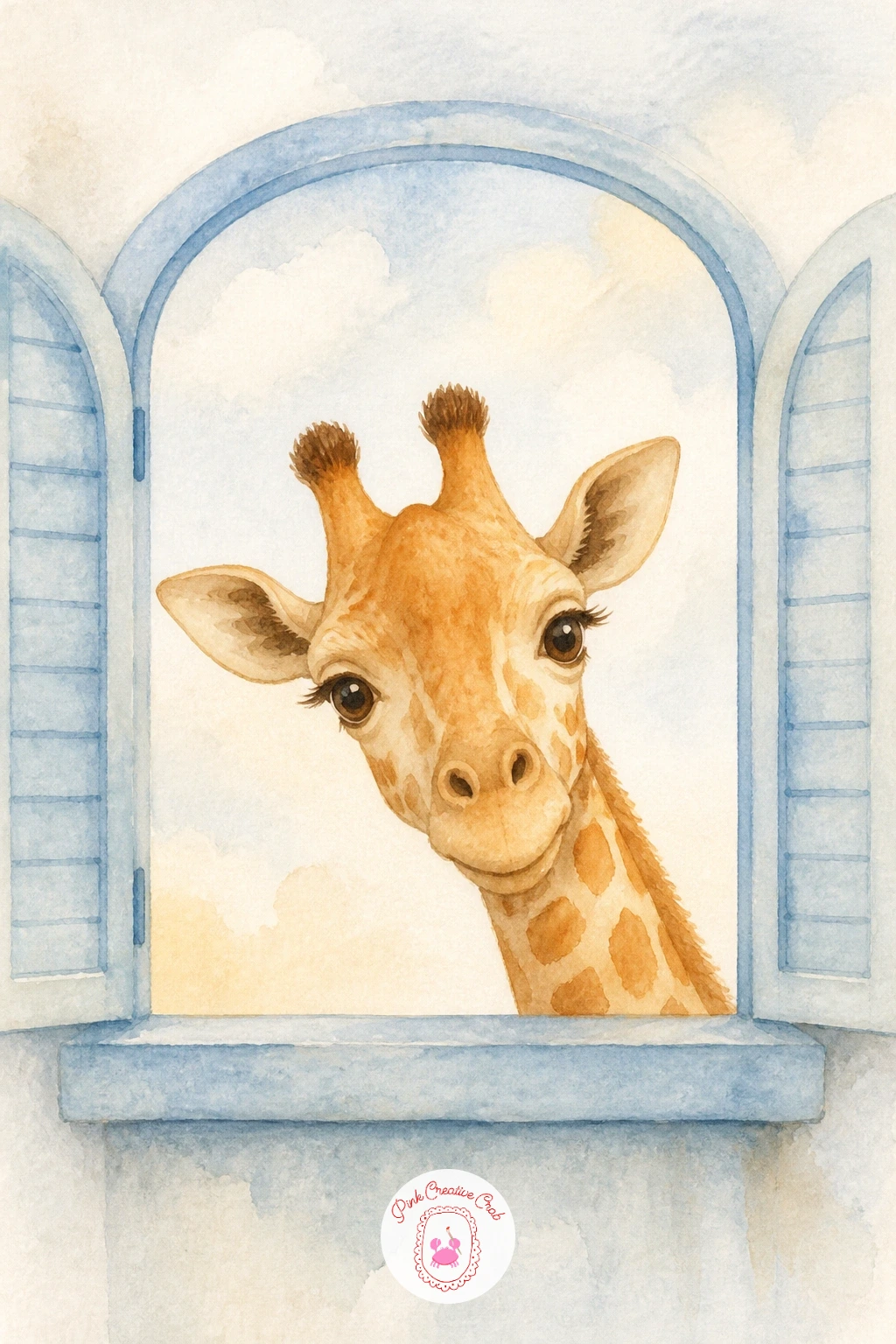
Palette: Baby Blue,Yellow Ochre,Payne’s Grey,Cream
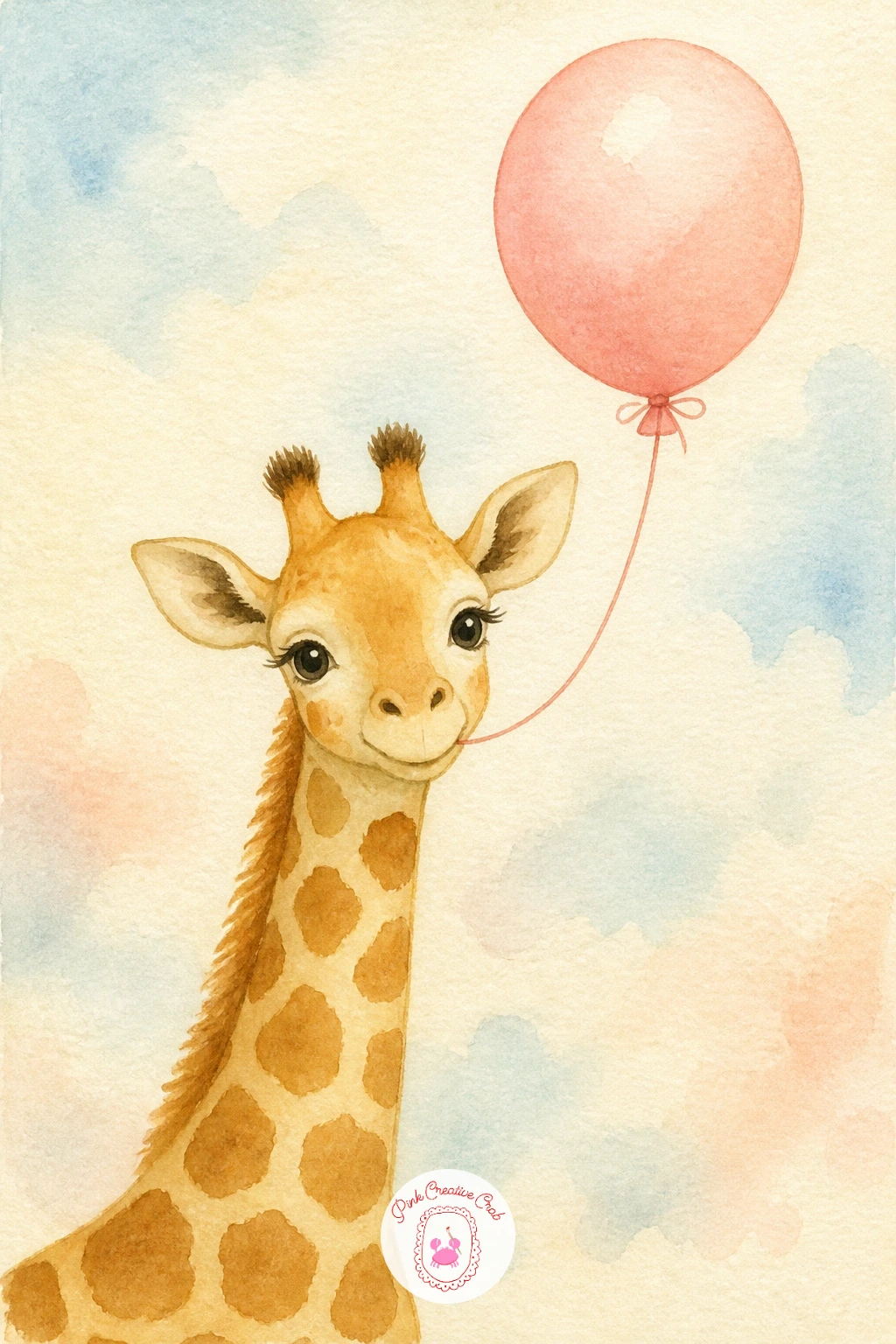
Keep the mood light with a giraffe holding a single balloon string in its mouth, drifting along as if caught mid-stroll. Paint the giraffe’s body and legs first in your usual ochre wash, leaving the mouth area dry so the balloon string reads clearly against it later.
Paint the balloon in one confident wash of blush or baby blue, leaving a tiny white highlight unpainted near the top to suggest shine. Once everything is dry, draw the string from balloon to mouth with a fine brush or a waterproof liner pen, keeping the line slightly curved rather than ruler-straight so it feels like it is floating.
This is a lovely one to try two ways: a ten-minute version with just the giraffe and balloon on a plain cream background, or a forty-minute version where you add a few scattered clouds and a second, smaller balloon drifting off to the side for more movement.
If your liner pen is not waterproof, wait until the paint is completely dry before adding the string, or it will bleed.
You Will Need
- fine waterproof liner pen for the balloon string
Palette: Yellow Ochre,Blush Pink,Baby Blue,Cream
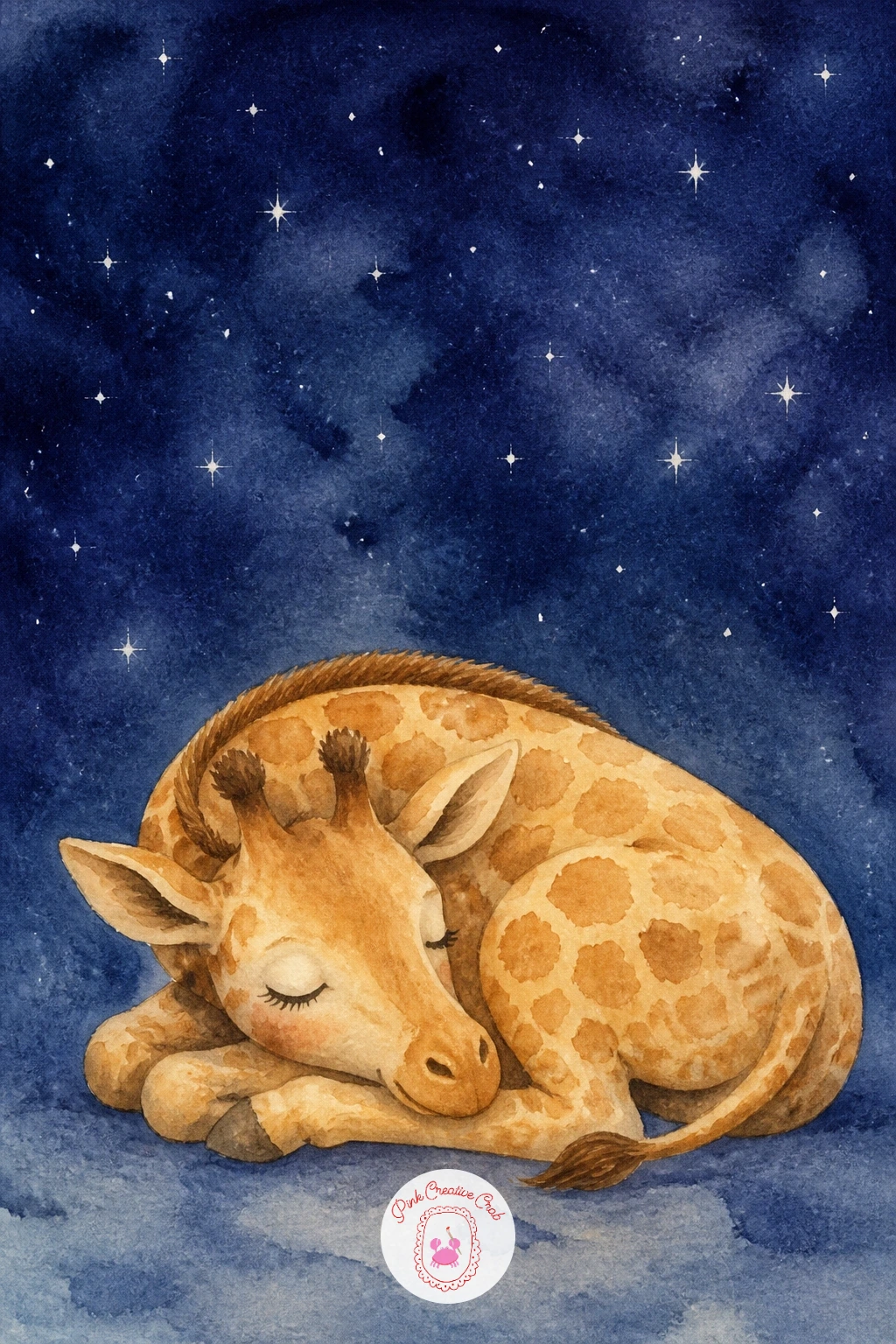
Slow the pace down with a sleeping giraffe curled up under a night sky, the kind of image that works beautifully above a crib. Mix a deep but still soft navy or dusty indigo for the sky and lay it down first, wet-into-wet, so it has a gentle cloudy texture rather than a flat block of color.
While that sky dries, paint the giraffe lying down with its legs tucked under and its neck curved gently around, eyes closed, in the same ochre you have used throughout. Once the sky is fully dry, flick or dot in small white stars using a white gel pen or a tiny bit of white gouache on the tip of a fine brush.
The common mistake here is a sky so dark it swallows the giraffe’s spots, so keep your navy on the lighter side of dusty rather than true midnight. A damp brush can lift color gently if it comes out too strong.
No white gouache on hand? A white gel pen gives the same soft star effect once the paper is completely dry.
You Will Need
- white gel pen or white gouache for the stars
Palette: Dusty Indigo,Yellow Ochre,Cream,Titanium White
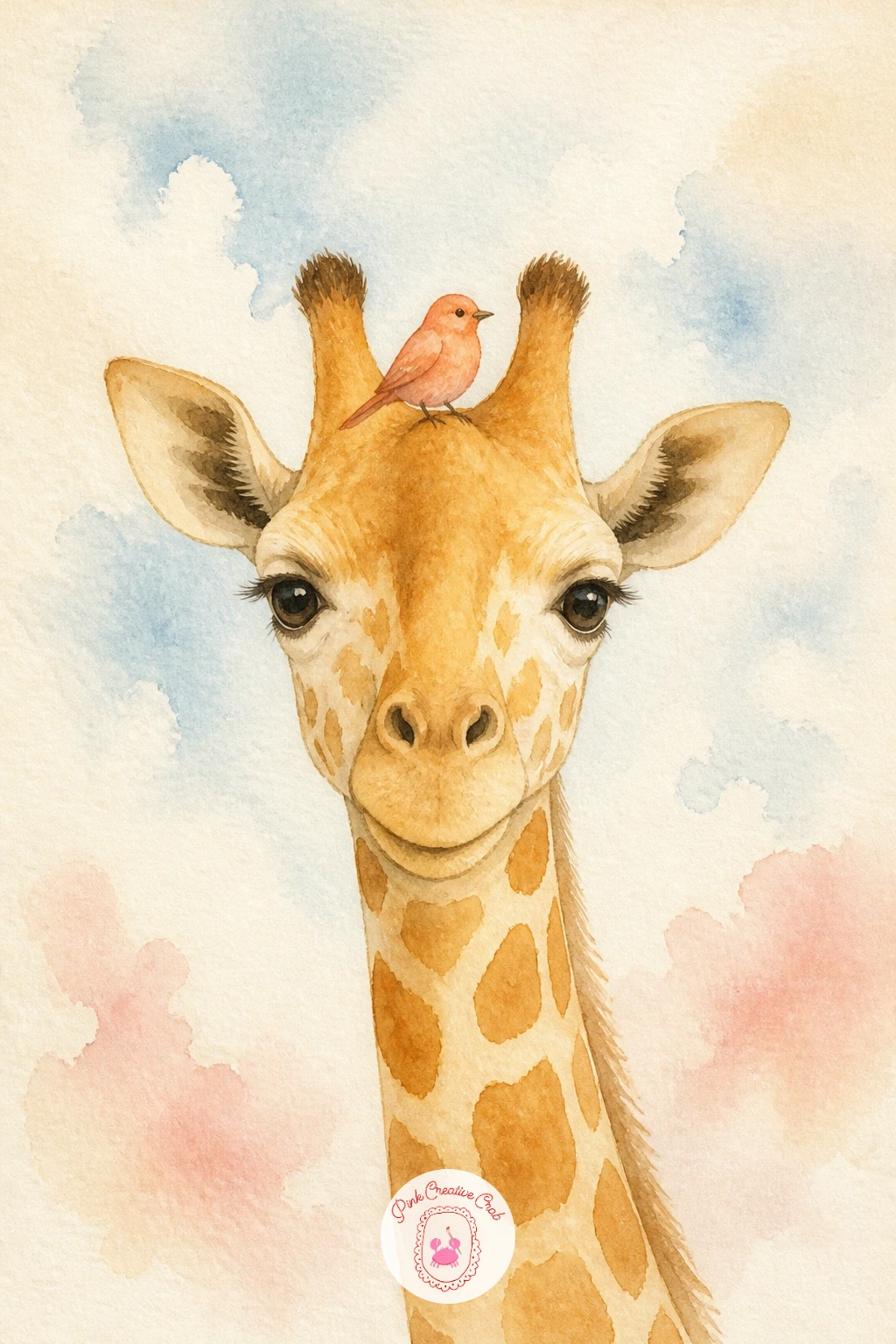
Bring in a friend for this one: a small bird perched right between the giraffe’s ears, the kind of detail that gives a print real charm. Paint the giraffe’s head and neck as usual, then leave a small dry patch at the top of the head for the bird to sit on later.
Once dry, paint the bird in just two or three brushstrokes: one rounded shape for the body in blush or soft coral, a tiny triangle for the beak, and a flick of the brush for the tail. Resist the urge to add feather detail, since a bird this small reads best as a simple, confident shape.
Watch the scale here: the bird should look genuinely tiny against the giraffe’s head, so if yours starts looking crow-sized, paint a smaller second attempt beside it on scrap paper first to check the size before committing to the final one.
No coral in your palette? A mix of blush and a touch of yellow ochre gets you close.
Palette: Yellow Ochre,Coral,Cream,Payne’s Grey
Wrap the giraffe up for this cosy variation: a long knitted scarf winding several times around that famous neck. Paint the giraffe’s body first and let it dry completely, since the scarf needs to sit cleanly on top without the two colors mixing.
For the texture of the knit, load your brush with blush or baby blue and drag short, slightly wavy horizontal strokes around the neck rather than one smooth wash, leaving tiny gaps of cream paper showing between strokes to suggest the ribbing of a knit. Let the scarf ends hang loose and a little uneven, since perfectly straight ends look stiff.
If the scarf strokes blend into one flat shape, your paint was likely too wet; next time, use a drier brush and less water so each stroke stays distinct, which is the real trick to convincing knitted texture in watercolor.
No long round brush for this? A flat brush dragged on its edge gives a similar textured line.
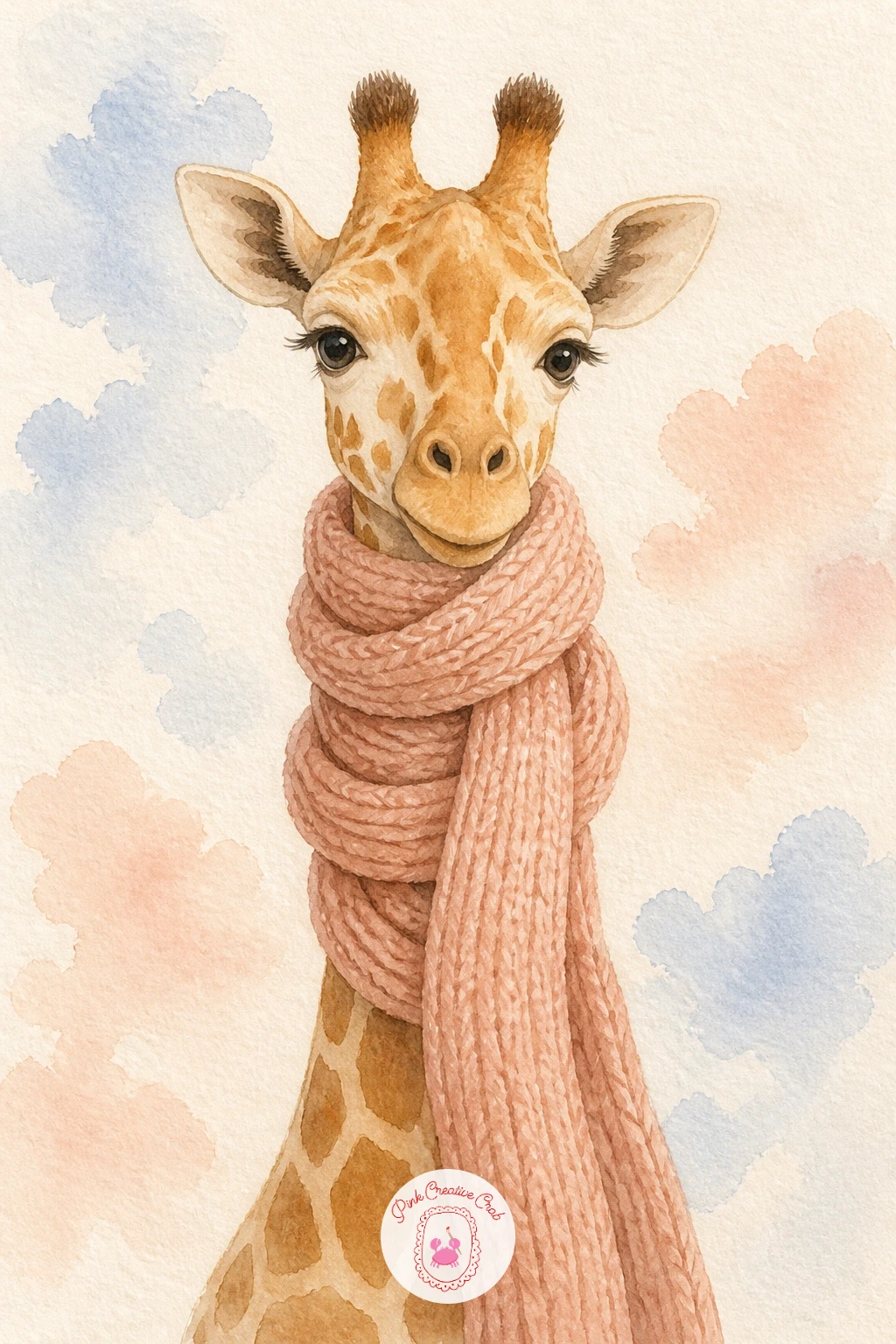
Palette: Yellow Ochre,Blush Pink,Baby Blue,Cream
Give the giraffe its own landscape now, standing in silhouette against a glowing savanna sunset. Paint the sky first while the paper is still slightly damp, laying bands of warm apricot near the horizon fading up into soft blush and cream, letting the colors blend into one another on the wet paper rather than keeping hard stripes.
Once the sky is dry, paint the giraffe as a soft near-silhouette in a warm brown rather than full ochre detail, since a backlit animal reads as darker against a bright sky. A single flat-topped acacia tree silhouette to one side completes the scene and gives the eye somewhere else to rest.
Keep the horizon line low, in the bottom third of the page, so the sunset gets most of the space; this one small composition choice is what makes a sunset painting feel spacious rather than cramped.
For more sunset color mixing and blending guidance, this easy watercolor skies and sunset guide is worth a look before you begin.
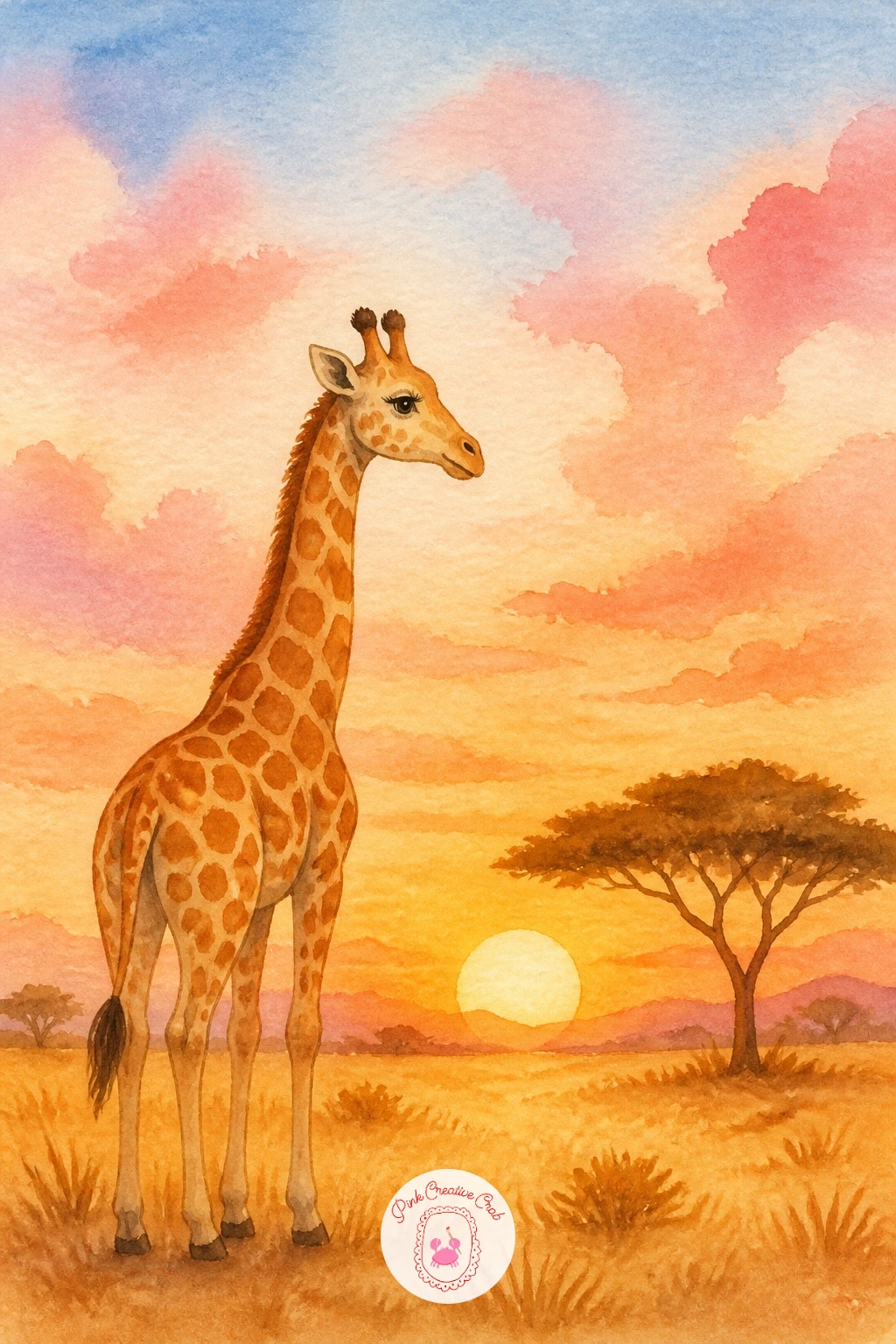
Palette: Apricot,Blush Pink,Warm Brown,Cream
Lift the giraffe right off the ground for a whimsical scene: a giraffe riding in a small hot air balloon basket. Sketch the balloon as a simple rounded teardrop shape above a tiny woven basket, with just the giraffe’s head and long neck poking up out of the top, since drawing the whole body inside a basket this size gets fiddly fast.
Paint the balloon in bands of baby blue, blush and cream, letting each band dry a little before adding the next so the colors stay distinct rather than muddying together. The basket can be a quick wash of warm brown with a few short vertical lines scratched in with the end of your brush handle while the paint is still wet, suggesting woven texture without painting every strand.
This is an easy one to shrink into a ten-minute sketch with a plain cream sky, or stretch to forty minutes by adding a few small clouds and birds in the distance for more atmosphere.
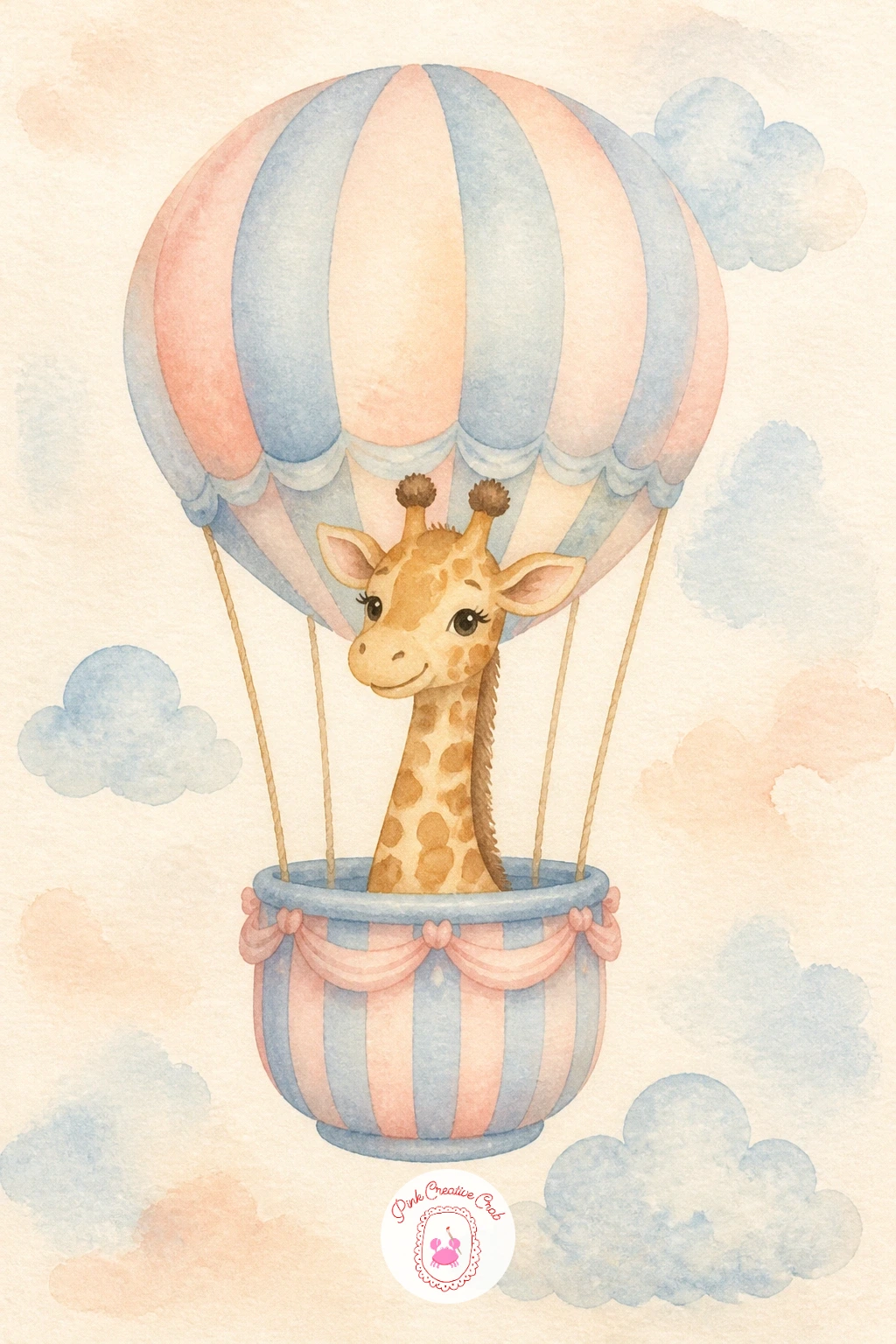
Palette: Baby Blue,Blush Pink,Warm Brown,Yellow Ochre
Finish the giraffe section on something light and airy: a giraffe standing still while a few butterflies drift around its head. Paint the giraffe’s body first in your usual ochre, keeping the pose calm and upright, then let it dry fully before adding anything else.
For the butterflies, paint each one as just two small brushstrokes meeting at a point, like a loose bowtie shape, using blush, baby blue and soft lavender so they feel scattered and varied rather than identical. Once dry, add a single fine dot of darker color at the center of each wing pair with a fine brush to suggest the body.
If your butterflies start looking too neat and symmetrical, vary their size and tilt them at different angles as you paint each one; a little imperfection is exactly what makes a scattering of butterflies feel natural rather than stamped on.
No lavender paint? Mix blush with a touch of baby blue for a similar soft purple.
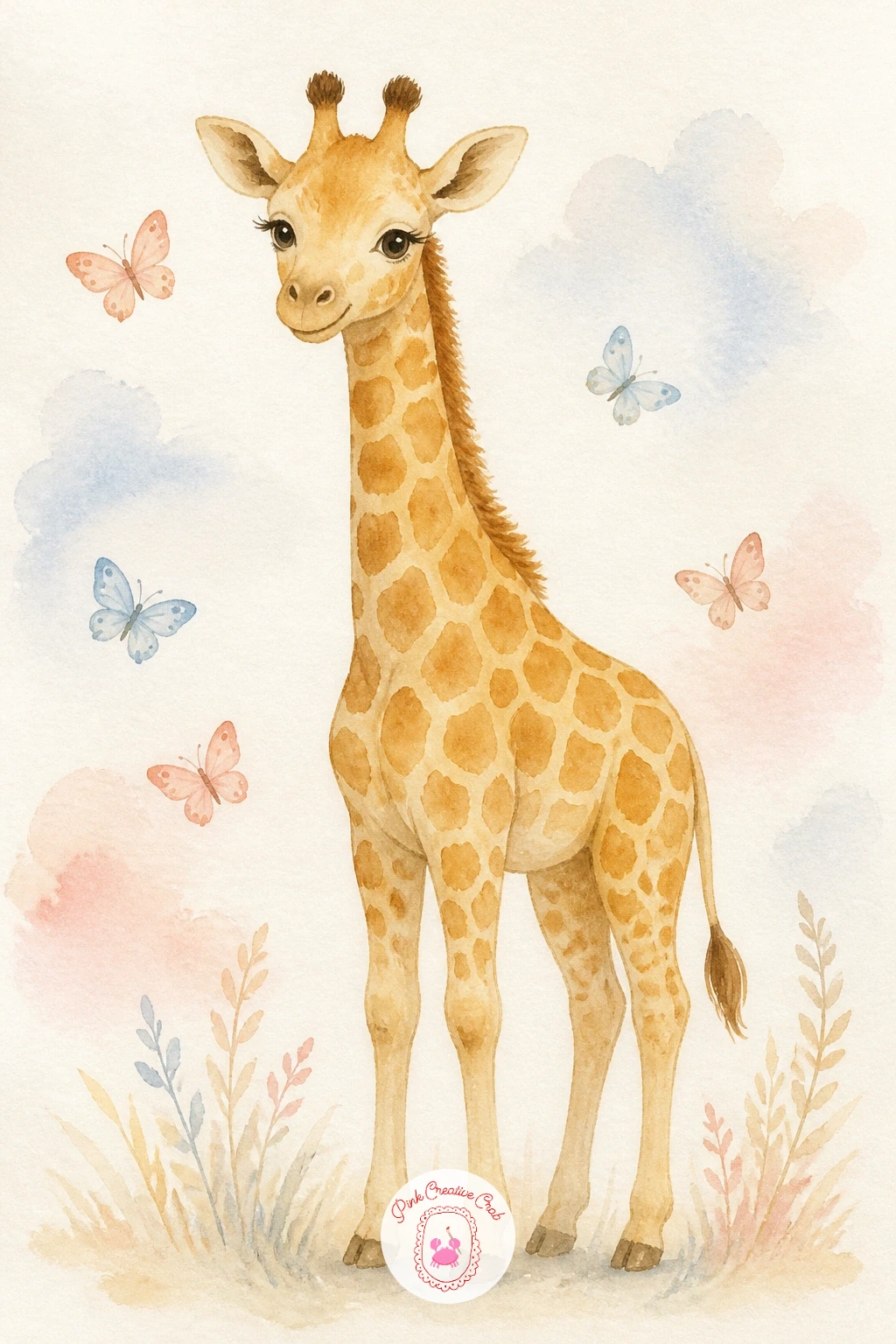
Palette: Yellow Ochre,Blush Pink,Baby Blue,Lavender
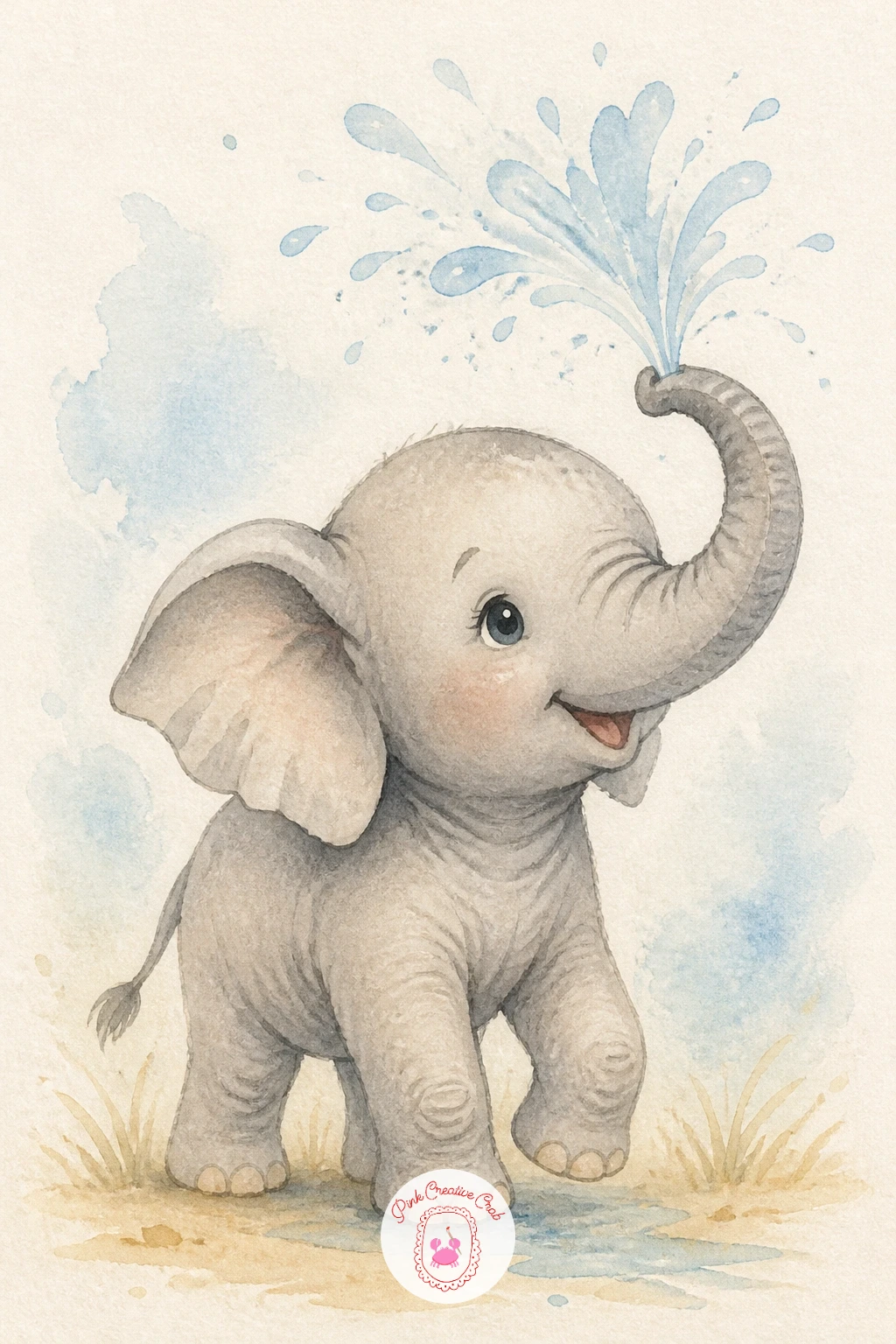
Move on to the next safari baby with a playful splash: a baby elephant mid-spray from its trunk. Paint the elephant’s rounded body first in a soft warm grey, keeping the shape simple and a little chubby, since a round baby elephant reads instantly as young and friendly.
For the water spray, load a small brush with pale baby blue, nearly all water, and flick it upward from the trunk tip using a quick wrist movement rather than a slow painted line; a few separate droplet dots added afterward with the very tip of the brush finish the splash.
The usual trouble spot is a spray that looks too solid and heavy; if that happens, dab a clean damp brush over the thickest part to lift some color back out and lighten it. Let the trunk curl upward rather than hang straight, which gives the whole pose its energy.
No spare brush for flicking? An old toothbrush loaded with thin blue paint gives a lovely fine spray of droplets.
You Will Need
- old toothbrush for the water splatter (optional)
Palette: Warm Grey,Baby Blue,Cream,Payne’s Grey
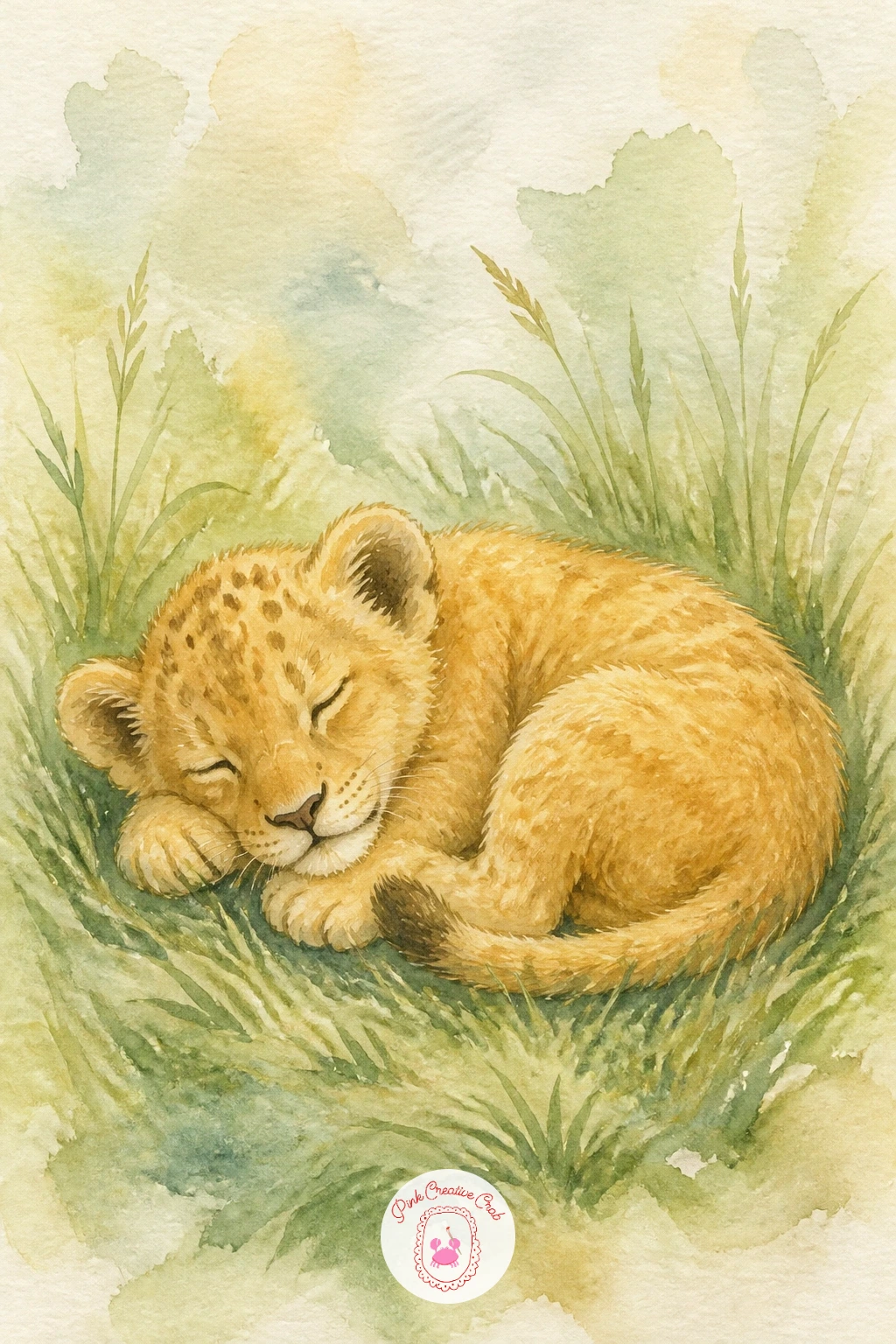
Slow right down with a sleepy lion cub curled up asleep in a patch of grass. Paint the cub’s body in a warm honey ochre, rounder and softer than an adult lion, with closed eyes and tucked paws, then let it dry before adding the grass around it.
For the grass, use a fine brush loaded with sap green and pull short upward strokes from the base of the painting, varying the height and angle of each blade so it looks loose and natural rather than like a neat fringe. Let a few blades overlap the cub’s paws and tail to tuck it into the scene.
Think about where your light comes from before you begin: a soft warm light from one side means the grass on that side can stay pale, while the opposite side takes a slightly deeper green, which gives the whole little scene gentle depth without extra detail.
No sap green available? Mix a little yellow ochre into any green you have to warm it toward the same soft tone.
Palette: Honey Ochre,Sap Green,Cream,Burnt Sienna
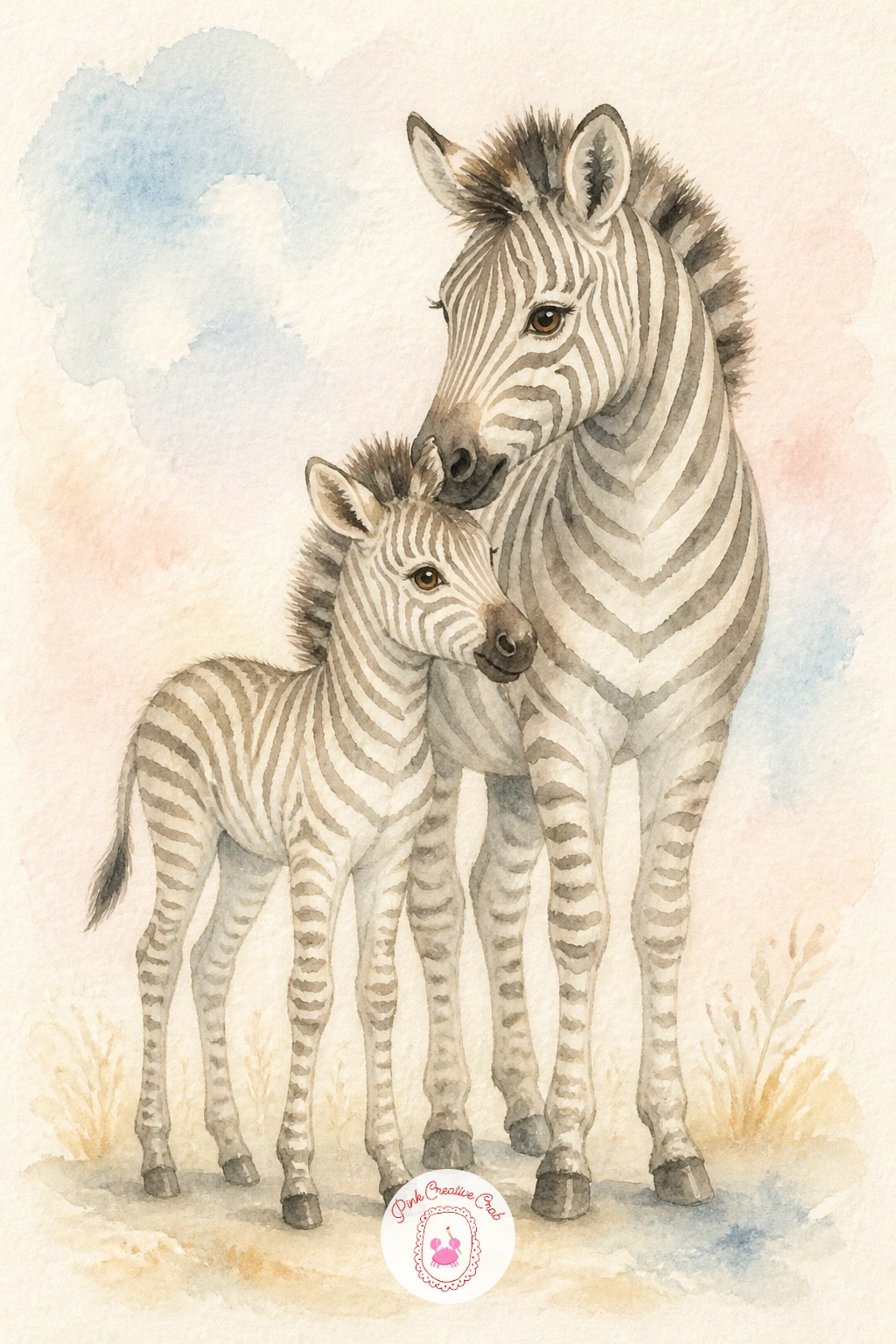
Echo the opening giraffe idea with a second mother-and-baby pair: a zebra foal standing close beside its mother. Sketch both bodies loosely first, keeping the foal noticeably smaller and a little knock-kneed, which is exactly how young foals stand.
Paint the bodies in a very pale warm grey wash first, then once dry, add the stripes with a fine brush loaded with diluted black or dark grey, curving each stripe to follow the round of the belly and leg rather than drawing them straight. Leave the stripes on the foal thinner and a touch more irregular than the mother’s, since that small difference reads instantly as “young.”
Stripes are the place this painting usually goes wrong, so work slowly and keep your brush on the drier side; a brush too loaded with water will make the stripes bleed into soft grey blurs instead of clean lines.
Palette: Warm Grey,Black,Cream,Blush Pink
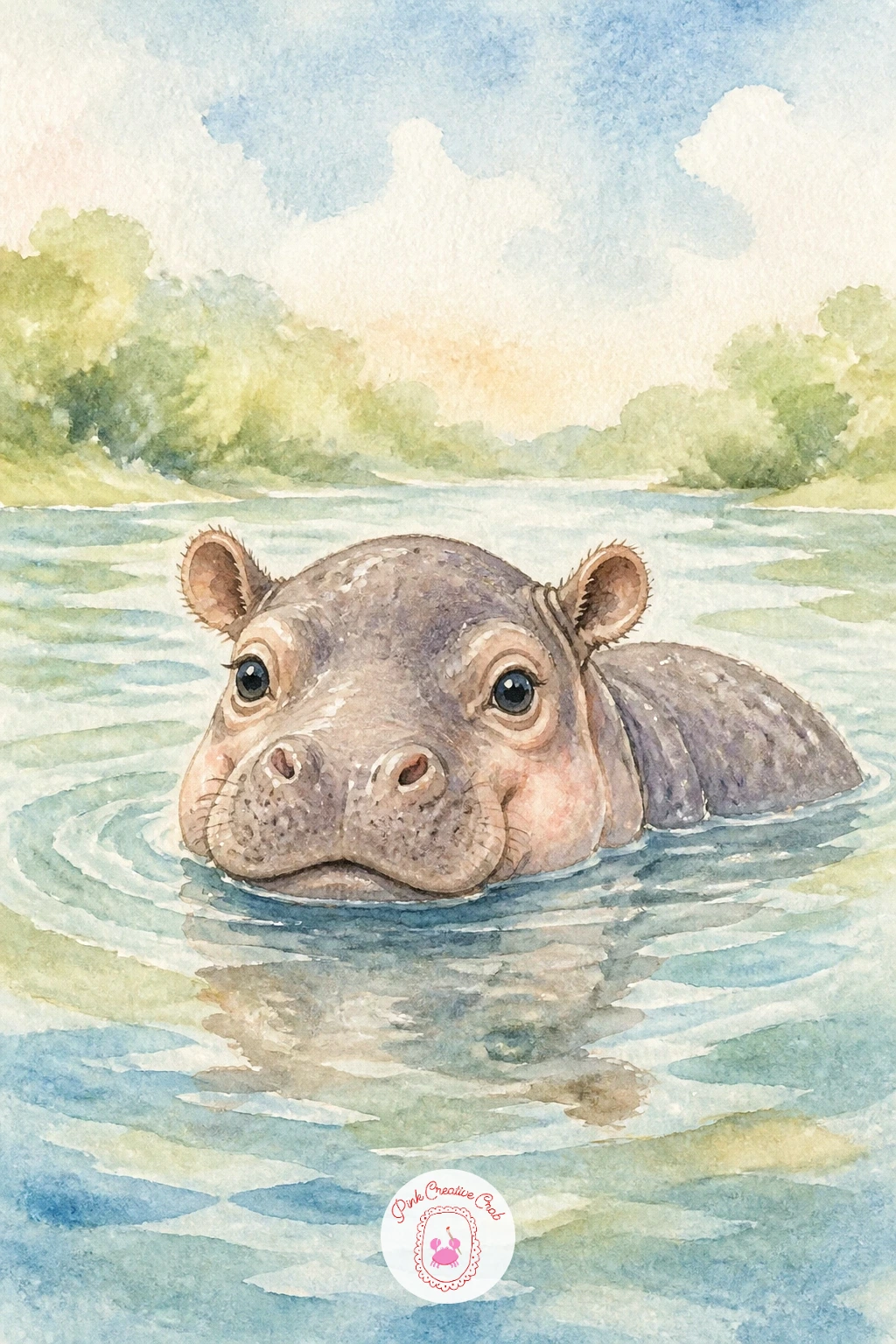
Cool things down with a baby hippo floating happily in a river, only its head and back showing above the water. Paint the water first as a soft wash of baby blue and sap green blended wet-into-wet, letting the colors mix loosely so the surface feels like real water rather than a flat block.
Once that dries a little, paint the hippo’s rounded head and back in a warm purplish grey, keeping the shape chunky and simple, with two small round ears and nostrils as the only real details. A few curved white highlight lines, left as unpainted paper or lifted with a damp brush, suggest ripples around the body.
If the water and hippo colors bleed into one muddy patch, you likely painted the hippo before the water beneath it was dry enough; next time wait a few extra minutes, or work on a dry hippo shape and add water around it instead.
No purple-grey mix handy? Blend Payne’s grey with a touch of blush for a similar soft tone.
Palette: Baby Blue,Sap Green,Purplish Grey,Cream
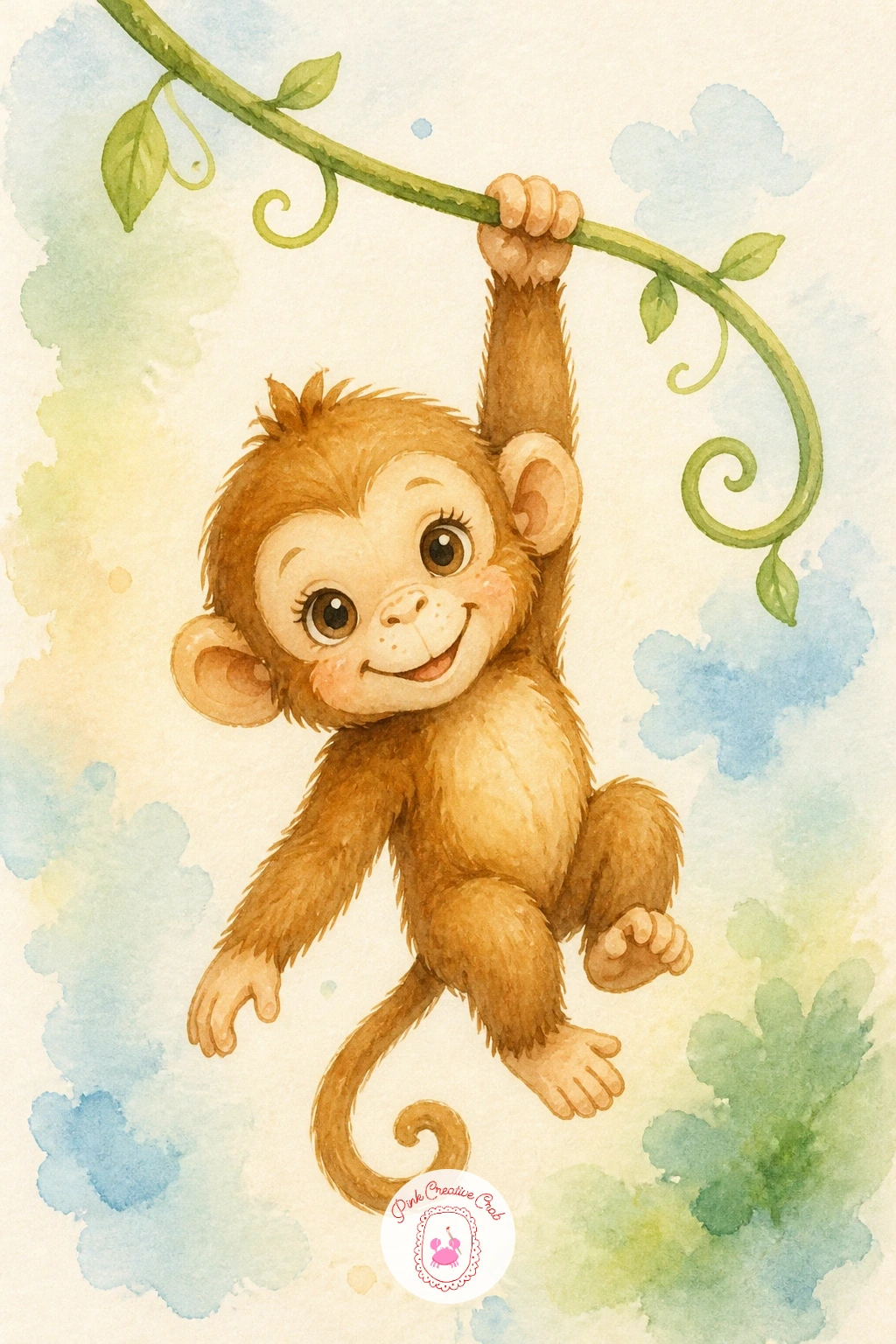
Add some movement with a small monkey hanging by one arm from a curling vine. Paint the vine first as a single loose curved line in sap green, winding it diagonally across the page so there is room for the monkey to swing from it.
Paint the monkey’s body in warm brown, keeping the limbs long and a little rubbery-looking, with one arm stretched up to grip the vine and the tail curling freely below. The face can stay very simple: two dot eyes, a small pale muzzle patch, and a curved line for a smile.
Proportion is the trick here: a baby monkey’s head should look almost as big as its body, which is what keeps it looking young and charming rather than like a shrunken adult. Check that balance in pencil before you commit any paint.
No green for the vine? A warm brown vine works just as well and keeps the focus entirely on the monkey.
Palette: Warm Brown,Sap Green,Cream,Burnt Sienna
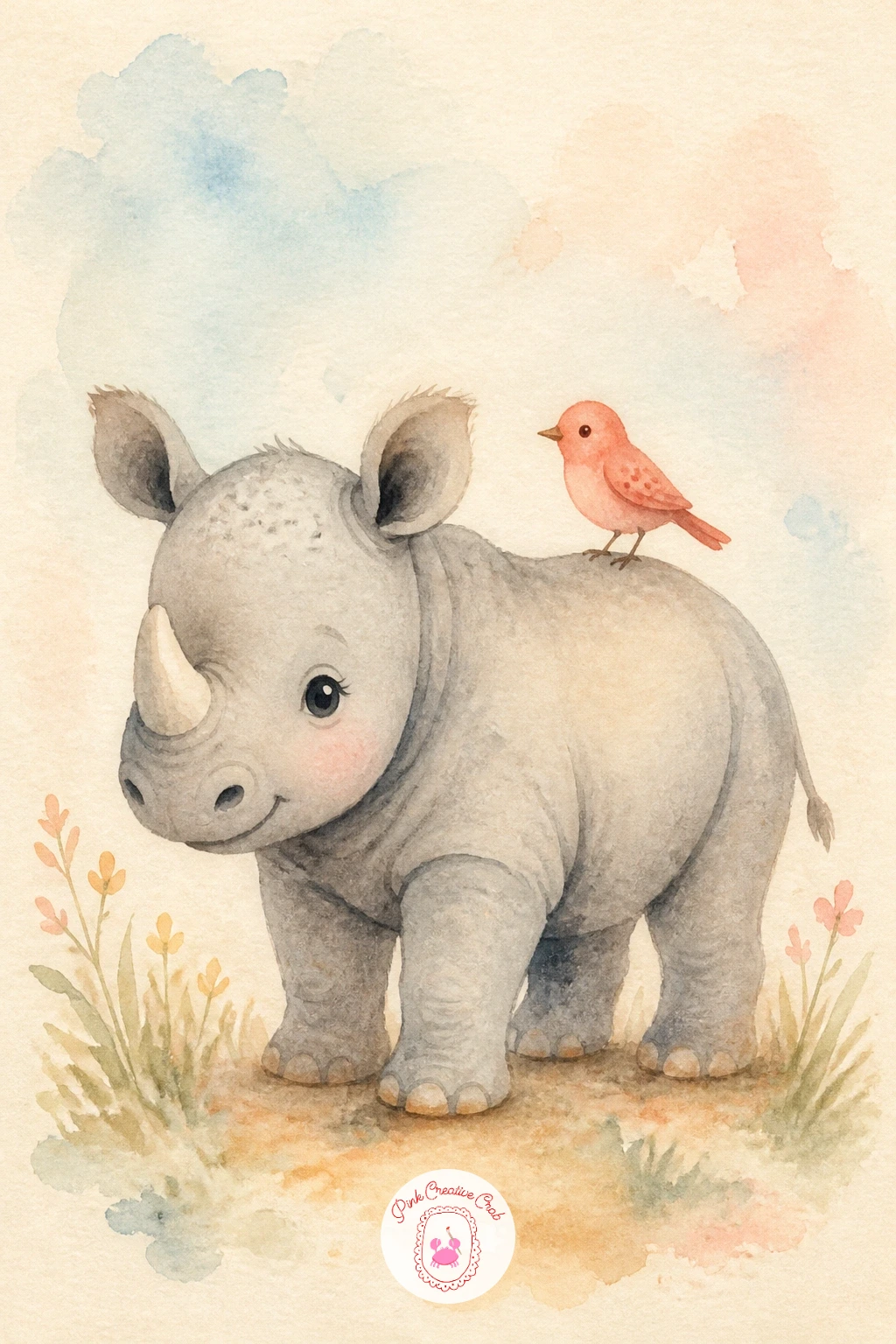
Pair up another gentle duo: a round, sleepy-looking rhino calf with a small bird perched on its back. Paint the rhino’s body in a soft warm grey, keeping the whole shape rounded and a little squashed rather than angular, since a baby rhino should read as soft, not armored.
Once the body is dry, add the small horn as a short pale curved shape near the snout, and a single fold line at the neck and leg joints using a slightly darker grey to suggest the loose, wrinkled skin without overworking it. The bird on its back can be painted in the same simple two or three strokes used earlier in this list: a round body, a tiny beak, a flick for the tail.
If the grey comes out flat and lifeless, deepen the shadow side slightly with a touch more Payne’s grey while the wash is still damp, which gives the body gentle roundness instead of looking like a cutout.
Palette: Warm Grey,Payne’s Grey,Coral,Cream
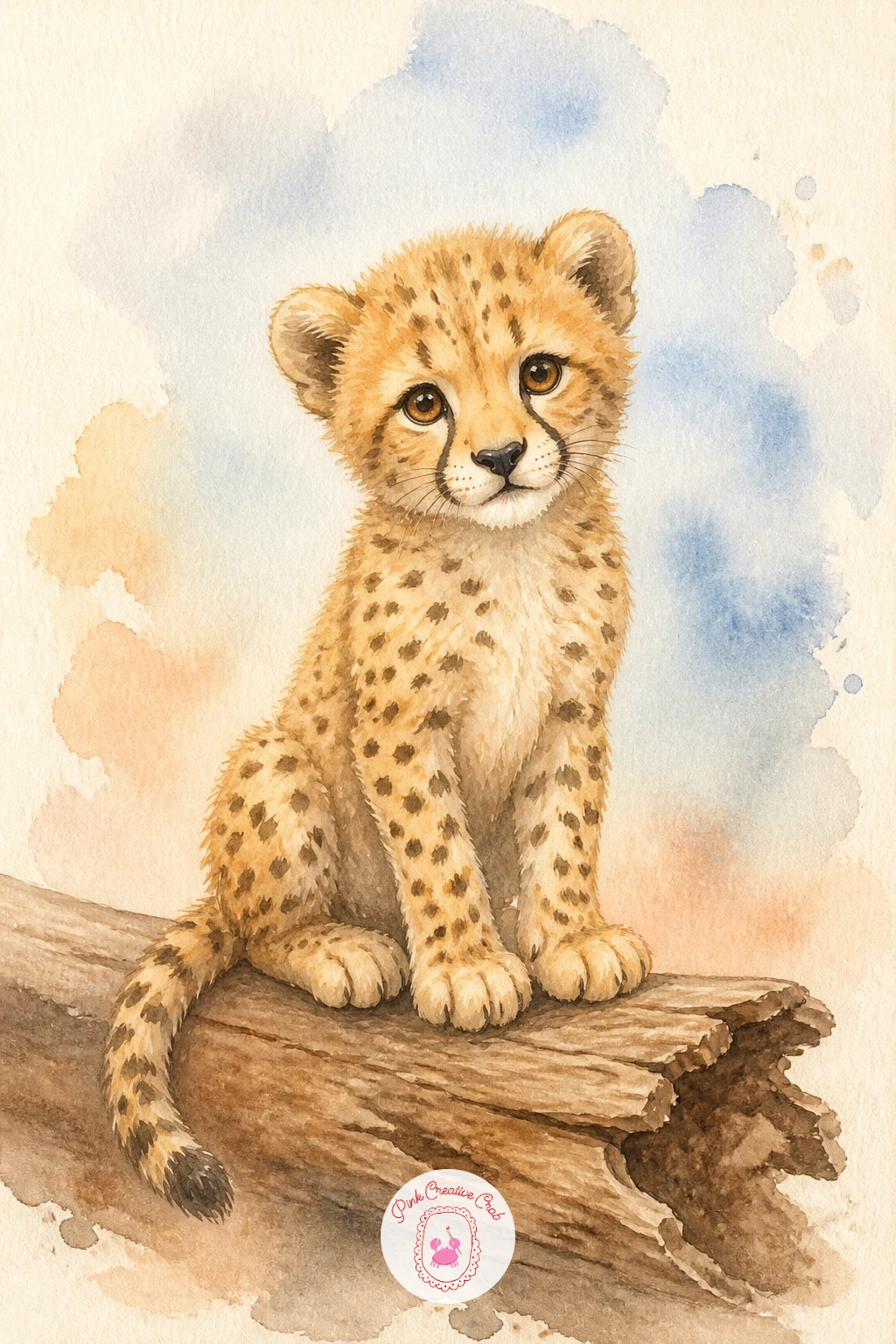
Bring in some texture with a cheetah cub sitting on a weathered log. Paint the cub’s body first in a warm pale gold, then once dry, dot in the spots with the tip of a small round brush loaded with dark brown, clustering them more densely along the back and tail and more sparsely on the belly, just as real cheetah markings thin out there.
For the cub’s fuzzy edges, especially along the back and ears, try lifting a little color with a slightly damp, clean brush right where the fur meets the background, which softens the hard edge into something closer to real fur texture. A dry brush dragged lightly along the outline does something similar if lifting feels tricky.
Paint the log underneath in warm brown with a few darker horizontal lines for bark texture, keeping it simple so it stays a support for the cub rather than competing with it.
No dark brown for spots? Payne’s grey mixed with burnt sienna gives a similar soft charcoal-brown dot.
Palette: Pale Gold,Dark Brown,Warm Brown,Cream
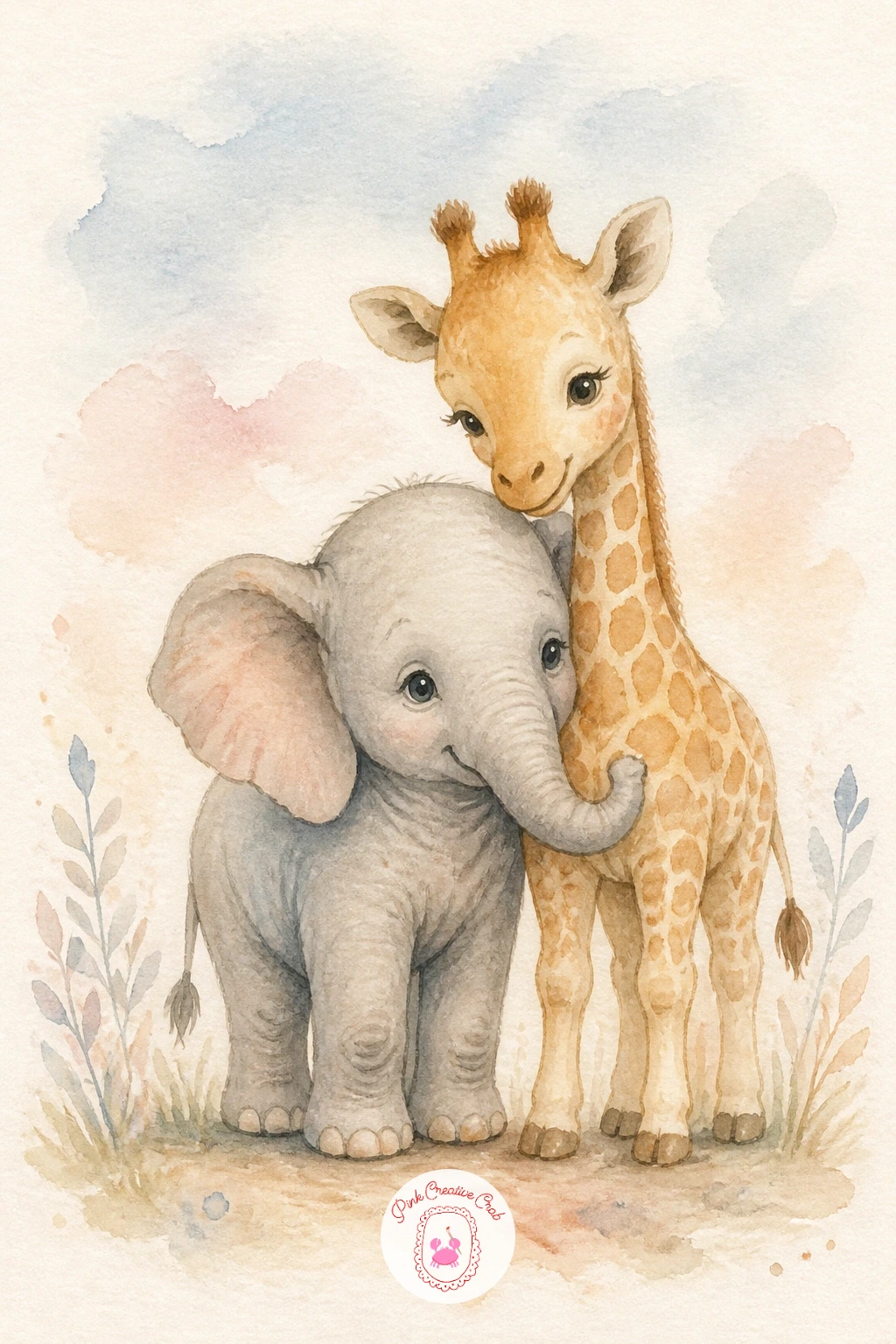
Bring two of the nursery’s favorite animals together for a sweet friendship scene: a baby elephant standing beside a baby giraffe. Sketch the pair first to check their scale against each other, since this is the one idea on the list where getting relative size right really matters. Stand the elephant’s head roughly level with the giraffe’s shoulder, which keeps both readable as babies of a similar age.
Paint the giraffe in your usual ochre wash and the elephant in a soft warm grey, working one at a time and letting each dry before you paint right up against the other’s outline, so the colors stay clean and separate rather than bleeding together at the point they meet.
A small shared detail, like the elephant’s trunk resting gently against the giraffe’s leg, ties the pair together as friends rather than two separate paintings placed side by side.
If your elephant looks too large next to the giraffe, trim the ears slightly smaller rather than repainting the whole body.
Palette: Yellow Ochre,Warm Grey,Cream,Blush Pink
Give the lion cub a little royal touch next: a small crown perched between its round ears. Paint the cub’s body and head first in warm honey ochre, with its soft mane painted as loose, slightly spiky brushstrokes rather than one solid blob, which is what keeps a baby mane looking fluffy instead of helmet-like.
Once the head is dry, paint a simple crown shape in soft gold or blush, just a few triangular points and a flat base, small enough to look like a toy rather than a real weighty crown. A few tiny dots along the base in a contrasting color suggest jewels without any fussy detail work.
If the crown ends up looking too stiff and geometric, round off the points slightly with a small brush once the paint is dry, rather than repainting the whole shape, which softens it back toward the storybook feel of the rest of the piece.
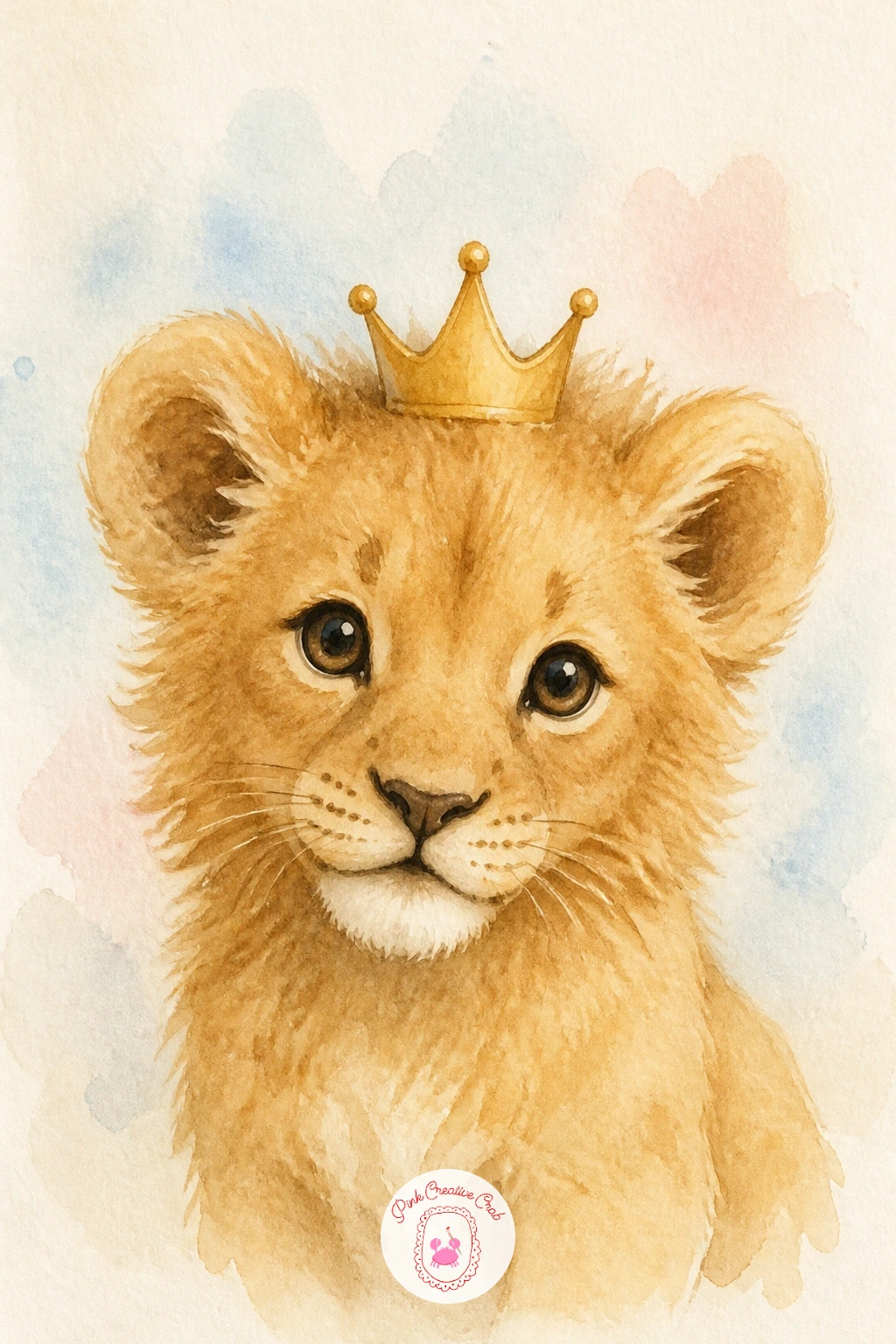
Palette: Honey Ochre,Soft Gold,Blush Pink,Cream
Take a playful turn away from realism with a zebra painted in soft pastel stripes instead of black and white. Paint the body first in the palest wash of cream or baby blue, then once completely dry, paint the stripes in alternating blush and lavender, curving them around the body just as real stripes would follow the muscle and roundness underneath.
This is a nice one to vary the next time you paint it: try the same zebra in mint and apricot stripes for a different nursery palette, or mix warm and cool pastels together on the same body for a slightly more eclectic look. The shape and pose can stay identical each time, only the stripe colors change.
Keep a few stripes shorter and interrupted rather than running every single one the full width of the body, since that variation is what reads as naturalistic even in a fully pastel, stylized color scheme.
No lavender on hand? Pale baby blue paired with blush gives an equally soft pastel contrast.
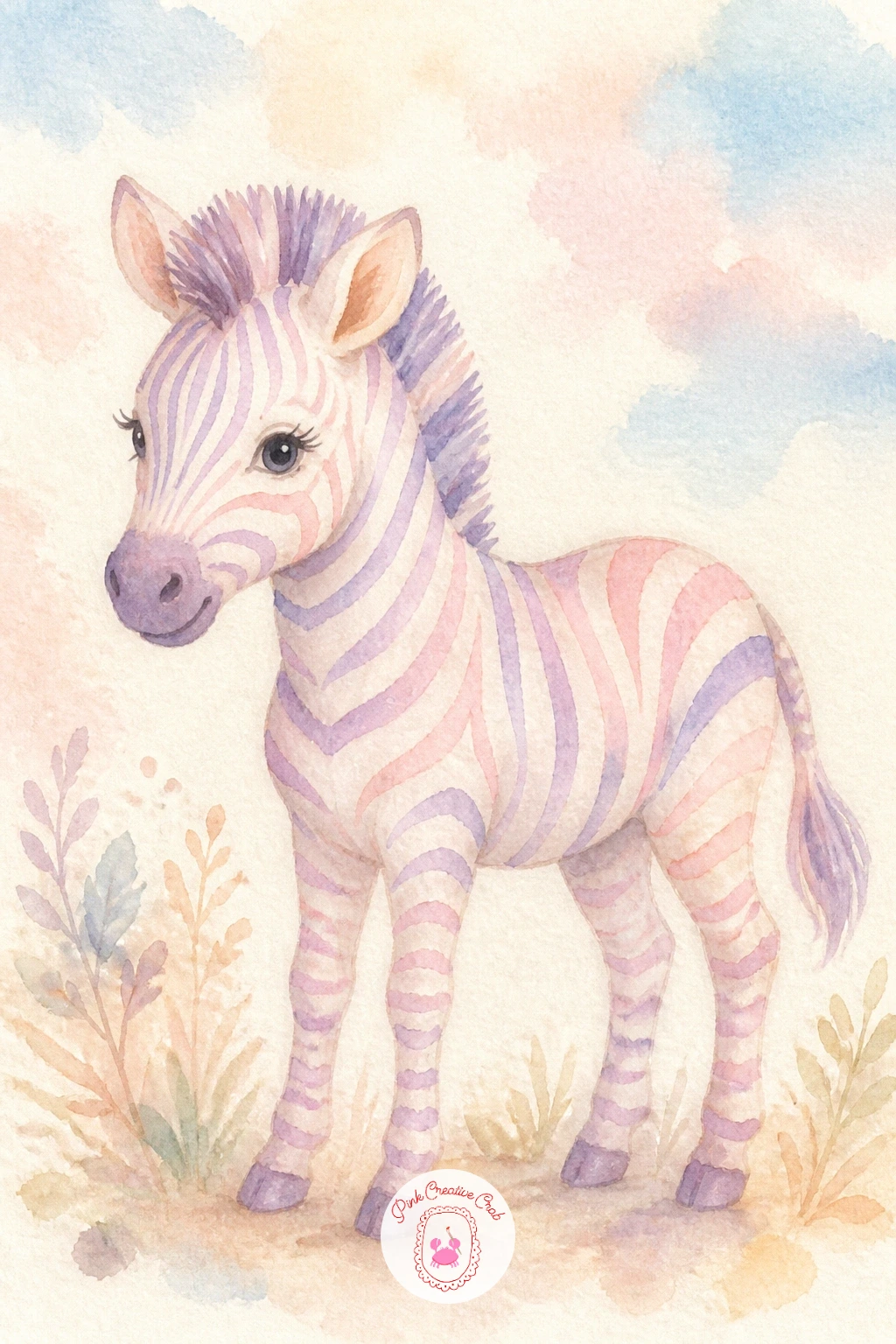
Palette: Cream,Blush Pink,Lavender,Baby Blue
Keep the pastel playfulness going with a hippo relaxing in a tub of bubbles. Paint the water and tub first in soft baby blue, leaving plenty of white paper showing through for the suds, then let that dry before adding the hippo’s head and back rising up out of the middle.
For the bubbles, dip the end of a round brush handle or a cotton swab into white gouache or a white gel pen and dot clusters of circles over the blue, varying the size so some bubbles look closer and bigger than others further back. This quick trick gives convincing bubble texture in under a minute without painting each circle by hand.
If your white dots sink in and barely show against the paper’s own cream, switch to a true opaque white gouache rather than a diluted watercolor white, which simply will not sit on top the same way.
No gouache or gel pen available? Leave small unpainted circles of white paper instead when you first lay down the blue water.
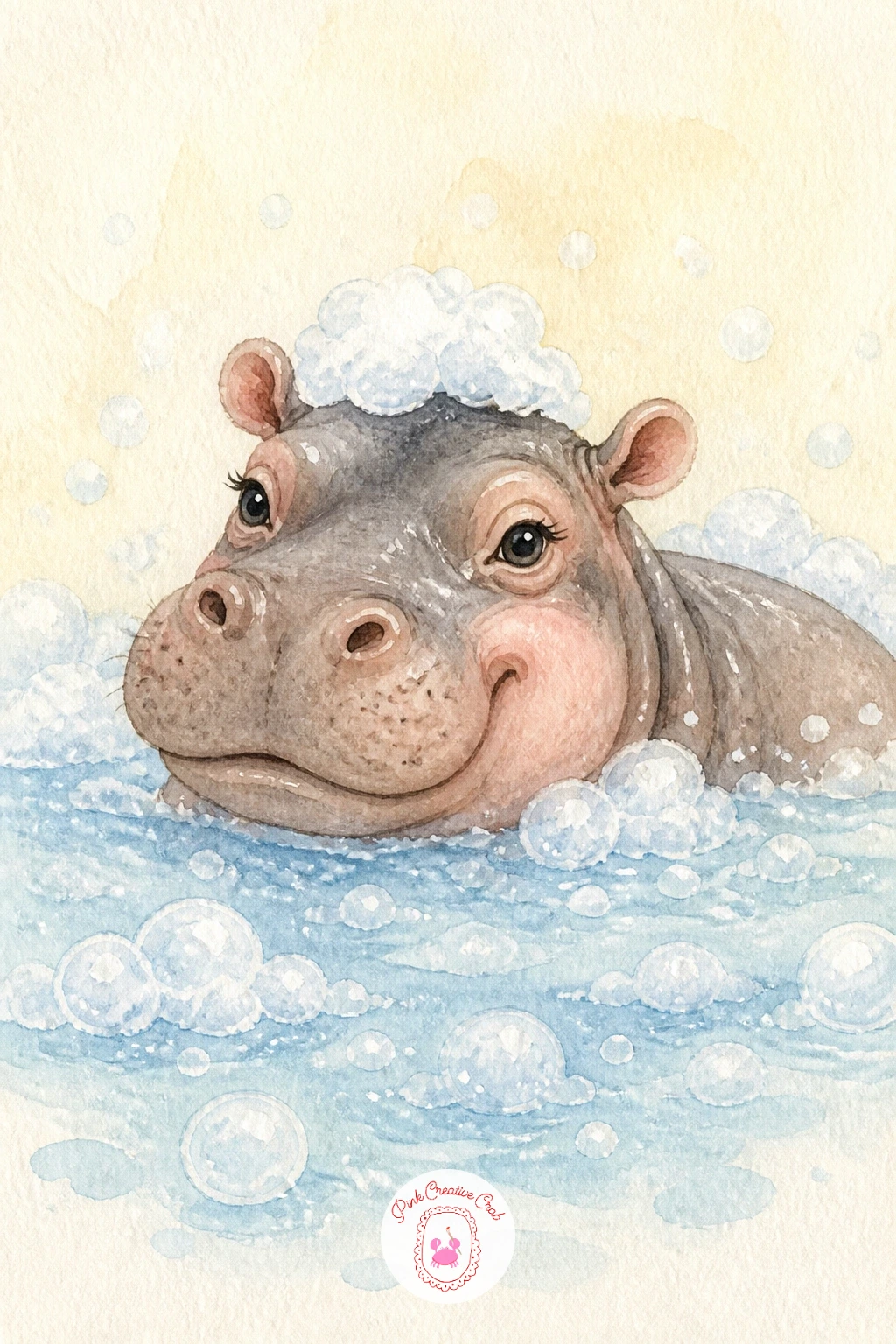
You Will Need
- white gel pen or white gouache for the bubbles
Palette: Baby Blue,Warm Grey,Cream,Titanium White
Give the monkey a simple prop this time: a small banana held up in one paw. Paint the monkey’s body in warm brown as before, seated this time rather than hanging, with both feet tucked beneath it and one arm raised holding the fruit.
Paint the banana in a quick wash of soft yellow ochre, with one or two curved brown lines added once dry to suggest the ripening spots and the natural curve of the peel. Keeping the banana small relative to the paw helps the proportions stay babyish and charming rather than cartoonish.
For the quickest version of this painting, stop right there and leave the background plain cream; for a slightly longer forty-minute version, add a loose patch of green leaves behind the monkey to suggest it is sitting in a tree, built from the same quick, confident leaf strokes used in the butterfly idea earlier in this list.
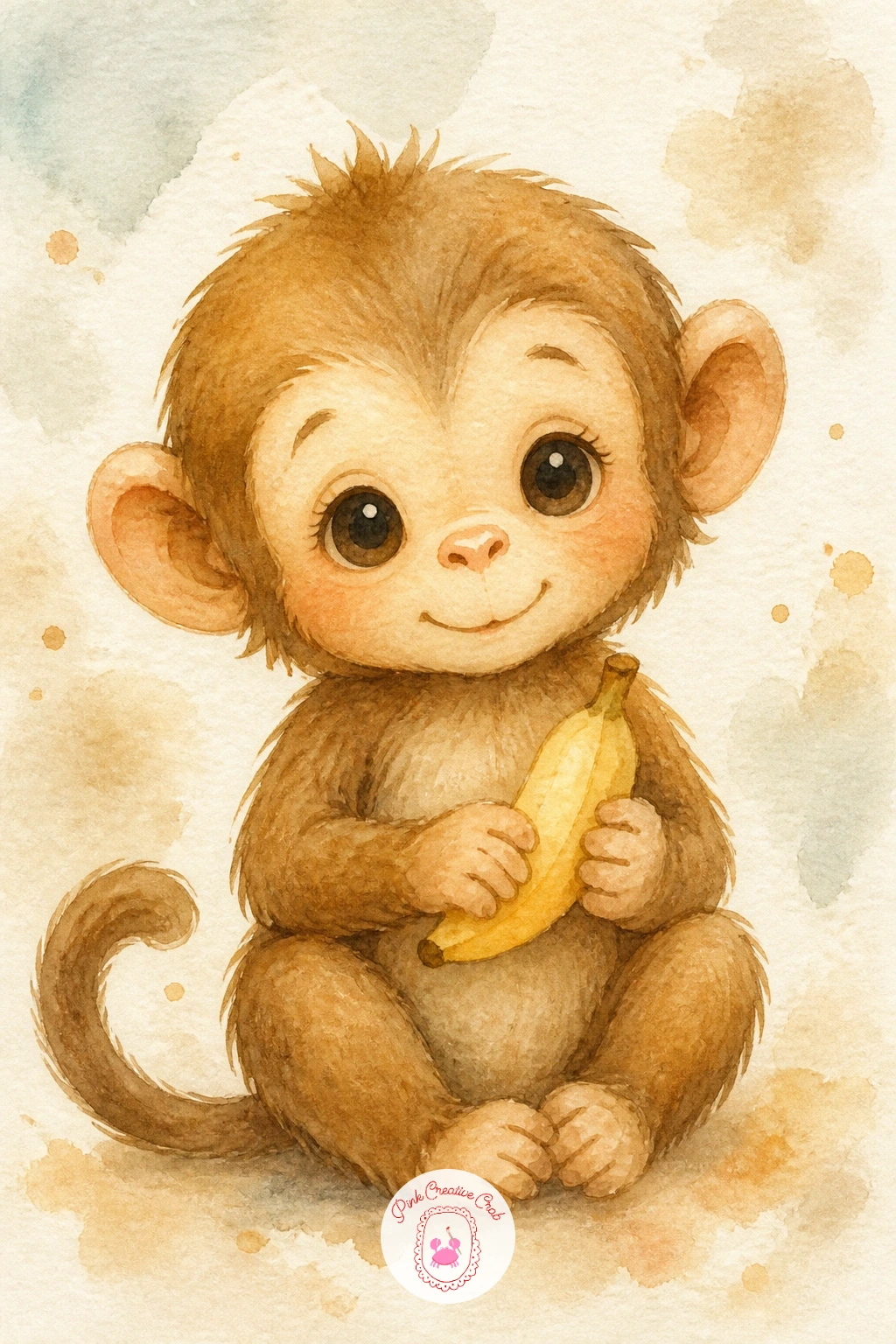
Palette: Warm Brown,Yellow Ochre,Sap Green,Cream
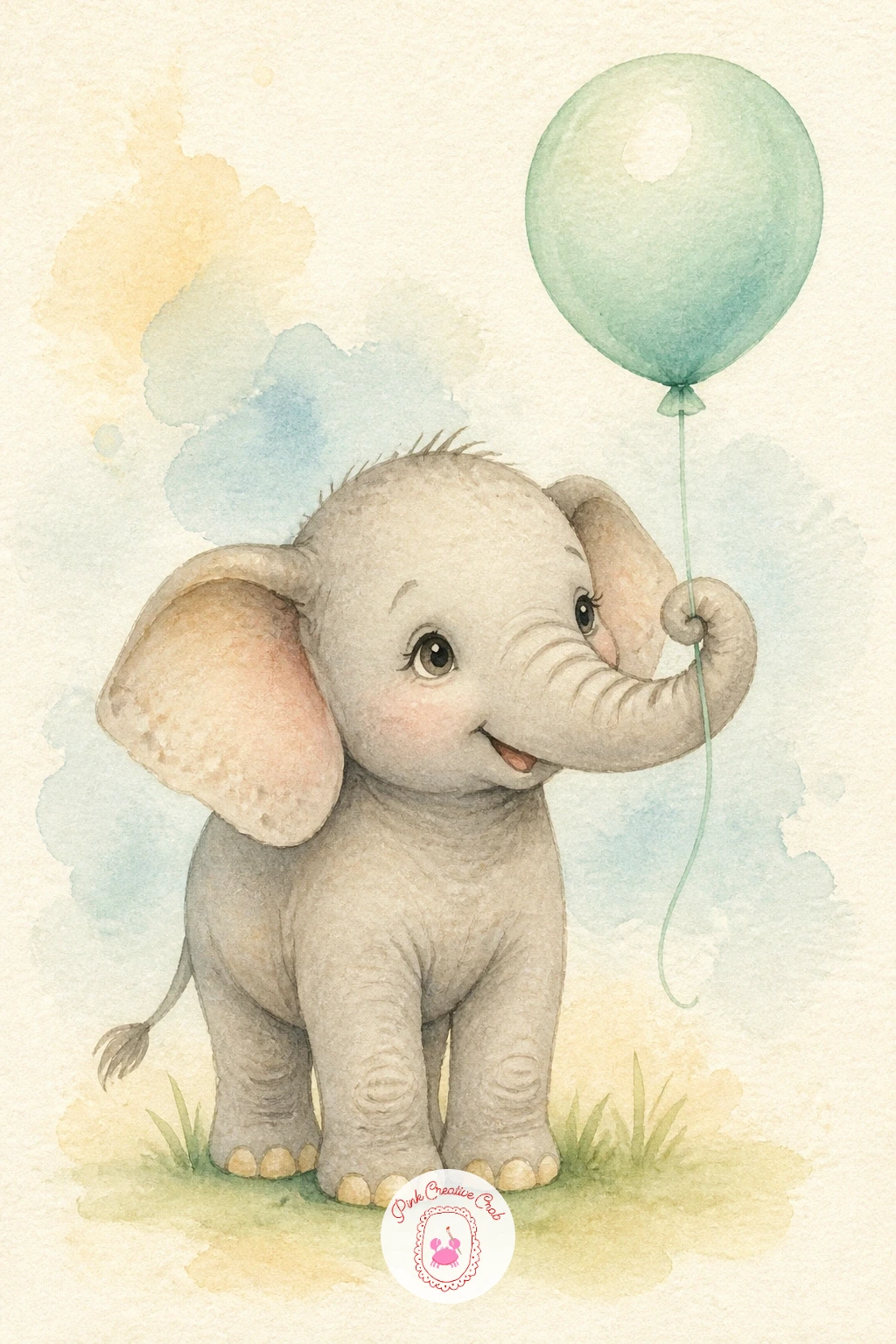
Echo the earlier giraffe balloon idea with an elephant version, holding its balloon string gently in its trunk instead of its mouth. Paint the elephant’s round body in warm grey first, curling the trunk upward in a gentle hook shape that naturally gives the string somewhere to attach.
Paint the balloon in a cheerful blush or soft mint, leaving a small unpainted highlight near the top just as with the earlier balloon idea, then once everything is dry, draw the curved string connecting balloon to trunk tip with a fine brush or waterproof liner.
Elephants are easy to accidentally paint too stiff and upright, so before you commit to paint, check your pencil sketch for a slight forward lean or a bent back leg, either of which instantly suggests movement and playfulness rather than a static pose.
No mint in your set? Mix a touch of sap green into baby blue for a similarly fresh, soft tone.
You Will Need
- fine waterproof liner pen for the balloon string
Palette: Warm Grey,Mint,Blush Pink,Cream
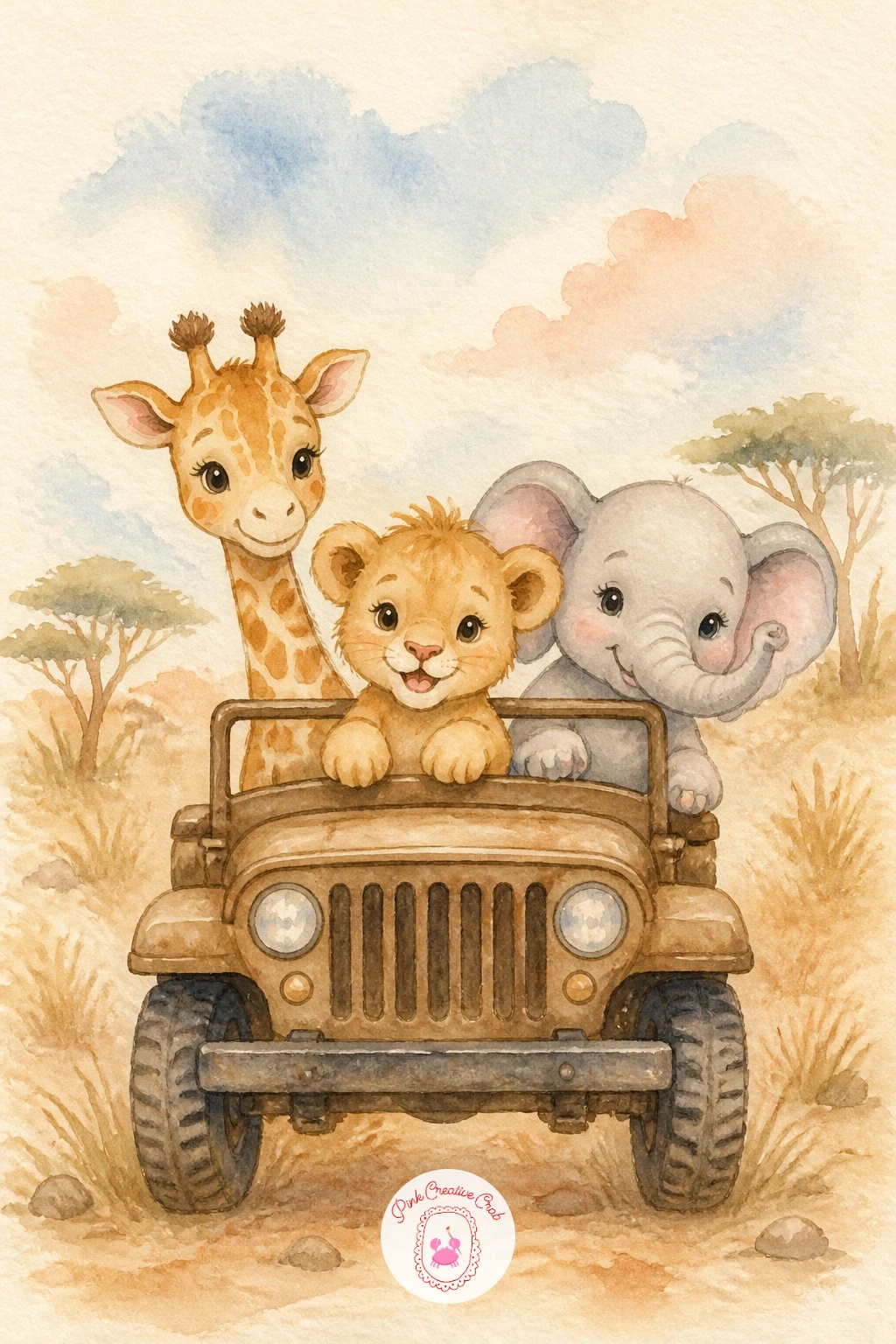
Bring several of the animals together now for a small group scene: a cluster of safari babies riding together in an open jeep. Sketch the jeep first as a simple boxy shape with rounded wheels, kept loose and a little toy-like rather than mechanically accurate, then pencil in two or three animal heads poking up over the sides, perhaps the giraffe, the lion cub and the elephant from earlier in this list.
Paint the jeep in a flat wash of warm brown or soft olive, then once dry, paint each animal head using the same techniques already covered for that animal, working from the back of the group forward so the front heads overlap the ones behind them slightly.
Keeping every head roughly the same size here, regardless of which animal it belongs to, is the detail that makes the group read as “babies together” rather than a jumble of mismatched scales; measure each head against the jeep’s side panel as you go to stay consistent.
Palette: Warm Brown,Yellow Ochre,Warm Grey,Cream
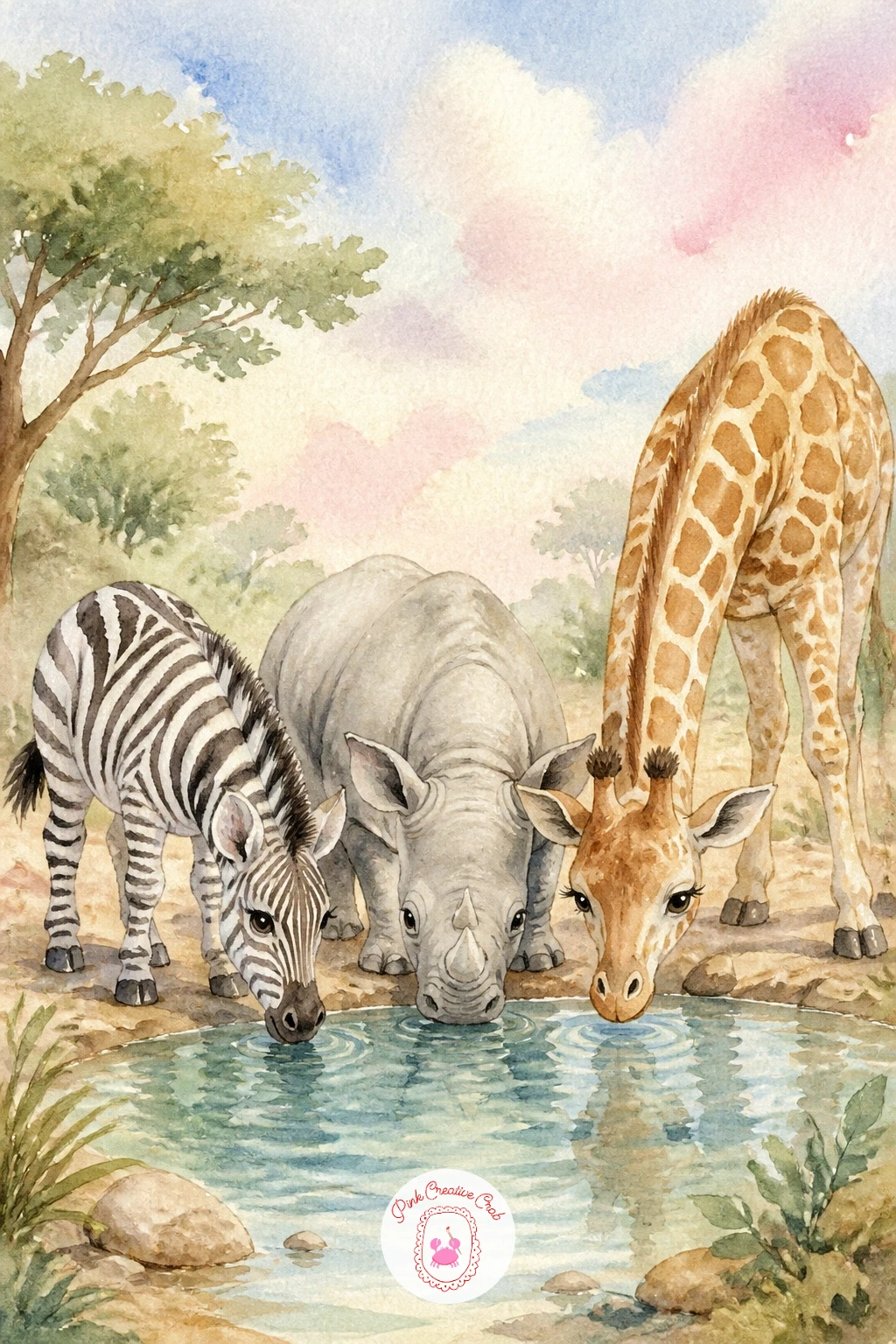
Widen the scene once more with several animals gathered around a watering hole at the center of the page. Paint the water first as an oval wash of baby blue and sap green blended wet-into-wet, then let it dry fully before adding any animals around its edge.
Arrange two or three babies, perhaps the zebra foal, the rhino calf and the giraffe, standing or bending toward the water from different sides, painting each one separately in its own established palette and letting each dry before the next one is added nearby, so edges stay clean where shapes come close together.
Vary the distance of each animal slightly from the water’s edge and overlap one leg or shadow with the water’s oval outline, which ties the whole group into one scene rather than a row of separate cutouts placed around a blue circle.
If your water color looks flat once dry, a few short curved white highlight lines lifted with a clean damp brush add a last touch of shine.
Palette: Baby Blue,Sap Green,Yellow Ochre,Warm Grey
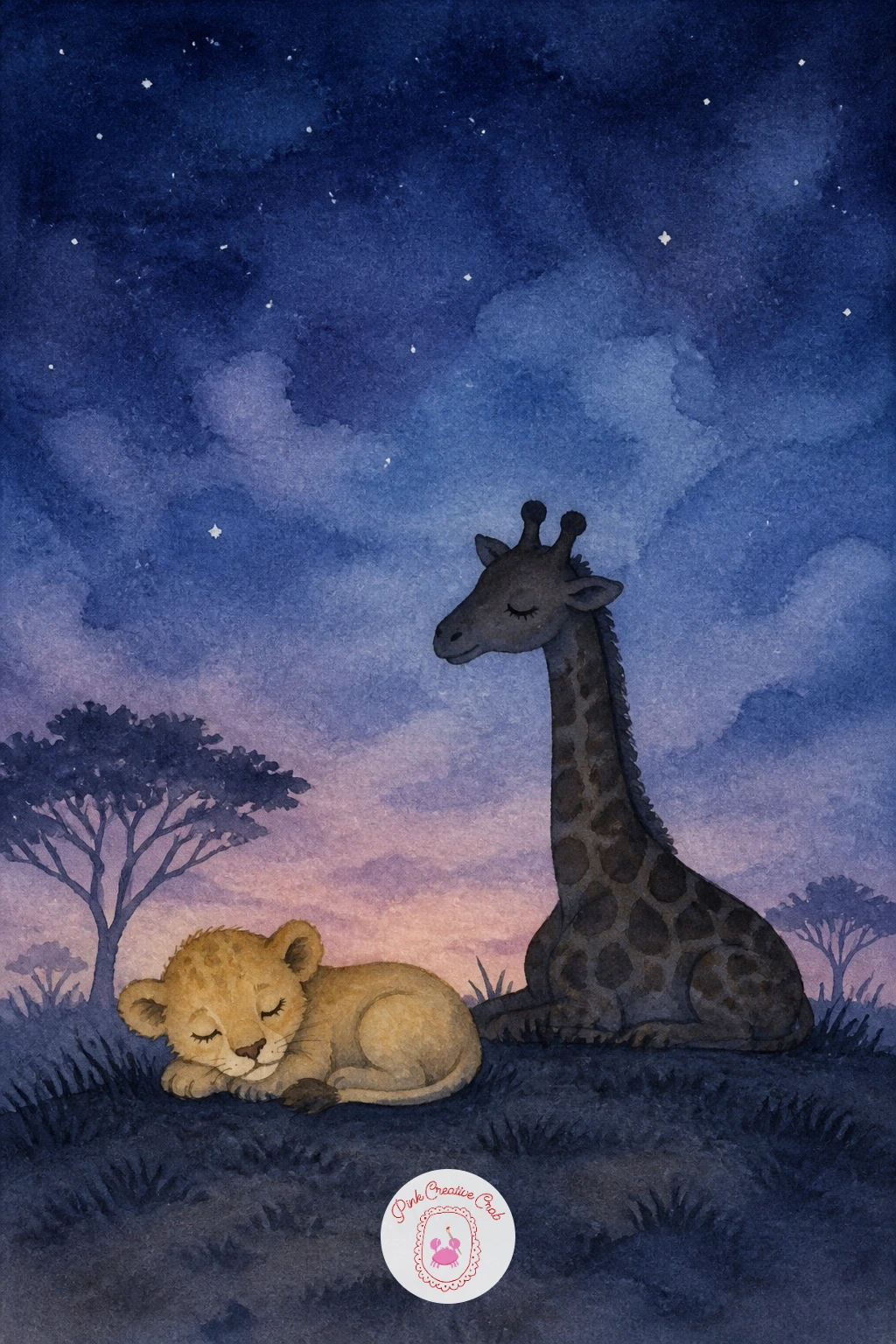
Echo the earlier sleeping giraffe idea with a wider night scene: a whole sleepy savanna dotted with resting shapes. Lay down a soft dusty indigo sky first, wet-into-wet so it has gentle cloudy texture, then let it dry before adding a low, simple hill line in a darker shade across the bottom third of the page.
Paint two or three animals as soft, nearly silhouetted shapes resting along that hill line, perhaps a curled lion cub and a lying-down giraffe, using the same darker tone as the hill so they melt gently into the landscape rather than standing out sharply against it.
Add stars with a white gel pen once everything is completely dry, exactly as in the earlier sleeping giraffe idea, scattering them unevenly across the sky rather than in a neat grid, which keeps the whole scene feeling calm and natural rather than mapped out.
For more on building soft night skies like this one, the easy watercolor skies guide has useful wet-into-wet blending tips.
You Will Need
- white gel pen for the stars
Palette: Dusty Indigo,Deep Brown,Yellow Ochre,Titanium White
Build toward the finale with a charming parade: several safari babies walking together in a gentle line across the page. Sketch the animals first in pencil, spacing them evenly and keeping every one at roughly the same scale, which matters more here than in any other idea on this list since a parade only reads as one if the babies all match in size.
Paint each animal in turn using its own established palette from earlier in the list, letting each one dry before starting its neighbor so their outlines stay crisp where they overlap slightly, nose to tail. Keep the background minimal, just a pale wash of cream or baby blue, so the little procession stays the clear star of the page.
If the parade starts feeling repetitive, vary each animal’s pose slightly (one looking back, one mid-step, one pausing) which adds life without breaking the sense of a line all heading the same direction.
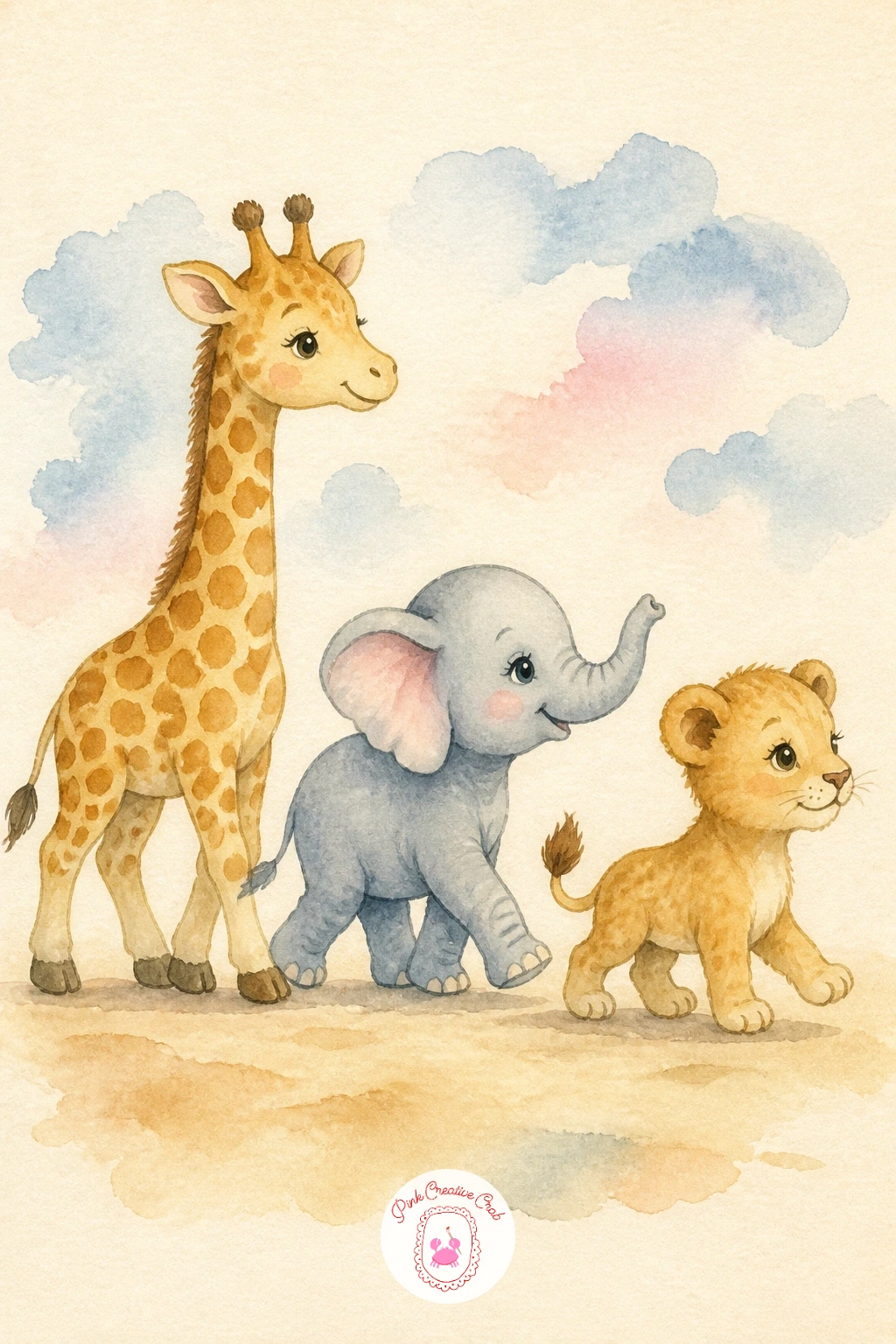
Palette: Yellow Ochre,Warm Grey,Honey Ochre,Cream
Close the list on something quiet and sweet: a baby elephant holding a single flower in its curled trunk. Paint the elephant’s round body first in warm grey, keeping the trunk gently curled upward and forward as if offering the flower rather than simply holding it.
Paint the flower in blush or soft lavender using the same loose petal technique from the flower crown idea near the start of this list, just a handful of dabbed petals around one small green center, kept small enough to sit believably within the curl of the trunk.
One concrete way to make this final painting feel finished: once everything is dry, add a single soft grey shadow beneath the elephant’s feet with a very diluted wash, which grounds the whole figure on the page and gives it a gentle sense of weight, a small habit worth carrying into every animal on this list from now on.
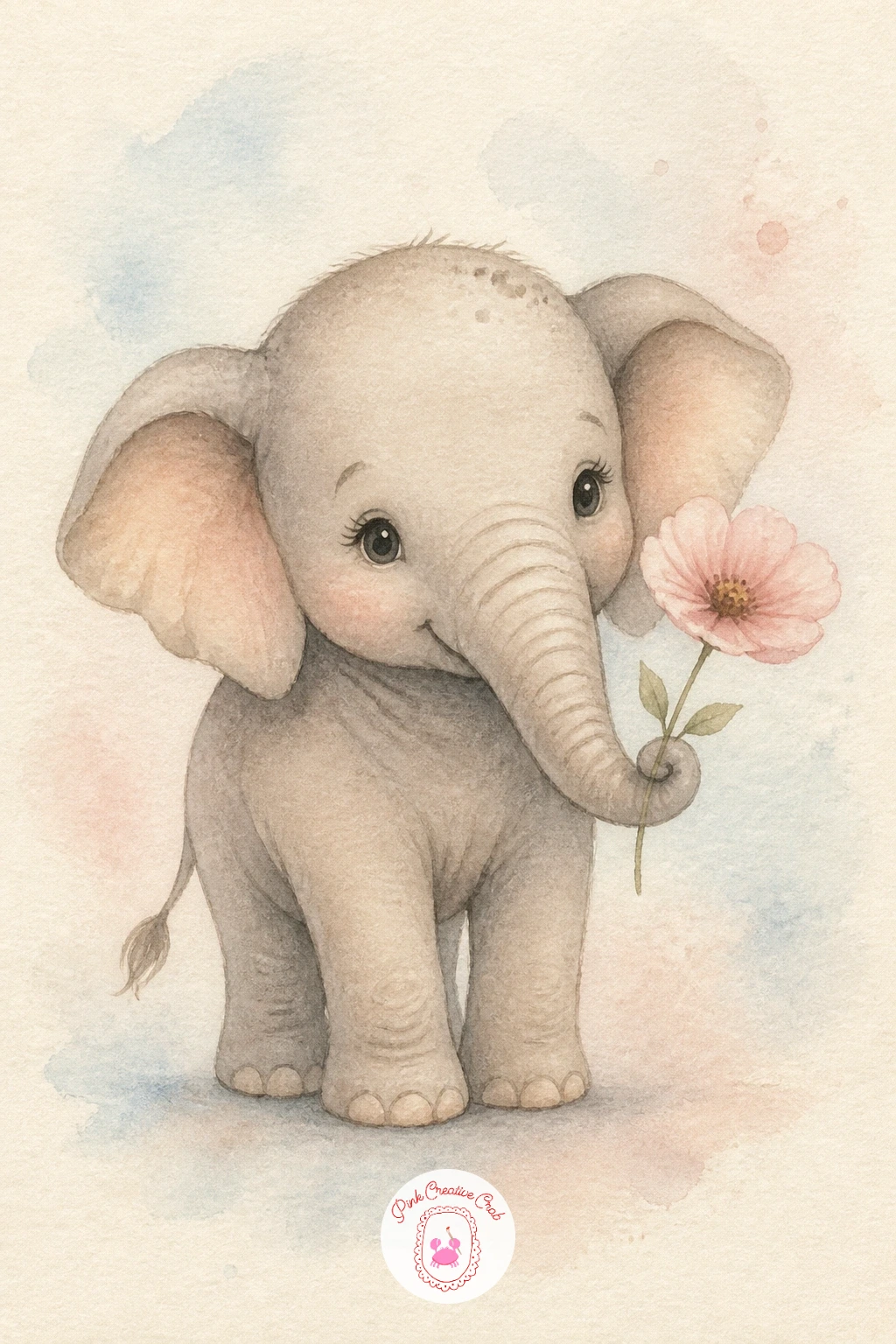
Palette: Warm Grey,Blush Pink,Sap Green,Cream
What to Do Next
Pick whichever idea made you want to reach for a brush, whether that is the baby giraffe with its mother at the start of this list or the quiet elephant and flower at the end, and set up on a sheet of cold press paper with your ochre, cream, baby blue and blush ready to go. Keep the first wash loose, let it dry before adding any small details, and let today’s painting be the simple, finished one it was always meant to be.
Frequently Asked Questions
What paper works best for a watercolor giraffe nursery print?
Cold press watercolor paper works best, since its light texture holds washes well without fighting fine details like eyelashes and spots. A heavier weight, around 140lb, also resists warping when you layer wet washes for fur and backgrounds.
How do you keep giraffe spots from looking too heavy?
Paint the giraffe’s base coat first and let it dry fully before adding spots, then use a smaller brush and a slightly diluted mix so each spot stays soft-edged. Spacing them unevenly, with more at the neck and fewer lower down, also keeps the pattern light.
What colors give that soft nursery storybook look?
A gentle palette of yellow ochre, cream, baby blue and blush does most of the work, kept diluted rather than painted at full strength. Avoiding pure black in favor of warm greys and browns also softens the whole finished look.
Can a beginner really finish one of these giraffe paintings in one sitting?
Yes, most of these ideas are built around a simple shape, one or two washes and a handful of small details, all achievable within half an hour. Starting with the earlier, simpler ideas on this list is the easiest way in if this is your first time painting a giraffe.
How do you stop watercolor animals from looking too stiff?
Keep early pencil sketches loose and check the pose for a slight curve or lean before painting, since perfectly straight limbs read as rigid. Varying stroke pressure in the fur and letting a few edges stay soft rather than hard-outlined also helps.
Have any thoughts?
Share your reaction or leave a quick response — we’d love to hear what you think!
-
 0
-
0
-
0
-
0
-
0
-
0


