Table of Contents
An apothecary junk journal turns an old-fashioned shop of glass bottles, brass scales and drying herbs into something you can hold and write inside. This kit gives you 22 scene pages full of shelves, jars and quiet window light, 5 seamless background papers for pockets and covers, and 5 lined writing pages for your own notes.
Print everything on matte cardstock around 160 to 200 gsm so the color stays rich and the paper does not curl, set your printer to its best or photo quality, and trim close to the edge before gluing any page into your journal.
Using these images: free for personal projects such as printing, coloring, cards, journals and gifts. Handmade items that include them may be sold up to 30 pieces per design. More than that is commercial use and is not permitted, and neither is selling or sharing the images themselves or passing them off as your own. Please ask before any other use.
Shelves And Counters
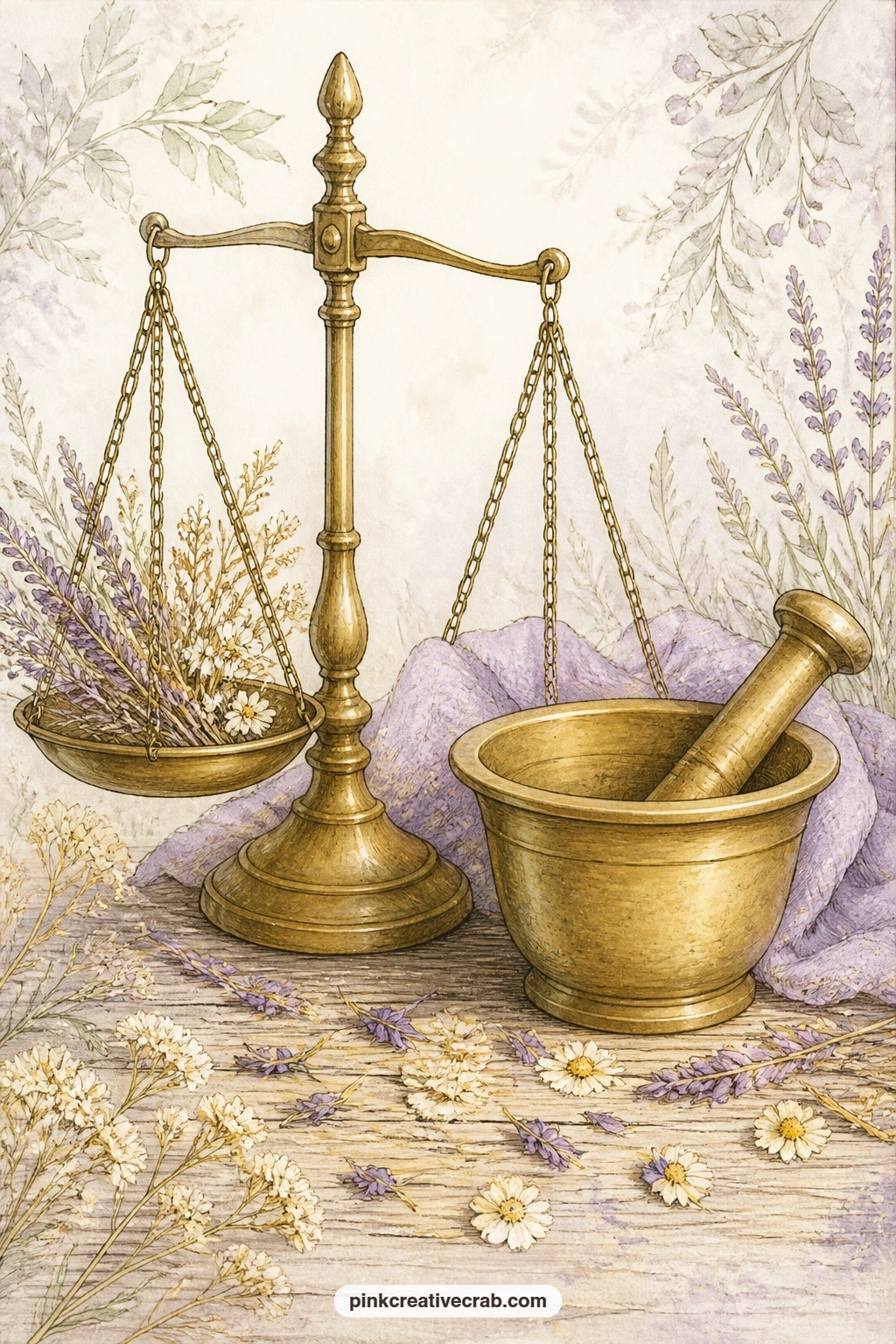
Rows of amber glass bottles on wooden shelves with drying herbs sit well on a page where you glue in a small apothecary label, a pressed herb sprig or a cut-out recipe card from an old remedy.
Leave a little blank shelf space between bottles so there is somewhere to tuck a folded note without covering the painted jars.
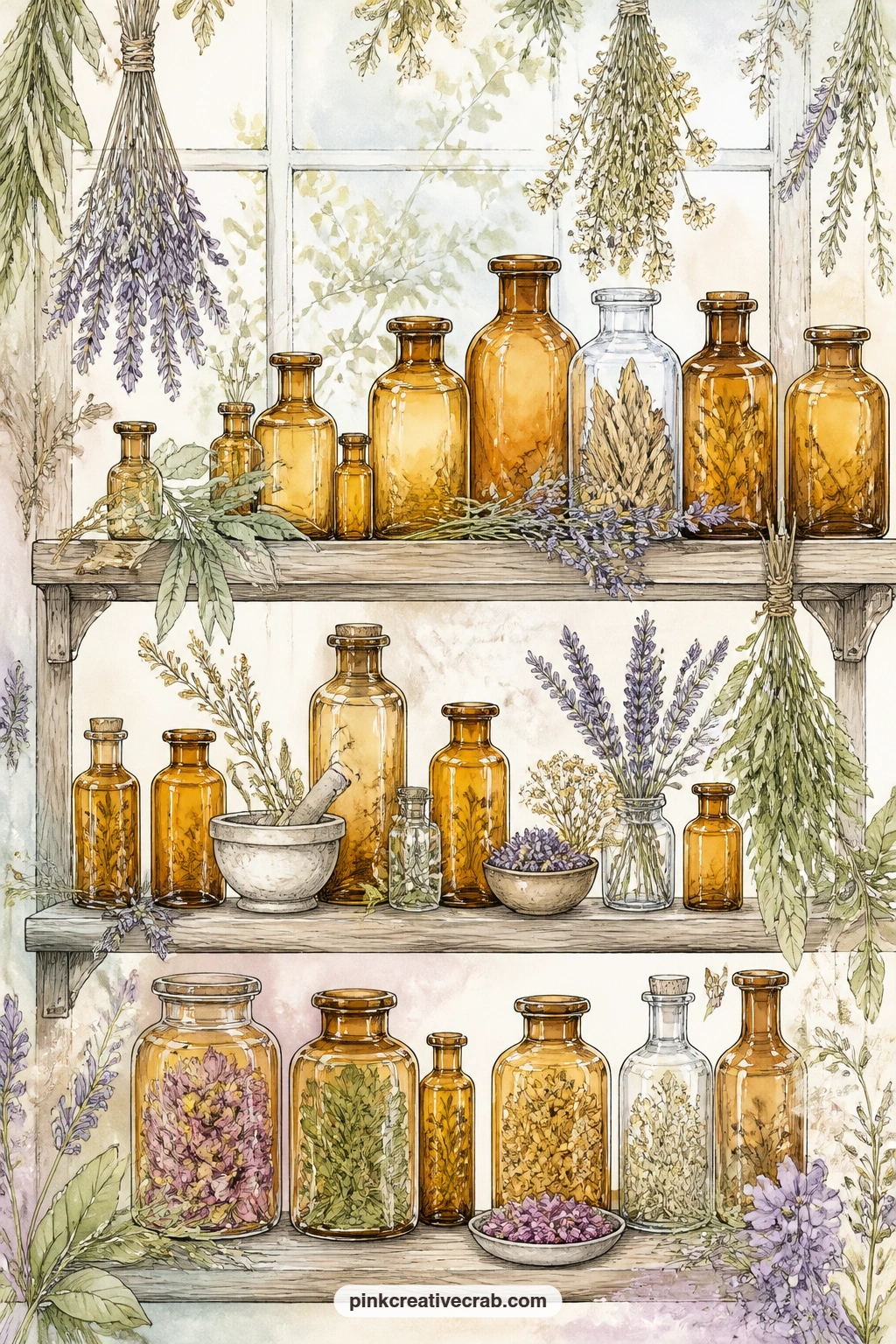
Pair this page with the brass scales and mortars background paper from this set, using the pattern as a pocket lining behind the scene so the brass tones continue from one spread to the next.
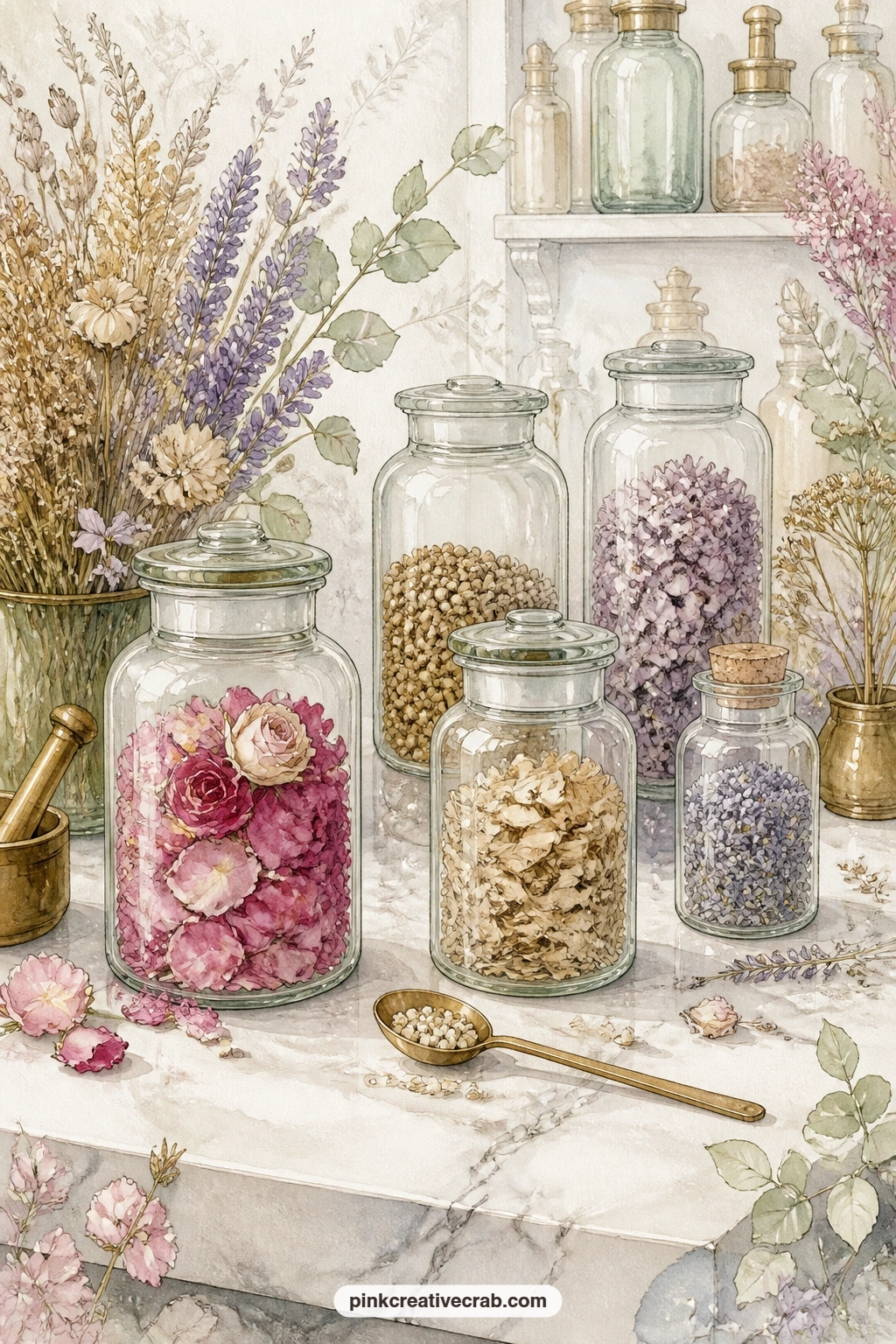
A marble counter with glass jars of petals, roots and seeds gives you room to write a short list in the corner: three herbs you would stock if you kept a real apothecary shop.
Confident crafters can tea-stain just the bottom edge of this page before gluing it in, so the marble counter looks aged where it meets the journal spine.
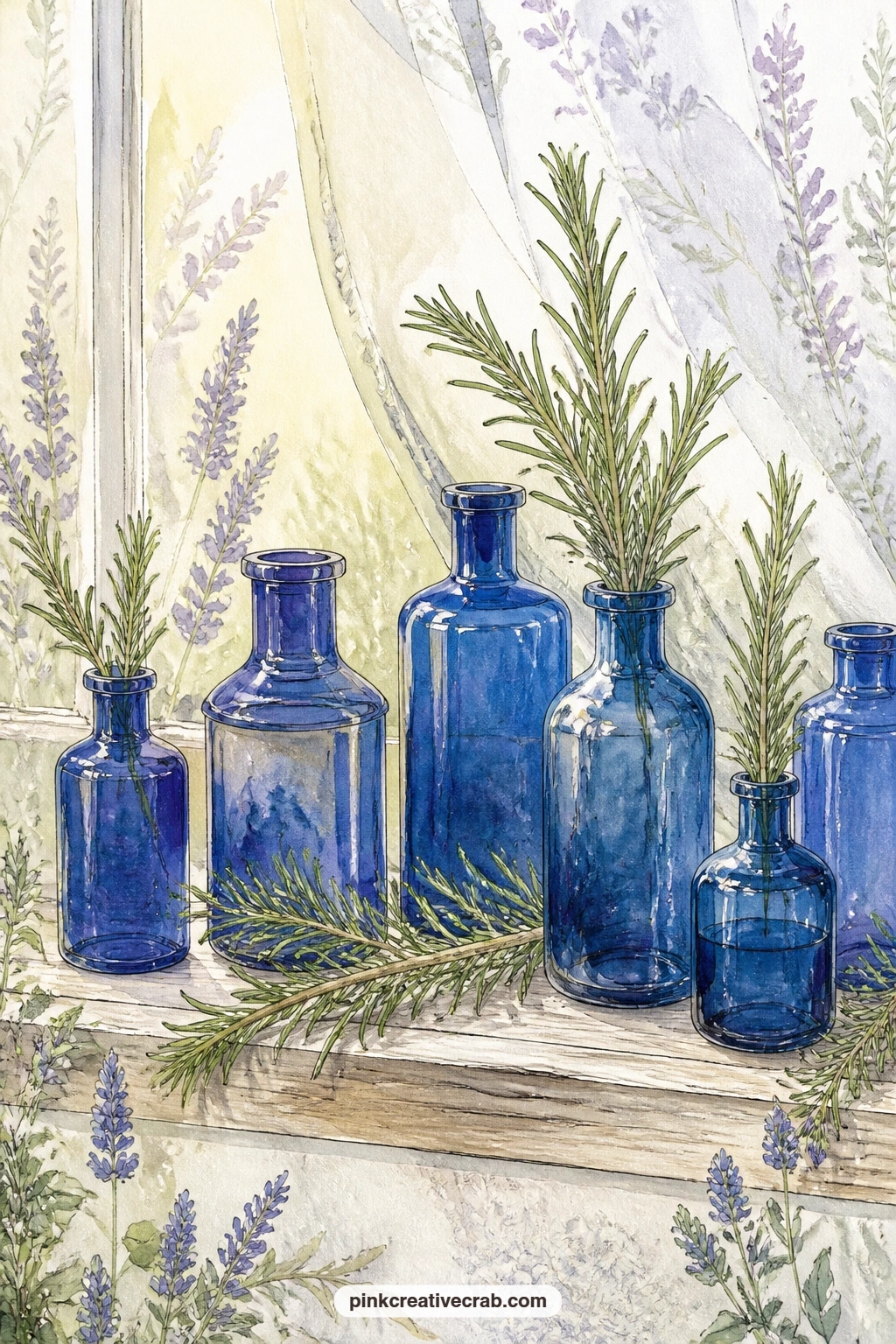
Cobalt blue bottles on a sunny windowsill with sprigs of rosemary work best early in a spread, since the window light gives a natural place to start a page about mornings or new beginnings.
Cabinets And Workbenches
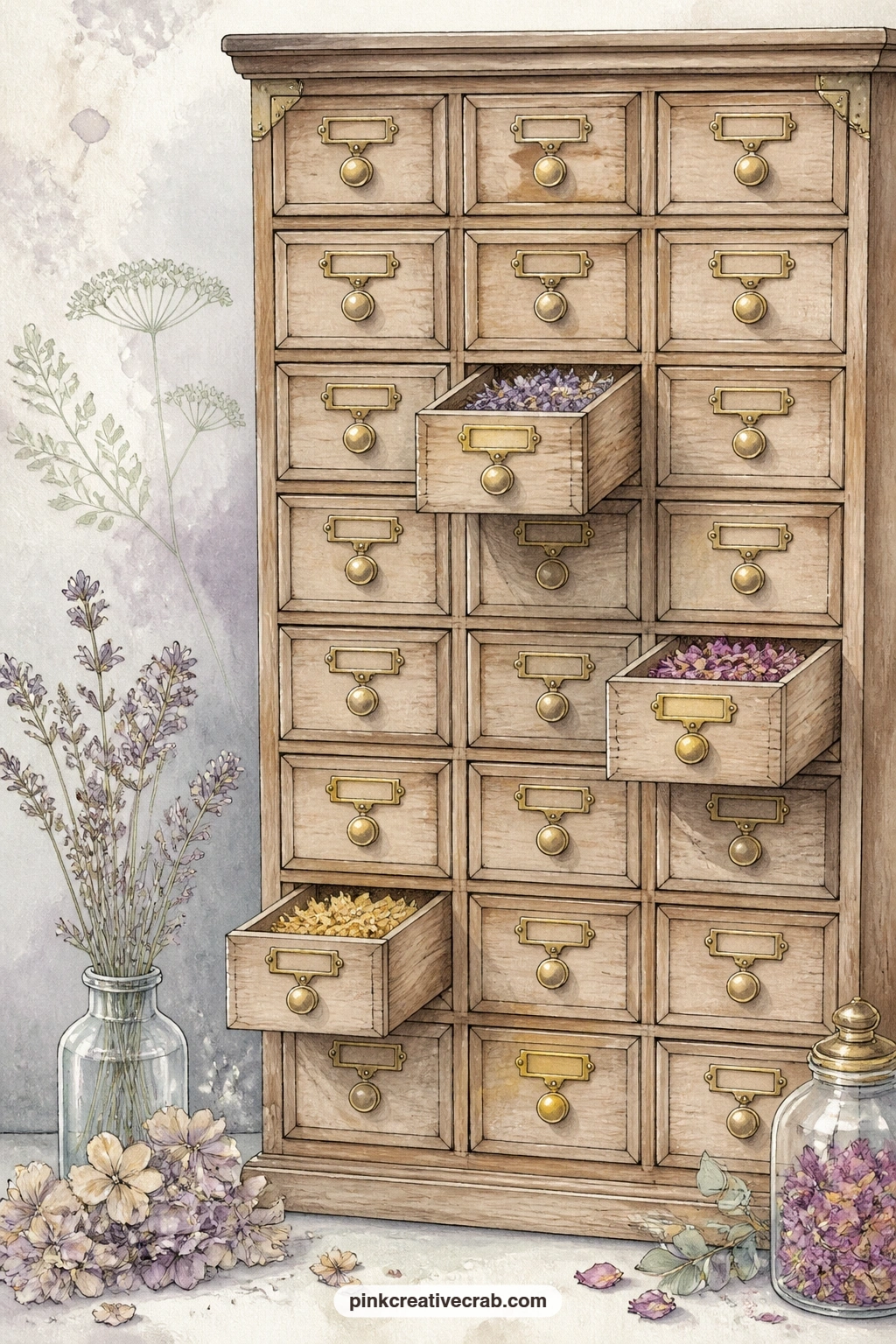
The usual mistake with a wooden apothecary cabinet with many little drawers and brass knobs is drawing so much detail into each drawer that the page feels busy once it is glued in.
Keep two or three drawers slightly open with a petal or leaf peeking out, and let the rest stay closed and calm so the eye has somewhere to rest.
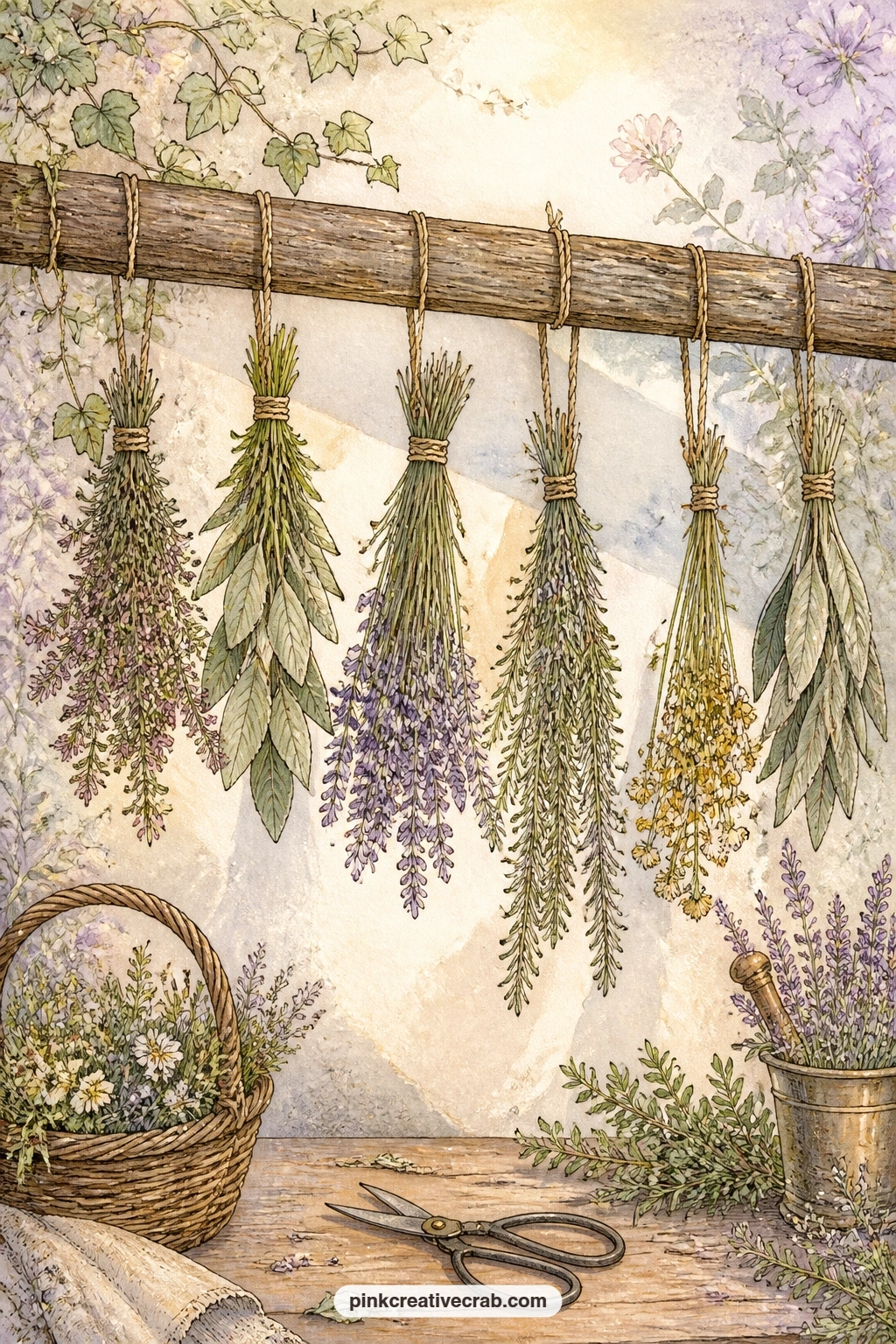
Bundles of herbs hanging from a beam above a work table suit a gift journal for a friend who gardens or cooks, since the page reads like a kitchen as much as a shop.
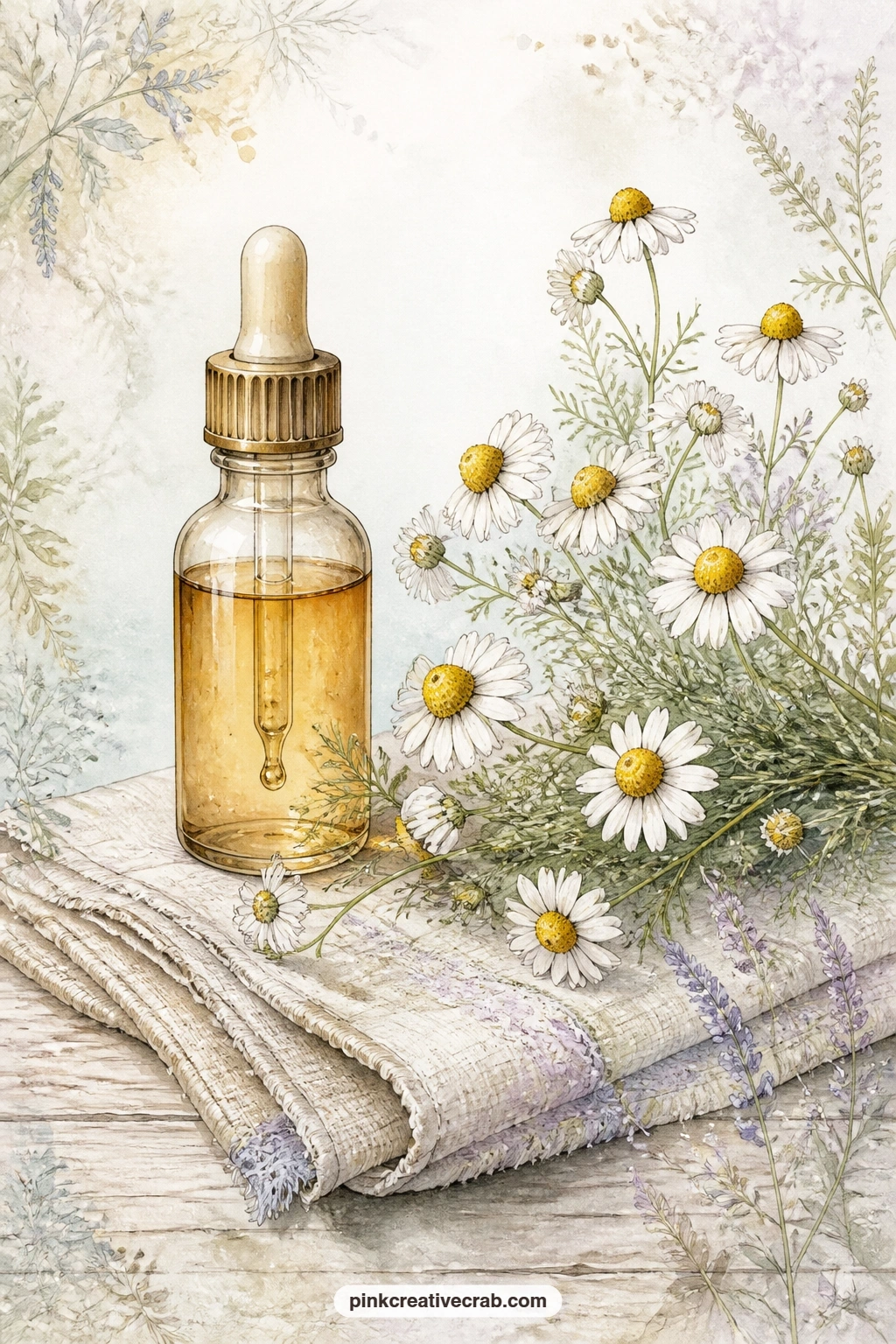
What question would you ask a page like this: a glass dropper bottle beside chamomile flowers and a linen cloth, before you fill it with a note about rest or a remedy you trust.
Try writing just one line under the scene, something short enough to fit the quiet mood of the picture.
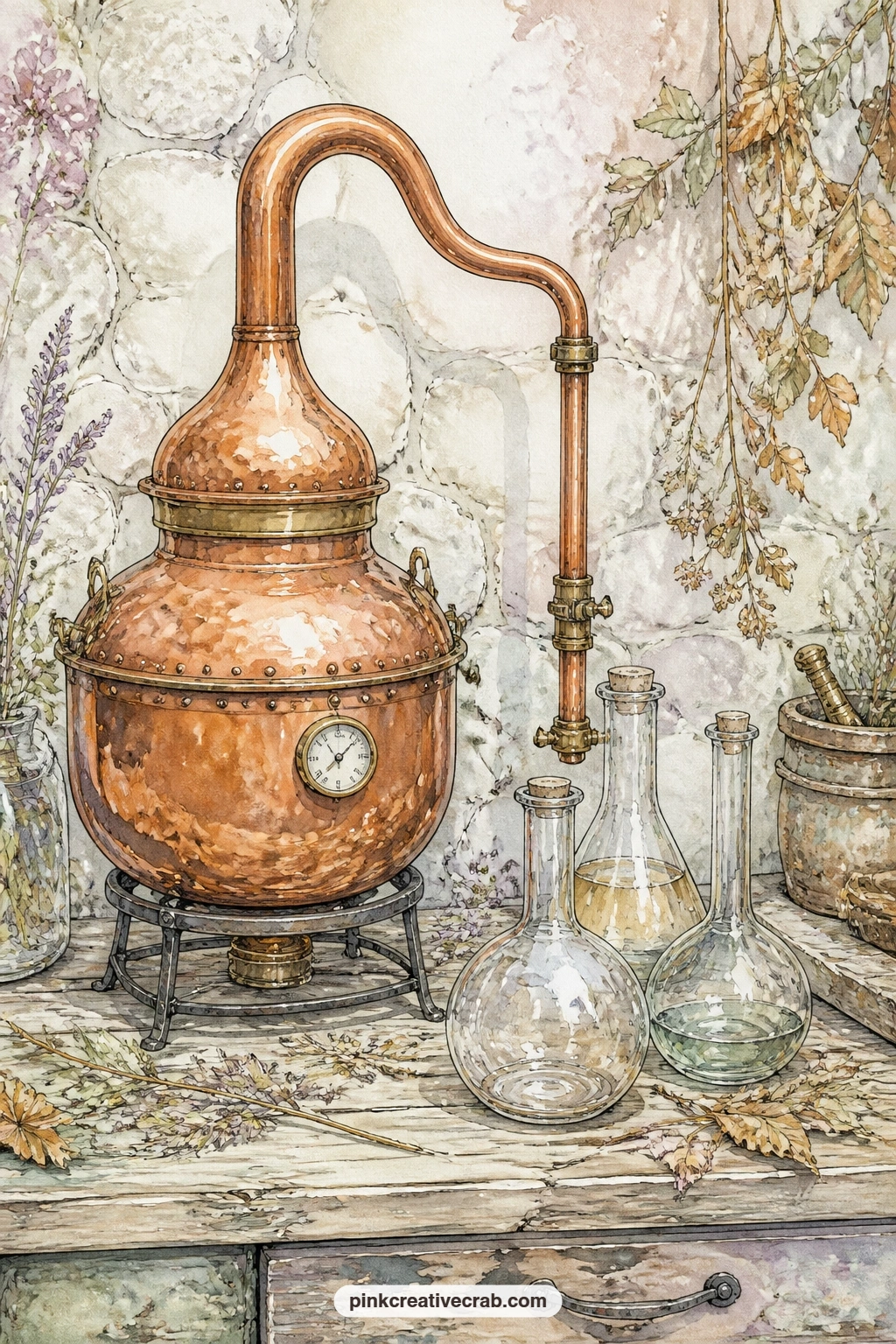
A copper still with glass flasks on an old workbench rewards whoever likes layering foil or metallic pens over printed brass tones, so this page suits a crafter who already enjoys a bit of shine.
Herbs And Drying Rooms
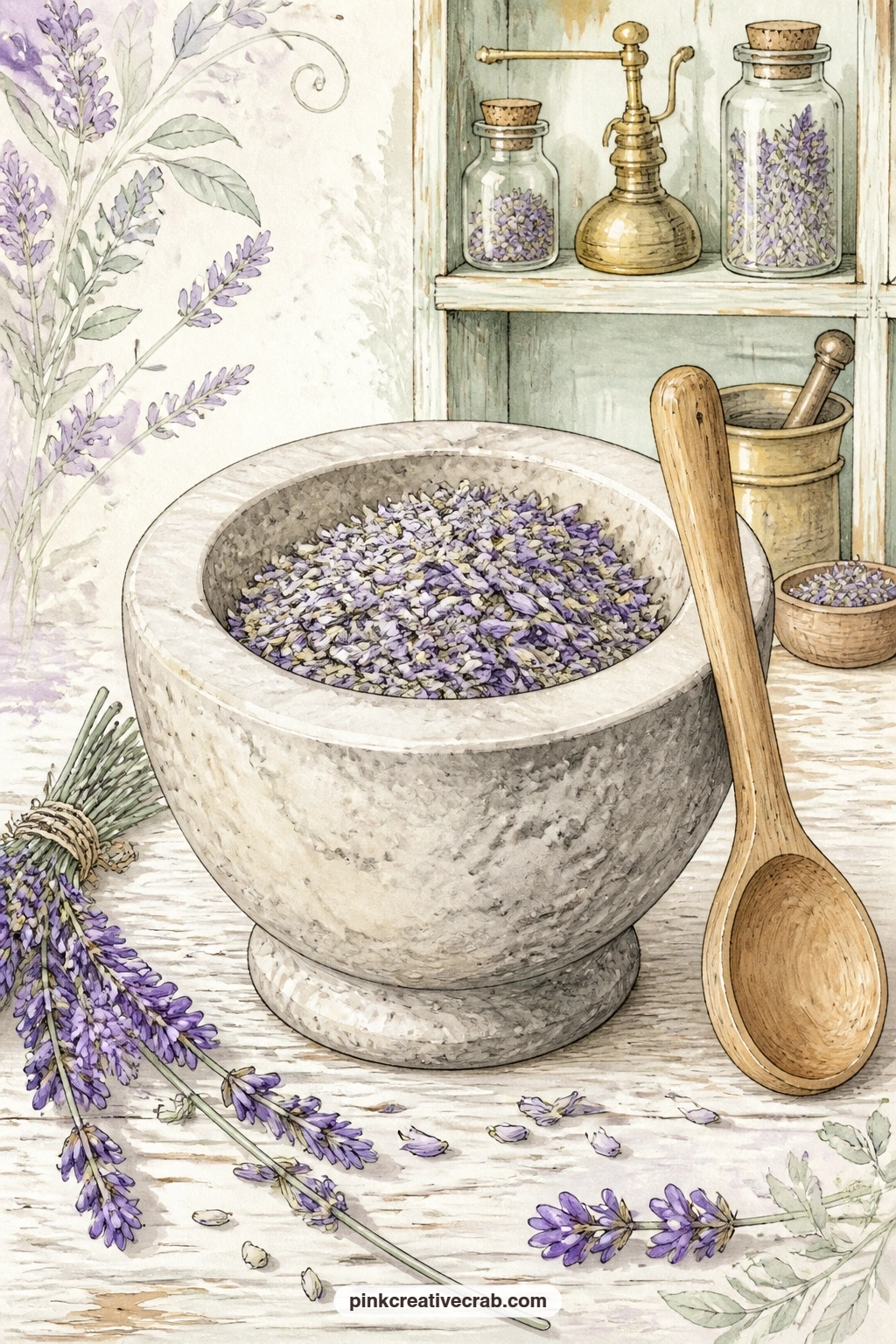
Glue a small paper tag with the date onto this page, since a mortar full of lavender buds beside a wooden spoon makes a calm anchor for the start of a new month in the journal.
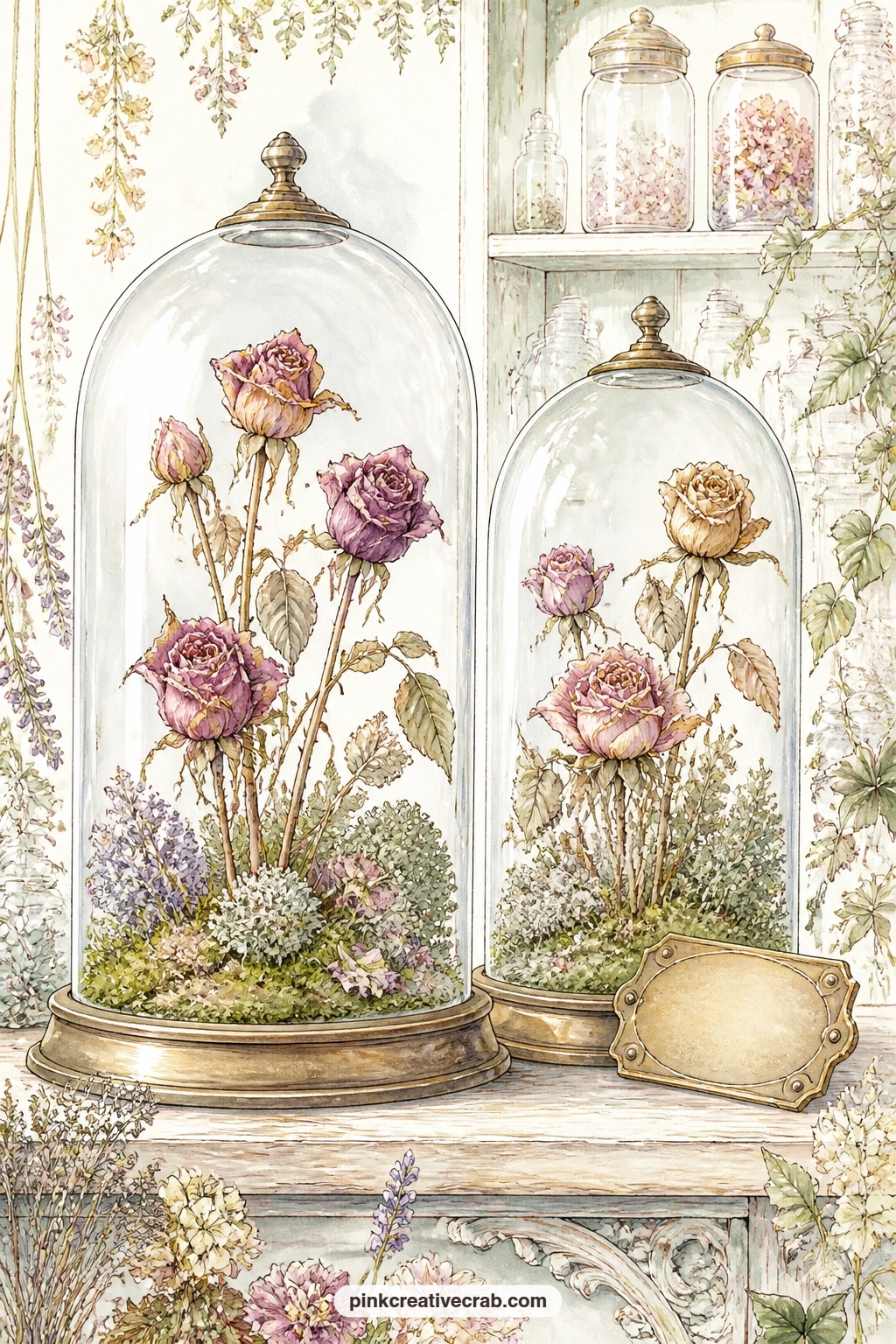
Glass cloches over dried roses and moss on a shelf sit at exactly 50 to 70 words of description if you let the dome shapes repeat twice across the sheet rather than once.
The five minute version just glues this page in flat behind a photo corner, no extra tags or trims needed.
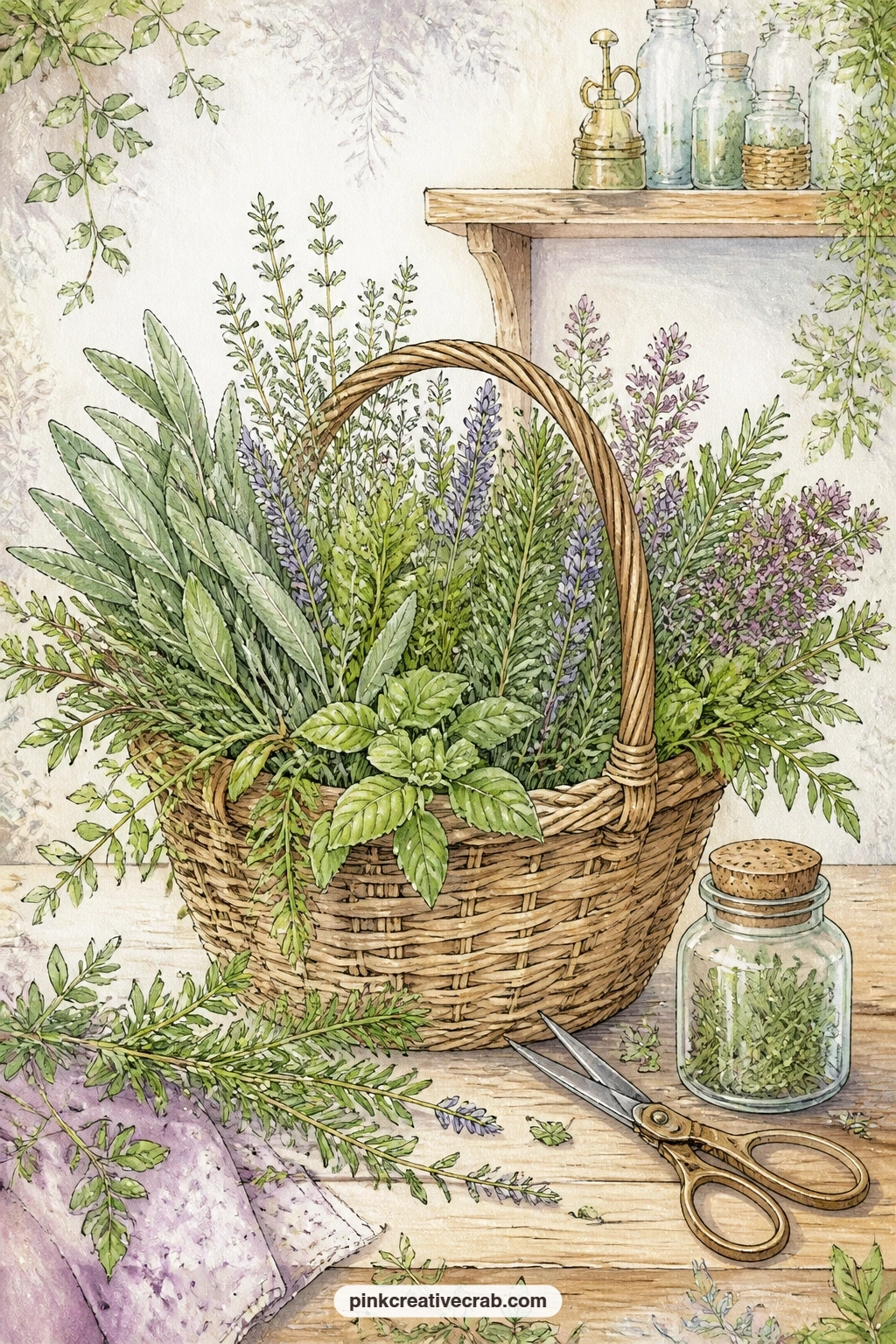
A wicker basket of fresh herbs on the apothecary counter gives beginners an easy page to start with, since the rounded basket shape sits naturally in the middle of any spread without extra planning.
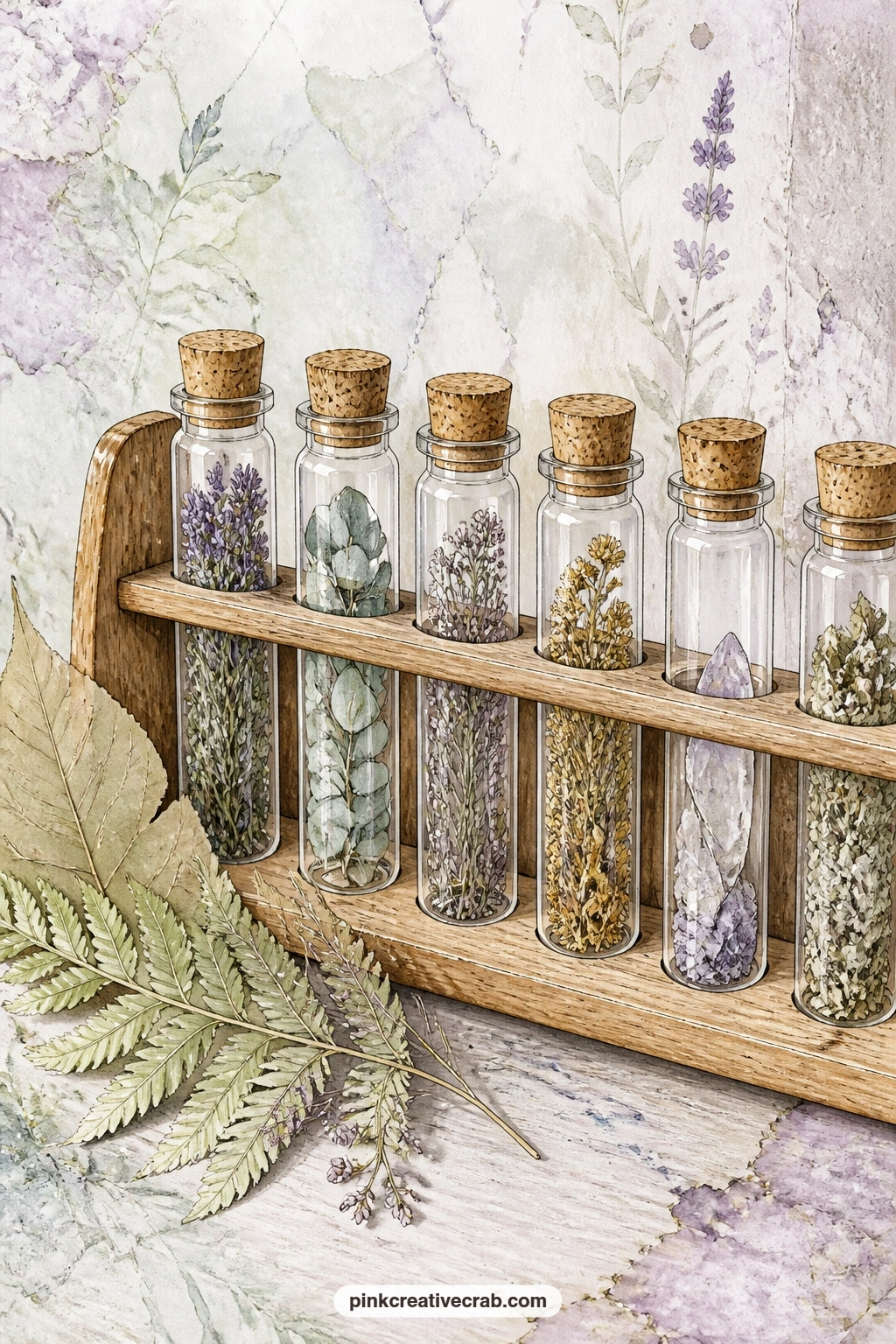
Small corked vials in a wooden rack with pressed leaves pair well with the pressed herbs and apothecary jars background paper from this set, used as a pocket behind the vials to hold loose pressed flowers.
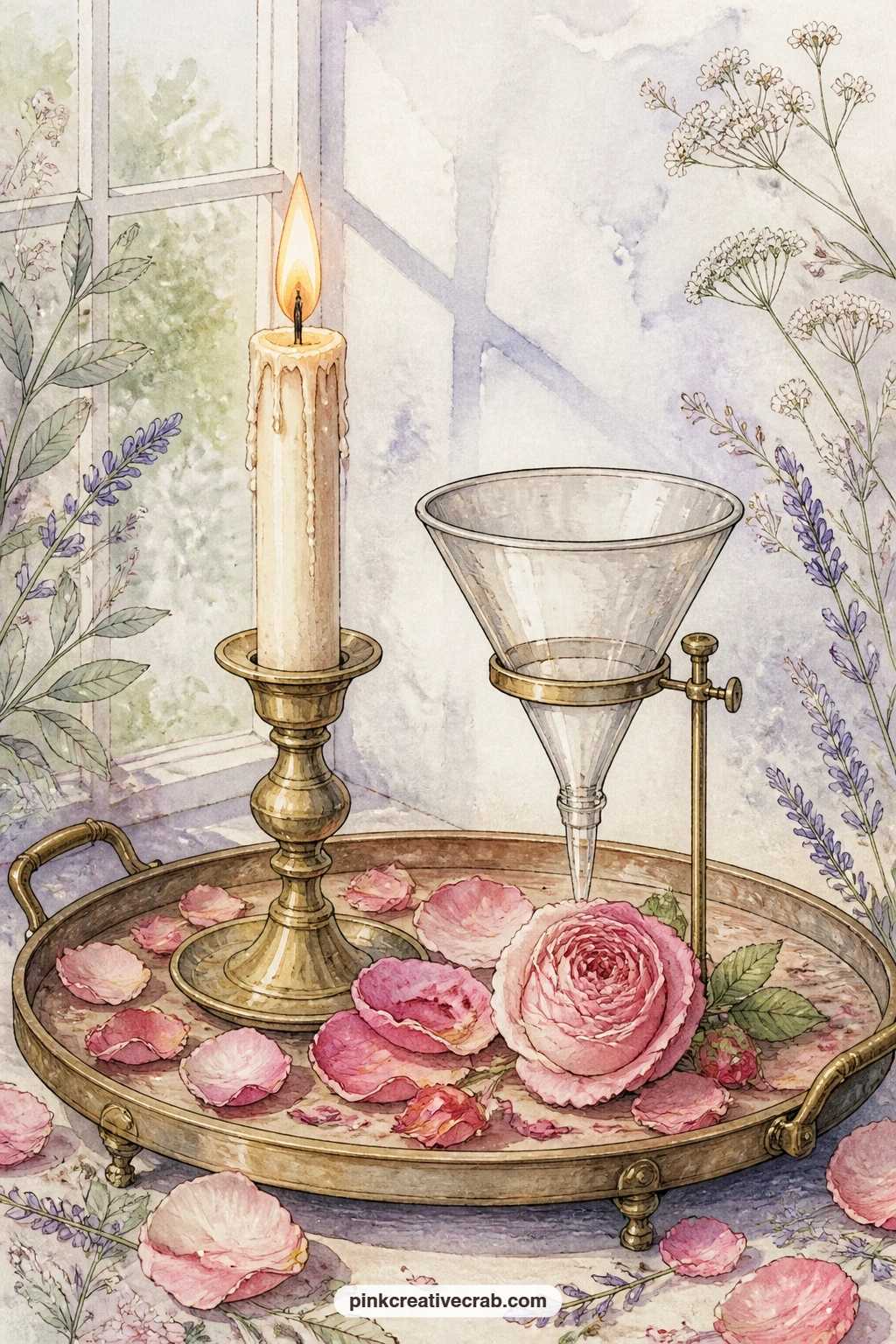
A candle, a glass funnel and rose petals on a tray leaves enough open table space to tear the bottom edge of the page by hand, giving a soft worn border once it sits in the journal.
Windows And Light
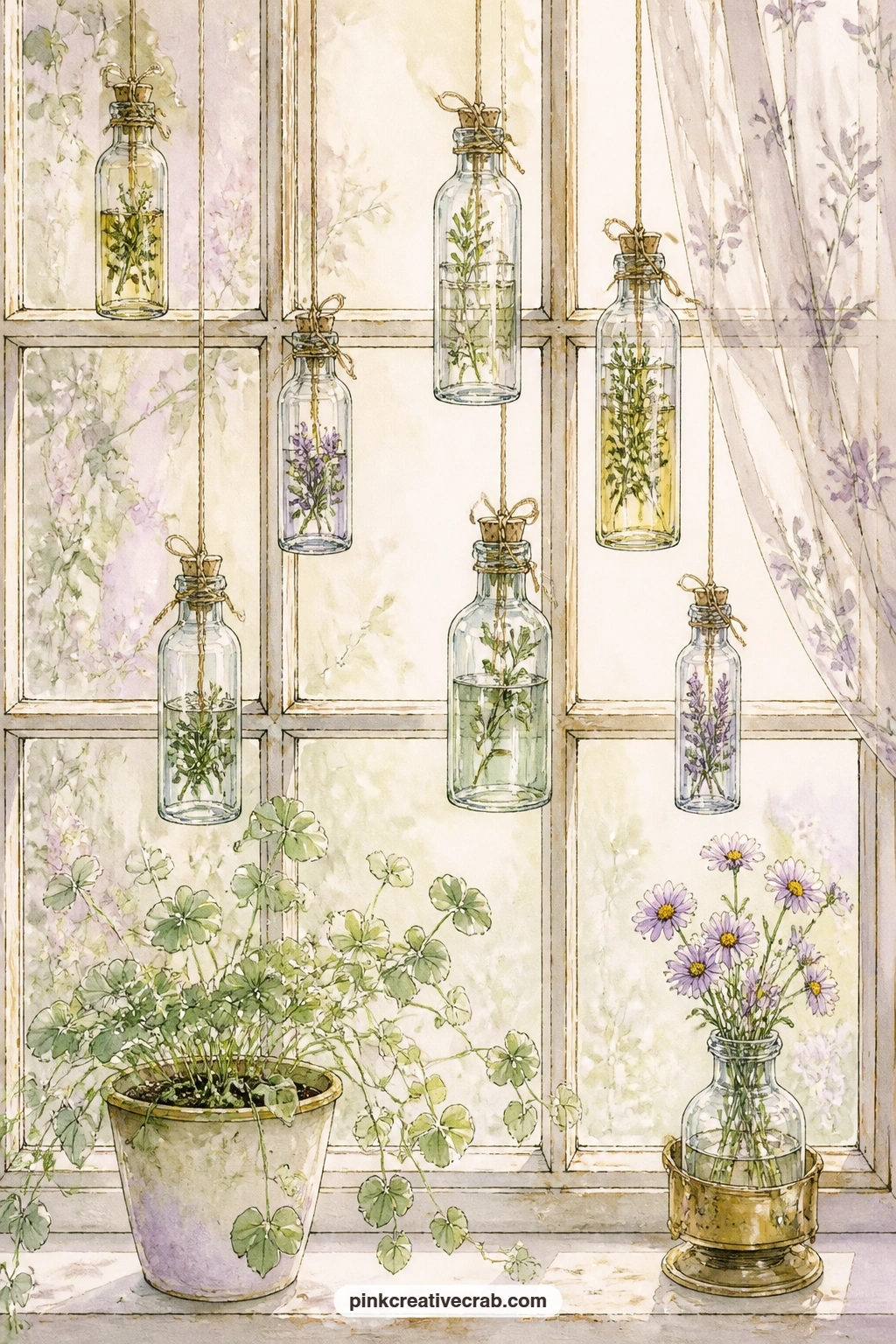
An apothecary window with hanging bottles catching sunlight asks for a short prompt in the margin: what does morning light mean to you on a slow day at home.
Place it opposite a lined writing page in the spread, so the window light leads the eye straight into the ruled lines for your answer.
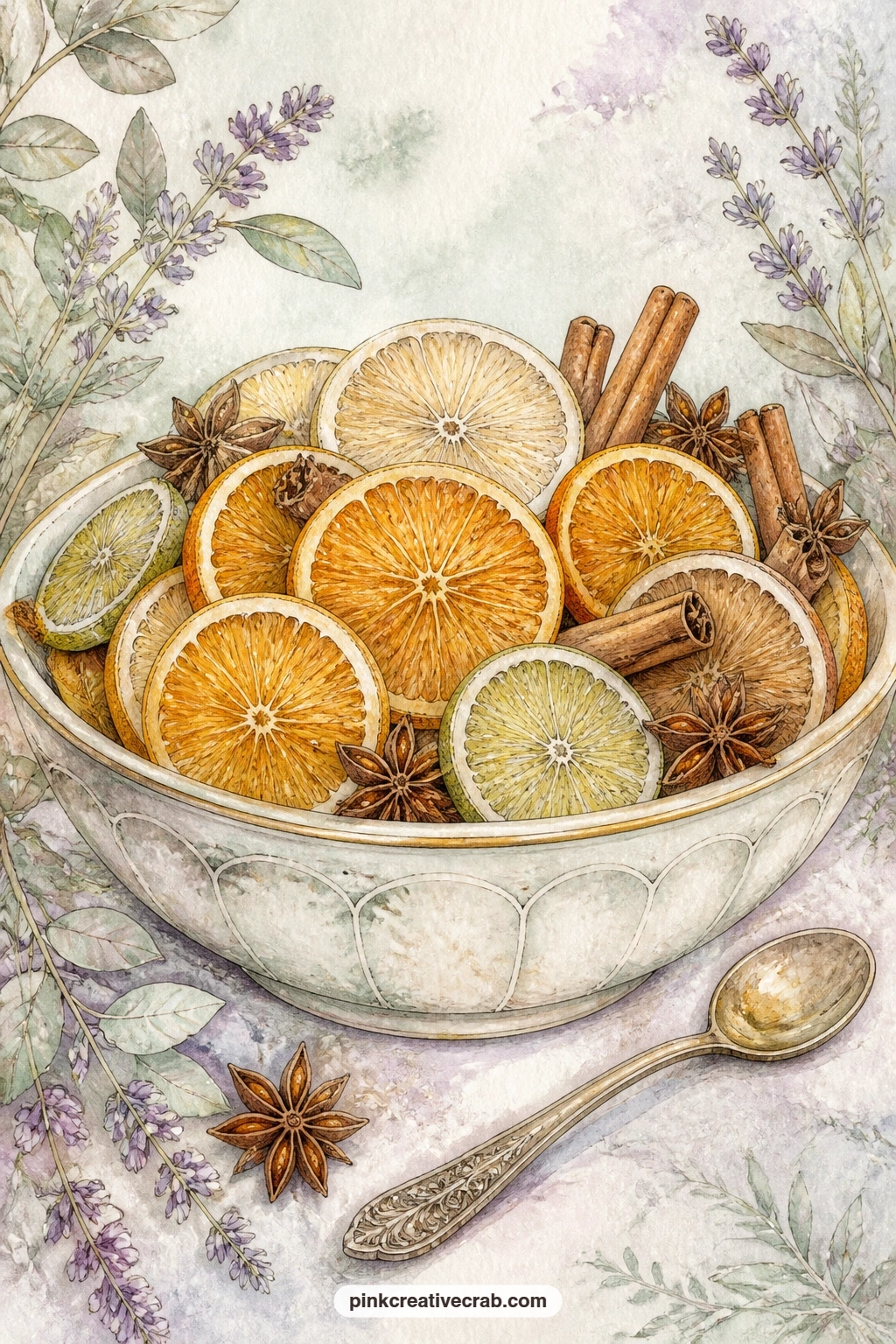
A bowl of dried citrus slices, cinnamon sticks and star anise makes a warm page for a gift journal meant for someone who loves tea or baking as much as herbs and bottles.
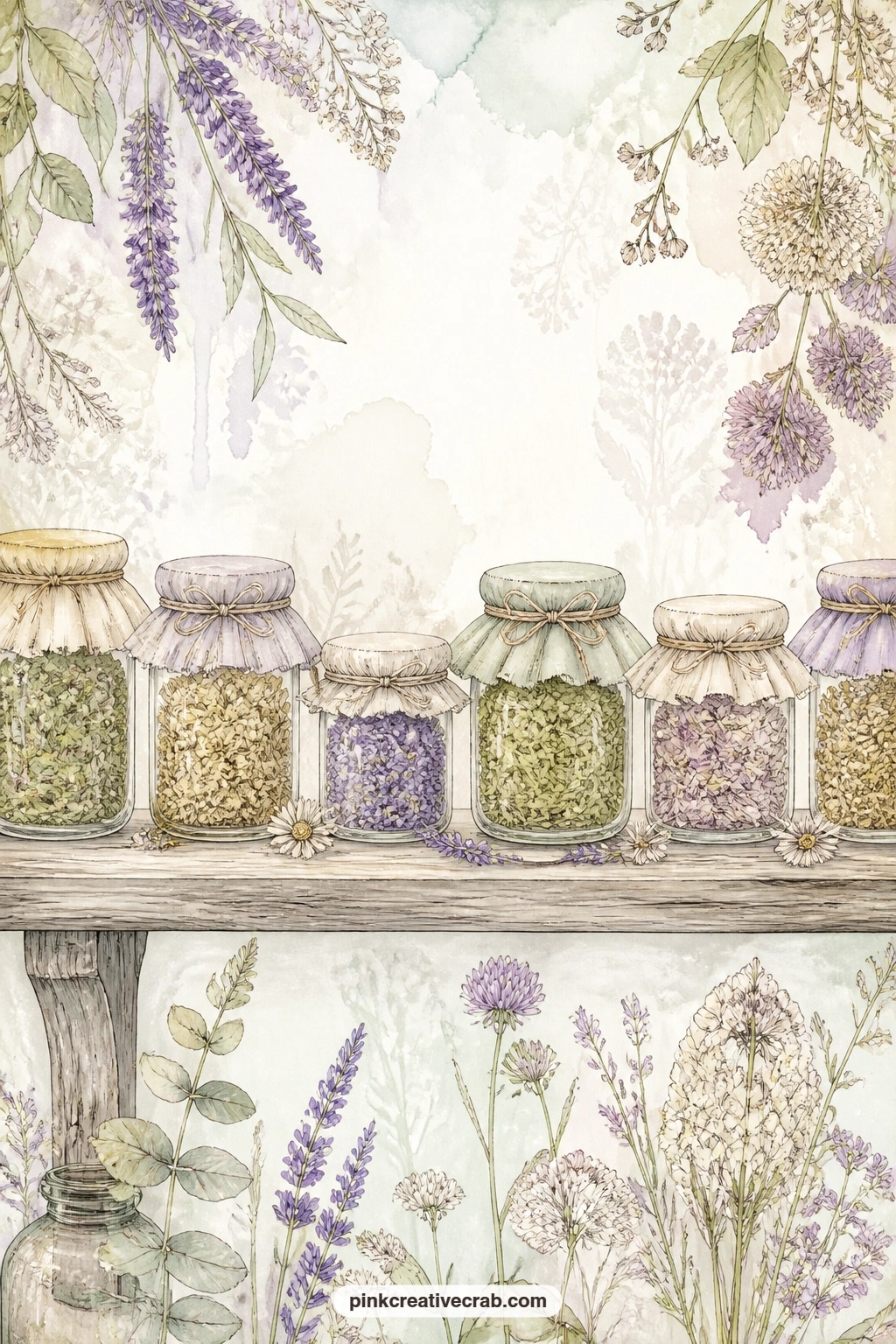
Jars of salves with cloth covers tied with string suit the tea-staining technique well, since a light wash along the cloth tops makes the printed string look naturally aged once it dries.
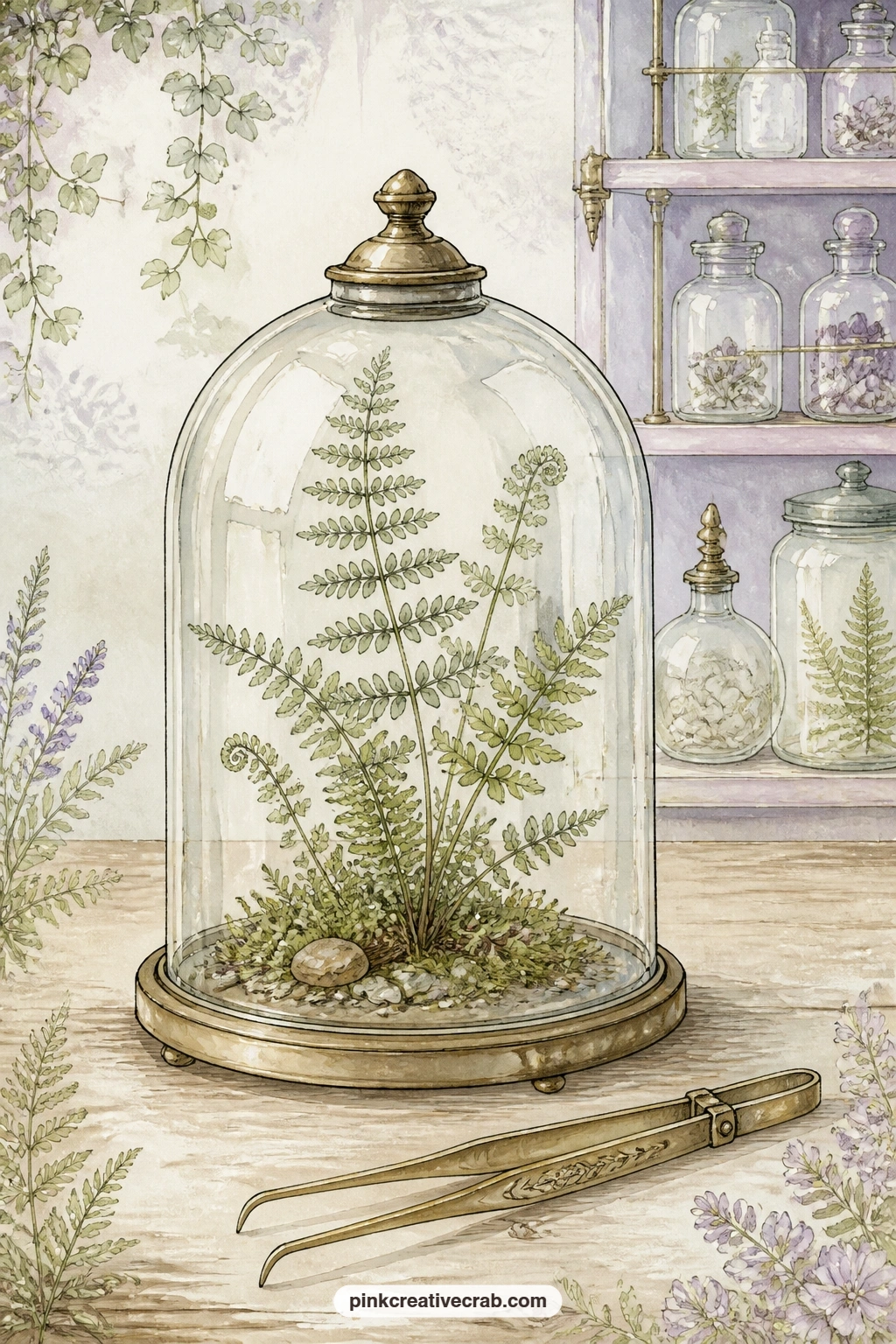
A vintage bell jar with a fern beside brass tweezers works as a quiet page for someone who collects plants more than potions, so keep this one for a nature-minded friend’s journal.
Glue a single pressed leaf under the dome shape once the page is trimmed, echoing the fern already painted inside it.
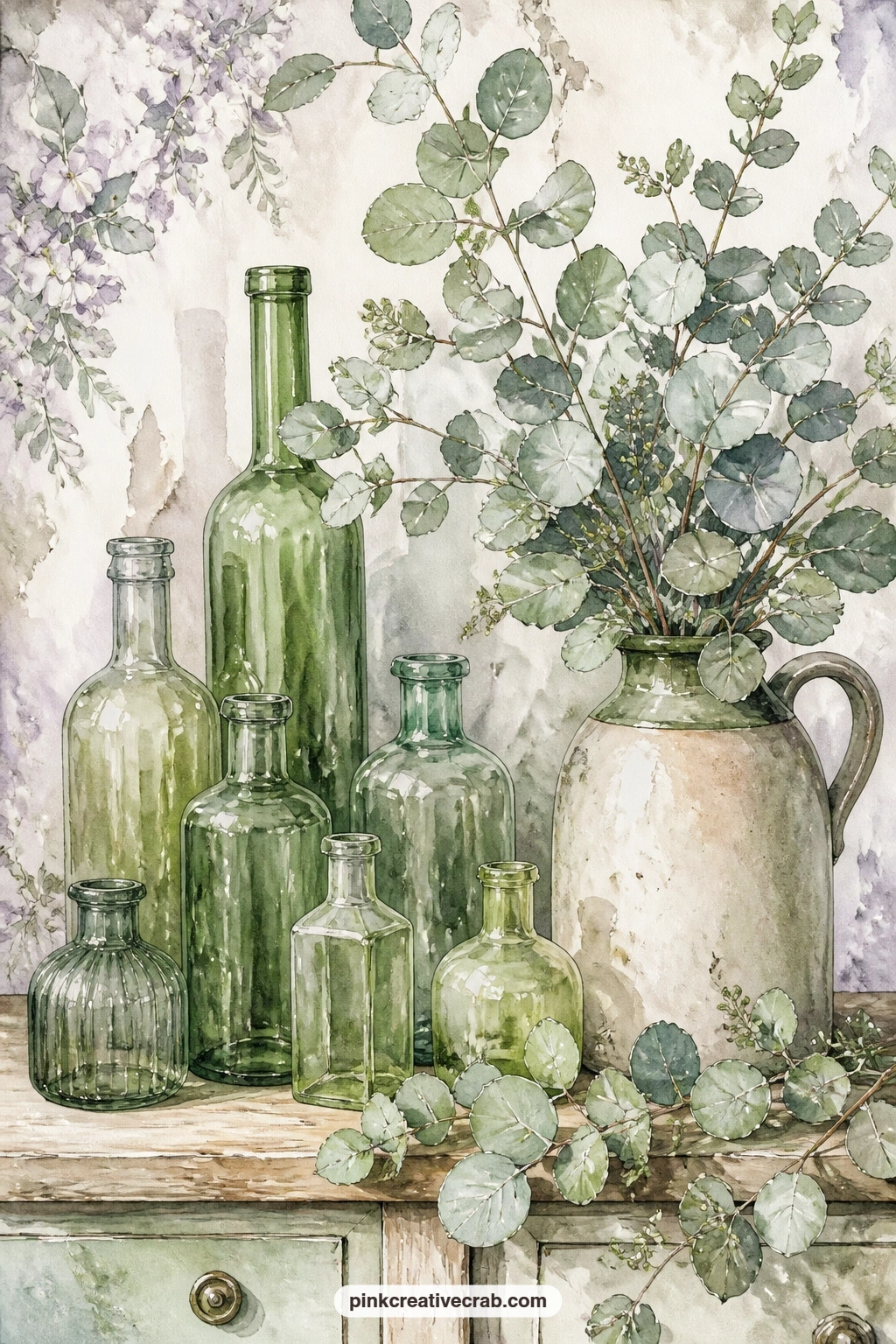
Green glass bottles and eucalyptus in a stoneware jug cover the whole sheet in cool tones, a useful page to break up warmer amber pages elsewhere in the same spread.
Curiosities And Tools
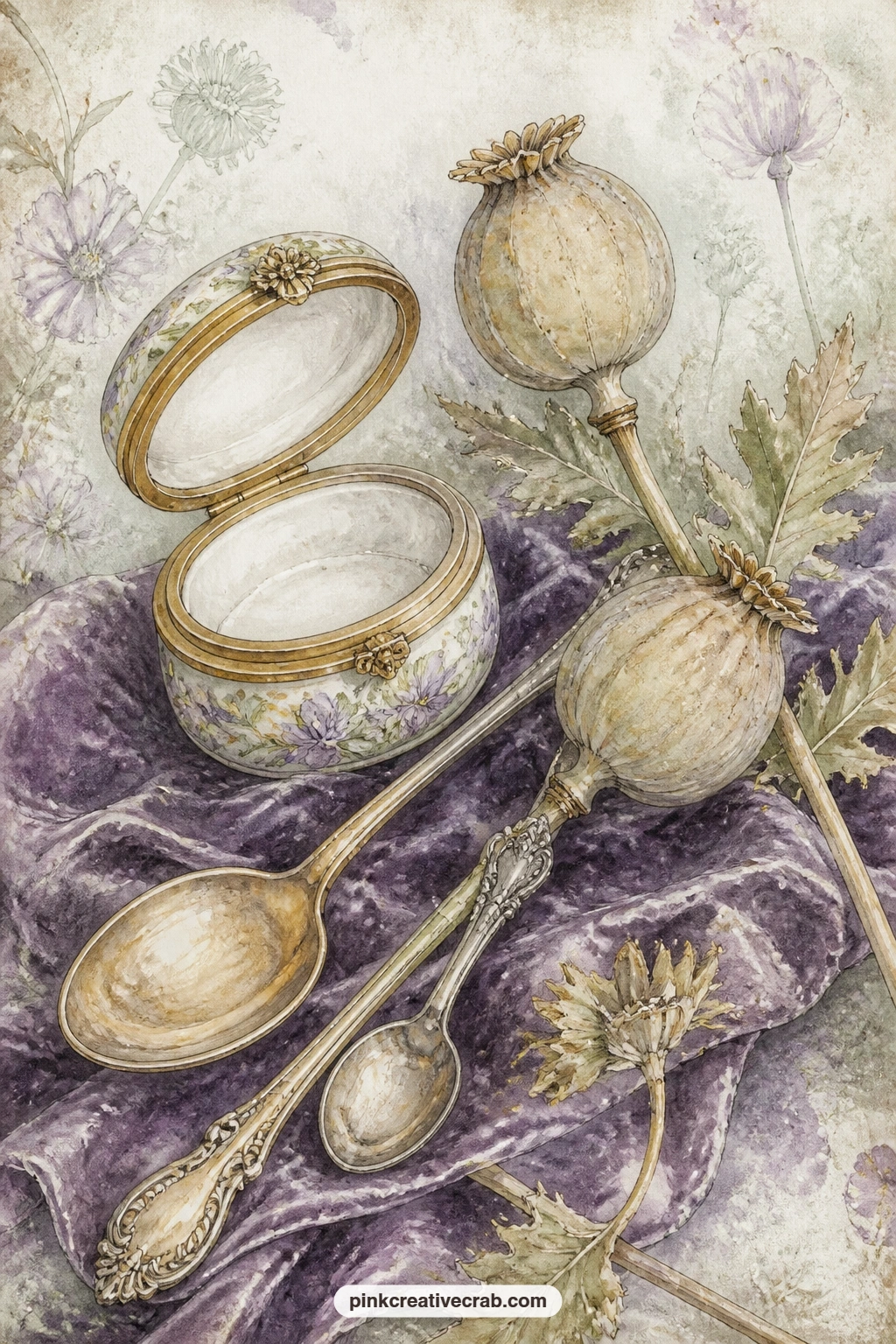
A porcelain pill box, spoons and dried poppy heads on velvet suit a page where you glue in a small keepsake, a button or a tiny photo, since the velvet background already reads as a display.
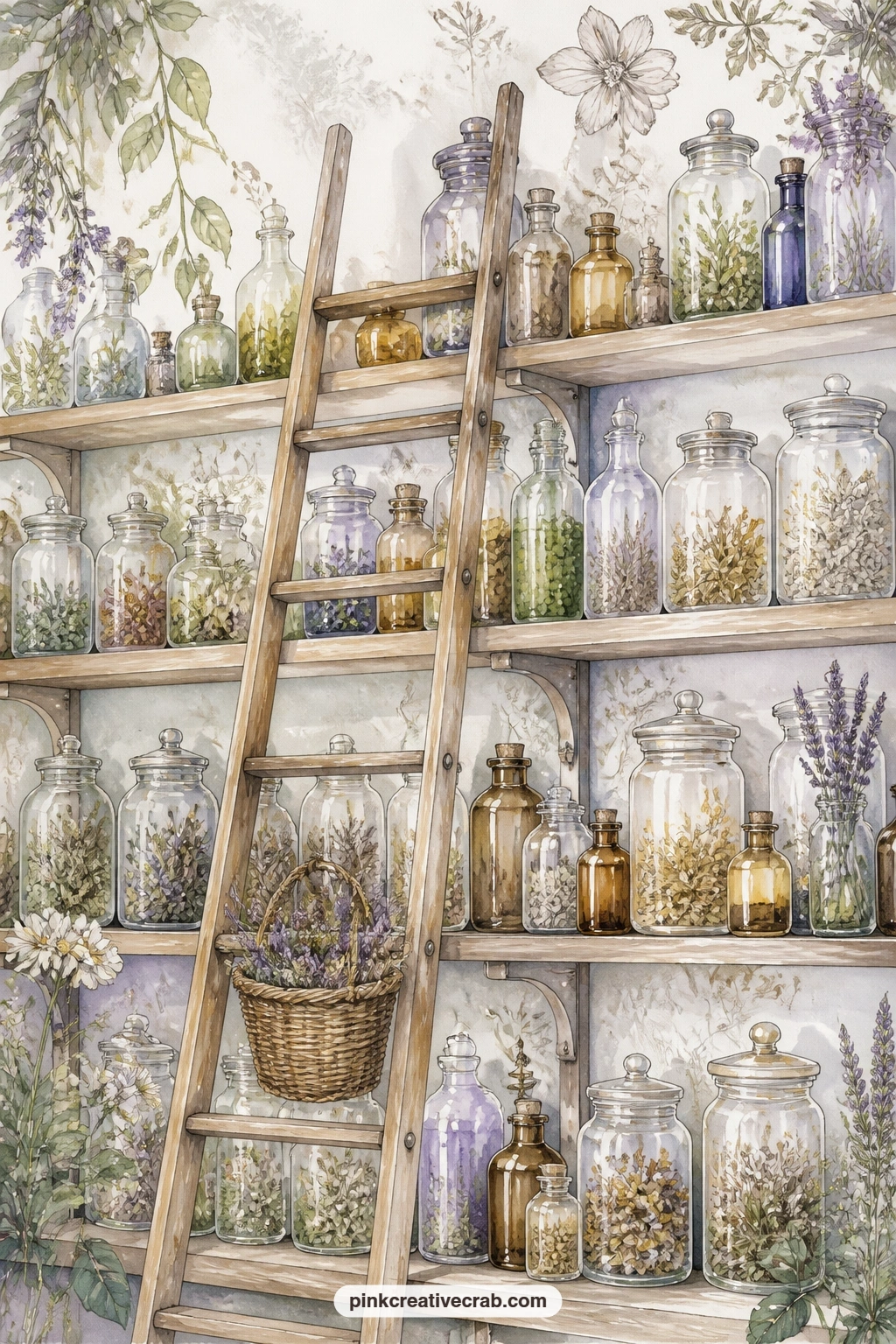
A ladder against apothecary shelves of jars and bottles gives the whole page height, so it suits the first sheet of a section better than the middle of one.
Beginners can leave the ladder plain, while a more confident painter might add a faint wash up the rungs to match the shelf tones behind it.
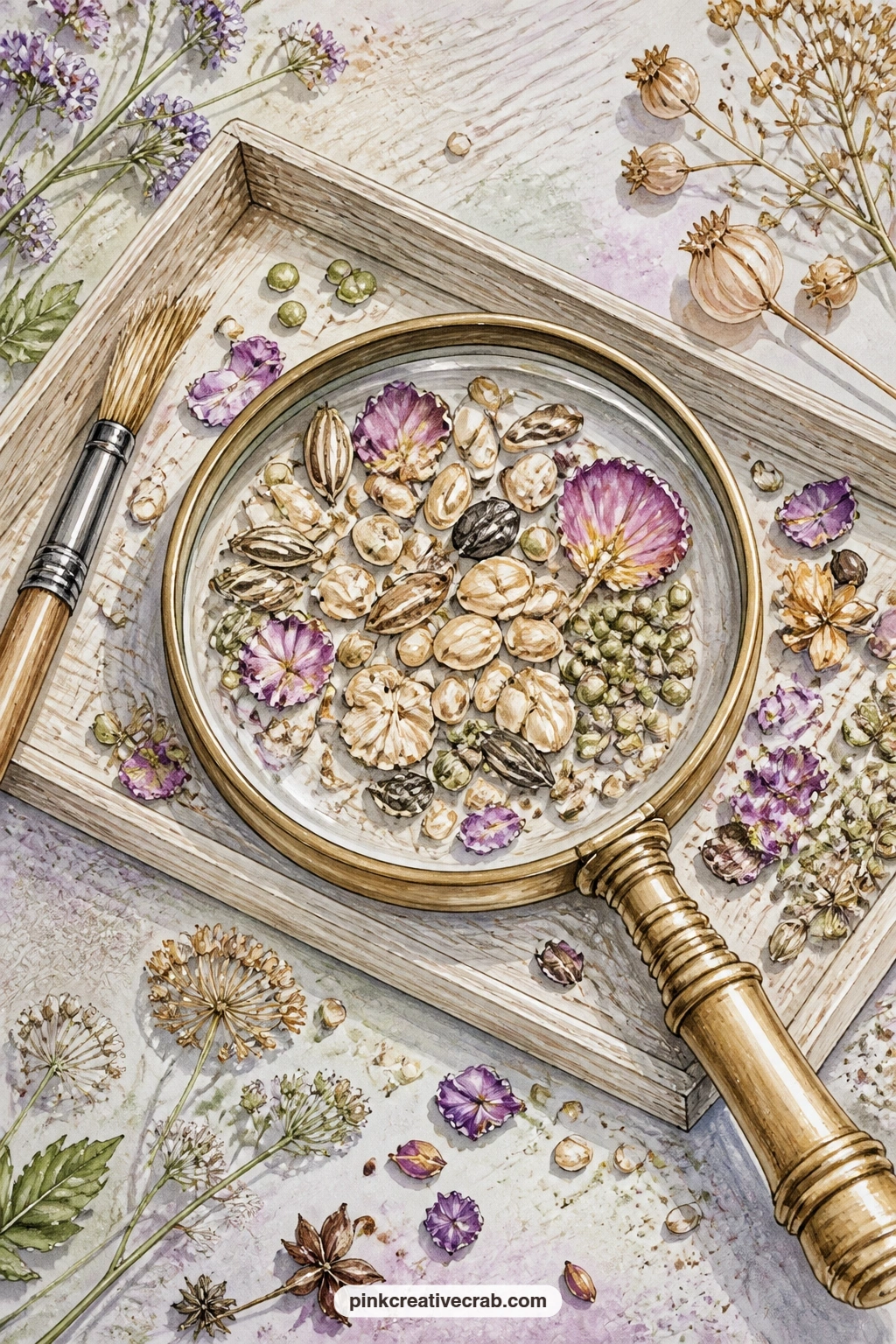
A brass magnifier over seeds and petals on a wooden tray pairs naturally with a short list written beside it: seeds you would plant first if you kept your own herb garden.
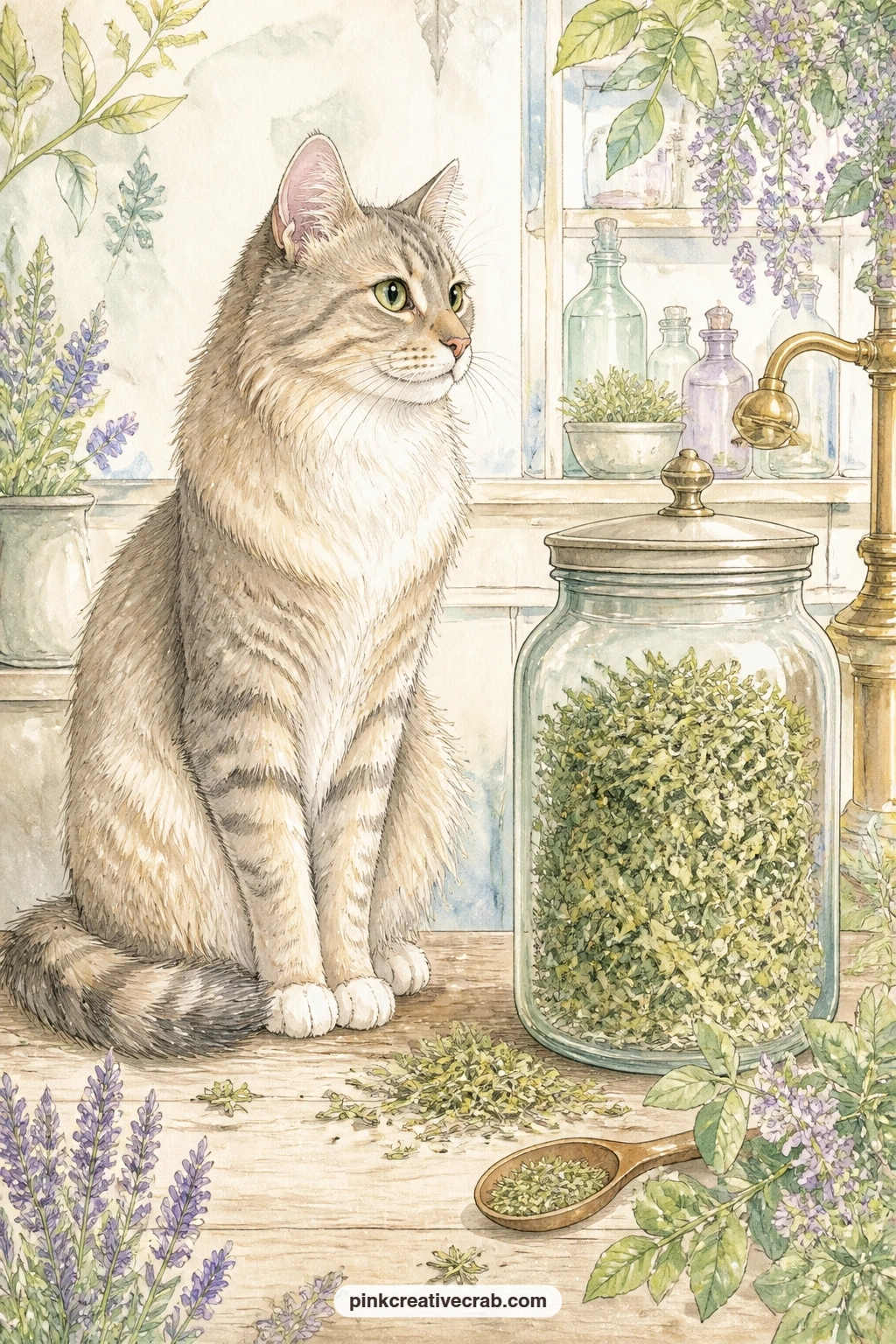
A cat sitting on the apothecary counter beside a jar of catnip closes this section on a lighter note, a gentle page for anyone who shares the journal-making hobby with a pet nearby.
Background Papers
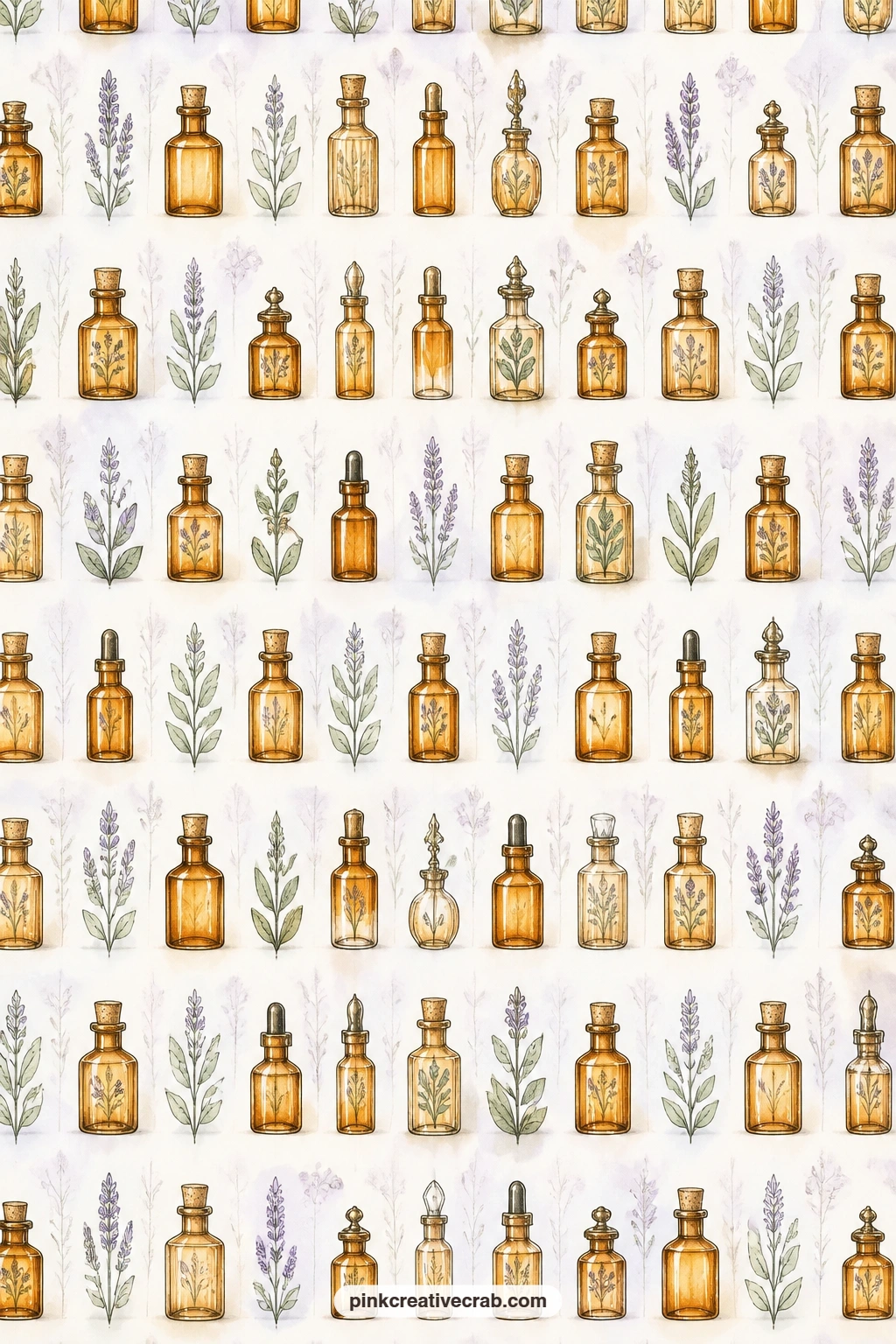
Amber apothecary bottles pattern works well under a photo of a kitchen garden, as a pocket lining behind a scene page, or wrapped around a plain journal cover for a warm, consistent base.
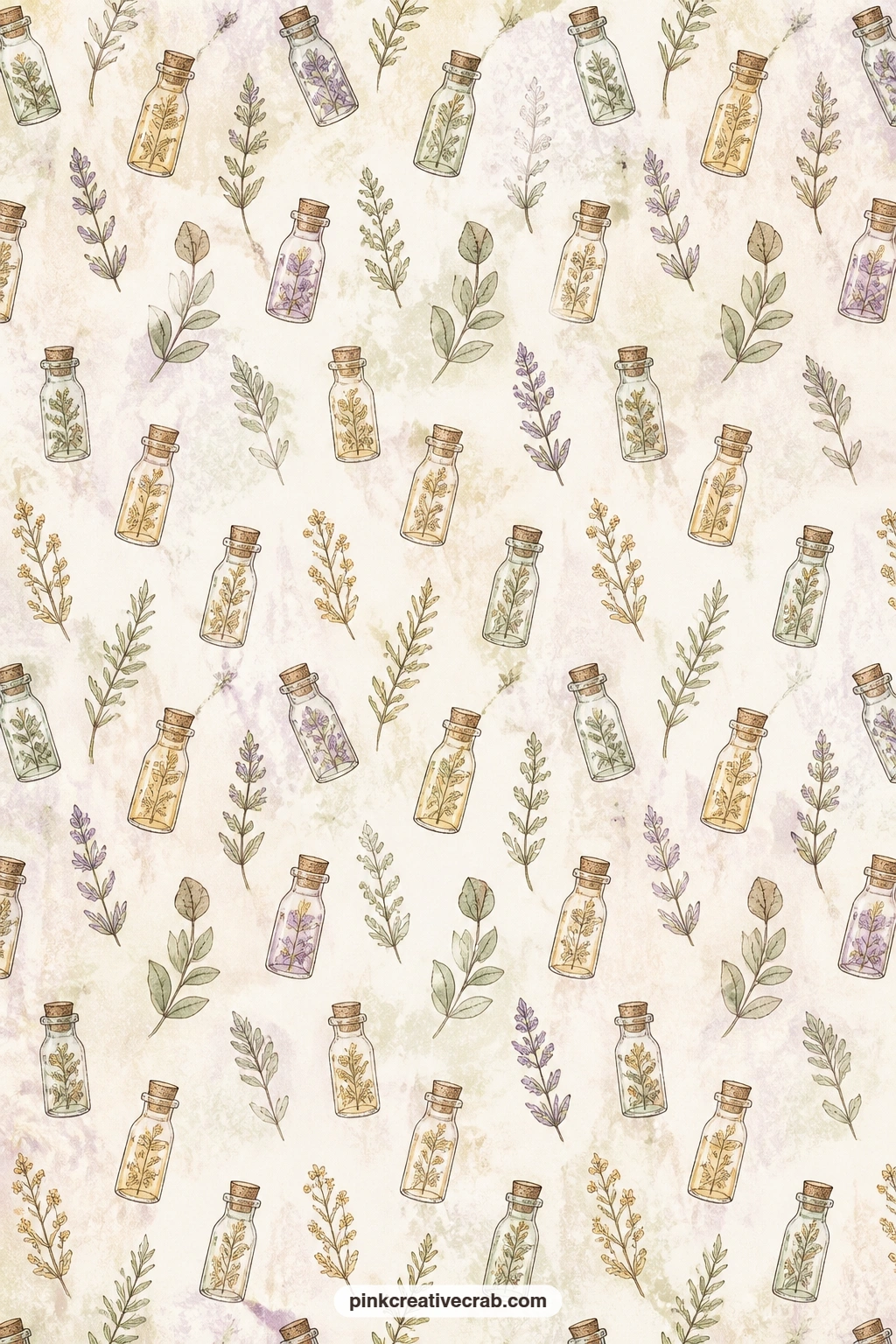
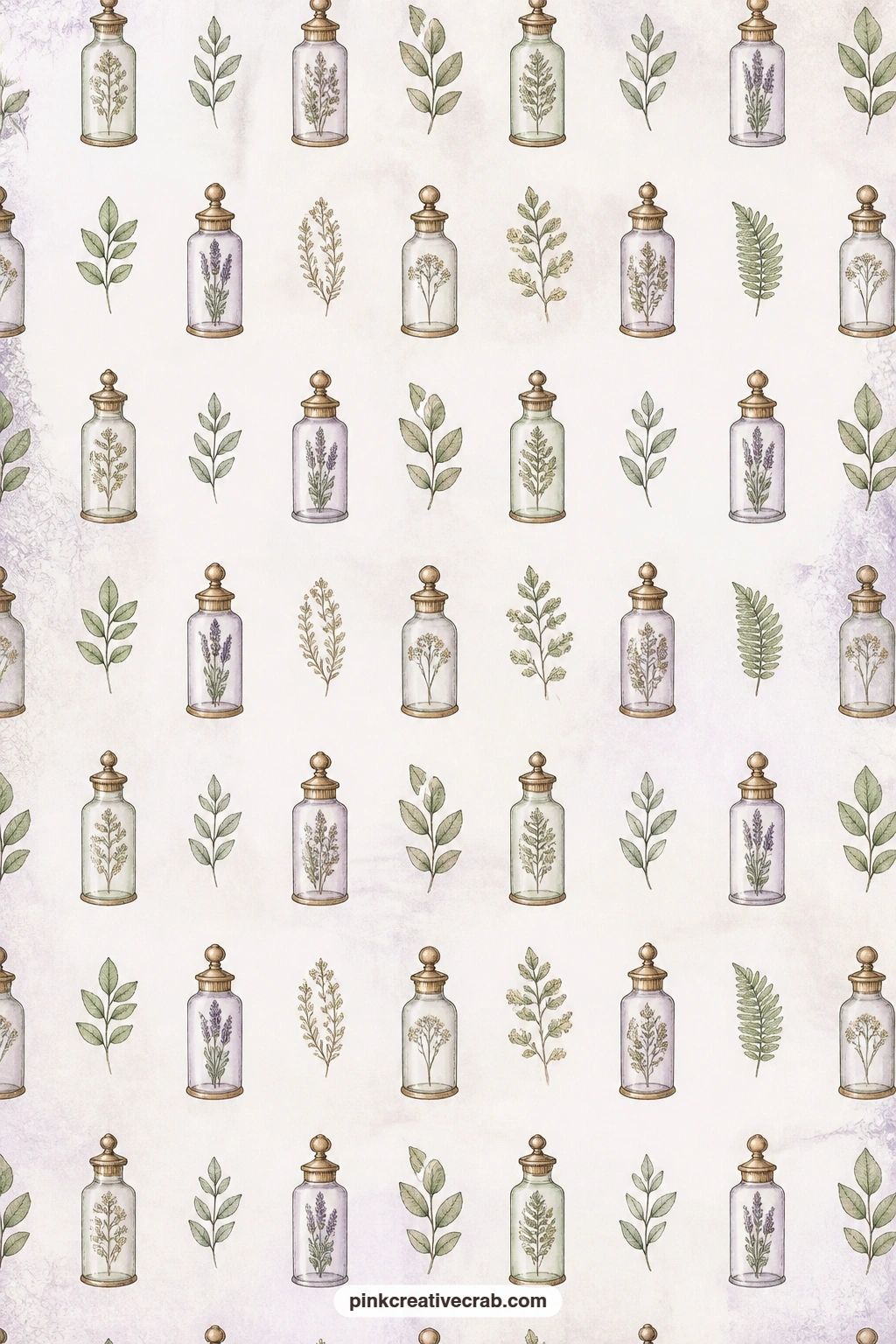
Tiny glass vials and herbs pattern suits a pocket for pressed flowers, a lining behind a lined writing page, or a strip cut into tags that match the rest of the apothecary set.
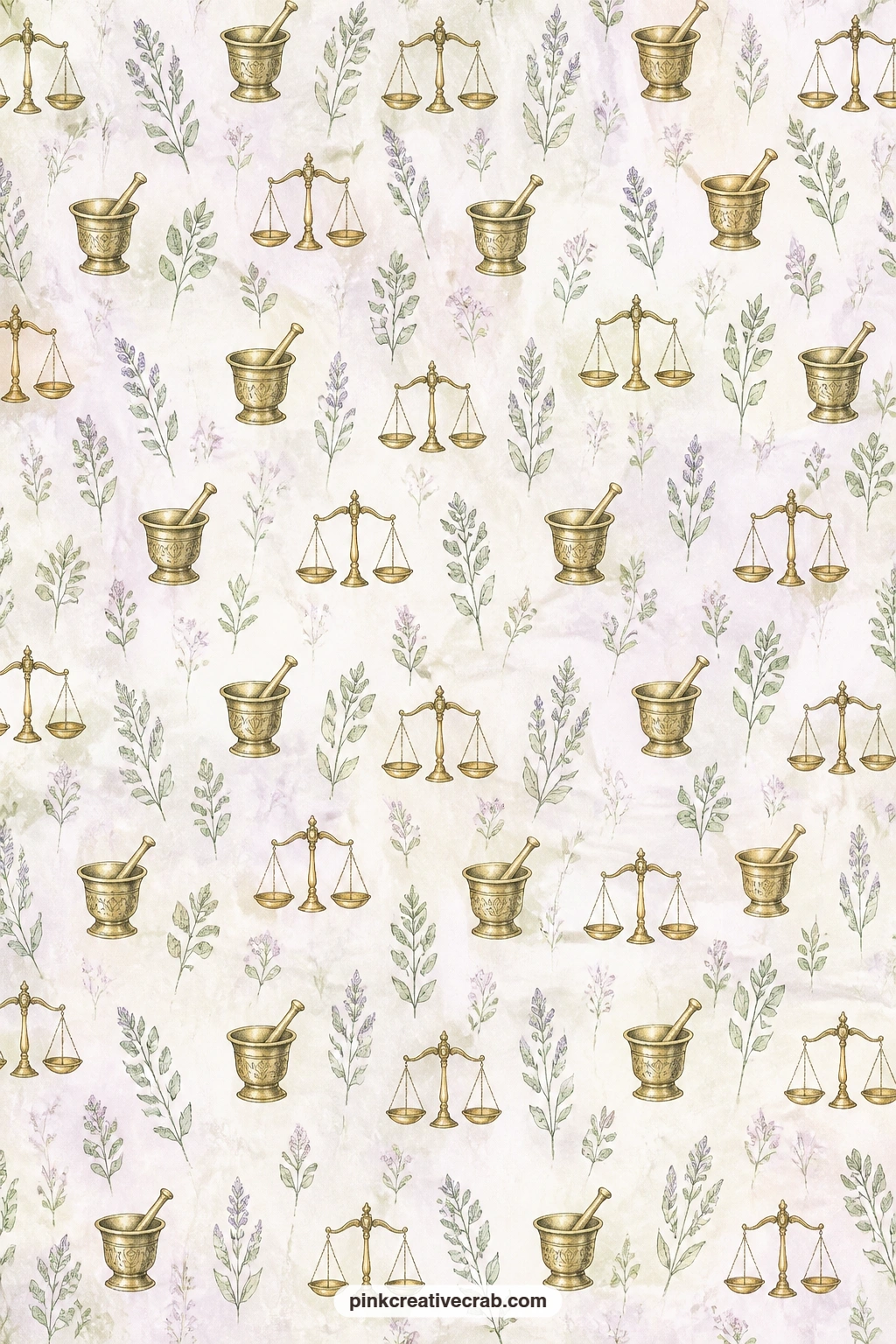
Brass scales and mortars background paper works as a cover wrap, a pocket behind the brass scale scene page, or a border strip trimmed thin and glued along a page edge.
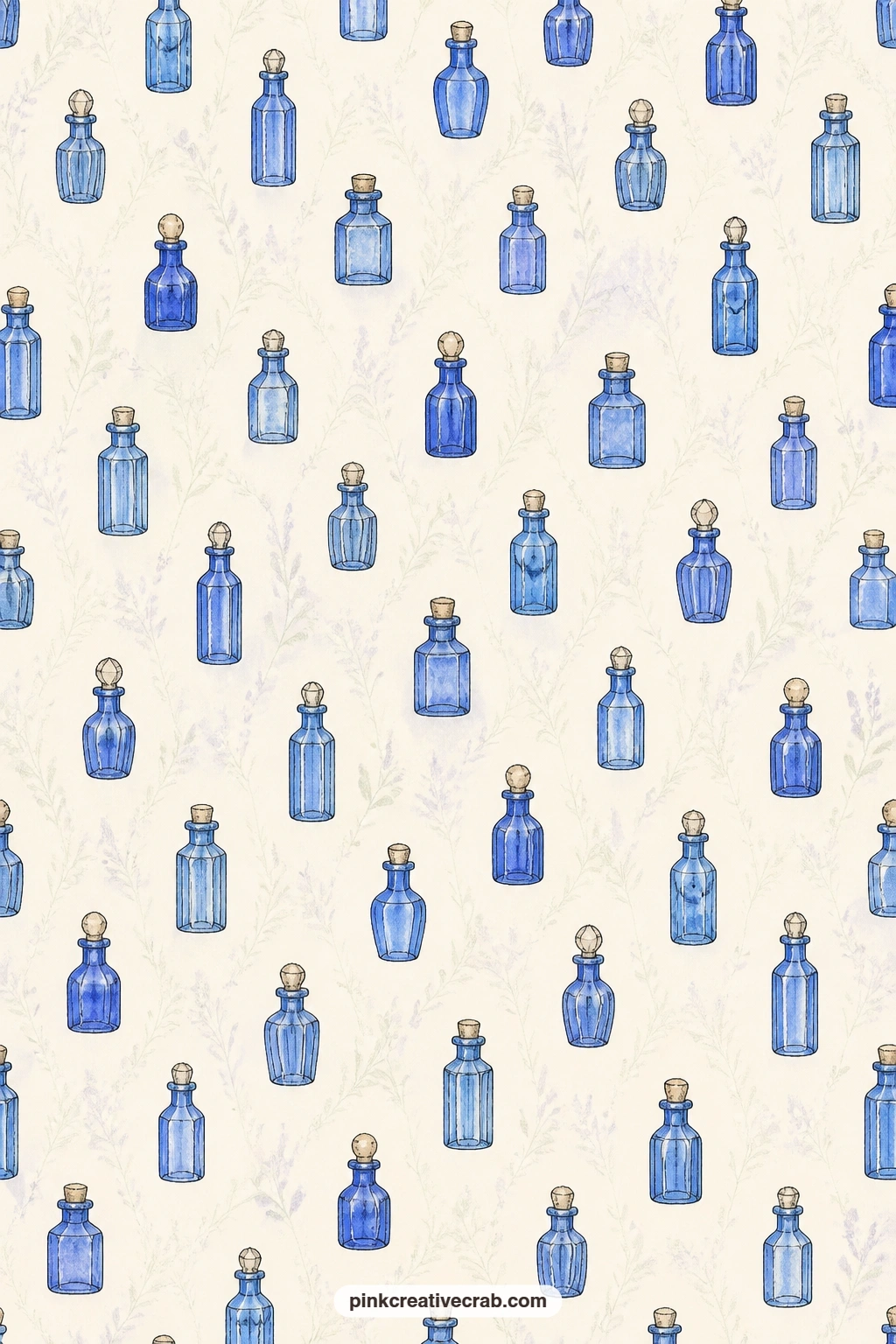
Cobalt bottles on cream background paper pairs naturally with the windowsill scene earlier in this set, used as a facing page, a pocket lining or a wrap for a small keepsake envelope.
Pressed herbs and apothecary jars background paper suits a journal cover, a divider between sections, or a pocket lining behind the vials and rack scene earlier in this kit.
Lined Writing Pages
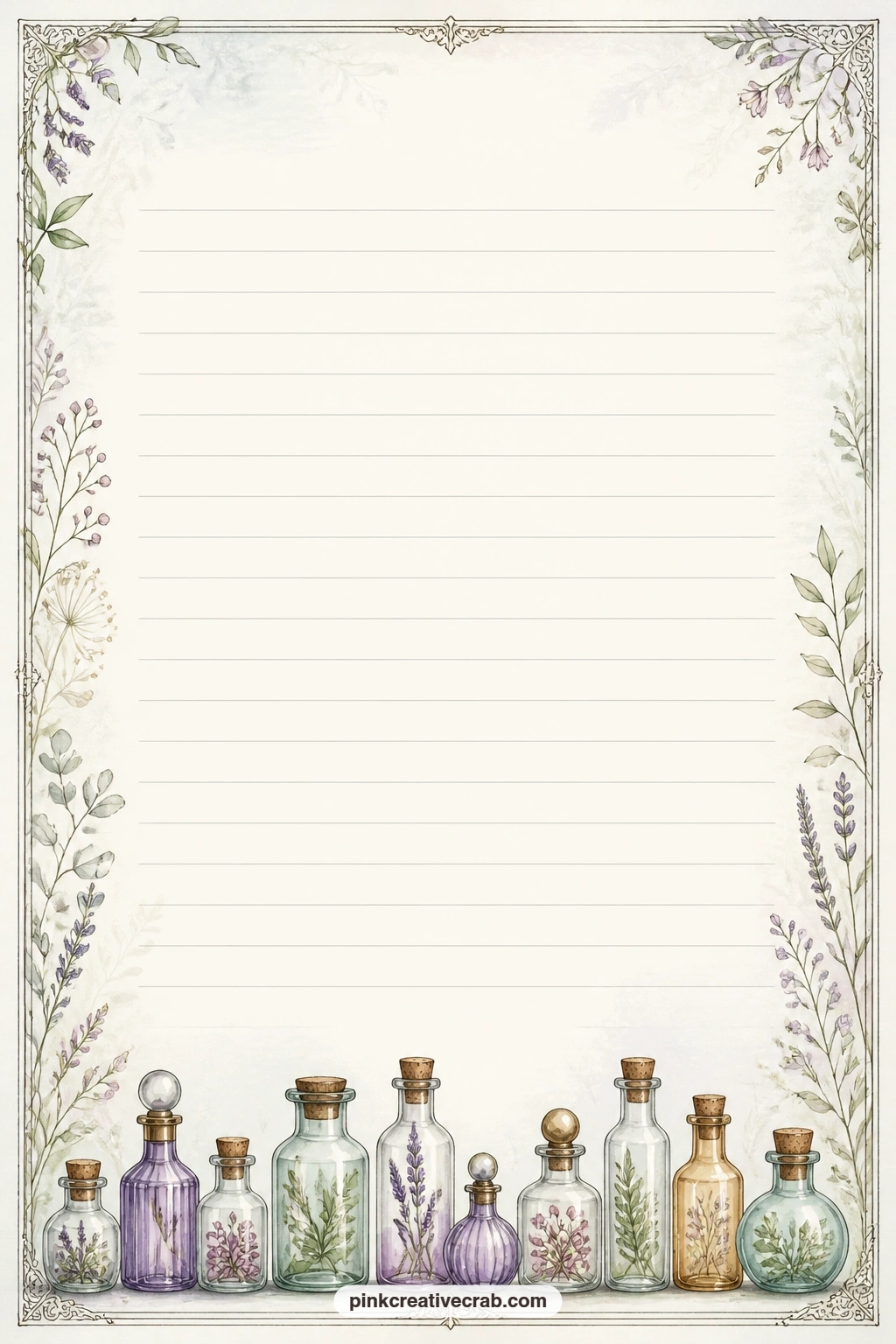
Apothecary bottle border lined page suits a list of remedies you trust, a short letter to next year, or notes on a scent you want to remember long after the jar is empty.
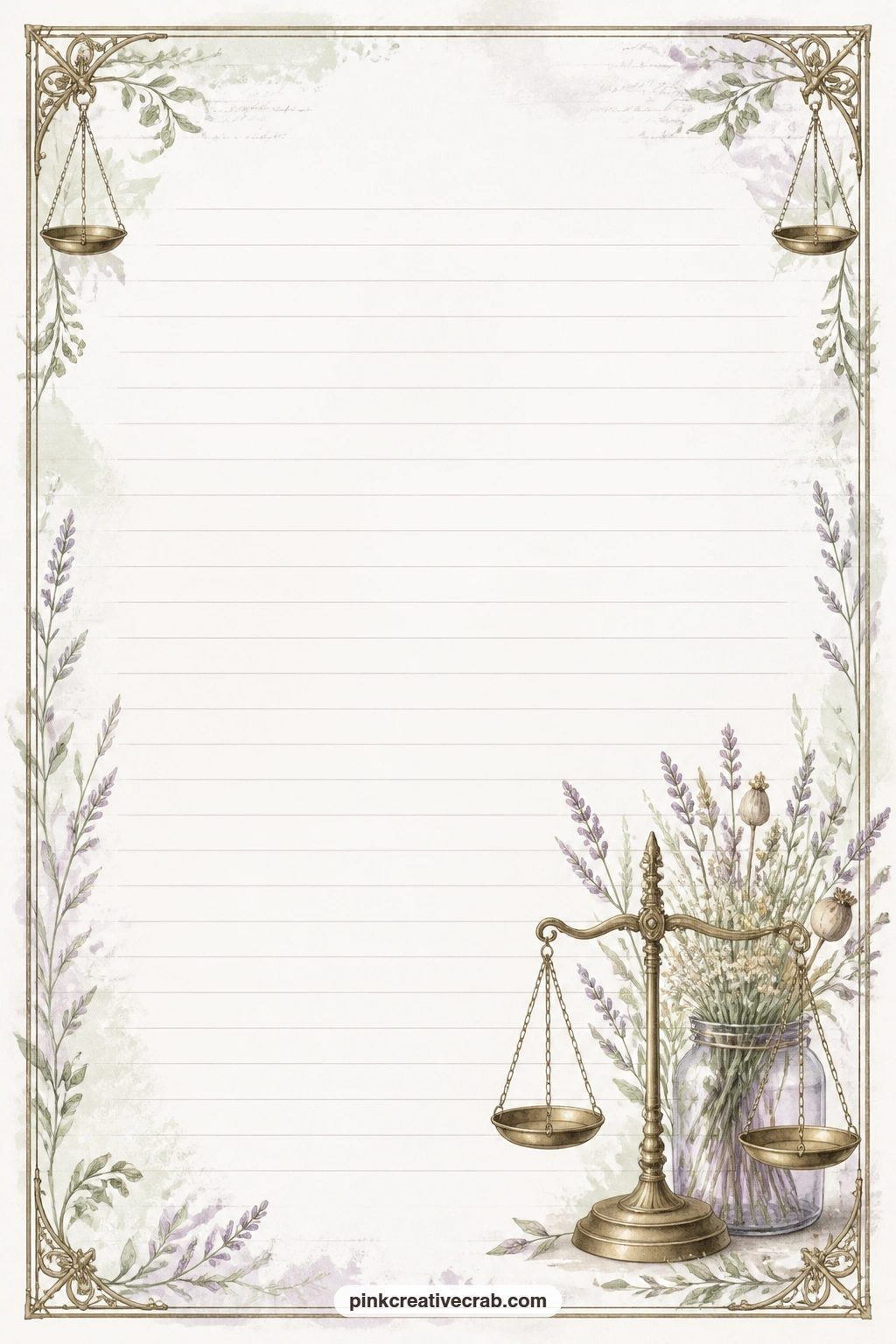
Brass scale corner lined page works well for a gift list, a recipe passed down from someone else, or a few lines about the slow pleasure of making something by hand.
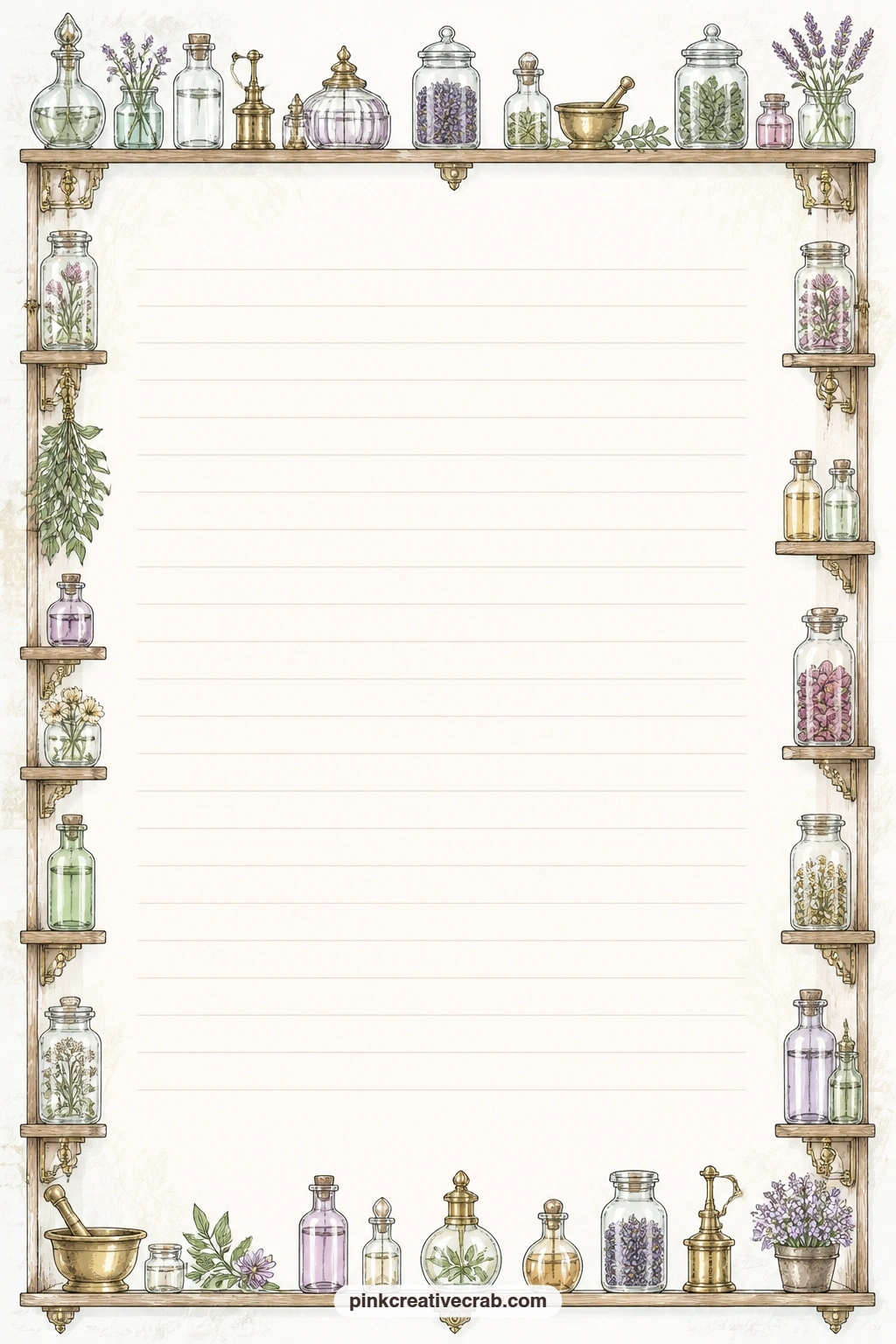
Apothecary shelf frame lined page suits a menu for a quiet dinner, a packing list for a weekend away, or a letter to the next person who opens this journal.
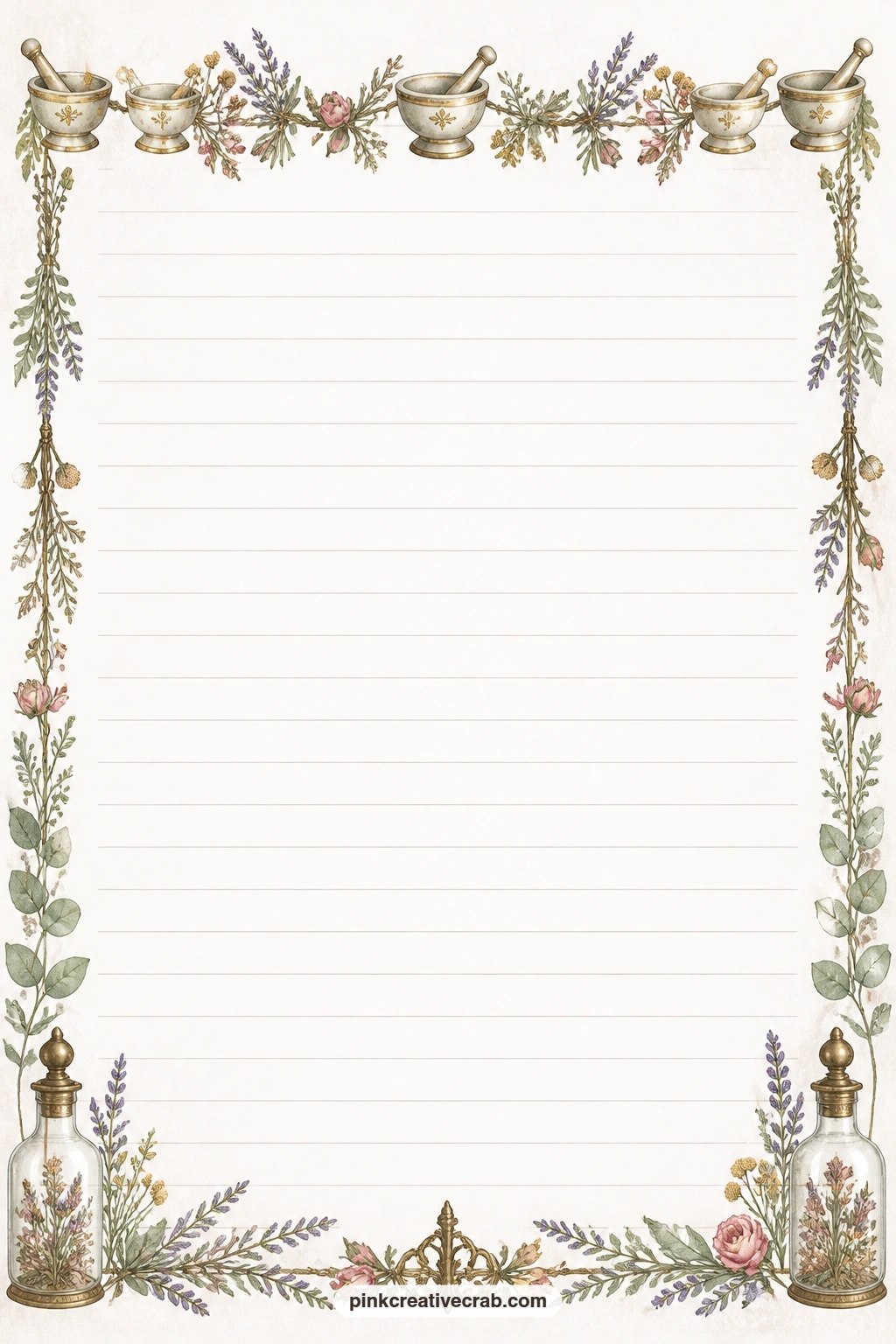
Mortar and pestle garland lined page works for a list of herbs to grow, a note about a remedy that worked, or a line written to mark the start of a new season.
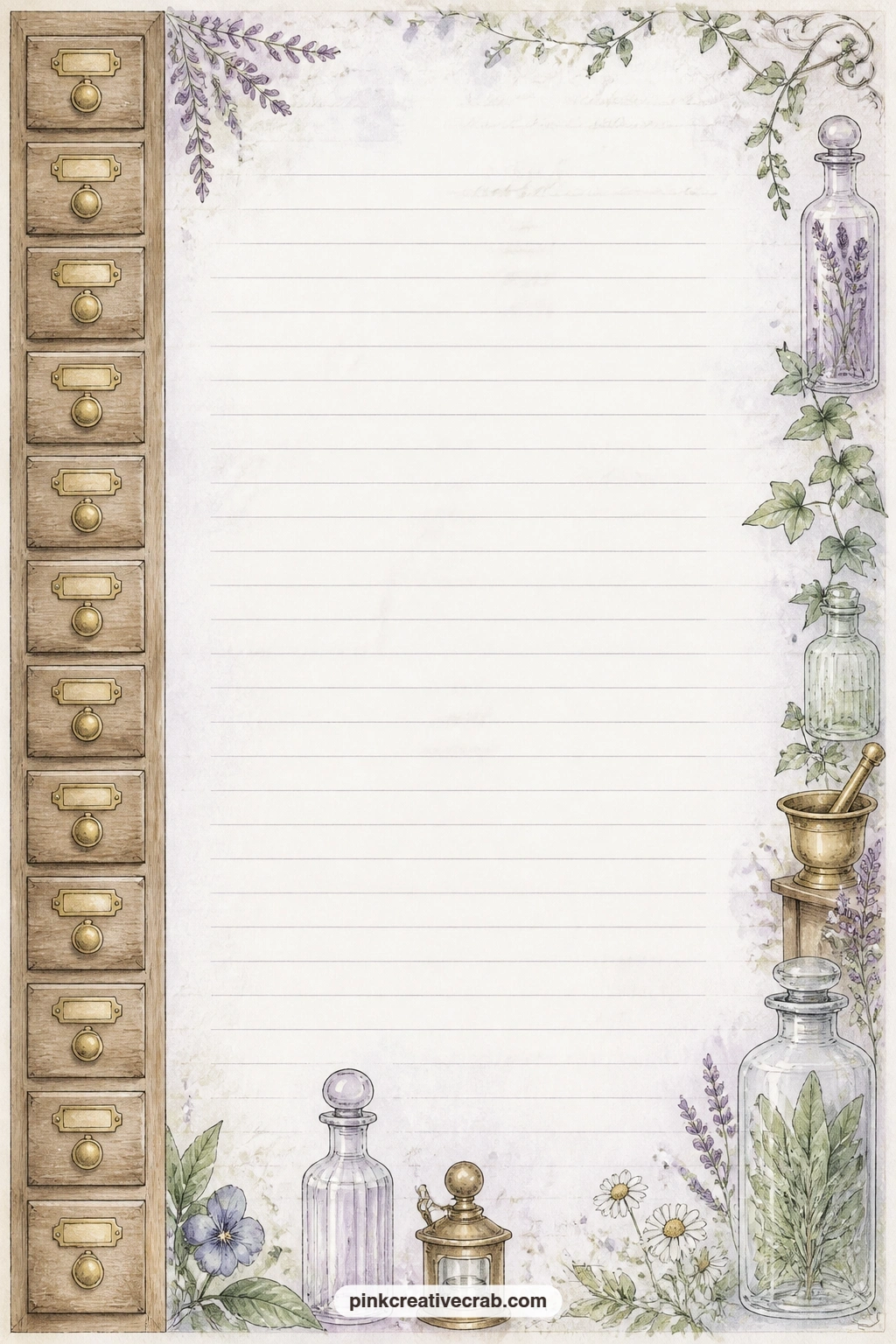
Apothecary cabinet drawer lined page suits a short diary entry, a list of things you are grateful for this week, or a note tucked away for your future self to find.
What to Do Next
Print the pages, trim them to size, and start arranging the spreads that feel most like your own shelf of bottles and herbs; for more themed sets, look at the witch junk journal pages or the steampunk junk journal set for a different mood.
Frequently Asked Questions
What paper works best for an apothecary junk journal kit?
Matte cardstock around 160 to 200 gsm works best, since it holds the painted color well without letting ink or glue bleed through. Thinner paper still works for lined pages you plan to write on often.
What printer settings give the clearest colors?
Use your printer’s best or photo quality setting with matte or plain paper selected, not glossy photo paper. This keeps the soft watercolor tones accurate and stops the ink from pooling on the page.
What size should I print these pages at?
Print at standard letter or A4 size and trim to fit your journal, since most junk journal covers are cut a little smaller than a full sheet. Trimming after printing also lets you round corners if you like.
What should I use to glue the pages into a journal?
An acid-free glue stick works best for flat pages, since it dries quickly without wrinkling the paper. Save liquid glue for pockets or layered elements where you need a stronger hold.
Can I color or add to these pages myself?
Yes, fine tip pens or colored pencils add nicely to the open spaces on lined pages and around the edges of scene pages. Keep any extra color light so it matches the soft, airy palette of the set.
Have any thoughts?
Share your reaction or leave a quick response — we’d love to hear what you think!
-
 0
-
0
-
0
-
0
-
0
-
0


