Table of Contents
A vintage kitchen junk journal gathers up everything cheerful about an old-fashioned farmhouse kitchen: enamelware bowls, jadeite dishes, pies cooling on the sill and a kettle always warming on the stove. This kit has 22 scene pages that walk through every corner of that kitchen, 5 seamless background papers for covers and pockets, and 5 lined writing pages for recipes and memories.
Print everything on heavyweight matte paper, at least 24 lb or so, so the colour sits flat and the page can take glue without buckling. Set the printer to its best or photo quality for true colour, then trim each sheet to your journal’s size before you start gluing and folding.
Using these images: free for personal projects such as printing, coloring, cards, journals and gifts. Handmade items that include them may be sold up to 30 pieces per design. More than that is commercial use and is not permitted, and neither is selling or sharing the images themselves or passing them off as your own. Please ask before any other use.
Baking Corner Pages
Pastel enamel holds a heap of cherries beside a rolling pin and a folded gingham towel, the kind of quiet corner that starts a baking page.
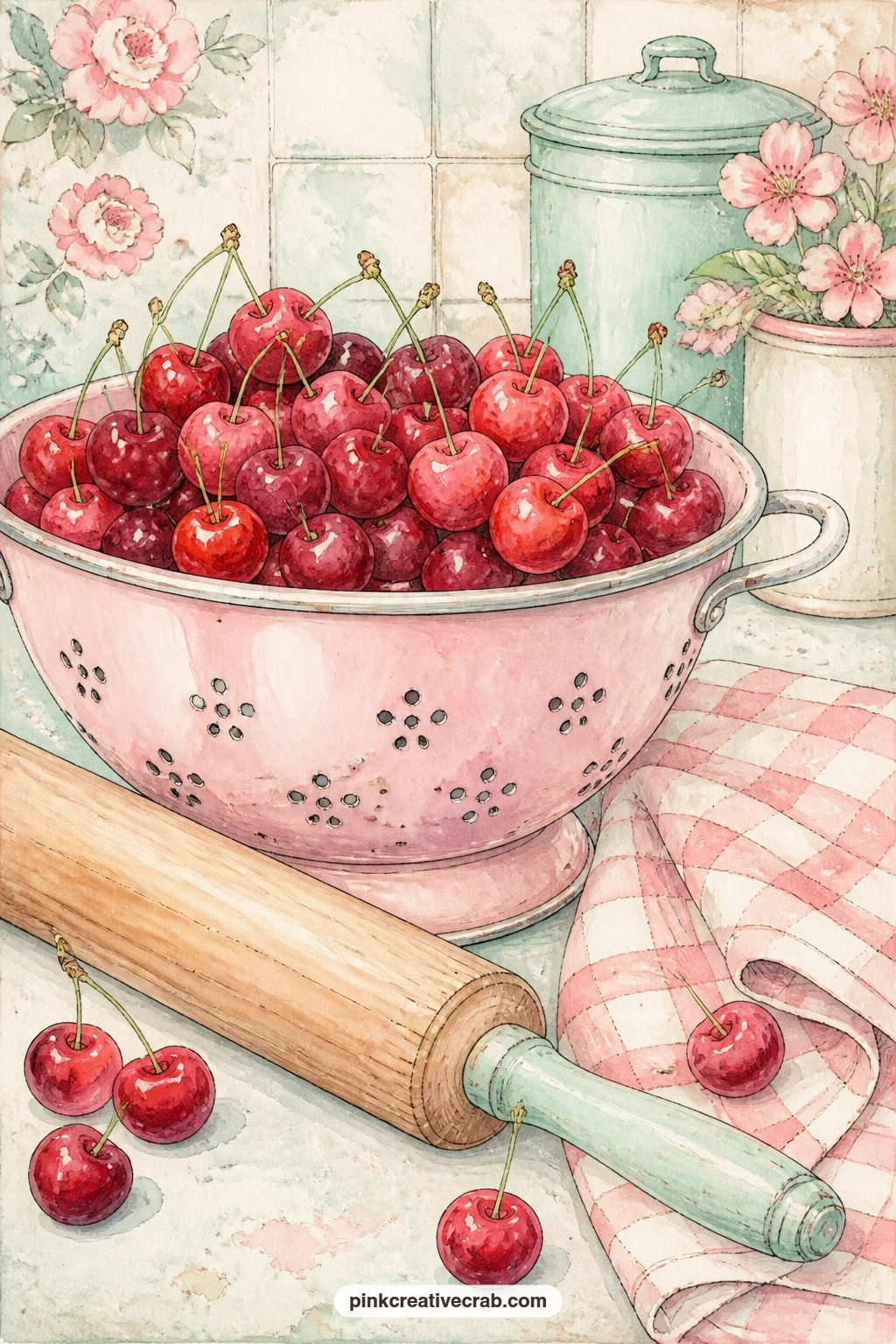
Place this one opposite the gingham lined page later in the set, so the red geraniums in the window echo the cherries from the page before it and tie the spread together with colour rather than words.
A farmhouse sink sits under a window full of blooming geraniums, with a dish rack drying beside it, painted the way an old kitchen actually looked mid-morning.
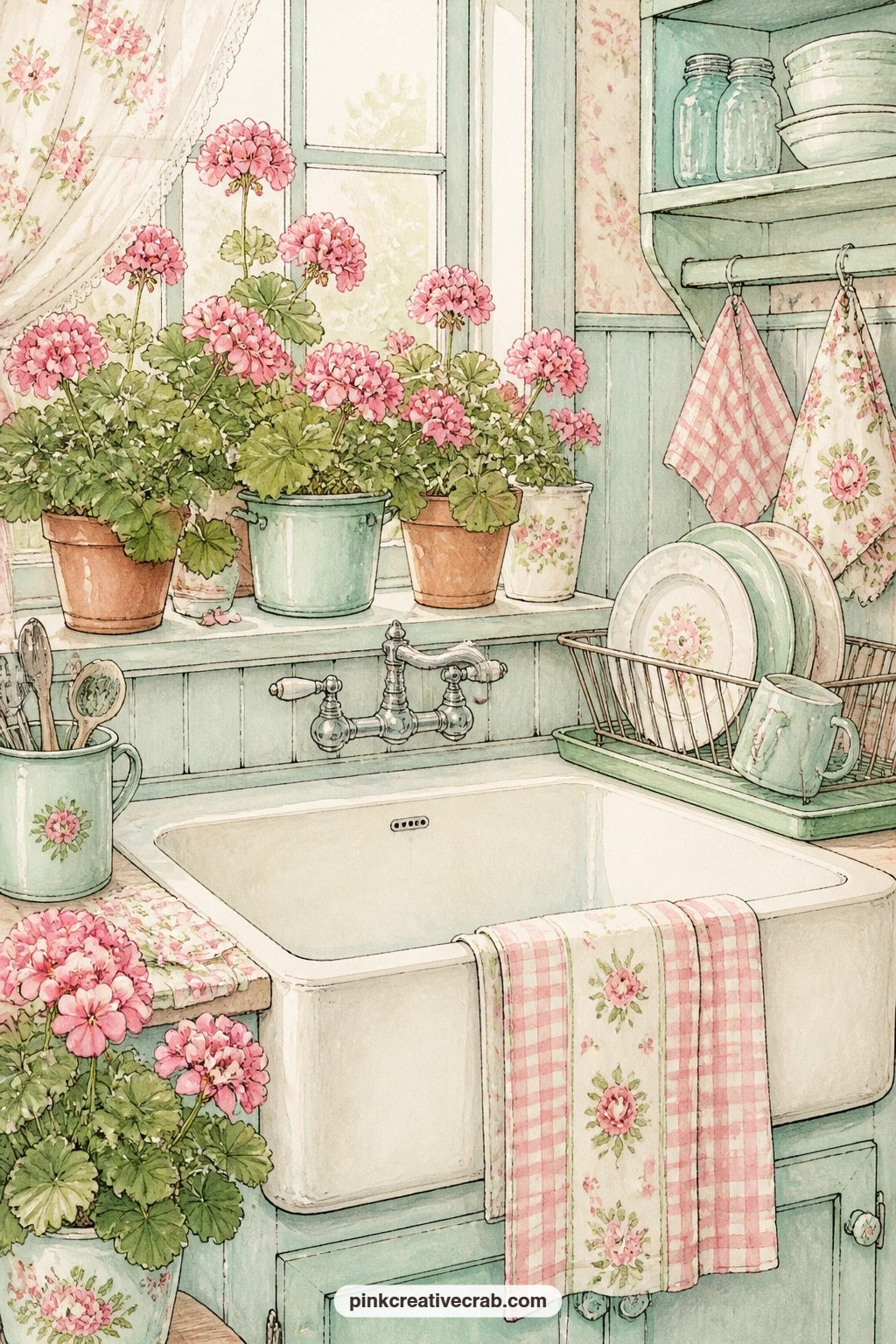
Tuck a real pie recipe card into a pocket glued beside this page, or copy one out by hand onto a scrap and tape just one corner so it lifts to read, much like the recipe pages in a cookbook junk journal.
Dishes And Hutch Pages
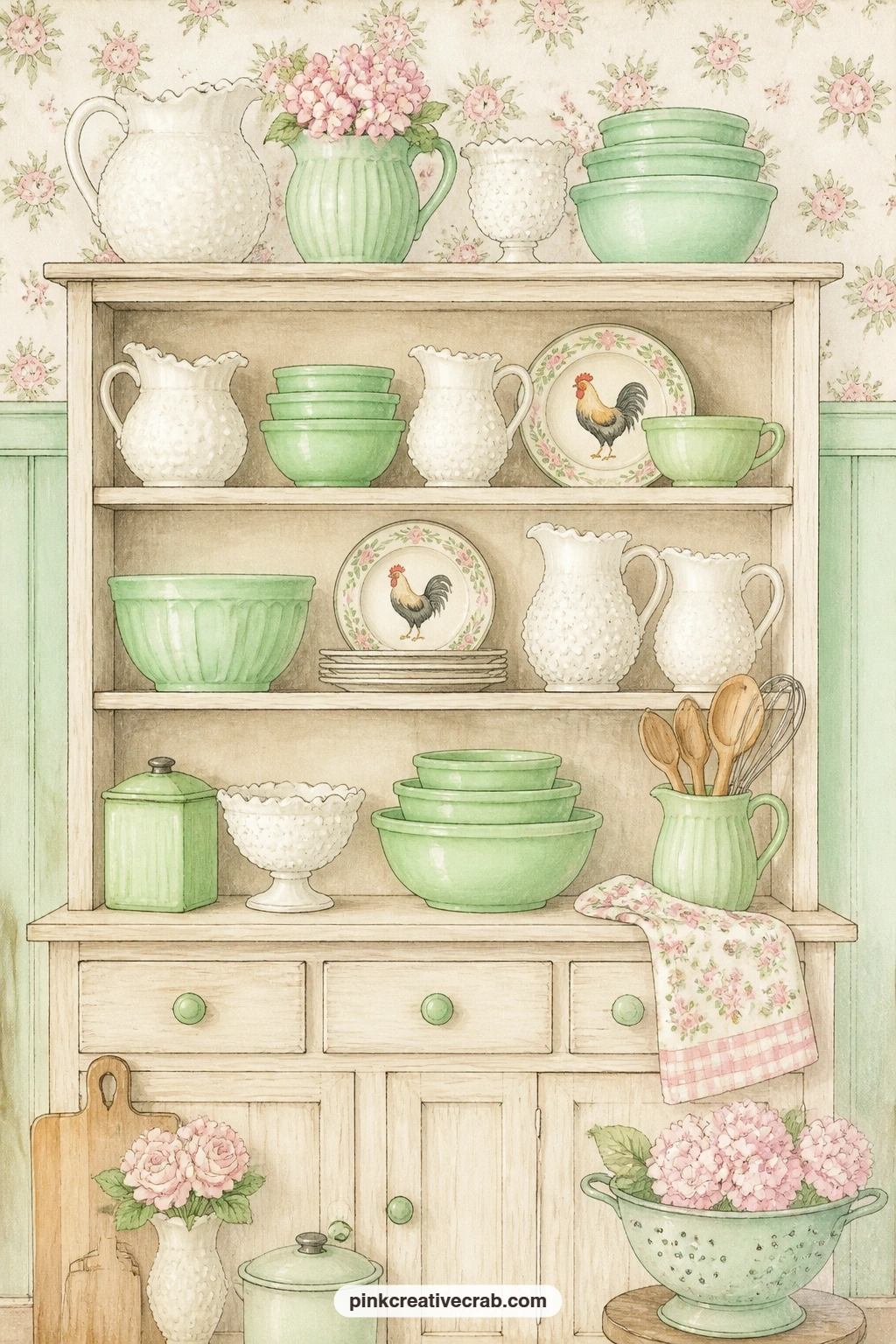
The usual mistake with a crowded hutch page is drawing every shelf the same height, which flattens the whole picture. Stagger the rooster plates, jadeite bowls and milk glass across uneven shelves instead, so the eye has somewhere to land first.
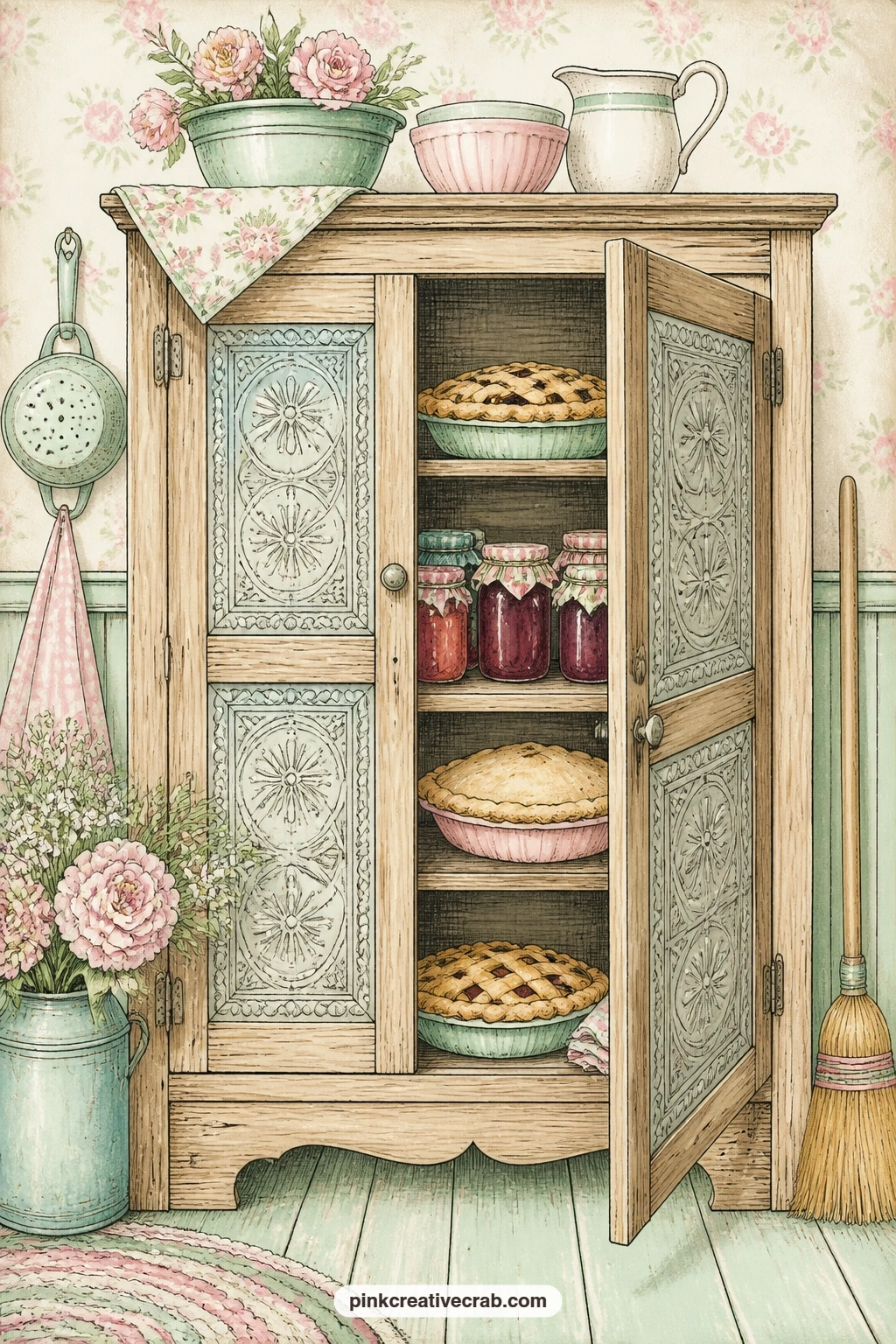
Punched tin doors stand open on a pie safe stocked with pies and jars of jam, the kind of furniture piece that anchors a whole kitchen spread.
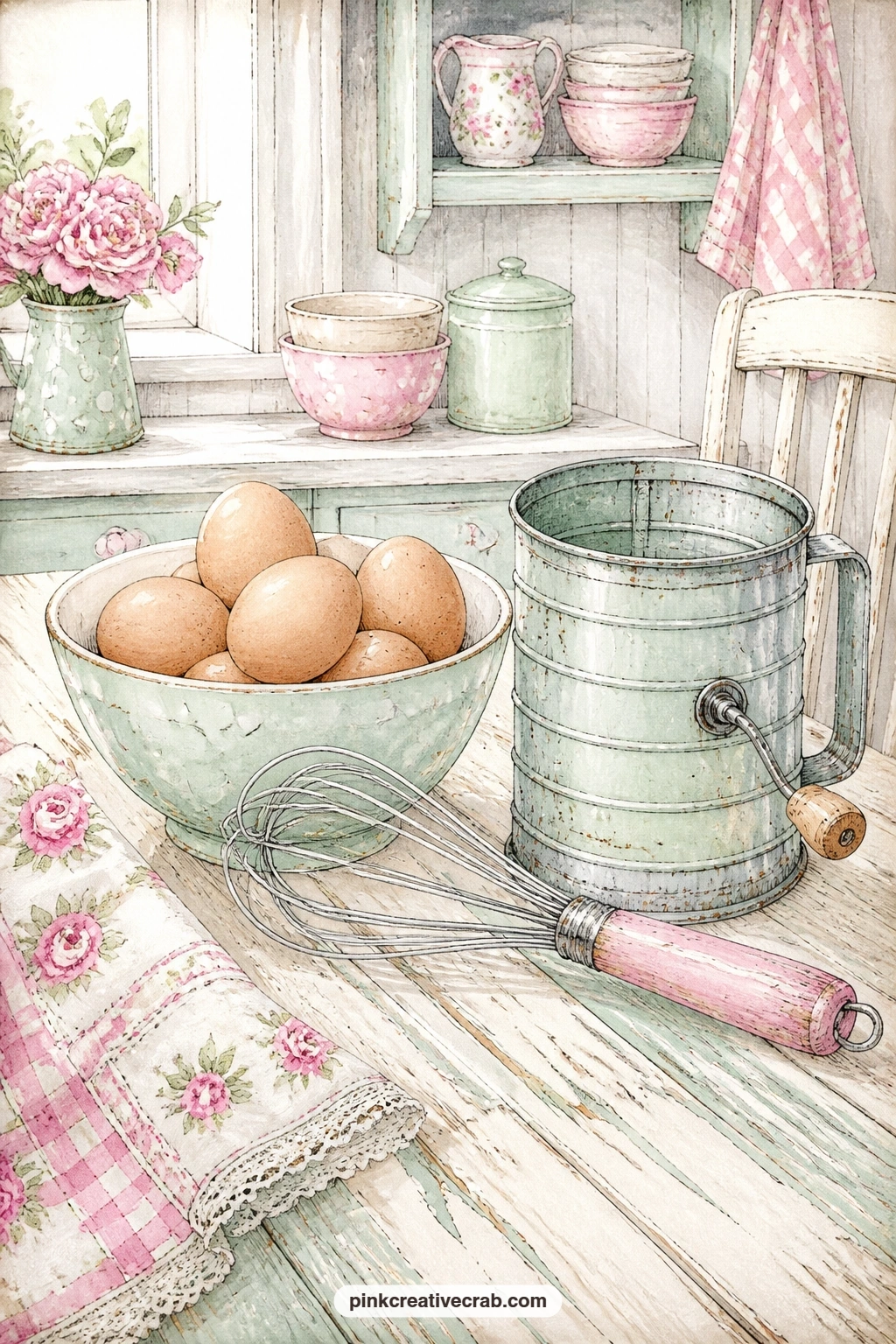
Write the start of a morning routine across this page, a line or two about what gets baked first, since the bowl of eggs and sifter already set the scene for someone about to start mixing.
Pantry And Preserves Pages
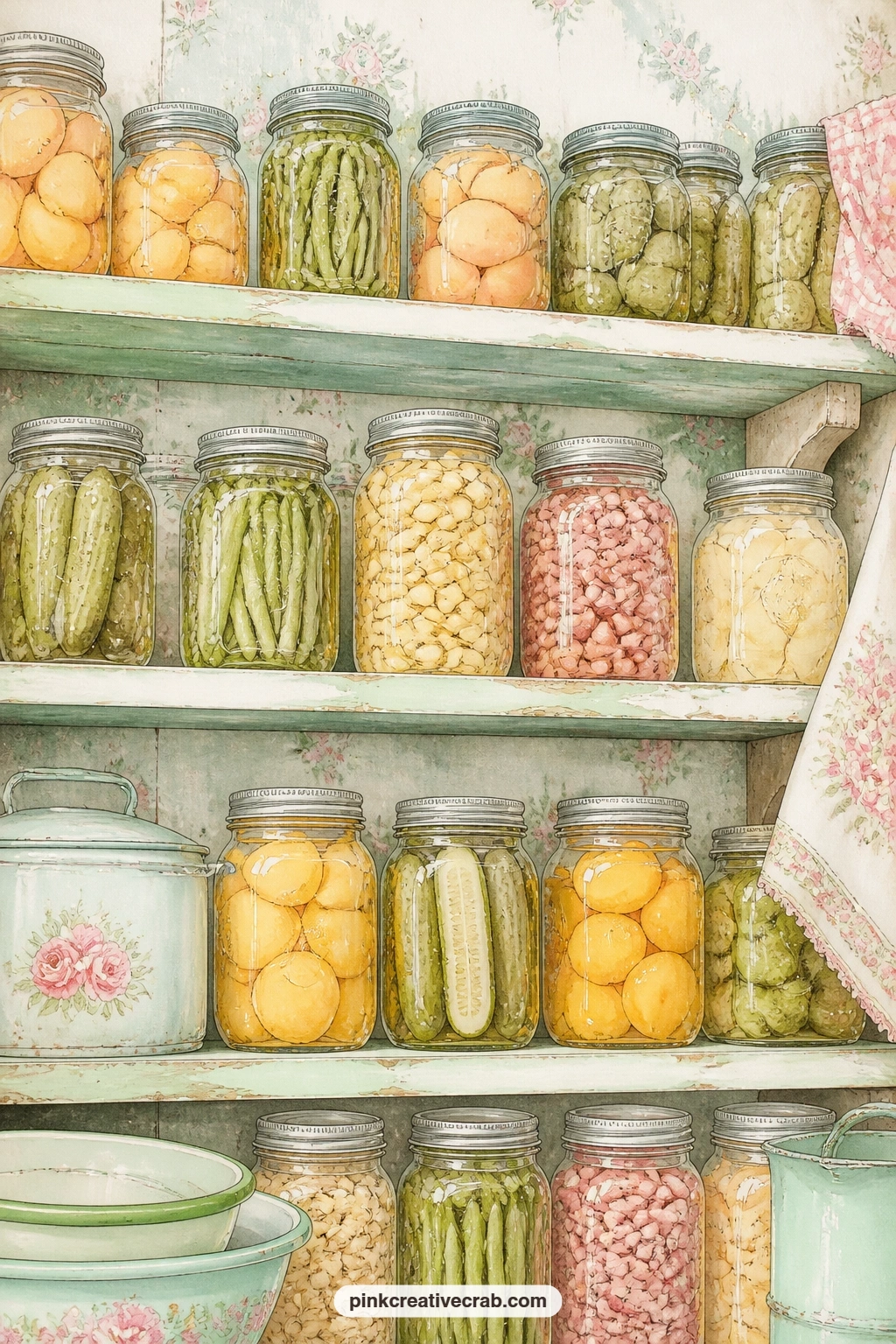
If space runs short, the five-minute version keeps just two or three jars in sharp focus and lets the rest of the shelf blur softly into the painted background behind them.
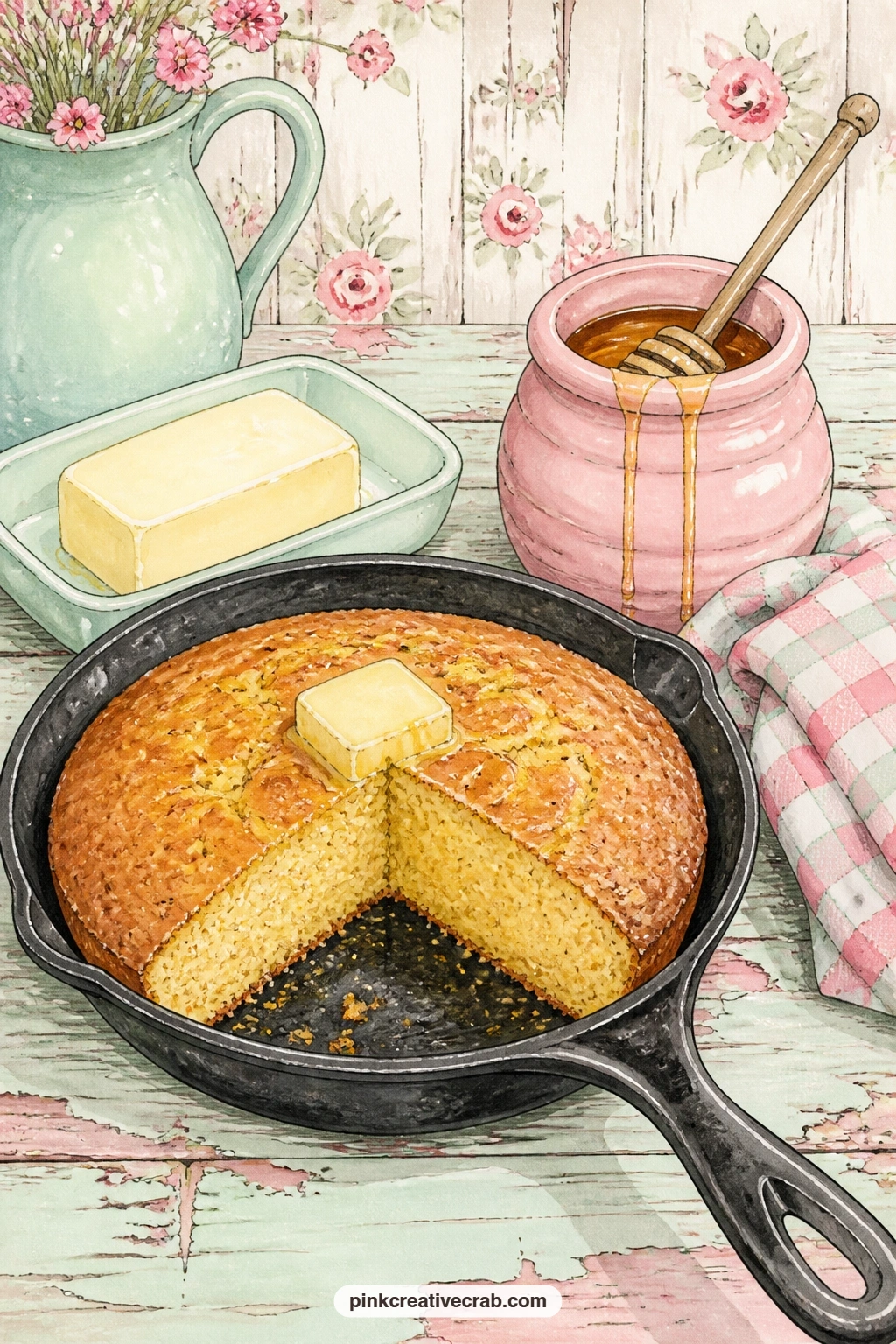
A cast iron skillet holds a wedge of cornbread beside a pat of butter and a honey pot, set down on a painted countertop that keeps the whole page warm.
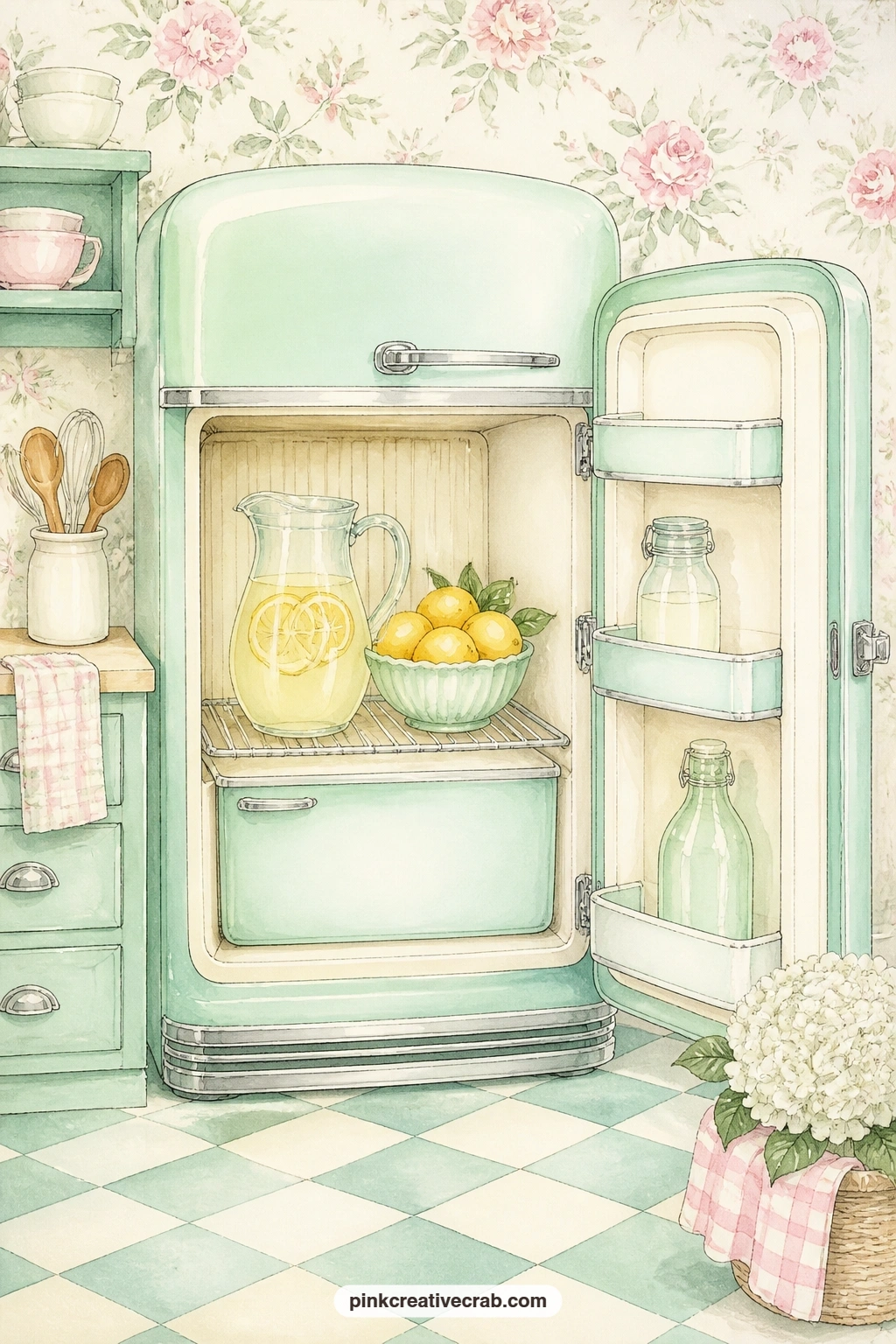
Pair this page with the lemon tile background further on, letting the fridge door open onto a shelf painted in the same soft yellow so the two pages feel like one continuous kitchen.
A mint green retro fridge holds a pitcher of lemonade and a bowl of lemons on its open shelf, bright and cool against the painted kitchen around it.
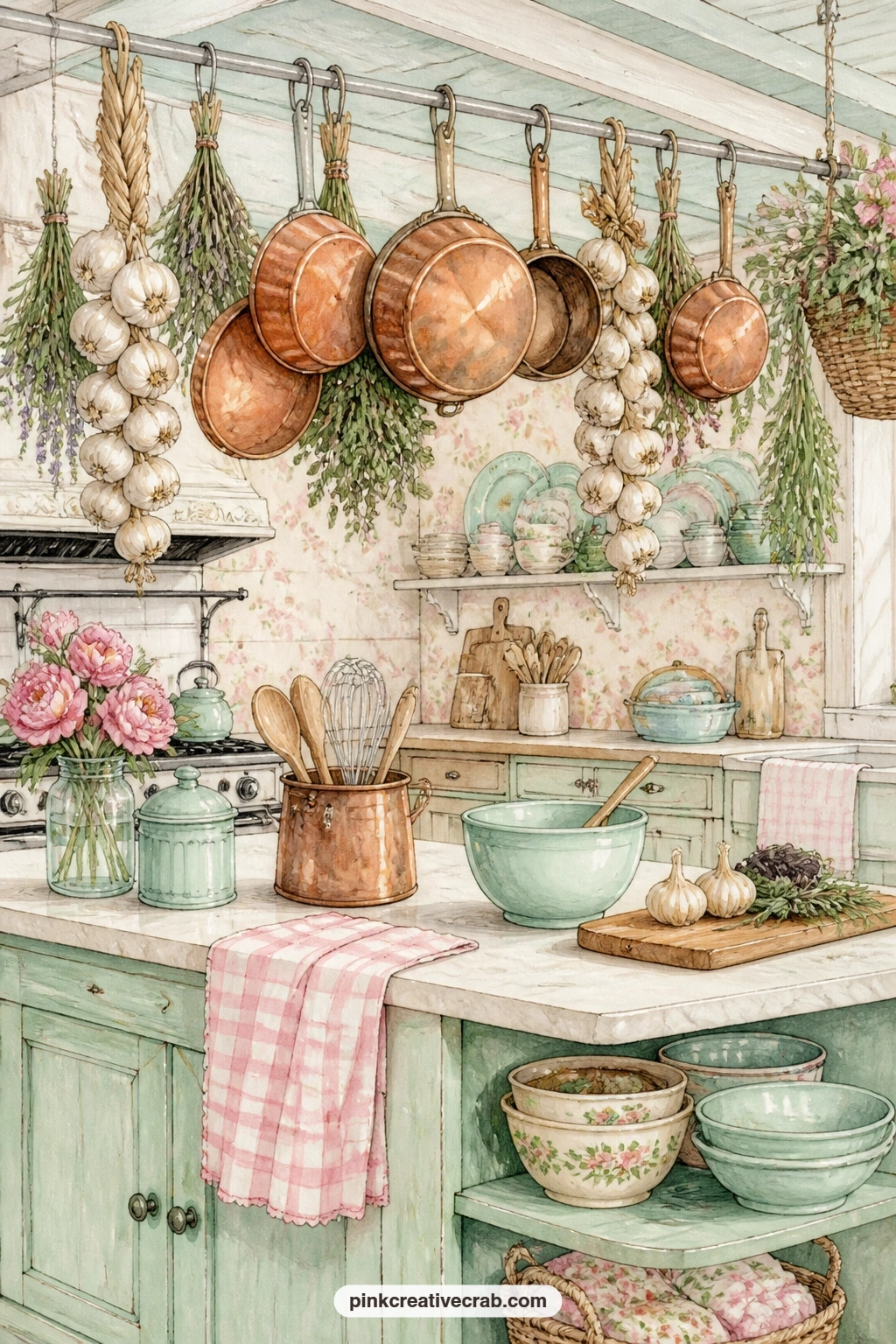
Copper pots hang over a kitchen island strung with herbs and plaited garlic braids, a corner that reads as busy and well used rather than tidy.
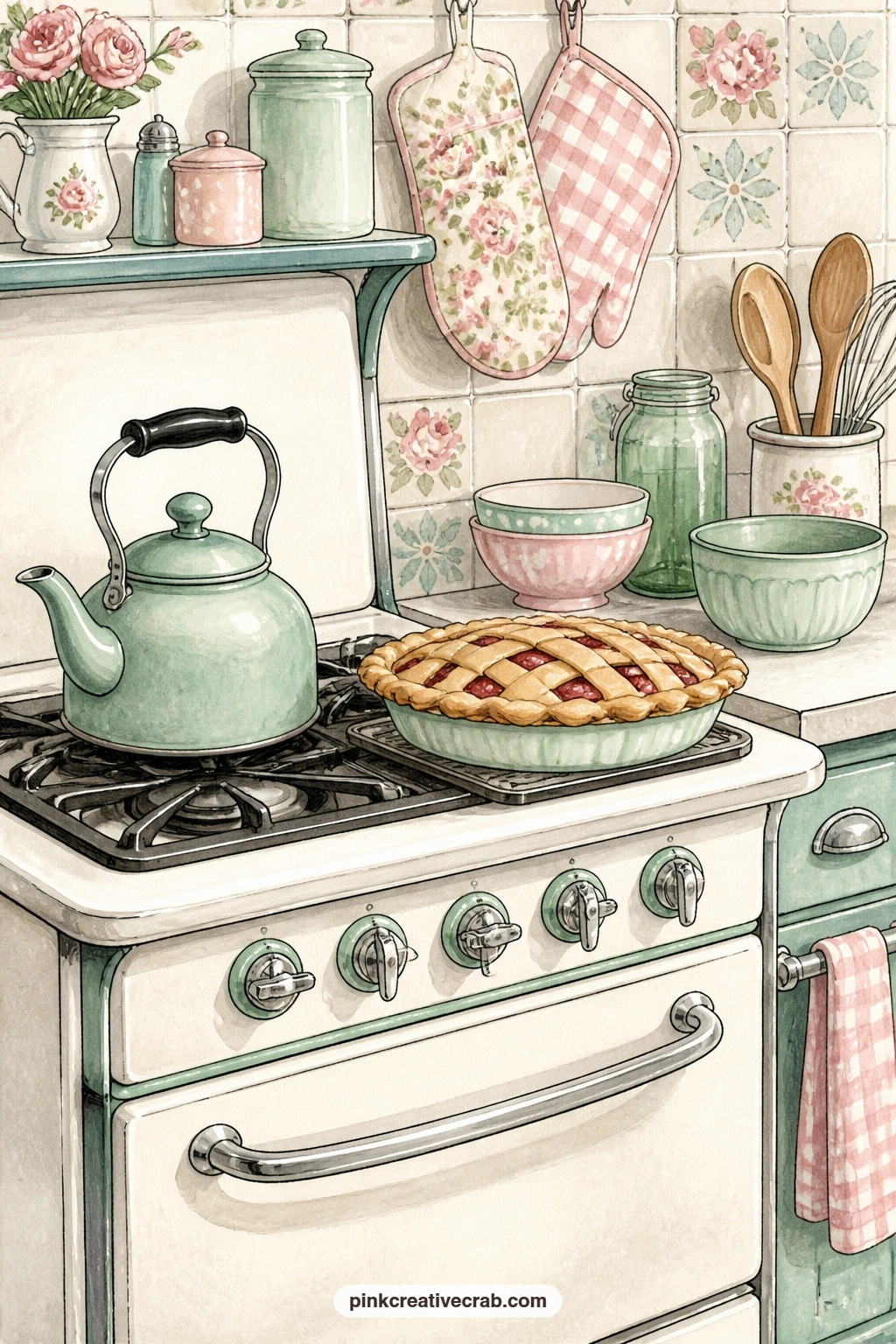
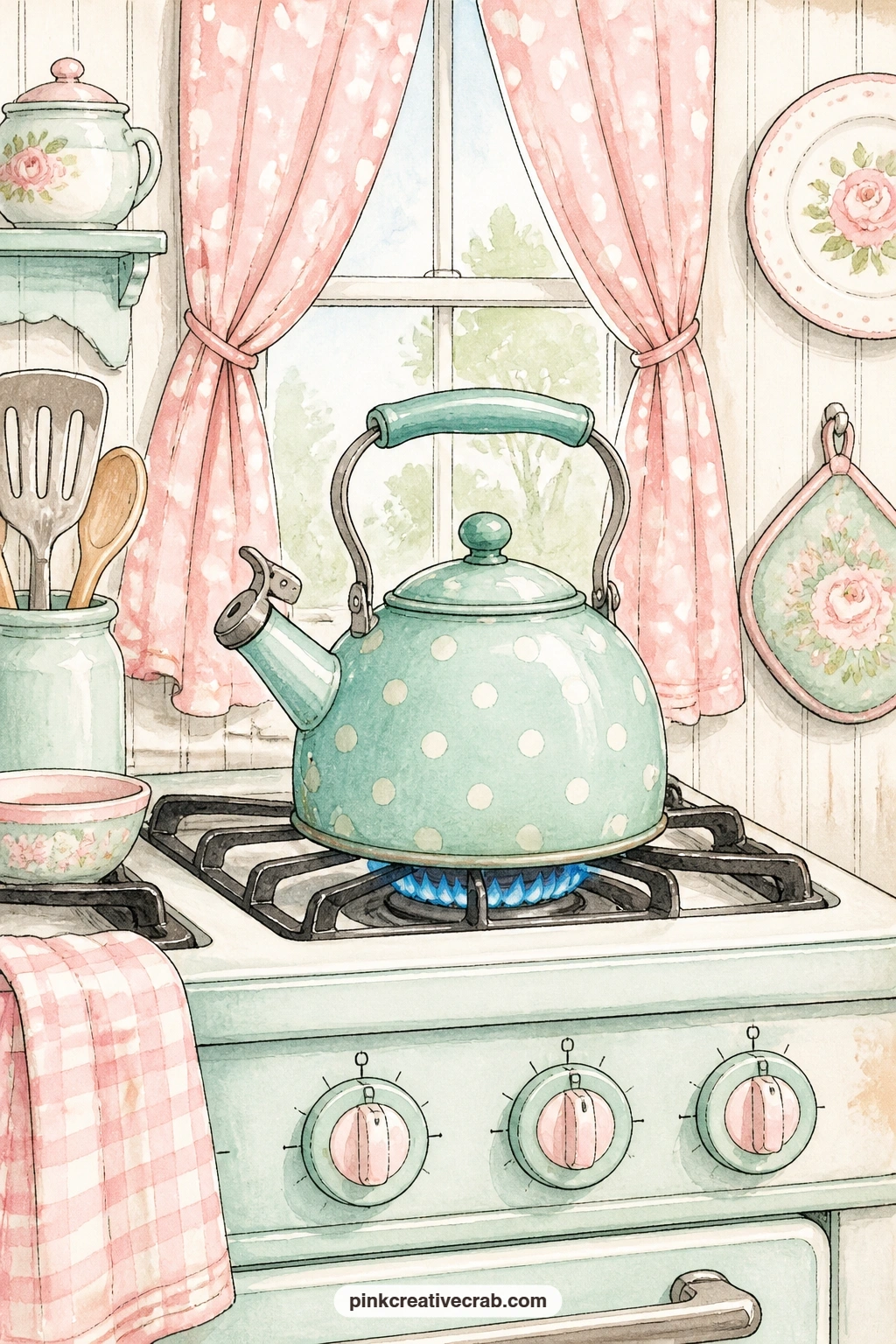
A tea kettle sits on a gas range in front of polka dot curtains, a small steady scene that fills a corner of the journal without crowding it.
Tea And Treats Pages
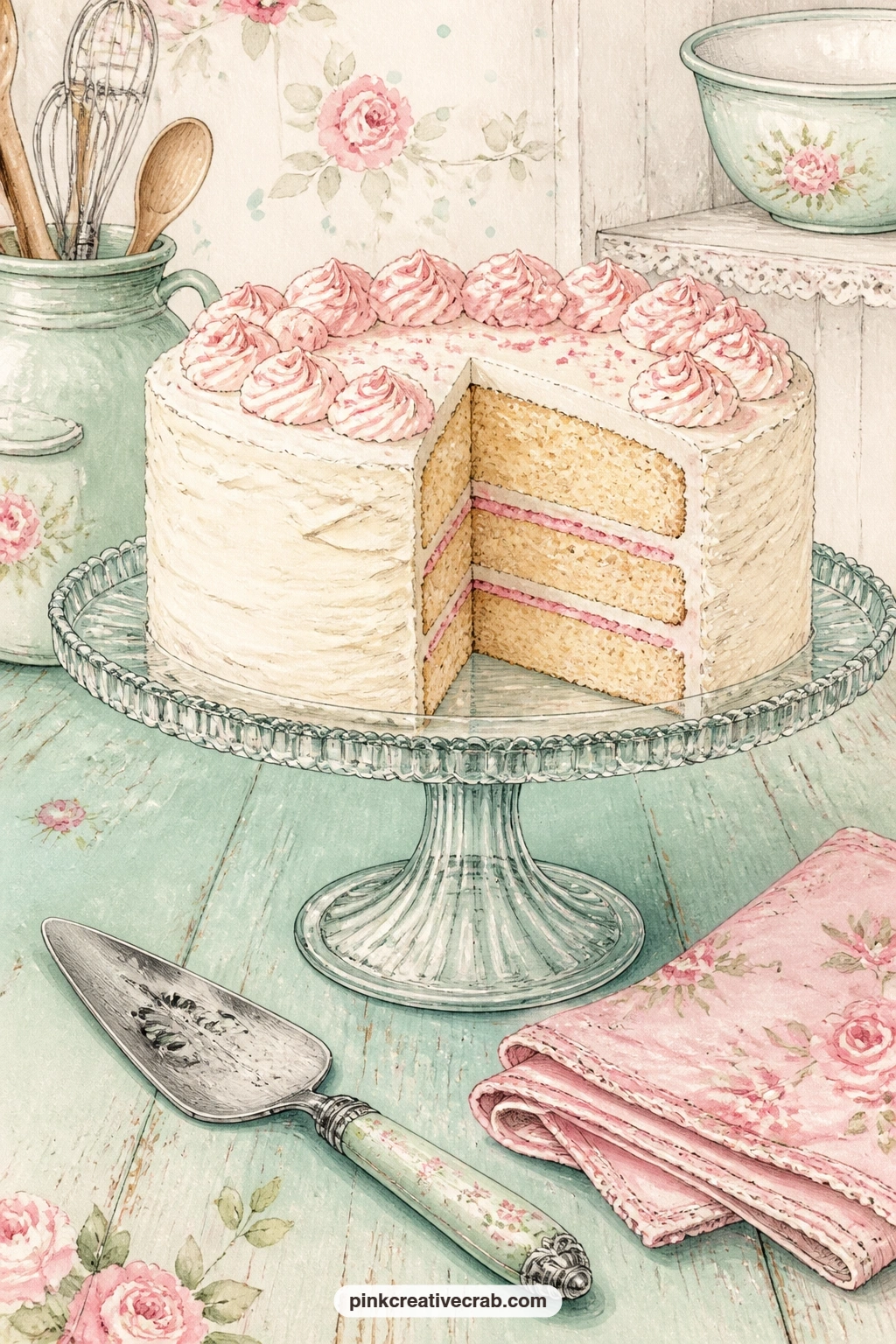
Give this page to whoever in a gift journal is the baker of the family, the one who always brings the layer cake, since a cake stand with pink napkins and a server practically asks for her name written beside it.
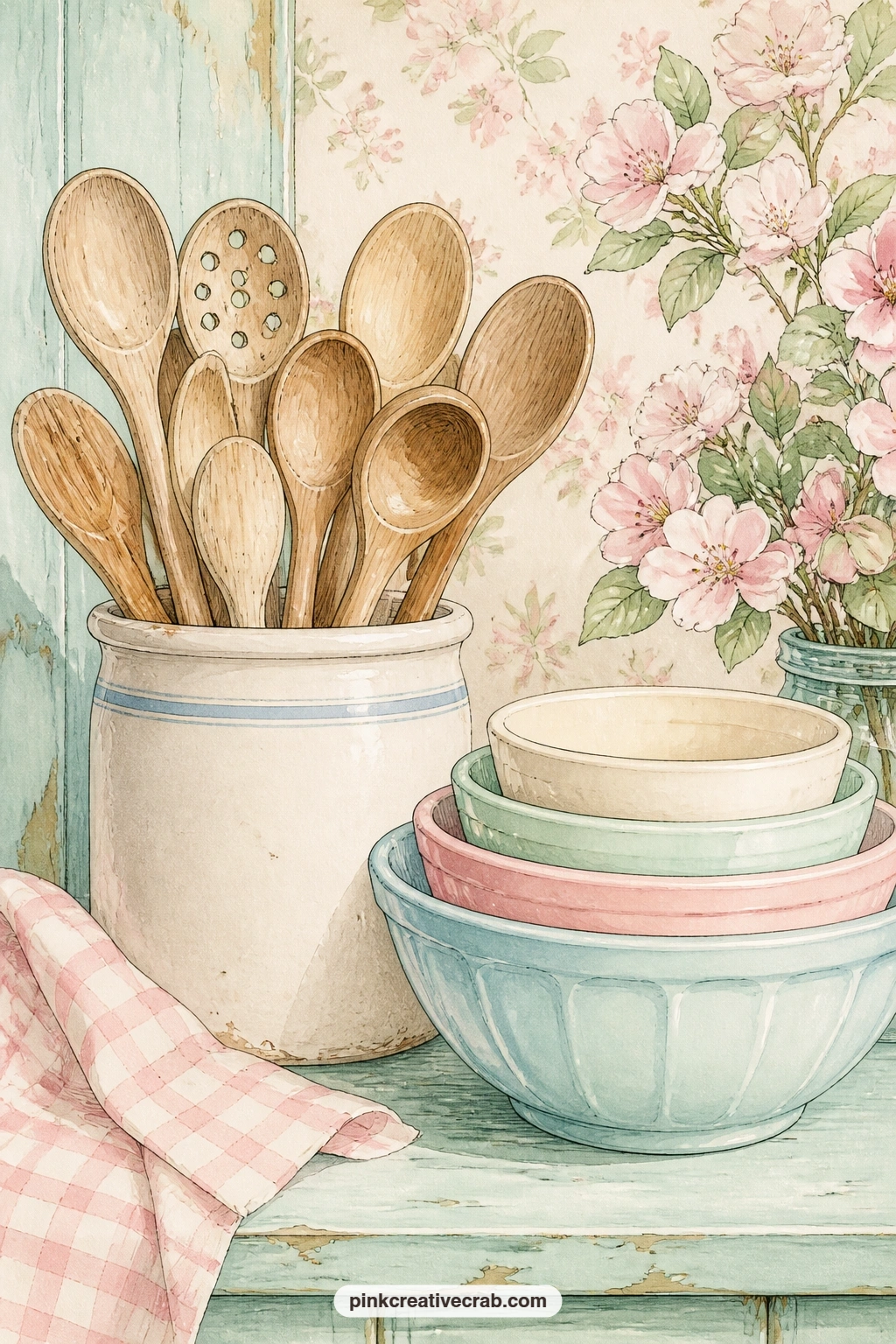
Wooden spoons crowd a crock beside a nested set of mixing bowls, a plain little still life that works well as a filler page between two bigger scenes.
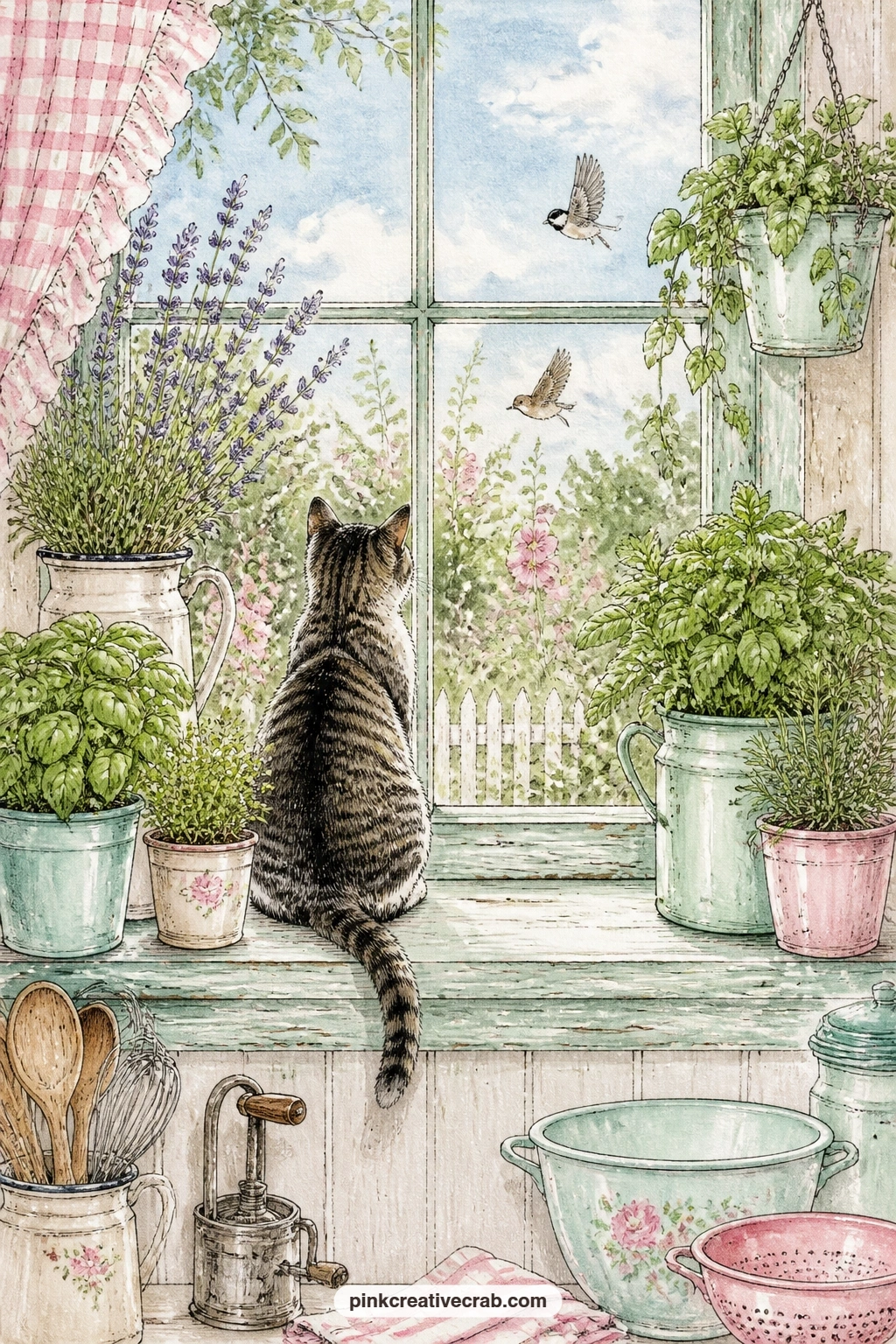
Ask a short question on this one: what grows on your own windowsill, or what would you plant if you had the space, since the potted herbs and watching cat make a gentle prompt for a quiet entry.
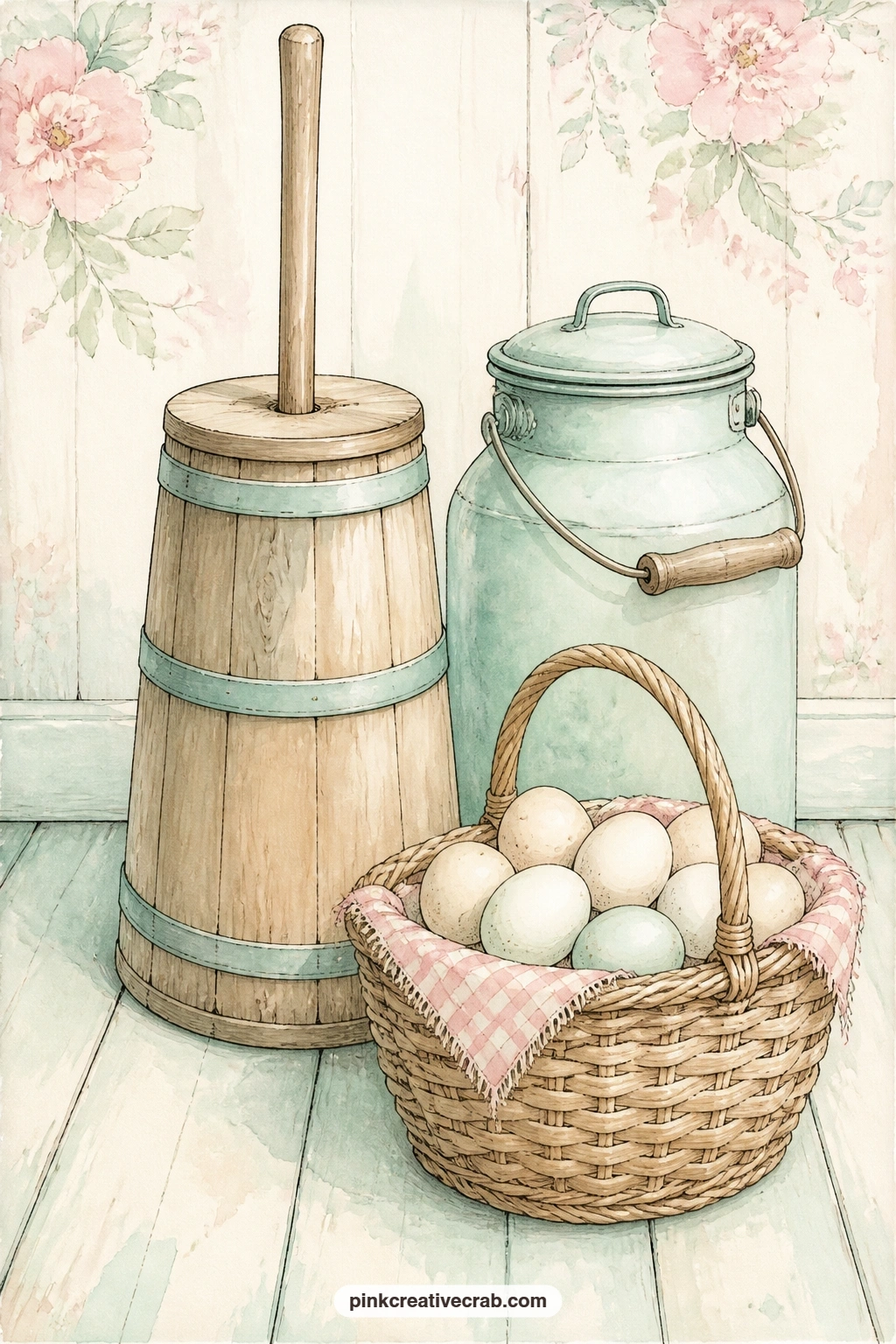
A butter churn stands beside a milk can and a basket of eggs set on a farmhouse floor, a plain working corner of the kitchen rather than a decorated one.
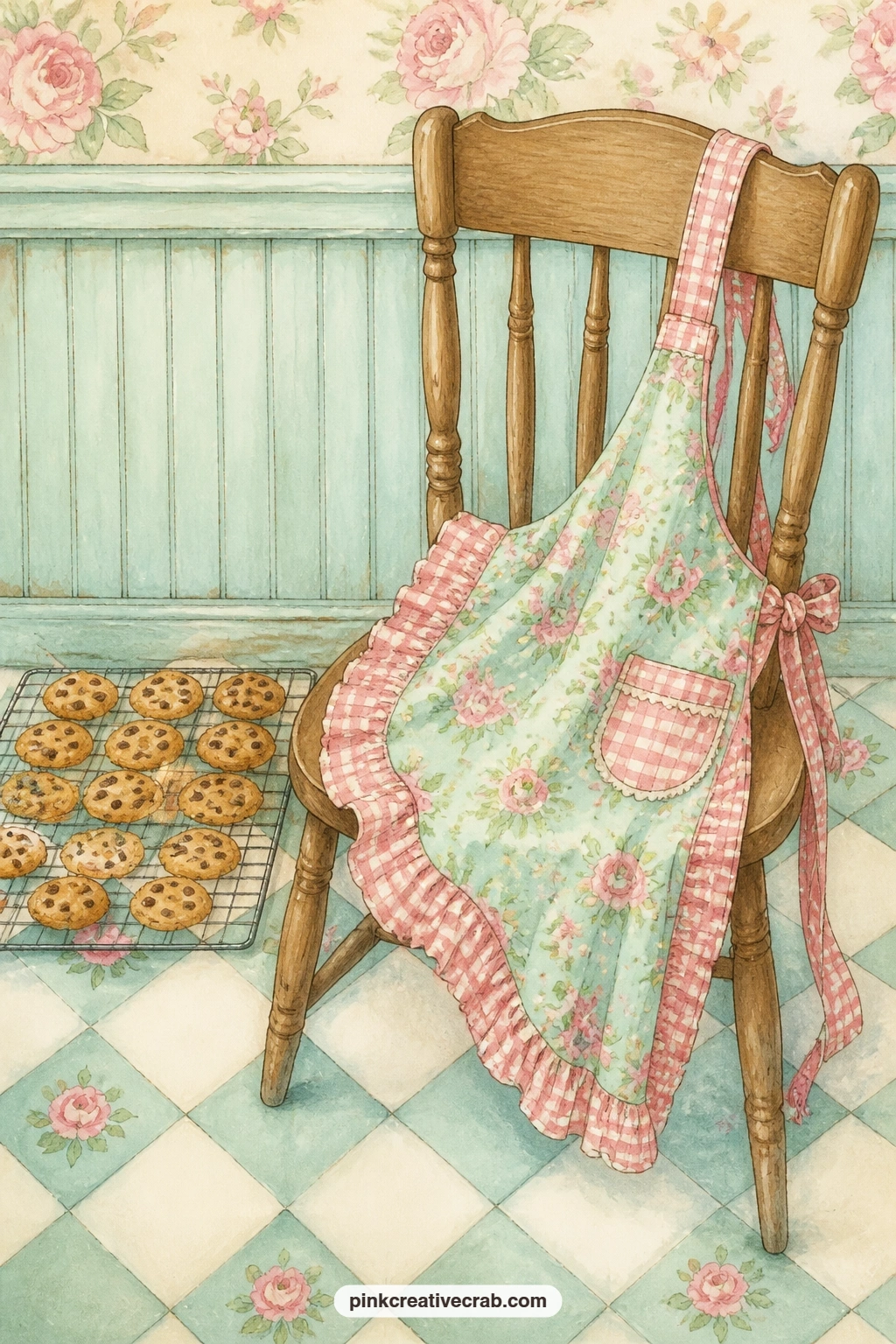
Tea-stain just the bottom edge of this page before gluing it in, since a lightly browned border suits an apron hung mid-baking far better than crisp white paper would.
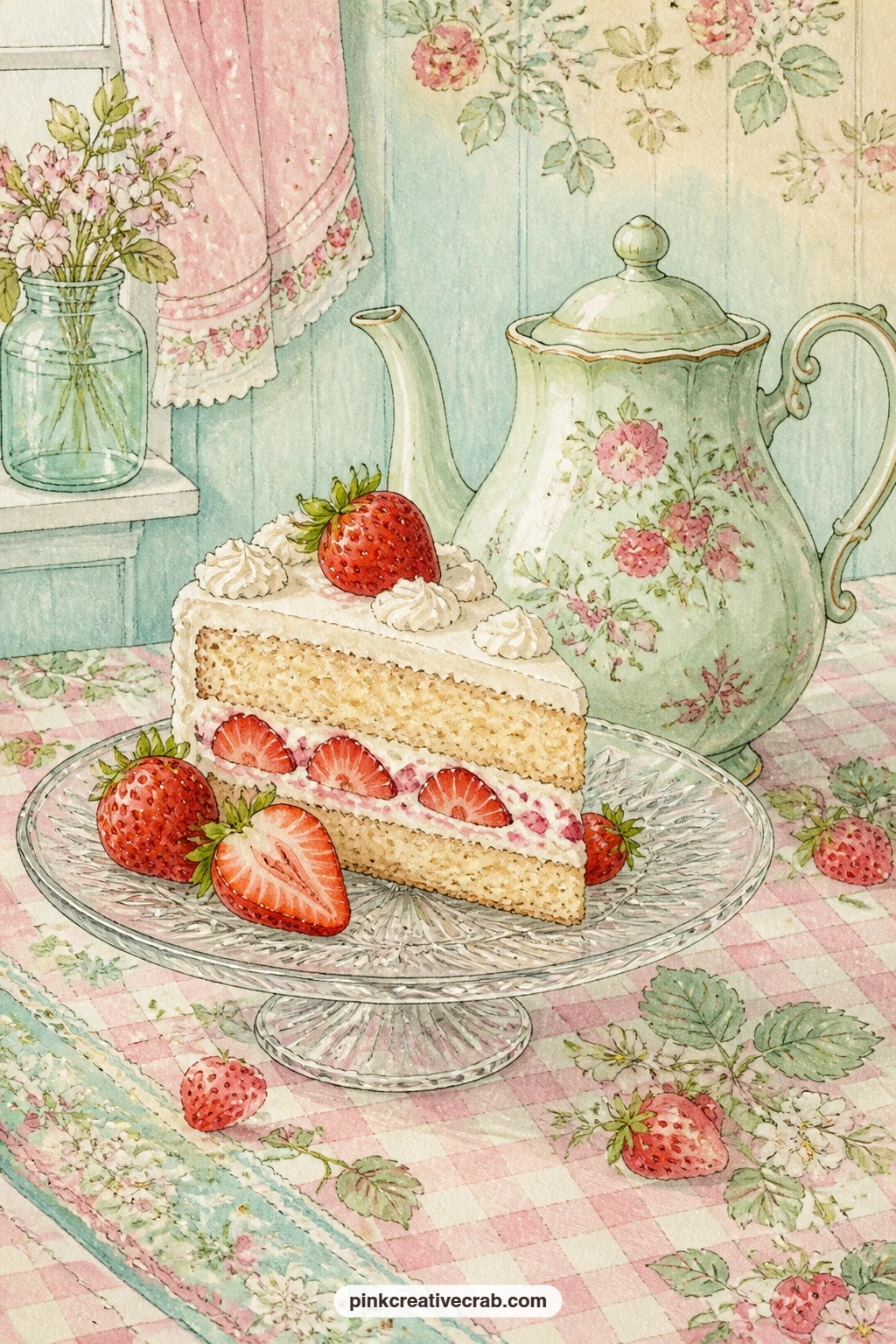
A pressed glass cake plate holds a slice of strawberry shortcake beside a teapot, set for a small afternoon break rather than a full meal.
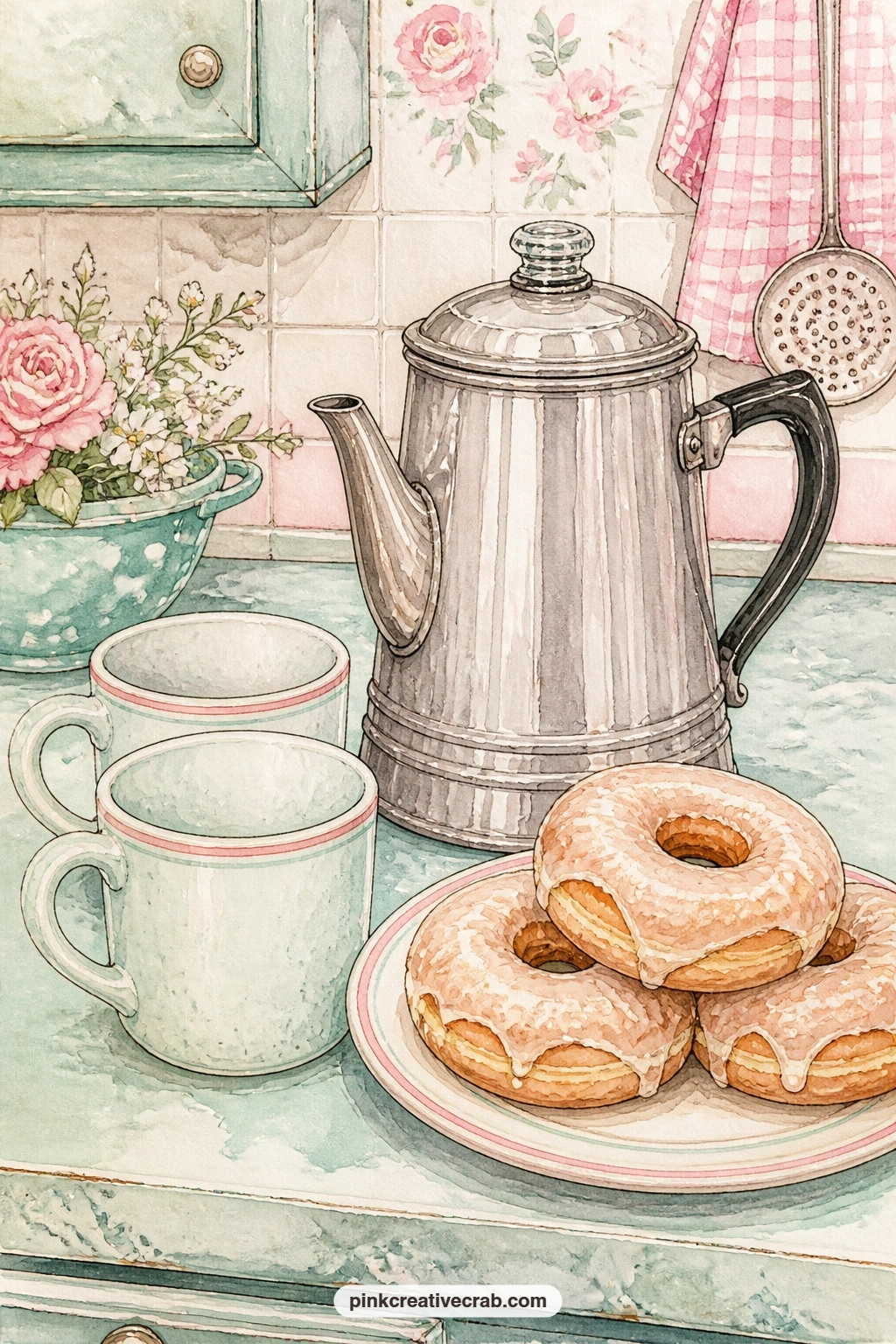
List the names of everyone who used to gather for coffee and donuts on a scrap glued beneath this page, since a percolator with diner mugs calls for company more than any other scene in the set.
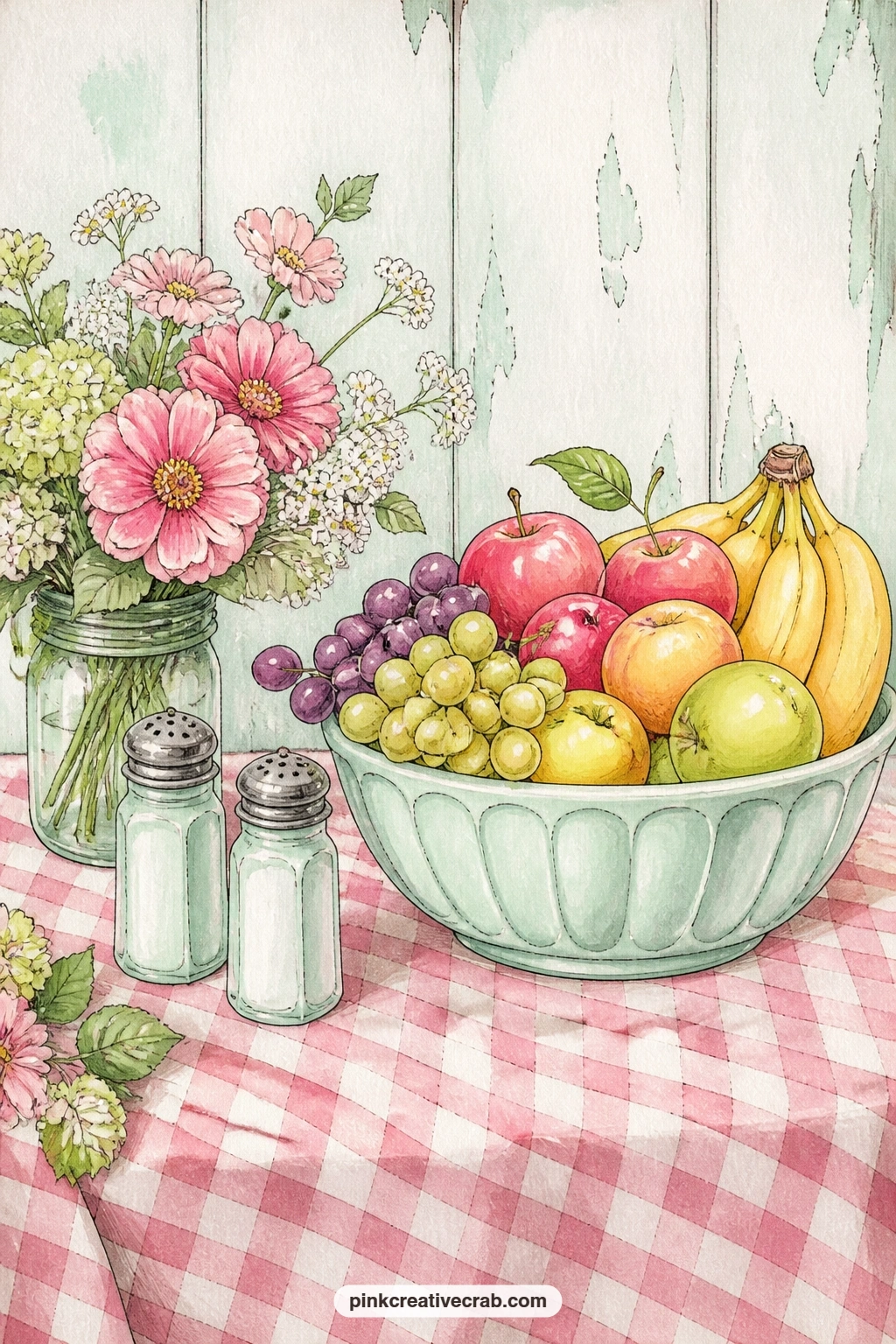
A checkered tablecloth holds a bowl of fruit, a pair of salt shakers and a small vase, a simple table setting that rounds out any kitchen spread.
Breakfast And Mixing Pages
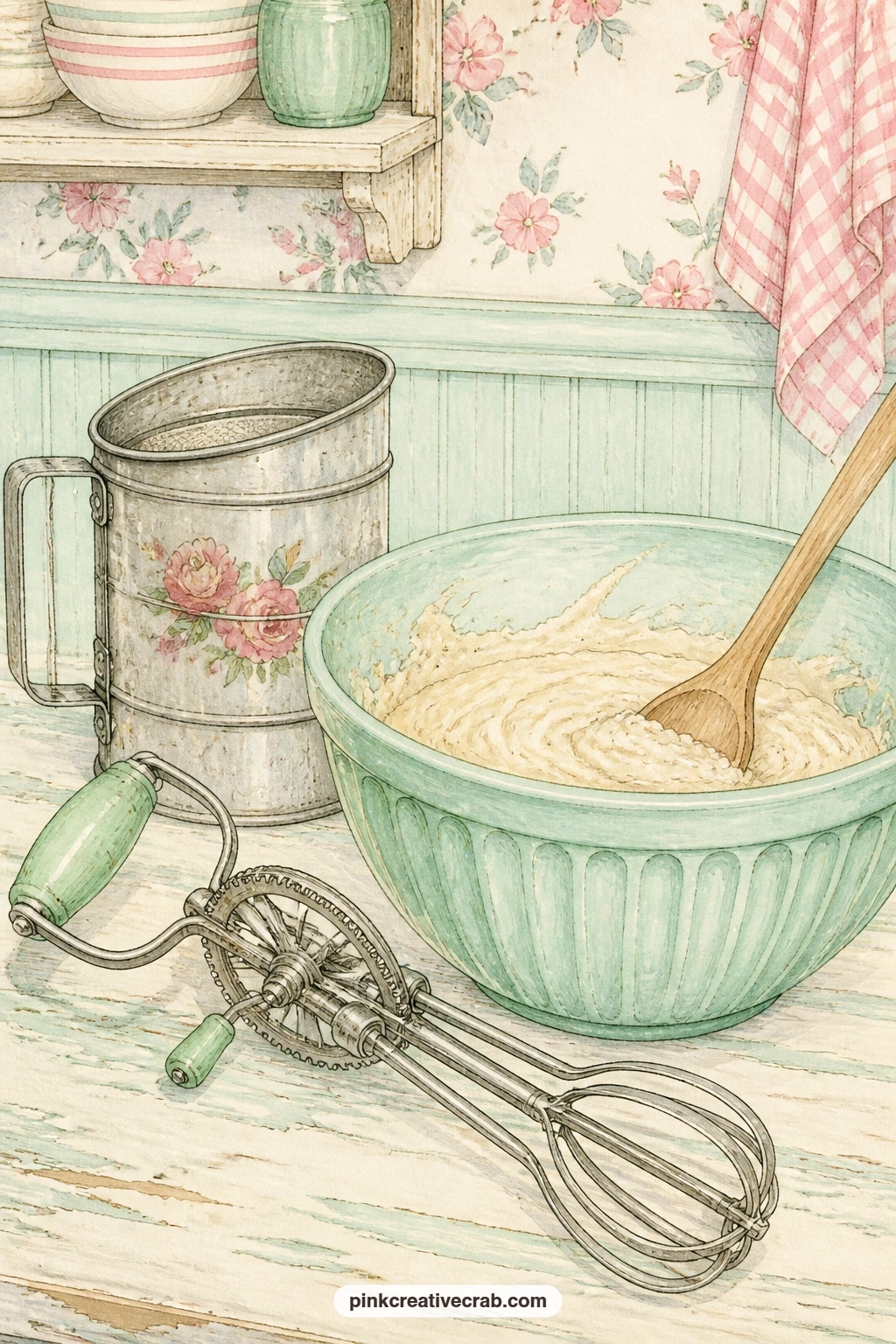
Fold one corner of this page up and glue it down flat, leaving a small triangle pocket behind the mixing bowl just big enough to hide a recipe card or a photo.
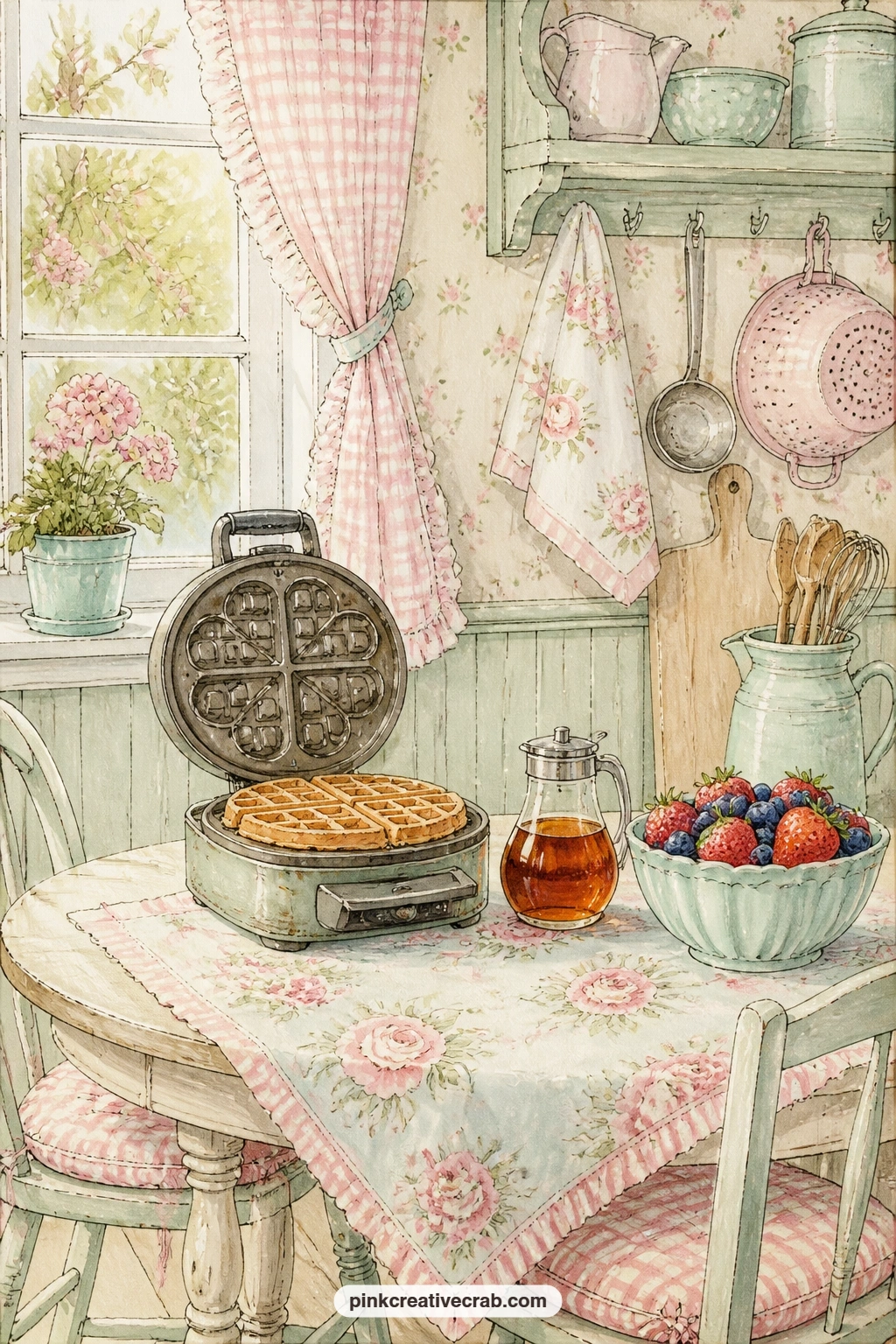
A breakfast nook holds a waffle iron, a syrup jug and a bowl of berries, the sort of morning page that pairs nicely with the farmhouse scenes earlier in the journal, much like the harvest tables found in a Thanksgiving junk journal.
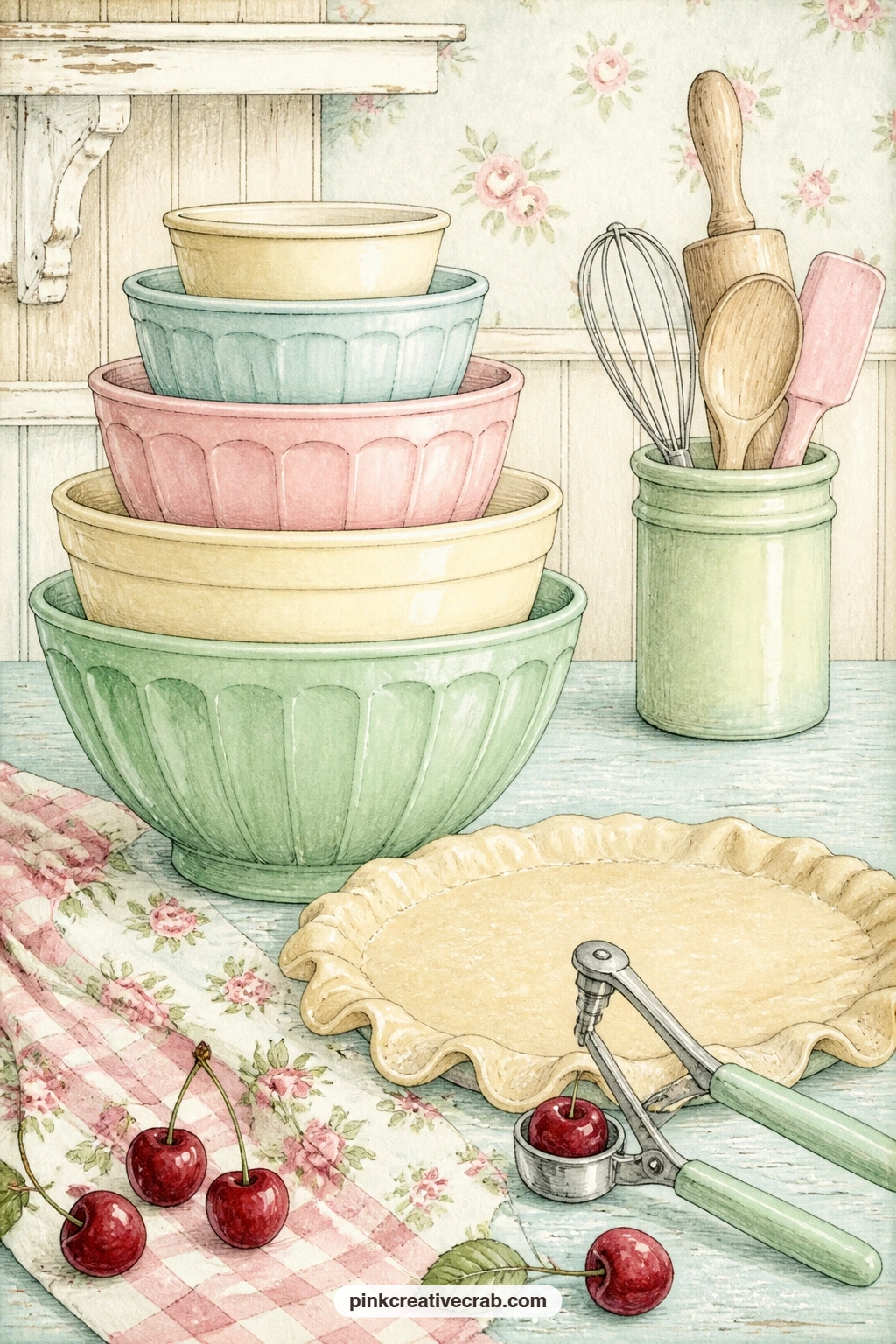
Stacked pastel mixing bowls stand beside a rolled pie crust and a cherry pitter, closing out the scene pages on the same note of baking they began with.
Background Papers
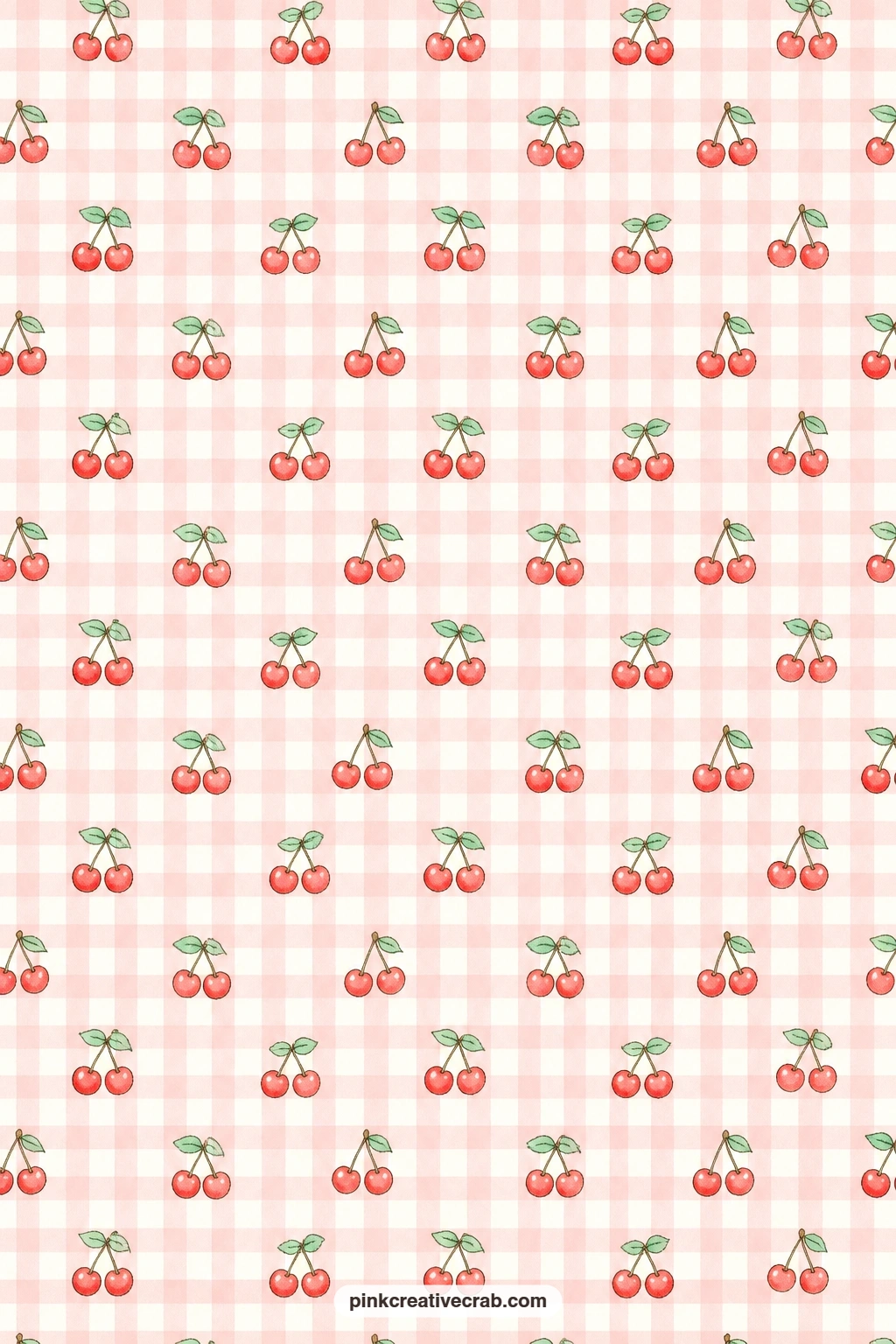
Small cherries scatter across a gingham check in this all-over pattern, suited to lining a pocket, backing a baking photo or wrapping a journal cover in the same soft pink and cream as the scene pages.
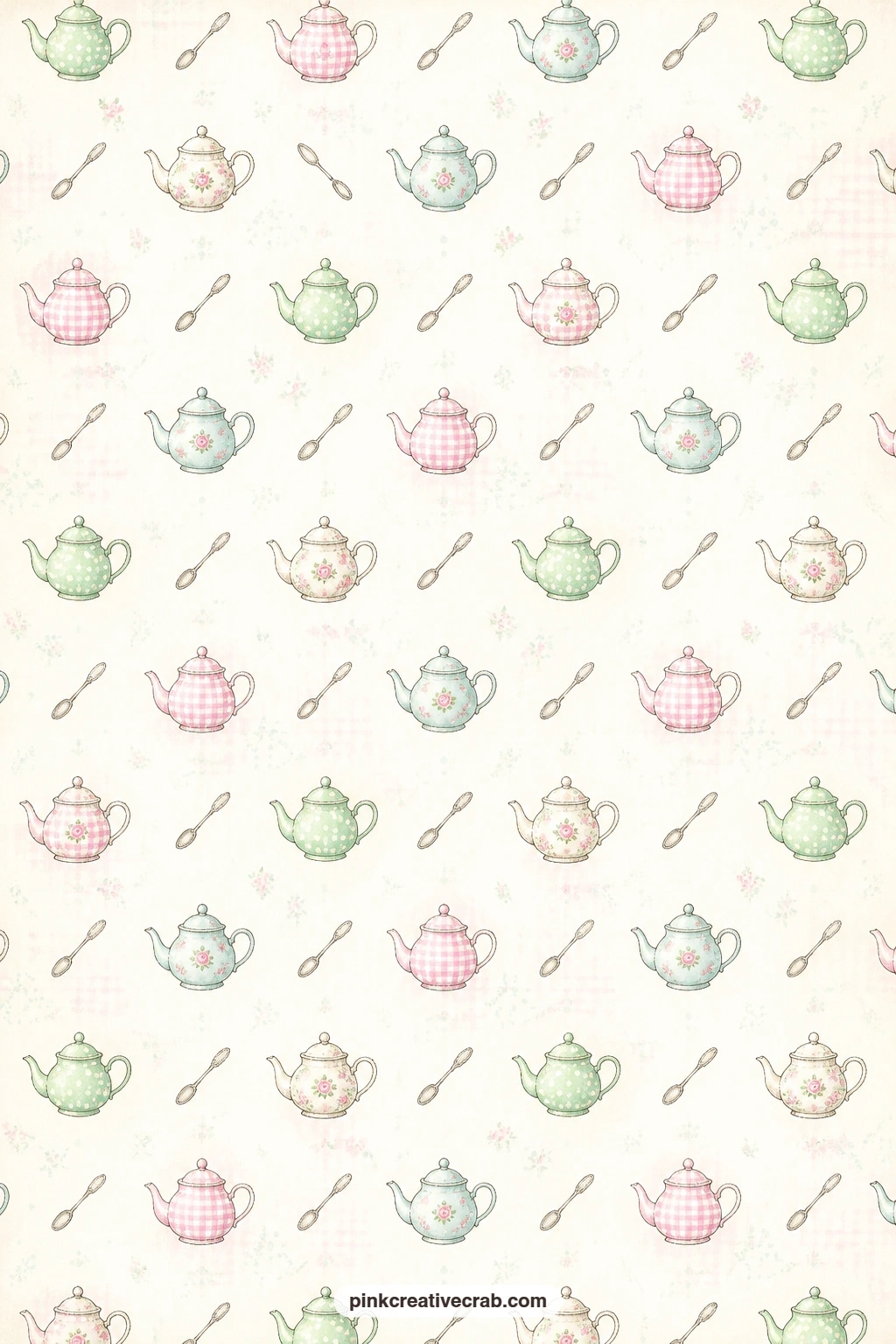
Rows of tiny teapots and spoons repeat across this page, a good lining for a tea themed pocket, a cover sheet or the backing behind a photo from an afternoon tea.
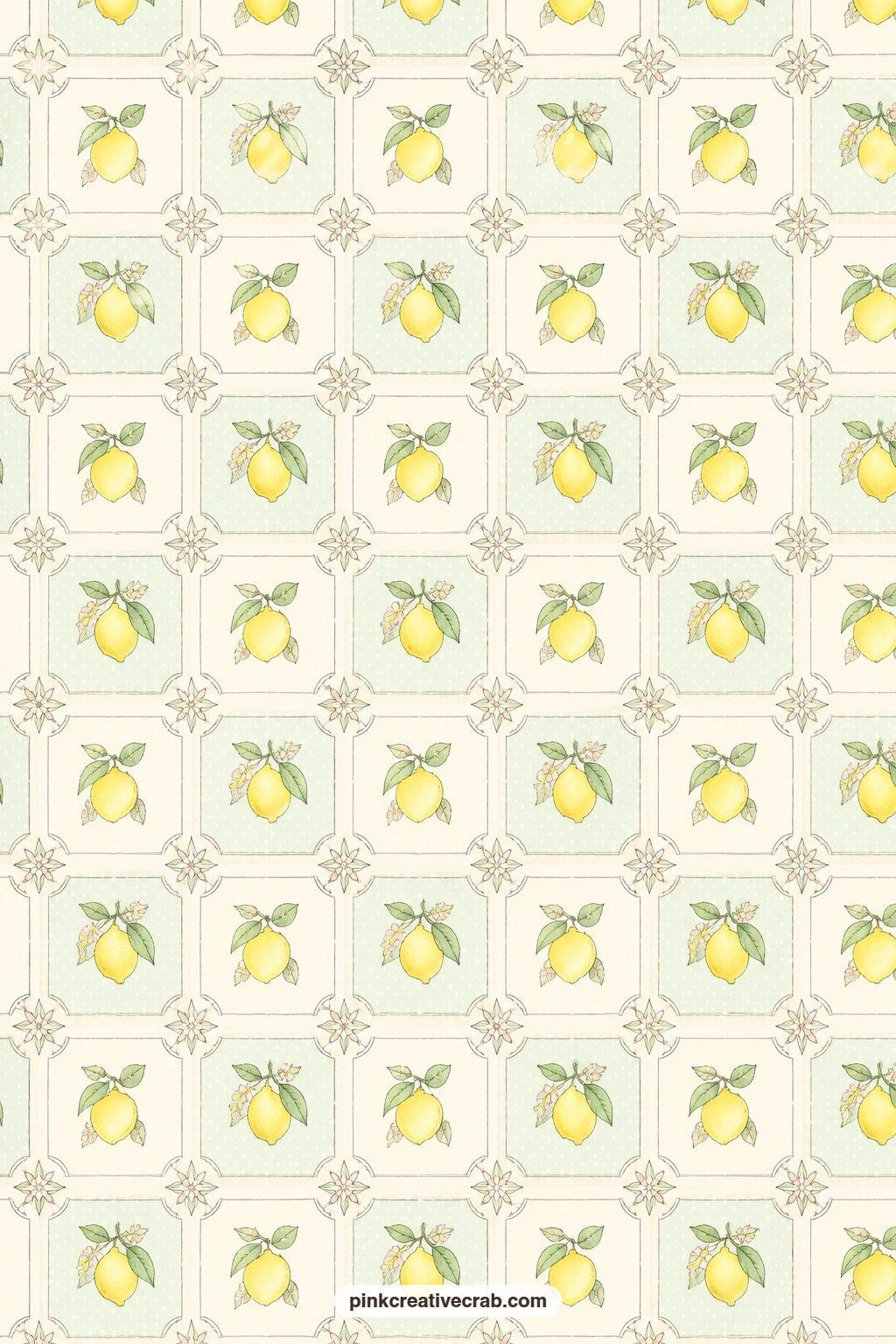
Lemons sit inside a tile shaped grid across this background, a cheerful option for the inside of a pocket, a cover wrap or backing for a photo of the kitchen in summer.
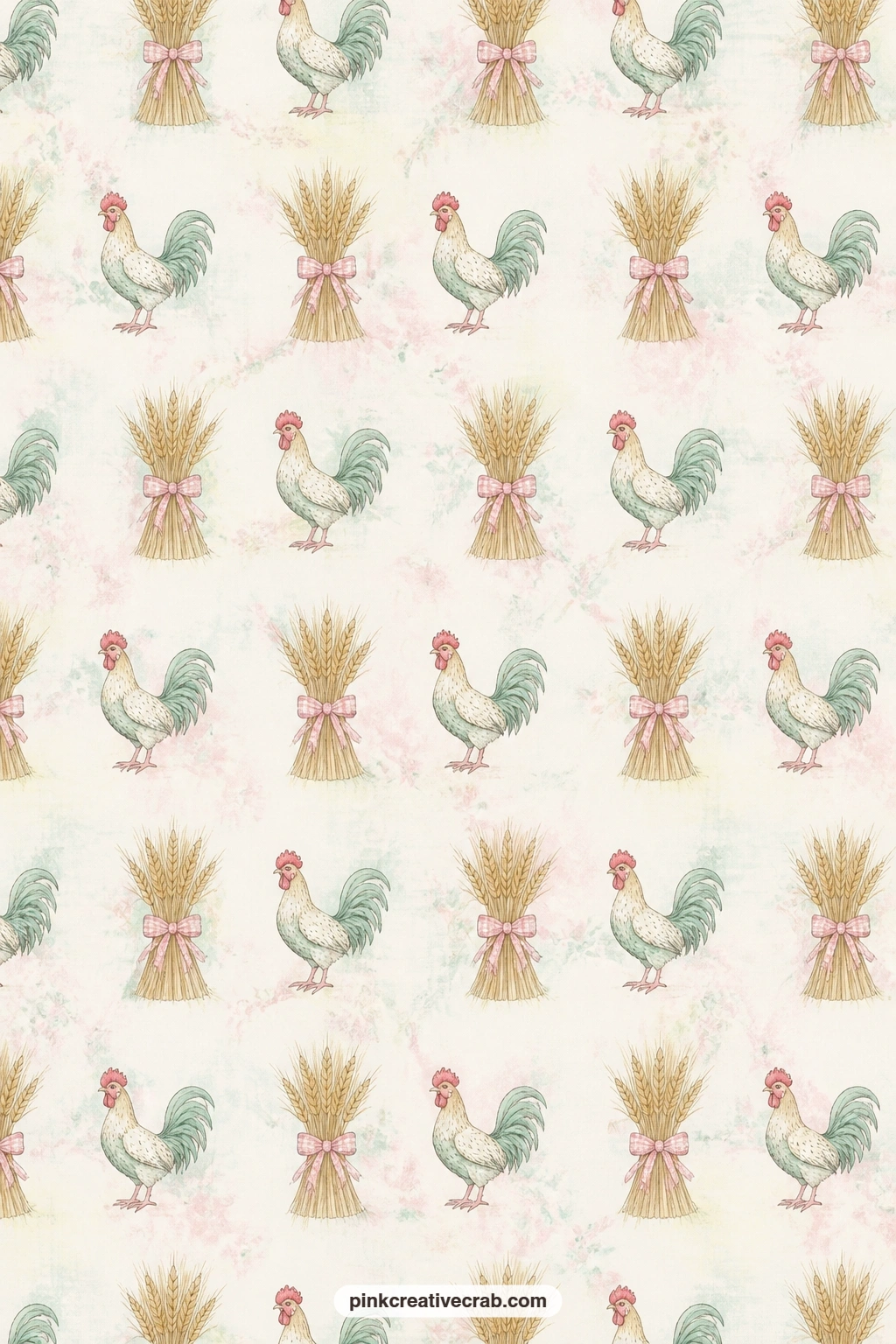
Roosters and small wheat sheaves alternate across this all-over pattern, fitting for a farmhouse style cover, a pocket lining or the backing behind a pressed herb from the garden.
Strawberries scatter across polka dots in this fabric inspired pattern, well suited to a pocket lining, a cover sheet or the backing behind a recipe card tucked into the journal.
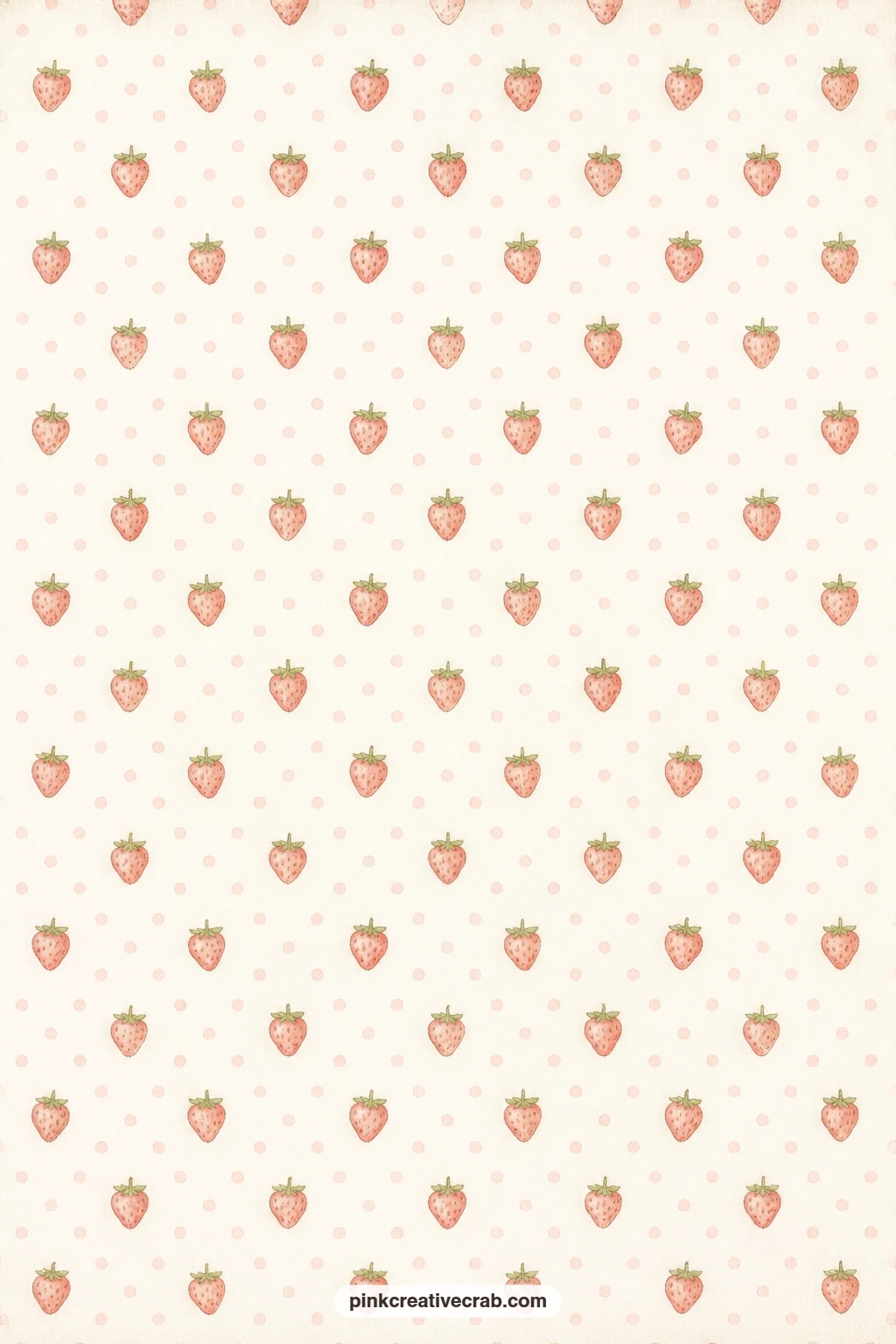
Lined Writing Pages
A gingham band runs along the bottom edge while faint ruled lines fill the middle, ready for a gift list, a shopping list for Sunday baking or a short letter to next year’s self about the kitchen.
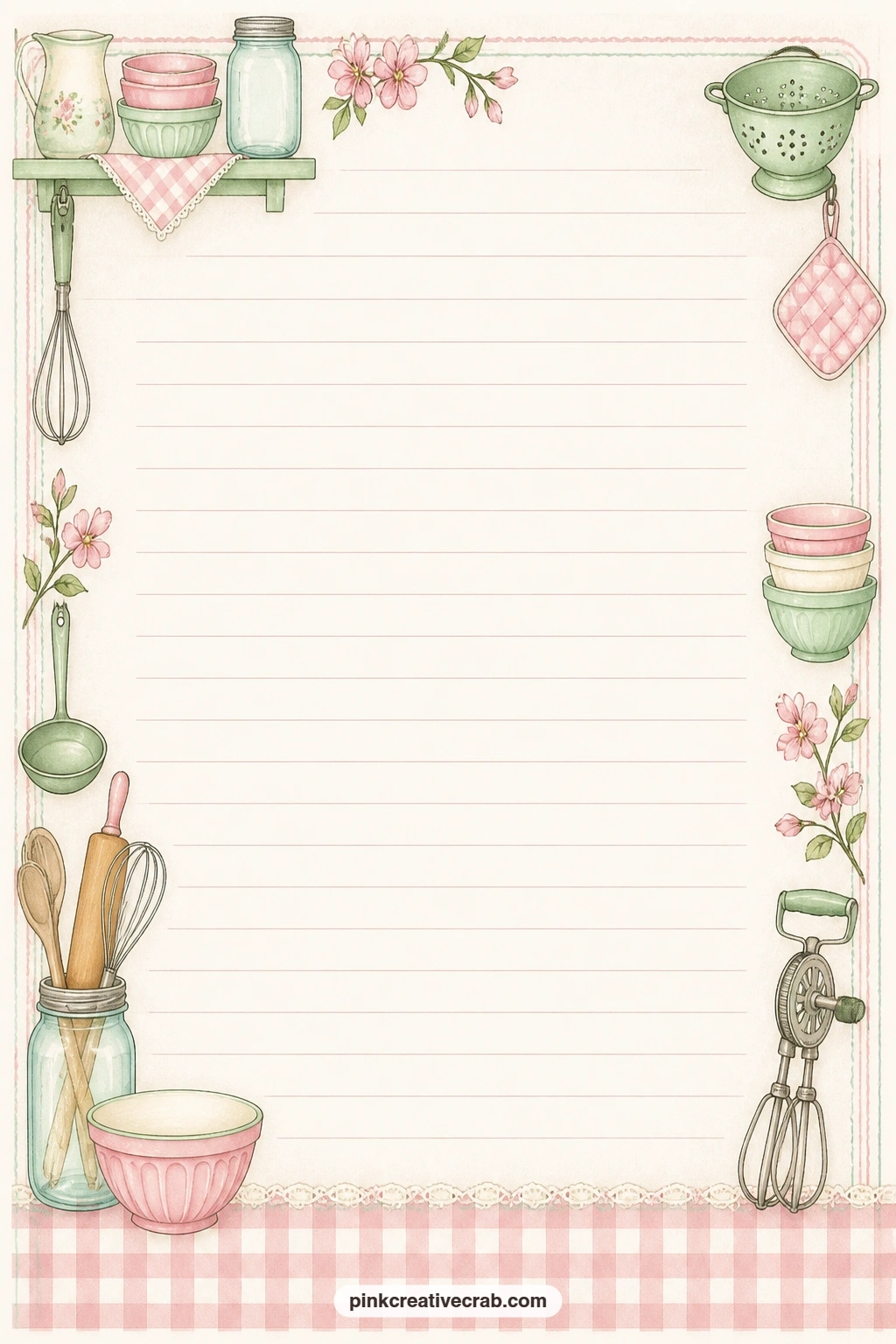
A small row of mixing bowls and a whisk sits across the top as a header, leaving the ruled lines below free for a family recipe, a baking day menu or notes from a kitchen afternoon.
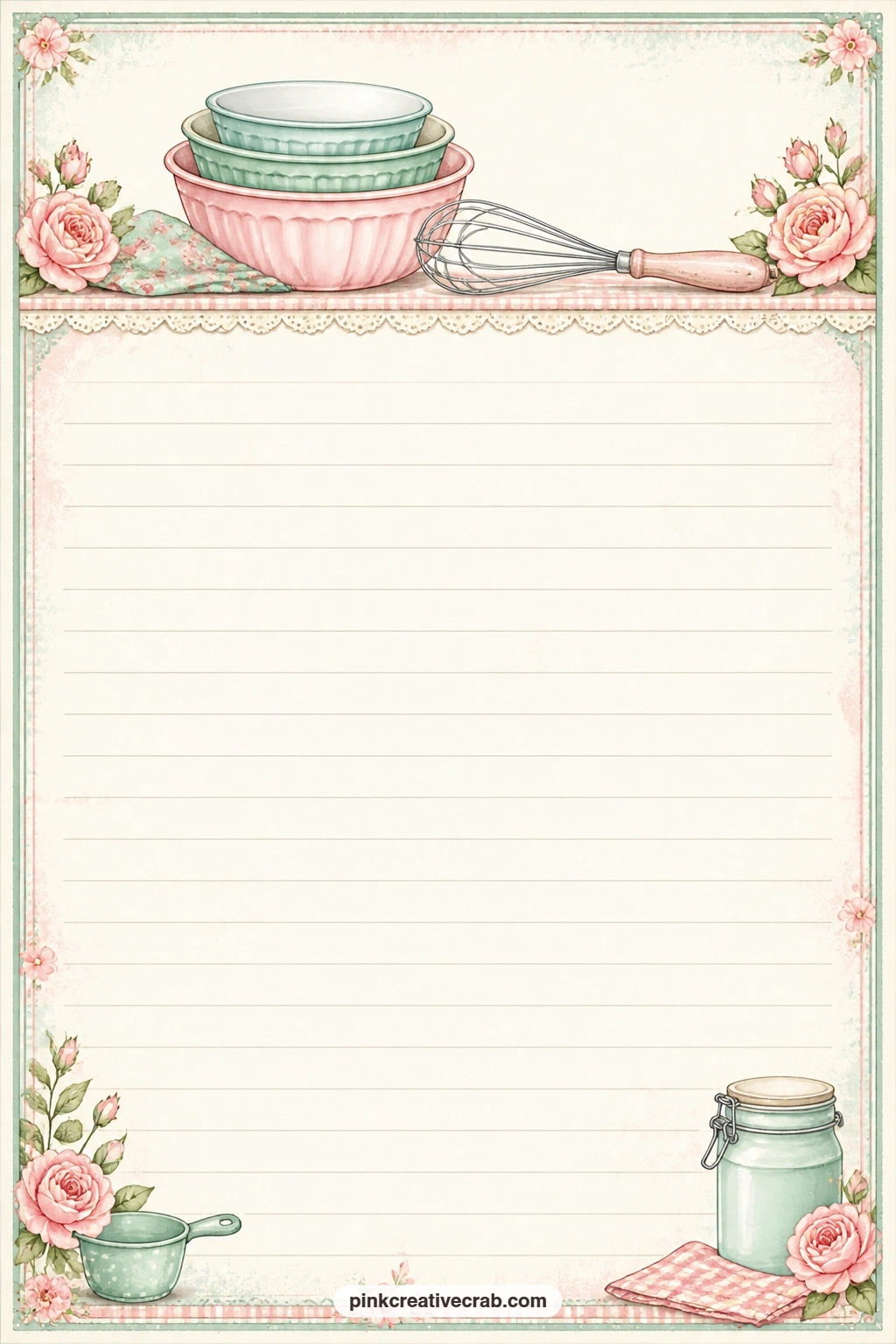
A teapot and a scatter of cherries fill one corner while the rest of the page stays open and lined, suited to a tea time menu, a guest list or a letter about an old family recipe.
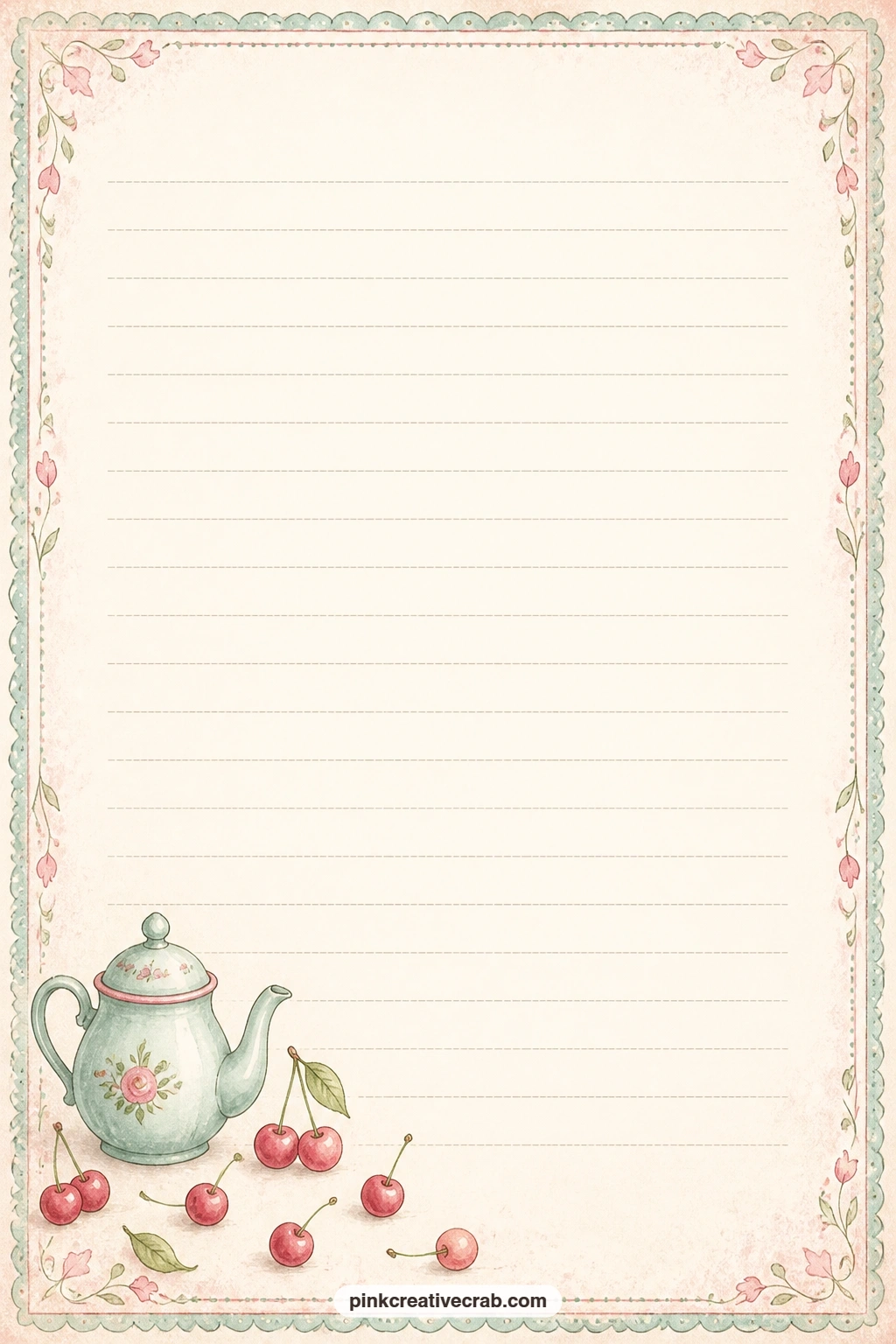
A scalloped border styled after a pie crust runs around the page, with ruled lines inside for a pie recipe, a list of fillings to try or a short note about a favourite baking memory.
Small wooden spoons and whisks run down one side of the page as a border, leaving the lined space open for a grocery list, a cooking lesson learned or a note to whoever uses the kitchen next.
What to Do Next
Print the pages on matte cardstock, trim them to size and start gluing in whichever scene speaks to you first, pairing it with a background or lined page as you build out the kitchen.
Frequently Asked Questions
What paper works best for printing these pages?
Heavyweight matte cardstock, around 24 to 32 lb, works best because it holds the colour flat and takes glue or tape without buckling or showing through to the other side.
What printer settings give the best colour?
Set the printer to its highest quality or photo setting and choose matte or plain cardstock in the paper type menu, which keeps the pastel colours from printing too pale or grainy.
What size should I print the pages?
Print at full letter or A4 size for standard journals, then trim down to match your journal’s cover size, since trimming after printing keeps every page aligned to the same edge.
Can I colour or add to these pages by hand?
Yes, a light coloured pencil or a fine gel pen adds nicely to the printed watercolour without overpowering it, especially along borders or inside the lined writing pages.
What should I use to glue the pages into a journal?
An acid free glue stick works well for flat pages and keeps edges from wrinkling, while a small amount of liquid glue suits pockets, folds and any tea-stained or torn edges.
Have any thoughts?
Share your reaction or leave a quick response — we’d love to hear what you think!
-
 0
-
0
-
0
-
0
-
0
-
0


