

Table of Contents
A winter botanical junk journal slows the season down to the small things worth noticing: the first snowdrop at the base of a wall, frost lacing a leaf, a bowl of pinecones warming on a linen table. This kit gives you nineteen scene pages for those quiet garden moments, four seamless background papers for covers and pockets, and four lined writing pages for the words that go alongside them.
Print the set on matte cardstock heavy enough to take glue without curling, with your printer set to its best or photo quality so the frost and fine lines stay crisp. Trim to your journal size once everything is dry, and keep a paper cutter handy for the background sheets, which work well cut down into smaller pockets and tags.
Using these images: free for personal projects such as printing, coloring, cards, journals and gifts. Handmade items that include them may be sold up to 30 pieces per design. More than that is commercial use and is not permitted, and neither is selling or sharing the images themselves or passing them off as your own. Please ask before any other use.
First Signs Of Life
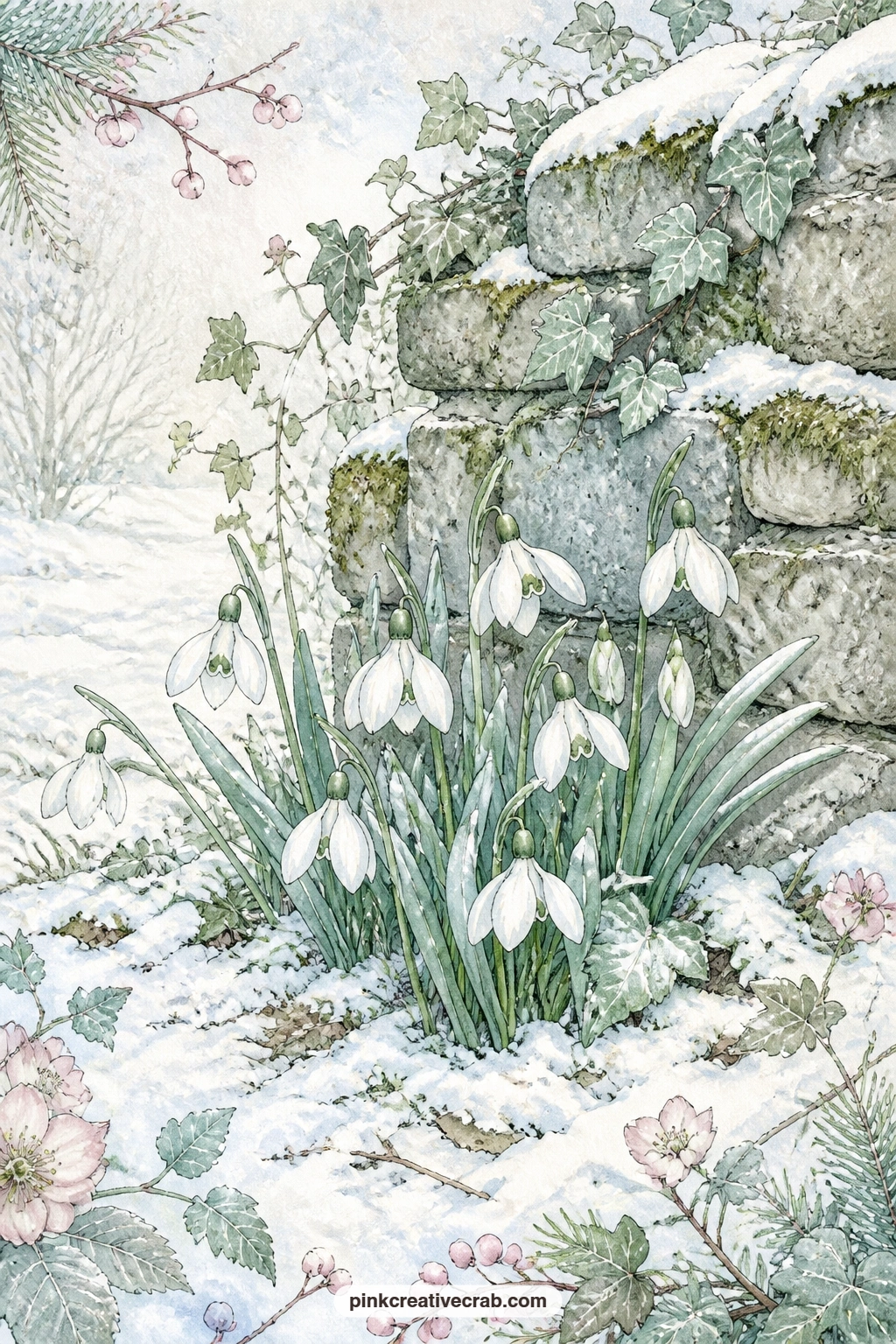
Snowdrops push through a crust of snow at the base of a mossy stone wall, the first sign the garden has not given up on itself.
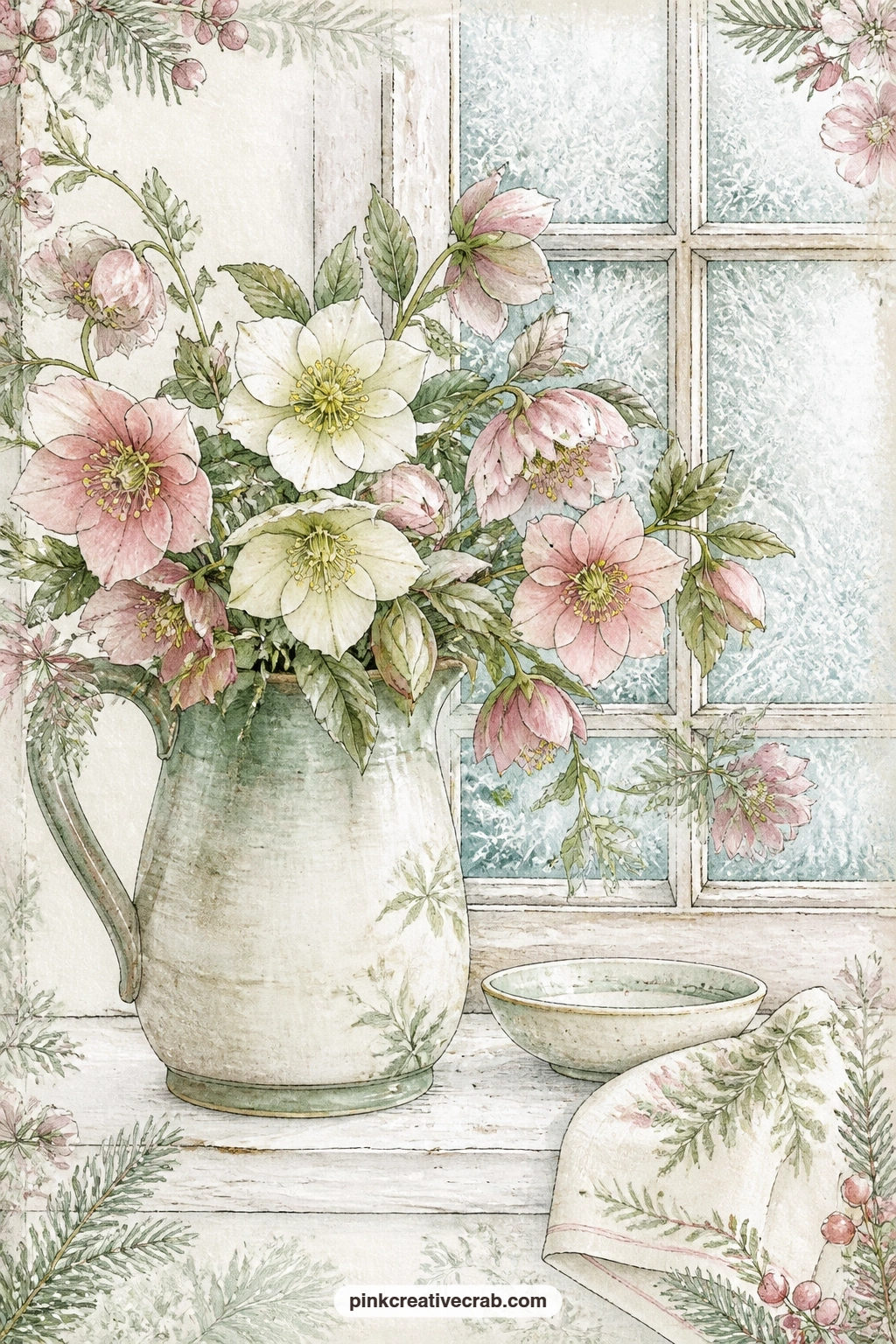
Pair this page with the frosted holly pattern further on in the set: let the jug sit on a scrap of the pattern cut to look like a windowsill cloth, then write the date of first frost beneath it.
The stoneware jug of hellebores on a frosted windowsill makes a calm two-page opener for a winter garden section.
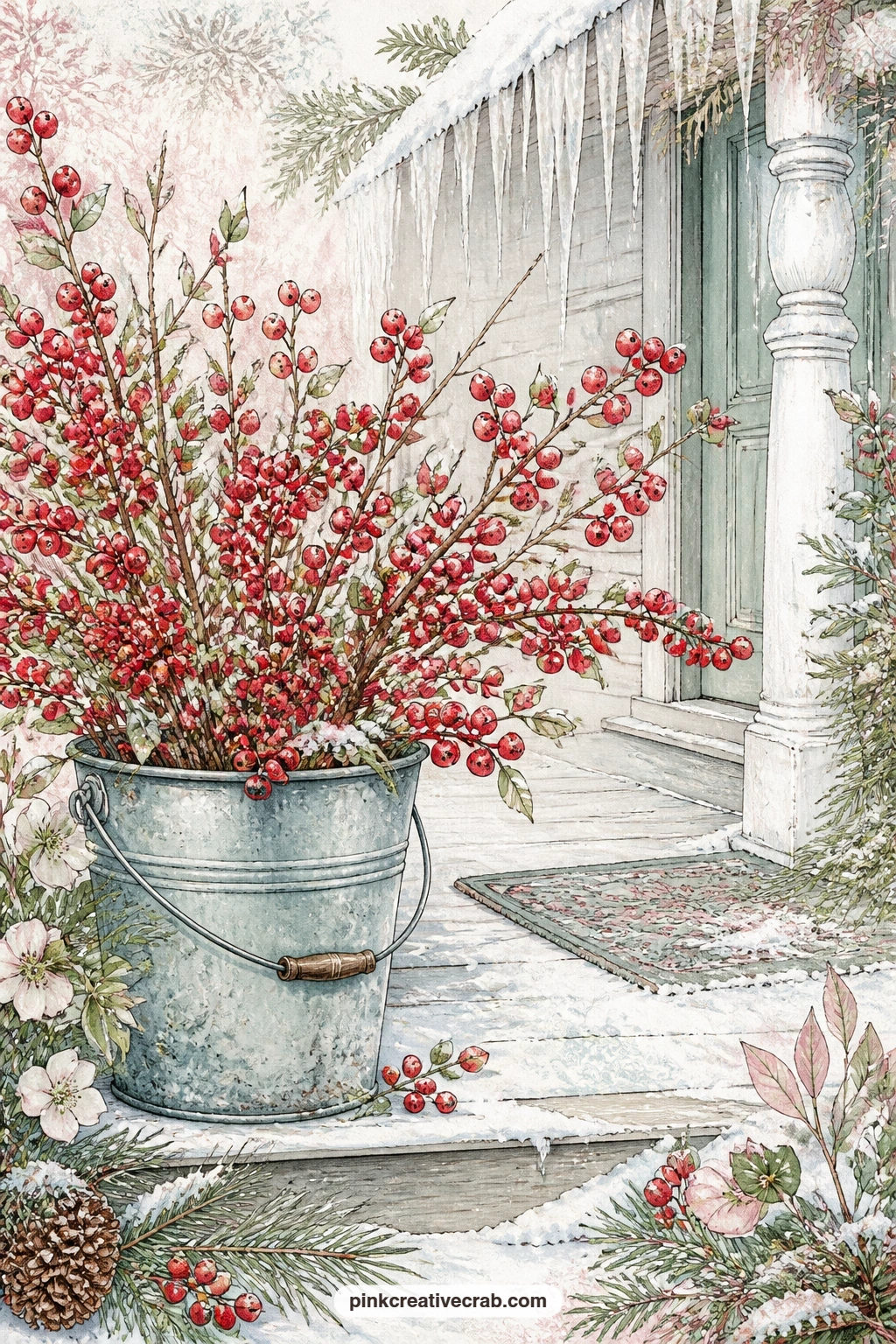
Tear the right edge of this page roughly before gluing it in, so the snowy porch step seems to break off into the next page rather than stop at a clean line.
Winterberry branches sit loosely in a galvanized bucket, left out on the step the way a gardener might forget them for an afternoon.
Potting Bench And Garden Tools
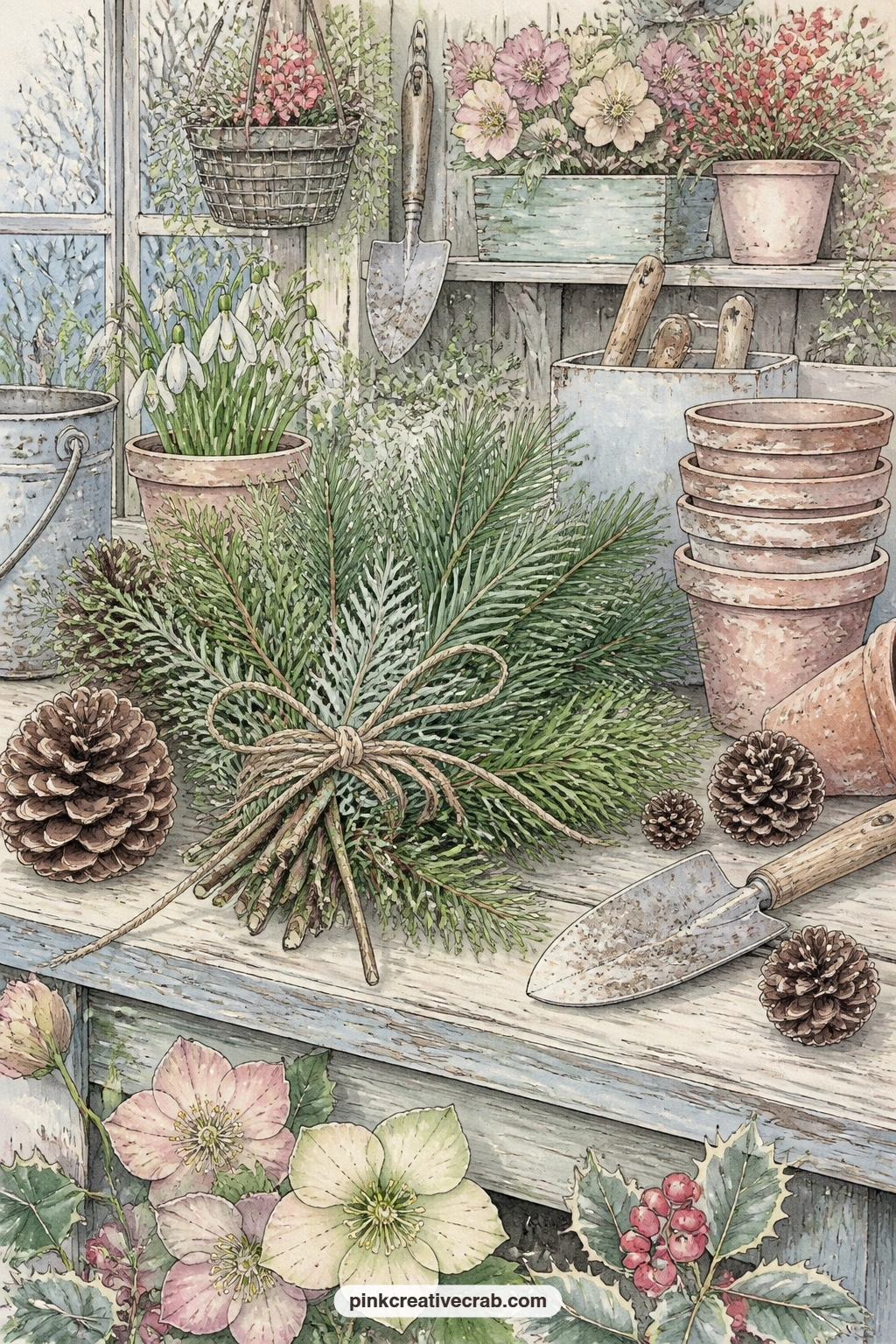
Glue a real sprig of dried twine or a small paper tag onto this page, tucked under the bundle of pine and cedar as though it marks a bundle ready for the door.
The potting bench holds sprigs tied together, pinecones scattered loosely, and a pair of garden shears resting nearby.
Frosted rose hips cling to a garden arch dusted with snow, the last bright color left on a bare winter vine.
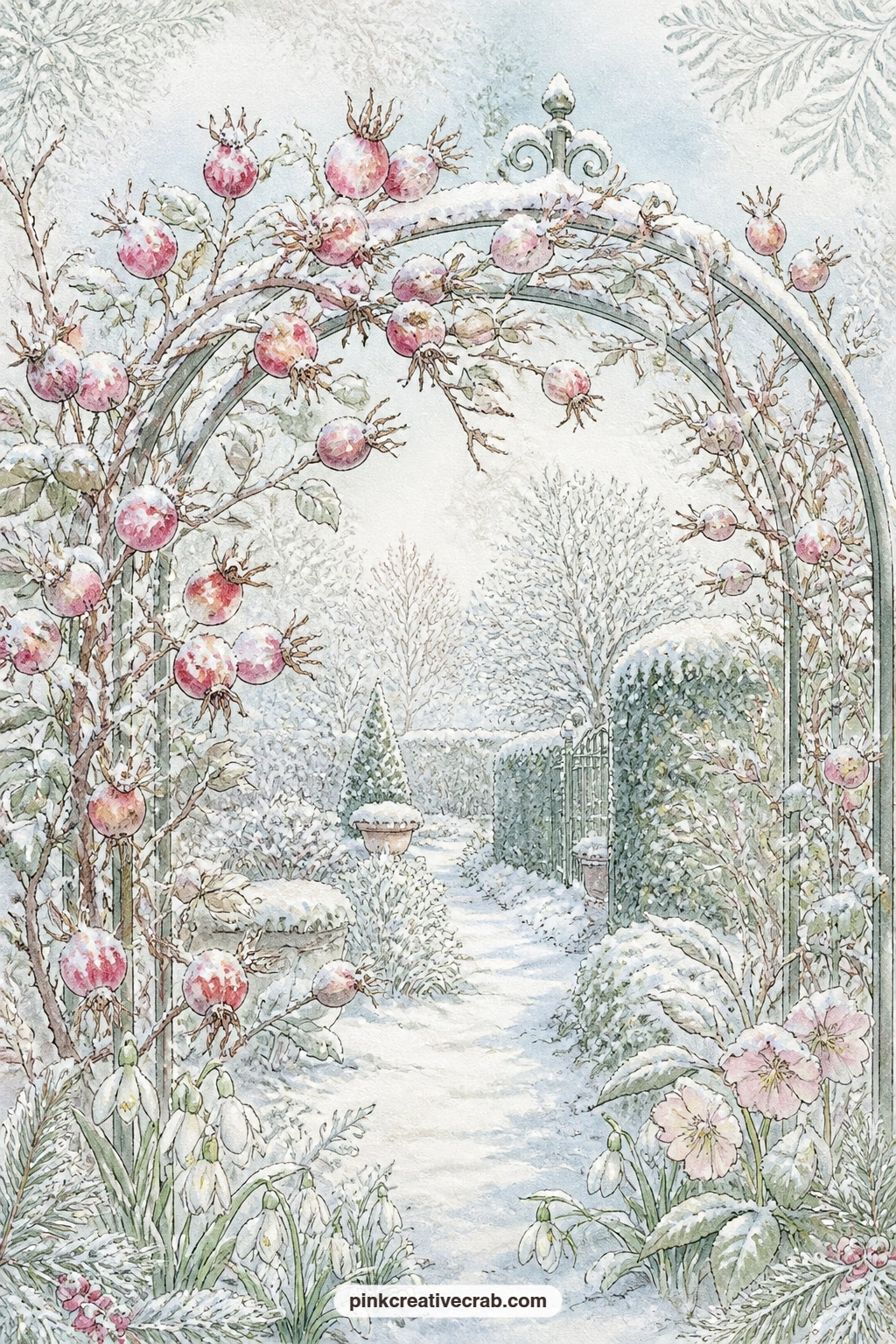
Table And Hearth
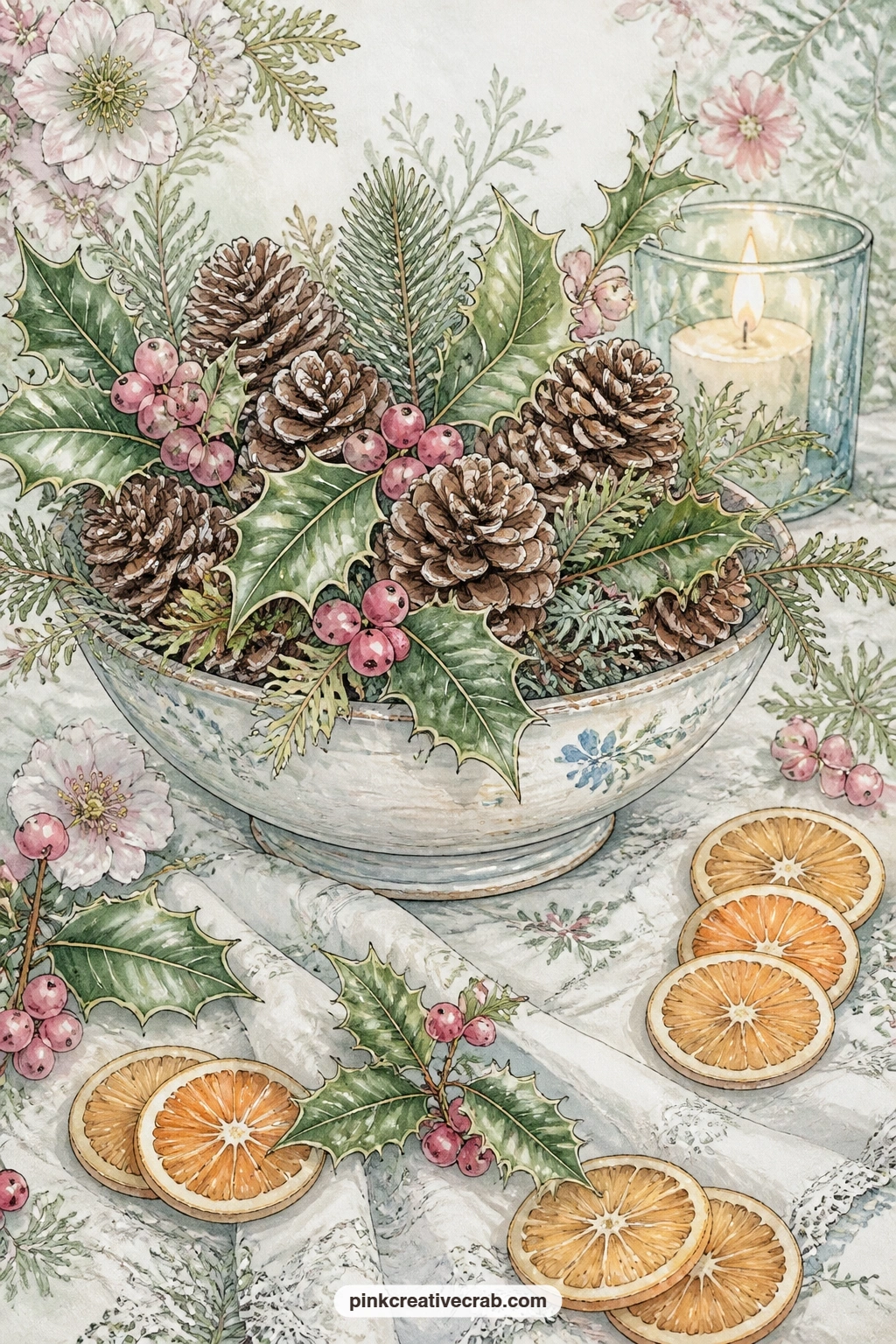
The usual mistake on a still life like this is crowding the bowl itself with too many objects; keep the bowl simple and let the dried orange slices and sprigs of holly scatter loosely on the linen around it instead.
A wide bowl holds pinecones and holly together, with a few orange slices left to dry on the cloth beside it.
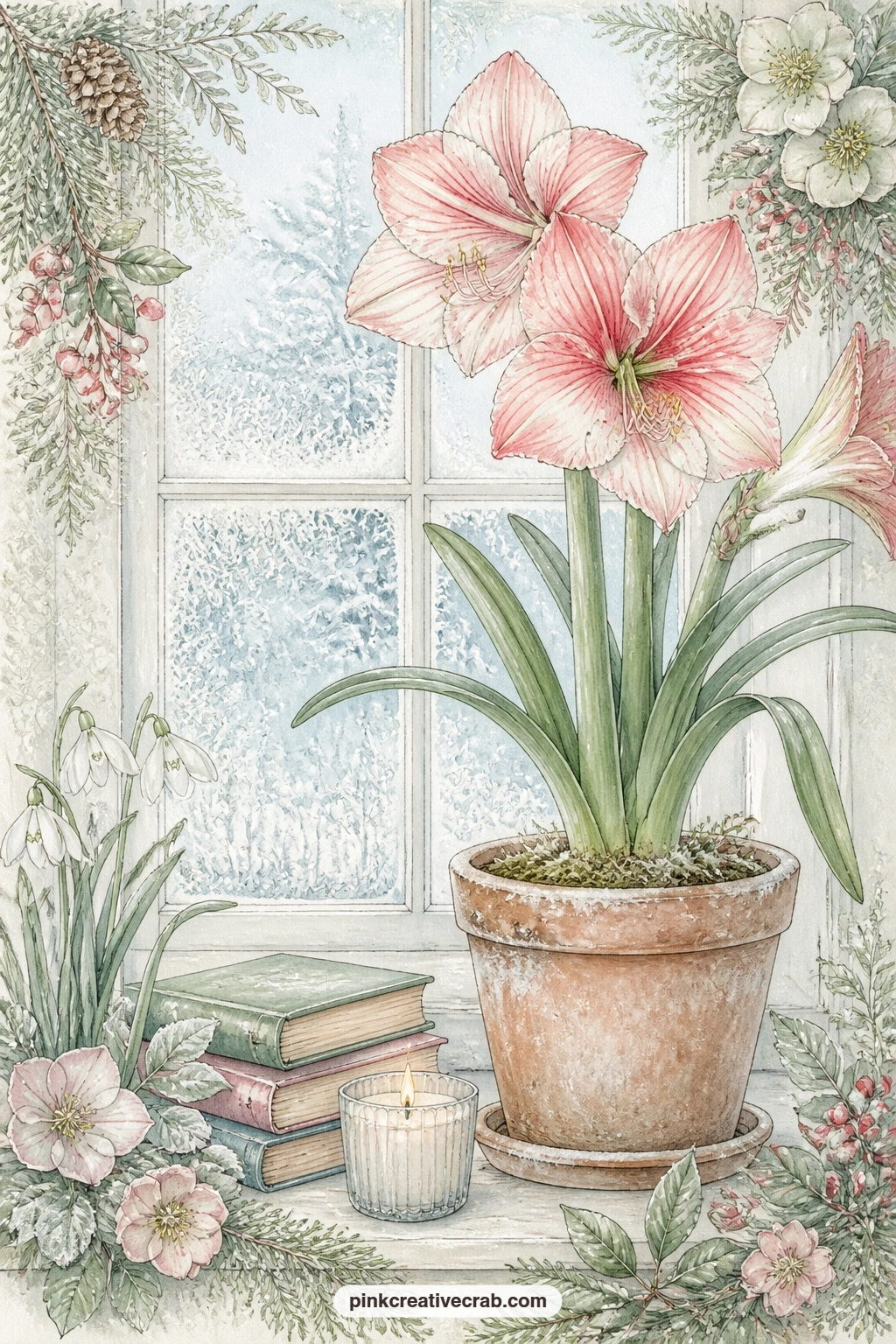
Write a short note here about a plant you are nursing through winter, or leave the space for a pressed amaryllis petal once the bloom fades.
The terracotta pot sits close to a frosty pane, its tall red bloom catching whatever light gets through.
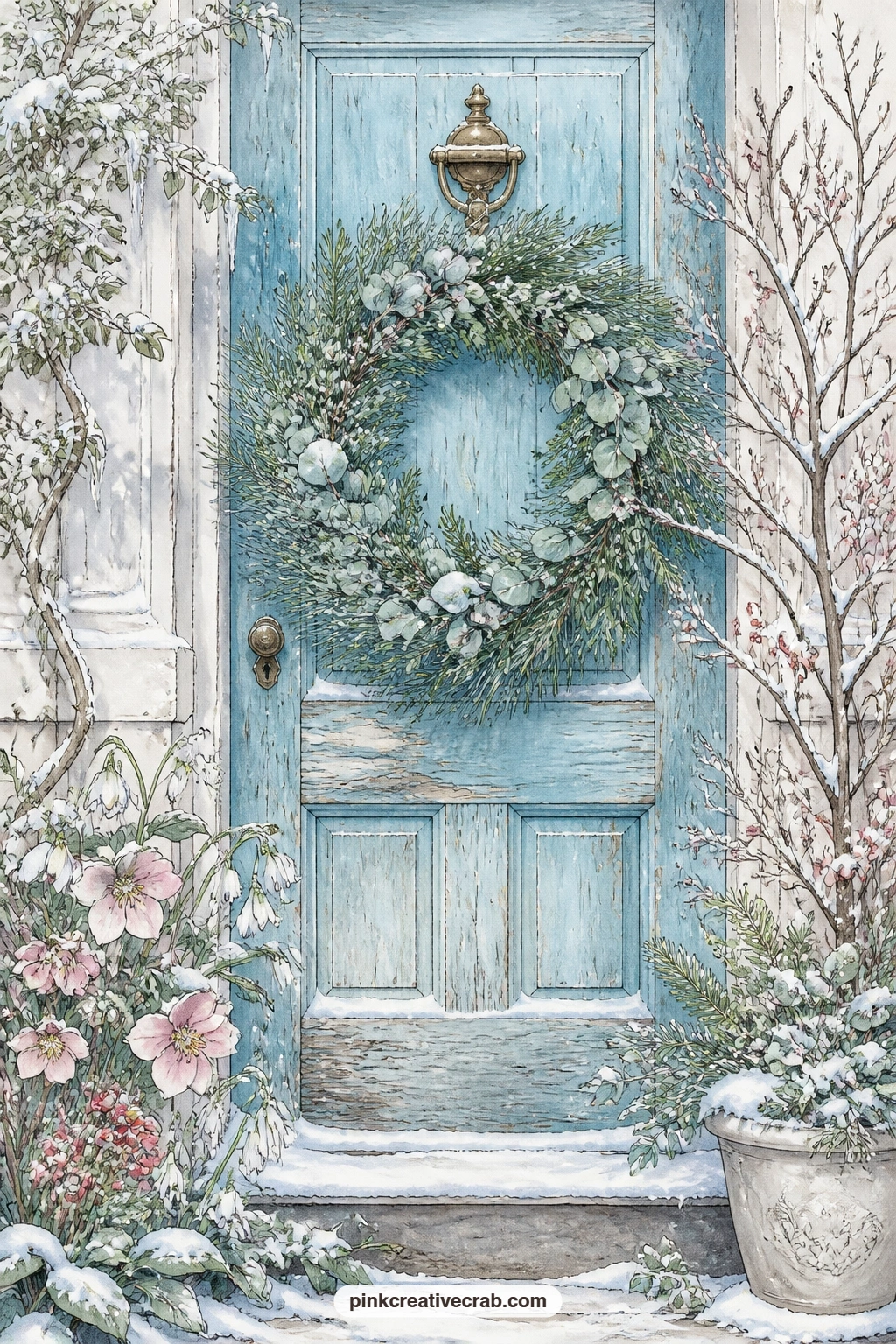
This page suits the reader making a journal as a gift for someone who loves their front porch more than the inside of the house: leave room beside the wreath for a photo of their own door.
Eucalyptus and pine twist together into a wreath, hung on a weathered blue door dusted lightly with snow.
Glasshouse And Grove
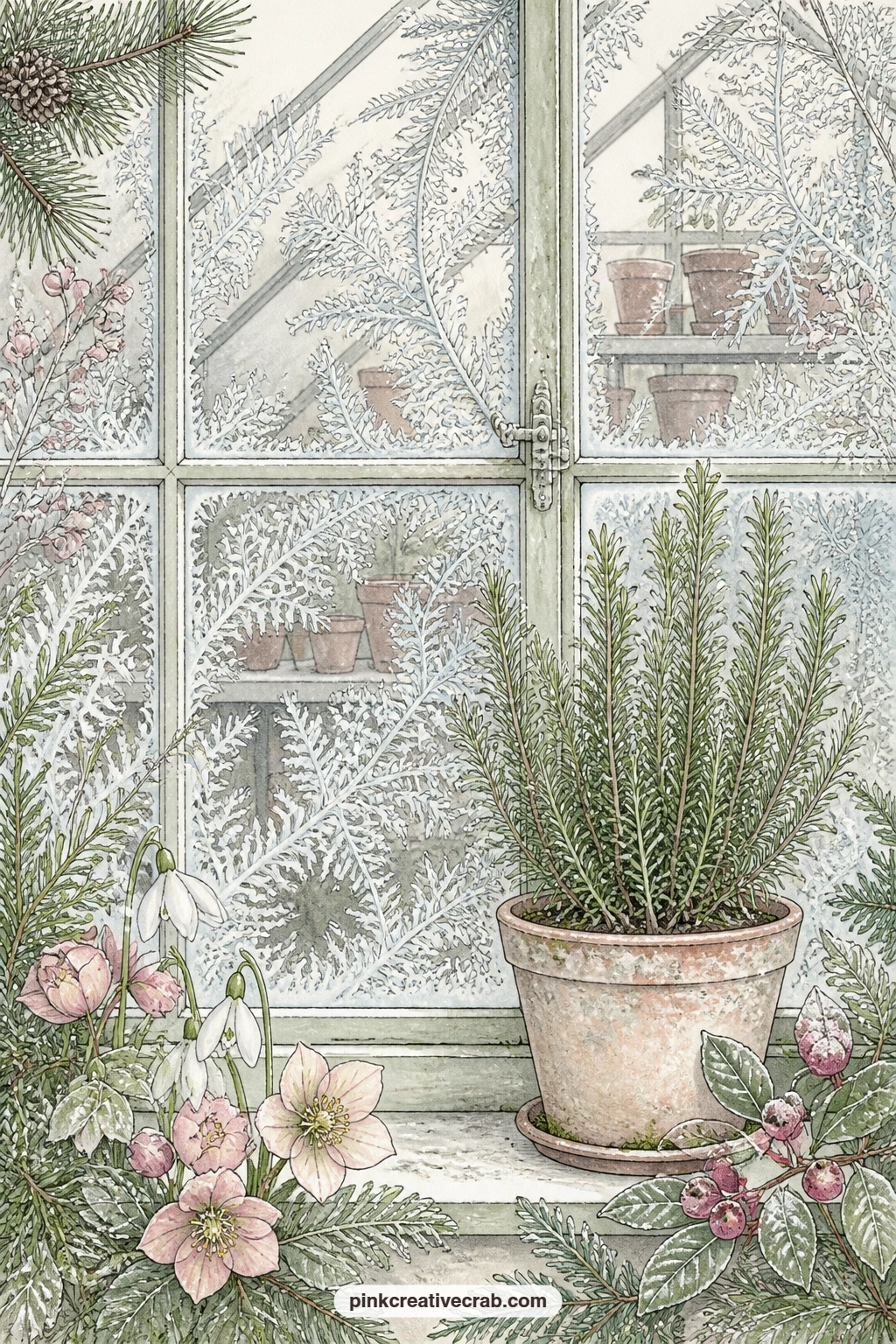
What question would you ask the plants surviving this cold snap? Use the open glass of the pane as a spot to jot the answer in small letters.
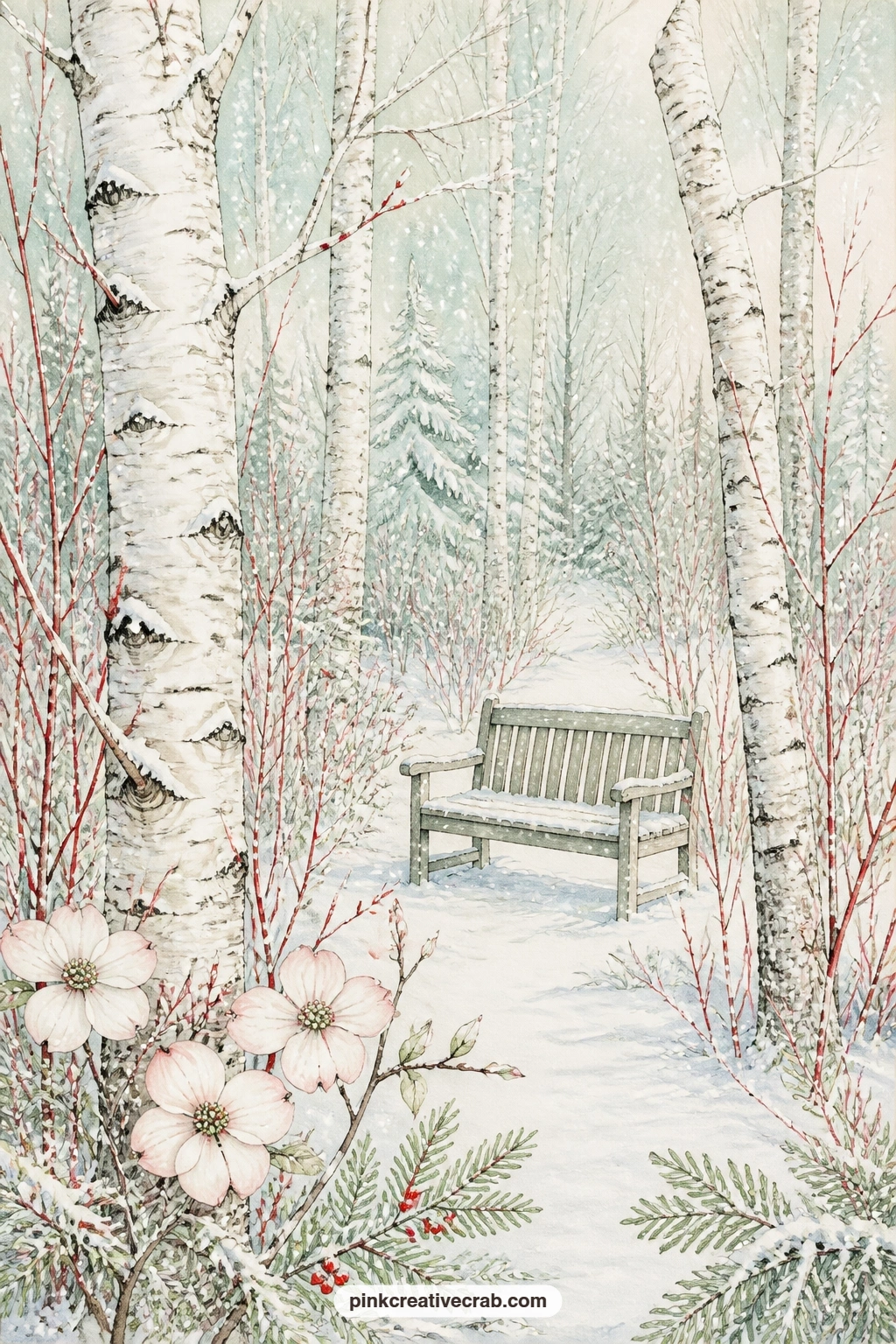
Keep this spread for the quiet pages of the journal: a wooden bench sits empty among the birches, red dogwood stems the only warm color in the snow.
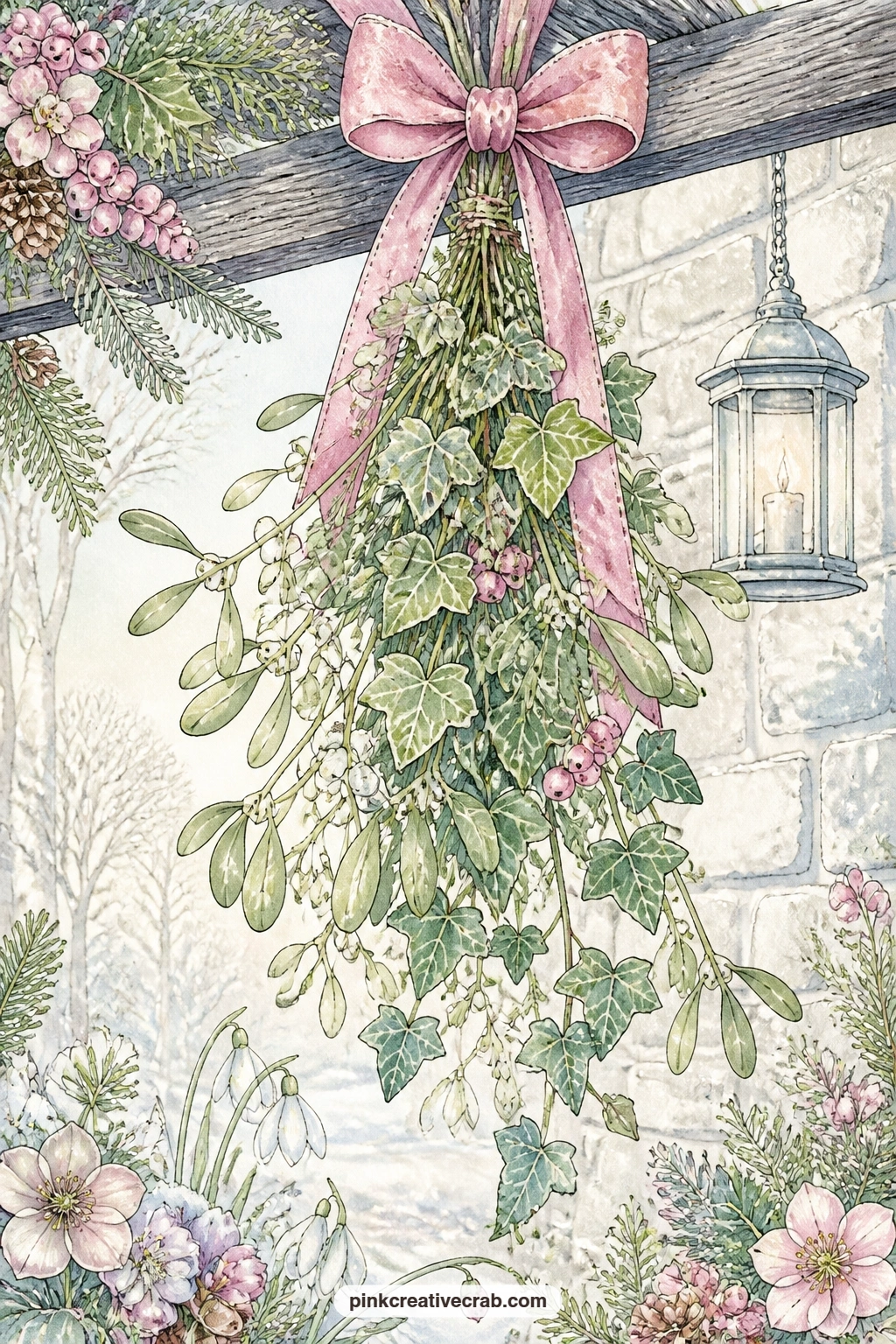
Fold this page in half before gluing the spine edge down, so the mistletoe bundle appears to hang forward off the beam when the journal opens, like a small fold-out charm.
A velvet ribbon ties mistletoe and ivy into a loose bundle, hung from a dark wooden beam overhead.
Paperwhites rise from a glass bowl of pebbles, a lit candle and a small heap of pinecones kept close for company on the sill.
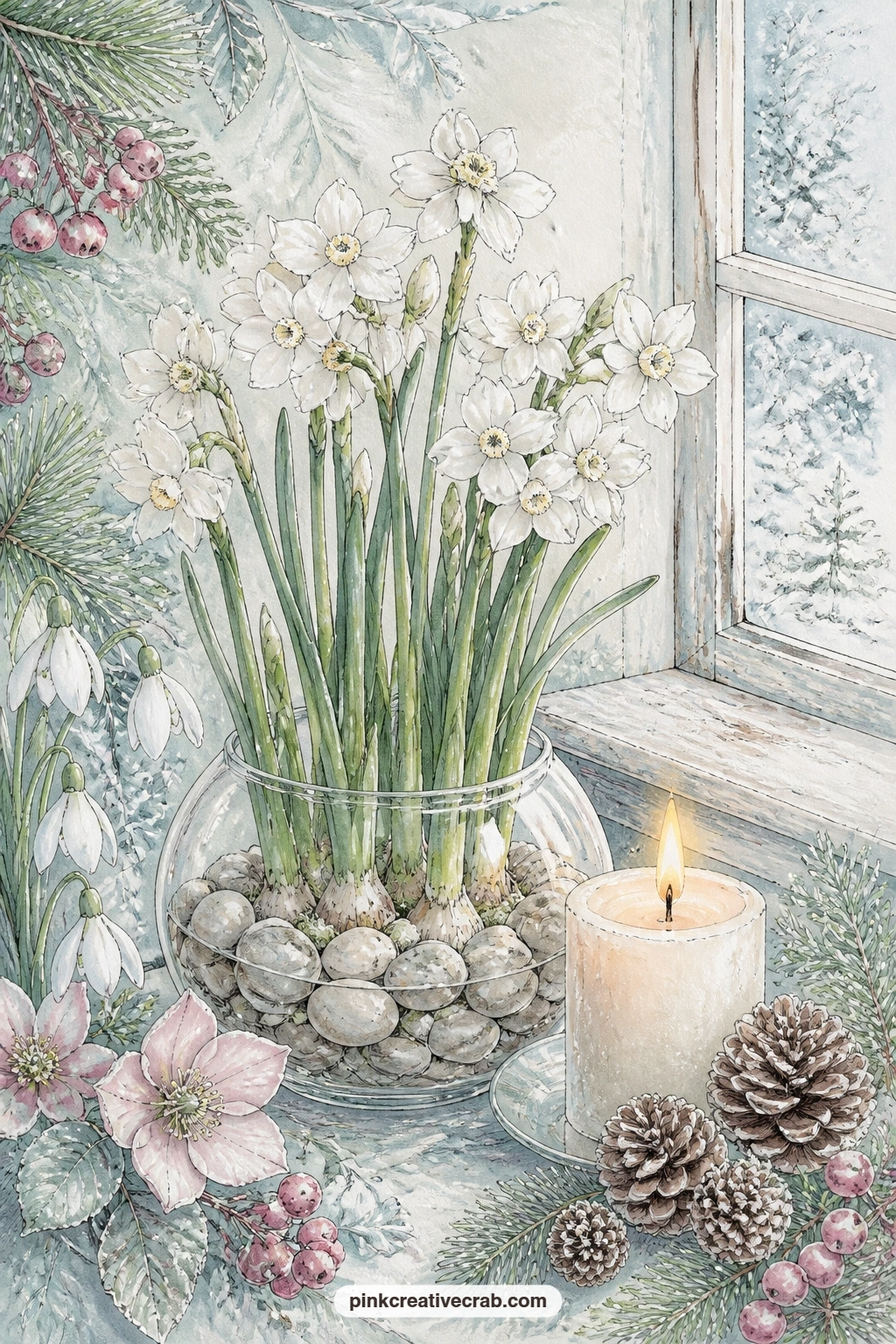
Place this page across from the hellebore corner lined page later in the set, so a reader can glance from the garden scene straight into space to write about it.
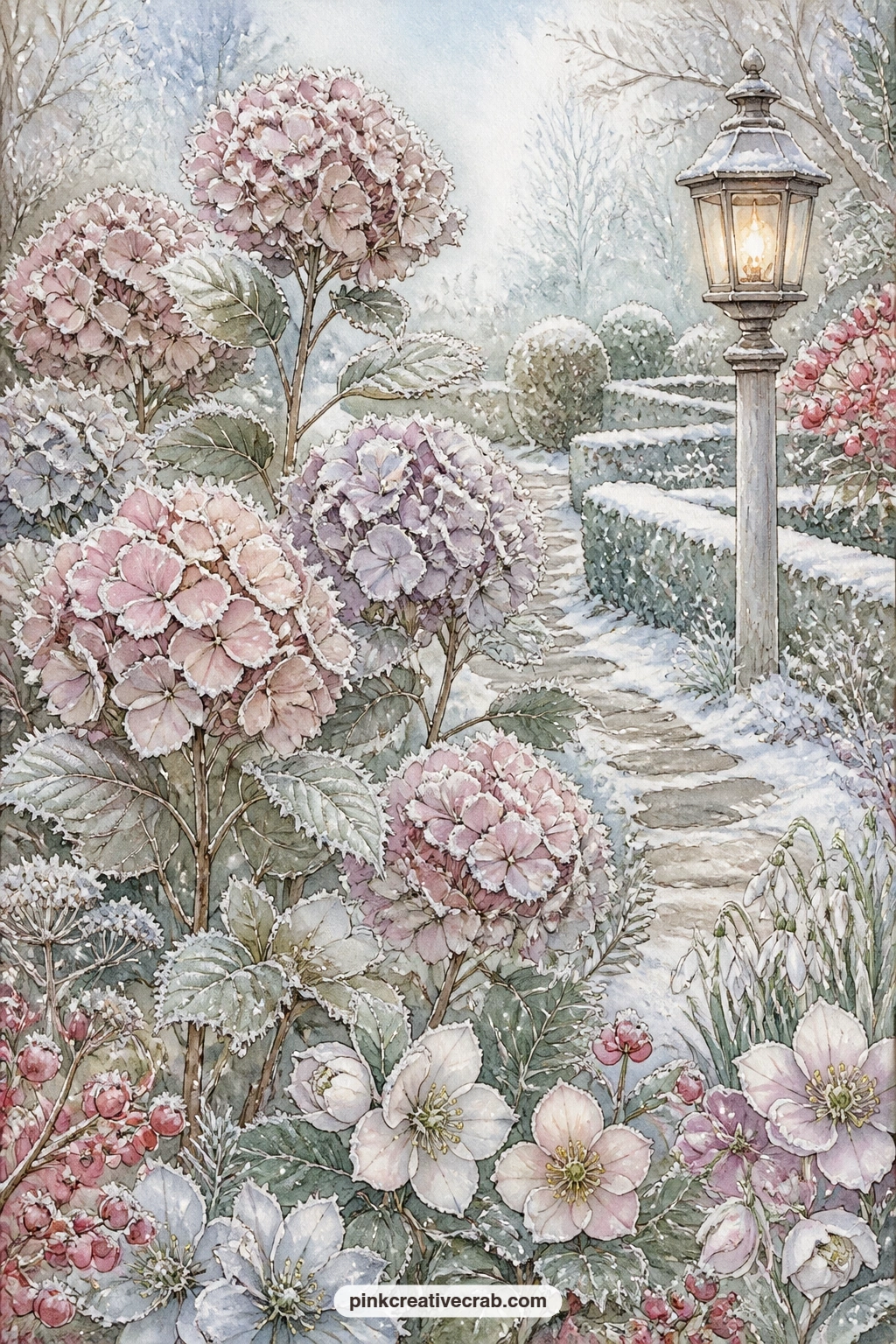
Frosted hydrangea heads stand tall in a snowy cottage garden, a small lantern lit beside the path.
Desk And Hedgerow
If five minutes is all you have, skip the desk details and paint only the magnifying glass over a single pressed leaf; the smallest version of this page still earns its place.
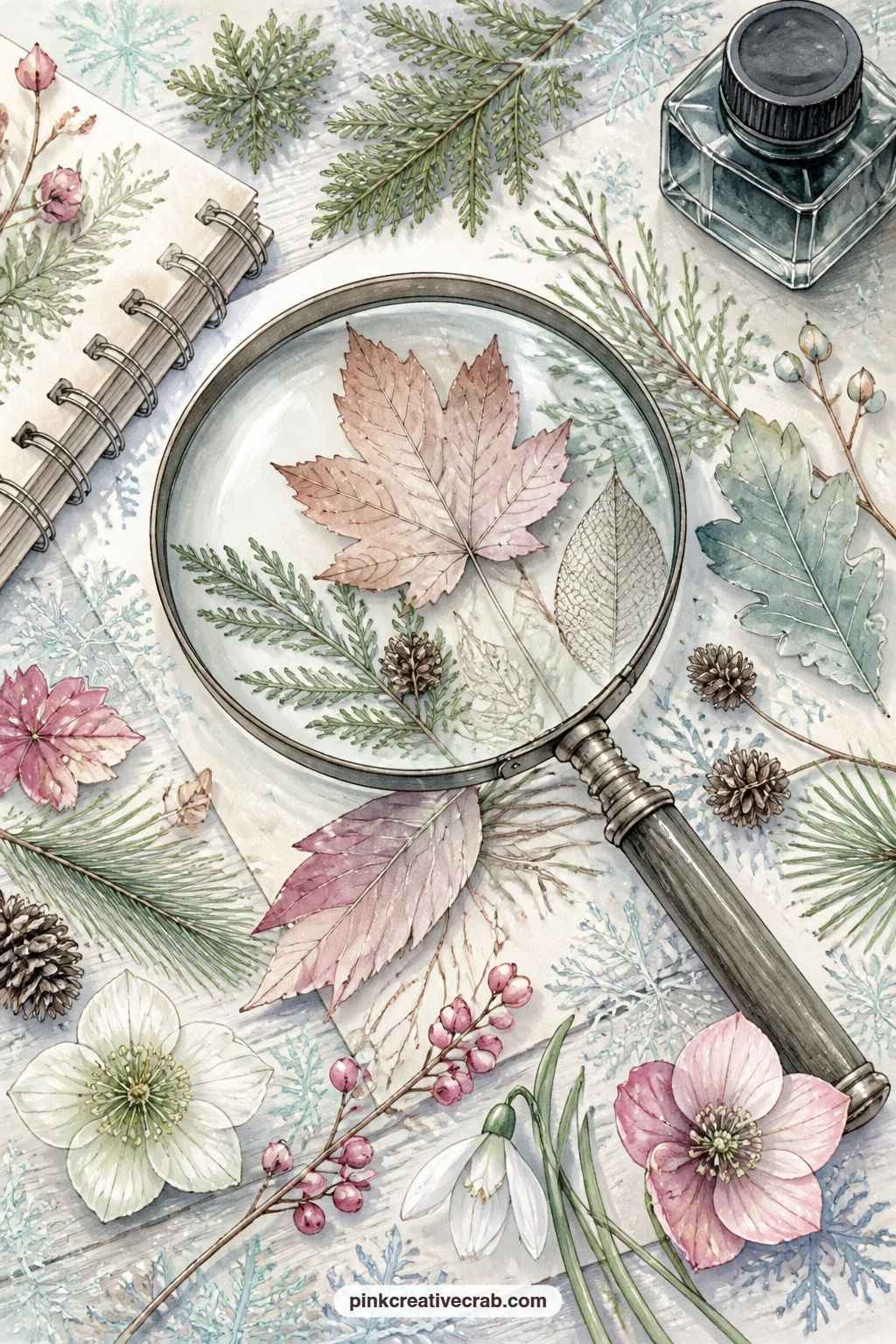
Pressed winter leaves and pine needles lie scattered across a wooden desk, a magnifying glass resting over the collection.
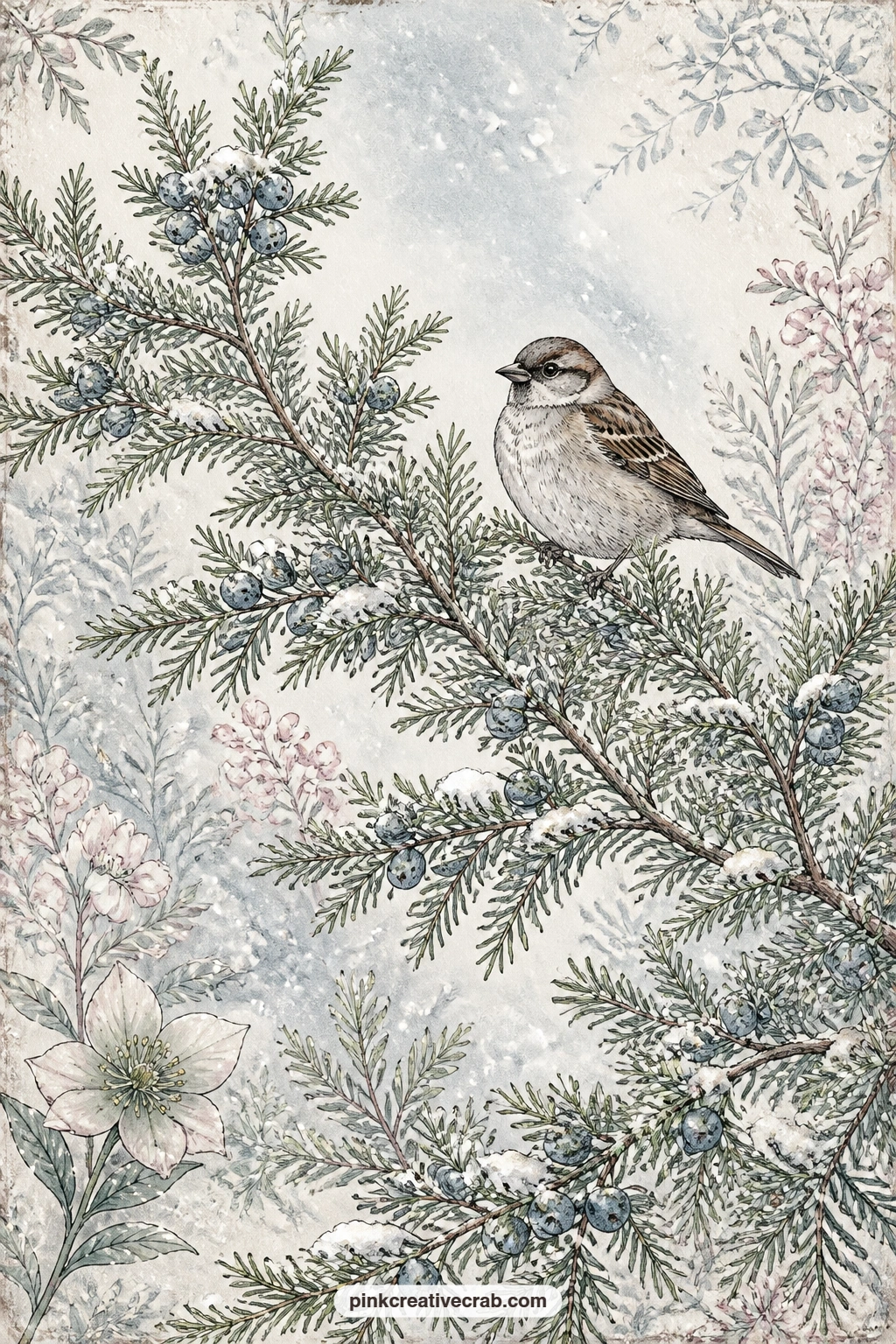
A juniper branch holds its blue berries through a light snowfall, and a small sparrow has stopped there to rest a moment.
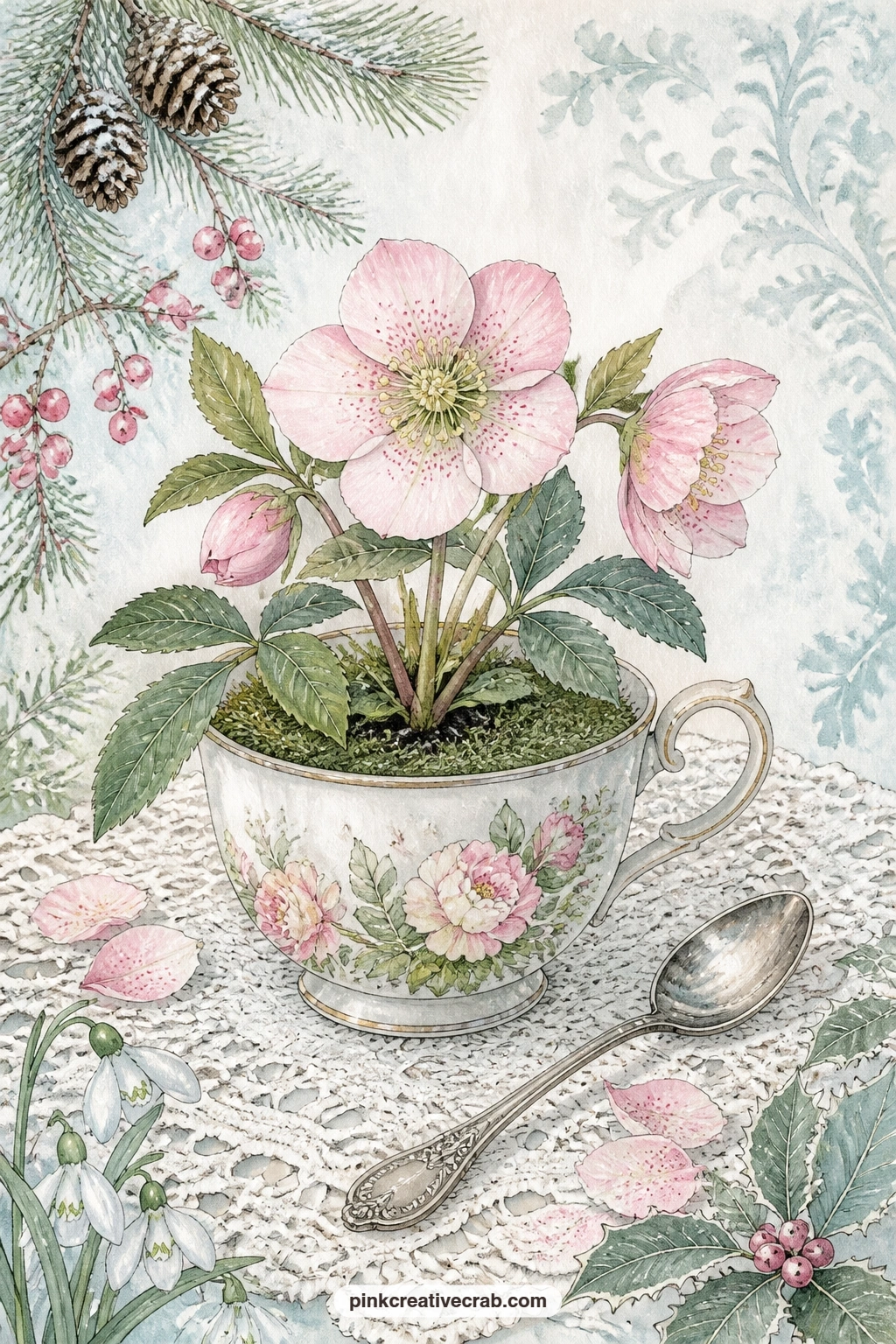
Try tea-staining just the outer inch of this page before gluing it in; the lace runner under the teacup planter already reads as old linen, and the stain pulls the whole sheet into the same worn mood.
A Christmas rose grows from a teacup turned planter, set on a lace runner for the season.
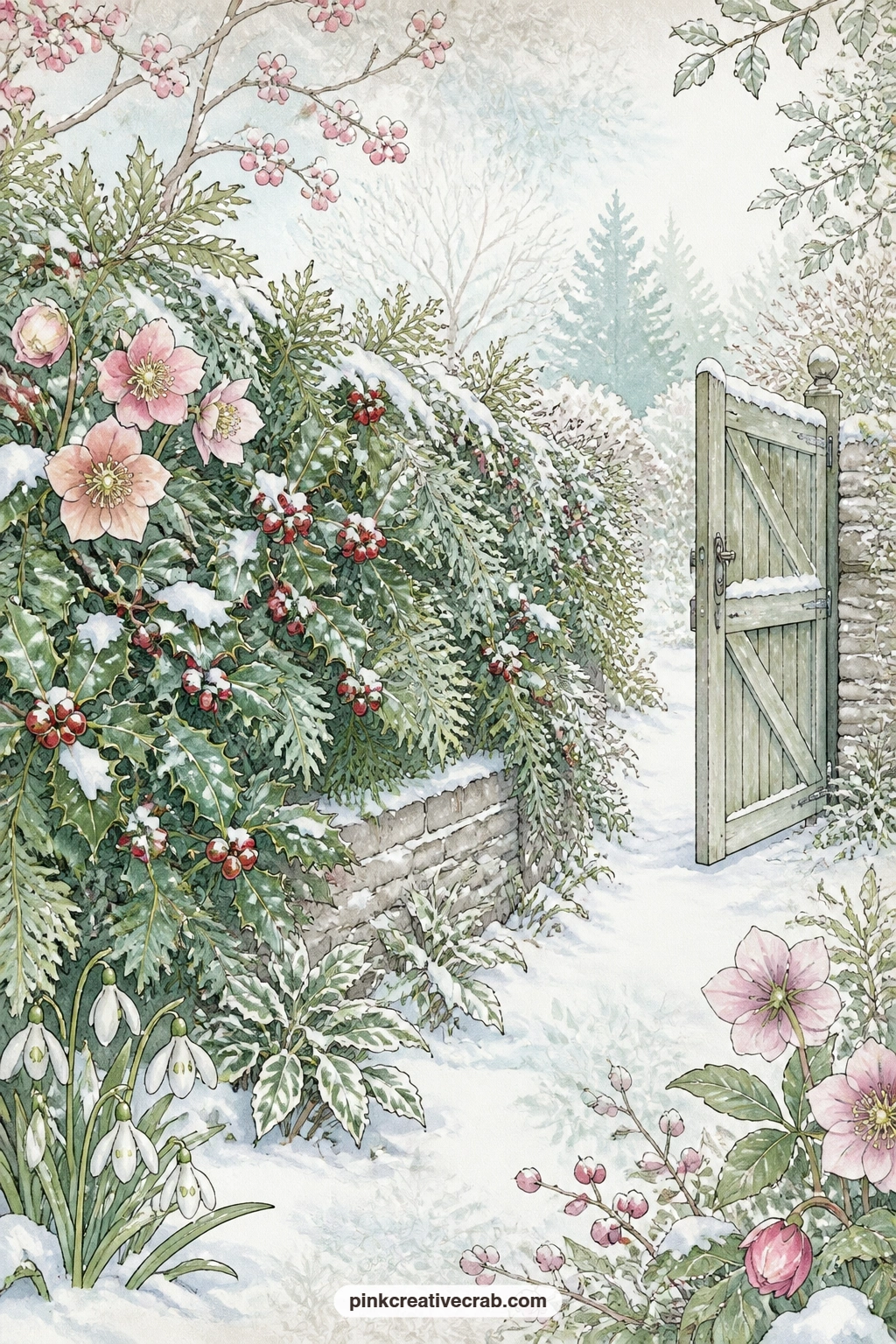
A snowy evergreen hedge runs the length of the garden wall, holly berries bright against the dark green, a wooden gate standing half open at its end.
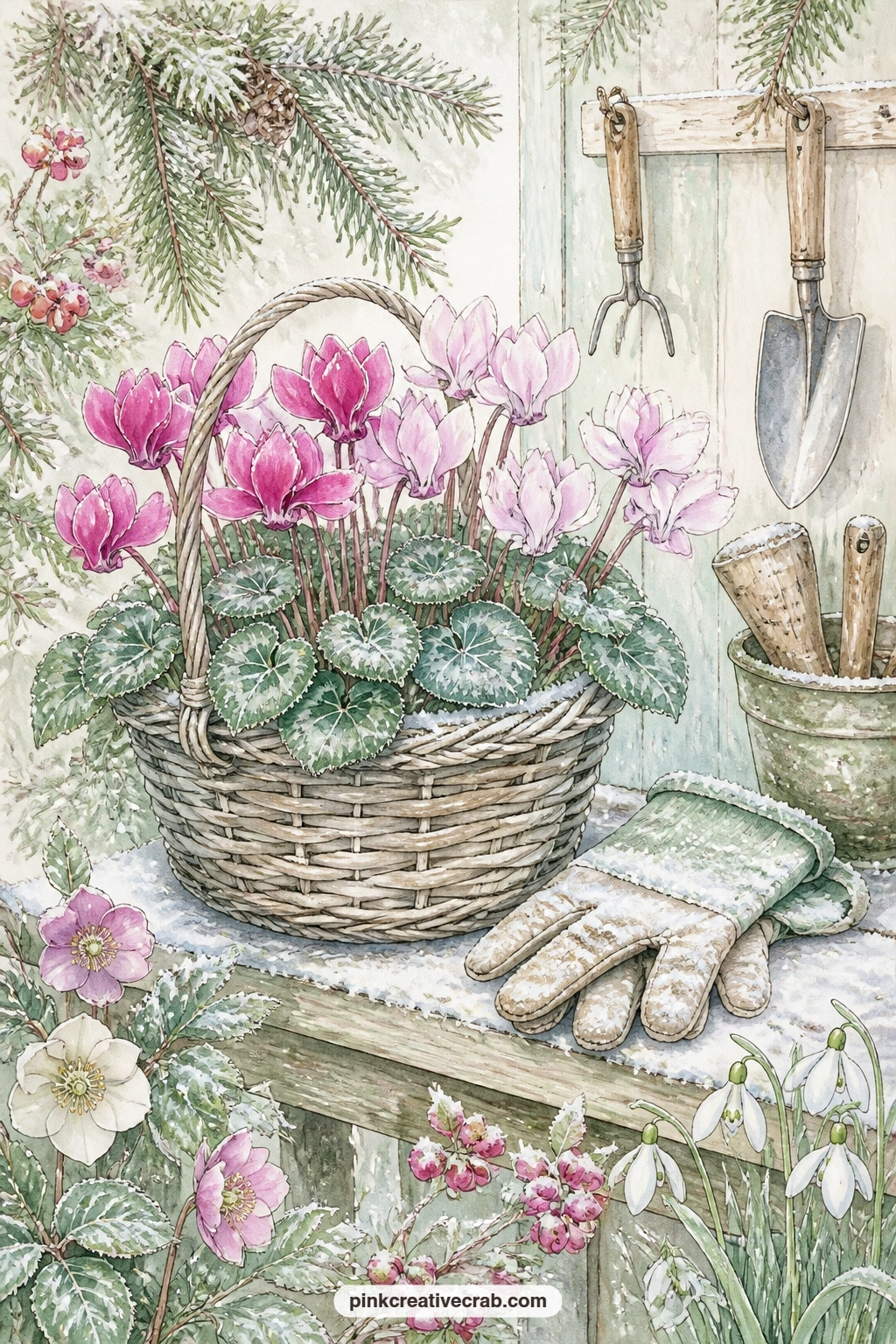
Give this page to the reader who keeps a potting shed instead of a studio: a basket of cyclamen sits on a frosty shelf beside a worn pair of gardening gloves, ready for use come spring.
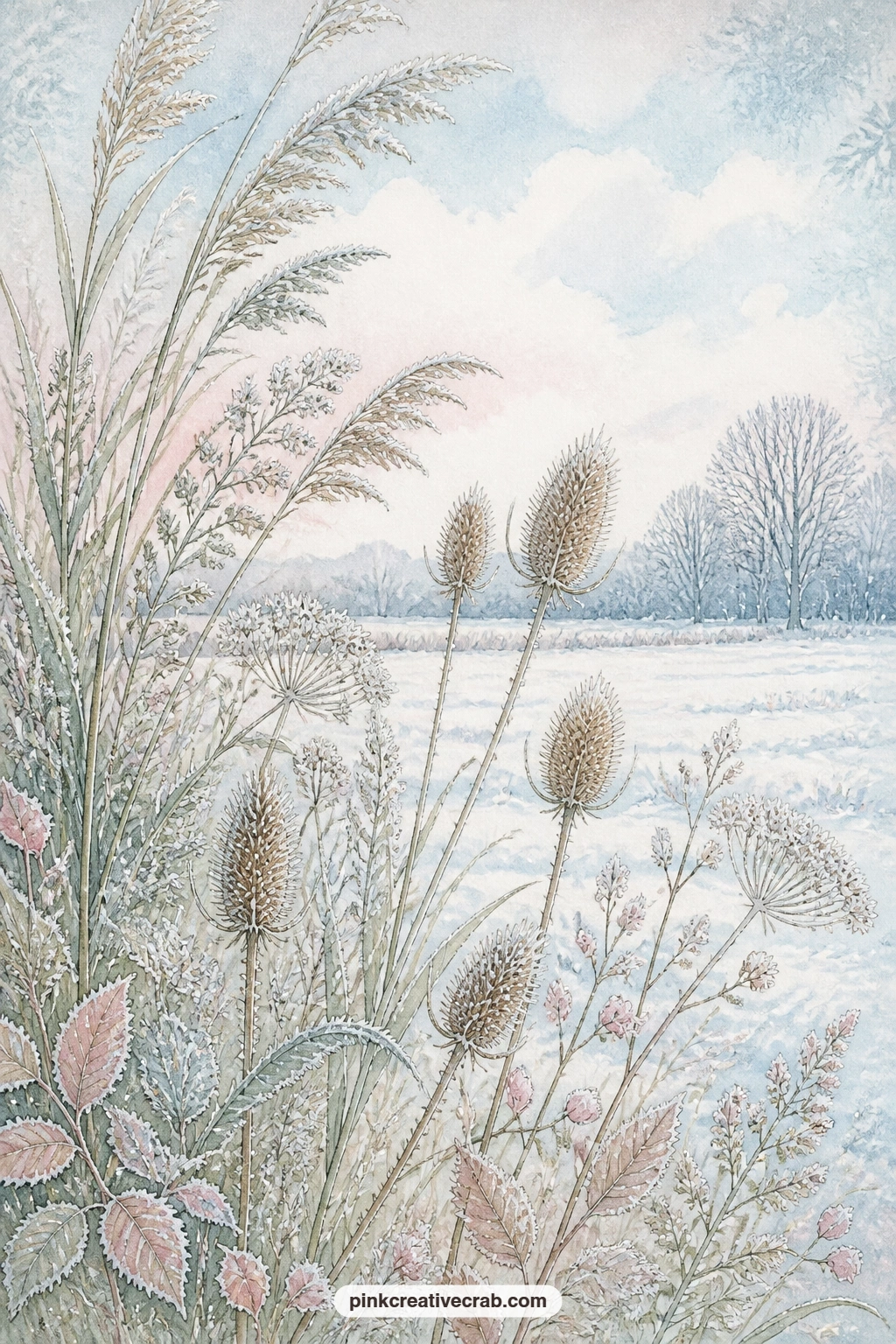
Frosted seed heads of grasses and teasels line a snowy field edge, standing stiff and silver against a pale winter sky.
Background Papers
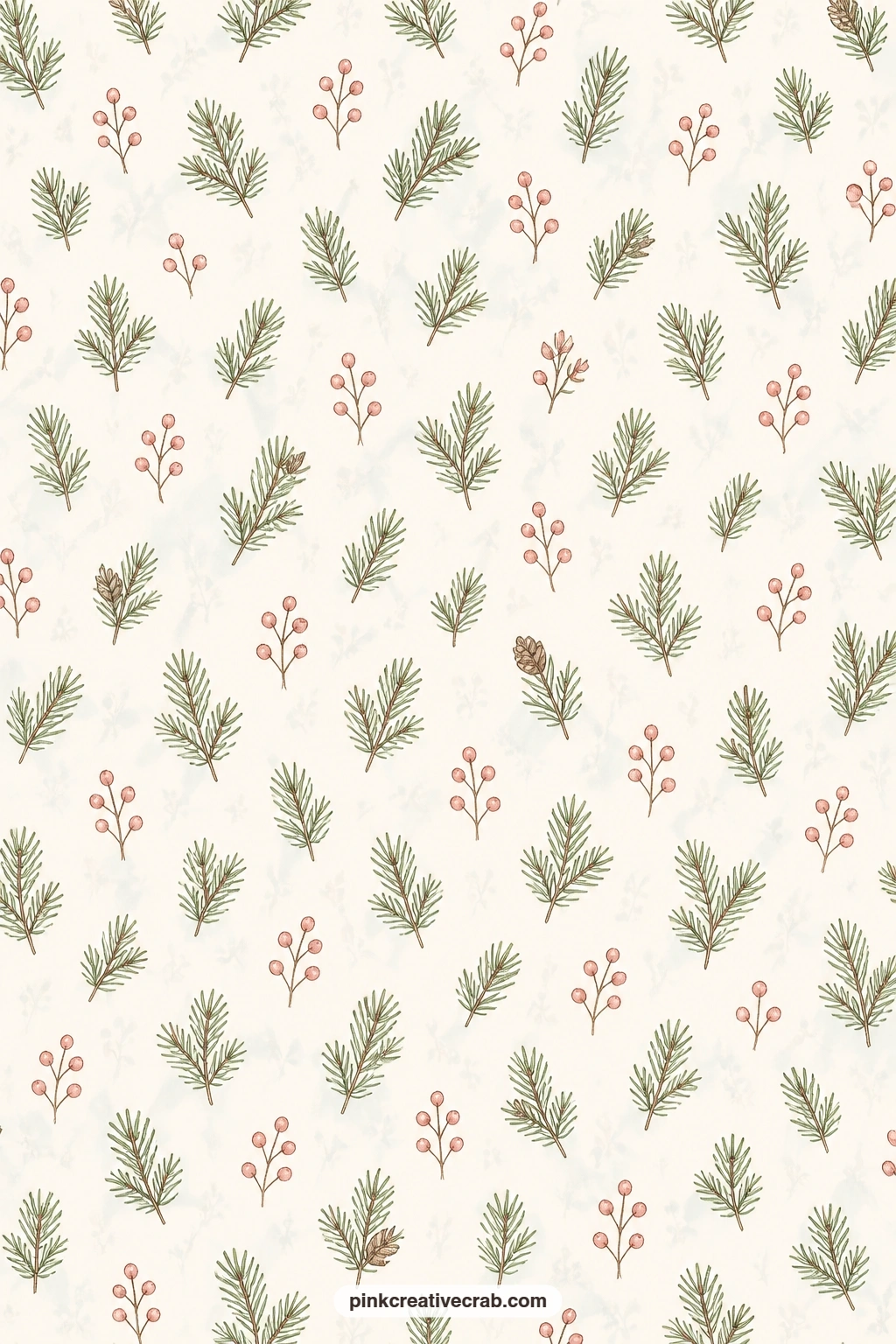
This cream background with scattered pine sprigs and red berries works well under a photograph of a winter walk, as a pocket lining tucked behind a pressed leaf page, or wrapped around a plain journal cover.
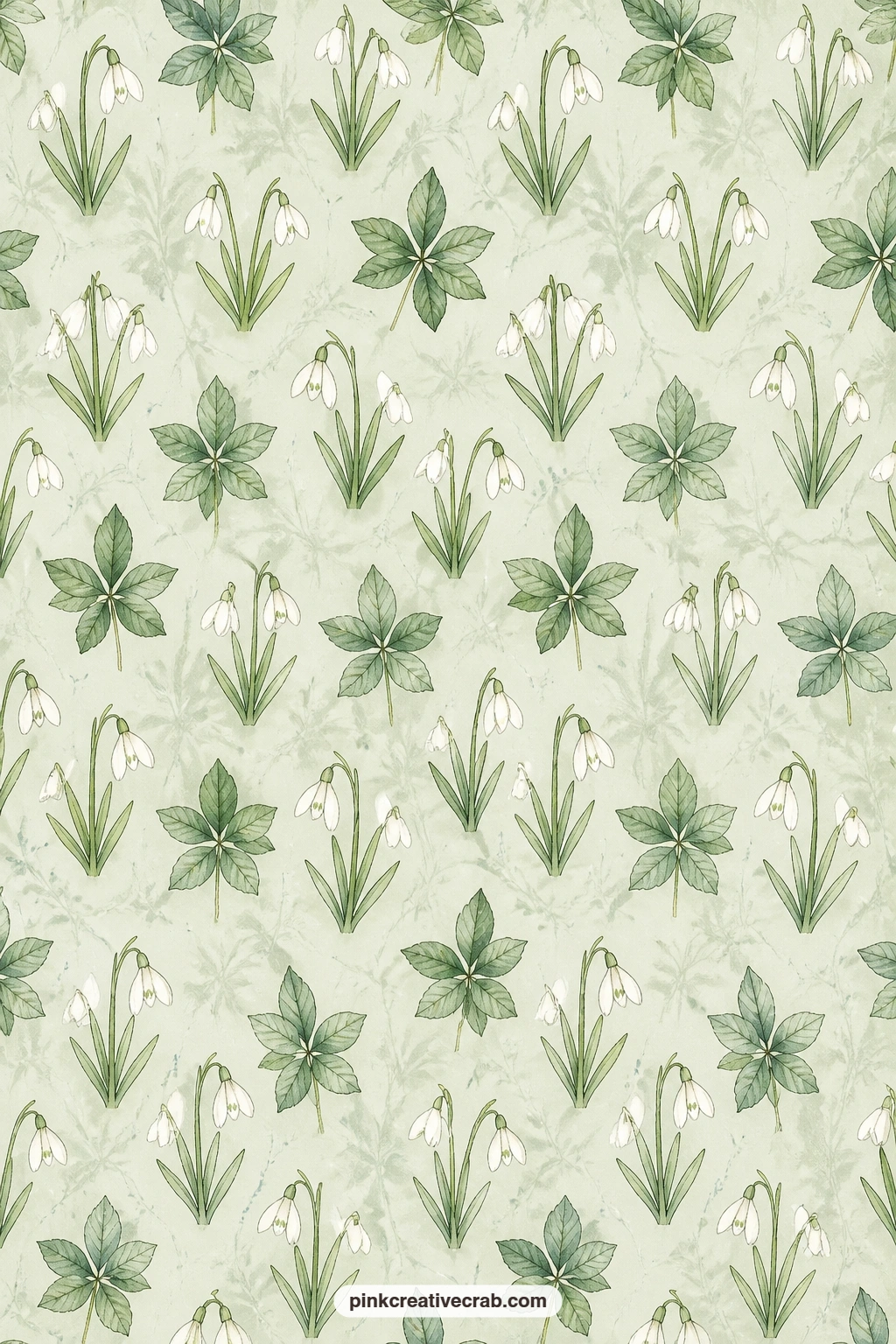
Use this sage pattern of tiny snowdrops and hellebore leaves behind the amaryllis scene for a matching two-page spread, as a soft cover wrap, or cut down into small pockets for pressed flowers.
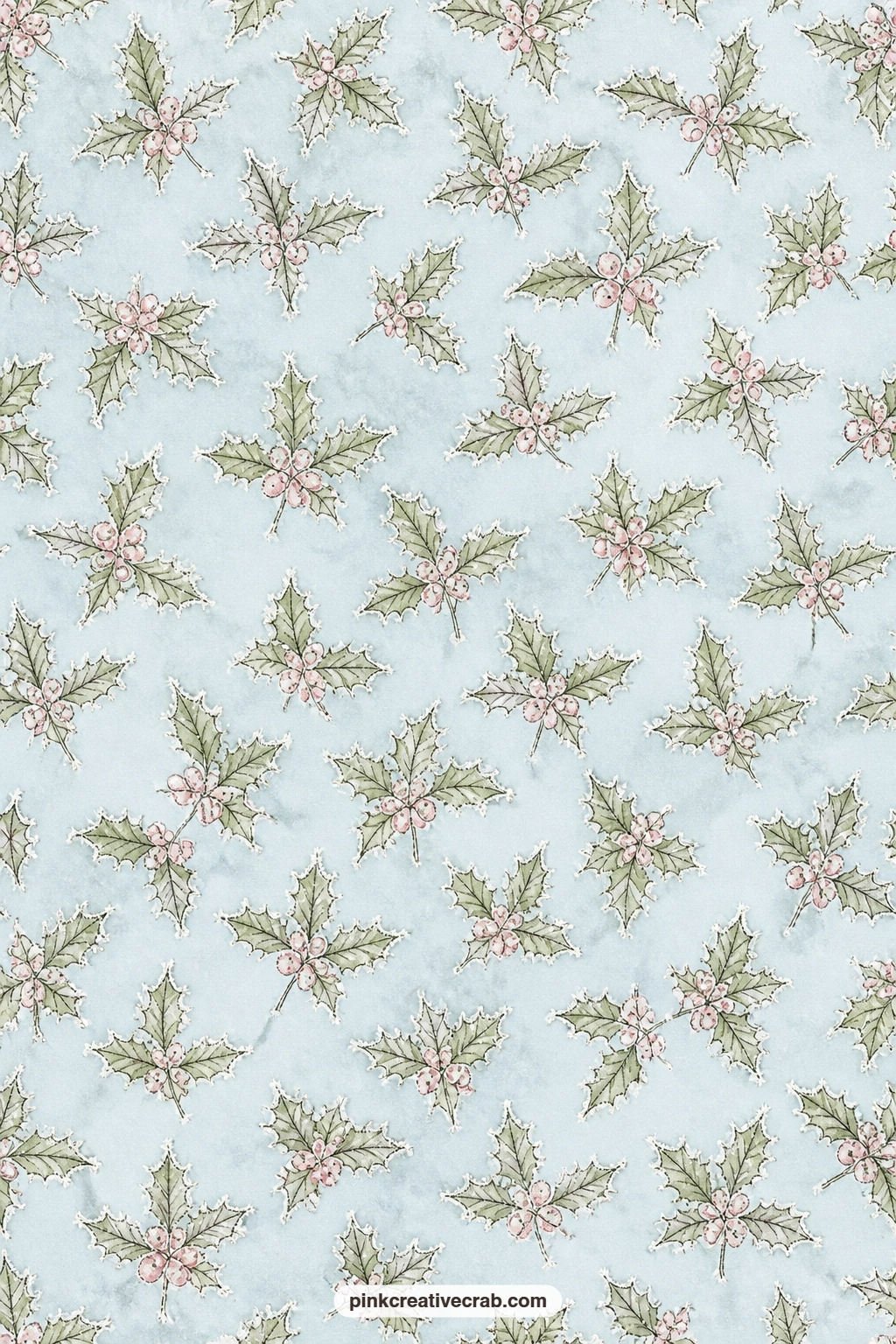
Frosted holly leaves repeat across this pale blue pattern, suited to lining a pocket behind the mistletoe page, framing a winter photograph, or backing the whole journal cover.
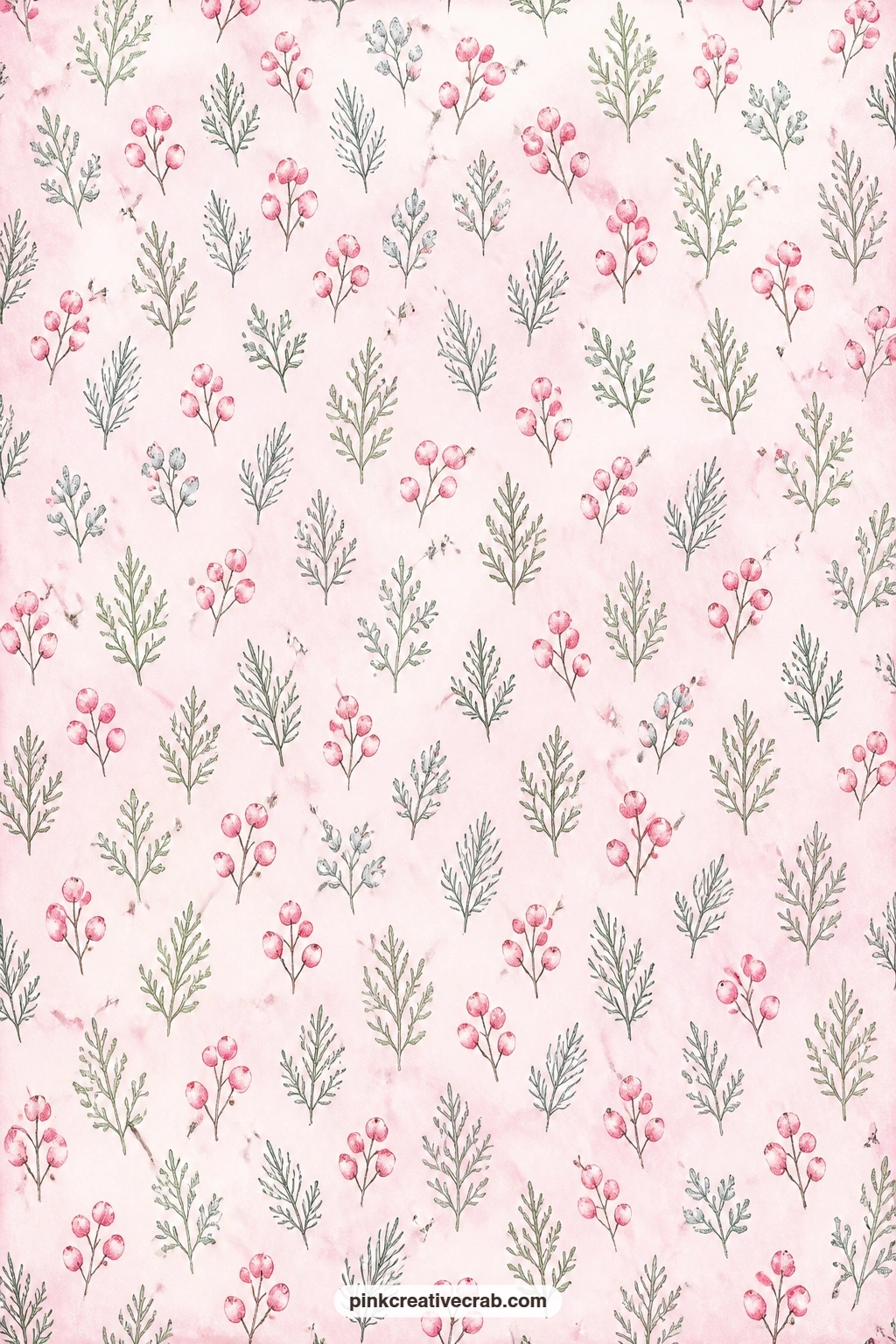
This blush paper of winter berries and cedar twigs sits nicely under a photo of a winter gathering, lines a small pocket for seed packets, or wraps a slim gift journal cover.
Lined Writing Pages
A pine bough and pinecone frame runs around the edge of this page, leaving the ruled lines free for a gift list, a simple Christmas menu, or a short letter to read again next winter.
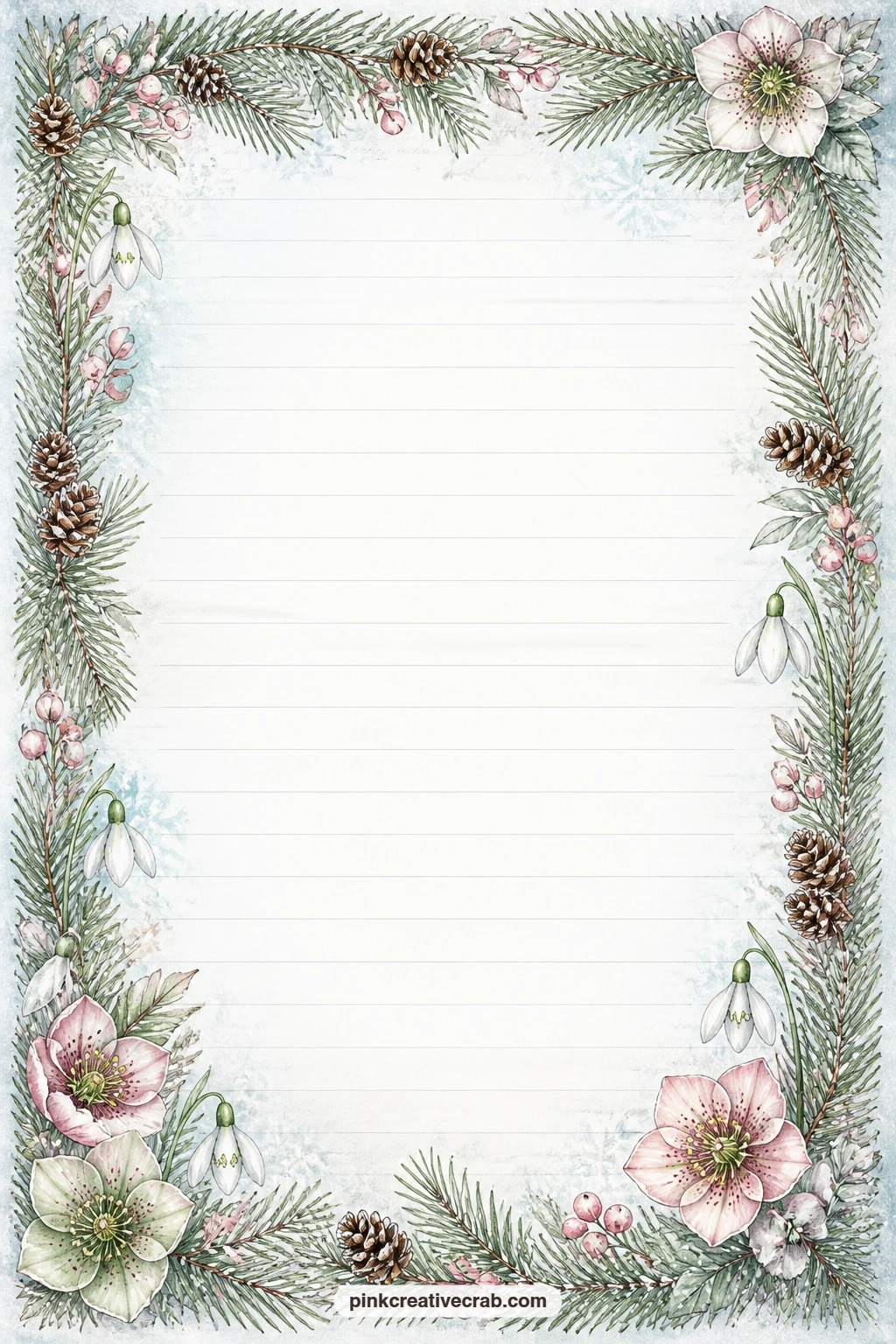
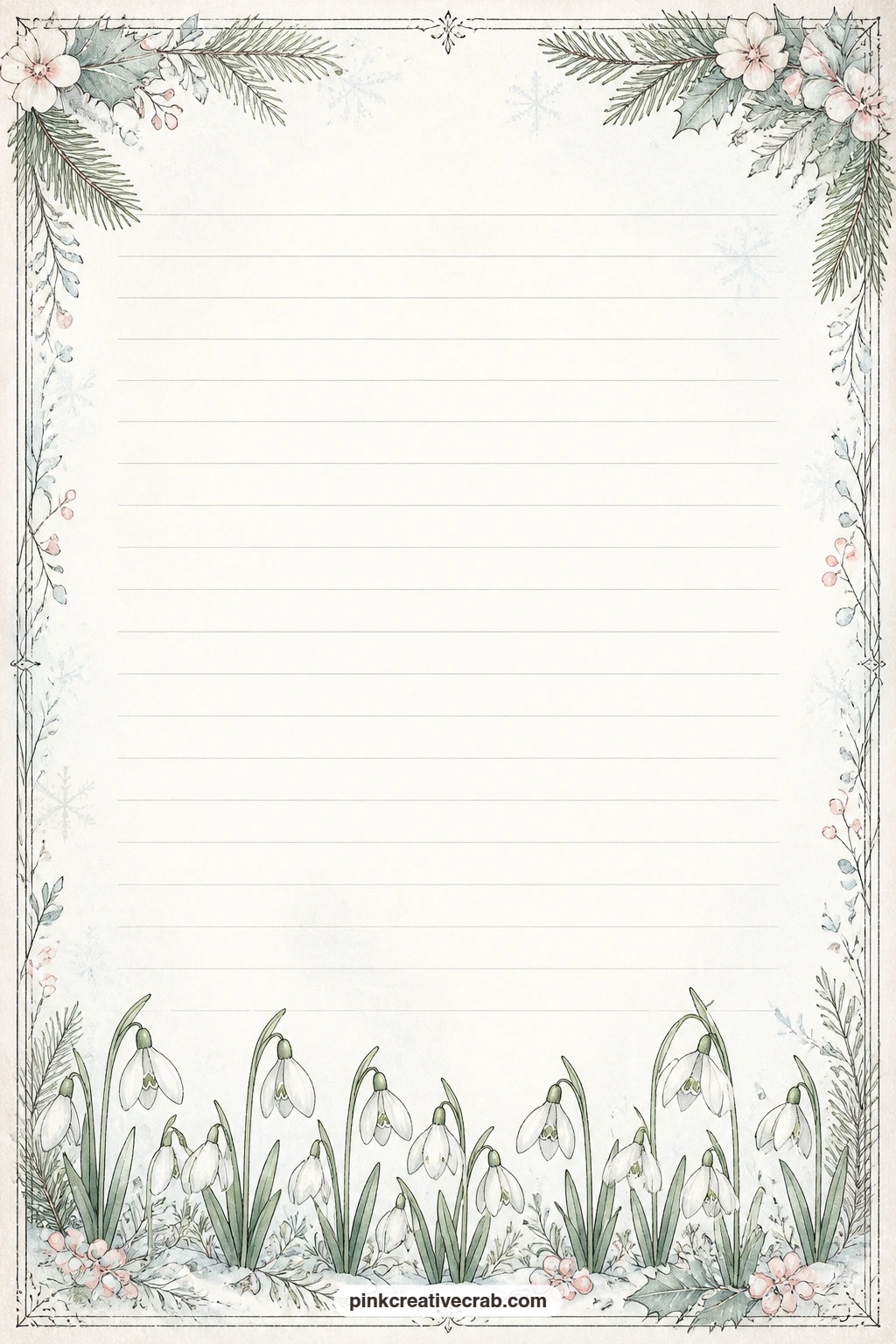
Snowdrops run in a loose row along the bottom edge here, well suited to a list of seeds to plant, a note on the first signs of spring, or a line or two about the quietest day of the season.
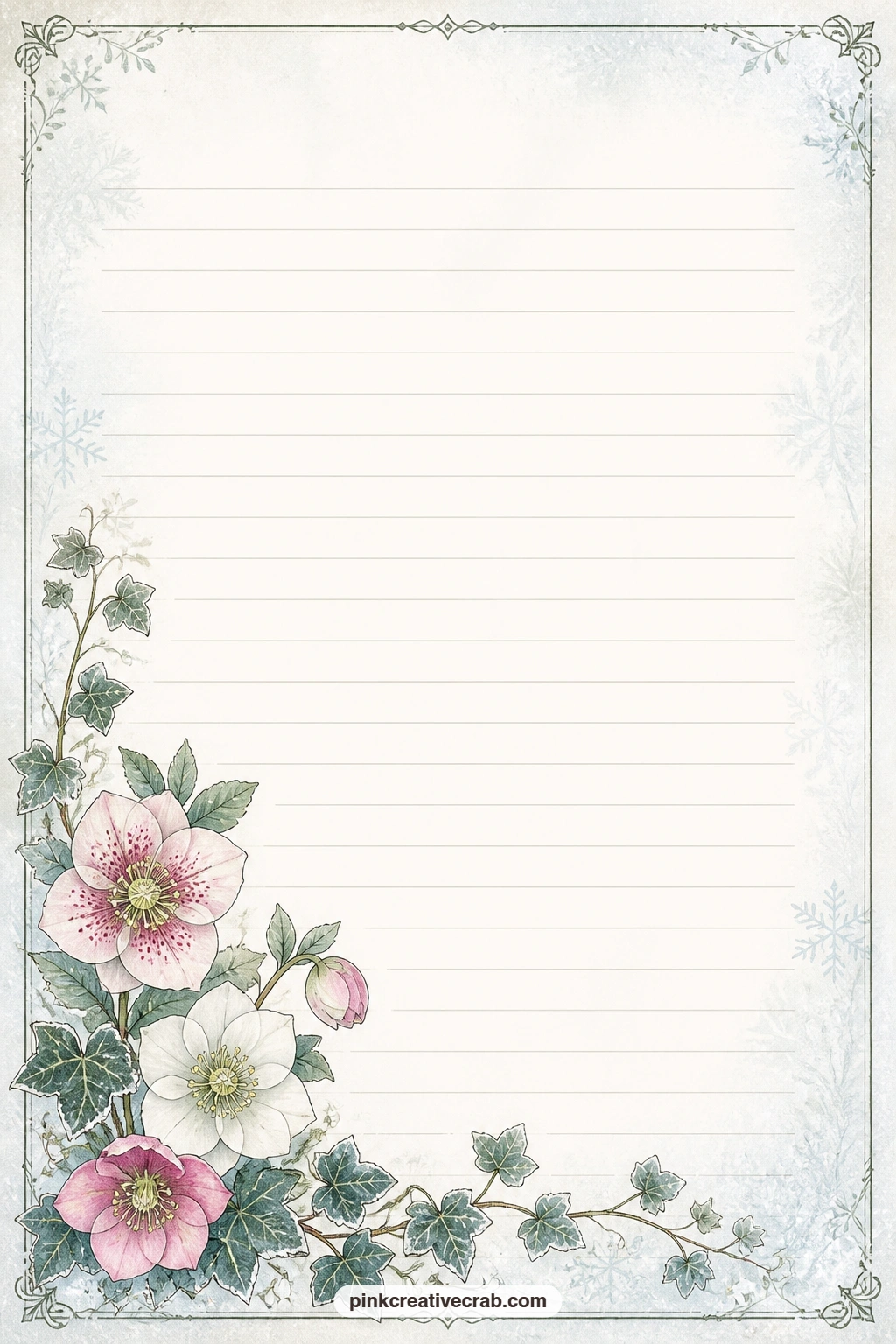
Hellebore flowers and ivy twist together in one corner of this page, leaving room for a garden journal entry, a note to a friend, or a short list of winter chores still waiting outside.
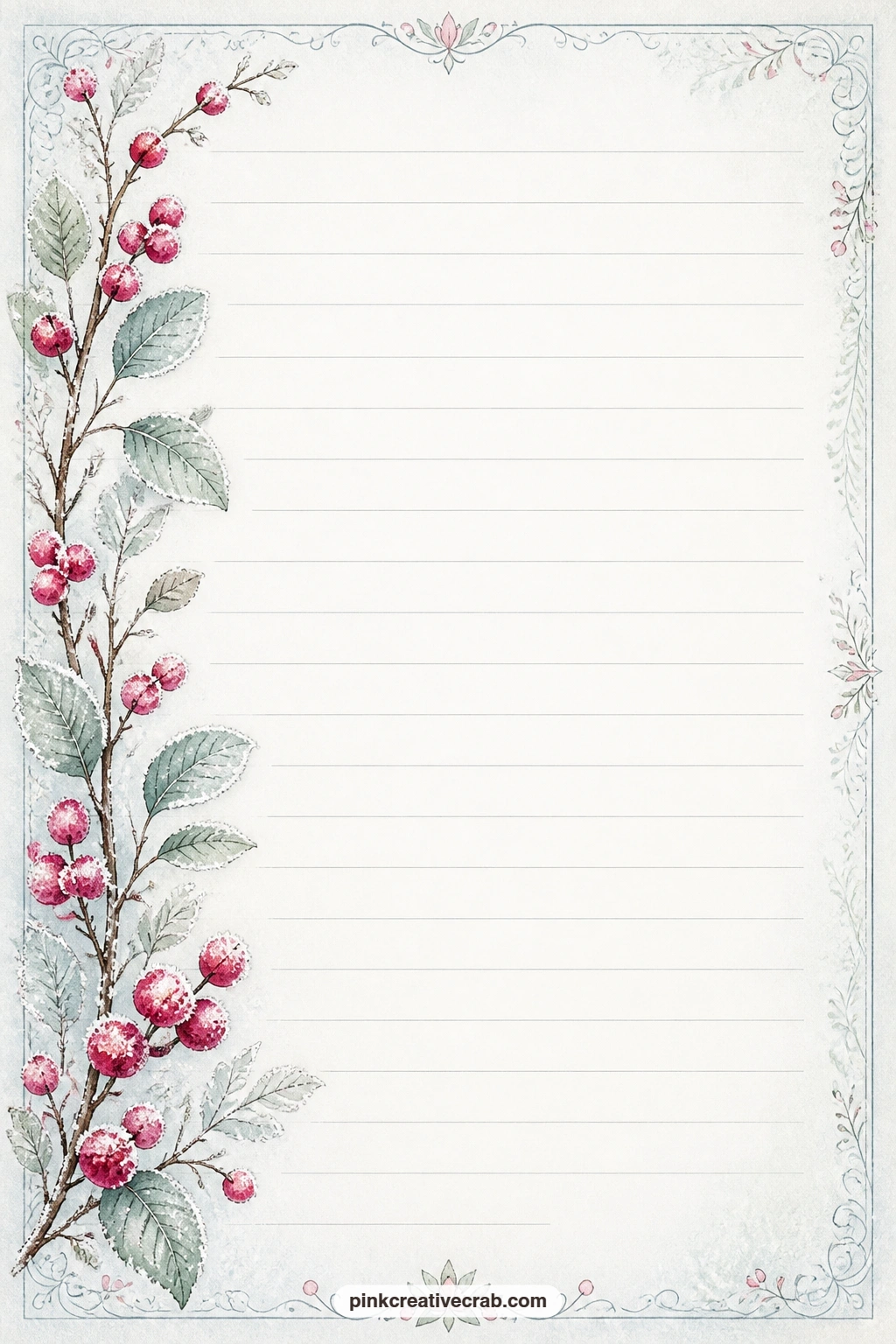
A frosted winterberry branch borders one side of this page, ready for a holiday card list, a recipe copied out by hand, or a letter addressed to next year’s self.
What to Do Next
Print the pages, trim them to your journal size, and start with whichever scene pulls you in first; the snowdrops at the wall or the hellebores on the sill both make a gentle opening page, and from there the whole quiet garden follows.
Frequently Asked Questions
What paper works best for a winter botanical junk journal?
Matte cardstock around 90 to 110gsm works best for a winter botanical junk journal. It takes glue and ink without curling or showing through, and still folds easily if you want to tuck pages into pockets.
What printer settings give the clearest result?
Set your printer to its best or photo quality setting and choose matte or cardstock as the paper type. This keeps the fine frost lines and sepia outlines sharp instead of soft or streaky.
What size should I print these pages?
Standard US letter or A4 suits most home printers and most journal covers. Trim each page down slightly after printing to fit your journal, or cut several down to make smaller tags and pockets.
Do I need to color these pages myself?
No, every page prints in full color and is ready to use straight away. You only need scissors, glue and a pen if you want to journal directly onto the lined pages.
Can I mix these pages with other winter journal sets?
Yes, the sage, frost blue and blush palette pairs well with other cottagecore or nature sets. Try combining a few pages from a winter junk journal kit or a nature junk journal kit for more variety.
Have any thoughts?
Share your reaction or leave a quick response — we’d love to hear what you think!
-
 0
-
0
-
0
-
0
-
0
-
0


