Tomato drawing is the kind of summer food art that rewards you fast: a few flat shapes, one good red, and a page that already feels like lunch in the sun. These scenes lean into sunny Mediterranean tables and garden corners, so every idea below gives you a tomato doing something, whether that is ripening on a windowsill or getting sliced by someone’s nonna.
Work through them in order and you will move from a single bowl of fruit to full market scenes, each one finishable in a single sitting. Grab gouache, a stack of cream paper, and let the red do most of the talking.
Using these images: free for personal projects such as printing, coloring, cards, journals and gifts. Handmade items that include them may be sold up to 30 pieces per design. More than that is commercial use and is not permitted, and neither is selling or sharing the images themselves or passing them off as your own. Please ask before any other use.
Start simple with a bowl of heirloom tomatoes, piled up in their lumpy, sun-warmed shapes. Sketch the bowl first as a wide oval, then stack three or four tomato circles inside it, letting the top ones overlap the rim slightly so the pile feels full rather than floating.
Paint the bowl in a flat cream or warm white, then block in each tomato in a different shade: cherry red, dusty orange, a deep maroon-green stripe. Heirlooms are never perfectly round, so flatten one side here and there, that is what sells the variety.
The common slip is making every tomato the same size and color, which flattens the whole composition. Vary the sizes by a third at least and keep two or three clear color families so the eye has somewhere to land.
If gouache is new to you, mix slightly more paint than you think you need before starting, since matching a color twice mid-picture rarely goes well. Finish today by adding one tiny white gouache highlight dot to each tomato for shine.
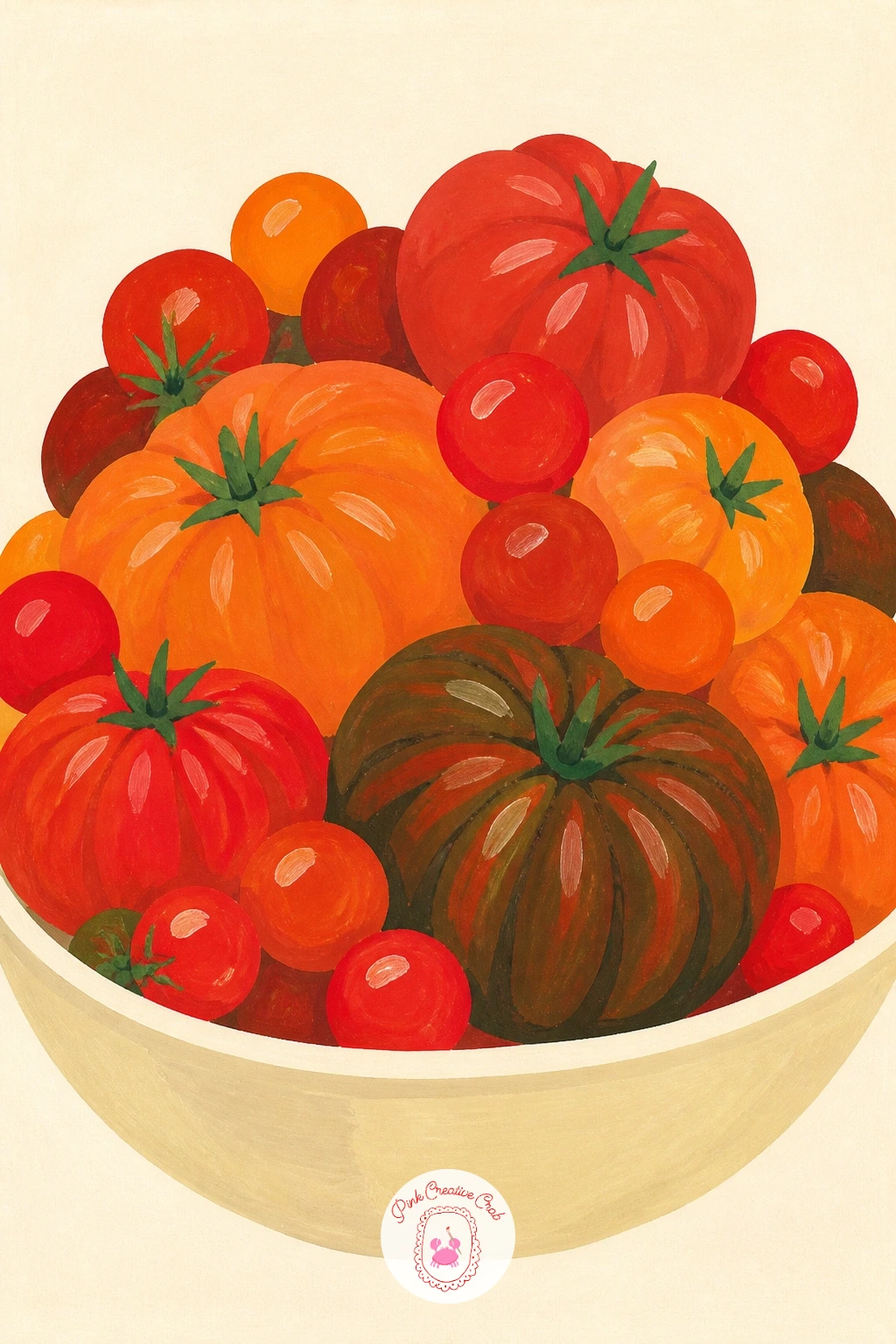
Palette: Cherry Red,Butter Yellow,Sap Green,Cream White
Move from the bowl to the plant itself with a tomato vine in a terracotta pot, planted centrally so the whole page reads as one tall green shape. Measure first: the pot should take up the bottom quarter of the page, with the vine stretching up through the rest, since a pot drawn too large will crowd out the fruit.
Block the terracotta pot in a warm burnt orange, then build the vine upward with a central stem and a handful of leaf clusters branching off it, each leaf a simple pointed oval. Tuck three or four small red tomatoes among the leaves, some still green to show the stages of ripening.
Painters often make the stem perfectly straight, which looks stiff. Let it lean slightly and curve once near the top, the way a real vine reaches for light.
No terracotta orange on hand? Mix cadmium red with a touch of yellow and brown. Finish by outlining the pot rim in a darker brown line for a crisp edge.
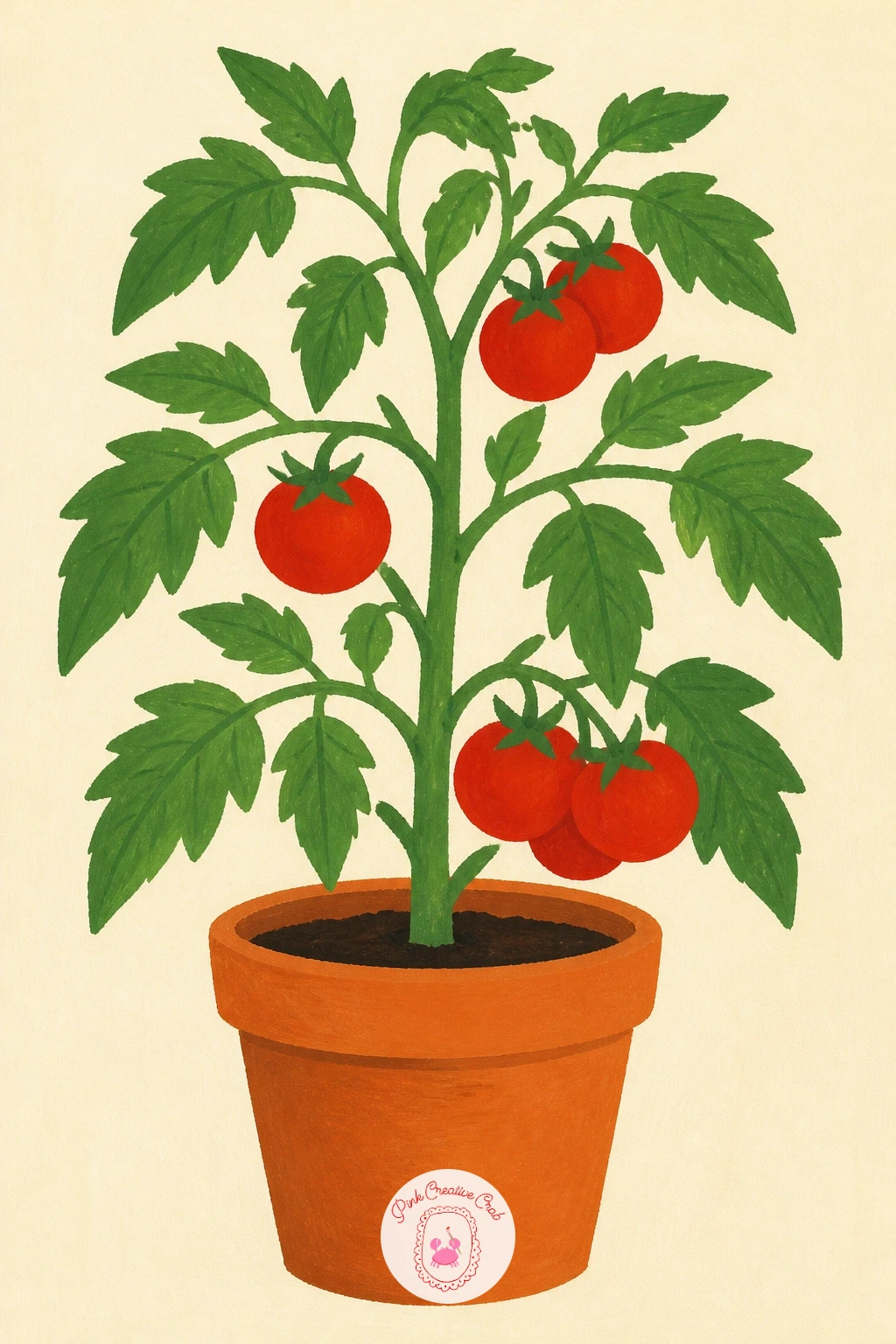
Palette: Terracotta,Sap Green,Cherry Red,Cream White
Shift the eye level for a caprese salad seen from directly above, a bird’s eye view that turns tomato slices, mozzarella rounds and basil leaves into a flat pattern of circles and greens. Looking straight down means no shadows stretching sideways, just a tight ring of overlapping shapes on a plate.
Sketch a large circle for the plate, then alternate tomato slices and mozzarella rounds around it like a clock face, tucking a basil leaf between each pair. Keep the tomato slices as flattened ovals rather than perfect circles, since real slices squash slightly under a knife.
The overhead view trips people up when they add any side shading, which breaks the flat-from-above illusion. Keep every shape evenly lit with no gradient, just flat color meeting flat color.
A drizzle of olive oil can be a few thin curved lines in pale yellow gouache. Finish with cracked black pepper as tiny dark dots scattered across the top.
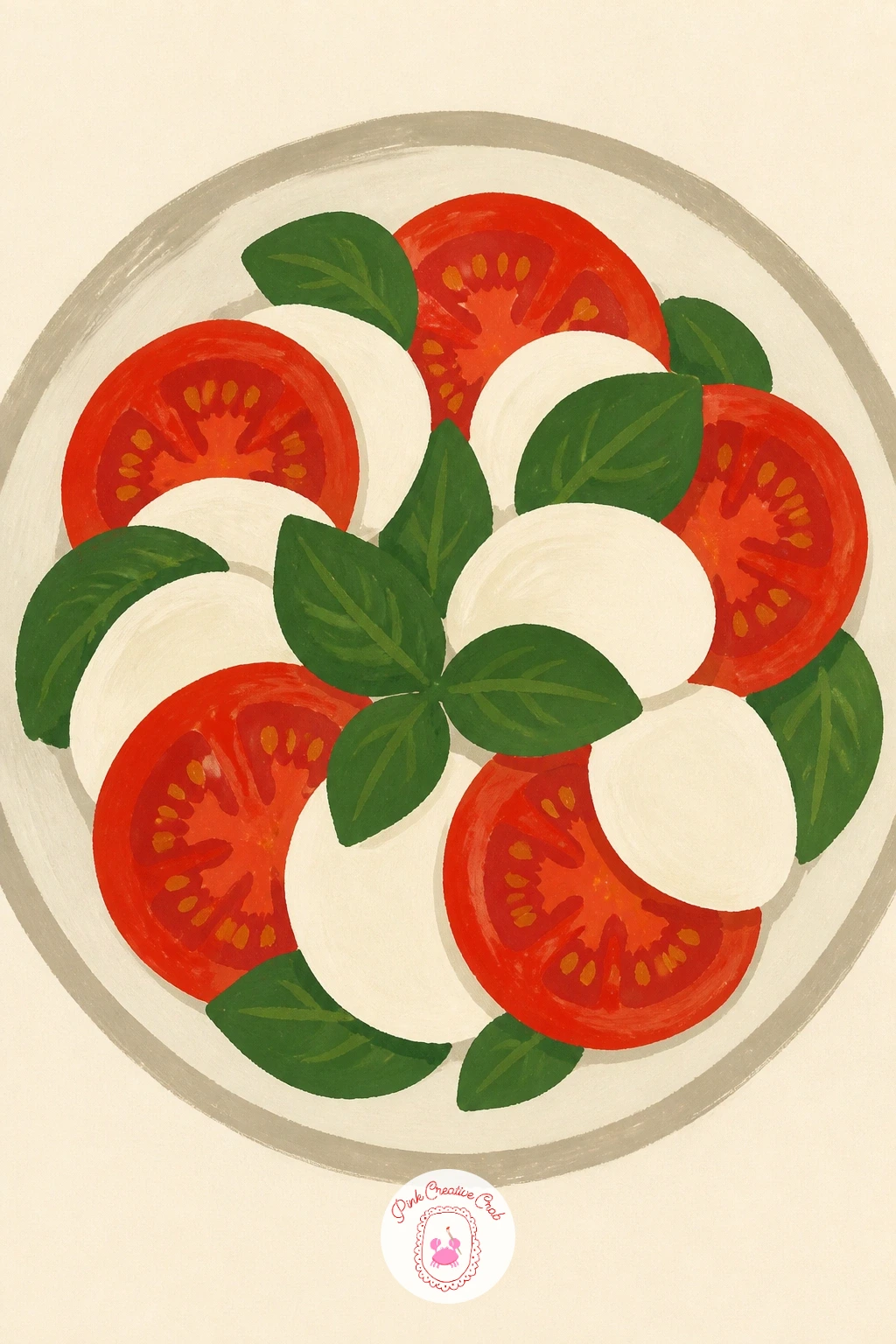
Palette: Cherry Red,Cream White,Sap Green,Butter Yellow
Bring in a table surface with a tomato tart on a linen cloth, where the texture trick is all about the crust edge and the folded fabric beneath it. Draw the tart as a circle with a slightly uneven scalloped border to suggest pastry, then lay overlapping tomato slices in a spiral across the top.
Paint the linen cloth first in a flat warm white with a few soft grey fold lines, letting it dry before the tart sits on top of it. Block the pastry base in a warm golden brown, then add the red tomato spiral, leaving thin cream lines between slices so they read as distinct.
A dry brush loaded with barely any paint, dragged lightly over the crust edge, gives that slightly crumbly pastry texture without fussy linework. If the tart looks too flat, go back once it dries and lift a few tiny highlights with a damp brush.
No linen texture in mind? Picture a folded tea towel instead. Finish with a scatter of small basil leaves tucked between the tomato slices.
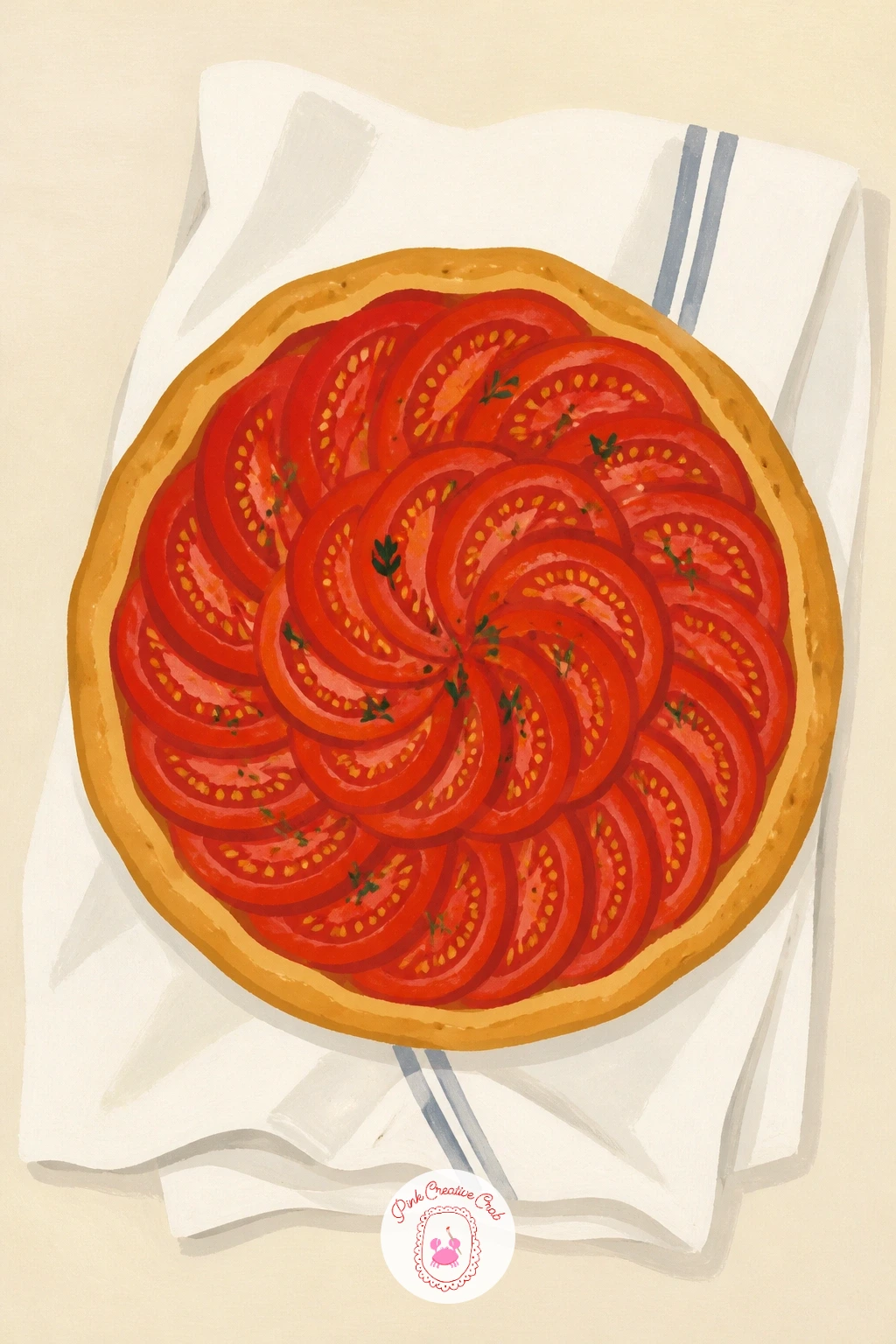
Palette: Golden Ochre,Cherry Red,Cream White,Sap Green
Head to the market for a crate of cherry tomatoes, stacked in loose clusters that spill slightly over the wooden slats. Draw the crate as a simple rectangle with a few horizontal lines for slats, then fill the inside with a cluster of small overlapping circles rather than one solid red mass.
Block the wood in a warm tan, then paint the cherry tomatoes in two shades of red so the pile has depth even as flat shapes. Group a few tomatoes on their vine, still attached by a thin green stem, to break up the roundness.
If this is your first time stacking circles, draw a loose triangular guide shape first and fill it with tomatoes rather than placing each one freehand, which keeps the pile from drifting off balance. For a quick ten-minute version, paint just the crate and a dozen tomatoes; for the forty-minute version, add a market table beneath it and a chalkboard price sign.
Swap wood tones for a woven basket if a crate feels fussy. Finish with a few tiny white highlight dots across the top tomatoes.
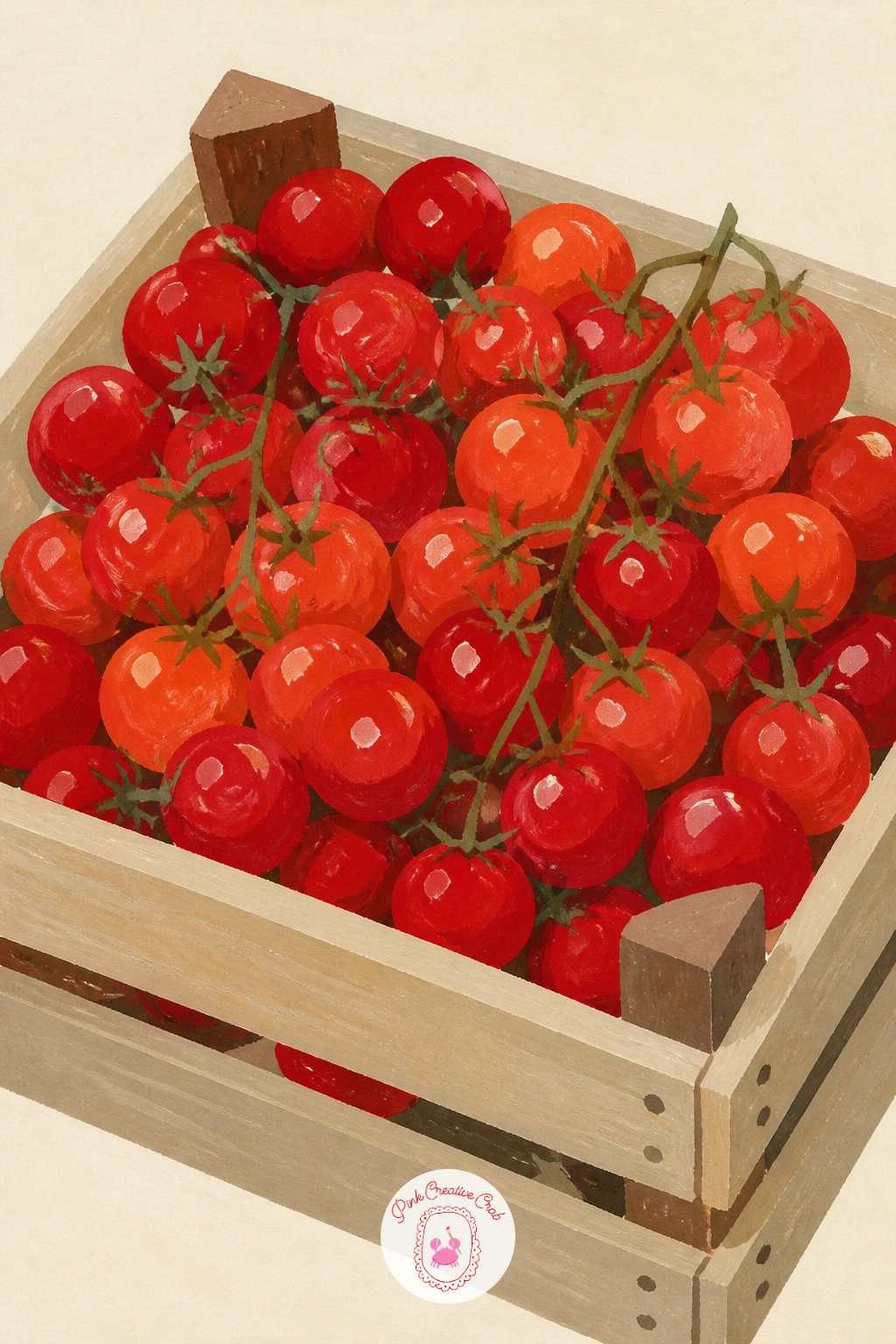
Palette: Warm Tan,Cherry Red,Burnt Sienna,Sap Green
Keep breakfast simple with tomato slices on toast, a close-up composition that fills the page with just bread, red, and a sprinkle of herbs. Draw a thick rectangle of toast first with a slightly rounded top crust, then lay three or four tomato slices across it in a loose row.
Paint the toast in two tones, a golden crust edge and a paler cream crumb, before adding the tomato slices on top once dry. Each slice gets a thin outer ring of deeper red and a lighter, almost pink center where the seeds sit.
Edges go wrong when the tomato slices look pasted flat with no thickness. Add a short shadow line along one edge of each slice to lift it slightly off the bread.
No fresh tomato reference handy? A halved cherry tomato photo works just as well for the seed pattern. Finish with flecks of dried oregano as small dark green dots.
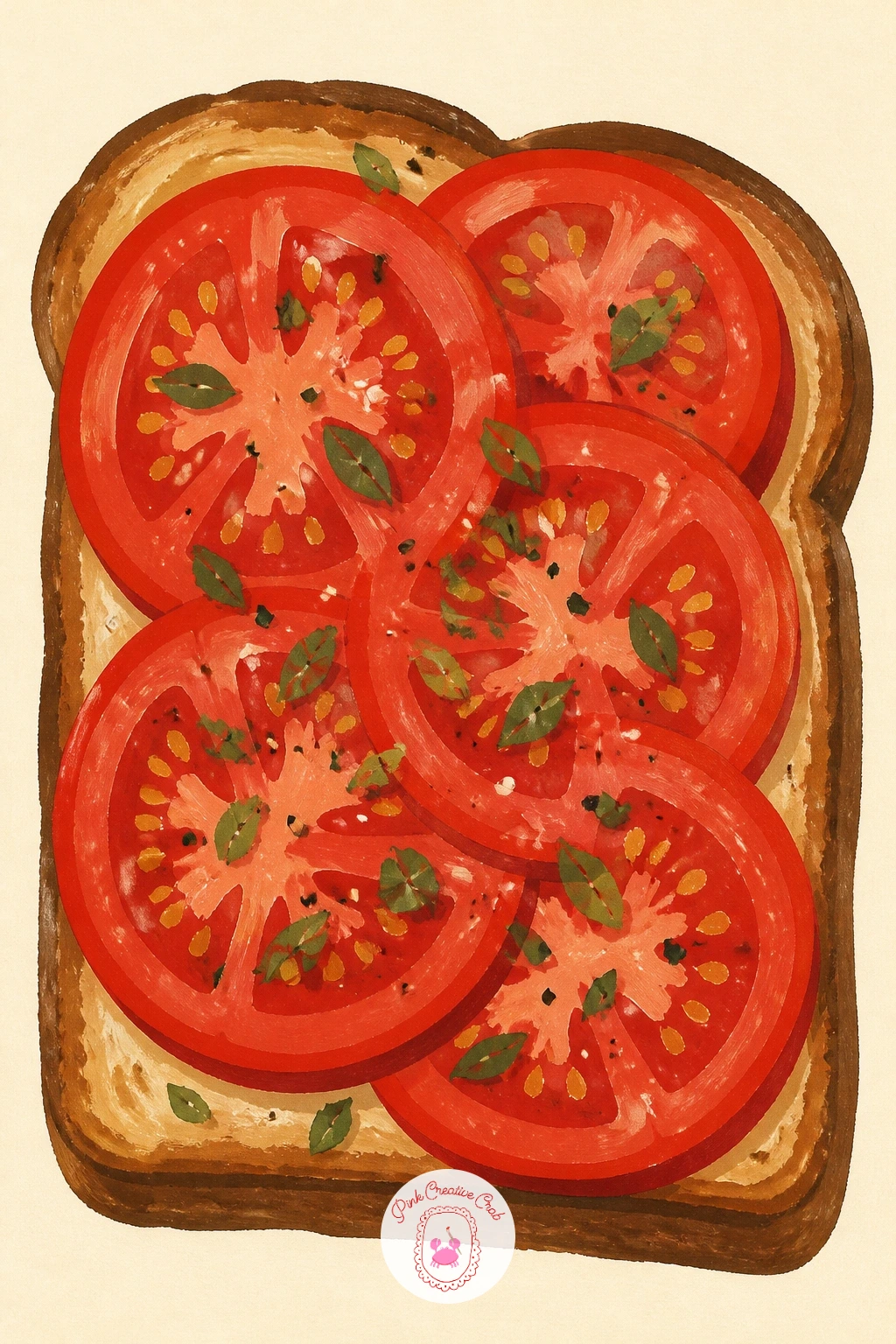
Palette: Golden Ochre,Cream White,Cherry Red,Sap Green
Bring a figure into the scene with a girl in a sundress carrying tomatoes, gathered in the fold of her skirt or a small basket at her hip. Start with a simple standing figure, keeping the proportions loose: the head sits roughly an eighth of the total height, and the waist falls about halfway down.
Block the sundress in one flat color first, a soft yellow or dusty blue works well against red, then add the tomatoes as a cluster of circles either cradled in her arms or spilling from a basket. Keep her face simple, just a suggestion of features rather than a detailed portrait, since this scene is about the mood, not the likeness.
Figures often end up stiff when both arms hang straight down. Bend one elbow to hold the tomatoes and let the other arm swing loosely, which gives the pose some life. If figures feel daunting, there are more girl drawing ideas to practice the basics first.
Finish with a simple sun hat or headscarf to frame her face and anchor the summer mood.
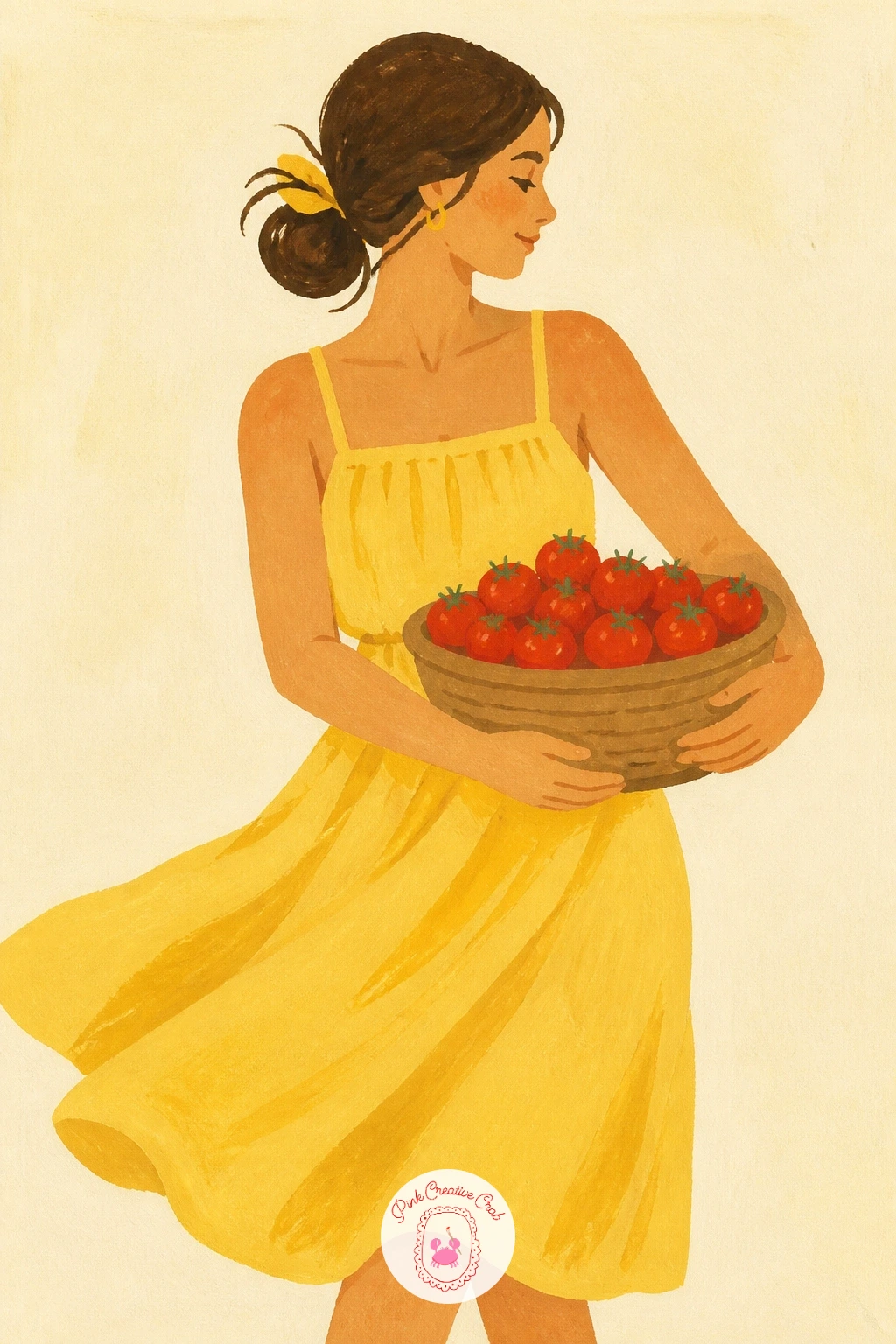
Palette: Butter Yellow,Cherry Red,Terracotta,Cream White
Return to the table with a bruschetta platter, a cheerful scatter of toasted bread topped with diced tomato that reads well as a loose, busy pattern. Sketch an oval serving plate, then arrange four or five slices of toasted bread around it at slightly different angles so the platter feels relaxed rather than lined up.
Paint the toast first in warm golden brown, then add the diced tomato topping as small clustered dabs of red and pink rather than one solid shape, since real bruschetta topping is chunky and uneven. A few flecks of green for basil and a thin drizzle line of olive oil finish each slice.
The quick ten-minute version covers just three slices on a plain plate. The forty-minute version adds the full platter, a small dish of extra diced tomato on the side, and a linen napkin folded beneath it.
If diced texture feels fiddly, press the tip of a small flat brush repeatedly rather than painting each piece with a line. Finish by darkening the plate’s shadow edge slightly for depth.
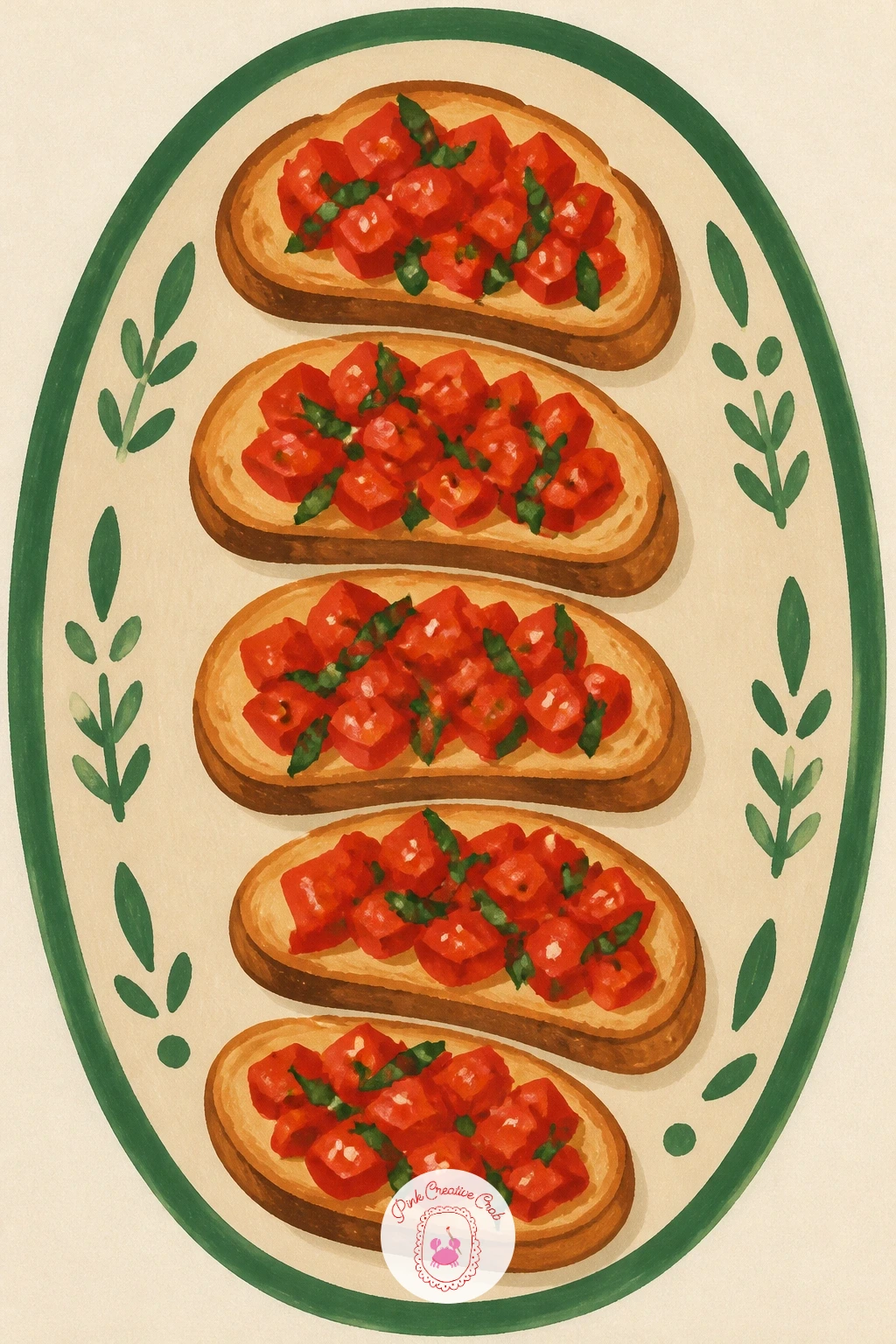
Palette: Golden Ochre,Cherry Red,Sap Green,Cream White
Twirl into pasta with tomato sauce and basil, a warm tangle of curved lines that sits well in a shallow bowl shape. Draw the bowl as a wide oval first, then fill the inside with loose curling strands rather than straight lines, since pasta rarely lies flat in neat rows.
Paint the pasta base in a soft butter yellow, letting some strands overlap others to build the sense of a pile. Once dry, add the tomato sauce in patches rather than an even coat, pooling more thickly in the dips between strands, then scatter a few whole basil leaves and a light dusting of grated cheese in white dots.
Sauce often ends up looking painted on top like a lid rather than soaked into the noodles. Let a few pasta strands peek through the red in places to avoid that flat, pasted look. For more pasta scenes to pair with this one, there is a whole set of pasta painting ideas worth exploring.
Finish with a twist of black pepper specks across the top.
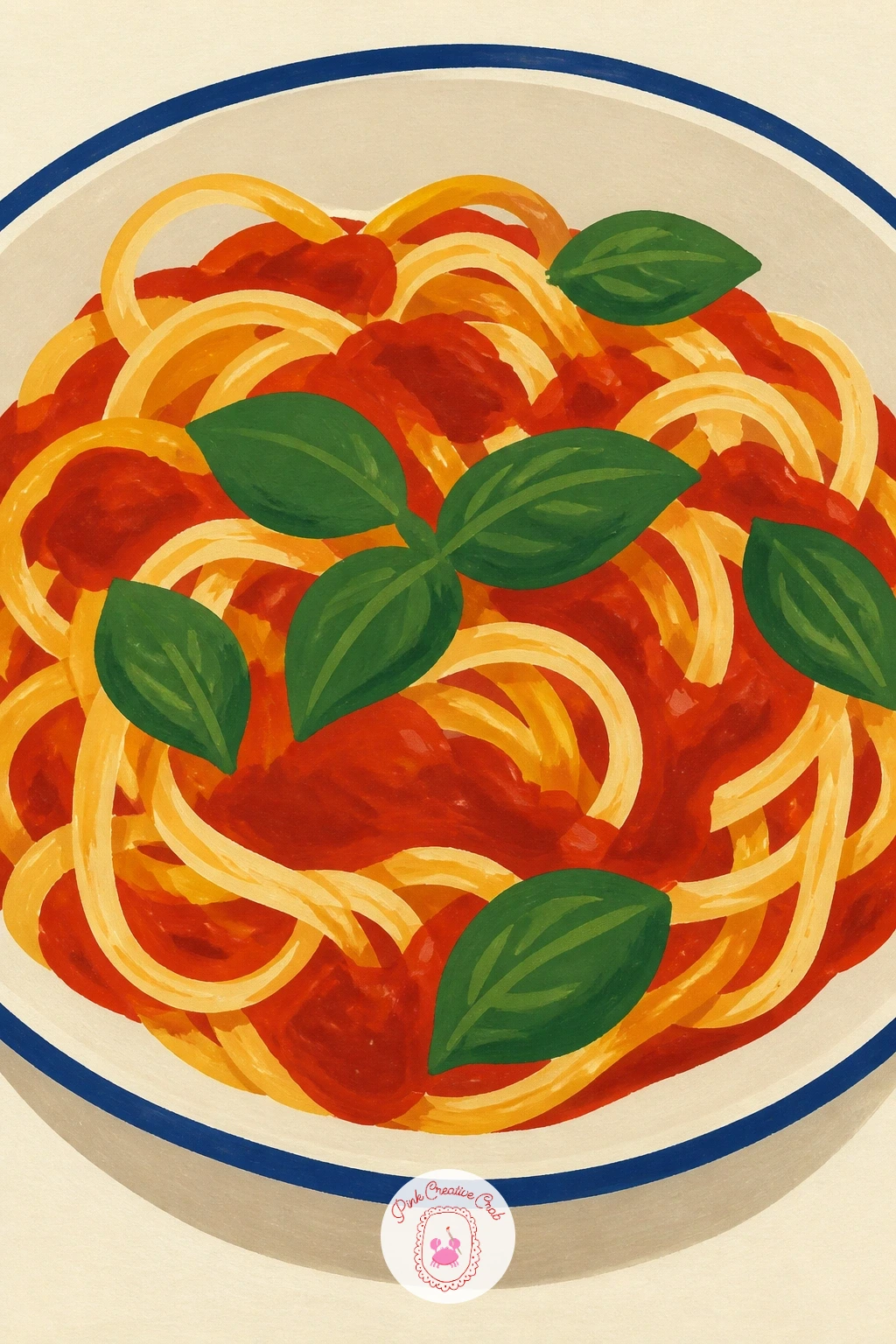
Palette: Butter Yellow,Cherry Red,Sap Green,Cream White
Simplify things with a tomato sandwich, two slices of bread stacked with a generous layer of tomato peeking out from the sides. Draw the sandwich as a thick rectangle, rounding the top corners slightly, then mark a horizontal band through the middle where the tomato filling shows.
Block both bread slices in the same warm cream tone first so the sandwich reads as one solid object, then paint the tomato band in a bright red with a thin lighter edge where the slices overlap the crust. A smear of white or pale yellow beneath the tomato suggests mayonnaise or butter without extra detail.
Beginners sometimes draw the tomato slices perfectly aligned, which looks too tidy for a real sandwich. Let one slice peek out further than the others at an angle for a more natural, just-made look.
No bread reference in front of you? Picture a thick slice of sourdough for the crust shape. Finish with a few cracks of black pepper visible along the tomato edge.
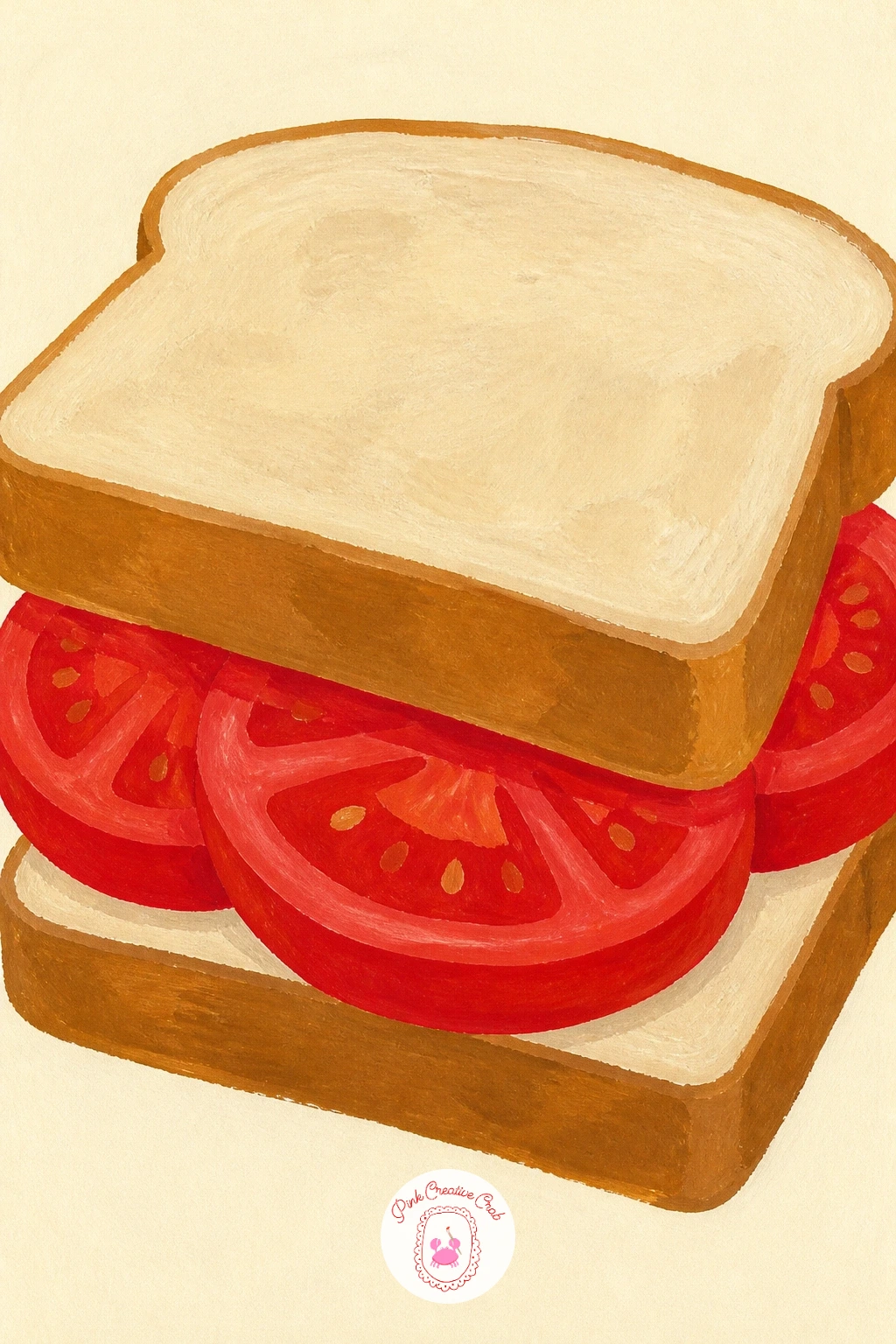
Palette: Cream White,Cherry Red,Golden Ochre,Sap Green
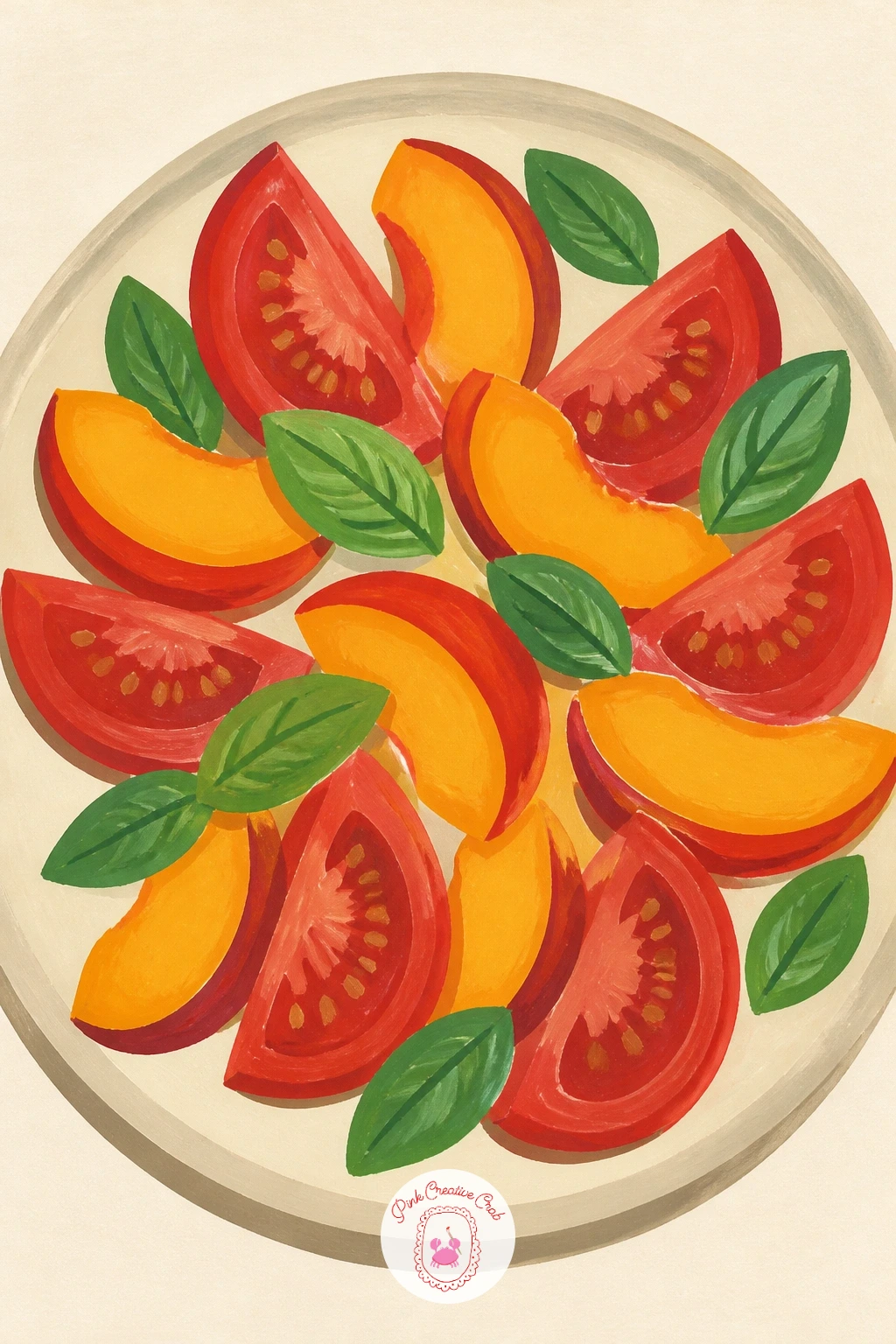
Pair unexpected colors in a tomato and peach salad, where the warm orange of the peach sits right beside tomato red for a composition that leans on contrast. Sketch a wide shallow plate, then alternate tomato wedges and peach slices around it, tucking a few basil leaves between them.
Paint the peach slices first in a soft orange with a blush of pink along one curved edge, then add the tomato wedges in cherry red once dry so the colors stay crisp rather than bleeding together. A scatter of crumbled white cheese and a few thin red onion rings add contrast without much extra effort.
Getting the peach and tomato to look distinct from each other is the trick here, since both are round and warm toned. Keep the peach’s curve softer and rounder while the tomato wedges stay more angular with a visible seed pattern.
Swap peach for nectarine if that is what is on hand, the shape barely changes. Finish with a light honey drizzle shown as a few thin curved gold lines.
Palette: Cherry Red,Peach Orange,Sap Green,Cream White
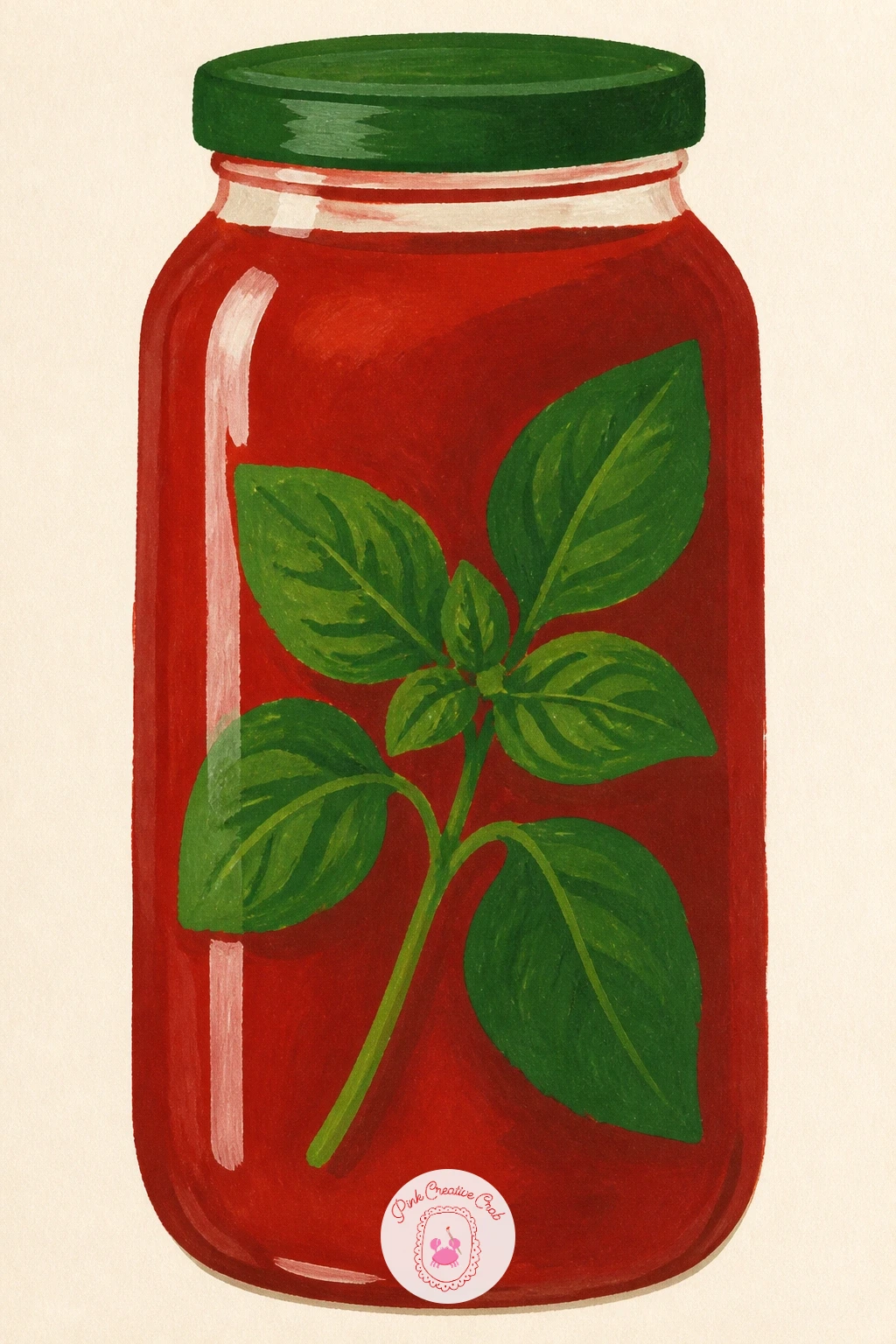
Settle into something still with a jar of passata with basil, a simple glass jar filled with deep red sauce and a basil sprig tucked against the glass. Measure the jar’s proportions before anything else: most jars are roughly twice as tall as they are wide, so sketch a tall rectangle with slightly rounded shoulders before adding the lid.
Paint the passata inside the jar as one flat, deep red shape, leaving a thin strip of cream or pale grey along one edge to suggest the glass catching light. The lid can be a simple flat band in a contrasting color, metal silver or a faded label red.
Jars often look flat and lifeless without that one light strip down the side, so do not skip it even if it feels like a small detail. A basil sprig pressed against the inside glass, painted as a simple green silhouette through the red, adds a nice homemade touch.
No real jar nearby? Any tall glass container works as reference. Finish with a small torn paper label shape in cream with a thin red border.
Palette: Cherry Red,Cream White,Sap Green,Silver Grey
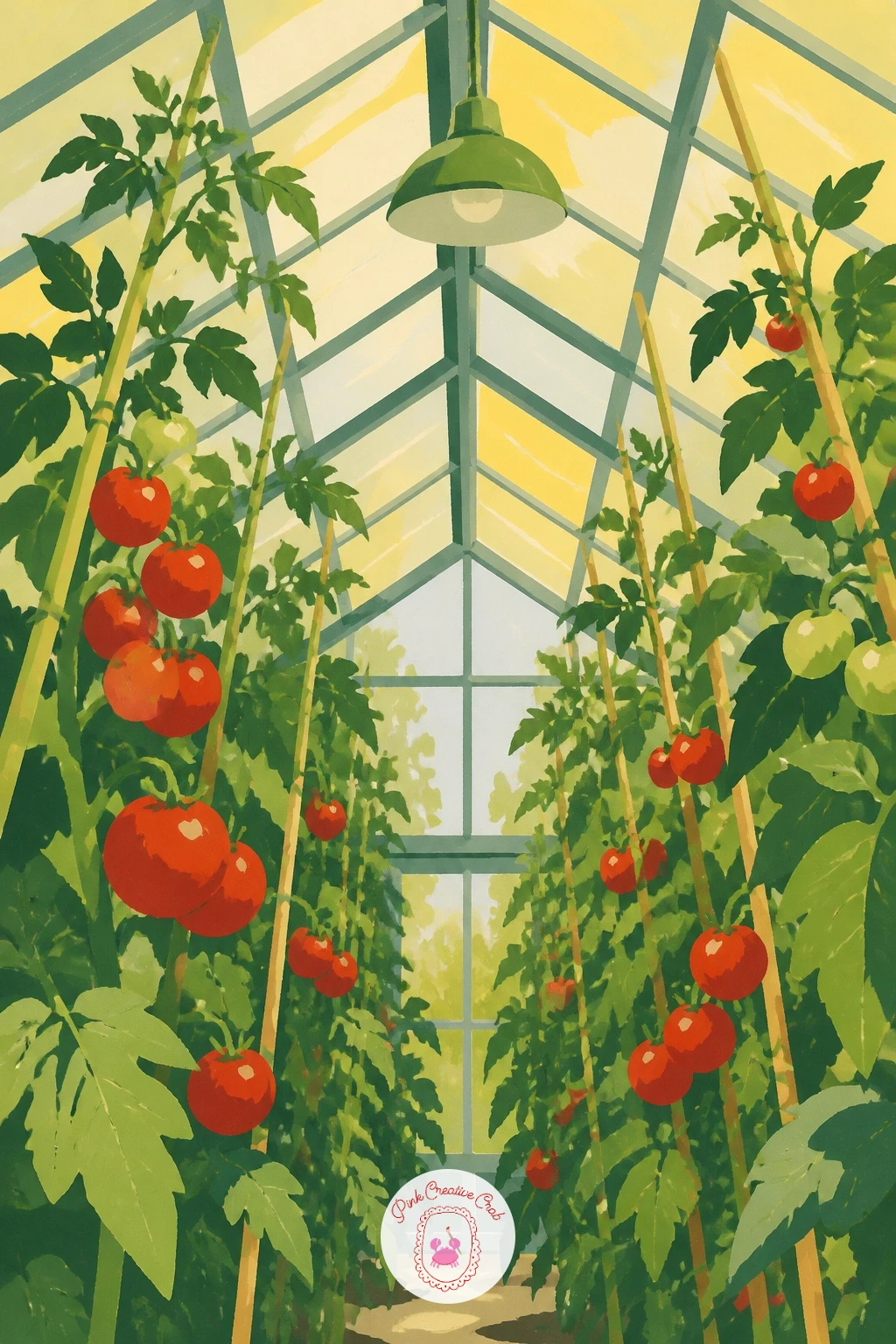
Widen the view for a greenhouse full of tomato plants, where the eye level sits low, looking slightly upward through rows of staked vines toward a glass roof. That low angle makes the plants feel tall and the light comes from above, so keep the brightest tones near the top of the page and let the lower leaves sit in slightly cooler shadow.
Block the greenhouse structure first as a simple frame of thin vertical and diagonal lines suggesting glass panels, then fill the space between with rows of green vines dotted with red tomatoes. Keep the vines simpler and smaller toward the back of the scene so the greenhouse reads as having real depth.
A common misstep is making every vine the same height and the same shade of green, which flattens the whole space. Vary the greens from a yellow-green near the light to a deeper green in the shadows.
If full rows feel like too much, paint just two or three vines filling the frame instead. Finish with a warm yellow glow through the glass roof to suggest afternoon sun.
Palette: Sap Green,Cherry Red,Butter Yellow,Cream White
Try looking at real greenhouse photos online for how light scatters through glass panels, it helps more than imagining the glow from memory.
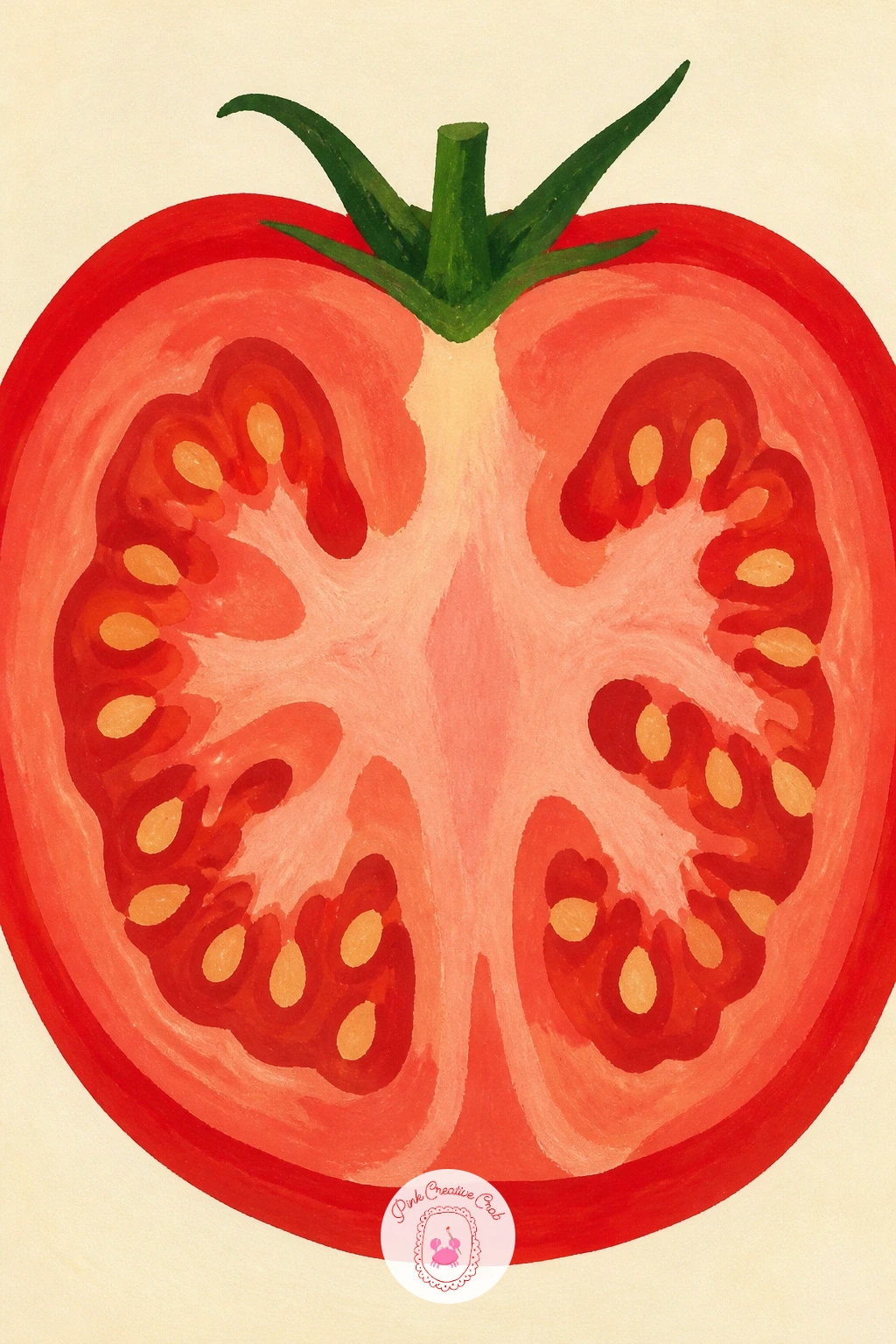
Zoom right in on a tomato cut in half, a close study of the seed pattern inside that fills the whole page with just one object. Draw a large circle first, then slice it with a slightly wavy horizontal line to suggest the knife cut, rounding the two halves so they read as three-dimensional rather than flat discs.
Paint the outer skin in bright cherry red, then block the inner flesh in a lighter coral tone before adding the seed chambers as irregular pale shapes radiating from the center, almost like a sliced orange but looser and less symmetrical. The pale seed gel areas should stay lighter than the surrounding flesh to catch the eye first.
The inside of a tomato is one of the harder textures to fake convincingly, since the chamber shapes are irregular but not random. Look at a real sliced tomato if one is on hand, and notice how the chambers vary in size rather than repeating a pattern.
No tomato to slice for reference? A sliced photo online works just as well. Finish with a thin dark red outline around the outer skin for a crisp edge.
Palette: Cherry Red,Coral Pink,Cream White,Deep Maroon
Follow the ripening process with tomatoes ripening on a windowsill, a small still life where light direction does all the storytelling. Decide where the window light comes from first, usually from one side, and keep that consistent: the tomatoes facing the light stay warm and bright, while the far side of each one sits in a cooler, slightly darker tone.
Line up three or four tomatoes along a flat sill, painting each one at a different stage, from green through orange to fully red, so the row reads as a timeline. A simple windowpane behind them, just a few thin cross lines, grounds the scene without much extra work.
Light gets tricky here because painting a gradient across a round object in flat matte gouache takes planning. Paint the shadow side first as one flat darker shape, then the lit side as a separate lighter shape, rather than trying to blend them, which keeps the crisp print look intact.
If windowsill clutter feels like too much, two tomatoes are plenty. Finish with a thin strip of warm yellow light falling across the sill itself.
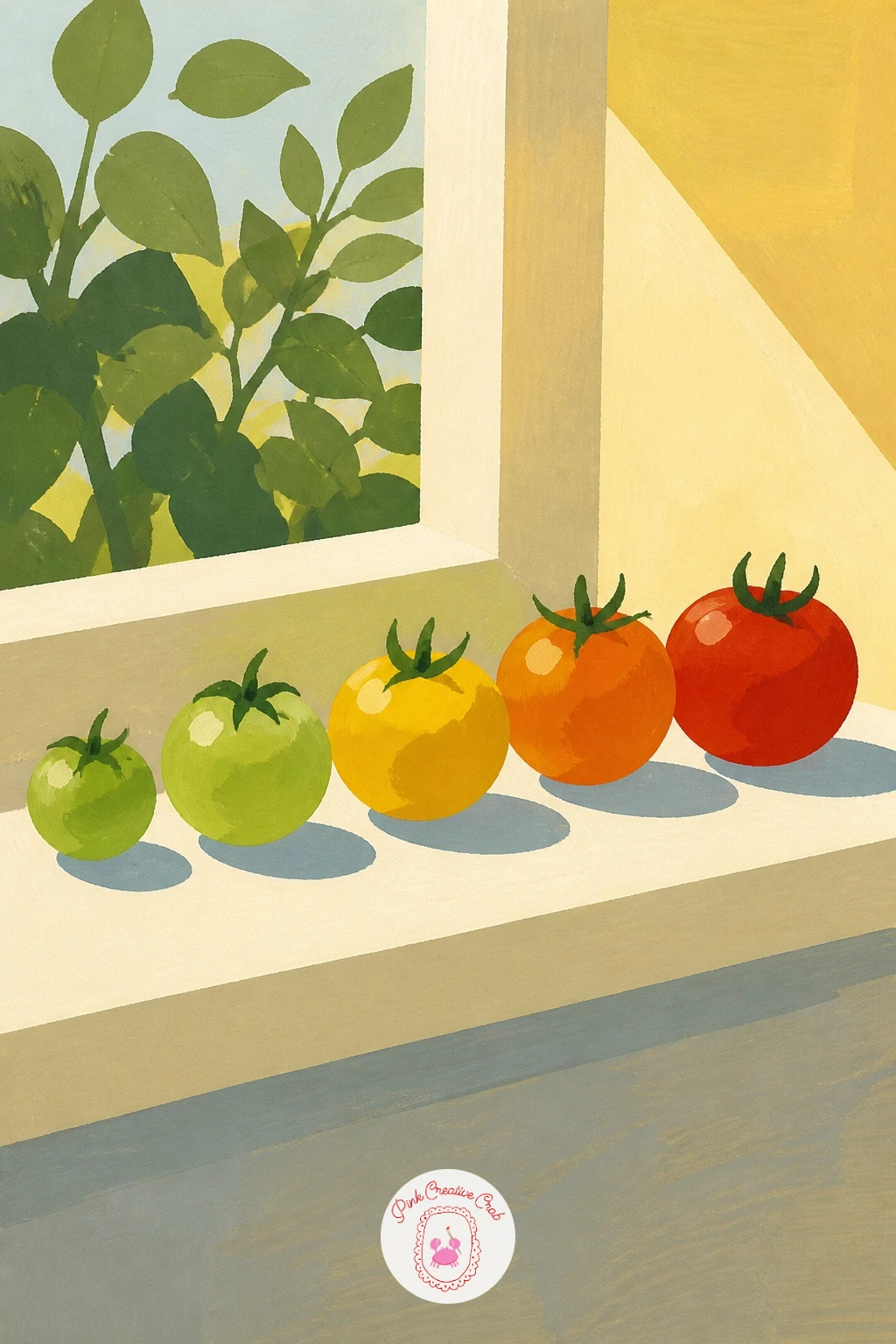
Palette: Sap Green,Terracotta,Cherry Red,Butter Yellow
Warm things up with a bowl of tomato soup, a simple round composition built around one flat pool of red. Draw a wide shallow bowl first, then fill the inside almost to the rim with the soup shape, leaving a thin cream ring where the bowl’s edge shows through.
Paint the soup in a deep tomato red, slightly darker than a fresh tomato to suggest the cooked, concentrated color. A swirl of cream stirred through the center, painted as a simple curved white line, adds movement without much extra effort, and a sprinkle of basil leaves or croutons on top finishes the bowl.
Soup can look like a solid red circle if nothing breaks up the surface, so that cream swirl matters more than it seems. Keep it loose and slightly off-center rather than a perfect spiral.
No cream on hand to swirl in your reference? A few flecks of olive oil floating on top work the same way visually. Finish with a steam line or two rising from the bowl in pale grey.
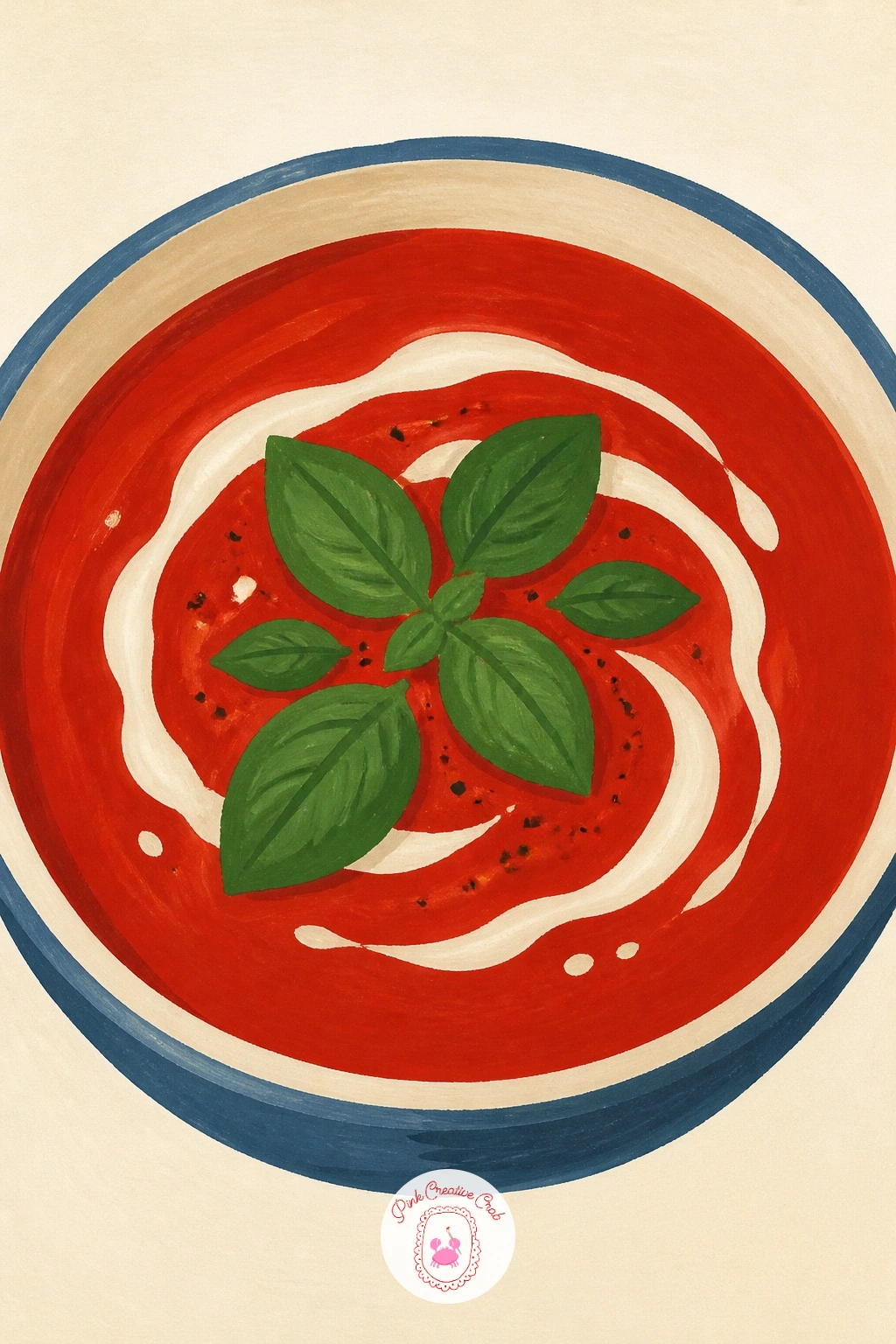
Palette: Deep Maroon,Cream White,Sap Green,Cherry Red
Cool off with a glass of gazpacho, a tall drinking glass filled with chilled tomato soup that calls for crisp, bright edges rather than the warmth of the cooked bowl before it. Sketch a simple tall glass shape, narrower at the base, then fill it almost to the rim with the gazpacho’s flat orange-red tone.
Paint the glass outline first in a thin grey line to suggest transparency, then block the soup color inside, leaving one vertical highlight strip of cream down one side where light passes through the glass. Diced vegetables suspended in the liquid, small flecks of cucumber green and pepper red, add texture floating within the red.
Beginners often paint the glass as fully opaque, losing the sense of chilled liquid. That one pale highlight strip and a slightly lighter tone near the rim keep the glass readable.
Swap a tall glass for a short tumbler if that suits the composition better. Finish with a sprig of mint or basil resting across the rim.
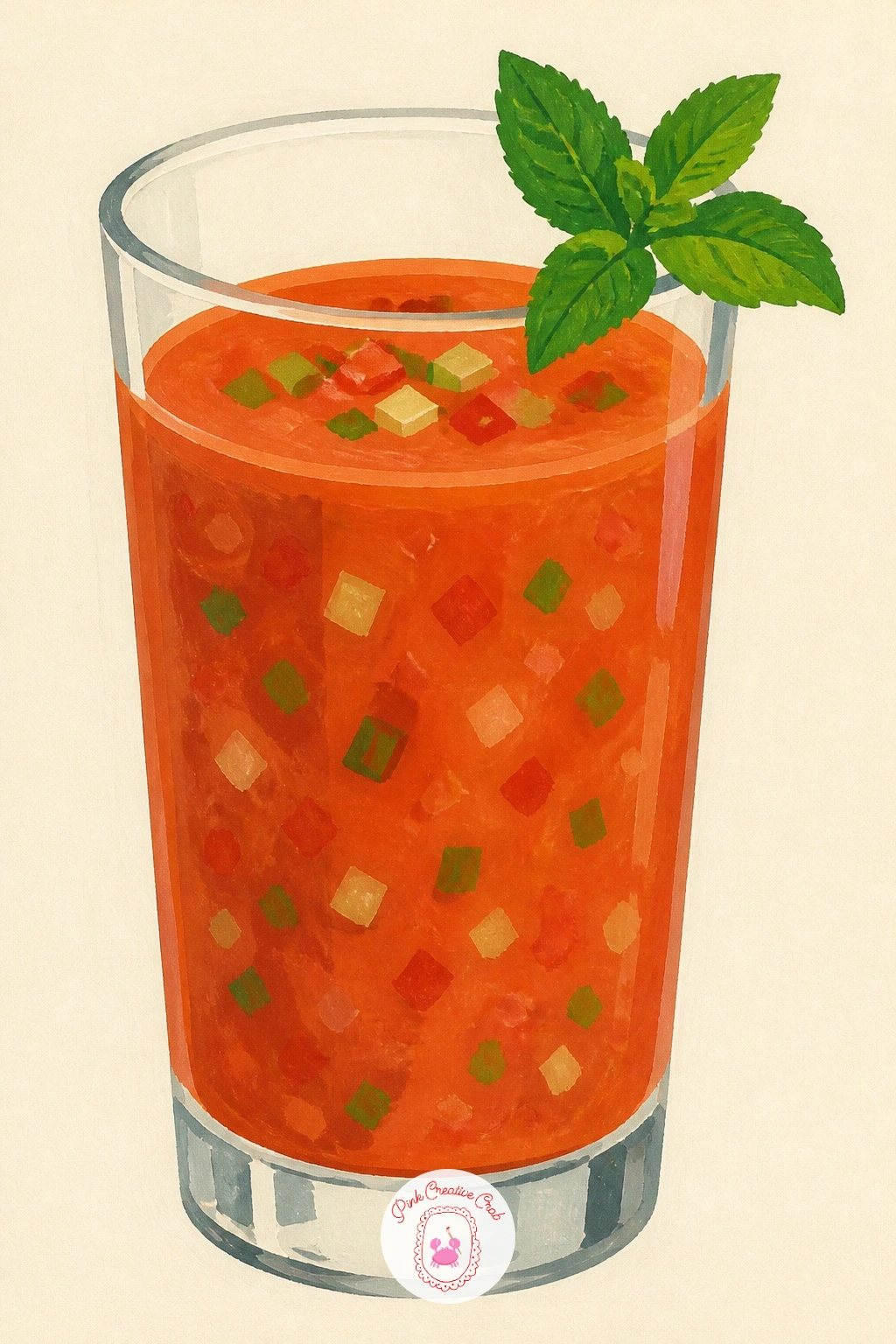
Palette: Cherry Red,Sap Green,Cream White,Silver Grey
Celebrate the classic with a pizza margherita, a wide circle that puts tomato, cheese and basil in their simplest, most iconic form. Draw a large circle for the pizza base, keeping the crust edge slightly uneven and puffed rather than a perfectly smooth ring.
Paint the crust first in warm golden brown, then fill the center in a flat tomato red sauce layer, leaving the crust border visible all the way around. Add irregular white patches of melted mozzarella on top, then scatter a handful of whole basil leaves across the surface once the cheese layer is dry.
Pizzas go wrong when the toppings line up too evenly, since a real pizza has cheese patches and basil scattered with no real pattern. Place things slightly off-center and let a few basil leaves overlap the crust edge.
No oven reference needed here, any photo of a margherita pizza shows the loose topping scatter clearly. Finish with a few small dark scorch marks on the crust for authenticity.
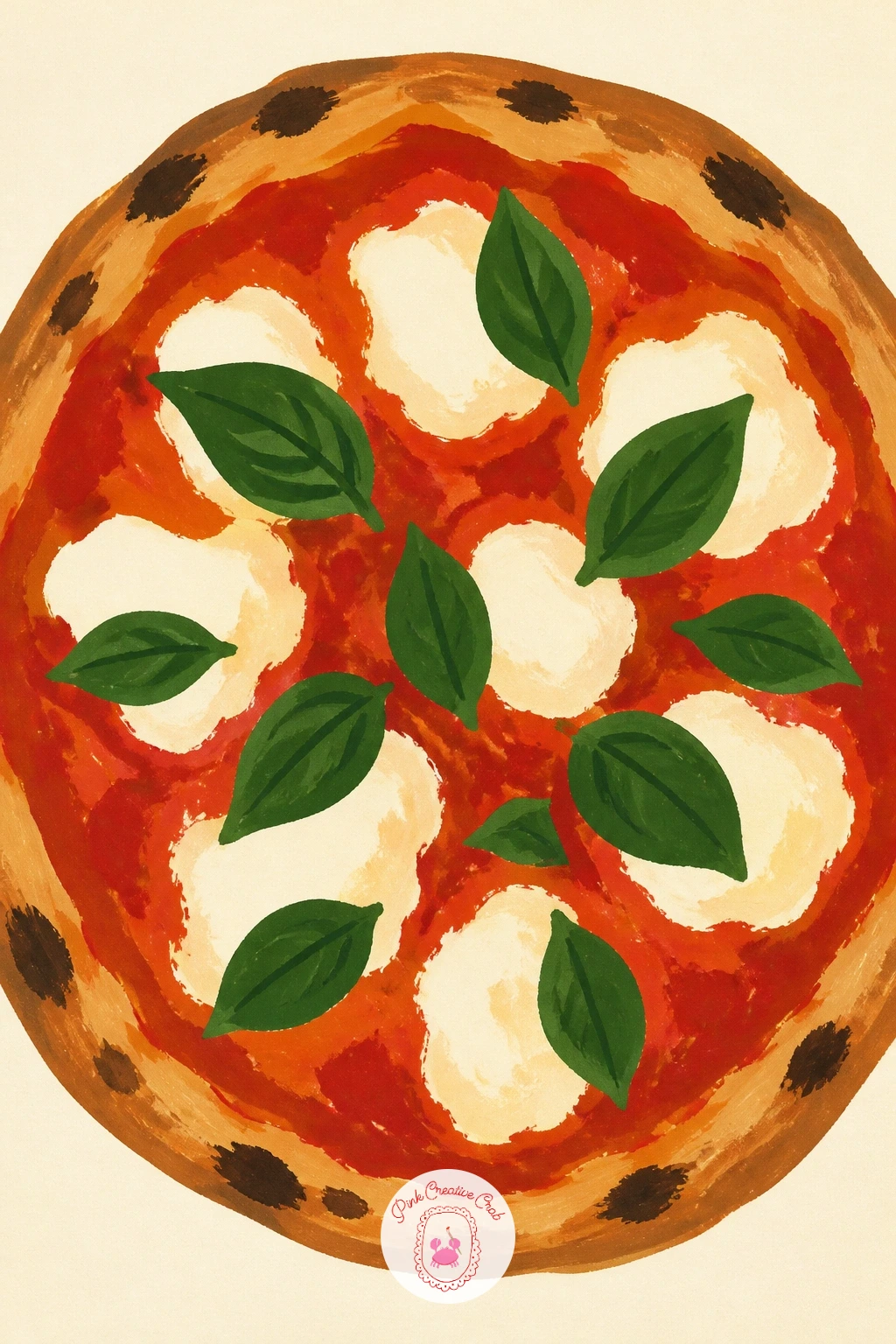
Palette: Cherry Red,Cream White,Golden Ochre,Sap Green
Pair tomatoes with burrata, where the soft, almost melting cheese shape contrasts with the firmer, rounder tomatoes beside it. Draw the burrata first as a slightly irregular soft mound, wider at the base and a little uneven at the top, since it should look creamier and less structured than anything else on the plate.
Paint the burrata in soft white with a faint cream shadow beneath it, then arrange whole and halved tomatoes around it in cherry red and a deeper maroon for variety. A scatter of torn basil and a drizzle of golden olive oil across both the cheese and tomatoes ties the composition together.
The burrata’s edge is the tricky part, since too crisp a line makes it look like a hard cheese rather than soft. Soften that outline slightly compared to the firmer lines around the tomatoes, keeping everything else in the flat matte style.
Fresh mozzarella works as a substitute shape if burrata feels unfamiliar. Finish with a few flecks of black pepper and sea salt scattered across the plate.
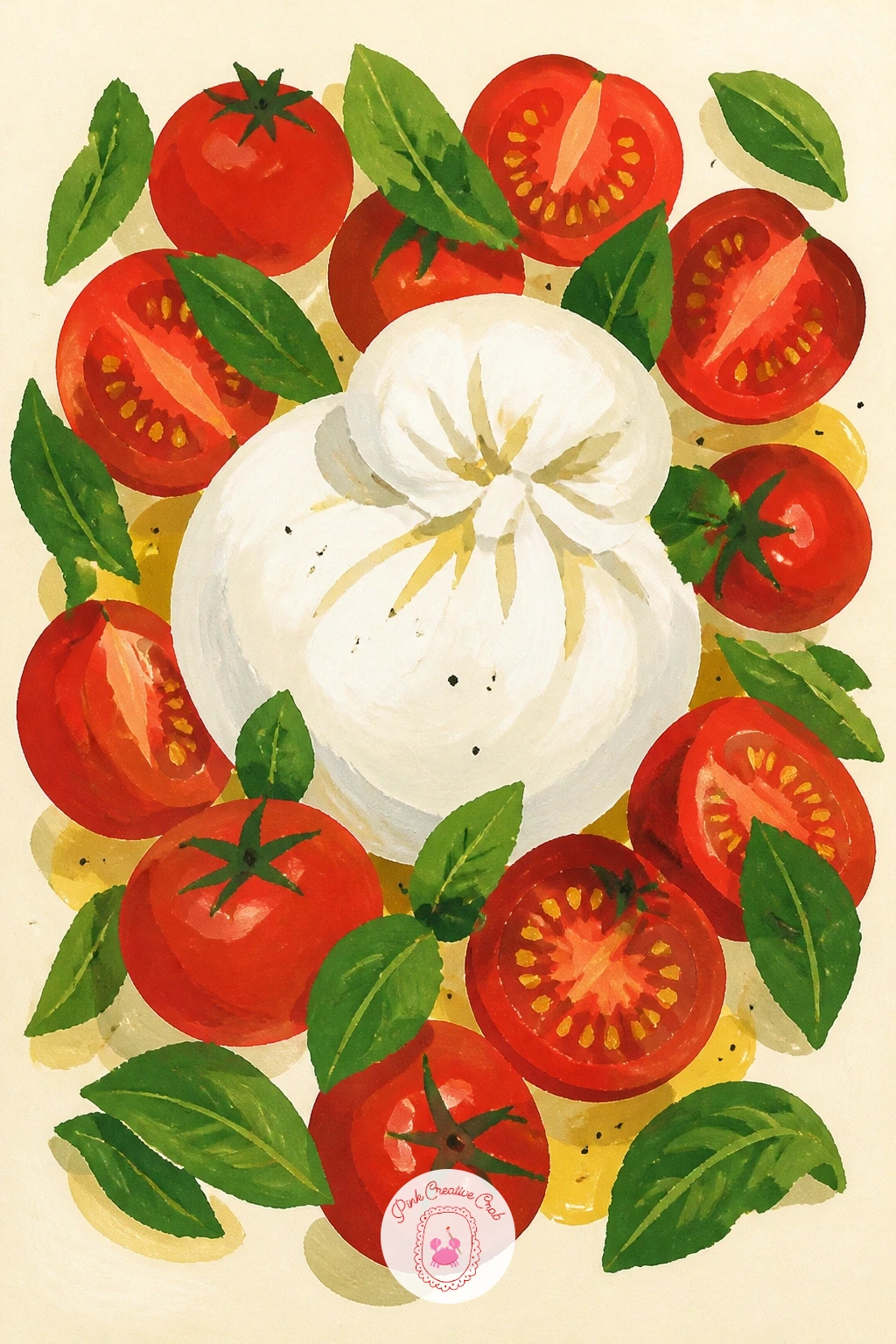
Palette: Cream White,Cherry Red,Deep Maroon,Sap Green
Mix warm reds with bright yellows in a basket of tomatoes and lemons, a pairing that leans hard into the butter yellow accent this whole style loves. Sketch a woven basket shape first, rounded and wide, then fill the top with a mix of tomato and lemon shapes, letting a few spill slightly over the rim.
Paint the lemons in a bright flat yellow with a small dimpled texture suggested by a few tiny darker dots, then add the tomatoes in cherry red grouped loosely rather than alternating perfectly, since real produce never sorts itself so neatly. The basket itself works well in a warm woven tan with a few curved lines to suggest the weave.
If this is your first time drawing a basket weave, keep it simple: a handful of horizontal curved lines is enough, more than that starts to look busy and fights with the fruit for attention. Next time, swap in limes or oranges for a different color pairing using the same basket shape.
Finish with a stem and leaf left on one or two lemons for a fresh-picked feel.
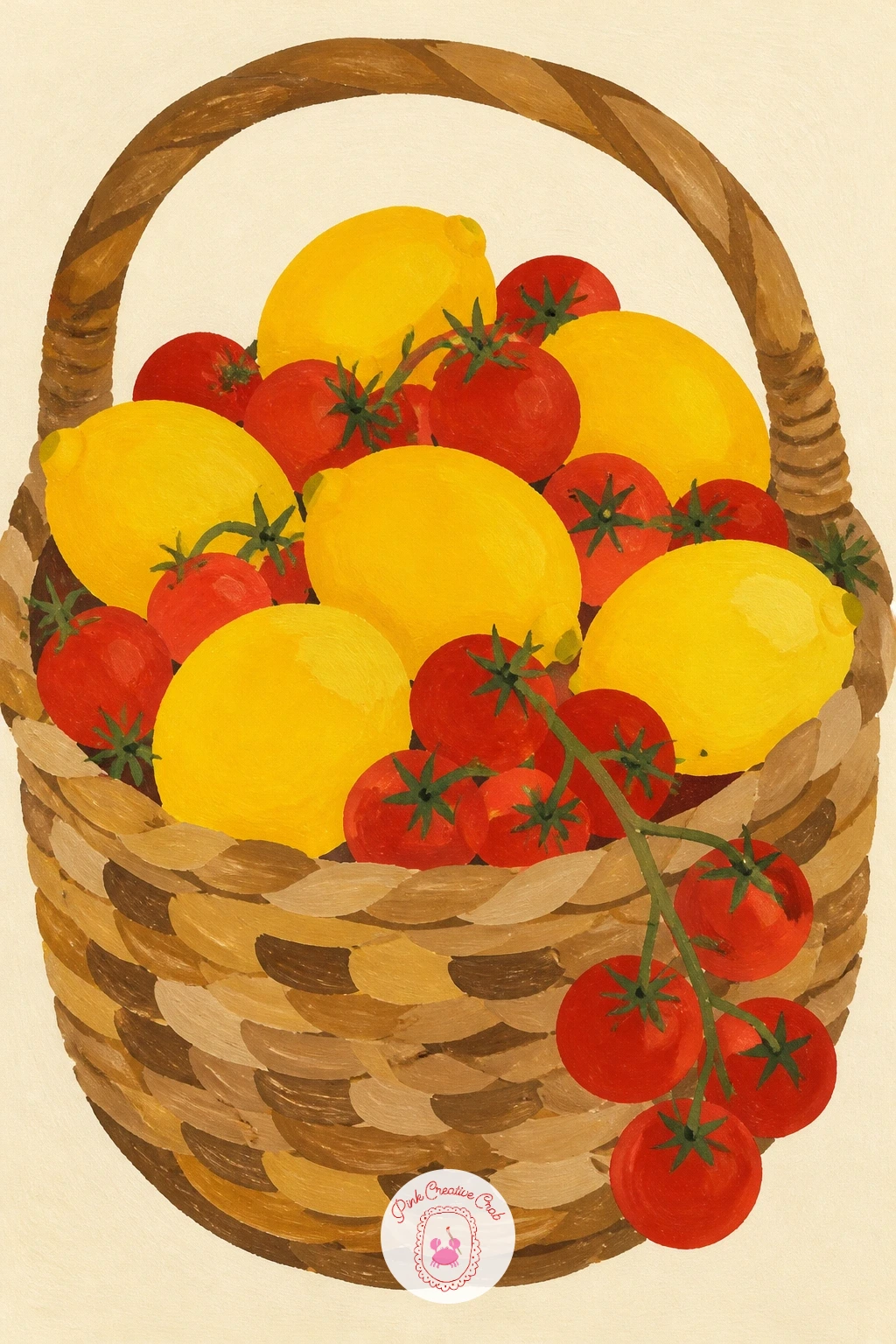
Palette: Butter Yellow,Cherry Red,Warm Tan,Sap Green
Step back into a full vegetable garden with a scarecrow, where the tomato plants are the stars but a small figure in the distance gives the scene scale and story. Place the scarecrow off to one side rather than in the center, since that leaves the main visual weight on the rows of tomato plants in the foreground.
Block the garden in loose rows of green, dotting red tomatoes throughout the nearest row in more detail than the rows further back, which should shrink and simplify slightly to suggest distance. The scarecrow can be built from a few flat shapes: a straw hat, a simple shirt, crossed wooden supports just visible beneath.
Gardens often end up cluttered when every plant gets equal attention. Keep the back rows as soft green blocks with barely any detail, saving the crisp edges and visible tomatoes for the front third of the page.
No scarecrow reference handy? A simple stuffed shirt on a cross shape reads clearly enough. Finish with a warm sky wash behind everything in pale butter yellow.
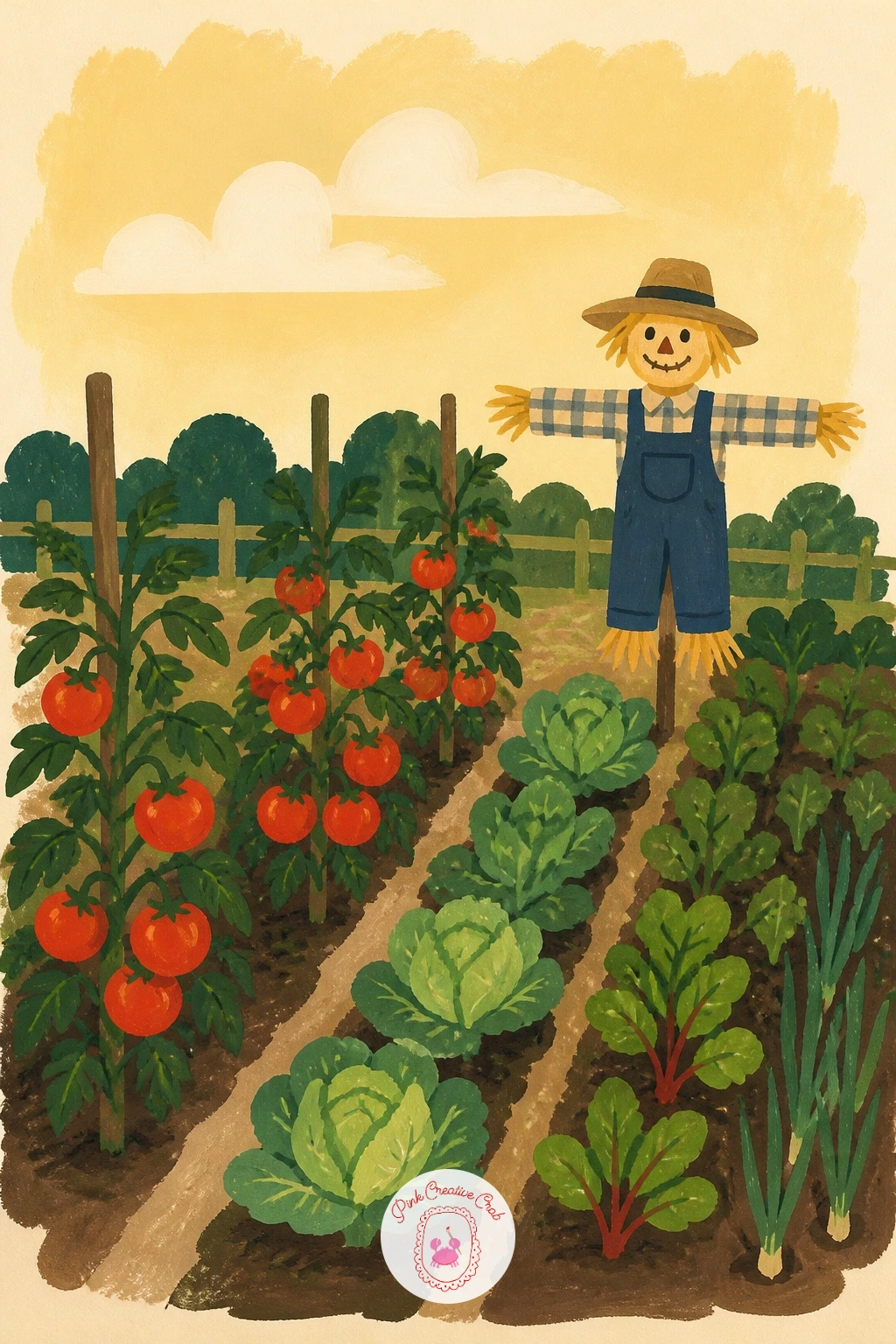
Palette: Sap Green,Cherry Red,Butter Yellow,Warm Tan
Bring in some sizzle with a shakshuka pan, a cast iron skillet filled with a bubbling tomato sauce dotted with eggs. Draw a wide shallow pan shape first, with two small handles on either side, then fill the inside with the loose red sauce shape before adding two or three egg whites with bright orange-yellow yolks nestled into it.
Paint the pan itself in a flat dark grey or black, then the sauce in a textured-looking red, achieved with small patches of slightly varied red tones rather than one flat wash, since shakshuka sauce is chunky with peppers and onion. The egg whites stay a soft off-white with a slightly uneven edge where they meet the sauce.
The eggs are the part that makes or breaks this one. Keep the yolk perfectly round and bright while the white around it stays loose and irregular, that contrast is what reads as a fried egg rather than a blob.
No cast iron pan to reference? Any round skillet shape works. Finish with a few herb flecks and a wedge of bread resting against the pan’s edge.
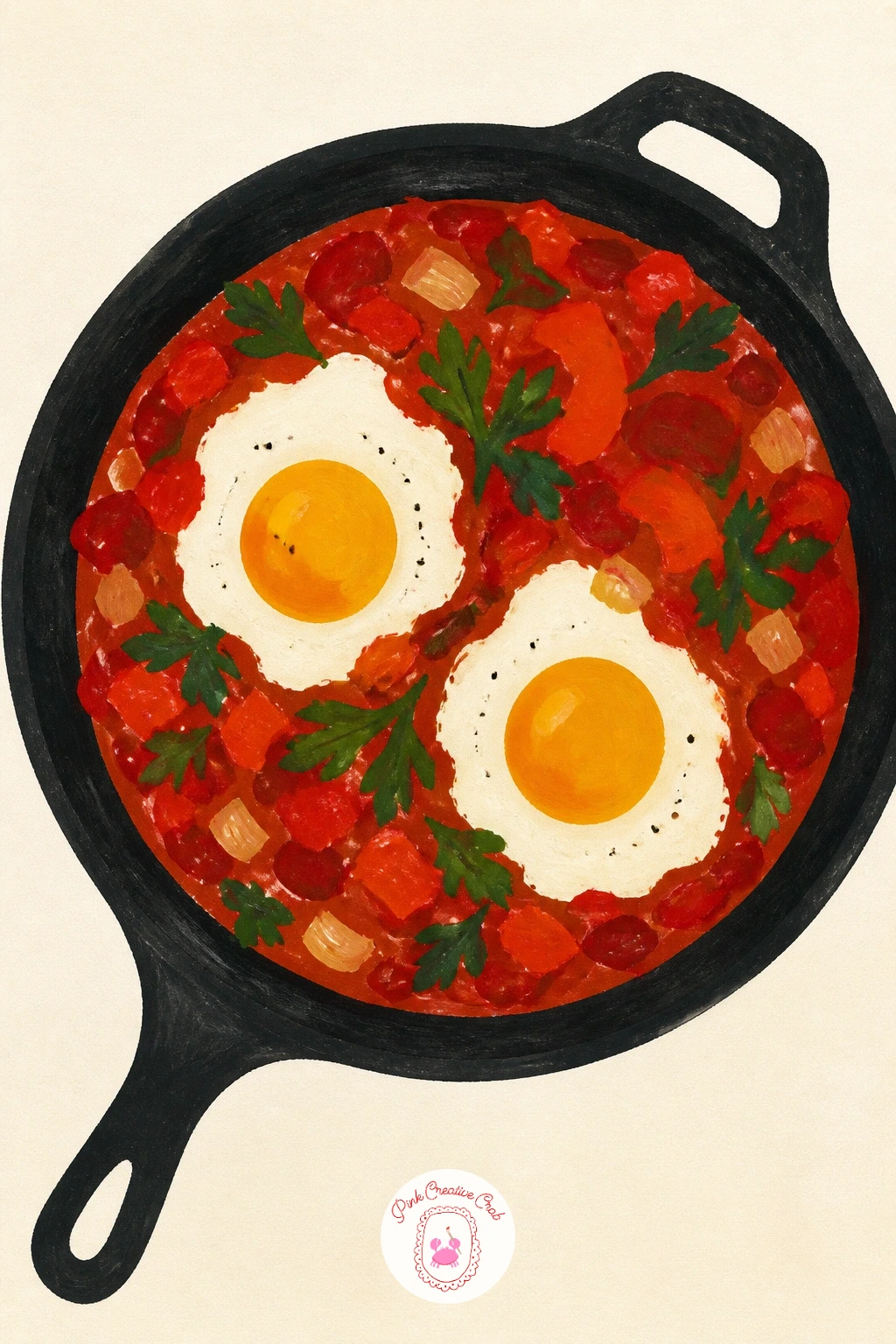
Palette: Cherry Red,Butter Yellow,Cream White,Charcoal Grey
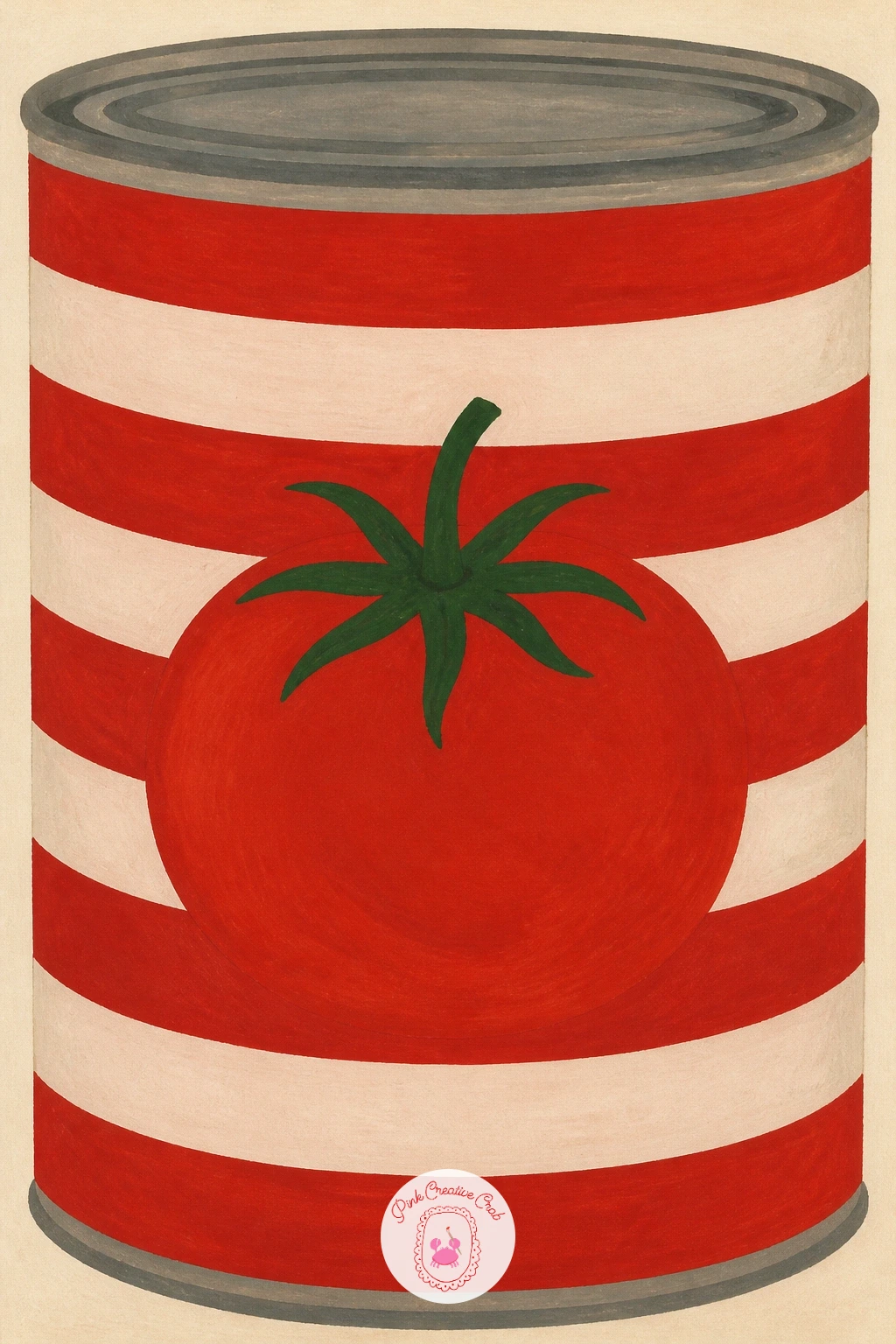
Try something more graphic with a striped tomato tin label, treating the whole piece like a vintage product design rather than a realistic object. Draw a simple cylinder shape for the tin, then divide the front into a label area with a bold horizontal stripe pattern in red and cream running behind a central tomato illustration.
Paint the stripes first using a ruler or straight edge for crisp lines, alternating cherry red and cream evenly across the label band. Once dry, paint a simplified, graphic tomato shape in the center, perhaps with a single leaf, along with a short curved line of text space left blank or filled with simple lettering.
Labels fall apart visually when the stripes wobble or vary in width, so take the extra minute to measure and mark the stripe widths lightly in pencil before painting. The tin’s rounded top and bottom edges can stay a flat metallic grey to suggest the material without much extra work.
No ruler nearby? Fold a scrap of paper to use as a measuring guide instead. Finish with a thin dark outline around the whole label for a crisp printed look.
You Will Need
- ruler or straight edge
Palette: Cherry Red,Cream White,Silver Grey,Sap Green
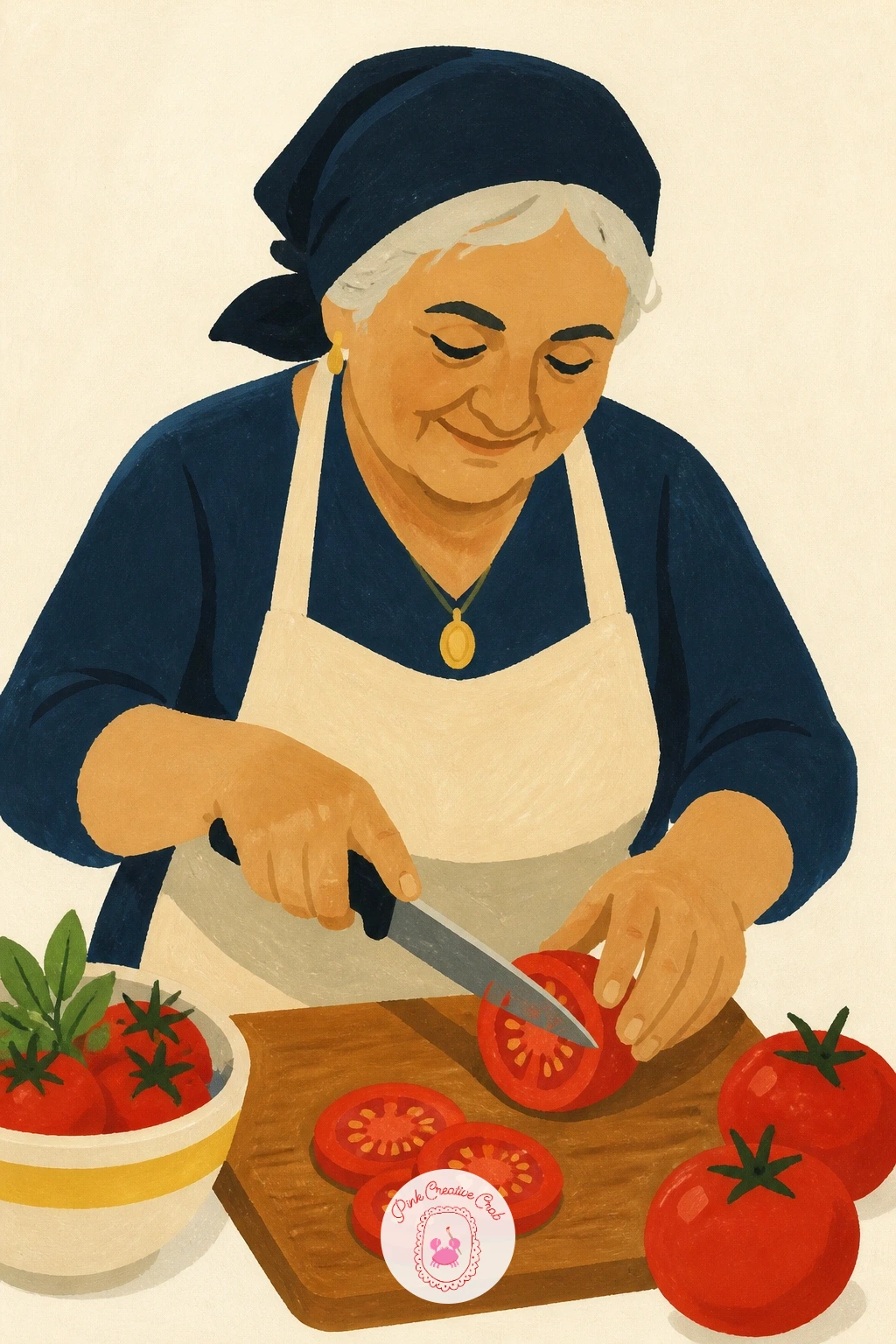
Add warmth with a nonna slicing tomatoes at a wooden table, a small scene that pairs a figure with action rather than a still object. Sketch the figure first in a simple seated or standing pose, leaning slightly forward over the cutting board, with her hands positioned around a knife and a half-sliced tomato.
Block her clothing in a flat, muted color, perhaps a faded apron over a simple dress, then paint the wooden table and cutting board in warm brown tones before adding the tomato slices fanned out beneath her hands. Keep her face simple and gentle, a soft expression suggested with minimal lines rather than detailed features.
Hands holding a knife are often the hardest part of a scene like this. Simplify them into basic rounded shapes gripping the handle rather than attempting individual fingers, which keeps the flat gouache style consistent and avoids a fussy, overworked look.
If figures feel tricky, there are more characters to study for inspiration on simplifying older faces and poses. Finish with a small bowl of finished tomato slices beside the cutting board.
Palette: Warm Tan,Cherry Red,Dusty Blue,Cream White
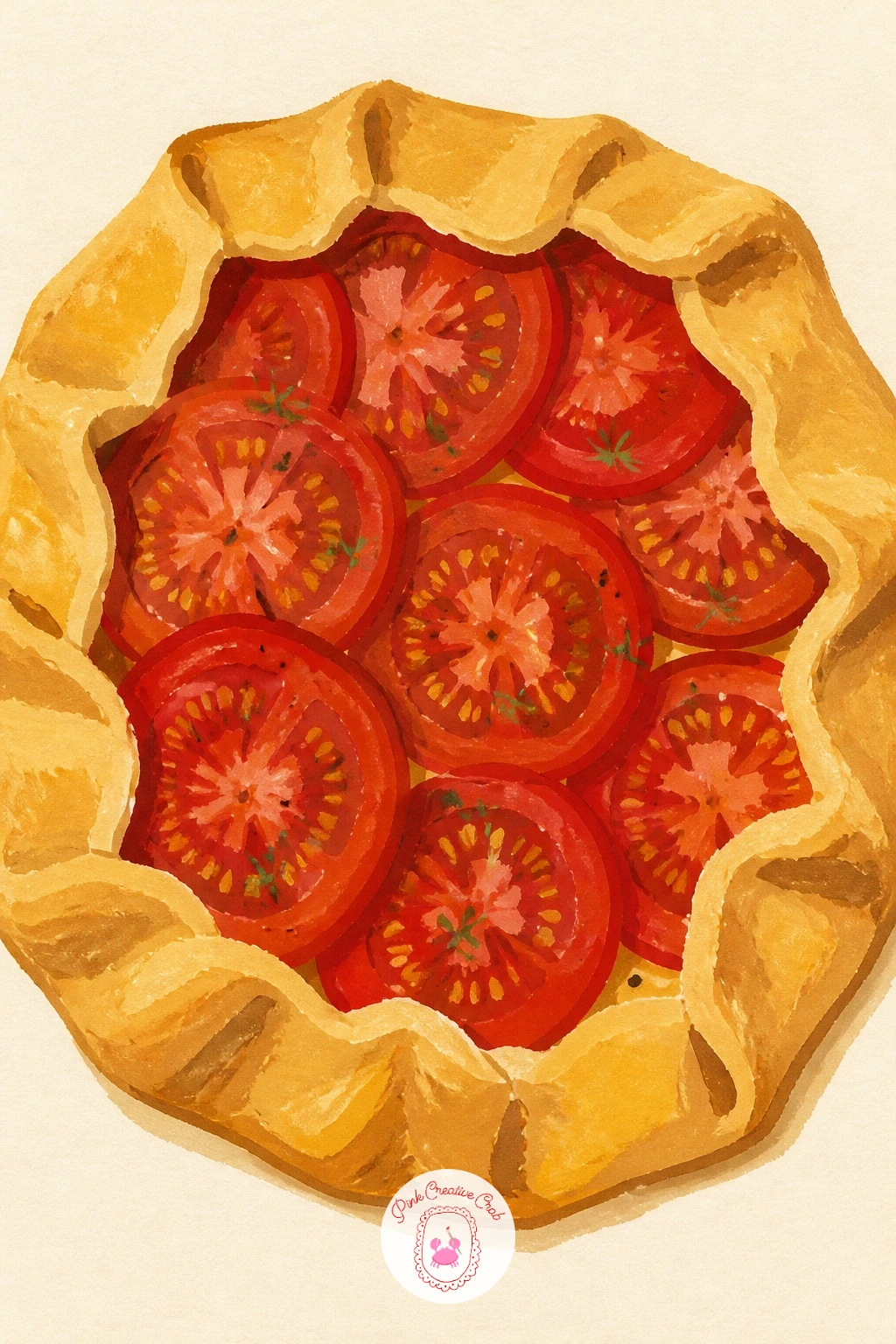
Return to the oven with a tomato galette, a free-form rustic tart where the folded pastry edge is the real star of the composition. Draw a large rough circle for the tomato filling, then surround it with a wider, uneven pastry border folded inward at several points around the edge, more irregular than the neat tart from earlier in this list.
Paint the pastry in a warm golden brown first, especially darker along the folded edges where it browns more in the oven, then fill the center with overlapping tomato slices in red and a lighter coral where slices catch the light. A few thyme sprigs tucked between the slices add a different green note than basil.
The folded crust edge needs uneven, confident shapes rather than a perfectly scalloped circle, since a galette is meant to look rustic and handmade. Vary each fold’s size and angle rather than repeating one shape around the whole border.
No thyme in the pantry? Rosemary sprigs work just as well visually. Finish with a light egg wash sheen suggested by a few pale yellow highlight strokes on the crust.
Palette: Golden Ochre,Cherry Red,Coral Pink,Sap Green
You Will Need
- ruler or straight edge
Palette: Cherry Red,Cream White,Sap Green,Butter Yellow
Take a playful detour with a tomato pincushion on a sewing table, the classic sewing room object that looks exactly like a small tomato, down to the little green strawberry-shaped attachment on top. Draw a slightly flattened circle for the pincushion body, then add the small green cap with its own tiny second bump, the detail that makes this read instantly as a pincushion rather than real fruit.
Paint the body in the same cherry red used throughout this list, then dot a handful of pins across the surface in silver grey with small colored heads, scattered rather than lined up. A wooden sewing table surface beneath it, along with a spool of thread or a pair of scissors nearby, rounds out the small scene.
The trick is keeping the pincushion looking like fabric rather than real fruit, so a visible seam line or two stitched across the surface helps sell the object. If pins feel fiddly, three or four scattered ones are plenty rather than a dozen.
Finish with a small spool of red thread resting beside it to tie the color scheme together.
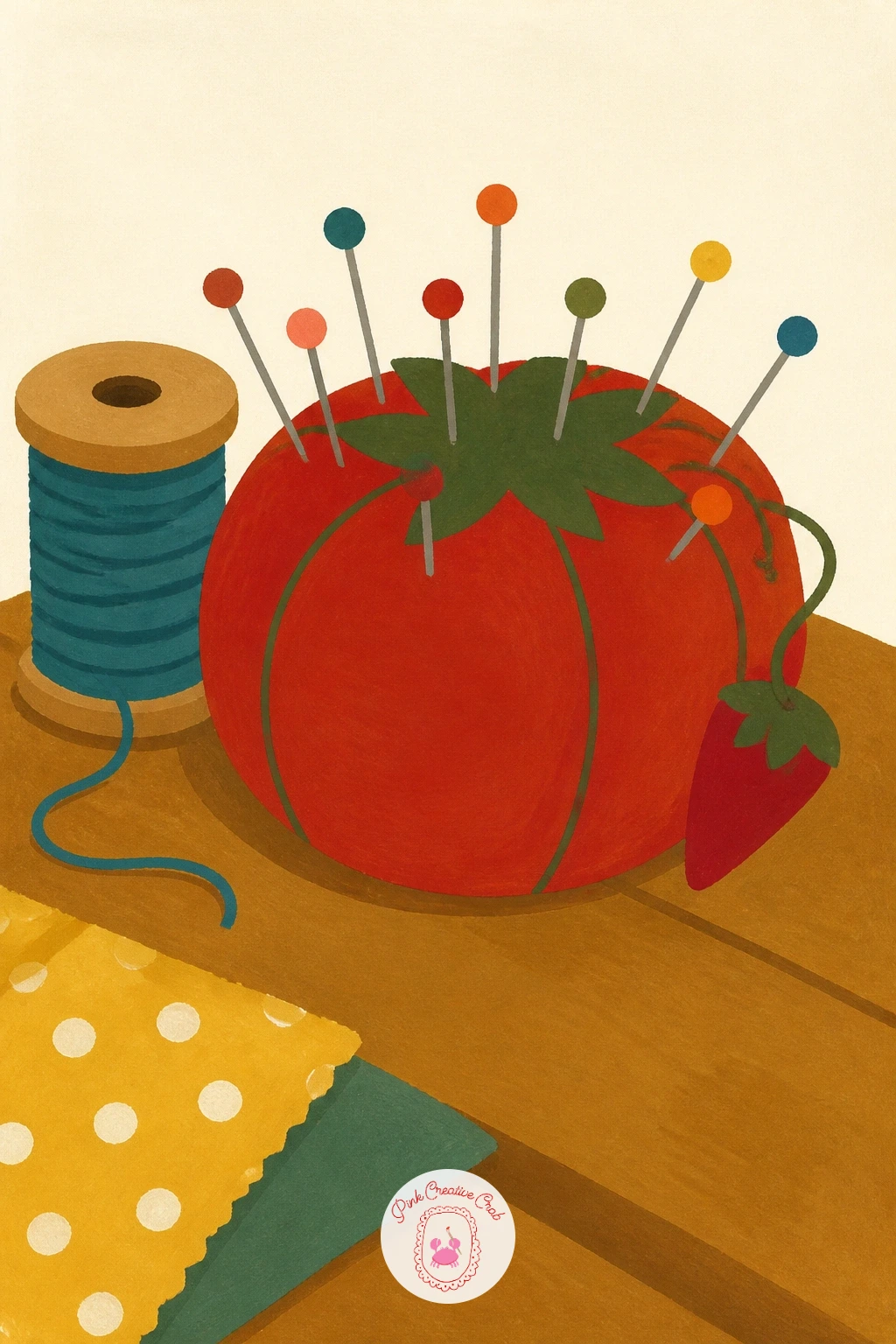
Palette: Cherry Red,Sap Green,Silver Grey,Warm Tan
Widen things one more time with a tomato tasting at a farmers market, a small stall scene with several varieties laid out for sampling. Sketch a simple wooden table or stall front first, then arrange small bowls or labeled sections across it, each holding a different tomato variety in its own distinct color and shape.
Paint each variety with a slightly different palette, deep purple-black for one, bright yellow for another, classic cherry red for a third, so the stall reads as a genuine variety tasting rather than one repeated tomato. Small hand-lettered signs beside each bowl, left simple or blank, suggest labels without needing readable text.
This scene can sprawl quickly, so decide early how many varieties to include, three or four is plenty for one sitting. Keep the background stall structure loose and simple so the tomatoes themselves stay the clear focus of the page.
No real variety reference on hand? Search for heirloom tomato photos online for color ideas. Finish with a small chalkboard price sign for a market feel.
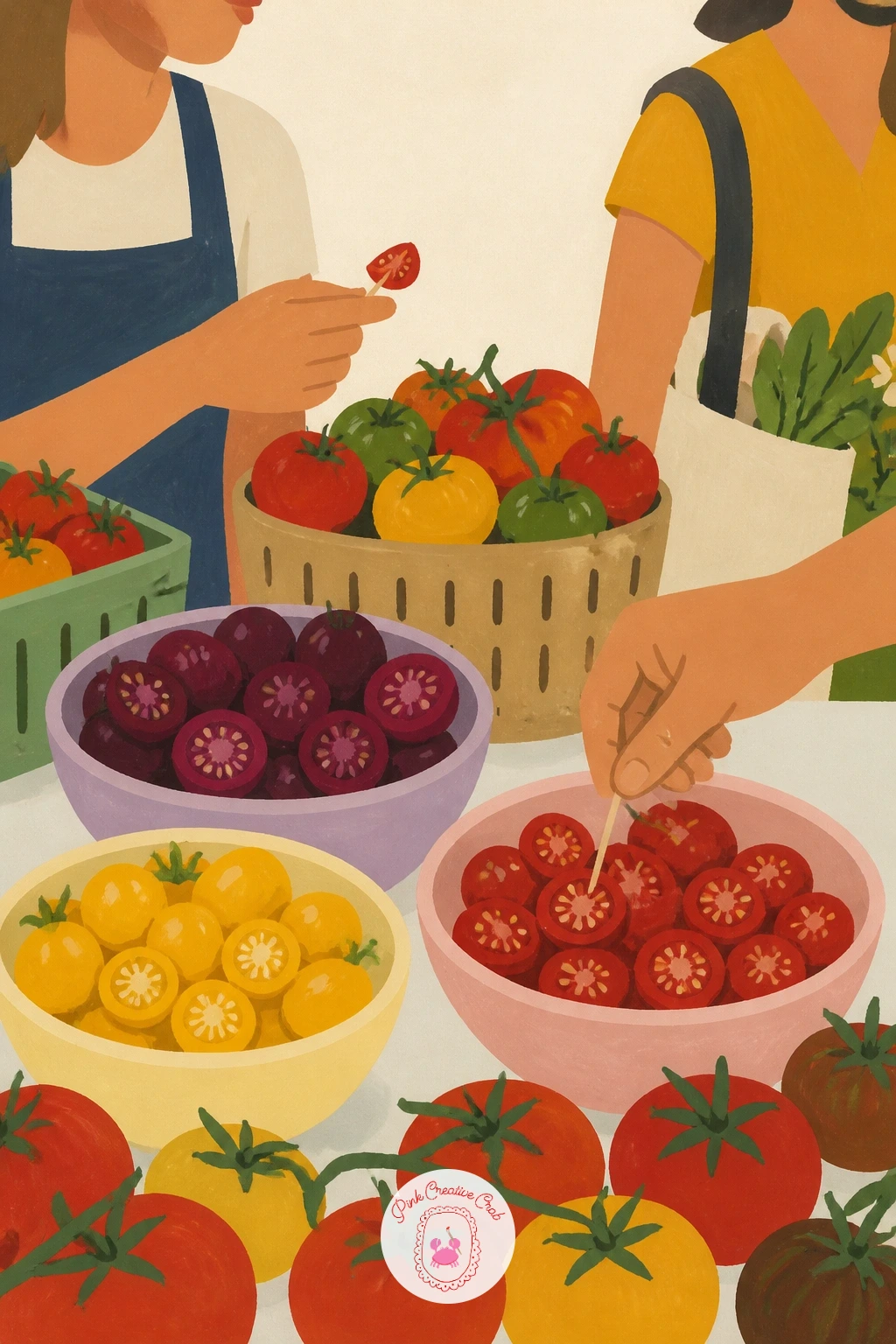
Palette: Cherry Red,Butter Yellow,Deep Maroon,Warm Tan
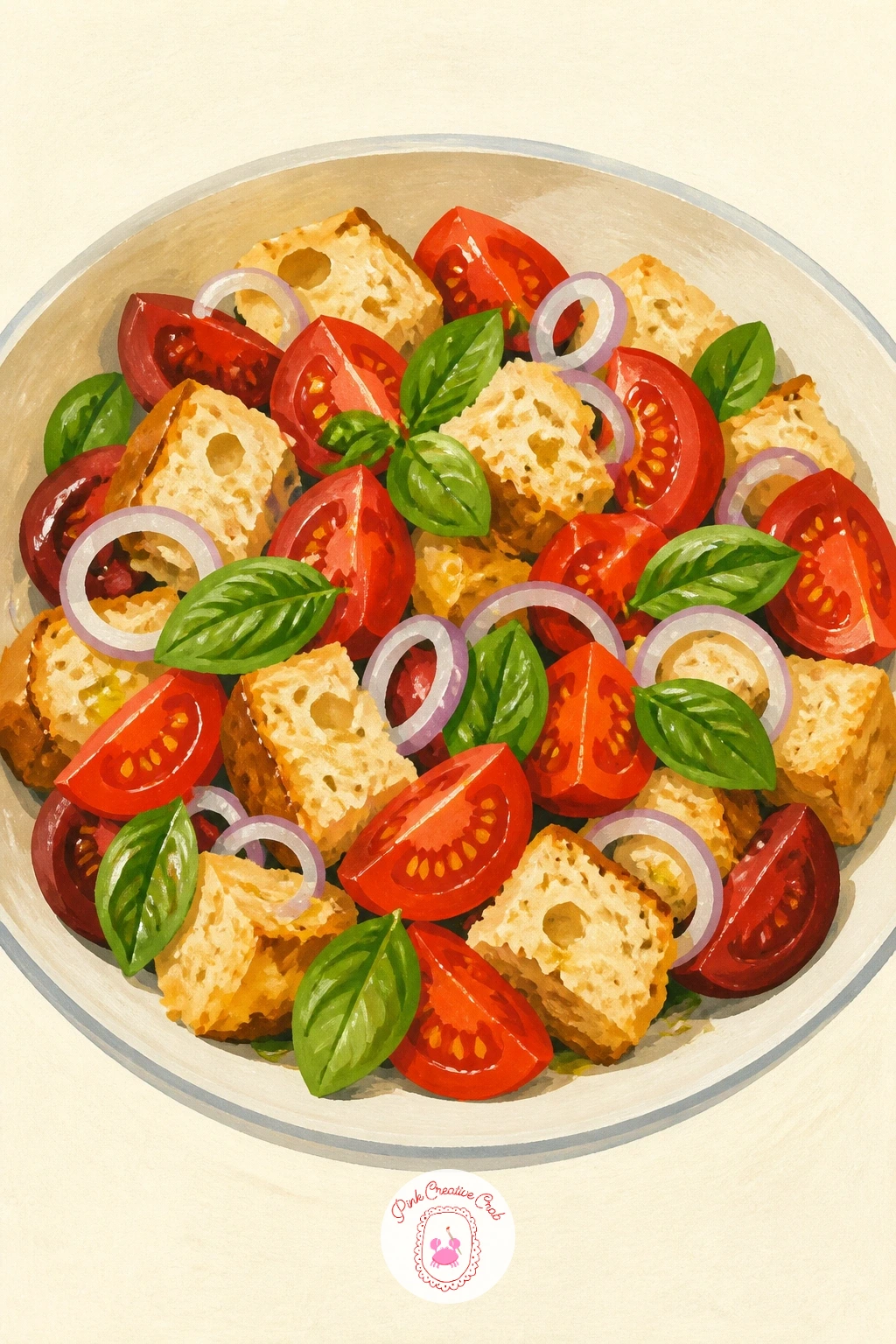
Palette: Cherry Red,Golden Ochre,Sap Green,Deep Maroon
For more Mediterranean food scenes to pair with this set, there are plenty of ideas among these Italy painting ideas to explore next.
What to Do Next
Pick one idea that matches the mood, whether that is a quiet windowsill of ripening tomatoes or a full market crate, and start with a light pencil sketch on cream paper before any paint goes down. Keep the first few colors mixed generously, since running out mid-tomato is the easiest way to lose an afternoon.
Frequently Asked Questions
What is the easiest tomato drawing idea to start with?
A simple bowl of whole tomatoes is the easiest start, since it only needs round shapes and two or three shades of red. Skip slicing or scenes until that basic shape feels comfortable.
Does a tomato drawing need realistic shading?
No, flat matte gouache shapes work well for tomato drawing and give a clean, modern print look. A thin darker outline and one highlight dot read as shine without any blended shading.
What colors work best for a tomato drawing?
Cherry red paired with cream, sap green and a touch of butter yellow covers most tomato scenes well. Keep the palette limited to four or five colors so the whole piece feels cohesive.
How do you make a tomato look three dimensional in a flat style?
Add one simple shadow shape along one edge and a small highlight dot opposite it. That contrast alone lifts a flat red circle into something that reads as round.
What paper works best for gouache tomato scenes?
A cream or lightly toned paper suits this style best, since the warm background ties into the food palette already. Choose a paper with enough weight to handle a few layers of paint without buckling.
Have any thoughts?
Share your reaction or leave a quick response — we’d love to hear what you think!
-
 0
-
0
-
0
-
0
-
0
-
0


