A hug drawing is one of the kindest things you can put on paper, and it never needs a complicated scene to work. Two bodies leaning into each other, a tilt of the head, a pair of closed eyes, and the whole page feels warm.
Below are 28 of them, moving from quick, forgiving pairs you can finish in a lunch break to fuller scenes worth a longer sitting. Every one works in colored pencil with soft layered shading, so grab whatever set you have and start wherever your eye lands first.
Using these images: free for personal projects such as printing, coloring, cards, journals and gifts. Handmade items that include them may be sold up to 30 pieces per design. More than that is commercial use and is not permitted, and neither is selling or sharing the images themselves or passing them off as your own. Please ask before any other use.
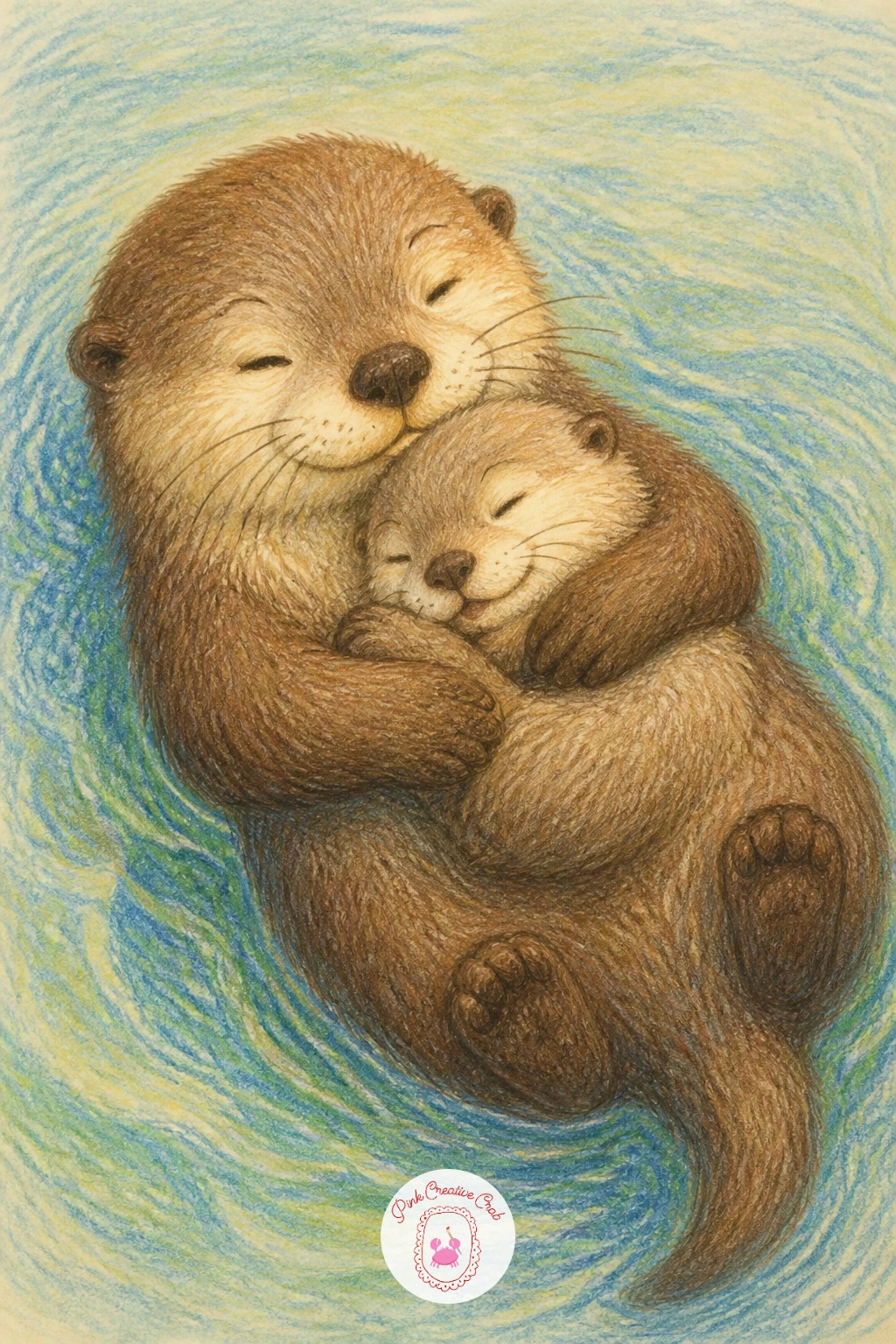
Start the whole series with a mother otter hugging her baby, since the round, forgiving shapes make it a kind and easy way in. Sketch two overlapping ovals for the bodies, floating on their backs the way otters do, with the baby resting on the mother’s chest.
Block in the fur with mid brown first, then layer a darker umber in short strokes along the belly and paws to build texture, saving the lightest cream for the chest and muzzle. If the fur looks flat, go back with a darker pencil and press a little harder in the shadow areas between the two bodies.
The paws are where this goes wrong most often: keep them small and tucked, not splayed, or the hug reads as a wrestle. No brown pencil on hand works fine with warm gray layered under tan.
Finish with a white gel pen for a few whisker dots and a highlight on each nose, and the pair will feel properly snuggled in.
You Will Need
- white gel pen
Palette: Burnt Sienna,Raw Umber,Cream,Warm Gray
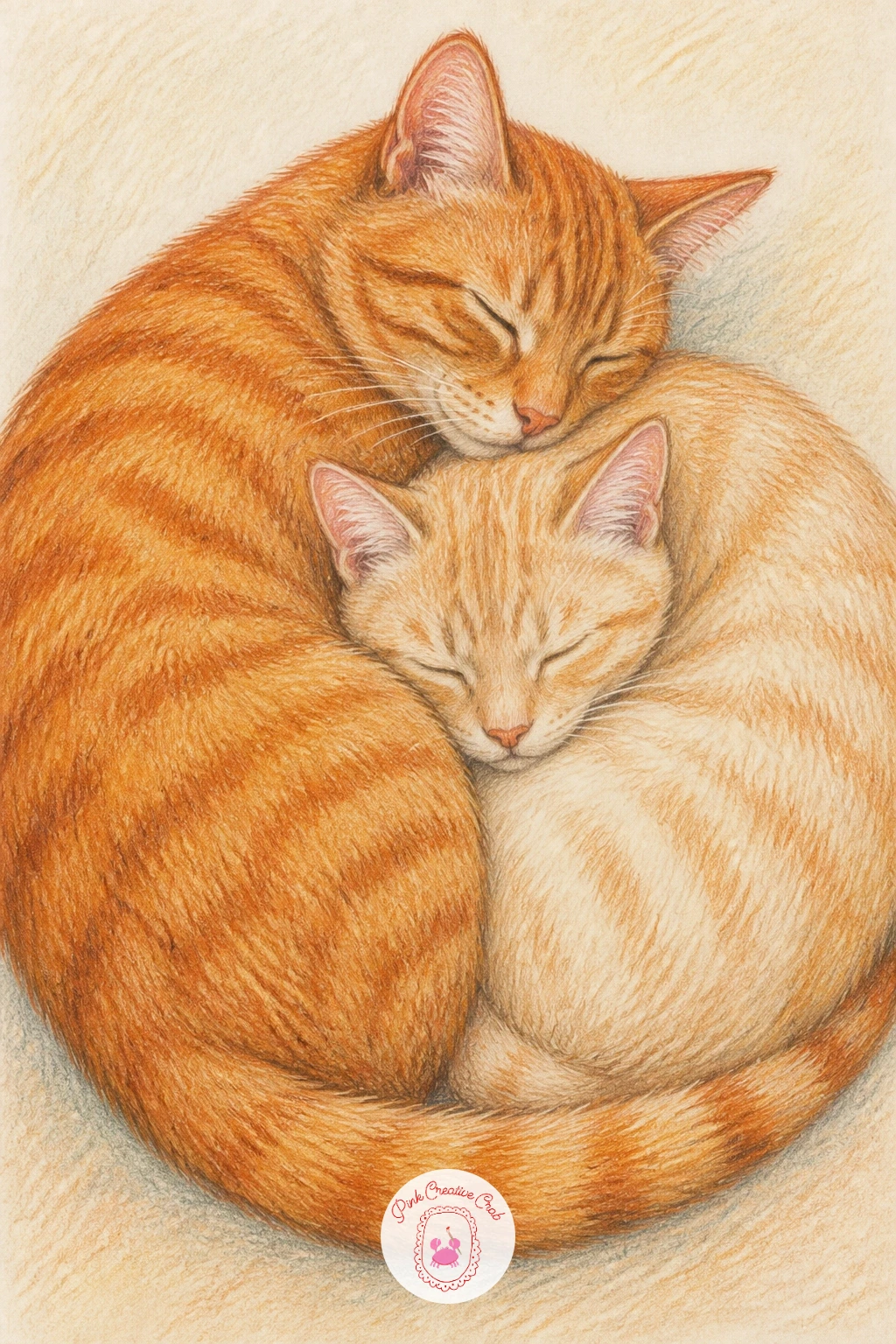
Move from the otters to two cats curled together, a pose almost every cat owner has seen and loved. Draw two C shapes nested into each other like a yin and yang, one slightly larger, tails wrapping around to tuck near the chin.
Lay the base fur color first in long, flowing strokes that follow the curve of each body, then switch to a darker shade for the tabby stripes or patches, keeping them loose rather than drawn one by one. Leave the lightest cream for the paws and chest where the two cats meet.
Cats go wrong when the heads get too big; keep them about a third the size beginners expect, since a cat curled up tucks its head in small. If your pencils do not include a soft orange, warm gray and cream together make a calm gray tabby instead.
For more ways to draw feline poses like this one, this cat pencil drawing guide has plenty to try next. Finish with short flicked strokes along the outer edge of the fur so it catches the light.
Palette: Burnt Orange,Warm Gray,Cream,Charcoal Gray
Bring in the first human pair with a girl hugging her dog, kneeling down with her arms wrapped around its neck. Block the two figures as simple ovals and circles first: her torso leaning forward, the dog’s body solid and square underneath her arms.
Work the dog’s fur in short layered strokes before you touch her hair or clothes, since fur reads best built up slowly from light to dark. Keep her face mostly hidden against the dog’s neck or turned softly to the side, which saves you from drawing a tricky expression and still reads as pure affection.
Proportion is the trap here: measure the dog’s head against hers before you commit to size, a mid sized dog’s head usually sits just below her shoulder when she kneels. Colored pencil has no quick undo, so sketch this placement lightly in pencil first and only commit color once the sizes agree.
If you want more dog poses to pair with this one, the dog pencil drawing ideas page has a good range. Add a little pink to her cheek for warmth once the main shading is done.
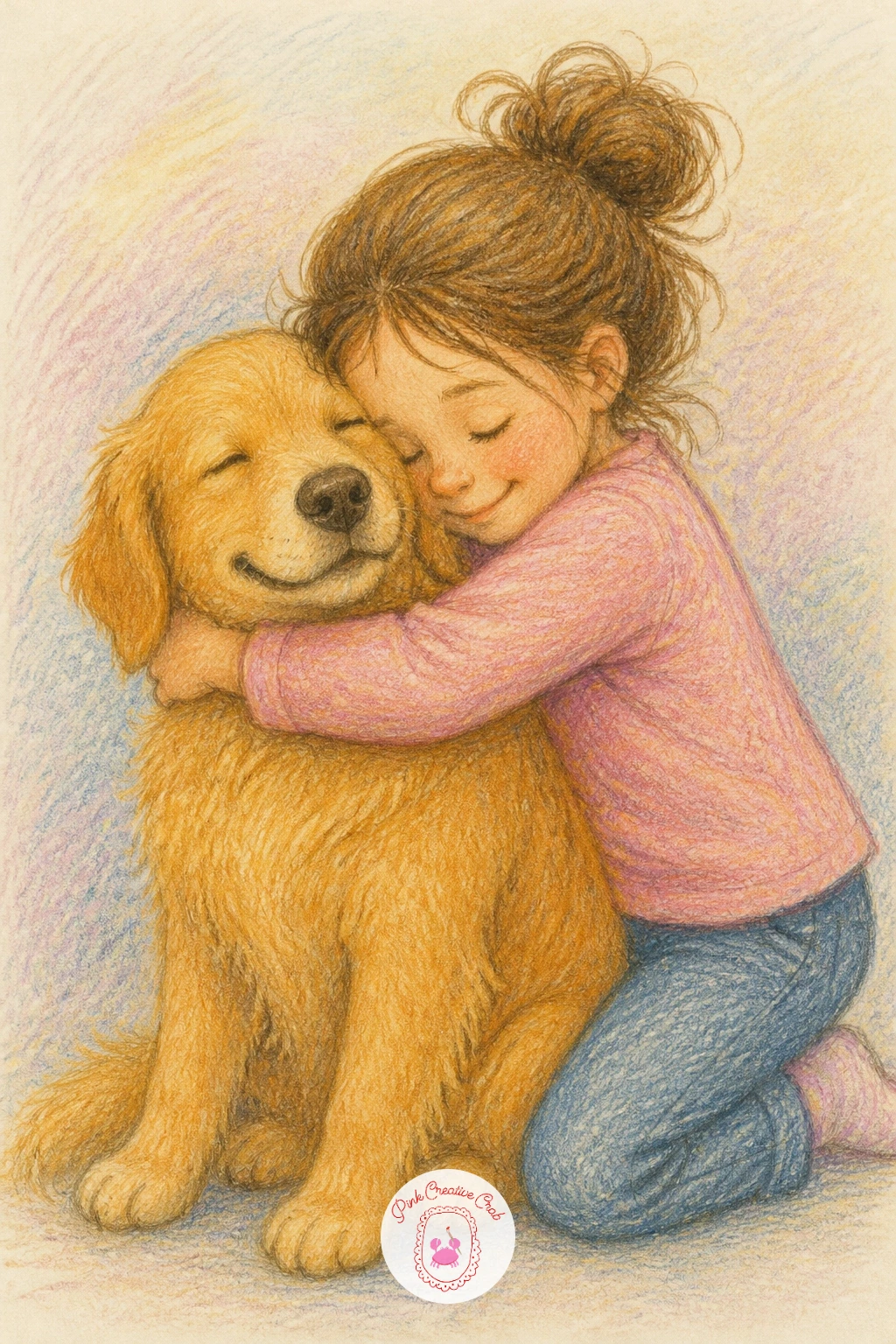
Palette: Golden Brown,Warm Beige,Soft Pink,Dark Brown
Grandparents hugging in the garden takes the warmth up a notch, with two older figures standing close among a few simple flowers. Sketch their bodies leaning gently toward each other, shoulders touching, one arm from each wrapped around the other’s back.
Work the clothing first in flat color, a cardigan and a soft shirt, then add white or gray pencil for hair before building the garden behind them loosely, a few leaf shapes and round flower heads in quick strokes so the people stay the focus.
Light is what sells this scene: decide where the sun sits, usually to one side, and keep that side of both figures a shade lighter all the way through, including the flowers, so everything feels lit from the same place. If a full garden feels like too much, three or four simple leaf shapes behind them is plenty.
Soften the edges of their hair and cardigans slightly with a blending stump so nothing in the drawing looks sharp or new. Keep their faces simple, just a closed smile and soft eyes, and the tenderness will carry the whole piece.
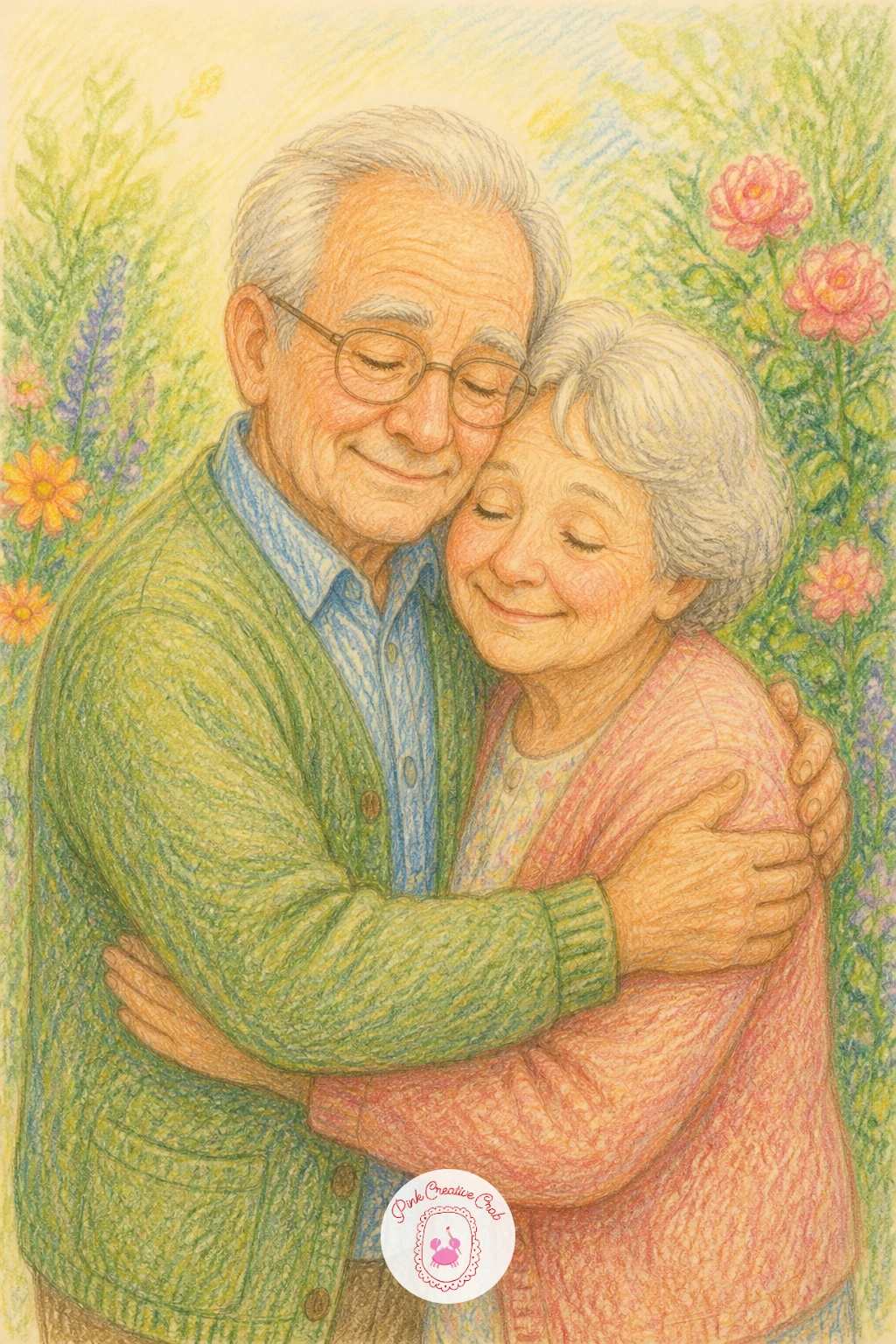
You Will Need
- blending stump
Palette: Dusty Lavender,Soft Sage,Warm Gray,Cream
Jump to a livelier pair with best friends hugging at the airport, one often mid stride with a bag still on her shoulder as the other leans in. Sketch both figures slightly off balance, one leg forward, arms thrown wide rather than politely placed, to capture the rush of a real reunion.
Build the clothing in flat color blocks first, keeping one friend in a warmer color and one cooler so they read as two separate people even hugging closely. Add a loose suitcase or bag shape nearby in a few quick lines rather than full detail, since it only needs to say “airport” not compete for attention.
The quick version, done in about ten minutes, is just the two upper bodies and faces, cropped at the waist with no background at all. Given forty minutes, add the suitcase, a hint of floor tile with straight parallel lines, and a loose airport sign shape fading into the background.
This pairs nicely with the friendship energy in the BFF drawing ideas list if you want a second piece to go with it. Keep their hair a little windswept with a few flyaway strokes to add movement.
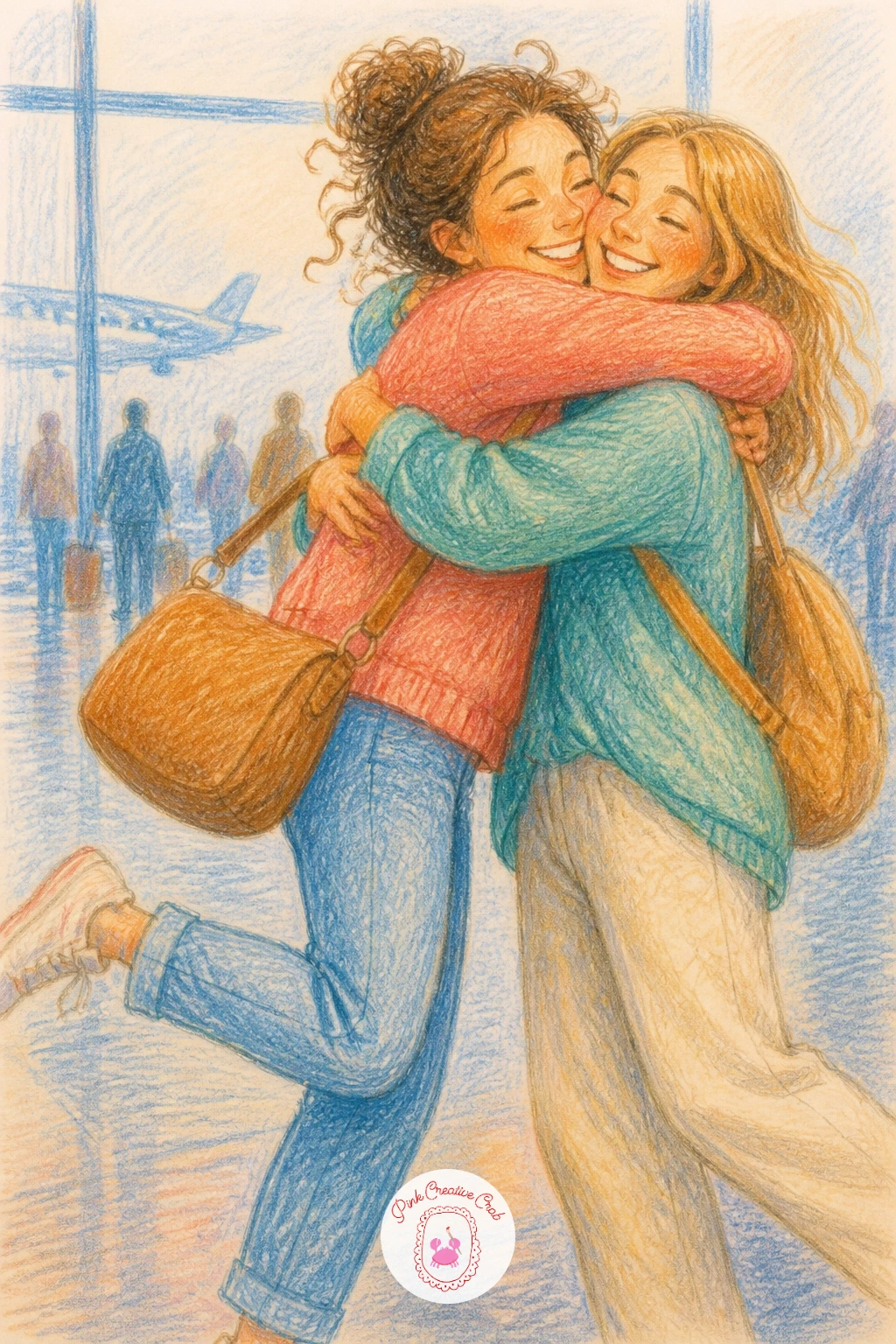
Palette: Coral Red,Teal Blue,Warm Beige,Charcoal Gray
Switch to animals again with a bear hugging a tree, a gentle giant wrapped around a trunk that gives you a strong vertical to build around. Draw the tree trunk first as a simple tapered cylinder, then fit the bear’s body around it, front paws overlapping on the far side so the hug reads as a real grip.
Shade the bear’s fur in layered strokes from dark at the edges to lighter toward the center of each limb, which gives it roundness without hard outlines. Keep the tree bark simple, a few vertical squiggles and some texture lines rather than every knot and groove.
Bears go wrong when the head gets too pointed; keep the snout short and the ears small and rounded, set well apart on top of a wide head. No dark brown on hand, a deep warm gray reads just as well for the fur.
One concrete tip for today: draw the far paw slightly overlapping the trunk’s edge, since that overlap is what makes the hug look like it is actually holding on rather than just standing beside it.
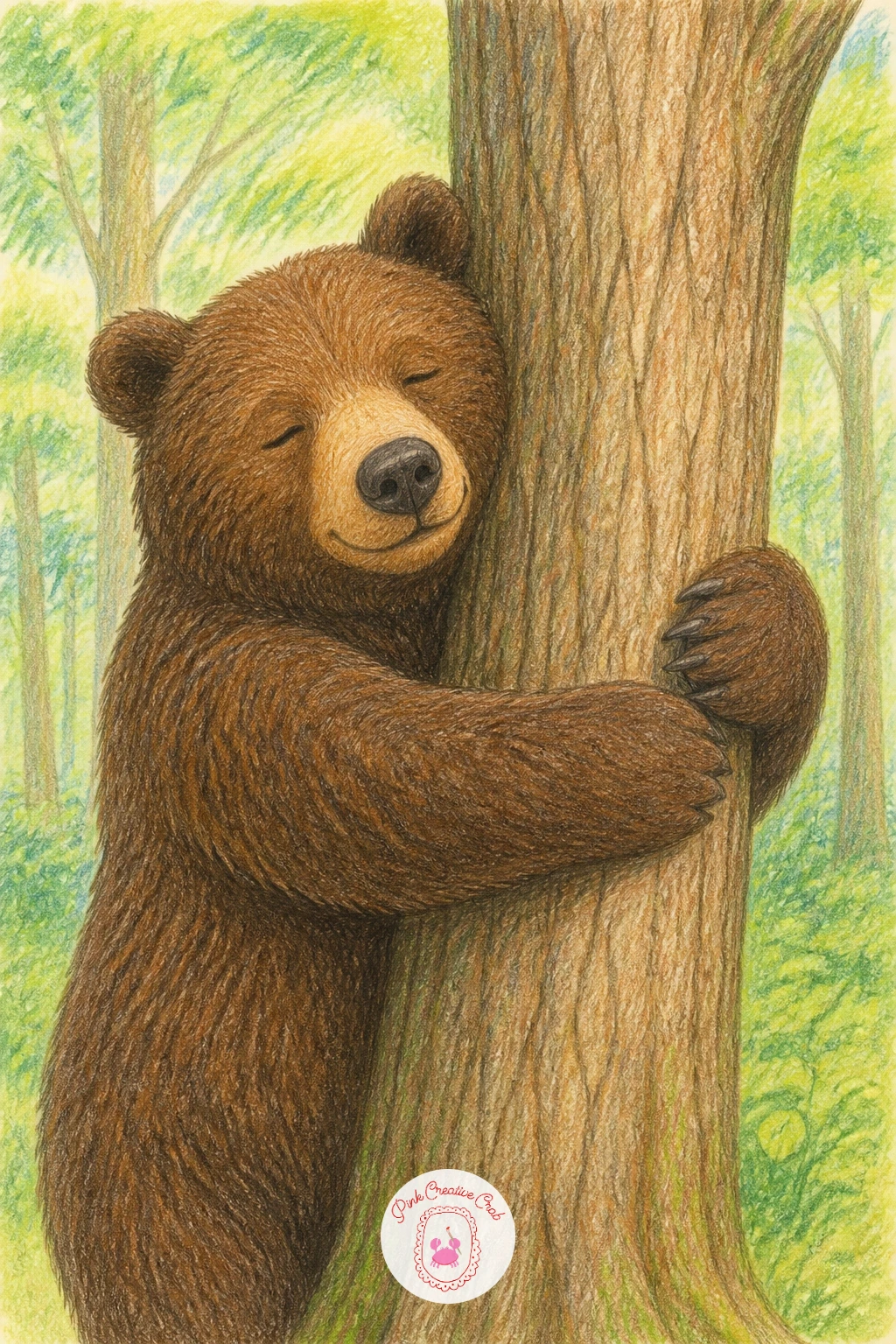
Palette: Dark Brown,Burnt Sienna,Olive Green,Warm Gray
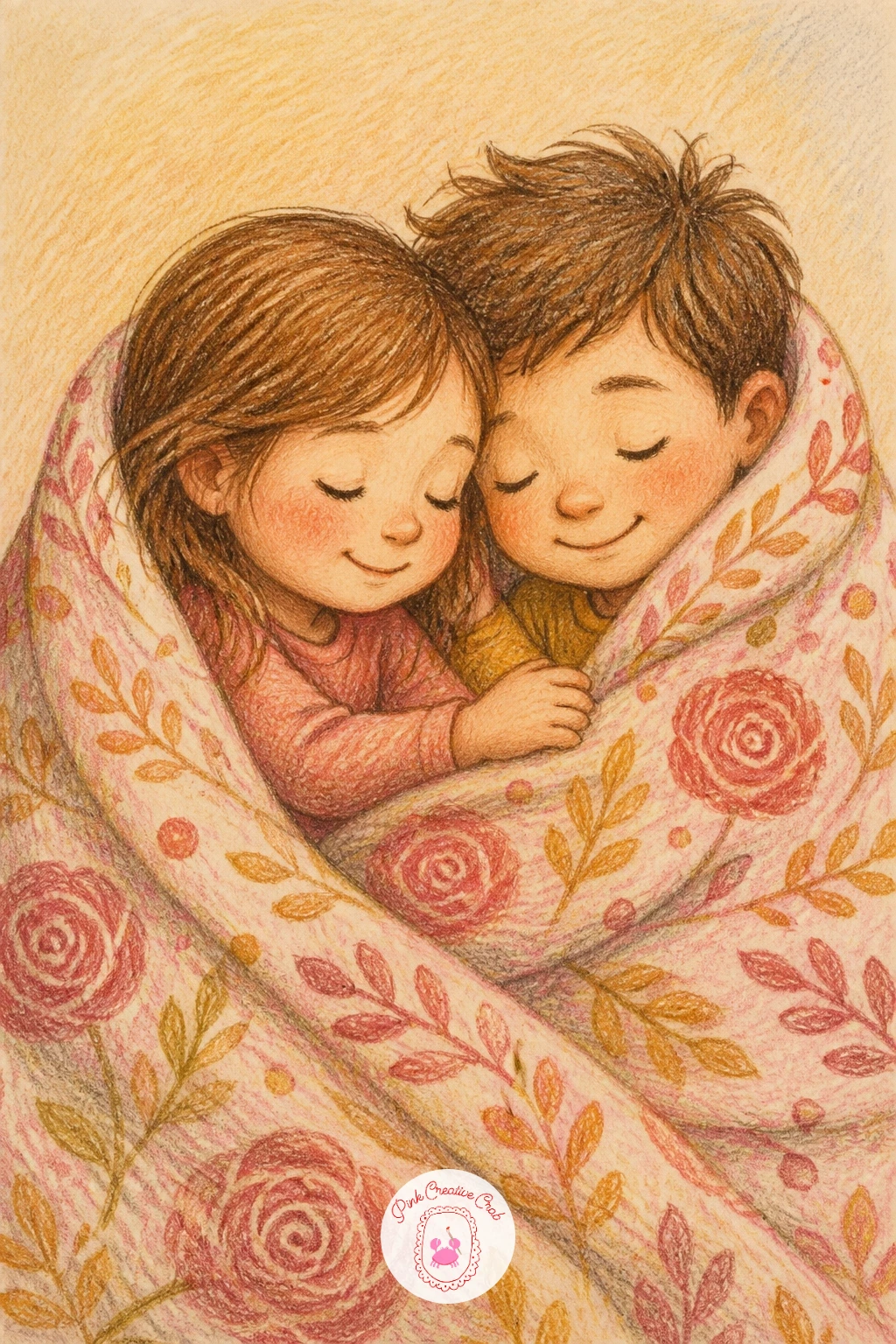
Bring the warmth indoors with siblings hugging under a blanket, two kids tucked together with just their heads and shoulders peeking out. Sketch one rounded blanket shape first covering both bodies, then place two heads leaning toward each other on top of it.
Shade the blanket in a soft pattern, stripes or small dots, using a lighter base color with a slightly darker tone layered in short strokes to suggest the folds of fabric bunching around their shoulders. Keep the two faces simple and relaxed, eyes half closed works well here and avoids the trickiest part of drawing expressions.
If the blanket looks stiff, go back over the fold lines with a blending stump to soften the transitions between light and shadow. No patterned pencil to hand, a plain warm color with a few darker fold lines reads just as cozy.
Finish by adding one small detail each child is holding onto, a corner of the blanket or each other’s sleeve, since a small shared gesture like that makes the hug feel more lived in.
You Will Need
- blending stump
Palette: Dusty Rose,Warm Mustard,Cream,Soft Brown
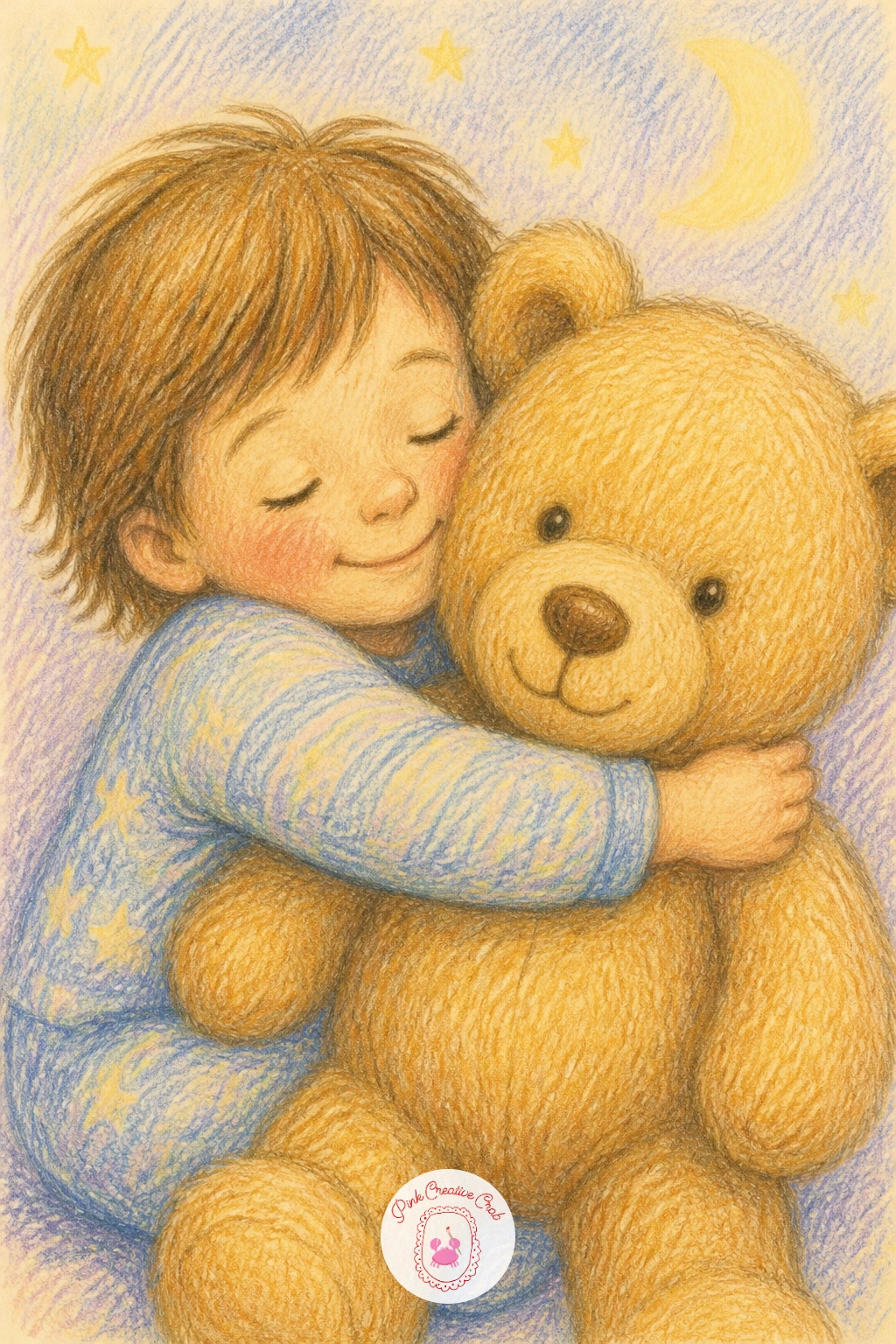
Keep the quiet mood going with a child hugging a teddy, a small figure with both arms wrapped tightly around a bear nearly as big as they are. Draw the child’s body first as soft rounded shapes, then fit the teddy into the circle of their arms, slightly squashed where the hug presses in.
Layer the teddy’s fur in short strokes of warm brown, leaving the paws and muzzle a touch lighter, then shade the child’s pajamas or dress in a flat color with simple folds. This is a good one for practicing pressure control: press harder where the arms squeeze the teddy’s middle so that part looks slightly compressed compared to the rounder head and feet.
If the teddy ends up looking stiff, soften the outline with a kneaded eraser dabbed gently along the edge rather than drawn as a hard line. No warm brown pencil, a mix of tan and a touch of red layered together gets close.
Finish with one button eye highlighted in white gel pen, and the teddy will look loved rather than new.
You Will Need
- kneaded eraser
- white gel pen
Palette: Warm Tan,Soft Red,Cream,Pale Blue
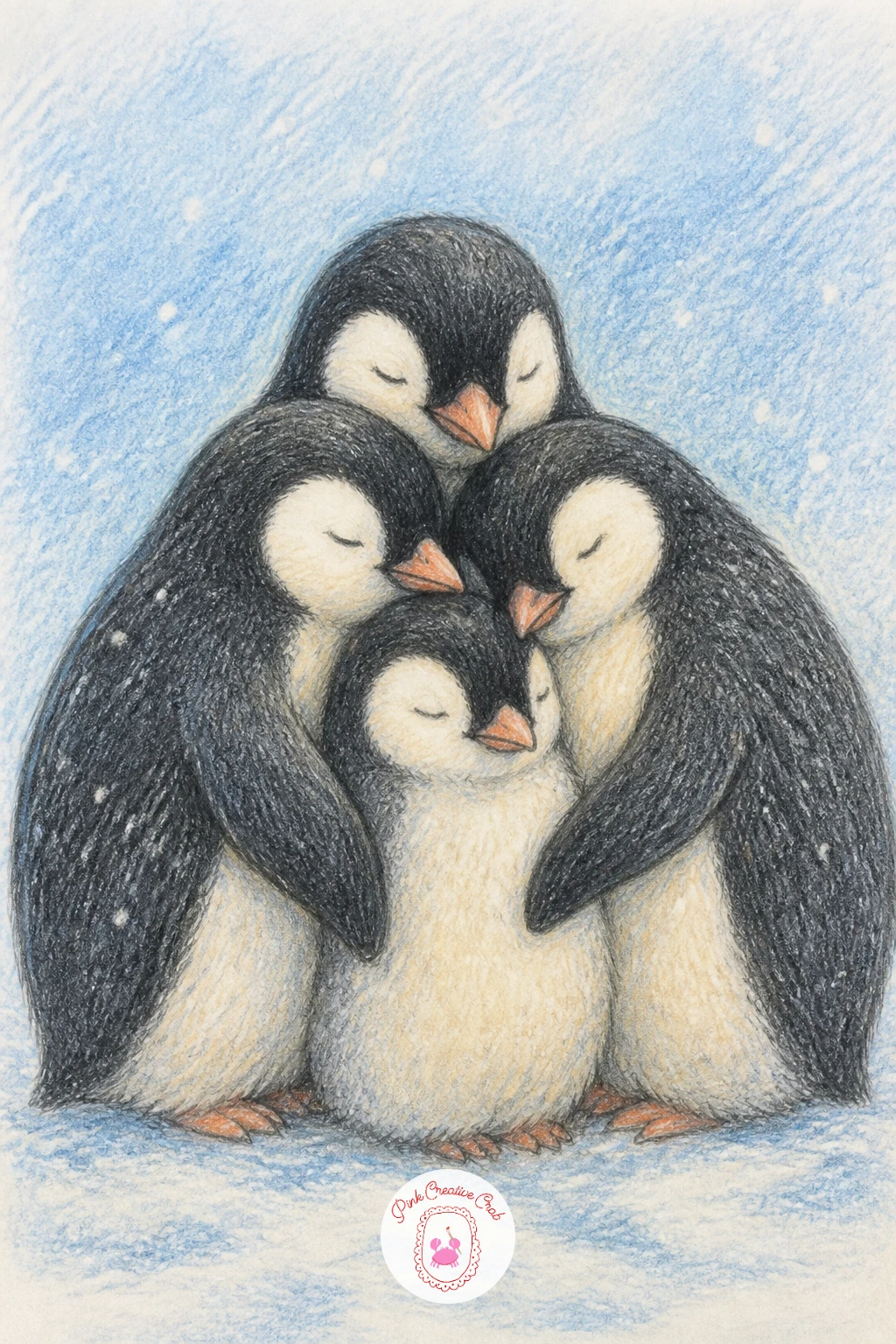
Bring in a colder scene with penguins huddling, a small cluster of two or three round bodies pressed together for warmth. Draw simple oval bodies first, overlapping at the shoulders, with the heads tilted at slightly different angles so each bird feels like an individual rather than a copy.
Block the black backs in solid dark pencil, then switch to white or cream for the bellies, leaving the boundary between the two slightly soft rather than razor sharp. A pale orange or yellow on the beak and feet adds the one warm note against all that black and white.
Eye level matters here: draw them from slightly below, so the bellies dominate the shape and the heads tip forward just a touch, which reads as huddling rather than standing apart. No orange pencil on hand, a warm yellow works for the beak too.
Scatter a few simple white dots of falling snow around them with the white gel pen once the shading is finished, and keep the background a flat pale blue so the penguins stand out clearly.
You Will Need
- white gel pen
Palette: Charcoal Black,Cream White,Pale Orange,Pale Blue
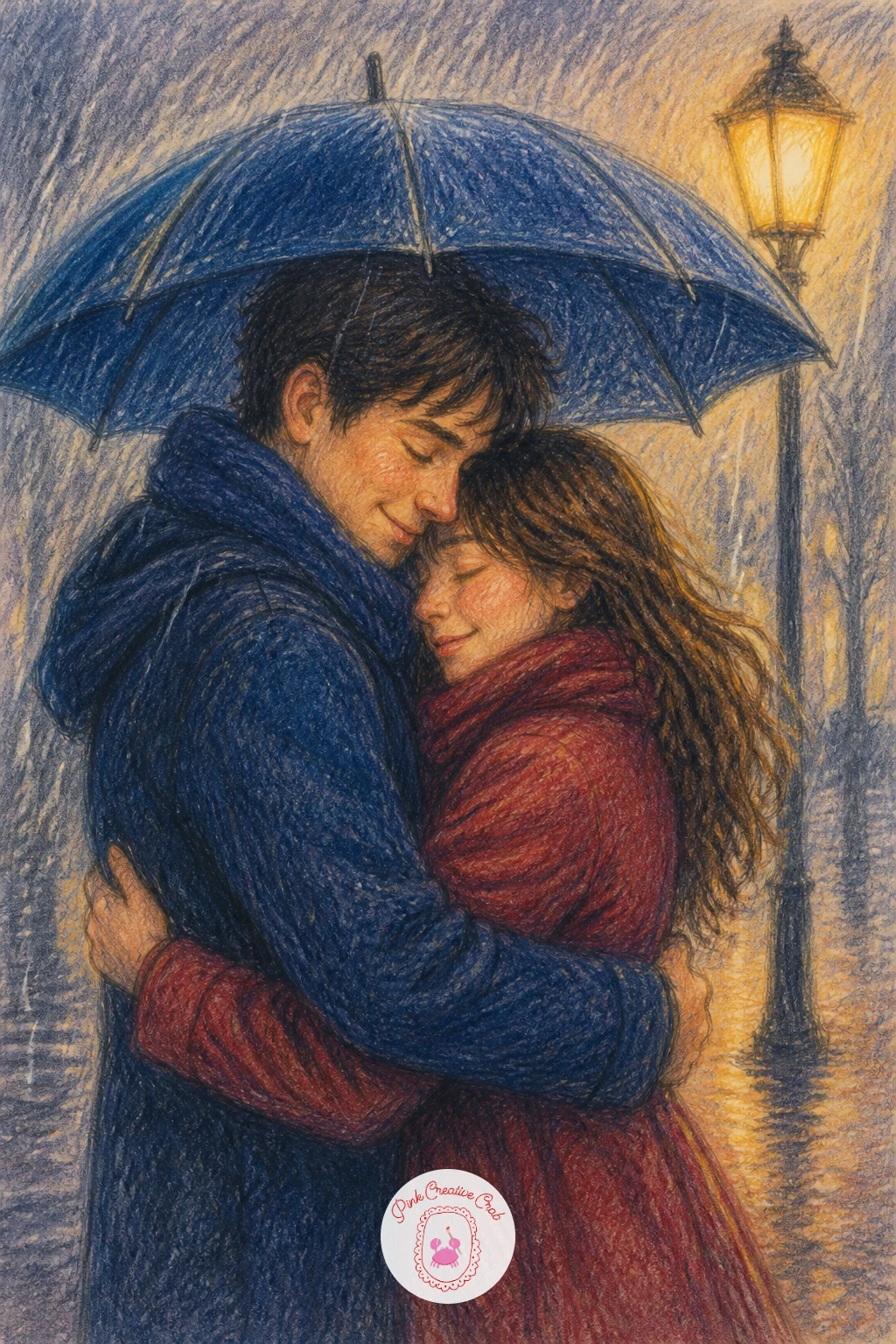
Move to a softer, moodier pair with a couple hugging in the rain, sheltered under one shared umbrella with their bodies drawn close. Sketch the umbrella shape first as a simple dome, then fit the two figures underneath it, leaning into each other rather than standing stiffly side by side.
Shade the clothing in rich, slightly cool colors since rain scenes read better with a cooler palette than warm storybook ones, then add the rain itself as short diagonal pencil lines over the whole scene, including across the figures, so it feels like weather rather than decoration.
The easy mistake is making the rain too heavy and losing the couple underneath it; keep the lines sparse and only slightly darker than the background so the hug stays the clear focus. No gray pencil for the wet ground, a deep blue works just as well for puddles.
For a ten minute version, skip the ground reflections entirely and just suggest a few puddle shapes with a couple of curved lines. Given more time, add a soft blurred streetlamp glow behind them with layered yellow and gray.
Palette: Deep Navy,Dusty Red,Slate Gray,Warm Yellow
Try a damp blending stump over the rain lines for a slightly smudged look that reads as wet weather rather than scratchy pencil marks.
Scale up to a bigger animal with a girl hugging her horse, her arms reaching around its neck while it lowers its head toward her shoulder. Block the horse’s neck and head first as a long curved shape, then fit the girl’s smaller body against it, her face turned toward its cheek.
Layer the horse’s coat in long strokes that follow the direction the hair actually grows, dark toward the mane and lighter along the cheek, since this one direction of stroke does more for realism than any amount of extra detail. Keep the mane as a few thick flowing strokes rather than many thin ones.
Compare sizes before you shade: the horse’s head alone is usually as long as the girl’s whole torso, so measure that against your sketch early rather than discovering the mismatch after the color goes down. No black pencil for a dark mane, deep brown layered heavily gets just as rich.
Finish with a soft pink nostril and a single white gel pen highlight in the eye, and the connection between the two will feel immediate.
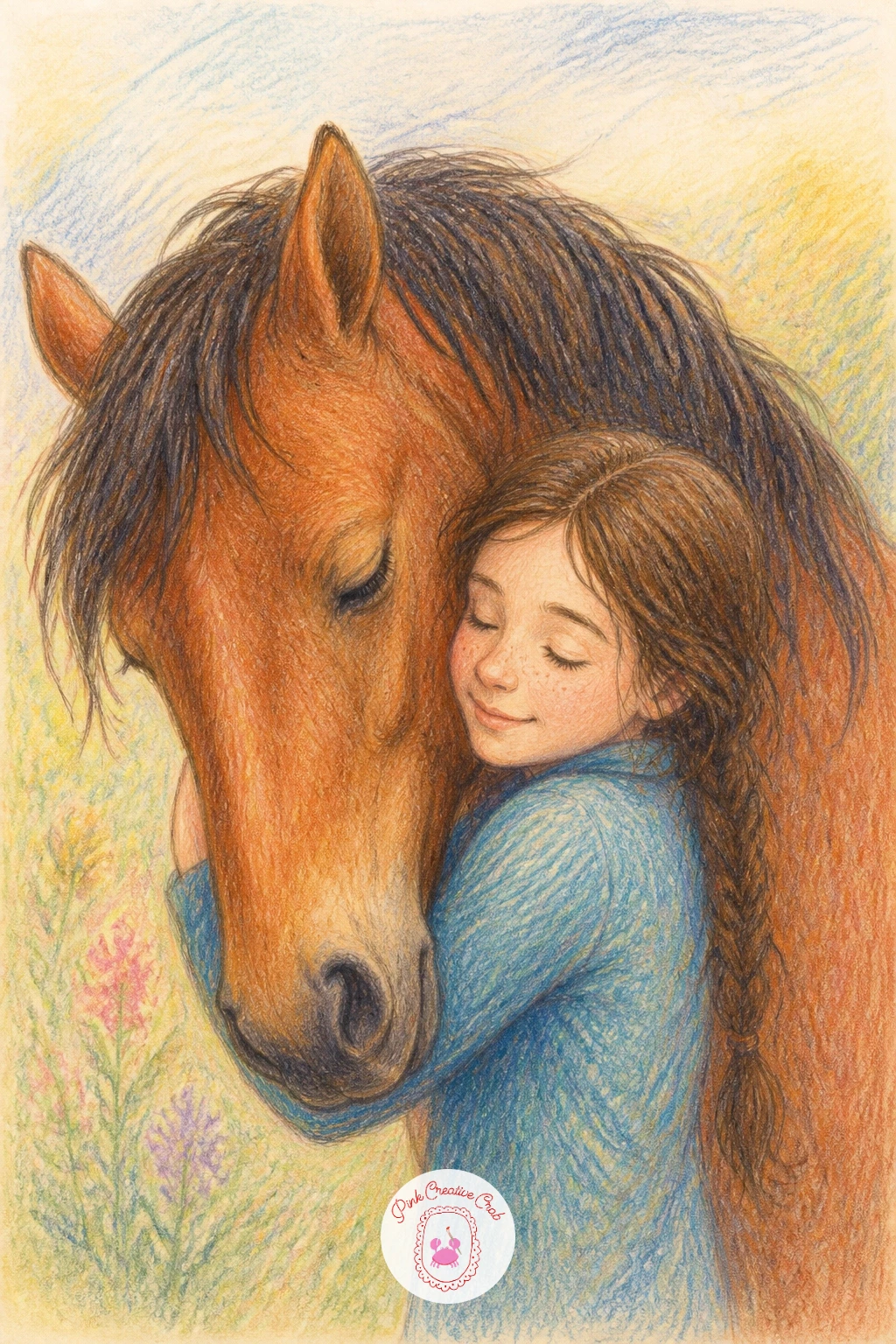
You Will Need
- white gel pen
Palette: Deep Brown,Warm Chestnut,Soft Pink,Cream
Return to something smaller and sweeter with a koala mum and joey, the baby clinging to her back or chest the way real joeys do. Draw the mother’s body as one soft rounded shape with sturdy limbs gripping a branch, then tuck the joey’s smaller round head and body into the curve of her arm.
Fur texture is the fun part here: layer gray in short choppy strokes all over, then go back with white chalk pencil or a white gel pen flicked lightly over the top to catch the fluffiest parts around the ears. Keep the big round nose dark and simple, since that one shape does most of the work of reading as a koala.
If the fur looks too smooth, press harder in small clusters rather than evenly across the whole body, which mimics how real fur clumps unevenly. No gray pencil on hand, a pale blue-gray mixed with white gets close.
Add a single eucalyptus leaf shape near the branch for context, keeping it loose so it does not pull focus from the hug itself.
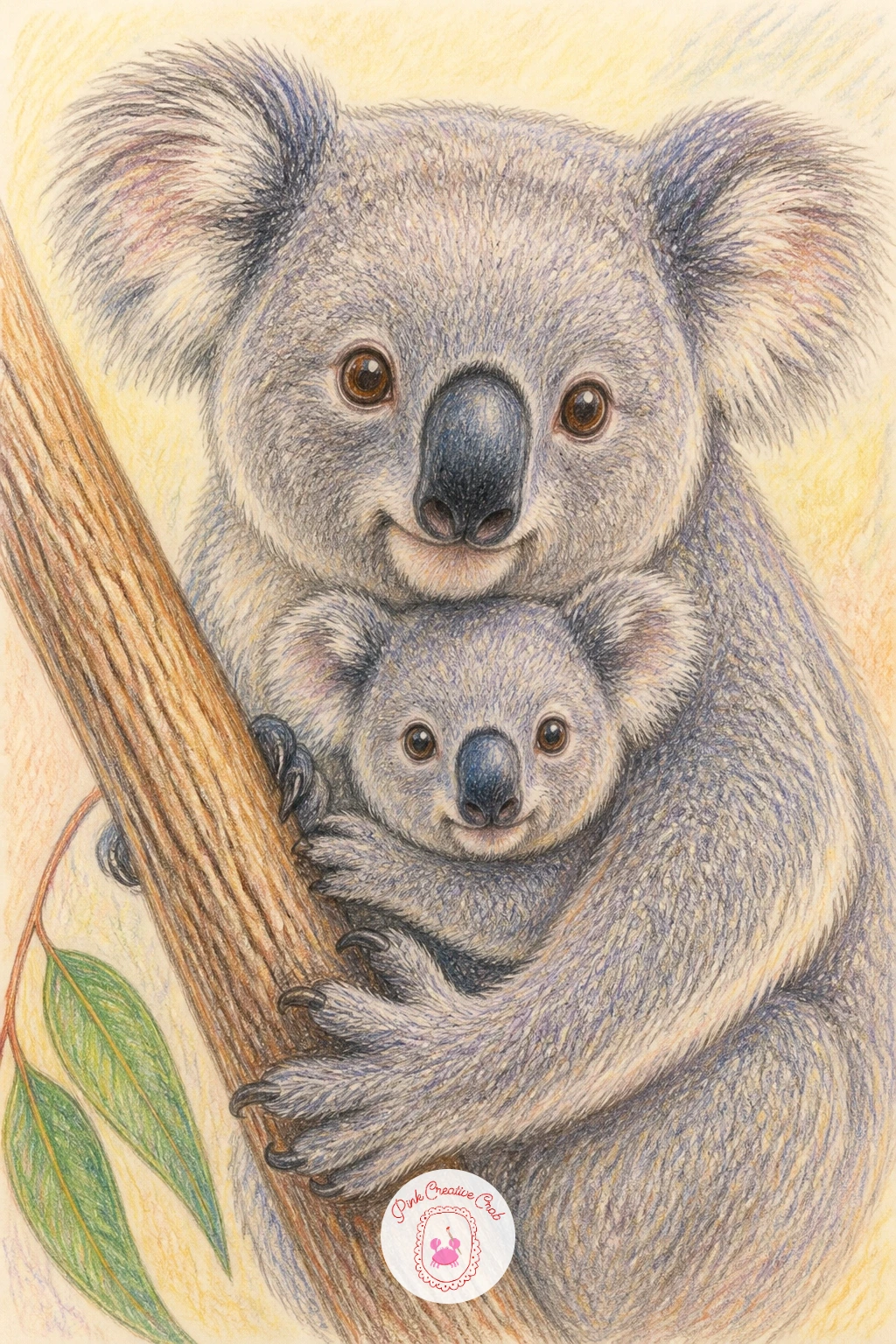
You Will Need
- white gel pen
Palette: Dove Gray,Charcoal Gray,Olive Green,Cream White
Keep the small scale going with ducklings snuggling, a little cluster of three or four yellow bodies piled close together. Draw simple oval bodies first, overlapping like a pile of soft pillows, with small round heads tucked at different angles so no two ducklings look identical.
Shade them in soft yellow with a touch of orange around the wings and a slightly darker gold where their bodies overlap and shadow each other, which gives the pile real depth without much extra work. Keep the beaks and feet a simple flat orange, drawn small.
The quick version, in about ten minutes, is just the pile of bodies and heads with flat color and no background. With more time, add a few blades of grass underneath drawn as simple curved lines, and a soft shadow beneath the whole group to ground it on the page.
If yellow pencil looks too pale on its own, layer a light brown underneath first then yellow on top for a richer, warmer duckling color. Keep every beak pointing a slightly different direction for a lively, unposed feel.
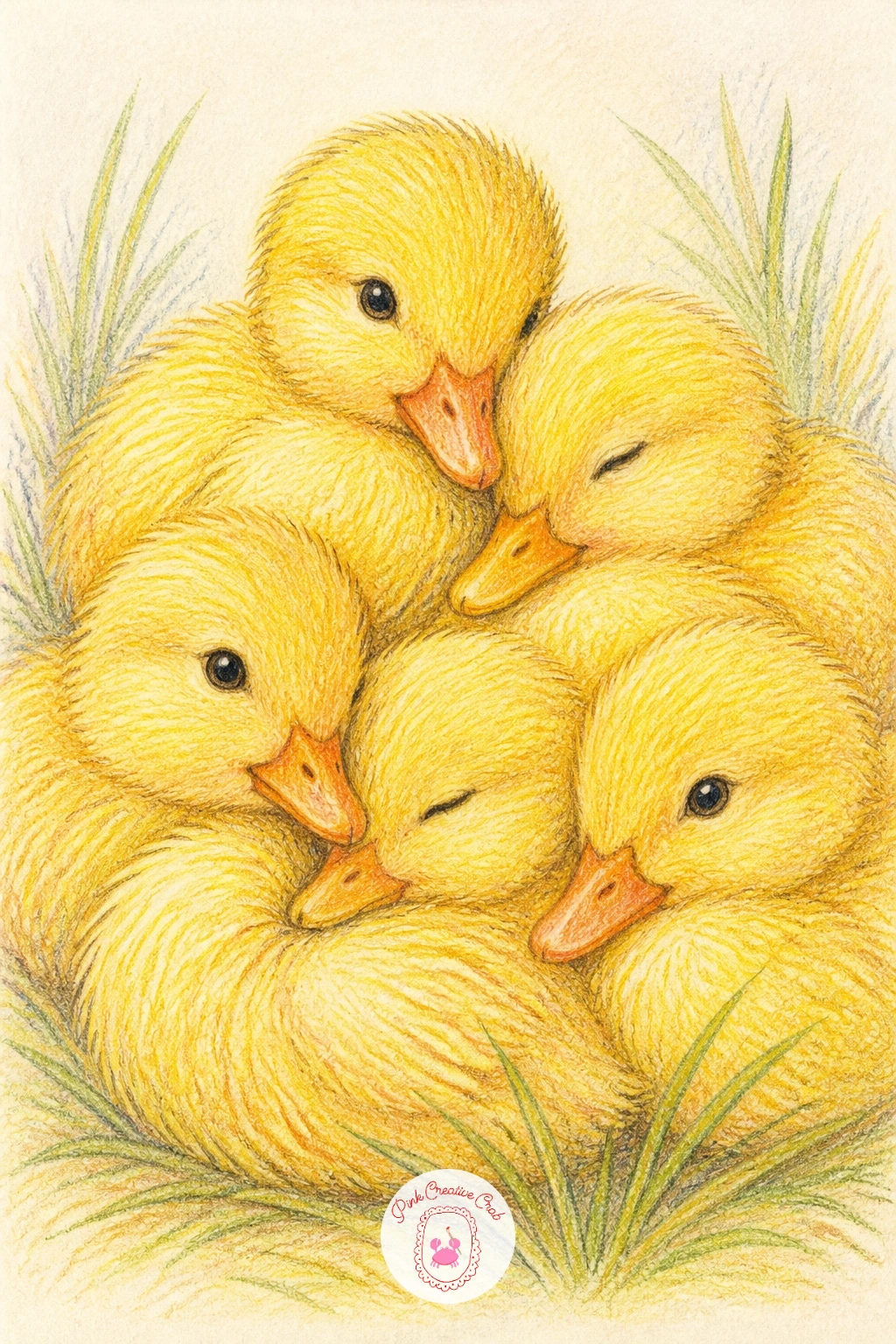
Palette: Soft Yellow,Warm Gold,Pale Orange,Soft Green
Shift to something quieter with a dad holding a newborn, cradled carefully in both arms with his head bowed close to the baby’s face. Sketch his torso and arms first as one solid supportive shape, almost like a cradle, then fit the small bundled baby into the curve near his chest.
Shade his skin and clothing in warm tones first, then work the baby’s wrap in a soft pale color with a few simple fold lines, keeping the baby’s face tiny and mostly peaceful, eyes closed is easiest and reads as sleep rather than needing an expression at all. His bowed head is the heart of the piece, so get that angle right before adding any other detail.
If his arms look stiff, loosen the outline with a kneaded eraser along the forearm so the shape curves naturally rather than looking like two straight lines. No pale pink for the wrap, a soft cream works for any baby.
One tip for today: keep his expression soft and slightly downturned rather than smiling broadly, since a quiet, almost solemn look reads as far more tender in pencil than a big grin does.
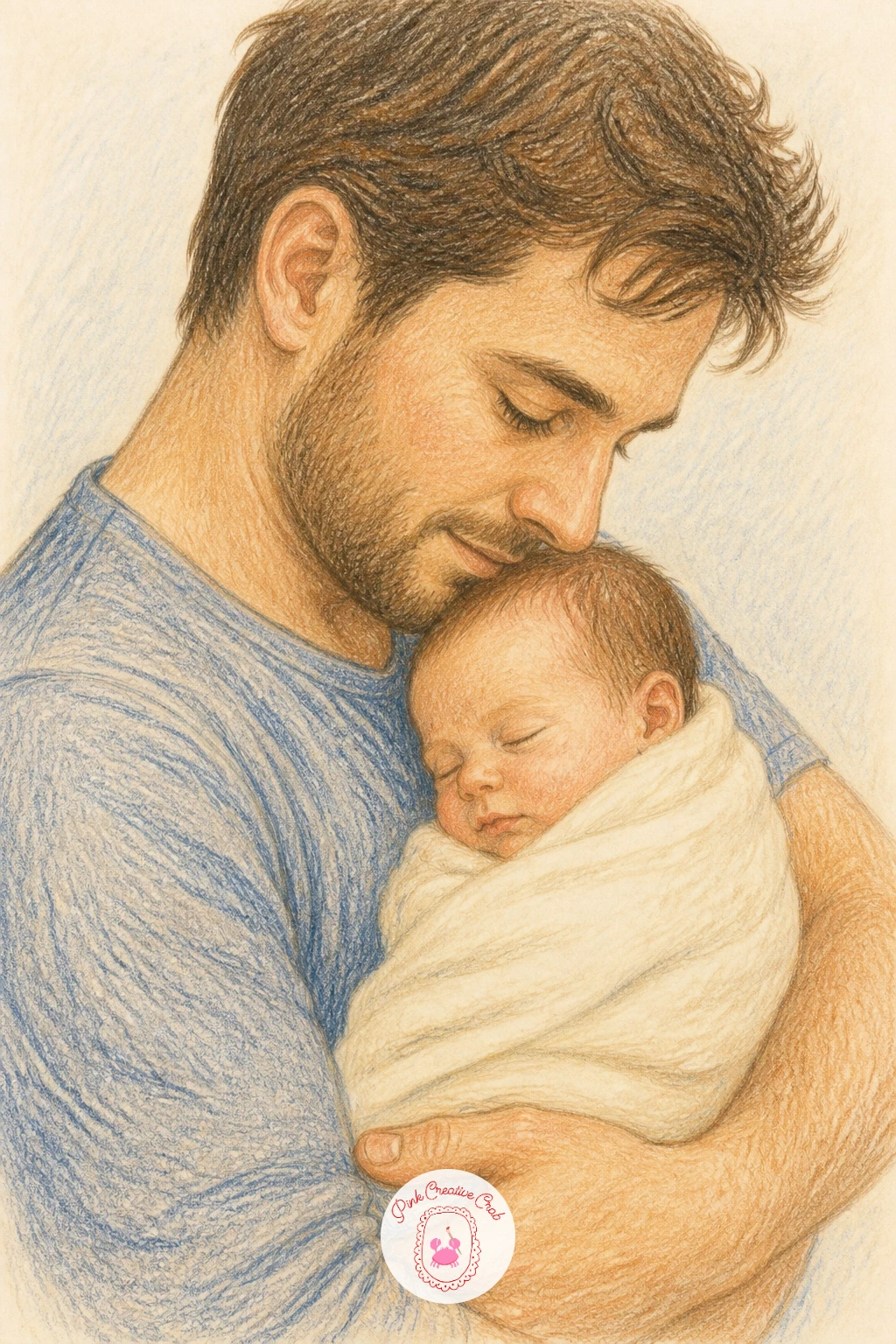
You Will Need
- kneaded eraser
Palette: Warm Skin Tone,Soft Cream,Dusty Blue,Dark Brown
Try the busier end of the list with a group hug of friends, three or four figures with arms layered over each other’s shoulders in a loose circle. Sketch all the heads first as simple circles arranged at slightly different heights, then build the bodies down from there so the proportions stay in check before you commit to color.
Give each friend one clear color of clothing so the eye can tell them apart even where the bodies overlap heavily, and work from the back figures forward, shading the ones further away slightly darker so they sit behind the ones closer to you. Arms crossing over shoulders are the trickiest part; simplify them into soft tube shapes rather than trying to show every sleeve fold.
If the group starts to look like a tangle, step back and check that every face is still visible from at least one angle, nose or cheek, before adding final details. No four colors handy, two contrasting ones repeated across the group still read as separate people.
Finish with everyone’s eyes closed or smiling softly, since a group hug works better with calm faces than big open mouths.
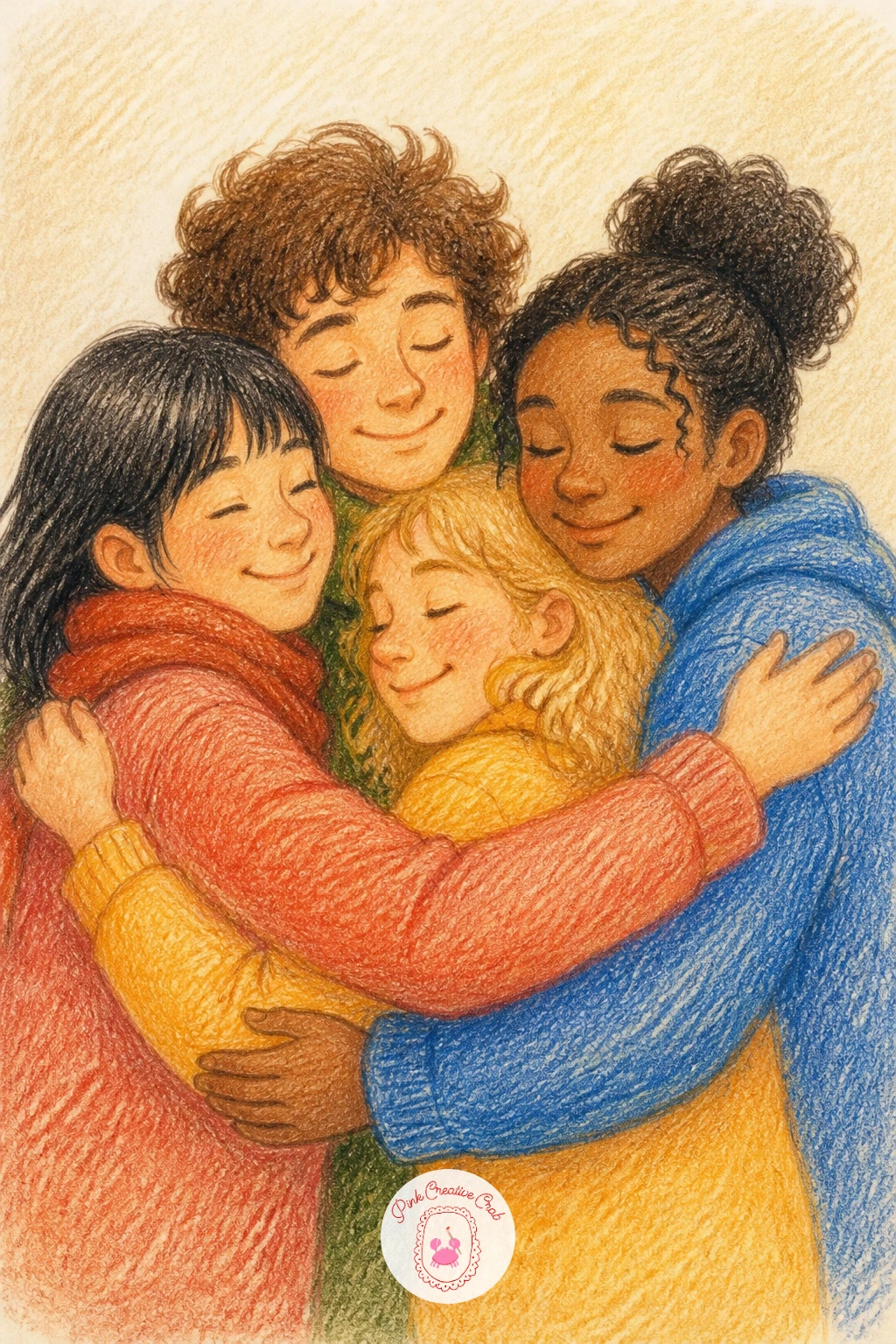
Palette: Coral Red,Teal Blue,Warm Mustard,Soft Plum
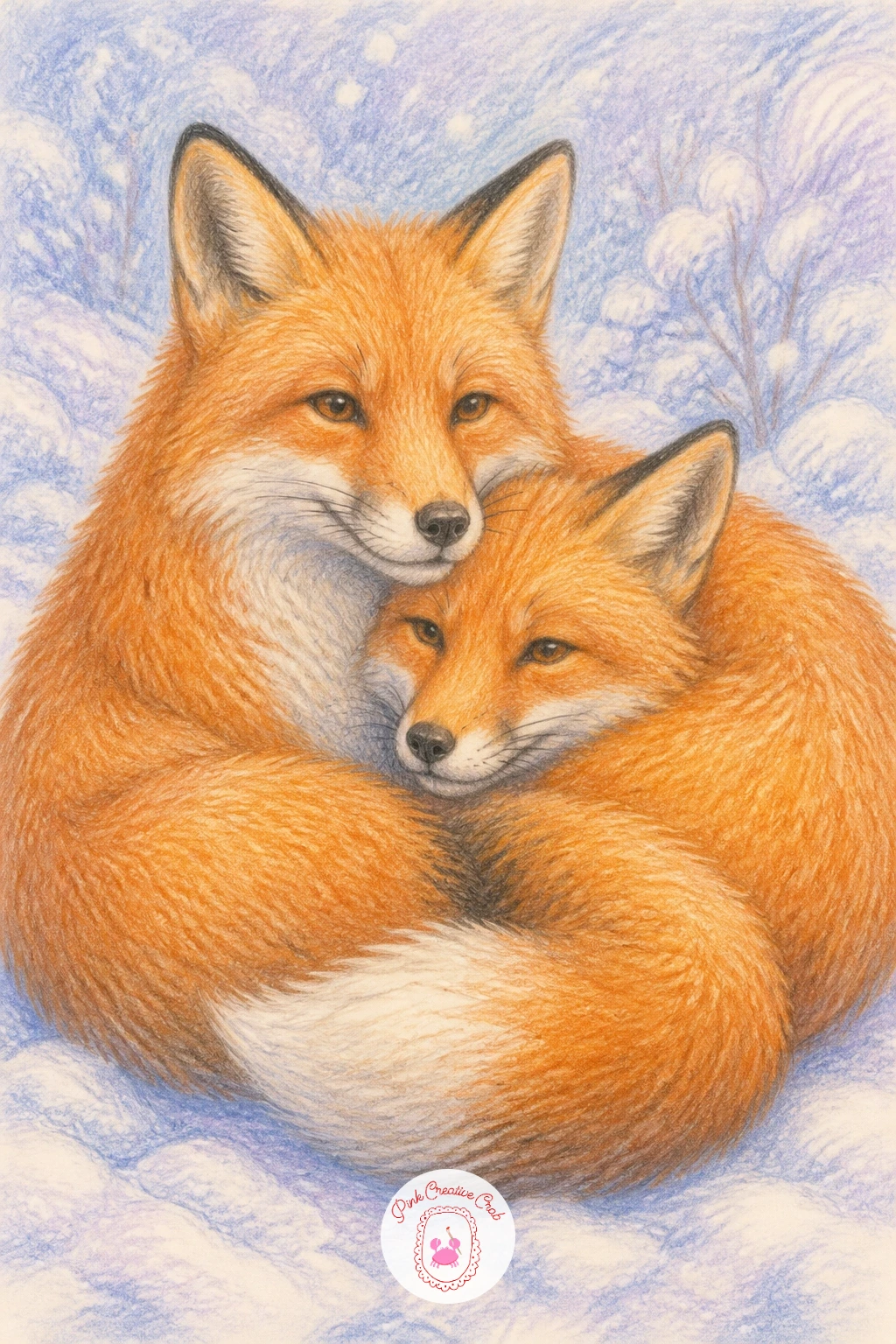
Cool the palette down with two foxes in the snow, curled together with their bushy tails wrapped around both bodies like a shared blanket. Draw two pointed oval bodies overlapping, tails sweeping around the front so the tips meet near each other’s noses.
Layer the fur in warm orange strokes first, then add the white chest and tail tip last so it stays clean and bright against the orange rather than getting muddied underneath other layers. Keep the snow around them simple, a flat pale blue-white with a few soft shadow patches rather than detailed drifts.
Light direction changes this scene a lot: decide the sun comes from one side and let that side of both foxes and the snow stay noticeably lighter, with soft blue shadow on the other side, which makes the whole thing feel properly wintry rather than flat. No orange pencil to hand, red layered under a little yellow gets close.
Add a scatter of white gel pen dots for falling snow once the shading is done, keeping them larger and fewer near the front and smaller toward the back for depth.
You Will Need
- white gel pen
Palette: Burnt Orange,Cream White,Pale Blue,Deep Rust
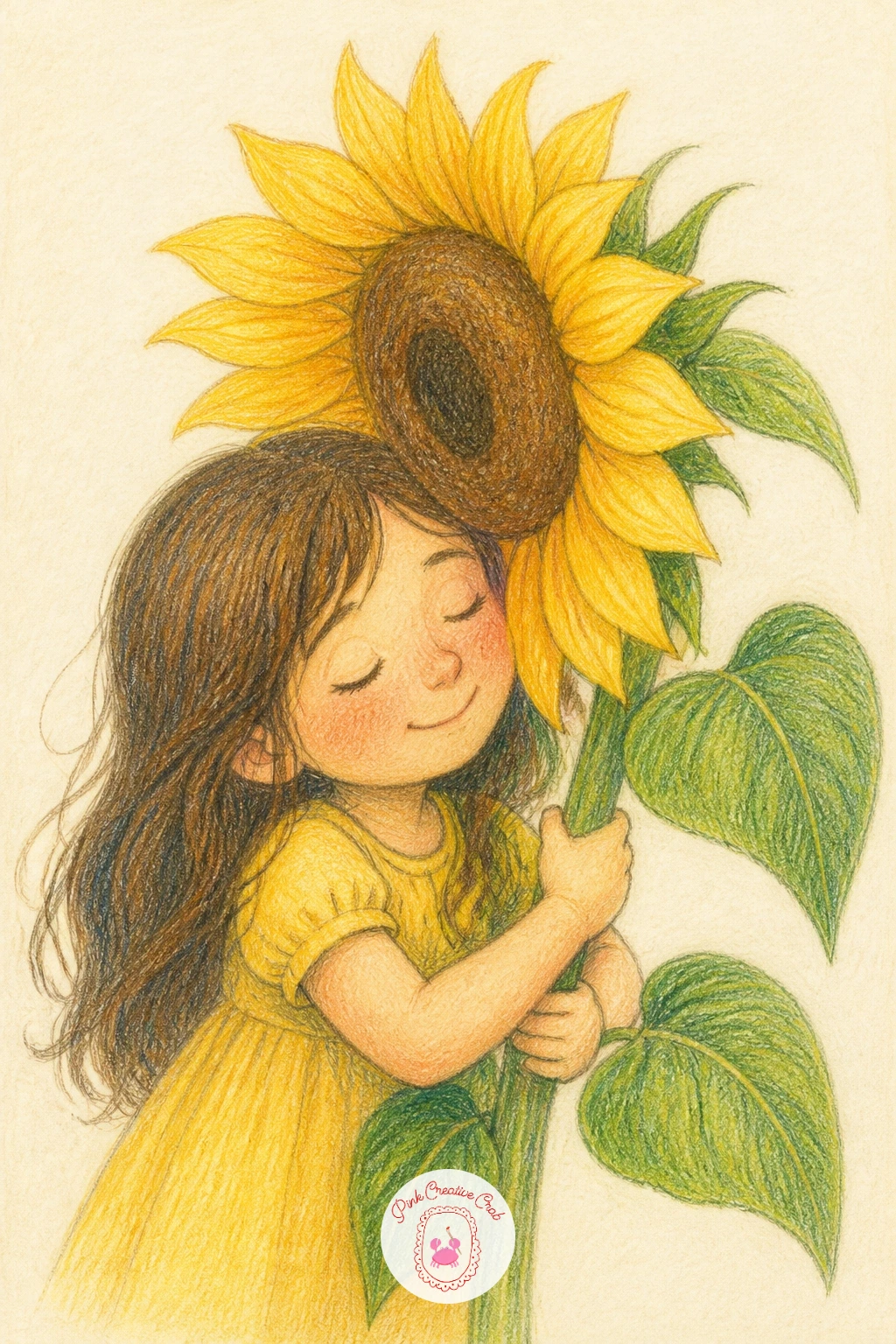
Lighten the mood with a girl hugging a sunflower, her arms wrapped around a stem nearly as tall as she is with the huge flower head leaning toward her face. Draw the sunflower first, a central dark circle ringed with long pointed petals, then fit the girl’s body against the stem below it.
Shade the petals in warm yellow with a slightly deeper gold toward the center, working each petal as one confident stroke rather than many small scratchy ones. Her dress and hair can stay simple and flat in color so the flower keeps most of the attention.
To compare sizes correctly, make the flower head at least as wide as her whole head and shoulders together, since a believably huge sunflower is what makes this charming rather than just literal. No gold pencil on hand, yellow layered with a touch of brown in the center works just as well.
For more floral pairings and petal techniques, the field flower ideas page is worth a look even though it is painted rather than drawn. Finish with a few loose leaf shapes along the stem to fill any empty space.
Palette: Sunflower Yellow,Deep Gold,Olive Green,Soft Pink
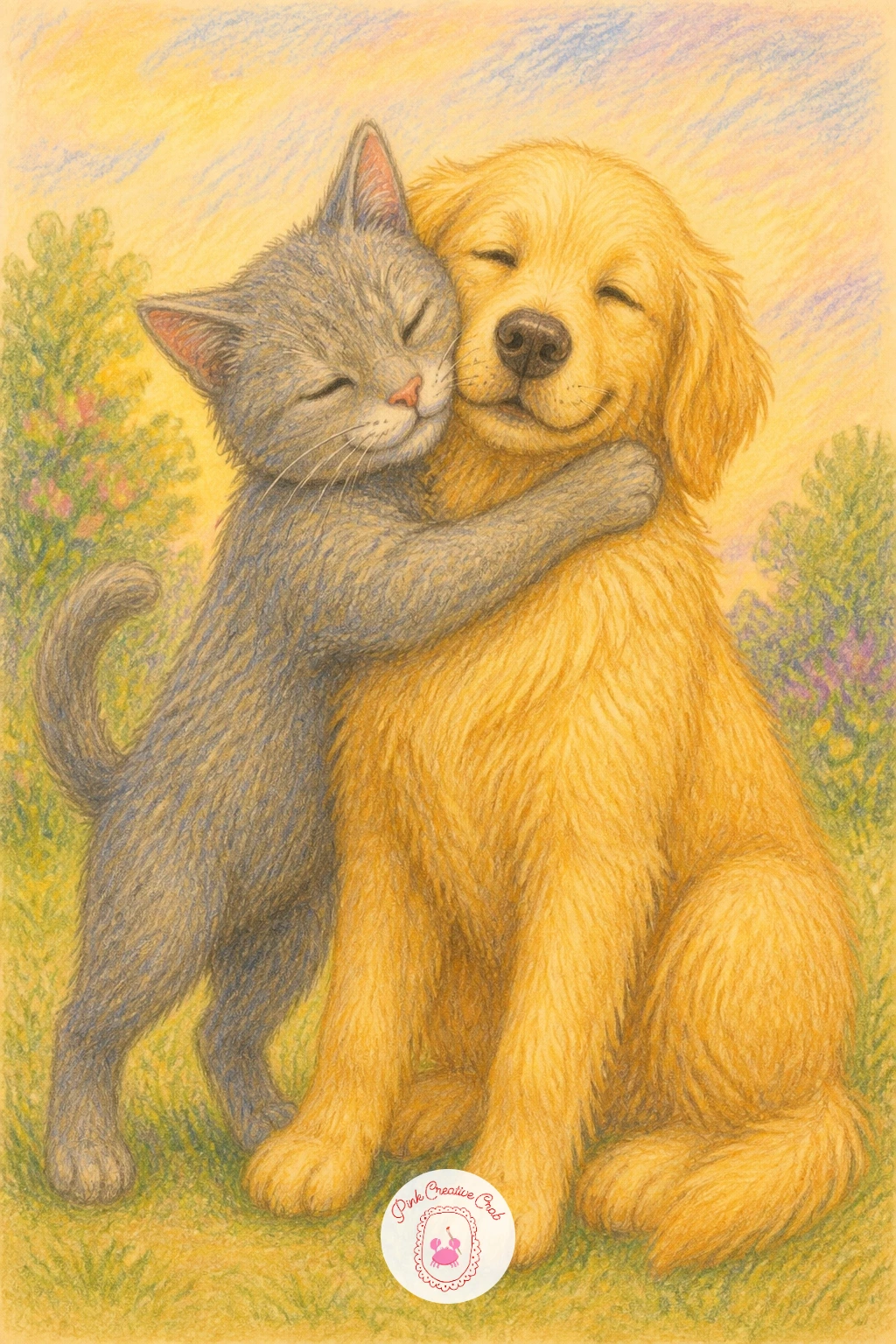
Pair up an unlikely couple with a cat hugging a dog, the cat’s front paws wrapped around the dog’s neck while the dog sits patiently underneath. Draw the dog’s body first as the sturdier base shape, sitting upright, then perch the cat’s smaller rounder body against its chest with paws reaching up.
Shade the two coats in clearly different textures: short even strokes for the dog’s shorter fur, longer flicked strokes for the cat’s fluffier coat, which keeps them visually distinct even where their bodies touch. Give each animal a different color entirely, a golden dog and a gray cat works well and avoids any confusion about where one ends and the other begins.
The hug goes wrong when the cat’s paws look too long and thin; keep them short and rounded like mittens; so if yours looks ribbon-like, soften it with a kneaded eraser and redraw it shorter. No gray pencil for the cat, a cool warm-gray blend works fine.
Give both animals half closed, content eyes rather than wide alert ones, since that single detail is what makes the pairing read as affection rather than an odd standoff.
You Will Need
- kneaded eraser
Palette: Golden Tan,Cool Gray,Cream,Charcoal
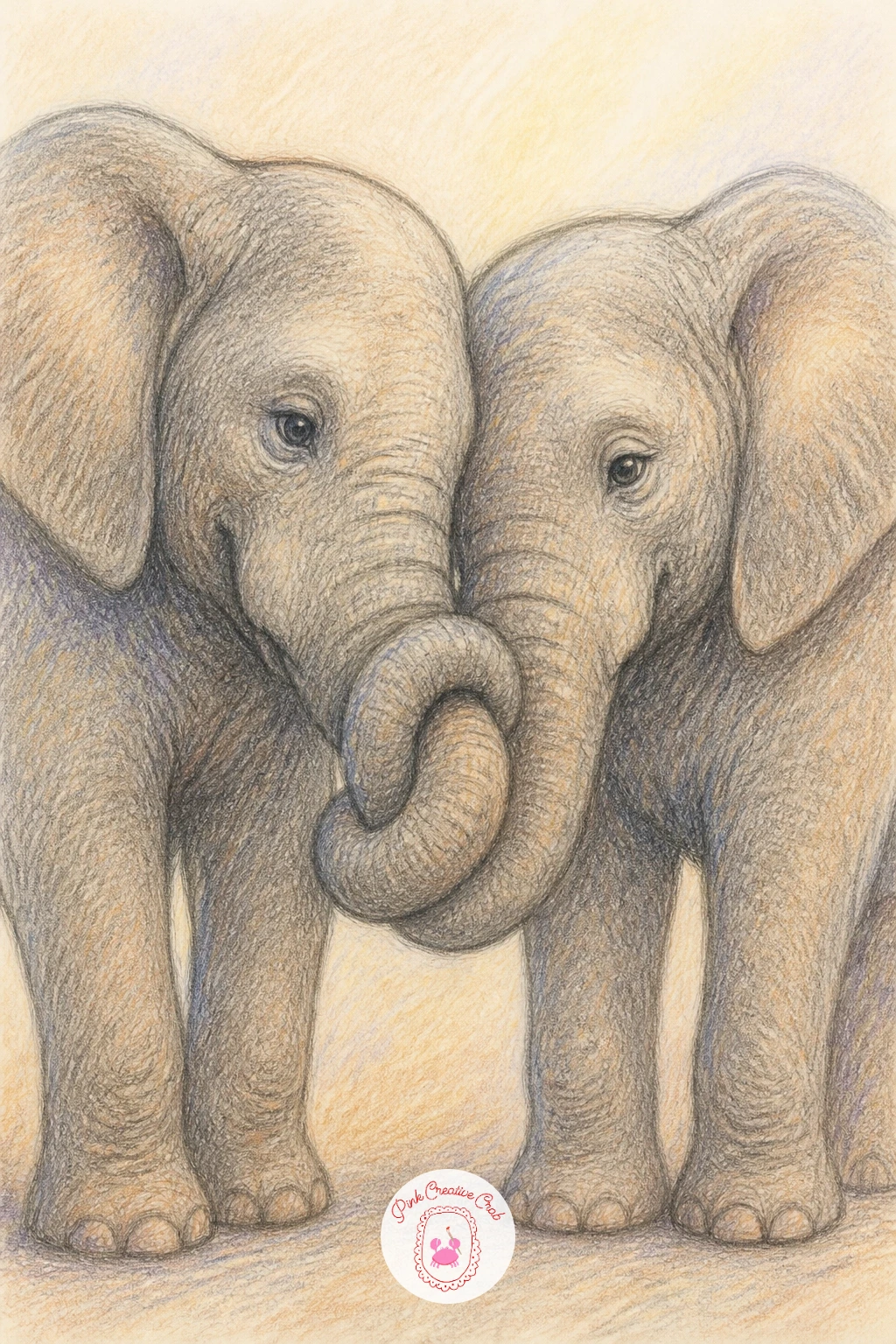
Go bigger again with two elephants with trunks entwined, their trunks curling around each other like held hands while their bodies lean in close. Sketch both large rounded bodies first, overlapping slightly at the shoulder, then draw the two trunks reaching toward each other and twisting together in the middle.
Layer the skin in warm gray, building up texture with small crosshatched marks rather than one flat tone, since elephant skin reads as elephant mostly through that layered, slightly rough texture. Keep the ears large and rounded, shaded a touch darker on the inside curve to give them depth.
The trunks are the one part worth measuring before you commit: sketch the curl lightly first and check it actually forms a believable loop rather than two trunks just touching at the tip, since a weak connection there undersells the whole hug. No warm gray pencil to hand, cool gray with a touch of brown layered in gets close.
Add a few short strokes of pale pink inside each ear, and finish the eyes with a small white gel pen dot for a gentle, knowing expression.
You Will Need
- white gel pen
Palette: Warm Gray,Deep Gray,Soft Pink,Cream
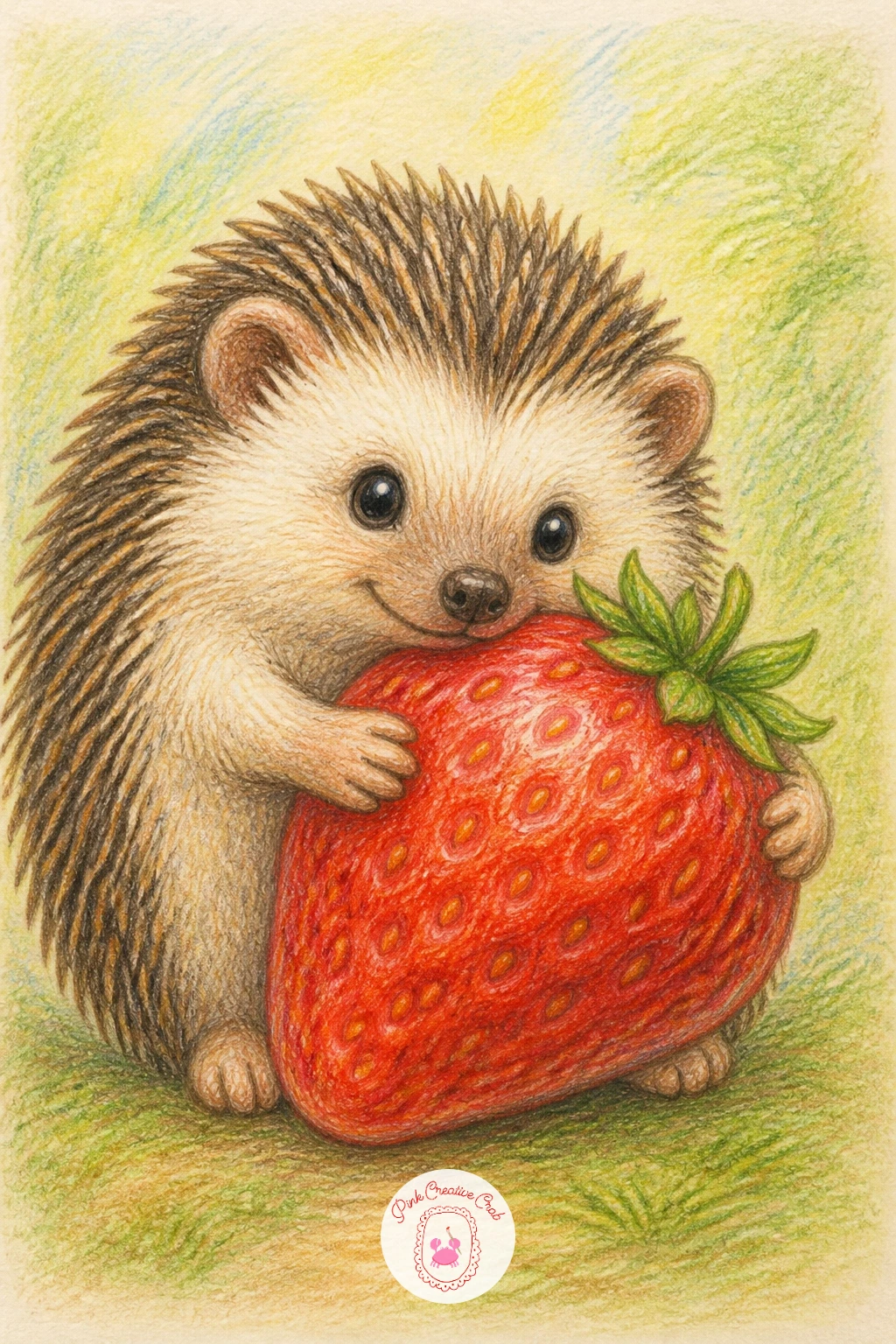
Switch to something playful with a hedgehog hugging a strawberry, its short arms wrapped around a fruit nearly as big as its whole body. Draw the strawberry first as a simple rounded heart shape, then build the hedgehog’s round body against it, arms reaching only partway around since the fruit should look pleasantly too big to fully hold.
Shade the strawberry in warm red with small dark seed dots scattered over the surface, then build the hedgehog’s spines as short overlapping lines radiating outward from its back, darker at the base and lighter toward each tip for a sense of real texture. Keep the face simple, a small pointed snout and tiny dot eyes.
Spines are the fiddly part: if they start looking like a solid dark mass, lift a little color out with a kneaded eraser in a few places to create light and dark clusters rather than one flat patch. No true red pencil, a mix of pink and orange layered together works for the strawberry.
Finish with a single green leafy cap on the strawberry drawn in two or three simple pointed shapes, and the fruit will read clearly even next to all those spines.
You Will Need
- kneaded eraser
Palette: Strawberry Red,Soft Pink,Warm Brown,Leaf Green
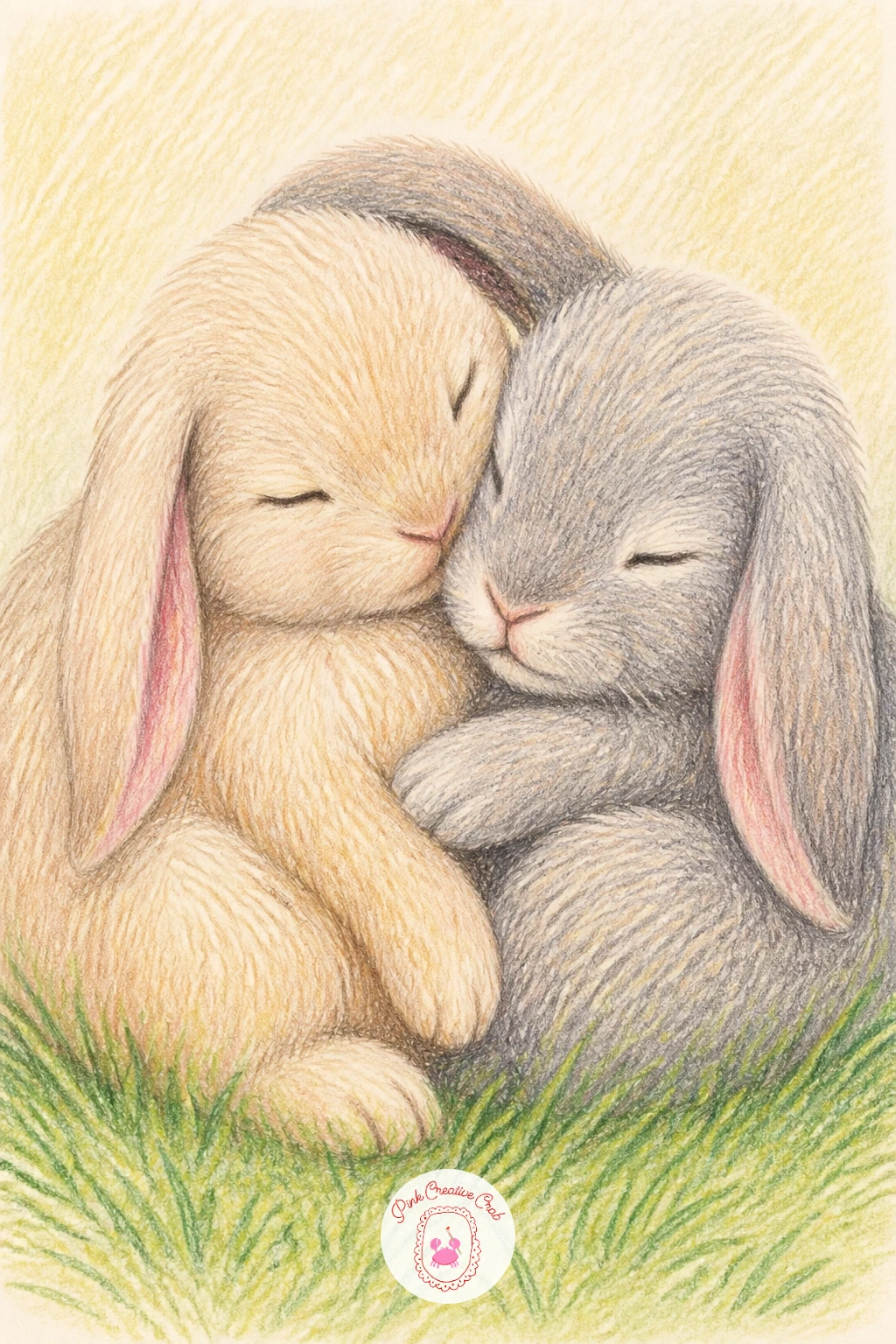
Keep the small and sweet theme running with bunnies snuggling, two soft round bodies pressed together with ears flopped at relaxed angles. Draw two overlapping oval bodies first, one slightly behind the other, then add the long ears draped rather than standing alert, which instantly reads as calm and content.
Shade the fur in soft strokes, a warm cream or gray base with a touch of pink inside each ear, keeping the strokes short and fluffy rather than long and smooth since rabbit fur has a slightly fuzzy, uneven look even when soft. Leave the noses and paws a touch lighter than the rest of the body.
For a quick ten minute version, draw just the two overlapping bodies and ears with flat color and skip any background entirely. Given forty minutes, add a patch of grass underneath drawn in simple curved blades, and a few scattered white gel pen dots for small daisies.
No gray pencil on hand, a warm light brown works just as well for a soft bunny coat. Keep both sets of eyes gently closed for the most peaceful result.
You Will Need
- white gel pen
Palette: Warm Cream,Soft Gray,Soft Pink,Soft Green
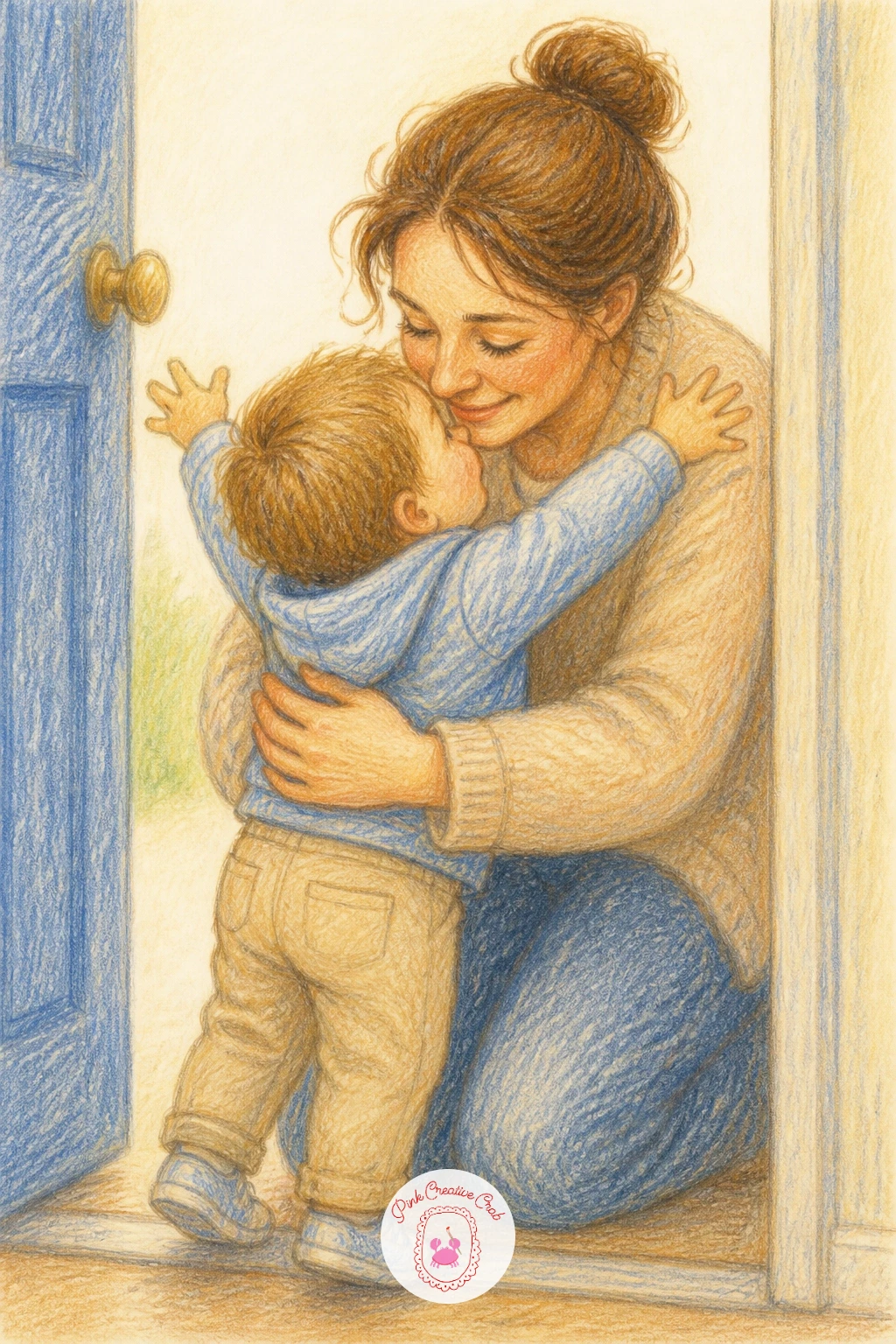
Return to a human moment with a mum hugging her toddler at the door, bending low with arms wrapped around a small figure reaching up. Sketch her body first as a gentle curve bending forward, then fit the toddler’s much smaller, rounder body into the space her arms create, arms raised to reach her shoulders.
Shade her clothing in flat warm color first, then work the toddler’s chubbier proportions, a bigger head relative to the body and short stubby limbs, since getting that proportion right is what separates a believable toddler from a shrunken adult. Keep the doorway behind them minimal, a simple vertical frame line or two is enough.
If the toddler’s head looks too small, compare it directly against the mum’s head size: a toddler’s head should be noticeably large in relation to the rest of the body, almost a third of total height. No warm beige pencil for skin, a light tan and cream blend works for most skin tones.
Finish with her face tilted down and the toddler’s face tilted up, since that meeting of two angles is what makes the hug feel like an actual exchange rather than two figures just standing close.
Palette: Warm Beige,Soft Blue,Dusty Rose,Cream
Add some movement with a reunion at a train station, two figures caught mid run into each other’s arms with a hint of platform behind them. Draw both figures leaning forward off balance slightly, one with arms already wide open, to capture that split second just before contact.
Block the clothing in two contrasting warm colors, then add the station setting last and loosely, a few straight lines for the platform edge and a soft blurred shape or two suggesting a train in the distance rather than drawn in full detail. The background should feel secondary to the two people.
In ten minutes, draw just the two figures mid embrace with no station details at all, cropped close. With forty minutes, add the platform lines, a suitcase dropped mid motion beside them, and a loose crowd shape or two blurred in the far background to suggest a busy station.
No blending stump for the blurred background, smudge lightly with a clean fingertip instead to soften those distant shapes. Keep both faces mostly turned toward each other so the emotion stays the clear center of the piece.
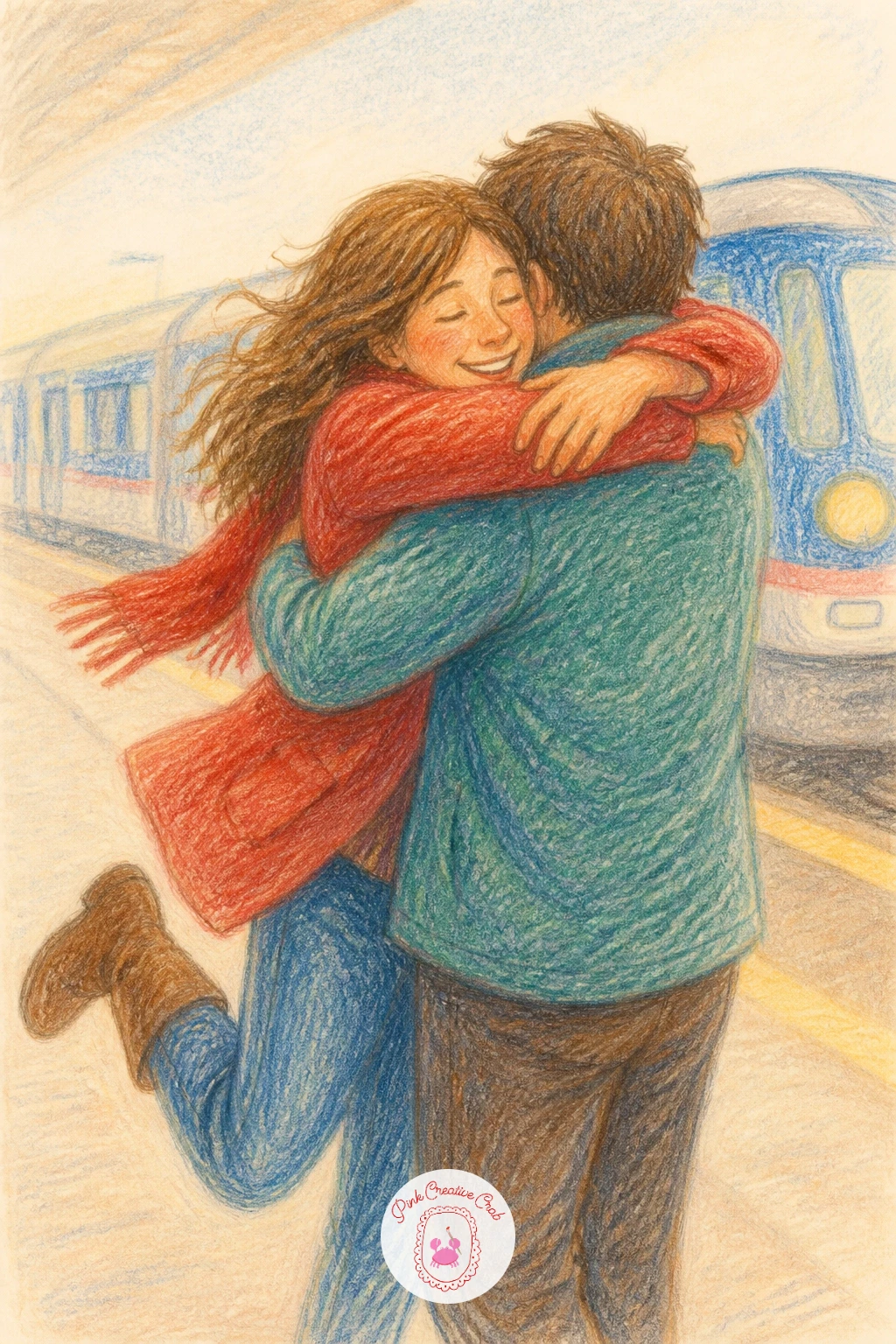
Palette: Warm Red,Deep Teal,Warm Gray,Cream
Slow the pace right down with a sloth hugging a branch, limbs wrapped lazily around a thick diagonal bough across the page. Draw the branch first as a simple angled cylinder, then build the sloth’s body around it, long curved arms draped over the top and long claws hooking underneath.
Layer the fur in long, loose strokes following the direction the limbs stretch, a grayish brown base with a slightly greenish tint in a few patches, since real sloth fur often shows a mossy tinge worth including for character. Keep the face simple, a flat dark mask shape around the eyes with a gentle, half smiling mouth.
Claws are the part to get right: draw them as three or four long curved hooks per limb rather than tiny fingers, since that length and curve is what makes the grip look secure. No greenish pencil on hand, a touch of olive layered thinly over brown gets the same mossy effect.
Finish with a few simple leaf shapes near the branch ends to root the scene, keeping them loose so the sloth stays the clear focus.
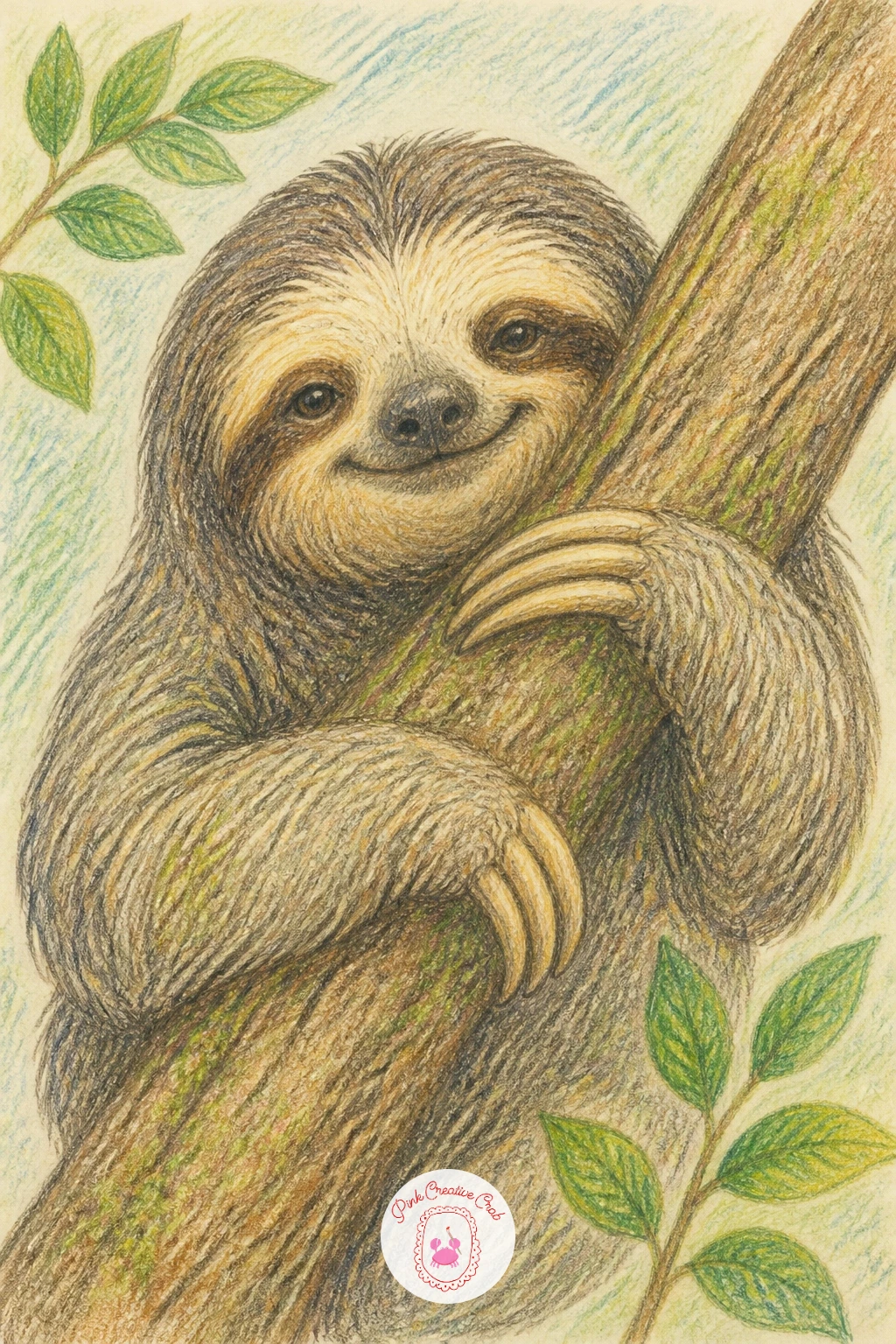
Palette: Grayish Brown,Olive Green,Dark Brown,Cream
Bring the scene into a warm kitchen with a grandma hugging her granddaughter by the oven, both figures standing close with an apron and a faint hint of baking in the air. Sketch the two bodies first, grandma a little stooped and soft, the granddaughter smaller and leaning into her side, with one arm each wrapped around the other.
Shade the apron and clothing in warm, slightly muted colors first, then add the oven behind them as a simple rectangle with a rounded handle, keeping it flat and plain so it reads as a kitchen without pulling focus from the hug. A few loose steam lines rising from an unseen tray on the counter nearby suggest warmth without needing to draw the whole kitchen.
If the oven looks too stiff and technical, soften its edges slightly with a blending stump so it sits comfortably behind the softer, rounder figures in front of it. No steam lines wanted, a simple basket of bread shapes on the counter works just as well to say “kitchen.”
Keep both faces turned toward each other with soft smiles, and let a few loose strands of grandma’s hair escape for a lived-in, unposed feel.
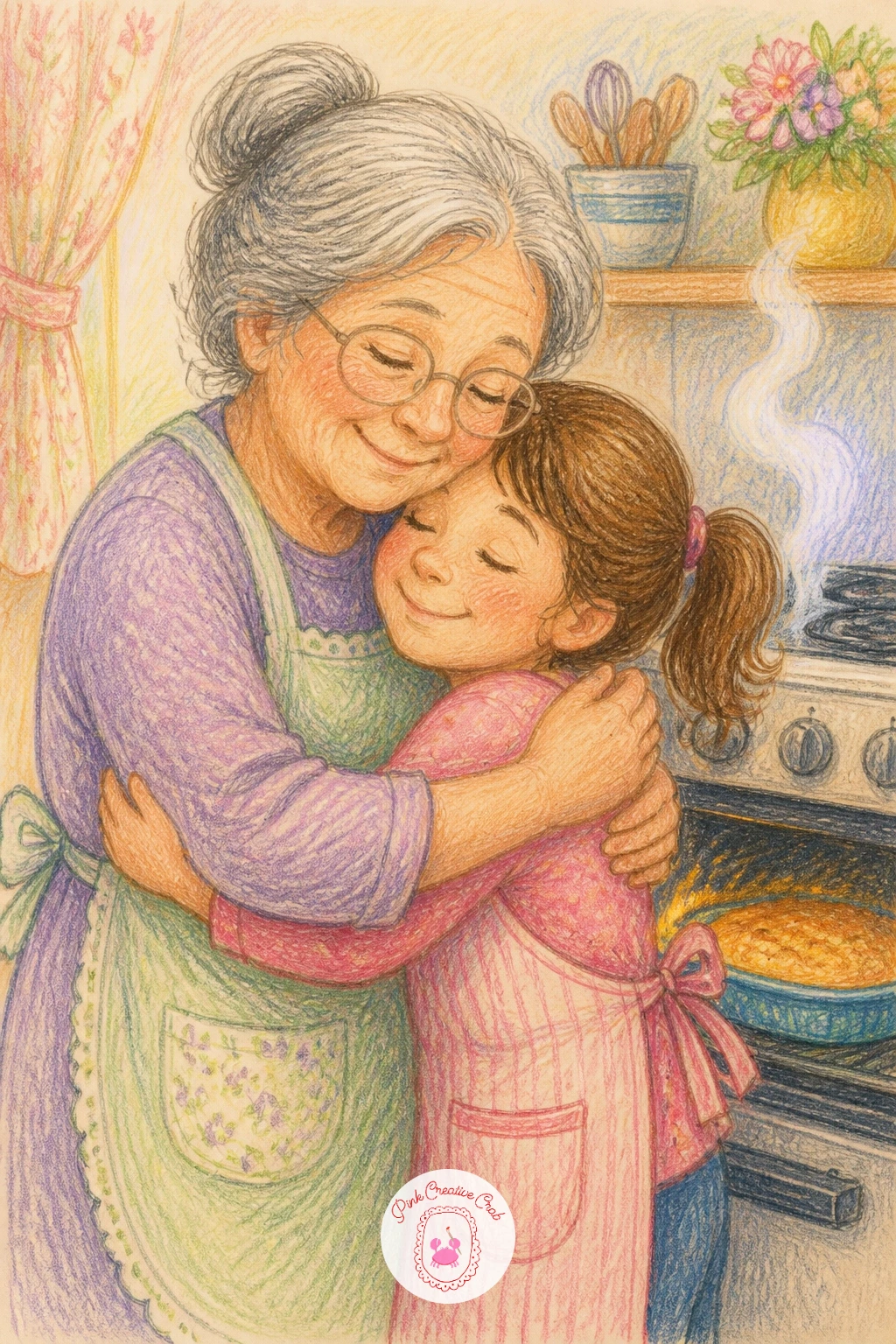
You Will Need
- blending stump
Palette: Dusty Rose,Warm Mustard,Soft Brown,Cream
Head out to the farmyard with a boy hugging a calf, arms wrapped around its neck while it stands patiently beside him. Draw the calf’s body first as a sturdy rounded shape on four short legs, then fit the boy against its side, his smaller body reaching up to its neck.
Shade the calf’s coat in warm brown and white patches, working the patches as soft-edged shapes rather than sharp lines, then shade the boy’s overalls or shirt in a simple flat color. Keep the calf’s face gentle, large soft eyes and a wide flat nose, which reads as calm and trusting rather than alert.
Measuring matters here too: a calf’s body is usually about as long as the boy is tall, so check that comparison in your sketch before committing any color, since a calf drawn too small ends up looking like a large dog instead. No warm brown and white patch pattern wanted, a solid tan coat works just as well for a different breed.
Finish with a scatter of a few loose grass blades at their feet, and the farmyard feeling comes through without needing a whole barn in the background.
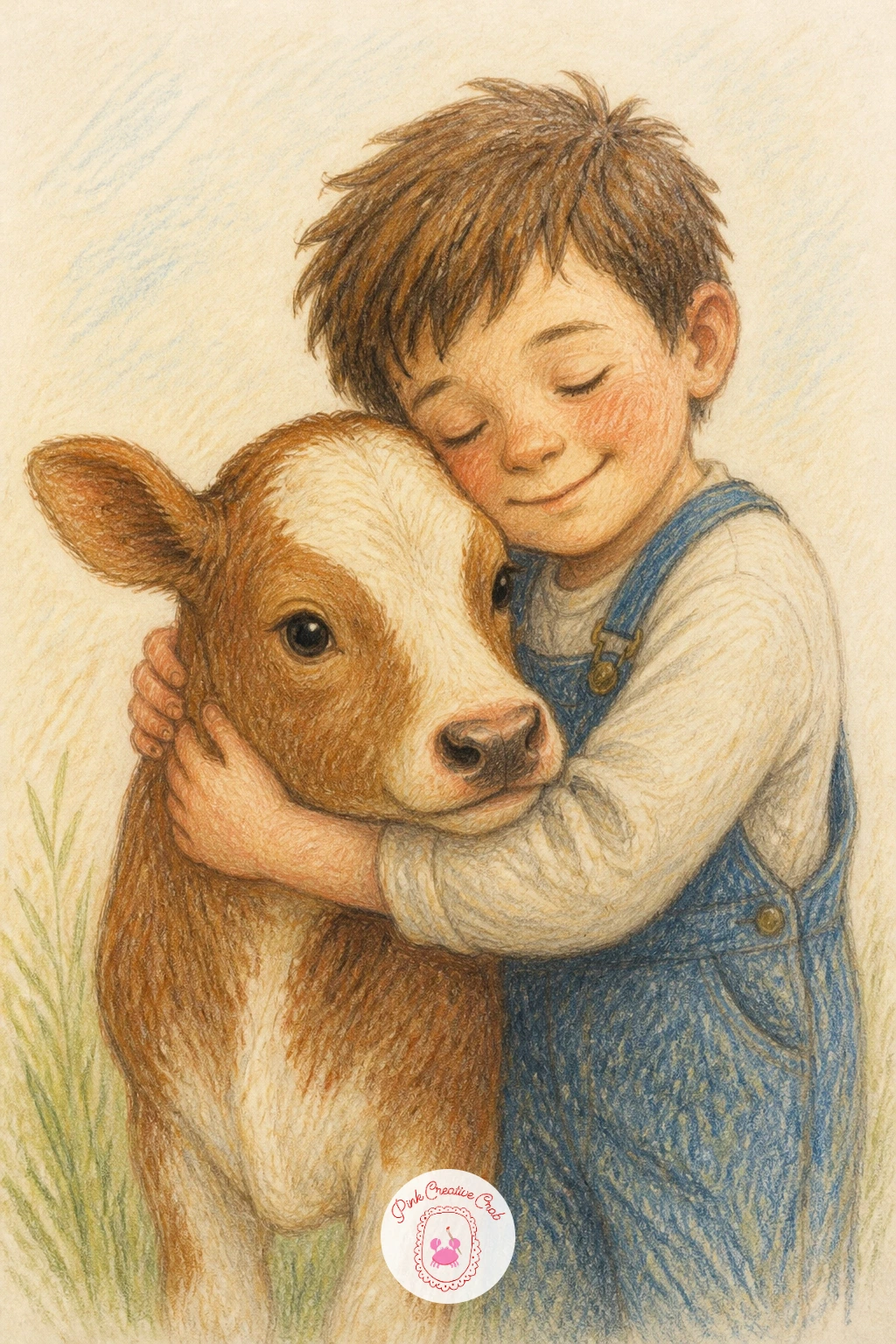
Palette: Warm Brown,Cream White,Soft Green,Warm Beige
Wind down with two owls on a branch, perched close together with their feathers fluffed and bodies leaning until they touch. Draw two simple rounded bodies side by side on a horizontal branch, heads tilted toward each other rather than facing forward, which is the single gesture that turns two owls into a hugging pair.
Layer the feathers in small overlapping curved strokes, starting dark at the top of the head and working lighter down toward the chest, building the texture gradually rather than trying to get it right in one pass. Keep the big round eyes simple, mostly closed or just a thin line, for a sleepy, affectionate look rather than a wide staring one.
If the feather texture looks too uniform, vary the pressure as you layer, pressing harder in small clusters near the wings and lighter toward the belly, which mimics how real feathers catch shadow unevenly. No mottled brown pencil on hand, warm gray and tan layered together gets a similar soft owl coloring.
Finish the branch with a few simple bark texture lines, and tuck one owl’s head slightly against the other’s shoulder for the most tender version of the pose.
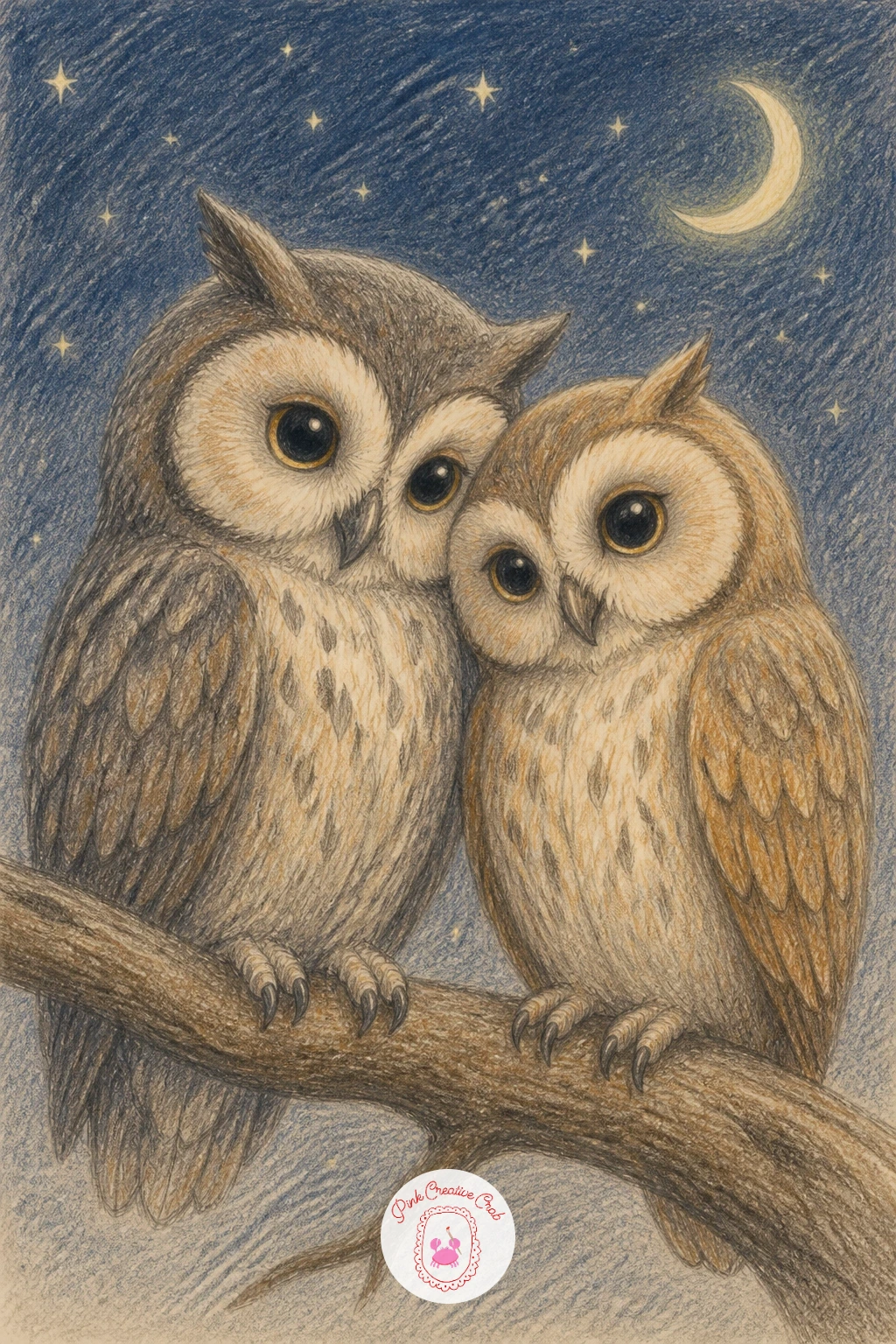
Palette: Warm Gray,Tawny Brown,Cream,Dark Brown
Close the whole series with two monkeys hugging, arms wrapped around each other while they sit together on a branch or patch of ground. Draw two simple rounded bodies first, sitting close with long arms curving around each other’s backs, tails looped loosely for extra charm if you want them.
Shade the fur in warm brown with a slightly paler tone around the face and chest, using short layered strokes built up gradually so the fur gains depth without looking scratched on all at once. Keep the faces simple and expressive, small dark eyes and a soft curved mouth, since monkey expressions carry a lot of the warmth in this pose.
Once this pair works well, the easiest way to vary it next time is to change the setting rather than the pose itself, perched in a jungle tree, sitting on a rock, or tucked under a leaf as shelter from rain, while keeping the hug itself the same reliable shape. No deep brown pencil on hand, a mix of warm red and gray layered together gets close.
Finish with a single banana or leaf nearby for a small storytelling detail, and this makes a warm closing piece for the whole set.
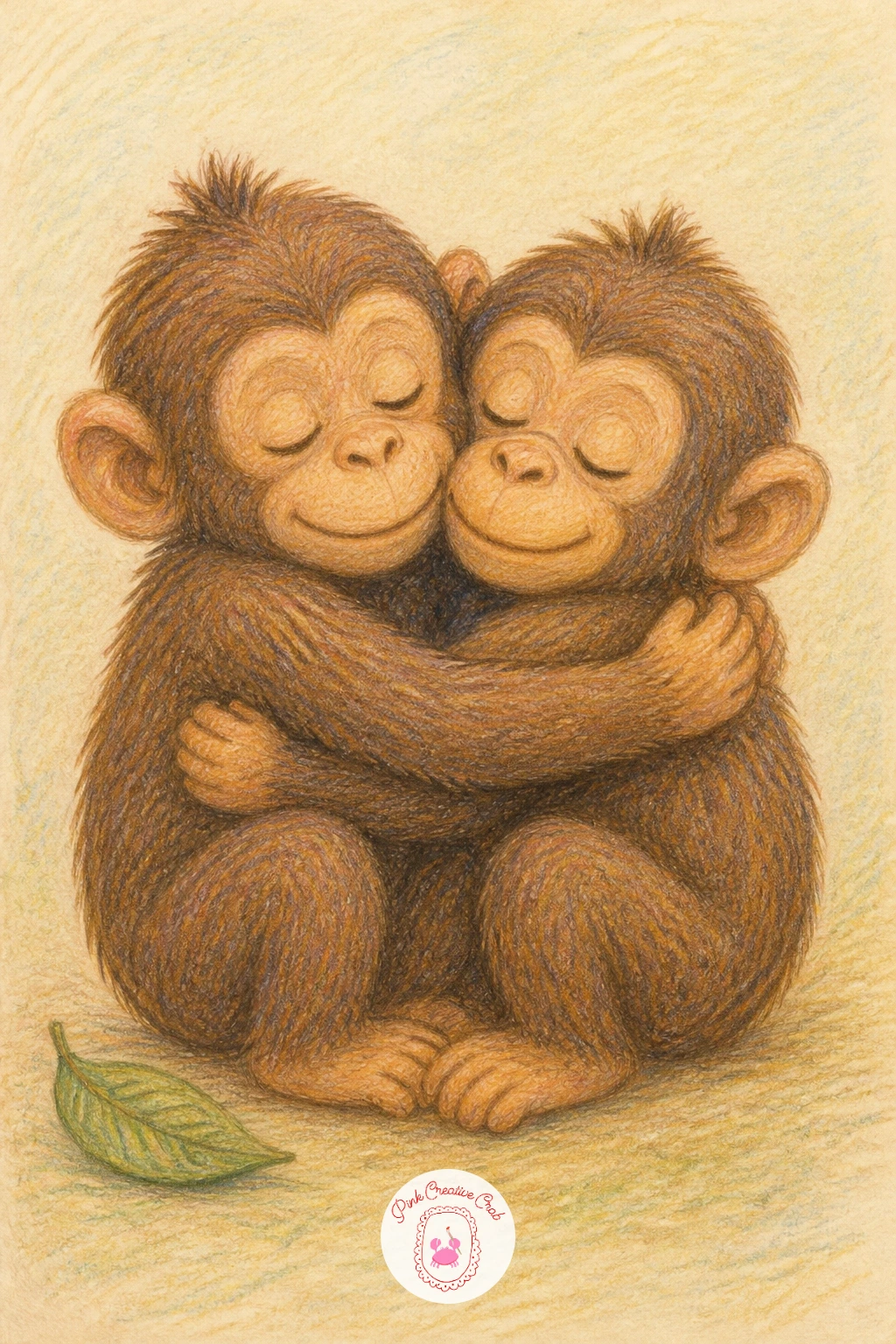
Palette: Warm Brown,Pale Tan,Deep Brown,Leaf Green
What to Do Next
Pick whichever pair caught your eye first, since starting with a subject you already love makes the sketching stage far more relaxing. Grab a sheet of smooth paper, block in the two big shapes lightly before any color touches the page, and let the layering build up slowly from there.
Frequently Asked Questions
What colored pencils work best for a hug drawing like these?
A mid range set of 24 to 36 colors covers most of these ideas well, since layering a few warm tones gets you most of the storybook palette. Soft wax based pencils blend more easily than hard pencils for beginners.
How do you make two figures in a hug look connected rather than just standing close?
Overlap their outlines slightly where arms and bodies meet, and tilt both heads toward each other rather than facing forward. A small shared gesture, like a hand gripping a sleeve, also helps sell the closeness.
How long does a hug drawing like this usually take?
Most of these ideas take between twenty minutes and an hour depending on how much background you add. Simpler animal pairs with no setting finish fastest, while scenes with a kitchen or station take longer.
What is the easiest hug drawing idea for a first attempt?
Two curled up cats or a pair of snuggling bunnies are the gentlest starting points, since both rely on simple overlapping oval shapes with no tricky faces or limbs. Build confidence there before moving to human figures.
How do you keep faces simple in a hug drawing without losing the emotion?
Closed or half closed eyes and a soft curved mouth carry most of the warmth, so there is no need to draw detailed open expressions. Tilting the head toward the other figure does the rest of the emotional work.
Have any thoughts?
Share your reaction or leave a quick response — we’d love to hear what you think!
-
 0
-
0
-
0
-
0
-
0
-
0


