Goat drawing is the quickest way to put a grin on your sketchbook page, and these 29 goats are every bit as cheeky as the real thing. Each one gets caught mid-mischief, whether that means stealing a sock off the line or chewing through a flower crown, so there is never a boring pose in the bunch.
Below you will find a goat for every mood: quiet mountain scenes, silly farmyard moments, cozy pajama goats and more. Pick whichever one makes you laugh first, grab your fineliner and markers, and finish it today.
Using these images: free for personal projects such as printing, coloring, cards, journals and gifts. Handmade items that include them may be sold up to 30 pieces per design. More than that is commercial use and is not permitted, and neither is selling or sharing the images themselves or passing them off as your own. Please ask before any other use.
Start this goat drawing with the easiest costume in the whole list: a cozy cardigan. Sketch the goat’s head and body first in light fineliner, keeping the legs short and sturdy, then draw the cardigan as a simple wrapped shape over the torso with a row of small buttons down the front.
Ink the final lines once you’re happy with the shape, then bring in your markers. Block in the body with a warm beige or cream, and give the cardigan a contrasting color like soft rust or dusty blue so it reads clearly against the fur.
If the cardigan starts looking stiff, add a few soft fold lines at the elbows and where the fabric gathers at the belly. That little bit of drape is what sells the knit.
Keep your first cardigan goat simple with no pattern, then try adding thin stripes once you’re comfortable blending two colors side by side.
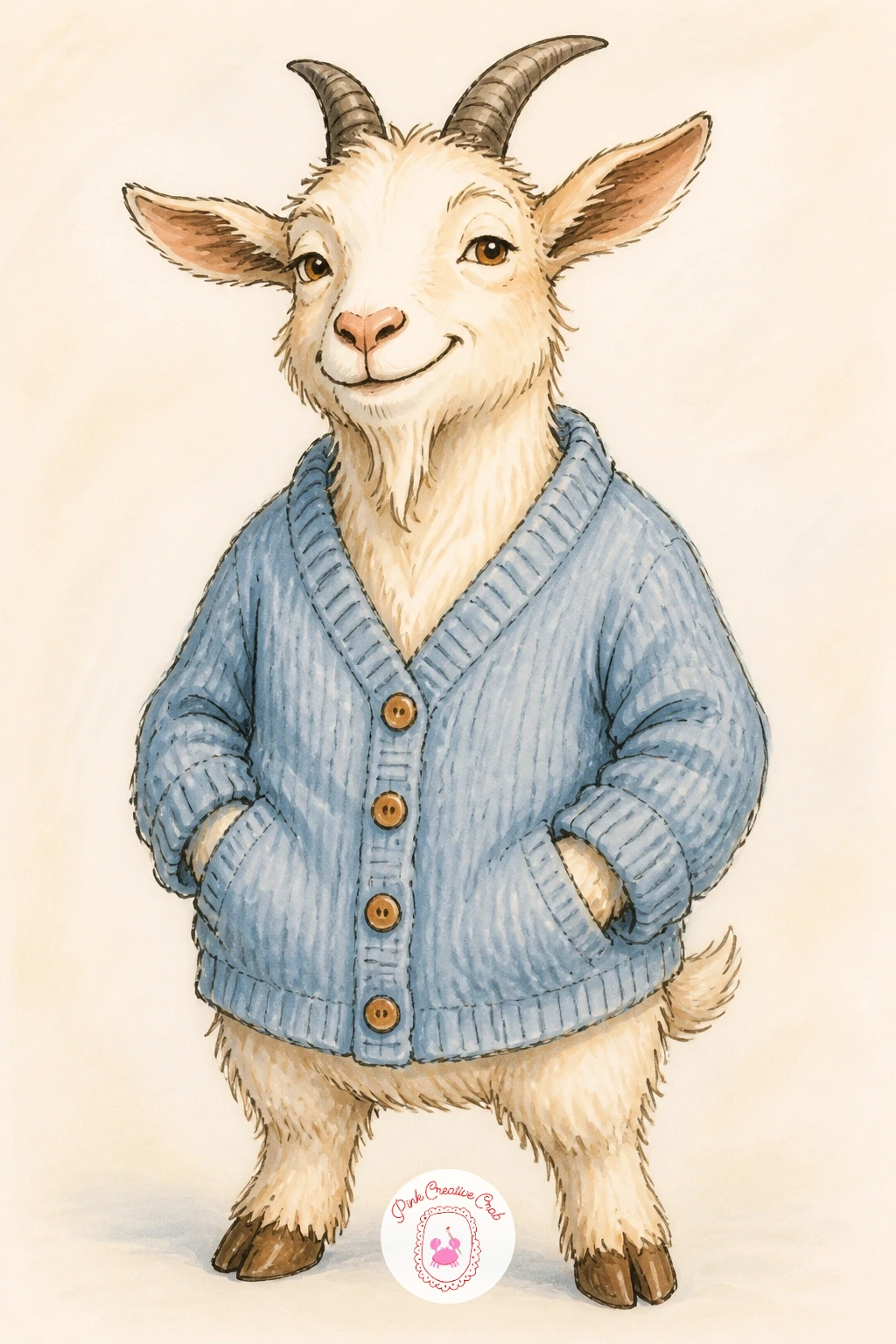
Palette: Cream,Dusty Blue,Warm Grey
Few things are funnier than a goat drawing that puts the animal exactly where it shouldn’t be. Block in a simple pitched roof shape first with a ruler or steady hand, then perch the goat right at the peak with its front legs slightly apart for balance.
Work the goat’s outline next, making sure the hooves sit convincingly on the roofline rather than floating above it. A few roof tiles sketched in loosely under the hooves anchor the pose.
Because the eye reads balance through the legs, check that the goat’s body weight lines up roughly over its front hooves before you ink anything. If it looks like it might topple, nudge the back legs a touch wider.
Color the roof in a muted terracotta or grey so the goat’s lighter fur pops against it, and leave today’s version this simple since the joke carries the whole drawing.
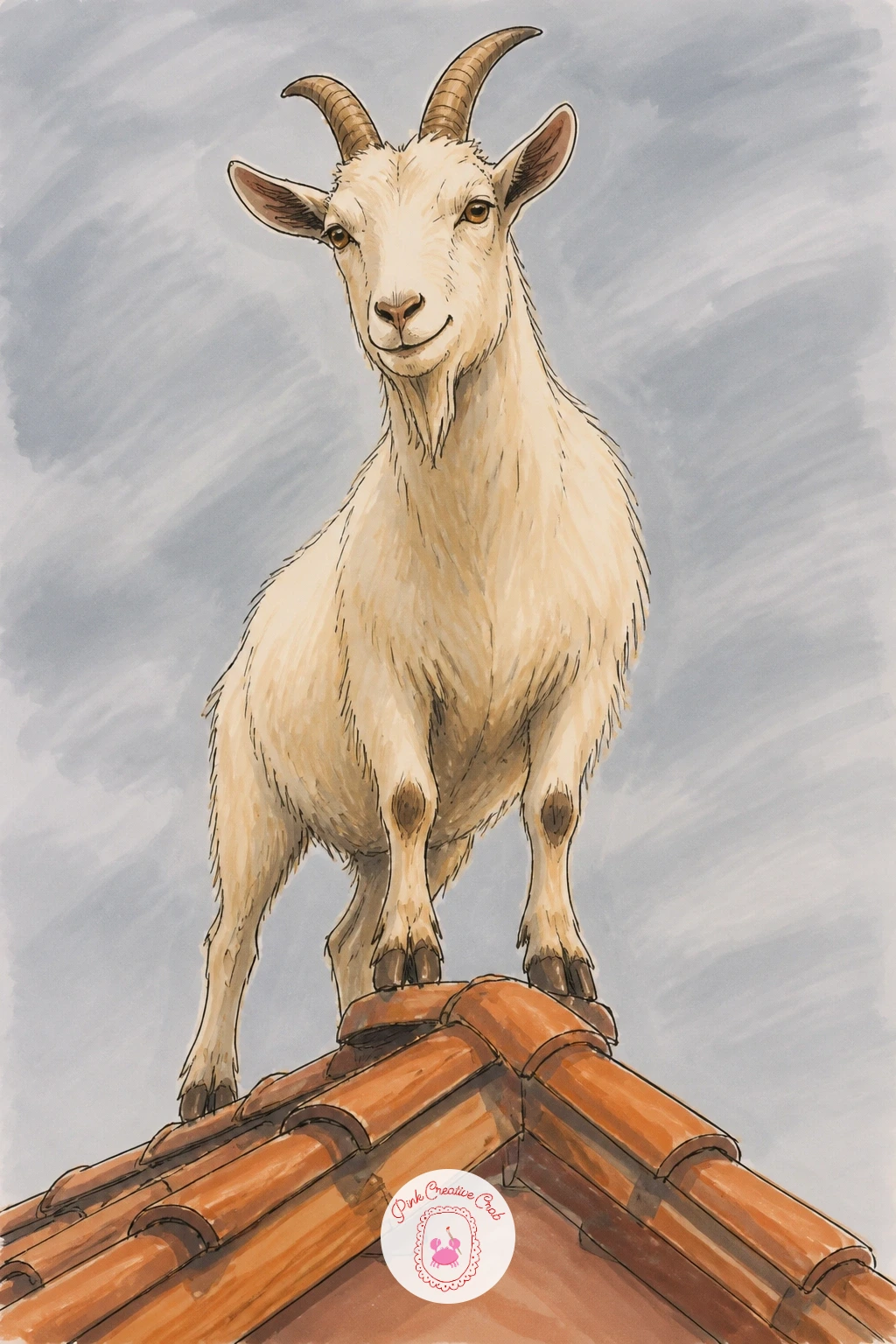
Palette: Terracotta,Charcoal Grey,Cream
Baby goats are built for this kind of energy, so let this one leap right off the page. Draw the body in a curved, compact shape with all four legs tucked or kicked out, since a jumping goat reads best with its legs doing something different from each other rather than mirrored.
Sketch the head tilted slightly up and the ears flopping with the motion before inking. A couple of short speed lines behind the back legs help sell the jump without adding real detail.
Eye level matters here: draw this goat from a slightly low angle, as if you’re kneeling in the grass watching it bounce, and the jump instantly feels more dynamic than drawing it straight on.
Keep the kid goat’s coat pale and soft, maybe a creamy white or light caramel, and finish with one bright patch of green grass beneath it to ground the whole scene.
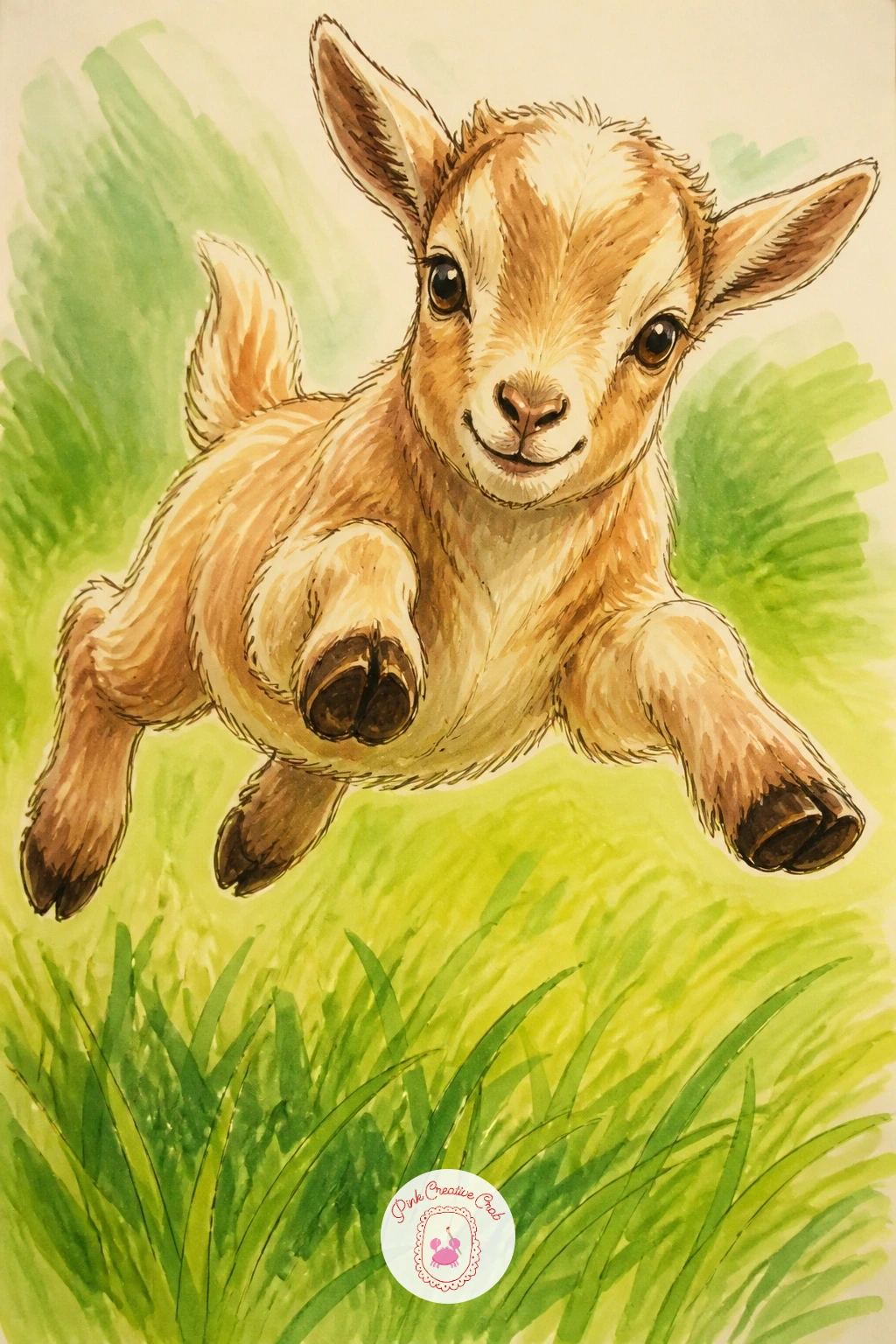
Palette: Caramel,Cream White,Meadow Green
This goat drawing turns a sweet accessory into a punchline. Draw the goat’s head first in three-quarter view so you can show both the crown slipping sideways and a flower already halfway into its mouth.
Build the flower crown as a simple ring of five or six rounded blossoms with small leaves between them, sketched loosely before you commit to ink. Draw the crown slightly crooked on the head, since a perfectly straight crown looks posed rather than mid-snack.
Blend your markers so the petals go from a deeper pink at the base to a lighter tip, which gives the flowers a bit of dimension without extra linework. If the petals look flat, a light layer of the same color along one edge after the first layer dries adds enough shadow to lift them.
Swap in daisies instead of roses if you’d rather keep the shapes simple, and the flower bouquet drawing inside this flower bouquet drawing guide is a good place to borrow petal shapes from.
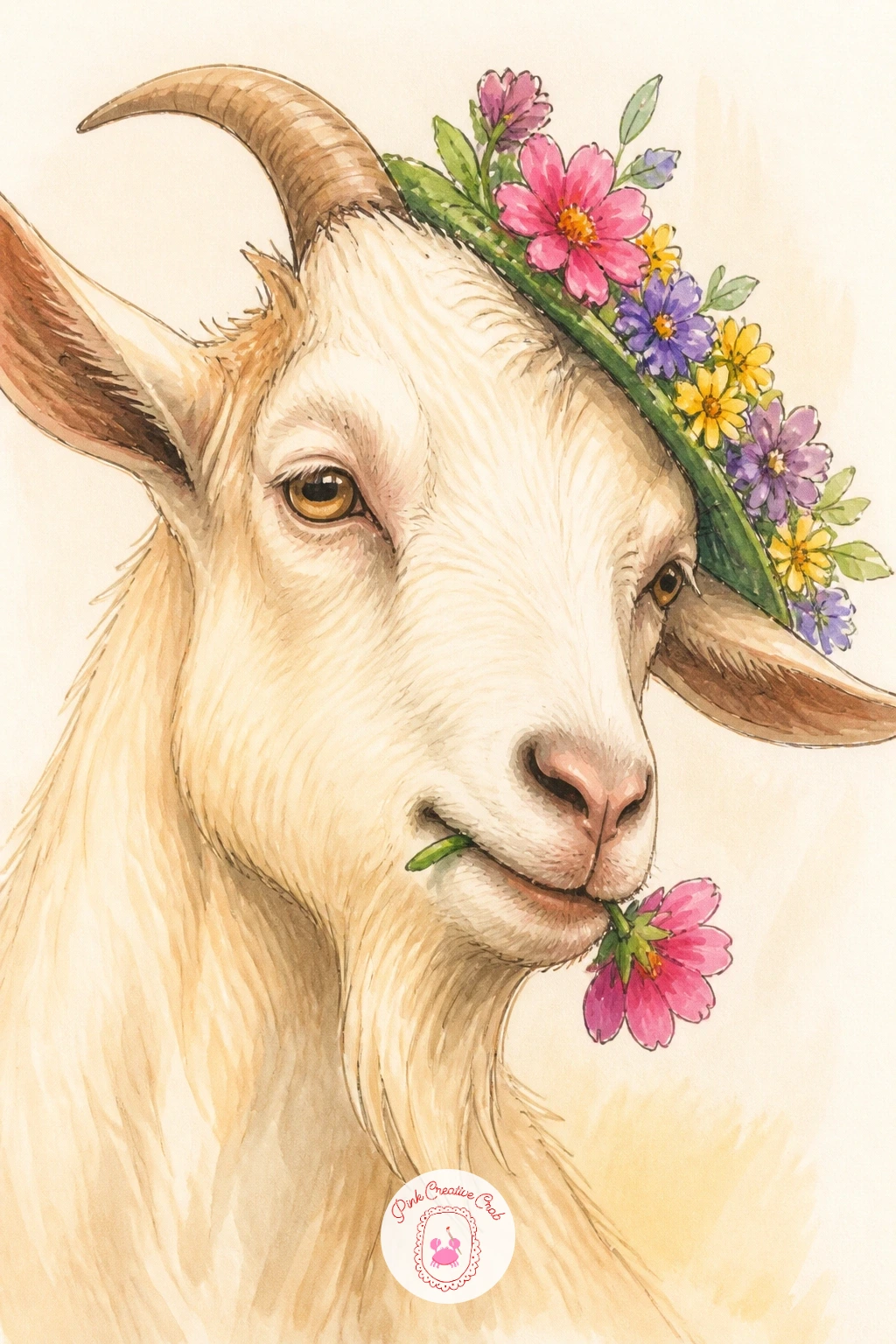
Palette: Blush Pink,Sage Green,Cream
Give your goat drawing a sense of humor by putting it into a yoga pose, like downward dog done on all fours with the back end raised and the head low between the front legs. Sketch the spine as one long curved line first, then build the legs off that curve so the stretch looks believable.
A tiny yoga mat drawn as a simple rolled rectangle under the hooves finishes the joke without extra fuss. Keep the goat’s expression calm and a little smug, with eyes half closed.
If the pose looks awkward, compare the length of the front legs to the back legs before inking, since yoga poses go wrong fast when one pair is drawn longer than the other.
For a quicker version, skip the mat entirely and just float the goat on plain background. Given more time, add a soft gradient mat in a calming lavender to round out the scene.
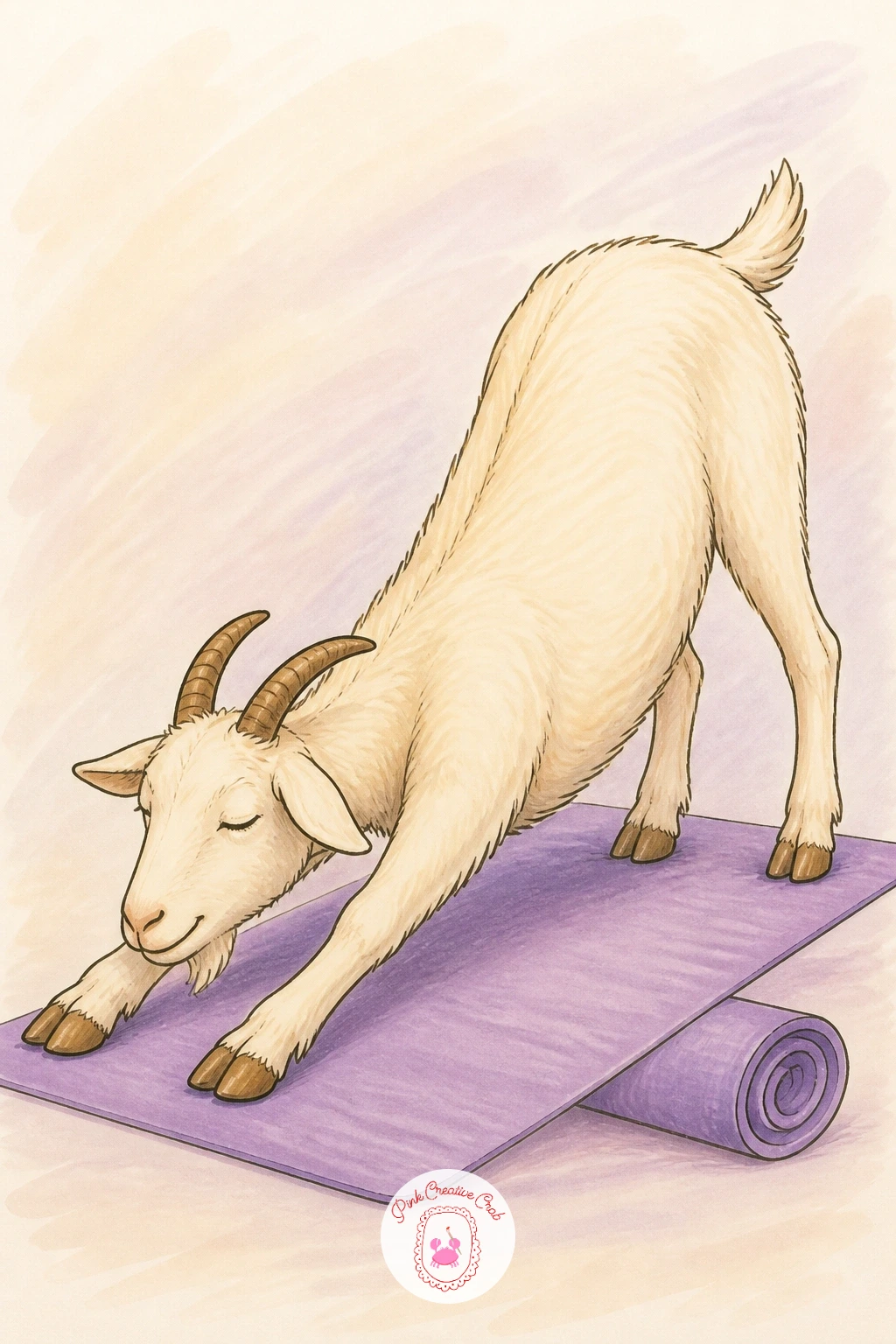
Palette: Lavender,Cream,Warm Grey
This one is pure farmyard chaos in the best way. Draw the wheelbarrow first as a simple trapezoid body with one wheel and two handles, then perch the goat inside it with legs bunched up and ears alert, as if it just hopped in or got caught trying to.
Work from the wheelbarrow outward: get its proportions right before adding the goat, since the goat needs to look like it genuinely fits inside the bucket rather than sitting on top of it.
Rust-colored metal and worn wood tones suit the wheelbarrow, while the goat stays pale so it reads clearly against the darker container. Leave the wheel a simple circle with a few spokes rather than full tread detail.
If you want more movement, tilt the wheelbarrow slightly as if it’s rolling, which instantly makes the scene feel like it’s caught in motion rather than posed.
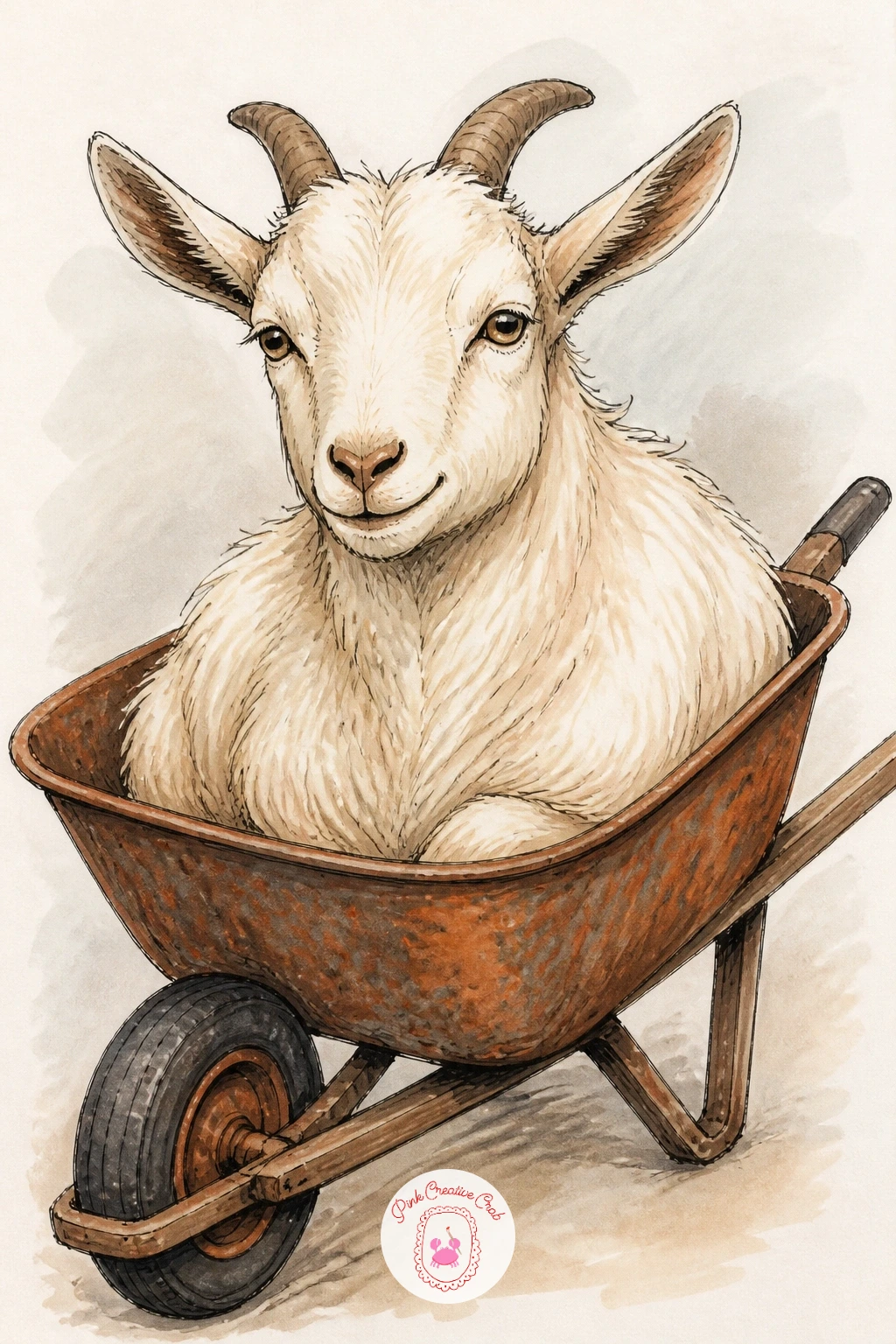
Palette: Rust Brown,Cream,Olive
Nothing says farmyard trouble like a goat drawing caught red-handed with someone’s socks. Sketch a simple clothesline stretched across the top of the page first, then hang two or three items loosely: a shirt, a sock, a small towel.
Draw the goat standing on its back legs, front hooves reaching up, with one item already clamped in its mouth and the fabric pulling taut where it’s tugging. That tension in the line is what makes the theft read clearly.
Watch the light source here: if the sun comes from one side, shade the underside of the hanging laundry and the goat’s belly slightly darker, which grounds both the fabric and the animal in the same scene.
Keep the laundry colors soft and faded, like a dusty yellow sock or pale blue shirt, so the goat’s expression stays the star of the drawing.
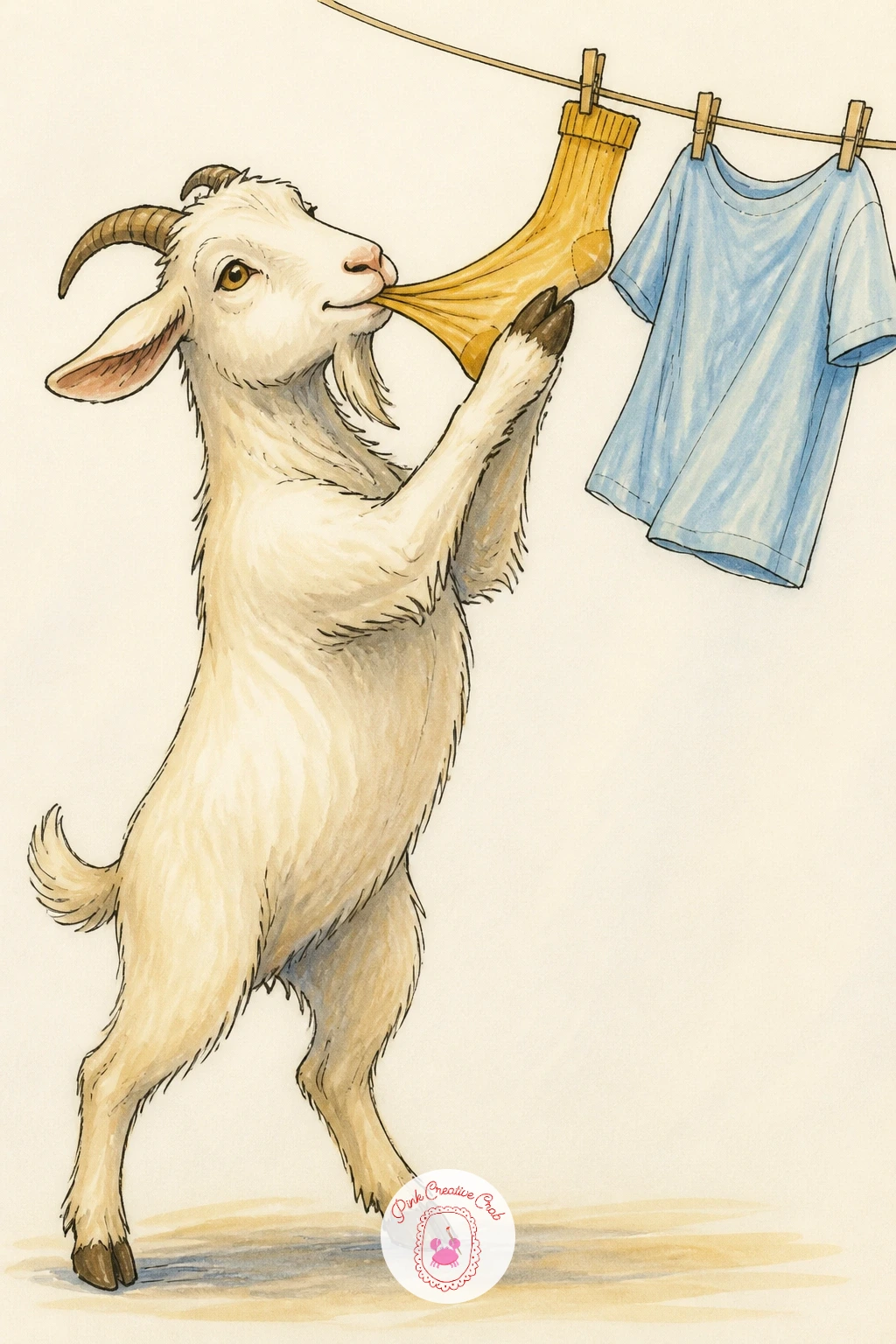
Palette: Dusty Yellow,Pale Blue,Cream
Give this goat drawing some quiet drama by putting it up on a rocky outcrop looking out over a valley. Block the rock shape in first with angular, chunky lines, since goat rocks read better jagged than smooth.
Place the goat standing confidently near the rock’s edge, head turned slightly toward the view rather than straight at the viewer, which makes the scene feel like a real moment rather than a portrait.
For the background, keep it loose: a few overlapping hill shapes in lighter and darker greens or blues suggest distance without needing real detail. The rule of thumb is darker and warmer up close, lighter and cooler further back.
If you’d rather skip a full landscape, a plain gradient sky behind the rock still sells the sense of a view, and you can always build a fuller scene later using ideas from this acrylic landscape painting roundup for inspiration on layering distance.
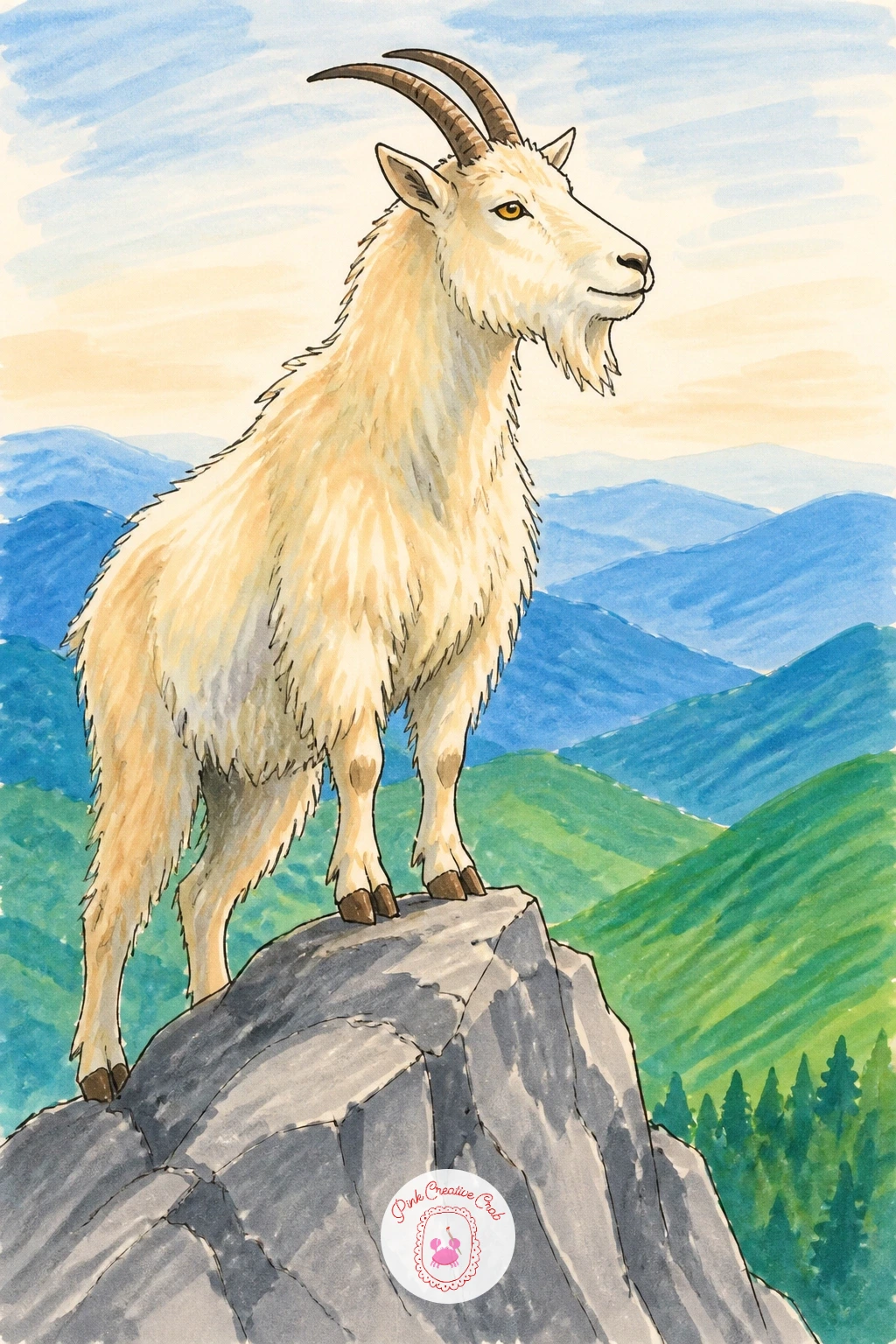
Palette: Slate Blue,Moss Green,Cream
A simple bell around the neck turns an ordinary goat drawing into something that feels like a real farmyard character. Draw the goat’s head and neck first, then add a thick collar strap with the bell hanging centered below it.
Shape the bell as a rounded trapezoid with a small loop on top and a short line for the clapper inside, and keep the metal shading simple: one highlight streak and one shadow streak is enough to make it look dimensional.
If the bell looks flat once colored, go back in with a slightly darker brown or grey along its lower curve, since that one shadow line does most of the work of making it look like metal rather than a flat shape.
No bronze marker on hand? A warm mustard yellow works just as well for that aged-metal look.
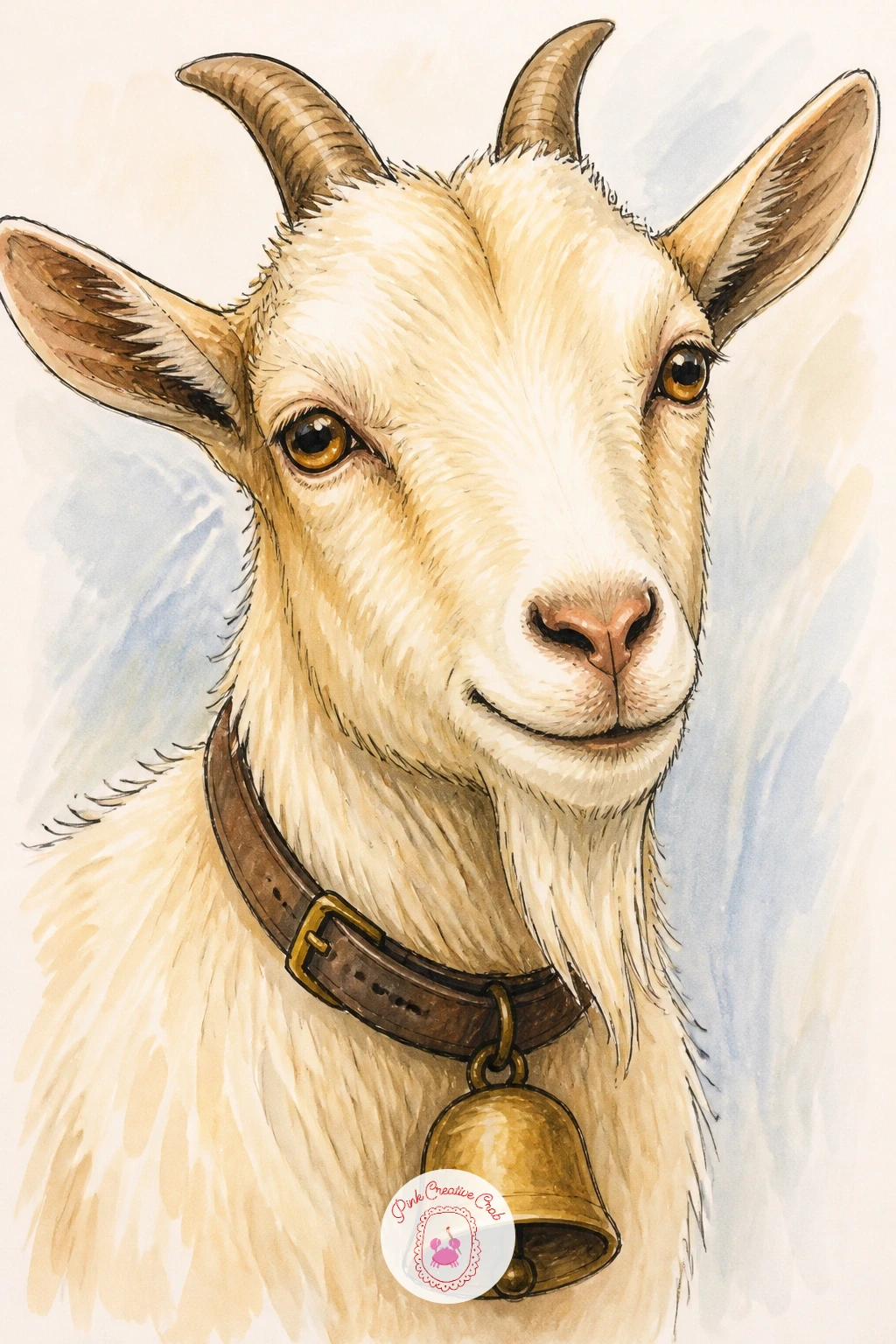
Palette: Bronze,Mustard,Cream
Keep the cozy theme going with a goat drawing dressed for bedtime. Sketch the goat sitting or lying down first, then build a simple pajama set over the body: a button-up top and loose pants with a small pattern like dots or stars.
Ink the pajama outline a touch looser than the goat’s own fur line, since fabric should read as soft and draped rather than tight to the body. A folded ear and half-closed eyes add to the sleepy mood.
Patterns can get fiddly fast, so for a quicker version, keep the pajamas a single solid color. With more time, add small dot or star patterns using your fineliner once the marker color is fully dry underneath.
Soft blues and pinks suit a bedtime scene, and a small pillow drawn beside the goat finishes the moment nicely.
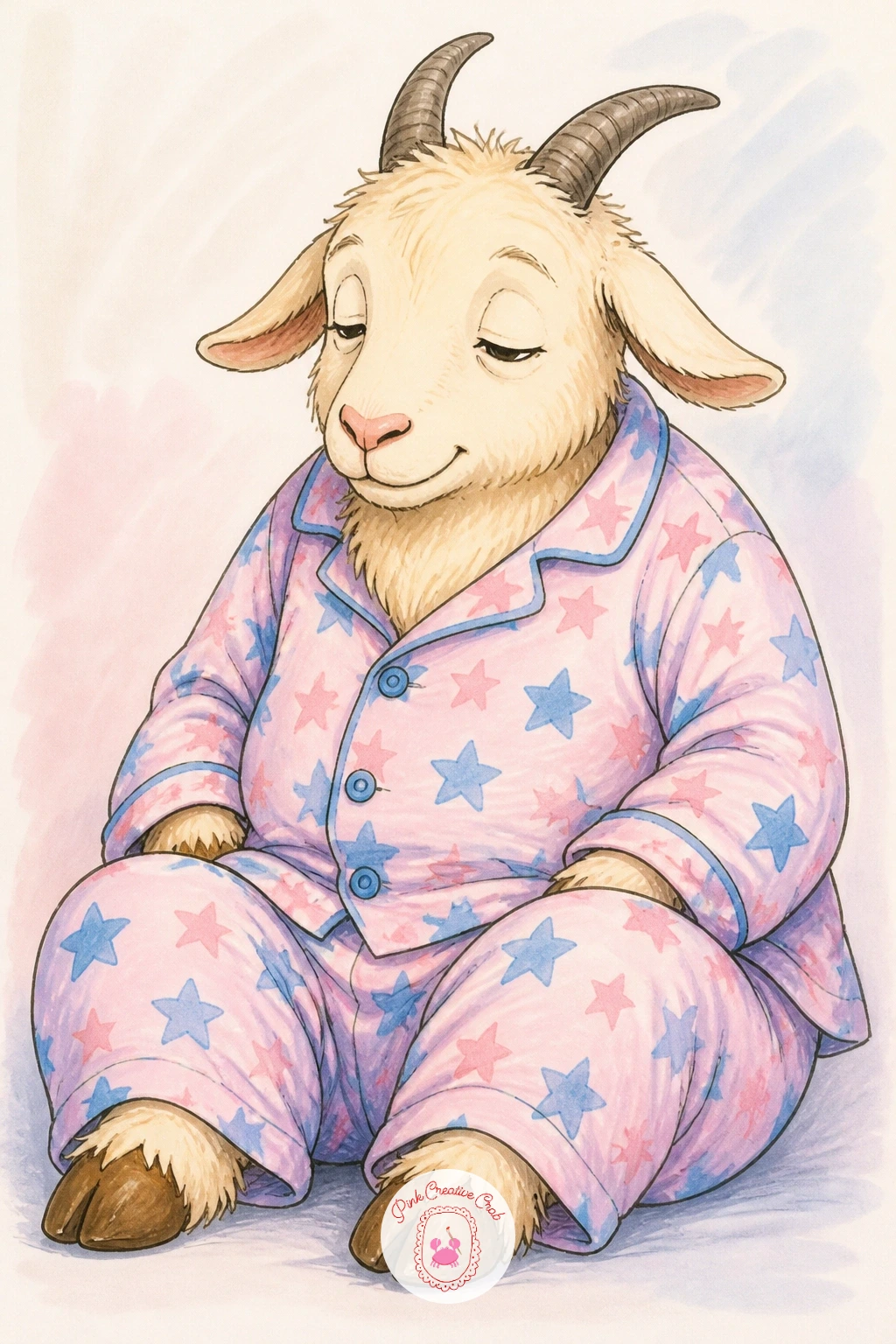
Palette: Soft Pink,Pale Blue,Cream
Scale this goat drawing up into a small scene by giving the goat its own cafe counter with a couple of visitors stopping by. Block the counter in first as a simple rectangle with a small awning, then place the goat behind it wearing a tiny apron.
Add one or two simple visitor shapes in front of the counter, like a round-bodied customer holding a cup, keeping their details minimal so the goat stays the focus of the piece.
Working a scene like this in ten minutes means just the goat, counter and one cup. Given forty minutes, add a chalkboard sign, a hanging plant, and a second visitor to round the cafe out properly.
Warm wood tones for the counter against a cream goat keeps the whole scene cohesive, and you’ll find more small-scene layout ideas in this village scene drawing guide if you want to build busier settings later.
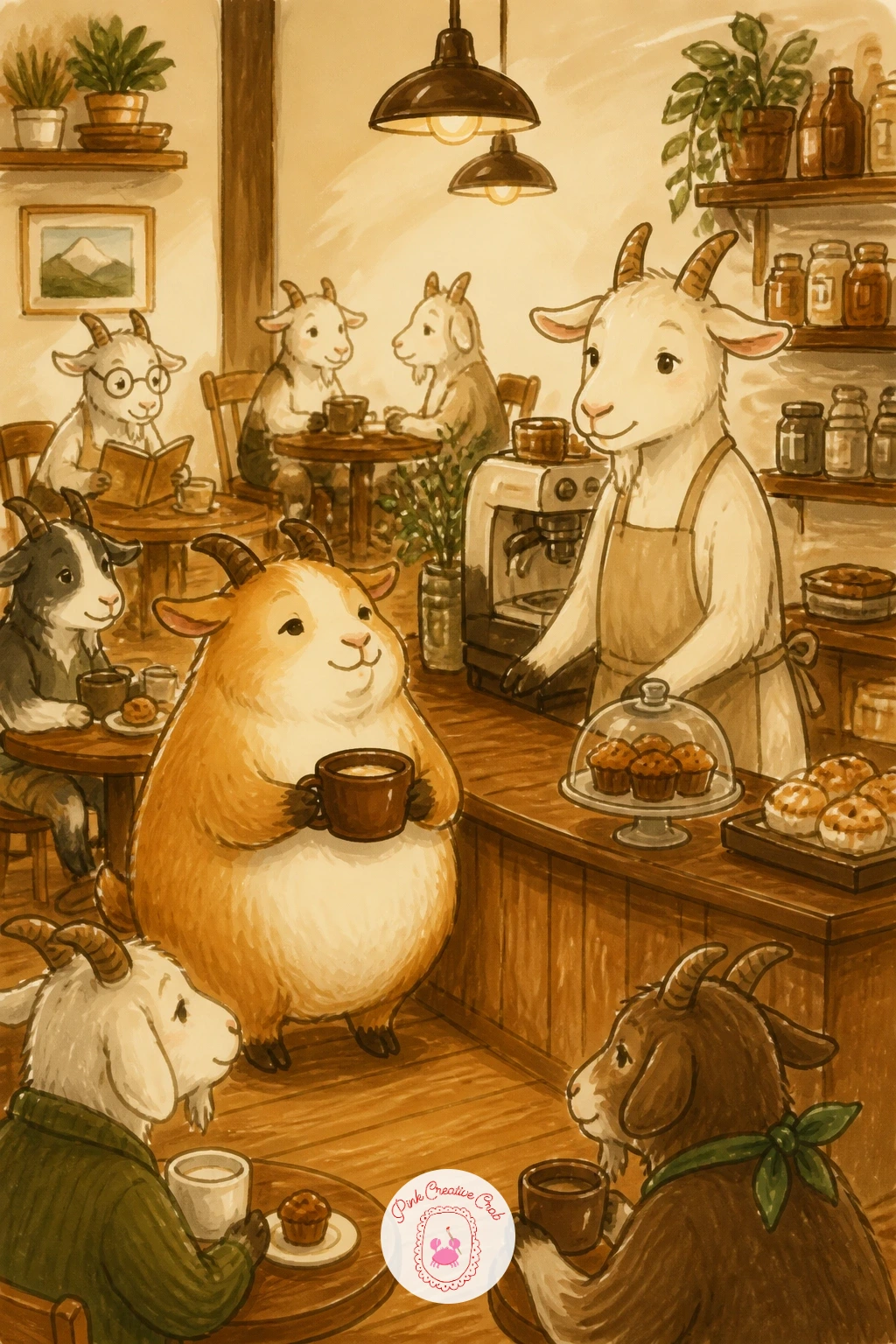
Palette: Warm Wood Brown,Cream,Terracotta
Pair this goat drawing with an unlikely friend by sitting a cat right beside it, maybe curled against the goat’s front leg or perched on its back. Draw the goat first in a relaxed standing or sitting pose, then fit the cat into the negative space beside it rather than drawing them separately and squeezing them together.
Keep the cat noticeably smaller than the goat to sell the size difference, and give it a simple curled tail wrapping around one paw for a cozy feel.
If the two animals end up looking like they’re just placed next to each other, add one point of contact, like the cat leaning its head against the goat’s leg, which instantly makes the friendship read as genuine.
A striped tabby cat in warm orange and cream contrasts nicely against a grey or white goat, keeping both animals easy to tell apart at a glance.
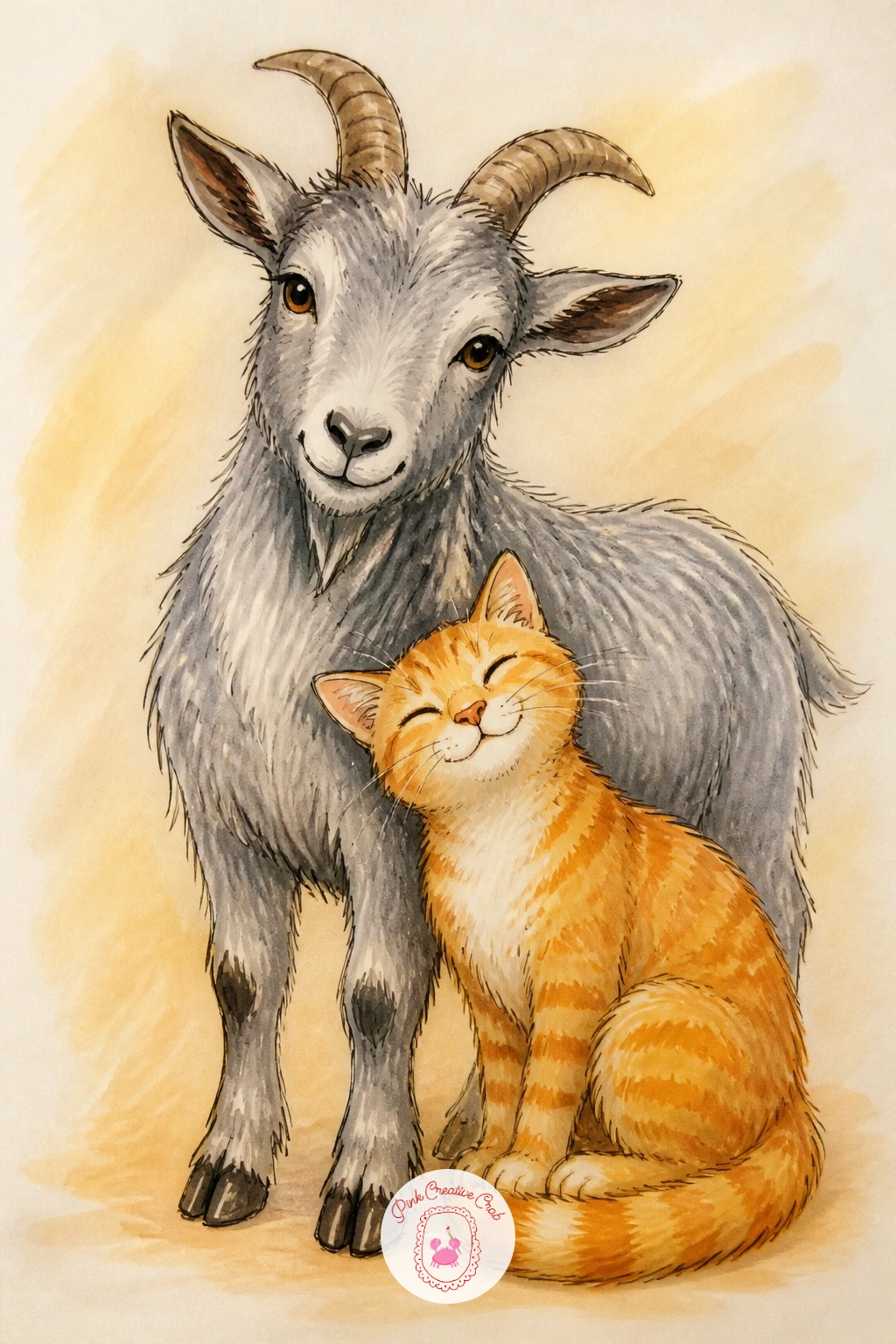
Palette: Warm Orange,Cream,Soft Grey
Look at real photos of goats and cats sharing a barn if you want the size difference and body language to feel natural rather than guessed.
Let this goat drawing poke fun at the phrase goats eat everything by giving it an open book halfway devoured. Draw the book first as a simple open rectangle with a few pencil-line pages, then tear one corner with a jagged edge to show where the goat has already had a bite.
Position the goat’s head low with the book corner between its teeth, and angle the ears forward with mild interest rather than aggression, which keeps the expression funny rather than destructive.
Dry brush your marker lightly over the torn page edges to leave a slightly rough, uneven texture, since that small bit of roughness sells the tearing better than a clean line would.
A plain cream or white book cover keeps the contrast strong against most goat colors, so save any bold cover color for a second version once this one works.
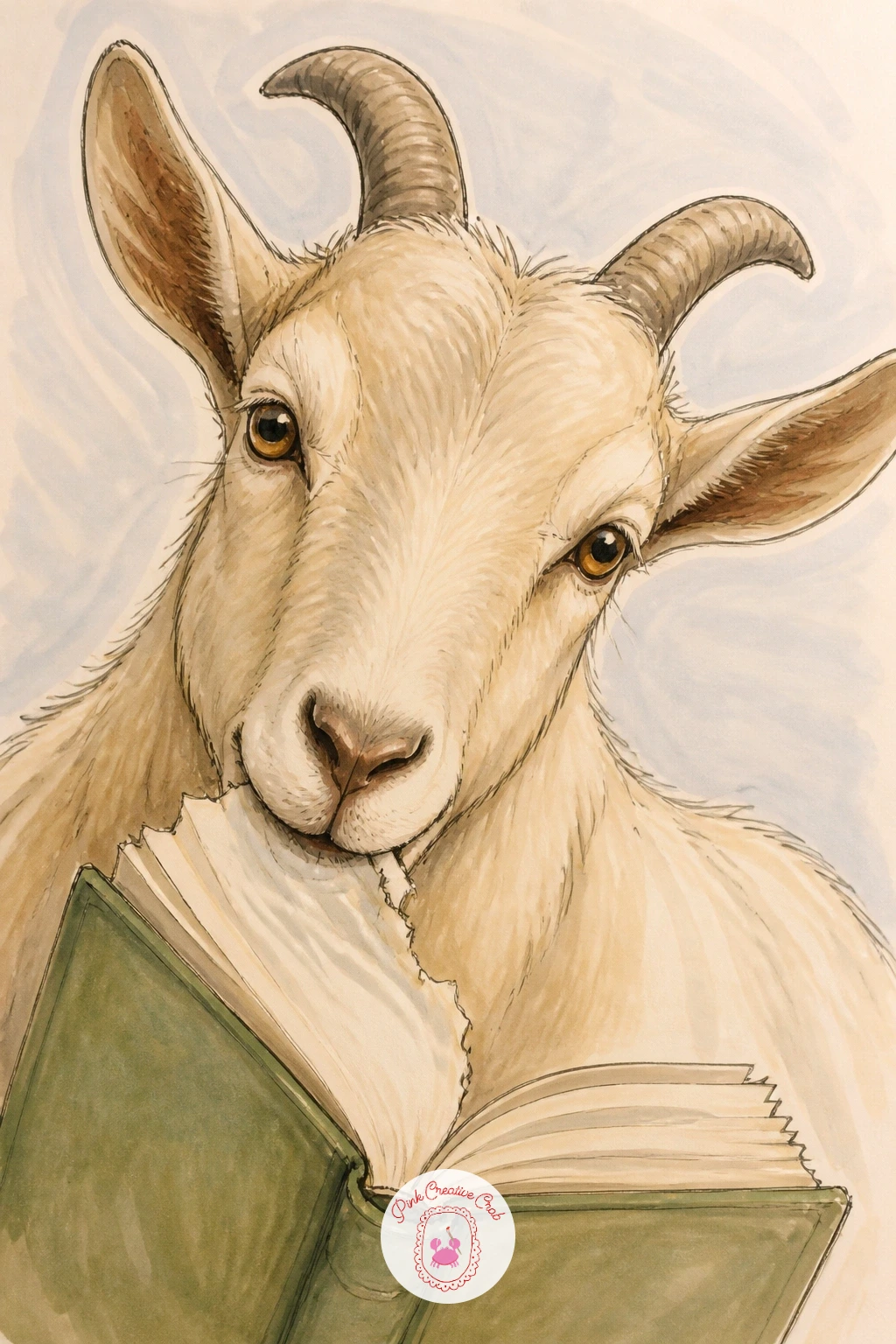
Palette: Cream,Warm Grey,Soft Brown
This goat drawing leans into a sweeter mood by setting the animal among a field of simple daisies. Draw the goat first, standing or grazing with its head low, then scatter daisies around its legs and across the lower half of the page using simple five-petal shapes in varying sizes.
Work background to foreground: lay in the daisy field loosely behind and around the goat before refining the goat’s own outline, so the flowers feel like they belong in the same space rather than added on top.
Keep the daisies simple with few details, since a field of overly detailed flowers competes with the goat for attention. White petals with a small yellow center repeated at different scales is all you need.
Try the same daisy shapes in a watercolor field flower project next if you want to practice the petals in a softer medium.
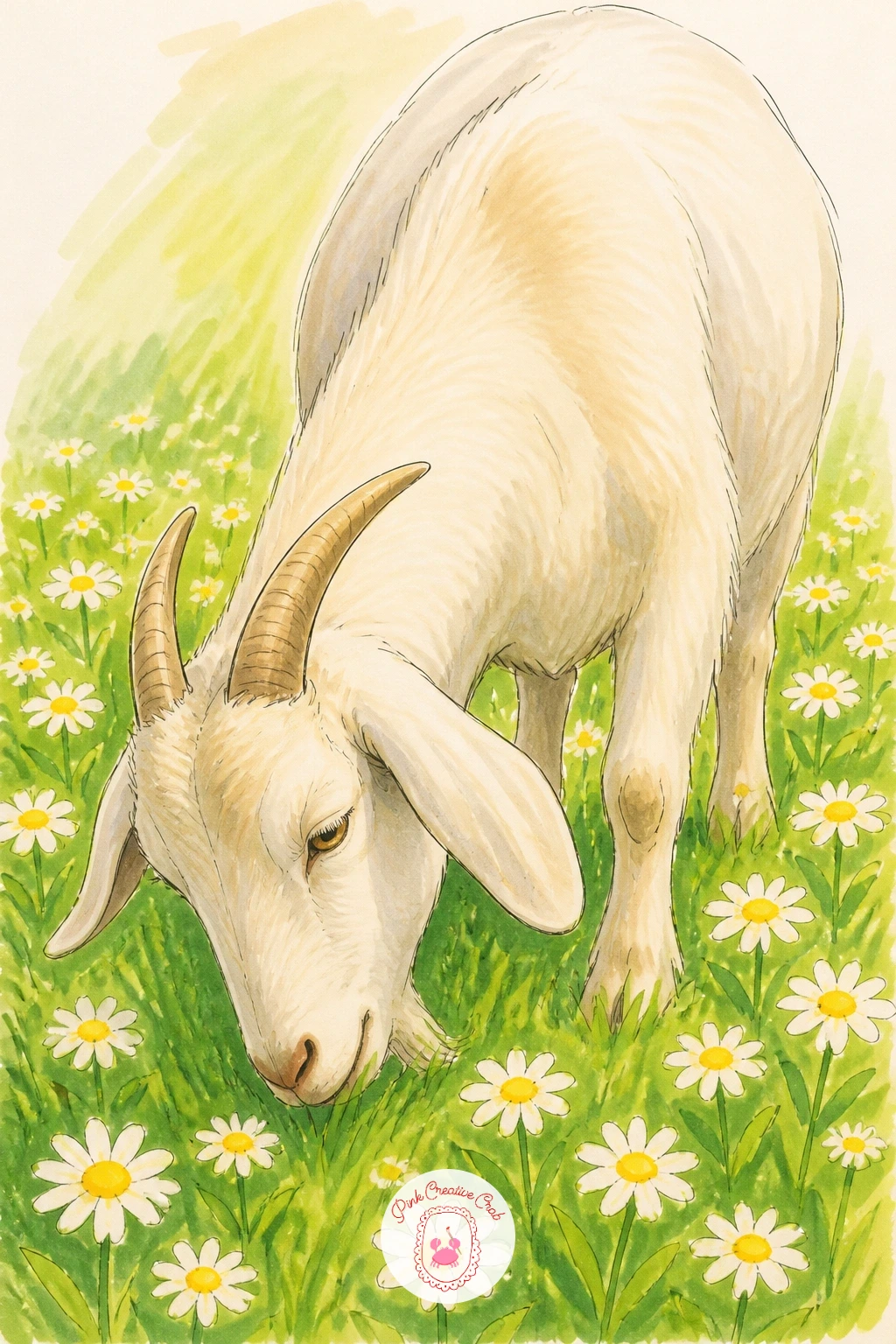
Palette: White,Sunny Yellow,Meadow Green
This one writes its own joke: a goat standing right at the door of a shop selling its own cheese. Block the shopfront in first as a simple square building with a window display of a few round cheese wheels, then place the goat standing just outside the doorway, one hoof slightly raised as if about to walk in.
Keep the shop sign small and simple, a rounded rectangle above the door, since the goat and the cheese wheels carry the joke without needing extra text detail.
Shade the cheese wheels with a soft yellow base and a slightly deeper yellow along the lower curve to give them roundness, which is the same trick that works for any rounded object in marker.
If a full shopfront feels like too much for one sitting, draw just the doorway and window rather than the whole building, and the scene still reads clearly.
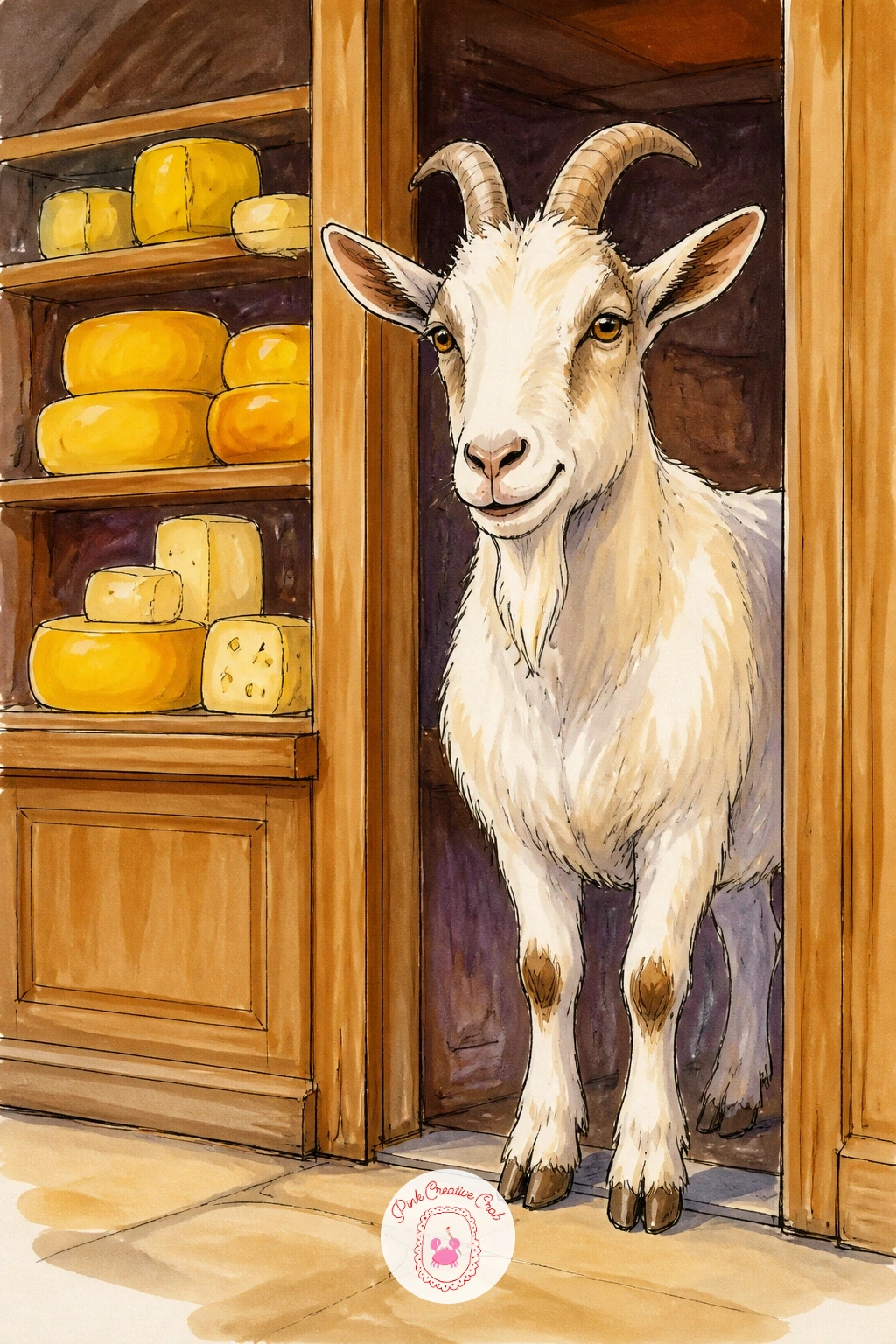
Palette: Butter Yellow,Warm Wood Brown,Cream
Give this goat drawing a wilder edge by placing it on a steep rocky cliff face rather than a gentle farmyard setting. Draw the cliff first using sharp, angular rock shapes that narrow as they rise, then set the goat on a small ledge partway up, legs planted firmly and body angled slightly forward.
From a low eye level looking up at the goat, the cliff feels taller and the pose more dramatic, so sketch your horizon line near the bottom of the page rather than the middle.
Shade the rock in cool greys and browns with one consistent light source, usually from above, so the goat’s shadow falls clearly beneath its hooves and anchors it to the ledge.
If the full cliff feels like a lot, crop in tighter on just the ledge and the goat’s body, letting the rock fade off the edges of the page.
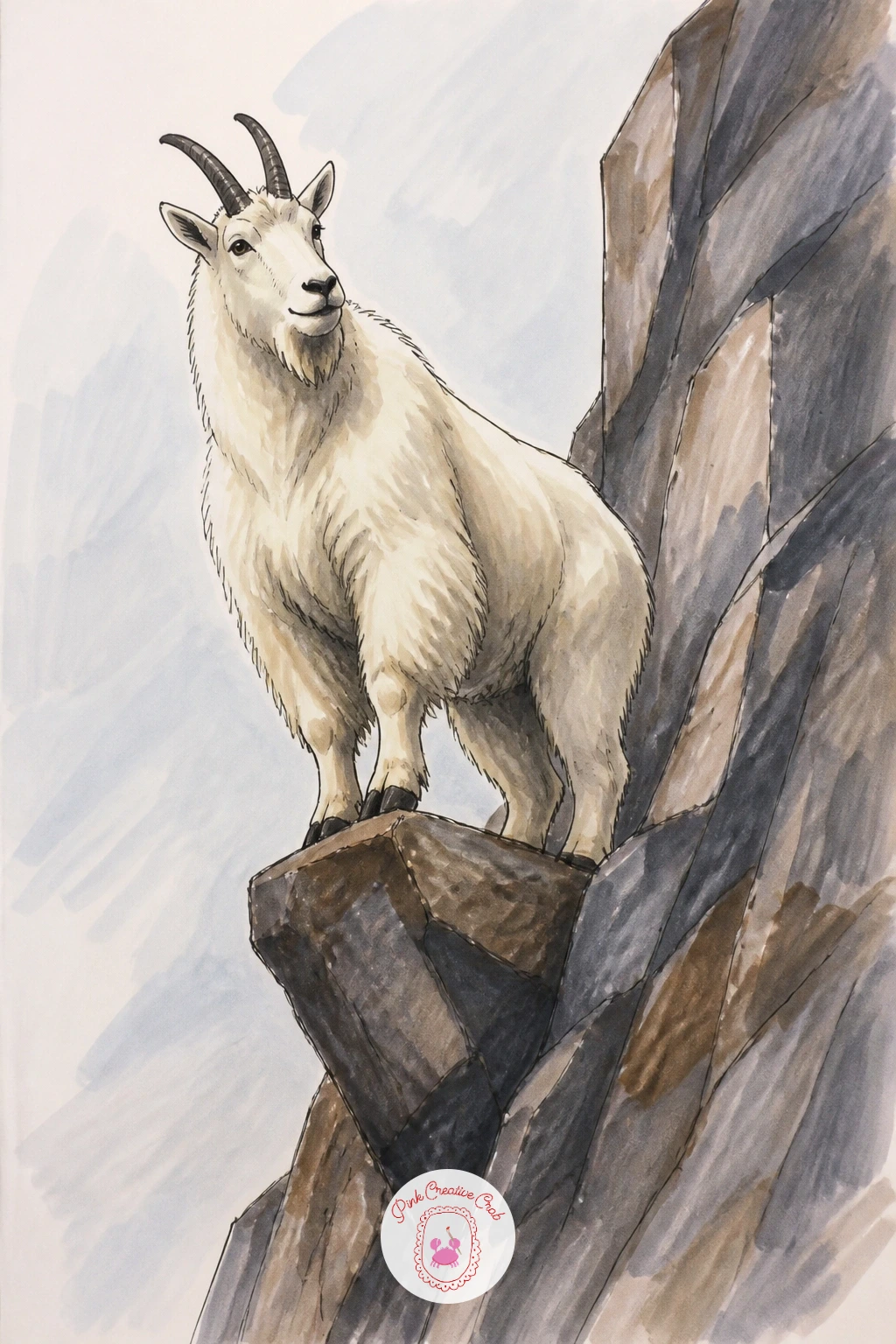
Palette: Cool Grey,Warm Brown,Cream
Rainy days make for a fun costume moment in this goat drawing. Draw the goat standing first, then build a simple raincoat over the body with a hood that sits slightly crooked on the head, since a perfectly fitted hood looks less playful than one that’s a bit too big.
Add a few rain streaks in the background using straight diagonal fineliner lines before coloring, keeping them light and evenly spaced so they don’t overwhelm the goat.
Bright yellow is the classic raincoat color and reads clearly against almost any goat coat color, but a soft teal works just as well if you want something a little less expected.
Small puddle reflections under the hooves, just a flattened oval of a slightly darker grey, finish the scene without much extra work.
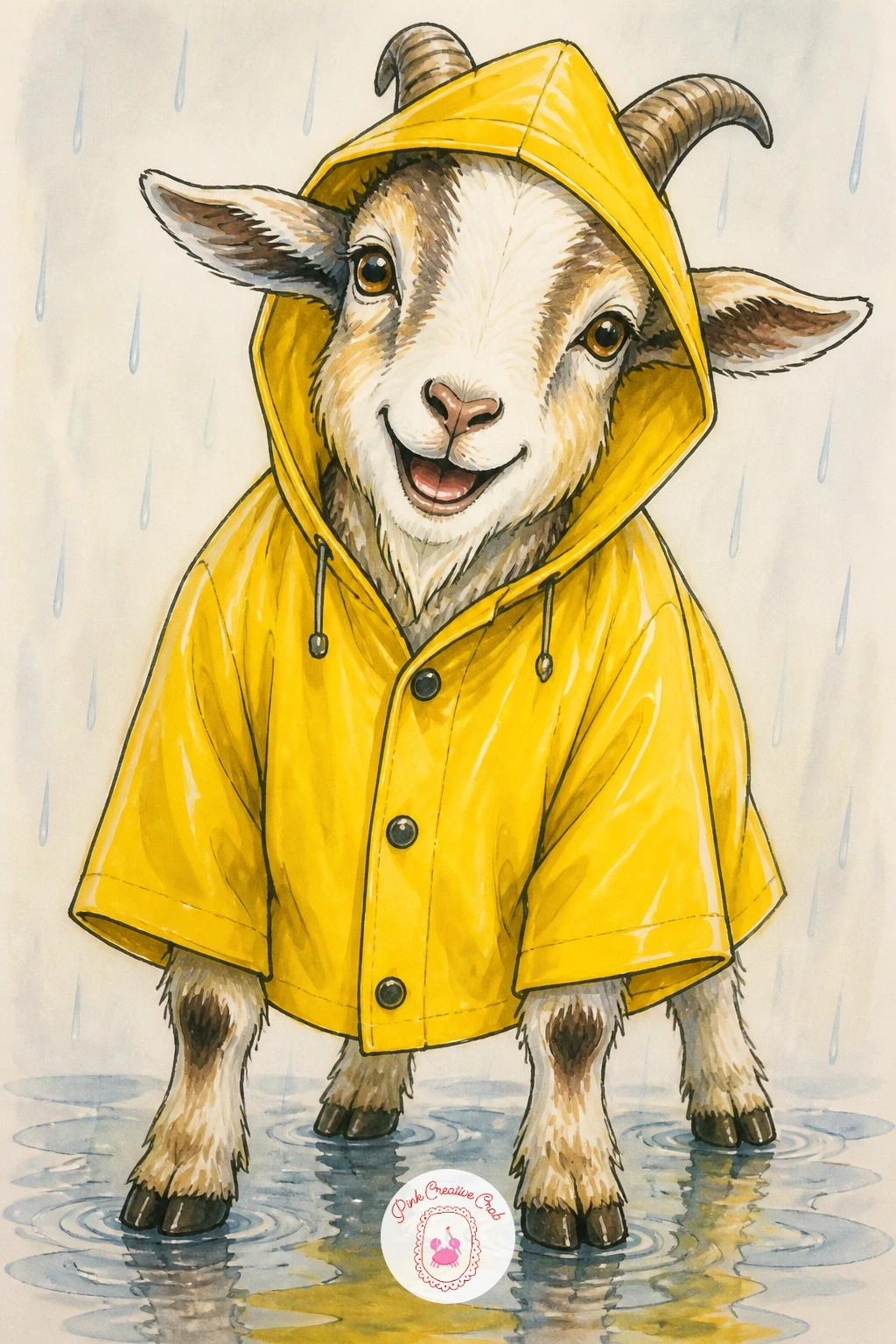
Palette: Bright Yellow,Teal,Cream
Move from a single goat drawing to a small family group with one adult and one or two kids standing close together. Draw the adult goat first since its size sets the scale for everyone else, then add the kids at roughly half the adult’s height, overlapping slightly so the group feels like one cluster rather than separate figures.
Vary the poses a little: maybe the adult stands calmly while one kid looks up and the other nibbles at something nearby, which keeps the family feeling lively rather than lined up like a photo.
Compare each kid’s head size to the adult’s head before inking, since kid goats have proportionally larger eyes and shorter legs relative to their body than adult goats do, and getting that right is what makes them read as young.
Keep the coloring consistent across the family, using the same base fur tone with just slightly different markings, so they clearly belong together.
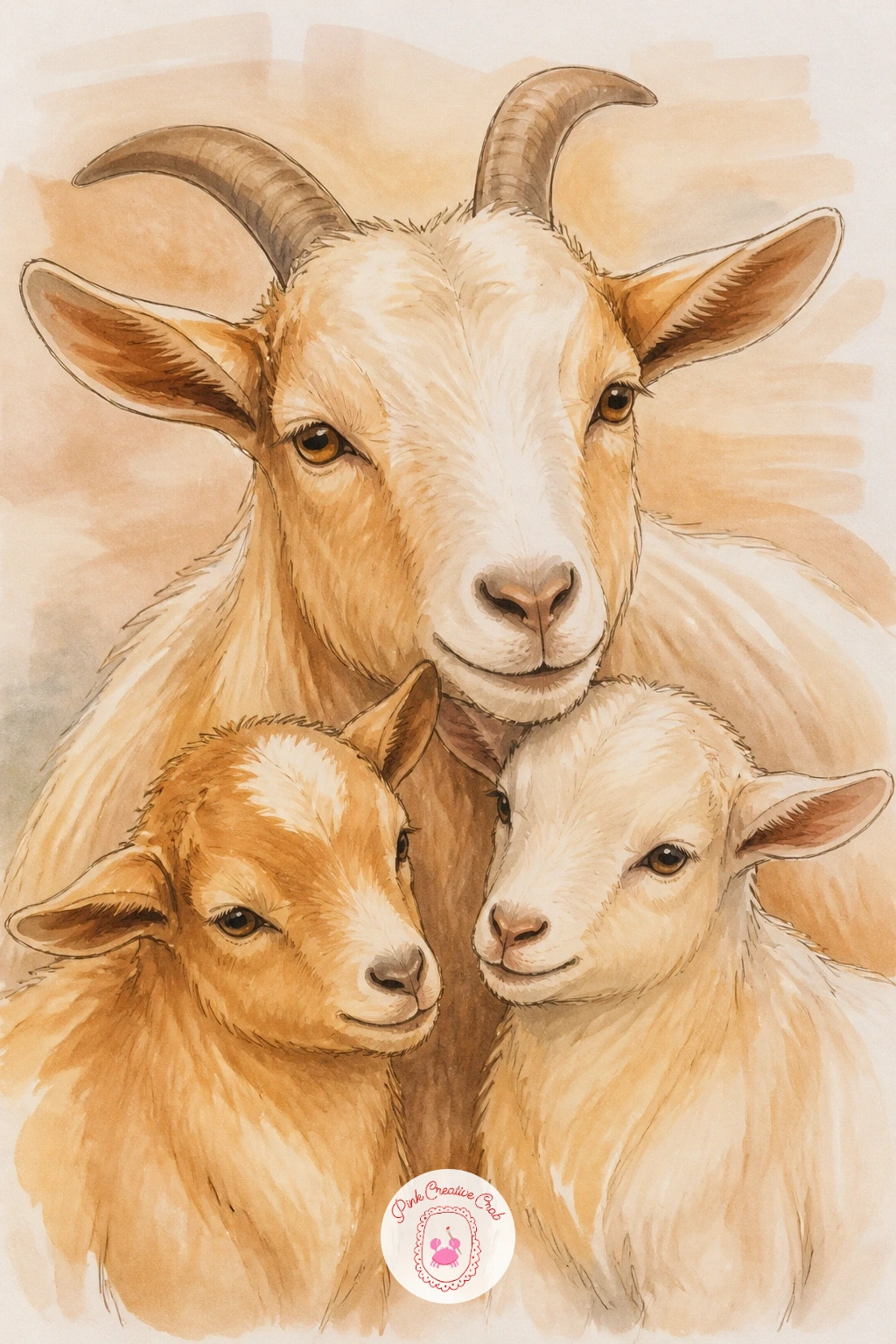
Palette: Cream,Caramel,Warm Grey
This goat drawing captures a classic playground gag by balancing a goat on one end of a seesaw with nothing on the other side. Draw the seesaw first as a simple angled plank over a triangular base, then place the goat at the lower end, legs braced as if it just landed there.
Angle the plank clearly up on the empty side so the imbalance reads instantly, since a level seesaw loses the joke completely.
For a quick ten-minute version, keep the seesaw plain wood and leave the background empty. With more time, add a small patch of grass and a fence line behind it to suggest a farmyard play area.
Warm wood tones for the seesaw against the goat’s lighter coat keeps the whole scene easy to read at a glance.
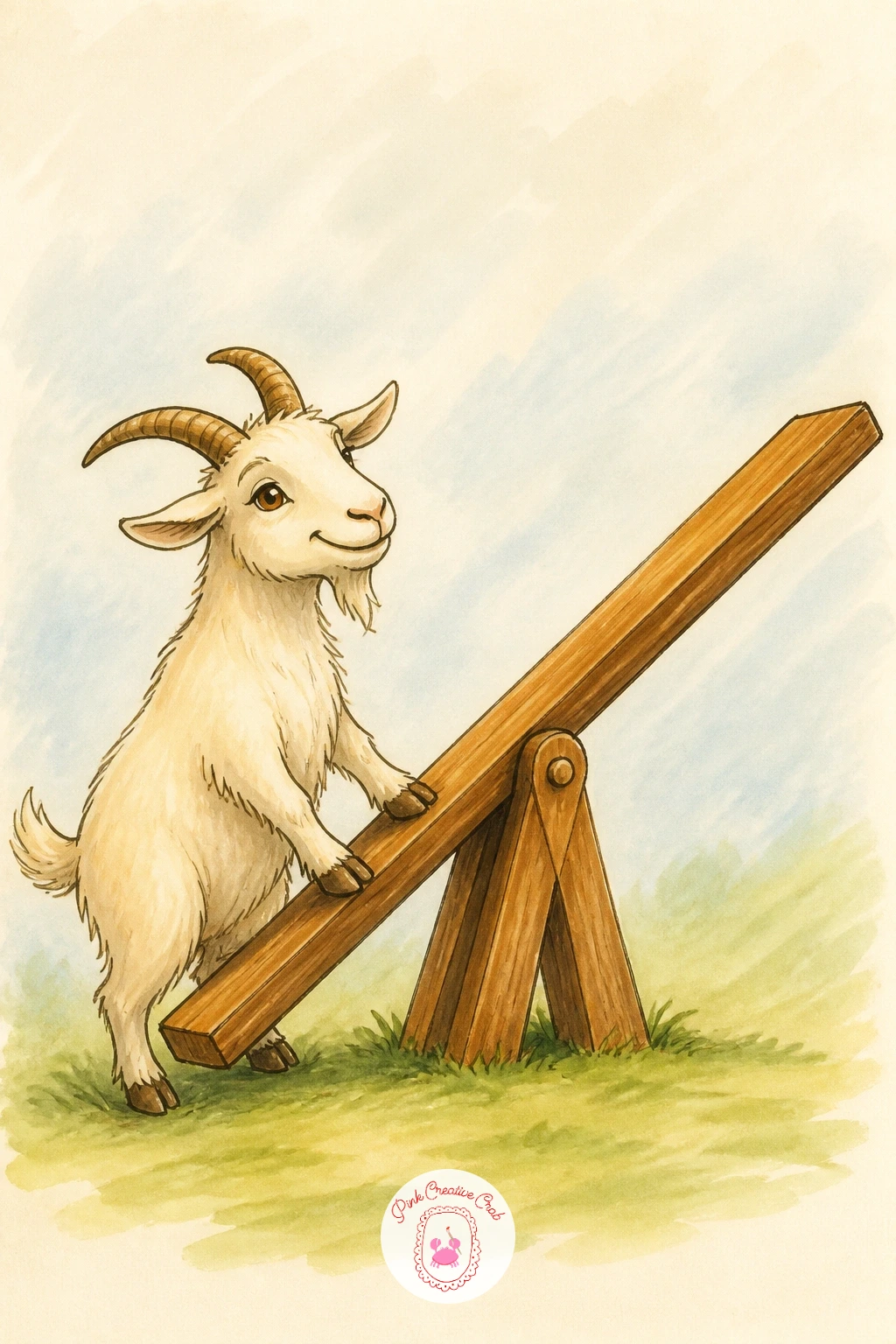
Palette: Warm Wood Brown,Cream,Meadow Green
Set this goat drawing down at a checkered picnic blanket, mid-snack on something it probably shouldn’t be eating. Draw the blanket first as a simple grid pattern laid flat on the ground, then place the goat sitting or standing at one corner with a basket tipped slightly on its side nearby.
Keep the checkered pattern loose rather than perfectly ruled, since a slightly uneven grid actually reads as more natural fabric than a rigid one.
If the blanket pattern starts looking busy once colored, alternate just two colors in the checks, like red and cream, rather than adding a third, which keeps the goat as the clear focal point.
A few picnic items scattered loosely, like an apple or a piece of bread half-eaten, finish the scene without much extra drawing time.
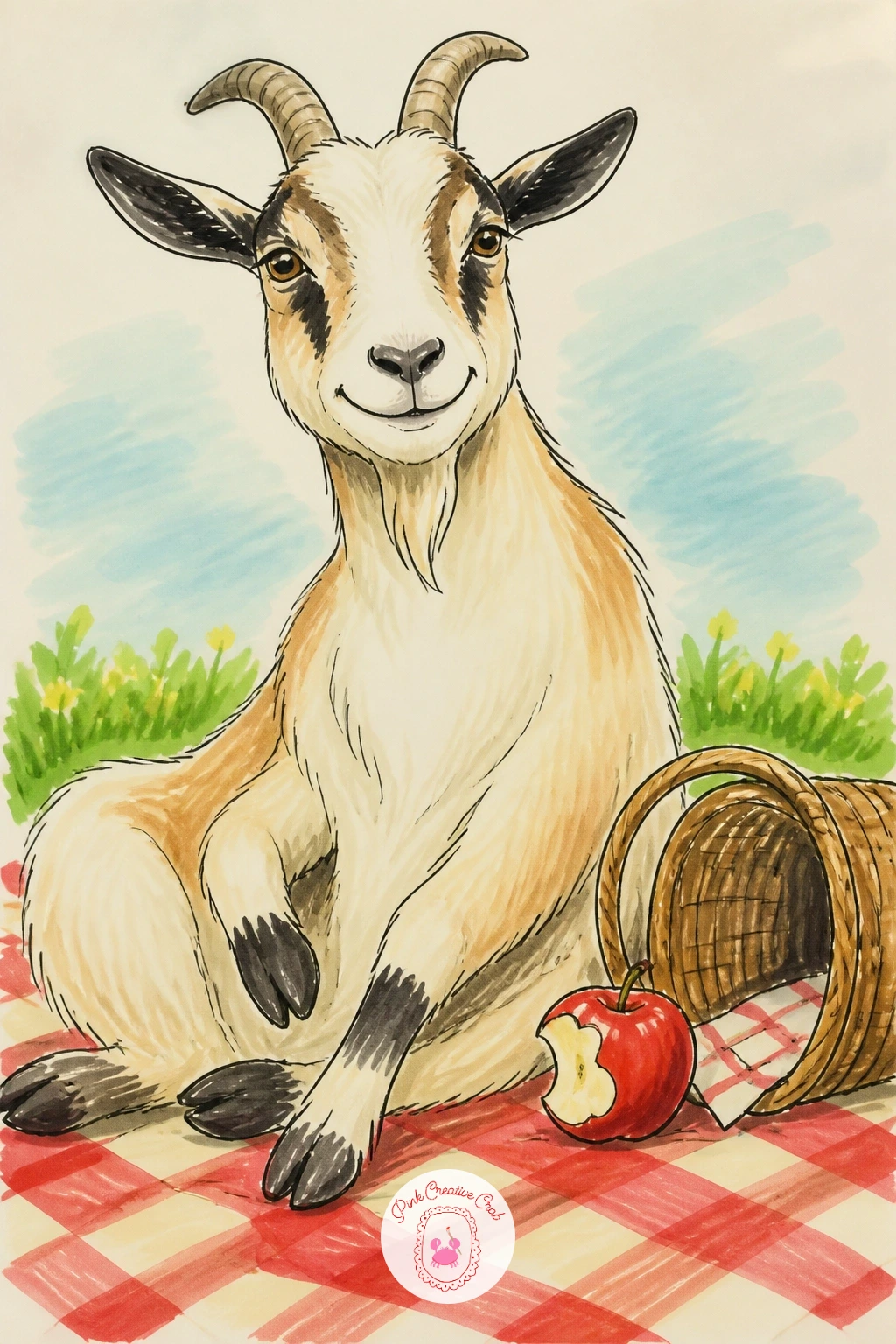
Palette: Brick Red,Cream,Meadow Green
A wide straw hat gives this goat drawing an easy, country charm. Draw the goat’s head first, then fit the hat brim around it at a slight tilt, since a hat sitting perfectly straight tends to look stiff compared to one worn a little lopsided.
Use short, overlapping curved fineliner strokes across the brim before coloring to suggest woven straw texture, then layer a warm tan marker over the top once the linework is dry.
If the straw texture disappears under the marker color, go back in with your fineliner once the ink is fully dry and add a few more texture lines on top, since layering line over finished color is often easier than trying to preserve it underneath.
A simple ribbon band in a contrasting color, like dusty rose or navy, adds a nice finishing detail without much extra effort.
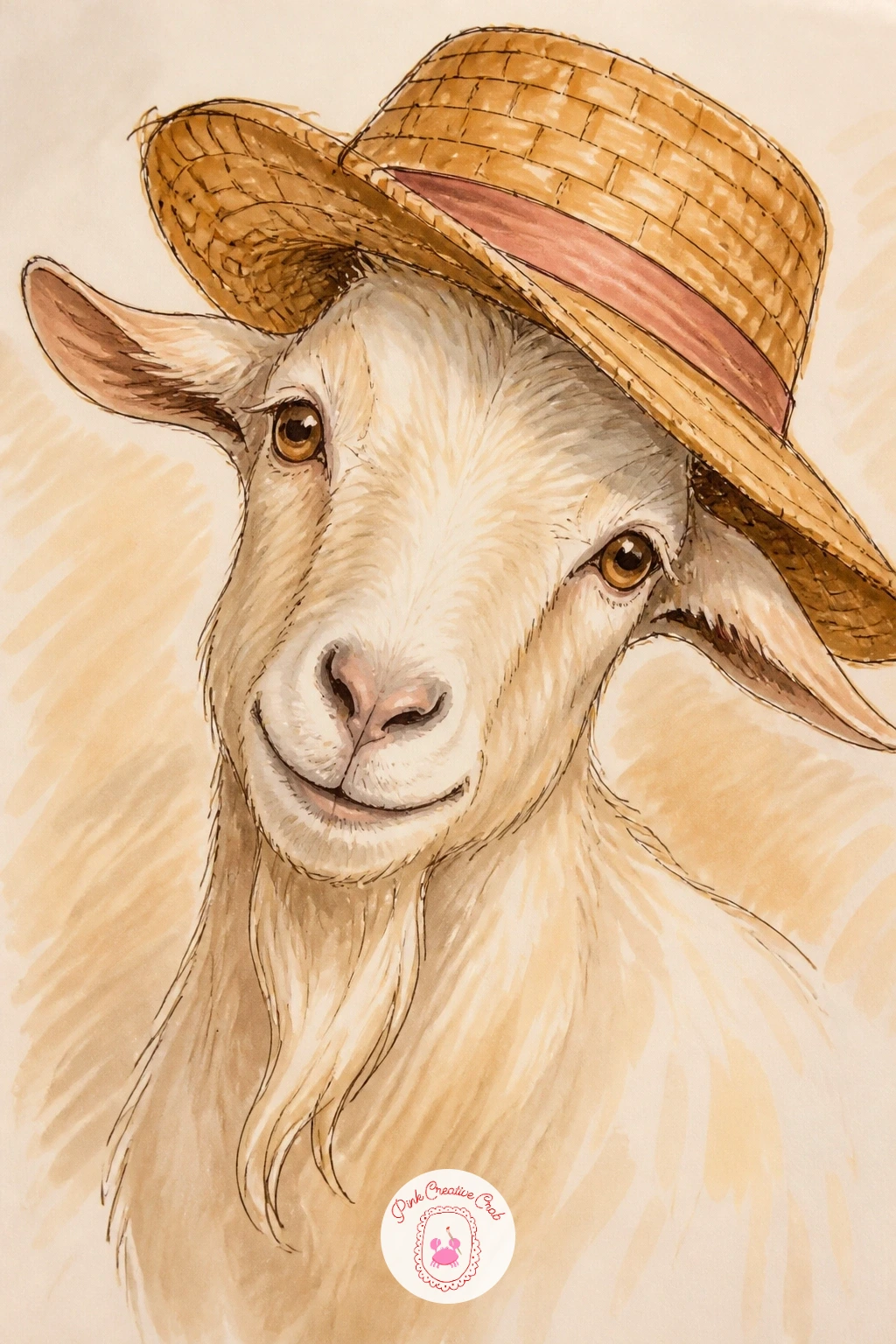
Palette: Warm Tan,Dusty Rose,Cream
Add a gentle human touch to this goat drawing by showing a girl brushing the goat’s coat. Draw the goat standing calmly first, since its pose needs to look relaxed and still for the scene to make sense, then add the girl kneeling or standing beside it with a small brush held against the goat’s side.
Keep the girl’s figure simple, just enough shape and a ponytail or braid to read clearly as a person, since she’s a supporting character here and the goat stays the star.
Draw a few short directional lines in the fur where the brush touches, following the direction of the stroke, which does a lot of work to suggest the brushing motion without needing much extra detail.
If figures aren’t your strength yet, this girl pencil drawing guide has simple beginner figure poses worth practicing before you add her in.
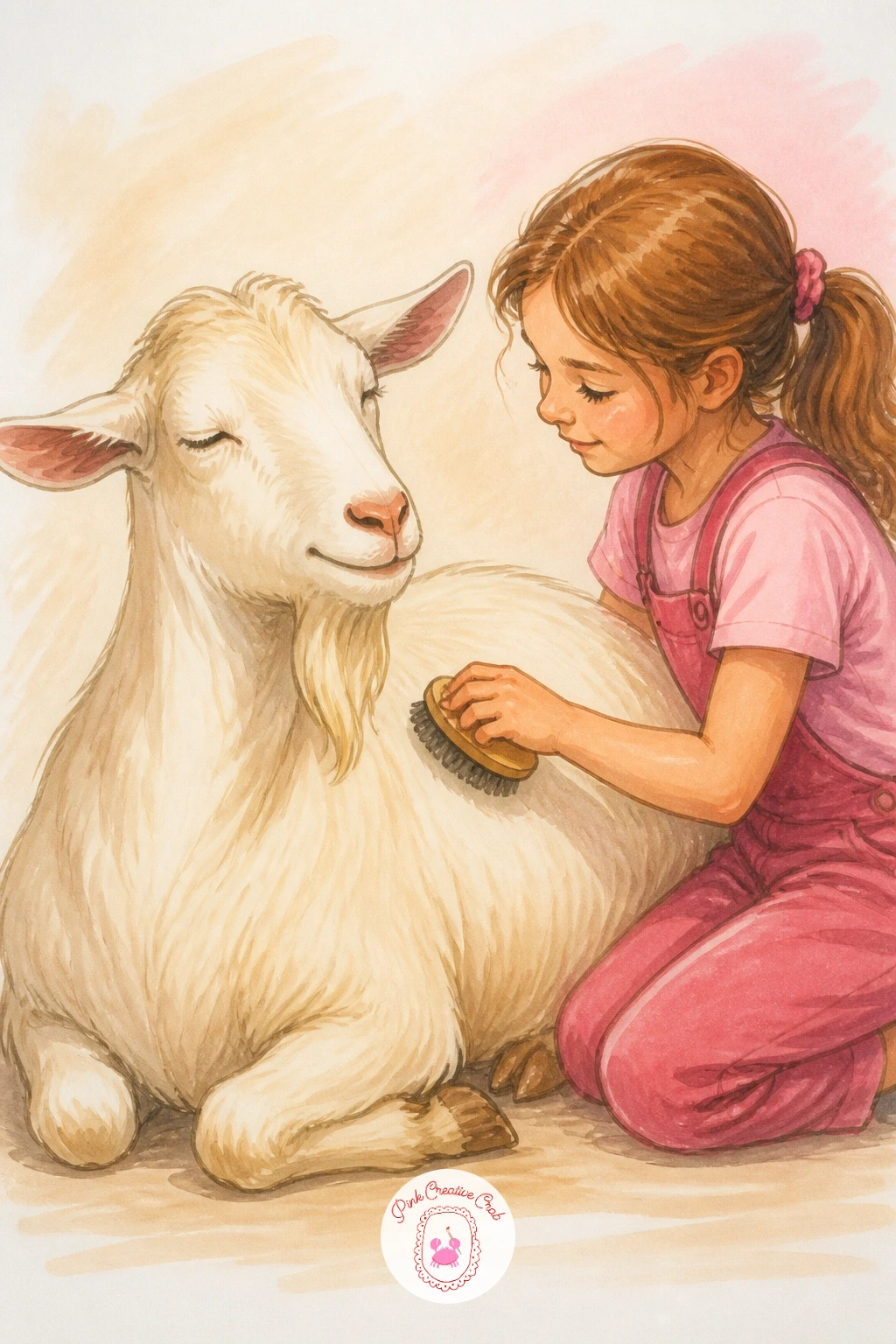
Palette: Cream,Soft Pink,Warm Brown
Swap the straw hat theme around for a bit of mischief: this goat drawing has already got the sun hat in its mouth instead of on its head. Draw the goat’s head low and slightly tilted, with the hat’s brim bent and the crown dented from being chewed.
Add a torn or frayed edge along one side of the brim using jagged fineliner strokes, since that rough edge is what makes the damage read clearly rather than looking like the goat is just holding the hat gently.
Lifting a bit of color off the brim with a blending marker or clean nib, once the base color has dried, can soften one area to suggest where the straw has worn thin from chewing.
A pale yellow or cream hat keeps good contrast against most goat coats, and a simple flower or ribbon on the hat band adds a nice bit of irony to the destruction.
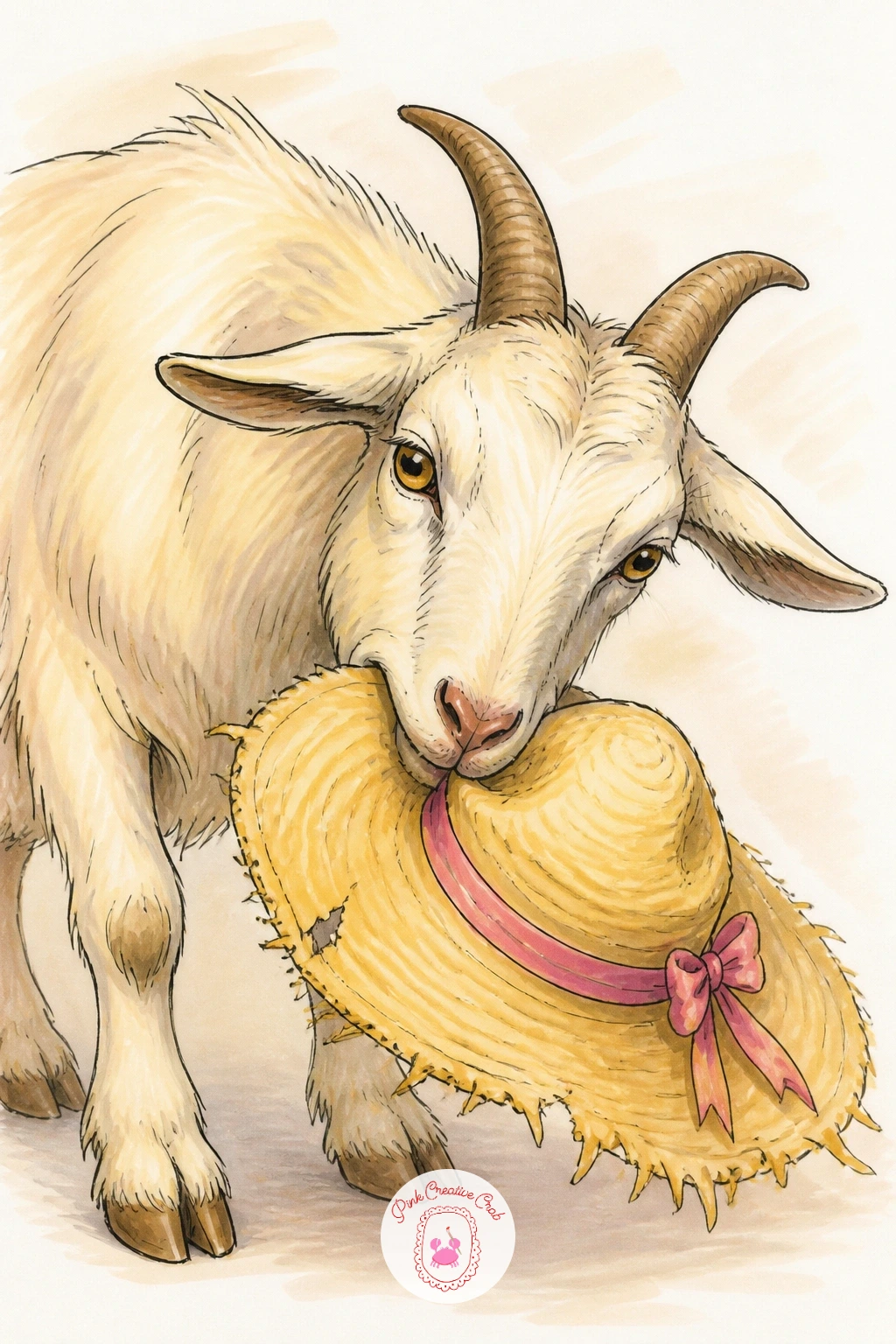
Palette: Pale Yellow,Cream,Soft Pink
Shift this goat drawing toward a quieter mood by silhouetting a couple of goats against a glowing evening sky. Block in the sky first with a blended gradient from deep orange near the horizon up through pink and soft purple higher up, since the sky does most of the emotional work in this piece.
Draw the goats as dark silhouettes standing on a simple hill line, keeping their shapes clean and recognizable rather than detailed, since any fur texture would get lost against the bright sky anyway.
Light source is everything here: keep every edge of the goats dark and let only the sky provide the color, which is what makes a silhouette scene read convincingly rather than looking like an unfinished drawing.
Once this version works, try varying it next time with a sunrise palette of cooler blues and soft yellows instead of warm orange, for a completely different mood from the same simple composition.
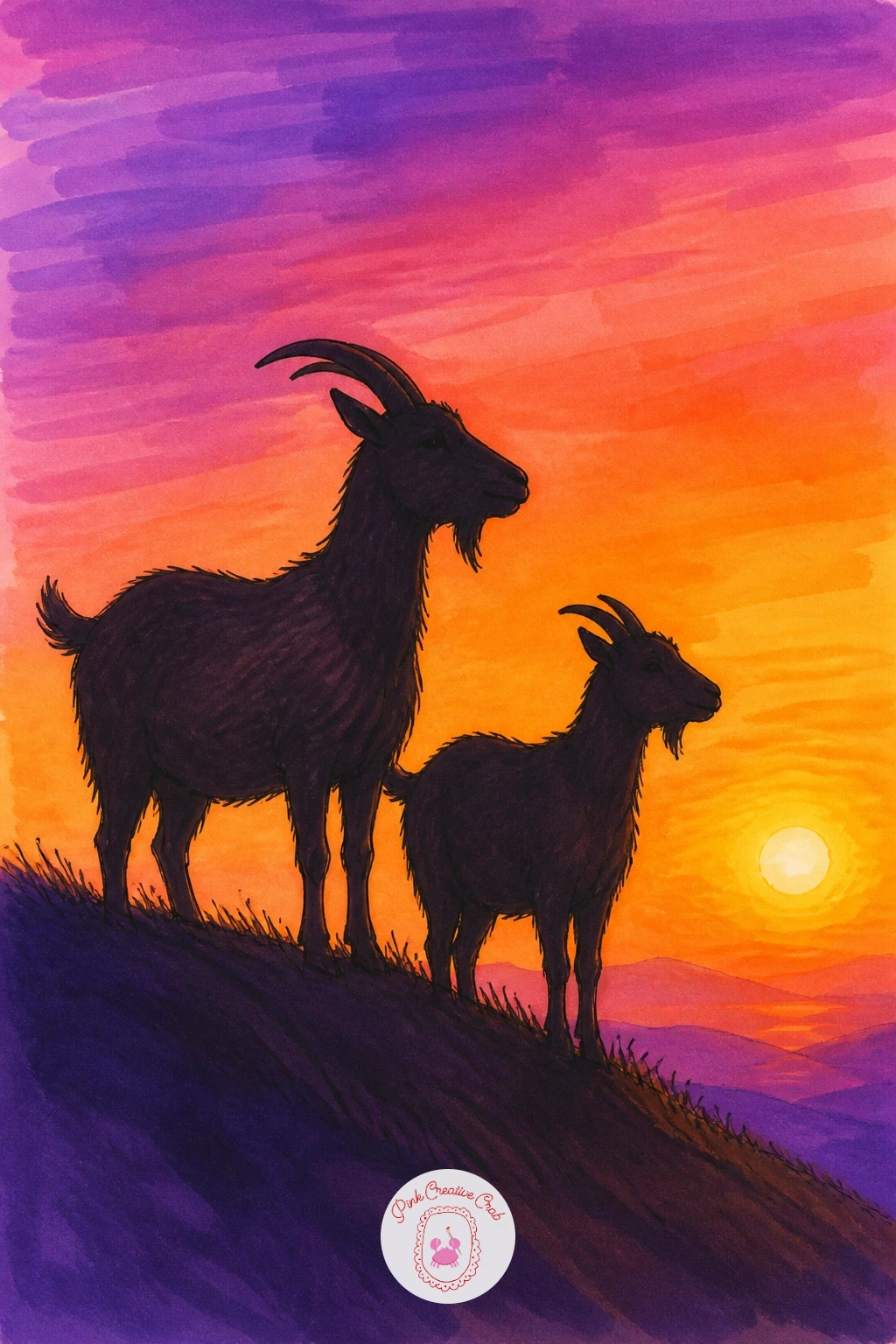
Palette: Deep Orange,Soft Pink,Dusty Purple
This goat drawing keeps things small and sweet: a kid goat curled up inside a woven basket. Draw the basket first as a simple rounded container with a few curved lines suggesting the weave pattern, then nestle the kid goat’s compact, curled body inside it with legs tucked under.
Measure the basket against the goat’s body before inking, since a basket drawn too large makes the kid goat look lost rather than cozy, and one drawn too small looks like it barely fits.
Keep the woven texture on the basket loose, just a handful of curved horizontal lines rather than a fully detailed weave, so it doesn’t pull focus from the sleepy kid goat inside.
A soft blanket draped over one edge of the basket, in a warm plaid or solid color, adds a cozy finishing touch without much extra drawing time.
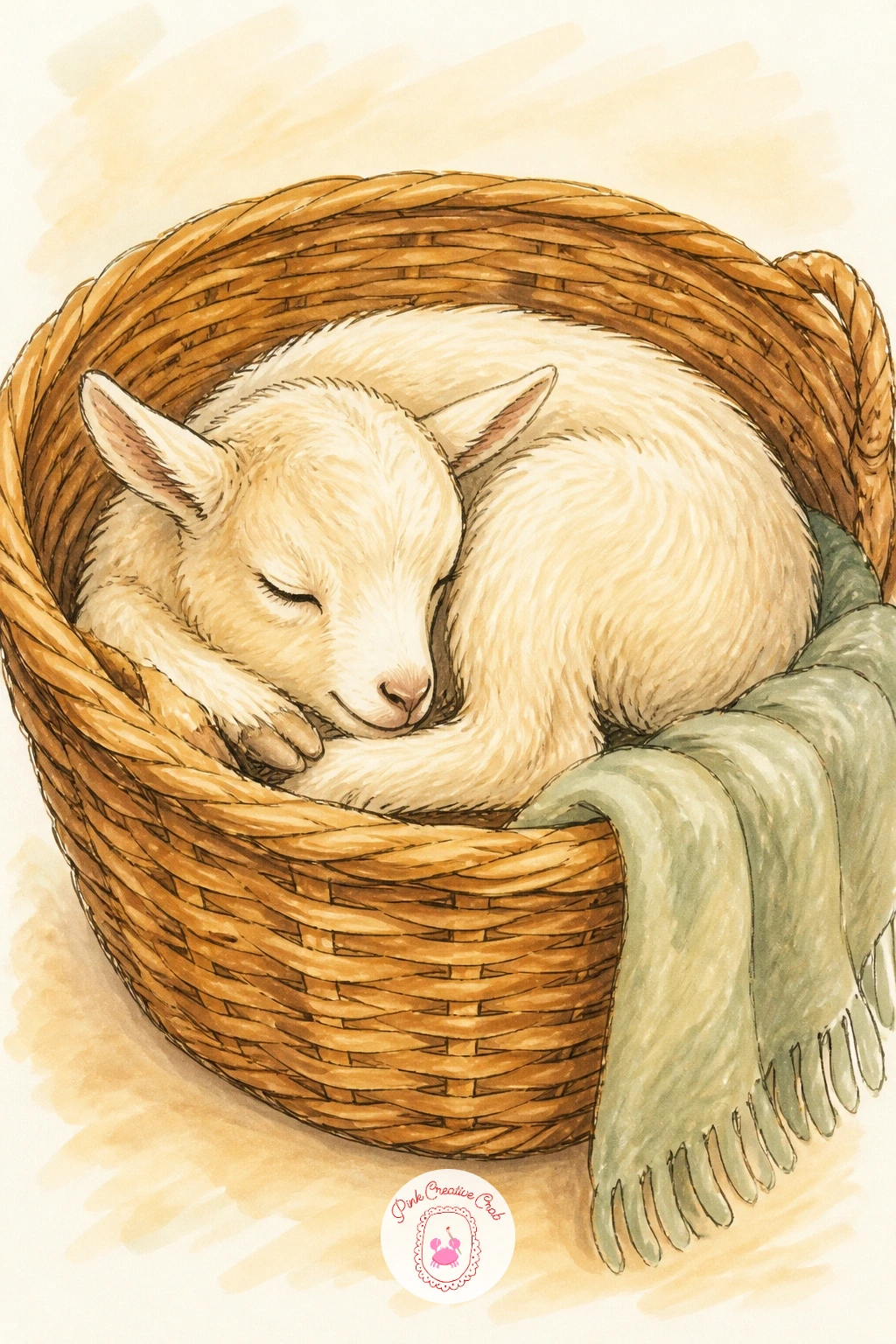
Palette: Warm Wicker Tan,Cream,Dusty Blue
Stack a couple of simple hay bales and let this goat drawing climb right on top. Draw the bales first as two or three overlapping cylinder shapes, keeping the top one slightly smaller or offset so the stack feels a bit precarious and fun.
Place the goat standing on the highest bale with front legs slightly forward, as if it just hopped up, which gives the pose more energy than a flat standing position would.
Loose, scratchy fineliner strokes along the edges of each bale suggest loose straw without needing to draw every strand, and a dry brush pass with a tan marker over those edges roughs up the texture nicely.
If stacking three bales feels like too much for one sitting, two still reads clearly and keeps the drawing quick.
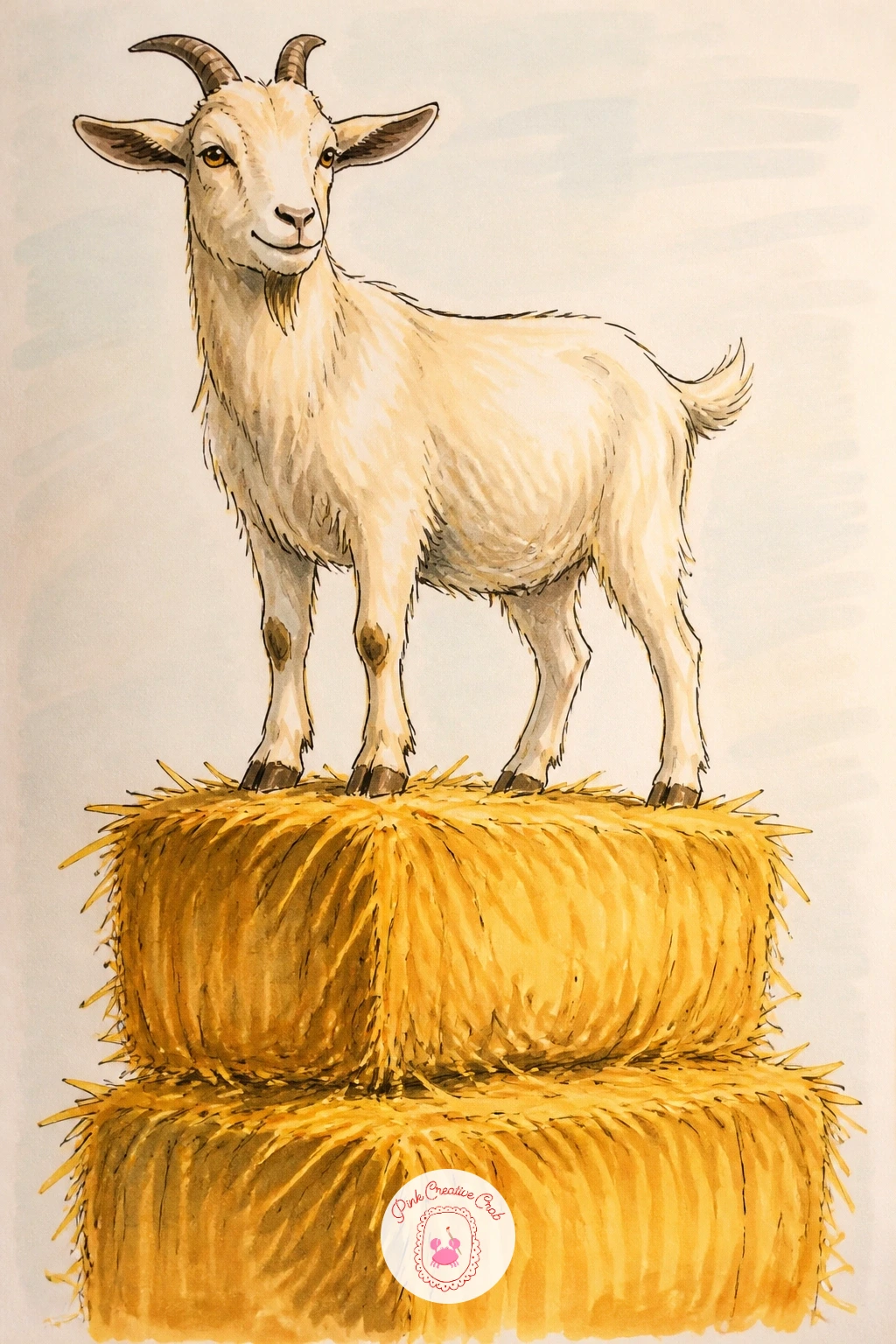
Palette: Straw Tan,Cream,Warm Brown
Bring a bit of winter charm into this goat drawing by fitting four tiny boots onto the goat’s hooves. Draw the goat standing first, then add each boot as a simple rounded shape wrapping just over the hoof, varying their angle slightly since all four feet rarely point the exact same direction.
Keep the boots a bright, cheerful color like red or yellow so they stand out clearly against the goat’s fur and against any snow in the background.
A scattering of simple white dots or small irregular patches behind the goat suggests snow on the ground without needing a full winter scene, and a plain pale blue sky keeps the background calm and uncluttered.
If four boots feel fiddly to keep consistent, focus on getting the two front boots right first, since the back ones are often partially hidden by the body anyway.
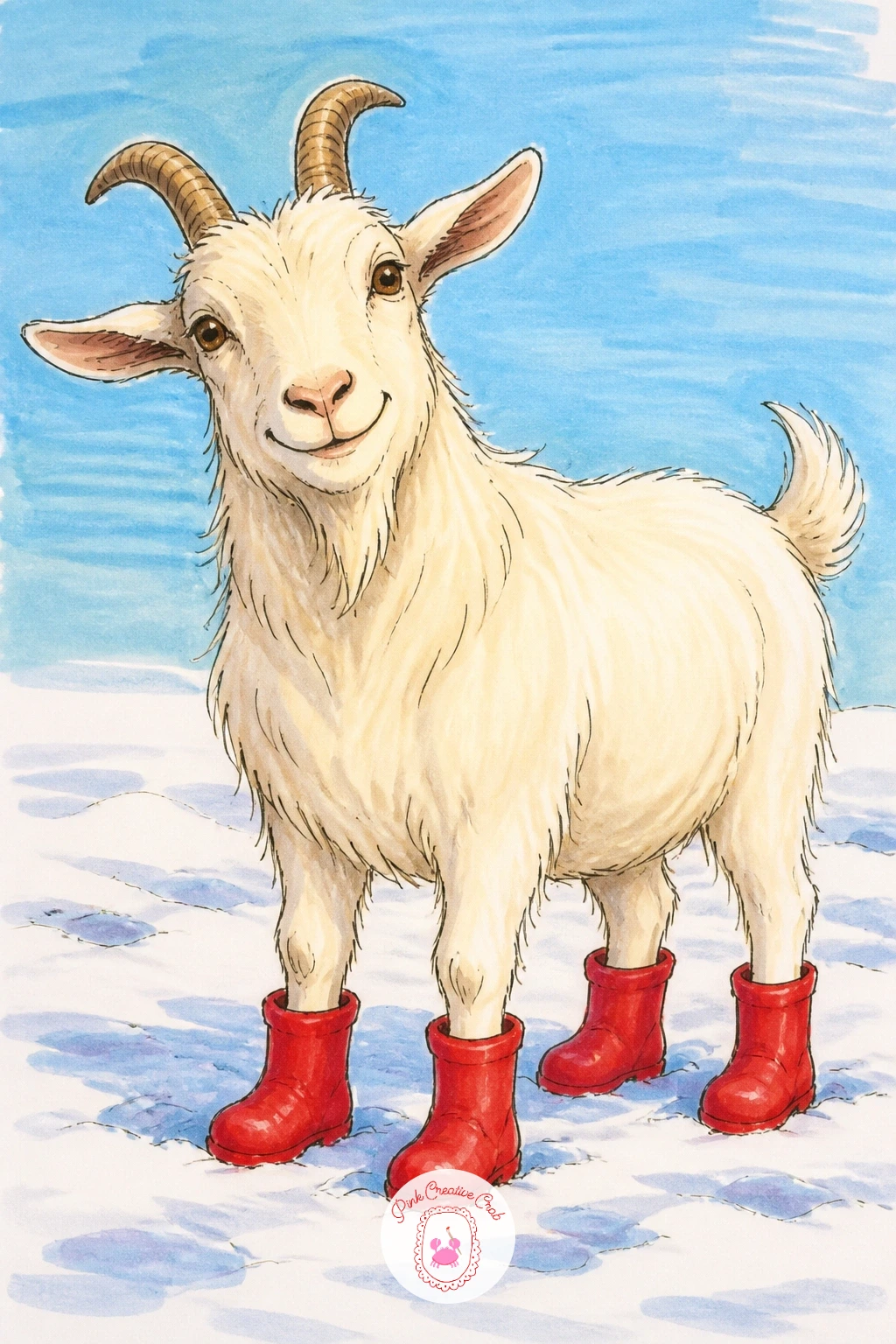
Palette: Bright Red,Pale Blue,Cream
Goats really do climb trees, and this goat drawing leans fully into that surprising fact. Draw the tree trunk first at an angle, slightly leaning, then position the goat partway up the trunk with legs braced against the bark and body angled for balance.
Getting this pose right depends on proportion: compare the goat’s leg length to the trunk’s width before inking, since a goat drawn too large for a thin trunk looks like it would snap the branch rather than balance on it.
A few simple leaf clusters at the top of the tree, drawn as overlapping rounded shapes rather than individual leaves, finish the canopy without extra fuss.
Bark texture works well with short vertical fineliner strokes of varying length, and a light brown marker blended over them keeps the trunk from looking too busy.
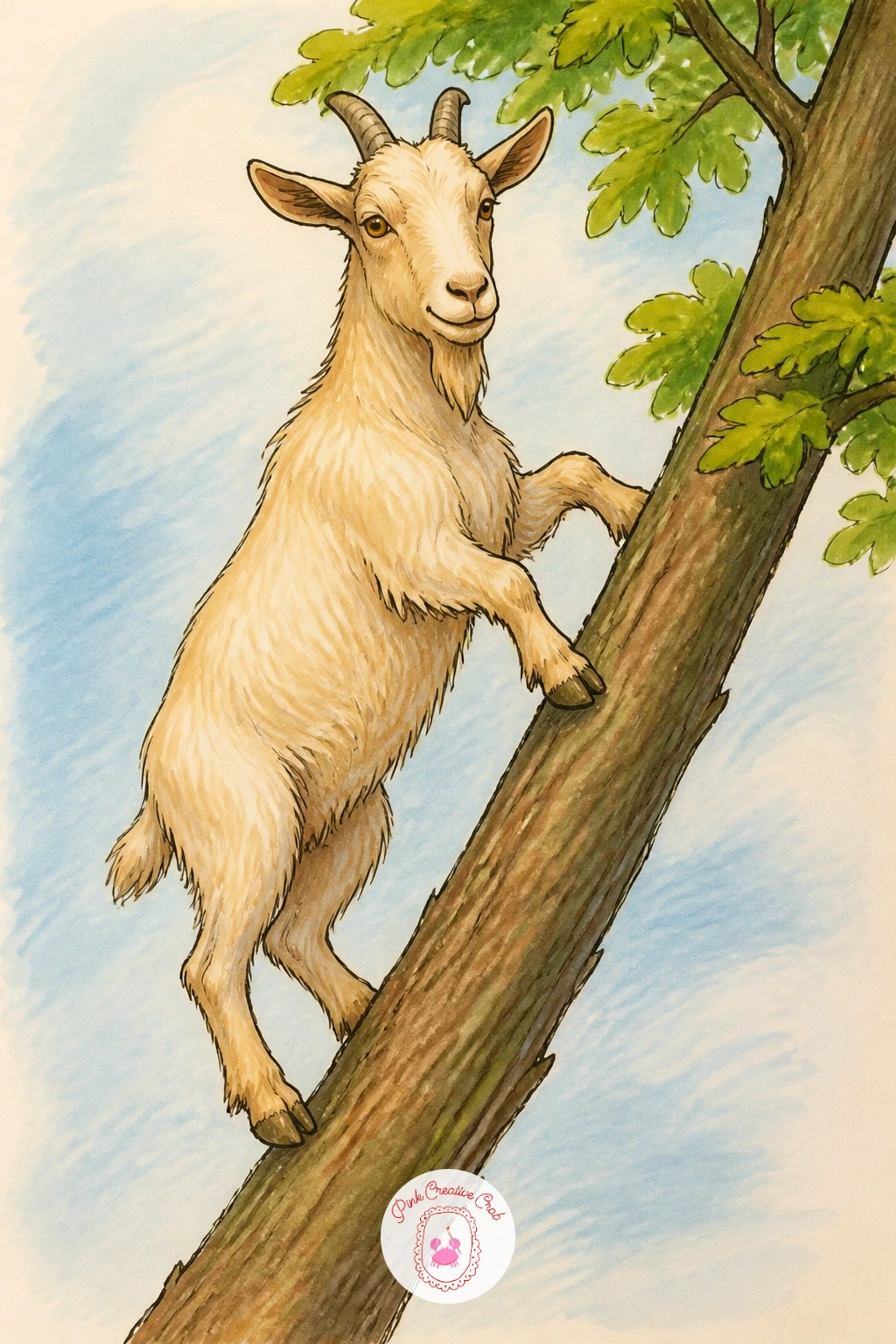
Palette: Bark Brown,Meadow Green,Cream
Finish this goat drawing list with a proper show-ready goat, bandana tied around its neck and standing at a county fair. Draw the goat first in a proud, alert standing pose with its head held a bit higher than usual, since fair goats are often drawn standing for judging.
Tie the bandana as a simple triangle folded around the neck with two ends crossing and hanging loose, and pick a pattern like small dots or gingham that you can keep simple with your fineliner before coloring.
A loose ribbon or rosette pinned near the bandana, drawn as a few overlapping circles with trailing ribbon tails, adds a nice prize-winning touch without much extra work.
Keep the fairground background minimal, just a hint of a fence or striped tent in the far distance, so the goat and its bandana stay the clear focus of the whole piece.
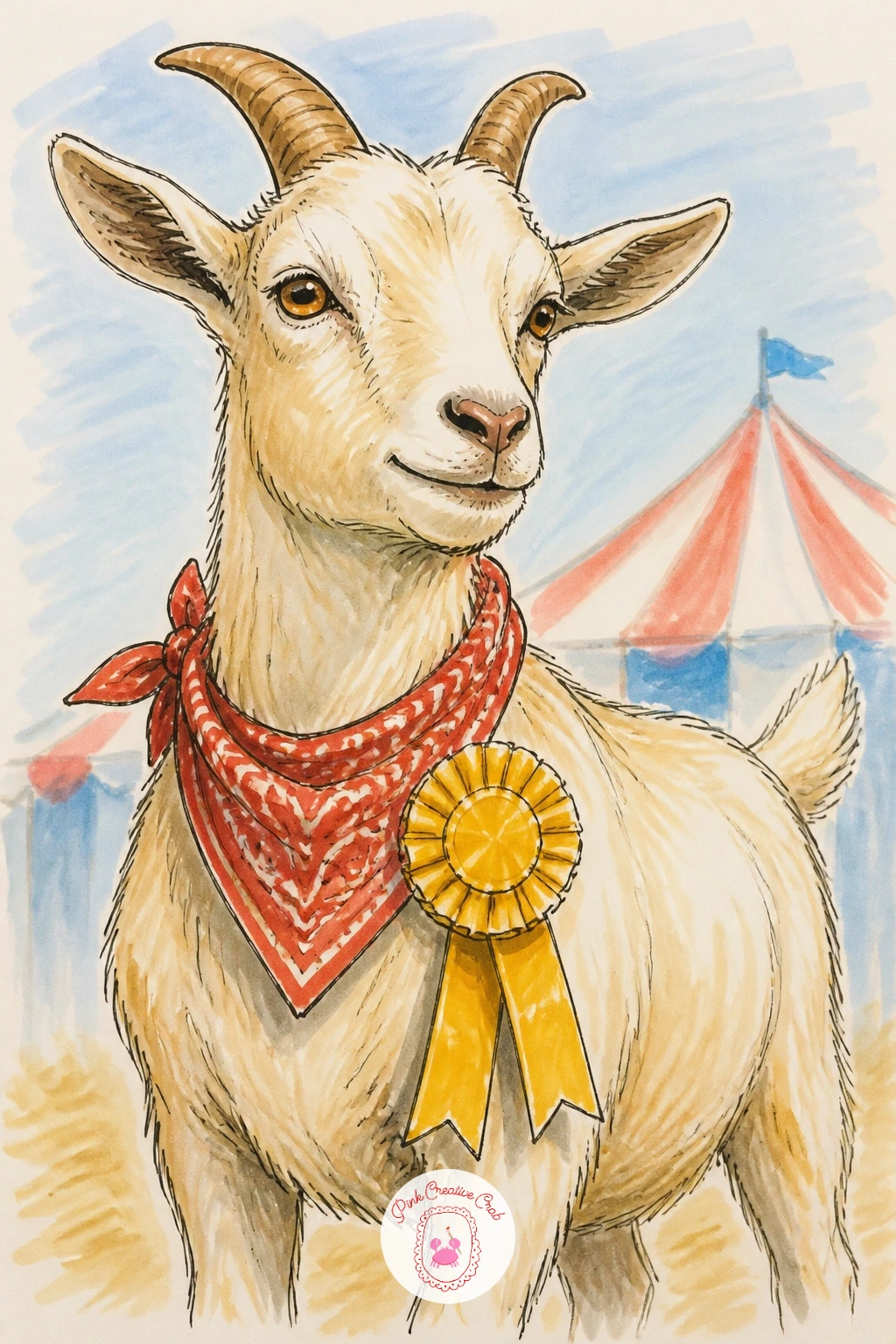
Palette: Red Bandana,Cream,Gold Ribbon
Look at real county fair show photos if you want the proud, alert stance to feel convincing rather than just a standing pose copied from elsewhere.
What to Do Next
Pick whichever goat made you smile first, grab a sheet of smooth marker paper and your fineliner, and work from the head outward the way each idea walks you through. One finished goat drawing today is better than five half-started ones, so keep the first one simple and let the next get a little bolder.
Frequently Asked Questions
What is the easiest way to start a goat drawing if I’ve never drawn an animal before?
Start with simple shapes: an oval for the body, a smaller oval for the head, and thin rectangles for the legs. Sketch loosely in pencil or light fineliner before adding any fur texture or costume details.
What markers work best for goat drawing with smooth blended color?
Alcohol-based markers give the smoothest blends because they stay wet long enough to layer and blend edges before drying. Water-based markers can work too, just expect slightly less smooth transitions between colors.
How do I make a goat’s fur look soft instead of flat?
Layer two shades of the same color family, with the lighter one on top of areas catching light and the darker one along edges and shadows. A few short fineliner strokes in the direction of fur growth finish the effect.
Why does my goat drawing look stiff or awkward?
It usually comes down to proportion, often legs that are too long, too short, or mismatched in length on either side. Compare the goat’s leg length to its body length before inking final lines to catch this early.
Can I turn one of these goat drawing ideas into a bigger scene?
Yes, almost any idea here can grow with a background, extra props, or a second goat added in. Start with the goat itself finished and working, then build outward with whatever time you have left.
Have any thoughts?
Share your reaction or leave a quick response — we’d love to hear what you think!
-
 0
-
0
-
0
-
0
-
0
-
0


