Table of Contents
This set of horse coloring pages gives you eighteen different scenes, a different breed and a different pose on every sheet, from a foal nuzzling its mother in a meadow to a mustang galloping along the beach. Nothing here is a movie character: every horse is drawn plain and proud, so the pages work just as well for a seven year old who loves ponies as they do for an adult who wants a calm evening with pencils.
Print on plain copy paper for a quick set with crayons, or switch to heavier paper (24lb or higher) if markers or gel pens are going into the mix, since thin paper lets ink bleed through. Set the printer to its best quality and fit to page, then trim the white border off once the page is colored if you plan to frame it or glue it into a card.
Using these images: free for personal projects such as printing, coloring, cards, journals and gifts. Handmade items that include them may be sold up to 30 pieces per design. More than that is commercial use and is not permitted, and neither is selling or sharing the images themselves or passing them off as your own. Please ask before any other use.
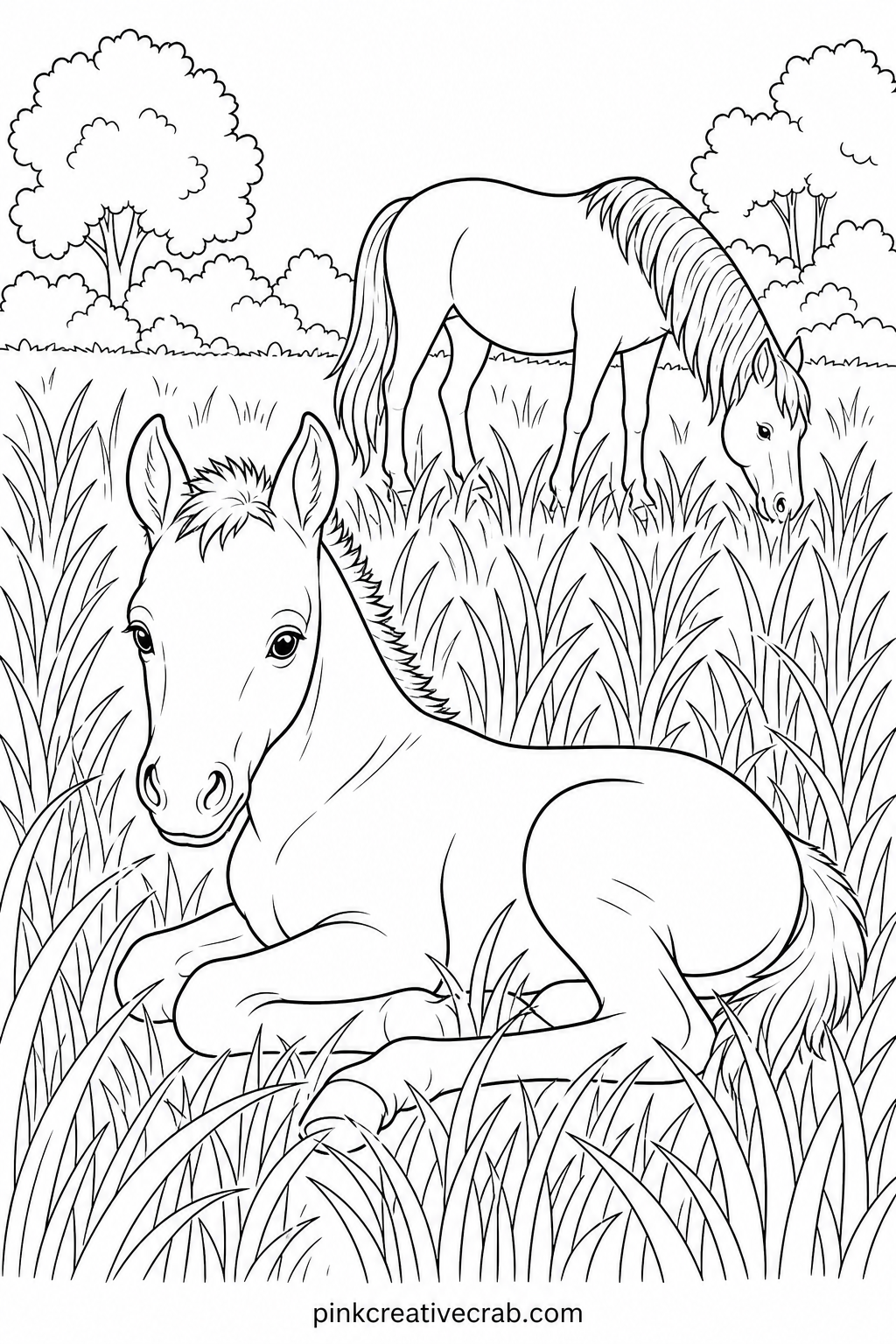
Mares And Foals
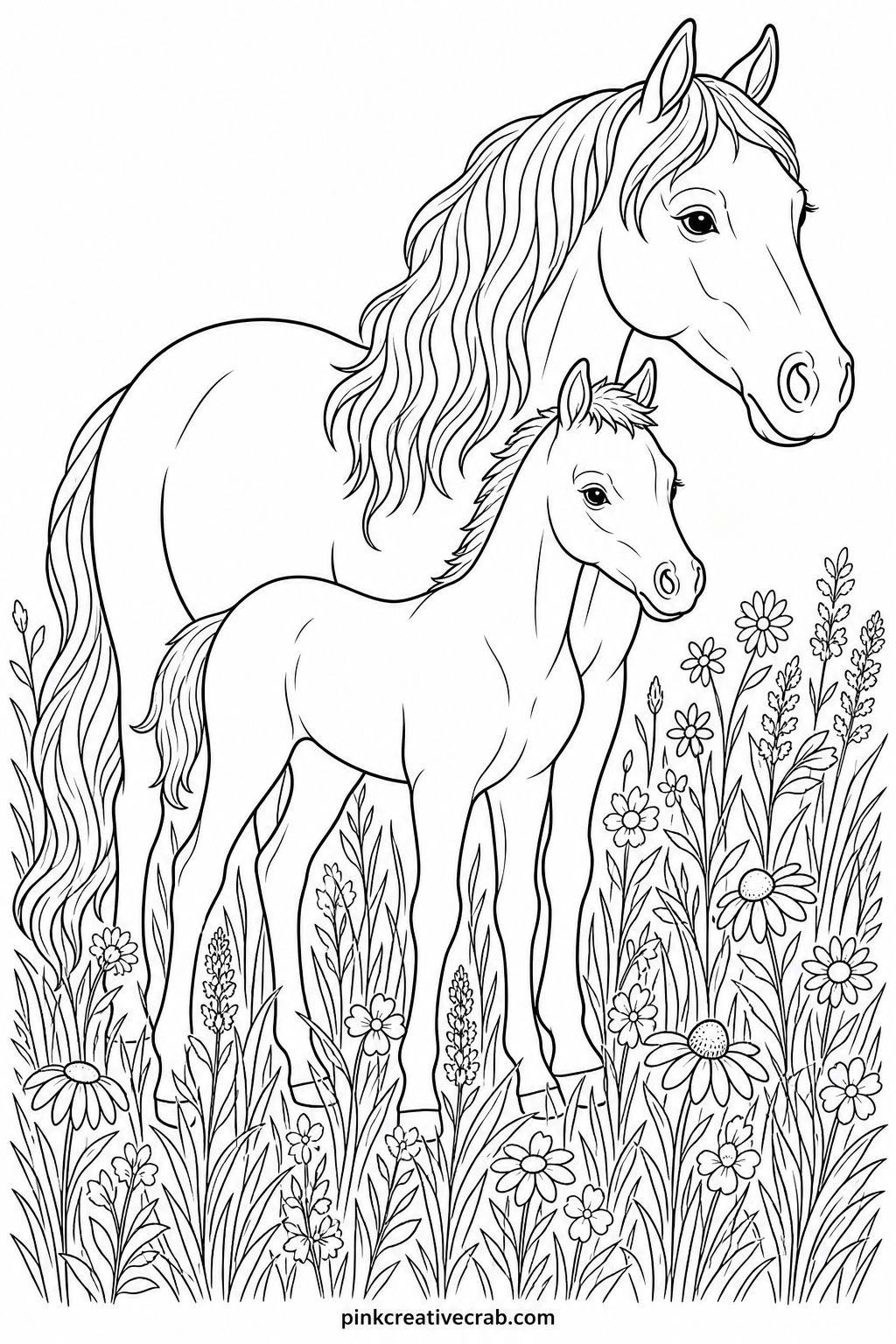
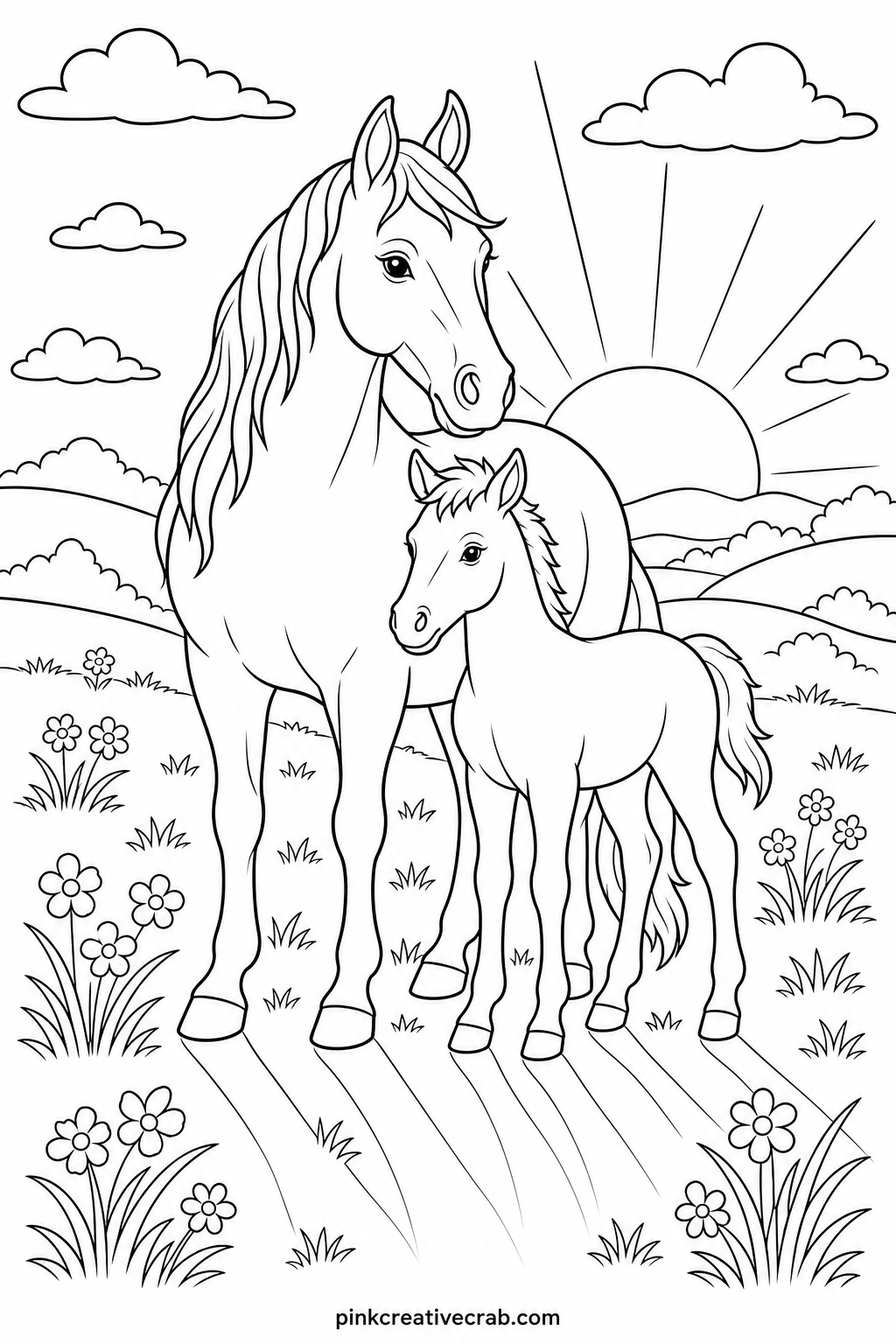
Young children do well with this page because the shapes are large and the foal stands close against its mother, which keeps the coloring simple and the story clear without any fiddly detail to fight with a crayon.
An older sibling or adult working the same page can slow down on the grass, picking two or three shades of green instead of one flat color to make the meadow feel deeper and the horses stand forward from it.
Start with fine-tip markers on the faces here, since that is where the two horses touch noses, and a steady line there keeps the moment from turning into a blur once color goes down around it.
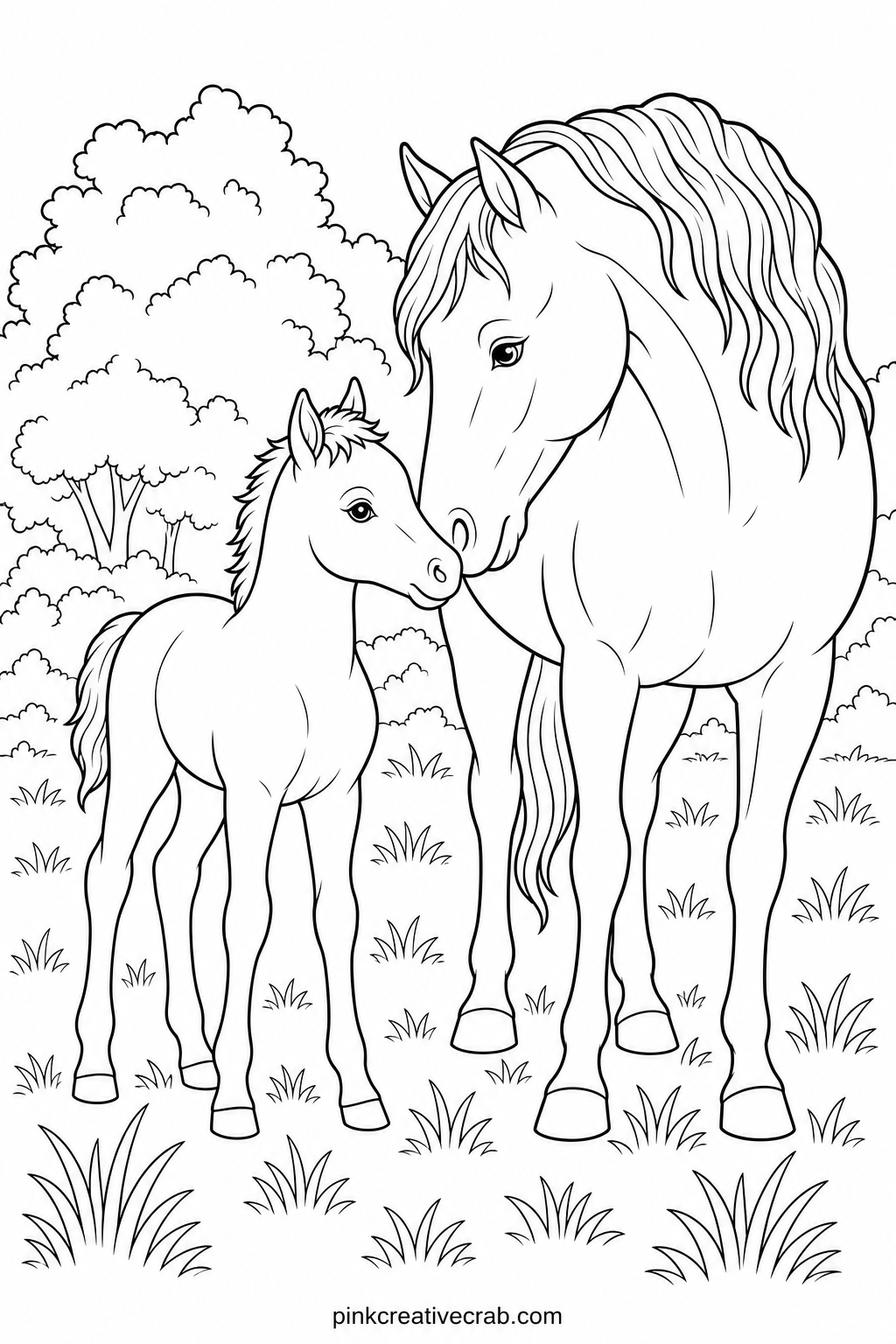
Leave small patches of the foal’s coat pure white before touching any pencil to the page, especially along the back and the blaze on its face, since white paper reads as highlight once the surrounding brown goes in.
Wild And Running Horses
Pair this page with the next one, since both show a horse mid-gallop and coloring them side by side lets a child compare two different manes flying in the wind.
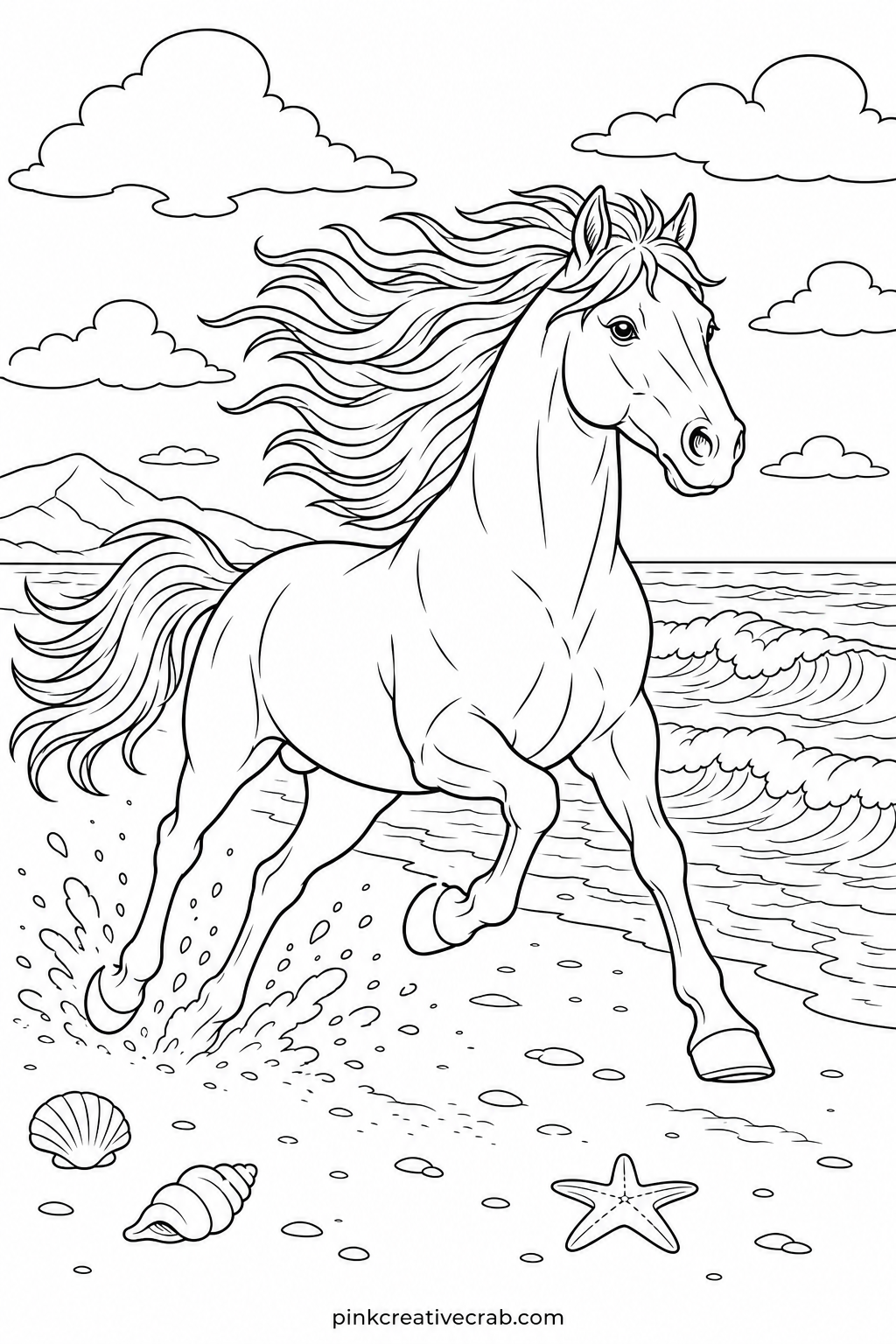
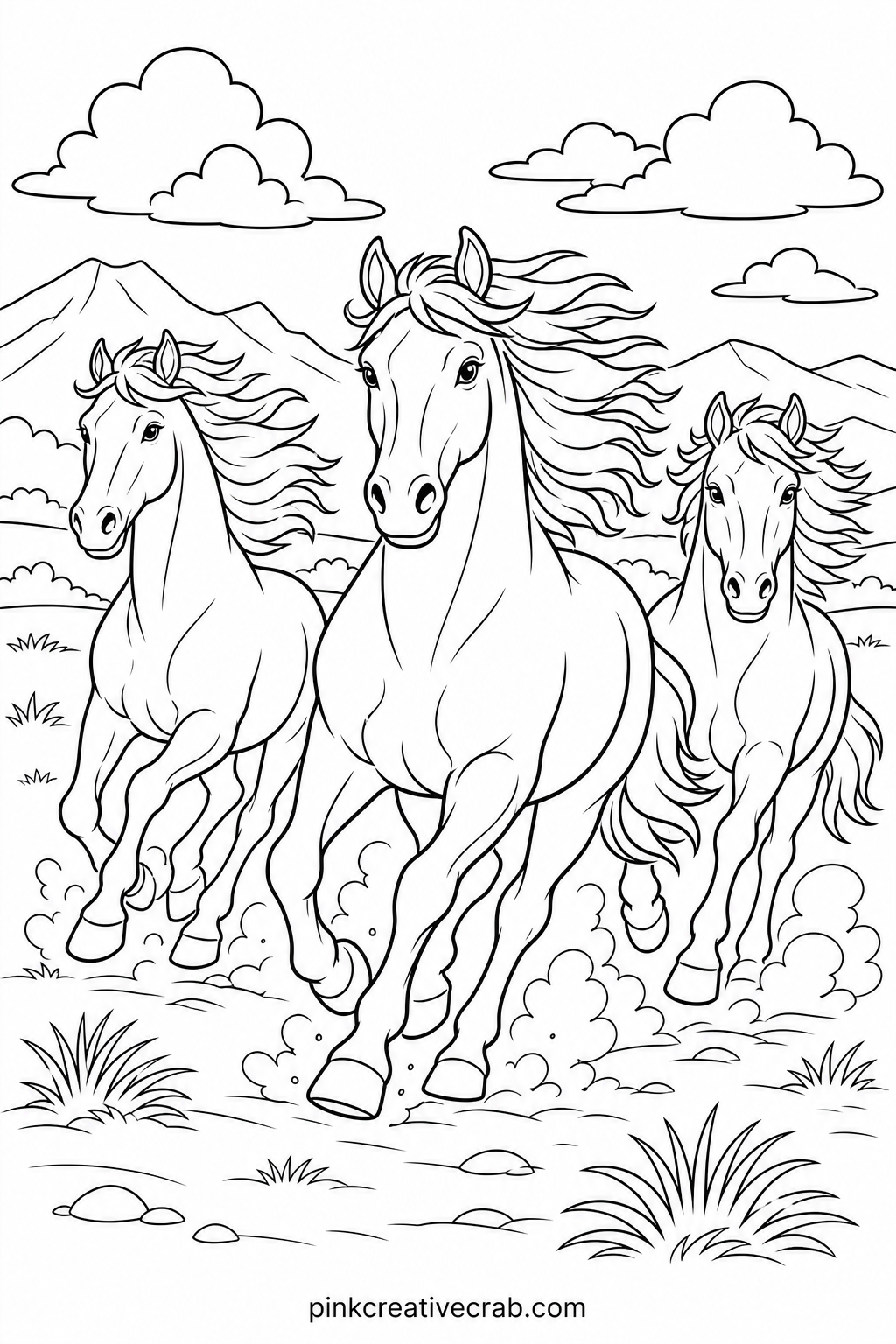
The usual mistake on this page is coloring every horse the same shade, which flattens the whole scene into one block of brown and loses the sense of a herd.
Give each mustang its own coat, one bay, one gray, one nearly black, and the running group suddenly reads as individuals rather than a single smudged shape racing across the paper.
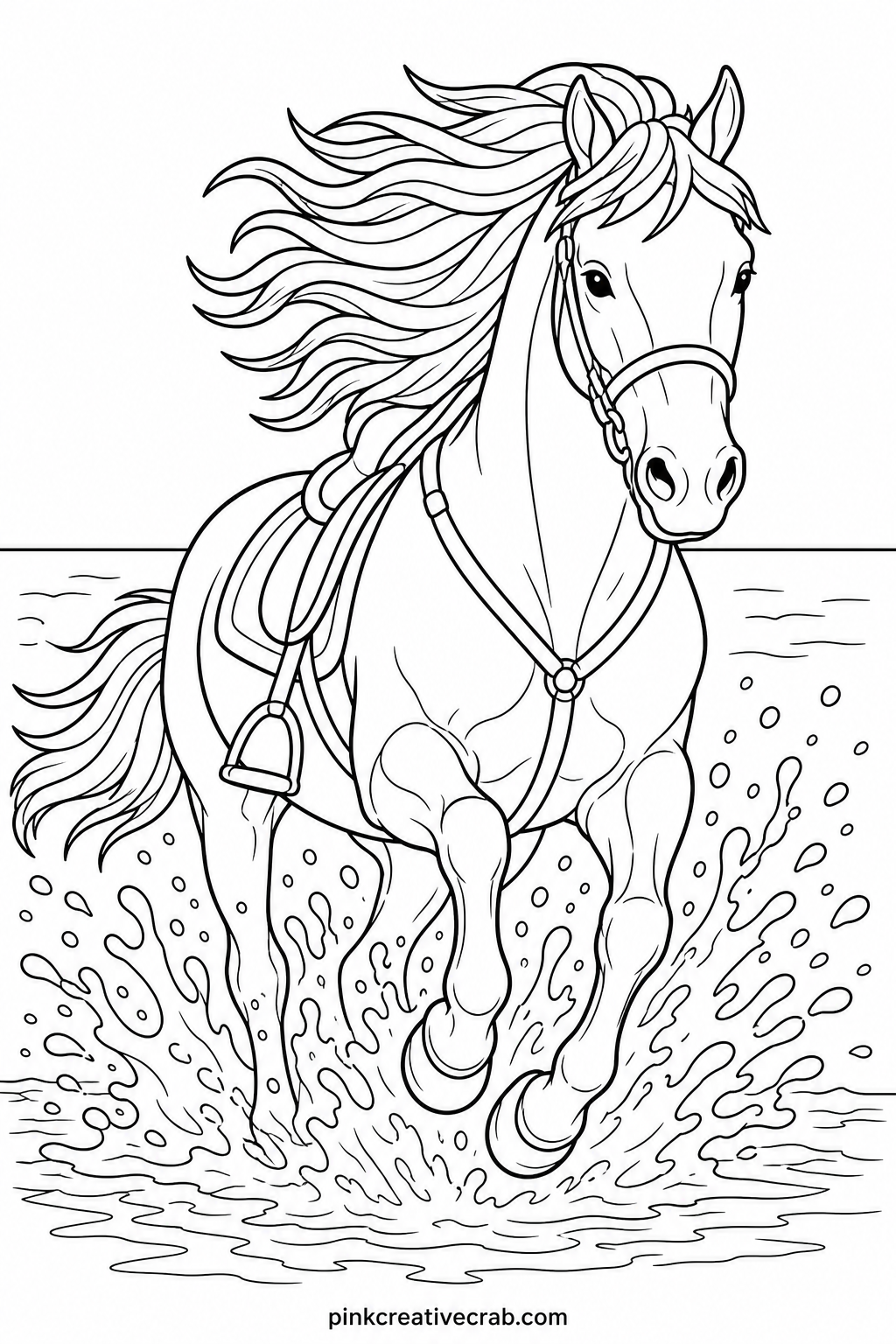
Ten minutes is enough for this one if the goal is just a finished page: block in the horse’s body first in one flat color, add the splashing water in quick strokes of blue or gray, and stop there without worrying about the background.
Barn And Farm Horses
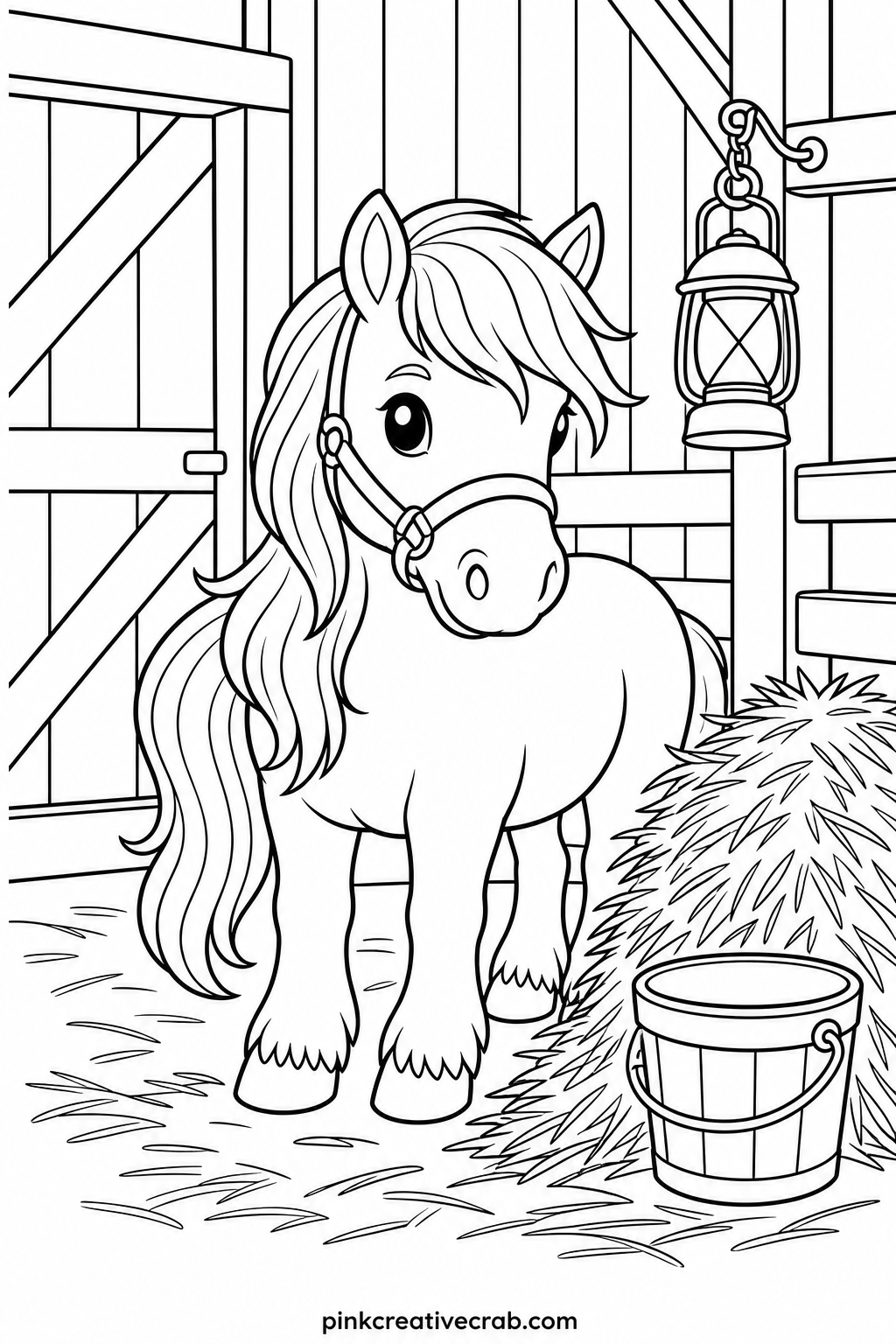
Colored pencils suit this page better than markers because the hay is made of many thin overlapping lines, and a pencil point can follow each one without the ink pooling where lines cross.
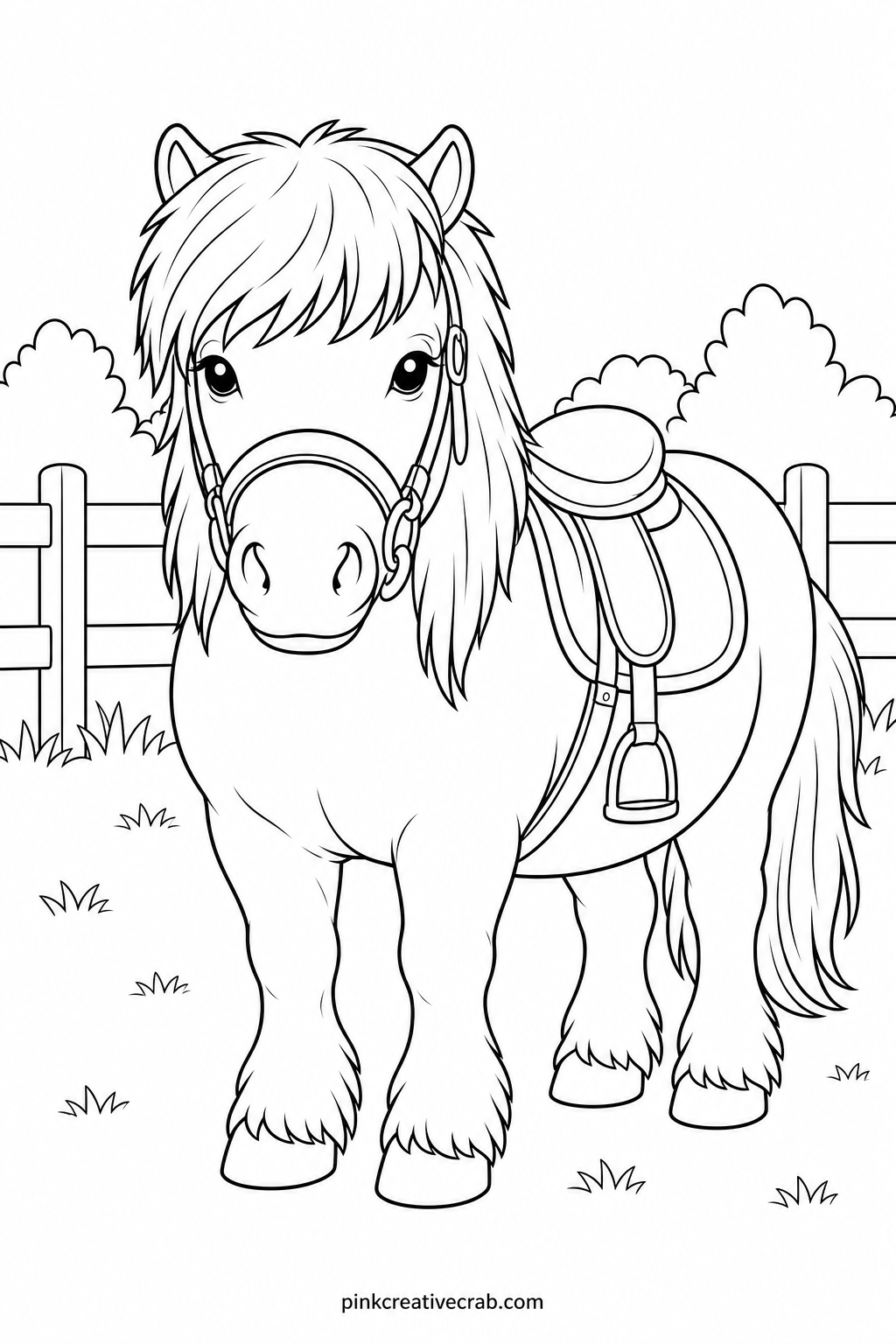
Ask a child what color they think the saddle should be before they pick up a marker, since naming the choice out loud slows the hand down and usually leads to a steadier, more even fill.
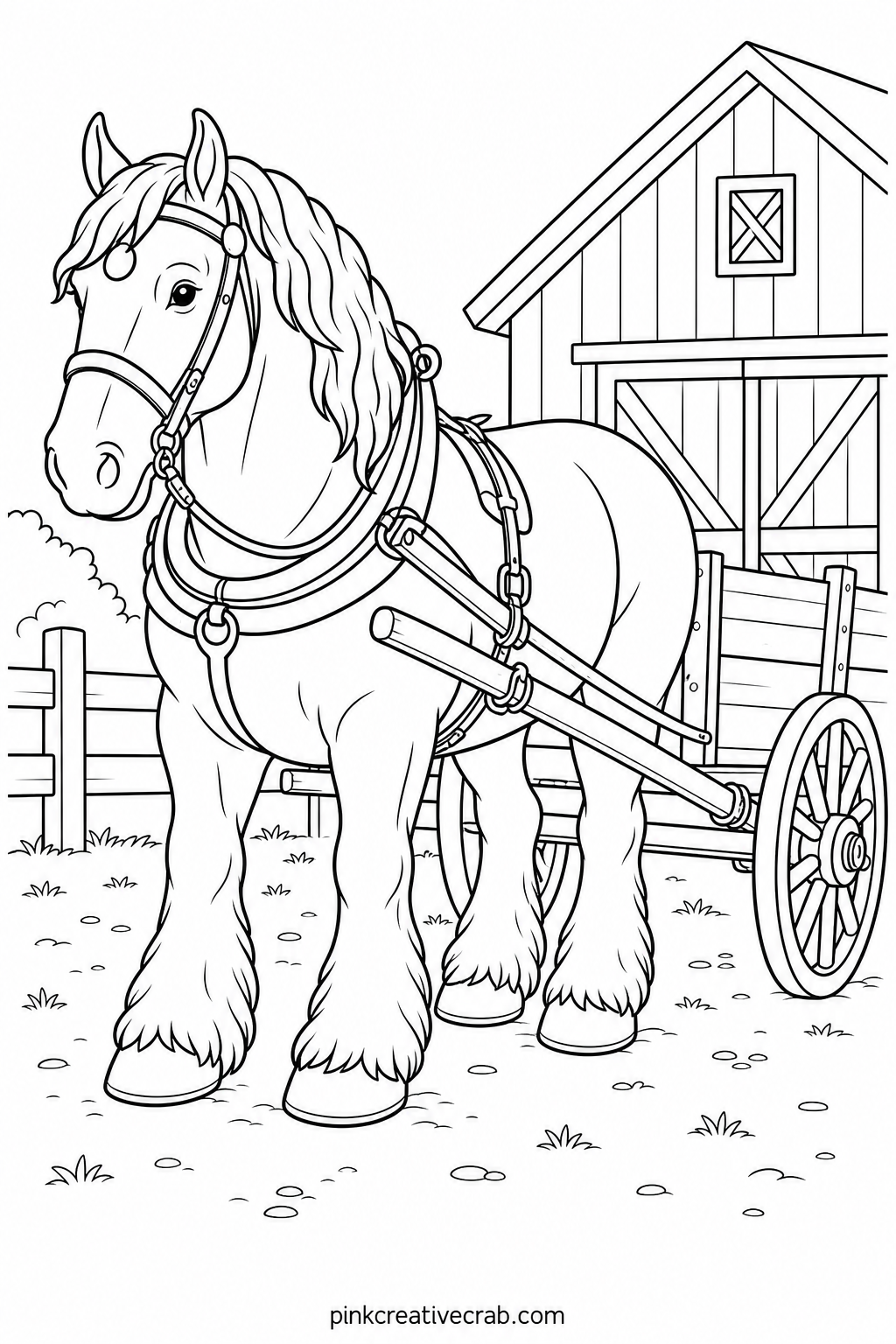
Fitting a true draft horse onto one page suits readers who already know their breeds, since the thick legs and broad chest need a confident outline before any color goes near them, and a felt-tip pen works better here than a thin ballpoint.
Once the horse itself is done, the wooden cart behind it is the easy part, good for finishing off a session when patience is running low.
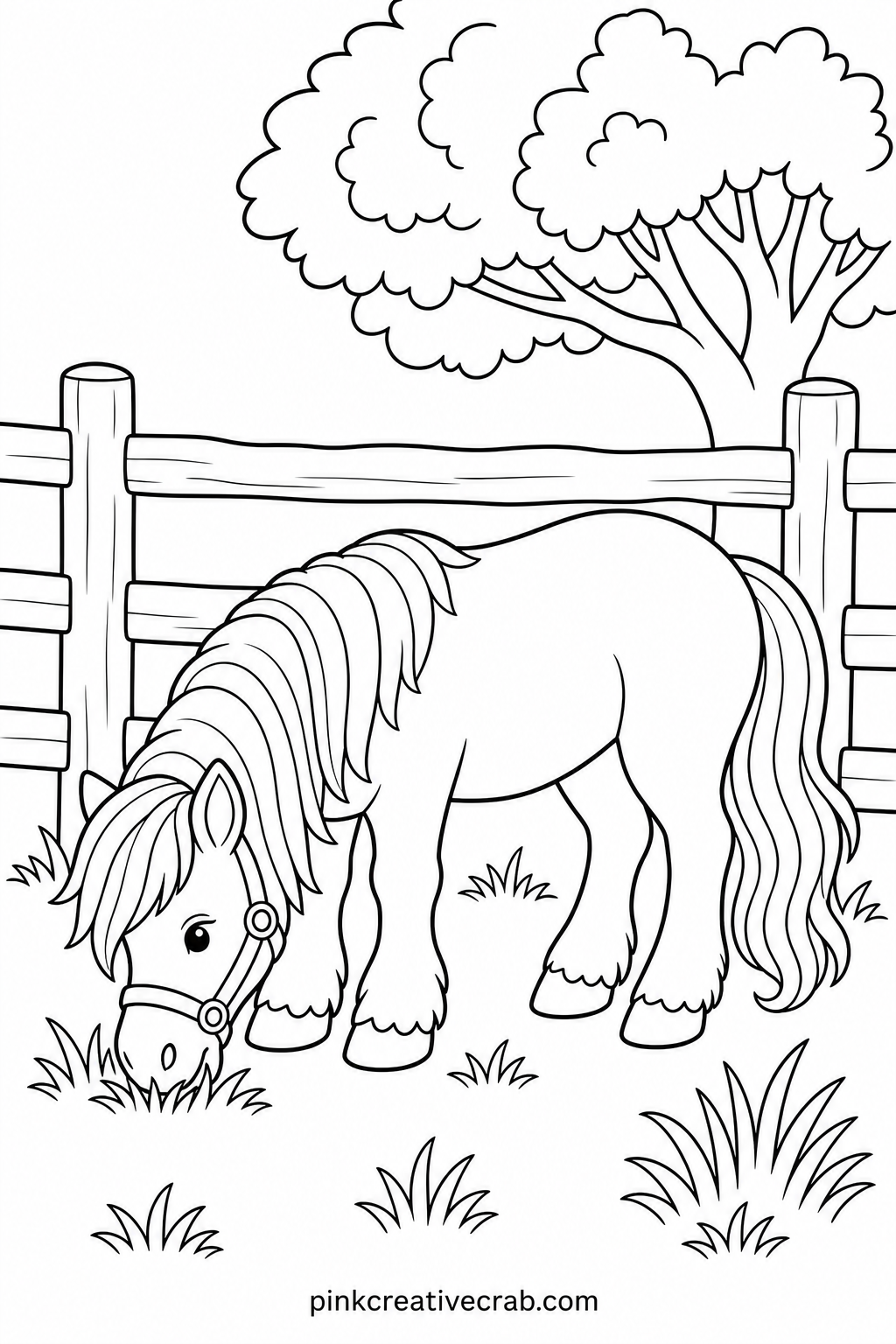
Cut this page out along the fence line once colored and glue it onto plain cardstock to make a quick gift tag for anyone who keeps ponies or simply loves them.
Horses In Action
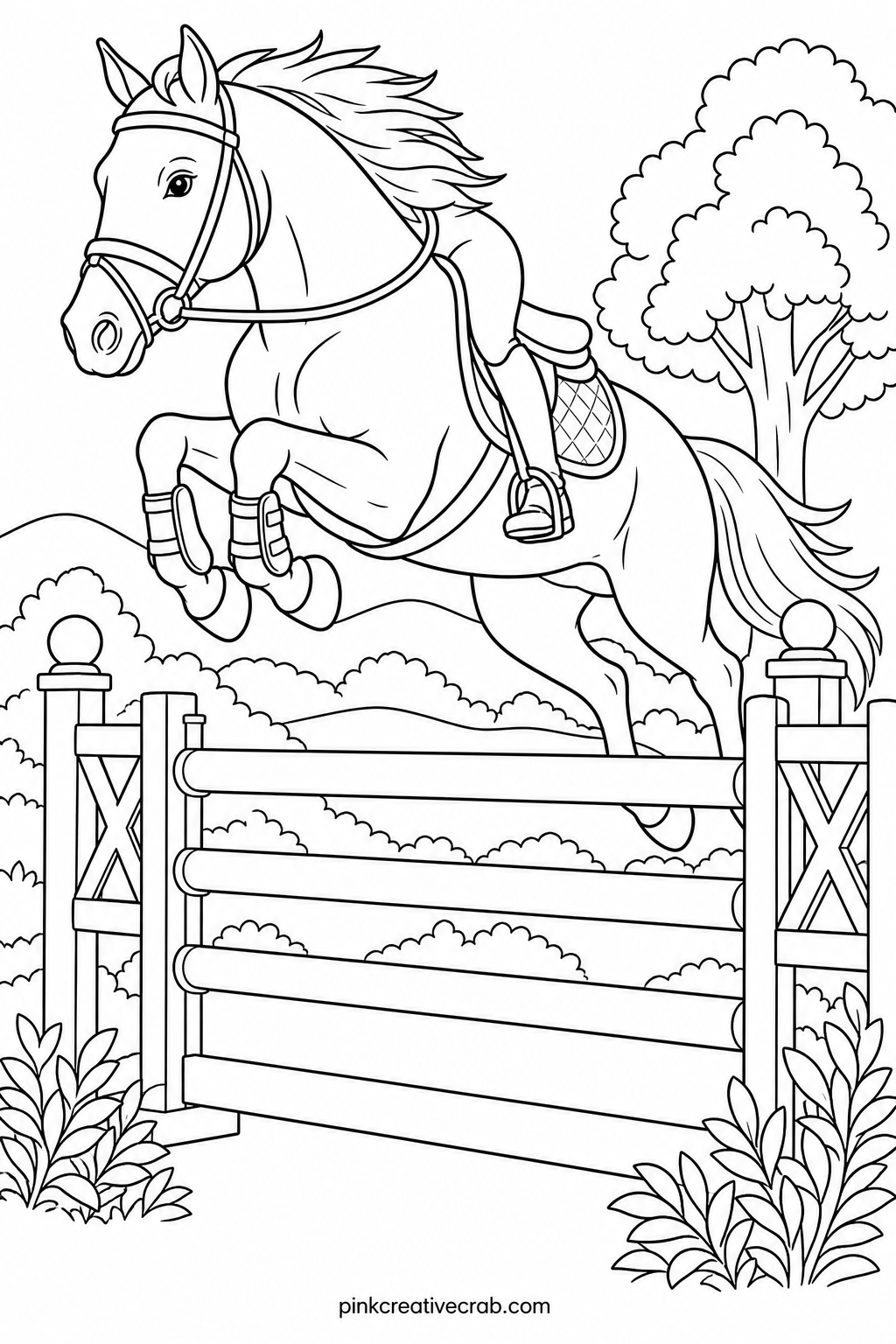
Readers who enjoy horse pencil drawing as well as coloring will recognize this pose, since the arched back and tucked front legs over a jump are a classic subject for practicing motion on paper.
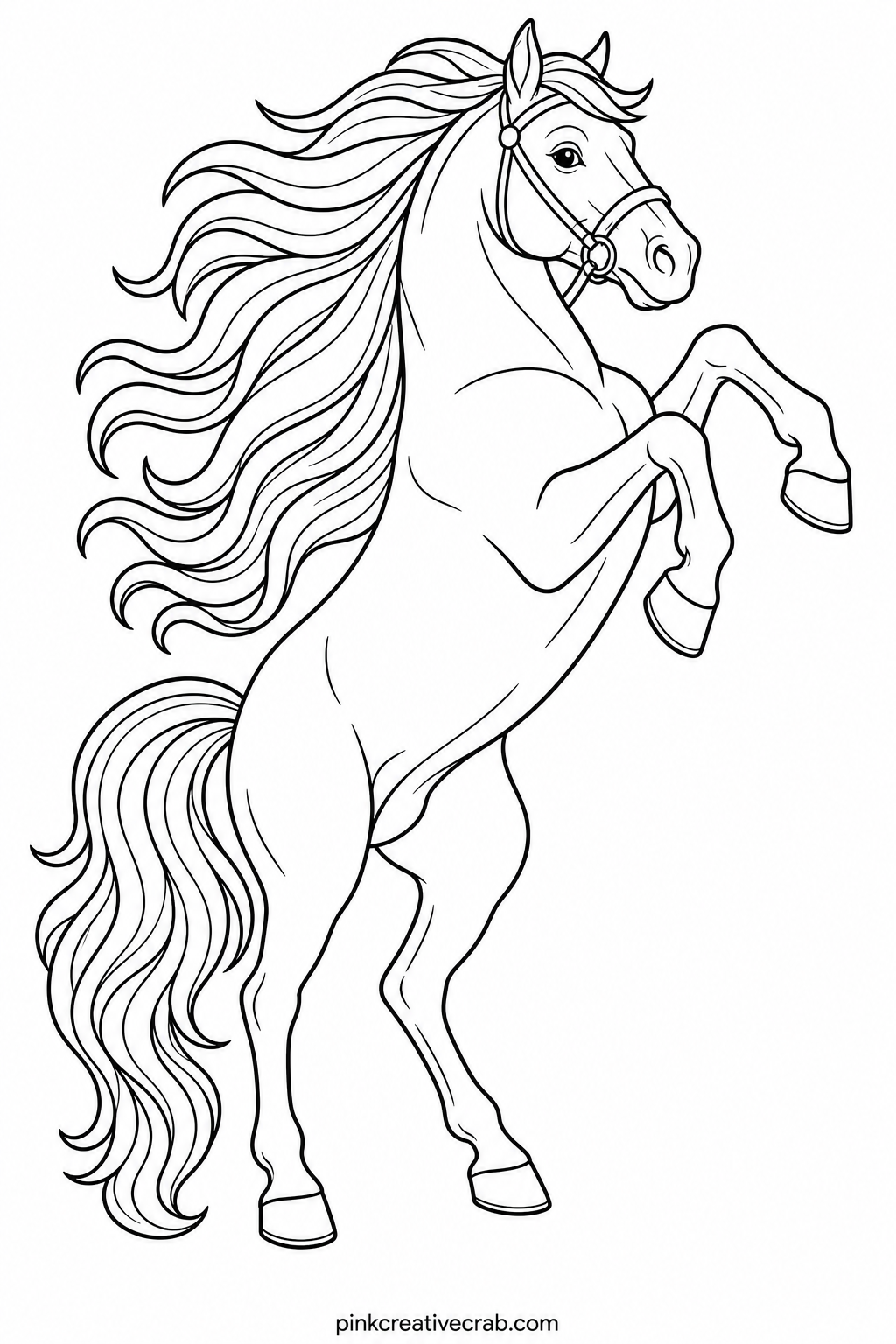
Outline the mane first in black marker before adding any color, because the sweeping curves of a rearing horse’s mane are easy to lose once pencil shading starts crossing over them from several directions.
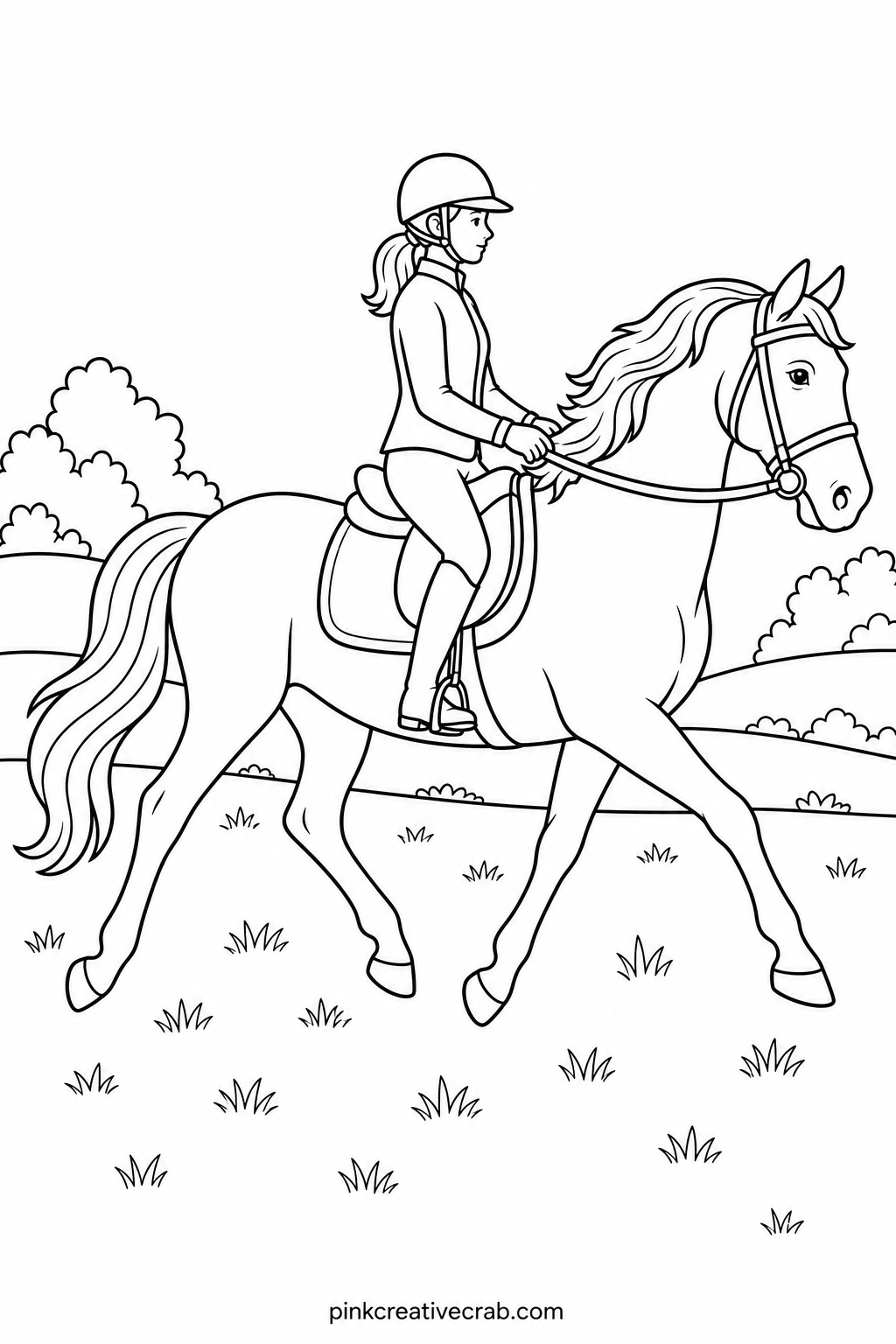
A horse moving at a trot with a rider in the saddle suits anyone who wants a complete scene rather than just the animal alone, and the rider’s simple jacket and boots give an adult something small and precise to detail while a child focuses on the horse itself.
Decorative Horses
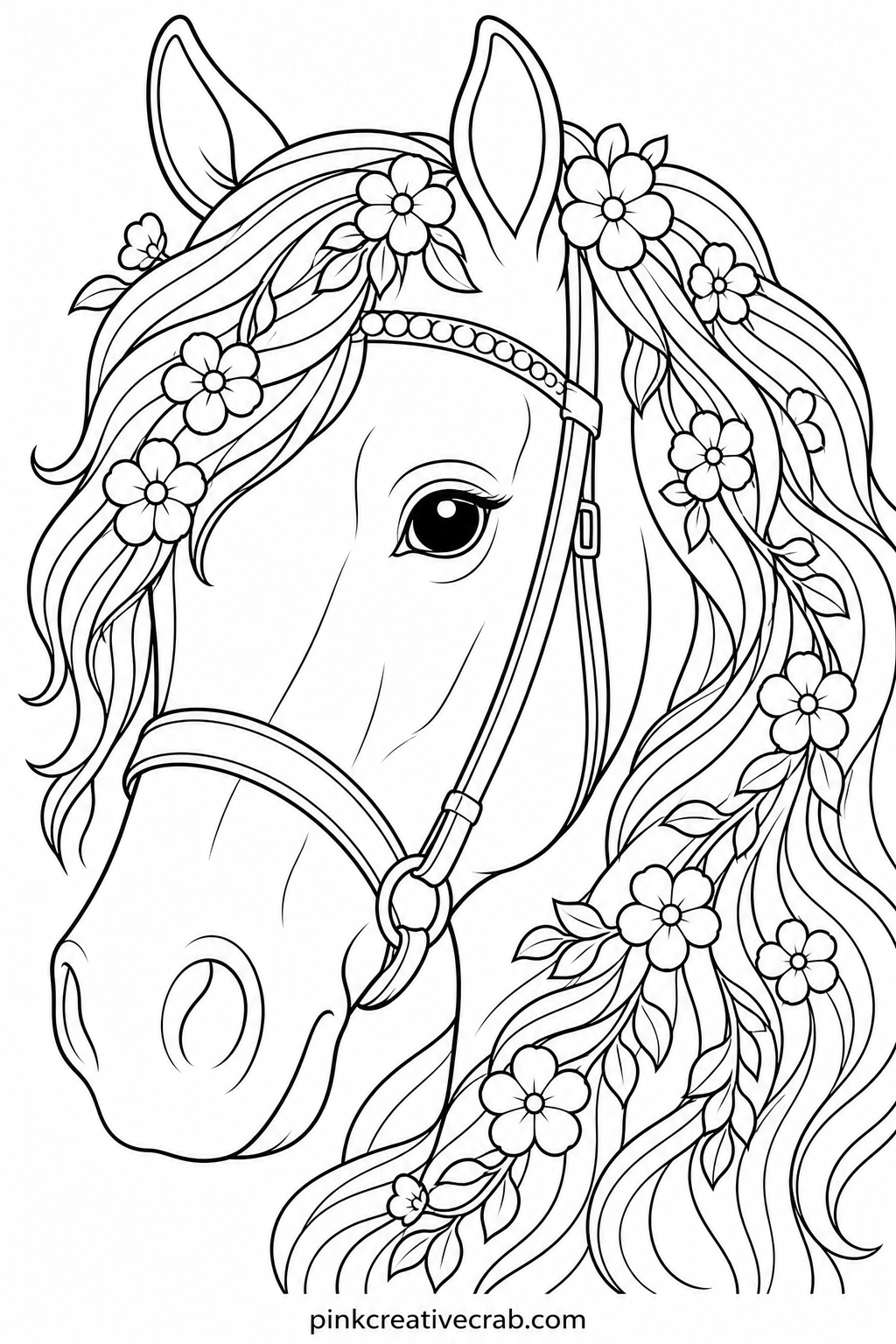
This close-up portrait, with small flowers tucked around the mane, works well glued to the front of a folded card for a birthday or thank-you note once colored.
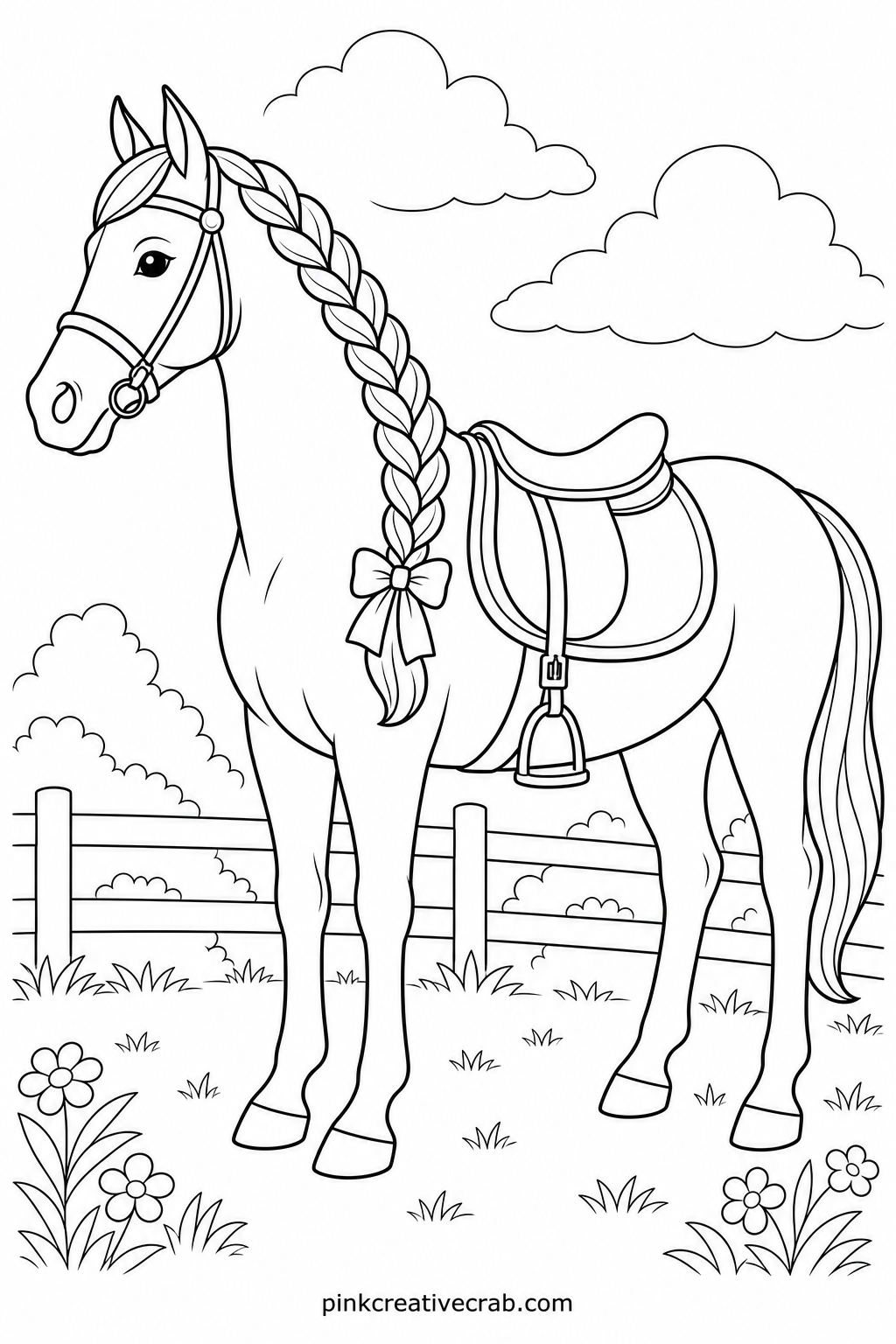
Fine liner pens suit the braid pattern on this page best, since each small section of woven mane needs a clean line to stay readable once color fills in around it, and starting at the braid itself before the rest of the body keeps the most detailed part from being rushed.
Scenic Horse Moments
Blend warm oranges and pinks across the sky behind this scene using light, overlapping strokes, building the color up slowly rather than pressing hard in one pass, so the sunset stays soft instead of streaky.
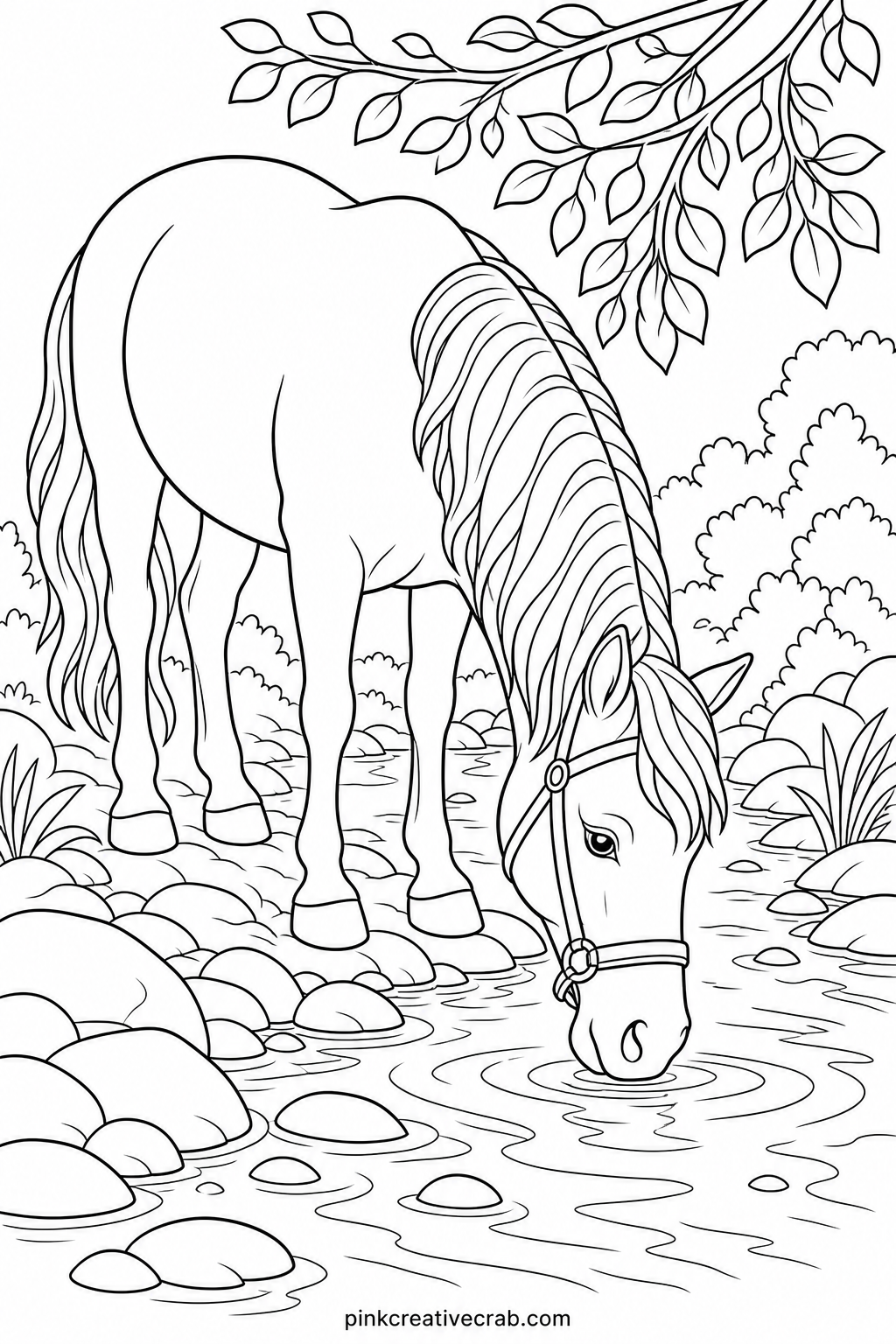
Pair this quiet page with the sunset meadow scene before it, since both move at a slow, calm pace and work well colored back to back in one sitting.
What to Do Next
Print the pages you want first, lay out crayons or pencils, and start with whichever horse catches the eye, there is no order to follow here.
Frequently Asked Questions
What paper works best for these horse coloring pages?
Plain copy paper is fine for crayons and colored pencils. If markers or gel pens are part of the plan, print on paper rated 24lb or heavier so the ink does not bleed through to a page underneath, especially on the scenic pages with larger colored areas like the sky or meadow.
What printer settings give the cleanest lines?
Choose the best or highest quality setting rather than draft mode, and set the page to fit or fill rather than shrink. This keeps the medium-weight outlines crisp instead of faint, which matters most on detailed pages like the braided mane or the jumping horse.
Can young children and adults really share the same set?
Yes, every page has large simple shapes a young child can fill in quickly with crayon, plus smaller details like tack, hay, or background flowers that an adult can take slower with colored pencils. Nobody needs a separate, easier version printed.
What is the best way to turn a finished page into a card or gift?
Trim the white border with scissors once the coloring is dry, then glue the page onto a folded piece of plain cardstock with a glue stick. The horse head portrait and the grazing pony both work especially well sized down this way.
My child colors outside the lines, does that matter here?
Not on this set. The outlines are medium-weight and forgiving, and a few strokes outside the line on a foal or a running mustang still read clearly once the page is finished. Save strict line control for the more detailed pages like the braided mane if that becomes a goal later.
Have any thoughts?
Share your reaction or leave a quick response — we’d love to hear what you think!
-
 0
0 -
0
-
0
-
0
-
0
-
0


