Table of Contents
Cat coloring pages work best when the cat is doing something real, not posing for a portrait, and this set leans all the way into that idea. Every sheet catches a cat mid moment: knocking a mug off a shelf, wedged into a box too small for it, asleep on a stack of books nobody asked it to guard. Nineteen different cats, nineteen different breeds and poses, no two pages anywhere close to the same.
Print on plain printer paper for a quick coloring session, or switch to heavier cardstock if the page is headed for a frame or a card. A laser printer keeps the black lines crisp if markers are involved, since ink from inkjet pages can smear under a wet marker tip. Trim the white border off once the coloring is done if the page is going into a journal or a gift.
Using these images: free for personal projects such as printing, coloring, cards, journals and gifts. Handmade items that include them may be sold up to 30 pieces per design. More than that is commercial use and is not permitted, and neither is selling or sharing the images themselves or passing them off as your own. Please ask before any other use.
Box And Bag Cats
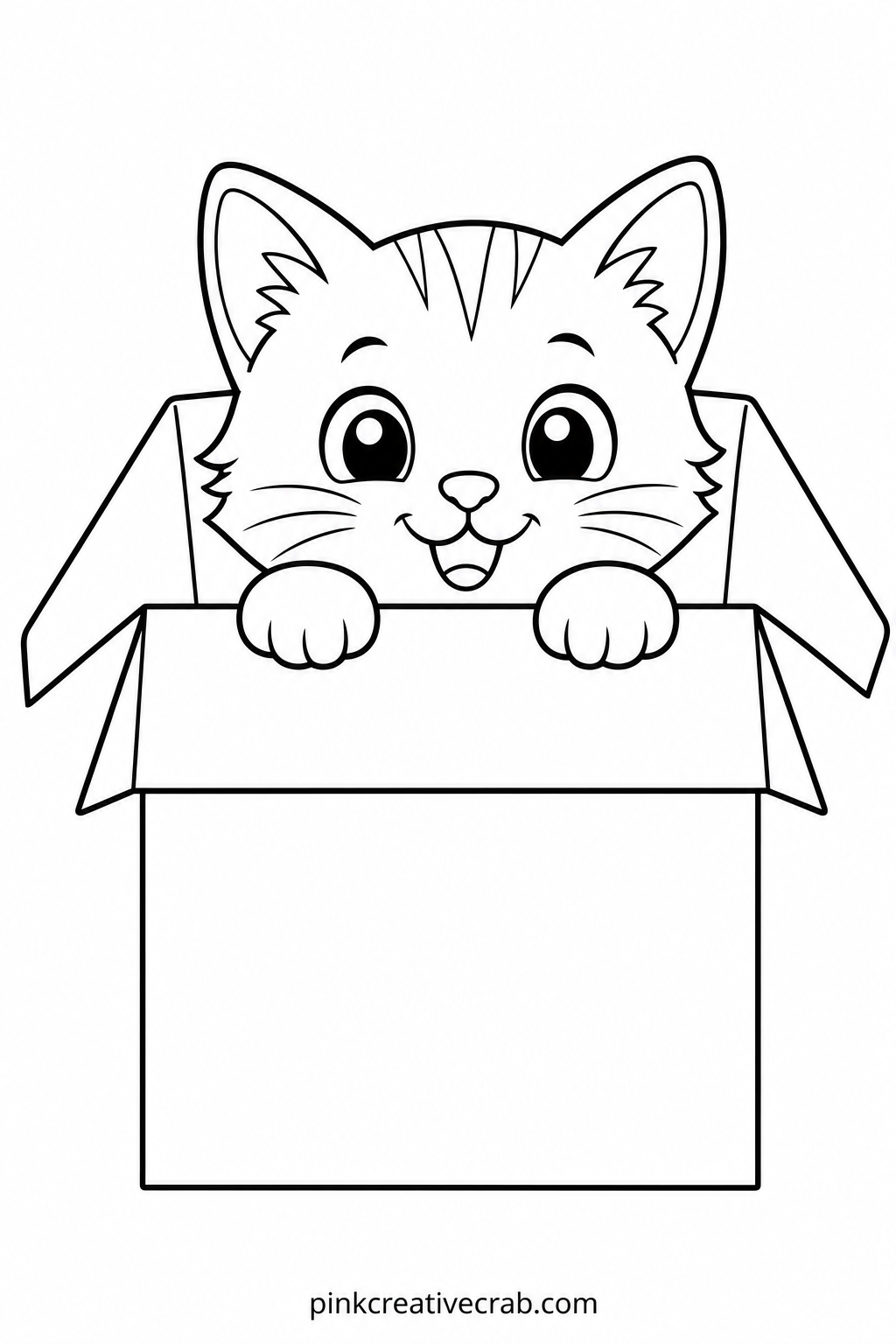
Suits a child who wants an easy win fast, since the box itself is just a few straight lines and the kitten’s face is the only part that needs patience. A grown up coloring alongside her can add a torn flap or a packing label on the box for extra detail.
Keep the inside of the box a plain tan or leave it white, so the kitten’s face stays the part that pulls the eye.
Start with a fine tip marker on the bag’s folded edges, since straight lines read cleaner with a marker than a pencil, then switch to colored pencil for the cat’s fur so it can be blended softly at the edges.
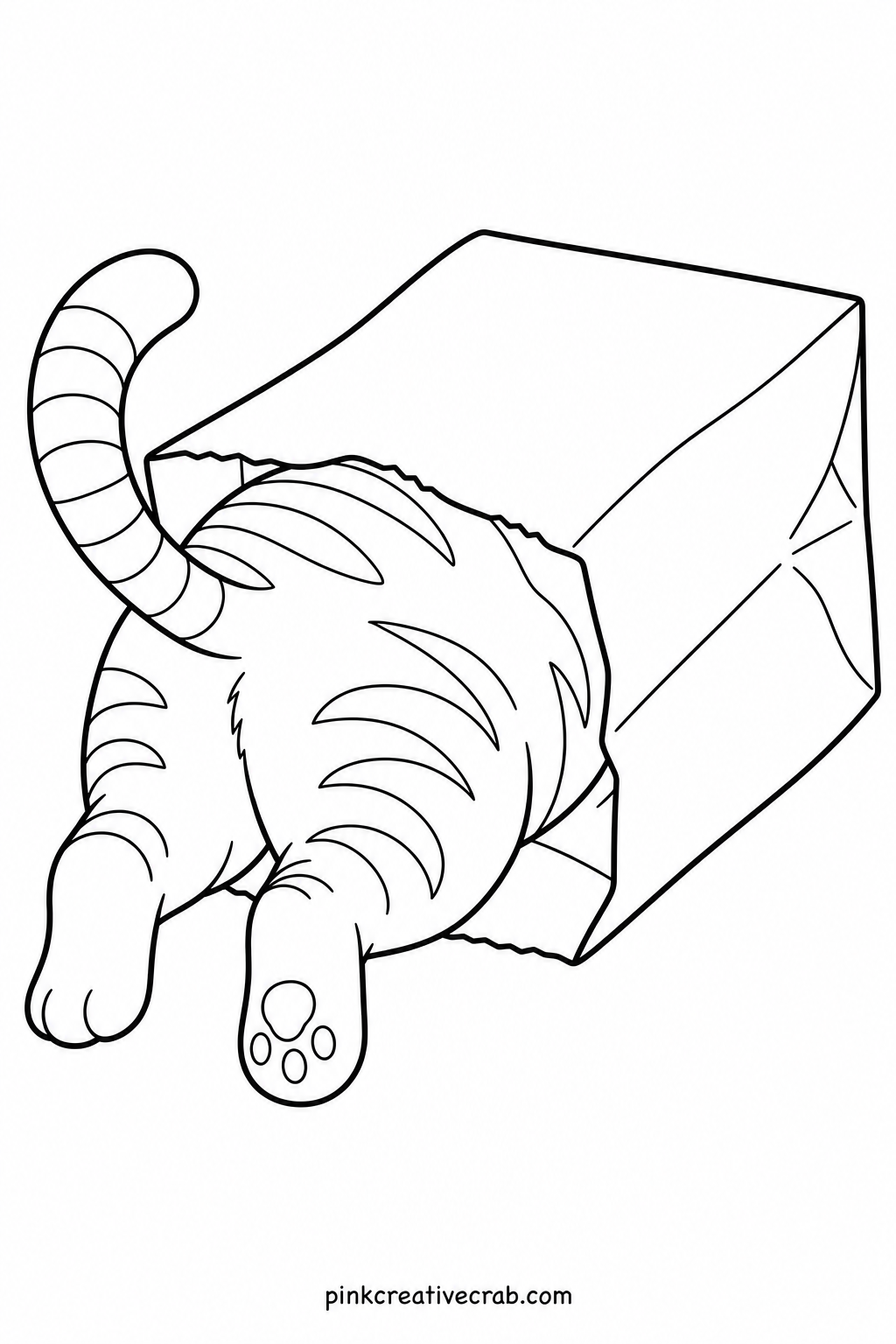
This one pairs naturally with the kitten in the cardboard box page above, since both sheets share the same prop but a different mood: one is curious, this one is flat out asleep.
Color them back to back and tape them side by side on a wall or fridge for a tiny two part story about one lazy afternoon.
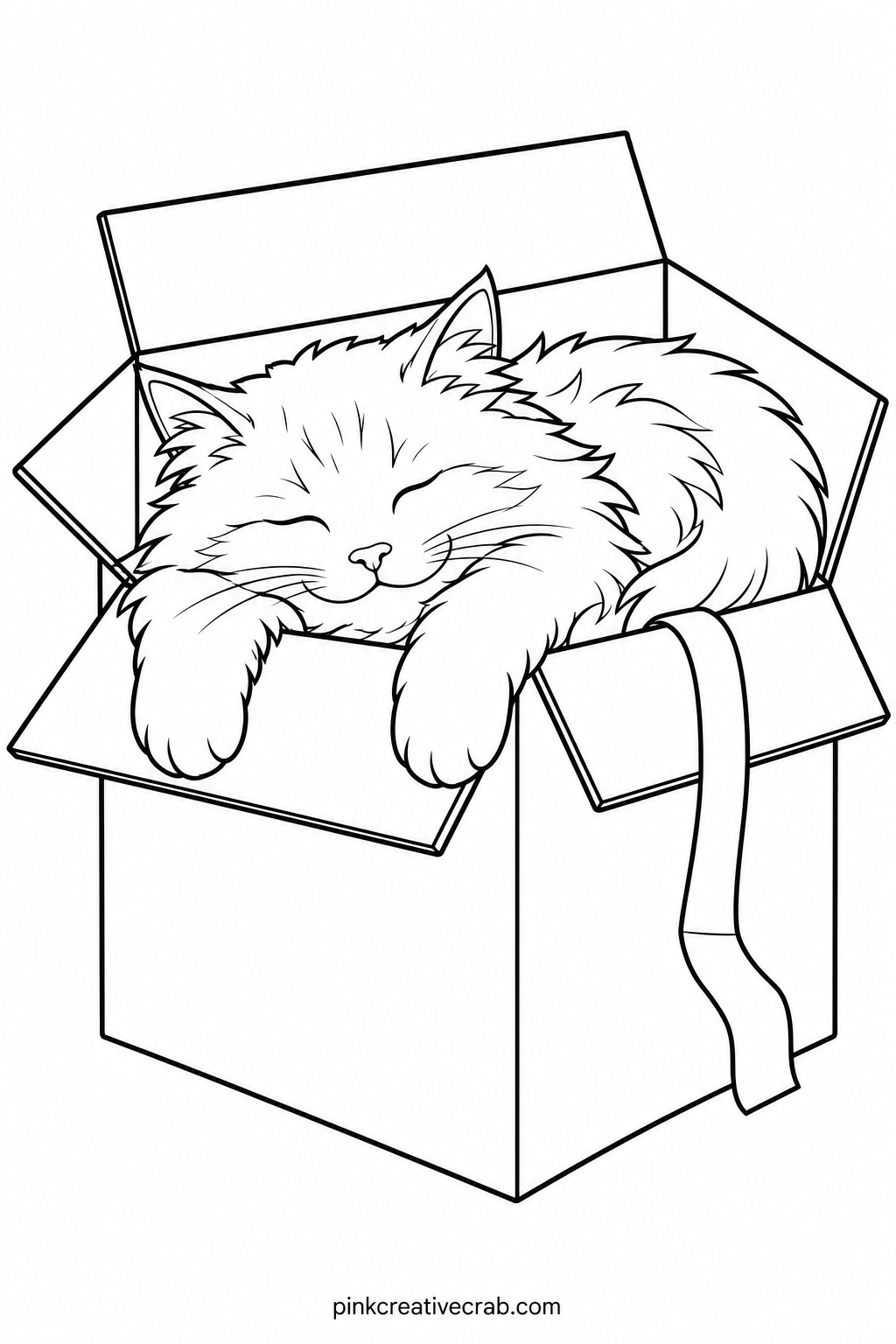
Kitchen Trouble
The usual mistake here is coloring the mug and the cat in similar shades so the eye cannot tell what is falling, so pick a mug color that stands apart sharply from the cat’s coat and the shelf behind it.
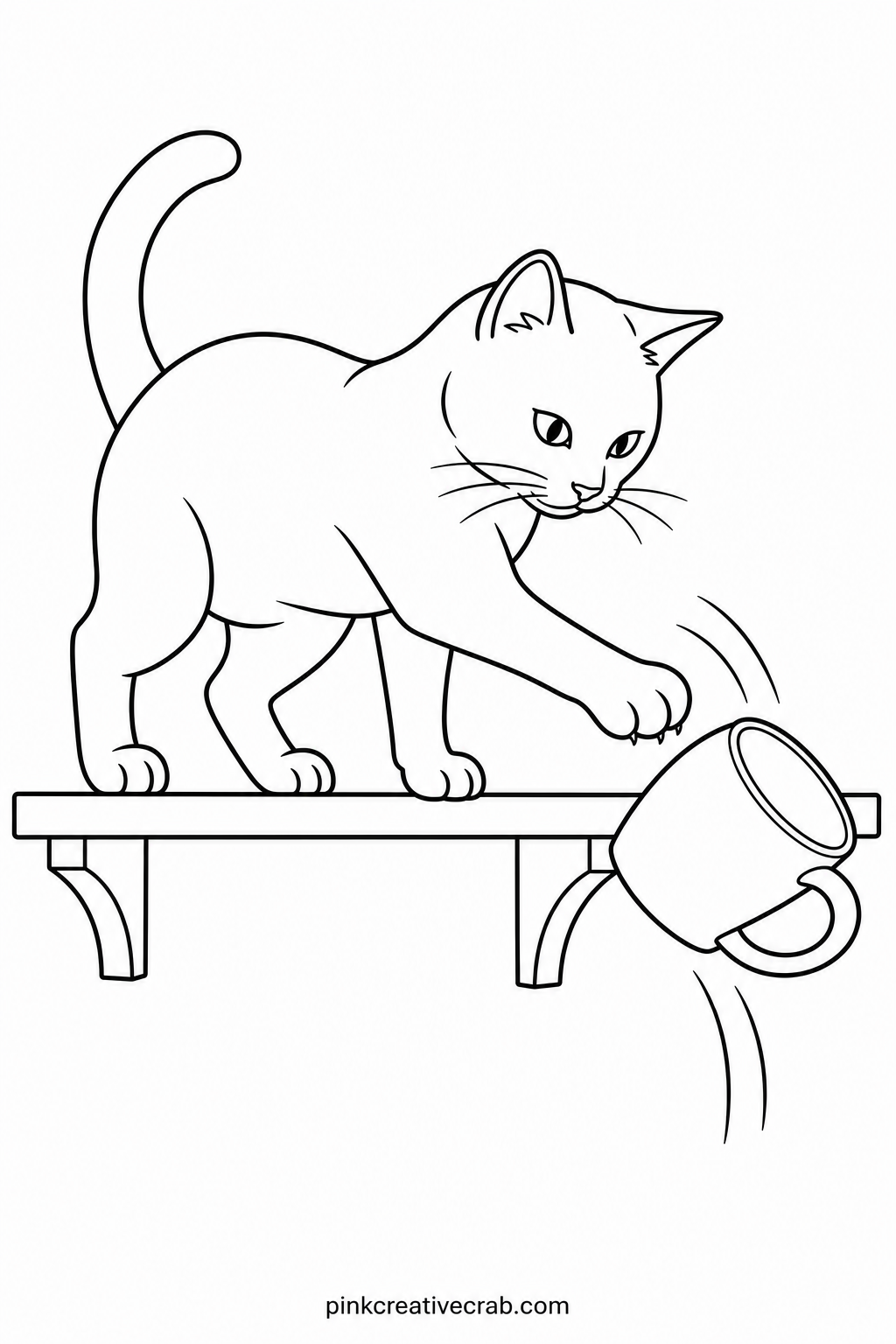
Give this one about ten minutes: a quick wash of blue or grey for the sink basin, a single warm color for the cat, and leave the faucet uncolored so it reads as shiny metal against everything around it.
No need to add water drops or steam unless there is time left over, the page holds up fine as a simple two color sketch.
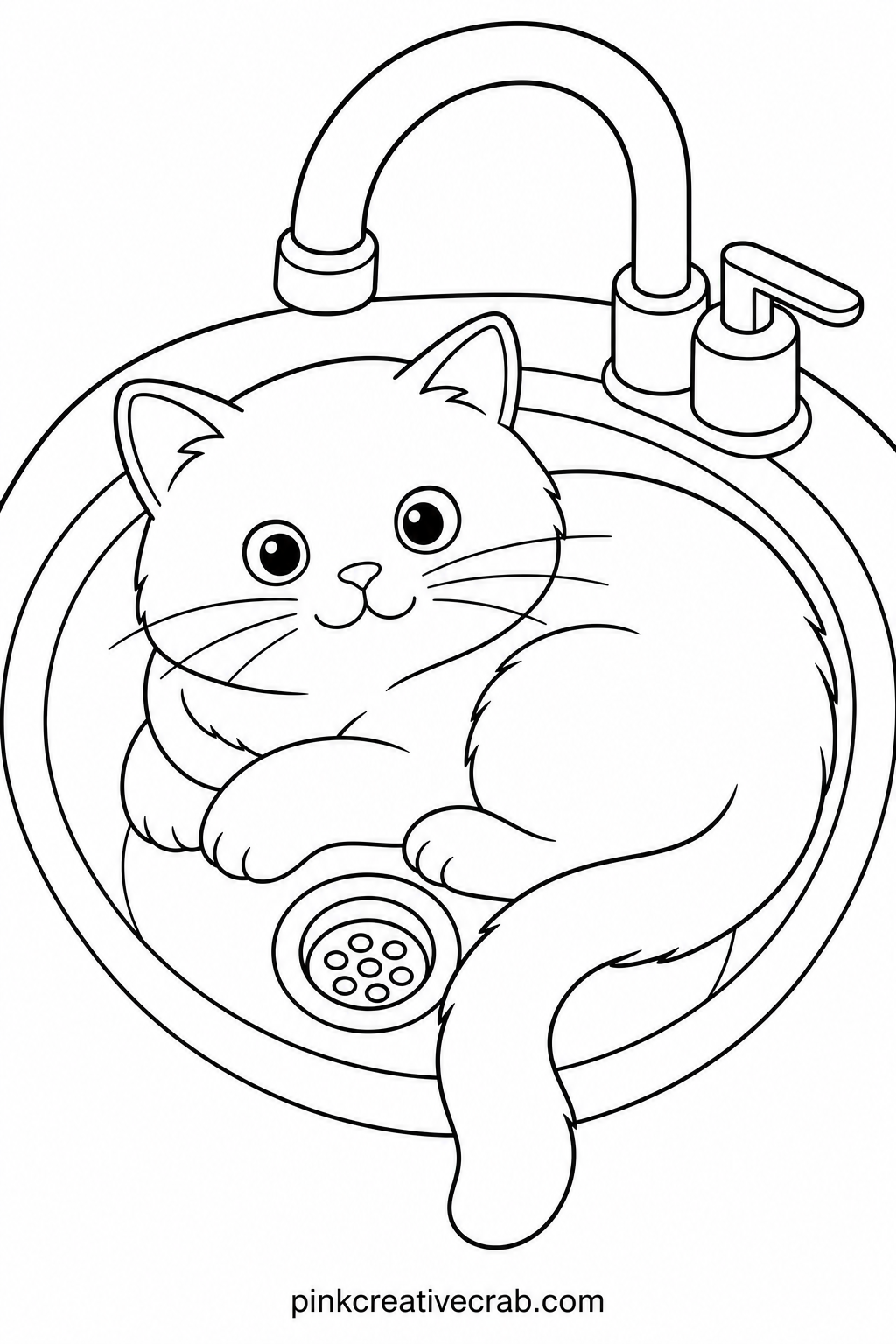
Works well for a cat lover who grew up with a food thief of her own, since the scene asks for a knowing laugh rather than careful technique, and for an older child who enjoys drawing in extra crumbs or a dropped fork once the main shapes are filled in.
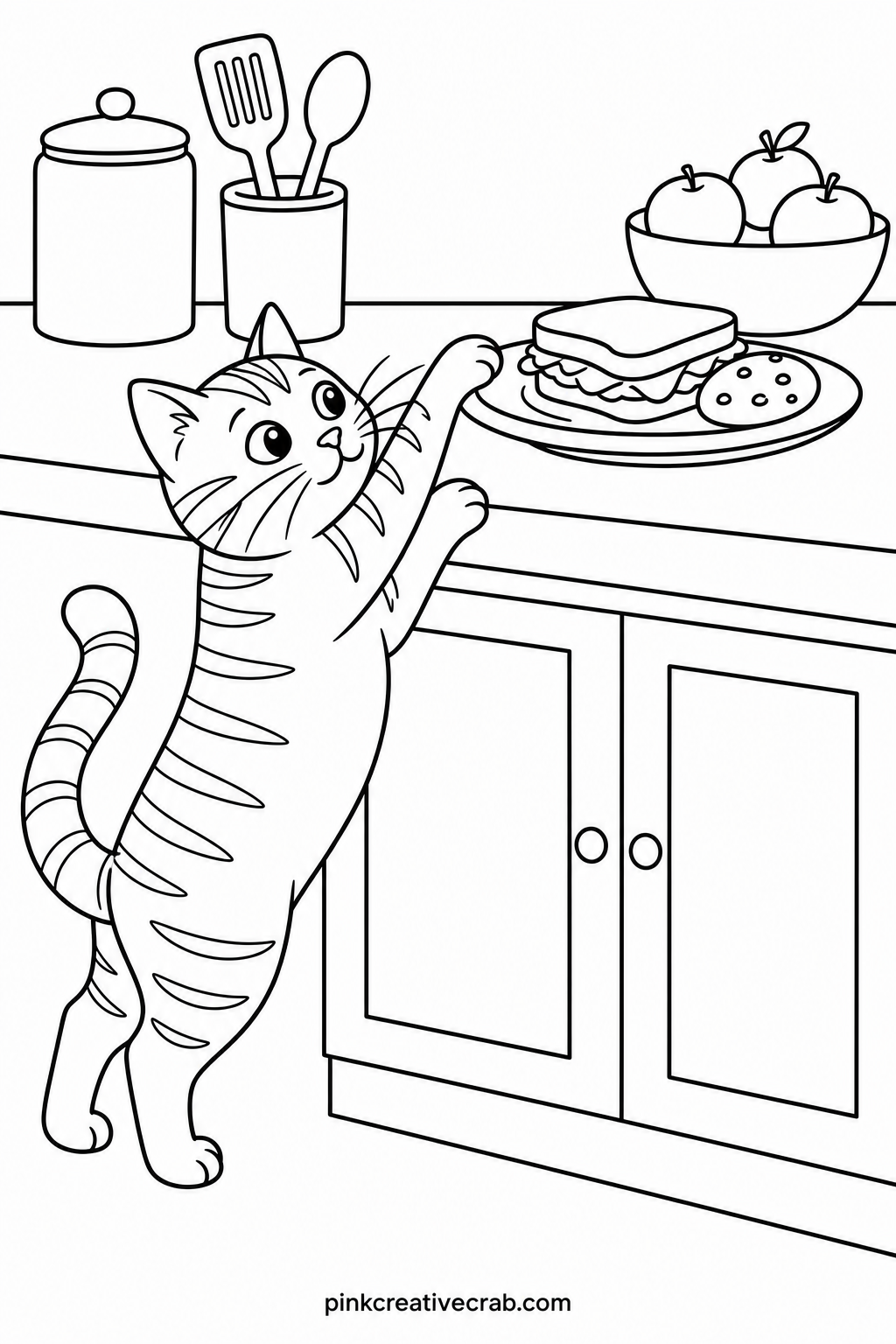
Yarn And Toy Chaos
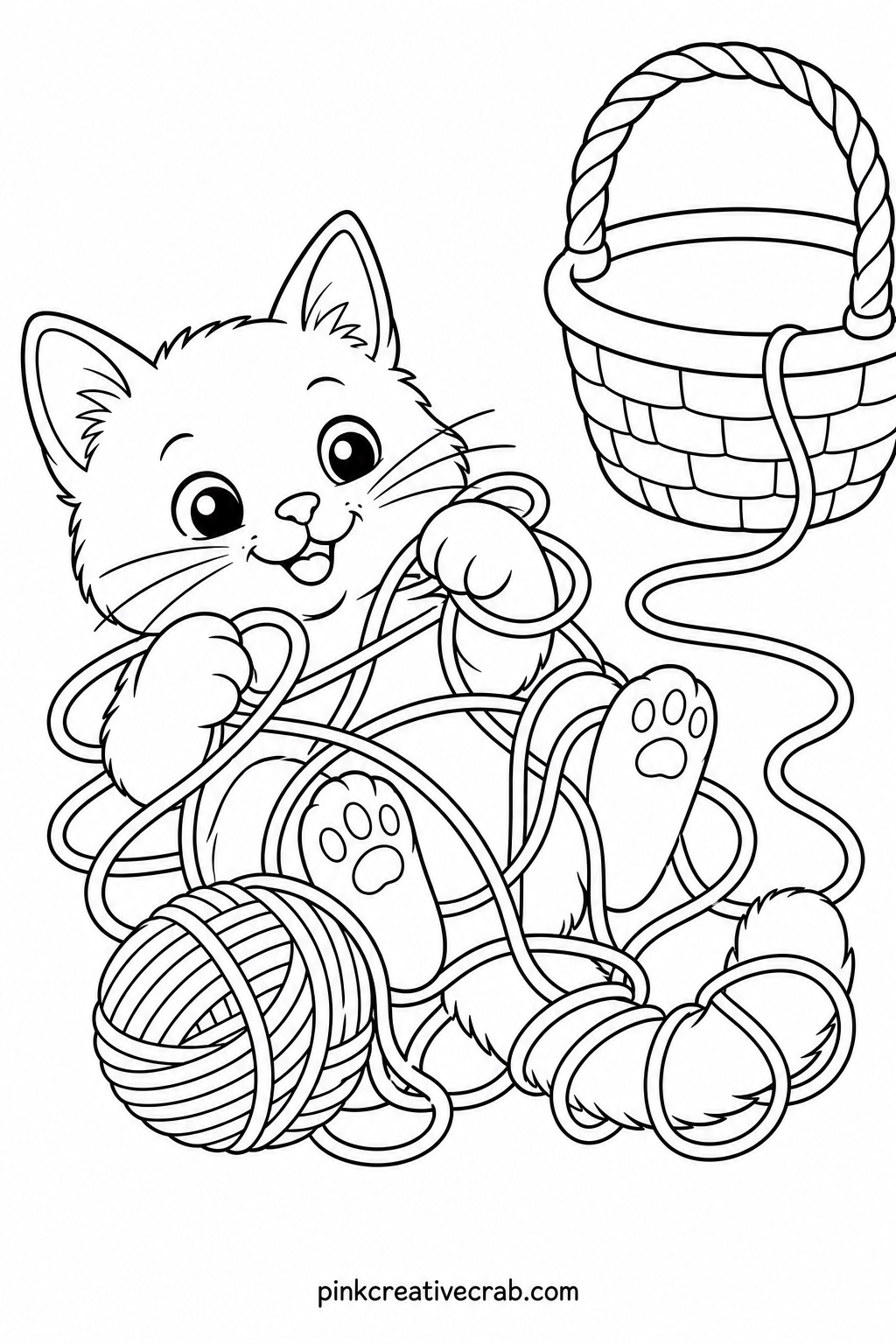
Color the yarn strands first in one bold color before touching the kitten, since the lines cross and loop across most of the page and get harder to follow once other colors are added around them.
Leave a few small gaps of white paper between the yarn loops rather than filling every inch, it keeps the tangle looking light instead of heavy and dark.
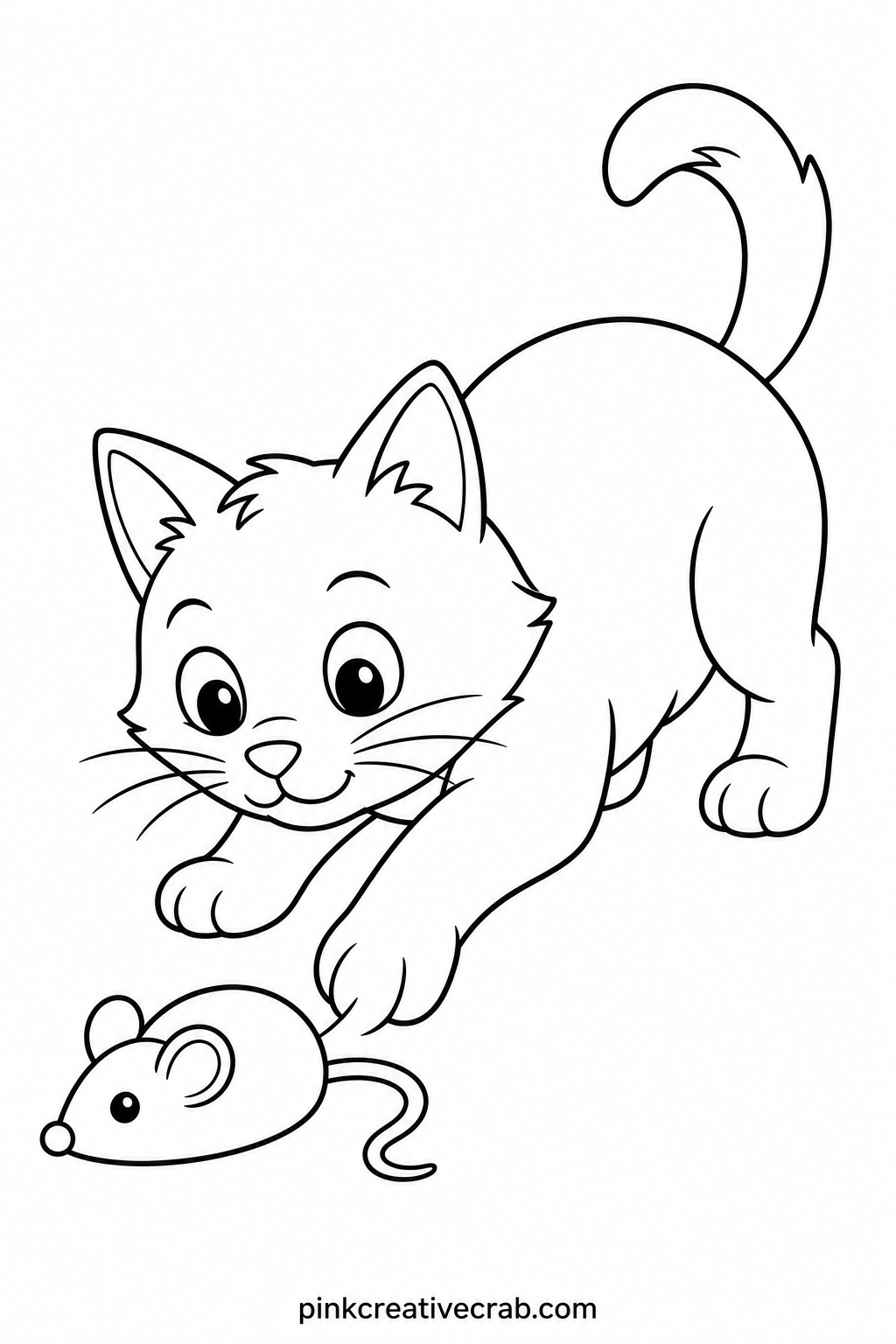
Ask a child coloring this page what she thinks the toy mouse smells like to a cat, or whether the cat is winning or losing the fight, small questions like that keep young hands coloring longer than silence does.
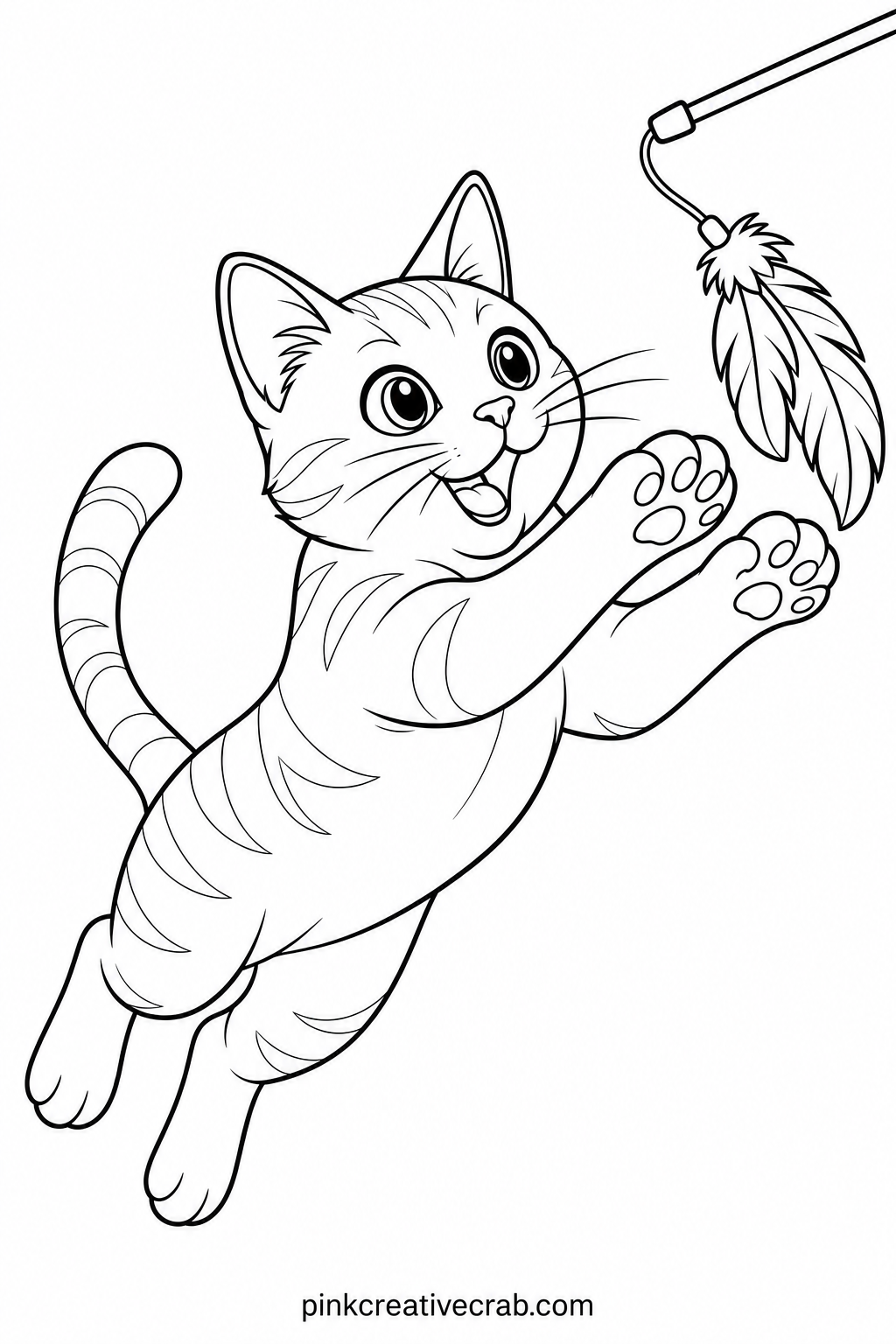
This page suits a reader with a steady hand and a little patience, since the feather toy has several thin overlapping strands that reward slow careful coloring over quick scribbling.
Readers who enjoy this kind of linework might also like the ideas in Cute Cat Doodles: 14 Easy Ideas for Total Beginners, which cover a similar playful mood in sketch form.
Cozy And Sleepy Cats
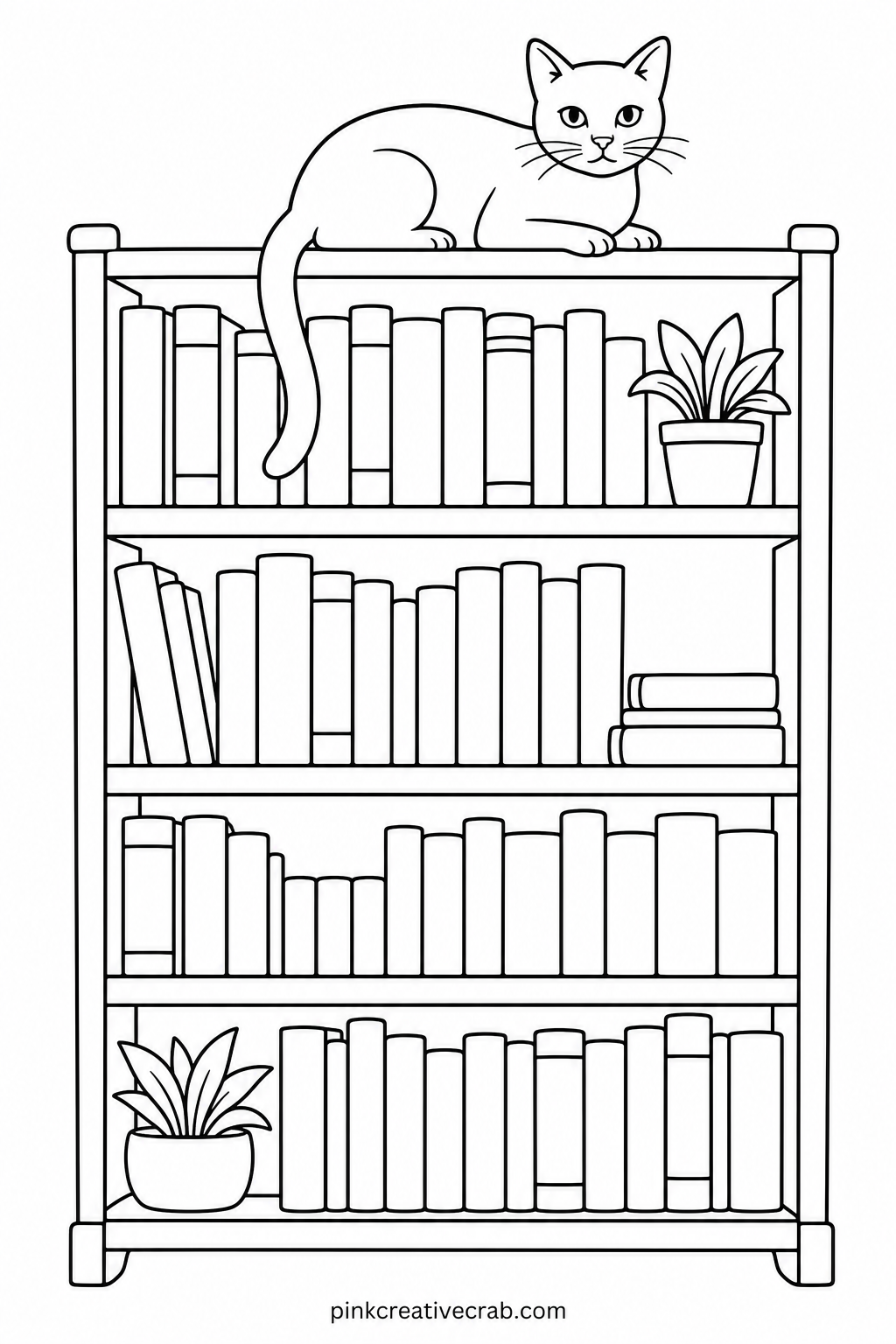
A gel pen works well on the spines of the books for tiny title marks, while a broad colored pencil suits the wide flat area of the cat’s curled body resting across the top of the stack.

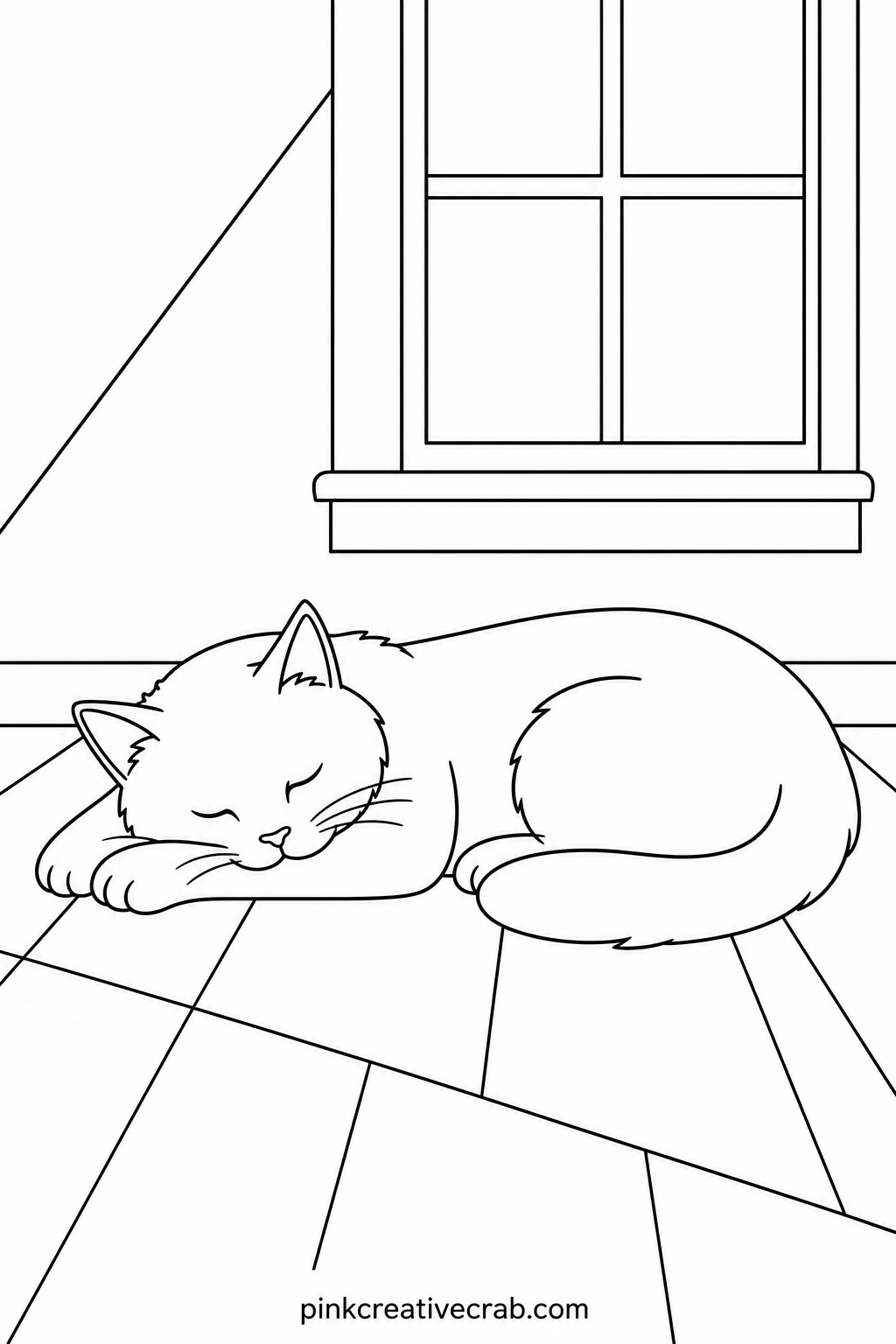
Leave the sunbeam itself uncolored, just a plain shape of white paper cutting across the floor, and let every other part of the page carry color around it.
That one patch of white does more to suggest sunlight than any yellow pencil could, and it is the kind of trick worth reusing on other pages with a window or a lamp.
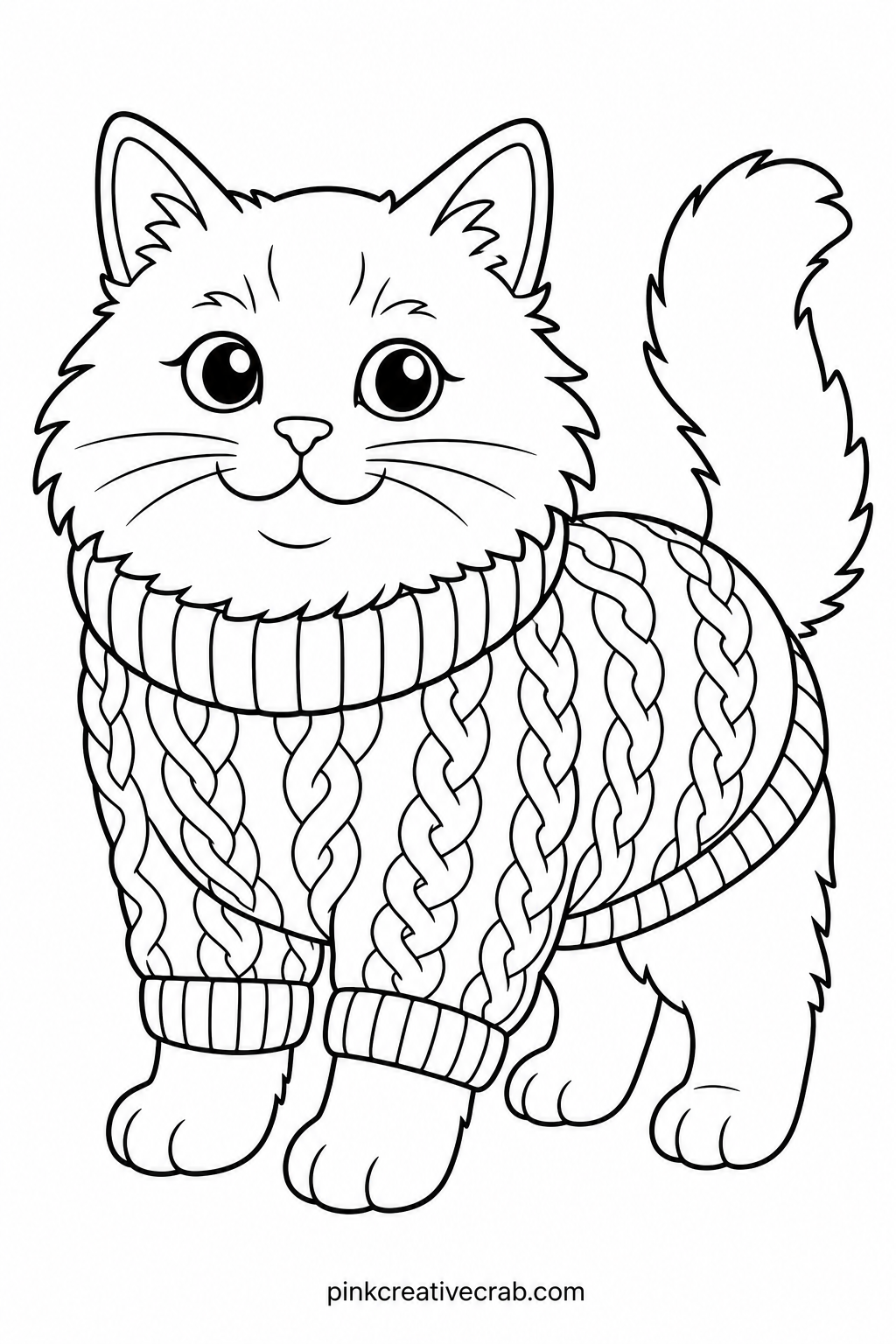
Only the cat’s face and one paw peek out from a thick folded blanket, so most of the page is soft fabric folds that a young child can scribble over freely while an adult coloring the same sheet adds a small knit pattern along the blanket’s edge.
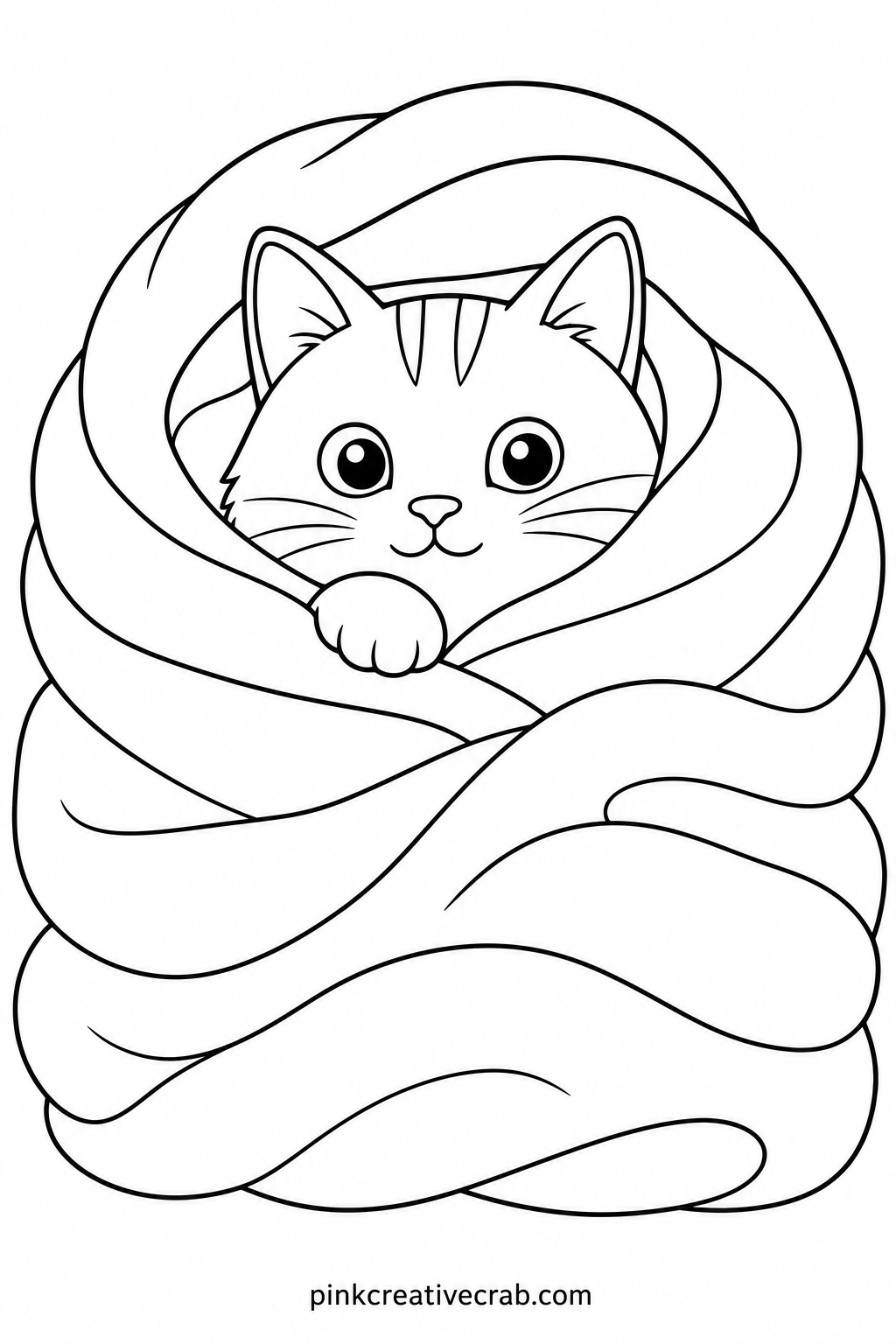
Pair this page with the cat curled in a sunbeam for a short run of calm, quiet sheets if the coloring session is winding down and energy is running low.
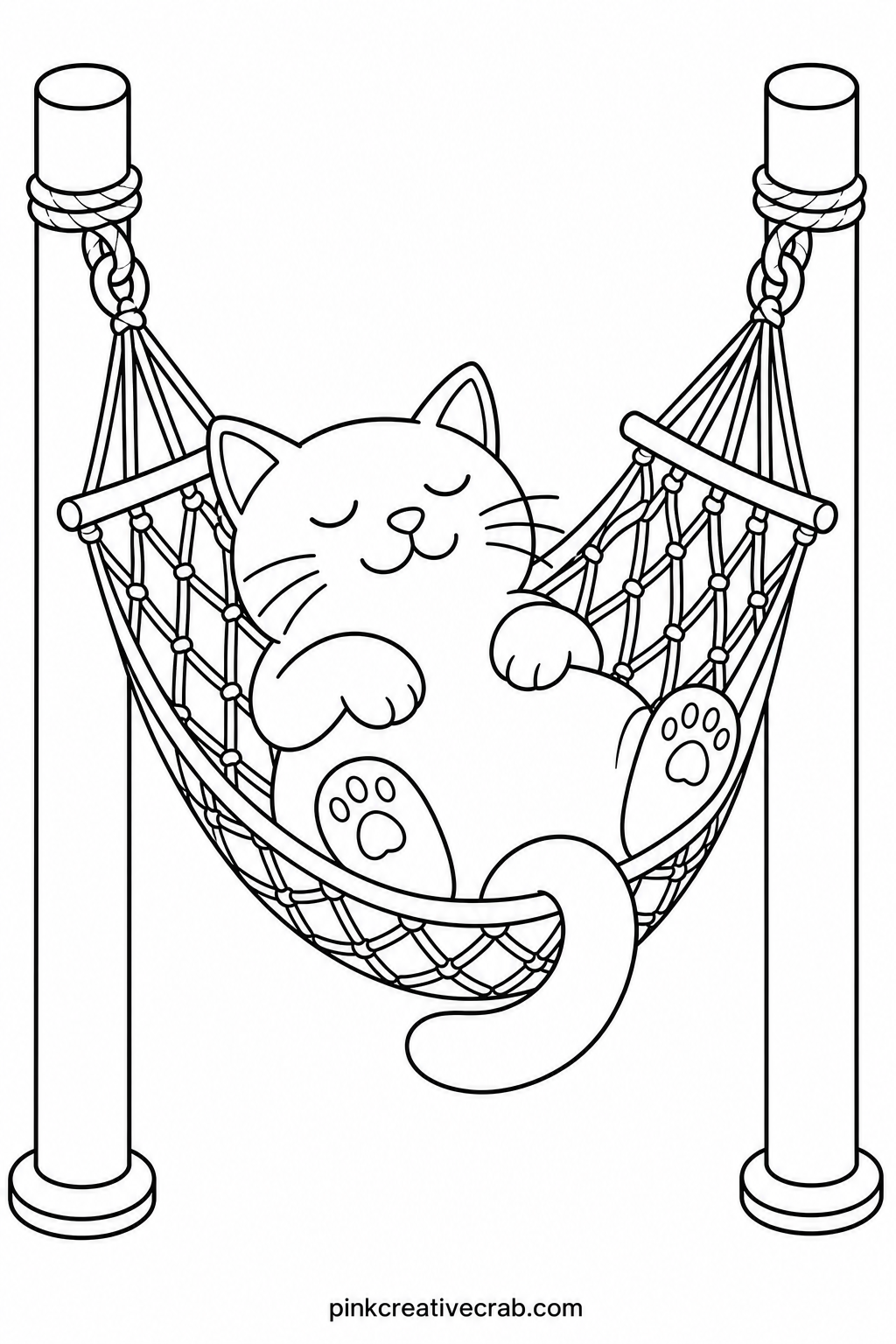
The hammock ropes give a steady repeating shape that is easy to color in one sitting without much planning ahead.
Window Watching
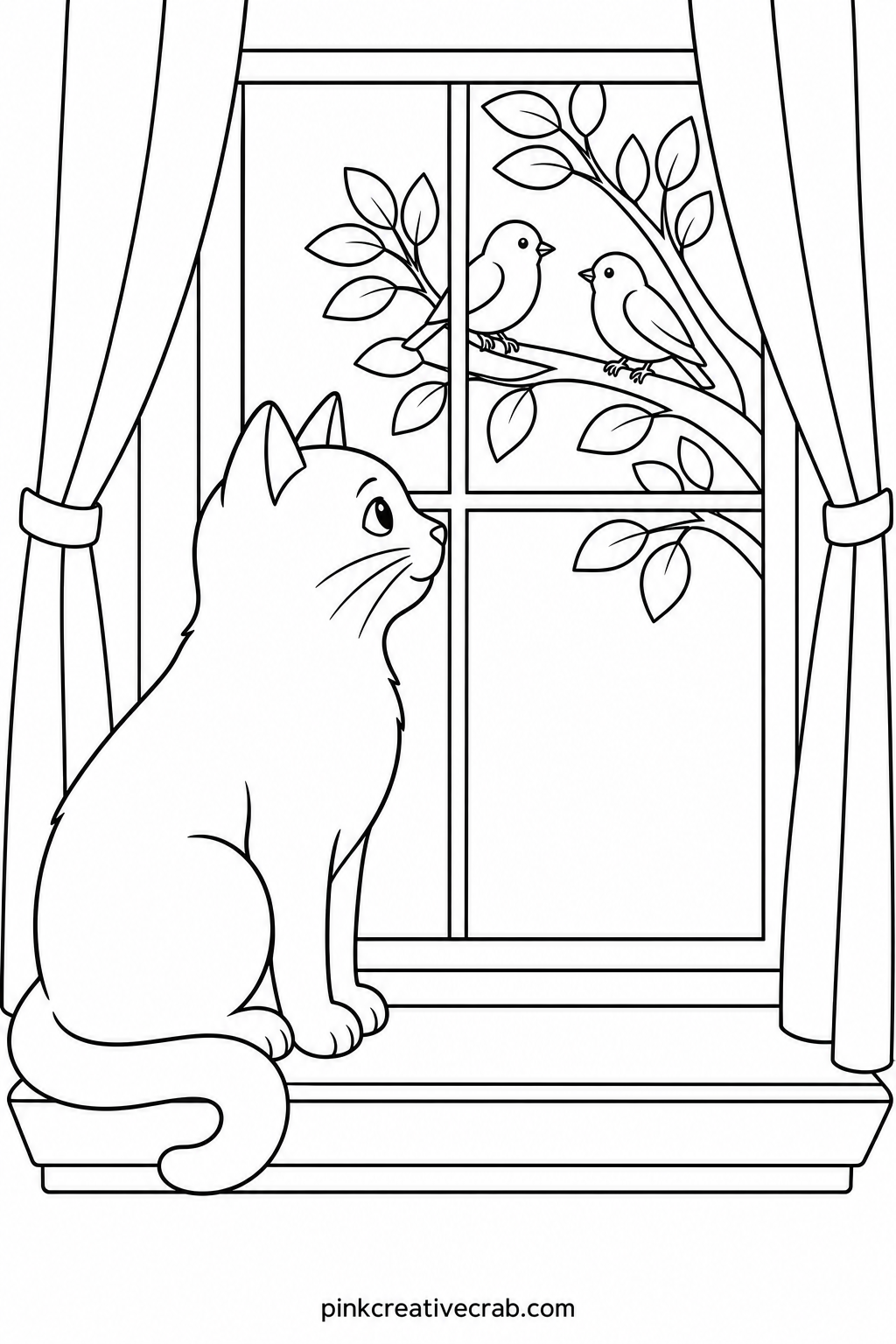
Start coloring at the window frame and work outward, since it anchors the whole page, then move to the cat’s body and finish with the two small birds sitting on a branch just outside the glass.
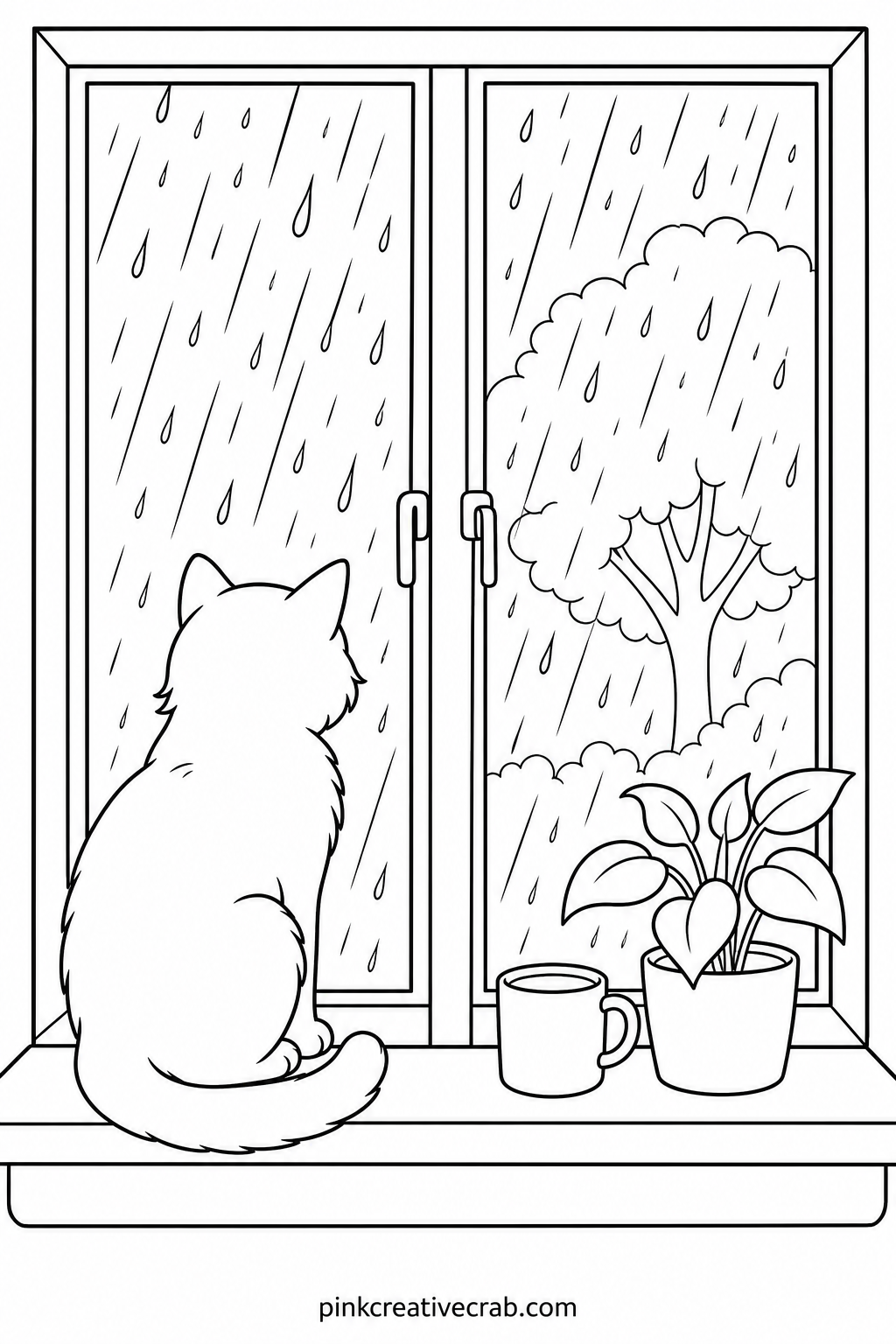
This suits an older child or an adult who likes a quieter subject, since the rain lines running down the glass take a steadier hand than a bold cartoon scene would.
A single cool grey or blue for the rain streaks, kept thin and even, does more for the mood than filling every drop in a different shade.
Readers drawn to this quieter, more detailed side of cat subjects may want to look at Cat Pencil Drawing: 14 Fun Ideas for Absolute Beginners for ways to take a favorite page further with shading and graphite.
Dressed Up Cats
Once colored, this page makes a simple gift tag or a small card front for a cat loving friend, especially if trimmed close and glued onto a folded piece of plain cardstock.
Fans of pairing cats with handmade paper projects might enjoy browsing Junk Journaling: The Complete Beginner to Advanced Handbook for more ways to put finished pages like this one to use.
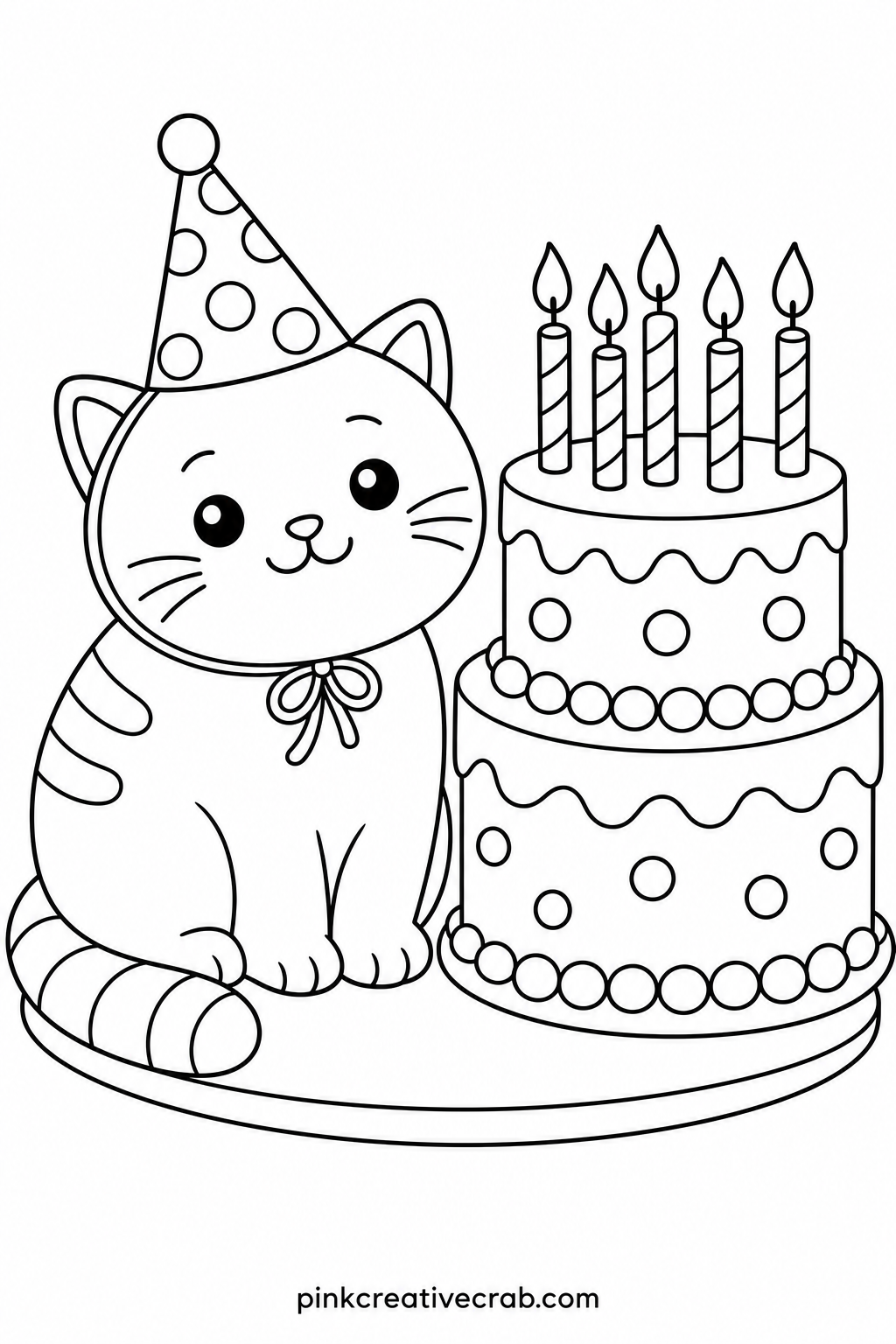
A small child can keep this one simple with flat bold colors on the hat and the cake, while an adult coloring the same page might add thin candle flames or a pattern of dots across the frosting for extra texture.
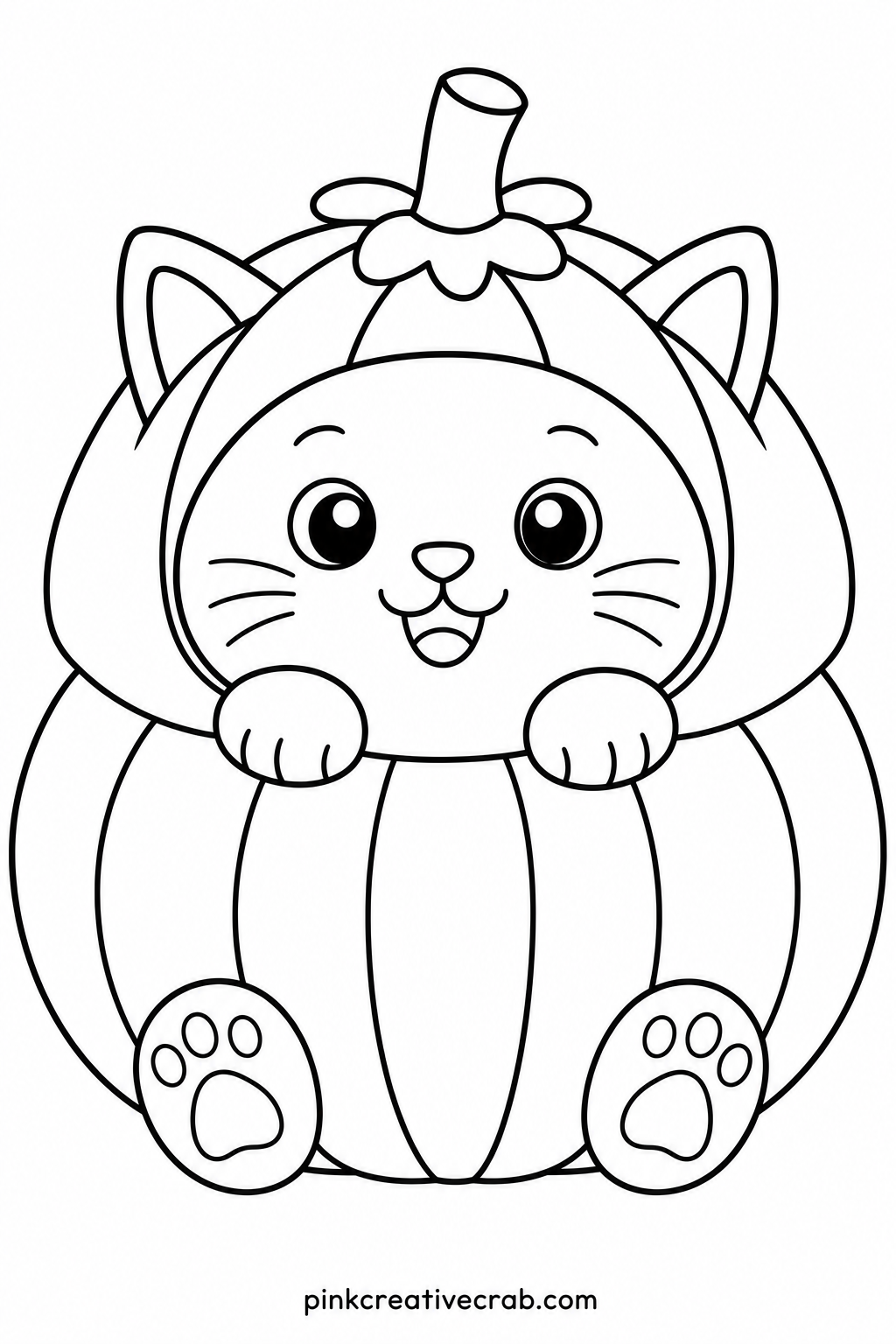
One sentence covers the usual slip here: coloring the pumpkin costume the exact same orange as a plain jack o lantern, which flattens the page, so push the costume toward a deeper rust or burnt orange instead.
That contrast keeps the costume reading as fabric and the cat’s face standing out clearly in the middle of it.
What to Do Next
Print the pages one at a time or the whole set at once, and let whichever cat moment feels most familiar go first.
Frequently Asked Questions
What paper works best for these cat coloring pages?
Plain printer paper is fine for a quick coloring session with pencils or crayons. For marker work or a page headed for framing or a card, switch to a heavier cardstock around 90 to 110 lb so ink does not bleed through or wrinkle the sheet.
What printer settings give the cleanest lines?
Print at the highest quality or best photo setting available rather than draft mode, which can thin out fine lines. A laser printer holds crisp black lines especially well if the pages will later be colored with wet markers or watercolor pencils.
Can kids and adults color the same set together?
Yes, every page in this set has simple large shapes a young child can fill in quickly, plus smaller details like yarn strands or knit patterns an adult can add for extra depth. Sitting side by side with the same page works just as well as splitting different sheets between them.
What is the best way to color these pages, pencils or markers?
Colored pencils suit the softer fur areas and allow blending at the edges, while fine tip markers work well on straight props like shelves, windows and mugs. Many pages in this set use both: pencil for the cat, marker for the surroundings.
What can be done with the finished pages?
Trim the border and tape a few together for a small wall display, glue one onto folded cardstock for a handmade card, or punch a hole in the corner and string several onto ribbon for a simple garland. Heavier cardstock holds up best for any of these.
Have any thoughts?
Share your reaction or leave a quick response — we’d love to hear what you think!
-
 0
0 -
0
-
0
-
0
-
0
-
0


