A reading painting is the easiest way to put two loves on one page: the quiet pleasure of a good book and a scene you actually want to look at while it dries. Every idea here drops a woman or a girl into a new spot with her nose in a story, from a library ladder to a ski lift, so you never run out of places to send her.
You will find 37 scenes below, each built from flat gouache shapes with a warm, cozy palette so you can mix once and paint several in an afternoon. Pick whichever place matches your mood today, mustard beach umbrella or snowy window seat, and work through the steps in the text to finish it in one sitting.
Using these images: free for personal projects such as printing, coloring, cards, journals and gifts. Handmade items that include them may be sold up to 30 pieces per design. More than that is commercial use and is not permitted, and neither is selling or sharing the images themselves or passing them off as your own. Please ask before any other use.
Start with the window frame, since everything else in this scene sits inside it. Paint a simple rectangle in a soft sage or dusty pink for the train wall, then leave a lighter rectangle for the window and drop a quick landscape blur behind the glass with two or three horizontal strokes.
Block in the girl’s shape next: a mustard sweater, a simple oval head tilted down toward the book, her knees drawn up against the seat. Keep the book itself tiny, just a folded triangle of pale paper in her hands, because a book that is too detailed pulls the eye away from her face.
If the window view goes muddy, scrape it back with a damp brush while still wet and simplify to a single tree shape and a strip of sky. If you do not have gouache yet, flat acrylic with a little water does the same flat-shape job.
Finish with one warm highlight of light along her cheek from the window side, so she reads by borrowed daylight.
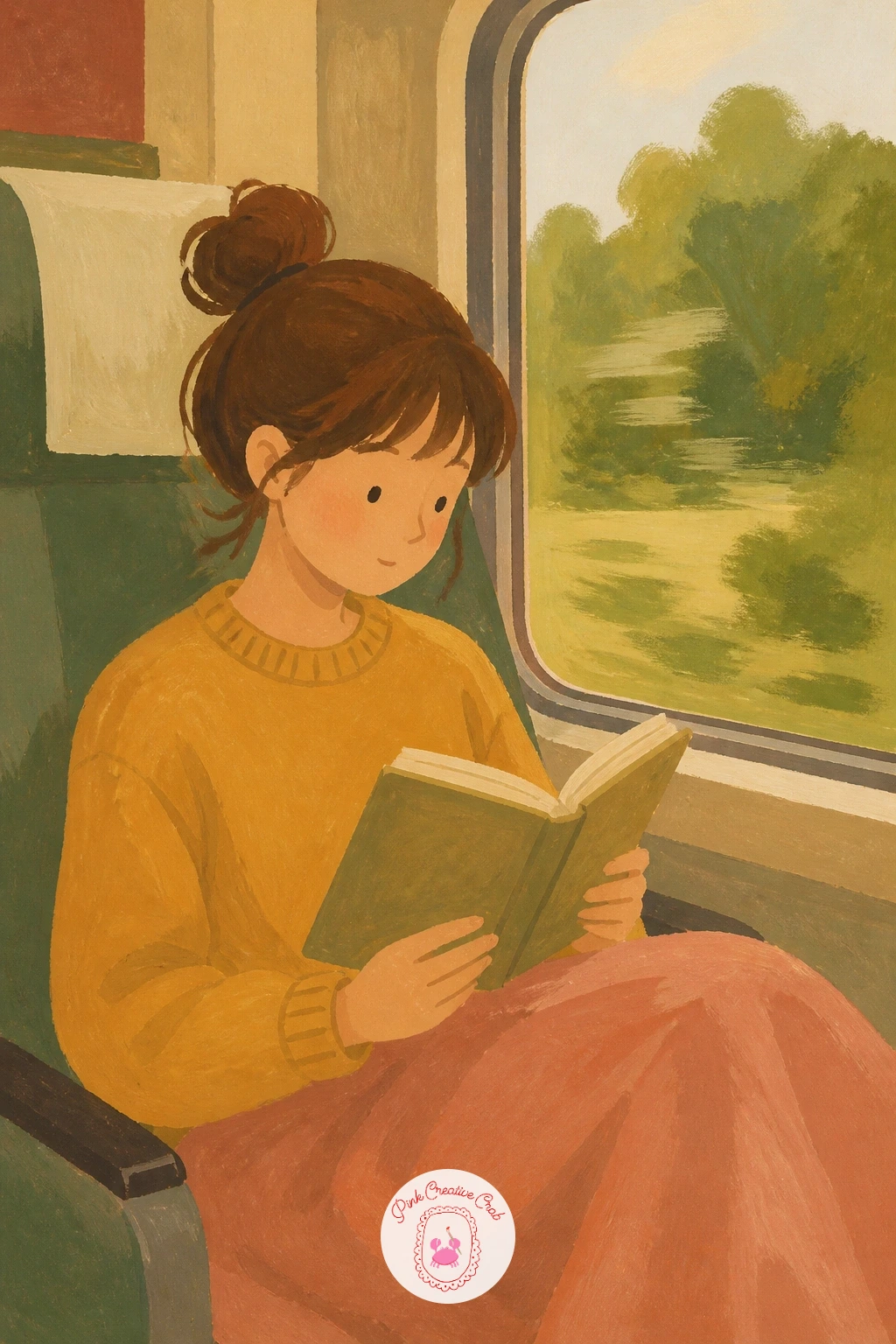
Palette: Sage Green,Mustard Yellow,Dusty Pink,Payne’s Grey
Work out from the umbrella first, since it sets the eye level for everything underneath it. Paint the striped canopy as a simple fan of terracotta and cream triangles meeting at a center point, angled slightly as if seen from a low beach chair looking up.
Underneath, lay in a reclining figure in a dusty pink swimsuit, long legs stretched toward the viewer, sunhat tipped forward so her face sits in shade. Paint the sand as one flat warm tone and let the umbrella’s shadow fall across her legs in a slightly darker sage-grey, which does more to sell the sun than any detail in her face.
Where beginners lose the shape is the stripes: paint the umbrella as one solid color first, let it dry fully, then add the stripe lines on top so they curve with the fabric instead of sitting flat and straight. No striped reference handy, just alternate two colors you already like.
Add a tall glass with a straw beside her chair as the one cozy detail that finishes the scene.
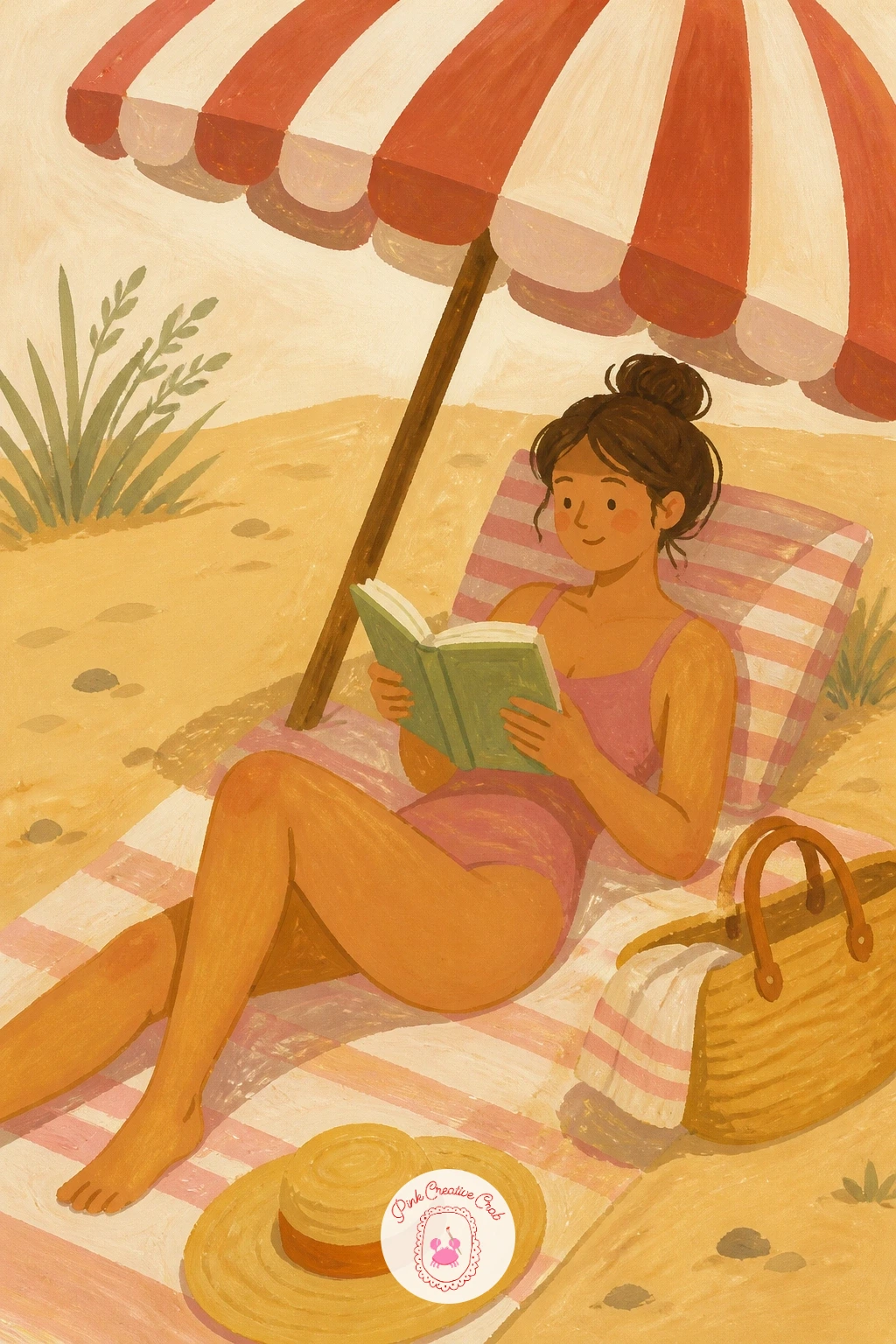
Palette: Terracotta,Cream,Dusty Pink,Sage Green
Hang the hammock before you paint the woman in it, since its curve decides how she will lie. Sweep one wide, sagging crescent of mustard or terracotta fabric between two simple tree trunks, letting the middle dip lower than the ends.
Lay her along that curve: one arm behind her head, the book propped on her knees, her whole body following the hammock’s sag rather than a straight line. Round treetops in sage green with a scatter of small red dots for apples fill the space above and behind her.
If the hammock looks stiff, soften the rope lines at each end with a thin brush so they bow slightly under her weight instead of standing rigid. No two trees to reference, one is enough if you tuck the far end of the hammock behind a painted trunk.
Drop a few fallen apples in the grass below for a small, cozy finishing detail.
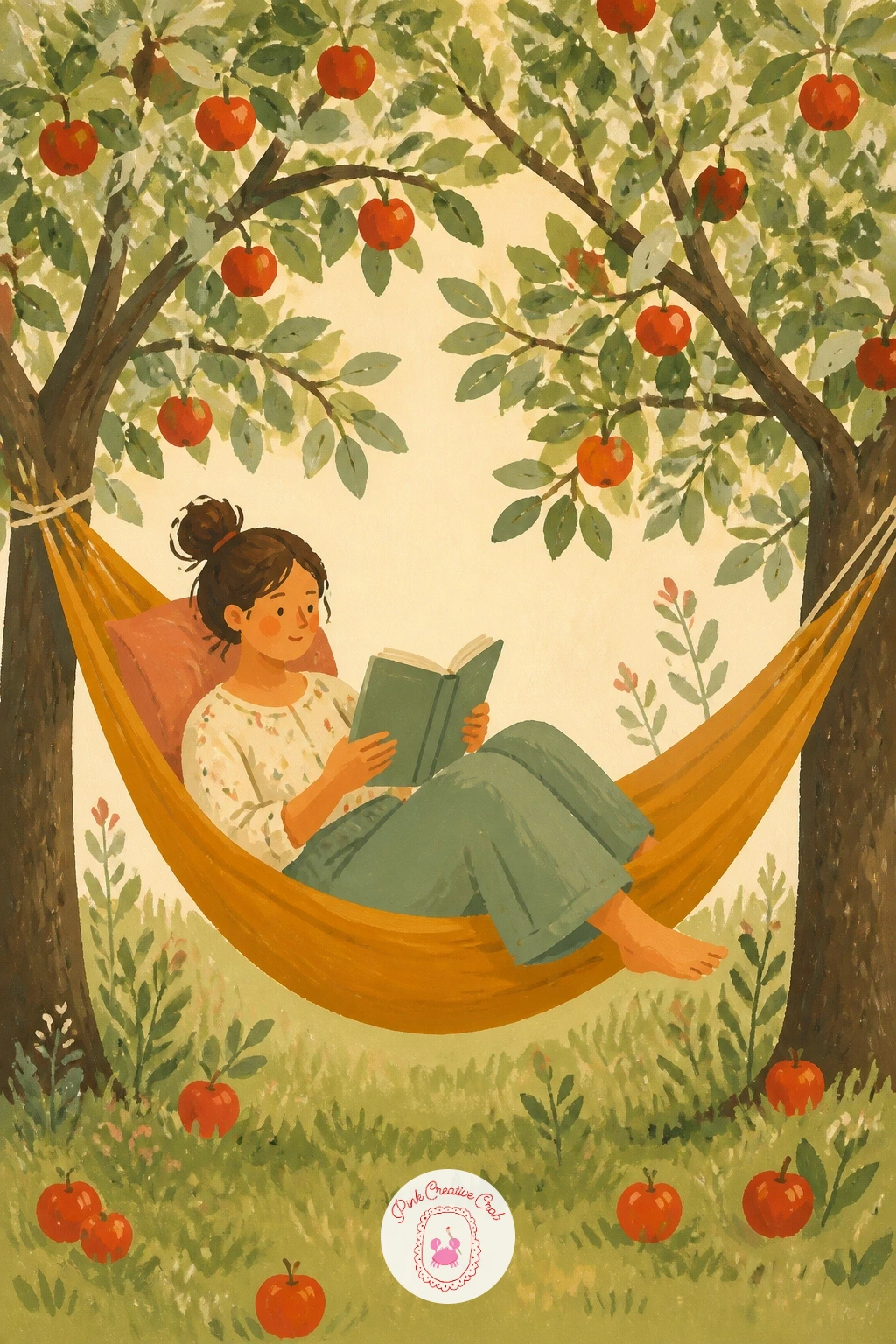
Palette: Mustard Yellow,Sage Green,Terracotta,Cream
Set the eye level low, at table height, since this whole scene is about looking across a small round table rather than down at it. Paint the tabletop as a simple oval in cream, with a coffee cup and a golden croissant as two quick shapes before you even start on the woman.
Build her above the table in a dusty pink cardigan, elbows resting near the cup, head bowed over an open book held flat with both hands. Keep the cafe background soft and out of focus, just a warm terracotta wall and a blurred shape or two, so the table stays the clear center of attention.
The croissant is the easy part to get wrong: paint it as one curved mustard shape first, then drag a dry brush lightly across the top for the flaky texture instead of trying to paint each layer. Swap in a muffin shape if a croissant feels fiddly.
Steam from the cup, two or three light curved lines, finishes the cozy feeling.
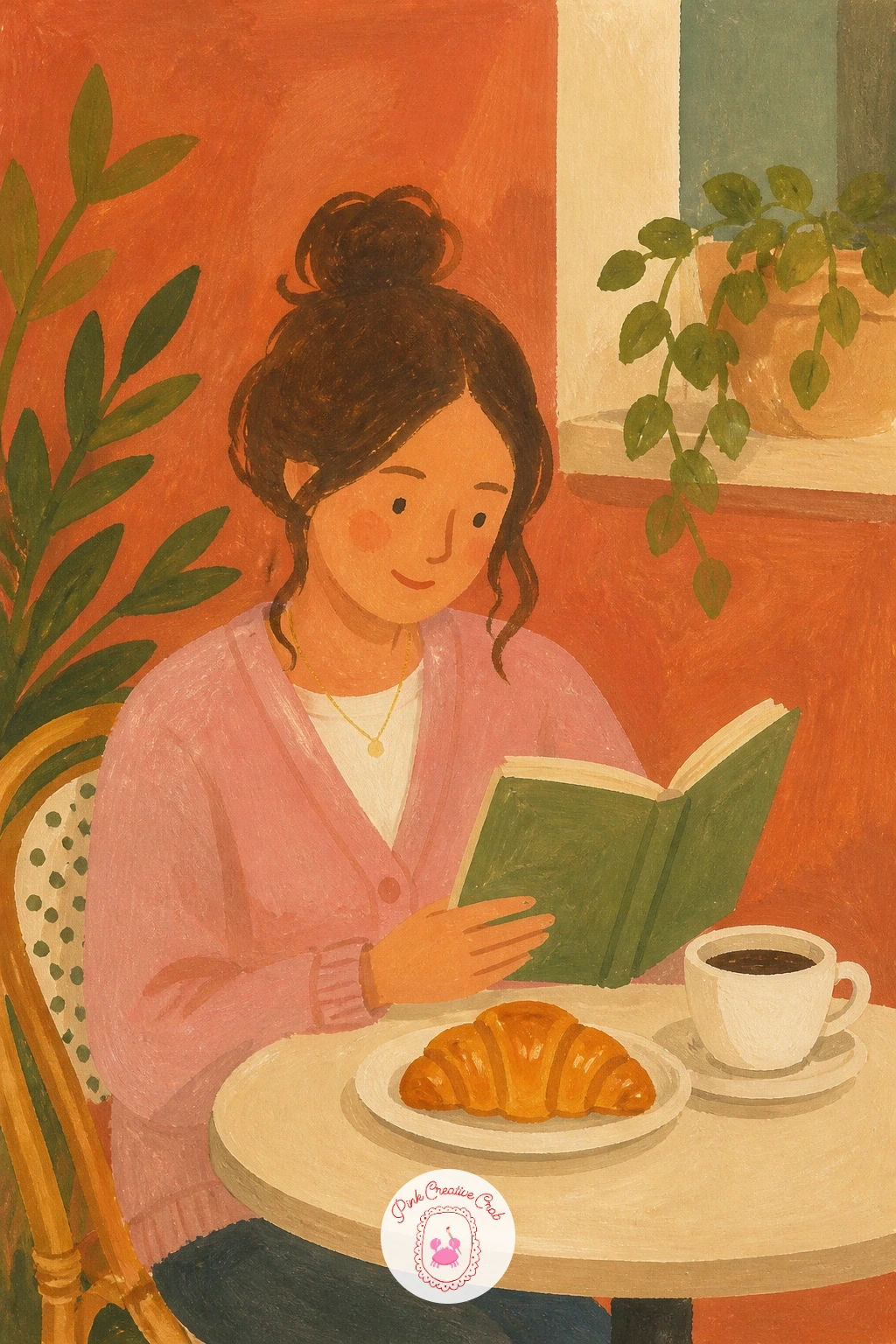
Palette: Mustard Yellow,Terracotta,Cream,Dusty Pink
Paint the bench first as a simple sage green plank shape, since the woman and the dog both need to sit convincingly on top of it. Keep the slats few and the perspective flat rather than trying to draw every board.
Place her at one end in a mustard coat, book held open on her lap, legs crossed toward the viewer. The dog curls into a comma shape at the other end of the bench, nose tucked under its tail, painted in one warm brown with a few darker strokes for the ear and paw.
Getting a sleeping dog to read as asleep rather than just lying down comes down to the eyes: leave them out entirely, or paint them as two closed curved lines, never open dots. If dogs feel tricky, a curled cat shape works in exactly the same pose.
A few fallen leaves or a dropped glove near her feet adds a small, true-to-life touch.
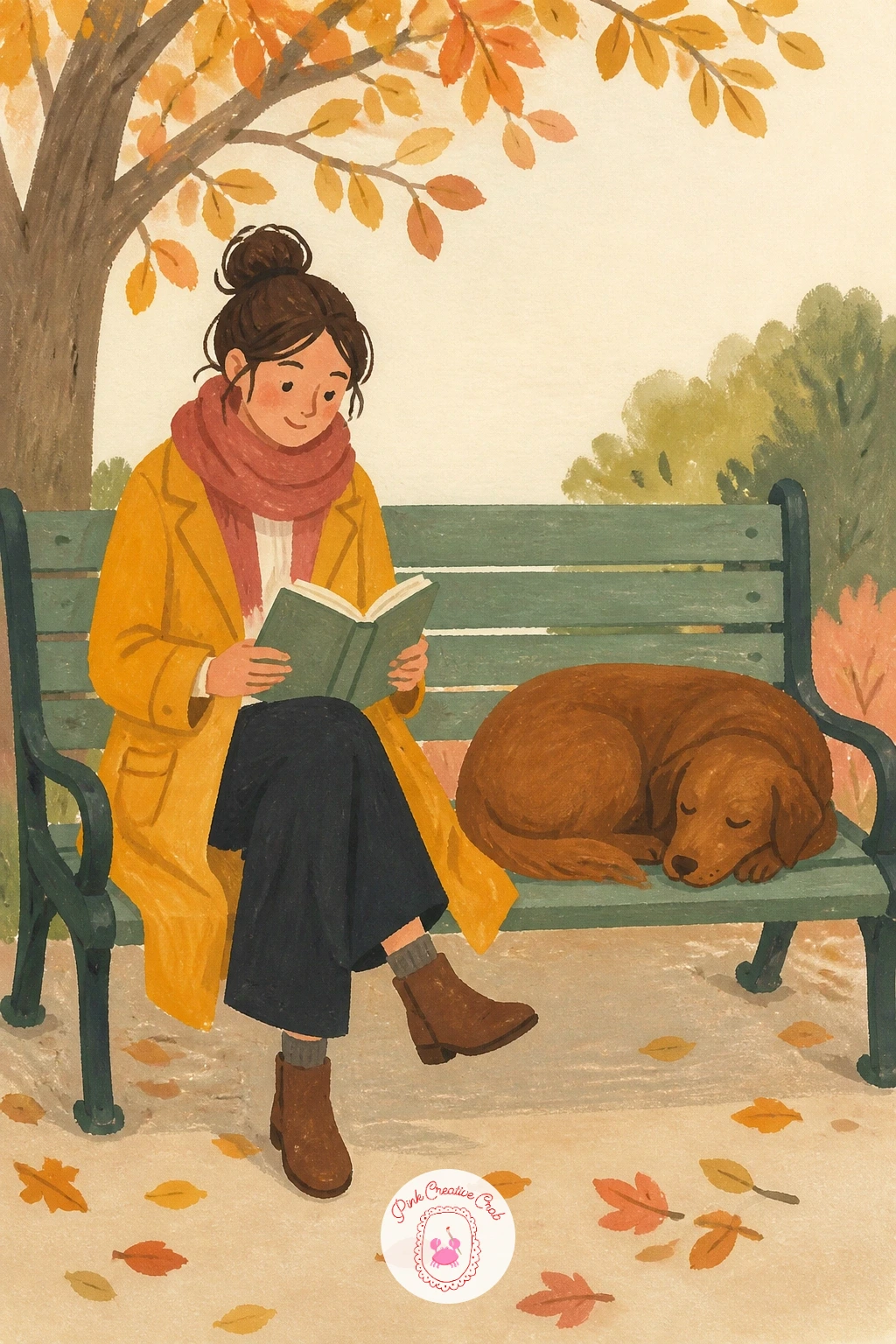
Palette: Sage Green,Mustard Yellow,Terracotta,Payne’s Grey
Build this one from the pillow outward, since the whole mood depends on how soft and sunk-in the bedding looks. Paint a large cream or dusty pink pillow and a thick folded blanket before adding the woman, so she sits nestled into the bedding rather than floating above it.
She leans back against the pillow in a loose nightshirt, both hands trying to hold the book open around a cat that has sprawled directly across the pages. Paint the cat as one confident flat shape in terracotta or grey, paws tucked under, completely unbothered by the inconvenience.
Where this scene usually goes stiff is the blanket: once the base color is dry, add two or three soft shadow folds with a slightly darker tone rather than hard lines, so the fabric looks heaped rather than flat. No orange cat on hand, a grey tabby reads just as cozy.
A bedside lamp glow in warm mustard finishes the late-night feeling.
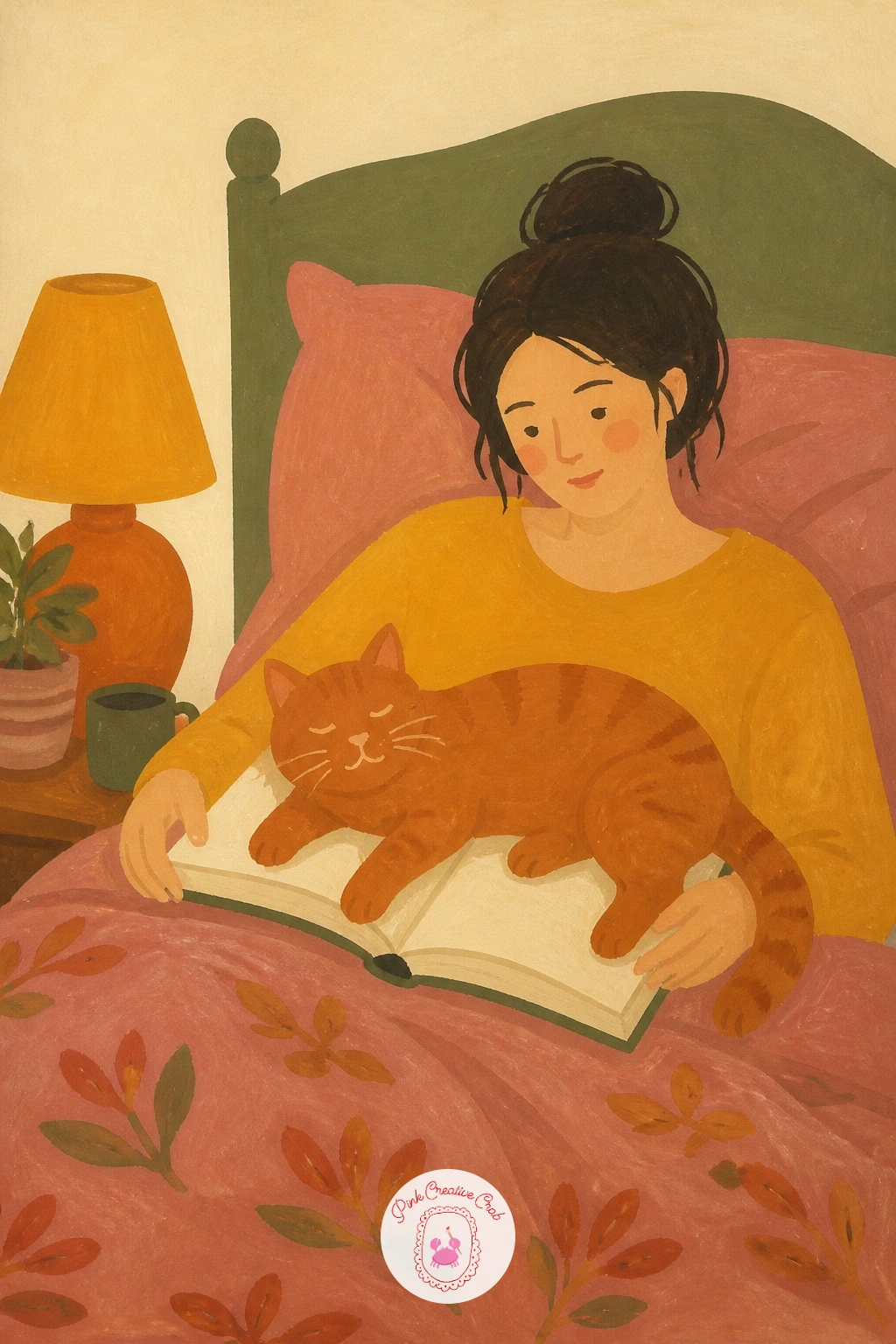
Palette: Dusty Pink,Terracotta,Cream,Mustard Yellow
Set the water line first, since it decides where the boat sits and how much sky you get. Paint one broad flat band of sage green or soft blue-grey for the lake, then drop the simple wooden rowboat shape so it sits low in the water, oars resting across the sides.
The woman reclines along the boat’s length, knees bent over one side, book held above her so the whole composition reads as pure stillness. Keep her reflection in the water as a simple, slightly wavy echo of her shape rather than a detailed mirror image.
Eye level matters here: paint the far shoreline as a thin, low strip of trees so the lake reads as wide and calm rather than cramped. If a rowboat feels like too much shape to manage, a simple canoe outline is an easier swap with the same pose.
One ripple ring near the oar tip, just a thin curved line, finishes the quiet.
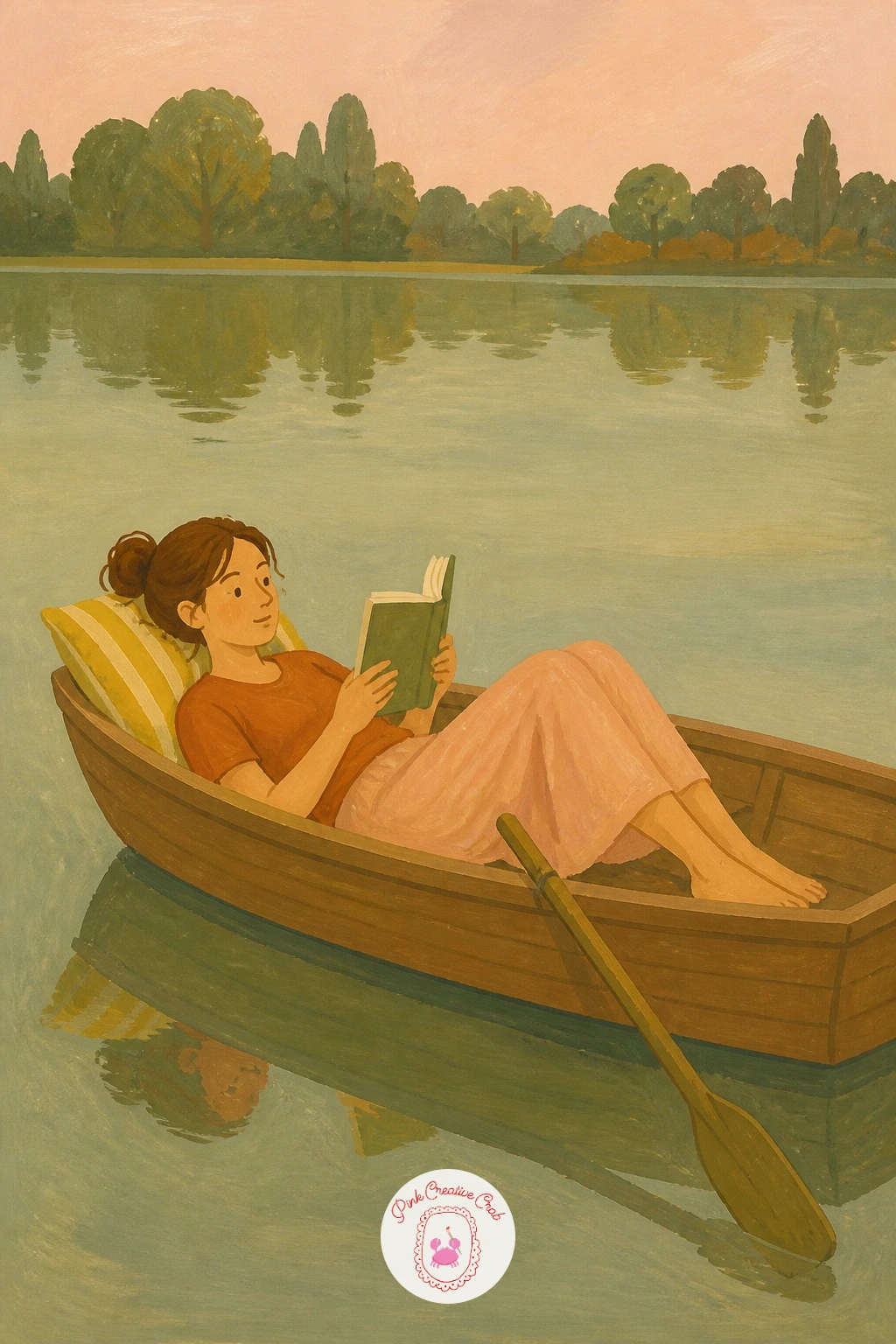
Palette: Sage Green,Payne’s Grey,Mustard Yellow,Cream
Paint the bus shelter as two or three flat panes of glass-grey and a simple roof line before you place the figure, since the shelter frames her the way the umbrella framed the beach scene earlier. Keep the panes pale so her mustard coat stands out against them.
Stand her at the edge of the bench inside the shelter, one hand around a takeaway coffee cup, the book held open with the other, feet planted as if she has settled in for a wait that does not bother her at all. A handbag or tote at her feet adds a believable, everyday detail.
The funny, cozy note is in her posture: tilt her slightly toward the book and away from the empty road, so it reads as a woman who would rather miss the bus than put the story down. If a full street scene feels like too much, blur the background into two flat color bands instead of buildings.
One warm steam curl from the cup ties the whole mood together.
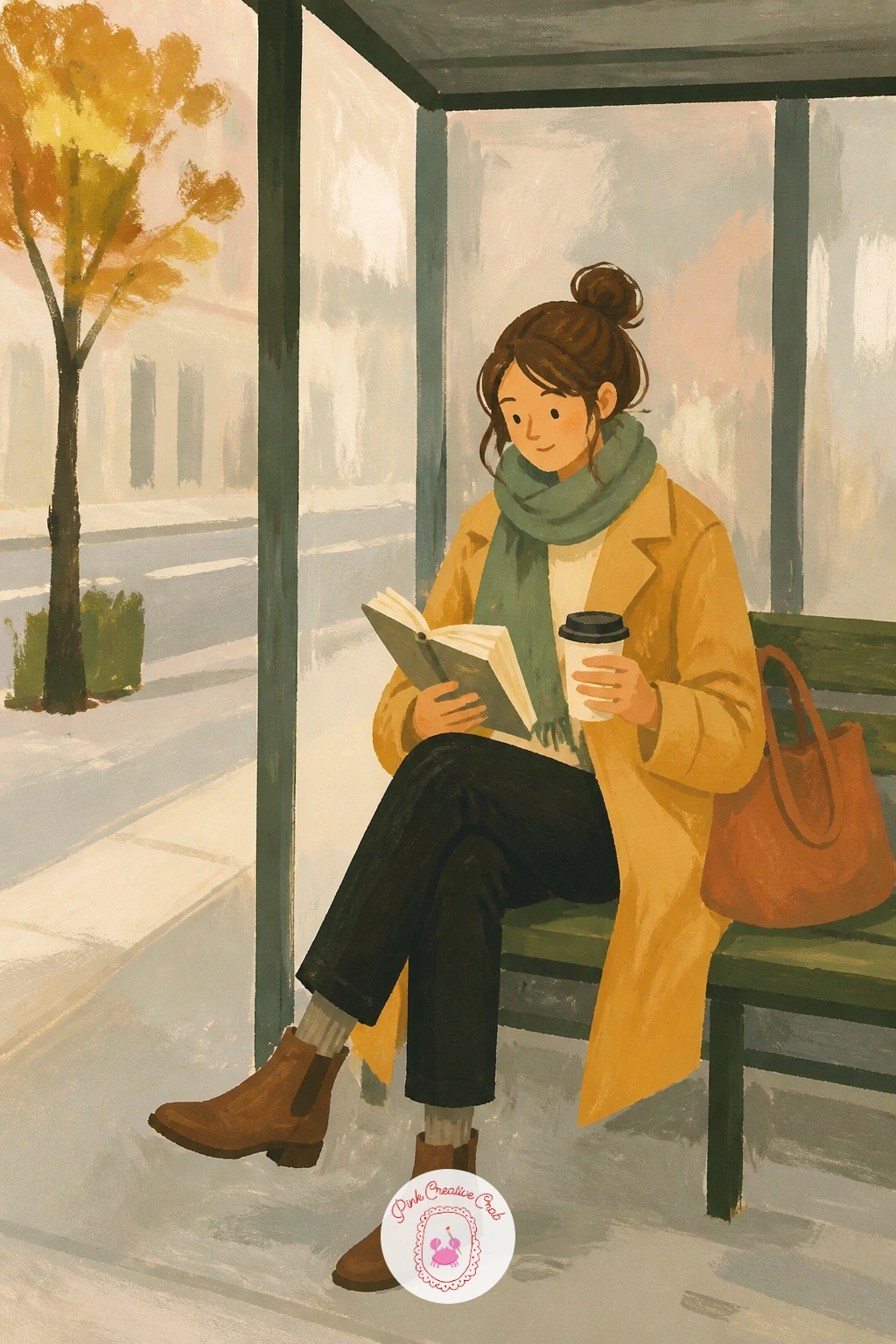
Palette: Mustard Yellow,Payne’s Grey,Cream,Terracotta
Lay the field in before the figure, since the flowers need to read as a texture behind her rather than individual shapes competing with her face. Paint one flat sage green ground, then scatter small mustard dots across it with the tip of a round brush, loosest in the foreground and smaller toward the horizon.
Sit the woman down in the middle of that field, skirt spread around her, book propped on bent knees, sun hat tipped back. Keep her outline soft against the busy buttercup dots so she still reads clearly as the main shape on the page.
If the flower dots start to look scattered and random, group them in loose clusters of three or four instead of spacing them evenly, which mimics how real wildflowers actually grow. No yellow handy for buttercups, cream dots against the green still read as flowers.
A single butterfly shape near her shoulder adds one small, lively touch.
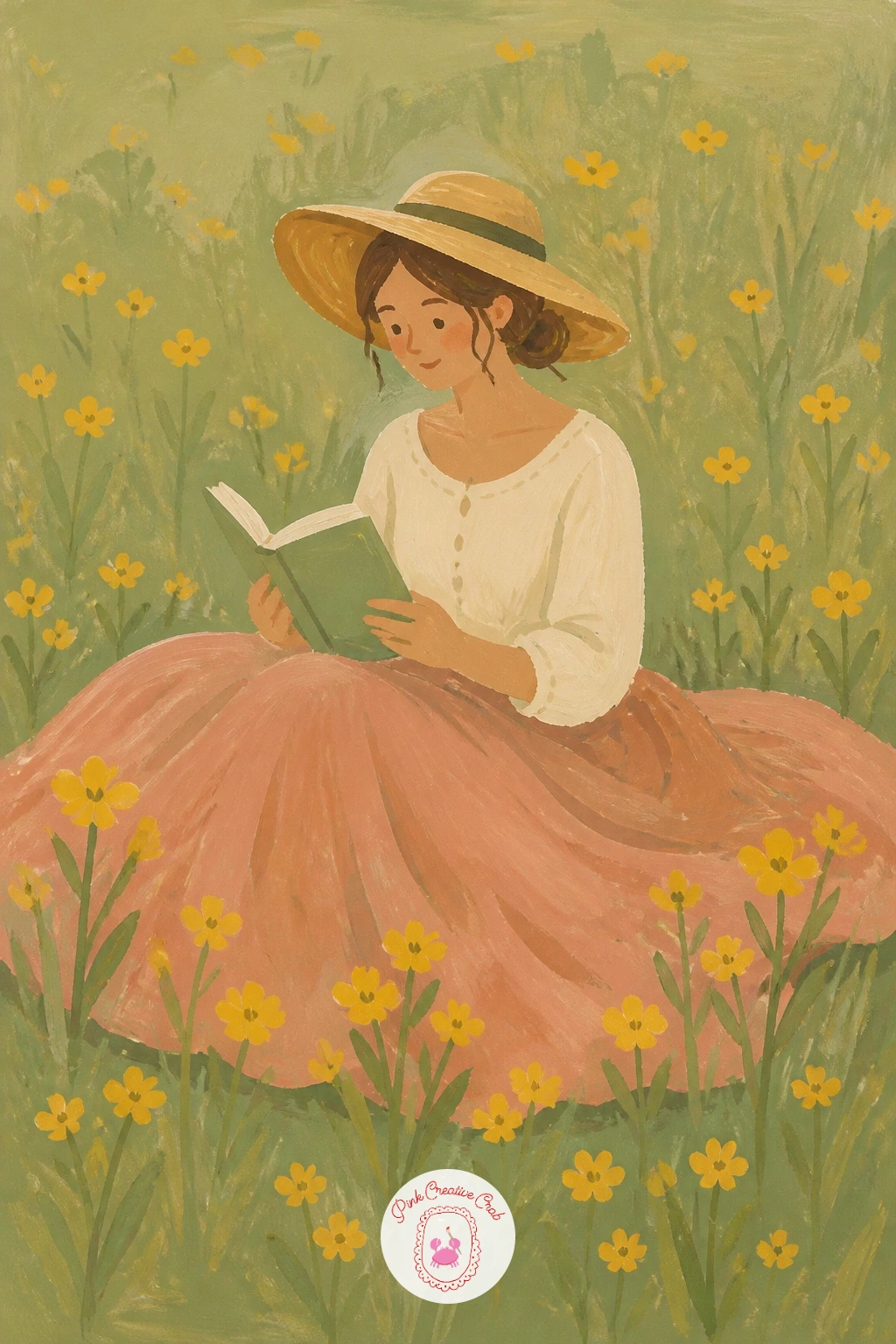
Palette: Sage Green,Mustard Yellow,Dusty Pink,Cream
Try this same field with daisies or poppies instead of buttercups once you are happy with the pose, just swap the scattered dot color.
Build the shelving first, since the ladder and the woman both depend on a believable wall of books behind them. Paint tall, narrow rectangles in alternating terracotta, sage and mustard to suggest a packed shelf, keeping the spines simple blocks of color rather than labeled titles.
Angle a wooden ladder against the shelf and perch the woman a few rungs up, one arm hooked around a rail, the other holding the book close to her face. This is a good moment to think about eye level: paint her slightly from below, so the shelves tower above her and the scene feels tall rather than cramped.
Ladders go wrong when the rungs do not match the angle of the side rails, so pencil in the two rails first and only then add evenly spaced rungs between them. If a ladder feels too tricky to construct, have her standing on a small step stool instead.
A stack of books balanced on the step below her completes the scene, a nod you can also use for reading log pages if you keep a book journal.
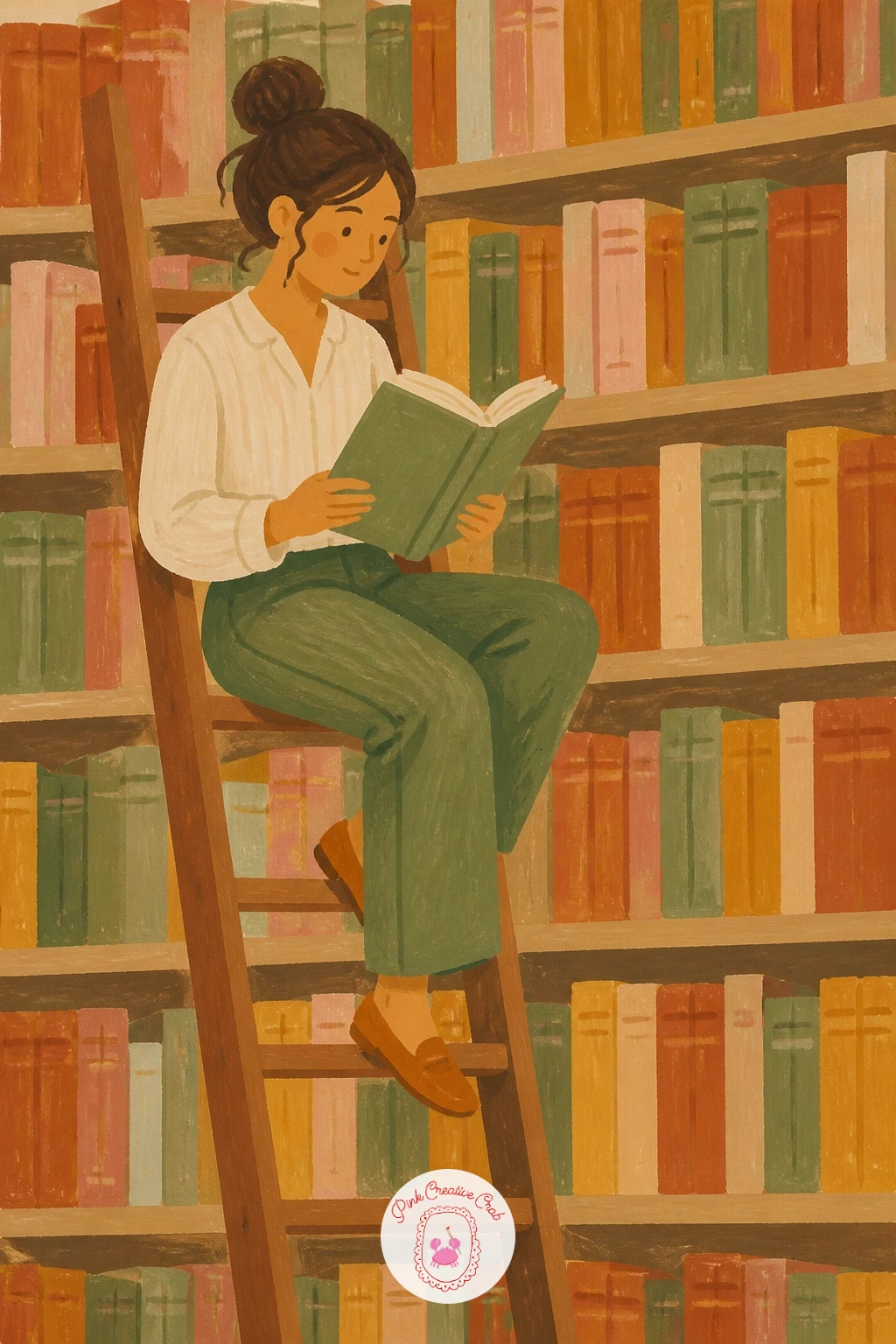
Palette: Terracotta,Sage Green,Mustard Yellow,Payne’s Grey
Start with two matching, simple seated poses, since the whole charm of this scene is the symmetry. Sketch one woman leaning left and the other leaning right, spines pressed together, so their shapes form one solid, balanced silhouette on the page.
Dress them in two different warm tones, say mustard and dusty pink, so they stay easy to tell apart even though their poses mirror each other. Each holds her own book at a slightly different angle, one knees-up, one legs crossed, so the pair feels relaxed rather than posed.
The place this goes wrong is the point where their backs meet: paint one continuous curved line for both spines rather than two separate outlines, so they genuinely look like they are leaning on one another. No second model to reference, just paint the same figure twice, flipped and recolored.
A shared blanket or cushion underneath them ties the two halves together as one scene.
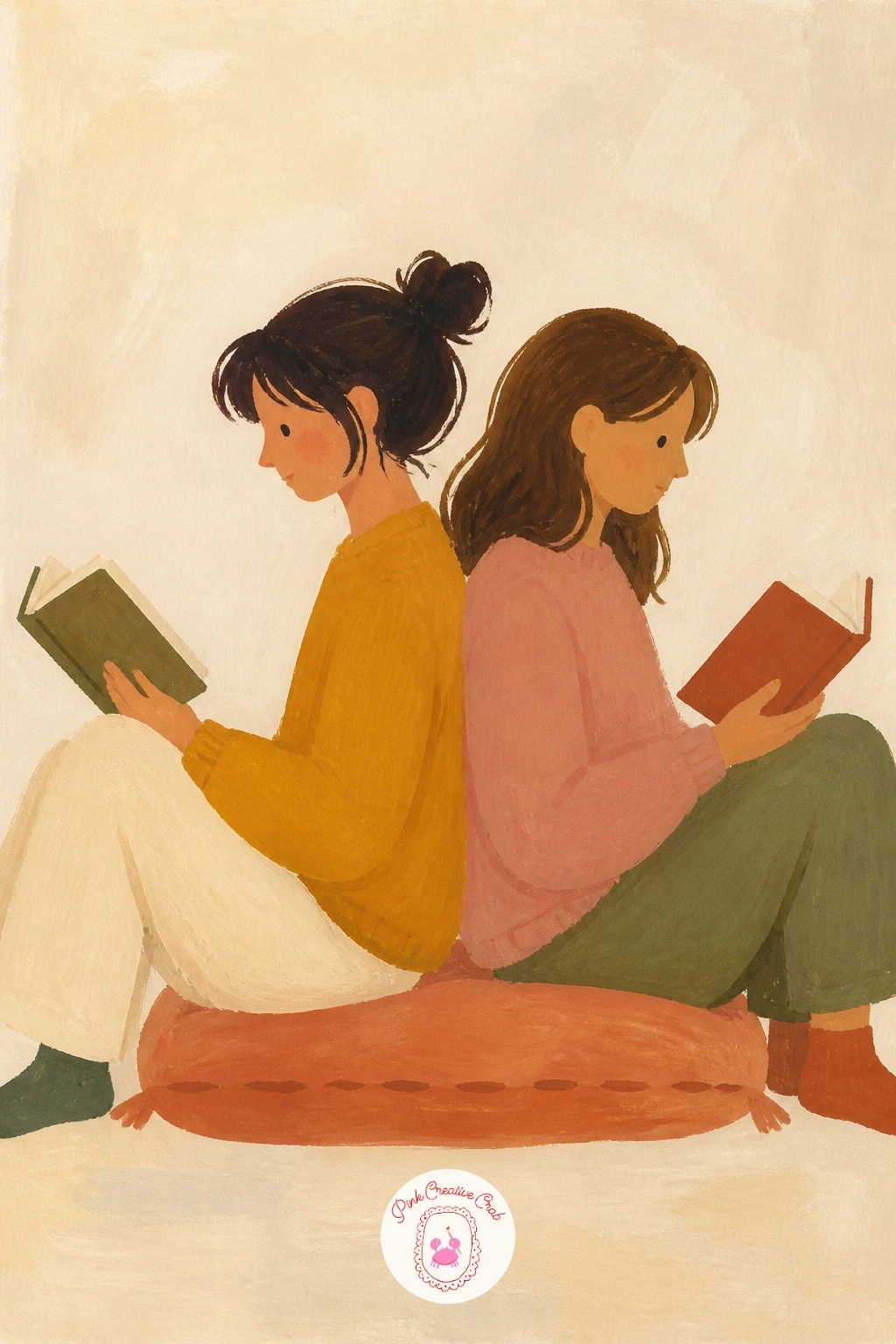
Palette: Mustard Yellow,Dusty Pink,Sage Green,Cream
Scale is everything in this one, so block in the grandmother’s seated shape first and then measure the child against her, roughly half her height, tucked into the curve of her lap. That size difference is what makes the scene read instantly as grandmother and grandchild rather than two adults.
Dress her in a soft sage cardigan and give the child a smaller, simpler shape in mustard or dusty pink, both faces turned toward the same open book held between them. Keep both faces extremely simple, two dots and a curved line, since warmth here comes from posture, not expression.
If the two figures start to look like separate drawings pasted together, connect them with one continuous outline where the grandmother’s arm wraps around the child, so they share a single silhouette. A rocking chair behind her is an easy swap if an armchair feels too detailed.
A small lamp glow beside the chair finishes the storytime feeling.
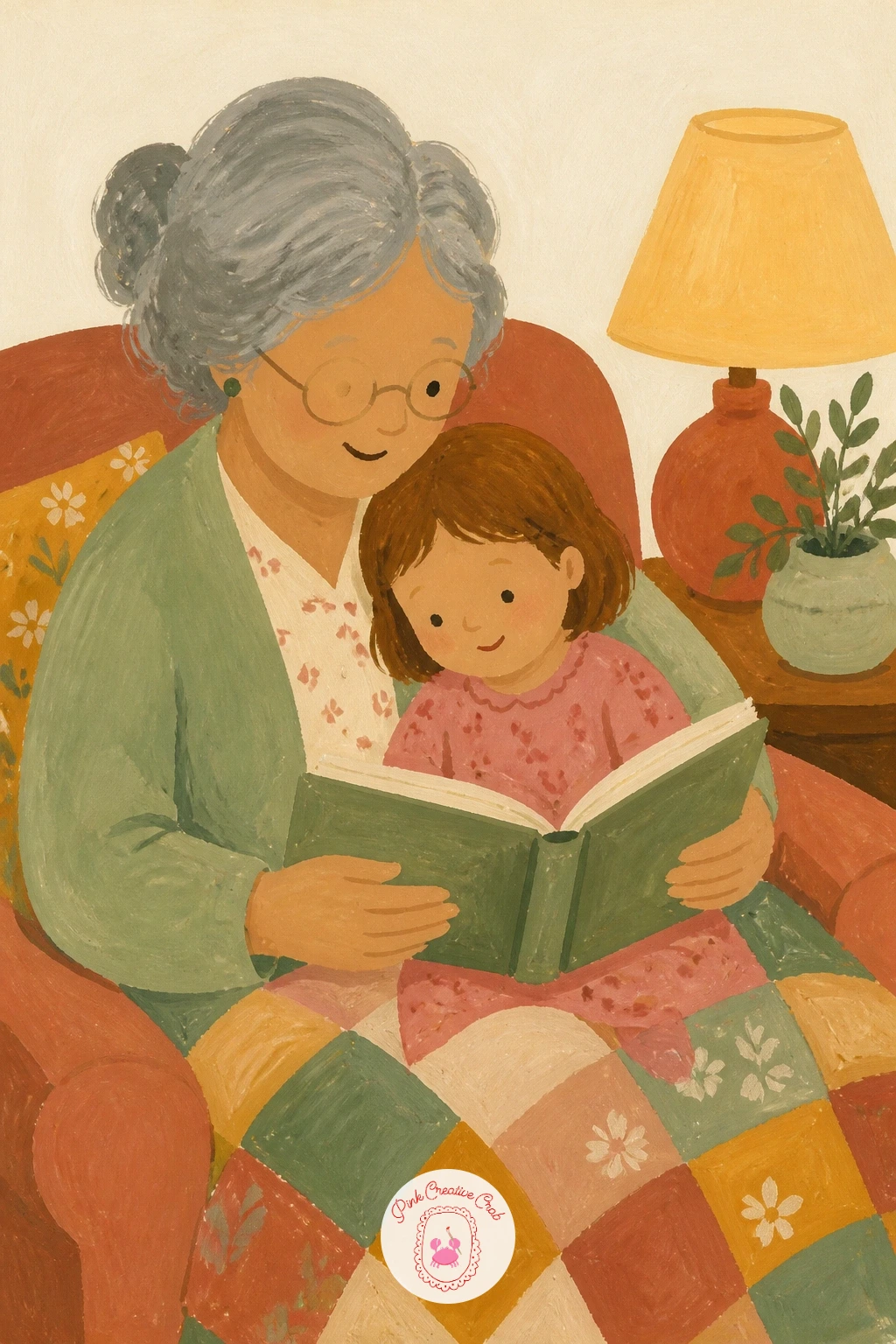
Palette: Sage Green,Mustard Yellow,Dusty Pink,Cream
Lay the pool water in as one flat band of blue-sage first, since its color temperature decides how warm or cool the whole scene feels against your mustard and terracotta palette. Keep the water simple, maybe two lighter ripple lines, rather than detailed reflections.
Stretch the lounger across the foreground in terracotta canvas, woman reclining with sunglasses pushed up into her hair, book tented open on her stomach the way it falls when someone is close to dozing off. A dusty pink towel draped at one end adds a soft, realistic touch.
Edges matter most here: keep the lounger’s outline crisp and sunlit along the top, then soften the shadow it casts on the ground underneath with a slightly damp brush so the whole thing feels like strong midday light. No pool to reference, a plain blue rectangle reads as water instantly.
A pair of flip-flops kicked off beside the lounger finishes the lazy afternoon mood.
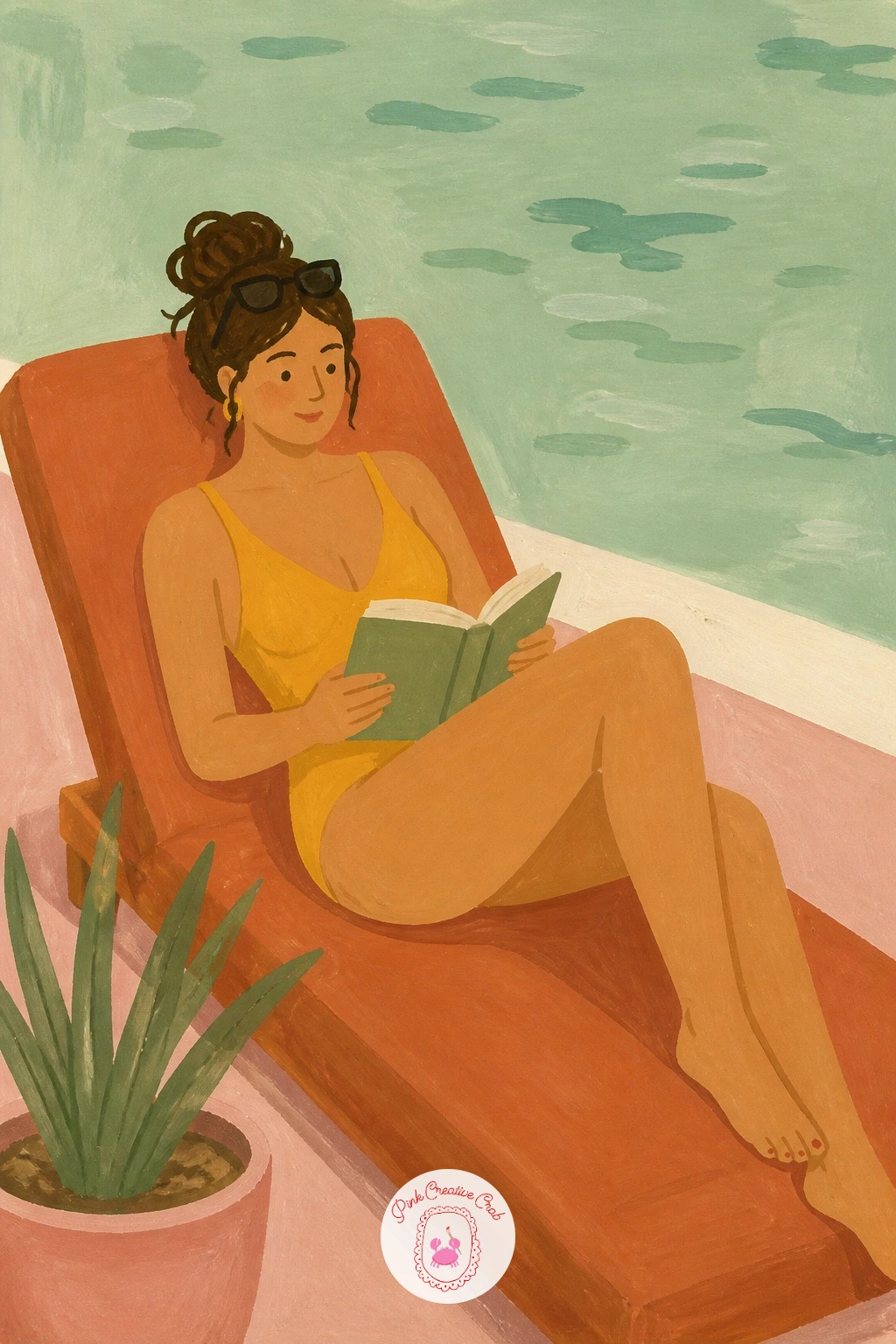
Palette: Terracotta,Sage Green,Dusty Pink,Cream
Frame the window before anything else, since the falling snow needs a clear pane to fall inside. Paint a simple sage or grey window frame with a pale winter-sky blue behind the glass, then flick small white dots of varying size across it once that background is dry, more in the distance and bigger up close.
Tuck the woman into a cushioned window seat below, knees drawn up, a thick blanket in terracotta or mustard wrapped around her legs, book held close against the cold outside. A steaming mug on the sill beside her is a small, cozy addition worth including.
If the snow dots smear into the sky color, wait until the background is fully dry before adding them, or use a white gel pen instead of wet paint for the crispest flecks. A radiator or a small space heater sketched below the seat is an easy swap if cushions feel fiddly.
One extra tip: keep the room side of the painting warm-toned and the window side cool, so the glass itself does the work of separating cozy from cold.
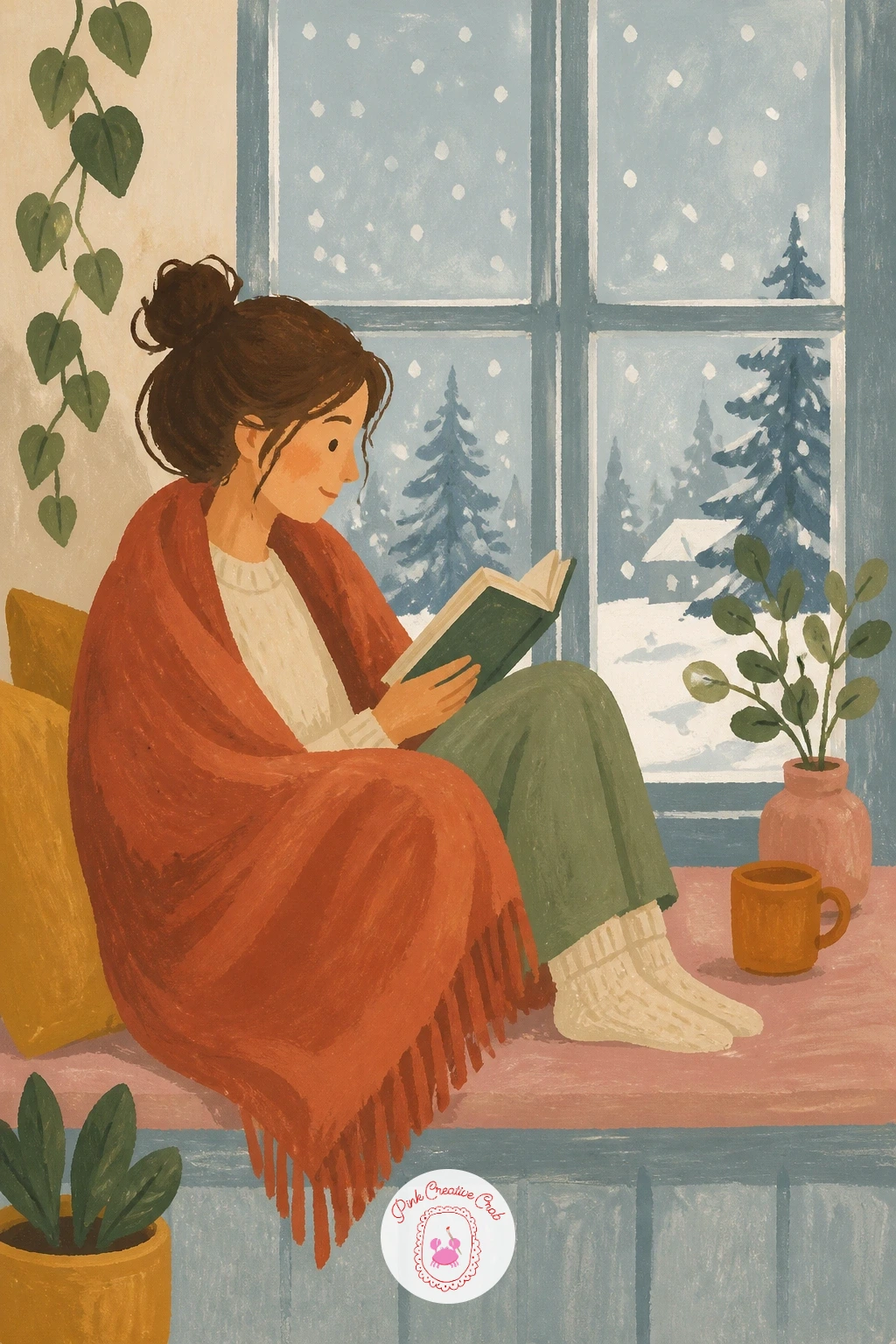
You Will Need
- white gel pen for snow flecks
Palette: Payne’s Grey,Terracotta,Mustard Yellow,Cream
Build the sky first, since it carries most of the mood and color in this scene. Blend a soft gradient from dusty pink at the horizon up into a deeper terracotta or mauve overhead, working wet into wet so the colors melt together without hard edges.
Set the woman on a low rooftop ledge or a folding chair against that sky, book held up to catch the last light, hair and clothing painted as flat silhouetted shapes so she reads clearly against the glow behind her. A few distant rooftop or chimney shapes along the horizon ground the scene in a city.
Where this goes wrong is contrast: if her silhouette gets lost in a sunset of similar warm tones, drop her clothing to a much darker value, even a flat near-black, so she reads instantly against the bright sky. No rooftop reference needed, three simple triangular roof shapes along the bottom read as a skyline.
A string of fairy lights along the ledge is a lovely extra detail if you want more sparkle.
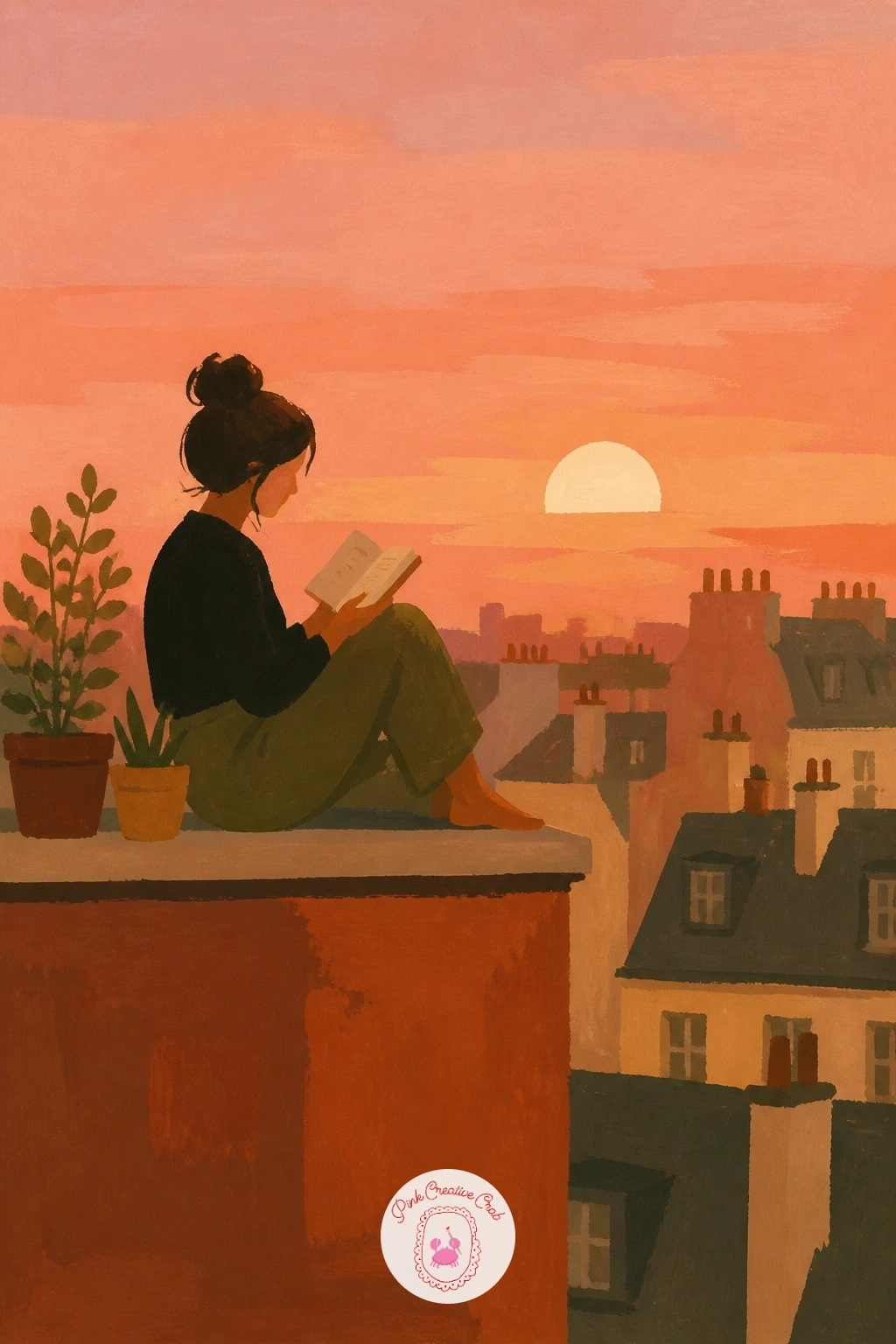
Palette: Dusty Pink,Terracotta,Payne’s Grey,Mustard Yellow
Start with a deep, oversized armchair shape in terracotta or sage, since the whole joke of this scene is how small the woman looks swallowed up inside it. Round the arms and back generously before you add her, so the chair clearly dwarfs her.
Curl her into the seat with her legs tucked up underneath her, book held close, a small stack of shop finds balanced on the chair arm. Behind her, suggest tall bookshop shelving with simple blocks of color the same way the earlier library ladder scene did, keeping titles implied rather than written out.
If the chair ends up looking flat, add one soft shadow where the cushion dips under her weight and a touch of highlight along the rolled arm, which does more to suggest plush fabric than any extra detail. A simple stool works as a swap if a full armchair feels like too big a shape to start with.
A small paper shopping bag resting against the chair leg finishes the browsing mood, a nice companion piece if you also enjoy vintage journal pages with a secondhand-book feel.
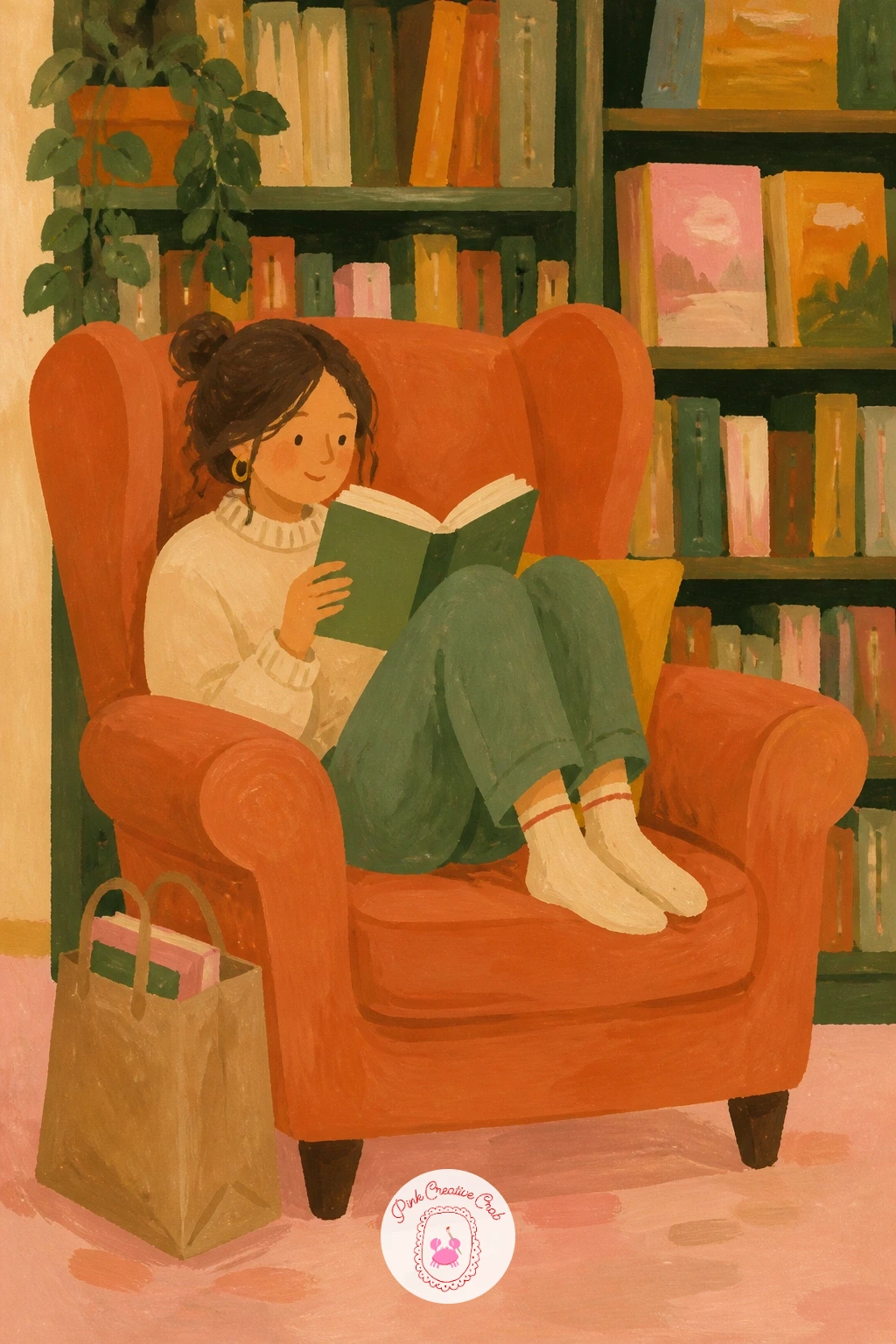
Palette: Terracotta,Sage Green,Mustard Yellow,Cream
Paint the balcony railing first, a simple grid of thin sage or grey lines, and let the geranium pots sit along it before you add the figure. Cluster the flowers as small dusty pink and terracotta dots over rounded green leaf shapes, the same loose dot technique used earlier for the buttercup field.
Seat the woman at a small bistro chair just behind the railing, one leg crossed, book propped against the table’s edge, a soft wrap over her shoulders if the scene feels like morning rather than midday. Let a little city or garden view blur behind her in flat, simple shapes.
If the geraniums look like a flat green smudge, paint the leaf clusters first and let them dry completely before dotting flower color on top, so the colors stay separate and bright rather than muddying together. No real geraniums to study, any small round flower cluster reads the same way.
A watering can tucked beside a pot adds one small, true detail.
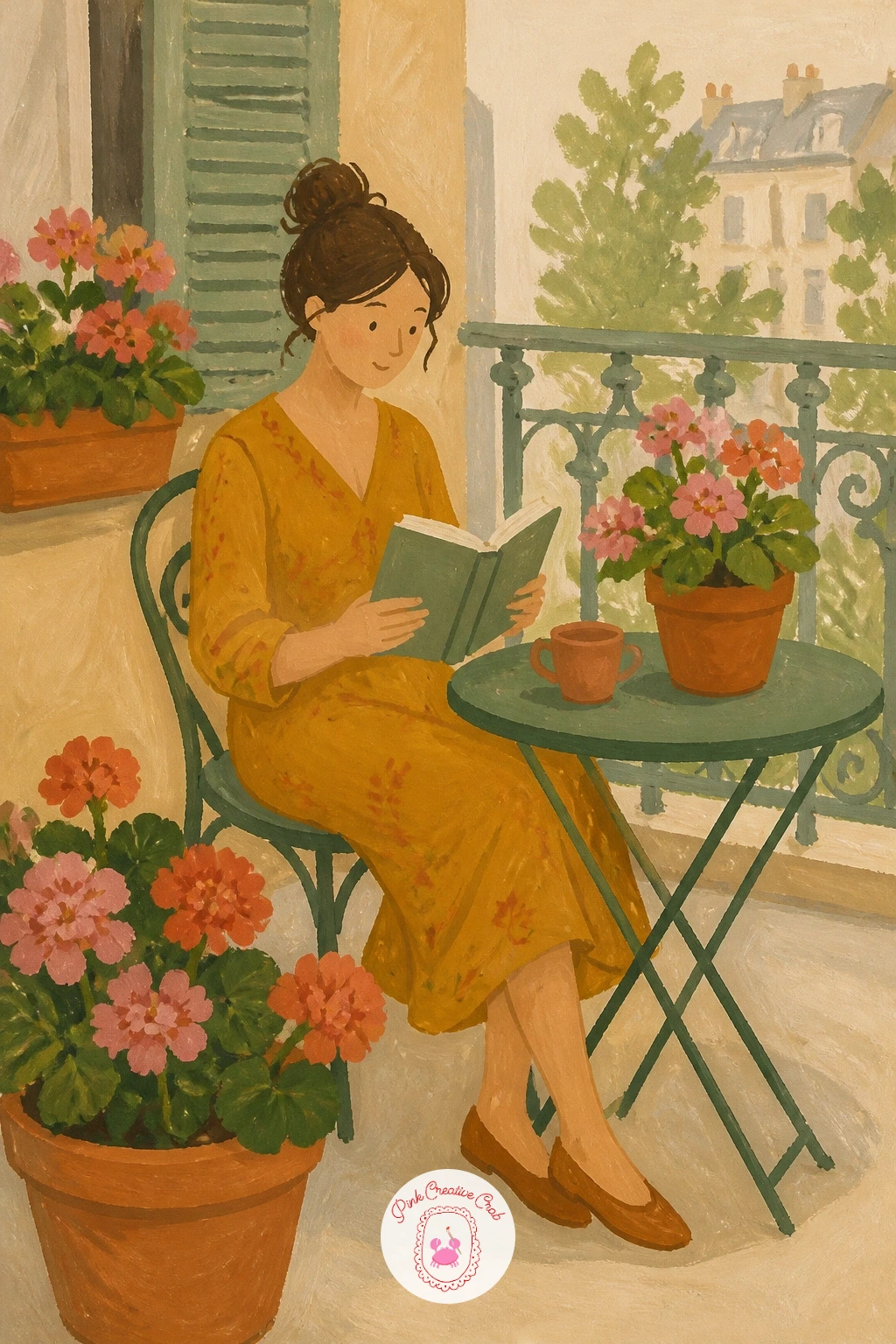
Palette: Sage Green,Dusty Pink,Terracotta,Cream
Give this figure a clear forward lean before anything else, since a walking pose reads completely differently from a seated one. Angle her shoulders and front leg slightly ahead of her back leg, book held up close to her face with one hand, coffee cup balanced in the other.
Keep the background loose and blurred, a few simple building or tree shapes in flat color, which suggests motion far better than any detail could. This is the funny, cozy detail of the whole list: a woman so absorbed in her book she is still walking without looking up.
Hands and arms are the trickiest part here, so simplify them to soft rounded shapes rather than trying to draw individual fingers holding the cup and the book. If a full walking pose feels ambitious, a three-quarter view from behind is an easier angle that hides the face.
A loose scarf trailing slightly behind her adds a nice sense of movement to finish it off.
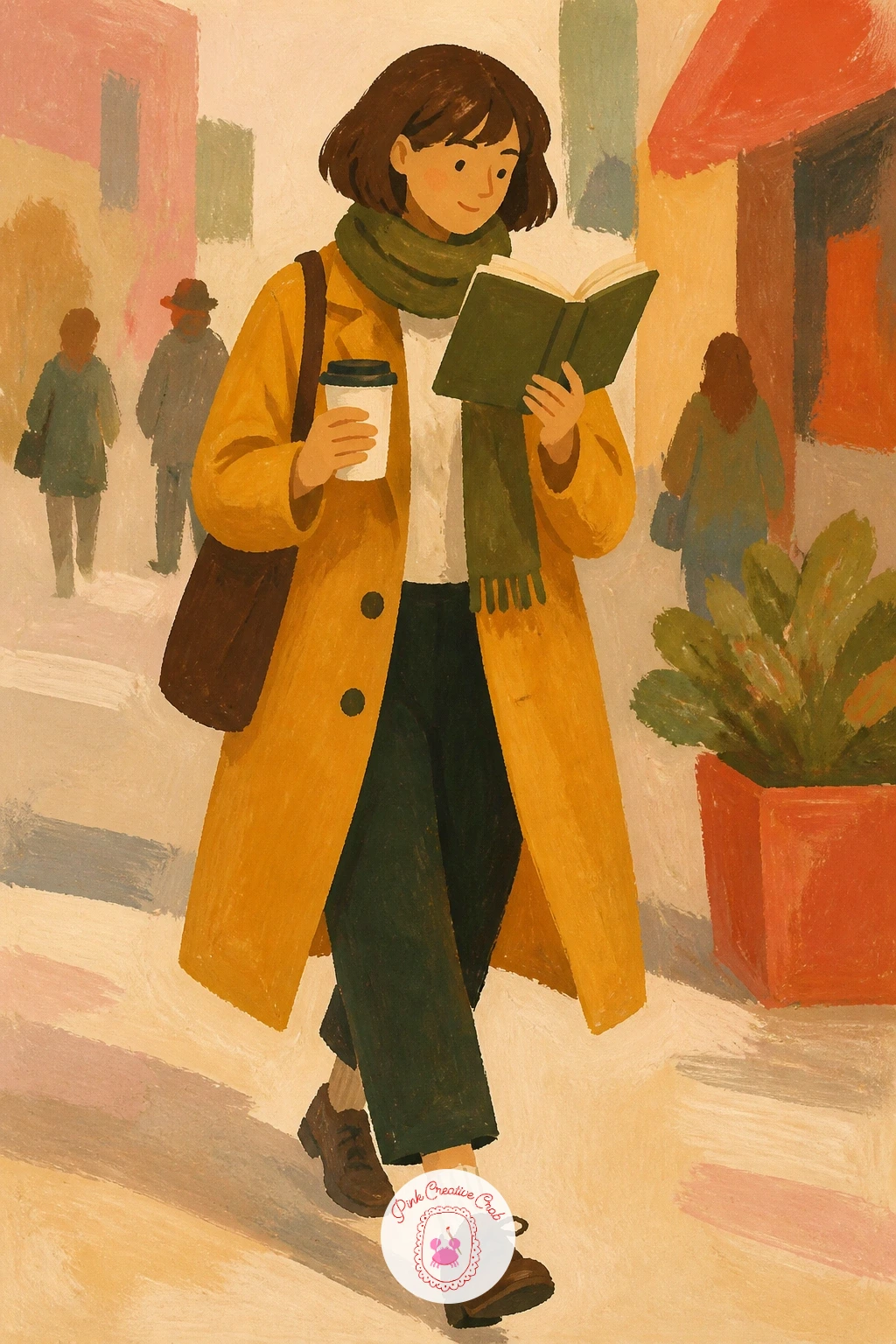
Palette: Mustard Yellow,Terracotta,Payne’s Grey,Cream
Build the book piles before the figure, since they set the whole composition. Stack simple rectangular spines of varying terracotta, sage and mustard tones into two or three uneven towers around a central open space on the floor.
Seat the woman cross-legged right in the middle of that gap, one book open in her lap, others scattered flat and open around her knees as if she could not decide which one to finish first. Keep her pose relaxed and a little slouched, since this scene is about total absorption, not tidiness.
If the stacked spines start to look identical, vary their widths and tilt a few slightly off the vertical, as real stacked books never line up perfectly straight. No rug needed under her, a flat warm floor color is enough to ground the scene.
A mug within reach and one bookmark fallen on the floor nearby finish the lived-in feeling.
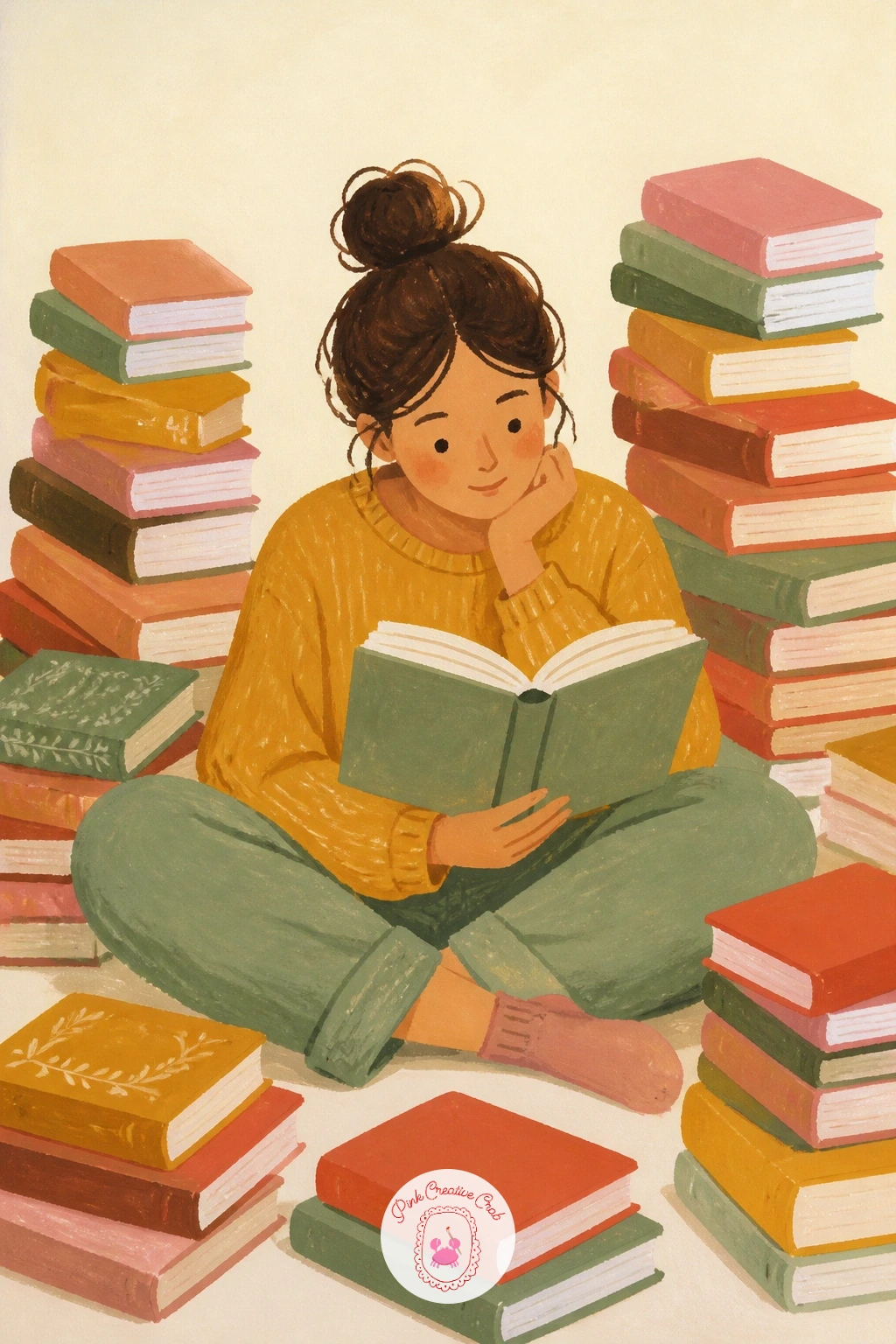
Palette: Terracotta,Sage Green,Mustard Yellow,Cream
Line up the washing machines first as a row of simple round-windowed boxes along the back wall, since their repetition gives this scene its slightly funny, everyday rhythm. Keep them identical in shape but vary the colors slightly so the row does not feel too mechanical.
Seat the woman on a plastic chair in front of them, laundry basket at her feet, book open and completely absorbing her attention while a machine spins behind her unattended. This contrast, a mundane chore and total escape into a story, is the whole joke of the scene.
The machine windows are the fiddly part: paint each as a simple circle, then add one or two curved lines inside to suggest tumbling clothes rather than painting individual garments. If a full row of machines feels like too much, three is plenty to read as a laundromat.
A dropped sock near her chair is a small, funny final touch.
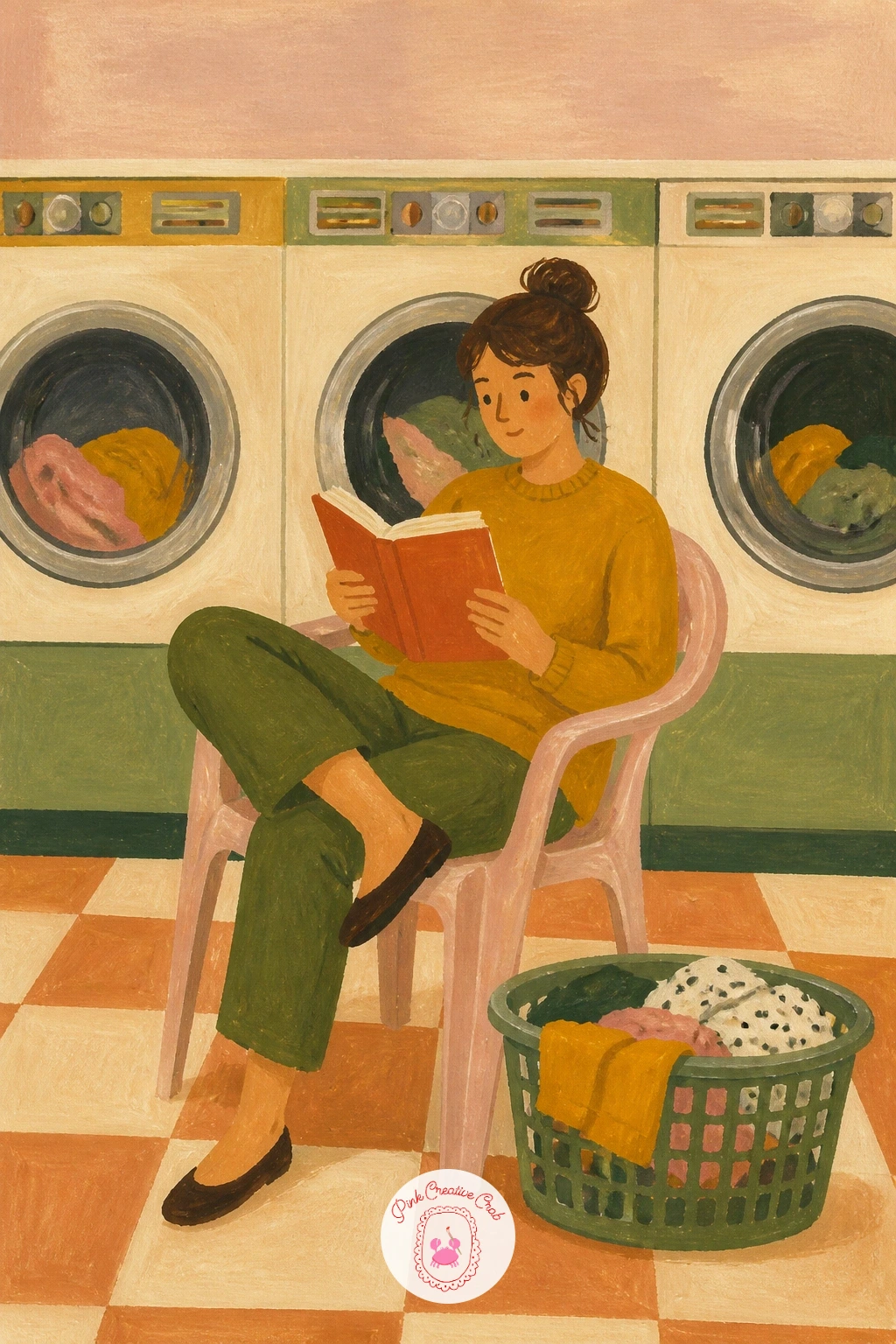
Palette: Payne’s Grey,Mustard Yellow,Dusty Pink,Cream
Paint the oval airplane window first and set a flat band of sky or cloud behind it, since that small shape instantly tells the viewer where this scene takes place without any other props. Keep the window frame simple, grey or sage, with soft rounded corners.
Tuck the woman into a narrow seat beside it, knees slightly bent to fit the tray table, book balanced against the fold-down tray, a small travel pillow behind her neck. Keep the surrounding seatback and tray shapes minimal, just enough flat color blocks to suggest the cramped cabin.
Where beginners overcomplicate this scene is the cabin interior, so resist adding full rows of seats or other passengers, and let two or three simple shapes do the job instead. A thin blanket over her knees is an easy addition if the scene feels too bare.
A small in-flight magazine tucked in the seat pocket is a nice extra, true-to-life touch.
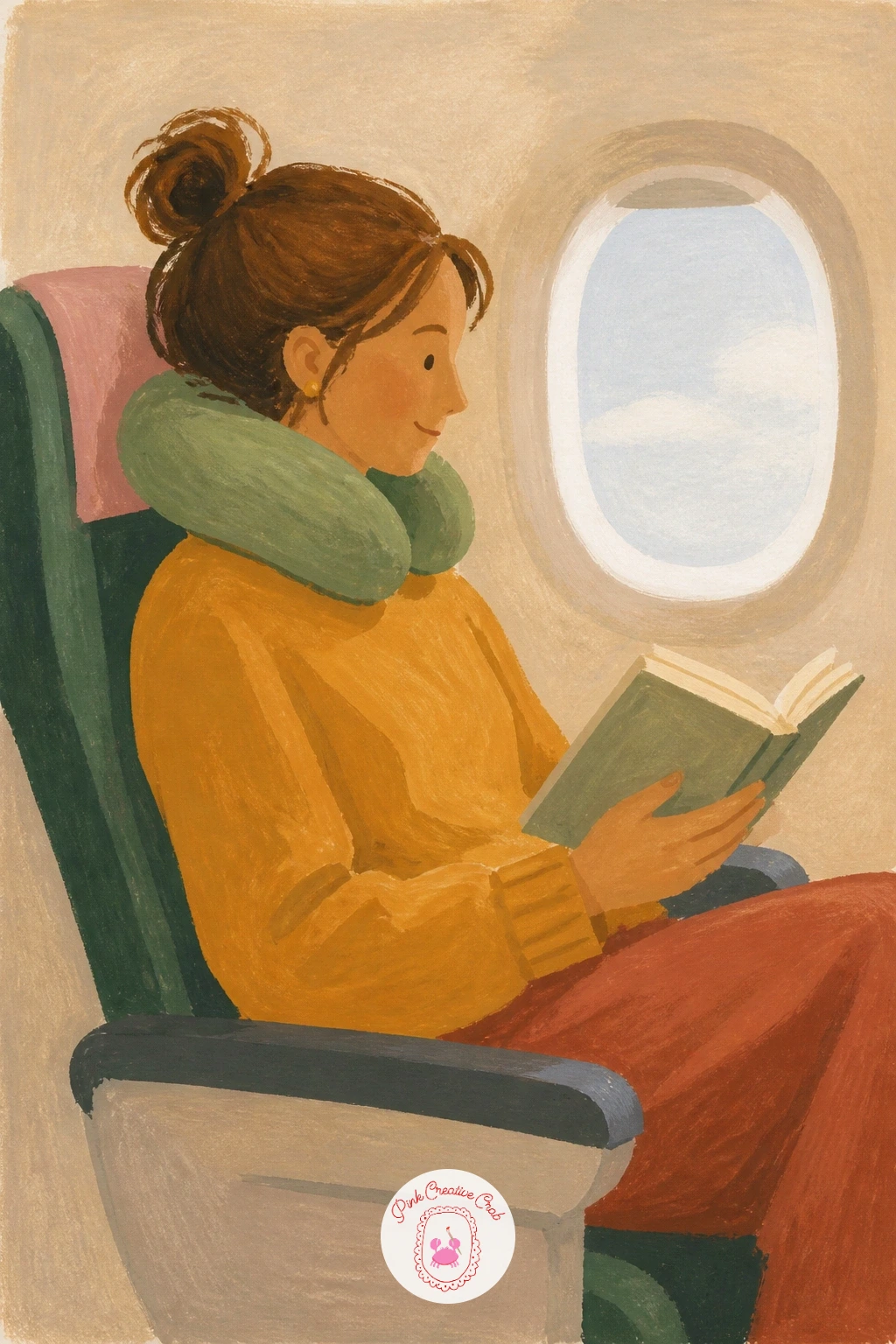
Palette: Payne’s Grey,Sage Green,Mustard Yellow,Cream
Hang the swing’s frame first, a simple A-shaped wooden support, before you add the seat and the woman, since the frame tells the eye this bench is suspended rather than sitting on the ground. Paint the seat itself as a flat terracotta bench shape hanging from two straight lines.
Seat the woman with her legs tucked up beside her, book open, one hand resting on the chain or rope as if she has just given the swing a gentle push. Behind her, keep the garden loose: a few rounded shrub shapes and a patch of sage lawn is enough.
If the swing looks like it is floating rather than hanging, add a small shadow underneath it on the ground and make sure the support lines meet the top bar at a believable angle rather than running perfectly parallel to the seat. A simple porch glider is an easy swap if the A-frame feels tricky.
A cushion or two in dusty pink on the seat warms the whole scene up.
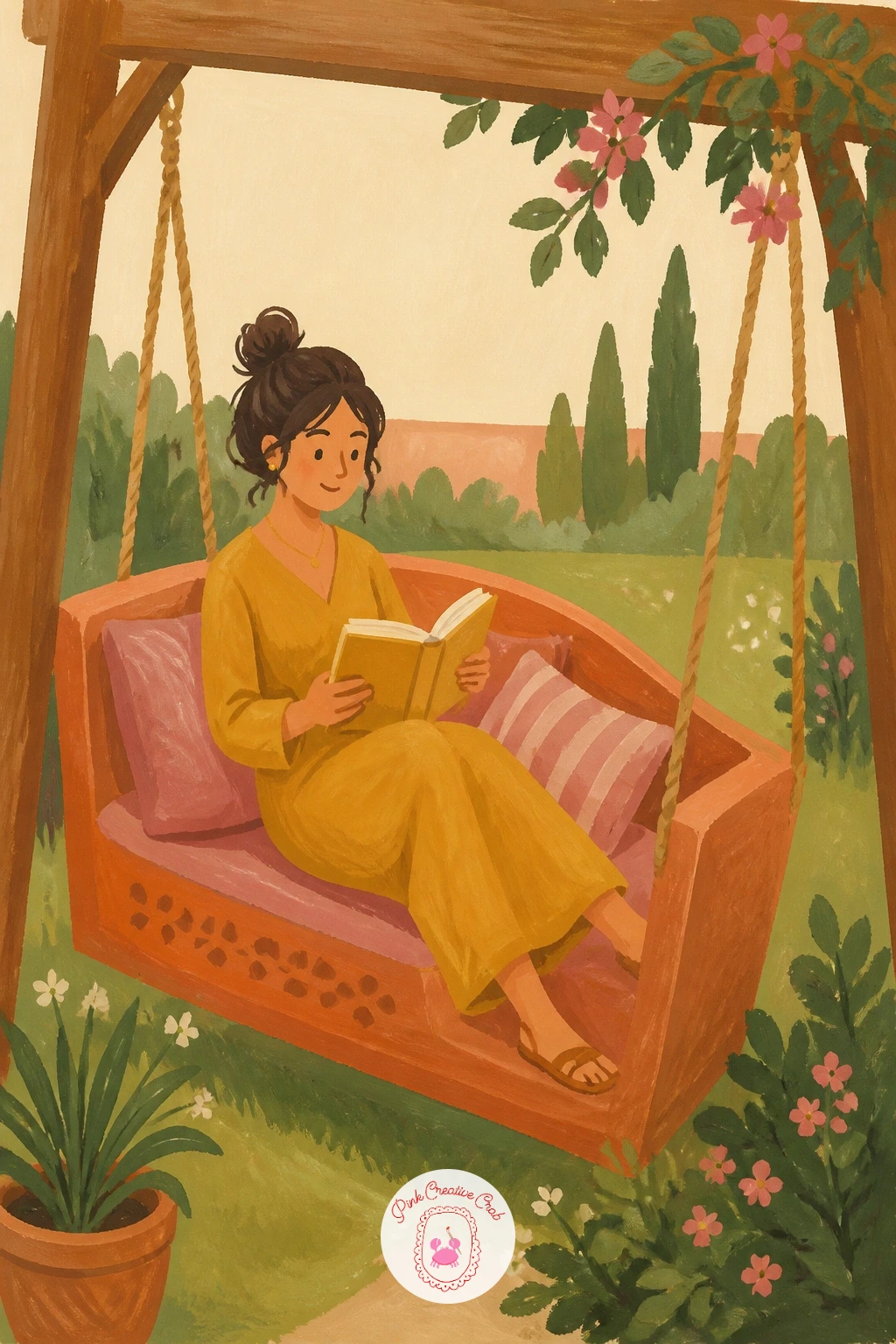
Palette: Terracotta,Sage Green,Dusty Pink,Cream
Paint the face first for once, since the whole charm of this scene lives in her expression under the mask. Give her a flat pale green or clay-colored face mask, two small cucumber circles over her eyes, and a completely relaxed, slightly smug little mouth that says she is enjoying every minute of this.
Wrap her in a dusty pink robe, propped against pillows, book held just below the cucumber slices so she can still peek at the page. This is one of the funniest scenes on the list, so lean into the contrast between total pampering and total absorption in the story.
Cucumber slices are easy to get wrong if painted too detailed, so keep them as two flat pale green ovals with one thin darker green rind line each. No face mask green on hand, a soft clay or dusty pink mask reads just as well.
A small bowl of extra cucumber slices on a side table finishes the spa-day mood.
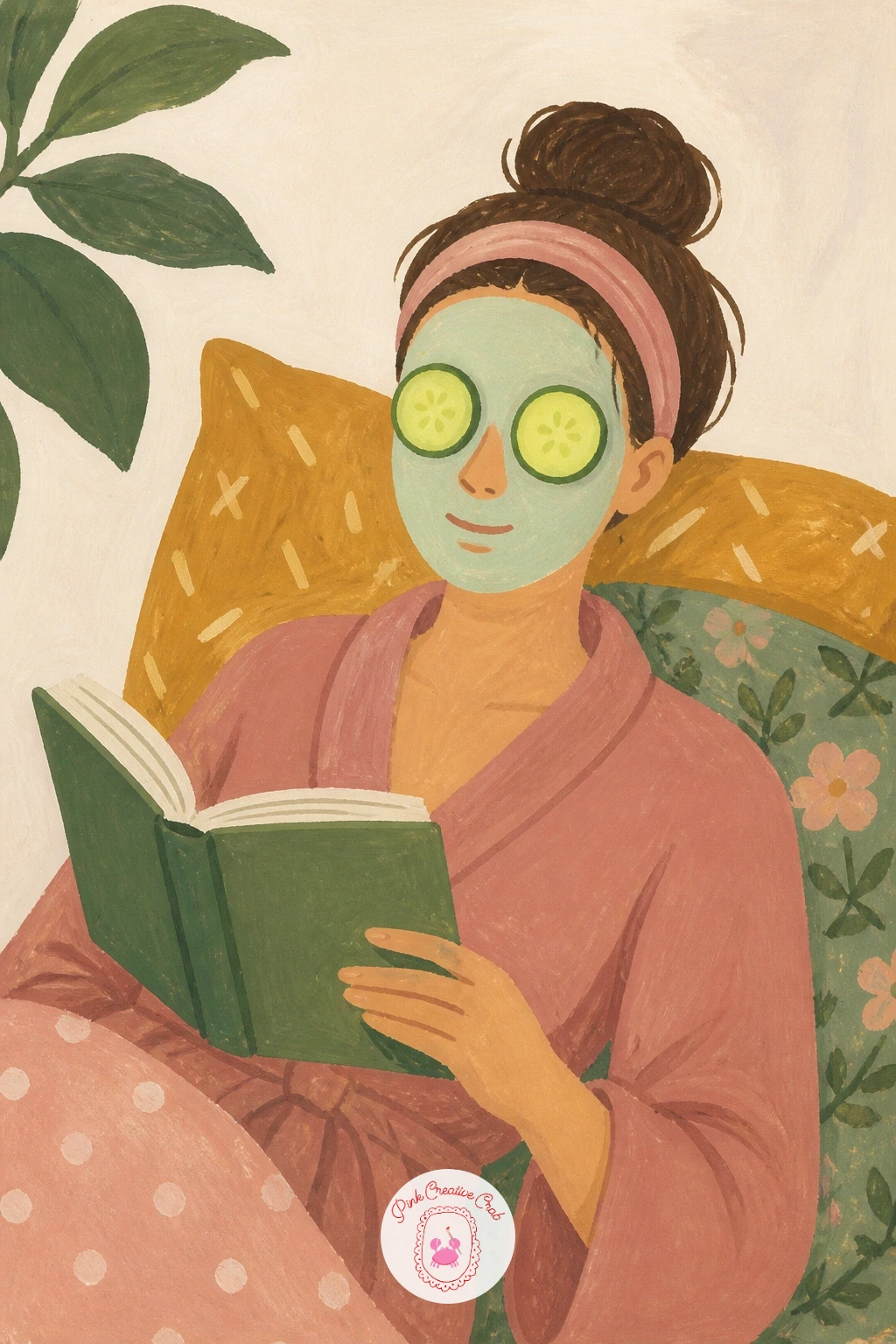
Palette: Sage Green,Dusty Pink,Cream,Terracotta
Set the table surface first, a simple flat wood-tone rectangle, with a bowl of soup painted as one warm terracotta circle with a thin steam curl rising from it. Keep the bowl and spoon shapes simple so they read instantly without extra detail.
Seat the woman at the table in a cozy sweater, one hand holding her spoon, the other keeping the book open flat beside the bowl, since this scene is about a quiet solo lunch stretched out over a good chapter. A window behind her with a soft, blurred view adds depth without much extra work.
The steam is the detail most likely to go wrong: paint it last, over dry paint, with a thin almost-dry brush so the curls stay light and wispy rather than solid white blobs. No soup bowl handy to reference, a mug of tea works just as well in the same spot.
A folded napkin or a small bread roll beside the bowl rounds out the table nicely.
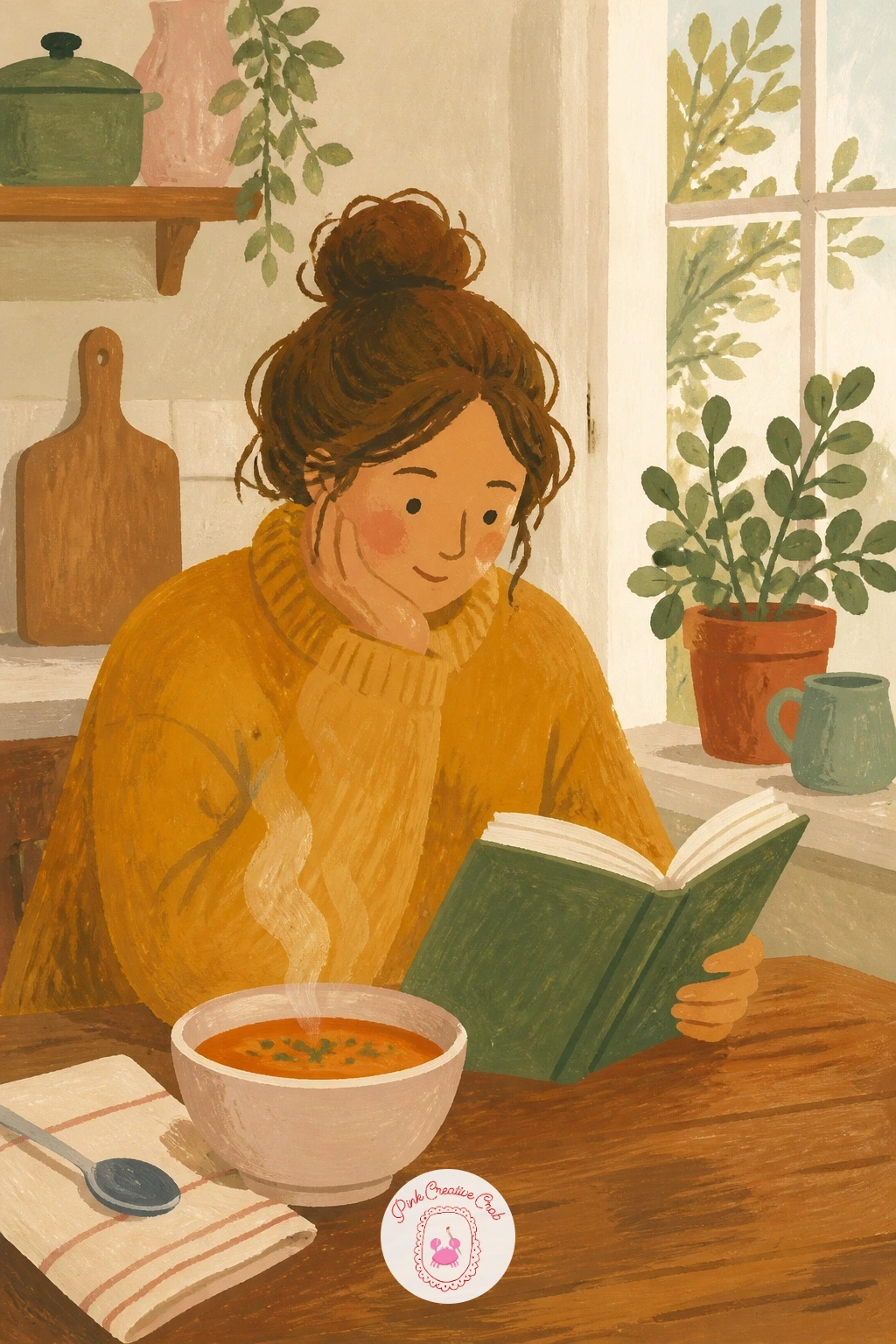
Palette: Terracotta,Mustard Yellow,Cream,Sage Green
Lay down a flat sage ground first, then scatter a few small white or cream dots for daisies the same loose way you handled the buttercup field earlier, so the texture feels consistent across the article. Keep the grass simple and let the figure carry the detail.
Seat the woman cross-legged on a small picnic blanket, sandwich in one hand, book propped open on her knee with the other, a basket or bag beside her. Give the sandwich just two or three flat shapes, bread, a filling line, bread again, rather than trying to paint individual ingredients.
If the blanket pattern distracts from the figure, keep it to one simple stripe or check in a single accent color rather than a busy plaid. No picnic blanket at all works fine too, just seat her directly on the grass.
A few ants marching toward a dropped crumb is a tiny, funny detail worth adding if you enjoy that kind of touch.
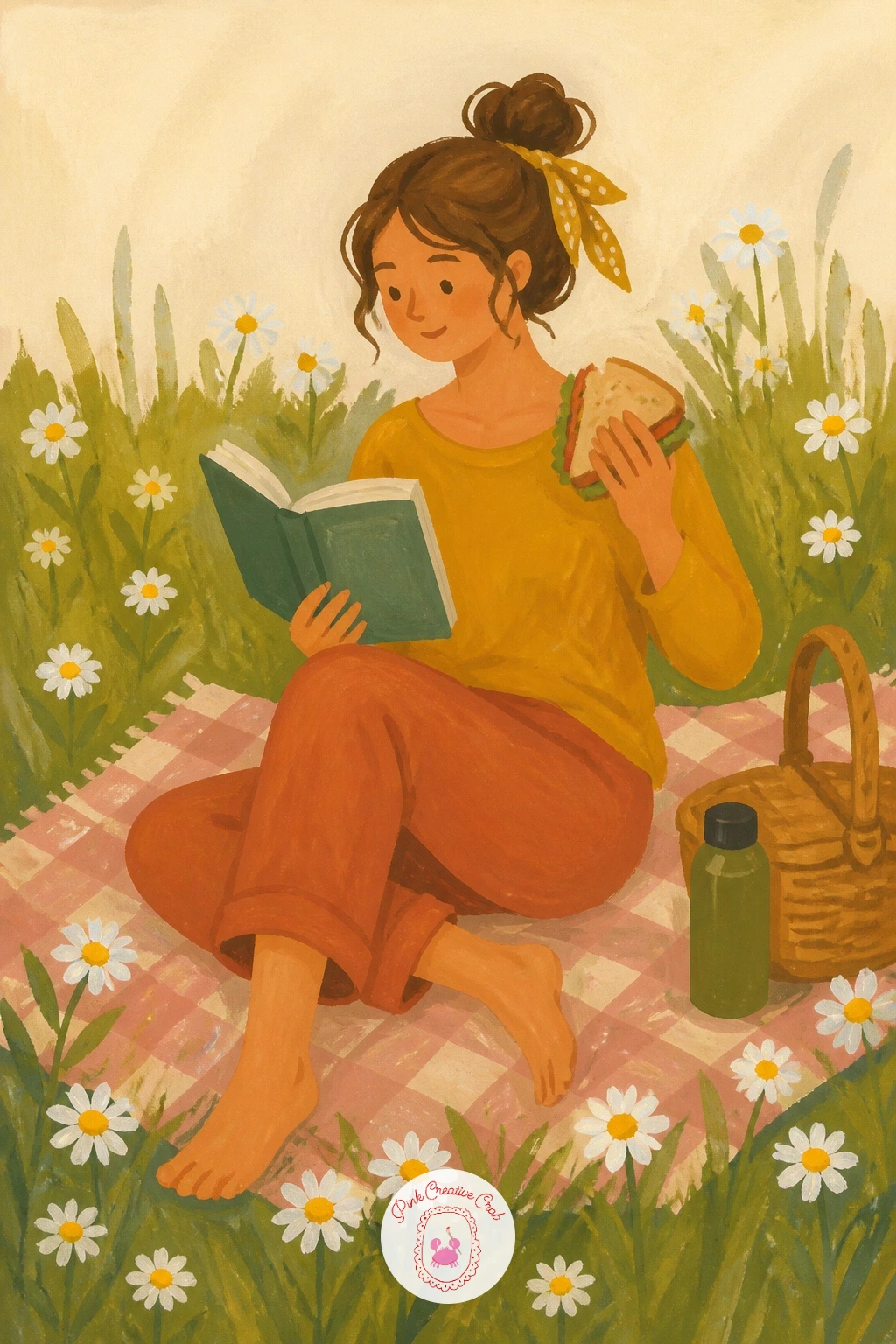
Palette: Sage Green,Mustard Yellow,Cream,Terracotta
Paint a row of simple wooden benches first, receding slightly to suggest a long waiting room, then set the woman at one end with her suitcase propped against her leg. Keep the architecture behind her minimal: one large arched window shape and a departures board painted as flat colored rectangles is enough.
She sits with her coat still on, book held close, completely unbothered by the wait, which is the cozy, funny note of this scene: everyone else looks restless, she has disappeared into her story. A wall clock painted as a simple circle with two lines for hands adds a nice, specific detail.
Where this scene can overcrowd is the background, so resist adding other passengers and let two or three empty bench shapes do the work of suggesting a busy station instead. No arched window on hand, a plain rectangular one reads just as well.
Her suitcase, painted in one flat terracotta block with a single strap line, finishes the travel mood.
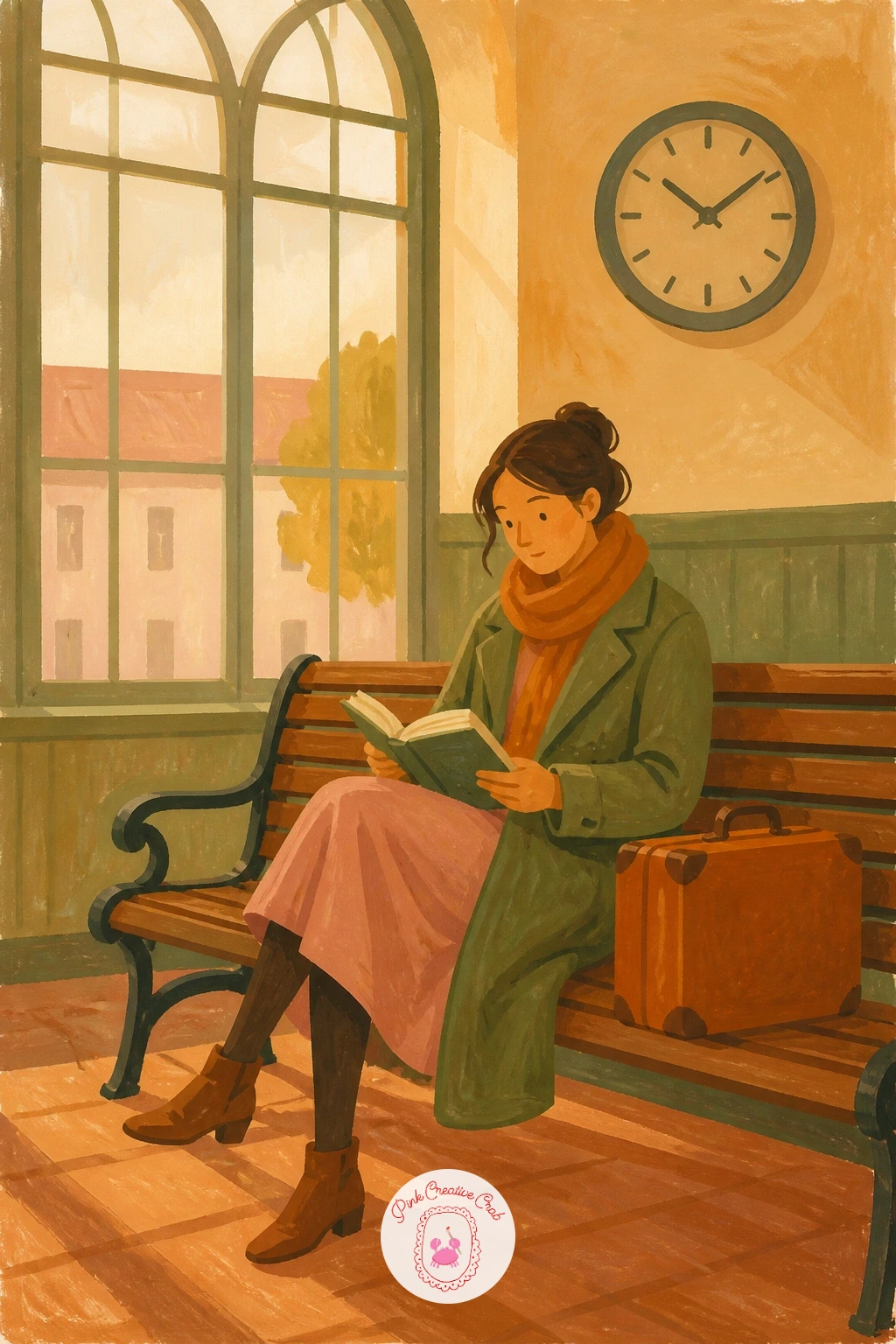
Palette: Terracotta,Payne’s Grey,Mustard Yellow,Cream
Give yourself a tall format for this one, since the whole feeling depends on scale: paint towering stone walls lined with shelves that rise well above the woman’s head, using simple vertical lines in cool grey to suggest carved stone.
Seat her in a high-backed chair near a narrow arched window, book open on her lap, a few loose strands of hair catching light from outside. Keep the shelving behind her in the same flat block-of-color technique used for the earlier bookshop and library scenes, just taller and more imposing.
Light source matters most here: let a single shaft of warm light fall through the narrow window across her lap and the floor, which does more to suggest grandeur than any extra architectural detail. No castle reference needed, three tall grey rectangles and one arched window read instantly as castle walls.
A heavy tapestry or banner shape in terracotta along one wall adds a last touch of old-world warmth.
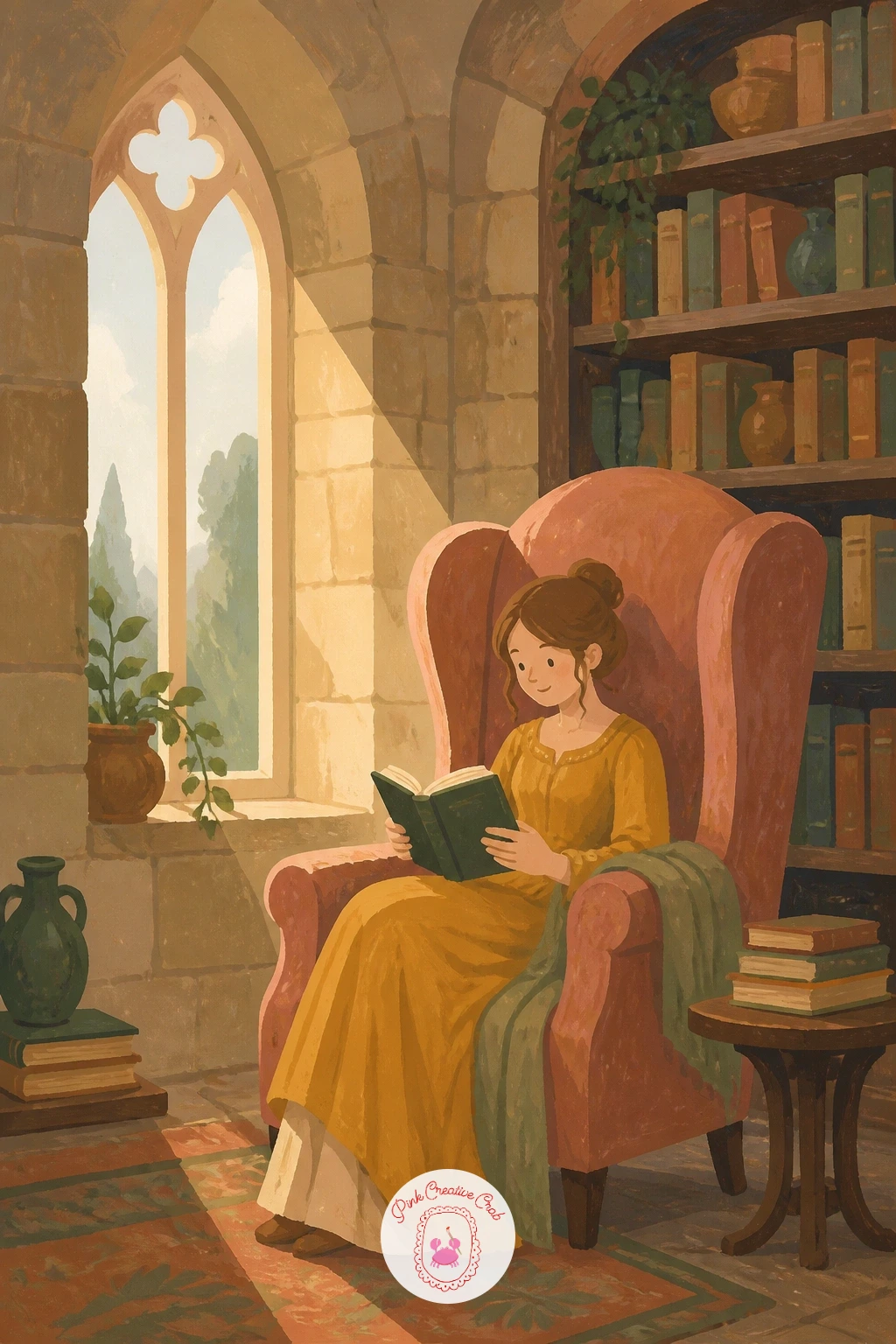
Palette: Payne’s Grey,Terracotta,Mustard Yellow,Cream
Paint the ship’s railing and a flat band of ocean blue behind it first, since that horizon line is what tells the viewer this deck chair is at sea rather than on any ordinary patio. Keep the water simple, one or two lighter streaks for distant waves.
Set the woman in a striped canvas deck chair, sun hat and sunglasses on, book held at a relaxed angle, a tall drink with a small umbrella garnish on a side table beside her. This pairs nicely with the earlier beach umbrella scene if you want two sunny companion pieces.
The deck chair stripes can go wrong the same way the beach umbrella’s did, so paint the canvas as one flat color, let it dry, then add the stripe lines on top following the chair’s curve. No cruise ship reference on hand, a simple white railing and blue horizon is all you need to suggest one.
A life ring shape painted small in the background is a fun, specific extra detail.
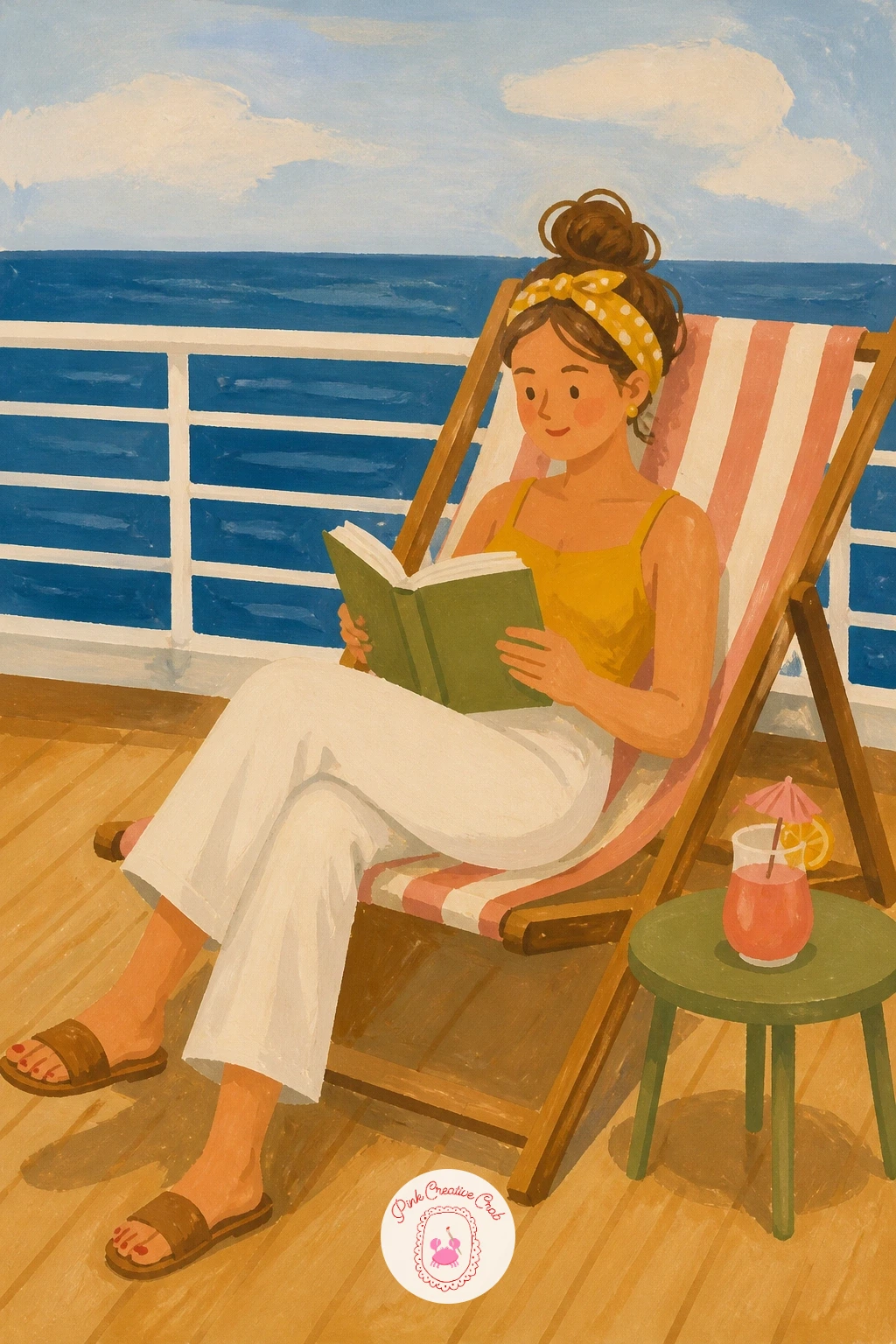
Palette: Payne’s Grey,Terracotta,Cream,Mustard Yellow
Build the pony’s body as a few simple rounded shapes first, a barrel chest, a gentle neck curve, short sturdy legs, since getting this proportion right early saves a lot of repainting later. Compare the pony’s body length to its leg length as you go, roughly equal, which keeps it reading as a pony rather than a taller horse.
Seat the woman on top with reins loose in one hand, book held open in the other, clearly in no hurry to get anywhere. Keep the meadow behind them simple, flat sage grass with a few scattered flower dots echoing the earlier field scene.
If the pony’s legs look too long or spindly, shorten them and thicken the lower leg slightly just above the hoof, which instantly reads as sturdier and more pony-like. No pony reference handy, a small donkey shape works with the same proportions.
A loose mane rendered in a few quick curved strokes finishes the relaxed, sunny mood.
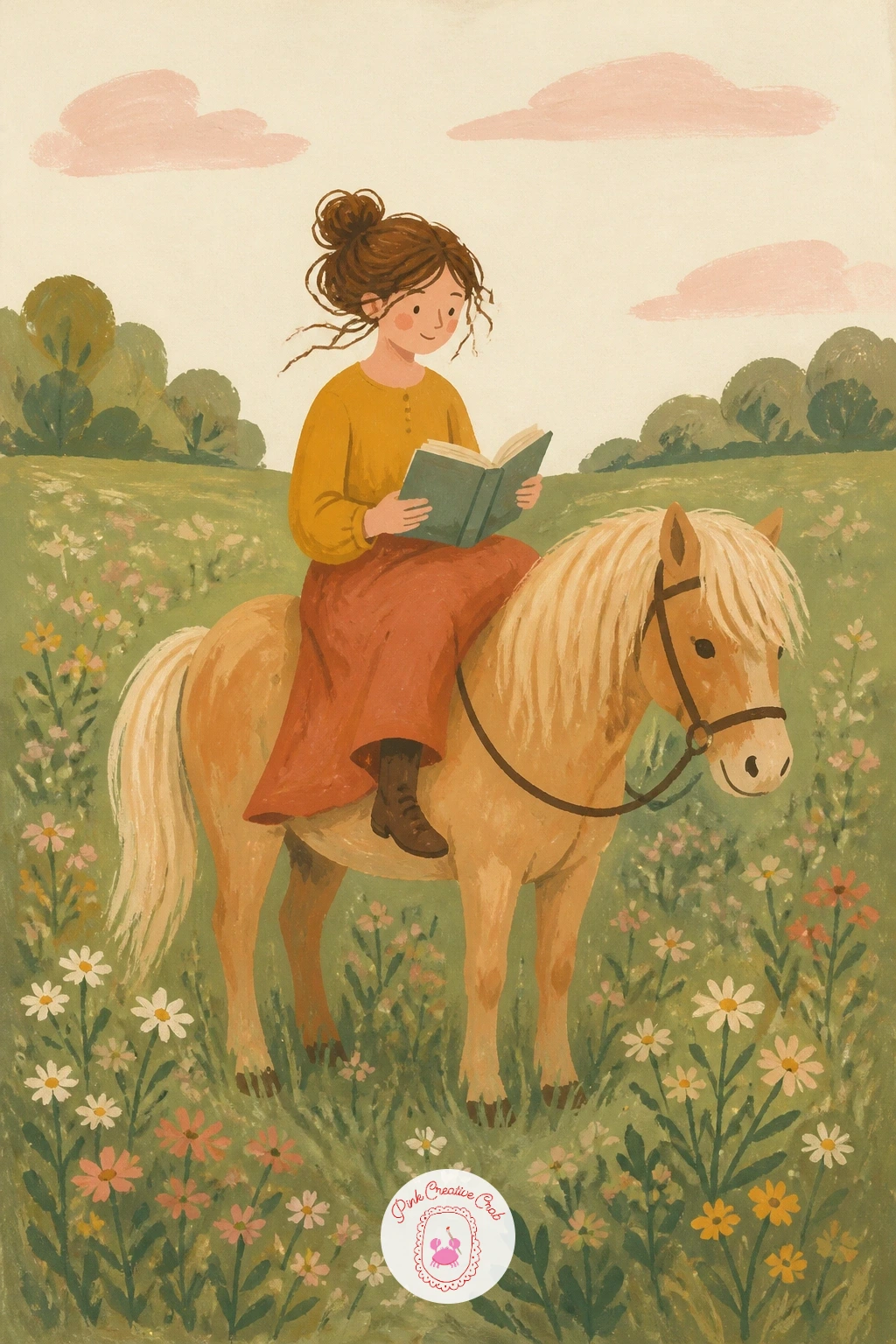
Palette: Terracotta,Sage Green,Mustard Yellow,Cream
If horses and ponies interest you beyond this one scene, there is a full set of ideas in a horse oil painting guide worth exploring next.
Paint the fireplace opening first, a simple dark arch with warm orange and mustard flame shapes licking upward, since the fire is the light source for the entire scene and everything else should be lit from its direction. Keep the flames loose, two or three overlapping teardrop shapes rather than many small ones.
Seat the woman on the floor or in a low chair nearby, wrapped in a thick terracotta blanket up to her chin, book held close so the firelight catches the edge of the page. Let that warm glow fall across one side of her face and fade into cooler shadow on the other.
If the fire looks flat, add one brighter mustard highlight at the base of the flames where they meet the logs, and a little smoky grey just above them. No fireplace to reference, a simple pile of logs with an orange glow behind them reads just as well.
A mug of something warm resting on the floor beside her completes the scene.
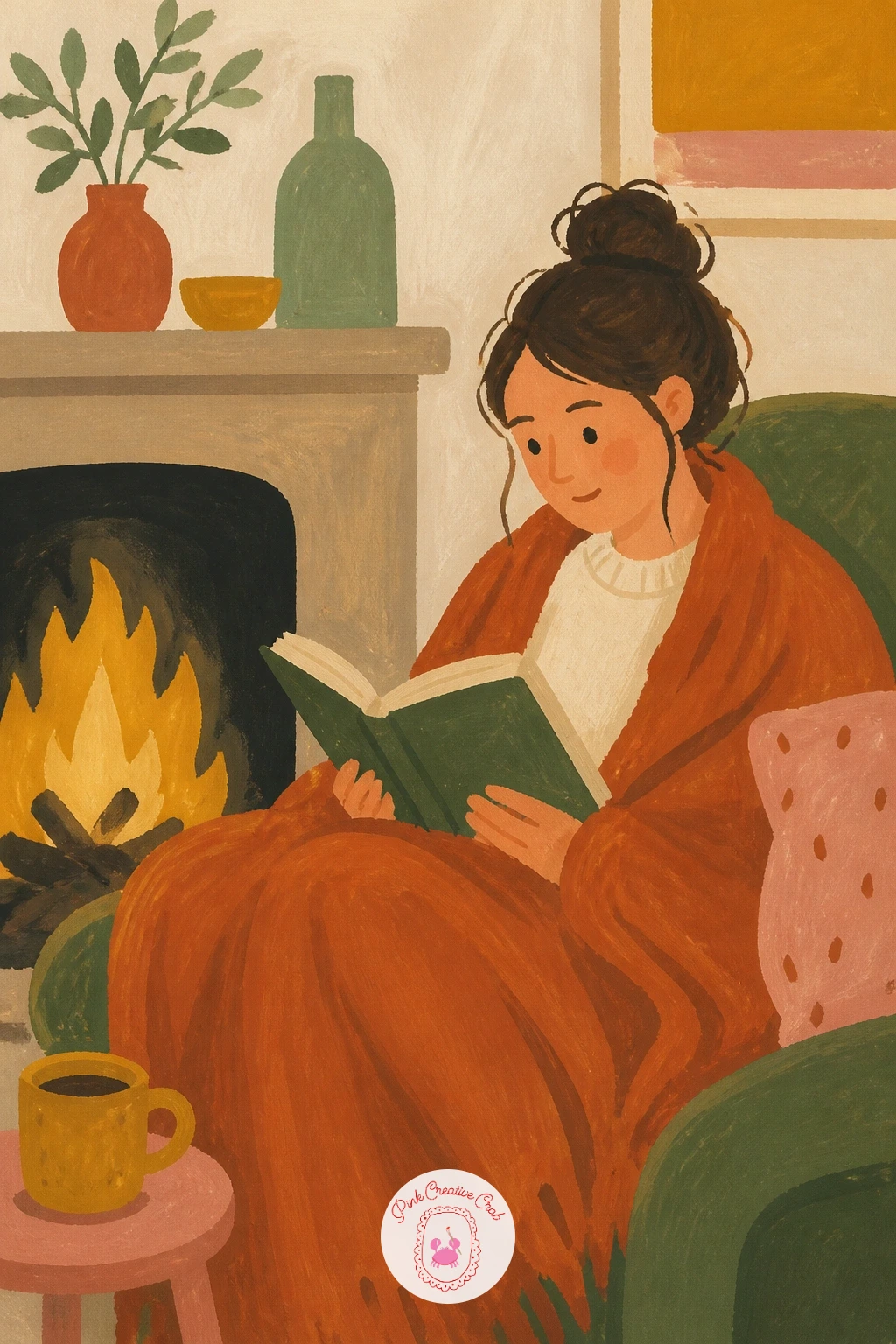
Palette: Terracotta,Mustard Yellow,Payne’s Grey,Cream
Set the eye level high for this one, looking slightly down over the woman’s shoulder, since a ski lift scene only works if the viewer feels the height. Paint a simple chairlift bar across her lap first, then a soft, pale winter landscape falling away below in flat blue-white shapes.
Bundle her in a bright terracotta or mustard coat with a scarf and hat, book held up close despite the cold and the swinging chair, skis dangling below her boots. Keep the mountain background loose, a few simple triangular peaks and scattered small pine tree shapes.
Where this scene can look flat is the snow: once the base white-blue is dry, add soft grey-blue shadow shapes along one side of each slope to suggest the dip and rise of the terrain. No ski lift reference handy, a simple curved cable line above her chair is enough to suggest it.
A puff of her own breath in the cold air, one small white cloud shape, finishes the chilly mood.
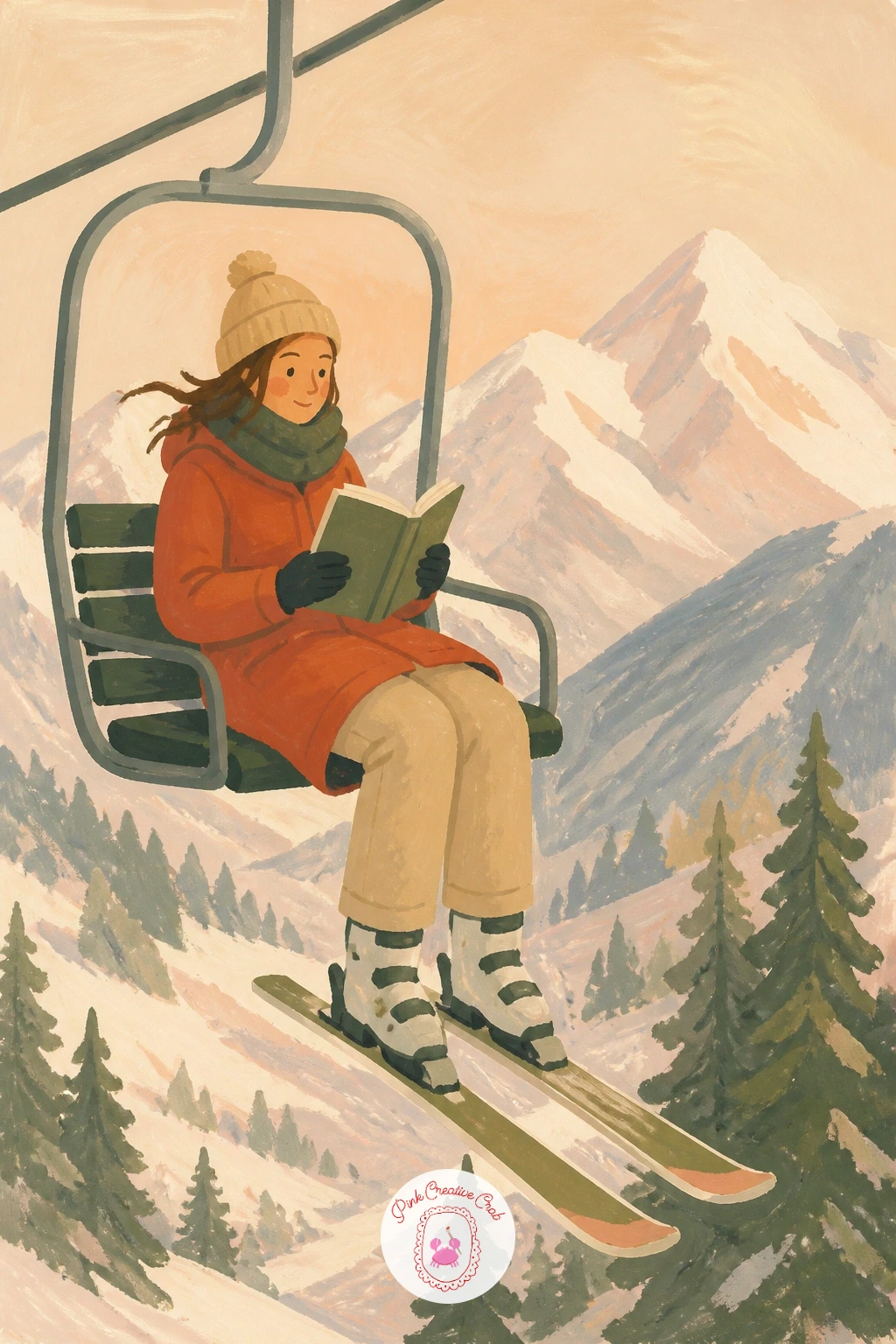
Palette: Payne’s Grey,Terracotta,Cream,Sage Green
Paint the dome hair dryer first, a simple rounded shape in pale sage or grey on an adjustable metal arm, since it is the one prop that instantly places this scene in a salon chair. Keep the machine simple, a dome, a stand, one or two dial shapes.
Seat the woman underneath it with rollers or foils painted as small, repeating shapes across her head, robe draped over her shoulders, book propped open on her lap completely unbothered by the noise overhead. This is one of the funnier, more specific scenes on the list, so let her expression stay relaxed and amused rather than annoyed.
If the rollers look messy, keep them to one consistent size and color repeated evenly rather than varying them, which reads as neater and more intentional. No salon chair to reference, a plain upright chair with the dryer arm beside it works just as well.
A small manicure table with polish bottles beside her is a fun, specific extra detail.
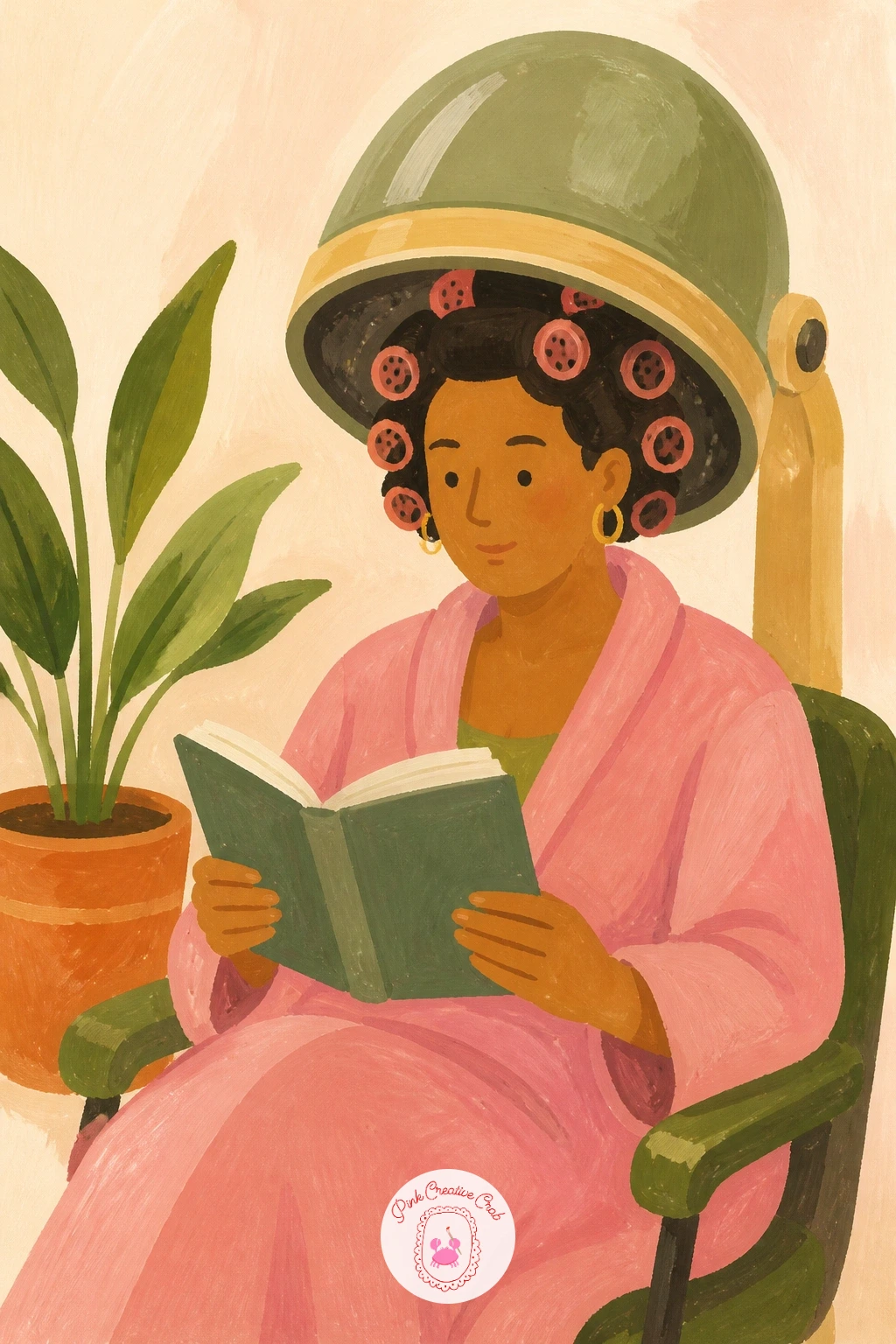
Palette: Sage Green,Dusty Pink,Cream,Mustard Yellow
Block in the car’s body first as a few simple curved shapes, mustard or terracotta, with the top down so the woman’s upper body sits clearly above the door line. Keep the car’s details minimal, a windshield shape, one headlight, a simple wheel, since the figure is the real subject.
Seat her behind the wheel with the book propped against it, feet up on the dash if the pose allows, sunglasses pushed up, clearly parked somewhere scenic rather than going anywhere soon. A loose scarf or sunhat on the passenger seat beside her adds a nice touch of personality.
Cars are easy to get lopsided, so sketch a simple horizontal centerline through the body first and check that the front and back halves match before adding color. No convertible reference handy, an ordinary car with the window simply rolled down works for the same scene.
A roadside view in the background, a few flat hills or a strip of beach, finishes the sense of a spontaneous stop.
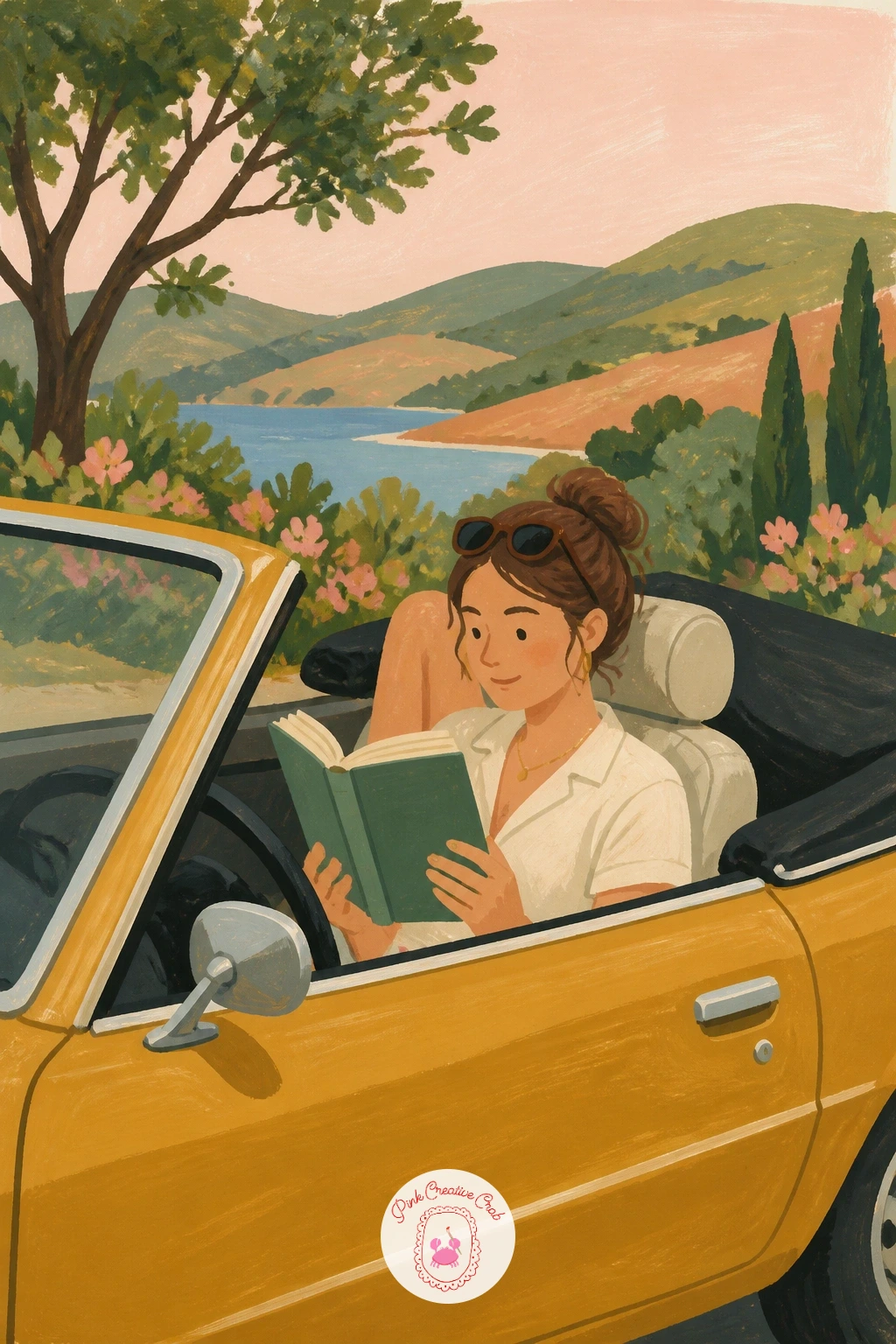
Palette: Mustard Yellow,Terracotta,Sage Green,Cream
Lay the steps in first as a simple diagonal stack of flat stone-colored rectangles, since getting that diagonal right is what sells the whole scene as a staircase rather than a flat floor. Keep each step the same width and height as you repeat them up the slope.
Seat the woman partway up, legs tucked to one side, book open on her lap, a warm terracotta building or archway rising behind her to suggest an old European street. Dress her in a simple sundress or light cardigan in a tone that stands out against the stone.
If the steps start to look like they are sliding sideways rather than receding, check that each step’s top edge lines up along one consistent diagonal guideline drawn lightly in pencil first. No specific Roman landmark needed, two or three simple arched windows on a terracotta wall is enough to suggest the setting.
A small potted plant on one of the lower steps adds a last, charming detail.
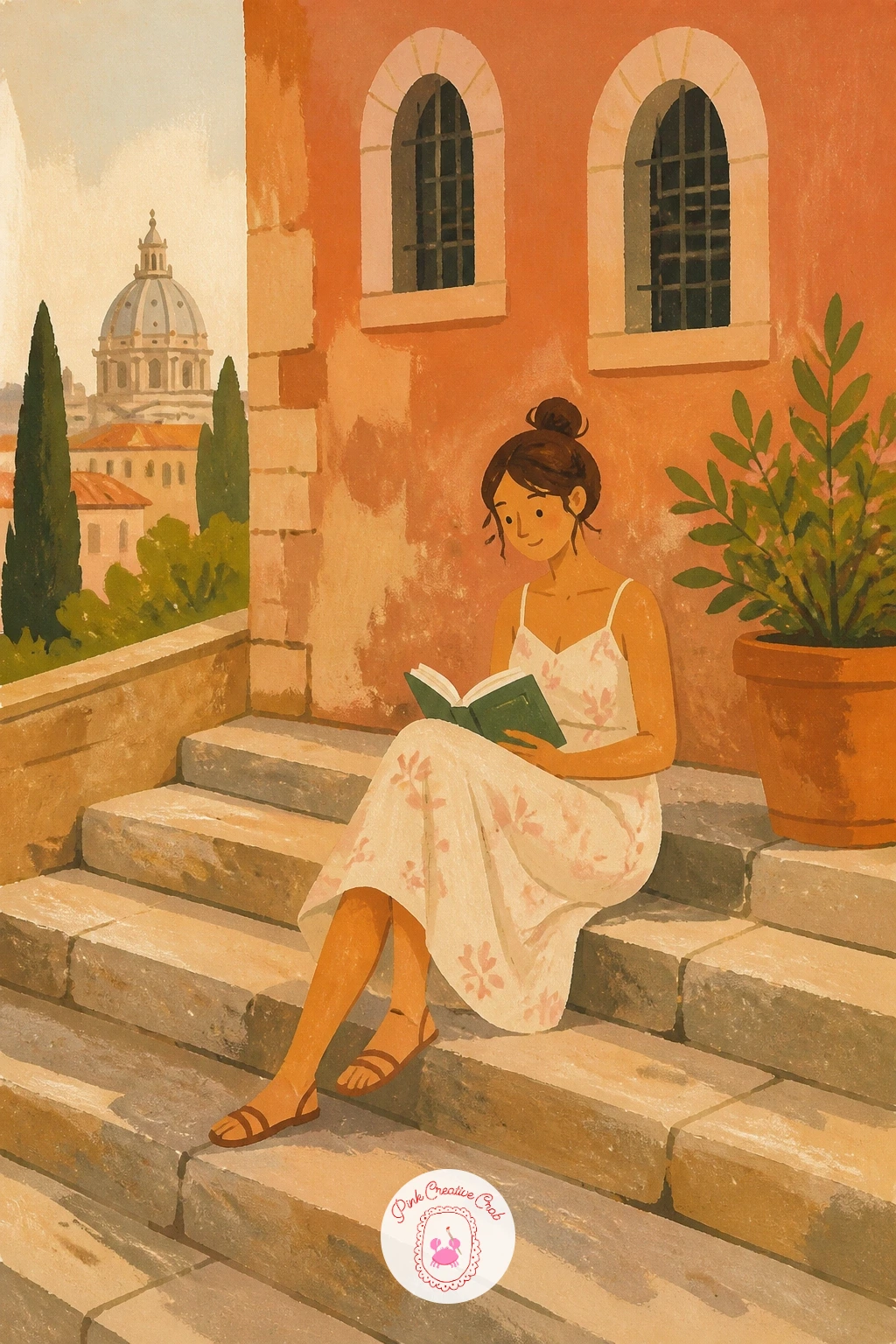
Palette: Terracotta,Cream,Sage Green,Mustard Yellow
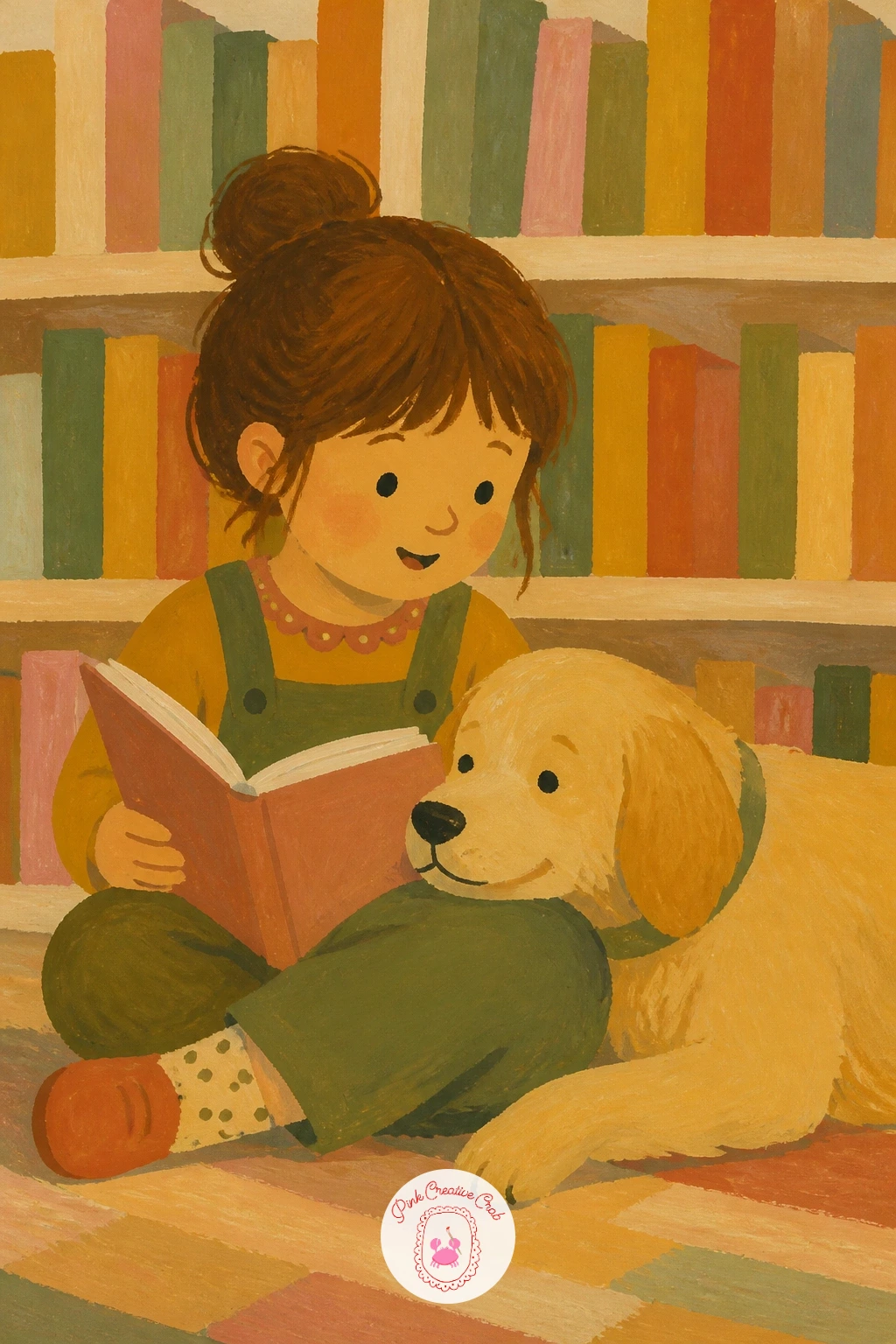
Scale the child and the dog together first, since their relative size is what makes this scene read as sweet rather than confusing. Seat the child cross-legged on the floor with a large, calm dog lying beside her, head resting on her knee, roughly the same size as her seated body.
Give the child a simple mustard or dusty pink outfit and keep her face extremely plain, two dots and a small smile, with the book held out toward the dog as if she is reading the story aloud to him. Shelving in flat block colors behind them, the same technique used earlier for the library ladder and bookshop scenes, ties this one into the same visual family.
Dogs sitting still for a story can look stiff if the legs are too straight, so curve the front legs slightly and let the head droop a little with contentment. A smaller, calmer breed shape, like a simple spaniel outline, is an easier swap than a large, detailed dog.
A dog-eared library book spread open between them finishes the sweet, quiet mood.
Palette: Mustard Yellow,Terracotta,Sage Green,Cream
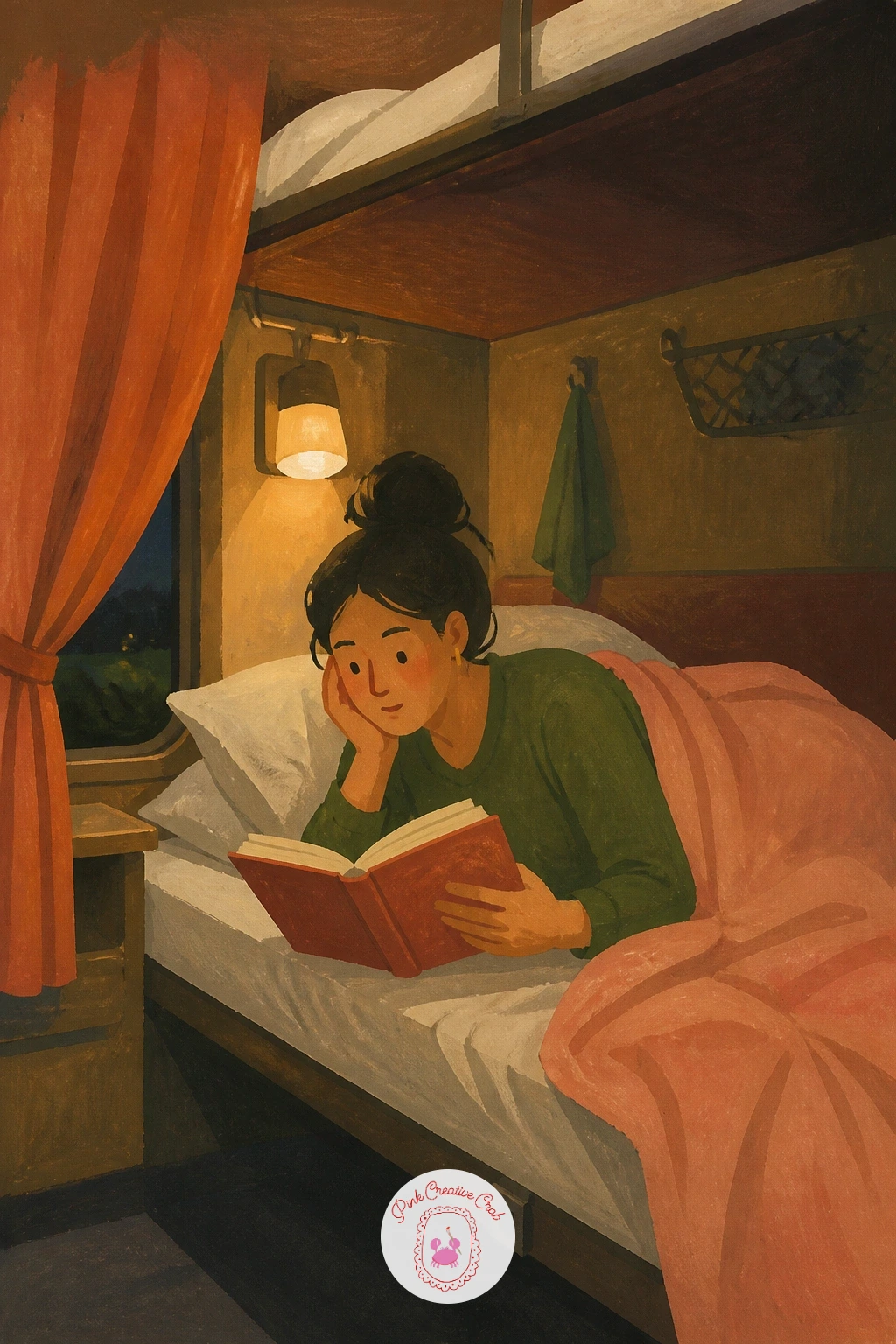
Paint the narrow bunk and compartment wall first, keeping the space deliberately tight and cozy, a small curtained window, a fold-down ladder rail, and just enough room for the woman to lie comfortably on her side. This cramped scale is part of the charm, so resist widening the space.
Tuck her under a thin blanket, propped on one elbow, book held close to a small reading lamp clipped to the wall above her. That little pool of warm lamp light against the darker compartment around it is what carries the whole mood of this scene.
If the compartment starts to feel flat, deepen the shadow in the corners away from the lamp and keep the brightest, warmest tone right around her face and the open page. No reading lamp to reference, a single warm-toned patch of light painted directly onto her face does the same job.
A small curtain pulled halfway across the window finishes the late-night, rocking-train feeling.
Palette: Payne’s Grey,Mustard Yellow,Terracotta,Cream
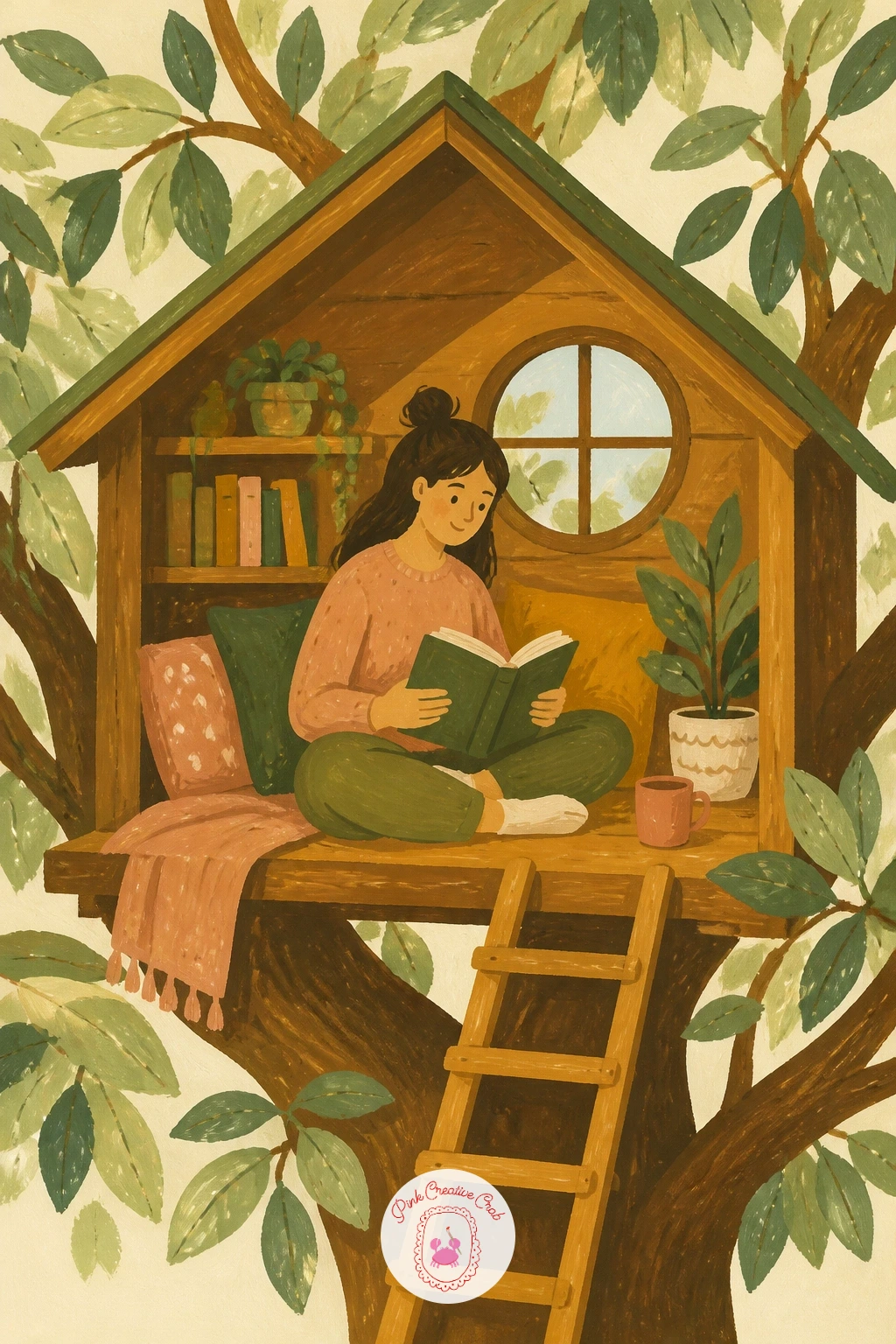
Build the tree house platform and walls first, simple flat wooden-plank shapes nestled among a cluster of leafy branches, before adding the figure, since the structure needs to feel tucked into the tree rather than floating beside it. Let a few leaf clusters overlap the edges of the walls.
Seat the woman cross-legged inside, book open on her knees, a small round window cut into the wall behind her showing a patch of sky or distant treetops. Keep her clothing in one of the warmer tones from your palette so she stands out clearly against the greens and browns around her.
Once this version works, you can vary it easily: try the same tree house at night with a lantern instead of daylight, or swap the round window for a ladder opening in the floor to change the whole mood. No real tree house to reference, a simple wooden box shape tucked into a mass of sage leaves reads instantly as one.
A few acorns or leaves scattered across the floor finish the scene with a small, natural touch.
Palette: Sage Green,Terracotta,Mustard Yellow,Cream
For more ways to build a cozy small space like this, a beginner gouache ideas roundup has other simple interiors worth trying next.
What to Do Next
Pick whichever scene matches your own mood today, a quiet window seat or a funny salon hair dryer moment, and mix your four warm colors before you start so you can move straight through from sketch to final highlight in one sitting on a sheet of heavyweight paper.
Frequently Asked Questions
What kind of paint works best for a reading painting like these?
Gouache works best for this warm, flat illustration style because it covers evenly in solid shapes and dries matte. Acrylic is a close substitute if that is what you already own, since both block in flat color the same way.
How do I make the faces look right without drawing a full portrait?
Keep faces extremely simple: a soft oval, two small dots or short lines for eyes, one curved line for a mouth. These scenes rely on pose and setting for their warmth, so an overly detailed face usually looks out of place against the flat shapes around it.
What size paper suits these reading scenes?
A square or portrait-oriented sheet around eight by ten inches works well, since most of these poses are seated or reclining and need some vertical room. Heavier illustration paper also handles layered gouache without buckling.
How do I keep the warm color palette consistent across different scenes?
Mix one batch of each core color, mustard, terracotta, sage and dusty pink, at the start and keep it covered between paintings. Working from the same mixed puddles rather than remixing each time keeps every scene feeling like part of one set.
What if I am not confident drawing people yet?
Start with the simpler seated poses, like the bookshop armchair or the kitchen table scene, where the body is mostly hidden by furniture. Build up to more active poses, like the walking or pony scenes, once a few simple seated figures feel comfortable.
Have any thoughts?
Share your reaction or leave a quick response — we’d love to hear what you think!
-
 0
-
0
-
0
-
0
-
0
-
0


