Lavender painting has a way of slowing the afternoon down. The colour alone does half the work for you: that soft purple against a pale sky or a stone wall, laid in with loose acrylic strokes, reads as Provence before you even add a roof or a bee.
Below you will find twenty seven scenes built around fields, houses, little jars and the people and animals who wander through them. Pick whichever one matches your mood today, gather a small palette, and let the textured stripes do the romantic part for you.
Using these images: free for personal projects such as printing, coloring, cards, journals and gifts. Handmade items that include them may be sold up to 30 pieces per design. More than that is commercial use and is not permitted, and neither is selling or sharing the images themselves or passing them off as your own. Please ask before any other use.
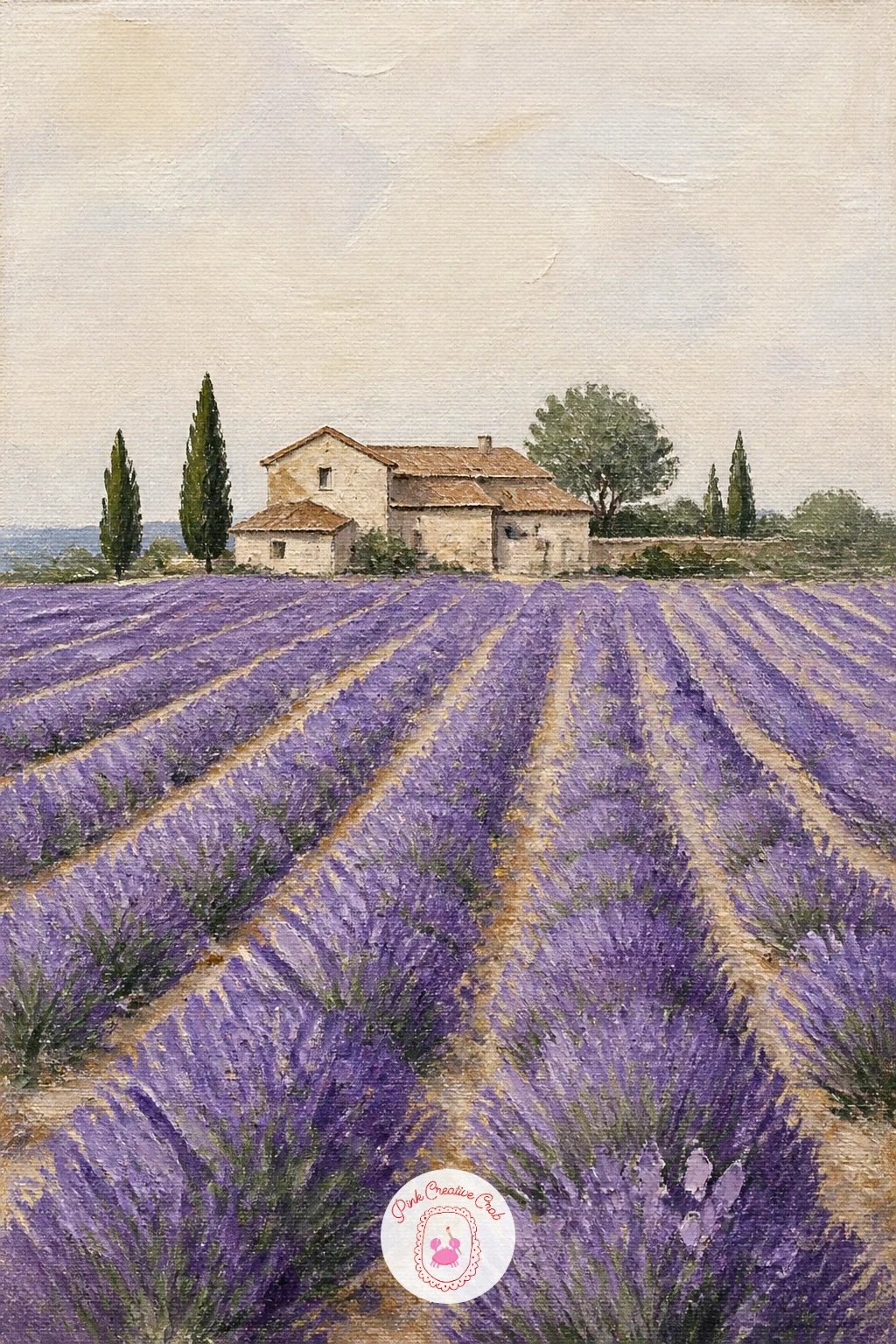
Start the whole series with a lavender field and a stone farmhouse, since it sets the palette you will reuse again and again. Block in the sky first with a wide flat brush, a soft cream fading into pale blue, then let it dry while you mix your purples.
Paint the farmhouse next as a simple pale block with a terracotta roof, kept small and sitting on the horizon line rather than in the middle of the canvas. Once it is dry, load a palette knife or an old stiff brush with lavender purple and sage and drag short horizontal stripes across the lower two thirds, working from the back rows forward so each row slightly overlaps the one behind.
Measure before you commit to the house: hold your brush up against the canvas and check that it sits no taller than a fifth of the whole height, otherwise the field loses its scale. If your rows start looking too neat and stiff, vary the pressure and let some stripes run longer than others.
Finish with a few cream dots for shutters and one tiny dark doorway, and stop there, this scene reads from a distance.
You Will Need
- palette knife
Palette: Dioxazine Purple,Sage Green,Honey Ochre,Cream White
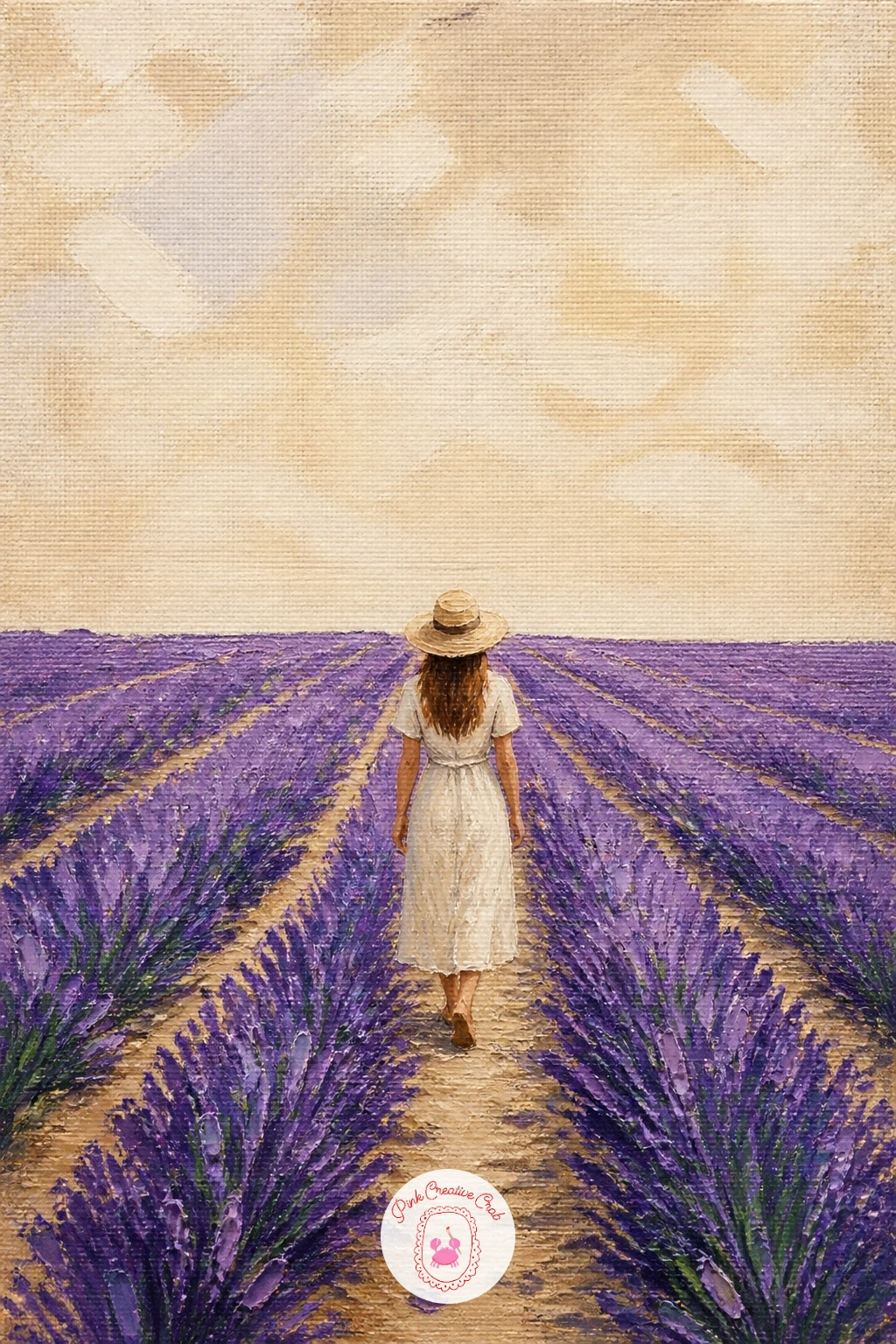
Once you are comfortable with field stripes, add a figure to bring the scene to life: a girl in a straw hat walking between the lavender rows. Sketch her lightly in pencil first, a simple standing silhouette from the back, her hat a wide oval and her dress a loose triangle shape.
Paint the sky and distant field first as flat soft colour, then bring her in over the dry background using a small round brush, keeping her shape simple with no facial detail since she faces away. Mix a warm straw yellow for the hat and a soft cream or pale blue for the dress so she reads clearly against the purple.
Compare her height to the lavender rows around her, she should stand roughly as tall as three or four rows stacked up, which keeps her believably inside the field rather than floating above it. If she looks stiff, soften the edge of her dress with a slightly damp brush so it blends a touch into the lavender beside her.
A quick swap if you lack a fine round brush: use the tip of a flat brush turned on its edge.
Palette: Lavender Purple,Straw Yellow,Cream White,Sage Green
Move from the open field into a quieter indoor subject: lavender bundles drying upside down, tied with string and hung in a row. This one is about edges and repetition rather than landscape space, so it suits a square canvas nicely.
Begin with a pale cream or soft grey background, flat and even, then paint the hanging string first as a thin continuous line across the top. Build each bundle as a cluster of short purple strokes fanning downward from the string, using a dry, half loaded brush so the strokes stay textured rather than smooth.
This is where a dry brush trick earns its keep: load only a little paint, wipe most of it off on scrap paper, then drag the bristles down so the lavender heads look fluffy rather than painted as a solid block. If one bundle comes out too heavy, lift a little wet paint off with a clean dry brush before it sets.
Finish with a few cream string ties and let the bundles hang at slightly different heights for a natural look.
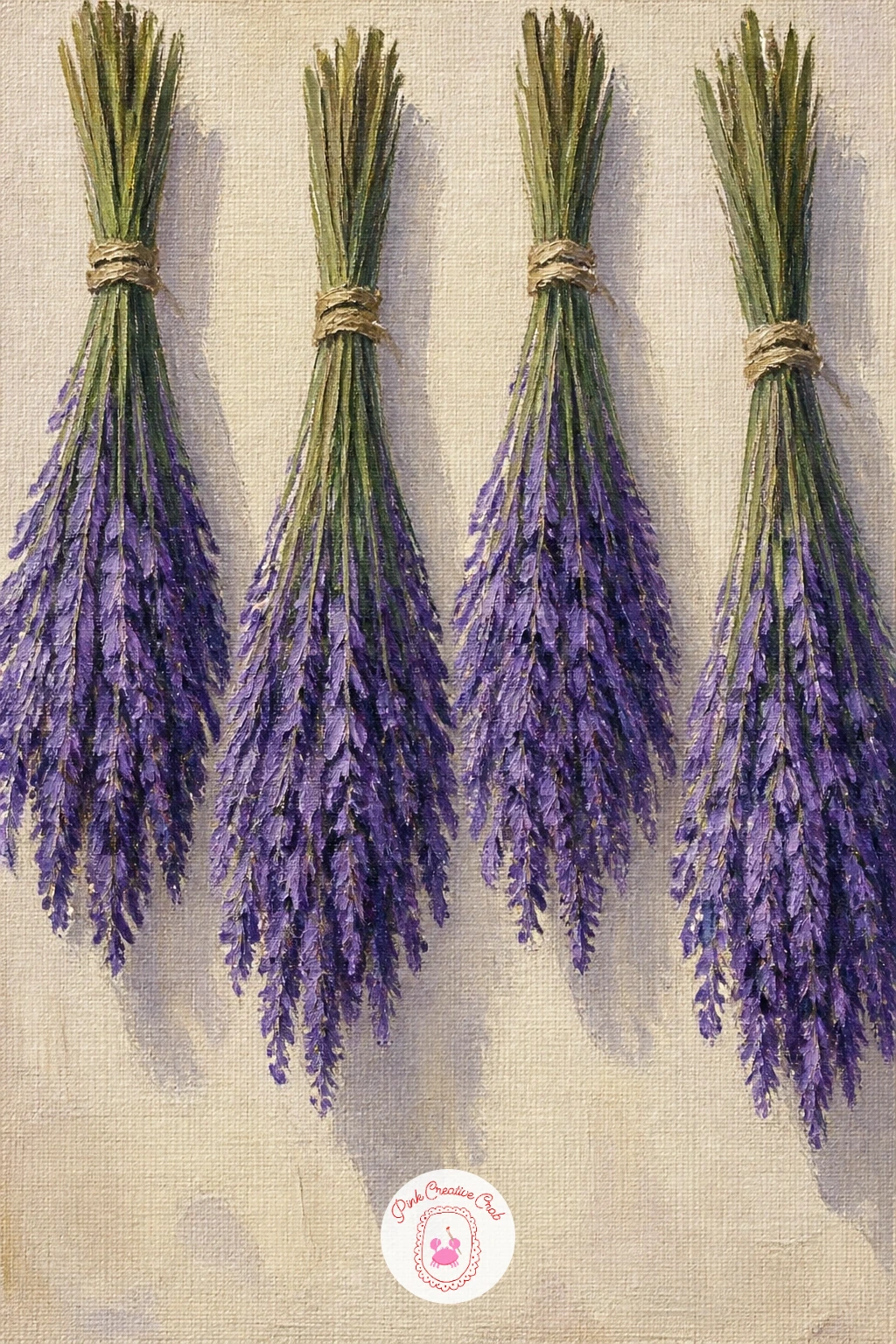
Palette: Dioxazine Purple,Payne’s Grey,Cream White,Sage Green
Try this one on a long narrow canvas instead of square, it suits the hanging line of bundles and makes a nice kitchen piece.
Bring the scale right down with a lavender sachet resting on a linen pillow, a cosy still life you can finish quickly. Paint the pillow first as a soft, slightly uneven cream shape filling most of the canvas, using loose diagonal strokes to suggest the folds of linen without drawing every crease.
Once that base is dry, add the small sachet as a rectangle of muted sage or soft grey fabric, tied at the top with a thin ribbon. Fill it with short dabs of lavender purple spilling slightly over the opening, as though a few stems are tucked loosely inside.
If this is your first time painting fabric folds, keep your brush loaded with two tones of cream rather than one flat colour, dragging a slightly darker cream into the hollows of the pillow so it has gentle shadow without fuss. A flat wash board works fine if you do not have a stretched canvas handy.
Finish with one or two loose lavender stems resting beside the sachet for a relaxed, unstaged feel.
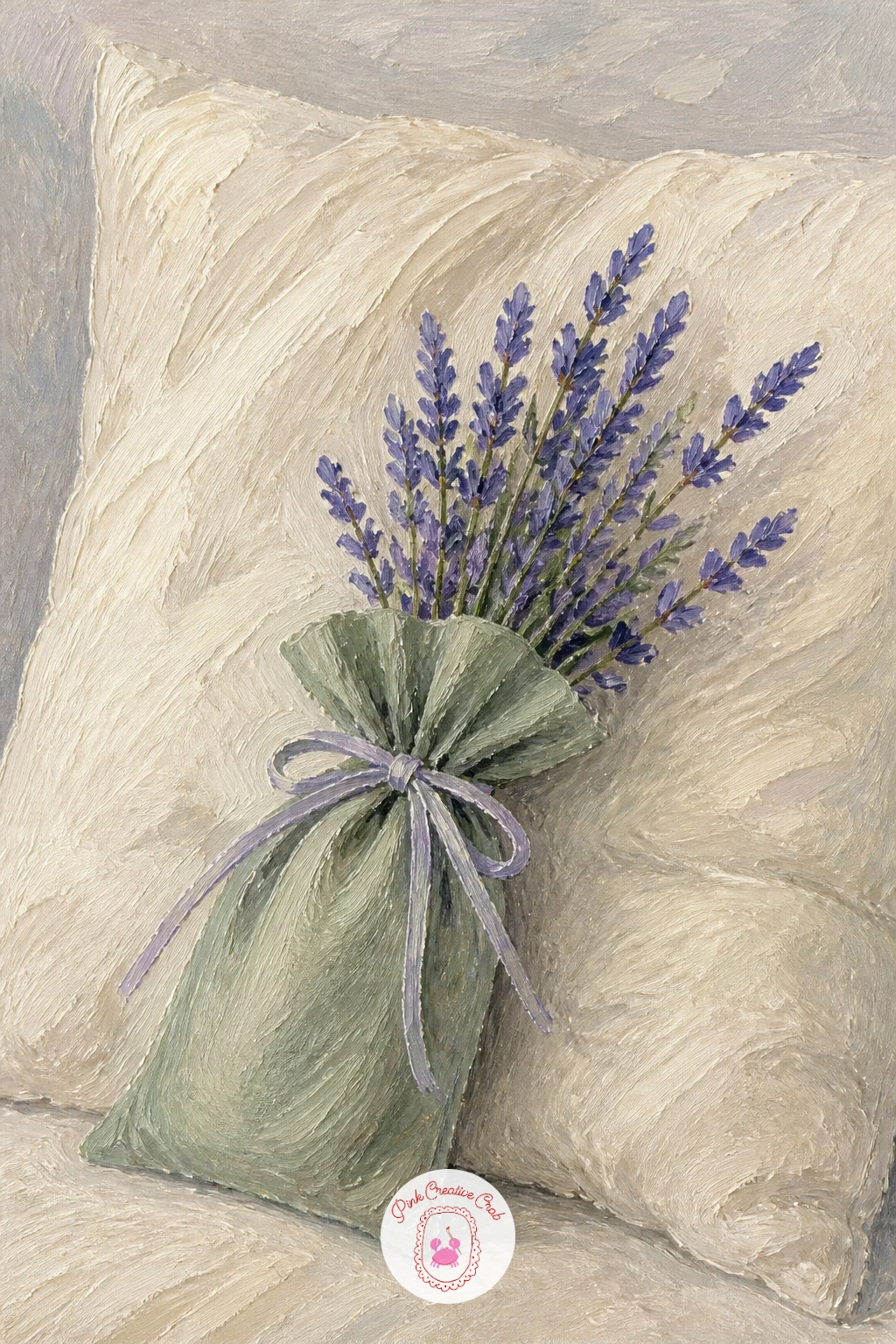
Palette: Cream White,Sage Green,Lavender Purple,Soft Grey
Step closer again for a bee on lavender, a tiny detail painting that rewards patience more than skill. Start with one or two lavender stems filling most of the canvas on the diagonal, painted with loose textured strokes so the flower heads look soft rather than crisp.
Let that dry fully before adding the bee, since painting wet into wet here will blur the small shape into the purple. Paint the bee’s body as a simple oval in warm ochre with two or three thin dark stripes, then add two pale translucent wing shapes with a nearly dry brush so they look light and see through.
Where this goes wrong is the wings looking too solid and heavy, so use the thinnest wash you can mix and apply it in one quick stroke rather than going back over it. If you are short on fine brushes, the end of a cotton swab dipped lightly in paint can dab in a convincing bee body.
Finish with one tiny white highlight dot on the wing to catch the light.
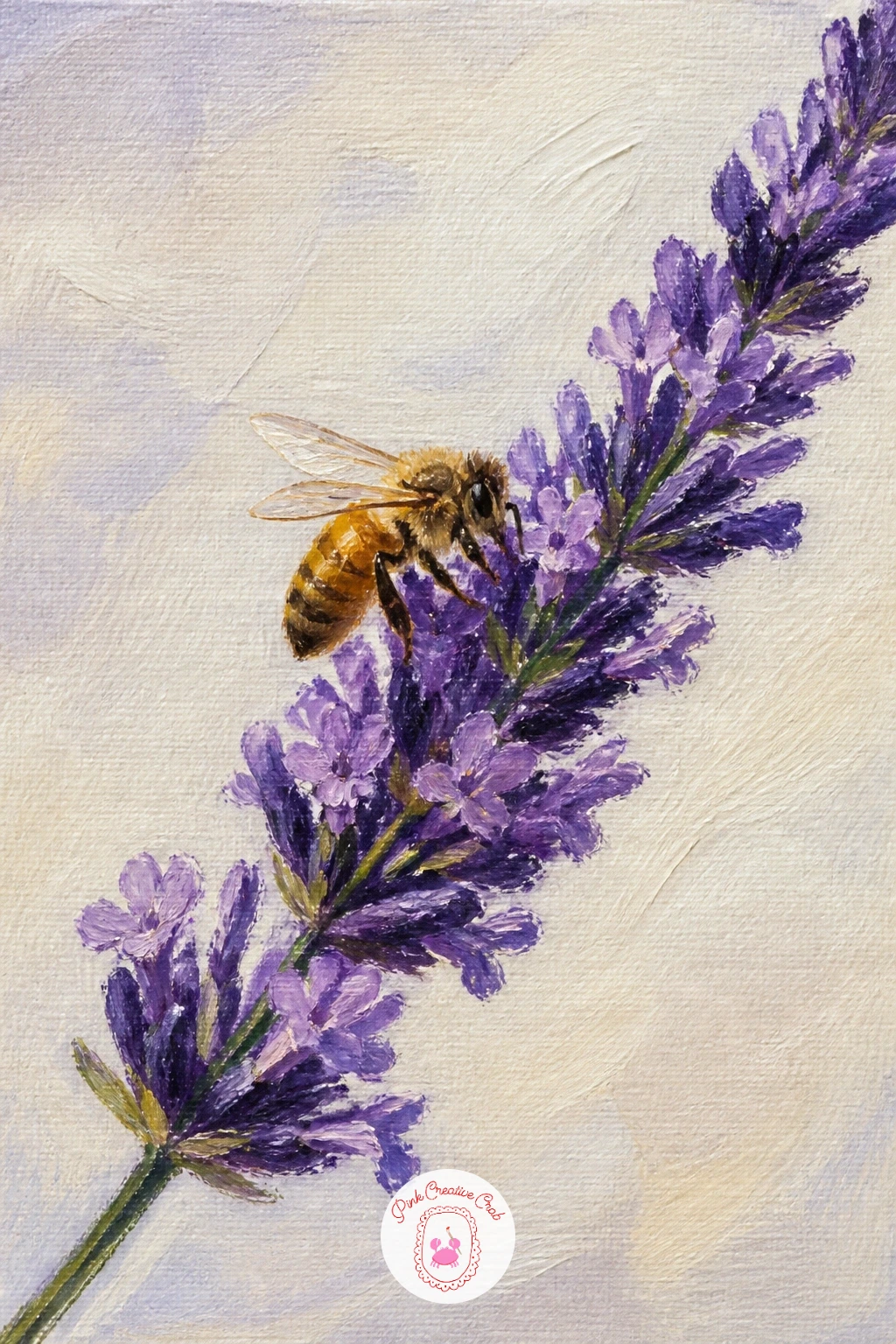
Palette: Lavender Purple,Honey Ochre,Payne’s Grey,Cream White
Widen the view again for a Provence village with lavender in front, which works nicely as a companion piece to the farmhouse scene. Think about eye level before you start: paint this from a slightly raised viewpoint, as though standing on a gentle slope looking down toward the rooftops, which lets more of the lavender field show in the foreground.
Block in the sky and distant hills first, then paint a loose cluster of small buildings along the horizon in warm cream, soft pink and pale ochre, each one just a simple rectangle with a darker roof. Let that dry, then bring the lavender rows forward with your palette knife, making the front rows larger and more textured than the ones near the village to push the distance back.
If the buildings start competing with the field for attention, mute their colours slightly and keep the lavender more saturated, since the flowers are the real subject here. No palette knife to hand, a small flat brush dabbed on its corner gives a similar textured row.
Finish with one or two dark cypress shapes beside the village for height.
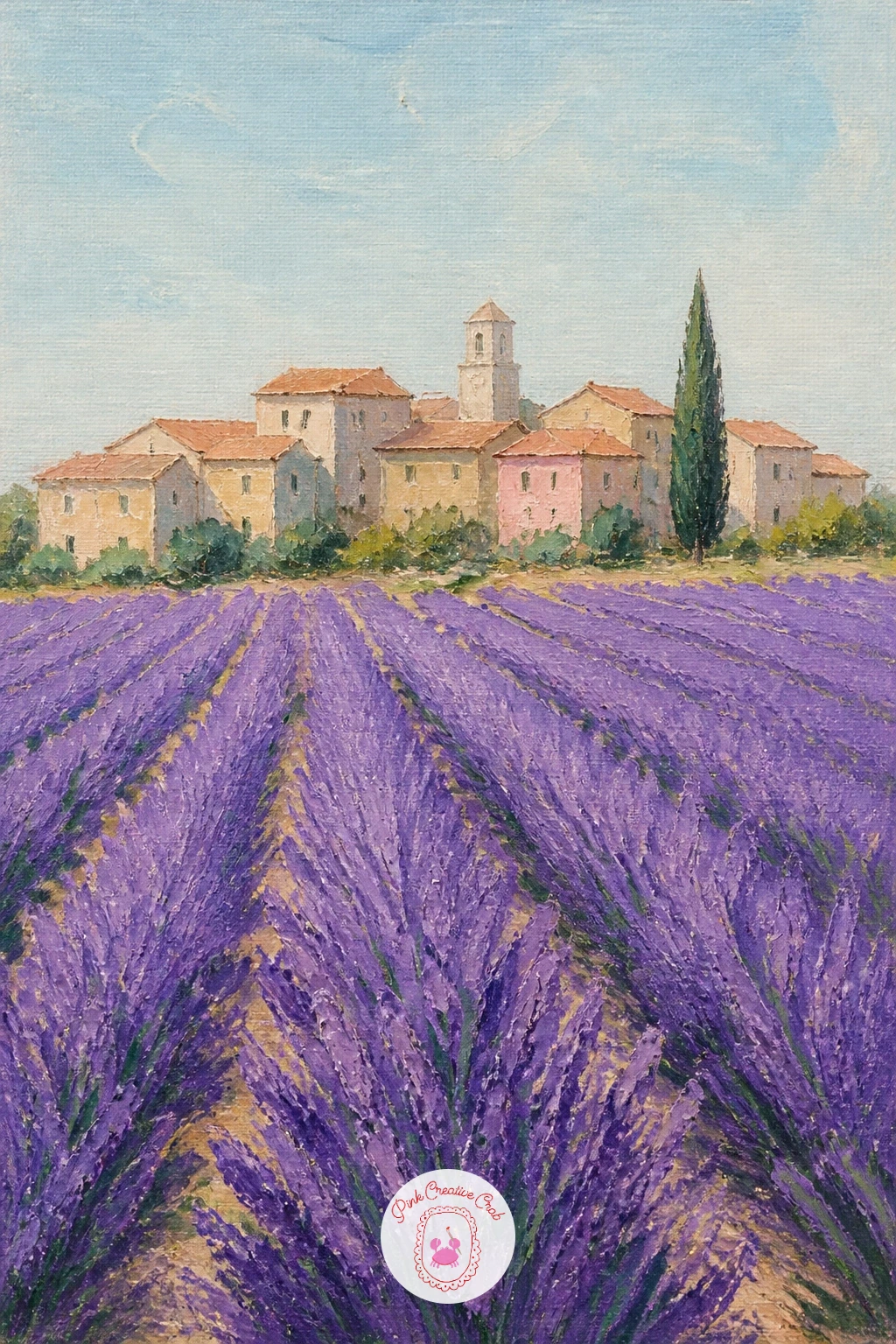
You Will Need
- palette knife
Palette: Honey Ochre,Dusty Pink,Lavender Purple,Sage Green
Bring the scene indoors with a basket of lavender on a wooden table, a warm still life that suits a kitchen wall nicely. Paint the table surface first with long horizontal strokes of warm honey brown, letting some streaks run lighter and darker for natural wood grain.
Once dry, paint the basket as a simple woven oval using a dry brush dragged in a criss cross pattern over a base of warm ochre, which gives the texture of weave without painting every strand. Fill the top generously with loaded purple strokes for the lavender stems, letting a few spill loosely over the basket’s rim onto the table.
The easy forty minute version adds a second small object beside the basket, perhaps a folded linen cloth or a small jug, to give the composition more depth and a sense of a real tabletop moment. The ten minute version simply stops at the basket and table.
Keep your lavender stems pointing in slightly different directions so the bundle looks freshly gathered rather than arranged.
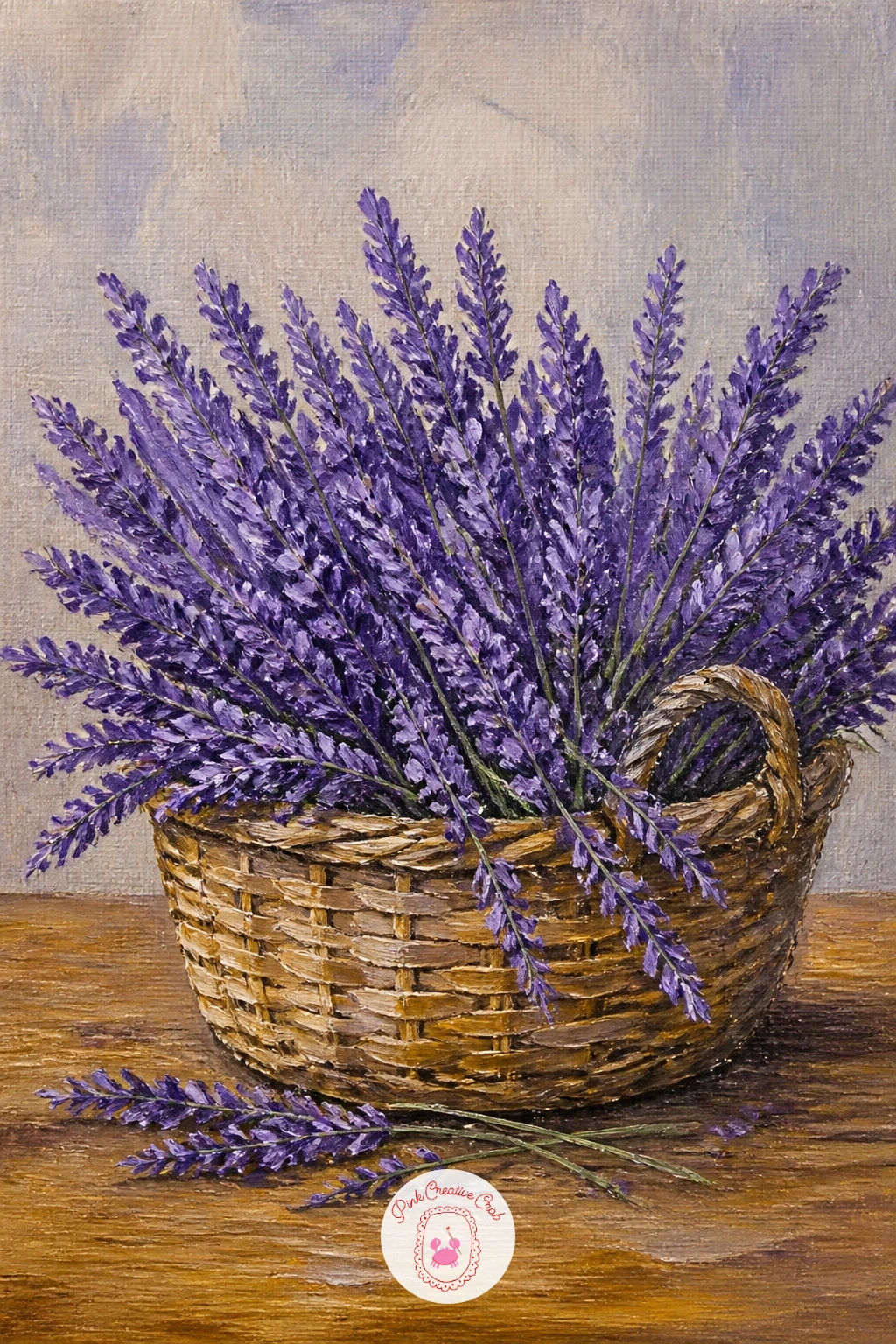
Palette: Honey Ochre,Burnt Umber,Lavender Purple,Cream White
Cool the palette down with lavender lemonade in a mason jar, a refreshing little still life with some fun glass to paint. Start by lightly sketching the jar’s outline, then fill the lower two thirds with a pale yellow wash for the lemonade, leaving the top third for glass and air.
Paint the glass itself with a nearly dry brush, using thin streaks of white and pale blue grey to suggest the curved surface catching light, and leave small unpainted slivers of canvas where the highlights should be brightest. Drop in a few small lavender sprigs and a lemon slice floating near the top, keeping both loose and simple rather than detailed.
Glass trips people up because they try to paint every reflection, so pick just two or three highlight shapes and leave the rest of the glass as soft colour, that restraint is what reads as transparent. If white paint feels too stark for highlights, mix in a touch of your background colour instead.
Finish with one small puddle of condensation at the base using a dab of pale blue grey.
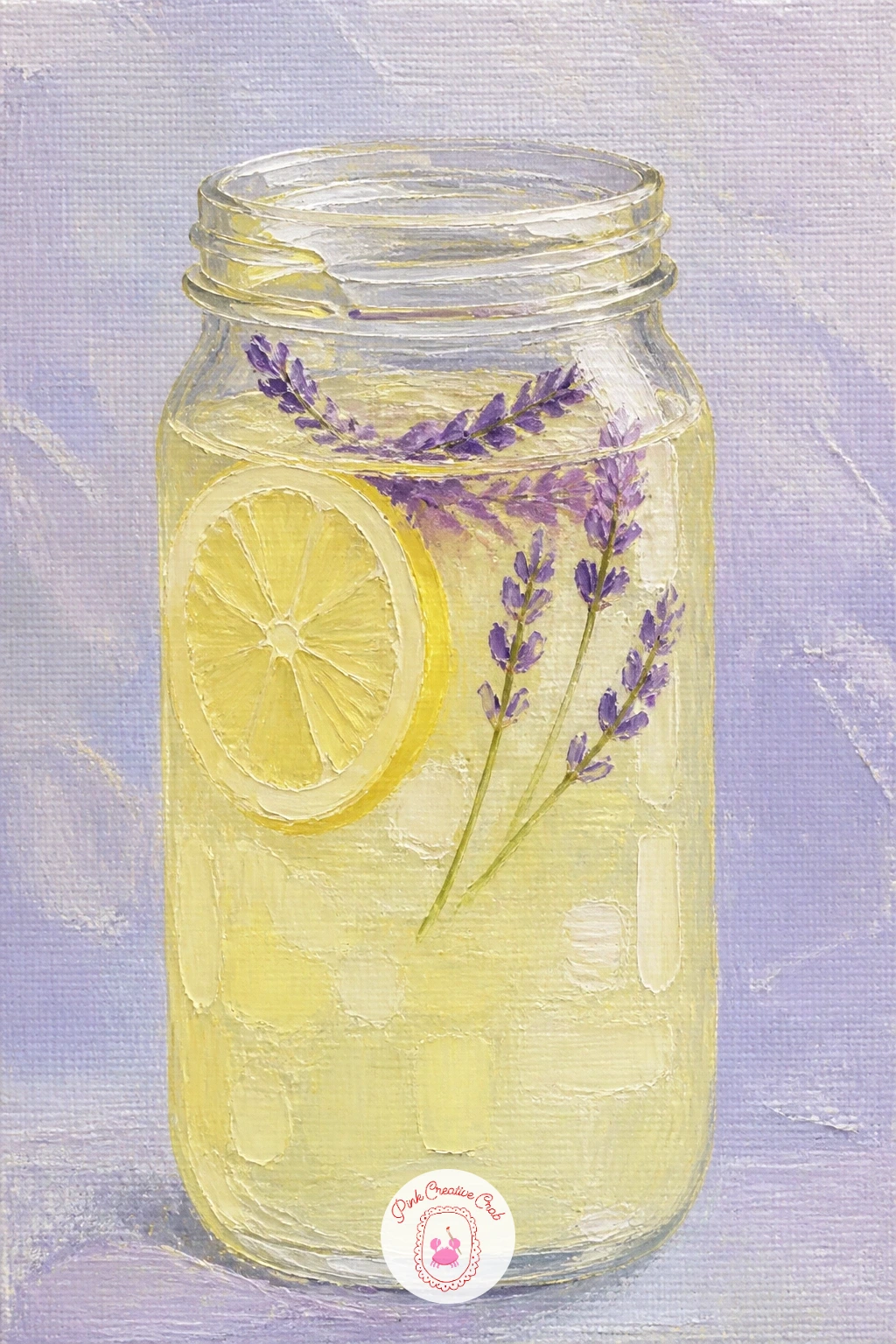
Palette: Pale Yellow,Lavender Purple,Soft Grey Blue,Cream White
Keep the cottage garden mood going with lavender in a blue watering can, tipped gently on its side with stems spilling out. Draw the can first as a simple rounded body with a curved spout and handle, then paint it in a soft muted blue, adding a touch of darker blue along one side for shape.
Once dry, build the lavender spilling from the spout and the top opening using your palette knife or a stiff brush, letting the stems fan outward in a loose arc rather than a tidy bunch. Ground the whole piece with a short patch of sage grass beneath the can so it does not look like it is floating.
If the can ends up looking flat, check where your light source sits, a single soft shadow underneath and a highlight along the top curve of the can is usually enough to give it form without overworking the metal or enamel surface. No palette knife on hand, the flat edge of an old gift card works surprisingly well for dragging texture.
Vary the stem lengths so the spill looks natural rather than cut to one length.
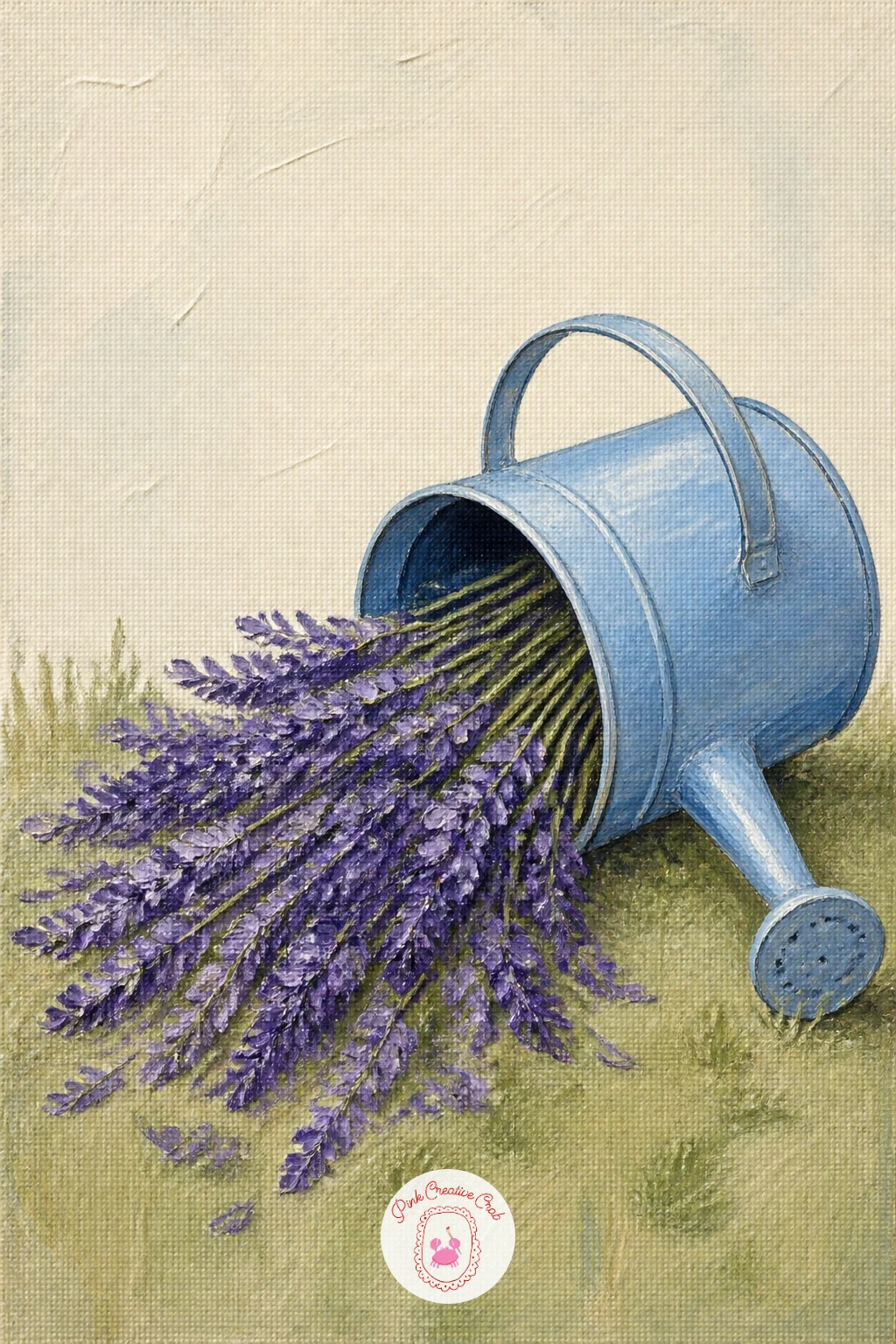
You Will Need
- palette knife
Palette: Soft Blue,Lavender Purple,Sage Green,Cream White
Open the canvas back up for a lavender border along a garden path, a simple landscape that practises leading the eye into the distance. Set your eye level low, close to the ground, so the path stretches away from you and the lavender on either side appears to shrink as it recedes.
Paint the path first as a pale warm strip narrowing toward a vanishing point roughly a third of the way up the canvas, then build the lavender borders along each side with larger, looser strokes in the foreground and smaller, tighter strokes further back. This change in scale is what sells the distance, more than any line.
Keep the sky simple and soft so it does not compete with the path, and resist the urge to paint every stone or paver, a few warm and cool patches of colour read as a path from a normal viewing distance. If your rows start to look too even in size, exaggerate the difference between the front and back strokes a little more than feels natural.
Finish with a soft green hedge shape at the end of the path to anchor the vanishing point.
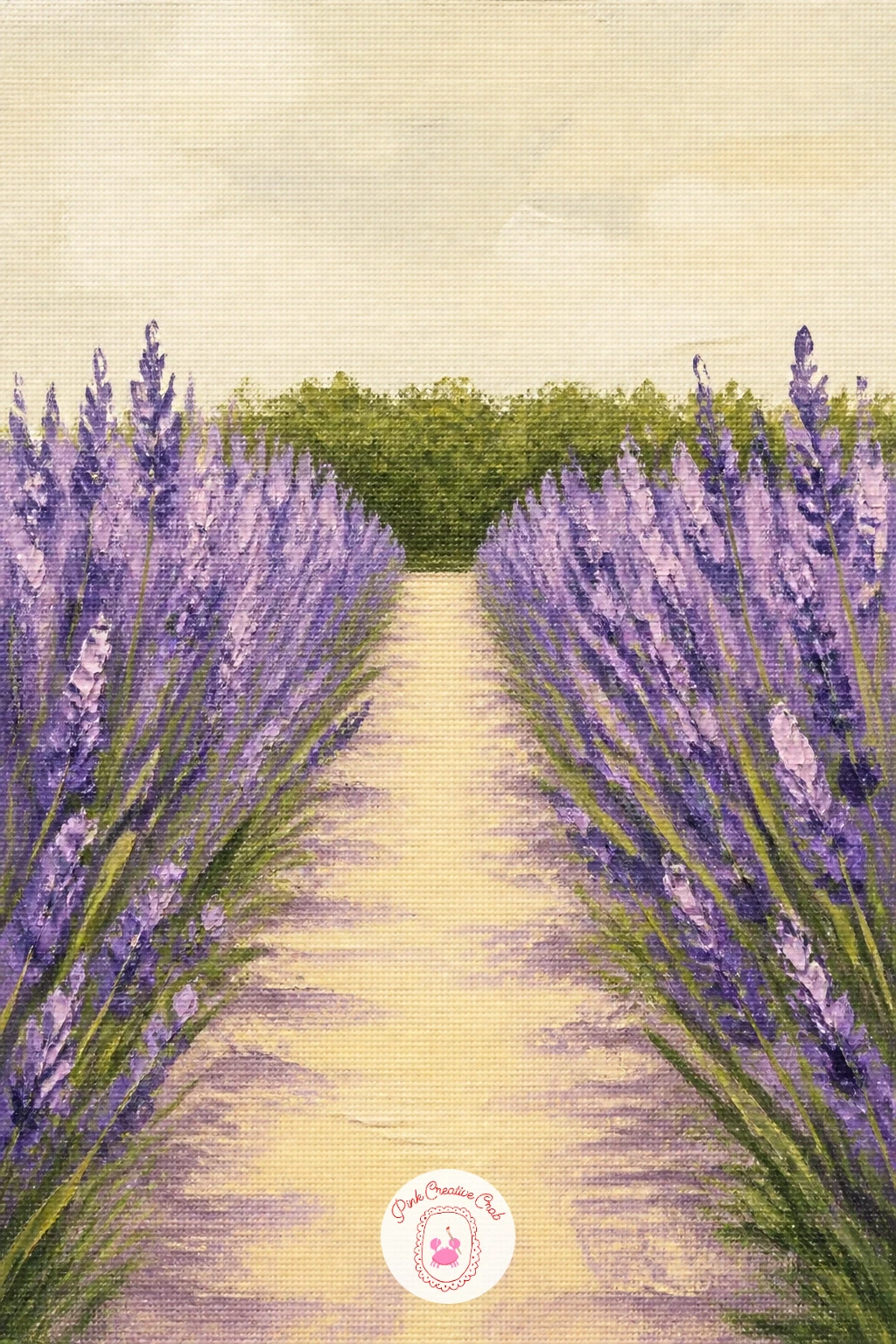
Palette: Lavender Purple,Warm Stone Grey,Sage Green,Cream White
After all that distance, come back in close with a cat sitting in lavender, a sweet subject that pairs an animal with the texture you have been practising. Paint the lavender field behind first as a soft, slightly blurred wash of purple and sage, keeping the background looser than usual so the cat stands out clearly in front of it.
Once dry, paint the cat as a simple sitting silhouette, a rounded body shape with two triangle ears and a tail curled around its paws, using flat colour blocks rather than individual fur strokes at this stage. Add a few short dry brush strokes along the cat’s back and head afterward to suggest fur texture without painting every hair.
Compare the cat’s height to the lavender stems around it before you commit to size, a sitting cat usually stands about as tall as the lavender itself, which keeps it feeling grounded in the field rather than pasted on top. Any warm neutral like a soft tabby orange or grey works if you do not want a specific cat colour.
Finish with two small dot eyes and a soft shadow beneath the cat.
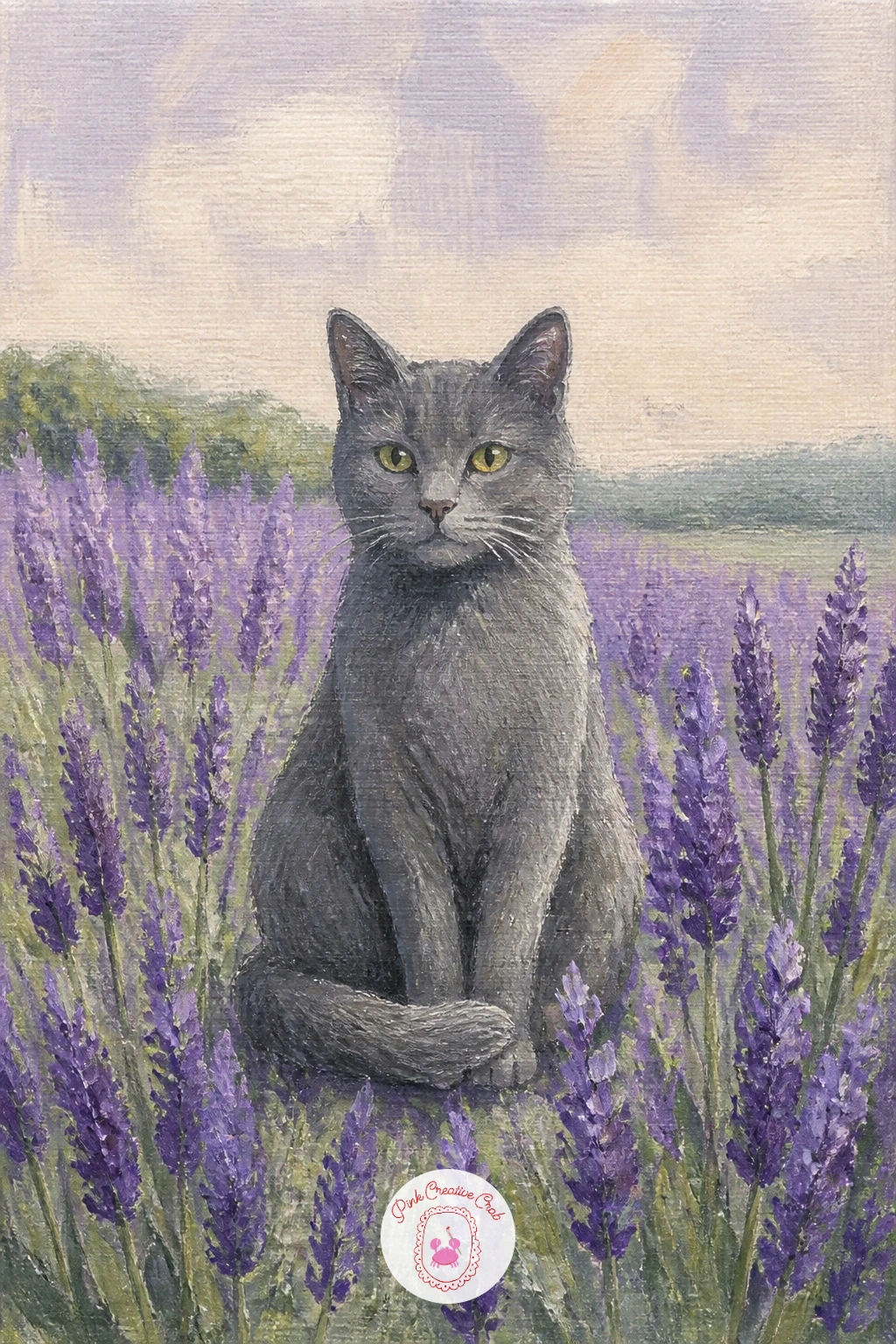
Palette: Lavender Purple,Sage Green,Warm Grey,Cream White
Settle into a cosy kitchen still life with lavender shortbread on a plate, a small food subject that pairs warm and cool colours nicely. Paint the plate first as a simple pale oval with a thin shadow beneath it, then add two or three shortbread pieces as soft rounded rectangles in warm honey and cream.
Build each biscuit with two tones, a lighter top and a slightly darker, toasted edge underneath, applied with a small flat brush while the first layer is still a little workable so the edges blend softly. Scatter a few tiny purple lavender buds across the top of the biscuits and around the plate using the very tip of a round brush.
This is a good one to try quickly in ten minutes with just the plate and biscuits, or extend it to forty minutes by adding a folded linen napkin and a sprig of lavender resting beside the plate for a fuller table setting. Either way works equally well as a finished piece.
Keep your biscuit edges slightly uneven rather than perfectly straight, it reads as homemade.
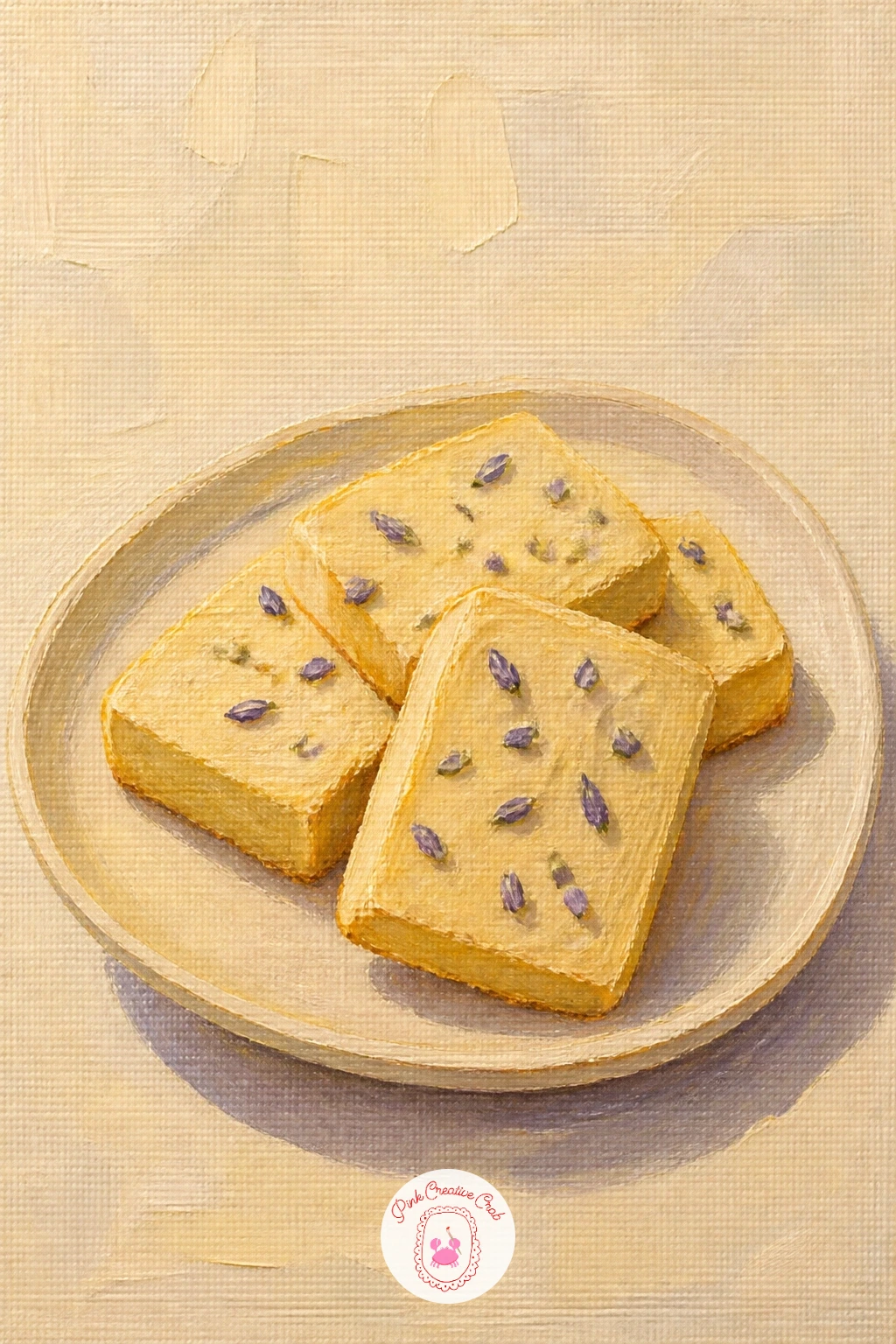
Palette: Honey Ochre,Cream White,Burnt Umber,Lavender Purple
Try something a little different with a copper still for lavender oil, a warm metallic subject that brings a new texture into the series. Sketch the still’s rounded body and curved spout lightly first, keeping the proportions simple, a wide bulb shape tapering into a narrow pipe.
Paint the copper in three values rather than one flat colour: a mid warm orange brown as the base, a darker burnt tone in the recessed curves, and small streaks of pale cream or white along the top edges where light would catch the metal most strongly. This layering is what makes copper look like copper rather than flat orange paint.
Lavender painters often flatten metal surfaces by blending too much, so leave your highlight streaks a little rough and unblended, that crispness reads as reflective light. If copper paint is not in your kit, mix burnt sienna with a touch of white and a whisper of yellow ochre.
Finish with a small bundle of lavender resting beside the still to tie it back into the series.
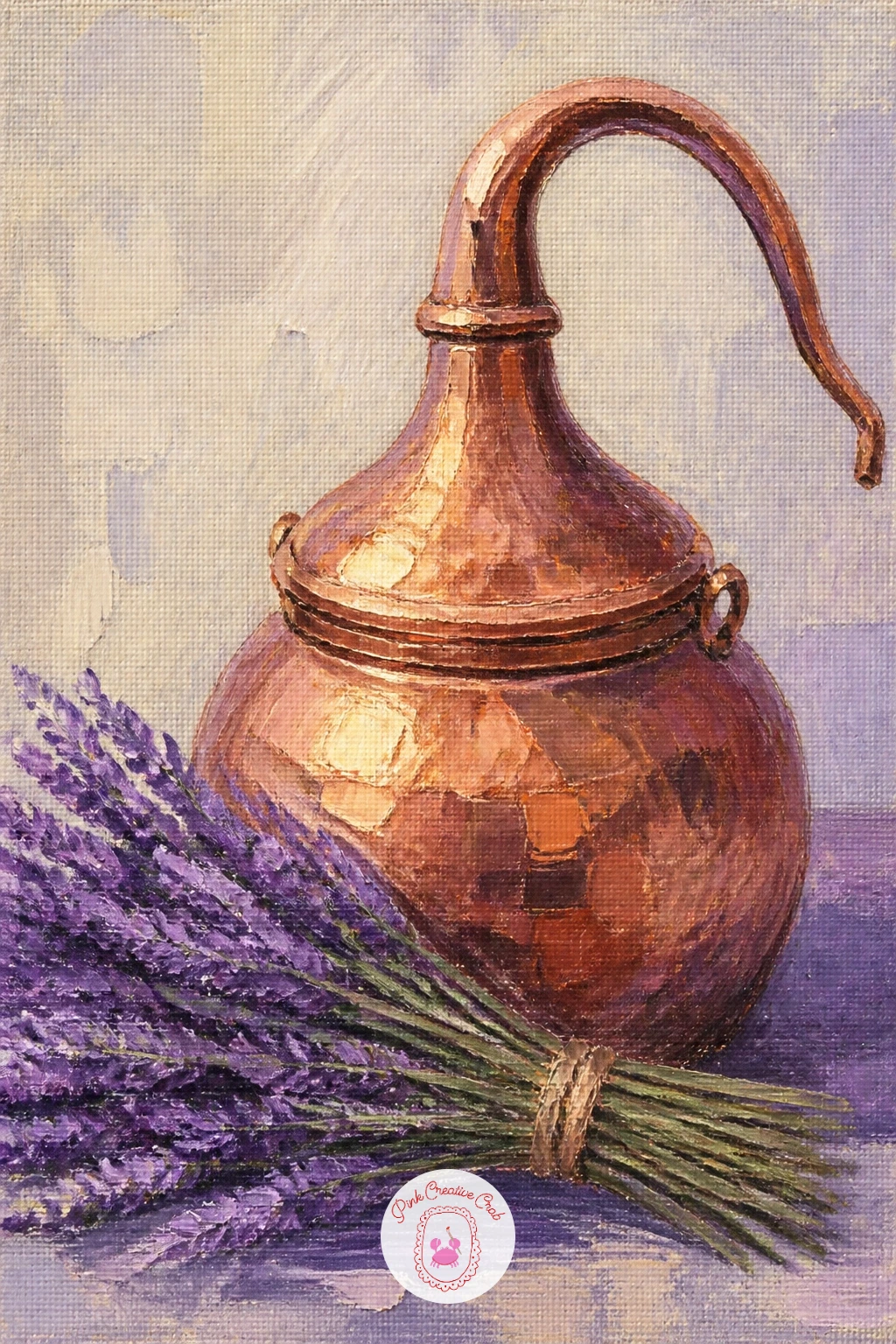
Palette: Burnt Sienna,Burnt Umber,Cream White,Lavender Purple
Return to something sweeter with a jar of lavender honey, glowing warm against the cooler lavender palette you have used throughout. Paint the jar’s glass shape first with a pale, slightly warm wash, then fill the body generously with rich honey gold, leaving a thin unpainted sliver along one edge for the glass highlight.
Once that layer sets, add a honey dipper resting across the top of the jar, painted with a few confident strokes rather than a careful outline, and a scattering of tiny lavender buds on the lid and beside the jar. The honey itself benefits from a slightly glossy look, so mix a touch of gloss medium into your final highlight layer if you have some on hand.
Where this scene often goes wrong is making the honey too opaque and flat, so let a little of the warm undertone show through the top layer by applying your gold in a thin, slightly uneven coat. No gloss medium, a light varnish brushed over the dry honey area once the painting is finished gives a similar shine.
Add one small cream label shape on the jar if you like a finished, market stall look.
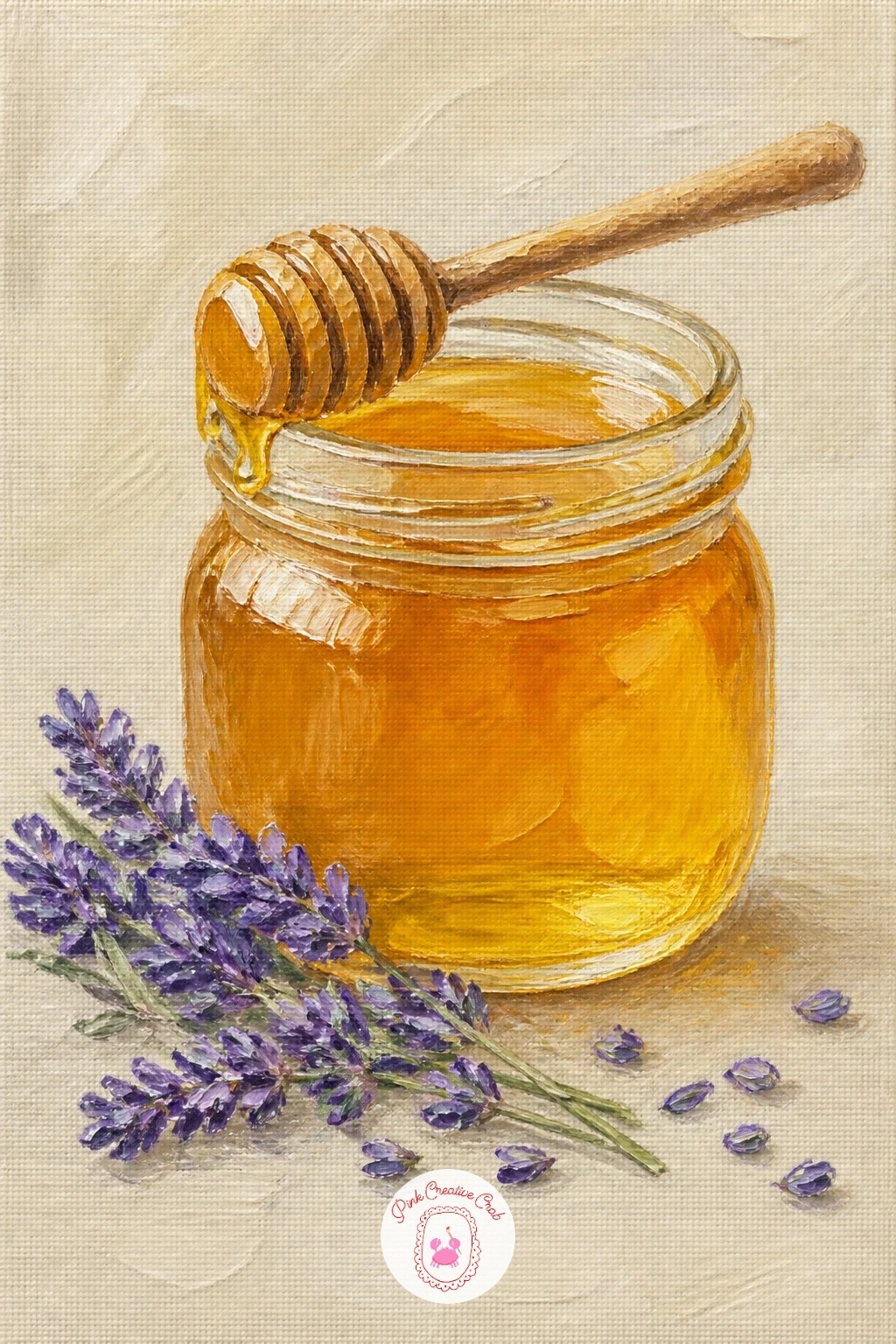
You Will Need
- gloss medium (optional)
Palette: Honey Ochre,Burnt Umber,Lavender Purple,Cream White
Build a fuller scene with a wedding table with lavender, bringing together several of the smaller details you have already practised into one composition. Start with the tablecloth as a soft cream base filling most of the lower canvas, then lightly sketch where your main elements will sit, a low lavender centrepiece, a few scattered stems, and perhaps a candle or two.
Paint the centrepiece first using your palette knife technique for the lavender texture, keeping it low and loose rather than a tall formal arrangement, then add the candles as simple cream cylinders with small warm flame dots once that layer is dry. Scatter a few loose lavender stems and petals directly onto the tablecloth for a relaxed, lived-in feel.
With several elements in one piece, the easiest way to avoid clutter is to keep everything at a similar low height across the table and let the background stay plain and soft, nothing competing for the eye. If you want more practice with floral arrangements first, the ideas in this acrylic flower painting guide cover similar loose bunches.
Finish with one or two glass details catching soft highlights for sparkle.
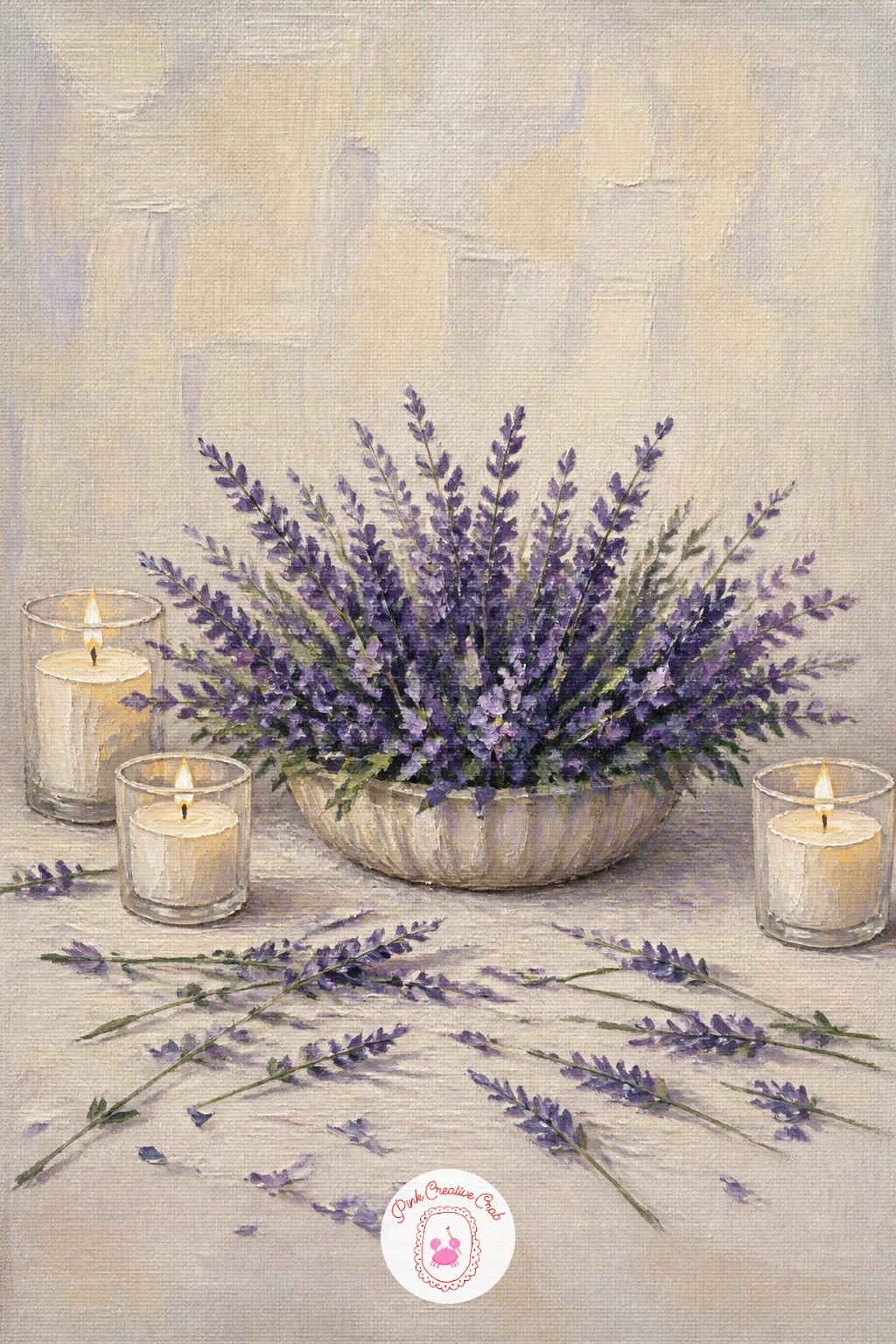
You Will Need
- palette knife
Palette: Cream White,Lavender Purple,Honey Ochre,Sage Green
Bring the light in with lavender in a mason jar on a windowsill, a quiet scene built almost entirely around backlighting. Paint the window and sky first as a soft, bright pale wash, brighter than anything else in the piece, since everything in front of it will read as slightly darker by comparison.
Once that is dry, paint the mason jar and lavender as a silhouette sitting on the sill, using darker, more saturated purple and glass tones than you might usually choose, because strong backlight flattens detail and deepens colour. Add the window frame last in a muted grey or soft white, keeping the lines loose rather than ruled straight.
The eye naturally expects the brightest part of a backlit scene to be the window itself, so resist adding any strong highlights onto the jar or lavender, keep them in shadow and let the glow come from behind. If you enjoy this light effect, the glowing windows in this Christmas village painting roundup use a similar idea with lit interiors.
Finish with a thin strip of warm reflected light along one edge of the jar.
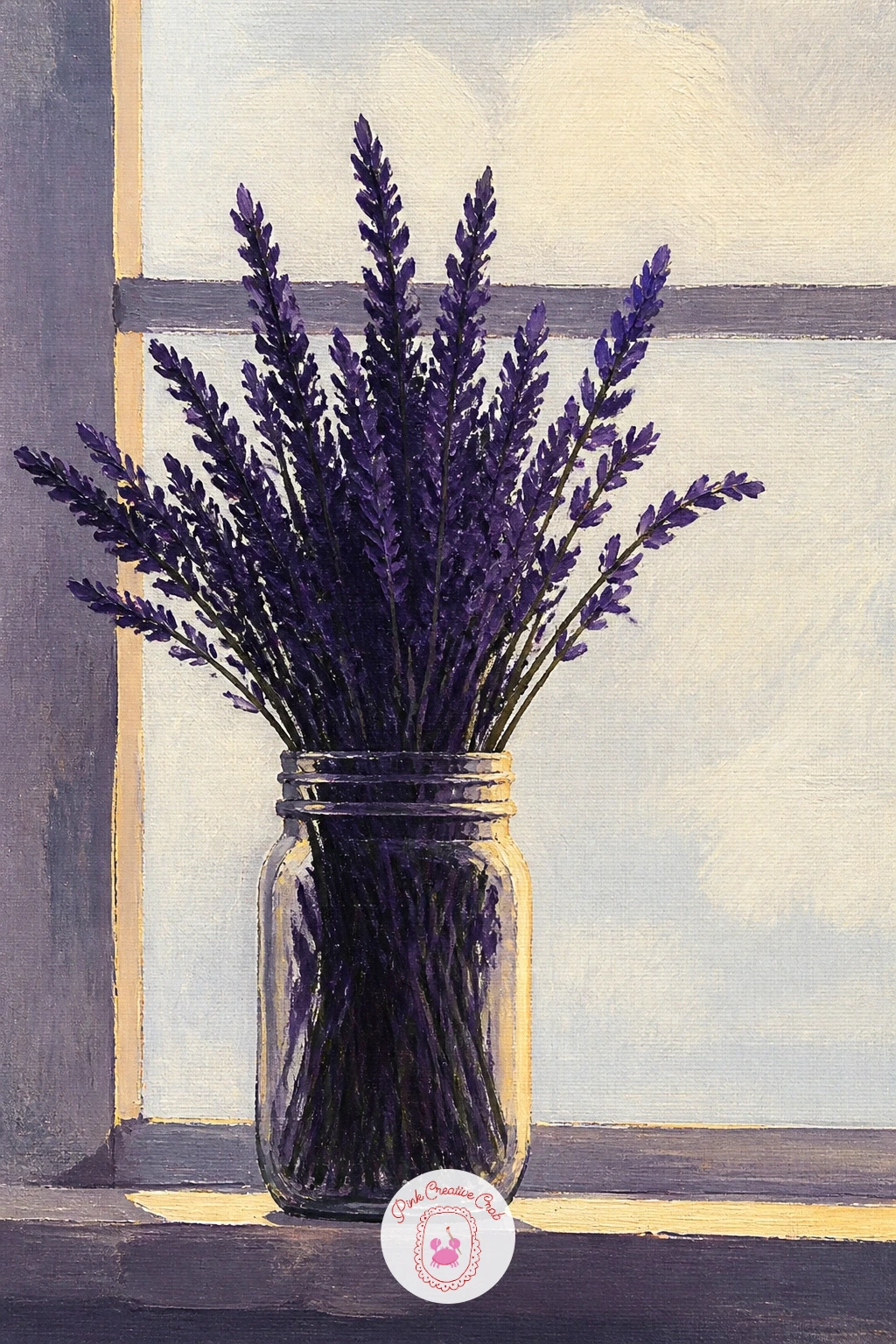
Palette: Pale Sky Blue,Dioxazine Purple,Soft Grey,Cream White
Carry that backlighting idea into a full landscape with a lavender field at sunset with a lone tree, letting the light source sit low on the horizon this time. Paint the sky first with broad horizontal bands of warm apricot and soft pink near the horizon, blending upward into a deeper dusky blue, working quickly while the paint is still wet so the bands merge softly.
Once the sky is dry, add the lone tree as a dark, simple silhouette standing roughly a third of the way across the canvas, never dead centre, which keeps the composition more interesting. Build the lavender rows beneath in cooler, darker purples than your daytime fields, since the fading light mutes their colour, and let the furthest rows nearly disappear into the dusky horizon.
A low sun like this means every shape in the foreground reads darker and flatter than it would at midday, so resist adding bright highlights to the lavender itself, save your brightest paint for the sky alone. For more practice blending a sky like this, this landscape painting guide walks through similar gradient skies.
Finish with a few birds as small dark marks near the horizon if you want extra atmosphere.
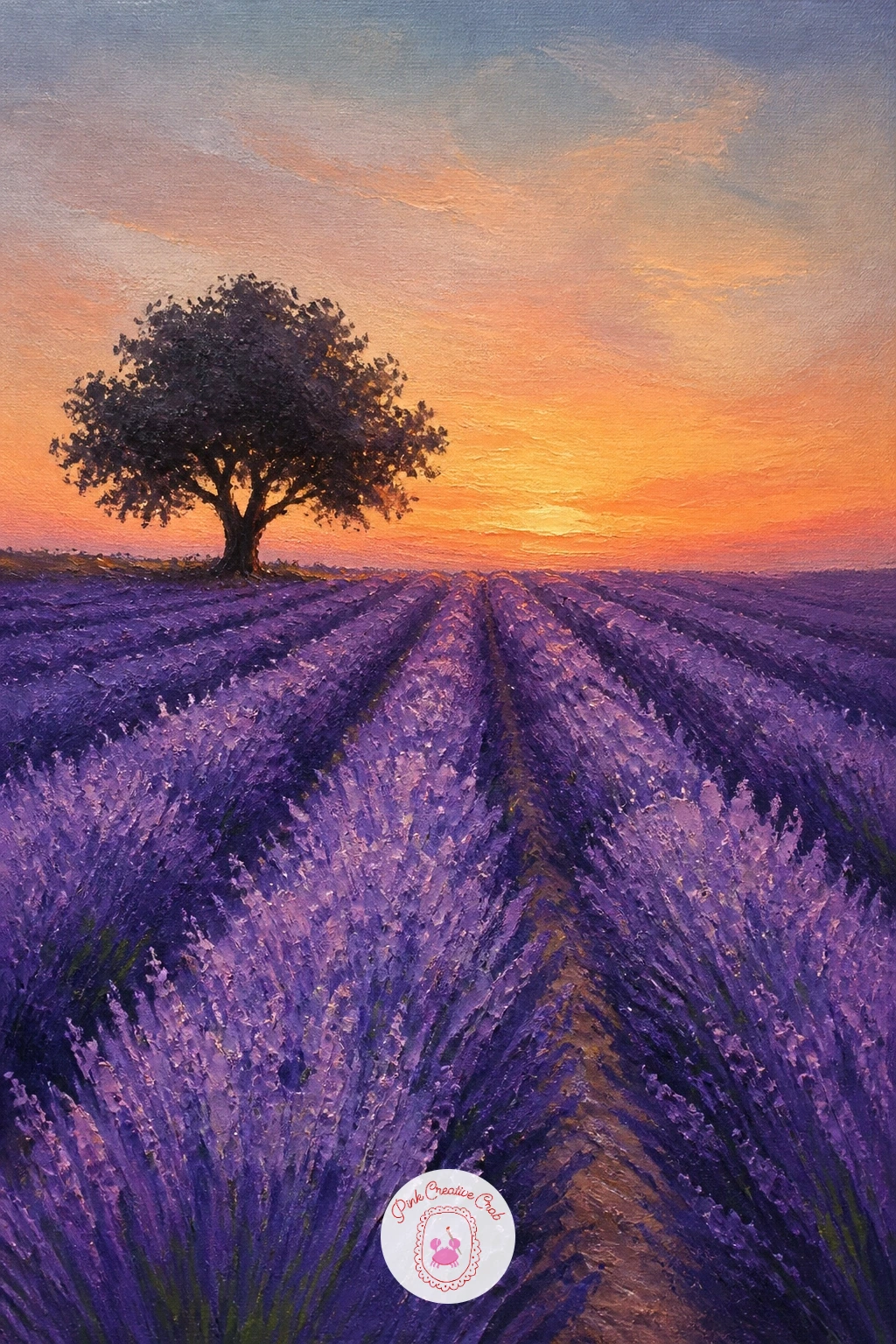
Palette: Apricot,Dusky Blue,Dioxazine Purple,Payne’s Grey
Come back to a sturdy country subject with a wooden cart loaded with lavender bundles, parked as though just back from harvest. Sketch the cart’s simple boxy shape and two round wheels first, keeping the proportions a little chunky and rustic rather than refined.
Paint the wood in warm weathered browns with visible brush strokes running along the grain, then let that dry before piling bundles of lavender into and over the cart’s edges using your palette knife or a stiff dry brush for texture. Let a few bundles spill over the side onto the ground to suggest a generous, overflowing harvest.
Check the proportion of wheel to cart body before you finalise it, a good rule of thumb is to make the wheel roughly half the height of the cart’s side panel, which keeps the whole thing looking sturdy rather than toy-like. No palette knife handy, a stiff bristle brush dabbed and dragged gives nearly the same broken texture.
Finish with a dirt path beneath the wheels in warm ochre to ground the scene.
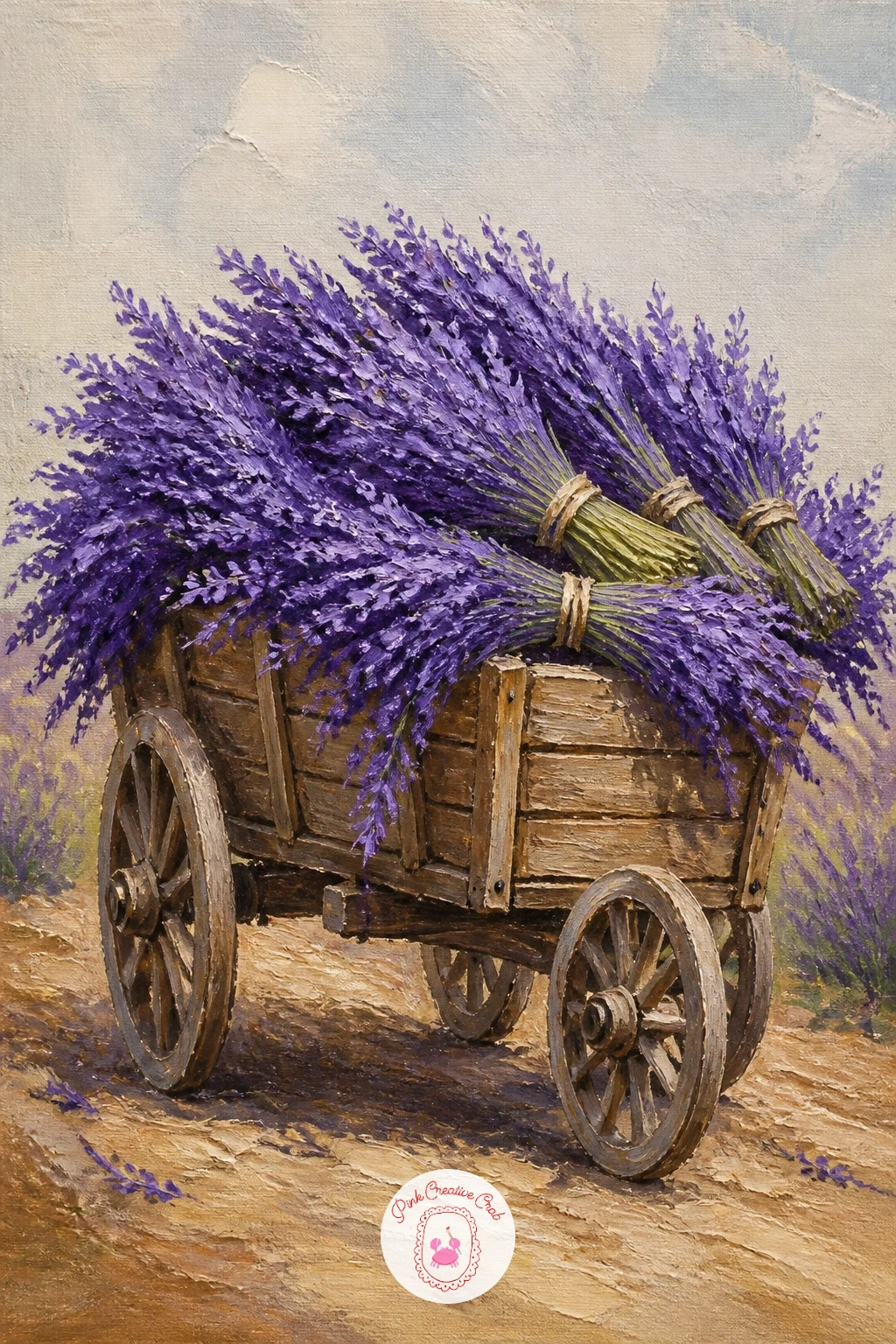
You Will Need
- palette knife
Palette: Burnt Umber,Lavender Purple,Honey Ochre,Sage Green
Return to something small and quiet with lavender and a white butterfly, a gentle companion piece to the earlier bee painting. Paint one or two lavender stems first across the canvas in a loose diagonal, using your usual textured strokes, then let the piece dry completely before adding the butterfly.
Paint the butterfly’s wings as two simple curved shapes in soft white with the faintest grey shadow along the lower edge for form, keeping the body a thin dark line down the centre. Because the wings sit against a busy purple background, a dry brush loaded with white and dragged lightly keeps the edges a little broken and delicate rather than a flat, cut out shape.
If the white reads too stark and graphic against the purple, warm it slightly with a touch of cream before applying it, which helps it sit more naturally in the scene. A cotton bud can stand in for a fine brush if you need to dab in the thin antennae.
Finish with one or two small white dots on the wings for pattern.
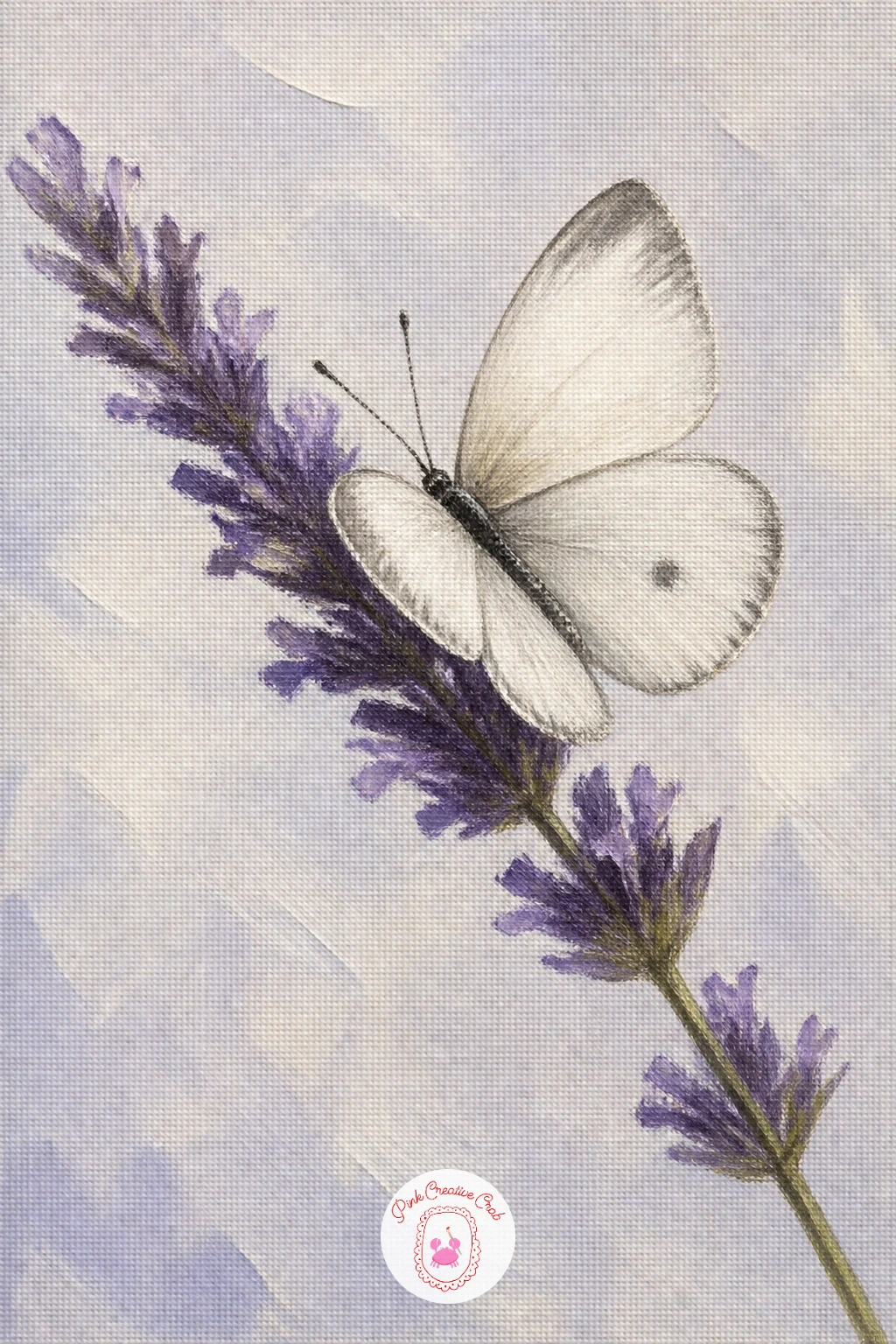
Palette: Lavender Purple,Cream White,Soft Grey,Sage Green
Move to architecture for a lavender wreath on a door, a simple symmetrical subject that suits a square canvas well. Paint the door first as a flat block of colour, a soft blue or weathered green works nicely against lavender purple, including a simple rectangular panel line or two for detail.
Once dry, build the wreath as a ring of short purple strokes radiating around a circular guide, which you can lightly pencil first or trace around a small plate for an even curve. Vary the direction of your strokes slightly as you go around the ring so the texture feels handmade rather than mechanically even.
Symmetrical shapes like a wreath often go lopsided, so step back and compare both sides of the ring before adding any final details, it is much easier to fix an uneven curve early than after you have added ribbon. Finish with a thin cream or burlap-toned ribbon bow at the top where the wreath hangs from the door.
Keep the door colour muted so the wreath stays the clear star of the piece.
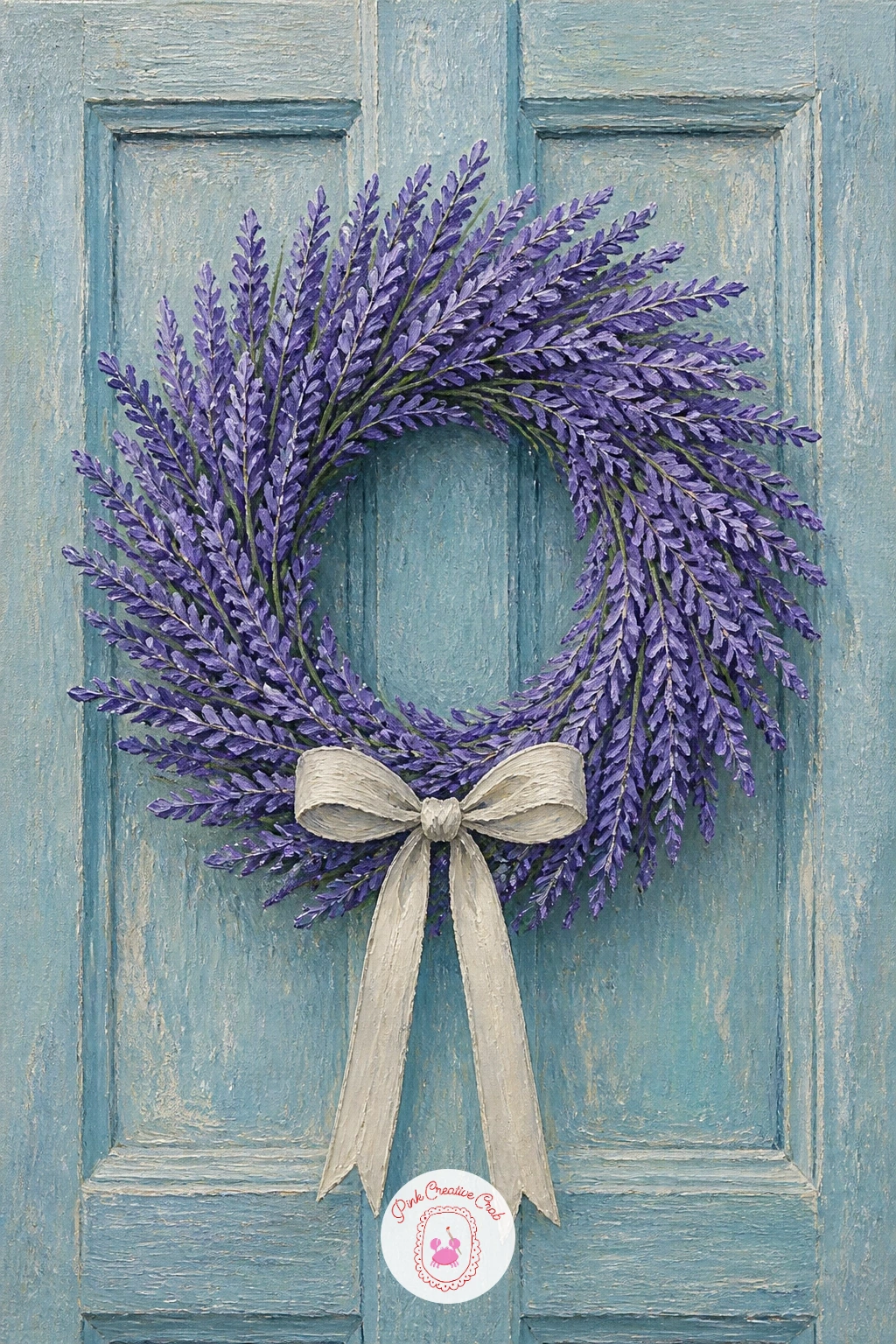
You Will Need
- small plate to trace a circle
Palette: Soft Blue Green,Lavender Purple,Cream White,Sage Green
Climb a little higher for lavender rows seen from a hill, which asks you to think about eye level differently than the earlier ground level scenes. Set your horizon line quite high on the canvas this time, leaving only a narrow strip of sky, since looking down from a hill means the field takes up most of your view.
Paint the distant rows first as thin, closely spaced horizontal bands of purple and sage, getting smaller and closer together the further they sit from you, then bring the nearer rows forward with wider, more textured strokes using your palette knife. This steep change in scale from top to bottom is what makes the hillside viewpoint convincing.
A common mistake from this angle is keeping every row the same width, which flattens the whole hillside back into a straight-on field view, so exaggerate the size difference between the top and bottom rows more than feels natural at first. If you do not have a knife, a wide flat brush dragged flat-side-down gives a similar banded texture.
Finish with one small winding path cutting diagonally through the rows for extra depth.
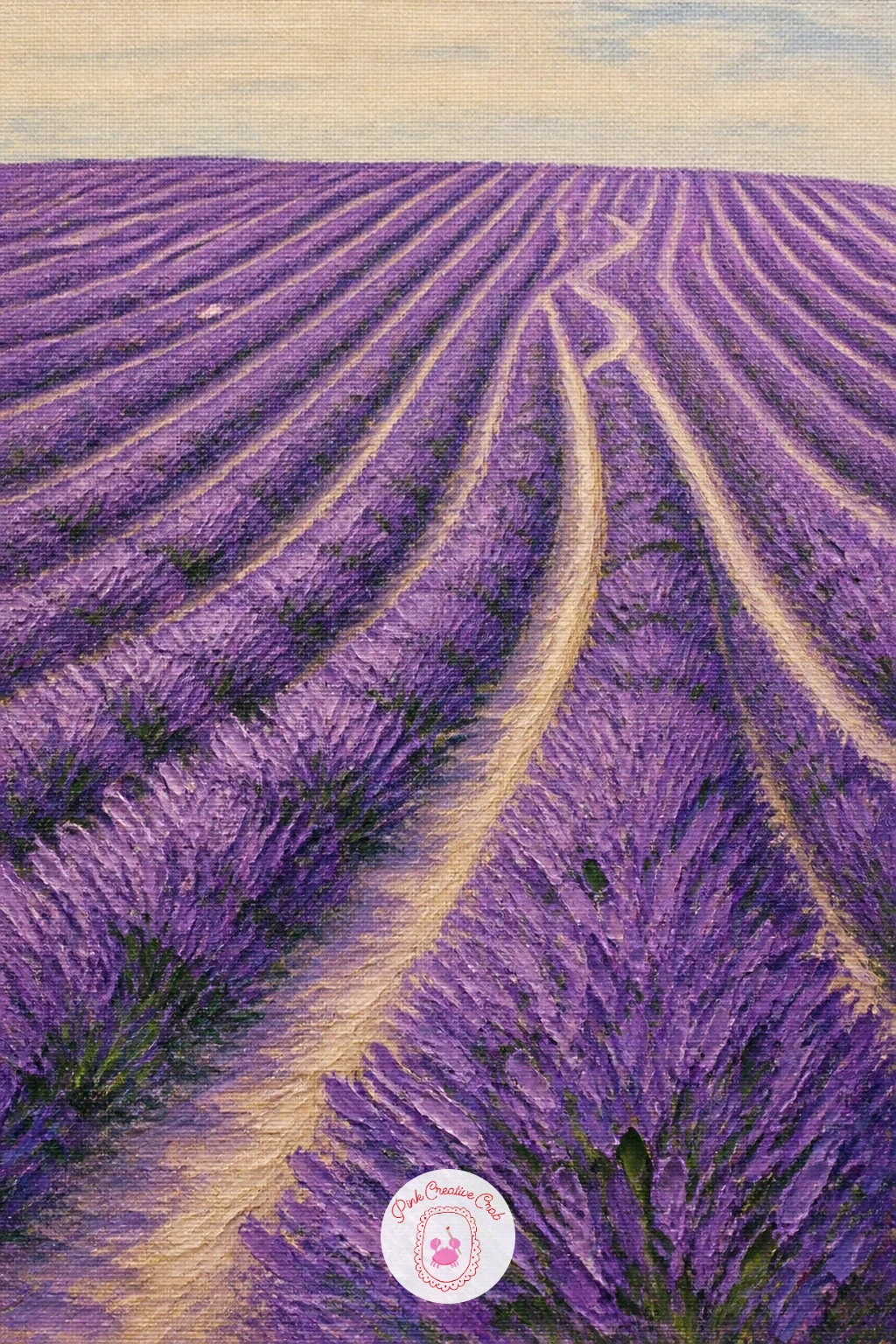
You Will Need
- palette knife
Palette: Lavender Purple,Sage Green,Pale Sky Blue,Warm Stone Grey
Bring some movement into the series with a dog running through lavender, a lively subject after so many still scenes. Paint the field background first in loose, slightly blurred purple and sage strokes, since a sense of speed works best when the background looks a touch soft compared to the dog itself.
Sketch the dog mid stride with legs stretched rather than standing still, a simple four legged silhouette with ears lifted and tail out behind, then paint it in flat warm colour blocks before adding a few quick strokes for fur direction along the back and legs. Keep the paws slightly blurred or trailing with a dry brush to suggest motion rather than crisp, stationary feet.
If the dog looks static no matter what you try, check the leg positions, a running dog usually has front and back legs stretched in opposite directions rather than all gathered underneath the body. Any warm neutral brown or honey tone works well if you are not painting a specific breed.
Finish with a few loose lavender petals flying up around the paws for extra energy.
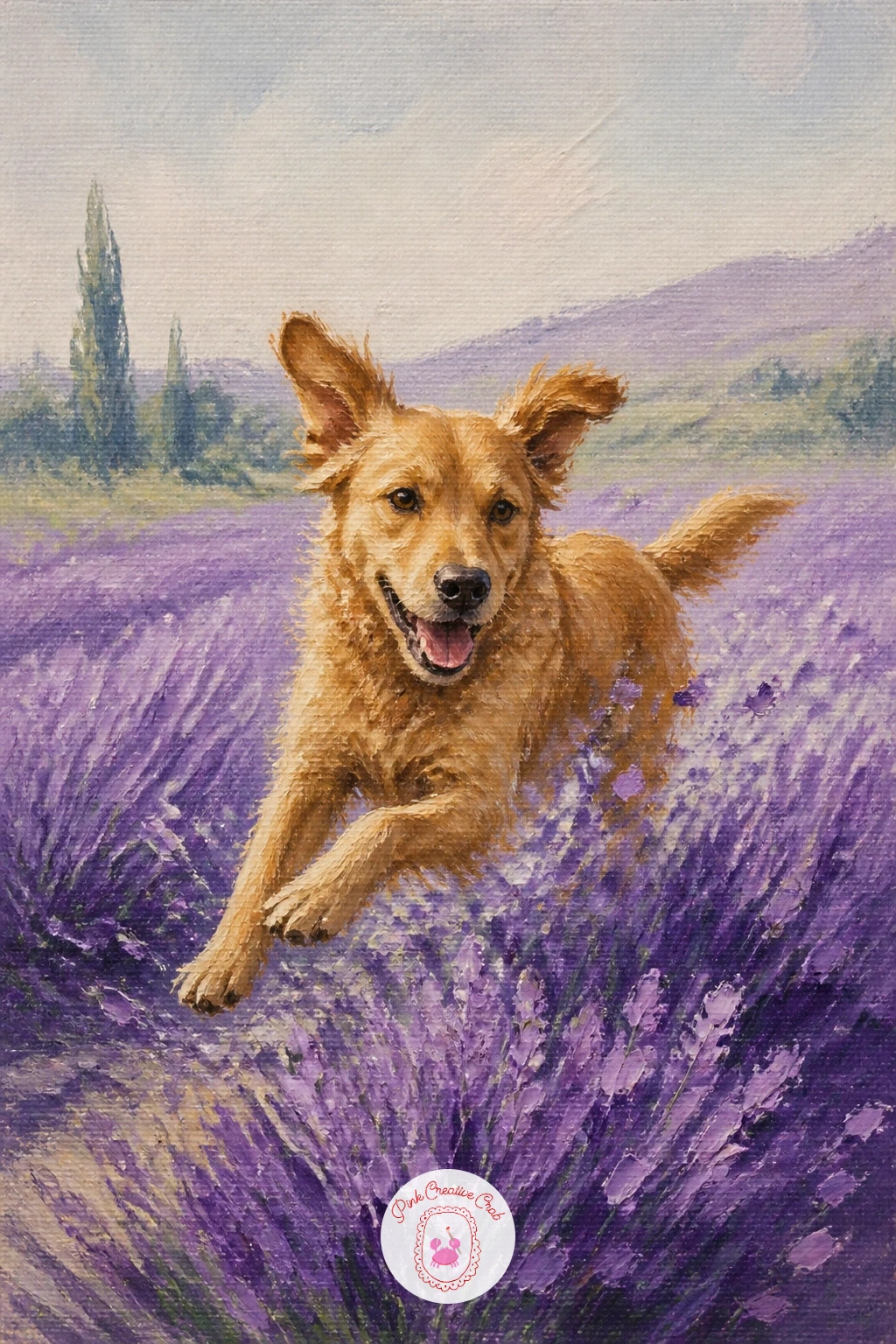
Palette: Lavender Purple,Honey Ochre,Burnt Umber,Sage Green
If you enjoy painting dogs, there are more relaxed animal poses to try in this dog themed junk journal collection for extra reference ideas.
Settle back into stillness with a tea tray with lavender tea, a calm indoor still life with a little more detail than the earlier shortbread plate. Paint the tray itself first as a simple rectangular base in warm wood tone or soft painted metal, then place a teapot and one or two cups loosely on top using basic rounded shapes.
Build the teapot with two values of its chosen colour, a lighter top catching light and a slightly darker underside, then add a thin steam curl rising from the spout with a nearly dry, barely loaded brush so it stays soft and wispy. Scatter a few lavender sprigs across the tray between the cups for colour and to tie the whole scene together.
Steam is the easiest part to overdo, so apply it in one light pass and leave it rather than going back over it, a single soft curl reads more convincingly than several heavy ones. No teapot reference handy, keep the shape simple, a rounded body, a curved spout and a small lid are all it needs to read clearly.
Finish with a small folded napkin beside the tray for a cosy, lived-in feel.
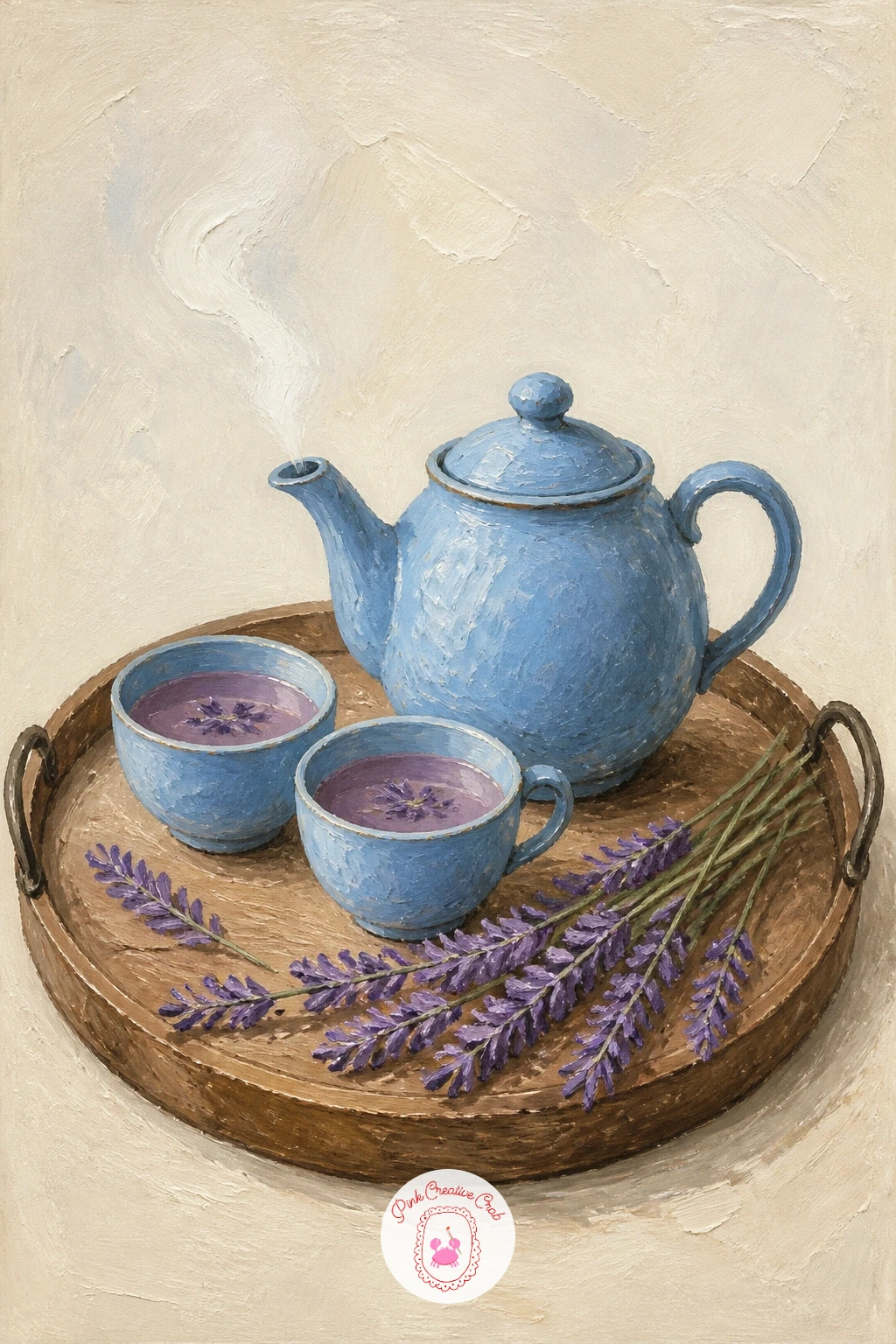
Palette: Cream White,Soft Blue,Lavender Purple,Burnt Umber
Give yourself a wider, more relaxed scene with a lavender-lined terrace with a lounge chair, the kind of view you might paint after a long summer afternoon. Paint the terrace floor first in warm stone tones with loose horizontal strokes, then add the lounge chair as a simple folding shape in faded canvas stripes, angled slightly toward the view rather than facing straight on.
Once that is dry, line the edge of the terrace with lavender in large terracotta pots or a low planted border, using your usual textured stroke technique but keeping these clumps smaller and more contained than a full field planting. Let the background beyond the terrace fade into a soft, hazy blue to suggest distance and heat.
For a quick ten minute version, stop at the chair and lavender border against a plain sky. For a fuller forty minute piece, add a small side table with a glass of something cold and a sun hat resting on the chair, small props that make the terrace feel just-left, as though someone stepped away a moment ago.
Keep the stripes on the chair loose and slightly uneven for a sun-faded look.
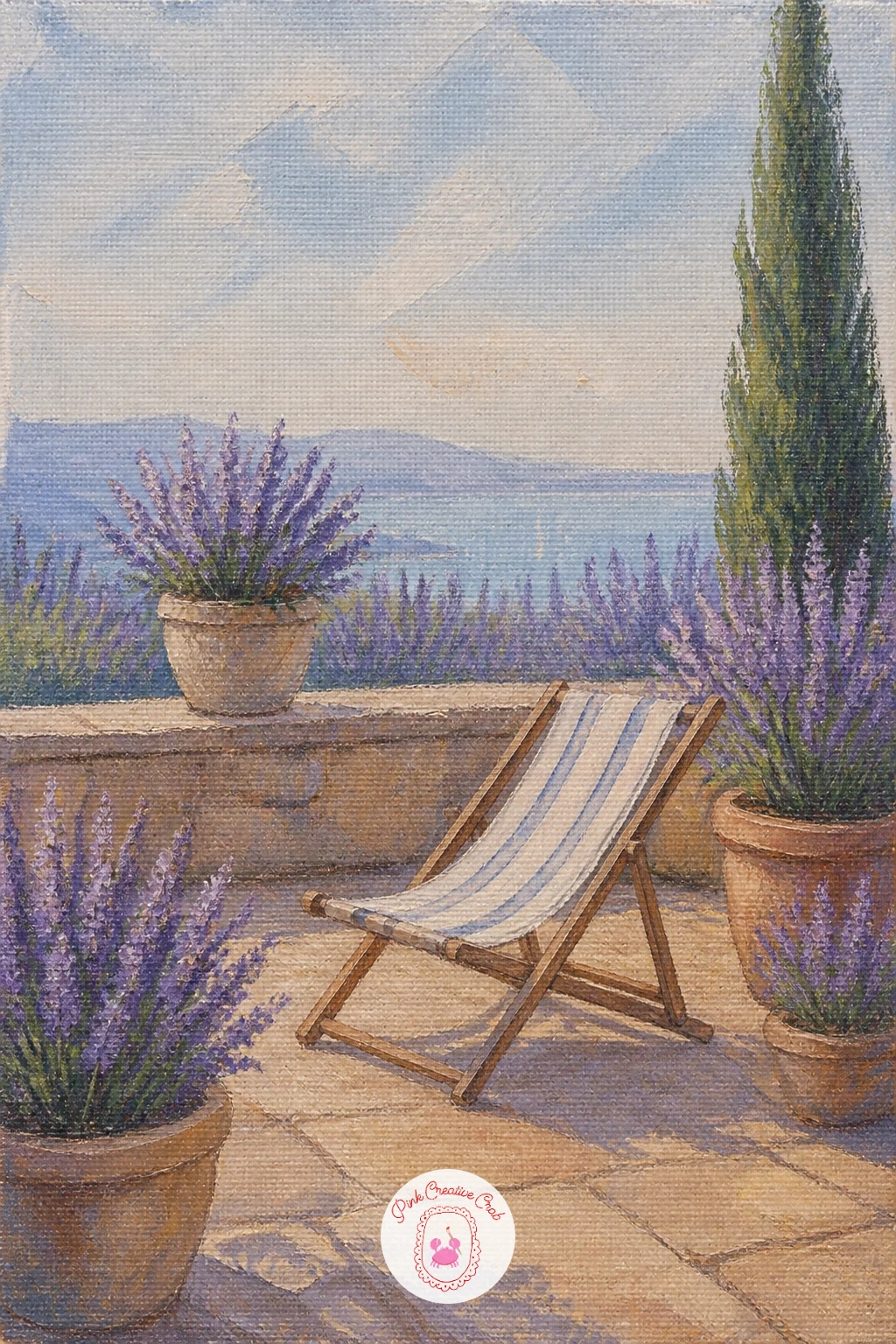
Palette: Warm Stone Grey,Lavender Purple,Cream White,Pale Sky Blue
Zoom into architectural detail with lavender in a terracotta pot by a blue shutter, a classic Provence close up that works beautifully as a small square piece. Paint the wall and shutter first, a warm cream stone wall with a weathered blue shutter taking up one side of the canvas, using slightly uneven strokes so the wall surface feels textured rather than flat.
Once dry, paint the terracotta pot sitting below or beside the shutter in warm orange brown, adding a thin darker rim line around the top for shape, then fill it generously with upright lavender stems in your usual textured strokes. Let a few stems lean toward the shutter as though caught by a breeze.
The blue and terracotta together are a strong colour pairing, so keep the wall colour fairly neutral and muted to let the shutter and pot carry the contrast, otherwise the piece can feel busy. For more ideas pairing warm stone tones with cool shutters and doors, the French-inspired pages in this French junk journal collection offer plenty of colour reference.
Finish with a little chipped paint texture on the shutter using a dry brush for authenticity.
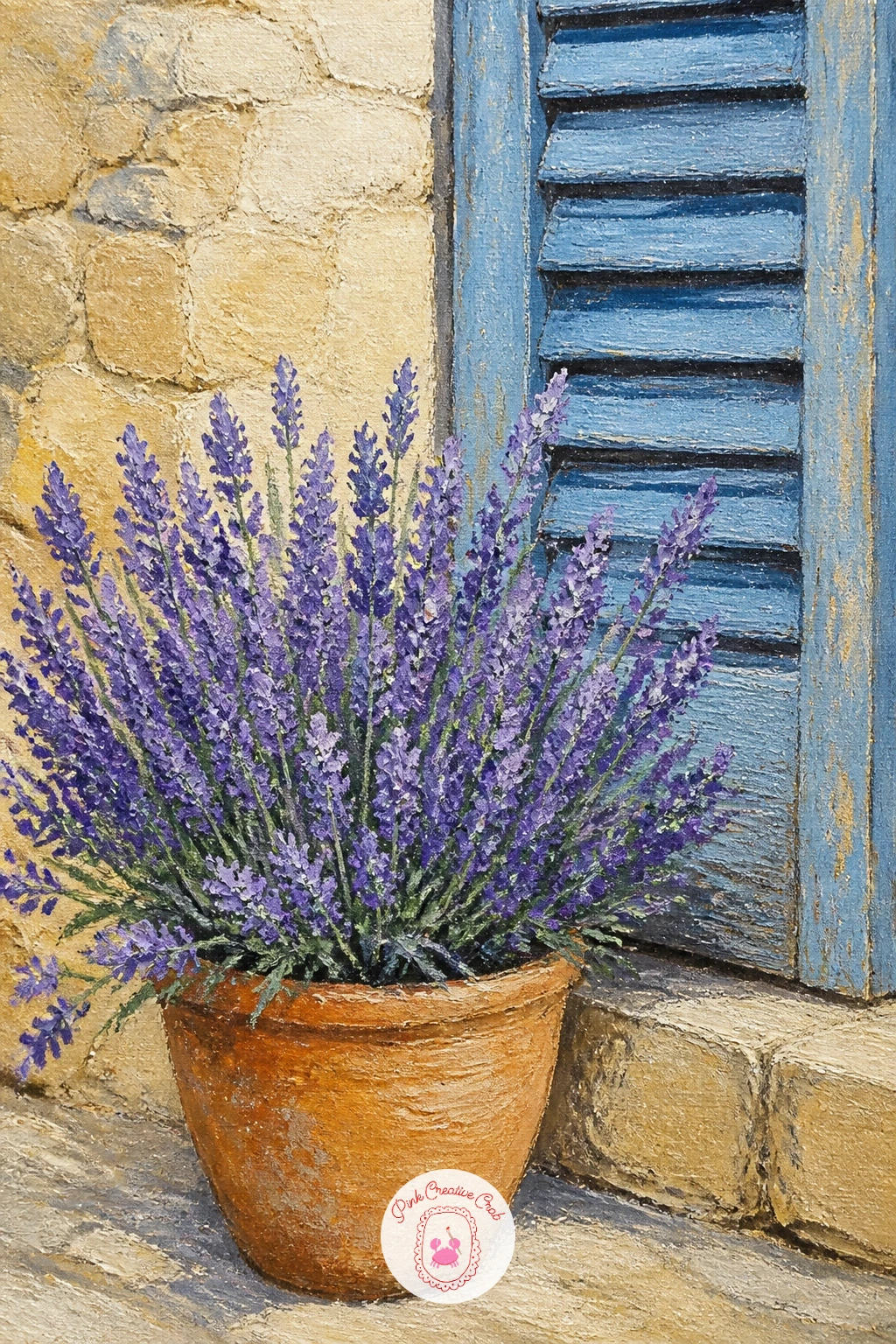
Palette: Soft Blue,Terracotta,Cream White,Lavender Purple
Bring in a romantic scene with a couple dancing in a lavender field, a figure piece that works well as a gift or keepsake painting. Sketch the two figures first in a simple dancing pose, close together, one slightly leaning back, keeping both shapes loose and gestural rather than anatomically detailed since they will read better as soft silhouettes at a distance.
Paint the sky and field first as soft, blended background colour, then bring the figures in over the dry base using a small brush, dressing them simply, perhaps a pale dress and a plain shirt, with no facial features needed since the mood matters more than the likeness. Keep both figures roughly the same size and overlapping slightly so they read as a pair rather than two separate people.
Proportion matters most here: stand your figures no taller than about a third of the canvas height, with the lavender field filling the rest, which keeps the romance of the setting rather than making it a portrait. If figures feel daunting, the simplified painting approach in these easy beginner acrylic ideas covers loose figure shapes you can borrow from.
Finish with a soft golden light around the couple using warm dabs of cream and ochre.
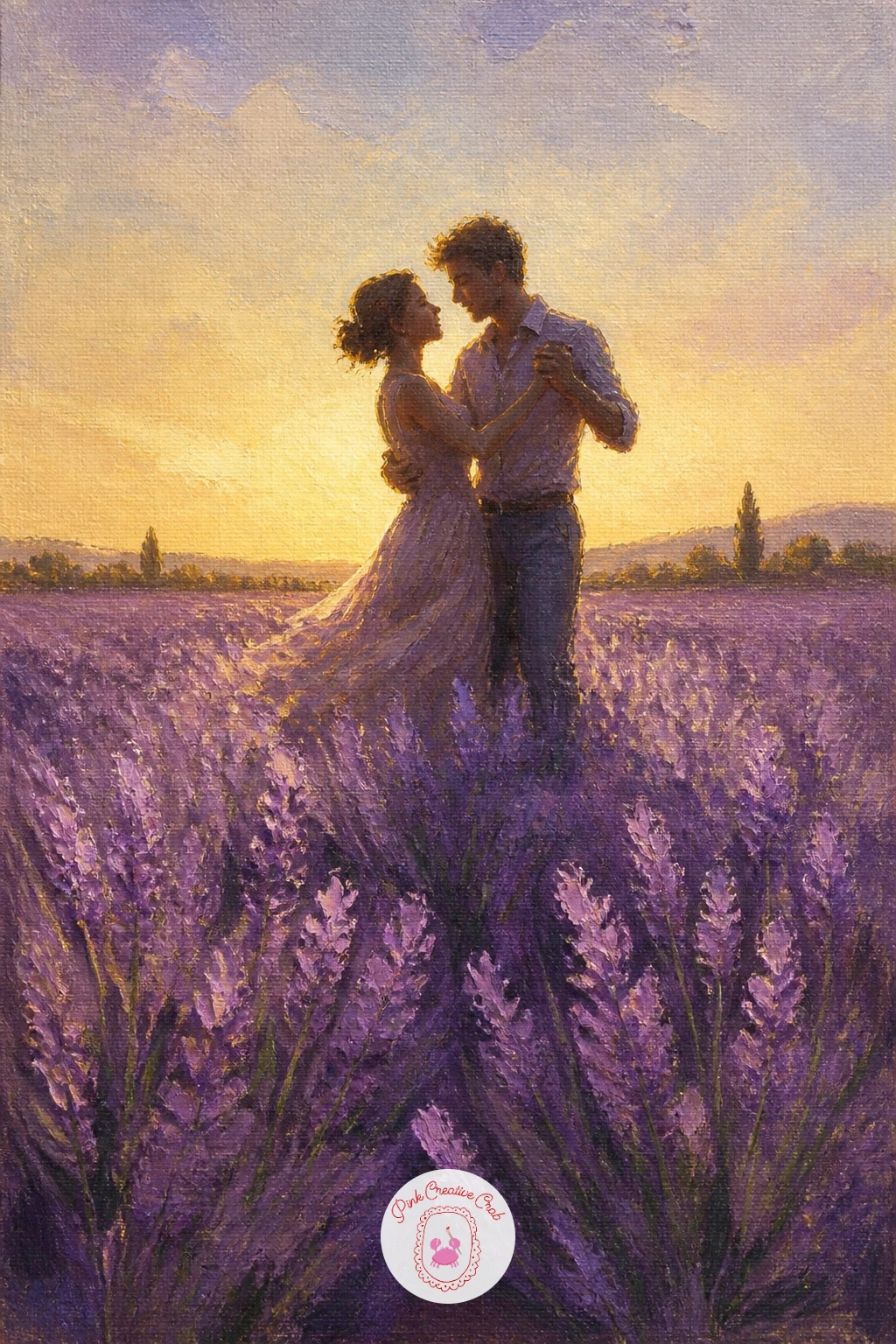
Palette: Lavender Purple,Cream White,Honey Ochre,Pale Sky Blue
Close the series with workers harvesting lavender, a scene full of gentle activity that ties together the field, the people and the bundles you have painted throughout. Paint the field and sky first as your usual broad base layers, then lightly sketch two or three small figures bent among the rows, each holding a bundle of cut stems.
Keep the figures simple and a little impressionistic, suggested with a few confident brush strokes rather than carefully drawn, since from this distance detail would only clutter the scene. Vary their poses slightly, one bending, one standing with an armful of lavender, so the group feels like a real moment rather than repeated copies of the same figure.
Once this version works for you, try varying it next time by changing the time of day, a hazy midday harvest with pale light feels very different from an early morning scene with long shadows and a cooler palette, and both are worth painting from the same basic composition. If you would like more loose figure and landscape pairing practice first, this summer painting roundup has similar outdoor scenes to study.
Finish with a wooden crate or cart at the edge of the field to suggest the harvest is underway.
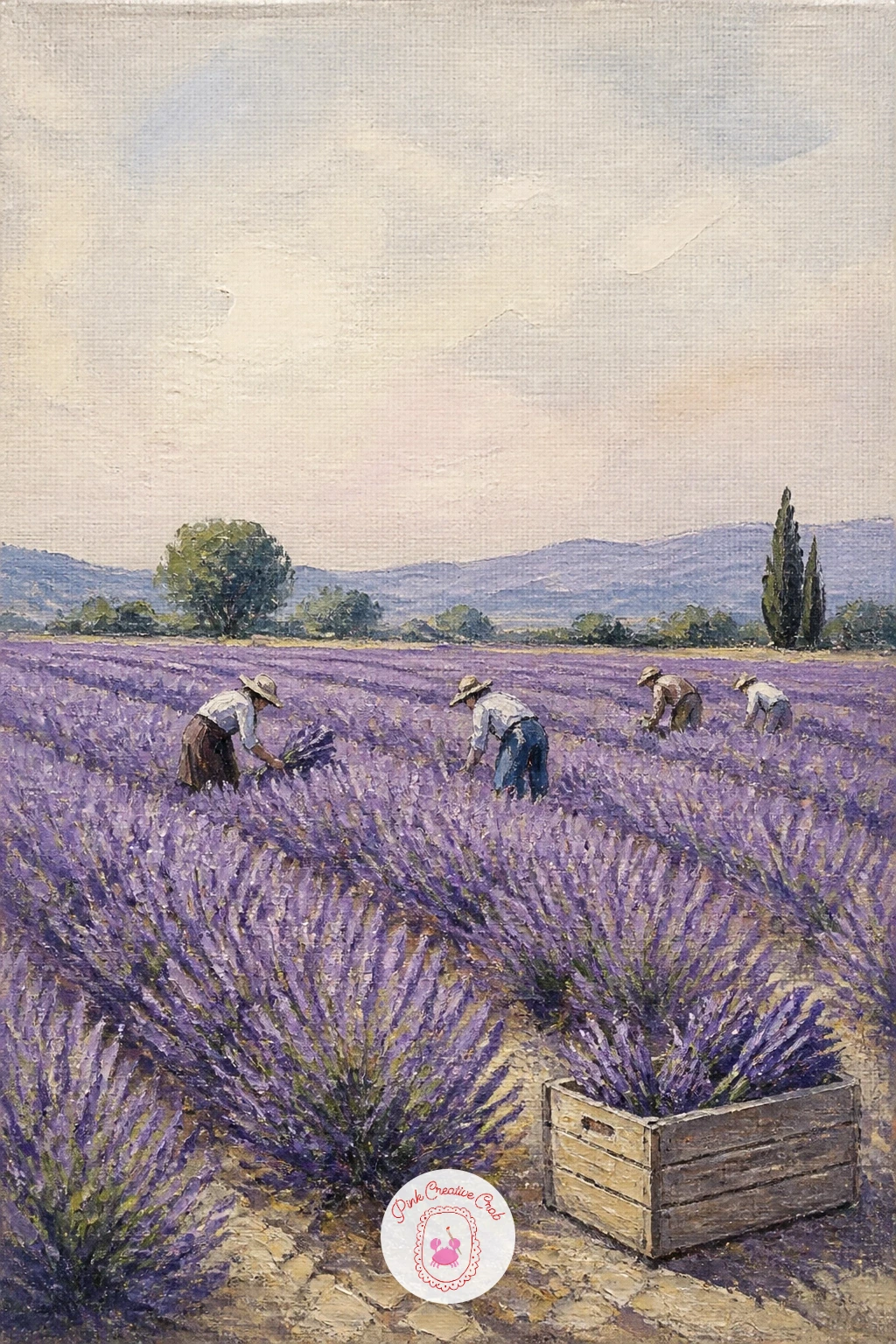
Palette: Lavender Purple,Honey Ochre,Sage Green,Warm Stone Grey
What to Do Next
Choose whichever lavender painting speaks to you today, gather your cream, sage, ochre and two purples, and start with the sky before anything else. A small canvas and one sitting are all this needs, so pick one scene, set it up where the light is good, and let the textured strokes carry the rest.
Frequently Asked Questions
What paint colours do you need for lavender painting?
A warm cream, a sage green, a honey ochre and two purples, one lighter lavender and one deeper dioxazine purple, cover almost every scene here. Add a soft blue for sky and shutters, and you have a full working palette.
Do I need a palette knife for lavender painting?
A palette knife helps create the textured stripes of a lavender field quickly, but it is not essential. A stiff dry brush, dabbed and dragged with little paint, gives a similar broken texture if you do not own one.
How do you paint a lavender field so it looks realistic?
Vary the size and spacing of your rows, larger and more textured in the foreground, smaller and closer together toward the horizon. This change in scale, more than any single colour, is what makes a field read as receding into distance.
What size canvas works best for these ideas?
A small to medium canvas, roughly eight by ten inches or similar, suits most of these scenes and keeps them finishable in one sitting. Wider landscape formats work nicely for the field and village ideas, square ones for the still life details.
Can beginners paint lavender fields in acrylic?
Yes, lavender fields are forgiving for beginners because the texture does most of the work. Loose, repeated strokes in purple and sage read convincingly as a field even without precise detail or drawing skill.
Have any thoughts?
Share your reaction or leave a quick response — we’d love to hear what you think!
-
 0
-
0
-
0
-
0
-
0
-
0


