Bear painting gives you one of the gentlest subjects in wildlife art: a big soft shape, a warm face, and fur you can build with loose, forgiving brushwork. You do not need a zoo trip or years of practice, just acrylic paint, a light background and a willingness to let the fur stay a little loose at the edges.
Below you will find thirty four bears, pandas and polar bears caught in calm or funny moments, from a cub peeking out of a snow den to a panda doing a handstand. Scroll through, pick the one that makes you smile, and start painting.
Using these images: free for personal projects such as printing, coloring, cards, journals and gifts. Handmade items that include them may be sold up to 30 pieces per design. More than that is commercial use and is not permitted, and neither is selling or sharing the images themselves or passing them off as your own. Please ask before any other use.
Start with the smallest, most forgiving bear on this list: a polar bear cub standing on a flat chunk of ice. Sketch the cub as two overlapping ovals, a round body and a smaller round head, sitting low and wide rather than tall, since cubs read as young mostly through proportion.
Block in the ice floe first as a pale blue-grey shape with a flat top, then paint the cub in layers of titanium white warmed with a touch of cream and ice blue in the shadows. Build the fur with a dry, barely loaded flat brush dragged in short upward strokes along the back and belly, leaving the paper or gesso showing through in a few spots for sparkle.
If the cub starts looking grey and flat, push pure white into the sunlit side and a cooler blue-grey into the shadow side while the paint is still workable, so the form rounds out. This is a good first bear if you are new to painting fur: keep your strokes short and you cannot go far wrong.
Try this today: paint the water around the ice floe with loose horizontal strokes so it reads as reflection, not detail.
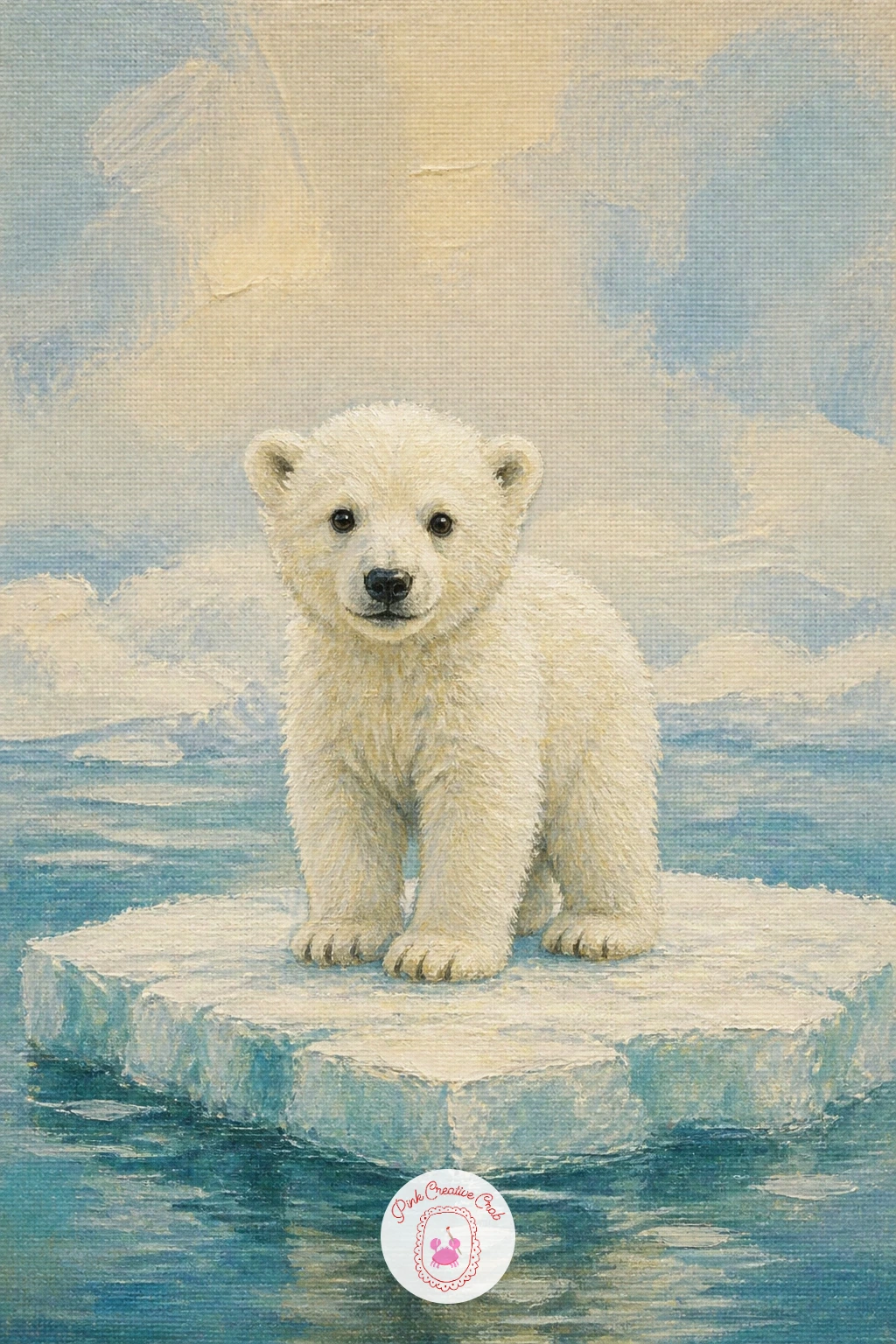
Palette: Titanium White,Ice Blue,Payne’s Grey,Raw Umber
Once a single cub feels comfortable, try a polar bear mother with two cubs grouped close together. Measuring matters here: block the mother’s body first at roughly twice the height of each cub, then place the cubs tucked against her side and slightly behind, so the group reads as one family shape rather than three separate bears.
Paint the mother in a cooler, slightly greyer white than the cubs, since adult polar bear fur often looks more silvery against young, creamier fur. Work from the back bear forward, finishing the mother’s outline before you paint the cub that overlaps her, so the edges stack correctly.
If the group starts feeling crowded or confusing, step back and check that each head sits at a different height, since three heads in a row reads flat and staged. Swap a third cub for just two if your canvas feels tight, the composition holds either way.
Keep one tip in your pocket for today: paint the shadows the three bears cast on the snow in a single connected pool, it ties the group together instantly.
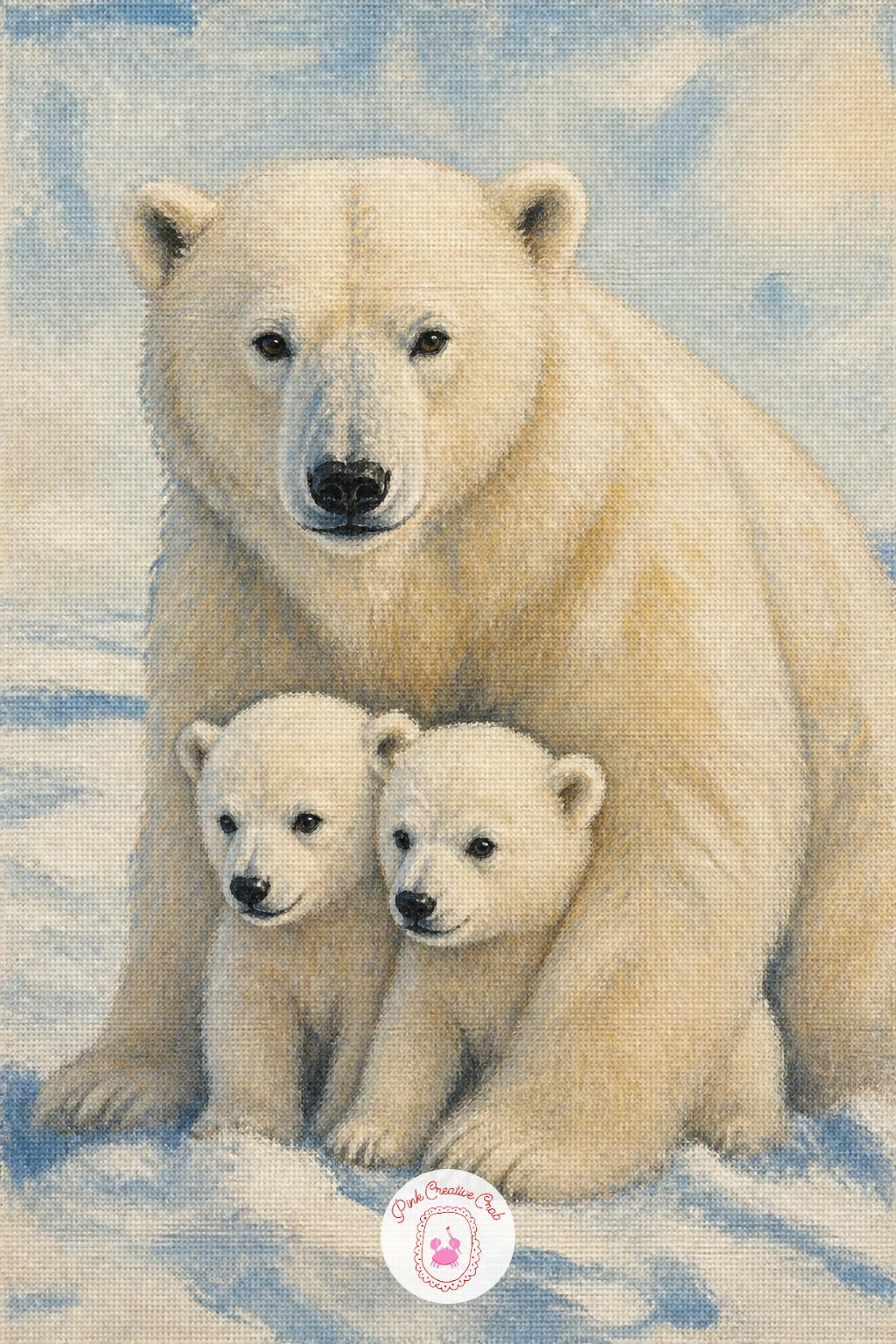
Palette: Titanium White,Payne’s Grey,Ice Blue,Cream
Give yourself a looser, funnier pose after two standing bears: a polar bear rolling on its back in the snow, paws in the air. Sketch this one as a curved C shape for the spine with the belly facing up and out, it immediately reads as playful rather than static.
Paint the snow first in broad strokes of white and pale blue-grey, then drop the bear’s shadowed underside in as soft violet-grey before adding the lit fur on top. Work the paws and belly fur with a fan brush flicked outward from the body, since rolling fur points in several directions at once and a single brush direction will flatten the pose.
The usual mistake here is painting the bear too symmetrical and stiff, which kills the tumbling feel. Loosen it by tilting the head off to one side and letting one hind leg kick higher than the other.
Finish today by flicking a few dry white strokes across the whole bear with a nearly dry brush, to suggest loose snow still falling around it.
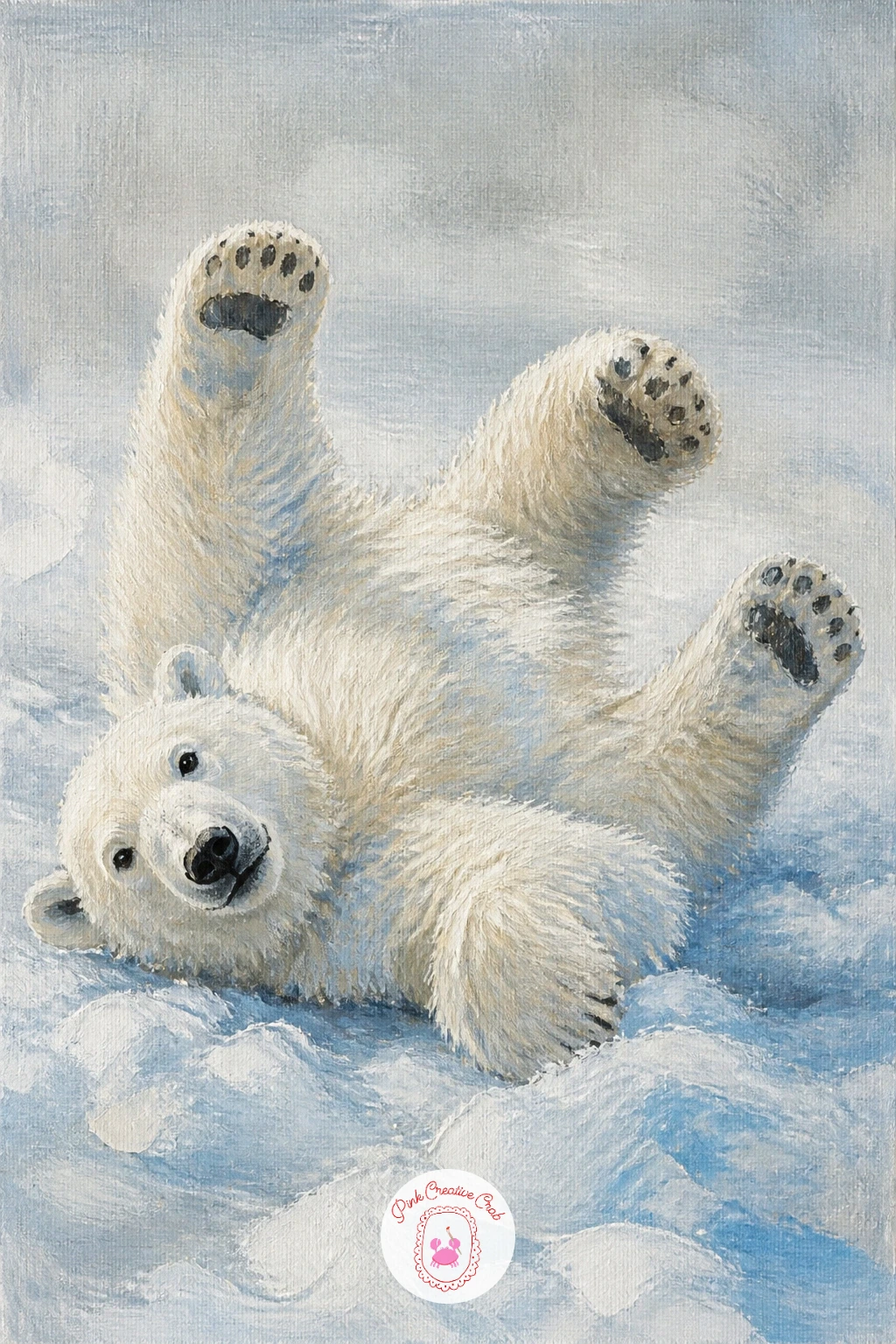
Palette: Titanium White,Violet Grey,Ice Blue,Payne’s Grey
A fan brush loaded dry and dragged outward gives rolling fur its scattered look fast, try it on the paws and belly where the fur fans in several directions.
Move into black and white fur with a panda eating bamboo, held upright in both paws. Block the panda’s body as one large rounded shape first, then add the distinctive black patches, eye patches, ears, shoulders and legs, as flat opaque shapes over the white base once it is fully dry.
Paint the bamboo stalks behind the panda in two or three greens before the panda itself, so they sit convincingly behind the white fur rather than fighting it. Keep the black patches soft-edged with a slightly damp brush where they meet the white, pandas look better with gentle transitions than hard cartoon outlines.
If the face reads too flat, add a little warm grey shadow under the chin and along one side of the eye patches to round the head out. No pine green on hand works fine, any mid-toned green plus a touch of yellow gets you there.
Try this today: paint the bamboo leaves with quick single strokes of a flat brush, one stroke per leaf, for instant texture.
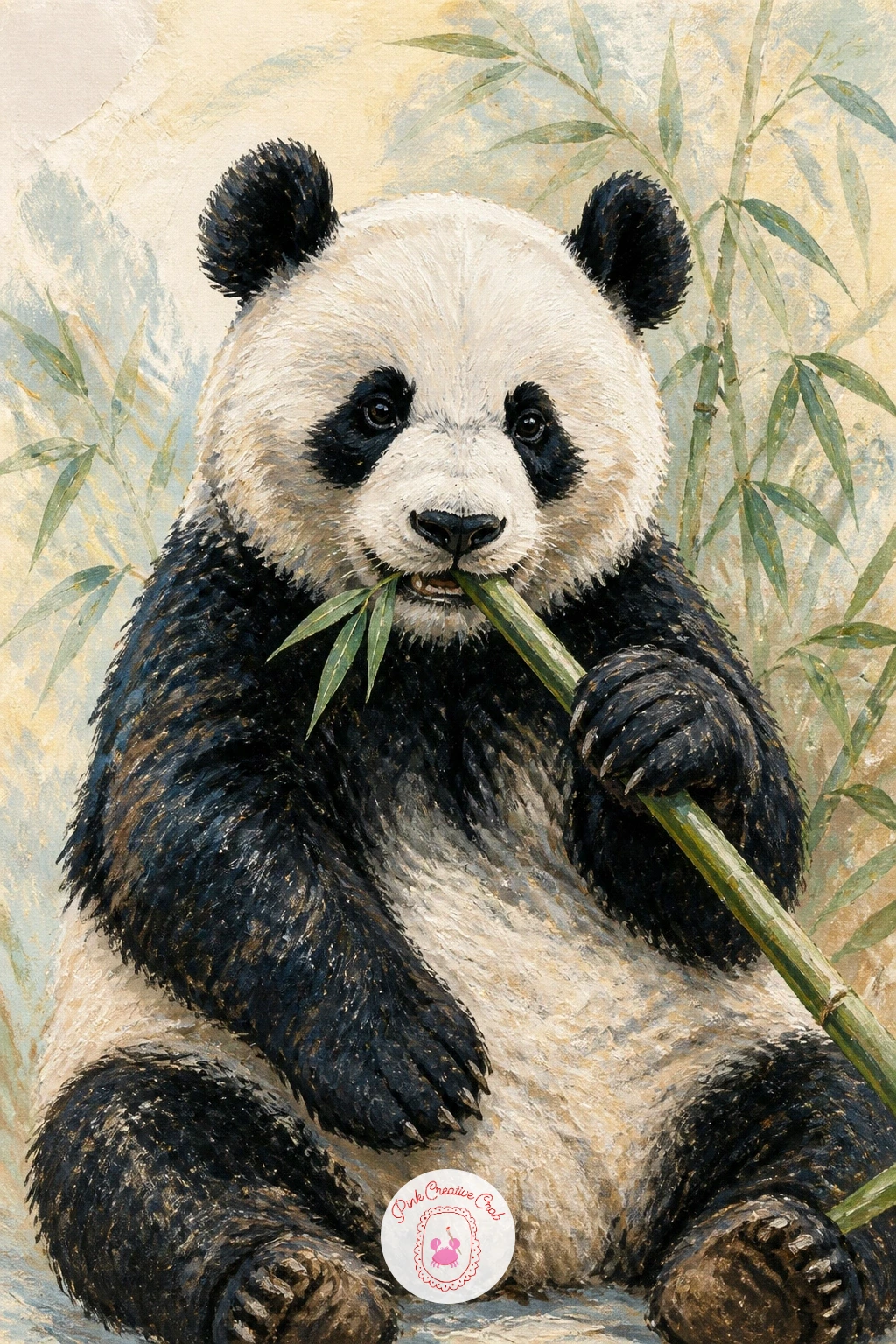
Palette: Titanium White,Carbon Black,Pine Green,Cream
Keep the fun going with a panda tumbling down a grassy hill, mid-roll with legs and ears every which way. Sketch the hill first as a simple diagonal slope, then place the panda’s body as a tight curled ball rather than a standing shape, since the whole joke of this pose is compactness.
Work the grassy hill in loose diagonal strokes of green before the panda goes on top, so the motion of the brushwork already suggests the direction of the roll. Paint the black and white patches slightly smeared and overlapping at the edges rather than cleanly separated, it reads as movement blur instead of looking like a mistake.
The pose tends to go wrong when the limbs are placed too evenly around the body, which stops it looking like a tumble. Push two legs close together and let one ear or paw stick out further than feels natural.
For a quick ten minute version, paint just the curled panda shape and a flat green slope; given forty minutes, add a few flying grass blades around the body for extra motion.
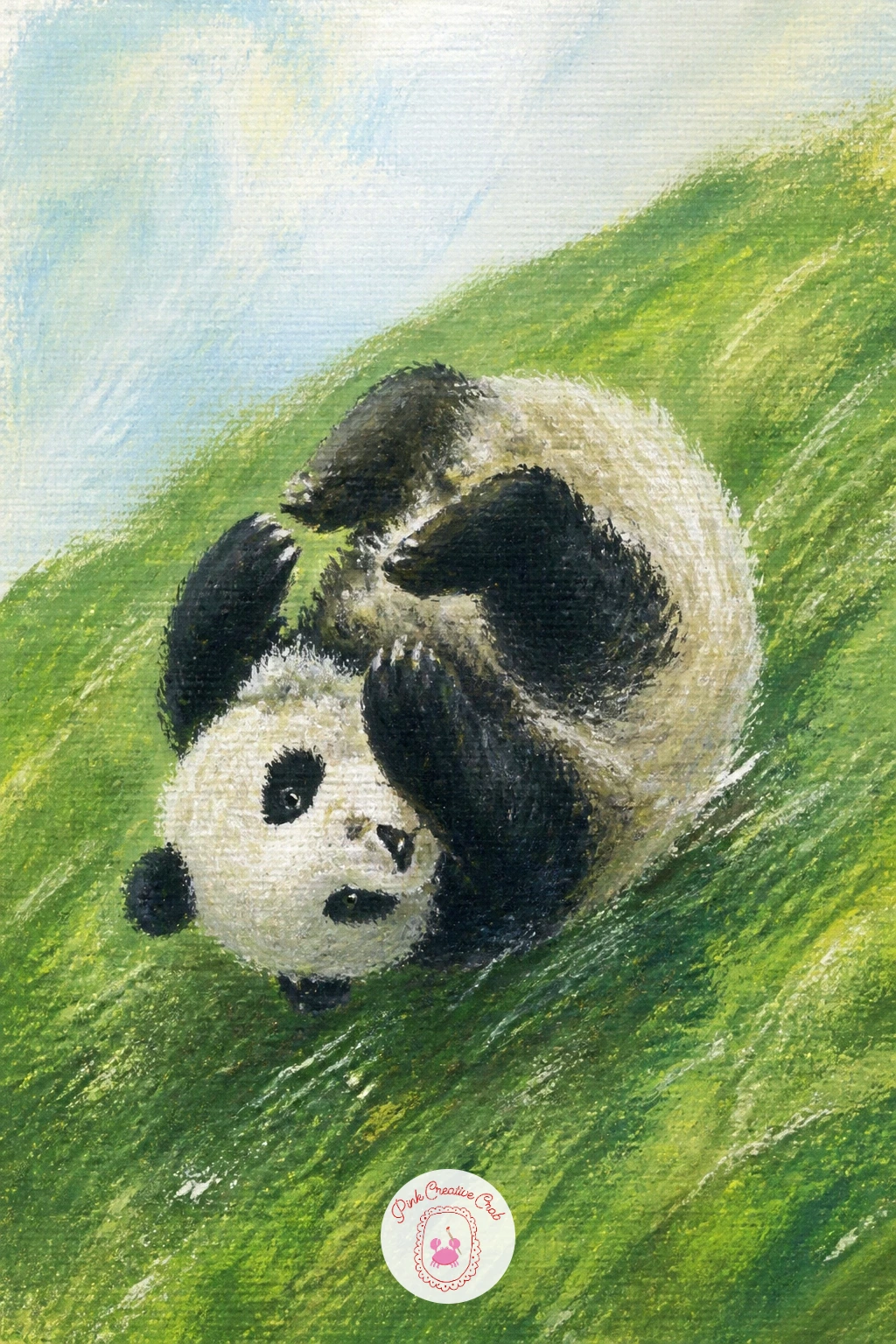
Palette: Titanium White,Carbon Black,Pine Green,Sap Green
Slow the pace right down with a panda cub asleep, draped over a tree branch with limbs hanging loose. Measure the branch first as a single diagonal line across the canvas, then drape the cub’s body over it so the belly sags slightly below the branch line, that sag is what sells the sleep.
Paint the branch in warm brown before the cub, letting a little of it show through under the paws and chin once the cub is in place. Build the cub’s fur in soft, closely blended strokes rather than the crisper patches of an adult panda, young fur reads softer and less defined.
If the cub looks awake or alert, check the eyes, keep them as closed curved lines or barely open slits, and drop the head slightly forward. Fine detail brushes work well here, but a cotton swab dipped in paint can soften edges nicely if you do not have one.
Finish with one tip: paint a few loose leaves hanging near the branch to frame the sleeping shape without crowding it.
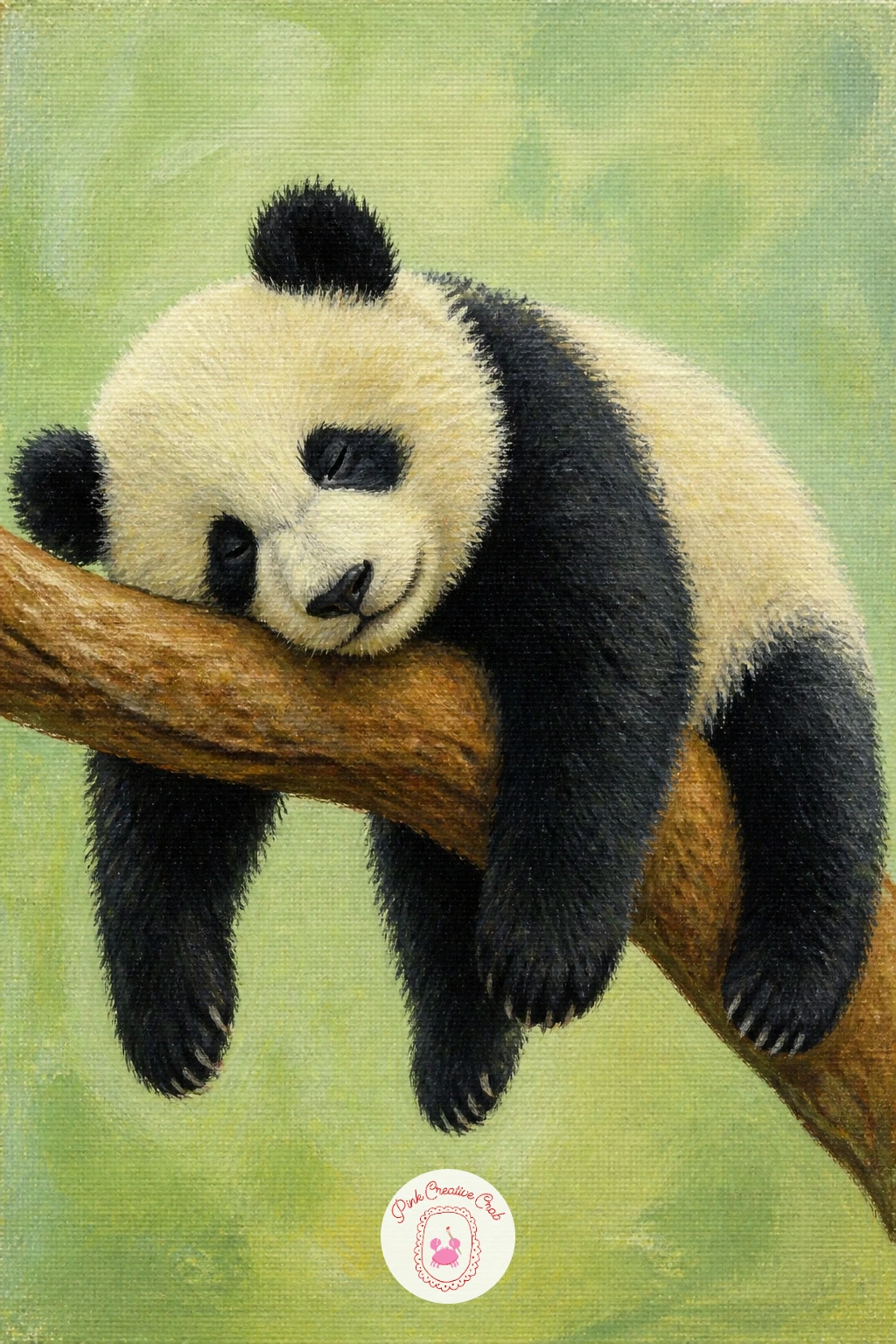
Palette: Titanium White,Carbon Black,Raw Umber,Pine Green
Bring in warm rust color with a red panda curled on a mossy log, tail wrapped around its body. Sketch the log first as a simple cylinder lying across the lower canvas, then fit the red panda’s rounded body and bushy striped tail on top of it as one continuous curve.
Paint the log in layered greens and browns with patches of moss dabbed on with a stippling brush before the red panda goes in, so the moss texture sits convincingly underneath. Build the rust-red fur in warm layers from burnt sienna through to a lighter orange on the lit side, keeping the white face markings crisp since they are what makes a red panda recognizable at a glance.
The tail stripes are where this painting most often goes wrong, too many thin stripes looks busy. Paint three or four soft bands instead of a dozen hard lines.
Try this today: dab the moss texture with a nearly dry round brush in two greens before you touch the red panda at all.
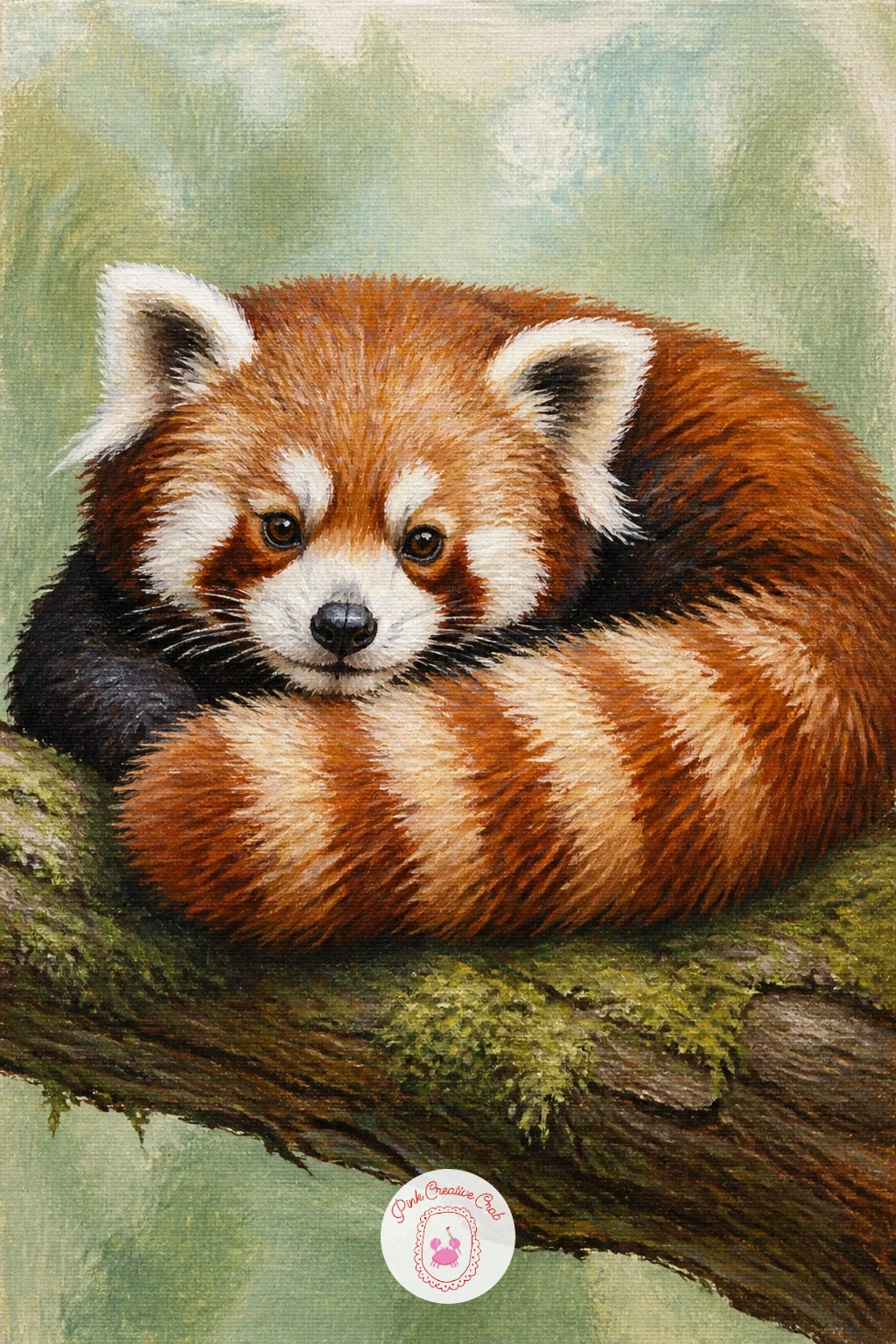
Palette: Burnt Sienna,Cream,Pine Green,Raw Umber
Step up to a brown bear catching a salmon mid-leap at a waterfall, a classic wildlife moment worth the extra effort. Place the eye level low, looking slightly up at the bear, so the waterfall rises behind it and the leaping fish reads as airborne rather than floating.
Block the falling water first in loose vertical strokes of white and ice blue before the bear, letting some strokes break and splash at the base where the bear stands. Paint the bear’s wet fur in darker, clumped strokes along the legs and chest where water would cling, versus the drier, fluffier strokes on the back and head.
If the salmon looks stuck rather than flying, add a short motion streak of white behind it and tilt it slightly off the horizontal. For more guidance on painting moving water, the winter forest painting ideas cover similar waterfall and stream techniques.
Keep this tip for today: paint the splash at the bear’s feet last, in thick opaque white flicked on with a stiff brush.
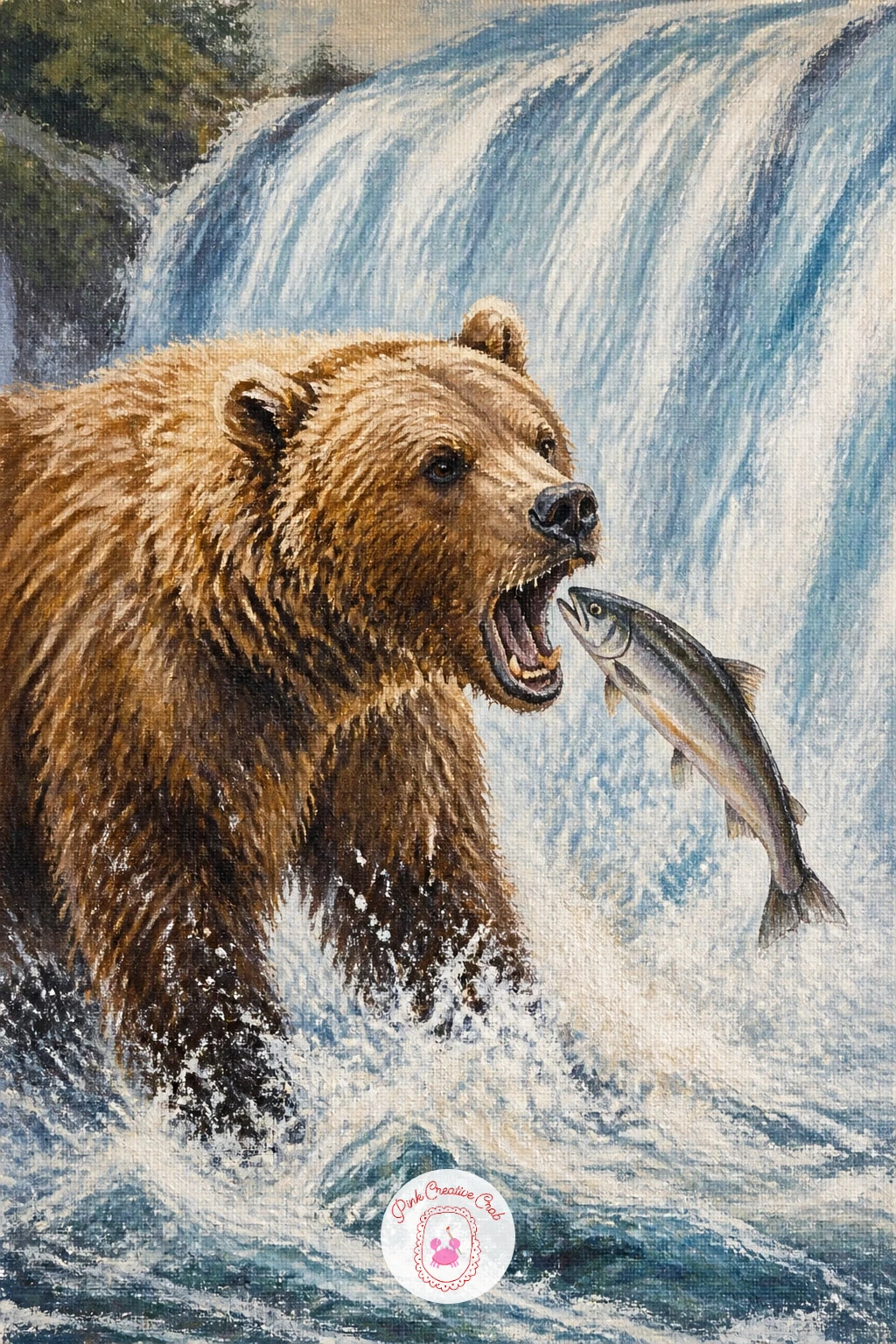
Palette: Raw Umber,Burnt Sienna,Ice Blue,Titanium White
Bring the energy down to one small animal again with a bear cub climbing a tree trunk, claws dug in and body stretched upward. Draw the tree trunk first as a single strong diagonal or vertical line, then hang the cub’s body against it at an angle, with the back legs lower and braced and the front paws reaching higher.
Paint the bark in rough vertical strokes of brown and grey before the cub, so the texture is already established underneath the fur. Work the cub’s fur with short choppy strokes along the limbs to suggest effort and stretch, keeping the belly fur softer and smoother by contrast.
A cub climbing often ends up looking flat against the trunk rather than wrapped around it, fix this by painting a thin strip of shadow where the near paw overlaps the bark. If you do not have a round brush fine enough for claws, the corner of a flat brush makes a decent mark.
Try today: add one or two falling leaves below the cub to suggest the scrabble of the climb.
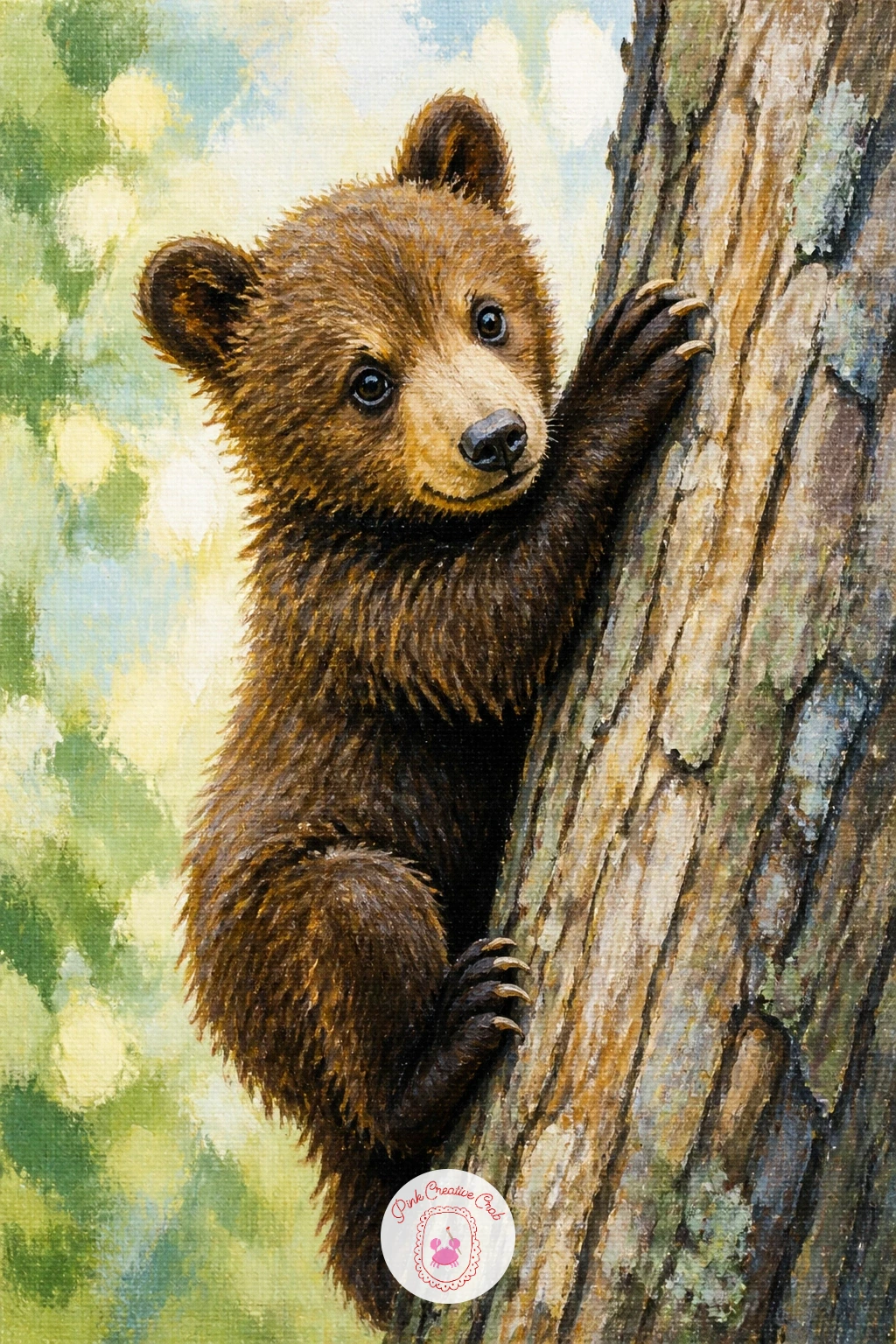
Palette: Burnt Sienna,Raw Umber,Pine Green,Cream
Widen the scene with a mother bear and her cubs walking in a line across an open meadow. Place the mother’s eye level roughly a third up the canvas and keep the horizon low, so the meadow stretches out behind the family and the sky gets room to breathe.
Paint the meadow first in broad horizontal bands of green and gold before any bears go in, then add the family as a single walking line, mother in front, cubs trailing slightly behind and smaller. Keep the group’s shadows falling the same direction to tie them to the same patch of light.
If the cubs end up looking like miniature adults, soften their faces and round their ears a touch more than the mother’s, cubs read younger through roundness more than size alone. This scene also works beautifully as a wider composition if you want to try it across a long canvas.
One tip for today: paint a few tall grass stalks in the foreground, slightly out of focus, to give the meadow depth without extra work.
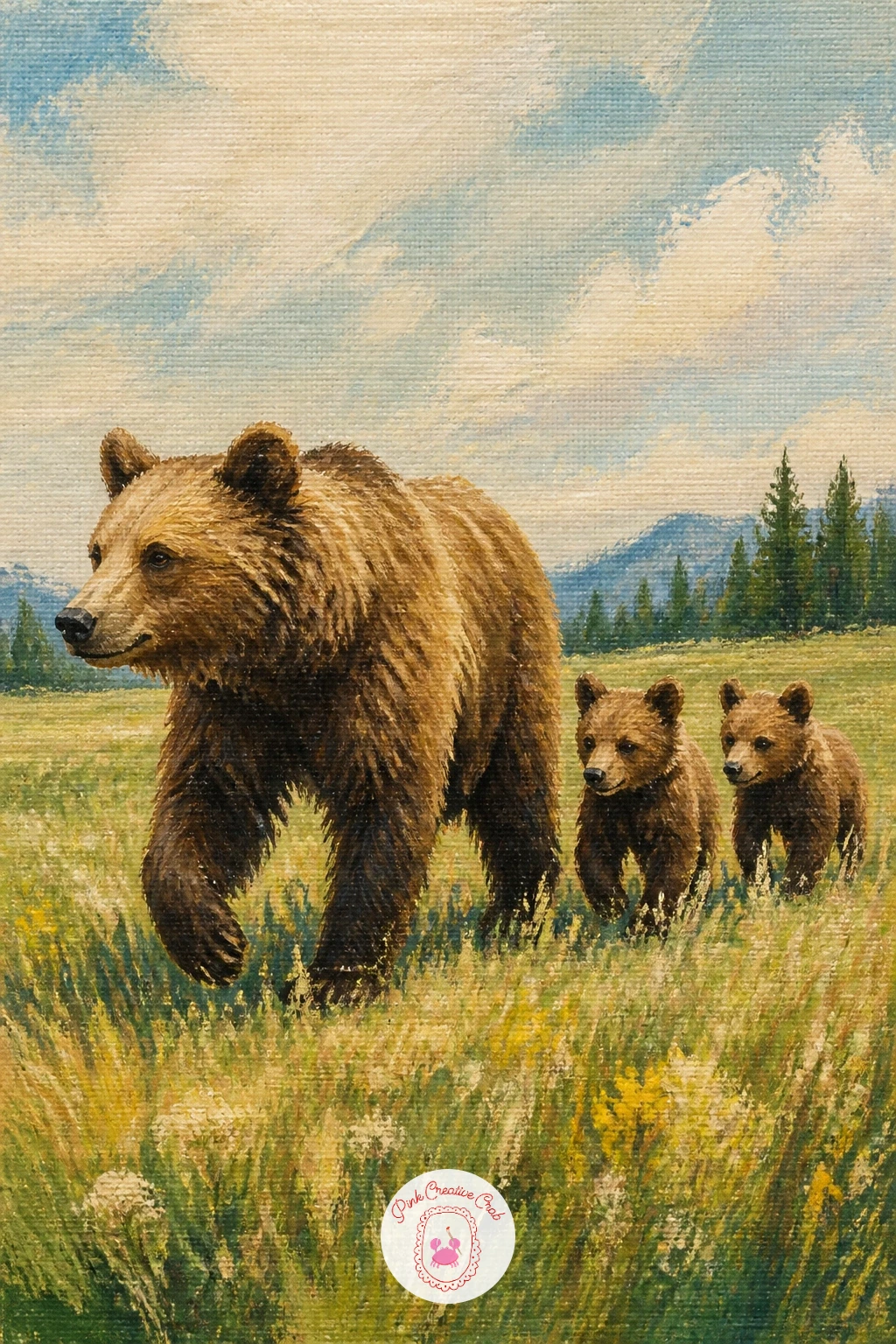
Palette: Sap Green,Raw Umber,Cream,Burnt Sienna
Settle into a quieter moment with a bear standing in a river, paw poised over the water watching for fish. Set the eye level at the bear’s chest height so the water surface cuts across the lower canvas at a natural angle, which makes the standing pose feel grounded rather than floating.
Paint the river first in long horizontal strokes of blue-grey and cream, leaving a few lighter streaks for ripples, before the bear goes in over the top. Build the bear’s legs so the lower portion sits slightly duller and cooler toned than the dry fur above the waterline, suggesting wetness without needing fine detail.
The water often ends up too busy if every ripple gets painted separately, simplify to three or four long streaks instead. A palette knife dragged flat across wet paint gives a nice quick ripple if a brush feels fussy.
Finish today with one tip: drop a small fish shape just under the surface near the bear’s paw, it tells the whole story in one stroke.
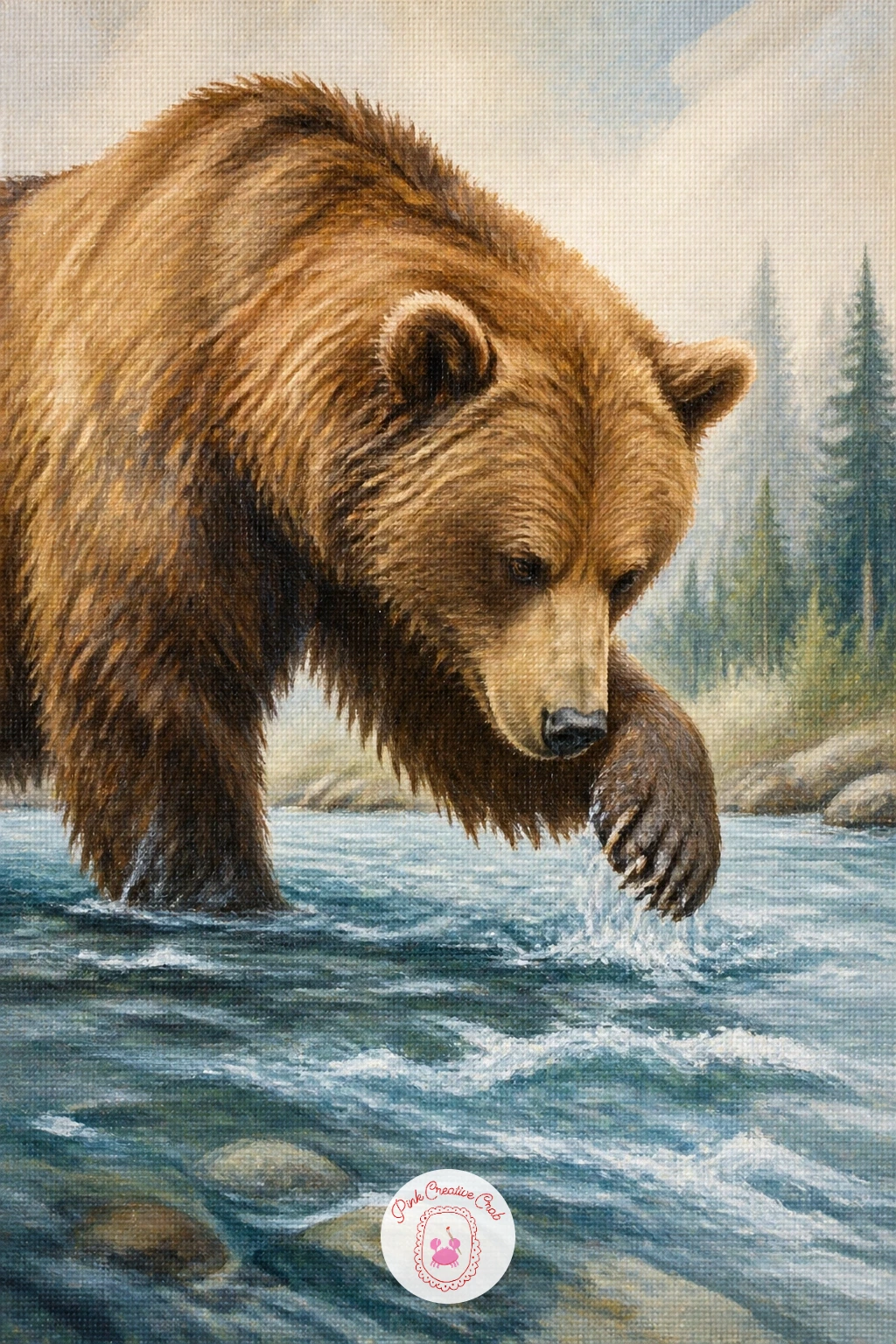
Palette: Raw Umber,Ice Blue,Payne’s Grey,Cream
Add a pop of color with a black bear standing among blueberry bushes, muzzle stained purple from eating. Sketch the bear’s body first as one dark rounded mass, since black bear fur reads as a single deep shape with very little internal detail compared to a brown bear’s layered coat.
Paint the blueberry bushes around the bear first in dabs of green and dusty purple-blue before adding the bear on top, so the berries read as sitting both behind and around the body. Keep the black fur from looking like a flat hole by mixing in a little dark blue or dark brown rather than pure black, and catch one rim of warm light along the back.
If the scene feels too dark overall, lighten the background behind the bear so the black shape has somewhere to stand out against. No purple on your palette is no problem, mix it from red and blue for the berries.
Try today: dot a few stray berries onto the bear’s muzzle with the tip of a small brush, it adds the whole story in seconds.
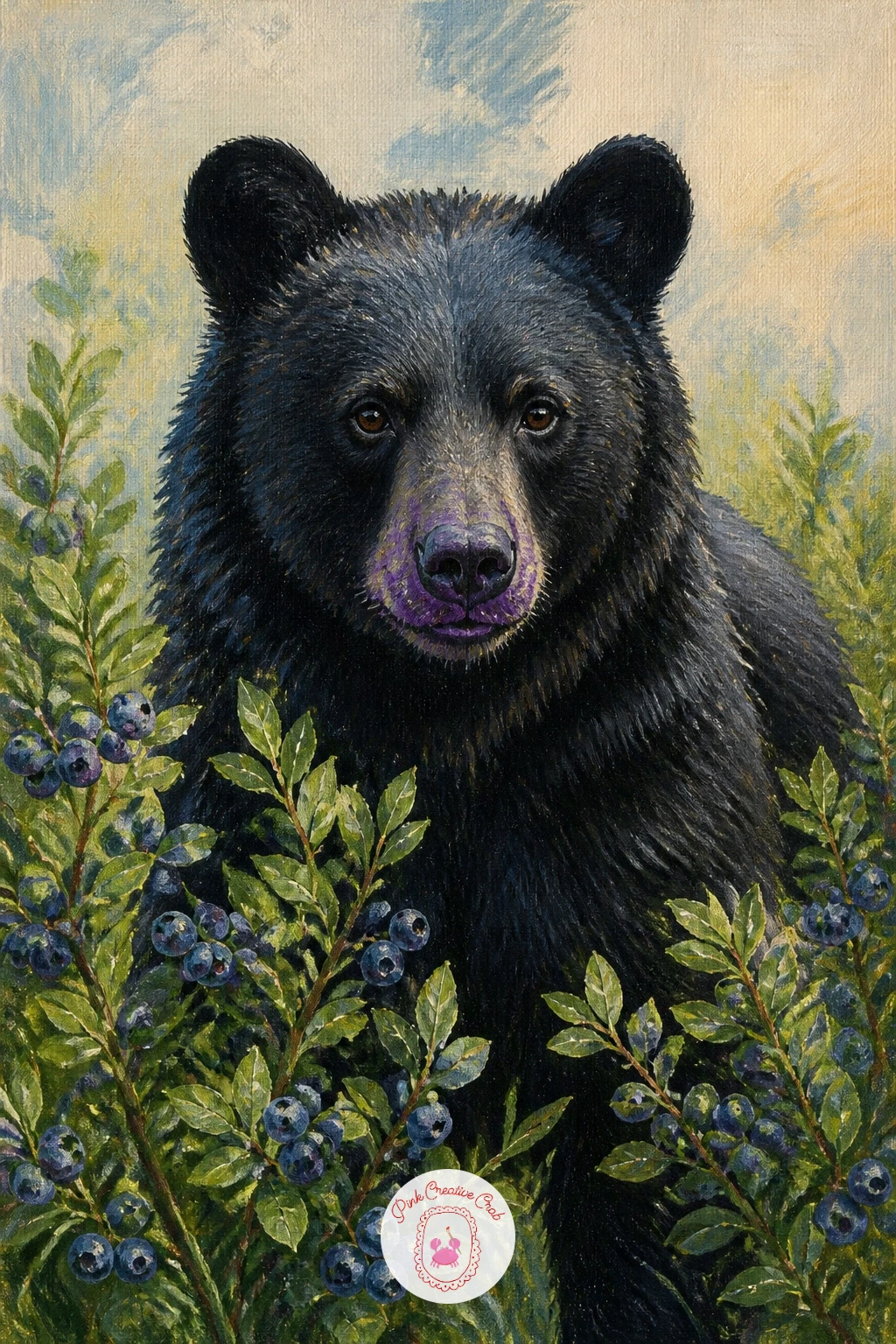
Palette: Carbon Black,Sap Green,Dioxazine Purple,Cream
Travel somewhere warmer with a sun bear, recognizable by the pale golden patch on its chest, standing among jungle leaves. Place the bear low in the frame looking slightly upward or outward, and let broad jungle leaves rise tall around it so the canopy feels close and green.
Paint the leaves first in layered greens, from deep pine at the back to brighter yellow-green toward the front, before the bear goes in over the darker background leaves. Keep the sun bear’s short glossy fur smooth and close to the body with a lightly loaded brush, it is a much sleeker coat than a polar bear’s, and save the thicker dry-brush texture only for the chest patch.
If the golden chest patch gets lost against the dark fur, outline it faintly first in cream before filling it in fully, then paint the black fur right up to that edge. No deep jungle green available, mix pine green with a touch of black for the shadowed leaves.
One tip for today: paint a single shaft of warm light falling across the bear’s face to lift the whole jungle scene.
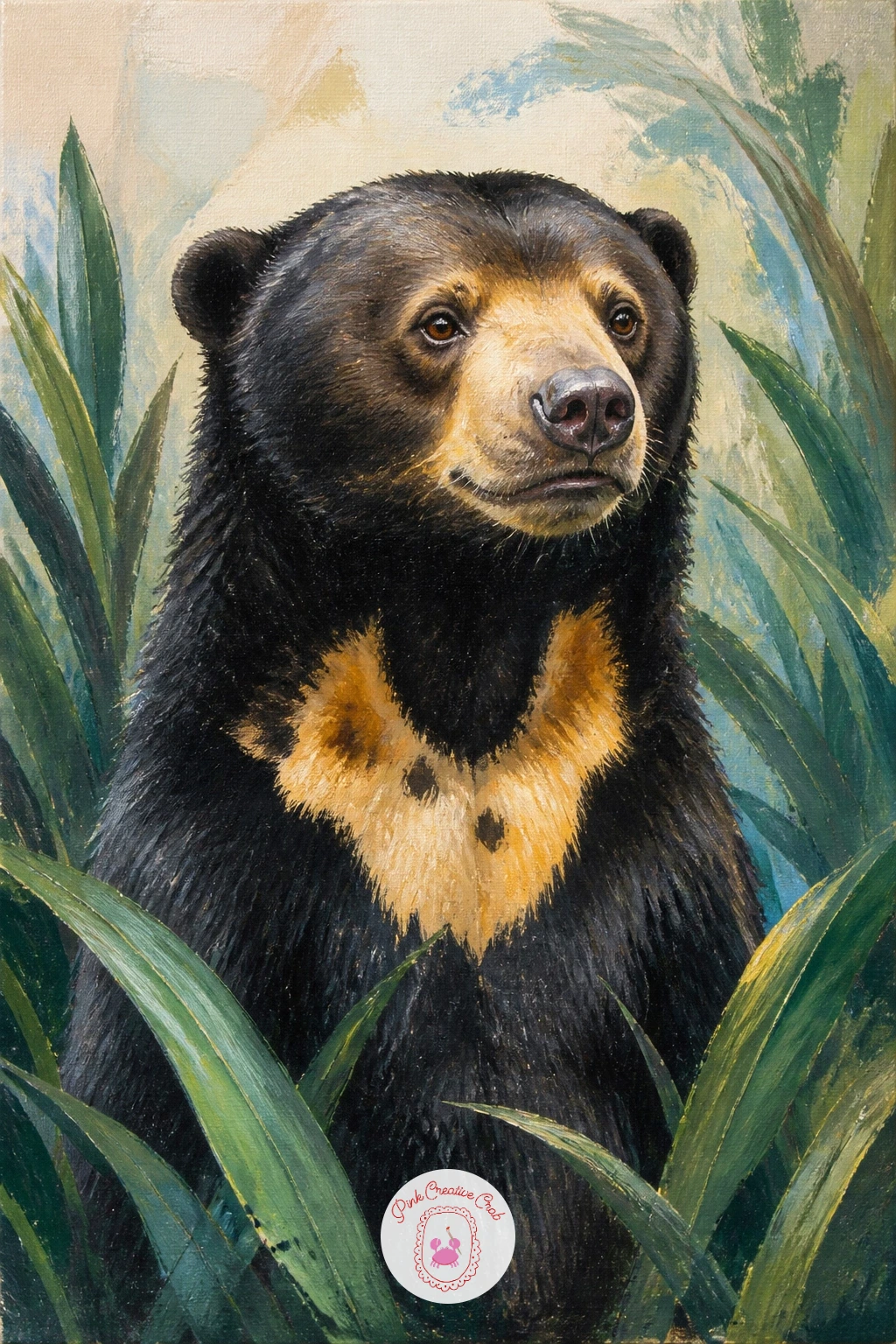
Palette: Carbon Black,Cream,Pine Green,Sap Green
Keep the exotic mood going with a spectacled bear, named for the pale rings around its eyes, standing in a misty cloud forest. Build the background first in soft, barely-there layers of grey-green and pale blue, blending the edges while wet so the mist feels like it truly surrounds the trees rather than sitting on top of them.
Paint the bear’s dark body next in matte black-brown, then carefully add the pale cream rings around the eyes last, since that marking is what identifies the species and deserves a clean, confident stroke rather than a shaky one.
The mist often disappears once the bear goes on top, keep it visible by softening the bear’s outer edges slightly into the background rather than painting a hard outline all the way round. A soft flat brush dragged lightly over the edge while still damp blends this in well.
Try today: leave the lower legs slightly less defined than the head, fading into the misty forest floor.
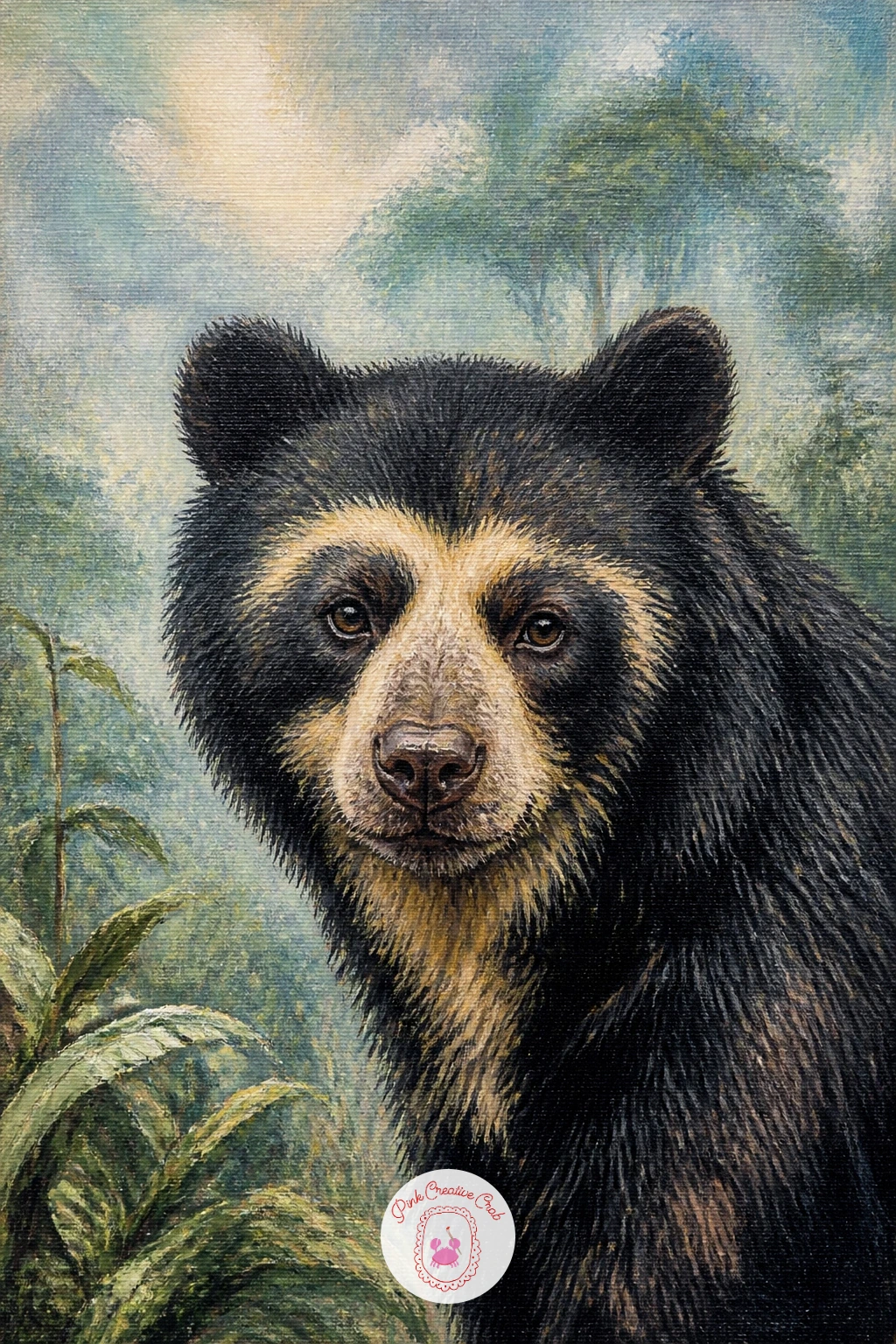
Palette: Carbon Black,Cream,Pine Green,Payne’s Grey
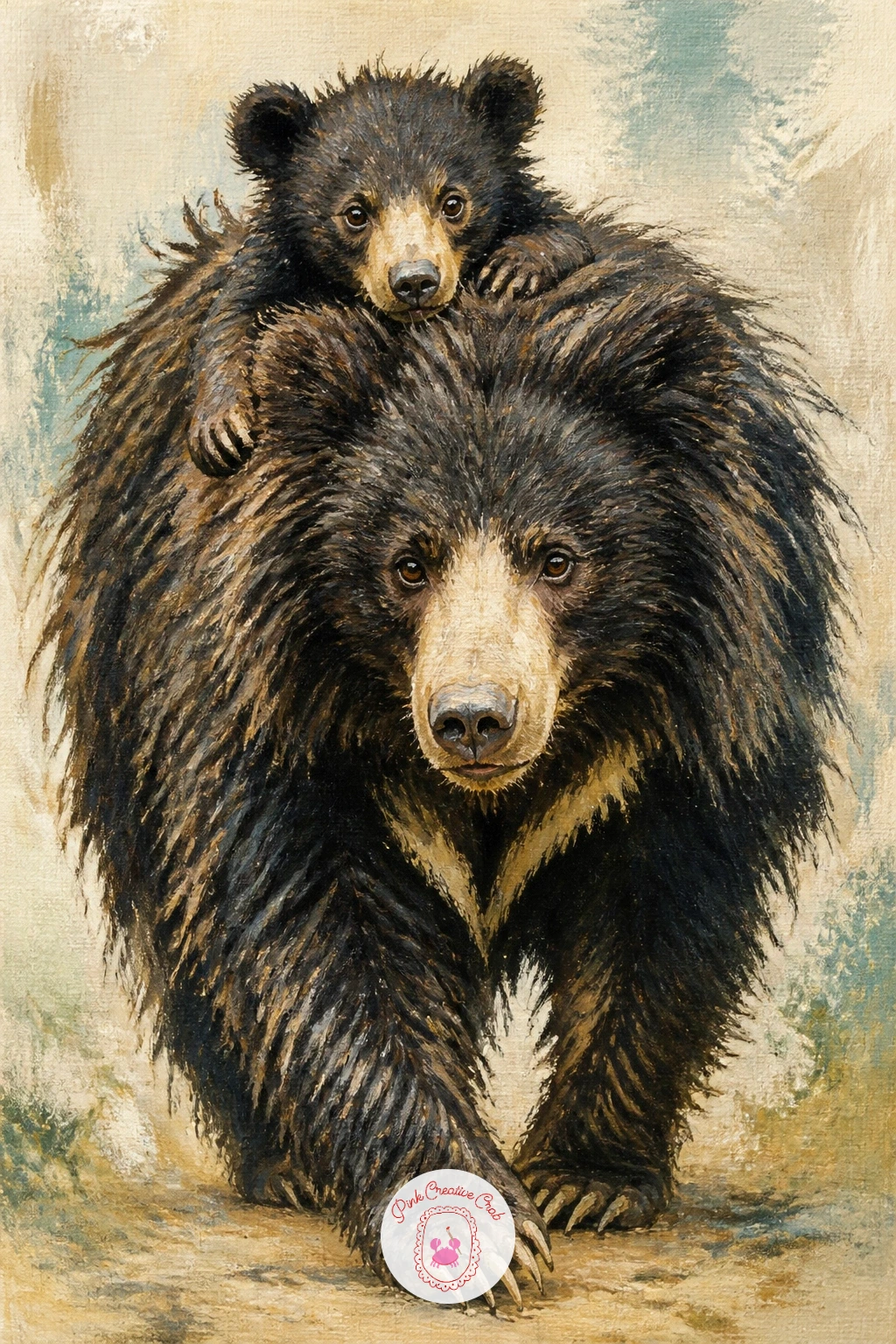
Move into a tender moment with a sloth bear carrying its cub piggyback through long shaggy fur. Build the mother’s silhouette first as one large, slightly hunched shape, since sloth bears carry a distinctively long, shaggy coat that reads best as big loose masses rather than neat fur.
Paint the long fur with a dry, nearly empty flat brush dragged in long downward strokes well past the body outline, letting the edges stay ragged and uneven on purpose. Tuck the cub into the fur on the mother’s back using the same shaggy strokes so it looks nestled in rather than glued on top.
If the fur looks too neat and groomed, that is usually too much paint on the brush, wipe most of it off and drag again, dry strokes are what give this bear its scruffy charm. No wide flat brush handy, an old stiff-bristled brush works just as well for this effect.
Finish today with one tip: let a few long strands of fur break the bear’s outline against the background for extra shagginess.
Palette: Raw Umber,Carbon Black,Cream,Burnt Sienna
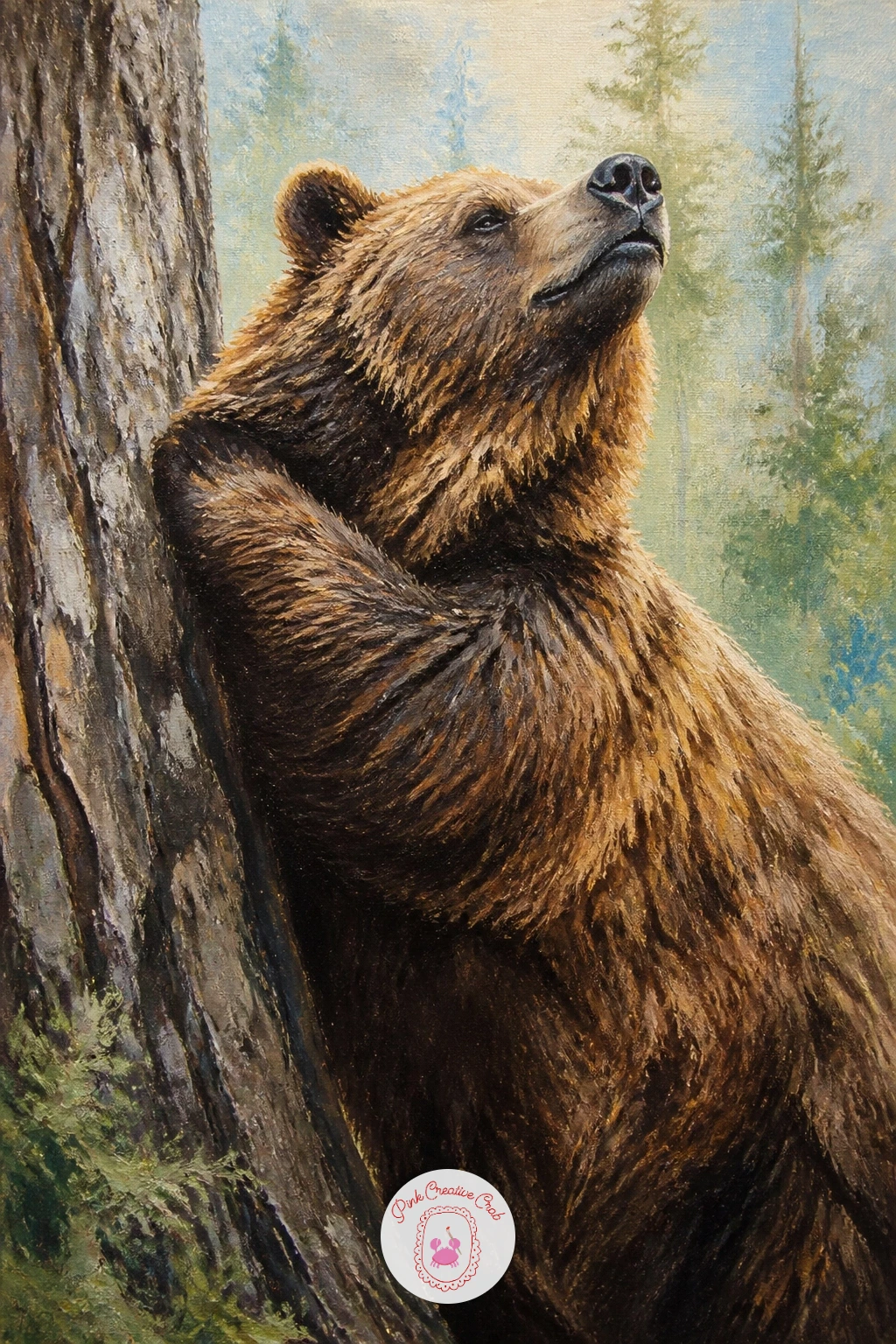
Have some fun with a grizzly bear leaning back against a tree trunk to scratch, a pose full of character. Sketch the pose first as a strong backward lean, shoulders pressed into the trunk and head tilted back slightly, that lean is what sells the scratching motion more than any detail.
Paint the tree trunk first, rough and grey-brown, then build the bear’s fur over it with longer, looser strokes along the back where it presses against the bark and shorter strokes on the face and paws. Add the golden tips typical of grizzly fur by dry-brushing a little cream or pale gold over the darker brown base once it has dried, just along the shoulder hump and back.
If the pose looks stiff rather than satisfied, soften the eyes to small relaxed curves and let the mouth hang slightly open. For more loose, expressive animal brushwork ideas, the animal doodle painting ideas are worth a look.
One tip for today: scratch a few thin lines into the wet paint on the trunk with the brush handle to show where the bear has rubbed the bark smooth.
Palette: Burnt Sienna,Raw Umber,Cream,Pine Green
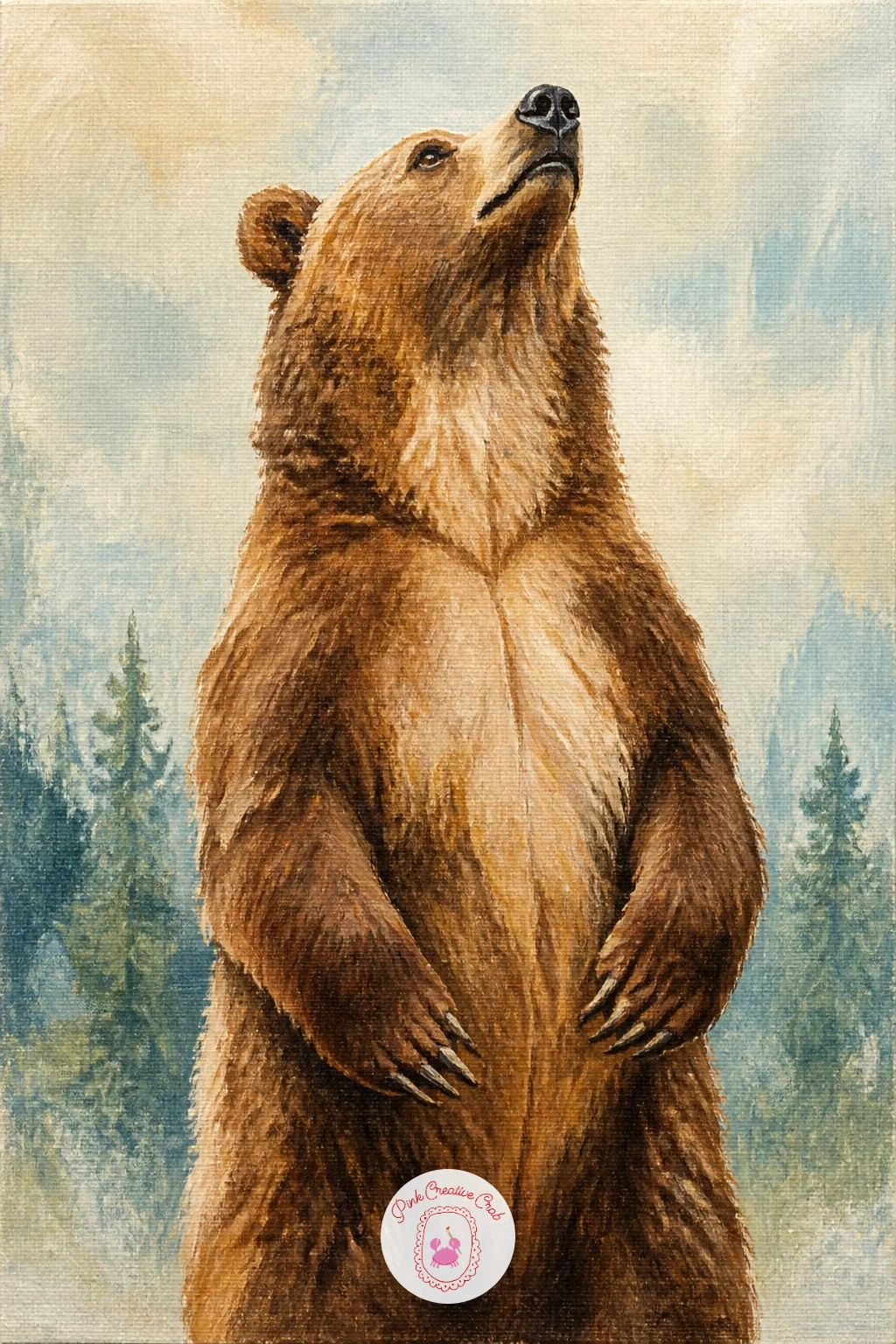
Try a bear standing fully upright on its hind legs, nose lifted to catch a scent on the wind. Measure the standing height first against the width of the shoulders, a standing bear is roughly three shoulder-widths tall, which keeps the pose from looking too short and stocky or too tall and thin.
Paint the body in one confident vertical mass before adding the head tilted back and the front paws held loosely in front of the chest. Keep the chest and belly fur paler and the back darker to suggest the light falling from above, which helps a vertical pose read clearly against a plain background.
This pose can tip over into looking like it is falling if the weight is not centered, check that the hind paws sit directly under the widest part of the body before you commit to the fur details. A ruler or the edge of a card held up to the canvas is an easy way to check that vertical line.
Try today: paint the nose and a few whisker dots last, in a single confident touch, to finish the alert expression.
Palette: Raw Umber,Cream,Burnt Sienna,Pine Green
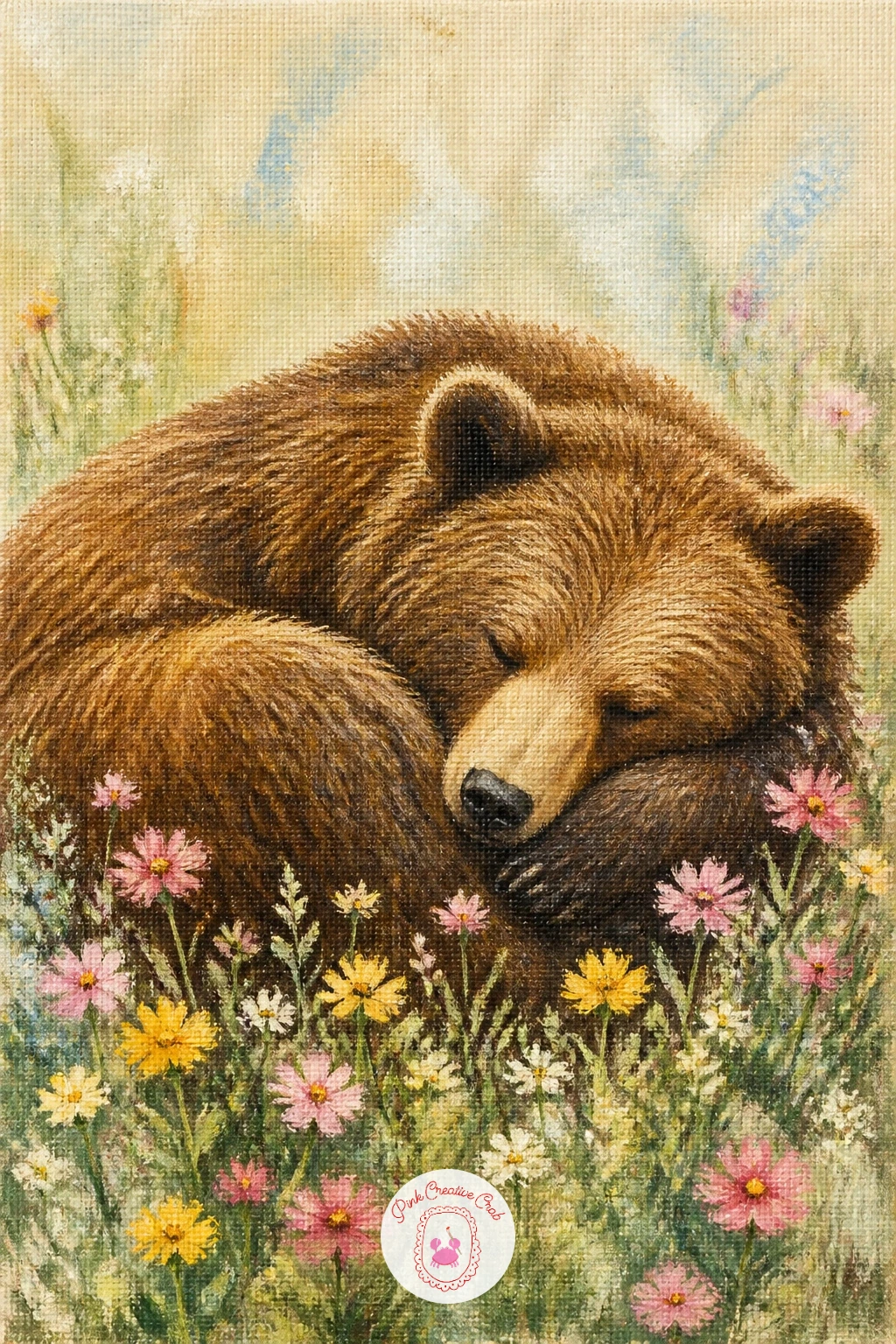
Slow right down again with a bear lying curled and napping in a patch of wildflowers. Lay the flowers in first across the whole lower canvas in loose dabs of color, pink, yellow and white, before the bear goes anywhere near it, so the flowers feel like they grow up around the sleeping shape rather than sitting beside it.
Paint the bear’s curled body as one soft continuous mass, nose tucked near the paws, using gentle blended strokes rather than the choppier fur texture of an active pose. Let a few flower dabs overlap the very edge of the bear’s fur once it is dry, tying the animal into the meadow.
If the bear looks too hard-edged against the soft flowers, go back over the outline with a dry brush loaded with the background color to soften it in a few places. No pink paint on hand, mix a touch of red into white for a soft wildflower pink.
One tip for today: paint one single flower slightly closer to the viewer than the rest, slightly larger, to give the scene depth.
Palette: Raw Umber,Cream,Soft Pink,Sap Green
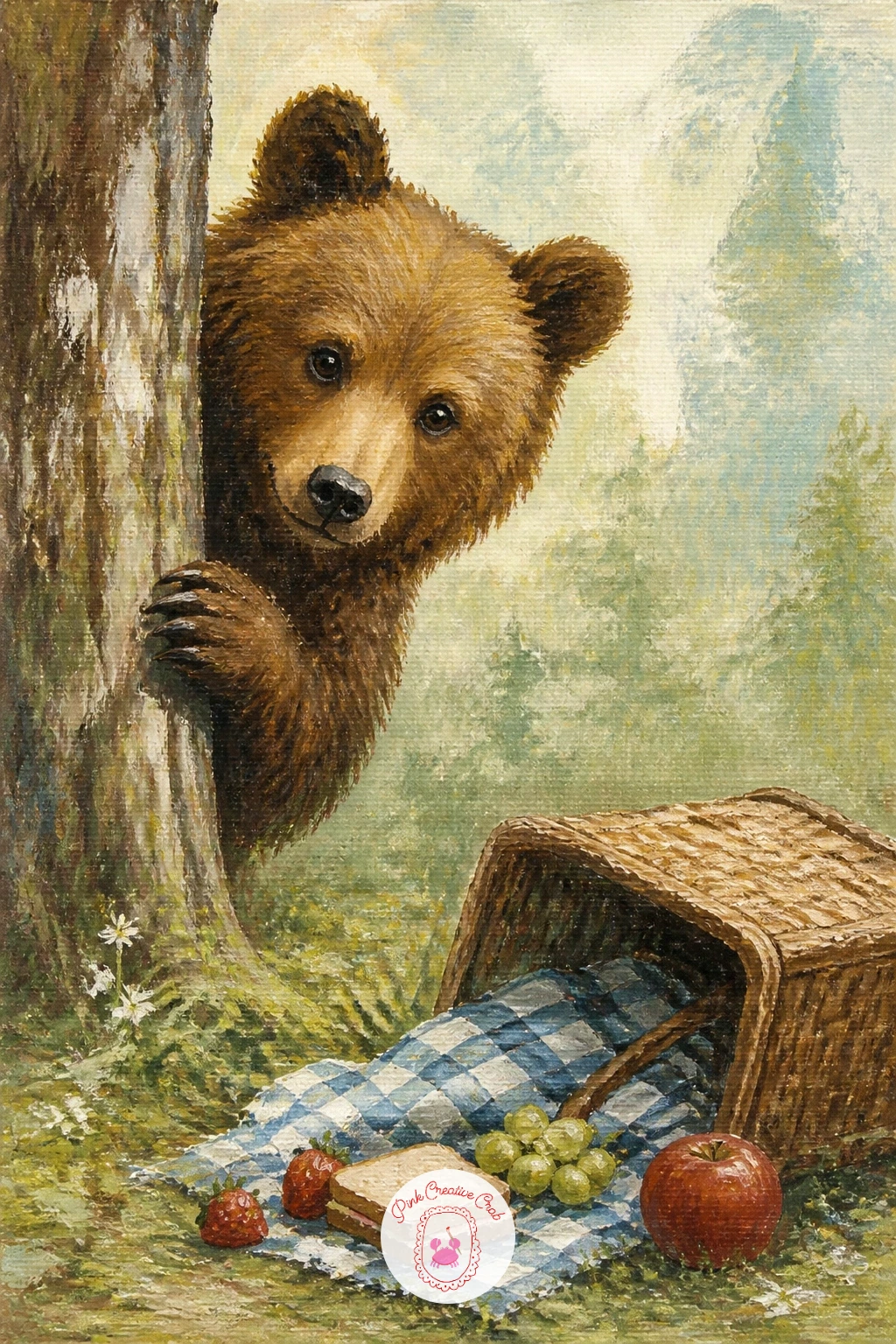
Add some gentle humor with a bear peeking out from behind a tree at an abandoned picnic basket. Place the eye level low and slightly off to one side, with the basket in the foreground and the bear’s head and one paw emerging from behind a tree trunk in the middle distance, this staging is what makes the moment feel caught in the act.
Paint the picnic basket and its spilled contents first, a cloth, a loaf, maybe an apple, in a handful of warm colors, then add the tree and finally the bear peeking around it. Keep most of the bear’s body hidden, just the head, one ear and a paw are enough to tell the whole story and keeps the composition playful rather than crowded.
If the bear’s expression reads as fierce rather than curious, widen the eyes slightly and keep the mouth closed, a curious bear needs soft, rounded features. For more playful scene-building ideas, the easy acrylic painting ideas cover similar simple staging.
Try today: tilt the basket lid slightly open, as if something has already been taken.
Palette: Burnt Sienna,Cream,Raw Umber,Sap Green
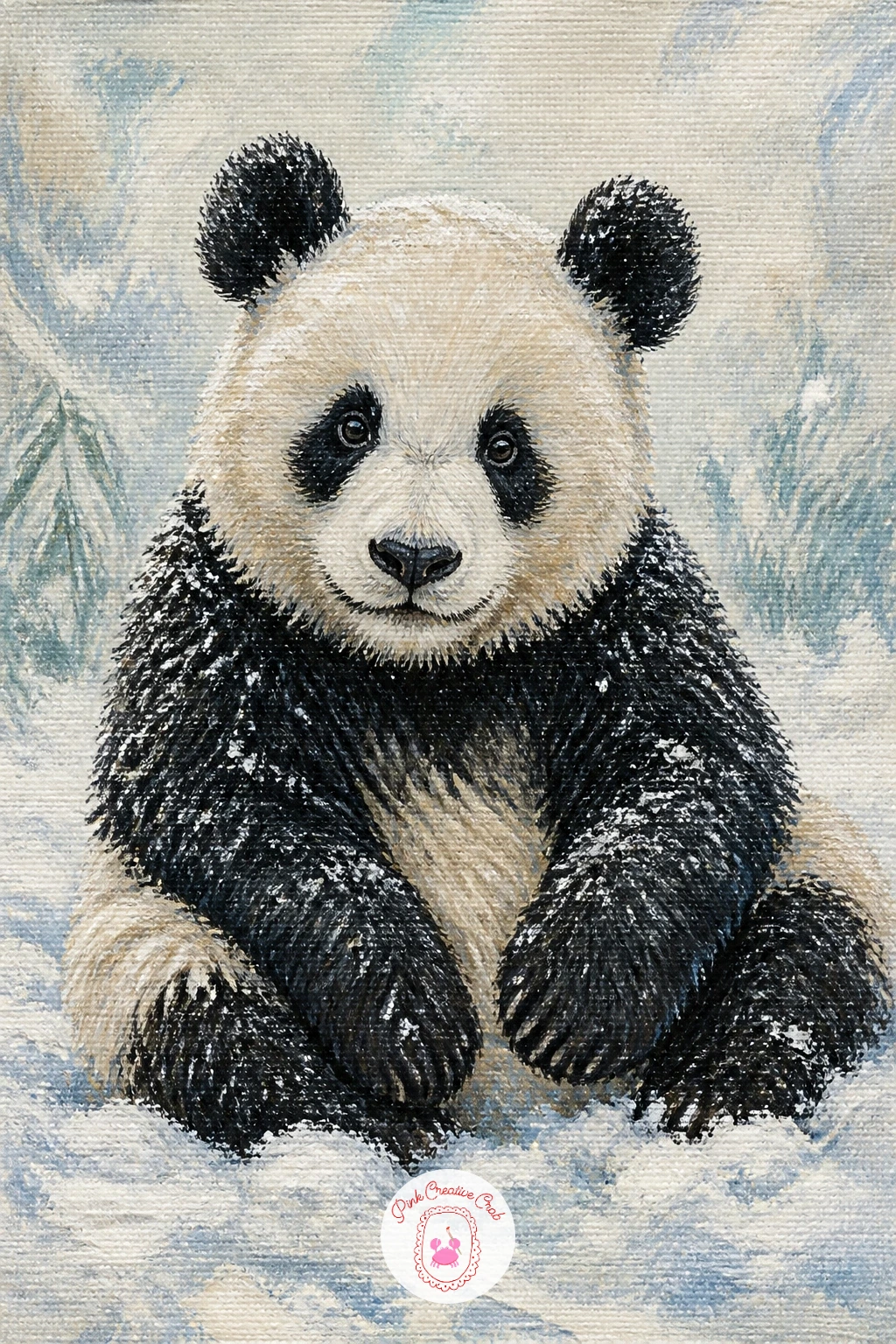
Bring the panda back for a quieter winter scene, sitting in fresh snow with flakes caught in its fur. Paint the snow-covered ground first in broad strokes of white and pale blue, then place the panda’s black and white body on top, letting the white fur patches almost disappear into the snow while the black patches stand out sharply by contrast.
Add a scattering of small white dots over the finished panda with the tip of a round brush or the end of a cotton swab, to suggest falling snow caught in the fur, this single step does most of the seasonal work. Keep the background soft and pale so the black markings carry the whole image.
If the panda disappears too much into the snowy background, strengthen the warm grey shadow under its body to anchor it to the ground. Related snowy scenes and techniques appear in the winter forest painting ideas if you want to keep going with a winter theme.
One tip for today: leave a faint trail of pawprints behind the panda in the snow for a sense of arrival.
Palette: Titanium White,Carbon Black,Ice Blue,Payne’s Grey
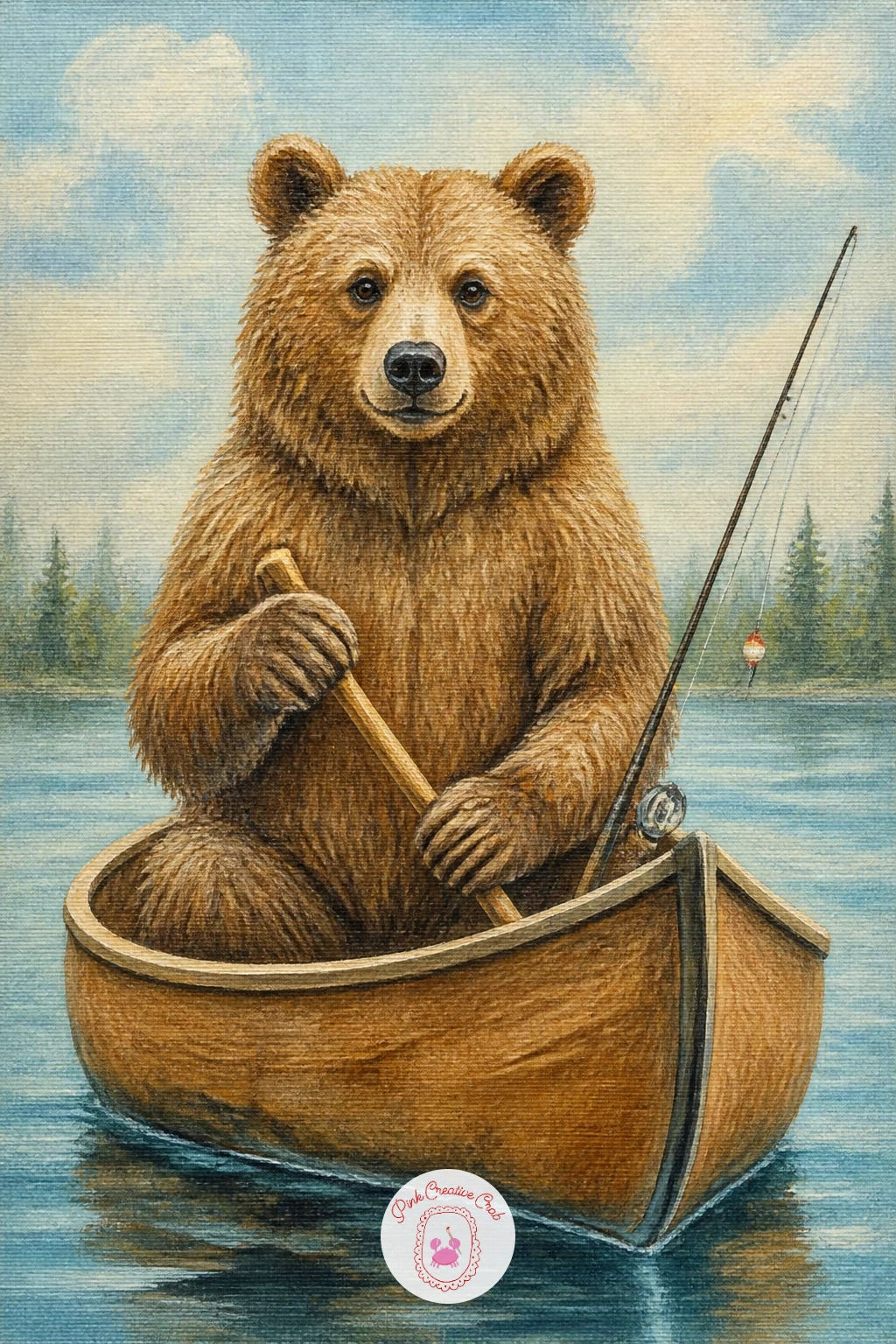
Have some fun with a bear sitting in a small canoe, paddle in one paw and a fishing rod propped beside it. Set the eye level roughly at water height, with the canoe cutting diagonally across the canvas, so the bear sits convincingly inside rather than on top of the boat.
Paint the water first in long calm horizontal strokes, then the canoe in a single warm wood tone before the bear goes in sitting upright inside it. Keep the bear’s pose compact and settled, knees bent, paws close to the body, since bears are large for small canoes and the joke relies on a slightly too-tight fit.
If the canoe looks like it is floating above the water rather than sitting in it, paint a thin reflected strip of the canoe’s color directly beneath the hull. No rich wood brown on your palette, mix burnt sienna with a touch of raw umber for the same warm tone.
Try today: bend the fishing rod’s tip slightly, as if something has just taken the bait.
Palette: Burnt Sienna,Raw Umber,Ice Blue,Cream
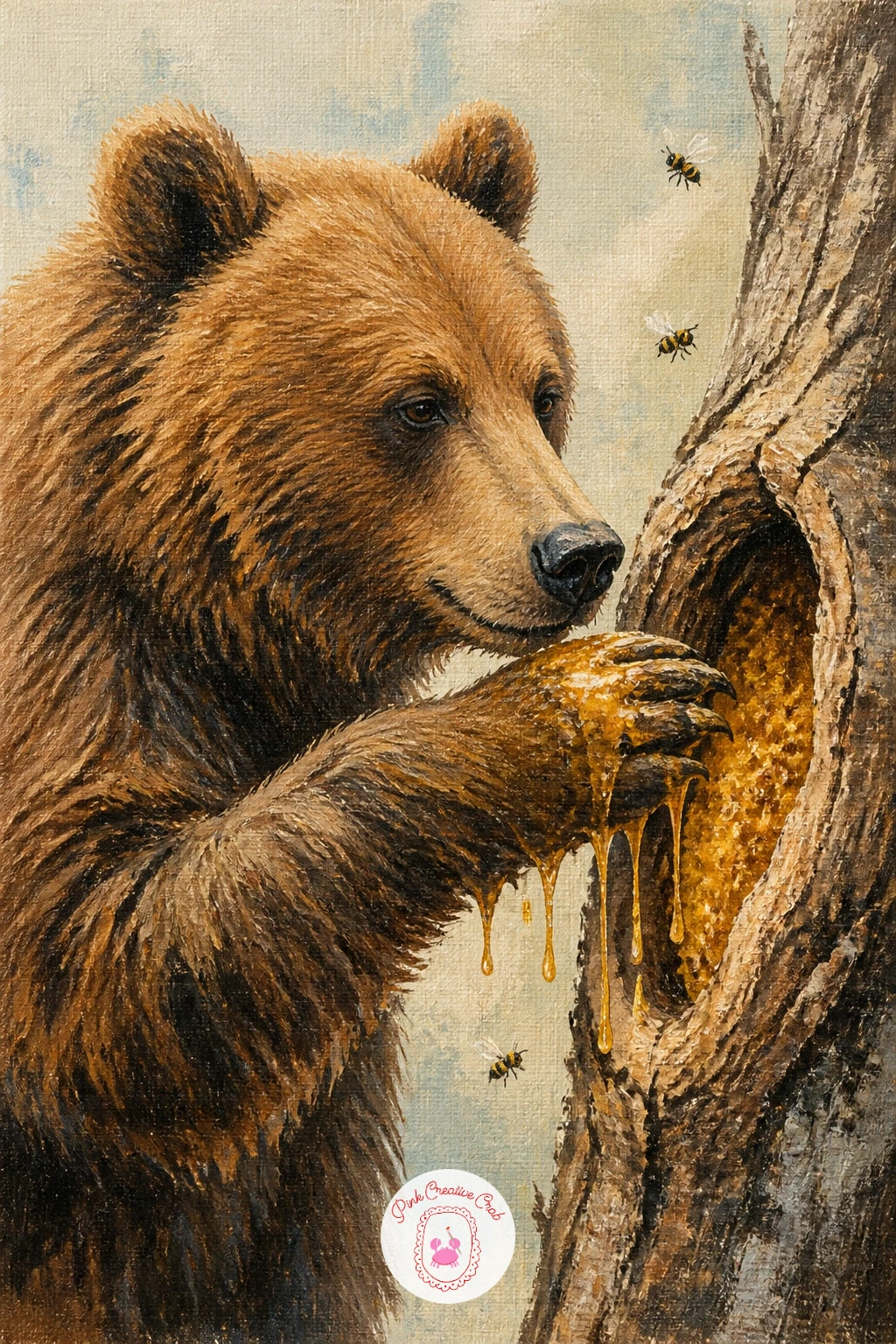
Return to a classic moment with a bear reaching into a hollow log hive, paw dripping with honey. Paint the hollow log first in rough brown strokes with a dark opening where the hive sits, then add a scattering of small bees as quick dark dots once everything else is dry.
Build the bear’s paw and muzzle last, with thick glossy strokes of amber yellow mixed into the fur color to suggest honey dripping, a little gloss medium mixed into this paint if you have it gives a genuine shine. Keep the rest of the fur matte by comparison so the honey really stands out as the wet, sticky focal point.
If the honey looks too much like solid yellow paint rather than liquid, thin it slightly and let one or two drips run down past the paw before it dries. No gloss medium on hand, a slightly thicker, glossier paint application alone still reads as honey well enough.
One tip for today: add a few bees in mid-air around the hive, painted as tiny dark ovals with the thinnest flick of a wing.
You Will Need
- gloss medium, optional
Palette: Raw Umber,Burnt Sienna,Gold Ochre,Carbon Black
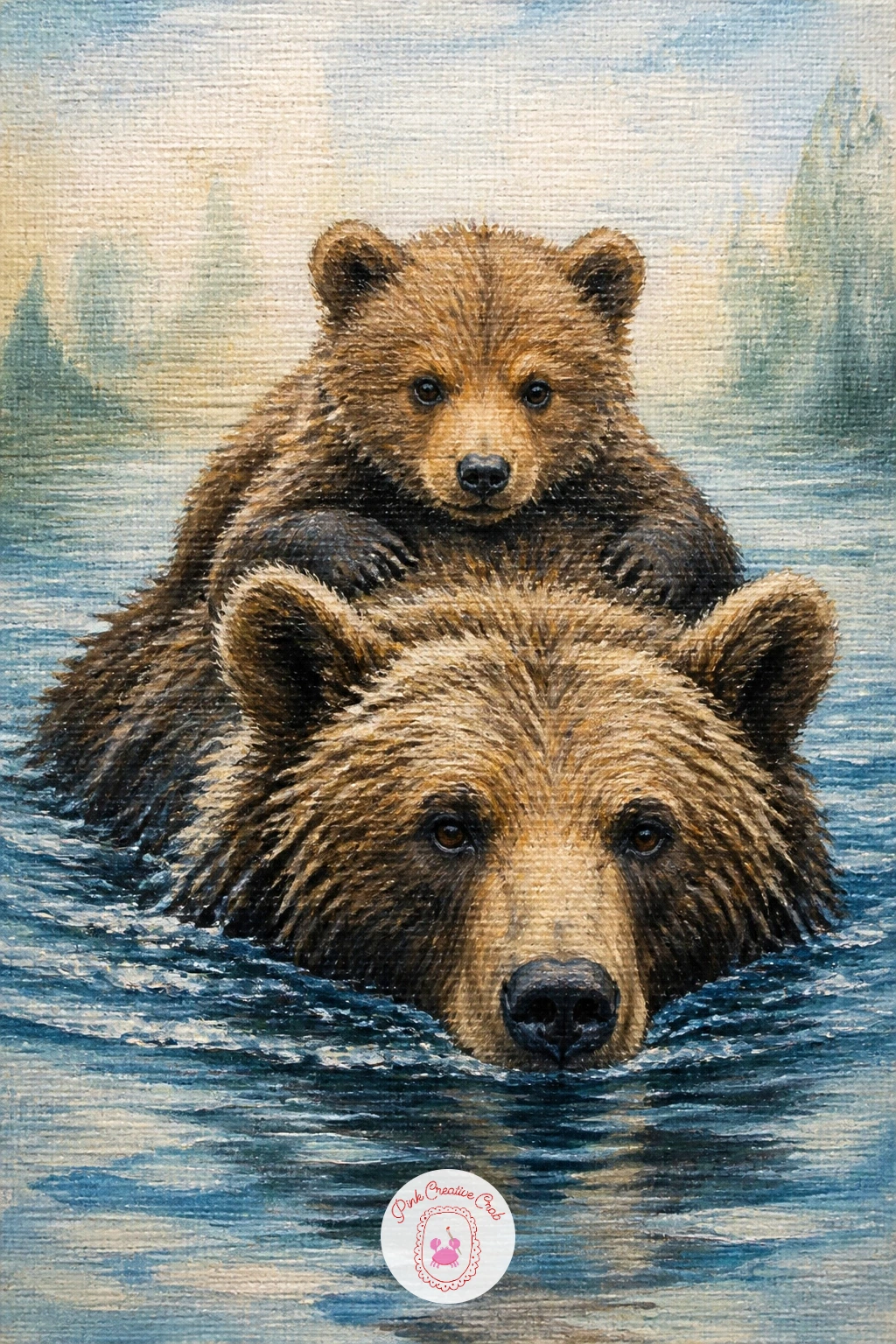
Go back to the water for a tender swimming scene, a bear paddling with its cub riding on its back to stay dry. Build the water surface first in long calm strokes, letting it sit just below the bear’s shoulders and chin, and keep the cub’s whole body above the waterline, high and dry on the mother’s back.
Paint the mother’s wet fur with darker, flattened strokes close to the body where the water has soaked it, while the cub’s fur stays fluffy and fully dry-brushed by contrast, that difference in texture alone tells the whole story. Add a soft ripple trail behind the swimming bear to suggest forward motion.
If the cub looks like it is floating separately rather than riding, deepen the shadow where its belly meets the mother’s back so the two shapes clearly connect. For more gentle animal pairs in water, the farm animal painting ideas use a similar warm and cool contrast trick.
Try today: keep the cub’s ears perked and alert, it adds a sweet contrast to the mother’s calm, steady swimming expression.
Palette: Raw Umber,Burnt Sienna,Ice Blue,Cream
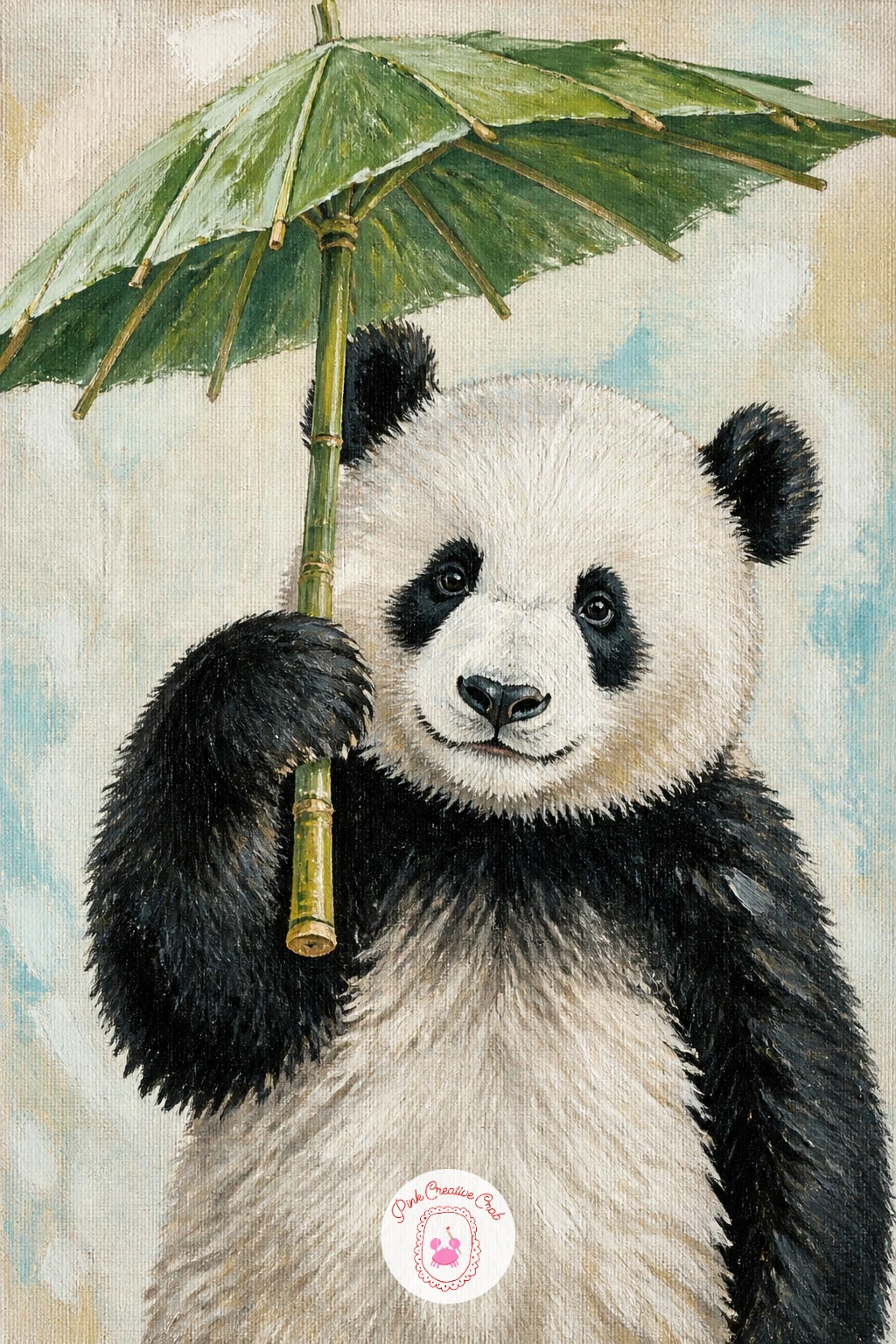
Take the panda somewhere whimsical with one holding an open bamboo and leaf umbrella overhead. Sketch the umbrella first as a simple fan shape made of a few long triangular leaf panels, then place the panda standing underneath it, one paw raised to hold the handle.
Paint the umbrella’s leaf panels in layered greens before the panda, letting each panel show a slightly different shade so it reads as individual leaves rather than one flat green shape. Add the panda’s black and white body beneath it last, keeping the raised paw and arm in a clean, confident line since that gesture carries the whole charm of the pose.
If the umbrella looks flat and paper-thin, add a thin line of shadow along the underside of each leaf panel where it curves away from the light. No leaf-shaped reference handy, overlapping ovals pointed at both ends make a convincing leaf panel.
One tip for today: let a single raindrop or two fall just outside the umbrella’s edge, it grounds the whole whimsical idea in a believable moment.
Palette: Carbon Black,Cream,Pine Green,Sap Green
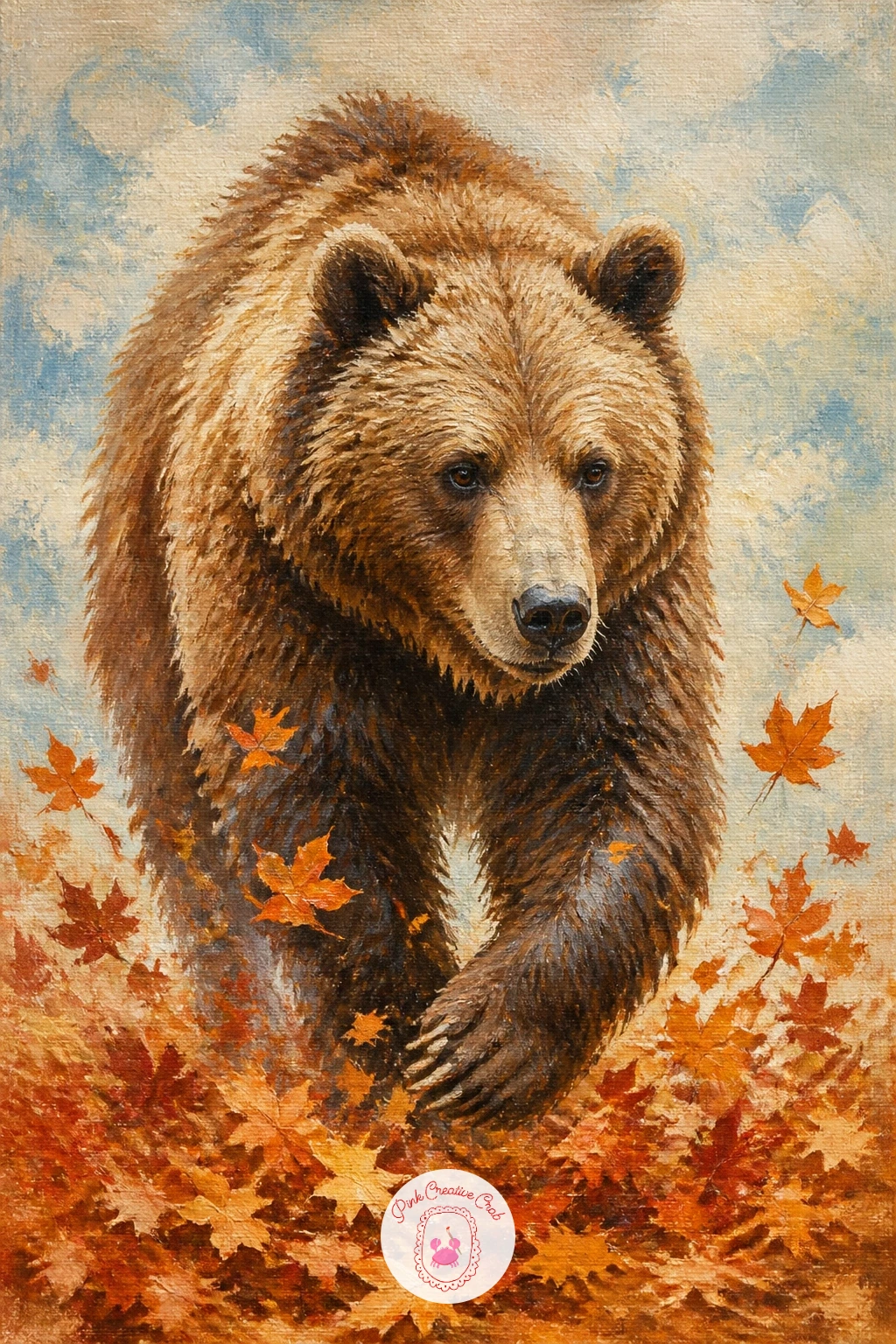
Shift into a seasonal mood with a bear walking through a drift of fallen autumn leaves. Paint the ground first in loose overlapping dabs of orange, gold and deep red before the bear goes in, so the leaves feel like they genuinely scatter around the paws rather than sitting flat beneath them.
Build the bear’s fur in warm browns that echo the leaf colors, letting a few strokes of burnt orange sneak into the coat so the animal feels part of the same warm season rather than pasted on top of it. Keep a few individual leaf shapes crisp in the foreground while the rest blend into looser color for depth.
If the whole scene feels too uniformly orange, add one note of deep green or blue-grey somewhere, a distant tree trunk or a patch of shadow, to give the eye somewhere to rest. The step by step fall painting lessons are worth a look for more ideas on building that layered autumn ground.
Try today: flick a few loose leaves mid-air around the bear’s legs, as if it has just kicked through the pile.
Palette: Burnt Sienna,Gold Ochre,Raw Umber,Deep Red
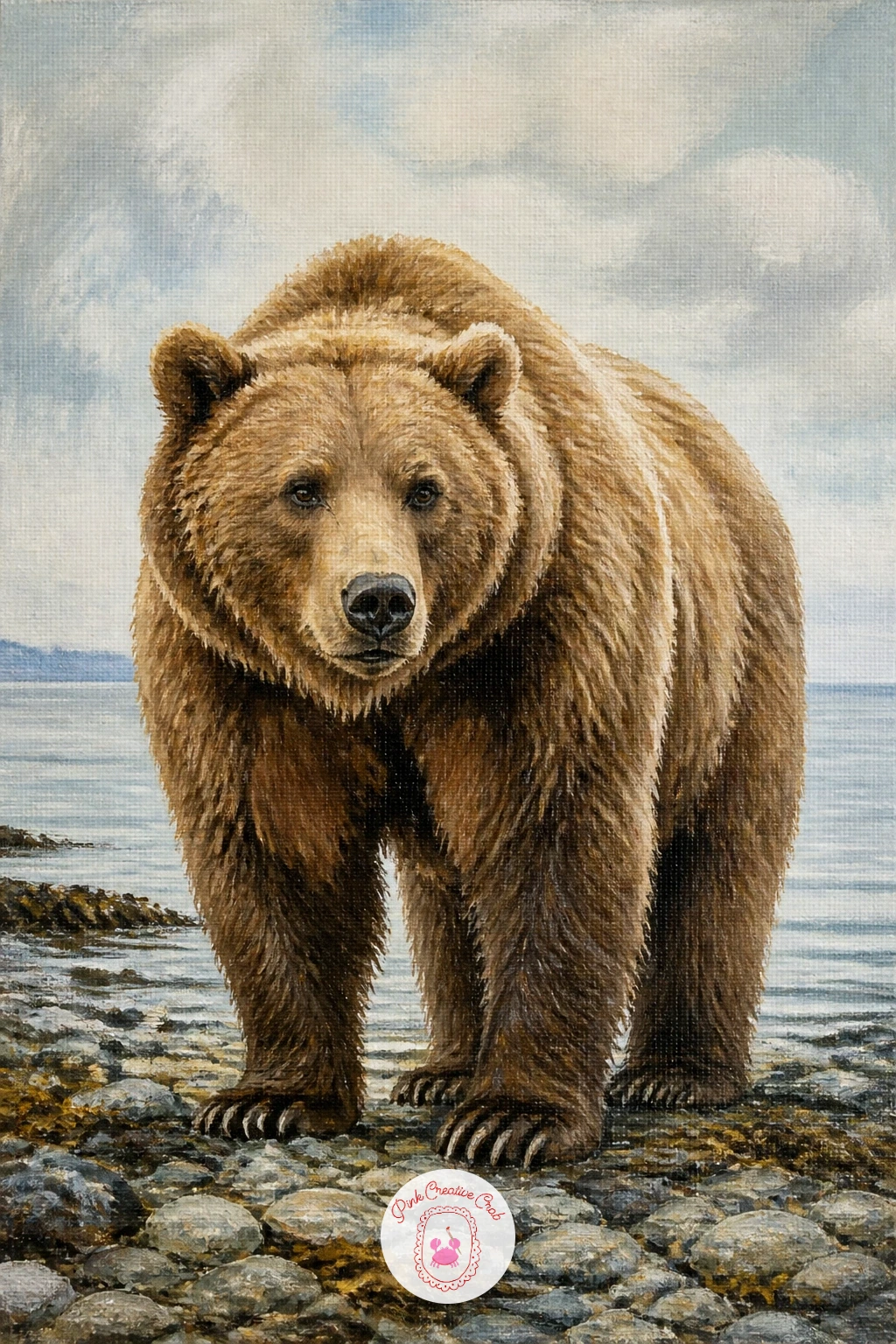
Bring a coastal setting in with a Kodiak bear, one of the largest brown bears, walking along a rocky beach. Keep the horizon low, around a third up the canvas, so the sky and sea take up most of the upper frame and the sheer size of this bear reads clearly against the open space.
Paint the sand and scattered rocks first in cool greys and warm sandy tones, then the sea beyond in soft horizontal blue-grey strokes, before the bear goes in standing solidly on the shoreline. Make the bear noticeably broader through the shoulders and face than the other brown bears on this list, Kodiaks are famously massive, and that extra width is what tells the species apart.
If the scale does not read, place one small recognizable object nearby, a piece of driftwood or a gull, so the viewer has something to compare the bear’s size against. A kneaded eraser works well for lifting a soft highlight back out of the wet sand if you overwork it.
One tip for today: let the bear’s reflection show faintly in a thin strip of wet sand at its feet.
Palette: Raw Umber,Payne’s Grey,Ice Blue,Cream
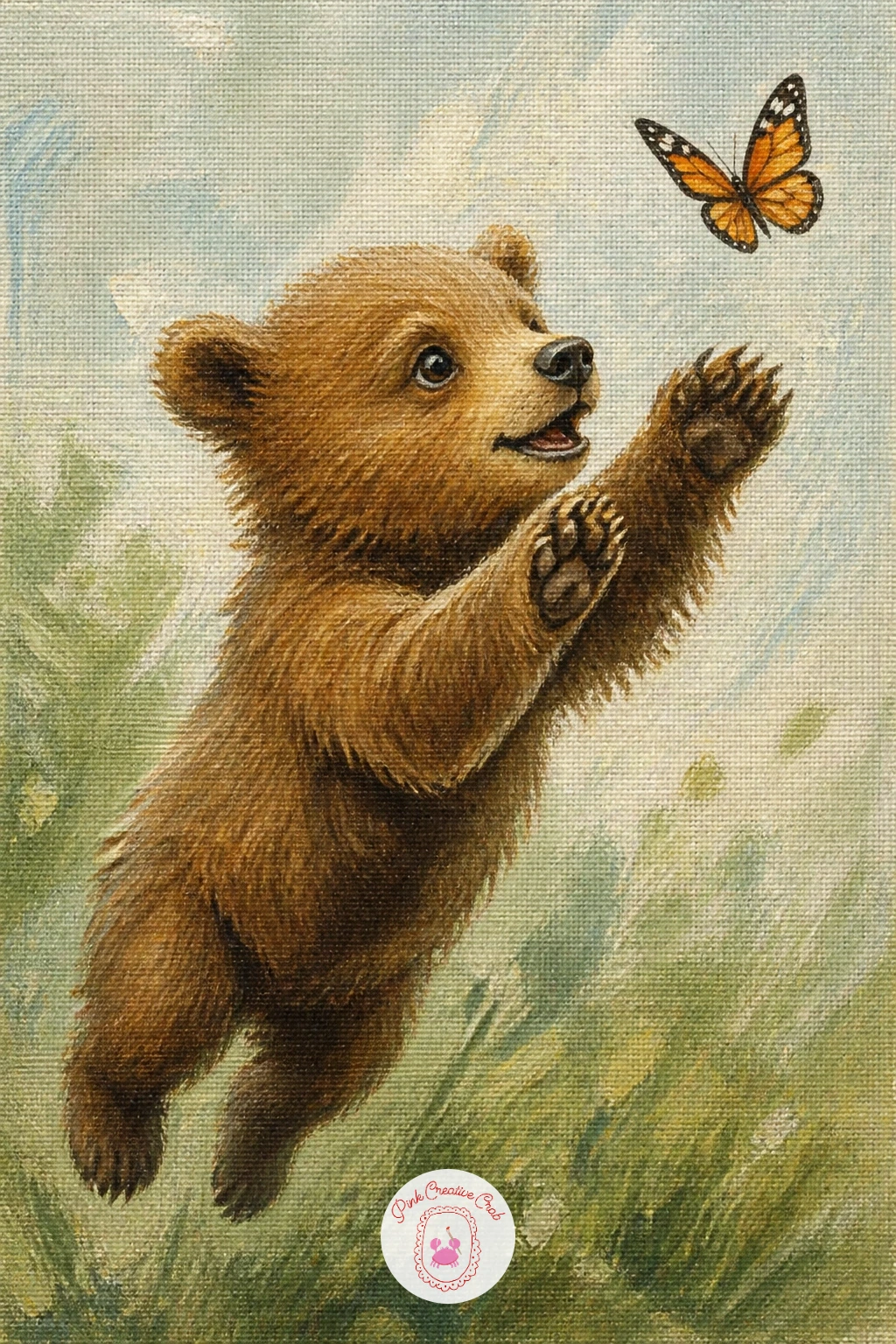
Lighten the mood with a small bear cub leaping after a butterfly, front paws off the ground. Sketch the cub mid-leap first, back legs pushing off and front paws reaching forward and up, with the butterfly placed just out of reach above the raised paw to set up the whole motion of the scene.
Paint the cub’s body in soft rounded strokes with the fur kept light and slightly fluffed along the edges to suggest the bounce of the jump, then add the butterfly last in two or three quick confident strokes of color, it needs almost no detail to read clearly against the simpler cub.
If the leap looks static rather than mid-air, lift the back paws slightly off whatever ground line you have painted and add a soft shadow beneath that does not quite touch the body, the gap between shadow and paws does most of the work. For more small, playful animal poses, the animal doodle painting ideas are a good companion piece to this one.
Try today: paint the butterfly in a color that complements rather than matches the cub’s fur, so it stands out instantly.
Palette: Burnt Sienna,Cream,Sap Green,Soft Pink
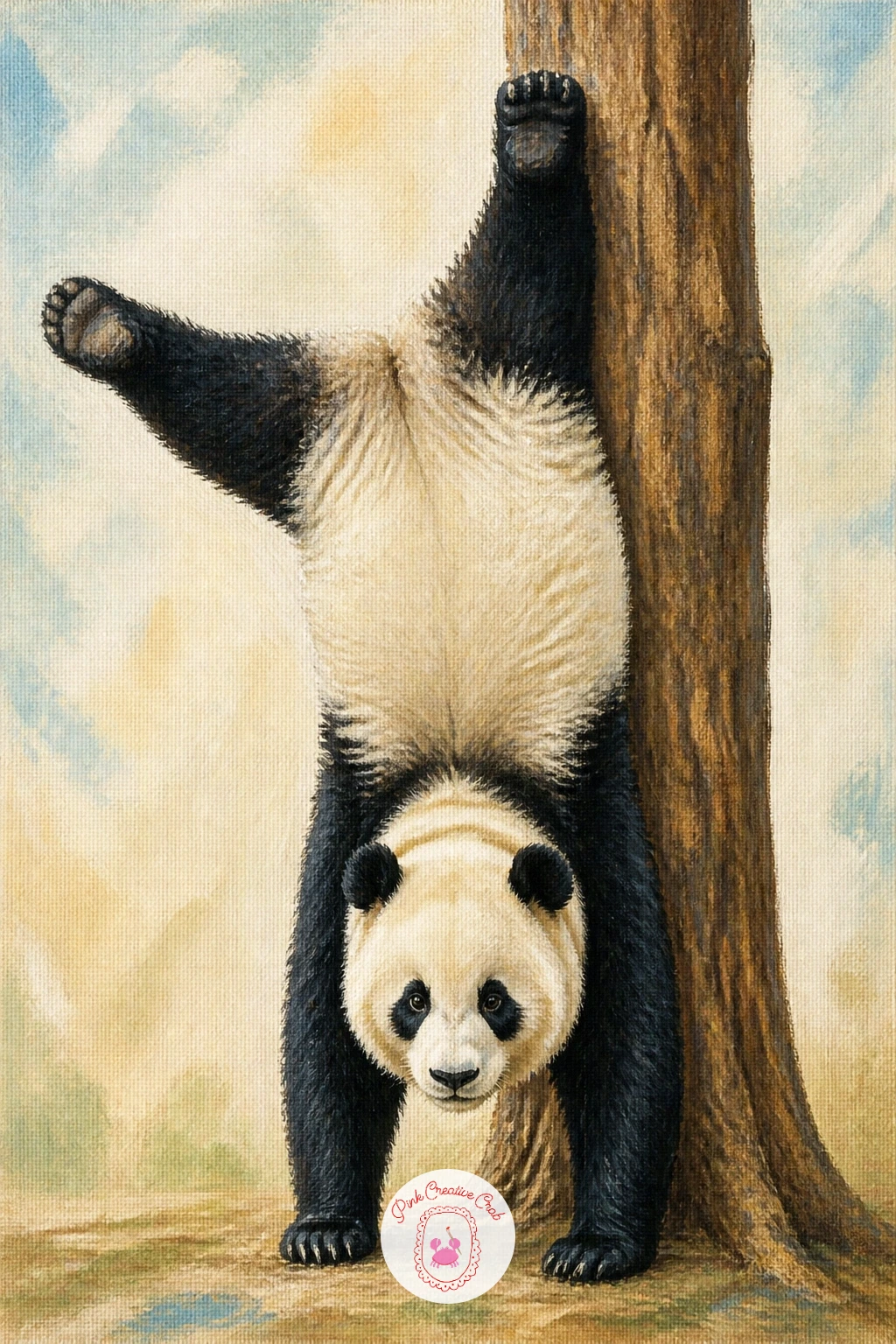
Push the panda series into pure comedy with one doing a handstand against a tree trunk. Sketch the pose first as a strong vertical line from paws to hind feet, with the body slightly curved for balance rather than ruler-straight, a perfectly rigid handstand looks far less convincing than a slightly wobbly one.
Paint the tree trunk the panda leans against first, then build the panda’s inverted body on top, keeping the black and white patches in their usual places even upside down, the familiar eye patches and ear placement are what keeps the joke readable rather than confusing.
If the panda looks like it is simply lying sideways rather than standing on its paws, strengthen the shadow directly beneath the supporting paws on the ground, that small grounded shadow convinces the eye of the balance. No steady hand for the inverted pose, sketch it lightly in pencil first and adjust the balance line before committing any paint.
One tip for today: let one hind leg kick out slightly higher than the other for a sense of real, wobbly effort.
Palette: Carbon Black,Cream,Raw Umber,Pine Green
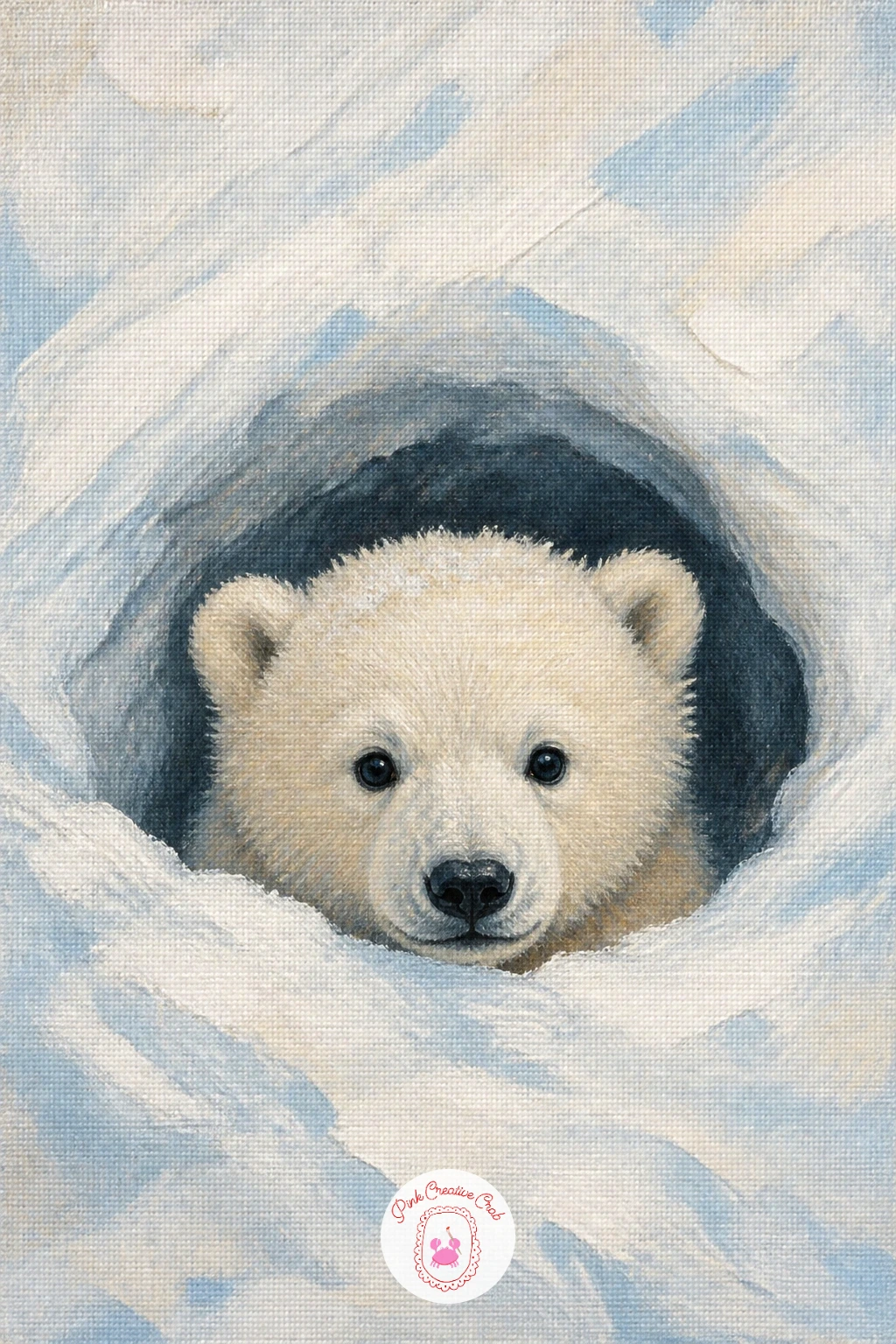
Return to the ice for a gentler moment, a polar bear cub peeking its head out from a snow den entrance. Build the den first as a rounded dark opening cut into a mound of white and pale blue snow, keeping the opening smaller than feels natural, dens are snug, and that tight fit is part of the charm.
Paint just the cub’s head and one paw emerging from the dark opening, using warm cream rather than pure white for the fur here, since the contrast against the dark den interior needs that extra warmth to read clearly. Keep the surrounding snow mound soft and rounded with gentle shadow to suggest its depth.
If the den opening looks flat rather than recessed, deepen the color right at the back of the opening to near-black before the cub’s face goes in, that depth is what makes the peeking pose convincing. No deep blue-black on hand, mix payne’s grey with a touch of black for the same effect.
Try today: leave a single small trail of pawprints leading away from the den in the snow.
Palette: Titanium White,Cream,Payne’s Grey,Ice Blue
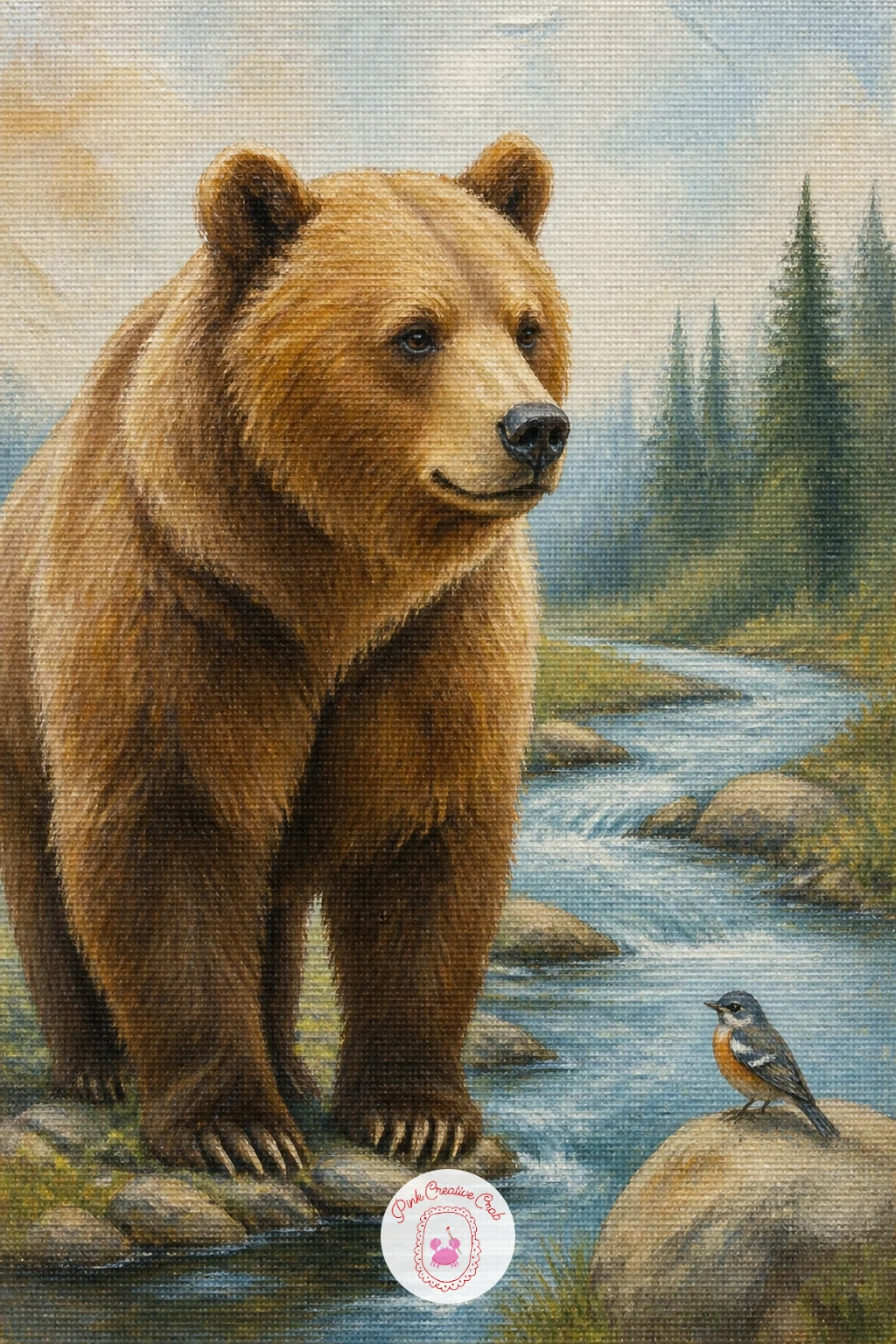
Slow back down with a bear standing quietly by a stream while a small bird perches nearby, a scene about stillness more than action. Place the stream as a gently curving band through the lower canvas, then set the bear a little off-center rather than dead-center, with the bird perched on a nearby rock or branch to give the eye a second, smaller point of interest.
Paint the stream in soft blended blues and greys before either animal, then the bear in calm, settled strokes with its weight clearly grounded. Add the bird last in just a few confident strokes, since it only needs enough detail to read as a bird at a glance, not full plumage.
If the two animals feel disconnected, angle the bear’s head slightly toward the bird, even a small turn of attention links the whole composition together. The gouache painting landscapes ideas cover similar calm water and stream compositions if this scene appeals to you.
One tip for today: keep the bird’s color warm against the stream’s cool blue-grey, the contrast makes it pop without extra detail.
Palette: Raw Umber,Payne’s Grey,Ice Blue,Gold Ochre
Build toward something a little grander with a bear family silhouetted on a ridge at sunrise. Keep the eye level low, looking up at the ridge line, so the family stands out clearly as dark shapes against a glowing sky, this is one scene where silhouette does more work than detailed fur.
Paint the sky first in warm blended bands of gold, pink and pale blue, working wet into wet so the colors merge softly, then let it dry completely before adding the ridge and the bears as flat, confident dark shapes on top. Keep every bear in the family at the same dark value, resist the urge to add fur detail here, the whole appeal of a silhouette scene is simplicity against a complex sky.
If the sky and silhouette fight each other, check that the darkest bear shape still has a touch of warm reflected color along its very top edge where the sunrise catches it. For more layered sky techniques, the gouache landscape painting ideas work well alongside this one.
Try today: paint the ridge line with one confident uneven stroke rather than several careful ones, it reads more natural.
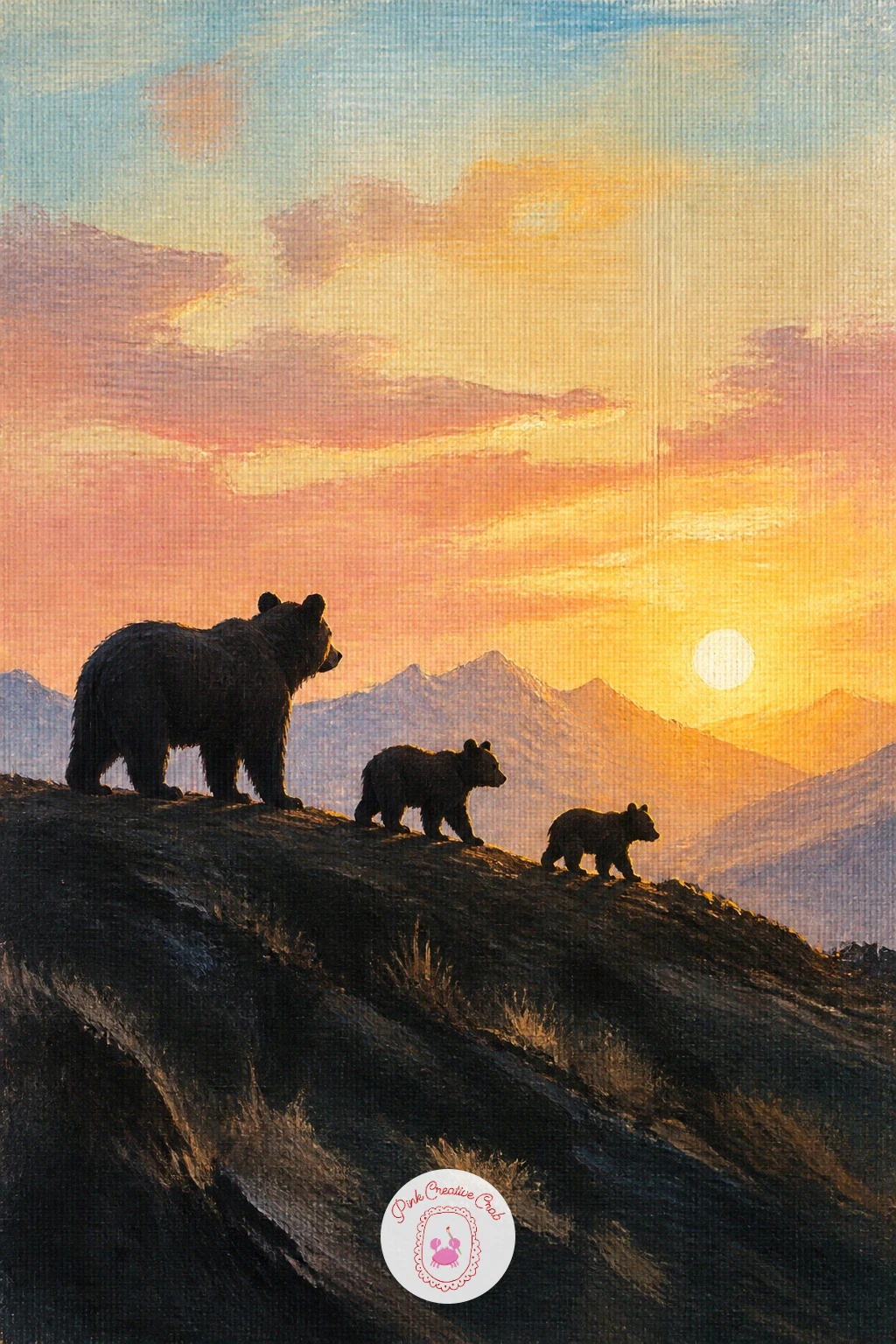
Palette: Gold Ochre,Soft Pink,Payne’s Grey,Carbon Black
Bring the panda story to its warmest point with a mother panda cuddling her cub close against her chest. Build the mother’s body first as the larger, steadier shape, then nestle the cub’s smaller rounded form into the curve of her arms, overlapping the shapes enough that they read as one connected group rather than two bears placed side by side.
Paint the mother’s black and white patches with slightly firmer, more confident edges, and the cub’s with softer, more blended ones, that contrast in edge quality alone suggests the difference in age without any extra detail. Keep both faces turned gently toward each other rather than out at the viewer, for real warmth in the pose.
If the cuddle looks stiff, check the overlap between the two bodies, there should be no gap of background color visible between them at the point of contact. No fine brush for the small cub features, the corner of a slightly larger brush works fine at this scale.
One tip for today: paint the cub’s eyes slightly closed in contentment rather than fully open and alert.
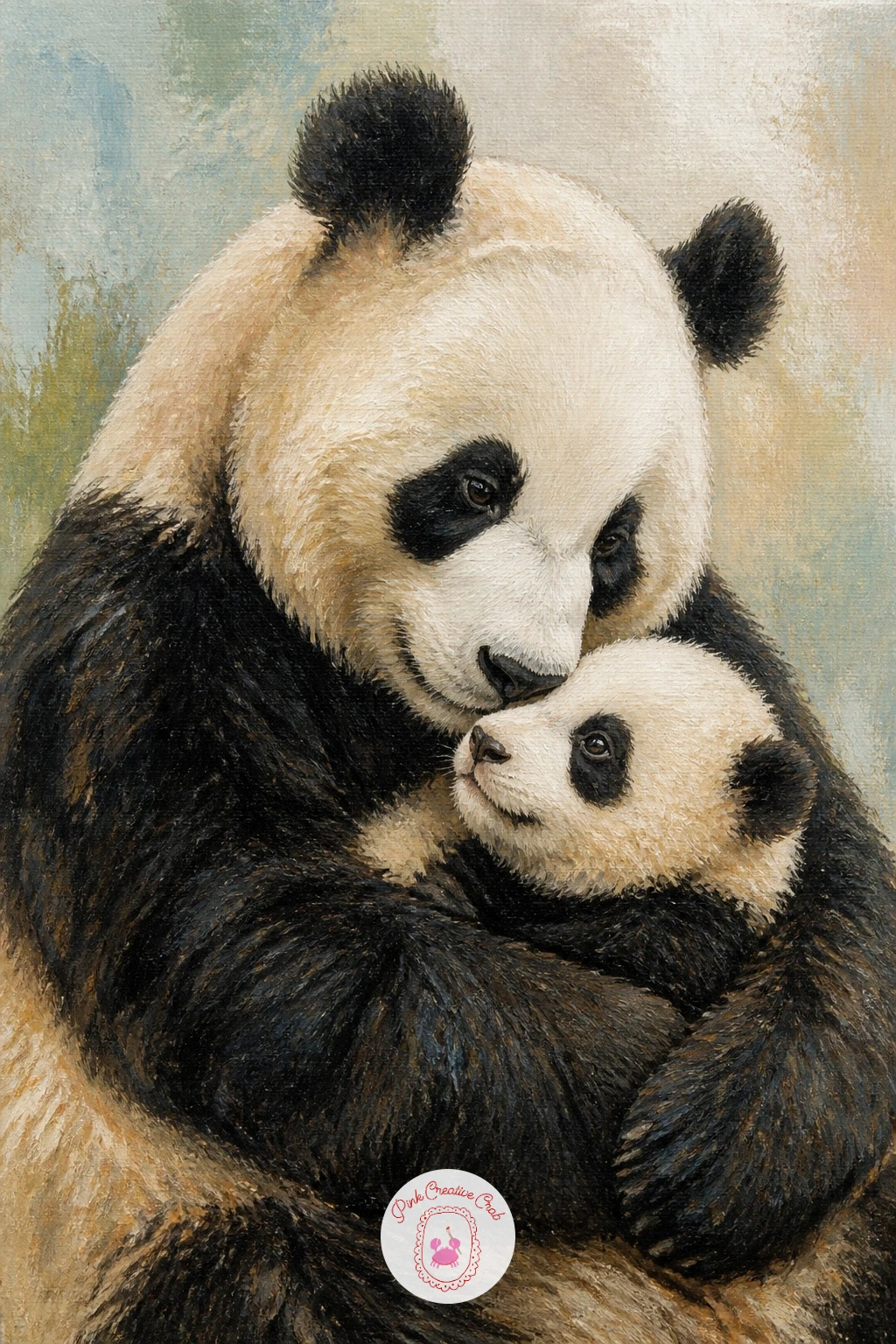
Palette: Carbon Black,Cream,Titanium White,Pine Green
Finish with gentle humor again, a bear sitting upright on a log with its legs crossed almost like a person resting. Place the log as a simple horizontal shape across the lower third of the canvas, then sit the bear on top with its weight settled back and one paw resting casually over a crossed leg, the crossed leg is the single detail that sells the whole joke.
Paint the log first in warm brown and grey, then the bear’s body in relaxed, loosely blended strokes, since a casual sitting pose calls for softer fur than an active one. Keep the shoulders slightly rounded and the head tilted at an easy angle, a bear sitting formally upright loses the comic charm entirely.
If the crossed leg looks anatomically confusing, simplify it, a bear’s leg does not bend quite like a human’s, so keep the crossing loose and overlapping rather than precisely folded. For more character-driven animal scenes with personality, the funny character page ideas share a similar playful spirit.
Try today: give the bear a relaxed, slightly closed-eye expression, it finishes the joke better than an alert one.
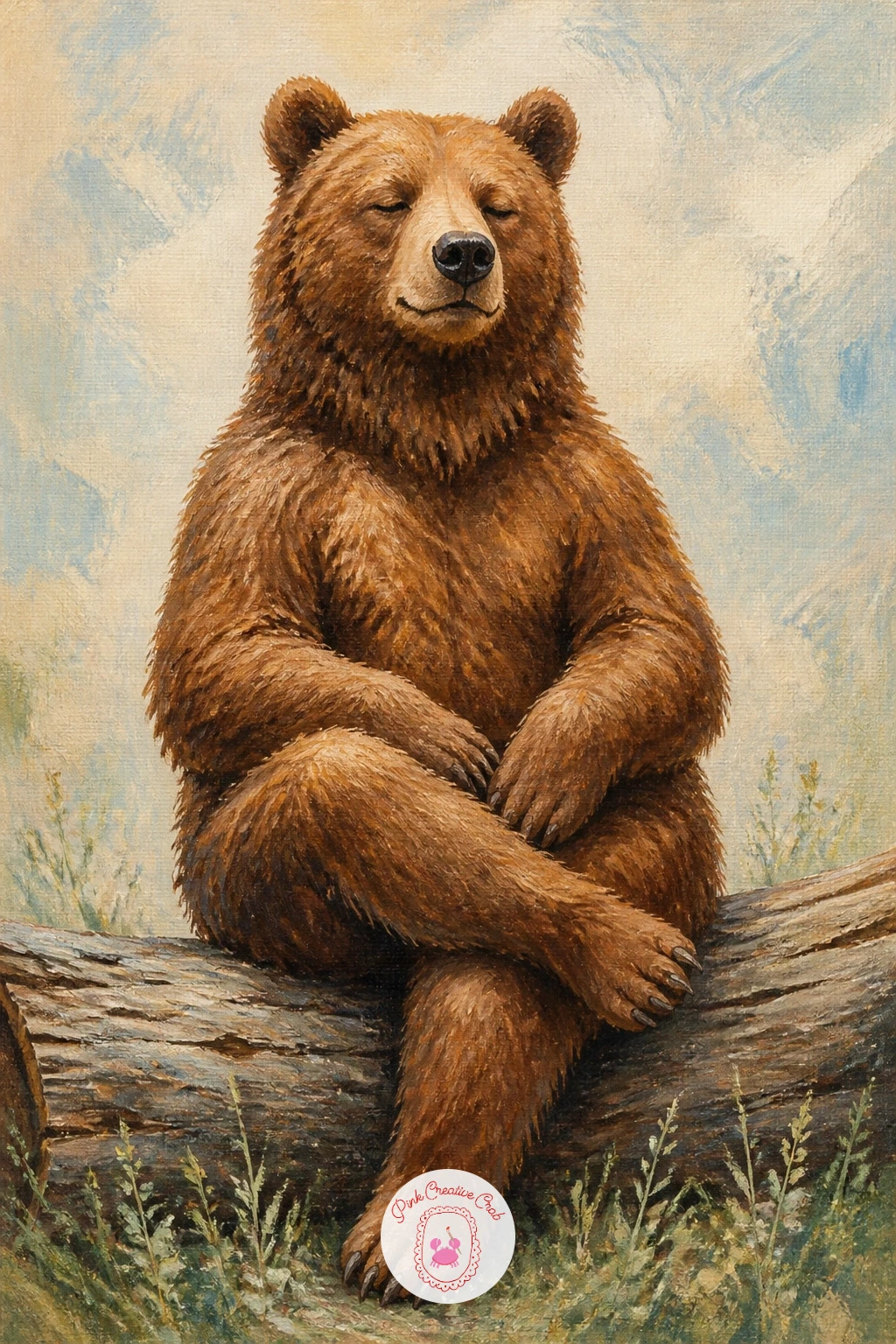
Palette: Raw Umber,Burnt Sienna,Cream,Pine Green
Close the list on a soft, colorful note with a bear standing among tall purple and blue lupin spikes. Paint the lupins first across the whole background in layered vertical strokes, blues and purples toward the back and a few pinker spikes toward the front, before the bear goes in standing among them.
Build the bear’s fur in warm brown tones that sit comfortably against all that cool purple, and let a few lupin spikes overlap the very front of the bear’s legs once the fur is dry, so the flowers feel like they truly surround the animal rather than sitting flat behind it. Keep the tallest spikes loose and slightly blurred near the top for a natural meadow feel.
If the lupins end up competing with the bear for attention, keep the ones directly around the head simpler and less detailed than those at the edges of the canvas, framing without crowding. The acrylic flower painting ideas cover this layered spike technique in more depth if lupins become a favorite.
One tip for today: finish with a single bee or two near the lupin spikes, it adds life without any extra complexity.
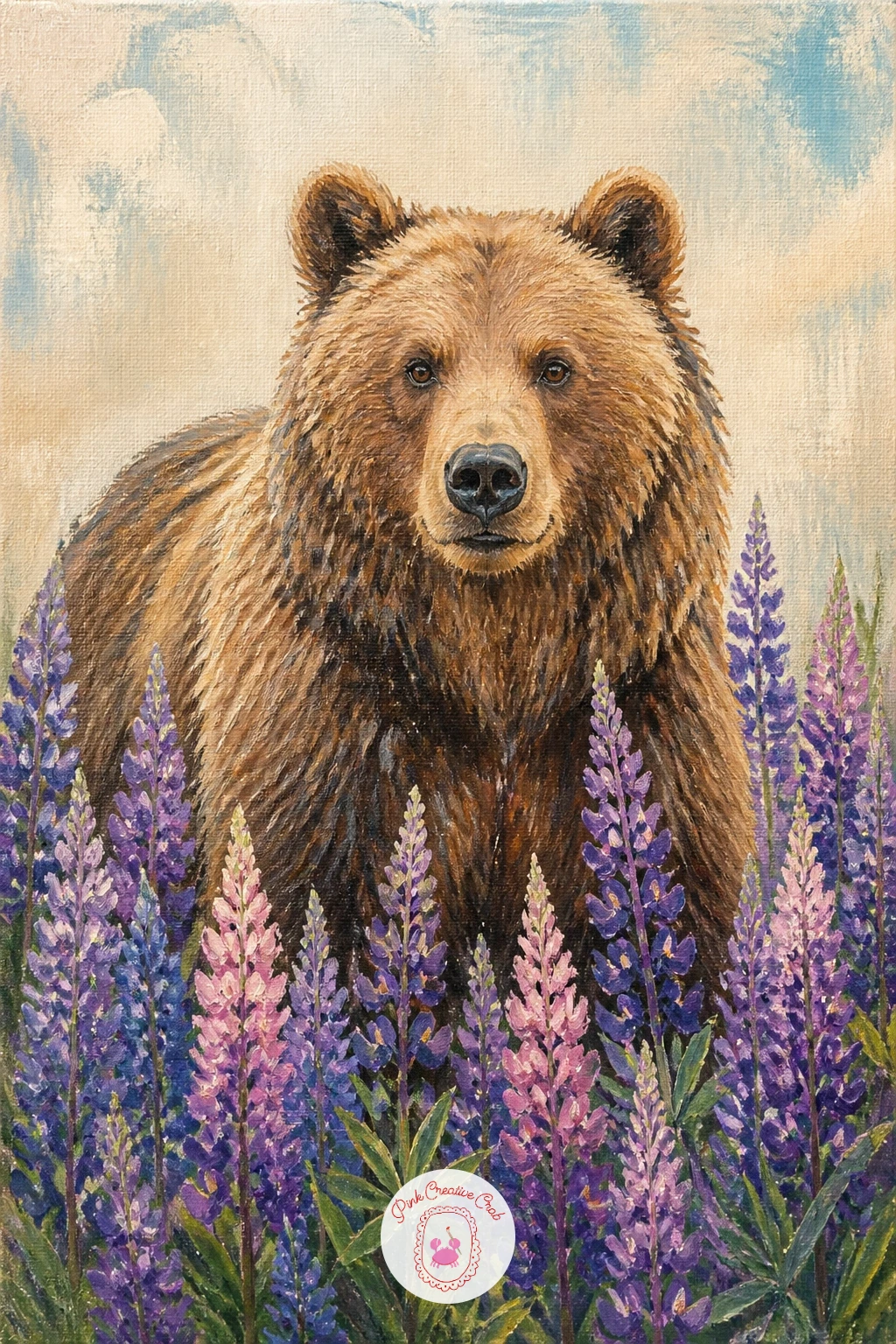
Palette: Dioxazine Purple,Soft Pink,Raw Umber,Sap Green
What to Do Next
Pick one bear that makes you smile, whether it is a sleepy panda cub or a polar bear rolling in the snow, and set up a canvas board with your usual acrylic palette close at hand. Block in the background first, let it dry, then build the fur in loose, dry-brushed layers, and you will have a finished painting by the end of the sitting.
Frequently Asked Questions
What paint works best for a bear painting with soft, realistic fur?
Acrylic paint works best, since it dries fast enough to layer dry-brush fur strokes within minutes. Build light, semi-dry layers over a darker base coat rather than one thick layer, and keep a damp brush nearby to soften any hard edges while the paint is still workable.
How do you paint fur texture without it looking flat?
Use a dry, barely loaded flat or fan brush and drag short strokes in the direction the fur grows, rather than filling the shape in solidly. Layer two or three fur tones, a base, a shadow and a highlight, so the coat has depth instead of one flat color.
What size canvas suits a beginner bear painting?
A square canvas around twelve by twelve inches or a rectangle around eleven by fourteen inches works well, since it keeps the bear large in the frame without an overwhelming amount of background to fill. Smaller canvases also finish faster in one sitting.
How do you keep a panda’s black and white fur from looking like a cartoon?
Soften the edges between the black and white patches with a slightly damp brush instead of painting a hard outline. Adding gentle warm grey shadow where the two colors meet rounds the face and body out and reads far more like real fur.
What is the easiest bear pose to start with as a beginner?
A single standing or sitting bear facing mostly forward, like a cub on an ice floe or asleep on a branch, is easiest, since the pose has no tricky foreshortening. Save action poses like swimming or climbing for after a few calmer ones feel comfortable.
Have any thoughts?
Share your reaction or leave a quick response — we’d love to hear what you think!
-
 0
-
0
-
0
-
0
-
0
-
0


