These kids drawing ideas turn ordinary paper into a whole day of fun, one cheerful animal at a time. Every page here is one friendly character doing something silly and happy, drawn with big round shapes that are easy to copy and even easier to color in.
Grab some markers or crayons and pick whichever animal looks the most fun right now. Below you will find a lion at the beach, a mouse floating in a hot air balloon, a crab building a sandcastle, and two dozen more, each one finished in a single sitting.
Using these images: free for personal projects such as printing, coloring, cards, journals and gifts. Handmade items that include them may be sold up to 30 pieces per design. More than that is commercial use and is not permitted, and neither is selling or sharing the images themselves or passing them off as your own. Please ask before any other use.
Start the lion with one big circle for the head and a wavy ring of triangle shapes around it for the mane. The body is a smaller oval sitting just below, with two little oval feet poking out so he looks like he is lounging on the sand.
Draw a round snout in the middle of the face, two dot eyes above it, and a small triangle nose. If this is a first try at a lion, skip the mane triangles and just draw soft bumps instead, they are far easier for small hands and look just as good once colored in.
Give him round beach ball stripes beside him and a few wavy blue lines for the sea behind. Color the mane orange or yellow and the sand a warm tan, then outline everything last in black marker so the whole scene pops off the page.
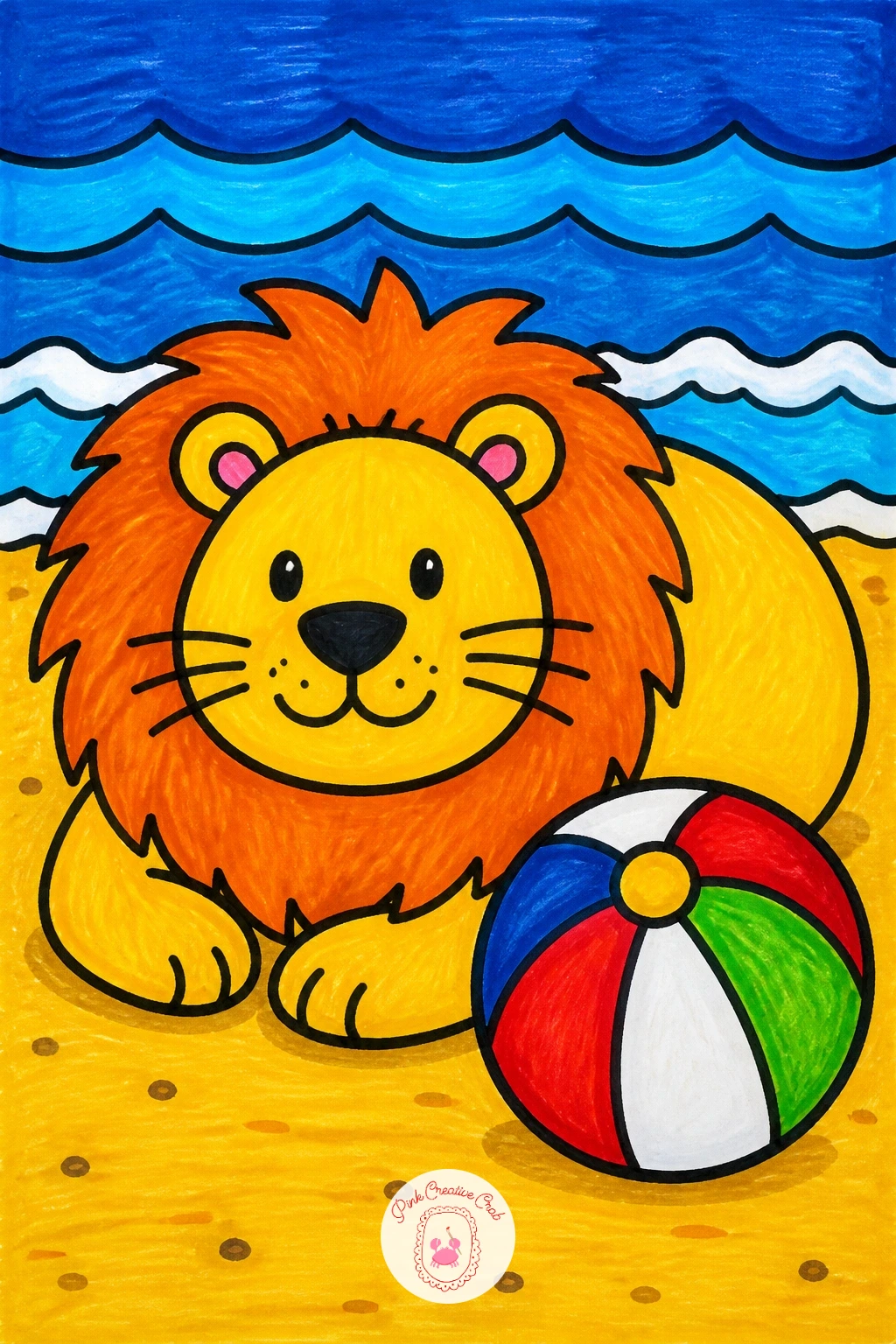
Palette: Golden Yellow,Burnt Orange,Sandy Tan,Sky Blue
After the lion, try an elephant swinging through the air, since both start from one big rounded body shape. Draw a big oval for the body, a round head attached to one side, and a long curved trunk hanging down with a little curl at the tip.
Add two big floppy ears like half circles, four thick leg shapes, and two ropes going up from the body to a straight branch at the top of the page. This is where the eye level matters: draw the branch high and the swing ropes long so the elephant really looks like it is lifting off the ground, not just standing under a tree.
Color the elephant soft grey or light purple, which looks more fun than plain grey for a swing scene. Keep the ropes brown and the branch a simple green blob of leaves, then trace every shape in thick black marker to finish.
Draw the swing seat as a flat rectangle so it reads clearly even from far away on the page.
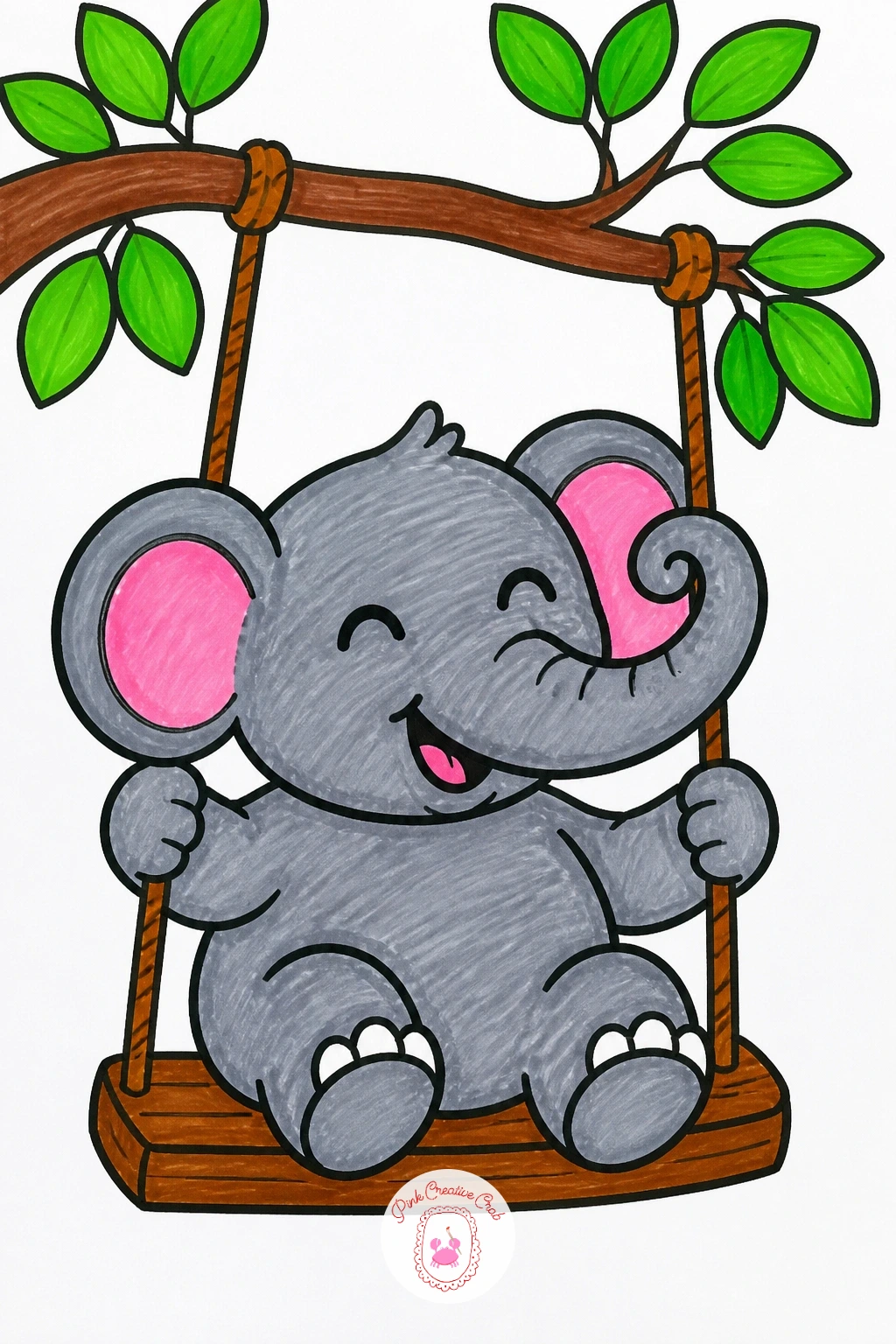
Palette: Soft Lavender Grey,Chestnut Brown,Leaf Green,Sky Blue
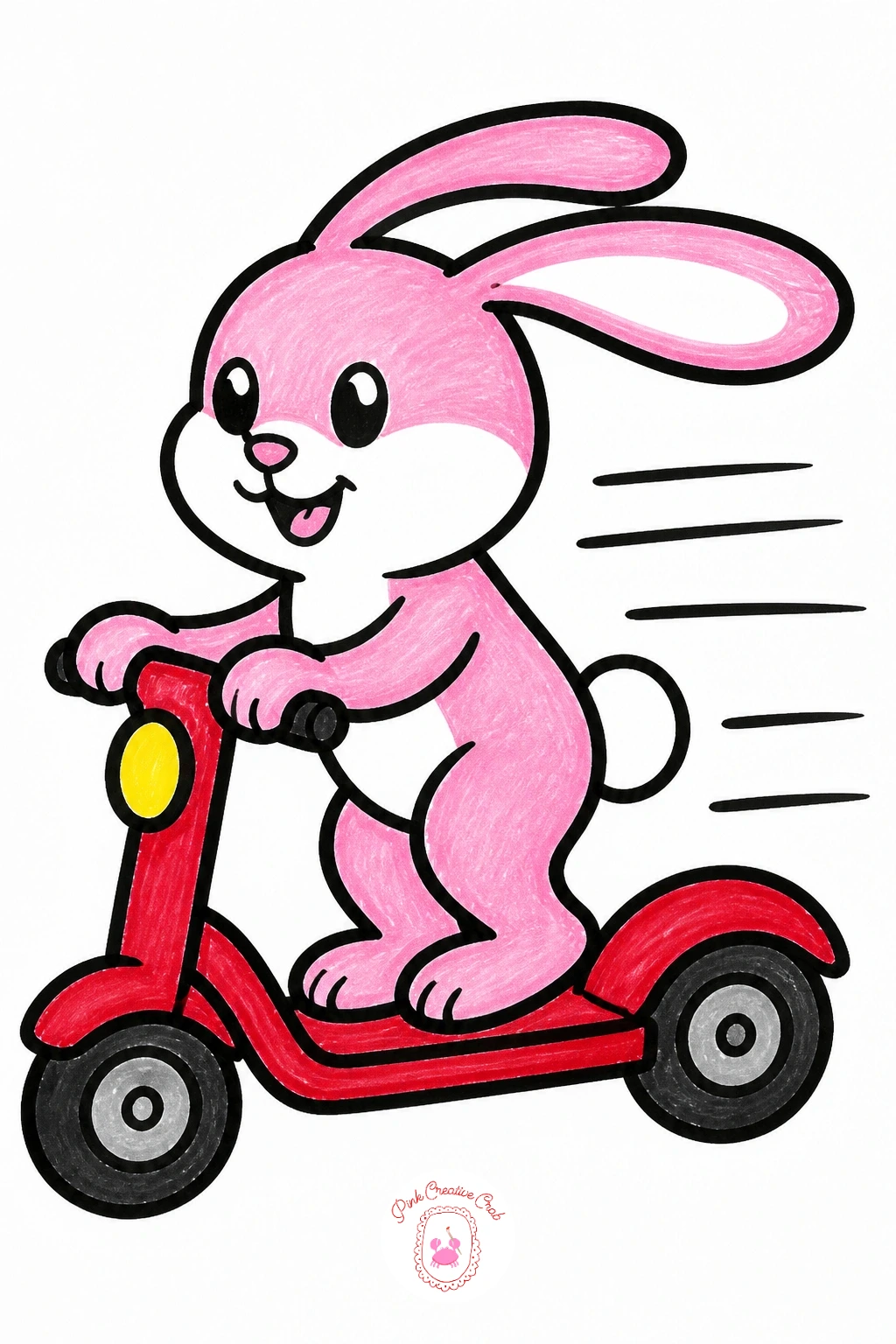
Move from a big heavy animal to a small speedy one with a bunny riding a scooter. Draw an oval body standing upright, a round head with two tall oval ears, and two little paws gripping a straight scooter handle.
The scooter itself is just a thin line for the deck and two small circles for wheels, so it is one of the simplest vehicles in this whole list to copy. If the wheels look wobbly, that is fine, a slightly uneven circle still reads perfectly well as a wheel once it is colored in and outlined.
Color the bunny white or soft pink with a pink nose and inner ears, and make the scooter a bright color like red or blue so it stands out against the bunny. Finish with a few speed lines behind the back wheel to show motion, then outline everything in black.
Palette: Soft Pink,White,Cherry Red,Sky Blue
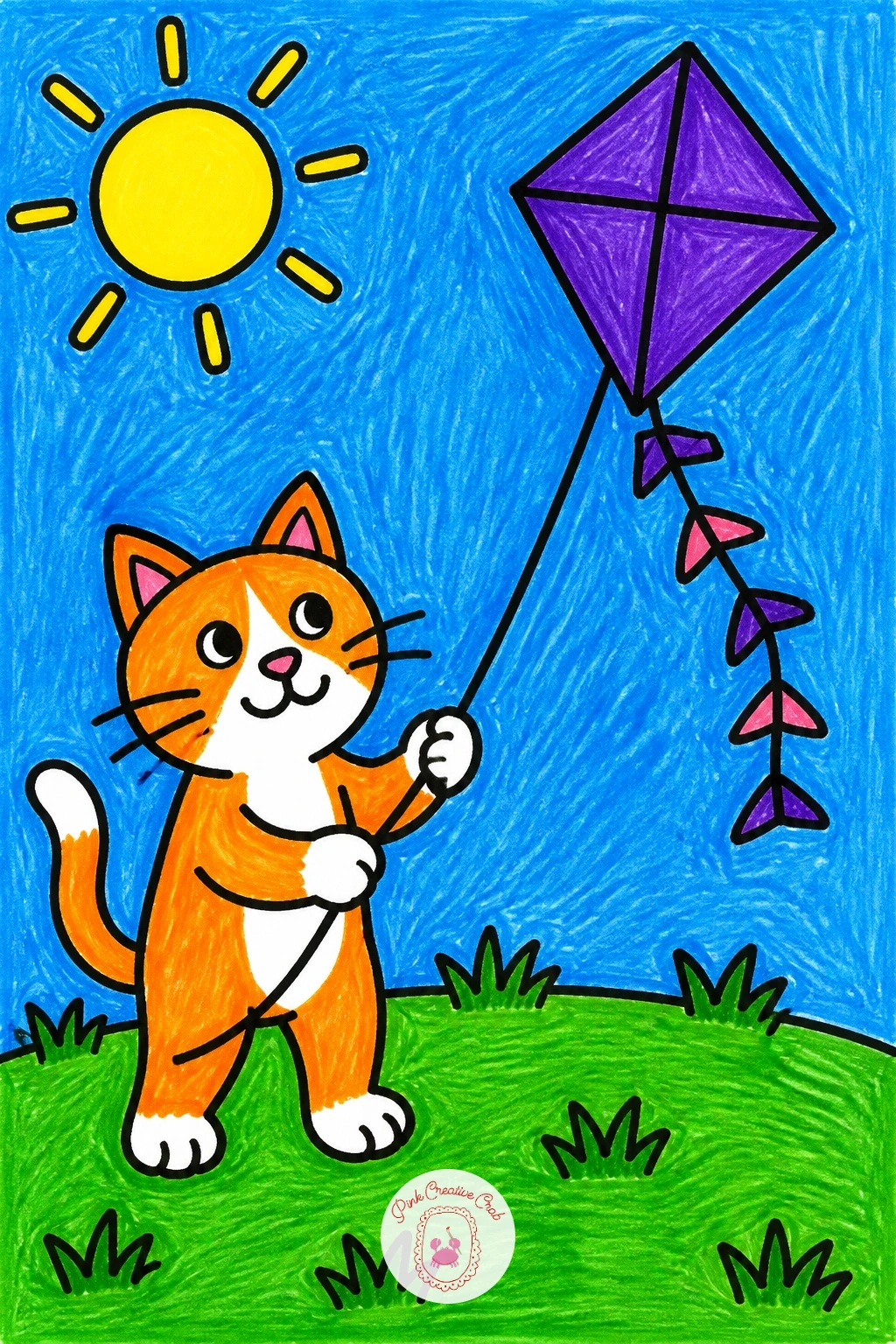
Give the cat a big triangle-eared head, a round body, and two straight front legs holding a long string up into the sky. The trick with any flying scene is to think about where the light comes from, since a sun drawn in one corner tells the viewer which way the shadows and the kite string should lean.
Draw the kite itself as a simple diamond shape high above the cat, with a few short triangle flags along its tail for extra fun. Keep the string one smooth curved line connecting the cat’s paw all the way up to the kite, since a shaky string is the easiest part of this drawing to get wrong.
Color the cat orange with white patches, and make the kite a totally different bright color like purple or yellow so it is easy to spot against a pale blue sky. A round yellow sun with a few short line rays in the corner finishes the scene.
Palette: Tangerine Orange,White,Royal Purple,Sky Blue
Draw the sun first in a corner before anything else, then let every shadow and the kite’s lean point away from it so the whole scene feels windy and bright.
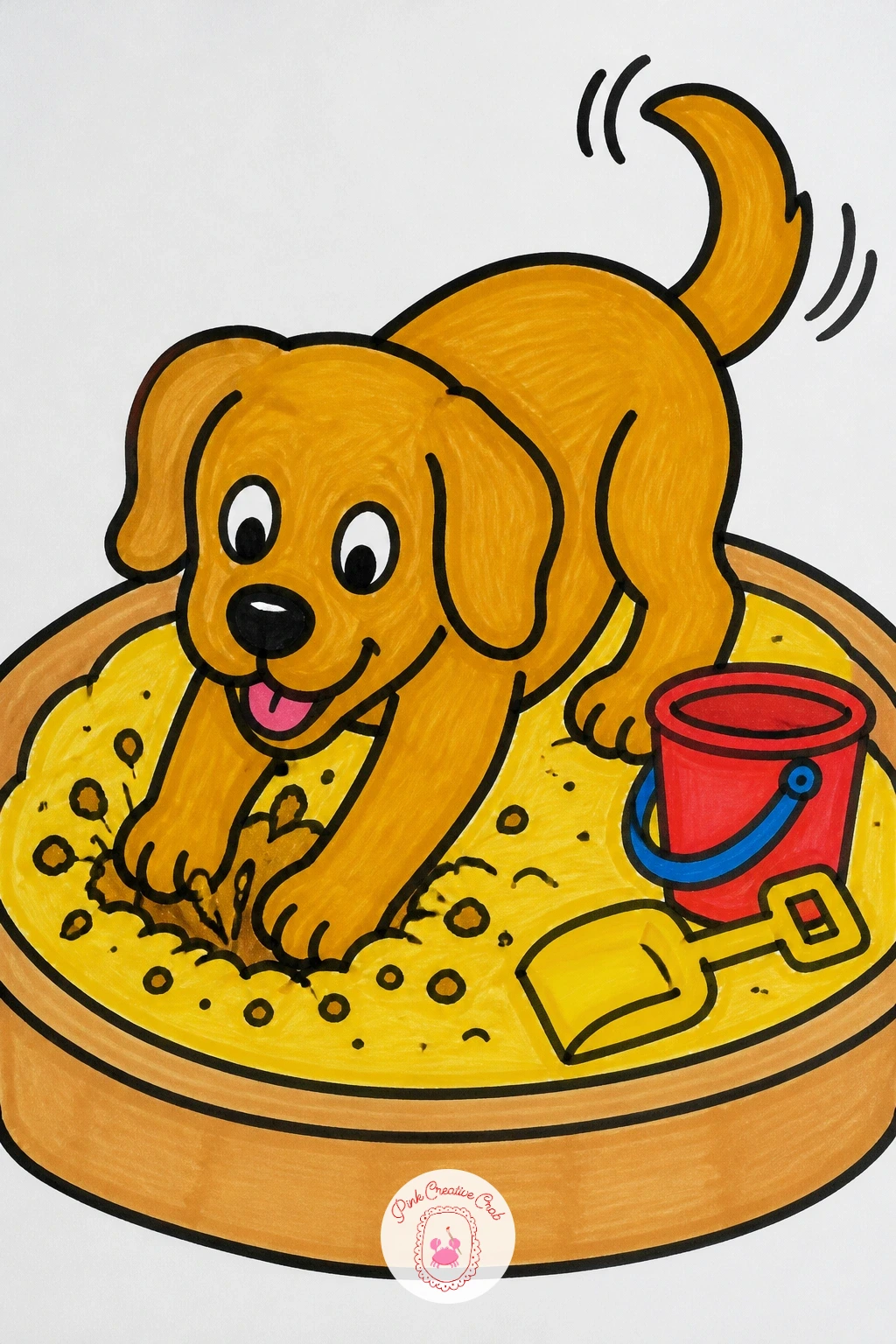
Give the dog a round head with two floppy ear shapes, a rounded body, and four short paw shapes dug right into a pile of sand. Draw the sandpit first as one big wide oval outline on the page so the dog has somewhere to sit before any other lines go down.
One hands on trick makes this scene feel textured without any real detail: once the sand oval is colored tan, dab a dry brush or the flat edge of a crayon lightly across the top to leave soft scratchy marks that read as sand grains. A cotton swab works too if there is no dry brush handy.
Add a little red bucket and a yellow shovel sticking out of the sand beside the dog’s paw, then color the dog brown or golden with a wagging tail curved up behind it. Outline the whole scene last so every shape stands out clearly.
You Will Need
- dry brush or cotton swab for sand texture
Palette: Golden Brown,Sandy Tan,Cherry Red,Sunny Yellow
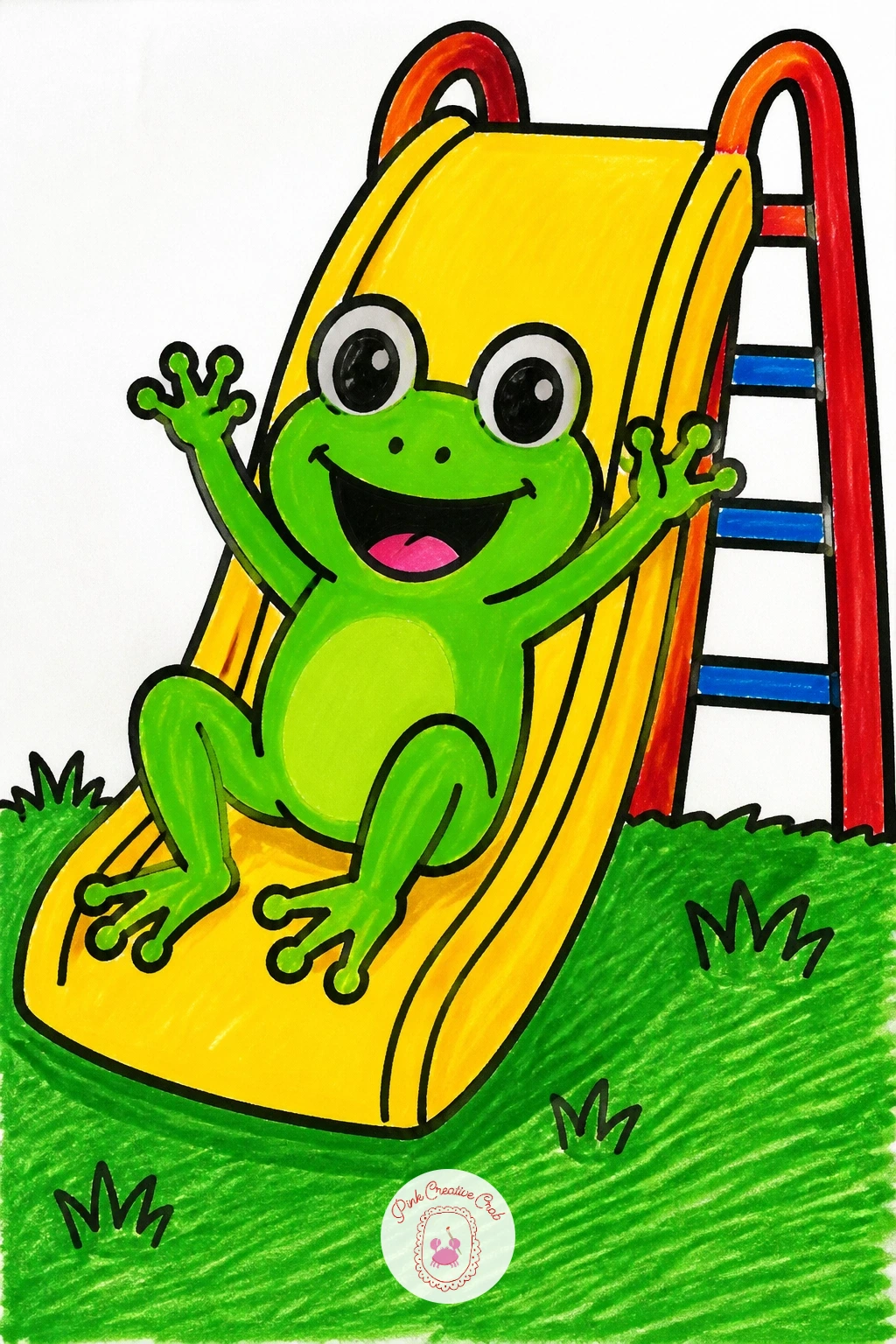
Draw the frog’s body as one wide rounded shape with two big bulging circle eyes on top and two long bent back legs tucked underneath. The frog sits at the top of a slide, which is simply two long parallel curved lines forming one smooth ramp down to the ground.
Keep the quick version to ten minutes by drawing just the frog, the slide and a small patch of grass, done as soon as the outlines are colored in. For a forty minute version, add a little ladder with three rungs on the back of the slide and a puddle splash shape at the bottom where the frog is about to land.
Color the frog bright green with a lighter green belly, and make the slide a cheerful red or yellow so it stands out from the grass. A swap works well here too: if green marker is not handy, a frog colored blue or purple still looks fun and friendly.
Palette: Grass Green,Lime Green,Sunny Yellow,Sky Blue
Start the bear with a round head, two small round ears, and a wide rounded body sitting down. One paw holds an ice cream cone up near the mouth, drawn as a simple triangle cone topped with one or two round scoops.
If this is a first attempt at drawing a paw holding something, keep it simple: just a rounded oval shape wrapped around the base of the cone, no fingers needed. That reads clearly as a paw holding a treat without any fiddly detail.
Color the bear warm brown and the ice cream scoops pink and white, with a few small drips drawn as tiny triangle shapes falling from the cone. A bright red cherry on top is an easy final touch that makes the whole drawing feel extra cheerful.
Outline the cone and scoops in black last so they stand out clearly against the bear’s brown fur.
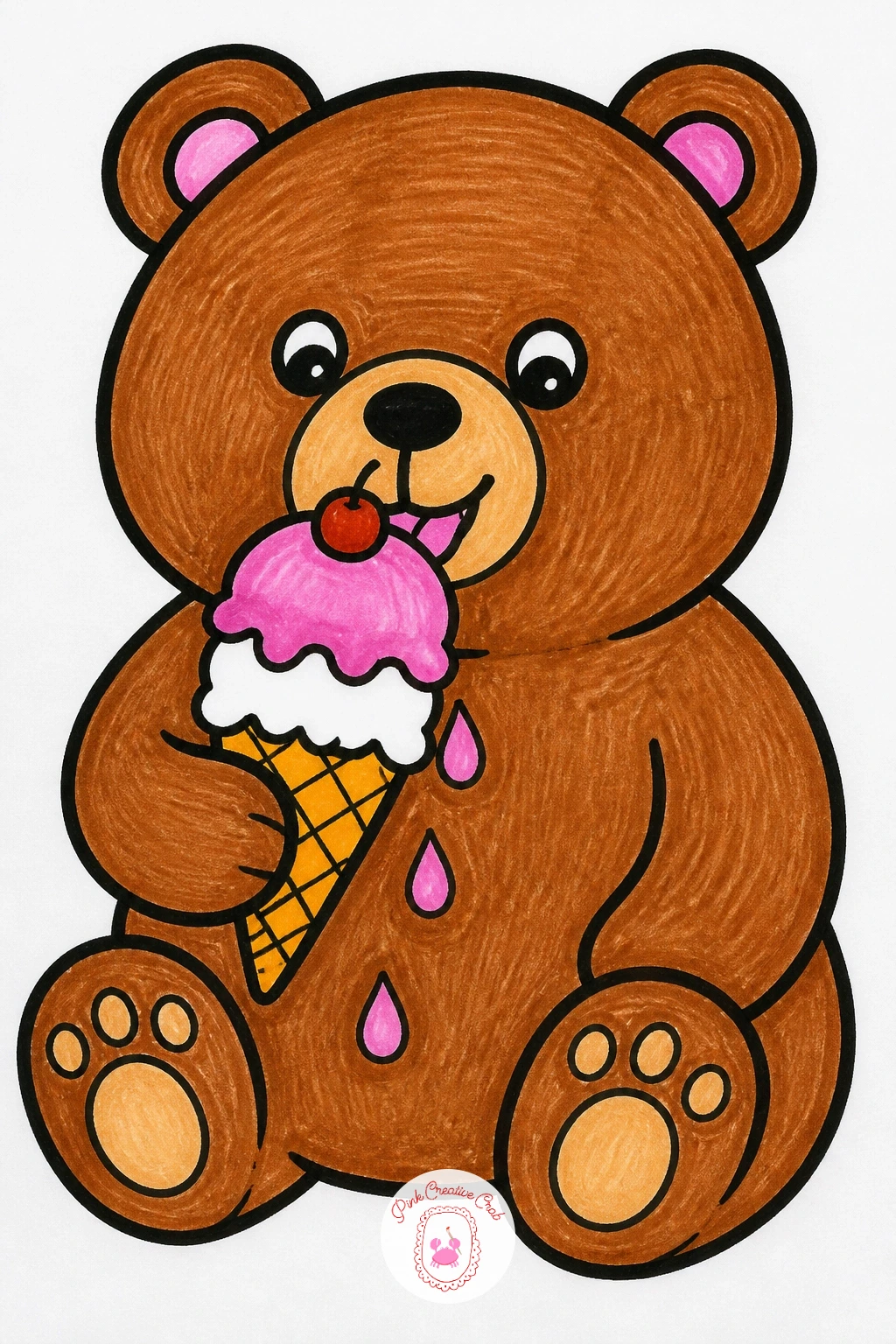
Palette: Chestnut Brown,Soft Pink,White,Cherry Red
Give the pig a round pink body, a small round snout poking forward, two triangle ears, and four short legs splashing in a puddle below. Draw the puddle first as one flat oval of blue right under the pig’s feet, so the splash shapes have somewhere to attach.
Add a few curved splash lines flicking up from each side of the puddle to show the pig jumping right into the middle of it. Curling the tail into a tight little spiral is the one detail that instantly makes a pig recognizable, so take a moment to get that spiral nice and round.
Color the pig bright pink with a slightly darker pink for the snout and ears, and make the puddle a cheerful blue with white splash marks left uncolored so they pop against it. If pink marker is not available, a light orange pig works just as well and still looks happy.
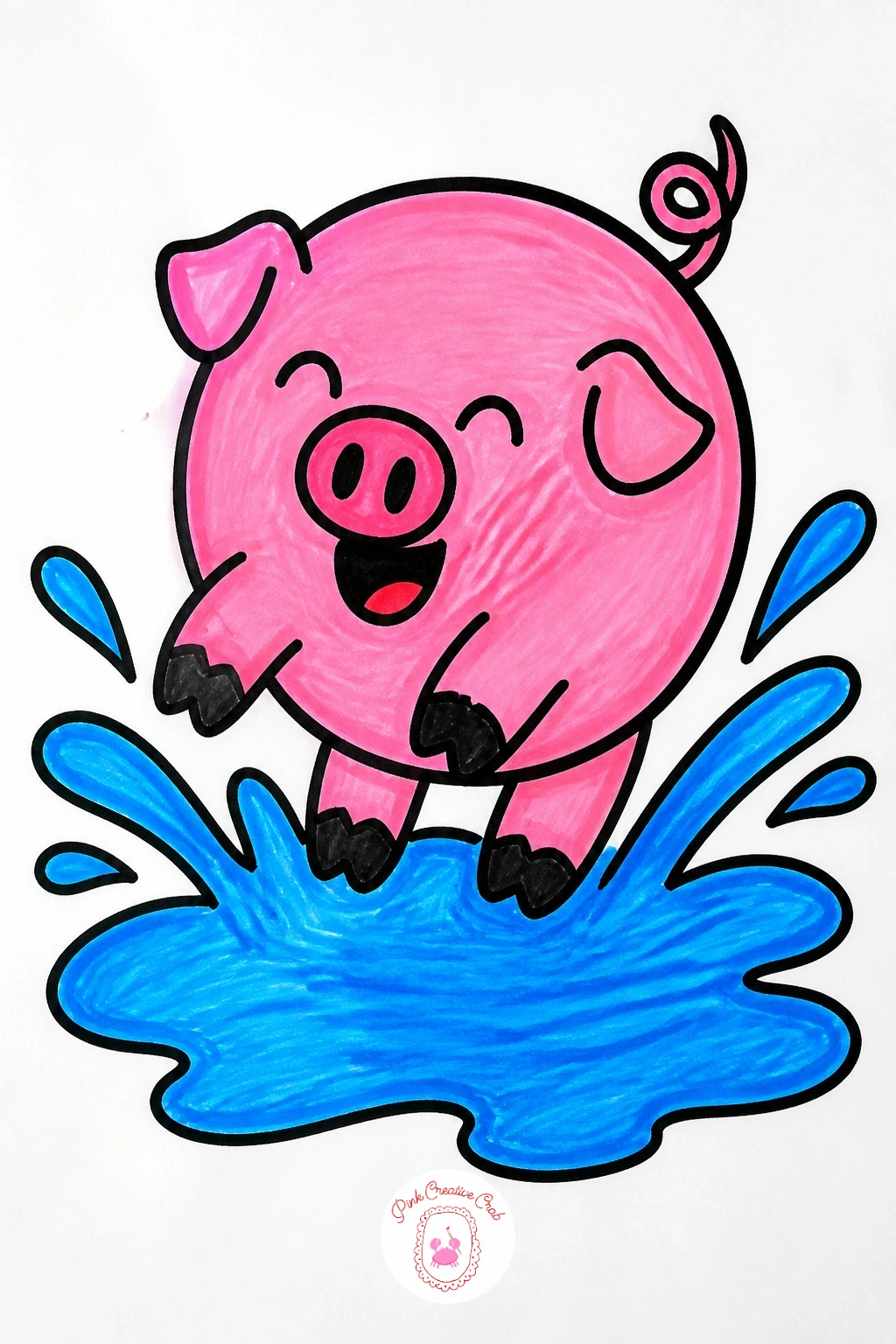
Palette: Bubblegum Pink,Rose Pink,Puddle Blue,White
Draw the duck’s body as a soft rounded oval sitting inside a simple curved boat shape, which looks like a wide smile with the points turned up at both ends. The duck’s head pokes up above the boat’s edge with a round bill and one dot eye.
Keep the eye level low for this one, right at the waterline, so the boat sits half in and half out of a few wavy blue lines for the water. That small choice makes the boat look like it is floating rather than sitting on top of flat ground.
Color the duck yellow with an orange bill, and make the little boat a bright red or blue so it stands apart from the water around it. Add a tiny flag shape on a thin stick at the front of the boat for one extra cheerful detail, then outline everything in black.
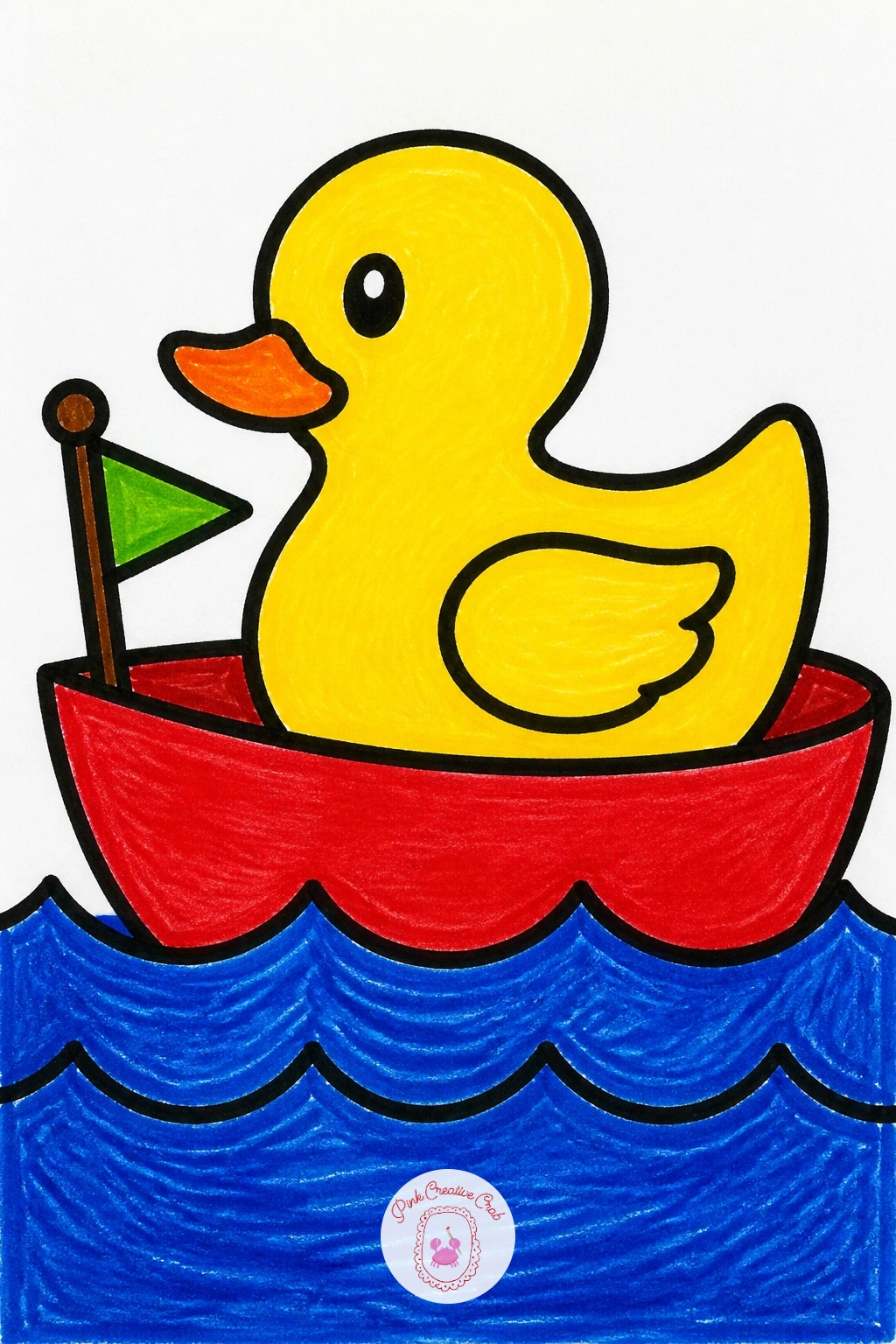
Palette: Sunny Yellow,Tangerine Orange,Cherry Red,Puddle Blue
Build the monkey from a round head, big round ears, and an oval body leaning forward over a simple bike shape. The bike itself is just two circles for wheels connected by a few straight lines for the frame, handlebars and seat, which makes it an easy vehicle for a first try.
Compare the two wheel circles side by side before drawing anything else between them, keeping them the same size, since mismatched wheels are the most common slip up in any bike drawing. Draw both circles lightly first, check they match, then add the frame lines connecting them.
Give the monkey a long curved tail trailing behind for balance and a big open mouth smile to show how much fun this ride is. Color the monkey brown with a lighter tan belly and face patch, and make the bike a bold color like red so the whole scene feels fast and cheerful.
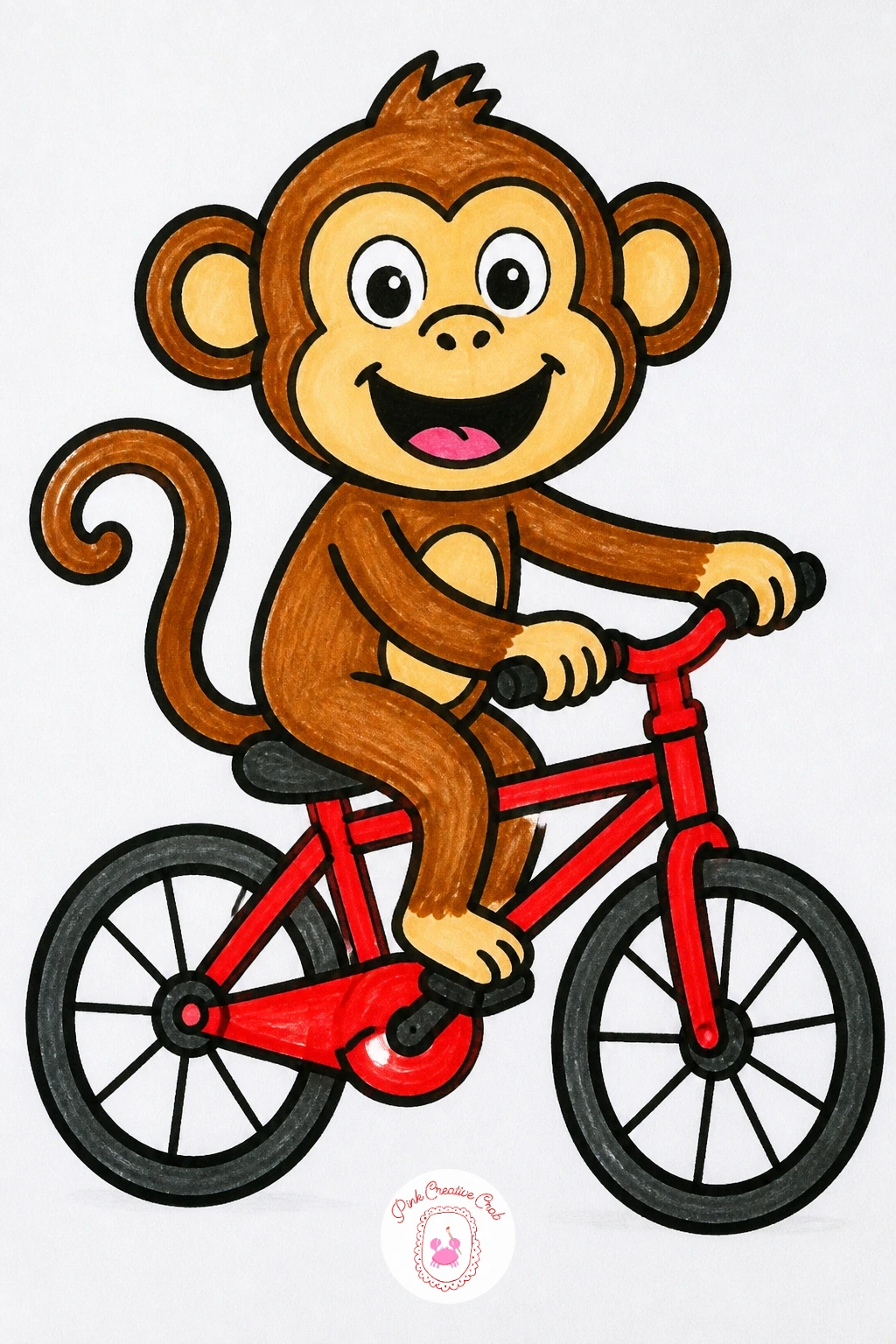
Palette: Chestnut Brown,Warm Tan,Cherry Red,Charcoal Grey
Sketch the giraffe’s long neck first as two slightly curved parallel lines rising up from a rounded body, topped with a small head and two short knobby horns. Giraffes take a little more patience with proportion than the other animals here, so it helps to make the neck about as long as the whole body underneath it before adding any patches.
Draw a checkered picnic blanket below as a simple square with a few crossing lines, and place a small round basket and a slice of watermelon on top. The giraffe’s long neck lets it reach right down to the blanket, which is the fun part of this whole scene.
Color the giraffe’s body pale yellow and add a scatter of brown oval patches across the neck and body once the outline is dry. Make the blanket red and white checked and the watermelon slice bright pink and green, then finish with black outlines over every shape.
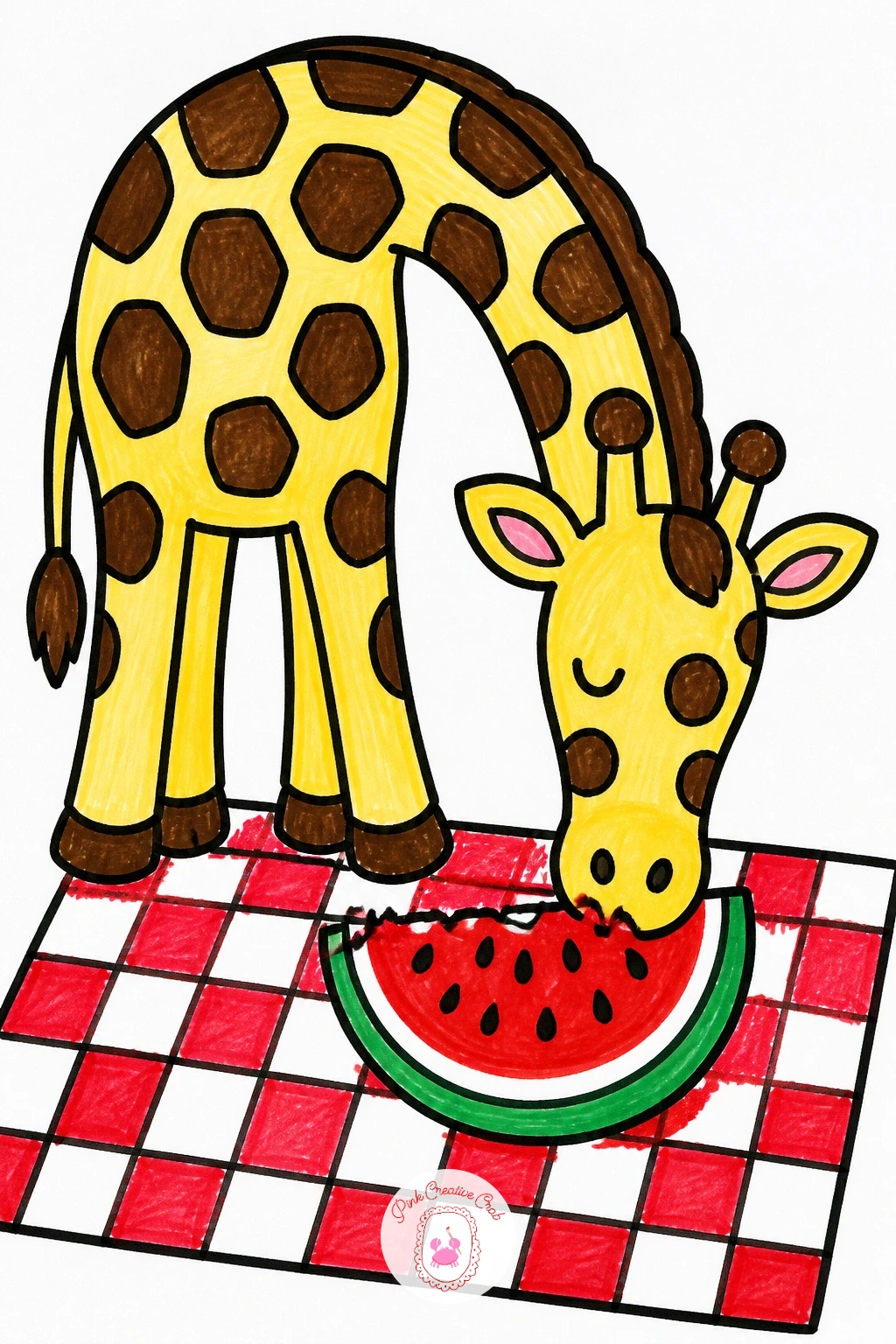
Palette: Pale Yellow,Chestnut Brown,Cherry Red,Watermelon Pink
Give the turtle a wide domed shell on top and a small round head with short stubby legs poking out from underneath. Draw the pool first as a large flat oval of blue, then sit the turtle half inside it so only the top of the shell and the head show above the water line.
Shell texture is the fun part of this drawing: once the dome shape is outlined, divide it into a few simple sections with curved lines, almost like a turtle shell version of a pizza cut into wedges. Keep the sections big and few, since too many small lines will look messy rather than scaly.
Color the shell green with slightly darker green lines marking each section, the head and legs a lighter green, and the pool water bright blue with a few white wavy lines left uncolored to show ripples. A yellow pool noodle floating beside the turtle is a fun extra detail if there is time.
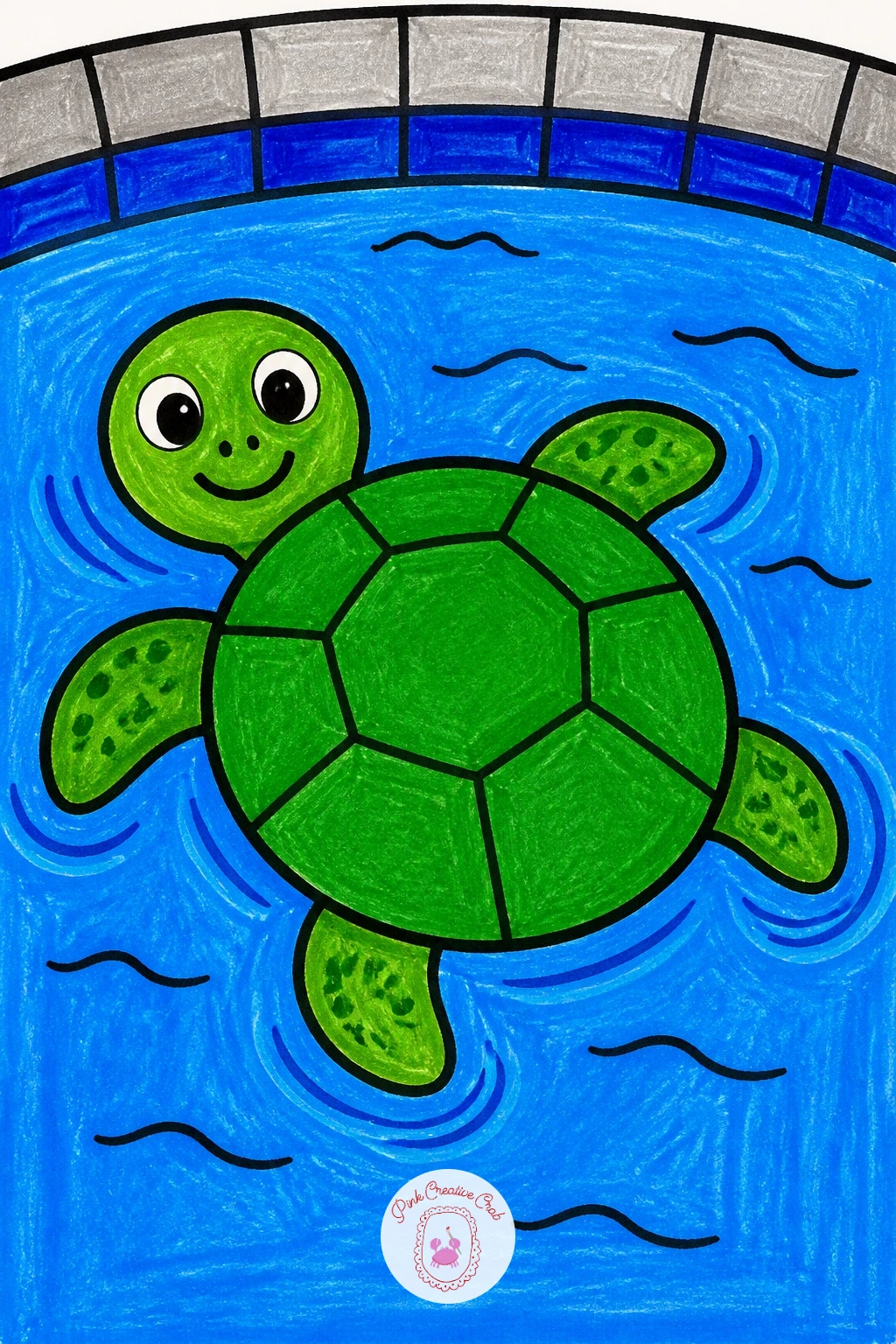
Palette: Forest Green,Lime Green,Puddle Blue,Sunny Yellow
Draw the fox sitting upright with a triangle head, two tall pointed ears, and a big fluffy curved tail wrapped around its front paws. Place a simple triangle tent shape just behind the fox and a small triangular campfire with a few wavy orange flame shapes in front of it.
If this is a first try at flames, keep it to two or three simple wavy triangle shapes stacked inside each other rather than lots of tiny licks of fire, since fewer bigger shapes read more clearly at this size. The same goes for the tent, which only needs one triangle outline and a short rectangle doorway line.
Color the fox orange with a white chest patch and a white tip on the tail, the tent a cheerful color like blue or red, and the campfire orange and yellow. A few small triangle pine trees in the background finish the camping feel nicely.
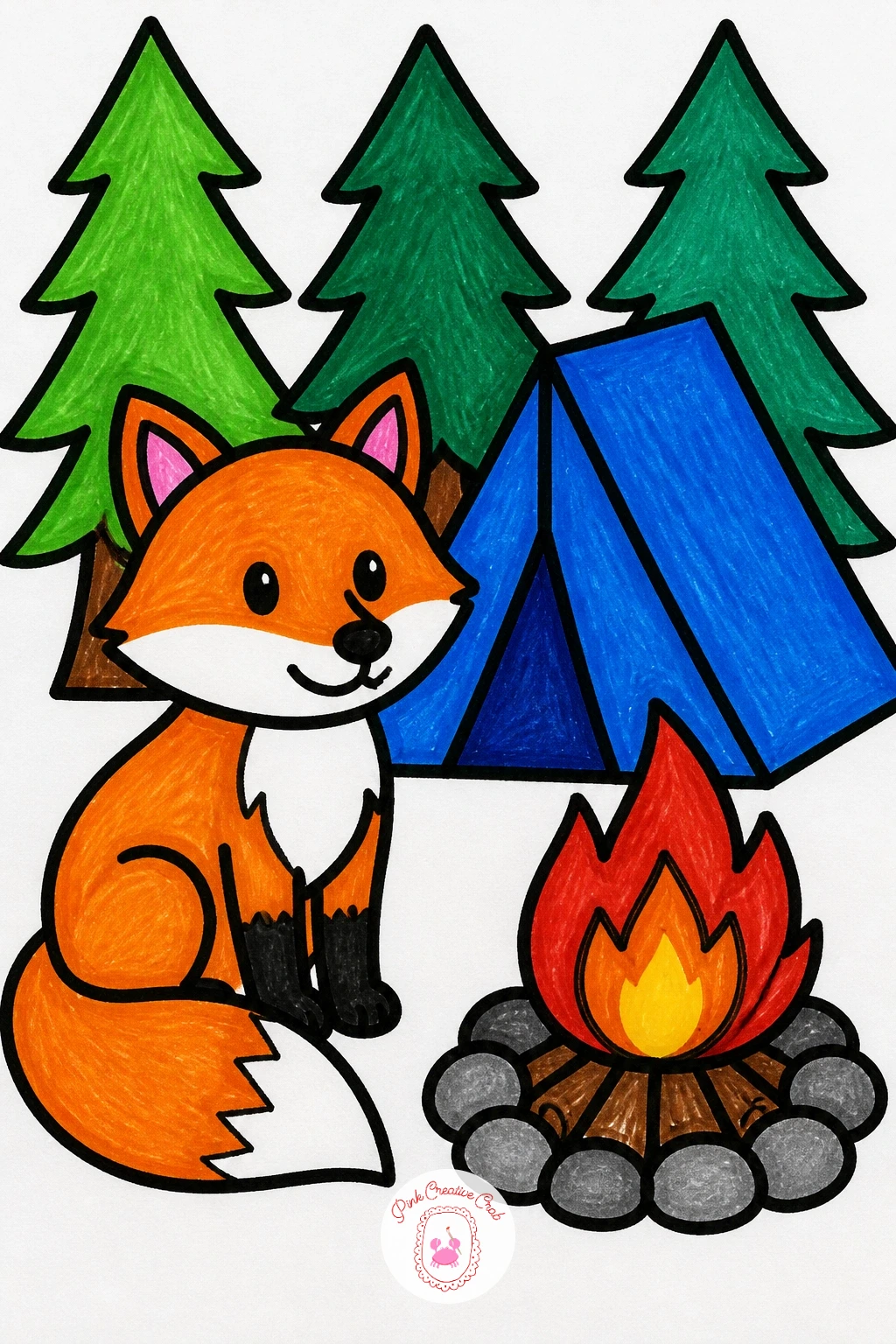
Palette: Tangerine Orange,White,Puddle Blue,Sunny Yellow
Start this one with the balloon itself, a big rounded teardrop shape divided into a few wide stripes, since getting that shape right first makes everything else easier to place around it. Hang a small square basket underneath it on four short straight lines, then tuck the little round mouse body inside the basket with two tall ears poking up over the rim.
Keep the quick ten minute version to just the balloon, basket and mouse floating on plain white paper. For the forty minute version, add a few fluffy cloud shapes around the balloon and a tiny landscape of rolling hills far below to really sell the feeling of floating high up.
Color alternating stripes on the balloon in two bright colors like red and yellow, keep the basket a warm brown, and color the mouse grey or soft brown with pink ears. Outline every shape in black last so the balloon stripes stay crisp and separate.
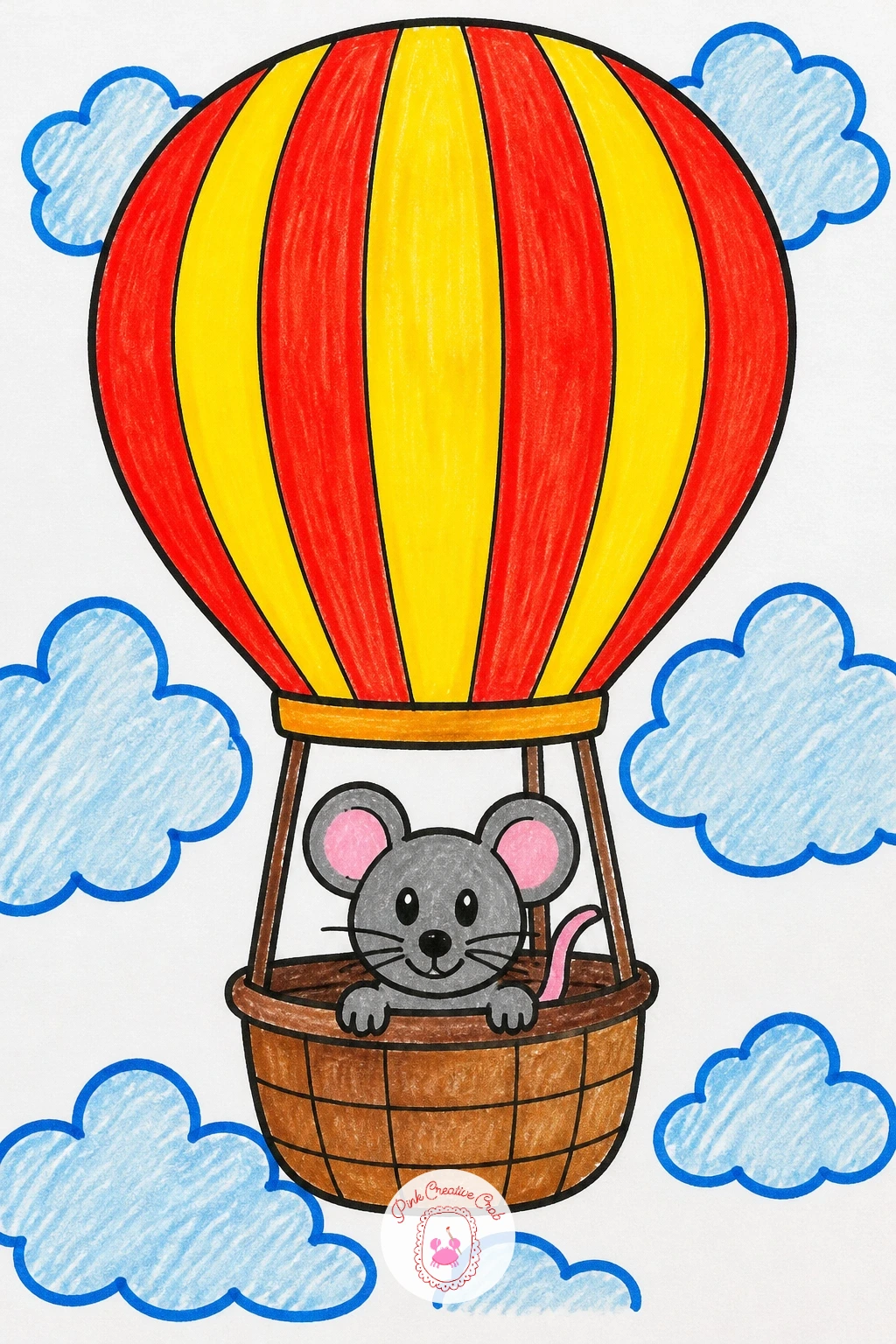
Palette: Cherry Red,Sunny Yellow,Chestnut Brown,Soft Grey
Draw the penguin’s body as one rounded shape, wider at the bottom, with a white belly patch, two tiny wing shapes out to the sides, and two little orange feet angled like they are mid glide. Give it a simple oval face with a small orange triangle beak.
Balance matters most in this drawing, so lean the whole body slightly to one side and tilt both wings out for balance, the same way a skater leans into a turn. That one small tilt is what makes the penguin look like it is actually moving rather than just standing still on ice.
Color the penguin black on the back and head, white on the belly and face patch, and orange on the beak and feet. Draw the ice as a flat pale blue oval with a few thin curved scratch lines left white to show the skate marks, then outline everything in black to finish.
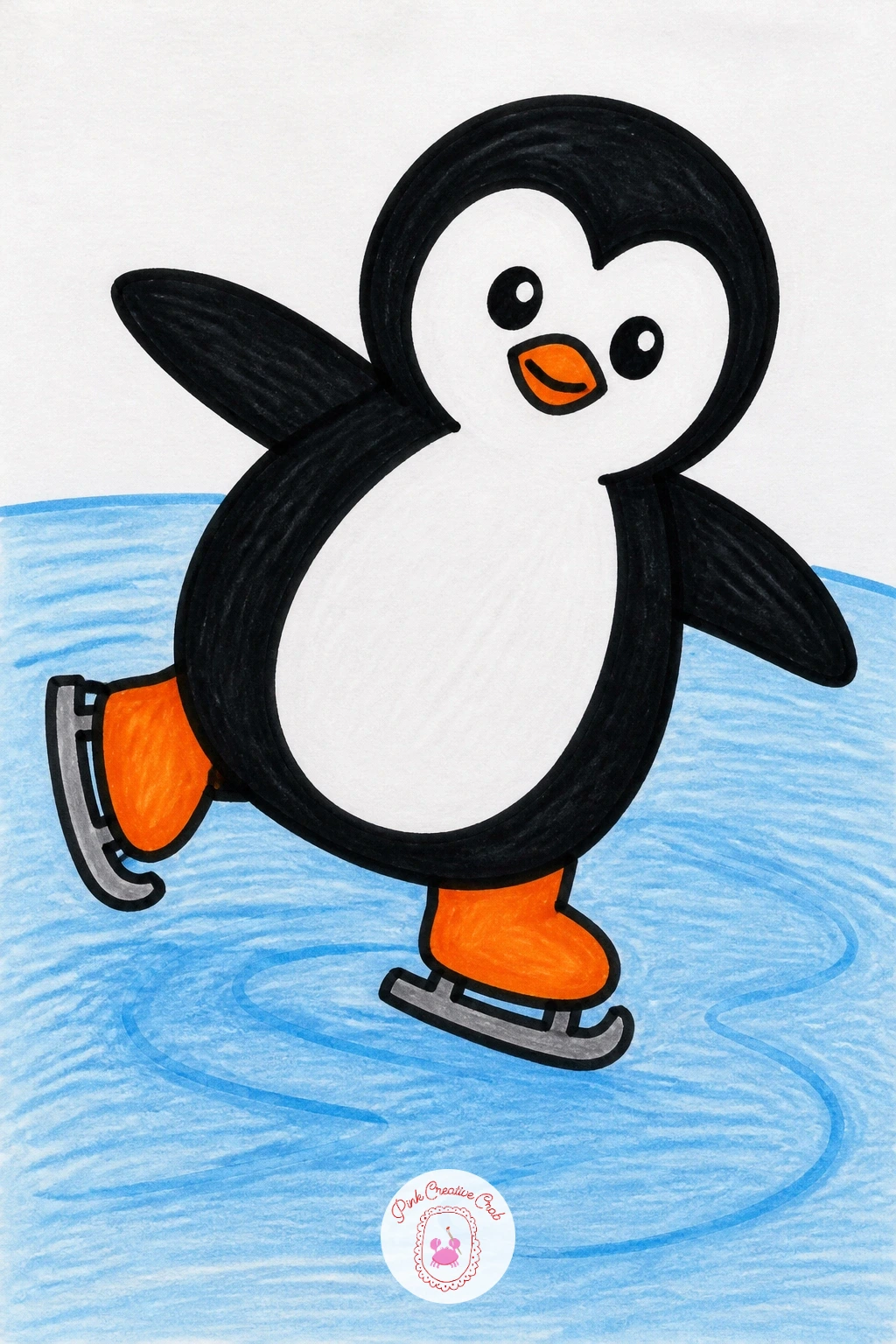
Palette: Charcoal Black,White,Tangerine Orange,Ice Blue
Give the owl a round body, two big circle eyes with small dot pupils, and two short pointed ear tufts on top. One wing is drawn curved around the front, holding open a simple rectangle book shape.
Owls are a great subject for trying flat color patterns: once the round body outline is down, add a few short curved lines across the chest area to suggest feather rows before filling in the color, keeping the lines big and spaced out rather than packed close together. Too many tight lines will look busy instead of fluffy.
Color the owl brown and tan with a cream belly, and make the book cover a bright color like red or blue with a thin white line for the pages. Draw a small stack of two or three more books beside the owl and a round reading lamp glow behind it for a cozy finishing touch.
For more feathered subjects after this one, the bird pencil drawing ideas are a good next stop.
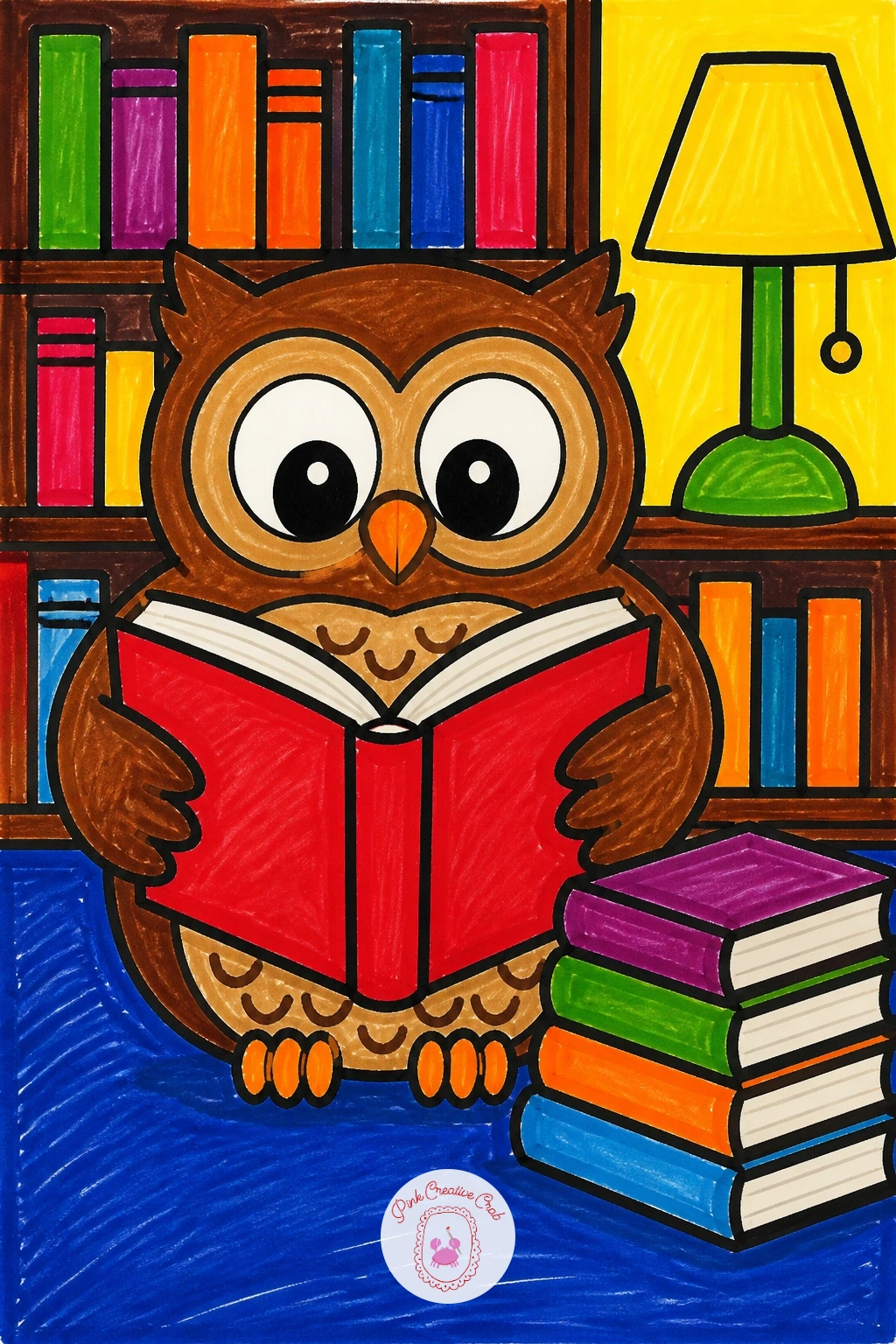
Palette: Chestnut Brown,Warm Tan,Cream,Cherry Red
Draw the hippo’s wide rounded body first, mostly hidden inside a big tub shape, with just the round head, two small round ears, and two short front legs resting over the tub’s edge. Keep the tub itself a simple curved rectangle so it reads clearly as a bathtub right away.
Bubbles are the fun part here: once the tub outline is colored light blue for water, add a cluster of plain white circles of different sizes piled up around the hippo’s head and shoulders, with a few extra bubbles floating off into the air above. A white gel pen is a nice way to add a few sparkle lines on top of the bubbles once the rest of the drawing is dry.
Color the hippo grey or soft purple, the water pale blue, and leave the bubbles plain white so they stand out against both. Outline everything else in black last, but leave some bubble edges uncolored for a lighter, softer feel.
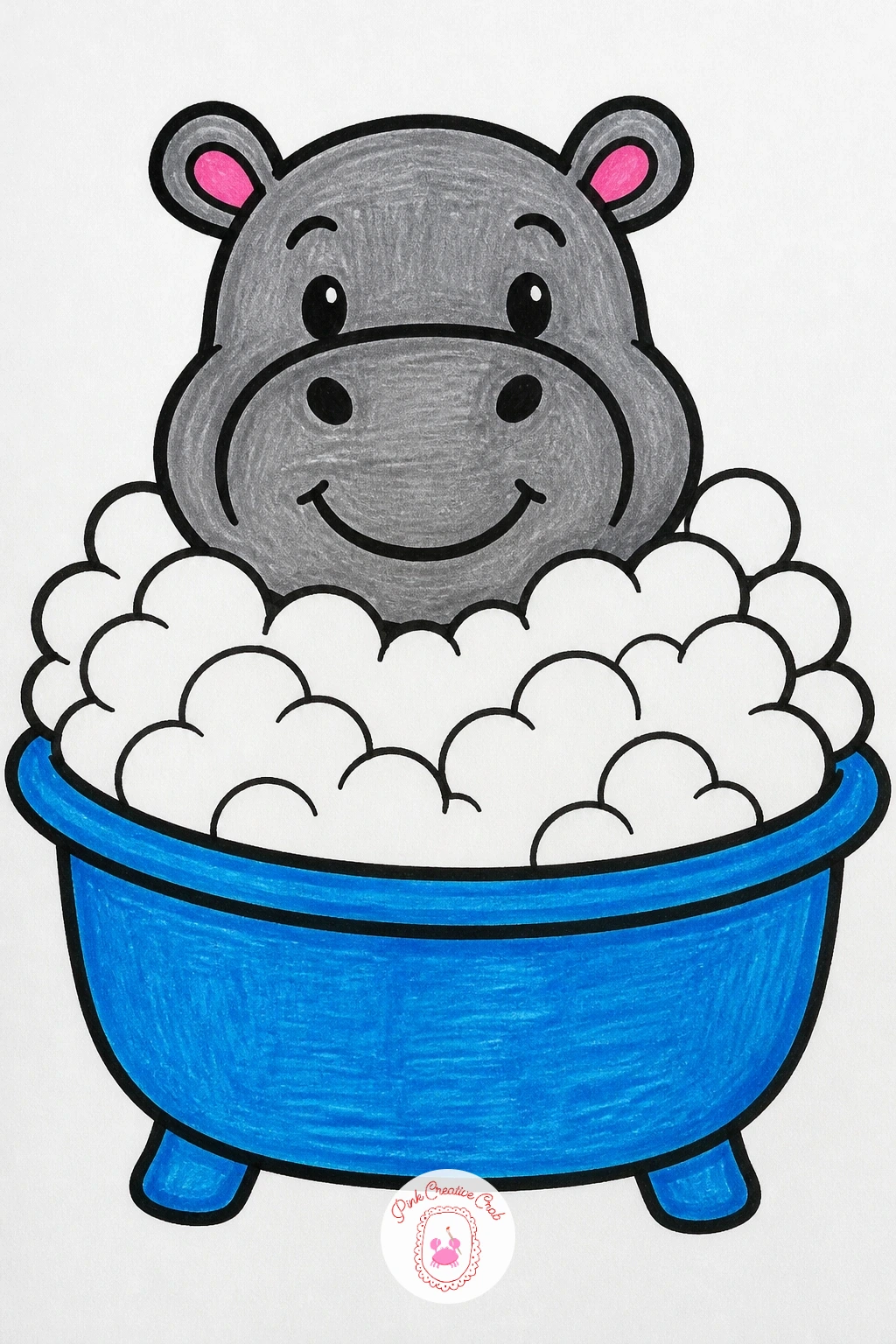
You Will Need
- white gel pen for bubble highlights
Palette: Soft Lavender Grey,Puddle Blue,White,Pale Pink
Draw the zebra much like a small horse: an oval body, a long head with a short mane of upright triangle shapes, and four legs ending in little roller skate shapes instead of hooves. Each skate is just a small rectangle with two tiny circle wheels underneath.
Stripes go on last and work best kept simple, a handful of wide curved black lines across the body and legs rather than dozens of thin ones, since big stripes stay crisp and easy to color while tiny ones blur together. Leave the belly and face mostly white between the stripes.
Color the base body white, then add the black stripe lines once that is dry, and make the roller skates a bright color like pink or yellow so they stand out against the black and white pattern. A few short speed lines behind the back legs show the zebra is really rolling along.
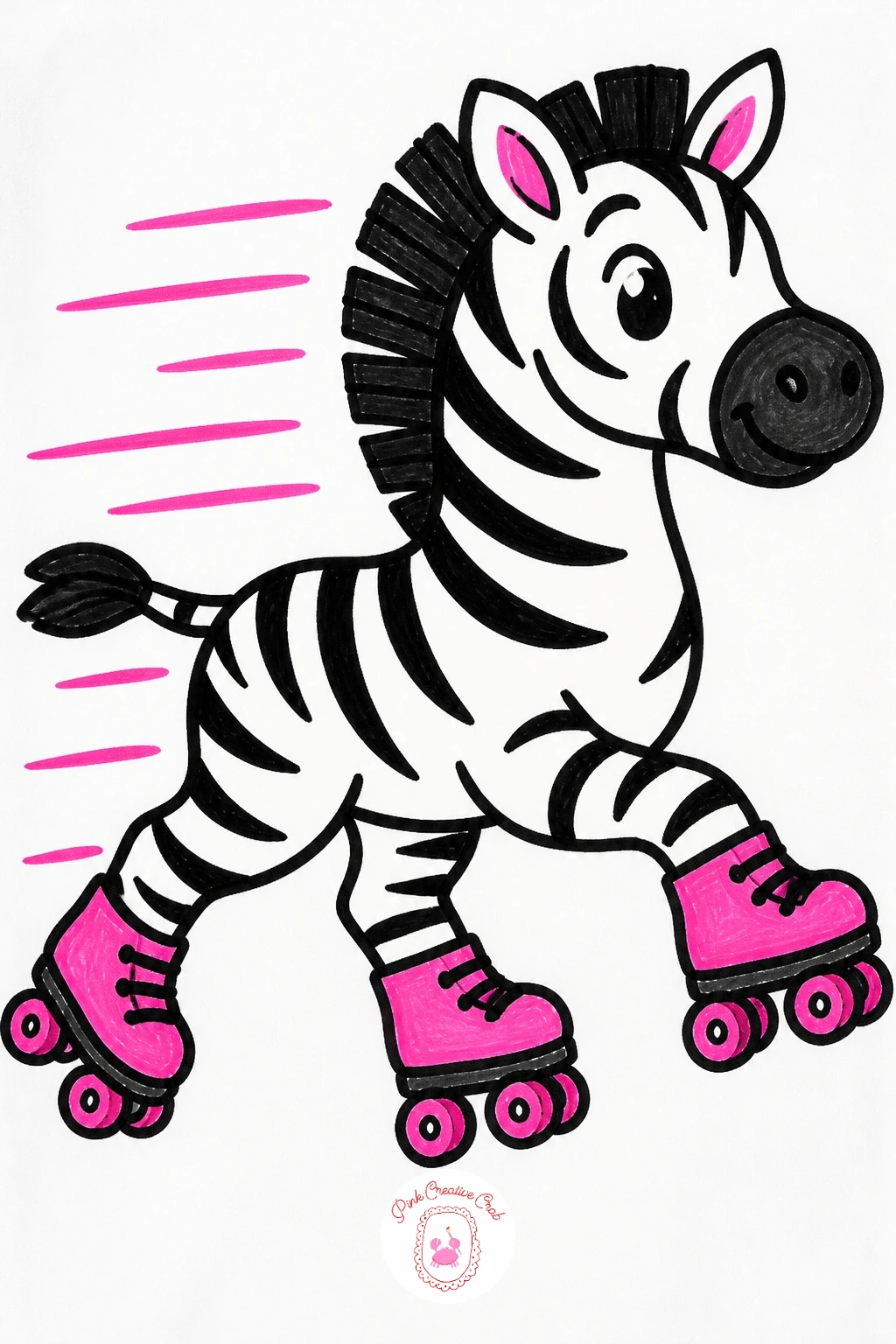
Palette: White,Charcoal Black,Bubblegum Pink,Sunny Yellow
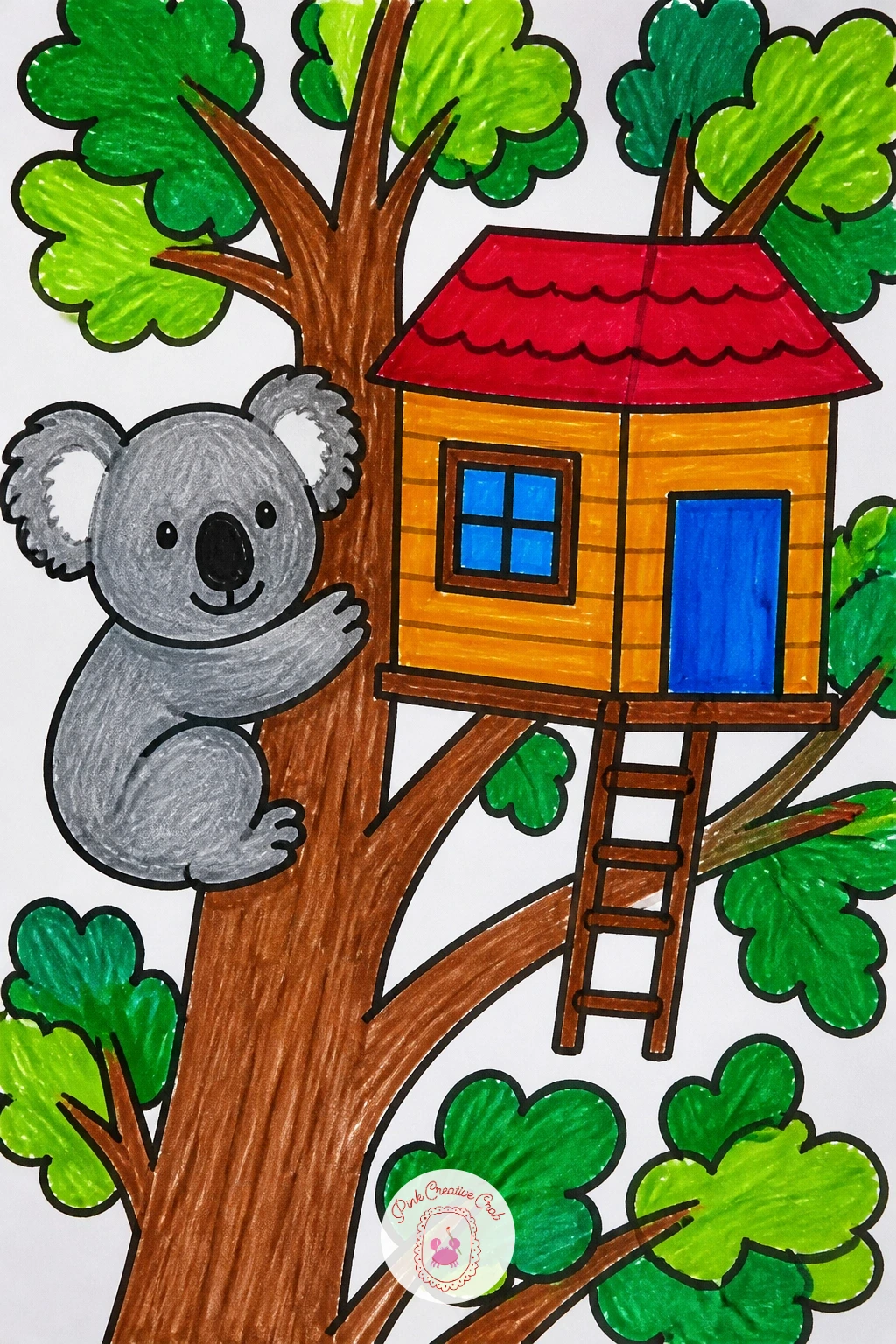
Build the koala from a round fuzzy head with two big round ears, a round body, and short arms wrapped around a tree branch. Draw a simple square treehouse shape tucked into the branches behind it, with a small triangle roof and one round window.
Quick version for ten minutes: just the koala hugging the branch with the treehouse square behind it, colored in flat shapes. For a forty minute version, add a rope ladder hanging down from the treehouse door, drawn as two straight lines with short rungs between them, plus a few leaf clusters scattered along the branch.
Color the koala grey with a lighter grey or cream belly patch, the tree trunk and branch brown, and the treehouse a warm wood tone with a bright colored roof. Round black nose and dot eyes finish the koala’s sleepy, happy face.
Palette: Soft Grey,Cream,Chestnut Brown,Leaf Green
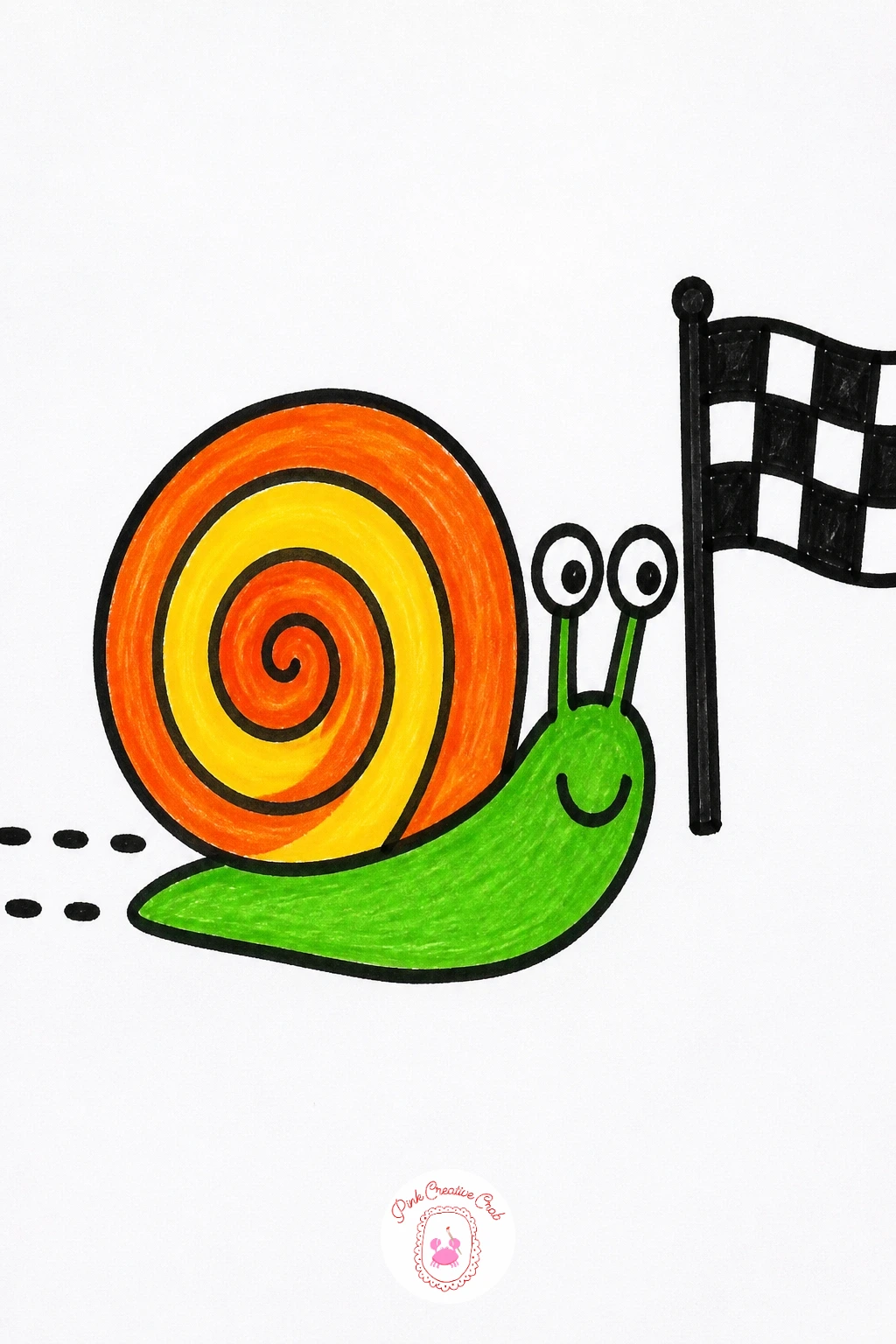
Draw the snail’s round spiral shell first, starting from the center and curling the line outward two or three times, then attach a simple curved body and two short antennae with tiny dot tips. This spiral is the one tricky part of the whole drawing, so go slowly and it is fine if it is not perfectly even.
Give the snail a little number sticker on its shell like a race car, and draw a thin checkered finish line flag on a stick just ahead of it to set the race scene. A dotted curved line trailing behind the snail is a funny way to show just how slow the race is going.
Color the shell in a swirl of two colors, like orange and yellow, and keep the snail’s body a soft green or grey. The checkered flag works best in plain black and white squares so it reads clearly as a flag even at a small size.
Palette: Tangerine Orange,Sunny Yellow,Sage Green,Charcoal Black
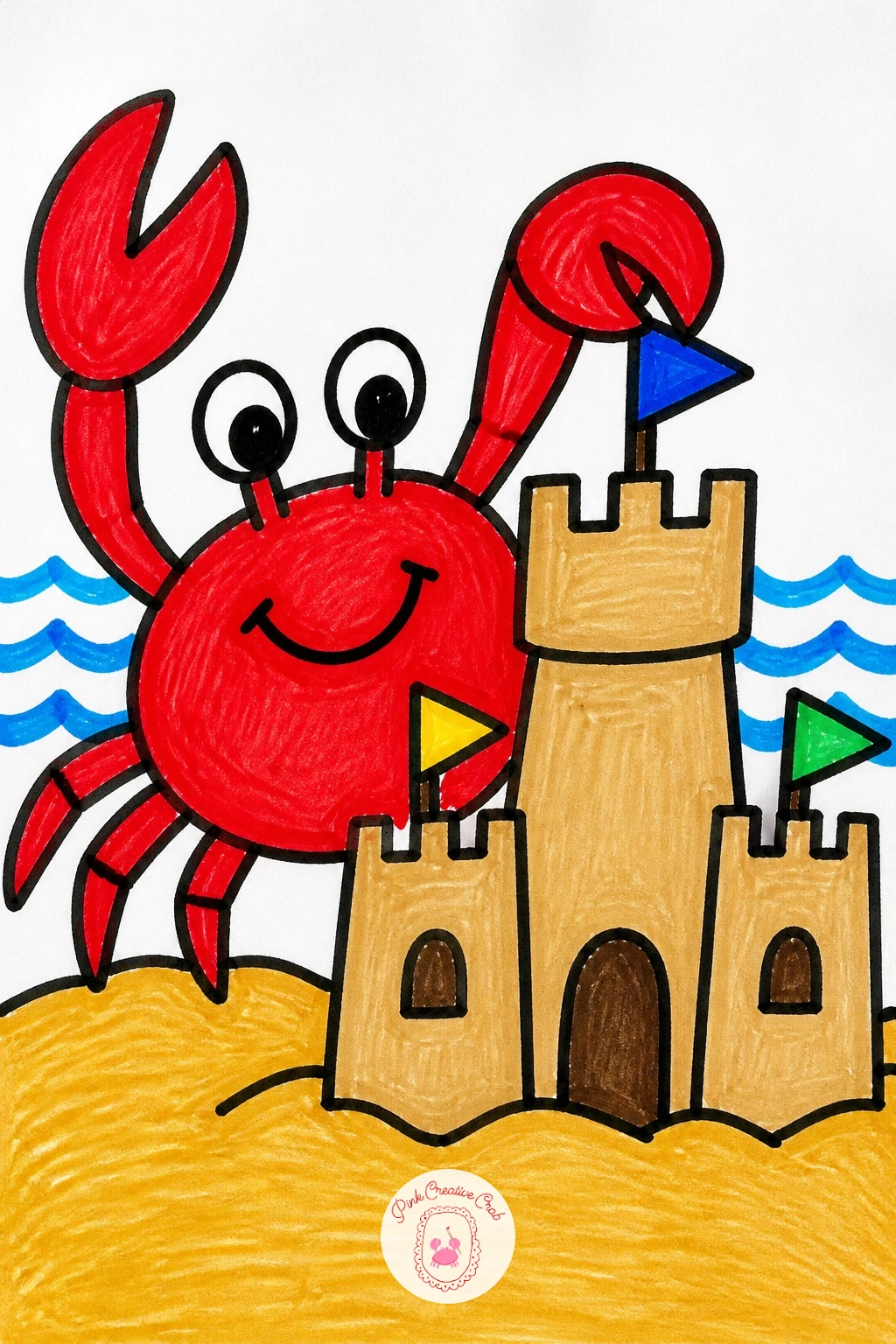
Give the crab a wide oval body, two round eyes on short stalks, and two big curved claws held up in front. Four bent little legs on each side touch down onto a pile of sand drawn as two or three stacked rounded shapes, like a snowman made of sand instead of snow.
Compare the sandcastle’s size to the crab’s body before adding the final tower details, since keeping the castle only slightly taller than the crab stops the whole scene from looking lopsided. A row of small triangle flags along the top of the castle is an easy way to finish it off.
Color the crab bright red or orange, the sandcastle a warm tan, and the flags any cheerful bright color. A few wavy blue lines in the corner of the page for the sea ties the whole beach scene together.
For more beach day inspiration, this scene pairs nicely with the earlier horse coloring pages for an afternoon of mixed animal drawings.
Palette: Cherry Red,Sandy Tan,Sunny Yellow,Sky Blue
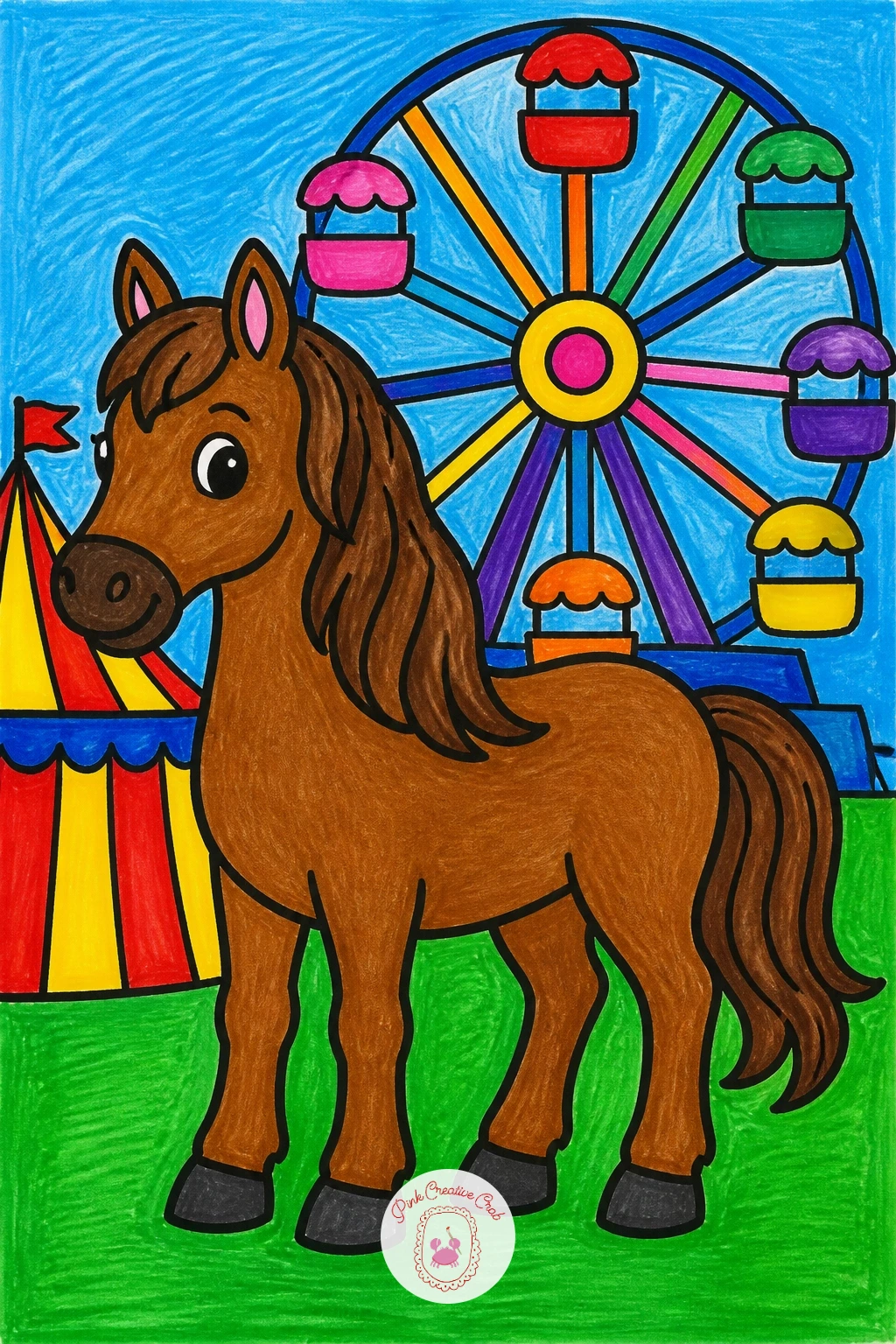
Sketch the horse’s body as one long oval with a slightly arched neck, a flowing mane drawn as a few wide curved sections rather than lots of thin strands, and four straight legs. Perspective matters here: draw the horse’s legs a little shorter in the back two than the front two, since that small trick makes the horse look like it is standing naturally rather than flat on the page.
Behind the horse, sketch a simple ferris wheel as one big circle with a few straight lines crossing through the middle like spokes, and small square cabins at a few points around the rim. Keep the wheel big and bold rather than packed with detail, since it only needs to read as a fairground shape from a distance.
Color the horse brown or chestnut with a darker mane and tail, and make the ferris wheel bright with alternating colors on the cabins. A horse lover ready for more can find plenty of extra practice in the horse coloring pages collection.
Palette: Chestnut Brown,Dark Brown,Cherry Red,Sunny Yellow
Draw the chick as one small round yellow body with a smaller round head on top, a tiny orange triangle beak, and two thin orange legs. Sit the chick behind a little wooden stall, drawn as a simple rectangle table with a short triangle roof overhead.
Fill the stall with a few round shapes to stand in for fruit or vegetables, like three or four circles in a basket, since a small handful of simple round shapes reads clearly as a market display without needing any real detail. Keep the basket itself just a curved rectangle with a few crossing lines for the woven texture.
Color the chick bright yellow, the stall a warm wood brown, and the produce in a mix of cheerful colors like red, orange and green. A small price sign on the front of the stall, left blank or with a simple scribble line, finishes the market feel.
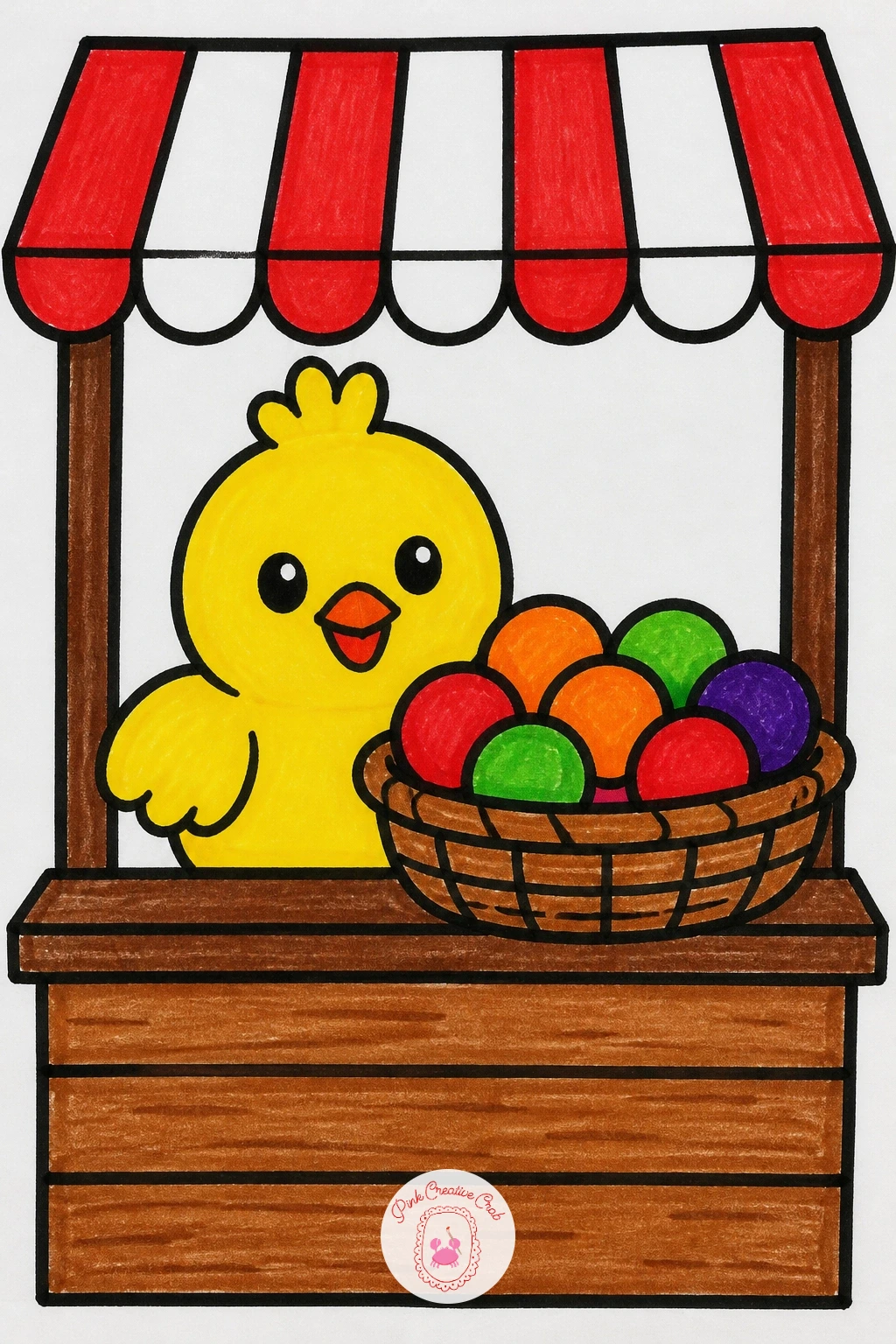
Palette: Sunny Yellow,Chestnut Brown,Cherry Red,Leaf Green
Start the whale with one big smooth curved body shape, rounded at the head and tapering to a wide flat tail fin at the back. A small curved line for the mouth and one dot eye near the front are all the face needs to look friendly.
Balance the beach ball on top of the whale’s head or nose, drawn as one circle divided into a few colored wedge sections, like slicing a pie into equal parts before filling each slice a different color. Keeping the wedges even in size is the one measuring trick that keeps the ball looking round rather than lopsided.
Color the whale blue or grey with a lighter belly patch, and make the beach ball wedges bright and varied, red, yellow and blue work well together. A small spout of water drawn as a few curved lines above the blowhole adds one more playful touch.
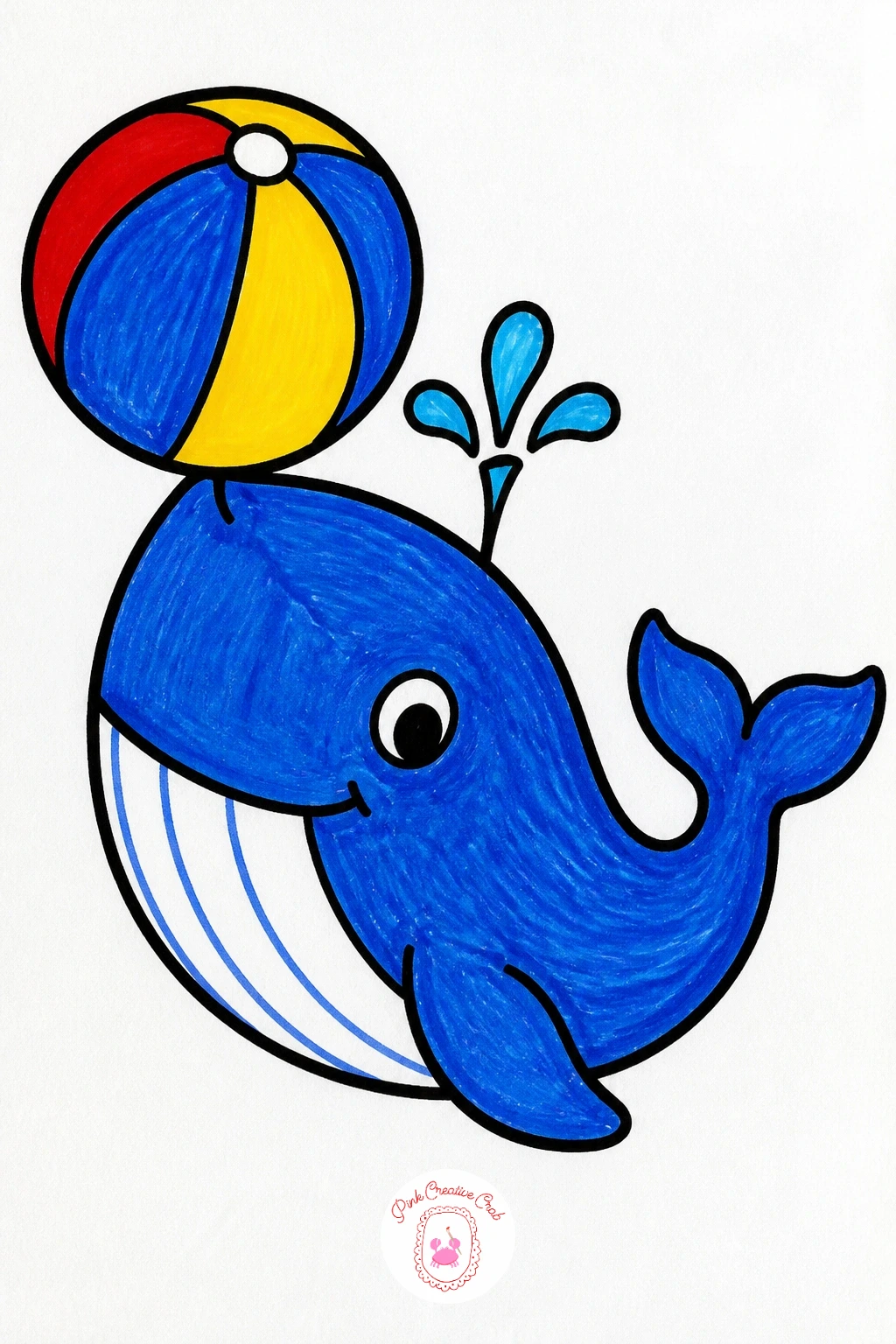
Palette: Ocean Blue,Light Blue,Cherry Red,Sunny Yellow
Give the hedgehog a round body covered in short spiky lines, a small pointed snout, and two tiny feet underneath. Keep the spikes big and evenly spaced rather than packed in tightly, a row of simple short triangle or V shapes across the back is enough to read clearly as spines.
Draw a small apple tree beside the hedgehog, just a round green top shape on a short brown trunk, with a few red circle apples scattered through the leaves and one more apple held up in the hedgehog’s front paws. One apple resting on the ground nearby suggests it just fell, which gives the whole scene a little action.
Color the hedgehog’s body brown with tan spikes, the tree trunk brown, the leaves green, and the apples bright red. If brown markers are limited, a grey hedgehog against the same green and red tree still tells the same happy little story.
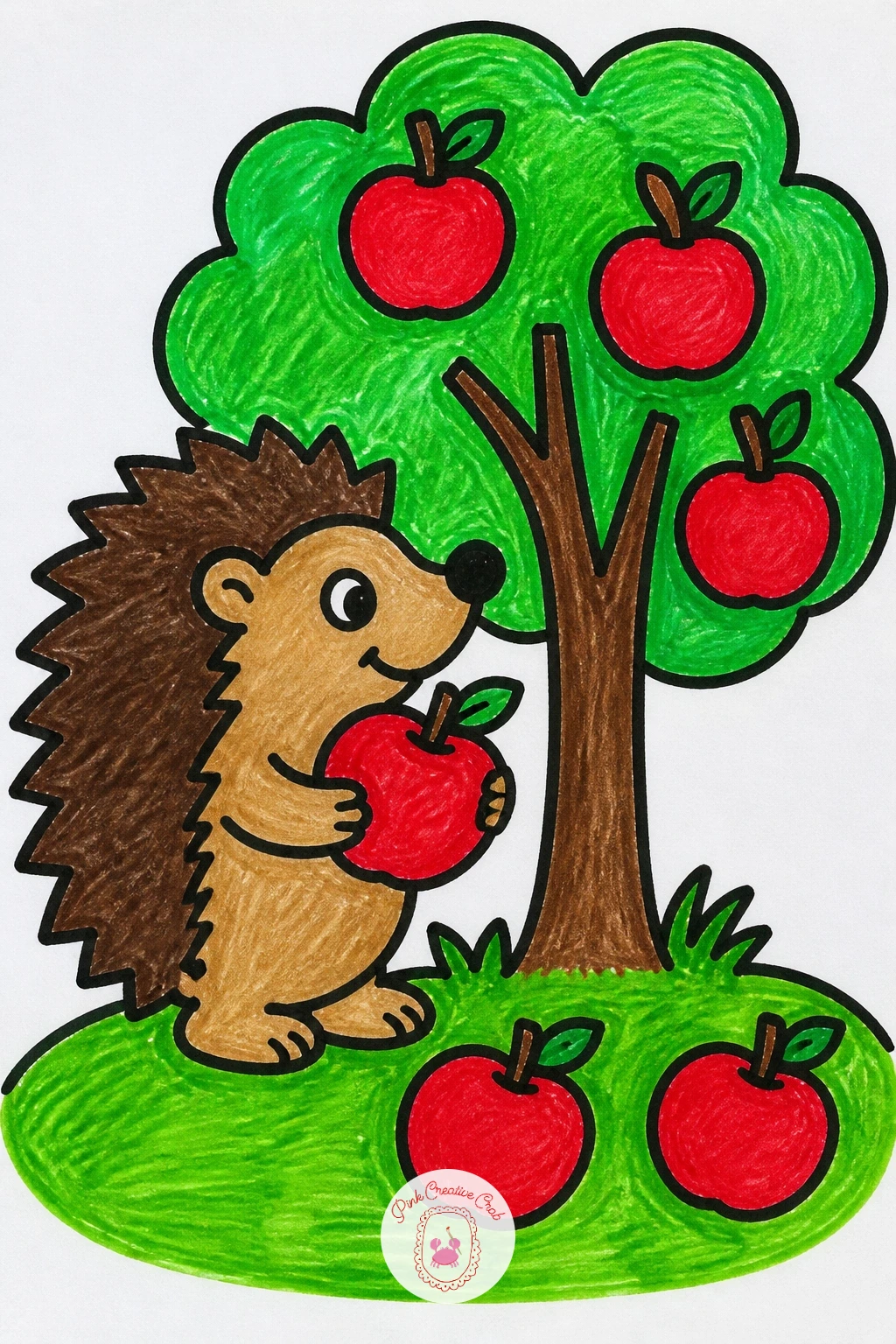
Palette: Chestnut Brown,Warm Tan,Leaf Green,Cherry Red
Draw the cow’s body as a wide oval with black patch shapes scattered across it, a round head with two short curved horns, and four straight legs. Patches work best as a small handful of large uneven blobs rather than many tiny spots, so two or three big patches are enough to make the cow instantly recognizable.
Place the cow on a simple playground slide, the same two curved parallel lines used earlier for the frog’s slide, so this becomes an easy subject to compare against the frog drawing for practice. A swing set drawn as one straight top bar with two hanging lines and a small rectangle seat fits nicely in the background.
Color the cow white with black patches, pink nose and inner ears, and make the slide and swing set bright primary colors like red and blue. For more farm animal practice after this, the dog pencil drawing ideas make a fun next stop.
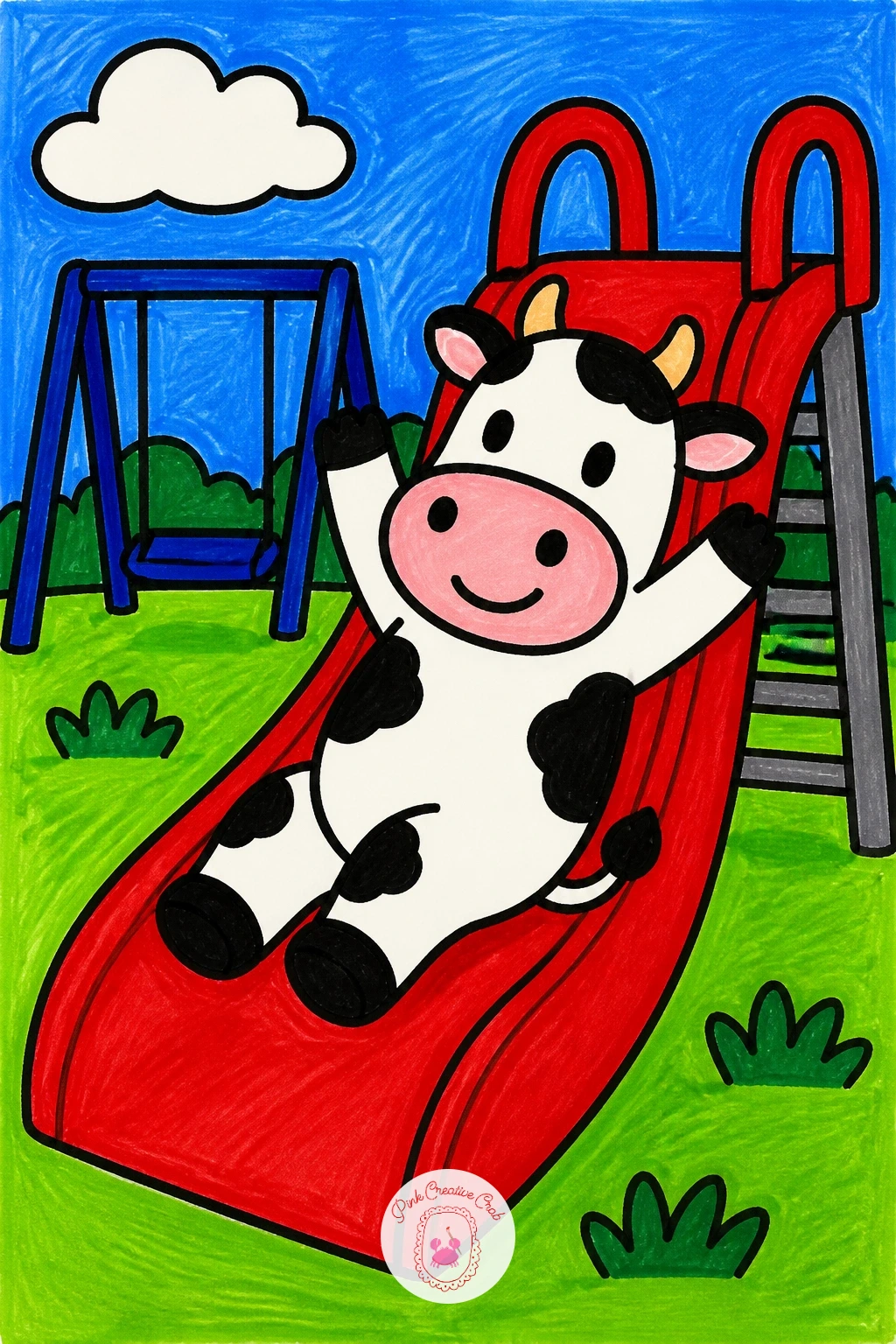
Palette: White,Charcoal Black,Pale Pink,Cherry Red
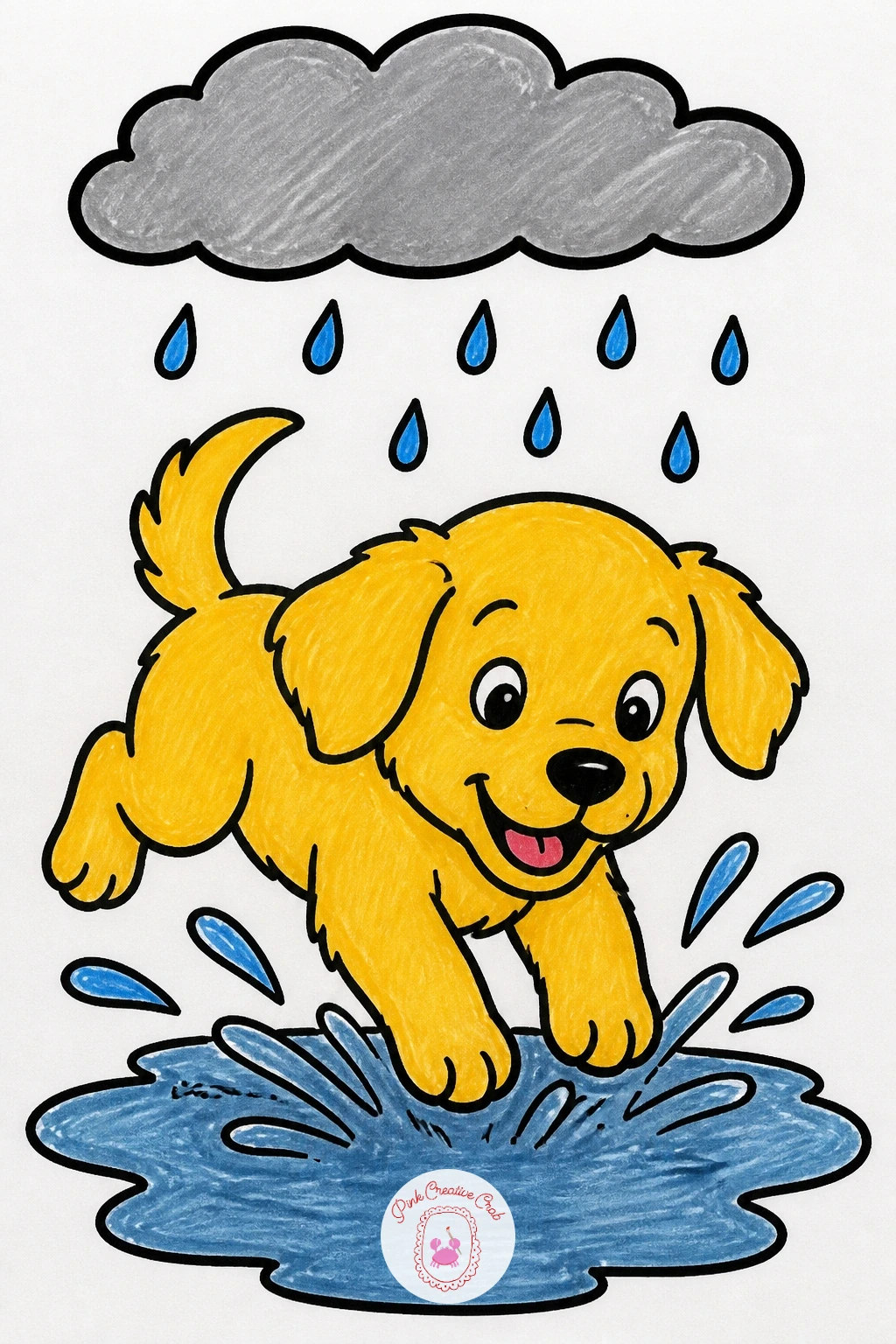
Finish the whole set with a puppy jumping into a rain puddle, its body a round shape with floppy triangle ears, a short wagging tail, and all four paws lifted slightly off the ground mid jump. Draw a few straight diagonal lines above the puppy for falling rain before adding the puddle below.
The puddle itself is one flat blue oval with a splash ring of small curved lines bursting up around the puppy’s paws, the same splash trick used earlier for the pig, which makes this a good one to compare side by side once both are finished. A simple round rain cloud with a few short rain lines overhead ties the weather together.
Color the puppy golden or brown with a lighter belly patch, the puddle a cool grey blue, and the rain cloud a soft grey. Leave a few thin white lines uncolored within the puddle to show light catching the splash, and outline everything last in black to finish this happy, playful ending to the set.
Palette: Golden Brown,Cream,Puddle Blue,Soft Grey
What to Do Next
Pick whichever animal sounds the most fun right now, grab a pencil, markers and a plain sheet of white paper, and start with the big shapes before any small details. One finished drawing today is a great reason to come back tomorrow for another animal on this list.
Frequently Asked Questions
What is the easiest animal for a beginner to draw from this list?
The bunny on a scooter is the easiest, since its oval body, round ears and two tiny wheels use only shapes most kids can already draw confidently.
What materials work best for these kids drawing ideas?
Thick black marker for the outlines and washable markers or jumbo crayons for the flat color work best, since they give bold lines without needing much pressure or control.
How long does each drawing take to finish?
Most of these take fifteen to thirty minutes, depending on how much background detail gets added, so a whole animal easily fits into one sitting.
Should the outline or the color go first?
Draw the pencil shapes first, fill in the flat color next, then trace over everything with black marker last so the final outlines stay clean and crisp on top of the color.
What if a shape comes out uneven or wobbly?
Uneven shapes are completely fine at this level, since thick black outlines and bright flat color smooth over small mistakes and still look bold and finished.
Have any thoughts?
Share your reaction or leave a quick response — we’d love to hear what you think!
-
 0
-
0
-
0
-
0
-
0
-
0


