Every puppy drawing on this list starts with the same idea: the best moment with a puppy is never the calm one, it is the second before you catch it mid mischief. A slipper halfway destroyed, a nose dusted in flour, a tail just starting to spin after its own chase. That split second is what makes a drawing feel alive instead of just cute.
Below you will find 28 of those moments, each one sized for colored pencils and a single sitting on the couch tonight. Start wherever your own dog has embarrassed you most, work through the order from simple shapes to busier scenes, and let the puppy take up the whole page.
Using these images: free for personal projects such as printing, coloring, cards, journals and gifts. Handmade items that include them may be sold up to 30 pieces per design. More than that is commercial use and is not permitted, and neither is selling or sharing the images themselves or passing them off as your own. Please ask before any other use.
Start the whole list with something every dog owner has lived through: a puppy chewing a slipper flat on the floor, one paw pinning it down. Block the body in as a soft oval with a round head on top, keep the legs stubby, and sketch the slipper as a simple curved wedge under the chin before any fur goes on.
Layer the coat in warm honey and caramel tones with short circular pencil strokes, building color gradually rather than pressing hard on the first pass. Save the darkest brown for the inner ears and the slipper itself, which should look slightly flattened and damp at the toe.
If proportions feel off, compare the head to the body: a young puppy’s head is almost as big as its chest, so err larger than feels natural. This one trick fixes most puppy drawings that come out looking like small adult dogs instead.
Finish with a white gel pen dot on the eye and a few scattered pencil lines for stray fur, and call it done. If you only have a basic pencil set, swap the caramel for your closest yellow ochre.
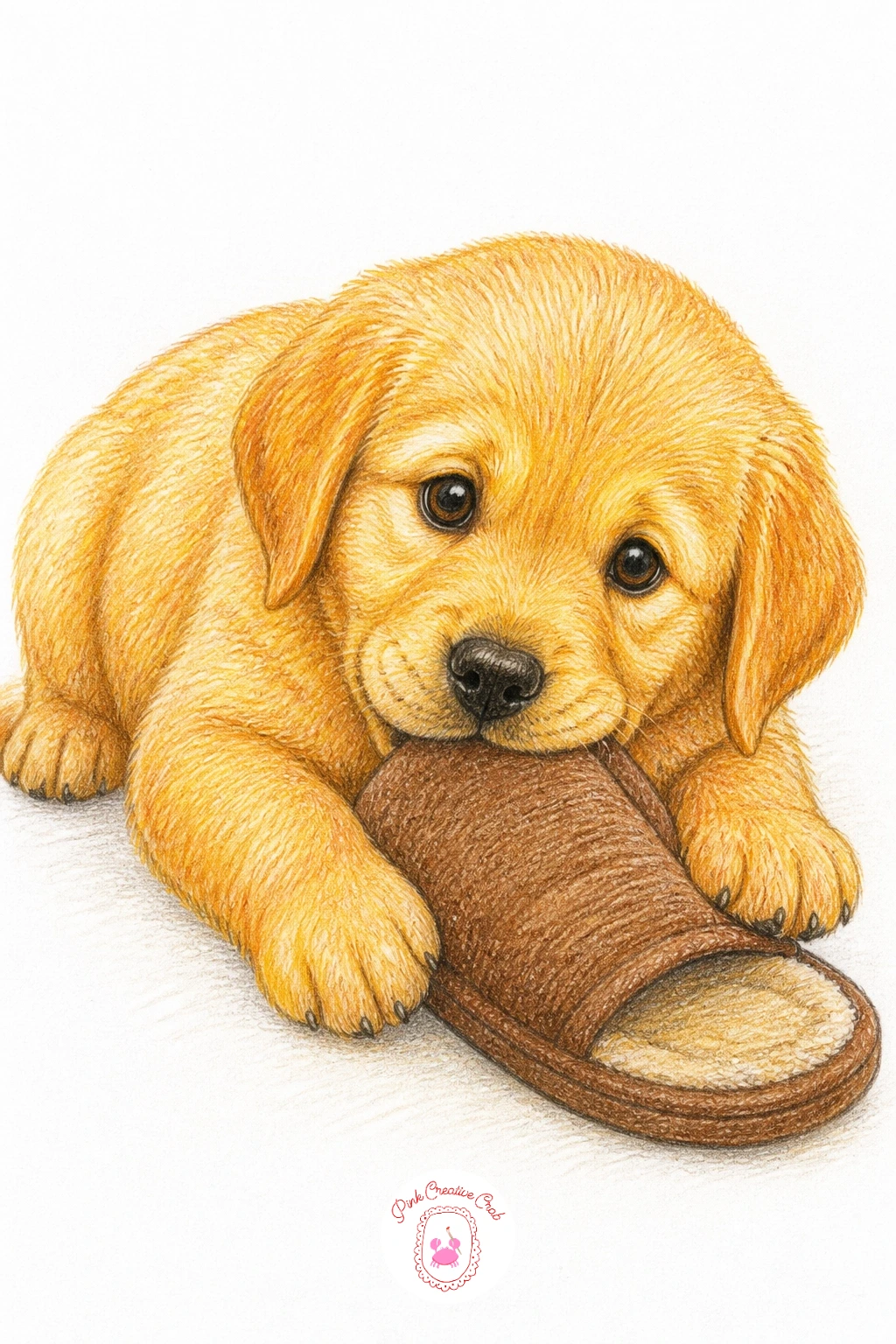
Palette: Burnt Sienna,Raw Umber,Cream,Chocolate Brown
Move from a chewed slipper to a full unraveling: a puppy tangled in toilet paper, wrapped loosely around its legs and trailing off the page. Draw the puppy first as a simple sitting pose, then lay the paper trail afterward so it wraps naturally around the shapes rather than floating separately.
Use a light grey or warm white pencil for the paper ribbons, keeping the edges soft and a little crumpled rather than straight, and let a few strands drape over one ear. Work the fur in next with short strokes of warm grey and white, leaving the paper areas untouched until last.
The trickiest part is keeping the paper reading as paper and not bandages: add faint parallel lines along each strip to suggest the perforated texture without overdoing it. A kneaded eraser lifts a highlight down the center of each ribbon for shine.
If you are new to drawing, keep the puppy mostly still and let the mess do the storytelling instead of an active pose. One tip: draw the loose paper trail last of all so it always looks like it is spilling forward, off the edge of the page.
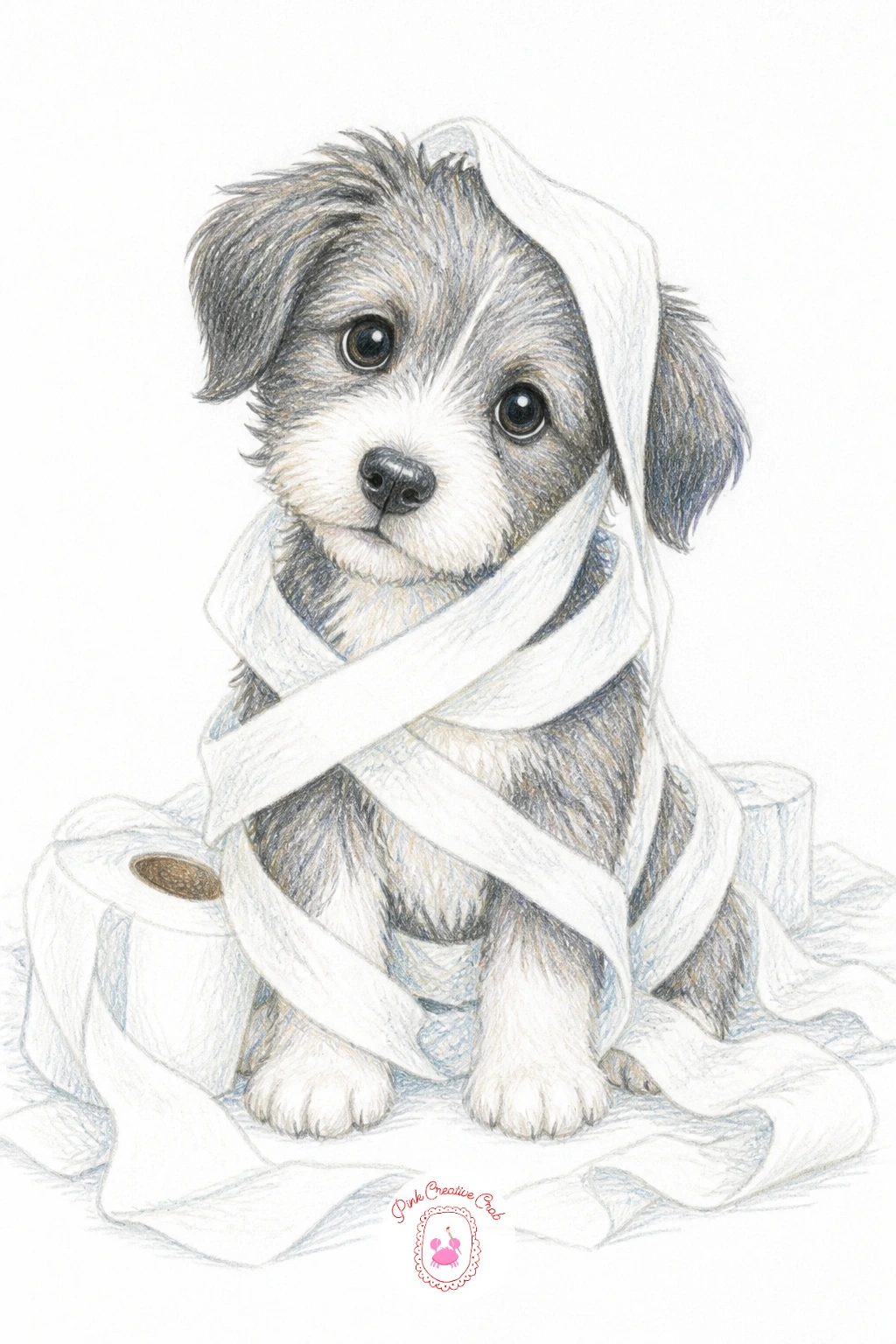
Palette: Warm Grey,Titanium White,Soft Beige,Charcoal Grey
Give the chaos a garden setting: a puppy digging in a flower bed, front paws deep in soil and a shower of dirt flying behind it. Sketch the puppy mid-dig with the back end raised and the head low, then rough in a low mound of soil and a couple of flopped flower stems around the hole.
Build the fur first in warm tan tones, then add the dark soil with heavy, gritty pencil strokes layered in several directions so it does not look flat. A few small flying dirt specks, dotted in with a sharp pencil tip, sell the motion instantly.
Eye level matters here: sit low, almost at ground height, so the viewer feels like they are kneeling next to the hole rather than looking down on it. That low angle makes the dug earth and flying dirt read as more dramatic than a straight-on view ever will.
Finish with two or three bent flowers, petals in soft pink or red, leaning away from the disturbed soil. No garden pencils handy? Ordinary brown and dark green cover the whole scene.
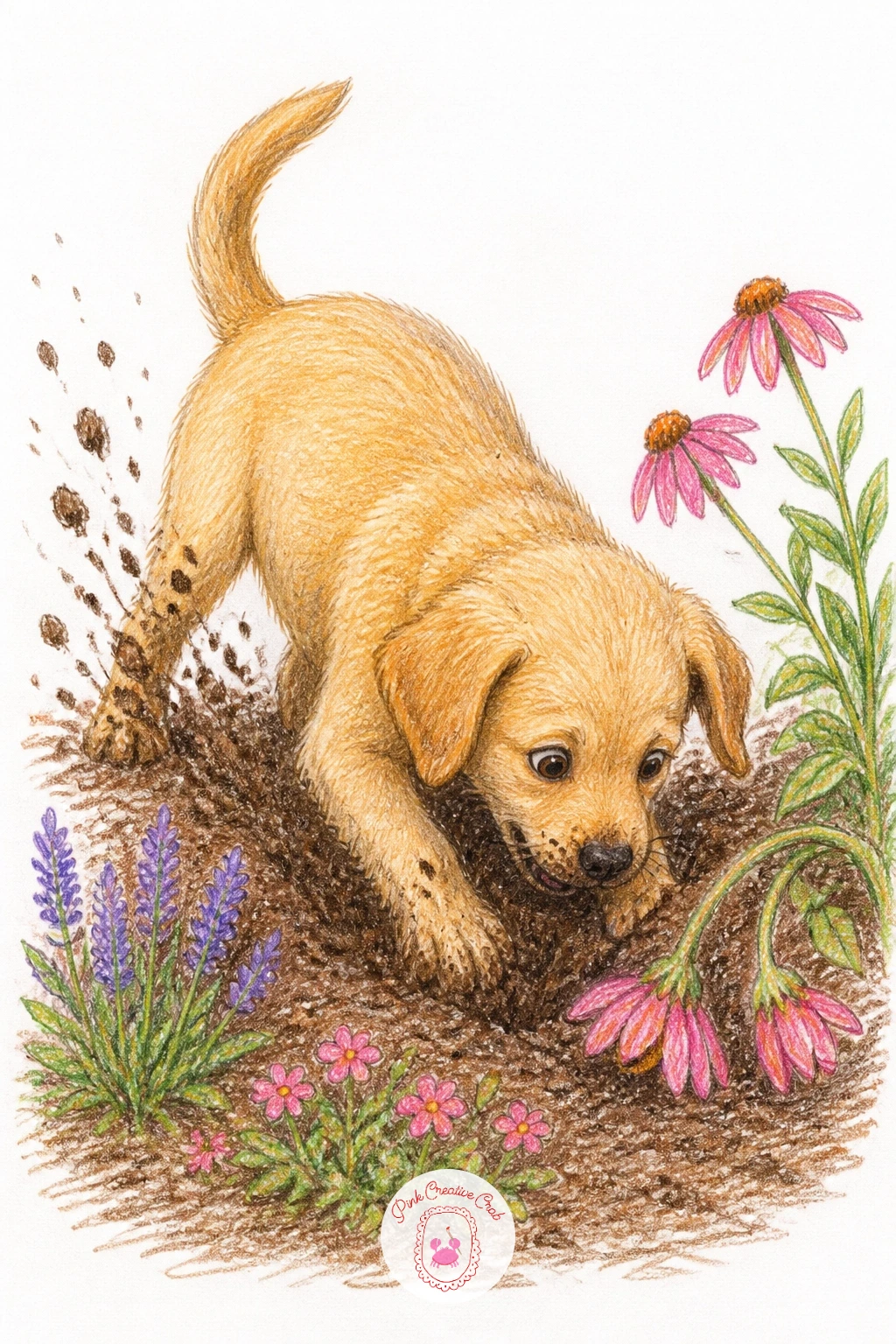
Palette: Sandy Tan,Dark Umber,Moss Green,Soft Pink
Keep the mischief going with a puppy stealing a sock, trotting across the page with it hanging proudly from its mouth. Draw the body first in a walking stance, slightly diagonal, since a straight side-on pose can look stiff and flat for a moving animal.
Color the coat in warm greyish brown, keeping the strokes short and following the direction the fur would actually grow, down the back and out along the legs. The sock gets a bold solid color like red or navy so it pops immediately against the softer puppy tones.
Getting the stride right is the hard part: compare the front and back paw positions so one pair is forward and one trails back, never both pairs matching, or the puppy will look like it is standing still holding a sock rather than running off with it.
Add a little motion with two or three short curved lines behind the back paws. If bold sock colors feel like too much commitment, a simple striped sock in pencil grey and white works just as well.
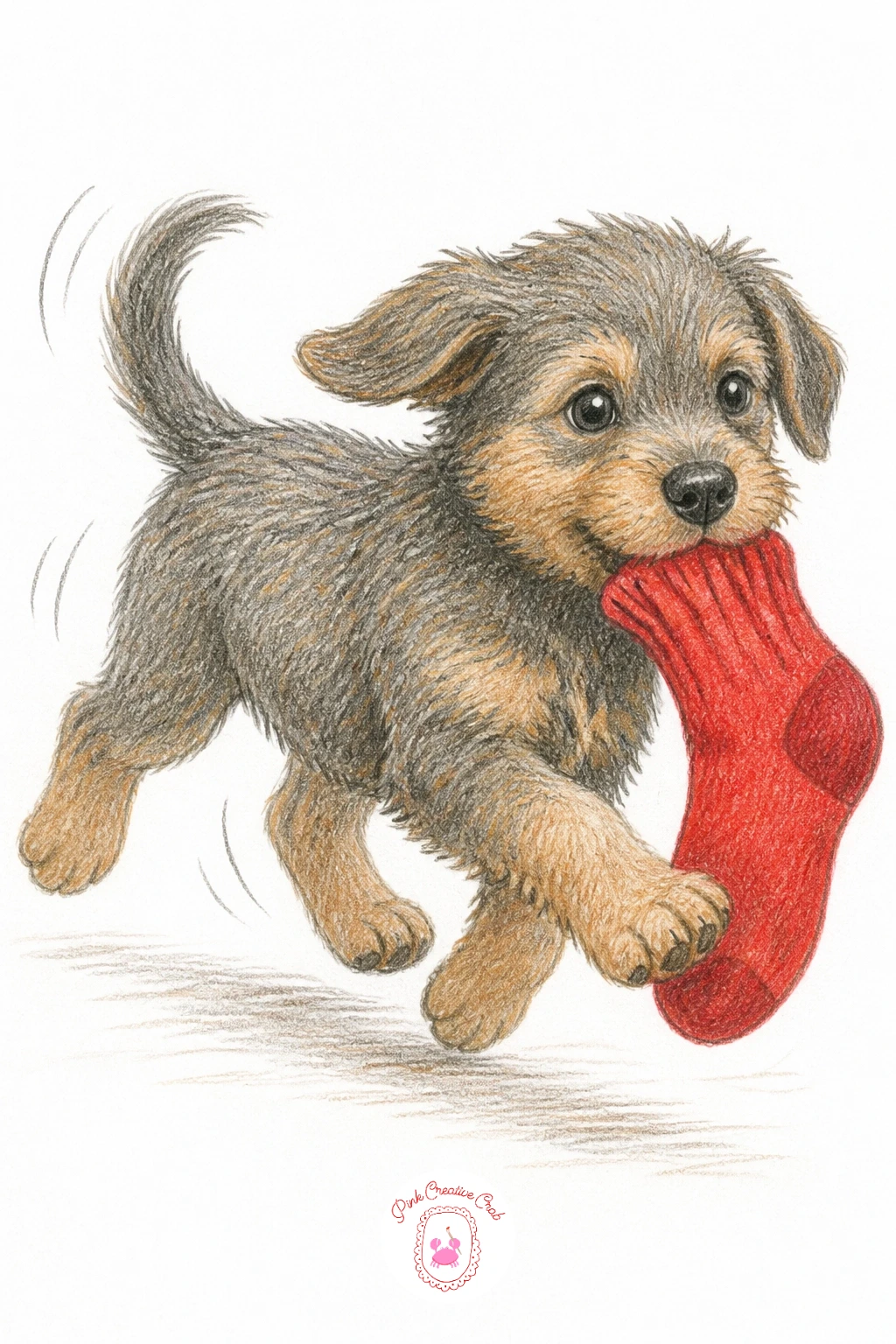
Palette: Greyish Brown,Cream White,Scarlet Red,Soft Black
Settle the energy for a moment with a puppy in a laundry basket, paws draped over the woven rim and a sock or towel spilling out beside it. Sketch the basket as a simple wide oval shape first, then nestle the puppy’s rounded body down inside it before adding any weave texture.
Work the wicker texture with short diagonal pencil strokes in warm tan and brown, crossing them lightly to suggest the woven pattern without drawing every single strand. Keep the puppy’s fur softer and rounder in contrast, so the basket reads as sturdy and the puppy reads as soft.
This is a good one to try two ways: a quick ten minute version with a plain basket and a sleepy puppy face, or a fuller forty minute version adding a spilling towel, a loose sock, and shadow detail inside the weave for depth.
However you finish it, add one soft cast shadow under the basket to ground it on the page. If wicker texture feels fussy, simplify it to plain horizontal stripes instead.
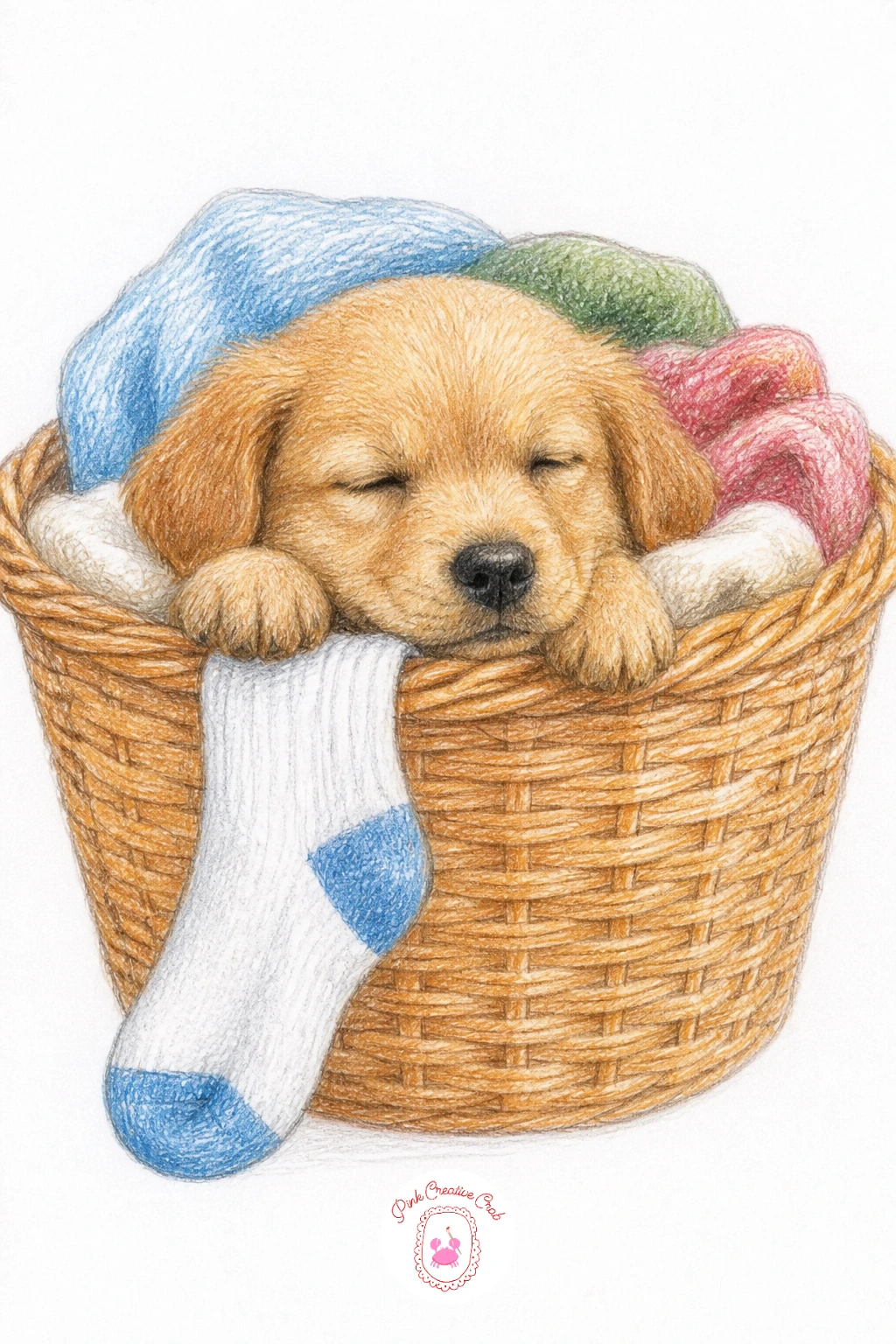
Palette: Honey Tan,Warm Brown,Soft Cream,Pale Grey
Readers short on time can skip the woven texture entirely and simply shade the basket as a solid warm brown shape, letting the puppy’s face carry the whole drawing.
Shift to a close-up moment: a puppy with a muddy face, caught looking up with big eyes and a splattered nose after an adventure outside. Draw just the head and shoulders large on the page, filling most of the frame, since this idea works best as a portrait rather than a full body scene.
Build the clean fur first in warm cream and tan, then dab the mud on top in uneven patches of dark brown, pressing harder in the center of each splotch and lighter at the edges so it looks wet rather than painted on.
Edges are everything here: use a slightly dry, scratchy pencil stroke for the mud patches against the soft blended fur, so the contrast in texture does the work of separating clean dog from dirty dog. A kneaded eraser can lift a few lighter streaks through the mud for a dripping look.
Leave the eyes bright and clear of mud so they stay the focal point. If dark brown feels too heavy, a warm grey mud works just as well on lighter-furred puppies.
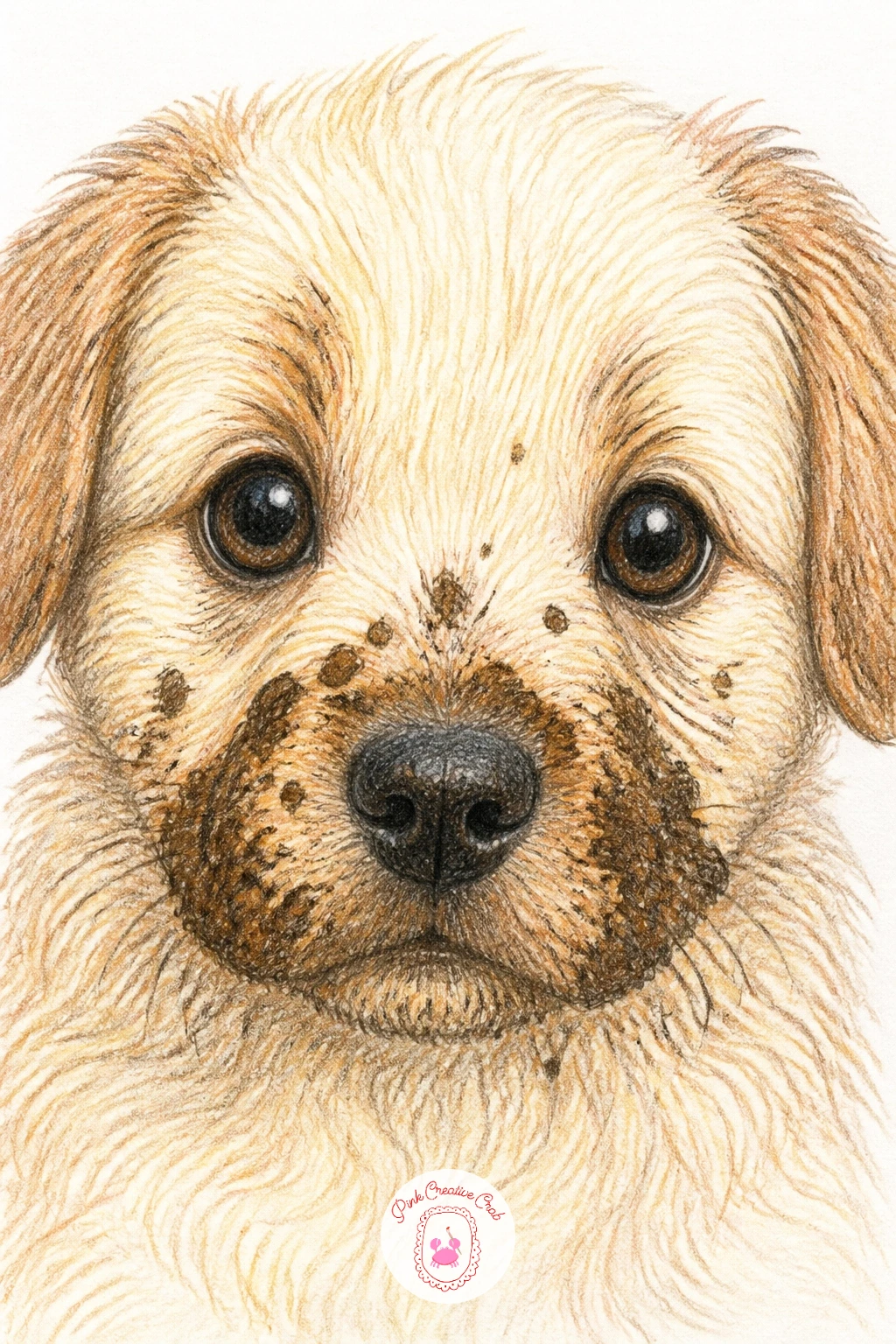
Palette: Cream Fur,Mud Brown,Warm Tan,Deep Umber
Lighten the mood with a puppy chasing bubbles, leaping up with both front paws off the ground toward a cluster of floating circles. Sketch the puppy mid-jump first, with the back legs bent and the head tilted upward, before placing any bubbles so the whole pose stays believable.
Draw the bubbles last as simple light circles, barely shaded except for one small white highlight and a faint blue-grey rim, so they stay airy and translucent against the puppy’s warm coat. Keep them varied in size and drifting in one general direction to suggest a breeze.
The light source decides everything in this one: if the sun comes from one side, the bubbles catch a bright highlight on that same side and cast a tiny soft shadow on the ground below the puppy’s leap. Keep both consistent and the scene holds together instantly.
Add a little dust or grass texture at the puppy’s back paws to anchor the jump. No blue pencil on hand? A grey outline alone still reads clearly as a bubble.
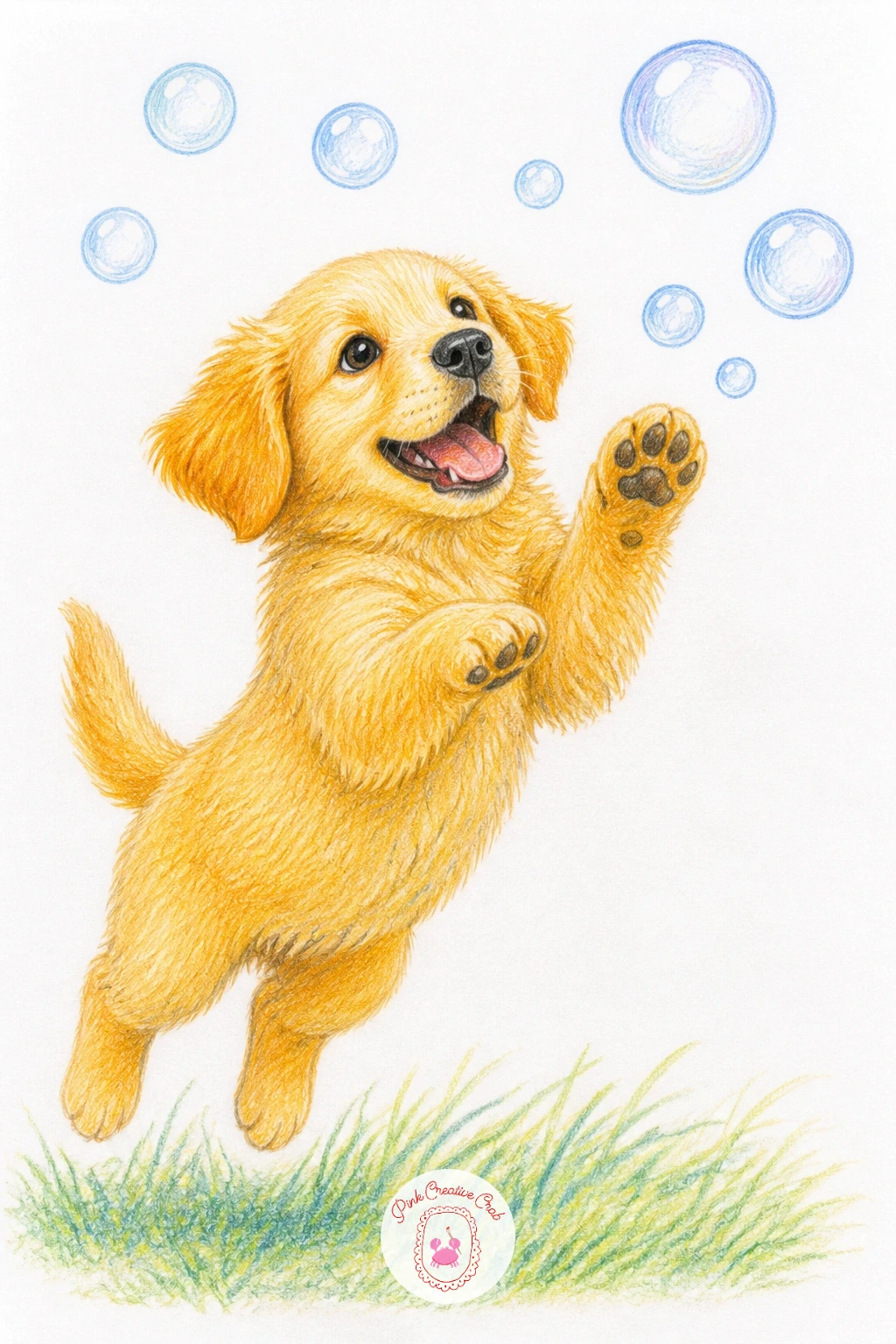
Palette: Golden Tan,Sky Blue,Soft White,Grass Green
Slow the pace with a quieter idea: a puppy asleep in its food bowl, curled impossibly small with one paw hanging over the rim. Draw the bowl first as a wide shallow oval, then fit the sleeping puppy’s curled body down inside it, overlapping the rim slightly for a snug, squeezed-in look.
Shade the fur in soft warm greys and creams with gentle, rounded strokes, keeping the whole pose loose and relaxed with no sharp edges anywhere. The bowl can take a plain solid color like dusty blue or faded red, shaded a little darker along its inner curve to show depth.
If this is your first time drawing a curled-up pose, work from the spine outward: draw one curving line for the back first, then build the head, paws and tail around that single line so the curl stays consistent and believable.
A few scattered kibble pieces spilled beside the bowl add a nice storytelling detail. One tip for today: keep the eyes fully closed and the mouth soft, since even a slightly open eye will break the sleepy mood completely.
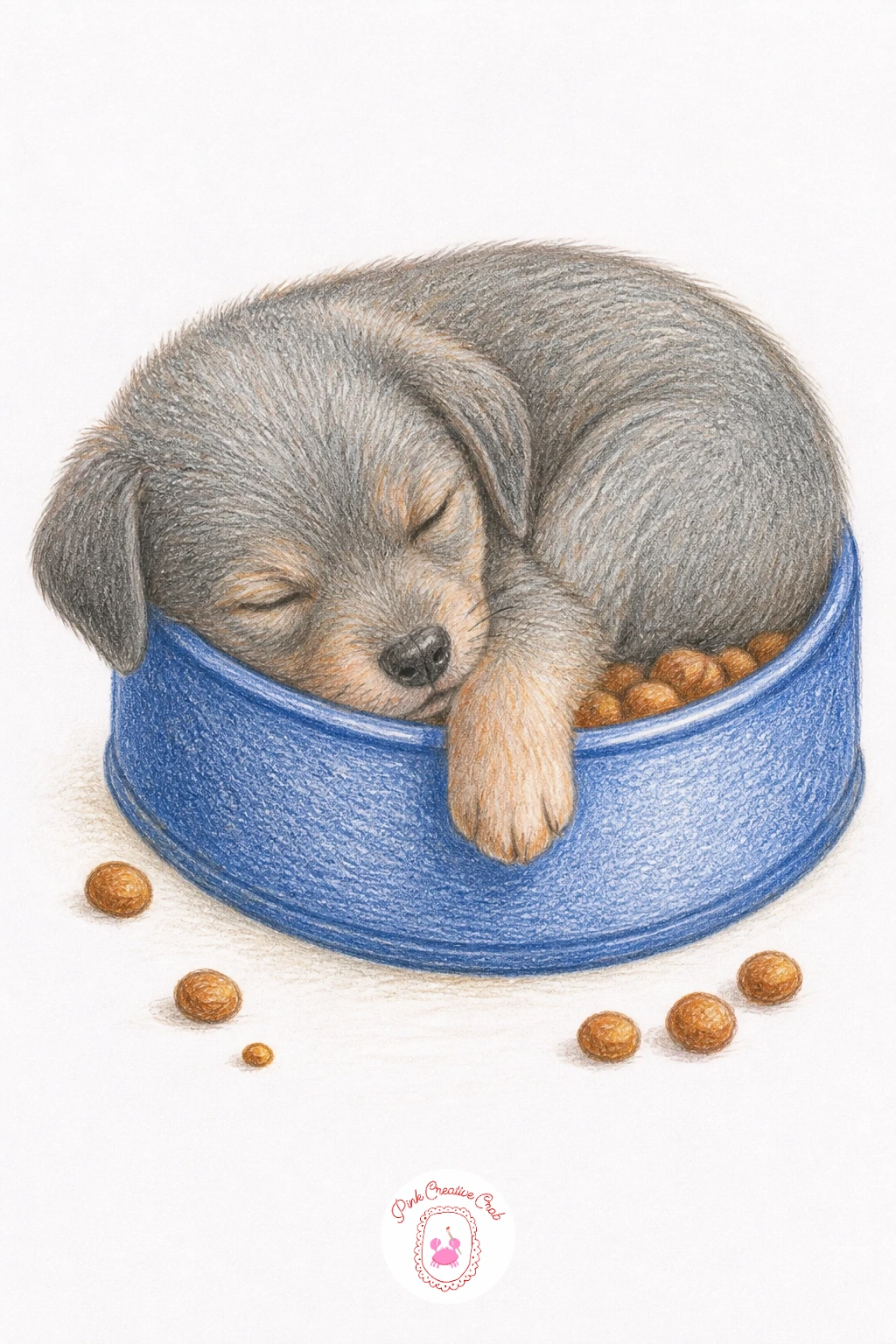
Palette: Dusty Blue,Warm Grey,Cream,Soft Tan
Build up the energy again with a puppy pulling a tablecloth, braced low to the ground with the fabric bunched tightly in its teeth. Sketch the puppy first in a determined crouch, back legs dug in and head pulled low, then add the tablecloth trailing from its mouth in a few long sweeping folds.
Shade the fabric with soft diagonal strokes to suggest draped folds, using a light color like ivory or pale blue so it stays separate visually from the puppy’s warmer fur tones. Keep the folds large and simple rather than crowding in too many small wrinkles.
Comparing the puppy’s stance to a tug-of-war pose helps keep this one from going wrong: the front legs should angle backward against the pull, not straight down, or the whole effort of the scene disappears. Check that lean before adding any final details.
A toppling small object like a cup sliding off the edge adds drama without much extra work. If the folds feel tricky, a single straight edge with one soft wrinkle near the puppy’s mouth still tells the whole story.
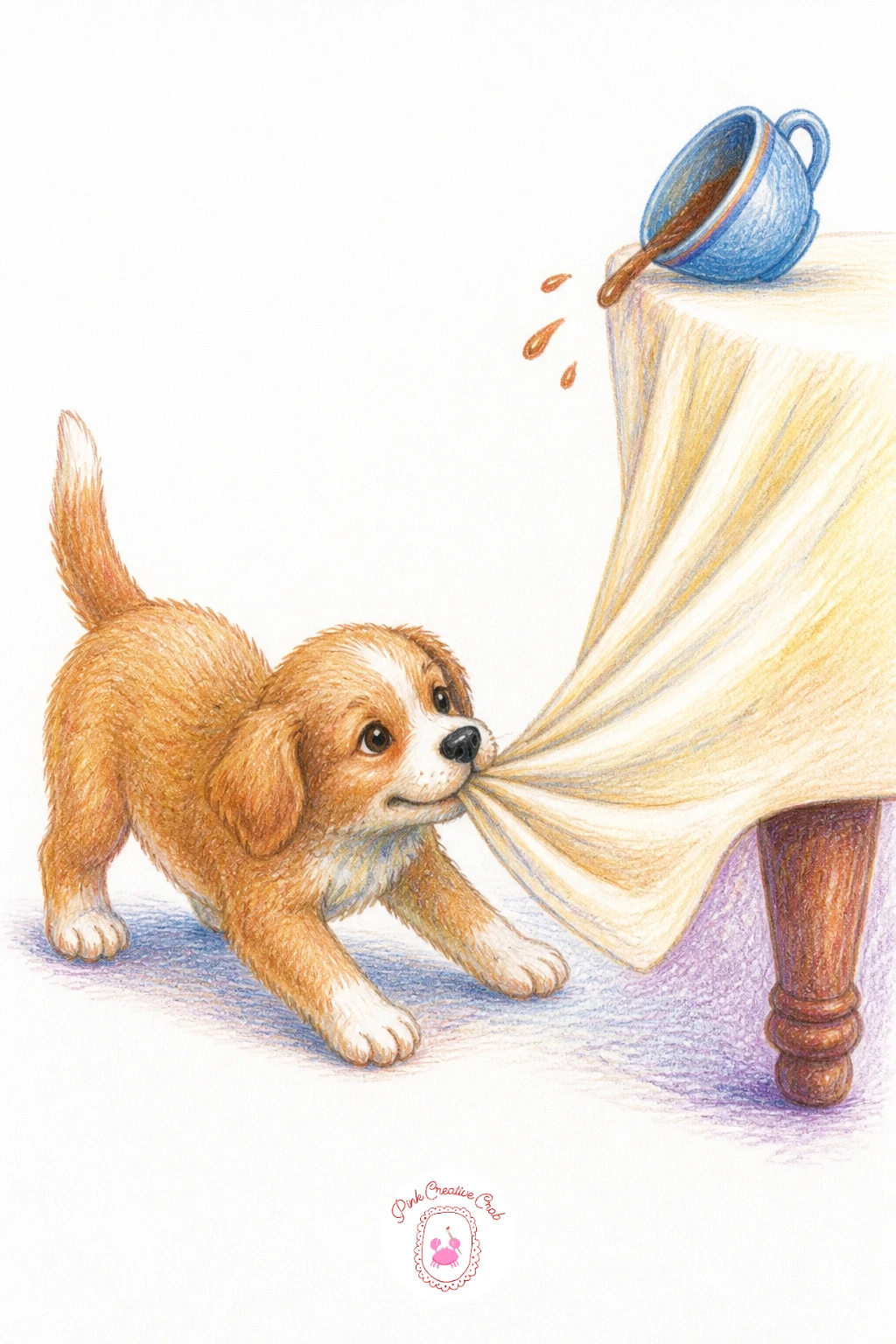
Palette: Ivory,Pale Blue,Warm Brown,Soft Grey Shadow
Add a food-themed moment with a puppy with a stolen sandwich, trotting off triumphantly with a thick sandwich wedged sideways in its mouth. Draw the puppy’s body in a proud, chest-forward stance before placing the sandwich, since the whole pose should look like a victory lap.
Layer the sandwich bread in warm cream and gold with a visible edge of lettuce green and a slice of tomato red peeking out, giving it just enough detail to read instantly as food without overworking it. Keep the puppy’s fur colors warm too, so the whole scene feels cohesive rather than split between two unrelated palettes.
The quick version here takes about ten minutes: a simple standing puppy and a plain sandwich shape. The fuller forty minute version adds crumbs scattered on the ground, a dramatic sideways tilt to the head, and shading inside the bread layers for more depth.
Either way, finish with one bold highlight on the puppy’s eye to keep the expression mischievous. A tip for today: tilt the sandwich at a slight angle rather than straight across the mouth, it reads far more natural.
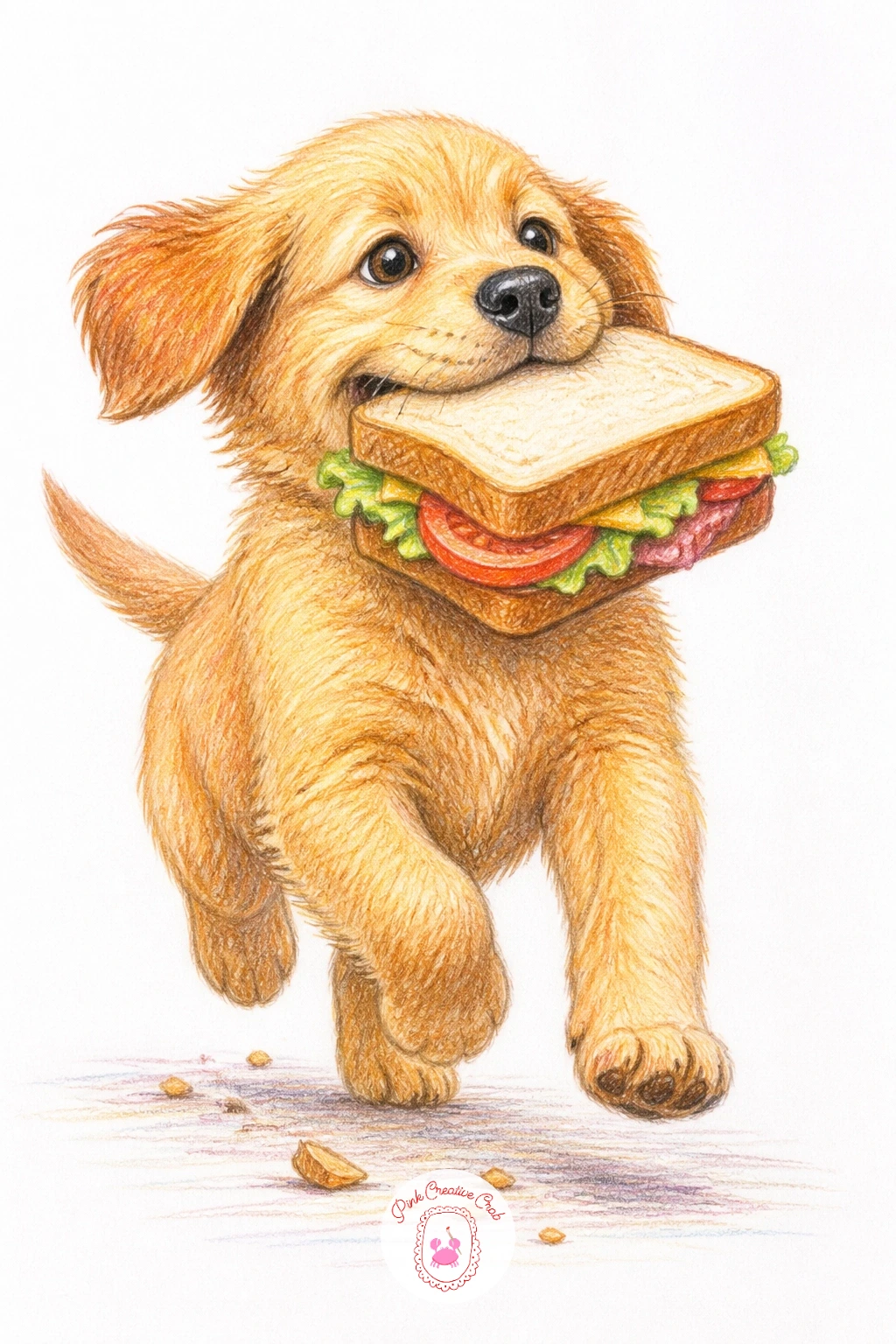
Palette: Golden Bread,Lettuce Green,Tomato Red,Warm Tan Fur
Return to something cozy with a puppy inside a boot, only its head and front paws poking out over the top while the rest stays hidden inside the shaft. Sketch the boot first as a tall simple shape, then fit the puppy’s head and paws peeking from the opening before any leather texture goes on.
Shade the boot leather in warm chestnut brown with a few streaky highlights running vertically to suggest its curved, worn surface, and keep the inside of the opening darker to show real depth. The puppy’s fur should stay lighter and softer in contrast so it clearly reads as popping out of the shadow.
If you have never drawn an object with this much depth before, treat the boot opening as an oval seen at an angle rather than a straight circle: that single adjustment makes the boot look three-dimensional instead of flat and cut out.
A loose shoelace trailing to one side finishes the idea nicely. If chestnut brown feels too dark for your palette, a worn tan boot works just as well and shows the puppy’s face even more clearly.
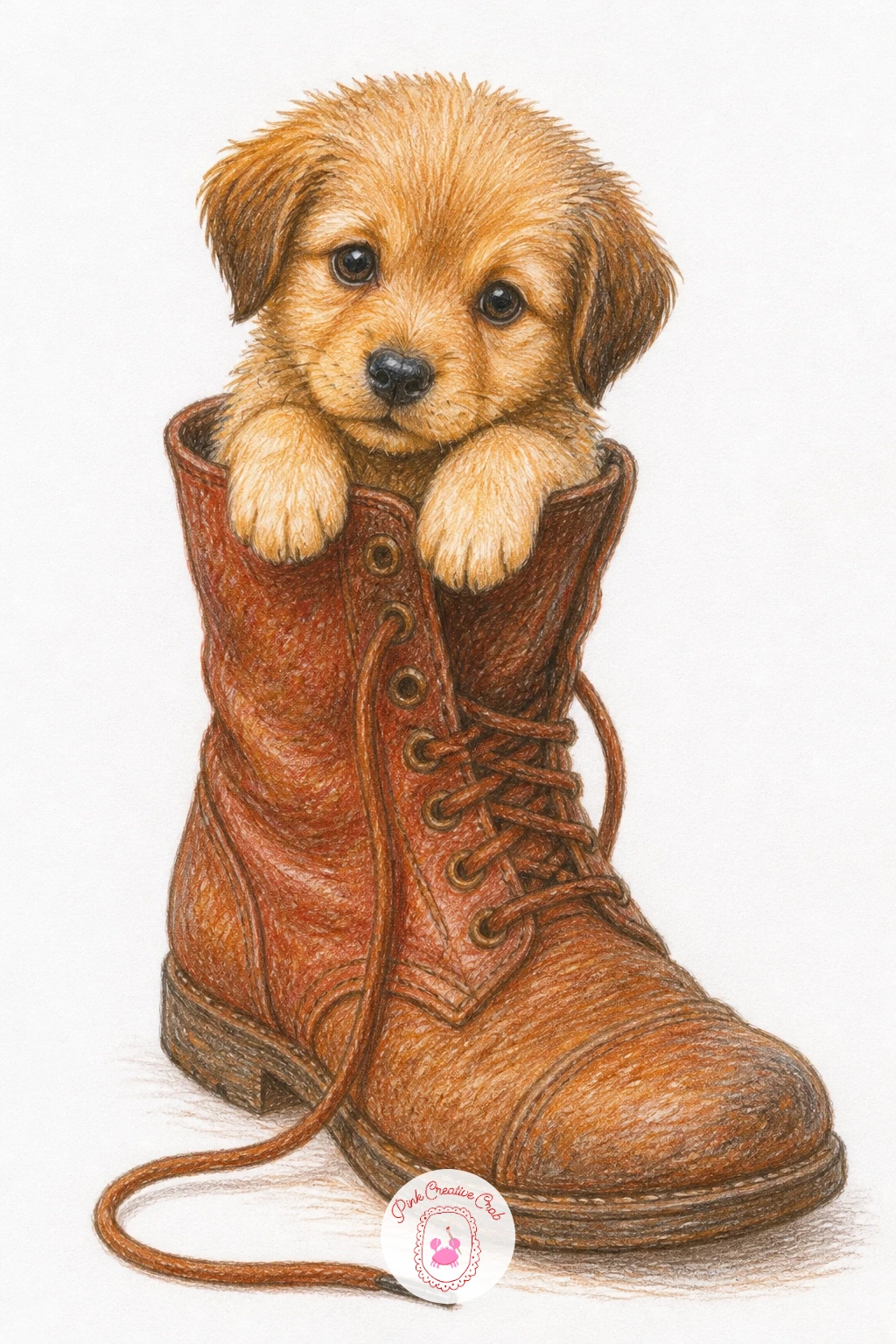
Palette: Chestnut Brown,Warm Tan,Deep Shadow Brown,Cream Fur
Keep the comic chaos going with a puppy tangled in its leash, looped around two or three of its own legs after one too many spins. Draw the puppy first in a slightly off-balance stance, one paw raised awkwardly, then weave the leash line around the legs afterward so it follows the body’s shape naturally.
Shade the leash as a simple solid color like red or navy, keeping its width consistent as it loops, since a leash that changes thickness partway through will look broken rather than tangled. The clip and collar can take a small metallic grey highlight for a bit of shine.
If proportions start to feel confusing with limbs crossing over a line, pause and check each leg length against the puppy’s own head size before committing to the leash path. That single comparison keeps the tangle readable instead of turning into a confusing knot of lines.
A slightly tilted head and one raised ear sell the comic confusion nicely. One tip for today: draw the leash in one single continuous curving stroke rather than several short lines, it reads far more like one length of rope.
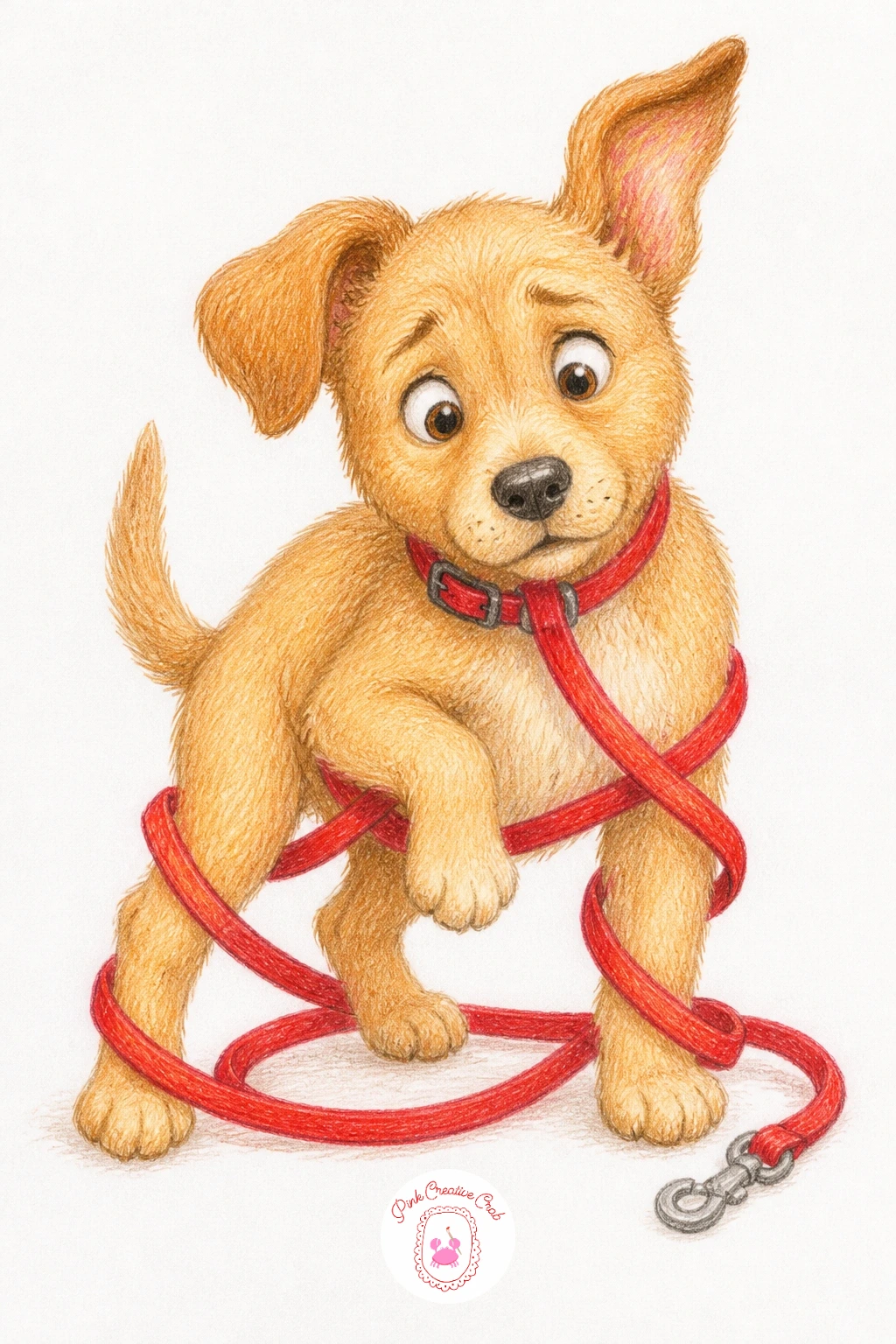
Palette: Warm Tan Fur,Leash Red,Metallic Grey,Soft Cream
Capture pure motion with a puppy chasing its tail, body curved into a tight spinning circle with the head twisted back toward the hindquarters. Build this pose from a single curved spine line first, much like the sleeping bowl idea earlier, only here the curve pulls much tighter and the legs splay outward for balance.
Shade the fur in warm golden tones, using slightly longer strokes along the outer curve of the spin to suggest motion blur, and keep the inner curve tighter and more compact. The tail itself should blur slightly at the tip rather than staying crisp, which helps sell the spinning energy.
A few light curved motion lines trailing behind the back paws finish the feeling of movement without needing any speed lines across the whole page. Keep them short and faint so they support the puppy rather than competing with it.
This is one of the quicker ideas on the list, so if time is short, skip detailed background work entirely and let the curved pose and motion lines carry the whole drawing. A tip for today: exaggerate the twist in the neck slightly more than feels natural, it reads as far more playful on paper.
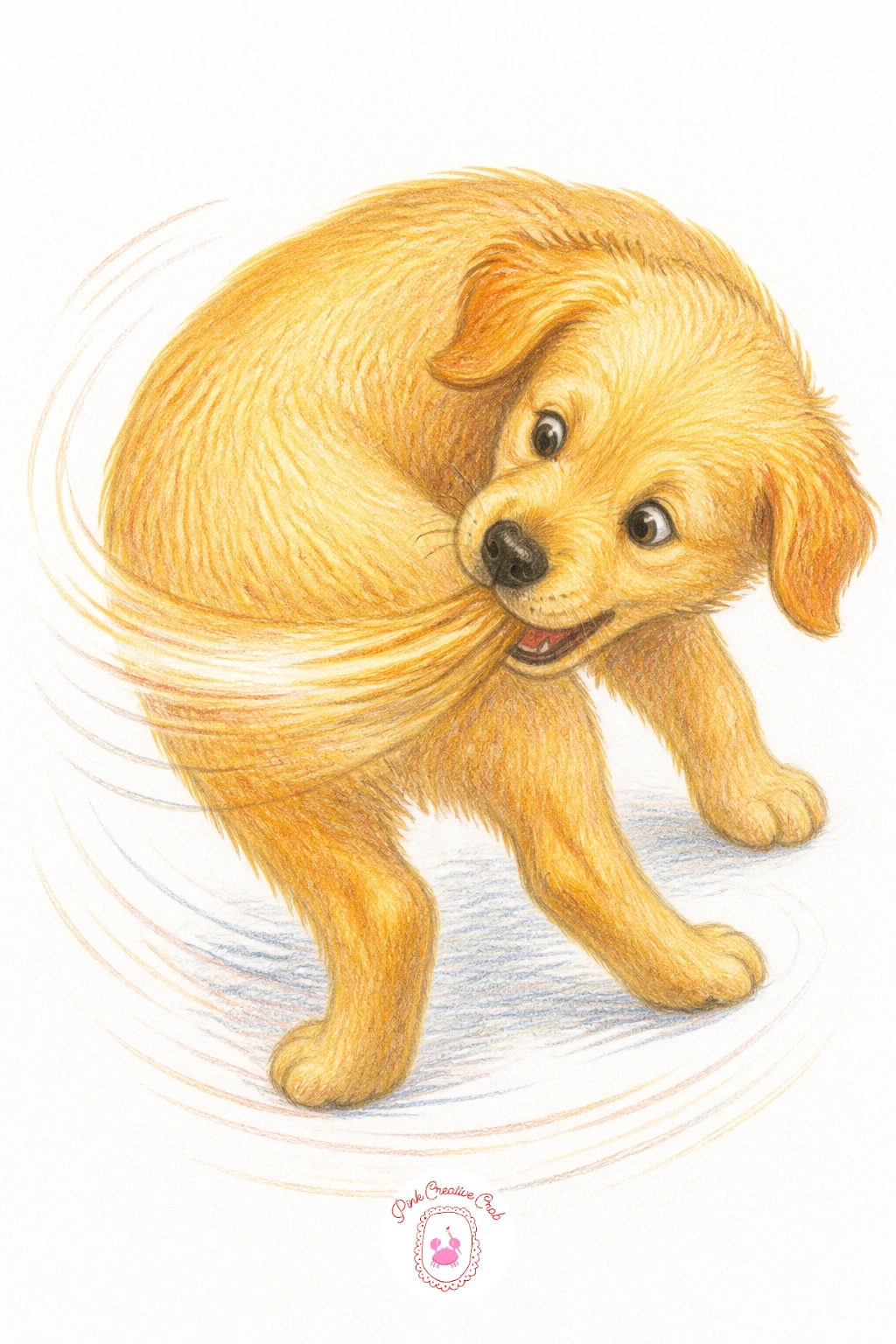
Palette: Golden Tan,Warm Brown,Cream Highlight,Soft Shadow Grey
Cool things down with a puppy splashing in a paddling pool, front paws kicking up a spray of water droplets over the low plastic rim. Draw the pool first as a simple wide oval with a slightly raised rim, then place the puppy standing inside it before adding any water texture or splashes.
Shade the water in soft blue with a few lighter streaks left mostly as bare paper to suggest ripples and shine, keeping the color light rather than solid so it still reads as water rather than paint. The splashes around the paws work best as small white or very pale blue shapes, irregular rather than perfectly round.
The eye level question matters again here: a slightly higher viewpoint looking down into the pool shows off the water and ripples far better than a straight side view, which tends to hide most of the pool’s interest behind the rim.
Add one or two wet patches of darker fur along the puppy’s legs to show where the water has soaked in. If blue pencil runs light, press a little harder in the deepest part of the pool and keep the edges pale.
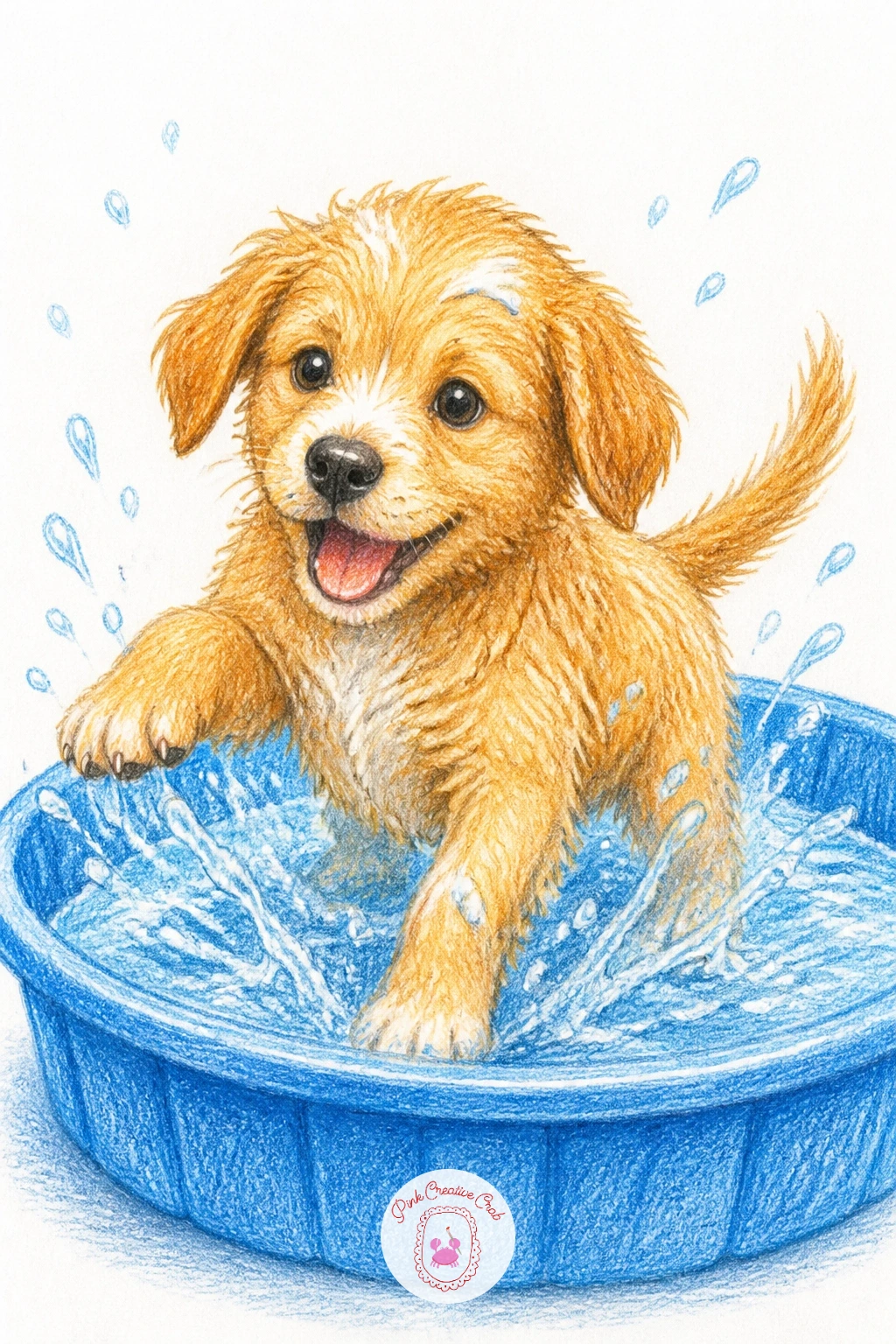
Palette: Pool Blue,Pale Aqua,Wet Fur Brown,White Splash
Bring in a festive note with a puppy in a gift box, sitting inside an open lid with a loose ribbon draped over one ear. Sketch the box first as a simple cube shape with the lid tilted to one side, then fit the puppy’s rounded body down inside before adding the ribbon or any bow.
Shade the box in a warm solid color like red or forest green, with a lighter ribbon color crossing it in two clean bands, and keep the inside of the box slightly darker in shadow to show the puppy is genuinely sitting inside rather than standing in front of it.
If you want to try something bolder than a plain box, add a patterned lid with simple dots or stripes once the basic shapes feel comfortable, since the flat lid surface is an easy place to practice a repeating pattern without much risk.
One floppy ear draped with a loose bow tail finishes the sweetness of the scene. A tip for today: keep the puppy’s expression slightly tilted and curious rather than fully alert, it suits the surprise of the moment better.
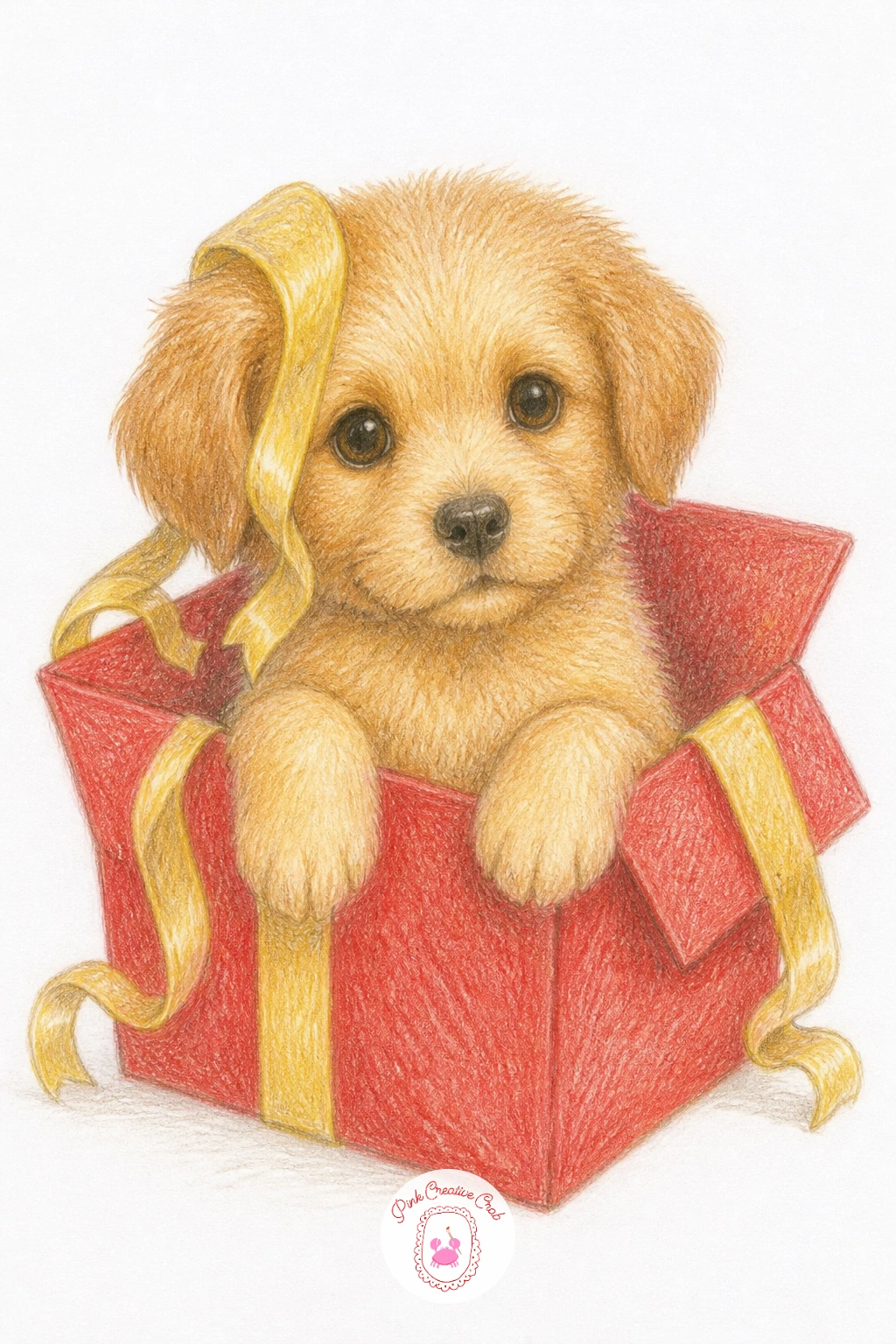
Palette: Box Red,Ribbon Gold,Warm Tan Fur,Shadow Maroon
Settle into a cozy moment with a puppy under a blanket, only the nose and two eyes peeking out from a soft folded mound of fabric. Draw the blanket shape first as a large rounded mound filling most of the page, then carve out a small gap for the peeking face before adding any fur details underneath.
Shade the blanket in a warm plaid or solid color using long, soft strokes that follow its folds, keeping the shadows deepest where the fabric dips closest to the hidden puppy. The small visible patch of face should stay the warmest, brightest part of the whole drawing so the eye goes there first.
If this is your first time shading large folded fabric, work one fold at a time from light to dark rather than trying to shade the whole blanket at once: it keeps the folds reading as separate shapes instead of blending into a flat mess.
A single paw poking out near the bottom edge adds a nice extra detail. If plaid feels like too much, a plain soft grey blanket with simple fold lines works just as well.
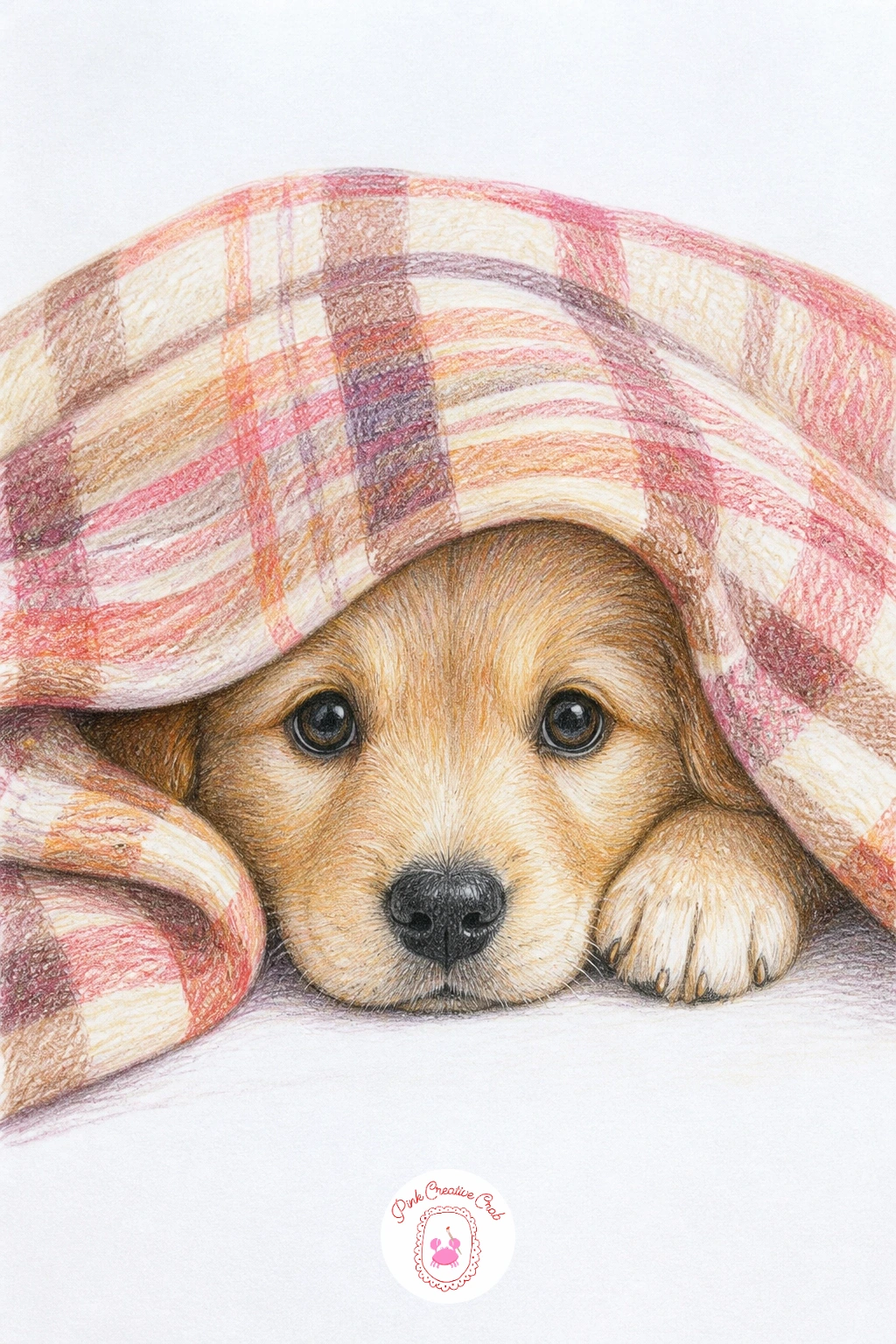
Palette: Plaid Red,Soft Grey,Warm Cream Fur,Shadow Brown
Turn up the chaos with a puppy in a pillow feather storm, sitting in the middle of a torn pillow with feathers drifting through the air around it. Sketch the puppy first, proud and upright, then tear a simple pillow shape beside it with a jagged open seam before scattering any feathers.
Draw the feathers as small light curved shapes, varying their size and tilt so they feel like they are genuinely falling rather than stuck in place, and keep most of them pale white or cream so they stand out clearly against the puppy’s warmer fur.
Edges matter enormously in this one: keep the torn pillow fabric jagged and rough at the seam while the puppy’s fur stays soft and blended, since that contrast in texture is what sells the whole destructive moment. A slightly scratchy pencil line works well for the torn fabric edge.
Scatter a few feathers caught on the puppy’s head and ears for extra charm. If white pencil shows up too faintly on your paper, switch to a pale grey instead and let the paper itself read as the brightest white.
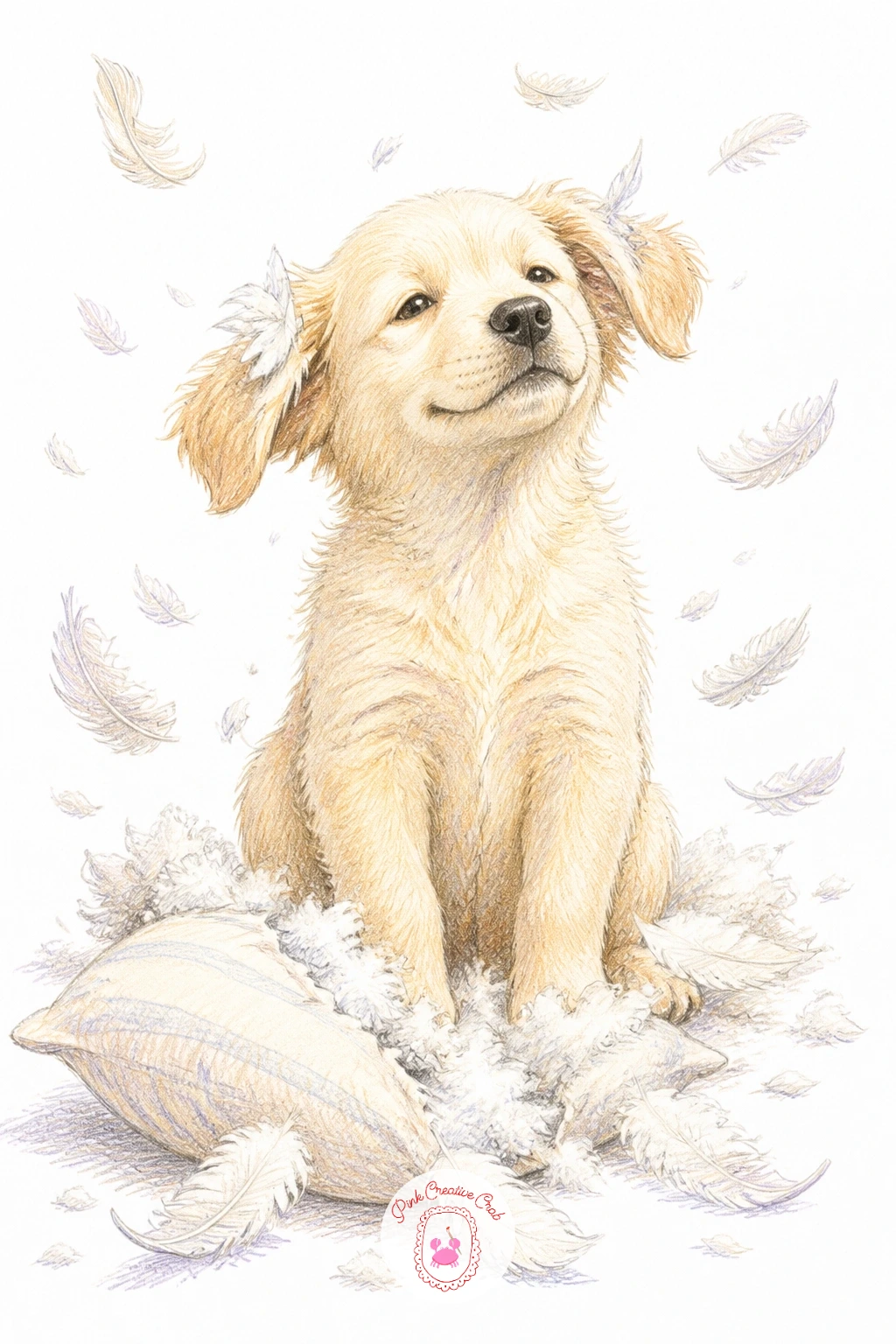
Palette: Cream Feather,Pillow Blue,Warm Tan Fur,Torn Edge Grey
Build drama with a puppy barking at the vacuum, front legs braced wide and mouth open mid-bark at the looming machine beside it. Draw the puppy first in a defensive stance, chest low and ears pinned back, then block in the vacuum as a simple tall shape with a rounded body and a long upright handle.
Shade the vacuum in cool greys and a bold accent color like red for its body, keeping its surface smooth and flat in contrast to the puppy’s textured fur. That contrast between a soft living thing and a hard flat object is most of what makes this scene work visually.
Checking proportion here matters more than usual: compare the vacuum’s height to the puppy’s body so it clearly towers over the little dog, even if only slightly, since a vacuum the same size as the puppy loses all its comic tension.
An open mouth with a small pink tongue flash and a couple of sound lines near the bark finish the drama. A tip for today: angle the puppy’s whole body slightly backward even while barking forward, it captures that brave-but-nervous look perfectly.
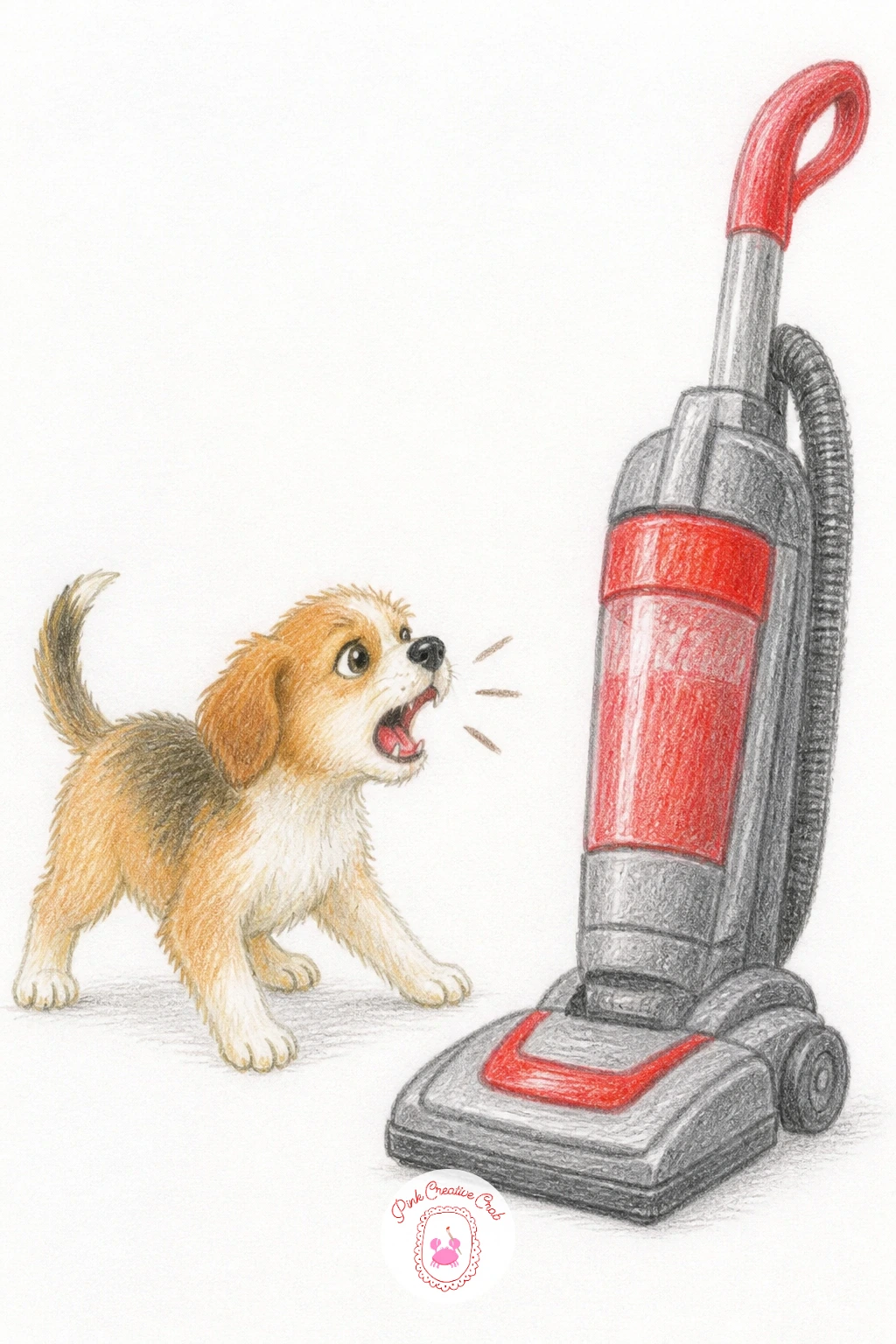
Palette: Cool Grey,Vacuum Red,Warm Fur Tan,Soft Pink Tongue
Take the scene outdoors again with a puppy rolling in leaves, body twisted on its back with paws in the air and a scatter of fallen leaves tossed around it. Sketch the puppy upside down first, which feels awkward at first but reads as pure joy once the fur and leaves go in around it.
Scatter the leaves in warm autumn tones of orange, red and gold, varying their size and angle so they look freshly kicked up rather than neatly arranged. Layer a few directly on top of the puppy’s belly and paws to really sell the rolling motion.
Next time you draw this pose, try varying it with a different season entirely: the same upside-down rolling puppy works just as well in summer grass or winter snow, simply by swapping the scattered ground texture and palette around it.
Keep the belly fur lighter than the back fur for a simple but effective contrast. A tip for today: let two or three leaves overlap the puppy’s outline completely, it ties the whole scene together far better than leaves floating separately around it.
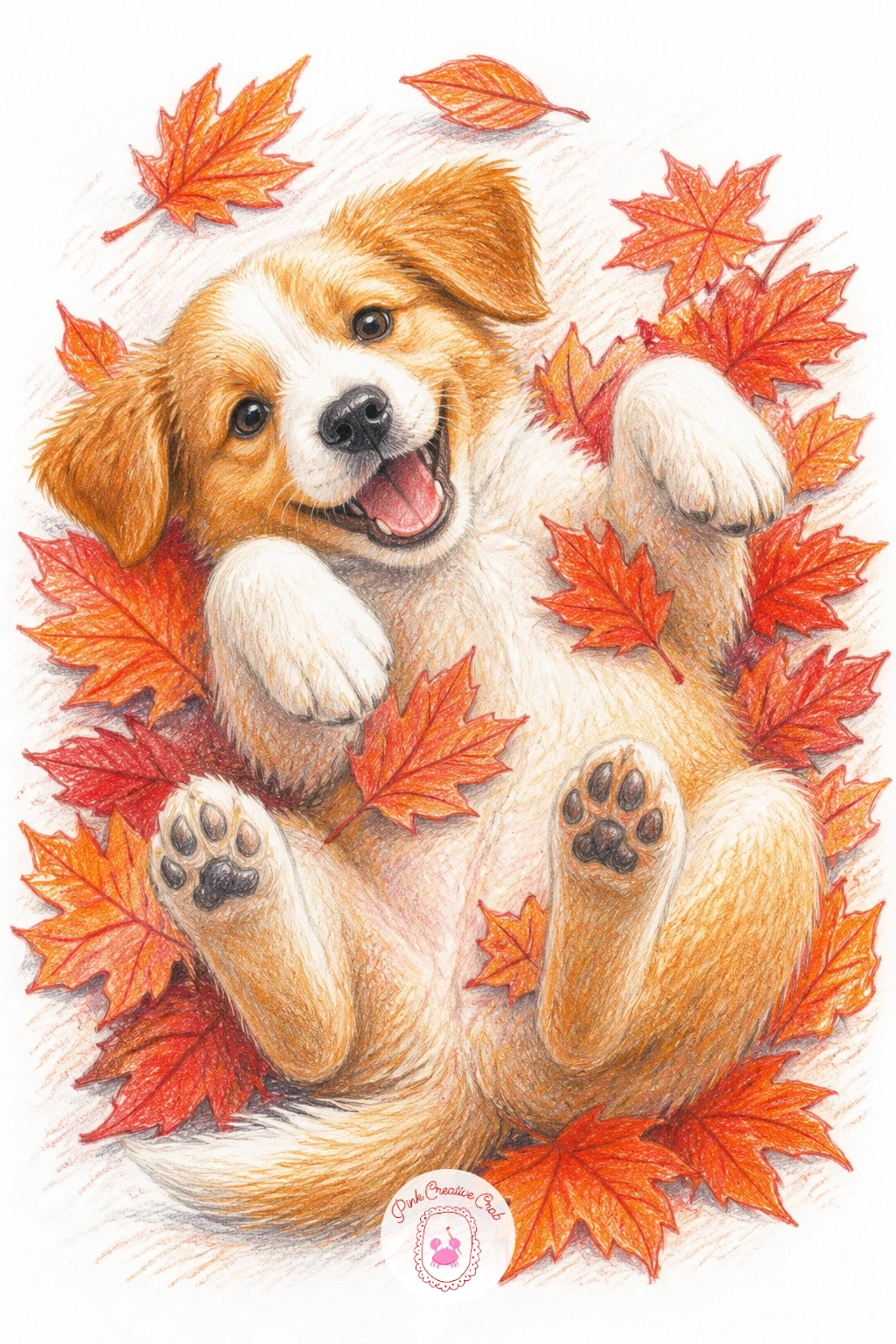
Palette: Autumn Orange,Maple Red,Golden Yellow,Warm Fur Brown
Add a little comedy with a puppy carrying a giant stick, a branch far too large for its mouth dragging along on either side as it trots proudly forward. Draw the puppy’s body first in a confident walking pose, then lay the stick across its mouth at a wide angle so it clearly overshoots the puppy’s own width on both sides.
Shade the stick in warm wood tones with a few short dark lines for bark texture, keeping the strokes rough and irregular compared to the smoother blending used on the puppy’s fur. That rougher texture reads instantly as solid wood rather than something soft.
Comparing the stick’s length to the puppy’s own body is the trick that makes this idea work: the stick should measure at least twice the puppy’s length to look properly oversized and genuinely comic rather than just an ordinary toy.
A few twigs branching off the main stick add extra charm without much more work. A tip for today: tilt the puppy’s head slightly to one side under the stick’s weight, it sells the effort nicely.
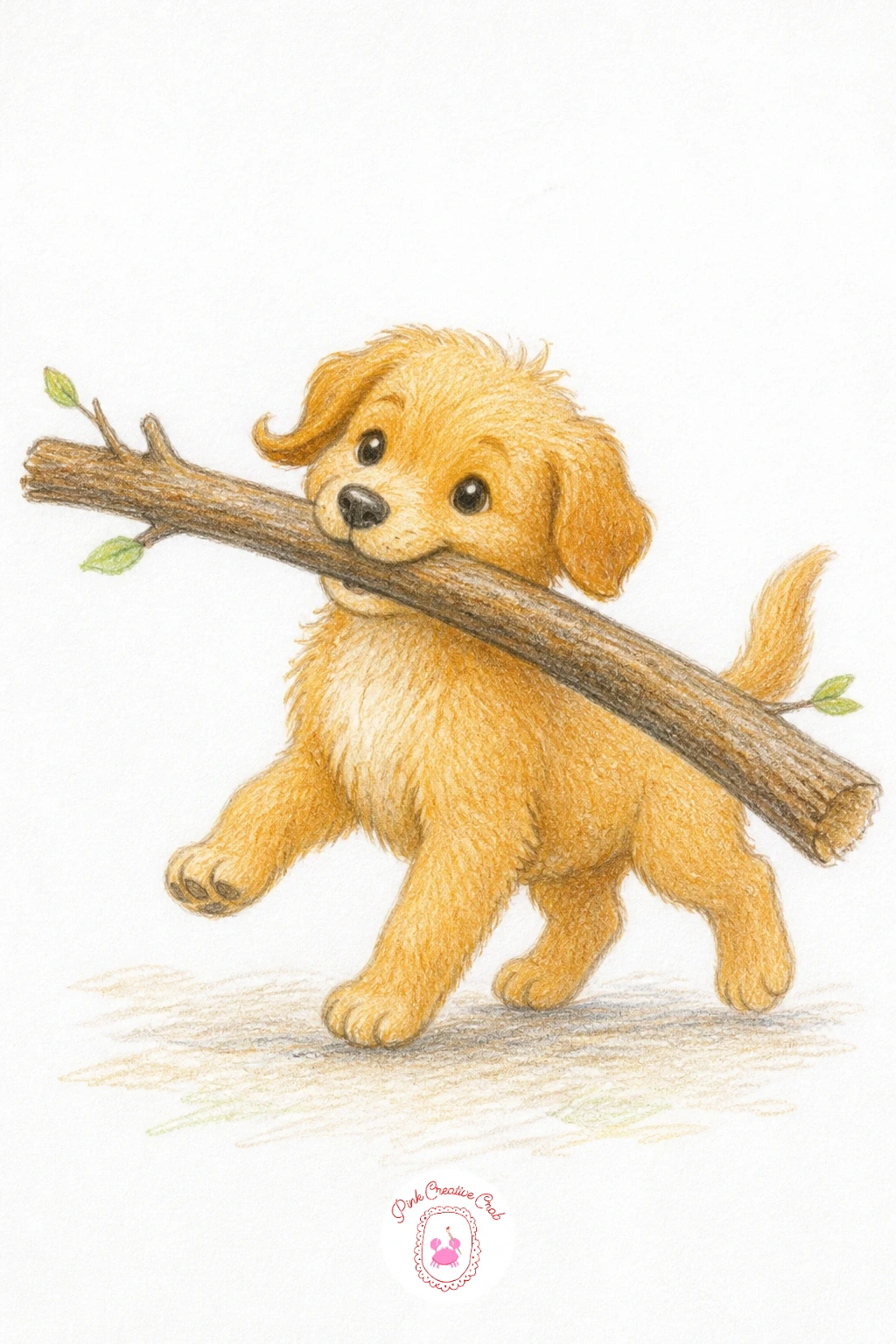
Palette: Wood Brown,Bark Dark Brown,Warm Fur Tan,Soft Green Leaf
Soften the mood with a puppy at its first bath, standing damp and wide-eyed in a tub with soap suds piled on its head like a little hat. Sketch the tub first as a simple rounded basin, then place the standing puppy inside it before adding any water or suds on top.
Shade the wet fur differently from dry fur: use darker, flatter strokes pressed closer together to show the fur is matted down with water, rather than the usual soft fluffy layering used elsewhere on this list. The suds on top stay nearly white with just a hint of blue-grey shadow in their creases.
If this is your first time drawing wet fur, work the darker wet strokes first and leave the suds for last, since trying to draw fluffy white suds before the fur underneath is settled tends to muddy both textures together.
A rubber duck floating beside the puppy adds a sweet extra detail without much effort. A tip for today: keep the puppy’s expression a little startled rather than relaxed, that captures the familiar first-bath look perfectly.
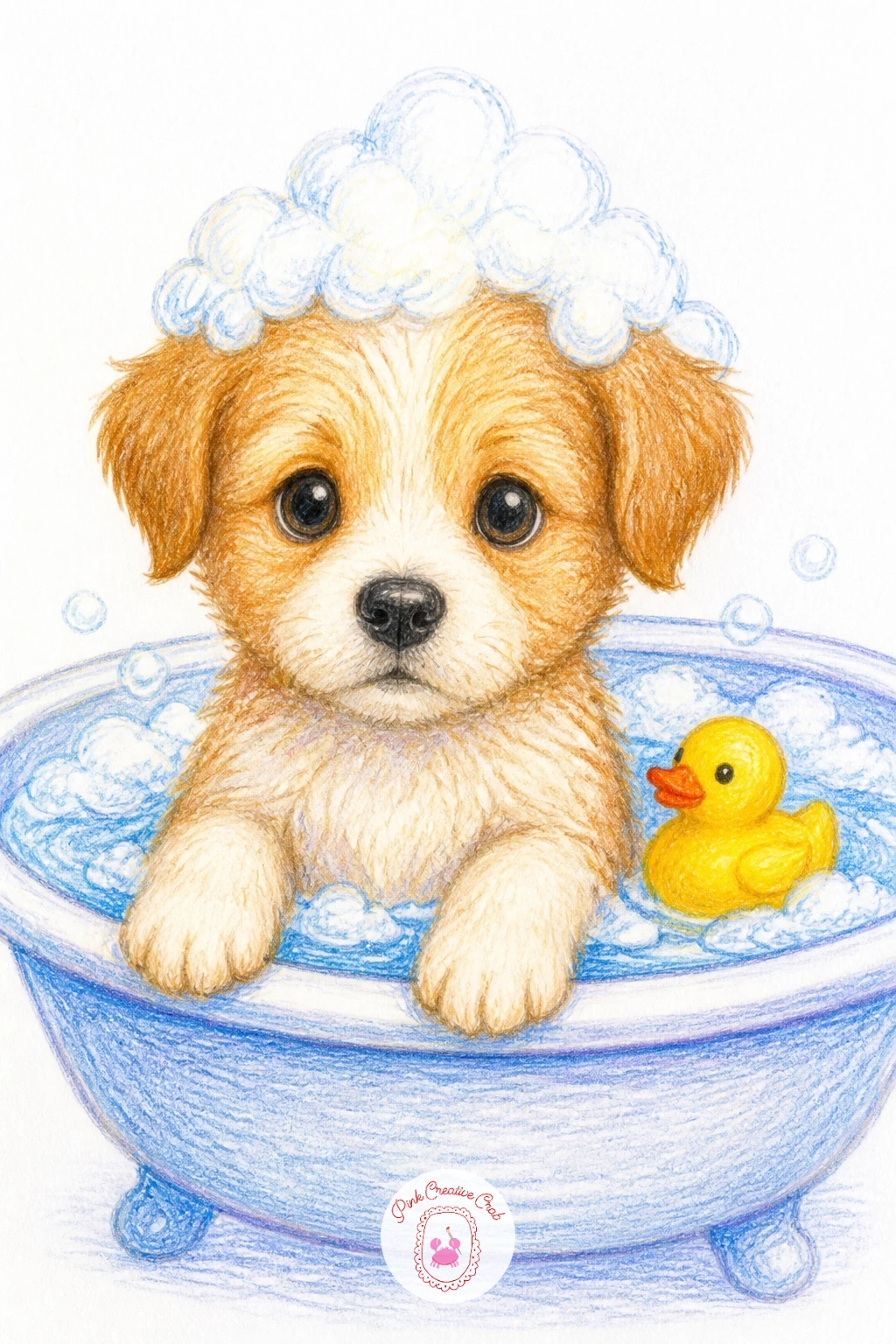
Palette: Wet Fur Grey,Suds White,Tub Blue,Rubber Duck Yellow
Capture a classic household moment with a puppy on the forbidden sofa, sprawled comfortably across the cushions with a guilty but satisfied look on its face. Draw the sofa first as a simple large rectangle with a soft rolled arm and back, then place the puppy sprawled diagonally across the seat cushion.
Shade the sofa fabric in a warm solid color like mustard or deep teal, with simple folds indicated by a few darker shadow lines where the cushion dips under the puppy’s weight. Keep the puppy’s fur lighter in tone so it stands out clearly against the larger furniture shape.
Eye level changes everything here: looking slightly downward at the sofa from above shows off both the puppy’s sprawled pose and the cushion dip beneath it, while a straight-on view flattens the whole scene and hides the sense of sinking into soft fabric.
One ear flopped over an armrest and a slightly guilty sideways glance finish the personality nicely. A tip for today: leave one visible paw print or smudge on a nearby cushion, it adds a lovely small storytelling detail.
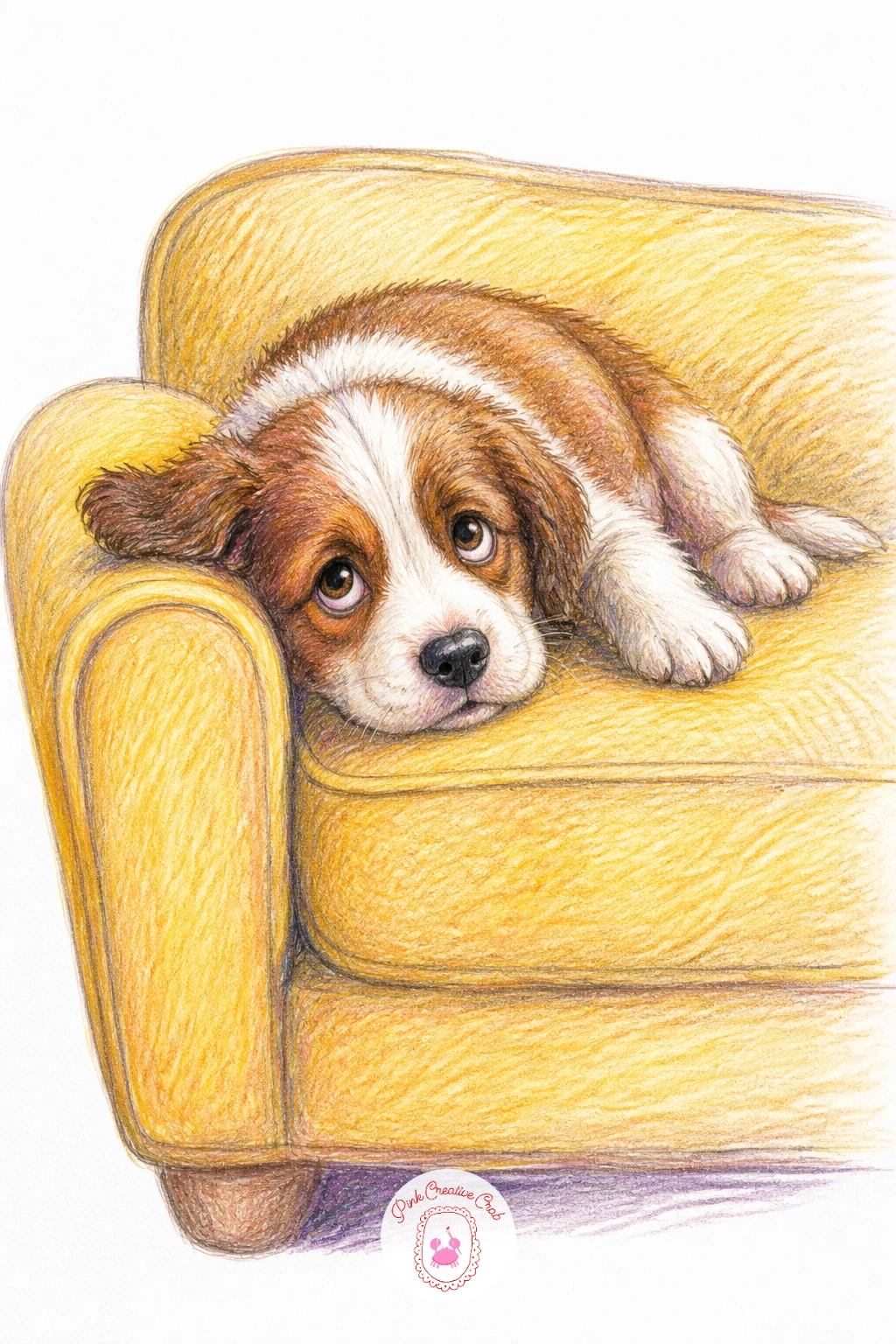
Palette: Mustard Yellow,Deep Teal,Warm Fur Tan,Shadow Brown
Bring in a second character with a puppy and a kitten face to face, noses nearly touching in a careful first meeting. Draw both animals as simple rounded shapes of similar size first, facing each other at the same eye level, since matching their heights keeps the moment feeling equal rather than one animal dominating the other.
Shade the puppy in warm golden tones and the kitten in cooler grey or orange tabby stripes, giving each animal a clearly different coat so they read as two distinct characters rather than blending together. Keep both noses just slightly apart rather than touching, which reads as more suspenseful and sweet than actual contact.
If you have never drawn two animals interacting before, draw one completely first and only then sketch the second around it, checking the gap and angle between their faces before adding any fur or color at all.
Two tails, one curled and one wagging, add a nice contrast in personality. A tip for today: tilt both heads slightly toward each other rather than keeping them perfectly level, it makes the whole moment feel more alive.
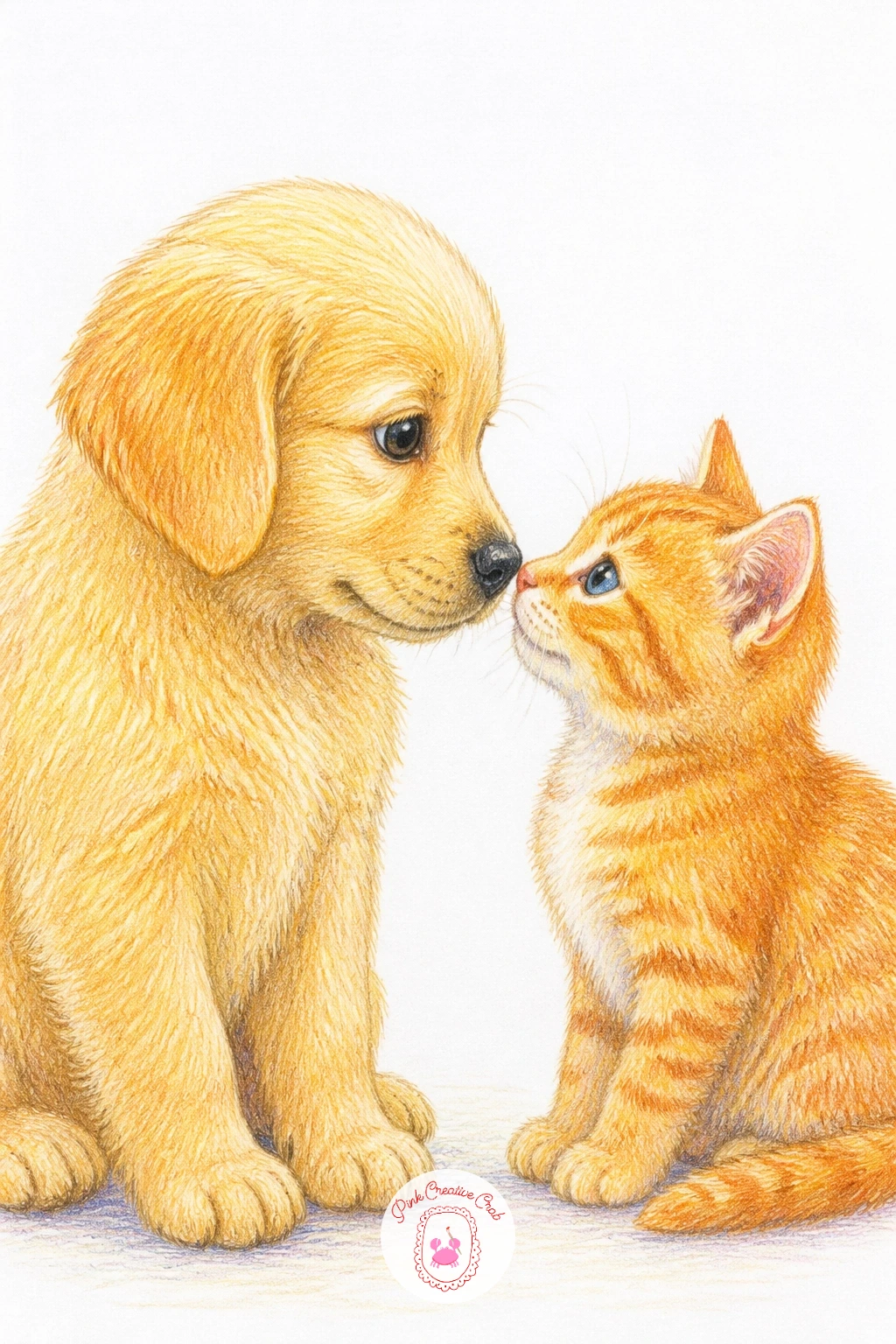
Palette: Golden Puppy Tan,Tabby Orange,Soft Grey,Cream Highlight
Add a playful art-within-art moment with a puppy leaving painted paw prints, trotting across the page with a trail of colorful prints behind each back paw. Draw the puppy’s walking pose first, then add the paw prints afterward, spacing them to match the actual stride so each print lines up believably with where a paw would have landed.
Shade the prints themselves in a bold solid color like blue or pink, slightly smudged at the edges to suggest wet paint rather than a crisp clean stamp. Keep one or two prints fresher and darker near the puppy’s current paws, fading gradually to lighter and more smudged further back along the trail.
Varying the stride length slightly between prints, rather than spacing them in perfectly even steps, keeps the trail looking like a real trotting path instead of a printed pattern. That small irregularity makes a surprising difference to how natural the whole scene feels.
A faint paint splash near the start of the trail explains where the mess began. A tip for today: let one print overlap the edge of a rug or floorboard line if you add one, it grounds the whole trail nicely.
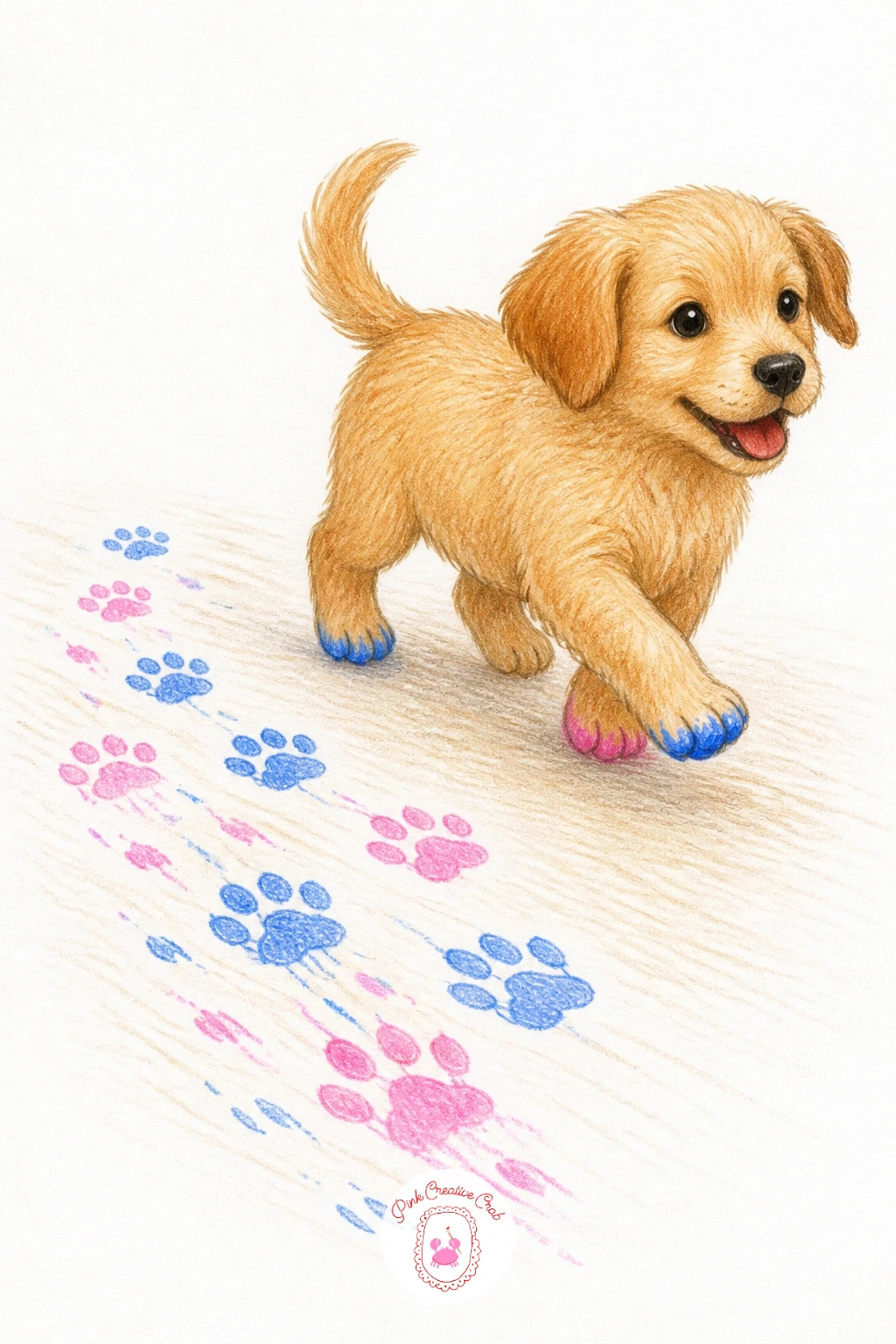
Palette: Paint Blue,Paint Pink,Warm Fur Tan,Floor Beige
Revisit the garden with a different mood: a puppy proud beside a dug hole, sitting upright with chest out and dirt smeared across its nose, clearly pleased with the damage. Draw the hole first as a simple dark oval sunk into a mound of displaced soil, then seat the puppy proudly right beside it rather than inside it this time.
Shade the soil in rich dark browns with scattered lighter flecks for texture, and keep the puppy’s posture tall and confident, chest forward and chin slightly raised, in deliberate contrast to the earlier digging pose from the start of this list.
Varying a familiar pose like this is worth practicing: once the basic sitting puppy feels comfortable, try shifting the head tilt, ear position or paw placement slightly each time you draw it again, so every version feels like its own small character rather than a repeated template.
A scattered root or two poking from the hole’s edge adds a nice finishing detail. A tip for today: keep the dirt smear on the nose small and deliberate rather than covering the whole face, since a light touch here reads as more charming than a fully muddy face.
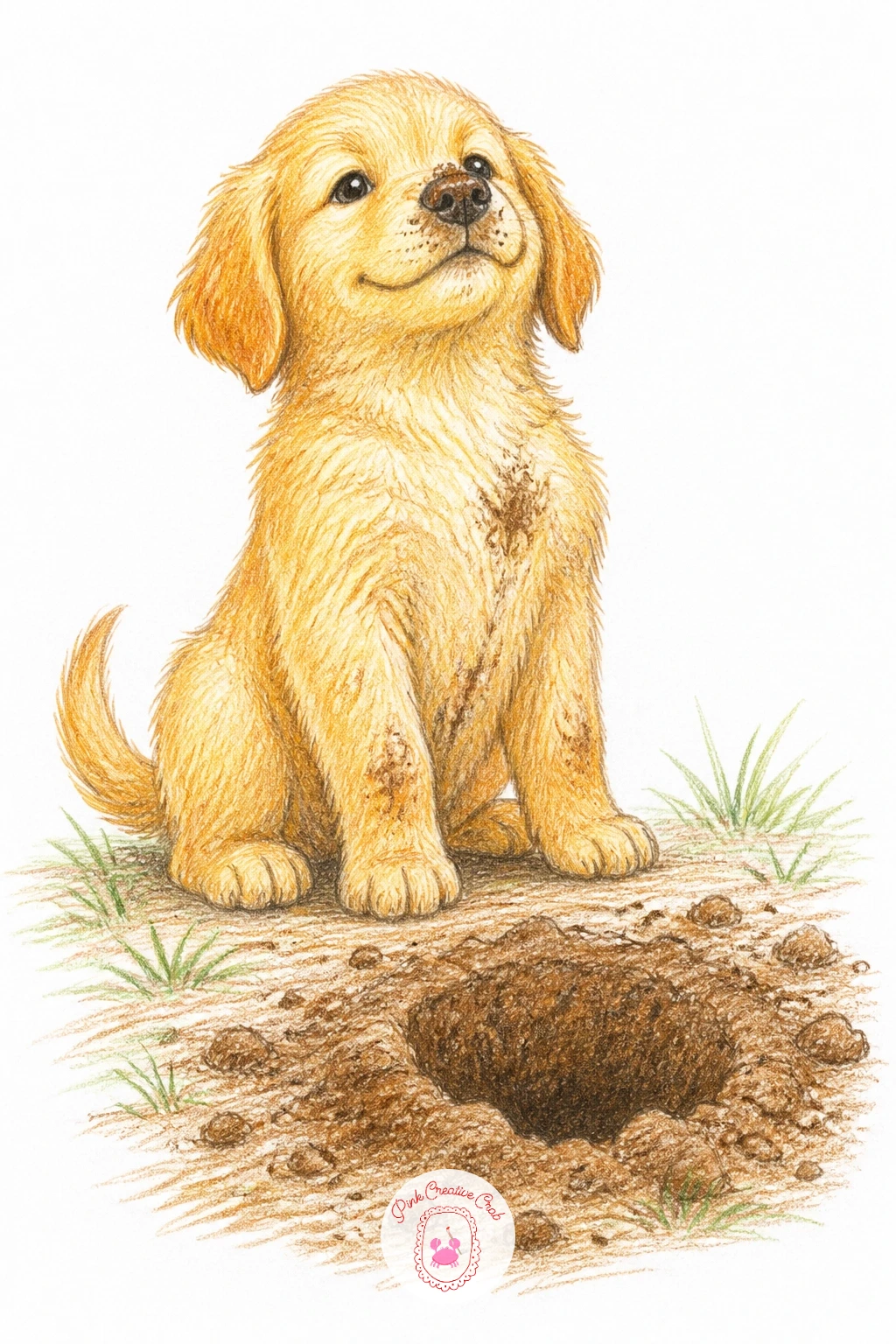
Palette: Dark Soil Brown,Warm Fur Gold,Light Dirt Fleck,Cream Highlight
Bring the mischief indoors again with a puppy chewing a book, pages bent and corners already damp as it gnaws contentedly on the cover. Draw the puppy first in a settled lying-down pose, then place the book between its front paws at a slight angle before adding any chewed detail.
Shade the book cover in a bold solid color, then rough up one corner with jagged pencil marks and a few torn page edges peeking out to show the damage clearly. Keep the puppy’s fur soft and content-looking in contrast, since this is a cozy naughty moment rather than a frantic one.
Dog pencil drawing ideas for total beginners cover more calm poses like this one if you want extra practice with a resting dog before tackling the busier scenes on this list.
Add a couple of loose scattered pages or a bent corner nearby for extra chaos. A tip for today: leave a few small tooth-mark dents along the torn edge, it is a tiny detail that reads instantly as a chewed book rather than just a torn one.
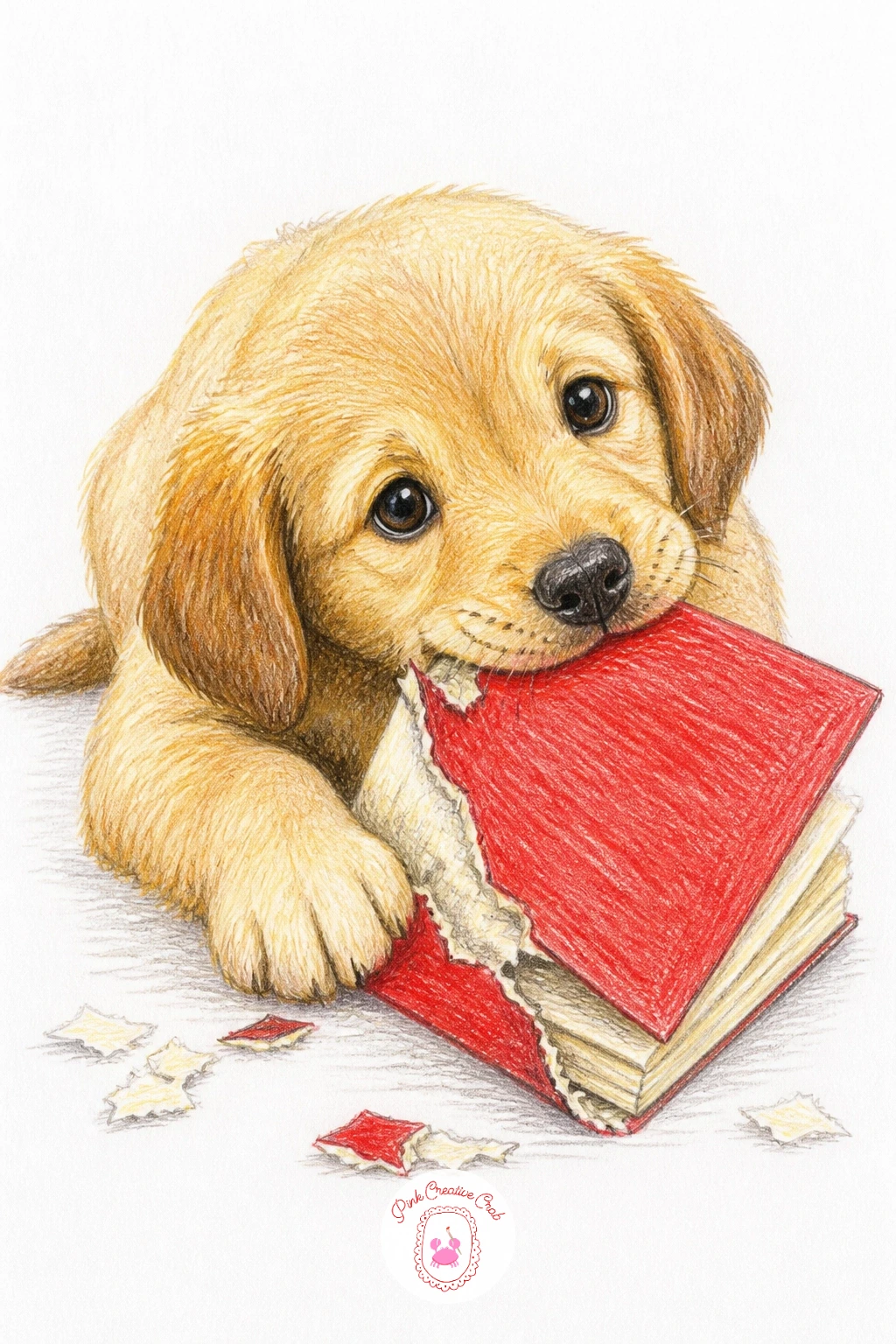
Palette: Book Red,Page Cream,Warm Fur Brown,Torn Edge Grey
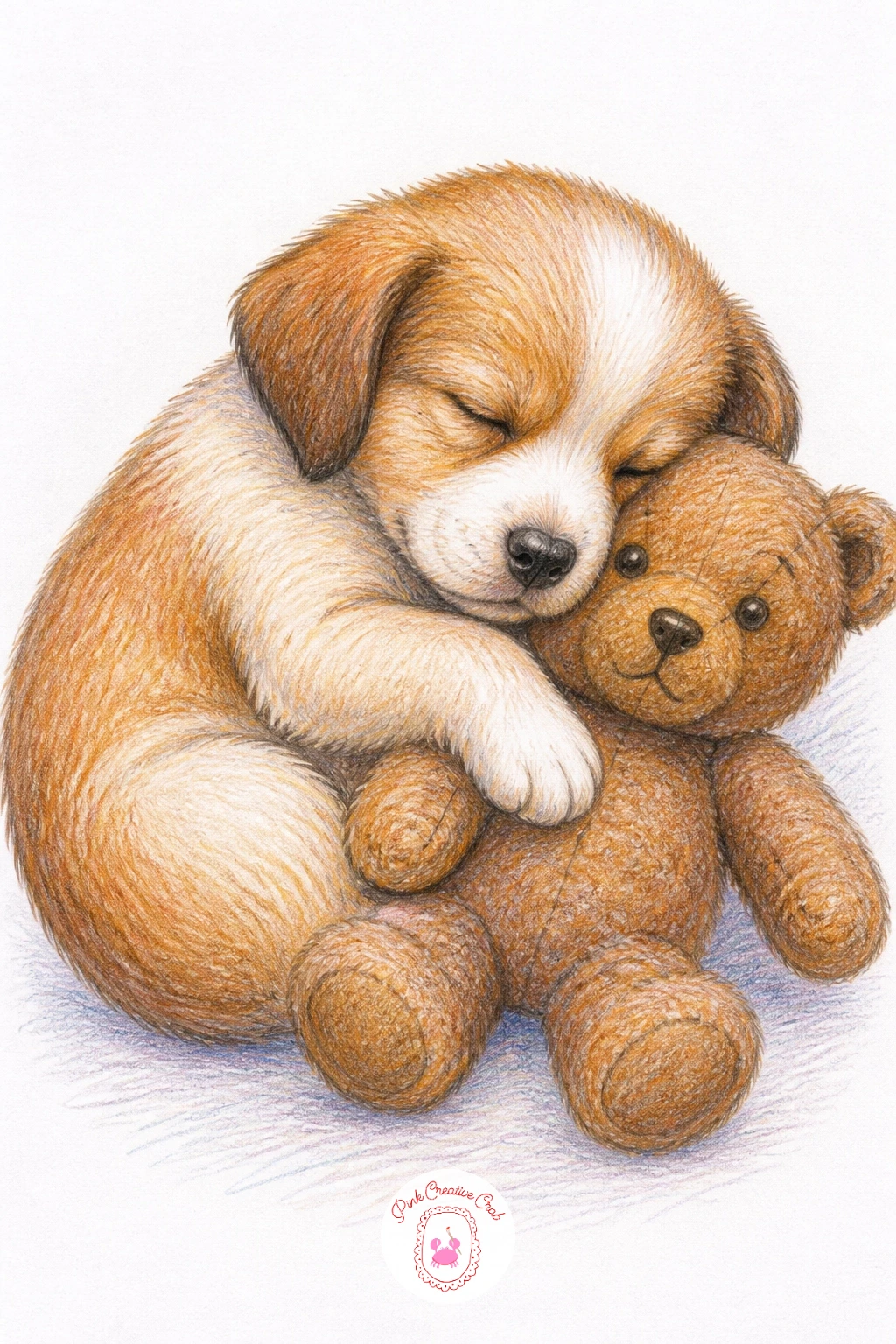
Close the quieter moments with a puppy asleep on a teddy, curled up small with its head resting on a soft stuffed bear almost as big as itself. Draw the teddy bear first as a simple rounded shape with stubby arms and legs, then curl the sleeping puppy against its belly before adding any fur detail to either one.
Shade the teddy in a warm solid brown slightly different in tone from the puppy’s own coat, so the two shapes stay distinct even while overlapping closely. Keep both sets of fur soft and rounded, but give the teddy a slightly flatter, more worn texture compared to the puppy’s fluffier coat.
If this is your first time drawing two overlapping rounded shapes, draw the teddy complete first, then layer the puppy’s curled body on top, erasing only the hidden teddy lines underneath once the puppy’s outline feels right.
A simple stitched smile or button eye on the teddy adds personality without much extra work. A tip for today: let one of the puppy’s paws rest over the teddy’s arm, it ties the two figures together as one cozy unit instead of two separate shapes side by side.
Palette: Teddy Brown,Puppy Fur Tan,Cream Highlight,Soft Shadow
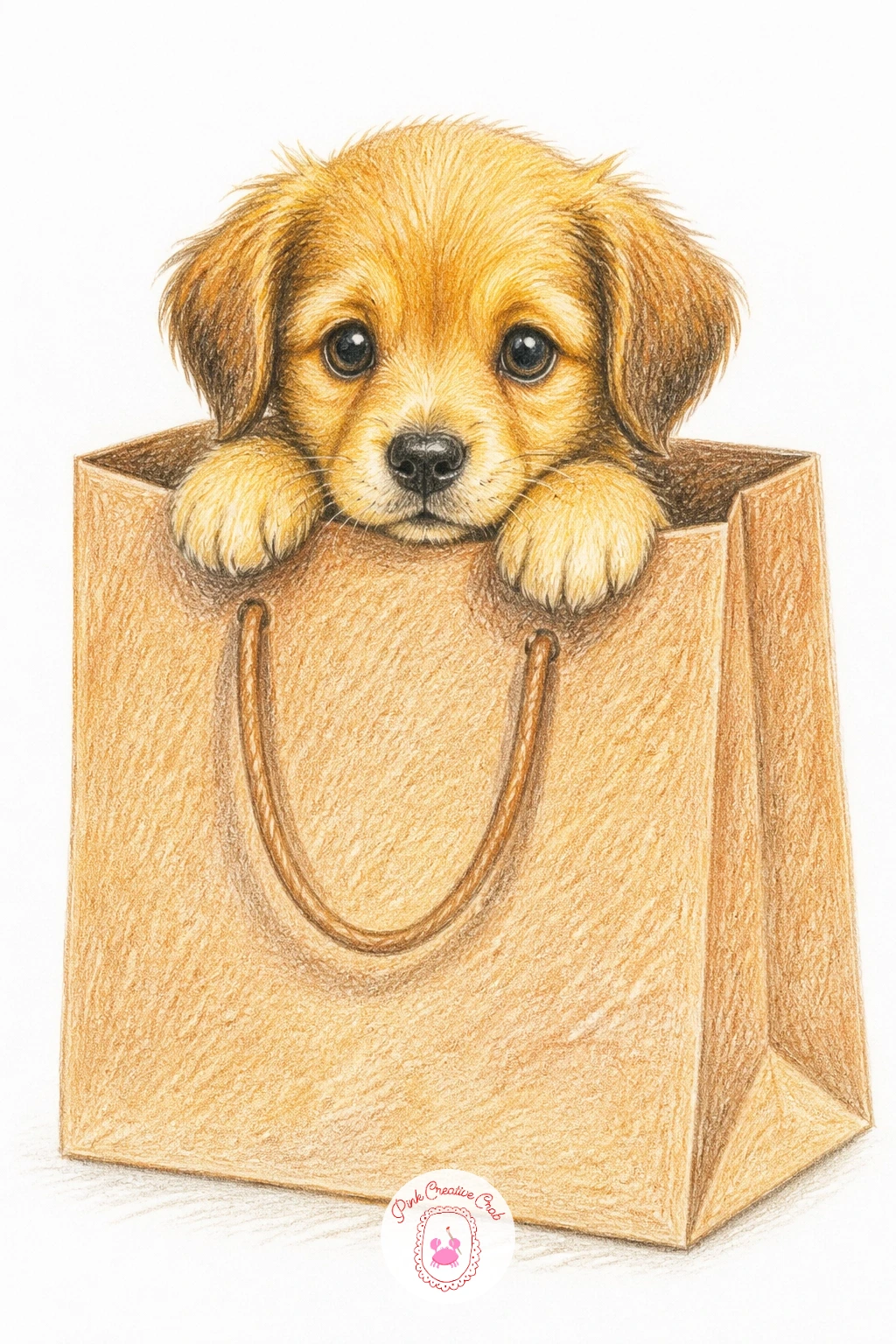
Finish the list with a cheerful note: a puppy peeking from a shopping bag, just the head and two front paws visible over the top of a paper bag’s rim. Draw the bag first as a simple rectangular shape with slightly folded top edges, then fit the puppy’s head and paws peeking out before any bag texture goes in.
Shade the bag in warm kraft brown with a couple of simple fold lines near the top to show it bending slightly under the puppy’s weight, and keep the puppy’s fur lighter and warmer in contrast so its face stays the clear focal point against the plainer bag.
Beginner pencil drawing ideas for people and pets together are worth a look afterward if you enjoyed combining a character with a simple prop like this bag.
Add one bag handle looping over the side for a finishing touch. A tip for today: keep the puppy’s ears slightly raised and alert, as if caught just as someone opened the front door, it adds the perfect amount of story to this final piece.
Palette: Kraft Brown,Warm Fur Tan,Cream Highlight,Soft Shadow Brown
What to Do Next
Pick whichever puppy moment makes you smile first, grab a sheet of smooth drawing paper, and work through it shape by shape rather than detail by detail. One finished page today is worth more than a long list left untouched, so start small and let the mischief grow from there.
Frequently Asked Questions
What is the easiest way to start a puppy drawing if you have never drawn an animal before?
Start with two overlapping ovals for the head and body before anything else. Keep the head large compared to the body, since young puppies always look top-heavy, and only add ears, paws and fur once those two shapes feel balanced.
Which colored pencils work best for soft puppy fur?
Warm tans, creams and browns layered in light circular strokes work best for soft puppy fur. Build color gradually in several thin layers rather than pressing hard once, and keep a blending stump handy to soften any harsh pencil lines.
How do you stop a puppy drawing from looking stiff or flat?
Tilt the head, angle the body slightly, and avoid matching both front and back paws in the same position. A little diagonal lean through the whole pose instantly makes a puppy feel alive rather than posed.
What paper works best for layered colored pencil drawings of puppies?
Smooth bristol or heavyweight drawing paper works best for layered colored pencil work. Its tight surface lets you build several soft layers of color without the tooth wearing down, which keeps fur looking blended rather than scratchy.
How long does a detailed puppy drawing like these usually take?
Most of these ideas finish in thirty to forty minutes once the basic shapes feel comfortable. Simpler close-up ideas can finish in about ten minutes, while busier scenes with props or a second character take a little longer.
Have any thoughts?
Share your reaction or leave a quick response — we’d love to hear what you think!
-
 0
-
0
-
0
-
0
-
0
-
0


