A black cat drawing is never really about the cat sitting still and looking pretty. It is about the butter she stole off the counter, the yarn she turned into a trap, the laptop she sat on mid sentence, and every small crime she commits with total confidence. That mischief is exactly what makes a black cat fun to draw, because the shape is simple but the attitude does all the work.
Below are 29 scenes built around that idea, from a sleepy cat in a laundry basket to a full on heist at the cake box. Each one uses a thin fineliner outline filled in with alcohol markers, so you get a clean, modern result without any shading skills required. Pick whichever crime feels most familiar and draw that one first.
Using these images: free for personal projects such as printing, coloring, cards, journals and gifts. Handmade items that include them may be sold up to 30 pieces per design. More than that is commercial use and is not permitted, and neither is selling or sharing the images themselves or passing them off as your own. Please ask before any other use.
Start with the butter dish, since getting its oval shape right gives the whole scene a place to sit. Draw a simple cylinder of butter on a small plate first, then build the cat’s body crouched low beside it, front paw already lifted toward the stick. Keep the fineliner outline loose and confident rather than careful, because a slightly wobbly line reads as energy here, not as a mistake.
Block in the black fur with your darkest grey or black alcohol marker, working in one direction across the body so the strokes blend rather than streak. Leave two small white dots unmarked for the eyes before you start coloring, since going back to add white over black never looks as clean as leaving paper bare.
If the butter ends up looking flat, a pale yellow marker with one slightly deeper yellow line along its base will round it out fast. Swap a yellow highlighter for the pale marker if that is what is in your pencil case, it still gives the right glow.
One tip worth remembering today: draw the stolen object before the cat, every single time, since it anchors the whole composition and stops the cat from floating in empty space.
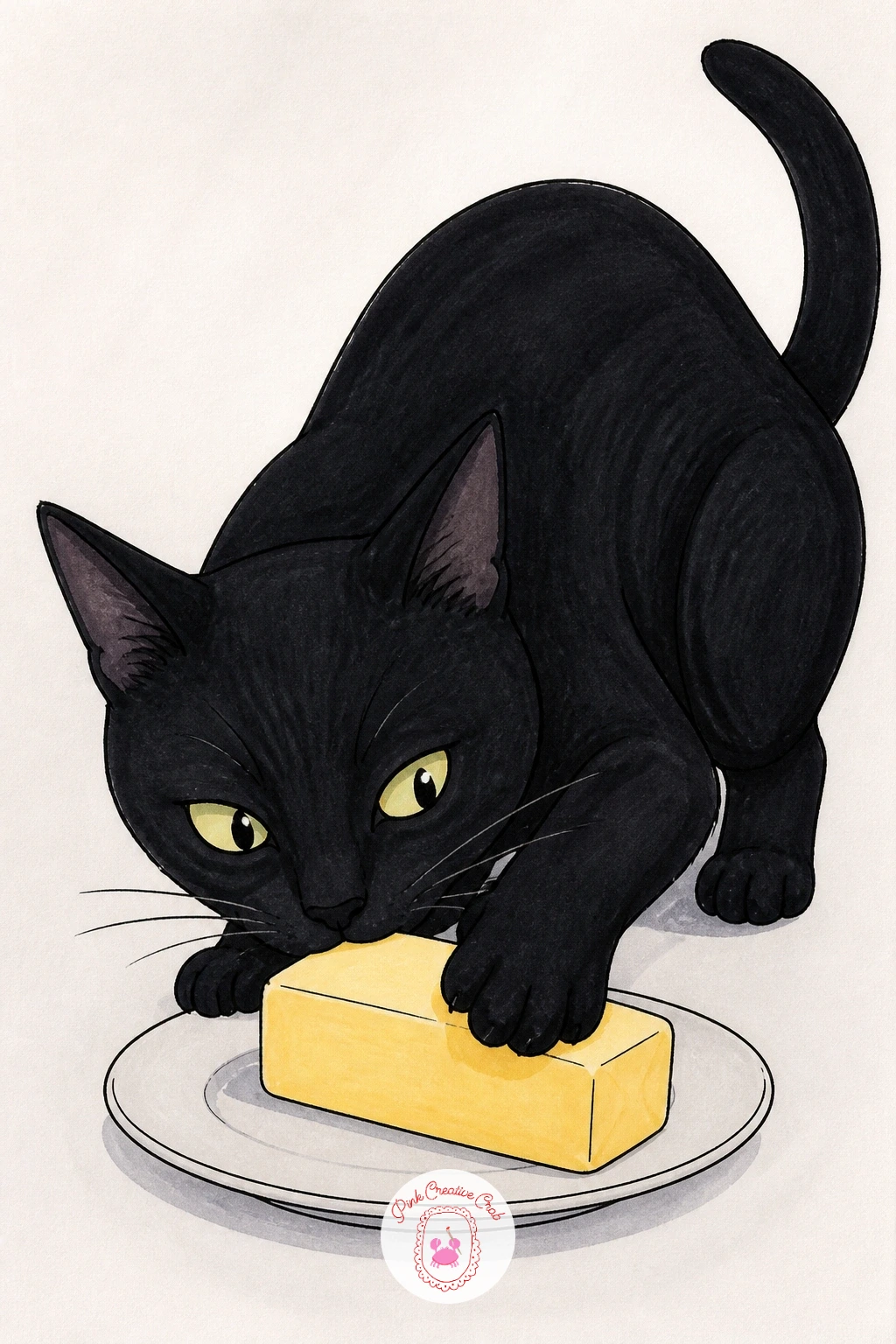
Palette: Jet Black,Butter Yellow,Warm Grey
Move from counter crimes to a quieter moment with a cat curled asleep in a laundry basket. Sketch the basket first as a wide oval with a woven rim, since its curve decides how the cat folds inside it. Draw the cat as one rounded comma shape tucked into that curve, nose touching tail, with ears the only sharp points breaking the soft outline.
If proportions feel off, compare the width of the basket to the length of the curled cat before you ink anything: a sleeping cat usually fits inside roughly one and a half basket widths, not two. That one comparison keeps the whole drawing from looking stretched.
Color the basket in warm tan strokes left slightly uneven to suggest woven texture, then lay the black marker over the cat in smooth, even passes. A stray sock or shirt sleeve draped over the rim in a soft pastel color adds a lived in touch without extra drawing time.
Keep today’s sketch loose and round everywhere, since sharp corners on a sleeping cat break the cozy feeling instantly.
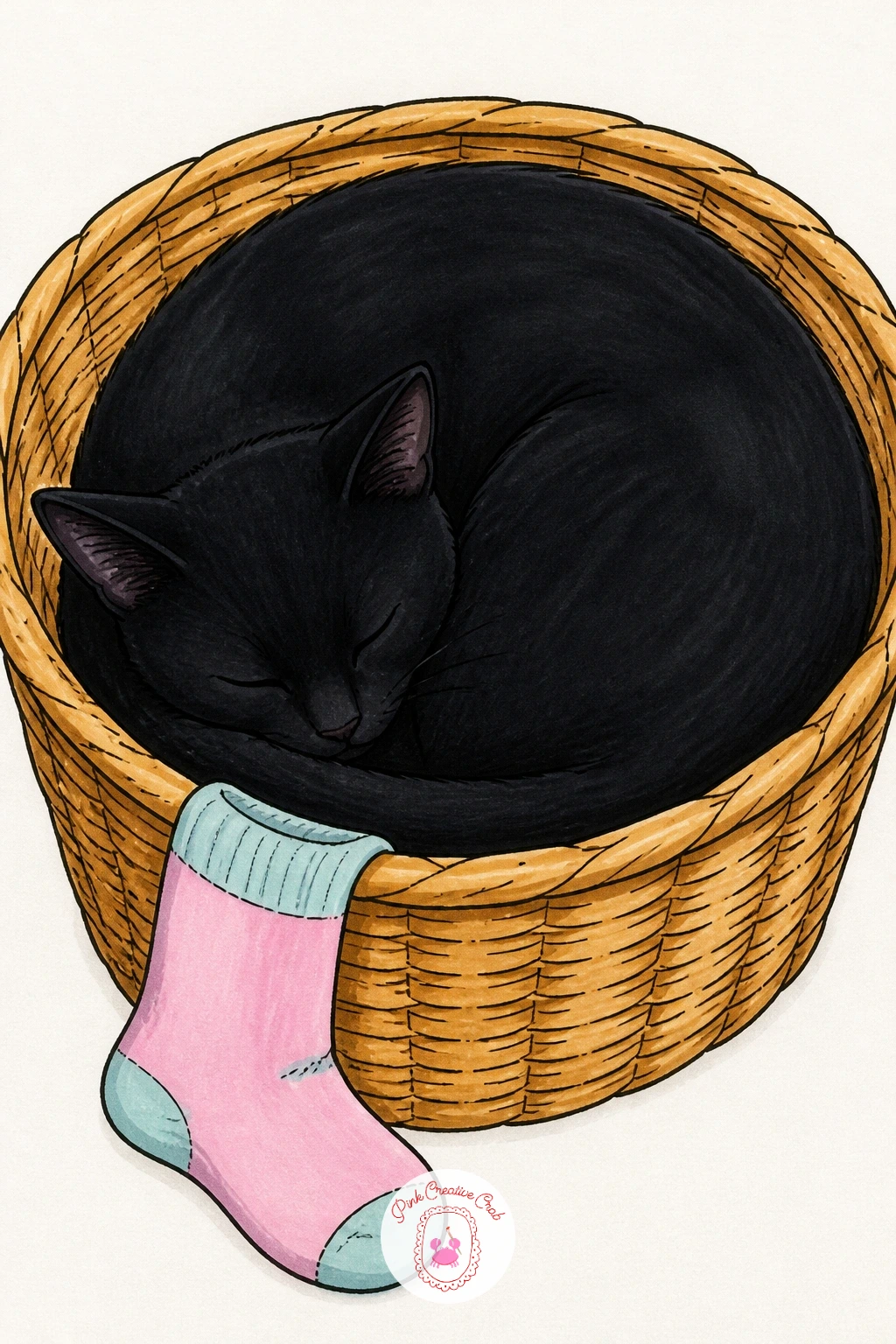
Palette: Tan,Jet Black,Dusty Pink
An open book gives you a satisfying geometric base to work from, which makes this an easy follow up after the rounder shapes before it. Draw the book first as two trapezoid pages meeting at a center spine, angled slightly toward the viewer rather than flat on. Place the cat sitting squarely over the pages, tail wrapped around the front paws, so she looks like she arrived specifically to block the reading.
Light matters more here than in the earlier scenes. Decide where a lamp or window sits off to one side, then let that side of the cat’s fur stay a touch lighter in marker tone while the shadowed side gets a second pass of black for depth.
The pages are the easy place to lose the drawing, since too many wavy lines turn a book into a mess. Draw only three or four faint lines suggesting text, never full sentences, and let the eye fill in the rest.
No bookmark on hand to copy from? A folded corner on one page works just as well and takes one extra line.
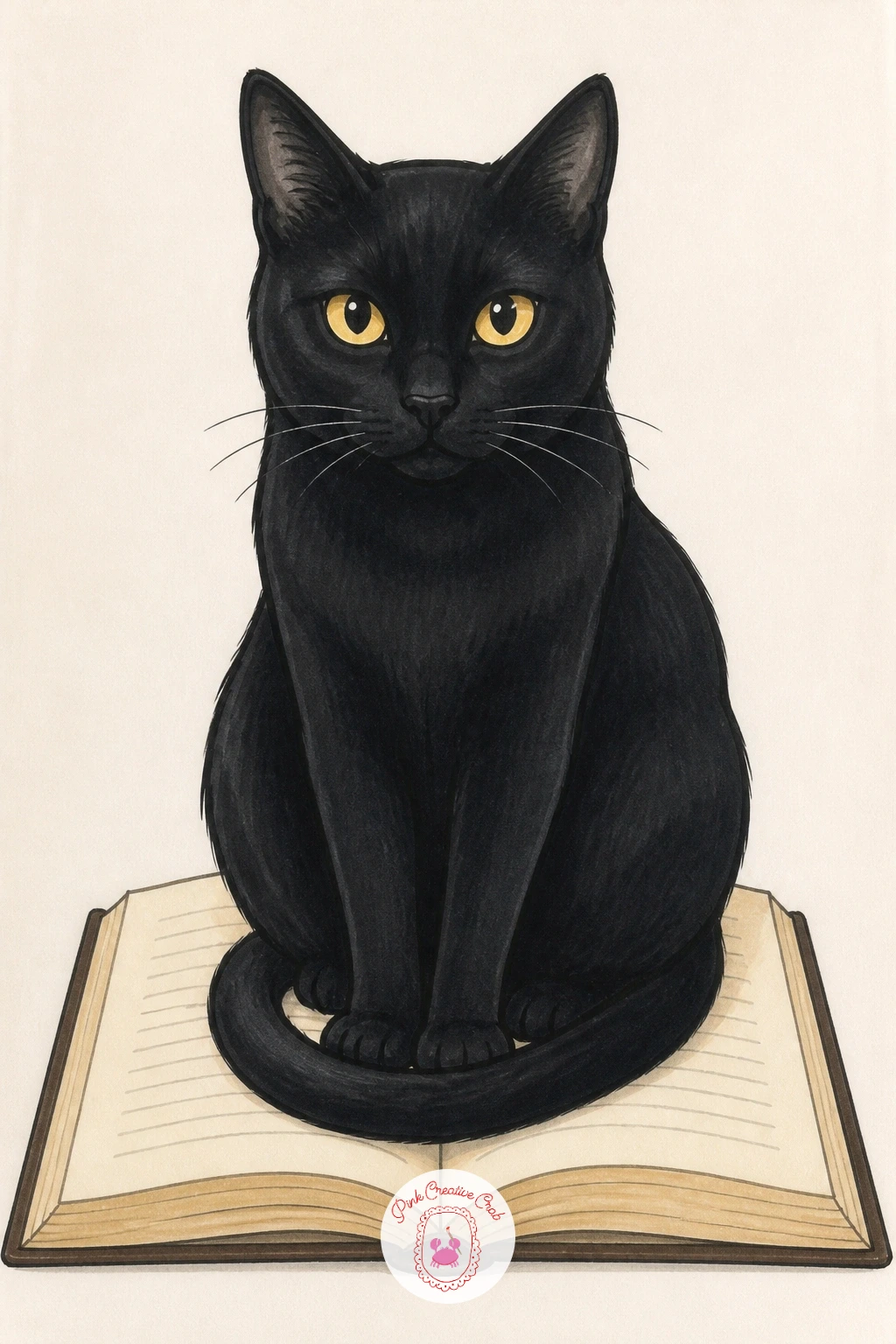
Palette: Jet Black,Cream,Warm Grey
Try drawing this one at an angle looking down over the cat’s shoulder, as if you caught her mid page turn, rather than straight on, for a more candid feel.
This scene turns on the window frame, so rule a simple rectangle or square divided by one or two panes before anything else goes on the page. Draw the cat in profile sitting tall on the sill or a chair pulled up to it, tail flat on the floor, head tipped slightly up toward the glass.
The ten minute version stops there: black cat silhouette, window frame, one bird shape outside as a simple curved triangle on a branch. The forty minute version adds a second and third bird at different heights outside the glass, plus a faint reflection line on the window pane to suggest glass rather than an empty frame.
Ears are the detail most likely to go wrong on a watching cat, since they should point forward and slightly together, not splayed sideways. If yours end up splayed, a kneaded eraser lifts the fineliner just enough to redraw them without starting over, as long as you use a pencil underlayer rather than committing straight to ink.
For your first attempt, keep the birds as plain silhouettes rather than detailed ones, since the cat’s focused posture is the real subject here.
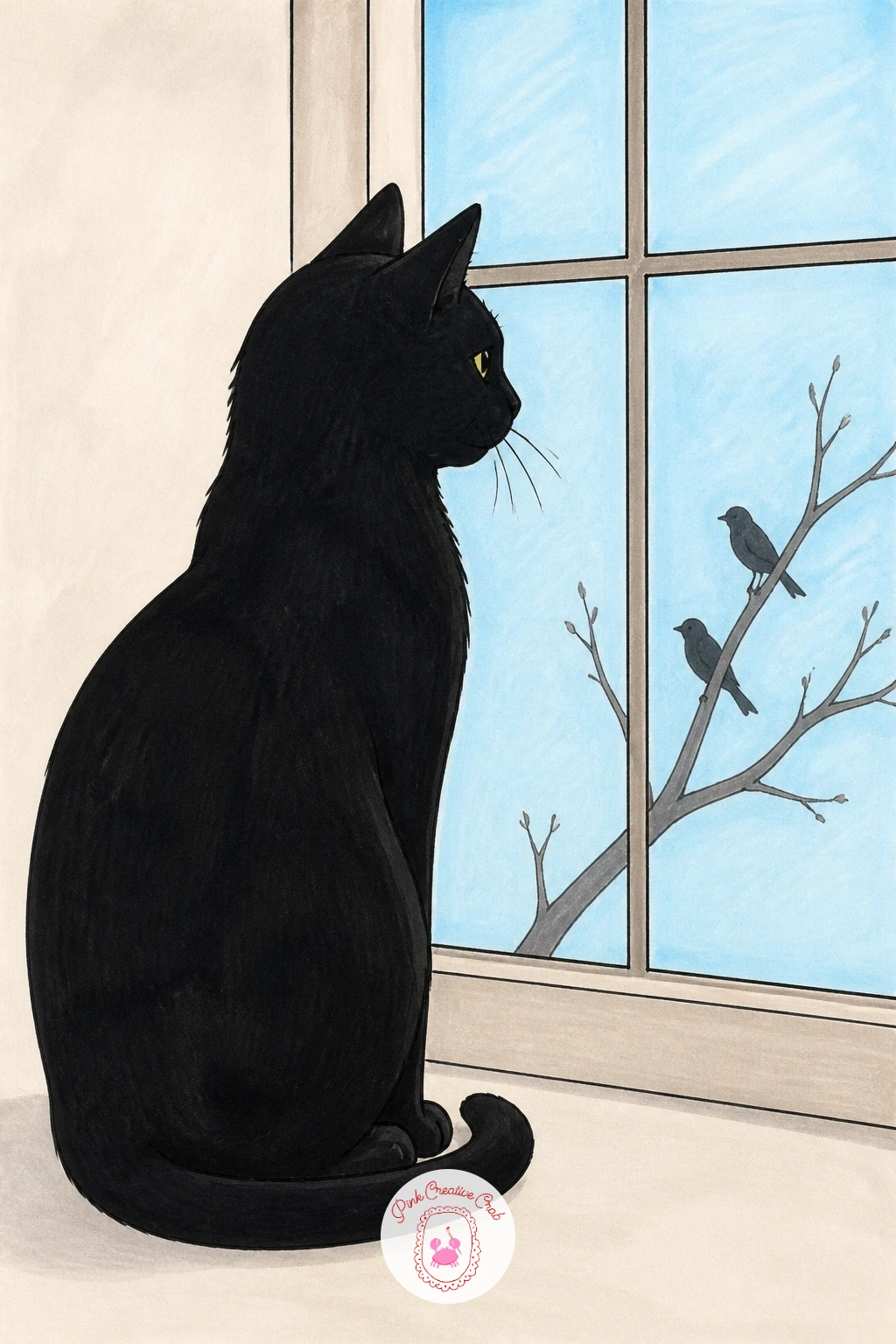
Palette: Jet Black,Sky Blue,Olive Green
Light is the whole point of this one, so before you draw the cat, decide where the sunbeam falls and draw that patch of light on the rug first as a soft angled parallelogram. Stretch the cat out on her side inside it, legs loose, tail trailing, belly exposed in the kind of pose a cat only holds in direct sun.
Working from light source outward changes how you color the fur. Keep the marker lighter and warmer where the sunbeam crosses the cat’s body, almost a soft charcoal grey instead of full black, then deepen to true black everywhere the light does not reach. That single shift does more to sell the scene than any extra detail.
The rug pattern is where this can get busy fast. Two or three simple stripes or a small diamond repeat in a muted color is plenty, since a loud rug pulls focus from the sleepy cat.
If you want this ready for a page in your cat sketchbook, this loose, sunny pose is one of the easiest to repeat on different pages with small changes to the stretch of the legs.
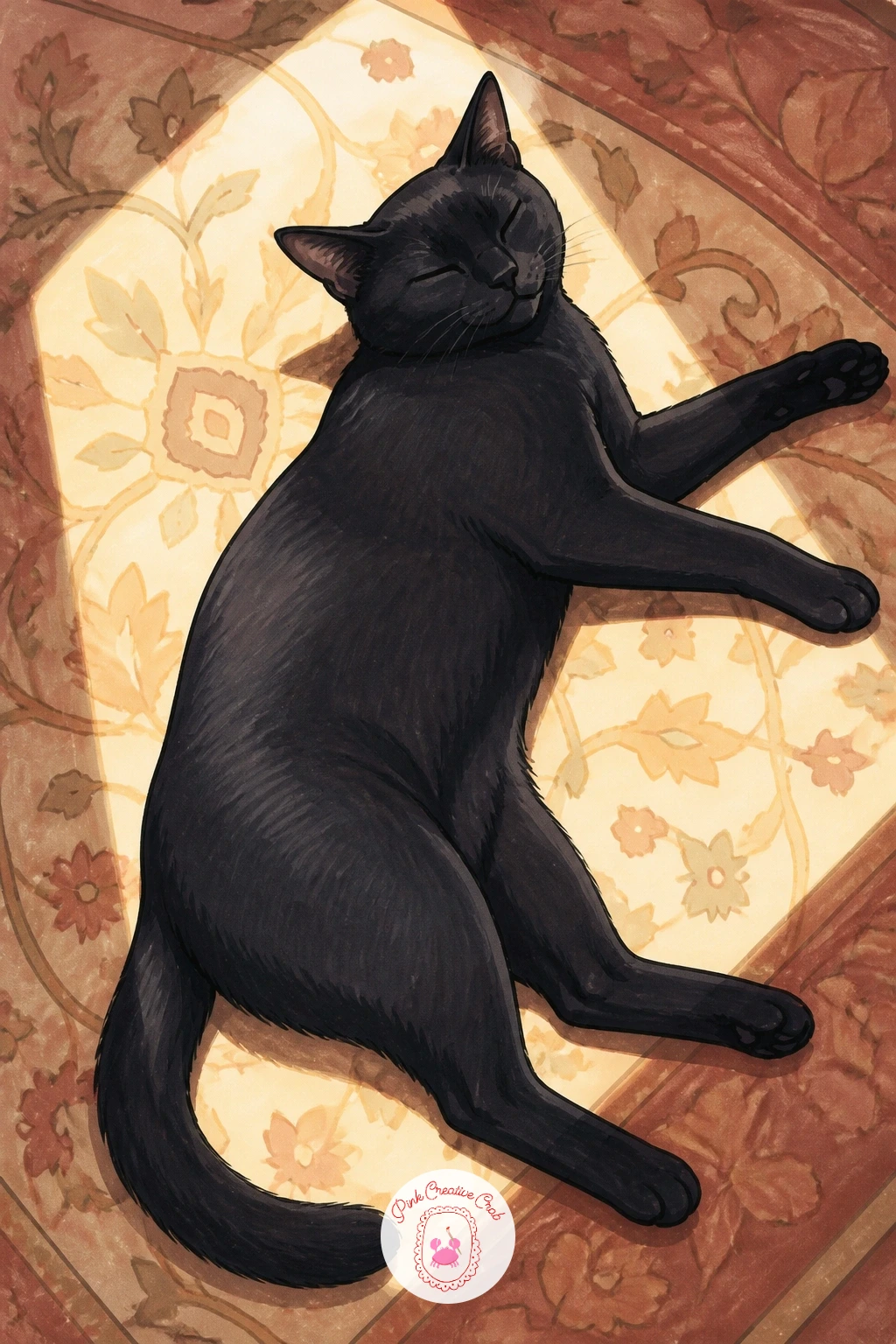
Palette: Charcoal Grey,Jet Black,Mustard
Nothing says cat quite like a paw mid shove, so build this drawing around that single gesture. Place the cup near the table’s edge first, drawn as a simple cylinder with an ellipse top, then draw the cat’s paw already touching its base at an angle that makes the coming fall obvious.
One measuring trick keeps the drama readable: the gap between the cup and the table edge should be small, no more than one cup width, so the viewer’s eye understands the cup is seconds from going over rather than sitting safely in the middle of the table.
Color the cup in a bright, cheerful shade so it stands out against the black cat and pale table, since a dark cup disappears into the composition. Add a thin curved line or two spilling from the rim if you want to suggest liquid already sloshing.
No alcohol markers handy for the cup? A single bold colored pencil works fine for a small object like this one, even if the rest of the piece is in marker.
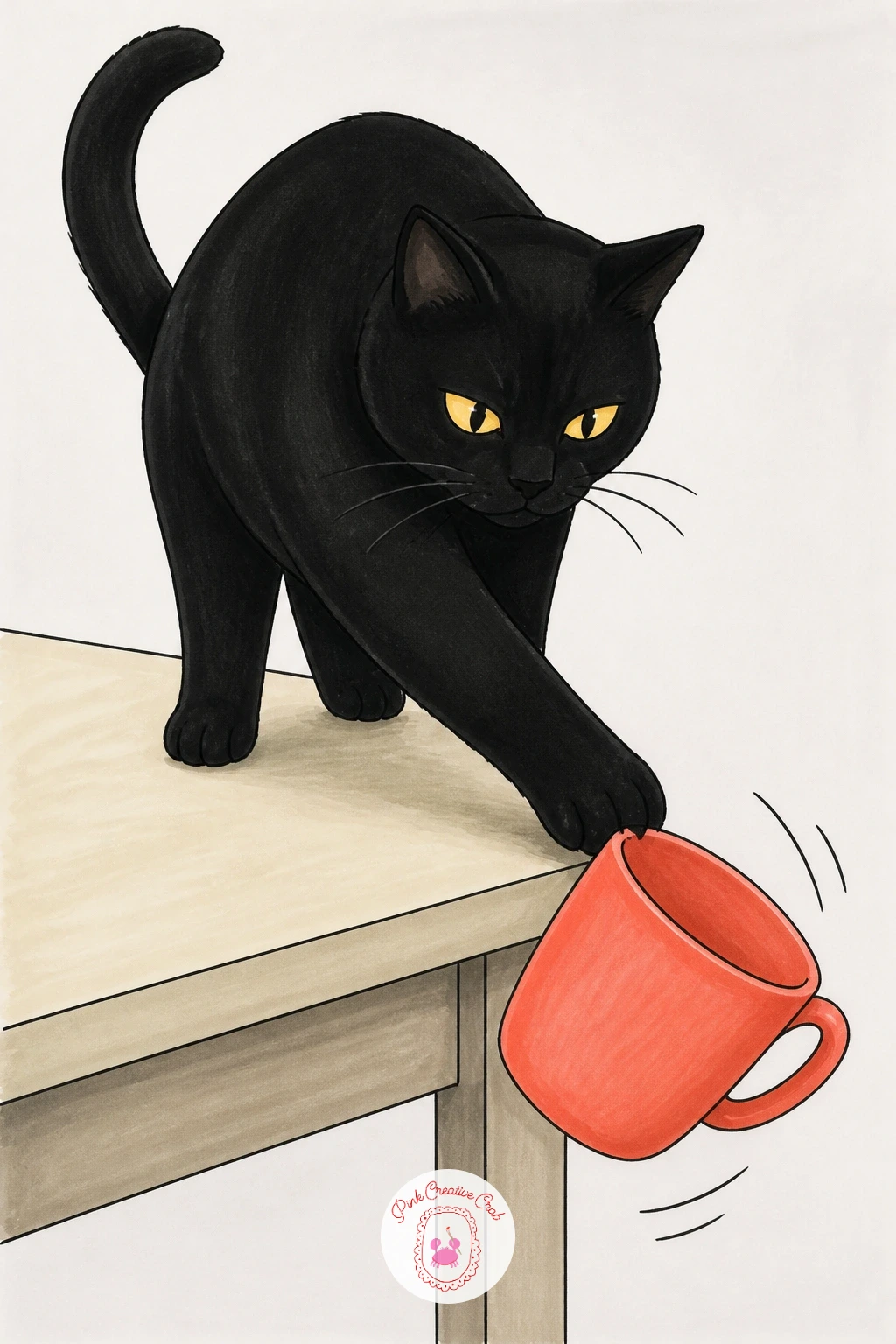
Palette: Jet Black,Coral Red,Cream
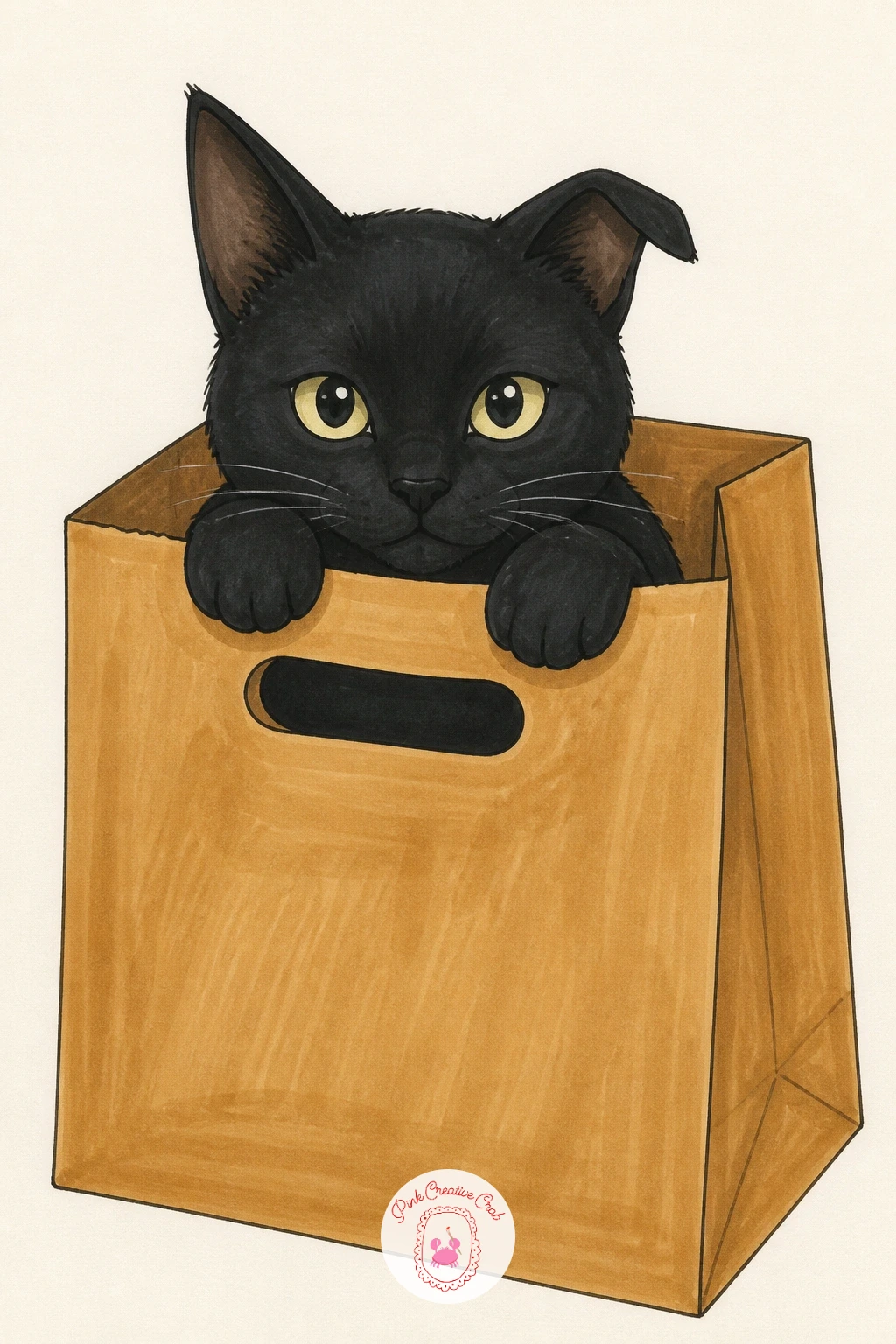
Bags give a cat an excuse to disappear almost entirely, which makes this one of the quicker drawings on this list. Draw the paper bag first as a simple trapezoid with folded top edges and two cutout handles, then let just the cat’s head and front paws poke out over the rim.
Ten minutes gets you the bag, the peeking head, and two paws hooked over the edge. The forty minute version adds the bag’s brand creases, a faint shadow pooling at its base, and maybe one ear bent sideways from squeezing in.
Edges matter more than usual here, since the softness of the cat against the crisp folded paper is what sells the joke. Keep the bag’s lines straight and a little stiff, then let the cat’s outline stay rounded and loose in contrast.
If paper bags are not something you have handy to reference, a cereal box with the top flaps opened works as a stand in shape just as well.
Palette: Kraft Brown,Jet Black,Cream
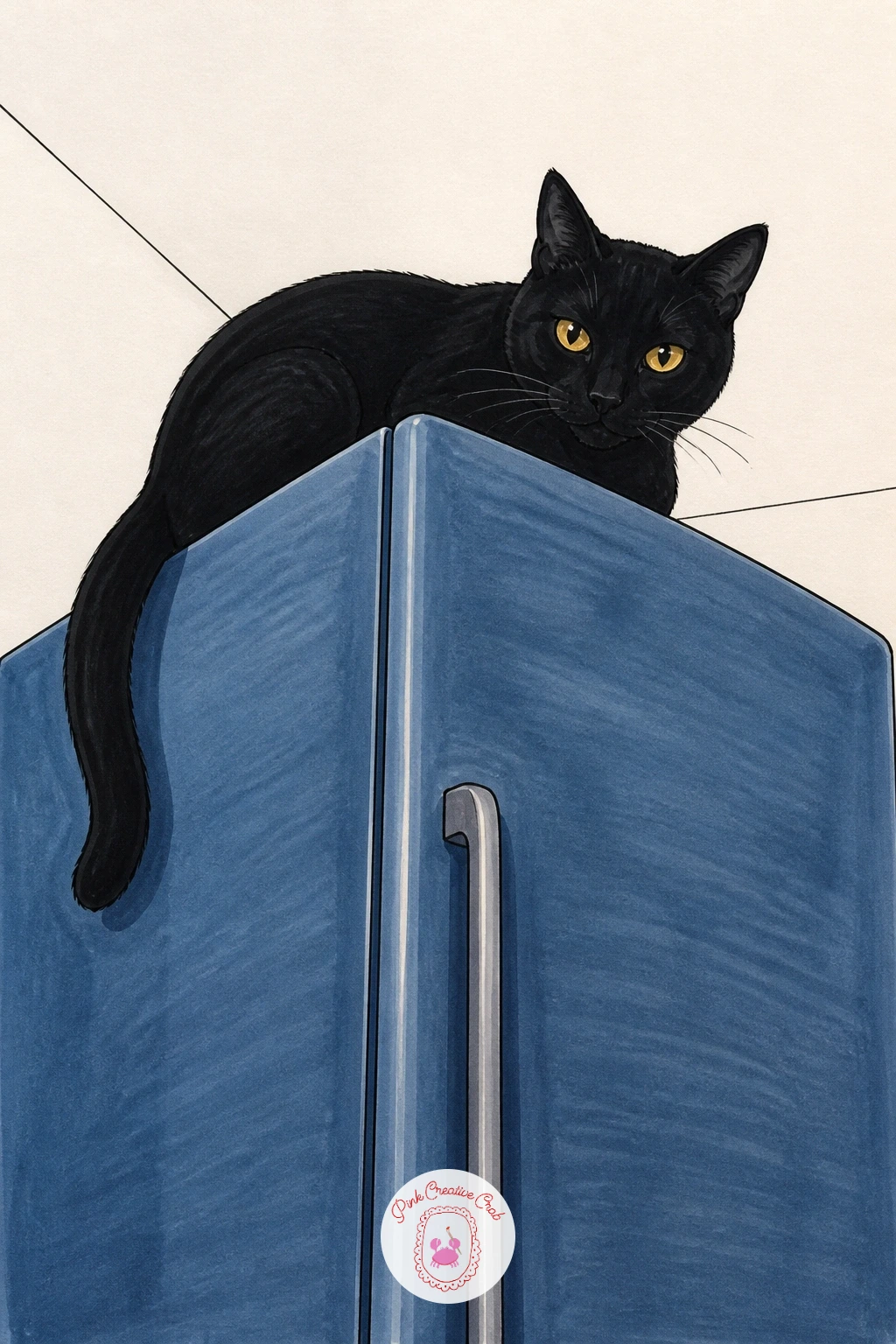
This scene asks for a clear sense of height, so set your eye level low, as if you are standing in the kitchen looking up. Draw the fridge as a tall rectangle first, slightly narrower at the top from this angle, then perch the cat along its upper edge with her tail hanging down one side.
That low eye level changes where the light falls too. If the kitchen light sits overhead, the top of the cat’s back catches a touch more brightness than her belly and legs, so lighten your marker pass there before layering black everywhere else.
Keep the fridge mostly plain so the cat’s silhouette against the ceiling reads clearly, maybe one magnet or a photo held by a tiny dot of color near the door. Too many kitchen details behind her and the height of the pose gets lost.
Draw the tail hanging slightly curved rather than stiff and straight, since a straight tail makes the whole pose look tense instead of smug.
Palette: Jet Black,Cool White,Steel Blue
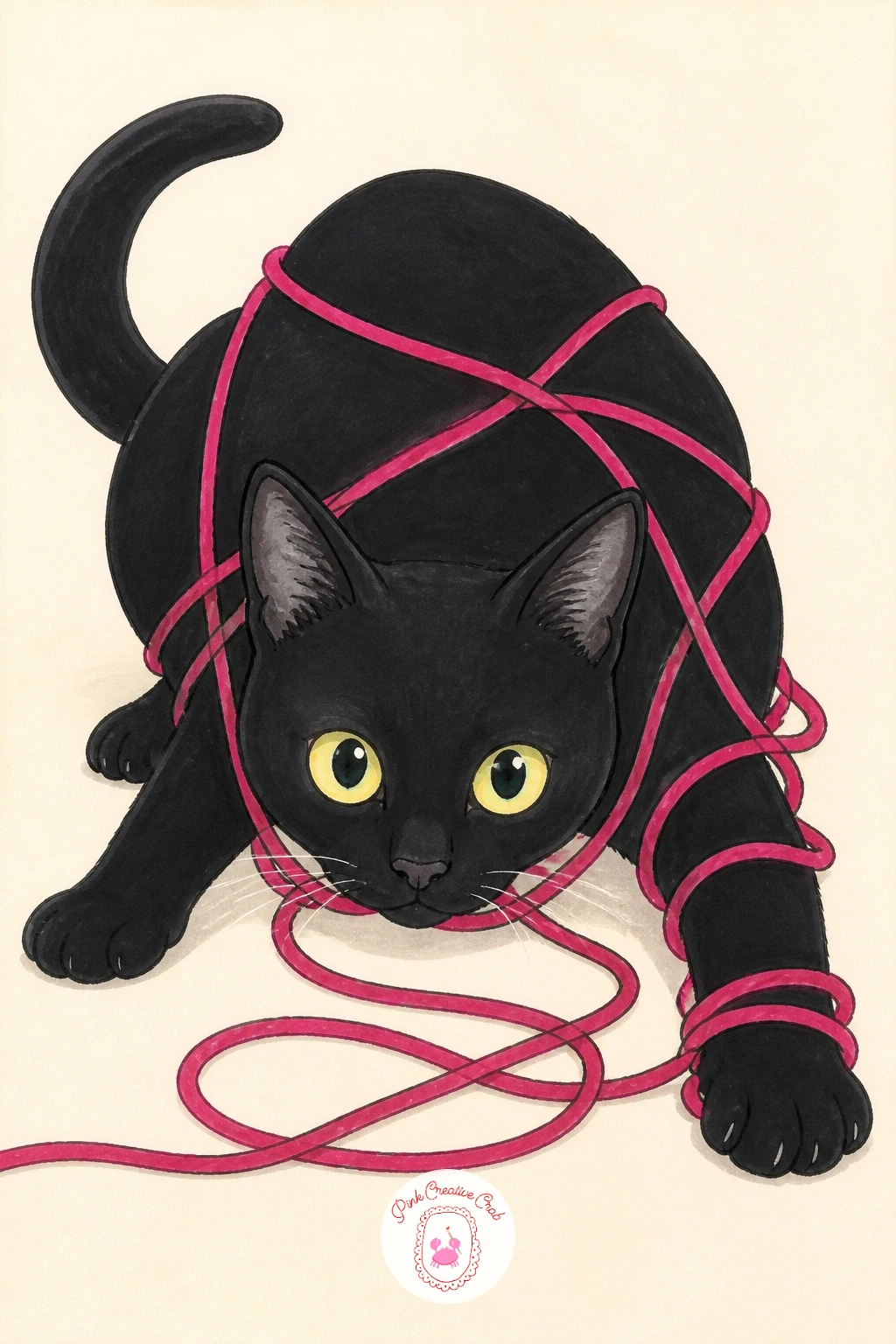
Yarn is the trickiest texture on this list, so tackle it with a dry brush style trick even though you are working in marker: load very little ink on the tip of your marker and drag it lightly across the paper in short strokes to leave broken, textured lines instead of one solid loop. Draw the cat’s body first, legs wide in a playful crouch, then wind the yarn loosely around one paw and across the chest afterward.
Build the tangle in layers rather than one continuous line. Two or three loops crossing the body read as yarn immediately, while a dozen crossing lines just turns into a scribble that is hard to follow.
Keep the yarn in one bright color against the black fur so the tangle stays easy to trace with the eye. A pale gel pen line along the top edge of each yarn loop lifts it slightly off the black cat underneath and makes the crossing points clearer.
If you only have a black fineliner and no colored marker free, leave the yarn as white paper with a thin black outline instead, it still reads clearly against solid black fur.
You Will Need
- white gel pen for highlights
Palette: Jet Black,Raspberry Pink,Cream
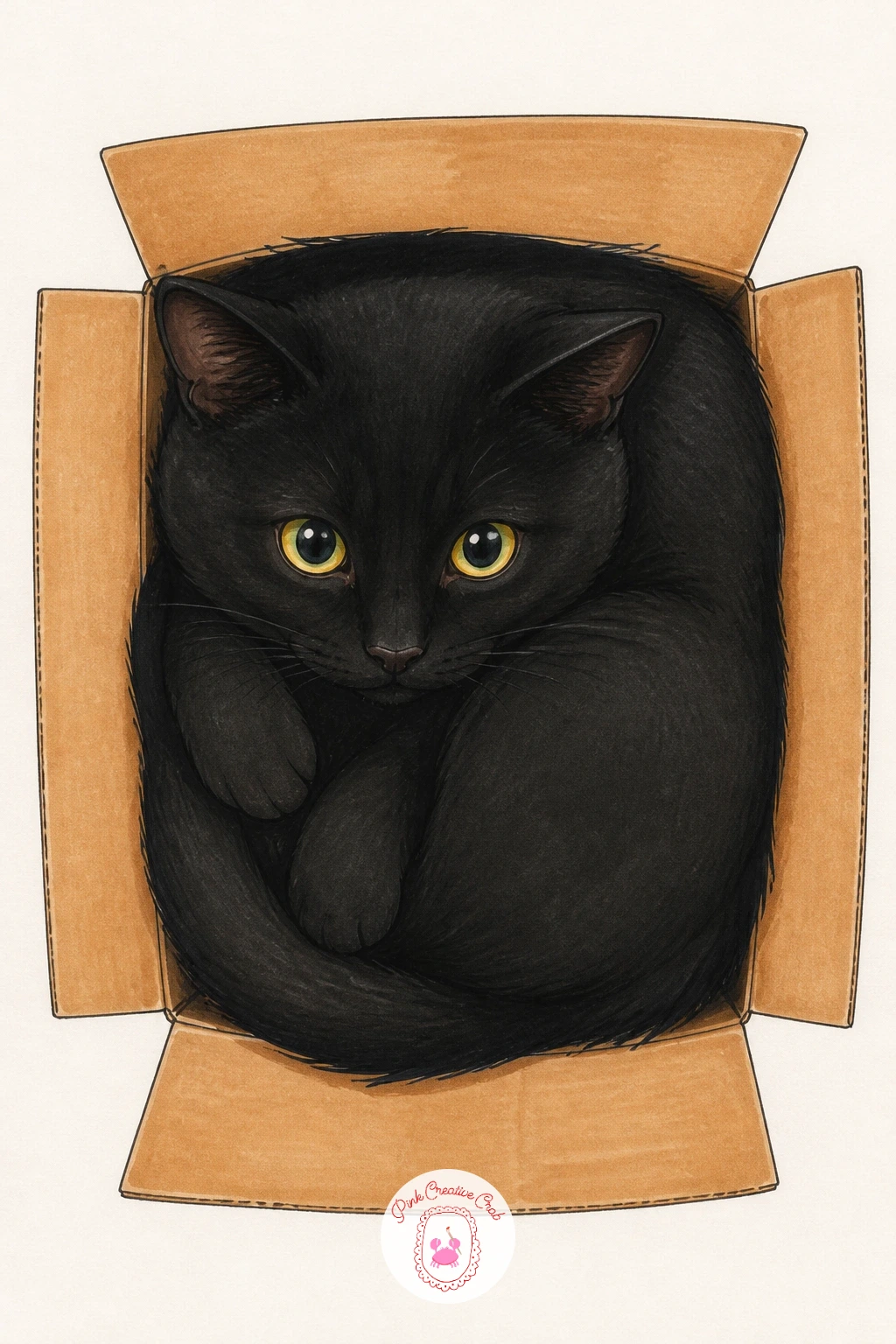
No cat drawing list is complete without the box, so give this one its due with crisp, almost architectural lines. Draw the box first as a simple open cube seen slightly from above, flaps folded outward or standing up on two sides, then squeeze the cat’s body inside it, limbs tucked in tight the way cats fold themselves into spaces far too small for them.
Compare the cat’s width to the box’s inner width before you commit to ink: a cat squeezed into a box usually looks about one size too big for it, with a bit of fur spilling over the edge, and that slight overflow is what makes the pose funny rather than just tidy.
Keep the cardboard color flat and warm, with one or two shipping label lines or a simple stamped logo shape if you want extra charm. Too much detail on the box competes with the cat for attention.
One tip for today: draw the box edges with a ruler if your lines tend to wobble, since a perfectly straight box makes an imperfect, squished cat look even funnier by contrast.
Palette: Kraft Brown,Jet Black,Cream
Piano keys give this drawing a strong geometric backbone, so draw the keyboard first as a long rectangle divided into even black and white key strips before adding the cat at all. Place the cat mid stride across the keys, one paw lifted, body stretched long and low the way a cat walks when she is fully committed to the chaos she is about to cause.
Getting the keys even is the part most likely to go wrong. Lightly mark evenly spaced tick points in pencil before inking the dividing lines, rather than guessing the spacing by eye, since uneven keys instantly look off in a way viewers notice even without knowing why.
Keep the cat’s legs long and the stride wide to capture motion, with the tail flicked up behind her for energy. A few faint musical notes floating above the keys is an optional touch that adds humor without extra drawing time.
If a full keyboard feels like too much, draw just four or five keys under the walking paws and let the rest fade off the edge of the page.
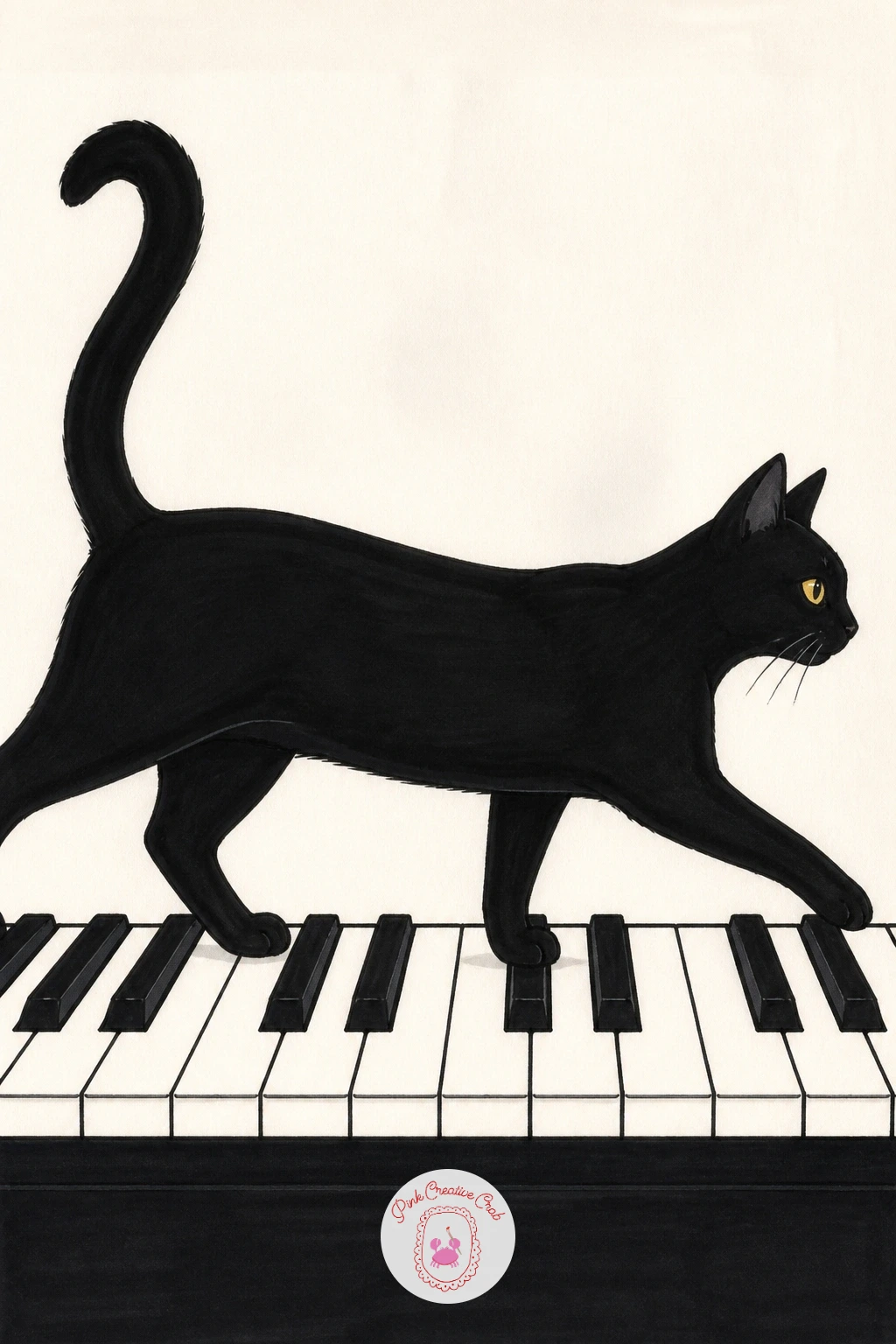
Palette: Jet Black,Cool White,Warm Grey
This one carries real emotion in a simple pose, so take time with the sitting posture before anything else. Draw the cat sitting bolt upright facing the door, tail wrapped neatly around her front paws, ears pointed forward and slightly raised in full attention mode.
Measure the door against the cat’s height before inking: a standard door usually stands about four or five cat heights tall, and keeping that ratio honest is what makes the waiting pose feel like a real moment rather than a cat floating next to an oversized rectangle.
The door itself can stay simple, just a rectangle with a round knob and maybe one or two panel lines, since the real subject is the posture and the stillness, not the door’s design. A thin strip of light glowing under the door hints that someone is on the other side without adding any extra shapes.
For your first try at this scene, draw the cat from directly behind rather than in profile, since the straight back and still tail read as patient waiting even without seeing her face.
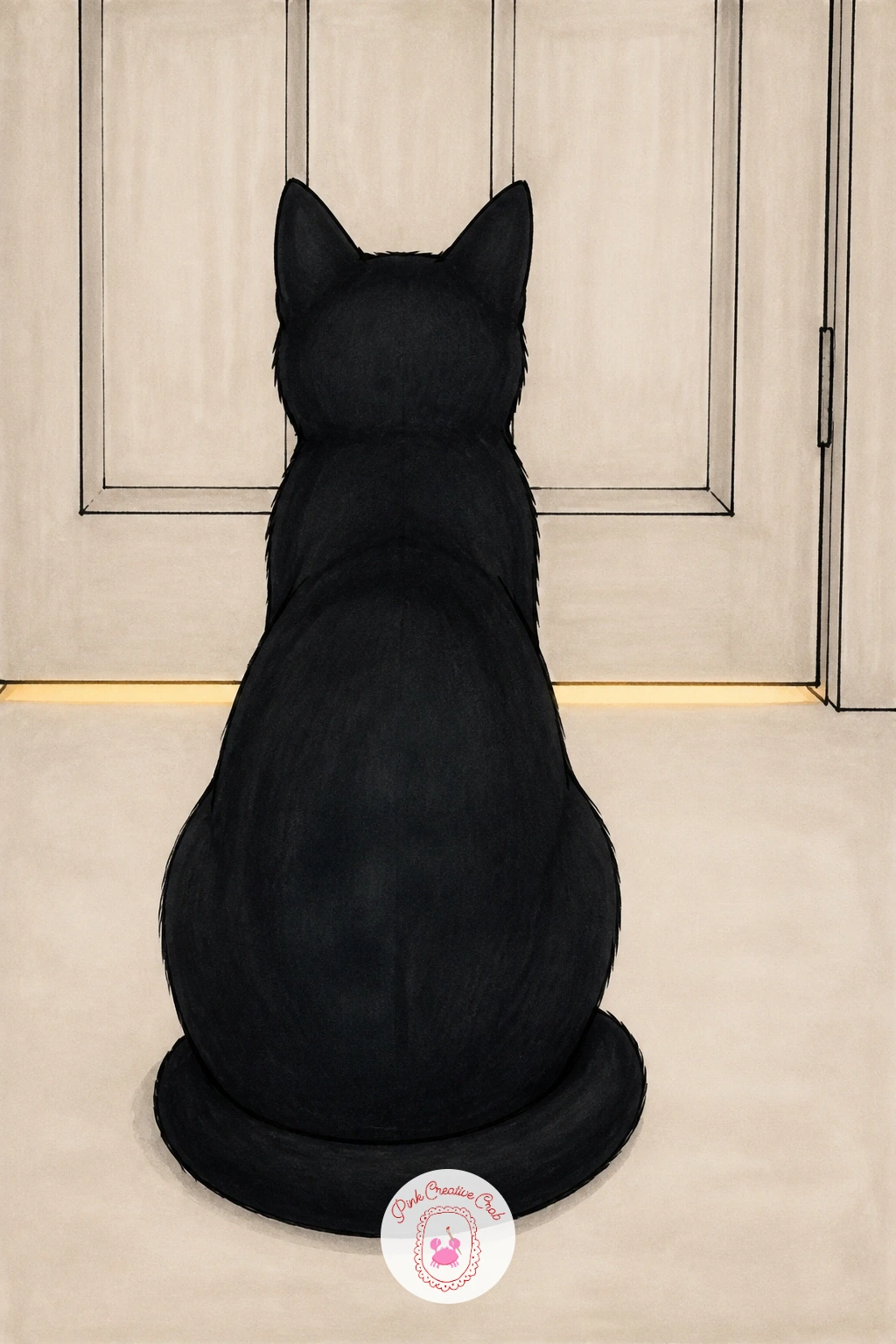
Palette: Jet Black,Warm Grey,Soft Gold
This cozy scene works best when you draw the shape under the fabric before worrying about the cat underneath it at all. Sketch a soft, lumpy mound in the middle of a bed, with the duvet folds radiating outward from that bump, then add just a tail tip or one paw poking out from under the edge as the only visible proof a cat is in there.
Fabric folds are where this drawing tends to fall apart if you overthink them. Draw three or four long curved lines running from the lump outward toward the edges of the duvet, rather than many short choppy ones, since fewer confident lines read as soft fabric far better than a dozen nervous ones.
Color the duvet in a pale, cozy shade with slightly deeper tone pooled in the folds near the lump, which gives it volume without any real shading skill required. Leave the black cat shape mostly implied by the lump itself, maybe two eyes peeking from a gap in the fabric if you want a touch more charm.
Swap a plain blanket for the duvet if that is what is on your own bed, the folds work the same way either shape.
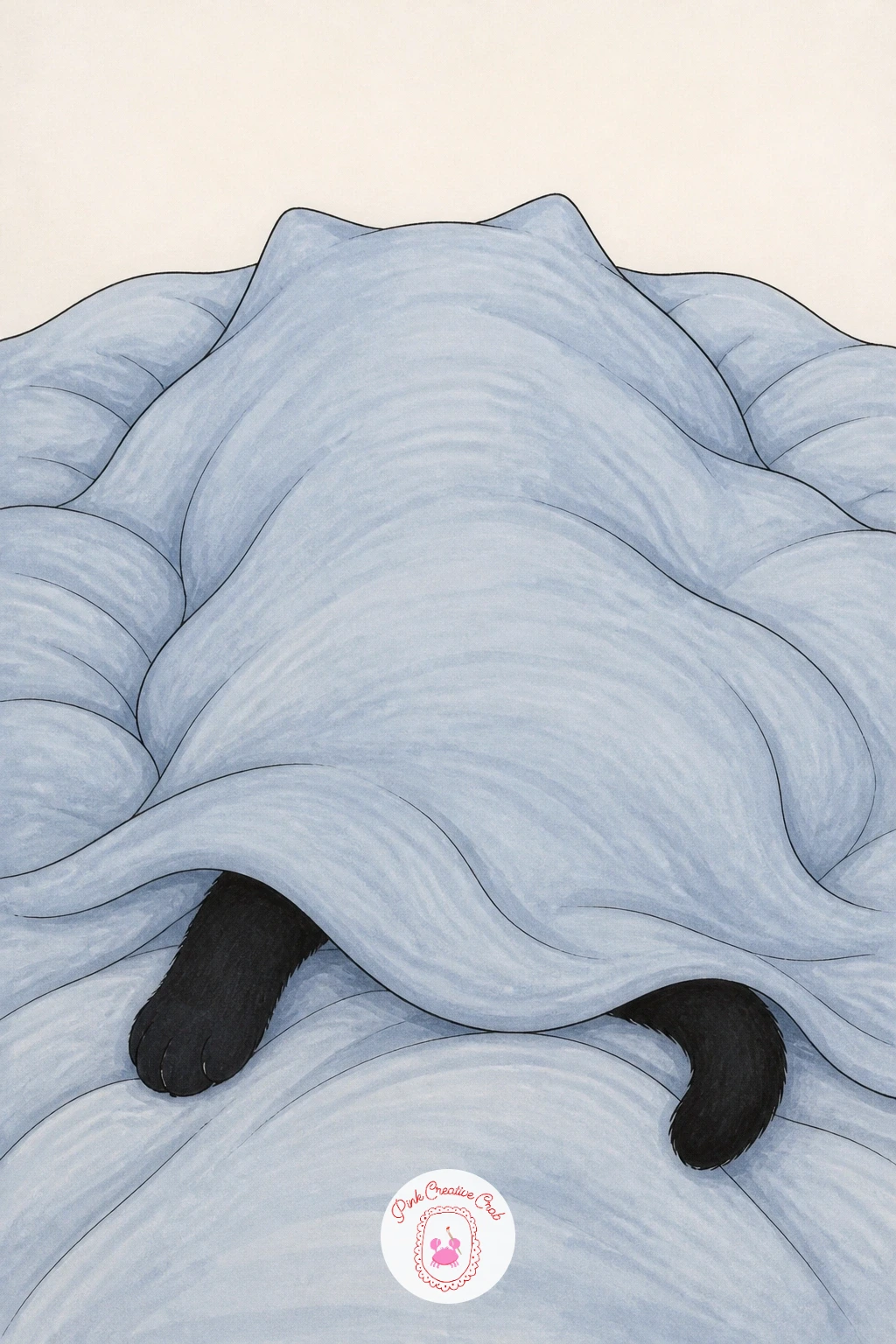
Palette: Dusty Blue,Jet Black,Cream
This is one of the more whimsical scenes on the list, so let the pot be slightly too small for comfort on purpose. Draw a simple terracotta pot first, rounded and tapered toward the base, then fold the cat down into it so her body curls to fit, chin resting on the rim and legs tucked completely out of sight.
Compare the pot’s width to the cat’s folded body before inking: if the pot looks only slightly narrower than her shoulders, the squeeze reads as believable rather than impossible, and that small bit of tension is what makes the image funny rather than odd.
Surround the pot with one or two simple leaves or a trailing plant spilling over the opposite side, which helps sell the idea that this is really meant to be a planter and not a basket. Keep the plant shapes plain, broad leaves rather than lots of fussy small ones.
Try this one indoors on a windowsill for a cozier feel, or outdoors on a porch step if you want more light and shadow to play with.
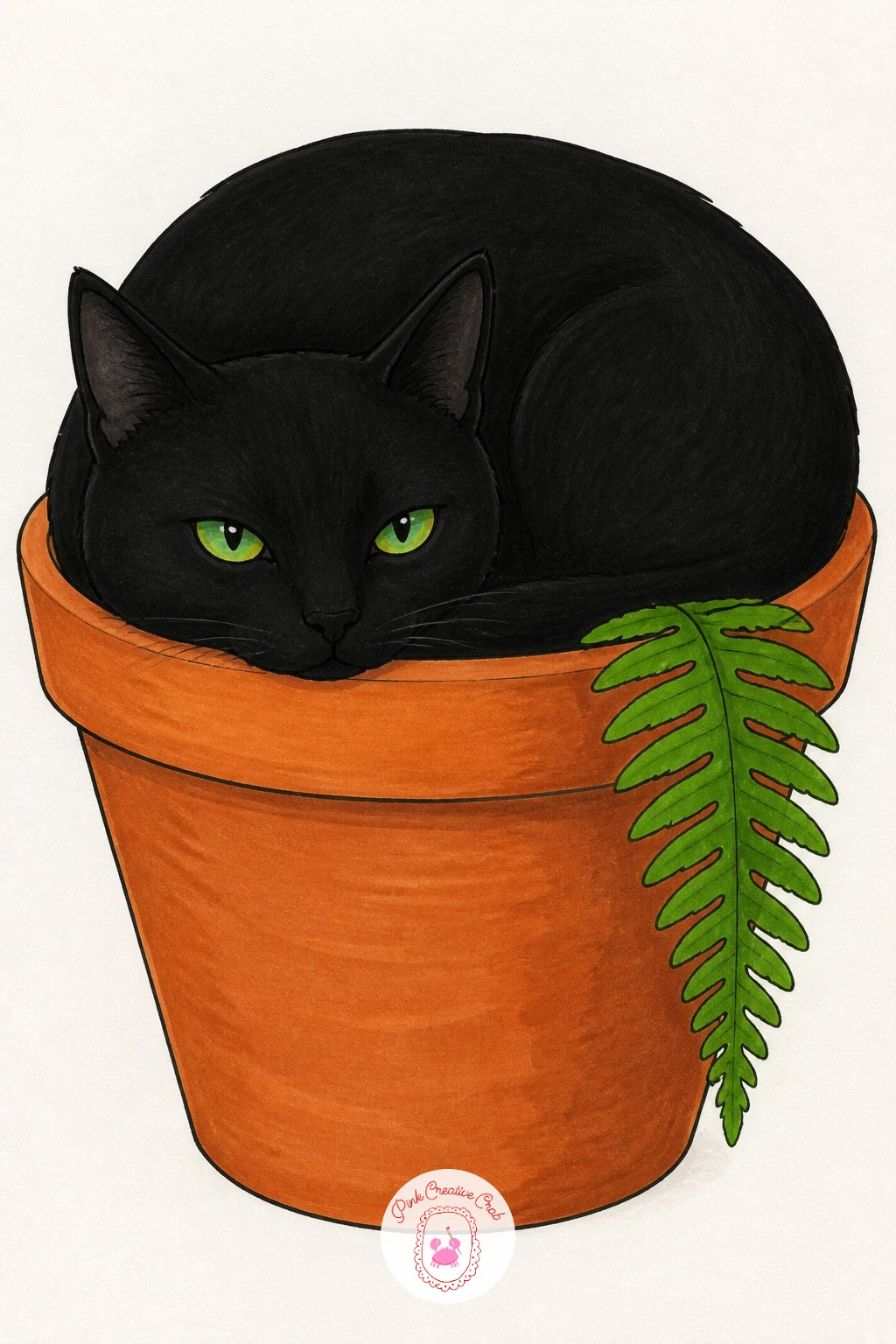
Palette: Terracotta,Jet Black,Fern Green
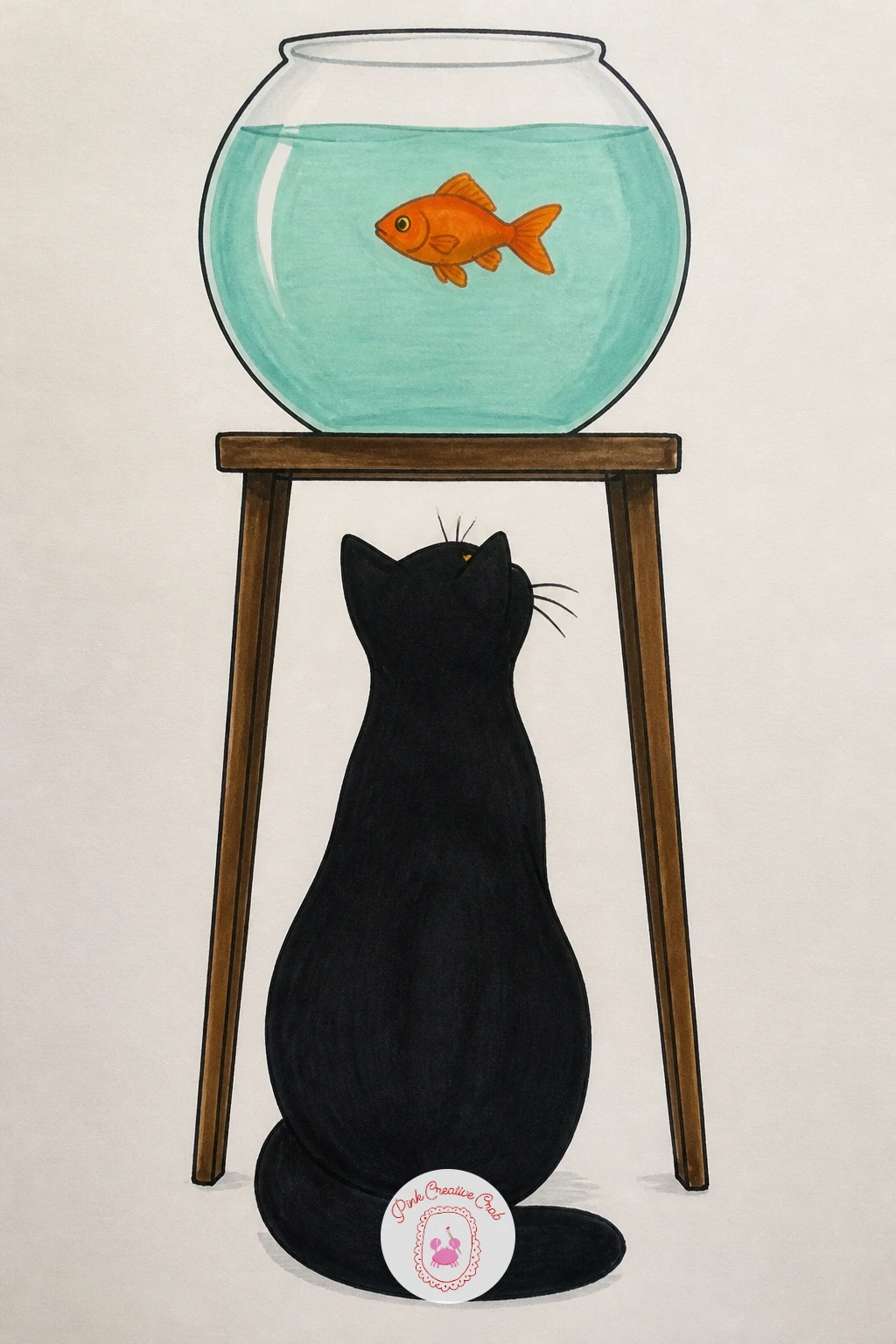
Give this scene real tension by focusing on where the cat’s eyes point rather than on the fishbowl’s details. Draw a simple round bowl on a small table or stand first, water line marked with one curved horizontal stroke, then position the cat below and to one side, body perfectly still, head tilted up with total focus on the bowl.
Eye level does a lot of work here. Draw the bowl slightly above the cat’s head height so her gaze tilts upward, which reads as fixation far more clearly than a bowl at the same level as her face.
A plate works well for tracing a clean circle for the bowl if freehand ellipses give you trouble, just trace the outline lightly in pencil first and ink over it afterward. One small orange fish shape inside the bowl, drawn larger than life, completes the standoff.
Keep the cat’s tail still and low rather than flicking, since a flicking tail suggests she is about to pounce, while a still tail suggests she is simply plotting.
You Will Need
- a small plate or lid to trace the bowl
Palette: Jet Black,Aqua Blue,Orange
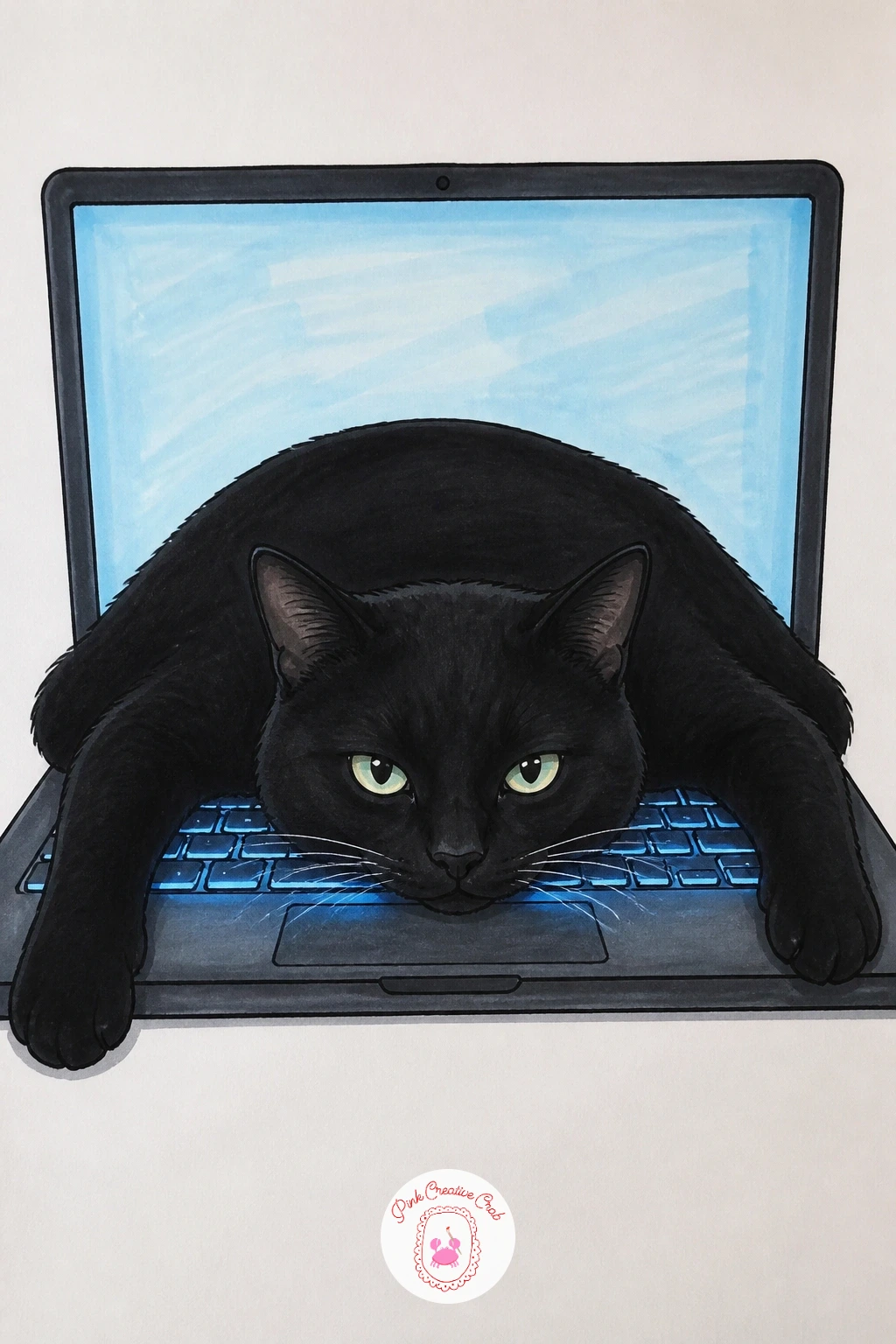
Every cat owner knows this exact scene, so lean into the flattened, spread out pose that only happens on a warm keyboard. Draw the laptop first as an open rectangle with a slightly angled screen behind it, then lay the cat across the keyboard with her body flattened wide, chin resting right on the keys and legs spilling off either side.
The quick ten minute version keeps the screen blank or shows a simple glow. The forty minute version adds a half finished document or a simple shape on screen, plus a few scattered keys poking out from under her fur to suggest she has displaced several already.
Edges are where this scene can look stiff if you are not careful. Let the black fur spill slightly over the edges of the keyboard rather than stopping neatly at its border, since cats never respect the boundaries of the things they lie on.
If drawing a laptop screen from scratch feels fiddly, a plain rectangle with two or three short lines suggesting text is plenty, nobody is reading it anyway.
Palette: Jet Black,Cool White,Steel Blue
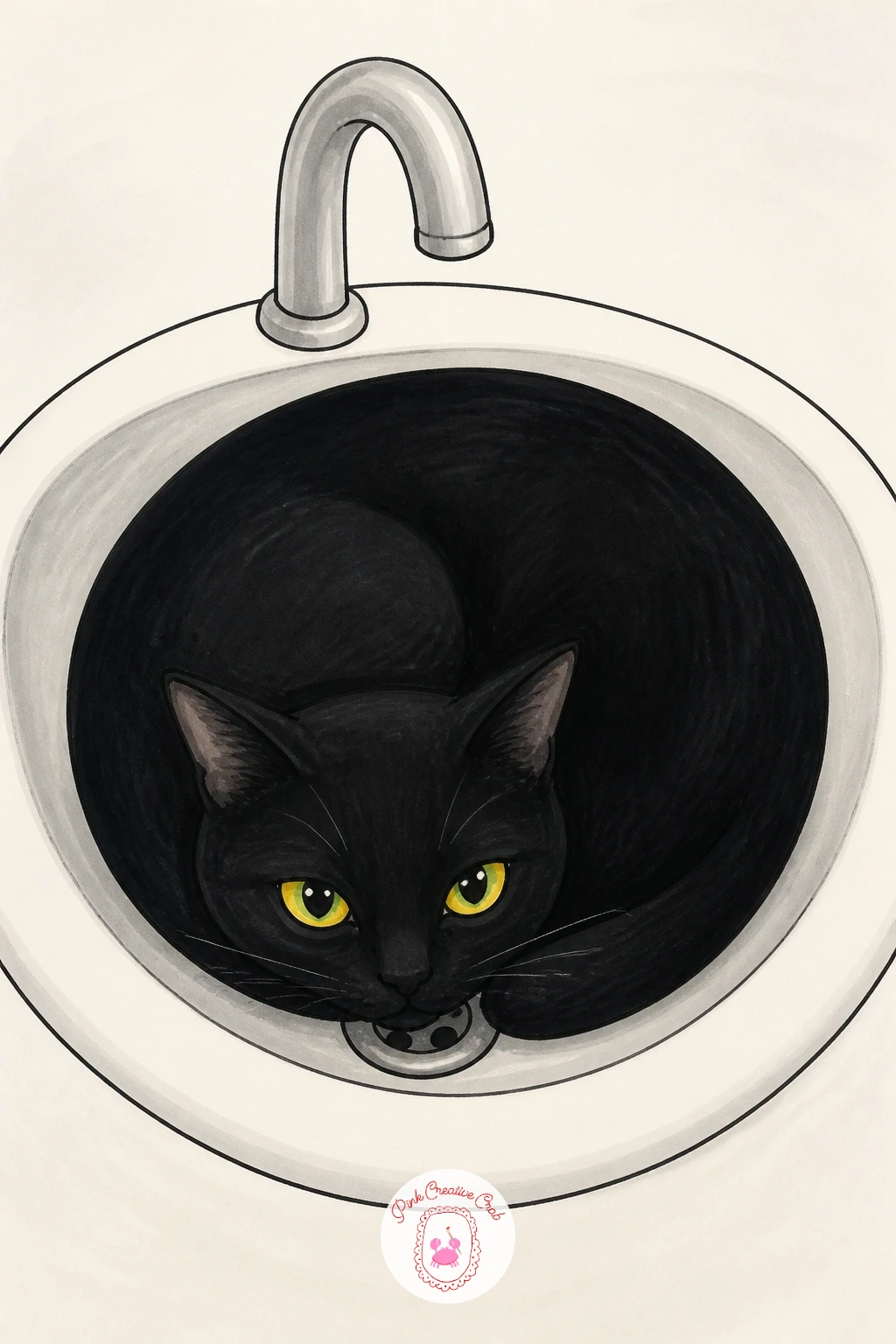
Sinks give a cat a surprisingly good curled shape to work with, since the basin’s curve matches a cat’s natural fold almost perfectly. Draw the sink first as a rounded rectangle basin set into a flat counter edge, faucet rising from the back, then curl the cat down inside it with her chin tucked near the drain.
Getting the fit right depends on one comparison: the cat’s curled width should sit just inside the basin’s inner curve with barely any gap, since that snug fit is exactly why cats choose sinks in the first place. Leave the gap too wide and the pose stops making sense.
Color the sink in a cool, clean white or pale grey with a single curved shadow line under the cat to seat her inside the basin rather than floating above it. The faucet can stay a simple curved pipe shape with one small round handle.
No bathroom sink handy to study? A kitchen sink works exactly the same way and skips nothing in the drawing.
Palette: Jet Black,Cool White,Pale Grey
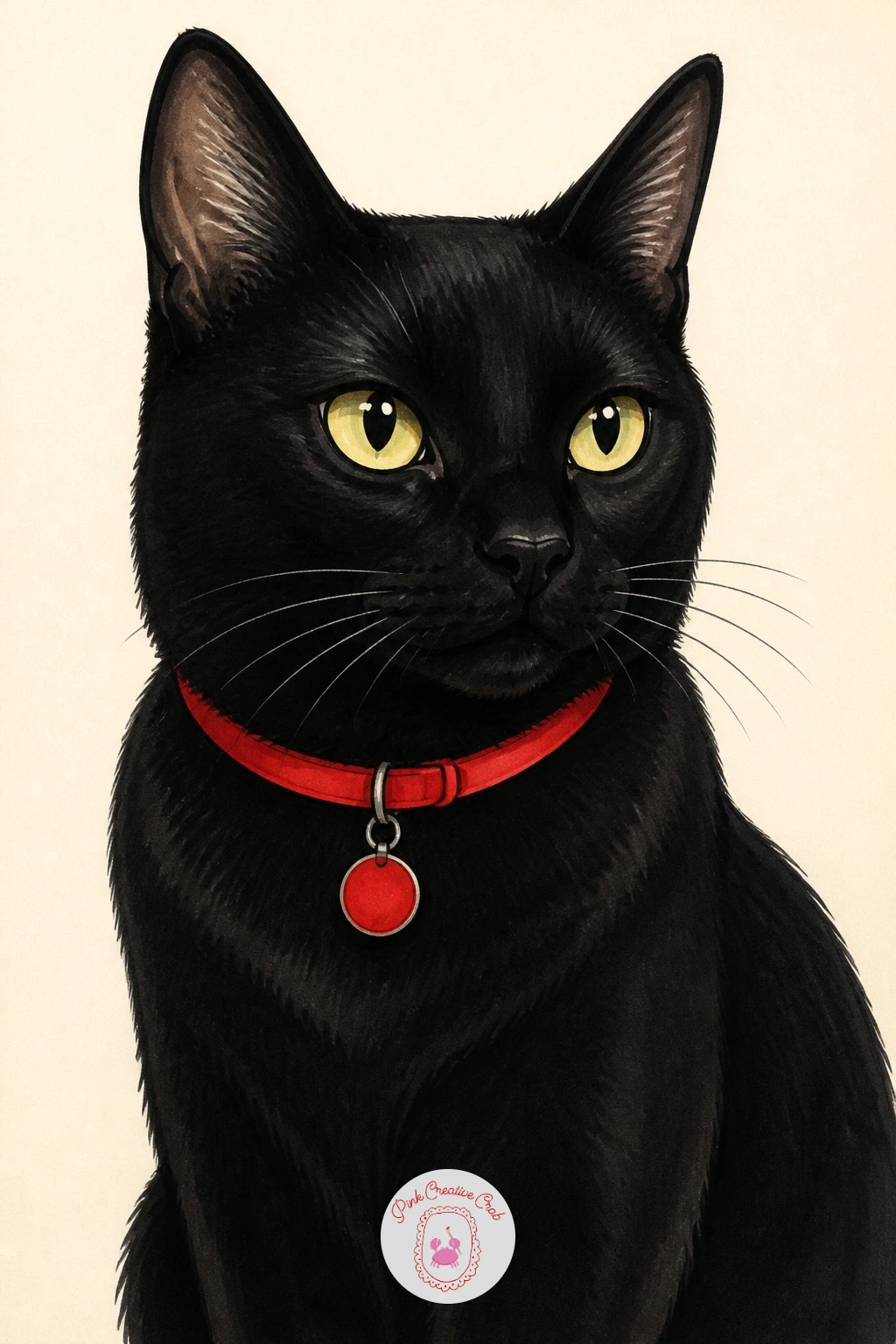
This one is less about a scene and more about a single confident portrait, so give the cat a bit more presence on the page than the busier drawings earlier in this list. Draw her sitting tall and facing slightly off center, chest puffed, then add the collar as a simple curved band around her neck with a small round tag hanging just below it.
The collar is the one spot of real color against all that black, so pick a cherry red that reads as bright and saturated rather than muted, and let it sit on top of a slightly looser fur line so it looks like it rests on the neck rather than floating in front of it.
If the tag ends up looking flat, one tiny curved highlight line in white gel pen across its surface suggests metal shine instantly, far faster than trying to shade it with marker.
For a bolder finish, try this portrait at a larger size than the other scenes on this list, since a close up face carries detail better when it has more room to breathe.
You Will Need
- white gel pen for highlights
Palette: Jet Black,Cherry Red,Cream
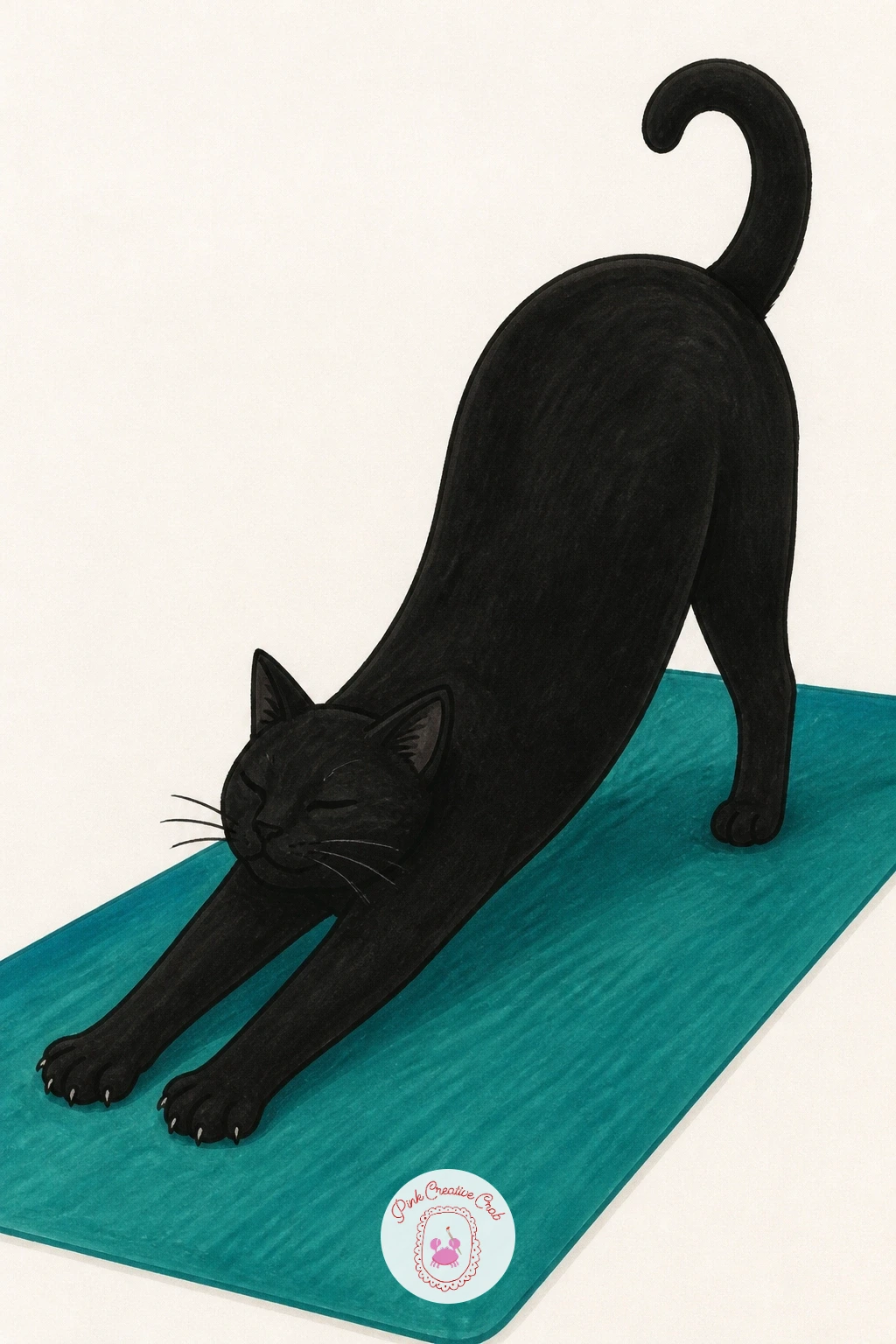
This pose asks for a long, confident line more than any other on this list, so practice the stretch shape in pencil a few times before inking it. Draw the yoga mat first as a long rectangle with a couple of simple stripe lines, then stretch the cat diagonally across it, front legs extended fully forward, back arched, hind legs braced behind her.
Compare the length of the stretched cat to the length of the mat as your proportion check: a full stretch usually spans about two thirds of a standard mat’s length, and keeping that ratio honest stops the pose from looking cramped or oddly short.
Keep the spine line smooth and continuous from nose to tail rather than broken into separate segments for head, back and tail, since one flowing curve is what actually reads as a real stretch.
Try a bright mat color like teal or coral to contrast against the black fur, and if you want a smaller warm up before this one, the cat pencil drawing ideas for beginners cover simpler poses to build confidence with first.
Palette: Jet Black,Teal,Coral Red
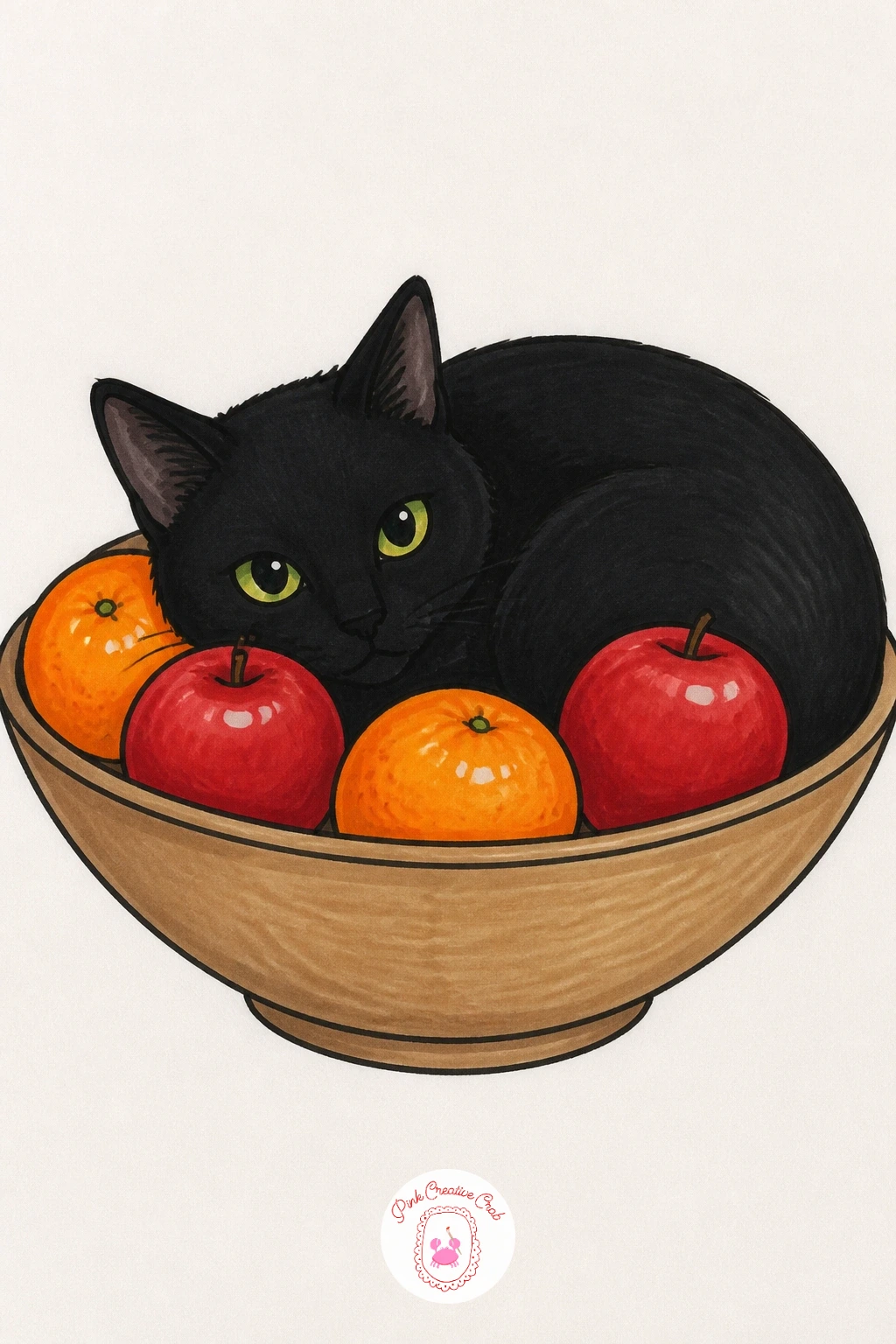
This one pairs nicely with the butter heist earlier, since it is another kitchen scene built around a bowl of objects. Draw a wide shallow bowl first with two or three simple round fruit shapes already inside it, apples or oranges work well, then nestle the cat down among them so her curled body fills whatever gap the fruit leaves.
The trick with texture here is contrast rather than detail. Keep the fruit smooth and glossy looking with one small highlight dot of white gel pen on each piece, while the cat’s fur stays matte and flat beside it, since that difference in surface sells both materials without extra shading.
Watch the scale of the fruit against the cat’s head, since oversized fruit reads as odd rather than charming. A piece of fruit about the size of her paw looks right in most compositions.
If you do not have a real bowl of fruit to glance at for shape reference, a quick search for photos of apples or oranges gives you all the roundness and shading cues you need.
You Will Need
- white gel pen for highlights
Palette: Jet Black,Apple Red,Tangerine
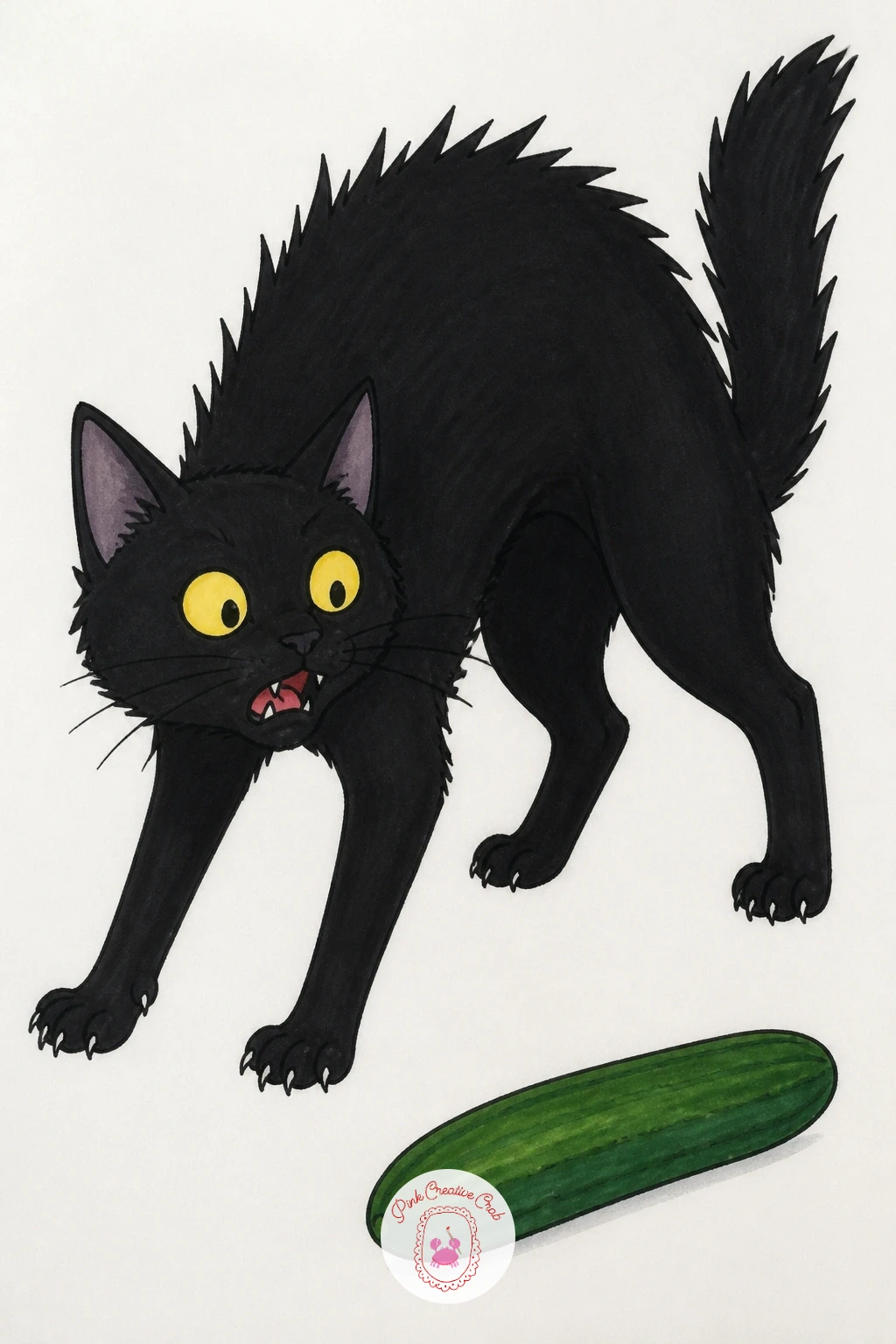
This classic internet moment translates well to paper if you focus on the cat’s body language rather than her face. Draw the cucumber first as a simple elongated oval lying flat on the floor a short distance from the cat, then draw the cat mid flinch, back slightly arched, legs stiff and spread wide as if frozen in place.
Give the cat a bit of lift under her paws, a few short curved lines just beneath her feet, to suggest she has startled upward rather than simply standing still. That small detail does more to sell the surprise than an exaggerated face would.
Fur standing on end along the spine and tail is the one texture trick worth adding here: a row of short jagged marker strokes along the back edge instead of one smooth outline reads instantly as a startled cat, even without a visible expression.
Keep the cucumber plain, just a smooth green oval with one or two darker lines for the ridges, since it is the cat’s reaction that carries the whole joke, not the vegetable’s detail.
Palette: Jet Black,Cucumber Green,Cream
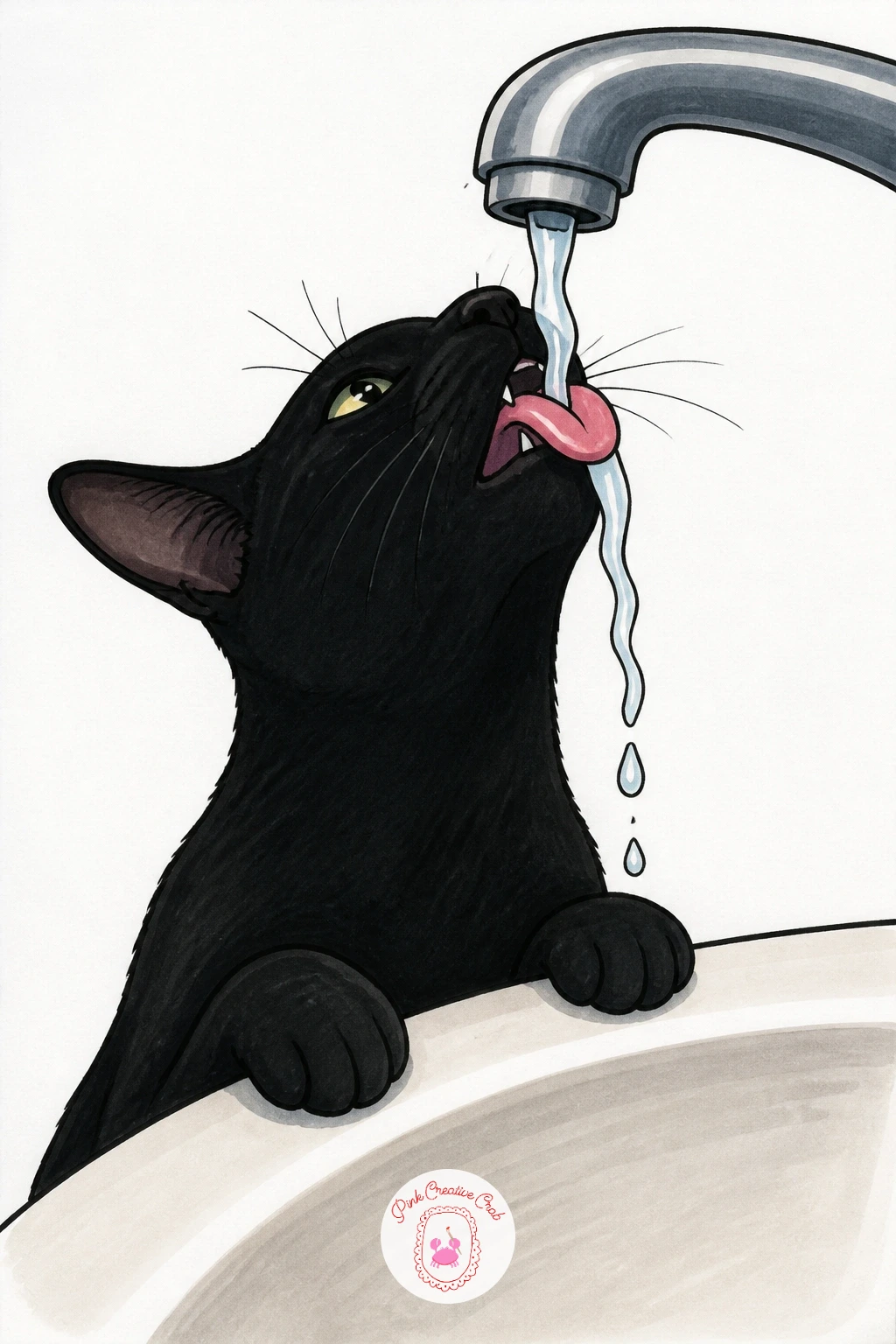
This is a favorite cat habit worth capturing in motion rather than stillness. Draw the tap and sink edge first, a simple curved faucet with a thin stream of water falling from it, then position the cat below with her head tilted back and tongue out, front paws braced on the sink’s rim to hold her steady.
The water stream is the one tricky texture here. Draw it as two or three slightly wavy parallel lines rather than one solid shape, and leave gaps of white paper between them so it reads as flowing water rather than a solid icicle hanging from the faucet.
Tilt the cat’s head back further than feels natural at first, since cats stretch their necks quite far to catch a thin stream, and an exaggerated tilt reads as more convincing than a conservative one.
If a running tap is hard to picture clearly, watch any short video of a cat drinking from one for the head angle and paw placement before you sketch.
Palette: Jet Black,Aqua Blue,Pale Grey
What to Do Next
Pick whichever scene matches the mood of the black cat you know best, grab your fineliner and one of the bright accent markers already in your set, and start with the outline before any color goes down. A smooth sheet of marker paper and twenty quiet minutes is really all today’s drawing needs.
Frequently Asked Questions
What paper works best for a black cat drawing in alcohol markers?
Marker paper or a smooth bristol pad works best, since alcohol markers bleed and feather on regular printer paper. Smooth, heavier paper keeps the fur blended evenly without ink spreading past the fineliner outline.
How do you keep black fur from looking flat in marker?
Vary your pressure and build it in two light layers rather than one heavy pass, leaving slightly lighter streaks where light would naturally catch the fur. A second pass of black only in the shadowed areas adds depth fast.
Should the fineliner outline go down before or after the marker color?
Always outline first in fineliner, then let it dry fully before adding marker color on top. Coloring first and outlining after risks smudging the still wet ink and blurring your clean line.
What is the easiest black cat pose for a first attempt?
A curled, sleeping pose like the laundry basket or shared bed idea is easiest, since it hides the legs and paws inside one simple rounded shape. Save standing or walking poses for once you feel more confident with proportions.
How many markers do you actually need to draw a black cat?
Two or three shades of black and grey cover the cat herself, plus a handful of bright accent colors for props like yarn, collars or cake boxes. A small set of ten to twelve alcohol markers handles this entire list.
Have any thoughts?
Share your reaction or leave a quick response — we’d love to hear what you think!
-
 0
-
0
-
0
-
0
-
0
-
0


