Teddy bear watercolor is the kind of painting that feels like opening an old nursery book: soft fur, faded ribbons, little bears getting on with their tiny lives. There is something so satisfying about mixing a warm honey brown, letting it bloom on damp paper, then adding the small details that give a bear its whole personality in a few marks.
Below you will find thirty one nostalgic bear scenes, from a bear asleep in a crib to a bear flying a kite, each one built to finish in a single sitting. Work down the list in order if you like, since the ideas grow a little more involved as you go, or just pick whichever bear is pulling at you today.
Using these images: free for personal projects such as printing, coloring, cards, journals and gifts. Handmade items that include them may be sold up to 30 pieces per design. More than that is commercial use and is not permitted, and neither is selling or sharing the images themselves or passing them off as your own. Please ask before any other use.
Start with the easiest bear on the list: a teddy bear having a tea party, sitting cross legged behind a tiny cup and saucer. Sketch the bear first as two overlapping circles for the head and body, then a saucer and cup as simple ovals in front of his paws.
Paint the body in one wash of honey brown, leaving the muzzle, paw pads and inner ears as unpainted cream paper. While the brown is still damp, drop a slightly darker brown along the underside of the arms and belly so the fur has gentle shading without any hard lines. Let that dry fully before you touch the teacup.
Add the cup and saucer in a faded red with a thin baby blue stripe around the rim, and a bow at the bear’s neck in the same red. If the fur wash dries patchy, a tiny bit of water flicked on with a clean brush while it is still damp will soften the edge.
If this is your first time painting a bear, keep the whole thing under four inches tall so the washes stay easy to control.
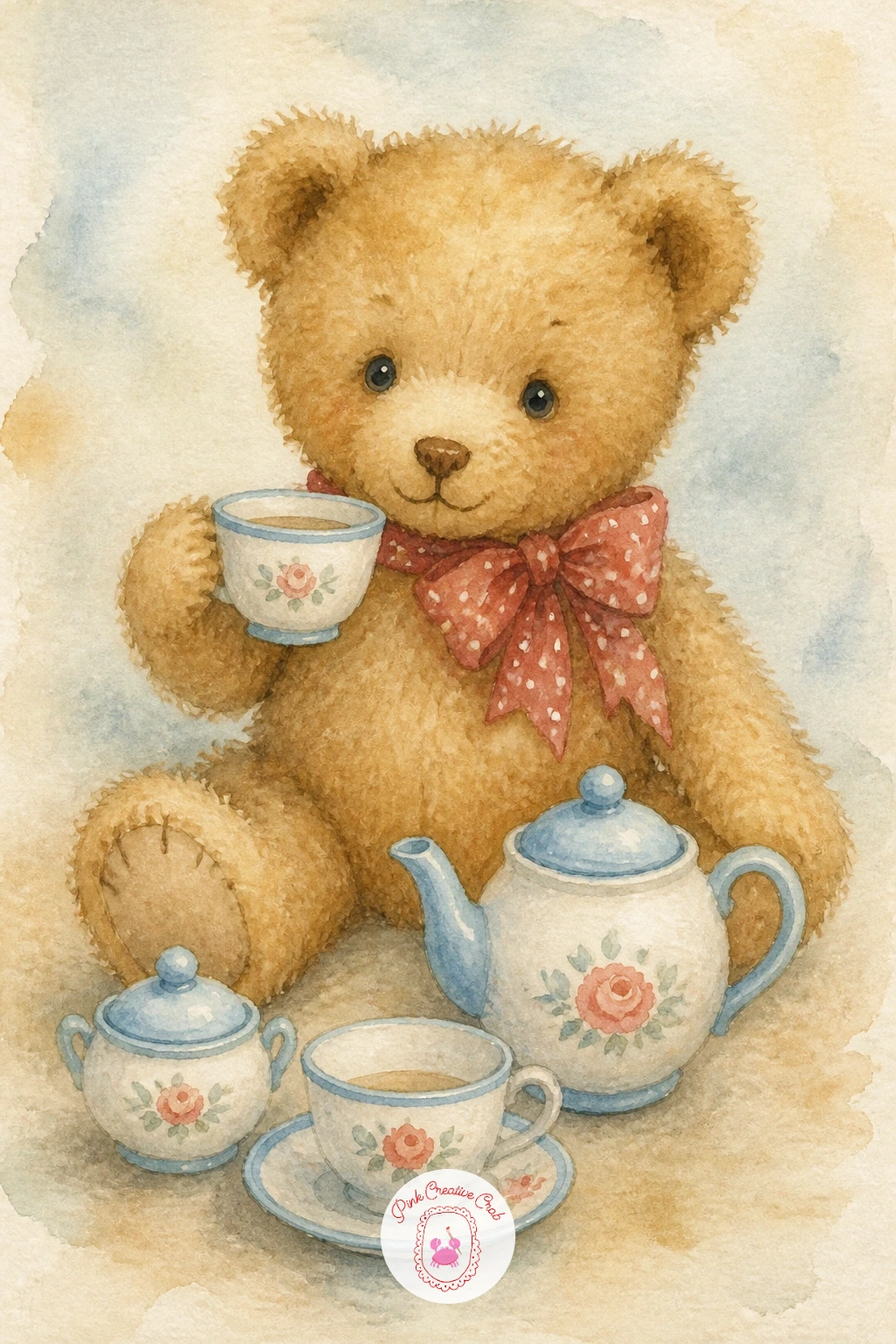
Palette: Honey Brown,Burnt Sienna,Faded Red,Baby Blue
Give the tea party bear a ride next: a teddy bear in a wagon, paws resting on the sides as if he is about to roll downhill. Draw the wagon first as a simple rectangle on two circle wheels, then sit the bear’s rounded body inside it so his head and ears poke just over the rim.
Paint the wagon in faded red while the paper is dry, so the edges stay crisp and toy-like, then switch to wet in wet for the bear so his fur looks soft against the hard little cart. Shade the wheels with a touch of Payne’s grey in the centers to suggest metal hubs.
The wagon handle is the easiest place for this idea to go wrong, since a shaky line reads as broken rather than old and worn. Draw it last in pencil, then trace it slowly with a fine brush loaded with thin brown paint rather than trying to get it right in one quick stroke.
Keep one tip in mind for today: paint the wagon body before the wheels so you are not painting around wet shapes.
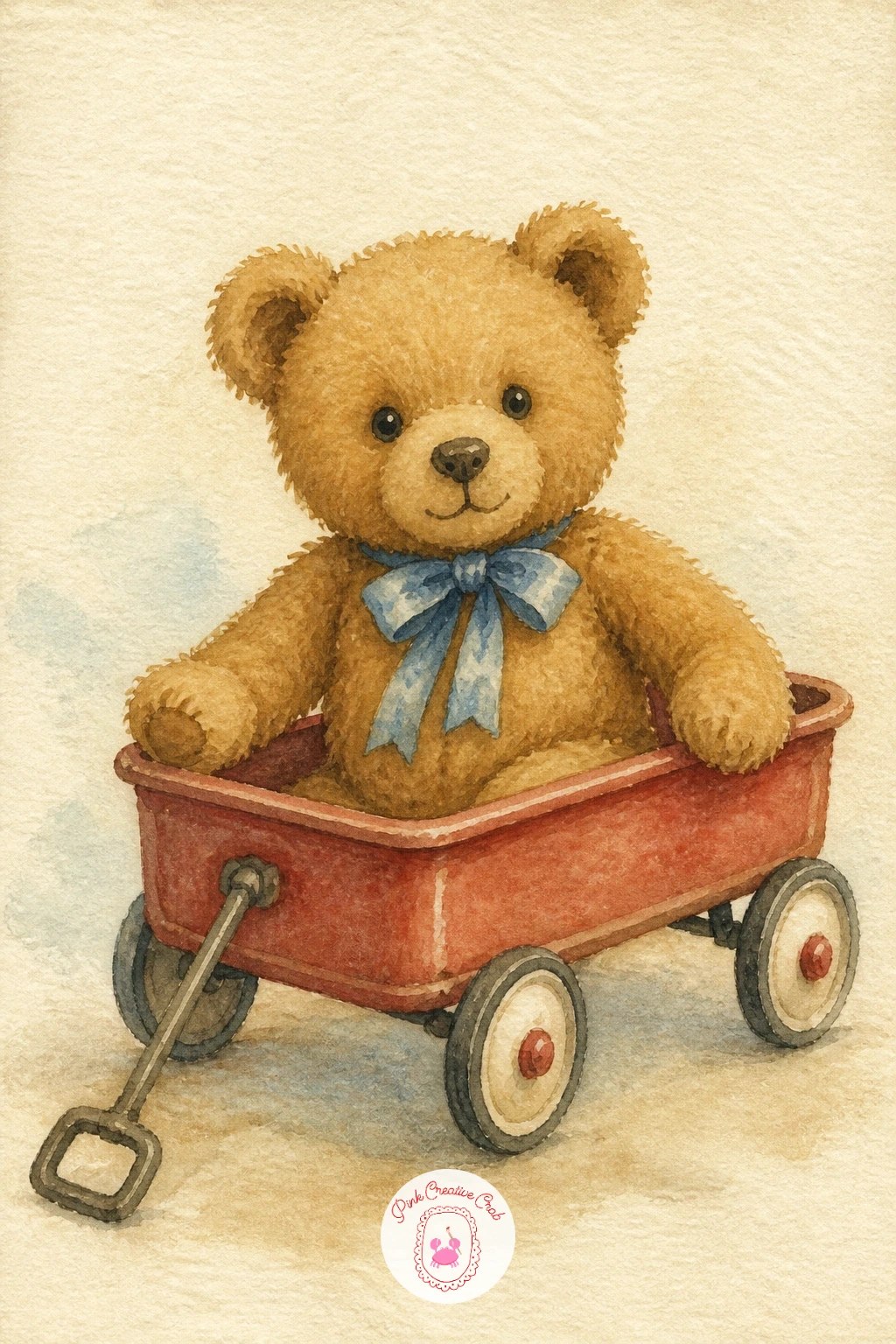
Palette: Faded Red,Honey Brown,Payne’s Grey,Cream
Settle the next bear in for story time: a teddy bear reading a picture book, propped up with the book open across his lap. Block in the bear’s seated shape first, rounded knees together, then paint the open book as two trapezoid pages tilted toward the viewer.
Work the fur wet in wet in honey brown, then once it is bone dry, paint the book cover in baby blue and the pages in plain cream left mostly unpainted, since white page against brown fur is what sells the whole scene. A few wavy pencil lines on the pages suggest text without needing to draw real words.
If anyone who browses reading themed journal pages for ideas, this bear pairs naturally with that kind of nostalgic layout. The place this goes wrong is making the book too small to read as a book at all, so size it to at least a third of the bear’s body width.
No pen on hand for the page lines? A dry brush with very thin grey paint does the same job.
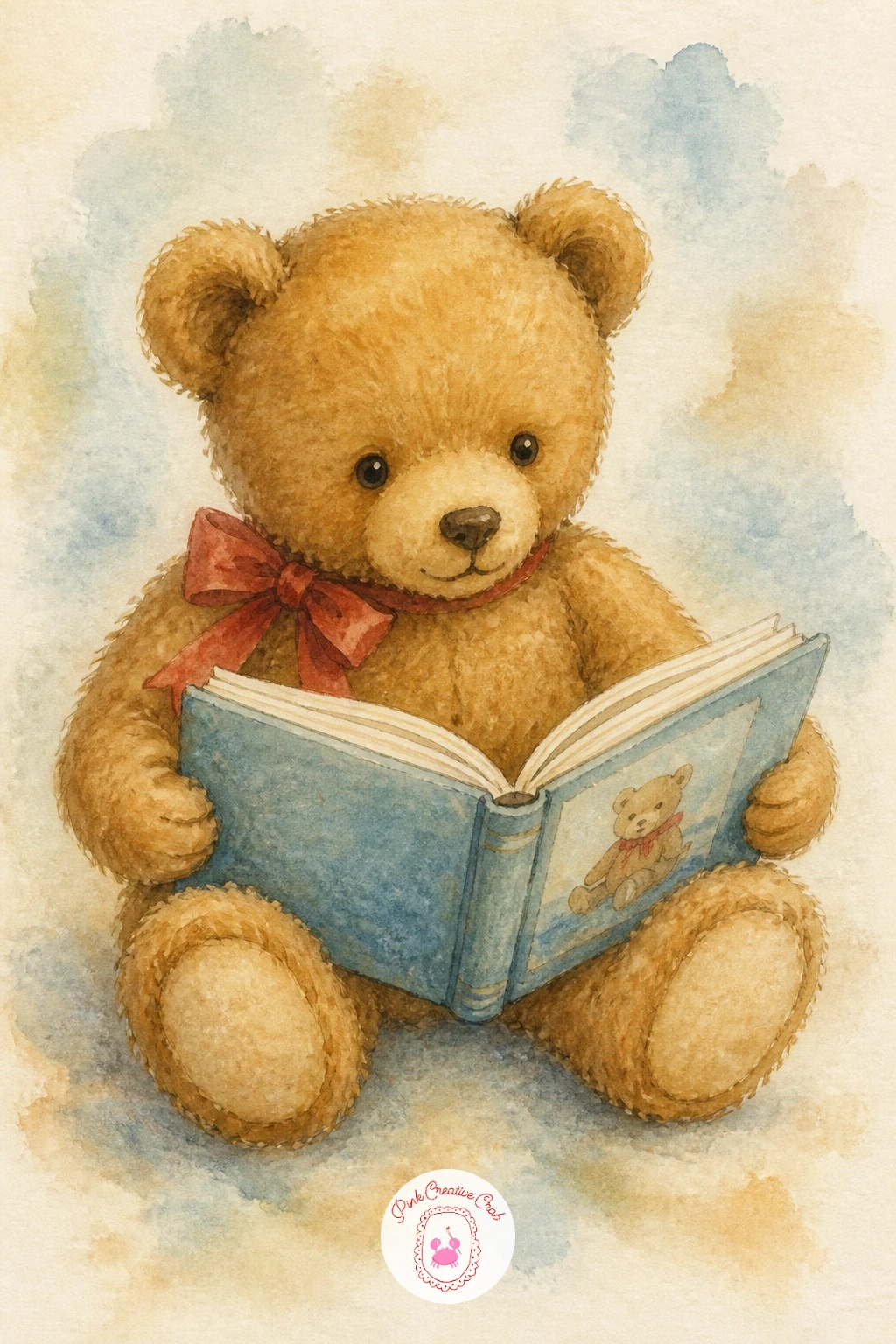
Palette: Honey Brown,Baby Blue,Cream,Payne’s Grey
Float something light next to a sitting bear: a teddy bear with a balloon, the string looped loosely around one paw. Paint the balloon first as a single clean circle in faded red, leaving a small white highlight unpainted near the top so it reads as round and shiny rather than flat.
Once the balloon is dry, paint the bear below it, keeping his pose simple and upright so the string has a clear path down to his paw. This is a good moment to think about where the light falls: if the balloon has a bright spot on its upper left, carry a softer highlight onto the bear’s head and shoulder on that same side so the whole scene feels lit from one place.
The string is the fiddly part. Draw it last with a fine liner or a very thin brush line rather than trying to paint it with the brush used for the balloon, since a loaded brush will blob at the end.
Swap the faded red balloon for baby blue if you want a quieter, cooler version of the same scene.
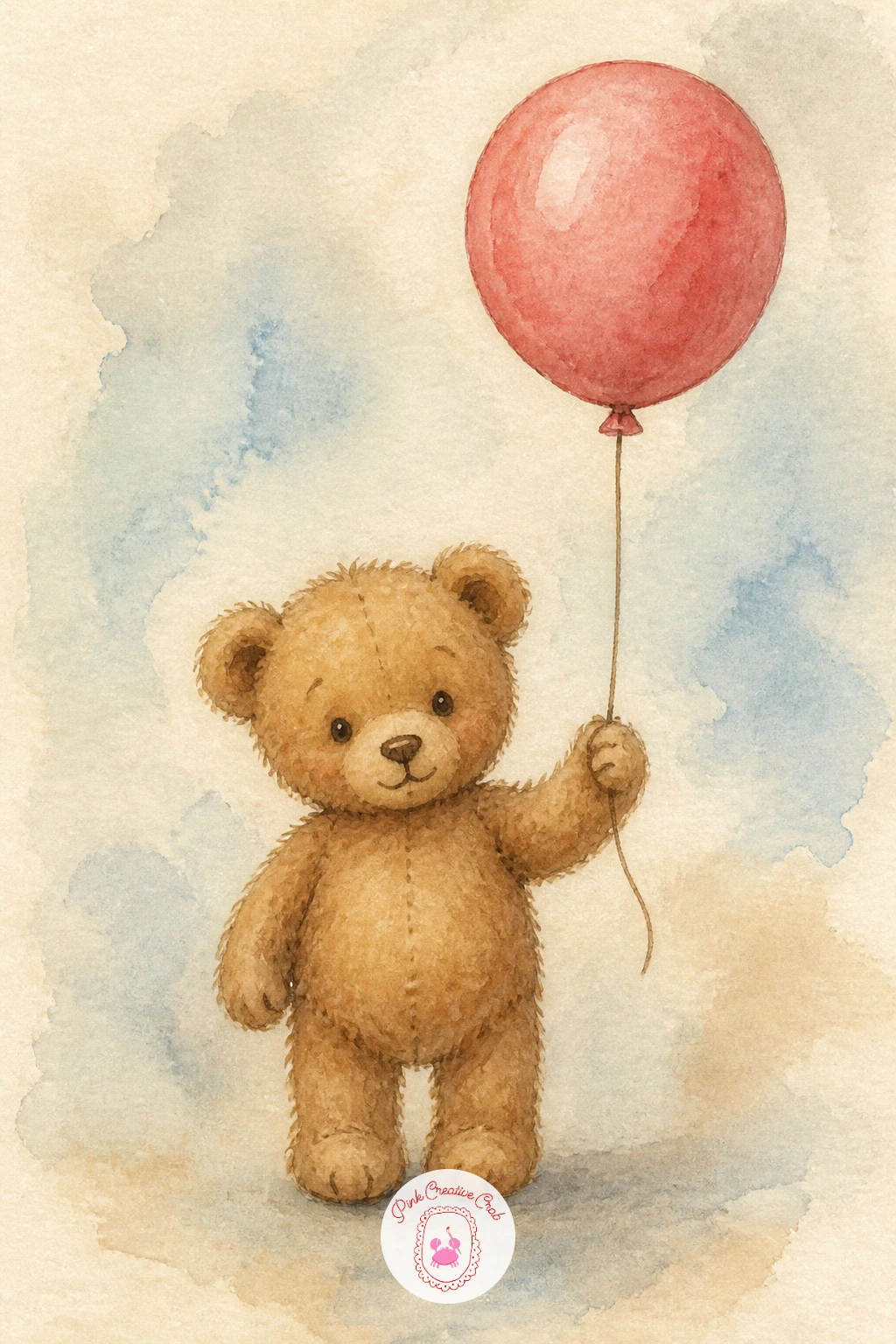
Palette: Faded Red,Honey Brown,Baby Blue,Cream
Slow the pace down with a quiet one: a teddy bear asleep in a crib, tucked under a small blanket with just his head and one ear showing. Paint the crib bars first in thin, evenly spaced pencil lines before any paint touches the page, since it is much harder to add straight bars over wet color later.
Paint the blanket in baby blue, letting it pool slightly darker at the folds, then add the bear’s face peeking out in honey brown once the blanket has dried. Keep his eyes closed with two short curved lines rather than full circles, which instantly reads as sleeping.
The crib bars often end up too thick or too far apart to feel delicate. A ruler under a fine brush, or a fine liner pen traced along a light pencil guide, keeps them even without looking stiff.
For a softer version, skip the bars entirely and paint just the blanket and sleeping face with a crescent moon in the corner.
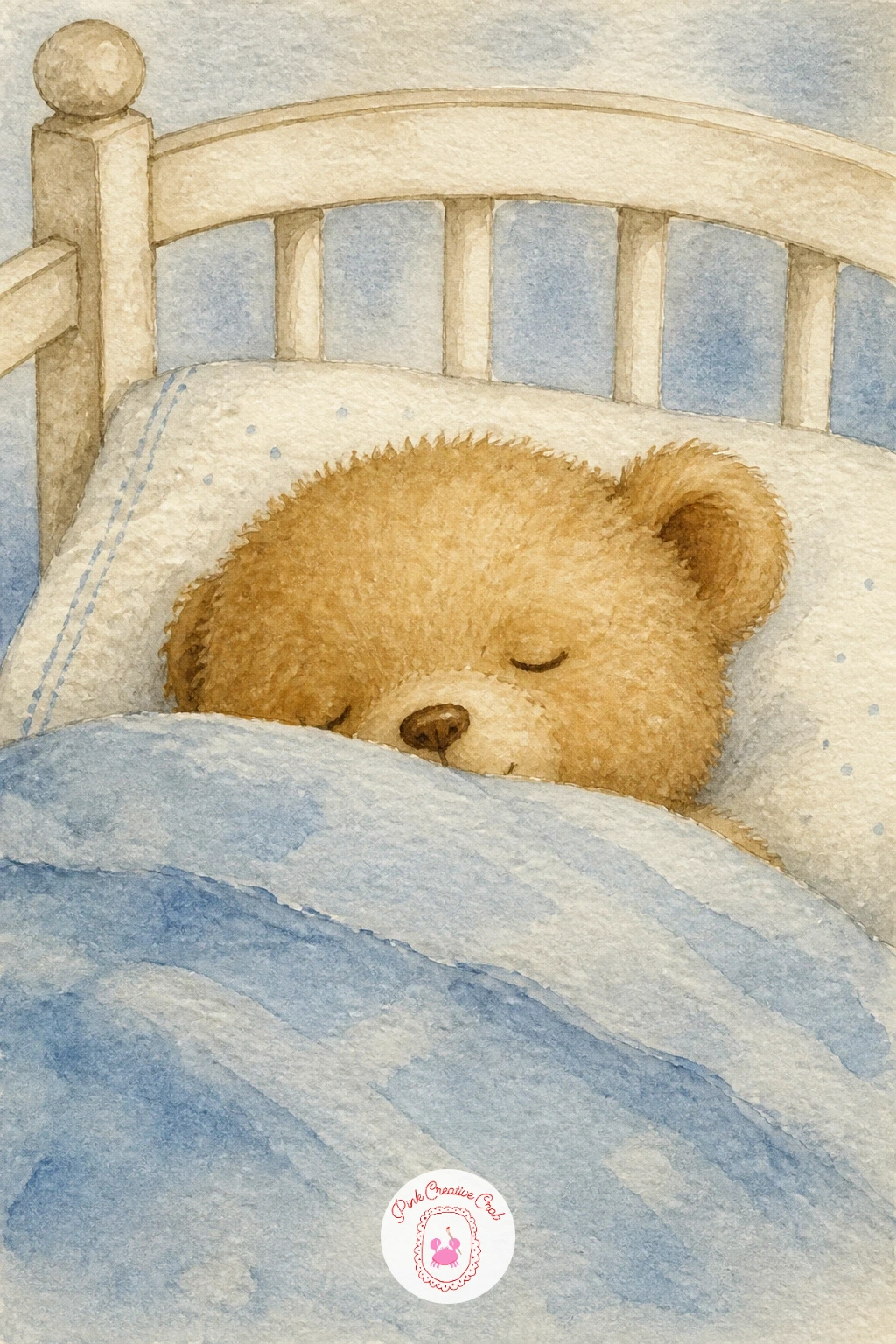
Palette: Baby Blue,Honey Brown,Cream,Payne’s Grey
Take the bears outdoors for a teddy bear picnic in the woods, a small checked blanket spread under a loose suggestion of trees. Paint the background trees first as soft green blobs in the palest wash you can mix, well behind where the bear and blanket will sit, so nothing competes with them later.
Once the background is dry, paint the blanket as a cream rectangle with faded red checks added with a fine brush, then sit the bear on top in honey brown. A woodland scene like this shares a lot with painting any small outdoor setting, so if you enjoy this one, the layered backgrounds in easy watercolor landscapes are worth a look for more practice with soft distant greens.
The picnic basket is the one prop that tends to go flat and shapeless. Paint it as a simple curved trapezoid with a darker brown wash only along its bottom edge, which gives it enough weight to sit convincingly on the blanket.
Add a tiny jar of honey beside the basket if there is room left on the page.
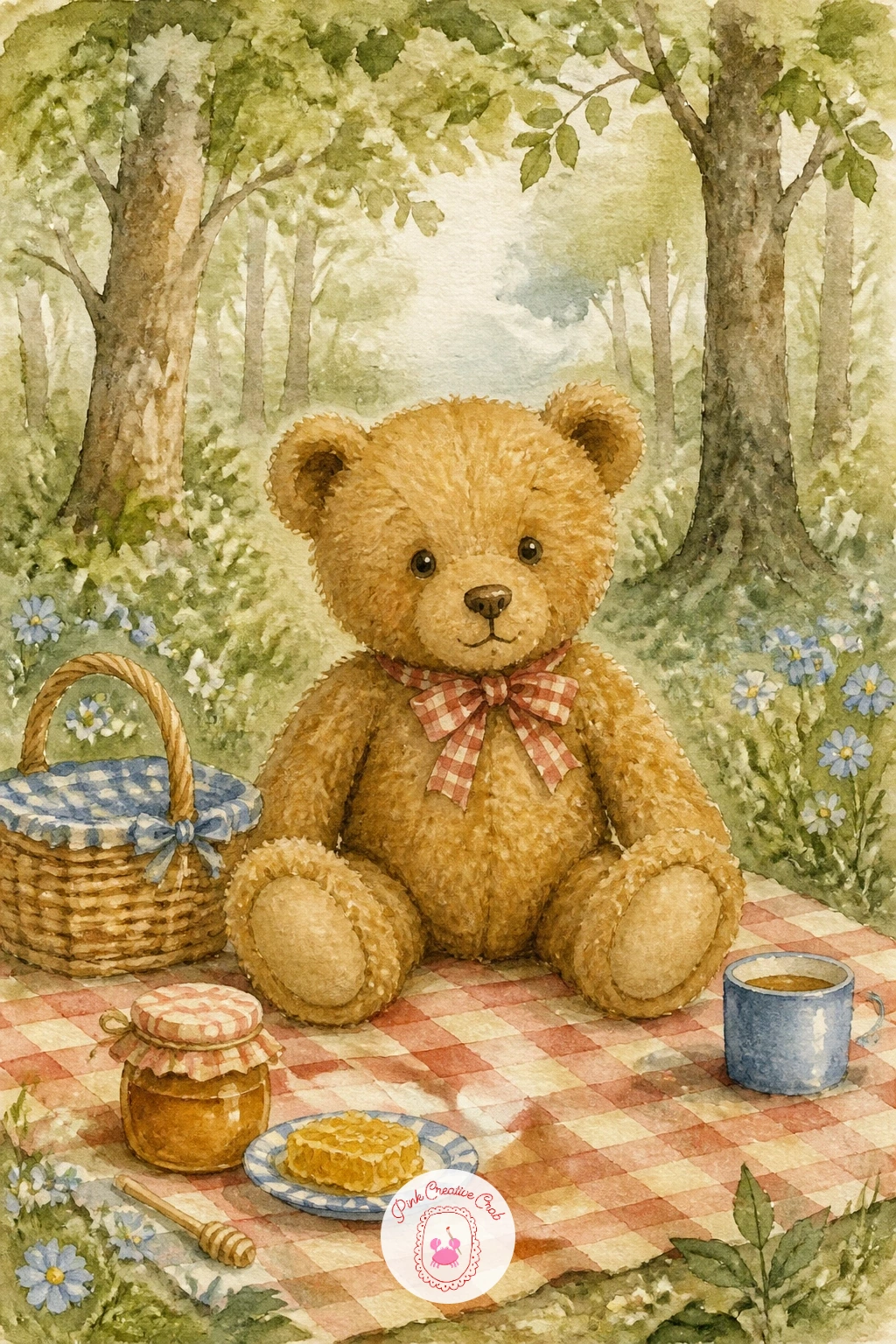
Palette: Sap Green,Cream,Faded Red,Honey Brown
Bundle the next bear up warm: a teddy bear in a knitted sweater, the pattern suggested rather than drawn stitch by stitch. Paint the bear’s body and head in honey brown first, leaving a gap where the sweater will sit so the two colors do not fight for space.
Once dry, paint the sweater in baby blue, then while it is still slightly damp, drag a dry brush loaded with a touch of darker blue in short vertical strokes to suggest ribbed knitting without drawing every line. This dry brush texture is the trick worth practicing here, since it reads as wool from across a room but takes seconds to do.
If the sweater ends up too smooth and flat, go back in once fully dry with a fine pencil and add a few short diagonal marks along the hem and cuffs.
No baby blue to hand? A soft faded red sweater against honey brown fur works just as warmly.
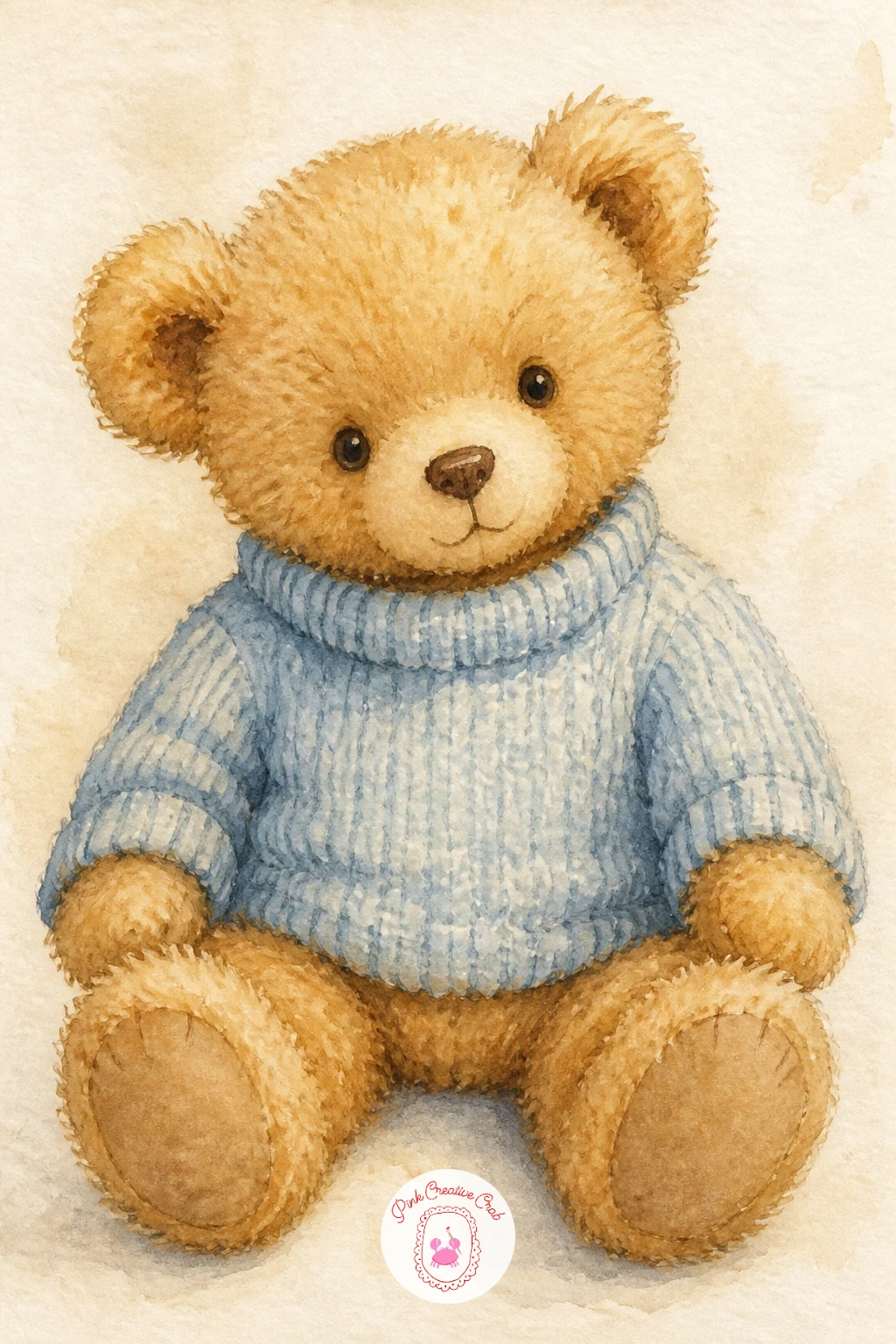
Palette: Honey Brown,Baby Blue,Payne’s Grey,Cream
Try a stiff, half dry brush for the sweater texture rather than a soft round one. The scratchier the bristles, the more convincingly woolly the strokes look.
Raise the bear up onto a toy for this one: a teddy bear on a rocking horse, paws gripping the handles and the curved rockers just touching the ground line. Measure before you paint anything: the horse’s body should sit roughly twice as long as the bear sitting on it, which keeps the whole toy looking sturdy rather than spindly.
Paint the horse in a soft cream with a faded red saddle, letting the mane and tail dry as loose, slightly darker brown drips rather than neat shapes. Add the bear on top once the horse is dry, keeping his legs short and his body leaning slightly forward into the rock of the ride.
The rockers underneath are easy to paint too straight, which flattens the sense of motion. Curve them generously, almost like two smiles, so the horse looks caught mid-rock rather than standing still.
A curved rocking horse like this pairs naturally with other toyshop ideas further down this list, so keep the proportions you used here in mind.
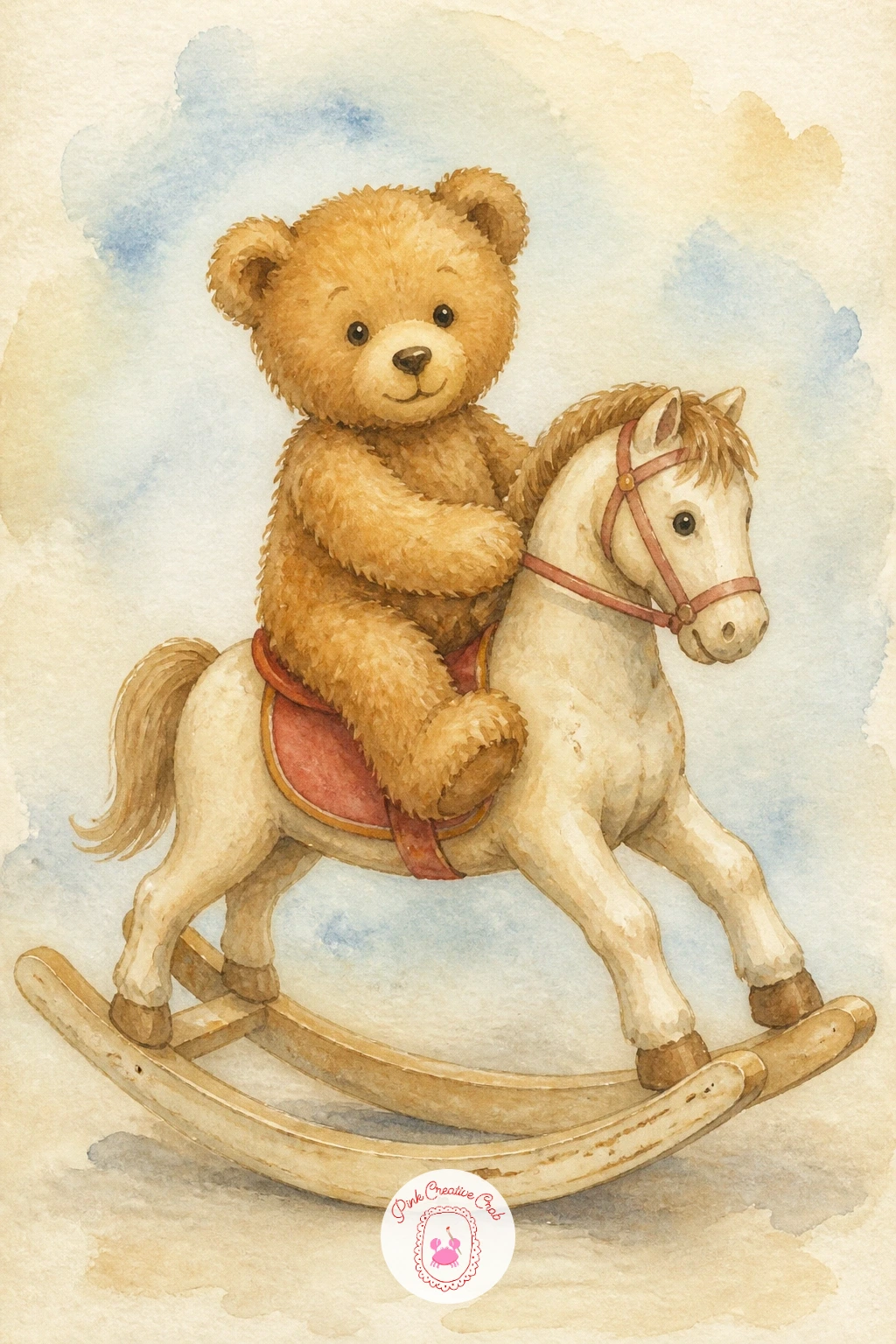
Palette: Cream,Faded Red,Honey Brown,Burnt Sienna
Soften things with a gift: a teddy bear holding a bunch of flowers, the stems gathered loosely in one paw. Paint the flowers before the bear this time, dotting loose faded red and baby blue blooms with the tip of a round brush so they stay soft and unfussy, then let them dry completely.
Paint the bear’s body around the flower shapes, leaving a gentle gap at the paw so the stems look held rather than stuck on top. If painting small flowers feels new to you, a quick practice run through easy watercolor flowers for beginners will make this bouquet much less fiddly.
Stems are the part that often look too stiff. Paint them with a single loaded stroke per stem rather than outlining and filling, which keeps them thin and a little wobbly in the nicest way.
Tie the stems together with one small faded red ribbon line once everything else is dry.
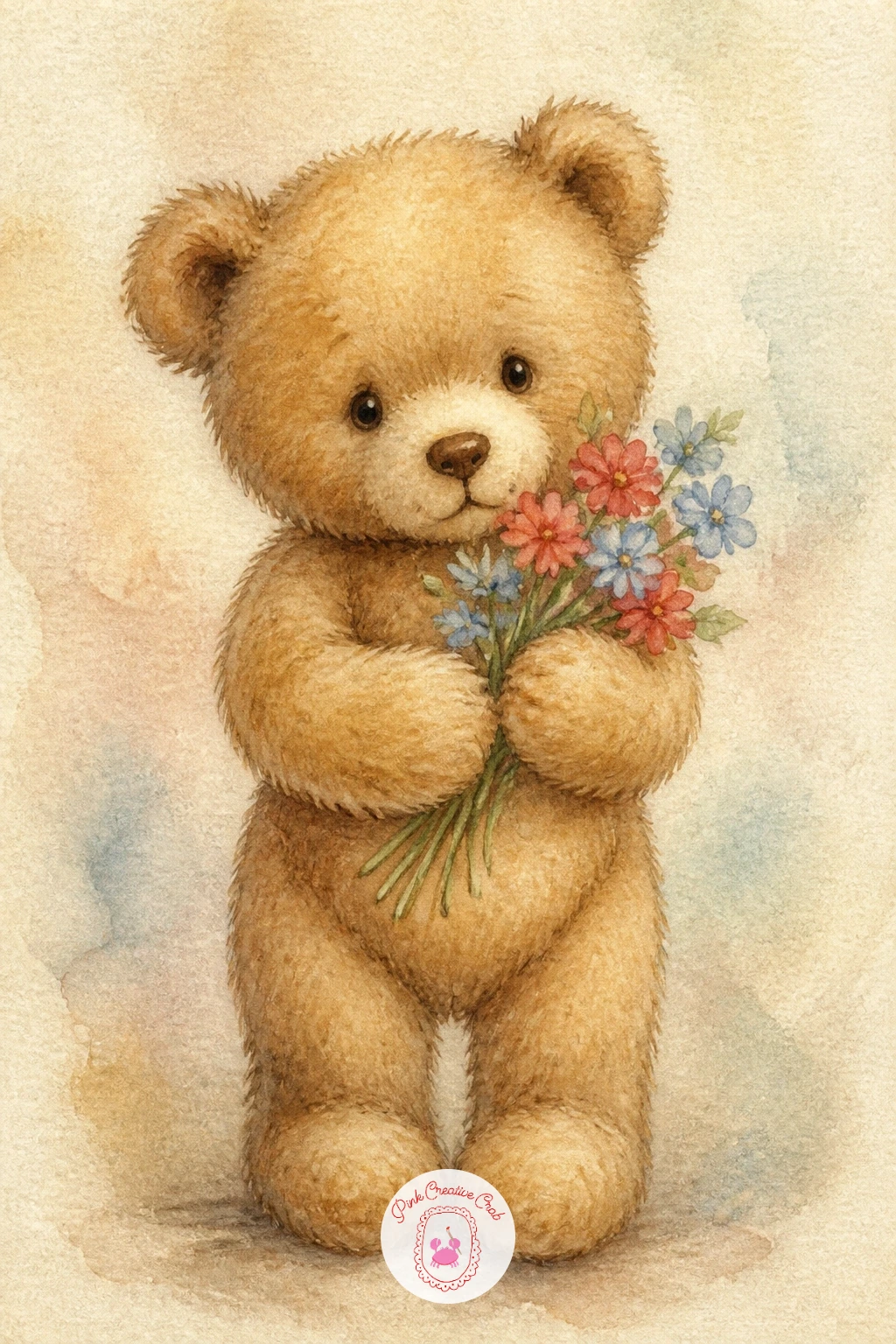
Palette: Faded Red,Baby Blue,Sap Green,Honey Brown
Move a bear outdoors for weather: a teddy bear in a raincoat, standing in a puddle with his little rain boots on. Eye level matters here: paint the horizon or ground line low on the page and look slightly down at the bear, which makes the puddle under his boots read clearly rather than floating awkwardly beside him.
Paint the raincoat in baby blue as a simple bell shape over the bear’s body, then once it is dry, add a faded red boot peeking out at the bottom. The puddle is just a flat oval of thinned Payne’s grey with a single pale reflection of the bear left unpainted in its center.
Hoods are easy to make too stiff and helmet-like. Round the edges generously and let the fur show softly at the very front, as if his face is just poking out.
Add a few loose raindrops with the tip of a fine brush once everything else has dried.
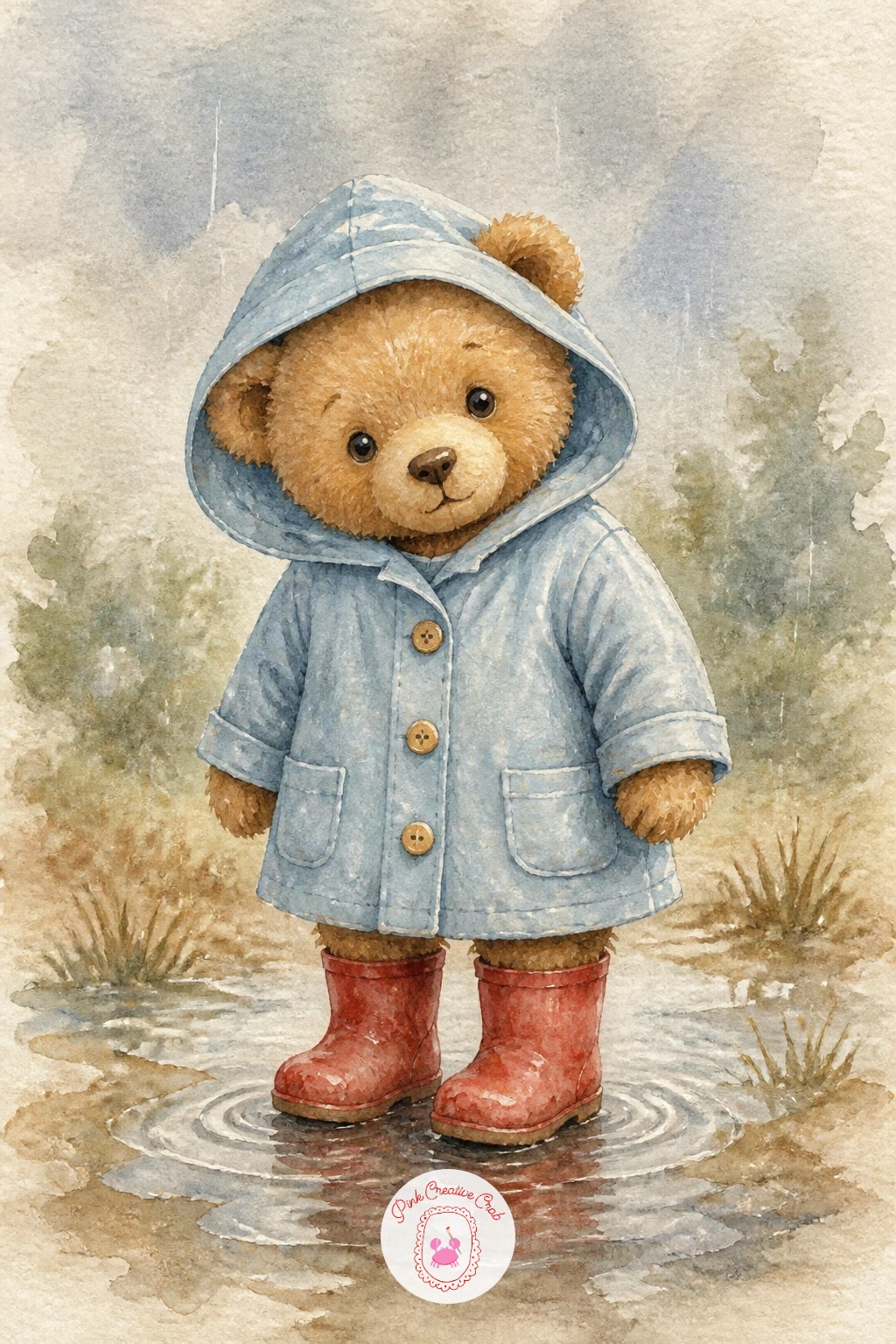
Palette: Baby Blue,Faded Red,Payne’s Grey,Honey Brown
Bring the nostalgia home with this quiet pair: a teddy bear with a little girl in bed, both tucked under the same blanket with only their heads showing. Sketch the two heads close together first, the girl’s slightly larger and rounder than the bear’s, before any paint goes down, since getting this pairing right in pencil saves a lot of correcting later.
Paint the girl’s skin tone and hair first in thin, pale washes, then move to the bear’s honey brown fur beside her, keeping both faces simple with just dot eyes and a small curved mouth. The shared blanket in baby blue ties the two shapes together as one scene rather than two separate paintings pushed next to each other.
Faces are where this one can go wrong fastest, since too much detail makes both characters look older than intended. Keep features minimal and round, closer to a storybook illustration than a portrait.
If you prefer not to paint a human face, a simple striped pajama sleeve poking out from the blanket keeps the story without it.
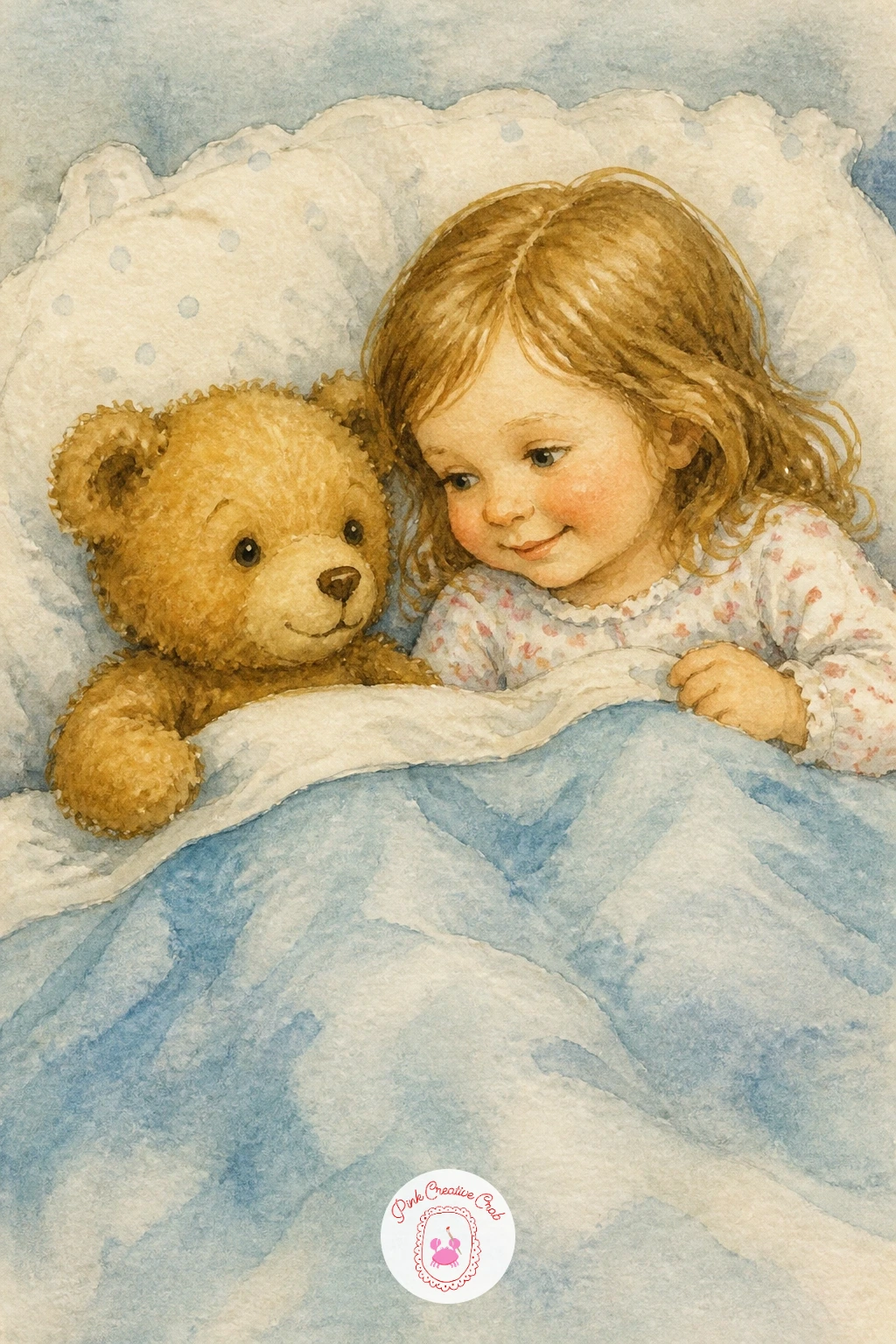
Palette: Baby Blue,Honey Brown,Cream,Faded Red
Give a single bear some stage presence: a teddy bear in a toy shop window, framed by a simple arched window and a dusting of snow or confetti outside. Paint the window frame first in masking fluid along its thin lines if you have it, so the white frame stays crisp once the background color goes in around it.
Fill the background inside the window with a deep faded red or soft Payne’s grey, then once dry, lift the masking fluid and paint the bear sitting inside the clean white shape left behind. Add a small price tag or ribbon at his neck for the shop window feel.
No masking fluid on hand? Simply paint the window frame last in opaque white gouache over the dry background instead, which gives nearly the same crisp edge.
This idea rewards patience more than any other bear here, so let each layer dry fully before moving to the next.
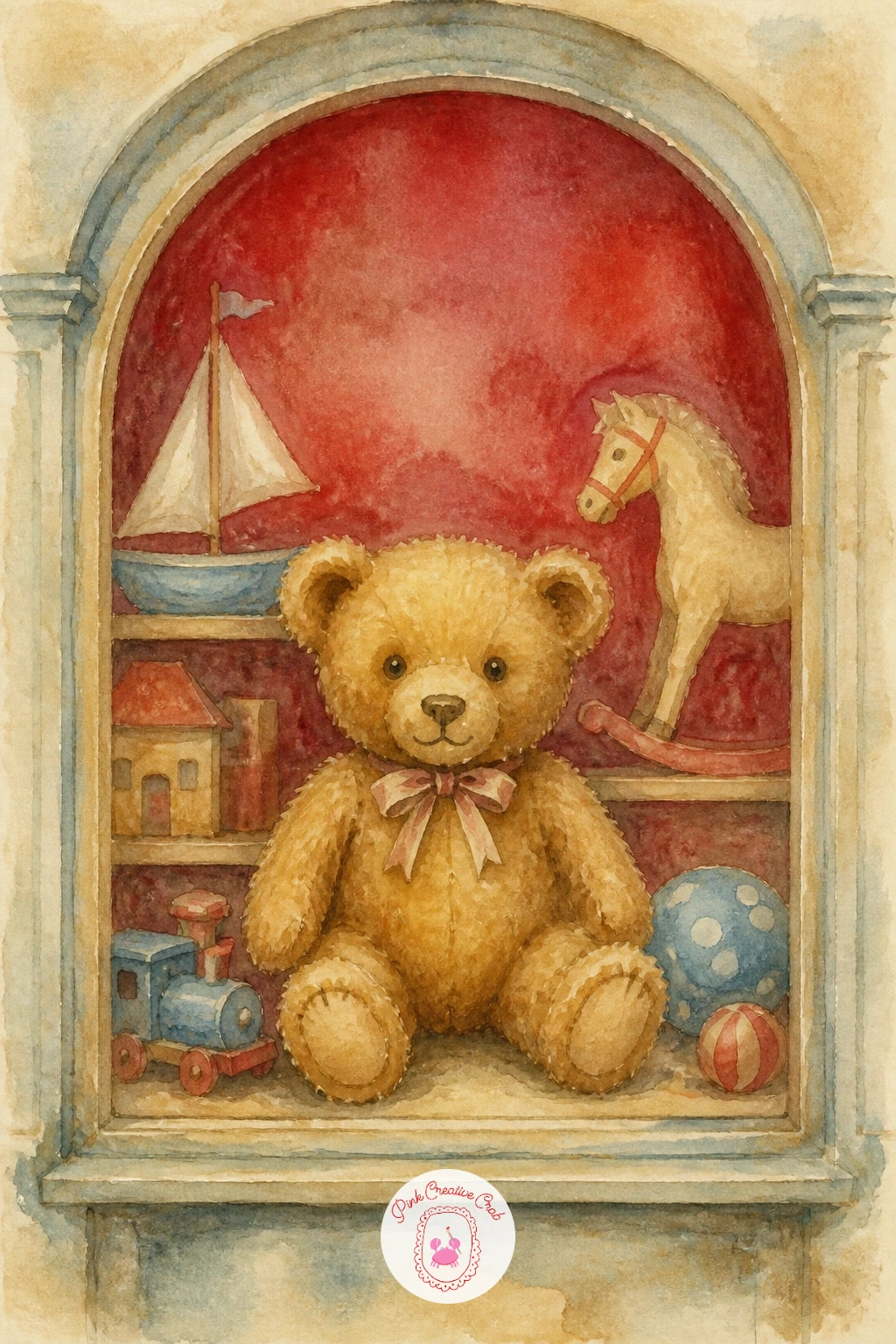
You Will Need
- masking fluid or white gouache
Palette: Faded Red,Honey Brown,Payne’s Grey,Cream
Add a little motion with a teddy bear on a swing, paws curled around two thin ropes as he hangs mid-air. Paint the ropes first in pencil only, then paint the bear’s body leaning back slightly, since a swing only reads correctly if the body tilts away from straight up and down.
Once the bear is dry, go over the pencil rope lines with a fine liner or a very thin brush, letting them cross just behind his paws so they look held rather than painted on top. The wooden swing seat is a single small rectangle in honey brown, painted last so it sits clearly under him.
For a quick ten minute version, stop here with just the bear and swing on plain paper. With forty minutes, add a loose tree branch above holding the ropes and a soft green wash behind for ground and sky.
Keep the ropes thin all the way down. Thick ropes make the whole swing look heavier than a toy should.
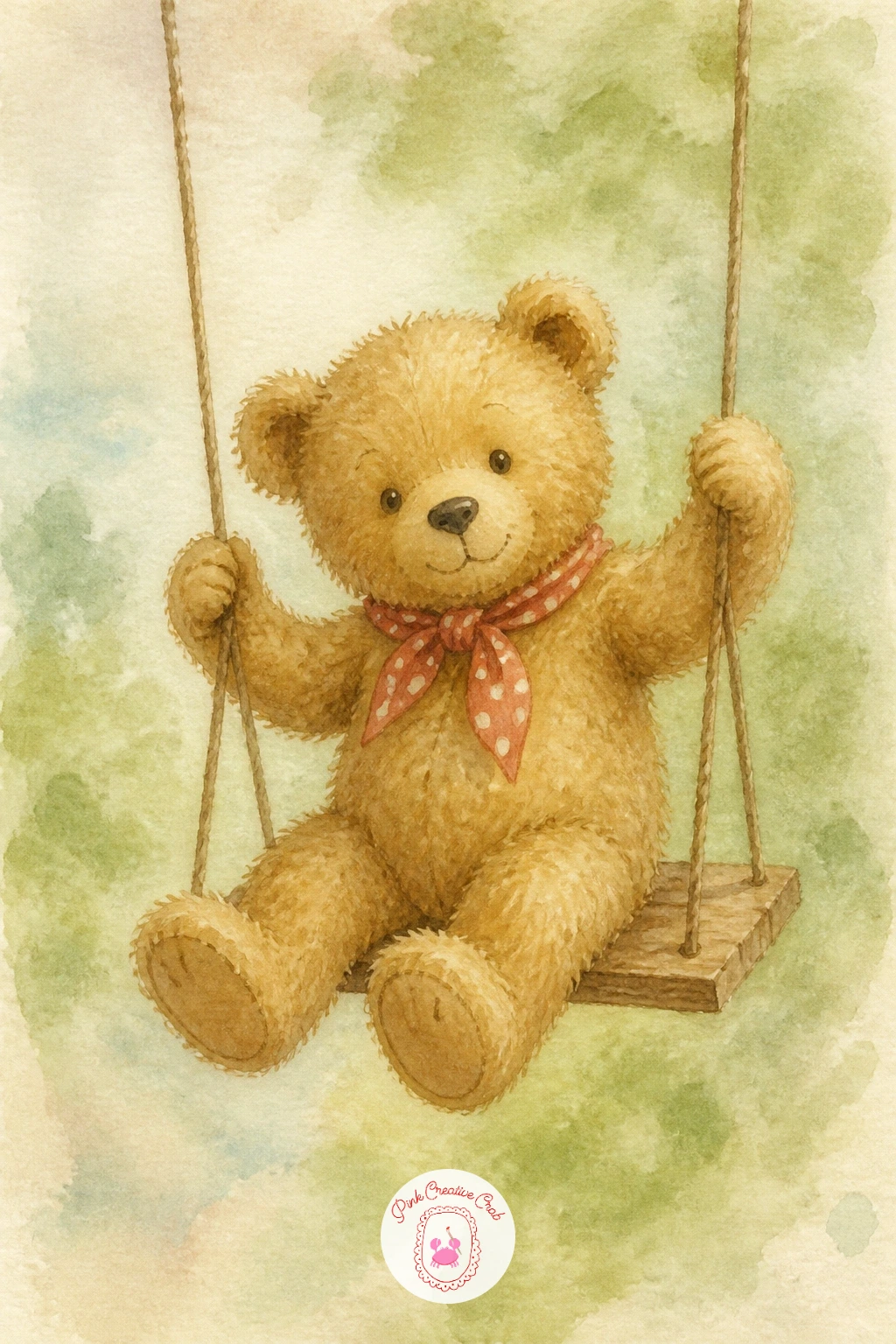
Palette: Honey Brown,Burnt Sienna,Sap Green,Cream
Warm the kitchen up next: a teddy bear baking cookies, an apron tied over his belly and a small tray of rounds in his paws. Paint the apron first in cream with a thin faded red trim, leaving the fur unpainted underneath it, since trying to paint fur first and apron on top usually smears the two together.
Once the apron is dry, finish the bear’s honey brown fur around its edges, then paint a simple baking tray as a flat grey rectangle dotted with small honey brown circles for the cookies. A sprinkle of dry salt crystals pressed into the wet apron wash while it dries gives it a soft speckled texture like flour dust.
If the cookies on the tray look too perfect and separate, let a couple of the dots touch and blend slightly while still wet, the way real cookies spread a little in the oven.
No salt for texture? A light scatter of white gel pen dots once everything is dry does a similar job.
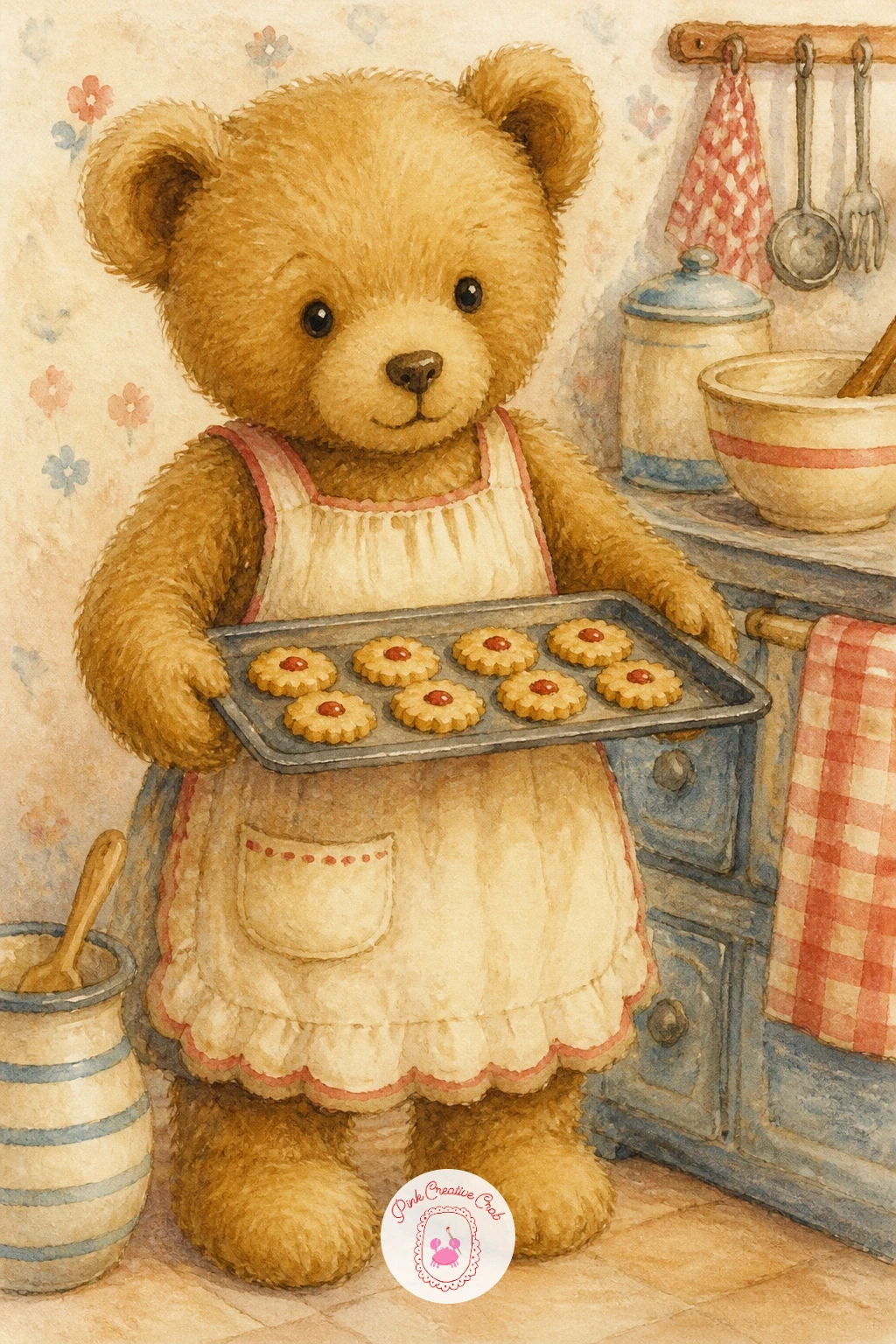
You Will Need
- table salt for texture
Palette: Cream,Faded Red,Honey Brown,Payne’s Grey
Dress a bear up simply with a teddy bear with a bow tie, sitting neat and upright as if posing for a portrait. Measure the bow tie against the bear’s head width before painting: it should sit no wider than about a third of the head, or it starts to overwhelm the whole face.
Paint the bear’s honey brown body and head first, keeping the pose still and centered, then once dry, add the bow tie in faded red with two quick triangular strokes meeting at a small center knot. A single thin outline in dark brown pencil around the bow once it is dry sharpens the shape without looking stiff.
This simple, formal pose is a nice one to revisit with different bow colors, swapping faded red for baby blue or even a soft plaid pattern once the plain version feels easy.
Keep the bear’s expression calm and a little proud, just two dot eyes and a small closed smile.
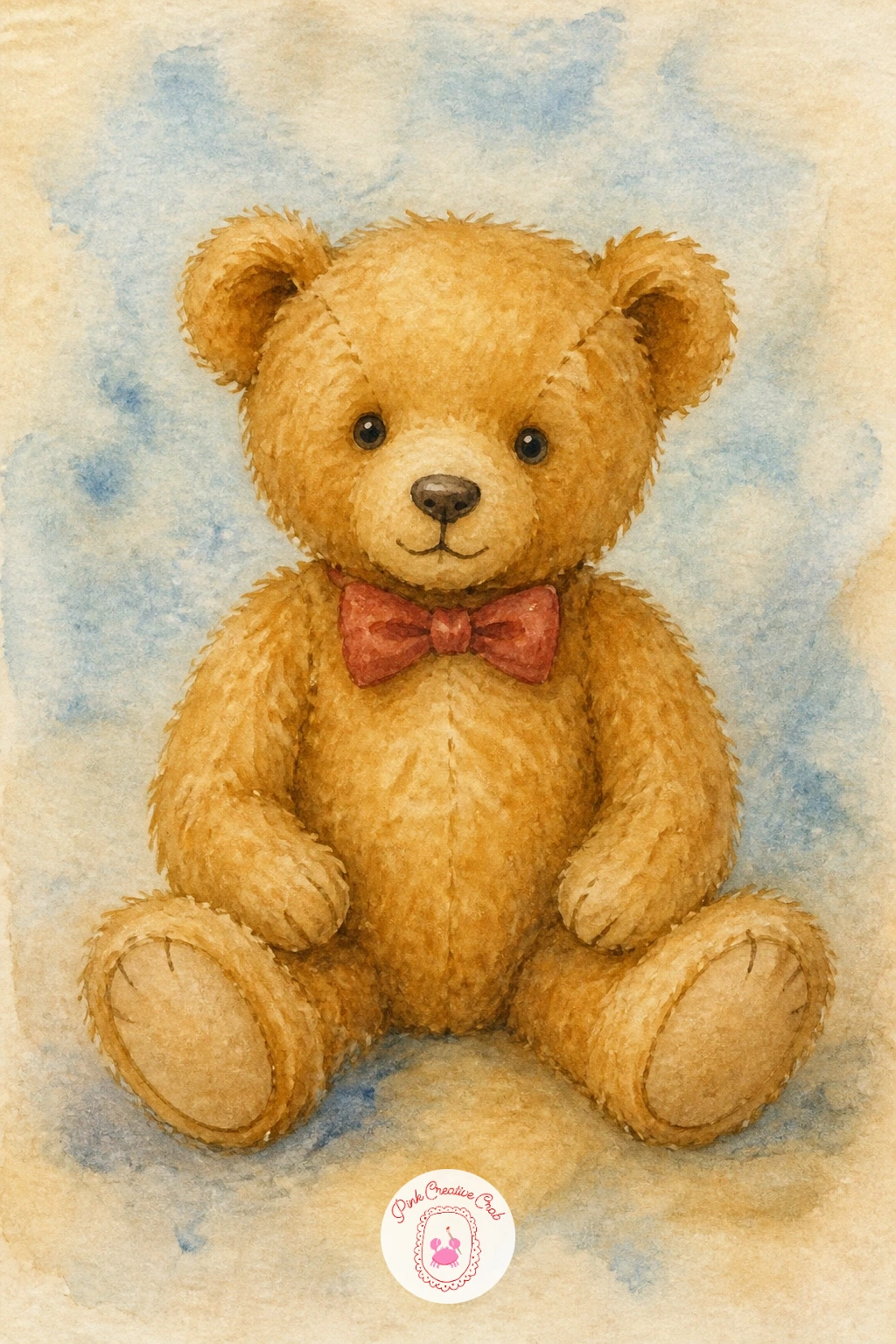
Palette: Honey Brown,Faded Red,Burnt Sienna,Cream
Send the next bear off traveling: a teddy bear in a suitcase, peeking out over the edge as if ready for an adventure. Paint the suitcase first as a simple rounded rectangle in faded red or cream, with a darker brown line for the handle and corner edges, and let it dry completely before adding the bear.
Paint the bear’s head and paws rising out of the open top, his body implied rather than fully shown, which keeps the whole composition reading as a peek rather than a cramped fit. A luggage tag tied to the handle in baby blue adds a nice travel detail.
The suitcase corners are where straight lines matter most, so a light pencil guide or a ruled edge before painting keeps them from warping. If the paint bleeds past a corner, let it dry and paint a cream border back over it once it is set.
Try this one small on a postcard sized paper for a quick, giftable version.
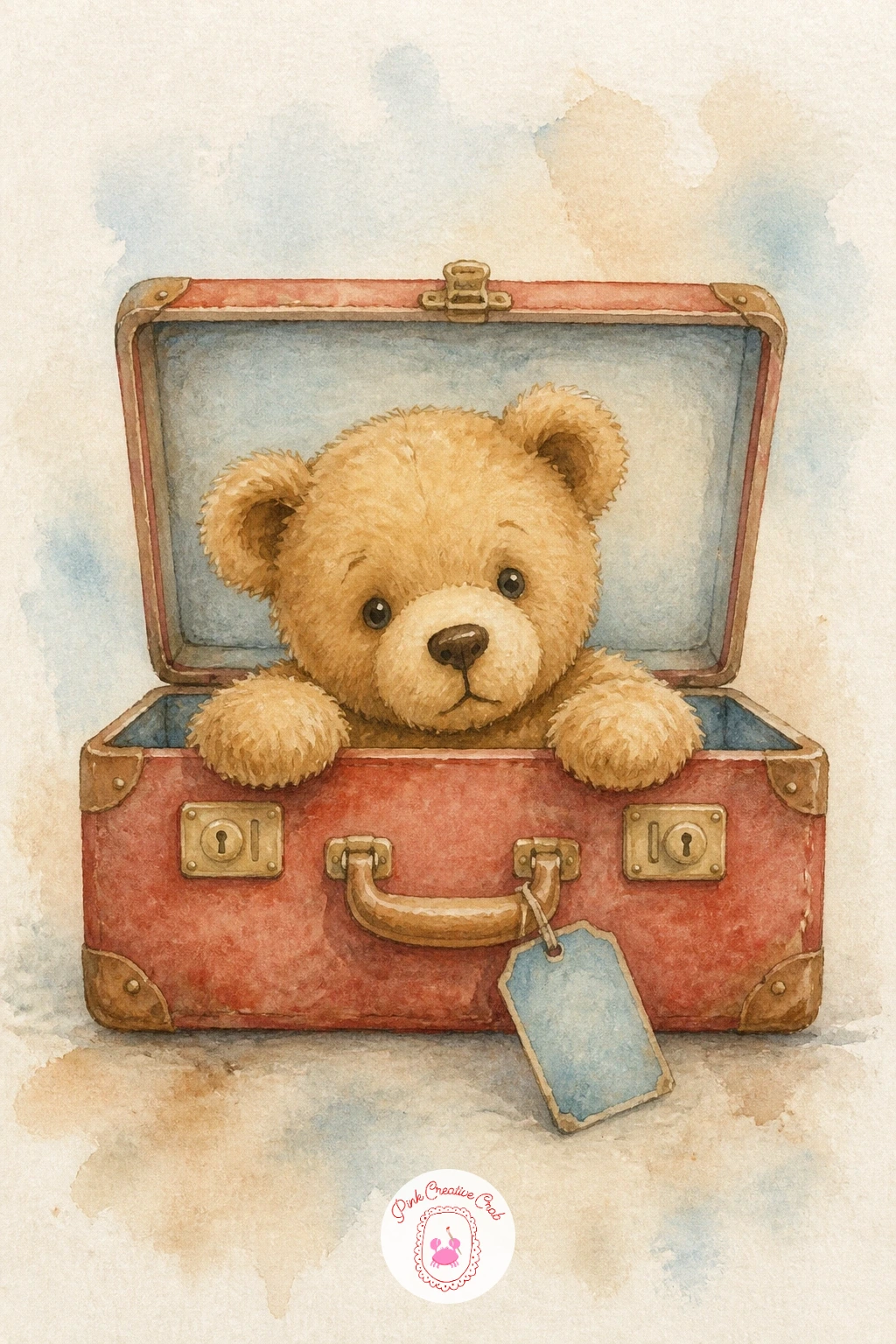
Palette: Faded Red,Honey Brown,Baby Blue,Cream
Keep this one sweet and simple: a teddy bear with a heart, holding a small plush or painted heart close to his chest. Paint the heart first in faded red with two quick curved strokes meeting at a point, leaving a tiny unpainted highlight near the top so it looks glossy rather than flat.
Paint the bear around and behind the heart once it is dry, letting his paws wrap just over its edges so it looks held rather than stuck on. Keep the bear’s pose slightly leaning forward, as if offering the heart outward toward the viewer.
This is a nice one to make into a greetings card, since the whole composition is small and reads clearly even at a few inches across. If you enjoy pairing sweet little scenes like this with handwritten notes, the same warm palette works well across a set of cards.
Finish with a single thin cream outline around the whole bear once dry, to lift it gently off the page.
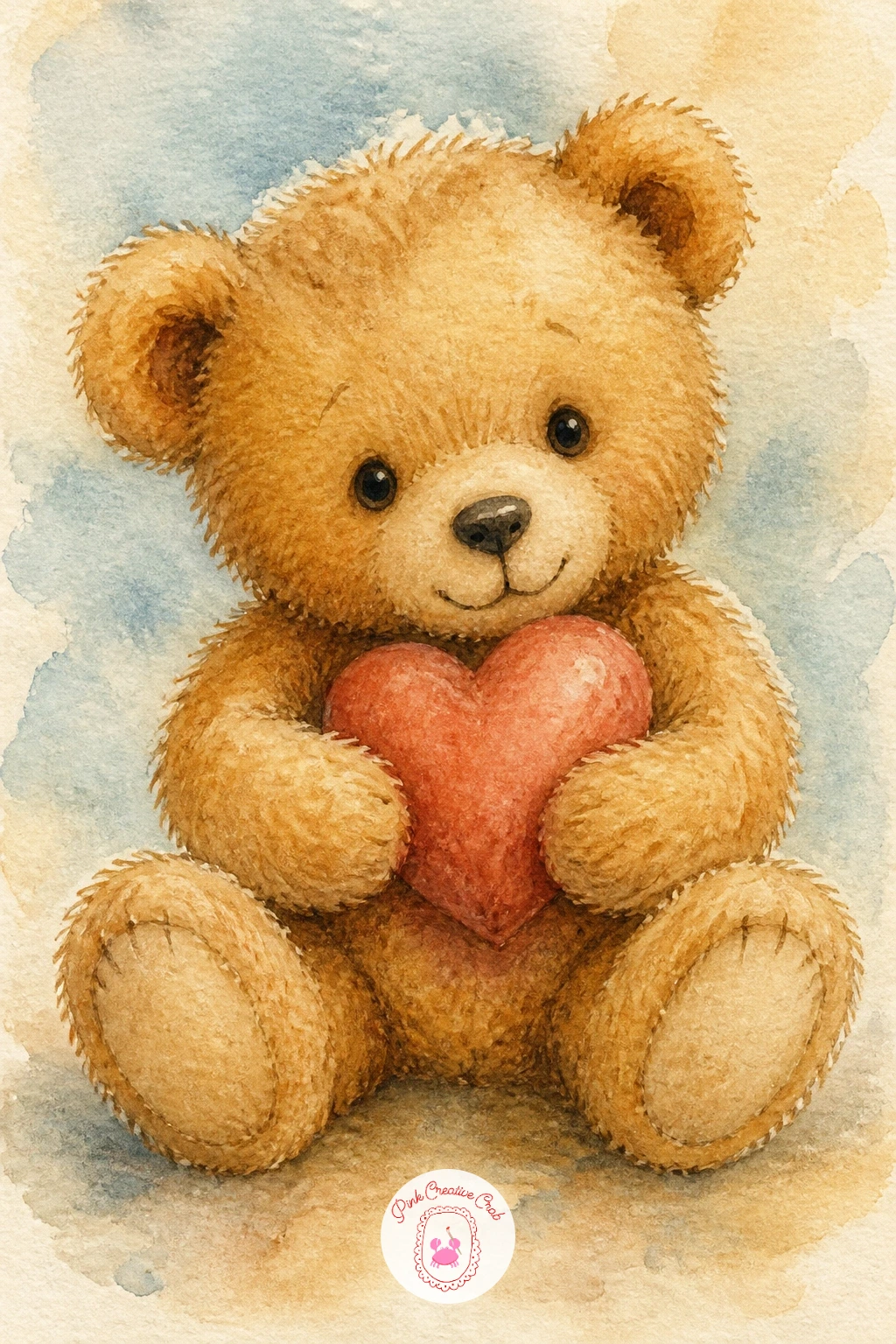
Palette: Faded Red,Honey Brown,Cream,Burnt Sienna
Take a bear into the snow with a teddy bear on a sled, lying forward on his belly as if mid-slide down a hill. Light source decides this whole scene: pick one side for the sun to sit and keep the snow shadow beneath the sled on the opposite side, which instantly gives the hill a sense of form instead of looking flat white.
Paint the snow background first in the palest blue grey wash, leaving the sled and bear shape as untouched white paper, then paint the wooden sled in honey brown once the background is dry. Add the bear lying across it, his fur catching a touch of the same blue grey in its shadowed side to match the light.
Flat, shadowless snow is the most common problem here. A single soft grey shadow shape under the sled runners does more work than any amount of white detail.
A scarf trailing behind him in faded red adds a nice sense of speed.
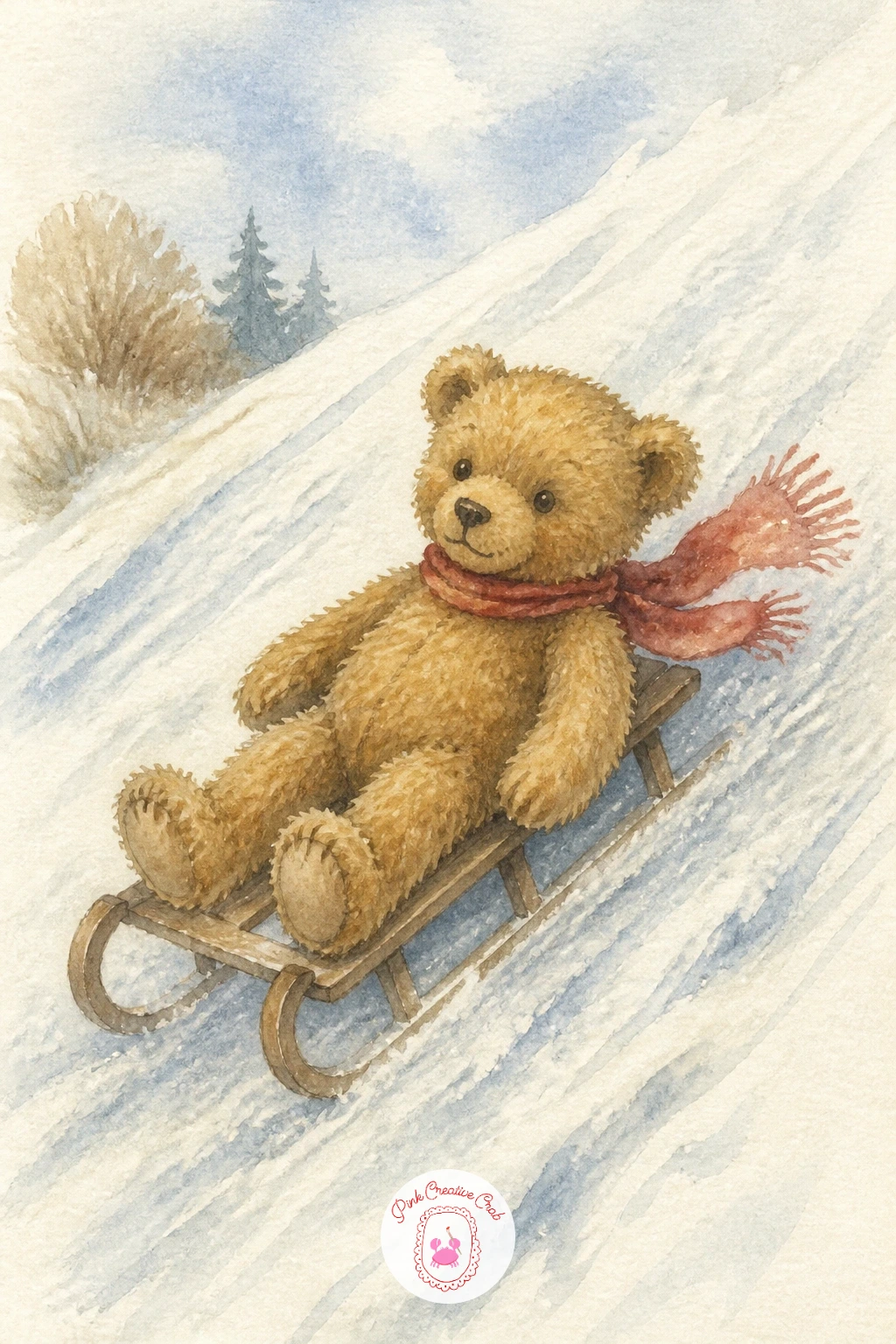
Palette: Baby Blue,Honey Brown,Payne’s Grey,Faded Red
Dress a bear for the sea with a teddy bear in a sailor outfit, a striped collar and a small round cap finishing the look. Paint the bear’s honey brown body first, leaving a gap at the neck and head for the collar and cap, then once dry, paint the collar in baby blue with thin white stripes left unpainted rather than painted on top.
The sailor cap sits as a simple flattened oval on the head, painted in the same baby blue with a thin faded red band around its base. Keep the stripes on the collar straight by painting them as a single wash first, then lifting thin lines of color out with a clean damp brush while still wet, rather than trying to paint white stripes on top of blue.
If the collar points end up uneven, trim the imbalance by adding a touch more blue to the shorter side once dry, which reads as intentional rather than a mistake.
A small anchor shape on the cap, painted with just three quick strokes, finishes the sailor feel without extra fuss.
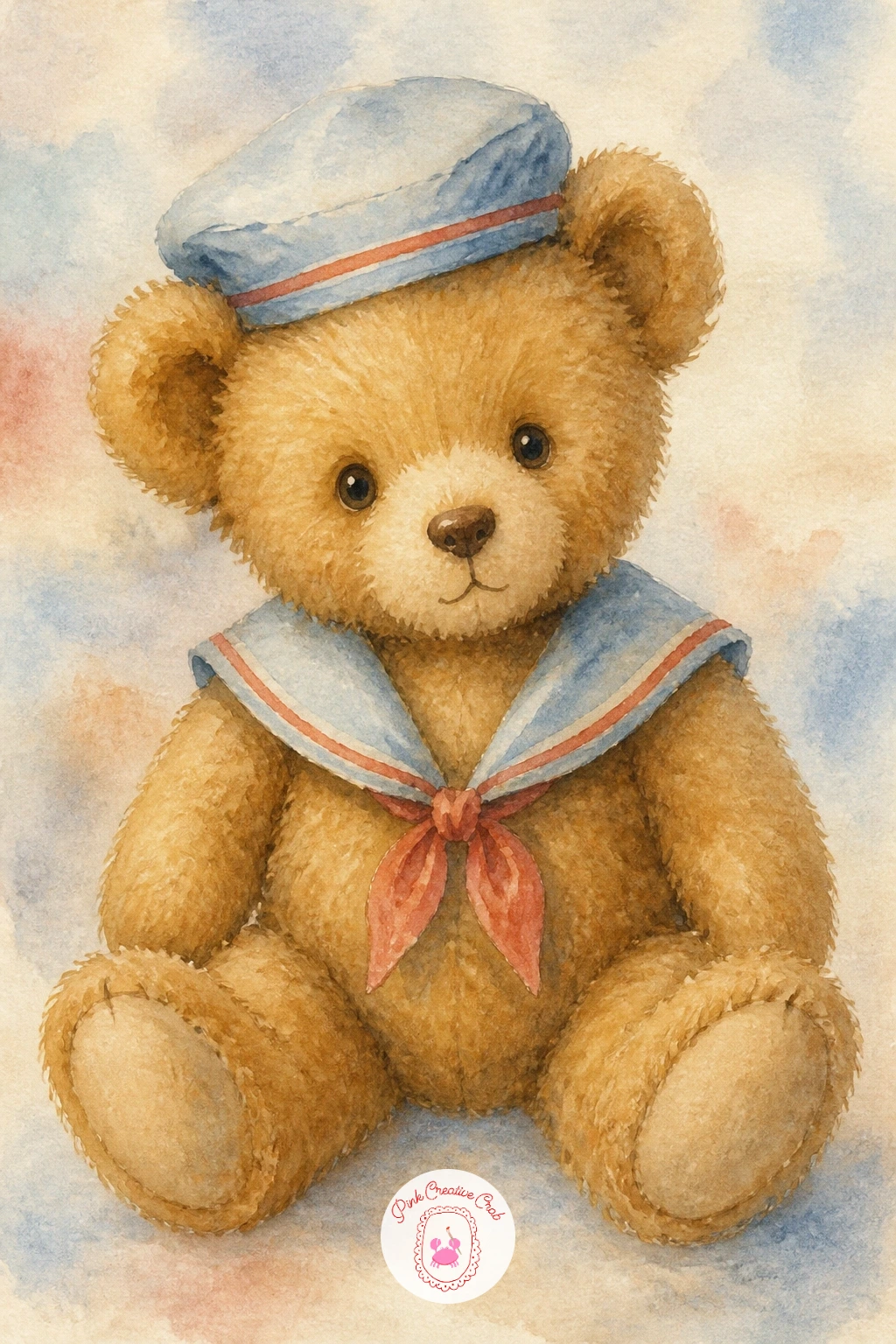
Palette: Baby Blue,Honey Brown,Faded Red,Cream
Give this bear a job to do: a teddy bear playing a drum, paws raised with two small drumsticks mid-beat. Paint the drum first as a simple cylinder in faded red and cream stripes, keeping the top ellipse clean and even since a wobbly drum top reads instantly as a mistake.
Once the drum is dry, paint the bear standing or sitting behind it, arms raised with the drumsticks as two thin brown lines added last with a fine brush. Angling one stick slightly higher than the other suggests mid-motion far better than two symmetrical sticks ever will.
For a quick ten minute version, paint just the bear and drum on plain paper with no further background. With forty minutes to spare, add a small marching line of bunting or flags strung above him in alternating faded red and baby blue triangles.
Keep the drum strap, if you add one, as a single thin diagonal line rather than a thick band, which keeps the whole toy looking light.
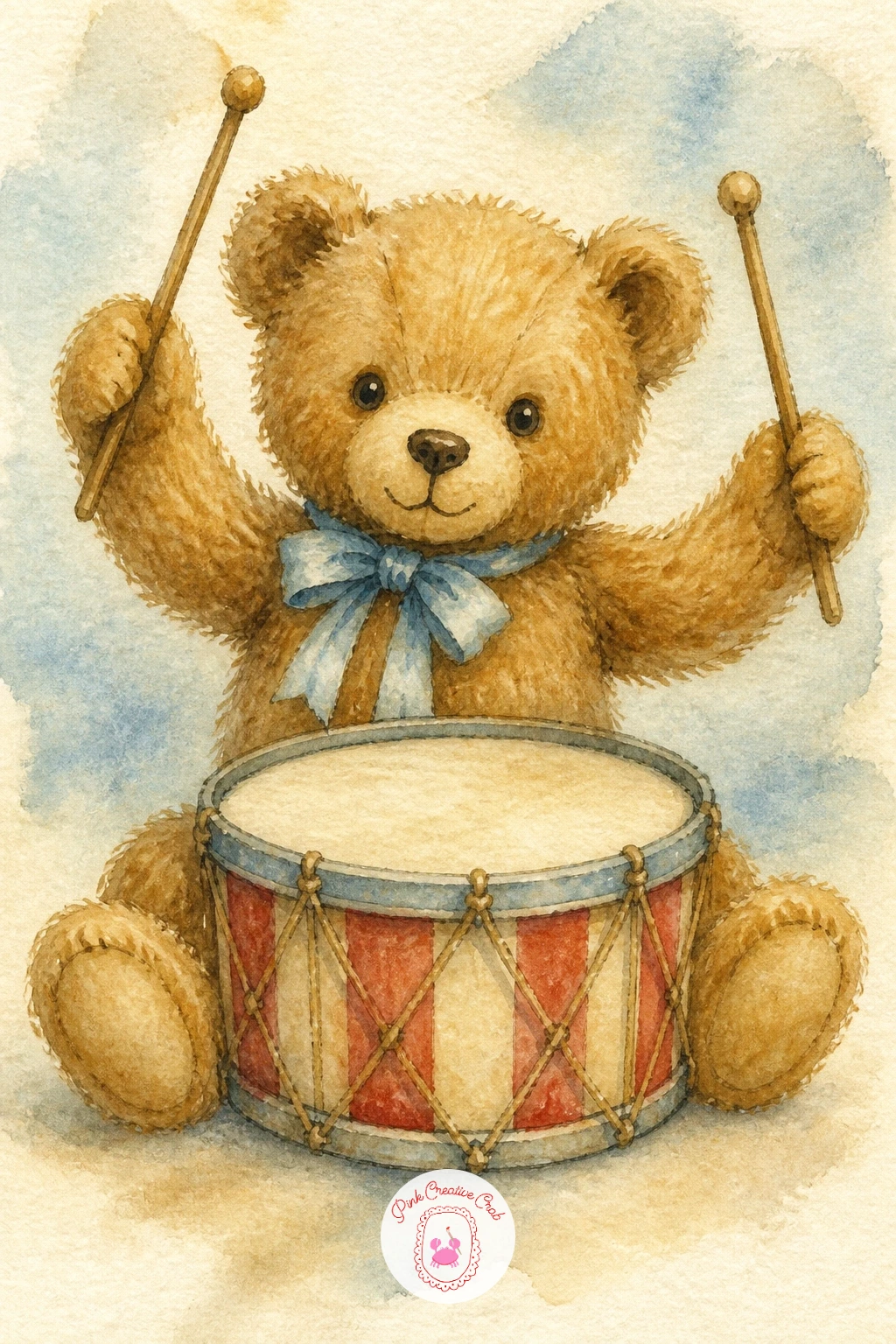
Palette: Faded Red,Cream,Honey Brown,Baby Blue
Widen the scene for this one: a teddy bear on a shelf with toys, sitting among a small wooden train, a ball and a tin soldier. Paint the shelf itself first as a single flat horizontal plank in honey brown or cream, since everything else needs to sit convincingly on top of a clean, dry line.
Arrange the toys so the bear sits largest and most central, with the smaller toys overlapping slightly behind or beside him rather than lined up in a neat row, which keeps the grouping feeling natural rather than staged. Paint each toy in a different one of the palette colors so the shelf reads as a cheerful collection rather than one flat mass of brown.
Overcrowding is the main risk here. Three or four toys plus the bear is plenty; any more and the shelf starts to feel cluttered rather than cozy.
If you enjoy grouping small painted objects like this, the layered little scenes in watercolor animal tutorial lessons use a similar approach to arranging a few characters together.
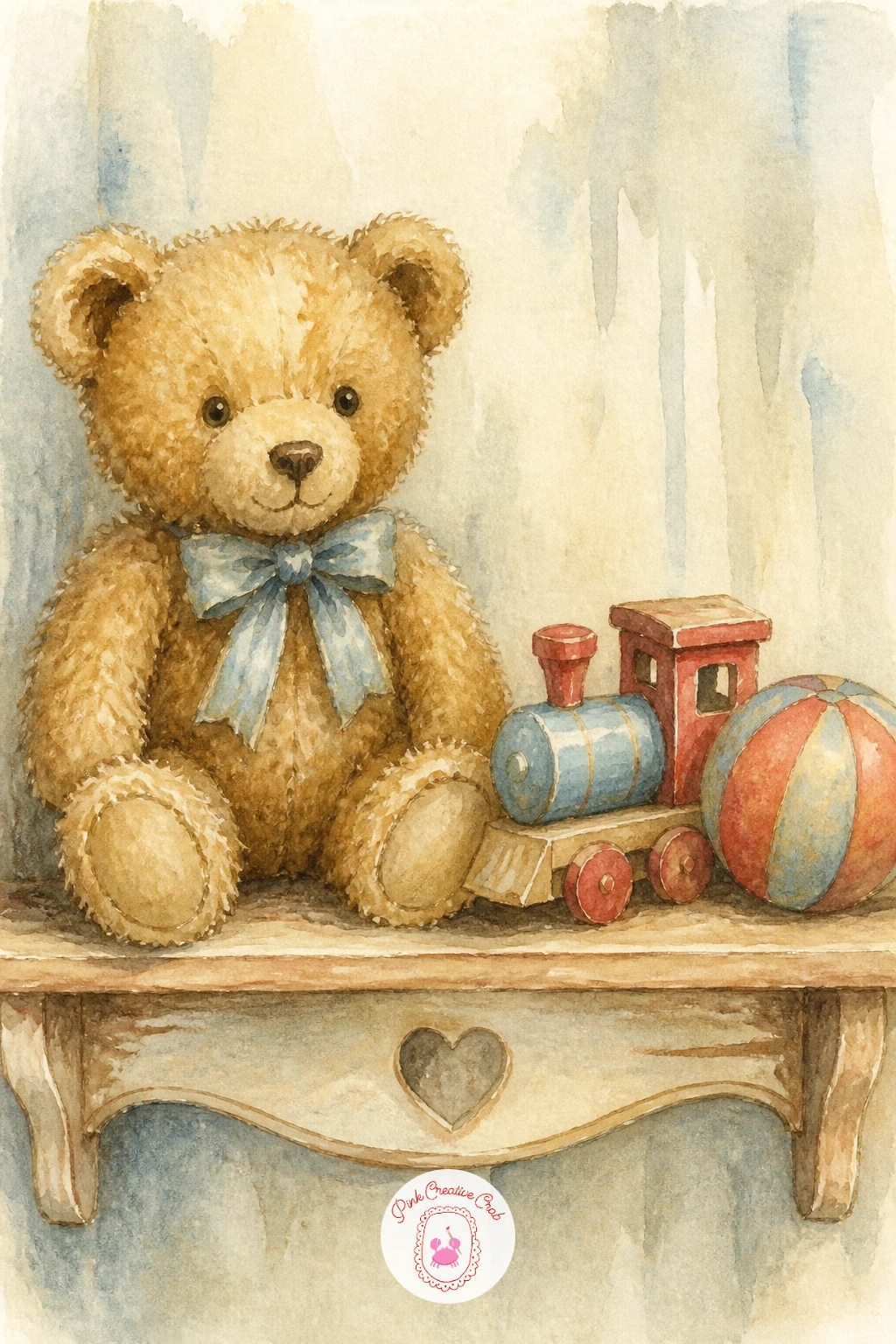
Palette: Honey Brown,Faded Red,Baby Blue,Cream
Return to a classic pairing: a teddy bear with a honey pot, both paws wrapped around a small round jar. Paint the honey pot first in a deep golden brown, leaving a thin unpainted ring near the rim for a highlight, then while it is still damp, drip a touch of darker brown down one side to suggest a honey trickle.
Paint the bear’s own honey brown fur once the pot is dry, keeping the two browns slightly different in warmth so the pot and the bear do not visually merge into one shape. A small cream label tied around the pot’s neck in faded red string finishes the jar nicely.
If the honey drip ends up too neat and straight, nudge it sideways with a damp brush while still wet so it wanders a little, the way real honey does.
This is a good subject to revisit later in a bolder palette, swapping the honey gold for a deeper amber to make the jar the clear star of the page.
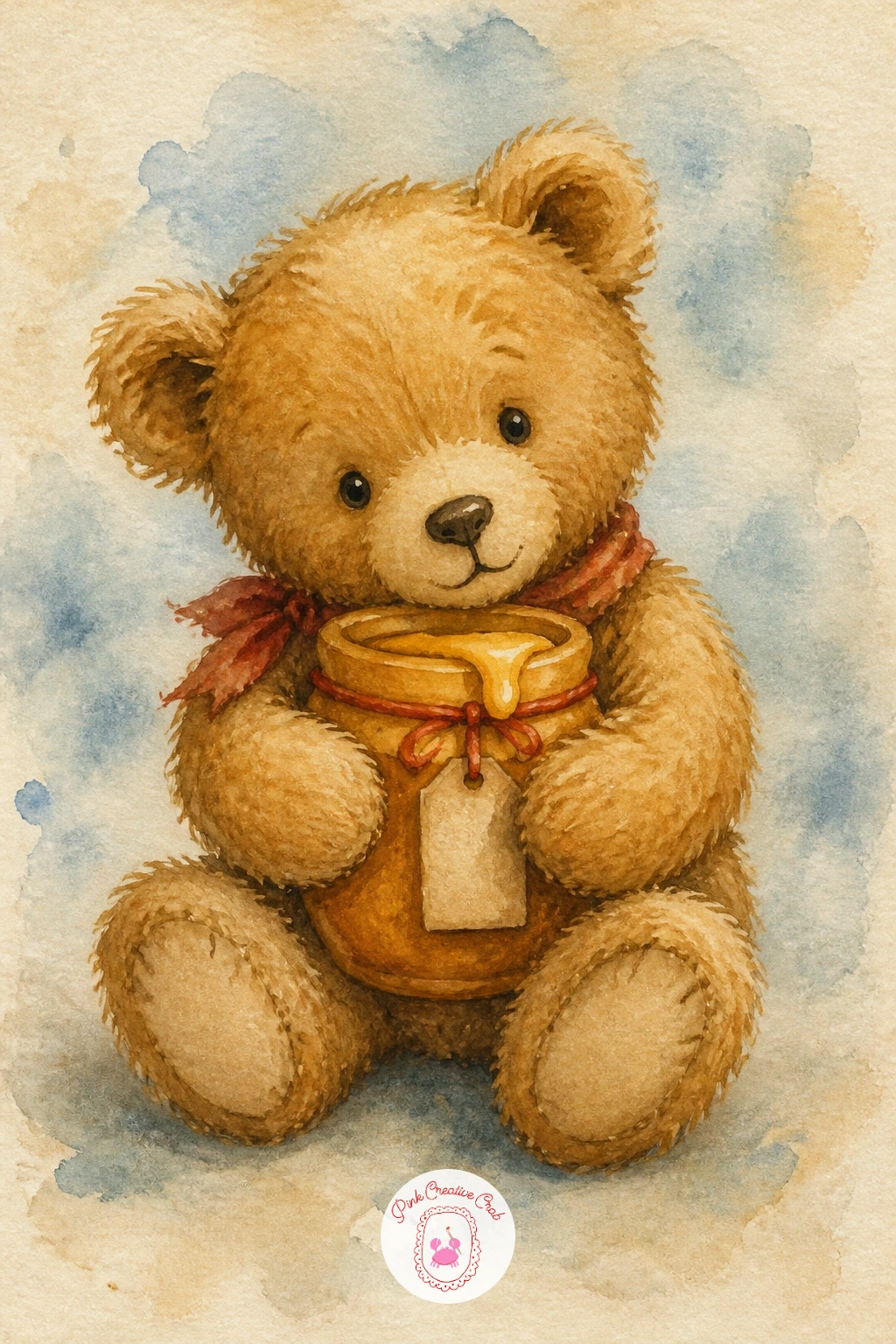
Palette: Honey Brown,Burnt Sienna,Faded Red,Cream
Shelter the next bear from a light shower: a teddy bear under an umbrella, the canopy tilted slightly as if caught in a breeze. Paint the umbrella canopy first as a simple fan of triangular panels in alternating faded red and cream, keeping the center point where the panels meet slightly darker to suggest the hub.
Once the canopy is dry, paint the bear standing beneath it, holding the thin handle in one paw, making sure his head sits comfortably under the widest part of the canopy rather than poking out past its edge. A scatter of soft blue grey raindrops around the scene, added once everything else is dry, finishes the weather without overpowering the bear.
The umbrella handle is the easiest part to lose. Paint it last in a single confident stroke of dark brown, rather than trying to build it up in layers, which tends to make it look shaky.
For a softer mood, swap the rain for a few floating petals instead of raindrops.
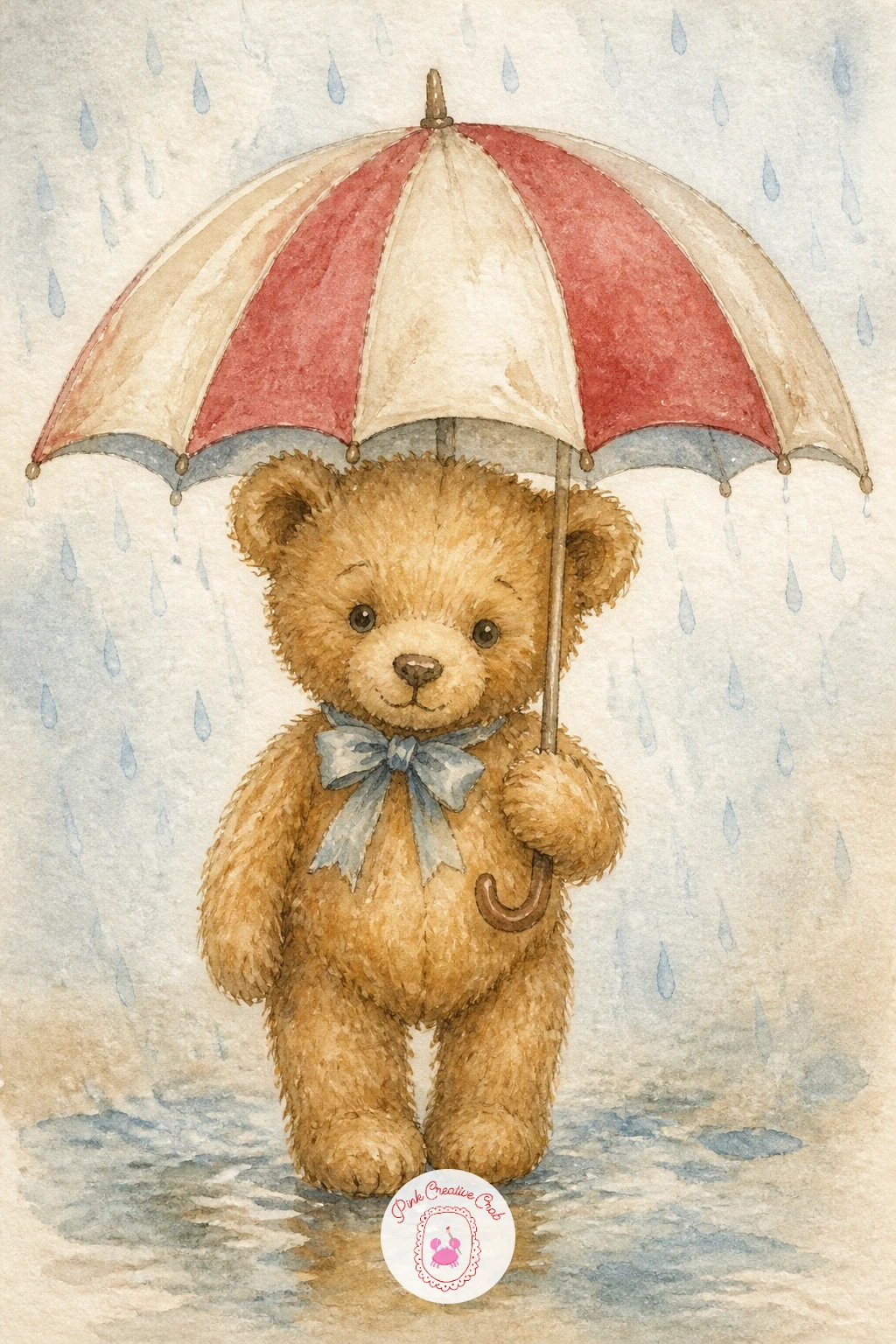
Palette: Faded Red,Cream,Honey Brown,Baby Blue
Celebrate with a teddy bear birthday scene, a small party hat on his head and a single candle lit on a tiny cake in front of him. Paint the cake first as two simple stacked ovals in cream and faded red frosting, with one thin candle added in pencil before any paint touches that spot.
Once the cake is dry, paint the bear behind it wearing a pointed party hat in baby blue with a small puff of cream at the tip. The candle flame is the one detail worth saving for last: a tiny dab of yellow with the faintest touch of red at its base, painted with just the tip of a fine brush.
If the flame ends up too large, it reads as a blob rather than a candle. A dot smaller than you think necessary almost always looks more correct once it is dry.
Scatter a few small confetti dots around the scene with a flick of a loaded brush for extra festivity.
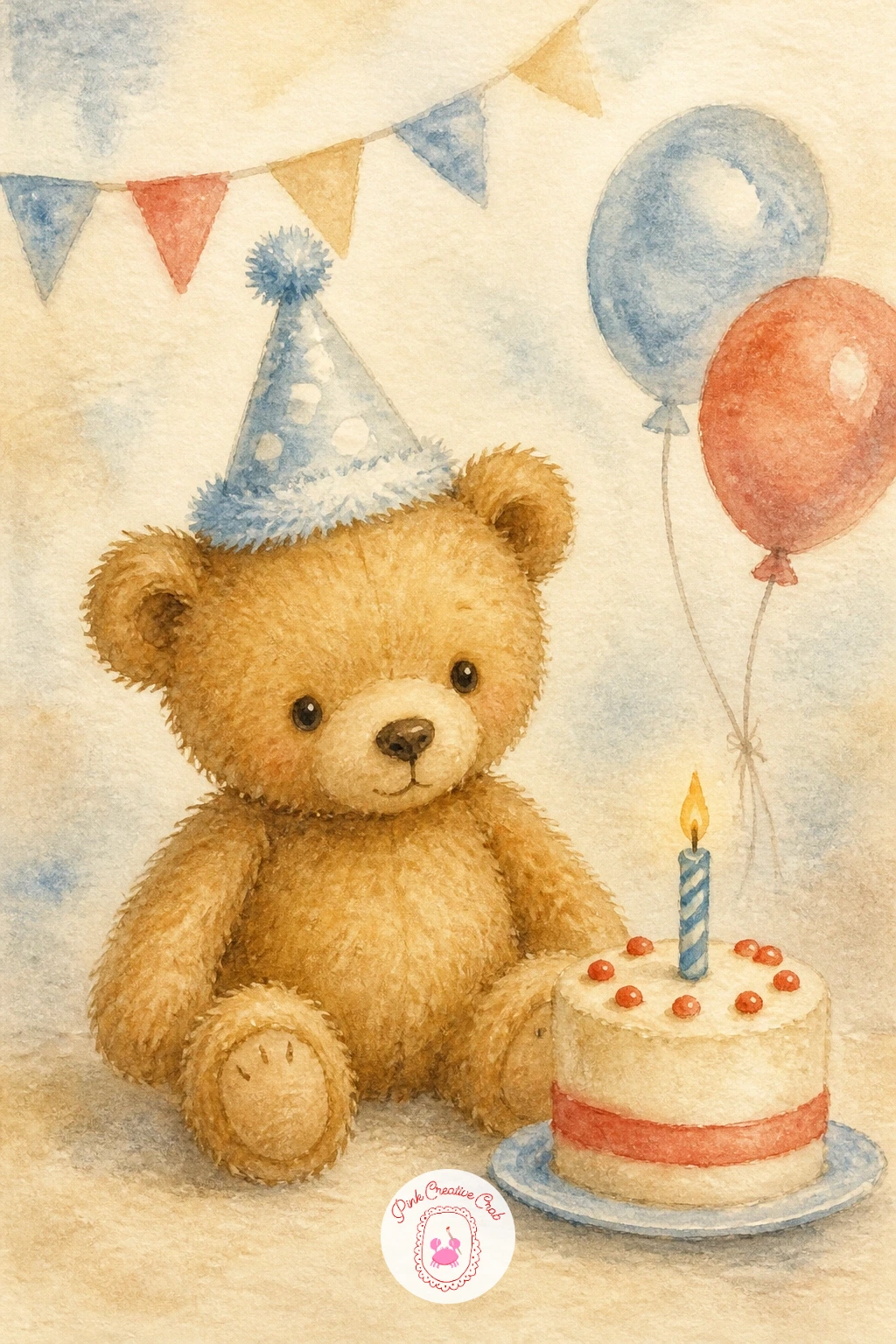
Palette: Cream,Faded Red,Baby Blue,Honey Brown
Bring a bear in for bath time: a teddy bear in a bath, surrounded by a few soft bubbles and sitting in a round tin tub. Paint the tub first as a simple wide oval in baby blue or cream, leaving its rim as a thin unpainted line so it reads as metal rather than flat color.
Once the tub is dry, paint the bear sitting inside it, his lower body left mostly unpainted or very pale to suggest he is partly underwater, with the honey brown fur strongest on his head, ears and shoulders above the waterline. A few bubbles painted as small unpainted circles outlined faintly in grey float around his shoulders.
Fur that looks wet rather than dry is the whole point here, so keep the lower body softer and paler than the dry upper fur, which does most of the work in telling that story.
A tiny rubber duck floating beside him, painted as one yellow oval with an orange dot beak, adds a nice extra detail if there is room.
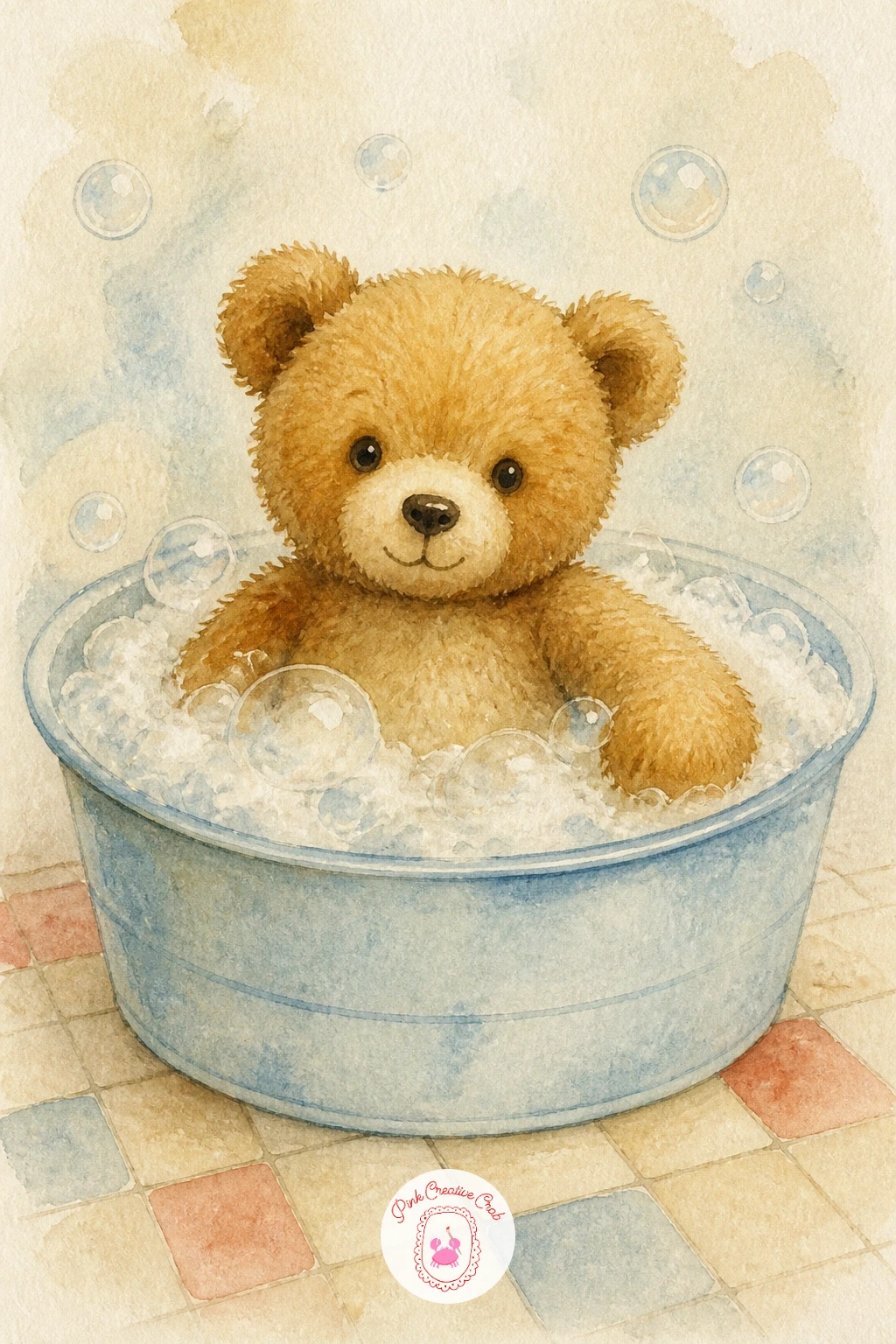
Palette: Baby Blue,Honey Brown,Cream,Payne’s Grey
Let a bear wander into open ground with a teddy bear in a flower field, standing small against a wide stretch of green and scattered blooms. Paint the field as one loose horizontal wash of sap green first, letting it dry unevenly so some patches sit lighter than others, which reads as sunlit grass rather than flat lawn.
Once the field is dry, dot in small faded red and baby blue flowers across the lower half with just the tip of a round brush, keeping them smaller and more scattered near the top of the field to suggest distance. Paint the bear standing among them last, smaller in scale than you might expect, since a bear that fills too much of the field loses the sense of open space around him.
If the flowers all come out the same size, the field can look oddly uniform. Vary the dot sizes slightly as you go for a much more natural scatter.
This same loose field technique works well behind other small subjects too, worth remembering for later paintings.
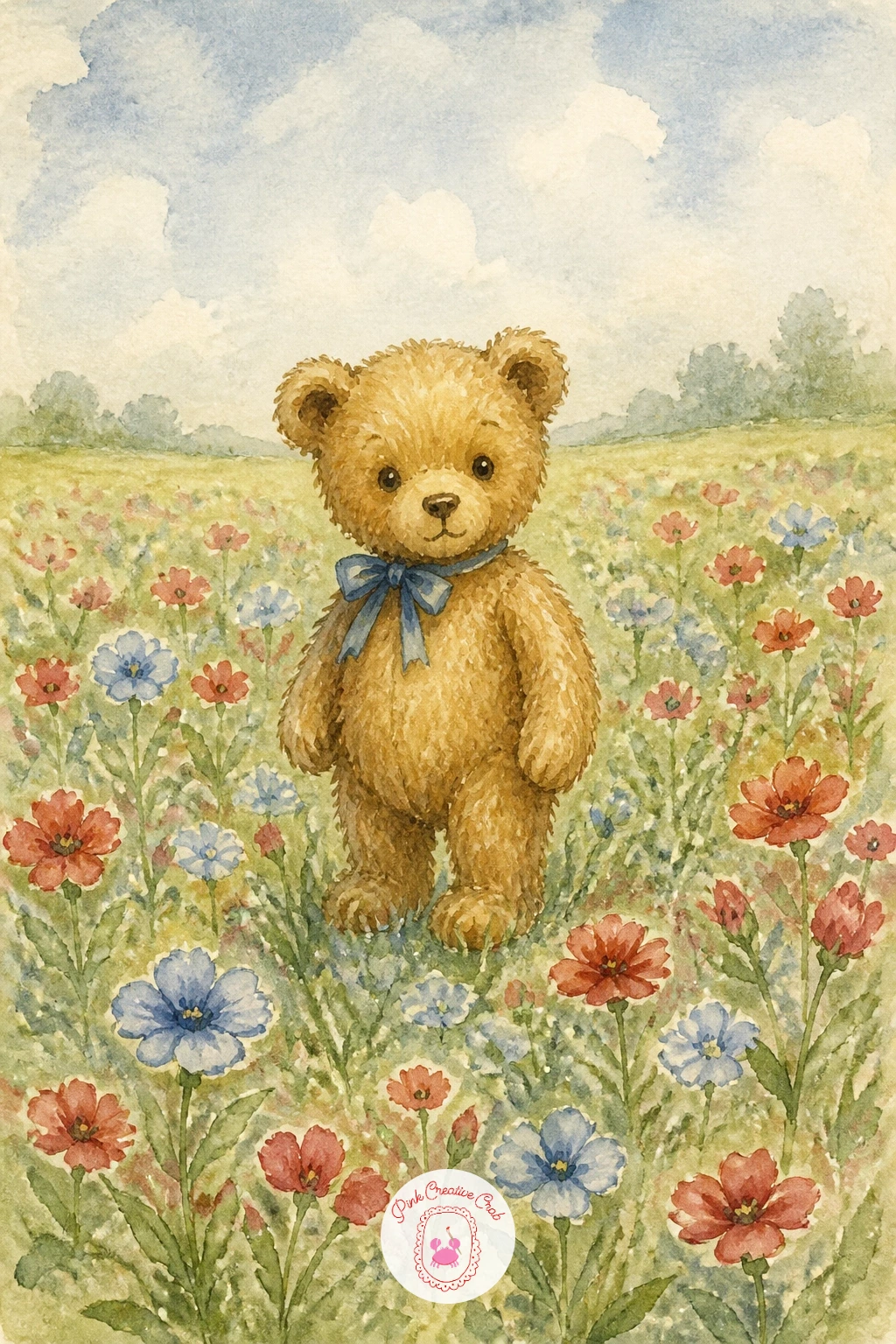
Palette: Sap Green,Faded Red,Baby Blue,Honey Brown
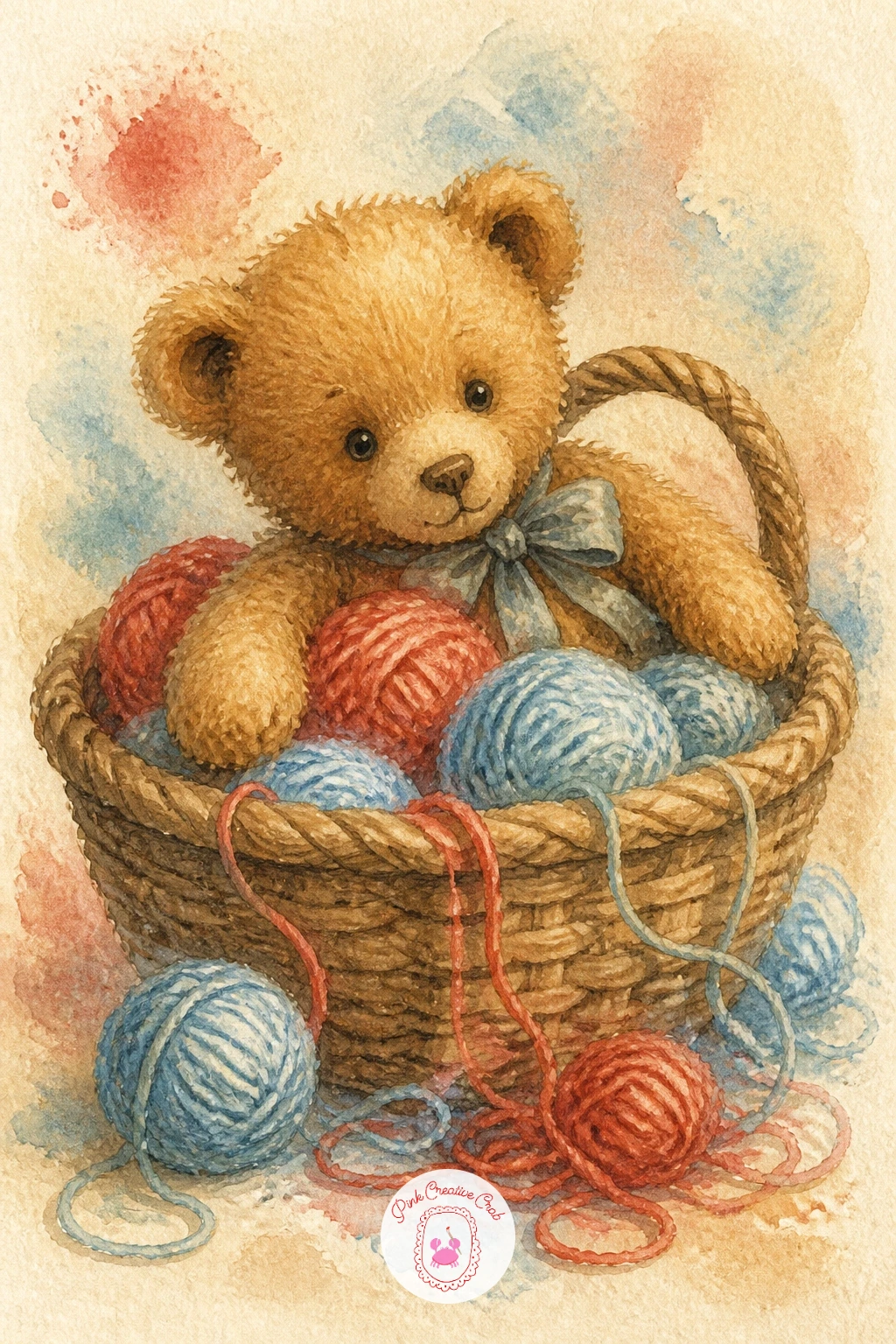
Settle a bear into something cozy and textured: a teddy bear in a basket of yarn, curled among a few loose loops and a dropped knitting needle. Paint the basket first as a woven oval shape in honey brown, using short overlapping curved strokes rather than one flat wash, which gives the weave texture right from the start.
Once the basket is dry, paint one or two loose balls of yarn in faded red and baby blue, letting the edges stay a little rough and looped rather than perfectly round. Add the bear nestled among them last, his body overlapping the yarn balls slightly so he looks settled into the basket rather than placed beside it.
Edges matter most in this one: lift a little color out of the yarn balls with a damp brush here and there while still wet, which breaks up the solid shape into something softer and more thread-like.
A single knitting needle resting across the basket rim, painted as one thin grey line, finishes the scene.
Palette: Honey Brown,Faded Red,Baby Blue,Payne’s Grey
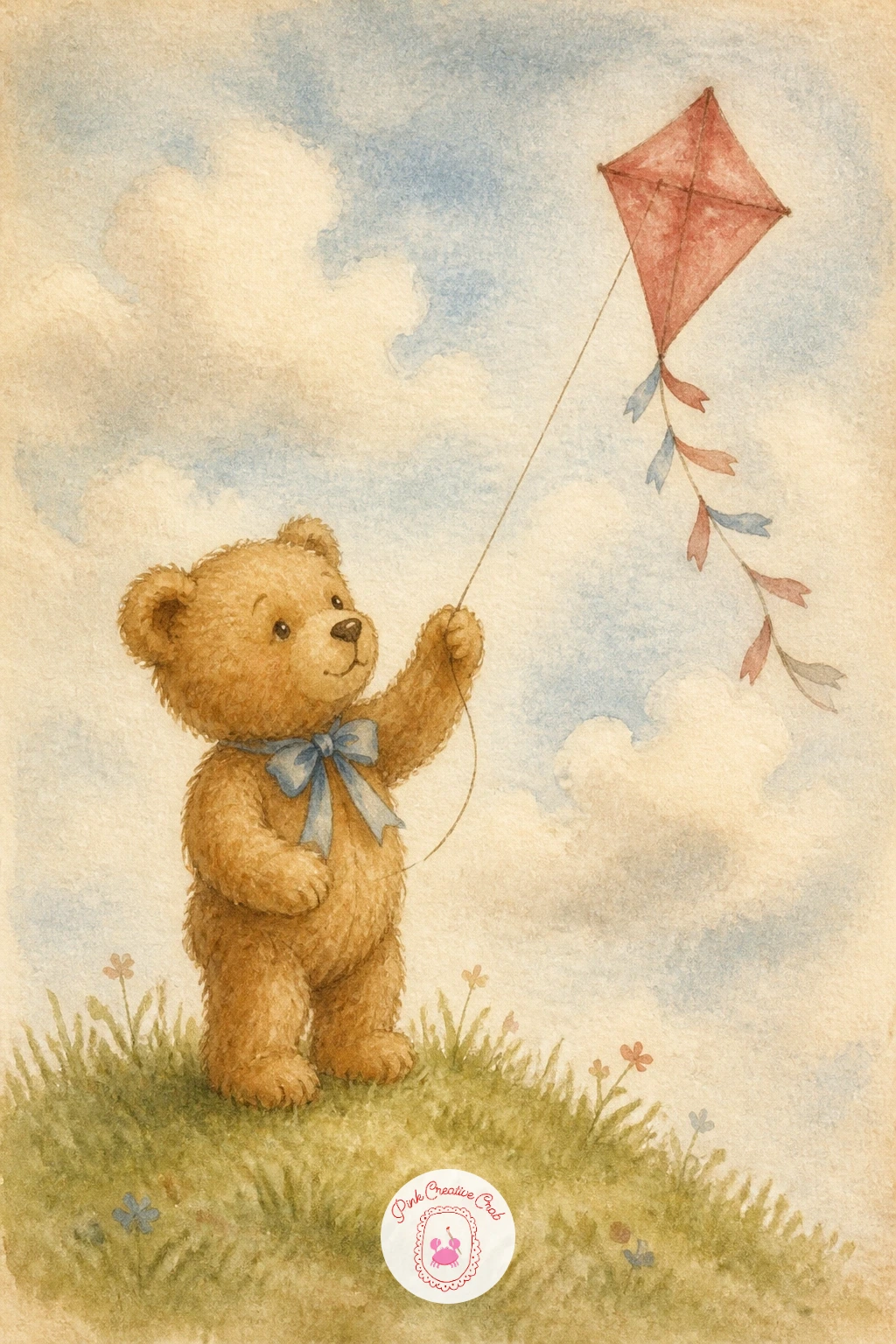
Send one bear up into the open air with a teddy bear with a kite, standing on a small grassy rise with the kite string trailing up and off the page. Paint the kite first as a simple diamond in faded red and cream panels, well up near the top of the page, leaving plenty of space below for the long string.
Once the kite is dry, paint the bear standing below on a small green hill, string held in one raised paw, with a few soft tail ribbons trailing from the kite’s bottom point in alternating colors. The string itself is best added last in a single long, slightly curved pencil or fine liner line, since a dead straight string looks stiff against a breezy scene.
If the kite looks like it is floating with no sense of wind, angle it slightly off vertical and let the tail ribbons curve in the same direction, which instantly suggests a breeze pulling it sideways.
Try this one in a tall, narrow format next time to really stretch that string across the page.
Palette: Faded Red,Cream,Sap Green,Honey Brown
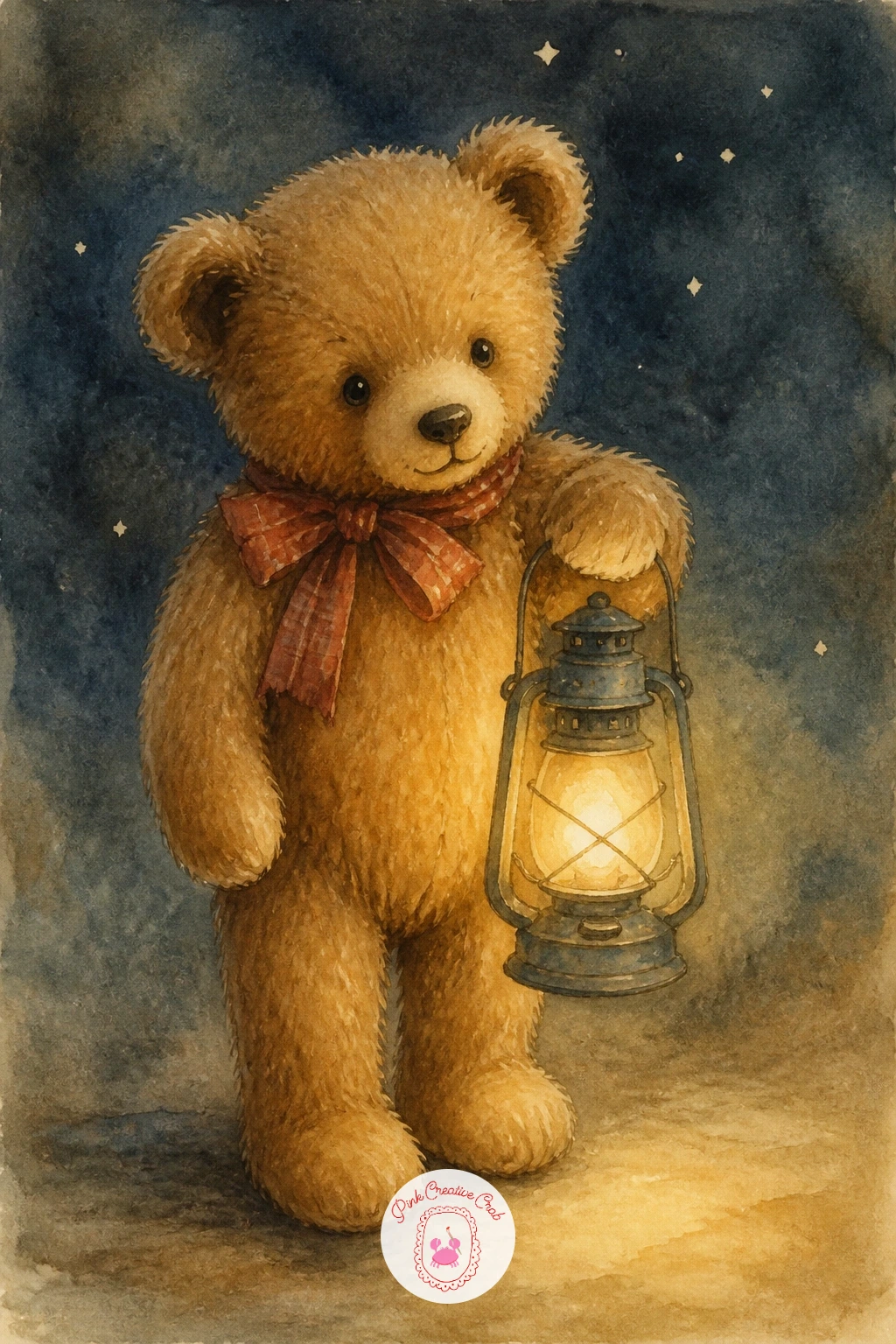
Light up a quieter evening scene with a teddy bear with a lantern, holding a small glowing light by its handle. Paint the lantern glow first with a soft circle of pale yellow bleeding gently into the surrounding paper while still wet, so the light looks like it is genuinely spreading rather than sitting on top as a hard shape.
Once that glow is dry, paint the lantern frame over it in thin brown lines, then paint the bear standing beside it, keeping the side of him nearest the lantern slightly warmer and brighter than his far side. This single light source is what gives the whole scene its gentle, storybook feel, so resist adding any other strong color nearby that might compete with the glow.
If the glow ends up too small to notice, go back in in once dry with a very pale yellow wash around the lantern’s edge to widen it slightly.
A deep Payne’s grey background behind the bear makes the lantern glow feel even warmer by contrast.
Palette: Honey Brown,Payne’s Grey,Cream,Burnt Sienna
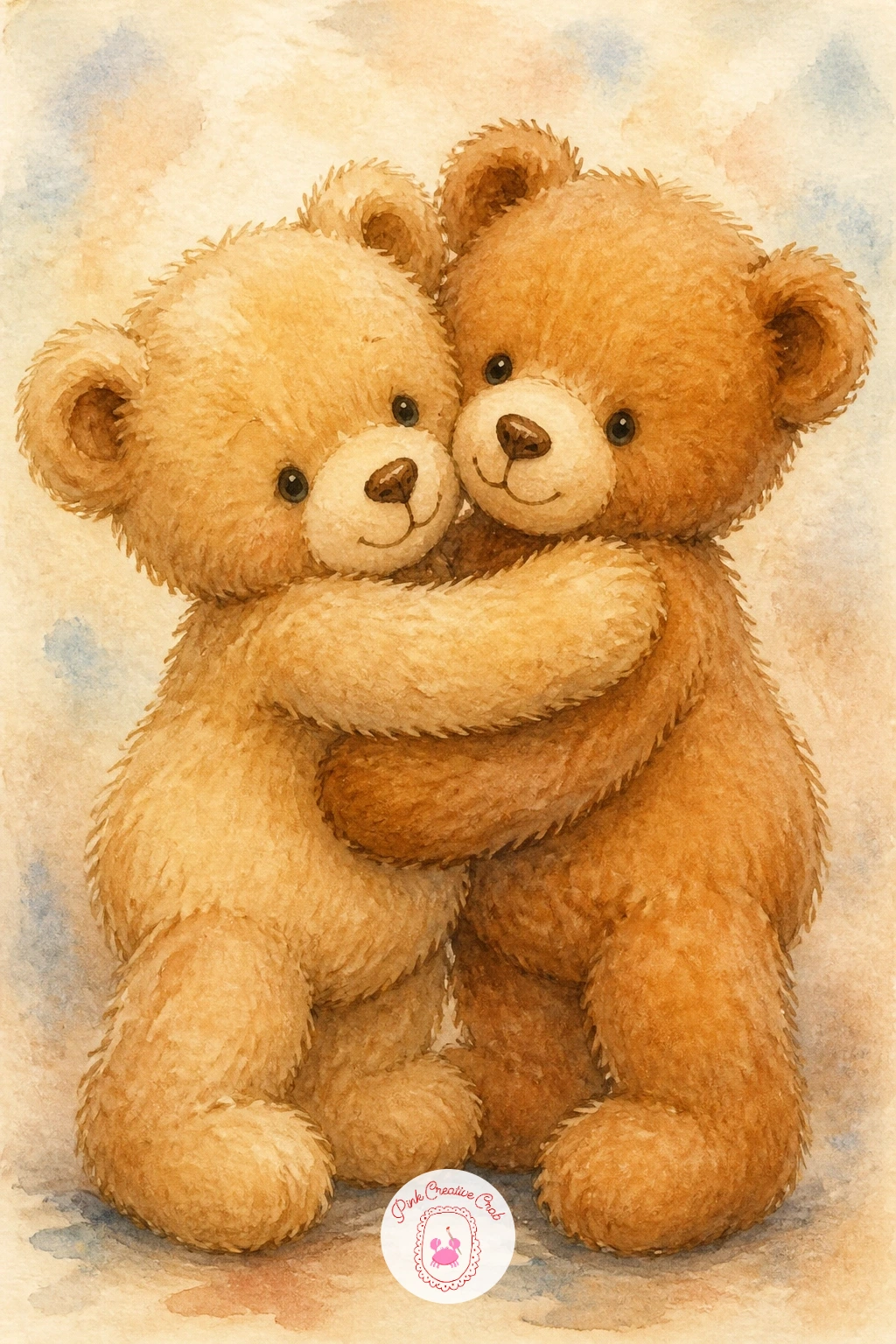
Bring two bears together for a teddy bear hug, arms wrapped fully around each other so their bodies overlap into one soft shape. Sketch both bears as one combined outline rather than two separate circles pushed together, since a true hug reads as a single rounded form with two heads rather than two bears simply touching.
Paint the bear in back first in a slightly deeper honey brown, then paint the bear in front in a lighter shade once the first has dried, which keeps the two figures readable even where their arms overlap. A thin line of the paper’s white left unpainted between the two bodies, right where the arms cross, helps separate them without needing a hard outline.
If the hug looks stiff, round the shoulders and tilt both heads slightly toward each other rather than keeping them upright and symmetrical.
This pairing makes a lovely small greetings card for a friend or a new baby, scaled down to fit a simple folded card.
Palette: Honey Brown,Burnt Sienna,Cream,Faded Red
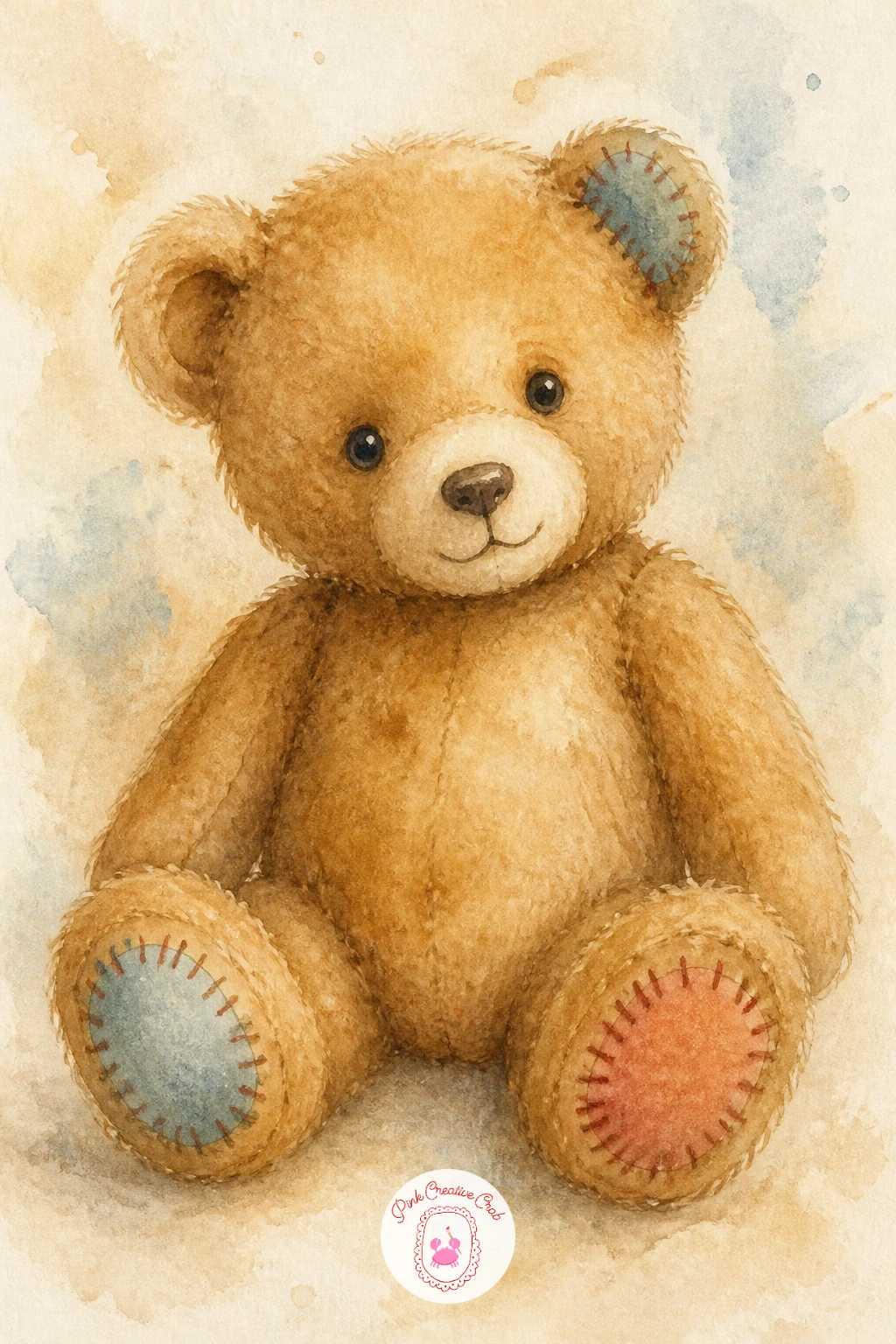
Finish the set with the most loved bear of all: a teddy bear with patched paws, a couple of mismatched fabric patches stitched over worn spots on his feet and ears. Paint the bear’s body first in a slightly uneven honey brown wash, letting a few patches dry lighter than others on purpose, since a little unevenness suits a well loved toy far better than a flawless finish.
Once dry, paint small patch shapes in baby blue and faded red over one paw and one ear, then add a few short crossed pencil or fine liner stitches over each patch once the paint has set. These stitch marks are the detail that sells the whole idea of a bear stitched back together with love.
Overdoing the stitches is the main risk, since too many turns worn and charming into busy and cluttered. Three or four small crosses per patch is plenty.
This is a lovely one to end the sitting on, since it rewards a slightly looser, less careful hand than any of the others on this list.
Palette: Honey Brown,Baby Blue,Faded Red,Burnt Sienna
What to Do Next
Pick one bear that is pulling at you today, cut a small sheet of cold press paper to size, and work through it start to finish before moving on to the next. Keep the same warm, muted palette close by and the whole set will feel like one gentle storybook by the time you reach the last bear.
Frequently Asked Questions
What is the best paper for teddy bear watercolor paintings?
Cold press watercolor paper around 140lb works best. It has enough texture to hold soft fur washes without buckling, and it is forgiving if you need to lift color while the fur is still damp.
How do you paint soft fur texture on a teddy bear in watercolor?
Paint the base coat wet into wet, then drop in a darker brown along the shaded edges while the paper is still damp. The colors blend softly on their own, which reads as fur far better than any hard brush strokes.
What colors give a teddy bear that vintage, nostalgic look?
Honey brown, cream, faded red and baby blue together create the softened, storybook palette this style relies on. Keeping every color slightly muted rather than bright is what makes the whole scene feel nostalgic.
Do I need special brushes for these teddy bear paintings?
A couple of round brushes in small and medium sizes cover almost every idea here. A fine liner or fine brush helps with small details like stitches, string and facial features once the larger washes have dried.
Can beginners really finish one of these teddy bear paintings in a single sitting?
Yes, each idea is sized and simplified to finish in one sitting, especially the earlier ones on this list. Start with a simple pose like the tea party bear or the bow tie bear before moving to busier scenes.
Have any thoughts?
Share your reaction or leave a quick response — we’d love to hear what you think!
-
 0
-
0
-
0
-
0
-
0
-
0


