Wolf drawing gets a soft reputation makeover here: no bared teeth, no drama, just packs that nap, play and plod through snow like the big gentle dogs they really are. Every idea below leans into that calm, playful mood, from pups tugging on a stick to a whole family crossing a meadow at sunrise.
You will find coats built from cool grey and icy blue marker, a touch of pine green for the trees and one soft cherry red accent to warm things up. Scroll through, pick whichever pose grabs you first, and keep your fineliner and markers close because most of these finish in a single sitting.
Using these images: free for personal projects such as printing, coloring, cards, journals and gifts. Handmade items that include them may be sold up to 30 pieces per design. More than that is commercial use and is not permitted, and neither is selling or sharing the images themselves or passing them off as your own. Please ask before any other use.
Start the whole sheet with two wolf pups tugging on the same stick, since the tug of war gives you a simple story and two bodies that overlap in a friendly, readable way. Sketch the stick first as a diagonal line, then build each pup around it as two ovals: a rounder body oval and a smaller head oval, legs braced and tails low.
Ink the outlines with your fineliner once the shapes feel balanced, keeping lines loose around the paws and ears so the pups read as soft and young rather than stiff. Layer your grey marker in patches rather than one flat wash, leaving the belly and muzzle paler so the fur has some lift to it.
If proportions go wrong here, it is almost always the heads coming out too small. Pup heads are big and round compared to an adult wolf, roughly the same width as the chest, so measure against the body oval before you commit to ink.
Keep the stick itself a warm brown rather than grey so it does not disappear into the snow, and let the snow around their paws stay pure white paper.
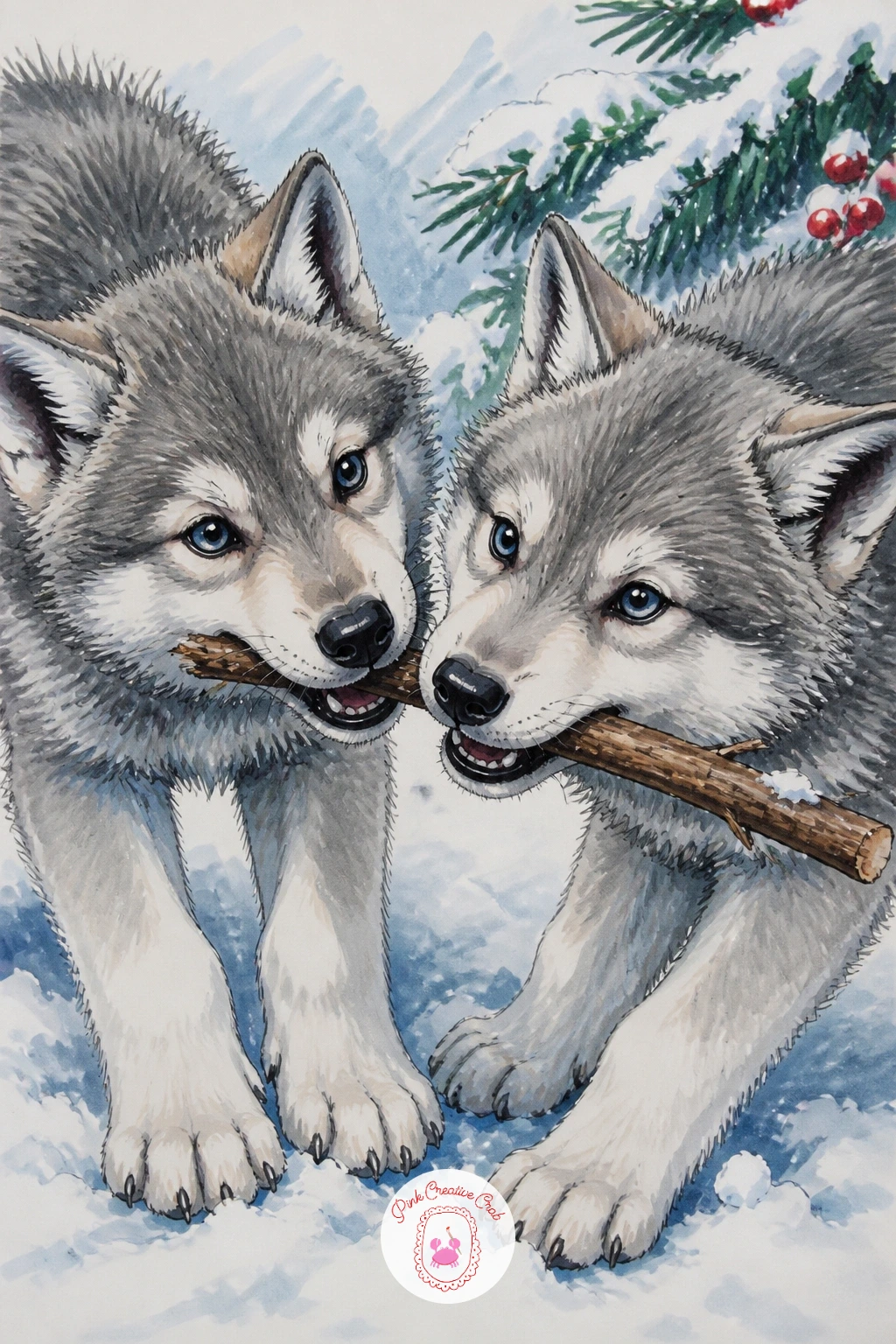
Palette: Cool Grey,Warm Grey,Burnt Umber,Titanium White
Move from pups to a full adult wolf trotting through a snowy pine forest, which lets you practice a confident walking pose against a simple backdrop. Block the wolf first with a long body oval angled slightly forward, then add legs at a mid-stride stretch, front and back legs opening away from each other like a gentle X.
Draw a few pine trunks behind the wolf before you ink the animal itself, keeping them thin and letting them overlap the wolf’s back edge slightly so it sits inside the forest rather than floating in front of it. Ink the wolf, then lay pine green marker in loose triangular shapes for the trees, letting some trunks fade lighter toward the back for depth.
The snow on its back is the detail that sells the whole scene: leave small untouched paper patches along the spine and shoulders rather than drawing snow as separate white shapes, since marker reads better when the white is simply left alone.
If you only have one green marker, go lighter on the far trees and heavier on the nearest one to fake distance with value alone.
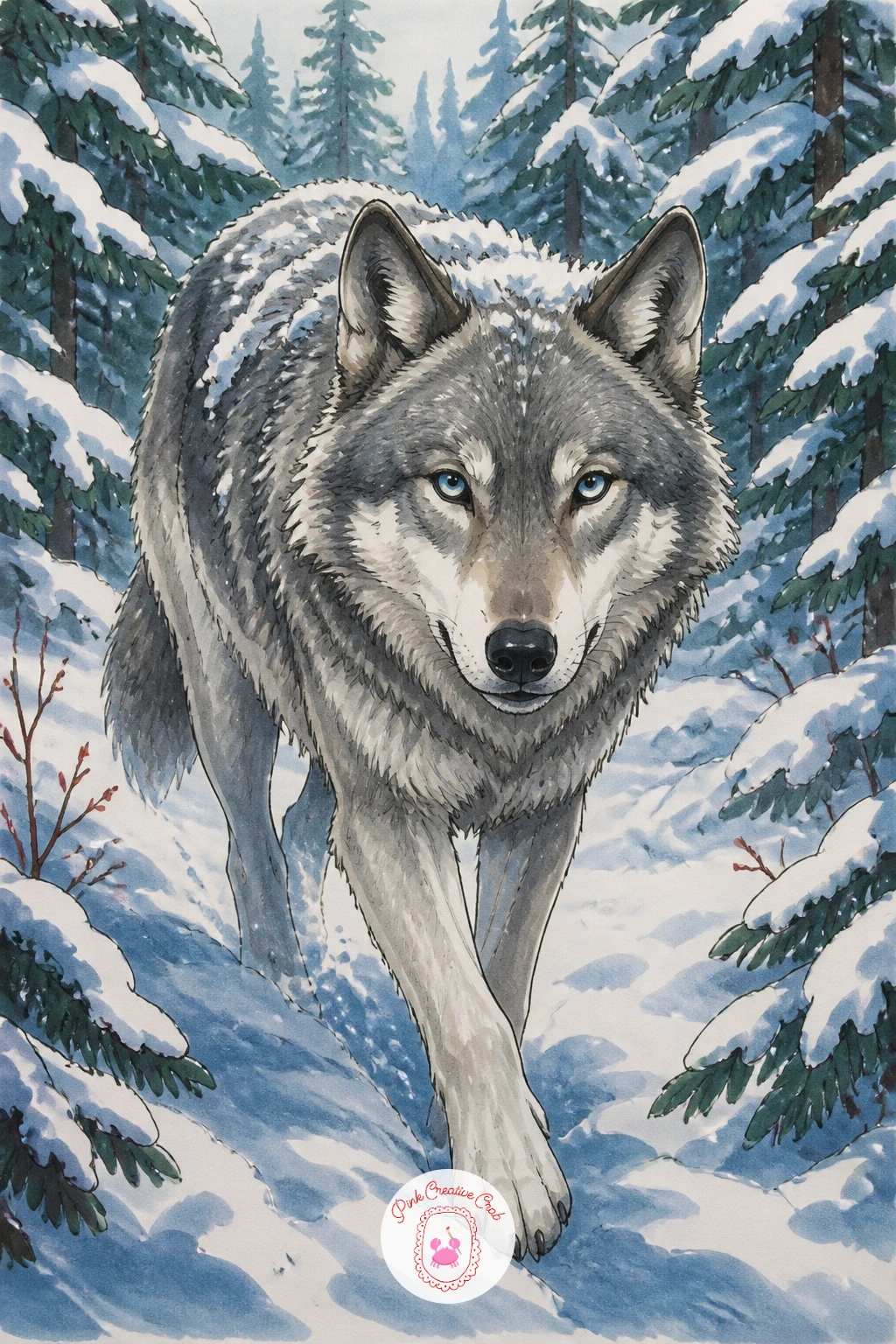
Palette: Cool Grey,Pine Green,Icy Blue,Payne’s Grey
A pack of wolves walking single file along a snowy ridge is the piece to reach for once you want to try a small group without the pose getting complicated, since every wolf copies roughly the same walking silhouette. Draw the ridge line first as a long, gently curving horizon, then place four or five wolf bodies along it at slightly different heights to suggest the ground rolling under their paws.
Keep the front wolf the largest and most detailed, since eye level sits with the viewer looking slightly up at the ridge, and let the wolves further back shrink and simplify, becoming near-silhouettes against the pale sky.
Ink the front two wolves with full detail, then switch to flatter shapes with fewer lines for the rest of the line, which also keeps this quick to finish. A common wobble is spacing the wolves too evenly, so stagger the gaps a little, tighter in the middle of the line and looser near the back, the way a real pack strings out.
One cherry red accent, maybe a faint sunrise glow along the ridge edge, warms the whole cool palette nicely.
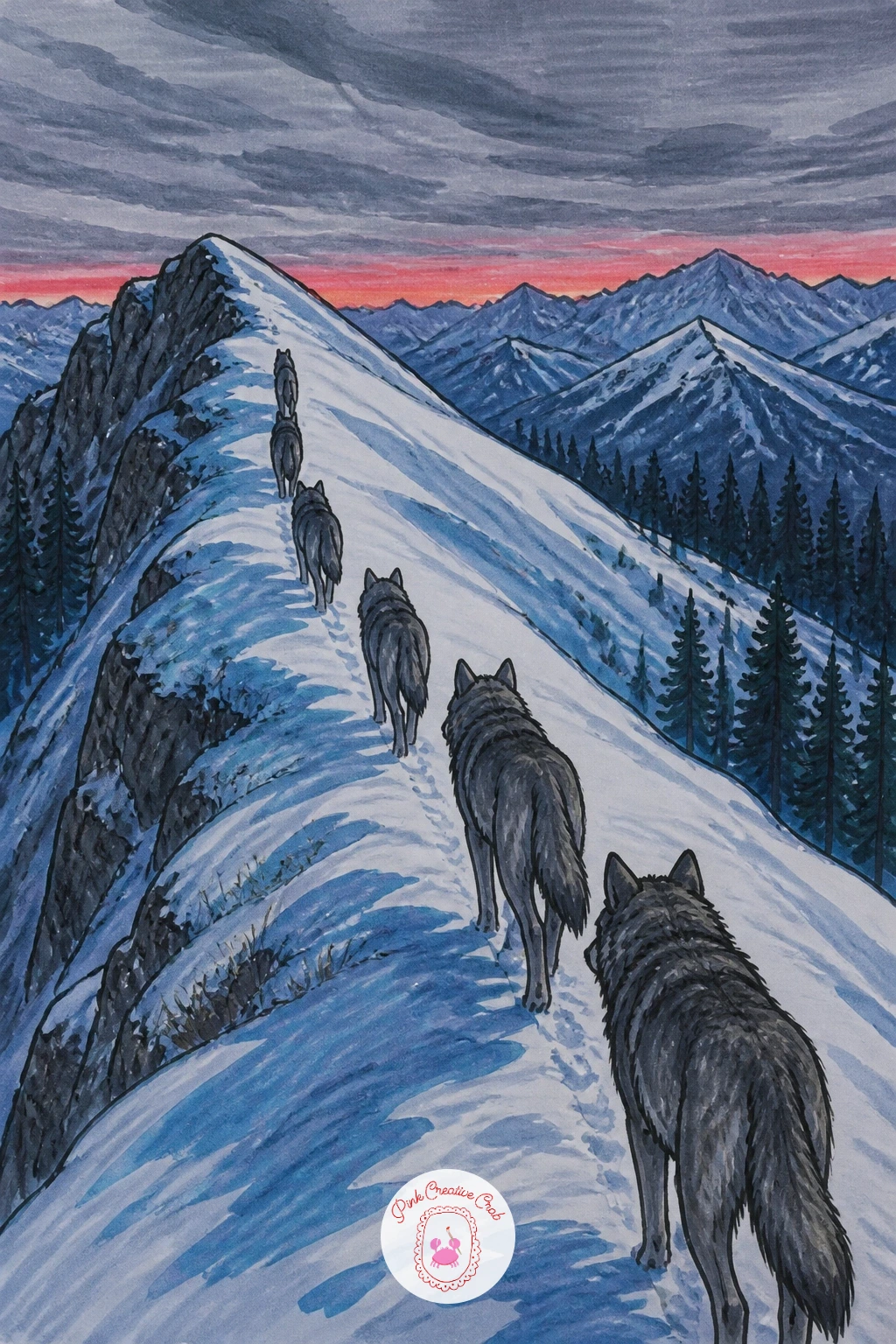
Palette: Payne’s Grey,Icy Blue,Cherry Red,Titanium White
Try this one on a horizontal sheet rather than square, since the single file line reads much stronger with extra width on either side.
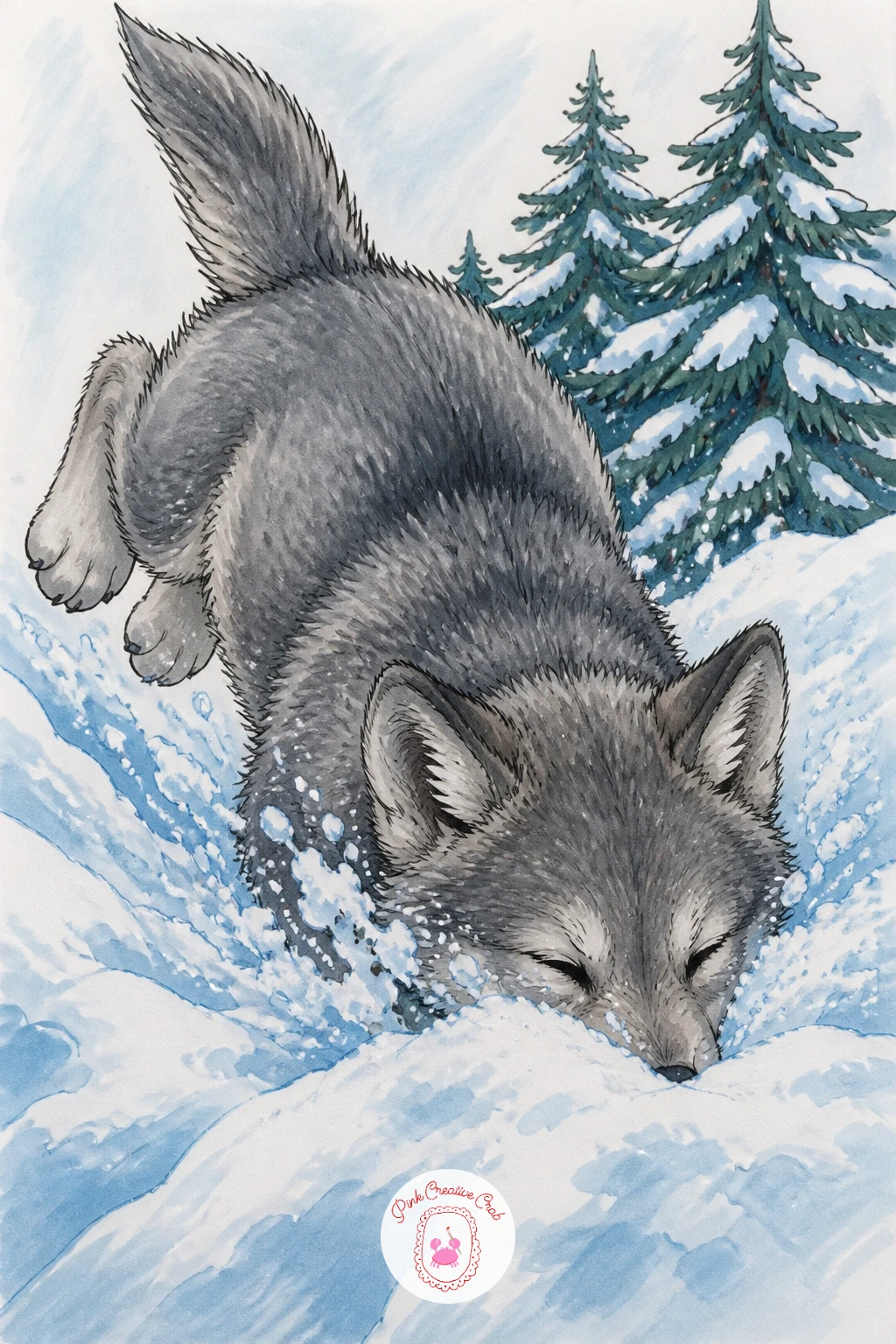
Give yourself a burst of action next with a wolf pup pouncing nose first into a snowdrift, a pose built on one strong diagonal from tail to nose. Sketch the body as a stretched oval tilted steeply forward, front paws tucked and nose already disappearing into a soft mound of snow.
Draw the snowdrift before inking the pup’s front half, so you know exactly where fur ends and snow spray begins, then ink the visible parts of the pup, leaving the buried nose and paws as a rough suggestion rather than hard lines. Little flicked lines around the impact point, done quickly with your fineliner, read instantly as kicked-up snow.
Done in ten minutes this works fine as a loose sketch with flat grey shading. Given forty, add a gradient from darker grey at the pup’s back to near-white where it meets the drift, plus a few airborne snow flecks drawn in white gel pen over the dried marker.
Keep the back legs slightly raised off the ground, since a pouncing animal is mid-leap, not standing.
You Will Need
- white gel pen
Palette: Cool Grey,Icy Blue,Titanium White,Payne’s Grey
Slow the pace down with a mother wolf licking her pup’s ear outside a snowy den, a quiet, affectionate moment that pairs two very different sizes in one frame. Block the mother’s head and shoulders large on one side, angled down toward the pup, and keep the pup small and rounded, tucked under her chin.
Work the mother’s muzzle and the pup’s ear as the two points that need to connect convincingly, lightly sketching a guideline between her nose and the ear tip before inking so the gesture reads clearly rather than looking like two separate animals placed side by side.
A low den mouth, just a dark curved shape behind them, is enough background, no need to build out a whole rock face. Shade the mother in a slightly deeper grey than the pup to separate the two by value as well as size.
If the gesture feels stiff, soften the mother’s neck line into a gentle curve rather than a straight diagonal, that curve alone makes the pose feel tender instead of mechanical.
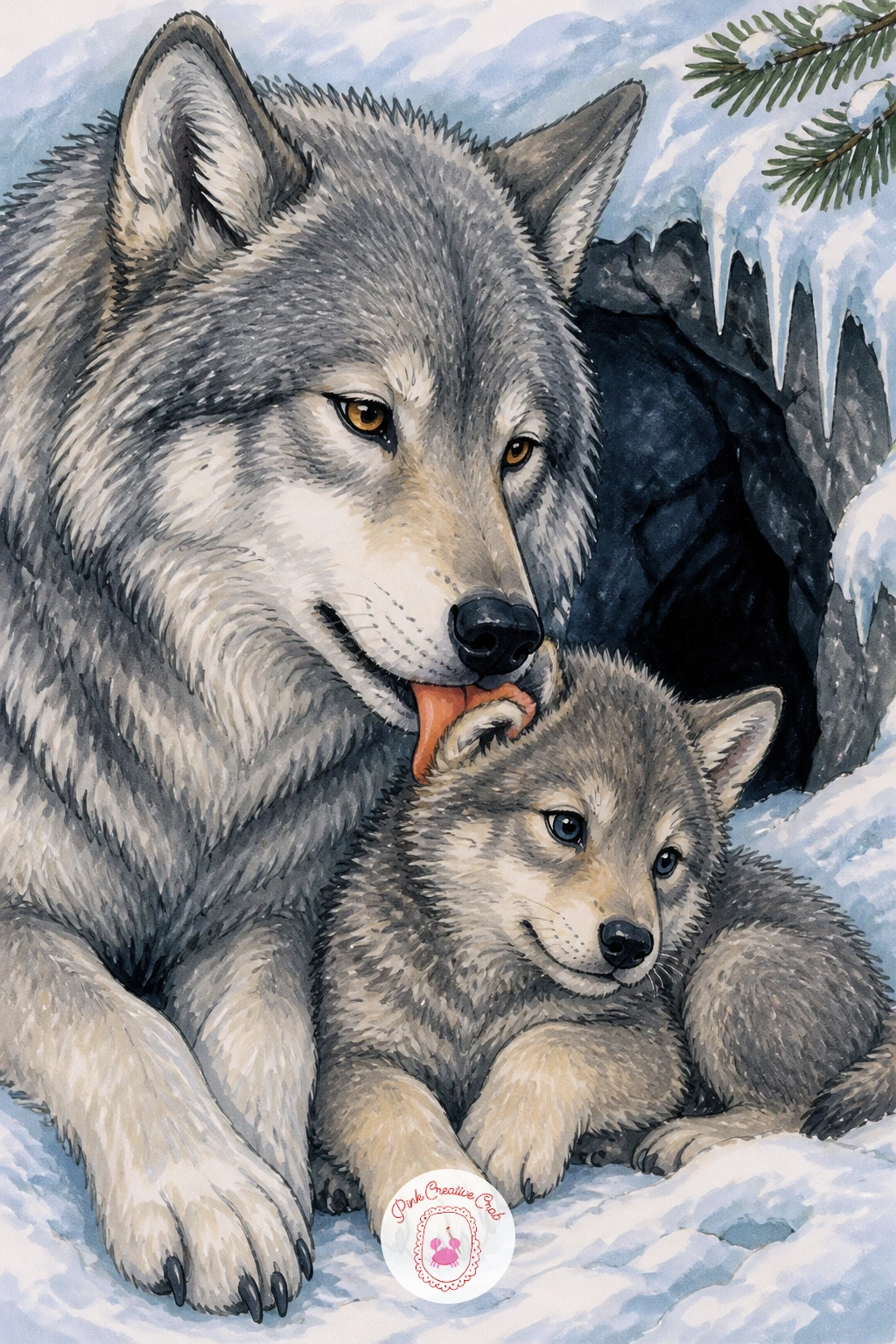
Palette: Payne’s Grey,Cool Grey,Warm Grey,Titanium White
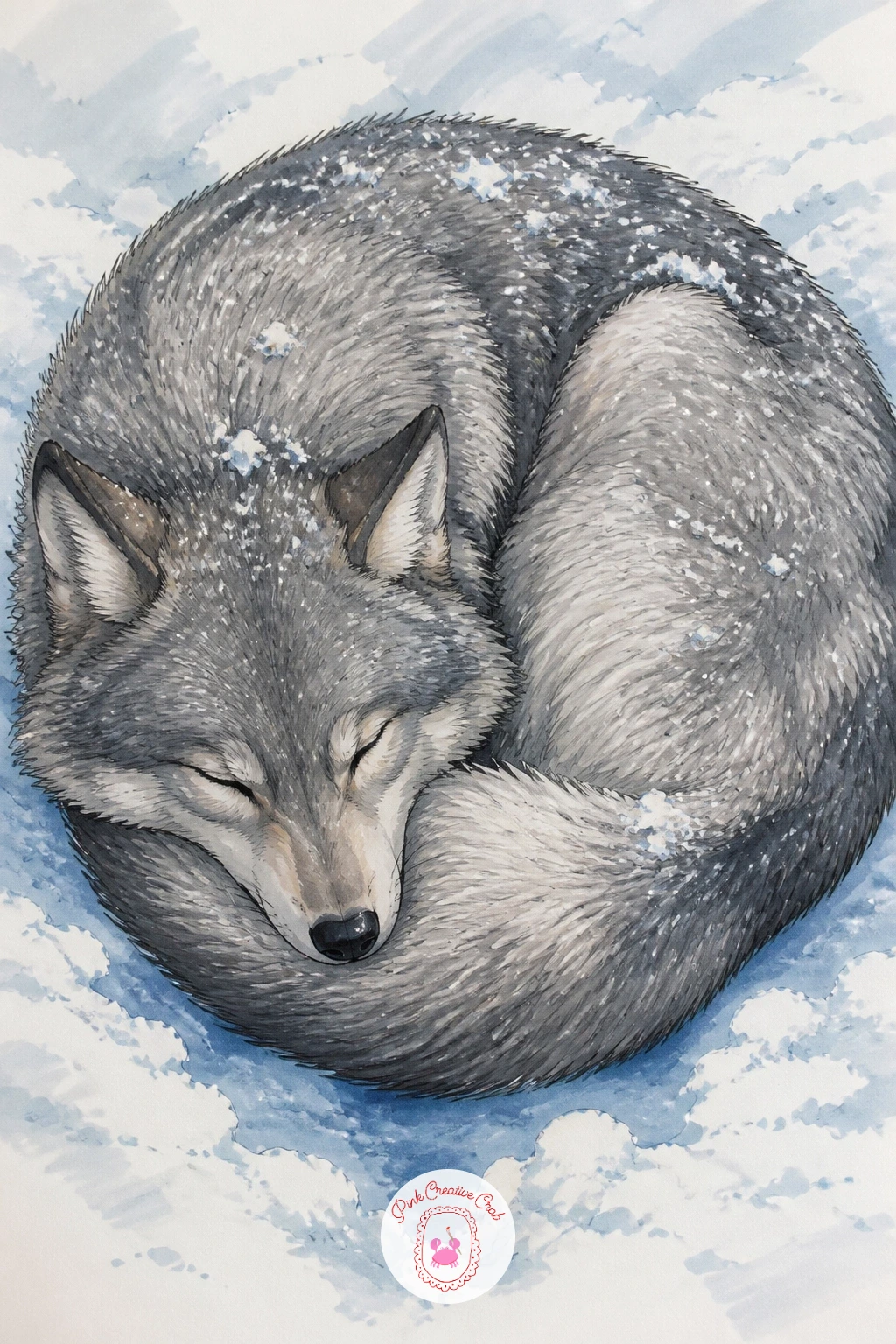
Settle into a grey wolf curled up asleep with snow settling on its fur, a pose built almost entirely from one comma-shaped curve. Draw that curve first, nose tucked near the tail, then round out the back and haunch so the whole body reads as a single soft crescent rather than separate parts.
Ink the outer curve with one confident line, then add the ear, half-closed eye and tail tip as small details inside that shape. Snow settling on the fur is the texture to enjoy here: dot small white gel pen marks or leave tiny unmarked paper flecks along the back and shoulder ridge after the grey marker has dried.
The edges of a curled, sleeping animal matter more than any other part of this pose, since a hard, even outline makes fur look like rubber. Go back over the inked edge with short, varied strokes of a slightly darker grey marker to break up that line and suggest individual tufts of fur.
No white gel pen on hand, a kneaded eraser dabbed lightly over dried colored pencil shading gets a similar soft snow-fleck effect.
You Will Need
- white gel pen
Palette: Cool Grey,Payne’s Grey,Titanium White,Icy Blue
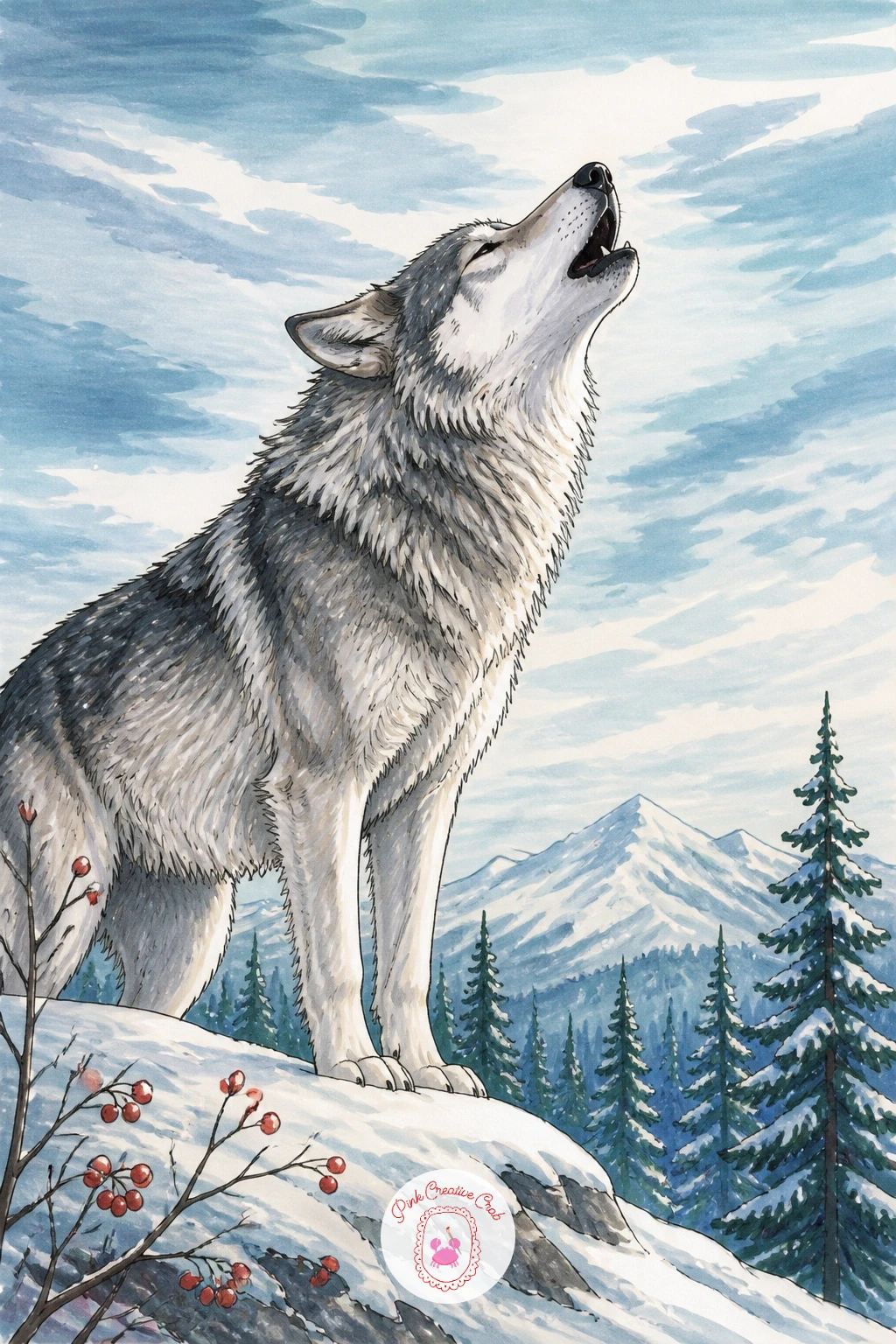
Try a wolf howling softly on a hill under a pale morning sky next, a classic pose done gently rather than dramatically. Tilt the head back only partway, not a full vertical stretch, and keep the mouth a small open oval rather than a wide gape, which is what keeps this calm instead of fierce.
Place the wolf on a simple rounded hilltop with the horizon low in the frame, leaving most of the paper for sky. That open sky is where perspective and light do the real work: a pale wash of icy blue near the horizon fading into soft grey higher up reads instantly as early morning, and the wolf’s lit side should face that pale glow while its far side stays in cooler shadow.
Keep the howl’s suggested sound minimal, maybe one or two faint curved lines rising from the muzzle, rather than drawn sound waves, which can tip the mood toward cartoonish.
If the sky washes look patchy, blend while the marker is still wet and work fast in one direction only.
Palette: Icy Blue,Cool Grey,Warm Grey,Payne’s Grey
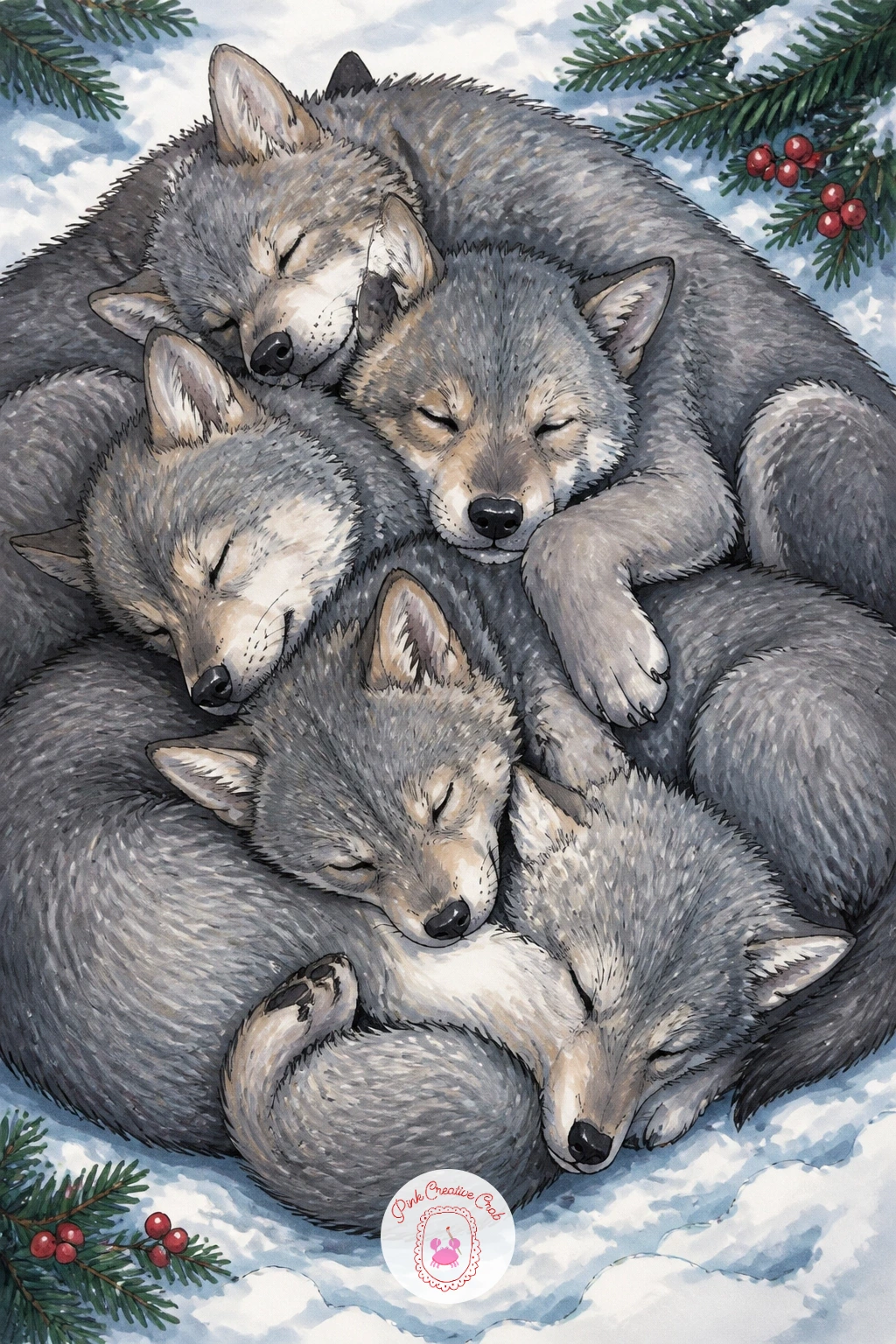
Build a heap of wolf pups piled together fast asleep for a composition that is mostly about overlap rather than individual anatomy. Sketch three or four rounded pup bodies as overlapping blobs first, deciding which pup is on top and which are tucked underneath before you draw a single ear or paw.
Work from the back of the pile forward, inking the pup furthest back first so later lines can simply stop at the edge of the pup in front rather than you having to erase crossing lines. Keep legs mostly hidden in this pose, tucked under bellies, since visible pup legs in a sleep pile tend to look awkward and stiff.
Differentiate the pups slightly with marker, one a touch warmer grey, one cooler, so the pile does not read as one blob of identical fur. A few closed, curved eyelid lines and small relaxed ear shapes are all the detail each face needs.
This is a forgiving group pose: if one pup’s proportions feel off, another pup’s body can simply cover more of it.
Palette: Cool Grey,Warm Grey,Payne’s Grey,Titanium White
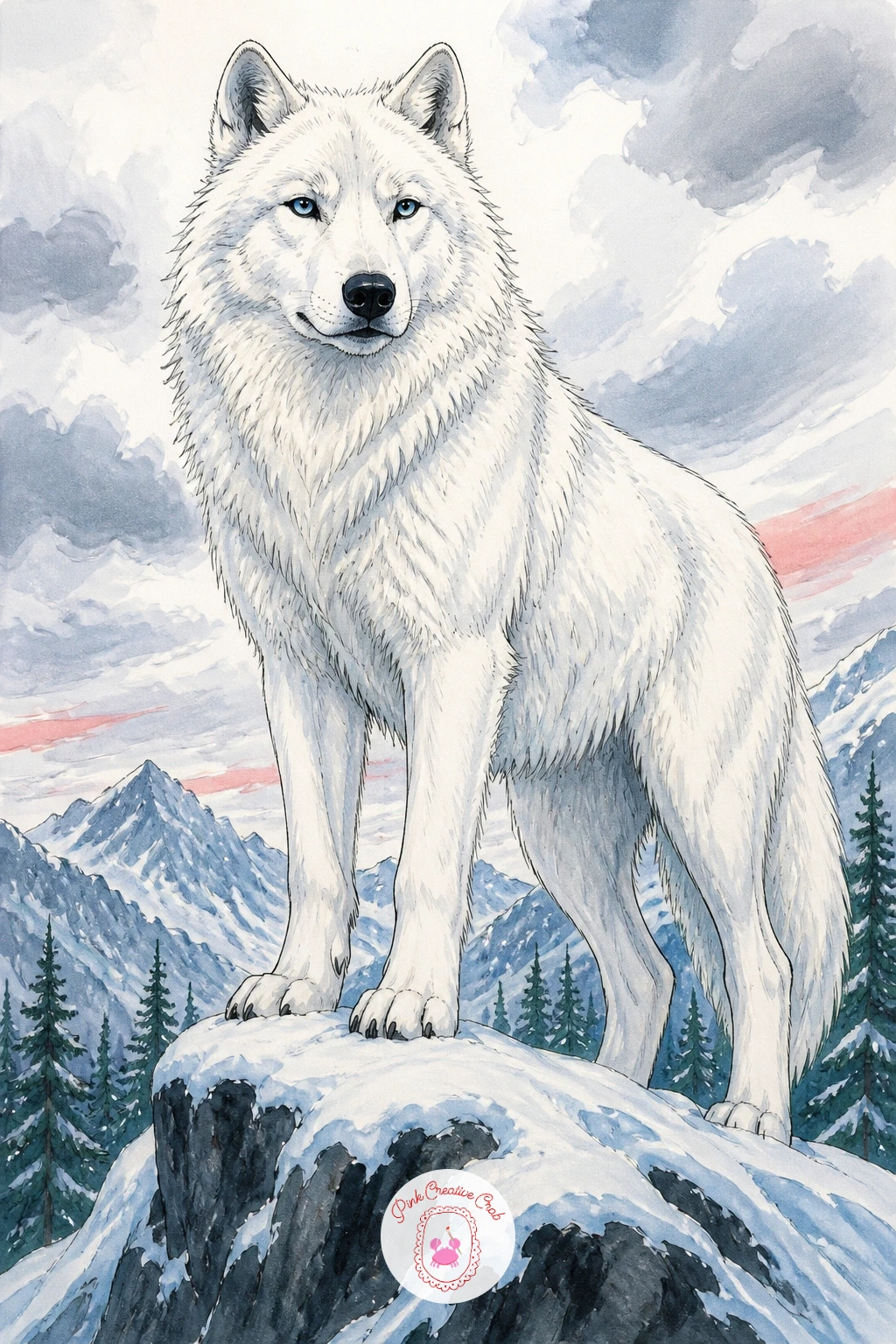
Switch palettes slightly for a white arctic wolf standing on a snow-covered rock, where the challenge shifts from color to value, since nearly everything in this piece is some version of white or pale grey. Draw the rock shape first, a simple angular mass with a flat enough top for the wolf to stand on, then build the wolf standing tall and alert on top of it.
Ink lightly here, since a pale wolf against pale snow needs its outline to stay the main source of definition. Shade the wolf with only the faintest icy blue in the shadowed hollows, under the belly, behind the ear, along the far leg, leaving most of the body as bare white paper.
The rock itself can carry slightly more grey and a hint of pine green moss to give the eye something darker to rest on, which makes the white wolf pop by contrast rather than by its own color.
No icy blue marker on hand, a cool grey colored pencil applied very lightly over white paper gets a close enough chill to the shadows.
Palette: Titanium White,Icy Blue,Cool Grey,Pine Green
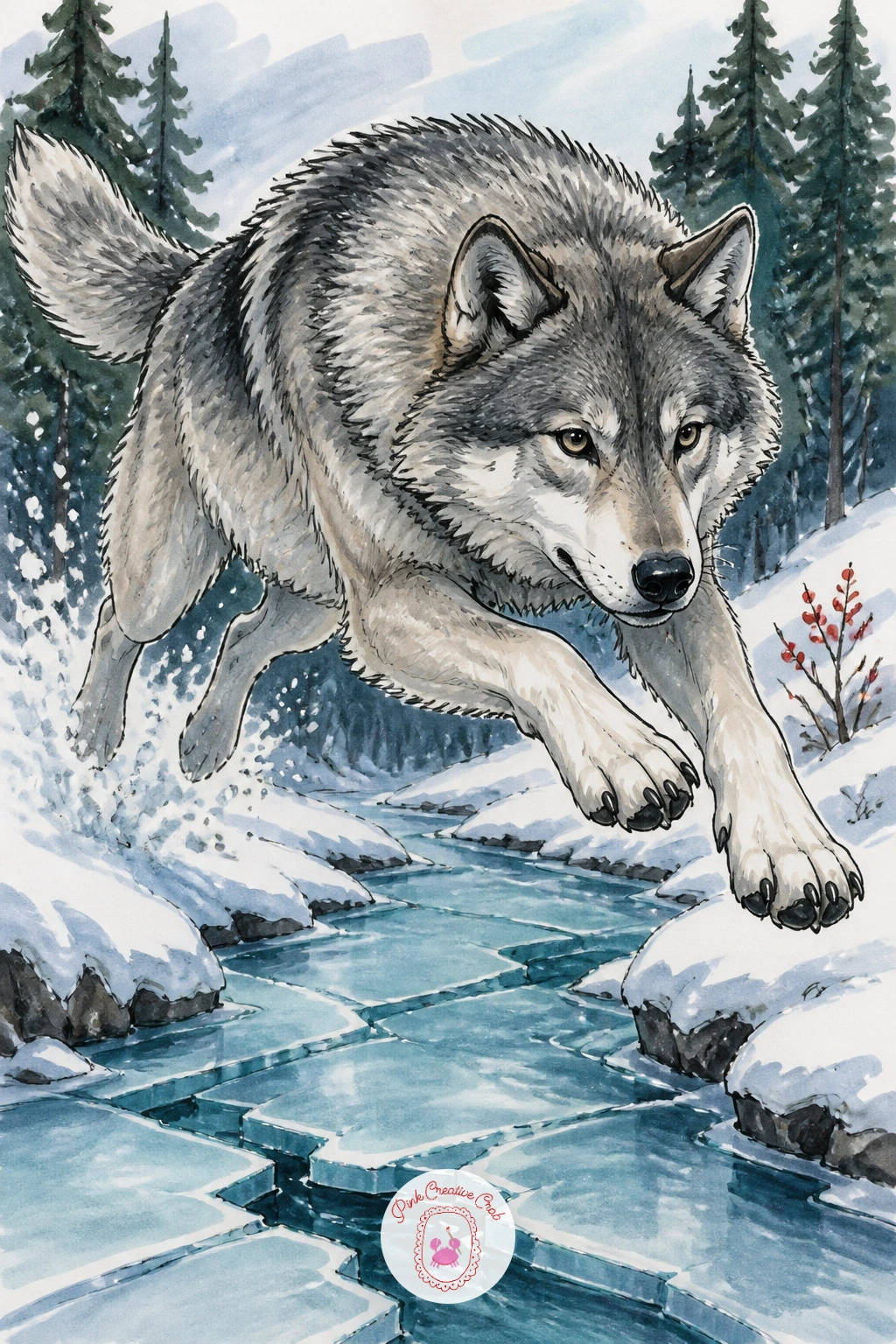
Push into a more dynamic pose with a wolf leaping over a frozen creek, all four legs off the ground at once. Draw the creek first as two curving banks with a pale icy strip between them, then arc the wolf’s body over the gap, back legs still trailing behind, front legs reaching forward.
Comparing the leap’s length to the wolf’s own body is the proportion trick that keeps this believable: a real leap rarely spans more than one and a half body lengths, so measure the gap against your sketched wolf before committing to how wide the creek looks.
Ink the body with the spine as one smooth arching curve, since a leaping animal should look stretched and elastic, not hunched. Shade the underside of the body a touch darker to suggest it lifting away from the ground, and leave a thin bright strip of untouched paper along the top edge of the back where the pale sky would catch it.
Small flicks of white gel pen off the back paws suggest snow kicked loose mid-jump.
You Will Need
- white gel pen
Palette: Cool Grey,Icy Blue,Payne’s Grey,Titanium White
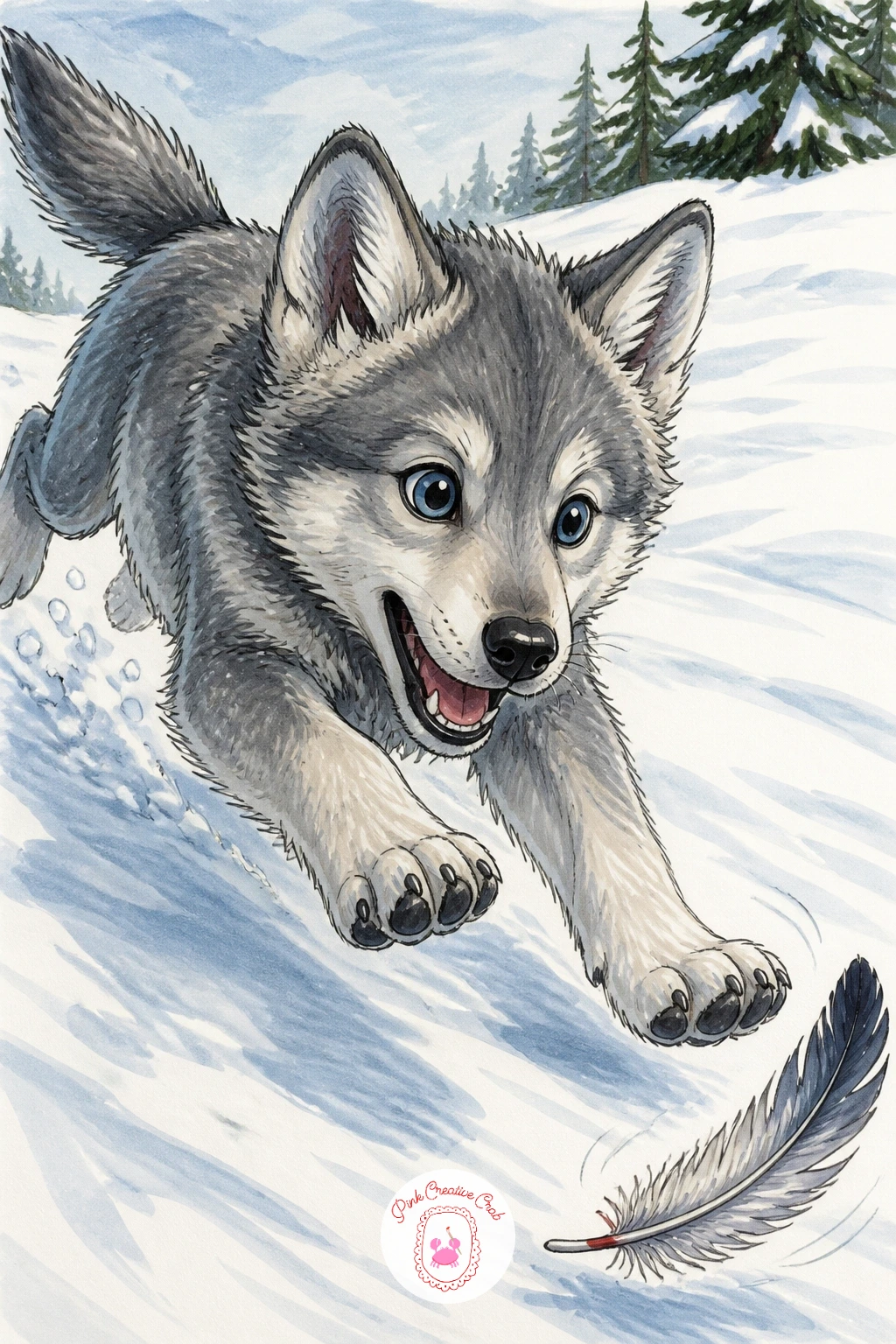
Lighten the mood again with a wolf pup chasing a fluttering feather across the snow, a pose that lets you draw motion with very little detail needed. Place the feather first, drawn small and off to one side with a couple of wavy lines trailing behind it to show it drifting, then build the pup mid-run, head and front paws stretched toward it, back legs still pushing off the ground.
Angle the pup’s whole body along one diagonal line from back paw to nose, which is the single easiest way to make a running pose read correctly without overthinking the leg positions.
Ink the pup first, since the feather is small enough to adjust afterward if the composition feels unbalanced. Keep the feather pale, maybe the faintest warm grey, with a single thin fineliner line down its spine, so it stays a light accent rather than competing with the pup for attention.
If you want a quicker version, skip the trailing motion lines behind the feather entirely, the pup’s own stretched pose carries the energy on its own.
Palette: Cool Grey,Warm Grey,Icy Blue,Titanium White
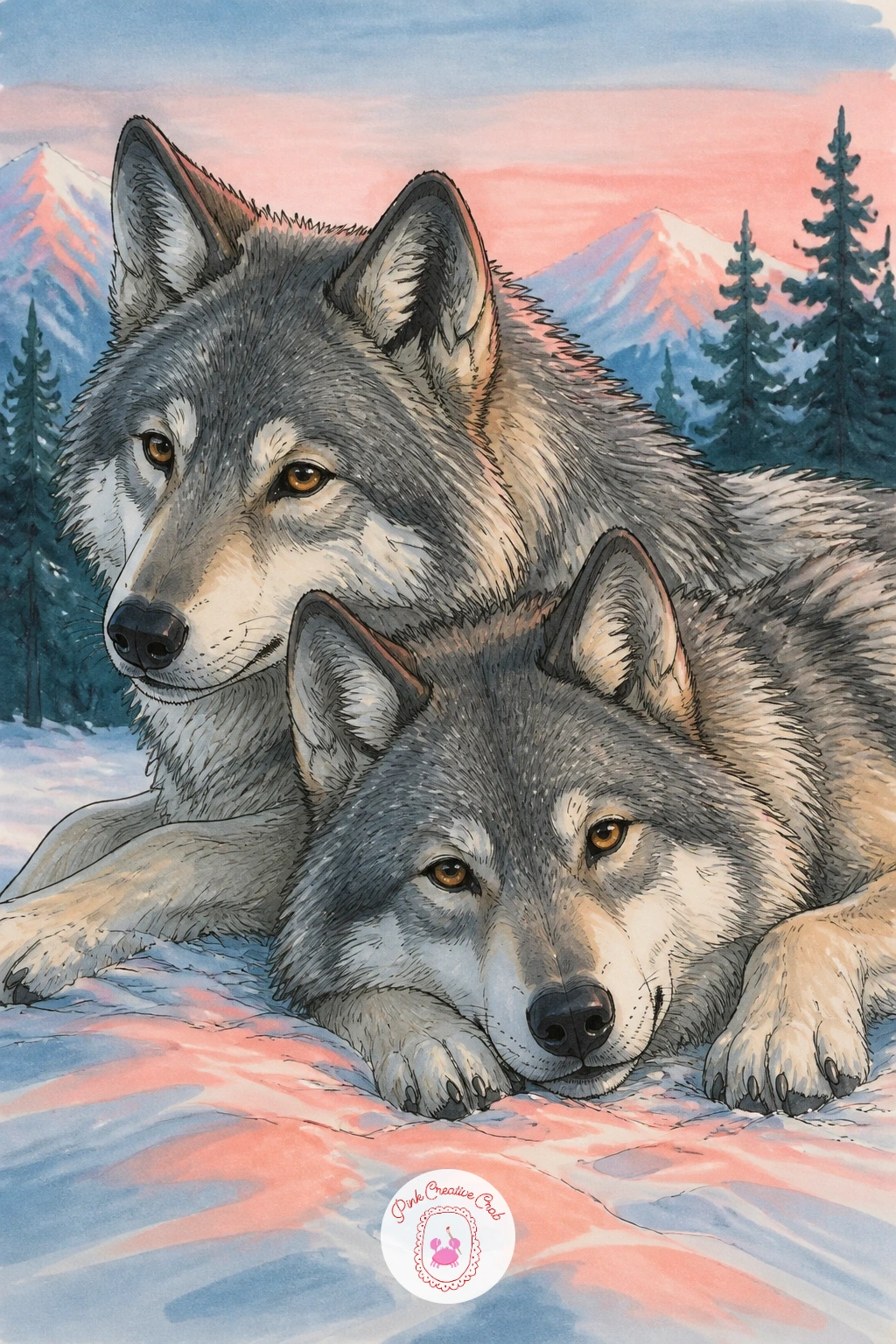
A pair of wolves resting side by side on a snowy bank is a good one to slow down and enjoy some quiet color work on. Draw both bodies as long relaxed ovals lying parallel, one slightly behind and overlapping the other, heads at rest, legs folded in rather than extended.
Eye level sits close to the ground here since you are looking at them from roughly their own height, which flattens the bank behind them into a gentle rising slope rather than a tall backdrop, so keep that slope low and simple.
Ink the nearer wolf with full detail and let the far wolf stay slightly softer in both line and color, a touch paler and less defined, which pushes it back in space without needing any real perspective drawing. Warm the scene slightly with the faintest cherry red glow along the snow where morning light would hit it.
If the two wolves start looking identical, vary their ear angle or head tilt slightly, small differences like that are enough to make them feel like two individuals resting together.
Palette: Payne’s Grey,Cool Grey,Cherry Red,Icy Blue
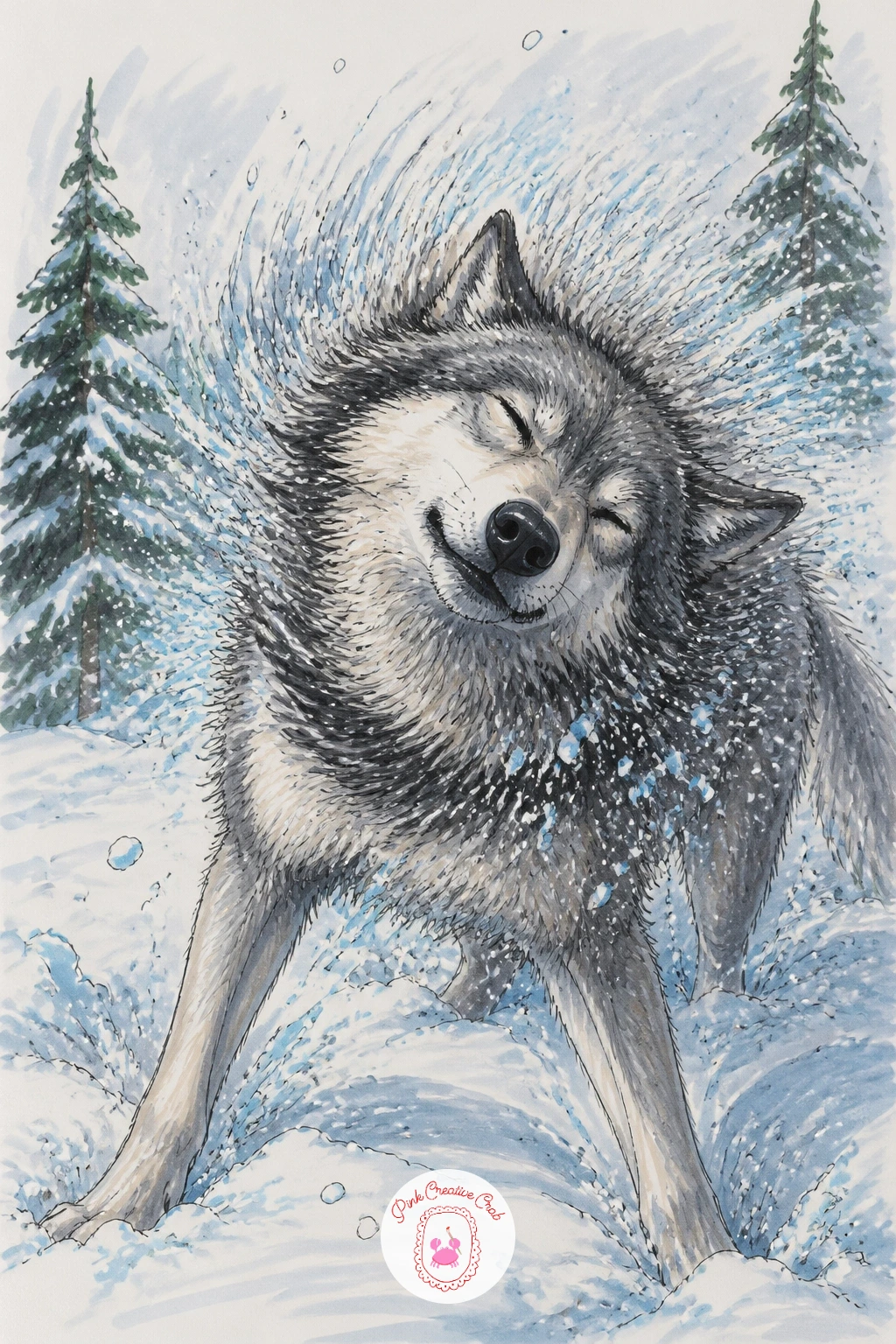
A wolf shaking snow off its thick winter coat is the piece to draw once you want real texture practice, since the whole pose exists to throw fur and snow outward. Sketch the body first in a slightly blurred, twisted stance, spine curved into a gentle S, legs planted but the torso clearly mid-rotation.
The dry brush trick, borrowed from paint but easy to fake with markers, works well on the fur edges here: load your marker lightly and drag it in short outward strokes right at the body’s silhouette so the line breaks up into separate fur tufts rather than staying one clean edge.
Add loose curved lines radiating outward from the shoulders and back, some crossing the outline entirely, to read as flying snow and loosened fur caught mid-shake. Keep these lines varied in length so the shake looks energetic rather than mechanically repeated.
No alcohol markers to dry brush with, a slightly worn colored pencil dragged lightly over the edge gives a similar broken, textured line.
Palette: Cool Grey,Payne’s Grey,Titanium White,Icy Blue
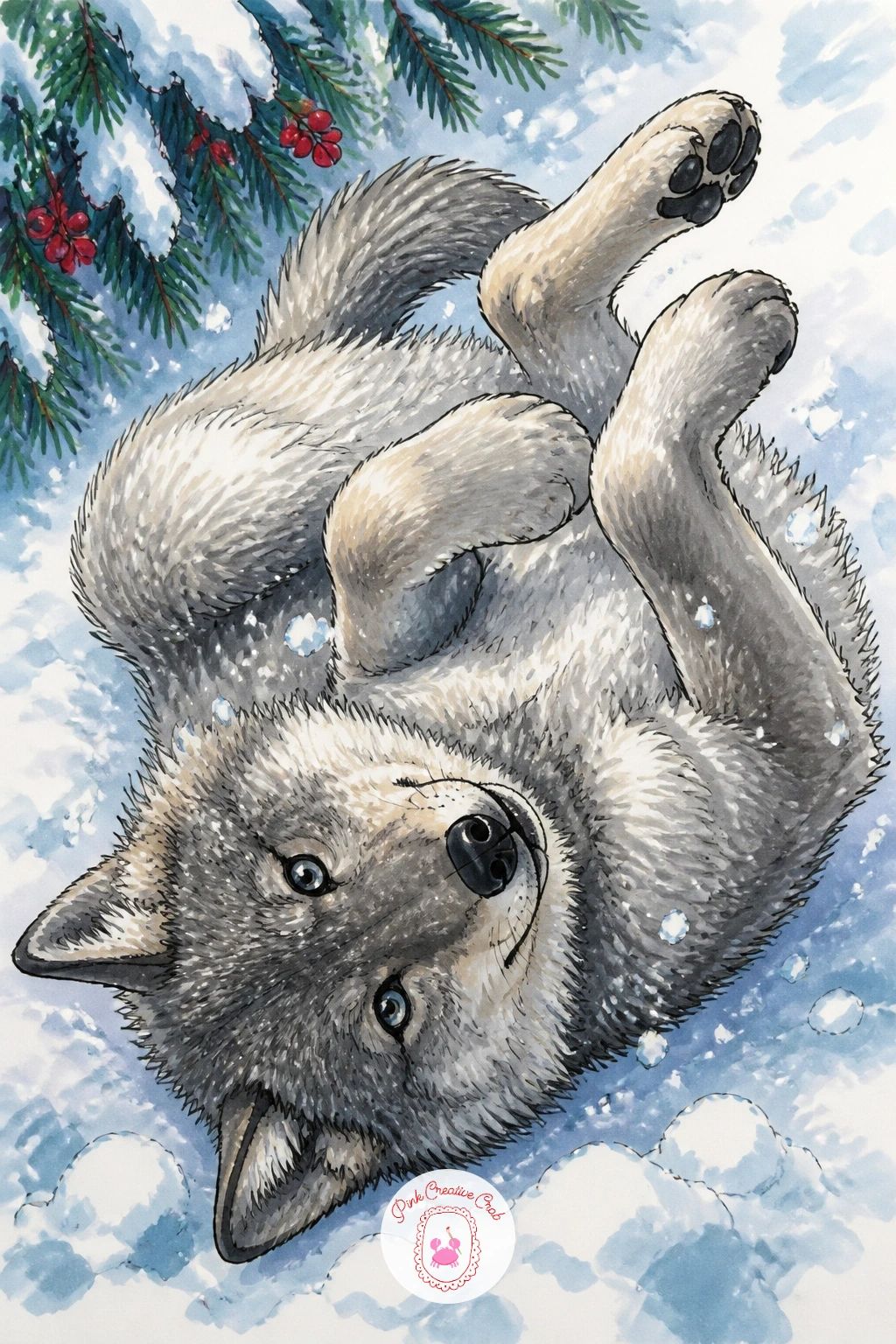
A young wolf rolling on its back in fresh snow gives you the most playful, least dignified pose on this whole list, which is exactly the point. Draw the body upside down and twisted, paws up and curled loosely, head turned to one side with the tongue maybe lolling out slightly, back arched into the snow.
This pose reads best fast, so the ten minute version works well: a loose fineliner sketch with flat grey shading and a scatter of white gel pen snow flecks captures the fun of it just fine. Given forty minutes, add gradient shading along the belly and inner legs, the palest part of the wolf since fur there is usually thinner and shows more pink-grey skin tone through it.
Keep the legs loose and slightly bent rather than stiffly straight up, a wolf rolling in snow looks relaxed, almost boneless, and stiff limbs will fight that mood.
If the upside down anatomy feels confusing, flip your reference or your own drawing paper upside down while sketching the basic shapes, then turn it back the right way up to ink the details.
You Will Need
- white gel pen
Palette: Cool Grey,Warm Grey,Titanium White,Icy Blue
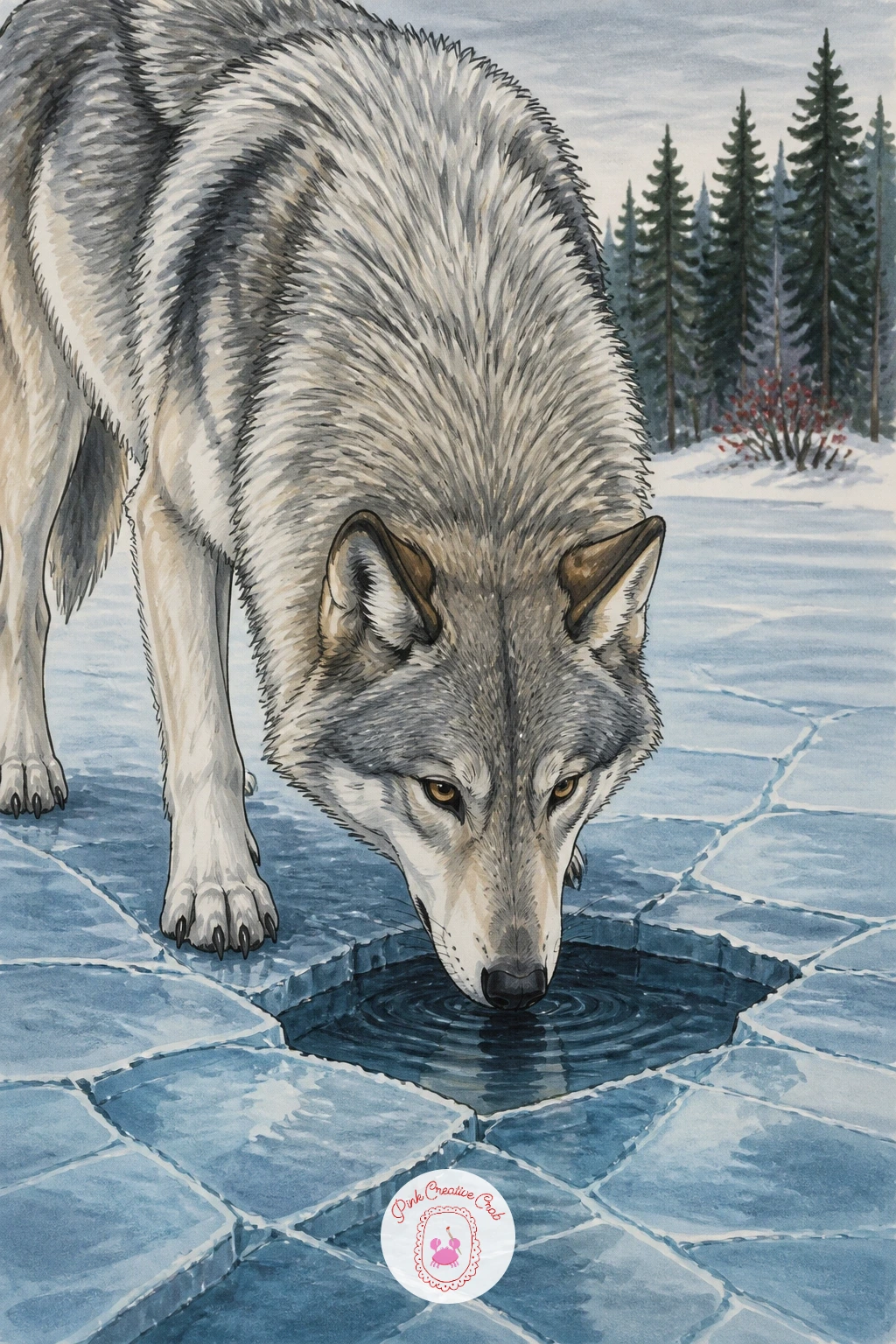
A wolf drinking from a hole in a frozen lake is a quiet pose built on one long, lowered neck line. Draw the ice surface first as a flat plane with a small dark oval breaking through it for the water hole, then bring the wolf’s body down toward it, head lowered, neck stretched, front legs slightly bent to bring the muzzle level with the water.
Getting the head height right against that water hole is the proportion check worth making before you ink: measure the distance from the wolf’s shoulder to the ground and make sure the lowered head reaches close to that same line, otherwise the neck will look stretched too far or not far enough.
Shade the ice pale icy blue with a few straight cracked lines radiating from the hole, and keep the water itself nearly black by comparison, which also helps sell how cold and still the scene feels.
If drawing reflections feels like too much, skip them entirely, a flat dark water hole reads perfectly well without one.
Palette: Icy Blue,Payne’s Grey,Cool Grey,Titanium White
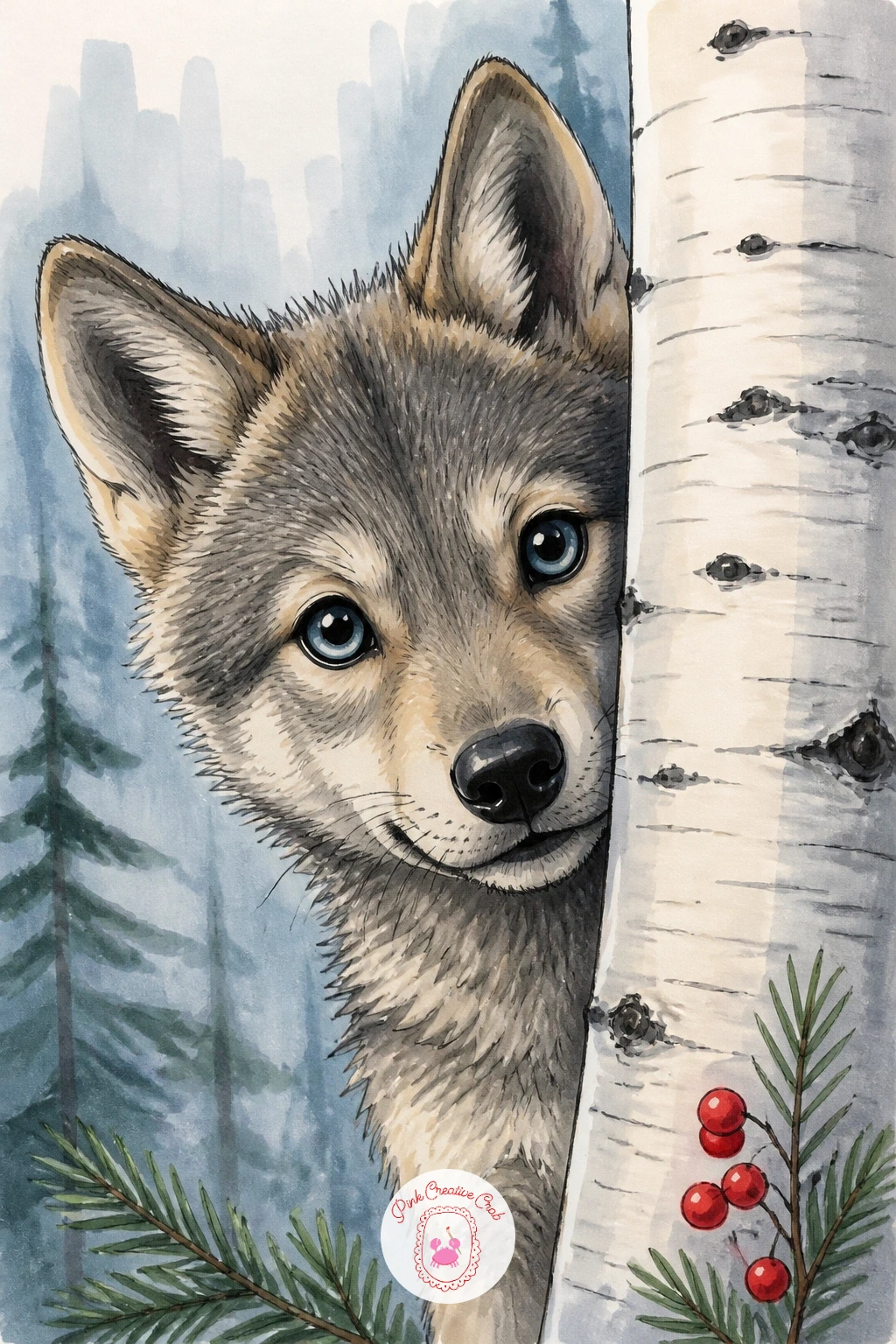
Have some fun hiding a wolf pup peeking out from behind a birch trunk, a composition built around one simple vertical shape doing most of the work. Draw the birch trunk first, slim and pale with a few short dark horizontal marks for bark texture, placed slightly off center rather than dead middle.
Only let the pup’s head and one shoulder show from behind it, eyes wide, ears forward, the rest of the body implied rather than drawn, which is the easiest way to suggest shyness or curiosity without needing a full pose.
Ink the trunk before the pup so you know exactly where the overlap line falls, then build the visible part of the pup right up against that edge. Keep the birch bark marks sparse, three or four short dashes are enough, since overdoing bark texture pulls attention away from the pup’s face, which should be the focal point.
Readers drawing lots of trees and snowy scenes together might also enjoy the layered forest paths in this cozy village scene drawing guide for more background ideas.
Palette: Cool Grey,Warm Grey,Payne’s Grey,Titanium White
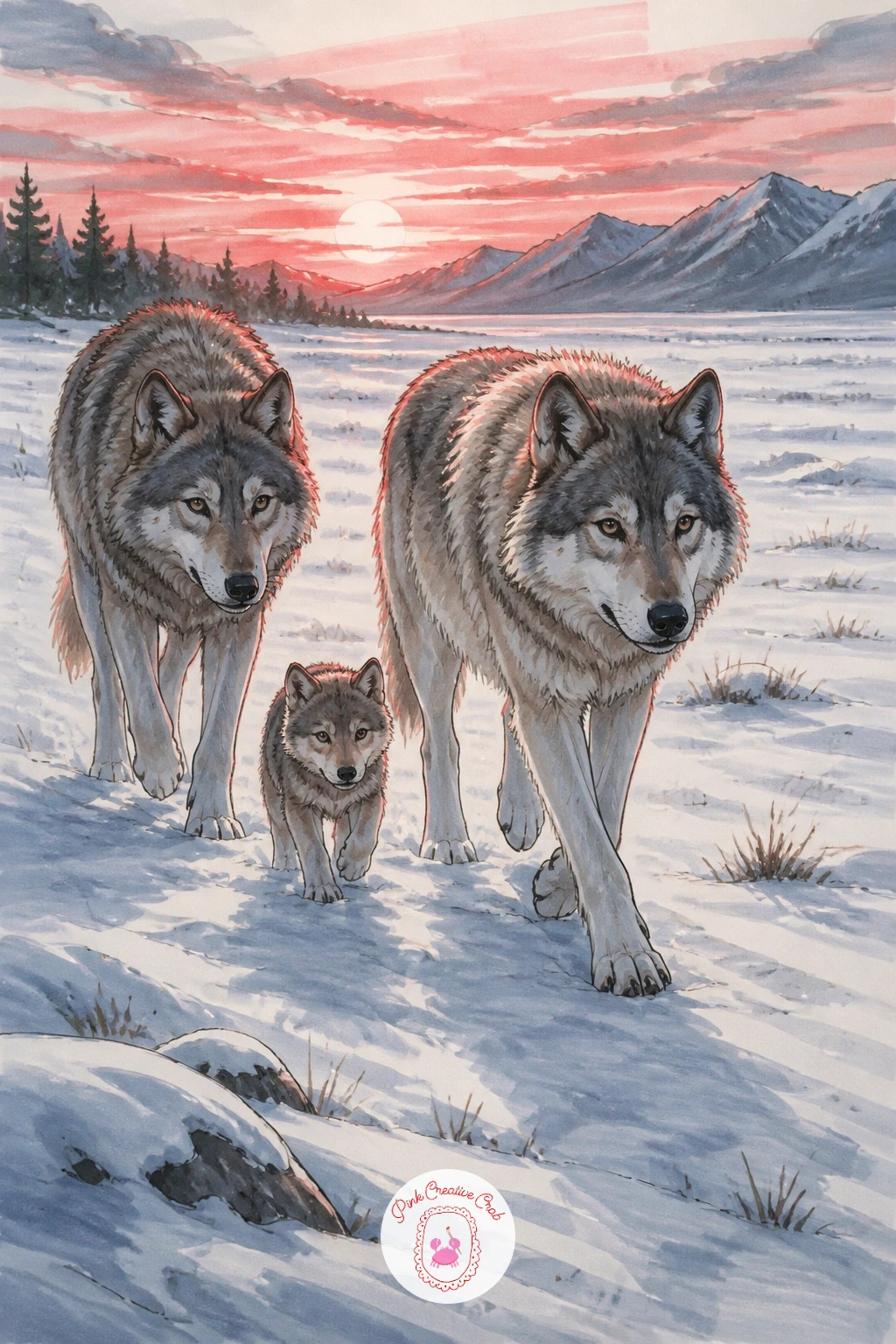
Scale up next to a wolf family crossing a wide snowy meadow at sunrise, which brings together an adult pair and one or two pups in a single wide composition. Lay the meadow out first as a long low horizon with plenty of open snow in front of it, then place the family walking across it at a slight diagonal rather than a flat straight line, which makes the group feel like it is actually moving somewhere.
Light here comes low and warm from one side, since it is sunrise, so give every wolf one lit edge, maybe the faintest cherry red warmth along their backs, and keep their shadow sides in cool grey, with each shadow falling the same direction on the snow to keep the light source consistent.
Build the adults larger and more detailed, pups smaller and simpler, following behind or beside them. If the group starts feeling cluttered, reduce it to three wolves rather than four, a tighter family group is easier to read clearly on a phone-sized sketch anyway.
Fans of wide snowy scenes might enjoy adapting ideas from this Christmas scene drawing roundup for extra composition inspiration.
Palette: Cool Grey,Cherry Red,Icy Blue,Payne’s Grey
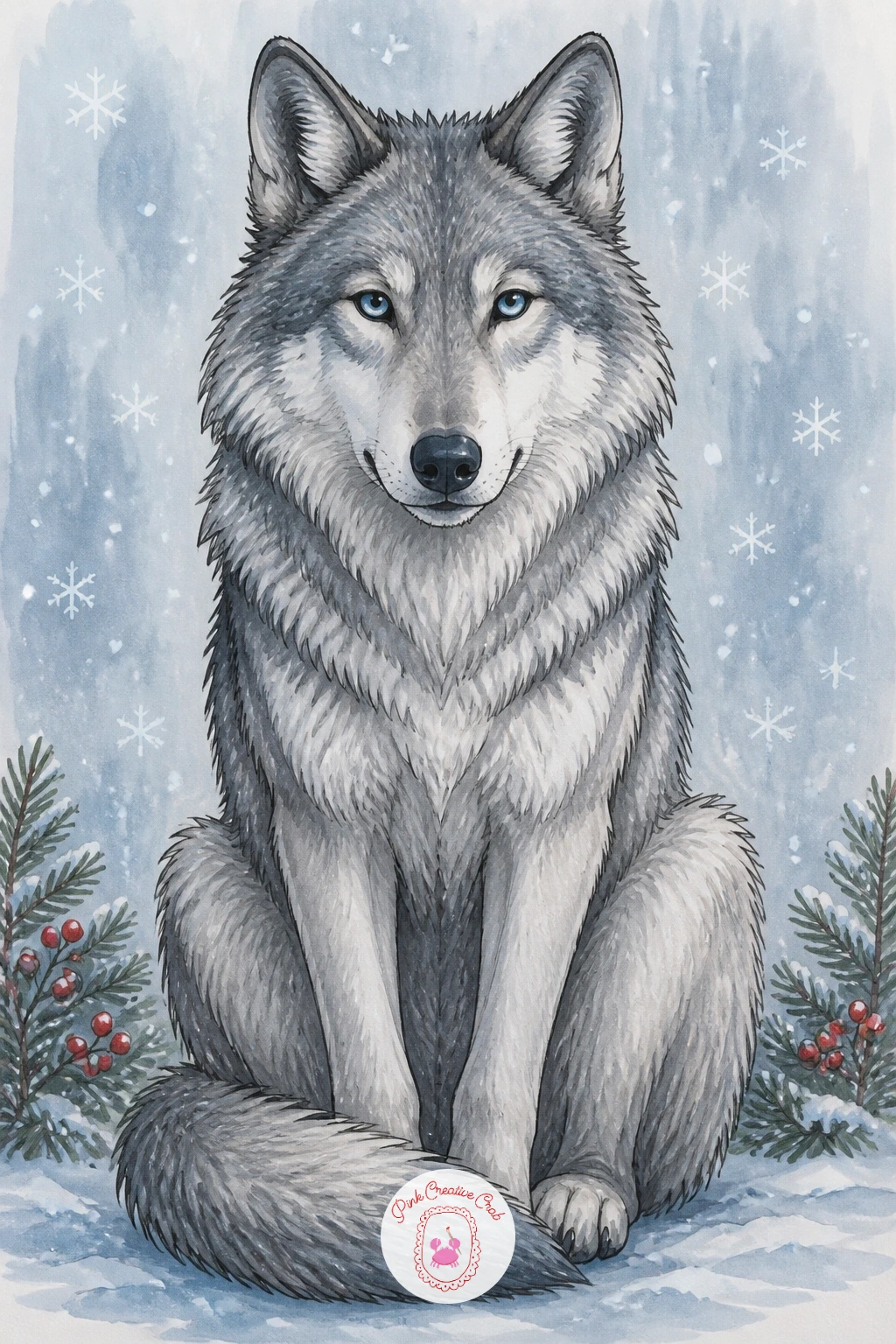
Calm the page right down with a wolf sitting perfectly still as snowflakes fall around it, a pose that is really a study in stillness against a moving sky. Draw the wolf seated upright, tail wrapped neatly around its front paws, ears relaxed, which immediately reads as peaceful rather than alert.
Snowflakes are the quick-version-versus-detailed-version choice on this one: in ten minutes, a handful of simple white gel pen dots over dried marker is plenty. Given forty minutes, vary the flake sizes, add a faint blur around a few with a light grey marker to suggest ones falling closer to the viewer, and let two or three rest visibly on the wolf’s head and back rather than only falling around it.
Keep the background nearly empty, a pale wash of icy blue at most, so nothing competes with the quiet mood. This is also a good subject to pair with the layered snow textures discussed in this graphite versus colored pencil comparison if you want to try the same pose in a different medium.
You Will Need
- white gel pen
Palette: Payne’s Grey,Icy Blue,Titanium White,Cool Grey
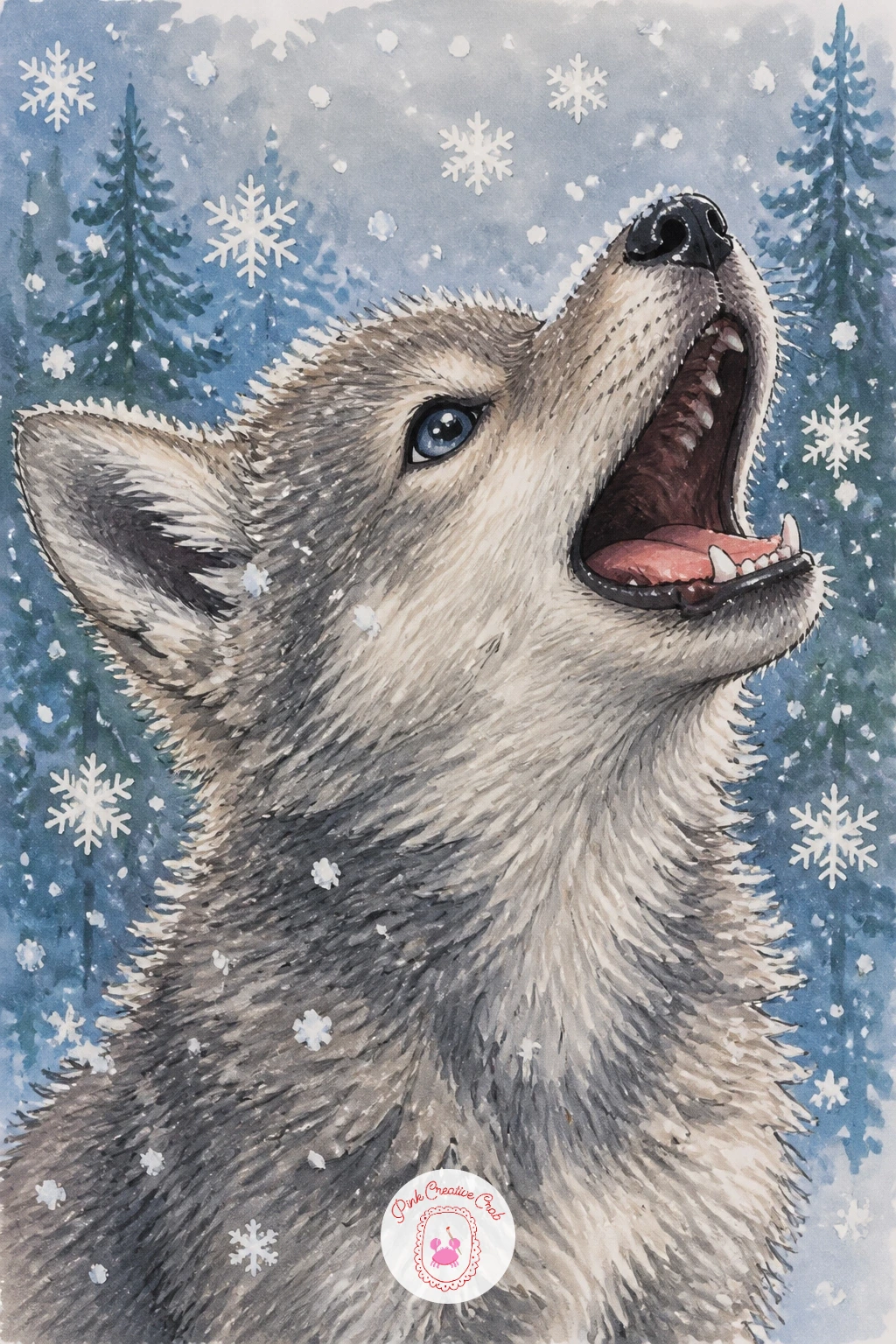
A wolf pup trying to catch snowflakes in its mouth is a joyful little companion piece to the still, seated wolf before it. Tilt the pup’s head up and slightly back, mouth open in a small happy oval rather than a wide gape, front paws maybe lifted slightly as if bouncing on the spot.
Comparing the size of the open mouth to the pup’s whole head keeps this one from looking odd: the opening should stay fairly small, no more than a third of the head’s width, since pup jaws, however playful, are not drawn open as wide as an adult’s would be in a howl.
Scatter a few oversized snowflakes close to the mouth and smaller ones further up and away, which also adds a little depth to an otherwise flat snowy background. Shade the pup with simple flat grey tones, saving the real detail for the eager, upturned expression on its face.
If white gel pen feels too fiddly for small flakes, a sharp white colored pencil gets a softer, slightly less stark result.
You Will Need
- white gel pen
Palette: Cool Grey,Warm Grey,Titanium White,Icy Blue
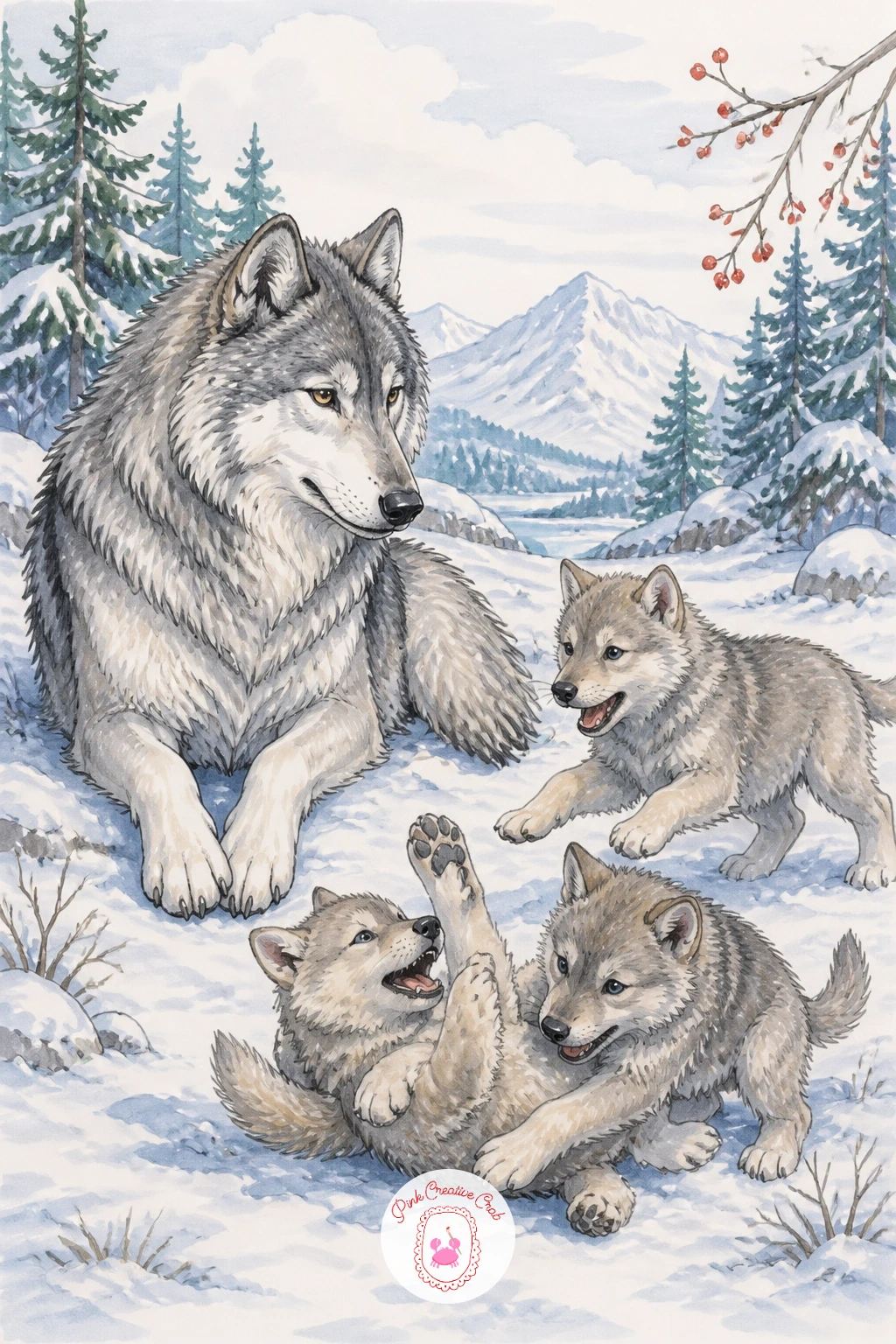
An older wolf watching over pups playing in a clearing pulls several of the poses on this list together into one scene, so it works well once you feel confident drawing both adults and pups separately. Place the adult wolf seated and still off to one side, a calm anchor for the composition, then let two or three pups tumble and play in the open space in front of it.
Keep the adult’s gaze clearly directed toward the pups, a small but important detail, since the angle of the head and eyes is what makes the watching feel intentional rather than incidental. Build the pups in loose, overlapping action poses, one mid-pounce, one rolling, which also varies the shapes across the clearing nicely.
Shade the adult in a slightly deeper, steadier grey than the lighter, warmer-toned pups, a value difference that reinforces the sense of calm guardian versus playful youngsters without needing any extra detail.
If a full group feels like too much for one sitting, start with just the adult and one pup, then add more later once that pairing feels solid.
Palette: Payne’s Grey,Cool Grey,Warm Grey,Icy Blue
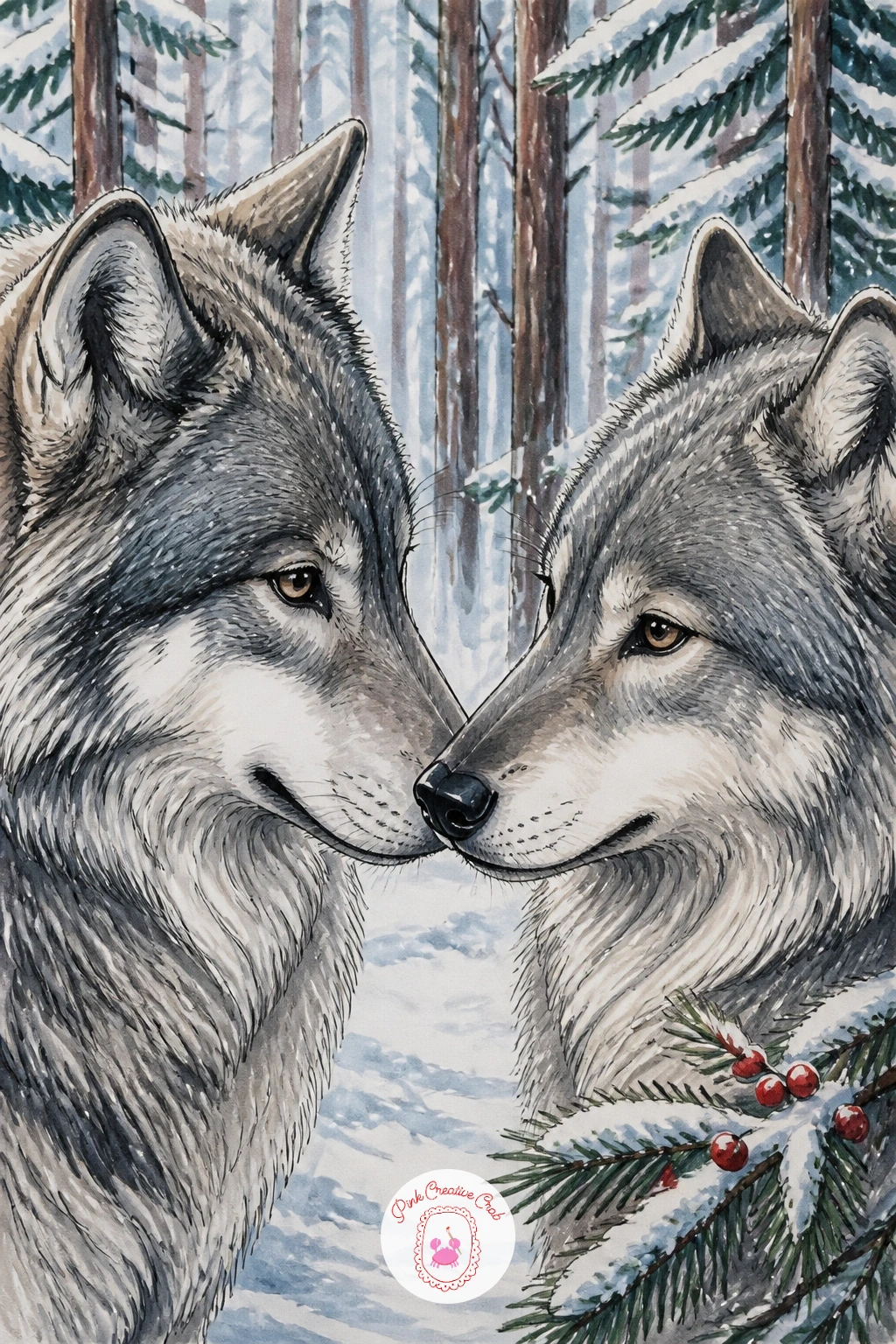
Two wolves touching noses in a quiet snowy forest is a tender, simple pose that depends entirely on getting the distance between the two muzzles exactly right. Sketch both heads first, facing each other at a slight angle, and measure the gap between the noses before you ink, since even a small misjudgment there makes the moment read as two wolves facing off rather than greeting each other.
Ink the nearer wolf’s head with full detail, slightly darker shading, and let the second head stay a touch lighter and softer at the edges, which also helps separate the two in a scene without much background. A few simple pine trunks behind them, kept pale and loose, are enough setting.
Round both noses gently rather than pointed, and soften the brow line above each eye, since a relaxed, friendly expression here comes mostly from rounded shapes rather than any specific detail.
This pairs nicely as a practice piece alongside the gentle animal pairs in this dog pencil drawing guide, since the muzzle-to-muzzle spacing trick works the same way for dogs.
Palette: Payne’s Grey,Cool Grey,Pine Green,Icy Blue
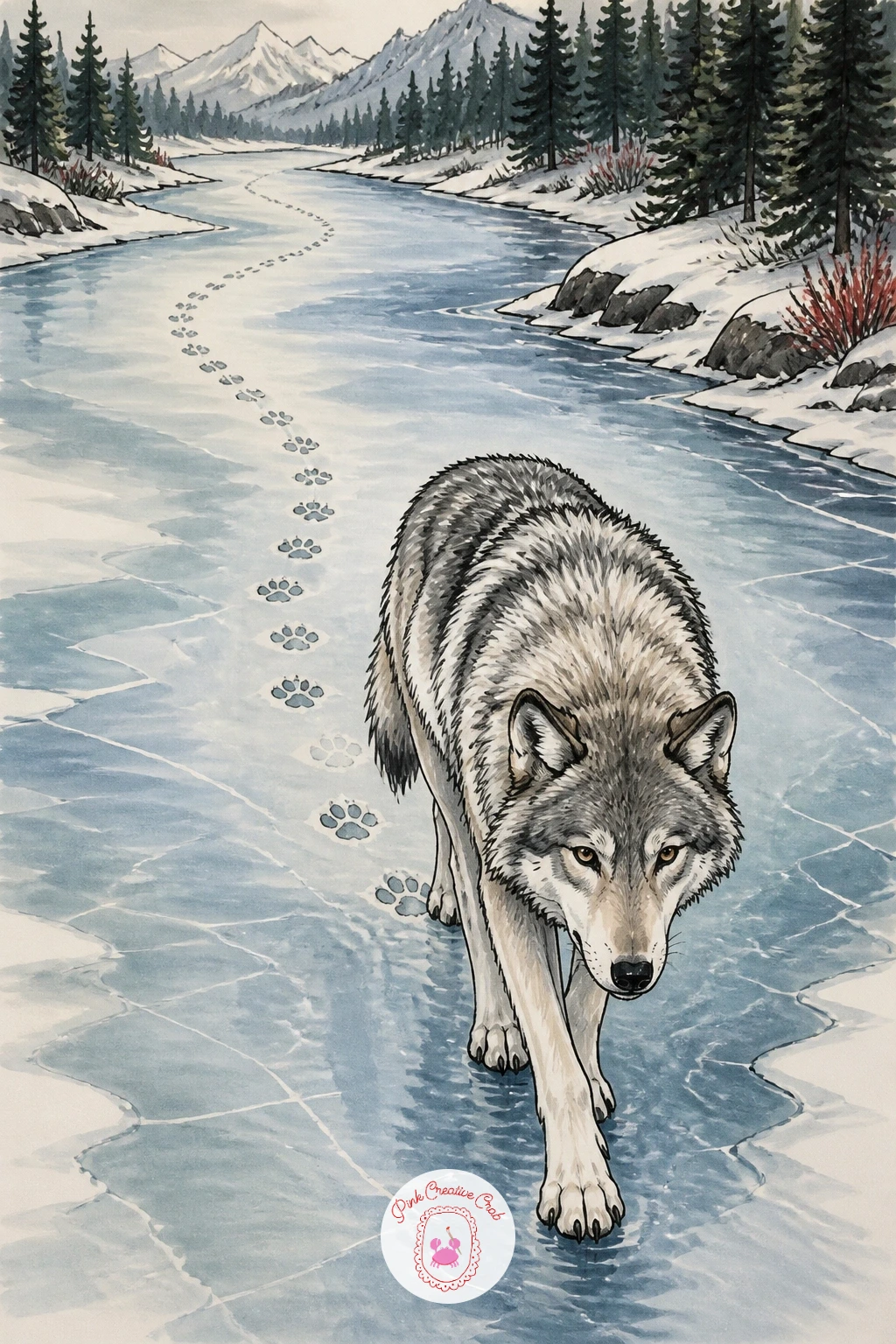
A wolf walking along a frozen river leaving a line of paw prints turns a simple walking pose into a small story about where the wolf has already been. Draw the river as a long pale band curving gently through the frame, then place the wolf mid-stride near one end of it, body in profile, legs caught in a natural walking rhythm.
Behind the wolf, add a trailing line of simple paw print shapes, each a rounded palm pad with four smaller toe marks, spaced slightly closer together than you might expect since a walking wolf’s stride is shorter than people often assume.
Shade the river ice in pale icy blue with a few thin grey crack lines, keeping the banks on either side a slightly warmer grey to frame the cold blue strip clearly. The paw prints themselves work best as just a touch of shadow blue rather than solid black, so they look pressed into the ice rather than painted on top of it.
No icy blue marker, a very light cool grey wash does a similar job on the river surface.
Palette: Icy Blue,Cool Grey,Payne’s Grey,Warm Grey
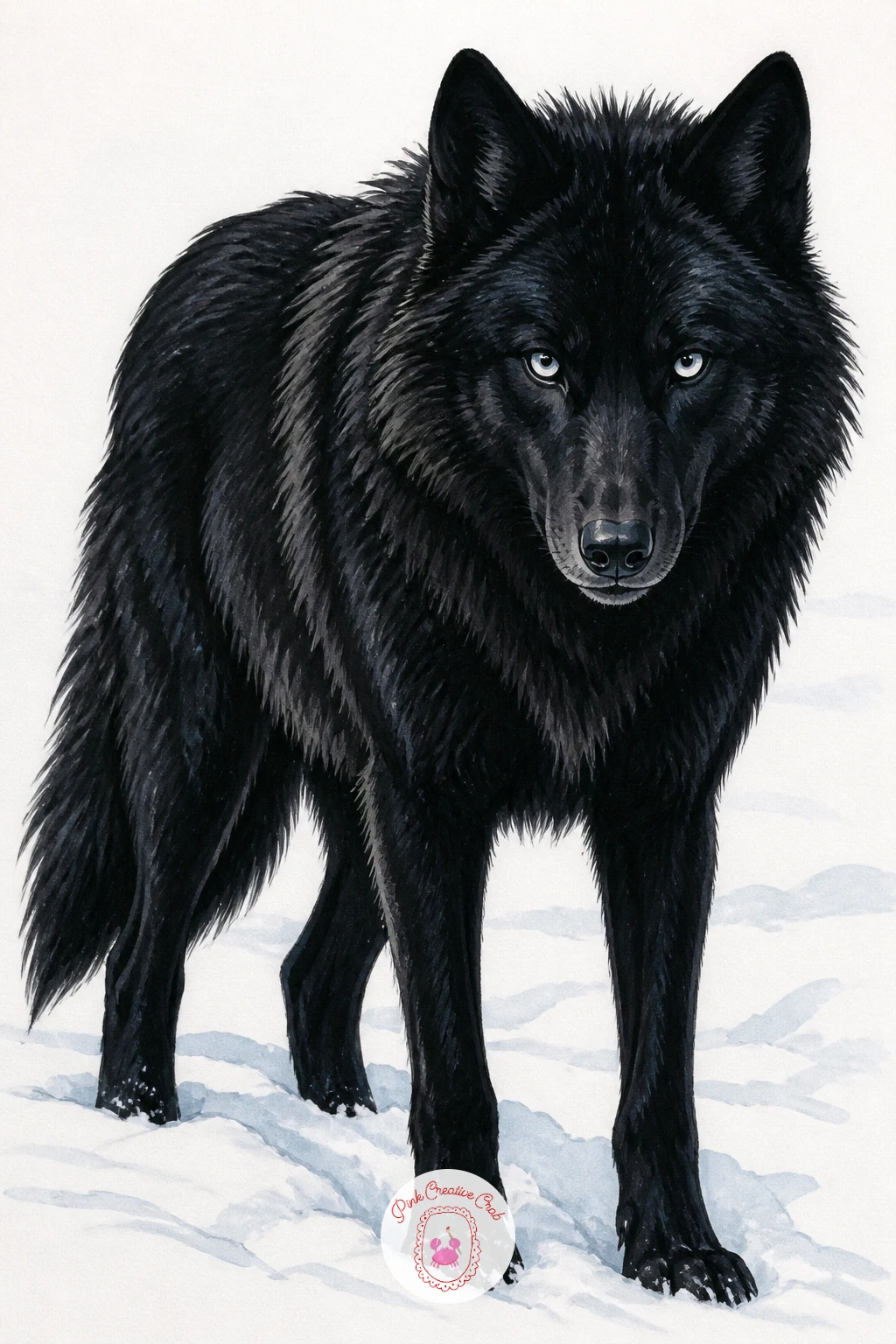
A black wolf standing out against a pure white snowfield flips the usual value balance of this whole list, since here the wolf itself carries almost all the dark tone and the entire background stays bright white paper. Draw the wolf standing alert, side-on or at a three-quarter angle, keeping the silhouette clean and strong since silhouette is really the whole point of this piece.
Ink with a confident, slightly thicker line than usual, then fill the body with deep, near-black grey marker, leaving only the subtlest highlight along the top of the back and head where pale winter light would catch the fur.
Resist the urge to add much background at all. A single low horizon line and nothing else keeps the contrast between wolf and snow as striking as possible, which is the whole appeal of this particular piece.
If your darkest marker still looks a bit grey once dry, go over the body a second time once the first layer has fully set, alcohol markers deepen nicely with a careful second pass.
Palette: Payne’s Grey,Cool Grey,Titanium White,Icy Blue
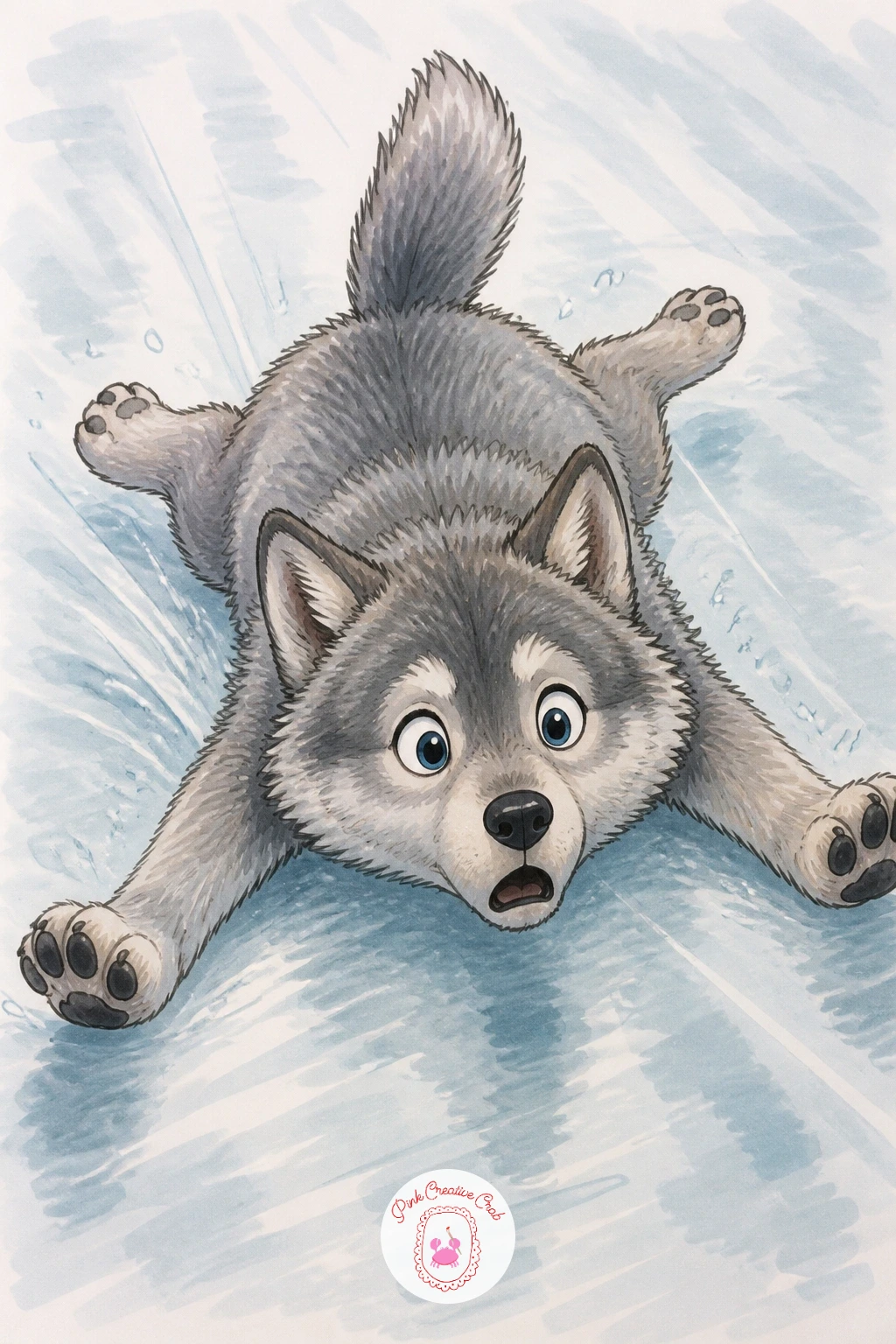
Bring the comedy back with a wolf pup sliding on ice with its legs splayed out, a pose that only works if the legs genuinely look out of control. Draw the body first in a roughly level, surprised posture, then send each leg off in a slightly different direction, one forward, one back, two out to the sides, rather than the neater, parallel stance you would use for a normal standing pup.
Ten minutes is plenty for the sketch and flat shading version of this one, since the comedy lives entirely in the pose rather than in detailed rendering. With forty minutes, add a touch of reflected light under the paws where they meet the shiny ice, a thin pale blue smear works well, plus a small motion-blur style smudge trailing behind one back leg.
Keep the pup’s expression wide-eyed rather than distressed, slightly raised brows and an open, surprised mouth, so the whole thing reads as funny rather than worrying.
If the splayed legs look too stiff, round off the knee and ankle bends slightly, a totally straight leg reads as rigid rather than slipping.
Palette: Cool Grey,Icy Blue,Titanium White,Warm Grey
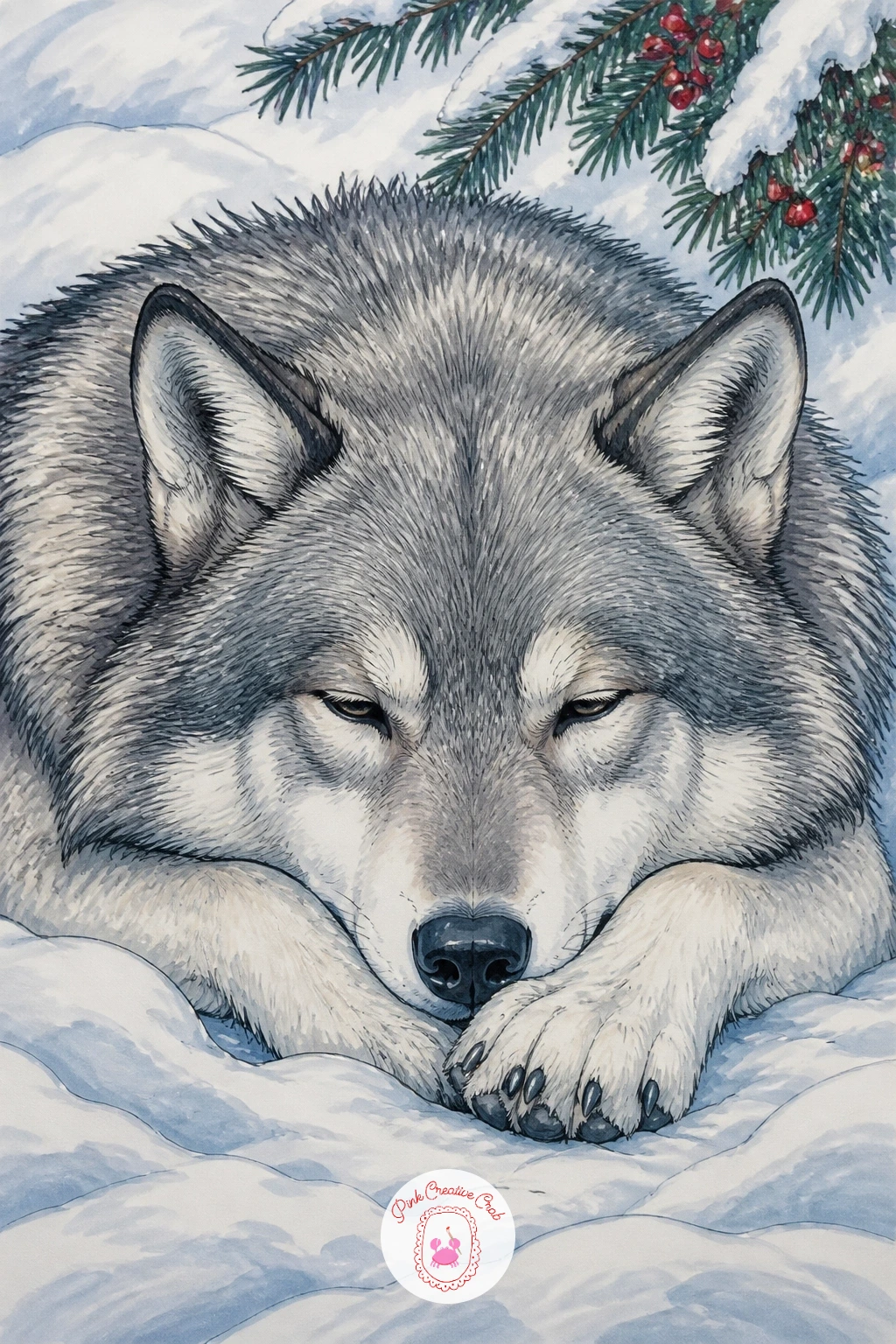
Settle again with a wolf lying in the snow with its head resting on its paws, a pose that is quiet and simple enough to be a good one for a first attempt at the whole subject. Draw the body stretched out flat along the ground, front legs extended forward and crossed slightly at the paws, head lowered to rest right on top of them.
Comparing the length of the body to the length of the front legs is the proportion check that keeps this from looking cramped: a lying wolf’s front legs, extended, usually reach about a third of the total body length, so measure that against your sketch before inking.
Shade the eyes half-closed or fully closed, whichever you prefer, and keep the whole face soft and relaxed, no raised ears or alert brow. A little snow drifted gently against the back and haunch, left as untouched paper patches, finishes the calm, settled mood.
This simple resting pose is also a gentle one to recommend to anyone starting out, much like the beginner-friendly poses in this dog doodles guide for total beginners.
Palette: Cool Grey,Payne’s Grey,Titanium White,Icy Blue
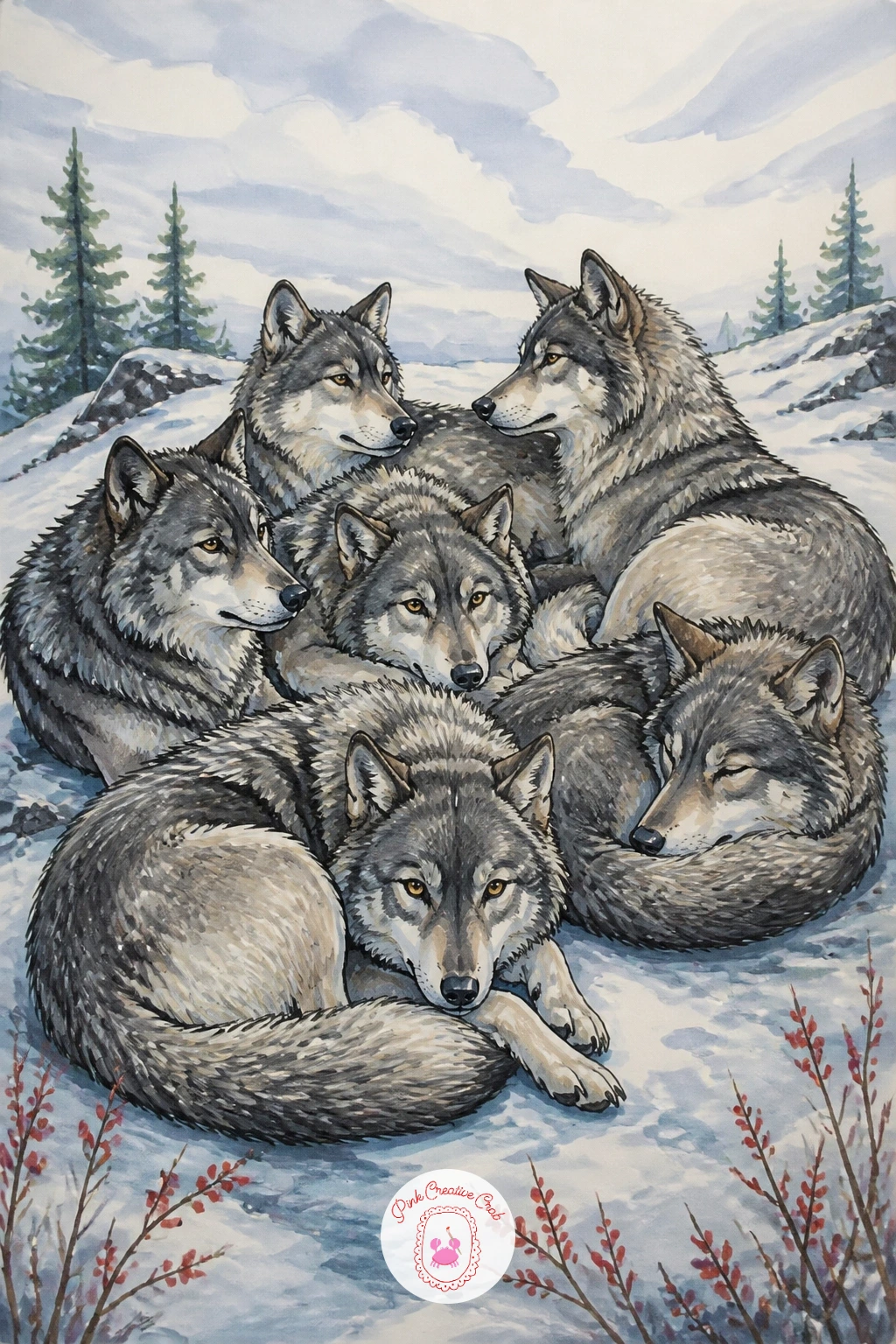
A wolf pack resting in a circle on a snowy hilltop asks you to manage several bodies at once, so plan the circle itself before drawing a single wolf. Lightly sketch an oval guideline first, then place four or five simplified wolf shapes around it, heads pointing roughly toward the center or tucked against a neighbor, so the whole group reads as one settled unit rather than scattered individuals.
Work outward from the two or three wolves nearest the viewer, giving them the most detail and the darkest shading, then simplify the ones further around the circle, flattening their shapes and lightening their color so they recede slightly.
Snow on the hilltop around the circle can stay almost entirely bare paper, since the real interest sits in the cluster of bodies itself, not the ground beneath them.
If the circle feels crowded once sketched, drop one wolf and let the remaining group breathe, four well-drawn wolves usually read better than six cramped ones.
Palette: Cool Grey,Payne’s Grey,Warm Grey,Icy Blue
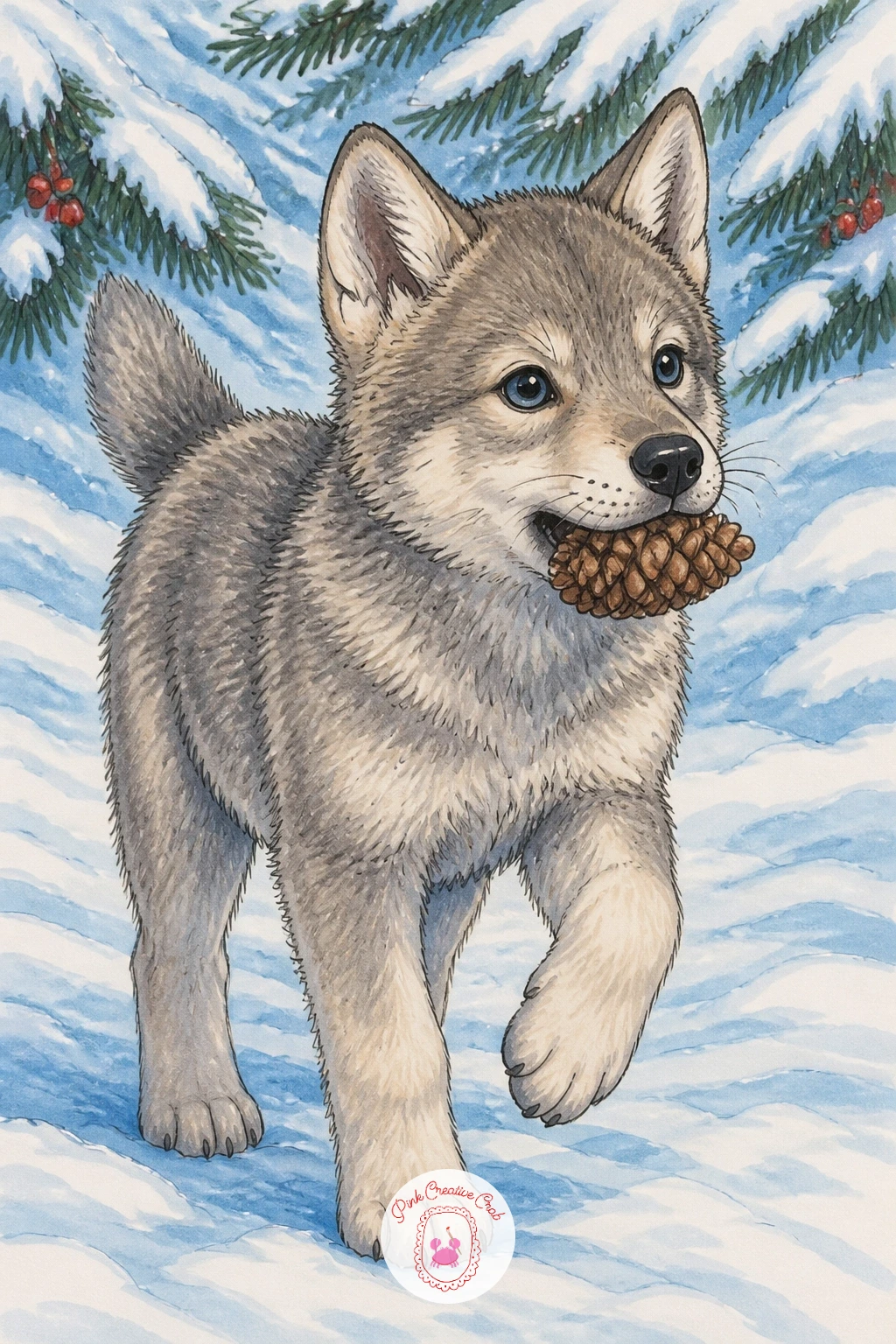
Lighten things again with a wolf pup proudly carrying a pine cone in its mouth, a small, charming pose built around a confident, upright walk. Draw the body mid-stride, head held noticeably high, tail up rather than low, both signals of a pup pleased with its find, then place a simple pine cone shape held gently in the jaws.
Keep the pine cone small relative to the head, since an oversized prop will fight the pup for attention rather than reading as a charming little detail. A few short overlapping lines are enough to suggest the cone’s texture without drawing every individual scale.
Shade the pup in warm-leaning greys to contrast slightly against a cooler, icy blue snow background, which also helps the small warm-brown cone stand out as the focal detail.
This proud little pose works well as a next step after practicing simpler standing wolves, similar to how the layered petals in this butterfly drawing pencil guide build confidence before tackling busier subjects.
Palette: Warm Grey,Burnt Umber,Icy Blue,Cool Grey
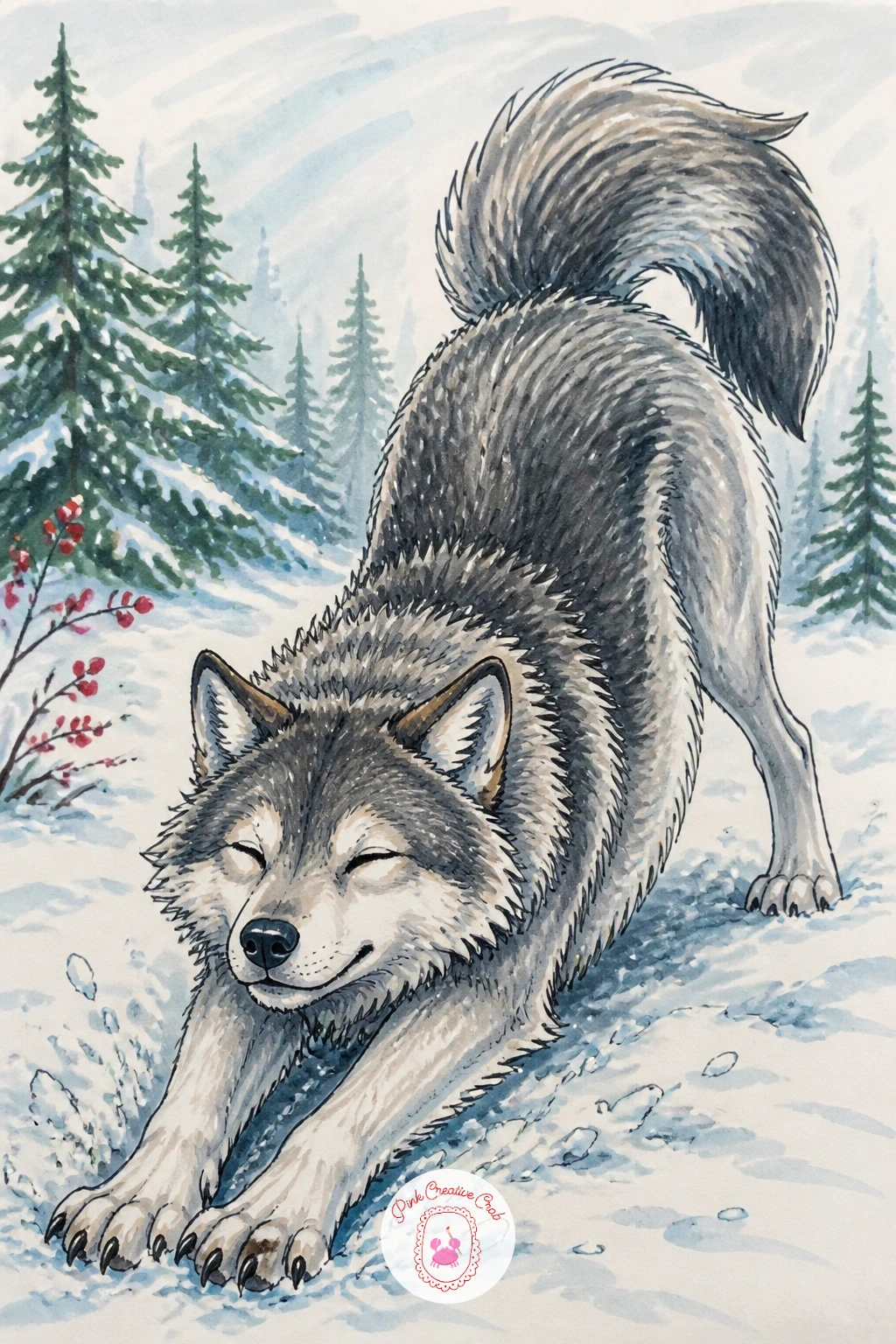
A wolf stretching like a dog after a nap in the snow is a familiar, comforting pose for anyone who has watched a dog wake up, front legs extended forward, chest dropped low, rear end raised, tail relaxed behind it. Sketch this classic bow-stretch shape first as two separate angles, front legs reaching forward along the ground and the back half lifted, joined by a dipped, curved spine between them.
That dip in the spine is the detail most likely to go wrong, since drawing it too shallow makes the stretch look like an ordinary standing pose. Exaggerate the curve slightly more than feels natural at first, it almost always reads better exaggerated than it does accurate.
Shade the chest and forelegs, pressed flat to the snow, with a touch more contrast than the raised hindquarters, which catches more open light. A loose scatter of snow flecks where the paws dig in finishes the moment nicely.
If the stretch still looks flat, raise the tail slightly higher than feels comfortable, that small adjustment adds a lot of energy to the pose.
Palette: Cool Grey,Payne’s Grey,Titanium White,Icy Blue
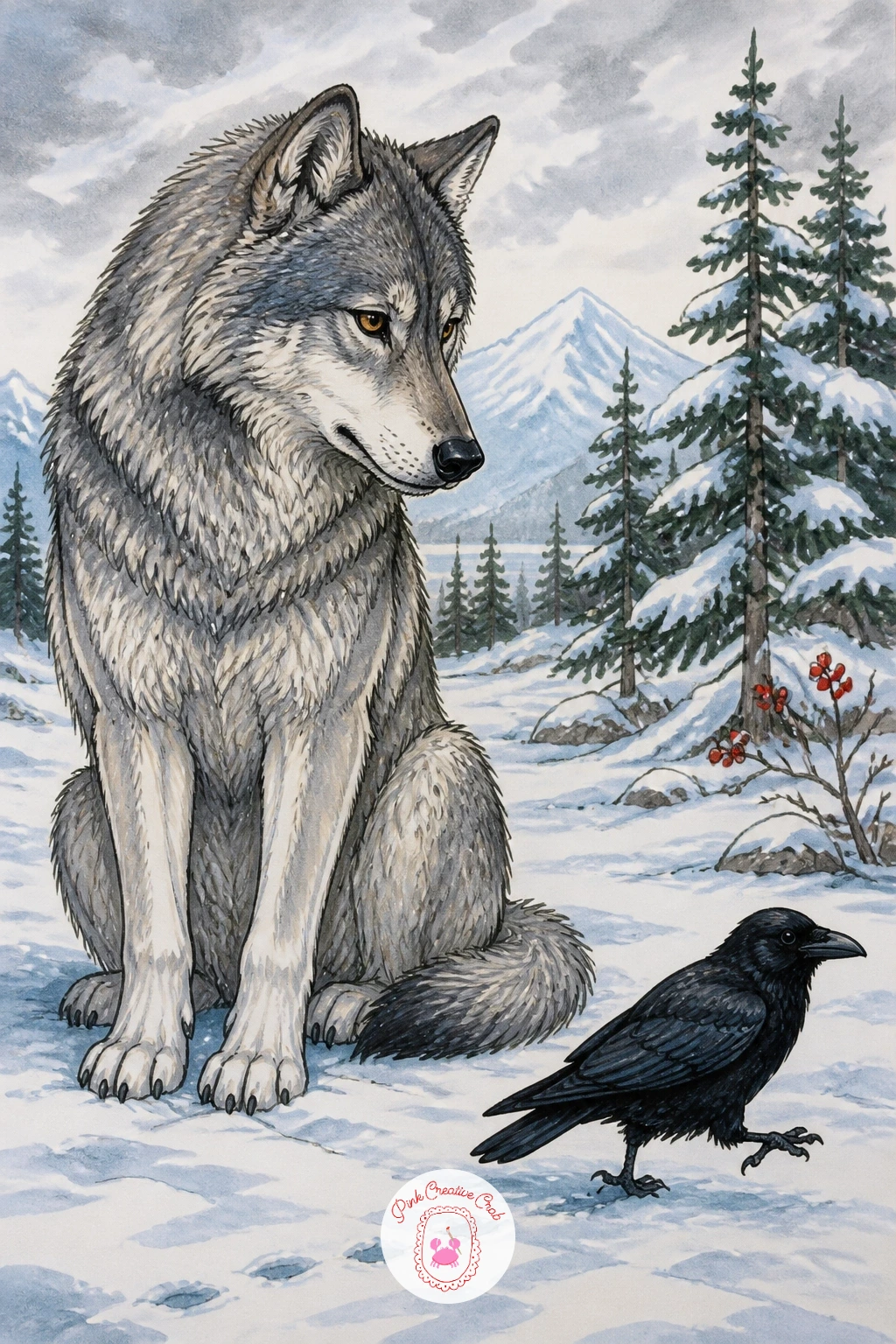
A wolf watching a raven hop across the snow pairs two very different silhouettes in one small, quiet scene. Draw the wolf seated or standing still off to one side, head turned and lowered slightly toward the ground, then place the raven a short distance away as a compact, rounded black shape with simple stick-like legs mid-hop.
Getting the size relationship right matters more than any other part of this piece: a raven stands roughly knee-high on a wolf, so keep it noticeably small against the wolf’s legs rather than drawing it at a more generic “bird-sized” scale that ends up too large.
Ink the raven almost entirely in deep black marker, the one truly dark note on the page, which makes it pop cleanly against the pale snow and the wolf’s cooler grey tones.
Readers who enjoy pairing animals with birds like this might also like the winter bird scenes in this cardinal drawing collection for more snowy companion ideas.
Palette: Cool Grey,Payne’s Grey,Titanium White,Pine Green
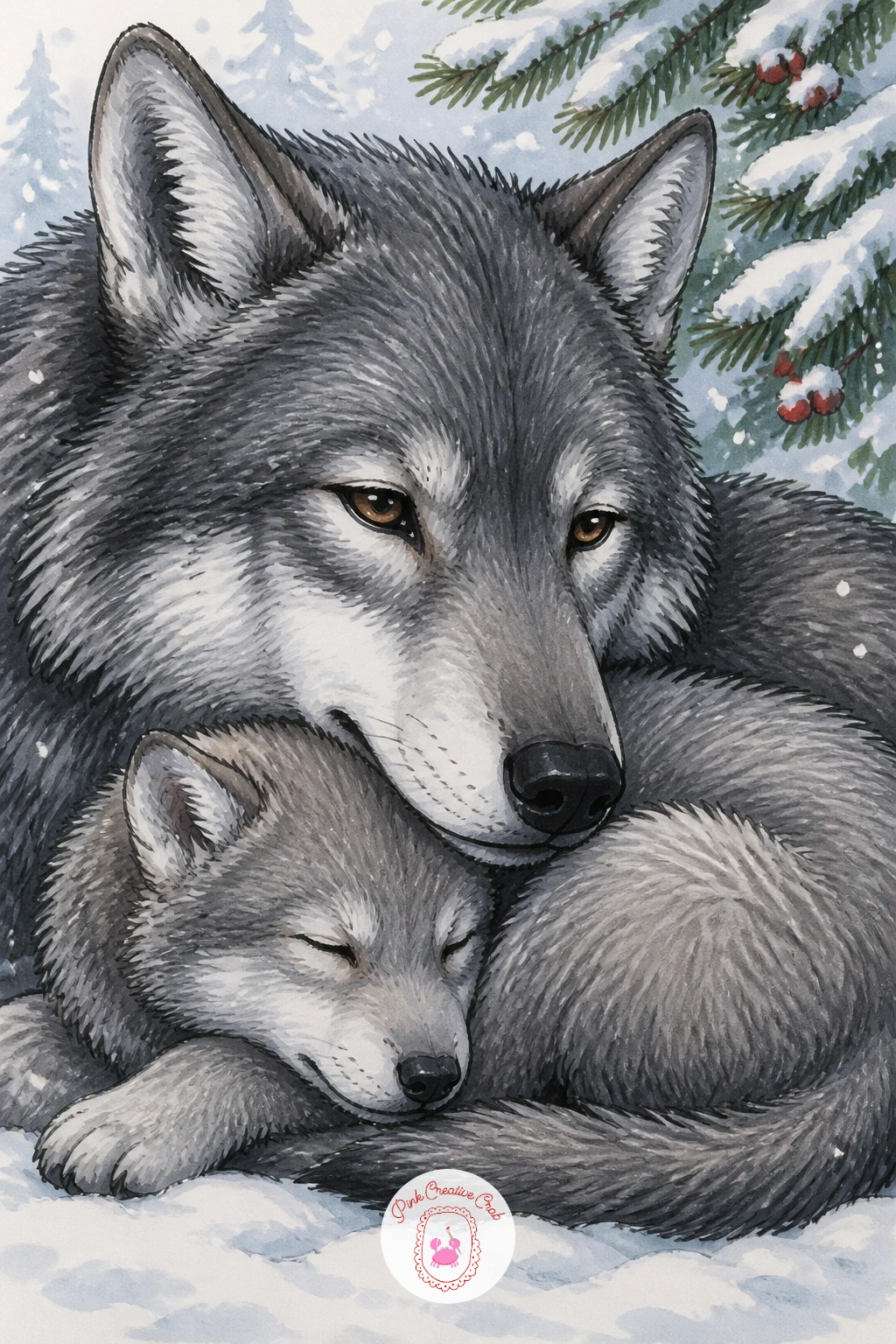
Return to tenderness with a wolf pup sleeping tucked under its mother’s chin, a close, nested pose similar in spirit to the ear-licking idea earlier but even quieter. Draw the mother’s head and neck curved gently downward first, then nestle the small pup shape right into the hollow beneath her chin, barely visible beyond a round head and curled body.
Keep almost everything about the pup soft and simplified, since so little of it shows that fine detail would be wasted here. The mother’s expression, calm and half-lidded, carries most of the emotional weight of the piece.
Shade the mother a touch deeper than the pup so the smaller shape still reads clearly even tucked into shadow, and let a little snow rest undisturbed on her shoulder to suggest how still she has stayed.
If you want an easier version first, draw just the mother’s head and neck curve on its own, then add the tucked pup once that curve feels confident.
Palette: Payne’s Grey,Cool Grey,Warm Grey,Titanium White
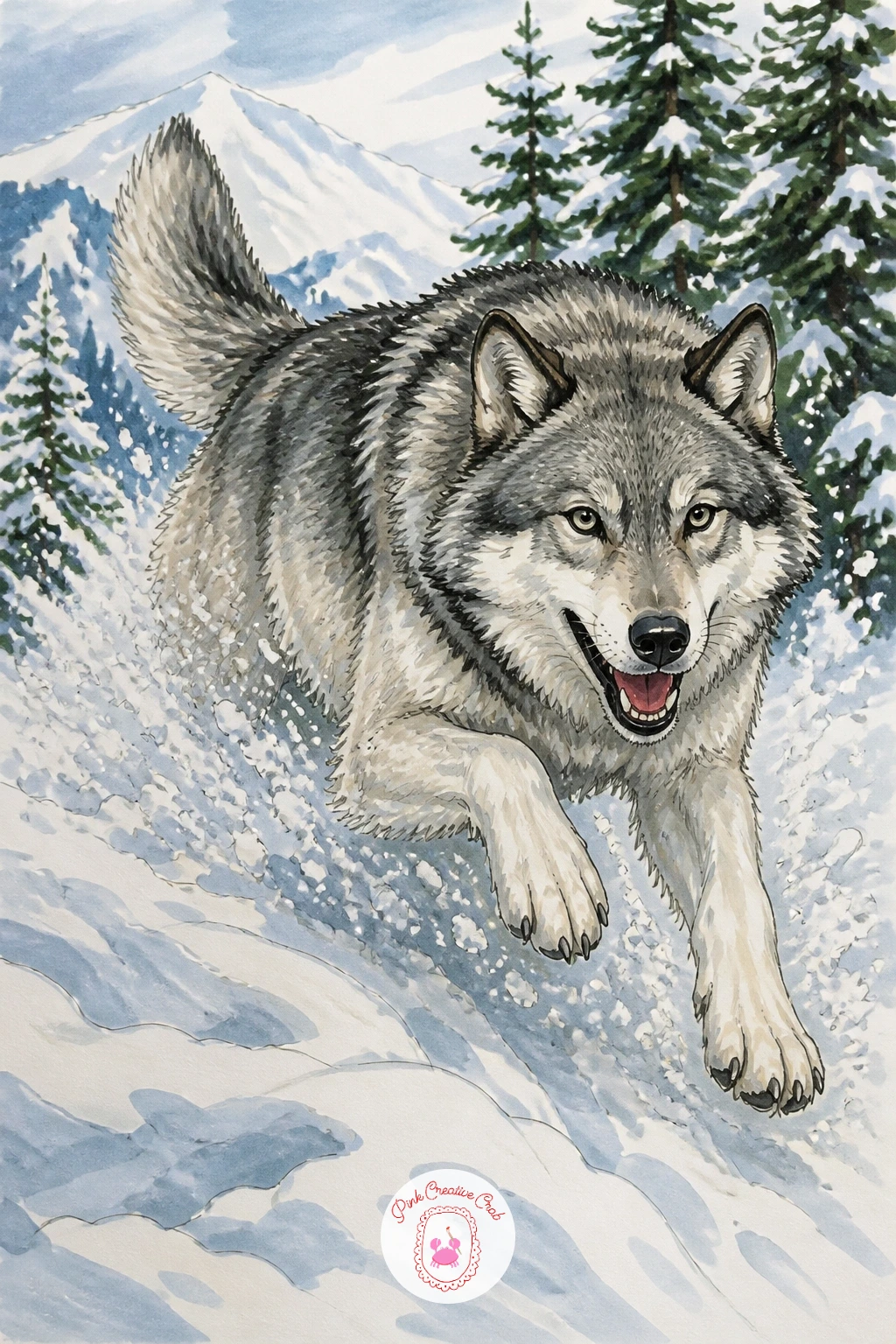
A wolf bounding through deep powder with snow spraying up is the biggest, most energetic pose on this whole list, so save it for once you have a few of the calmer ones under your belt. Draw the body in a full bounding leap, back arched high, front legs tucked and reaching, back legs trailing with real extension, the kind of stretch you would never see in a standing pose.
A quick ten-minute version works with just the wolf shape and a few simple spray lines flicked off the paws. Given forty minutes, build real depth into the snow spray instead: layer several sizes of white gel pen marks, some tight and small near the paws, some larger and looser further out, and let a faint grey shadow sit underneath the spray so it looks like it is genuinely lifting off the ground rather than floating flat on the page.
Keep the wolf’s expression relaxed and even joyful rather than strained, since this bound is play, not a chase.
If the powder spray looks too neat, scribble a few looser, overlapping marks rather than evenly spaced dots, real snow spray is never tidy.
You Will Need
- white gel pen
Palette: Cool Grey,Titanium White,Icy Blue,Payne’s Grey
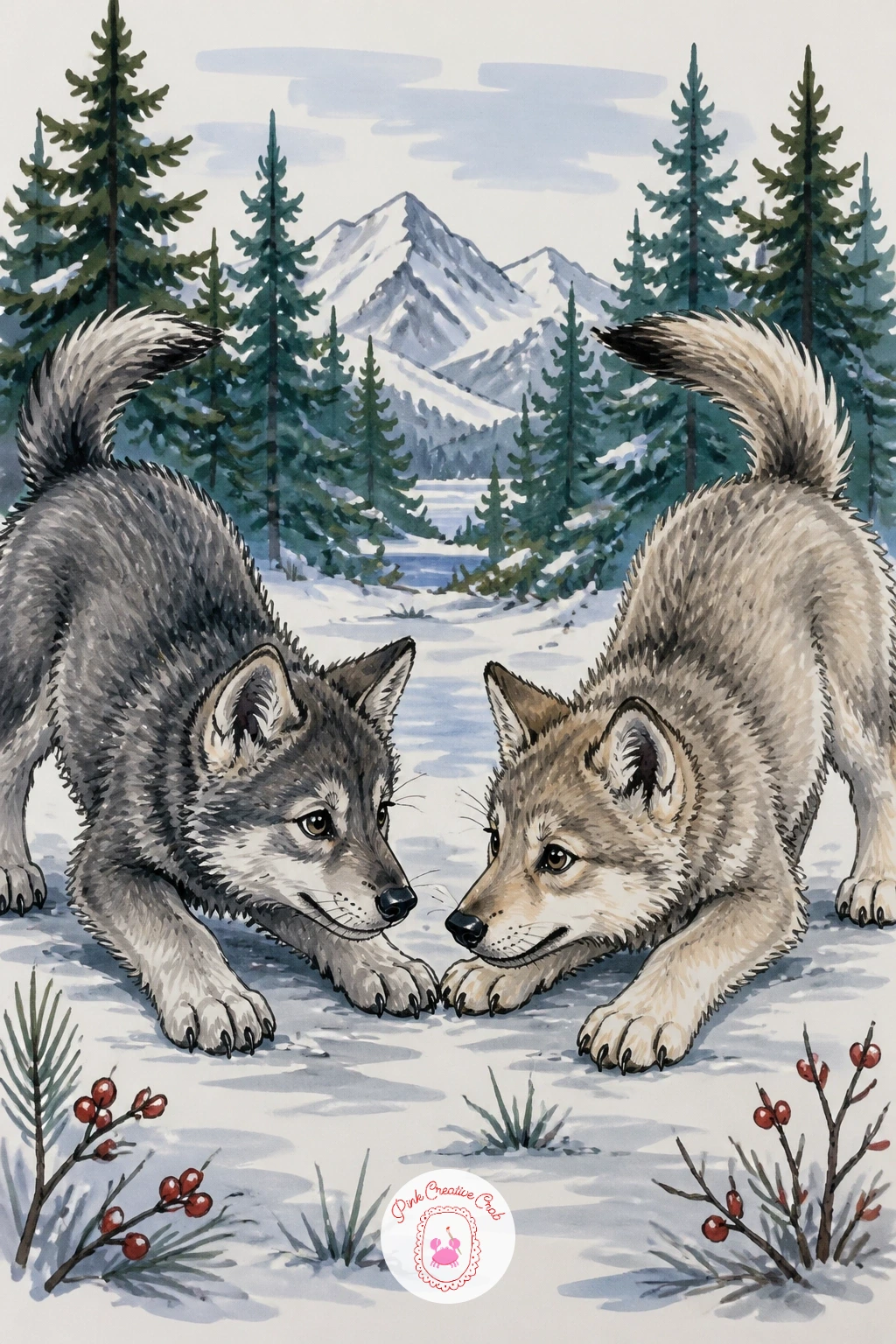
A pair of wolf pups play-bowing to each other is a sweet, instantly readable pose if you know the shape of a play bow: front end dropped low to the ground, rear end raised, tail wagging high, an invitation to play rather than a defensive crouch. Draw both pups facing each other in mirrored versions of this bow, front legs splayed and lowered, hindquarters lifted, heads tilted up toward one another.
Once this pose works, the easiest way to vary it next time is simply changing which pup initiates, raise one pup’s head higher and keep the other’s lower and more submissive-looking, or swap their positions left to right, small shifts that keep a repeated favorite pose feeling fresh.
Shade the two pups in slightly different grey tones so they stay easy to tell apart even in a busy, overlapping pose, and keep both tails drawn mid-wag, a soft blurred double line rather than one crisp shape, to suggest movement.
If the bow still looks stiff, drop the chest even closer to the ground than feels natural, exaggeration sells this pose better than accuracy does.
Palette: Cool Grey,Warm Grey,Titanium White,Icy Blue
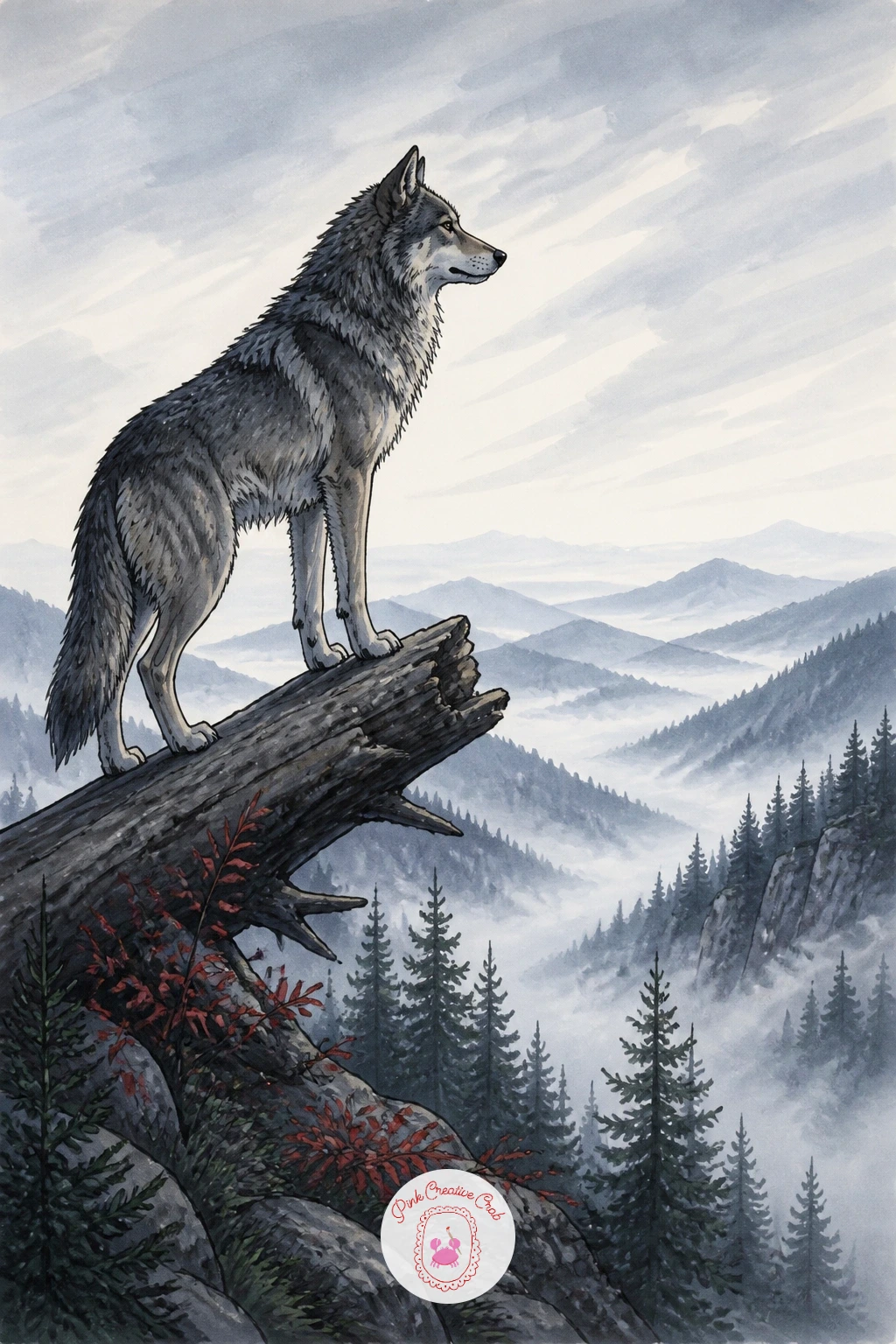
A wolf standing on a fallen tree above a misty valley brings a stronger landscape element into the frame, so place the tree and valley before the wolf itself. Draw the fallen trunk as a long diagonal crossing the lower third of the page, then stand the wolf confidently along it, weight settled, looking out over the drop.
Eye level sits low in this one, looking up slightly at the wolf silhouetted against the pale sky, which means the valley behind and below should fade into soft, pale layers rather than sharp detail, hazy ridgelines in progressively lighter grey as they recede into the mist.
Ink the wolf and the nearest section of trunk with full detail and confident lines, then let the distant valley stay loose, almost just washes of color with minimal fineliner work, which also keeps this quick enough to finish comfortably.
Those building out a broader library of moody landscape scenes might enjoy the atmospheric valleys and coastlines in this lighthouse junk journal collection for more misty reference ideas.
Palette: Payne’s Grey,Icy Blue,Cool Grey,Titanium White
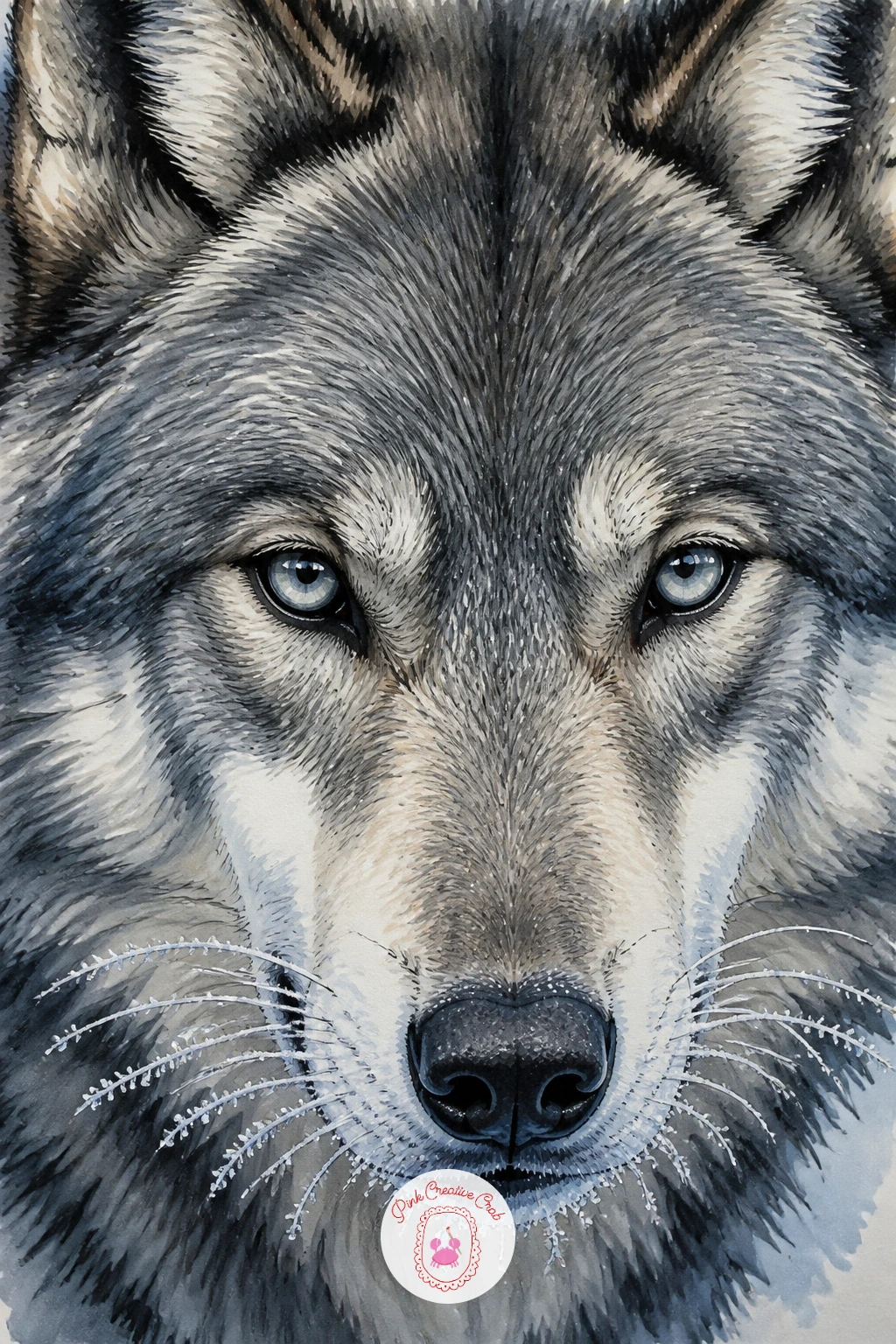
A wolf with frost on its whiskers on a cold morning is a close-up portrait piece, so push in tight on just the head and upper shoulders rather than the whole body. Draw the head large, filling most of the frame, keeping the expression calm and alert, ears forward, eyes clear and bright.
The frost itself is the one hands-on texture trick worth the extra time here: once the fur color is dry, go back over the whiskers, muzzle edge and eyebrow hairs with tiny dots and short flicks of white gel pen, concentrating them most heavily right at the tips of the whiskers where frost would actually cling.
Keep the background almost nonexistent, a simple pale wash is enough, since a tight portrait like this lives or dies on the face itself holding attention.
No gel pen on hand, a sharp white colored pencil pressed firmly into dried marker gives a similar crisp frost fleck, just slightly softer edged.
You Will Need
- white gel pen
Palette: Cool Grey,Payne’s Grey,Titanium White,Icy Blue
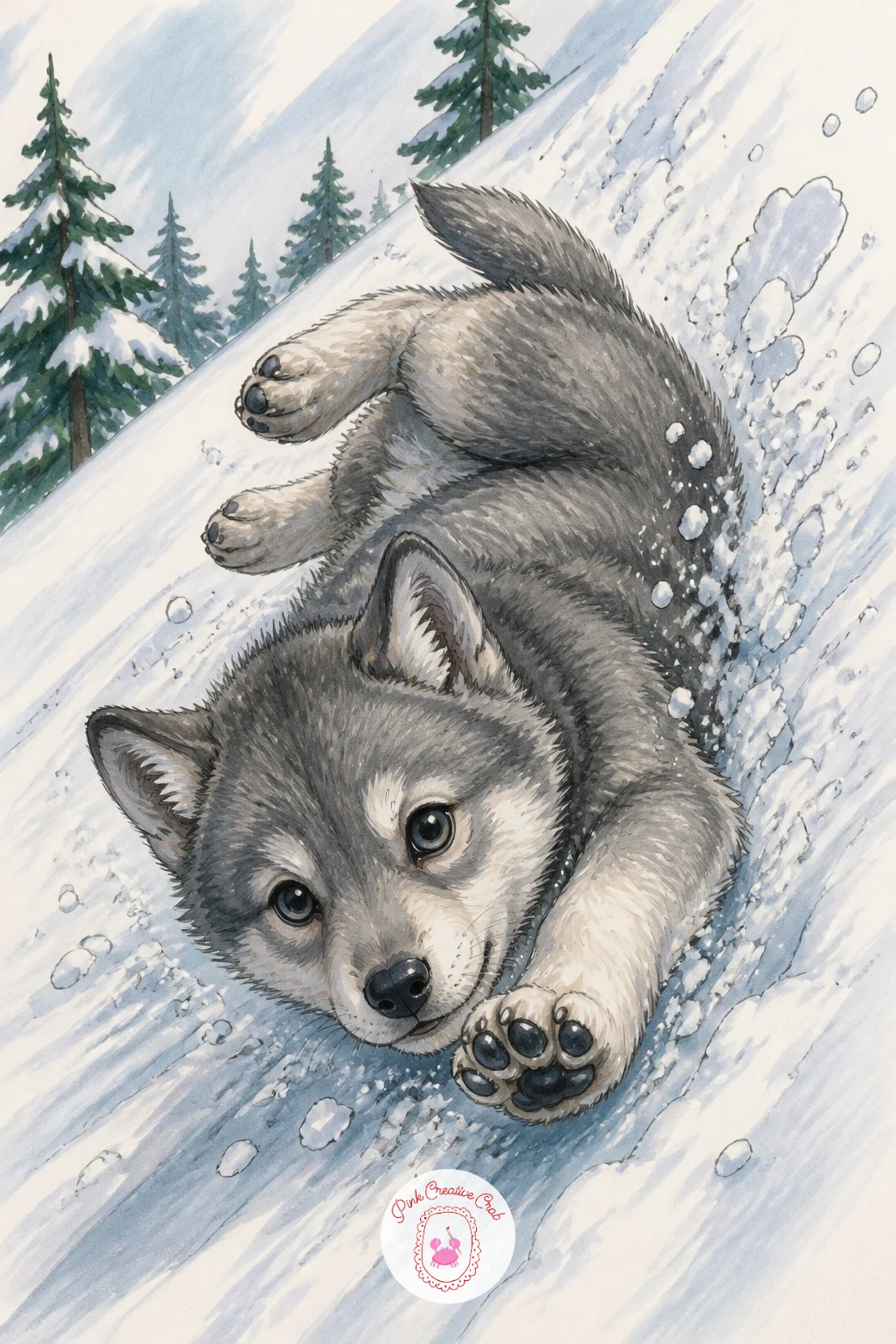
A wolf pup tumbling down a small snowy slope is a fun, slightly chaotic pose to close the playful side of this list out, with legs and body caught mid-roll rather than in any single clean position. Draw the slope first as a simple curved hill, then place the pup partway down it in a rounded, twisted shape, one paw up, one tucked, body angled diagonally as though caught mid-tumble.
Comparing where the pup’s center sits against the slope’s curve helps keep this convincing: the body’s rounded mass should sit right along the hill’s own curve rather than floating above or sinking below it, which is what makes the tumble look like it is actually following gravity down the slope.
Add a few small clumps of disturbed snow trailing behind and above the pup, loose and scattered rather than neatly arranged, to show the path it has just tumbled through.
If the twisted pose feels hard to plan, pose your own arm and hand in a rough tumbling curl for reference before sketching the pup’s body around a similar shape.
Palette: Cool Grey,Warm Grey,Titanium White,Icy Blue
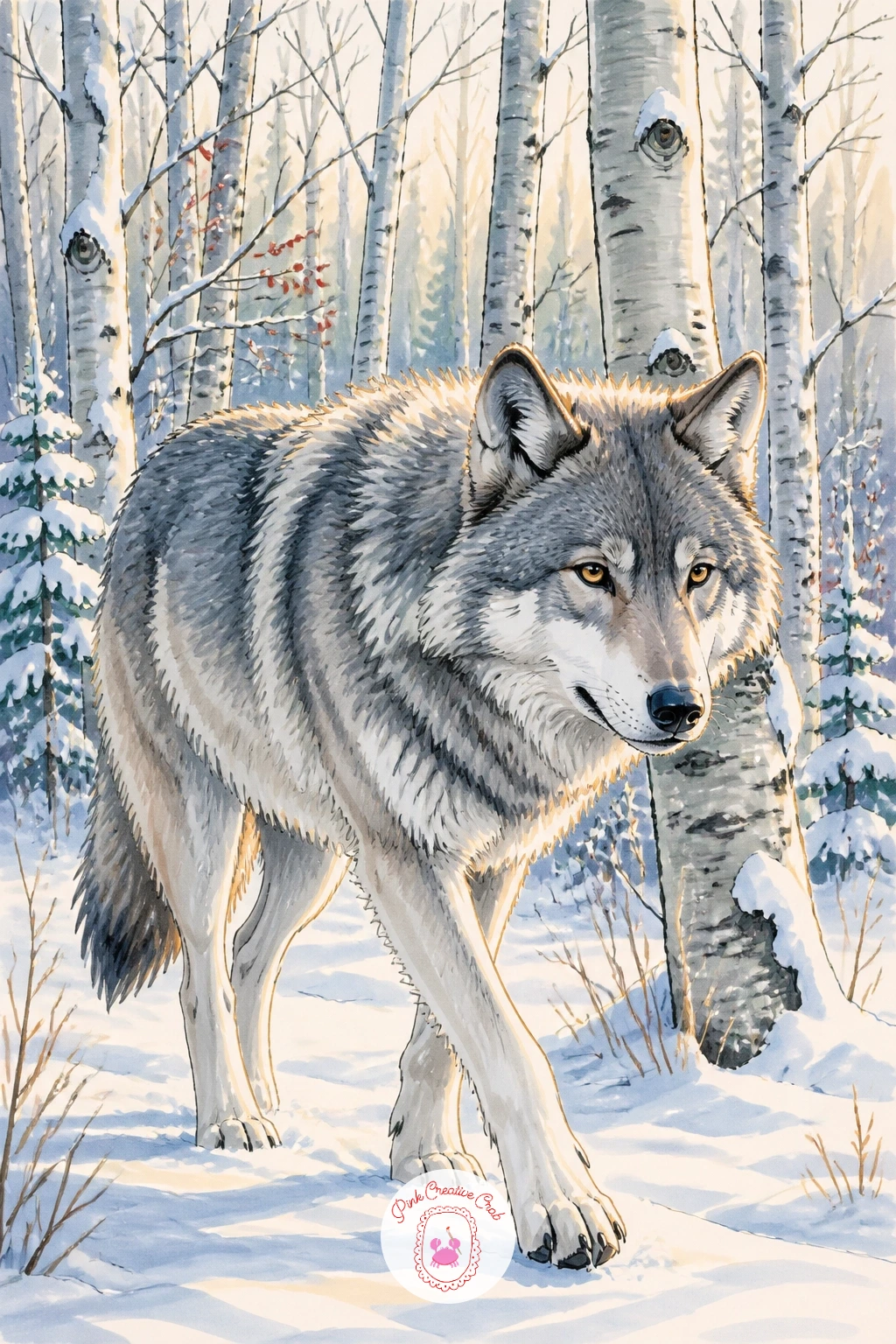
Close the whole set with a lone wolf walking past snowy aspens in soft morning light, a calm, simple walking pose set against one of the more distinctive winter backdrops on this list. Draw a cluster of slender aspen trunks first, pale and nearly white with small dark horizontal marks scattered along each one, spaced with open gaps between them so the wolf has room to walk through.
Place the wolf mid-stride among the trunks, body in a relaxed profile walk, and let the morning light come from one low side, giving the wolf and the nearest trunks a faint warm edge while everything further back stays cooler and paler.
Keep the aspen trunks simple, vertical lines with minimal shading, since too much detail on the trees will compete with the wolf for attention in a scene that should read calmly and clearly even at a glance.
This quiet closing scene also pairs well with the wide, atmospheric spaces explored in this New York watercolor ideas guide, for anyone curious about applying soft light tricks to other wide scenes.
Palette: Cool Grey,Titanium White,Payne’s Grey,Icy Blue
What to Do Next
Pick one pose that matches your mood today, maybe a quiet sleeping wolf if you want something calm, or a pouncing pup if you want some energy on the page. Grab marker paper, your fineliner and a small set of cool greys and blues, and let the first sketch stay loose: the softness comes from the shapes, not from getting every line perfect.
Frequently Asked Questions
What markers work best for a calm, soft wolf drawing style?
Alcohol-based markers work best since they blend smoothly without streaking. Build fur in layered patches rather than one flat coat, keeping belly and muzzle areas paler for a soft, gentle look.
How do you keep a wolf drawing looking gentle instead of fierce?
Round the muzzle and brow shapes and keep the mouth closed or only slightly open. Soft, curved lines around the eyes and ears read as calm, while sharp angles and bared teeth read as aggressive.
What is the easiest wolf pose to start with as a beginner?
A resting or sleeping wolf is easiest since the body reads as one simple curved shape. Save running, leaping or shaking poses for once you feel comfortable with basic standing and lying positions.
How do you make wolf fur look soft and textured with markers?
Break the outline edge into short, varied strokes instead of one clean line, and dry brush lightly loaded marker along the silhouette. This breaks up fur into tufts rather than a stiff, solid shape.
Do you need real wolf photos as reference for these drawings?
Reference photos help with proportion, but any calm, resting dog photo works well too for body structure and posture. Focus on soft shapes, relaxed ears and closed or half-closed mouths throughout.
Have any thoughts?
Share your reaction or leave a quick response — we’d love to hear what you think!
-
 0
-
0
-
0
-
0
-
0
-
0


