

Cafe drawing gives you a whole city of small scenes without ever leaving your seat: a striped awning under snow, a fogged window full of chatter, a dog waiting patiently by the door. Every corner cafe is really a dozen sketches waiting to happen, and winter only makes the light and the steam more fun to draw.
Below are 33 scenes built for fineliner and a light wash, each one small enough to finish in a single sitting. Work through them in order if you like, from the simplest shapes to the busier interiors, or just pick whichever window calls to you first.
Using these images: free for personal projects such as printing, coloring, cards, journals and gifts. Handmade items that include them may be sold up to 30 pieces per design. More than that is commercial use and is not permitted, and neither is selling or sharing the images themselves or passing them off as your own. Please ask before any other use.
Start with the corner cafe itself, because its striped awning gives you an easy shape to build the whole page around. Draw the fineliner lines loose: a simple box for the building, a slanted stripe pattern for the awning, and a few wobbly verticals for the window frames below it.
Work top to bottom so the snow sitting on the awning gets drawn last, as a soft scalloped edge along the stripes rather than a hard line. Keep the stripes themselves a touch uneven, since a ruler-straight awning reads as stiff rather than sketched.
Compare the width of the awning to the height of the door below it before you commit to ink, since cafe fronts go wrong fastest when the awning ends up too wide for the building under it. If you only have a pencil handy, rough the proportions in graphite first and ink over the parts that work.
Wash the awning stripes in icy blue and chocolate brown once the ink is dry, leaving the snow patches as bare white paper.
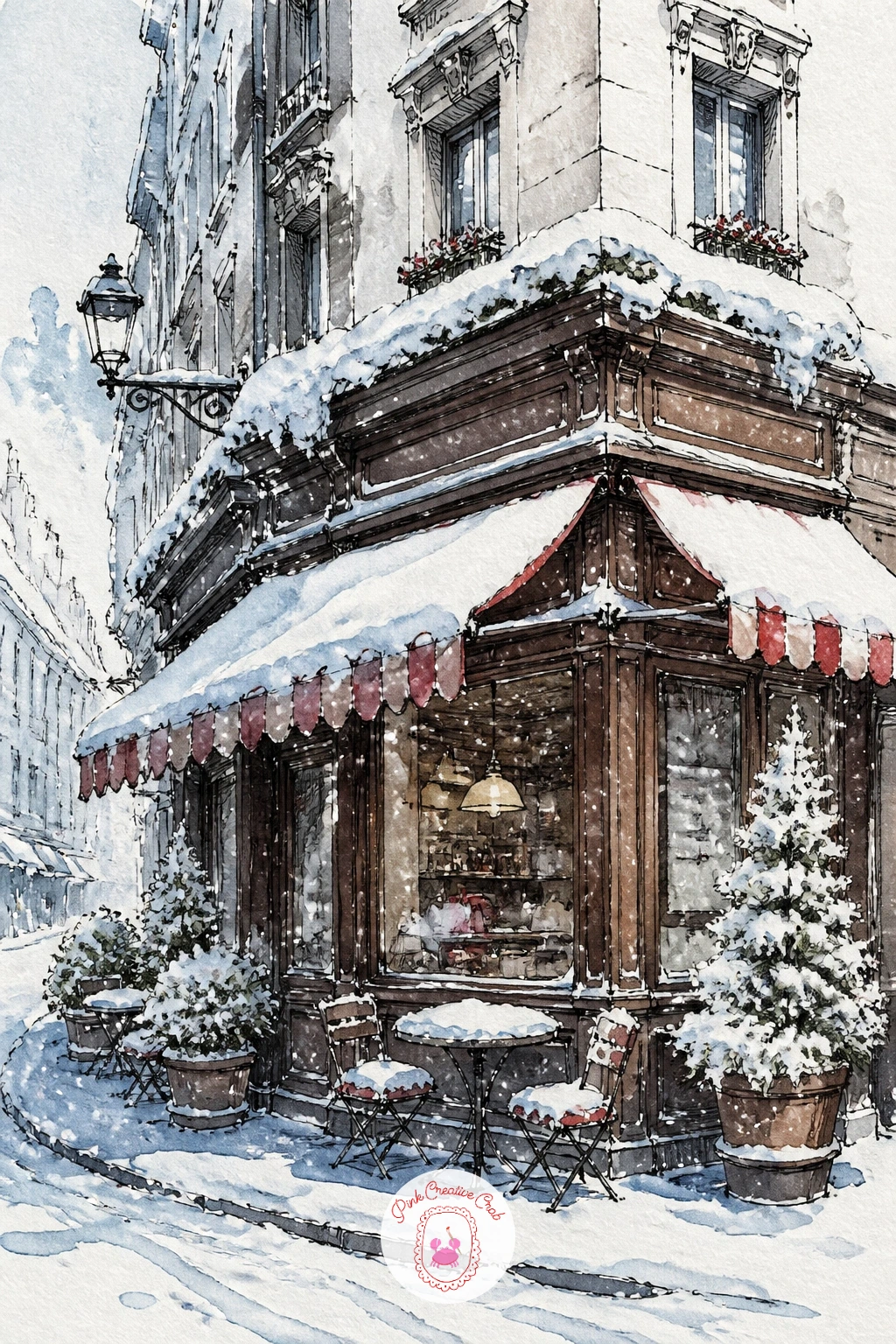
Palette: Payne’s Grey,Burnt Umber,Cerulean Blue,Titanium White
Move next to the cafe front with a bicycle half buried outside it, since a parked bicycle is a fun test of curves after all those straight awning lines. Draw the two wheels as circles first, lightly, then build the frame triangle between them before you touch the basket or the fender.
Ink the bicycle before the snowdrift around it, so you can decide exactly how much of the lower frame and wheel disappears under the drift. This is the easiest place to lose confidence, because an unfinished bicycle can look broken rather than buried.
Save it by drawing the wheel rim as a complete circle first in faint pencil, then inking only the visible arc above the snow line, so the geometry still reads correctly underneath.
Wash the snowdrift in a pale grey blue and leave the bicycle itself mostly white with just a few chocolate brown strokes on the seat and handlebars, the detail from the observational drawing sketchbook approach of picking one object and really looking at it.
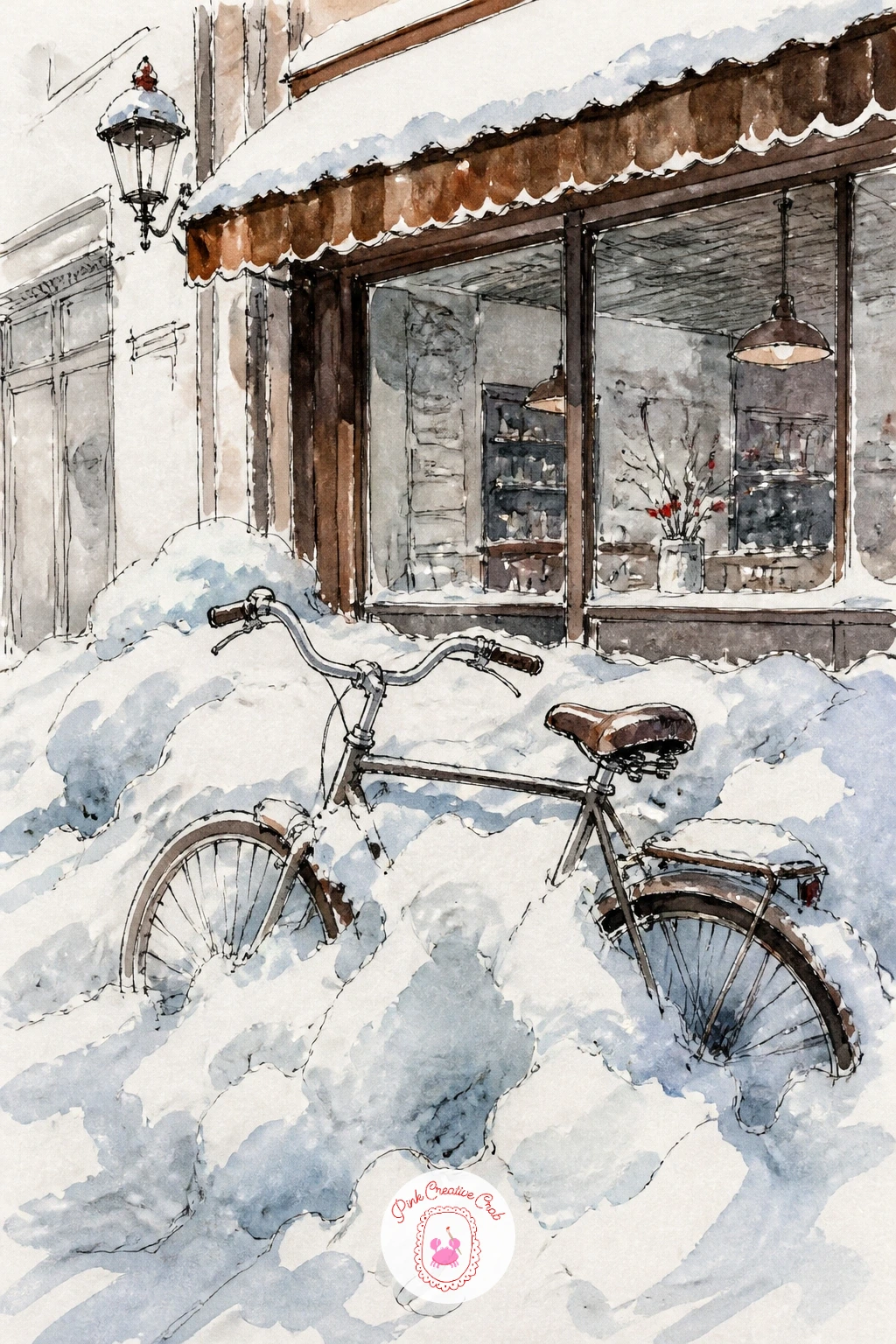
Palette: Payne’s Grey,Cerulean Blue,Burnt Sienna,Titanium White
Bring a figure into the scene with a woman reading a paperback at her cafe window table, your first proper character of the set. Sketch her seated shape first as a simple rounded block for the coat and shoulders, then add the paperback as a small rectangle angled toward her face rather than flat to the table.
Draw the window frame around her after the figure is settled, so the proportions of person to window feel natural rather than squeezed in afterward. Figures at tables go wrong when the table height sits wrong against the body, so hold your pen up and compare the tabletop line to roughly where her elbow bends.
Ink her coat and hair with a few confident strokes rather than many small ones, keeping the face just a suggestion of a nose and a chin.
Wash her coat in chocolate brown and let a thin icy blue wash sit behind the window glass to separate her from the street outside.
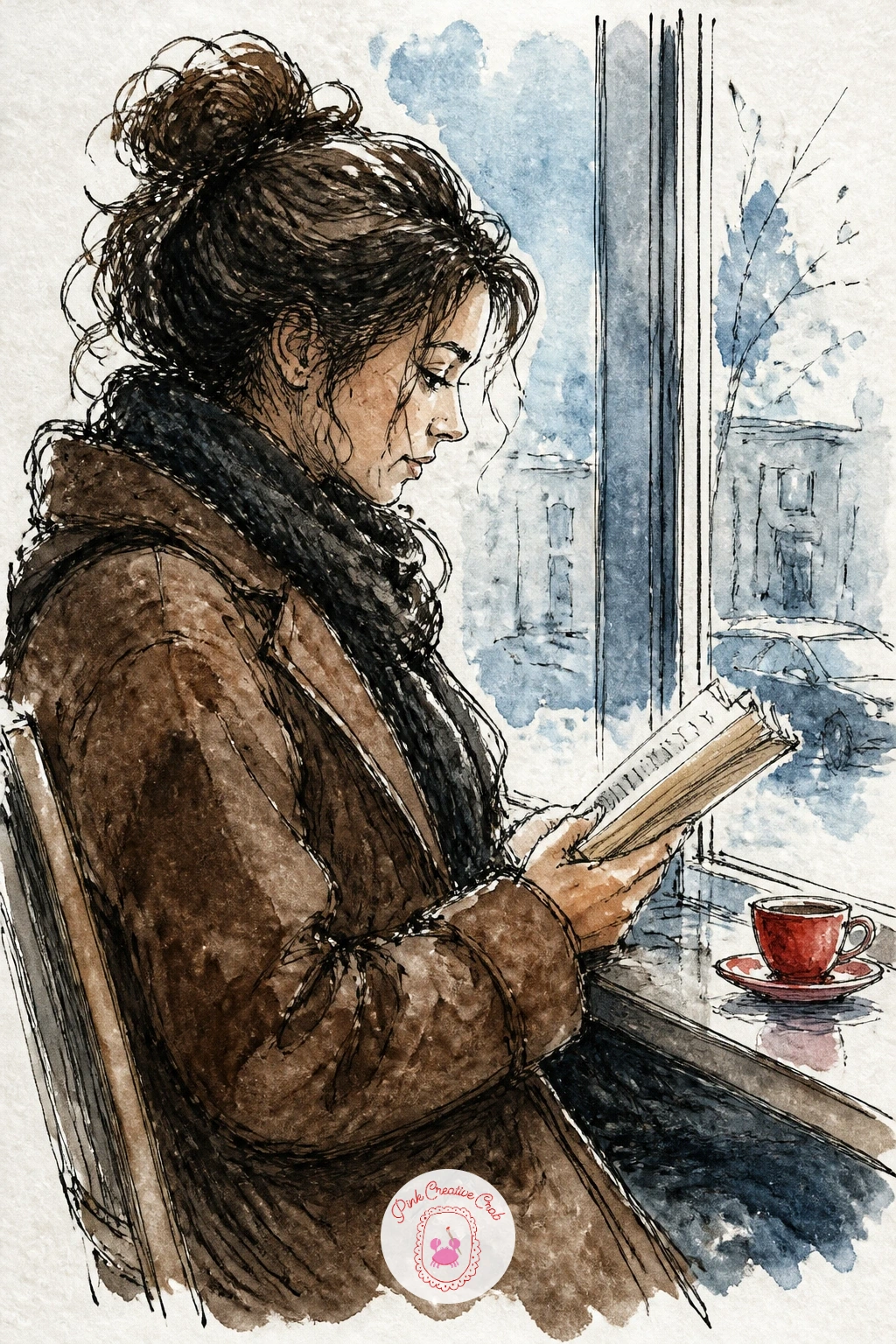
Palette: Burnt Umber,Cerulean Blue,Raw Sienna,Payne’s Grey
Steam fogging a cafe window while people chat inside gives you a chance to draw figures as soft shapes rather than sharp ones, since fog blurs everything behind it. Rough in two or three seated silhouettes first, keeping them loose and slightly overlapping so the group reads as a conversation.
Here is where eye level matters: if you draw this from outside looking in and slightly up, the window frame tilts inward at the top and the figures sit lower in the frame, which is the most convincing way to suggest you are standing on the pavement looking at warmth through glass.
Ink the window frame crisp and the figures inside it looser and paler, since contrast between sharp outside lines and soft inside shapes is what sells the fog.
Wash the glass in a pale grey blue with a dry brush dragged sideways across it before it fully dries, which lifts a soft streaky fog texture straight off the paper.
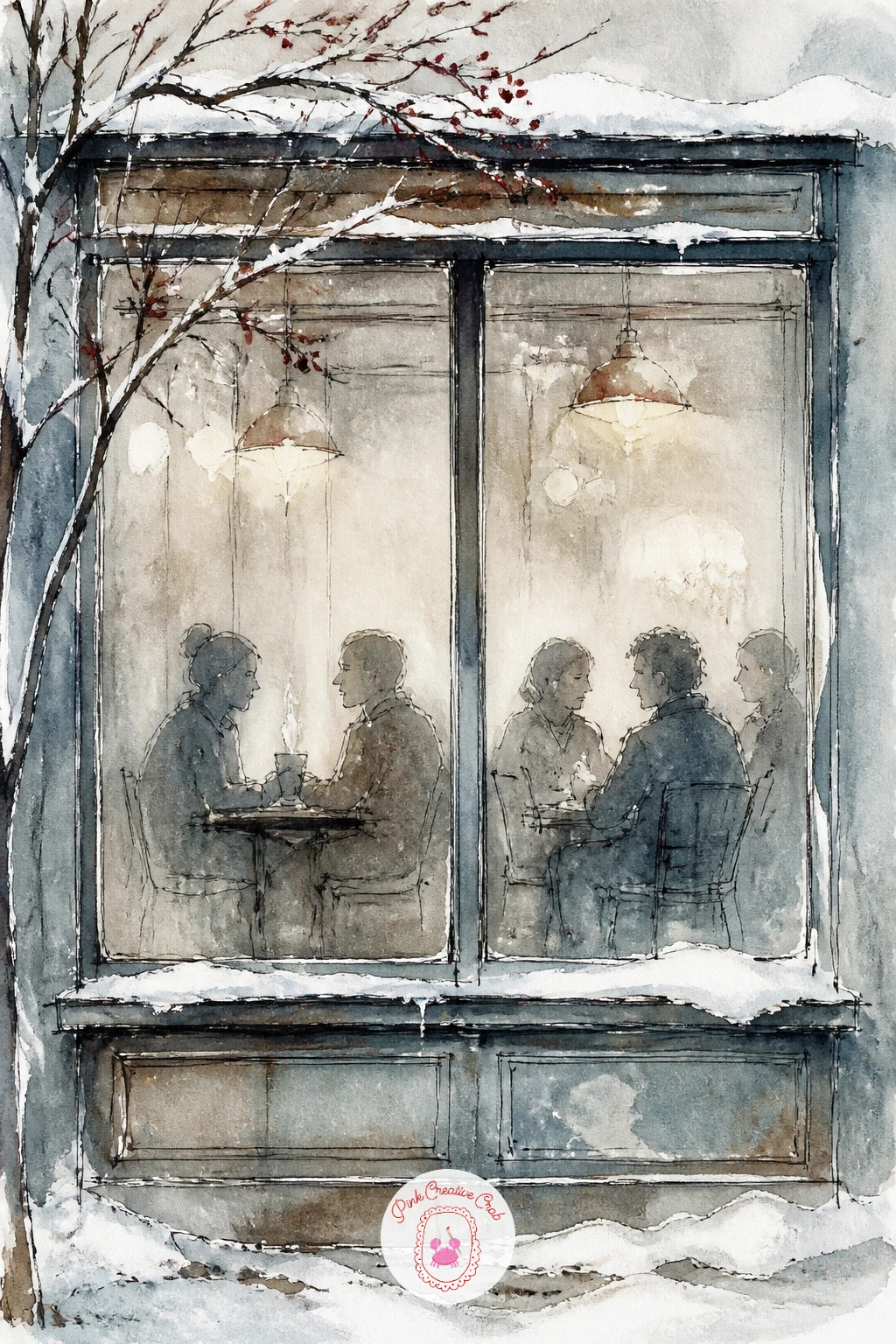
Palette: Payne’s Grey,Cerulean Blue,Titanium White,Burnt Umber
A dry brush dragged across damp wash gives real fog texture. Try it on scrap paper first so you know how much pressure lifts the paint without tearing it.
Give the street some action with a waiter sweeping snow off the cafe doorstep in the morning, a quick scene built around one clear gesture. Draw the broom first as a diagonal line with a simple fan shape at the end, then build the waiter’s body leaning into that angle.
For a ten minute version, keep it to the waiter, the broom, the doorstep and one small pile of swept snow, inked loosely with no wash at all beyond a quick grey shadow. For the forty minute version, add the cafe facade behind him, a hanging lantern, and a light wash across the whole street.
The leaning pose is the part that goes wrong fastest, so check that his weight line runs from his back foot up through his shoulder before you ink the arms holding the broom.
Finish with a cherry red scarf or apron trim, a small spot of warm color against all that grey morning light.
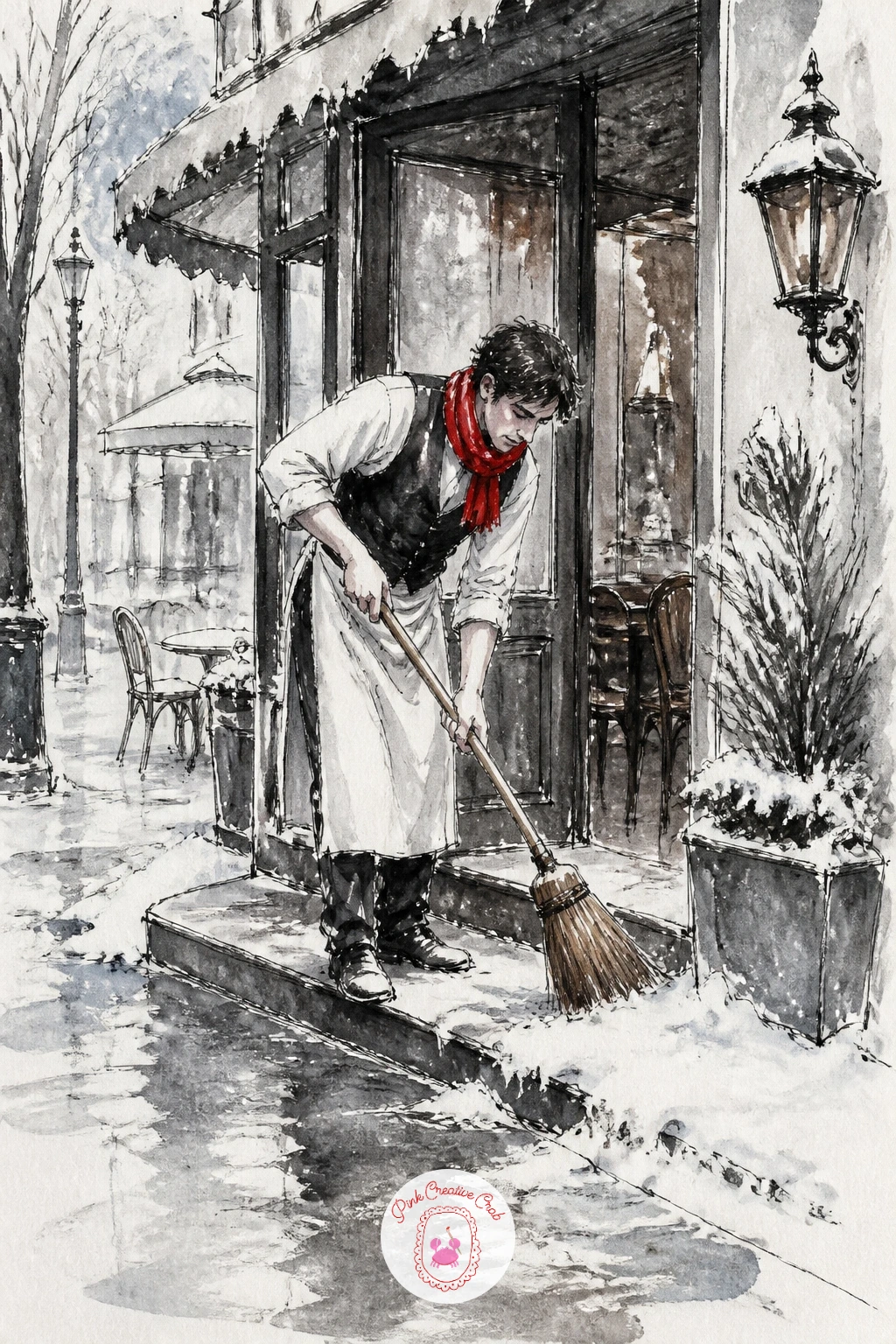
Palette: Payne’s Grey,Burnt Umber,Alizarin Crimson,Titanium White
Rest the pen a little with two bistro chairs outside a cafe, draped with blankets, a quiet still life scene with no figures to worry about. Draw the chairs as simple curved frames first, wire-style loops rather than solid shapes, before the blankets go on top of them.
Drape the blanket shapes last, letting the fabric fold over the chair back in two or three soft curves rather than one stiff rectangle, which is the easiest way to make folded fabric look like it is actually hanging.
If the chairs start looking flat, add a few short hatch lines at the base of each leg where it meets the pavement, grounding them in space.
Wash the blankets in chocolate brown with a cherry red stripe, and leave the chair frames themselves as bare ink lines with no color at all.
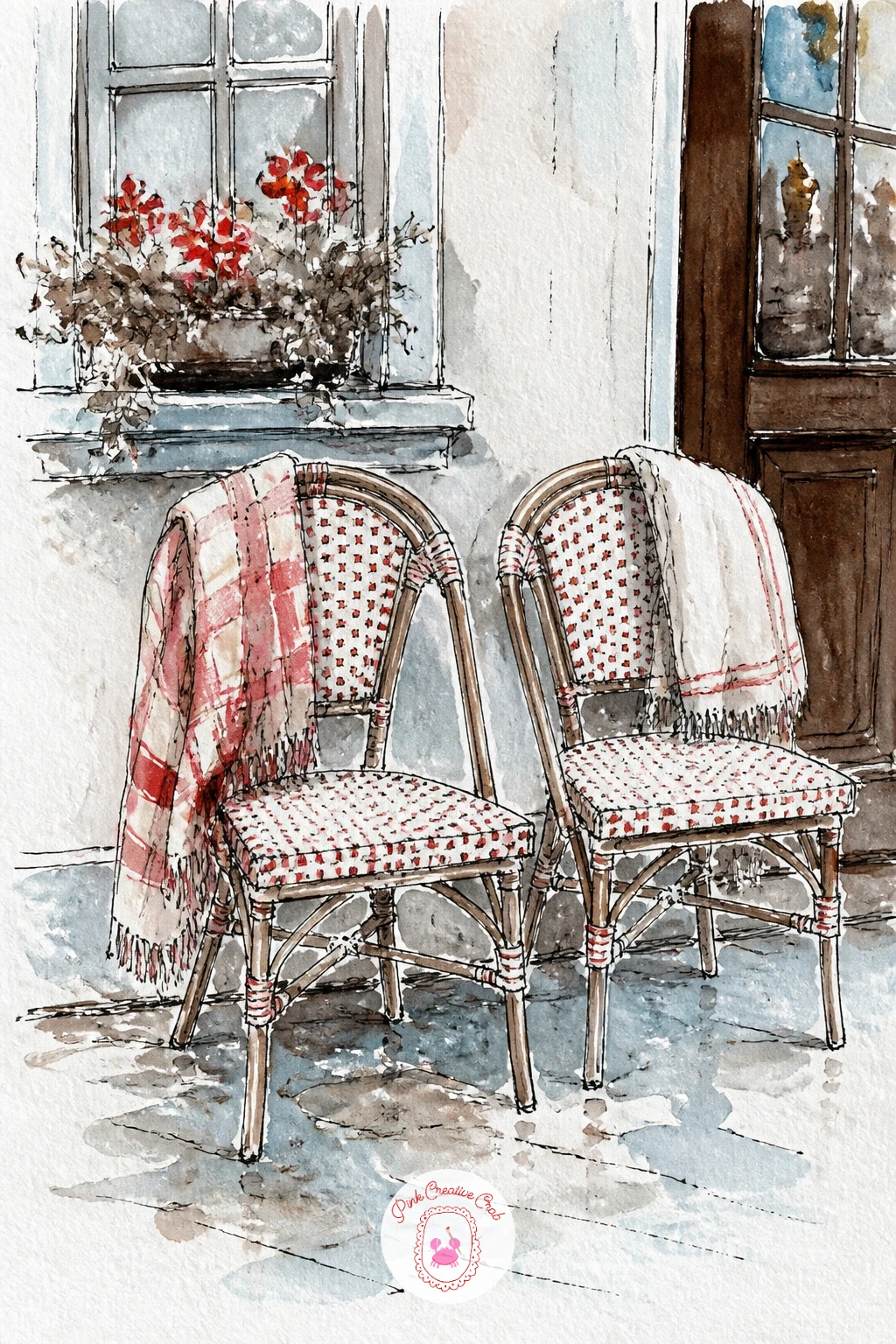
Palette: Burnt Umber,Alizarin Crimson,Payne’s Grey,Titanium White
Scale up to a full Parisian cafe terrace with heat lamps and wrapped up guests, a busier scene that rewards planning before you ink. Sketch the row of small round tables first as ellipses receding into the page, since getting that row convincing is mostly about keeping the ellipses getting flatter and smaller as they go back.
Place the heat lamps as tall thin shapes standing between tables, each one glowing faintly, which gives you a reason to leave small warm halos of cherry red or orange unwashed against the cooler street behind.
Add the wrapped up guests in loose coats and scarves after the tables and lamps are settled, keeping faces minimal so the terrace reads as lively rather than crowded with detail.
If terraces and awnings are your favorite subject, the Paris sketchbook ideas page has more corners worth sketching in this same loose style.
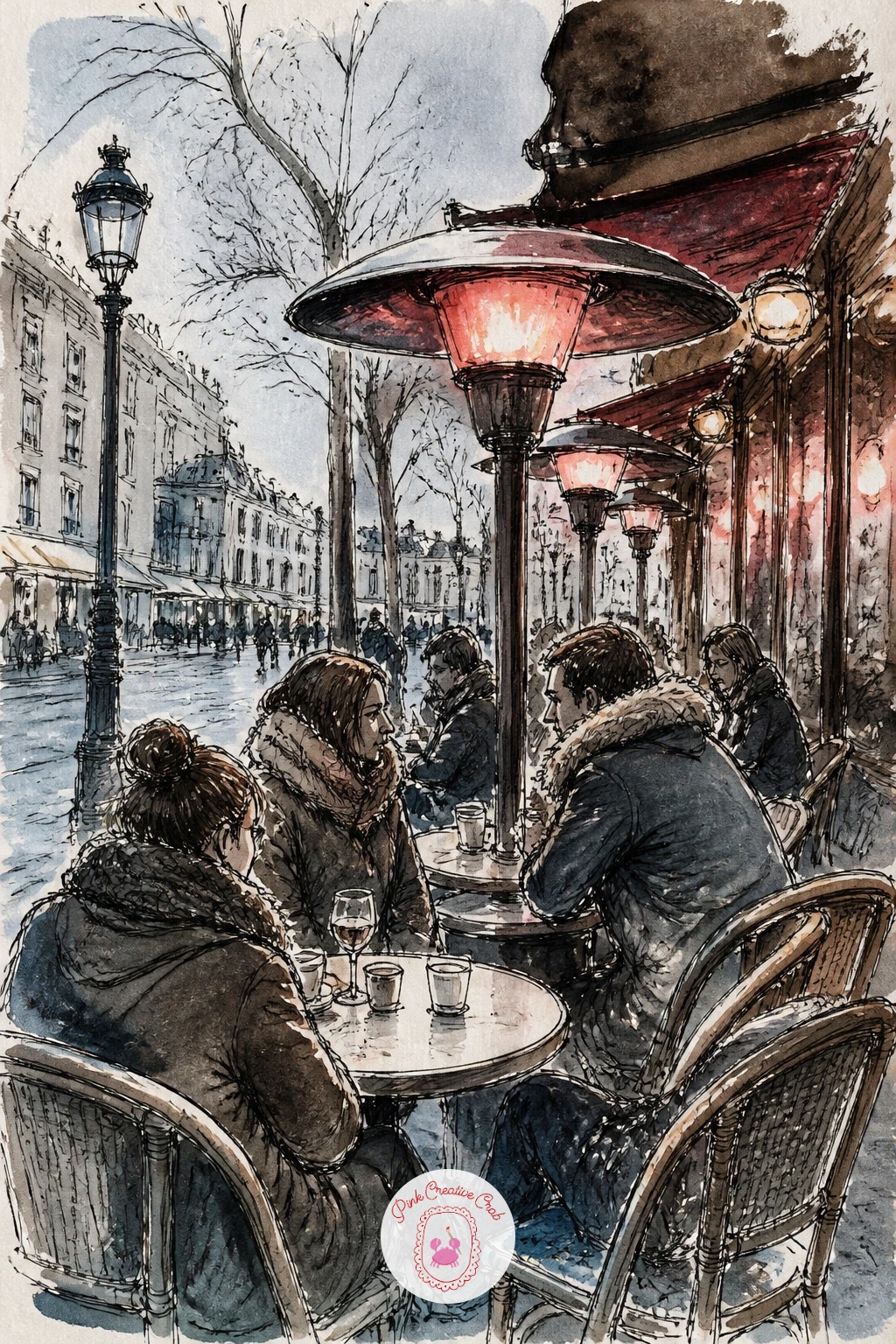
Palette: Cerulean Blue,Alizarin Crimson,Burnt Umber,Payne’s Grey
Follow the terrace with something smaller and cozier, a tiny Copenhagen cafe with candles lit on every windowsill. Draw the building front narrow and tall, since Nordic cafe fronts tend to be slim, then mark each window as a simple square before adding a candle shape inside it.
The light source here sits inside the building rather than outside, which changes everything about the wash: keep the street and sky in cool blue grey, and let every window glow slightly warmer than the wall around it.
Paint the candle glow as a soft circle of cherry red or warm orange that bleeds gently into the window frame rather than staying a hard dot, which is what makes candlelight read as light rather than as a sticker.
If you have no orange on hand, a touch of cherry red mixed with yellow ochre gets you close enough.
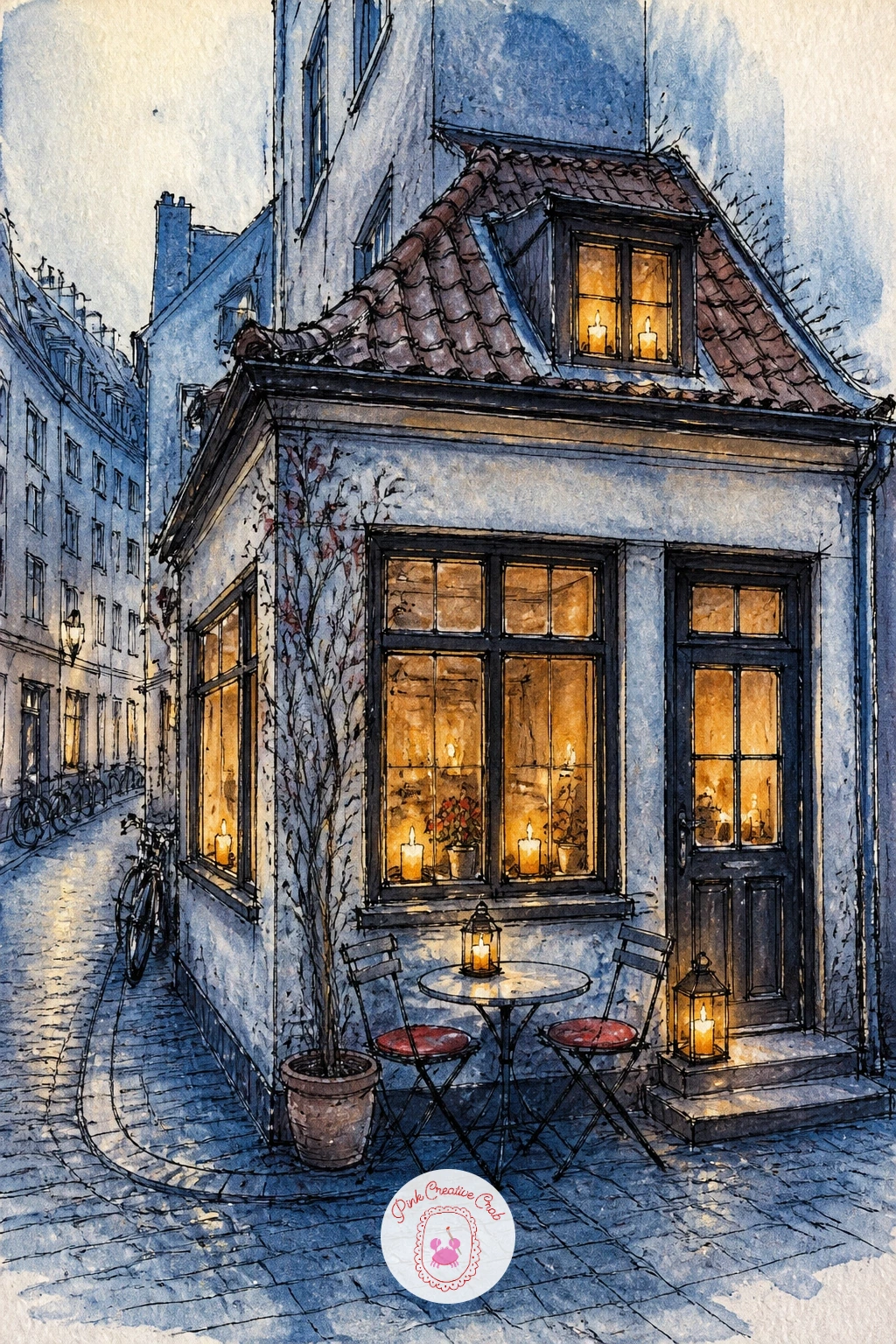
Palette: Cerulean Blue,Alizarin Crimson,Yellow Ochre,Payne’s Grey
Step inside now with a long cafe counter lined with pastries under glass domes and a barista working behind it. Draw the counter as one long horizontal first, then add the glass domes as simple half circles sitting on top, evenly spaced but not perfectly identical in size.
Here is a proportion trick worth knowing: hold your pen up against the page and compare the height of one dome to the height of the barista standing behind the counter, since domes drawn too large will dwarf the person and flatten the whole scene.
Ink the pastries inside each dome as rough blobs and curls rather than careful shapes, since real pastries are irregular and over-detailing them makes the counter look stiff.
Wash the counter wood in chocolate brown, the domes in a thin grey wash to suggest glass, and save one spot of cherry red for a jam tart or a cherry pastry sitting front and center.
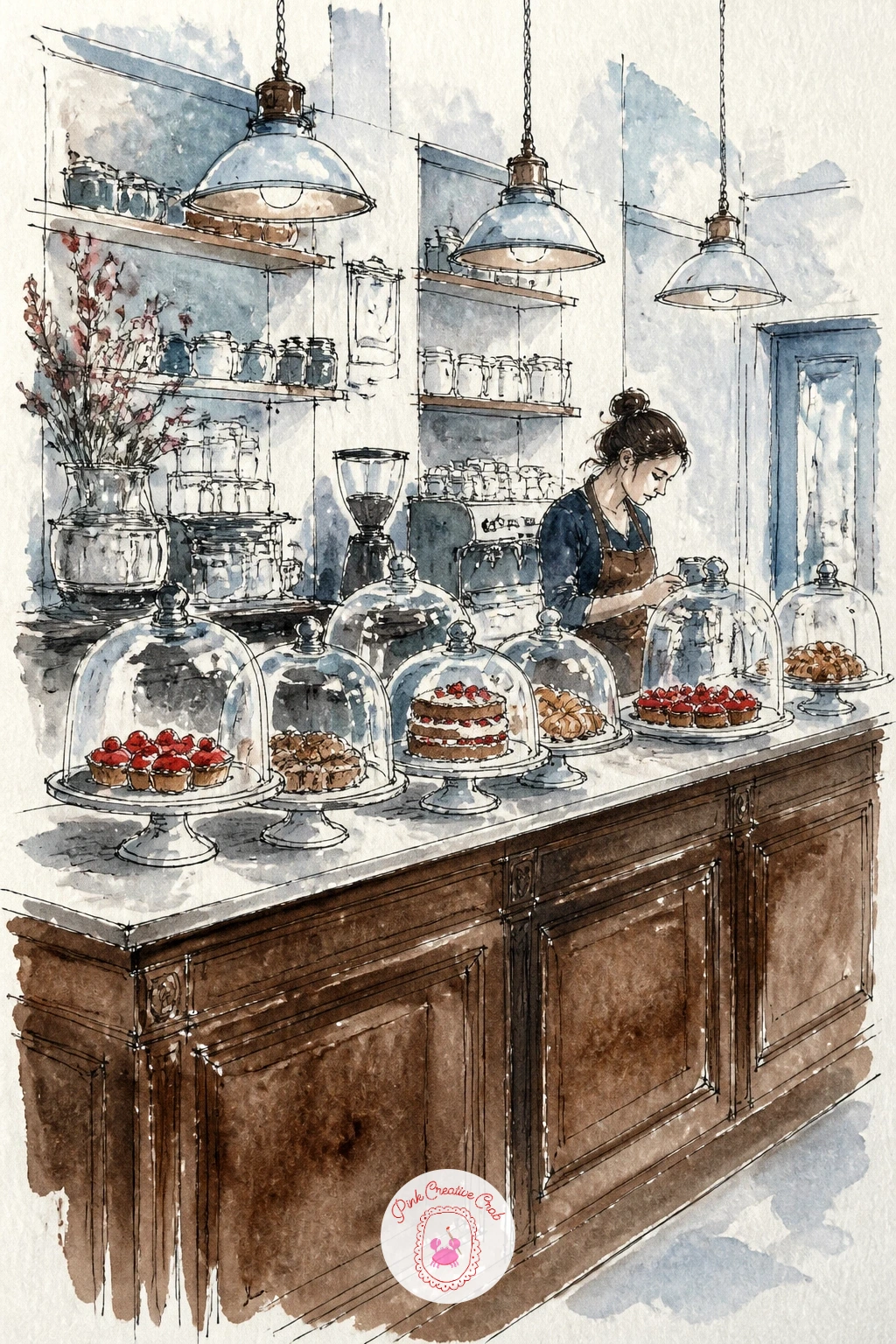
Palette: Burnt Umber,Payne’s Grey,Alizarin Crimson,Titanium White
Turn the lens inward with a man sketching in his own notebook at a cafe corner table, a nice quiet moment to draw since his pose is mostly stillness and concentration. Build his shoulders and bowed head first, then the open notebook on the table angled slightly toward him rather than flat.
For speed, a ten minute version keeps him, the table and the notebook with no background at all, just a loose vignette of ink fading at the edges. The forty minute version adds the window light behind him and a cup steaming quietly at his elbow.
Keep his pen hand simple, really just a short curved line for the pen rather than fingers, since over-detailing hands at this size usually makes them look wrong rather than right.
Wash his sweater in chocolate brown and leave the notebook page bright white to pull the eye toward what he is doing.
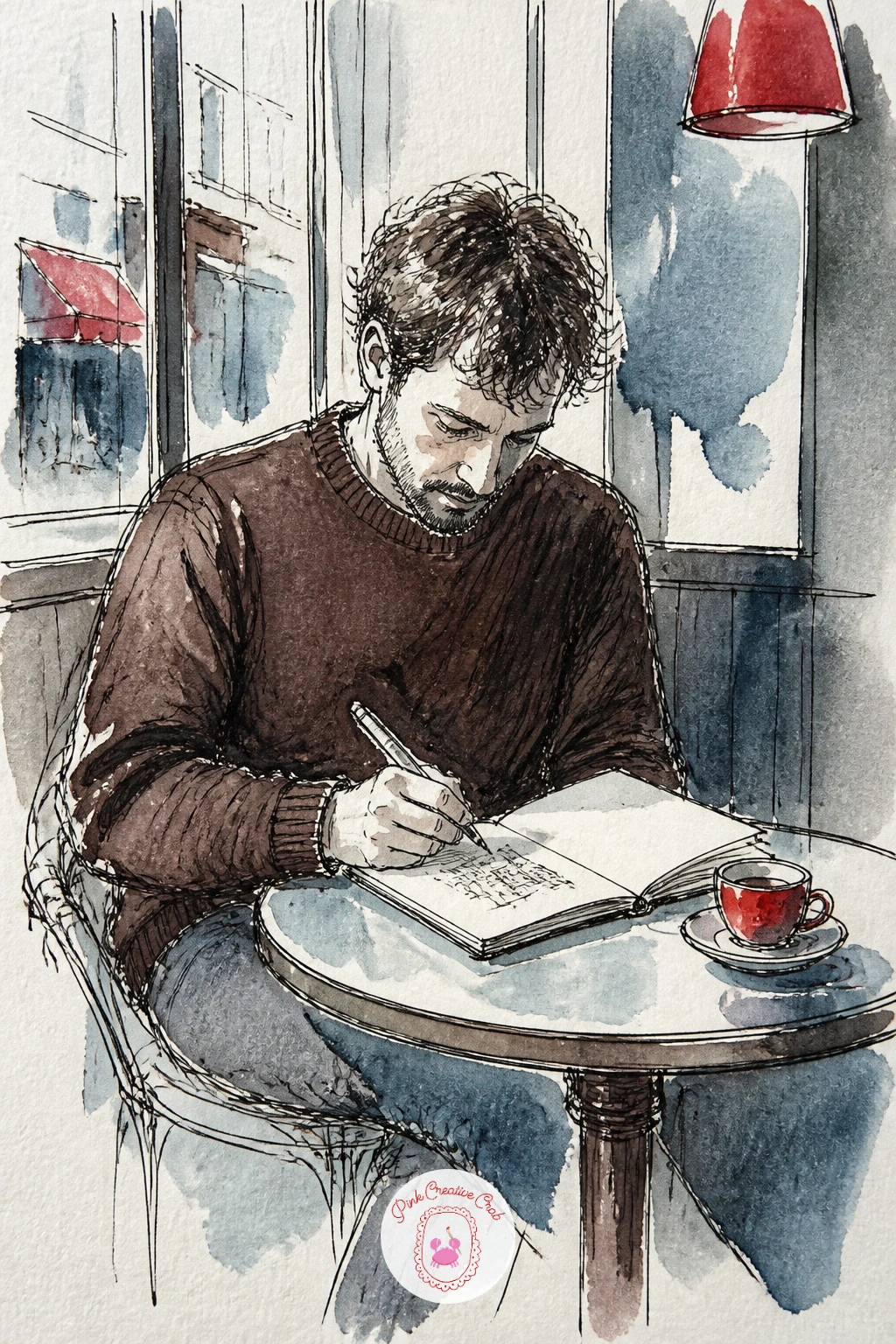
Palette: Burnt Umber,Payne’s Grey,Titanium White,Cerulean Blue
Widen the view with a cafe on a snowy hill street while a tram passes below it, a small cityscape rather than a single building. Sketch the street sloping diagonally up the page first, then drop the cafe front onto one side of it before adding the tram as a simple boxy shape lower down the hill.
Because the street climbs, your eye level sits low in the frame looking up the slope, which means buildings further up the hill should sit higher and smaller on the page, not just smaller in place.
Ink the tram’s overhead wires as a few thin curved lines strung between buildings, a small detail that does a lot of work to sell the city feel.
Wash the snowy street in pale blue grey and let the tram carry the one strong note of cherry red on its body.
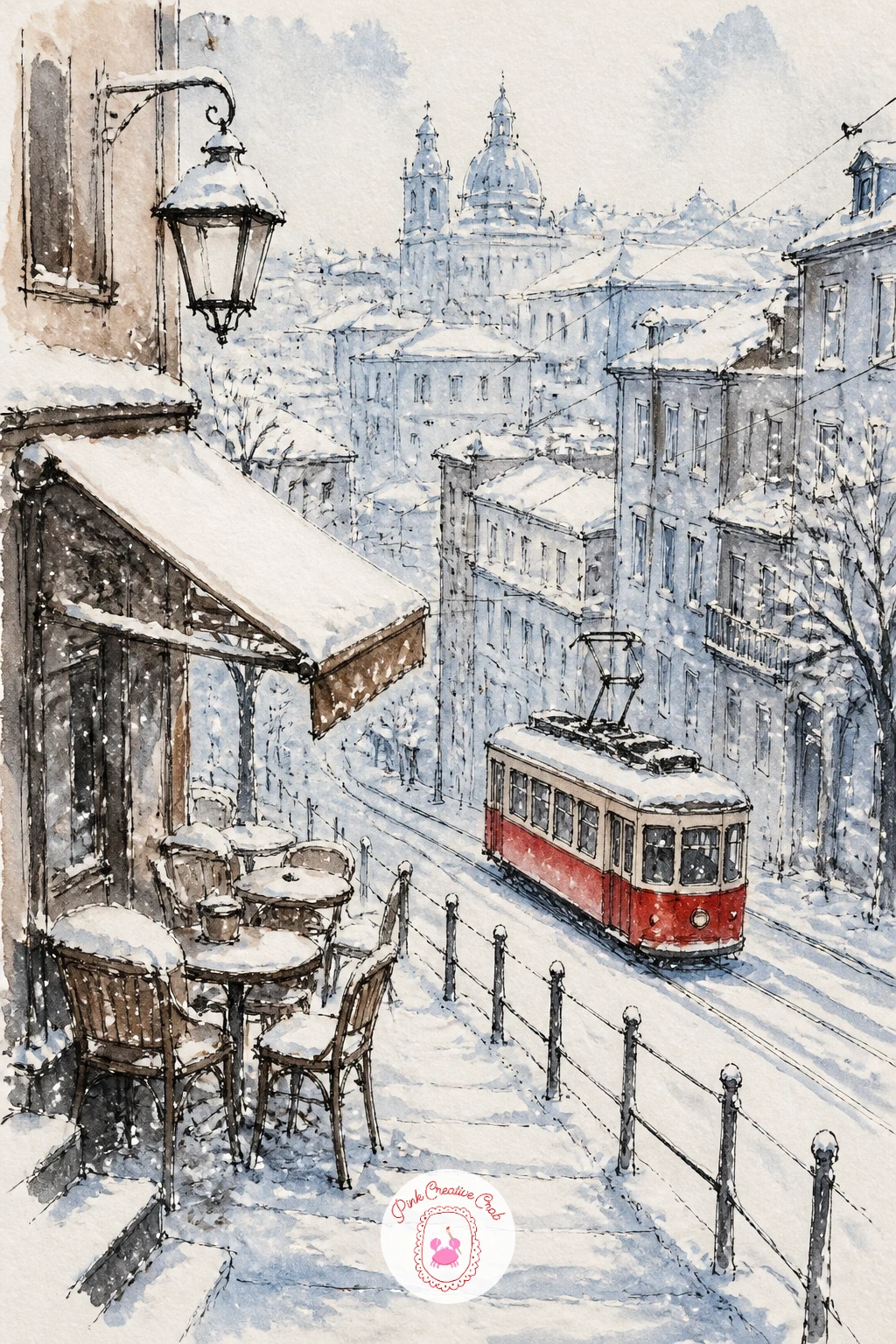
Palette: Payne’s Grey,Cerulean Blue,Alizarin Crimson,Titanium White
Bring in a pet with a dog tied by the cafe door, snow settling quietly on its back while it waits. Draw the dog’s body as a simple rounded oval first, legs tucked under, then add the ears and tail last since those small shapes carry most of the personality.
One hands on trick makes the fur and the snow on its back read well together: once the ink is dry, wash the dog’s coat in chocolate brown, then while it is still damp, dab a few spots with a clean dry brush to lift tiny patches of white back out for the snow sitting on its fur.
Keep the leash a single loose curved line down to a simple ring by the door, since a too-straight leash looks stiff against a soft, waiting dog.
If you want more dog poses and tricks like this one, the dog pencil drawing ideas page is a good companion to this scene.
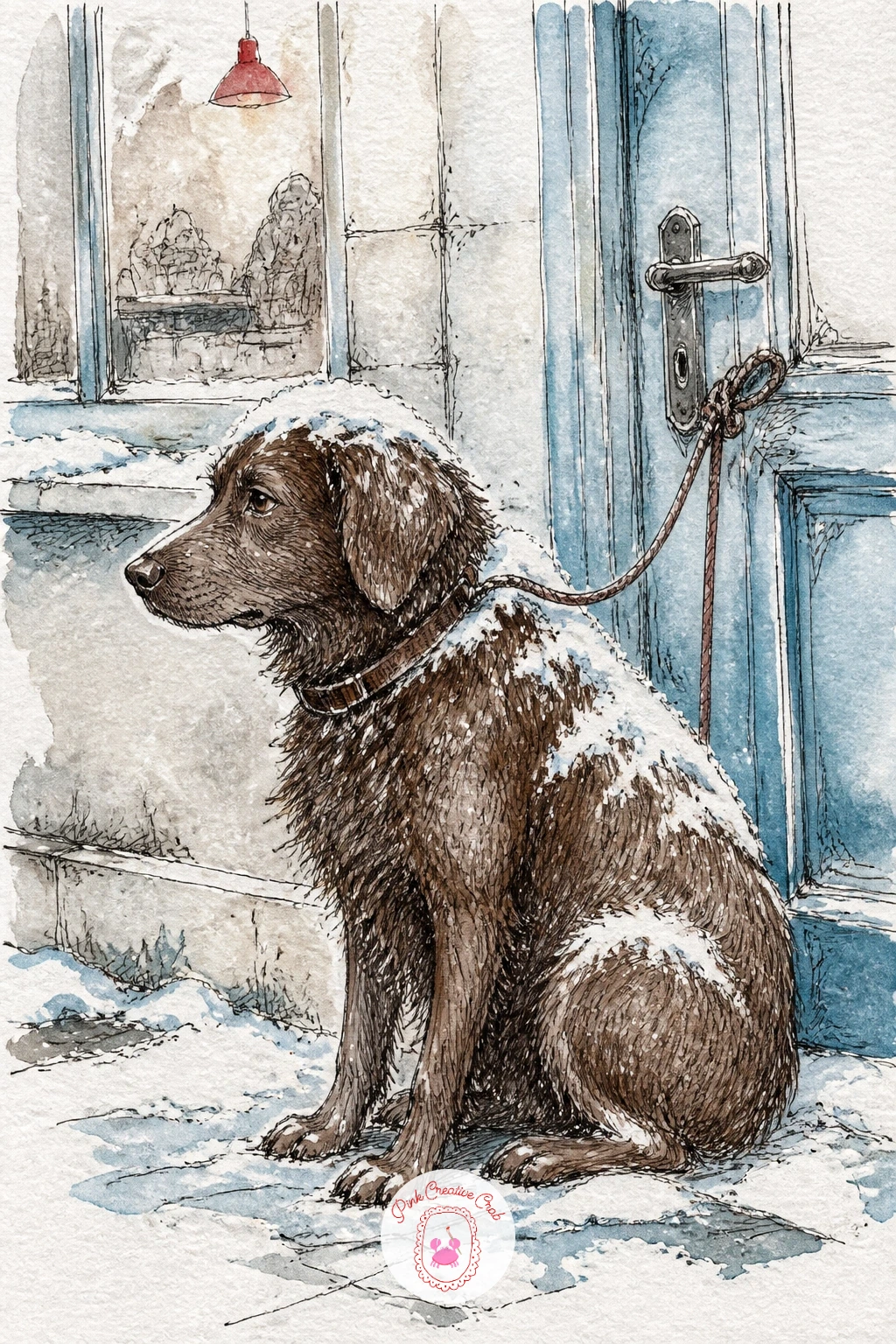
Palette: Burnt Umber,Payne’s Grey,Titanium White,Cerulean Blue
Move fully indoors now to a cafe interior with mismatched armchairs gathered around a wood stove. Draw the stove first as a simple black box shape with a stovepipe rising up, since it anchors the whole room, then place two or three armchairs around it at slightly different angles so they read as mismatched rather than lined up.
Quick version: the stove, one chair and a rug beneath it, inked in ten minutes with a single warm wash. Slower version: add a second and third chair, a side table, and a window glowing blue behind everything to contrast the warm stove light.
If the chairs start to look too similar, change one armrest shape or one chair’s height slightly, since real mismatched furniture never matches in silhouette either.
Wash the stove glow in cherry red and let chocolate brown carry the wood furniture around it.
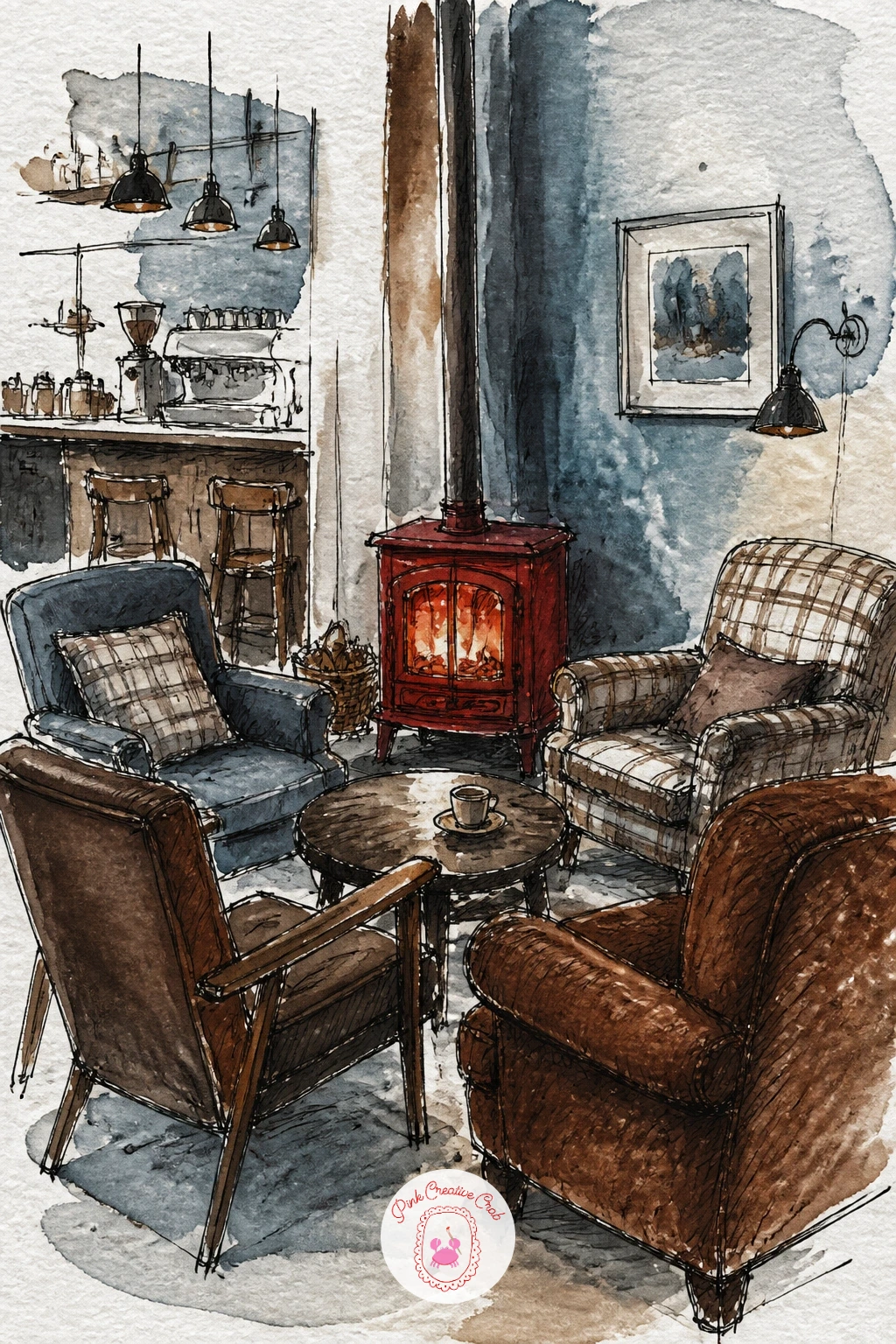
Palette: Alizarin Crimson,Burnt Umber,Payne’s Grey,Cerulean Blue
Settle into a quieter corner with a girl writing postcards at a cafe table beside the radiator, her coat still half on from the cold outside. Sketch her bent posture first, head tilted down over the postcard, then add the radiator as a simple ribbed rectangle beside her chair.
Compare the height of the radiator to the height of her chair seat before inking either one, since a radiator drawn too tall will compete with her for attention instead of sitting quietly in the background where it belongs.
Keep the postcard itself a small white rectangle with just a few loose scribble lines standing in for handwriting, never actual readable words.
Wash her coat in a soft cherry red and let a thin orange glow sit along the radiator’s ribs to suggest warmth without overworking it.
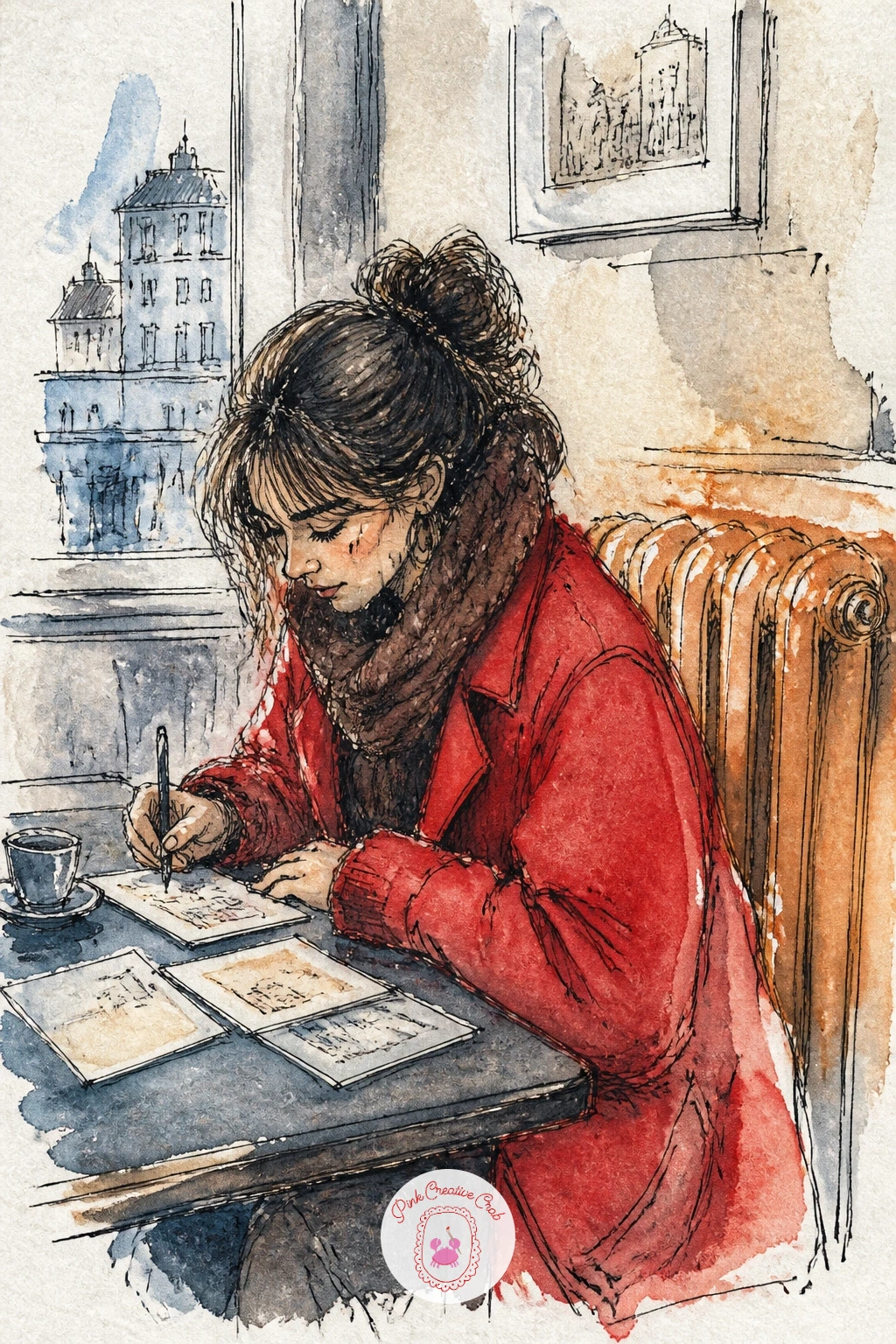
Palette: Alizarin Crimson,Yellow Ochre,Burnt Umber,Titanium White
Carry the quiet mood into a cafe set inside a bookshop, readers tucked onto window benches among the stacks. Build the bookshelves first as simple vertical lines of varied heights, since uneven spine heights are what make a shelf look full of real books rather than a blank wall.
Place the window bench and its readers after the shelves are blocked in, letting one reader’s knees draw up and another sit cross legged, so the two figures feel like separate quiet moments rather than a matching pair.
If the shelves start to swallow the scene, lighten them with a quick grey wash and let the window light take the brightest white of the page instead.
For more cozy reading corners to pair with this one, the book stack drawing lessons work well alongside this bookshop cafe scene.
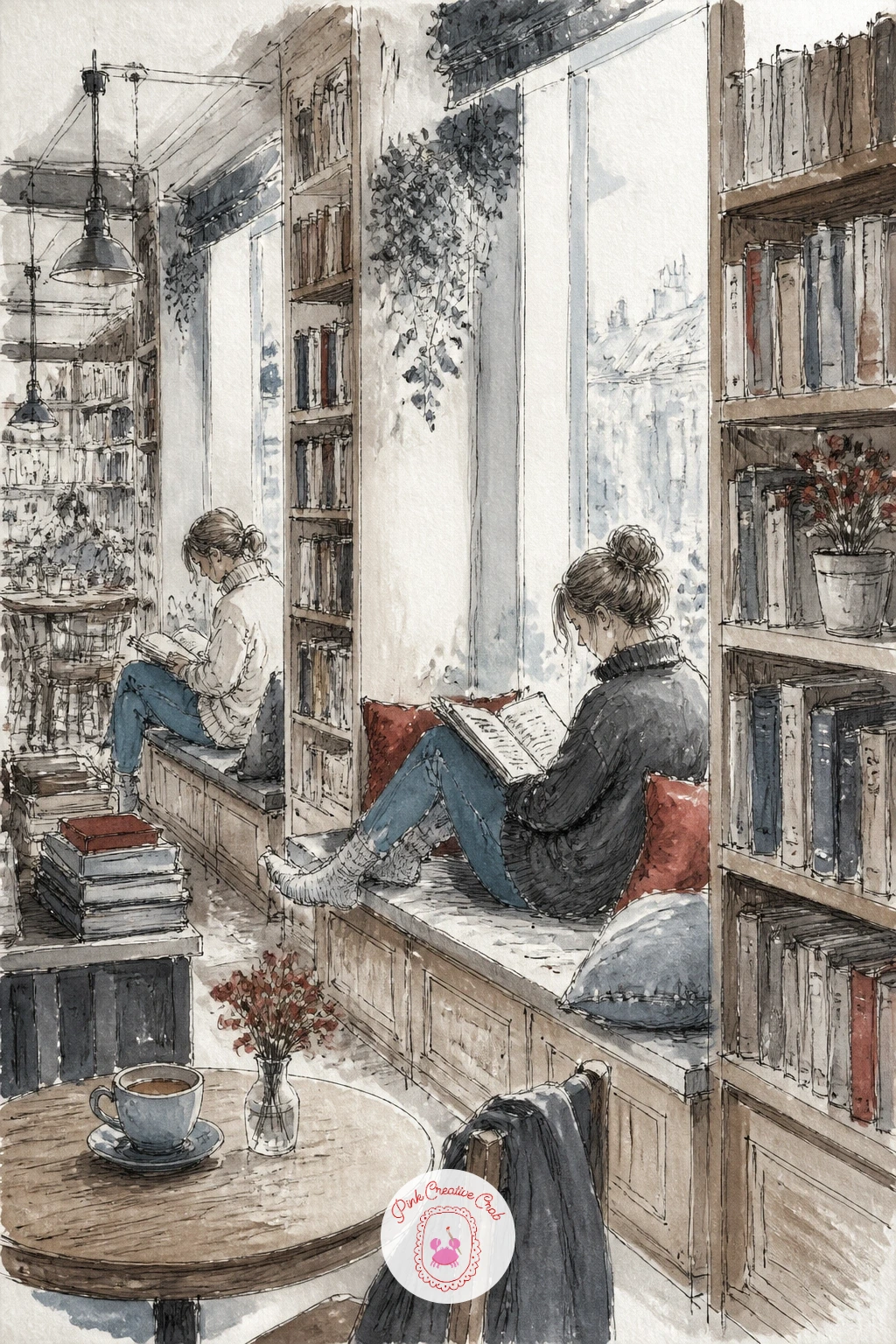
Palette: Burnt Umber,Payne’s Grey,Cerulean Blue,Titanium White
Give the page a strong shape to build around with a cafe that has one big arched window looking out onto falling snow. Draw the arch itself first with a single confident curved line, since a hesitant, scratchy arch will undercut the whole scene no matter how good everything inside it is.
The light source here comes from outside through the snow, flat and cool, which means the interior figures and furniture should stay in slightly deeper shadow than the glowing window scenes earlier in this list.
Add the falling snow last as small loose dots and dashes scattered outside the glass, varying their size so they do not read as a repeated pattern.
Wash the arch frame in chocolate brown and the sky beyond it in pale icy blue, leaving plenty of white paper for the snow itself.
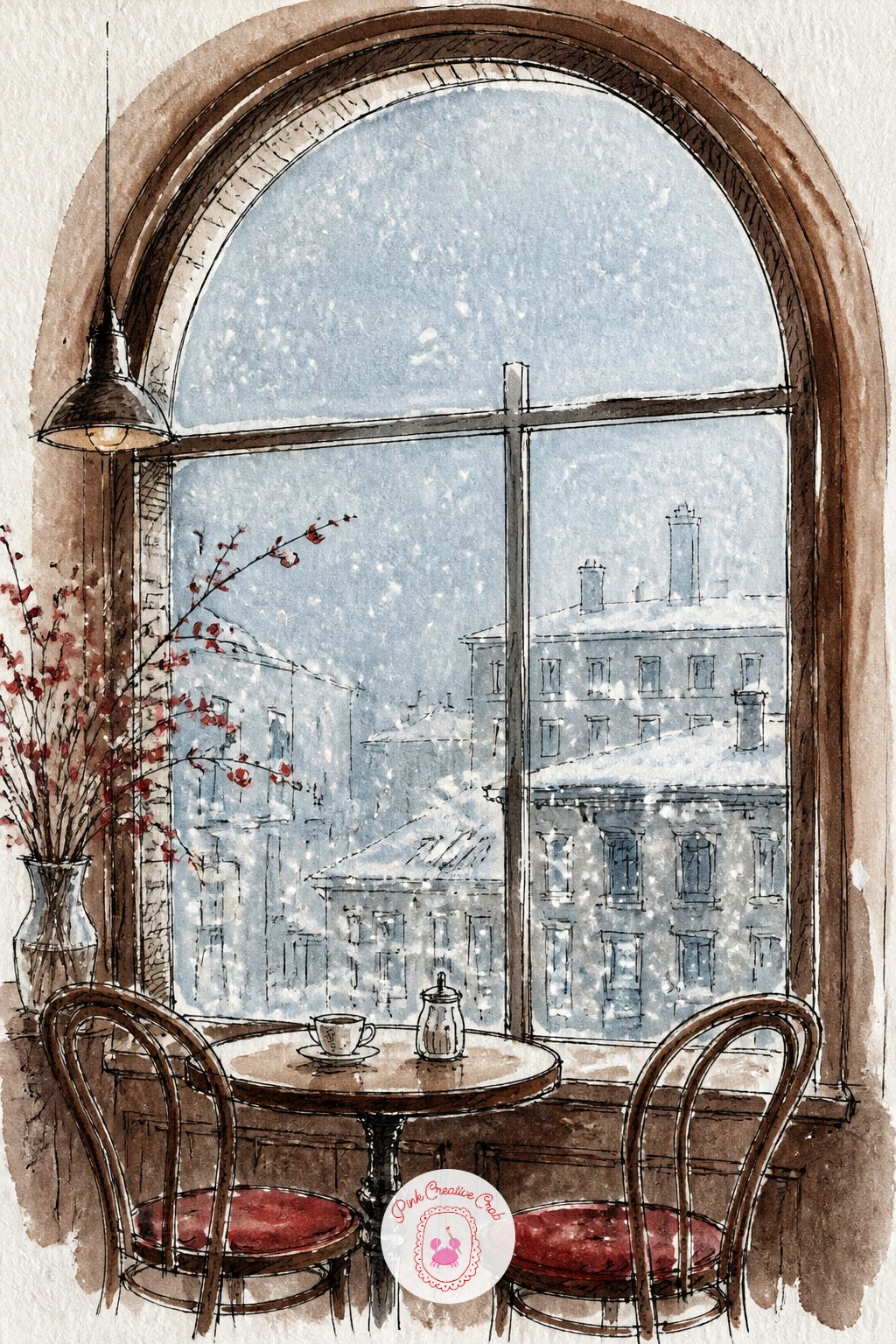
Palette: Burnt Umber,Cerulean Blue,Payne’s Grey,Titanium White
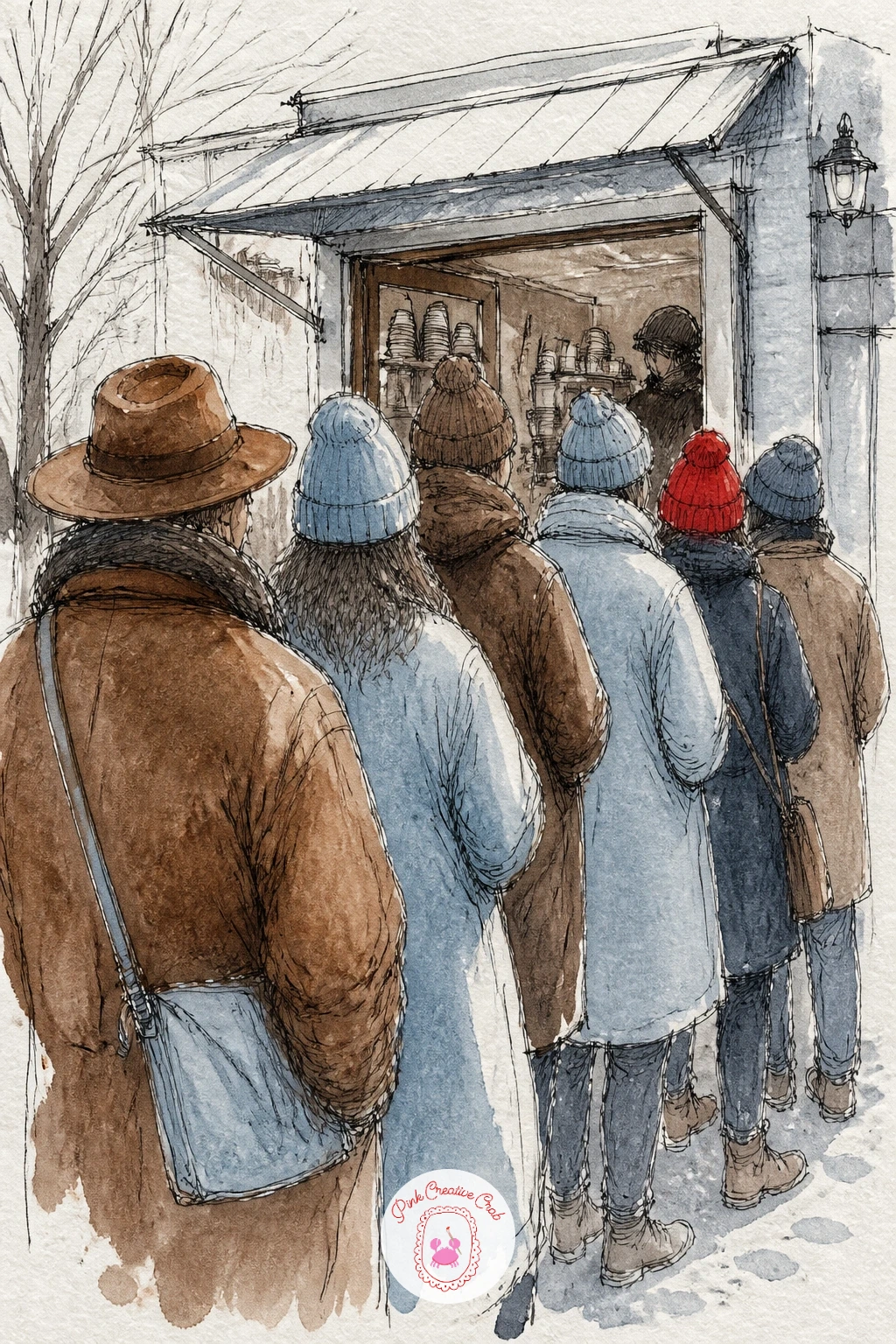
Step back outside for a queue of people in hats lined up outside a tiny coffee hatch, a fun chance to draw several figures quickly without fussing over any one of them. Sketch the hatch itself first as a small square opening in a wall, then add figures in a loose diagonal line receding from it.
Vary each hat shape and coat length as you go, since a queue of identical figures reads as copied rather than observed, and even three or four simple silhouettes feel alive once their shapes differ.
If the line starts to look flat, overlap the figures slightly so each one partly hides the one behind it, which is the simplest way to suggest depth in a crowd.
Wash the coats in a mix of chocolate brown and icy blue, with one hat in cherry red to lead the eye down the line.
Palette: Burnt Umber,Cerulean Blue,Alizarin Crimson,Payne’s Grey
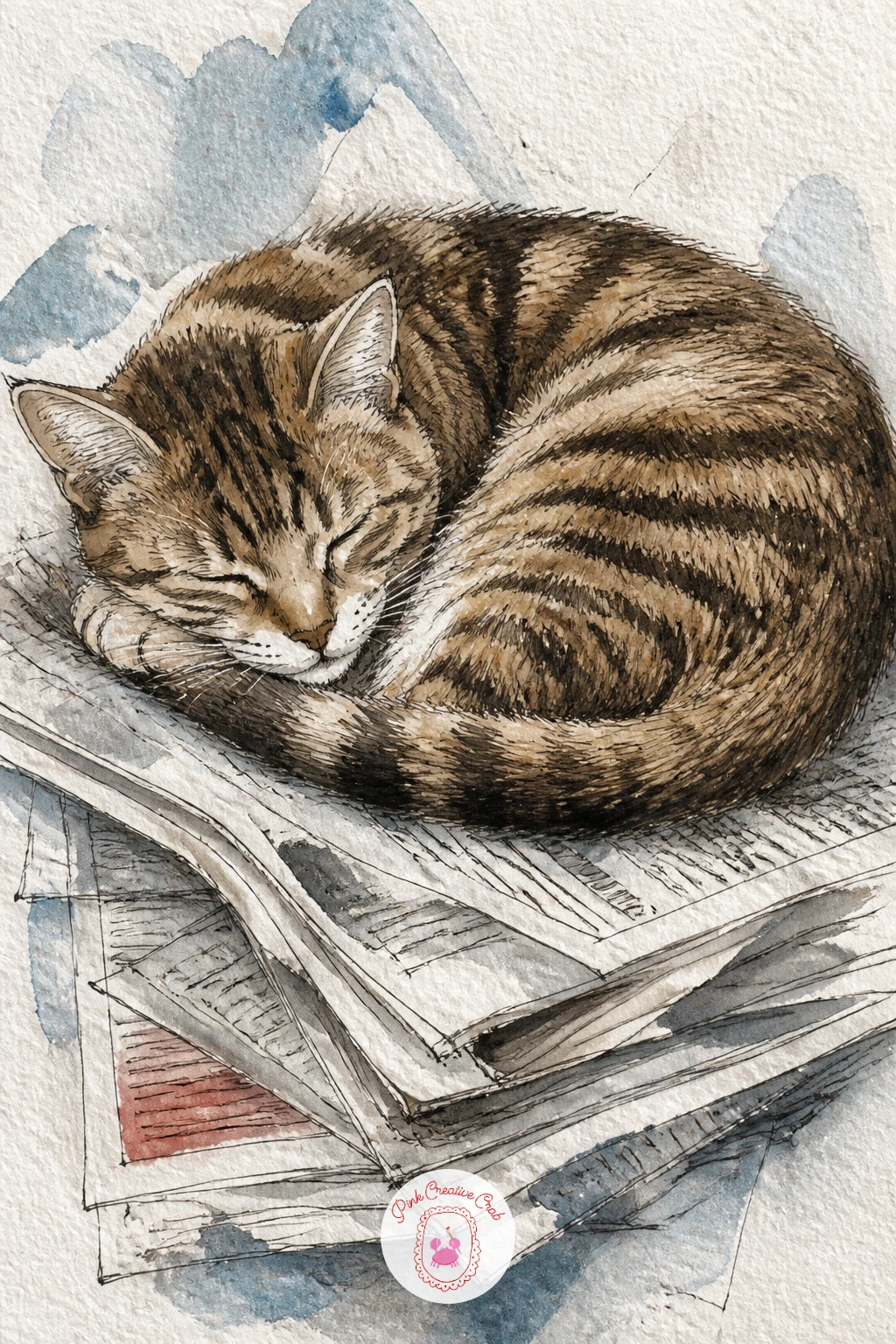
Slow right down with a cafe cat curled asleep on a pile of folded newspapers, a calm little subject after all that queue of figures. Build the newspaper pile first as a stack of thin overlapping rectangles, then let the cat’s body drape over the top edge as one soft curved shape.
A kneaded eraser earns its keep here: pencil the cat loosely first, press the eraser gently over any lines that feel too stiff before inking, and you will end up with a softer, sleepier curve than if you ink straight from a tight pencil sketch.
Keep the newspaper text as a few loose horizontal scribble lines rather than anything readable, which keeps the pile feeling sketched rather than labored over.
Wash the cat in chocolate brown with a few darker strokes for its tabby markings, and leave the newspapers a plain warm grey.
You Will Need
- kneaded eraser
Palette: Burnt Umber,Payne’s Grey,Titanium White,Raw Sienna
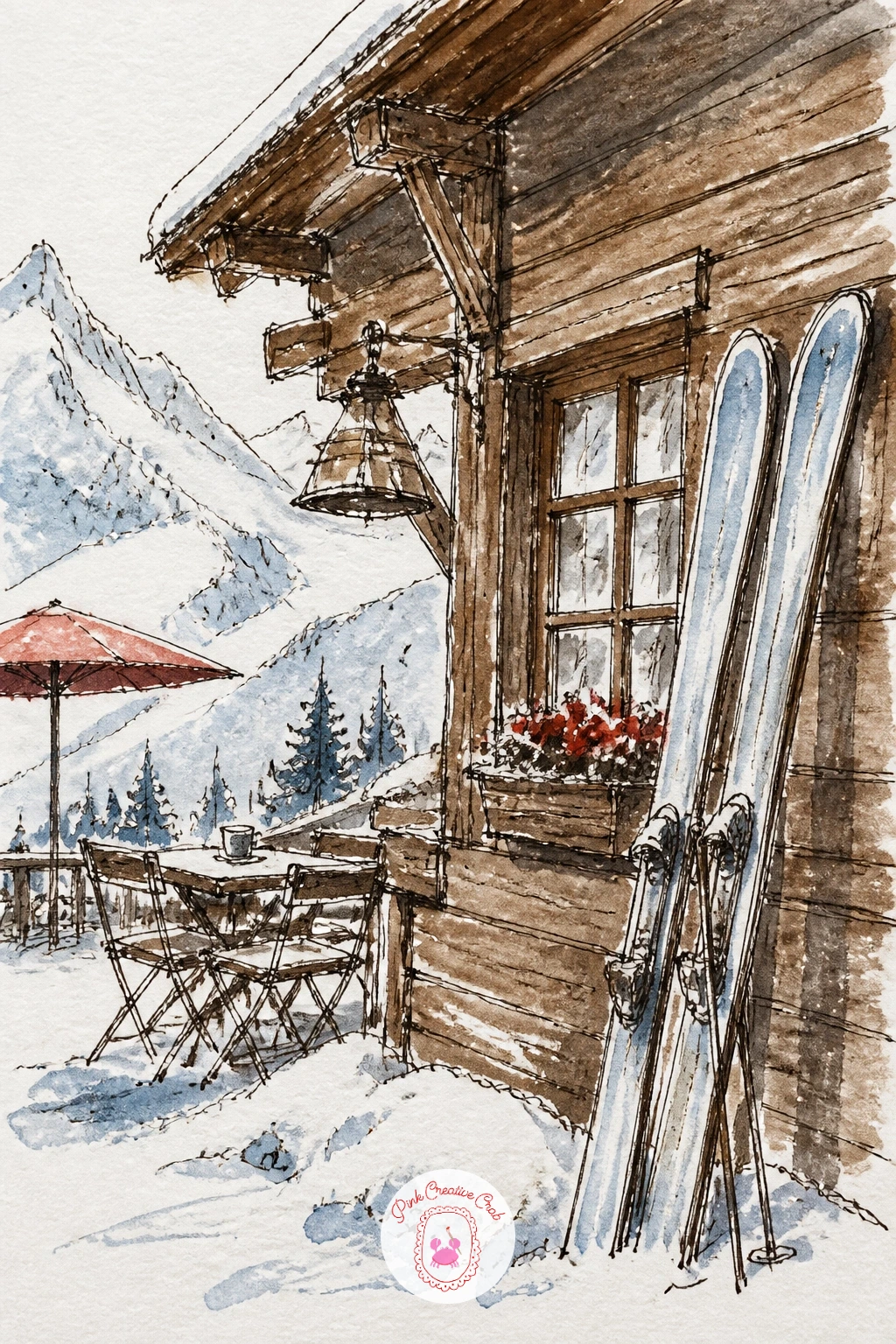
Head for higher ground with a mountain cafe, a pair of skis leaning against its wooden wall outside the door. Draw the log cabin style wall first with a few horizontal lines for the timber boards, then lean the skis diagonally against it, crossing slightly near the top rather than standing perfectly parallel.
Compare the length of the skis to the height of the door beside them before inking, since skis drawn too short will look more like garden tools than ski equipment.
Keep the ski poles as two thin separate lines leaning nearby, slightly apart from the skis themselves, which reads more naturally than a bundle of identical sticks.
Wash the timber wall in chocolate brown and let the snow piled at its base stay bare white paper with just a thin blue grey shadow line underneath.
Palette: Burnt Umber,Payne’s Grey,Cerulean Blue,Titanium White
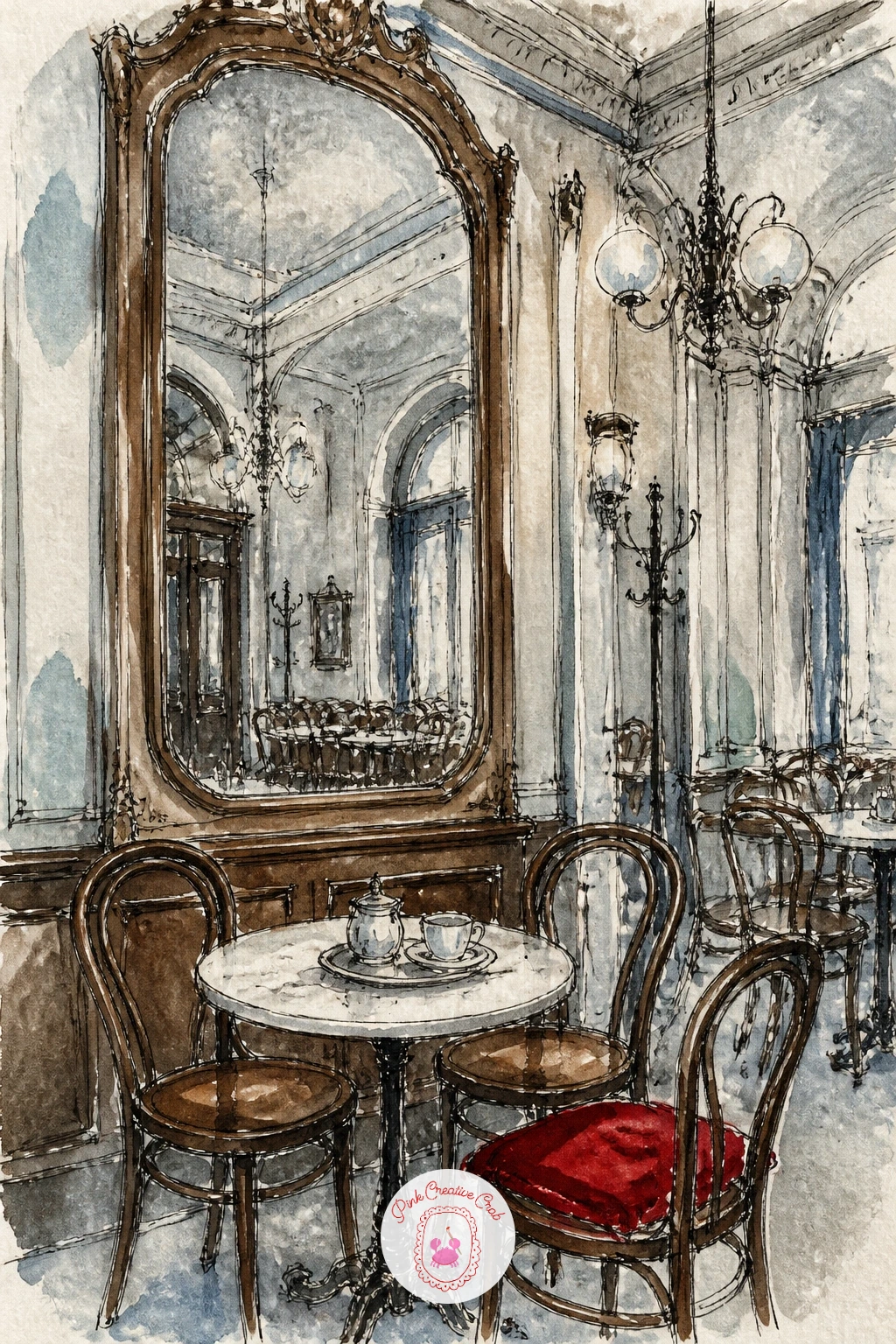
Return indoors to something grander, an old Viennese coffee house with bentwood chairs and tall mirrors along the walls. Sketch one bentwood chair carefully first, since its curved back and legs set the pattern for every other chair in the room, then repeat it loosely a few more times at different angles rather than tracing it exactly.
The tall mirrors are the trick worth practicing here: draw them as simple vertical rectangles with a faint reflected version of the room inside, kept looser and paler than the real room so your eye does not mistake the reflection for another separate space.
If the room starts to feel too busy, drop the wash back to just chocolate brown on the chairs and a pale grey on the mirrors, leaving the rest of the room as ink line only.
One cherry red cushion on a single chair gives the whole grand room a single warm focal point.
Palette: Burnt Umber,Payne’s Grey,Alizarin Crimson,Titanium White
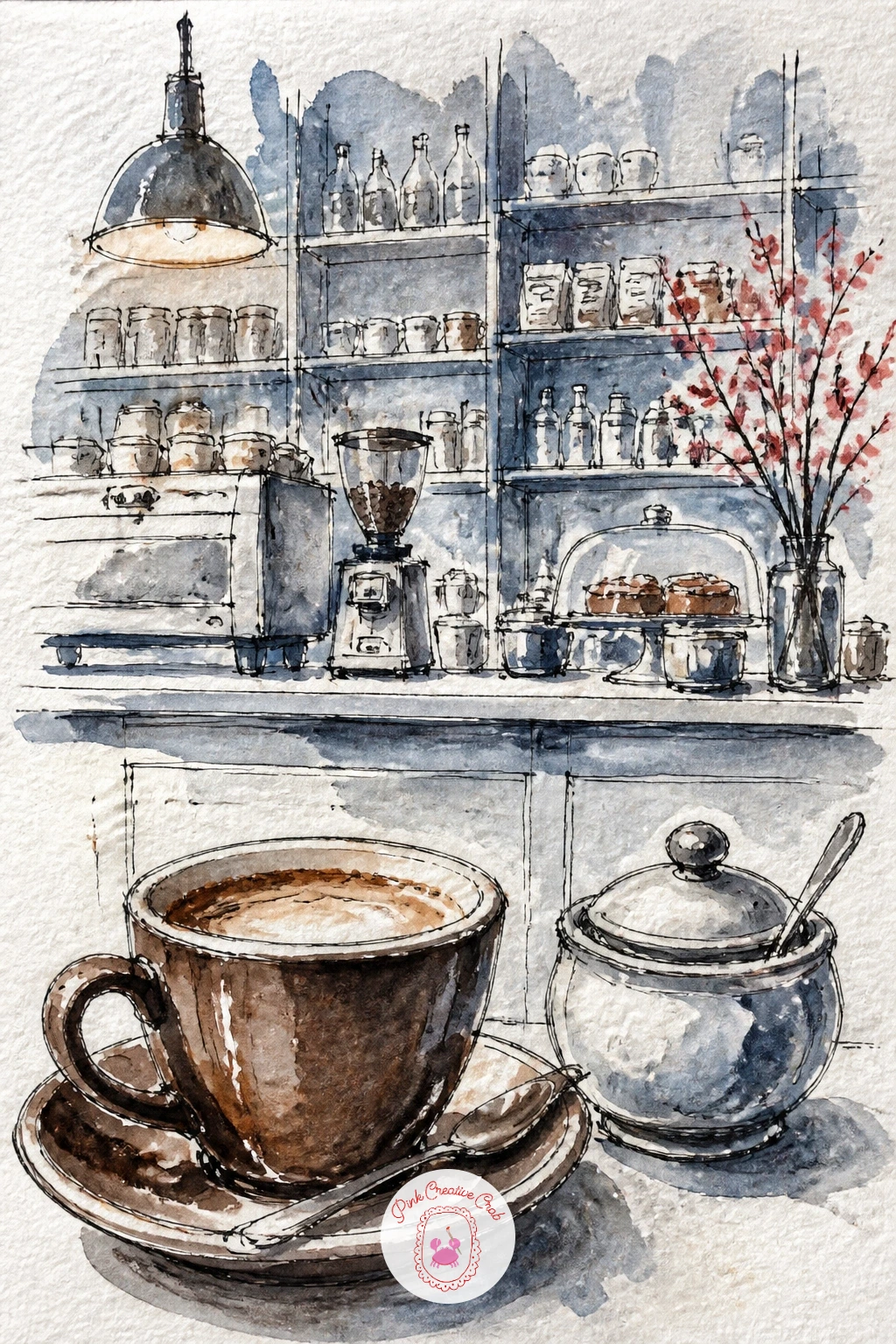
Change your angle completely with a cafe counter seen from a stool, your own cup and a sugar bowl sitting close in the foreground. Draw the cup and sugar bowl first, larger than anything else on the page since they sit nearest to you, then let the counter and shelves behind them shrink smaller and fainter the further back they go.
This close, low angle is really a perspective exercise: because you are sitting at the counter rather than standing over it, the cup’s rim should read as a wide flattened ellipse rather than a neat circle, and everything behind it drops below your eye level toward the counter edge.
Ink the cup and sugar bowl with the darkest, most confident lines on the page, then fade the background shelves to a lighter touch.
Wash the cup in warm chocolate brown and let the shelves behind blur into a soft grey blue.
Palette: Burnt Umber,Payne’s Grey,Cerulean Blue,Titanium White
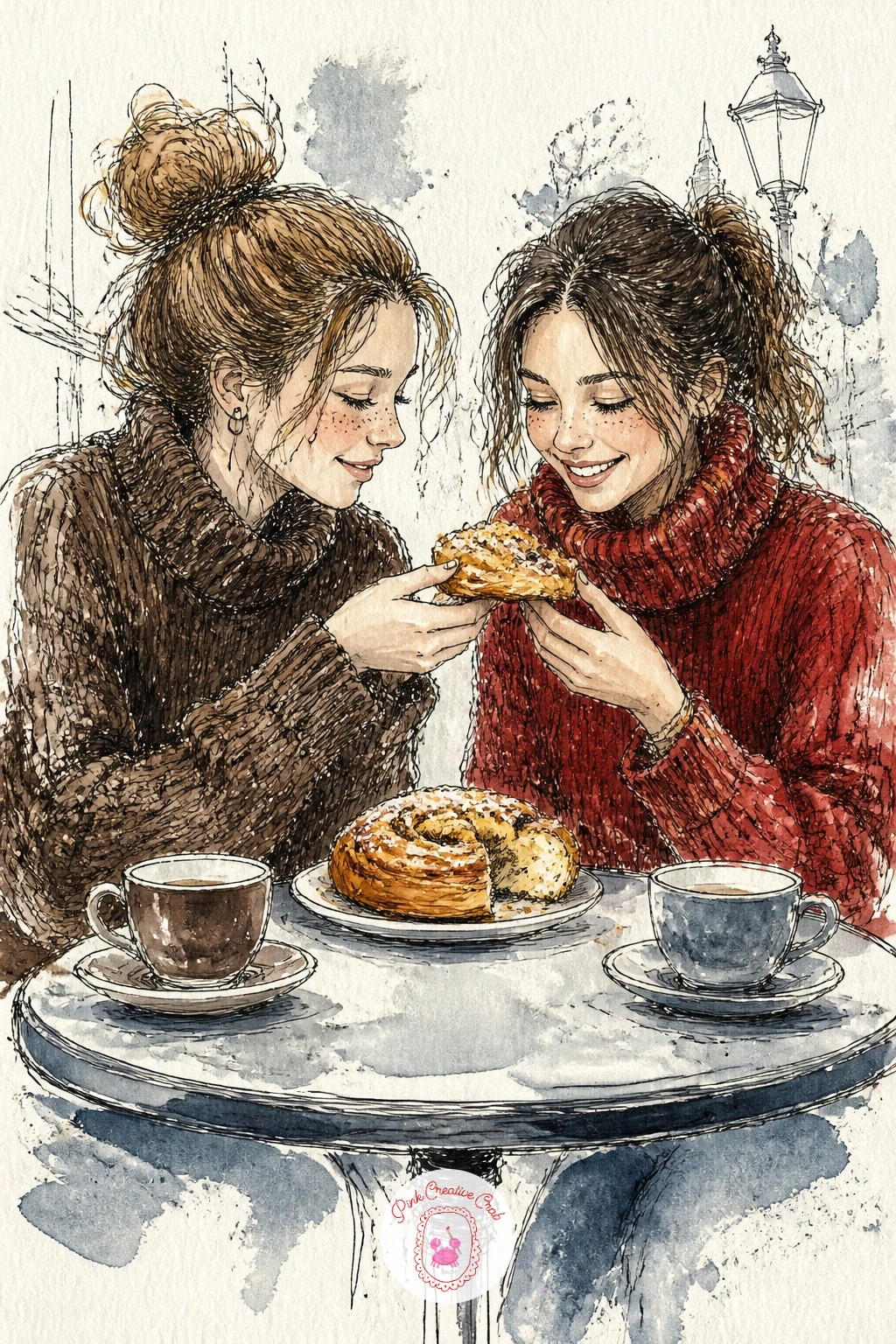
Bring warmth back to the page with friends in knit sweaters sharing a pastry at a round table. Draw the round table first as a simple ellipse, then place two or three figures leaning slightly toward its center, since leaning poses read as conversation far better than figures sitting bolt upright.
Give each sweater its own pattern of a few short diagonal hatch lines rather than the same texture repeated on every figure, which is a small touch that makes a shared table feel like a group of individuals rather than copies.
If the hands reaching for the pastry look awkward, simplify them to a soft rounded mitten shape rather than attempting fingers, since at this scale less detail almost always reads better.
Wash the sweaters in a mix of chocolate brown and cherry red, with the shared pastry as a small warm golden shape at the center of the table.
Palette: Burnt Umber,Alizarin Crimson,Yellow Ochre,Payne’s Grey
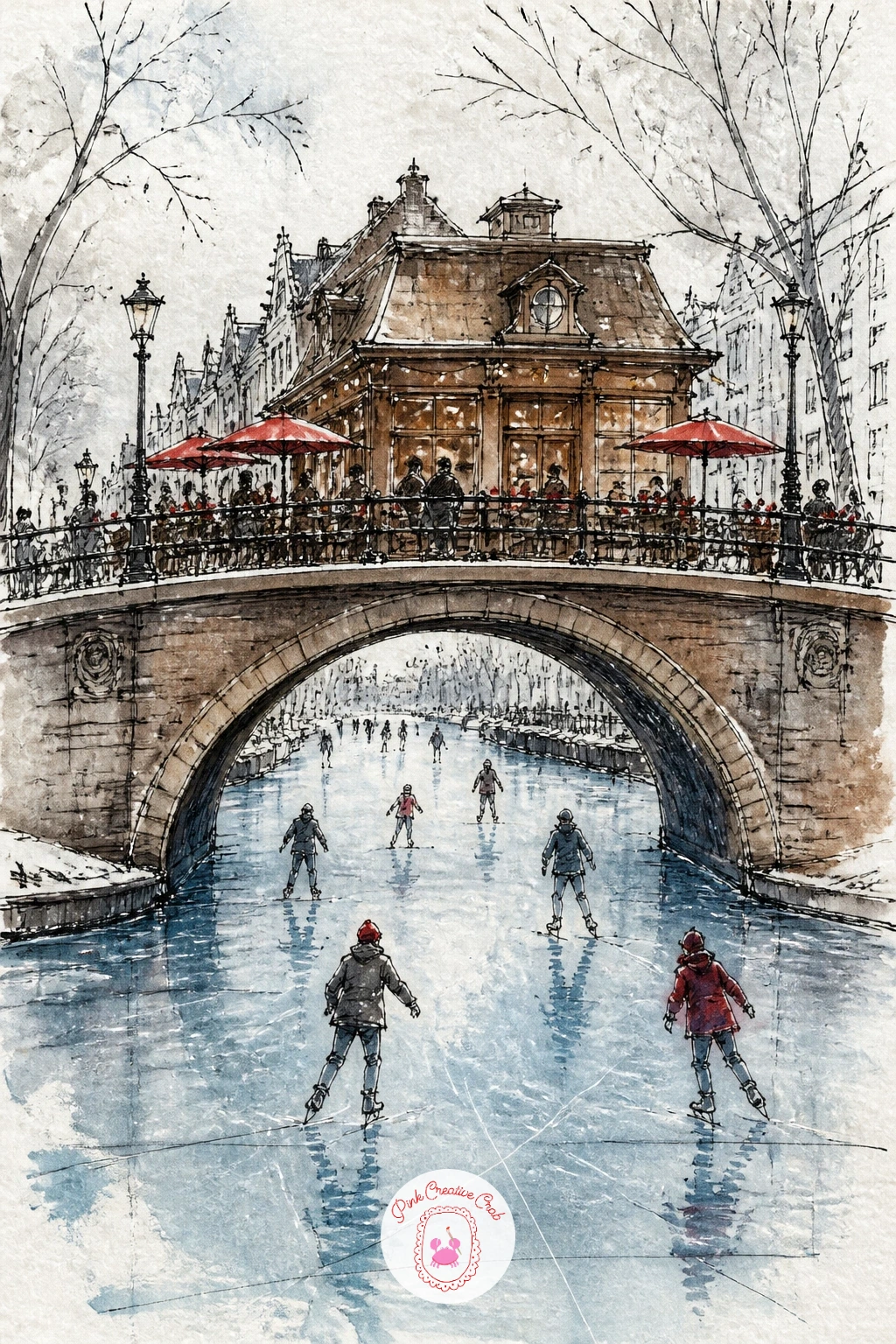
Open the view wide again with a cafe perched on a canal bridge while skaters glide across the frozen water below. Sketch the bridge arch first as a confident curved line, then set the cafe on top of it before adding the frozen canal and skaters underneath.
Draw the skaters as the smallest figures on the page, just a few quick diagonal lean lines with simple blade marks beneath their feet, since too much detail on figures this small pulls focus away from the cafe above them.
If the bridge arch feels unsteady, draw it lightly in pencil first and trace only the cleanest curve in ink, discarding the rest rather than inking every pencil attempt.
Wash the canal ice in pale icy blue with a thin grey shadow under the bridge, and let the cafe above keep the warmer chocolate brown tones.
Palette: Cerulean Blue,Payne’s Grey,Burnt Umber,Titanium White
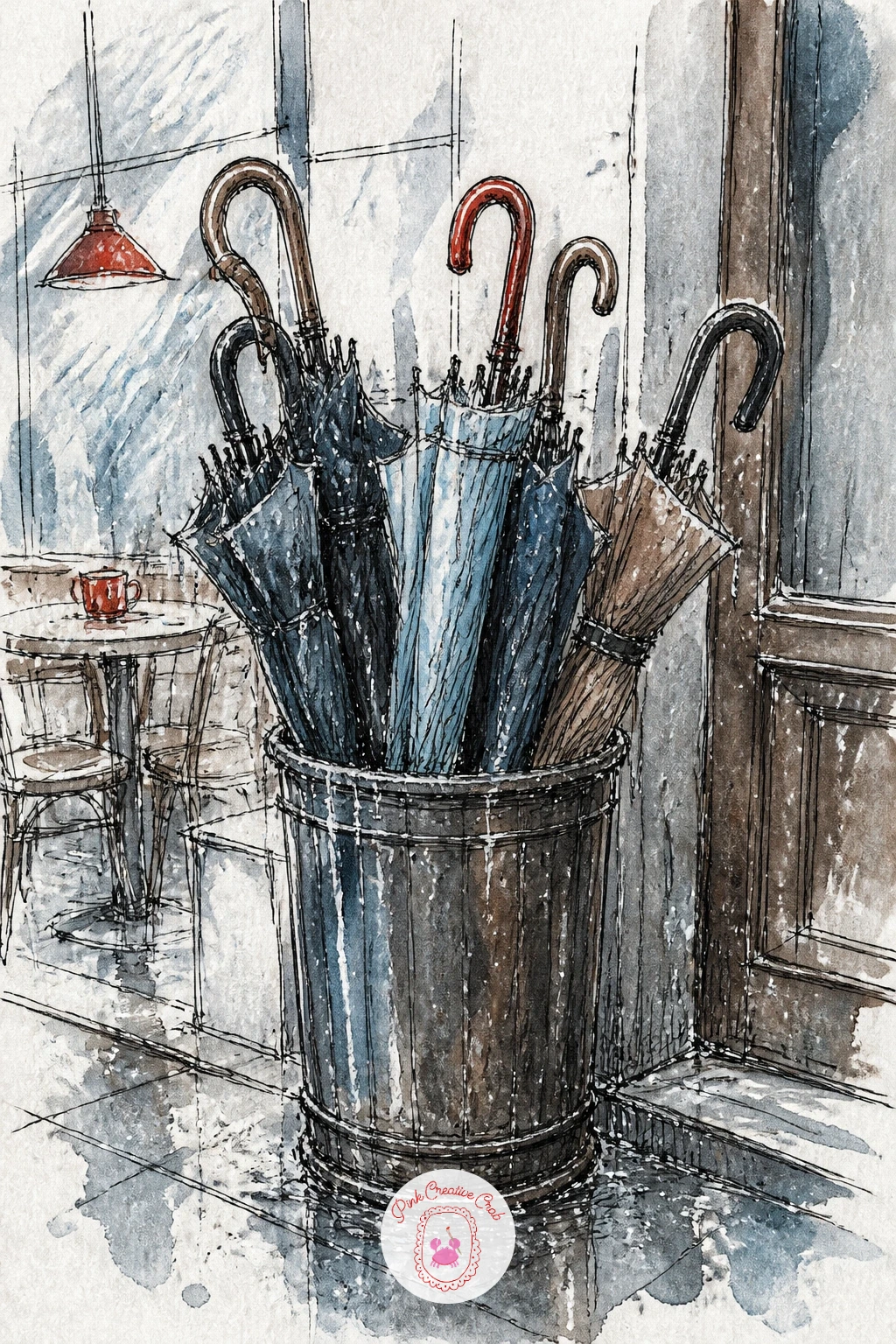
Come back indoors to something small and specific, a cafe entryway with an umbrella stand full of wet umbrellas on a sleety day. Draw the stand itself as a simple cylinder first, then add umbrella handles poking out at different heights and angles rather than standing in a neat row.
Once the ink is dry, wash the umbrella fabric in flat color and then, while still damp, dab a few streaks with a clean brush dipped in clear water to lift thin pale lines down each umbrella, suggesting rain still running off the fabric.
Keep the stand itself in plain chocolate brown with no wet texture, since contrasting a dry stand against wet umbrellas is what makes the puddle at its base convincing.
A thin grey puddle shape beneath the stand finishes the scene without needing any extra detail.
Palette: Payne’s Grey,Cerulean Blue,Burnt Umber,Alizarin Crimson
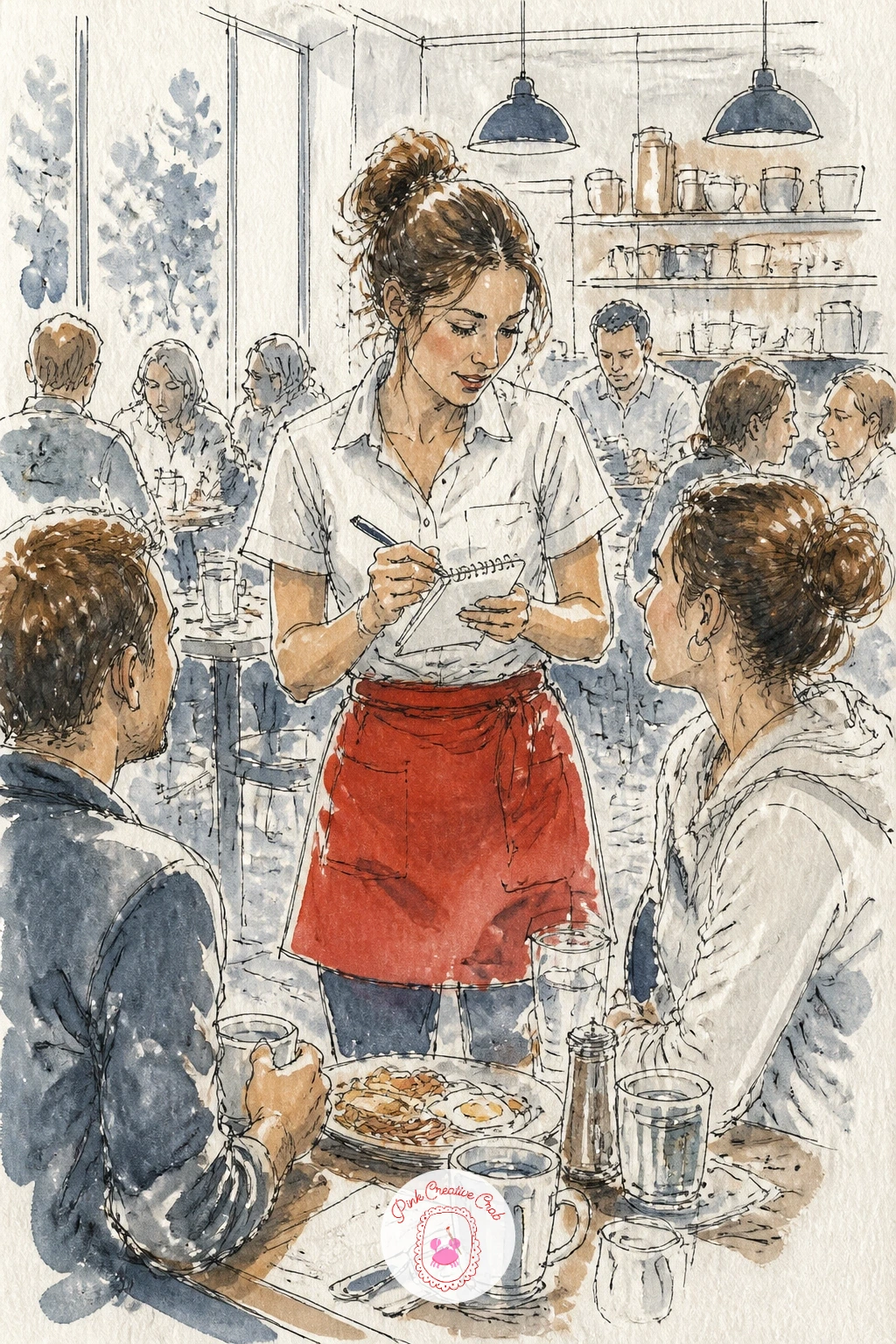
Pick up the pace with a waitress taking an order at a busy breakfast cafe, several tables of customers going at once around her. Build her figure first, order pad in hand and body angled toward the nearest table, then fill in the surrounding tables as simpler, smaller shapes further from her.
For a ten minute version, keep just the waitress and one table she is serving, with the rest of the room left as loose suggestion lines. For the forty minute version, add two or three more tables, each with its own small gesture, someone pouring coffee, someone reading a menu.
If the room feels cluttered, pull the wash back to cover only the waitress and her nearest table in full color, leaving everything further back as pale ink line only.
Finish with cherry red on her apron to anchor the eye in all that morning bustle.
Palette: Alizarin Crimson,Burnt Umber,Payne’s Grey,Titanium White
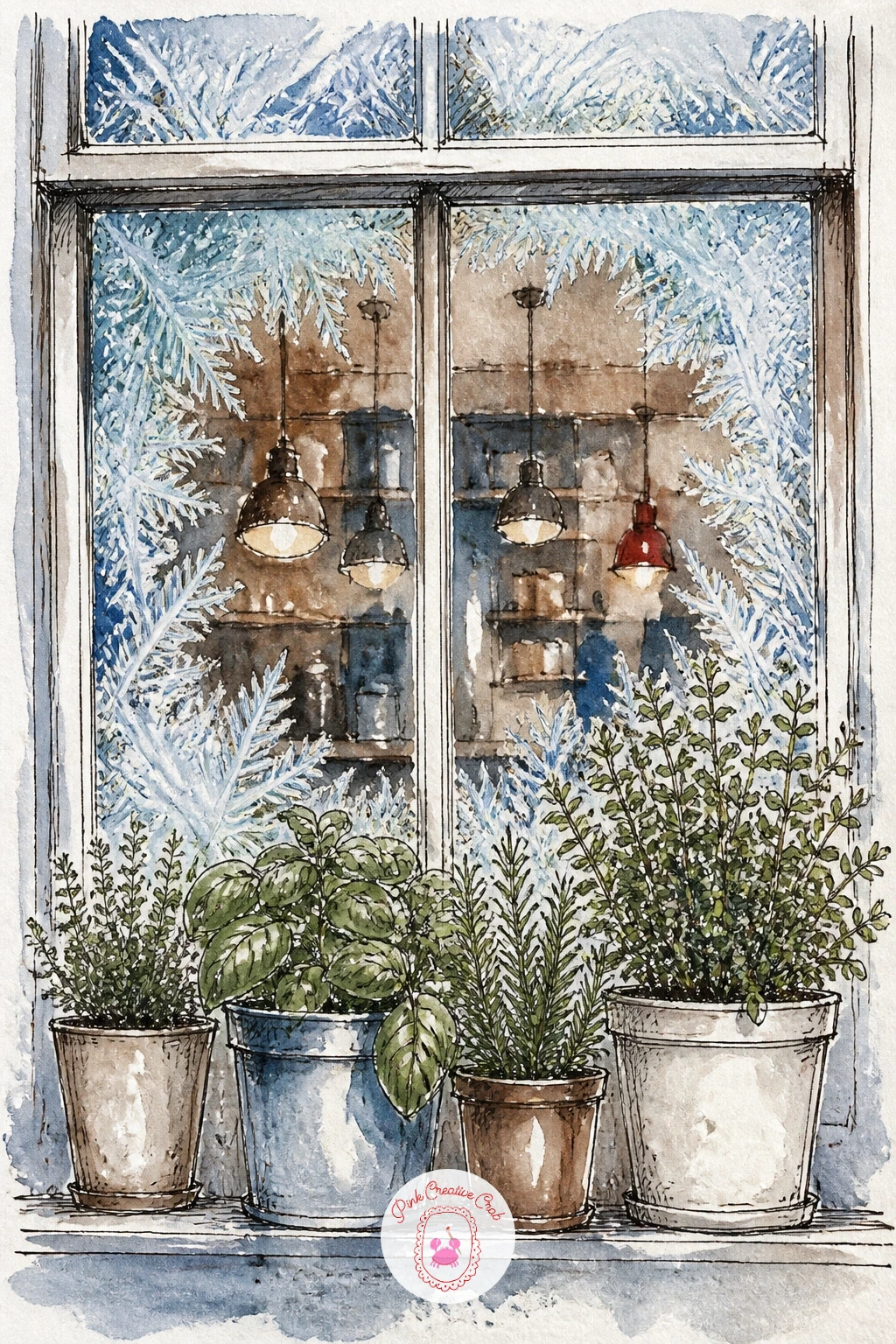
Slow back down with a cafe window holding a few potted herbs, frost creeping in at the edges of the glass. Draw the pots first as simple trapezoid shapes along the windowsill, then add loose leafy shapes above each one, kept a little scruffy since herb pots rarely look tidy.
Compare one pot’s height to the next before inking them all the same size, since a windowsill of identically sized pots looks less convincing than a slightly uneven row the way real plant pots actually sit.
Draw the frost at the window edges last, as a scratchy white border left bare of ink and wash, or lifted gently with a damp brush if you already painted over it by accident.
Wash the herb leaves in a soft green and the frosted glass in the palest icy blue you can mix.
Palette: Sap Green,Cerulean Blue,Burnt Umber,Titanium White
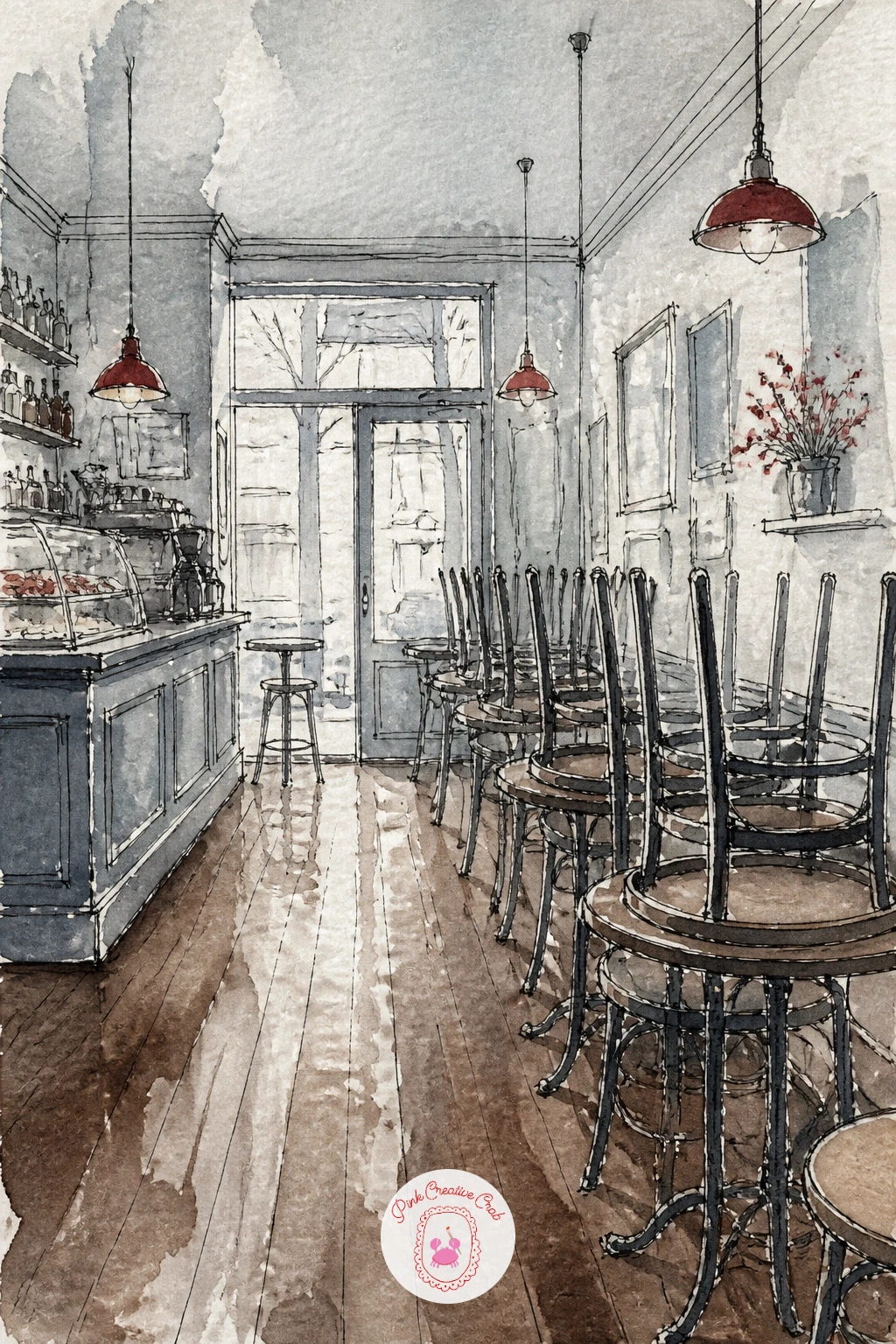
Try the quietest scene on this list, an empty cafe at opening time with the chairs still stacked up or turned onto the tables. Sketch one table and its upturned chair first, getting the angle of the chair legs pointing up convincing, then repeat the pattern down the row with small variations in angle.
Vary it next time by changing the light: try this same empty room lit by early grey morning light through the windows first, then sketch it again later lit by the warm glow of the lights just switched on, since the same furniture reads completely differently under each one.
Keep the color minimal here, since an empty room benefits from restraint more than any other scene on this list.
A single chocolate brown wash across the floor and chair legs, with the walls left white, keeps the whole page feeling calm and unhurried.
Palette: Burnt Umber,Payne’s Grey,Titanium White,Cerulean Blue
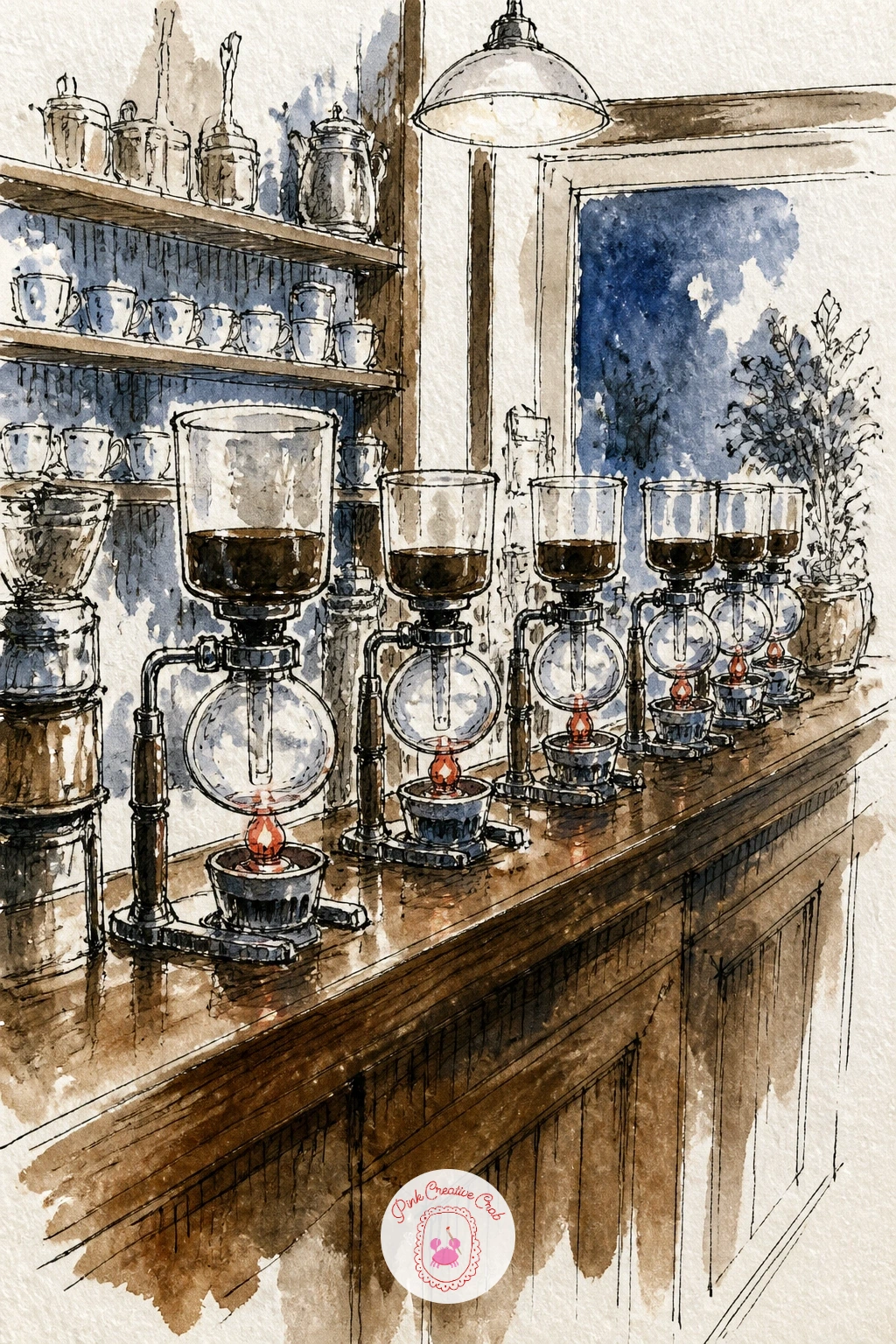
Shift styles with a Japanese kissaten, a long counter lined with siphon coffee makers and tall stools in front of it. Draw one siphon maker carefully first, its glass bulb and stand a distinctive silhouette worth getting right, then repeat it down the counter in a slightly simplified form for the rest of the row.
The eye level matters again here: sit the horizon line roughly where the counter surface meets your view, so each siphon stand reads as sitting upright on the counter rather than floating above or sinking below it.
Keep the glass bulbs almost entirely unwashed, just the faintest grey tint, since clear glass reads best as mostly bare white paper with only a few curved highlight lines in ink.
Wash the wooden counter in chocolate brown and let one tiny flame glow in cherry red beneath a single siphon to suggest the brewing heat.
Palette: Burnt Umber,Payne’s Grey,Alizarin Crimson,Titanium White
Narrow the focus to a cafe table by the window holding just a laptop, a scarf and a pair of gloves, no figure in sight. Draw the laptop first as a simple open rectangle shape, then let the scarf trail loosely off the table edge and drop the gloves beside it in a relaxed, slightly overlapping pile.
Objects like this are a good proportion exercise even without a figure: compare the laptop’s width to the scarf’s length before inking, since a scarf drawn too short will look like a napkin rather than a scarf left in a hurry.
Keep the window behind softly washed in blue so the warm objects on the table stand out clearly against the cold glass beyond.
Wash the scarf in cherry red, the gloves in chocolate brown, and leave the laptop itself a plain grey with no detail beyond its basic shape.
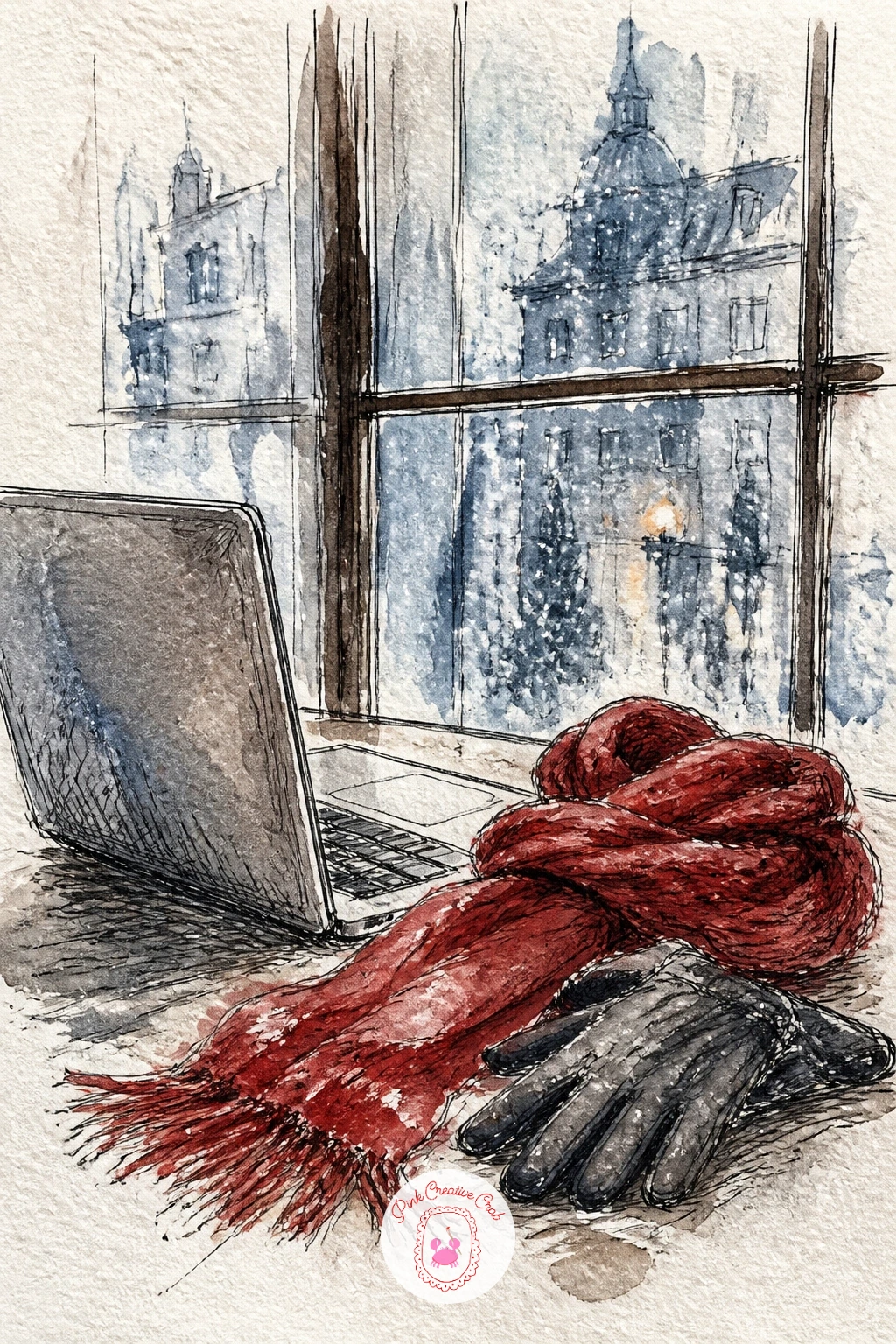
Palette: Alizarin Crimson,Burnt Umber,Cerulean Blue,Payne’s Grey
Add motion with a cafe tucked inside a train station, travelers and suitcases passing close by its tables. Sketch the station’s high open space first with a few long converging lines suggesting the ceiling and platform beyond, then drop the cafe tables in near the bottom of the page where you are standing.
Travelers further down the platform should shrink and simplify quickly, just loose coat shapes and a suitcase silhouette, while anyone seated at the cafe table nearest you gets the most detail on the page.
If the station ceiling lines feel too technical, loosen them deliberately with a slightly wobbly hand, since a station sketch benefits from looking quick and observed rather than drafted.
Wash the cafe tables in warm chocolate brown and let the station itself stay in cooler greys to separate the warm foreground from the busy, chilly space around it.
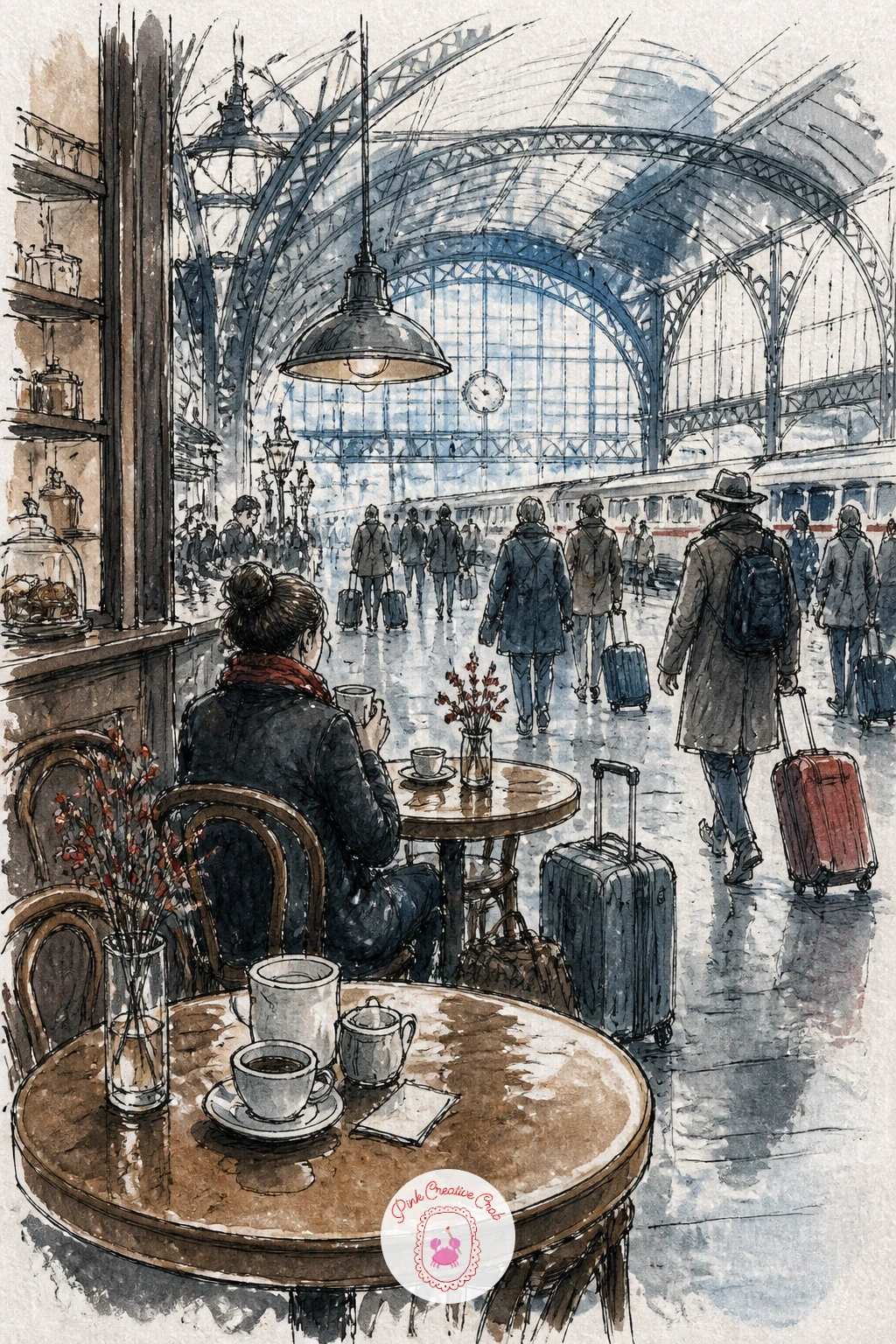
Palette: Payne’s Grey,Burnt Umber,Cerulean Blue,Titanium White
Step back outside for a snowy cafe garden, chairs stacked up for the season and one cat curled asleep on top of them. Draw the stacked chairs first as a simple repeated zigzag of legs and backs, then settle the cat along the topmost seat, its shape softening the hard angles of the furniture below.
Snow sitting on stacked chairs is a good texture exercise: once the chair ink is dry, wash a flat grey blue over the whole stack, then lift small patches back to white with a dry brush where snow would catch on each horizontal surface.
Keep the cat itself drier and warmer in tone than the chairs around it, so the one living thing in the scene stands out against all that cold metal.
Wash the cat in chocolate brown and leave the chairs in pale blue grey throughout.
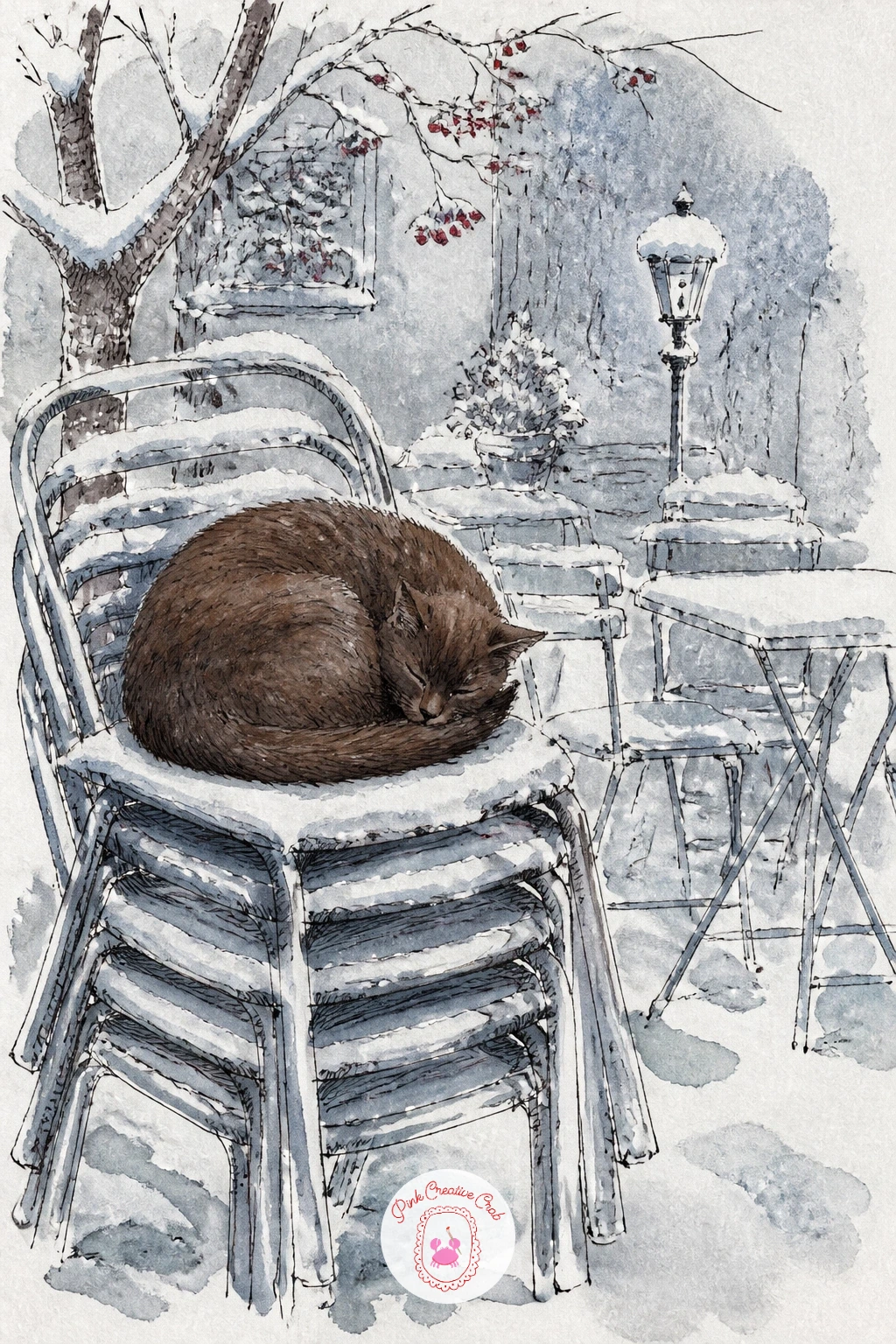
Palette: Cerulean Blue,Payne’s Grey,Burnt Umber,Titanium White
Warm the mood with a mother and daughter sharing hot chocolate in a cafe booth, two mugs between them topped with a little cream. Draw the booth seat back first as a tall simple curve, then place the two figures close together inside it, the daughter smaller and leaning in toward her mother’s side.
If you have never drawn two figures sharing a small space before, start with the taller figure’s outline first, then build the smaller one slightly overlapping her, since drawing them separately almost always leaves an awkward gap between them once inked.
Keep both mugs simple rounded shapes with a small cloud of whipped cream on top, topped with a single dot of cherry red for a sprinkle of cinnamon or a cherry.
Wash their coats in chocolate brown and cherry red and let the booth seat stay a plain warm grey behind them.
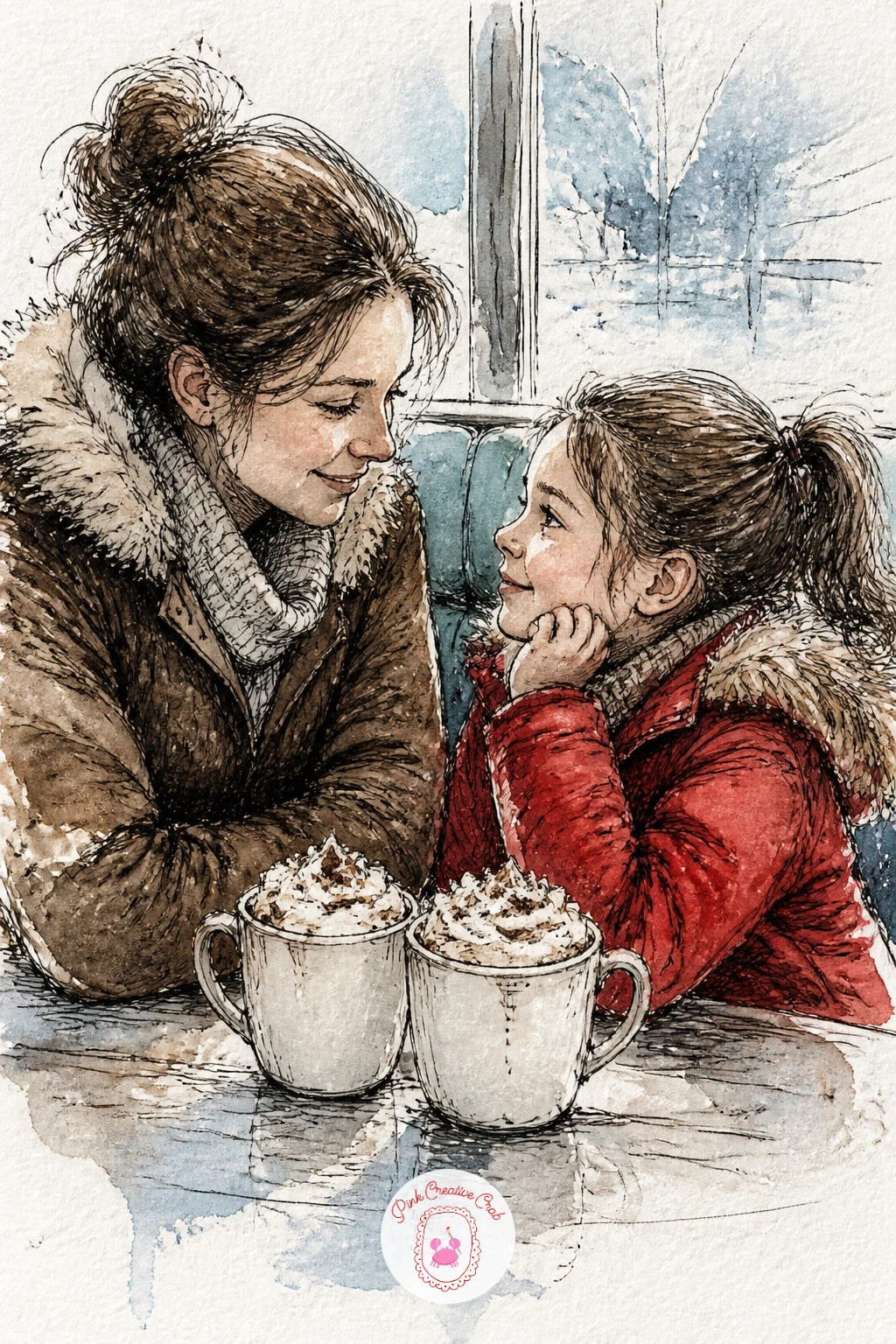
Palette: Burnt Umber,Alizarin Crimson,Payne’s Grey,Titanium White
Close the set with a cafe on a ski village square, snowboards leaning in a rack just outside its door. Build the square itself first with a loose sense of open space around the cafe, then add the snowboard rack as a simple frame holding three or four boards at slightly different angles.
Vary it next time by swapping the snowboards for skis, or by changing the time of day entirely, since this same square sketched at dusk with warm window light instead of flat daylight will feel like a completely different scene even though nothing else about the drawing changes.
Keep each snowboard a different simple pattern of color blocks rather than identical boards, which reads as a believable row of borrowed gear rather than a repeated shape.
Wash the square’s snow in pale icy blue and let the cafe windows glow warm chocolate and cherry behind the rack of boards, a fitting last scene for the whole set, and a good companion piece to the cozy town squares in the Christmas village painting ideas if you want to keep sketching winter streets.
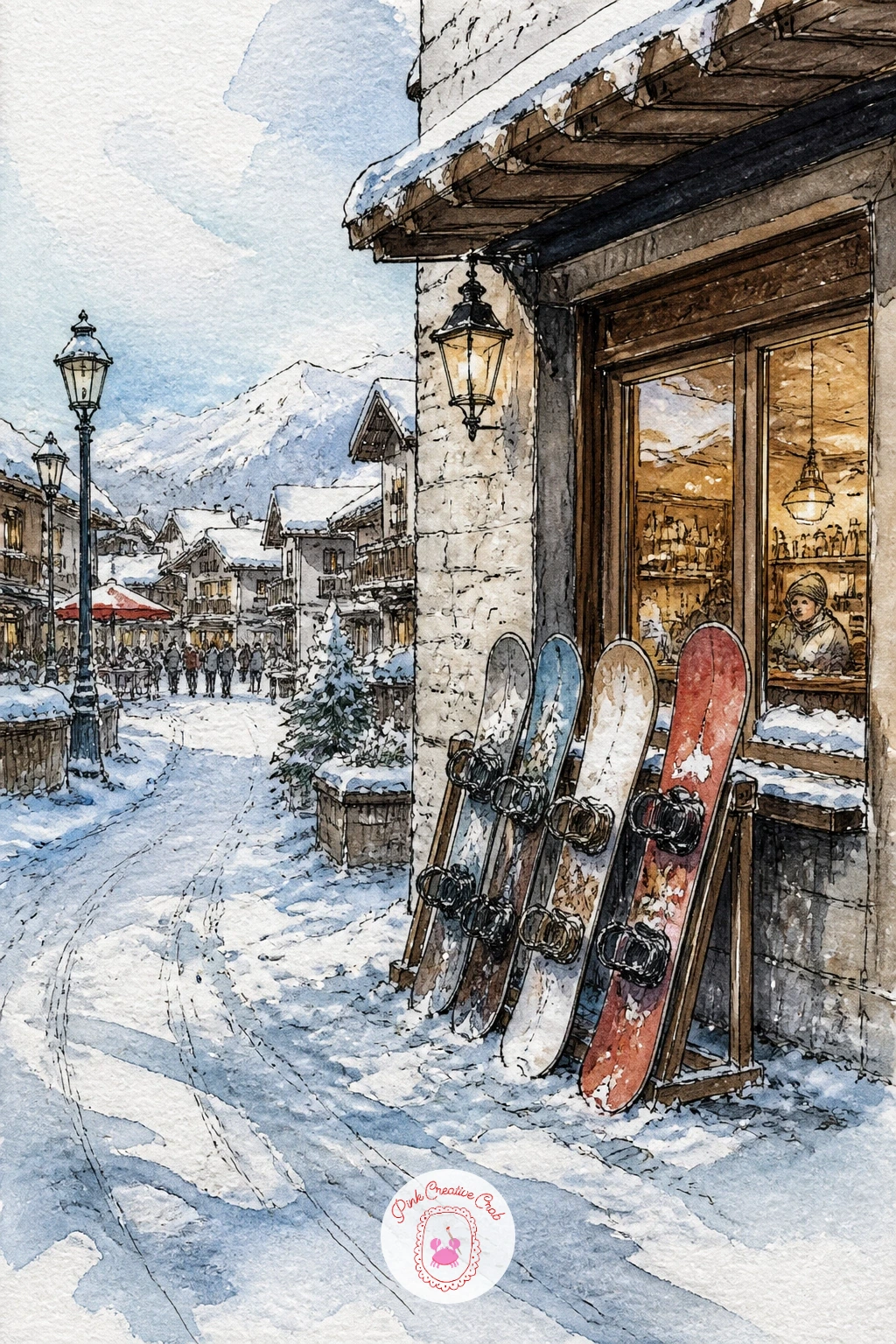
Palette: Cerulean Blue,Burnt Umber,Alizarin Crimson,Titanium White
What to Do Next
Pick whichever scene is already in your head, grab your fineliner and a small travel watercolor set, and start with the line work before any color touches the page. A sketchbook page of cold press paper is all you need to finish one of these in a single sitting, so there is no reason to wait for the perfect afternoon.
Frequently Asked Questions
What paper works best for cafe drawing with ink and watercolor?
Cold press watercolor paper works best, since it holds light washes without buckling. A sketchbook rated at least 140lb lets you add steam, snow or window reflections without the page warping.
Do I need to draw a cafe from life or can I work from photos?
Either works well for this style, since the loose fineliner approach forgives small inaccuracies. Sketching from life sharpens your eye for gesture faster, but a photo lets you study details like awning folds or steam at your own pace.
How do I stop my cafe scenes looking too stiff or architectural?
Keep your fineliner lines slightly wobbly rather than ruler straight, especially on awnings, windows and furniture. Add washes loosely and let some edges bleed, since precision is what makes a cafe sketch look traced instead of observed.
What is the easiest cafe scene to start with as a beginner?
A still life subject with no figures, like the bistro chairs with blankets or the umbrella stand, is easiest to start with. It lets you practice line and wash without worrying about proportion or pose.
How much watercolor wash should I add to a fineliner cafe sketch?
Keep washes thin and let plenty of white paper show through, since a light touch keeps the urban sketching feel. Save your strongest color, usually the cherry red, for one small accent rather than spreading it across the whole scene.
Have any thoughts?
Share your reaction or leave a quick response — we’d love to hear what you think!
-
 0
-
0
-
0
-
0
-
0
-
0


