Table of Contents
A writer junk journal gathers up everything that makes a quiet writing life feel so appealing: old typewriters, fountain pens, stacked drafts and tea gone cold by the window. This kit has 19 scene pages full of desks, letters and reading nooks, 4 seamless background papers for linings and covers, and 4 lined writing pages ready for your own words.
Print the whole set on matte cardstock around 160 to 200gsm so the ink colours stay crisp and nothing shows through the back. Set your printer to its best or highest quality setting, choose actual size rather than fit to page, and trim each sheet to your journal size once the ink is fully dry.
Using these images: free for personal projects such as printing, coloring, cards, journals and gifts. Handmade items that include them may be sold up to 30 pieces per design. More than that is commercial use and is not permitted, and neither is selling or sharing the images themselves or passing them off as your own. Please ask before any other use.
Desks And Typewriters
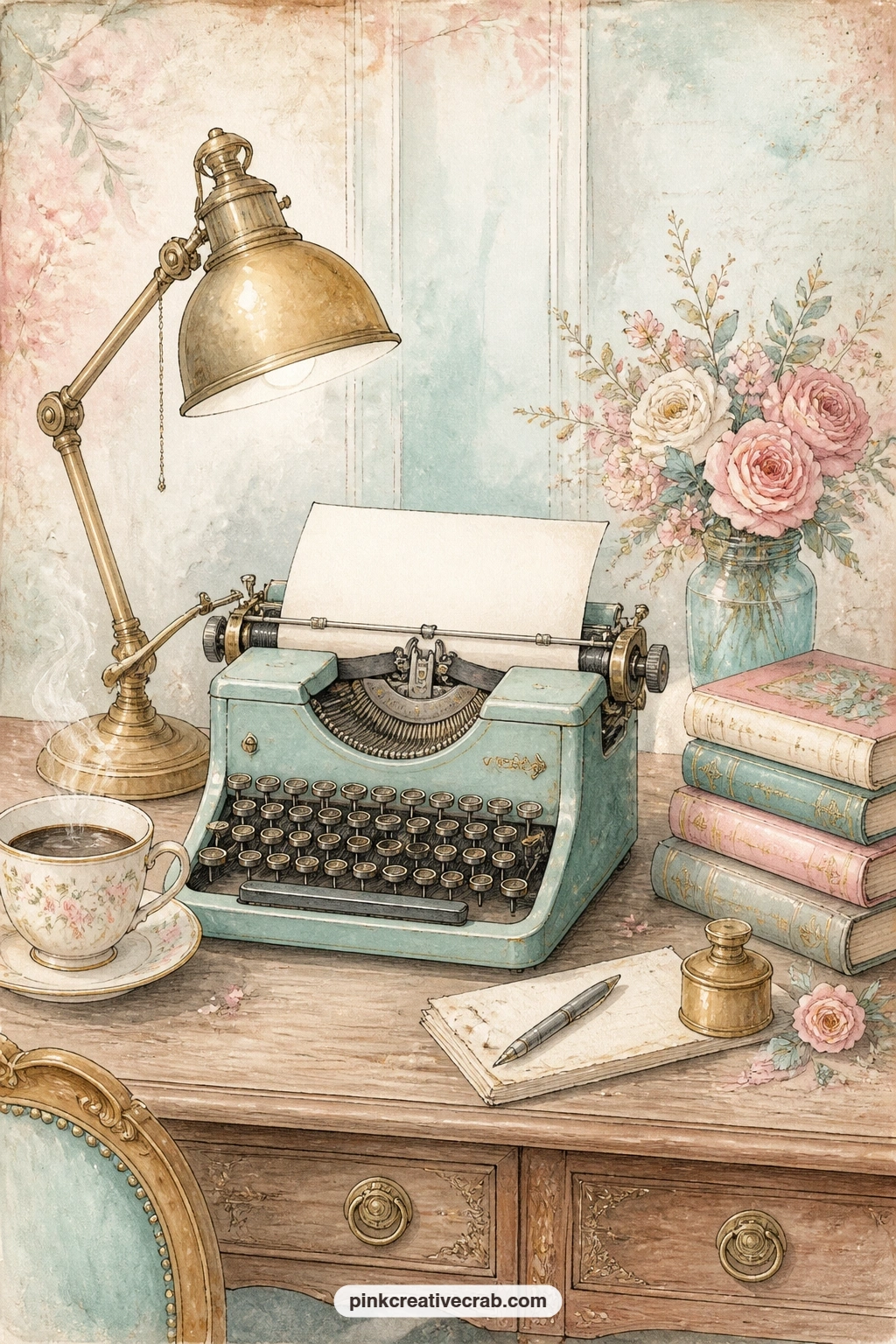
Settle this scene right at the start of your journal, pairing it with a page of typing prompts or a line from a favourite opening sentence copied beneath the lamp’s glow.
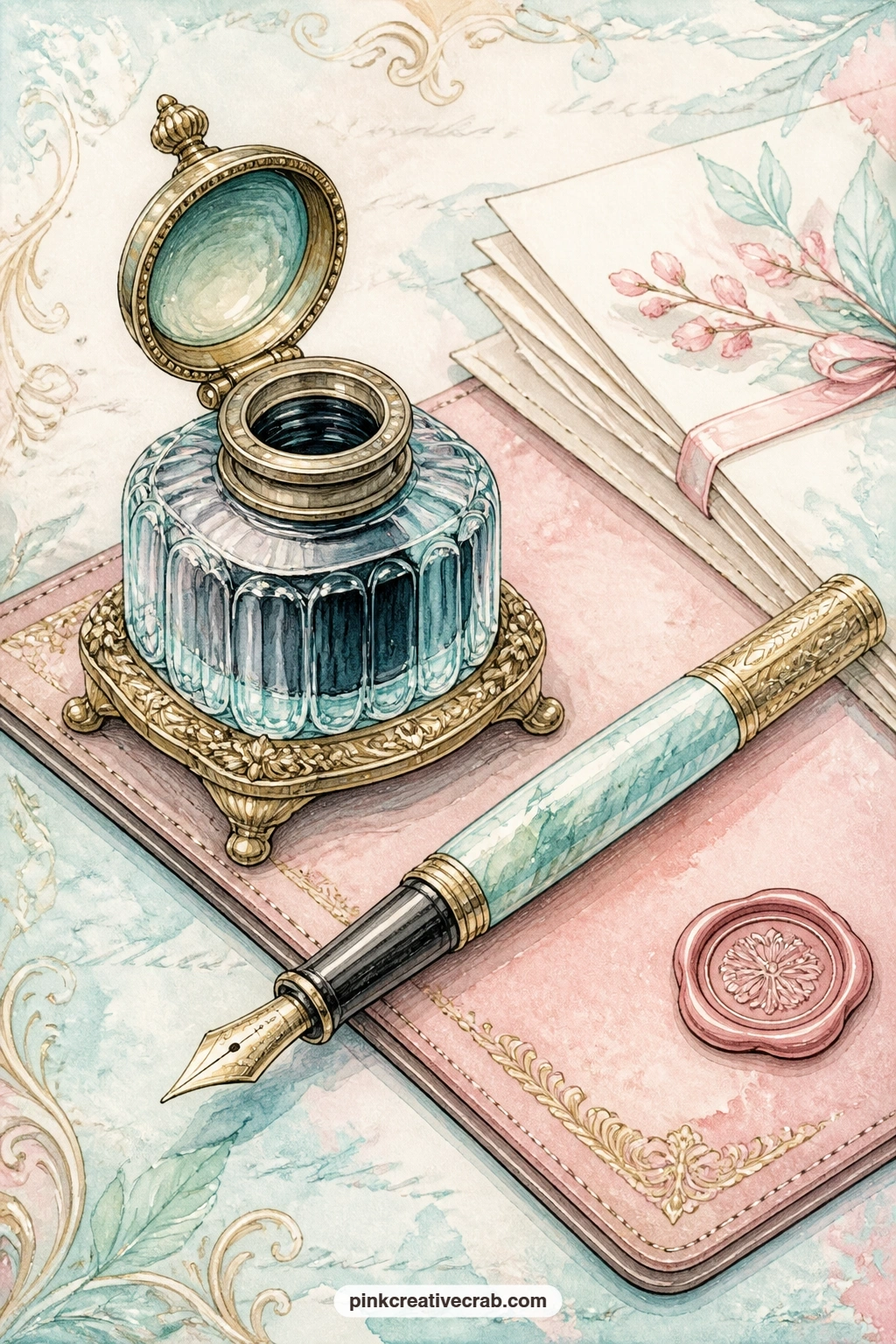
Glue a torn scrap of real handwriting beside this one, or tuck a spare nib or a pressed leaf under the blotter’s corner for a little texture that catches the light.
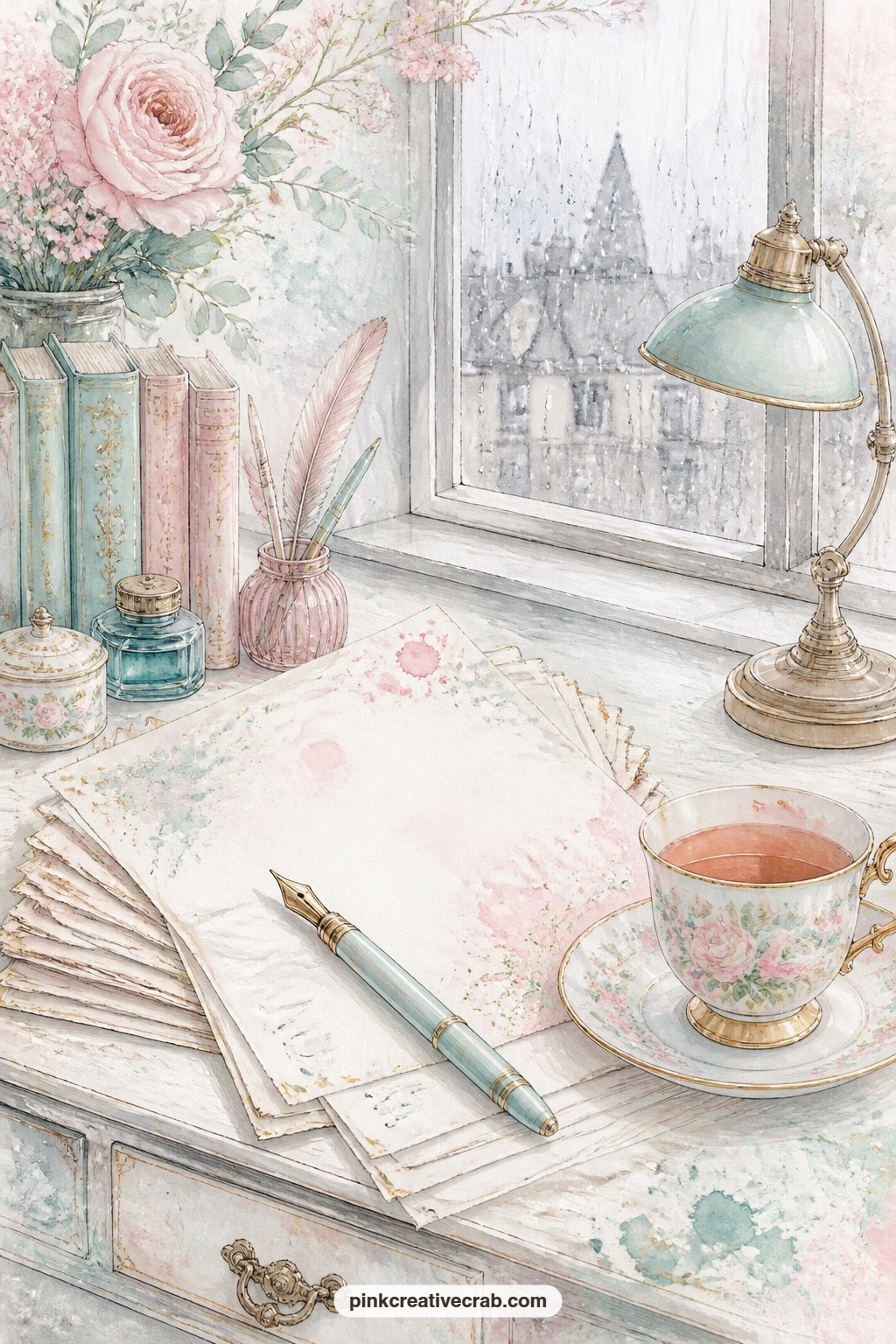
Raindrops on the glass, a teacup gone lukewarm and a leaning stack of manuscripts make this the page for a slow, thoughtful afternoon of writing or rereading old pages.
Beginners can leave the window plain and let the desk carry the scene, while confident painters might add a hint of blurred garden beyond the glass to deepen the mood.
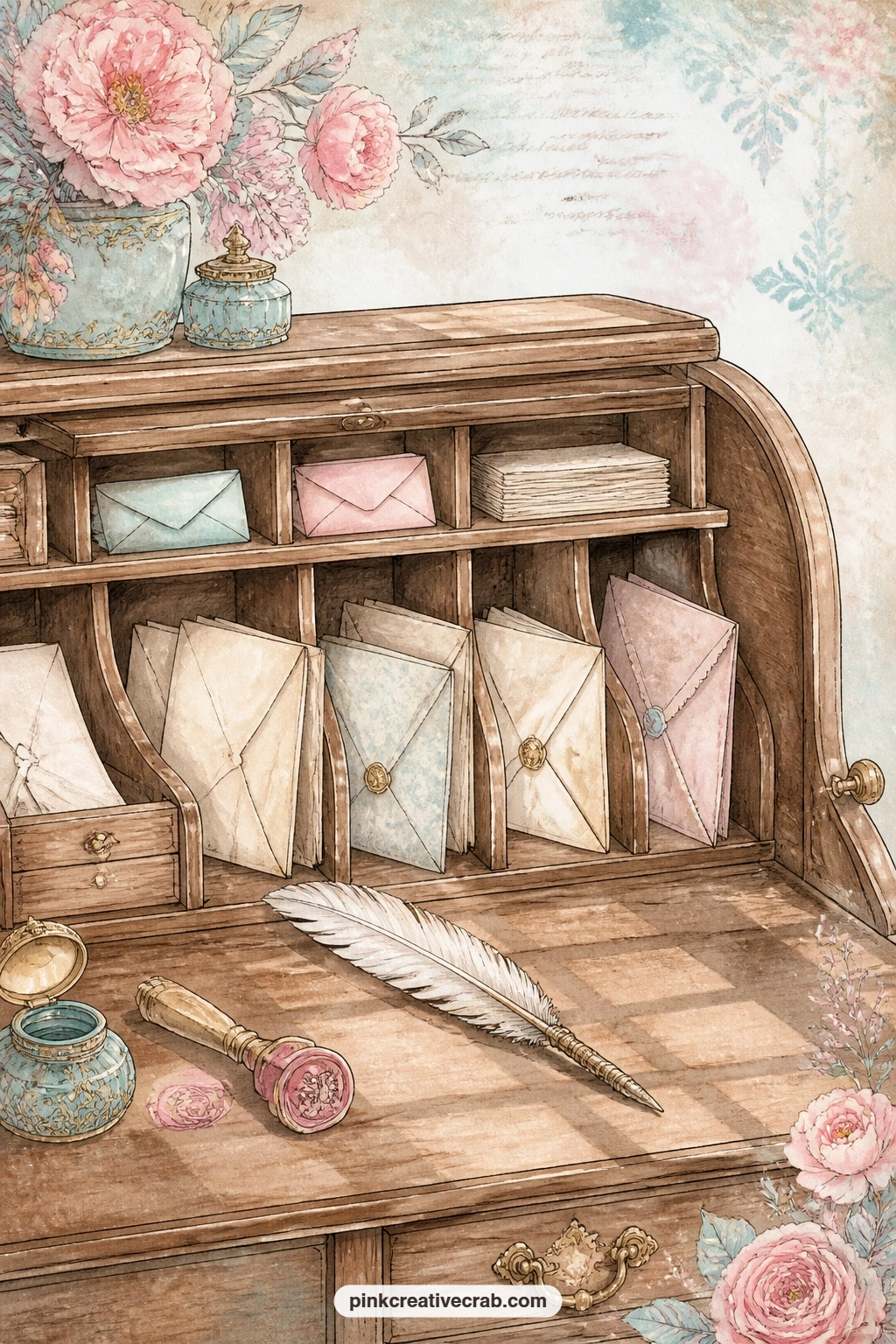
The usual mistake here is filling every pigeonhole with the same envelope shape. Vary the sizes and tilts of the letters and leave one hole with just a stick of sealing wax.
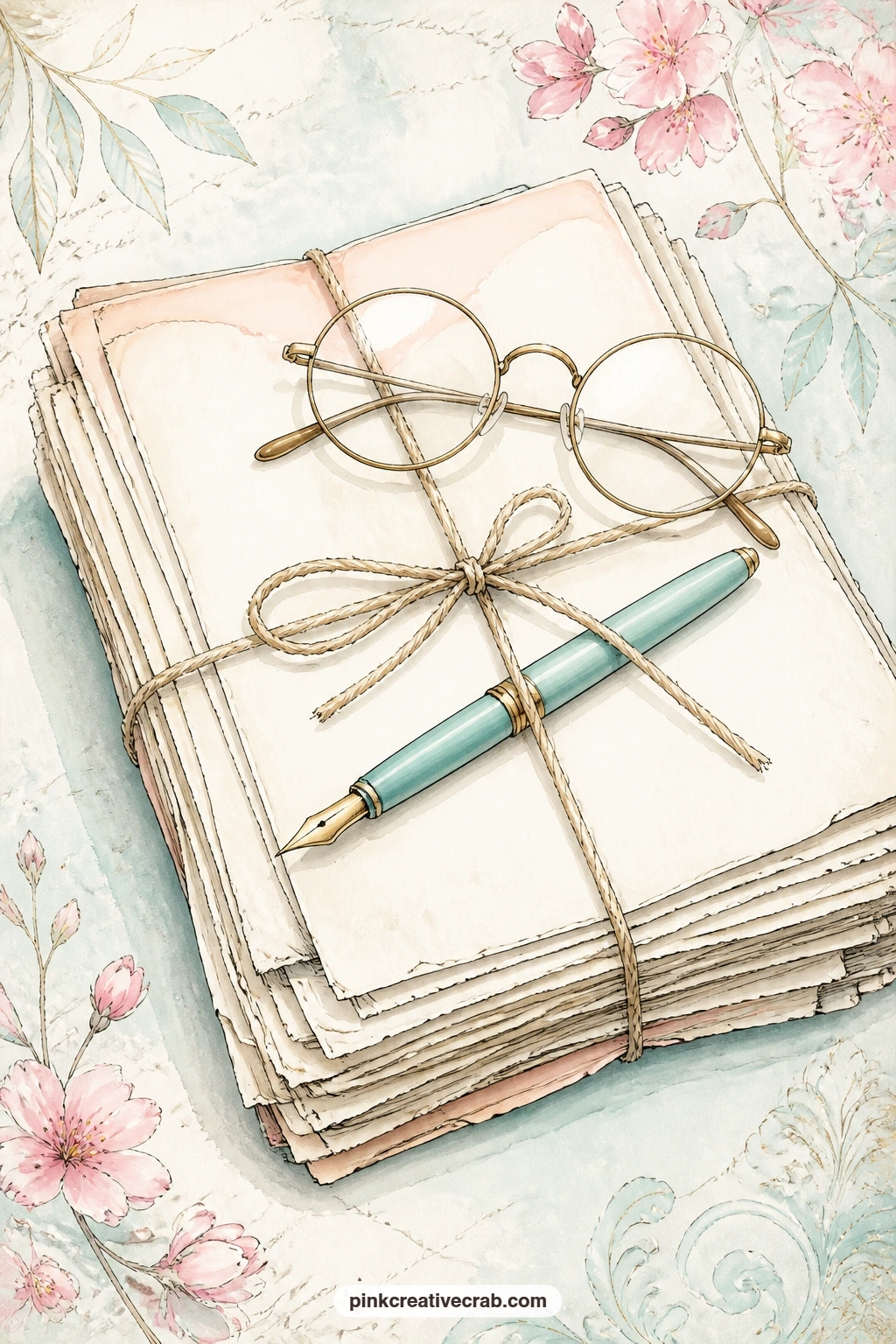
Pair this page with the fountain pen background later in the set, slipping a strip of it behind the string as if the bundle were resting on patterned paper.
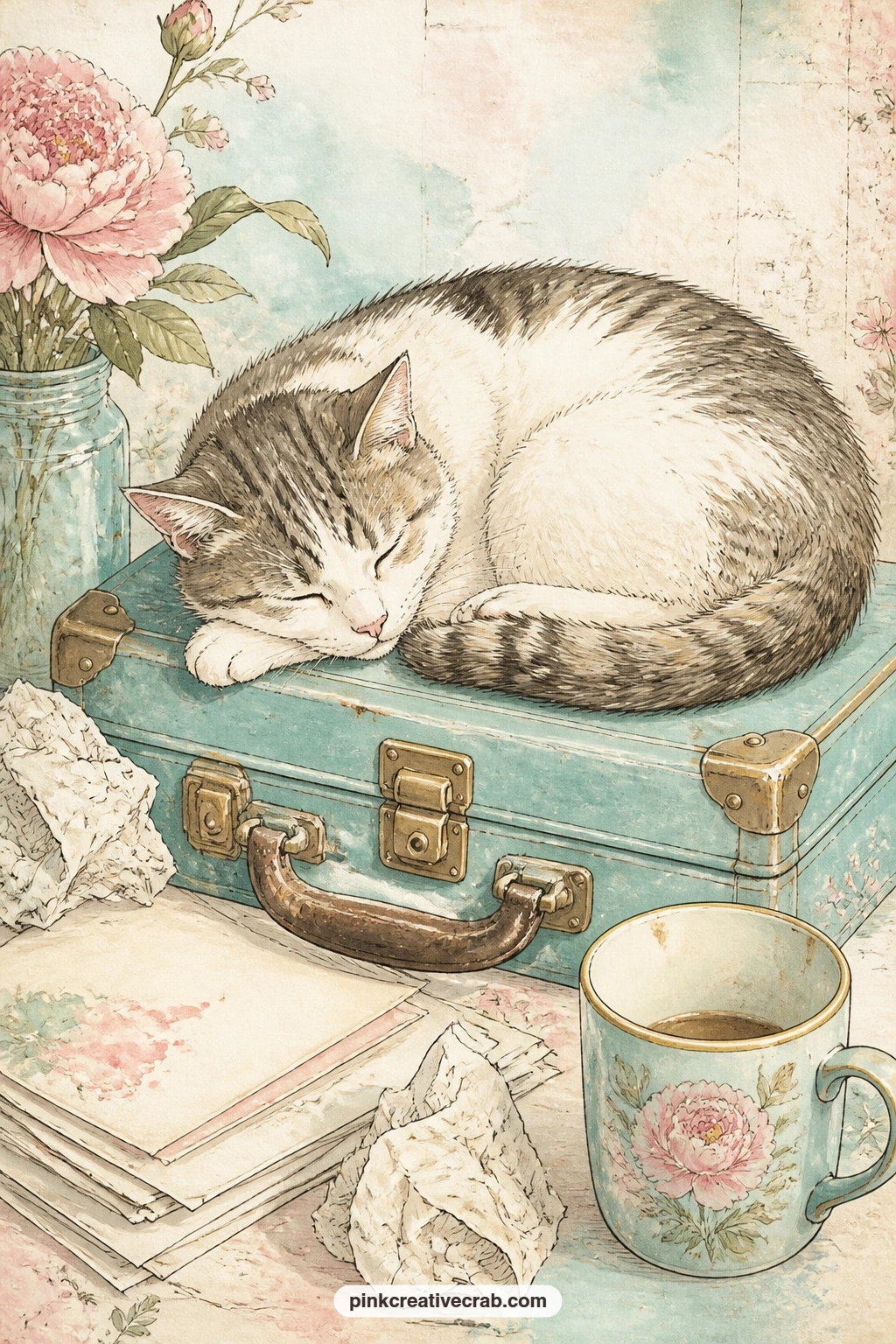
This one is for the cat lover in a gift journal, the friend who always has a small shadow curled up wherever she tries to work.
Leave space near the crumpled drafts for a note about a real pet, or simply enjoy the picture of quiet company while the words refuse to come.
Rooms And Reading Nooks
climbing roses around the door, an open notebook on the little desk inside: what would you write out here that feels too ordinary for the desk indoors?
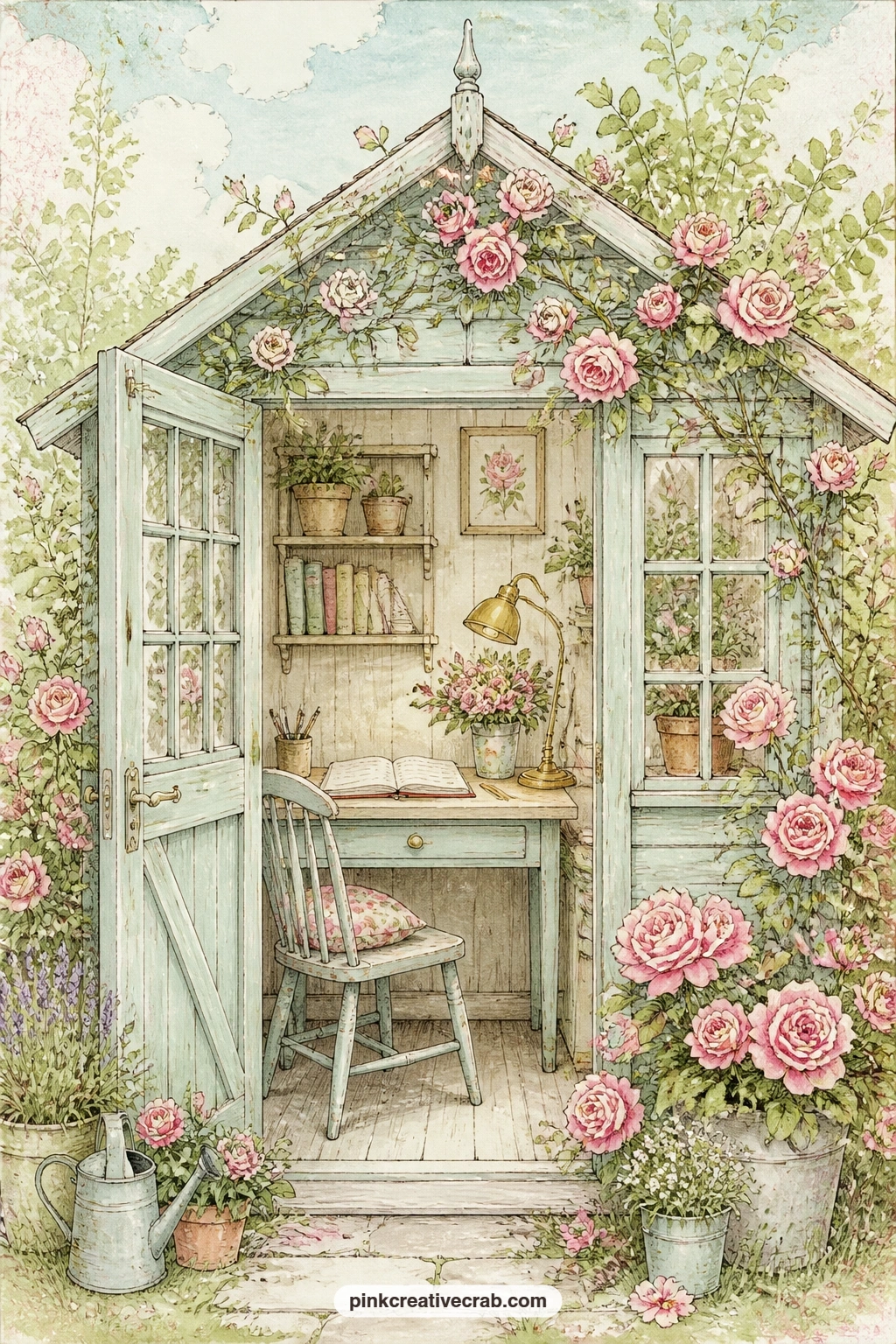
Give this page to five quiet minutes: jot one line about the last book that kept you up too late, then set the pencils down and let the lamp glow do the rest.
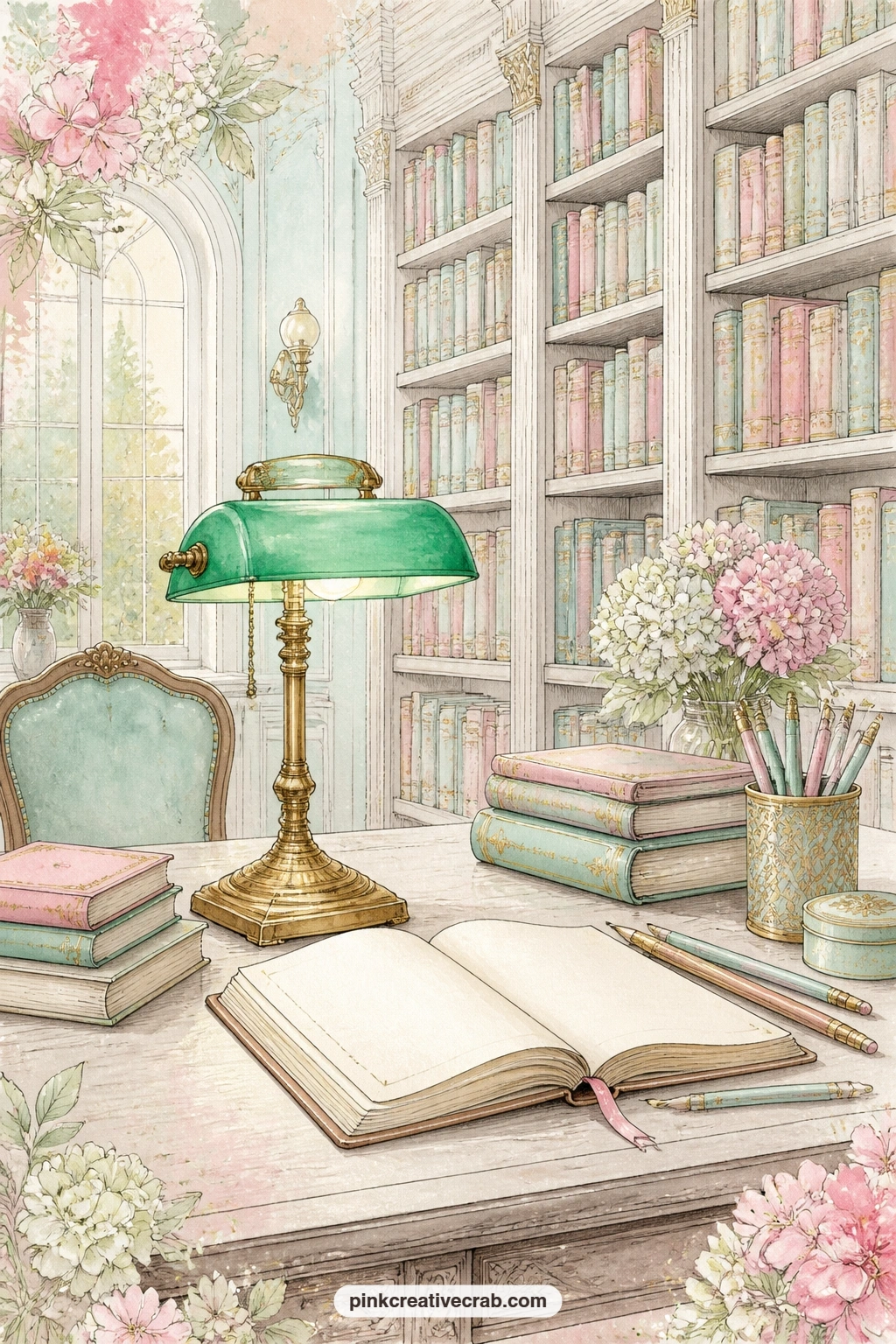
A quill resting in its ink pot beside an unrolled parchment scroll stamped with a wax seal brings an old letter-writing mood to any spread near the start of the journal.
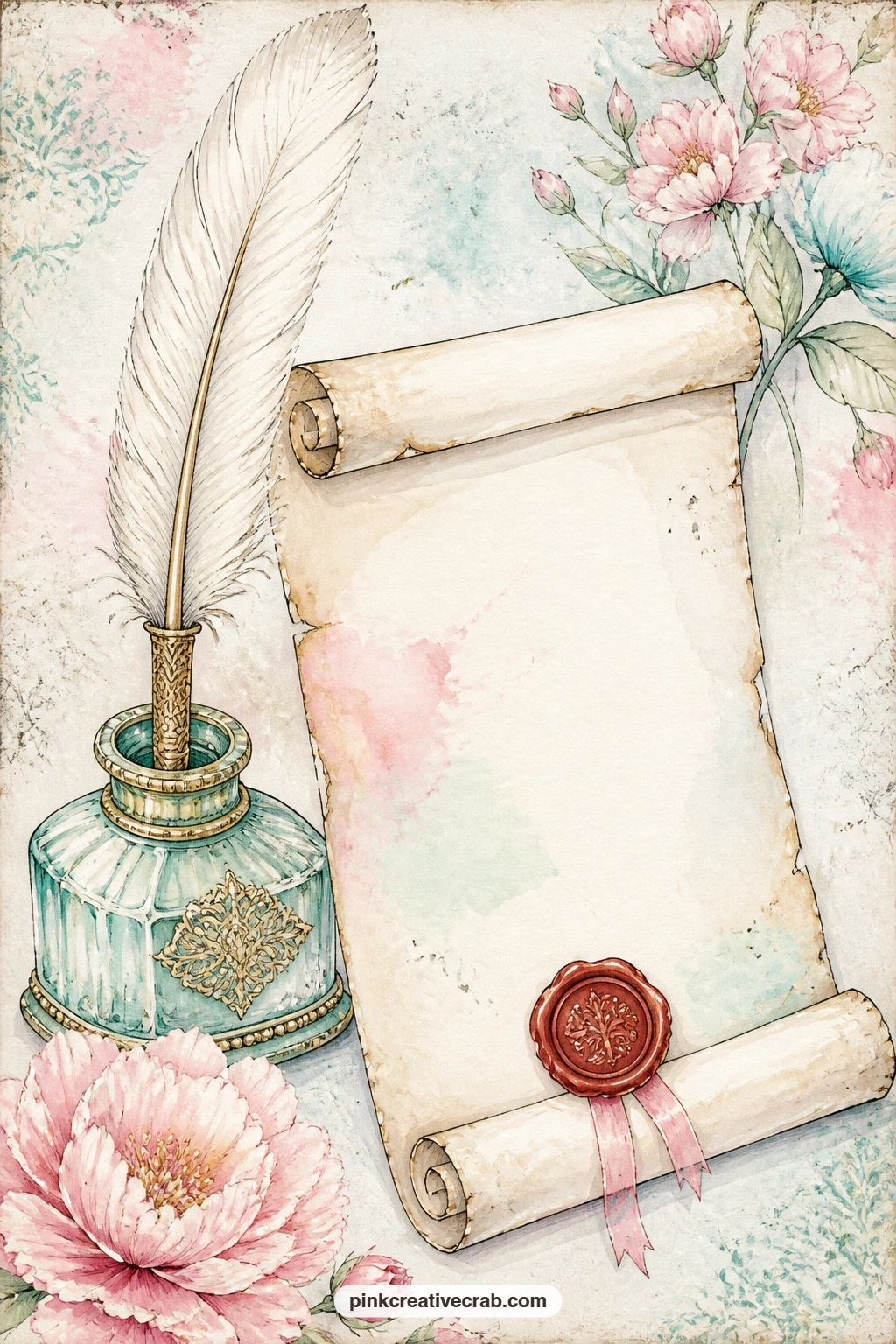
Try tea-staining just the bottom edge of this page before gluing it in, as if the croissant crumbs and espresso had left their mark on the paper over the years.
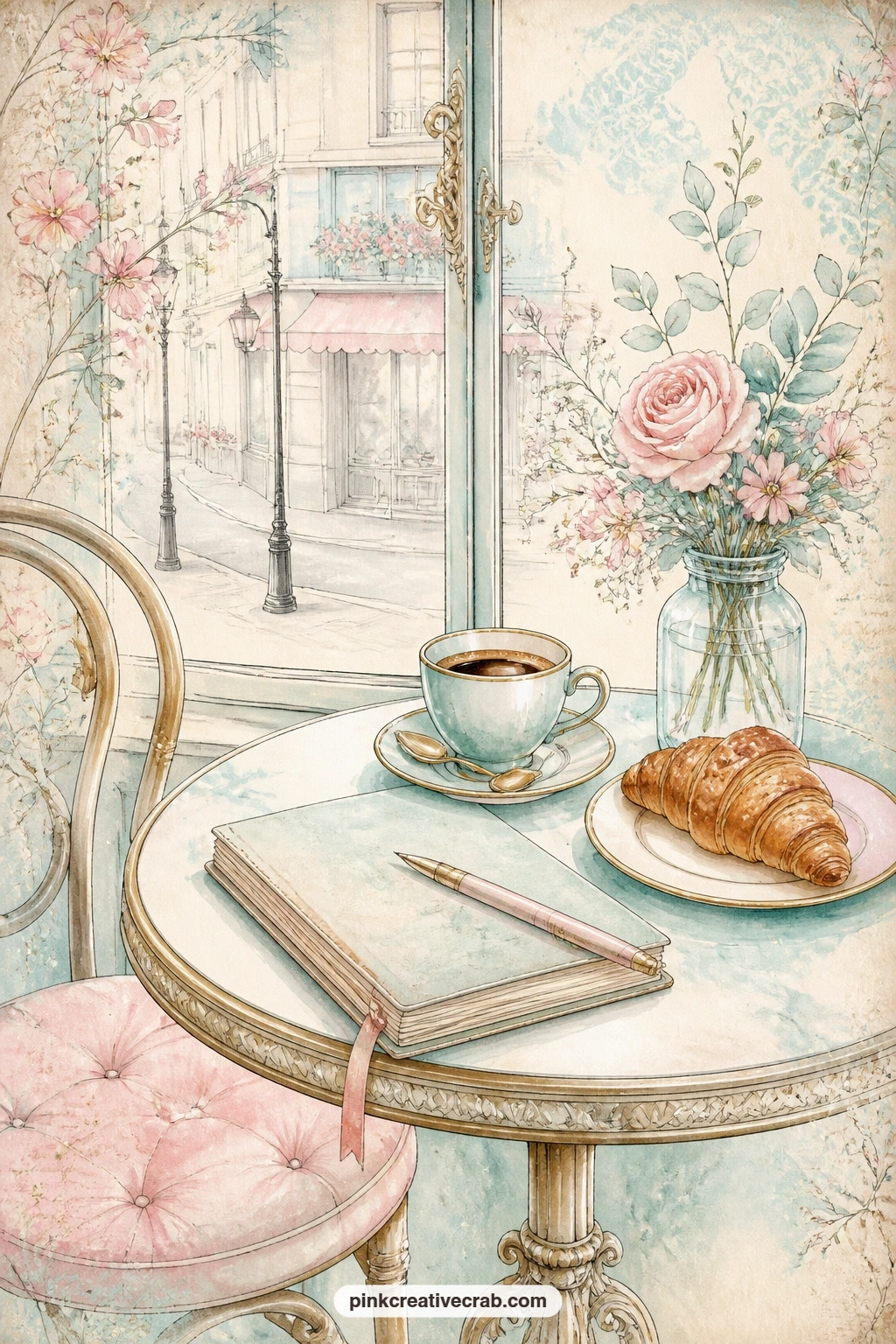
Stacked books lean against the wall, a typewriter sits ready under the skylight, and the slanted ceiling makes this corner feel hidden away from everything else in the house.
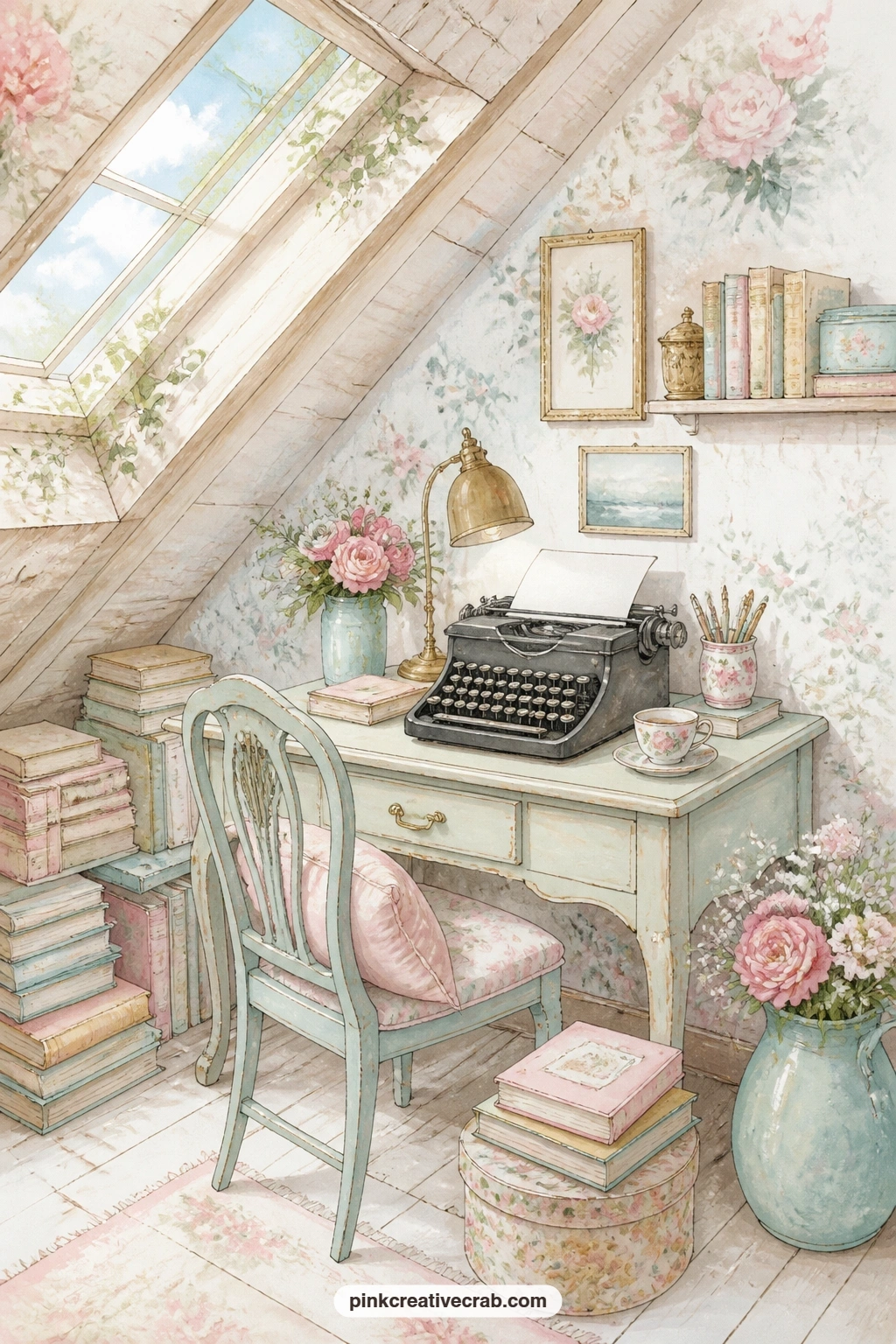
Keepsakes And Desk Treasures
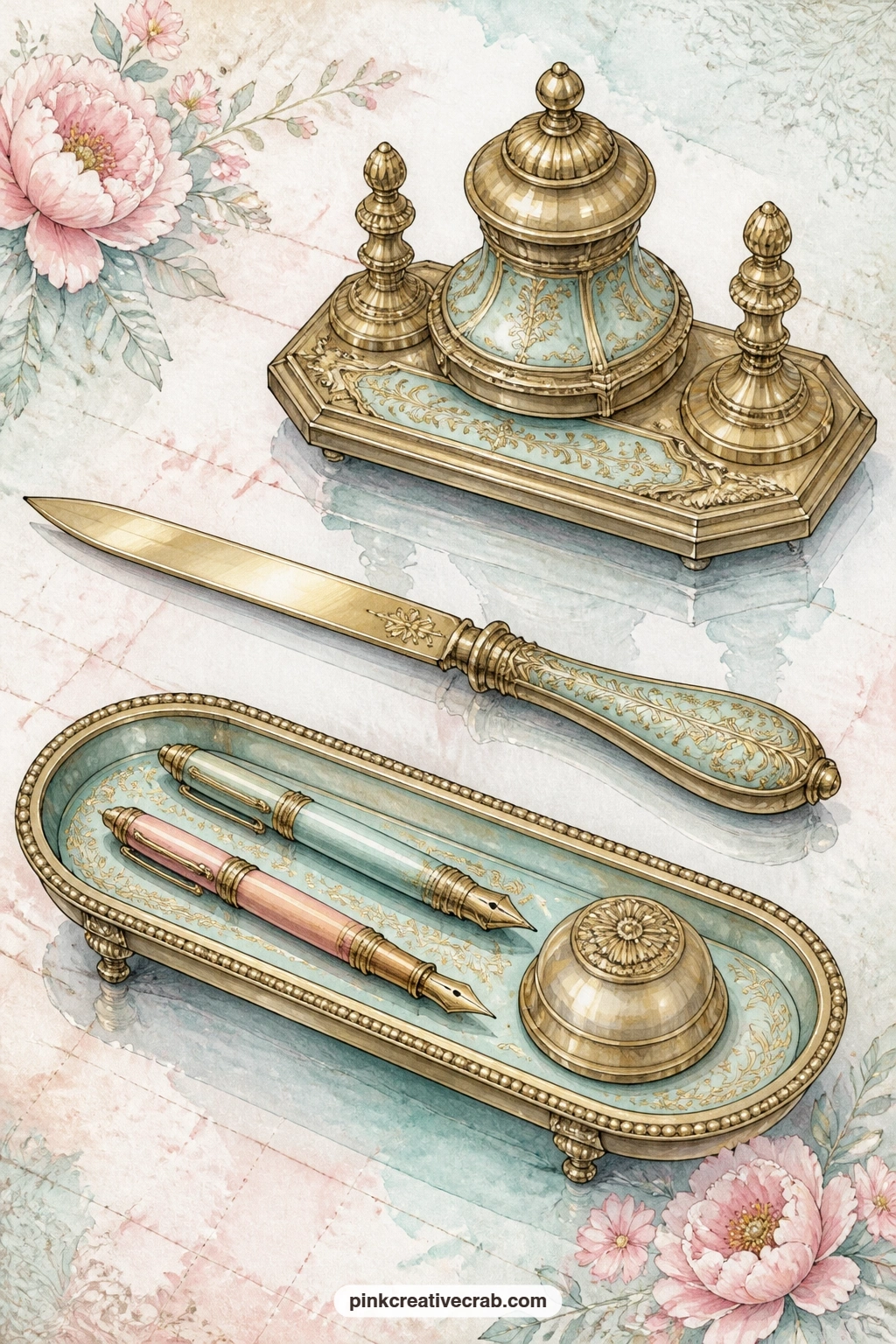
Place this one opposite the roll-top desk page so the two spreads share a sense of old brass and careful order.
A beginner can keep the letter opener simple and plain, while someone more confident might add a touch of engraving detail along its handle.
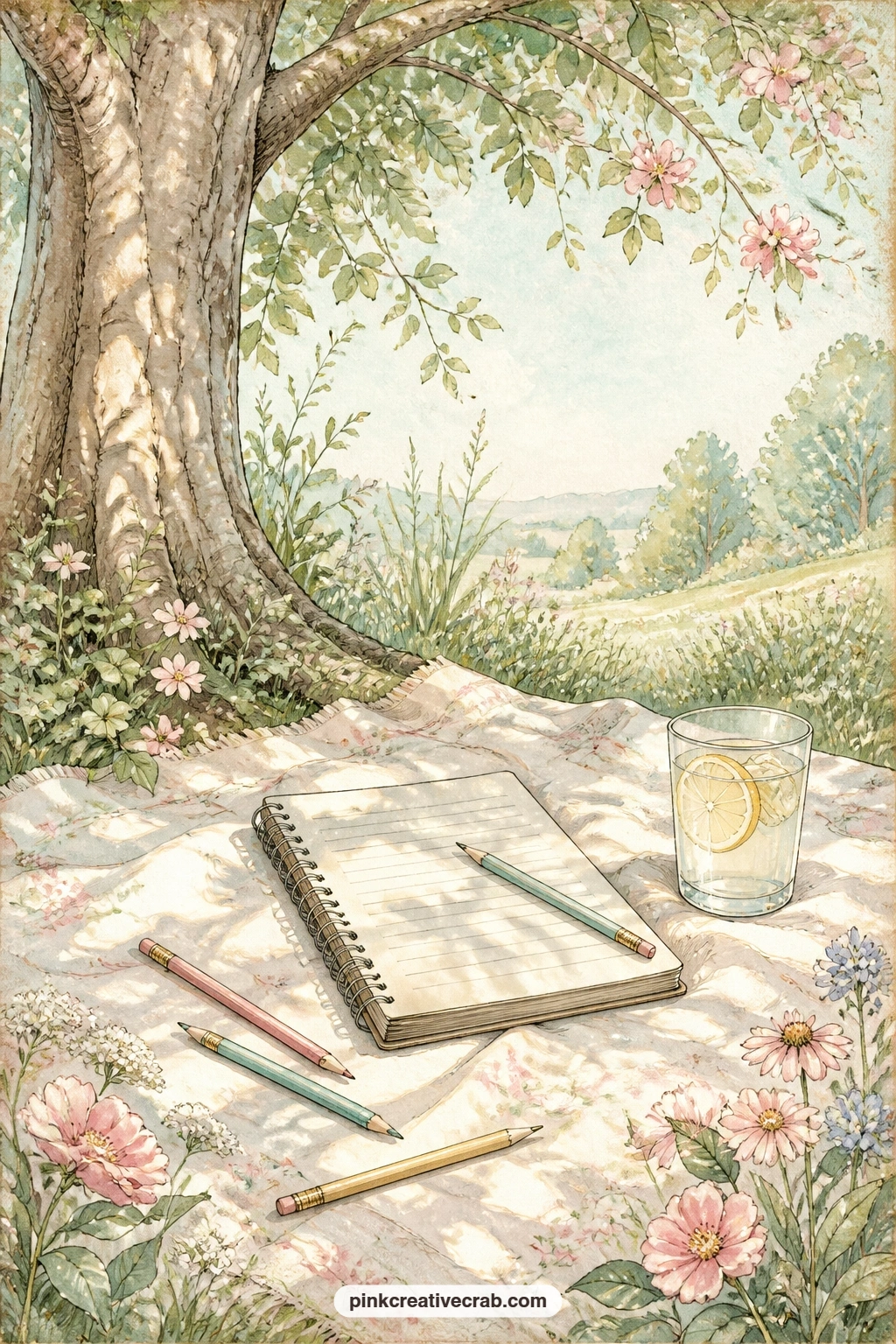
a notebook open on a blanket in dappled shade, pencils scattered beside a glass of lemonade, for the writer who works best outdoors in warm weather.
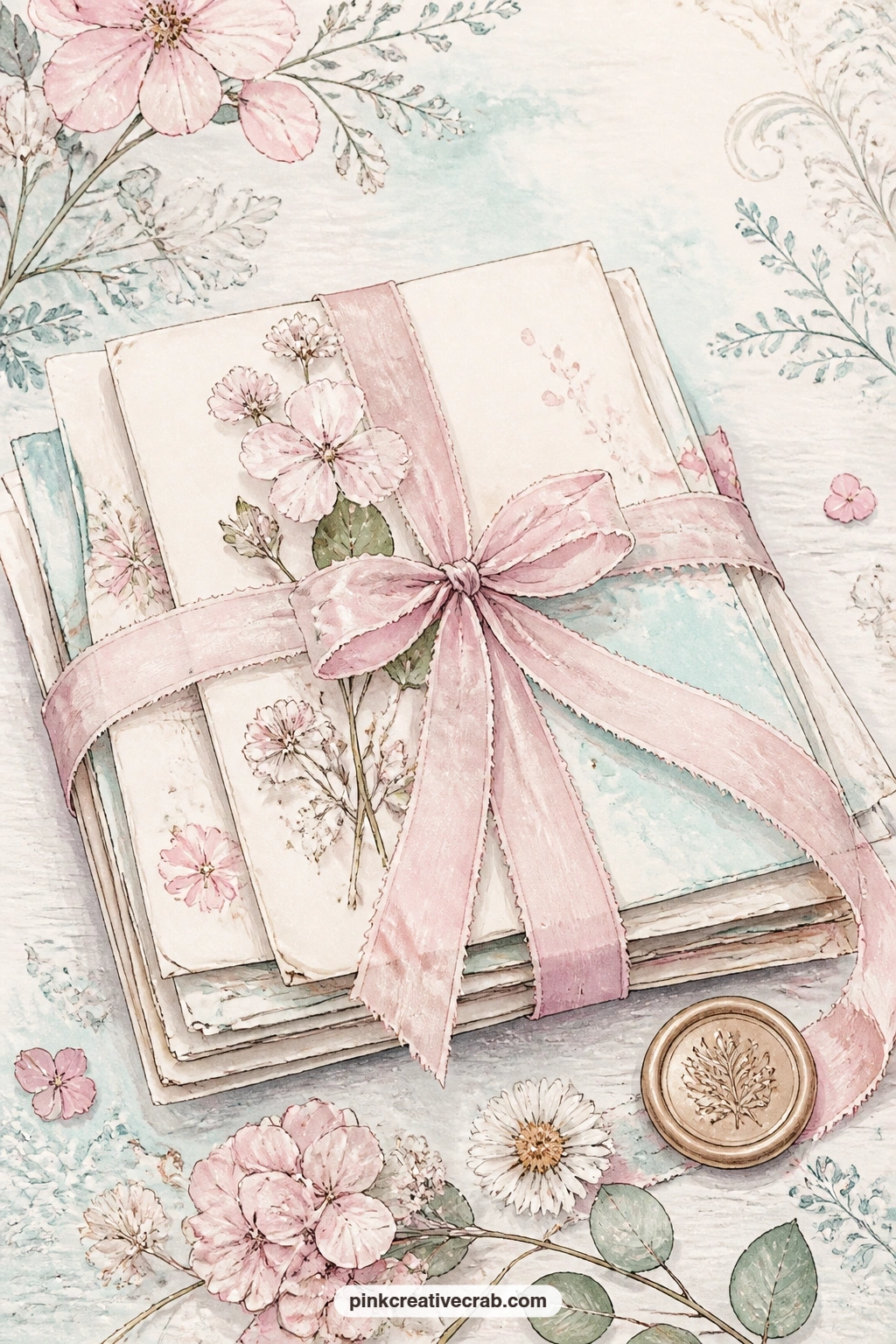
Tuck a real pressed flower behind this page if your journal allows it, or simply sketch one, since the ribbon and wax seal already carry most of the sentiment.
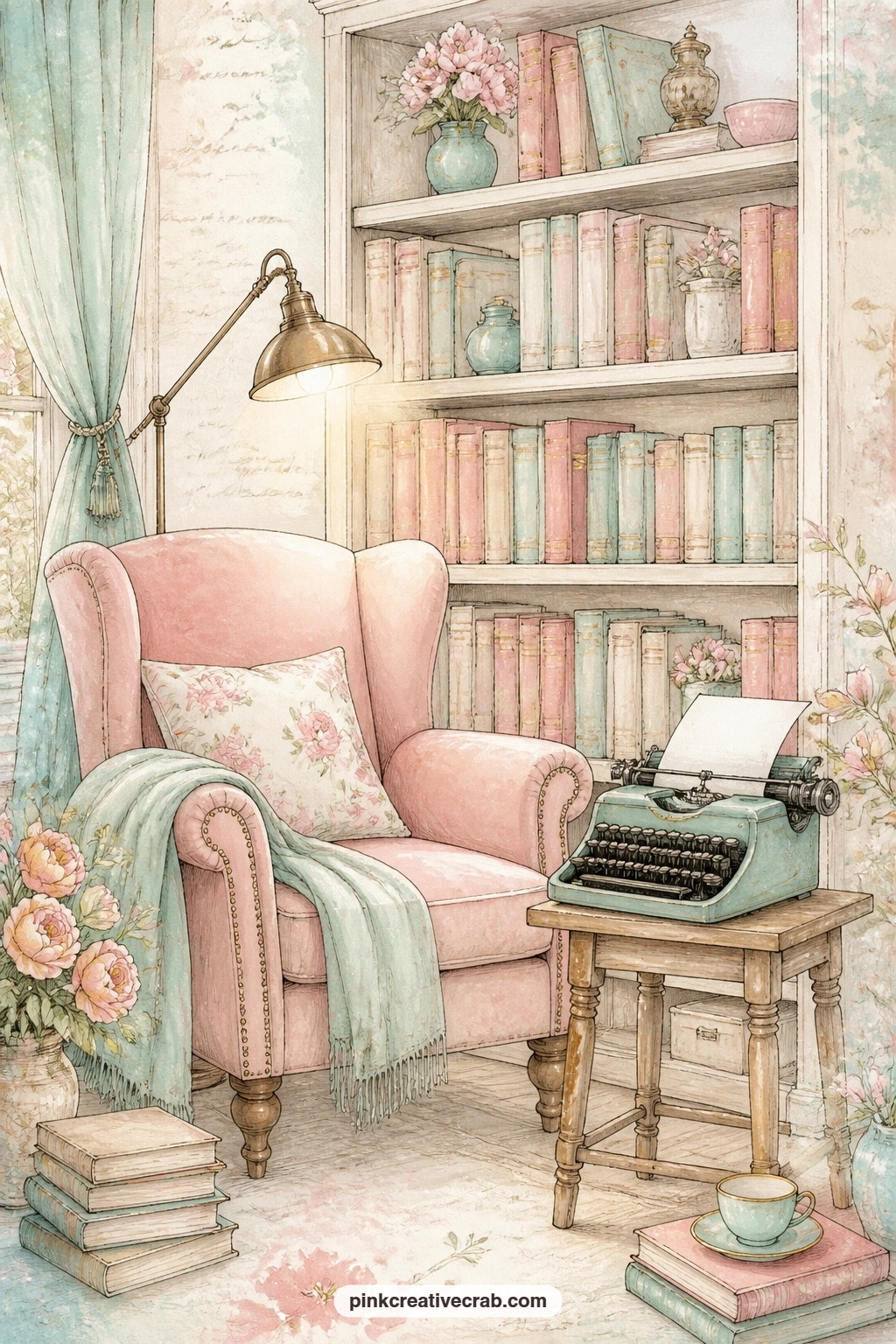
An armchair, a reading lamp and a typewriter balanced on a stool fill this bookshelf corner, the kind of spot where one chapter always turns into three.
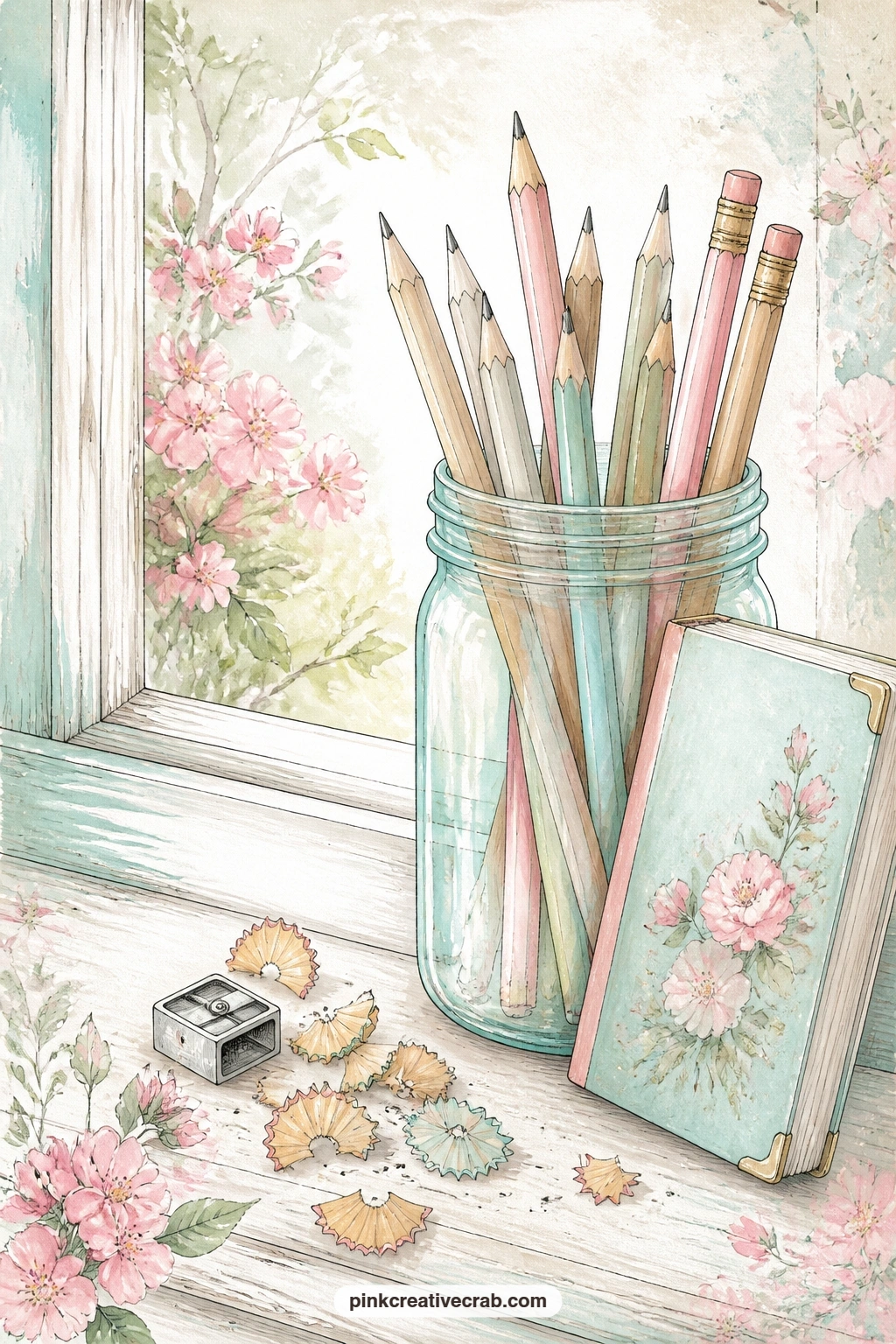
The usual slip with this page is drawing every pencil the same length. Let a few stand taller than the rest and scatter some sharpener shavings loosely beside the jar.
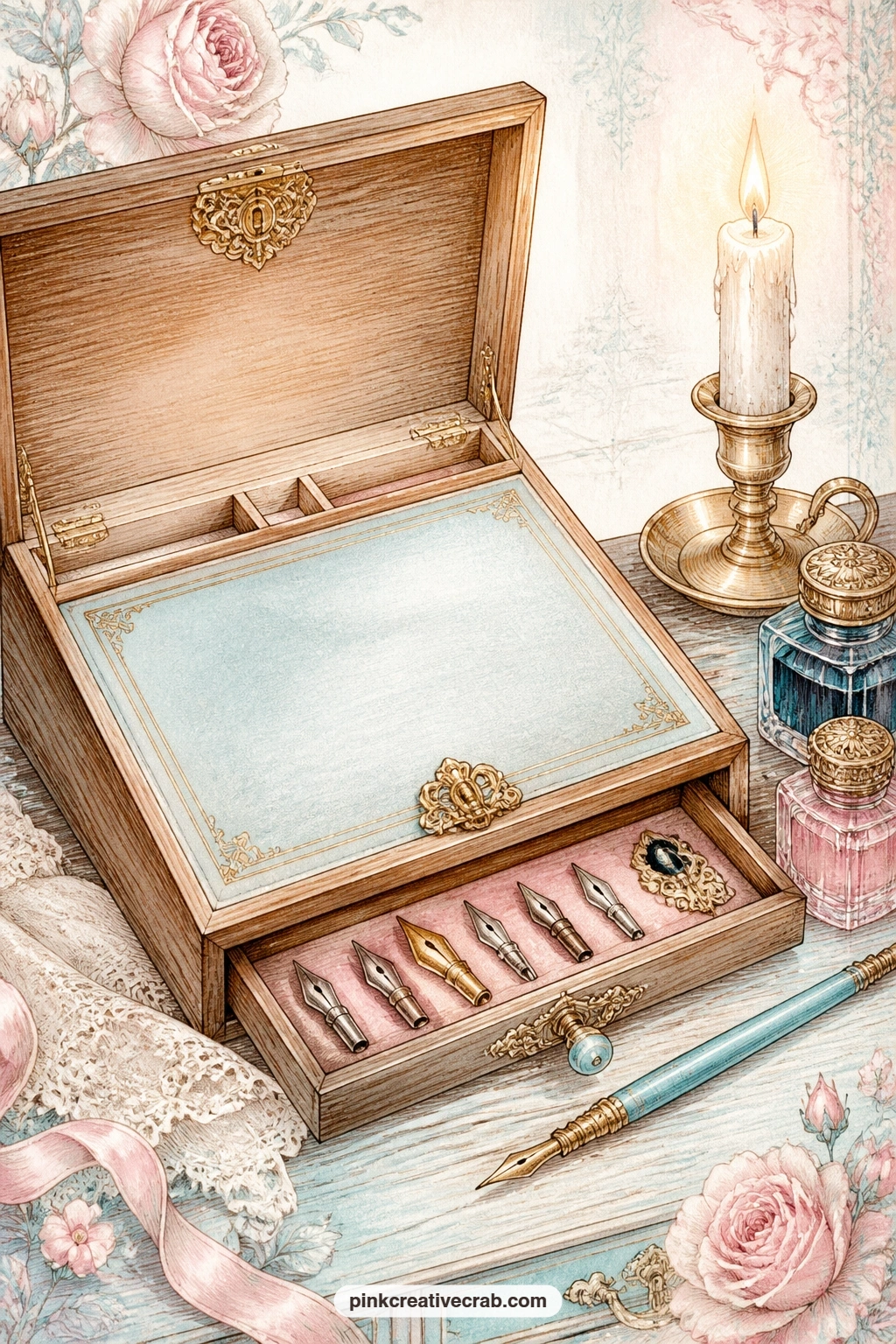
an open writing slope with nibs laid in their tray, two ink bottles and a lit candle, built for anyone who loves letters written the old slow way.
Writing Companions
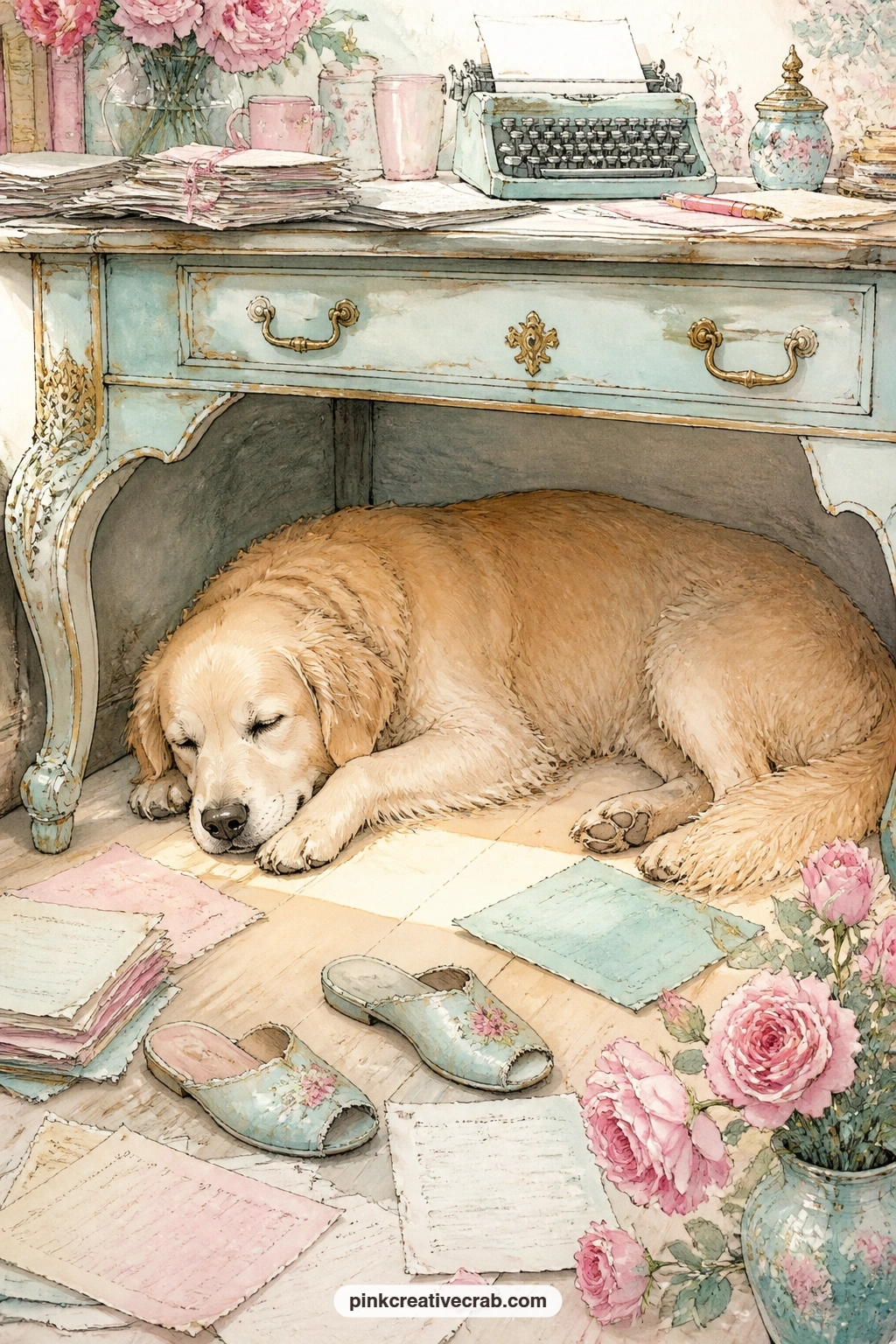
Give this page to the friend whose dog refuses to leave the study, scattered drafts and worn slippers tucked under the desk as proof of a long afternoon of writing.
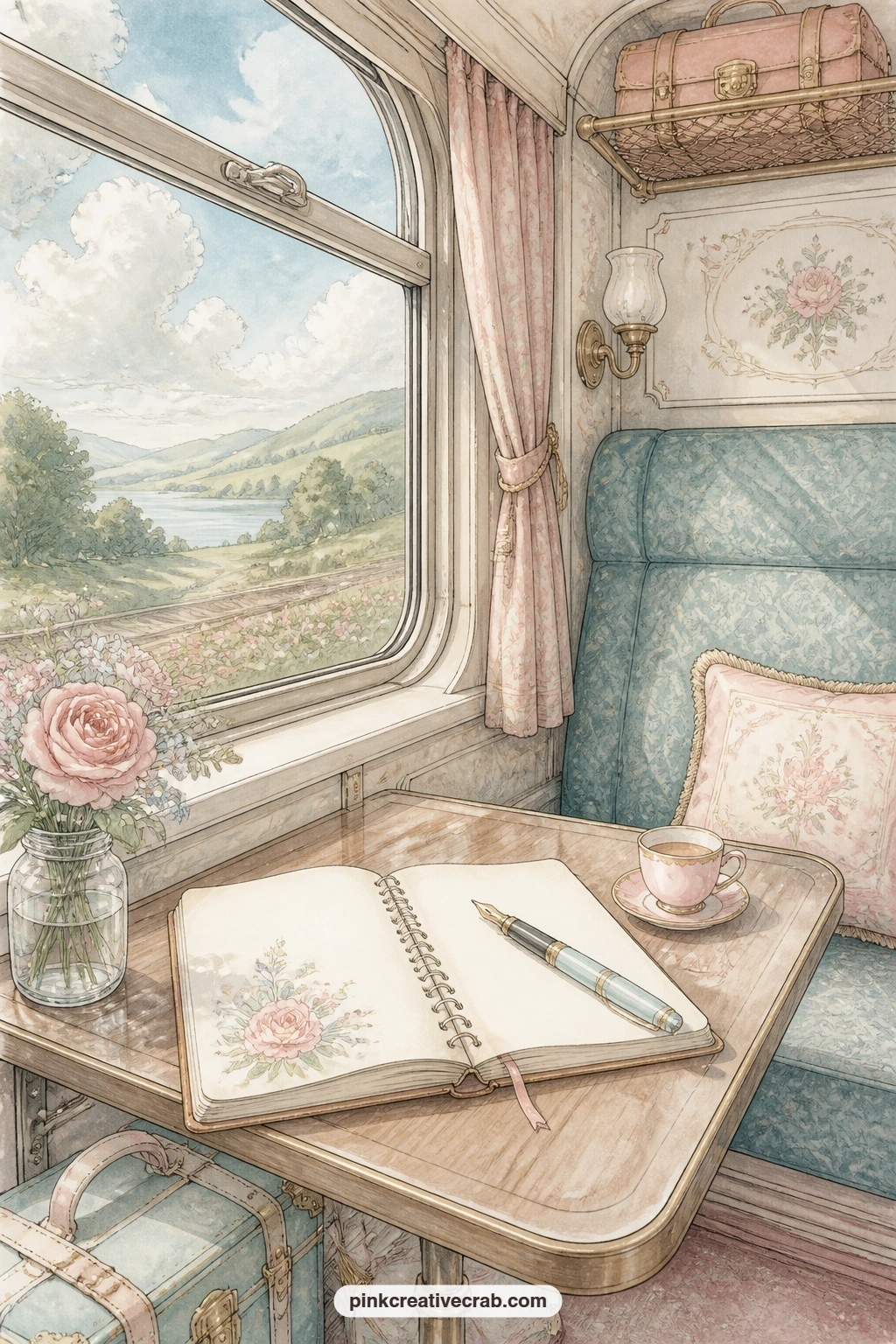
Close the scene section on motion rather than stillness, a notebook and pen ready on the little table while the countryside slides past the window outside.
Pair it with the quill and inkwell background paper as a lining for a travel-themed pocket at the back of the journal.
Background Papers
Line the inside of a pocket with this one, use it under a photo of your own handwriting, or wrap a plain notebook cover for a tidy, matching set.
Good as a cover sheet for the whole journal, a lining behind a window page, or cut into strips for a border along a busy spread of drafts and letters.
Use this behind the brass desk set page, as a pocket lining for keepsake letters, or folded into a small envelope that holds loose ephemera.
Try it under the pencils on a windowsill page, as the inside cover of the journal, or trimmed thin for a strip along the bottom of a lined page.
Lined Writing Pages
Good for a running log of drafts finished, a list of titles still to try, or one line copied from a book that stopped you mid-sentence.
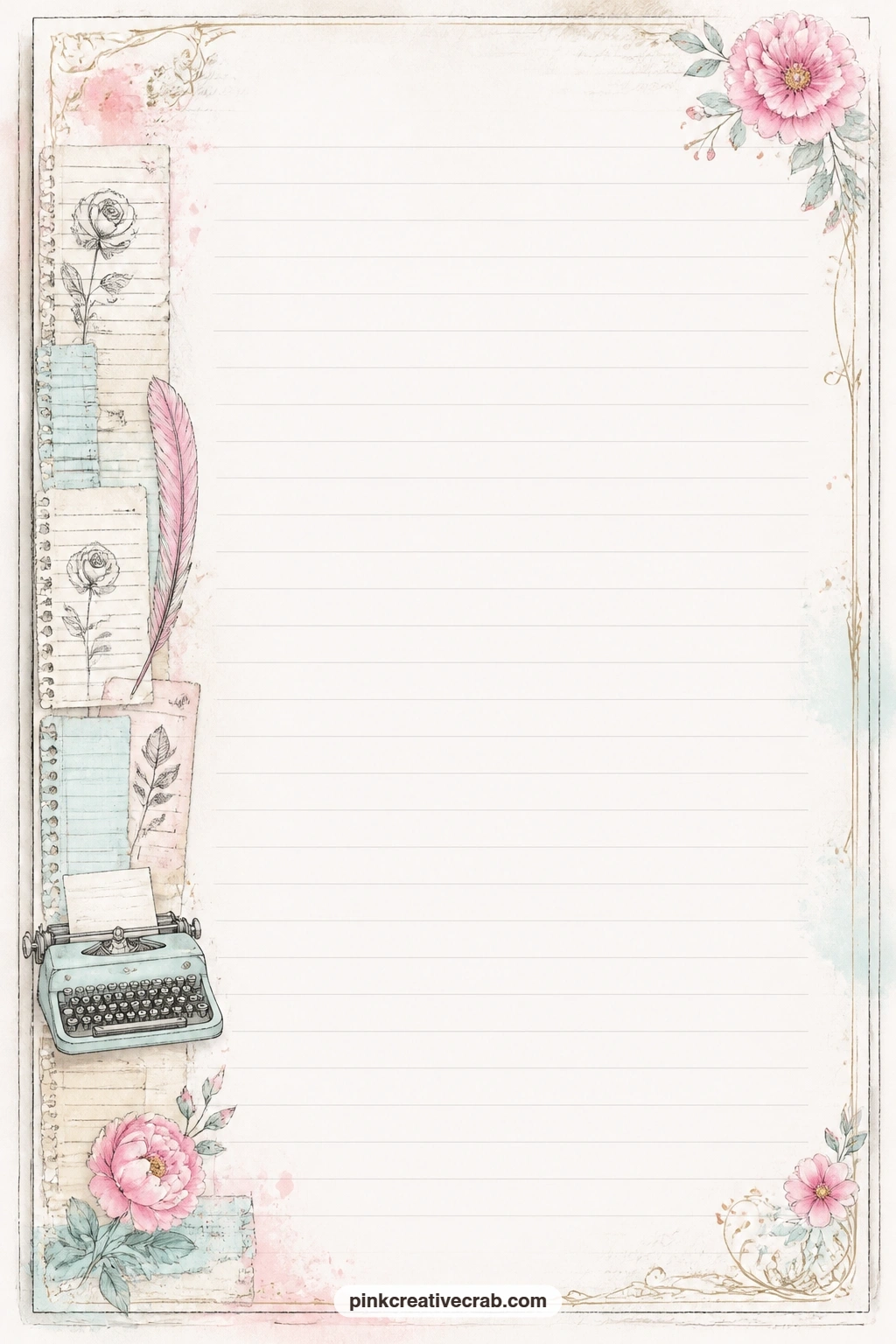
Use it for a letter to your future self, a short list of words you have been meaning to use, or a page of ideas waiting for a story.
Fits a gift list for a writer friend, a short menu for a quiet tea-and-writing afternoon, or a few lines about what made today worth remembering.
Keep it for a draft of your own, a letter to next year, or notes jotted in the margin style a working writer might leave beside an unfinished page.
What to Do Next
Print the set, let the ink dry fully, then start gluing the scene pages in first and save the backgrounds and lined pages for pockets, covers and the quiet spots where your own words belong. For more themed pages to mix in, take a look at the Edgar Allan Poe junk journal set or the music junk journal pages.
Frequently Asked Questions
What paper works best for a writer junk journal kit like this?
Matte cardstock between 160 and 200gsm works best, since it holds the ink colours without letting the design show through the back. Plain printer paper is thinner and can wrinkle once glued, so cardstock gives a sturdier page.
What printer settings give the sharpest colours?
Choose your printer’s highest or best quality setting and select actual size rather than fit to page, so nothing is scaled down. A photo or presentation setting usually gives richer, more even colour than a draft or standard mode.
What size should I print these pages at?
Print at standard A4 or US letter size and trim down afterward to match your journal, whether that is a full page, a half page or a small tucked-in extra. Trimming after printing keeps the borders even on every sheet.
What do I use to glue and trim the pages?
A acid-free glue stick holds pages in cleanly without wrinkling the paper, and a paper trimmer gives straighter edges than scissors for a neat finished look. Keep a bone folder nearby for crisp folds on pocket pages.
Can I colour or add to these pages myself?
Yes, fine tip pens work well for adding handwriting, dates or small notes directly onto the printed scenes once the ink has fully dried. A light hand with coloured pencils can also deepen a shadow or add a personal touch.
Have any thoughts?
Share your reaction or leave a quick response — we’d love to hear what you think!
-
 0
-
0
-
0
-
0
-
0
-
0


