

Table of Contents
An english countryside junk journal gathers up everything slow and green about village life: rose-covered cottages, hedgerow lanes, bluebell woods and a tea room table laid with scones. This kit holds 22 scene pages for the heart of the journal, 4 seamless background papers for covers and pockets, and 5 lined writing pages ready for your own notes on the days you want to remember.
Print the whole set on matte cardstock heavy enough to take glue without curling, choose your printer’s best or photo quality setting so the fine ink lines stay crisp, and trim close to the edge before you bind or tuck each page in.
Using these images: free for personal projects such as printing, coloring, cards, journals and gifts. Handmade items that include them may be sold up to 30 pieces per design. More than that is commercial use and is not permitted, and neither is selling or sharing the images themselves or passing them off as your own. Please ask before any other use.
Cottage Doorsteps
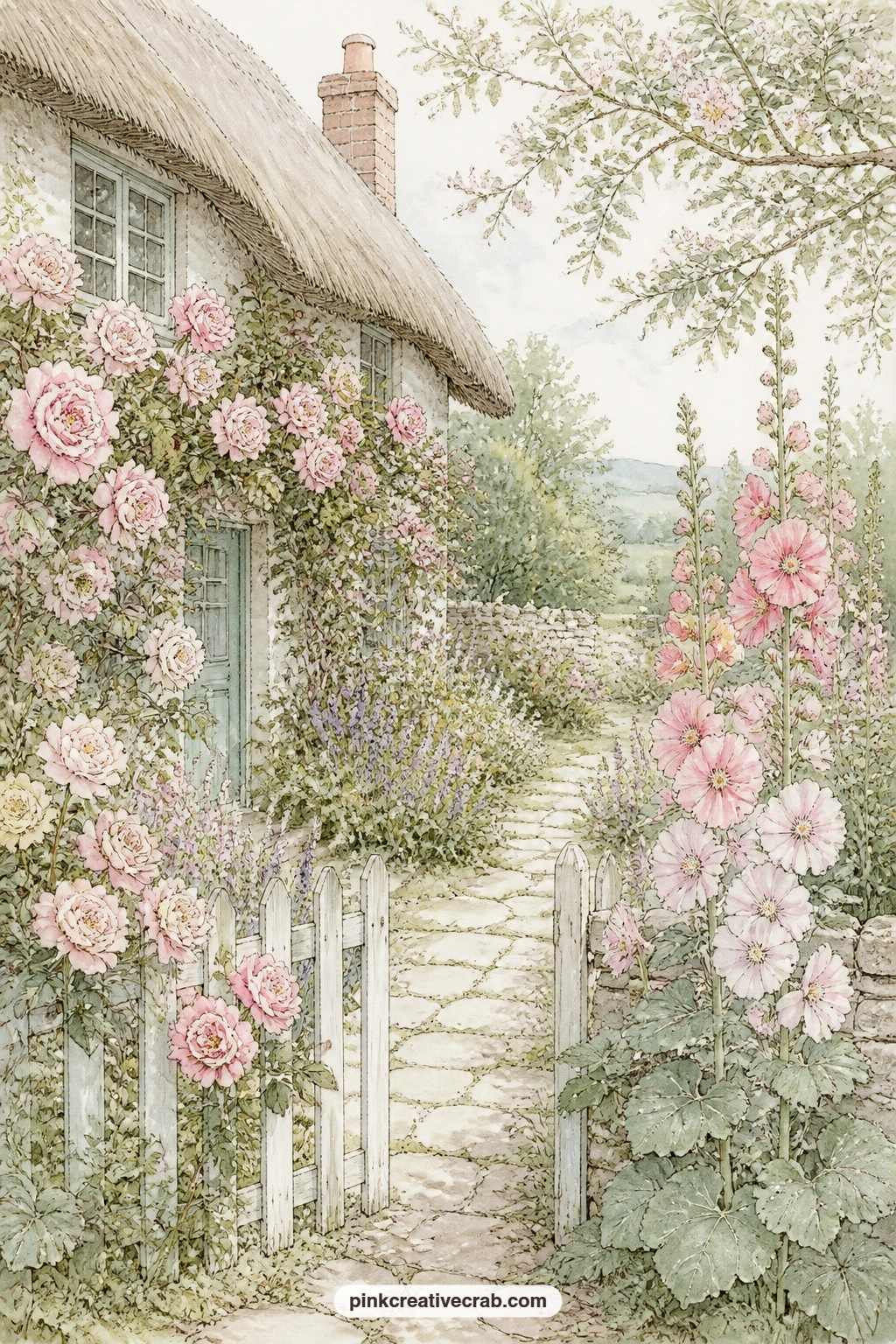
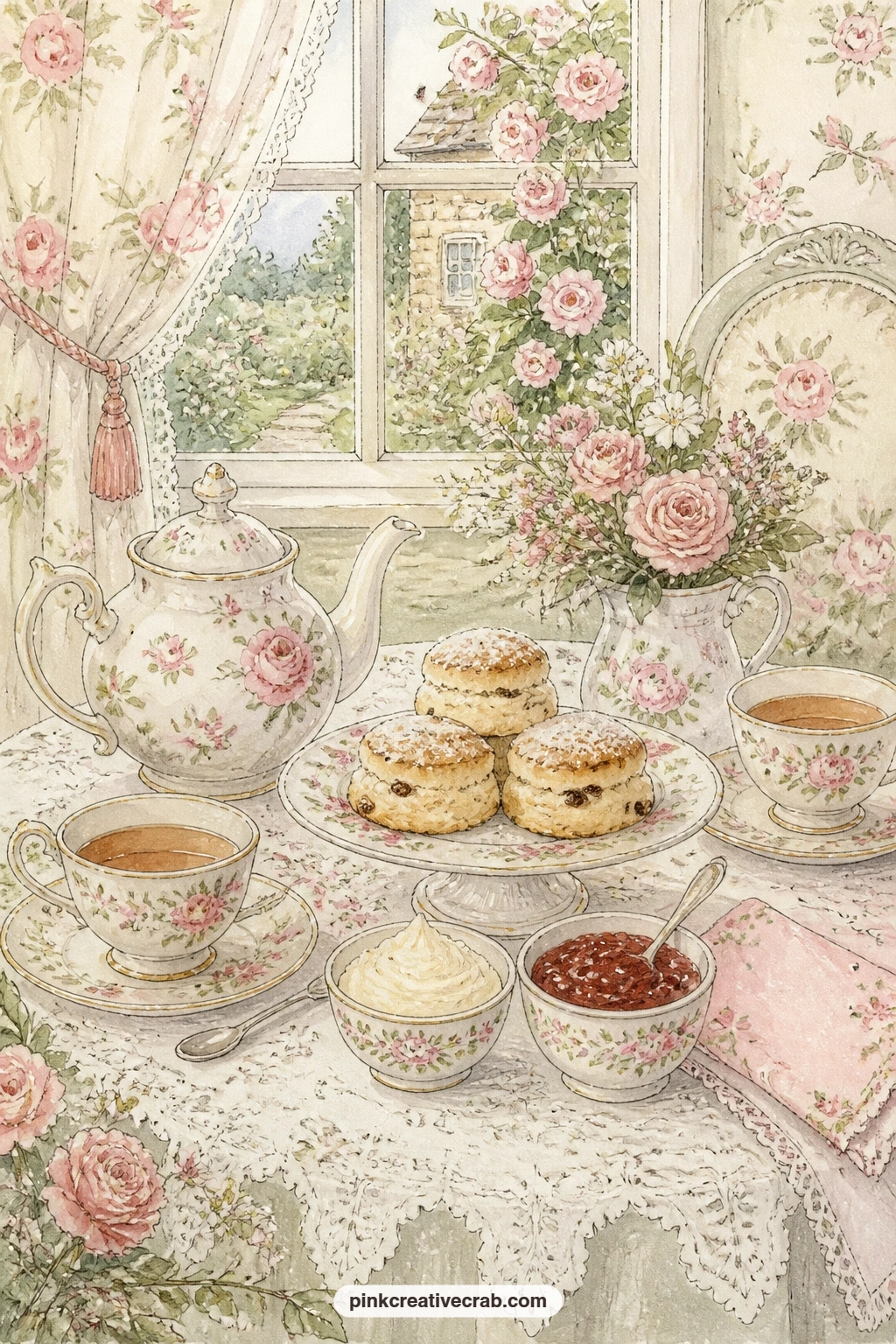
Picture this page glued in opposite a tea room spread, so the roses on the cottage wall and the roses on the teapot answer each other across the fold.
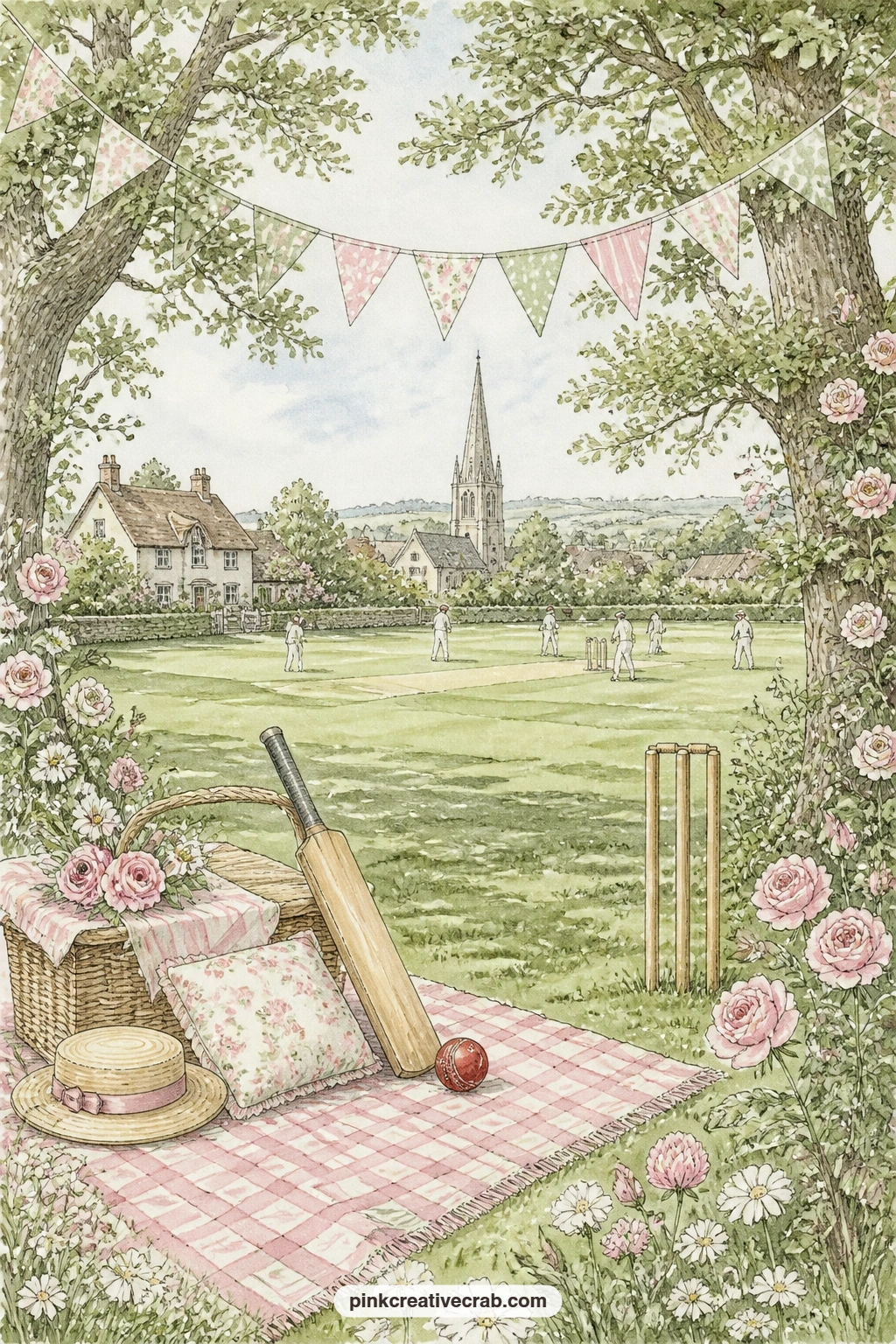
Bunting, a picnic blanket under old oaks and a cricket bat laid in the grass make a lazy summer afternoon on the village green, painted edge to edge.
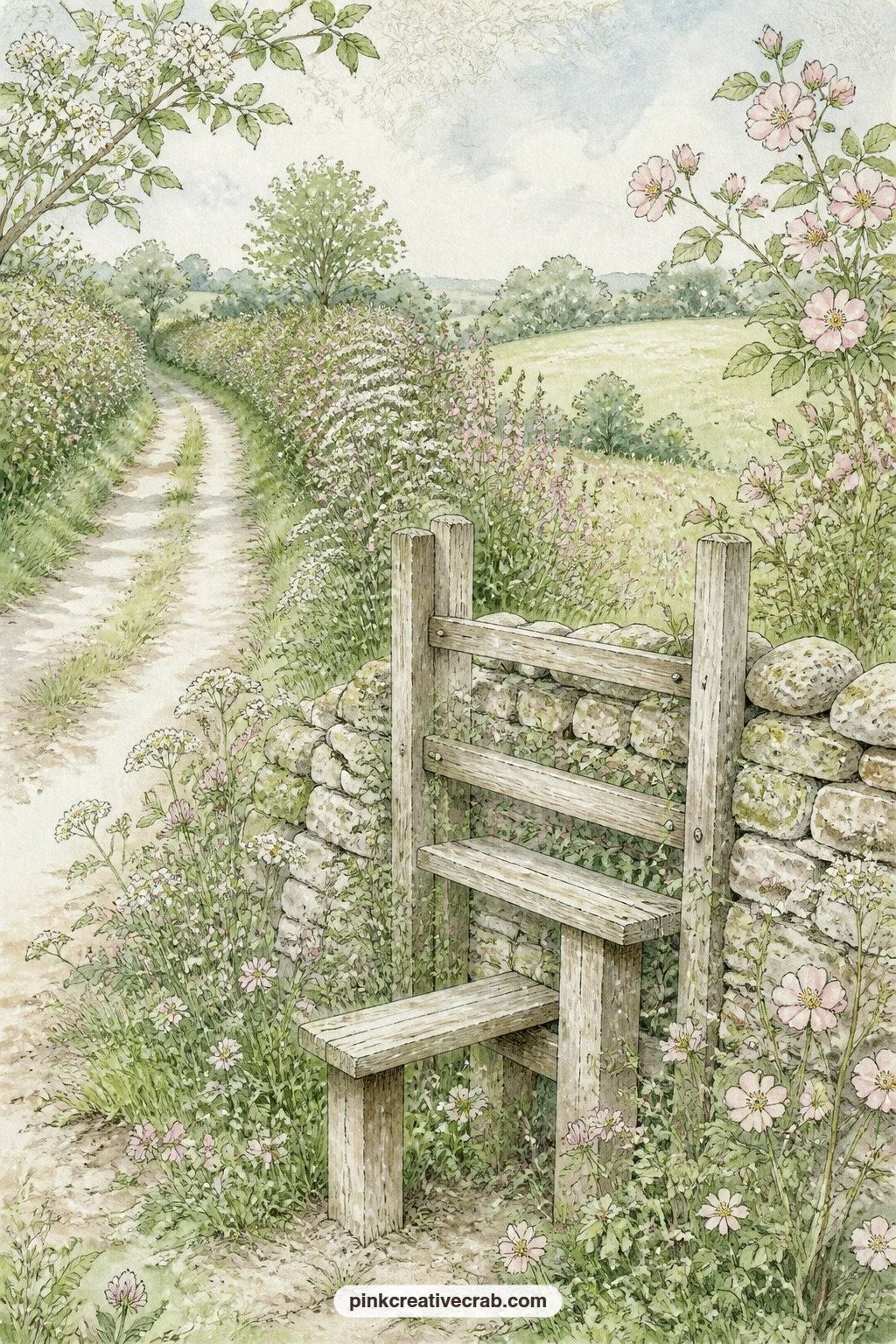
This is the easy five-minute page: glue it in as it is, no extra tucking needed, and let the hedgerow do the work of filling the spread.
If you have more time, press a real pressed flower under a small vellum window near the stile before you glue the page in.
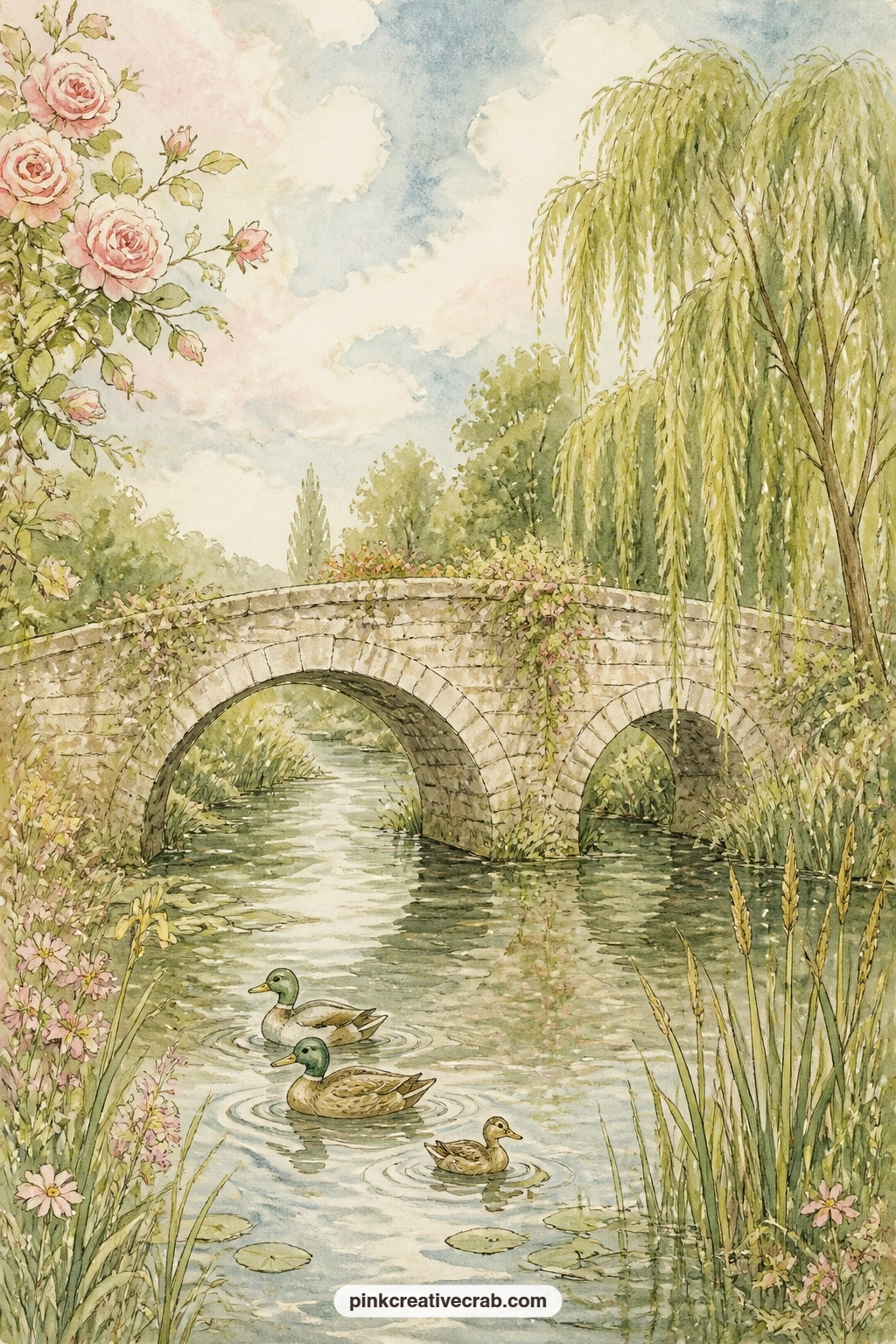
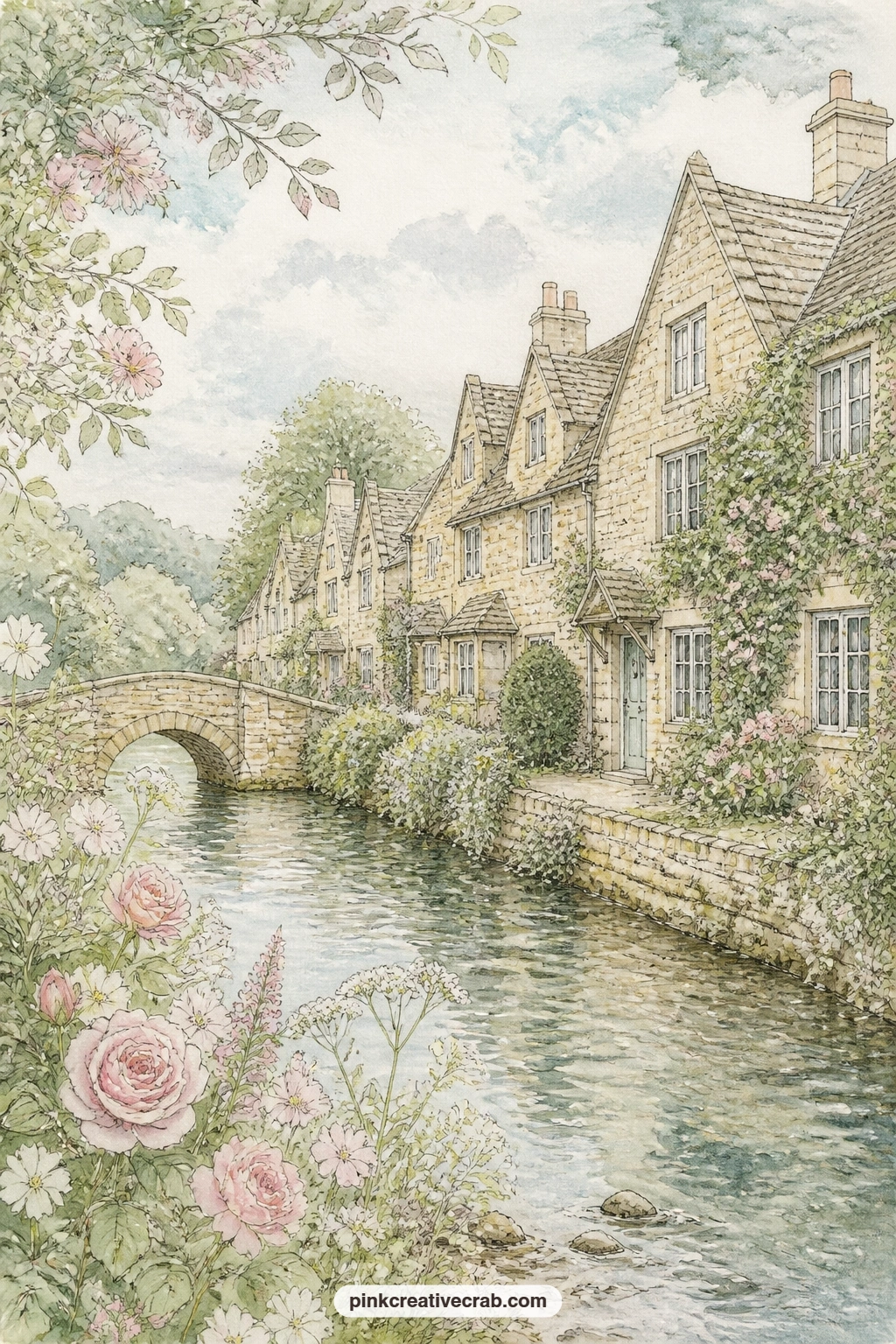
Try tea-staining just the bottom edge of this page before it dries flat, so the water under the bridge looks a shade older than the sky.
Tea Room And Kitchen
Write the names of whoever shared this tea room table with you along the edge of the plate, the way you might sign a guest book.
For a quieter page, leave the writing out and simply glue in a real paper doily under the teapot before it goes into the journal.
Honey-stone cottages line a little river under a soft sky, each roofline slightly different, with a small stone bridge joining the two banks.
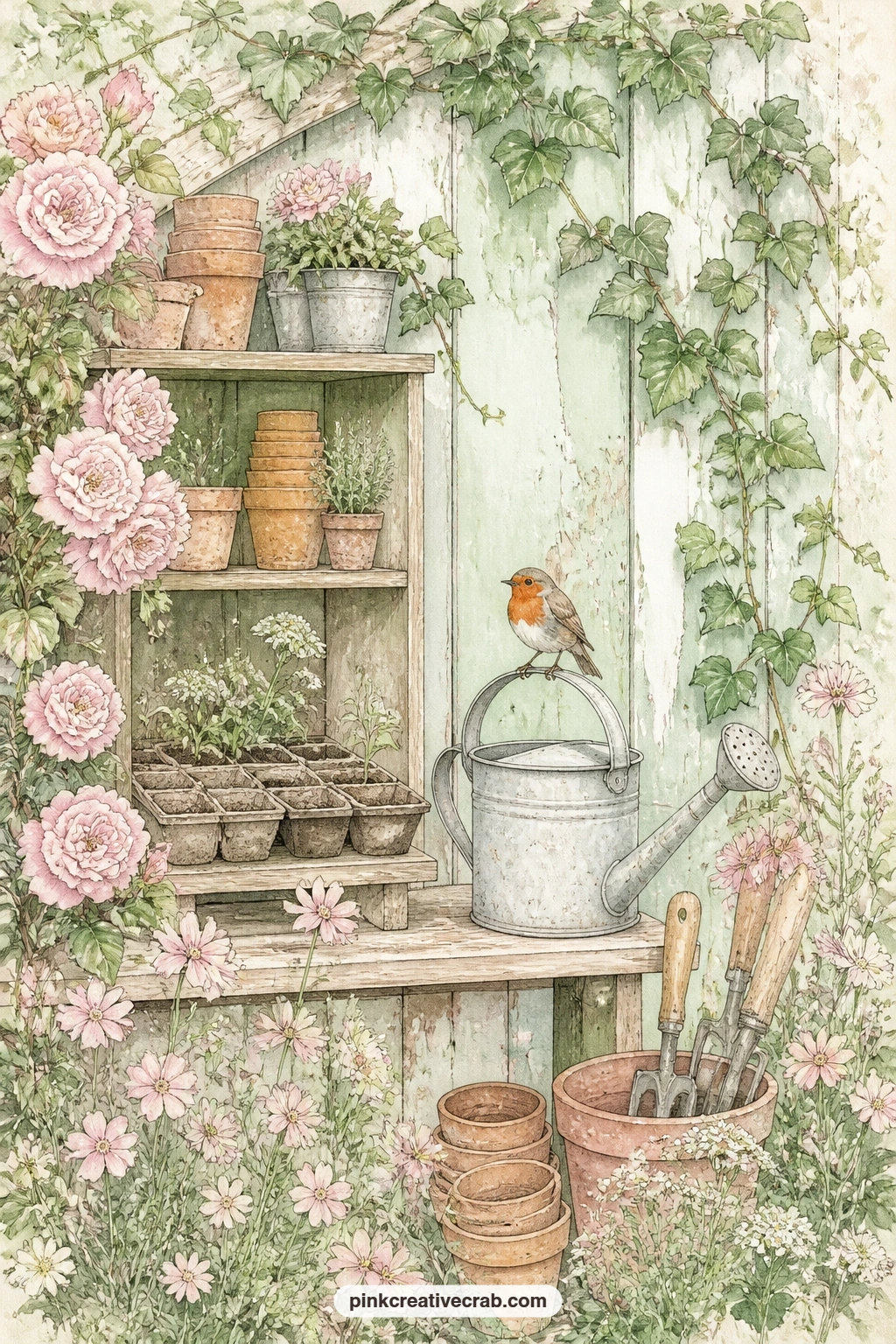
The usual mistake with a potting shed page is cramming in every tool at once; keep just the seed trays, a few terracotta pots and the robin, and let the shed wall carry the rest of the space.
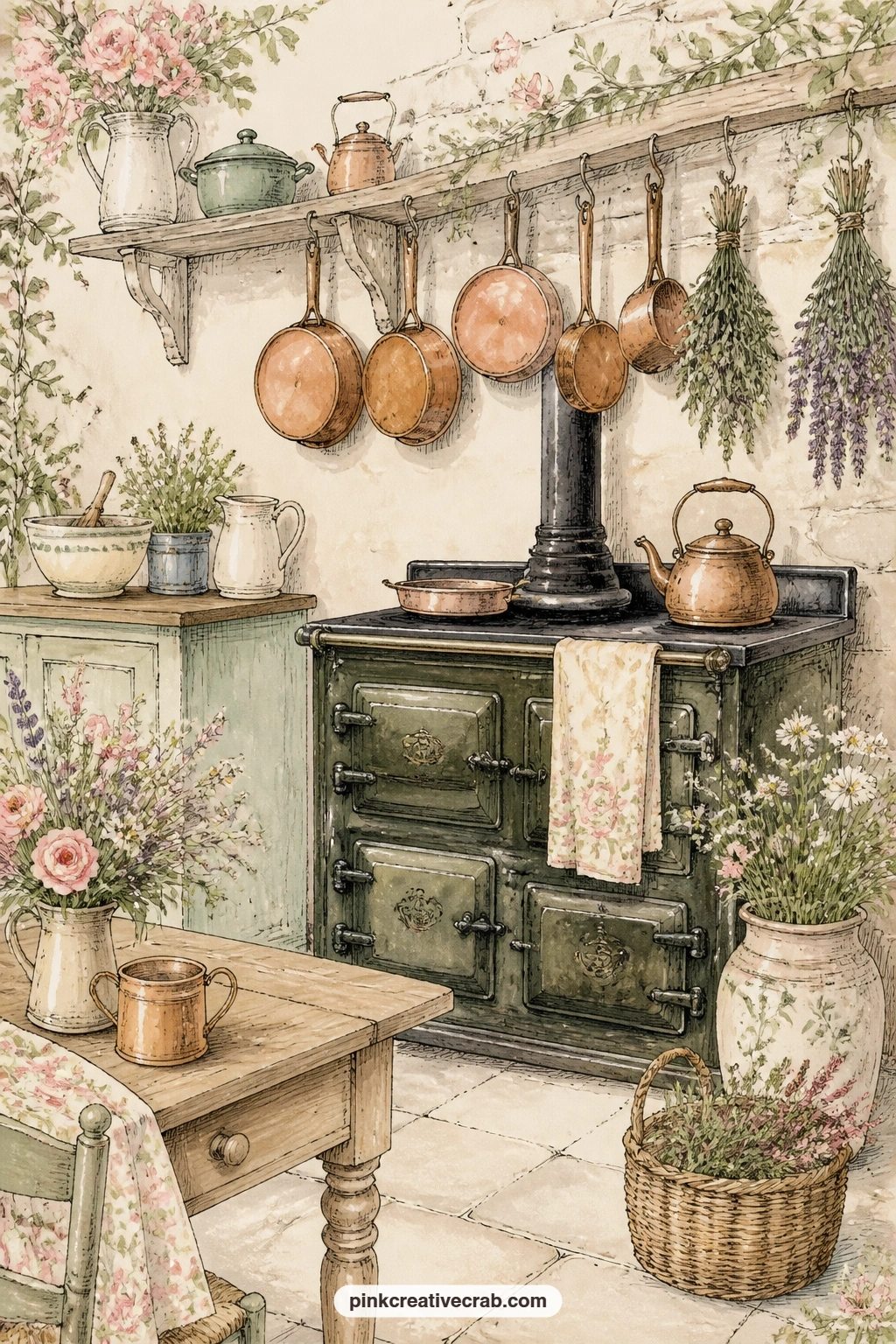
Pair this page with the tea party junk journal set if you want a second kitchen table to glue in nearby.
A cast iron range, copper pans on hooks and bunches of drying herbs fill the wall behind a simple farmhouse table.
Fields And Farmland
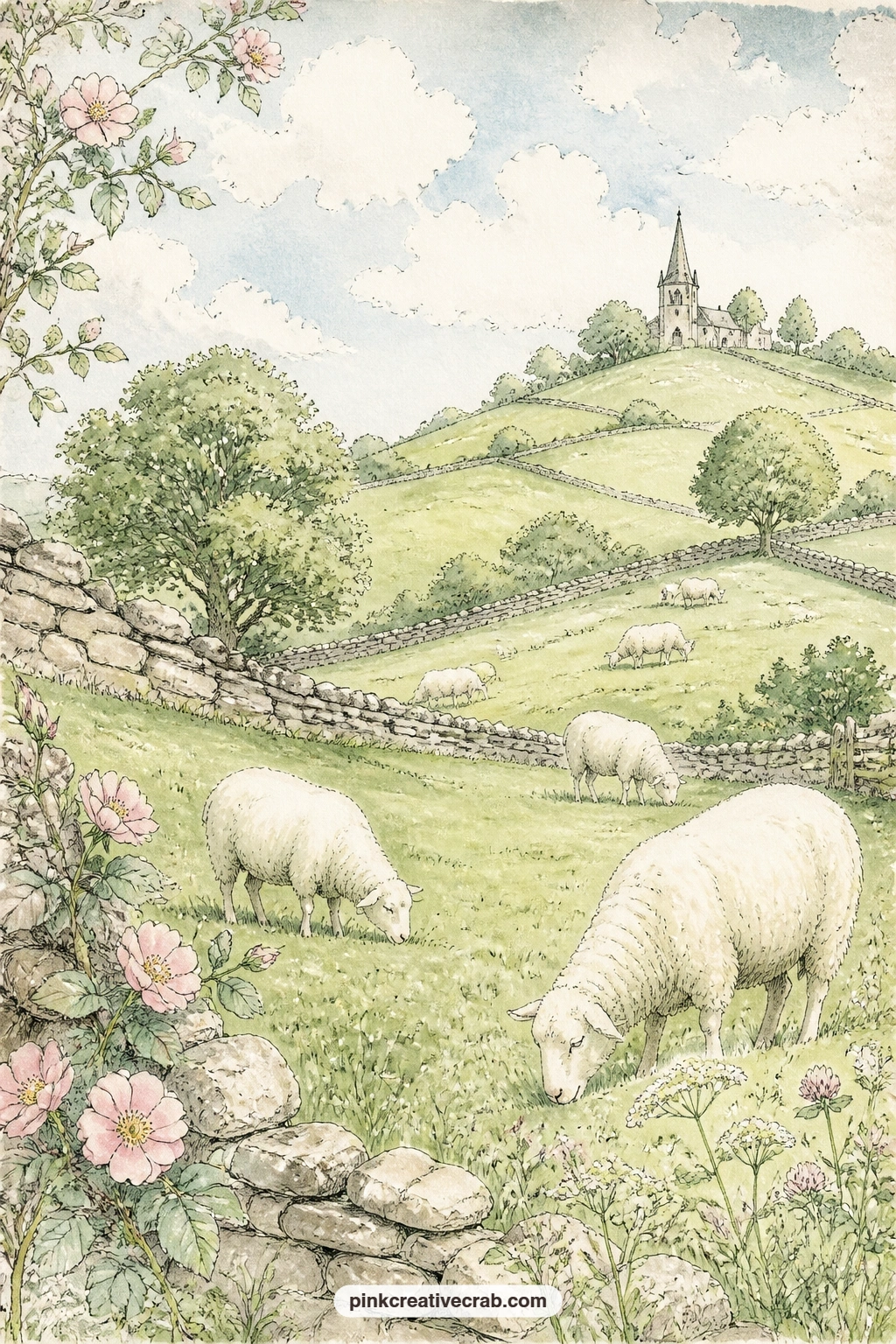
Sheep graze between old stone walls on a rolling hill, with a small church spire rising on the far ridge and soft cloud filling the sky above.
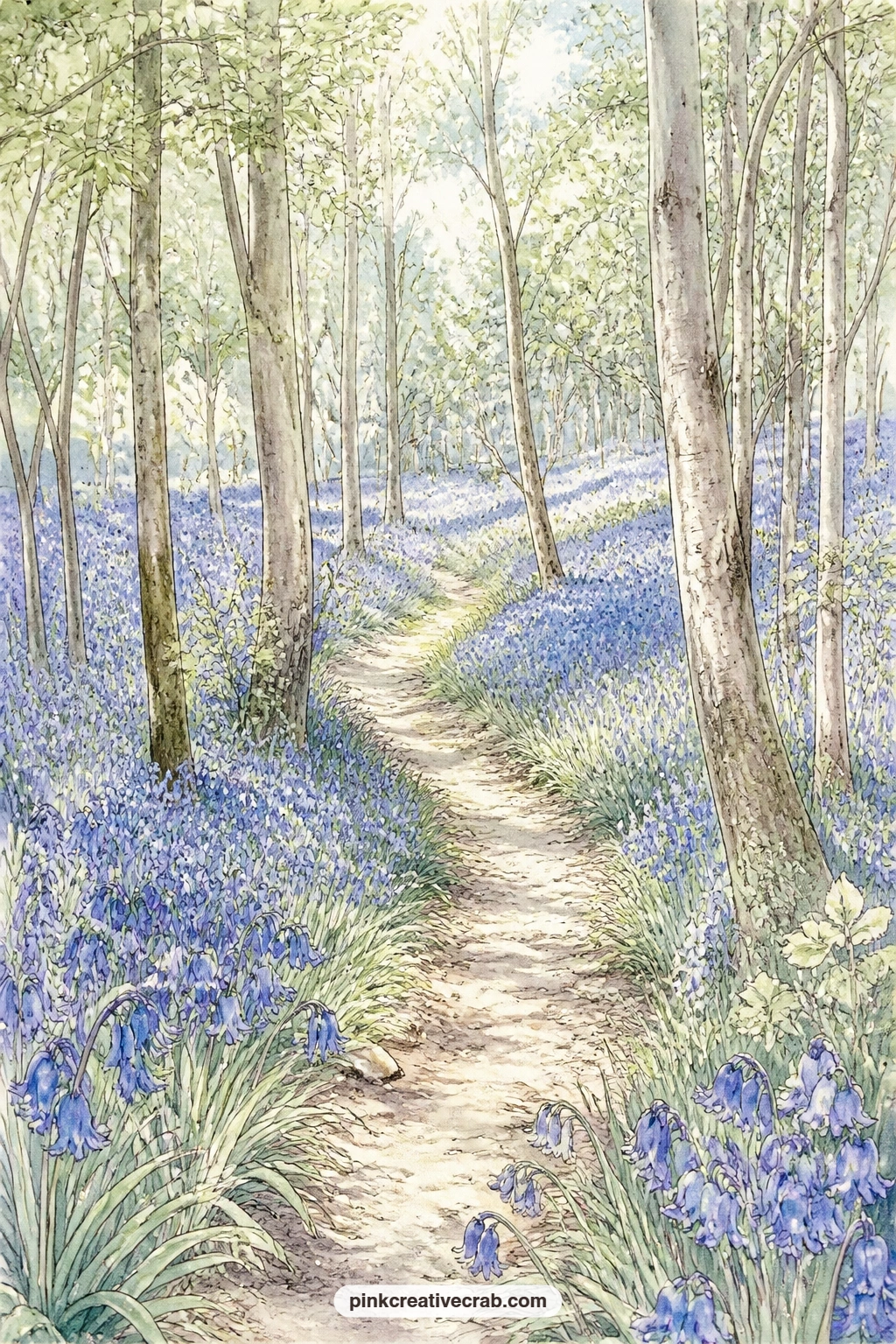
Who is this page for in a gift journal? Give it to the friend who always stops to photograph woodland floors, and leave the path empty for her own caption.
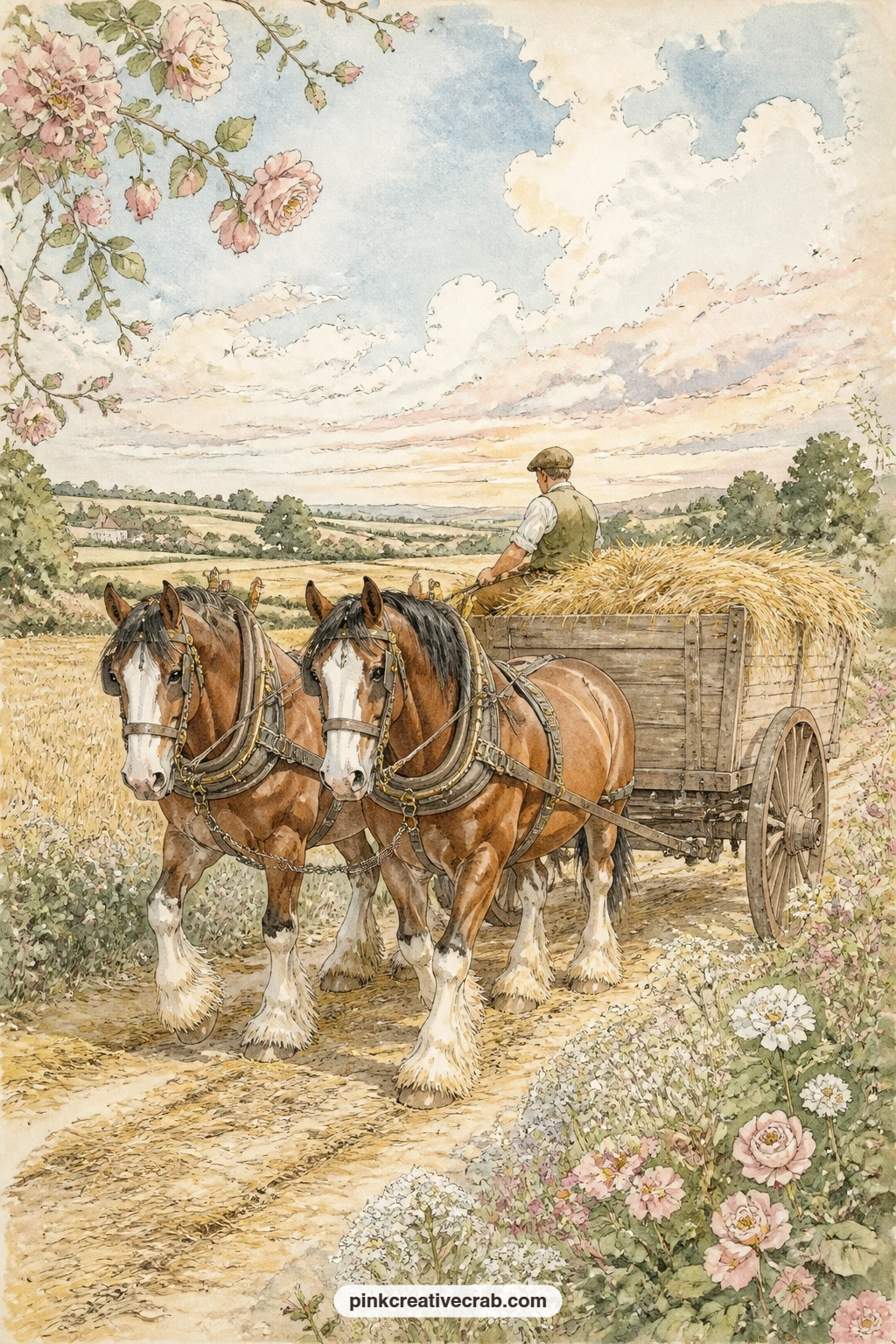
Try a question prompt here: what would you load onto a cart like this one, if you had a whole golden field and a slow afternoon to fill it.
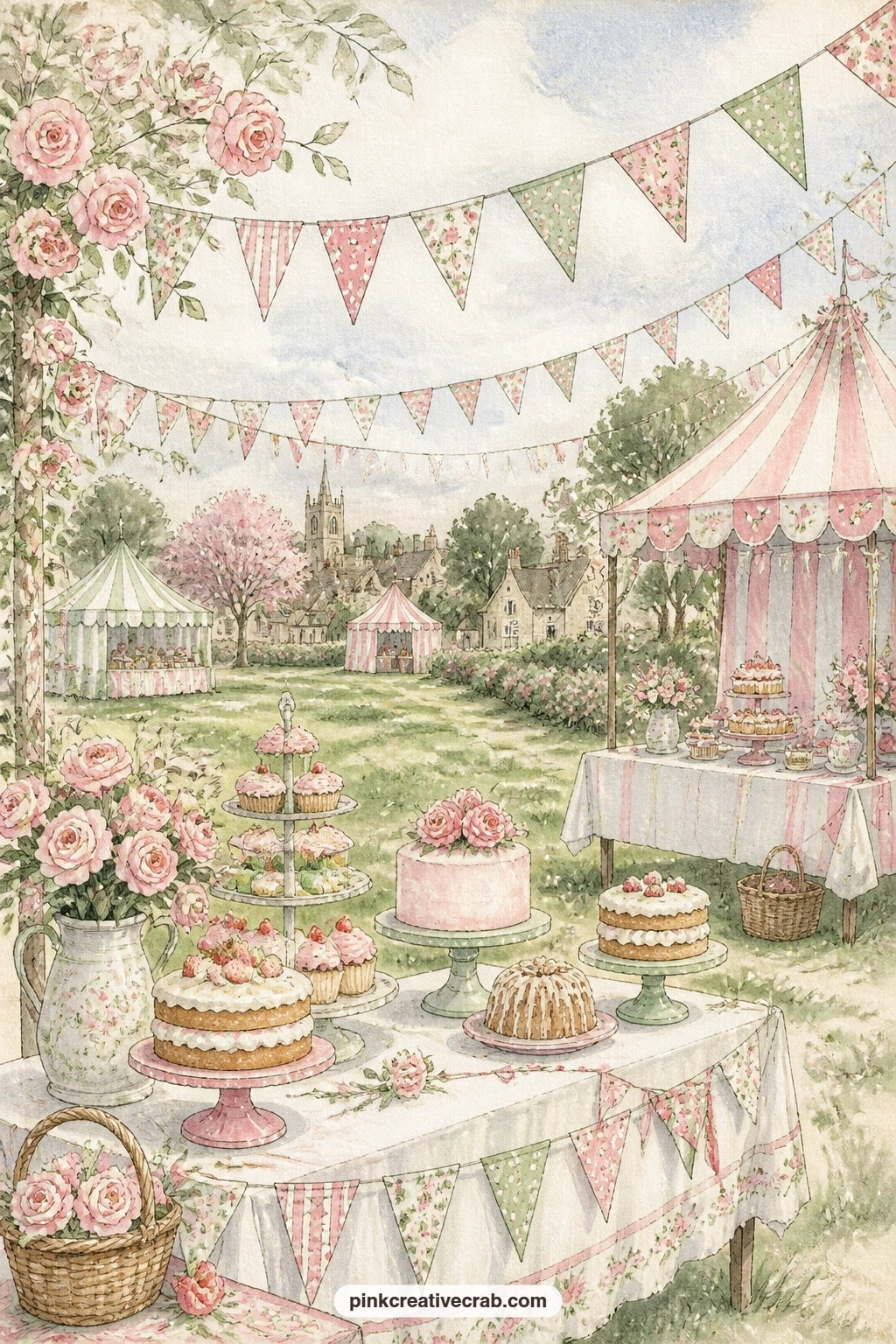
Cake stalls, strings of bunting and a striped tent fill the village fete page, a cheerful spread for photographs from any summer gathering.
Village And Lane Life
Glue this page beside the stone bridge page from earlier in the set, so the journey from lane to church feels like one unbroken walk.
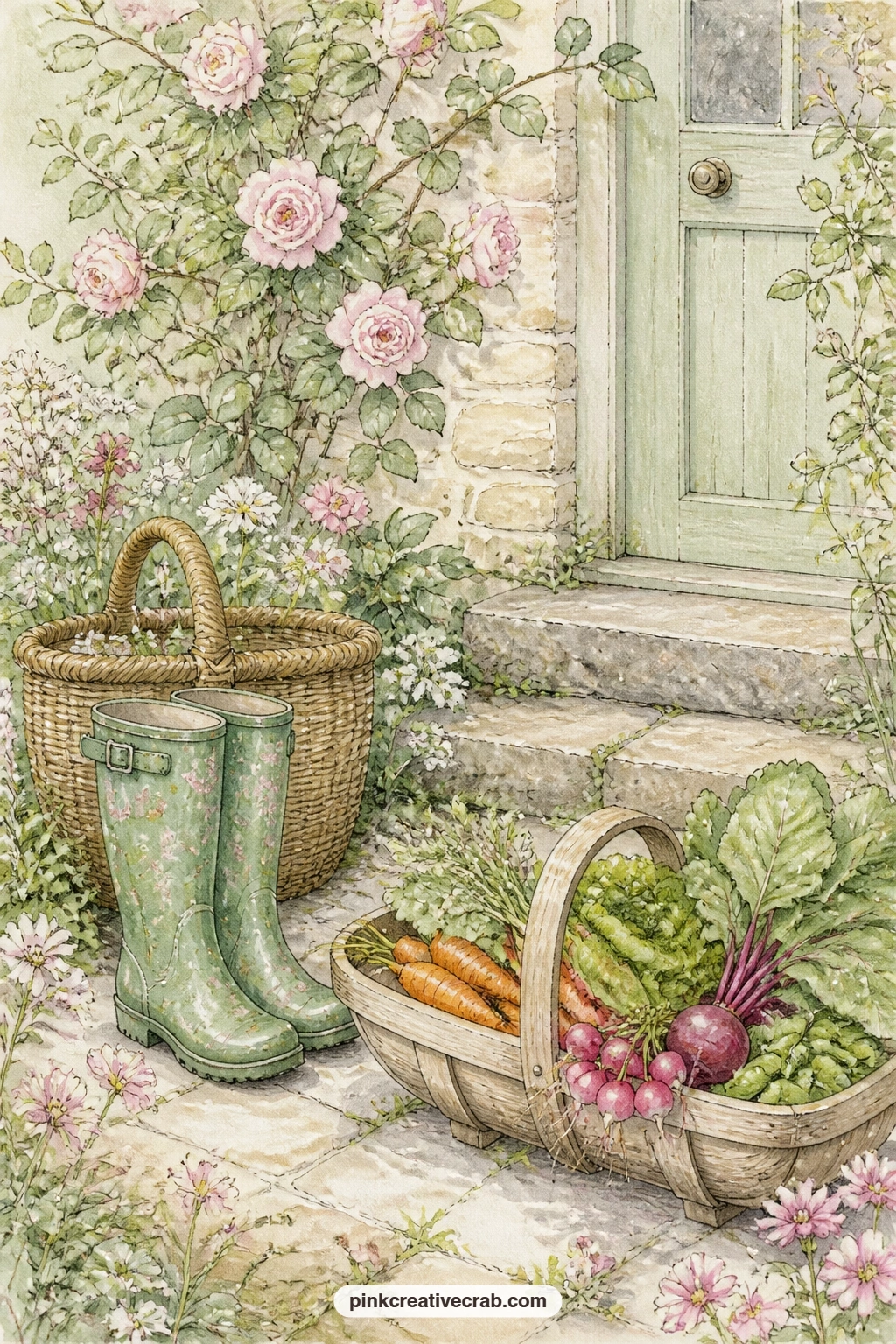
A pair of wellies, a woven garden basket and a trug of vegetables wait by the back door, a small still life of an ordinary gardening morning.
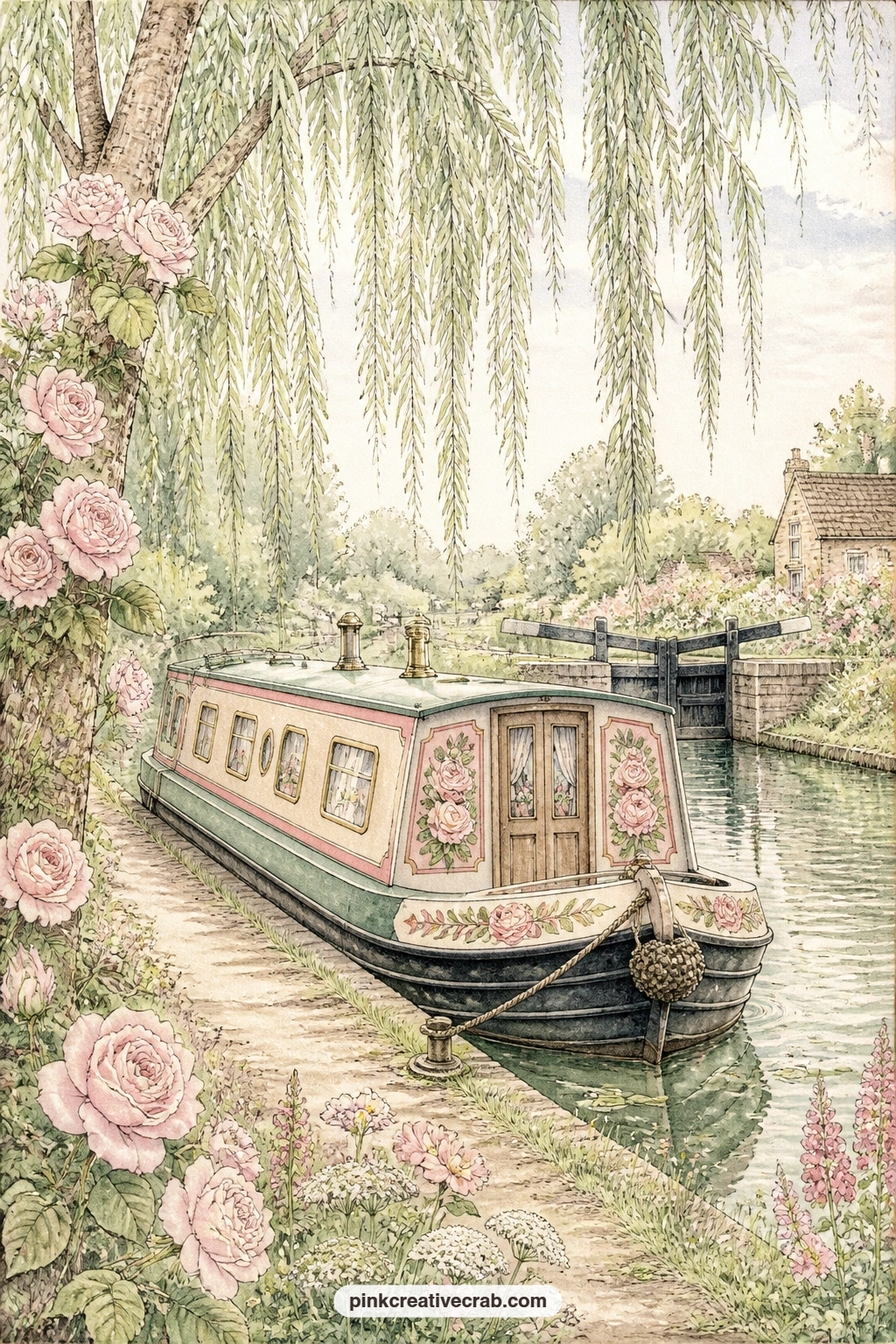
Fold the top corner of this page down before gluing it in, so the narrowboat seems to be sailing just past the edge of the spread.
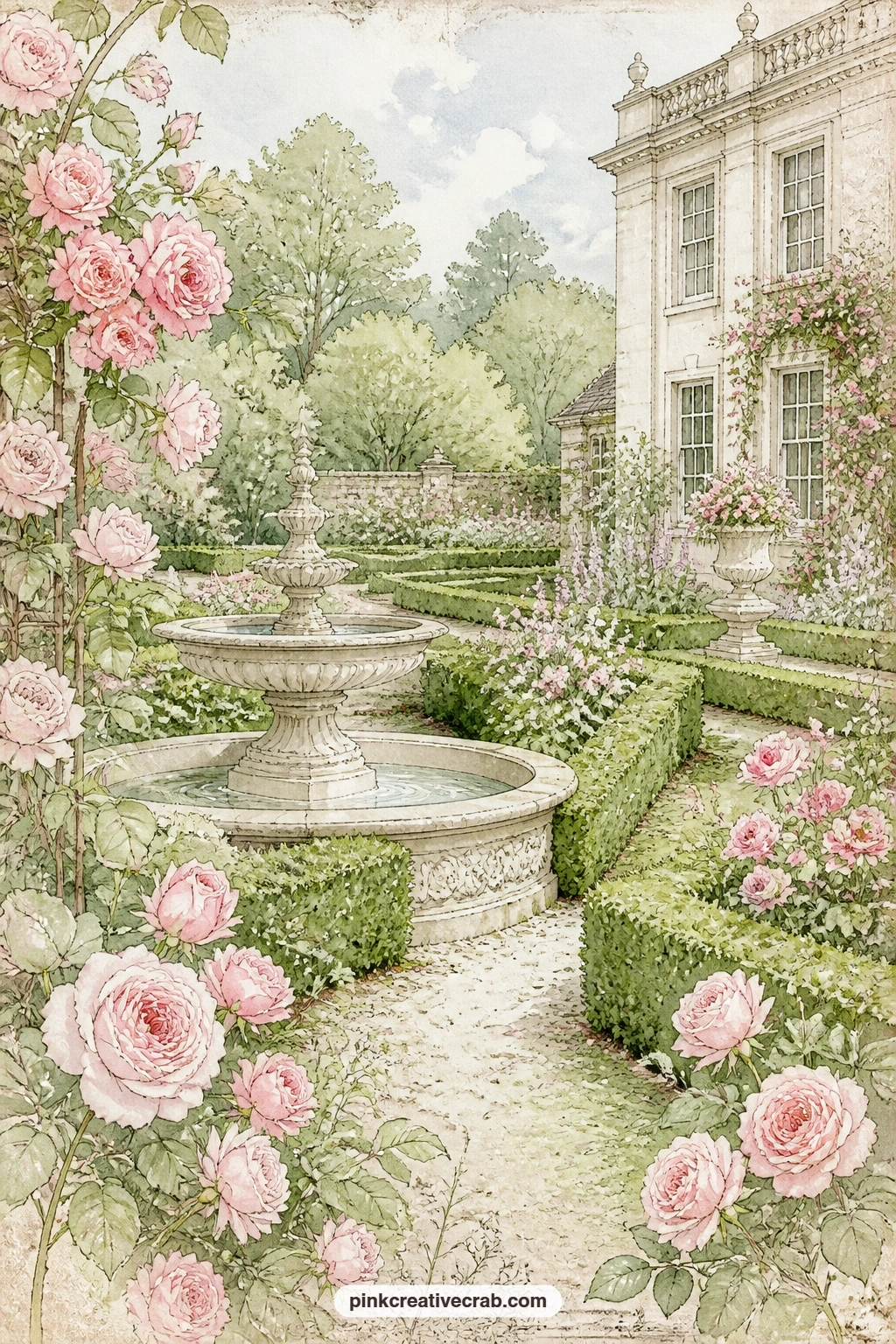
Note the usual mistake on a formal garden page: too much empty lawn. Keep the clipped hedges, the fountain and a bed of roses close together, and let the gravel path do the rest.
Harvest And Hedgerow
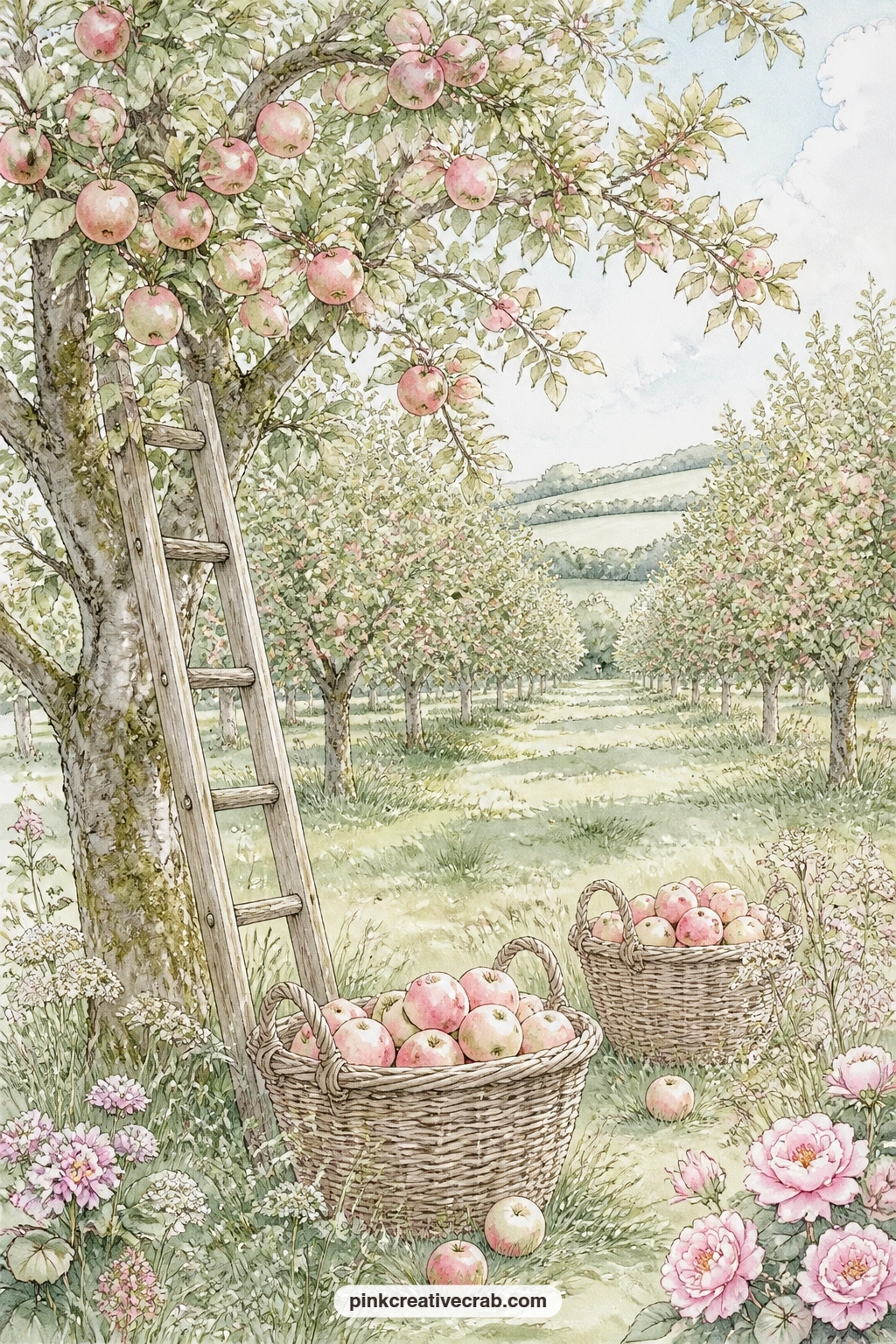
Apple trees heavy with fruit, a wooden ladder leaning against one trunk and baskets already filled make this orchard page feel like the middle of harvest.
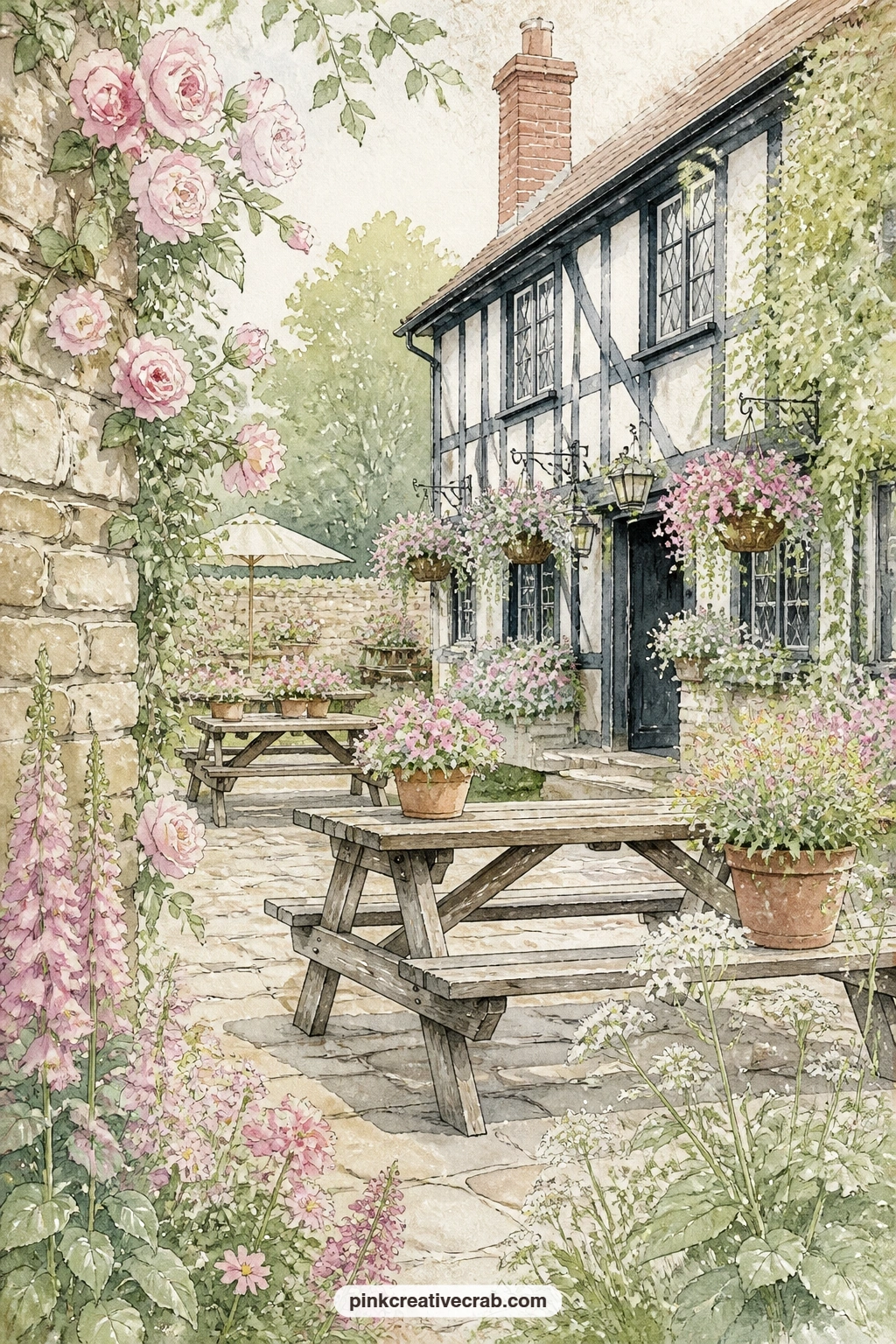
Keep a short list tucked behind this page: the names of every pub garden you mean to visit, written small enough to hide under the hanging baskets.
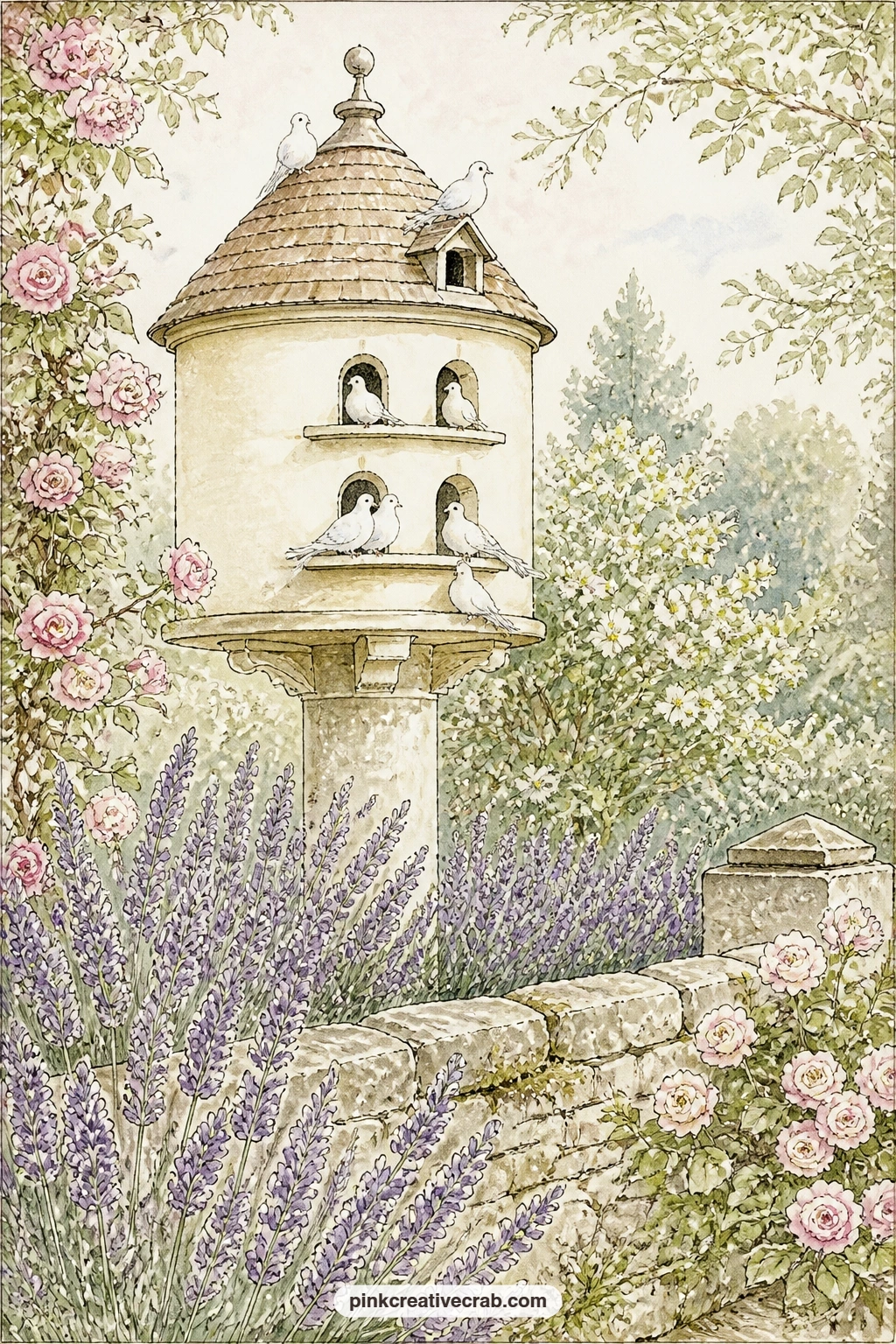
This page pairs well with the lavender field background later in the set; slide a strip of that paper in as a pocket lining behind the dovecote.
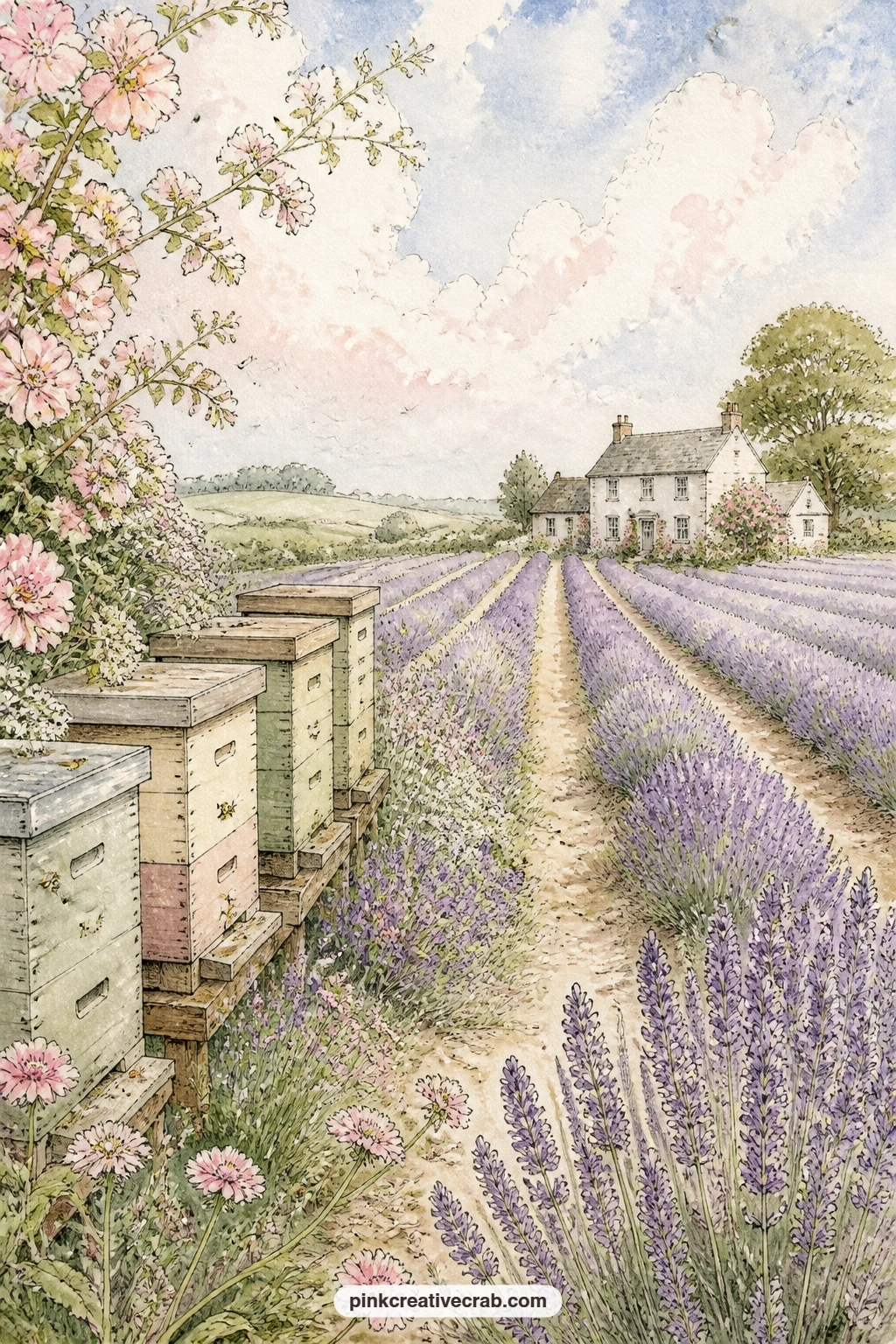
Rows of lavender stretch toward a distant farmhouse, with a cluster of beehives set along one edge of the field under a wide open sky.
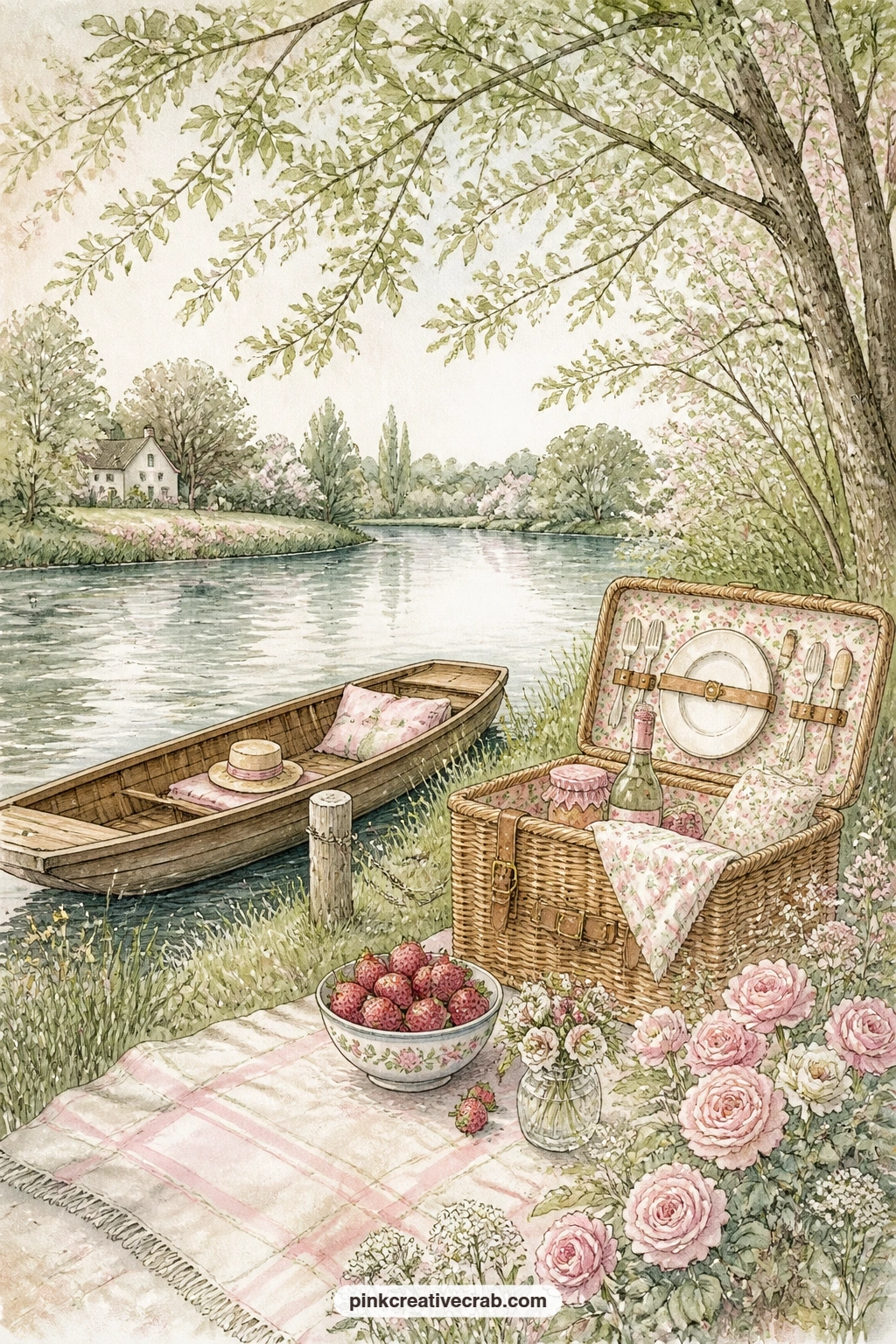
Trace the outline of the hamper lightly before you paint, then write the picnic menu on a small tag tucked beside the strawberries once the page is dry.
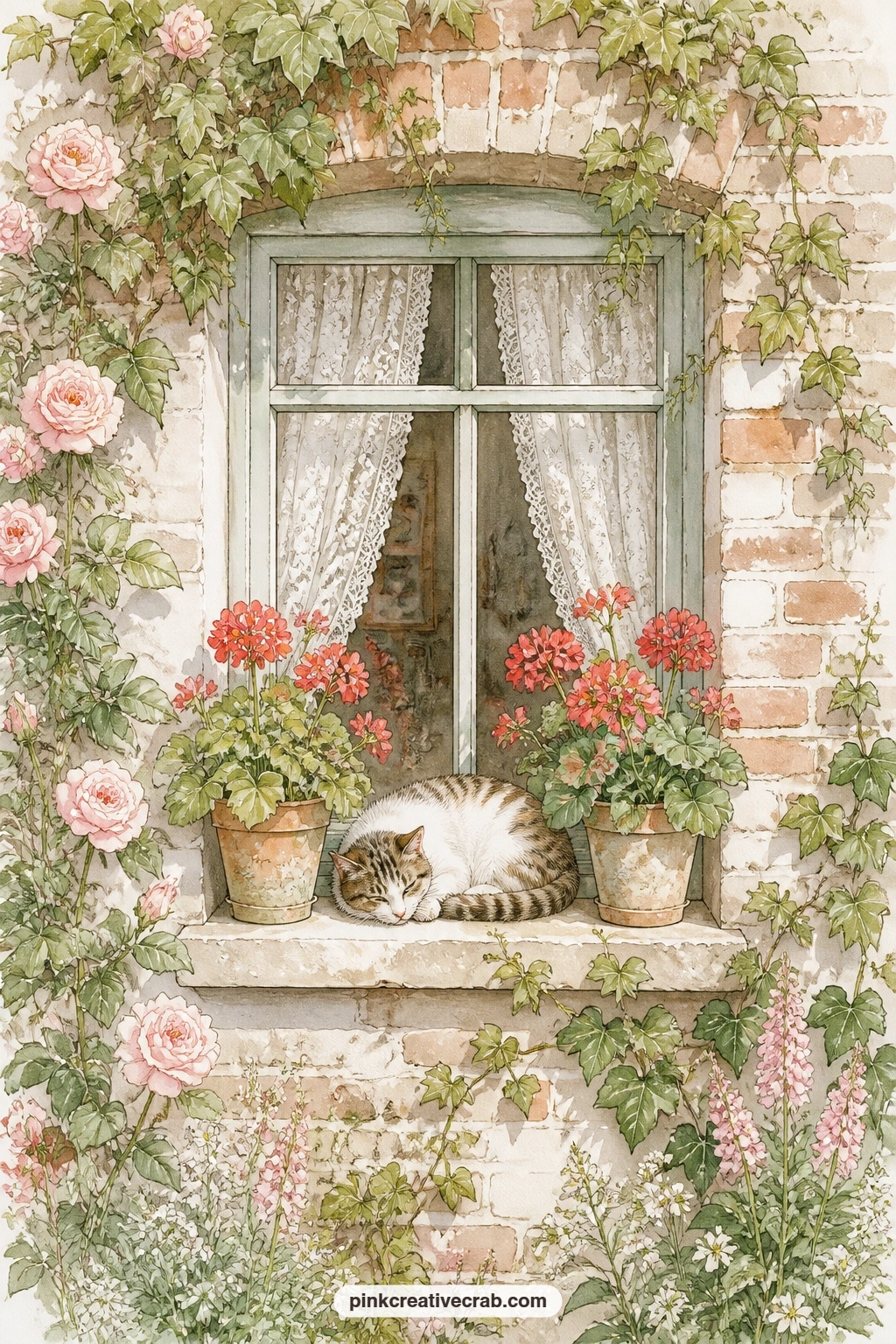
Lace curtains, potted geraniums on the sill and a cat curled in the sun finish this quiet window scene, framed by old cottage brickwork.
Background Papers
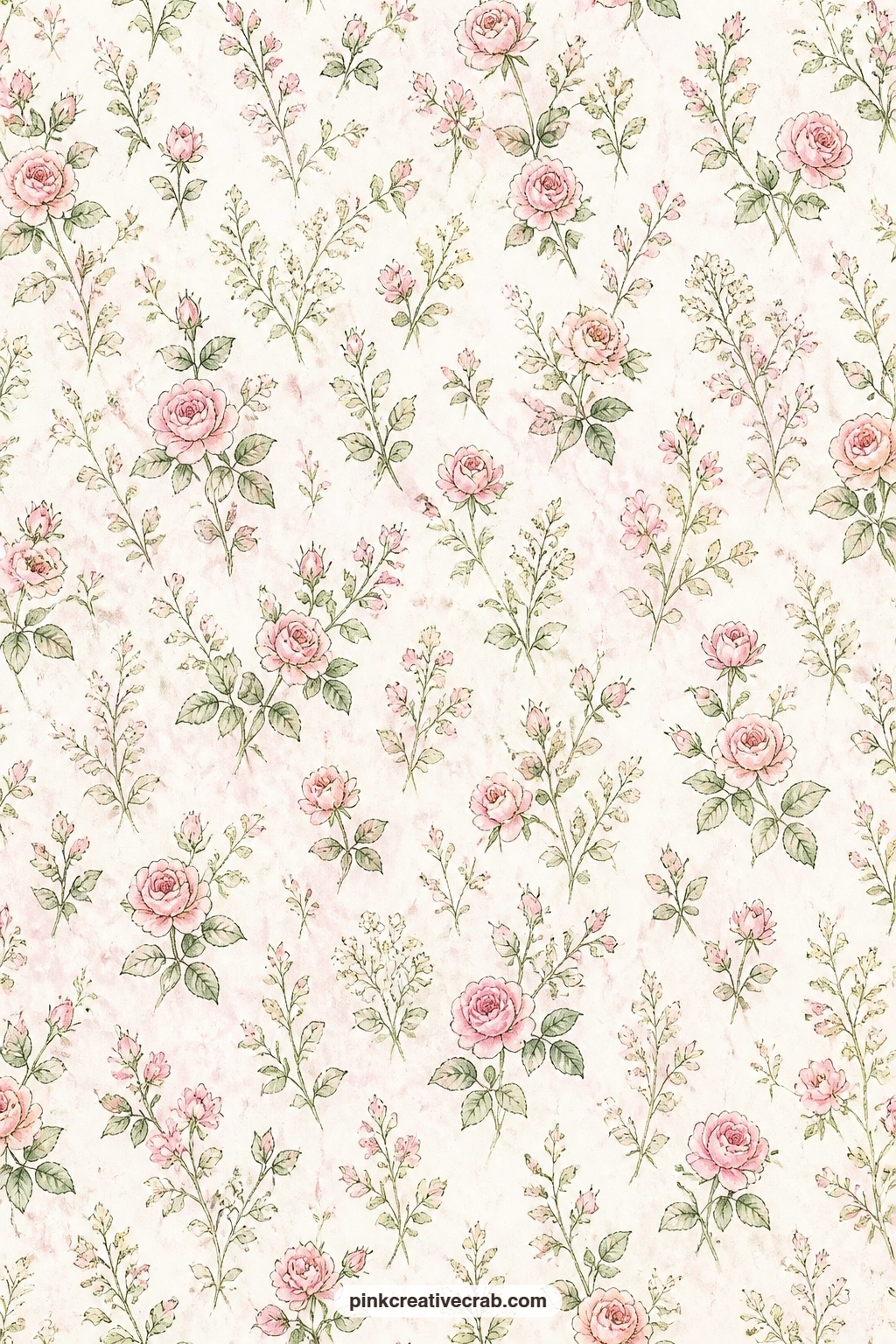
Scatter this paper of tiny English roses and hedgerow sprigs behind photographs from garden visits, cut it down for a pocket lining, or wrap it round a plain journal cover for an instant cottage feel.
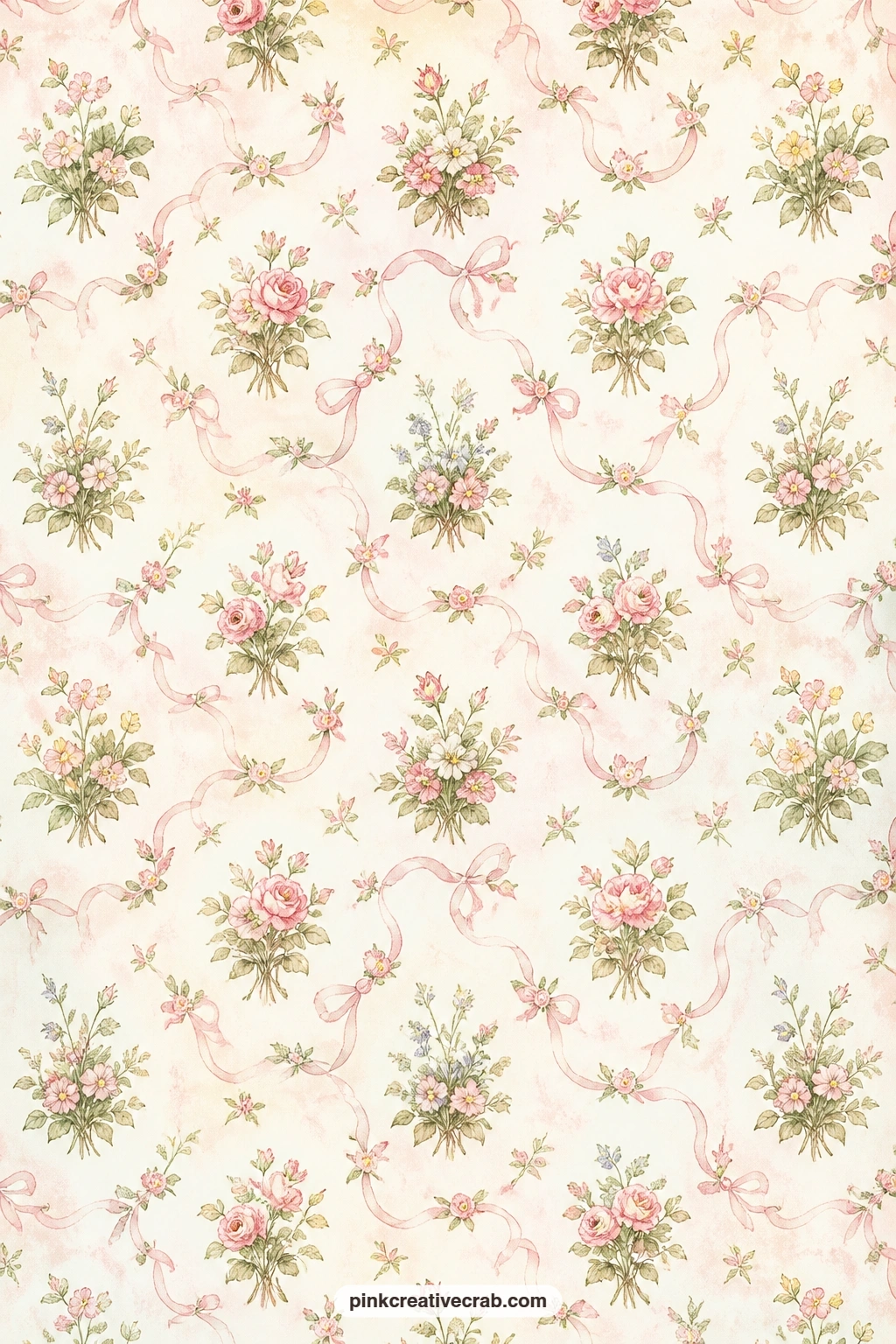
This chintz paper works well tucked behind a tea room page, cut into strips for a woven pocket front, or trimmed to line the inside front cover of the journal.
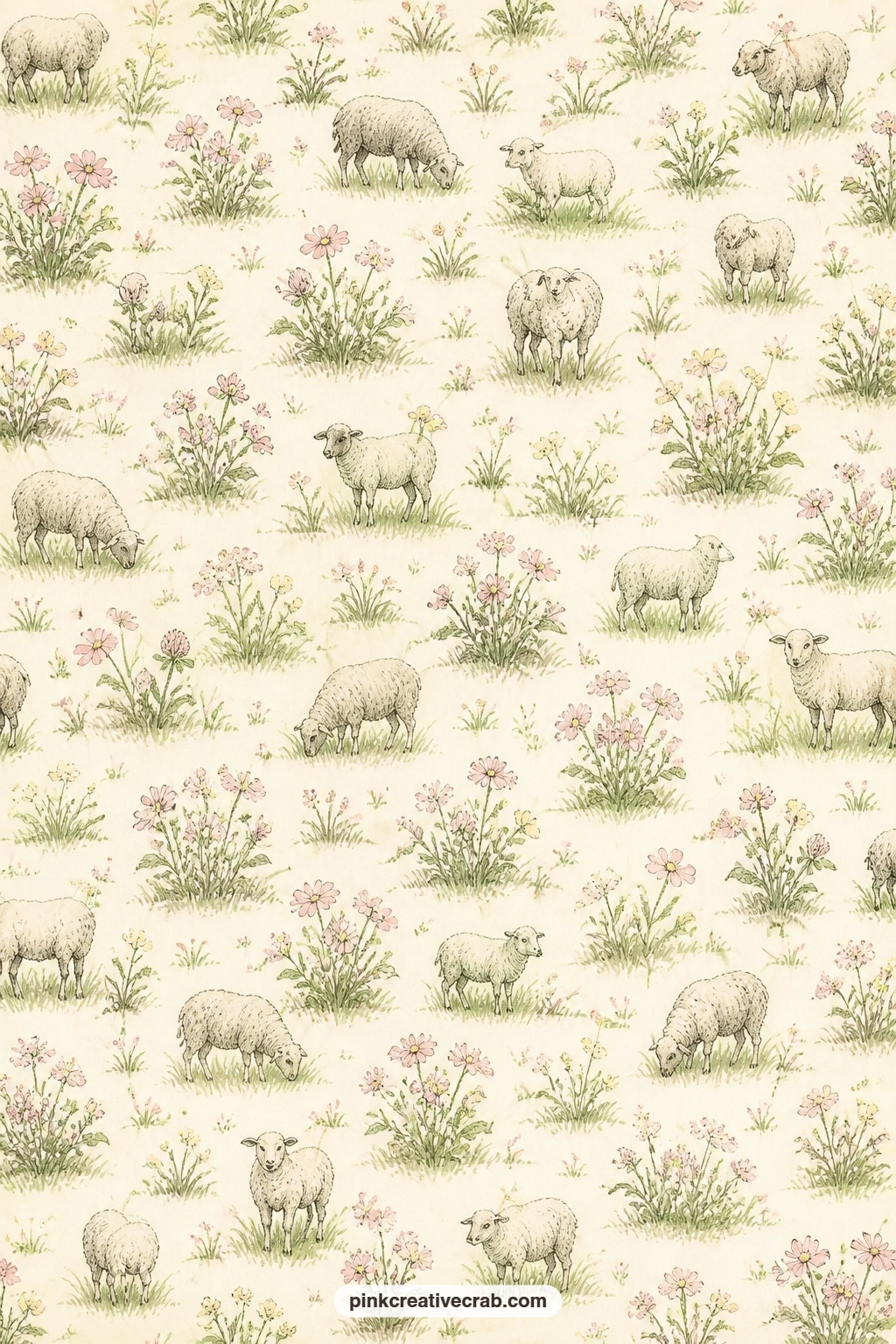
Use this meadow paper under a farm photograph, as the lining for a seed packet pocket, or as the base layer under the shire horse or sheep hill pages.
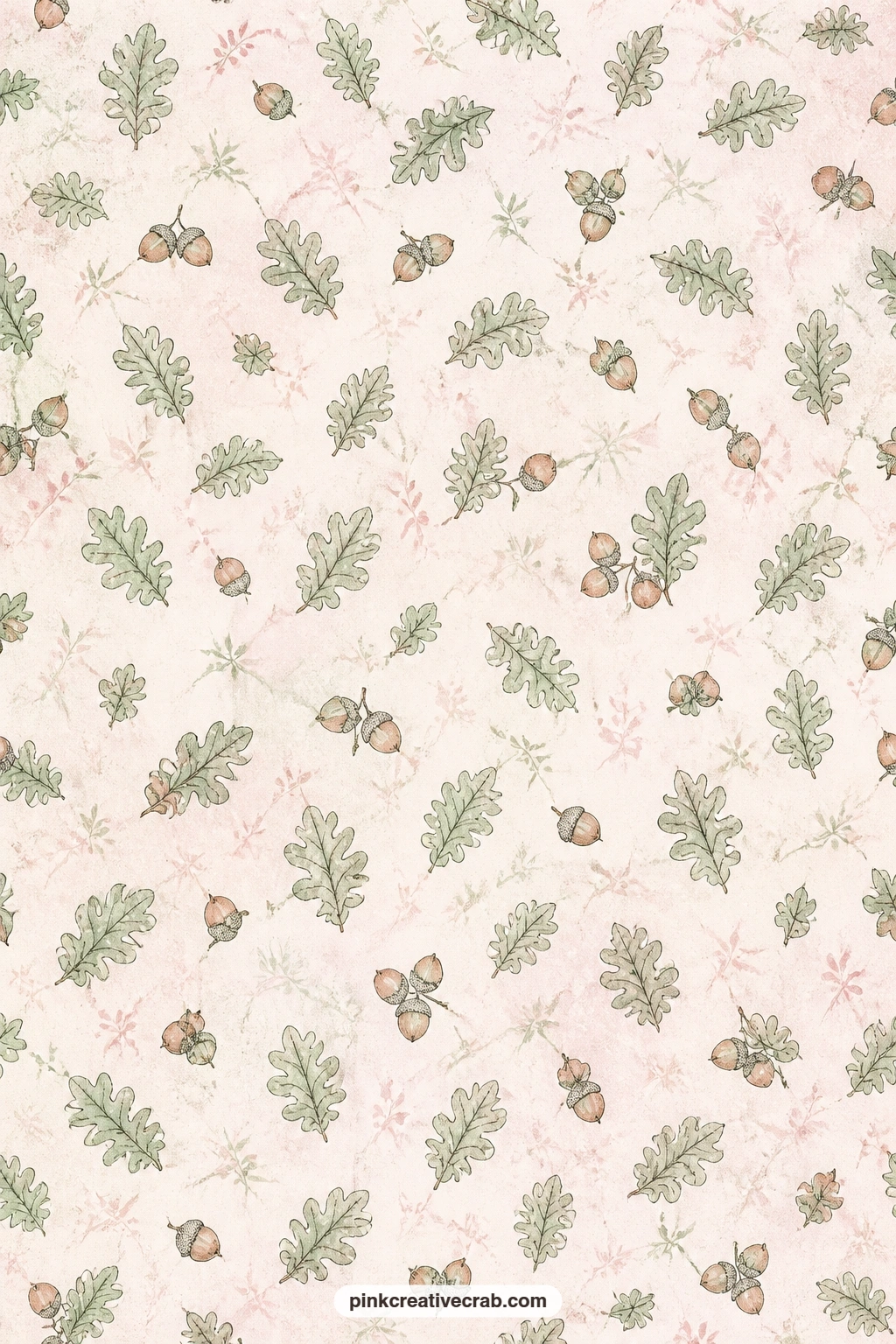
Set this oak leaf paper behind an autumn photograph, use it as a cover wrap for a harvest-themed journal, or cut it into tags to tuck beside the orchard page.
Lined Writing Pages
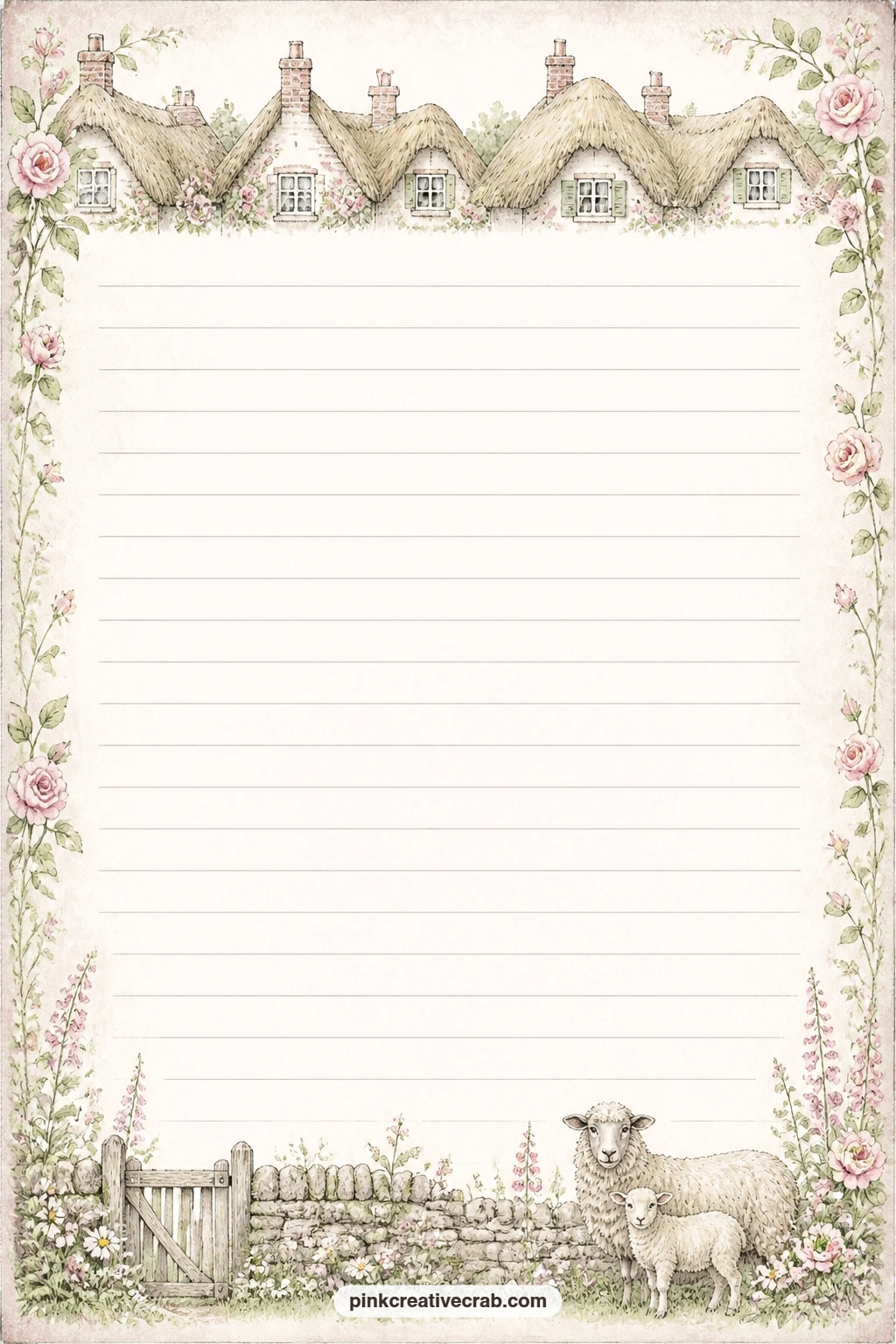
A row of thatched cottage rooflines runs along the top of this page: use it for a list of villages to visit, a note on the weather that day, or a short cottage description.
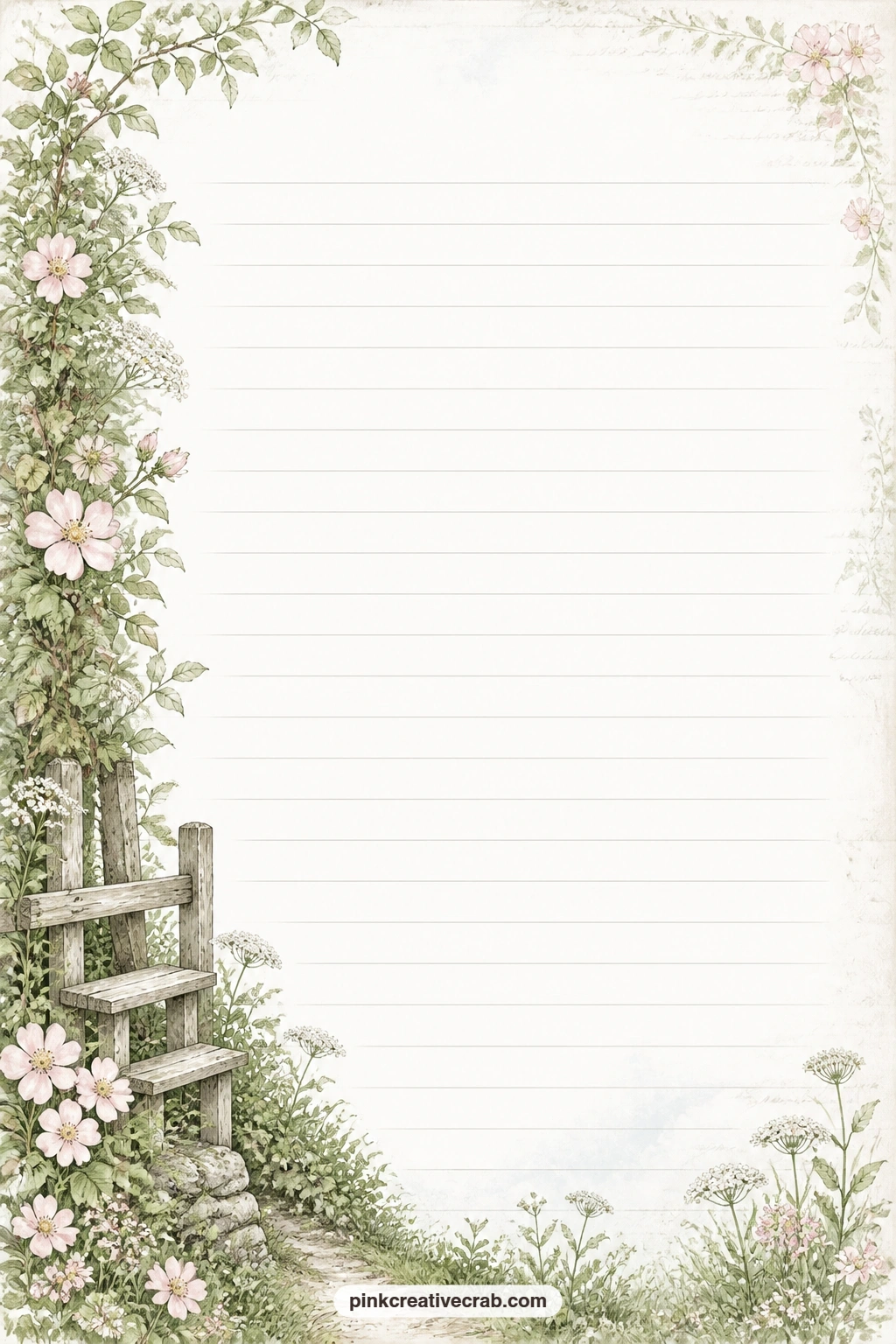
A hedgerow and a small wooden stile run down one side of this page, leaving room to write a walking route, a list of wildflowers spotted, or a note to carry on a future ramble.
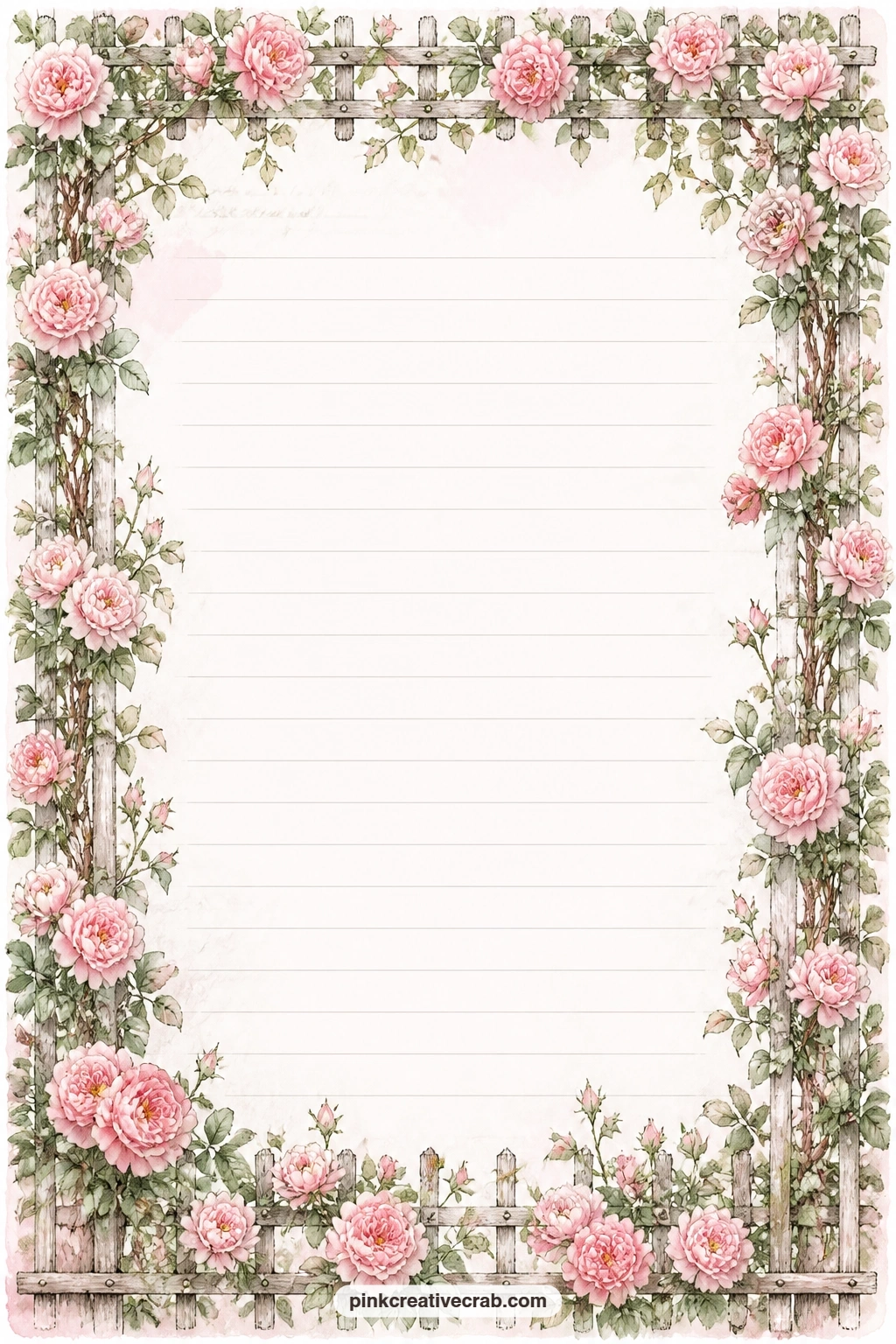
A trellis of climbing English roses frames the whole page, perfect for a letter to next year, a tea room order you want to remember, or a gift list for a cottage-loving friend.
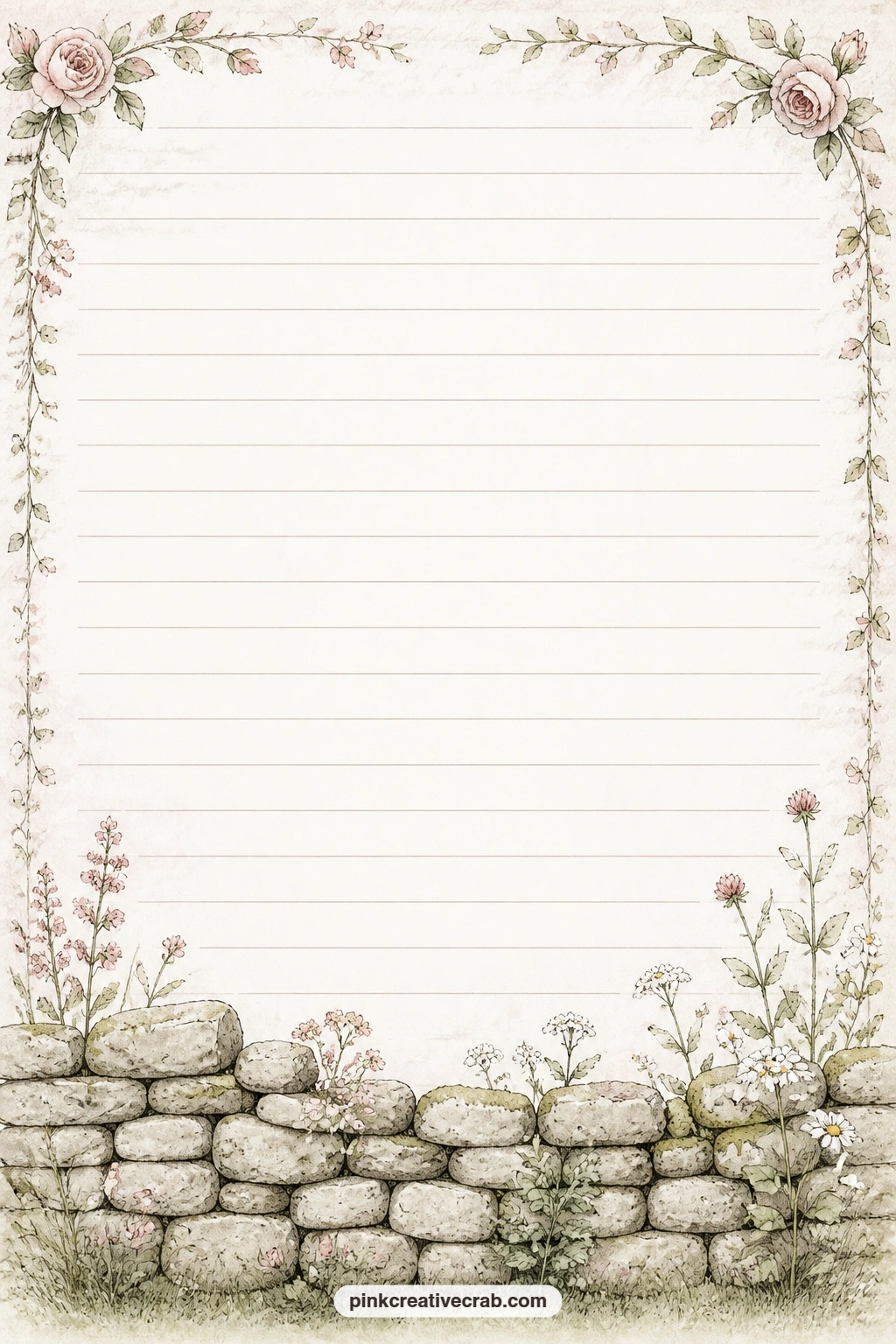
A dry stone wall runs along the bottom edge of this page, leaving space above for a farm diary entry, a sheep-counting note, or a short menu from a countryside lunch.
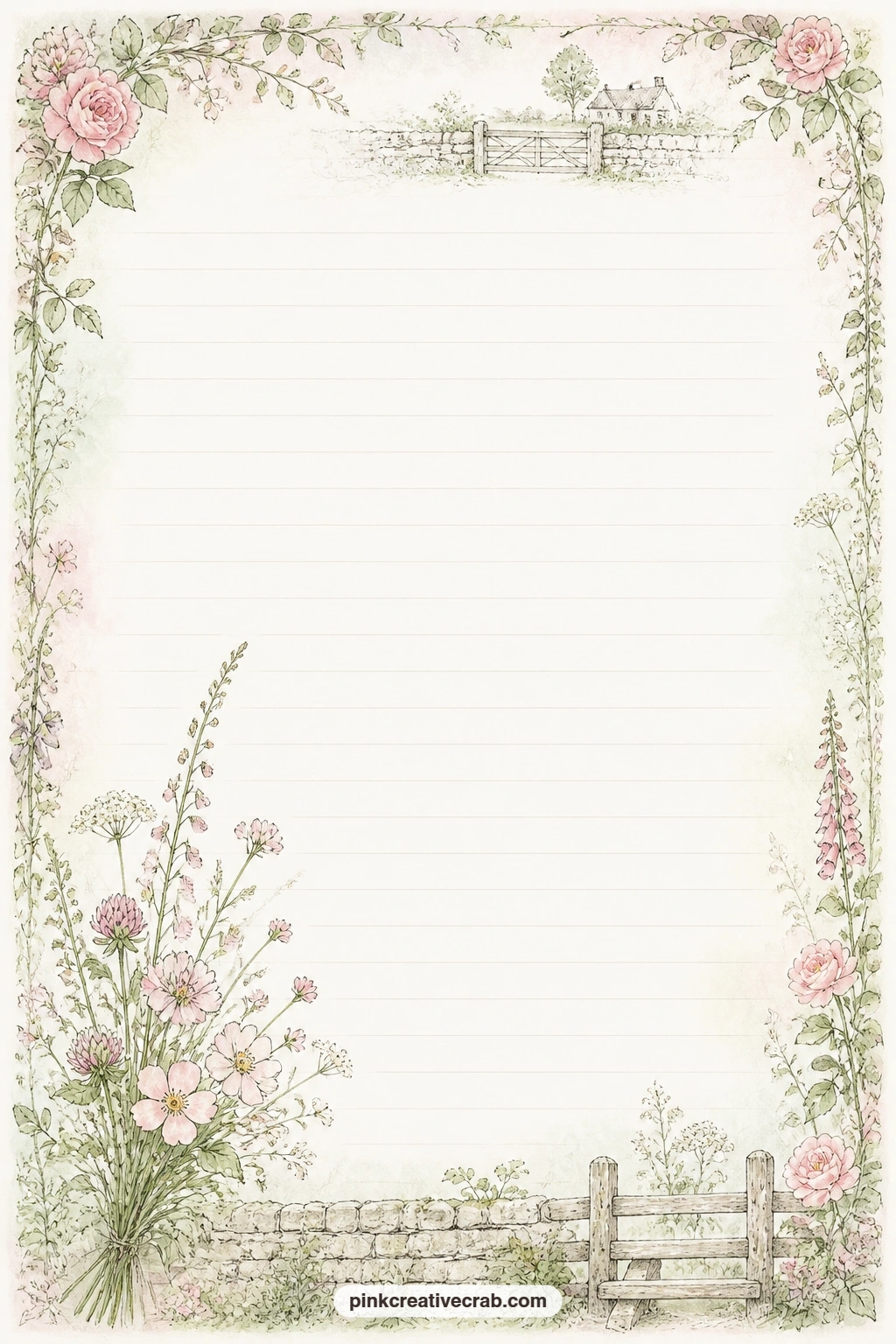
A small spray of country lane wildflowers sits in one corner of this page, leaving the rest clear for a packing list, a picnic menu, or a note on the best lane you walked that week.
What to Do Next
Print the full set, sort the scene pages into the order that suits your own slow days, and start gluing from the thatched cottage through to the riverbank picnic.
Frequently Asked Questions
What paper should you print an english countryside junk journal kit on?
Matte cardstock between 90 and 110 pounds works best. It takes glue and ink without curling or buckling, and the heavier weight feels right for a journal meant to be handled often.
What printer settings keep the colours looking right?
Choose your printer’s best or photo quality setting with the paper type set to matte or cardstock. This keeps the fine sepia outlines crisp and stops the soft pastel washes from printing too pale.
What size should the pages be cut to?
Standard US letter or A4 suits most home-bound journals. Trim close to the printed edge with craft scissors or a paper trimmer so each page sits flush once it is glued or sewn in.
What should you use to glue the pages into a journal?
A glue stick made for paper gives a clean, flat bond without wrinkling the cardstock. Keep a bone folder or the back of a spoon nearby to press each page smooth after gluing.
Can you colour or add to these pages once they are printed?
Yes, fine tip pens work well for adding dates, names or extra details over the painted scenes. Coloured pencils can also deepen a shadow or tint without disturbing the printed watercolour beneath.
Have any thoughts?
Share your reaction or leave a quick response — we’d love to hear what you think!
-
 0
-
0
-
0
-
0
-
0
-
0


