

Table of Contents
A masculine junk journal needs pages that feel like they came out of a grandfather’s garage, not a scrapbook aisle, and this set of 28 goes all in on gravel roads, river banks and workbench clutter. You get 20 full scene pages, 4 seamless background papers and 4 lined writing pages, all drawn in one rugged vintage style so the whole kit holds together as a single journal.
Print the sheets on plain white or ivory cardstock (around 160 to 200gsm holds up best to glue), set your printer to its best or photo quality, and trim to your journal size before you start gluing anything in. From there it is scissors, glue and however much coffee staining you feel like doing.
Using these images: free for personal projects such as printing, coloring, cards, journals and gifts. Handmade items that include them may be sold up to 30 pieces per design. More than that is commercial use and is not permitted, and neither is selling or sharing the images themselves or passing them off as your own. Please ask before any other use.
On The Road
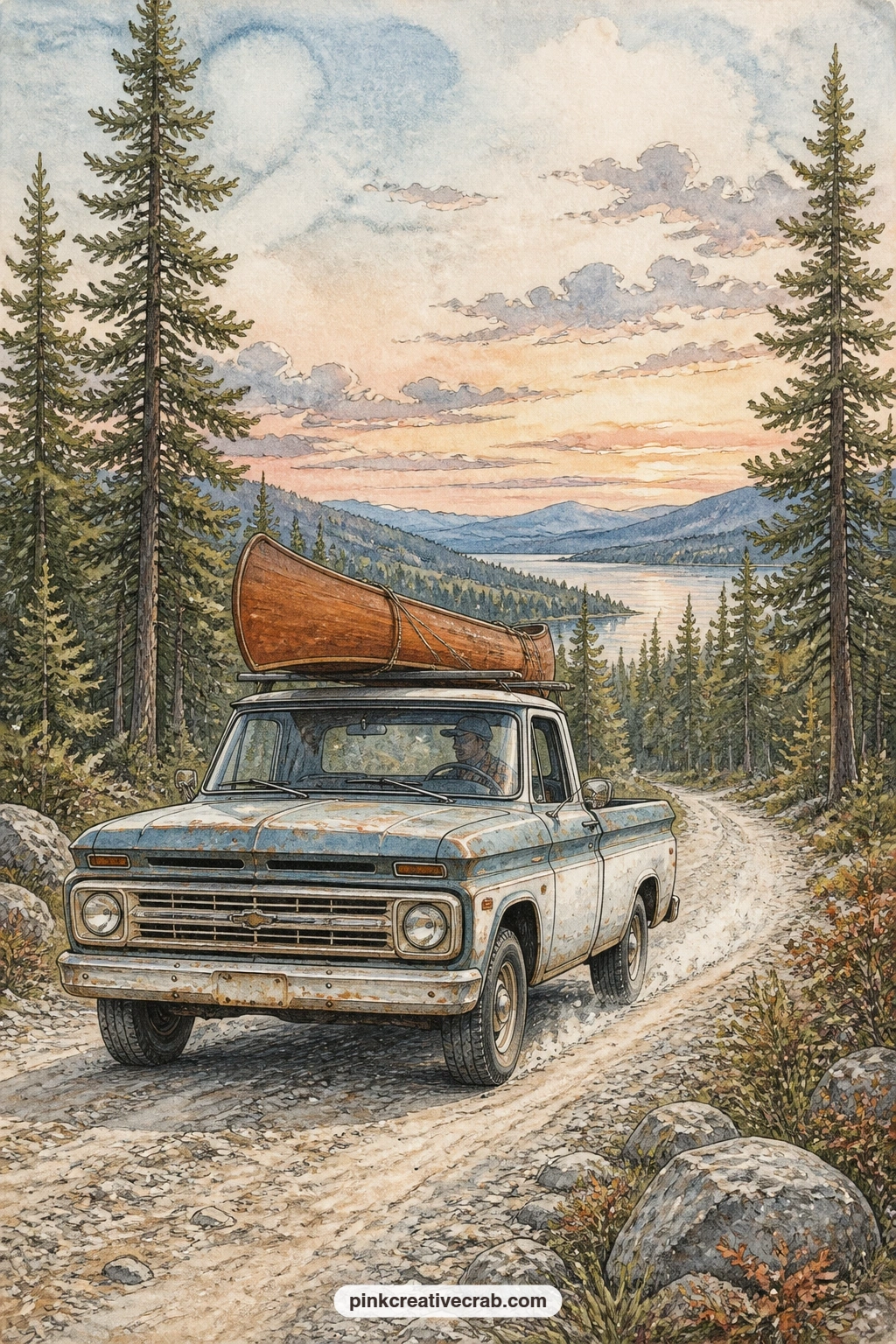
Rolling down a gravel road with pine trees crowding both sides and a canoe strapped to the roof, this page sets the tone for the whole journal in one look.
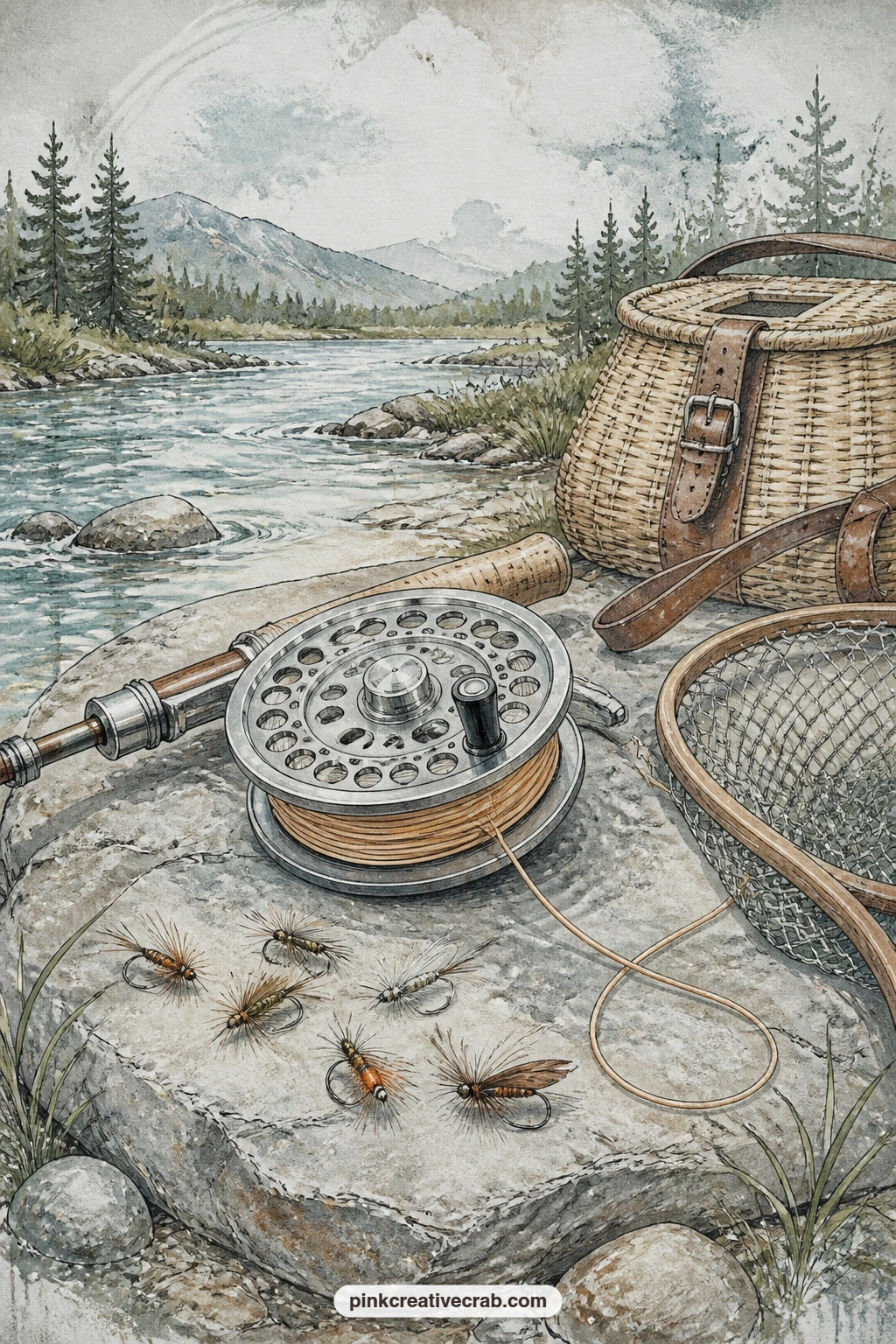
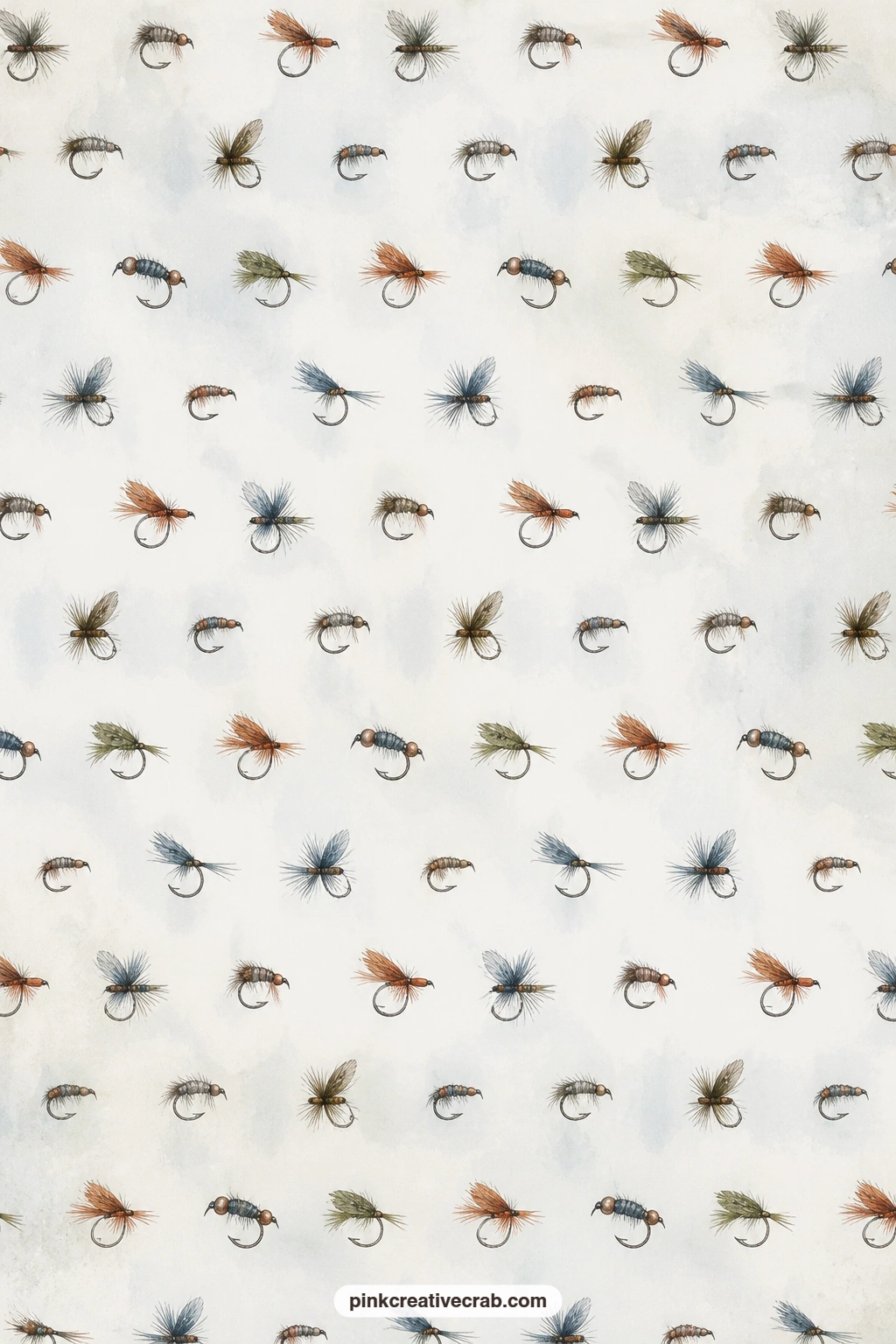
Pair this with the fishing flies background paper later in the set, tucking a strip of it behind the reel as a liner before you glue the whole page down.
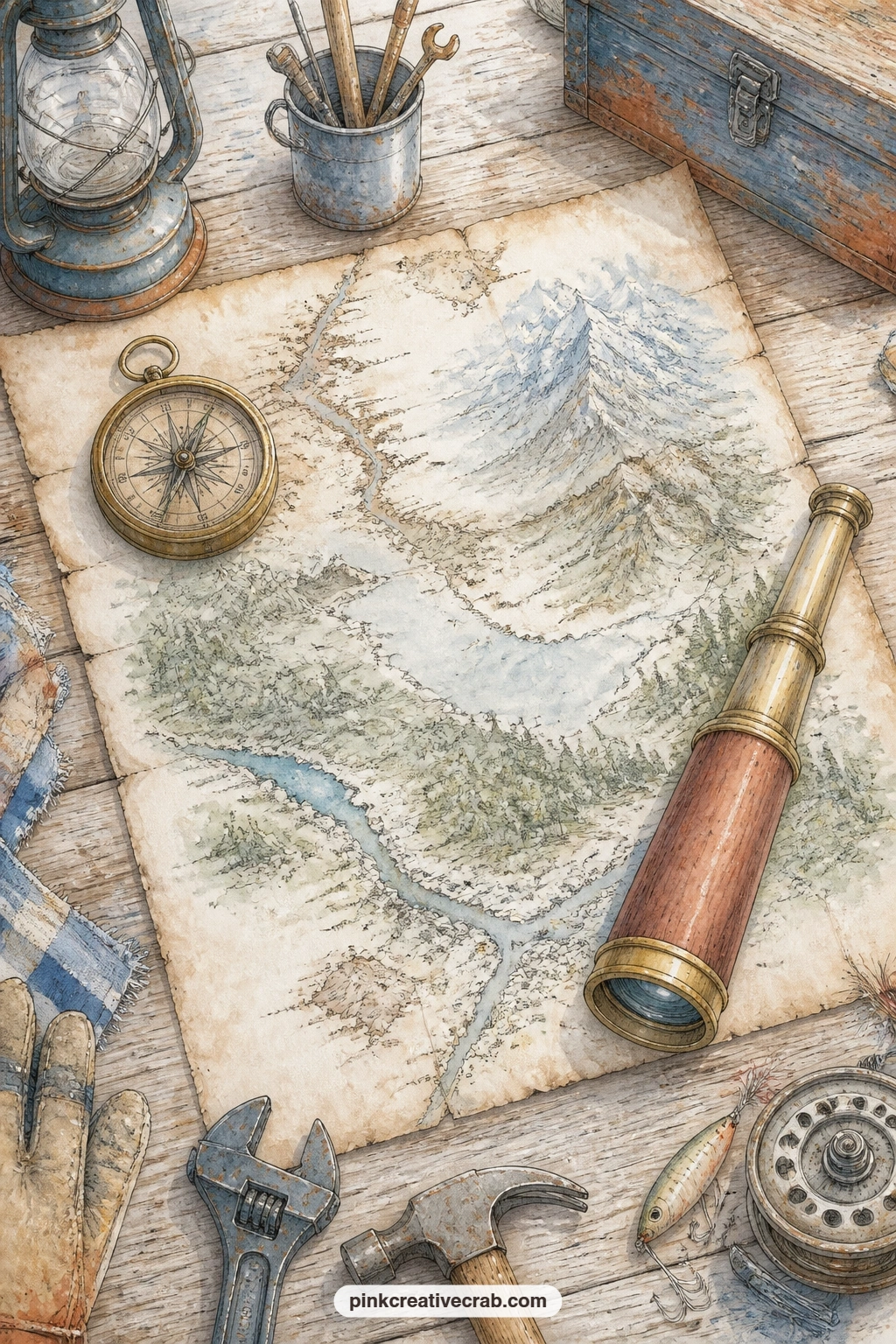
Spread across a worn workbench, an unlabeled map unrolls under a brass compass and an old spyglass, as if someone is tracing tomorrow’s route.
Workshop and Fire
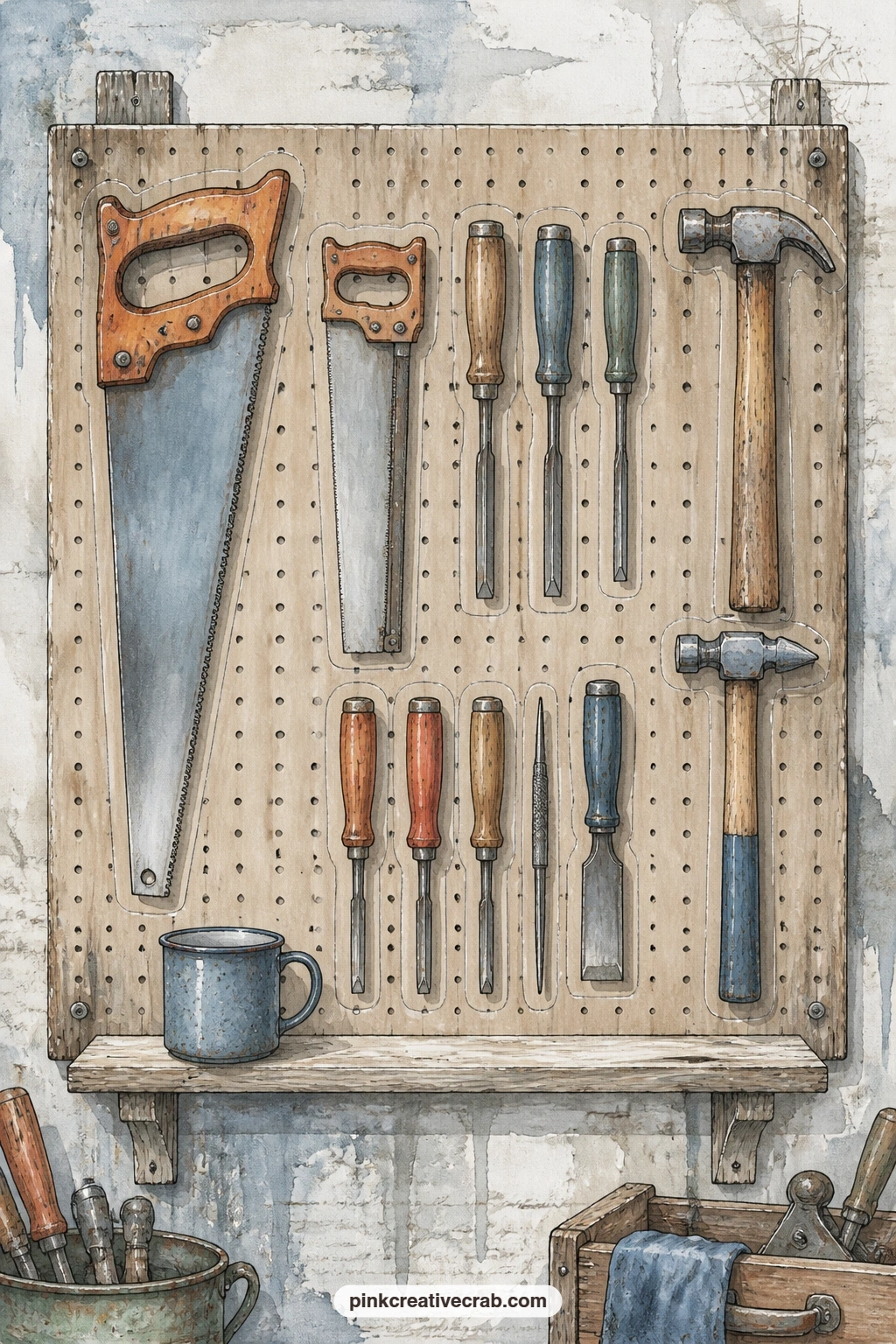
The usual mistake with a busy tool page like this is cramming it onto a spread with another full page and losing both. Give it a page to itself, or pair it only with a lined page so the pegboard stays the star.
Hand saws, chisels and hammers hang in their outlines on the board, with a coffee mug set on the shelf below for the person who actually uses them.
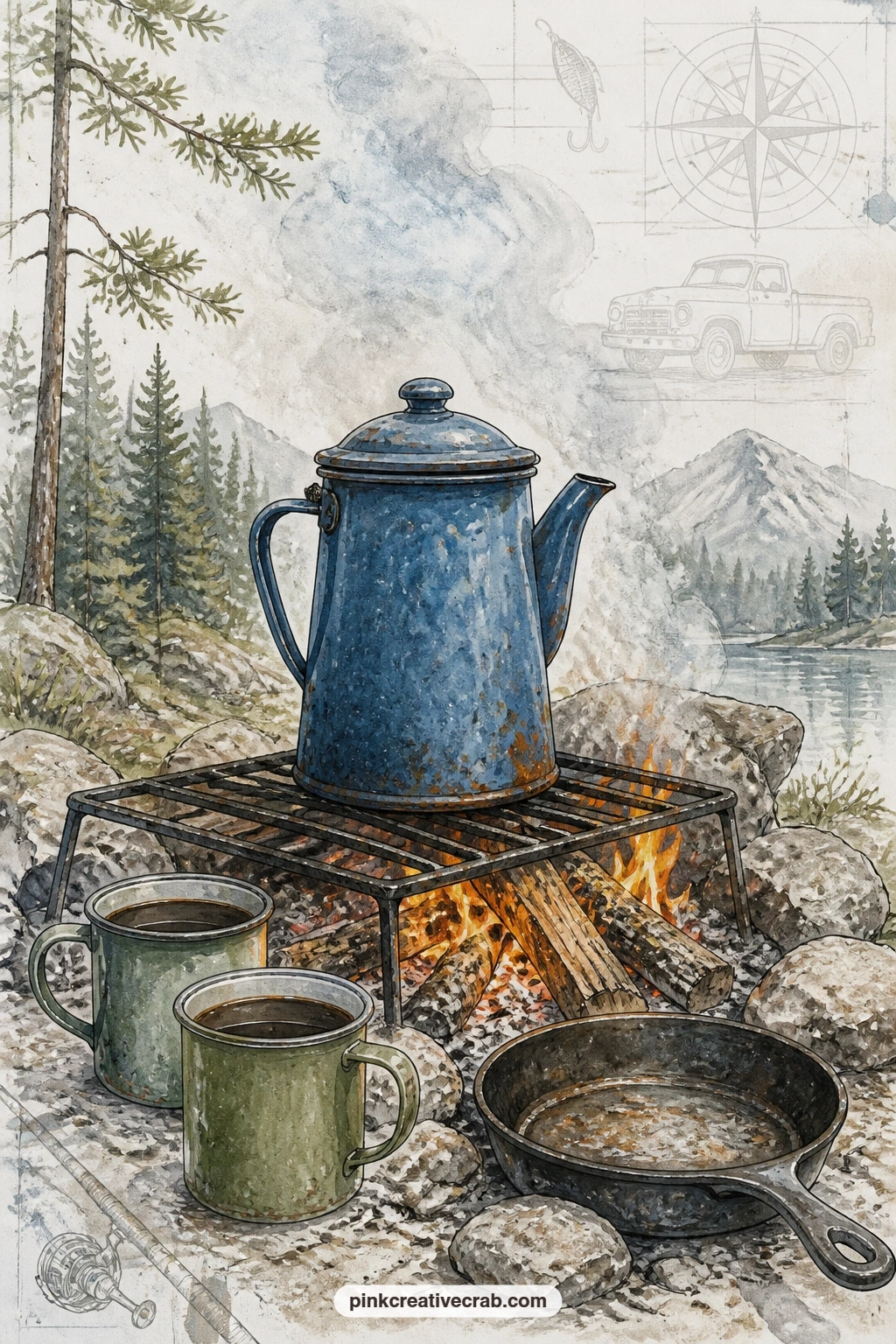
What would he write on this one: the trail he hiked, the fish he almost caught, or just how the coffee tasted at five in the morning.
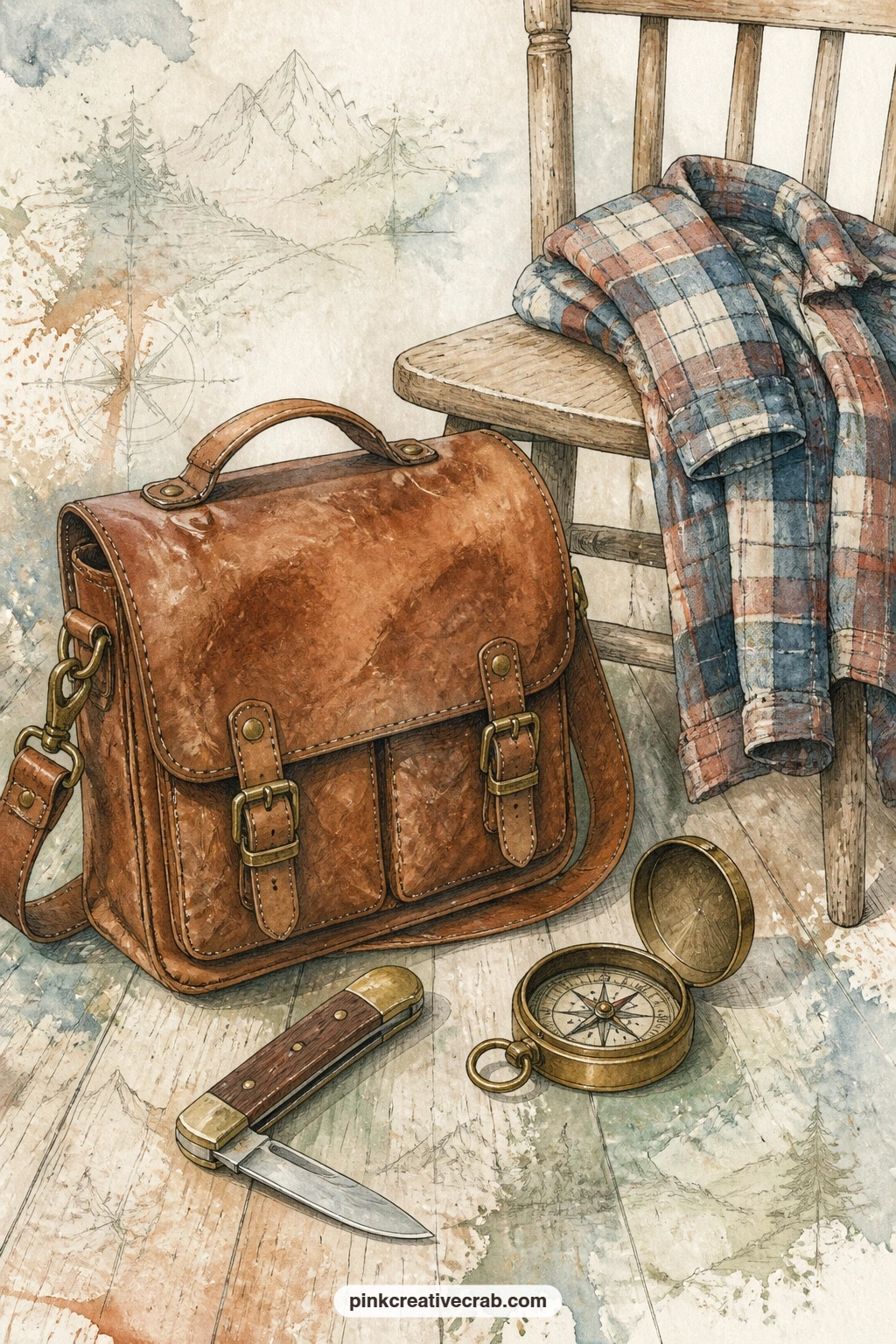
This page suits the quieter man in the family, the one who keeps his gear simple: a satchel, a pocket knife, a field compass and a flannel shirt slung over a chair.
Leave this one for someone who journals in short lines rather than long stories, since the objects already say most of what needs saying.
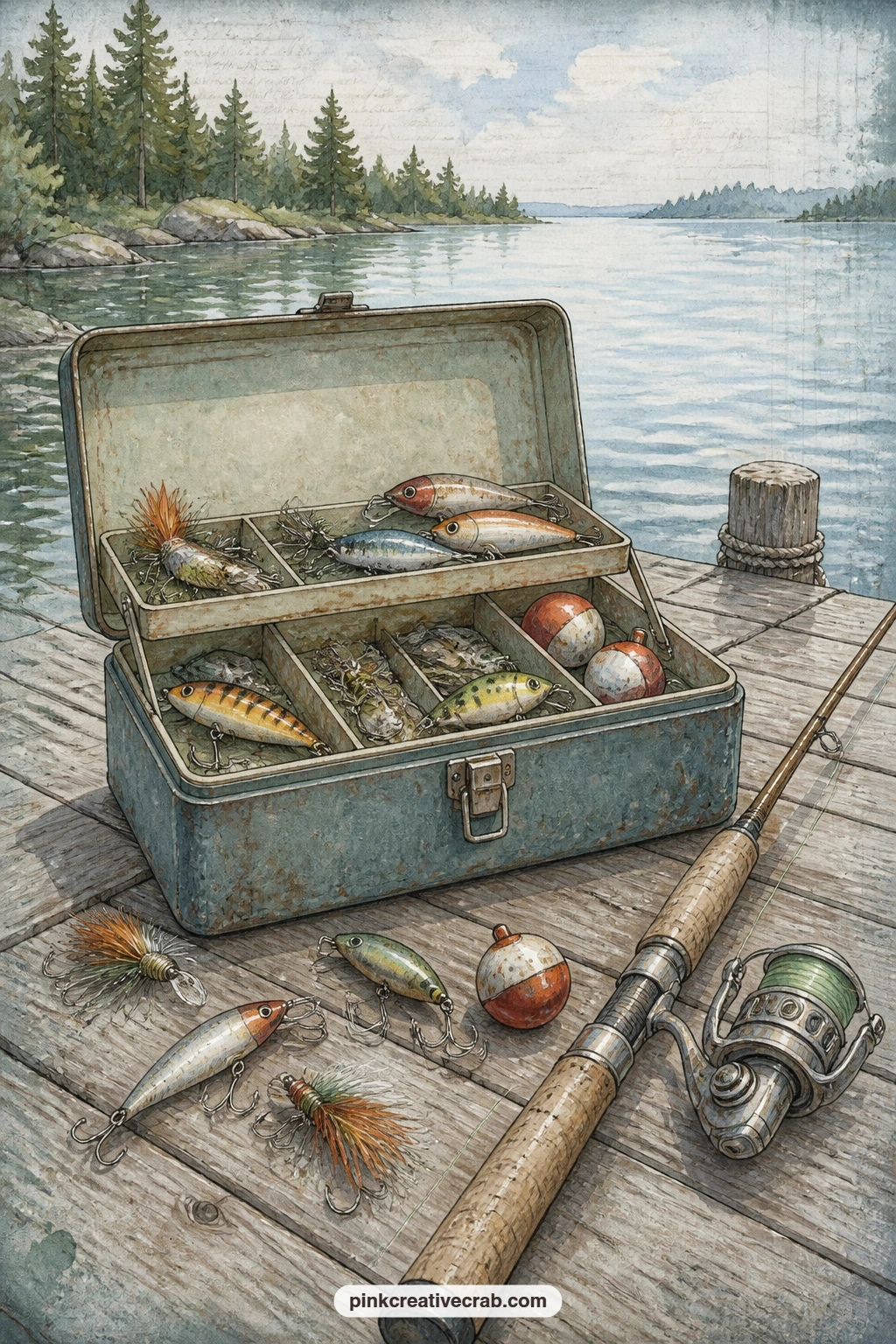
Tearing the top edge of this page before gluing it in gives the dock boards a rough, weathered line that matches the rest of the set nicely.
Garage and Barn
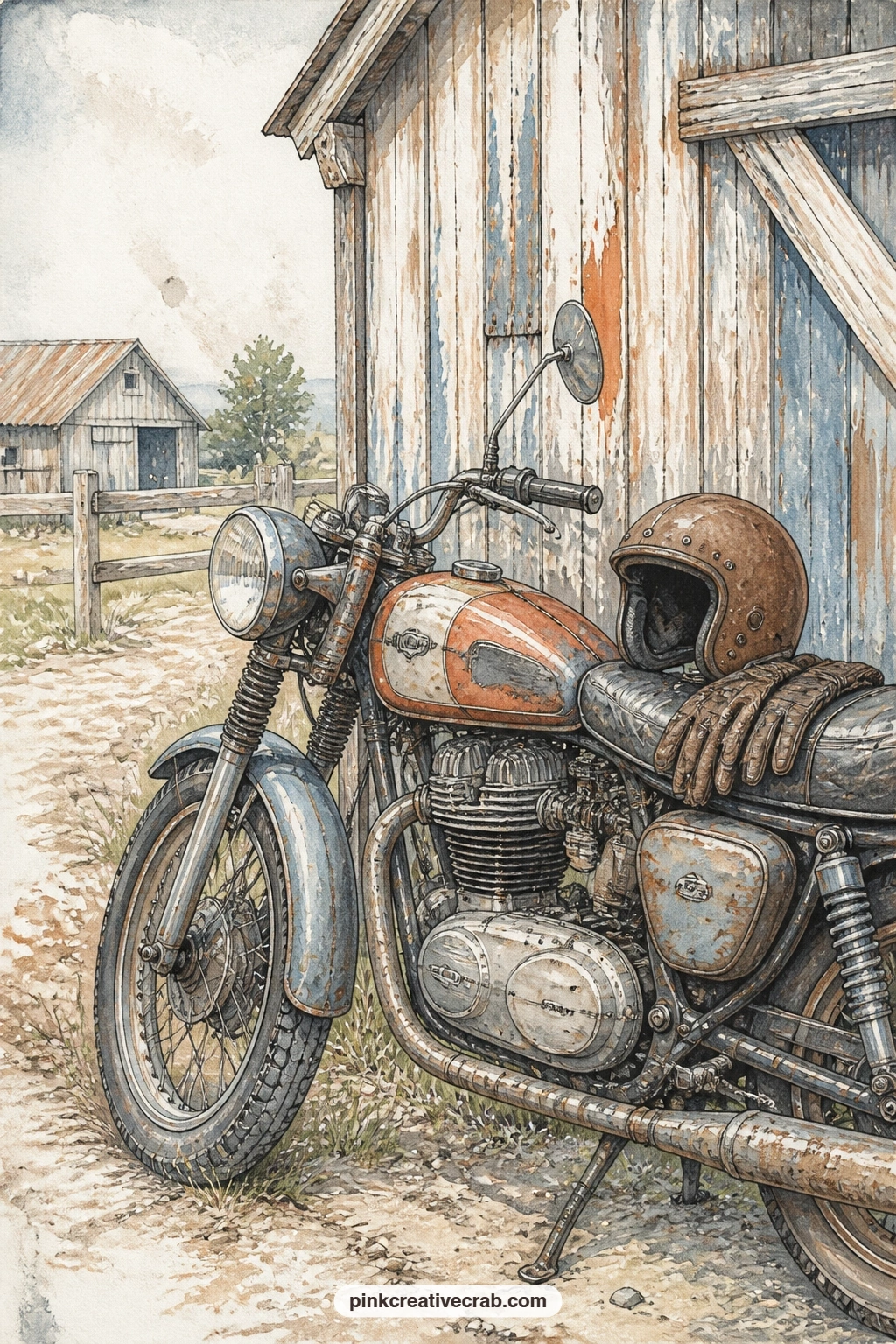
Glue a small photo corner or ticket stub near the helmet here, since this page reads like the start of a weekend ride rather than the end of one.
A vintage motorcycle leans by a weathered barn wall, helmet and gloves resting on the seat as if its rider just stepped away.
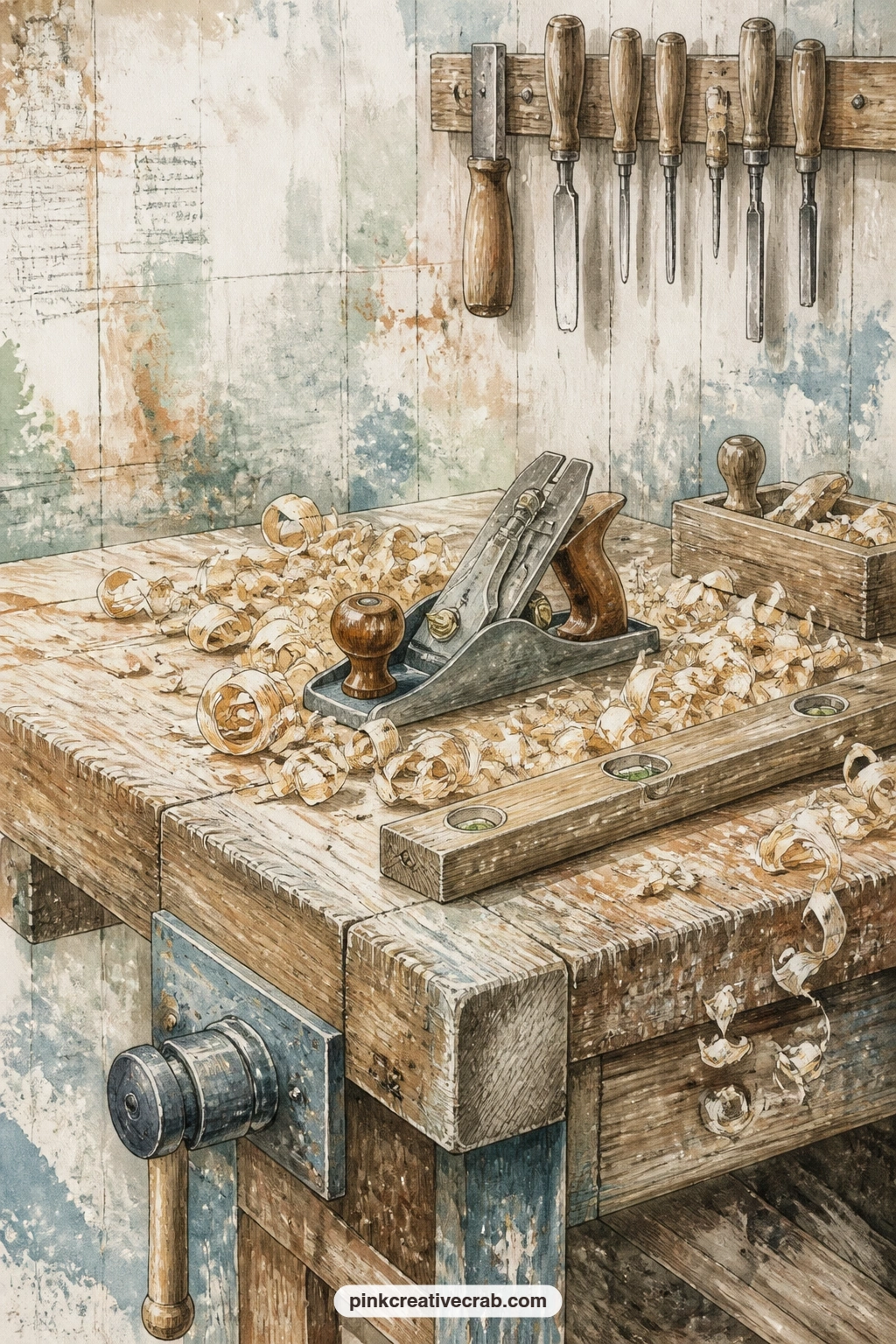
Curls of wood shavings scatter around a hand plane and a level laid across the bench, the quiet mess of someone halfway through building something.
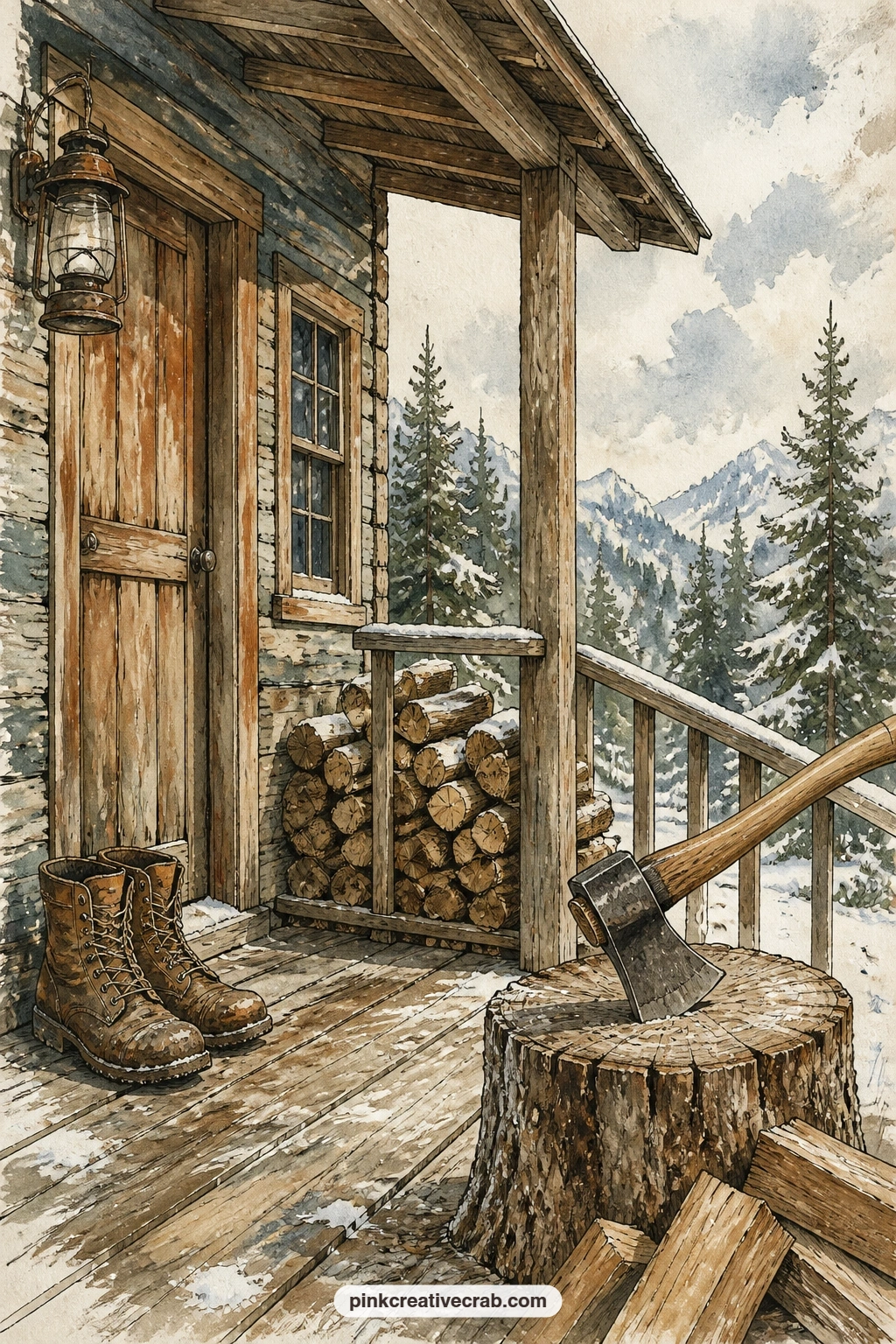
Try the five minute version of this page by sticking to the main stump and axe, skipping the boots and woodpile if time is short before a trip.
Worn boots sit by the door, an axe stands in a tree stump, and firewood stacks along the porch rail in the cold light of late afternoon.
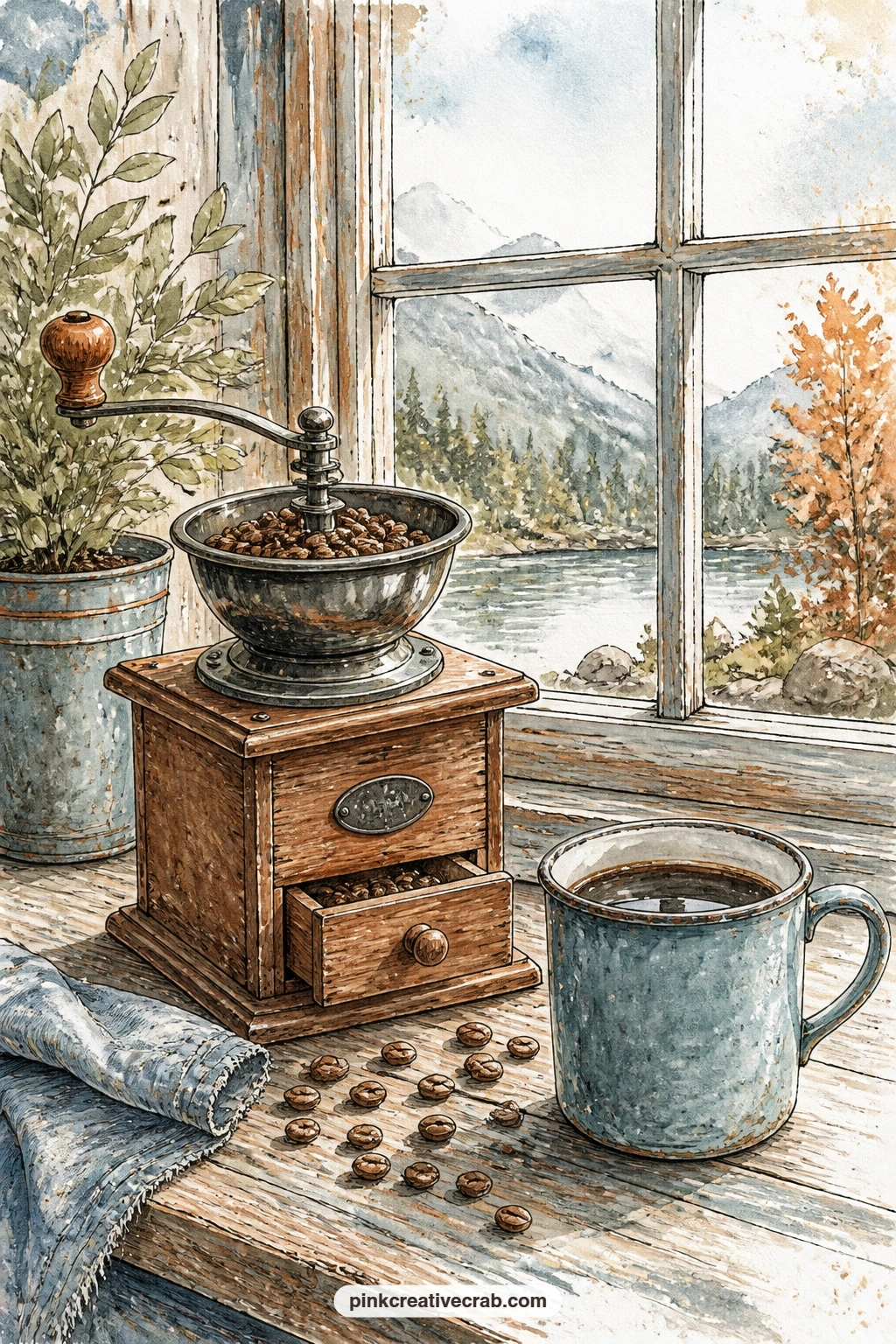
Loose coffee beans scatter near the grinder and a half full mug on the wooden counter, with morning light painted through the window behind them.
Field and River
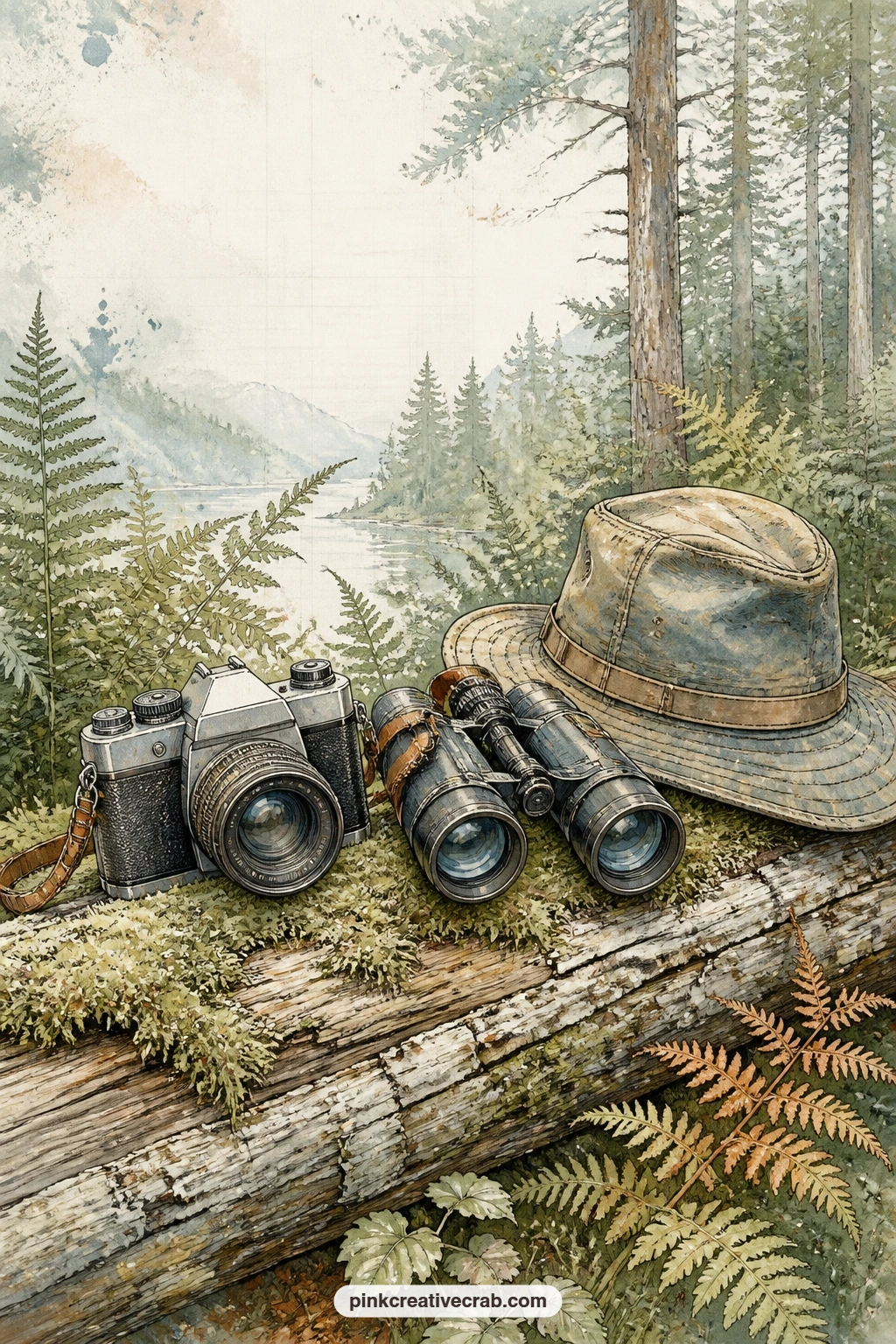
Write the trip details right on this one: the trail name, the weather, what you actually saw through the binoculars before the light went.
A brush, razor and mug sit together on the counter, a folded towel nearby, with the edge of an old mirror painted faintly behind them.
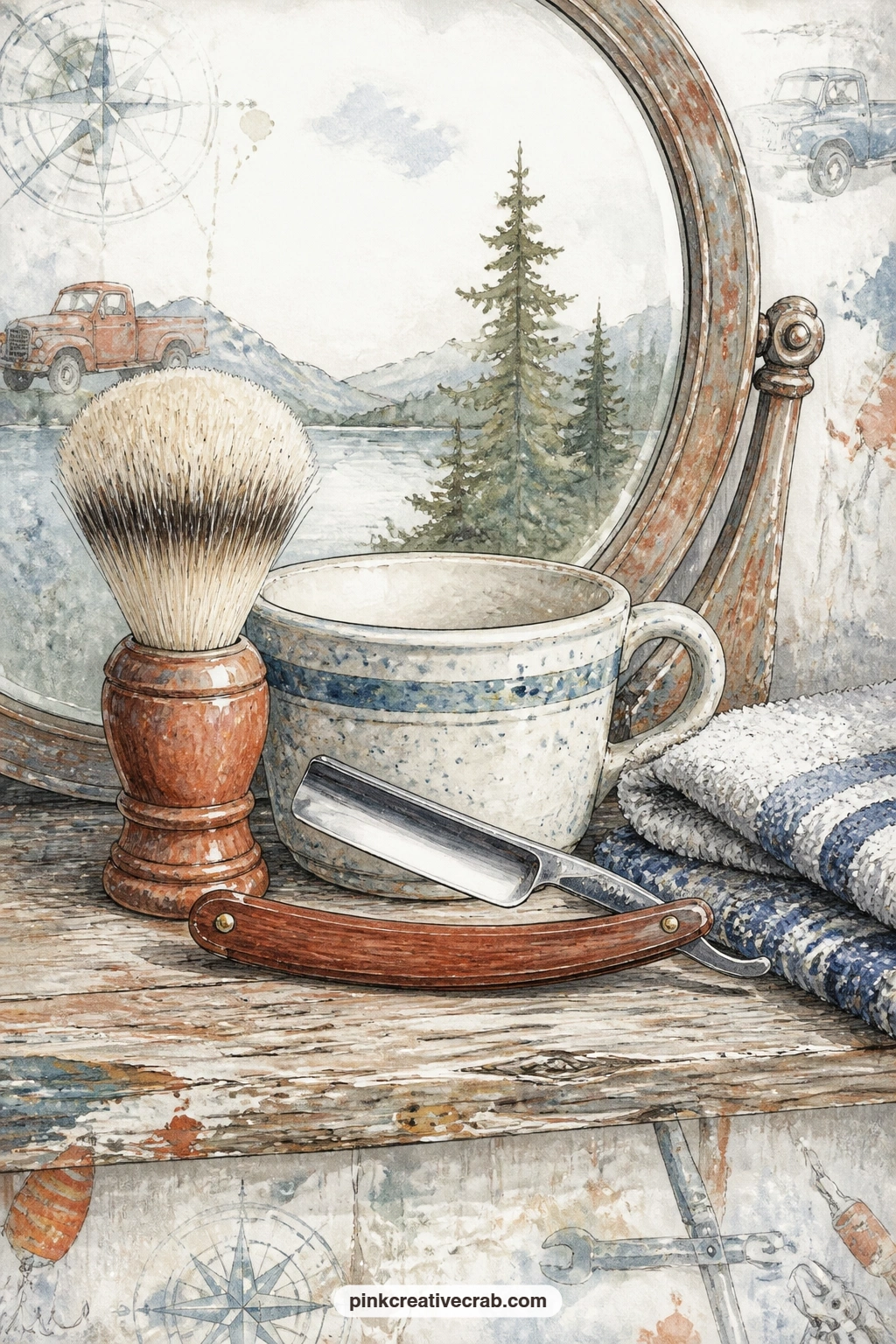
Fold this page down the middle to make a simple window: cut a flap over the lantern so it lifts to reveal a note tucked behind it.
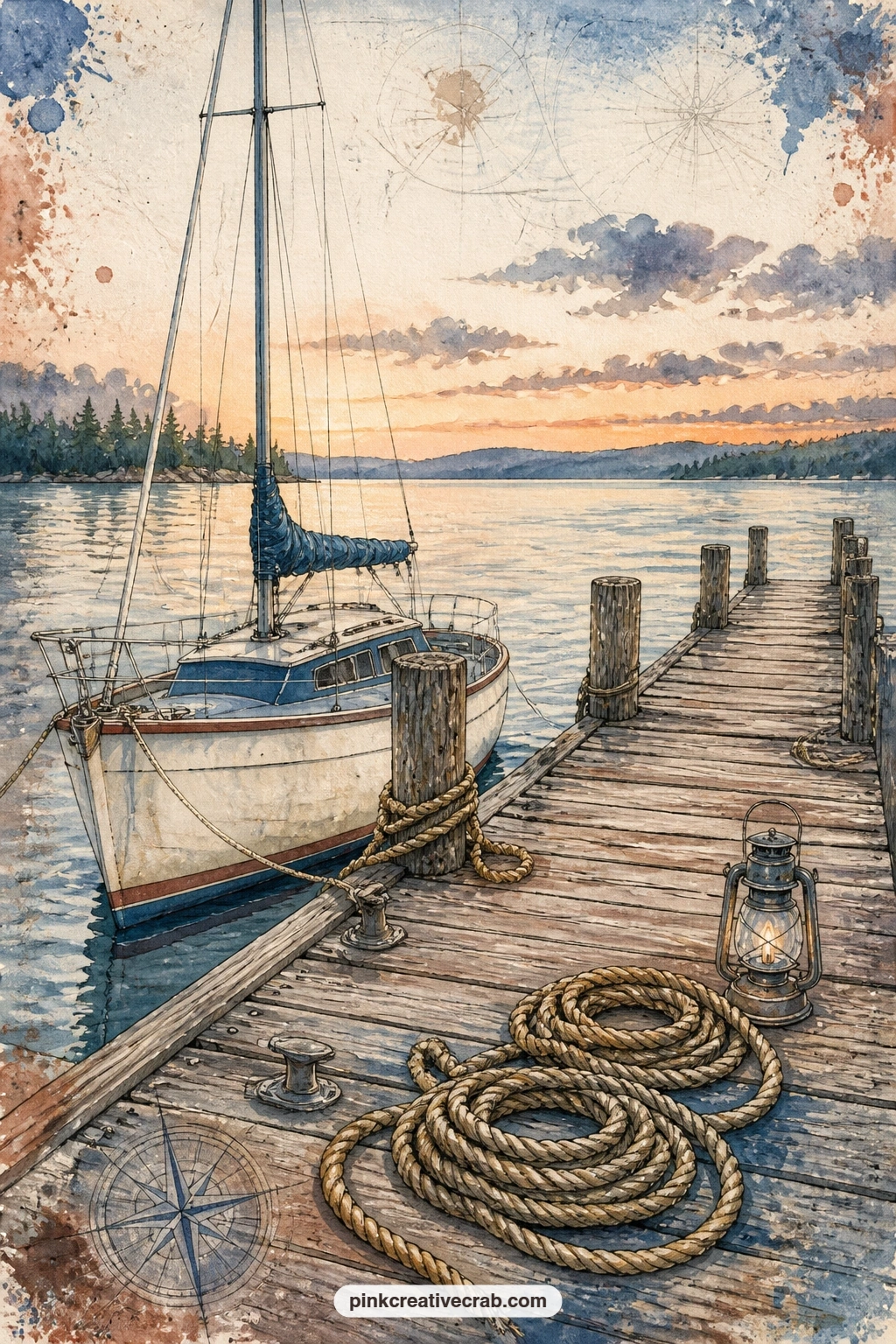
Coiled ropes rest on the pier boards beside a small lantern, while the sailboat sways gently at its mooring in the evening calm.
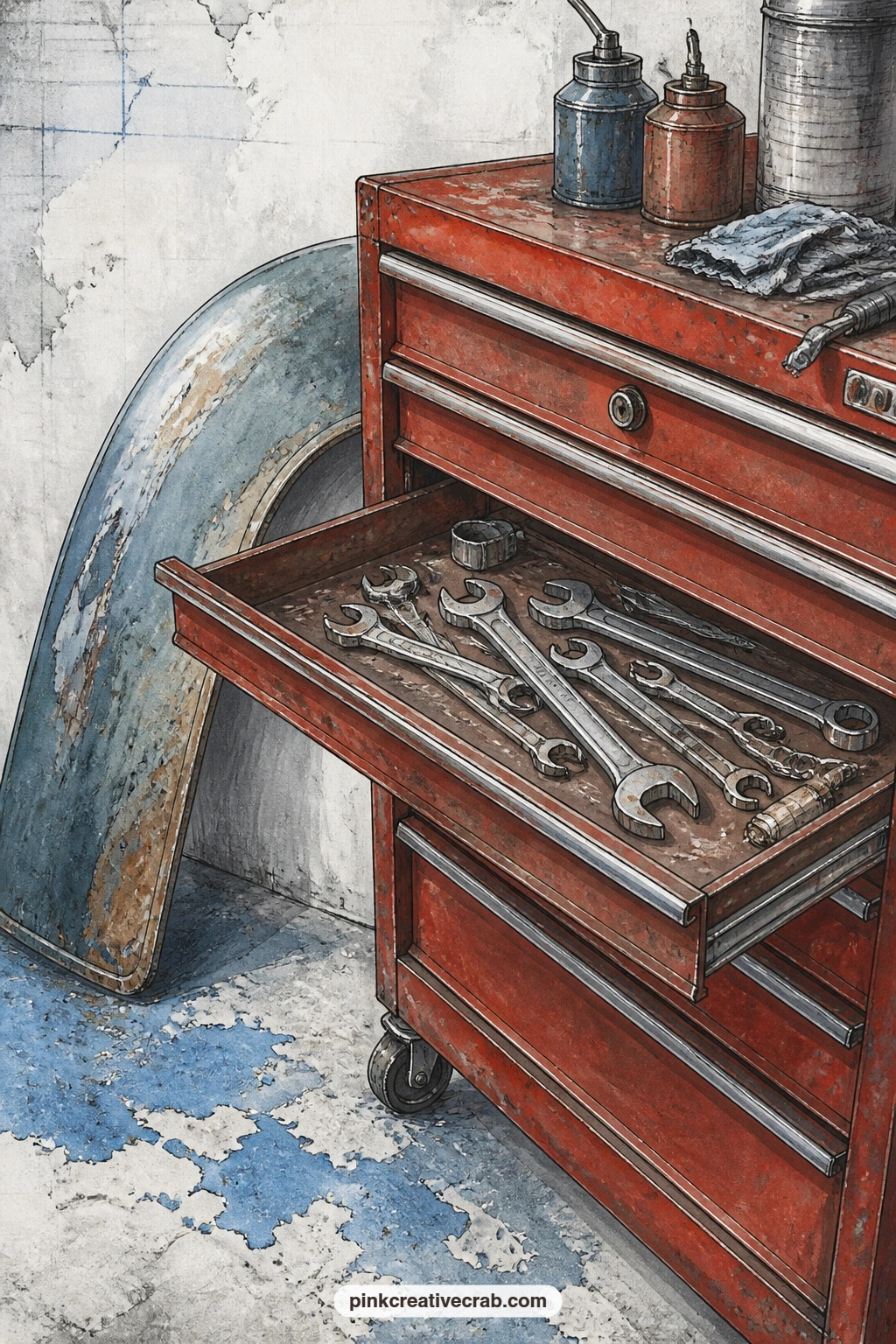
A red tool chest anchors the corner, wrenches scattered across its top drawer, with an old car fender leaning against the wall behind it.
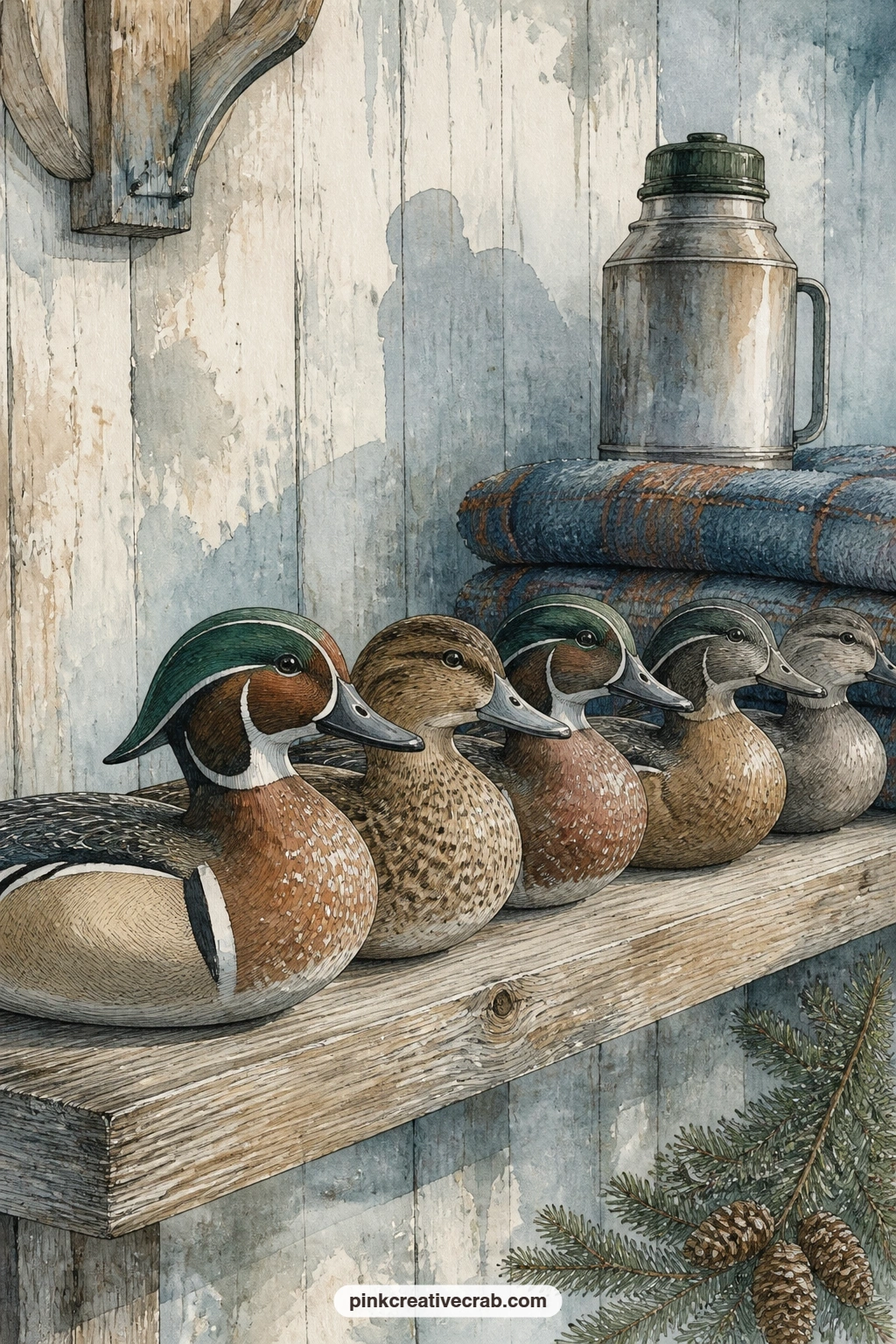
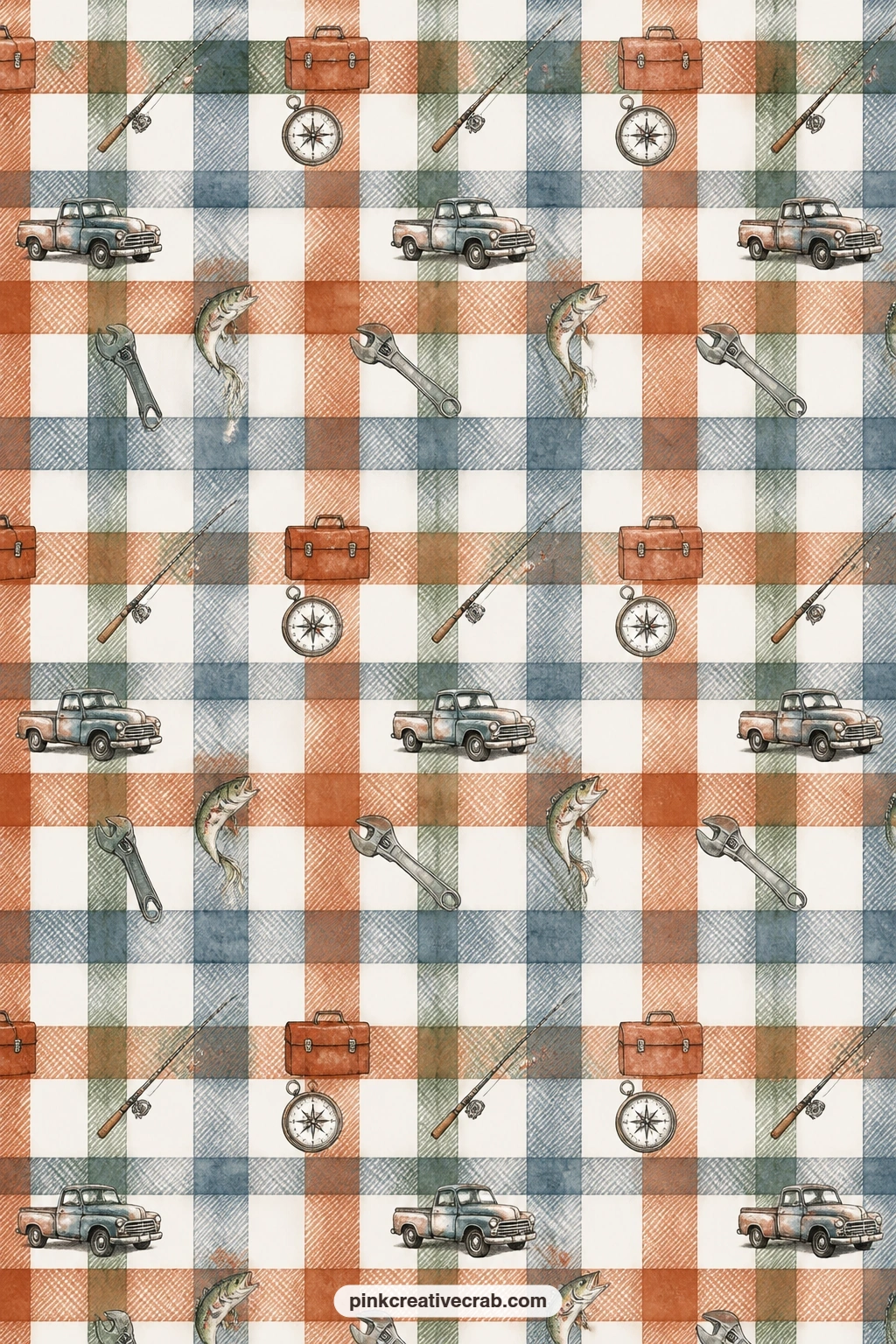
Pair this quiet shelf page with the buffalo plaid background a few pages back, using a strip of it as a liner behind the thermos for a bit of pattern.
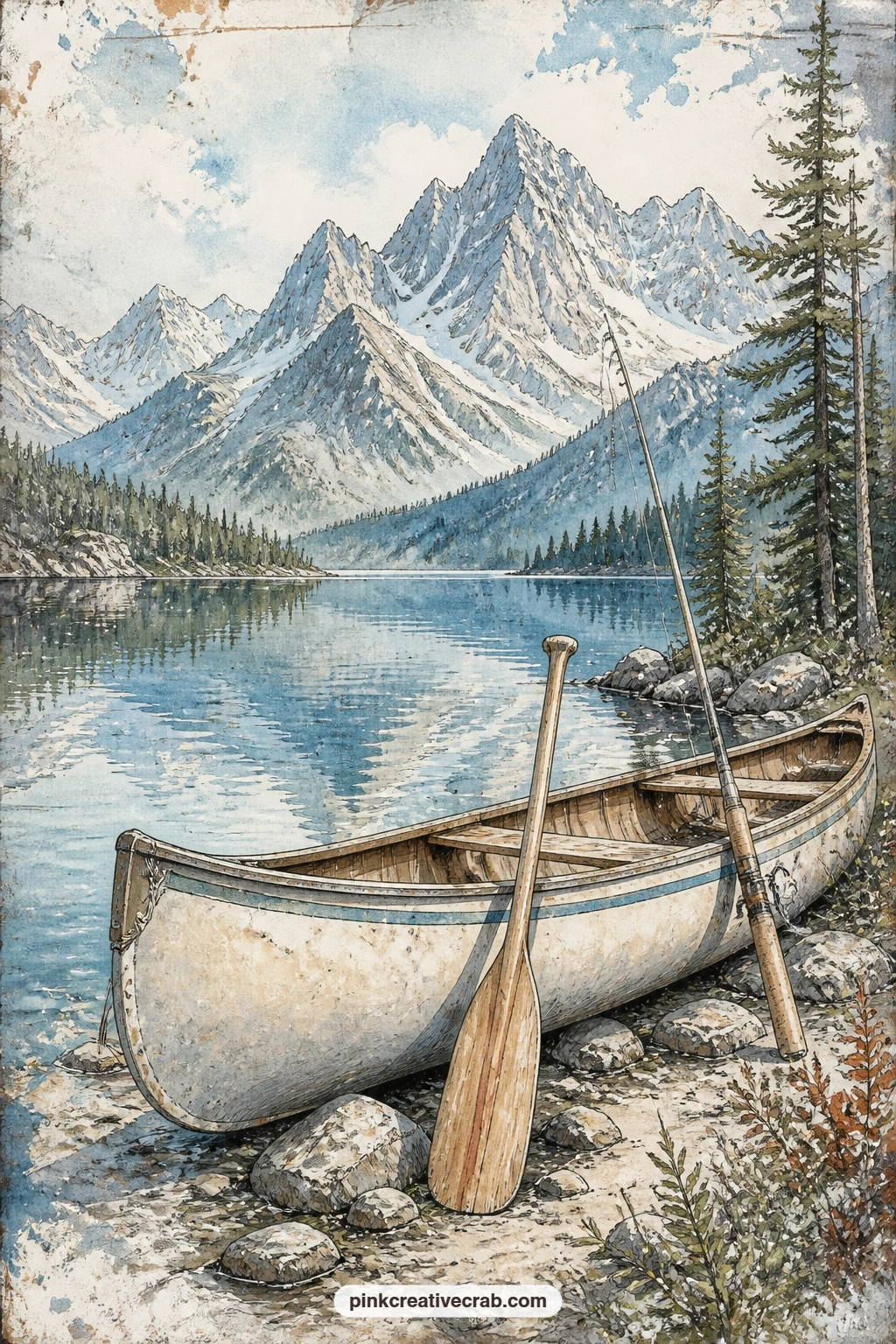
A canoe rests at the water’s edge with a paddle and fishing pole leaning against it, mountains rising quietly across the still lake behind.
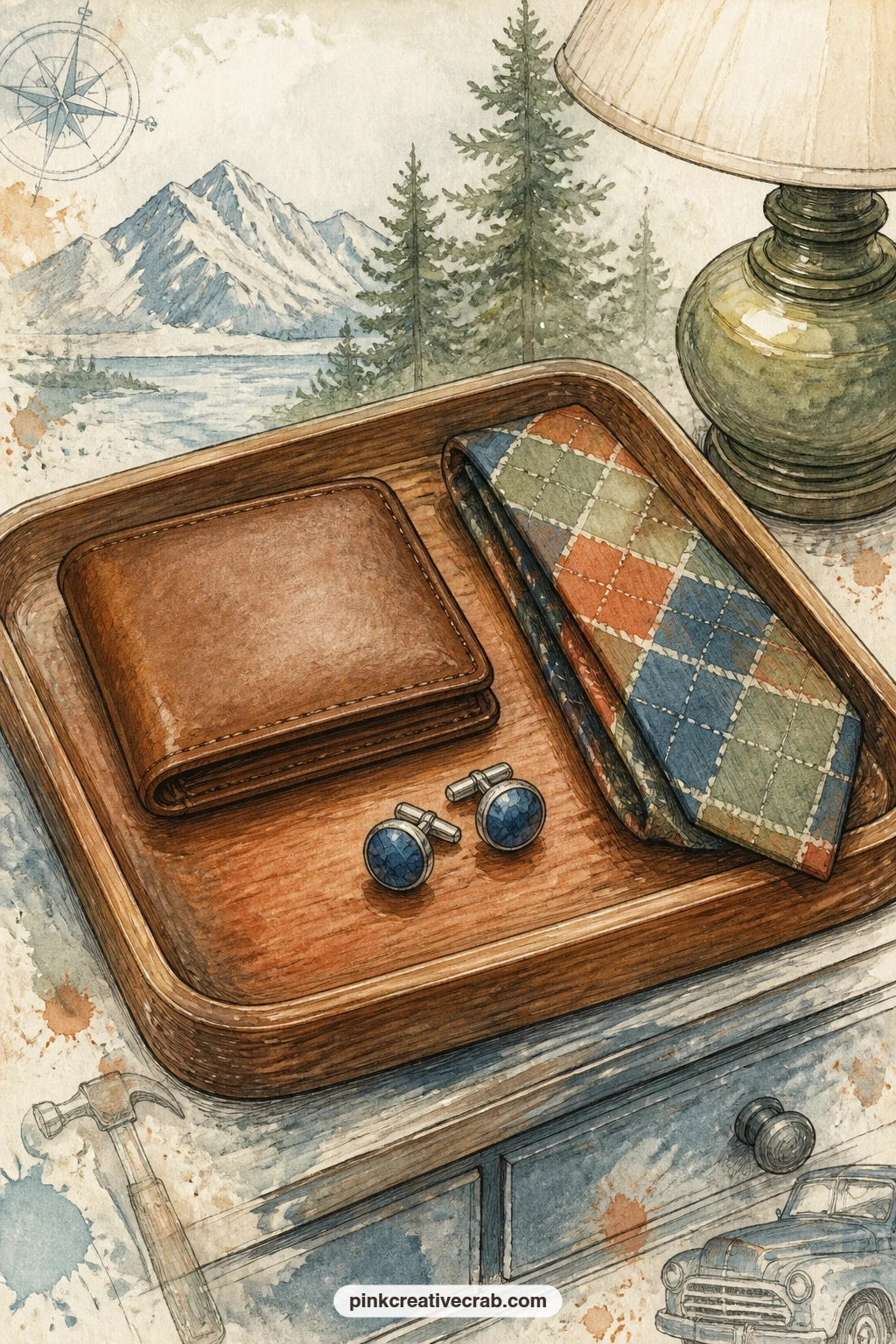
This page suits the man getting ready for something: a wedding, an interview, a first real job. The valet tray holds a wallet, cufflinks and a folded tie, quietly dressed for the occasion.
Give the younger man in the family this spread, and leave the lines beside it for who he is becoming rather than who he has been.
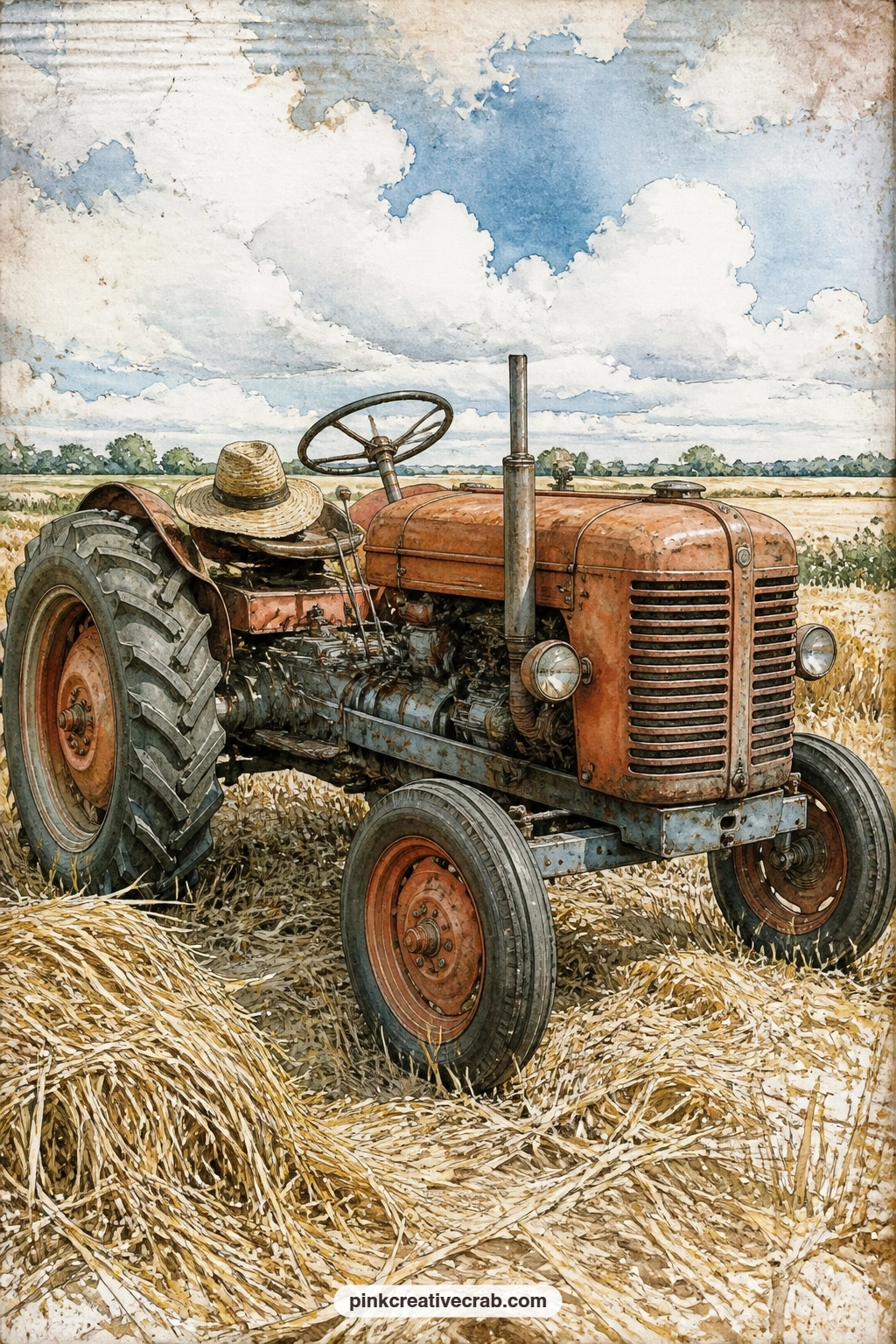
A straw hat rests on the tractor seat in the middle of a golden hayfield, the kind of page that calls for a short note about a long day’s work.
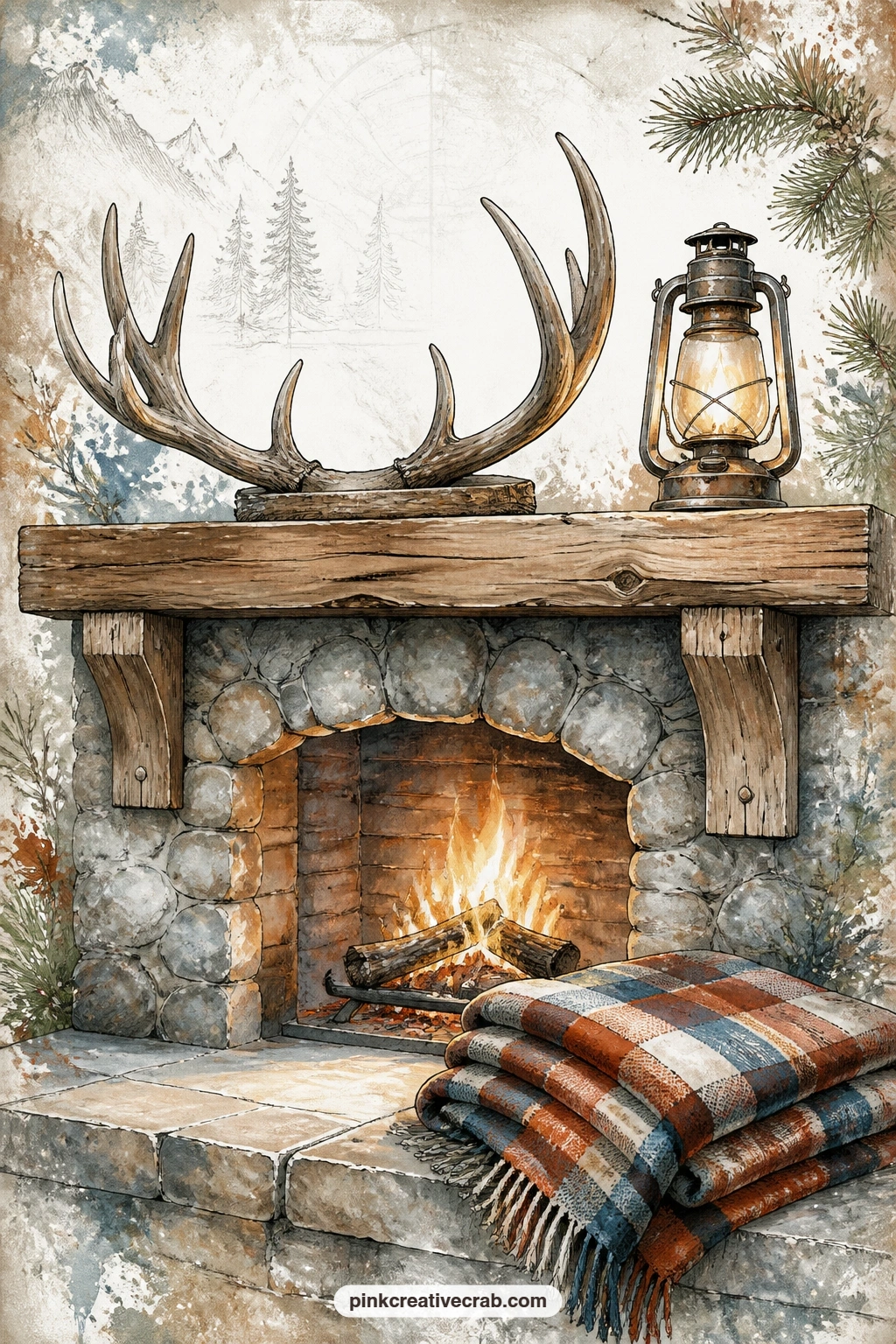
Antlers rest above the mantel beside a lit lantern, a plaid blanket folded on the hearth below, closing this run of scenes on a warm, settled note.
This is the page to end a chapter on: use the facing lined sheet for a short list of everything the trip or the year gave back.
Background Papers
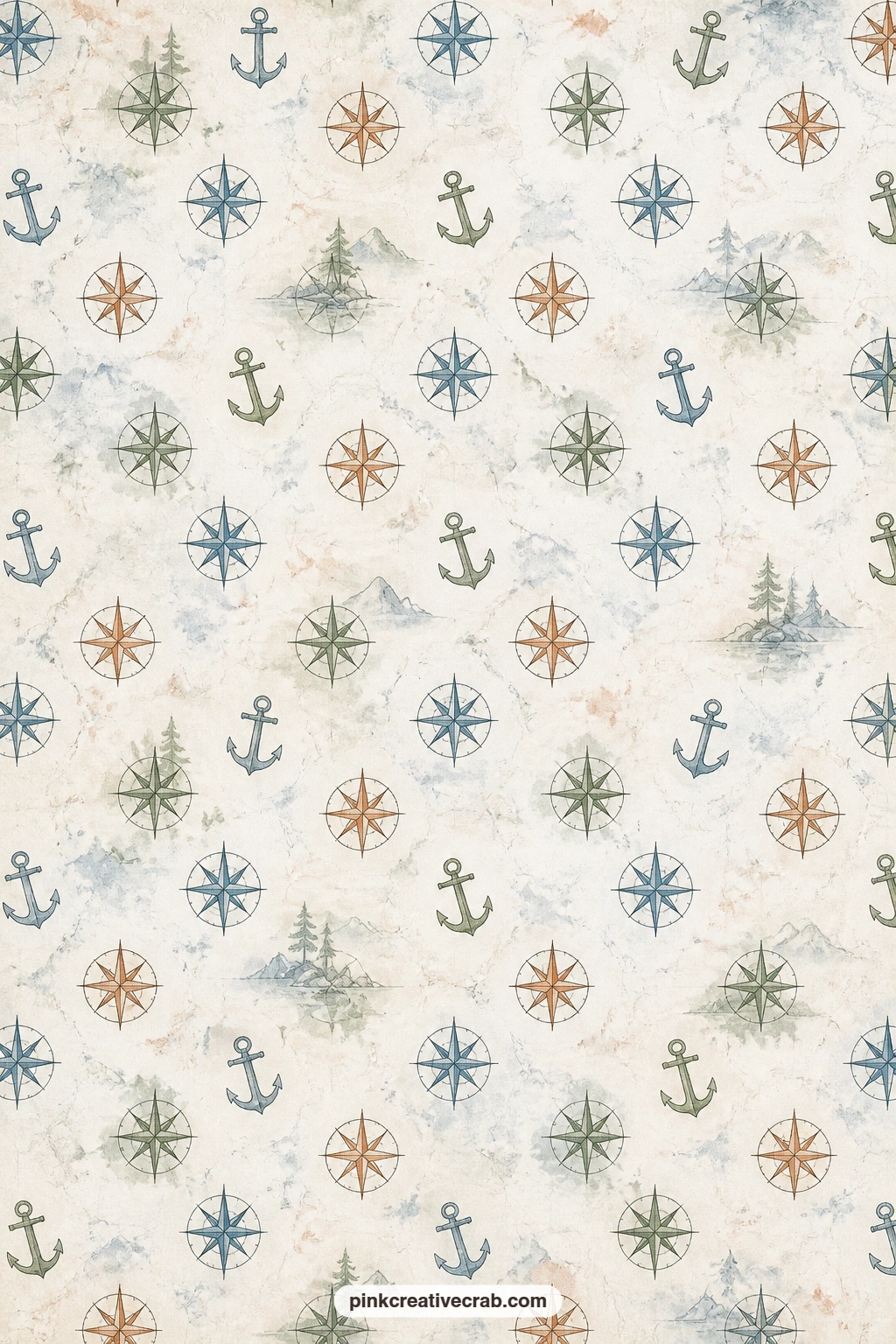
Small compass roses and anchors repeat edge to edge in this quiet pattern. Use it under a photo of a boat trip, as a pocket lining for tickets, or trimmed down for a journal cover.
A classic buffalo plaid check fills the page corner to corner. Try it behind a photo of him in his flannel, as a pocket lining, or as endpapers for the whole journal.
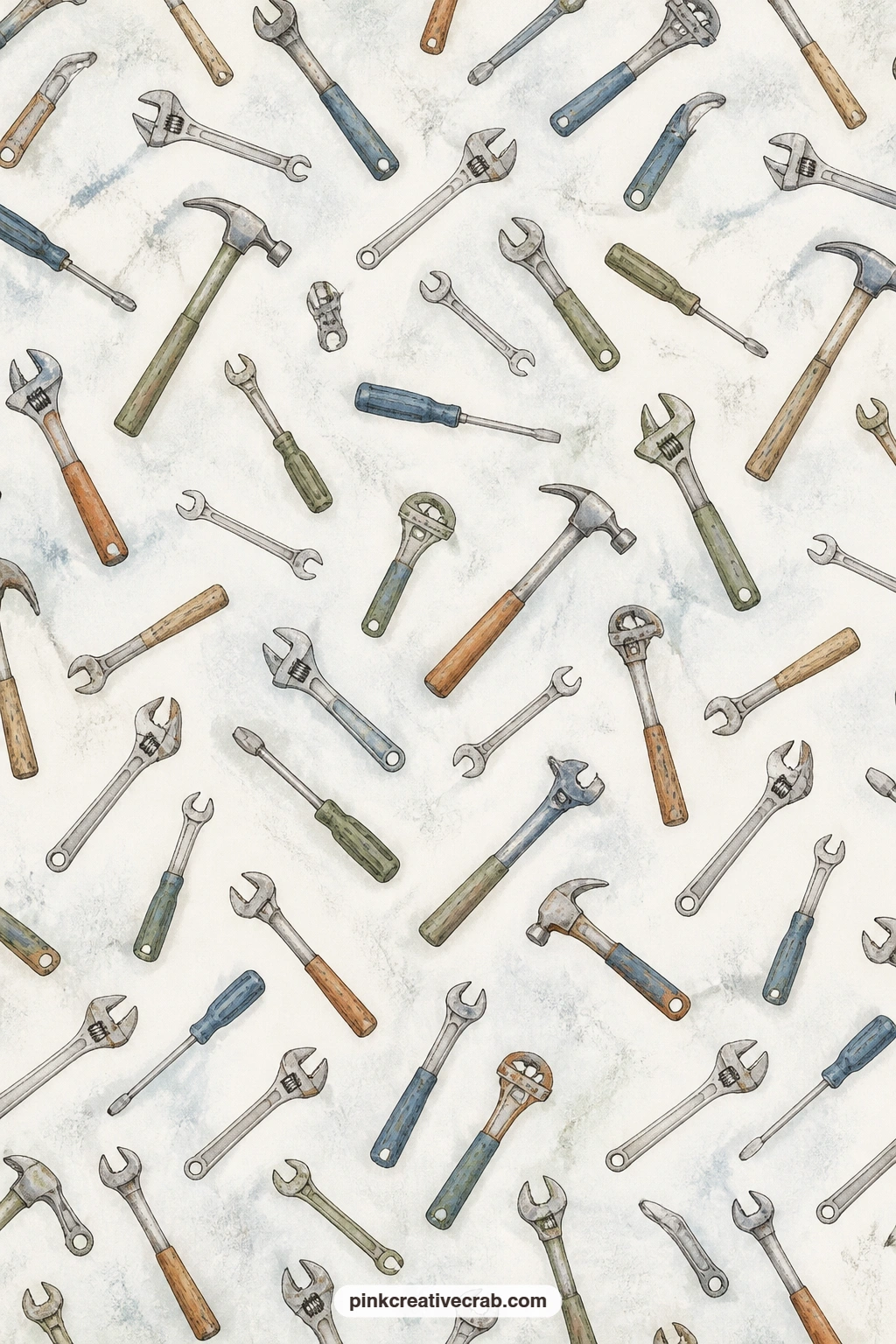
Hammers, wrenches and screwdrivers toss loosely across the page in every direction. Good for a workshop section divider, a pocket lining for receipts, or the inside cover of the whole journal.
Tiny fishing flies and hooks scatter in a loose repeat across the whole sheet. Use it under a fishing photo, as a pocket lining near the tackle box page, or for a cover wrap.
Lined Writing Pages
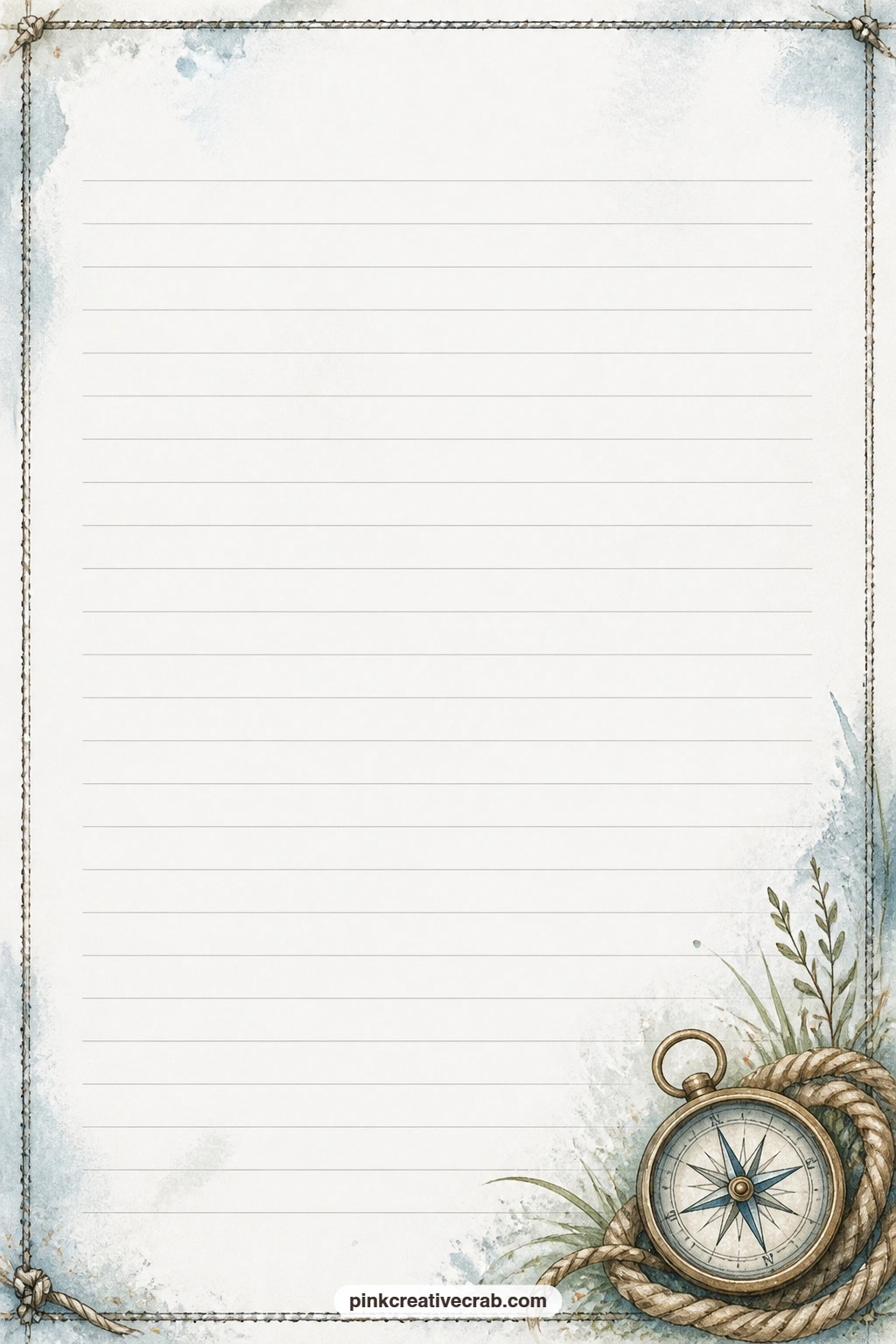
A small compass and coiled rope anchor one corner while faint lines cross the middle for writing. Use it for a packing list, a travel log entry, or a short letter to the next trip.
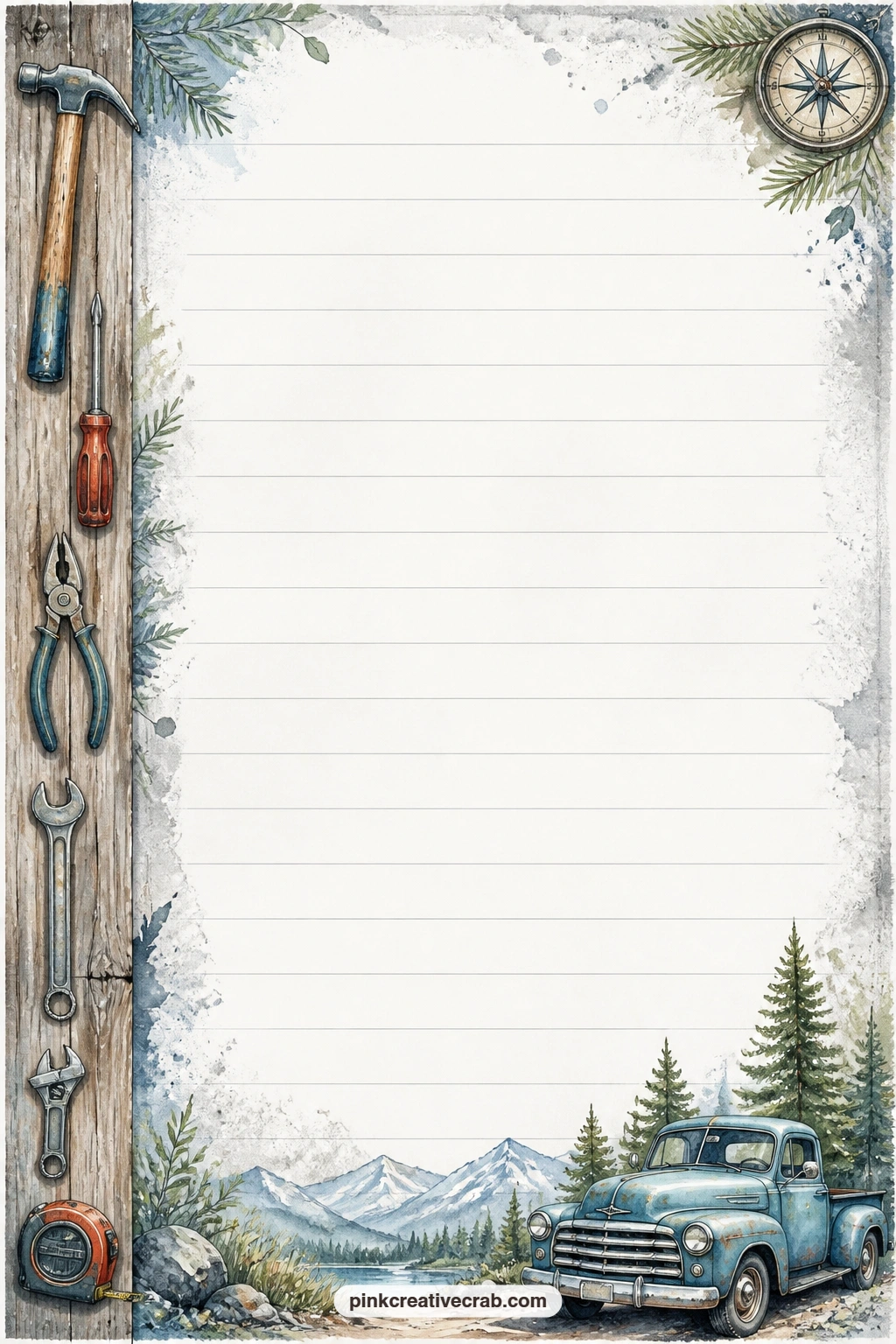
A thin woodgrain band runs along one side with tiny tool silhouettes tucked into it, leaving the ruled middle open. Good for a workshop log, a project list, or notes on a gift being built.
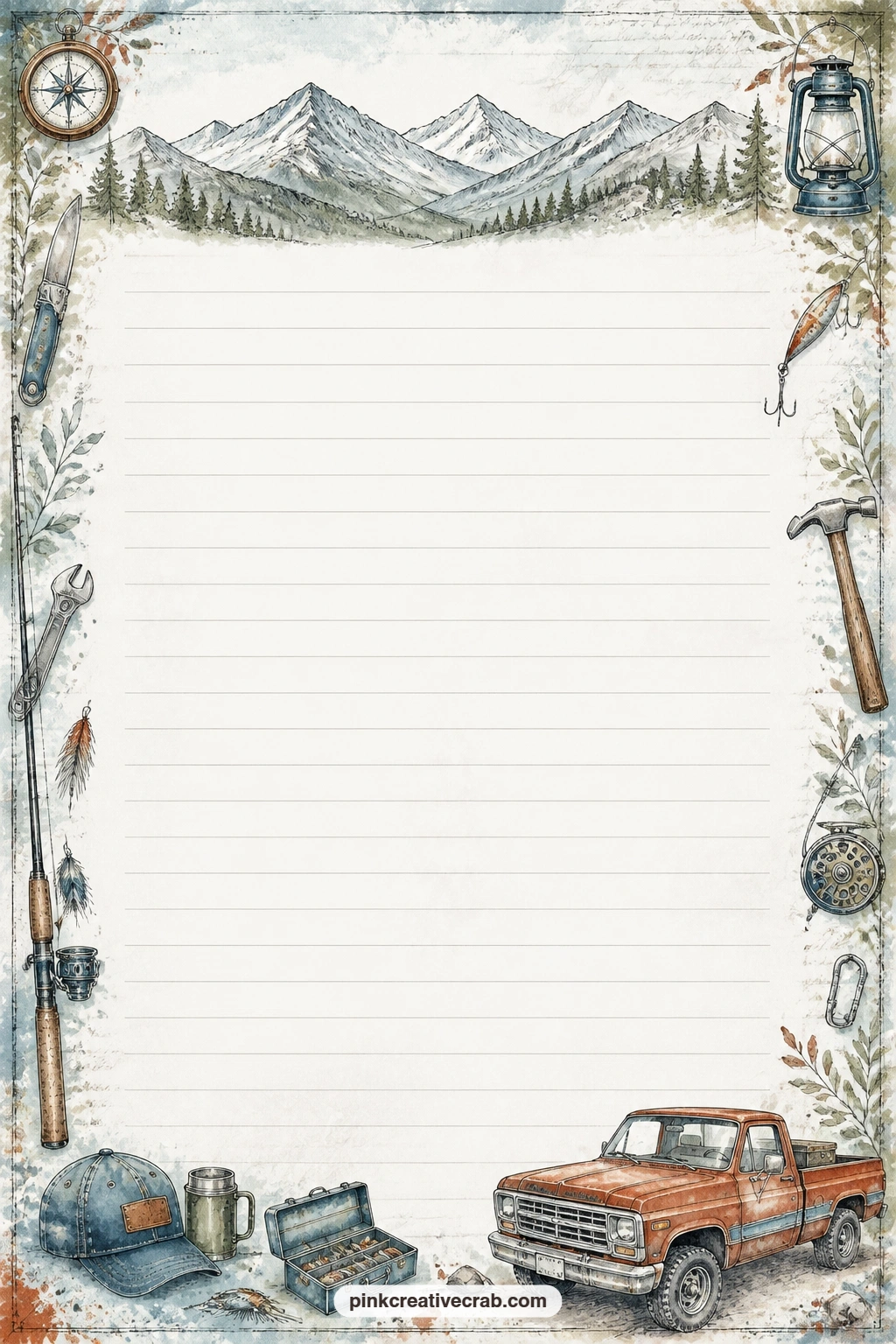
A soft mountain ridge sits across the top like a header, with faint lines filling the rest of the page. Use it for a hiking log, a fishing trip summary, or a letter to next year’s self.
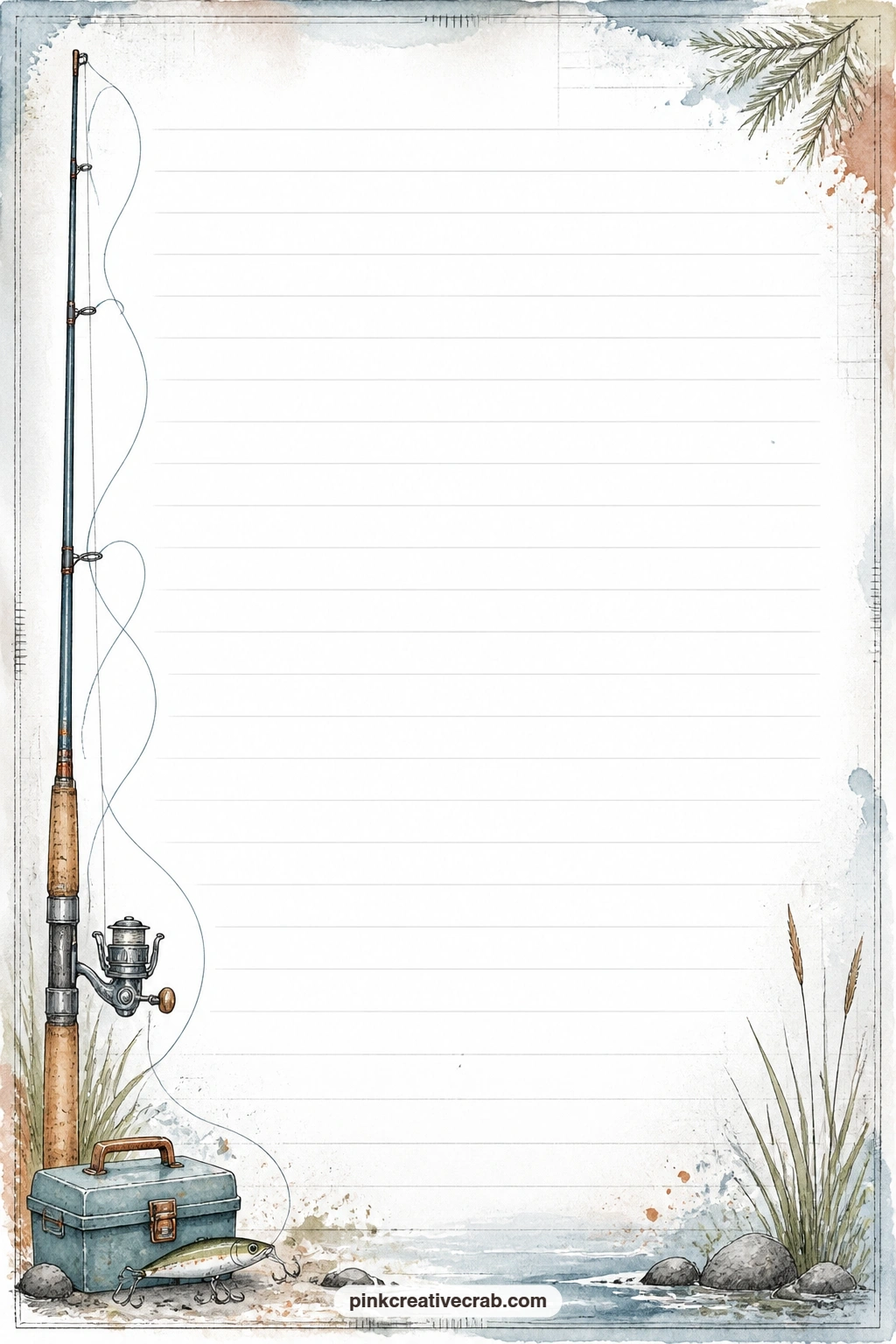
A slim fishing rod and line trail down one side border while the rest of the page stays open and ruled. Try it for a tackle wish list, a menu for the cookout, or a note tucked for a grandson.
What to Do Next
Print the pages in order, work through the scenes first, then slot in the backgrounds and lined sheets wherever the journal needs a pause, and let the gluing and staining happen at your own pace. For more vintage-leaning pages to mix in, the vintage junk journal set and the winter forest painting ideas both pair well with this rugged palette.
Frequently Asked Questions
What paper works best for a masculine junk journal?
Plain white or ivory cardstock around 160 to 200gsm works best, since it holds glue without wrinkling and feels sturdy once bound. Heavier stock also takes tea staining or distressing well if you want extra texture on a page.
What printer settings give the best results?
Set your printer to its best or photo quality and choose plain cardstock in the paper type menu if your printer offers it. This keeps the fine ink lines and watercolour fills crisp instead of patchy or faint.
What size should I print these pages?
Standard US letter or A4 suits most junk journals and prints without scaling issues. Trim each page down to your journal’s actual size after printing, since a slightly smaller page often fits more naturally once bound.
What do I use to glue and trim the pages?
A thin layer of acid free glue stick keeps pages flat without wrinkling, and small detail scissors make trimming and tearing edges easier than a full size pair. A bone folder helps if you add any folds or flaps.
Can I color or distress these pages myself?
Yes, the pages print fully colored and ready to use, but you can still age the edges with tea staining, light sanding or a soft pencil shading near the borders if you want a rougher, more worn look.
Have any thoughts?
Share your reaction or leave a quick response — we’d love to hear what you think!
-
 0
-
0
-
0
-
0
-
0
-
0


