Table of Contents
An antique junk journal gives you a whole shop full of treasures to glue onto paper: carriage clocks lined up on a shelf, cameo brooches resting on velvet, skeleton keys tangled with old lace. This kit has 20 scene pages built around those small finds, 4 seamless background papers in damask and key patterns, and 5 lined writing pages trimmed with cameos and gilded mirror frames, so you can fill a whole journal without hunting for a single extra image.
Print the set on matte cardstock heavy enough to take glue without curling, and let your printer run at its best quality setting so the fine ink lines stay crisp. Trim close to the edge on any page you plan to layer, and leave a little white border on the ones you want to frame or tuck into a pocket.
Using these images: free for personal projects such as printing, coloring, cards, journals and gifts. Handmade items that include them may be sold up to 30 pieces per design. More than that is commercial use and is not permitted, and neither is selling or sharing the images themselves or passing them off as your own. Please ask before any other use.
Shop Counter Treasures
Give this shelf of carriage clocks a plain paper price tag tucked at one corner, the kind a shop clerk might have written by hand decades ago.
A small torn ticket with a date and a few shillings written on it sits neatly between two clocks, as if it slid off a tag during a Saturday browse. Leave the rest of the shelf as it is: the candlesticks and teacups need no further decoration.
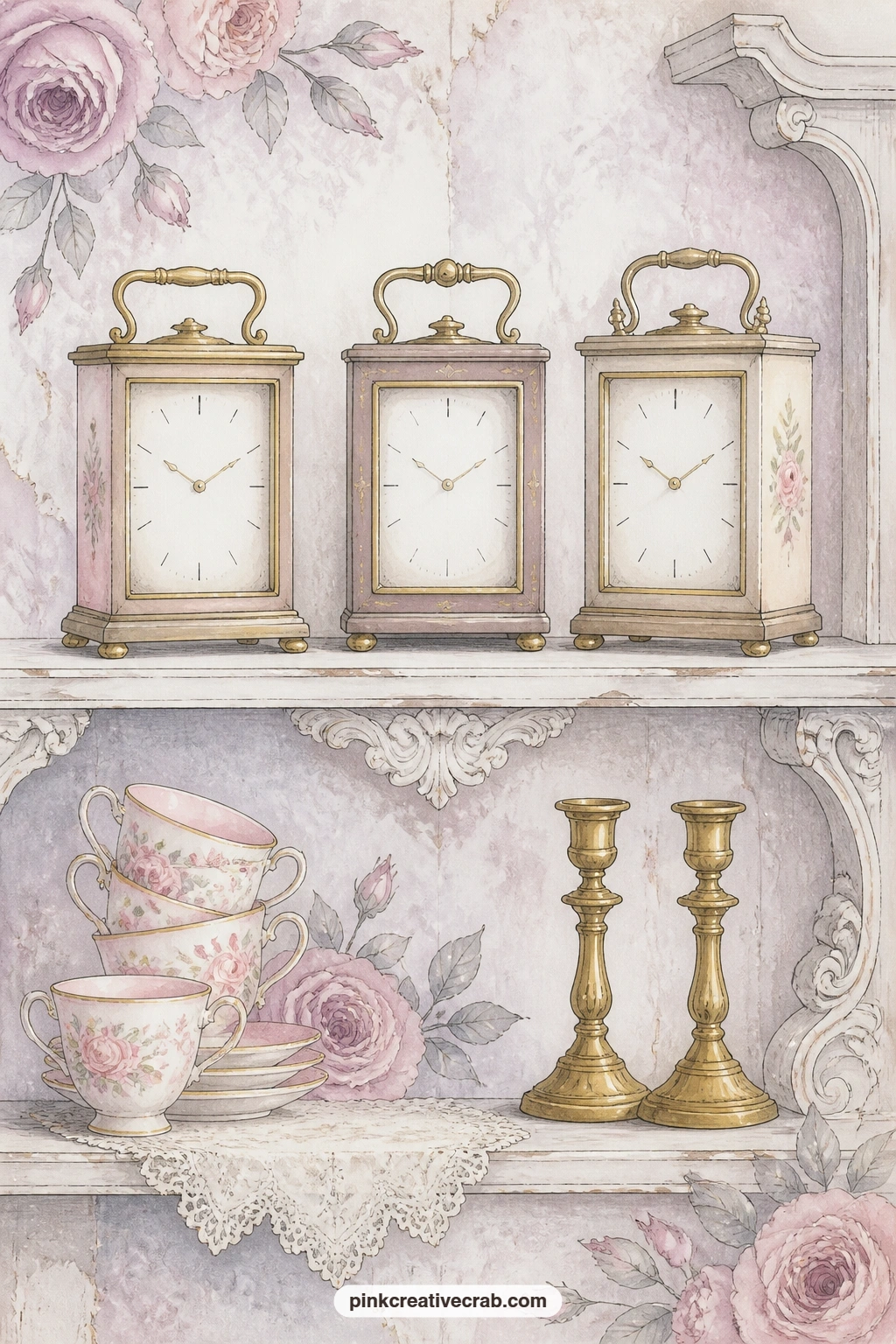
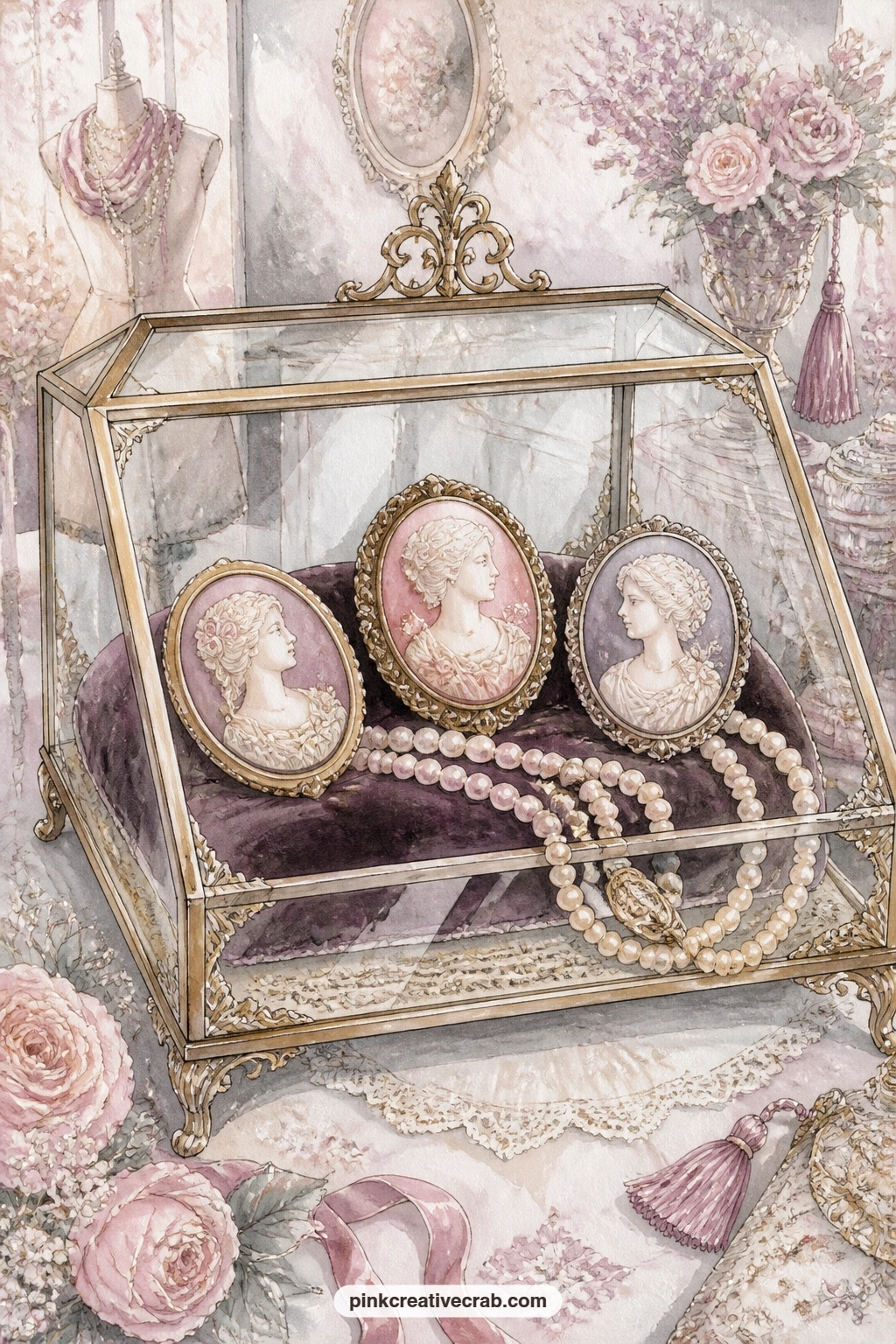
Pair this page with the antique cameo and pearl background paper later in the set, tucking a strip of it behind the glass case as a lining so the pearls on the page echo the pearls on the brooches.
Tea-stain the bottom edge of this page before gluing it in, just enough to soften the paper the way a real attic find would look after years in a drawer.
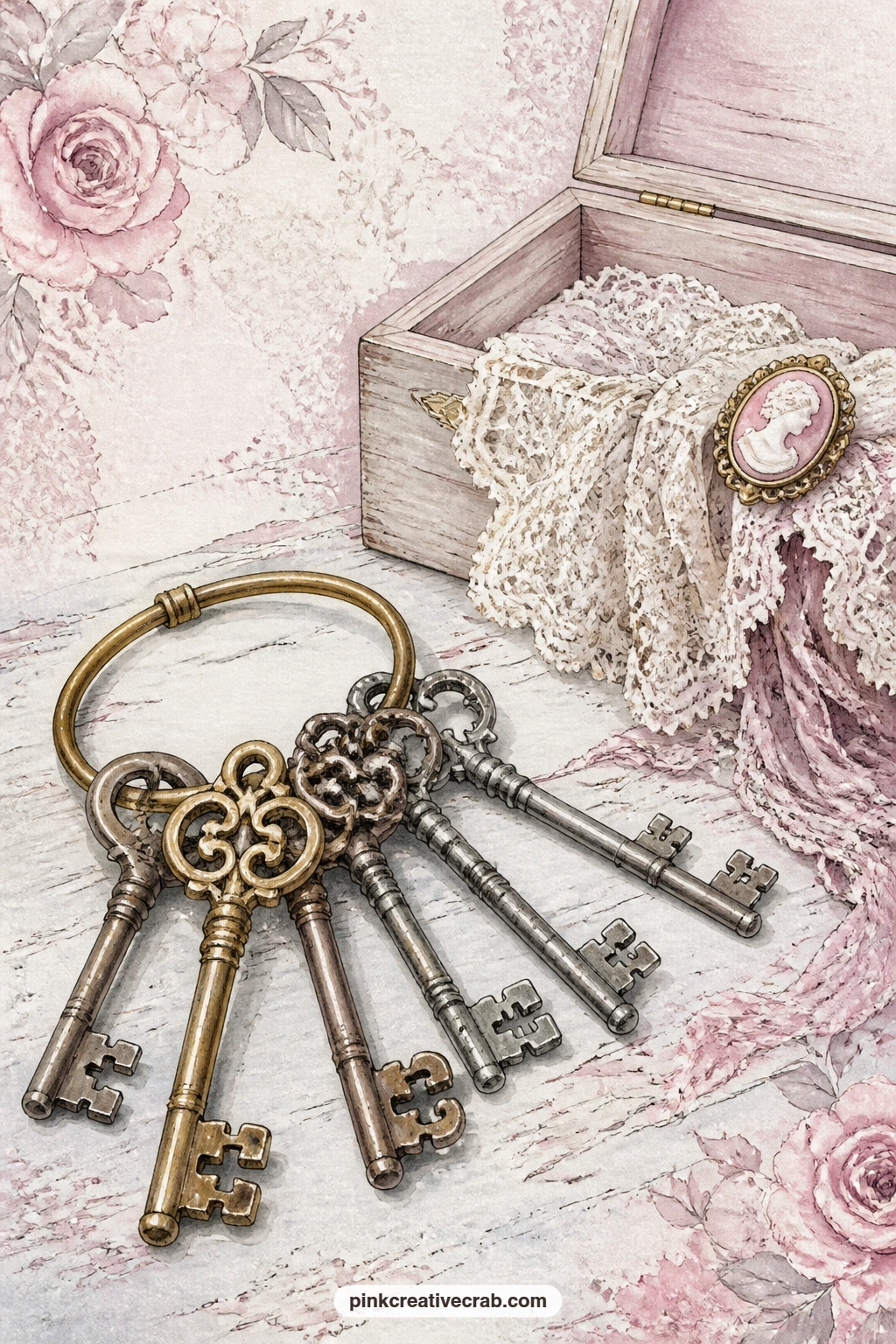
Let the stain fade out before it reaches the keys themselves, so the ring and the wooden box stay clean and readable. A light hand with a tea bag works better here than a full soak.
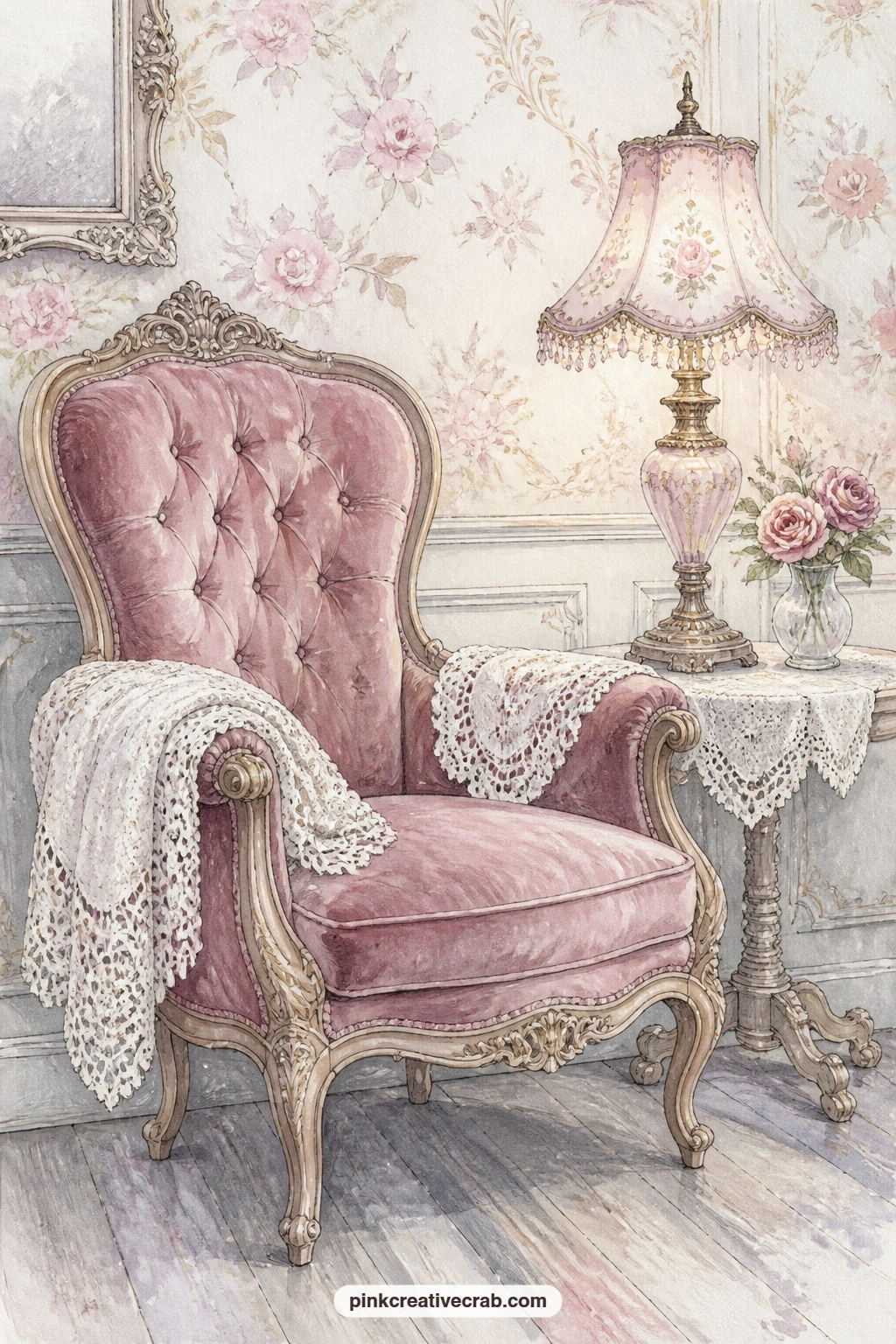
The usual mistake with a parlor page like this is cramming every object from the room onto one sheet; keep the velvet chair, the lamp and the doilies as the only three elements and let the painted wallpaper behind them carry the rest of the mood.
Reading Nook Pages
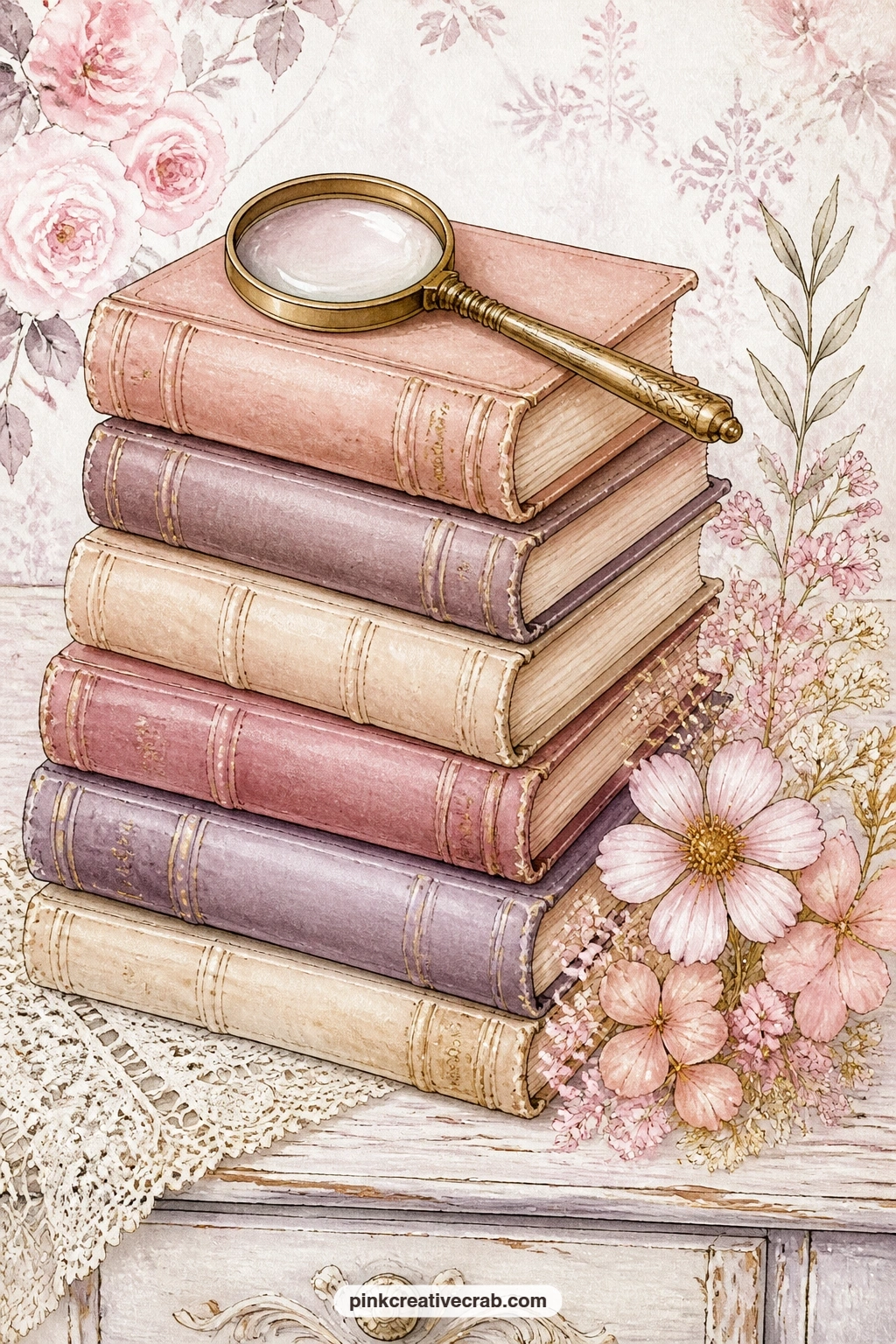
Write a single line from a favourite old book along the spine of the top volume, small enough that it reads like a private joke between you and the page.
A pressed flower rests flat beside the magnifier, as though someone left it there while reading and never came back for it. Choose a flower that matches whatever season the journal is for.
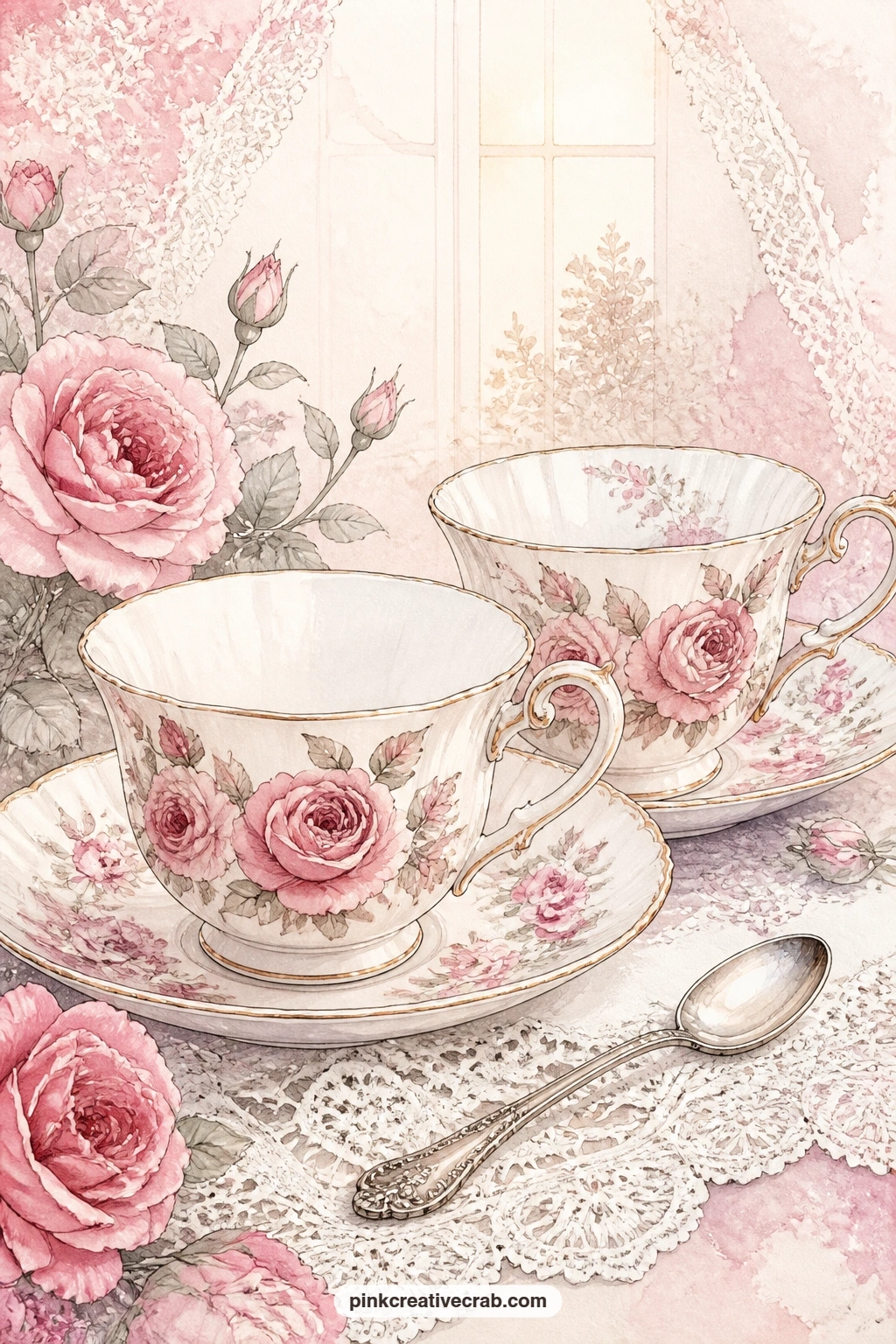
This page suits a gift journal made for someone who always orders tea instead of coffee, since the rose pattern on the china and the lace runner underneath give her something familiar to recognise on the very first page she opens.
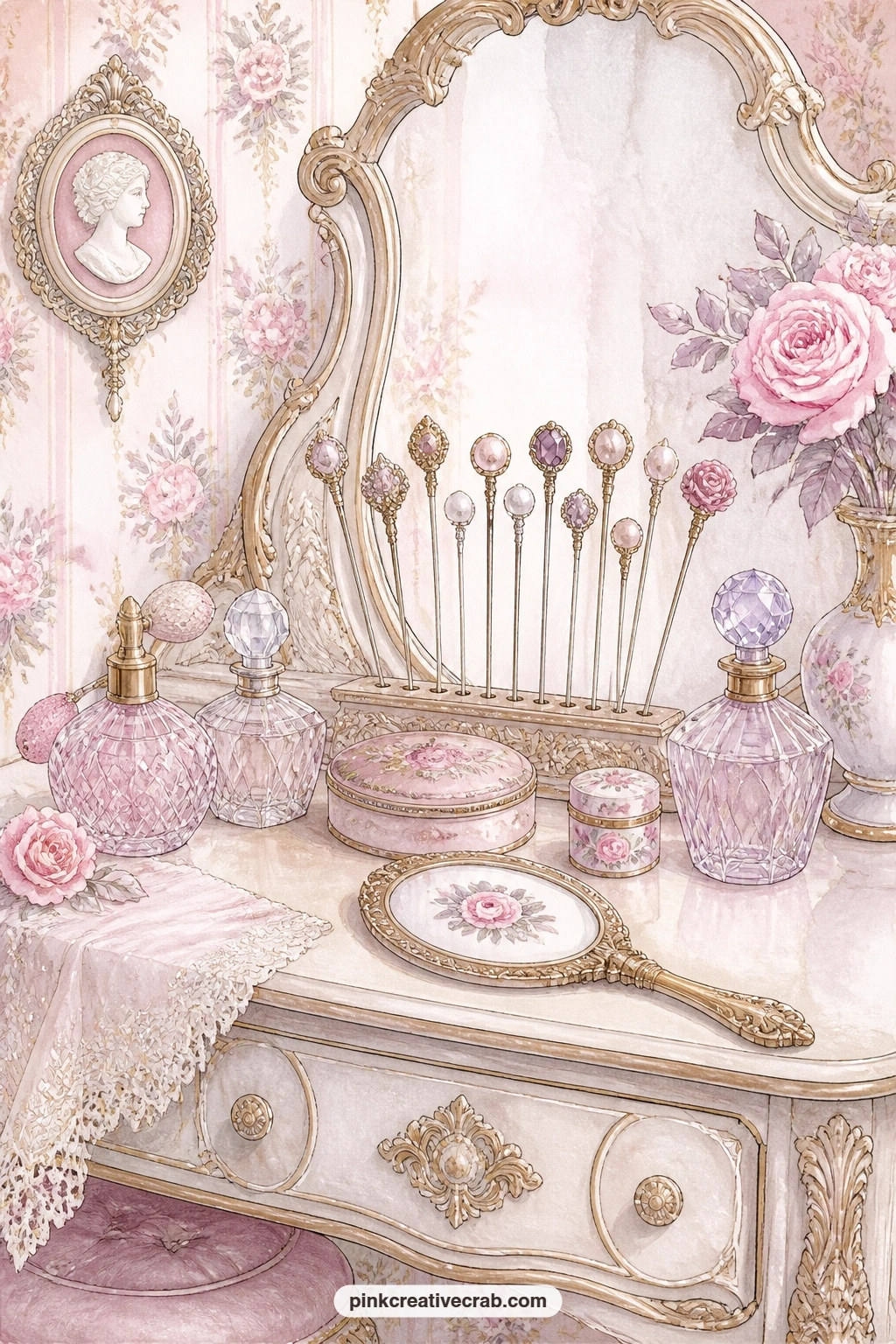
What would you tuck into the drawer of this dressing table if it opened onto your own journal.
Write that answer underneath the hand mirror, in a line short enough to fit the space left by the perfume bottles and hatpins already crowding the surface.
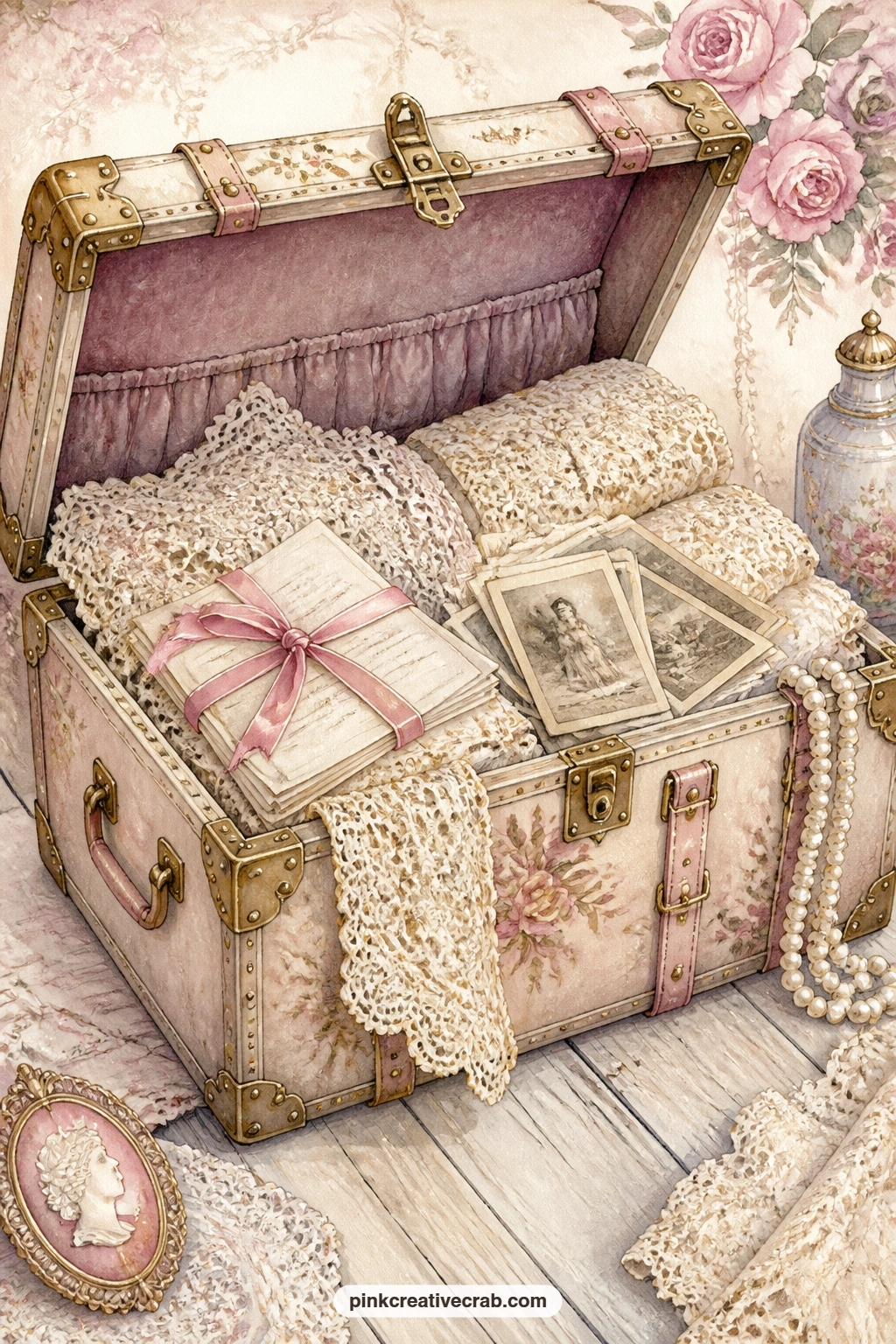
Place this trunk page across from the skeleton keys page earlier in the set, so the key ring on one side seems to belong to the very trunk opened on the other, letters and photographs spilling out as if just found.
Parlor Corners
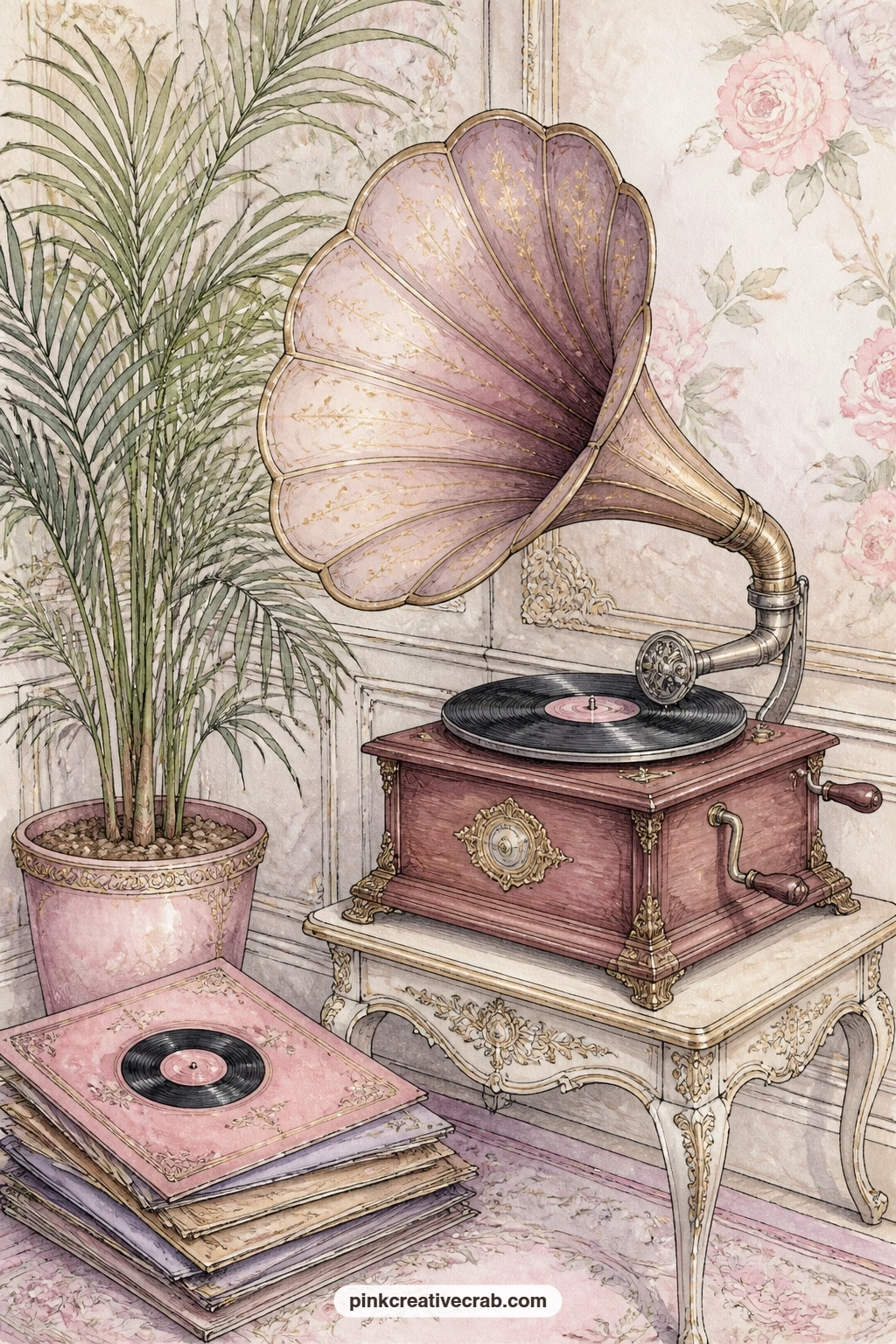
Give this page five minutes: sketch the gramophone horn loosely if you want to add your own line work, or leave the printed page exactly as it comes and glue it straight in.
A parlor palm leans in from one side and a short stack of records sits at the base, enough detail to fill the sheet without extra work on your part.
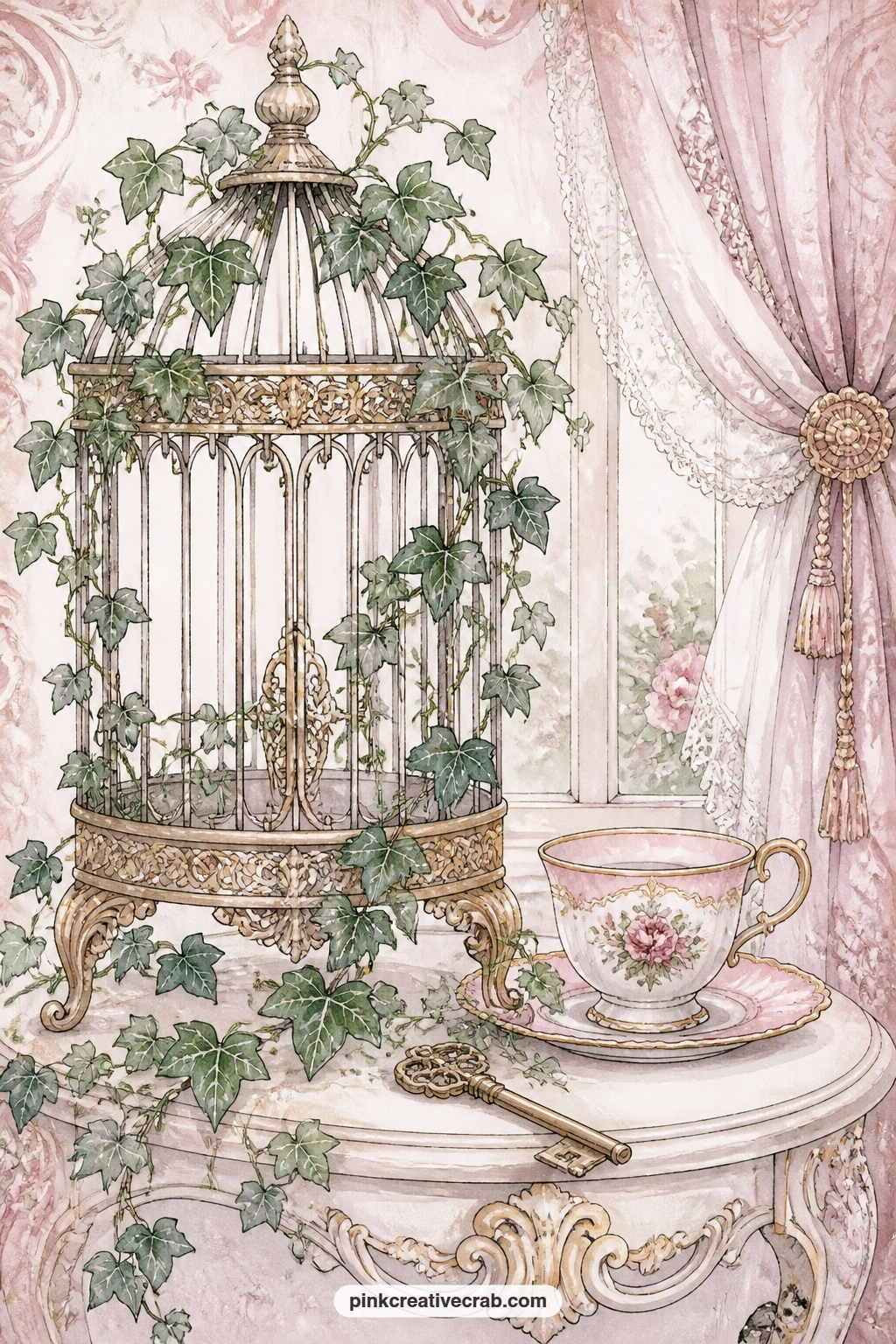
A small luggage tag works well tied to the birdcage bars, the kind you could write a guest’s name on if this page opens a shared journal kept by more than one person.
Fold the edge of this page into a narrow pocket along the bottom seam, just wide enough to hold a single pressed flower or a slip of paper.
The brass scale and its weights give the pocket something to balance against, and the jewelry box beside it stays untouched so the fold does not crease anything drawn on the page.
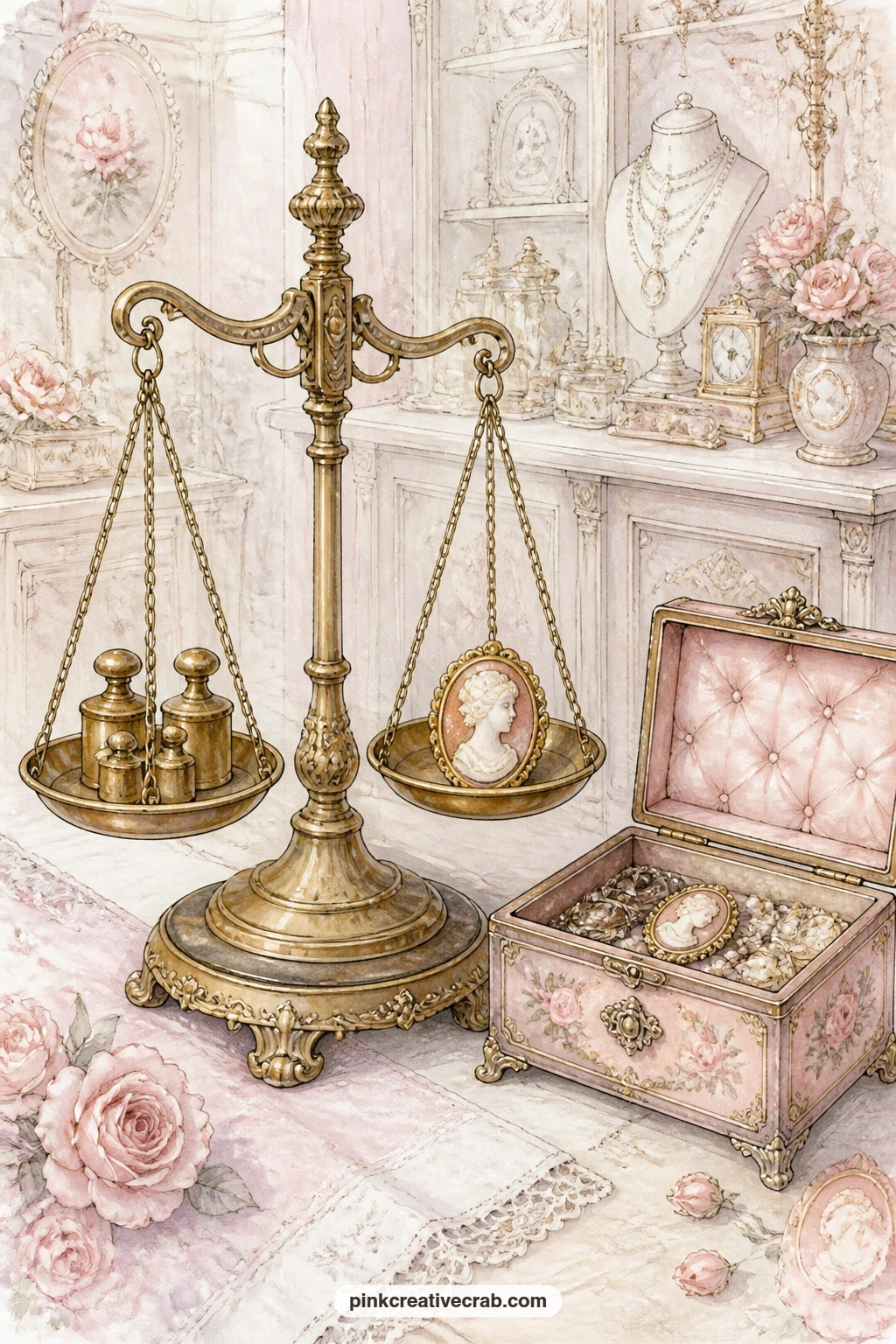
Try the jewelry watercolor ideas alongside this page if you want more heirloom pieces to paint by hand between the printed sheets, since lockets and loose buttons sit well next to painted brooches and rings.
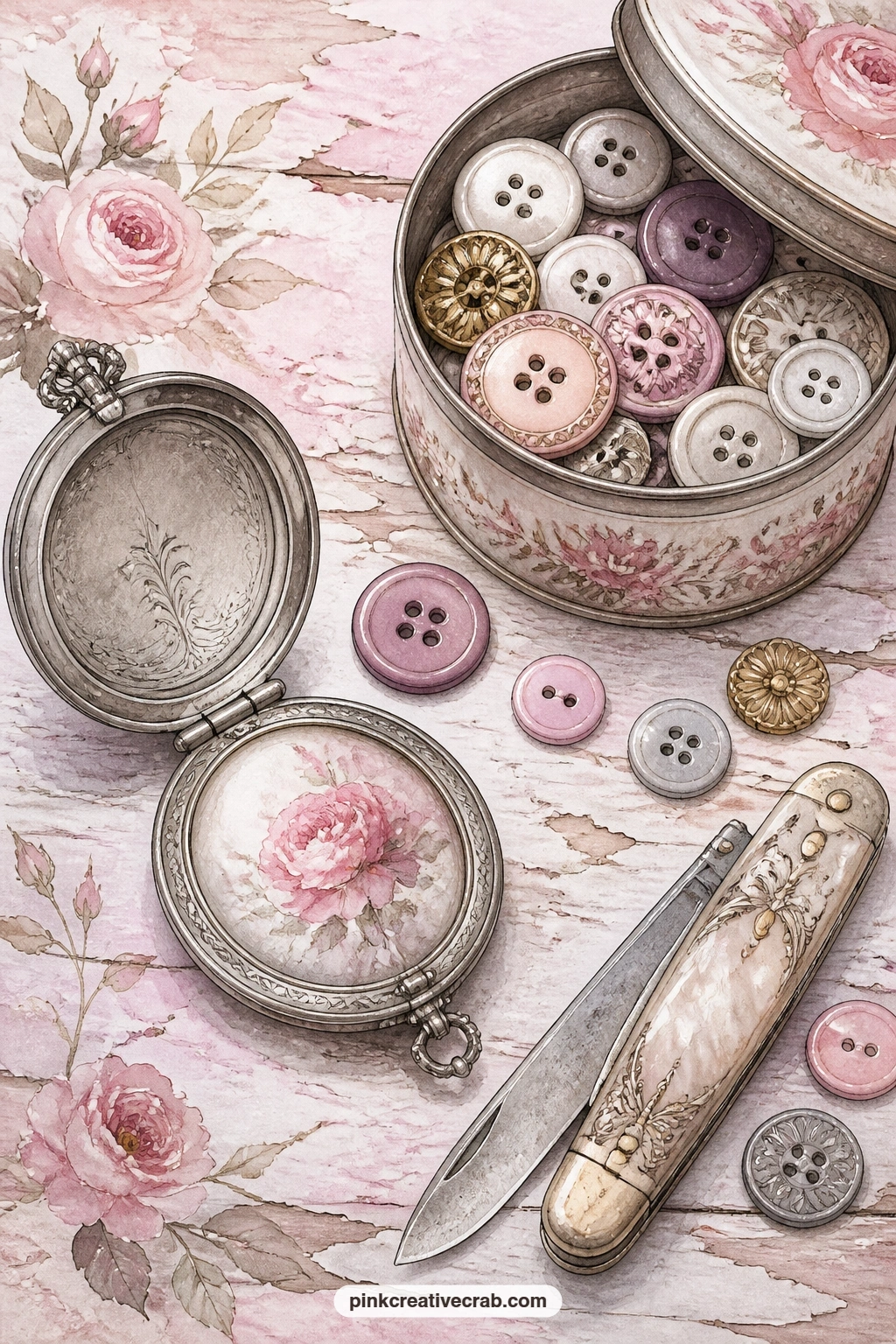
Market Finds Pages
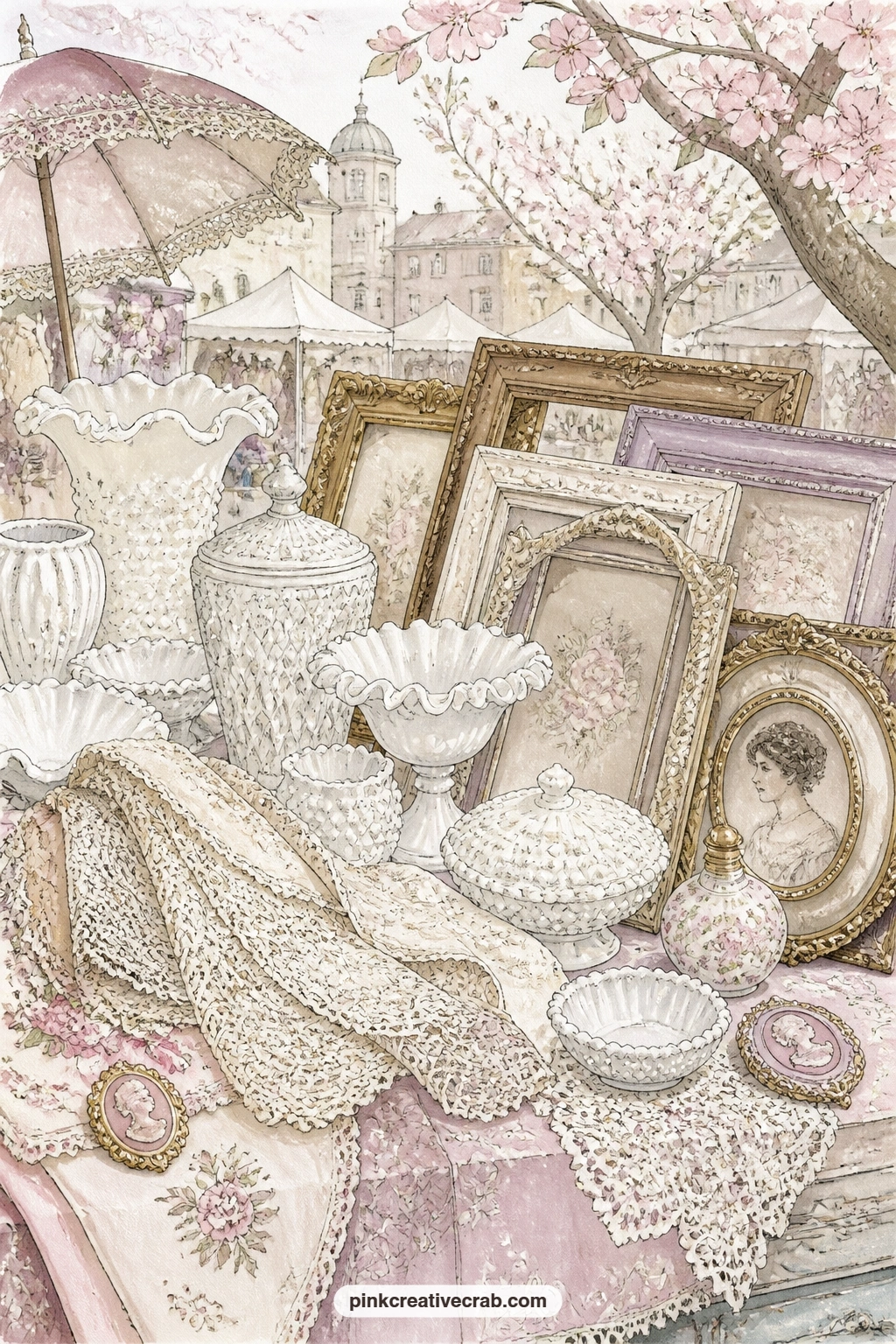
List three things you would actually buy from this table, written small along the bottom edge where the frames lean against each other.
Keep the list short and specific rather than general, since a flea market page works best when it feels like a real stop on a real morning out.
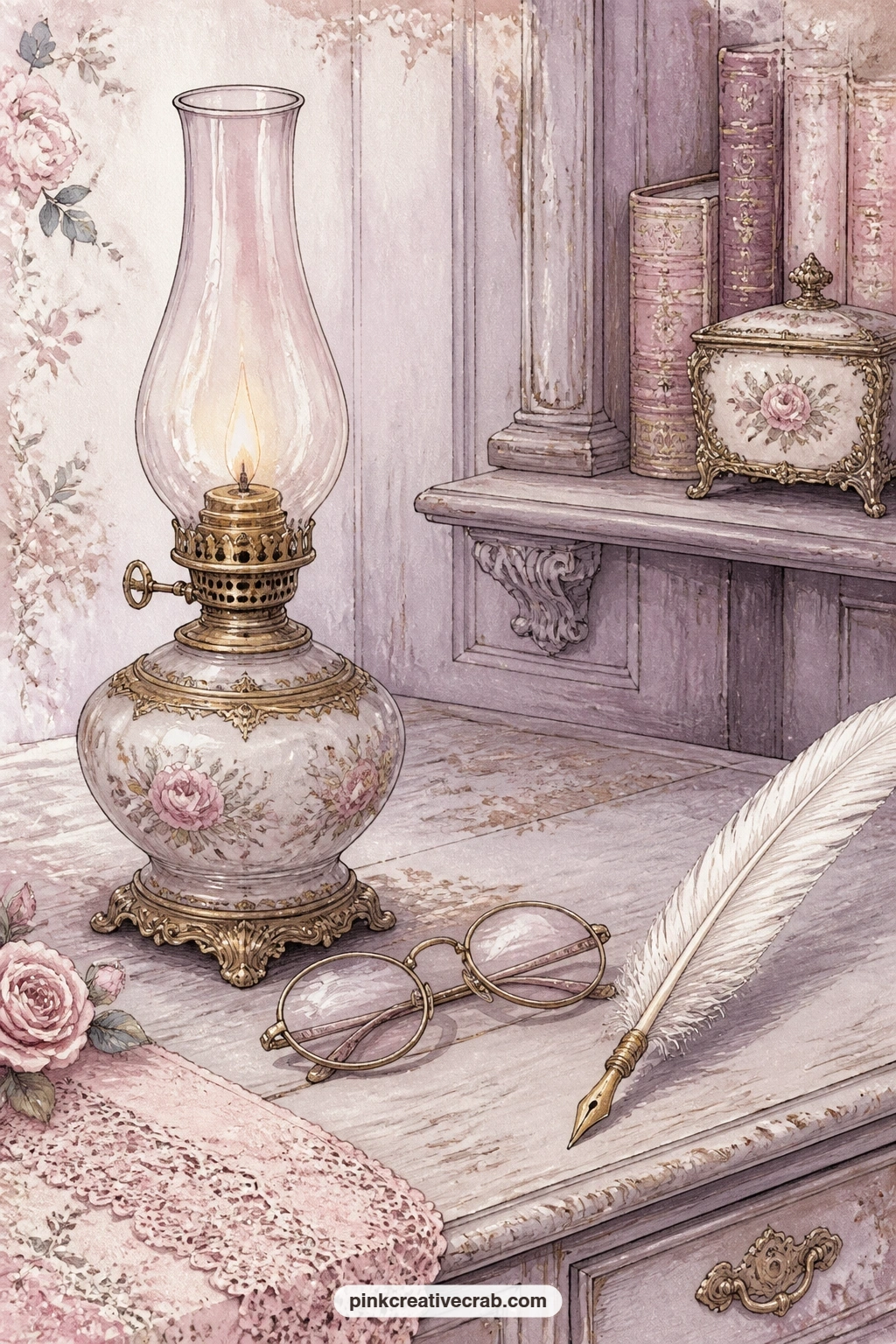
Glue a torn scrap of handwriting under the quill on this page, something that looks like the start of an unfinished letter, so the writing desk feels mid-use rather than staged for display.
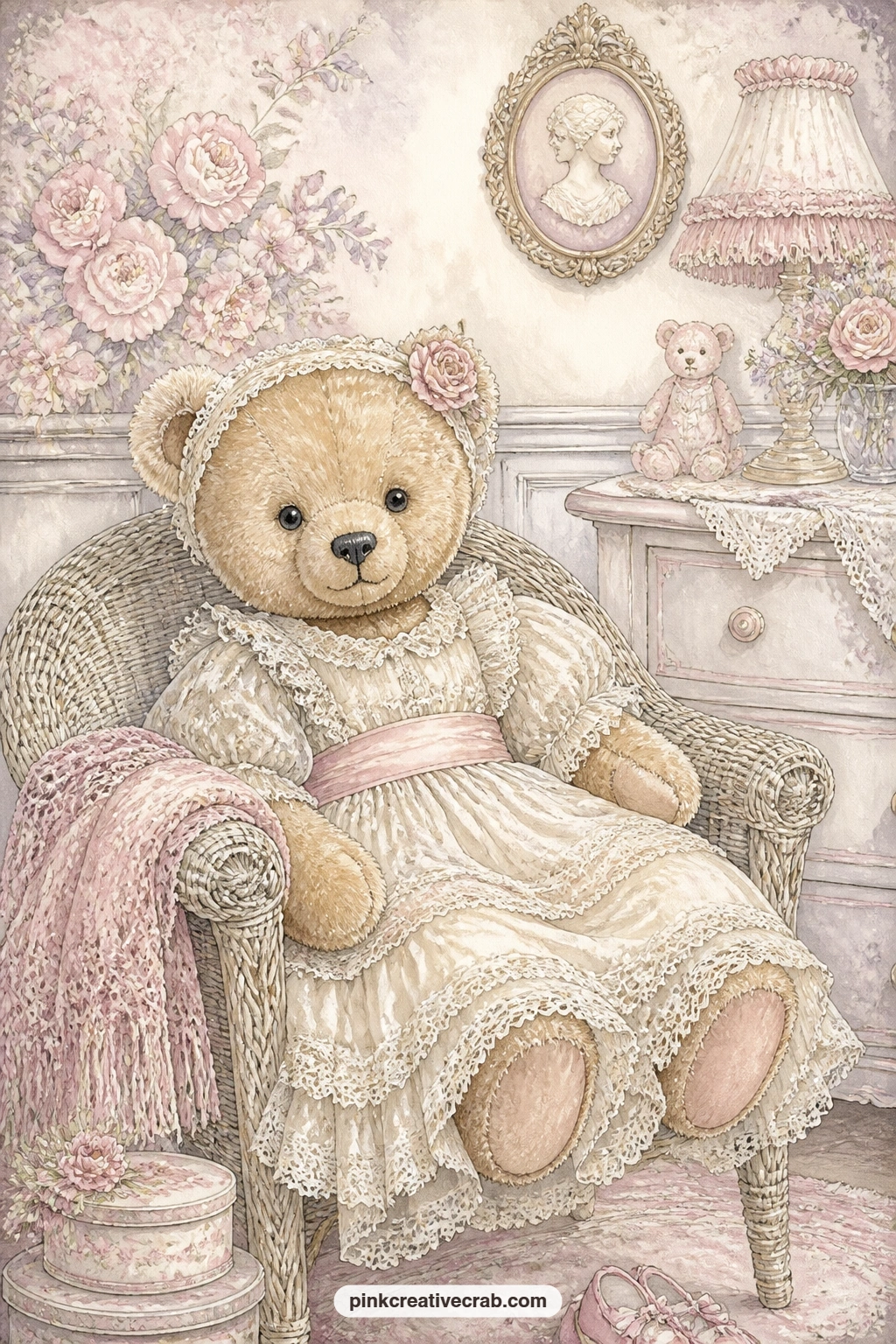
A well loved antique bear deserves a name tag, so write one on a small paper label tucked under the wicker chair.
This page suits a journal made for a daughter or granddaughter more than any other in the set, since the lace dress and worn fur give it a softness the shop and parlor pages do not share.
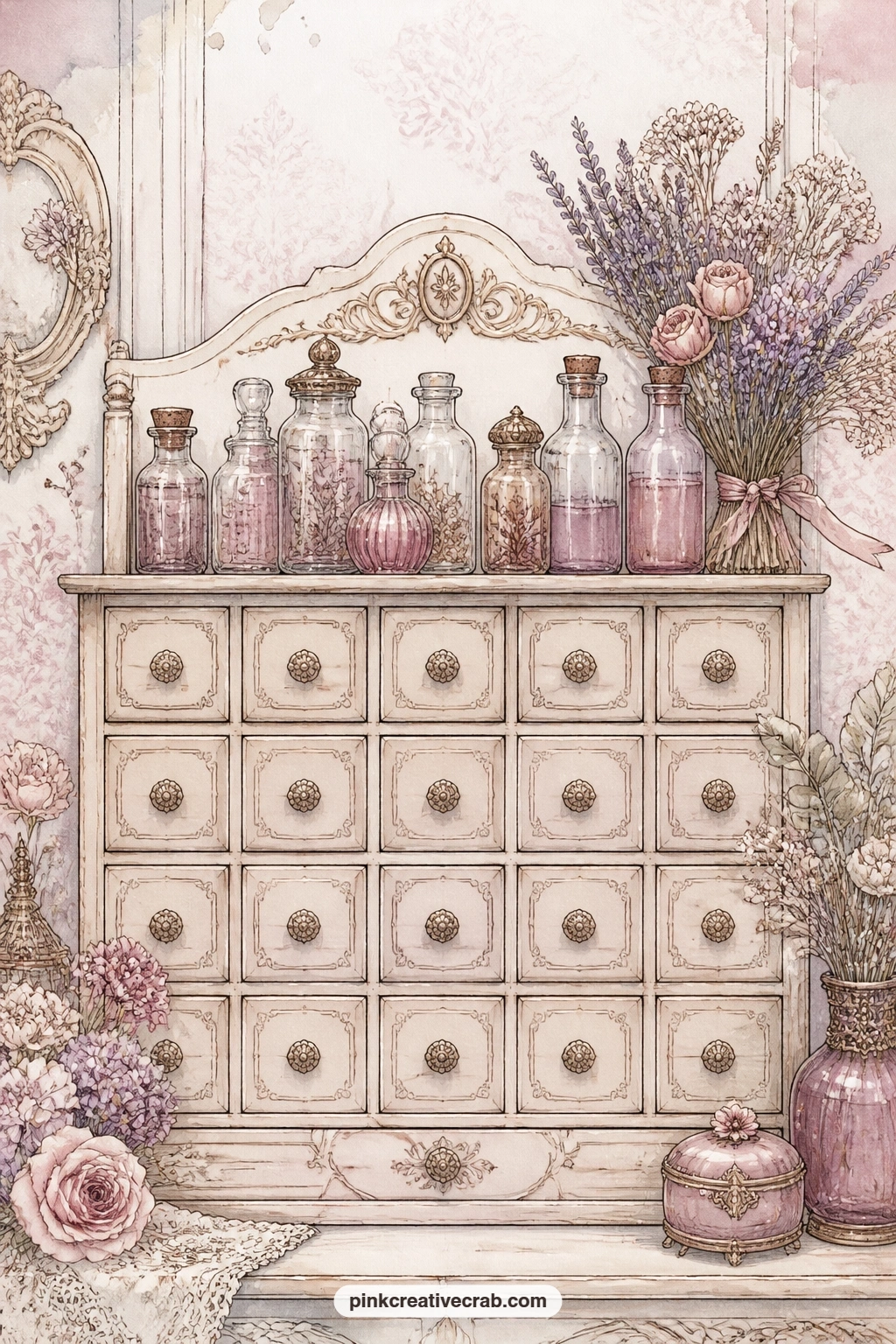
Tear the right edge of this page unevenly before gluing it in, so the little drawers and dried flowers look as though they were pulled straight from a cabinet rather than printed flat on a sheet.
Salvage Yard Pages
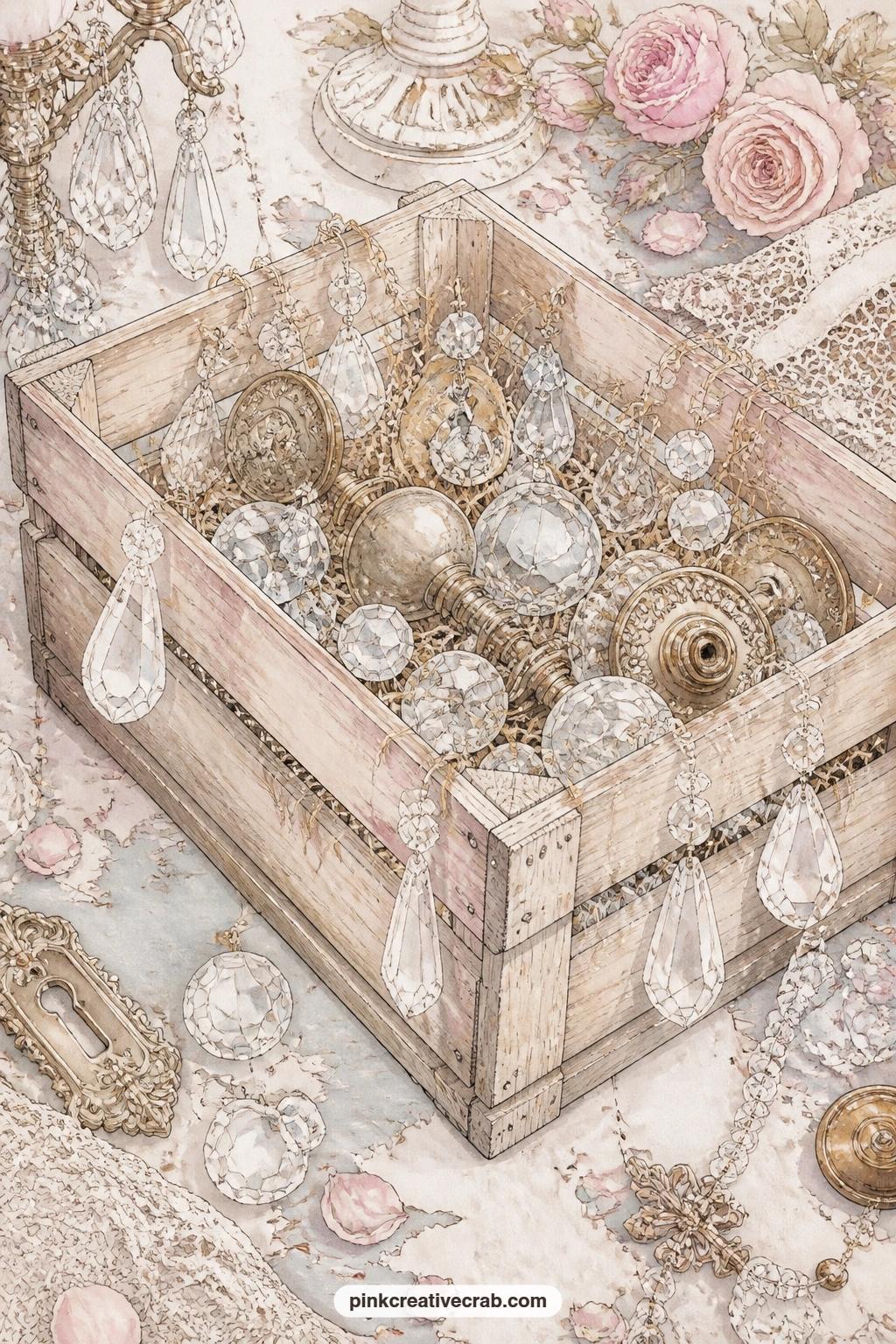
Who is this page for in a shared gift journal.
Give it to the reader who loves salvage yards more than tidy shop windows, since loose chandelier crystals and mismatched door knobs piled in a wooden crate have a rougher charm than the velvet cases earlier in the kit.
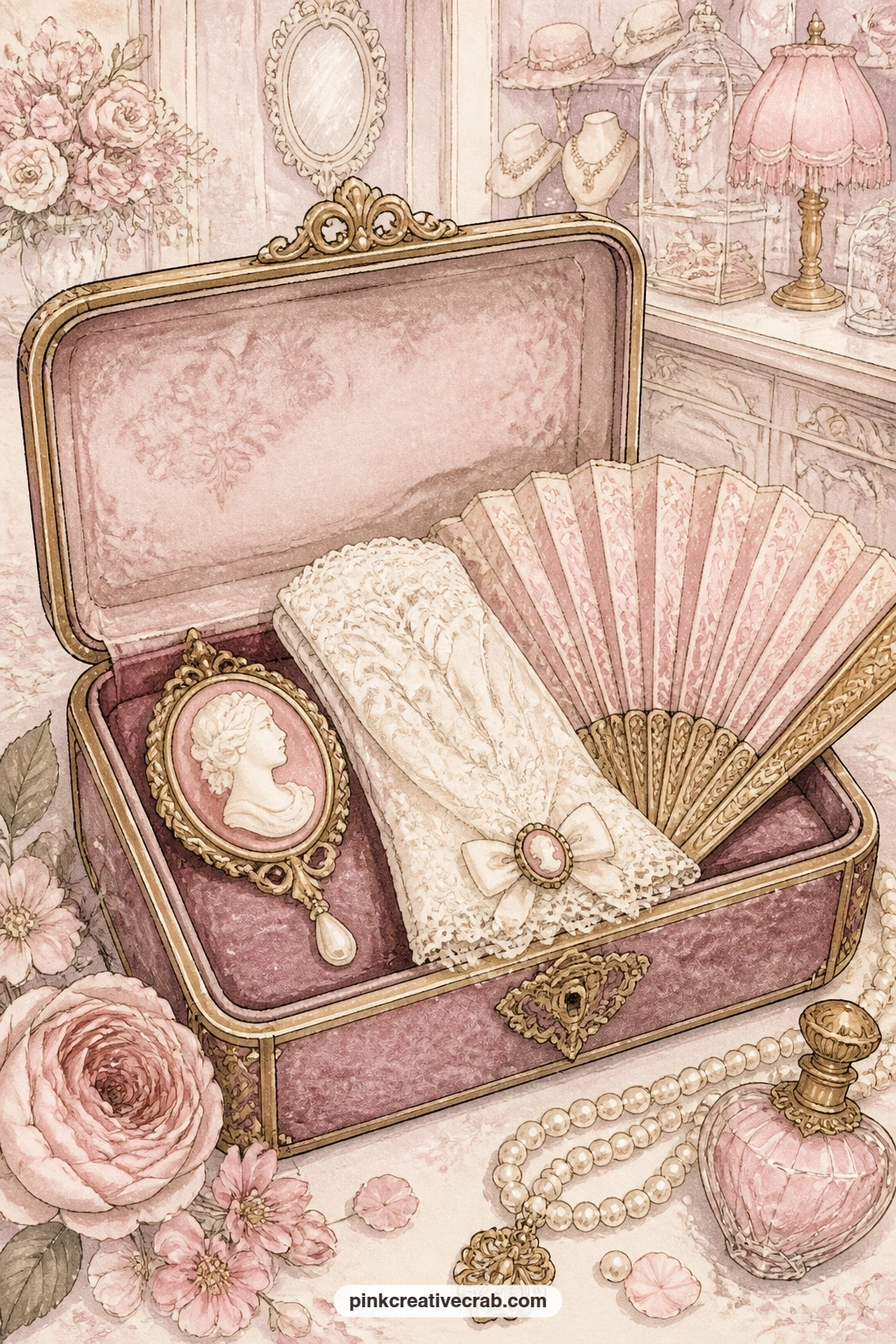
Pair this velvet-lined box with the Victorian junk journal pages if your set is leaning that way, since the lace gloves and folding fan sit comfortably beside any parlor tea scene from either kit.
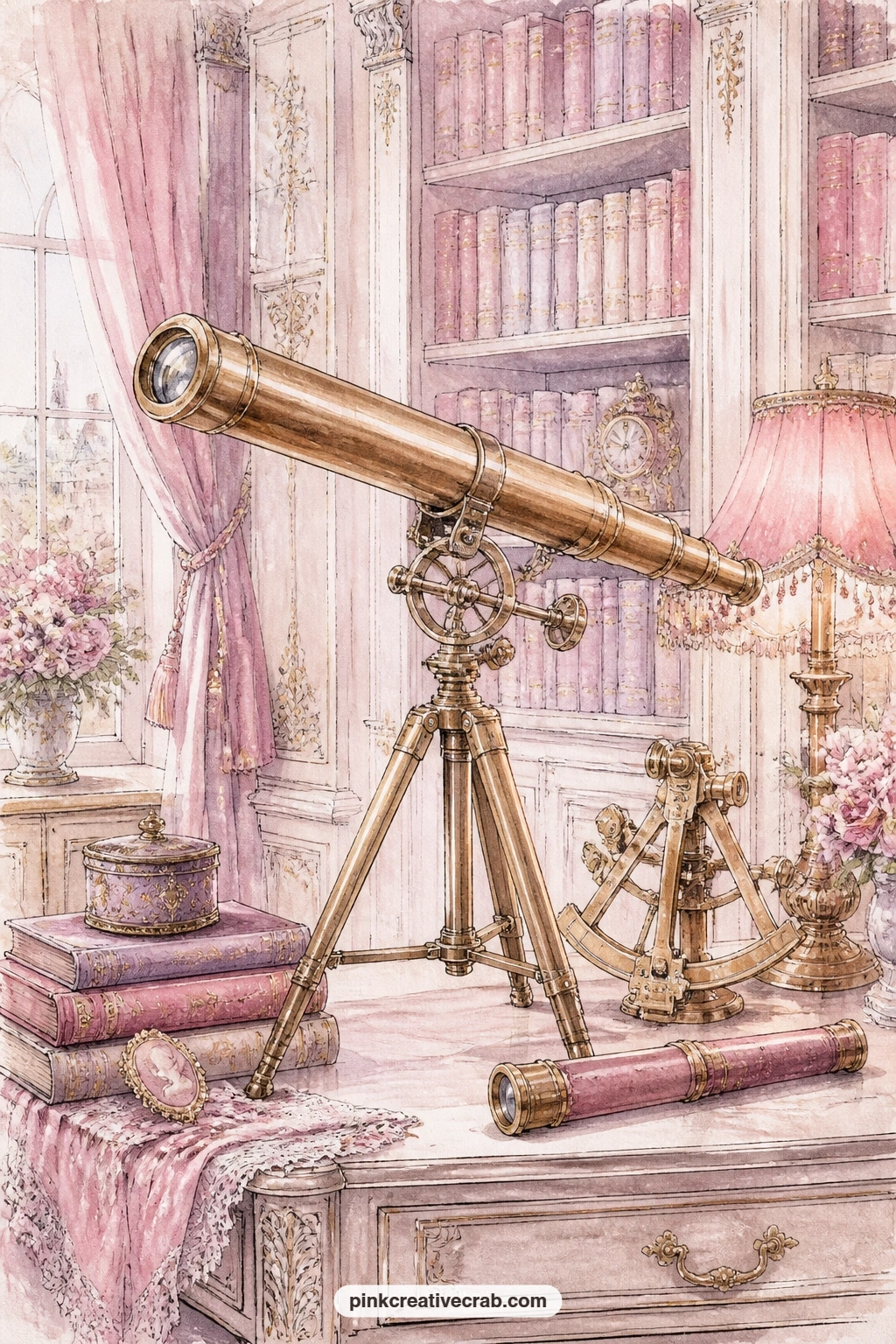
Sketch a short star chart or a single constellation beside the telescope if you want to add your own line work before gluing this page in.
The sextant and spyglass on the library table need nothing extra; they already give the eye enough to settle on without crowding the page further.
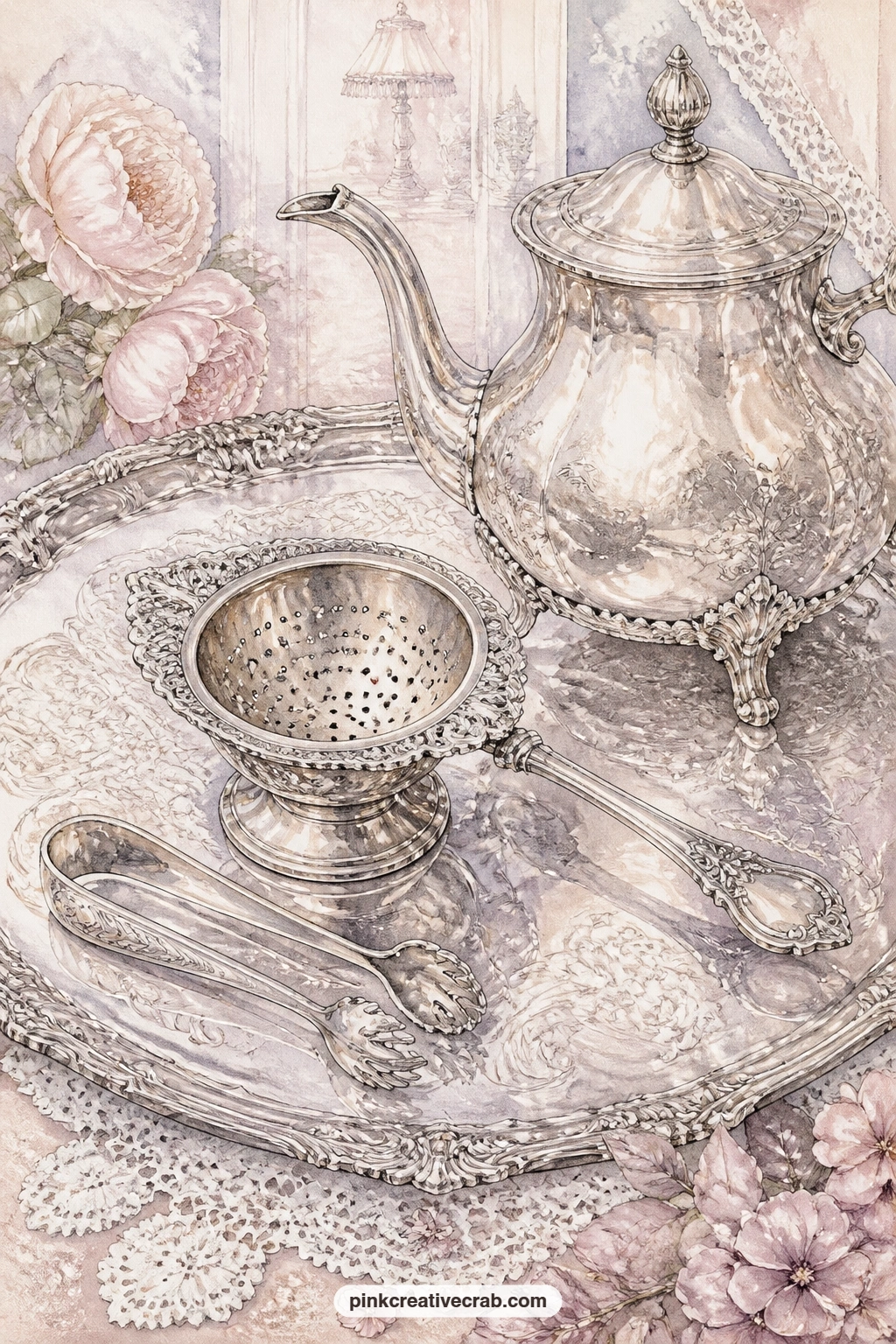
This closes the scene pages the way a proper tea service should, with the silver strainer, the sugar tongs and the teapot arranged on one tray, the same rose and lace theme running quietly through the whole set.
Background Papers
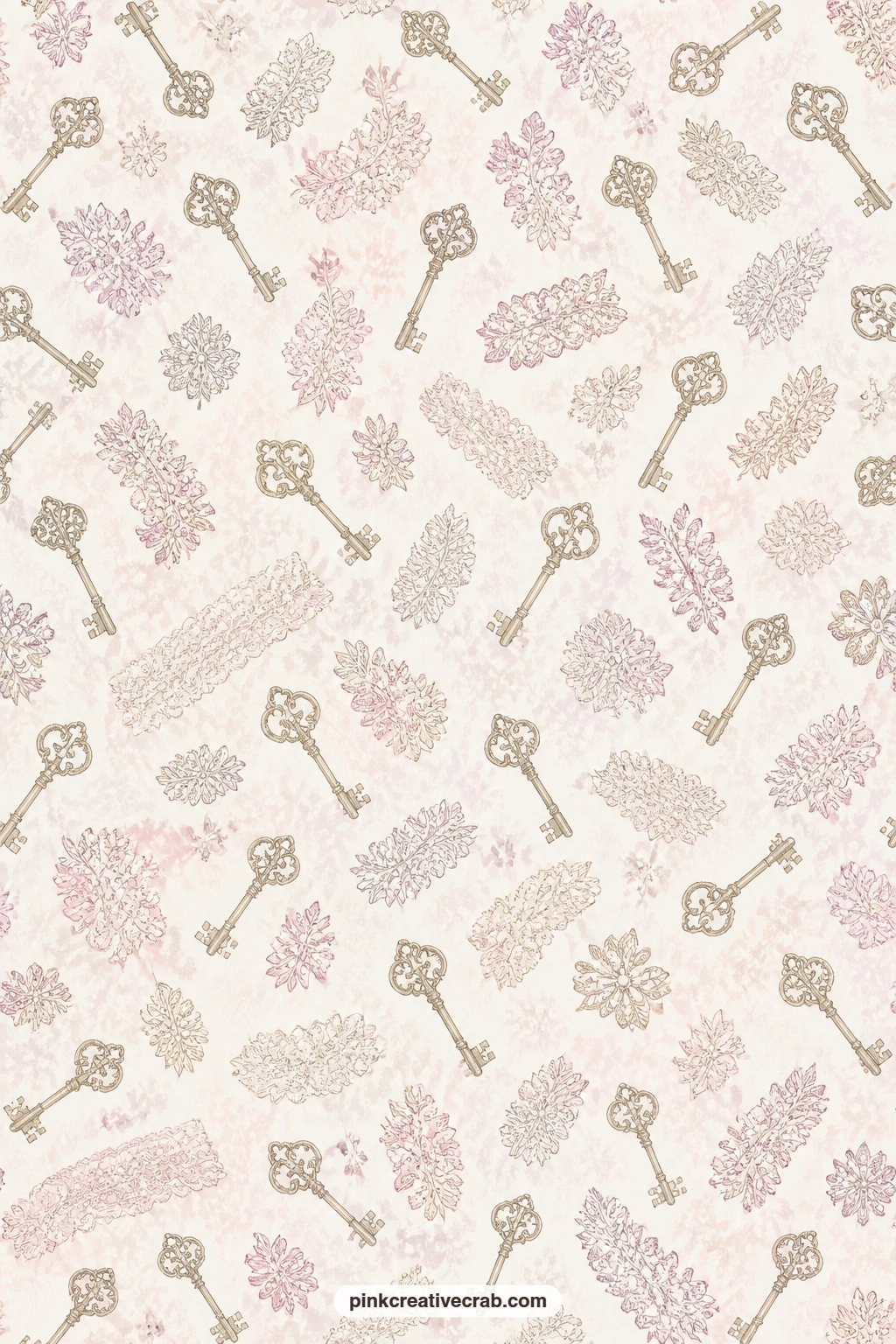
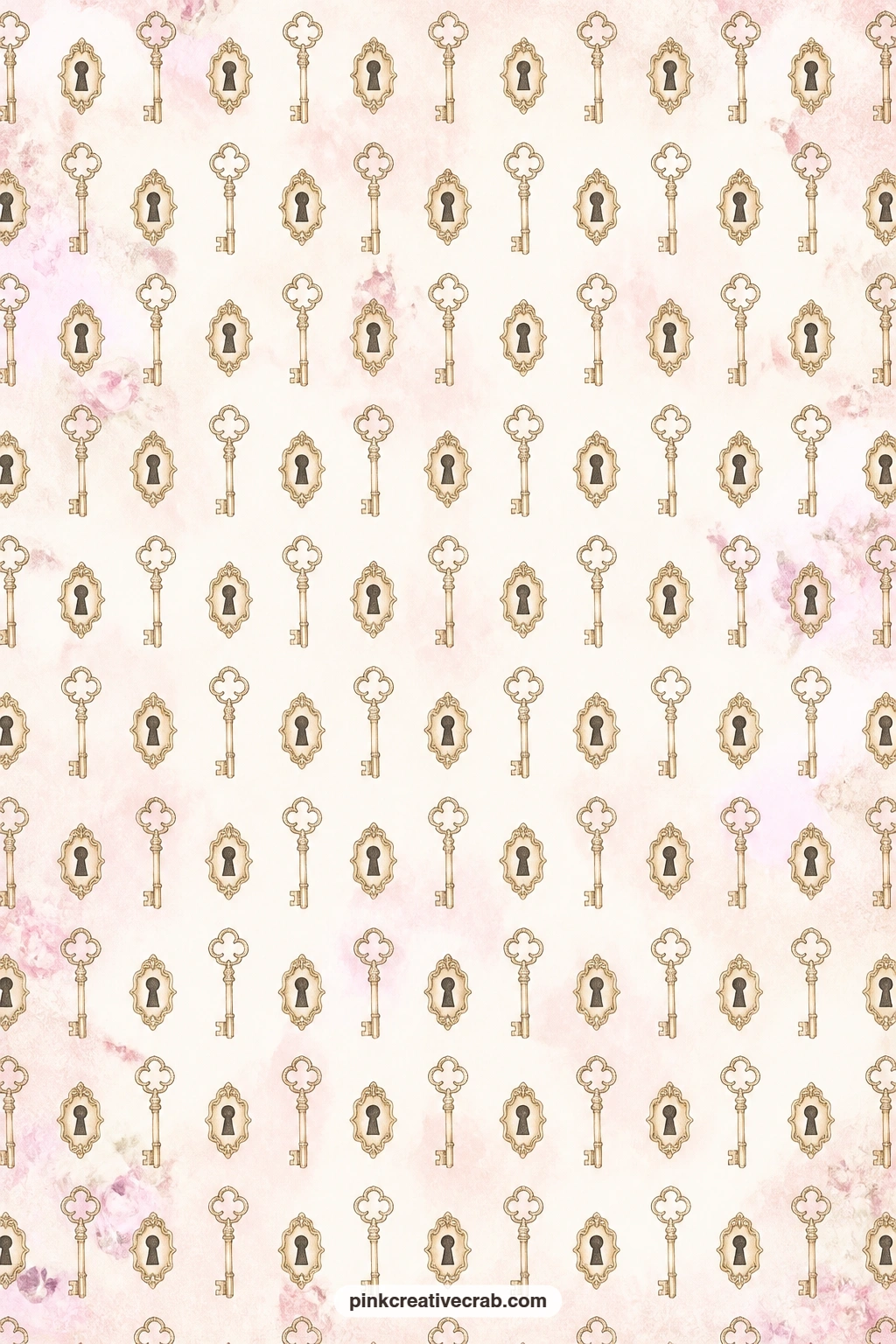
Use this one under a photograph of an actual antique shop visit, as a pocket lining behind a ticket stub, or as the cover of the whole journal where its scattered keys and lace scraps set the tone before the first page even opens.
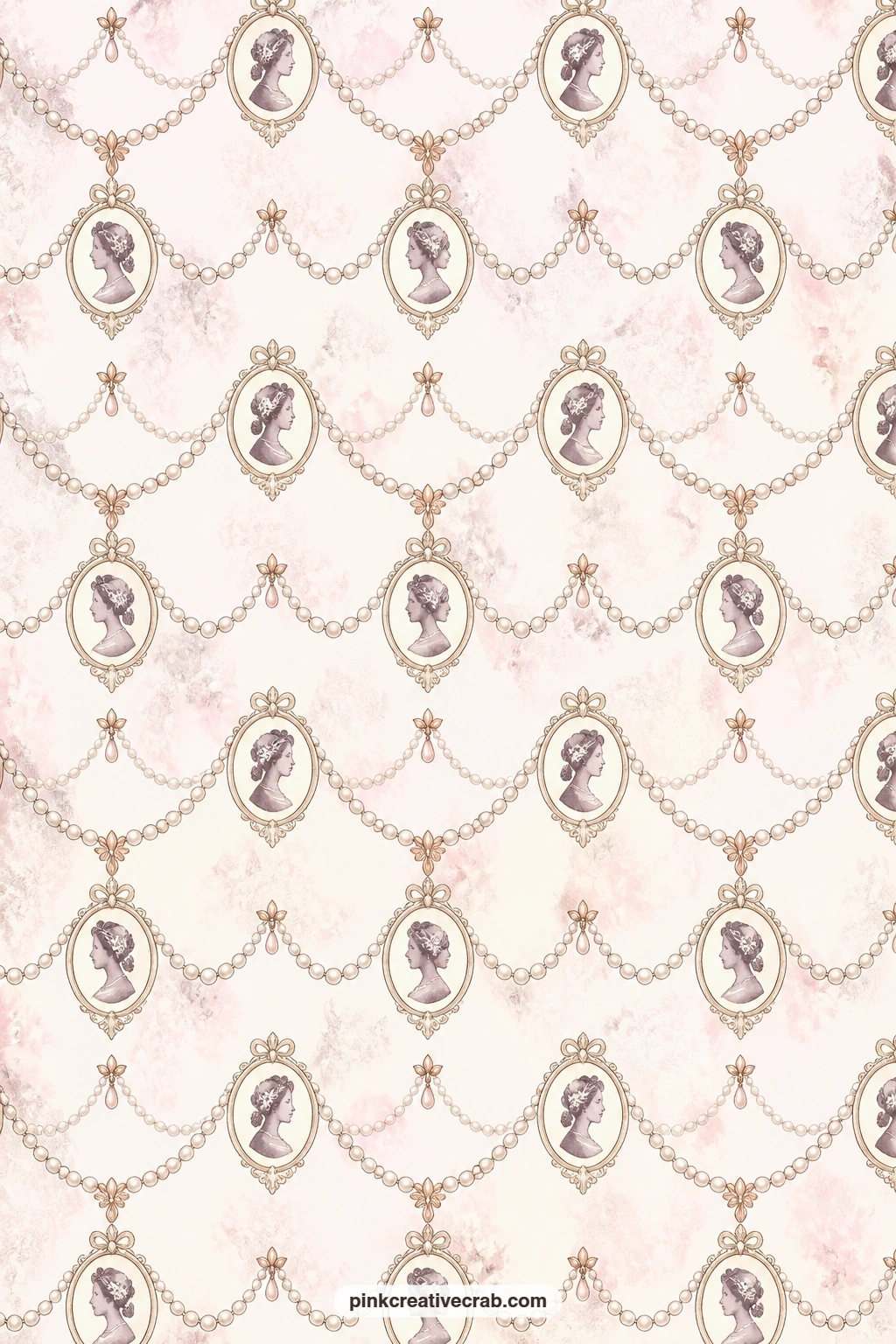
Slip this behind a cameo brooch photograph, line a small jewelry pocket with it, or wrap it around a journal cover for a quieter finish than the key toss pattern offers.
Try this under a teacup photograph for a parlor feel, as the lining for a letter pocket, or as endpapers glued to the inside cover of the finished journal.
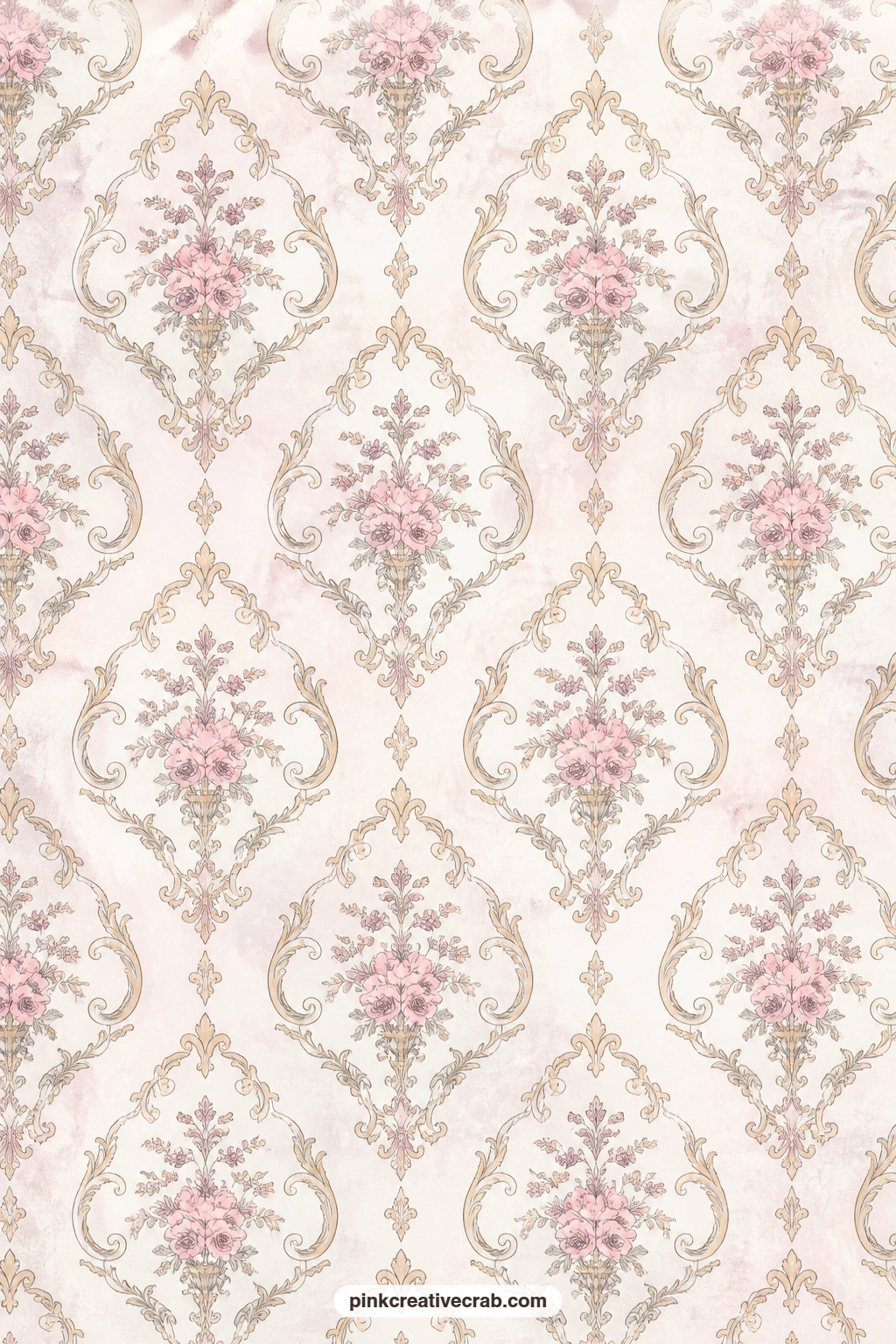
Use this one behind a locket photo, as a pocket lining for small keepsakes, or as a journal cover paired with the skeleton key page for a matching set.
Lined Writing Pages
Use the ruled lines here for a gift list from an antique shop visit, a short letter to whoever inherits the journal, or a simple note of where each treasure on the page came from.
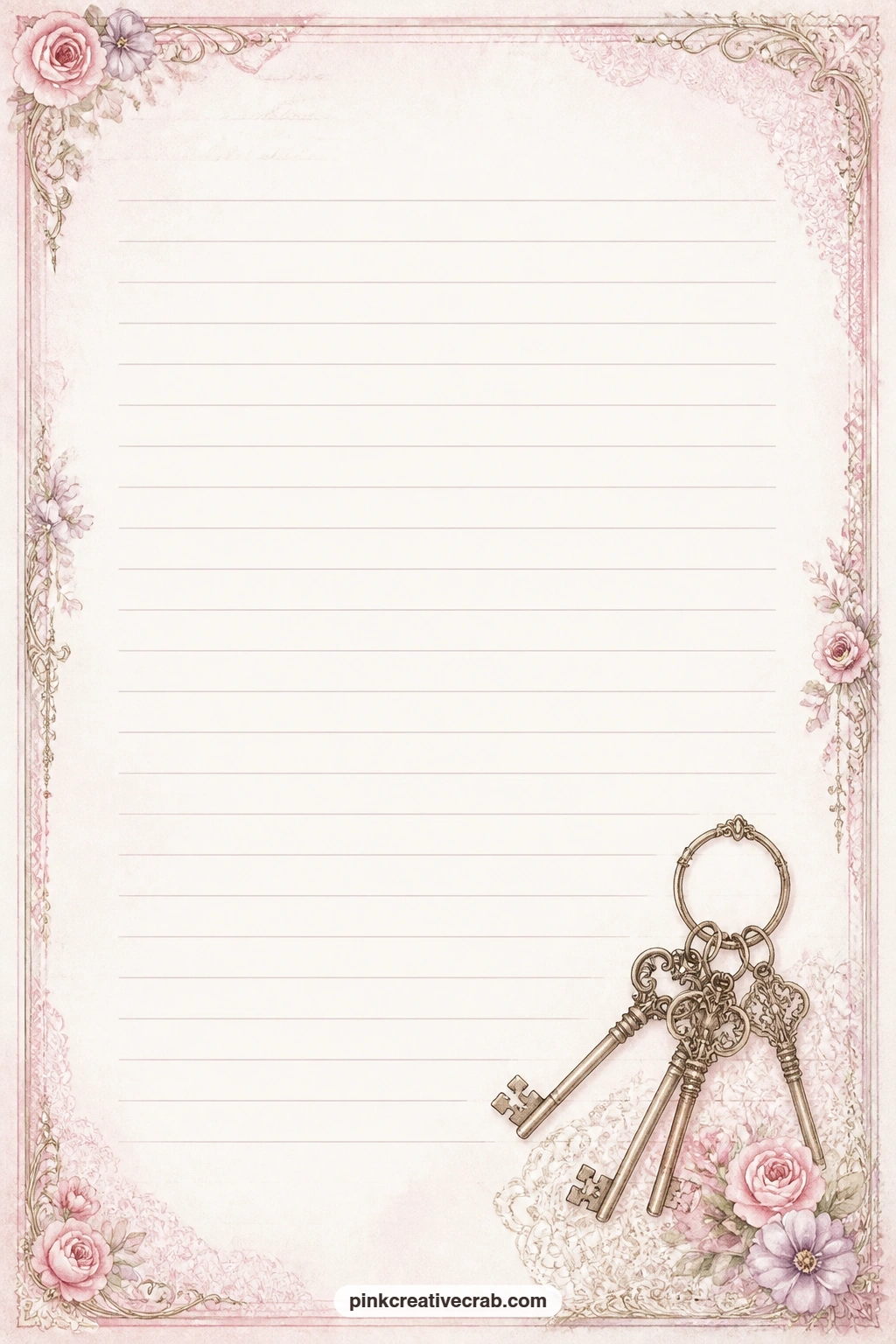
Write a description of a favourite cameo here, a short memory tied to pearls or brooches, or a simple wish list of pieces still waiting to be found.
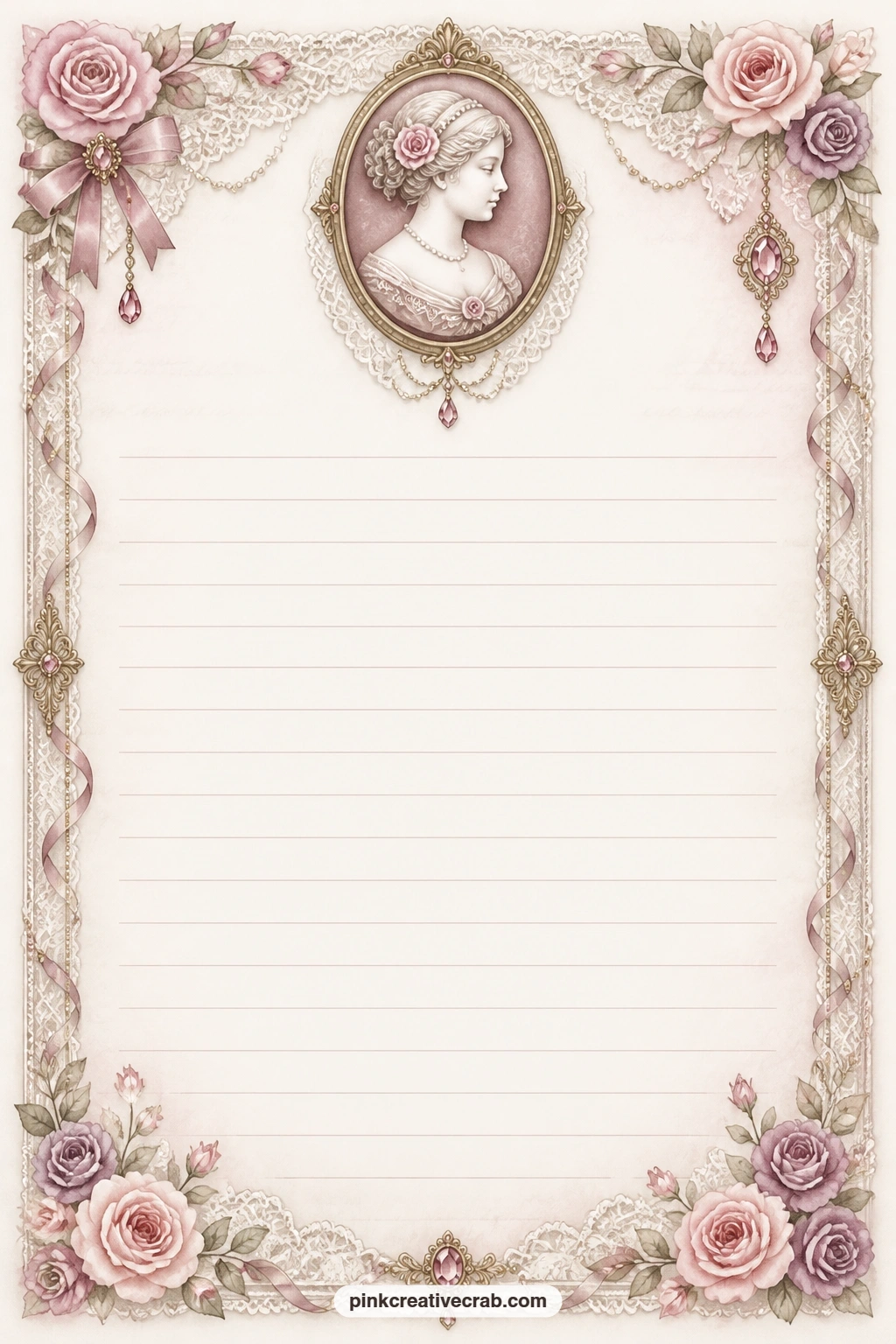
Use this page for a shopping list before your next antique shop trip, a short note about a lace find, or a letter addressed to next year’s version of yourself.
Try a recipe copied from an old family card here, a quick note about a shop clerk’s story, or a running list of treasures still on your wish list.
Save this last page for a longer letter to next year, a full description of your favourite find in the whole kit, or a closing note that wraps up the journal.
What to Do Next
Print the full set, sort the scene pages into the order you like best, and start gluing from the first shop shelf through to the last gilded mirror frame.
Frequently Asked Questions
What paper works best for an antique junk journal kit like this one?
Matte cardstock around 65 to 90 lb works best, since it holds glue without curling or buckling. Thinner paper wrinkles once it meets a glue stick or tape runner, so avoid standard printer paper if you plan to layer pages.
What printer settings keep the fine ink lines sharp?
Set your printer to its best or photo quality setting on plain or matte paper. Lower settings can blur the thin sepia outlines on the cameos and keys, so avoid draft mode even though it prints faster.
What size should I print these antique pages at?
Standard letter size (8.5 by 11 inches) suits most home-bound junk journals and fits inside a binder sleeve or composition book cover. Trim a little off each edge if your journal pages run smaller.
What do I use to color or decorate the pages further?
Fine tip pens in black or sepia add extra line work without fighting the existing watercolour palette. Coloured pencils work for small touches, but avoid heavy markers since they can bleed through thinner cardstock.
What glue or tools work best for assembling the journal?
An acid free glue stick or tape runner keeps pages flat without wrinkling, especially on the background and lined pages. Keep a small pair of craft scissors nearby for trimming edges and cutting pockets.
Have any thoughts?
Share your reaction or leave a quick response — we’d love to hear what you think!
-
 0
-
0
-
0
-
0
-
0
-
0


