Lemon watercolor is one of those subjects that feels like a little holiday every time you sit down with your paints. The yellow glows against white paper, the leaf green cools it down, and a touch of Mediterranean blue turns a simple fruit into a whole sunny scene you can picture on a terrace somewhere warm.
Below you will find 31 lemon scenes and vignettes, from a quick bowl of lemons on a striped cloth to a courtyard tree heavy with fruit. Each one is sized for a single sitting, so scroll until something catches your eye, grab your paper, and start painting.
Using these images: free for personal projects such as printing, coloring, cards, journals and gifts. Handmade items that include them may be sold up to 30 pieces per design. More than that is commercial use and is not permitted, and neither is selling or sharing the images themselves or passing them off as your own. Please ask before any other use.
Start simple with lemons in a bowl of ice water, a subject that lets you practice floating shapes without worrying about a background. Pencil in a wide, shallow bowl and three or four lemon circles sitting at different heights inside it, as if bobbing on the surface.
Paint the water first with a pale wash of cerulean and grey, leaving the lemon shapes untouched as dry paper. Once that wash is dry, drop lemon yellow into the fruit shapes and add a few cool blue-grey ovals for ice cubes, touching wet into wet so the edges blur softly.
The common slip here is painting the ice cubes too solid and flat. Save white paper for their top edges and only shade the lower corners, so they read as glassy rather than drawn.
If you do not have cerulean blue, any cool grey-blue mix of ultramarine and a touch of burnt sienna works just as well for the water shadow.
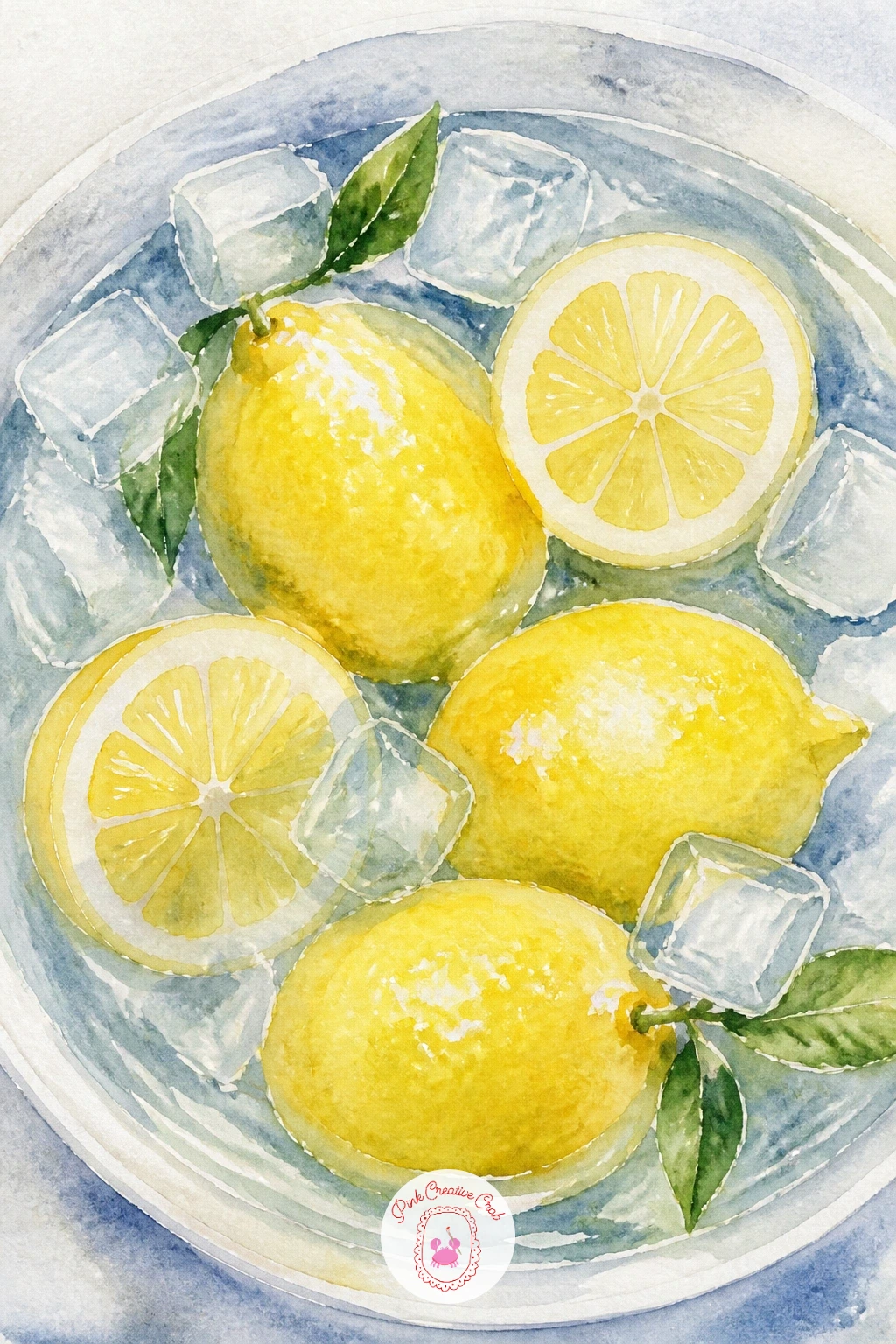
Palette: Lemon Yellow,Cerulean Blue,Payne’s Grey
Move from floating fruit to a tabletop scene with a bowl of lemons on a striped tablecloth, a lovely way to practice painting a pattern without it stealing the show. Sketch a simple round bowl holding four or five lemons, sitting on a cloth that falls just into the lower half of your paper.
Paint the lemons and bowl first, keeping the stripes as plain white or pale blue paper underneath. Once everything above is dry, pull horizontal stripes of Mediterranean blue across the cloth with a flat brush, letting the lines wobble slightly by hand for a relaxed, fabric feel.
A good proportion trick here: hold your brush up against the bowl to measure its width, then use that same measurement to space the stripes evenly as they recede past it. This keeps the cloth looking like it belongs to the same tabletop instead of a flat strip glued behind the bowl.
Finish with a few cast shadow lines under the bowl in grey-blue to anchor it to the table.
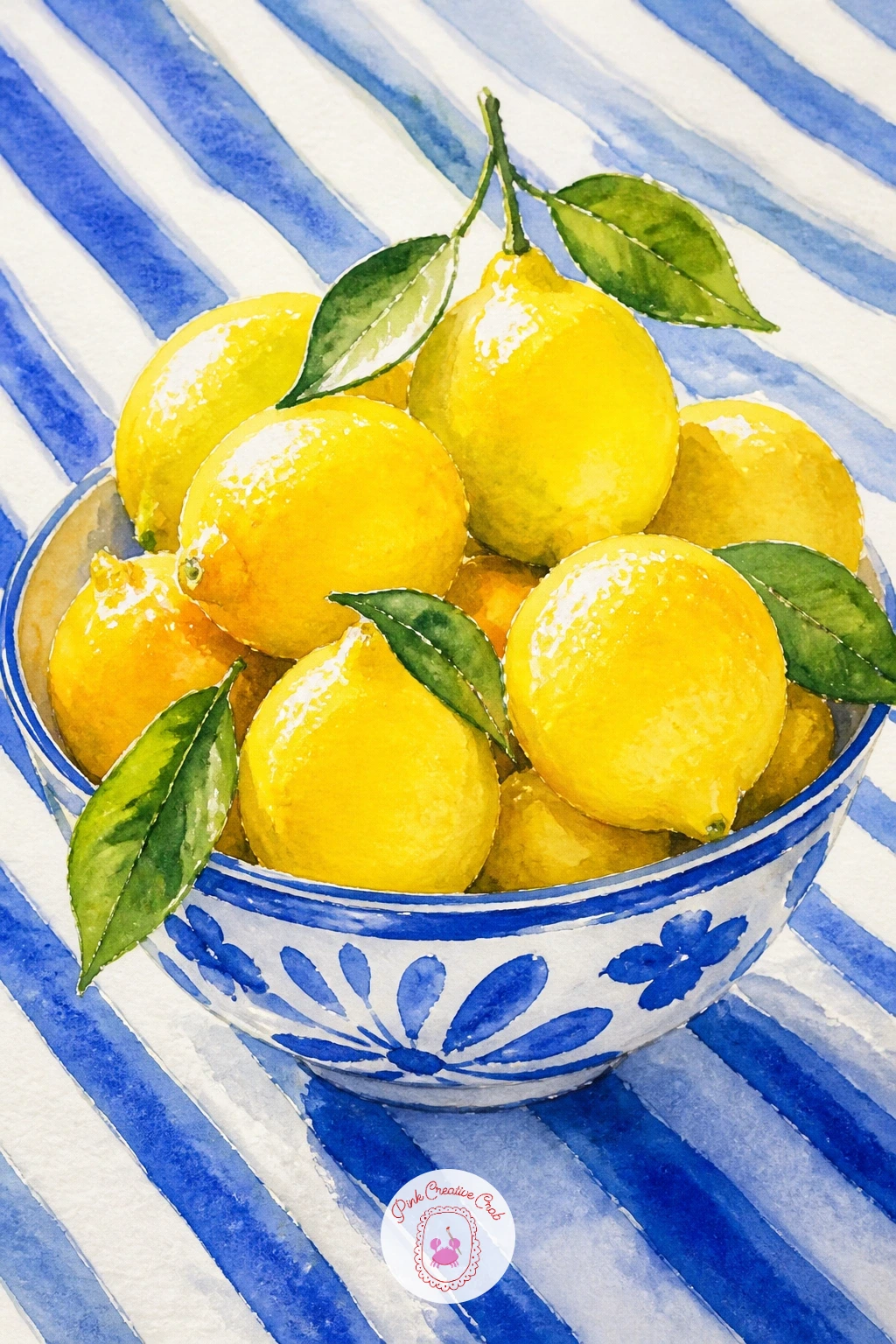
Palette: Lemon Yellow,Cobalt Blue,Sap Green
Build on that striped cloth with a lemon print tablecloth at a picnic, where the pattern itself becomes the star instead of just a backdrop. Lay down a loose rectangle of warm white or cream for the cloth spread over grass, then pencil in small scattered lemon shapes across it in a loose repeating rhythm.
Paint the grass around the cloth first in sap green, then fill in each little lemon motif on the cloth with the same lemon yellow you have been using, adding a tiny green leaf beside each one. Keep every lemon on the cloth roughly the same small size so the pattern reads as fabric print rather than a messy pile of fruit.
Edges tend to go wrong here when the cloth corners look stiff. Soften the corners by lifting a little color with a damp brush right after painting, which rounds off any hard paper edges.
No sap green on hand? Mix lemon yellow with a touch of ultramarine for a similar fresh leaf tone.
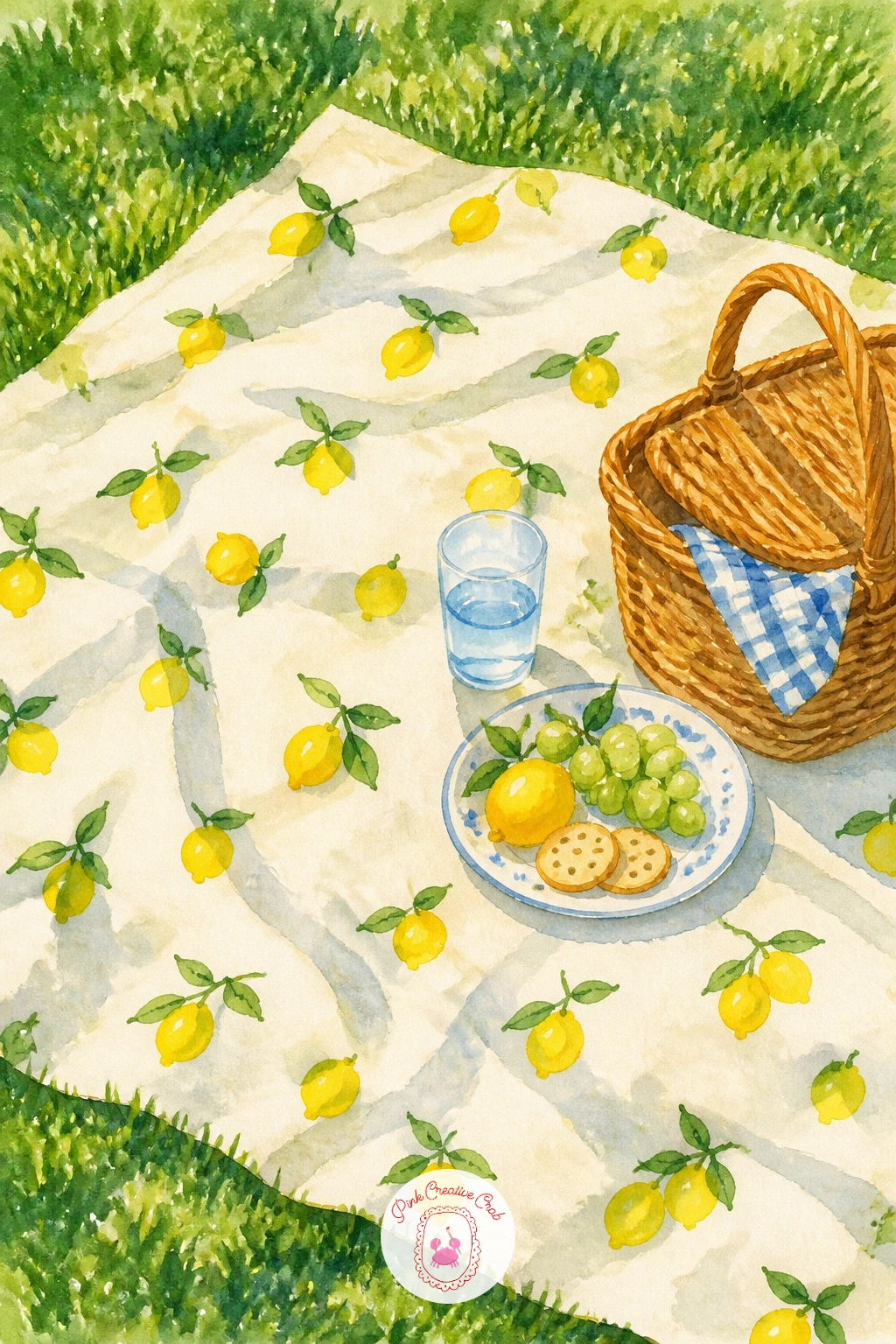
Palette: Cadmium Yellow Light,Sap Green,Raw Umber
A pitcher of lemonade with ice is a satisfying next step because it introduces glass and liquid, two textures that reward a light touch. Draw a simple curved pitcher shape with a handle, then fill the lower two-thirds with pale yellow for the lemonade inside.
Work top to bottom: paint the glass rim and handle first in a thin grey-blue outline, then the lemonade body, leaving small irregular white shapes for ice cubes and one vertical streak of white down the side for the glass highlight. Drop in a slice or two of lemon pressed against the inside of the glass while the lemonade wash is still slightly damp, so the slice edges blur just a little.
If this is your first time painting glass, remember the trick is less paint, not more. Keep the pitcher’s shadow side a pale wash and trust the white paper to do most of the shine for you.
No yellow ochre for the glass tint? Diluted lemon yellow alone does the job.
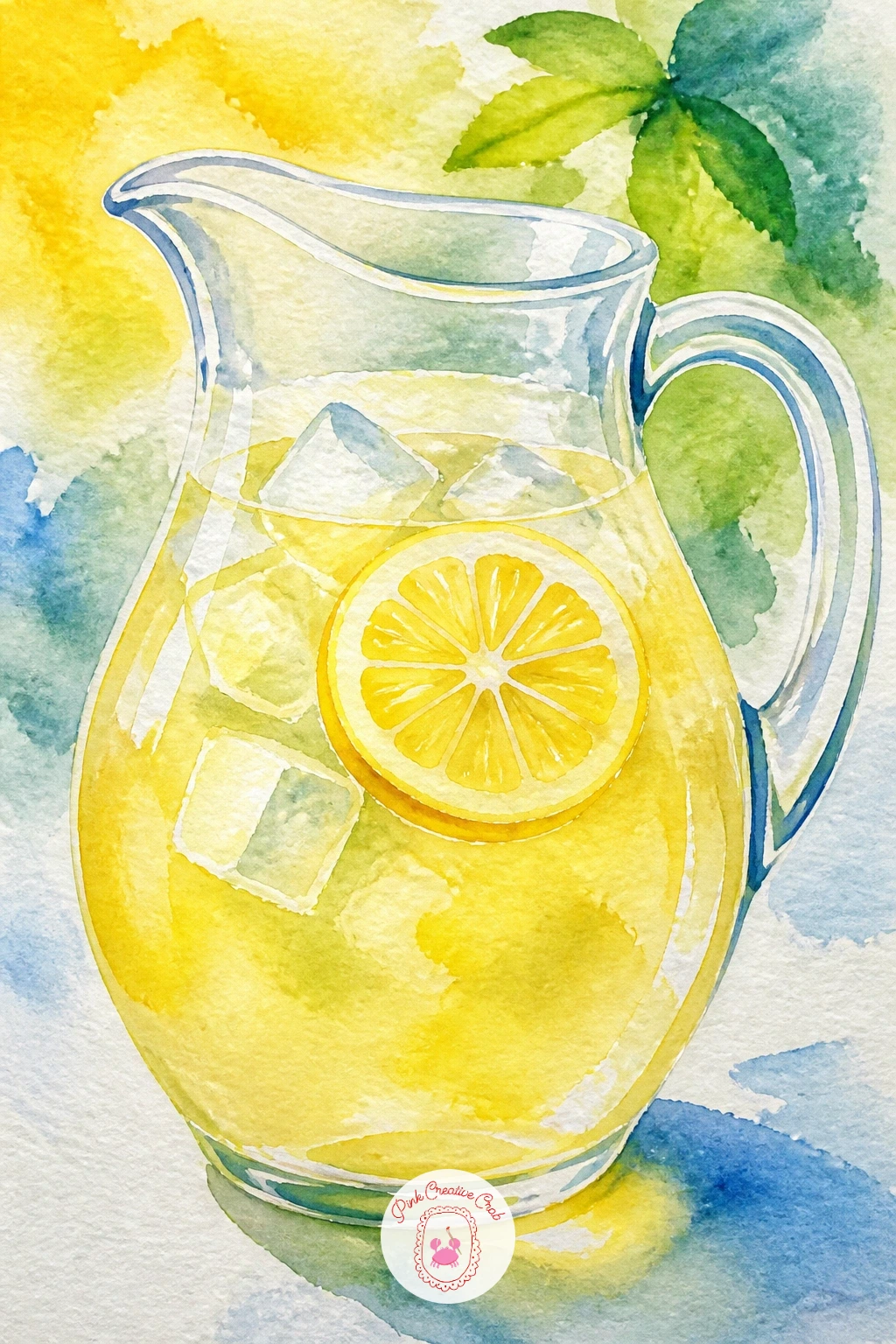
Palette: Lemon Yellow,Payne’s Grey,Yellow Ochre
Look at a photo of a real glass pitcher in sunlight before you start, so you can see exactly where the white highlight streak should fall.
Shift from drinks to dessert with a lemon tart with a slice cut, which lets you practice a circular shape broken by one clean wedge. Pencil a round tart shell, then mark the cut slice as a pie-shaped wedge pulled slightly away from the rest.
Paint the tart’s crust edge first in a warm golden brown, then fill the lemon curd filling with a rich, slightly deeper yellow than your usual lemon mix, since curd reads darker and glossier than raw fruit. Leave a thin white line where the crust meets the filling to keep the two textures separate, and add a tiny shine mark on the curd surface with a lifted bit of color or a dab of white gouache.
Painters often flatten the cut slice by forgetting it has a side wall. Give the separated wedge a thin strip of crust color along its cut edge so it clearly sits apart from the rest of the tart.
For more dessert practice afterward, the easy watercolor food ideas list has plenty of other treats worth trying.
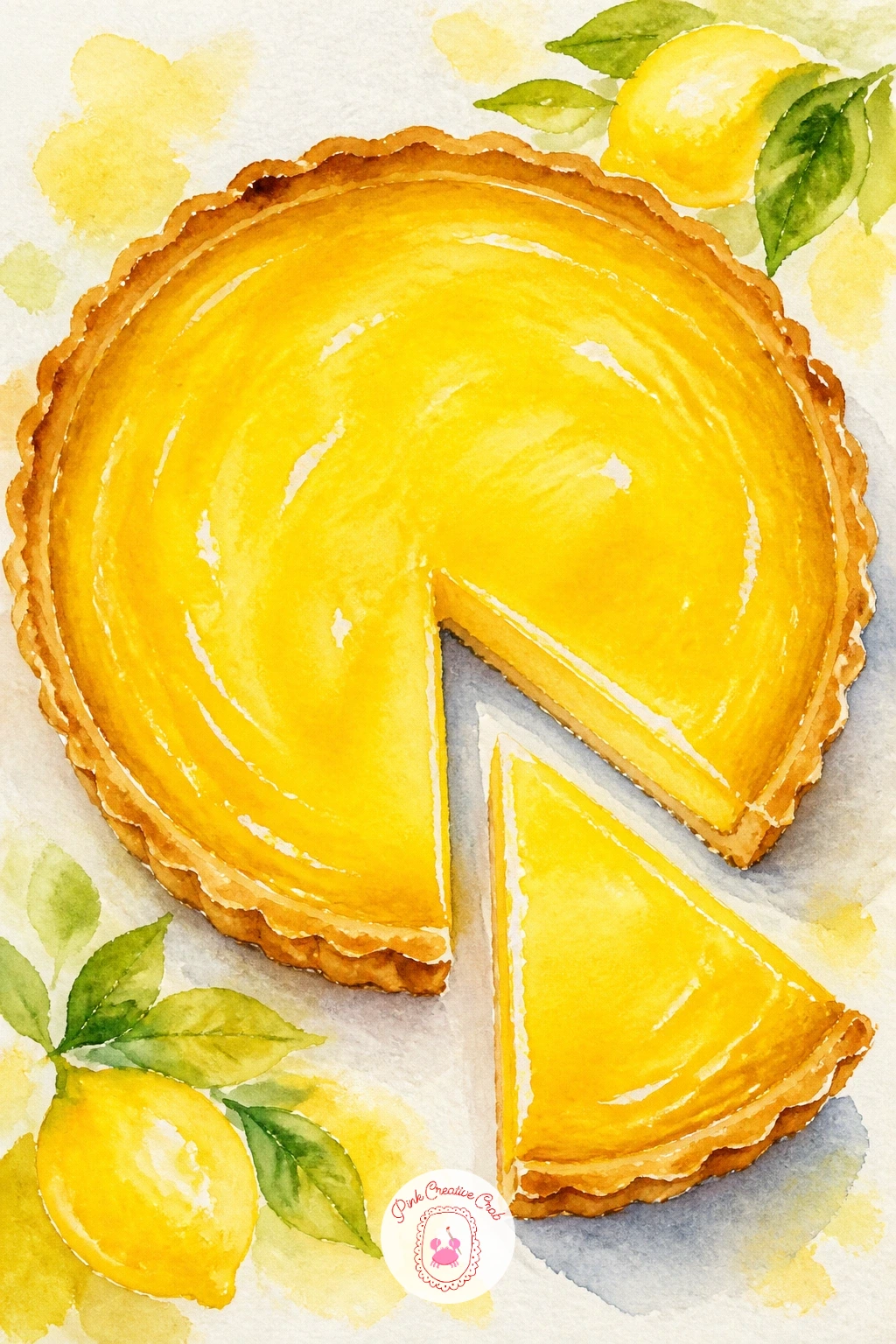
Palette: Lemon Yellow,Burnt Sienna,Titanium White
Bring a figure into the scene with a woman carrying a basket of lemons, a lovely vignette for practicing simple proportion on a person without getting caught up in facial detail. Block her in as basic shapes first: an oval head, a simple dress silhouette, and a round woven basket held at her hip.
A handy measuring trick: the basket should sit roughly one head-height below her shoulder, and her whole figure should stand about seven to eight head-heights tall for a natural, adult proportion. Paint her dress and skin in flat washes first, then add the basket and let a few lemon shapes peek over its rim in your usual lemon yellow.
Faces often go wrong when painters try to add too much detail. Keep hers suggested with just a soft shadow under a sun hat brim, no features needed.
If you enjoy figures like this, the coquette drawing lessons offer more practice with simple figures and soft color palettes.
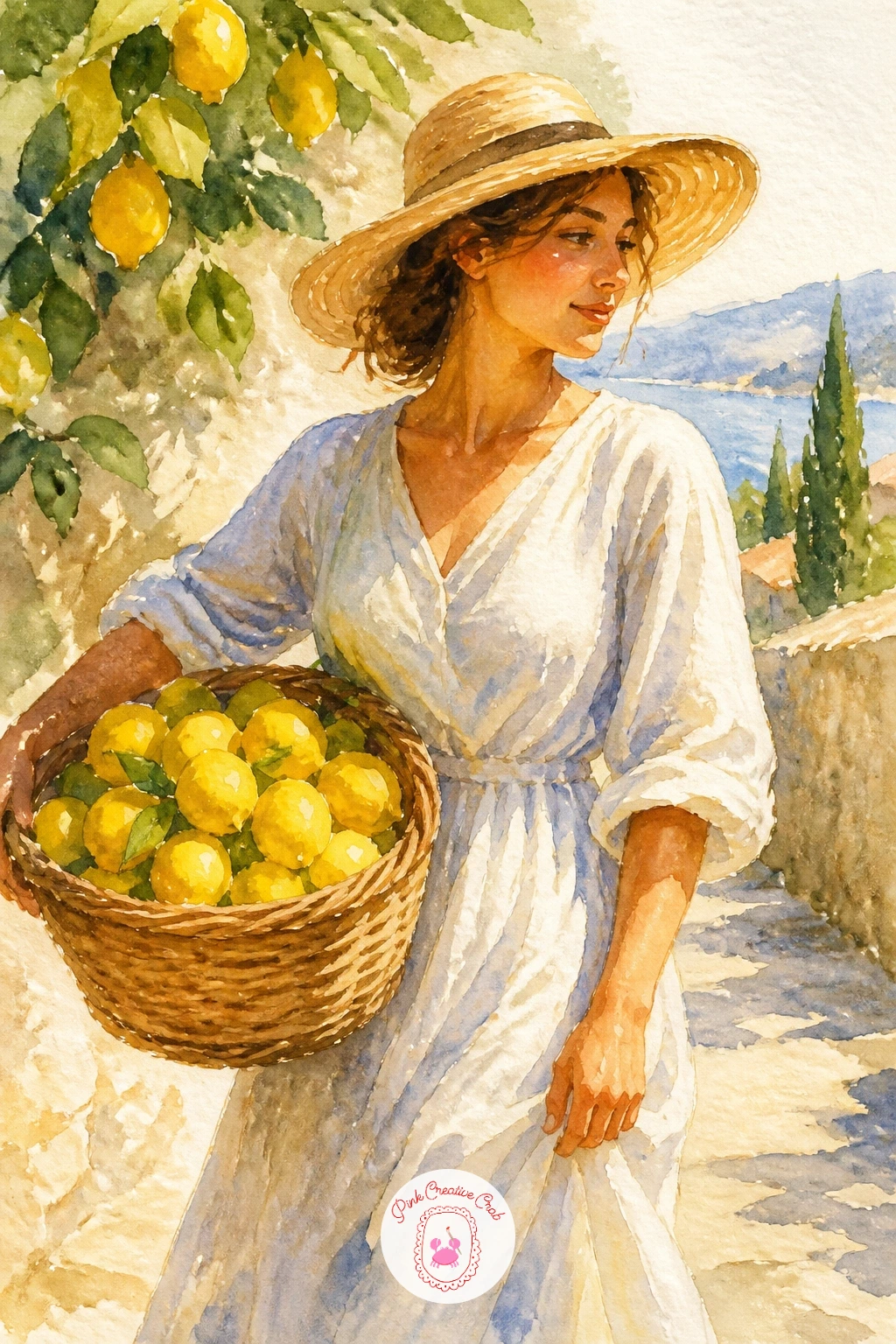
Palette: Lemon Yellow,Terracotta,Raw Umber
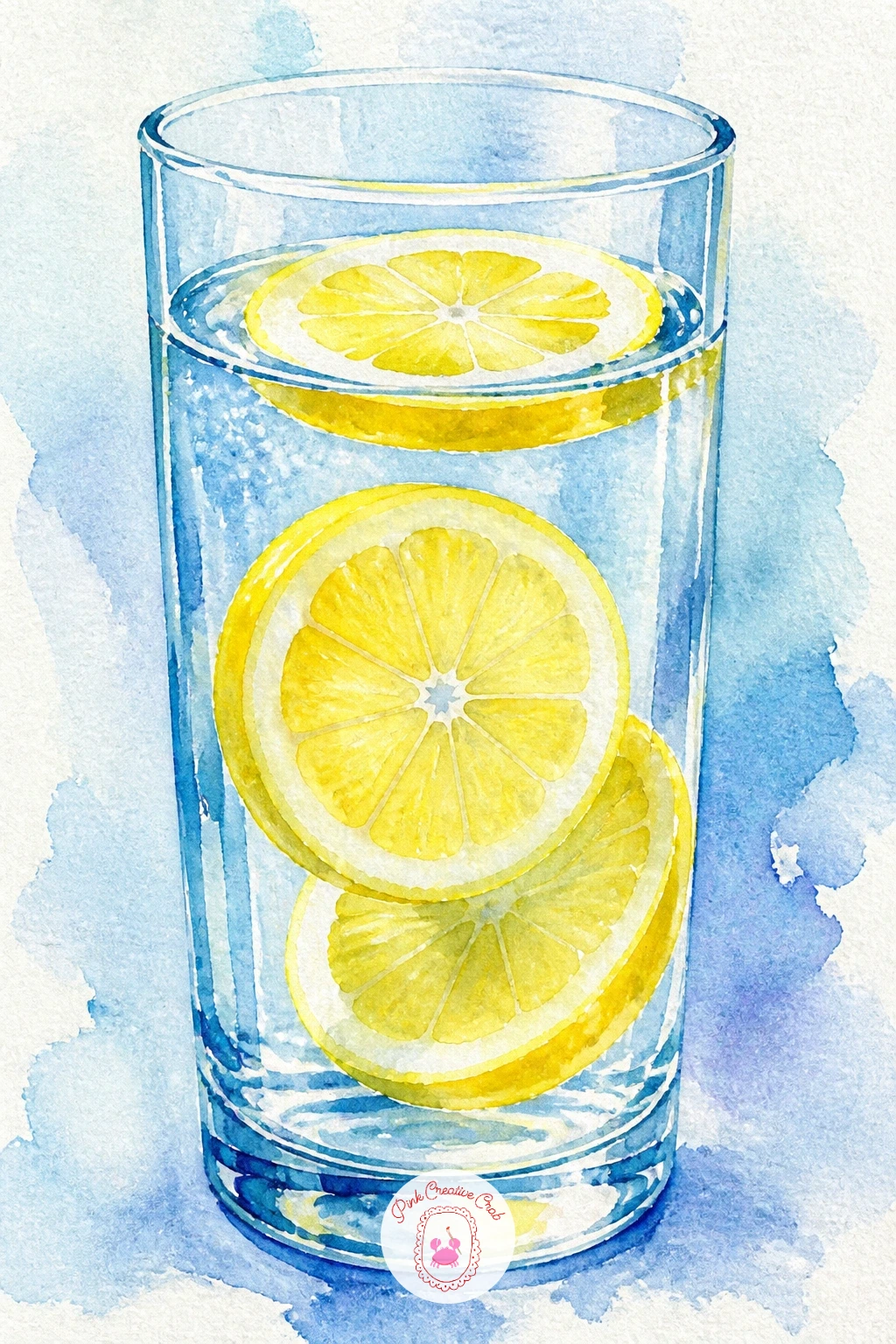
Return to something smaller and calmer with lemon slices in a glass of water, a classic subject for practicing transparency. Draw a simple tall glass and two or three lemon slices resting inside at different depths, with one slice floating near the rim.
Paint the water with a thin wash of pale blue-grey first, then go back in with a slightly deeper tone around the lemon slices to show how water bends and darkens near a submerged object. Paint each lemon slice with its wedge sections and white pith ring kept as untouched paper, then drop in tiny dots of yellow for the pulp segments.
The quick ten-minute version stops there, with one glass and two slices, finished in loose flat washes. Given forty minutes, add the glass’s cast shadow on the table, a second glass beside it, and a sprig of mint resting against the rim for extra interest.
Keep a damp brush ready to lift any water line that dries too hard-edged.
Palette: Lemon Yellow,Cerulean Blue,Sap Green
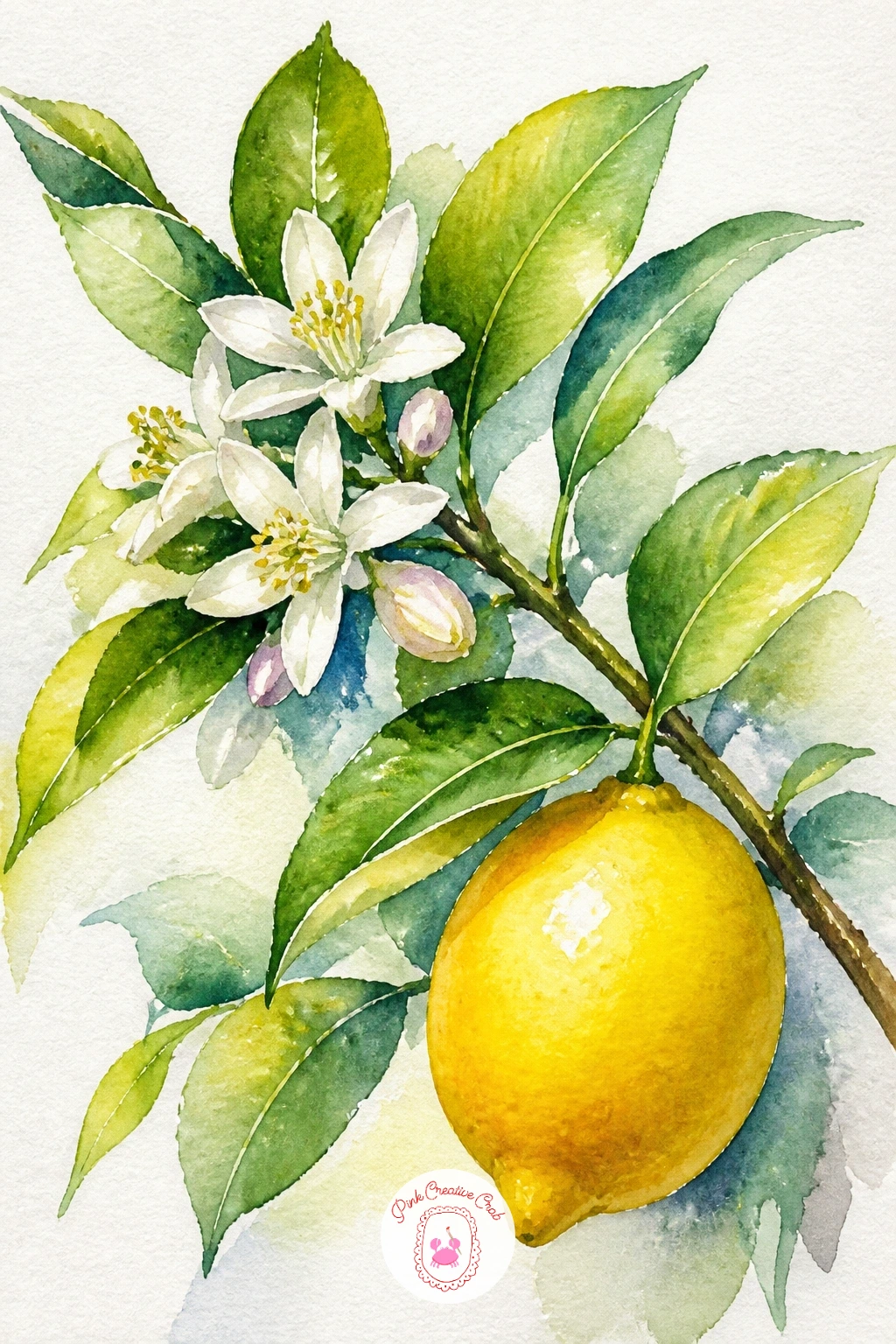
Step outdoors in spirit with a lemon branch with blossoms, where the eye naturally travels along the branch from one end to the other. Decide where your light source sits before you begin, since lemon leaves have a glossy surface that catches a bright highlight on whichever side faces it.
Paint the branch itself first in a thin brown-green line, then add the leaves in two tones of green, a lighter wash for leaves catching the light and a deeper sap green for those in shadow. Paint the white blossoms last by leaving them as untouched paper shapes, then add a tiny dab of yellow at each blossom center once everything else is dry.
If your blossoms end up looking flat, try lifting a sliver of color off each petal with a damp brush while the leaf green nearby is still wet, to suggest the petal curving away from the light.
No masking fluid for crisp blossom edges? Simply paint carefully around the pencil outlines instead and the loose edge will still read as a soft petal.
Palette: Sap Green,Lemon Yellow,Raw Umber
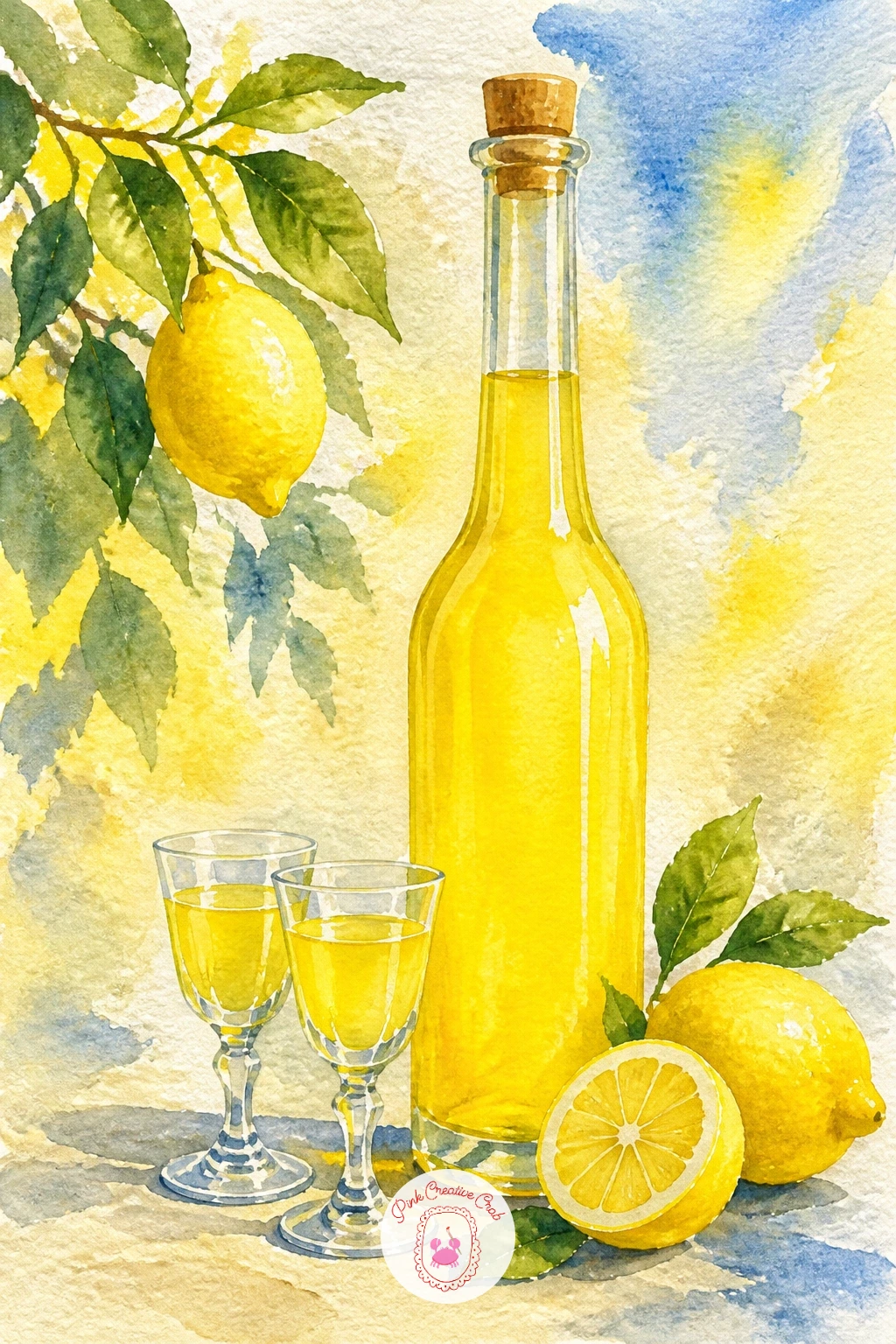
A limoncello bottle with glasses makes a charming little still life and a good chance to practice painting glass alongside a colored liquid. Sketch a tall slim bottle and two small glasses beside it, keeping the bottle a bit taller than the glasses for a believable grouping.
Paint the limoncello itself in a saturated lemon yellow inside both bottle and glasses, leaving thin vertical white strips on each for glass highlights. Once dry, add a very pale blue-grey wash over the glass areas outside the liquid to suggest the clear glass catching light, and paint a simple hand-lettered label shape on the bottle in white or cream left as paper.
This subject is easy to rush in ten minutes with just the bottle and one glass in flat color. With forty minutes, add a second glass, a lemon slice resting against the base, and a soft cast shadow stretching across the table.
Keep your yellow mix slightly more saturated here than for fruit, since limoncello reads brighter and more syrupy than a lemon’s skin.
Palette: Lemon Yellow,Payne’s Grey,Cerulean Blue
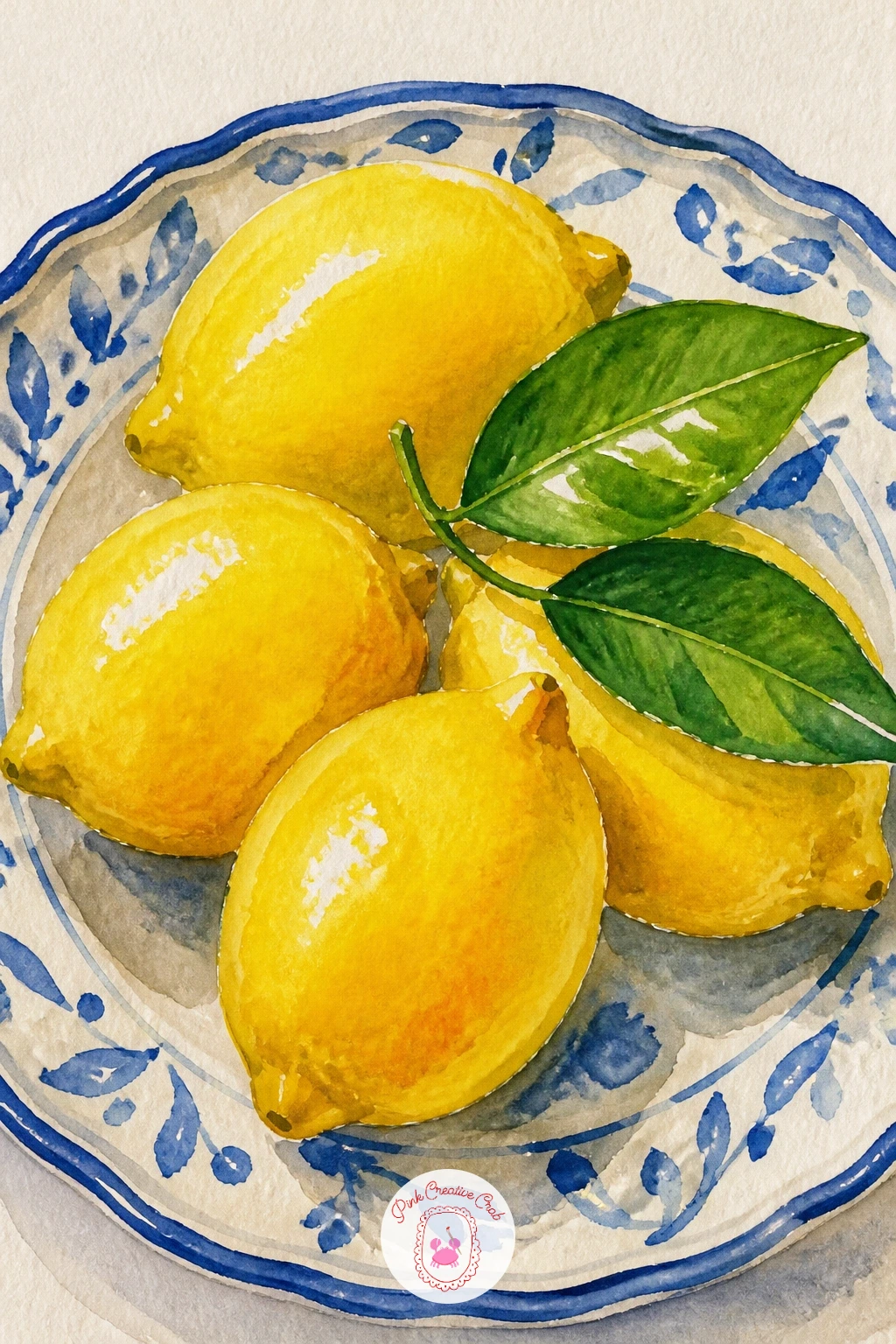
Settle into a calmer still life with lemons on a ceramic plate with leaves, a good subject for practicing how light wraps around a round fruit. Place your light source to one side in your mind before you paint, since each lemon needs a highlight on the lit side and a soft shadow curving around the opposite edge.
Paint the plate first with a thin blue rim pattern if you like a Mediterranean touch, then add the lemons on top, building each one from a pale yellow base with a slightly deeper orange-yellow shadow blended in while still wet. Tuck two or three glossy leaves between the lemons last, painted in a single confident stroke per leaf so they stay crisp rather than fussy.
The shadow under the whole plate is often painted too dark and flat. Keep it a soft grey-blue that fades out at the edges, echoing the light direction you chose for the lemons themselves.
For more fruit still life practice in this vein, the easy watercolor fruit paintings list is worth a look.
Palette: Lemon Yellow,Cadmium Orange,Sap Green
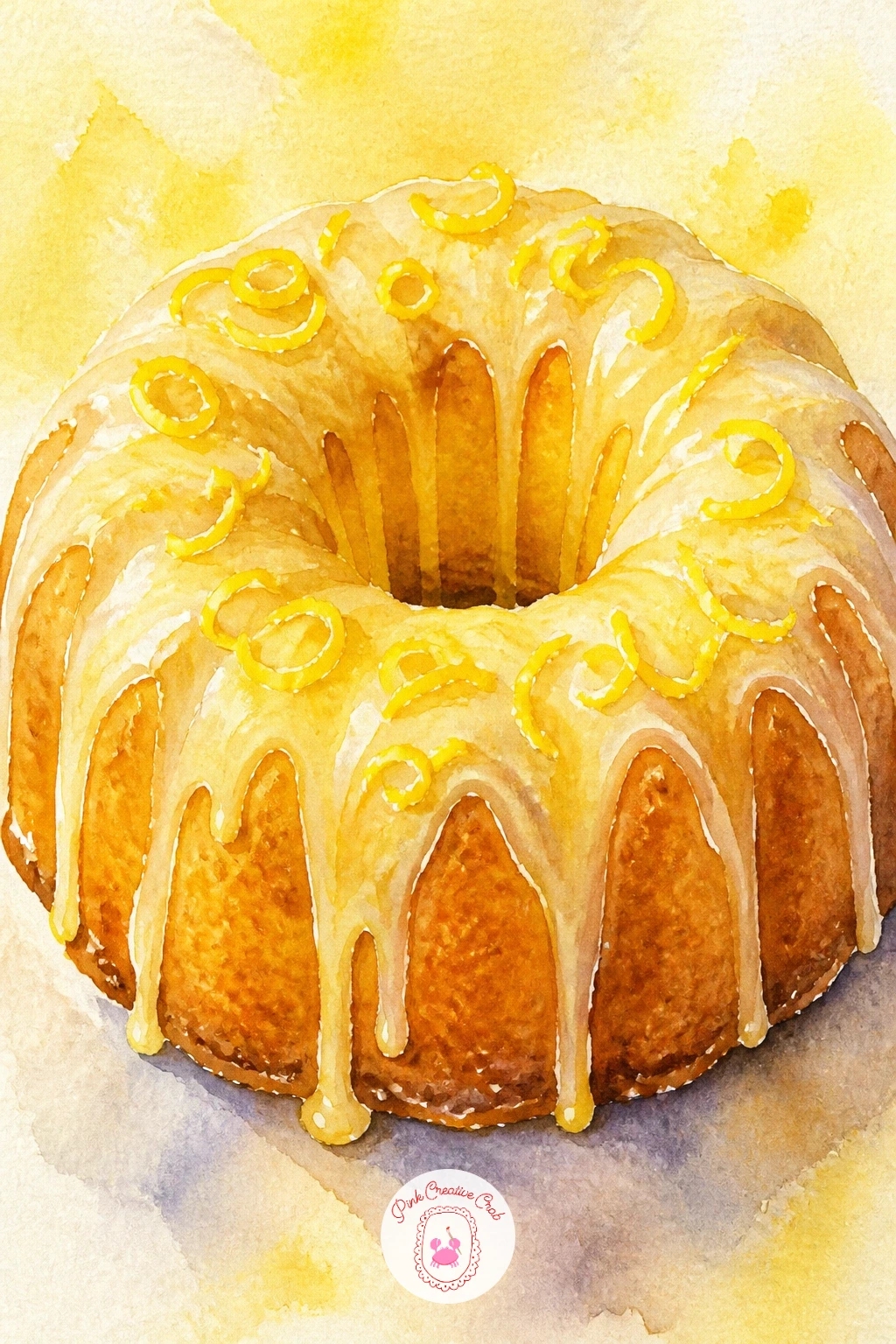
Bring the kitchen back in with a lemon cake with glaze, where the challenge is painting a dripping glaze without it looking stiff. Sketch a round or bundt-shaped cake, then pencil in loose drip lines flowing down from the top edge, varying their length so they feel natural rather than evenly spaced.
Paint the cake body first in a warm golden yellow, then once dry, paint the glaze in a much paler, almost white-yellow wash, letting the drips trail down unevenly over the cake’s darker color beneath. Add a few thin yellow zest curls scattered across the top while the glaze is still slightly damp so they soften just slightly into the icing.
If your drips end up looking like stripes instead of glaze, try varying their width, thicker at the top and tapering to a thin point as they trail down, which mimics how real icing actually flows.
No pale yellow in your set? Mix lemon yellow with a tiny touch of white gouache for an opaque glaze tone.
You Will Need
- white gouache for glaze highlights
Palette: Lemon Yellow,Naples Yellow,Yellow Ochre
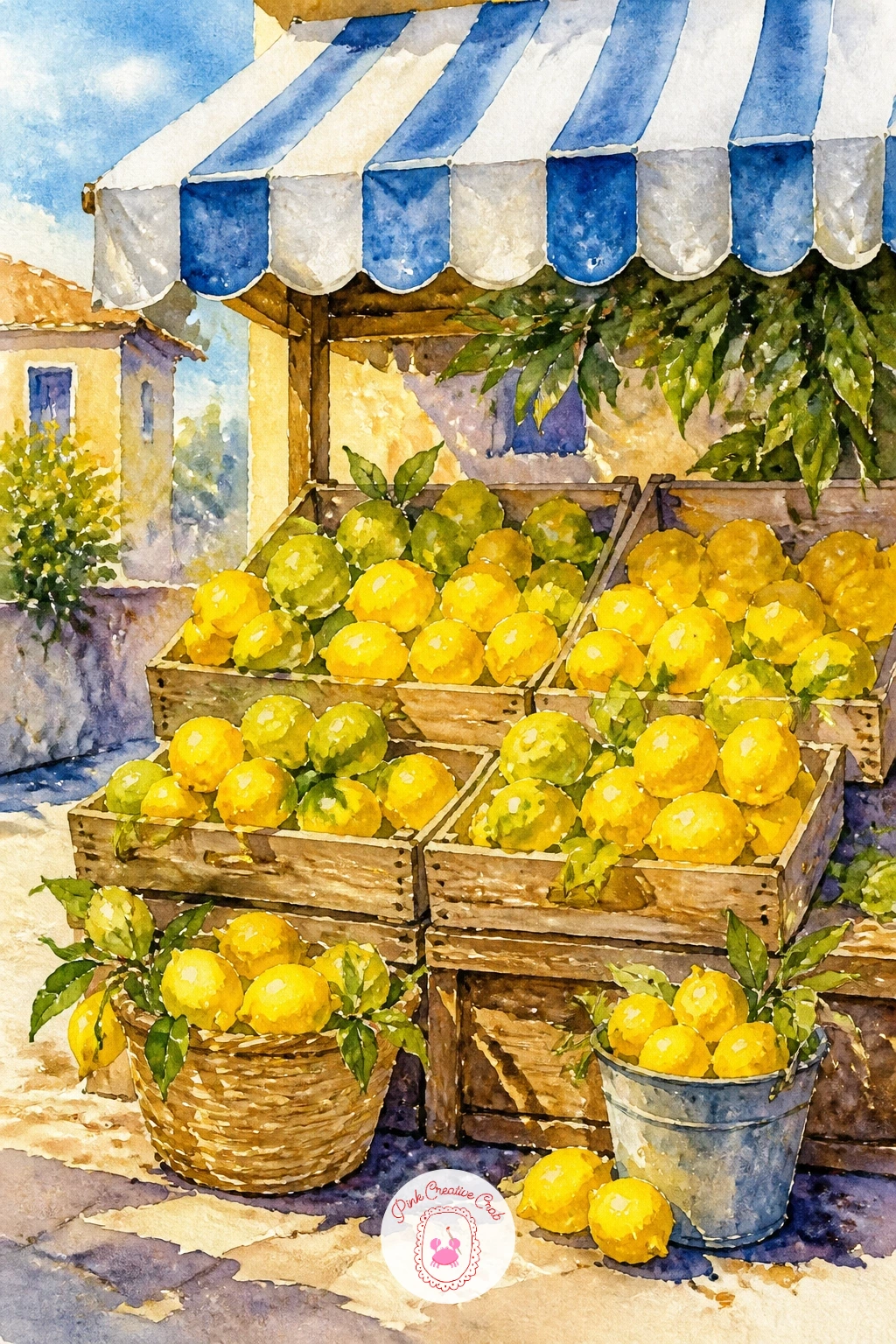
Widen the scene with a lemon stand at a market, a fun chance to paint a small setting with crates, fruit, and a hint of awning overhead. Keep the eye level low, roughly at the height of the stand’s table, so the viewer feels like they are walking up to buy lemons rather than looking down from above.
Paint the striped awning first in a loose blue and white pattern, then the wooden crates beneath it in warm brown, leaving gaps for the piles of lemons to peek through. Fill the crates with overlapping lemon circles, varying their yellow slightly from warm to pale so the pile does not look uniform.
A common misstep is making every lemon identical in size and color, which flattens the whole pile. Vary a few lemons toward green-yellow and a few toward deep gold to suggest ripeness differences.
If you enjoy painting small market scenes like this, the summer watercolor food and drinks ideas offer more lively subjects in the same spirit.
Palette: Lemon Yellow,Cobalt Blue,Raw Umber
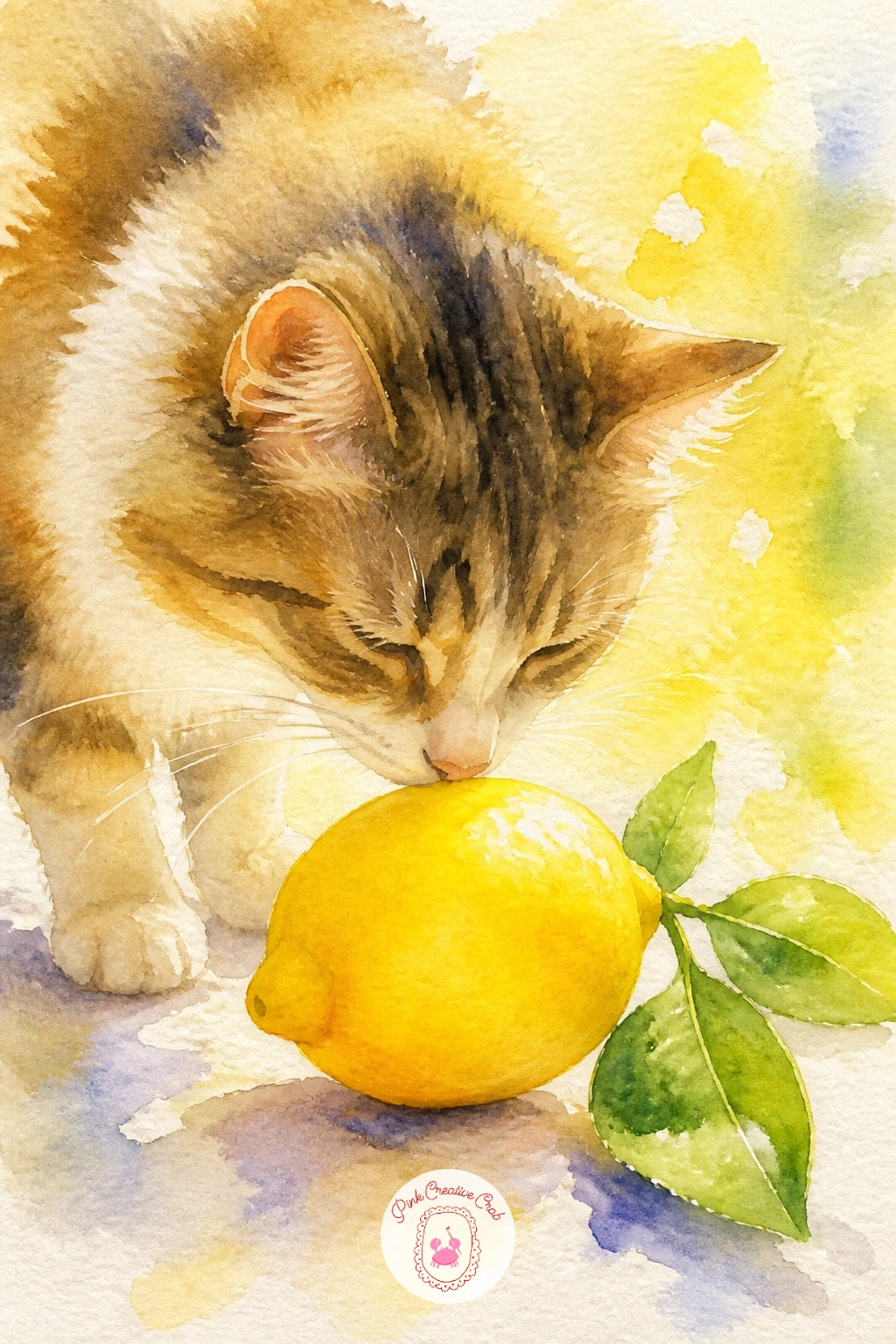
Add a little character with a cat sniffing a lemon, a playful vignette that pairs a soft furry subject against one bright fruit. Sketch a simple cat in profile, head lowered and nose stretched toward a lemon sitting on the table in front of it.
Paint the lemon first in your usual bright yellow so it anchors the composition, then work on the cat, building its fur in loose dry-brush strokes that let some white paper show through for texture. Load your brush with paint, blot most of it on a scrap paper, then drag it lightly over the cat’s body so the bristles separate and leave broken, fur-like marks.
Painters often overwork the cat’s face trying to get an expression exactly right. Keep the eyes as two simple dots and let the tilted head do all the storytelling instead.
For more feline inspiration, the cat watercolor ideas collection has plenty of poses worth borrowing.
Palette: Lemon Yellow,Payne’s Grey,Burnt Sienna
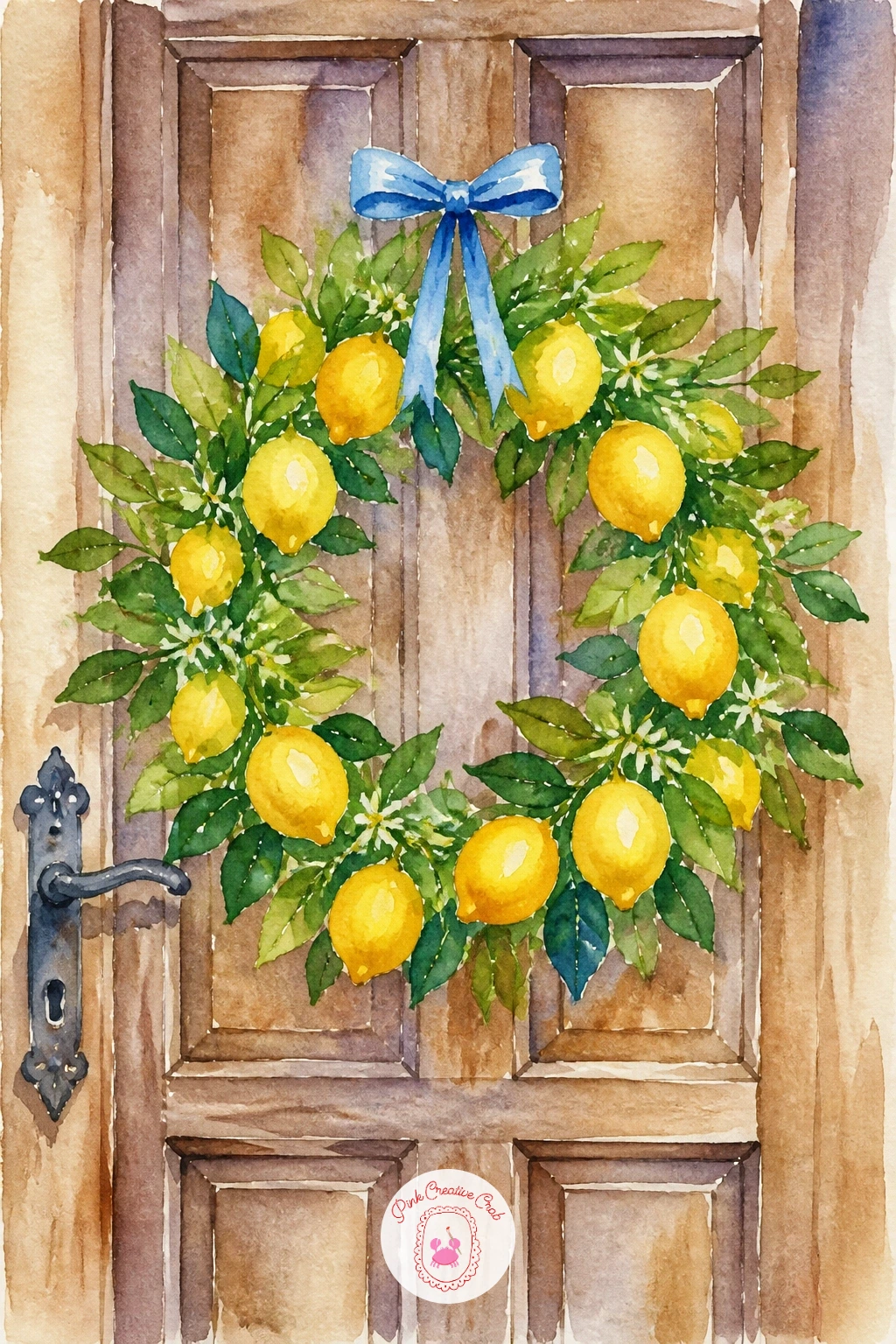
Turn to a decorative subject with a lemon wreath on a door, built from a simple ring of greenery dotted with lemons. Start by lightly sketching a circle guide, then build the wreath base from overlapping leaf shapes painted in two tones of green around the ring, leaving the center and a soft rustic door color around it untouched.
Once the leaves are dry, add five or six lemons spaced unevenly around the ring, since perfectly even spacing tends to look stiff and artificial. Tuck a small ribbon bow at the bottom in Mediterranean blue to tie the whole piece together and add a pop of contrast.
If this is your first wreath, resist painting every leaf separately. Work in small clusters of three or four leaves with one loaded brush so the ring reads as full greenery rather than individual sprigs.
No ribbon in mind? A simple raffia-colored bow in tan works just as well as blue.
Palette: Sap Green,Lemon Yellow,Cobalt Blue
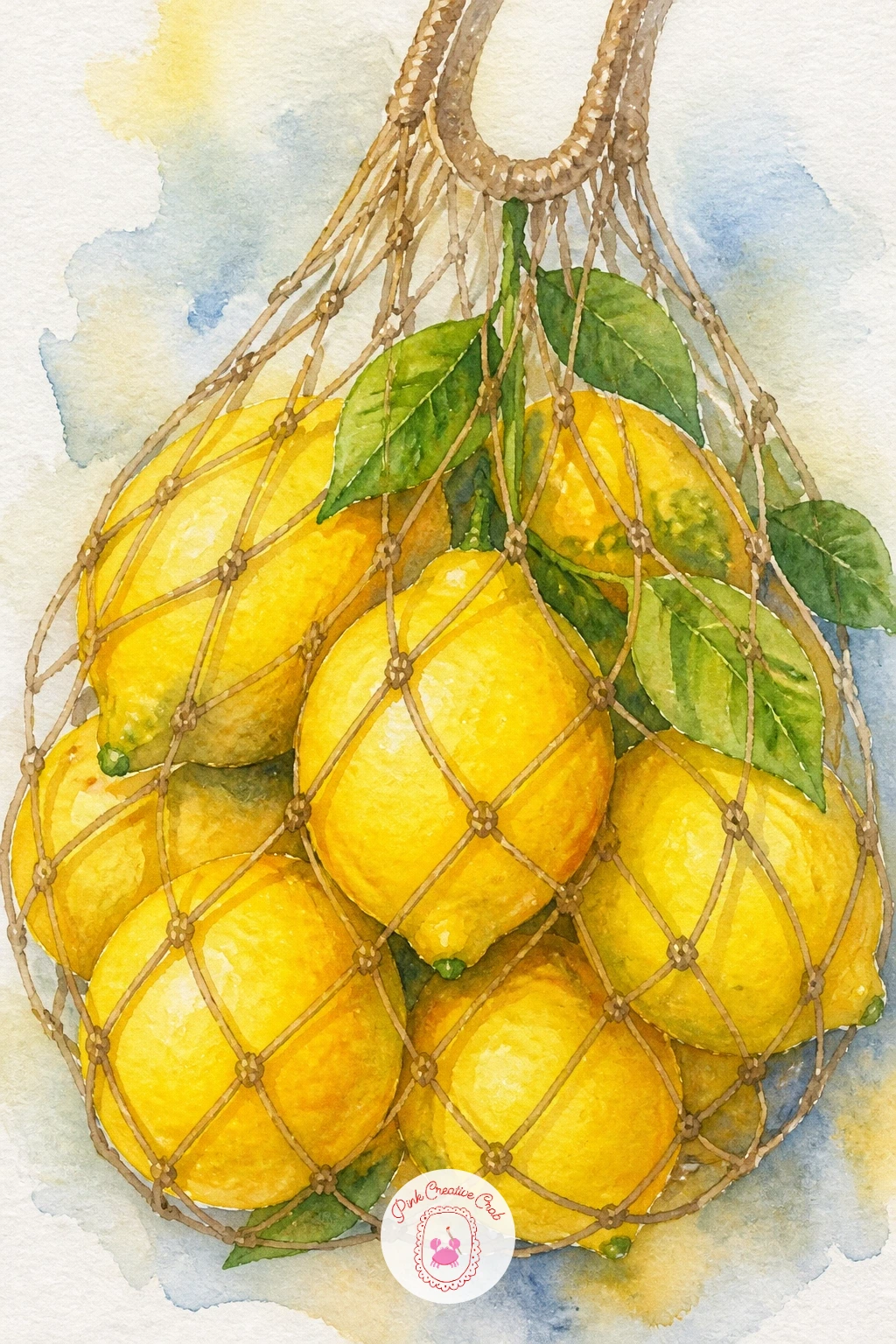
Keep things simple again with lemons in a string bag, a nice subject for practicing a loose net pattern over rounded fruit. Paint the lemons first as a cluster of overlapping circles in your usual bright yellow, letting them bulge slightly at the bottom where the bag would stretch under their weight.
Once the lemons are fully dry, add the string bag on top using a fine brush or a pen loaded with thinned brown paint, drawing a loose diamond grid that curves to follow the round shape of the fruit beneath it rather than sitting flat.
The net pattern often looks pasted on when it ignores the fruit’s curve. Make the diamond shapes narrower near the edges of the bulging bag and wider in the center, which mimics how fabric actually stretches over a round object.
If a fine brush feels tricky to control, a brown fineliner pen does the grid lines just as well once the paint beneath is completely dry.
You Will Need
- fine brush or brown fineliner for the net pattern
Palette: Lemon Yellow,Raw Umber,Sap Green
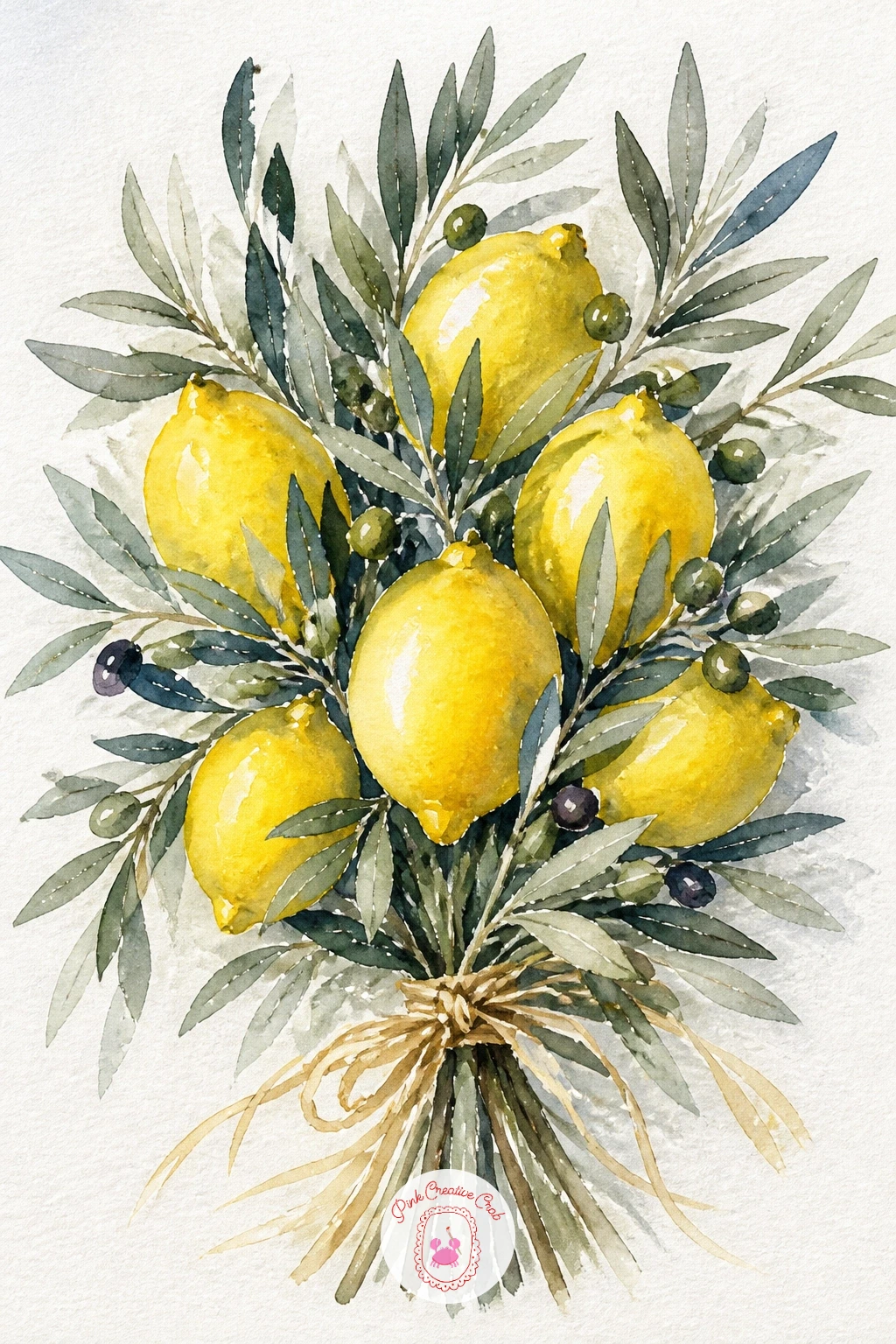
Combine two Mediterranean staples with a lemon and olive branch bouquet, a gentle still life pairing round lemons against slender silver-green olive leaves. Arrange your pencil sketch so the lemons cluster near the base and the olive branches fan out above and to the sides, giving the whole bouquet a loose triangular shape.
Paint the olive leaves first in a soft grey-green, using a dry-ish brush so each leaf keeps a slightly textured, matte edge rather than a glossy one. Once dry, add the lemons nestled among the branches in bright yellow, then finish with a simple string or raffia tie wrapped around the stems near the bottom.
If you only have one green in your palette, mix sap green with a touch of Payne’s grey to get that dusty olive leaf tone rather than using a pure bright green, which would look more like lemon leaves than olive.
Next time you paint this, try swapping the lemons for small green olives scattered among the branches instead, for a quieter, all-green version of the same bouquet.
Palette: Sap Green,Payne’s Grey,Lemon Yellow
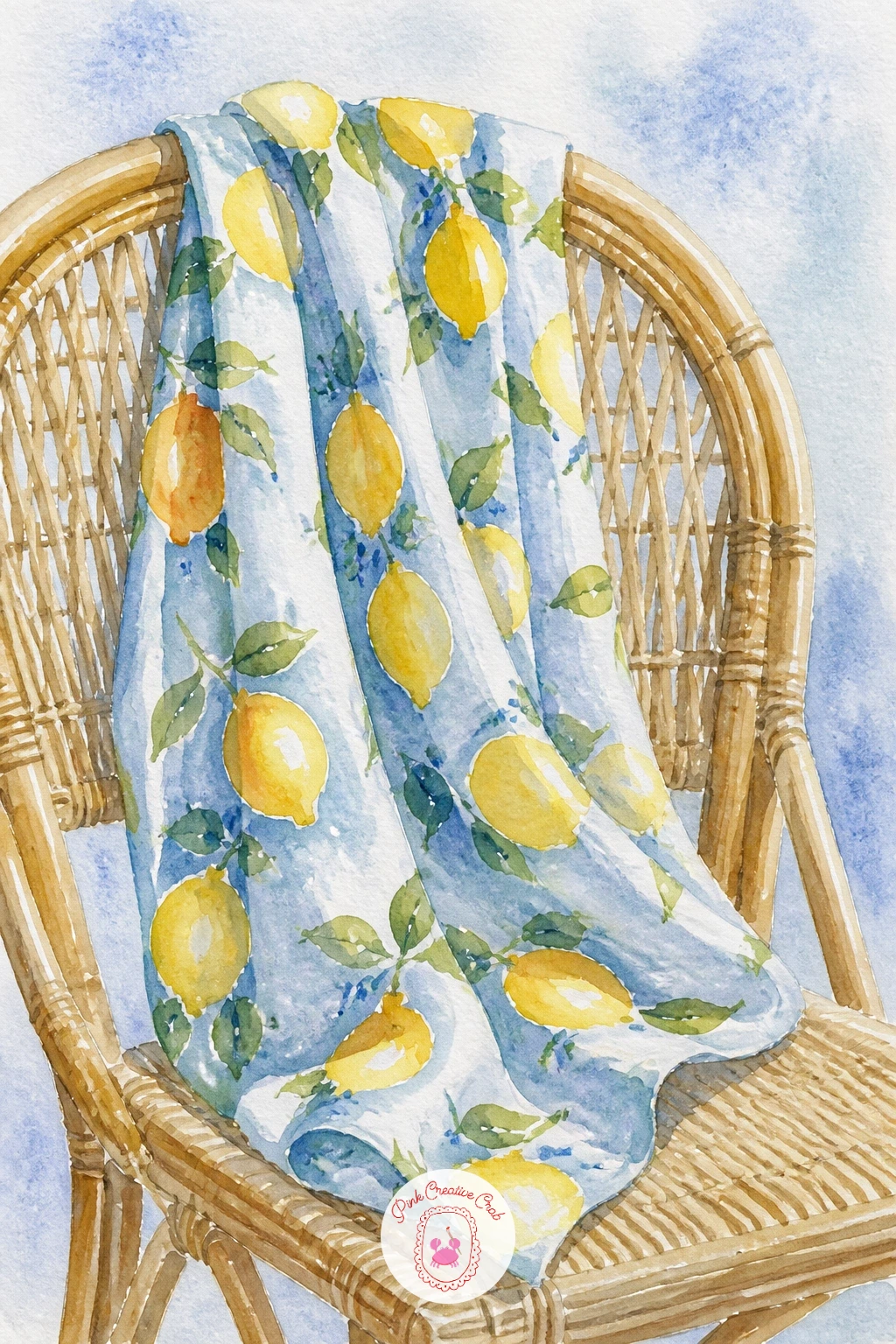
Settle into a quieter domestic scene with a lemon print scarf on a chair, letting the fabric drape give you practice with folds. Sketch a simple wooden or wicker chair back first, then drape the scarf shape over it with a few soft folds where the fabric would naturally sag under its own weight.
Paint the scarf’s background color first in a pale cream or soft blue, then once dry, scatter small lemon print motifs across it, letting the shapes bend slightly along each fold so the pattern feels like it belongs to real fabric rather than a flat sticker sheet.
The fold lines are what make this subject feel three-dimensional. Shade each fold’s underside with a thin grey-blue line and leave the raised ridge of fabric as the lightest, almost untouched paper tone.
If you would rather avoid a full scene, you can simplify this to just the draped scarf corner filling the page, which still reads clearly as the same subject.
Palette: Lemon Yellow,Cerulean Blue,Payne’s Grey
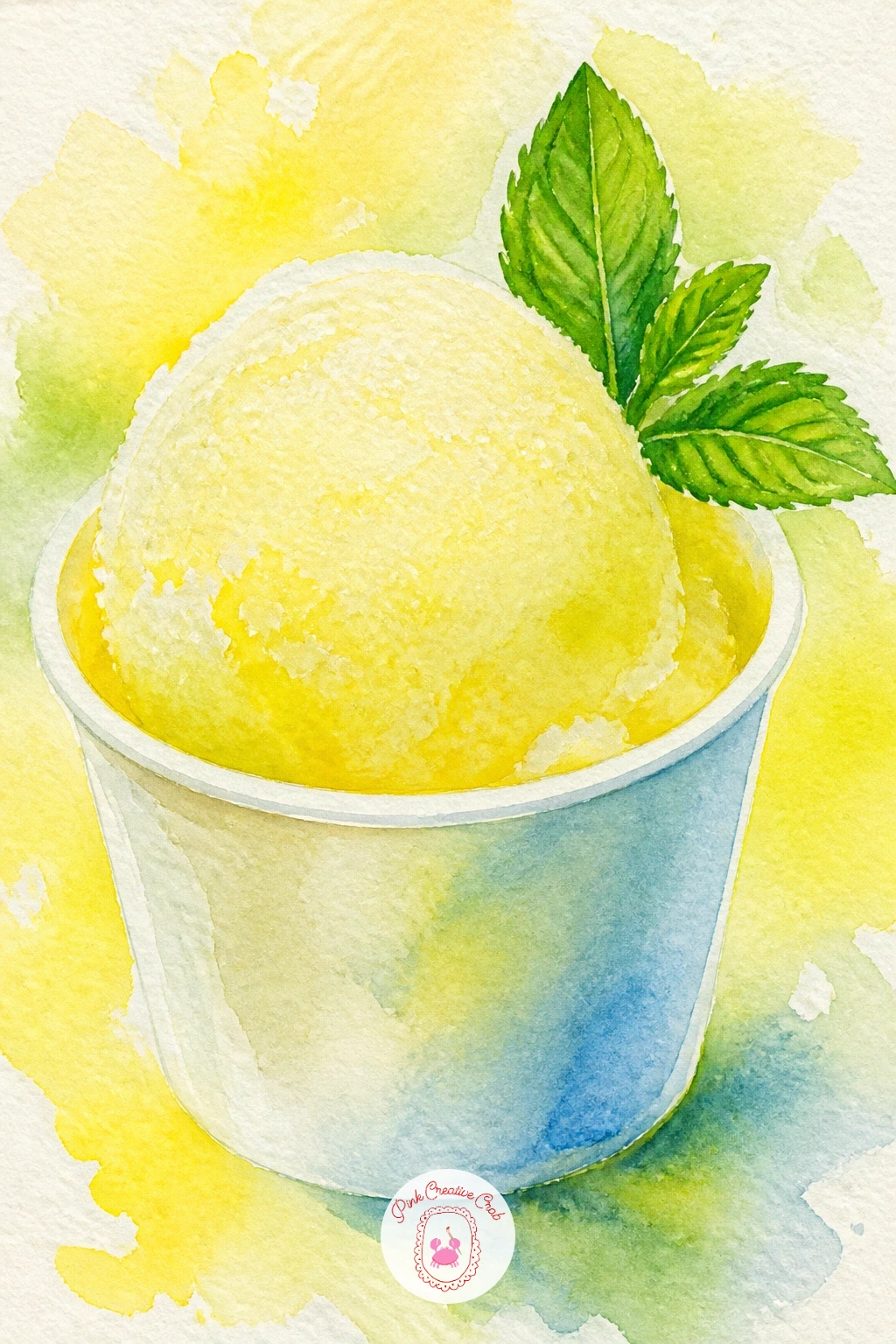
Cool things down with lemon sorbet in a cup, a small dessert subject that plays with a grainy, frosty texture against a smooth cup. Draw a simple short cup or glass dish and fill the top with a rounded scoop shape for the sorbet.
Paint the cup first in a pale neutral tone, then tackle the sorbet with a pale lemon yellow wash, and while it is still damp, sprinkle a few grains of table salt across the surface. The salt pulls the pigment outward as it dries, leaving little starburst textures that mimic the icy, granular look of sorbet perfectly.
Once everything is bone dry, brush away the salt grains and add a thin sprig of mint leaning against the scoop for a fresh color accent. If salt texture feels too unpredictable for a first try, simply dab a dry, barely damp brush into the wet wash instead to lift small irregular highlights by hand.
Either way, keep the scoop’s outer edge clean and rounded so it still reads as sorbet rather than a melted puddle.
You Will Need
- table salt for texture
Palette: Lemon Yellow,Sap Green,Payne’s Grey
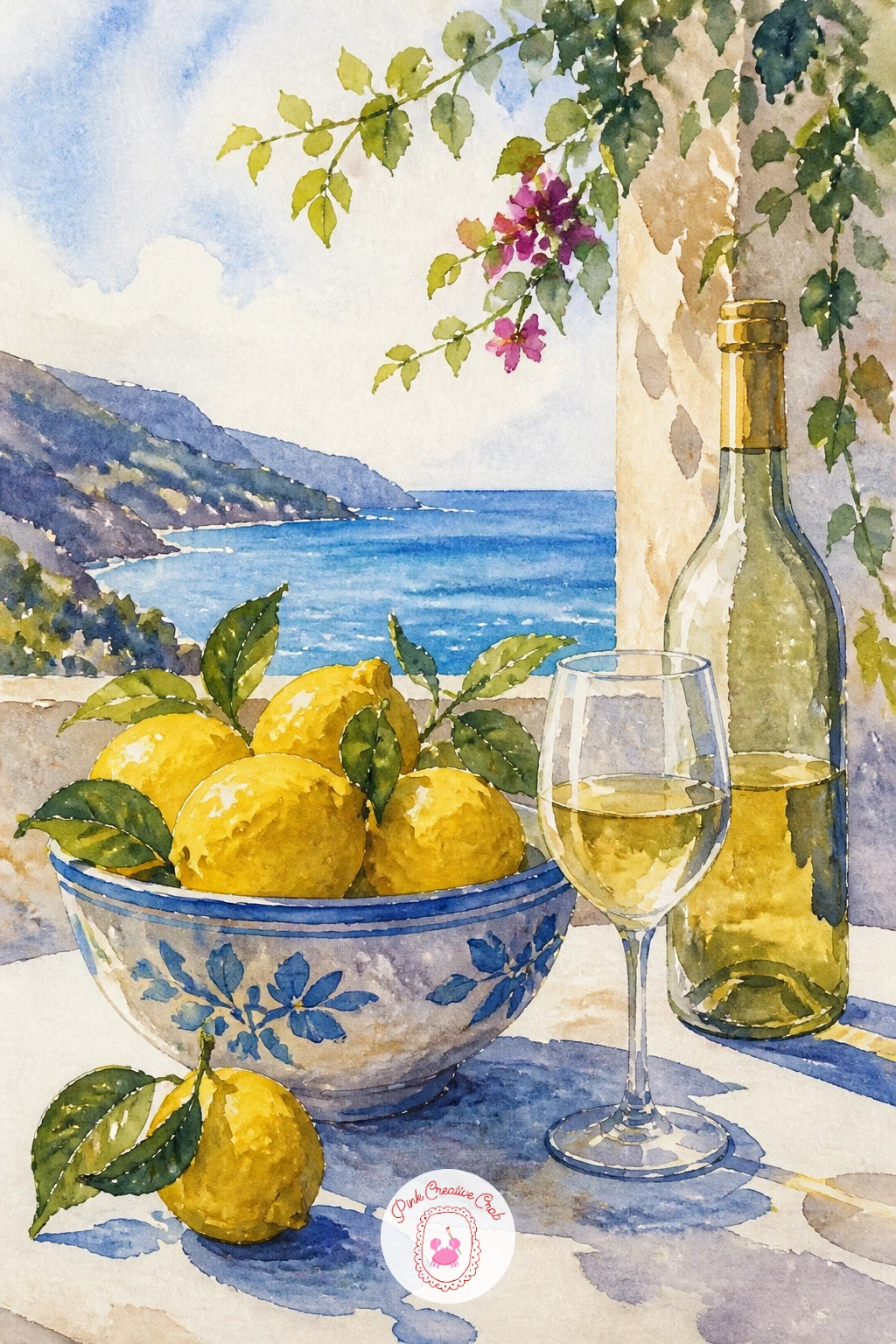
Widen the scene again with a terrace table with lemons and wine, a relaxed vignette that layers several small objects into one sunny moment. Keep the eye level low and close to the tabletop, almost as if you are sitting right at the table, which makes the composition feel inviting rather than distant.
Build the scene in layers: paint the furthest background first, a soft blurred suggestion of sea or hills in pale blue, then the tablecloth, then the nearer objects on top, lemons in a bowl, a wine glass, and a half-full bottle, each painted wet on dry so their edges stay crisp against the softer background.
This composition can crowd quickly if every object gets equal detail. Keep the background loose and soft-edged while saving your sharpest brushwork for just two or three objects closest to the viewer, usually the lemons and the glass.
For more ideas on painting that soft distant backdrop, the easy watercolor skies ideas are a useful reference.
Palette: Cerulean Blue,Lemon Yellow,Burgundy
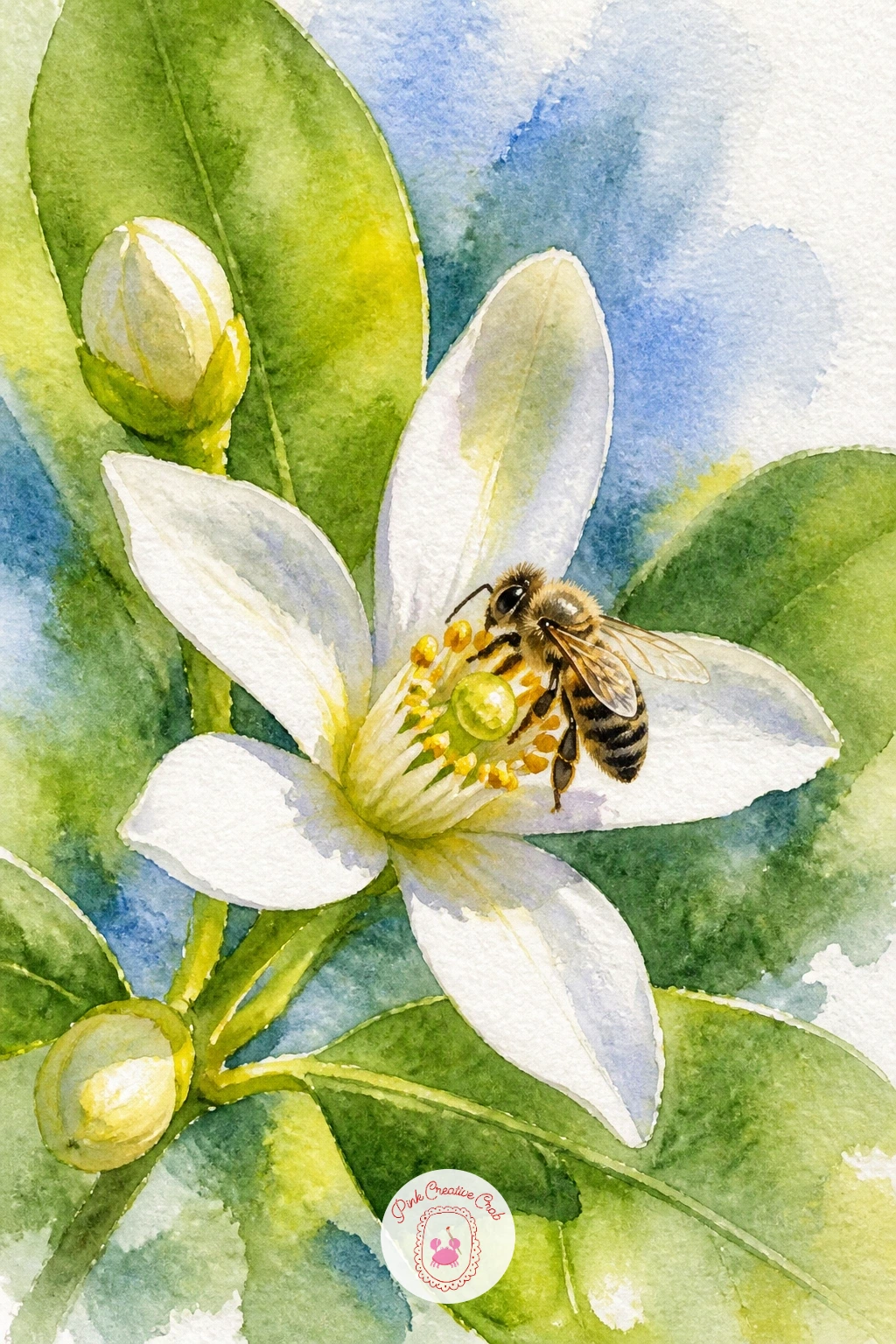
Zoom in close with a bee on a lemon blossom, a detailed little subject that rewards patience with its tiny striped visitor. Paint the white blossom petals first, leaving the paper mostly untouched and only shading the base of each petal where it meets the yellow center.
Once the blossom is dry, add the bee resting on one petal, built from two simple ovals for its body painted in warm gold and brown stripes, with two pale, almost transparent wing shapes added last using the thinnest wash you can mix.
The wings are the trickiest part of this whole piece. Paint them with a single light pass of diluted grey and never go back over them twice, since repeated strokes make them look solid instead of papery and see-through.
If a tiny bee feels fiddly at this scale, enlarge the blossom to fill most of the page first, which gives you more room to paint the bee’s stripes with a steadier hand.
Palette: Titanium White,Lemon Yellow,Raw Umber
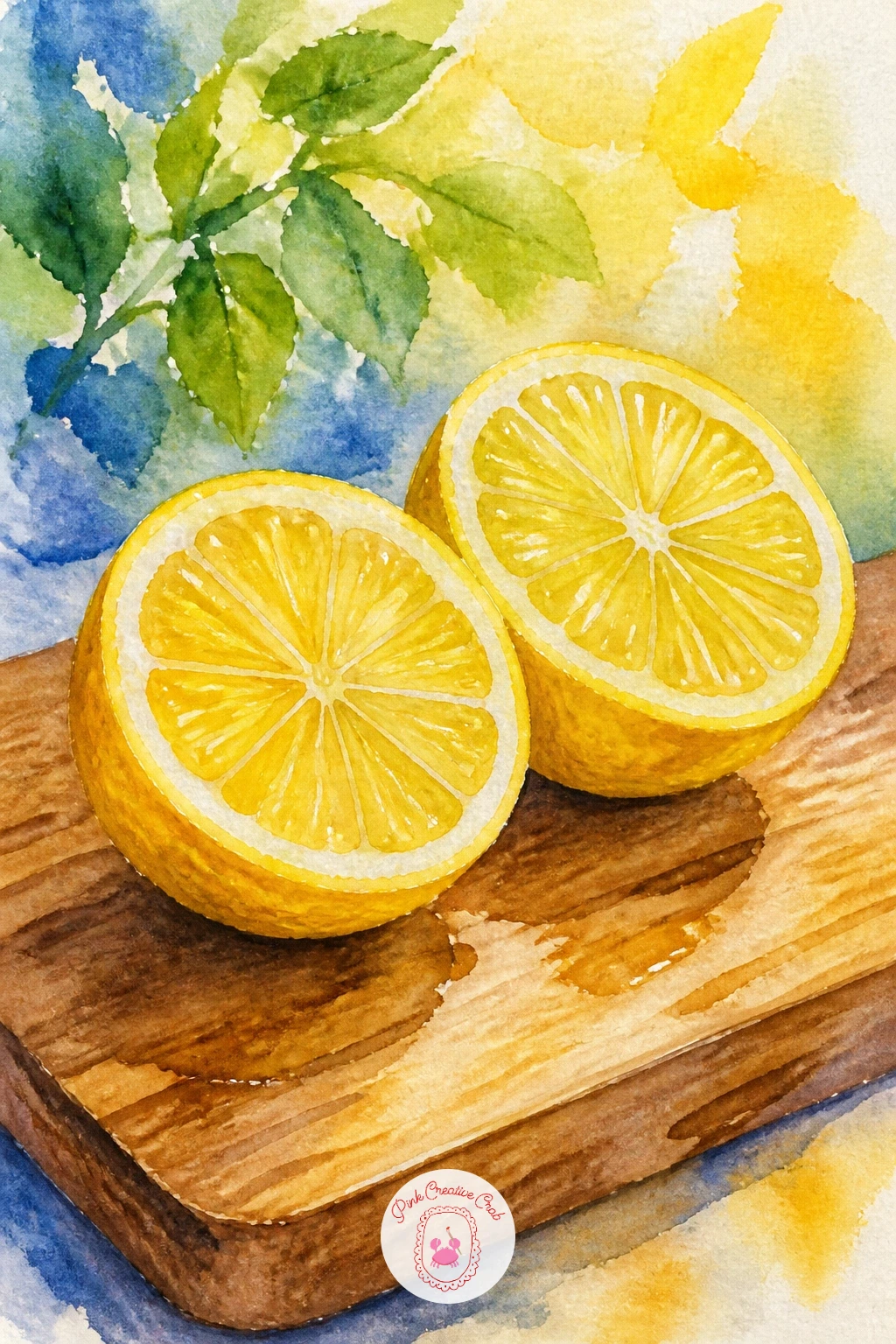
Return to the kitchen counter with lemon halves on a cutting board, a classic still life for practicing the inside of a cut fruit. Slice your composition so two or three lemon halves sit cut-side up on a simple wooden board, with maybe one whole lemon alongside for contrast.
Paint the cut flesh first with a radiating pattern of yellow wedges fanning out from the center, leaving thin white lines between each segment for the pith. Once dry, paint the outer rind as a narrow band of slightly deeper yellow-orange, then tackle the wooden board last in warm brown with visible grain lines running in one direction.
The segment lines often come out too mechanical when ruled or overly even. Vary their width slightly and let a couple of lines waver, which mimics how real fruit segments are never perfectly uniform.
No wood grain brush technique in your toolkit? A dry brush dragged once across the board in a warm brown does a convincing grain texture with very little effort.
Palette: Lemon Yellow,Cadmium Orange,Raw Umber
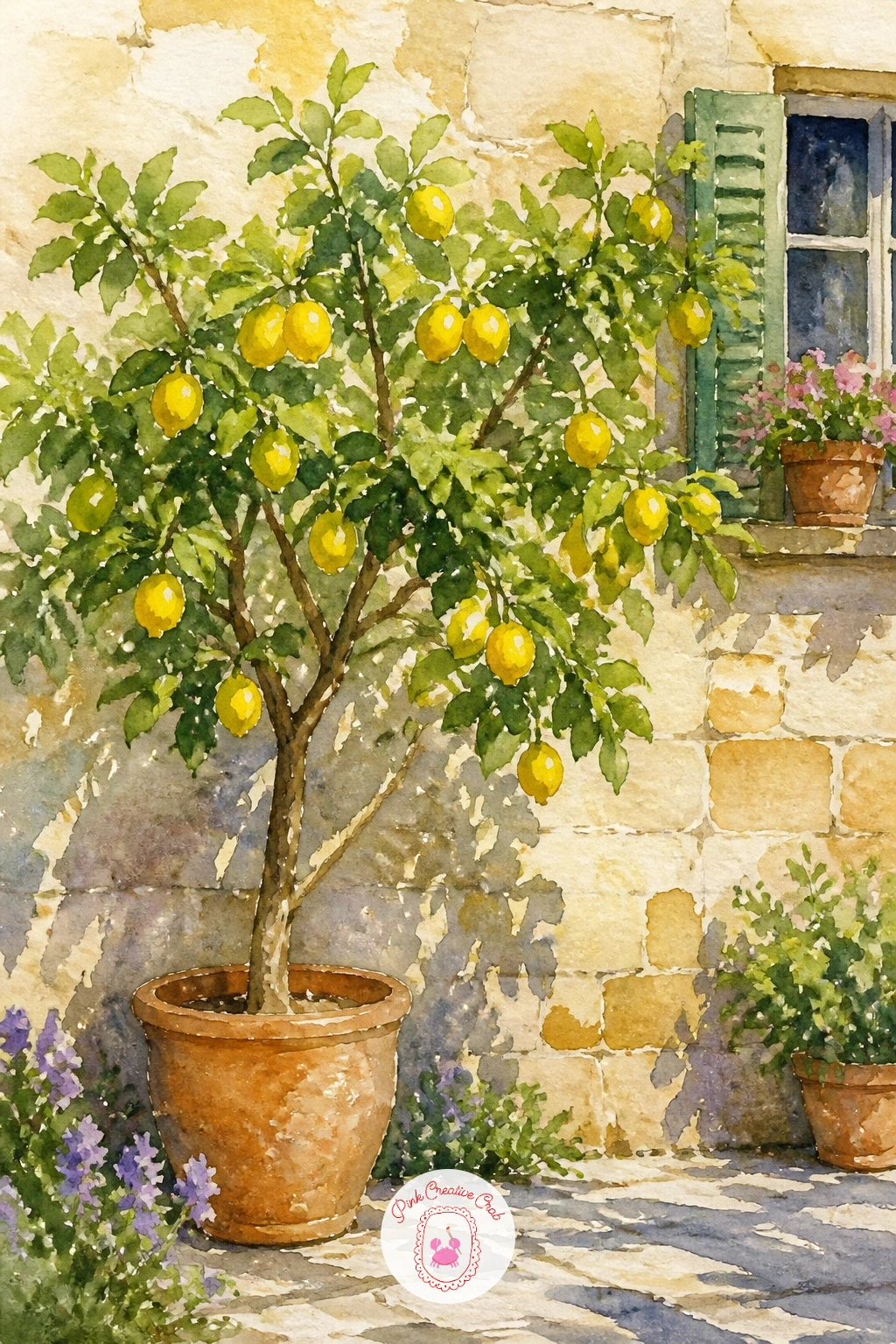
Expand into a small landscape with a lemon tree in a courtyard, a more involved subject that rewards a clear sense of distance. Place your eye level at about a third of the way up the page, which lets a stone wall or archway sit believably behind the tree rather than floating.
Paint the furthest courtyard elements first, a soft warm wall and perhaps a hint of blue sky peeking through, then the tree’s canopy in loose clusters of green with yellow lemon dots scattered through the foliage, and finally the trunk and any foreground pot or paving stones closest to the viewer.
Keeping that background softer and cooler than the foreground is what sells the depth here. Mix a touch more blue into your distant wall color and keep the nearest leaves warmer and more saturated by comparison.
For more practice building depth like this, the easy watercolor landscapes list covers several useful approaches.
Palette: Sap Green,Lemon Yellow,Raw Sienna
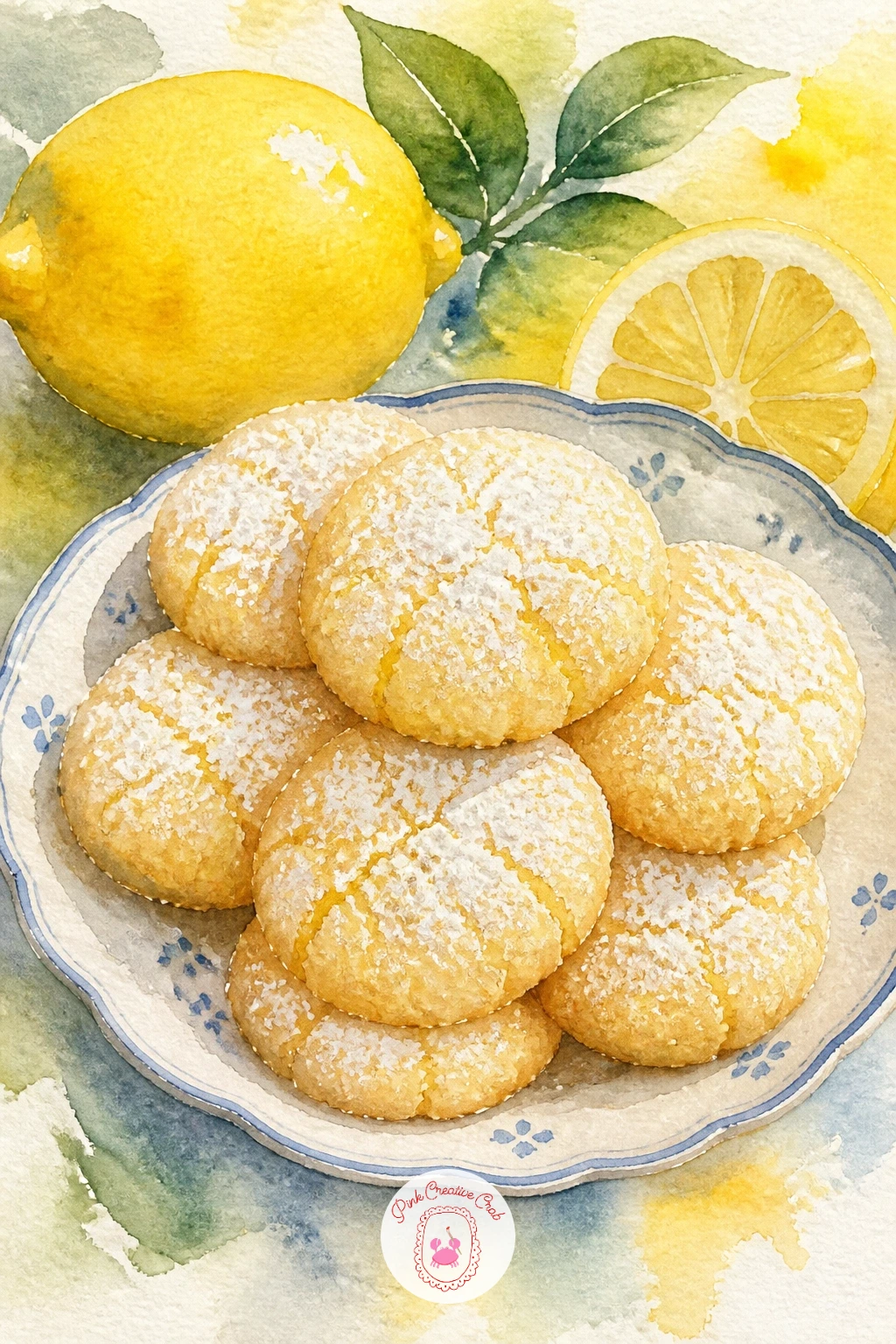
Keep things light and quick with lemon cookies on a plate, a forgiving subject made of simple round shapes. Sketch four or five overlapping circles for the cookies, stacked loosely on a small plate rather than laid out in a tidy row, which feels more natural and homemade.
Paint each cookie in a pale warm yellow base, then while still slightly damp, dot a few deeper golden spots near the edges to suggest a lightly browned bake. Add a dusting of powdered sugar last with tiny flicks of white gouache or a white gel pen once everything else is completely dry.
The quick version here takes about ten minutes with just three plain cookies and no plate detail. Given forty minutes, add the plate’s pattern, a crumb or two scattered beside it, and a slightly varied golden tone on each cookie so they do not look identical.
One concrete tip: always let the base cookie color dry fully before adding sugar dots, or the white will bleed into a muddy smear.
You Will Need
- white gel pen or white gouache for sugar dusting
Palette: Naples Yellow,Yellow Ochre,Titanium White
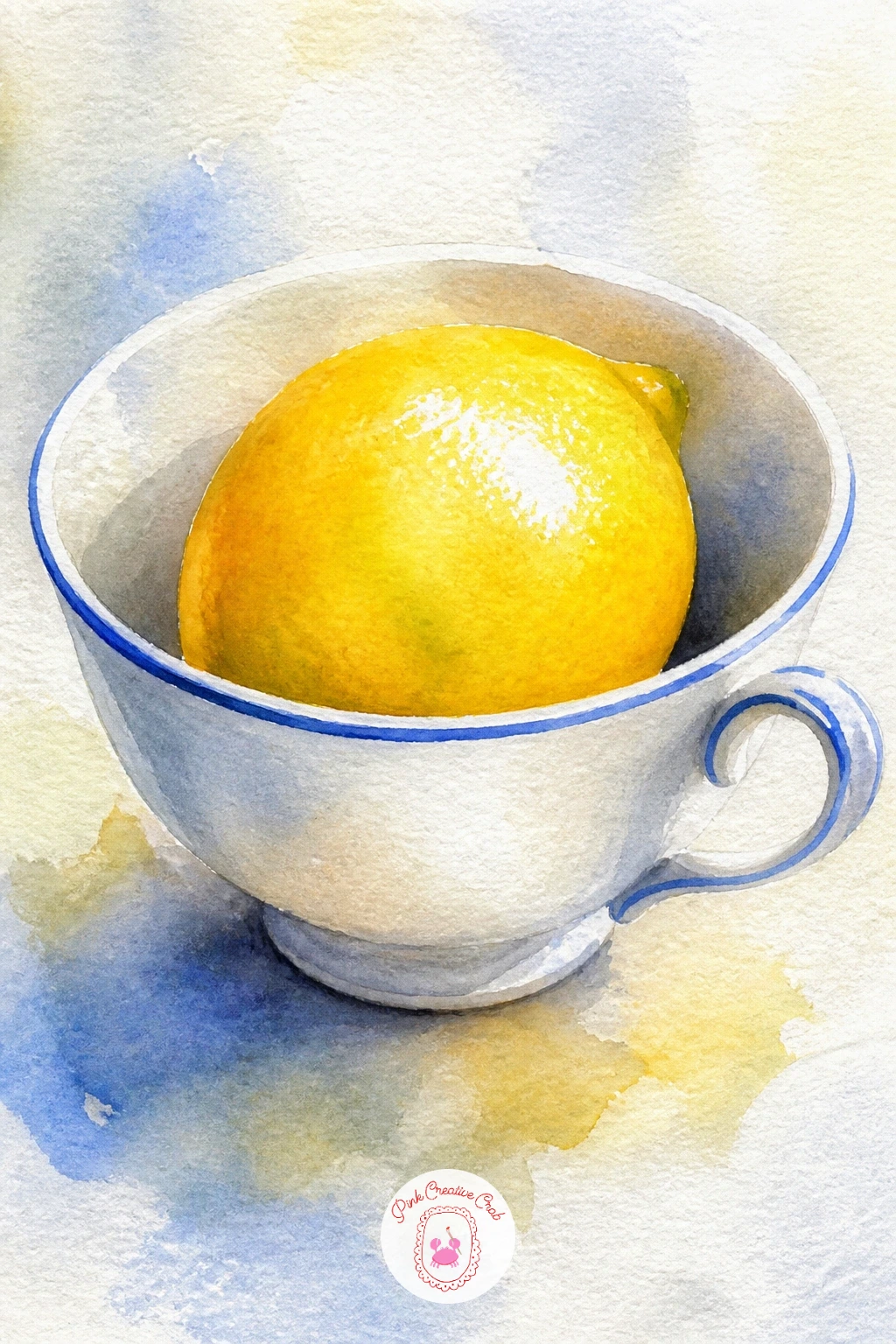
Pair two cozy objects with a lemon in a teacup, a quiet little vignette perfect for a short painting session. Sketch a simple teacup and saucer, then nestle one whole lemon or a few slices resting inside the cup as if waiting to flavor a pot of tea.
Paint the teacup first in a soft pattern if you like, perhaps a thin blue line near the rim, then add the lemon in your usual bright yellow, letting it slightly overlap the cup’s inner edge so it looks properly settled inside rather than balanced on top.
The cup can look flat if the inside shadow is skipped. Add a thin curved line of grey-blue just inside the rim where the cup’s interior would naturally fall into shadow, which instantly gives it depth.
No teacup pattern reference handy? A plain white cup with just a thin gold or blue rim line looks just as charming and takes far less time.
Palette: Lemon Yellow,Cerulean Blue,Payne’s Grey
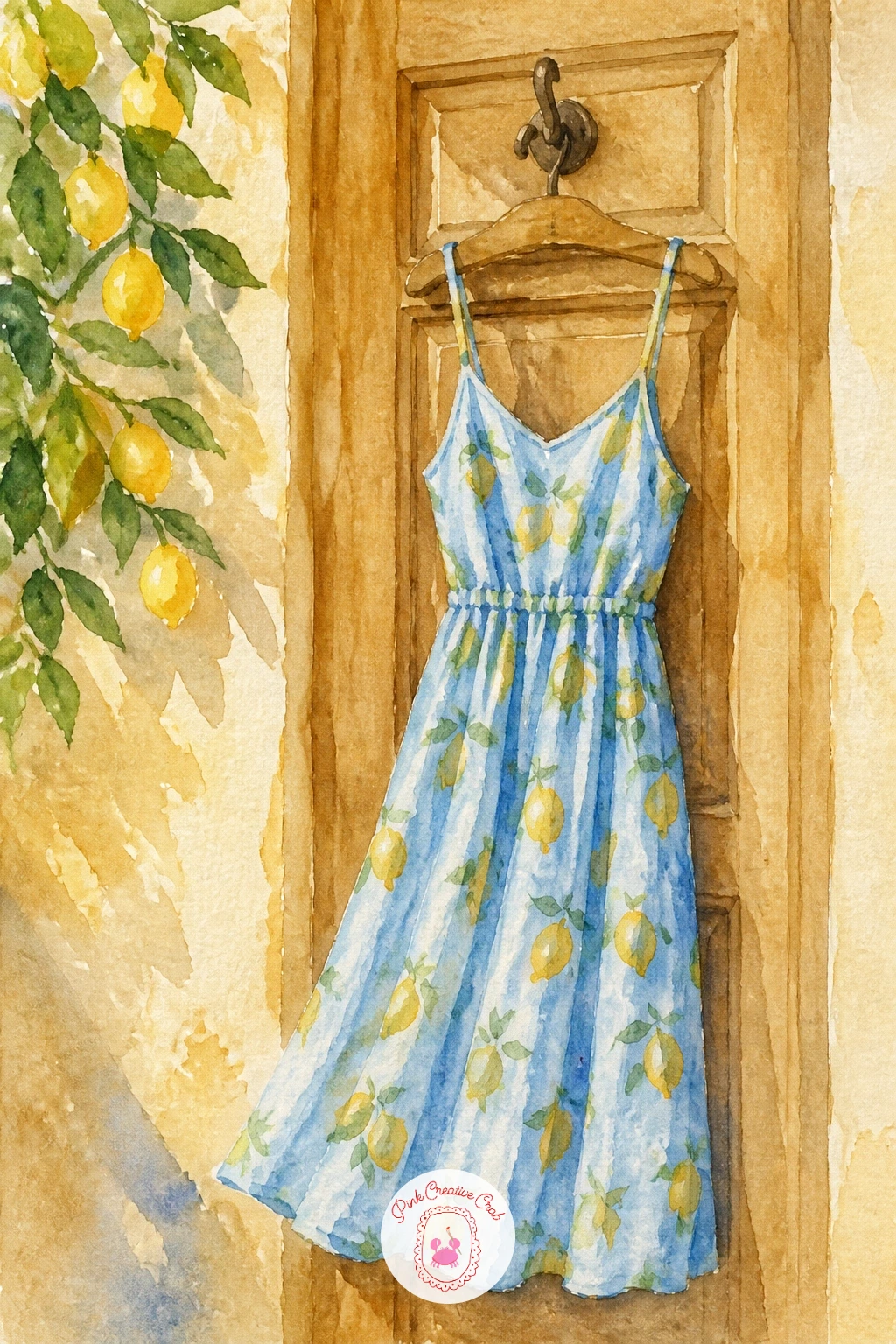
Try something a little different with a lemon dress hanging on a door, a fashion-inspired vignette built around a printed garment rather than fruit alone. Sketch a simple sundress shape on a hanger, hung from a door hook or a plain wooden door panel behind it.
Paint the dress’s base fabric color first in a soft cream or pale blue, then once dry, scatter small lemon print motifs across the skirt and bodice, letting the pattern follow the folds of the fabric so it curves rather than sits flat like a sticker. Paint the door itself last in a muted warm tone so the bright dress stays the clear focus.
If you have not painted hanging fabric before, remember that gravity pulls folds straight down. Keep your fold lines mostly vertical near the hem and let them only angle where the dress gathers near the waist or shoulders.
No hanger reference in mind? A simple wooden peg or hook works just as well and is a touch easier to draw.
Palette: Cerulean Blue,Lemon Yellow,Sap Green
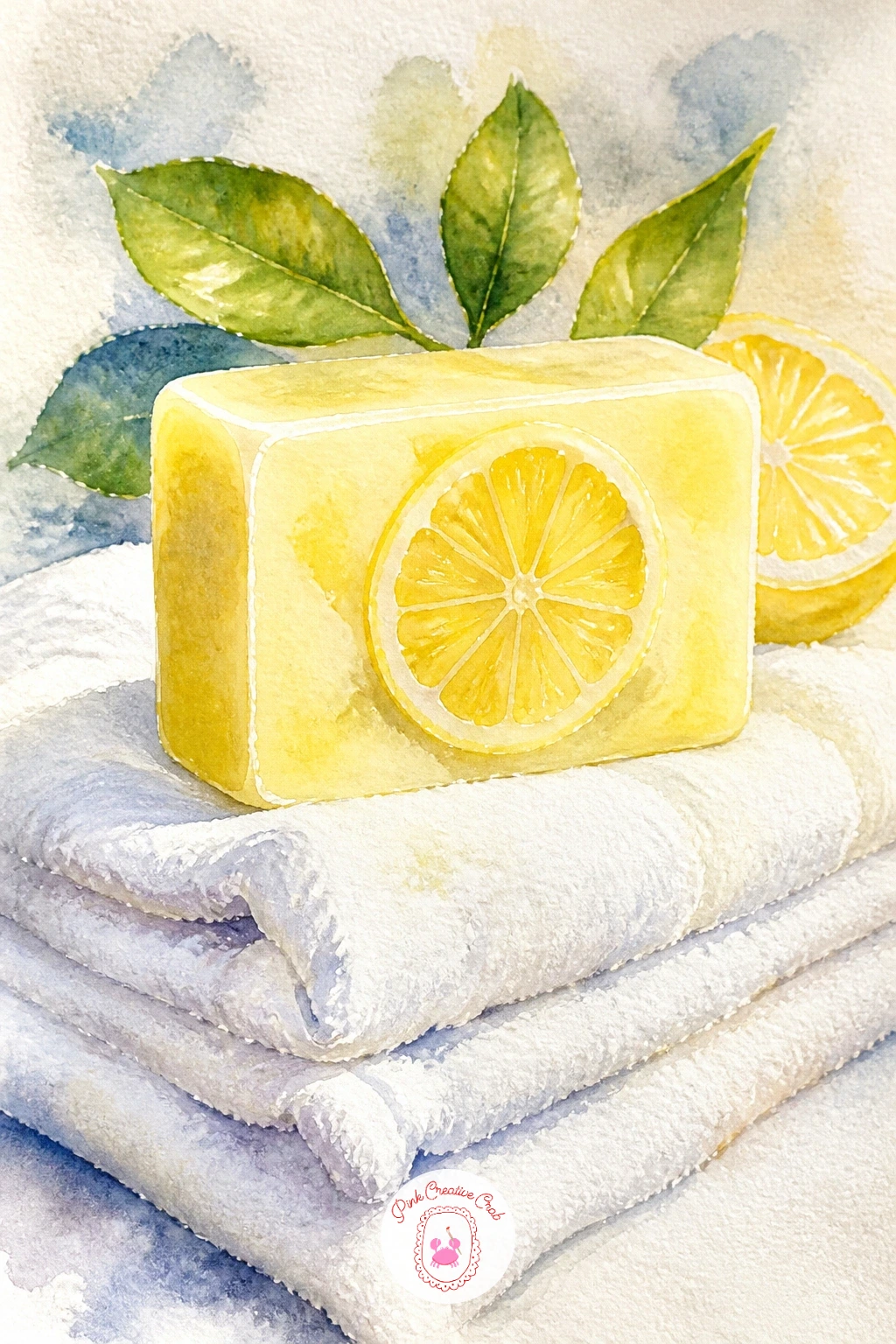
Settle into a calm bathroom vignette with lemon soap and towels, a simple still life built from soft fabric and one small solid bar. Stack two folded towels first in a loose rectangle shape, then place a single bar of soap with a lemon slice pressed into its surface resting on top.
Paint the towels first in a pale, slightly textured wash, using a dry brush dragged lightly over the surface once dry to suggest a bit of terry cloth texture without overworking it. Paint the soap bar next in a pale creamy yellow, then add the lemon slice detail pressed into it with the same segment technique you would use for a real lemon half.
Towels often look stiff when every fold edge is painted with the same hard line. Soften a few fold edges by lifting color with a clean damp brush right after painting, so some transitions stay gentle rather than sharply creased.
Swap the second towel for a sprig of dried lavender beside the soap if you want a slightly different, softer version of this same cozy scene.
Palette: Naples Yellow,Lemon Yellow,Payne’s Grey
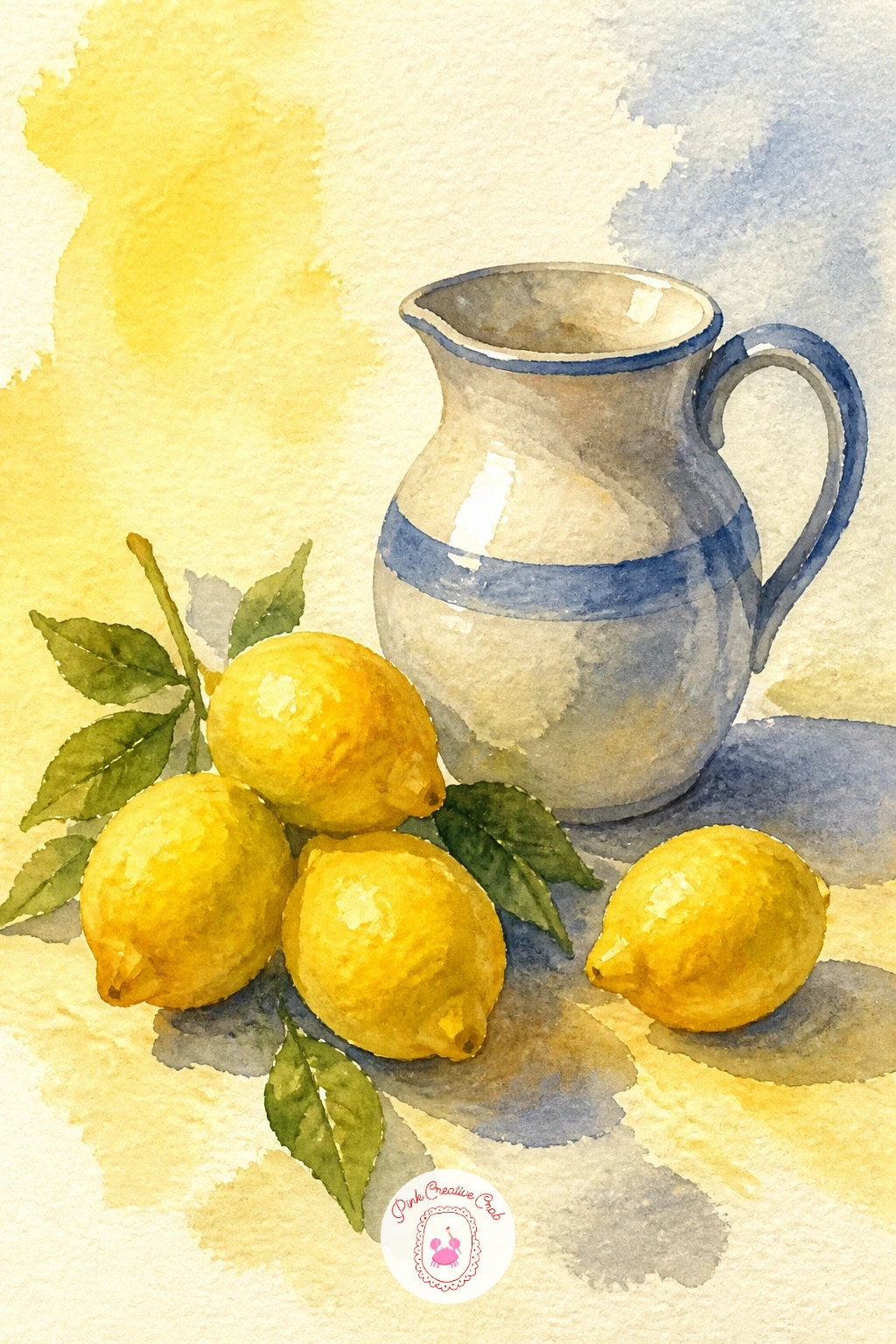
Build a fuller composition with a still life with lemons and a jug, combining several of the skills from earlier ideas into one grouping. Arrange a simple ceramic jug beside a small pile of loose lemons, with one lemon rolled slightly apart from the rest to break up the symmetry.
Work from back to front: paint the jug first in a solid color with one clear highlight streak, then the lemons in your usual bright yellow with warm shadow sides, and finally the cast shadows linking everything together on the tabletop. A flat, lifeless grouping usually comes from every object sitting the same distance from the viewer, so overlap the jug and the nearest lemon slightly so one is clearly in front of the other.
If you want a quicker version, limit yourself to the jug and two lemons only, finished in about fifteen minutes with flat washes and no cast shadow detail.
Readers who enjoy composing groupings like this might also like the full watercolor painting guide for more on arranging a still life.
Palette: Lemon Yellow,Cerulean Blue,Burnt Sienna
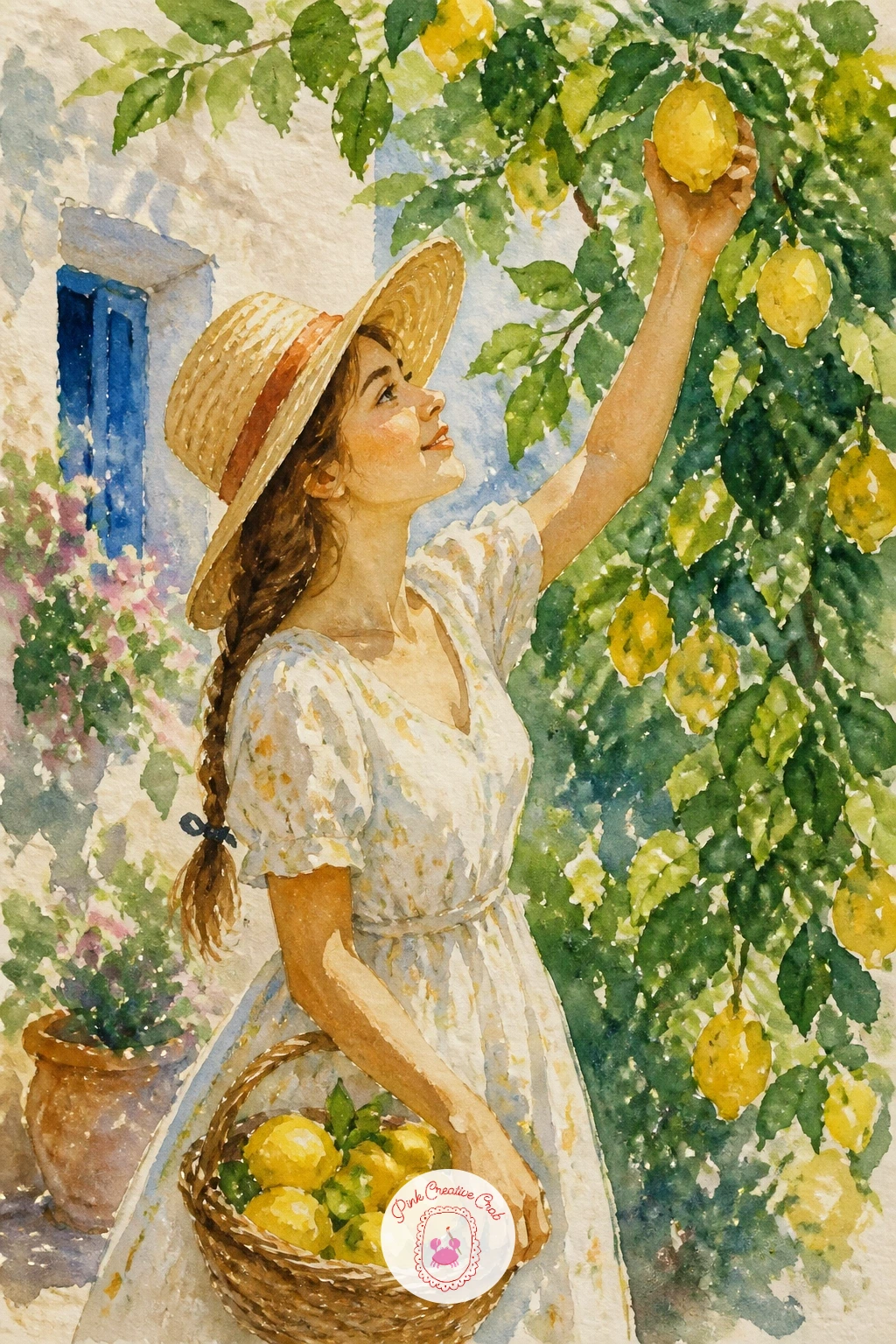
Return to a figure with a girl in a straw hat picking lemons, a gentle outdoor scene pairing a simple person with the lemon tree you may have already painted. Block in her figure first as basic shapes, an oval head tilted slightly upward, a simple dress, and one arm raised to reach toward a branch.
Measure her against the branch she is reaching for: her raised hand should land roughly level with her own head height above her shoulder, which keeps the reach looking natural rather than stretched or too short. Paint her straw hat in warm tan with a few thin brim lines, her dress in a soft solid color, and the branch and lemons last so they clearly overlap her raised hand.
Keep her face simple, just a soft shadow under the hat brim is enough, since the real story here is the gesture of reaching, not a detailed expression.
For more ideas on pairing figures with plants, the simple watercolor flowers ideas list has related inspiration.
Palette: Lemon Yellow,Raw Sienna,Sap Green
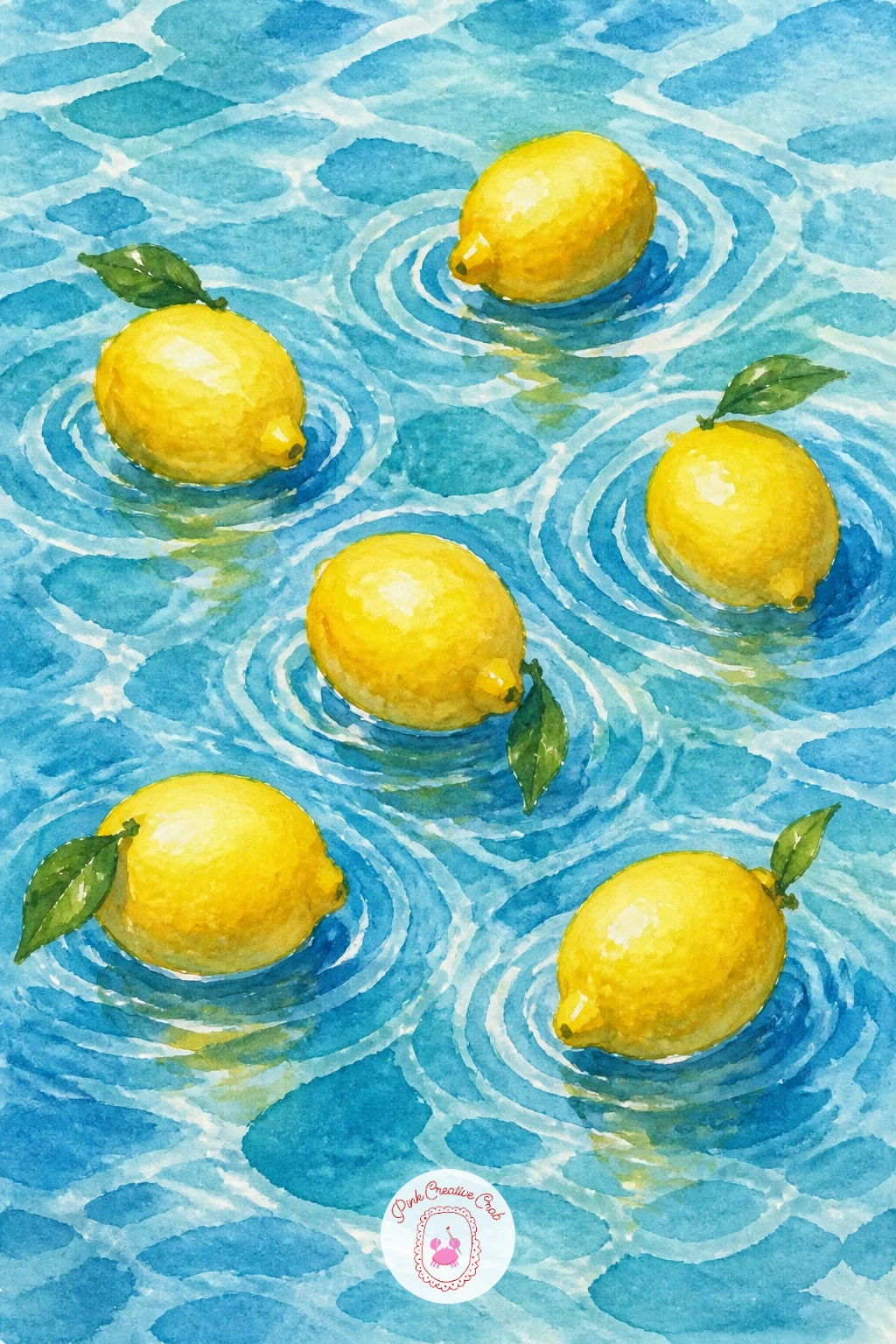
Cool the palette down with lemons floating in a pool, a refreshing subject that plays bright yellow against a wide field of blue water. Paint the pool water first across most of the page in varied strokes of cerulean and a deeper teal, leaving several round white shapes scattered loosely across the surface for the lemons.
Once the water is dry, fill those white shapes in with lemon yellow, keeping a thin ring of untouched paper around each one so it looks like it is sitting slightly above the water rather than sunk into it. Add a few gentle ripple lines radiating out from each lemon in a slightly darker blue to suggest the water moving around the floating fruit.
The common mistake here is painting ripples as perfect circles, which looks mechanical. Break each ripple ring with small gaps and let the lines wobble, closer to how light actually catches moving water.
No teal in your palette? Mix cerulean blue with a touch of sap green for a similar pool tone.
Palette: Cerulean Blue,Lemon Yellow,Teal
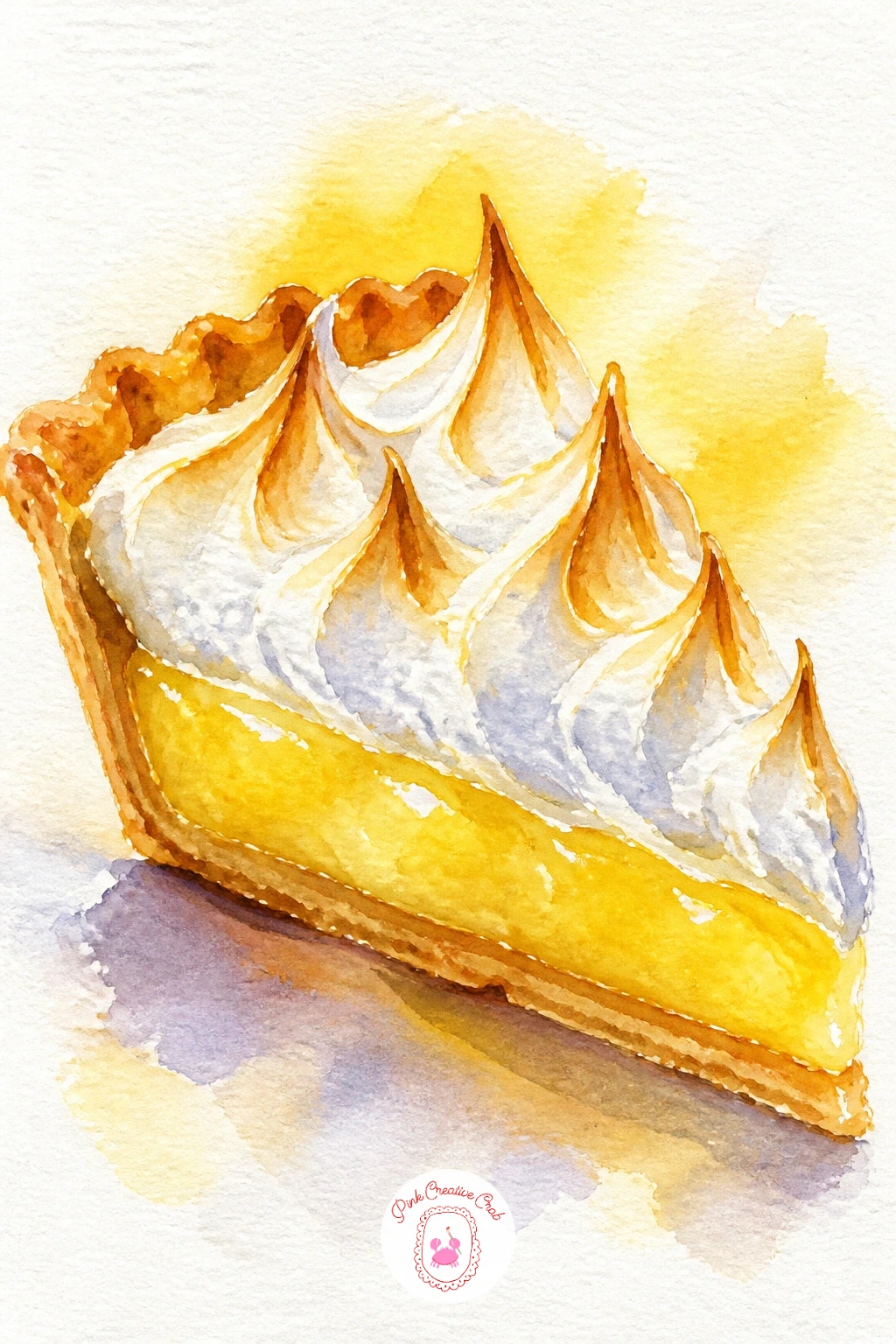
Build toward the final pair of desserts with a lemon meringue pie, a subject that contrasts smooth yellow filling against billowing white meringue peaks. Paint the pie crust edge and the lemon filling first, keeping the filling a rich, glossy yellow deeper than your usual fruit tone, since curd always reads darker than fresh lemon skin.
Once that layer is dry, paint the meringue on top using very pale, almost white strokes, then while still slightly damp, pull a few peaks upward with the tip of your brush to catch a little shadow in each dip. Add the lightest golden-brown toasting marks on just the highest peak tips last, using the tiniest touch of burnt sienna.
If this is your first time painting meringue, resist the urge to shade it heavily. Most of its texture should stay near-white, with only thin grey-blue shadows tucked into the deepest crevices between peaks.
For more dessert ideas built the same way, the easy watercolor food ideas list has several worth trying next.
Palette: Lemon Yellow,Titanium White,Burnt Sienna
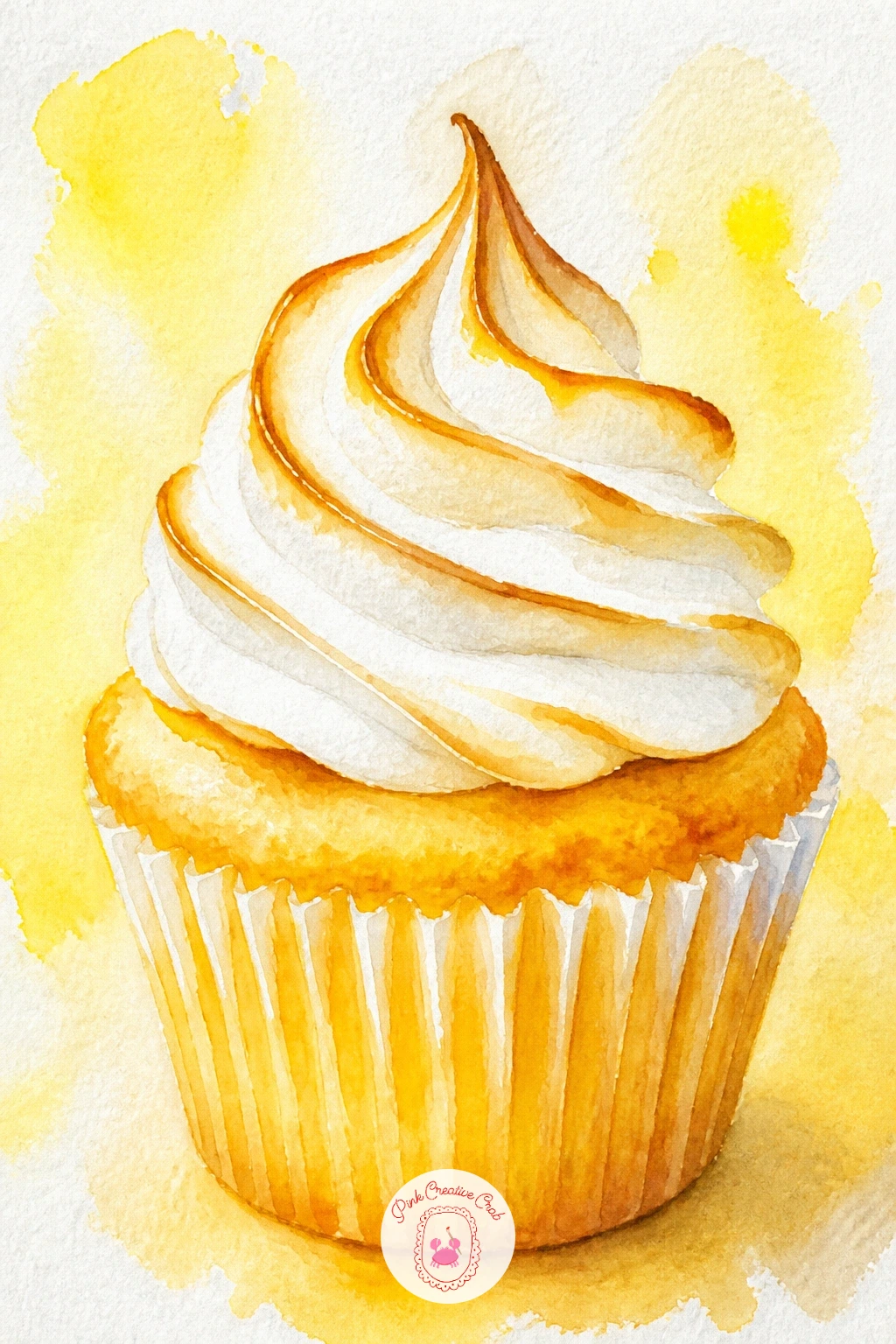
Close the list with a lemon meringue cupcake, a smaller cousin of the pie that works nicely as a quick final piece once you have practiced the other desserts. Paint the cupcake liner first in a simple striped or plain pattern, then the cake base in a warm golden tone peeking just above the liner’s rim.
Add a small swirl of lemon curd or yellow filling in the center, then top it with a neat meringue swirl piped upward to a soft point, using the same pale near-white strokes and tiny brush-tip peaks from the meringue pie technique. Finish with the lightest touch of golden brown along just the top ridges of the swirl to suggest a quick torch of toasting.
Since this is the last idea on the list, try varying it once you are comfortable: next time, swap the meringue swirl for a simple lemon glaze drizzle instead, giving you a second, equally sunny cupcake from the same basic shapes.
One tip to finish on: always let the cake and filling dry fully before adding the meringue swirl, so the white stays clean rather than picking up yellow underneath.
Palette: Naples Yellow,Lemon Yellow,Titanium White
What to Do Next
Pick one lemon that caught your eye, whether it is the quick glass of water or the fuller courtyard tree, and set up a small sheet of cold press paper to match its size. Keep your yellow mixed and ready before you start, since a sunny lemon scene always comes together fastest when the color is already waiting on your palette.
Frequently Asked Questions
What colors do you need for lemon watercolor paintings?
A warm lemon yellow, a cooler cadmium or ochre yellow, sap green, and one Mediterranean blue cover almost every idea here. Add Payne’s grey for shadows and burnt sienna for warm browns like crusts or wood.
How do you paint a realistic lemon shape?
Start with a slightly oval circle, not a perfect sphere, since lemons taper gently at both ends. Leave a highlight untouched on the lit side and deepen the shadow side with a touch of orange mixed into the yellow.
How do you keep lemon yellow from looking dull or muddy?
Work quickly while the first wash is still fresh and avoid going back over the same area more than twice. Mixing too many colors into yellow, especially blue or grey, is the fastest way to dull its brightness.
What paper works best for these lemon scenes?
A cold press watercolor paper of at least 140 pound weight handles both the loose washes and finer details in this list well. Its slight texture helps dry brush techniques, like cat fur or towel texture, read clearly.
Can beginners paint the more detailed ideas like the market stand or courtyard tree?
Yes, with a little patience and by working in the layered order described in each idea. Starting with the simpler bowl and glass subjects first builds the exact skills these larger scenes need.
Have any thoughts?
Share your reaction or leave a quick response — we’d love to hear what you think!
-
 0
-
0
-
0
-
0
-
0
-
0


