A watercolor meadow is one of the most forgiving things you can paint: the grass can wobble, the flowers can blur, and it still looks like a warm afternoon outdoors. There is something genuinely restful about mixing soft greens and dotting in color with a loaded brush, watching it bloom into something that feels alive without needing a single hard edge.
Below you will find 33 small meadow scenes, from a girl reading in the grass to fireflies drifting over a field at dusk. Each one has a wildflower or two, a little living story, and enough guidance to get you from a blank page to a finished piece before the light changes.
Using these images: free for personal projects such as printing, coloring, cards, journals and gifts. Handmade items that include them may be sold up to 30 pieces per design. More than that is commercial use and is not permitted, and neither is selling or sharing the images themselves or passing them off as your own. Please ask before any other use.
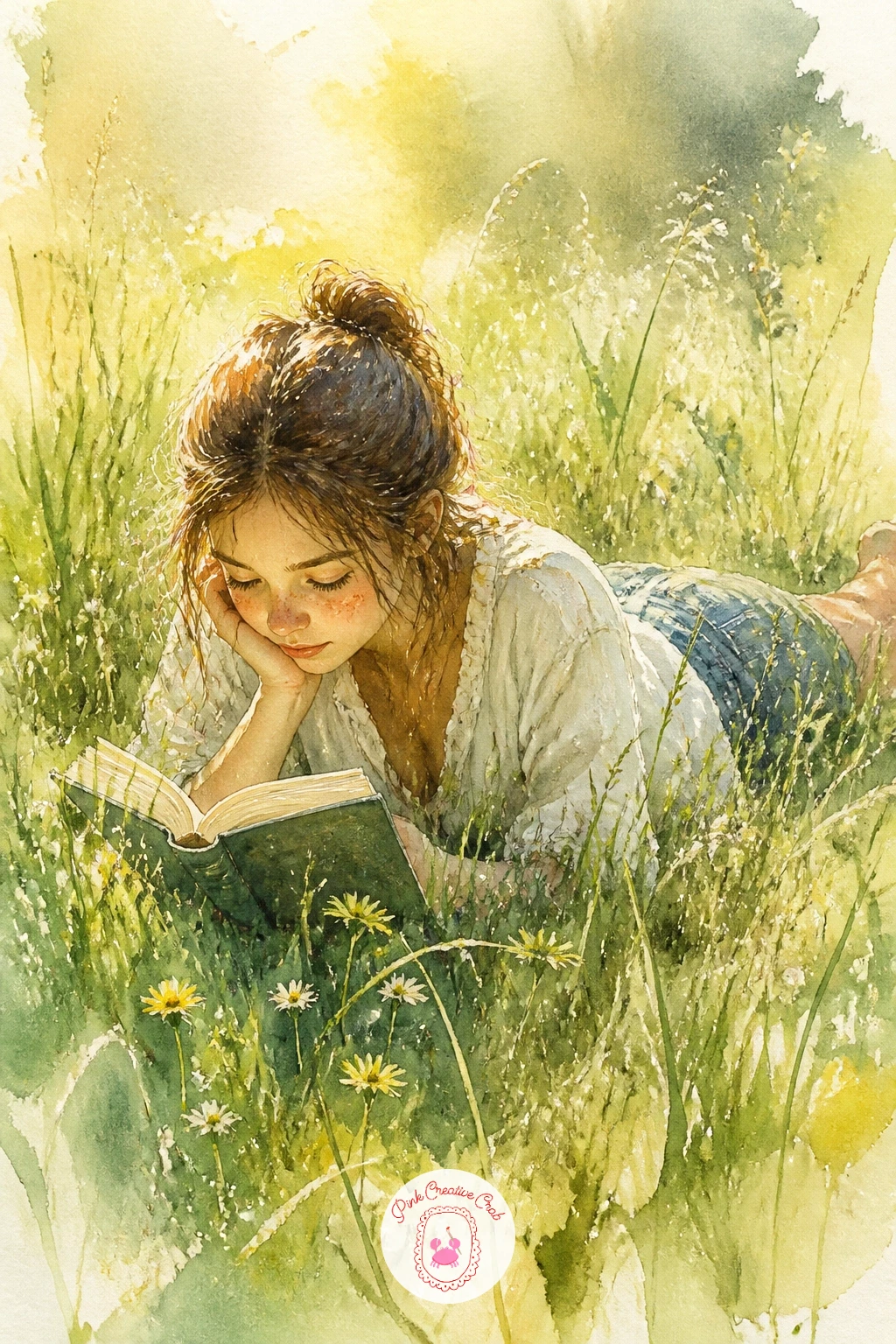
Start with the easiest figure in this whole list: a girl lying on her stomach in the grass, propped on her elbows with a book open in front of her. Pencil in a loose oval for the head, a simple curved back, and two bent legs kicked up behind her, nothing more detailed than that.
Paint the sky and distant field first in one wet wash of soft green and pale yellow, let it dry, then block in her dress and hair in flat color before adding grass blades on top with a fine liner brush. If the figure feels stiff, loosen the line of her back and legs into a gentle curve rather than straight angles, that single change reads as relaxed instantly.
The spot most beginners tighten up is the grass around her: paint it after she is fully dry, in uneven clumps of two or three greens, letting some blades cross over her legs so she sits inside the meadow rather than on top of it. No watercolor paper on hand works fine on any smooth cold press sheet you already own.
Keep one tip for today: wet your brush, touch only the tip into dark green, and pull upward in quick flicks for grass, it looks far more convincing than painted blocks of color.
Palette: Sap Green,Yellow Ochre,Raw Sienna,Payne’s Grey
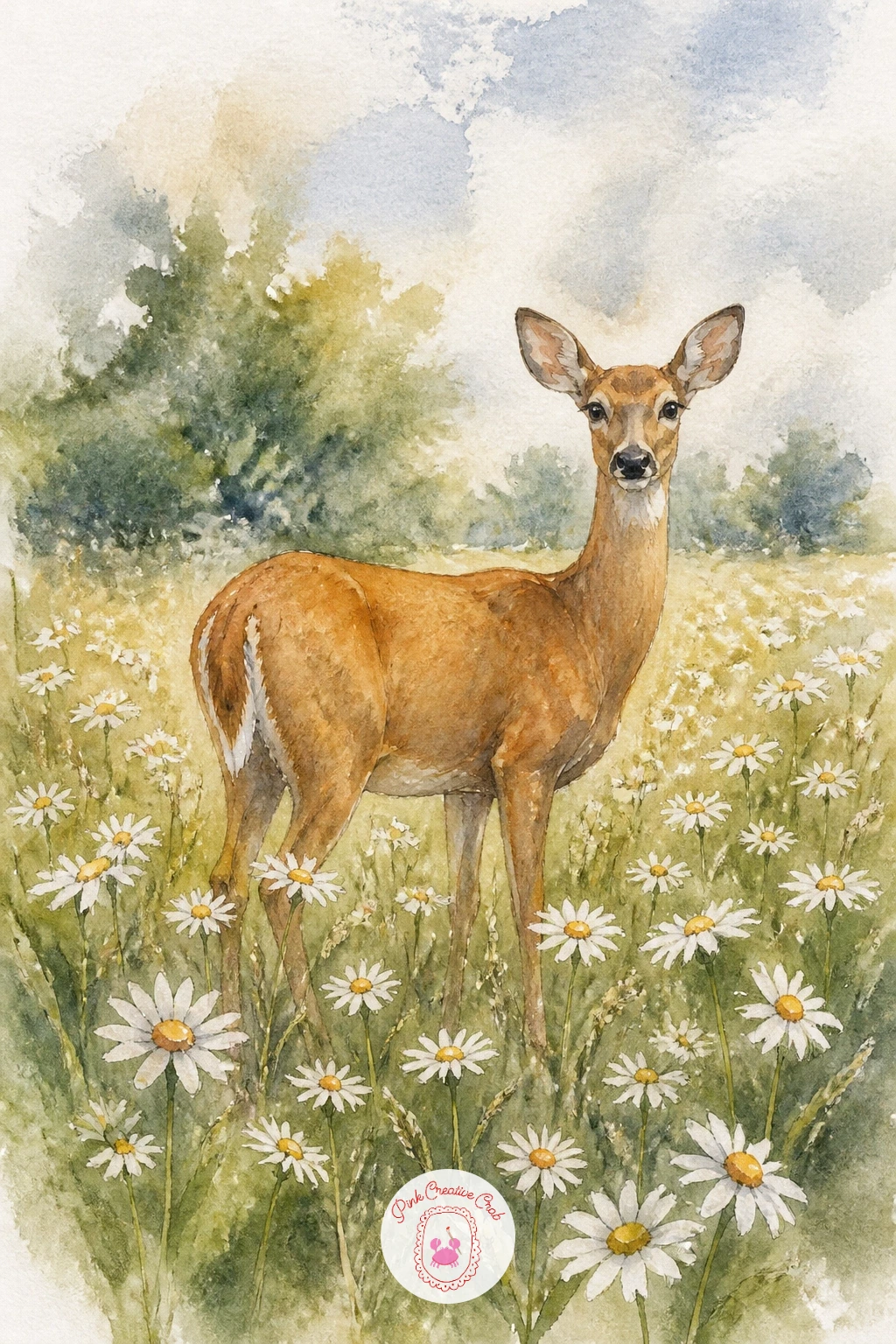
Move from a human figure to an animal one with a deer standing quietly among daisies. Keep the body simple: an oval for the chest, a smaller oval for the head, and four thin legs, no antlers needed if you want to paint a doe.
Lay a soft green and gold wash for the field while it is still damp, then paint the deer’s body wet-in-wet in warm browns so the edges stay gentle rather than cut out. Once dry, add darker brown shading along the back and legs for form, then scatter small white daisy shapes around its feet using the white of the paper or a dab of white gouache.
Proportion is where this one usually goes wrong: measure the deer’s leg length against its body before you commit to ink, a doe’s legs are roughly as long as its body is deep, and anything shorter reads as a dog. If you are new to animals, this is a gentle place to start, and the farm animal watercolor ideas are worth browsing for more practice with proportion.
You Will Need
- white gouache or white gel pen
Palette: Burnt Sienna,Van Dyke Brown,Sap Green,Titanium White
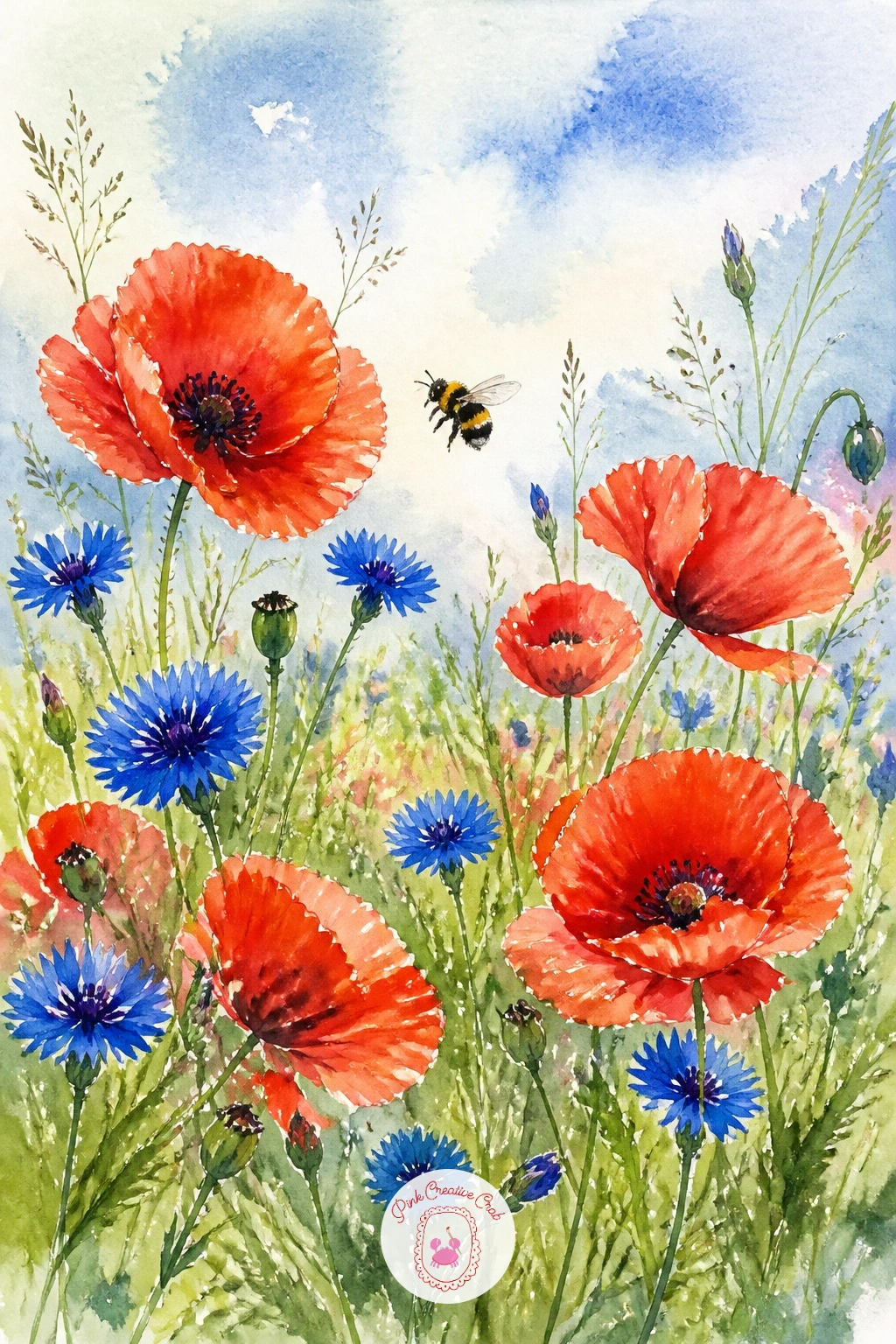
Poppies and cornflowers side by side give you a quick lesson in contrast, red against blue, round petals against thin ones. Sketch three or four poppy circles and a handful of cornflower stars loosely scattered rather than in a row, meadows never grow in rows.
Paint the poppies first in a strong red-orange, letting the petals bleed into each other slightly while wet, then once dry drop in a dark center with a tiny brush. Cornflowers go in next in a cooler blue, painted as small pointed petal clusters, and a single bee gets added last as two tiny ovals and four thin wing strokes in a pale grey wash.
If your poppies turn muddy, you likely mixed too long on the paper, load the brush with clean color and touch it down just once or twice instead of scrubbing. This is a lovely companion piece to anything from the watercolor garden paintings for summer list if you want a matching pair.
Palette: Cadmium Red,Ultramarine Blue,Sap Green,Payne’s Grey
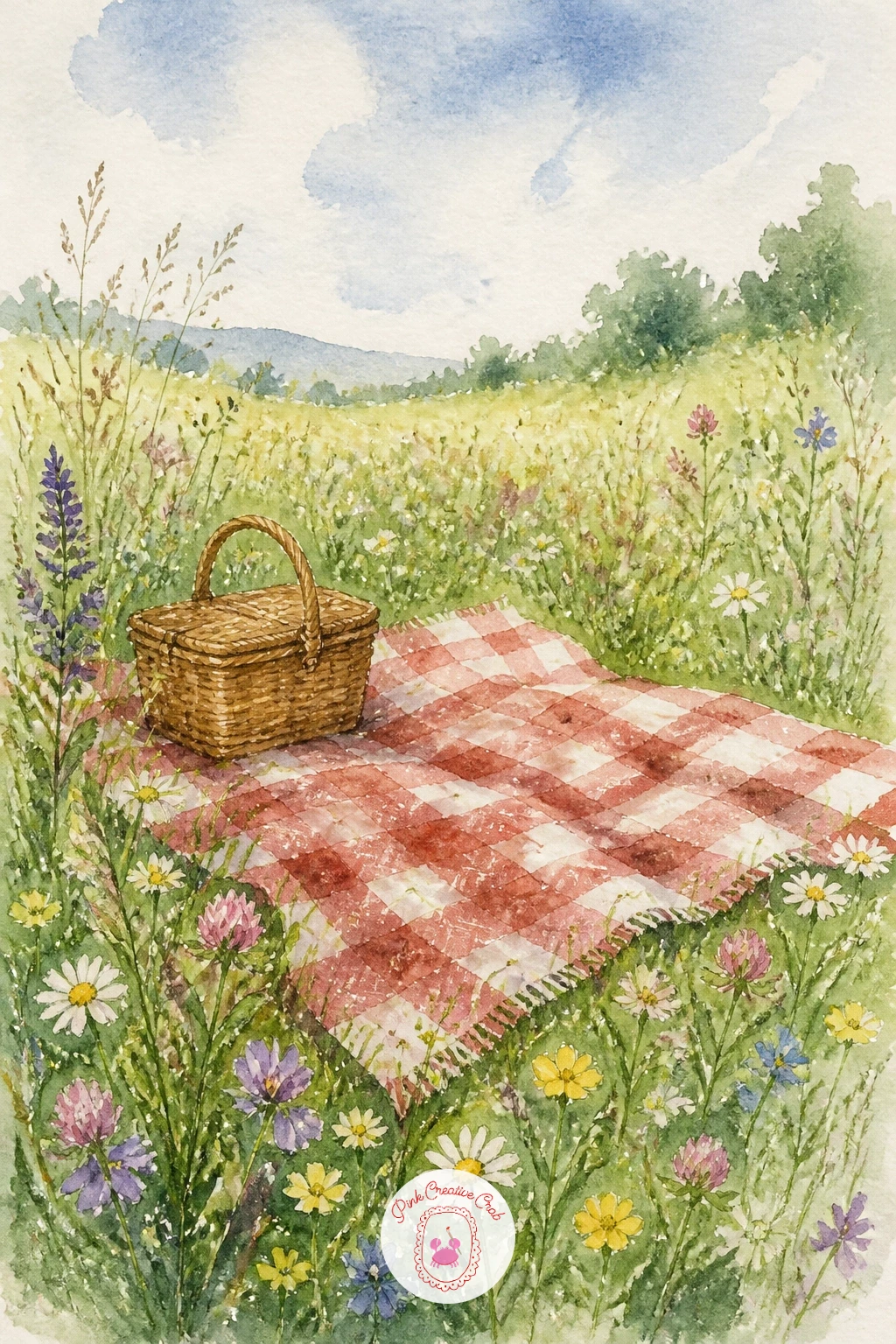
Give the meadow a quiet human touch with an empty picnic blanket spread among the flowers, checked red and white or plain cream, with maybe a basket resting on one corner. Lightly pencil the blanket as a simple trapezoid shape lying flat in the grass, tilted slightly for perspective.
Paint the field wash first, let it dry completely, then mask the blanket’s edge is not necessary here, just paint carefully around the shape with a smaller brush. Fill the blanket pattern once the base color is dry so the checks stay crisp, and add the basket as a brown oval with a curved handle and a loose scatter of fruit shapes spilling slightly over its edge.
Ten minutes gets you the blanket and basket alone against a flat green field; the forty-minute version adds scattered wildflowers growing right up to the blanket’s edge and a soft shadow underneath it to ground it in the grass. One tip worth keeping: paint the shadow in diluted Payne’s grey, never black, so it stays part of the sunny scene rather than looking like a cut-out.
Palette: Cadmium Red,Titanium White,Sap Green,Payne’s Grey
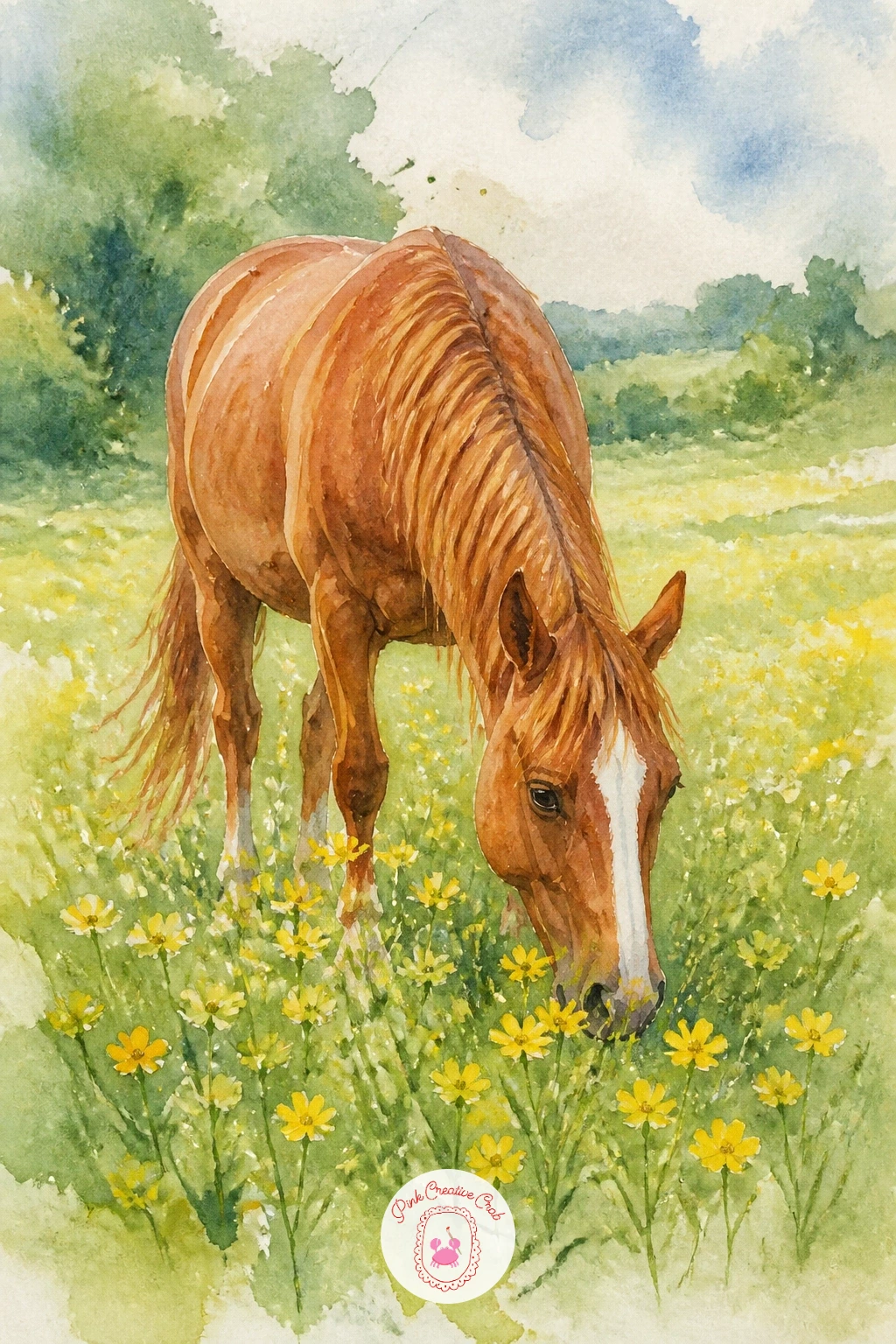
A grazing horse is a gentle next step up from the deer, its head is lowered to the grass rather than lifted, which actually makes the pose easier to get right. Block the body as one long oval, the neck as a curved triangle reaching down, and keep the legs simple and slightly apart for balance.
Paint the horse’s coat wet-in-wet in warm chestnut or soft grey, dropping a touch of darker brown along the mane and legs while the first wash is still damp so it blends rather than sits on top. Let that dry fully before adding buttercups around its hooves, small flat yellow dots with a tiny dark center, scattered thicker near the front of the painting and thinner toward the back for depth.
Eye level matters here: keep the horizon line low, near the horse’s knees, so you are looking up at it slightly like you would standing in a real field, which makes the animal feel larger and closer. No yellow ochre to hand works fine with plain cadmium yellow mixed with a touch of brown.
Palette: Burnt Umber,Payne’s Grey,Cadmium Yellow,Sap Green
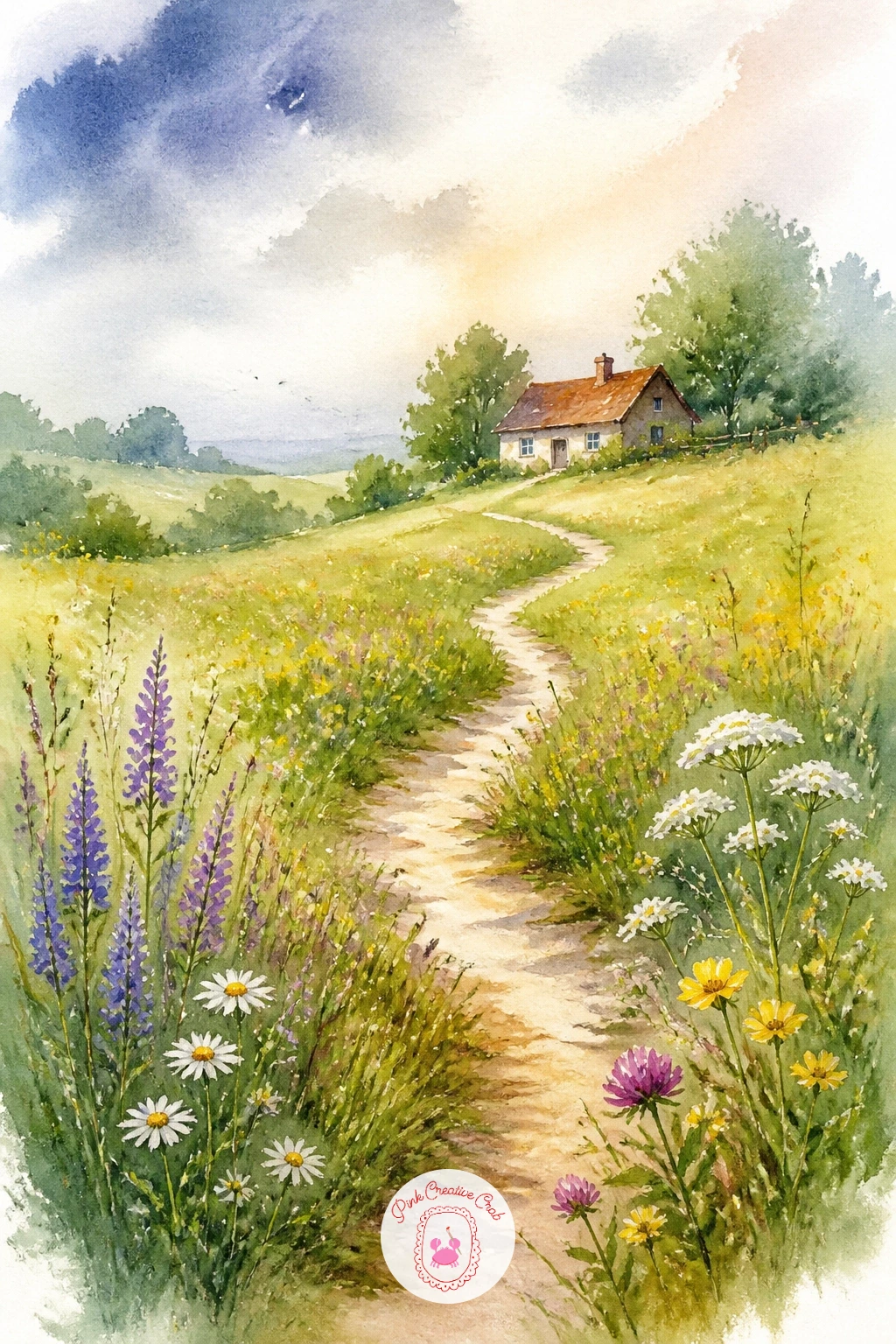
Give the eye somewhere to travel with a narrow path winding through the meadow toward a small cottage in the distance. Sketch the path as two curving lines that start wide at the bottom of the page and narrow as they reach the cottage, which should sit small, maybe a quarter of the page, to keep the distance believable.
Paint the sky and distant field together while wet so they merge softly, then once dry add the cottage in a few flat shapes, a cream wall, a brown roof, one dark doorway. Bring the path and nearest grass in last, using the thickest brushstrokes and darkest greens in the foreground and lightening them as they approach the cottage, since distant things always look paler and cooler.
That lightening is the whole trick of this piece: anything that recedes into the distance should drop in contrast and warmth, so resist the urge to paint the cottage as boldly as the foreground flowers. If you want more practice with this kind of depth, the easy watercolor landscapes list covers it well.
Palette: Raw Sienna,Sap Green,Burnt Sienna,Cerulean Blue
After a landscape with distance, slow right down to one small close-up: a single butterfly resting on a clover flower. Draw the clover head first as a round cluster of tiny petal shapes on a thin stem, then the butterfly perched beside or on top of it with wings held upright.
Paint the clover in soft pink-purple, letting the little petal shapes blend slightly at the edges while wet, and leave the butterfly’s wings as dry white paper until the flower is finished. Once dry, paint the wings in a light wash first, then drop in a few darker spots and the body last with a fine liner brush, keeping every mark small and deliberate since this piece lives or dies on its edges.
The usual trouble spot is overworking the wings until they lose their lift; if that happens, lift color back out with a damp clean brush or a scrap of tissue while still slightly wet. This is a quick ten-minute piece on its own, or add a second and third clover head scattered loosely around it for a fuller forty-minute composition.
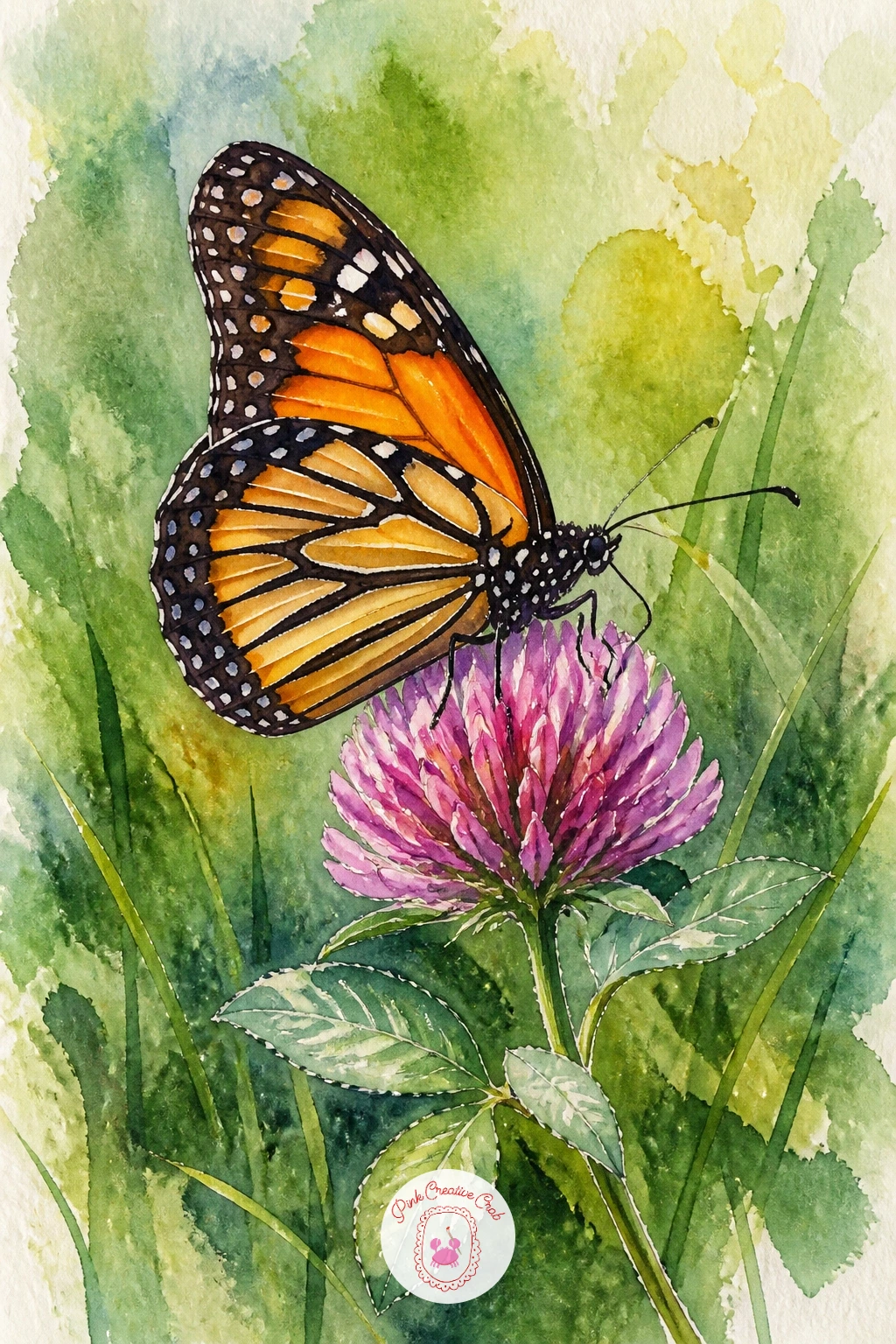
Palette: Quinacridone Pink,Cadmium Orange,Payne’s Grey,Sap Green
A hare sitting upright in long grass is all about those tall ears, which give the whole painting its character. Sketch the body as a rounded teardrop shape with the ears as two long curved lines rising from the head, slightly uneven in length and angle so the pose feels alert rather than stiff.
Paint the meadow background first in a loose wash, then once dry, paint the hare’s body in warm tan, leaving the paper white along the inner ear and the edge of the back for a sense of backlight. Add darker brown shading along the spine, legs, and ear tips once the base coat is dry, keeping the brush fairly dry for this layer so the fur edges stay soft rather than streaky.
Dry brush is the trick worth learning here: load only a little paint, blot most of it off on a tissue, then drag it lightly over the dry base coat to suggest fur texture without hard lines. If you do not own a dedicated dry brush, any old round brush with most of its bristles intact works just as well.
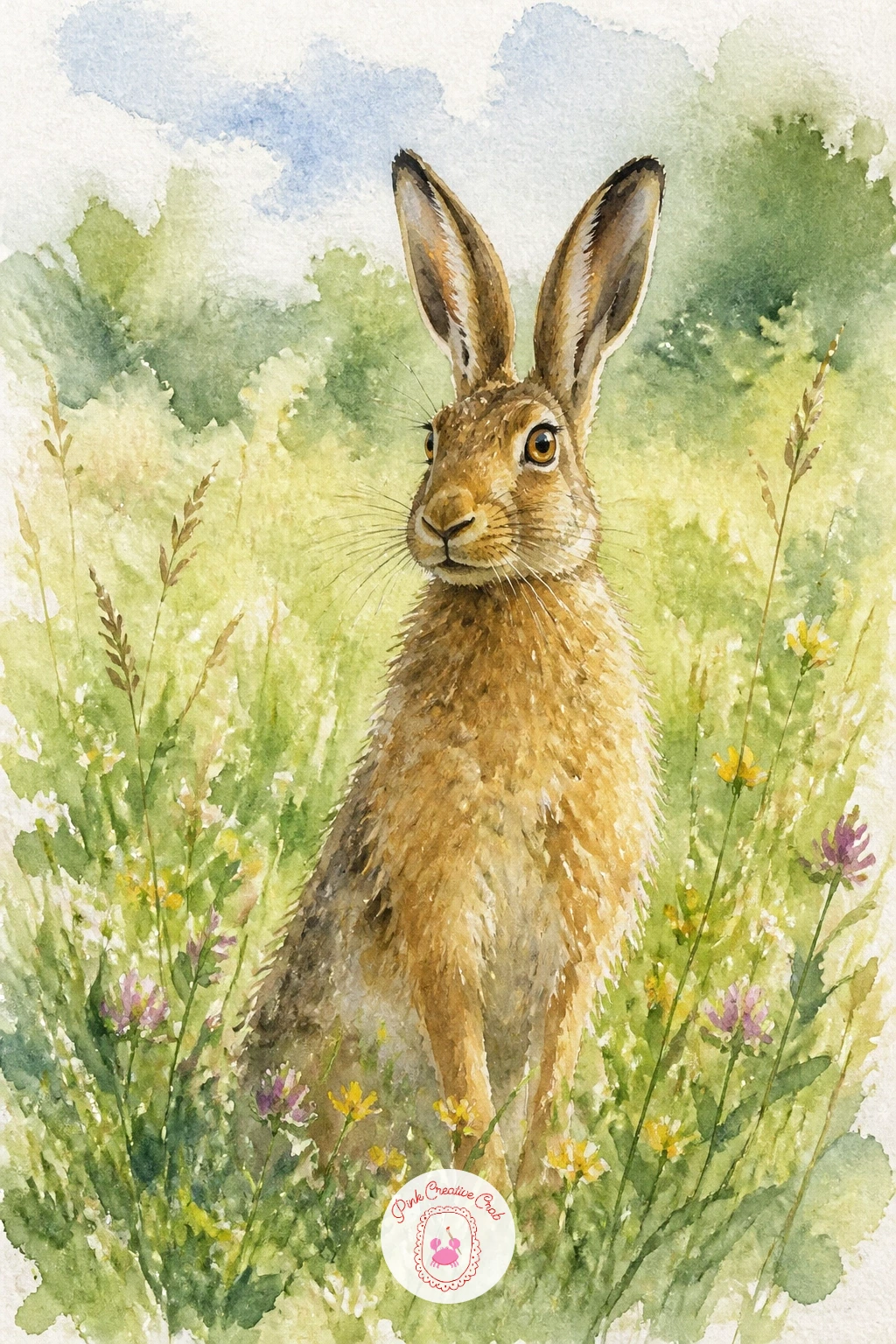
Palette: Raw Sienna,Burnt Umber,Sap Green,Titanium White
Bring a figure back into the meadow with a woman bent slightly at the waist, straw hat shading her face, reaching to pick a stem of wildflowers. Keep the pose simple, a curved back, one arm extended down, a loose dress shape that hides most of the leg detail you would otherwise need to work out.
Paint her dress and hat first in flat warm color, leaving the straw hat as a simple cream oval with a few quick curved lines for the woven texture rather than drawing every strand. Once dry, add the meadow around her, letting flowers and grass overlap the bottom of her dress so she stands inside the scene, and finish with a small bunch of flowers held loosely in her hand.
If the figure looks flat, add one shadow side to the dress using a slightly darker value of the same color rather than a different hue, that single shift gives her form without extra fuss. Keep today’s tip simple: paint the face as a soft peach oval with no features at all, a faceless figure reads as peaceful rather than unfinished.
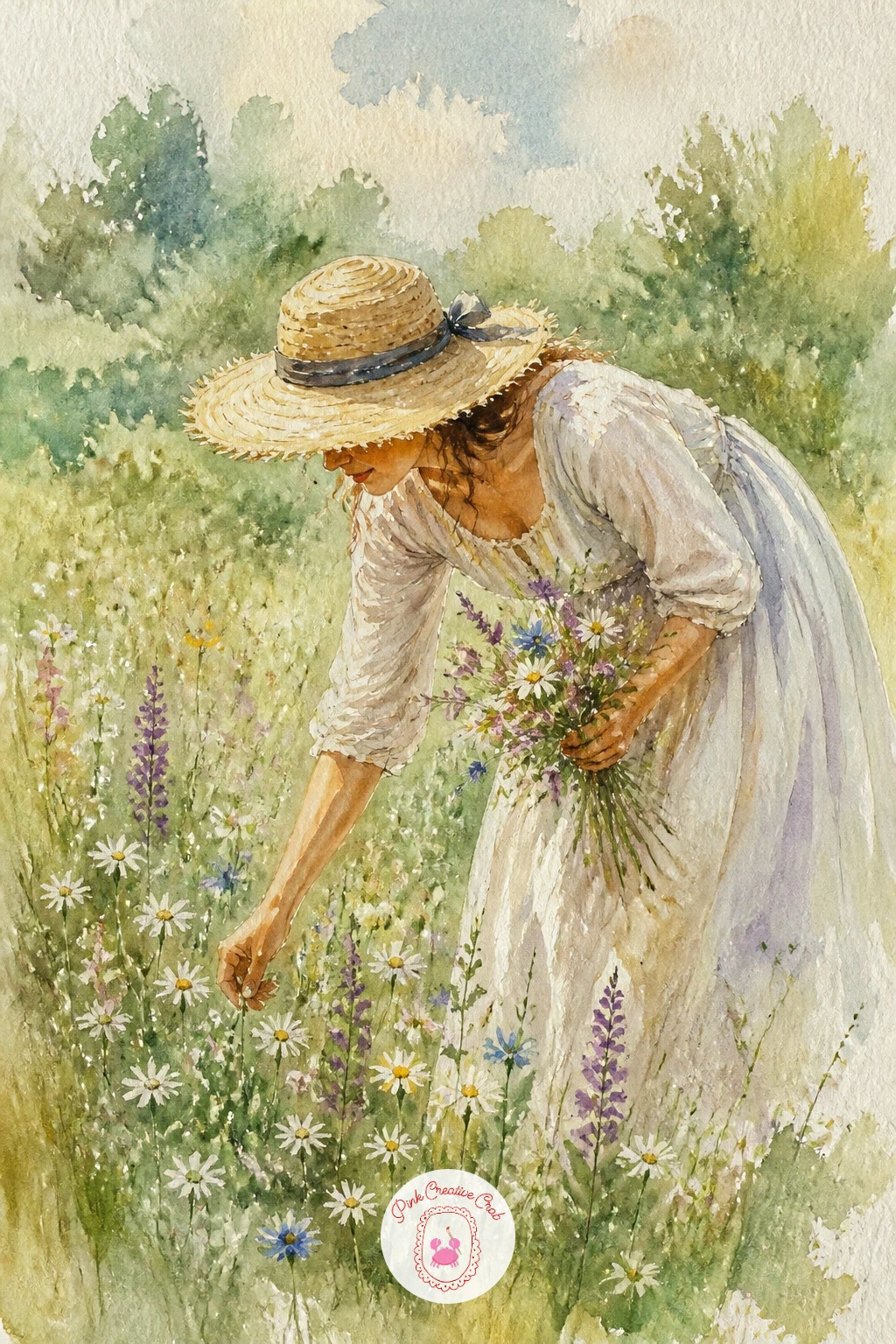
Palette: Raw Sienna,Quinacridone Pink,Sap Green,Payne’s Grey
A wooden beehive tucked at the edge of a meadow gives you a small architectural shape to balance against all the loose organic ones around it. Draw it as a simple stack of two or three rectangles narrowing slightly toward the top, with a tiny triangular roof.
Paint the hive in flat warm wood tones first, keeping the edges fairly crisp since this is one of the few hard-edged shapes in the whole scene, then surround it with the usual loose wet-in-wet field and flowers. Add a few bees as tiny dark dots with thin wing strokes drifting toward the hive entrance, which gives the whole piece a sense of quiet activity.
No need for real beekeeping detail, three stacked boxes and a roof read instantly as a hive to anyone looking at the painting. For a lighter alternative if hives feel fiddly, picture a single flower with one bee instead and borrow the bee technique from the poppies and cornflowers idea above.
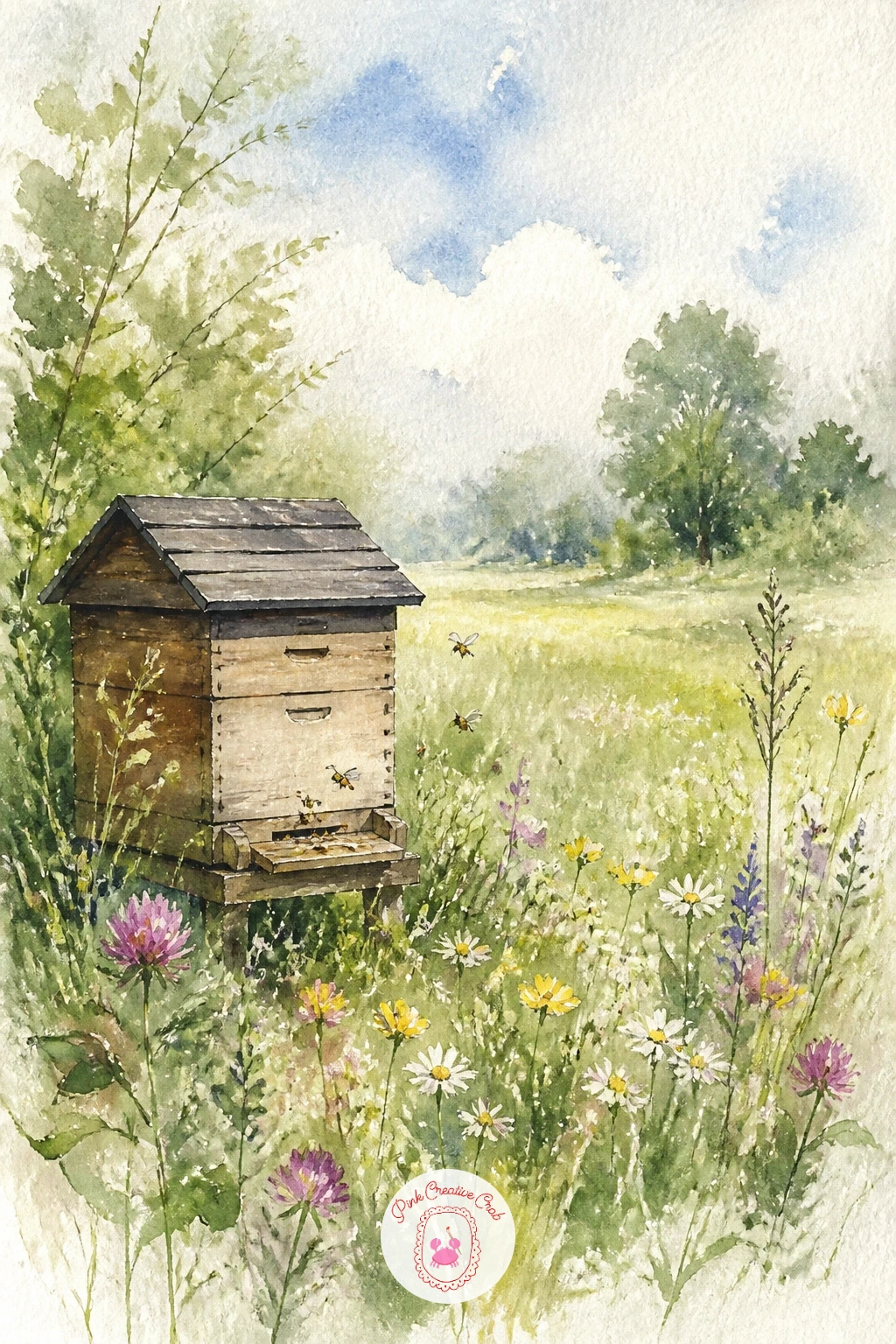
Palette: Raw Sienna,Burnt Sienna,Sap Green,Cadmium Yellow
An empty wooden swing hanging from a thick oak branch brings a quiet, nostalgic note to the meadow without needing a figure at all. Draw the trunk first as a strong vertical shape with a few branches reaching out, then the two ropes hanging down in a slight curve to a flat wooden seat.
Paint the tree canopy in loose wet-in-wet greens, darker than the meadow grass so it reads as shade, then let it dry before adding the trunk and branches in brown with a fine brush. Paint the ropes and seat last, keeping the lines of the rope slightly wavy rather than ruler straight, since nothing in a meadow painting should look drawn with a straightedge.
The eye-level trick here is about light: decide where the sun sits, then let the shadow under the tree and the shaded side of the trunk fall consistently away from it, that one decision ties the whole painting together. If you would rather skip the tree entirely, a single fence post with the swing ropes draped over it works as a simpler substitute.
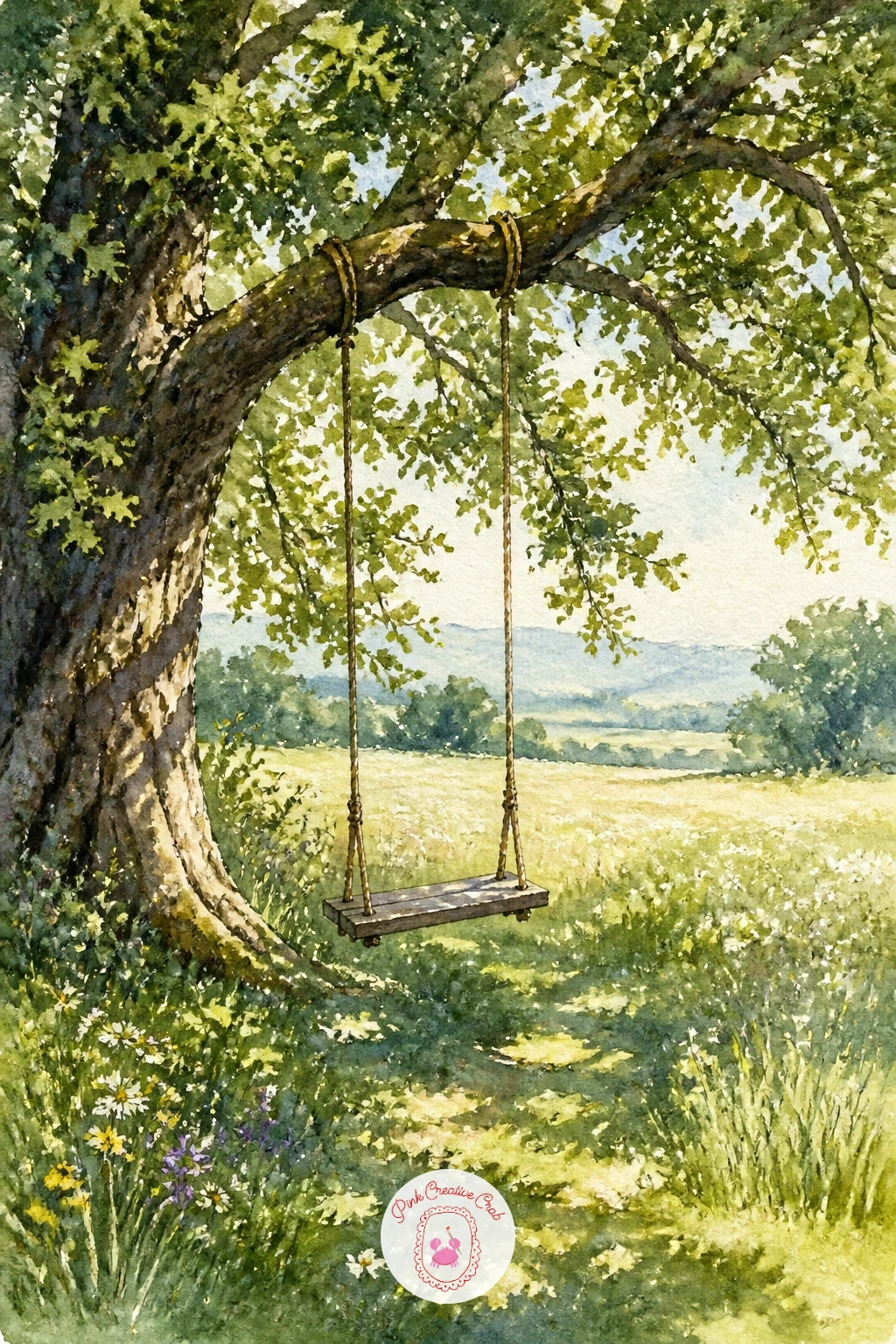
Palette: Sap Green,Burnt Umber,Raw Sienna,Cerulean Blue
Switch the palette entirely for this one, a field of lavender rows with a bicycle leaned against a low fence at the edge. Sketch the lavender as repeated diagonal rows receding into the distance, and the bicycle as two circles for wheels connected by a simple frame of straight lines.
Paint the rows in a wash of purple-blue, varying the strength from row to row so they do not all look identical, then once dry add small vertical strokes along each row for individual lavender stems. The bicycle comes last, painted in a single flat color with a thin dark outline, since a hard-edged object like this actually reads as more charming when it contrasts with the soft rows around it.
Ten minutes gets you three or four lavender rows and a simple bicycle silhouette; the forty-minute version adds a basket of flowers on the handlebars and a distant tree line to anchor the horizon. Keep today’s tip in mind: paint your rows with a slightly dry brush dragged sideways, it creates natural texture breaks that look exactly like rows of lavender from a short distance.
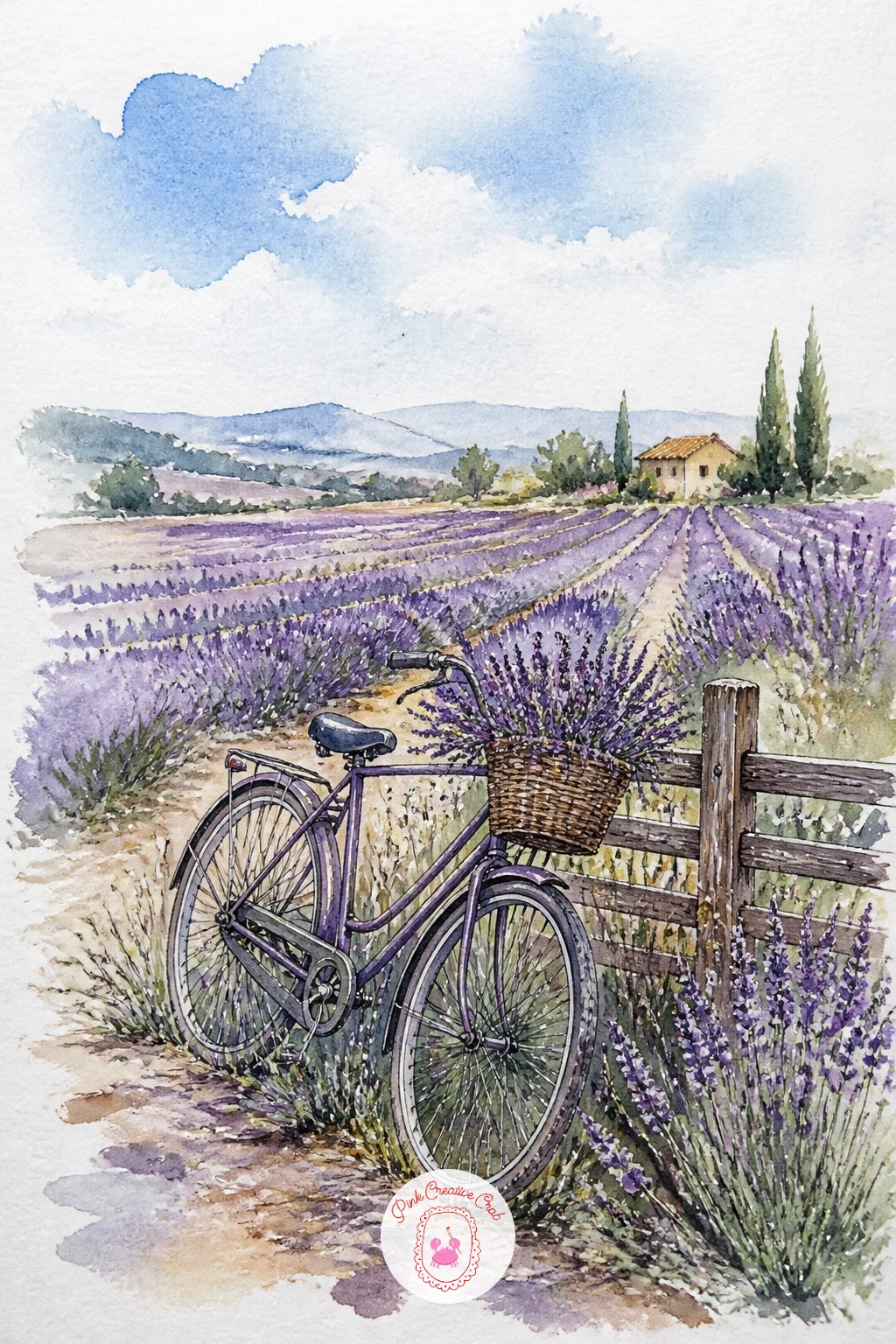
Palette: Dioxazine Purple,Ultramarine Blue,Sap Green,Payne’s Grey
Foxgloves give you tall vertical shapes to contrast against the low grass, especially good where a meadow meets the darker shade of a forest edge. Sketch two or three tall spires with small bell shapes stacked along each stem, placed where the bright meadow green meets a deeper green tree line.
Paint the forest edge first in a dark wet-in-wet wash so it reads as shaded and recedes behind everything else, then once dry bring the meadow grass forward in brighter green. Paint the foxglove spires last in soft pink or purple, adding the bell shapes with small curved strokes from the base of the stem upward, since foxgloves bloom bottom to top.
Where this one usually goes wrong is contrast: if the forest edge is the same value as the meadow, the whole painting goes flat, so push that background noticeably darker than you think you need to. No purple to hand, a soft pink works just as well and still reads clearly as foxglove.
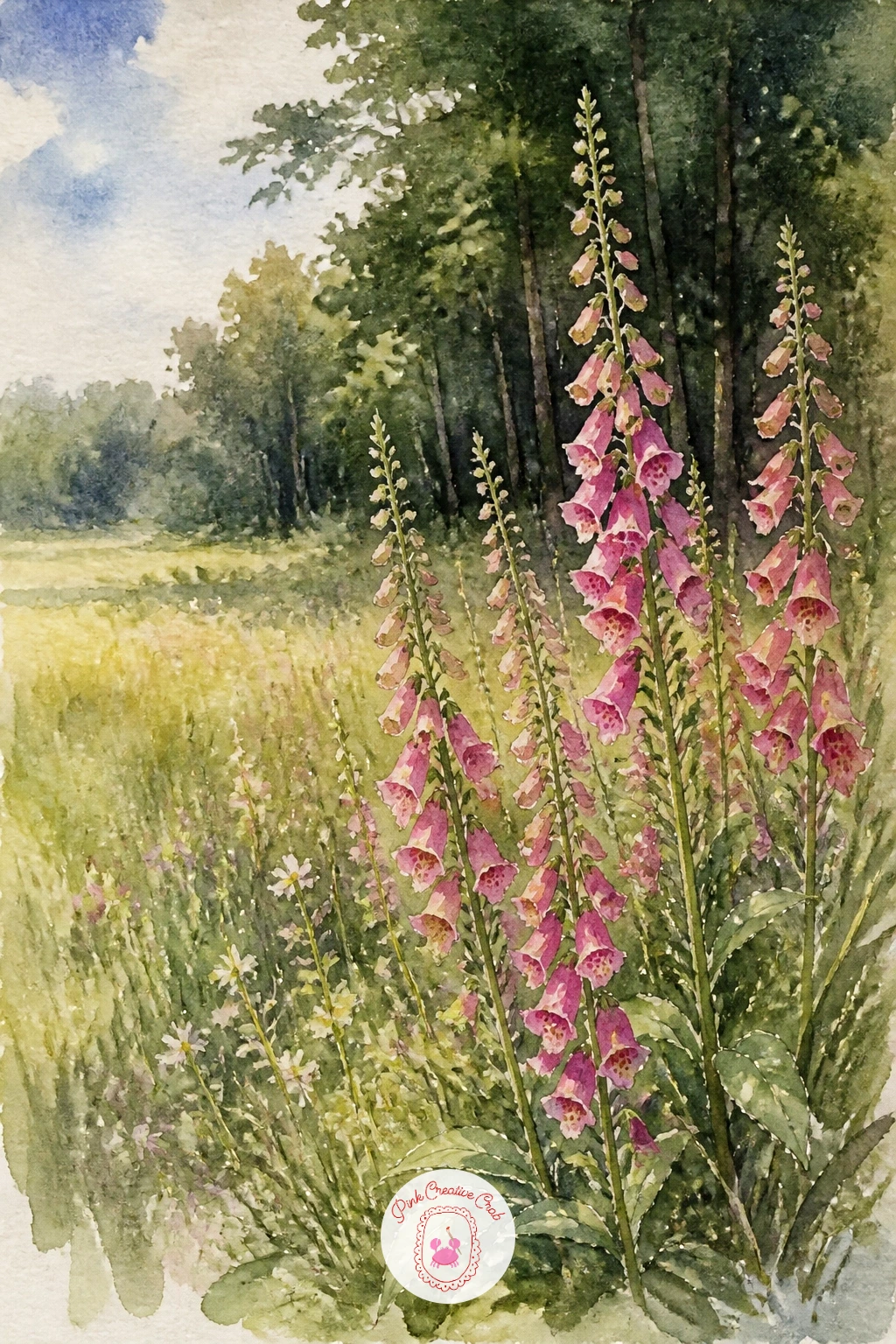
Palette: Quinacridone Pink,Dioxazine Purple,Hooker’s Green,Sap Green
A small child mid-run after a butterfly brings motion into the meadow, which you can suggest with just a few loose lines rather than a detailed figure. Sketch the child leaning forward, one leg lifted, arms reaching upward toward a butterfly drawn slightly out of reach above their head.
Paint the background field first and let it dry completely, then paint the child’s clothing and hair in flat bright color, keeping the limbs loose and slightly blurred at the edges to suggest movement rather than a frozen pose. Add the butterfly last in a bright contrasting color so it catches the eye immediately, since it is the whole point of the action in this scene.
If the running pose looks stiff, check that the front leg and back arm lean the same direction and the back leg and front arm lean the opposite way, that natural cross-pattern is what makes a figure read as moving rather than standing still. Keep the grass around the child’s feet painted in quick upward flicks to echo the same sense of motion.
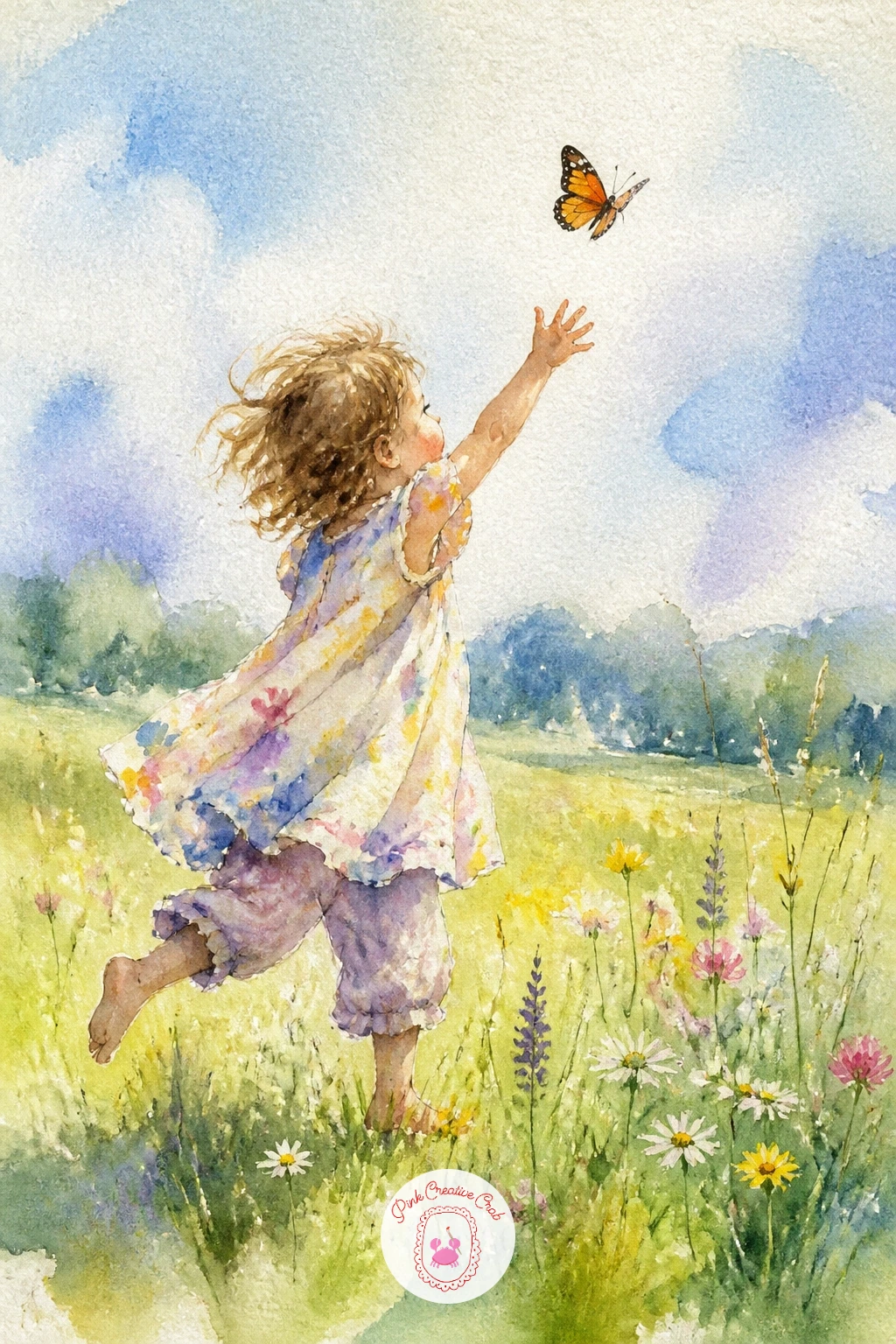
Palette: Quinacridone Pink,Cadmium Yellow,Sap Green,Payne’s Grey
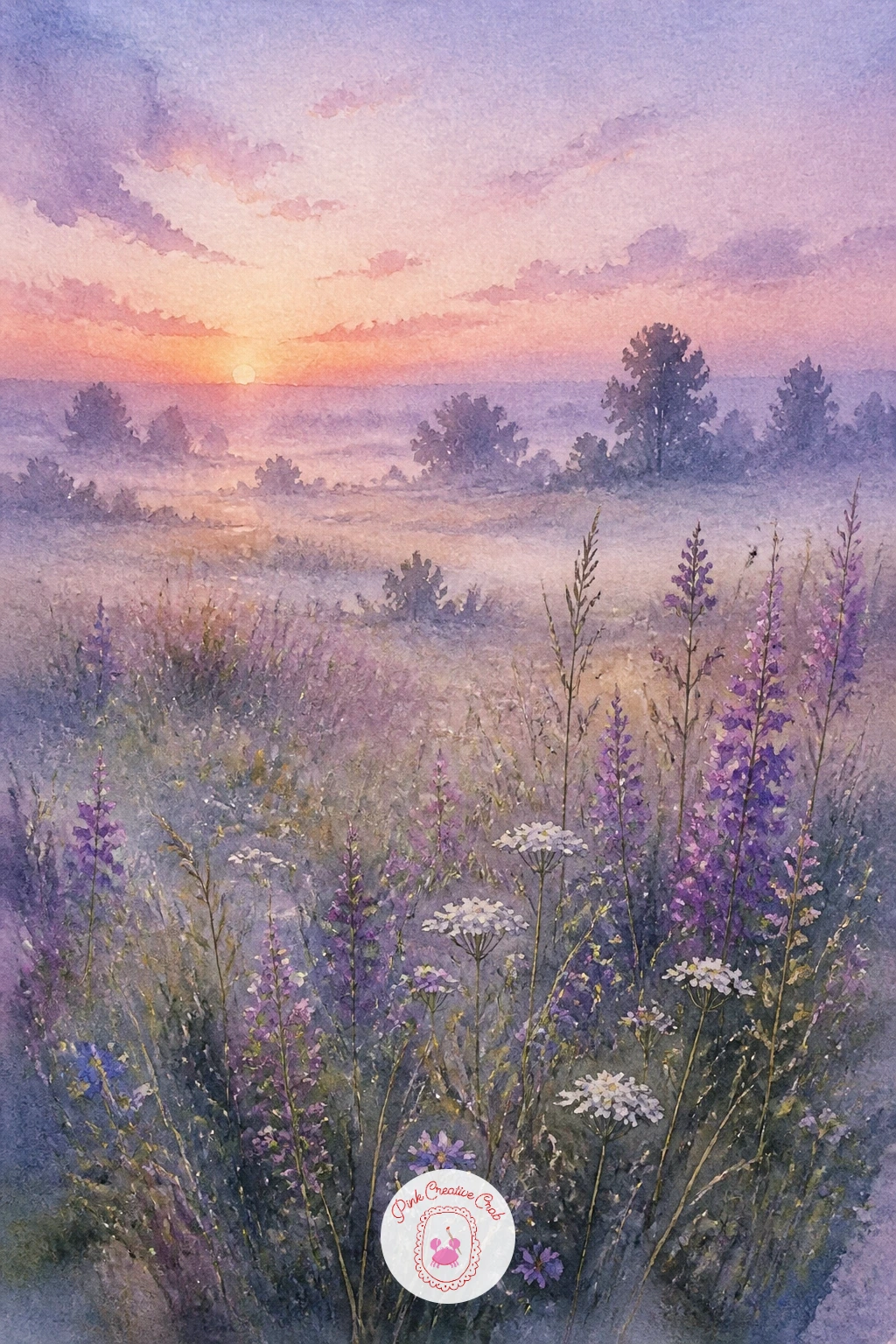
Low mist drifting across a meadow at first light is one of the most forgiving effects in watercolor, because the whole point is softness. Lightly sketch a simple horizon line and a few distant tree shapes, keeping everything else open for the wash to do the work.
Wet the entire sky and middle ground first with clean water, then drop in pale pink, lavender, and soft grey while the paper is still shining wet, letting the colors drift and merge on their own without pushing them around too much. Once that first layer dries, paint the nearest grass and any flowers with a slightly drier brush so they stay crisp against the soft, hazy background behind them.
Light direction matters most here: decide the sun is rising just above the horizon and keep every color warmer and paler near that point, cooling and darkening as your eye moves away from it. If the mist layer dries too fast and loses its softness, mist a little water back over it with a spray bottle before it fully sets.
You Will Need
- spray bottle for water
Palette: Quinacridone Pink,Dioxazine Purple,Payne’s Grey,Sap Green
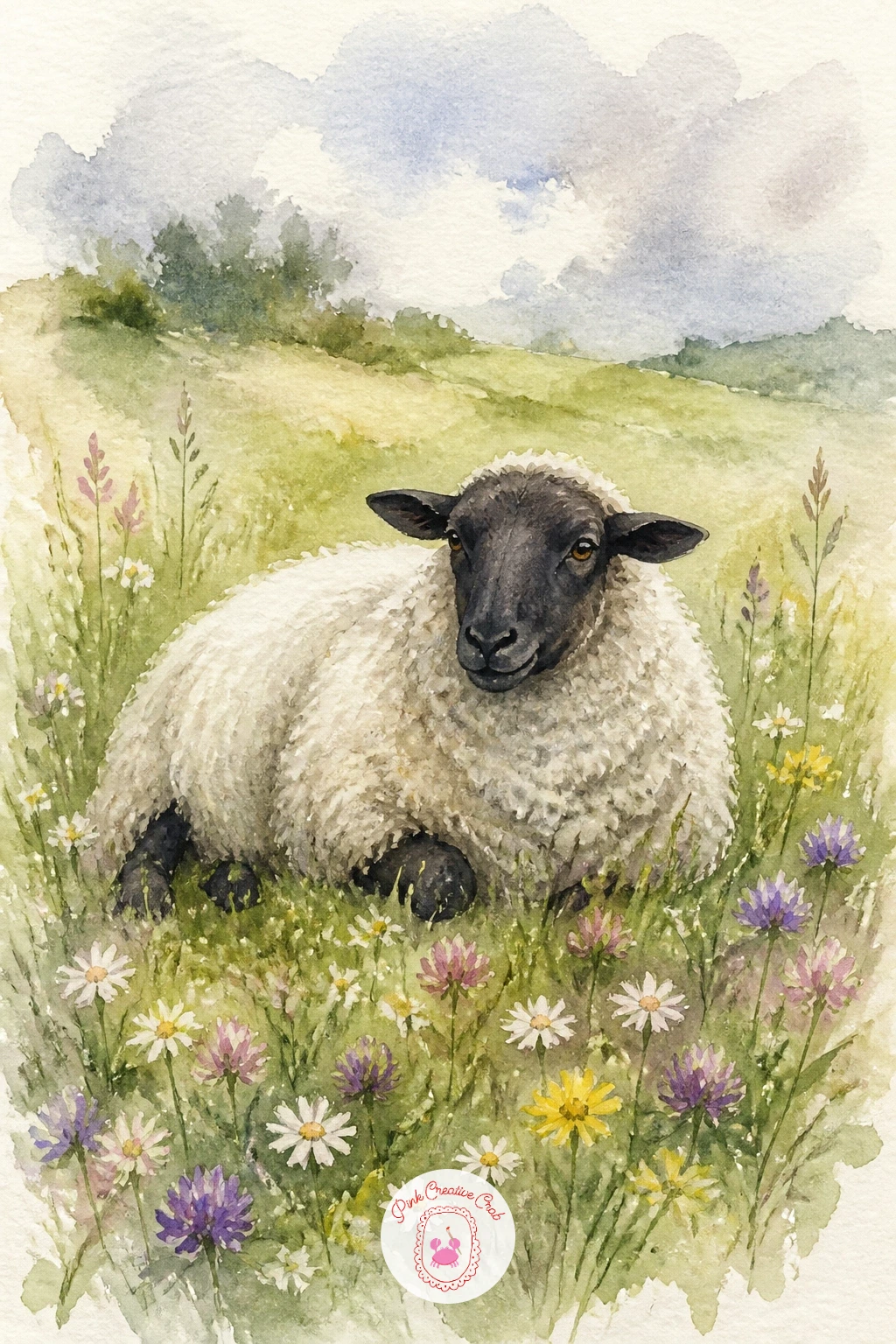
A sheep lying down among flowers is a wonderfully round, soft shape to paint, almost like painting a cloud with legs tucked underneath. Draw the body as one large rounded oval with a smaller oval head tucked low, and keep the legs mostly hidden beneath the body since it is resting.
Paint the field first, then once dry, use a very light wash for the sheep’s wool, almost just clean water with a touch of grey, since white wool is mostly suggested by the white paper itself rather than painted directly. Add shadow only in the creases and underside of the wool using a soft grey-blue, and paint the face, legs, and ears in a darker flat brown or black for contrast against all that white.
The texture trick for wool is a kneaded eraser: once your pencil sketch is inked over in watercolor and fully dry, you can lift tiny flecks of color back out of the wool with a kneaded eraser for extra fluffy highlights. No kneaded eraser on hand, a slightly damp cotton bud lifts color just as well while still wet.
You Will Need
- kneaded eraser
Palette: Payne’s Grey,Titanium White,Burnt Umber,Sap Green
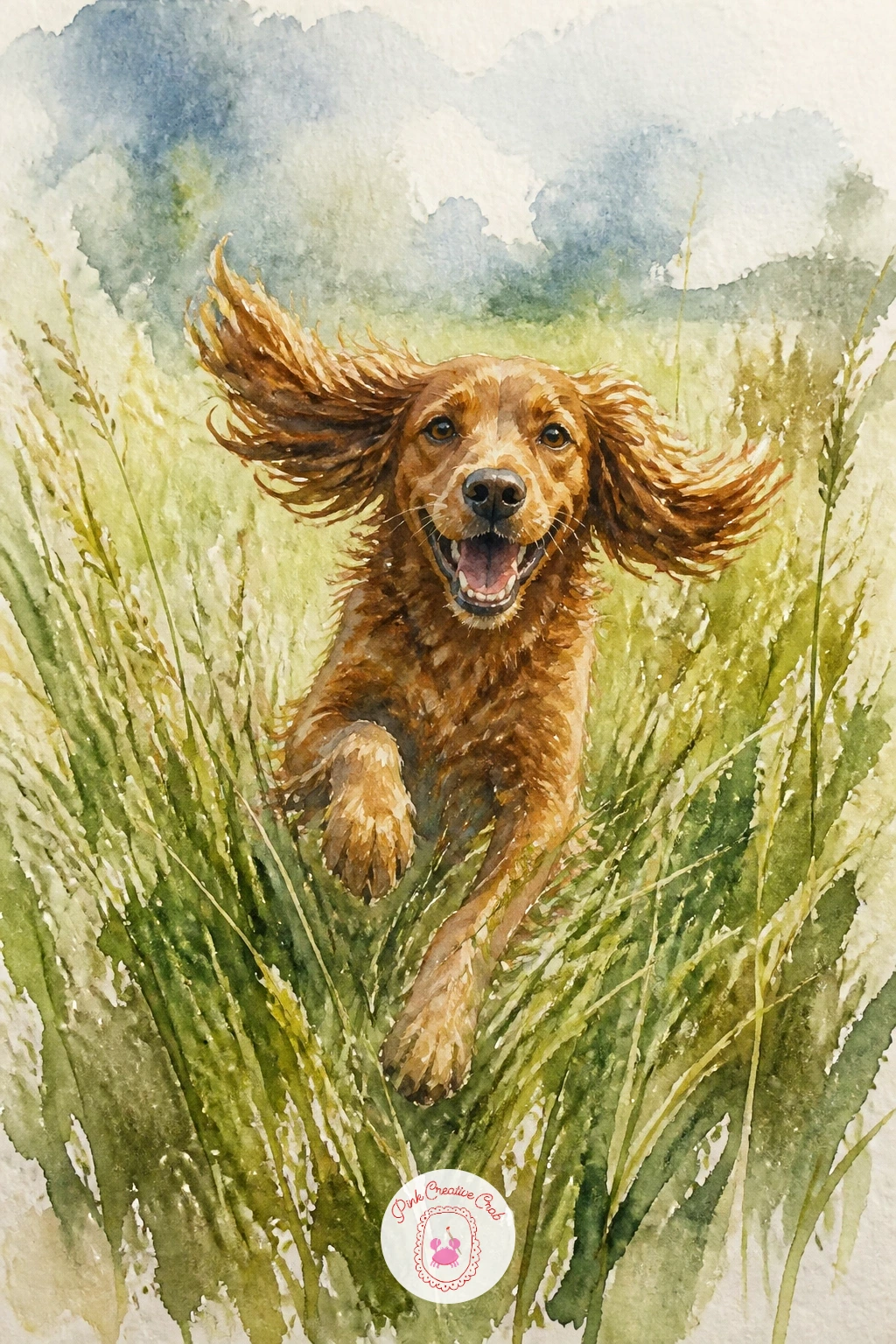
After a resting sheep, paint the opposite energy with a dog bounding through grass tall enough to brush its belly. Sketch the dog mid-stride, legs stretched fully apart front and back, ears flying up, and keep the breed loose enough that any floppy-eared dog shape will read clearly.
Paint the grass background first in long loose strokes, then the dog’s body on top in flat warm color once that background has dried, leaving a thin line of white paper around the silhouette if you want it to pop against the green. Add a few grass blades painted over the dog’s lower legs afterward so it looks like it is running through the field rather than floating above it.
Keep today’s tip simple: paint the dog’s coat with two values only, a light base and one darker shadow side, more detail than that usually slows the energy of the pose down.
Palette: Raw Sienna,Burnt Umber,Sap Green,Payne’s Grey
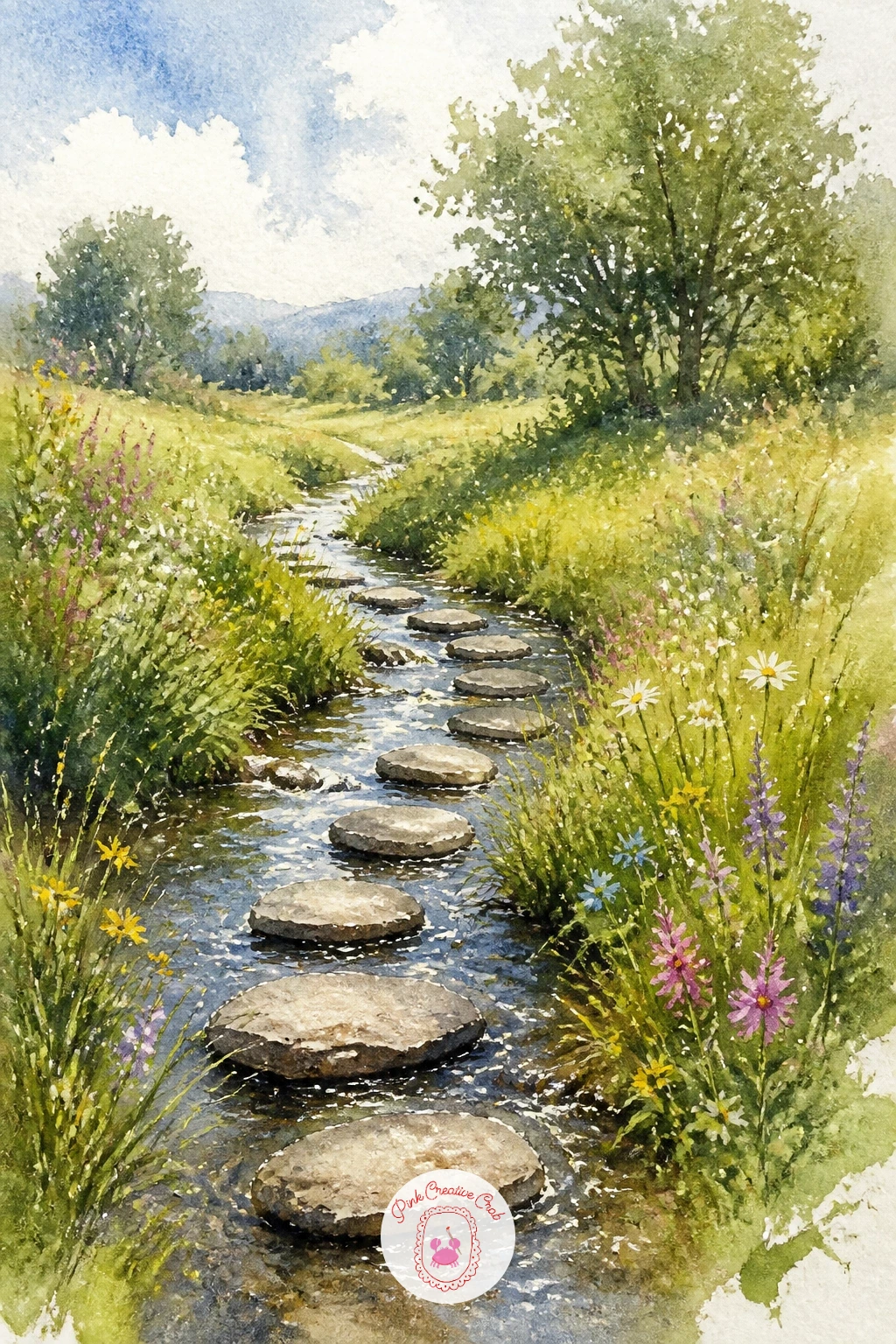
A thin stream crossing the meadow with a few stepping stones gives you a strong horizontal line to anchor the whole composition. Sketch the stream as a gentle curving band through the lower third of the page, narrower in the distance and wider as it reaches the front, with four or five flat stone shapes crossing it.
Paint the meadow and sky wash first, then wet just the stream shape and drop in soft blue and grey, letting a thin strip of white paper remain along the water’s edge to suggest sunlight catching the surface. Paint the stones last in warm grey-brown with a touch of shadow underneath each one where it meets the water, which is what makes them look like they are actually sitting in the stream rather than floating beside it.
Perspective is the trick worth watching here: keep the stones smaller and closer together in the distance and larger with more gap between them close to you, that alone creates the sense of the stream running away into the painting.
Palette: Cerulean Blue,Payne’s Grey,Raw Sienna,Sap Green
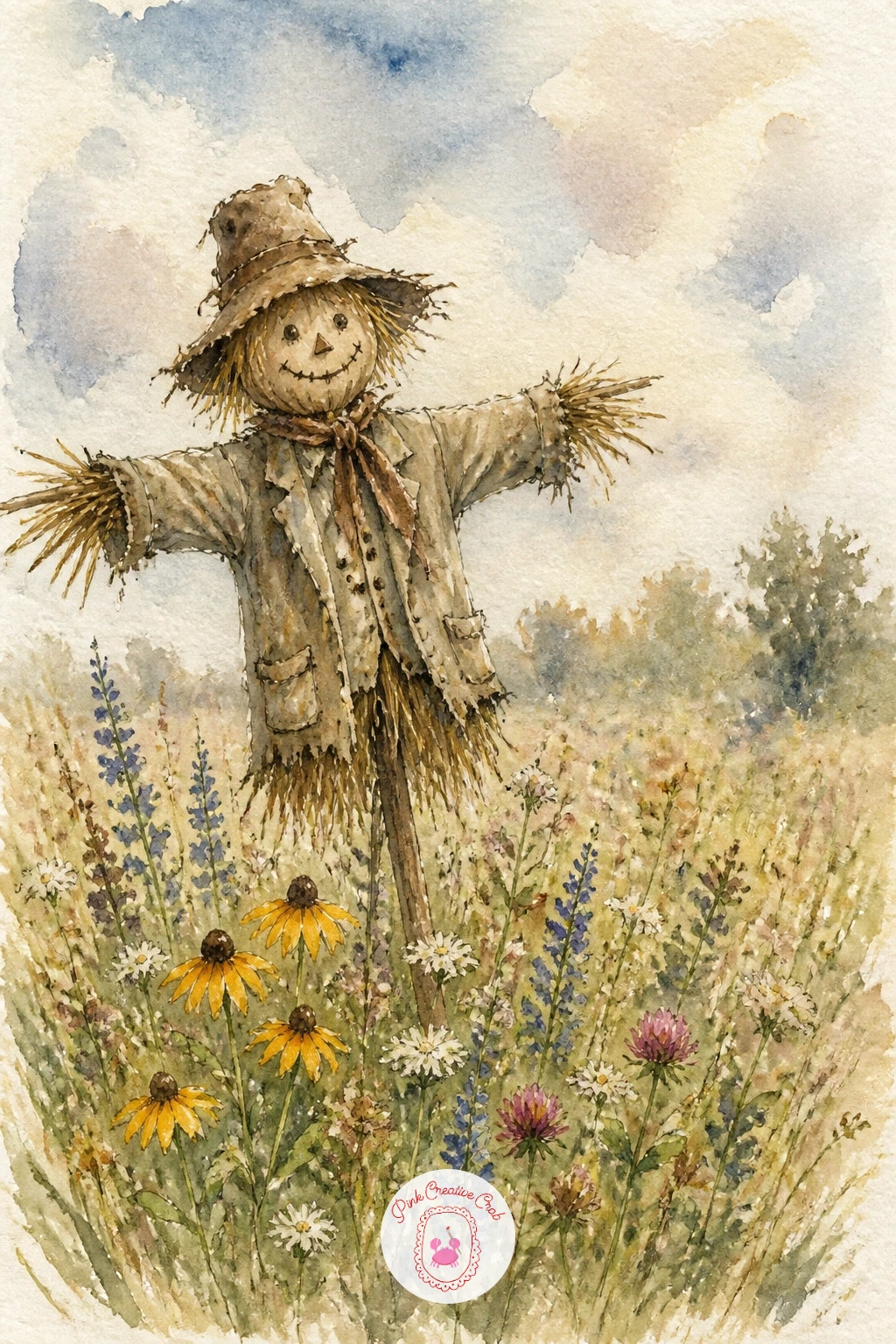
A scarecrow standing slightly crooked among wildflowers is a fun break from soft rounded shapes, all straight lines and patched fabric. Sketch a simple wooden cross for the frame first, then build loose clothing over it, a floppy hat, a shirt with a few patches, straw poking out at the wrists and collar.
Paint the field first and let it dry, then block in the clothing in muted earthy colors, keeping every edge slightly uneven since nothing about a scarecrow’s outfit should look neat or pressed. Add straw last with a fine dry brush in quick scratchy strokes poking out from the sleeves, neckline, and hat brim, which does more to sell the character than any amount of facial detail.
If the figure looks too stiff standing bolt upright, tilt the whole cross frame a few degrees off vertical and let one arm droop lower than the other, a scarecrow is meant to look a little worn out by the weather. This pairs nicely with the easy watercolor flowers for beginners if you want more wildflower shapes to surround it with.
Palette: Raw Sienna,Burnt Umber,Payne’s Grey,Sap Green
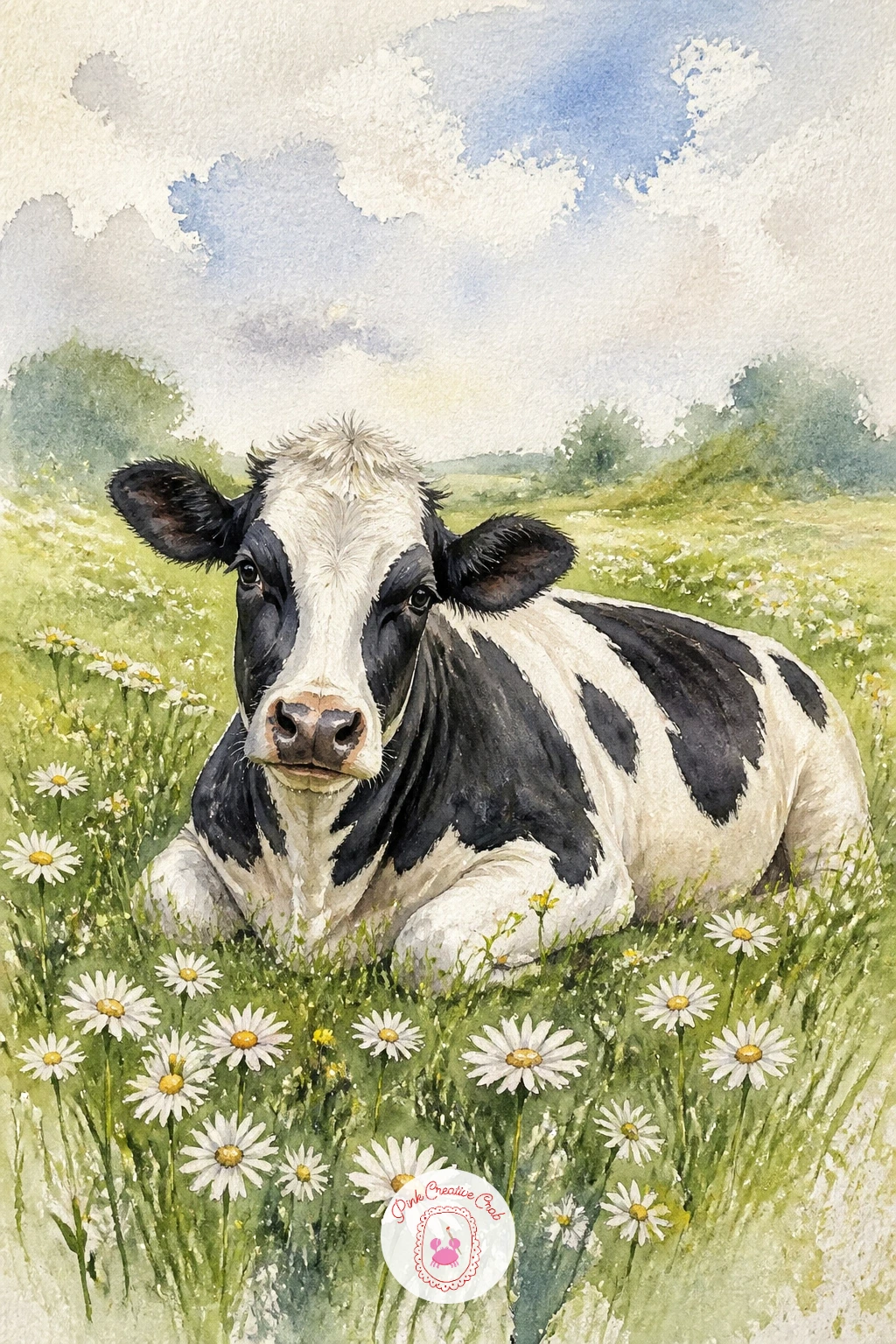
Picture a cow lying down in a bed of daisies, legs folded beneath it, chewing contentedly, which is a calmer and chunkier cousin of the resting sheep earlier in this list. Draw the body as a large blocky oval, broader and flatter than the sheep’s rounded one, with a wider head and visible ears on either side.
Paint the field and daisies first, then the cow’s body on top once dry, using a simple black and white or warm brown and cream patchwork, kept loose and irregular rather than symmetrical patches. Add shading only on the underside of the body and the folds where the legs tuck under, which grounds the whole shape onto the grass.
The spot to watch here is the head size: a cow’s head is noticeably larger and blockier relative to its body than most people expect, so measure it against the body width before committing to final paint, undersized heads are the most common mistake with this animal. Swap patches for a plain tan coat if black ink feels intimidating to place confidently.
Palette: Payne’s Grey,Titanium White,Raw Sienna,Sap Green
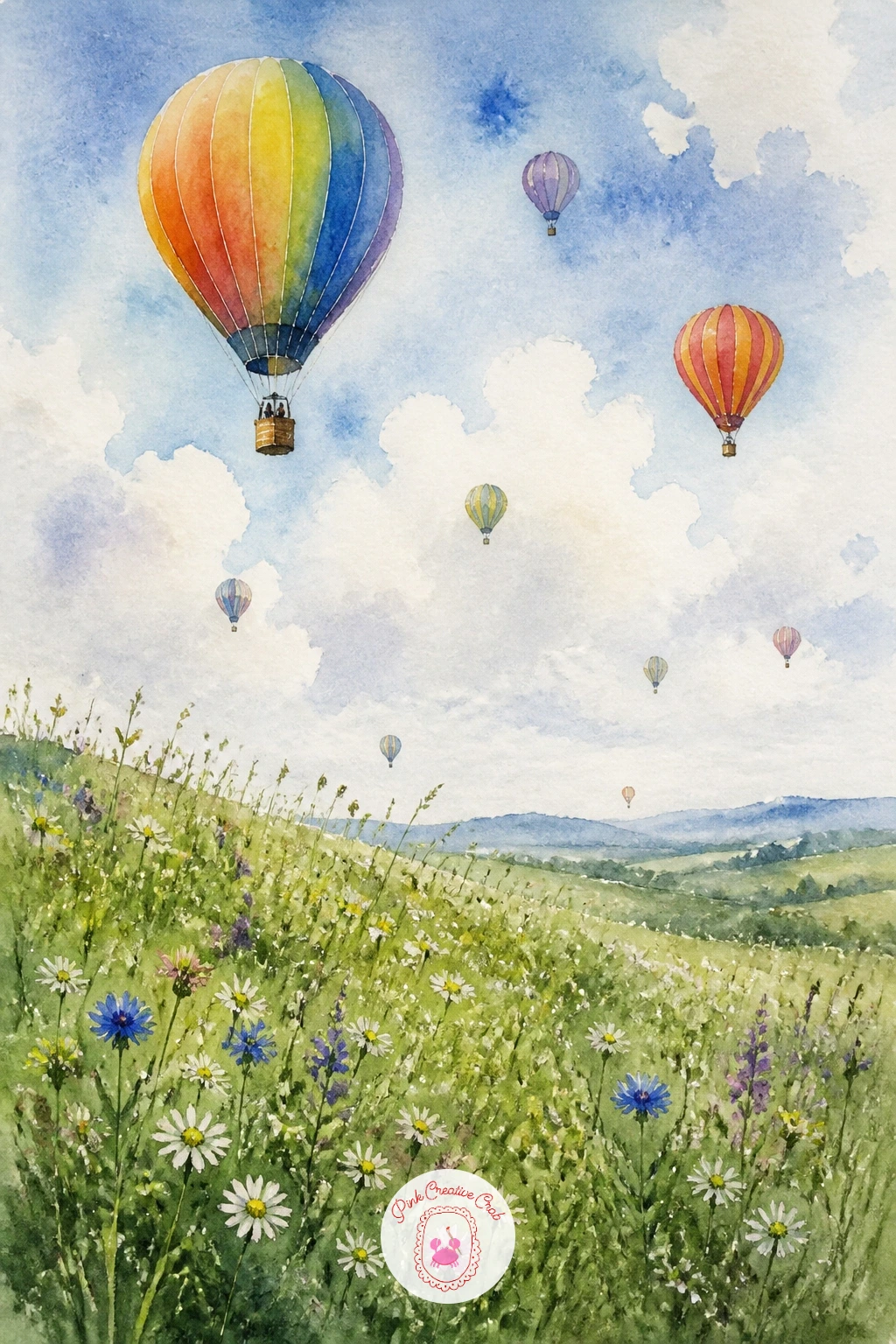
Lift the eye up from the grass entirely with a handful of hot air balloons drifting above the meadow. Sketch two or three balloon shapes at different sizes and heights to suggest distance, each a simple teardrop or onion shape with a tiny basket hanging below.
Paint the sky first in a soft wet-in-wet wash of blue and pale pink, then once dry, paint each balloon in bright flat colors, varying the palette between them so they do not compete, and add a few thin lines for the basket ropes with a fine liner brush. The meadow below comes last, kept simpler and slightly darker than the sky so the balloons stay the clear focal point.
Scale is the whole game here: the balloon closest to the viewer should be noticeably larger than the ones further back, and its basket ropes should be visible in more detail while distant balloons can lose their ropes entirely into a soft blur. For a simpler version next time, paint just one balloon large in the sky rather than a cluster of three.
Palette: Cerulean Blue,Cadmium Red,Cadmium Yellow,Sap Green
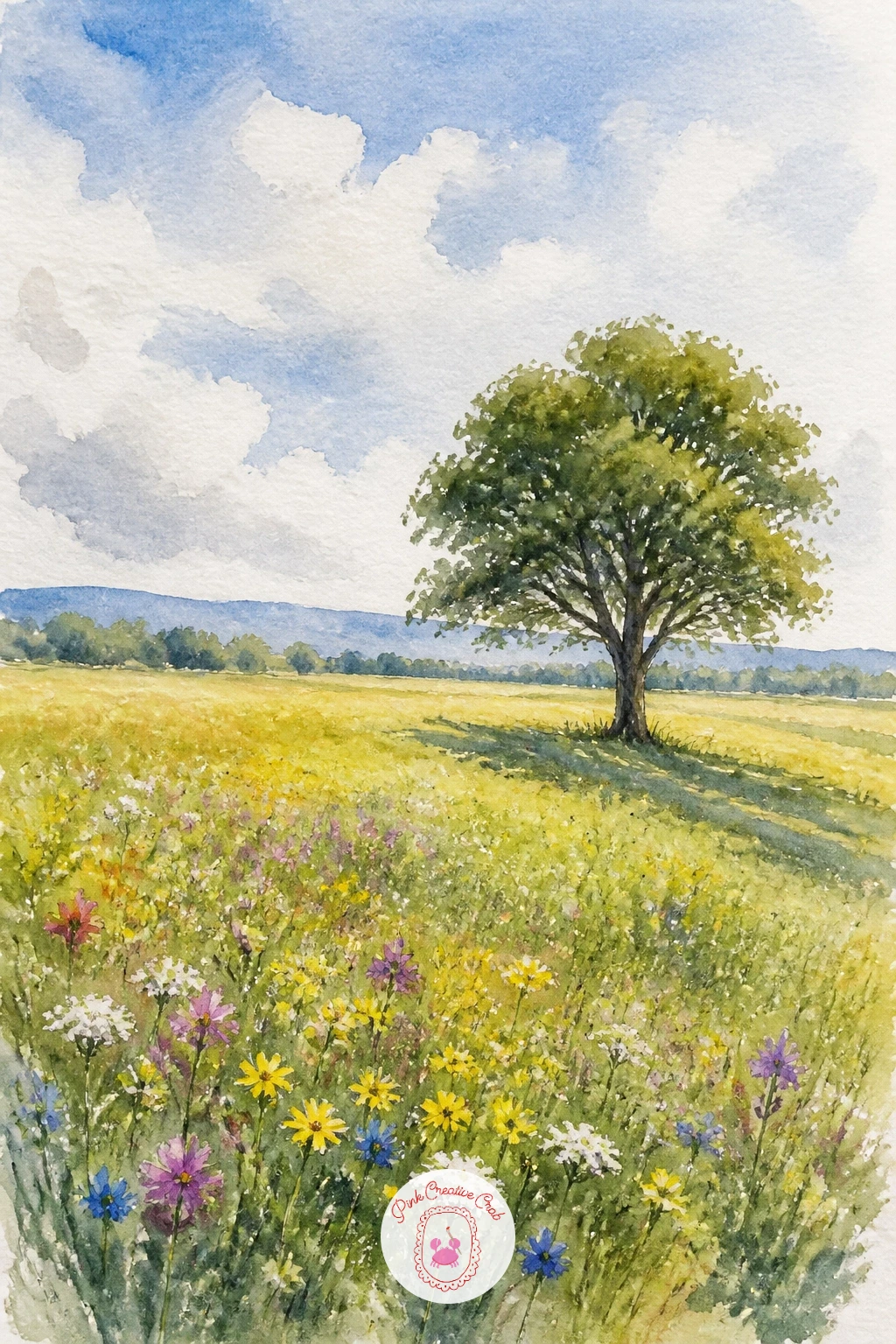
A single tree standing alone in an open meadow is a classic composition for good reason, it gives the whole page one clear focal point to build everything else around. Sketch the trunk slightly off-center, never dead in the middle, with branches spreading into a rounded or slightly irregular canopy shape.
Paint the canopy first using the wet-in-wet technique, dropping two or three greens into a wet shape so they merge into natural-looking variation rather than one flat blob, then let it dry fully before adding the trunk and branches in brown. Bring the meadow grass and scattered flowers in last, keeping them denser and more detailed near the base of the tree and looser toward the edges of the page.
If you have thirty extra minutes, add a long soft shadow stretching away from the tree across the grass, which instantly suggests a time of day and makes the whole scene feel like one specific moment rather than a generic field. Swap the single tree for two smaller ones leaning toward each other next time you revisit this composition.
Palette: Hooker’s Green,Sap Green,Burnt Umber,Payne’s Grey
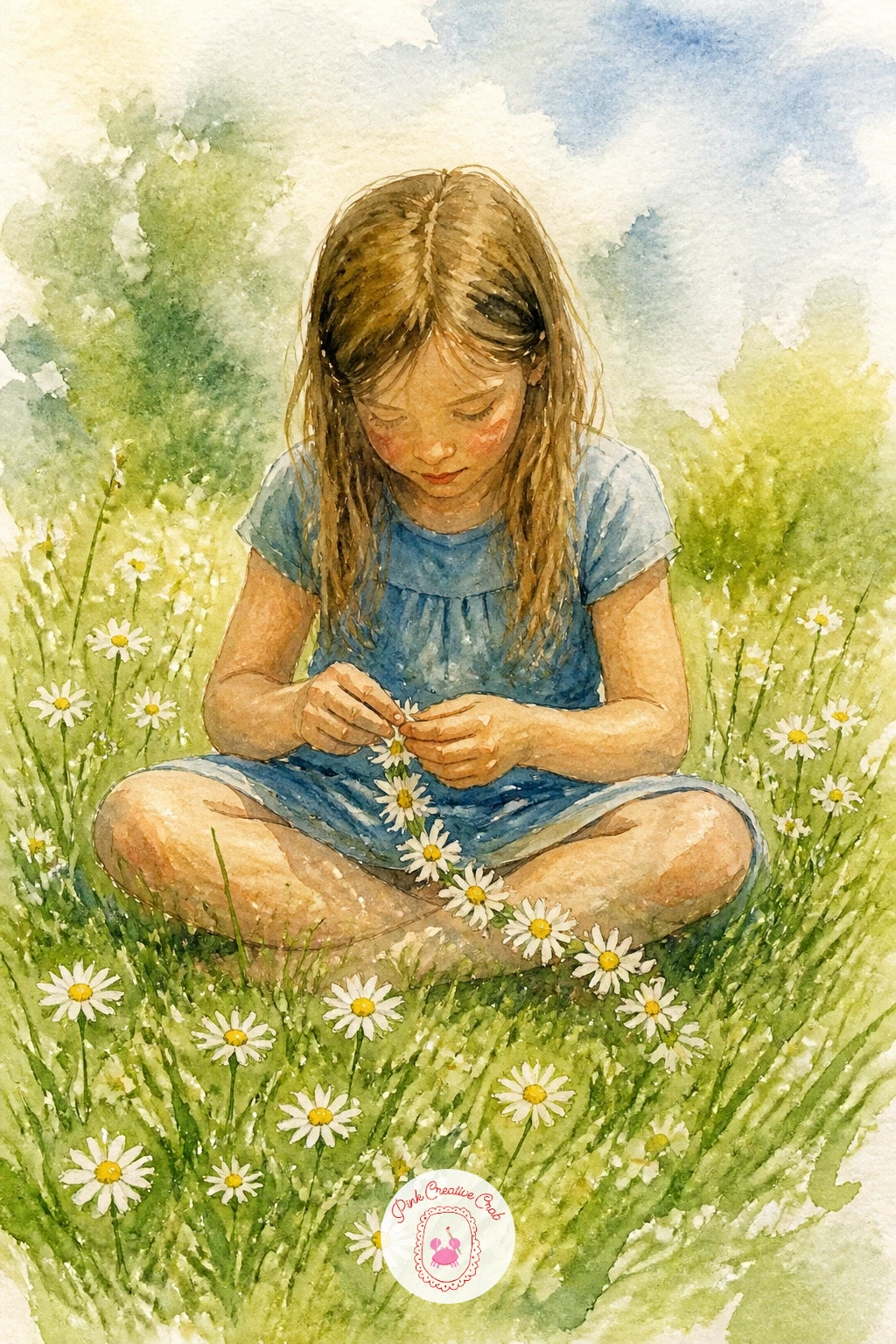
Return to a quiet human moment with a girl sitting cross-legged in the grass, head bowed slightly, threading daisies into a chain across her lap. Sketch the seated pose as a rounded triangle for the body with legs folded beneath, and a loosely bowed head and shoulders to suggest concentration.
Paint her clothing and hair first in flat color, then the meadow around her once dry, letting grass and loose daisies scatter across her lap and the ground beside her. The daisy chain itself is the last and smallest detail, a thin curving line of tiny white and yellow dots trailing from her hands, which is easiest to add with a fine brush or even a white gel pen once everything else is dry.
If the seated pose looks awkward, check that her knees sit wider than her hips and her head tips slightly forward, that small forward lean is what reads as focused rather than slumped. No gel pen for the daisy chain, tiny dots of masking fluid applied before painting and removed at the end leave the same crisp white dots.
You Will Need
- white gel pen
- masking fluid
Palette: Raw Sienna,Cadmium Yellow,Sap Green,Titanium White
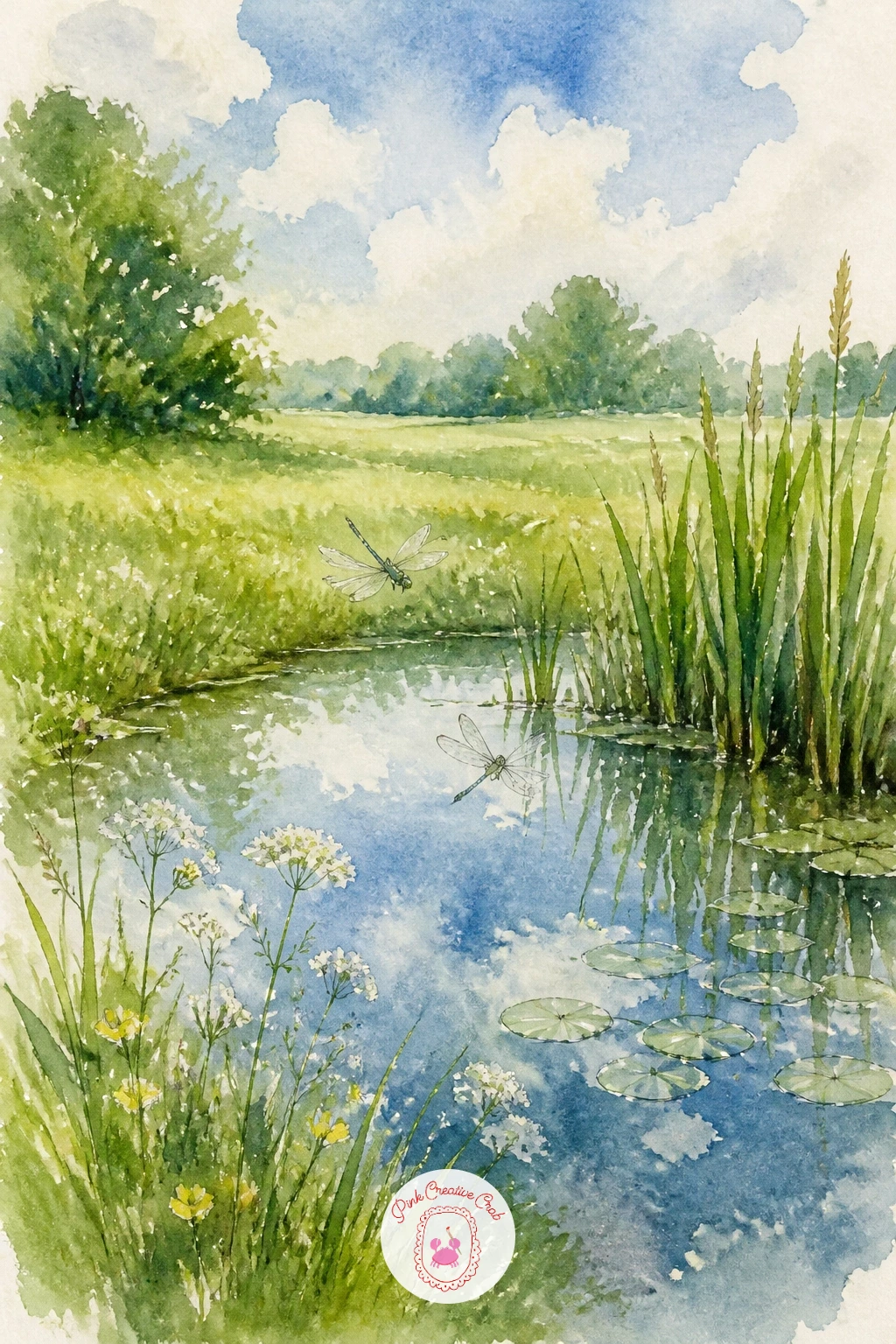
A small still pond tucked into the meadow gives you a chance to paint reflection, which is simpler than it sounds once you know the one trick. Sketch an oval or kidney-shaped pond with a thin band of reeds along one edge, and two or three dragonflies hovering just above the surface.
Paint the surrounding meadow first, then wet the pond shape and drop in the same colors as the sky above it, slightly muted, since a calm pond mostly mirrors what is above it rather than showing its own color. Flip your canvas mentally and paint any reflected shapes, like the reeds or a distant tree, upside down and slightly softer than the real object above the waterline.
Dragonflies go in last once everything else is dry, painted as a thin body and two pairs of nearly transparent wings, left mostly as faint washes or even just pencil-thin outlines so they catch light rather than weighing the scene down. Keep today’s tip close: a single horizontal line of slightly darker water right at the pond’s edge instantly reads as the waterline separating reflection from reeds.
Palette: Cerulean Blue,Hooker’s Green,Payne’s Grey,Sap Green
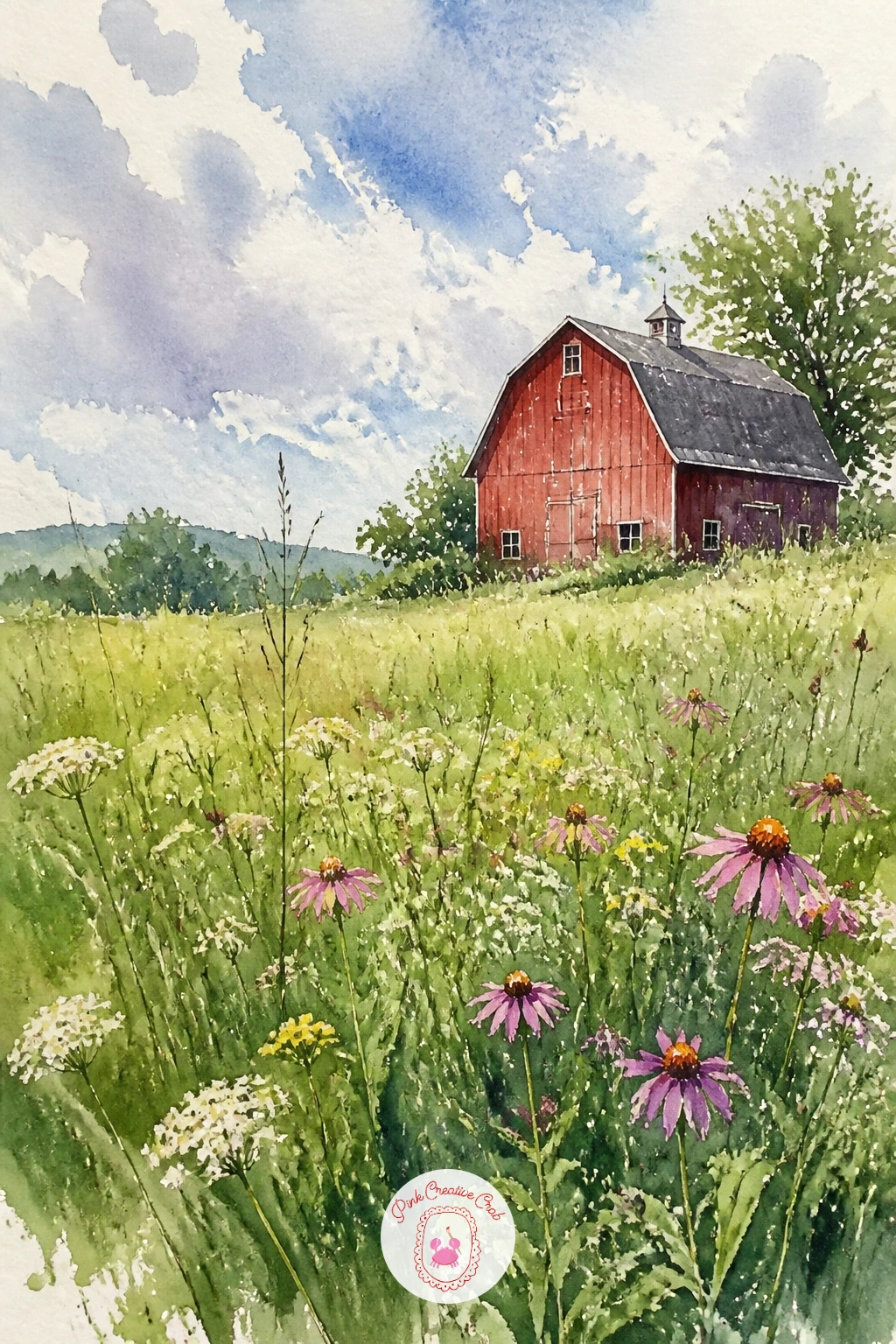
A classic red barn at the edge of the meadow gives you one strong warm shape to balance against all that green. Sketch the barn as a simple rectangle with a steep triangular roof, placed off to one side of the page rather than centered, with the meadow and flowers filling the rest of the space.
Paint the sky and field first in a loose wash, then once dry, block in the barn in a confident flat red, keeping the roof a contrasting dark grey or brown, and add a single dark doorway shape for scale. Bring the nearest grass and wildflowers forward last, letting a few tall stems overlap the very bottom edge of the barn so it sits inside the meadow rather than pasted on top of it.
If the barn feels flat, add one darker red stripe along the side facing away from your light source, a single shadow value is often all a simple building needs to feel three-dimensional. For more barnyard inspiration alongside this one, the farm animal watercolor ideas make a natural companion piece.
Palette: Cadmium Red,Payne’s Grey,Sap Green,Raw Sienna
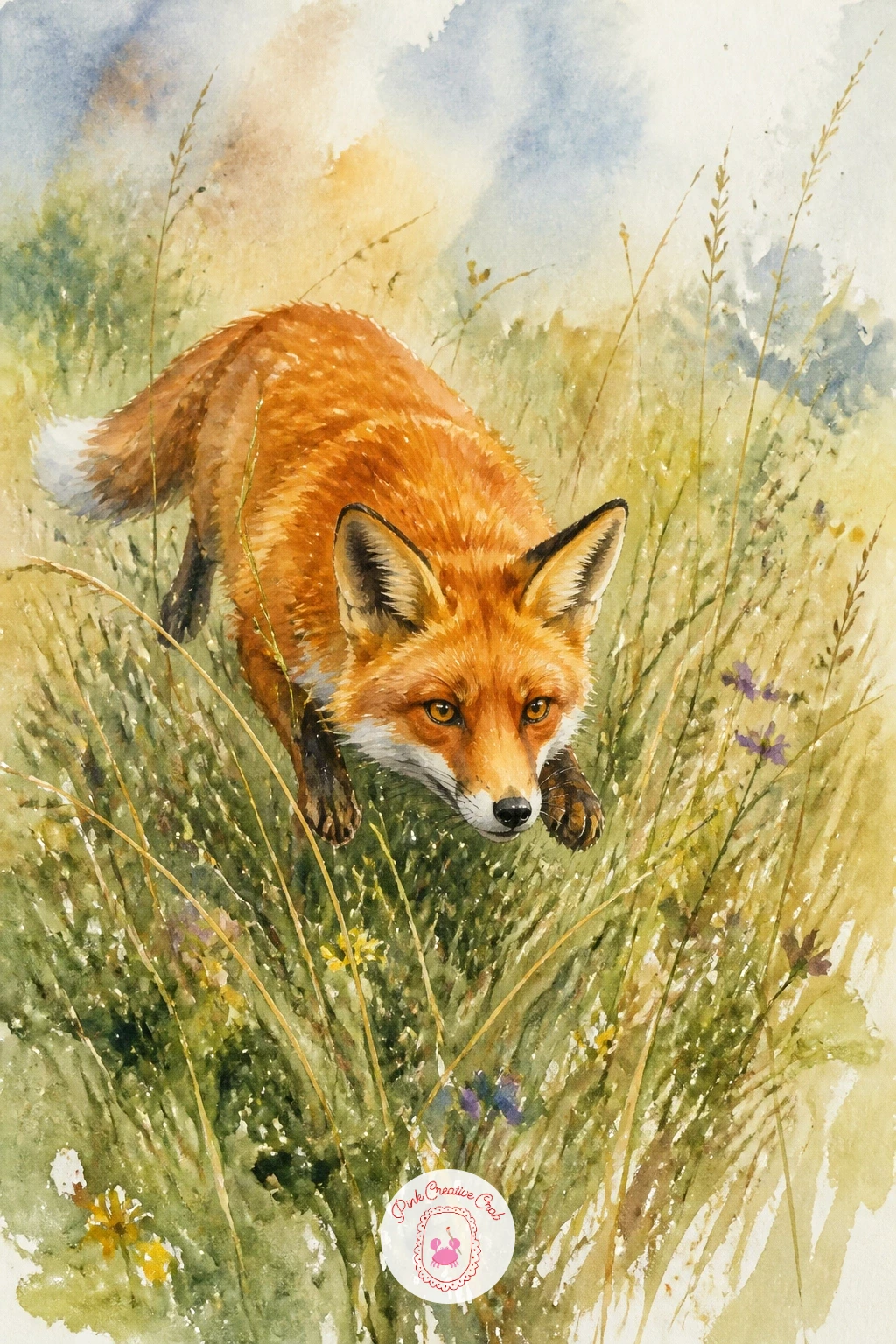
A fox frozen mid-pounce, ears forward and body low, brings a wilder energy into the meadow than any of the grazing or resting animals so far. Sketch the body stretched low and long, front legs gathered beneath, back legs extended, with a pointed alert face and a tail trailing out behind for balance.
Paint the grass background first, taller and slightly wilder looking than elsewhere in this list, since a fox usually hunts where the cover is thick. Paint the fox’s body next in bright orange-red, leaving the chest and chin white, then once dry add darker shading along the back and the black of the ear tips, legs, and tail end.
The texture trick here is lifting: once the orange base coat is dry, you can dampen a small brush and lift a few streaky highlights back out along the back and tail to suggest the direction of the fur, rather than painting every strand in. No orange on hand, mix red and yellow fresh on the palette for a warmer, more natural fox color than tube orange alone.
Palette: Cadmium Orange,Titanium White,Payne’s Grey,Sap Green
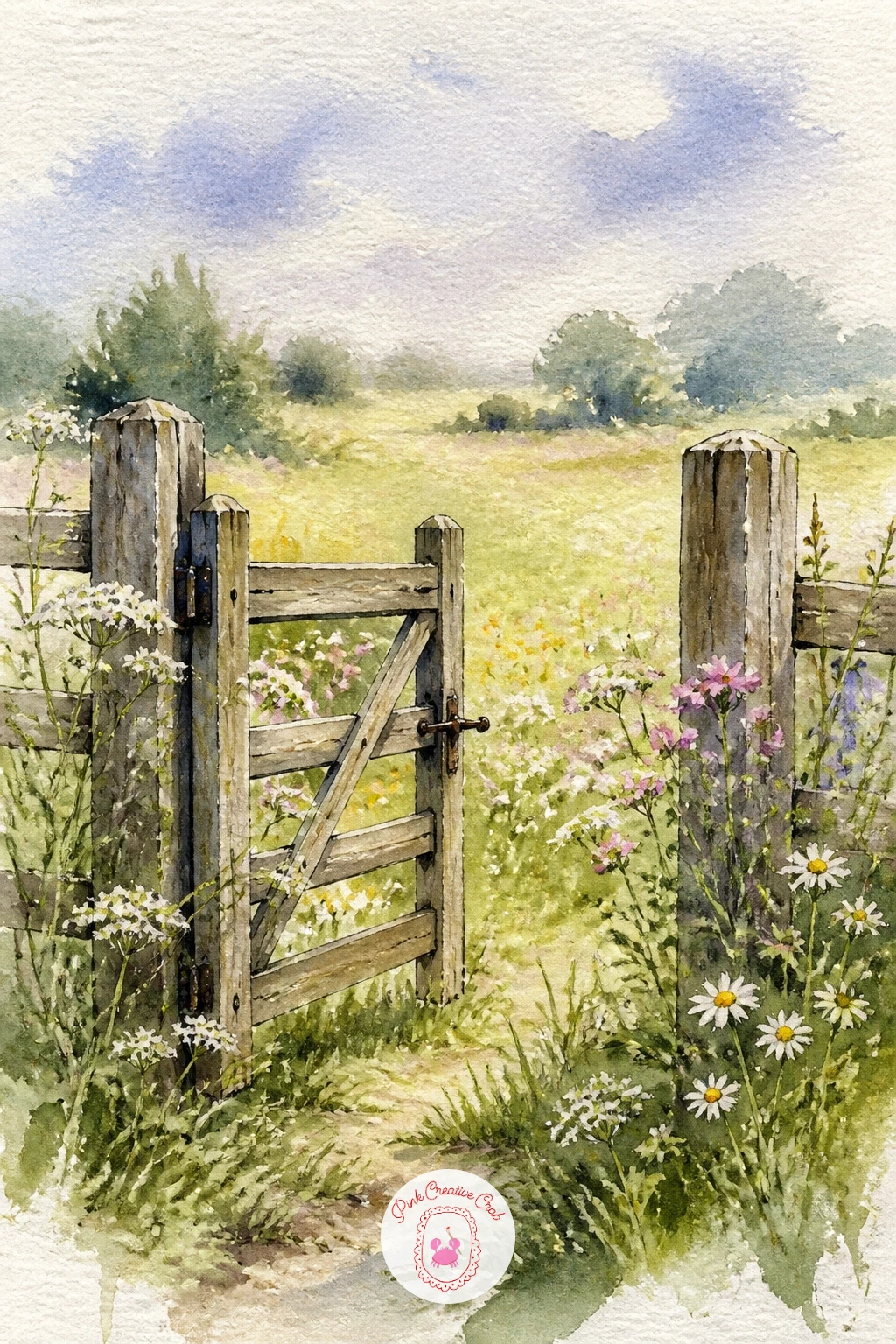
A simple wooden gate standing half open in the foreground, with the meadow spreading out beyond it, gives the whole painting a sense of invitation. Sketch two upright posts and a few horizontal rails between them, tilted slightly open rather than shut flat, with the meadow filling the rest of the page behind and around it.
Paint the distant meadow and sky first while the gate area stays dry or masked off, then once that background is finished and dry, paint the gate itself in weathered grey-brown with visible wood grain suggested by a few darker vertical streaks. Keep the gate’s edges the crispest, most detailed part of the whole painting, since everything beyond it should stay softer and looser by comparison to suggest distance.
This contrast between a sharp foreground object and a soft background is the real lesson of the piece: a single clear shape up close makes any amount of looseness behind it read as atmosphere rather than a mistake. No masking fluid to protect the gate shape while painting the background, simply paint the sky and field first and let it dry fully before carefully working the gate on top.
You Will Need
- masking fluid pen
Palette: Raw Umber,Payne’s Grey,Sap Green,Cerulean Blue
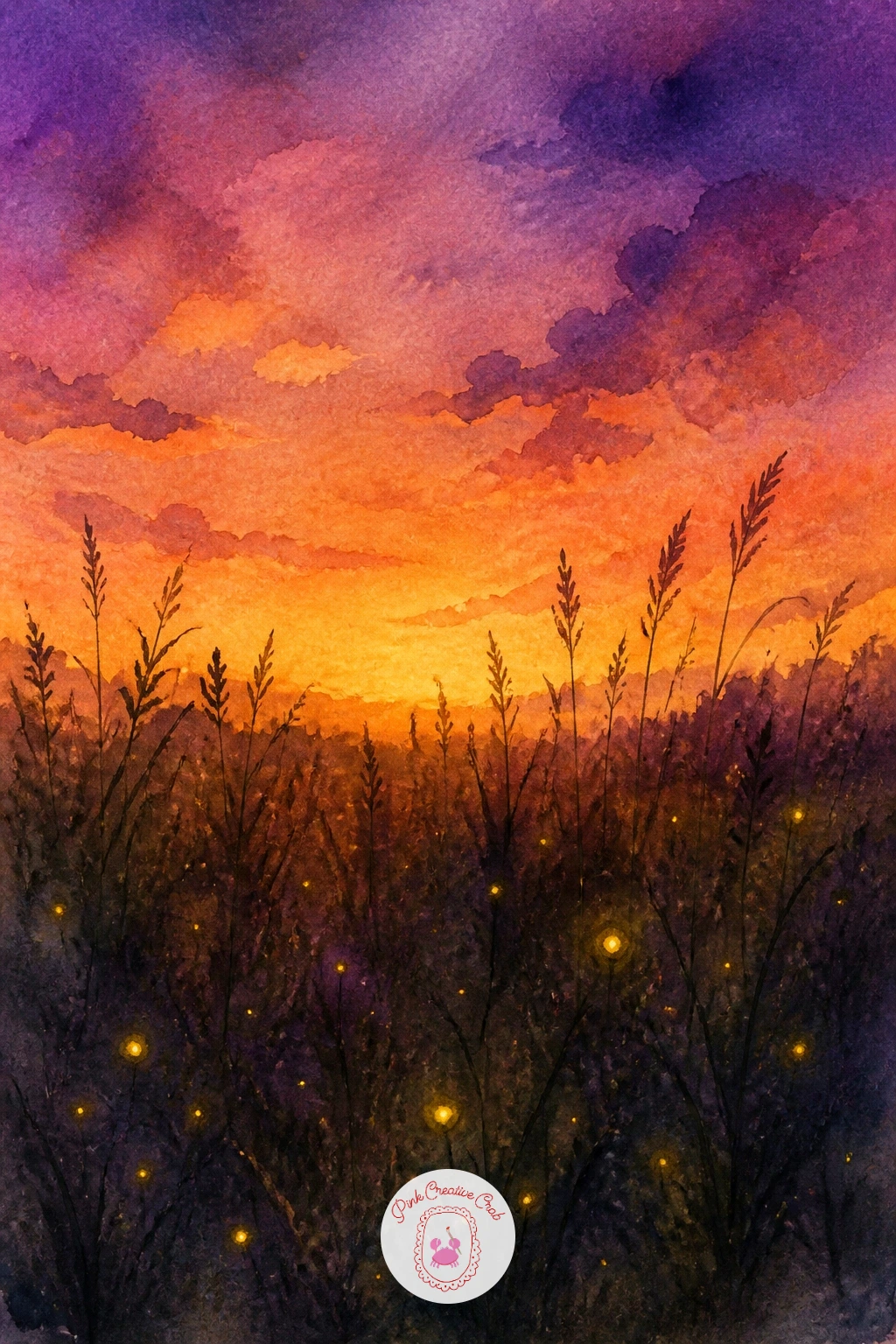
Fireflies drifting over the meadow as the sun sets give you an excuse to paint a warm glowing sky and a few tiny points of light scattered through the dark grass below. Sketch a simple low horizon with the sun sitting just above or behind it, and keep the foreground grass as loose dark silhouettes rather than detailed individual blades.
Paint the sky first in a wet-in-wet wash of orange, pink, and deep purple, working from light near the horizon to darker toward the top of the page, and let that dry completely before adding anything else. Paint the meadow below as one dark silhouette shape against that glowing sky, then once fully dry, add fireflies as tiny dots of masking fluid removed at the end, or simply dots of white gouache dabbed on last with the tip of a small brush.
The light direction rule matters most here: everything in the foreground should sit darker in silhouette against the brightest part of the sky, resist the urge to add detail to the grass since its whole job is to stay simple and let the sky do the work. Swap fireflies for a few stars if you would rather paint a slightly later, darker version of the same scene next time.
You Will Need
- white gouache or masking fluid
Palette: Cadmium Orange,Quinacridone Pink,Dioxazine Purple,Payne’s Grey
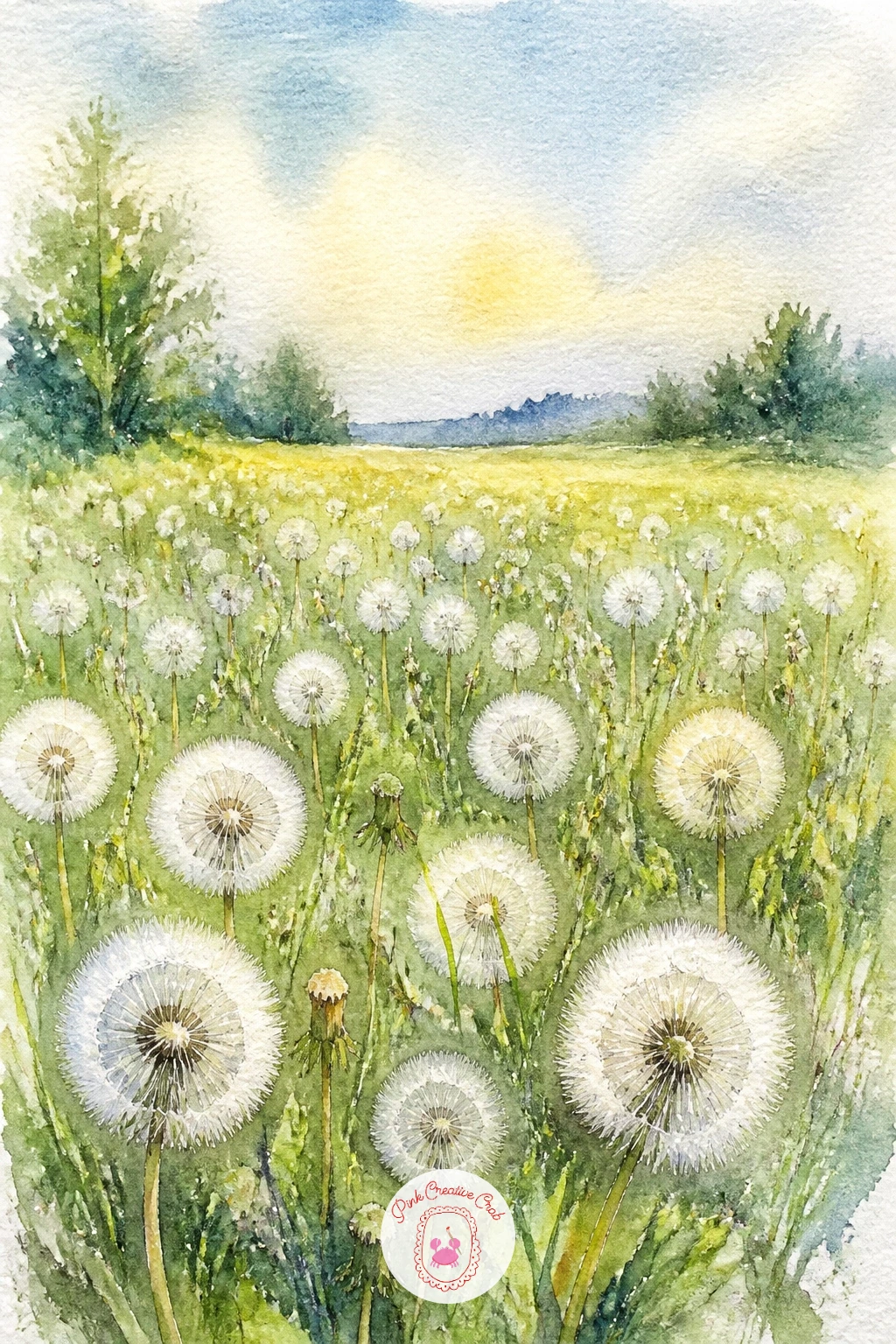
A whole field of dandelion clocks catching the light is one of the dreamiest subjects on this list, and it rewards a loose hand more than almost any other idea here. Sketch just a handful of dandelion positions lightly in pencil, scattered at different heights and distances, rather than planning every single one.
Paint the field and sky wash first and let it dry fully, then for each dandelion, paint a tiny green stem and use the tip of a round brush or an old splayed toothbrush to flick tiny dots of white gouache outward from a small central point to suggest the seed head. Keep the closest dandelions larger and more detailed with visible individual seed dots, while distant ones can be just a soft pale smudge.
If the seed heads look too neat and round, flick a few stray dots further out than the rest, real dandelion clocks are never perfectly symmetrical and the imperfection is what sells it. A toothbrush loaded with thin white paint and flicked with your thumb gives a wider, more natural spray than a brush alone.
You Will Need
- toothbrush for splatter
- white gouache
Palette: Sap Green,Titanium White,Payne’s Grey,Raw Sienna
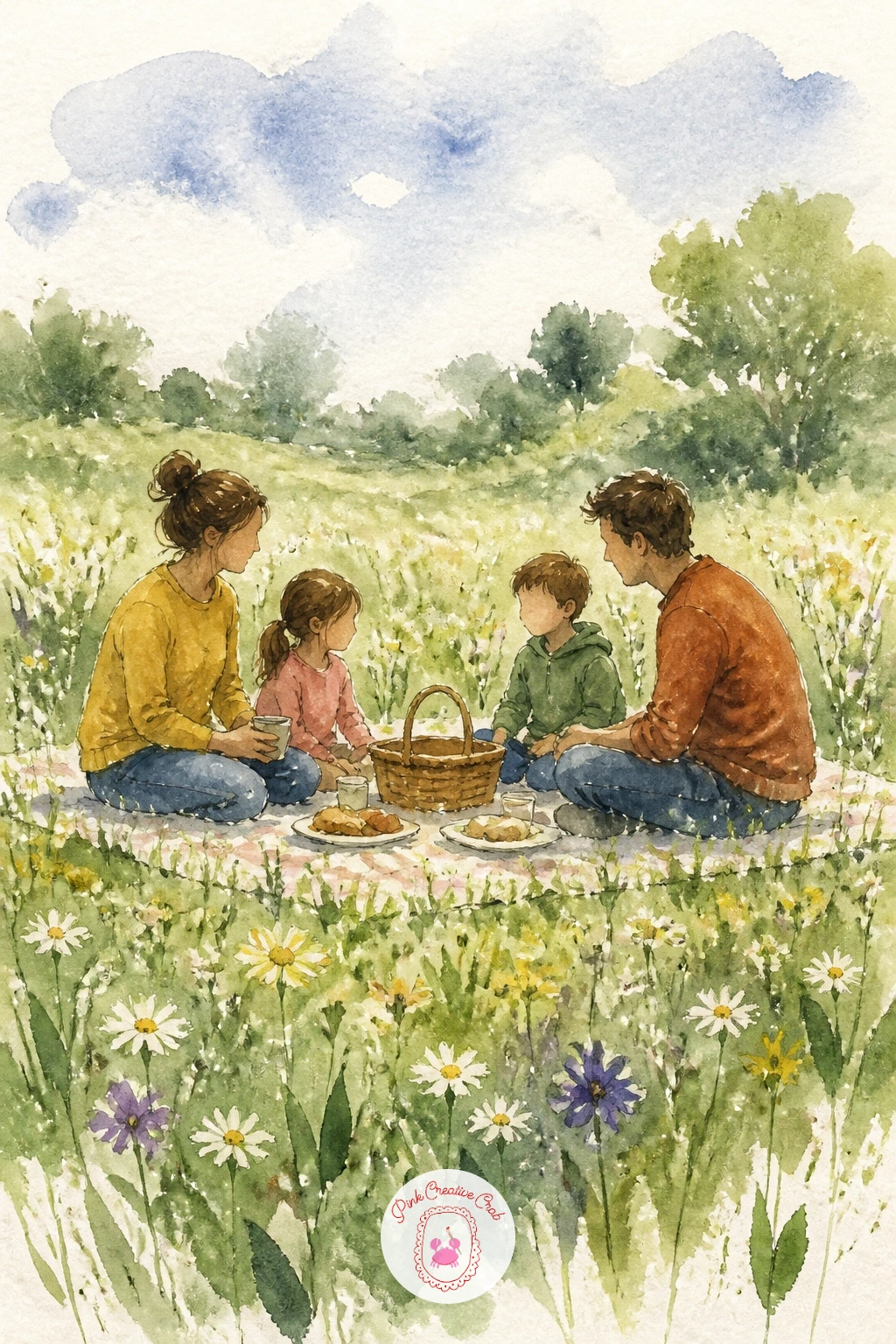
Expand the earlier picnic blanket idea into a fuller scene by adding a small family seated around it, two adults and a child perhaps, scattered loosely rather than posed formally. Keep every figure extremely simple, rounded bodies, no faces, just enough shape and color to suggest who is sitting, kneeling, or reaching for food.
Paint the meadow and blanket first, then the figures on top once that base is dry, using flat blocks of color for clothing and keeping limbs loose and slightly overlapping each other, since real groups of people never sit in a tidy row. Add small picnic details last, a basket, a few scattered plates or cups, painted as the smallest and simplest shapes in the whole piece so they do not compete with the figures.
If the group looks stiff, vary the height of each figure’s head rather than lining them up evenly, a natural picnic scene has heads at slightly different levels depending on who is sitting, kneeling, or leaning back. For more layered scene ideas with figures and props together, the summer watercolor painting ideas are worth a look.
Palette: Cadmium Red,Raw Sienna,Cerulean Blue,Sap Green
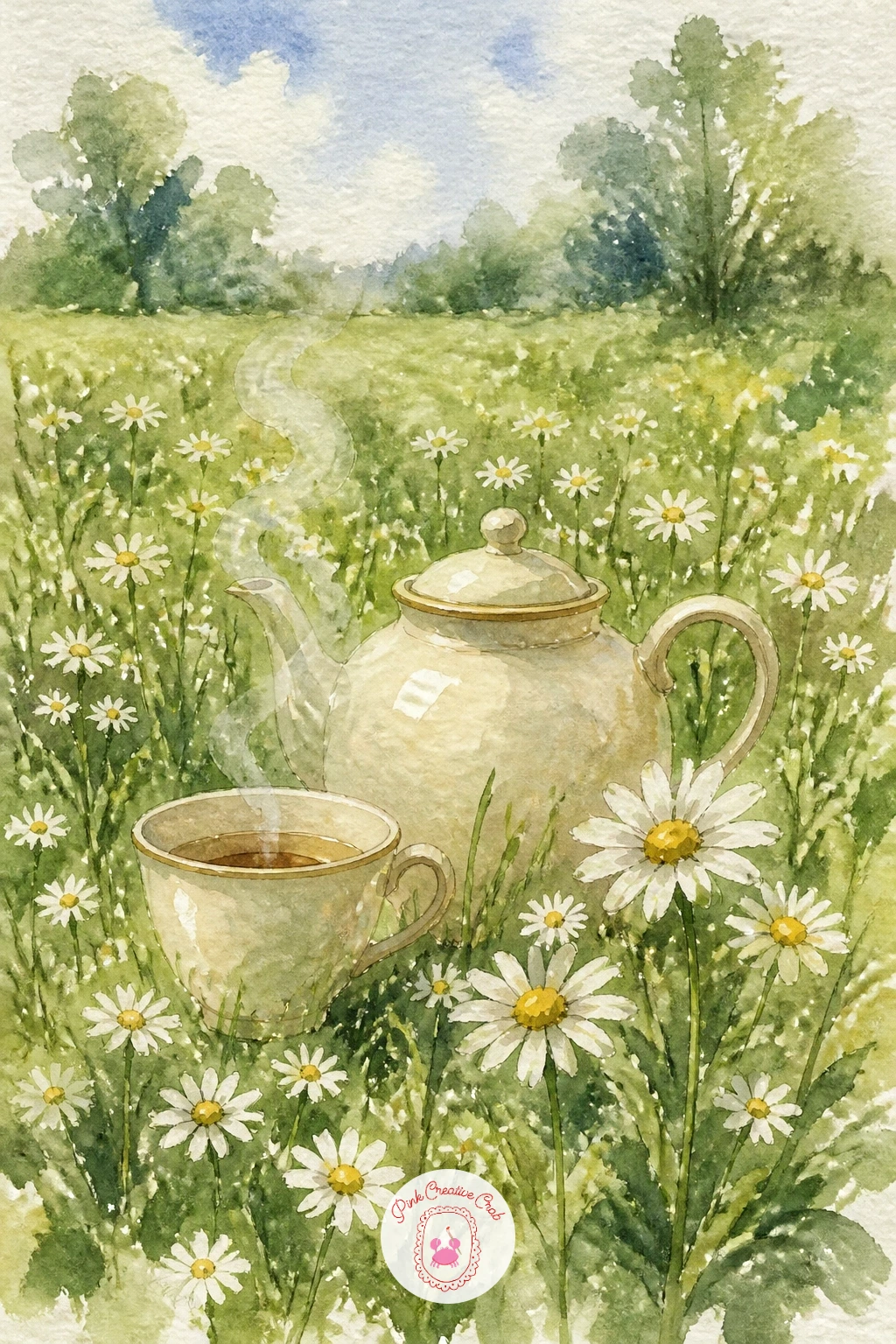
Bring a cozy still-life touch into the meadow with a teapot and a cup set down in the grass beside a cluster of chamomile flowers. Sketch the teapot as a simple rounded body with a curved spout and handle, sitting slightly tilted in the uneven grass rather than perfectly level.
Paint the meadow and chamomile first, the little white daisy-like flowers with yellow centers scattered loosely around where the teapot will sit, then once dry, paint the teapot in flat cream or soft blue with a single darker shadow line along its lower edge to seat it in the grass. Add a thin curl of steam rising from the spout last with the faintest wash of grey, barely more than a suggestion, which gives the whole scene warmth without any literal detail.
If the teapot looks like it is floating above the grass rather than sitting in it, paint a few blades of grass overlapping its base after the teapot has fully dried, that overlap is what grounds any object into a meadow setting. No chamomile reference at hand, chamomile is simply a smaller, more delicate daisy, so borrow the same white-petal, yellow-center approach from the daisy ideas elsewhere in this list.
Palette: Titanium White,Cadmium Yellow,Cerulean Blue,Sap Green
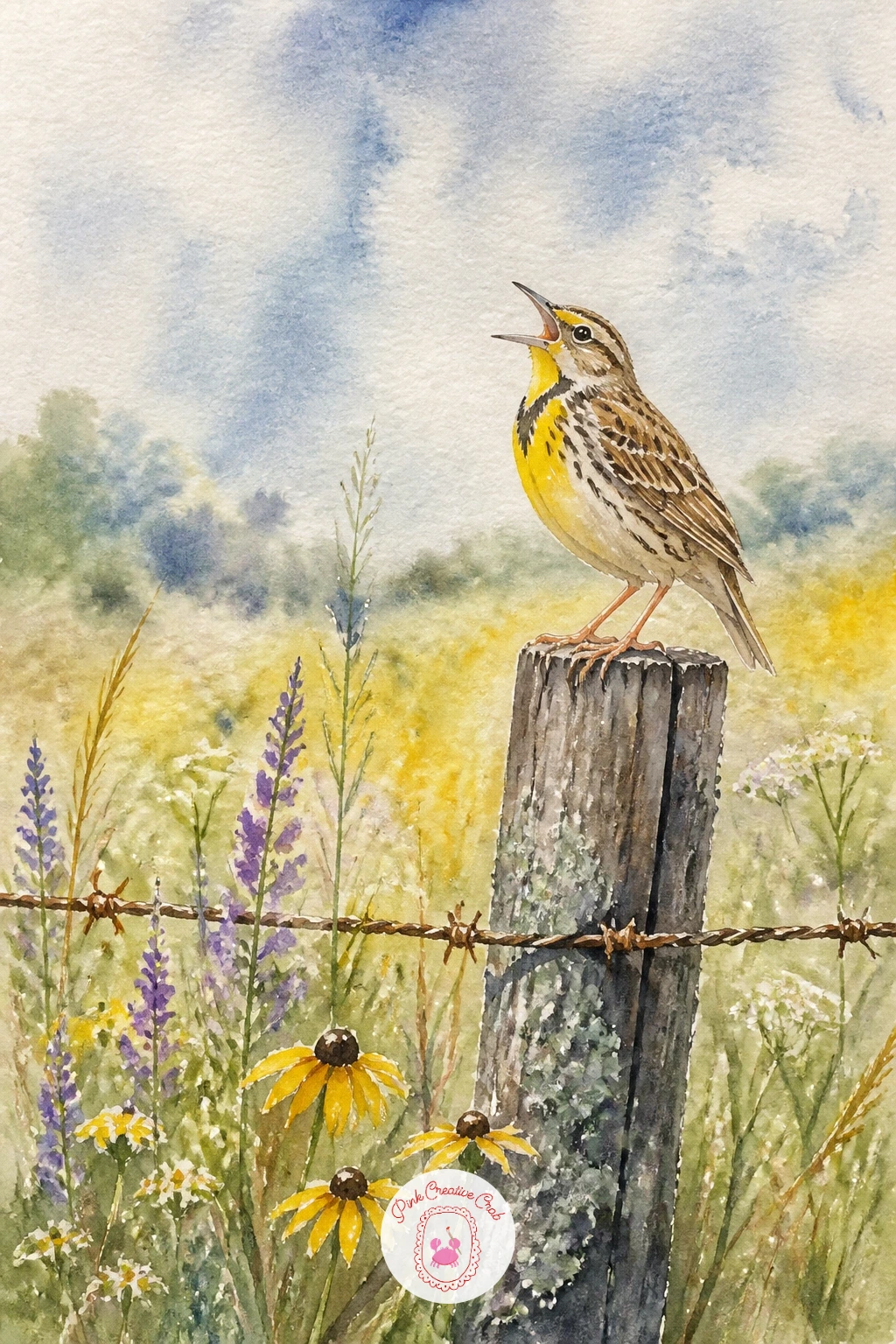
A small bird perched on a weathered fence post with its beak lifted gives you a focused subject that still fits naturally into the wider meadow setting. Sketch the post first as a simple narrow rectangle with a slightly rough, angled top, then the bird as a rounded body with a small lifted head and tail pointing down.
Paint the meadow background in a loose wash and let it dry, then paint the fence post in flat grey-brown with a few darker vertical streaks for wood grain, keeping its edges the crispest shapes in the painting. Paint the bird last in whatever color feels cheerful, a simple round body in one main color with a lighter belly, a small dark eye, and a few quick strokes for the open beak and lifted tail feathers.
Proportion is worth a quick check here: a small songbird’s head is roughly the same size as its body width, not a tiny dot on a large oval, measure before you paint the final layer so it does not end up looking like the wrong species entirely. If fence posts feel fiddly, swap it for a simple garden stake, the same crisp vertical shape does the same job.
Palette: Raw Umber,Cerulean Blue,Cadmium Orange,Sap Green
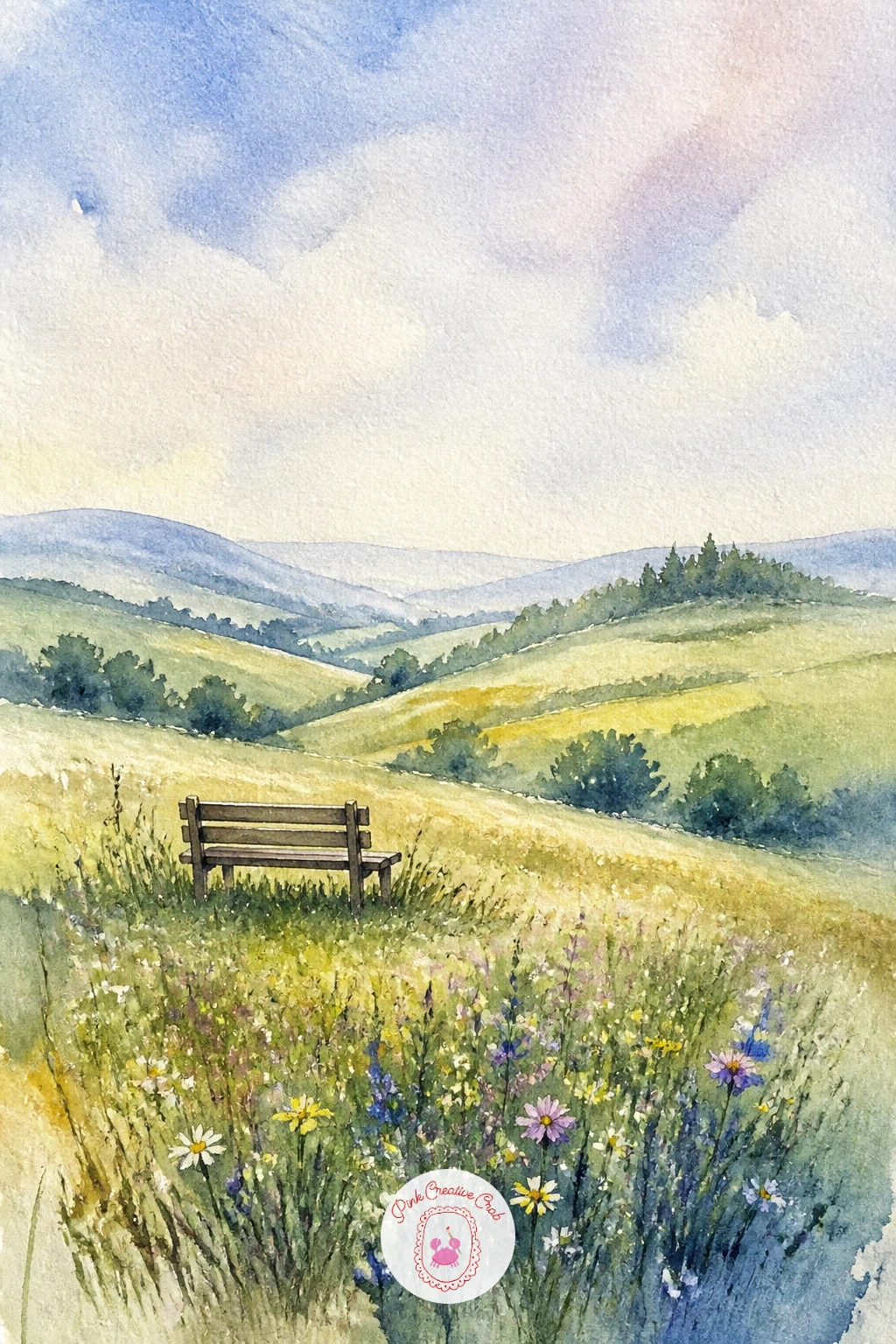
Close the whole collection out with a simple wooden bench set in the meadow, facing away from the viewer toward an open view of rolling flower-covered hills. Sketch the bench low and small in the lower third of the page, angled slightly so you see its back and one armrest, with the meadow and hills opening up widely behind and beyond it.
Paint the distant hills and sky first in a soft wet-in-wet wash, layering two or three pale colors so the furthest hill is the palest and coolest, then let that dry before painting the nearer meadow in stronger, warmer greens. Paint the bench last in simple flat brown with one darker shadow side, keeping it small in the frame so the view beyond stays the real subject of the piece.
This is the gentlest way to end a meadow collection: an empty bench facing a view invites the viewer to imagine sitting there themselves, so resist adding a figure if you want that quiet, restful feeling to stay intact. If you have enjoyed working through a whole series like this, the watercolor garden paintings for summer make a natural next project.
Palette: Sap Green,Cerulean Blue,Burnt Umber,Quinacridone Pink
What to Do Next
Pick one idea that matches the mood you are after today, pin a reference nearby, and tape down a sheet of cold press paper before you start. Begin with the sky or background wash while your brush is fullest and work toward the smallest details last, that order alone will carry you through almost every meadow on this list.
Frequently Asked Questions
What watercolor paper works best for a watercolor meadow scene?
Cold press paper at least 140lb works best for a watercolor meadow scene, since it holds enough water for wet-in-wet skies and grass without buckling or pilling under repeated washes.
How do you paint realistic looking grass in watercolor?
Load the brush tip with dark green, hold it nearly flat to the paper, then pull upward in short quick flicks of varying length and angle, rather than painting grass as a solid flat shape.
What colors make a good watercolor meadow palette?
Sap green and yellow ochre form the meadow base, with small bright touches of red, pink, blue, or yellow for flowers, plus Payne’s grey for shadow, which keeps the whole scene warm and cohesive.
How do you stop watercolor flowers from looking like blobs?
Paint flowers in two layers rather than one: a loose light base color first, then small distinct petal or center marks added once that base is fully dry, which keeps the shapes readable.
Can beginners paint a watercolor meadow without drawing skills?
Yes, most meadow subjects start from simple ovals, curves, and loose scattered dots, so light pencil guidelines and a few practice flicks of the brush are enough to get a confident result.
Have any thoughts?
Share your reaction or leave a quick response — we’d love to hear what you think!
-
 0
-
0
-
0
-
0
-
0
-
0


