A movie theater drawing gives you everything a painter loves about buildings without the fuss of a whole street scene: strong shapes, warm light, a little bit of glamour. One marquee, one row of seats, one ticket booth, and you already have a composition that fills the page and tells a story.
Below are 34 scenes built around the cinema as a place, old and new, inside and out. Work through them in any order, keep the marquee panels blank so nothing dates the picture, and treat each one as a finished gouache piece you can start and finish today.
Using these images: free for personal projects such as printing, coloring, cards, journals and gifts. Handmade items that include them may be sold up to 30 pieces per design. More than that is commercial use and is not permitted, and neither is selling or sharing the images themselves or passing them off as your own. Please ask before any other use.
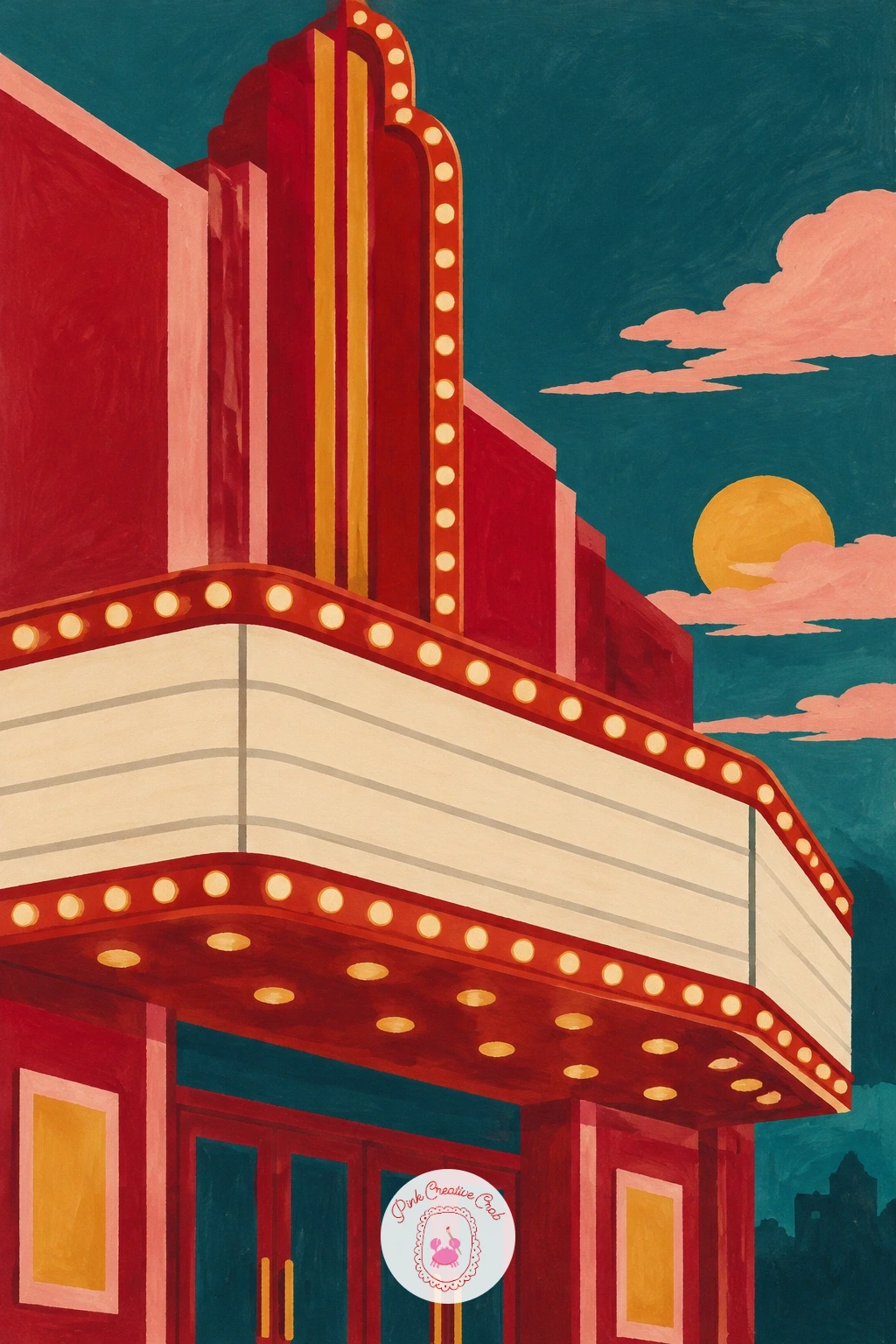
Start the whole set with the marquee itself, lit up at dusk with the sky gone soft teal behind it. Block the building shape first in flat mustard or cream, then mask off the panel edges with tape so the bulb strip and the blank letter panels stay crisp when you paint over them. Leave the panels empty, just flat cream rectangles, so the sign reads as a marquee without any text to date it.
Paint the sky before the building details so the warm bulbs have something cool to glow against. A dry brush loaded with a little white, dabbed in a row, gives you quick round bulbs without drawing each one by hand. If the bulbs look too even, nudge a few off the grid.
Work the building front last, in cherry red or deep teal, keeping edges straight with the tape still down. For a quicker version, skip the people and cars and let the marquee fill the whole page on its own.
Pull the tape while the paint is dry but not fully cured, and lift it slowly at a low angle so it does not tear the edge.
You Will Need
- low tack masking tape
Palette: Mustard Yellow,Deep Teal,Cherry Red,Cream
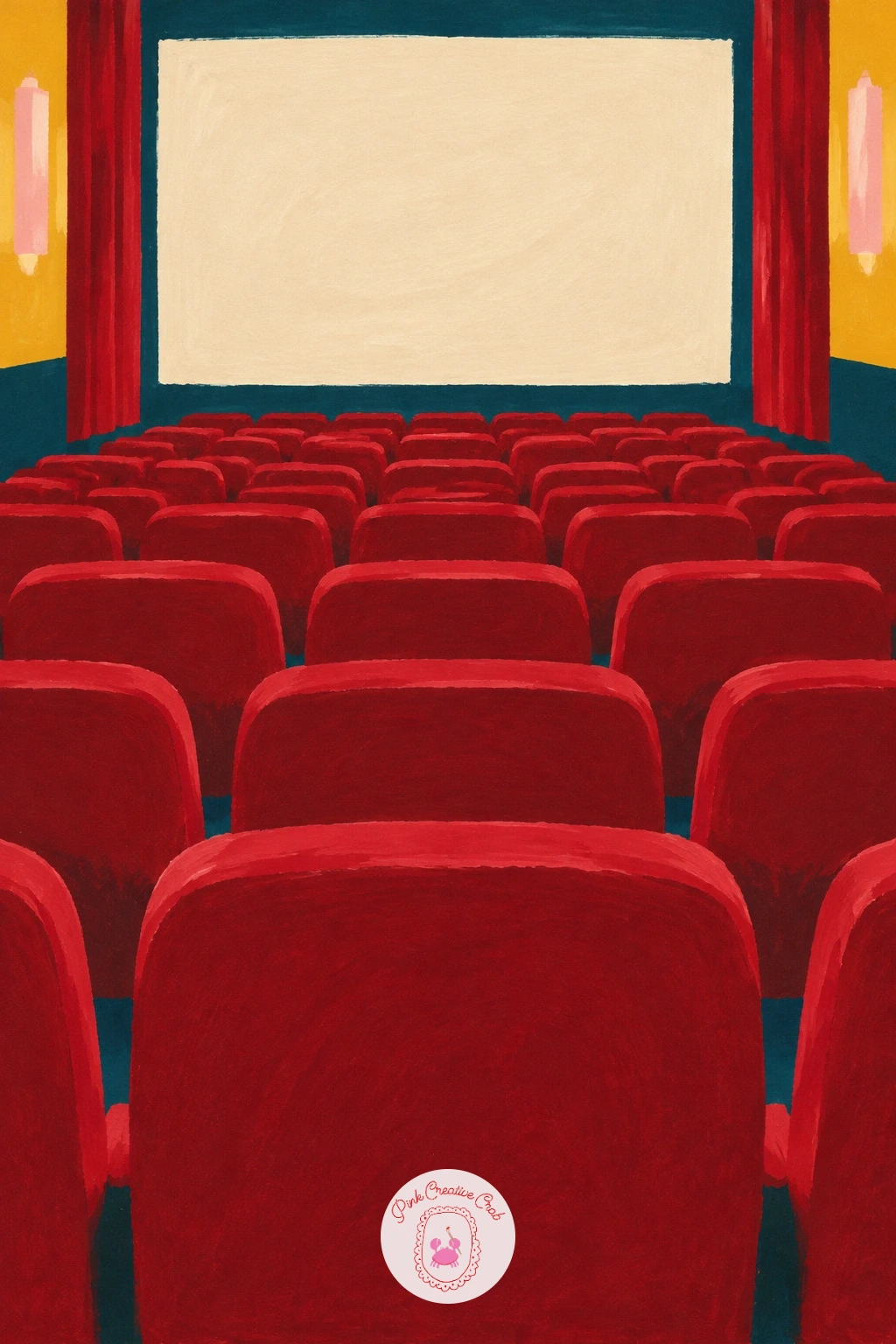
Rows of red velvet seats make a strong subject because the repetition does the composition for you. Rule a light pencil grid first, just a few horizontal guides for the seat backs and a vanishing point if the rows curve toward a screen, so the repeat stays even as it goes back in space. Paint the nearest row largest and most detailed, then let the back rows shrink and simplify.
Measure the width of the first seat against your thumb and use that same unit to judge how fast the rows should narrow, rather than guessing. This single comparison keeps the perspective from collapsing or stretching unevenly.
Block the velvet in flat cherry red first, then drop a slightly darker red into the gaps between seat backs to carve the rows apart without outlining every one. Keep the aisle and floor in a muted warm tone so the red stays the star of the page.
If straight rows feel stiff, try a gentle curve for your next attempt and see how the same trick still holds the depth together.
Palette: Cherry Red,Maroon,Warm Cream,Charcoal Grey
Move from the seats to the snack counter, where the striped popcorn machine gives you an easy focal shape. Paint the machine’s glass case as one simple dome, then add the red and cream stripes on the roof with a ruler-straight brushstroke rather than freehand wobbles. Build the counter front in a flat mustard panel underneath, with paper popcorn buckets lined along the top as small cream and red triangles.
Place the popcorn machine slightly off center rather than dead middle, since a counter scene reads more naturally with the main shape sitting a little to one side and the buckets balancing the other.
Paint the popcorn kernels last, as small irregular dabs of pale yellow, and resist making every piece the same size. A few larger clumps near the top of each bucket read more convincingly than an even scatter.
No striped roof reference on hand: a plain red dome with a cream base still reads clearly as a popcorn machine.
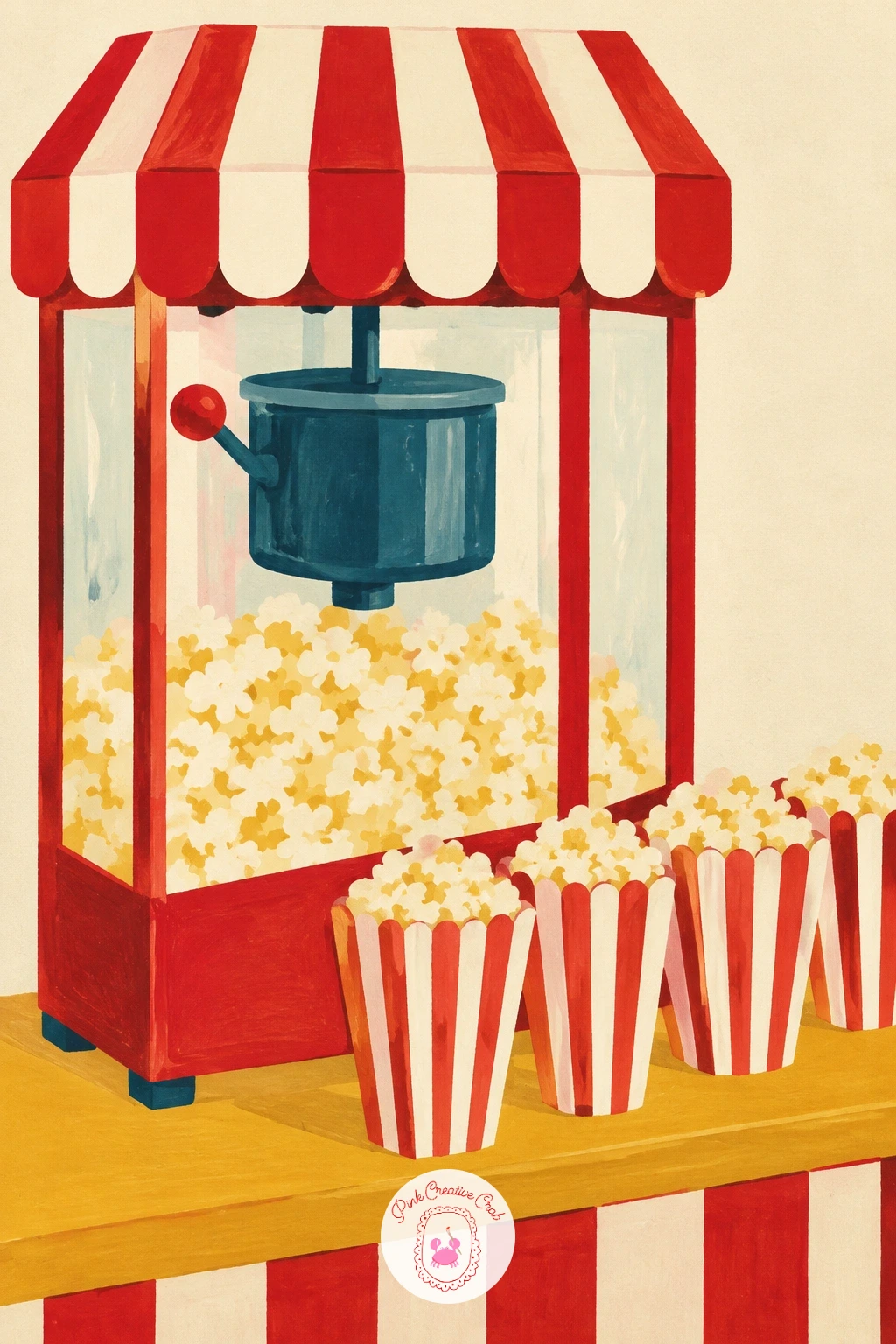
Palette: Mustard Yellow,Cherry Red,Cream,Pale Yellow
A ticket booth works as a small, satisfying shape on its own, almost like painting a tiny building. Draw the booth as a simple box with a rounded top, cut the round ticket window as a clean circle, and leave a thin brass bell shape hanging beside it. Paint the booth body in deep teal first, then the window glass in a pale cream with a soft grey shadow curve to suggest the glass catching light.
Picture the booth lit from one side, likely by its own interior bulb at dusk, and let that side of the roof and window glow warmer while the opposite side drops into a cooler shadow tone. This single light decision gives the small booth real presence.
Paint the brass bell with a tiny dry brush highlight to suggest polished metal without fussy detail. Keep the surrounding pavement loose and simple so the booth stays the whole point of the page.
Finish with one warm bulb glow painted just outside the window edge to pull the eye straight to the booth.
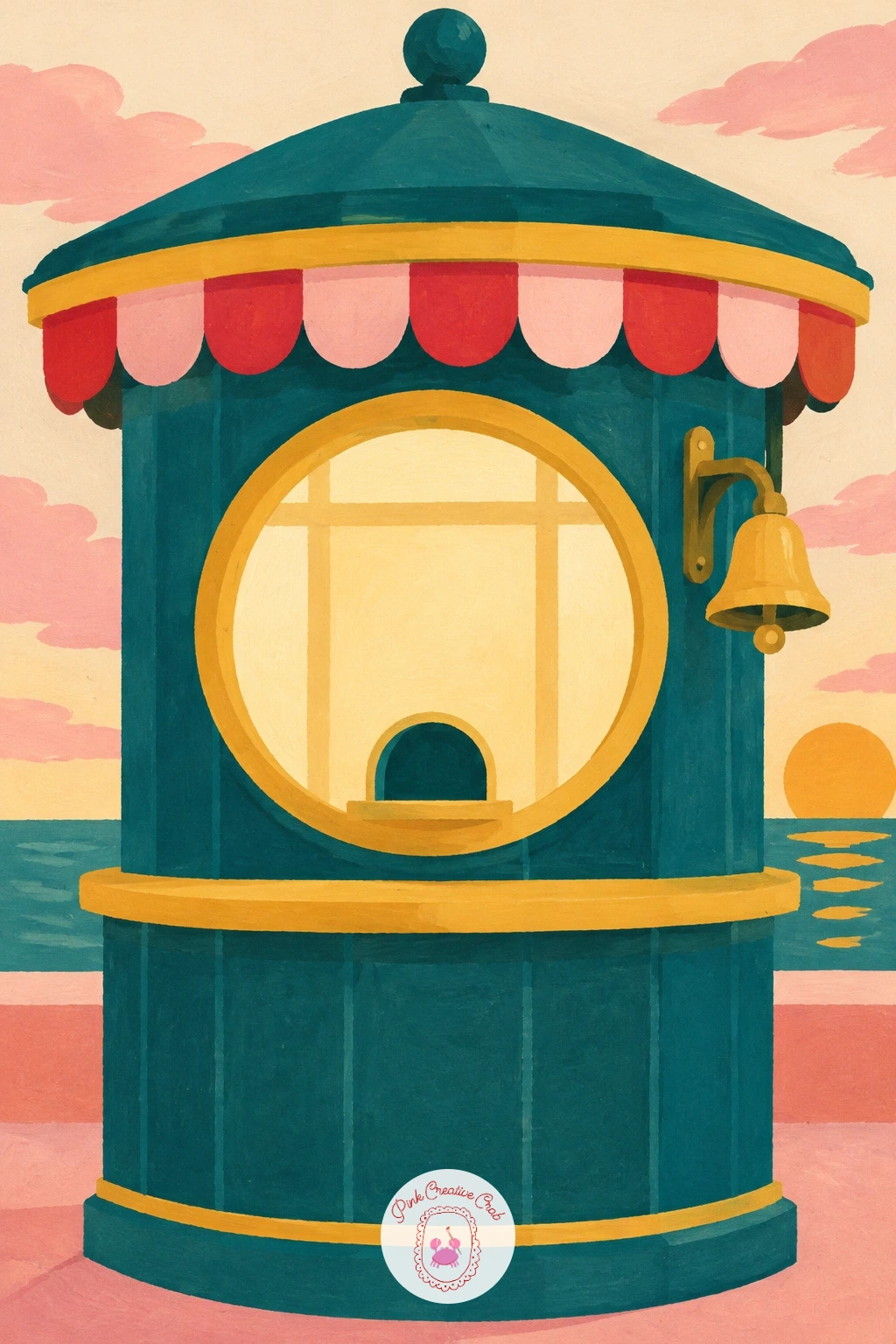
Palette: Deep Teal,Cream,Brass Yellow,Charcoal Grey
After painting an empty theater, try one with two people in it, lit only by the glow of the screen ahead of them. Keep both figures as simple silhouettes, just rounded head and shoulder shapes against the seat backs, since detail in the faces would fight with the screen light doing the real work. Paint the screen glow first as a soft blush pink or pale teal wash spreading across the front wall.
Let that screen light fall across the backs of the seats and the edges of the two heads, leaving everything behind them in flat shadow. One consistent light source like this holds the whole mood together far better than scattered highlights.
Build the velvet seats around the couple in deep maroon, darker than your usual red, so the two lit silhouettes stand out clearly against them. Keep the gap between the heads small and natural, as if they are leaning in to talk.
Swap the pink glow for a cooler teal if you want a quieter, later-night feel to the same scene.
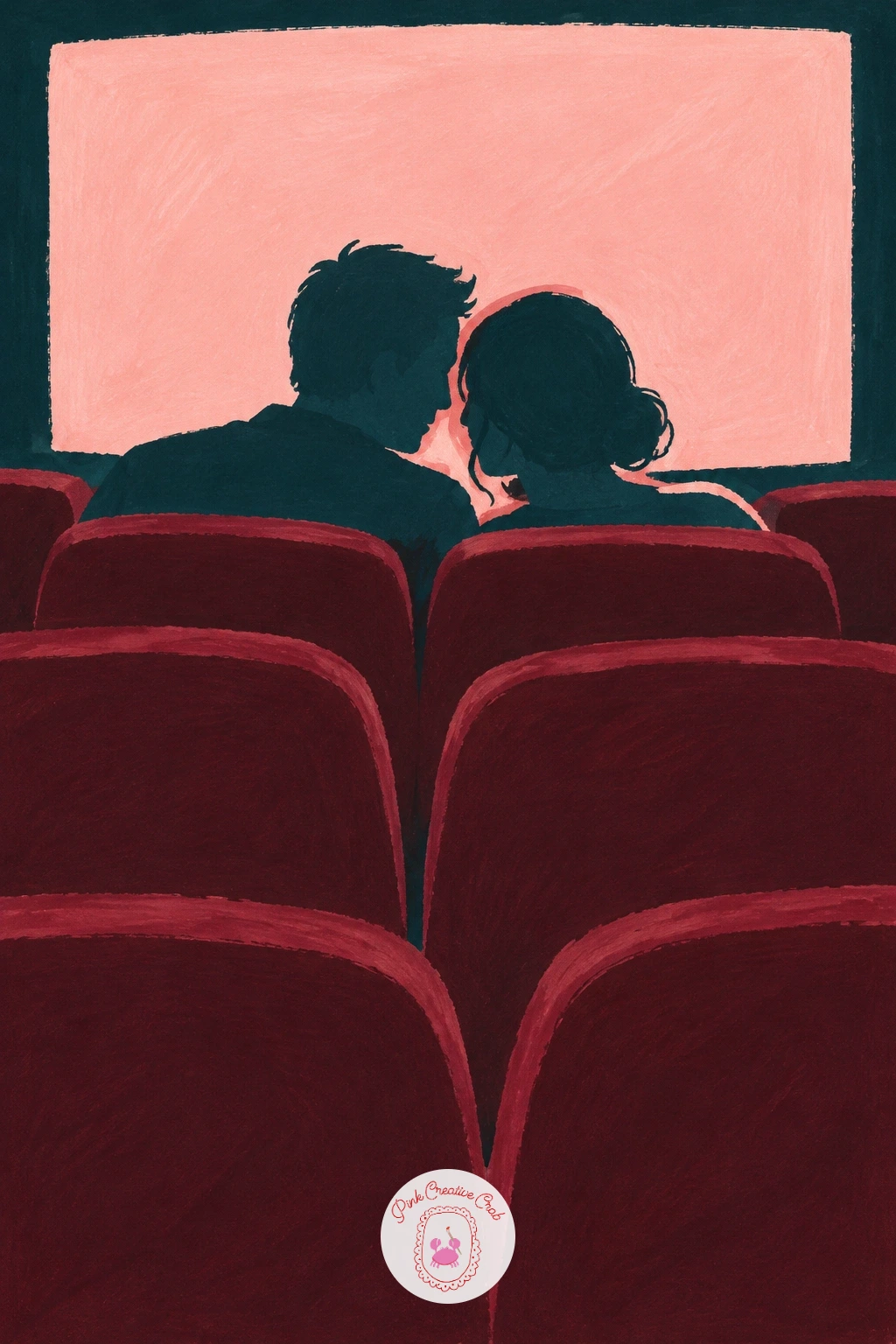
Palette: Blush Pink,Maroon,Charcoal Grey,Deep Teal
Take the scene outdoors for a drive-in full of parked cars facing a tall blank screen. Paint the sky first, a deep teal fading to near black at the top, since the stars go on last as tiny dry brush flicks of white once that base is fully dry. Block the screen as one large pale cream rectangle standing against the dark sky, simple and blank.
Line up three or four cars in a loose row, each one a rounded rectangle body in a different flat color, cherry red, mustard, cream, so no two sit next to the same tone. Keep every car roughly the same size and tilt to hold the row believable without drawing wheels or windows in real detail.
Dot a few small headlamp glows or window lights if you want more warmth, but even flat car shapes against that big sky read as a full scene on their own.
If the sky feels flat, spatter a little white off an old toothbrush for a denser scatter of stars.
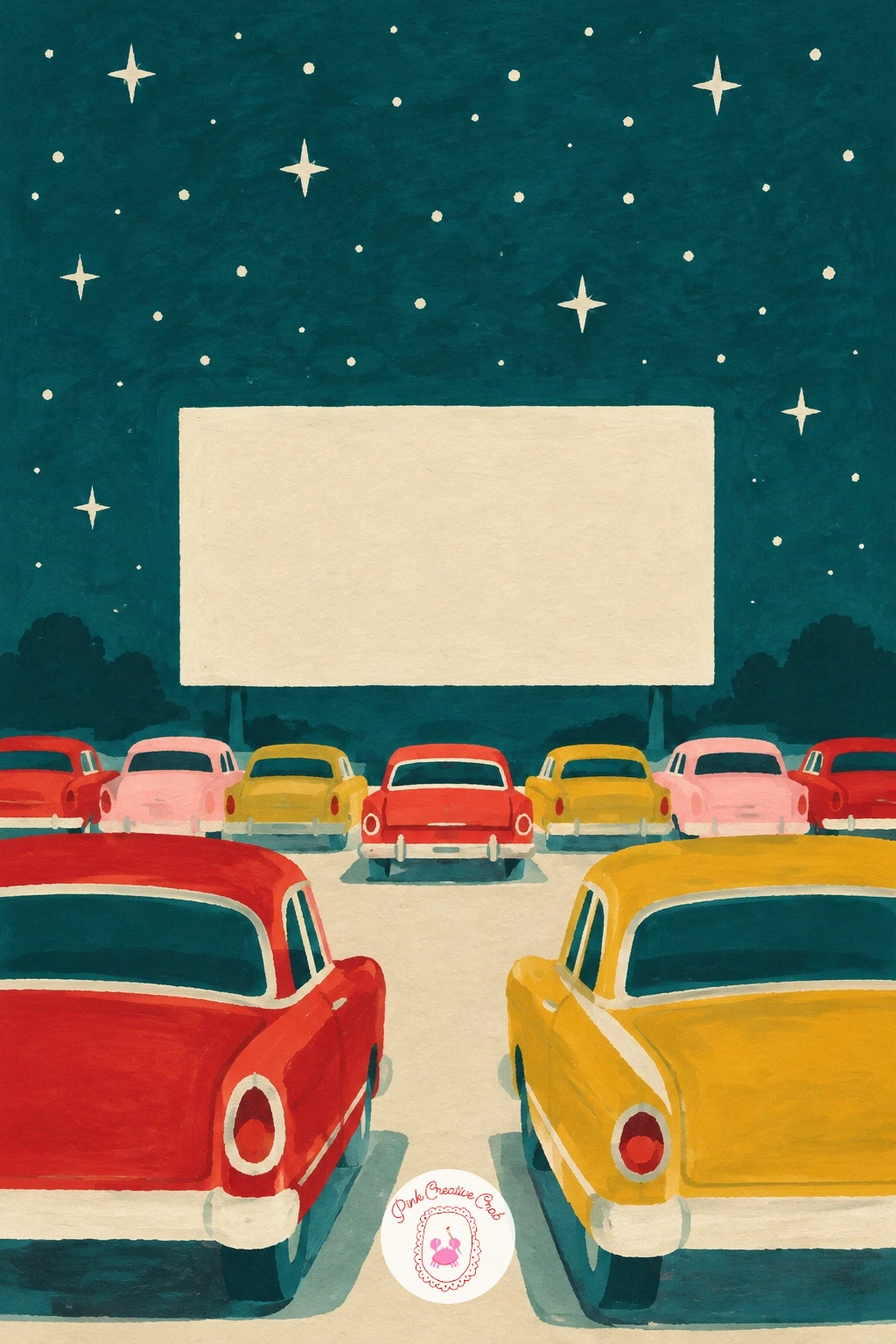
You Will Need
- old toothbrush for star spatter
Palette: Deep Teal,Cream,Cherry Red,Mustard Yellow
Bring a little action into the theater with an usher leading a late arrival down a dark aisle by flashlight. Paint the aisle carpet and seat rows in flat, almost black shadow tones first, since the whole scene depends on one small bright spot cutting through that darkness. Add the two figures as simple standing silhouettes, one slightly ahead with an arm extended toward the light.
Paint the flashlight beam as a soft cream triangle widening as it travels across the carpet, lighter where it starts at the torch and fading at the far edge. This one light source should be the only warm note in an otherwise cool, dark scene.
Keep both figures simple, coats and shoulders only, no facial detail, since the beam is the real subject here. If the beam edge looks too hard, soften it with a slightly damp brush while the paint is still workable.
No flashlight reference needed: any narrow cone of light against dark seats reads instantly as this scene.
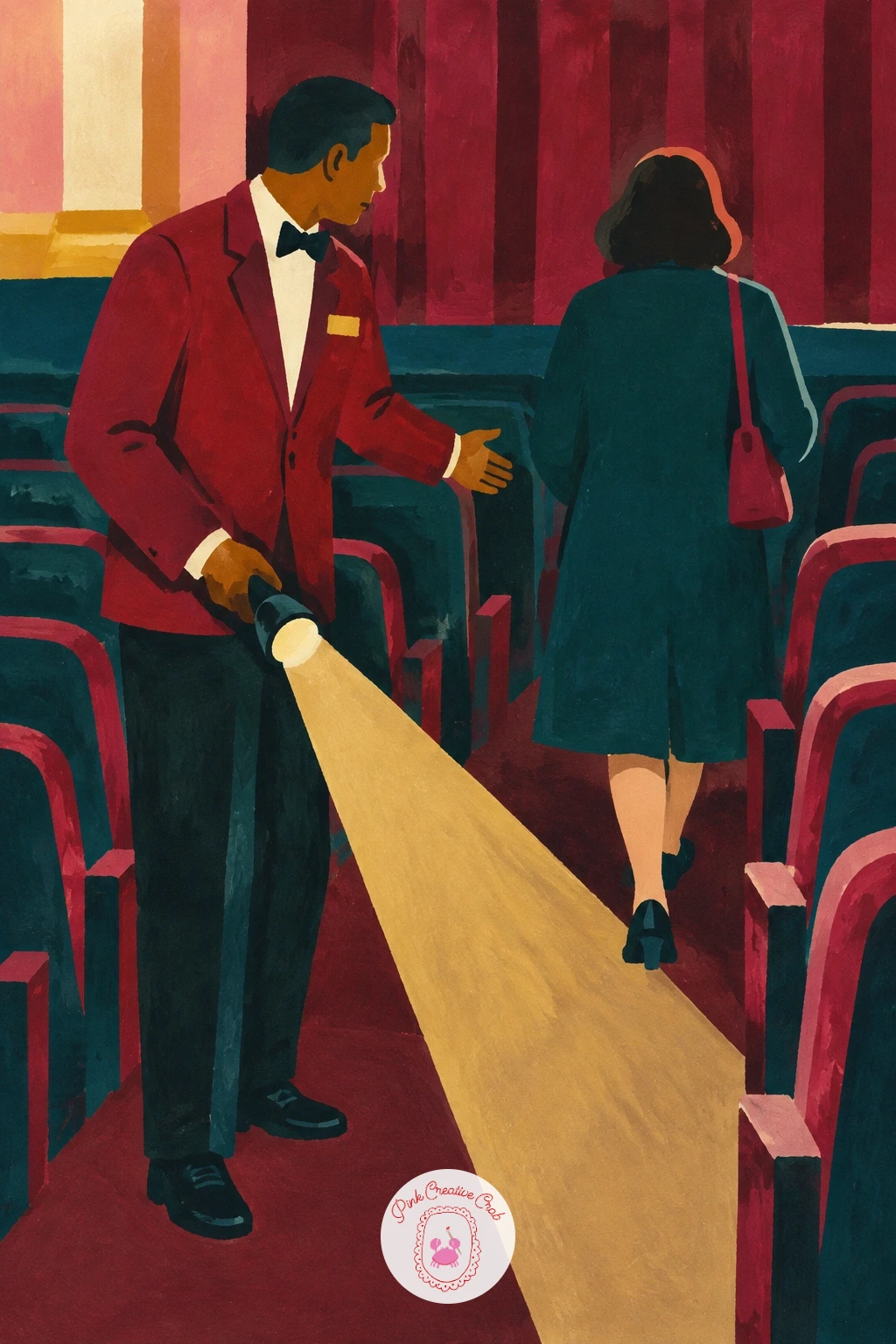
Palette: Charcoal Grey,Cream,Maroon,Deep Teal
Step outside the cinema for a quieter, smaller scene: a girl sitting on the curb with a popcorn bucket, rain falling around her. Paint the pavement and background building in muted, rain-soft tones, deep teal and grey, before adding her figure so the wet mood is set first. Keep her coat and hair as a few simple flat shapes, no fine detail, with the popcorn bucket as a small bright cherry red note held in her lap.
Picture the light coming from the cinema entrance behind her, so one side of her coat and the bucket catches a warm glow while the rest of the scene stays cool and damp. That single contrast between warm light and cool rain carries most of the feeling.
Paint the rain last, as a few straight, light diagonal lines in pale cream over the dried background, kept sparse rather than covering the whole page.
Try the same girl seated on a theater step instead of the curb next time, for a slightly different mood with the same simple palette.
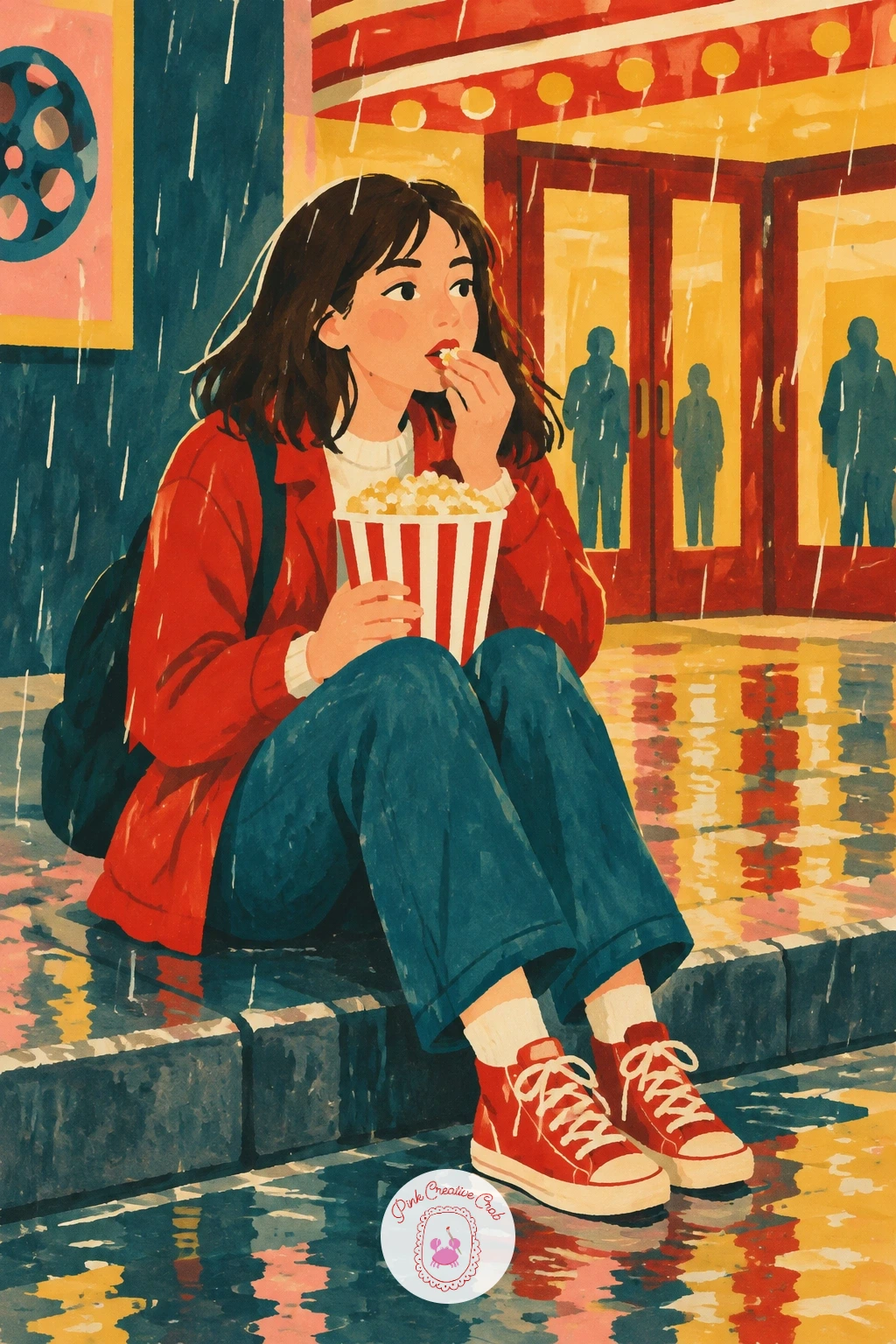
Palette: Cherry Red,Deep Teal,Charcoal Grey,Cream
Climb up to the projection booth for a cozier, tighter scene around the old projector itself. Draw the projector as a few confident mechanical shapes, a boxy body, two round reels, before adding the projectionist’s hands reaching in to thread the film. Keep the figure simple and half in shadow, since the projector and its warm working light are the real subject.
Measure the two reels against each other before painting; keeping them the same size and spacing apart by eye against a ruler or a strip of paper stops the machine looking lopsided once color goes on.
Paint the booth walls in a close, warm mustard or deep teal, smaller and more enclosed than the open theater scenes, so the room itself feels cozy rather than grand. Add one small bulb glow near the projector lens as the brightest point in the picture.
If the mechanical shapes feel fiddly, simplify to just the two reels and the lens barrel and leave the rest implied.
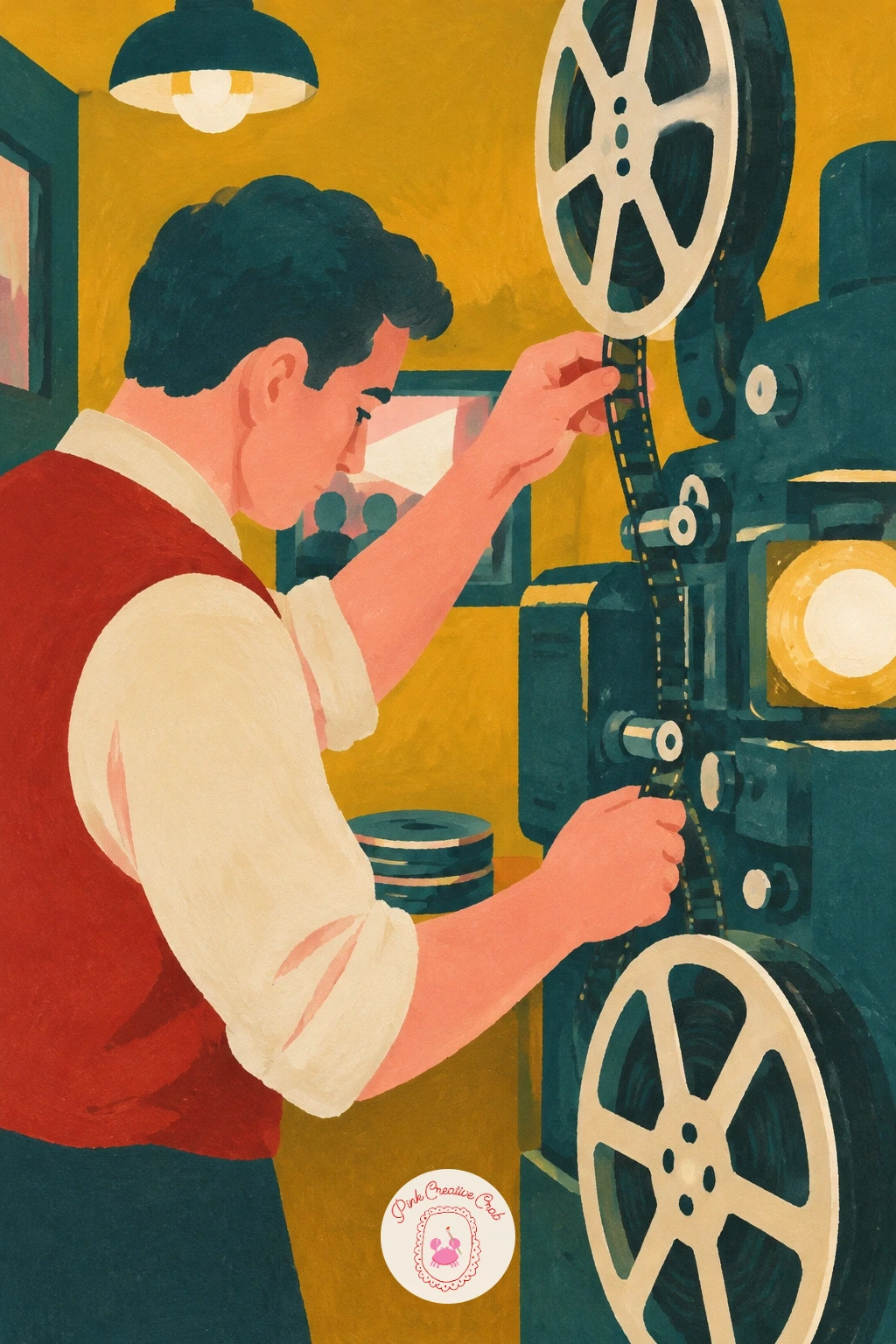
Palette: Mustard Yellow,Charcoal Grey,Deep Teal,Cream
Give yourself a bigger, showier subject with a grand lobby, patterned carpet and a chandelier overhead. Paint the carpet pattern first as a simple repeated geometric motif in cherry red and mustard, kept to two or three shapes so it reads as pattern without turning fussy. Build the walls and archways around it in flat teal, leaving clean straight edges with tape if you want the deco lines crisp.
Hang the chandelier from the top of the page as a simple radiating shape, a few straight lines fanning out from a central cream bulb cluster, rather than trying to paint every crystal.
Picture the light falling mostly from that chandelier, so the carpet directly beneath it reads brightest and the corners of the lobby fall into soft shadow. This single overhead source gives the grand room its glow without extra light sources competing.
For a lobby with a different mood, try the same composition in cooler blush and cream tones instead of the warm red and mustard.
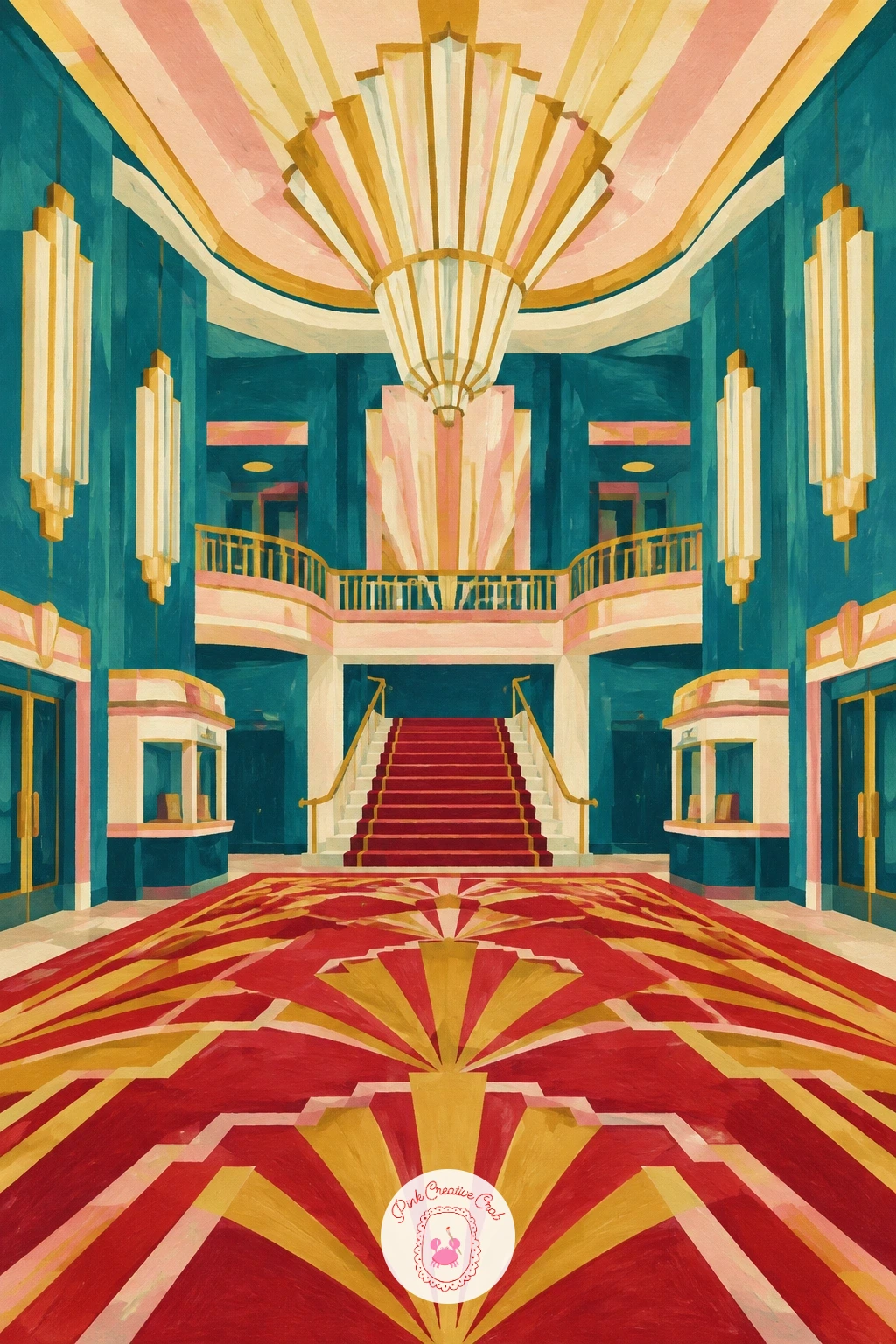
Palette: Cherry Red,Mustard Yellow,Deep Teal,Cream
If you enjoy painting patterned floors, the textiles sketchbook ideas are a good place to practice repeat motifs further.
Bring a small, warm human moment into the seat rows: a kid sunk deep into one oversized velvet seat, feet well short of the floor. Paint the seat first, larger and plumper than your usual row, so it reads as too big for the child before you even add them. Keep the kid’s figure simple, a round head, small shoulders, legs sticking straight out rather than bent at a knee.
Check the proportion by comparing the seat’s height to the figure: if the seat back reaches well past the top of the head, the “too big” feeling will read instantly, so exaggerate that gap a little further than feels natural.
Paint the dangling feet last, small and pale against the dark red velvet, with a tiny gap of cream floor showing well below them. Keep the rest of the theater dim and simple so this one seat and figure stay the whole focus.
Add a striped popcorn box balanced on the armrest next to them for a touch more story without extra complexity.
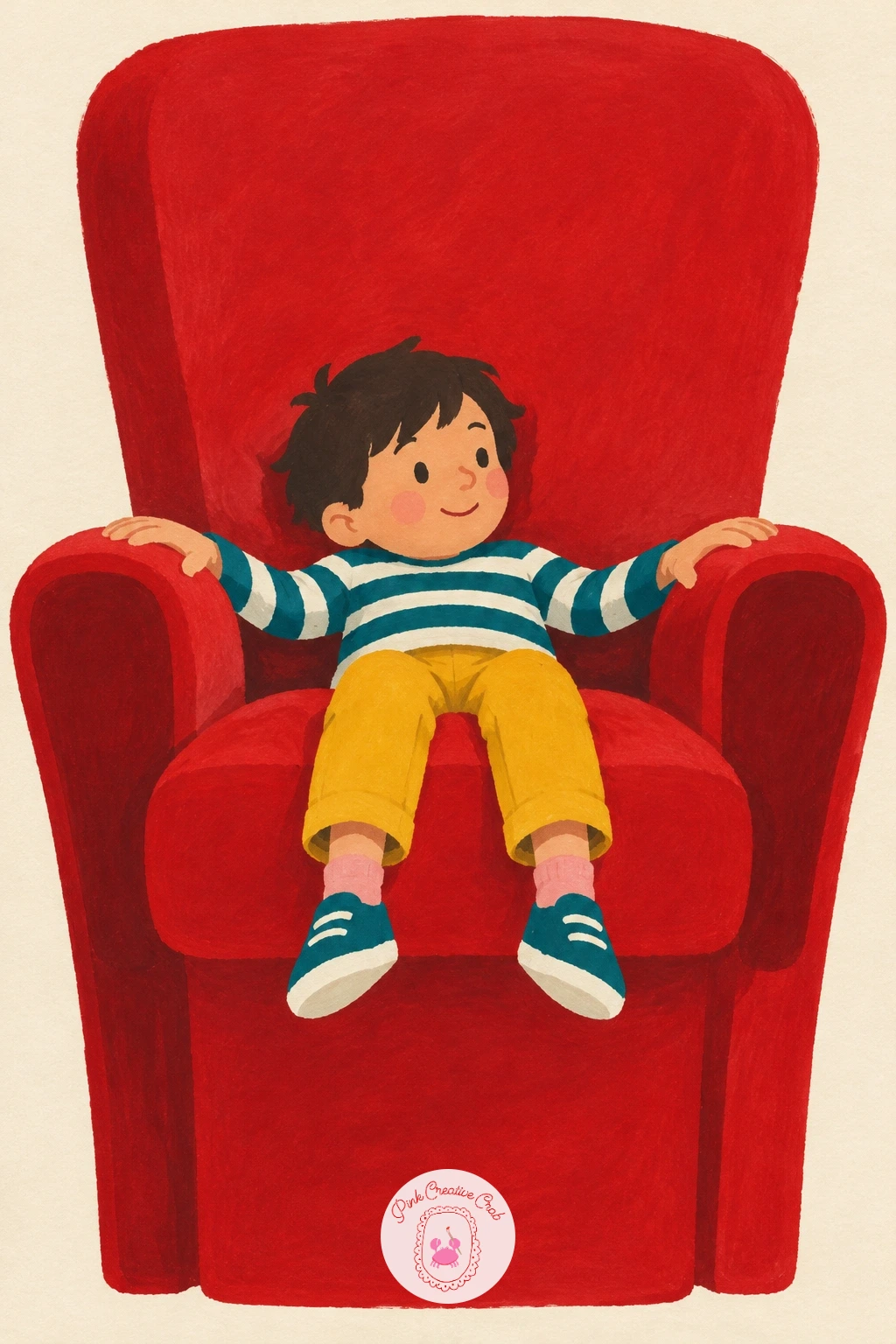
Palette: Cherry Red,Blush Pink,Cream,Maroon
Pair the popcorn counter with its sweeter neighbor, a candy case full of jars under glass. Paint the glass case as one simple cream-tinted rectangle, then drop in a row of round jar shapes behind it, each filled with a different flat color, cherry red, mustard, blush pink, so the sweets read as color blocks rather than individual candies.
Keep the counter front plain and dark so the bright jars above it do the visual work, the same trick a real shop window relies on to make its goods pop.
Dry brush a faint highlight down one side of the glass case to suggest the reflection without painting an actual window scene into it. This single pass of texture is enough to read as glass.
No glass-case reference at hand: a simple row of jars on an open shelf, no glass front at all, still tells the same candy counter story.
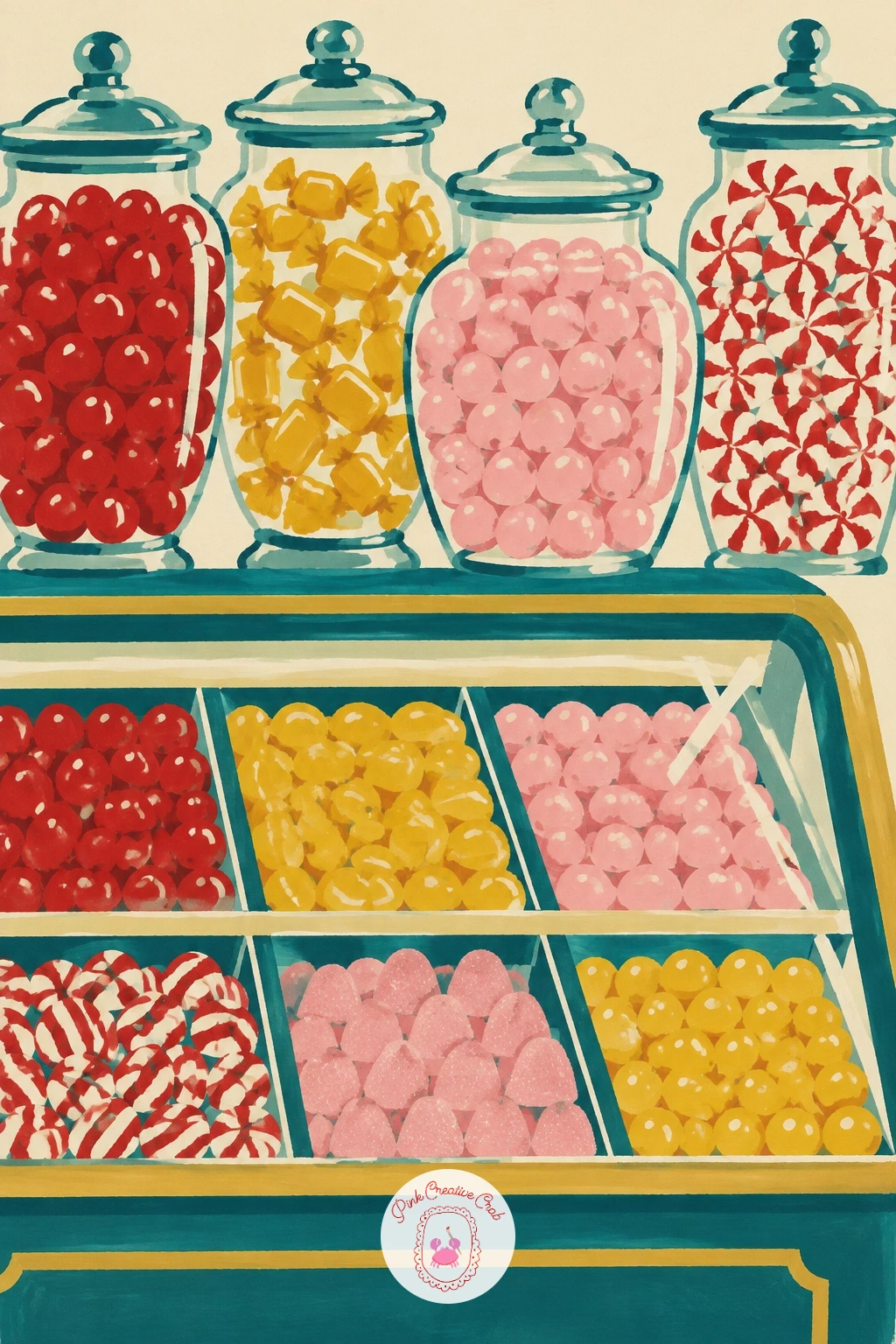
Palette: Cherry Red,Mustard Yellow,Blush Pink,Cream
Return to the auditorium for one of the simplest and most graphic scenes in this whole list: a single beam of projector light cutting through a dark room. Paint the entire theater first in flat, deep charcoal and teal shadow, seats barely visible as darker shapes within the dark, since the beam only works if everything around it reads as truly dim.
Mask a straight-edged triangle from the projection point to the screen with tape before painting the beam itself, keeping the light cone perfectly crisp rather than wobbly. Fill that masked shape with a pale, slightly warm cream, lighter near the projector and softening slightly as it nears the screen.
Peel the tape once the beam is dry and add a few tiny dust-mote dots floating inside the light with the very tip of a fine brush. These small specks sell the idea of light traveling through air.
If you want more drama, make the beam narrower and the surrounding dark deeper still.
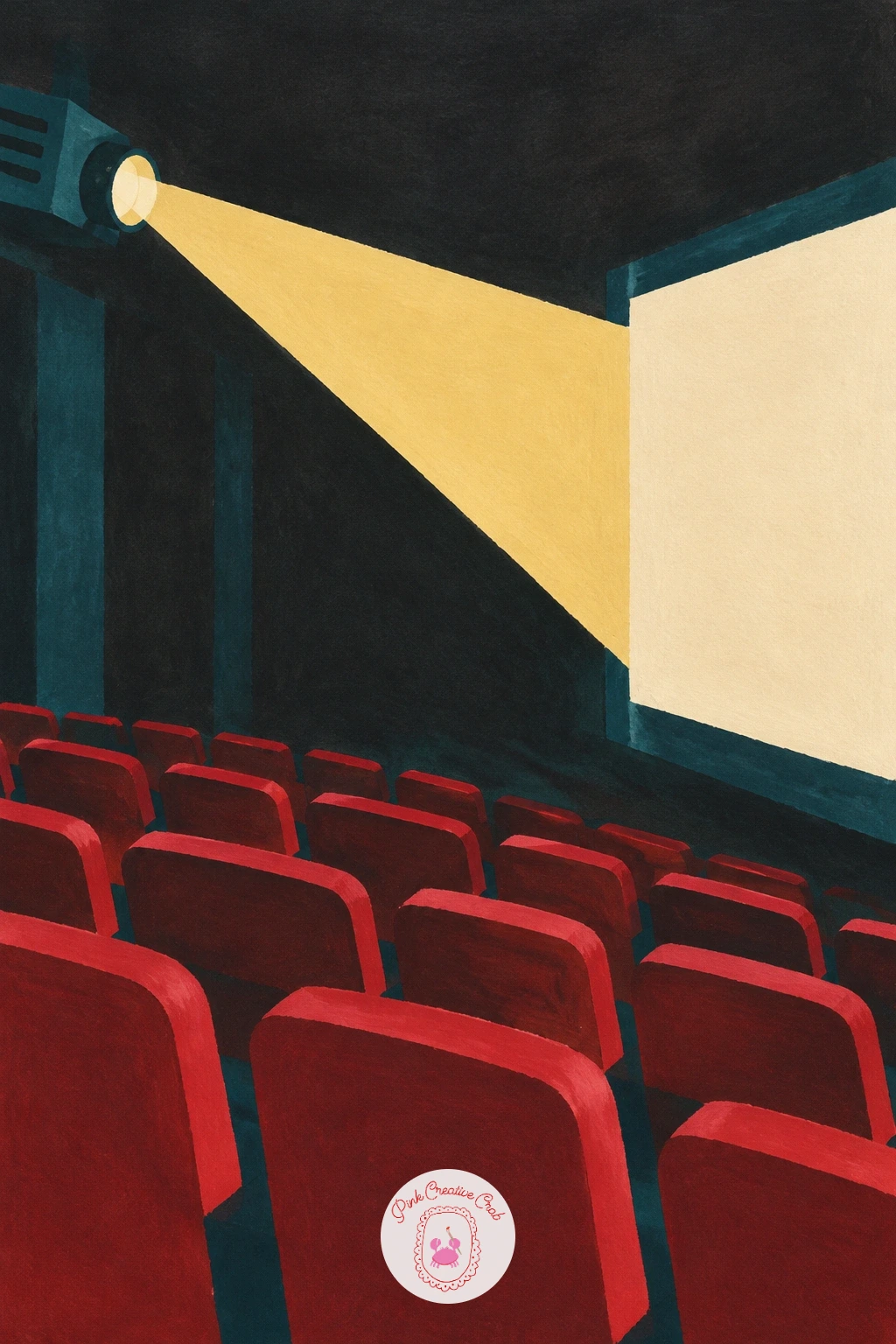
You Will Need
- low tack masking tape
Palette: Charcoal Grey,Deep Teal,Cream,Pale Yellow
Give the marquee a rainy night version for contrast with your earlier dusk scene. Paint the wet street first, a dark flat ground with a few long vertical streaks of reflected color pulled straight down with a flat brush, cherry red and teal reflections mirroring the neon above.
Build the neon trim itself as thin, confident colored lines along the building’s edges rather than a glow painted loosely, since neon reads sharpest when the line stays clean and the color stays saturated. Keep the sign panels blank cream rectangles exactly as in the dusk version, so the building still has no readable text.
Paint the rain as a handful of fine diagonal cream lines over the finished scene, concentrated more near the ground where the reflections sit. Too many lines will muddy the neon, so keep them sparse.
Swap the street reflections to mustard and blush if cherry and teal feel too close to your marquee piece already in progress.
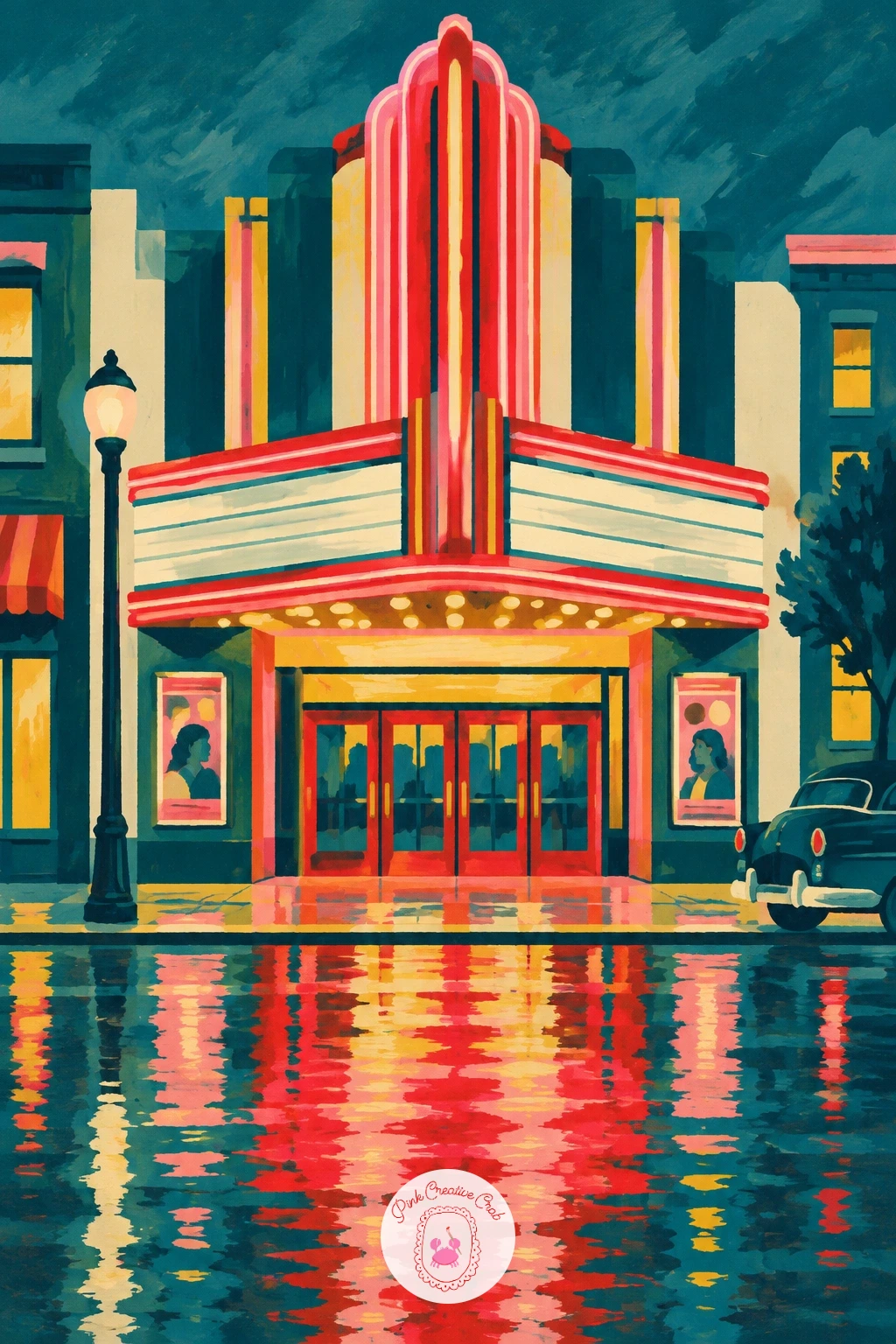
Palette: Deep Teal,Cherry Red,Charcoal Grey,Cream
Strip the scene right down to its quietest version: one small figure seated alone in the middle of a vast empty auditorium. Paint the seat rows first, receding in careful, even rows exactly as in your earlier empty theater piece, but this time leave every seat but one truly empty.
Place the figure dead center, small against the scale of the room, and resist the urge to add any detail beyond a simple seated silhouette. The whole feeling of this picture comes from how much empty space surrounds that one small shape, so give the surrounding rows plenty of room rather than crowding the figure with nearby detail.
Light the screen softly ahead of the figure in pale blush or cream, letting that glow be the only warm note in an otherwise cool, dim room.
If the composition feels too static, shift the figure slightly off center rather than perfectly in the middle, which often reads as more natural.
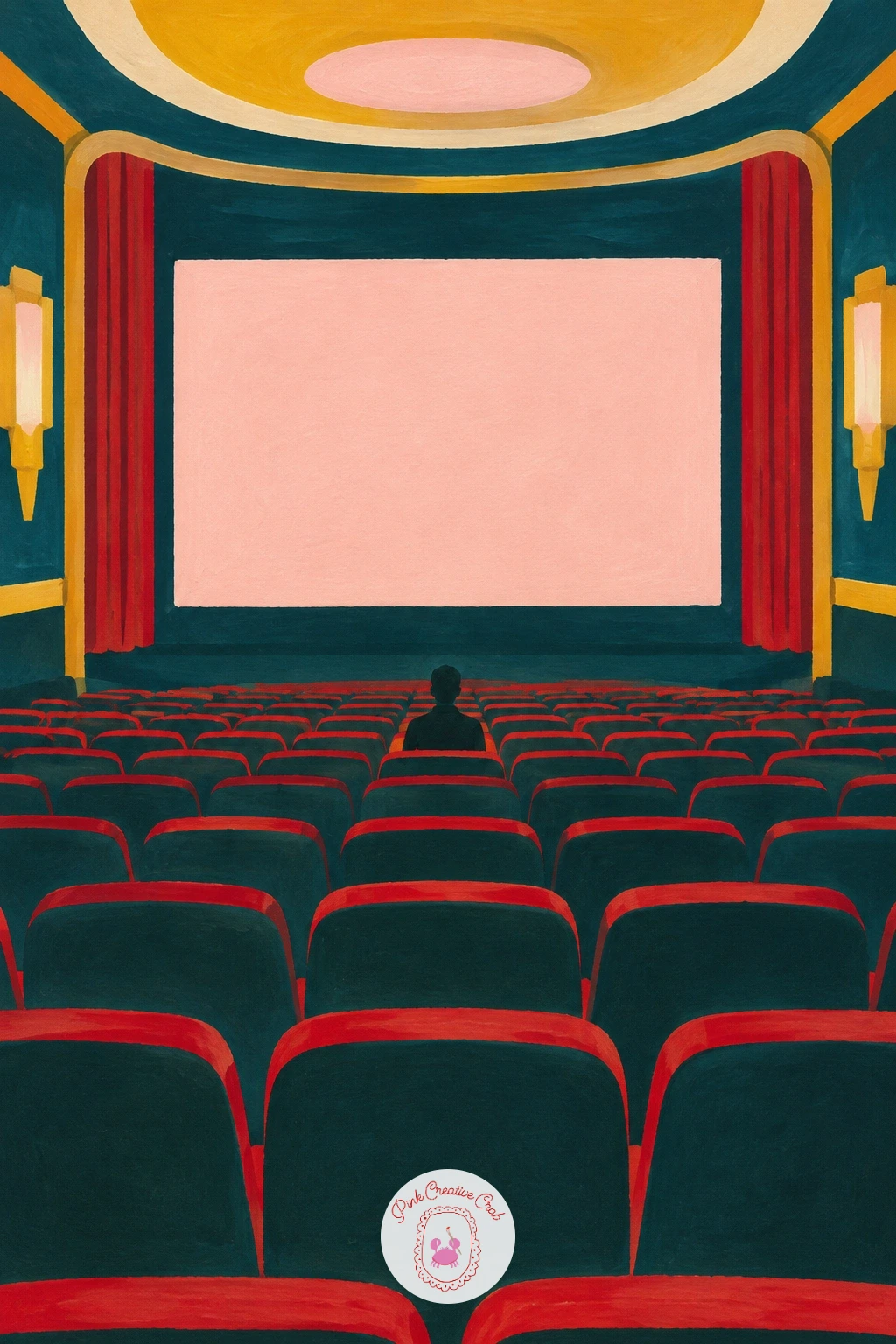
Palette: Charcoal Grey,Maroon,Blush Pink,Cream
Bring a group back outside the marquee for a winter queue scene. Paint the marquee and building first, keeping its blank panels and lit bulbs consistent with your earlier dusk version, then build the line of friends in front of it as a row of simple rounded coat shapes, each a different flat color so the group reads as individuals without any facial detail.
Vary the coat lengths and a hat or scarf color here and there to break up the row, but keep every figure built from the same simple shape vocabulary, a rounded body and a round head, so the group stays cohesive rather than cluttered.
Paint a little visible breath or steam near a couple of the heads with a soft dry brush dab of pale cream, which instantly reads as cold air without extra fuss.
No reference for a crowd: three or four figures is plenty to suggest a line, you never need to fill the whole pavement.
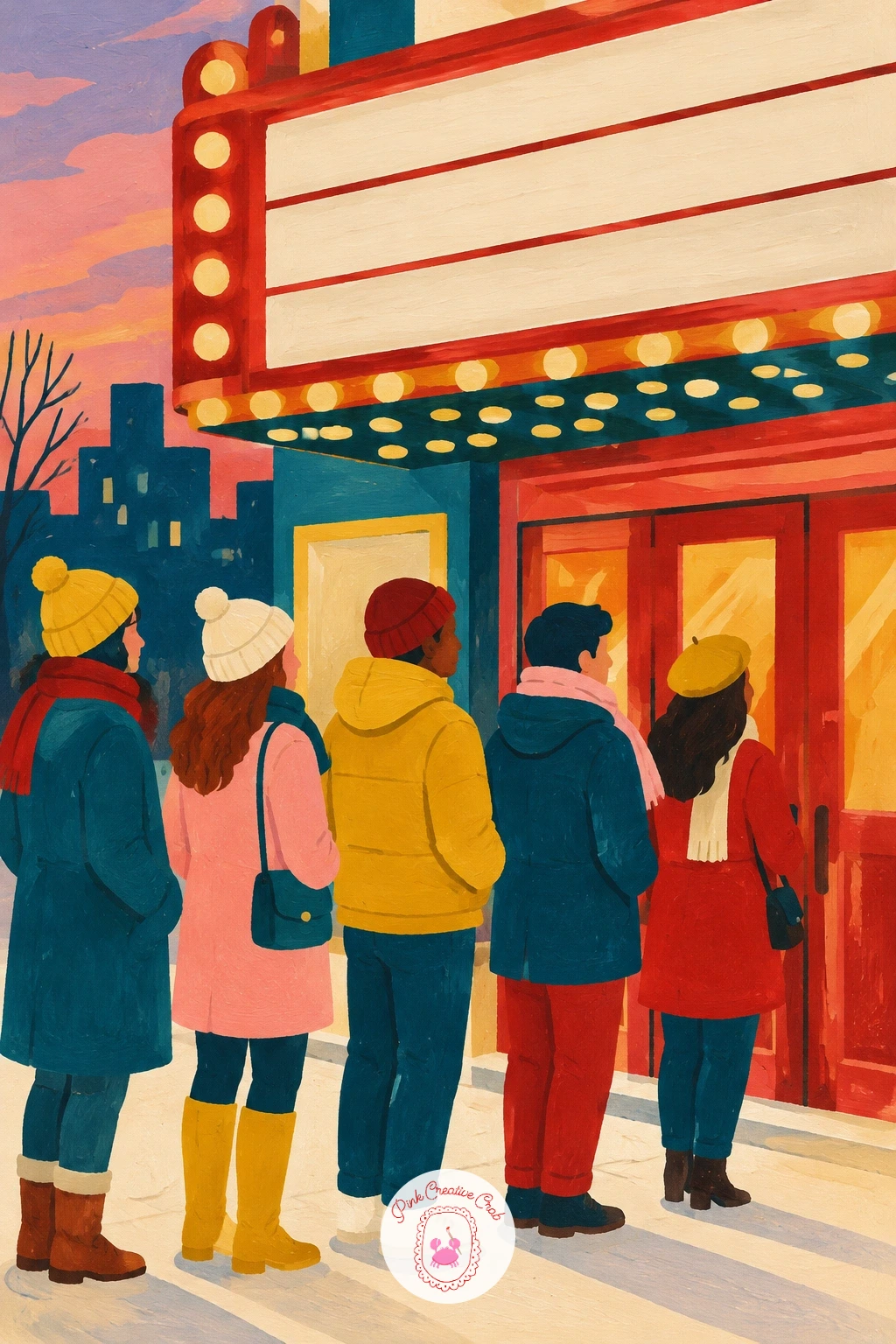
Palette: Mustard Yellow,Deep Teal,Cherry Red,Cream
Head back to the snack bar for a close-up still life of the soda fountain itself. Paint the fountain machine as a simple chrome-toned box shape with a few flat highlight strokes to suggest metal, then build one or two tall cups in front of it, each holding a striped straw painted as two or three confident diagonal lines of color over a cream base.
Keep the composition tight and close, cropping in on just the machine and cups rather than the whole counter, since a close still life like this reads well even as a quick study.
Paint the straw stripes last, after the cup color is fully dry, using a fine brush loaded with cherry red or teal so the lines stay crisp rather than bleeding into the cream.
For a faster version, paint just one cup and straw filling most of the page; the full fountain machine can wait for a more detailed sitting.
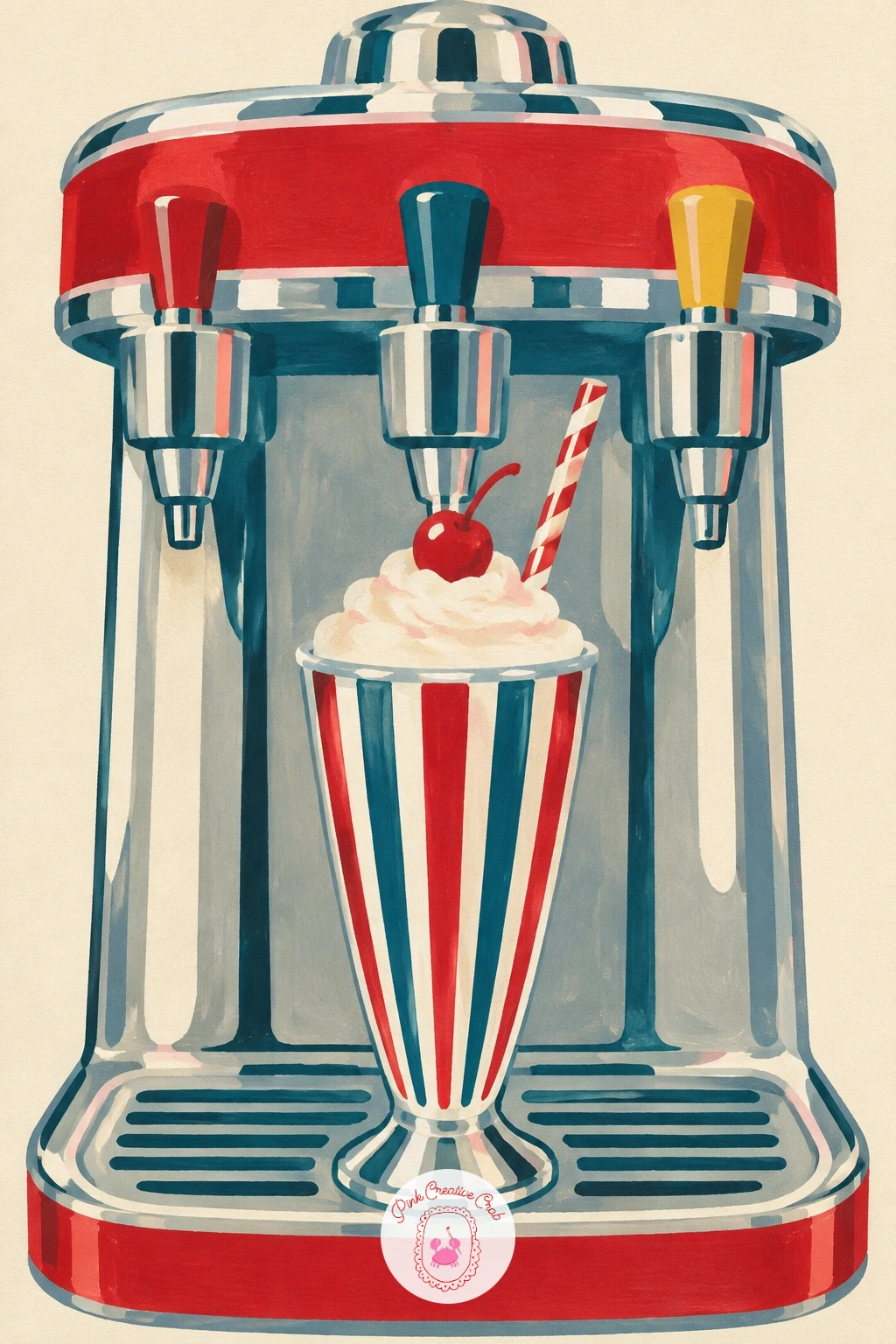
Palette: Cherry Red,Deep Teal,Cream,Charcoal Grey
Paint the moment just before the film starts, heavy red curtains drawing apart in front of a glowing screen. Build the curtains first as a few large, confident folded shapes rather than many small pleats, since gouache holds its crispness best when the folds stay simple and graphic. Paint each fold slightly darker toward the center gaps to suggest the heavy weight of velvet without blending.
Picture the screen’s own glow as the single light source here, so the inner edges of the curtains facing the screen catch a warm highlight while the outer edges stay in deep shadow. That one consistent light direction makes the heavy fabric feel like it is actually lit from one place.
Leave the screen itself as a plain pale rectangle glowing softly between the parted curtains, with no image on it at all.
If the folds feel too busy, reduce them to three or four large shapes per curtain and let the color do the rest of the work.
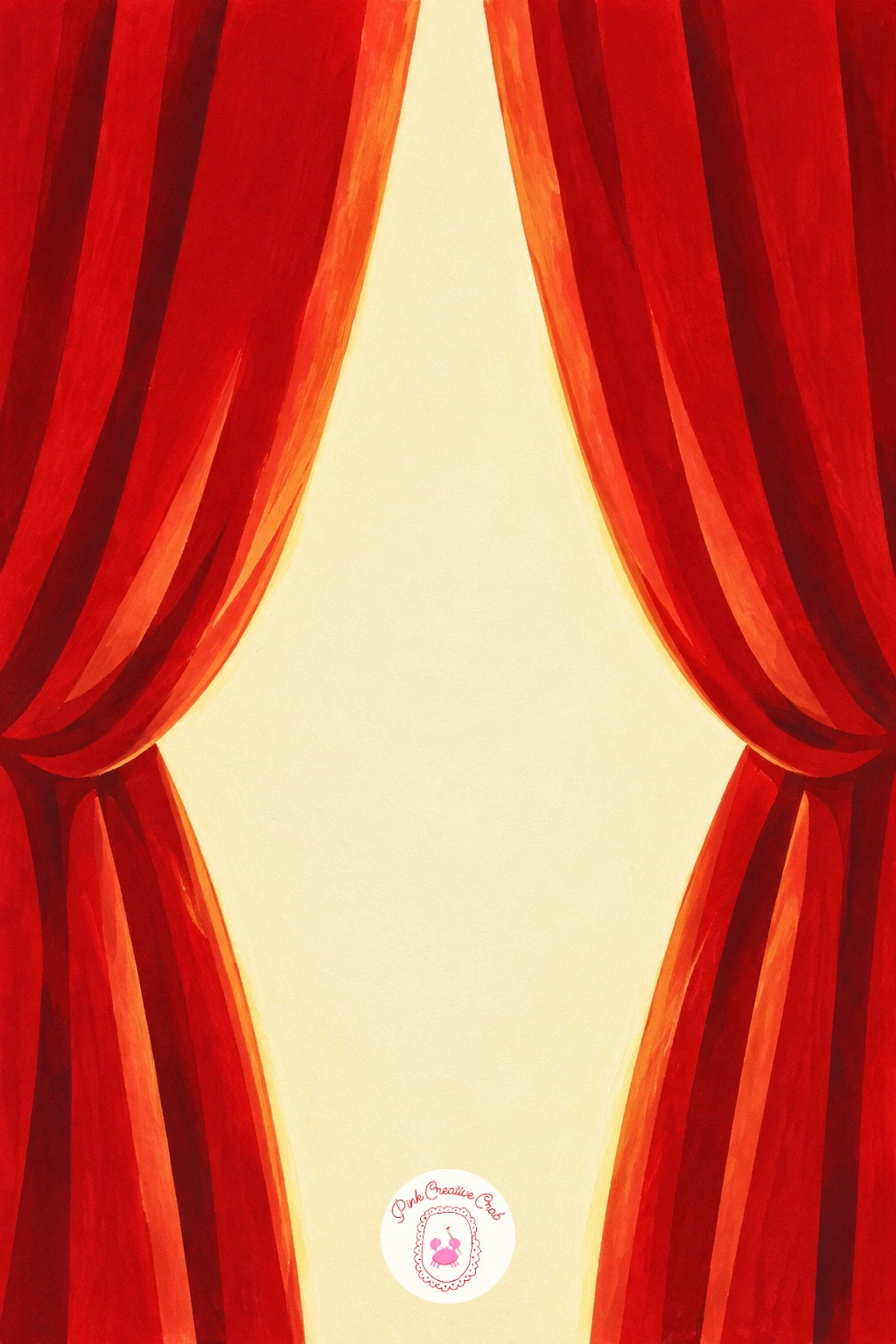
Palette: Cherry Red,Maroon,Cream,Blush Pink
Give your drive-in scenes a second version, this time a single pickup truck parked with pillows piled in the bed, facing the big screen. Paint the truck body first as a simple boxy shape in mustard or teal, then add the pillows in the open bed as a cluster of soft rounded cream and blush shapes stacked loosely rather than neatly.
Keep the truck proportions honest by comparing the cab height to the bed length before you commit to final lines; trucks painted too short in the bed or too tall in the cab read oddly even to a casual eye.
Paint the screen behind it as a tall pale rectangle, with the truck sitting well below its top edge to suggest real distance back from the screen.
Swap the pillows for a couple of folded blankets instead if piled pillows feel fussy to paint; the shape reads almost the same either way.
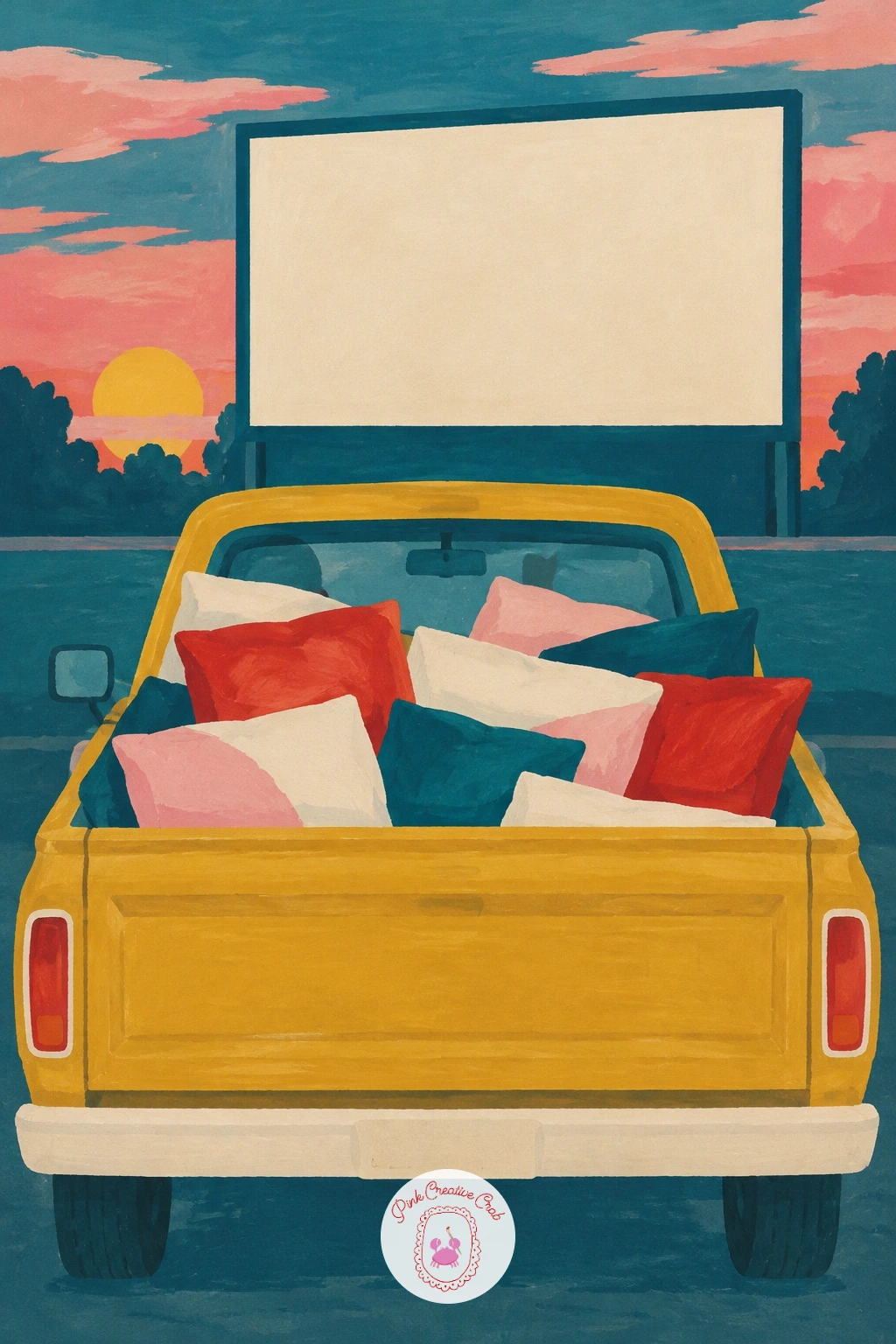
Palette: Mustard Yellow,Blush Pink,Cream,Deep Teal
Zoom back out for a small-town street scene built around one old single-screen cinema sitting quietly on its corner. Paint the building first as a simple flat facade, slightly weathered in tone, with the marquee kept small and modest compared to your grand dusk version earlier. Add a narrow side street disappearing beside it to anchor the corner feeling.
Picture the light as flat daytime or early evening, nothing dramatic, since this scene works on its quiet ordinariness rather than any striking light effect. Keep shadows short and soft under the awning rather than long and theatrical.
Paint one or two parked cars or a lamppost nearby, small and simple, to give the street some scale without crowding the corner.
If you enjoy painting quiet street corners like this, the village drawing ideas cover more small-town shopfronts in the same spirit.
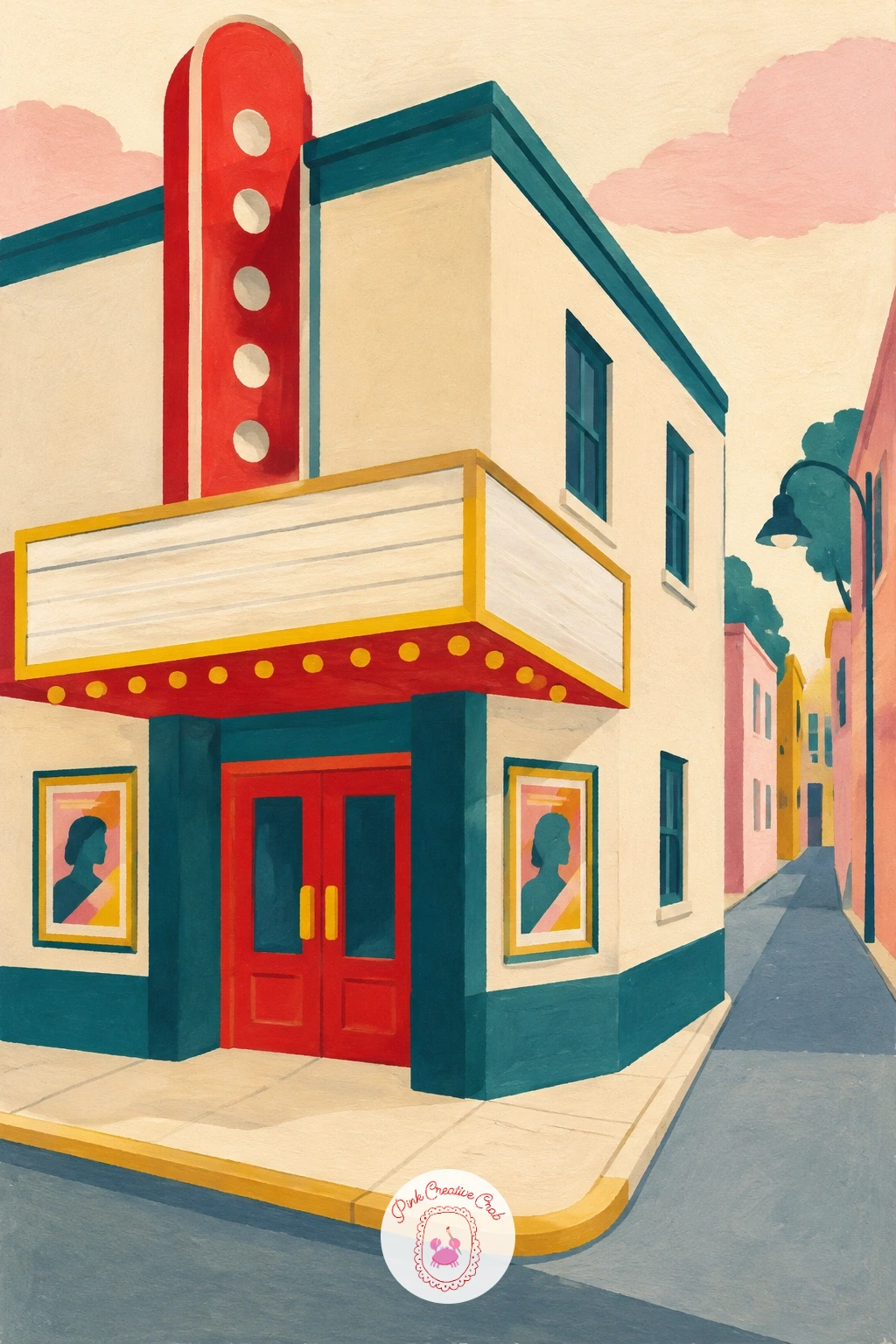
Palette: Mustard Yellow,Blush Pink,Deep Teal,Cream
Zoom in tight for a small still life: one striped popcorn box tipped on its side on a velvet seat, a few kernels spilled out. Paint the seat first as a simple flat velvet shape filling most of the background, then build the box as a clean geometric cone shape lying on its side, its red and cream stripes painted as straight bands rather than curved.
Scatter a handful of spilled kernels near the box opening, each a small irregular pale yellow dab, keeping the spill loose and a little random rather than a neat pile.
Dry brush a faint shadow under the box where it meets the velvet to ground it convincingly in the seat rather than floating on top of the color.
Try the same tipped box on a theater floor instead of a seat for a quicker version with less velvet detail to paint.
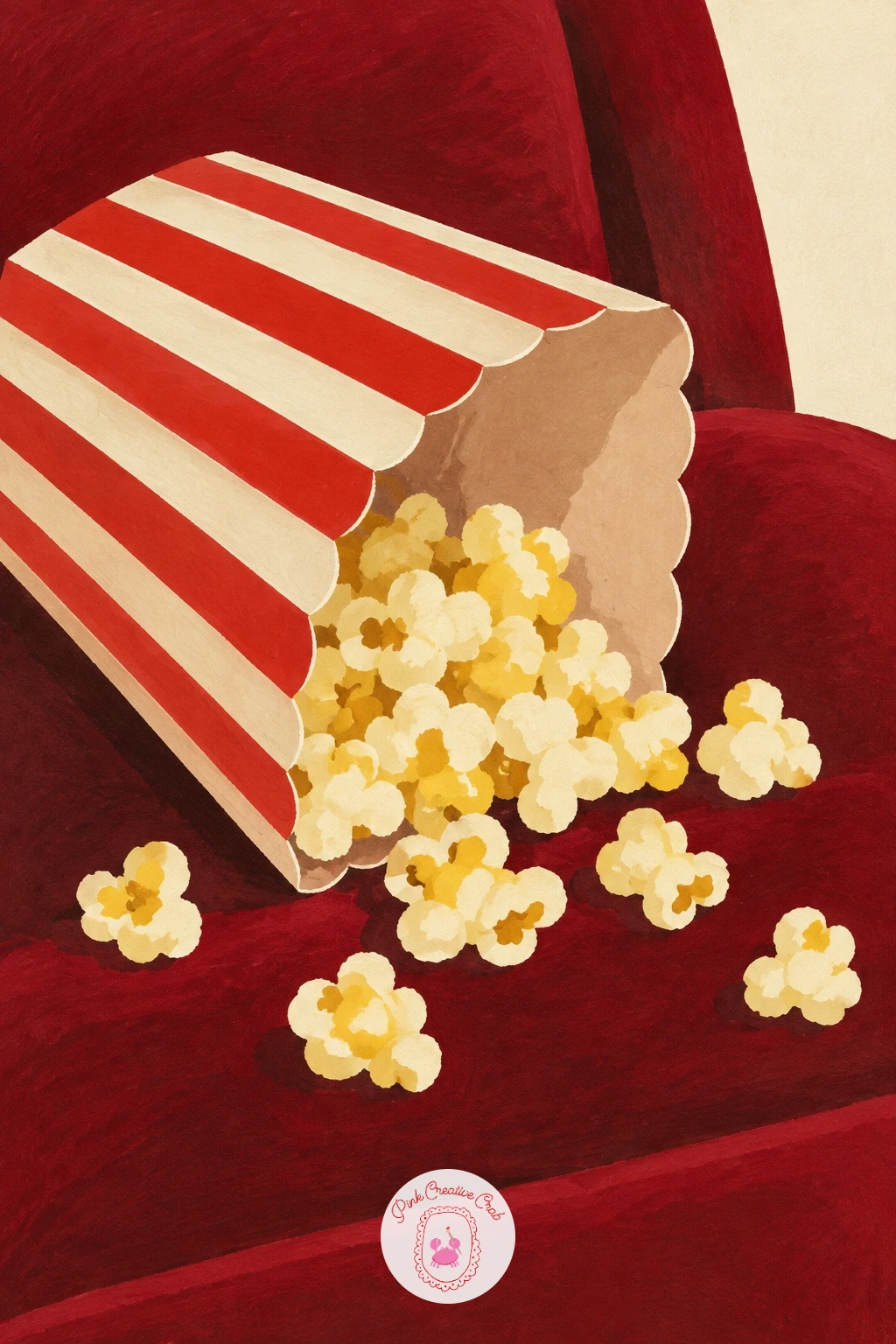
Palette: Cherry Red,Cream,Pale Yellow,Maroon
Look up into the theater’s balcony for a scene with a touch more grandeur, gilded railings and a few heads silhouetted against the lower glow. Paint the railing first as a simple curved or straight gold line pattern, built from repeated small shapes rather than fine filigree, so it stays paintable in flat gouache rather than fussy.
Measure the spacing between railing posts once at the start and repeat that same gap across the whole railing, since an uneven repeat is the fastest way to make a balcony rail look wrong.
Add a few seated silhouettes along the balcony edge, small rounded heads and shoulders only, catching a little warm glow from the screen below on their nearest side.
Keep the rest of the balcony structure simple and dim, since the gold railing and the handful of heads are enough detail to carry the whole scene.
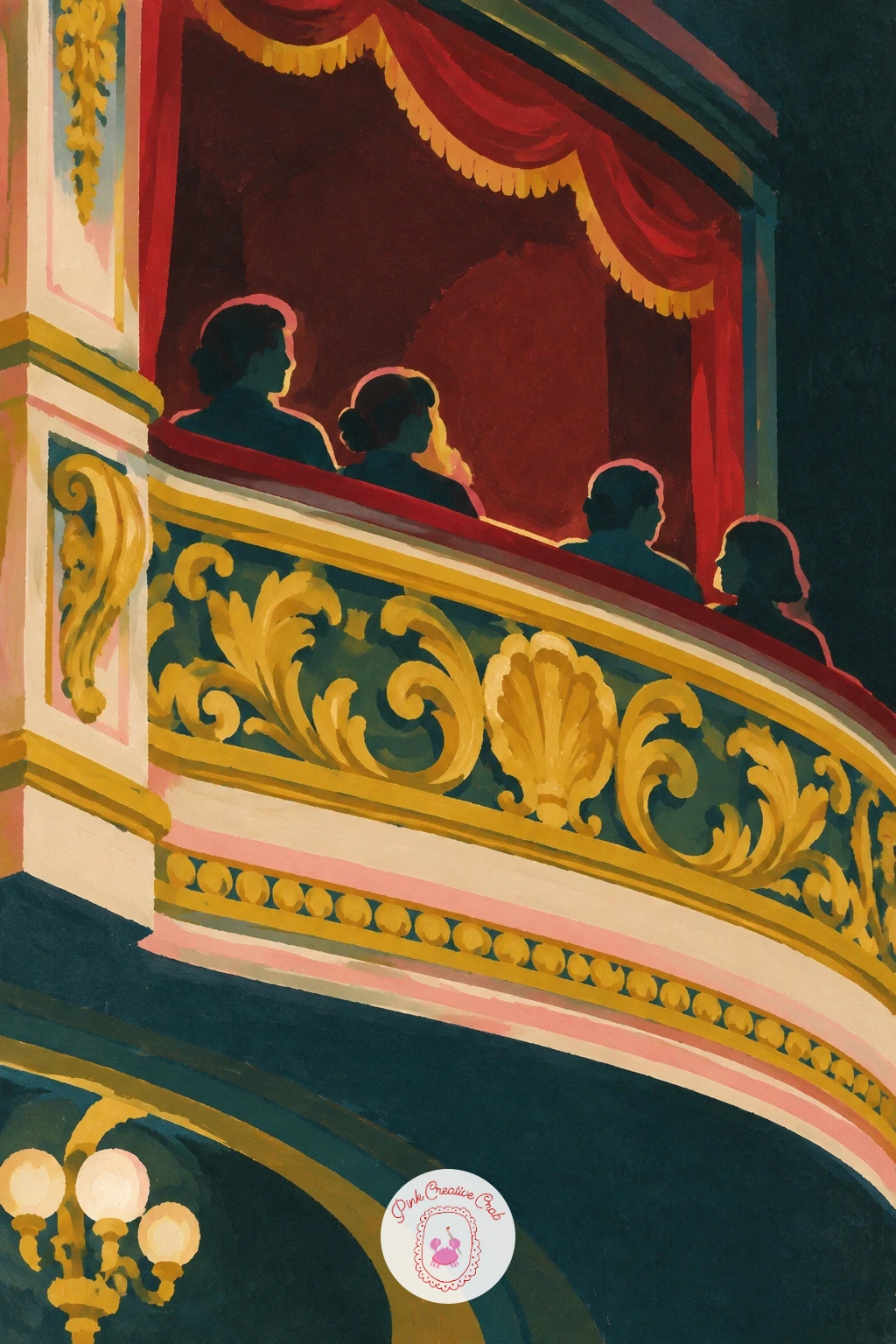
Palette: Brass Yellow,Charcoal Grey,Maroon,Cream
Return to the seats for a small, warm detail: a couple sharing a single armrest and one oversized soda between them. Paint the two seats and the shared armrest first, keeping both figures close together with elbows nearly touching, since the whole story of this scene rests on that small shared space.
Build the giant soda cup between them as a clear, simple shape, taller and wider than a normal cup would be, with one or two striped straws leaning out at slightly different angles for a relaxed, unposed feel.
Light the two figures from the screen ahead as in your earlier back-row couple scene, keeping that same warm glow consistent if you want the two pieces to feel like a pair.
If you would rather skip the giant soda joke, a shared popcorn box works just as well as the connecting object between them.
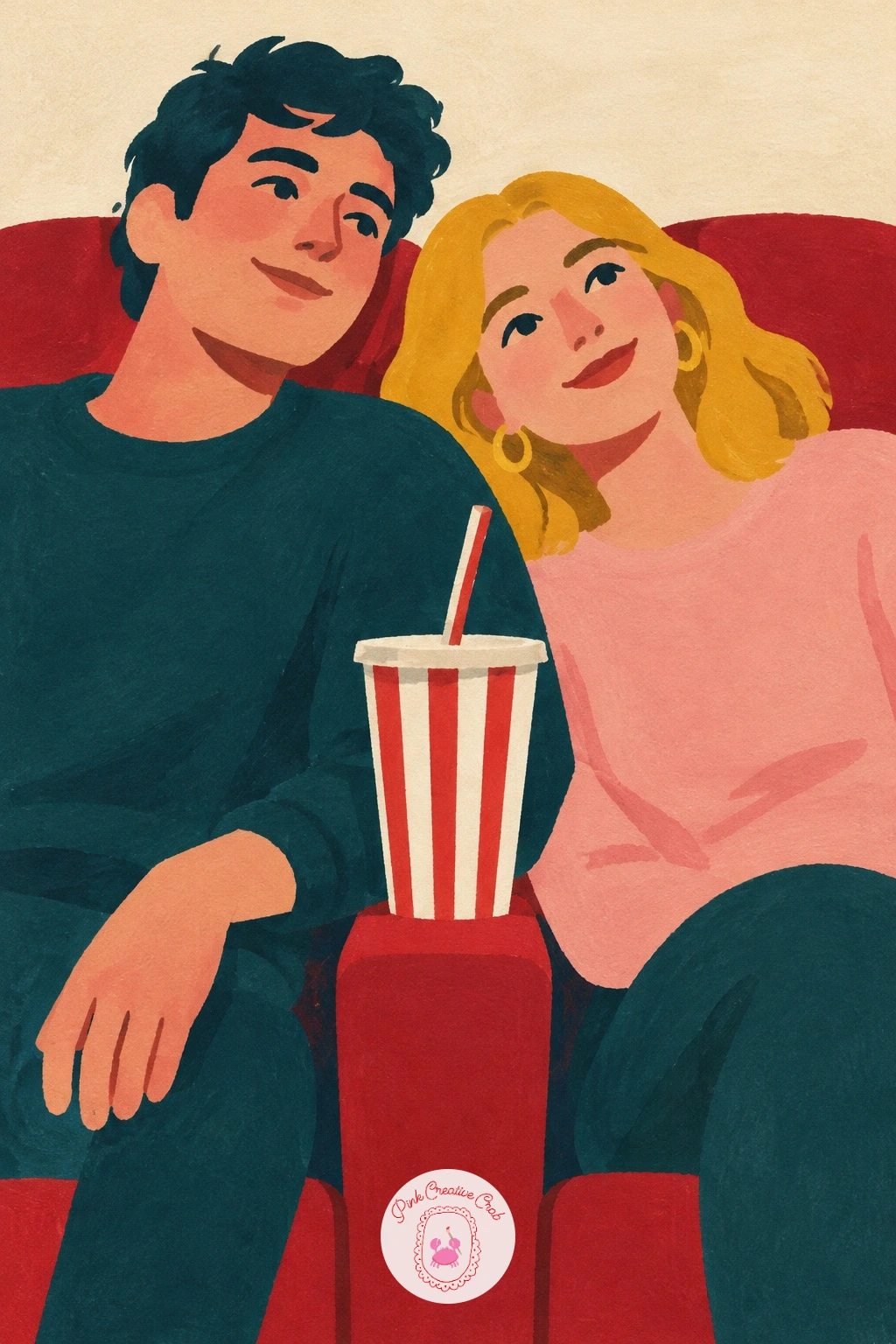
Palette: Blush Pink,Maroon,Cream,Cherry Red
Give the drive-in its own small building to paint: a snack stand glowing pink at twilight between showings. Paint the sky first in a soft gradient from deep teal at the top down to a warmer blush near the horizon, since that gradient sets the twilight mood before any building goes down.
Build the stand as a simple boxy shape with a flat awning, lit from within so the window and counter glow blush pink against the cooling sky around it. Keep any serving window completely blank of text or menu detail, just a warm glowing rectangle.
Add a short counter shelf with a couple of simple cup or box shapes waiting on it, small and loose, to suggest the stand is mid-use without needing any figures.
For a colder-feeling version, shift the glow from blush pink to a warmer mustard instead.
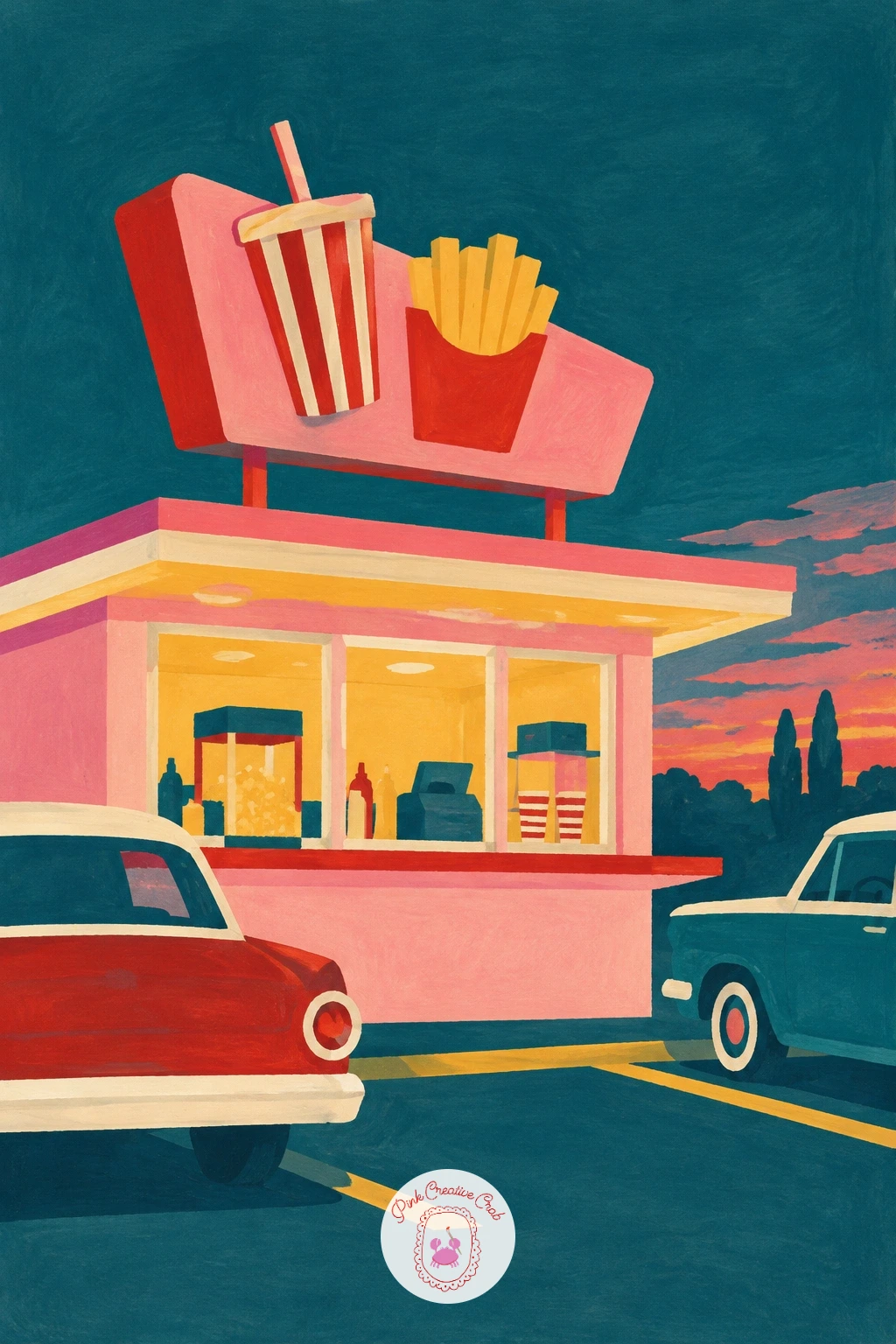
Palette: Blush Pink,Deep Teal,Cream,Mustard Yellow
Paint the cinema’s connecting hallway, round porthole doors lining a long carpet runner that stretches toward a vanishing point. Rule a light perspective guide first, a single vanishing point roughly at eye level, since the repeated doors and the receding carpet pattern both depend on that one point lining up.
Build the porthole doors as simple round shapes set into flat walls, evenly spaced and shrinking slightly as they move back in the hallway, following the same perspective lines as the carpet.
Paint the carpet pattern in cherry red and cream, keeping the repeat simple, two shapes alternating, so the pattern reads clearly even as it shrinks toward the vanishing point.
If straight perspective feels tricky, try the train station drawing ideas for more practice with corridors and receding lines in a similar setting.
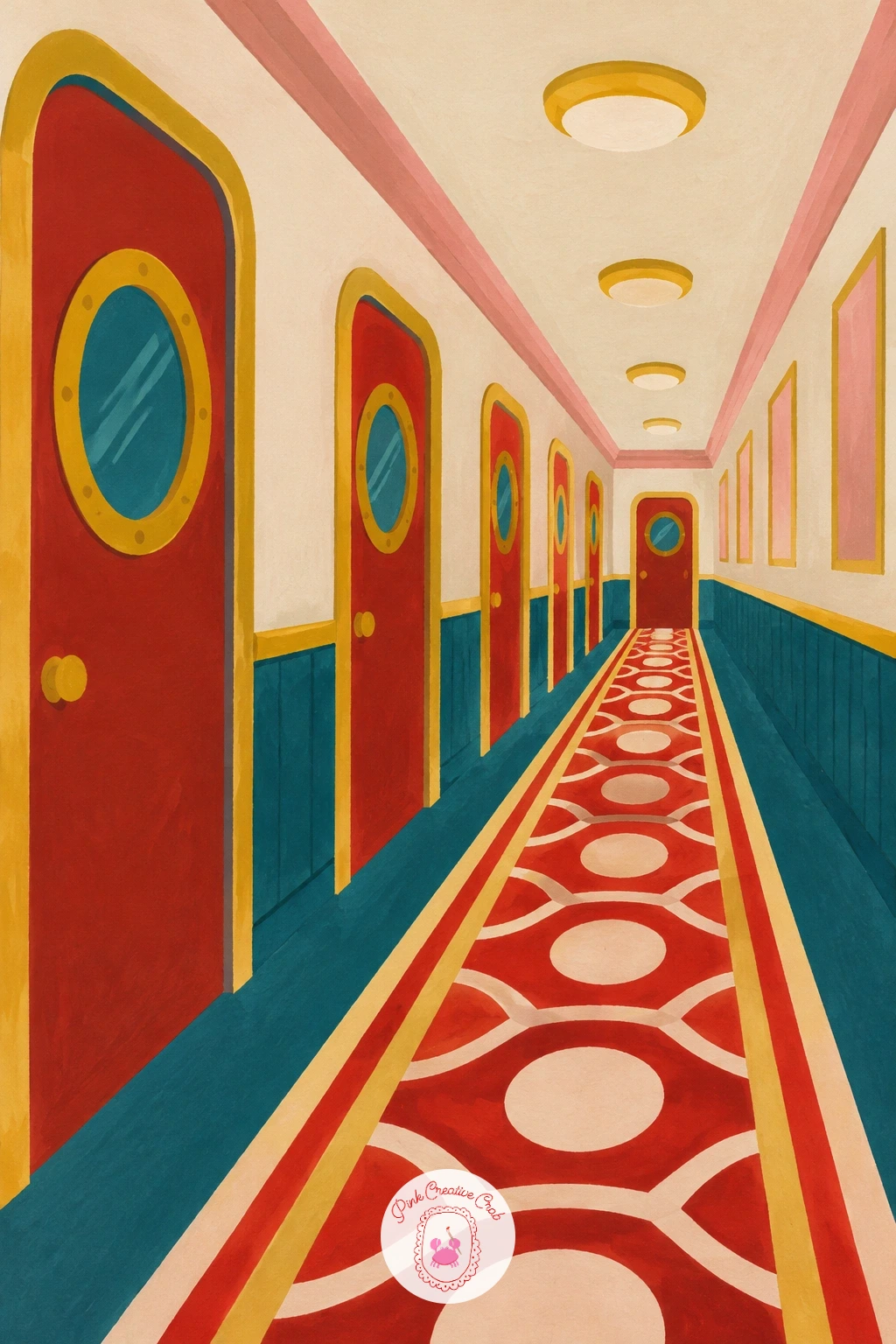
Palette: Cherry Red,Cream,Deep Teal,Charcoal Grey
Take the cinema up onto a rooftop, deck chairs scattered under string lights with the screen standing at one end. Paint the sky first as a warm dusk gradient, since the string lights and the screen glow both need that darker sky behind them to read as bright. Build a simple blank screen shape at one end, then scatter a handful of deck chairs facing it, each a simple folded fabric shape in a different flat color.
String the lights last, as a gently curving line strung between two posts, with small warm dots painted along its length rather than a perfectly straight row, since a slight sag reads more convincingly than a taut line.
Keep the rooftop edge simple, just a low wall or railing silhouette along the bottom of the page to ground the scene above a city.
For a cozier feel, add one small side table with a drink between two chairs.
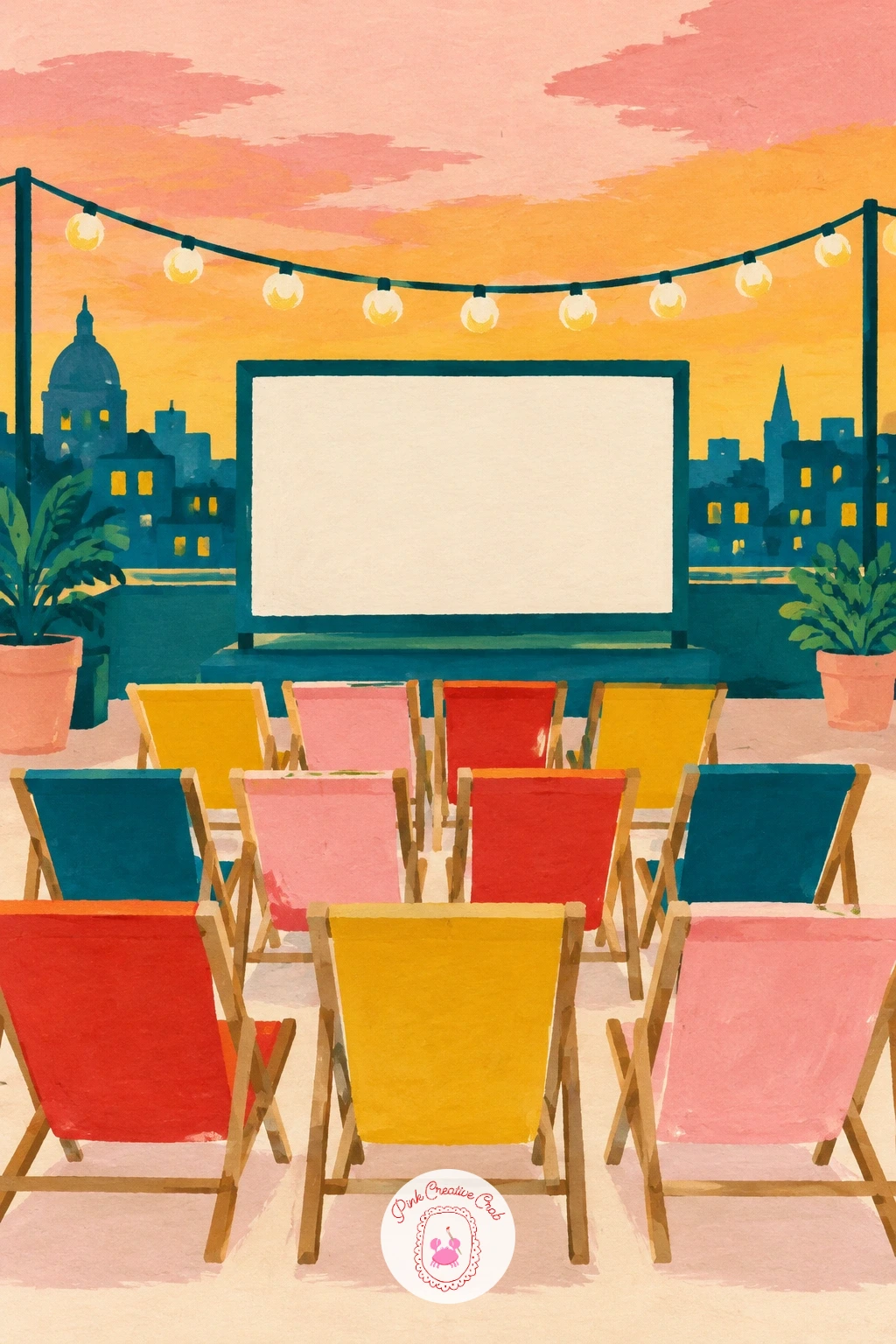
Palette: Mustard Yellow,Blush Pink,Deep Teal,Cream
If cozy outdoor seating scenes appeal to you, the cozy drawing ideas have more window seat and evening scenes in the same mood.
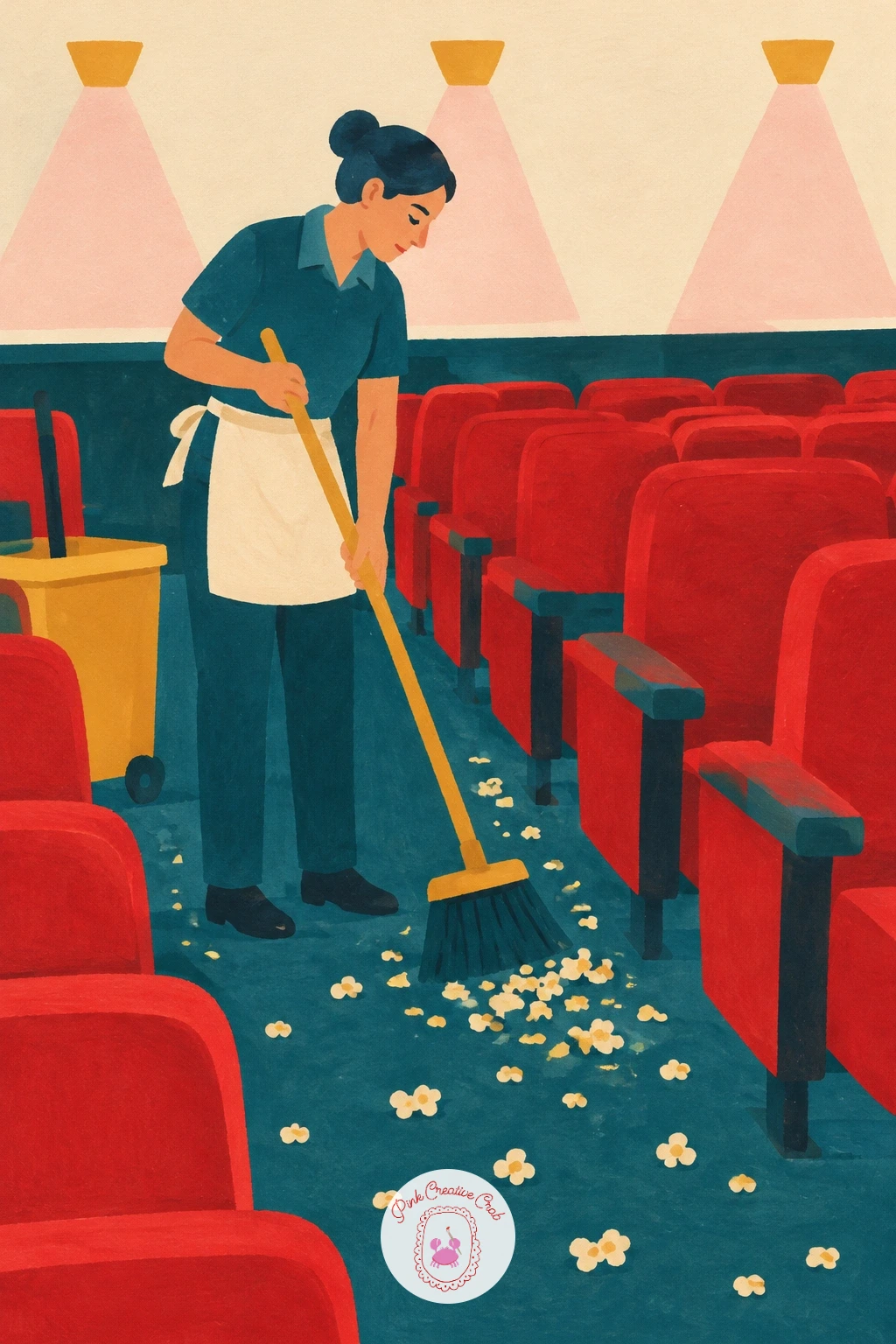
Paint the quiet moment after everyone leaves, a cleaner sweeping popcorn between the rows under house lights. Paint the seat rows first in a brighter, flatter light than your other theater scenes, since house lights read very differently from screen glow or dim aisle lighting, more even and less dramatic.
Build the cleaner as a simple standing figure with a broom held at an angle, small scattered popcorn pieces swept into a loose pile nearby painted as a handful of pale yellow dabs.
Keep the overall mood calm rather than dramatic, muted tones and soft shadows, since this scene works on its quiet ordinariness rather than any strong light effect.
For a quicker version in ten minutes, paint just the broom, the pile of popcorn, and a few nearby seats, letting the rest of the theater stay implied beyond the edge of the page. A forty-minute version can add the full row of seats receding behind the figure.
Palette: Cherry Red,Pale Yellow,Cream,Charcoal Grey
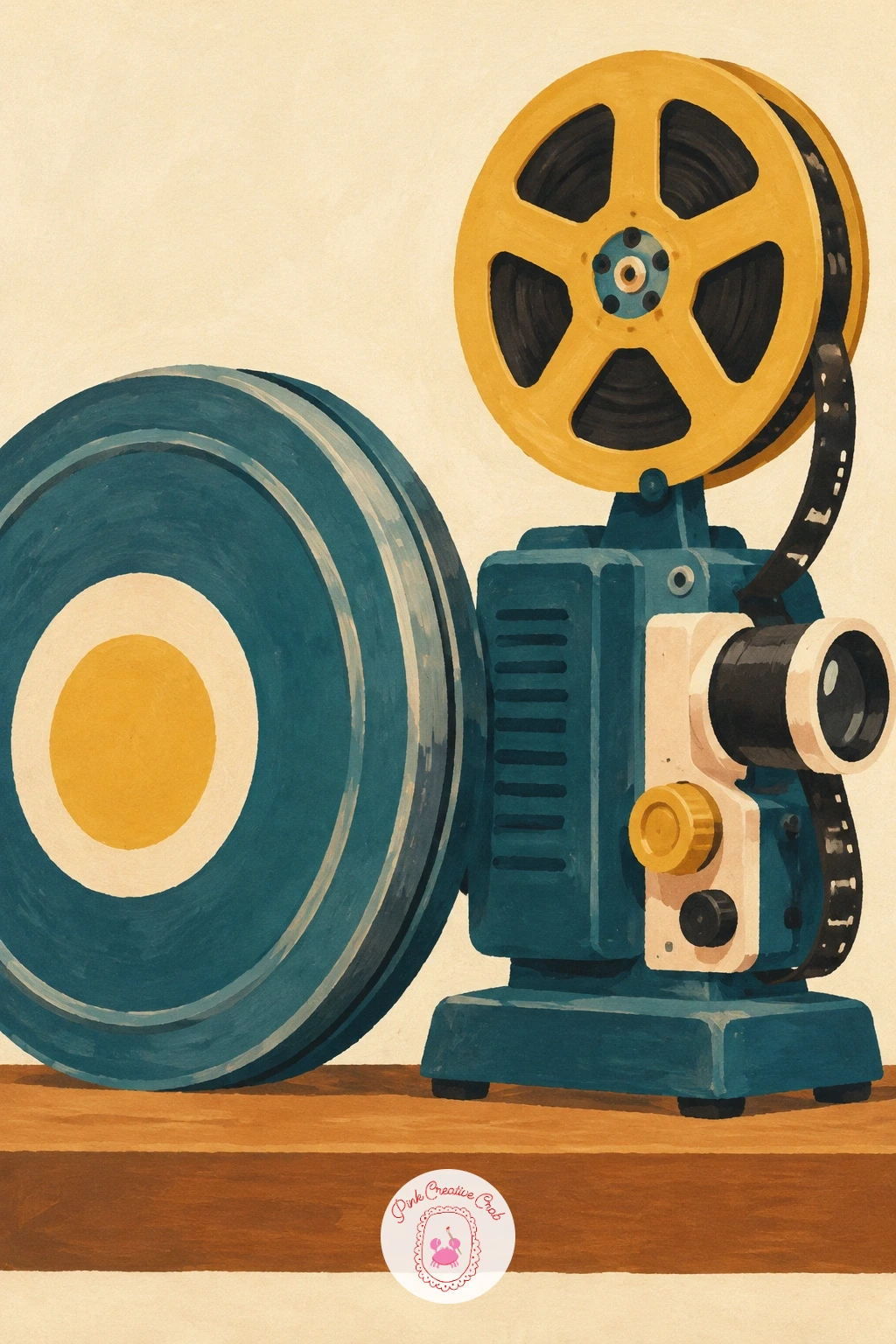
Paint a small still life for a change of pace: an old film reel canister sitting beside a vintage projector on a plain wooden shelf. Build the projector first as a simple geometric cluster of shapes, a box body and round lens barrel, then add the flat metal canister beside it as a simple circle with a slightly raised rim.
Keep both objects resting on a plain painted wood grain shelf, a few long horizontal brushstrokes in a warm brown tone, rather than a detailed textured surface, since the objects should carry the interest, not the shelf.
Paint a soft dry brush highlight along the top curve of the canister and the projector lens to suggest old worn metal catching a little light, without rendering a full reflection.
No real projector to reference: a simple box shape with one round lens front and two reel shapes on top reads clearly enough on its own.
Palette: Charcoal Grey,Mustard Yellow,Cream,Brass Yellow
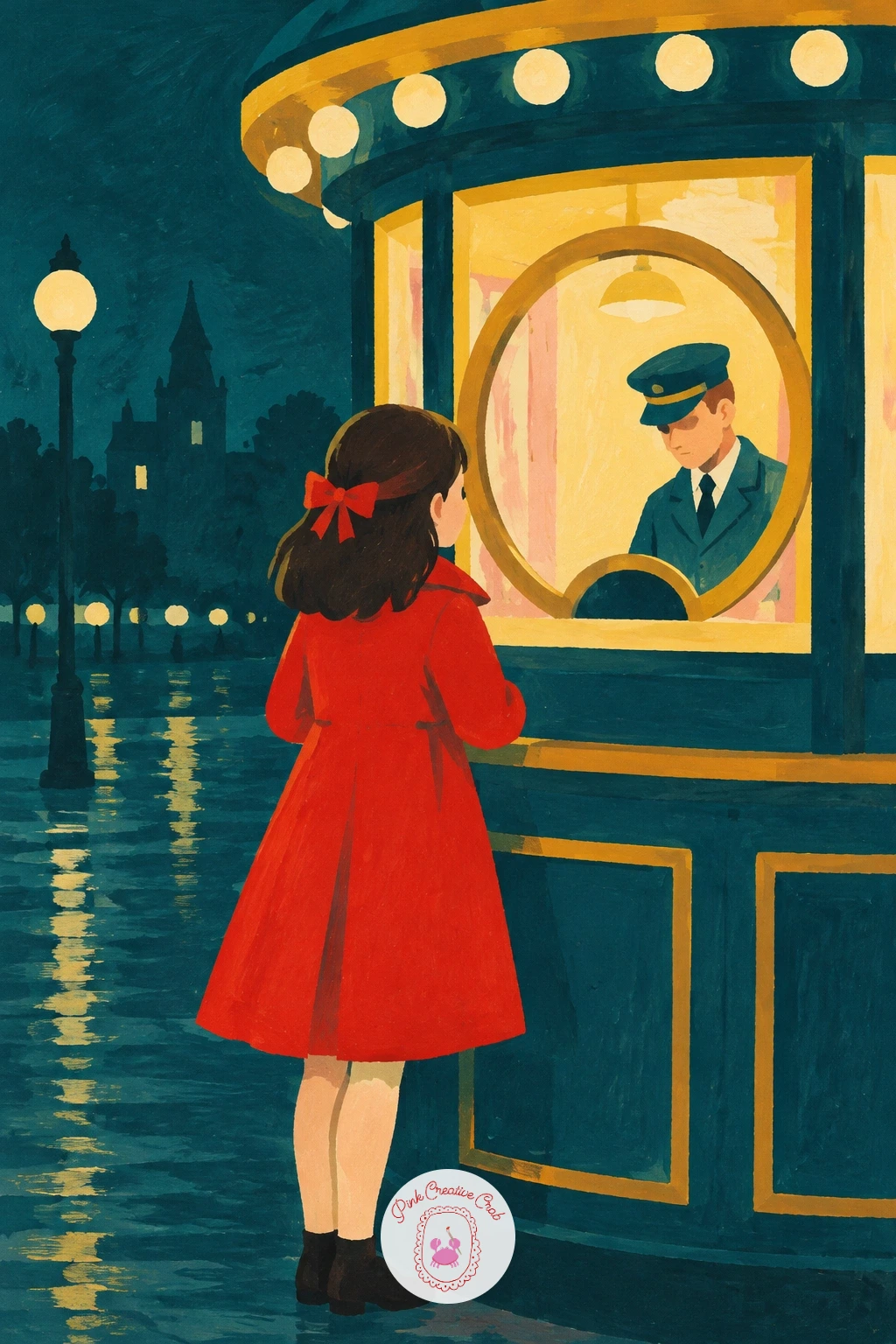
Bring a figure to your earlier ticket booth scene: a girl in a red coat buying a ticket at the lit window at night. Paint the booth and its warm window glow first, consistent with your earlier version, then add the girl standing at the window, her coat the brightest cherry red note against the cooler surrounding night.
Keep her figure simple, a rounded coat shape and a small head, with just enough gap between her and the booth window to suggest she is reaching up or leaning in to speak through it.
Light her coat warmest on the side nearest the booth window, letting the far side fall into cooler shadow, the same single light logic you used for the booth itself, so the two pieces would sit well side by side.
Swap the red coat for mustard or teal if you want her to stand out against a different booth color scheme.
Palette: Cherry Red,Deep Teal,Cream,Charcoal Grey
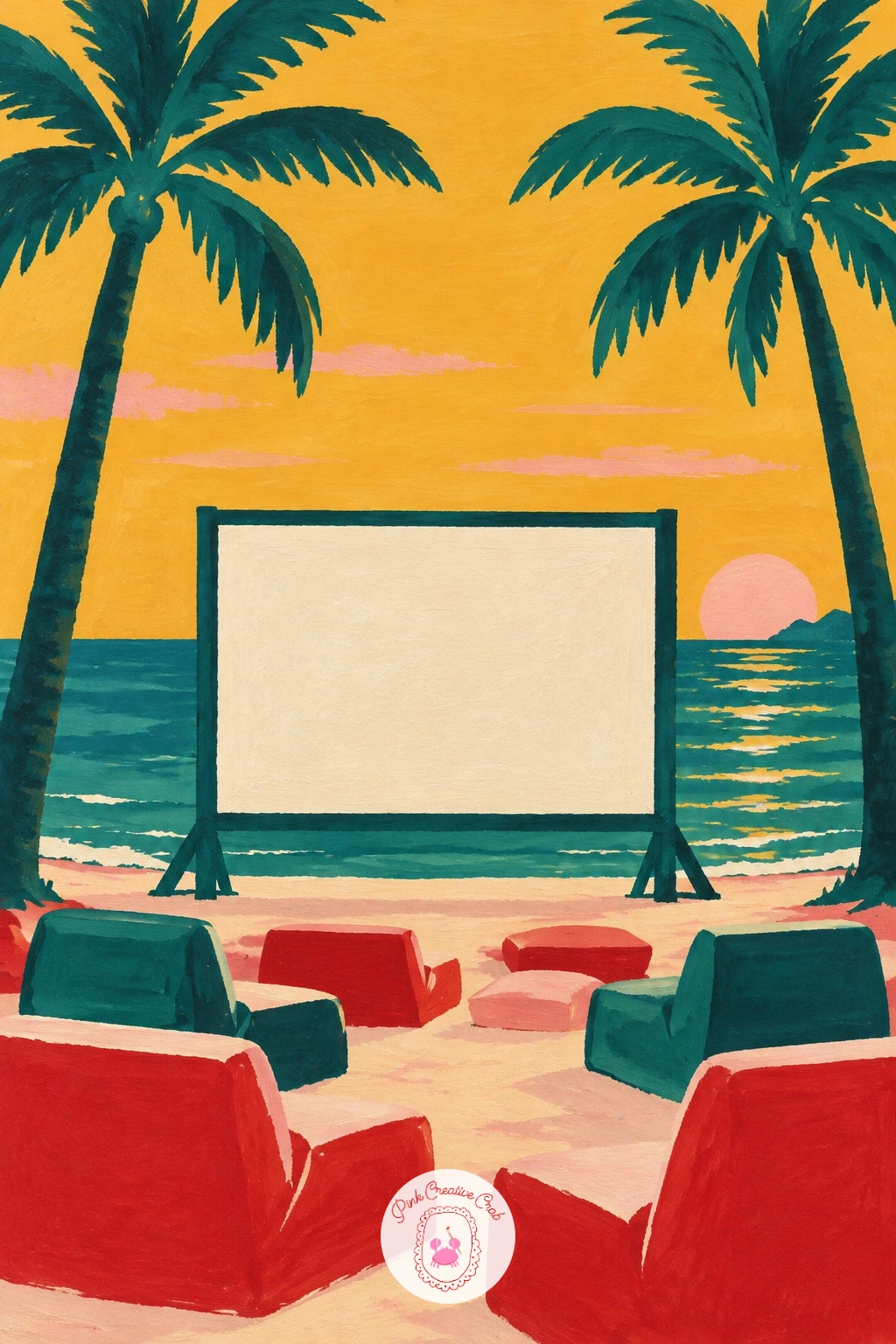
Take the screen to the coast for an open-air cinema with palm trees framing either side. Paint the sky and sea first as two simple flat bands, a warm dusk gradient above a calmer teal below, since this horizon line anchors the whole scene before any screen or palm goes in.
Build the screen as a tall pale rectangle standing right at the shoreline, then add two simple palm silhouettes, one on each side, their trunks slightly curved and a loose cluster of frond shapes at the top rather than many thin individual leaves.
Picture the light as late, warm and low, so the screen and the near sides of the palm trunks catch a soft golden edge while the rest stays in flatter silhouette.
If two palms feel like too much to balance, one larger palm leaning in from one side carries the scene just as well.
Palette: Mustard Yellow,Deep Teal,Cream,Blush Pink
Paint the cinema facade in full daylight for a contrast to your dusk and night scenes, soft pastel colors under a plain sunny sky. Block the building shape first in a flat blush pink or pale mustard, brighter and lighter than any of your other cinema pieces, since daylight calls for a much higher-key palette throughout.
Keep the marquee small and blank as always, but let its shadow fall short and sharp-edged on the pavement below, a clear sign of strong midday or afternoon sun rather than the long soft shadows of dusk scenes.
Add one or two simple awning stripes or a potted plant by the door in a contrasting flat color to break up the large pastel facade without overworking it.
For a cooler afternoon feel, shift the base facade color from blush to a pale minty teal instead.
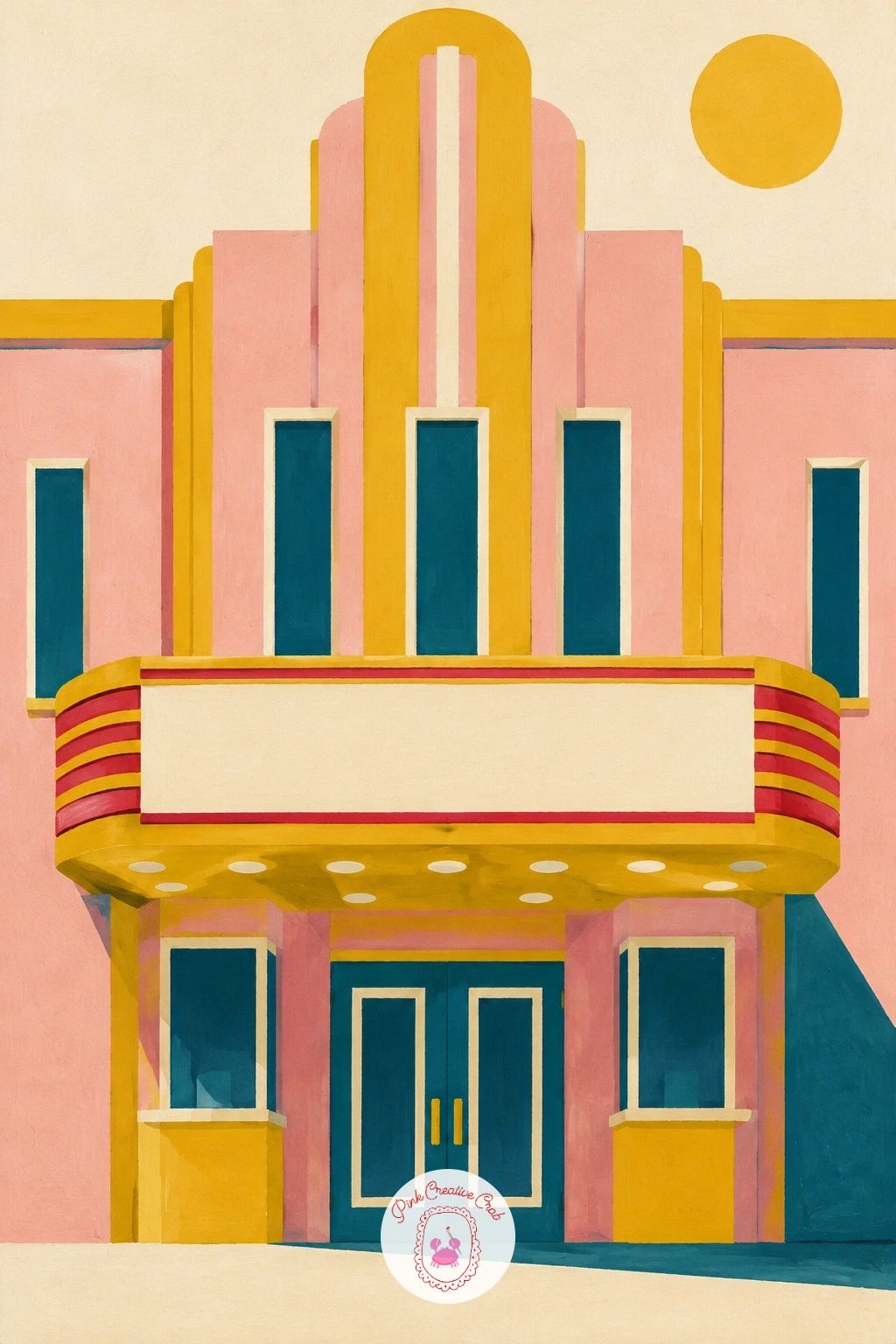
Palette: Blush Pink,Mustard Yellow,Cream,Deep Teal
Add a livelier, more playful scene to the set: a family of four in 3D glasses jumping at the same moment, lit by the screen. Rough out four simple figures first, keeping their poses varied but all airborne, since the fun of this picture depends on a clear sense of motion across the group rather than four identical shapes.
Compare each figure’s height against the one beside it before finalizing, so the family reads clearly as two adults and two shorter children rather than four same-sized shapes.
Paint the 3D glasses as simple flat cream and dark shapes across each face, kept identical in style across all four so they clearly belong to the same scene, and let the screen glow light the fronts of their bodies warmly from one side.
If four jumping figures feels like a lot to balance, start with two and add the other two once the first pair sits well on the page.
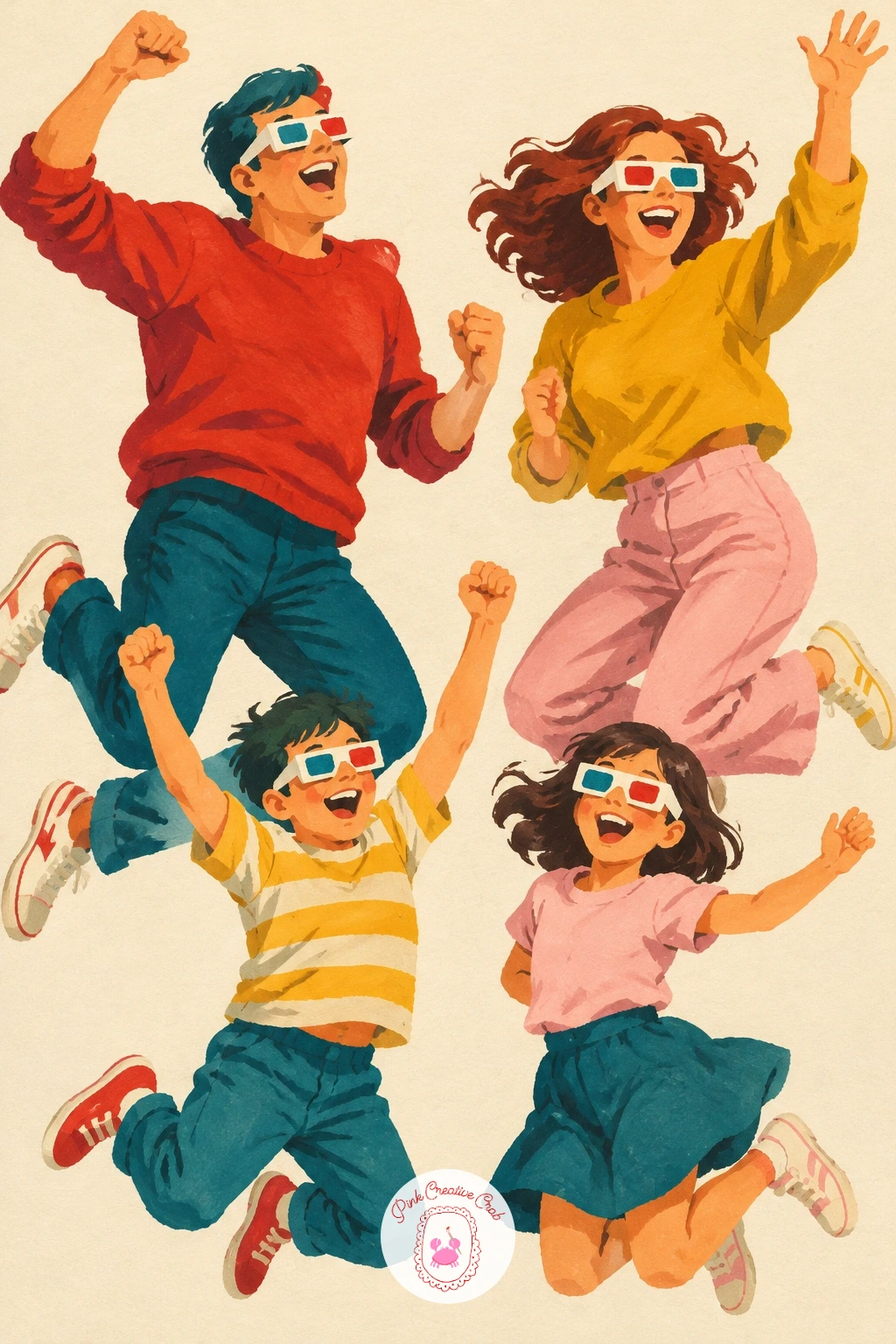
Palette: Cherry Red,Mustard Yellow,Cream,Deep Teal
Bring winter back outside the cinema with a small standalone popcorn cart, snow falling softly around it. Paint the cart first as a simple boxy shape on two wheels, striped roof and a warm bulb or lantern glowing inside it, consistent with the striped look from your earlier counter scene but freestanding this time.
Keep the surrounding ground and sky in soft, muted cool tones, since the warm glow of the cart against a cold palette is really the whole point of this small scene.
Paint the falling snow last, as a scatter of small round white dots over the dried background, varying the dot sizes slightly so some read as nearer and larger, others as farther and smaller.
No reference for a cart like this: a simple box on two wheels with a striped roof reads clearly enough without any extra detail.
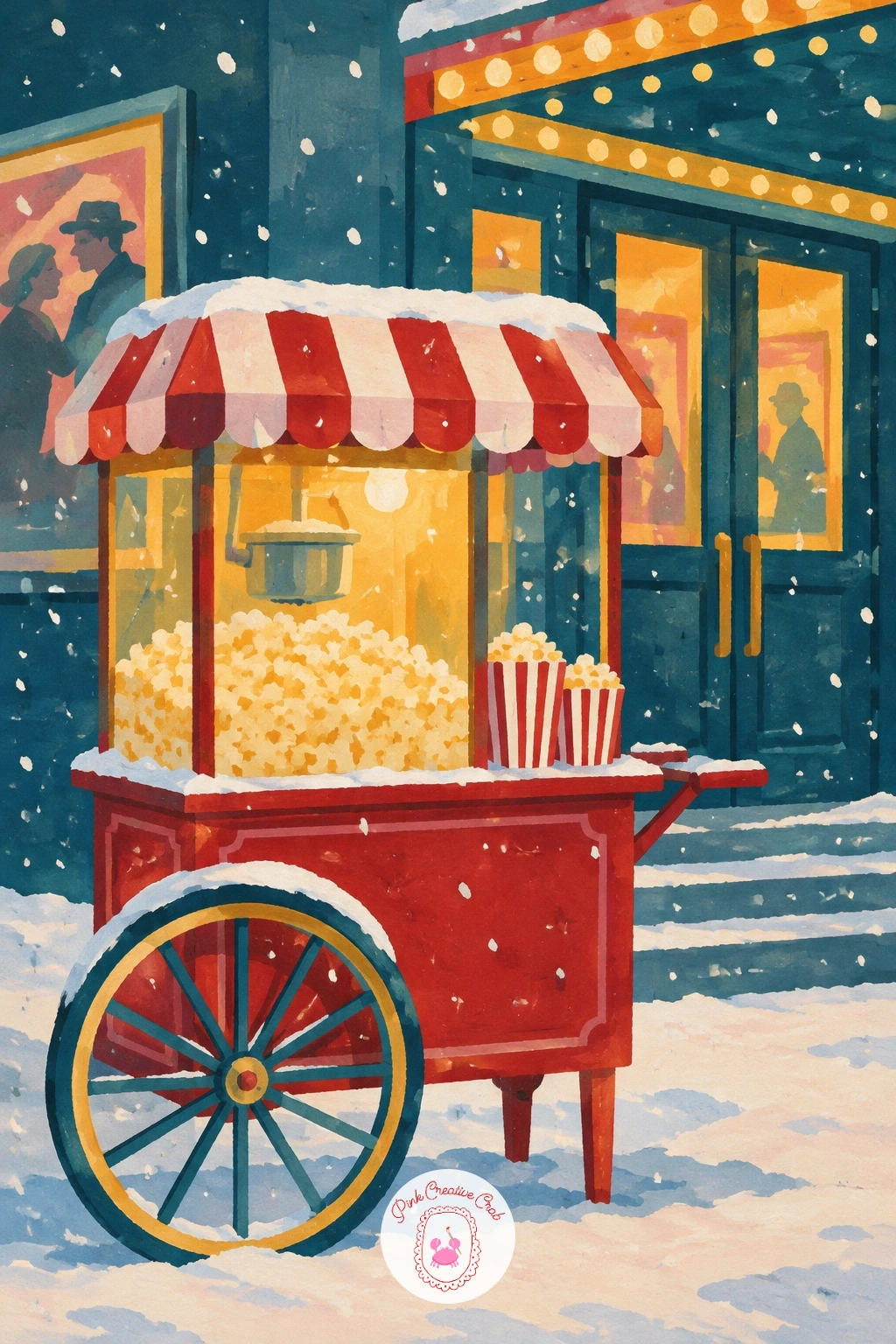
Palette: Cherry Red,Cream,Deep Teal,Mustard Yellow
If you enjoy small glowing winter scenes like this one, the snow globe drawing ideas cover plenty more tiny lit-up winter subjects.
Close the set with the quietest scene of all: an empty drive-in at dawn, one lone car remaining, soft fog over the lot. Paint the sky first in a very pale, soft gradient, cream and faint blush with barely any teal left in it, since dawn light sits much lighter and gentler than your earlier starry drive-in sky.
Build the tall screen as before, but let its bottom edge soften slightly into the fog rather than meeting a crisp ground line, which reads instantly as early morning mist.
Paint the one remaining car small and simple near the base of the screen, its color slightly muted compared to the bright flat tones used elsewhere in the set, to suggest the stillness of an early hour.
Finish by softly dry brushing a thin pale haze across the lower third of the page to tie the fog together as one continuous layer rather than isolated patches.
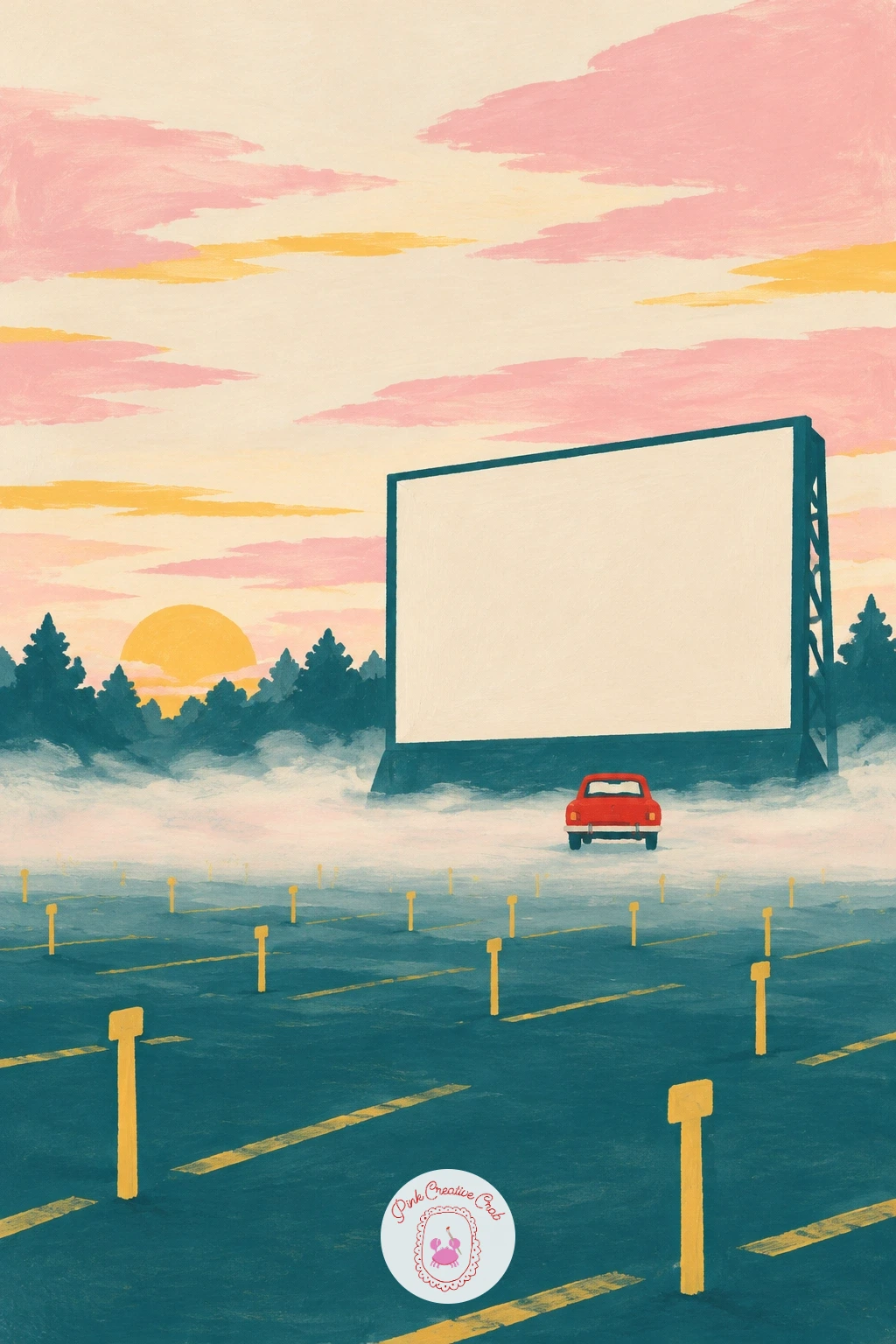
Palette: Cream,Blush Pink,Deep Teal,Charcoal Grey
What to Do Next
Pick one scene that pulls at you first, tape off a panel or a beam if the idea calls for crisp edges, and work from the sky or background forward to the smallest bright detail last. A plain sheet of gouache paper and twenty minutes is enough to finish an old marquee or a ticket booth today.
Frequently Asked Questions
What gouache colors work best for a movie theater drawing?
Cherry red, deep teal, mustard yellow and blush pink against cream cover almost every scene in this list, from neon marquees to drive-in skies. Keep a tube of charcoal grey on hand for night shadows too.
How do I paint crisp straight edges in gouache without a ruler?
Low tack masking tape holds a straight line far better than a steady hand alone, especially on marquee panels, booth windows and projector beams. Press it down firmly, paint right up to the edge, and peel it slowly once dry.
Why does my cinema scene look flat instead of glowing?
Glow comes from contrast, not brightness, so paint the surrounding area darker before adding the light source itself. A pale bulb or screen only reads as glowing against a genuinely dim background around it.
How do I keep rows of seats or doors from looking uneven in perspective?
Set one vanishing point before you paint anything, then measure the first shape and use that same unit to judge how quickly later rows shrink. A light pencil grid under the gouache keeps the repeat honest.
What is the easiest movie theater idea to start with as a beginner?
A ticket booth or a single tipped popcorn box make the simplest starting points, since both are one contained shape with a clear light source and no perspective to manage.
Have any thoughts?
Share your reaction or leave a quick response — we’d love to hear what you think!
-
 0
-
0
-
0
-
0
-
0
-
0


