A New York City drawing is the easiest way to spend an afternoon inside a city you love without leaving your table. Think of it less as architecture homework and more as a postcard from a trip you have not taken yet: a skating rink glowing at dusk, a cab sliding through snow, a cat asleep on a crate of clementines.
Every idea below works in flat, matte gouache with crisp edges, so you build each scene in simple shapes rather than fussy detail. You will find the famous landmarks here, but also the small quiet corners, a lit menorah, a fire escape wrapped in fairy lights, a diner booth with a snowy window, so pick whichever one pulls at you first and start painting.
Using these images: free for personal projects such as printing, coloring, cards, journals and gifts. Handmade items that include them may be sold up to 30 pieces per design. More than that is commercial use and is not permitted, and neither is selling or sharing the images themselves or passing them off as your own. Please ask before any other use.
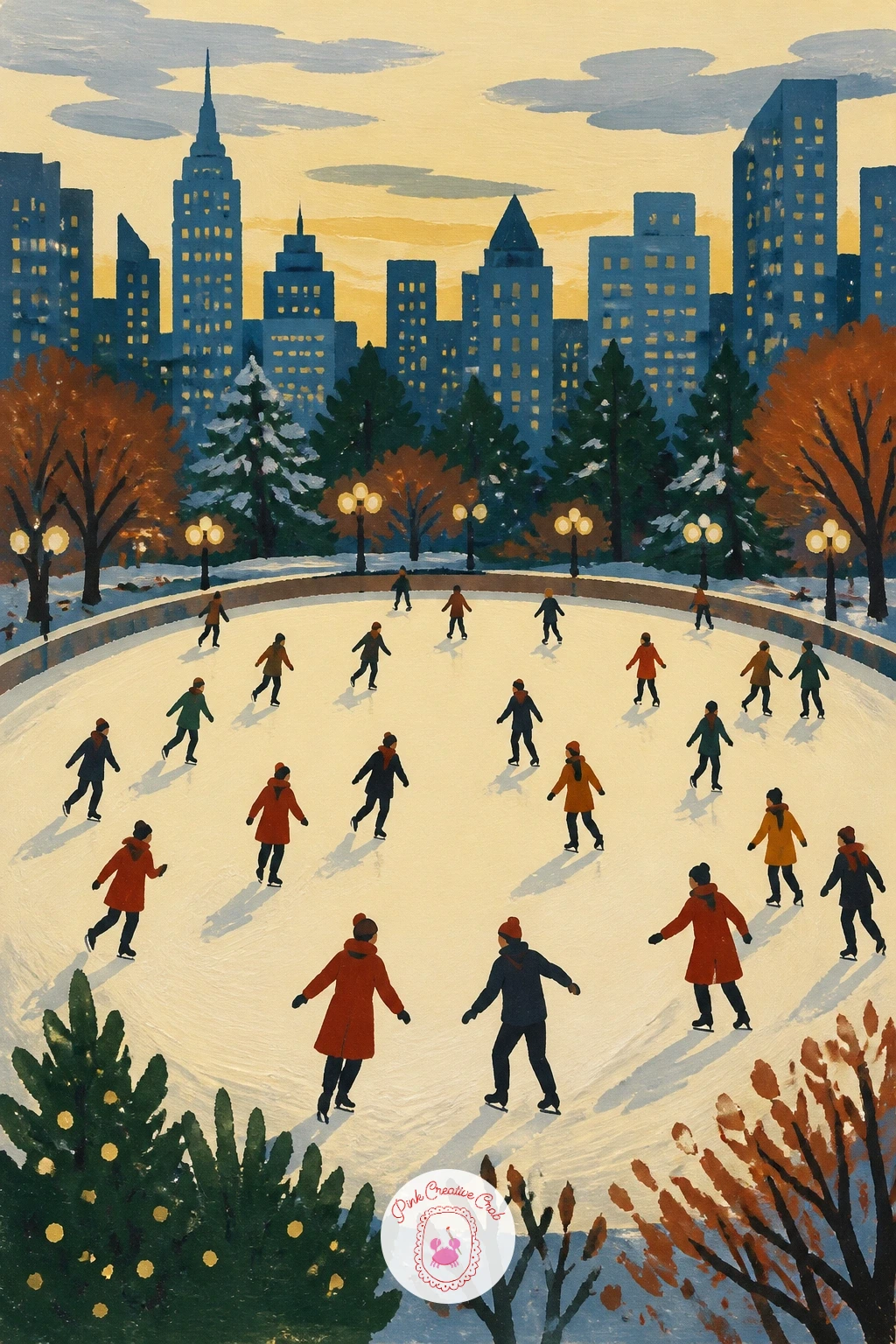
Start the Central Park rink with the skyline, since everything else sits in front of it. Block a soft band of dusky blue and lavender across the top third, then drop in simple rectangular towers in steel blue and cream, lightest where the sky meets them.
Paint the rink as one pale cream oval laid flat on the page, and let its edge curve rather than go perfectly round, that curve is what makes it read as ice. Add skaters as small simple shapes, a coat color, a dot head, a line or two for legs, more felt than drawn.
One measuring trick saves this scene: hold your brush at arm’s length and compare the rink’s width to the tallest building behind it, most beginners paint the rink far too small against a skyline that towers over it unrealistically. Keep that ratio generous and the whole page balances.
If you only have watercolor to hand, it will still work, just keep your rink layer pale and let the skaters go on once it is fully dry.
Palette: Steel Blue,Snowy Cream,Brick Red,Fir Green
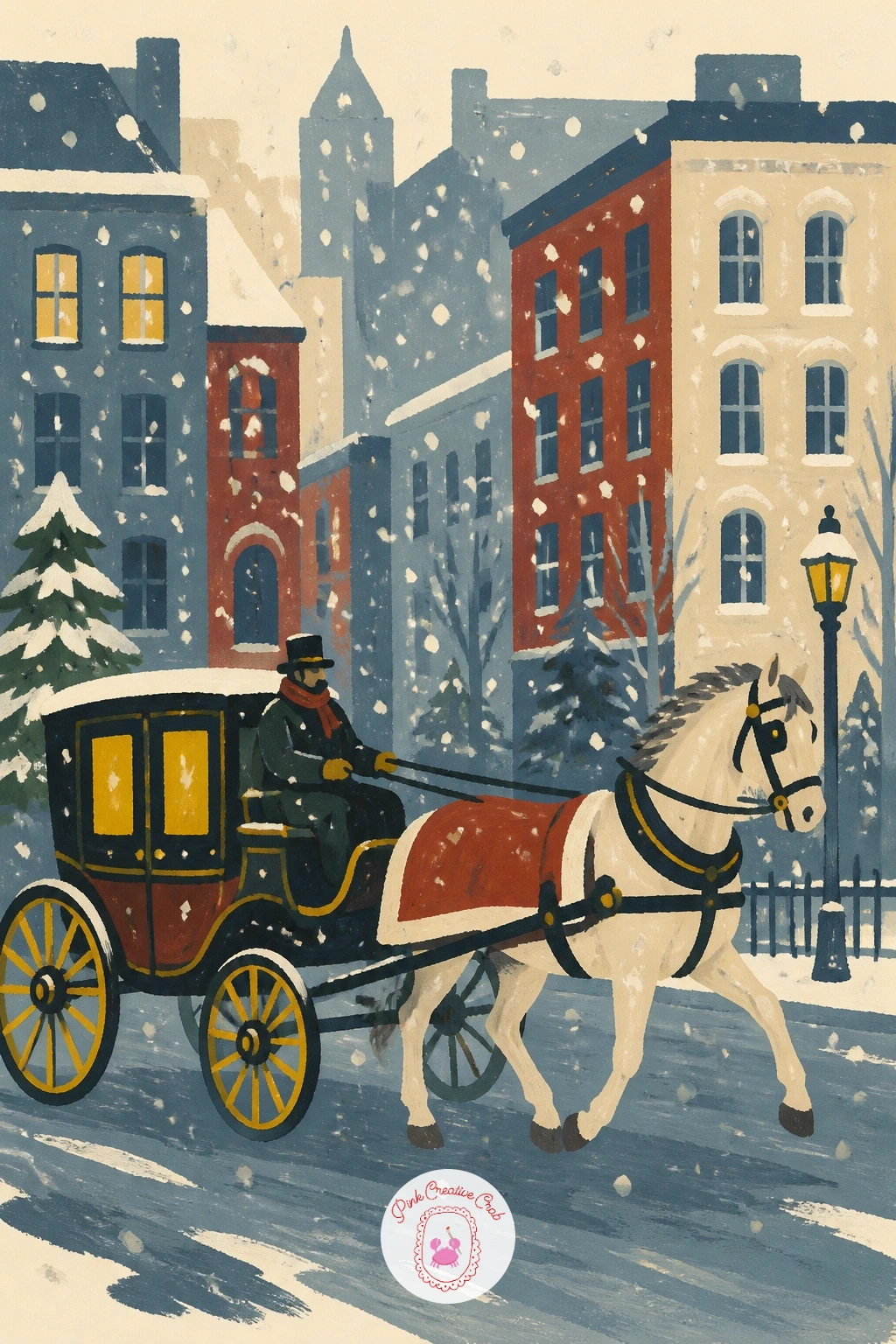
After the open rink, bring the eye down to street level with a horse carriage trotting through snow. Paint the horse first as one solid dark brown-grey shape with a simple leg stride, then add the carriage behind it in brick red with a matching red blanket draped over the horse’s back.
Work the street in flat steel blue-grey, lighter where it catches lamp light, and keep the background buildings as soft rectangles so the carriage stays the star. Snow goes on last, dabbed in with the end of a dry brush loaded with white gouache, or flicked from a toothbrush for a finer scatter.
The usual trouble spot is the horse’s legs going stiff and toy-like. Angle the front and back legs in opposite directions, as if mid-stride, and the whole animal relaxes into motion.
If gouache feels too opaque for the falling snow, switch to a white gel pen for the final flecks once the paint is bone dry.
You Will Need
- toothbrush for snow splatter
- white gel pen
Palette: Brick Red,Steel Blue,Snowy Cream,Payne’s Grey
Move from the open street into a quieter corner with a row of West Village brownstone stoops. Paint the facades as a line of simple flat rectangles in warm brick red and brownish-rust, varying the height slightly so the row does not look stamped from one mold.
Add the stoops as pale steps leading up to each door, then paint a wreath on each door as one small green circle with a tiny red dot, and a lantern beside it as a warm cream glow. Windows go in last as dark rectangles, a few lit softly from within.
Look at the eye level before you start: standing at street level, you look slightly up at these stoops, so the step lines should angle gently upward as they recede rather than running flat across the page. That small tilt is what makes the street feel walked, not stacked.
One concrete tip for today: paint every brownstone from the same light source, upper left, so all shadows fall consistently to the lower right.
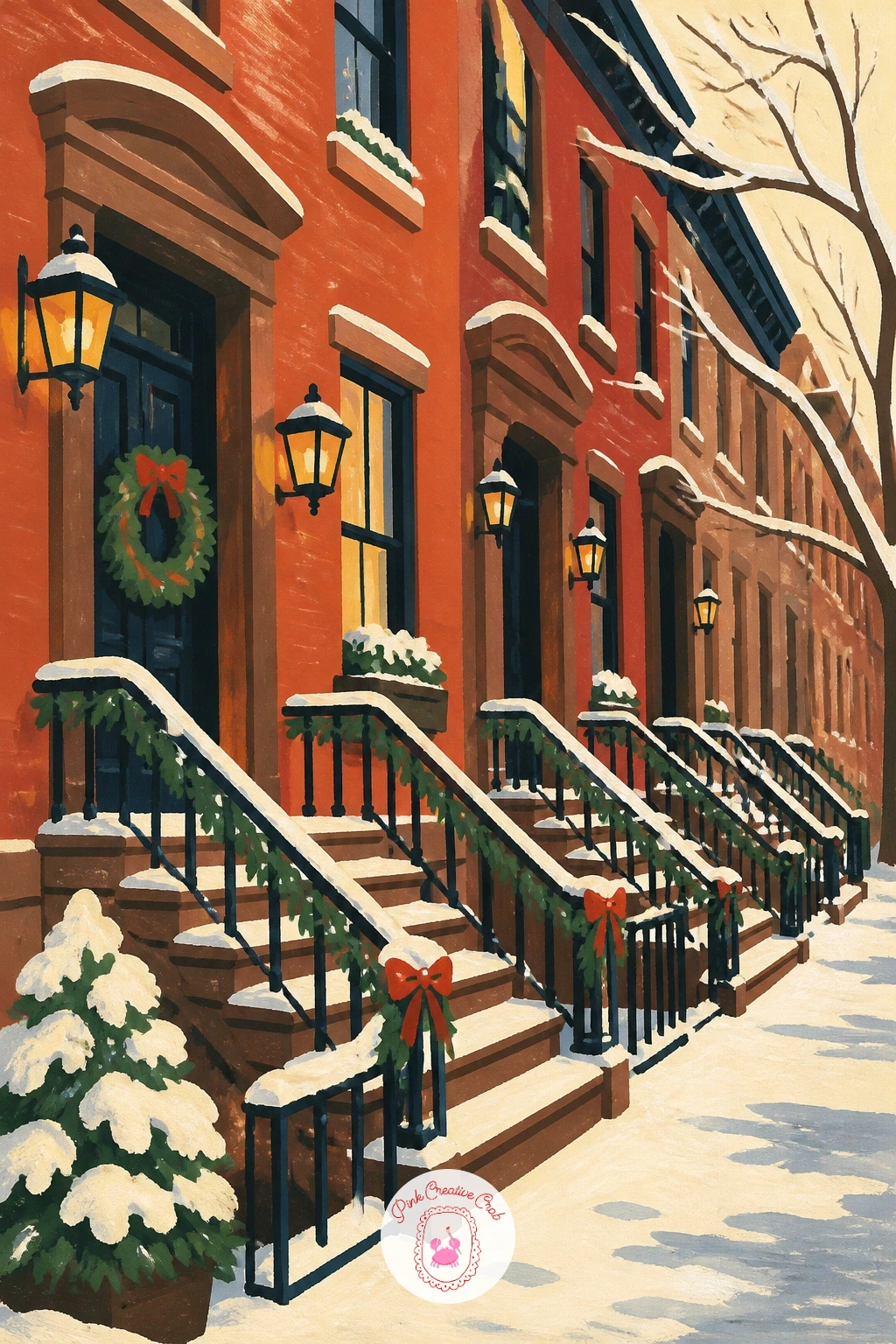
Palette: Brick Red,Fir Green,Snowy Cream,Payne’s Grey
Carry the holiday glow from those brownstone doors into a bigger scene: a giant Christmas tree towering above a busy plaza rink. Build the tree first as one tall triangle, layered in two or three shades of fir green so it does not sit flat, then dot it with small warm cream and brick red lights.
Beneath it, paint the rink as a pale oval with a scatter of tiny skater shapes, and frame the plaza with simple tall buildings in steel blue fading up into the sky. Keep the crowd around the rink edge loose, a row of small dark coat shapes is enough.
For the quick ten-minute version, paint just the tree and rink and leave the background plain cream. Given forty minutes, add the surrounding buildings, a glowing star or topper, and a soft halo of light around the tree using a dry, barely loaded brush.
Keep the tree’s lights slightly irregular rather than in neat rows, real holiday lights never line up perfectly.
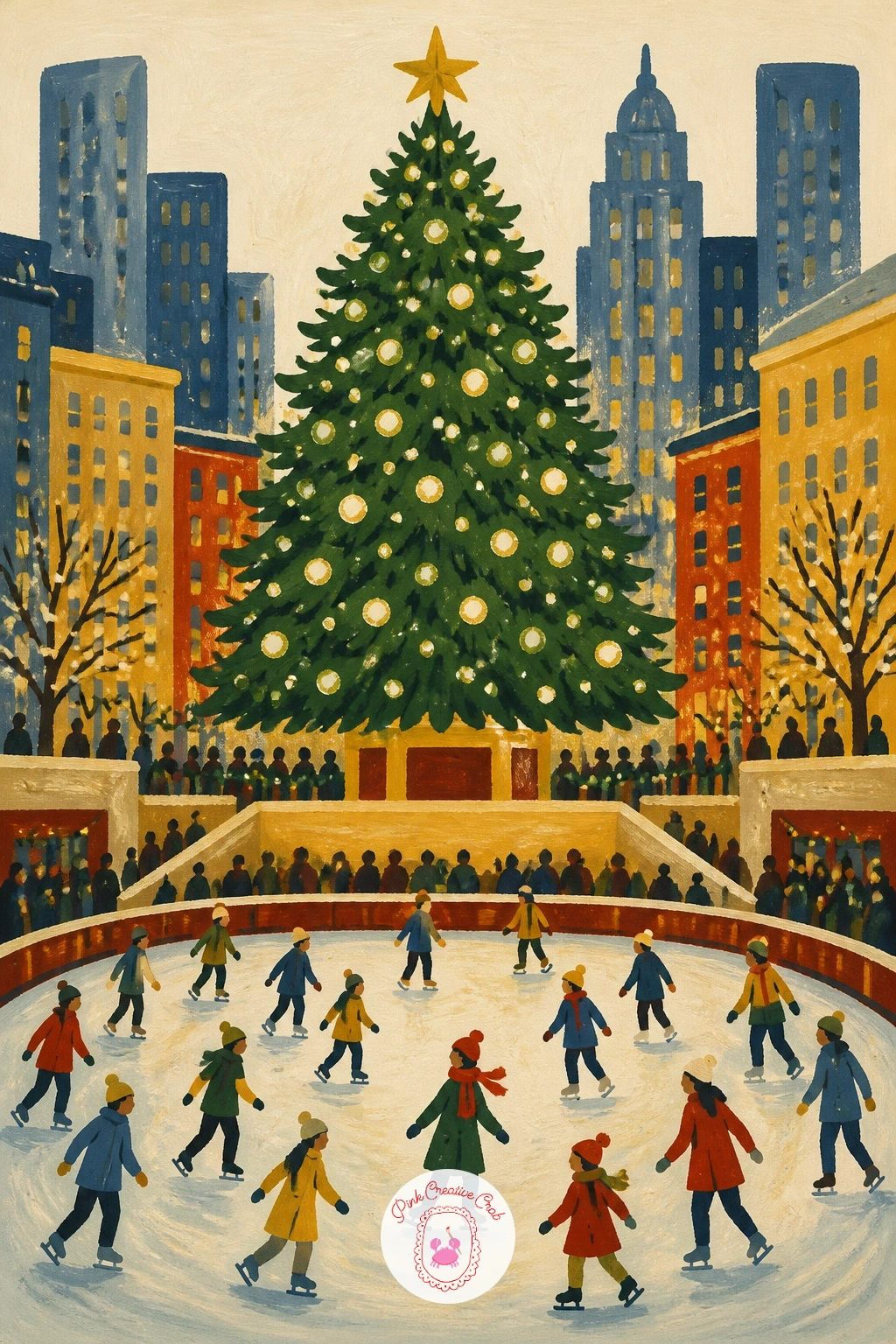
Palette: Fir Green,Brick Red,Snowy Cream,Steel Blue
For more cozy holiday scene ideas built the same way, the Christmas scene drawing ideas make a good companion list to paint through.
After the big plaza scene, slow down with a small, single subject: a hot chocolate cart steaming on a snowy corner. Paint the cart body as one simple brick red box shape with a cream awning striped on top, then add a steel blue wheel and a small steaming cup shape on its counter.
Steam is the fun part here. Load your brush with thin, almost watery white gouache and drag it upward in soft wavy strokes above the cup and the cart’s little chimney, letting the edges stay soft rather than crisp like the rest of the scene.
Beginners often paint steam as a stiff white triangle. Keep your wrist loose and let the strokes curve and taper, two or three light strokes read better than one heavy one.
No gouache for the steam softness? A damp clean brush dragged through the white before it dries will lift and soften the edge nicely.
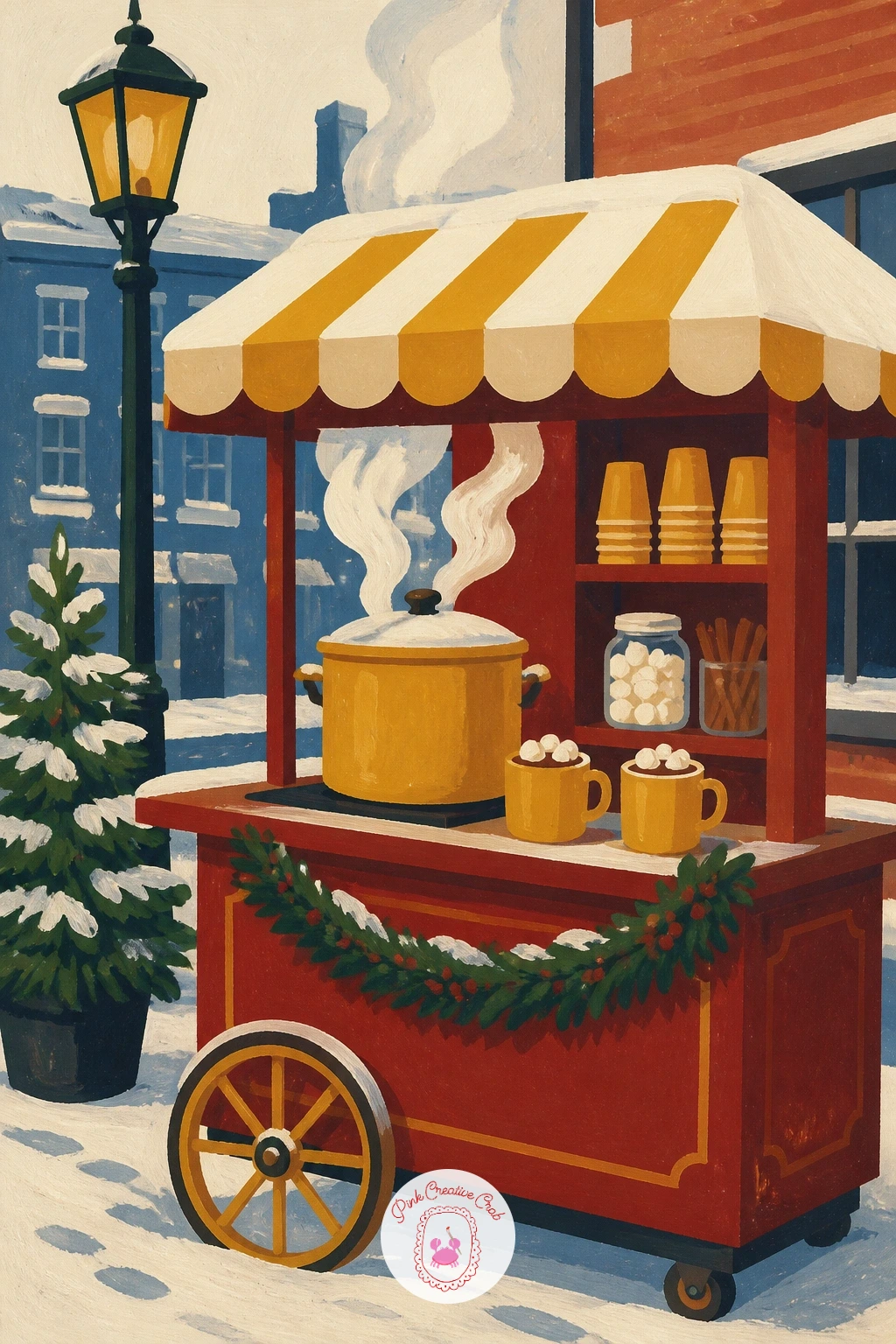
Palette: Brick Red,Snowy Cream,Steel Blue,Taxi Yellow
Nothing says this city faster than a yellow cab, so give it its own quiet avenue scene. Paint the cab as one solid taxi yellow rectangle with rounded corners, add dark steel blue windows and small cream headlight beams cutting forward into the snow.
Keep the avenue simple, two lines of parked car shapes and tall buildings fading into pale cream mist, so the cab stays the brightest, most solid thing on the page. Snow goes on last with a dry brush dabbed lightly, more scattered near the cab’s lights where it catches them.
The eye naturally drifts to where the headlights point, so angle the cab slightly rather than painting it dead straight on, driving toward one corner of the page gives the whole scene direction and movement.
If taxi yellow runs low, mix cadmium yellow with a touch of orange, it gets you close enough for this scene.
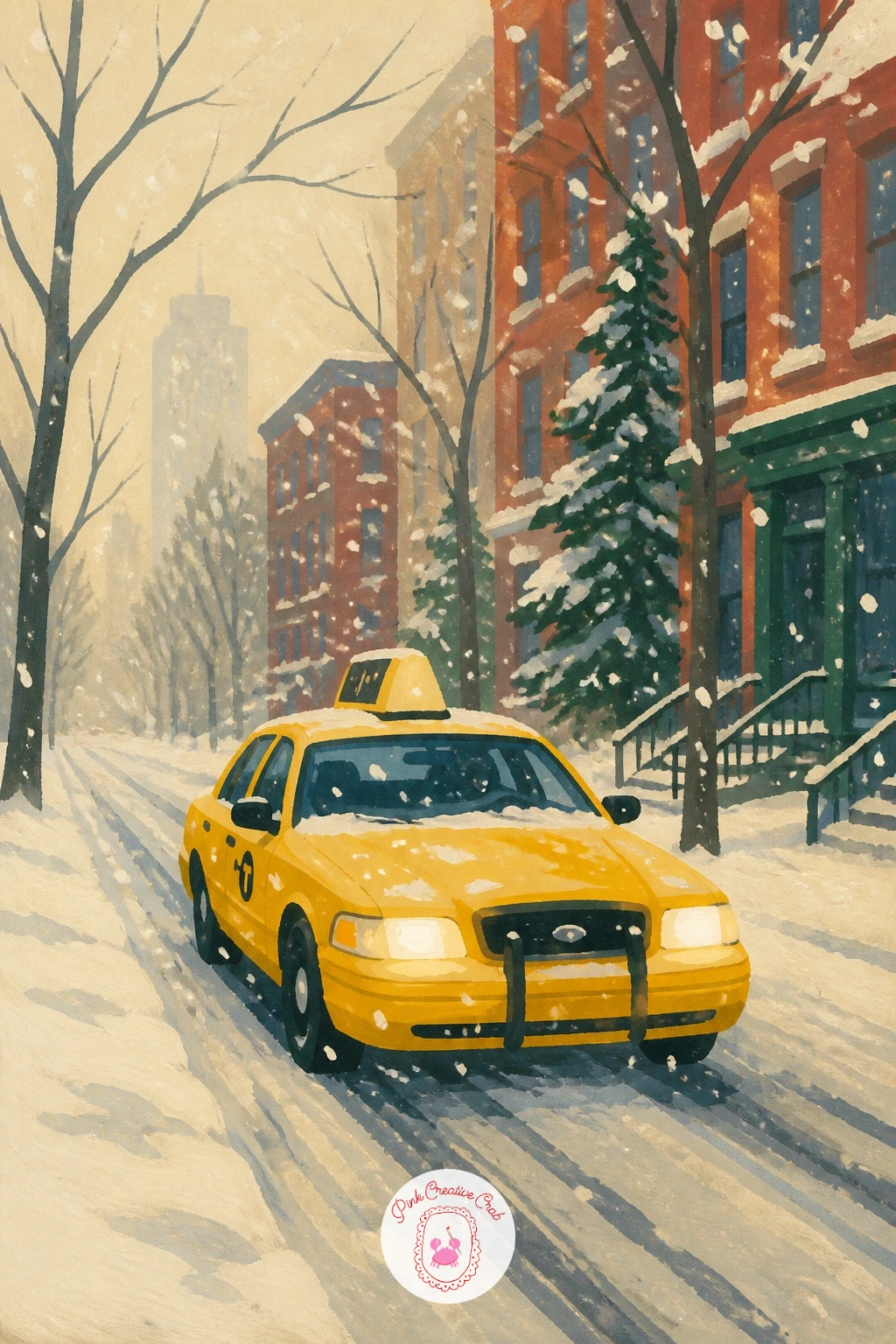
Palette: Taxi Yellow,Steel Blue,Snowy Cream,Payne’s Grey
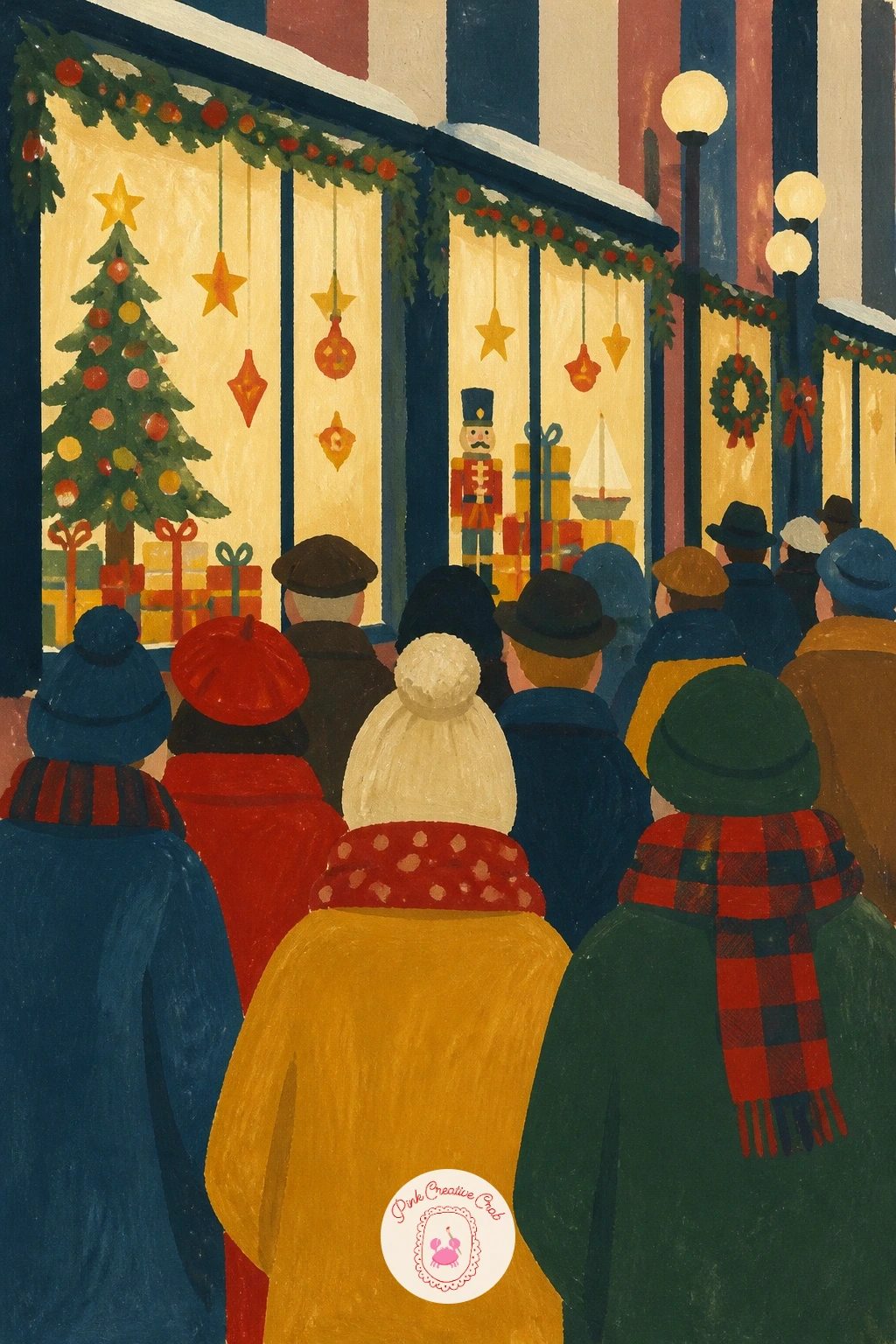
Bring people back into the frame with a crowd gazing at glowing holiday shop windows on a wide avenue. Paint the windows first as a row of warm cream-gold rectangles glowing against a darker steel blue street, keeping any window display soft and abstract rather than detailed.
Then build the crowd in front as a row of simple coat shapes from behind, varying brick red, fir green and steel blue coats so no two stand next to each other in the same color. A few hat shapes and one or two bags finish them off.
Painting a crowd from behind is a relief for anyone who dreads faces, since you only need shoulders, coat shape and a rounded head. Vary each figure’s height and width slightly so the row reads as individual people, not one repeated stamp.
Keep the glow in the windows warmer than anywhere else on the page, that contrast is what makes the whole street feel cold and festive at once.
Palette: Taxi Yellow,Brick Red,Fir Green,Steel Blue
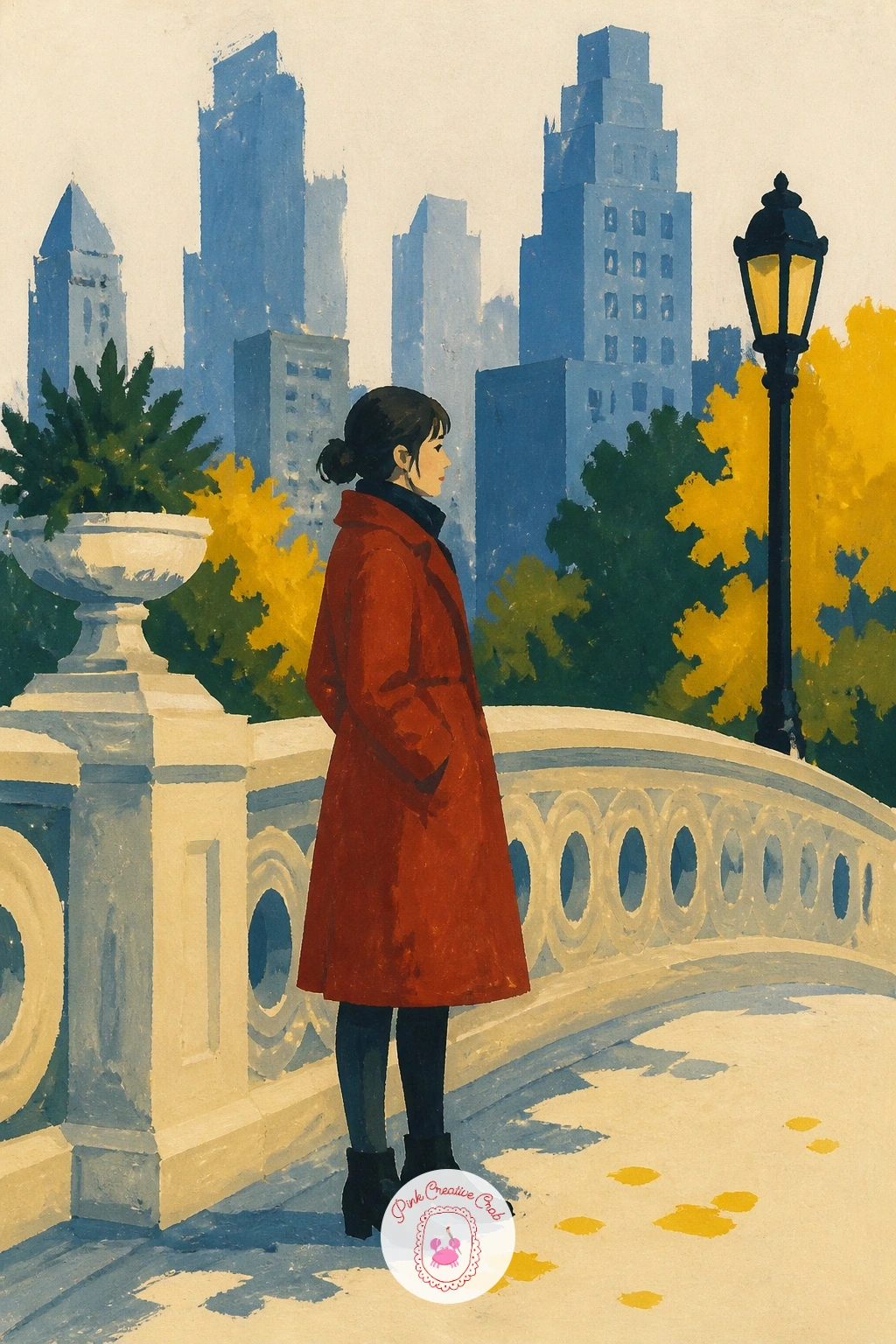
For a quieter, more personal scene, paint a girl in a red coat standing on a stone bridge with the skyline behind her. Block the bridge first as a pale cream curved arch with simple stone texture suggested by a few darker dry-brush strokes, not full detail.
Paint her as one solid brick red coat shape, small and centered, with the skyline rising in steel blue blocks well behind her so she stays clearly the foreground subject. Keep her face a simple pale oval, no features needed at this distance.
Work light to dark: pale sky and bridge stone first, then the skyline silhouettes, and her red coat last so it sits as the one warm, saturated note on the page.
If red feels too bold for a first try, a smaller cream or steel blue coat still reads fine, just keep her shape the only warm or saturated color in an otherwise cool scene.
Palette: Brick Red,Snowy Cream,Steel Blue,Payne’s Grey
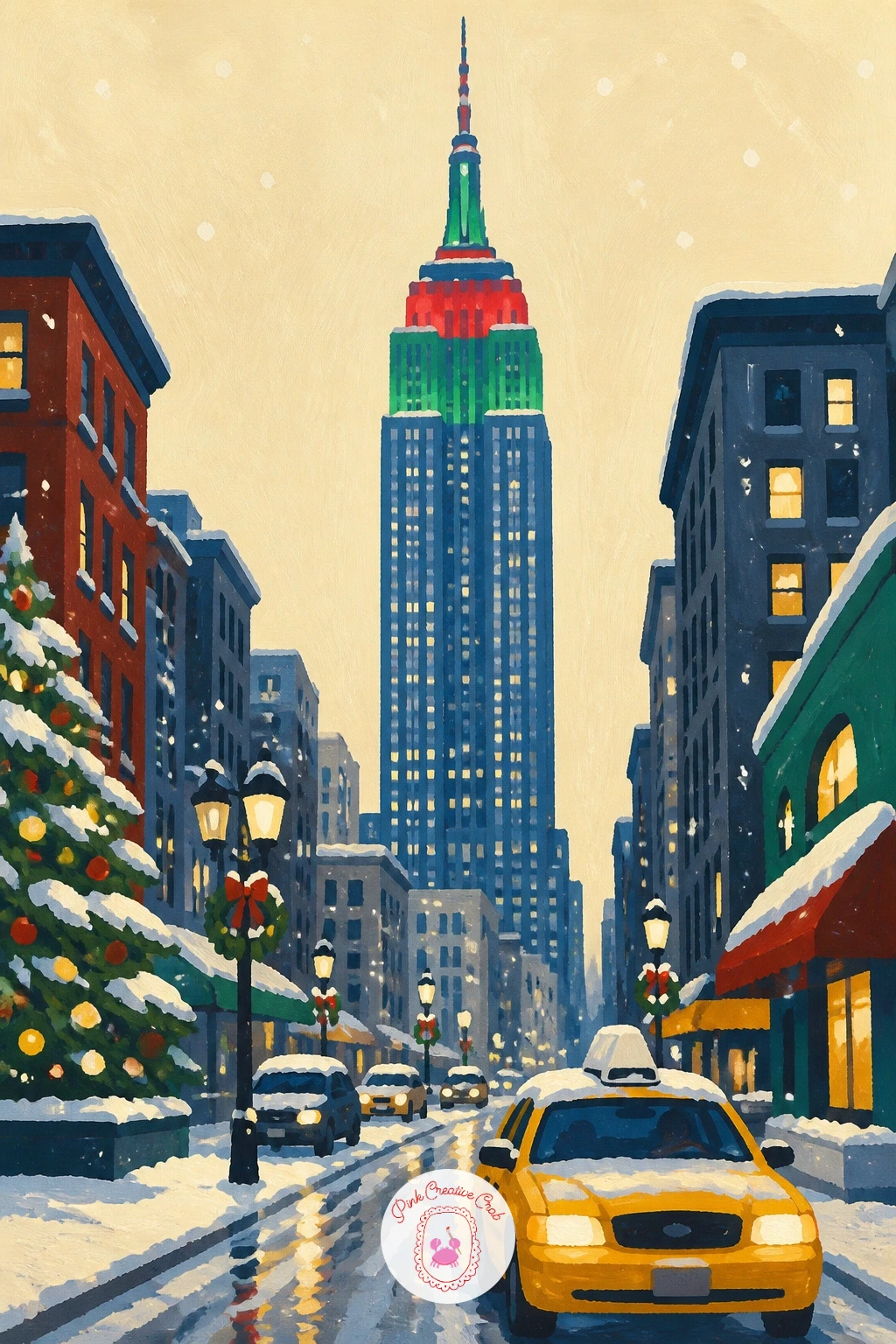
Time to paint a true landmark: the Empire State Building lit red and green above a snowy street. Build it from the base up as a tall, tapering steel blue tower, narrowing in clean simple steps rather than a smooth single shape, since that stepped silhouette is what makes it recognizable.
Paint the crown lights last in brick red and fir green, two or three bands rather than a full gradient, and let a soft cream glow halo around the very top against the darker night sky.
Proportion is everything here: measure the tower’s height against its base width before you commit to ink or paint, most beginners draw the base too wide, which makes the whole building look squat instead of soaring.
Working in a smaller sketchbook with no room for full height? Crop in tight on just the lit crown rising into mist, it reads just as well as the full tower.
Palette: Steel Blue,Brick Red,Fir Green,Snowy Cream
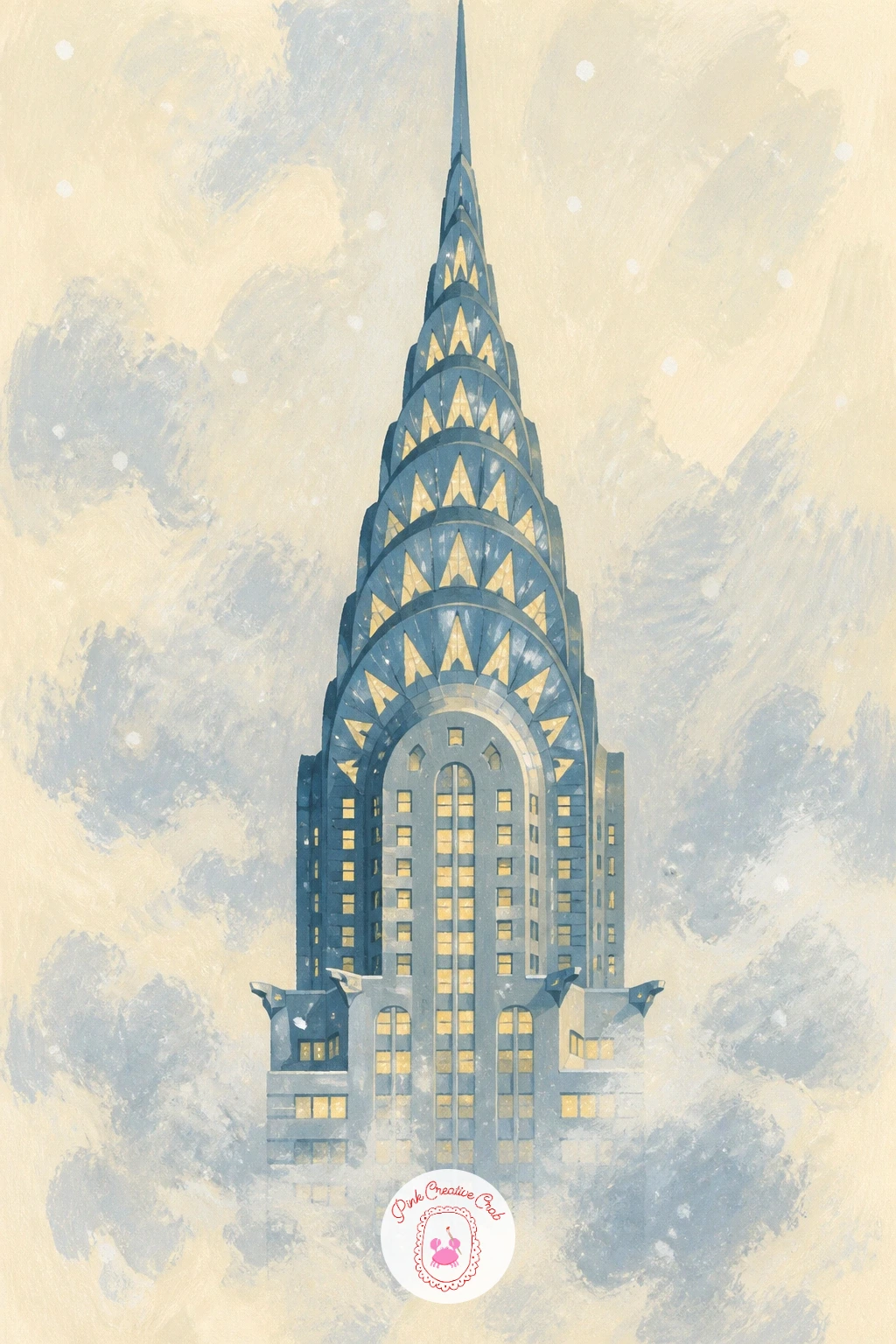
From one famous crown to another: the Chrysler Building’s shining triangular tiers in snowy mist. Paint the tiers as a stack of narrowing steel blue and cream triangles, each one a touch smaller than the last, with thin dark lines marking where one tier meets the next.
Surround it with soft cream-grey mist, painted with a very wet, barely pigmented brush so the lower building fades out and only the crown stands crisp against the sky. That contrast between a sharp crown and a soft, vanishing base is the whole trick of this piece.
Where the eye and light sit matters most here: paint the mist lightest directly behind the crown, as if a pale winter sun sits just behind it, and the tower will seem to glow rather than just stand there.
No steel blue on hand? A cool grey mixed from black and white gets a similar metallic hush.
Palette: Steel Blue,Snowy Cream,Payne’s Grey,Brick Red
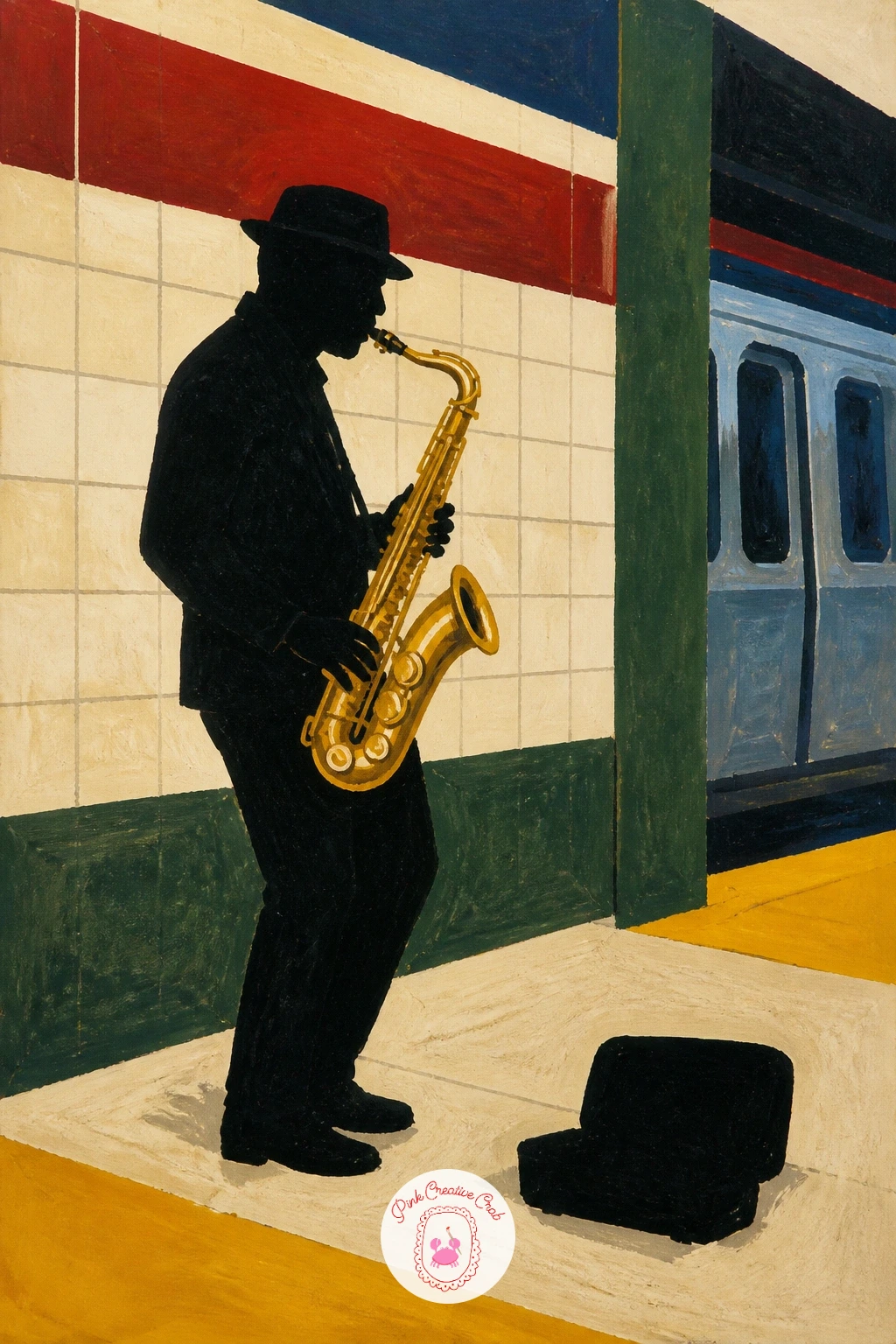
Duck underground next for a warmer, closer scene: a saxophone player busking on a subway platform. Paint him as one simple seated or standing silhouette in a dark coat, the saxophone a curved brass-gold shape held in front, catching a little warm light.
Keep the platform background loose, a few tiled wall rectangles in cream and steel blue, a curved tunnel shape fading into dark behind him, and maybe one small case open at his feet.
The edges of the saxophone are the trickiest part. Use a small round brush and paint it in two or three confident strokes rather than outlining it first, a slightly imperfect curved edge reads more like brass catching light than a stiff, ruled one would.
For a faster version, paint just his silhouette and the gold horn shape against a plain cream wall, skip the tiles and tunnel entirely.
Palette: Payne’s Grey,Taxi Yellow,Snowy Cream,Steel Blue
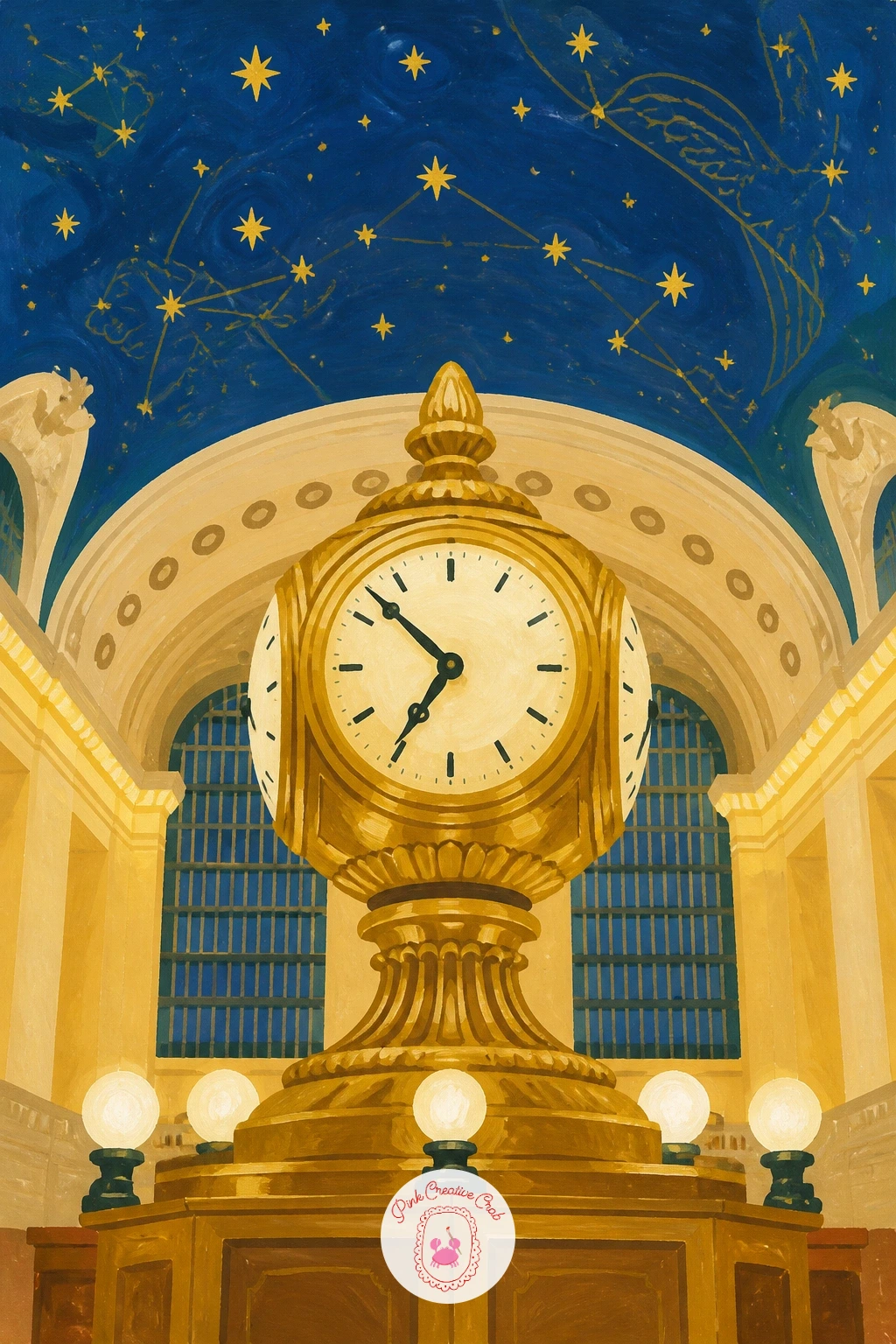
From the platform below, rise up into Grand Central’s main hall with its starry ceiling and golden clock. Paint the ceiling first as a deep steel blue-black arch filling the upper half of the page, scattering small cream dots and a few soft gold constellation lines across it.
Below, block the hall’s walls and arched windows in warm cream and stone tones, then paint the famous four-faced clock as one small golden circle sitting on a simple pedestal near the center, its brass glowing against the cooler hall around it.
Save this one if the ceiling gets too busy: a kneaded eraser or a slightly damp brush can lift stray gold dots back toward cream if you overdo the stars, keep the scatter loose and uneven rather than a tidy grid.
If gold paint is not in your kit, mix a little yellow ochre into your cream for a convincing brass tone.
Palette: Steel Blue,Snowy Cream,Taxi Yellow,Payne’s Grey
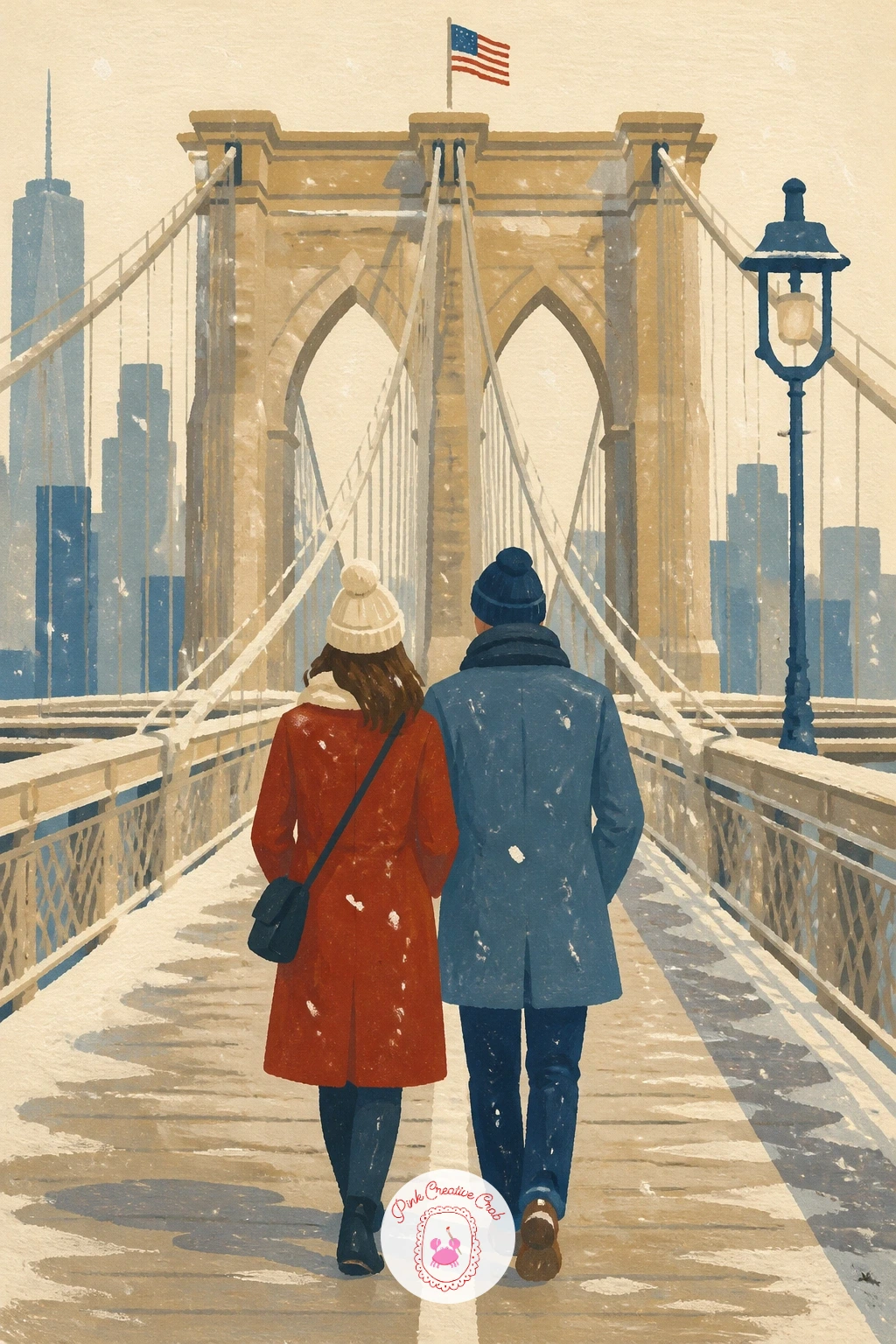
Step outside again for a couple walking across the Brooklyn Bridge in light snow. Paint the bridge’s stone towers first as two tall cream-grey arches, then thread the cables between them with a fine brush in quick, slightly varied straight lines rather than one perfectly ruled set.
Place the couple small and centered on the walkway, two simple coat shapes close together, one brick red and one steel blue, with the city skyline a soft pale silhouette beyond the far tower.
Cable lines are the part that goes wrong fastest, too many and the bridge looks tangled. Paint fewer than you think you need, six or eight per tower side is plenty, and let them converge loosely toward the tower tops rather than tracing every real cable.
Keep snow light and scattered here, just a few white flecks, so the architecture stays the clear subject.
Palette: Snowy Cream,Brick Red,Steel Blue,Payne’s Grey
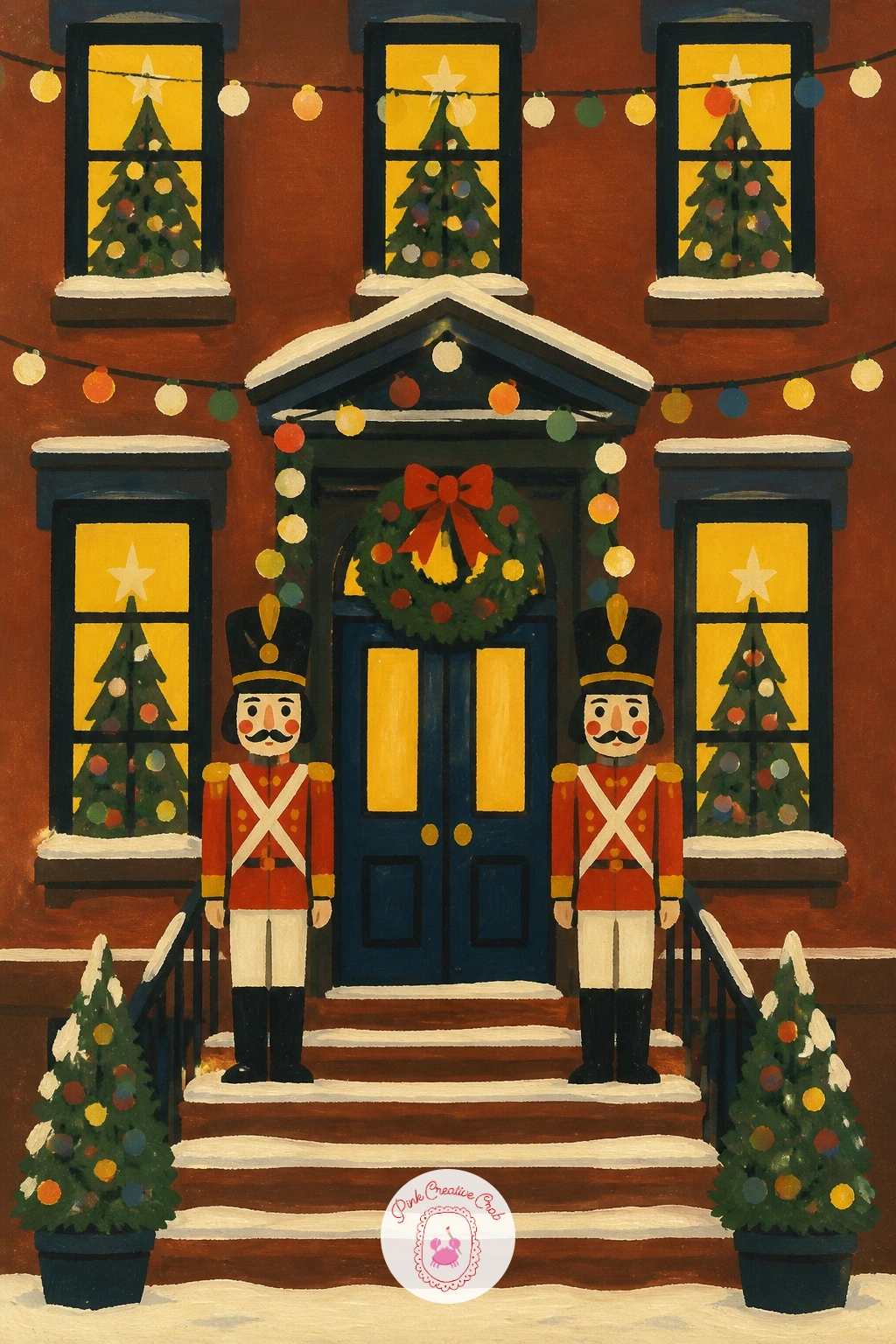
Cross back over into a Brooklyn street scene that goes all in on the season: a house blazing with Christmas lights and giant toy soldiers flanking the door. Paint the house as one warm cream or brick red box shape, then outline its roofline and windows in strings of small taxi yellow and fir green light dots.
The toy soldiers go on either side of the door as tall simple cylinder shapes, a red coat block, a black hat block, and a touch of cream for the face, stiff and symmetrical since that is exactly how real ones stand.
Beginners often cram too much onto one small house. Pick three features to really commit to, lights, soldiers, a wreath, and leave the rest of the facade plain so those three stand out.
Short on time, paint just the glowing doorway with its two soldiers and skip the full house behind it.
Palette: Brick Red,Fir Green,Taxi Yellow,Snowy Cream
If you enjoy painting a whole street like this one, the house doodle ideas are a fun, faster companion to try next.
Narrow in close now on a small, cozy detail: a fire escape strung with fairy lights and holding a tiny potted tree. Paint the fire escape’s iron railing as a simple dark steel blue grid, just a few horizontal and diagonal lines rather than a fully rendered structure.
Thread a line of small taxi yellow dots along the railing for the fairy lights, and tuck a small fir green triangle tree in a cream pot in one corner. Behind it all, a soft brick red brick wall fills the rest of the page.
Edges matter most on this one. Keep the brick wall’s texture loose, a few dry-brush strokes in a slightly darker red are enough to suggest mortar lines without painting every single brick.
If dry brush feels tricky at first, a slightly worn flat brush with very little paint loaded gives the same broken texture.
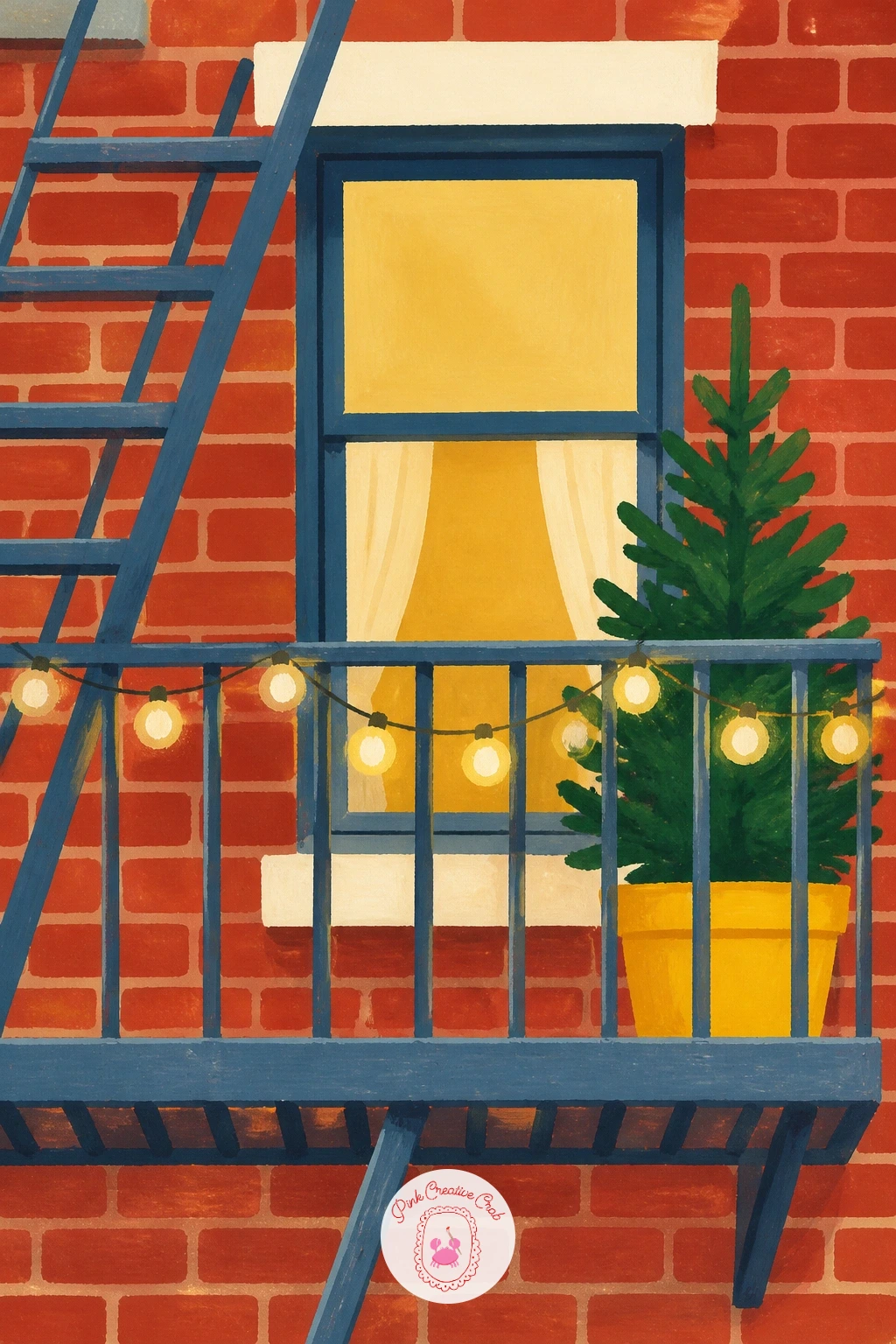
Palette: Steel Blue,Taxi Yellow,Fir Green,Brick Red
Open the page back up for Bryant Park’s glass holiday kiosks ringing a small skating rink. Paint the rink as a pale cream oval at the center, then build a loose ring of small glass kiosk shapes around its edge, each one a simple cream-steel blue box with a peaked roof and a soft warm glow inside.
Keep the park’s bare winter trees as a few simple dark branching shapes behind the kiosks, and let a scatter of small skater dots move around the rink’s edge.
Given ten minutes, paint just the rink and two or three kiosks. With forty, ring the whole park, add the trees, and dot the entire scene with falling snow using a dry brush flick for texture.
One tip for today: paint every kiosk glowing the same warm cream-gold so the ring reads as a string of lights circling the rink rather than a scatter of unrelated boxes.
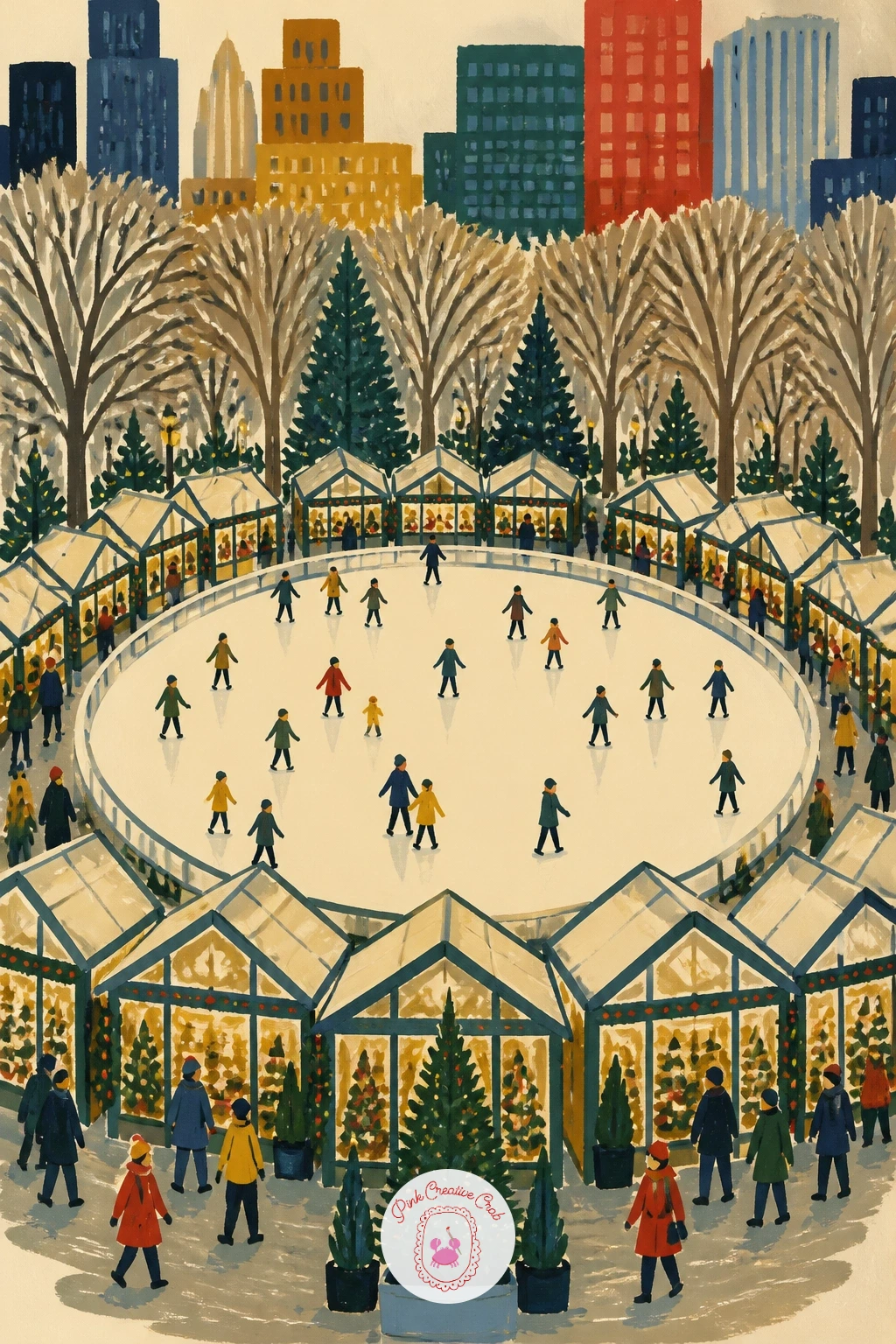
Palette: Snowy Cream,Steel Blue,Taxi Yellow,Payne’s Grey
Give yourself one clean architectural subject: the Flatiron Building on a snowy blue morning. Paint its famous wedge shape first as one tall triangular tower in warm cream-grey, keeping the narrow front edge crisp and the two wider sides shaded slightly darker where they turn away from the light.
Surround it with a plain pale steel blue sky and a dusting of snow along its rooftop cornice and the street below, using a dry brush for soft white texture.
Because this building is famous for its shape, getting the taper right matters more than any detail. Sketch the triangle lightly first and check that the narrow end stays genuinely narrow, not rounded off, before you commit to paint.
No steel blue sky color mixed yet, a touch of white into any blue gets you a convincing cold winter morning.
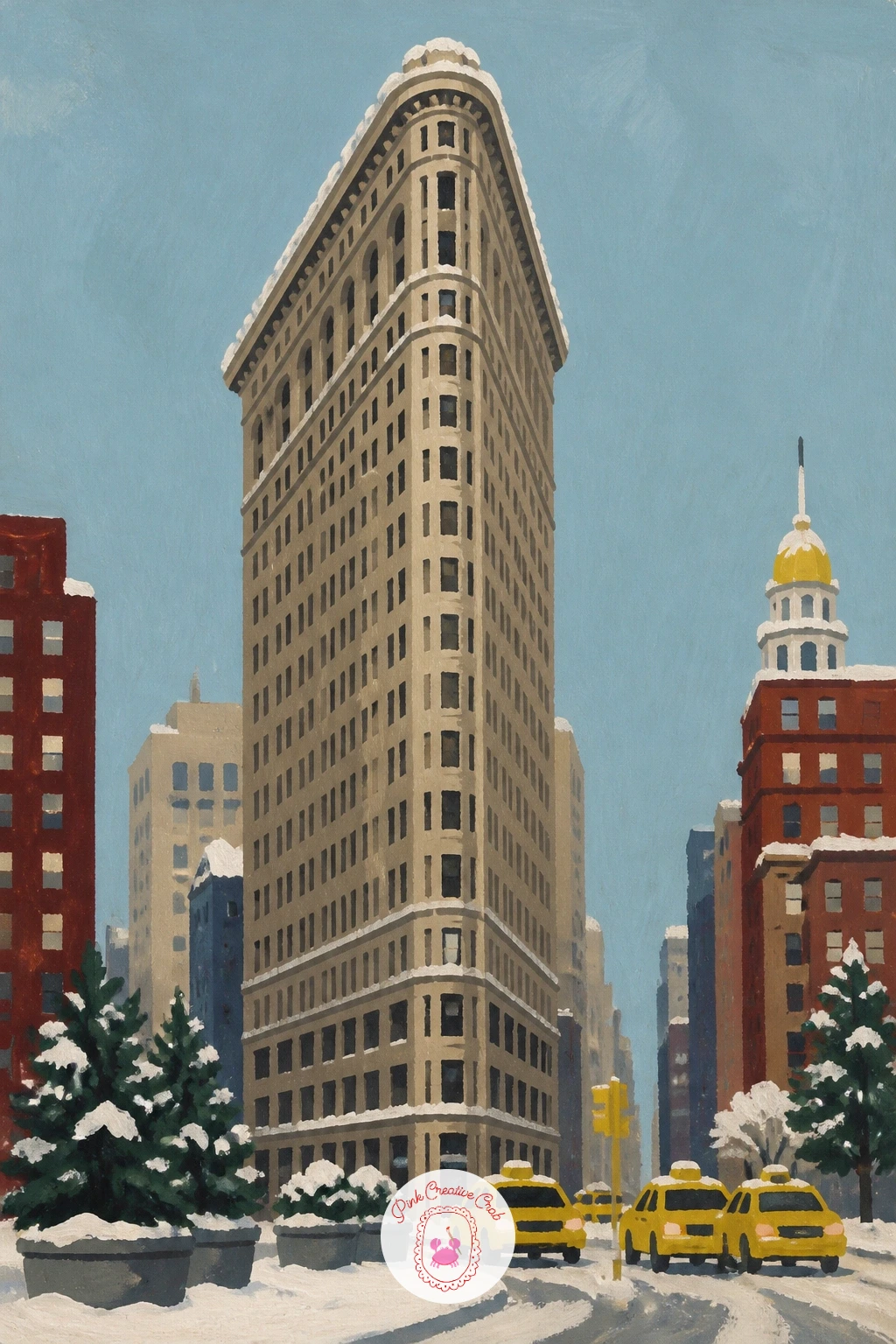
Palette: Snowy Cream,Steel Blue,Payne’s Grey,Brick Red
Bring some warmth back to the street with a dog in a knit sweater trotting along a snowy Upper East Side sidewalk. Paint the dog’s body first as one simple rounded shape, legs mid-stride, then layer a brick red or fir green sweater shape over its back and belly, leaving the head, paws and tail in its natural fur color.
Behind it, a quick row of simple brownstone facades in cream and steel blue keeps the setting readable without competing for attention.
Dogs go wrong fastest at the legs, too thin and they look spindly, too thick and the dog looks stiff. Paint each leg as a simple tapered shape, slightly narrower at the paw, and keep at least one leg bent to suggest motion.
If you want a different pet entirely, the same trotting pose works just as well for a small cat in a sweater.
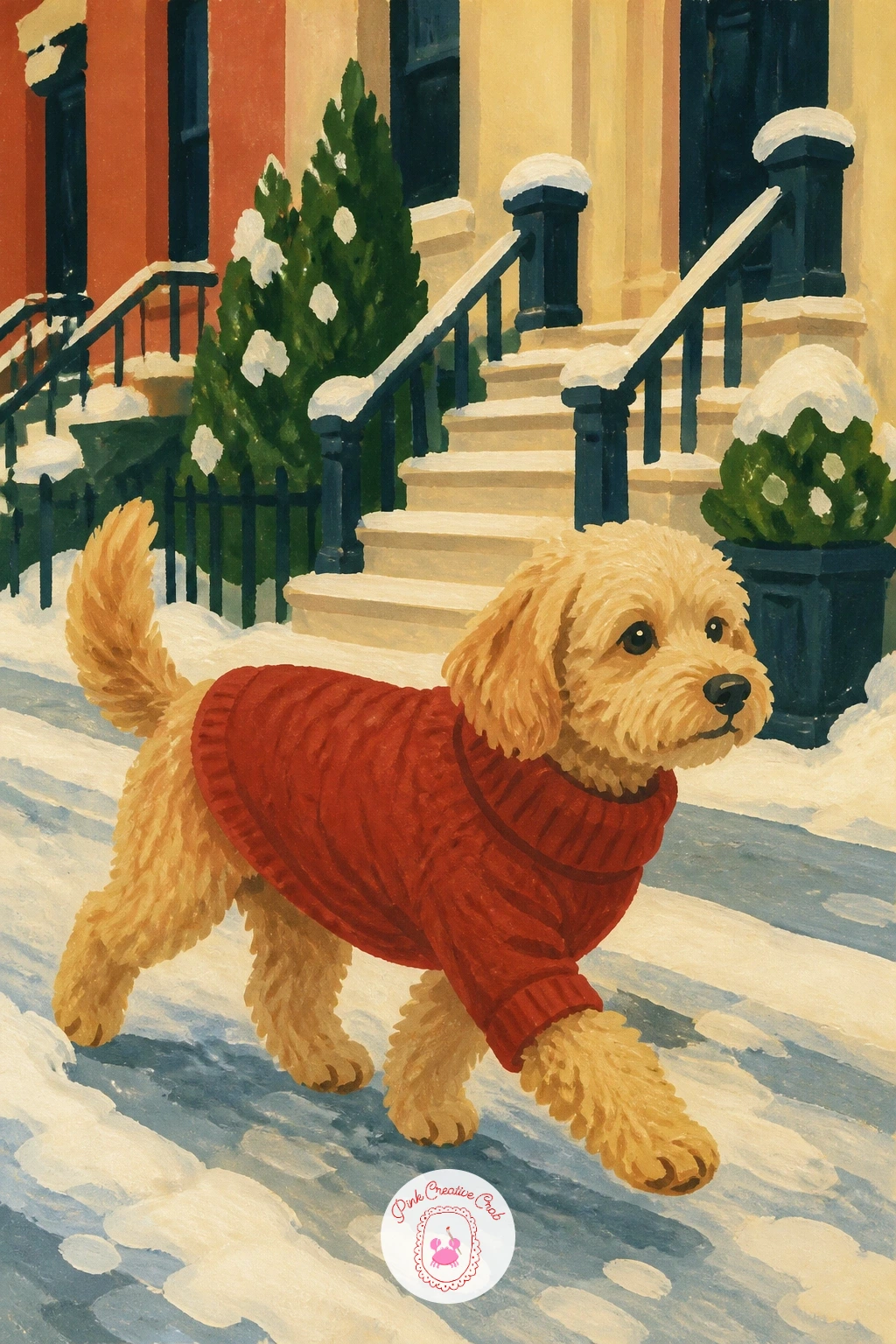
Palette: Brick Red,Snowy Cream,Steel Blue,Payne’s Grey
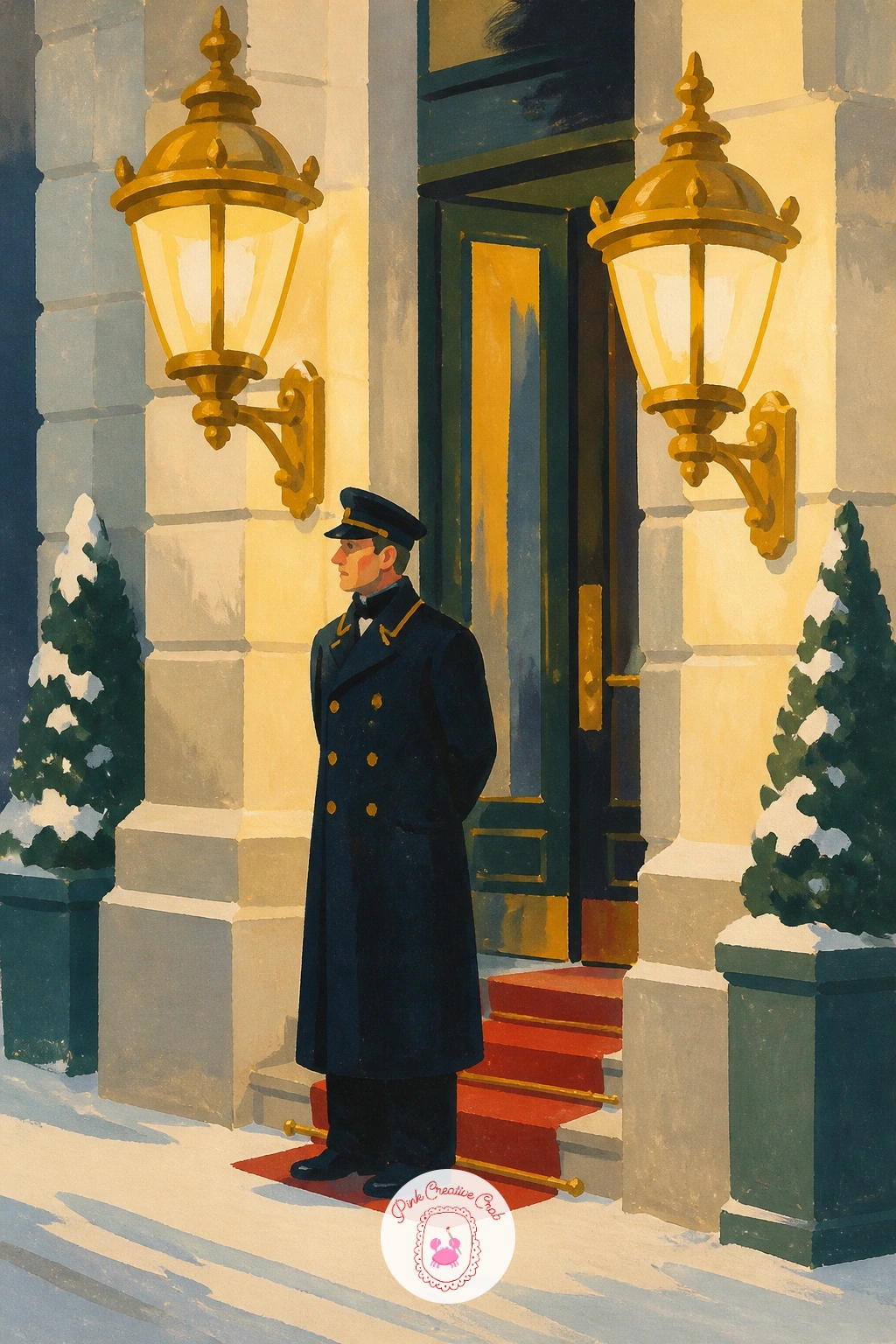
Step up to a grand hotel entrance next, where a doorman in a long coat stands under glowing brass lamps. Paint him first as one tall, simple dark coat shape with a peaked cap, standing just beside a pair of ornate lamp shapes mounted on the wall.
Let the lamps glow in warm taxi yellow and cream, with a soft halo painted around each using a very wet, lightly loaded brush, and keep the hotel facade behind him simple, a few steel blue and cream blocks suggesting stone and glass.
Light placement makes this scene: the lamps should be the brightest, warmest spots on the page, so keep everything else, the coat, the facade, the street, in cooler, more muted tones by comparison.
A simpler version drops the full facade and just shows the doorman and lamp glowing against a plain dark steel blue background.
Palette: Payne’s Grey,Taxi Yellow,Snowy Cream,Steel Blue
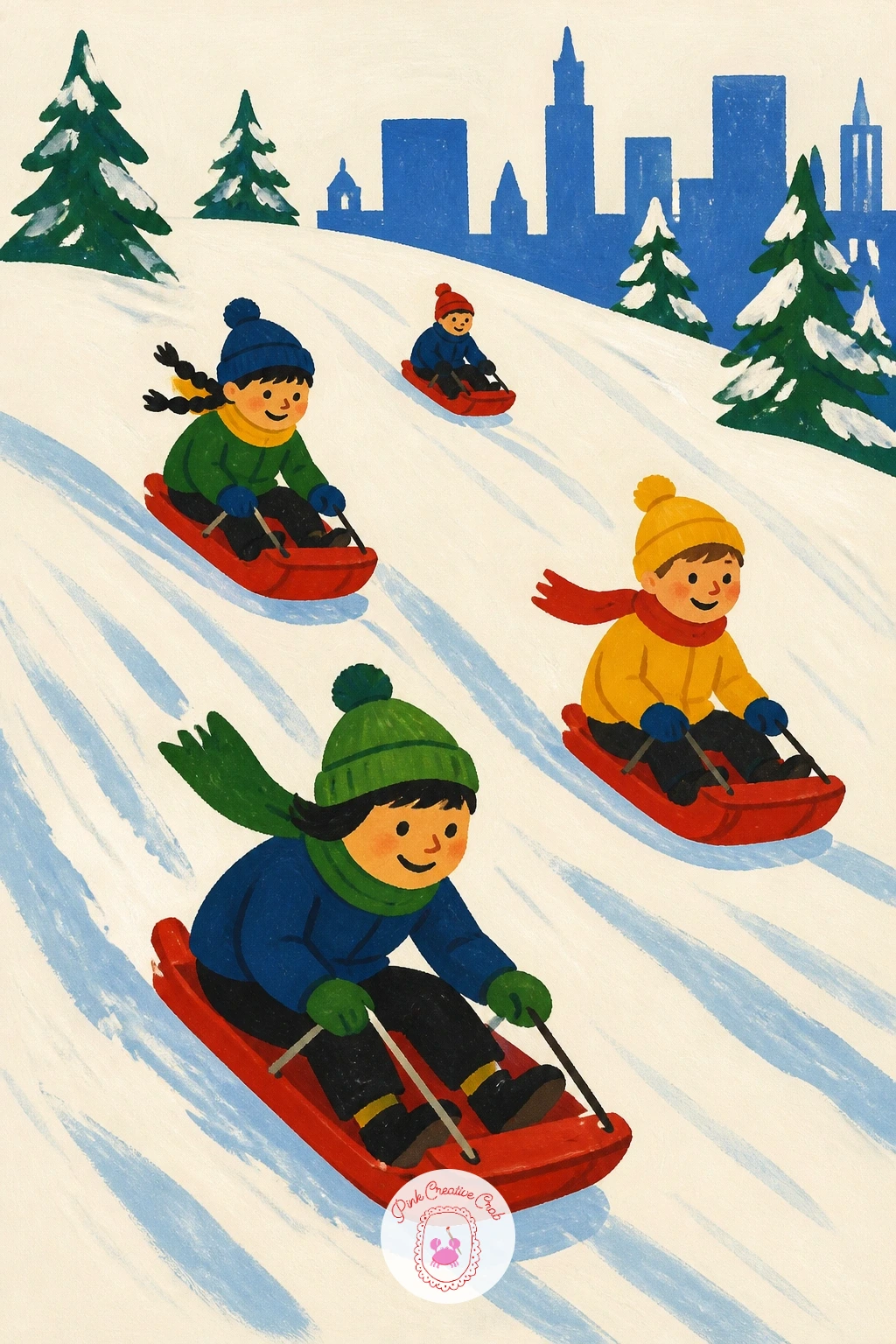
Head back into the park for motion and fun: children on red sleds racing down a snowy hill. Paint the hill first as one large curving cream shape sweeping diagonally across the page, then add two or three sled shapes, simple curved red bases with a small seated coat figure on each, angled down the slope.
Keep the background trees and skyline small and distant at the top of the hill, since the sledders and the slope itself should fill most of the page.
Give each child a different lean, forward, back, arms out, and the scene reads as racing rather than posed. A single straight diagonal line sketched lightly first helps keep every sled following the same slope angle.
If red sleds feel repetitive, vary one to steel blue or fir green so the eye has somewhere to rest.
Palette: Brick Red,Snowy Cream,Fir Green,Steel Blue
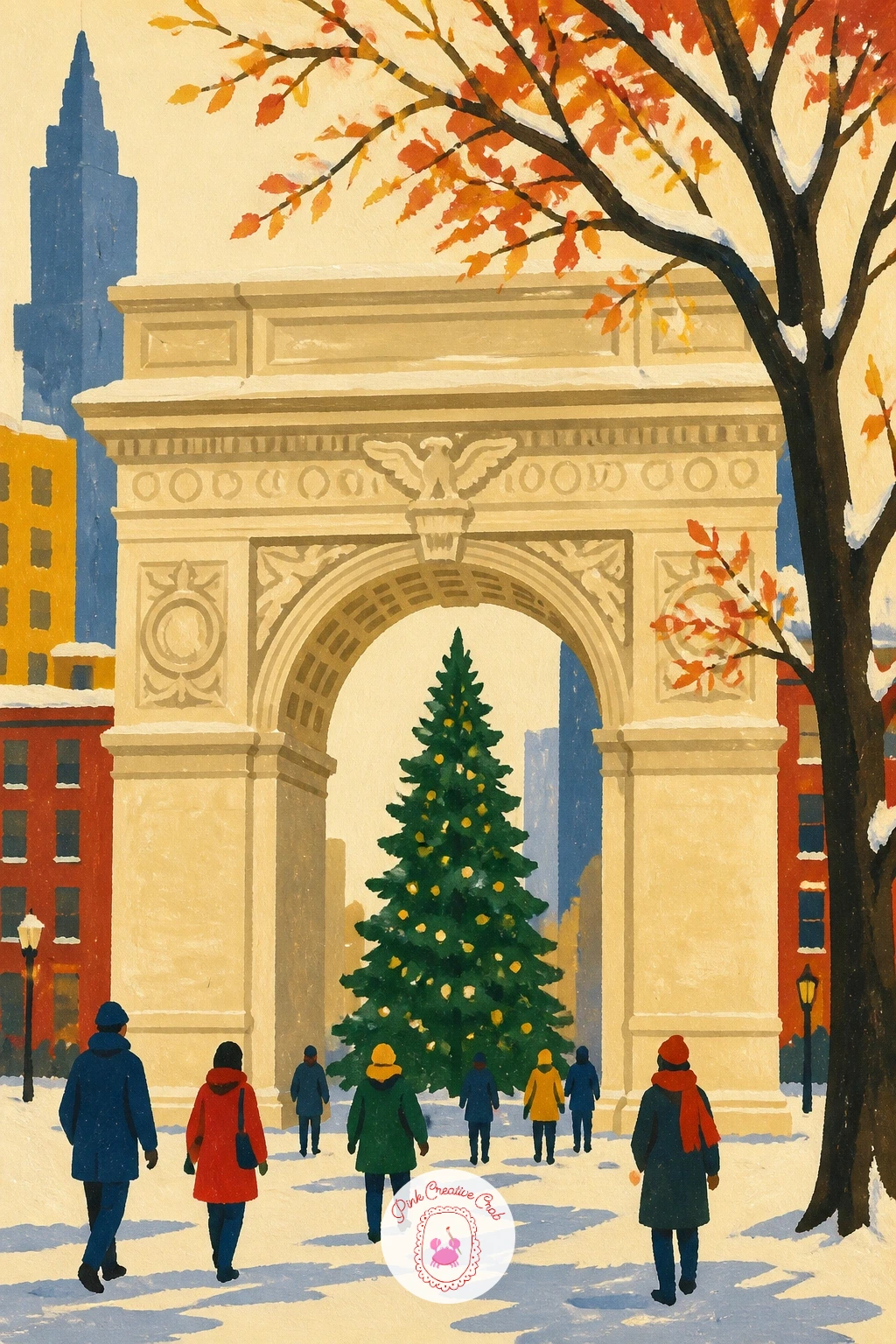
Settle into something more architectural again with the Washington Square arch, a lit Christmas tree glowing beneath it. Paint the arch first as one solid cream-stone curved shape, keeping the opening clean and simple so the tree inside it stands out clearly.
Place the tree centered beneath the arch as a fir green triangle dotted with small taxi yellow and brick red lights, with a scatter of tiny figure shapes walking past at the base for scale.
The easiest way to get the arch’s proportions right is to compare its height to the tree, the arch should rise well above the tree’s tip, not match it, or the whole structure reads too small and squat.
For speed, sketch the arch lightly in pencil first before committing to paint, its curve is the one shape worth getting right before anything else goes on.
Palette: Snowy Cream,Fir Green,Taxi Yellow,Brick Red
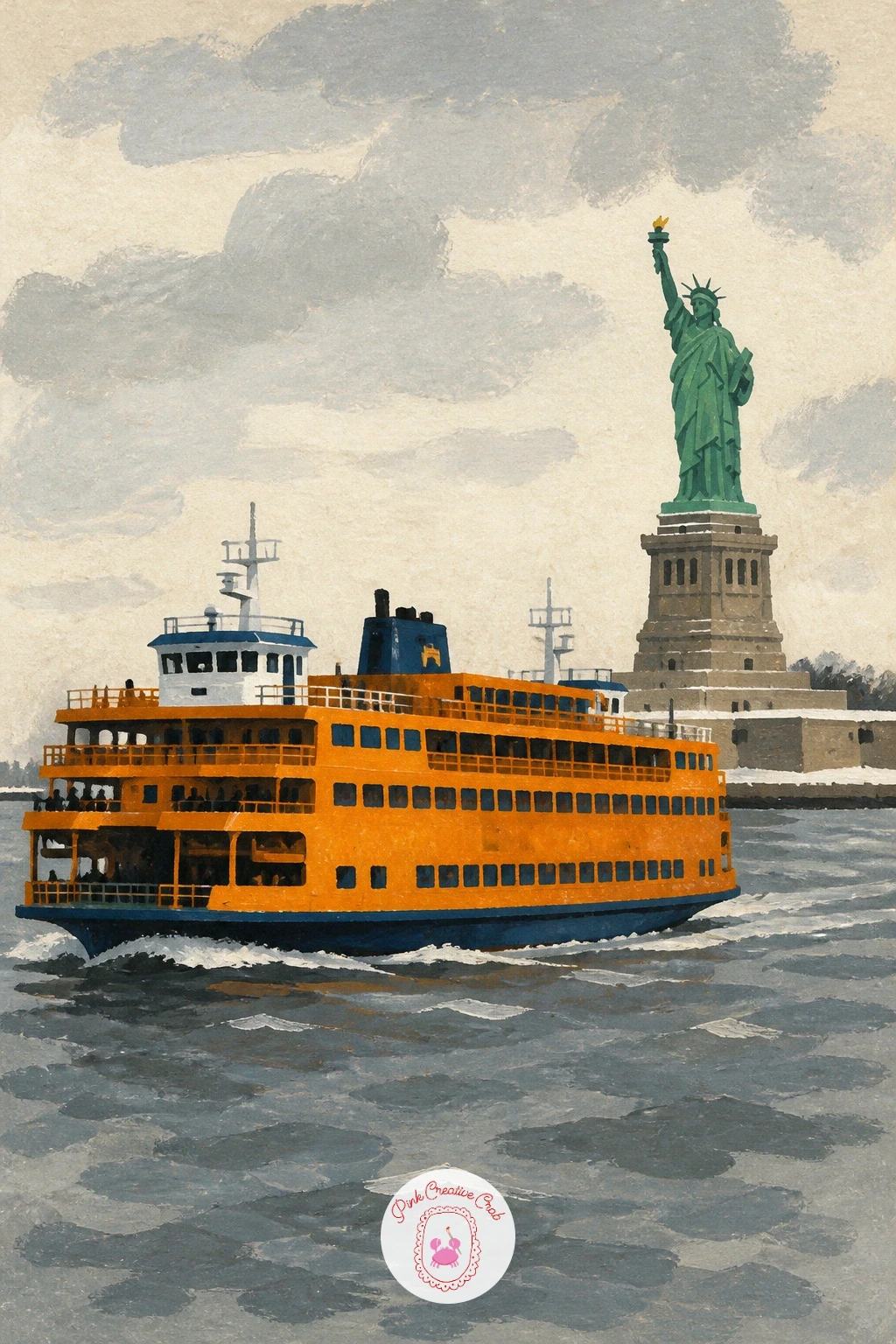
Take the scene out onto the water with an orange ferry passing the Statue of Liberty on a grey winter day. Paint the water first as a flat steel blue-grey band across the lower page, then add the ferry as a simple orange hull shape with a few small cabin rectangles on top, sitting low and solid in the water.
The statue goes smaller in the background, a simple cream-green silhouette with the torch arm clearly raised, so there is no mistaking who she is even at a distance.
Keep the sky and water close in tone, both cool and muted, so the ferry’s orange becomes the one warm shape the whole page builds around.
If orange gouache is not in your set, mix taxi yellow with a touch of brick red until it sits bright against the grey.
Palette: Taxi Yellow,Steel Blue,Snowy Cream,Fir Green
Climb up to the rooftops for one of the city’s quieter shapes: wooden water towers silhouetted at a snowy sunset. Paint the sky first in warm bands of cream, soft orange and dusty steel blue, working wet and loose so the colors blend gently where they meet.
Once dry, paint two or three water towers as simple dark cone-and-cylinder silhouettes sitting on flat rooftop blocks, varying their height so the row feels like a real skyline rather than copies of one shape.
Painting the sunset behind, then the towers as flat dark silhouette shapes in front, is the easiest order here, trying to paint the glow around each tower afterward gets messy fast.
Simplify further by painting just one tower large and close, with the sunset band glowing behind it.
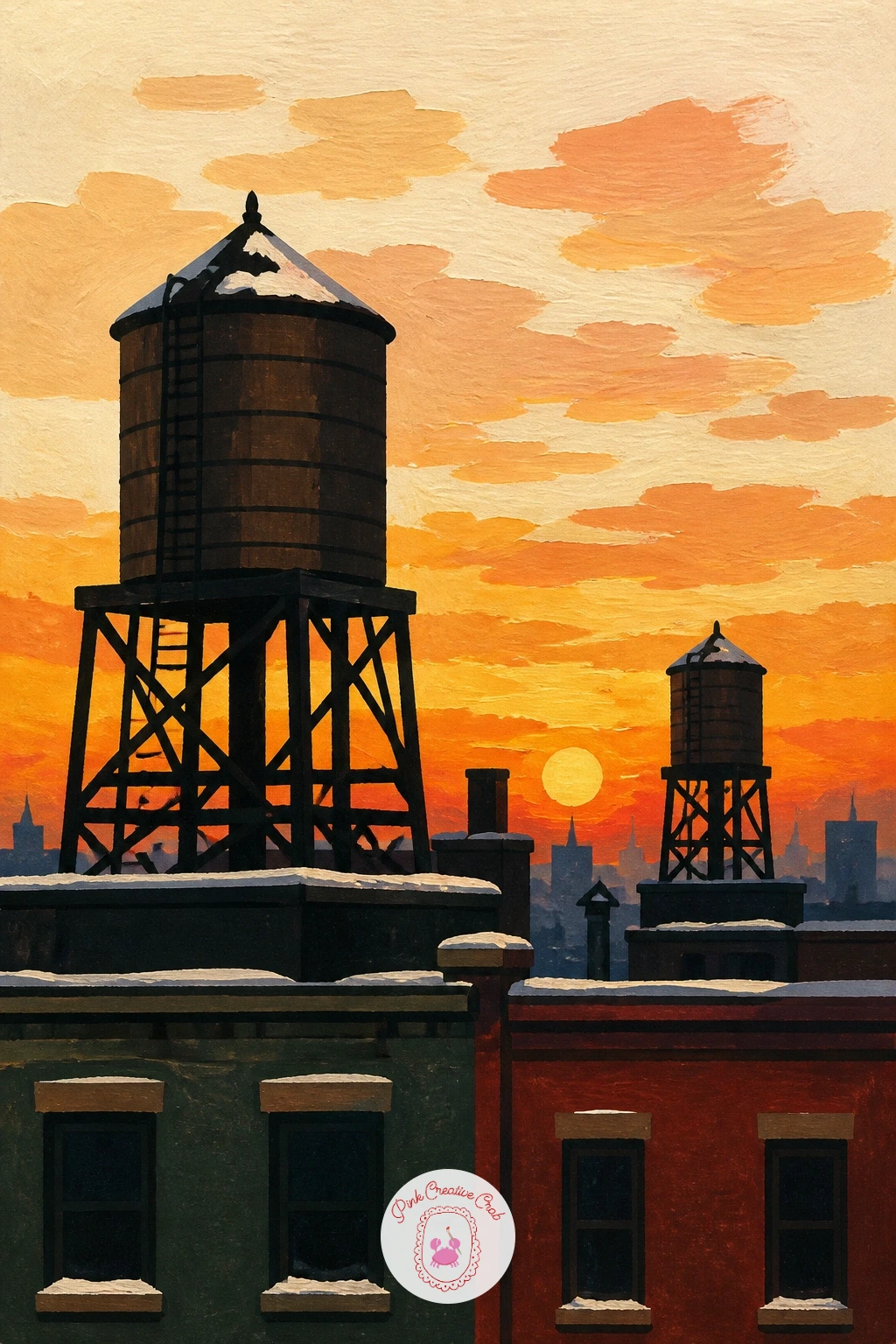
Palette: Taxi Yellow,Steel Blue,Snowy Cream,Payne’s Grey
Stay with atmosphere for a moment longer: steam rising from the street on a snowy avenue at night. Paint the avenue first in deep steel blue and payne’s grey, buildings as simple dark blocks with a scatter of small lit cream windows, then add one or two lamp posts glowing warm against the cold street.
The steam itself is the whole point here, use very wet, barely pigmented white gouache and drag soft upward strokes from a small dark grate shape low in the street, letting the strokes widen and soften as they rise.
If the steam comes out too solid, lift some of it back with a clean damp brush while it is still wet, that softer, broken edge reads far more like real steam than a hard white shape.
No gouache handy, a white colored pencil used loosely over dry paint gives a similar hazy effect.
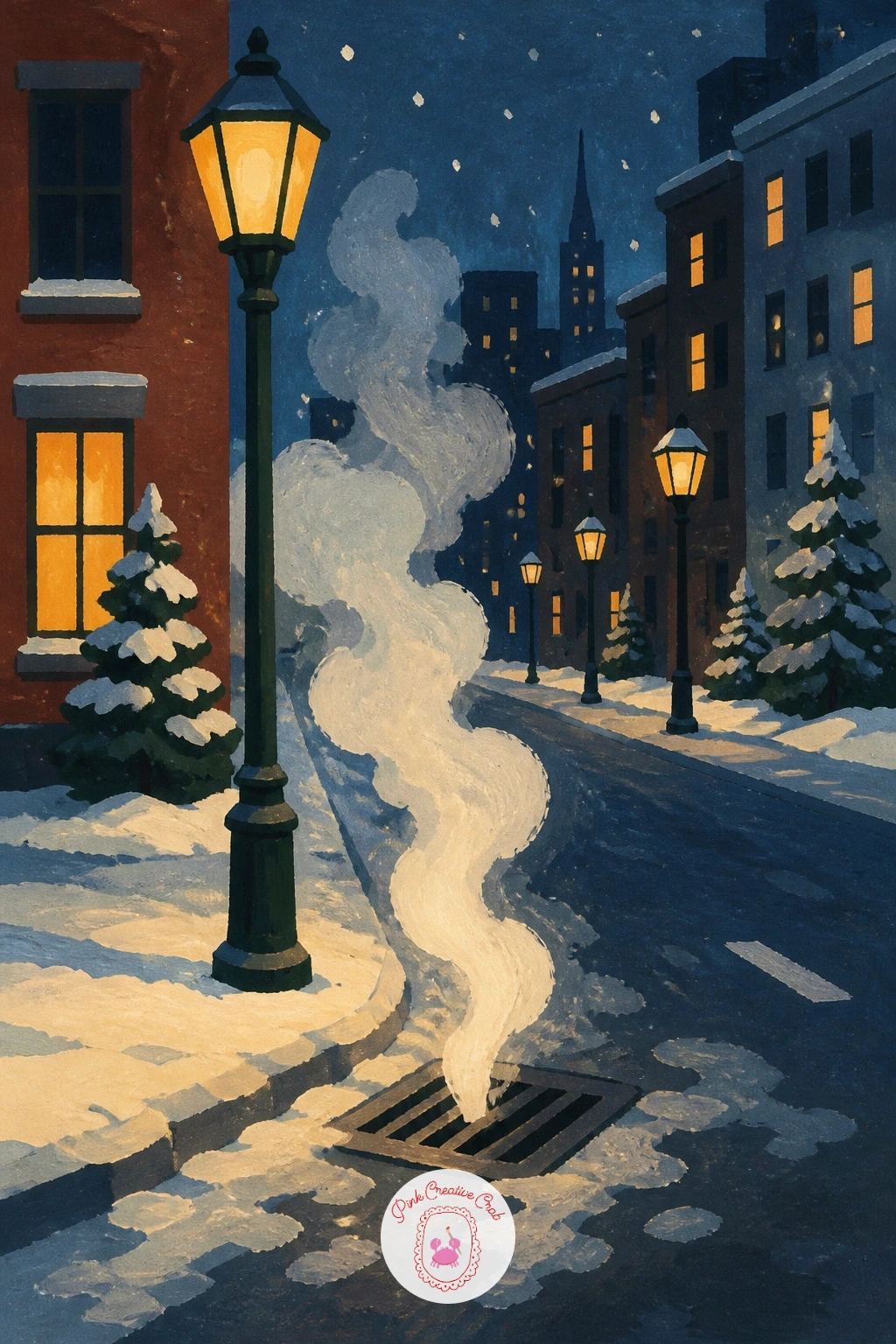
Palette: Payne’s Grey,Steel Blue,Snowy Cream,Taxi Yellow
Come back indoors for one of the city’s most charming small sights: a bodega cat asleep on a crate of clementines. Paint the cat first as one soft curled shape, tucked tight with paws hidden and tail wrapped close, in a warm grey or orange-brown.
Beneath it, paint the wooden crate as a simple cream-brown box, then fill the visible edge with a few small bright orange clementine circles, each with a tiny green leaf accent for contrast.
The curl of a sleeping cat is the trickiest part, keep it one continuous rounded shape rather than separate head, body and tail pieces, and the pose will read as relaxed rather than pieced together.
If orange clementines run close in tone to the cat, shift the crate’s wood to a cooler cream-grey so the fruit still pops against it.
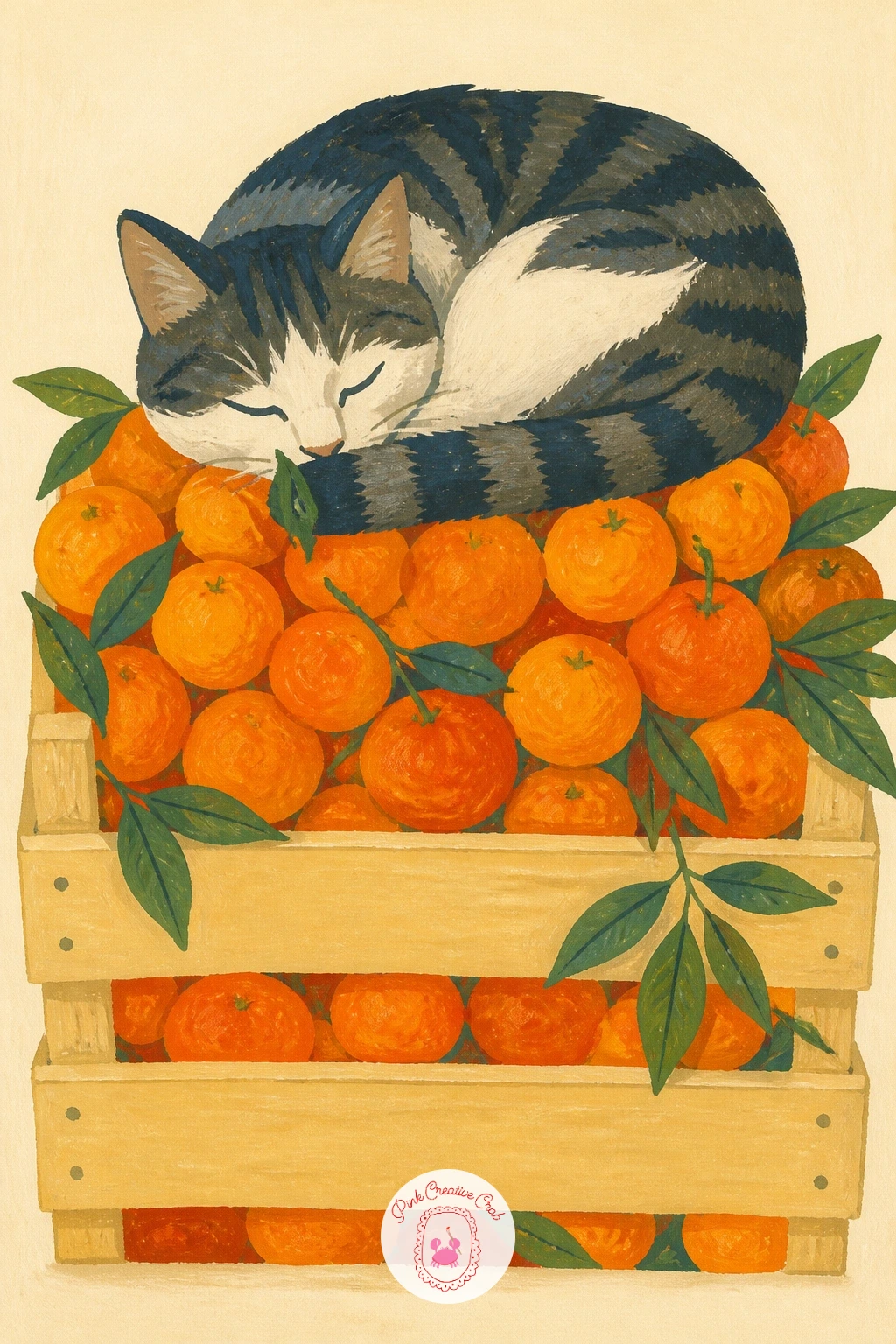
Palette: Taxi Yellow,Fir Green,Snowy Cream,Payne’s Grey
A bodega cat is a fun warm-up before bigger scenes, and the Christmas cat drawing ideas have plenty more cozy feline poses to try.
Return to the street for a quiet glow: a lit menorah sitting in a brownstone window above snowy front steps. Paint the window frame first as a simple cream rectangle set into a brick red facade, then add the menorah inside as a small gold shape with several thin upright candle lines and tiny flame dots on top.
Beneath, paint the stone steps dusted with snow, using a dry brush for soft white texture along each edge, and a simple railing in dark steel blue.
The candles are easiest painted with the tip of a fine round brush, one confident vertical stroke per candle rather than trying to outline and fill each one, keeps the flames looking lit rather than drawn.
If gold paint is unavailable, yellow ochre mixed with a touch of white gives the same warm brass tone.
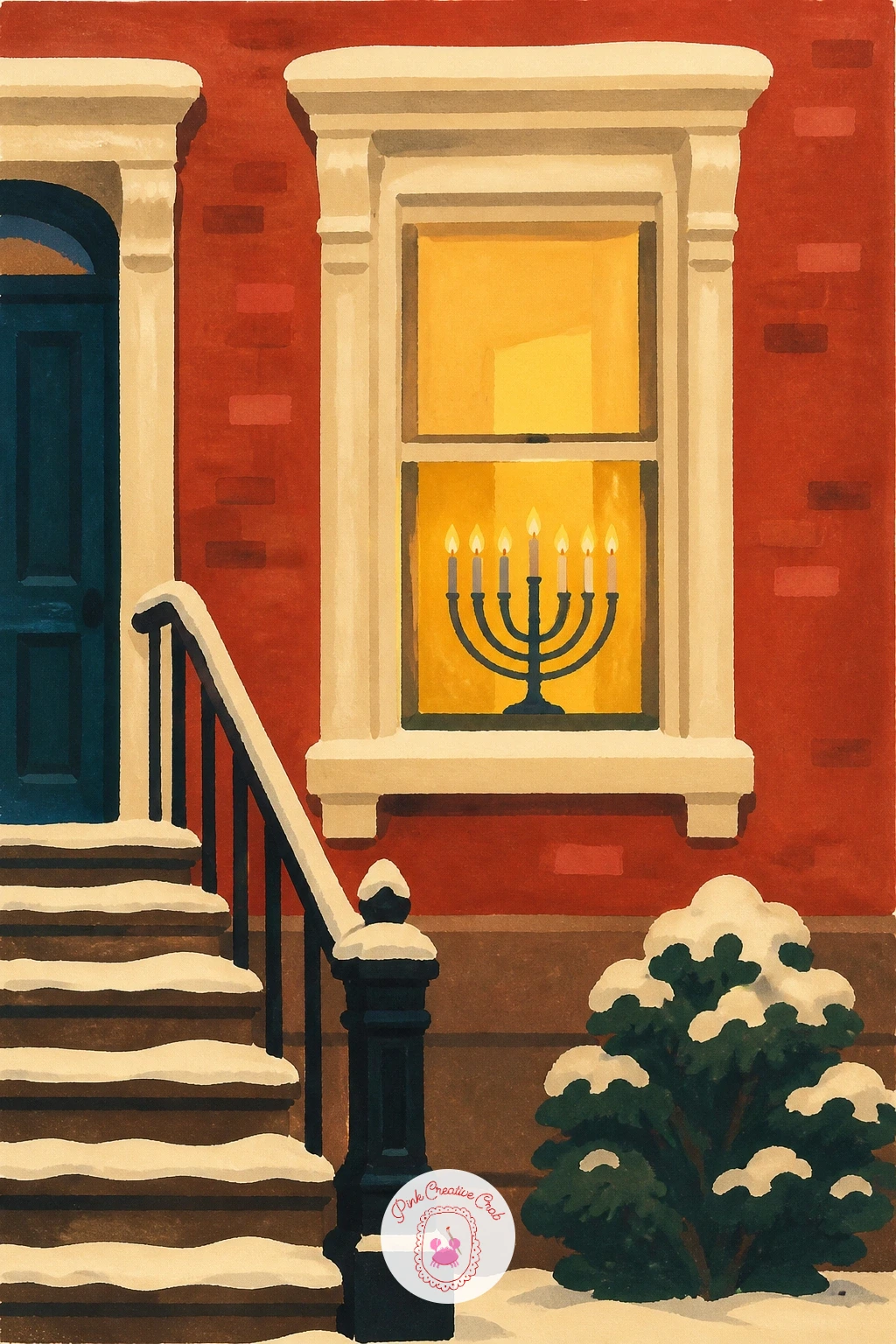
Palette: Brick Red,Taxi Yellow,Snowy Cream,Steel Blue
Visit the library steps next for the famous stone lions wearing holiday wreaths. Paint each lion as one solid, simple seated shape in warm cream-grey stone, keeping the mane and paws suggested with a few confident brush strokes rather than fully detailed fur.
Add a small fir green wreath with a brick red bow draped around each lion’s neck, and a light dusting of snow along their backs and the steps beneath them.
Lions in this pose are mostly about getting the seated proportion right: the body should read as roughly as tall as it is long, with the head sitting high and alert rather than drooping forward.
Painting just one lion close up, wreath and all, works just as well if two feels like too much for one sitting.
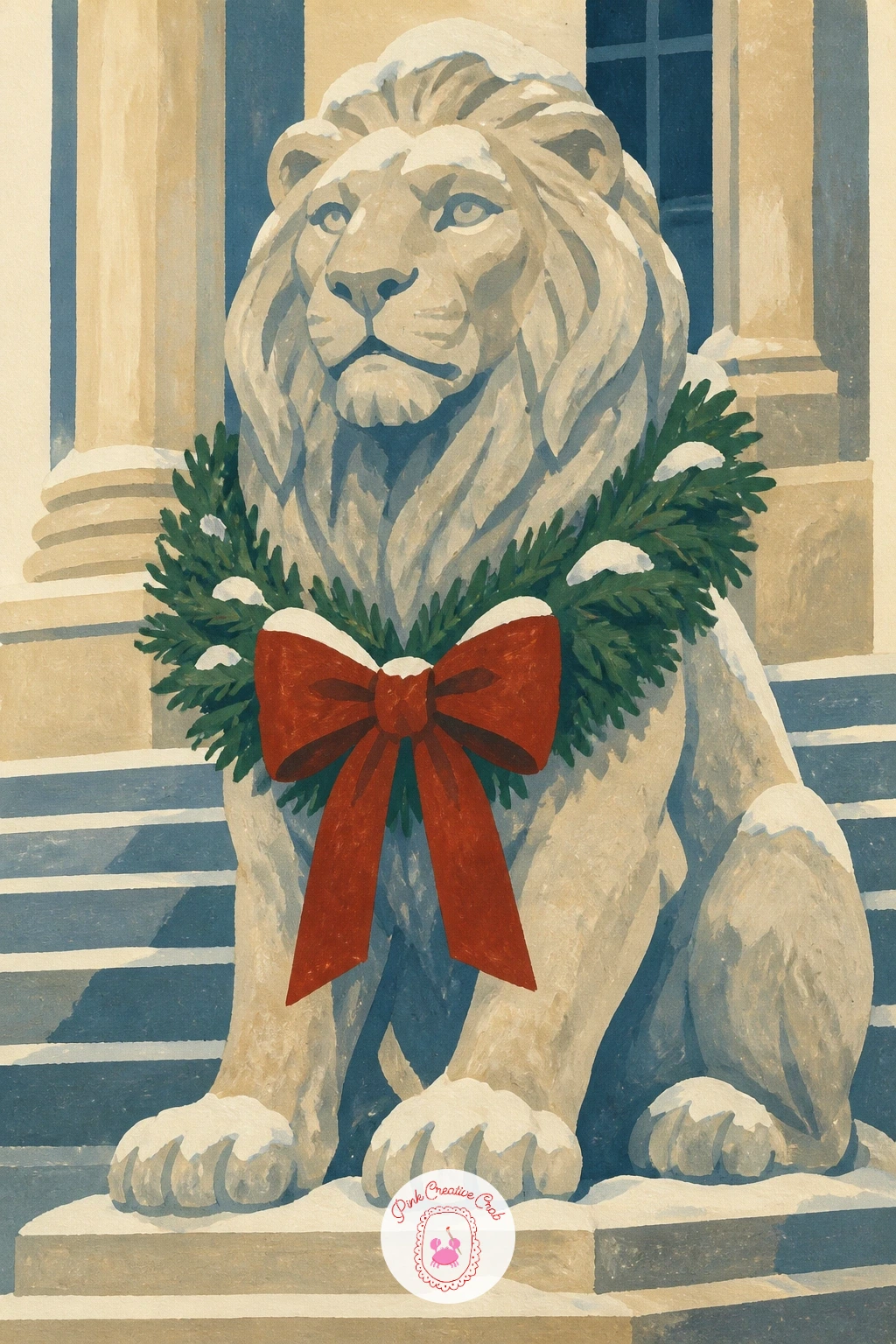
Palette: Snowy Cream,Fir Green,Brick Red,Payne’s Grey
Bring a person back to those grand steps with a girl in a red hat sitting on the museum’s wide stone staircase. Paint the steps first as a series of simple pale cream horizontal bands, each one a touch darker as they recede upward, with the museum’s columns suggested behind as tall soft rectangles.
Place her small and a little off-center, one solid coat shape in steel blue or cream with a brick red hat as the single brightest note on the page, her legs tucked or knees bent as if just sitting a moment.
Painting her off-center rather than dead-middle gives the wide steps somewhere to breathe, leave more empty step on one side than the other and the whole composition relaxes.
If you would rather skip the museum steps, any wide stone stair works just as well behind her.
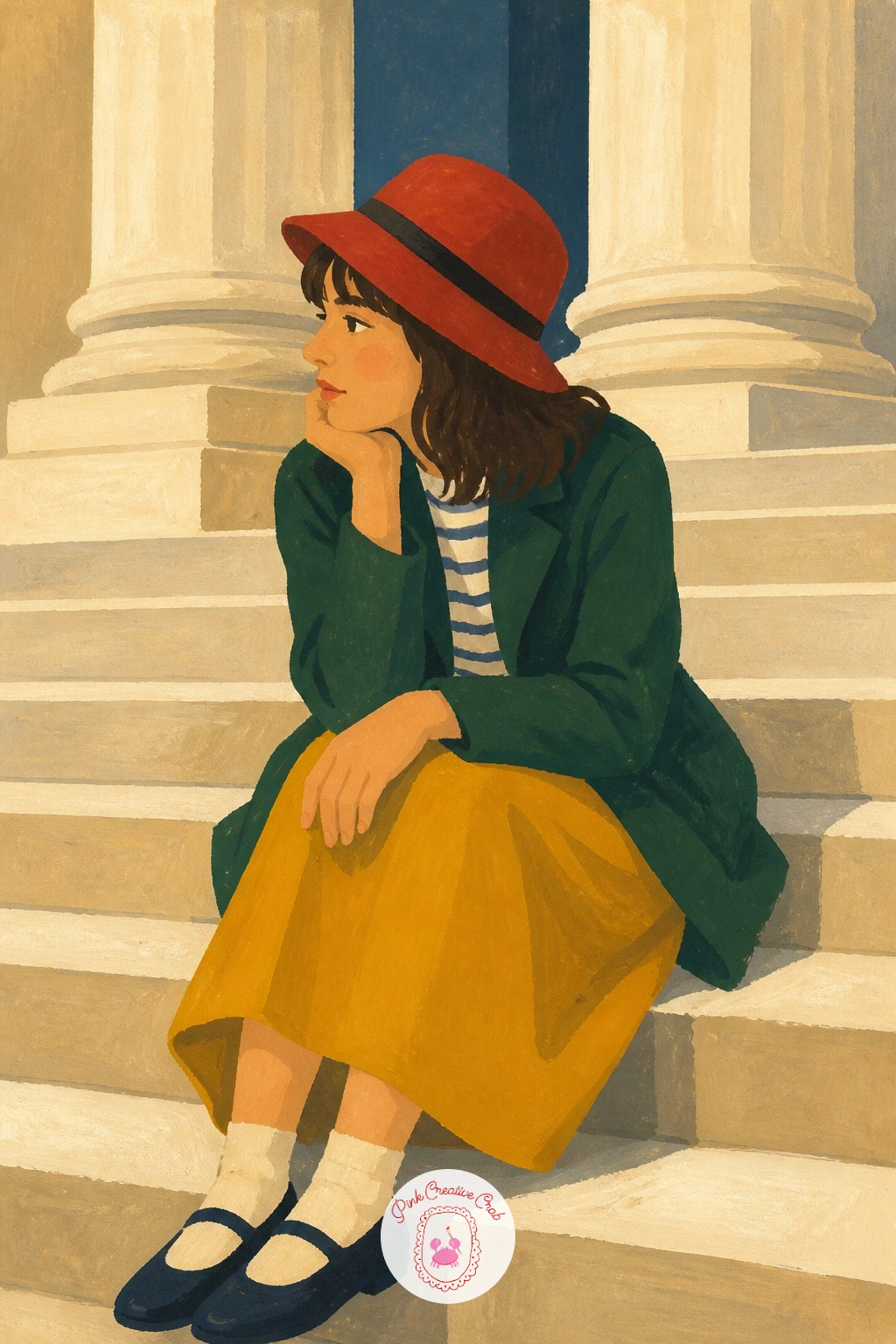
Palette: Brick Red,Snowy Cream,Steel Blue,Payne’s Grey
Slow right down with a small, still corner of the park: a lamp post and bench in the snow, a squirrel pausing nearby. Paint the lamp post first as one tall thin steel blue line with a simple lantern top, then the bench beside it as a few horizontal cream-wood slats on dark legs.
Add the squirrel small and low, a simple curled body shape with an upright tail, sitting on the bench arm or the snow just beside it, in warm brown-grey with a touch of cream on its belly.
This scene lives or dies on restraint, resist the urge to fill the rest of the page, the quiet empty snow around these three small shapes is what gives it its calm.
If you have no reference for a squirrel’s pose, a simple seated half-circle body with the tail curling up behind reads perfectly well at this scale.
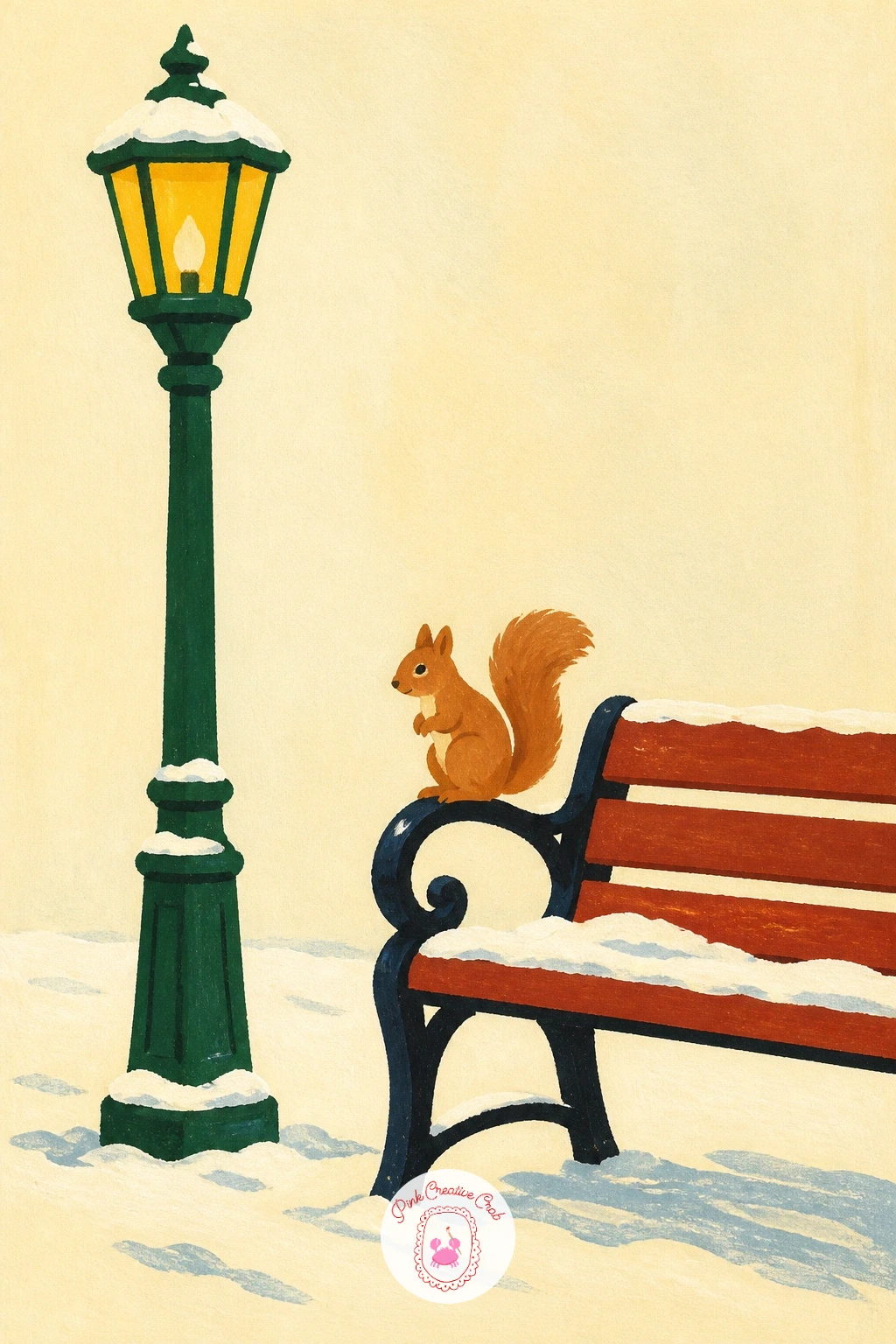
Palette: Steel Blue,Snowy Cream,Payne’s Grey,Brick Red
Jump seasons for a change of pace with the High Line in autumn, golden grasses against the city towers behind. Paint the elevated walkway first as a simple pale path curving through the page, then fill its edges with loose, upright strokes of golden ochre and warm brick grasses, varied in height and density.
Behind it, block the city towers as simple steel blue and cream rectangles rising up, kept flatter and plainer than the grasses so the texture stays the clear focus of the piece.
Grass like this is one of the few places a dry brush really earns its keep, drag a brush loaded with just a little paint upward in short strokes and the broken, streaky texture does the work for you.
If gold feels too warm against your usual winter palette, this is the one idea in the set that is meant to feel different, lean into it.
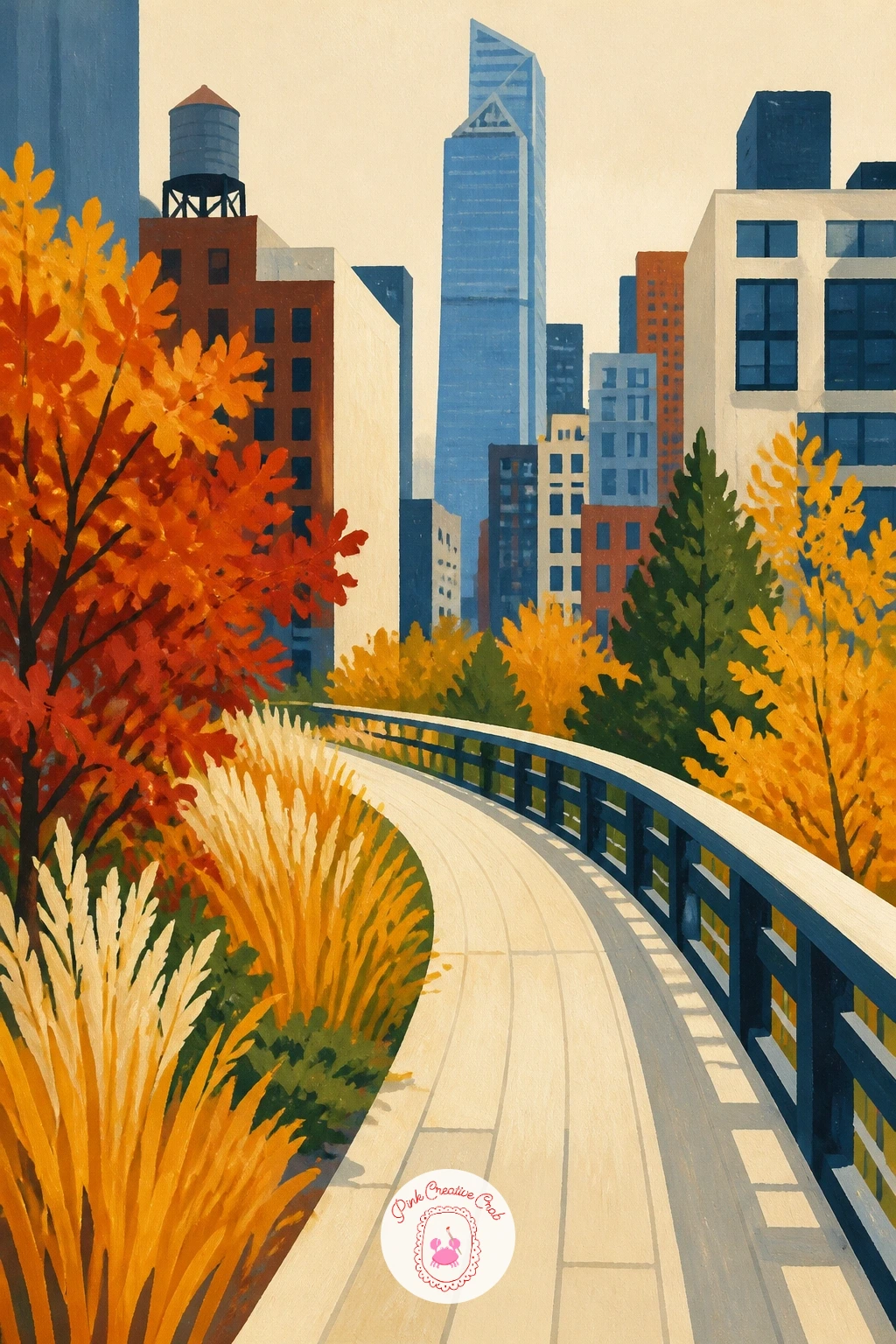
Palette: Taxi Yellow,Brick Red,Steel Blue,Snowy Cream
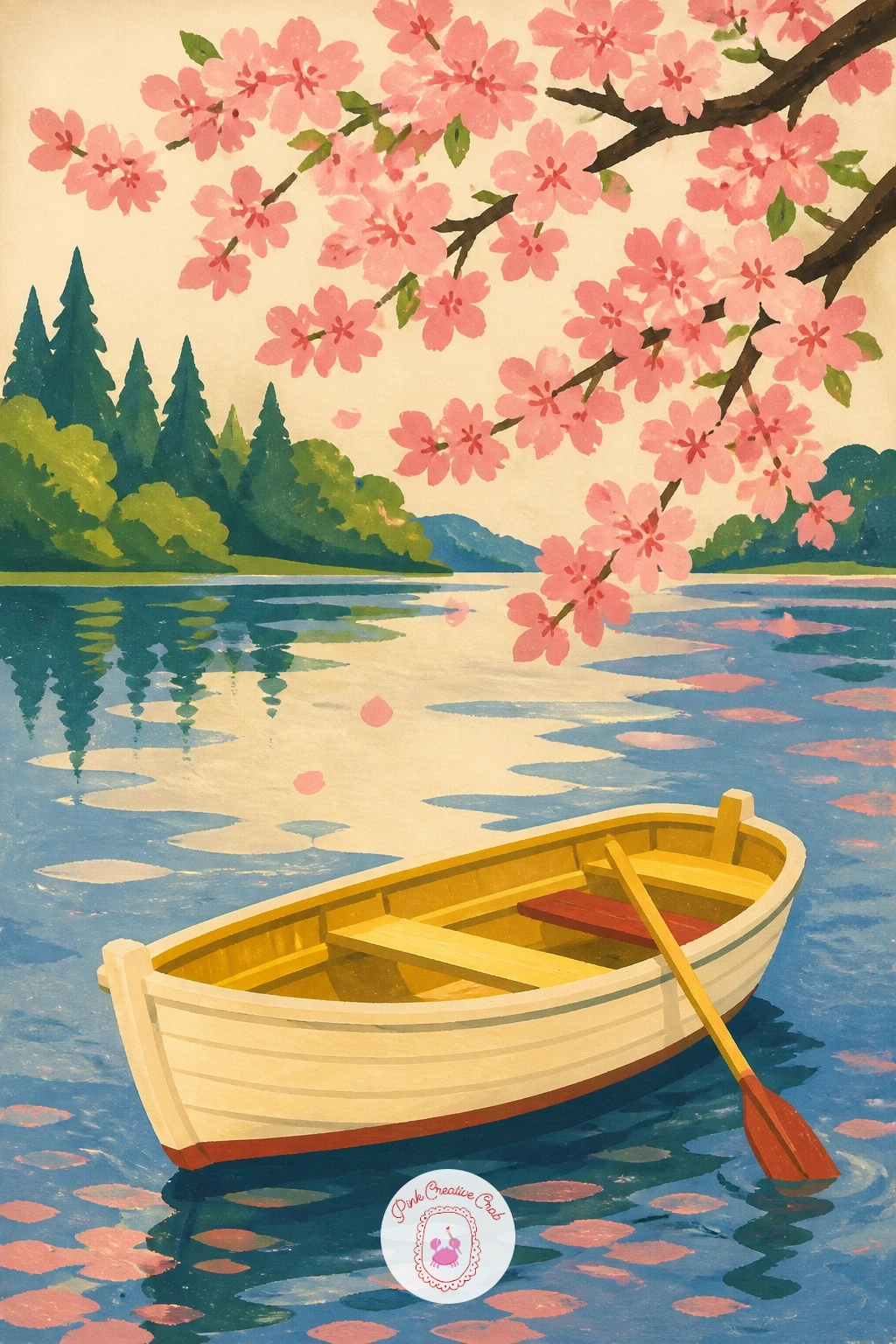
Keep the seasonal shift going with a small rowboat drifting on the Central Park lake beneath spring cherry blossoms. Paint the water first as a calm steel blue-green band, then the boat as one simple cream-wood hull shape sitting low in it, a single oar resting across.
Above, paint a cherry blossom branch arching in from one corner, small soft pink dots clustered along dark branch lines, letting a few fallen petal dots drift down onto the water’s surface too.
Painting the branch before the blossoms, then dabbing the pink dots on last with the very tip of a round brush, keeps the blossoms looking soft and clustered rather than stiff and evenly spaced.
No pink gouache mixed up yet, a touch of white into brick red gets you close enough for this scene.
Palette: Steel Blue,Snowy Cream,Brick Red,Payne’s Grey
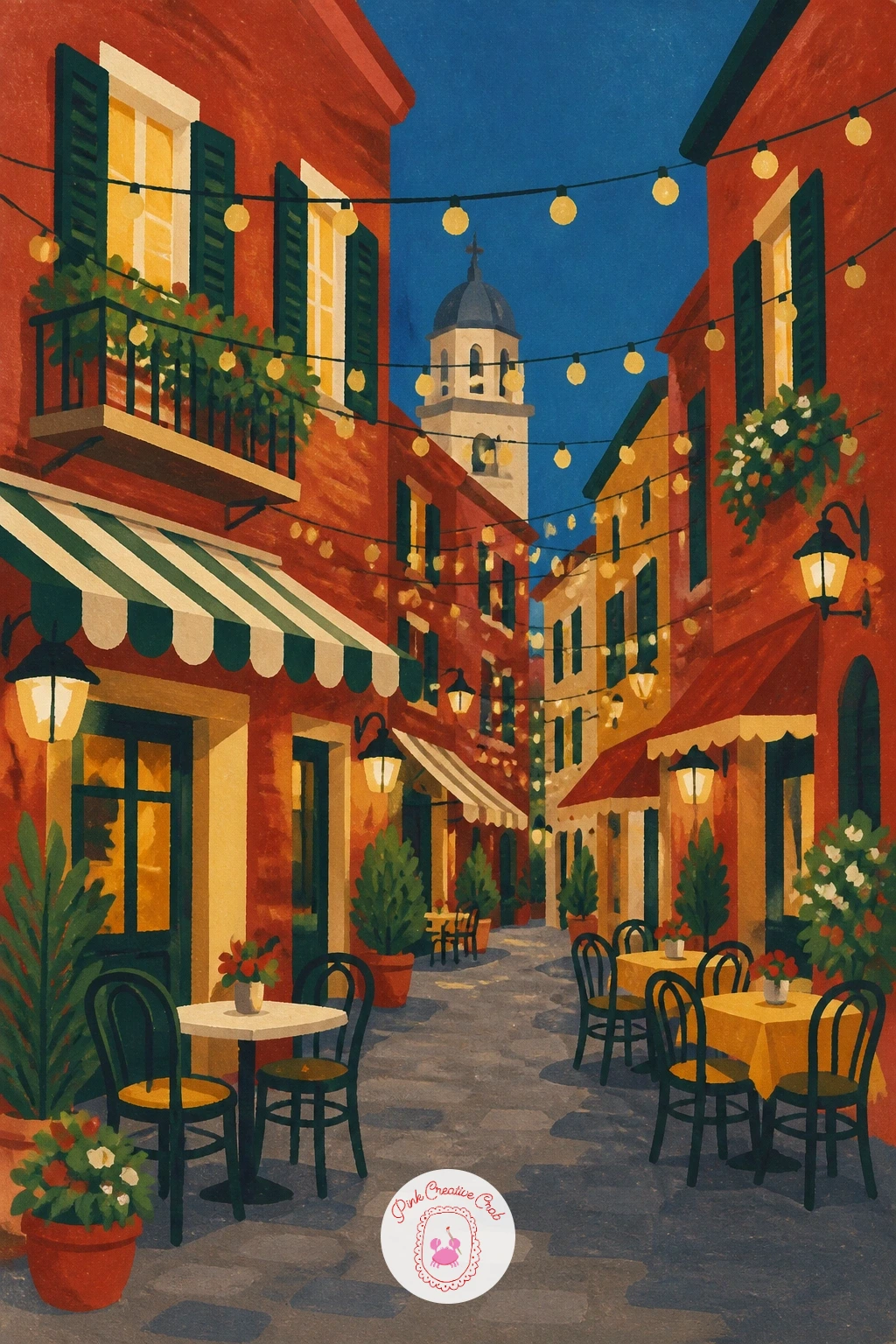
Warm the whole page up now with a summer evening on a Little Italy street strung with lights. Paint the narrow street first as a soft steel blue-grey corridor, buildings in warm cream and brick red rising close on either side, a string of small taxi yellow light dots zig-zagging overhead between them.
Add a few small outdoor table shapes and figure silhouettes at street level, simple and loose, to suggest an evening still going even after dark.
The string lights are easiest painted last, with the tip of a fine brush dotting warm yellow in a loose zig-zag rather than a straight line, real strings sag gently between their points.
If you would rather skip figures entirely, the lit street alone, tables empty, works just as well as a quiet after-hours version.
Palette: Taxi Yellow,Brick Red,Steel Blue,Snowy Cream
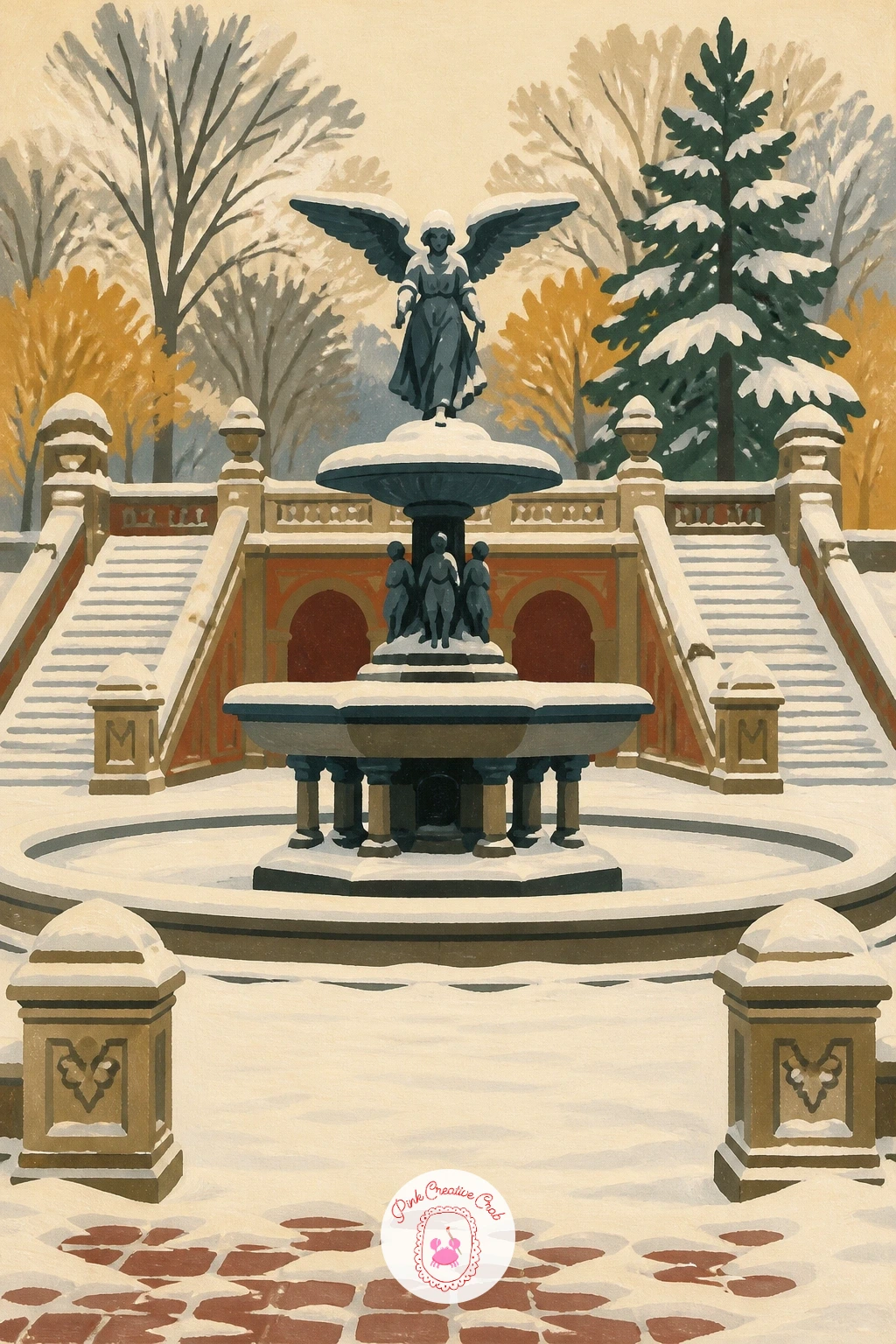
Return to the park’s grandest corner for the Bethesda Fountain and terrace under a soft blanket of snow. Paint the fountain’s central figure and basin first as one simple pale cream-grey shape, tiered and rounded, then surround it with the wide stone terrace in flat cream, dusted generously with white.
Behind, add the terrace’s twin stone staircases and arched passage as soft, simple blocks, kept pale enough that the fountain stays the clear center of the composition.
Snow is the real subject of this version, so after the fountain and terrace are dry, go back in with a dry brush loaded lightly in white and dab snow onto every upward-facing ledge and step, that is what sells the quiet hush of the scene.
For a faster take, paint just the fountain’s top tiers and skip the full terrace behind it.
Palette: Snowy Cream,Steel Blue,Payne’s Grey,Brick Red
The park drawing ideas are a good next stop if you enjoy painting fountains and quiet garden corners like this one.
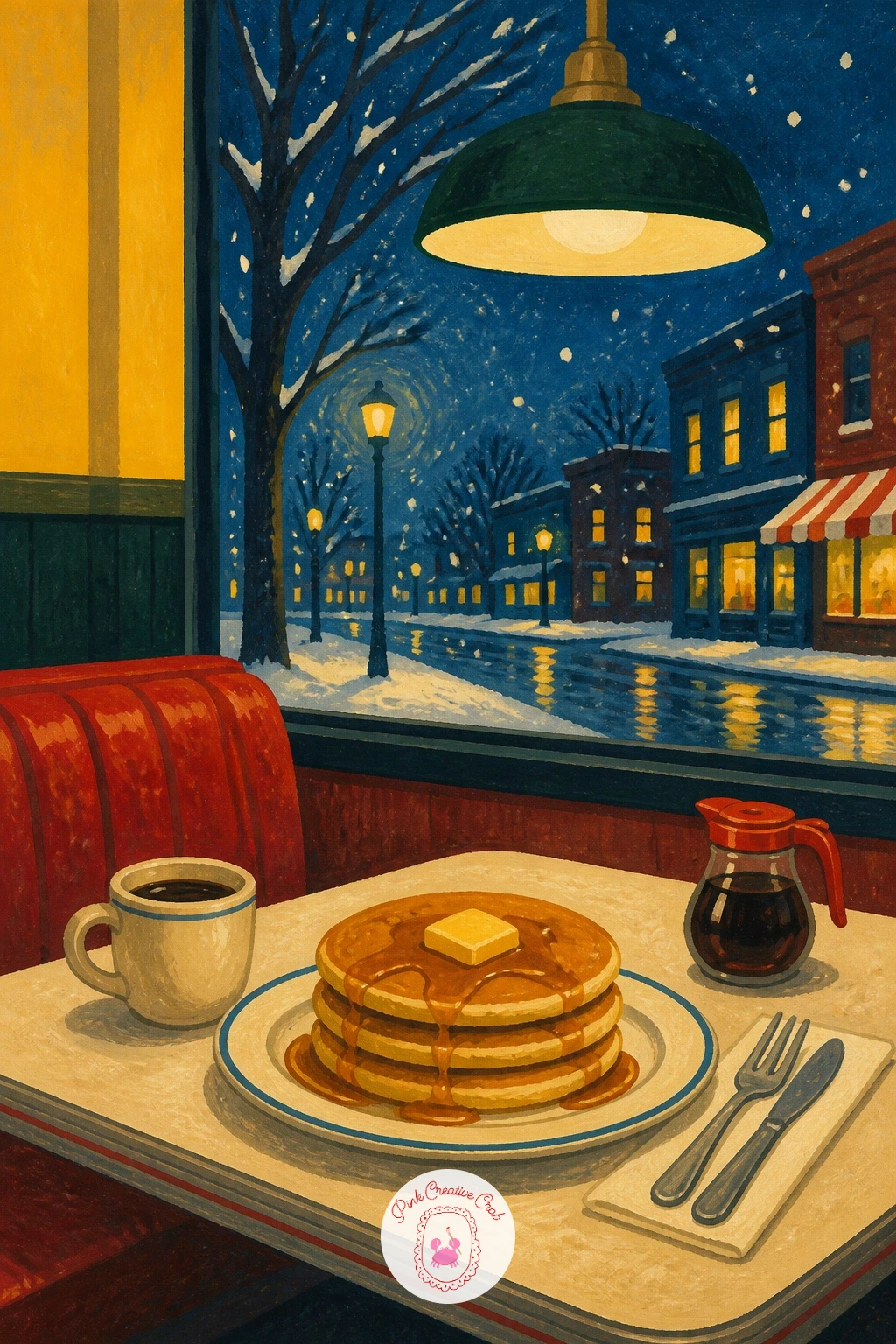
Finish indoors with one of the warmest small scenes of the set: a diner booth with pancakes and a snowy window view at night. Paint the booth first, a simple cream-red vinyl bench shape and a small table holding a plate of pancakes rendered as a few stacked tan circles with a glossy brick red dab for syrup.
Beyond the window behind it, paint the night street in cool steel blue and payne’s grey, a streetlamp glow and a little falling snow, kept soft and slightly blurred compared to the crisp booth in front.
Painting the warm interior crisp and the cold window soft and hazy is what sells the cozy contrast here, resist sharpening up the street scene outside, it should read as a step removed from where you are sitting.
If pancakes are not your thing, swap in a simple mug and pie slice, the same warm-interior, cool-window trick still works.
Palette: Brick Red,Snowy Cream,Steel Blue,Taxi Yellow
What to Do Next
Pick whichever scene pulled at you most on the first read, start with something small like the hot chocolate cart or the bodega cat if this is a new style for you, and work on smooth paper or illustration board so your gouache edges stay crisp. One finished scene today is plenty, the rest of this list will still be here for your next sitting.
Frequently Asked Questions
What paint works best for a New York City drawing like these?
Gouache suits this style best, since its flat, matte finish and crisp edges give city scenes a clean, graphic look. Watercolor or acrylic can stand in if that is what you already own.
Do I need to draw every brick and window to make a building recognizable?
No, simple blocked shapes read better than fine detail at this scale. Focus on getting the overall silhouette and proportion right, since that is what makes a landmark recognizable, not individual windows.
How do I keep a snowy scene from looking flat or empty?
Vary your snow’s density and add one warm glowing light source, a lamp, a window or a cart, as contrast. A single warm spot against mostly cool tones instantly reads as a cold winter night.
What is the easiest New York subject to start with?
Smaller, single-object scenes like the hot chocolate cart or the bodega cat work best for a first try. They need fewer shapes and less perspective than a full skyline or landmark.
How do I paint crowds or figures without drawing faces?
Paint people from behind or at a distance using simple coat shapes, a rounded head and no features at all. Varying coat color and height across a few figures reads as a believable crowd without any detail work.
Have any thoughts?
Share your reaction or leave a quick response — we’d love to hear what you think!
-
 0
-
0
-
0
-
0
-
0
-
0


