Cozy animals illustration is the kind of painting that makes you want to put the kettle on before you even pick up a brush. Every little scene here lives indoors, lit by firelight or candle, full of tiny domestic moments that storybook painters have loved for generations: aprons dusted in flour, scarves half knitted, soup steaming on a woodstove.
Below you will find 33 small woodland scenes, from a mouse pulling bread out of the oven to a badger shoveling snow from the burrow door, each one sized to finish in a single sitting. Scroll through, pick whichever burrow calls to you first, and let the loose watercolor do most of the cozy work.
Using these images: free for personal projects such as printing, coloring, cards, journals and gifts. Handmade items that include them may be sold up to 30 pieces per design. More than that is commercial use and is not permitted, and neither is selling or sharing the images themselves or passing them off as your own. Please ask before any other use.
Start with a mouse in an apron pulling a loaf of bread from a tiny oven, since bread and flour give you a reason to keep the whole scene warm and a little dusty. Pencil the mouse first, leaning forward with both paws on a loaf, then block in the oven as a simple arched shape behind it. Keep the apron a flat wash of cherry red so it reads clearly against the cream walls.
Paint wet into wet for the mouse’s fur in chocolate brown, dropping a darker brown into the ears and tail while the first wash is still damp. Let the bread dry fully before you add the ink crust lines, or they will bleed into a smear instead of crisp cracks.
The oven opening is where this one usually goes wrong, so keep it dark and loose rather than outlining every brick. If you do not have an apron reference handy, a simple triangle shape tied at the waist reads as an apron instantly.
Finish today by adding a single puff of steam rising off the loaf in pale grey, it sells the whole scene as warm.
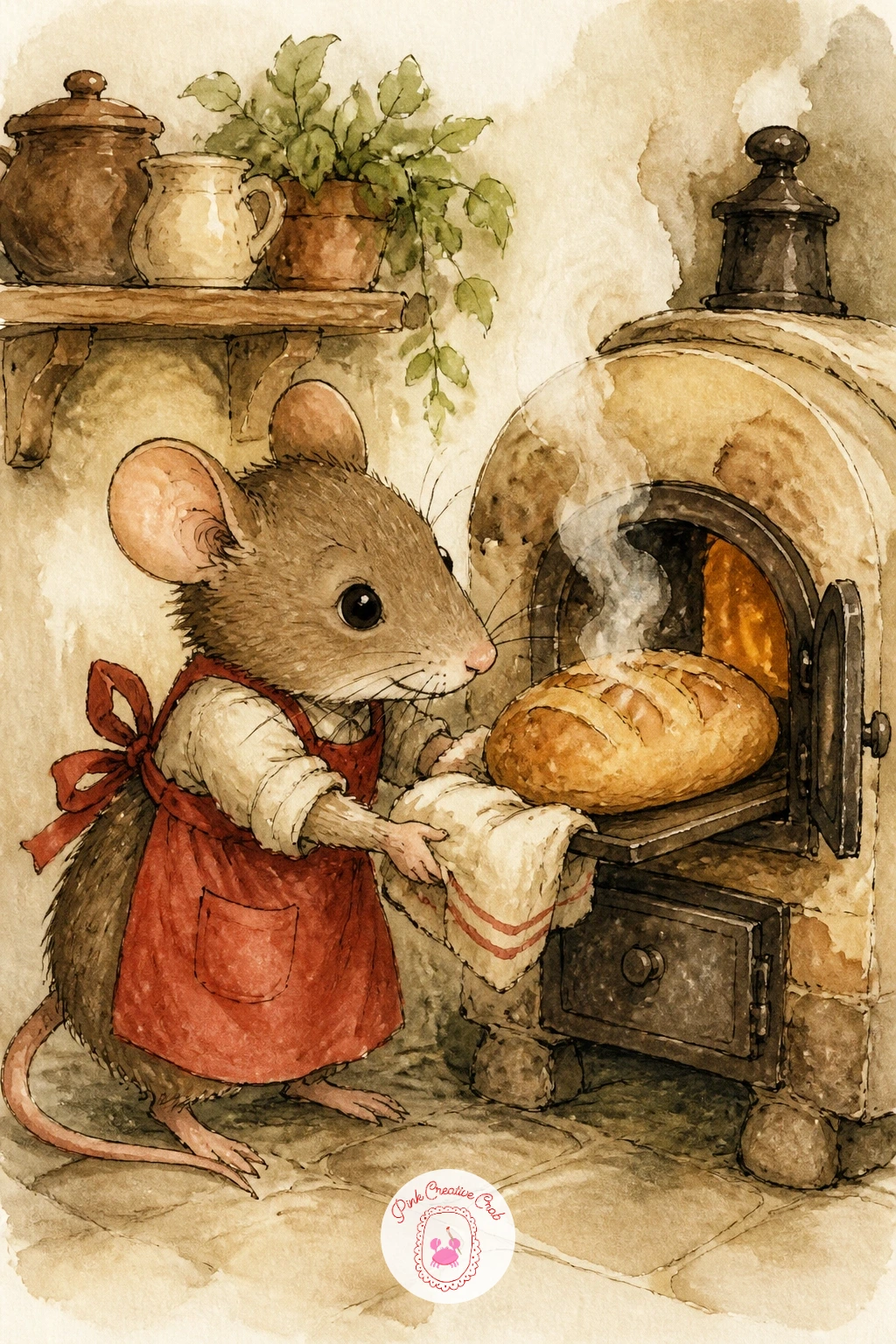
Palette: Burnt Sienna,Cherry Red,Cream,Payne’s Grey
Once the oven scene is dry, move to a badger knitting a long scarf in a rocking chair, a good second piece because the chair gives you a simple frame to build around. Sketch the rocking chair first as two curved lines and a seat, then fit the badger into it sitting upright with needles in both paws.
Compare the badger’s head to the chair back before you commit to ink, the head should sit noticeably lower than the top rail or the proportions drift wrong fast. Paint the badger’s white face stripe by leaving the paper bare rather than painting white over brown, it stays cleaner that way.
Let the scarf trail down past the chair leg and onto the floor in loose moss green stripes, the longer it runs the cozier the whole picture feels. If you do not own a grey paint, mix chocolate brown with a touch of green for a convincing badger grey.
Add one small detail today, a ball of yarn resting by the chair leg, to anchor the whole scene.
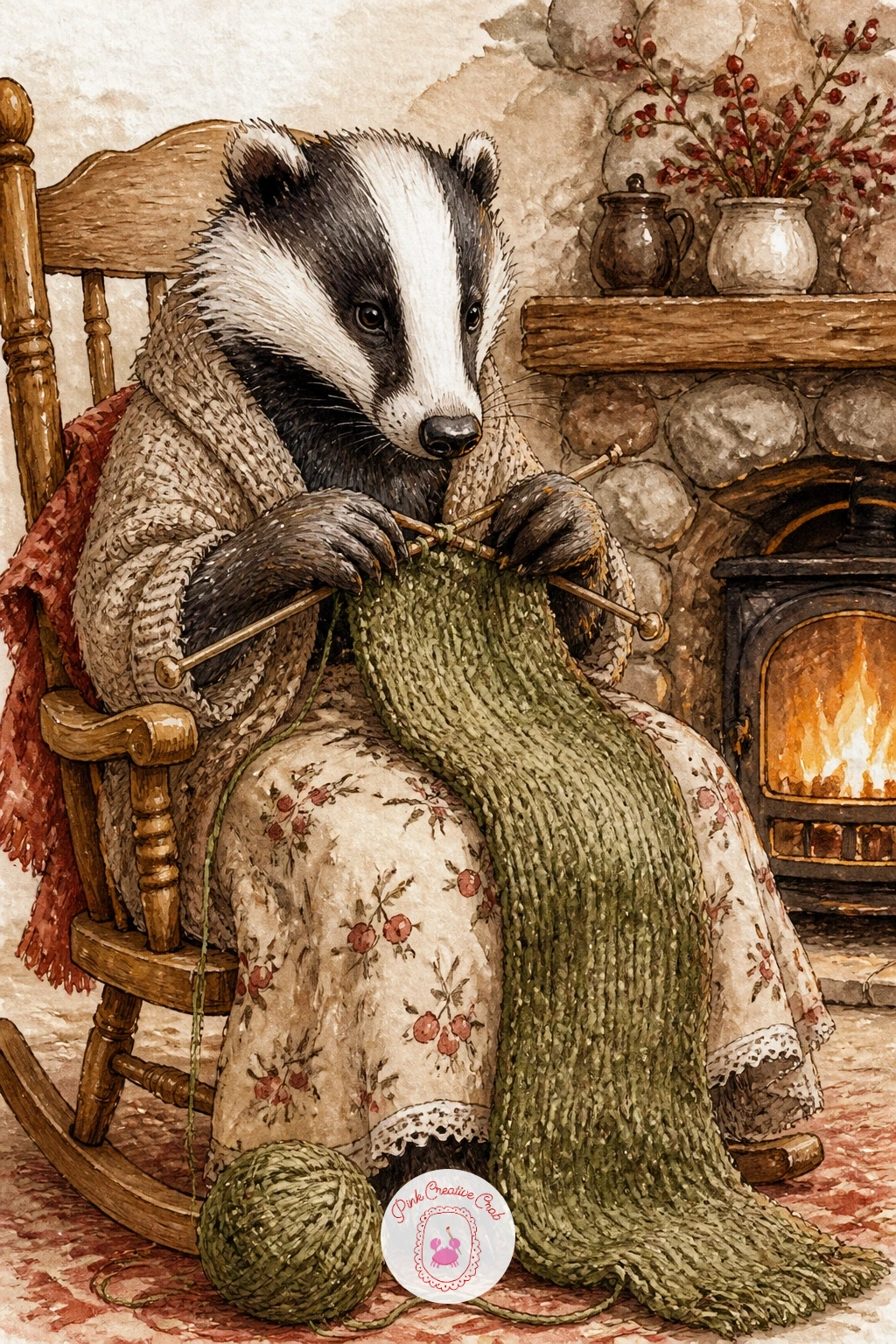
Palette: Payne’s Grey,Moss Green,Chocolate Brown,Cream
Bring the light source indoors for a mole reading a book by candlelight in its underground room, since this one turns on where the glow falls rather than on detail. Decide the candle position first, low and to one side, and let every shadow on the mole and the earthen walls fall away from it.
Paint the room in warm chocolate brown and burnt umber washes, then lift a soft circle of lighter cream around the candle with a damp clean brush before the paint fully dries. That lifted glow does more work than any amount of yellow paint.
Moles have tiny eyes and a pointed snout buried in fur, so keep the face soft and let the ink pen add just a few whisker lines rather than a detailed muzzle. If your candle glow looks patchy, a single wash of pale yellow over the lifted area usually settles it.
Finish with a shelf of tiny books in the background, even just colored rectangles, to fill the burrow wall.
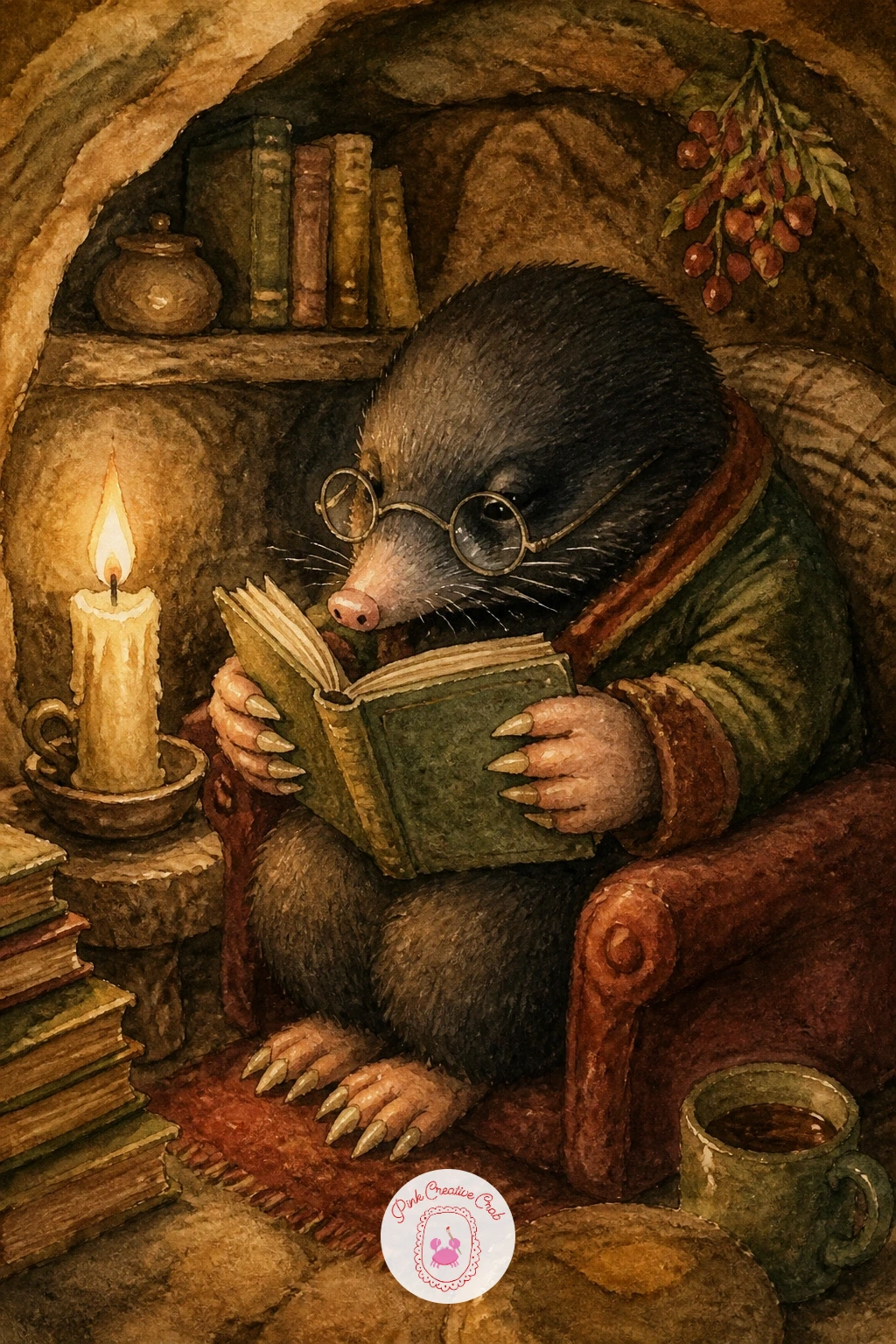
Palette: Burnt Umber,Cream,Soft Yellow,Chocolate Brown
Try lifting the candle glow with a small flat brush instead of a round one, it leaves a cleaner edge around the light.
After a quiet solo scene, paint a squirrel pouring tea for a guest at a tiny kitchen table, which brings in a second character and a little action. Block in the table as an oval first, then place the squirrel standing with a teapot tipped toward a cup, and sketch the guest sitting opposite before you paint either animal.
Keep the squirrel’s tail large and fluffy, it reads better oversized than realistic, and paint it in layered chocolate brown strokes that fan outward from the body. The teapot and cups stay a crisp cherry red to pull the eye toward the center of the table.
The pouring arc of tea is the trickiest part, so paint it last as one confident thin brushstroke rather than trying to fix it stroke by stroke. A dip pen with diluted brown ink works well here if your brush keeps wobbling.
Add steam curls off both cups today to finish the warmth of the scene.
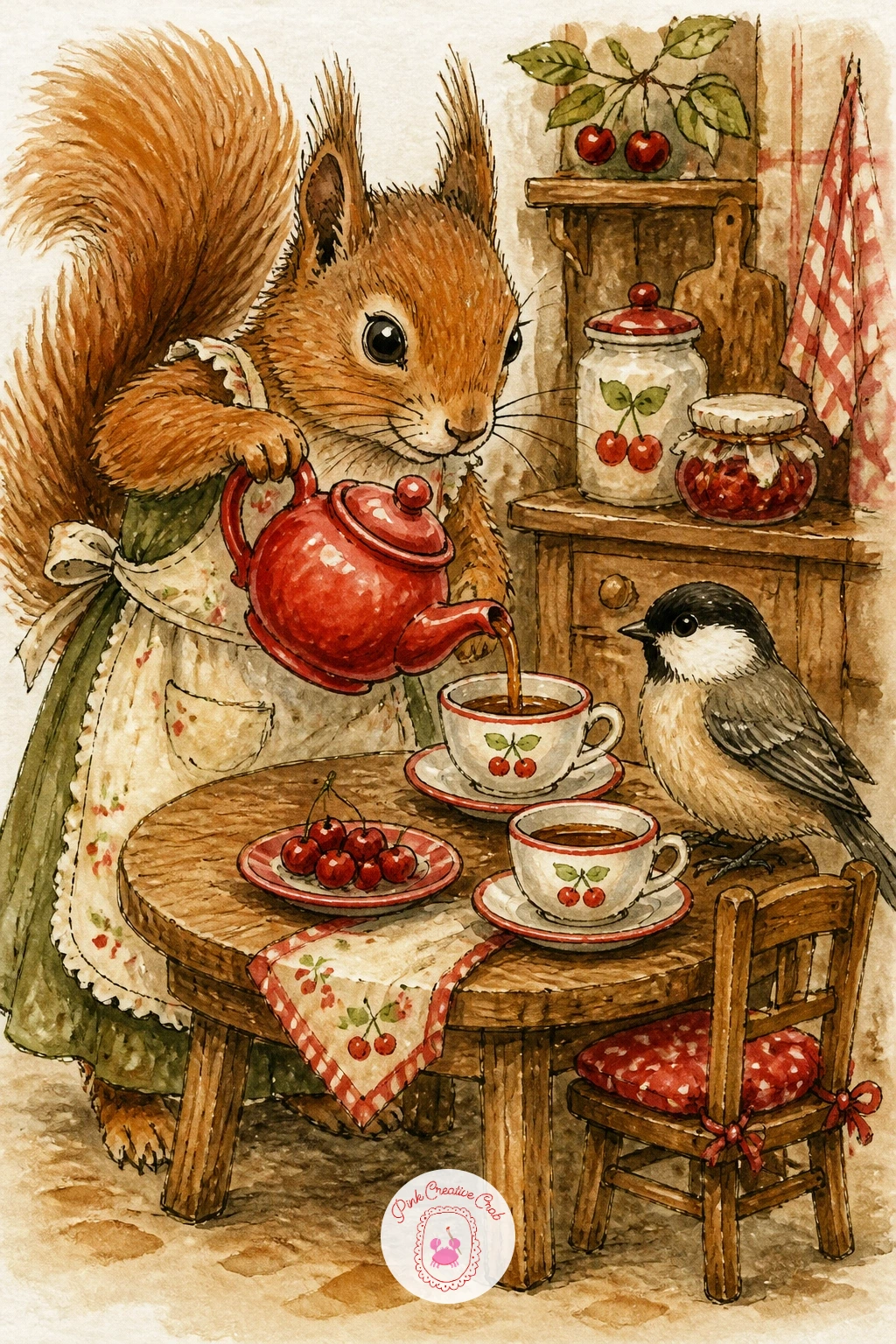
Palette: Chocolate Brown,Cherry Red,Cream,Moss Green
Keep the pairs going with two mice sharing a bowl of soup by a woodstove, a scene that lives or dies on how close together you place the figures. Sketch both mice leaning toward one bowl between them, shoulders nearly touching, with the woodstove glowing just behind.
Paint the woodstove’s firebox opening in a deep warm orange red, this is the brightest spot in the whole picture and everything else should read a touch darker by comparison. Build the mice in soft grey brown washes and save the ink for just their whiskers, spoon handles and the stove’s iron details.
If the two mice start to look identical, vary their ear size or tilt one head slightly to tell them apart at a glance. Swap a bowl for two small mugs if you would rather paint mugs than a shared dish.
Finish with a thin curl of smoke rising from the stovepipe to settle the whole room.
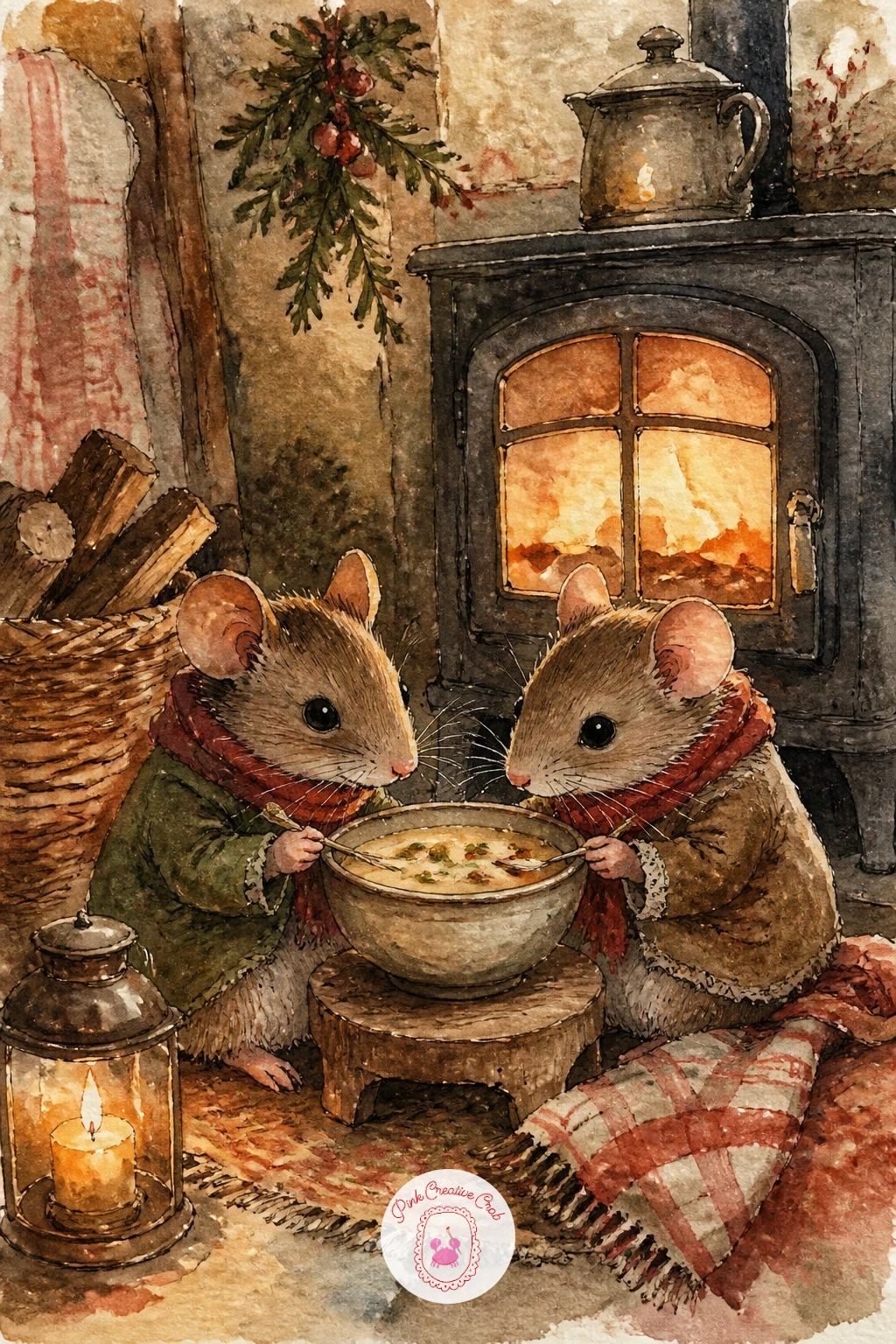
Palette: Burnt Orange,Payne’s Grey,Cream,Chocolate Brown
Scale right down for a dormouse asleep in a teacup bed under a patchwork quilt, one of the smallest and sweetest scenes on this list. Draw the teacup first as a simple rounded bowl shape with a handle, then curl the sleeping dormouse inside it so the body follows the cup’s curve exactly.
Paint the quilt in small patches of cherry red, moss green and cream, switching colors every few strokes while the paper is still slightly damp so the patches bleed softly into each other instead of sitting as hard little squares. That softness is what keeps the quilt looking like fabric rather than a checkerboard.
Dormice have round ears and a long furred tail, so leave the tail trailing out over the cup’s rim for a nice bit of visual interest. No patchwork reference on hand is fine, four or five random colored patches read as a quilt instantly.
Close the page today with a single ink line for the cup’s saucer underneath to ground the whole thing.
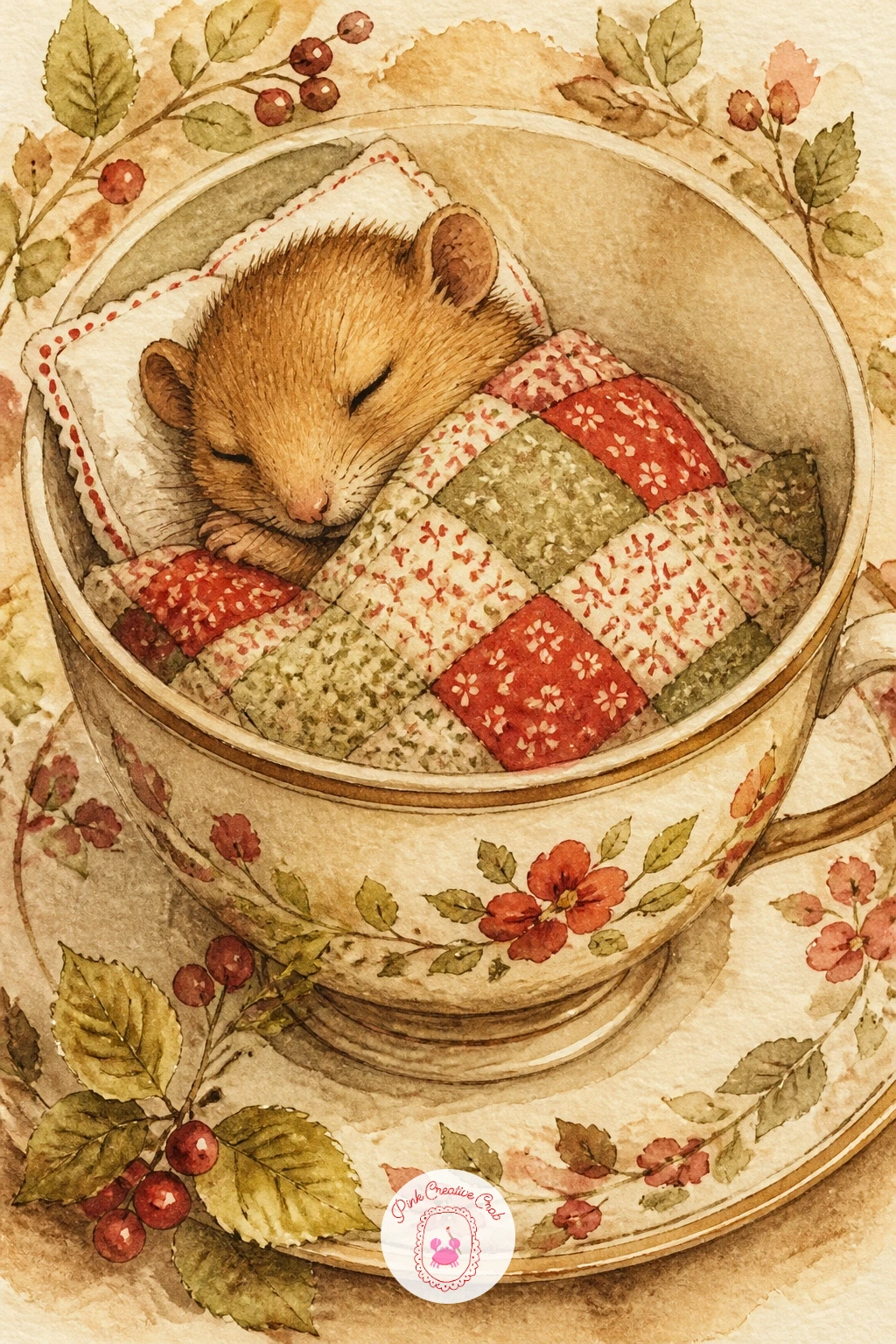
Palette: Cherry Red,Moss Green,Cream,Chocolate Brown
Build confidence for a bigger composition with a badger family eating supper around a round wooden table, since you now need three or four figures to sit together believably. Sketch the table as a circle viewed slightly from above, then place each badger evenly around it before painting a single one.
Compare each badger’s head height against the tabletop edge as you go, keeping them roughly level keeps the family feeling seated rather than floating. Paint the tabletop in warm chocolate brown first and let it dry completely before adding plates and food on top, or the colors will muddy together.
Crowded group scenes often go wrong when every figure faces the viewer, so turn one badger’s back slightly to the painting and let another lean in toward the stew pot. If a full family of four feels like too much today, three badgers tell the same story just as well.
Add one lit candle at the table’s center to finish the warmth.
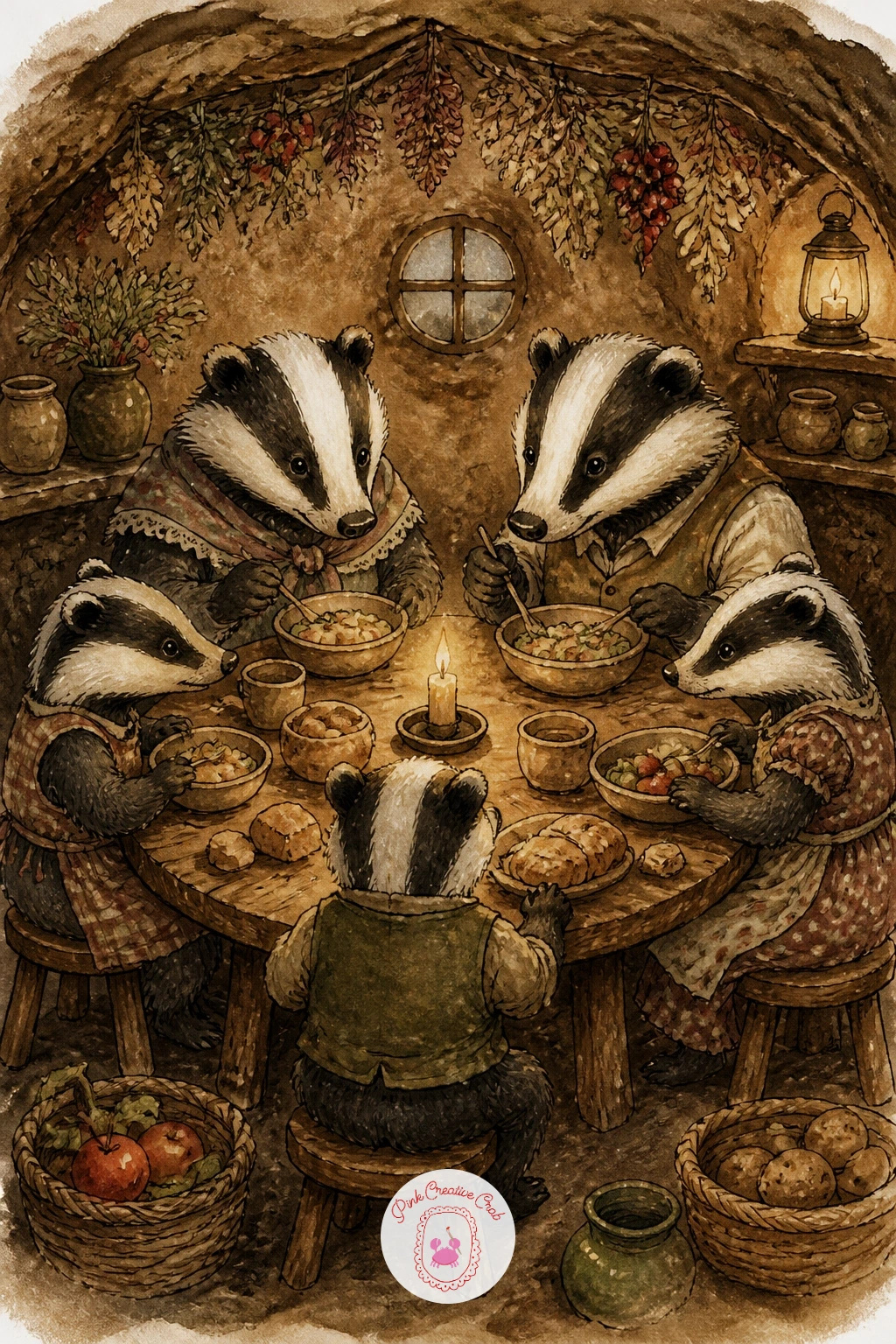
Palette: Chocolate Brown,Payne’s Grey,Cherry Red,Cream
Slow back down for a vole hanging little mittens to dry by the fire, a simple scene with a satisfying small task at its center. Draw the fireplace mantel as a plain horizontal shelf, then string a line above it for the mittens to hang from before placing the vole reaching up on tiptoe.
Check the eye level here, since you are looking slightly upward at the mittens from the vole’s point of view, the mantel line should tilt just a touch rather than sit perfectly flat. That small tilt is what makes the reach feel real.
Paint the mittens in two or three small flat washes of cherry red and moss green, they are tiny enough that any more detail just muddies them. If string feels fiddly to paint, a thin ink line drawn with a ruler works just as well.
Finish with a soft orange glow painted behind the vole to suggest the fire itself just out of frame.
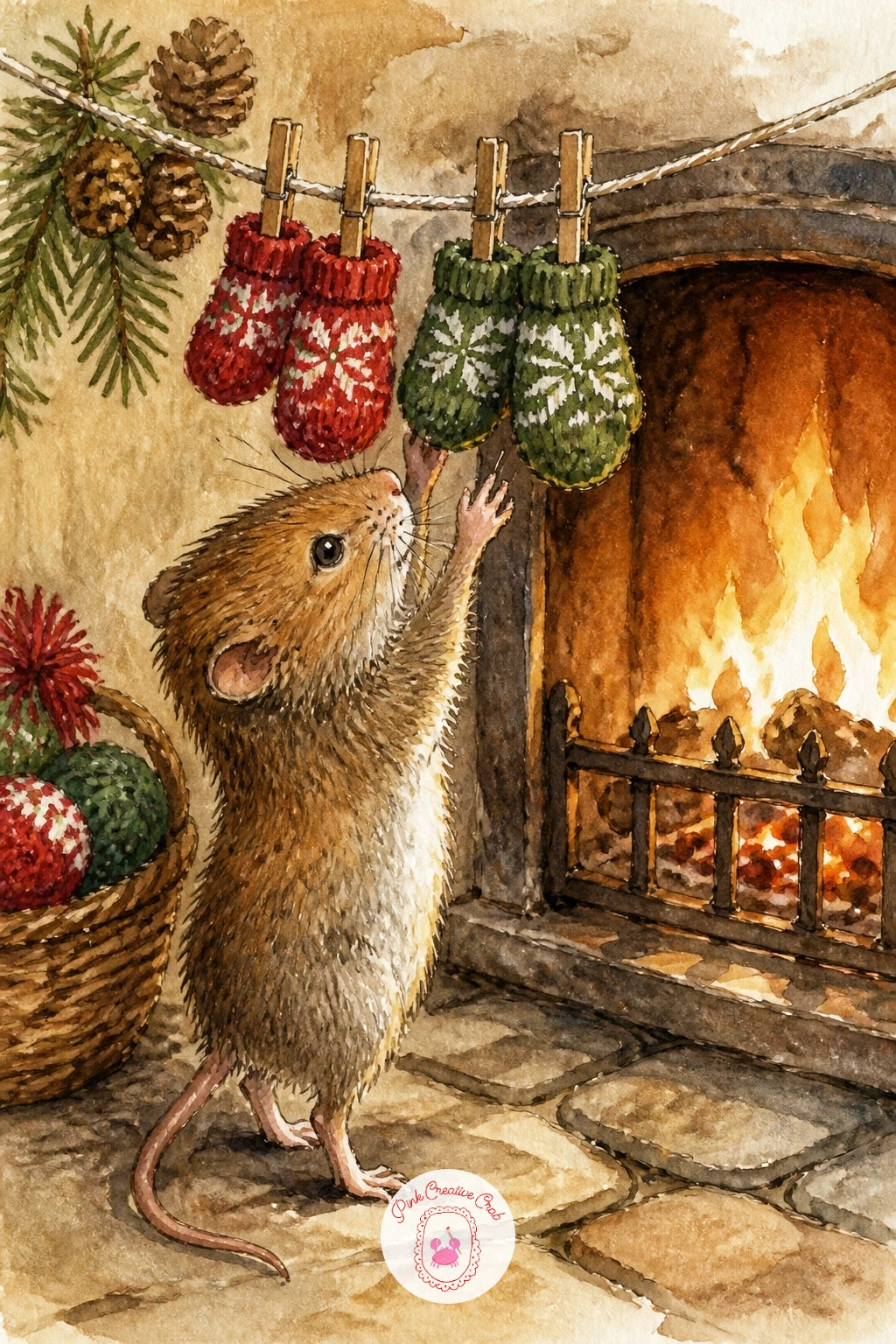
Palette: Cherry Red,Moss Green,Burnt Orange,Cream
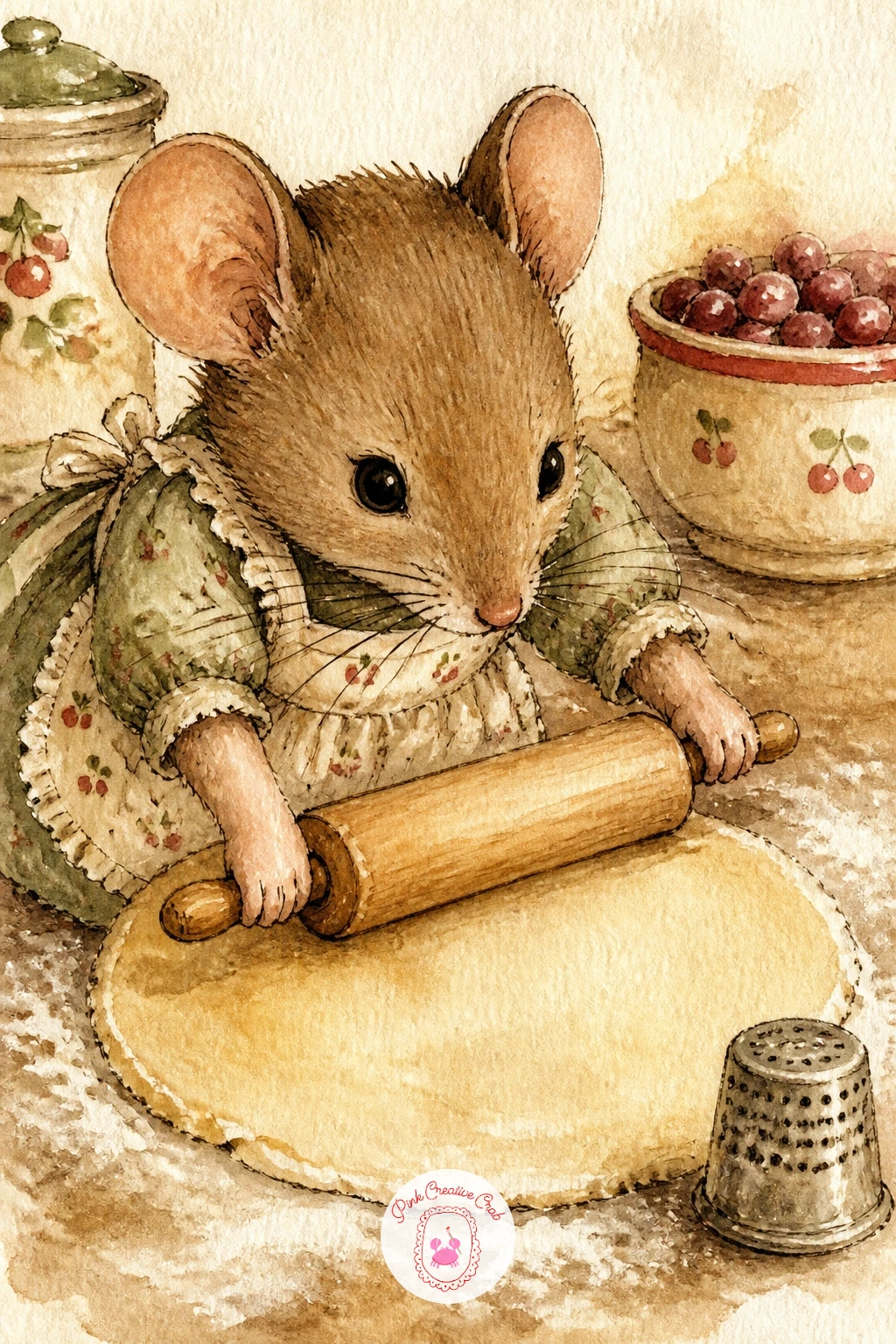
Return to the kitchen for a mouse rolling out pastry with a thimble beside it, a scene built on one simple hands-on trick for texture. Sketch the mouse leaning over a round of pastry dough with a tiny rolling pin under both paws, and set the thimble down beside it for scale.
Paint the dough in a flat pale cream wash, then while it is still damp, dab a dry brush lightly over the surface to lift a little paint and leave a soft floury texture rather than a smooth flat circle. That dry brush dab is the whole trick, and it reads as flour instantly.
Keep the rolling pin as two simple cylinder shapes in light wood tones, with ink lines only at the handles. If a thimble feels too fiddly to paint small, a plain acorn cap beside the dough tells the same story of scale.
Dust a few tiny white specks of paint flicked from a toothbrush over the dough today to finish the flour.
You Will Need
- toothbrush for paint splatter
Palette: Cream,Chocolate Brown,Payne’s Grey,Burnt Sienna
Give the pantry its moment with a squirrel stacking jars of nuts on a pantry shelf, a good one for practicing repeated shapes that still feel handmade. Draw three or four jars first as simple rounded rectangles of slightly different heights, then fit the squirrel reaching up to place the top jar.
Paint each jar’s contents in a different warm tone, chocolate brown for walnuts, burnt sienna for acorns, so the shelf reads as varied rather than repetitive. Leave a thin white highlight down one side of each jar before you ink the outlines, it is what makes glass look like glass.
The shelf itself often flattens the whole scene if painted too evenly, so paint it slightly darker at the back wall and lighter where the squirrel’s paw catches the light. No glass jar reference needed, any rounded container shape reads as a jar once nuts sit inside it.
Add one jar left open with nuts spilling slightly over the shelf edge to finish the scene with a bit of life.
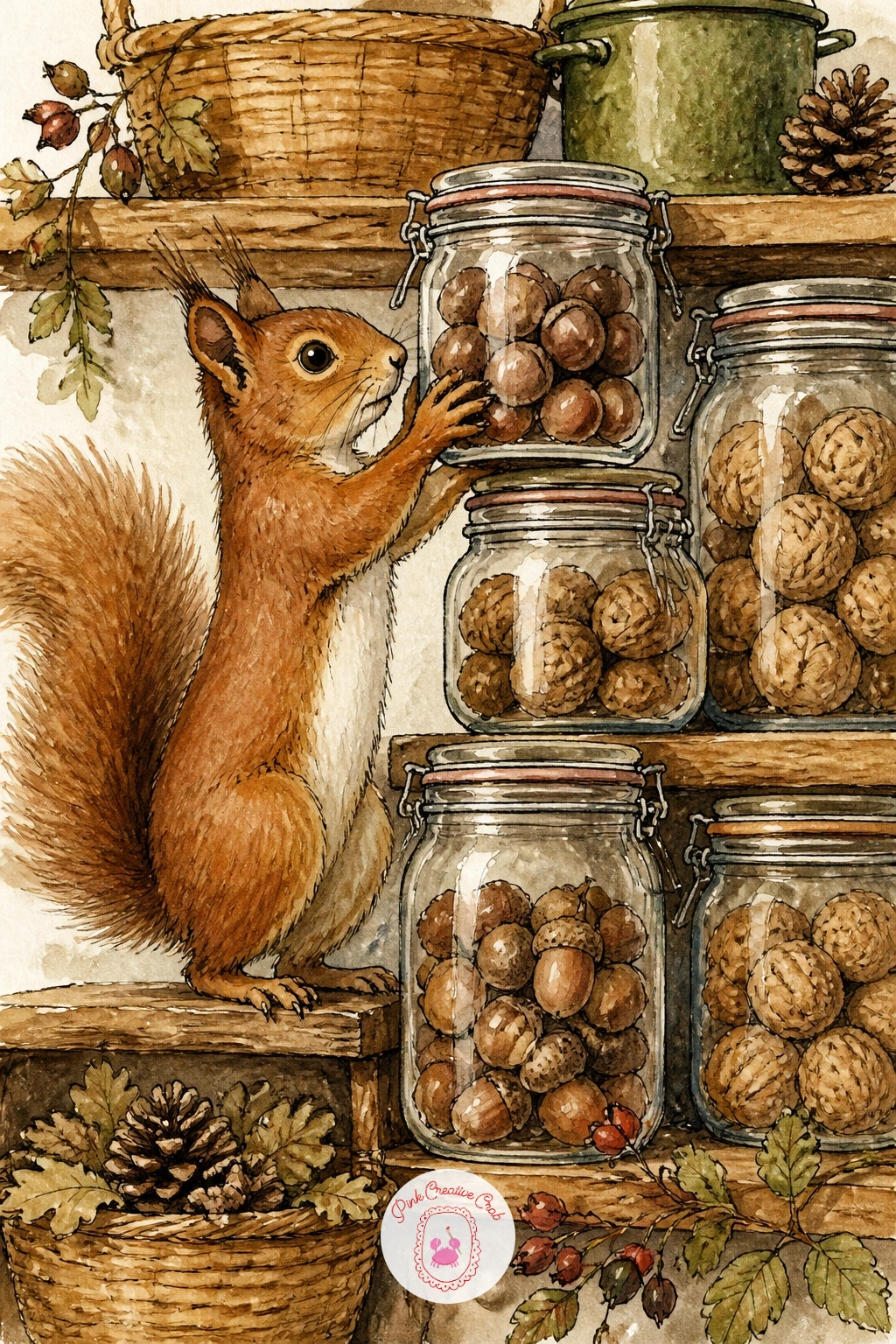
Palette: Chocolate Brown,Burnt Sienna,Cream,Moss Green
Slow the pace right down for a mole in slippers warming its toes by the fire, one of the quietest scenes on this list and a nice break between busier ones. Sketch the mole seated low in a small chair with both feet stretched toward a modest fire, slippers drawn as two simple rounded shapes.
Paint the fire’s glow first in warm orange and let it bleed upward into soft yellow while still damp, then build the mole’s dark velvety fur around that warm center once the glow has dried. The contrast between the dark mole and the bright fire is what carries the whole mood.
Moles are easy to overwork around the face, so stop at a simple pointed snout and two tiny dot eyes rather than adding detail that is not really there on a real mole. If you lack an orange paint, mix cherry red with a touch of cream for a workable fire glow.
Finish today by adding one curl of smoke drifting from the chimney just visible at the top of the page.
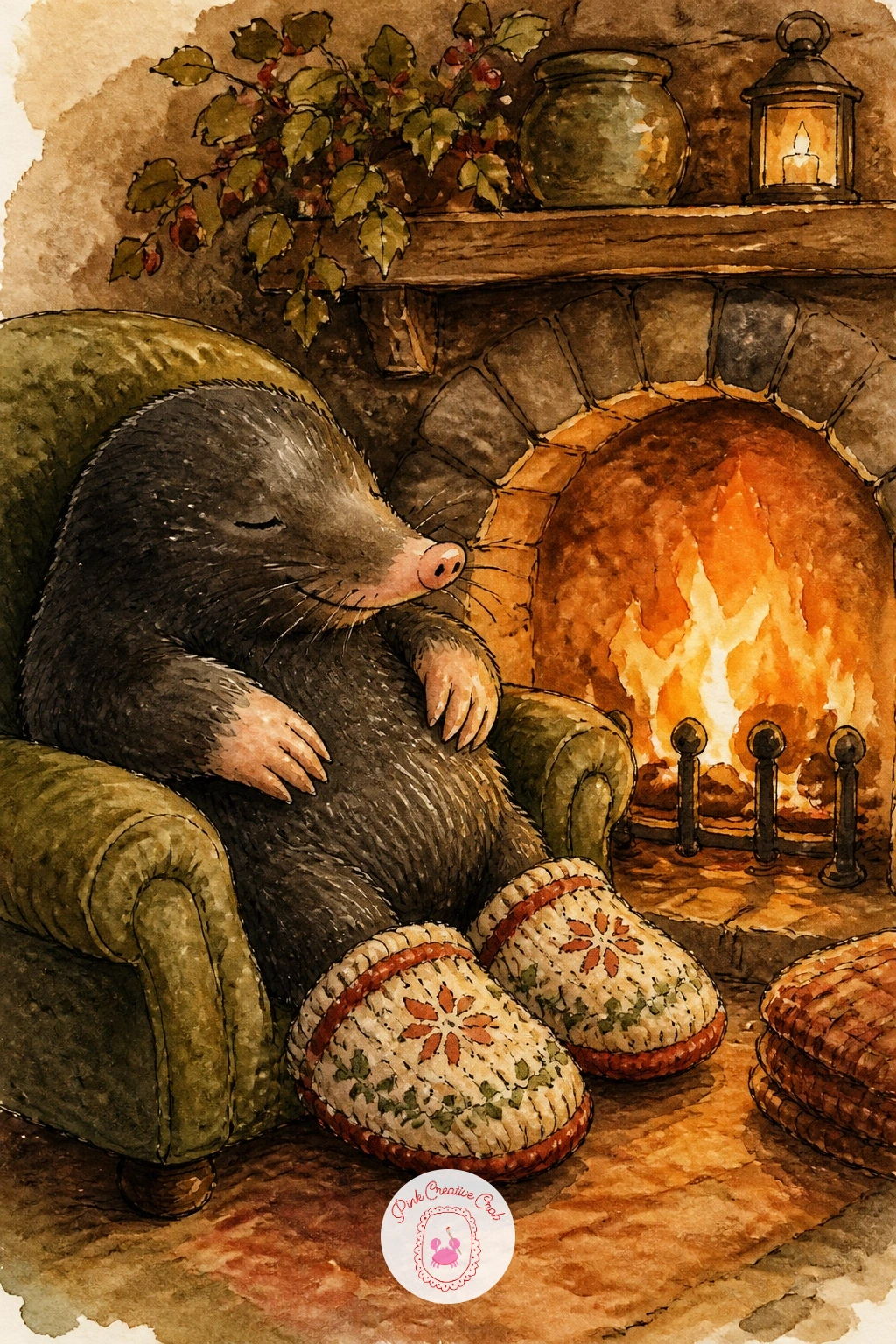
Palette: Burnt Orange,Soft Yellow,Payne’s Grey,Cream
Step outside the burrow briefly for a shrew sweeping snow from its tiny front door, a nice chance to bring a little winter into the scene without losing the cozy feel. Sketch the round front door first, tucked into a mound of earth or a tree root, then place the shrew mid sweep with a small broom.
Paint the snow as untouched white paper rather than white paint, it stays brighter and crisper that way, and add soft blue grey shadows only where the snow dips and curves. The door itself can stay warm chocolate brown to contrast against all that cold white.
Shrews have longer pointed snouts than mice, so exaggerate that just slightly to tell the two apart at a glance. If blue grey shadow paint feels too cool, a touch of moss green mixed into grey warms it up nicely for a storybook snow.
Add one small swept pile of snow beside the broom today to show the job half done.
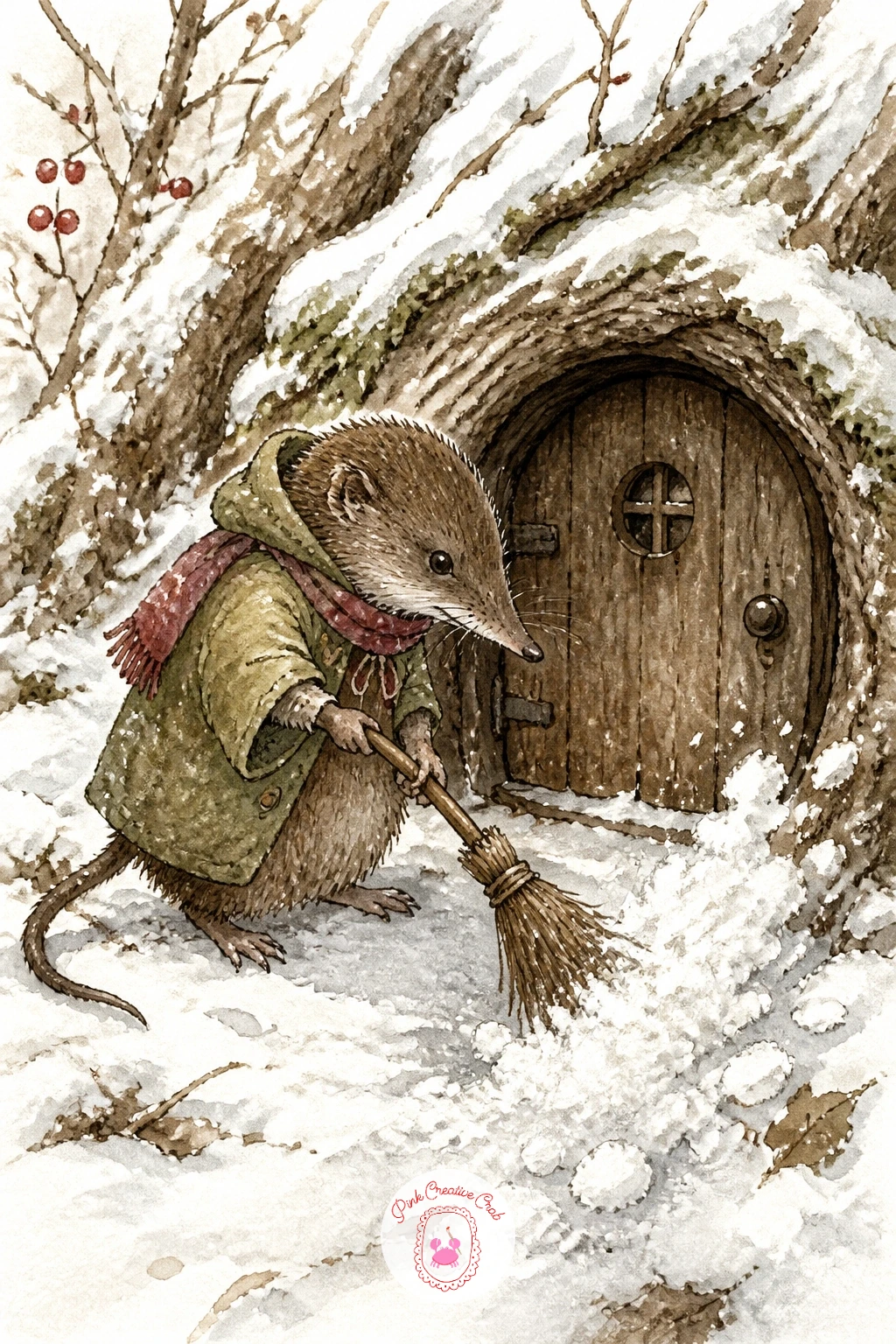
Palette: Chocolate Brown,Payne’s Grey,Moss Green,Cream
Bring back a family moment with a badger in a nightcap reading a bedtime story to its cubs, which asks you to manage where the light falls across several figures at once. Decide the lamp or candle position first, then let the parent badger’s face catch the brightest light while the cubs’ faces sit a touch dimmer, tucked in close.
Paint the nightcap in a soft cream with a cherry red pom pom at the tip, a small detail that reads instantly as bedtime. Build the cubs smaller and rounder than the parent, with shorter snouts and bigger eyes, which is what makes them look young rather than just small adults.
If the group starts to feel stiff, let one cub’s eyes already be closing while the others still look up at the book. Swap the nightcap for a simple scarf if a cap feels fiddly at this size.
Finish with one soft circle of lamp glow behind the whole group to pull them together.
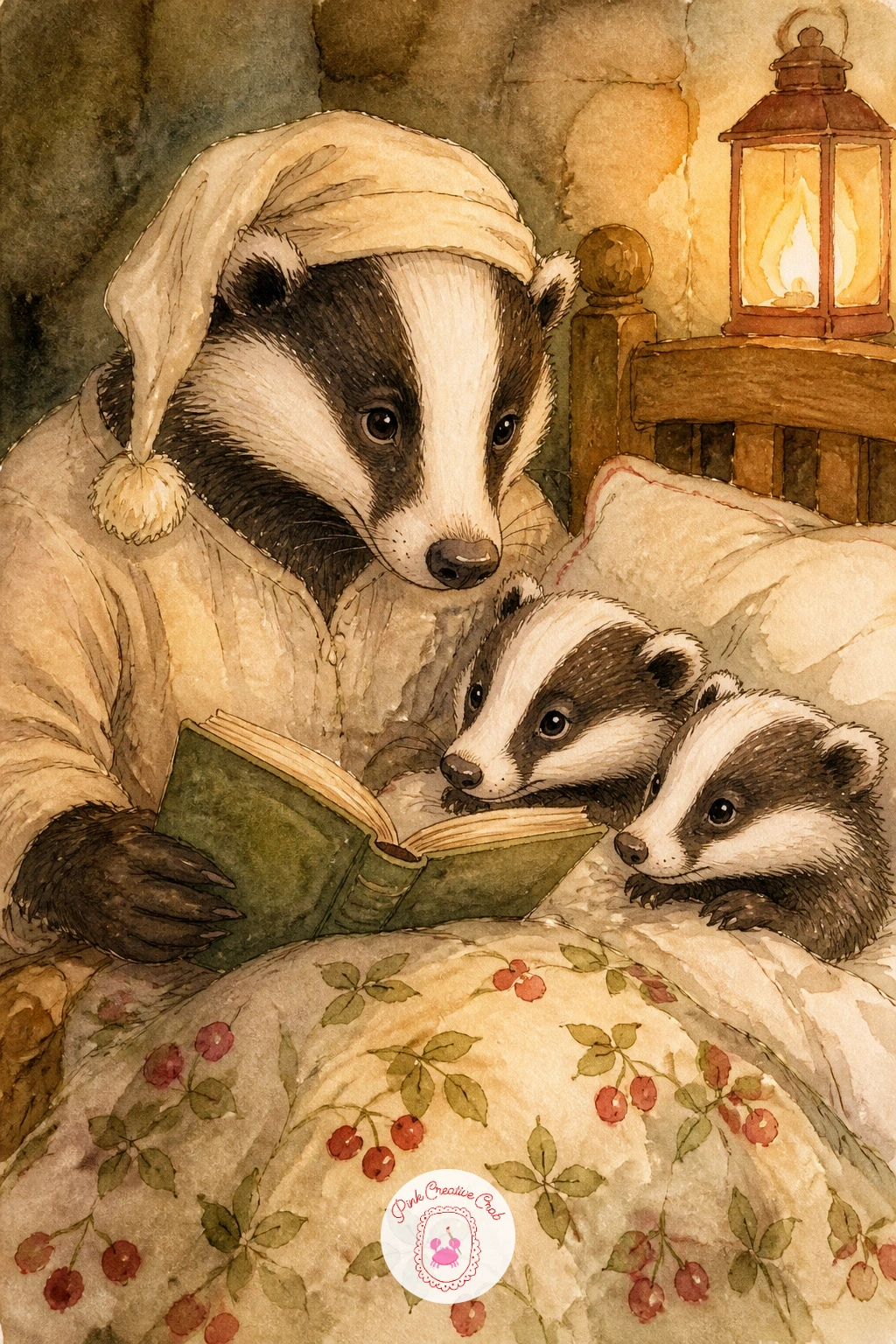
Palette: Cream,Cherry Red,Payne’s Grey,Chocolate Brown
Keep the knitting theme going with a mouse knitting a sweater for a friend with tiny needles, a good chance to practice small repeated marks without overworking them. Sketch the mouse seated with the half finished sweater draped over both paws, needles crossed at the working edge.
Paint the sweater in moss green first as one flat wash, then once fully dry, add the knit texture with short diagonal ink strokes in rows rather than trying to paint every stitch in watercolor. That ink texture over a flat wash reads as knitting far more convincingly than detailed brushwork would.
Needles are easy to make too thick, so keep them as thin single ink lines crossed near the top of the sweater rather than painted shapes. If ink strokes feel intimidating, a fine colored pencil in a darker green works just as well for the texture.
Add a small ball of yarn unrolling across the floor today to finish the scene.
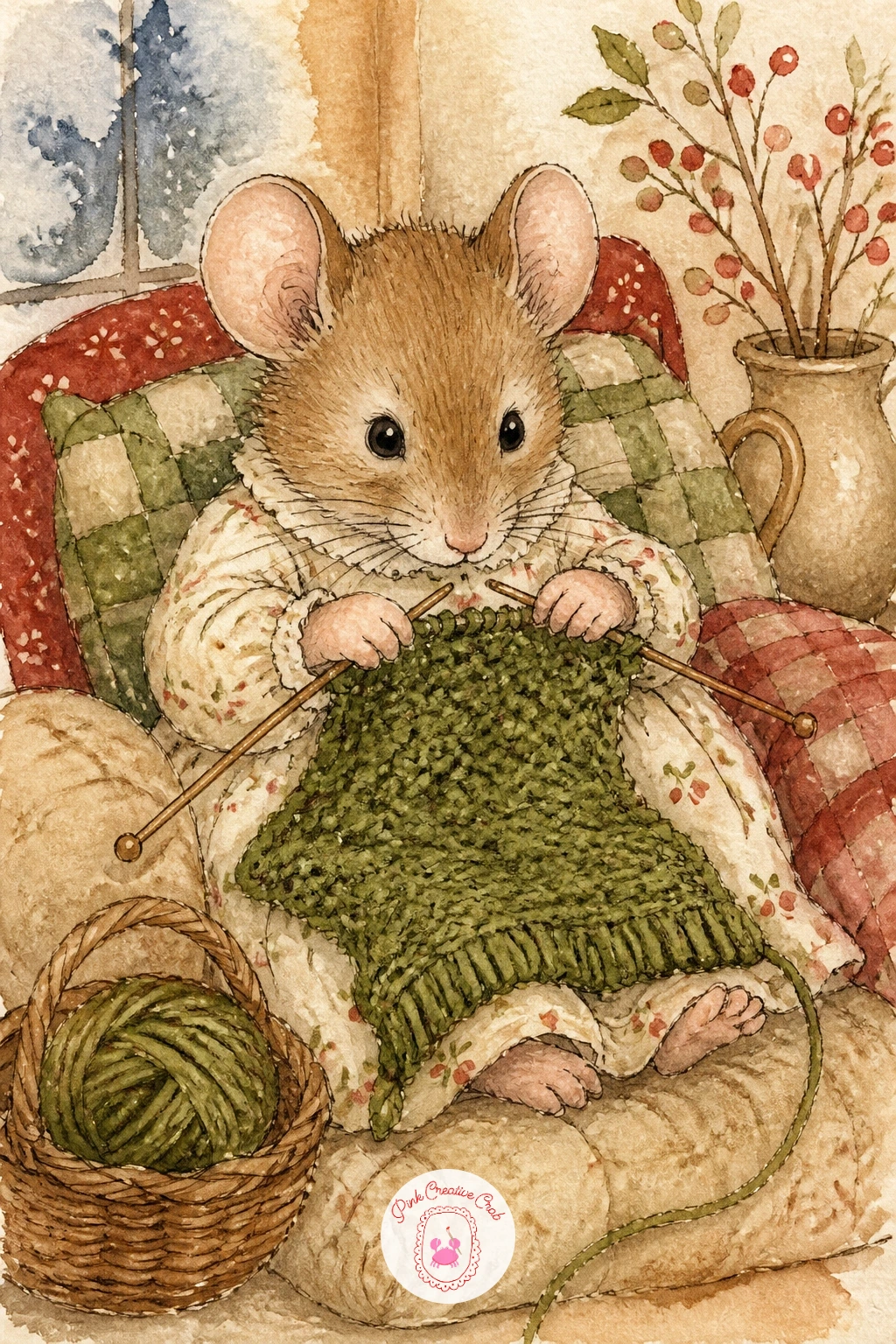
Palette: Moss Green,Chocolate Brown,Cream,Payne’s Grey
Add a little tree house setting with two squirrels playing cards by lamplight in their tree house, which lets you try a warm light source against a darker background. Sketch both squirrels seated across a small round table with a few cards fanned in their paws, lamp placed just above and between them.
Paint the background walls in deeper chocolate brown and the lamp’s glow as a soft circle of cream and yellow, the contrast between dark walls and warm light is what makes this read as evening rather than daytime. Keep the cards themselves simple white rectangles with one or two ink marks each, no need to paint full suits.
If both squirrel faces start looking too similar, give one a slightly open mouth as if laughing at a good hand. No lamp reference handy is fine, a simple cone shape with a glowing circle underneath reads as a lamp instantly.
Finish with a round window behind them showing a sliver of night sky to settle the setting.
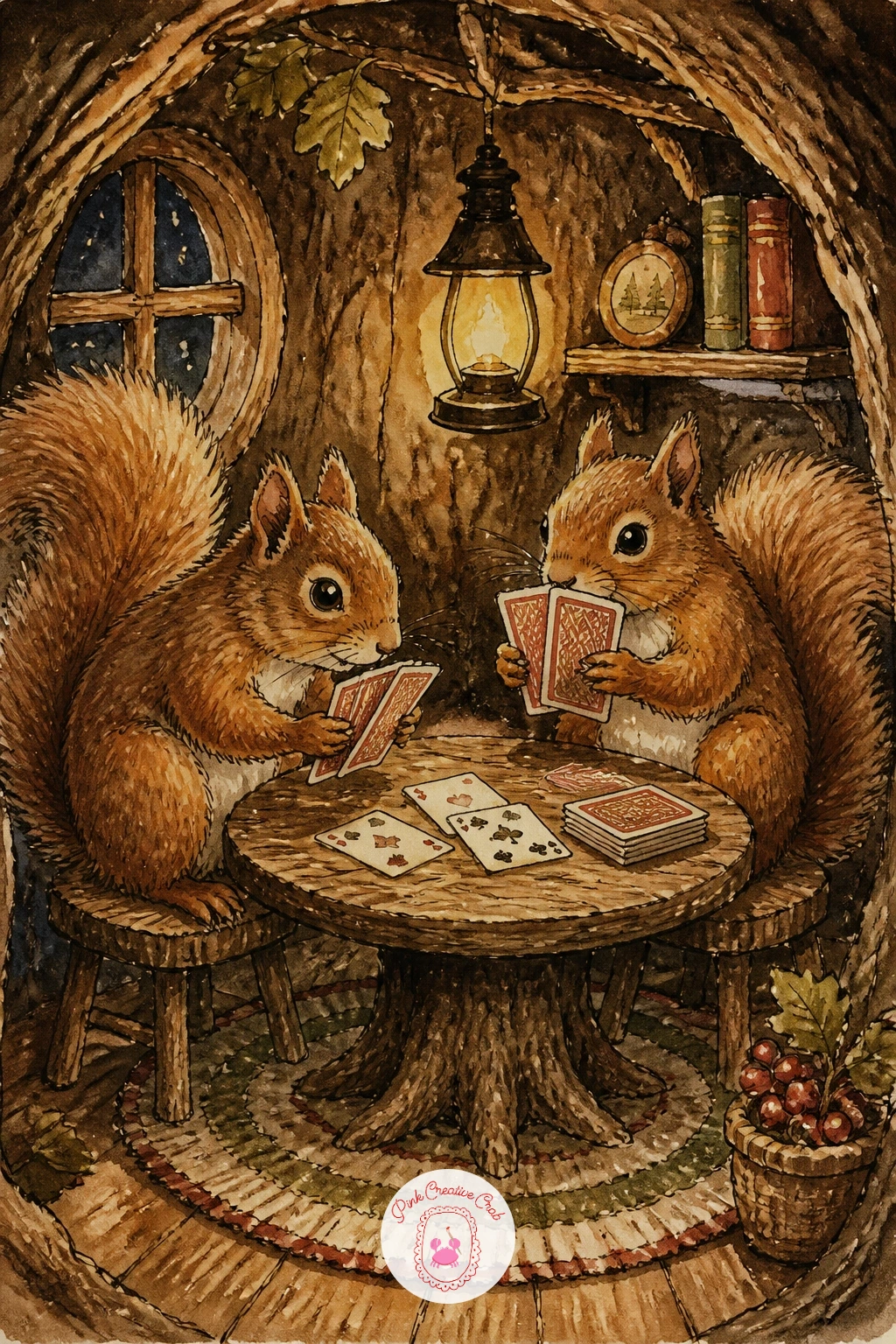
Palette: Chocolate Brown,Soft Yellow,Cream,Payne’s Grey
Try a warmer yellow ochre for the lamp glow if your usual yellow looks too cool against all that brown, it keeps the light feeling like real lamplight.
Lighten the mood with a mouse taking a bath in a tin cup with steam rising, a playful scene that leans on texture tricks for the steam itself. Sketch the tin cup first as a simple cylinder, then tuck the mouse inside with just head, shoulders and paws visible over the rim.
Paint the water as a flat pale blue grey wash, then once it has dried, lift a few soft curling shapes above the cup with a clean damp brush dabbed onto a light grey wash for the steam. Lifting color this way keeps the steam looking soft rather than like solid grey clouds.
Tin cups shine, so leave a thin vertical strip of bare white paper down one side before inking the rim, it reads instantly as metal. If a tin cup feels fussy to paint, a simple wooden tub shape works just as well for this scene.
Add a tiny bar of soap balanced on the rim today to finish the joke of the scene.
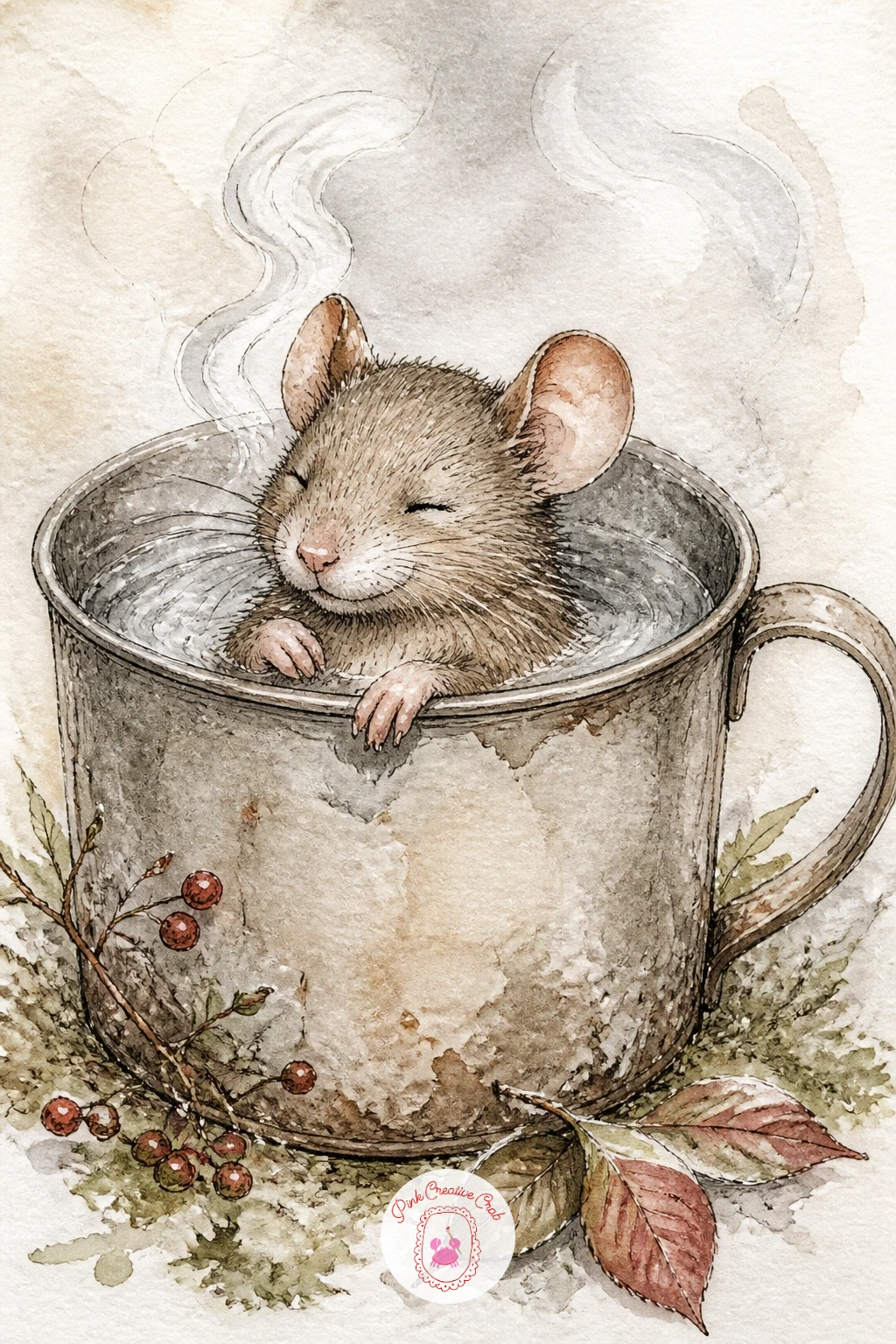
Palette: Payne’s Grey,Cream,Chocolate Brown,Soft Yellow
Return to a quiet family scene with a mole family snug in bed under a heap of blankets, which works well as a quick ten minute sketch or a slower forty minute study depending on how far you take the blanket folds. In ten minutes, block in the bed shape, a mound of blanket, and just three or four round mole heads peeking out along the pillow line.
Given forty minutes instead, add proper folds to the blanket with darker shadow lines along each crease, and vary each mole’s expression slightly, one already asleep, one still blinking at the candle. Paint the blankets in overlapping patches of cherry red and moss green to echo the patchwork quilt look without copying the dormouse scene exactly.
The pile of heads is where this goes wrong if they all line up too evenly, so stagger the heights a little as real siblings would naturally settle. If patchwork feels like too much detail today, one plain cream blanket with a cherry red trim looks just as cozy.
Finish with one small candle still burning on a bedside stool.
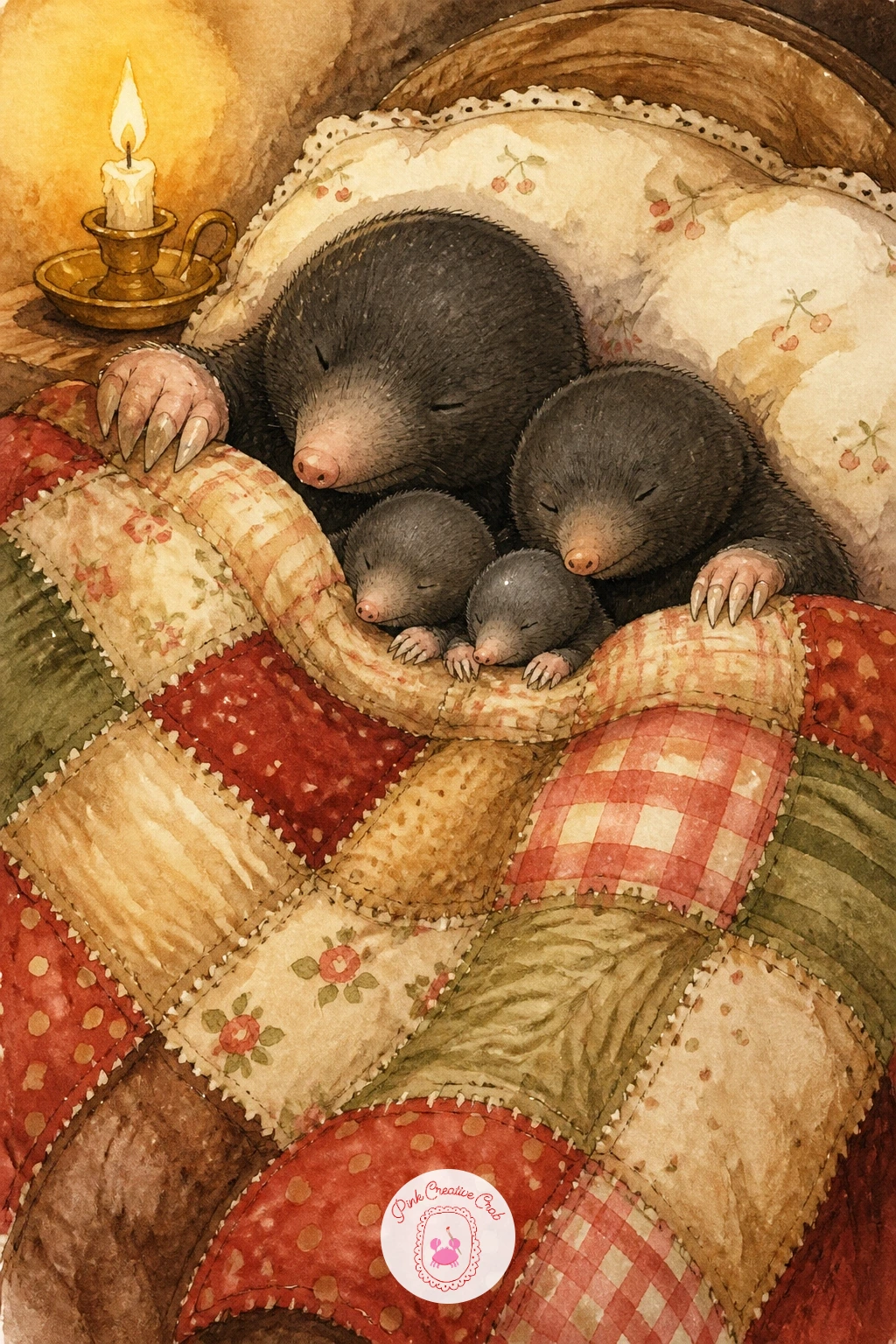
Palette: Cherry Red,Moss Green,Cream,Payne’s Grey
Give the artist in the room a scene of her own with a dormouse painting at a little easel by a frosted window, a nice way to vary the usual knitting and reading poses. Sketch the easel first as a simple triangle stand holding a tiny canvas, then place the dormouse standing on tiptoe with a small brush raised toward it.
Paint the frosted window behind in pale blue grey with a few feathery ink lines for frost patterns at the corners, keeping the center of the glass lighter so it still reads as glass rather than a solid wall. The tiny canvas on the easel can hold just a few abstract dabs of color, it does not need to be a finished painting itself.
Dormice have round bodies and short limbs, so keep the standing pose simple and slightly wobbly looking rather than too upright and stiff. If frost patterns feel fiddly, a white gel pen over dry blue paint gives the same feathery effect with less fuss.
Finish today with one smear of paint on the dormouse’s paw to show the work in progress.
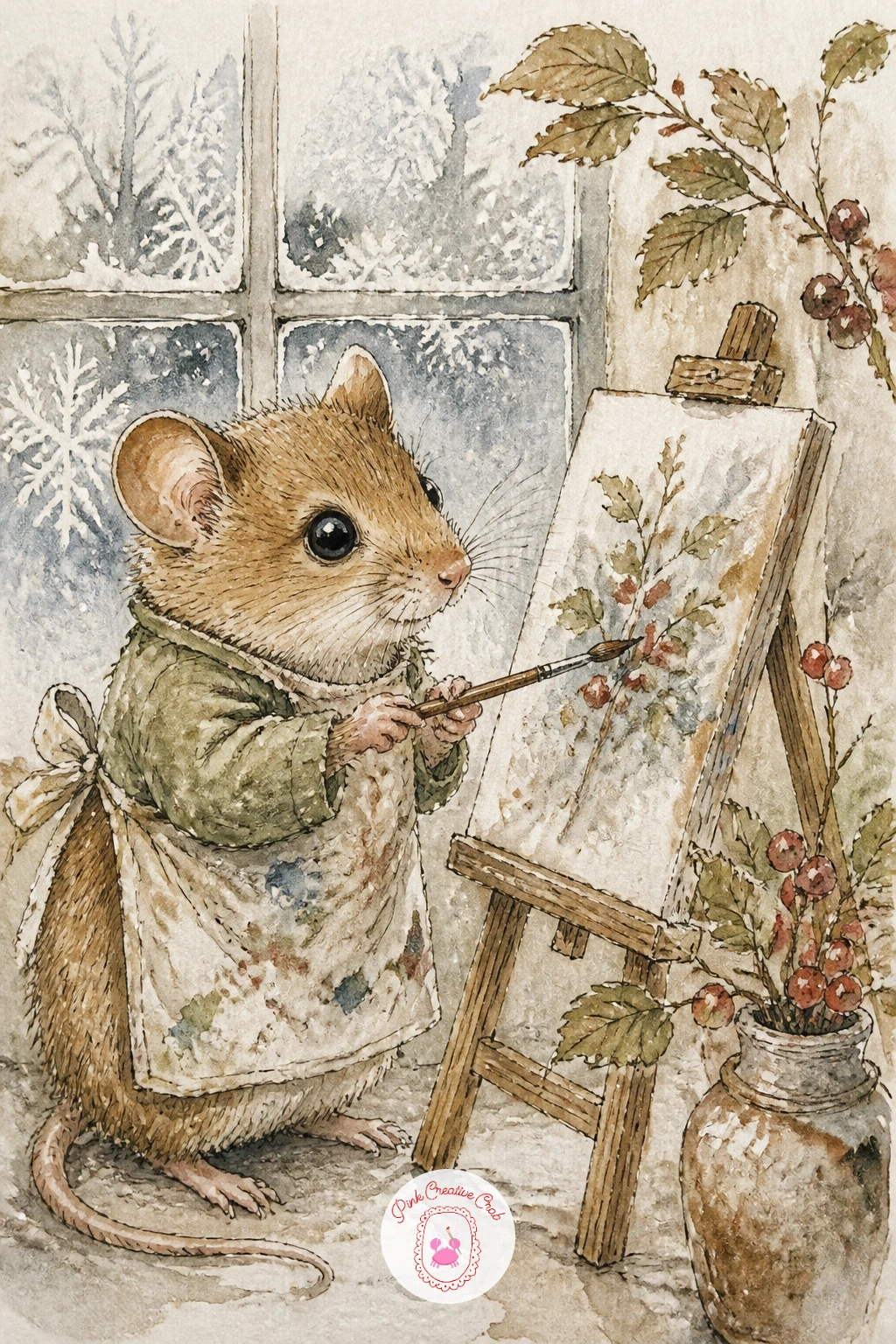
You Will Need
- white gel pen
Palette: Payne’s Grey,Cream,Cherry Red,Moss Green
Head back to the stove for a badger stirring a big pot of stew on the stove, a scene where steam and warmth carry most of the mood. Sketch the pot first as a wide rounded shape on the stovetop, then place the badger leaning over it with a long wooden spoon in one paw.
Eye level matters here, since you are looking slightly down into the pot from the badger’s height, so curve the pot’s rim as a flattened oval rather than a straight line across the top. That small curve is what makes the stew look like it sits inside a real pot rather than floating on a flat disc.
Paint the stew itself in warm burnt sienna with a few darker chocolate brown flecks for vegetables, and lift a touch of steam above it the same way described for the bath scene. If a wooden spoon reference feels unnecessary, any simple long oval on a stick reads as a spoon.
Add one drip of stew on the stove’s edge today for a lived in feel.
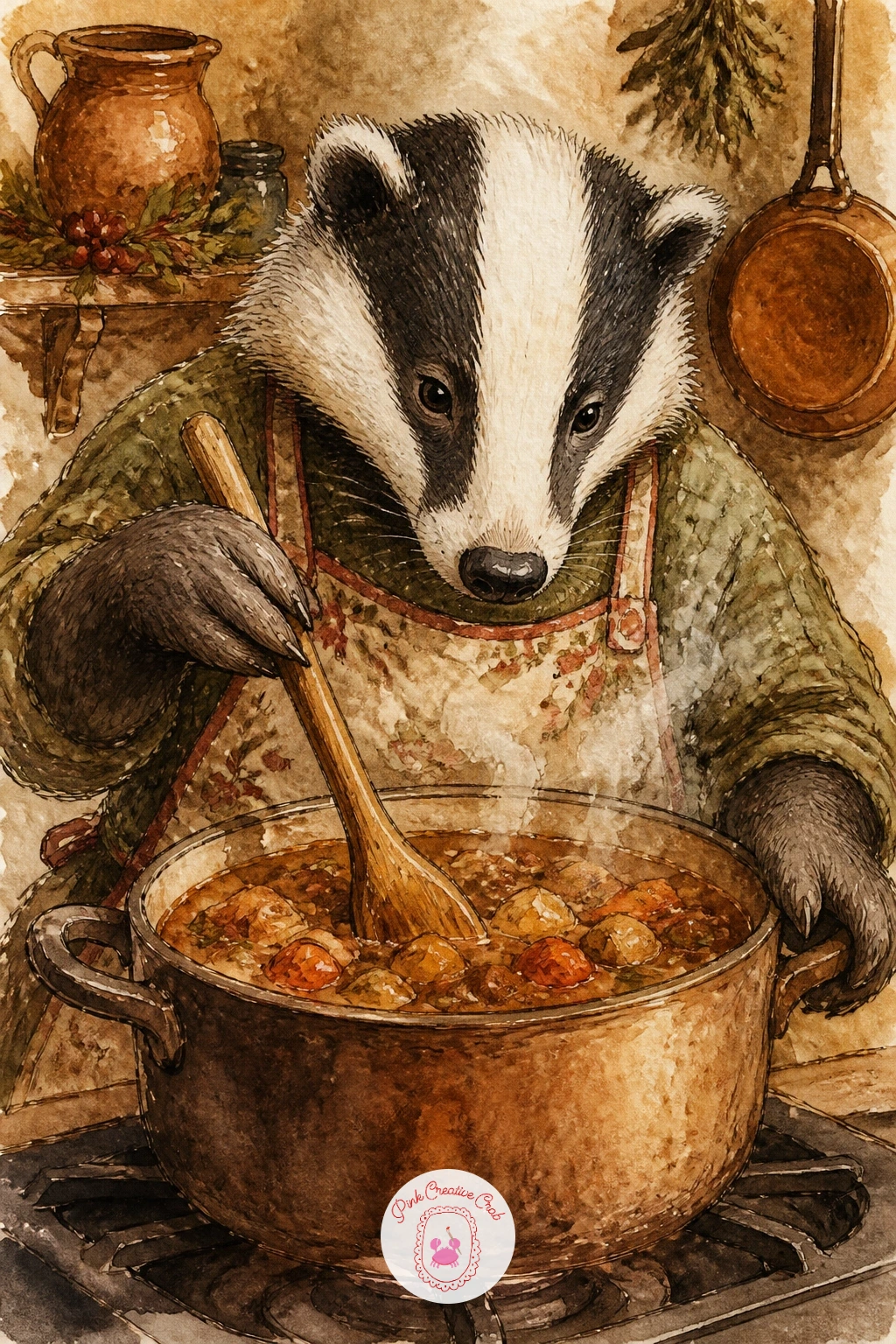
Palette: Burnt Sienna,Chocolate Brown,Cream,Payne’s Grey
Scale down again for a mouse writing a letter at a desk made from a matchbox, one of the smallest and most charming set pieces on this list. Draw the matchbox desk first as a simple rectangle with the drawer slightly pulled out to hold tiny supplies, then seat the mouse behind it with a quill or pencil in paw.
Paint the matchbox in its own warm cardboard tones, a dusty orange brown, distinct from the mouse’s fur color so the two do not blend together visually. The letter itself can stay plain cream paper with just a few wavy ink lines standing in for handwriting, no need to write real words.
Tiny desks like this are easy to make too large relative to the mouse, so hold your pencil up and compare the matchbox width to the mouse’s body width before inking either one. If a matchbox feels too specific, a small wooden crate on its side works just as well as a tiny desk.
Finish with a stamp and a sealed envelope sitting beside the letter today.
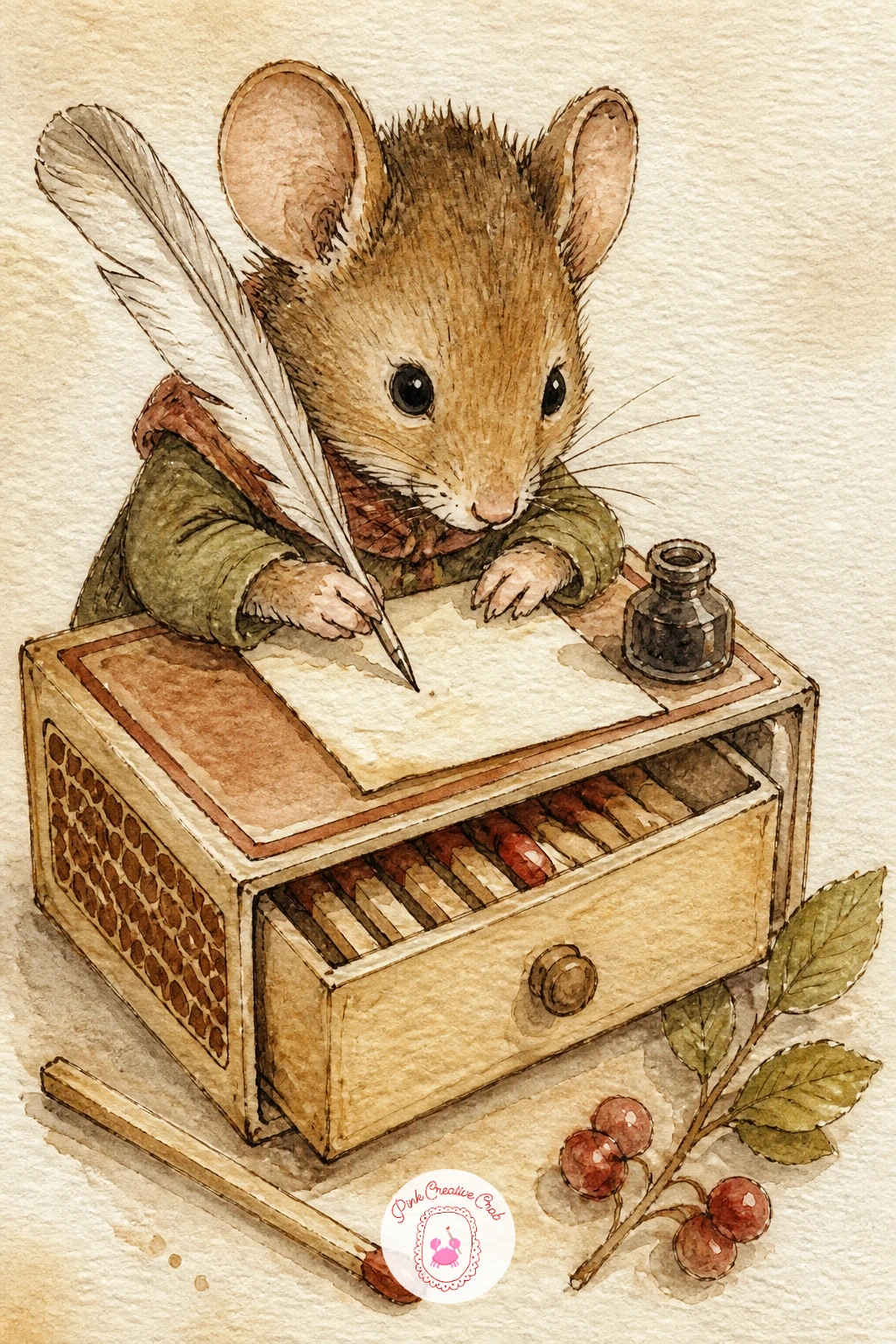
Palette: Burnt Orange,Cream,Chocolate Brown,Payne’s Grey
Keep the fireside mending theme alive with a squirrel darning its woolly sock by the fire, a nice companion piece to the earlier mitten and sweater scenes without repeating either. Sketch the squirrel seated with the sock stretched over one paw and a needle poised at the heel, firelight glowing just behind.
Paint the sock in a warm moss green and let the darned patch sit slightly lighter, almost cream, to show where the repair is happening. A few crossed ink stitches over that lighter patch finish the darning effect without needing to paint actual thread in watercolor.
The squirrel’s tail tends to dominate the composition if painted too large here, so let it curl behind the body rather than taking up half the page, saving its full fluffy size for a scene where it is the main event. If moss green paint runs low, any muted olive mixed from yellow and grey works as a swap.
Finish today with the firelight catching one edge of the sock in warm orange.
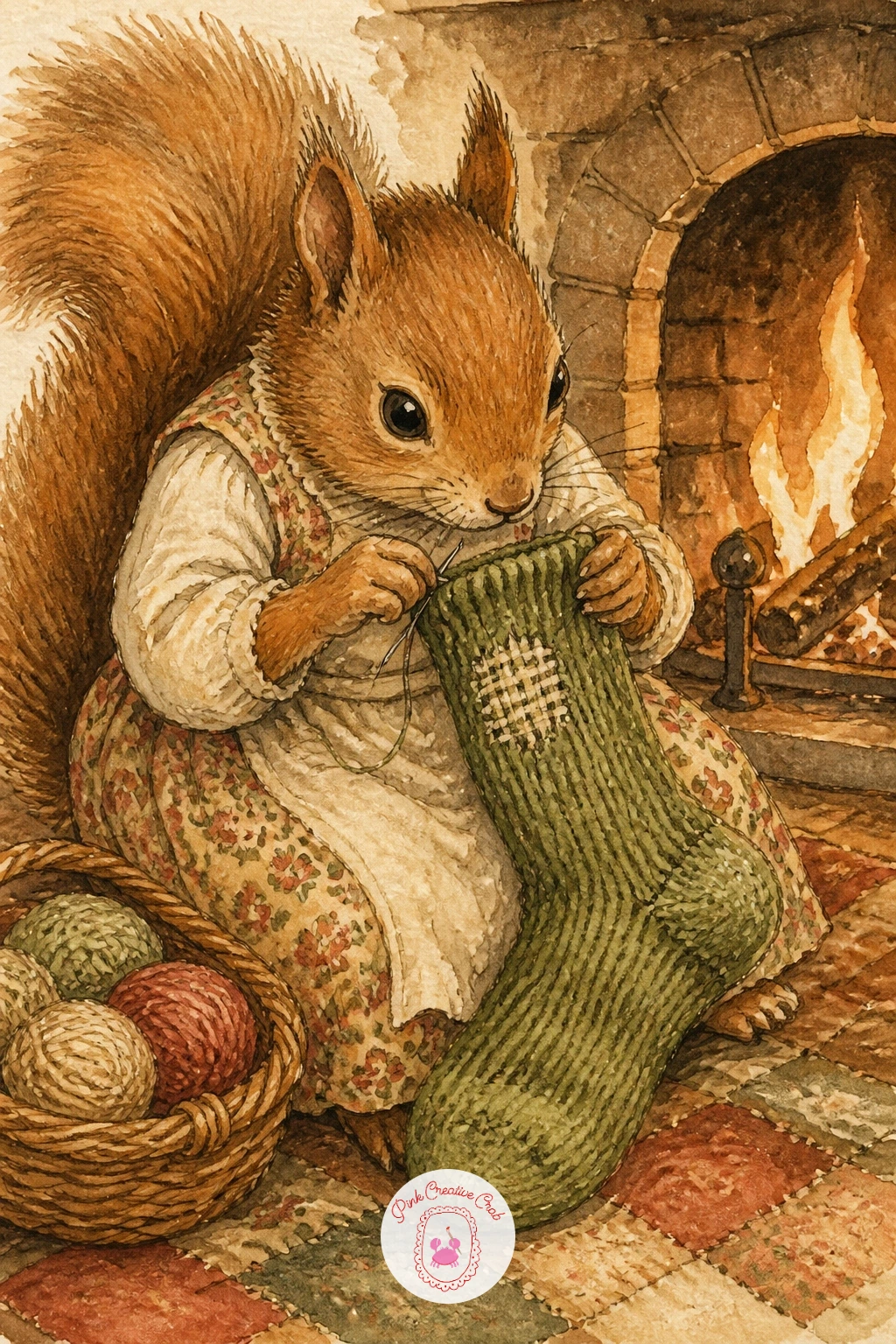
Palette: Moss Green,Cream,Burnt Orange,Chocolate Brown
Bring two friends together again for a vole and a mouse doing a jigsaw puzzle on the rug, a relaxed floor level scene after several chair and table compositions. Sketch both animals lying on their stomachs facing a half finished puzzle, pieces scattered loosely around the edges.
Paint the puzzle pieces as small irregular shapes in cherry red, moss green and cream, leaving a few gaps in the finished picture itself so it clearly reads as in progress rather than complete. Keep the rug beneath them a simple flat wash with just a border pattern in ink, too much rug detail competes with the puzzle.
If the two animals start to look too similar lying down, give the vole a rounder nose and the mouse larger ears to tell them apart at a glance from above. No real puzzle photo needed, random four sided shapes grouped loosely read as puzzle pieces instantly.
Add one piece held up in a paw today, caught mid placement, to give the scene a moment of action.
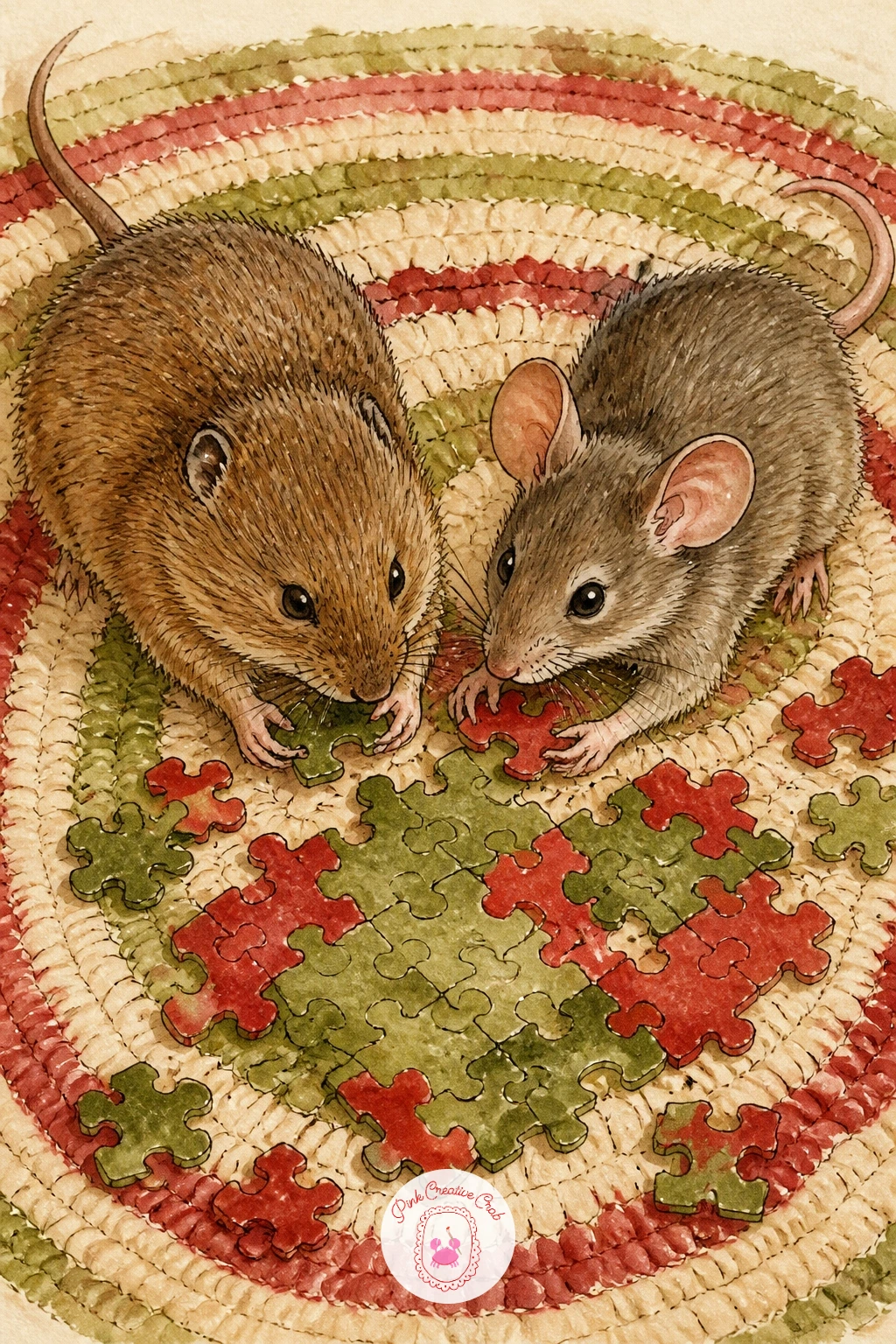
Palette: Cherry Red,Moss Green,Cream,Chocolate Brown
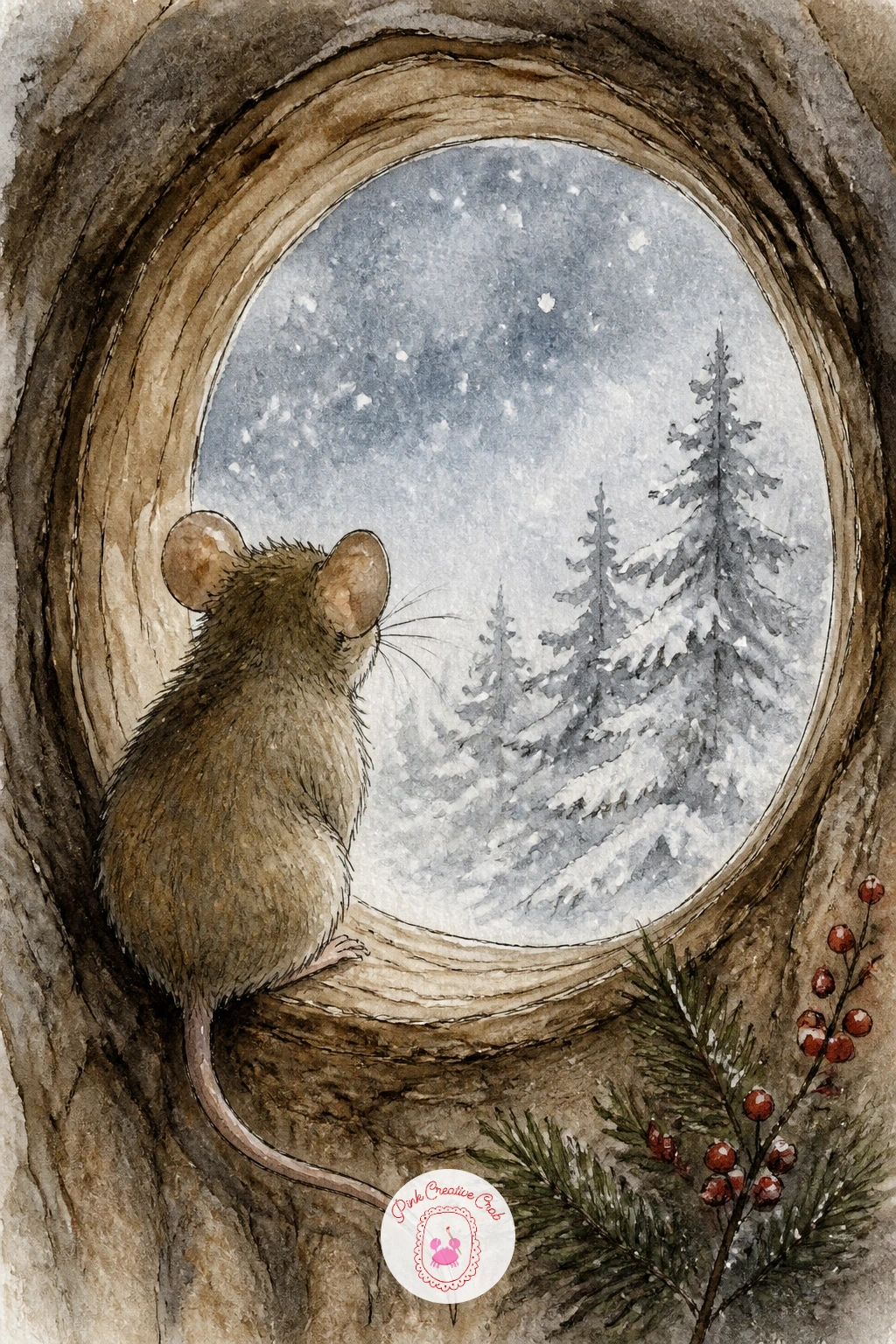
Pause the action for a mouse watching snow fall from a round window in a tree trunk, a quieter composition built around one strong circular shape. Draw the round window first, framed by the curved bark of the tree trunk, then seat the mouse on the sill looking out, back mostly to the viewer.
Paint the glass in pale blue grey and let falling snow sit as small untouched dots of bare paper against it, easiest to plan before you paint by lightly marking the dot positions in pencil first. The bark around the window can stay a rich chocolate brown with darker ink texture lines following its natural curve.
If you have not studied bark ridges closely, a few loosely curved parallel lines read as tree bark without needing botanical accuracy. A round plate or jar lid makes a handy stencil for tracing a clean window circle if freehand circles wobble.
Finish today with one small warm light glowing from somewhere inside the room, just visible at the window’s edge.
You Will Need
- a plate or lid to trace a circle
Palette: Payne’s Grey,Chocolate Brown,Cream,Soft Yellow
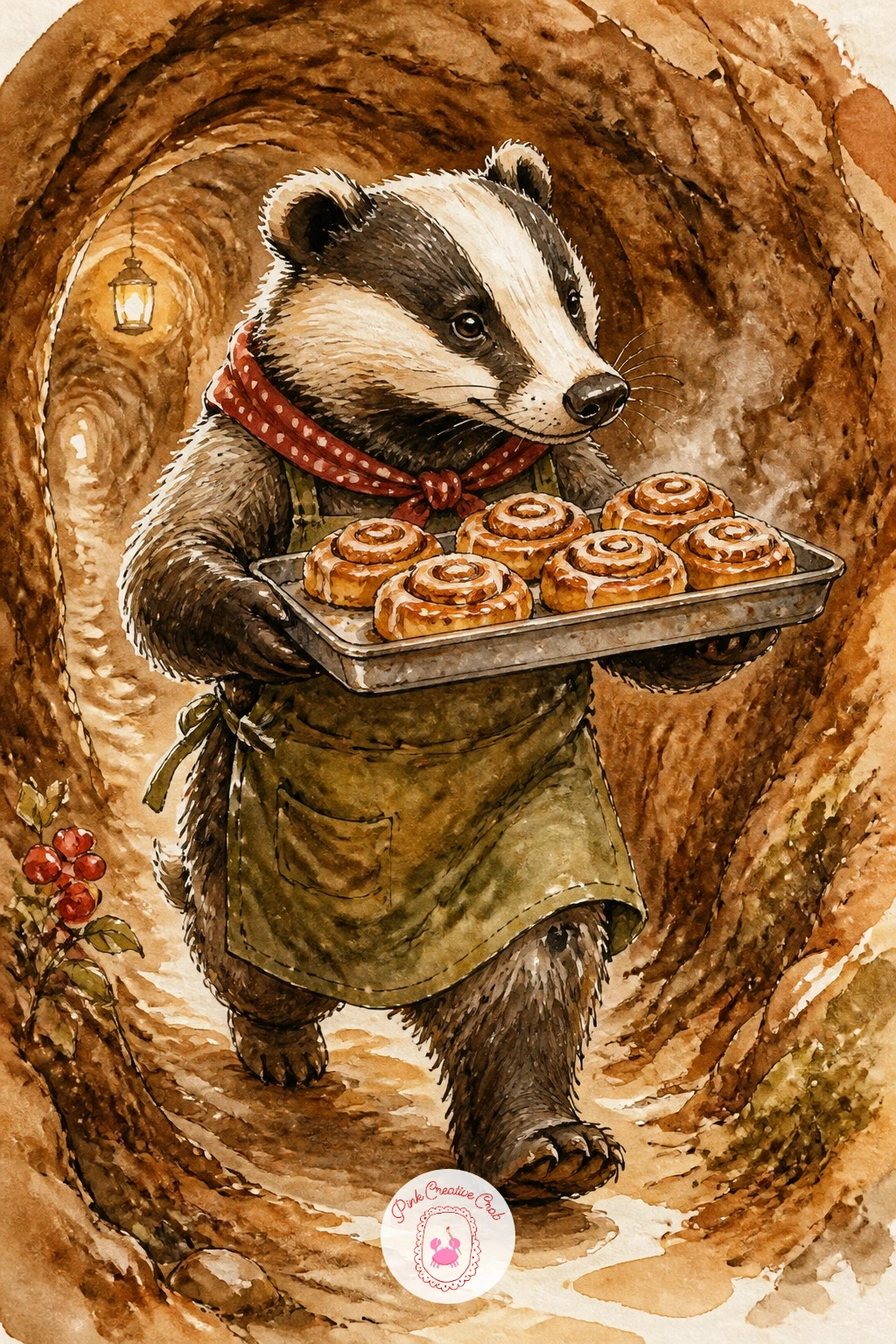
Bring energy back with a badger carrying a tray of cinnamon buns down the burrow hall, a scene about forward motion rather than a still pose. Sketch the badger mid stride, tray balanced on both paws, with the hall’s tunnel walls curving away behind to suggest depth and distance.
Paint the cinnamon buns in warm burnt sienna with a swirl of cream icing on top of each, small enough that three or four buns fill the tray without needing individual detail on every one. Angle the tray slightly to echo the stride, a perfectly flat level tray looks static even when the legs are mid step.
The tunnel walls are where perspective can go wrong, so let them narrow gently toward a darker point behind the badger rather than staying parallel, which flattens the sense of a long hall. If cinnamon buns feel too specific, simple round jam tarts work just as well on the tray.
Add one warm light glowing from a doorway ahead today to finish the sense of a long hall.
Palette: Burnt Sienna,Cream,Chocolate Brown,Soft Yellow
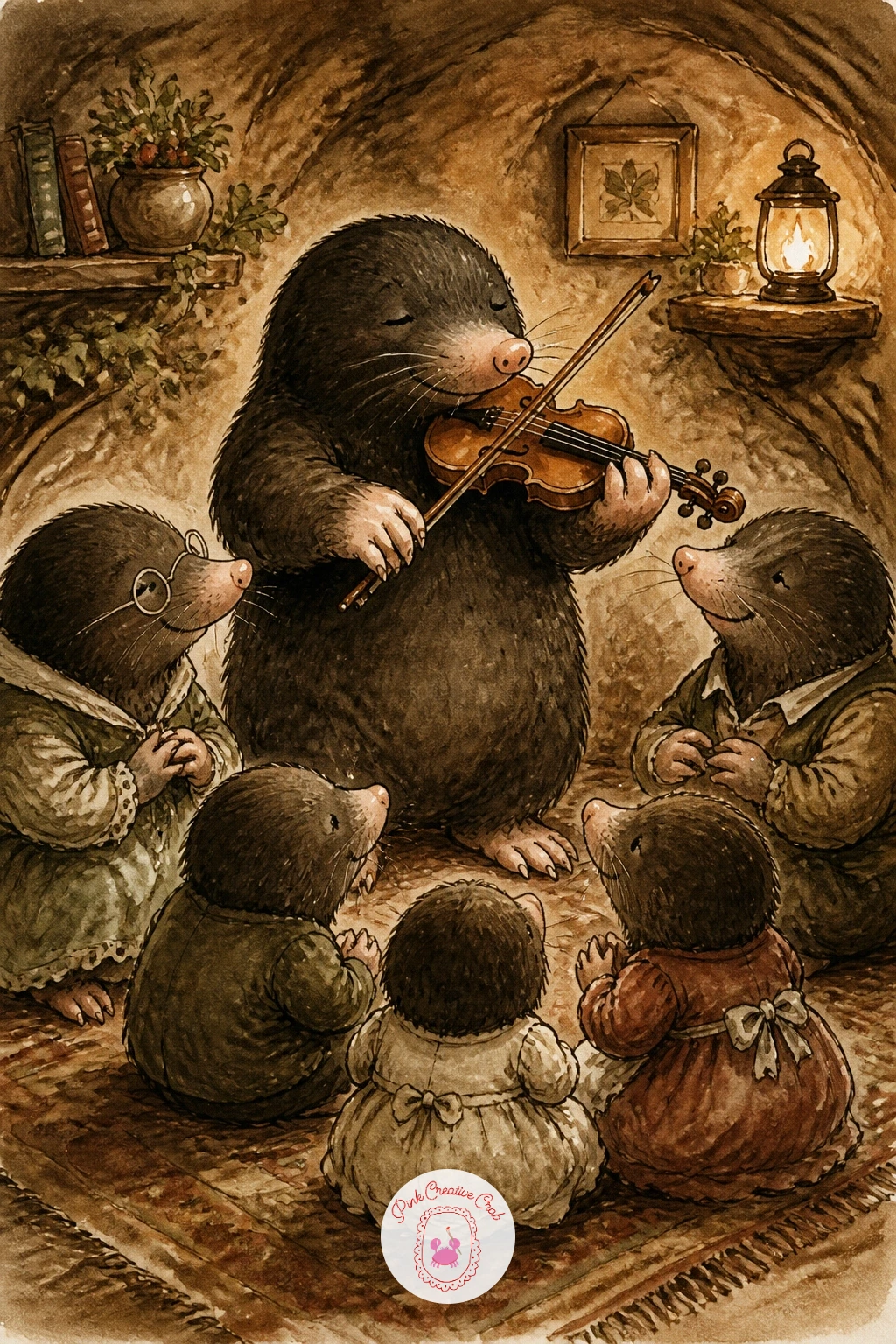
Give the family a little music with a mole playing a tiny violin for its family after supper, a scene that pairs well with the earlier bedtime story painting without repeating its composition. Sketch the mole standing with violin tucked under its chin, bow mid stroke, with a small seated audience of family members nearby.
Paint the violin in a rich warm chocolate brown with a thin cream highlight along its curved edge, that single highlight is enough to suggest polished wood without detailed shading. Keep the listening family loose and simple, a few rounded shapes with attentive tilted heads is all this group needs since the violin playing mole is the real subject.
Moles have short front limbs, so the bowing arm needs a touch of exaggeration to look convincing mid stroke, stretch it slightly longer than anatomy suggests. If a violin feels too fiddly at this size, a simple banjo shape with a round body is an easier swap to paint.
Finish today with a few curved ink lines rising from the violin to suggest the music itself.
Palette: Chocolate Brown,Cream,Payne’s Grey,Cherry Red
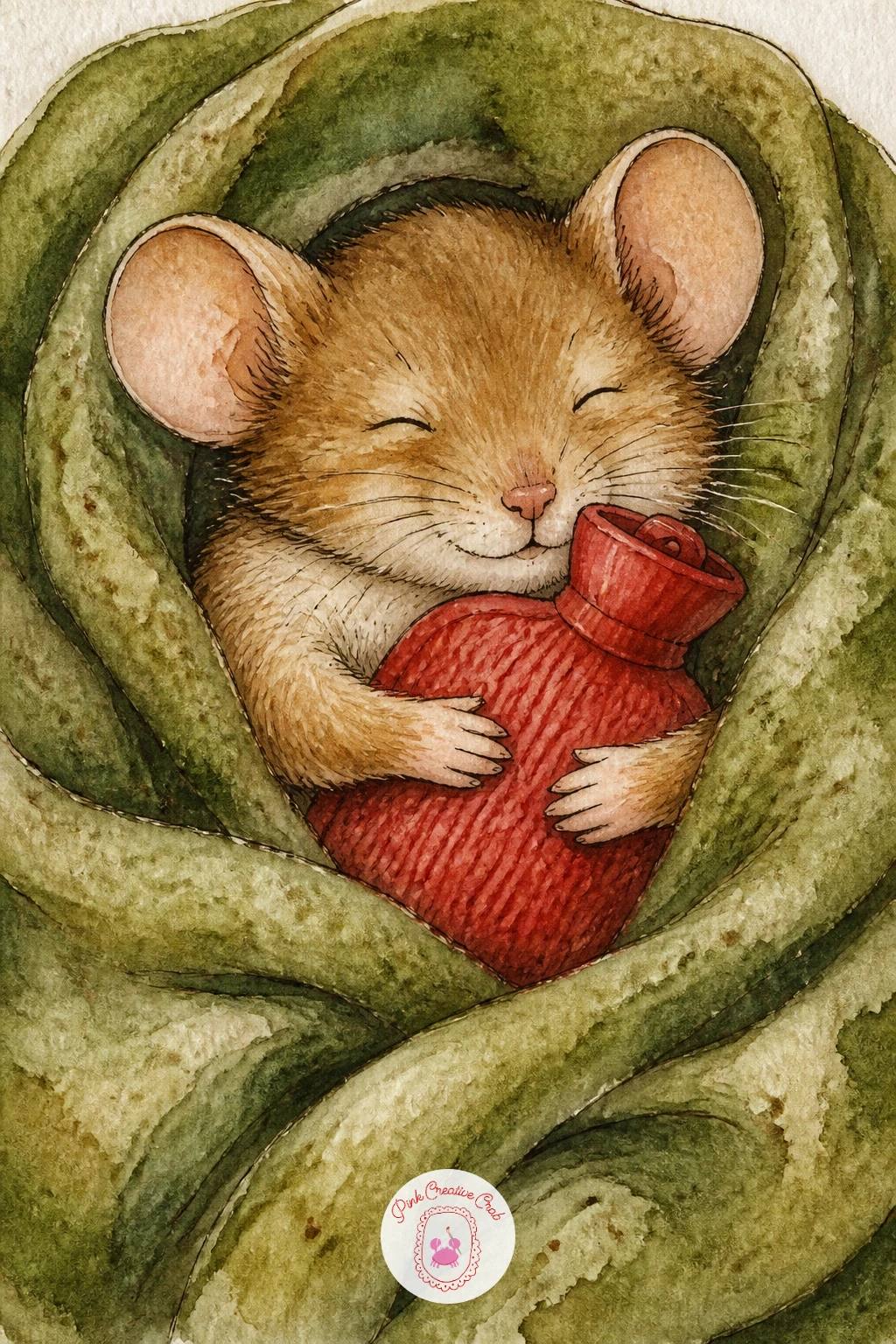
Slow right down for a mouse wrapped in a wool blanket with a hot water bottle, one of the simplest and coziest single figure scenes on this list. Sketch the mouse as a rounded bundle shape first, blanket wrapped close enough that only the face and paws peek out, hot water bottle clutched against its chest.
Paint the blanket in a soft moss green with a simple ink stripe pattern once dry, and let the hot water bottle sit a warm cherry red to stand out clearly against it. Keeping the whole bundle rounded rather than angular is what makes it read as snug rather than simply seated.
If this is your first time painting a wrapped figure, draw the blanket shape as one continuous curve around the body first, then fit the mouse’s face and paws into the gaps you leave, rather than drawing the mouse fully and trying to wrap fabric around it afterward. A simple folded towel works as a stand in for the blanket if wool textures feel tricky.
Finish with a thin steam line rising from the bottle’s stopper today.
Palette: Moss Green,Cherry Red,Cream,Chocolate Brown
Bring two different species together for a squirrel and a badger having tea beside a crackling fire, a nice chance to contrast two very different silhouettes in one friendly scene. Sketch the badger’s broader striped head beside the squirrel’s narrower face and big tail, seated together on a simple bench facing the fire.
Paint the fire itself with loose warm strokes of burnt orange and soft yellow, letting the two colors bleed into each other while still damp rather than painting neat separate flames. That looseness is what makes a fire feel alive rather than drawn.
Keep the two animals’ fur tones distinct, grey brown for the badger and warmer chocolate brown for the squirrel, so even in silhouette they read as two different creatures. If painting flames feels daunting, a simple glowing orange mound with a few lighter yellow licks reads as fire just as well.
Add two teacups resting on the bench between them today to finish the quiet companionship of the scene.
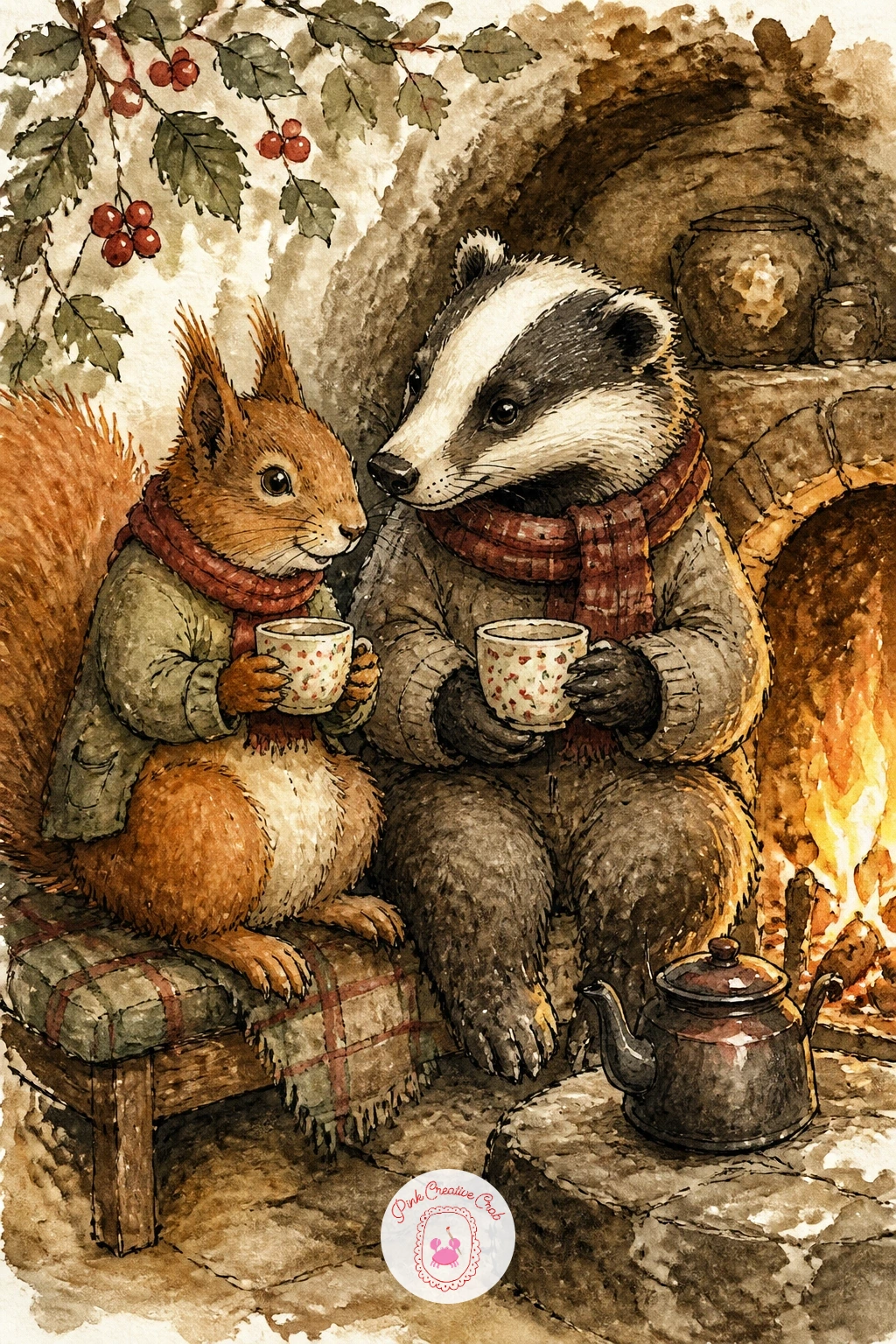
Palette: Burnt Orange,Soft Yellow,Payne’s Grey,Chocolate Brown
Build toward the bigger ensemble scenes with a family of mice lighting candles on a snowy windowsill, a composition that rewards careful planning of where each small figure stands. Sketch the windowsill first as a simple horizontal ledge with snow piled along its outer edge, then place three or four mice at intervals along it, each tending a different candle.
Paint the candle flames last, after everything else has dried, using a tiny dab of soft yellow surrounded by the faintest ring of burnt orange, resist outlining the flames in ink or they lose their glow entirely. The snow outside the glass can stay simple bare paper with a few blue grey shadow dips for texture.
With several figures in a row like this, vary each mouse’s height or pose slightly, one reaching up, one already finished and watching, so the row does not read as one shape copied several times. If four mice feels like too much today, two candles and two mice carry the same cozy message.
Finish with warm light spilling from each flame onto the sill below it.
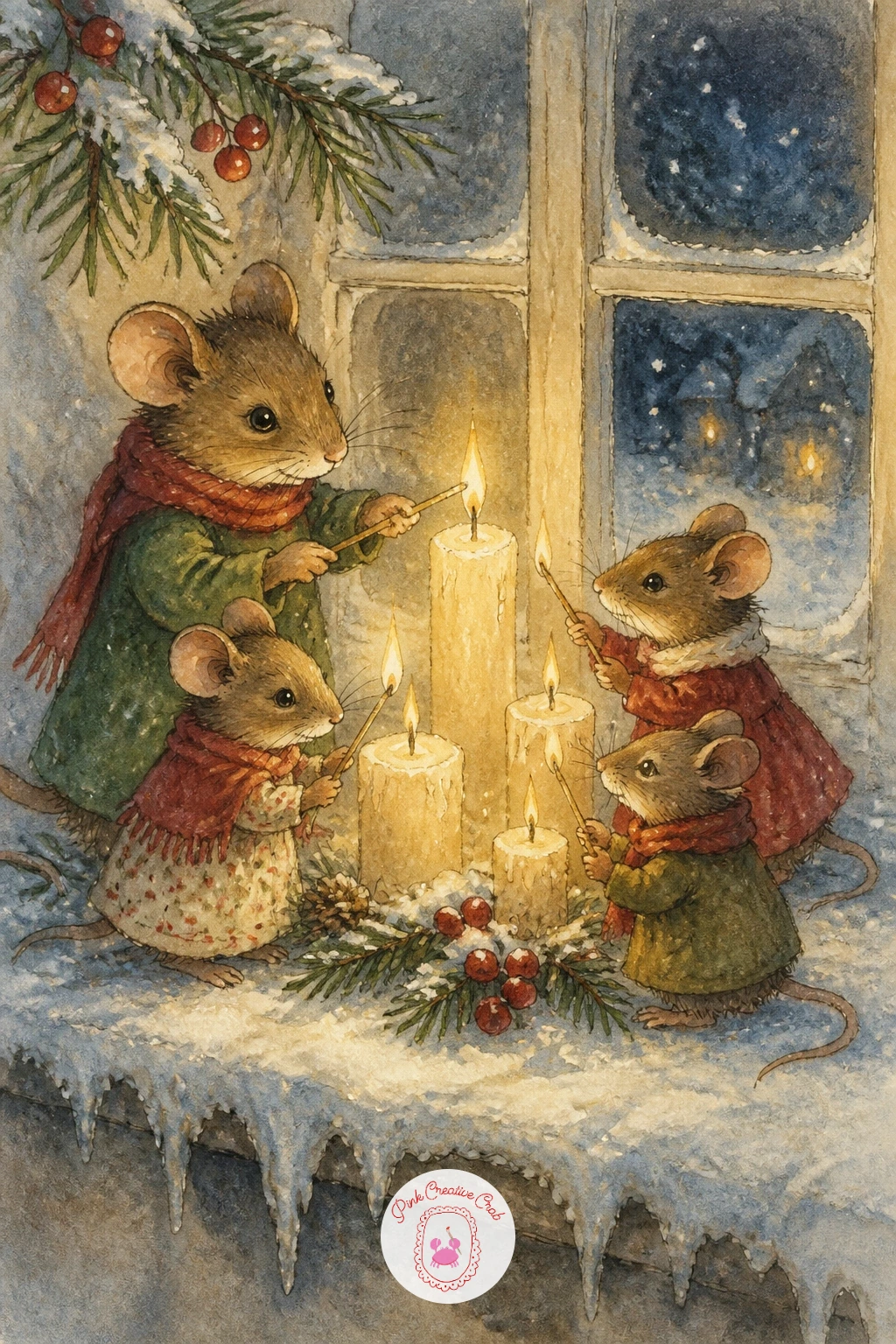
Palette: Soft Yellow,Burnt Orange,Payne’s Grey,Cream
Return to something small and sleepy with a dormouse curled up asleep in a ball of yarn, a nice companion to the earlier teacup bed scene with a different kind of nest. Draw the yarn ball first as a rounded shape with loose overlapping curved lines suggesting wound strands, then tuck the sleeping dormouse into a hollow at its center.
Paint the yarn in a single warm cherry red, letting the overlapping strand lines stay as ink work rather than painted detail, since too much shading on the yarn competes with the sleeping animal at its center. Keep the dormouse itself a soft rounded comma shape, nose tucked into its own tail, the most relaxed pose on this whole list.
If the yarn strands start looking tangled rather than wound, draw them as a few long sweeping curves rather than many short scribbled ones. A ball of fabric scraps works as an easy swap if cherry red yarn is not the look you are after.
Finish today with one loose strand trailing off the ball and across the floor.
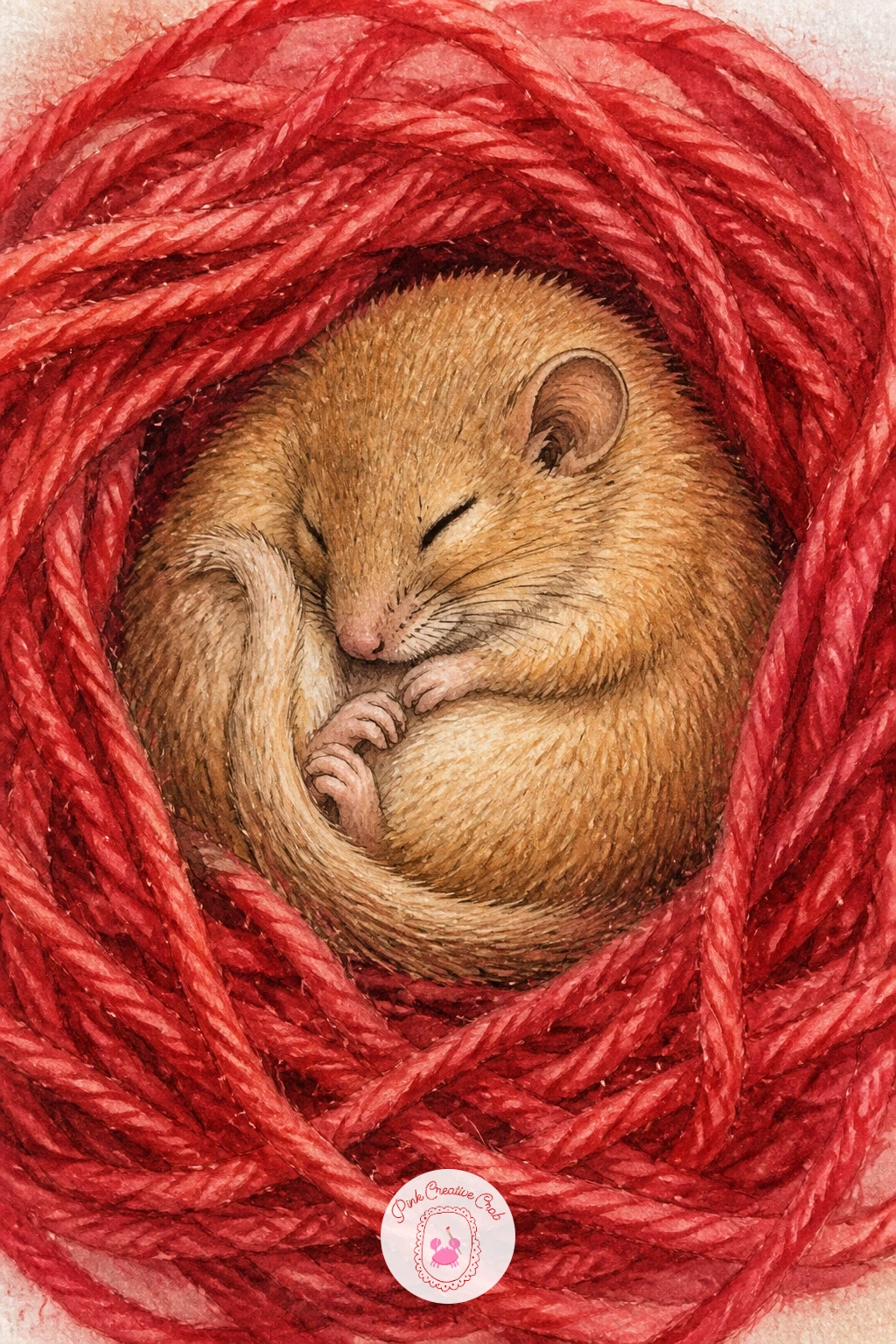
Palette: Cherry Red,Chocolate Brown,Cream,Payne’s Grey
Bring the knitting theme back one more time with a mole knitting a striped hat by an oil lamp, varied from the earlier badger and mouse knitting scenes by its lamp light and its project. Sketch the mole seated close beside an oil lamp, hat taking shape on the needles with clear horizontal stripes already visible.
Paint the stripes in alternating moss green and cherry red bands, keeping each band a confident flat wash rather than blending them together, since crisp stripe edges are what make a knitted hat look knitted. The oil lamp’s glass chimney can stay mostly bare paper with just a thin ink outline, letting the warm light inside do the work.
Once this one works, vary it next time by changing the stripe colors entirely, or by swapping the hat for a pair of striped socks using the same banding technique. If an oil lamp feels too detailed to paint convincingly, a simple candle in a holder gives the same warm light source with far less fuss.
Finish with the mole’s dark velvety fur catching a touch of the lamp’s warm glow along one edge today.
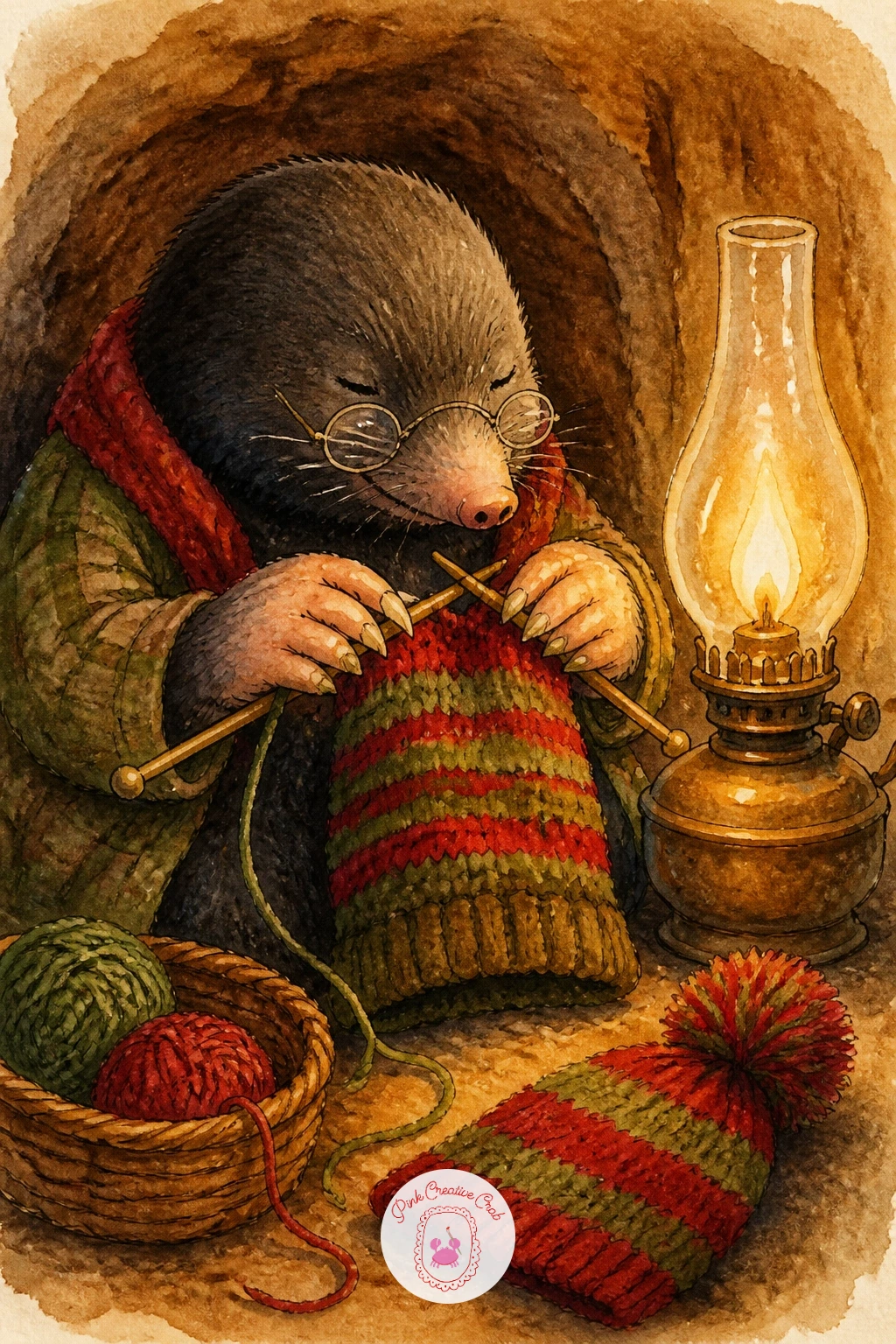
Palette: Moss Green,Cherry Red,Soft Yellow,Payne’s Grey
Add a quiet working scene with a mouse hanging herbs to dry in its root cellar kitchen, a nice callback to the earlier bread baking piece through its kitchen setting without repeating the pose. Sketch a low beam running across the top of the scene first, then hang several small herb bunches from it before placing the mouse reaching up to add one more.
Paint the herb bunches in moss green with tiny dabs of a deeper green for individual leaves, keeping each bunch a loose cluster rather than carefully drawn stems, since real drying herbs look a little wild and uneven. The root cellar walls behind can stay a deep earthy chocolate brown to make the green herbs pop forward clearly.
If the hanging bunches all start looking identical, vary their size and the angle they hang at, since real bunches never hang perfectly straight. A simple bundle of dried flowers works as an easy swap if herb shapes feel unfamiliar to draw.
Finish today with one small jar of dried herbs already finished sitting on a nearby shelf.
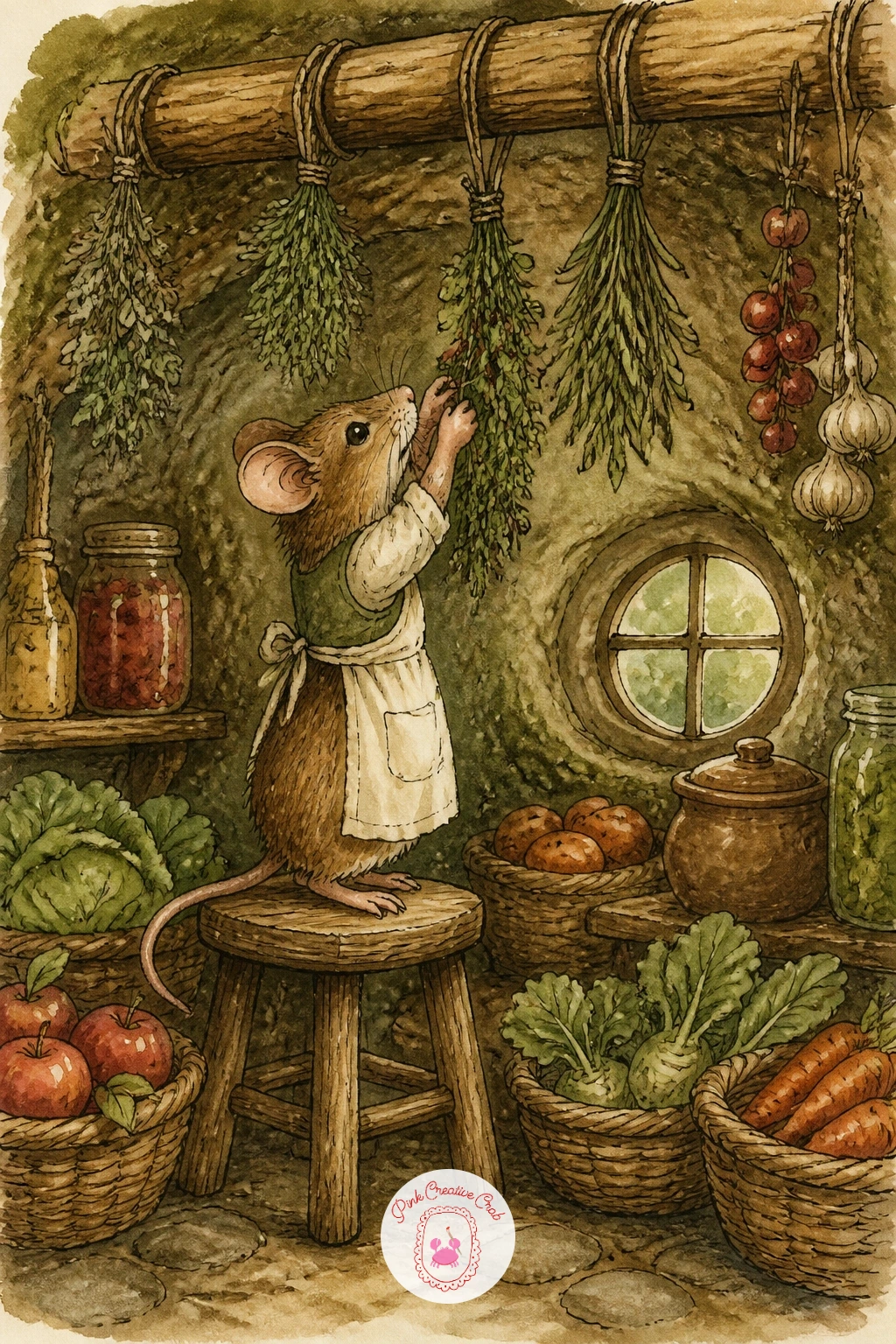
Palette: Moss Green,Chocolate Brown,Cream,Burnt Sienna
Close the outdoor moments with a badger in a red scarf shoveling snow from the burrow entrance, a good match for the earlier shrew sweeping scene but scaled up to a bigger figure and a bigger task. Sketch the badger mid shovel, weight shifted onto one back leg, with a cleared path already visible behind and a pile of snow still ahead.
Paint the scarf in a confident cherry red, the single strongest color note against all that white snow and brown fur, letting it trail loosely in a suggested breeze. Keep the snow itself mostly bare paper again, with just the shoveled pile given a soft blue grey shadow on its underside to show weight and form.
The shoveling stance is where this one can look stiff, so bend the badger’s back and plant the shovel at a clear diagonal angle rather than straight down, that diagonal is what sells the effort of the motion. If a full shovel feels tricky to draw, a simple flat rectangle on a stick reads as a shovel just as well.
Finish today with the burrow’s warm doorway glowing just behind the badger to promise cozy relief once the job is done.
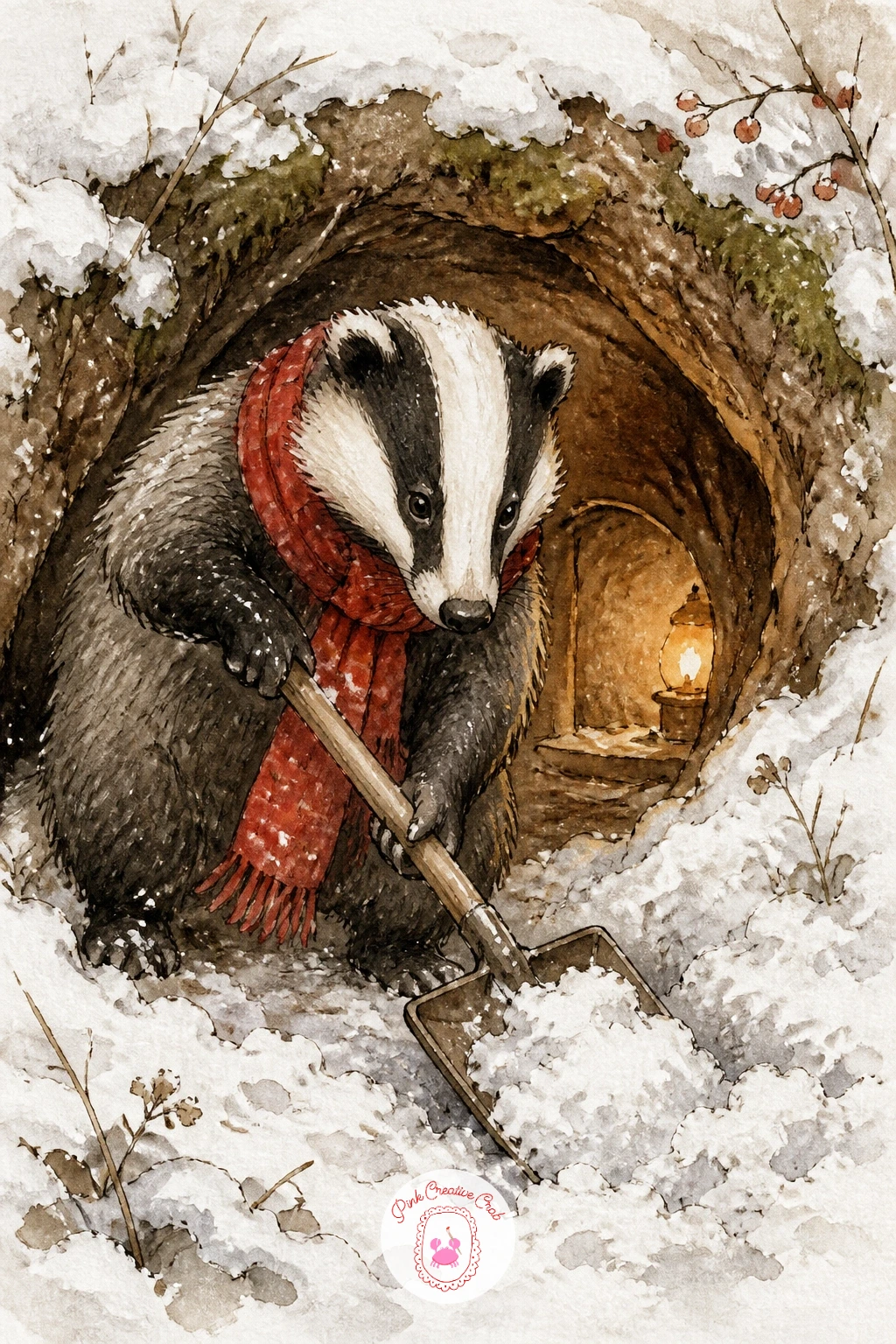
Palette: Cherry Red,Payne’s Grey,Chocolate Brown,Soft Yellow
End the list on the coziest note of all with a squirrel reading in an armchair with its tail as a blanket, a fitting final scene that pulls together everything practiced across the earlier pieces. Sketch the armchair first as a soft rounded shape, then seat the squirrel deep inside it with the tail curled forward over its lap exactly like a blanket tucked in.
Paint the tail in several overlapping layers of chocolate brown, lighter strokes on top of darker ones while each layer dries, building the kind of soft fluffy texture that makes it believable as something warm enough to curl up under. The open book can stay a simple cream rectangle with a few wavy ink lines for text, nothing more detailed is needed.
If this is your first time painting a curled tail this large, draw it as one long sweeping curve first and build the fluffy edge texture with short ink strokes afterward, rather than trying to draw every strand of fur from the start. A folded shawl works as a swap if a tail this size feels ambitious today.
Finish with a steaming mug resting on the chair’s arm to round off the whole cozy set.
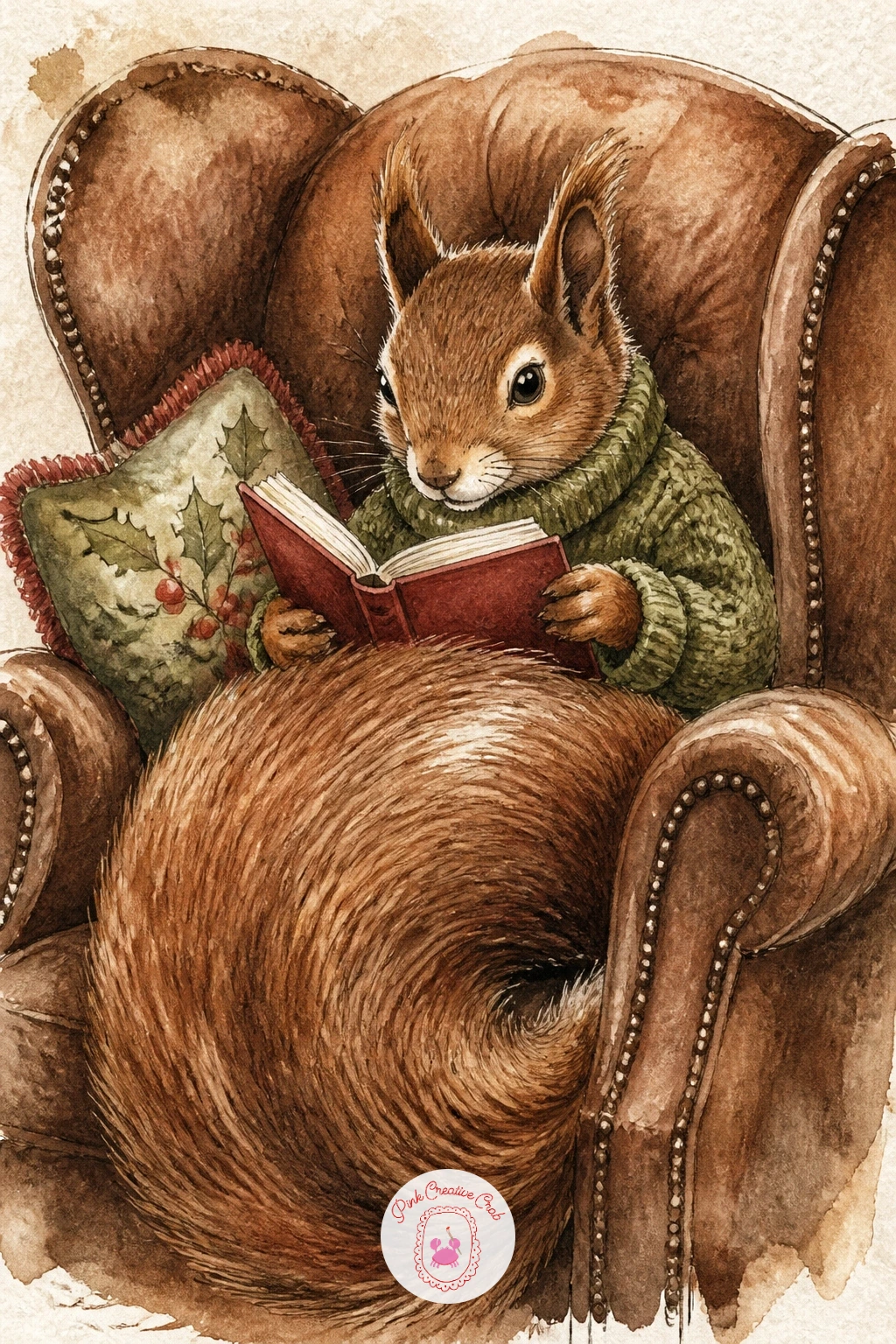
Palette: Chocolate Brown,Cream,Cherry Red,Payne’s Grey
What to Do Next
Pick whichever burrow scene is pulling at you most, and start with a loose pencil sketch on a small sheet of cold press watercolor paper, nothing needs to be perfect before the paint goes down. If you want to warm up first, the cute watercolor animals ideas make a gentle place to practice soft fur and simple shapes before tackling a full cozy scene.
Frequently Asked Questions
What paper works best for cozy animals illustration in watercolor?
Cold press watercolor paper around 140 pounds works best, since it holds enough water for soft wet into wet fur and backgrounds while still taking fine ink lines cleanly without the paper buckling.
Do I need to draw the animal perfectly before painting?
No, a loose pencil sketch is enough. Storybook style forgives soft proportions, and the ink accents added after painting can correct or sharpen any shape that looks a little off once the watercolor has dried.
How do I keep the fur looking soft instead of flat?
Paint fur wet into wet, dropping a darker color into a still damp first wash so the edges blend on their own, then save any crisp detail like whiskers or stripes for fine ink lines once everything is completely dry.
What is the easiest way to get warm candlelight or firelight glow?
Lift color with a clean damp brush around the light source once the surrounding wash has dried slightly, which leaves a soft pale halo, then warm it further with a thin wash of soft yellow or orange over that lifted area.
Can these scenes work in colored pencil instead of watercolor?
Yes, the same compositions translate well to colored pencil, building fur in light layered strokes and saving the darkest shadows for last, though the soft bled edges typical of watercolor will need to be built with blending instead.
Have any thoughts?
Share your reaction or leave a quick response — we’d love to hear what you think!
-
 0
-
0
-
0
-
0
-
0
-
0


