A mothers day illustration works best when it skips the flowers-and-brunch cliche and paints the actual day: the coffee that goes cold, the scooter under one arm, the five quiet minutes in a parked car. That is the angle here, and it is a gift to paint because every scene is small, specific and instantly recognizable to anyone living it.
Below are 31 scenes of modern mom life, from dawn to bedtime, built for flat matte gouache shapes with crisp edges and a soft cream background. Pick whichever moment feels most like today and you can start and finish the whole thing in one sitting.
Using these images: free for personal projects such as printing, coloring, cards, journals and gifts. Handmade items that include them may be sold up to 30 pieces per design. More than that is commercial use and is not permitted, and neither is selling or sharing the images themselves or passing them off as your own. Please ask before any other use.
Start with the quietest moment of the day: a mom at the counter with both hands around a mug before anyone else is up. Block the whole figure in cornflower blue pajamas as one flat shape first, then add the mug and a soft patch of early light from one window as a second flat tone behind her.
Work gouache from big shapes to small: body and robe first, then the mug, then her face and the loose hair last, since fine lines dry fastest and are easiest to fix if they go wrong. If the face looks stiff, loosen the mouth into a small closed curve and tilt the head slightly toward the mug rather than straight at the viewer.
This scene goes wrong most often in the hands, which end up too small against the mug. Measure the mug against her face first (it should read about half as wide) so the hands have room to wrap around it believably.
No gouache on hand yet, acrylic diluted to a matte flat finish gives the same look. Keep the background completely plain cream so the quiet reads instantly.
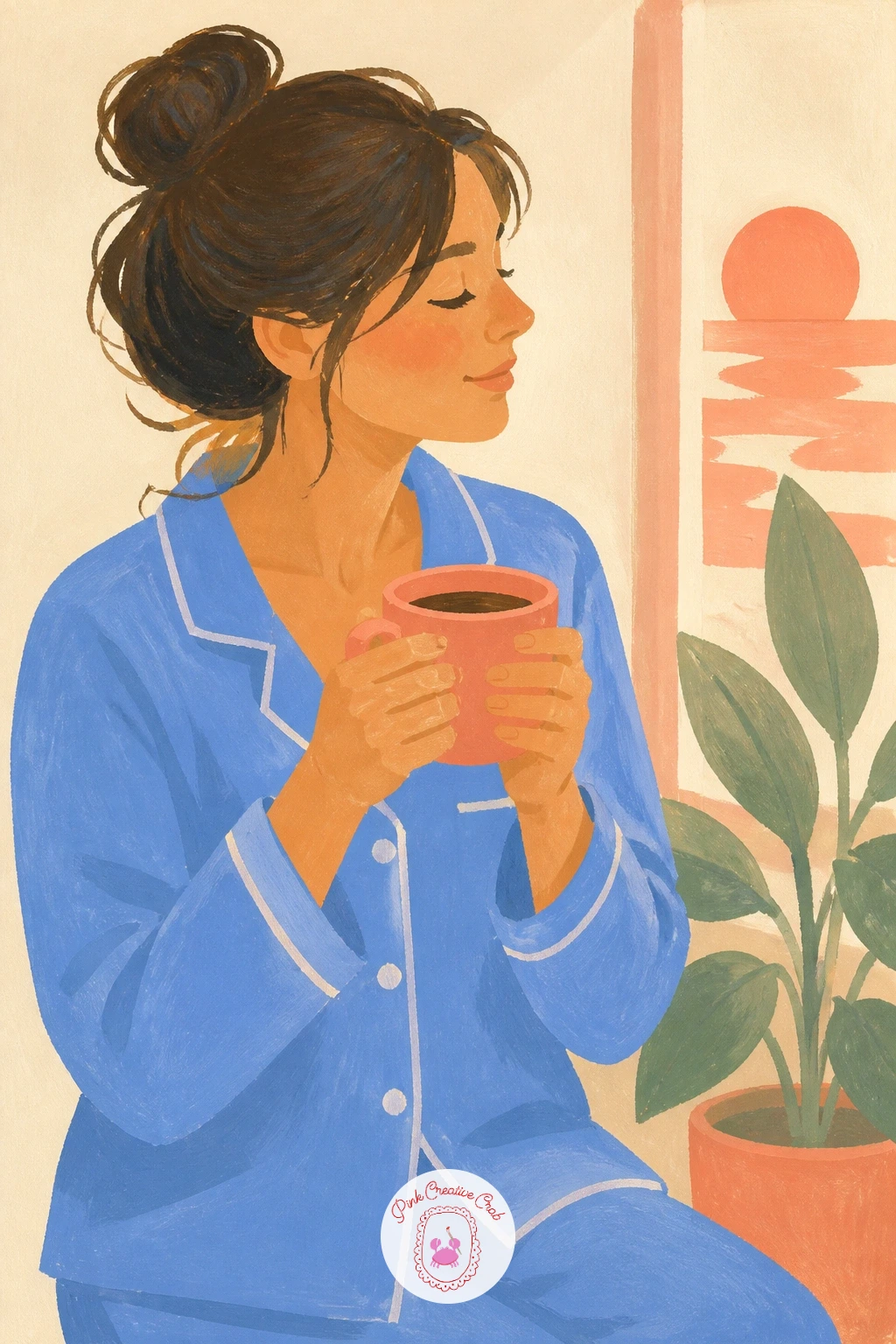
Palette: Cornflower Blue, Coral Pink, Cream, Warm White
Move from the kitchen counter to the home desk, where a mom works at a laptop while a toddler draws on the floor beneath it. Lay the desk and laptop in as one cornflower blue block first, then paint the mom sitting upright behind it, and finally drop the toddler in as a smaller sage green shape tucked under the desk’s shadow.
Keep the toddler’s crayon and paper tiny and simple, a few loose scribbles in coral, since the eye should land on the mom first and the child second. If the composition feels cramped, widen the gap between desk legs so the toddler has clear space rather than looking squeezed in.
Eye level matters here: sit the viewer at the mom’s height looking slightly down, which pulls the toddler into view below without needing a second light source. That single choice makes the whole split-focus scene read clearly on a phone screen.
Today’s tip: paint the laptop screen as a flat cream rectangle with one thin coral line for a video call dot, it reads as “working” without any text.
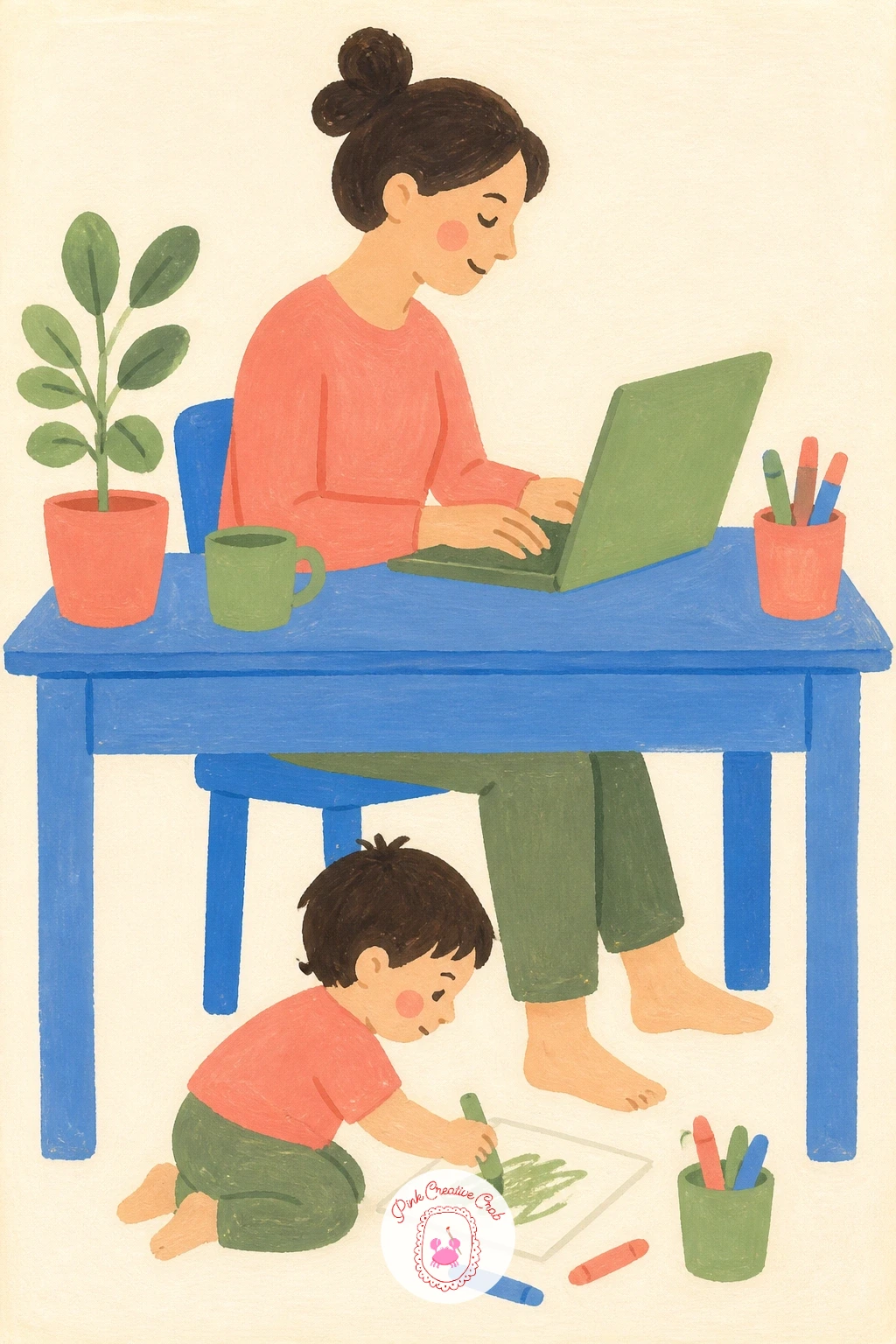
Palette: Sage Green, Cornflower Blue, Coral Pink, Cream
Here the challenge is balance, literally: three grocery bags in one arm, a toddler on the opposite hip, climbing stairs. Rough in the staircase first as a simple diagonal band of cream and sage, then build the mom’s body leaning slightly against the toddler’s weight before adding the bags last as small coral and sage paper-bag shapes.
Paint the lean before anything else. If her spine and the toddler sit perfectly vertical the whole picture loses its sense of effort, so angle her shoulders a few degrees away from the child’s weight and the scene instantly feels believable.
The bags are the easiest place for this to go wrong, since too many small grocery items make the shape busy. Keep each bag as one flat color with two or three simple shapes poking out (a baguette, a leafy top) rather than a crowded still life.
If stairs feel tricky to draw, a single doorway with one step works just as well and keeps the same tilted-balance feeling.
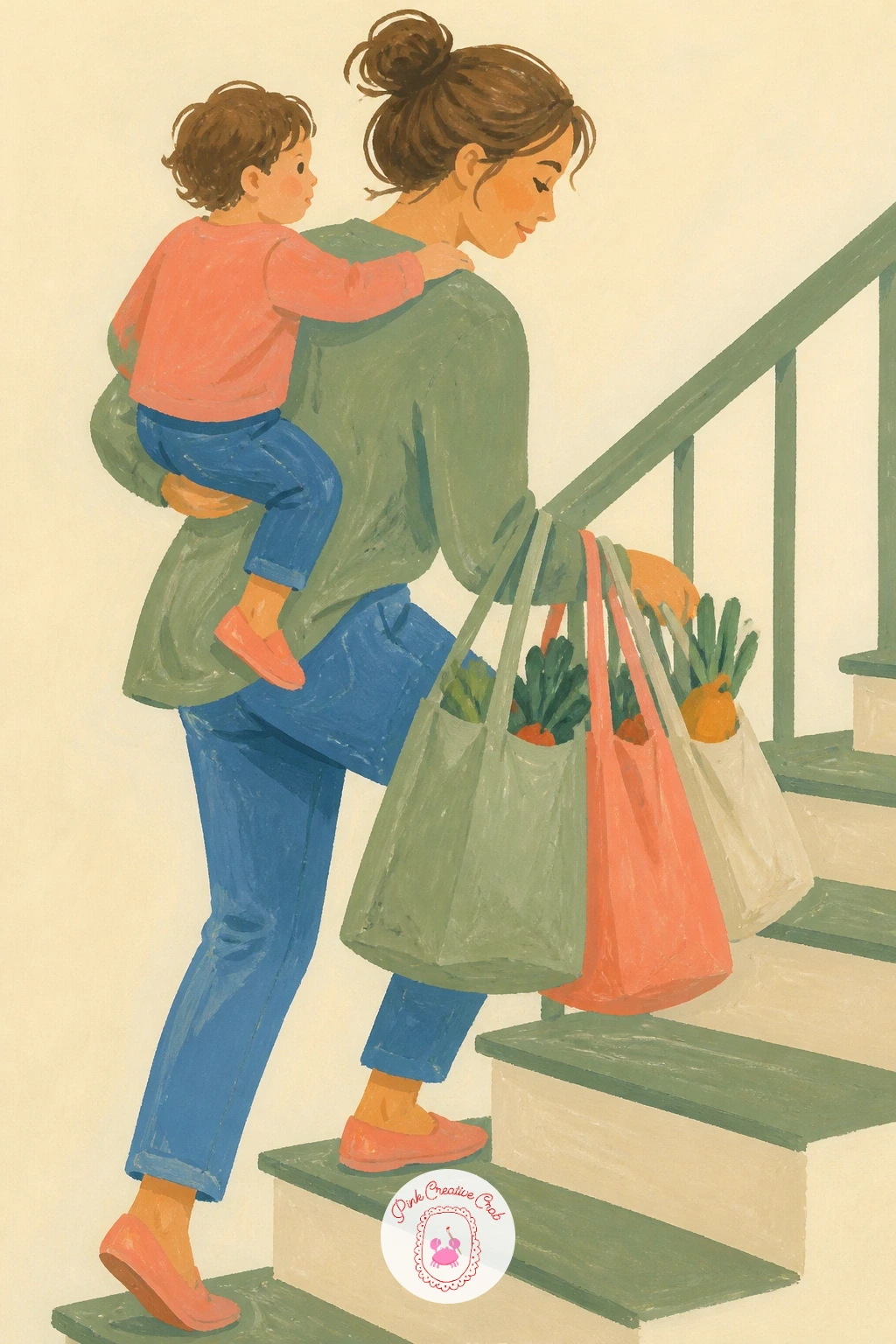
Palette: Sage Green, Coral Pink, Cream, Warm Brown
Keep the forward motion going with the school run: a mom striding along with a child’s scooter tucked under one arm. Block her coat as one solid cornflower shape first, angled slightly forward to suggest the walking pace, then add the scooter as a simple cream and coral frame last, since its thin lines are easiest to place once the body is settled.
Give her one visible stride, front leg forward and back heel lifted, rather than two feet flat on the ground. That single proportion trick, front foot roughly one head-length ahead of the back foot, is what makes a standing figure look like she is actually walking somewhere.
If the scooter handlebars look fussy, simplify them to two short cream lines meeting a single wheel circle rather than trying to paint full detail. A child’s school bag on her other shoulder balances the composition if the scooter side feels too empty.
Swap the scooter for a child’s backpack dangling from one hand if you would rather skip wheels entirely.
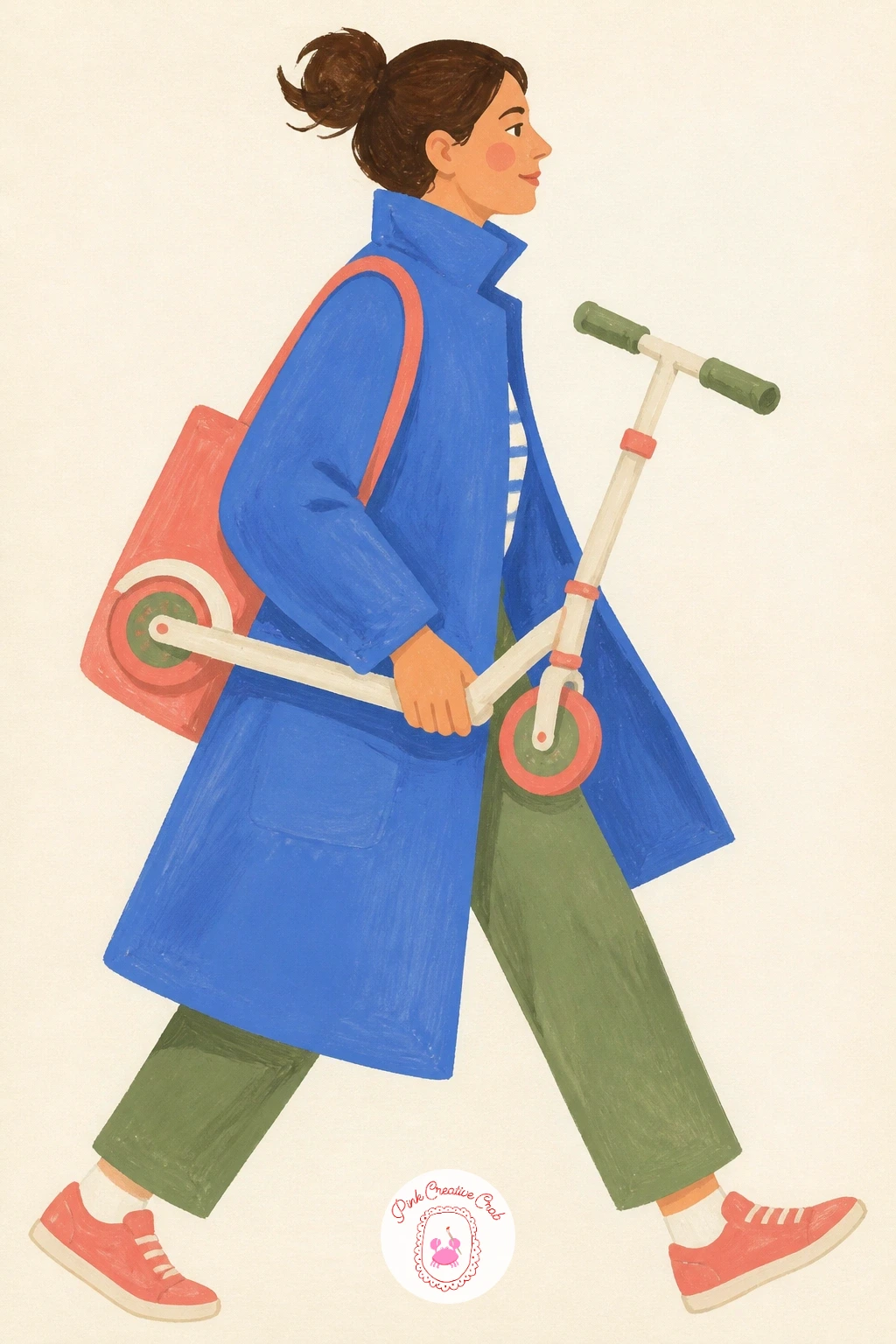
Palette: Cornflower Blue, Coral Pink, Cream, Charcoal
Slow the pace right down for the first stolen-quiet scene: a mom soaking in a bubble bath, green face mask on, book propped on the rim. Paint the bath and bubbles as one large cream and white shape first, then her shoulders and face above the water line, and finish with the small coral book held above the bubbles.
The face mask does a lot of the storytelling here, so keep it as one flat sage green shape over the whole face with two small cream circles left for the eyes. That graphic simplicity reads instantly as a face mask rather than looking like a mistake in the skin tone.
Bubbles are the trickiest part to get right: too many small circles turn messy fast, so paint a few larger cream mounds with two or three tiny highlight dots rather than a field of bubbles. If the composition feels bare, add one candle on the bath rim in coral.
No time for a full bath scene, a close crop on just the face mask, book and a sliver of bubbles finishes just as fast.
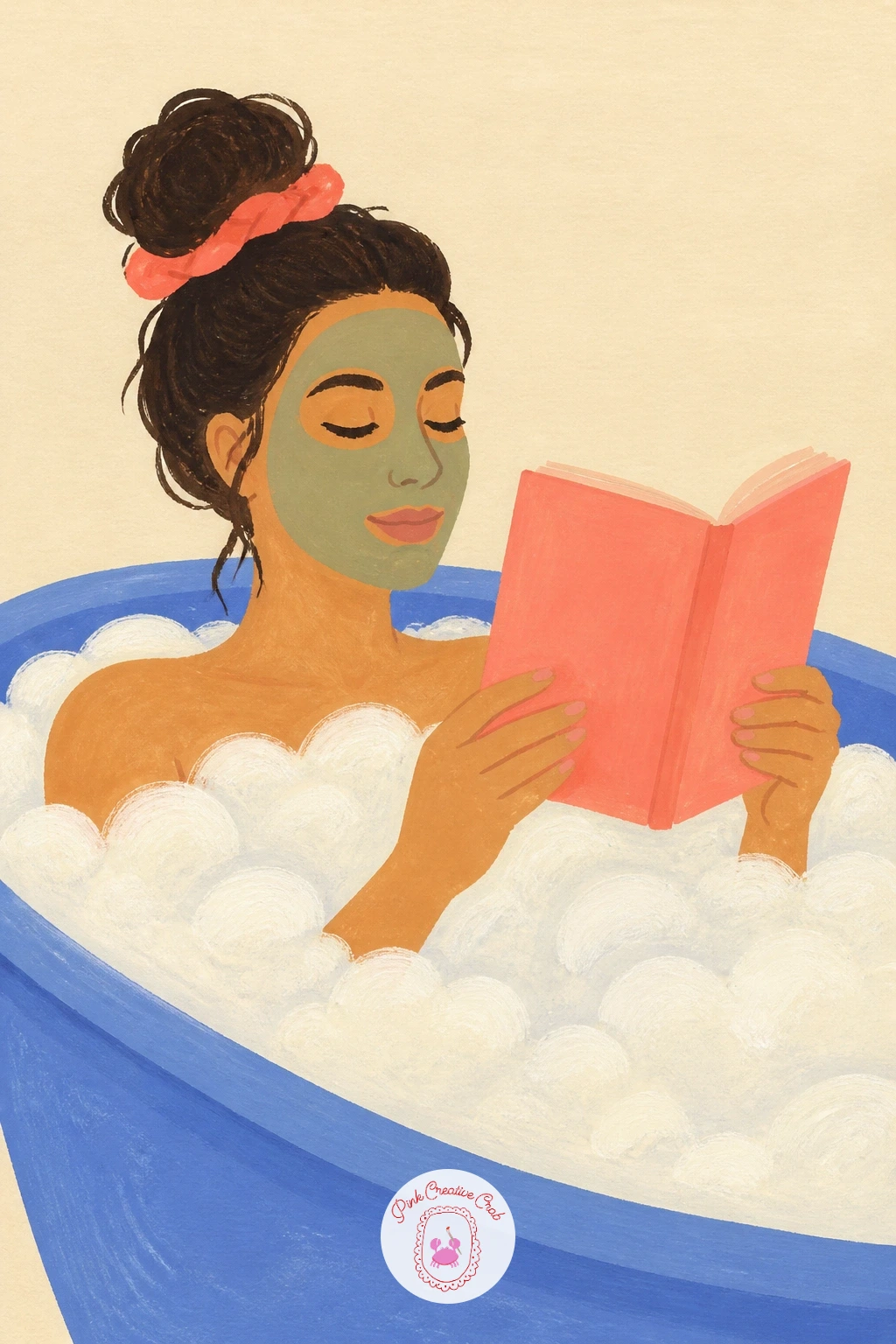
Palette: Sage Green, Cream, Coral Pink, Warm White
Try adding one small steam curl rising from the bath water in pale cornflower, it adds warmth to the scene without any extra detail work.
Bring the pace back up with the laundry mountain: a mom seated on the bed folding a heap of small clothes. Lay the bedspread as one cream block first, then pile the laundry as a loose mound of coral, sage and cornflower shapes before adding the mom folding one small item in the foreground.
Vary the size of the clothing shapes, since a pile of identical rectangles reads as wallpaper rather than laundry. Mix tiny socks, a folded shirt and one unfolded item mid-fold in her hands so the eye has somewhere to travel across the pile.
This scene often goes flat when every garment sits at the same angle. Tilt two or three pieces slightly off-square in the mound, which does more to suggest a real pile than any amount of extra shading.
One concrete tip for today: paint the folded stack slightly taller than feels right, a too-small pile reads as tidy rather than overwhelming, which is the whole joke of the scene.
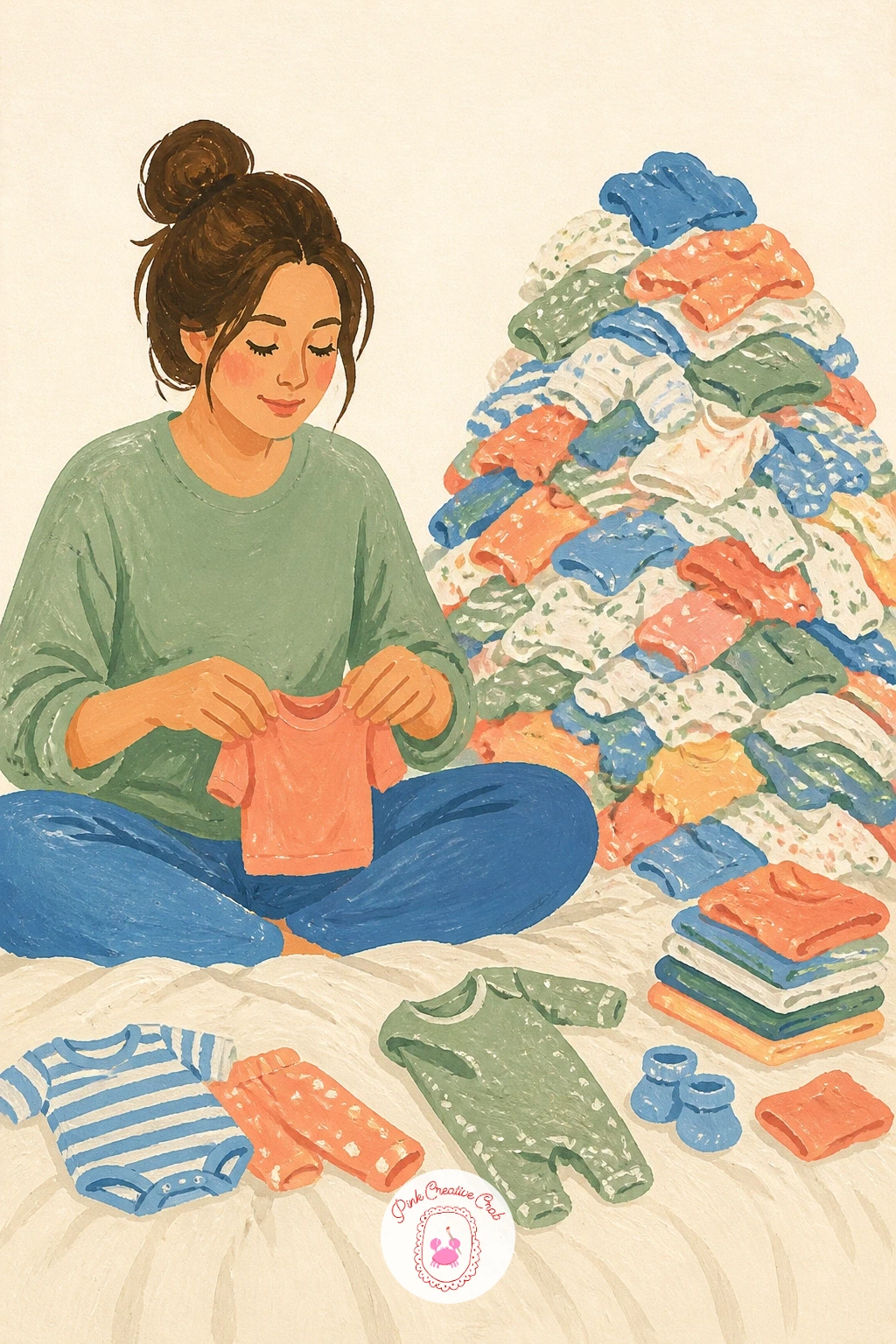
Palette: Cream, Coral Pink, Sage Green, Cornflower Blue
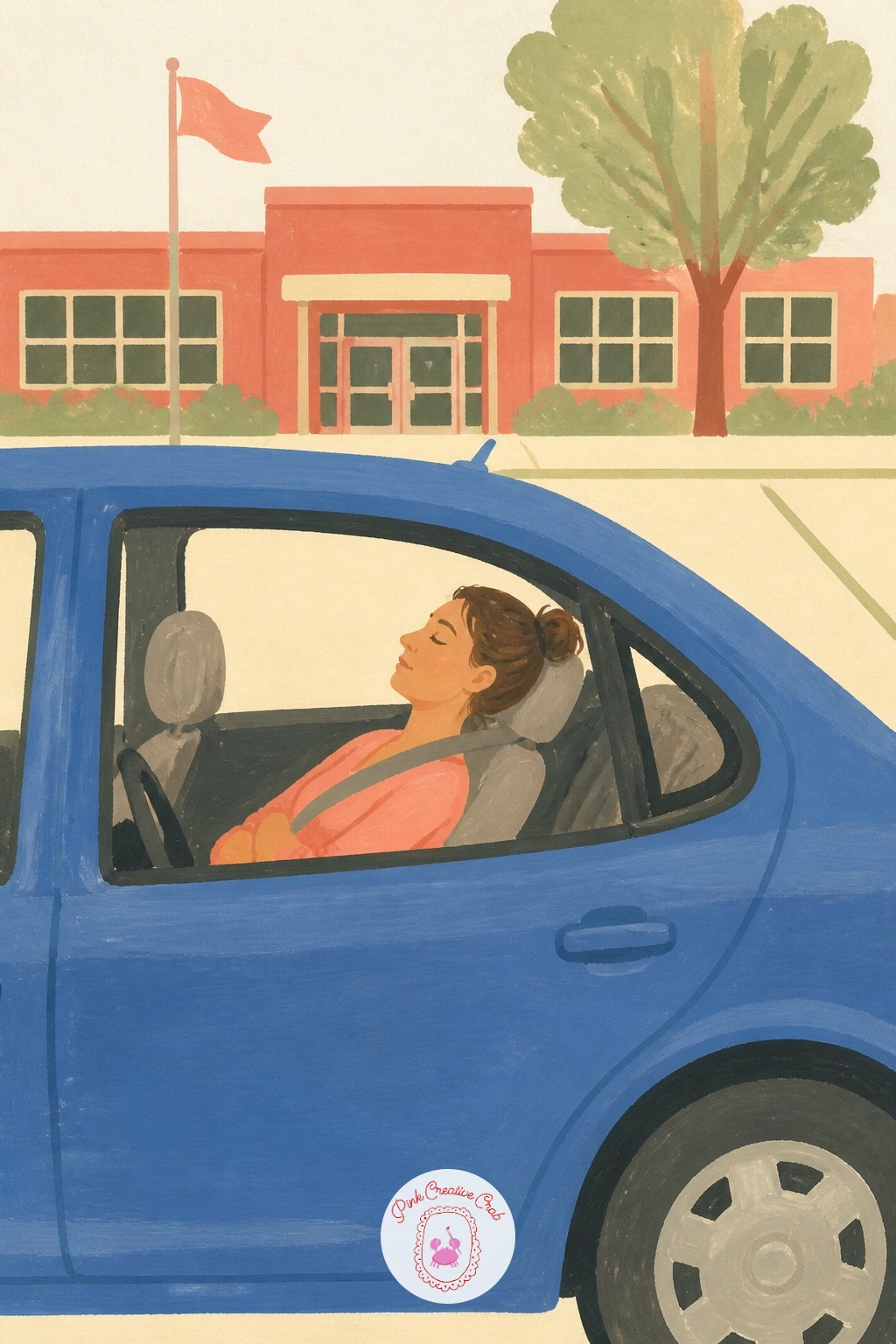
Follow the exhaustion thread into the school parking lot, where a mom tips her seat back for a nap between pickups. Paint the car as a simple cornflower blue shape seen from the side, windows as flat cream panes, then drop her reclined silhouette inside with eyes closed and mouth slightly open.
Keep the car’s shape simple: one rounded rectangle for the body, two circles for wheels, and a single curved line for the window edge. Overworking the car with mirrors, door handles and trim pulls focus away from her, which is the actual subject.
If the parking lot setting feels like it needs more, add one small tree or lamppost shape behind the car rather than other vehicles, which clutters the frame fast. A coffee cup in the cup holder, lid still on, tells the whole story without another word.
Try this in ten minutes as just the car window with her face visible through it, or spend forty minutes widening the view to include the quiet school gate beyond.
Palette: Cornflower Blue, Cream, Coral Pink, Sage Green
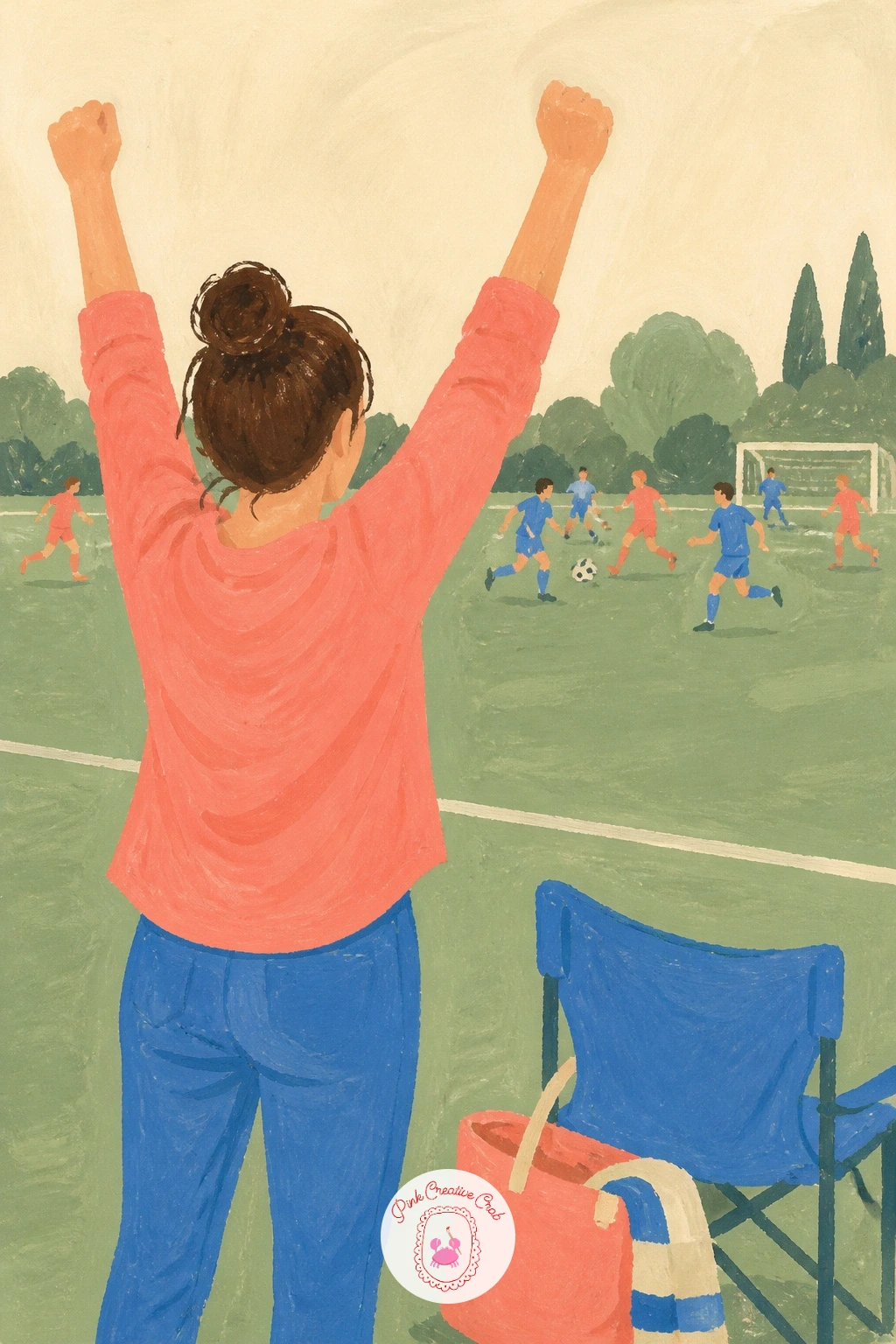
Bring the energy up again at the soccer field, where a mom cheers from the sideline with both arms raised. Block the grass as a flat sage green band across the lower page first, then paint her standing figure mid-shout with arms up before adding one or two small distant players as tiny coral and cornflower shapes on the field.
Raised arms are easy to get wrong if both elbows lock straight, which looks stiff rather than excited. Bend one elbow slightly more than the other, and tilt her head back a touch, and the whole pose reads as a genuine cheer rather than a wave.
Keep the players on the field small and loose, since this scene is about her reaction, not the game itself. Two or three simple running shapes in the distance say “soccer game” without needing any real detail.
No field to paint, a plain sage strip with one goalpost shape in the background does the same job in far less time.
Palette: Sage Green, Coral Pink, Cornflower Blue, Cream
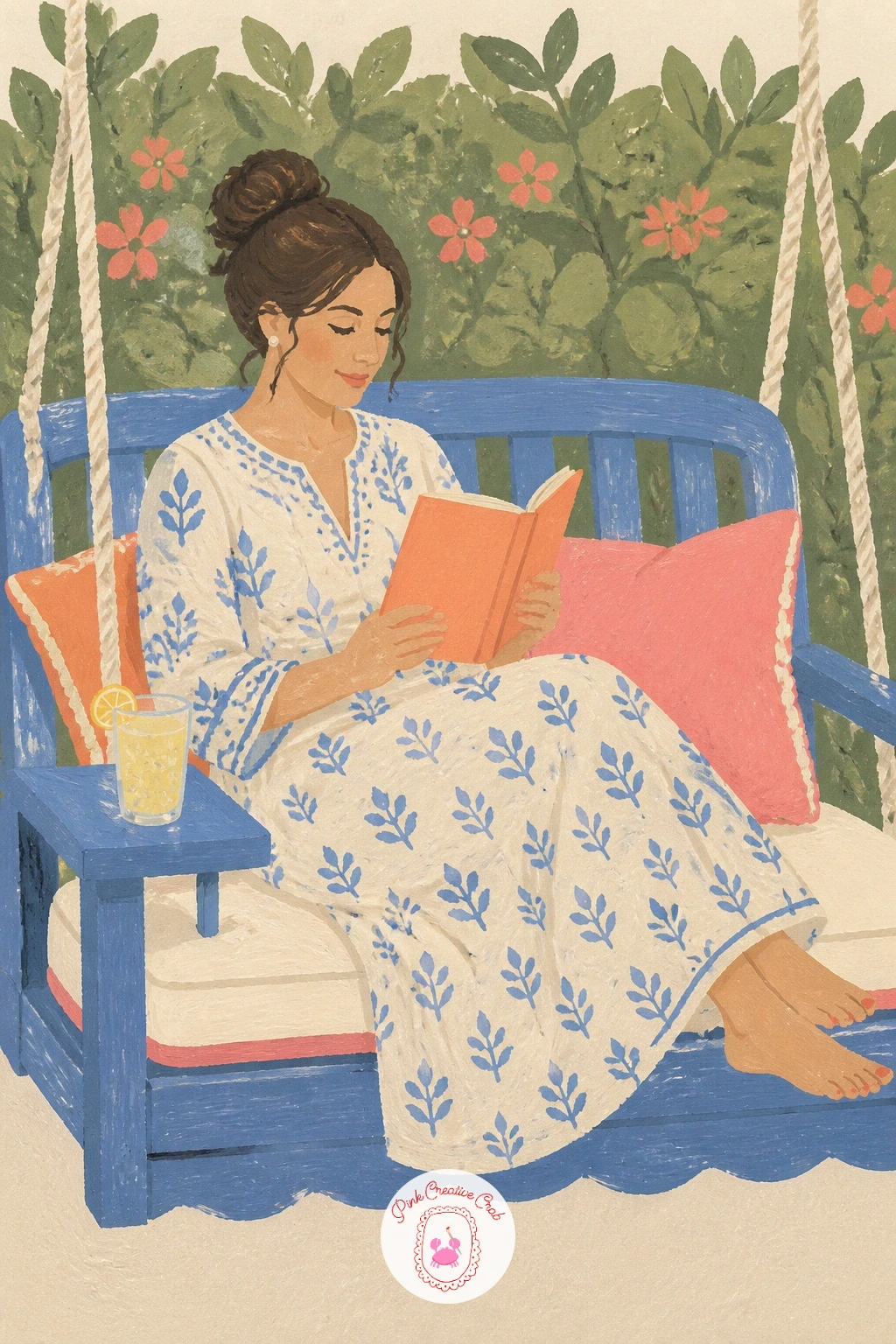
Settle into stillness again on a garden swing, book open and a glass of lemonade balanced on the armrest. Paint the swing frame first as a simple cornflower structure, then her seated figure leaning into one corner of it, and finish with the small coral book and cream glass last since they are the easiest details to place once she is settled.
Look at where the light falls here: afternoon sun from one side means one side of the swing frame and her shoulder gets a slightly warmer cream tone while the other stays in cooler shadow. That single light decision gives the whole flat scene a sense of time of day without any extra painting.
If the swing looks stiff, curve the chain or rope lines slightly rather than drawing them perfectly straight, which suggests gentle movement. A sage green hedge shape behind the swing finishes the garden setting in one more flat block.
One tip for today: leave the lemonade glass half full rather than brimming, a nearly empty glass tells the viewer she has been sitting there a while.
Palette: Cornflower Blue, Coral Pink, Sage Green, Cream
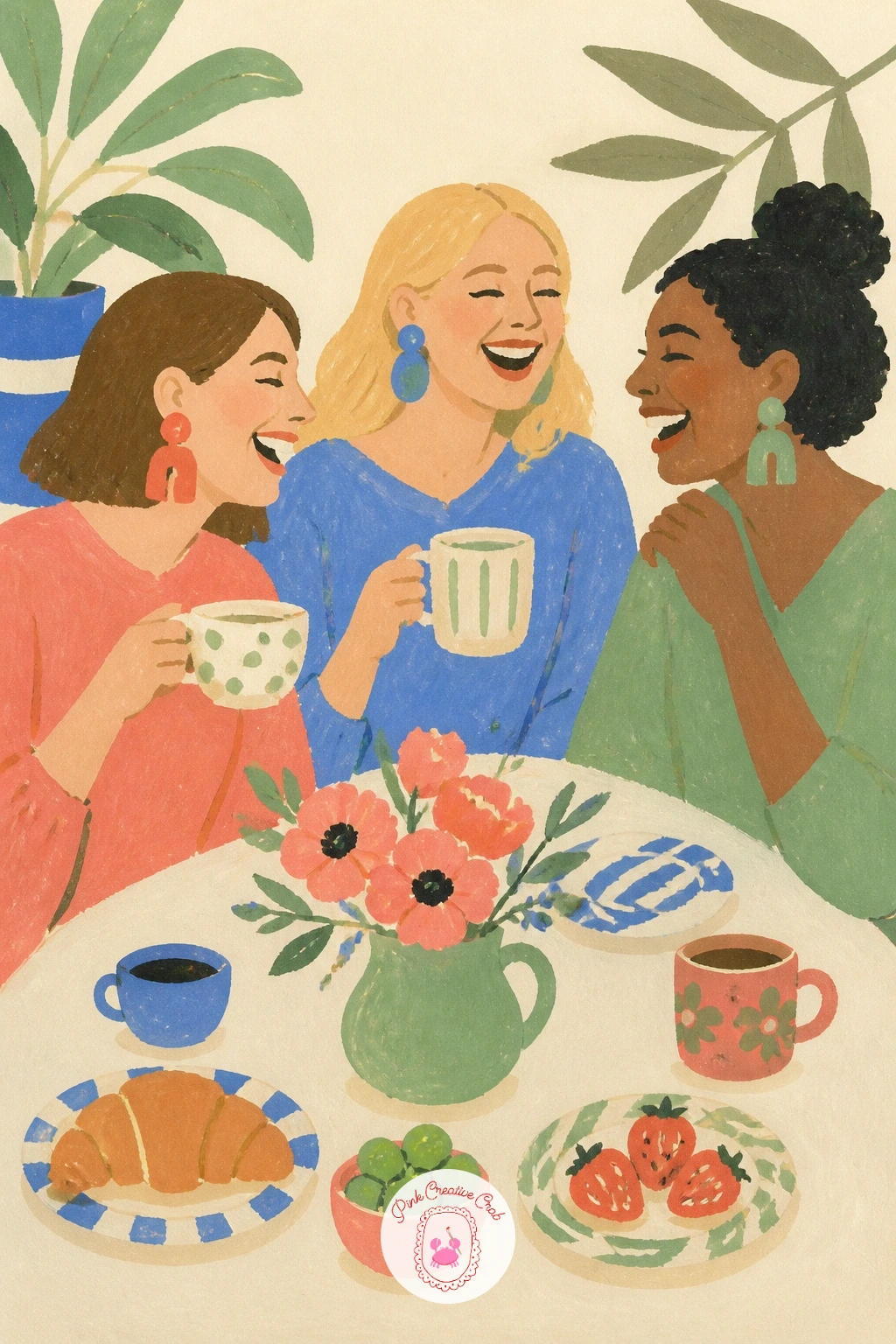
Carry the warmth into a café table full of friends laughing over brunch. Block the table as one cream rectangle first, then paint three seated figures in a loose row, each a different flat color (coral, cornflower, sage) so they read as distinct people at a glance, and finish with small plates and cups scattered across the table.
Vary each friend’s head angle and open mouth slightly differently, since three identical laughing faces in a row look repeated rather than spontaneous. Tilt one head back, keep another leaning forward over her cup, and the group instantly feels like a real moment mid-conversation.
Plates and cups are where this scene can get cluttered fast. Keep the tabletop to three or four simple shapes total (one plate, two cups, one small vase) rather than a full spread, so the friends themselves stay the focus.
For inspiration on painting the cups and plates with the same flat confident style, the coffee illustration ideas article covers plenty of café details worth borrowing.
Palette: Coral Pink, Cornflower Blue, Sage Green, Cream
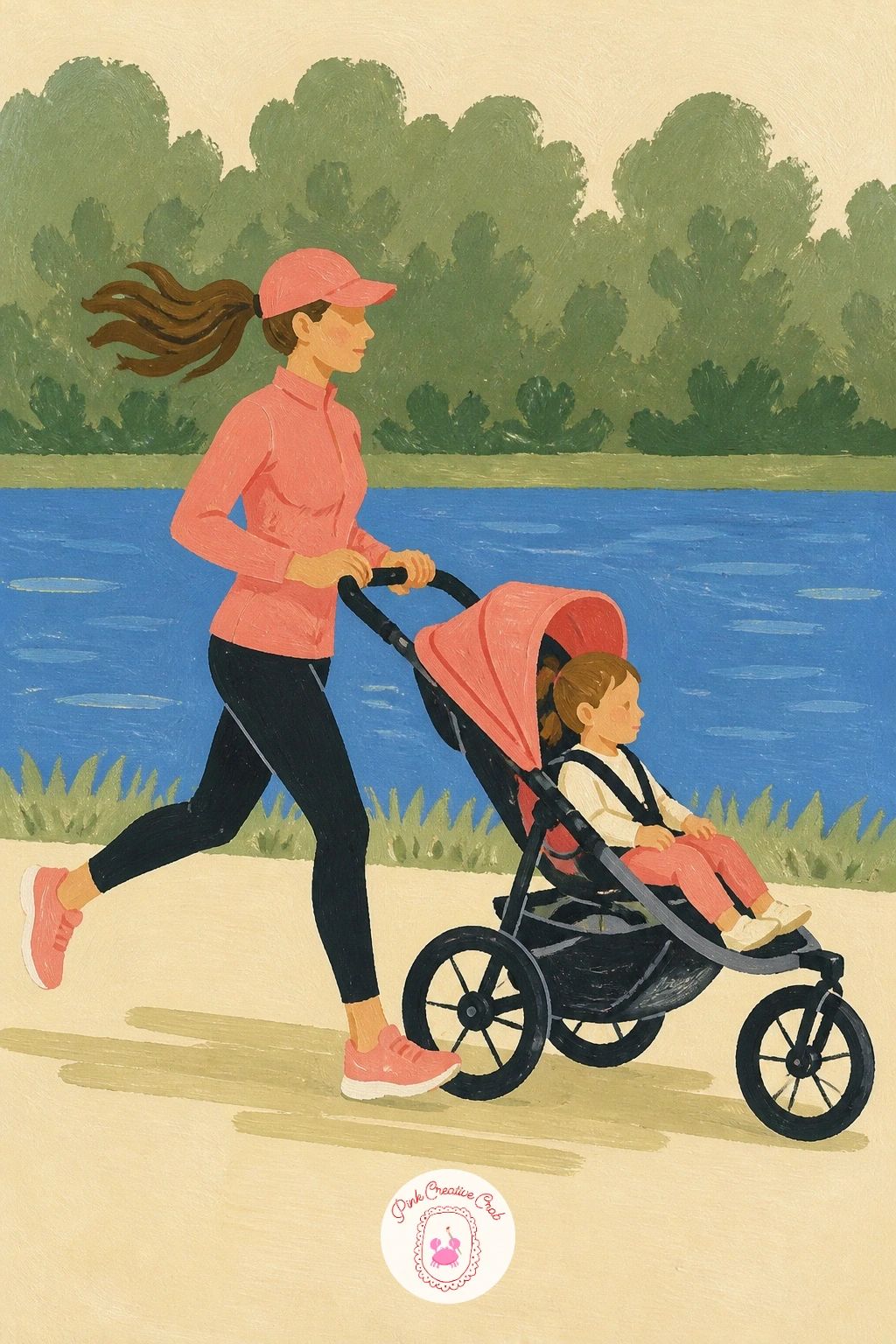
Pick the pace back up along the river with a mom jogging, running stroller pushed ahead of her. Paint the river as a flat cornflower band across the background first, then her figure mid-stride with the stroller’s three simple wheel circles in front, built from the ground up so the proportions of runner to stroller stay believable.
Measure the stroller against her body before committing to final lines: the stroller’s top bar should sit roughly at hip height, and the whole frame about as long as her torso. Get that relationship right and the running motion reads immediately, even in a flat still shape.
Keep her legs in a clear scissor position, one forward and bent, one back and extended, rather than both nearly together, which reads as standing still. A simple sage green tree line along the river finishes the setting without extra detail.
Swap the river for a park path lined with the same sage trees if water feels tricky to flatten into shape.
Palette: Cornflower Blue, Sage Green, Coral Pink, Cream
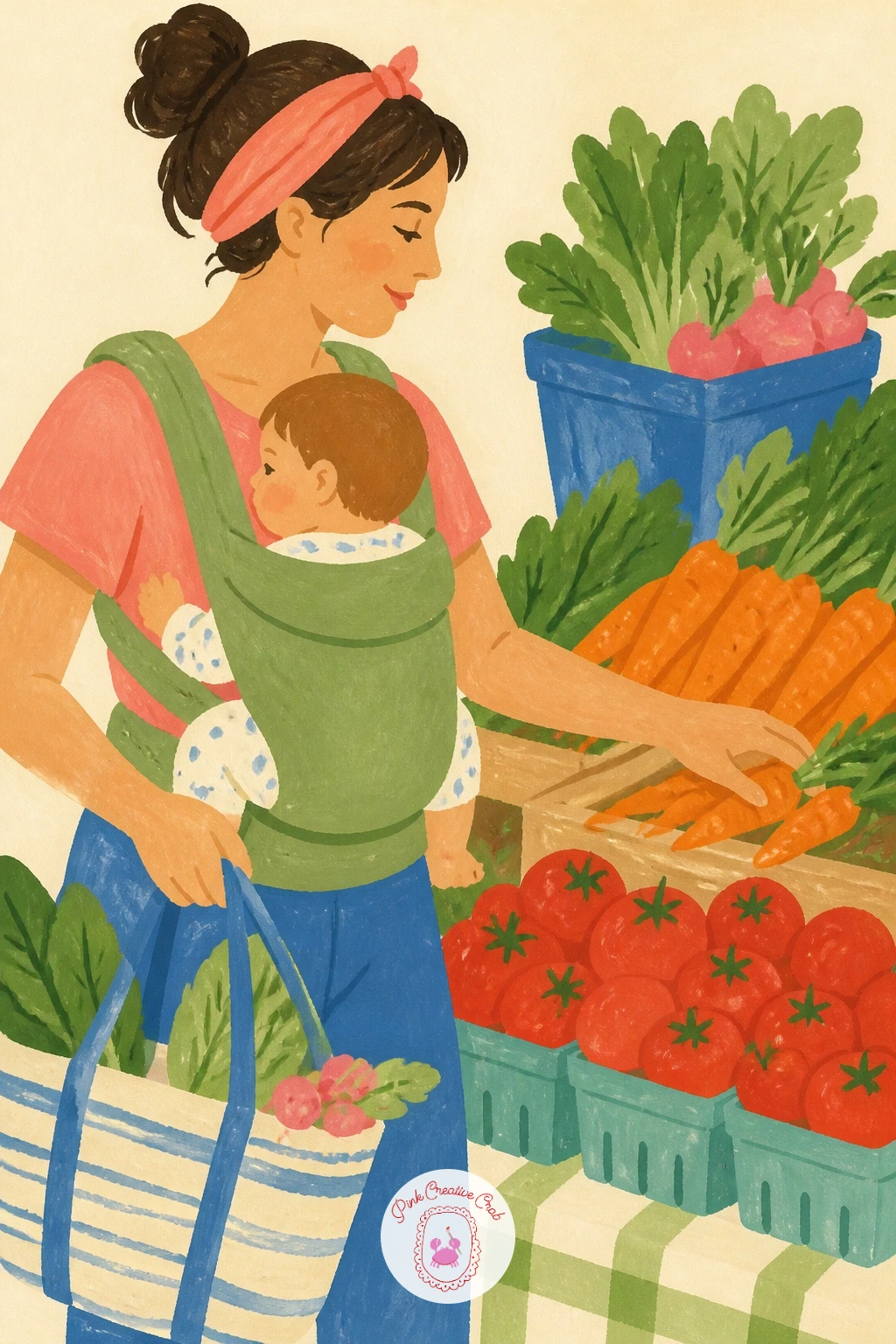
Slow back to a wander through the farmers market, baby tucked into a front carrier while she browses a stall. Build the market stall first as a simple cream table with a few flat vegetable shapes (a bunch of carrots, a stack of tomatoes) before painting her standing figure, baby carrier last so it sits naturally against her chest.
Keep the produce to three or four distinct shapes rather than a crowded stall, since a market scene gets busy fast once every vegetable gets its own detail. One bunch of carrots in coral-orange and a few round tomatoes say “market” clearly enough.
The baby carrier is the trickiest part of this proportion: keep the baby’s head roughly one third the size of the mom’s head, tucked just below her chin, so the scale reads as infant rather than toddler. Too large a baby head throws the whole figure off balance.
If stalls feel like too much setup, crop the scene tighter to just her upper body and the baby, with one small basket of produce in her free hand.
Palette: Cream, Coral Pink, Sage Green, Cornflower Blue
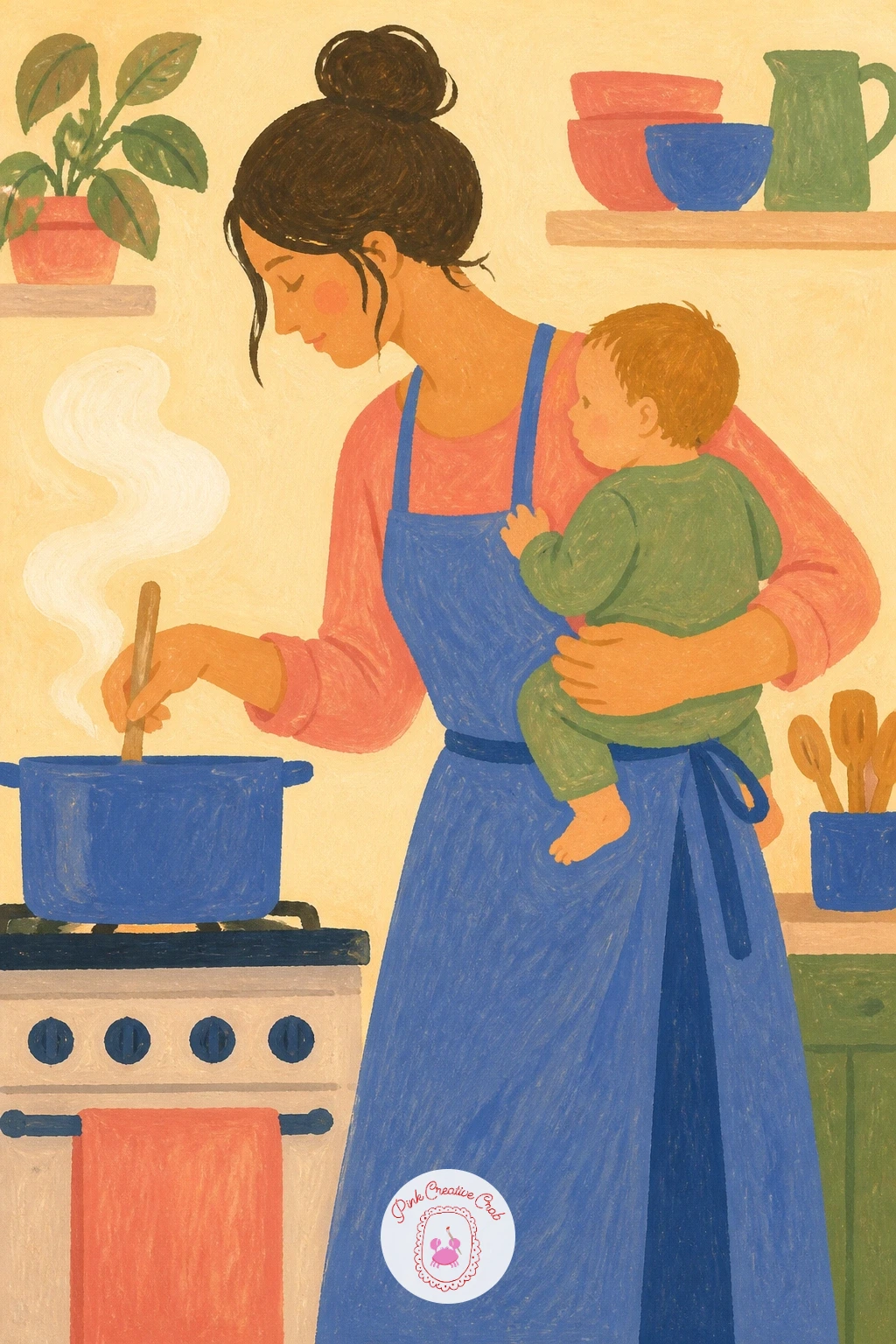
Move into the evening kitchen, where a mom stirs a pot on the stove with a baby balanced on one hip. Paint the stove and pot as one cornflower and cream block first, then her standing figure leaning slightly to counterbalance the baby’s weight, finishing with the wooden spoon and a small curl of steam last.
The lean is everything in this pose: if her spine stays straight with the baby stuck on like an afterthought, the whole figure looks wrong. Shift her hip out to the side the baby sits on and drop that shoulder slightly, which is exactly how carrying a baby on one hip actually looks.
Steam above the pot is an easy texture trick: one or two soft curved cream lines rising and fading, rather than a solid cloud shape, reads as steam without extra work. A few vegetables on a cutting board nearby fills any empty counter space.
No stove to reference, any kettle or pan photo online shows the same basic proportions for the pot shape.
Palette: Cornflower Blue, Cream, Coral Pink, Sage Green
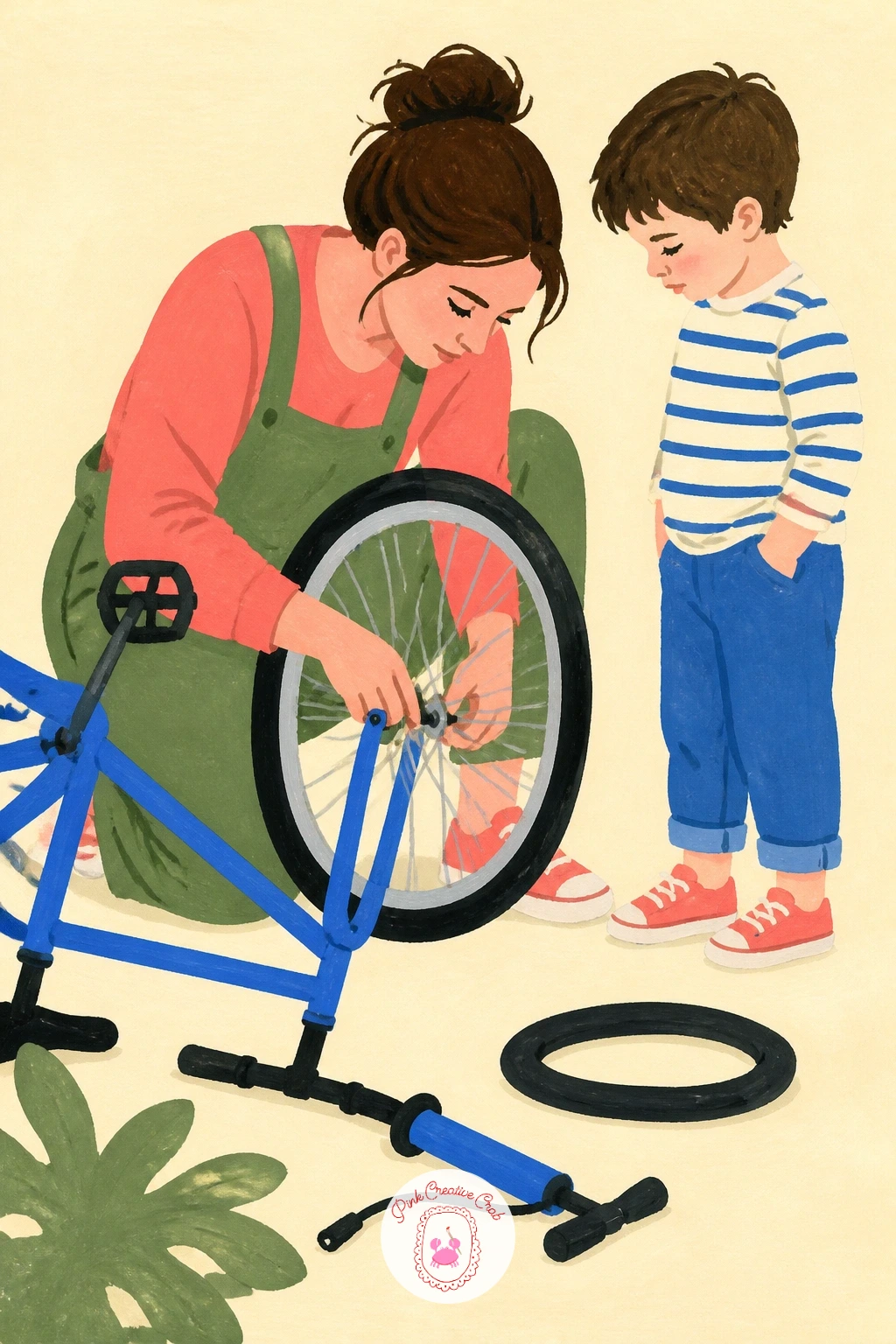
Shift gears to the driveway, where a mom crouches fixing a bike tire while her son watches beside her. Block the overturned bike first as a simple cornflower frame with one wheel raised, then her crouched figure working on it, and add the standing child last, small and watching with hands on his hips.
Crouching figures are easy to get wrong if the knees point the wrong way. Bend her knees deeply with her weight forward over the tire, hands reaching toward the wheel, rather than sitting back on her heels, which reads as resting rather than working.
Keep the bike itself simple: two wheel circles, one frame triangle, and a single pedal shape, no chain detail needed. The son’s pose does most of the storytelling, so give him one clear gesture, like pointing at the tire or just standing with arms crossed watching.
If a full bike feels like too much to draw today, crop to just the wheel, her hands and the boy’s face peeking in from one side.
Palette: Cornflower Blue, Coral Pink, Cream, Charcoal
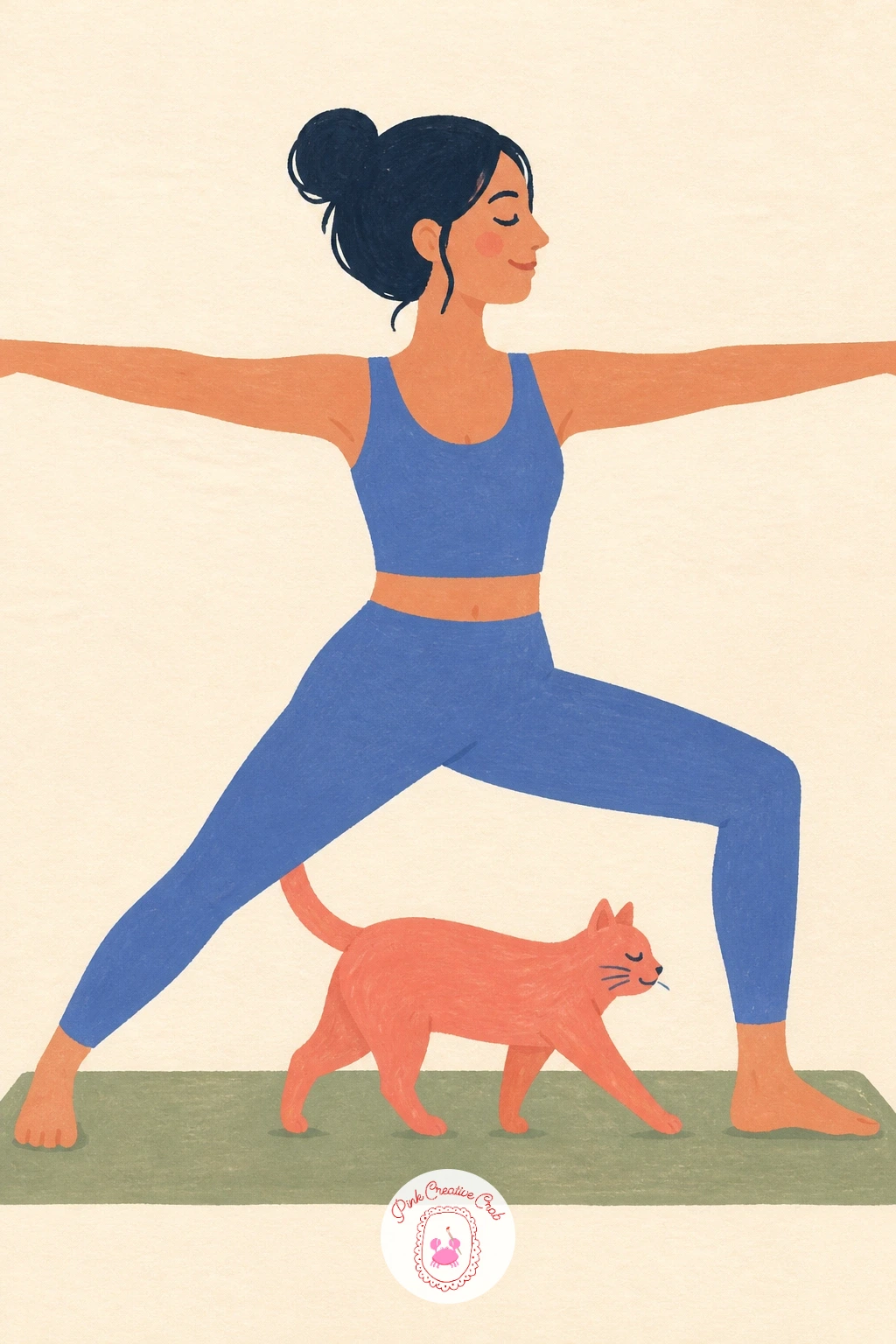
Return to stillness with a mom holding a yoga pose on a mat, a cat strolling casually underneath her. Paint the mat as a flat sage rectangle first, then build her pose (downward dog or a simple standing stretch works well) before adding the cat last as a small coral or cream shape slipping between her arms or legs.
For a clean texture trick on the cat, try dry brush: load a flat brush lightly, almost out of paint, and drag it once across the cat’s back for a soft broken-fur edge instead of a hard flat outline. That single pass gives the cat a different surface quality from her smooth painted limbs.
Balance poses are easiest to get believable in a standing forward fold or a simple seated stretch rather than anything requiring one leg lifted, which is harder to keep convincing in a flat graphic style. Keep her face calm and eyes closed to read instantly as a quiet moment.
If you enjoy painting the cat here, the cat illustration ideas article has plenty more small cat poses worth practicing.
Palette: Sage Green, Coral Pink, Cream, Cornflower Blue
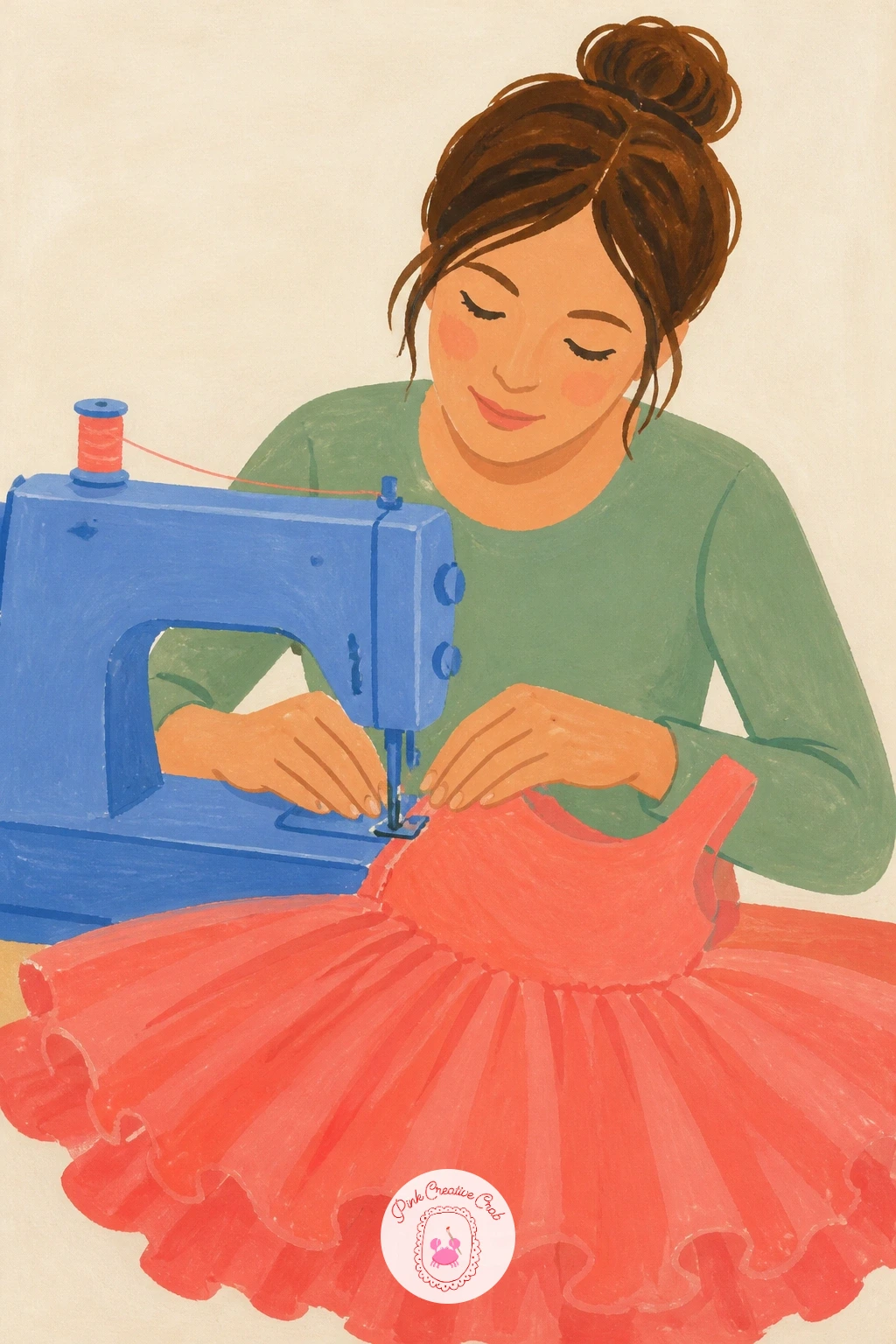
Move to the sewing table, where a mom sits hunched over a machine making a child’s costume, fabric spilling off the table edge. Block the machine as one simple cornflower shape first, then her seated figure leaning forward over it, finishing with the fabric and half-finished costume (a small cape or animal ear) draped across the table last.
Keep the fabric drape loose and soft-edged rather than stiff folds, since fabric in motion under a machine needle should look like it is being fed through, not lying flat. A few curved coral lines suggest gathered fabric without needing real folds painted in.
The sewing machine itself is the trickiest shape here. Simplify it to a rounded cream body, one small needle line, and a single thread spool on top rather than trying to paint every dial and lever.
Try this scene in ten minutes with just her hands, the fabric and the needle in close crop, or spend forty minutes widening out to show the whole desk and a spool rack behind her.
Palette: Cornflower Blue, Coral Pink, Cream, Sage Green
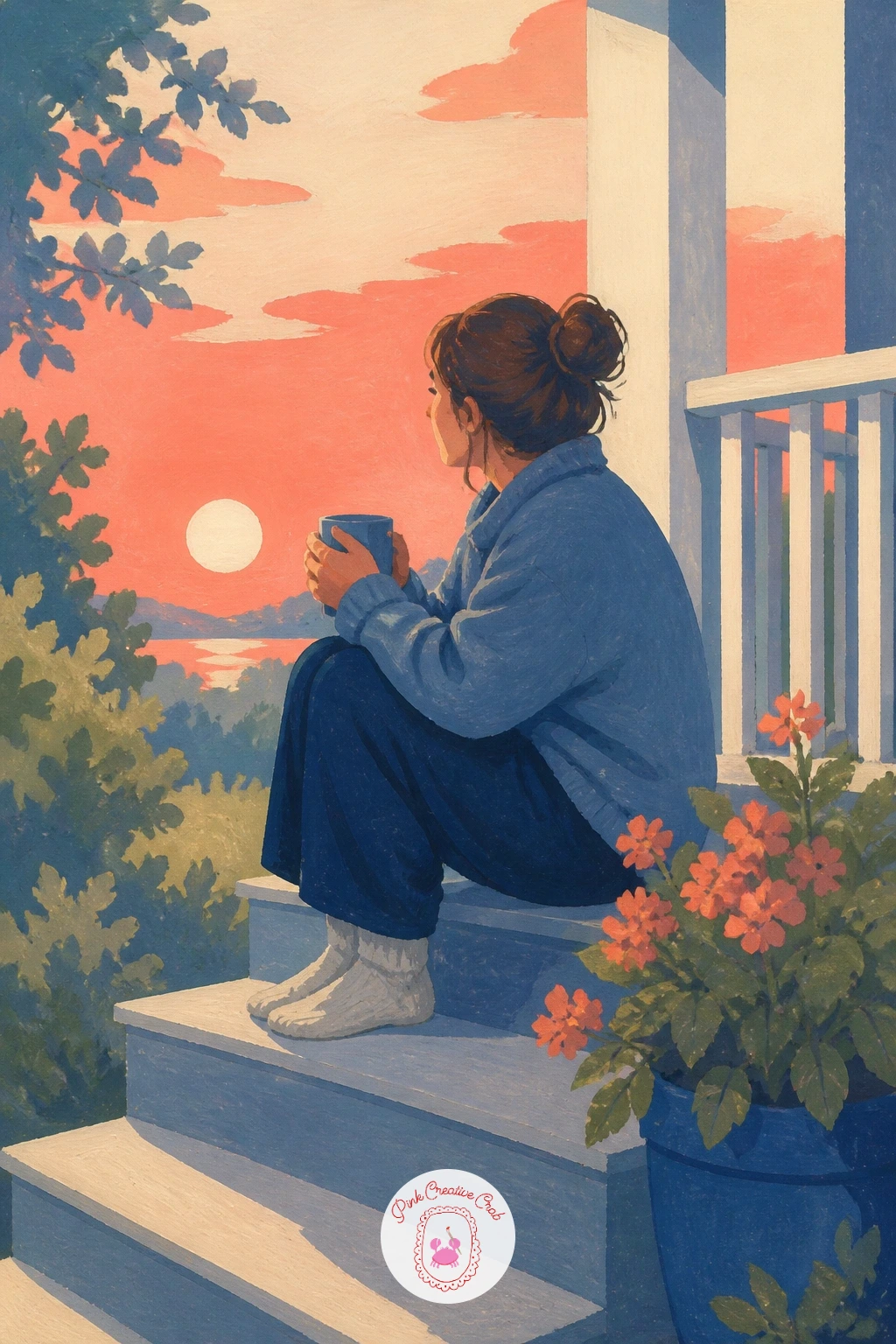
Return to morning light with a mom seated on the porch steps, mug in hand, watching the sunrise. Paint the sky first as a soft gradient of coral into cream, then the porch steps as a simple sage or cream block, and her seated figure last, knees drawn up slightly with the mug resting on them.
Light source matters most in this one: with the sun low and to one side, keep the shadow side of her face and shoulder a cooler cornflower tone while the sunrise side picks up warm coral, which does more to sell “sunrise” than any detail in the sky itself.
Keep her pose relaxed and slightly curled, elbows on knees, rather than bolt upright, which reads as alert rather than unwinding. A single potted plant beside the steps fills any empty corner without adding real complexity.
If a full porch feels like too much, crop tight to just her knees, the mug and a sliver of coral sky behind.
Palette: Coral Pink, Cream, Cornflower Blue, Sage Green
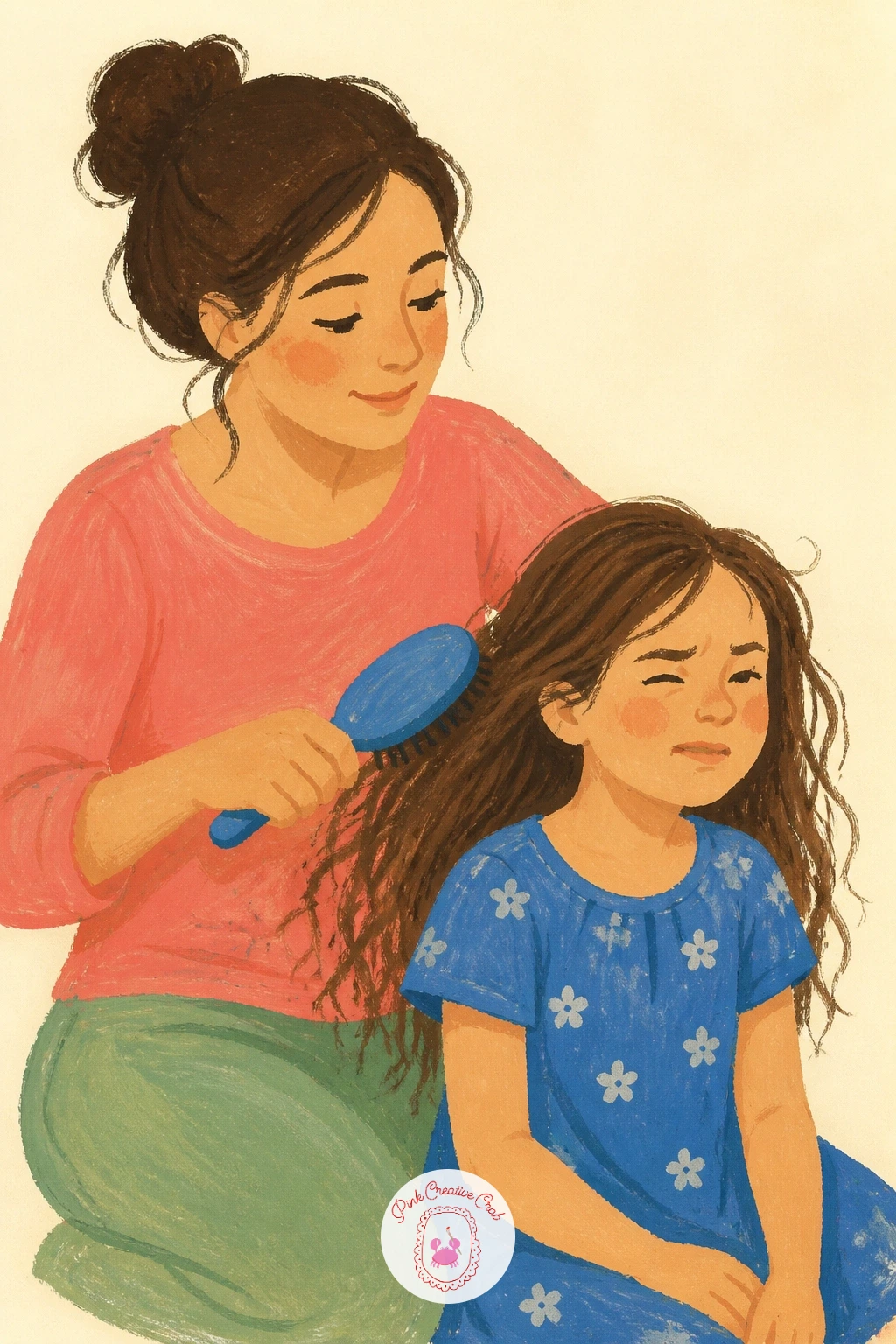
Bring the pace up again for the school morning scramble: a mom brushing her daughter’s tangled hair while the girl winces slightly. Build the two figures as one combined shape first, mom standing behind and daughter seated in front, before adding the brush and a few loose strands of hair last as the final detail.
Compare the two heads directly before finalizing proportions: the daughter’s head should sit noticeably smaller than her mother’s, roughly two thirds the size, which keeps the age difference clear even in simple flat shapes. Getting this ratio close is the single trick that makes the whole pairing read correctly.
Keep the daughter’s expression mid-wince rather than neutral, one eyebrow slightly raised or mouth in a small flat line, since that tiny detail carries most of the humor in the scene. A hair tie or bow waiting on the table nearby finishes the morning routine feel.
If you enjoy painting children’s faces and poses like this one, the girl illustration ideas article has more small figures worth studying.
Palette: Cornflower Blue, Coral Pink, Cream, Sage Green
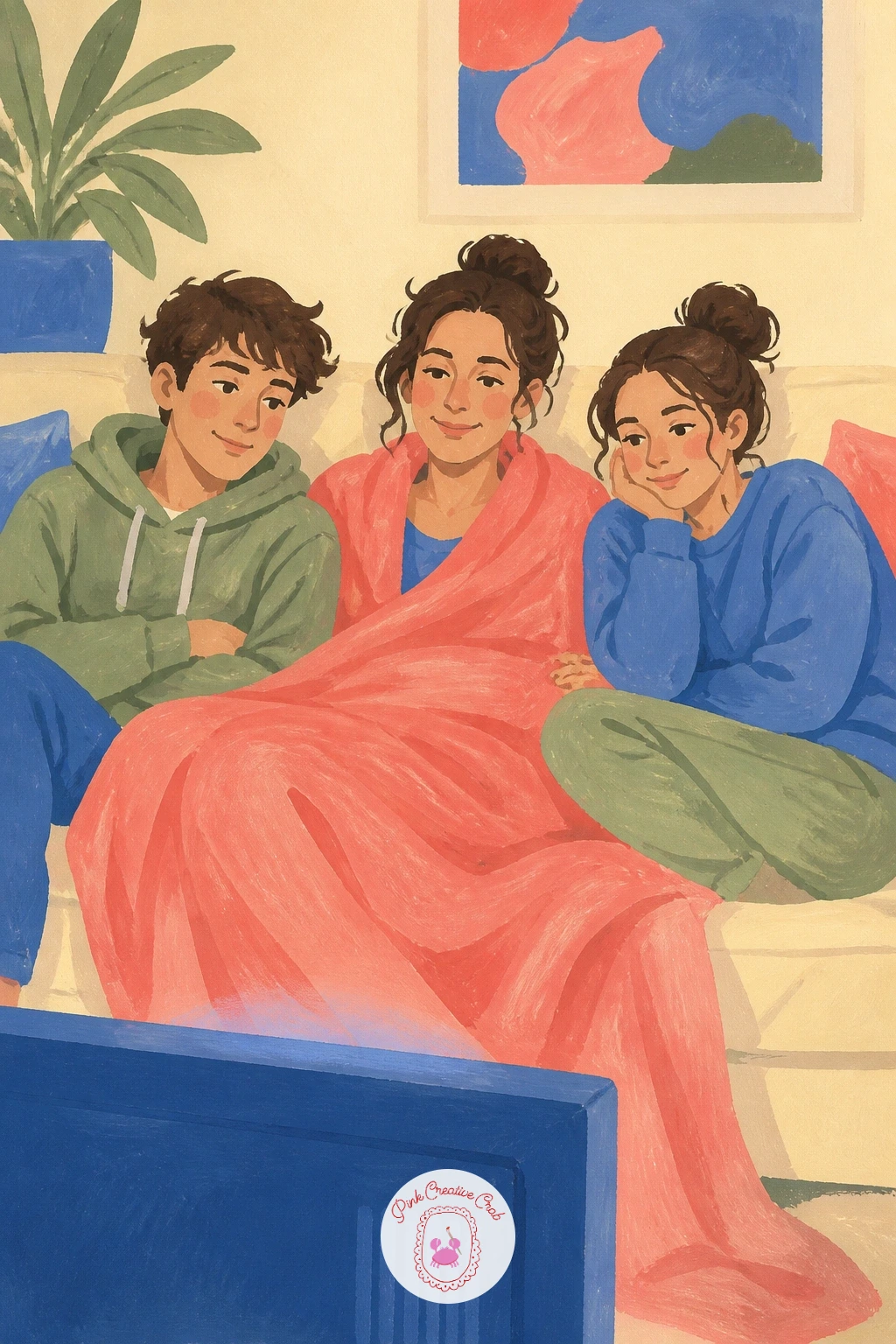
Settle into evening stillness with a mom wrapped in a blanket on the sofa, watching a film flanked by two taller teens. Block the sofa as a simple cream shape first, then all three figures side by side under one shared coral blanket, keeping the teens noticeably taller than her even seated, before adding a small screen glow last.
Height is the whole joke of this scene: seat the teens with their knees higher and shoulders taller than hers, since teenagers now towering over mom is exactly the detail that makes this moment land. Skipping that comparison flattens the idea into a generic family sofa scene.
Keep the screen glow as one soft cornflower rectangle with a faint light spill onto the nearest faces rather than painting an actual show on the screen, which pulls focus away from the three of them.
No teens to include, this works just as well with one teenager alone beside her under the same shared blanket.
Palette: Coral Pink, Cream, Cornflower Blue, Sage Green
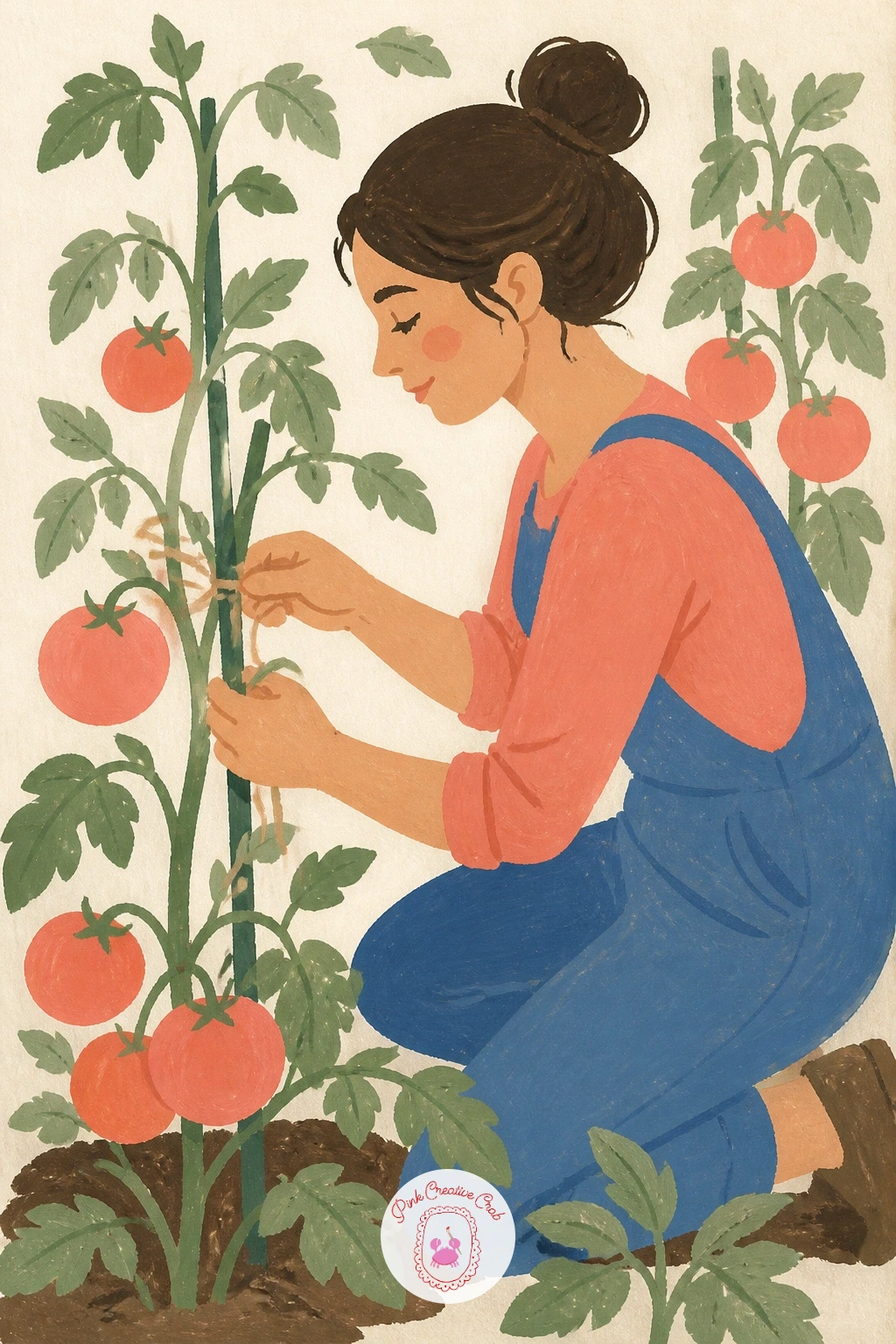
Step outside to the vegetable garden, where a mom kneels tying tomato plants to their stakes. Paint the garden bed first as a sage green band with a few simple stake lines, then her kneeling figure leaning into the plants, finishing with a few round coral tomatoes tucked among the leaves last.
Keep the tomato leaves to simple rounded clusters rather than individually painted leaflets, since real tomato foliage is far too detailed to flatten convincingly leaf by leaf. Three or four soft sage clusters with a handful of coral circles peeking through read as tomatoes instantly.
Kneeling poses can look stiff if both knees sit flat on the ground. Lift one knee slightly and shift her weight onto the other hip, which gives the pose a sense of reaching toward the plant rather than posed beside it.
If tomatoes feel fiddly, swap them for a simple row of sunflowers instead, same kneeling pose, taller stake lines behind her.
Palette: Sage Green, Coral Pink, Cream, Cornflower Blue
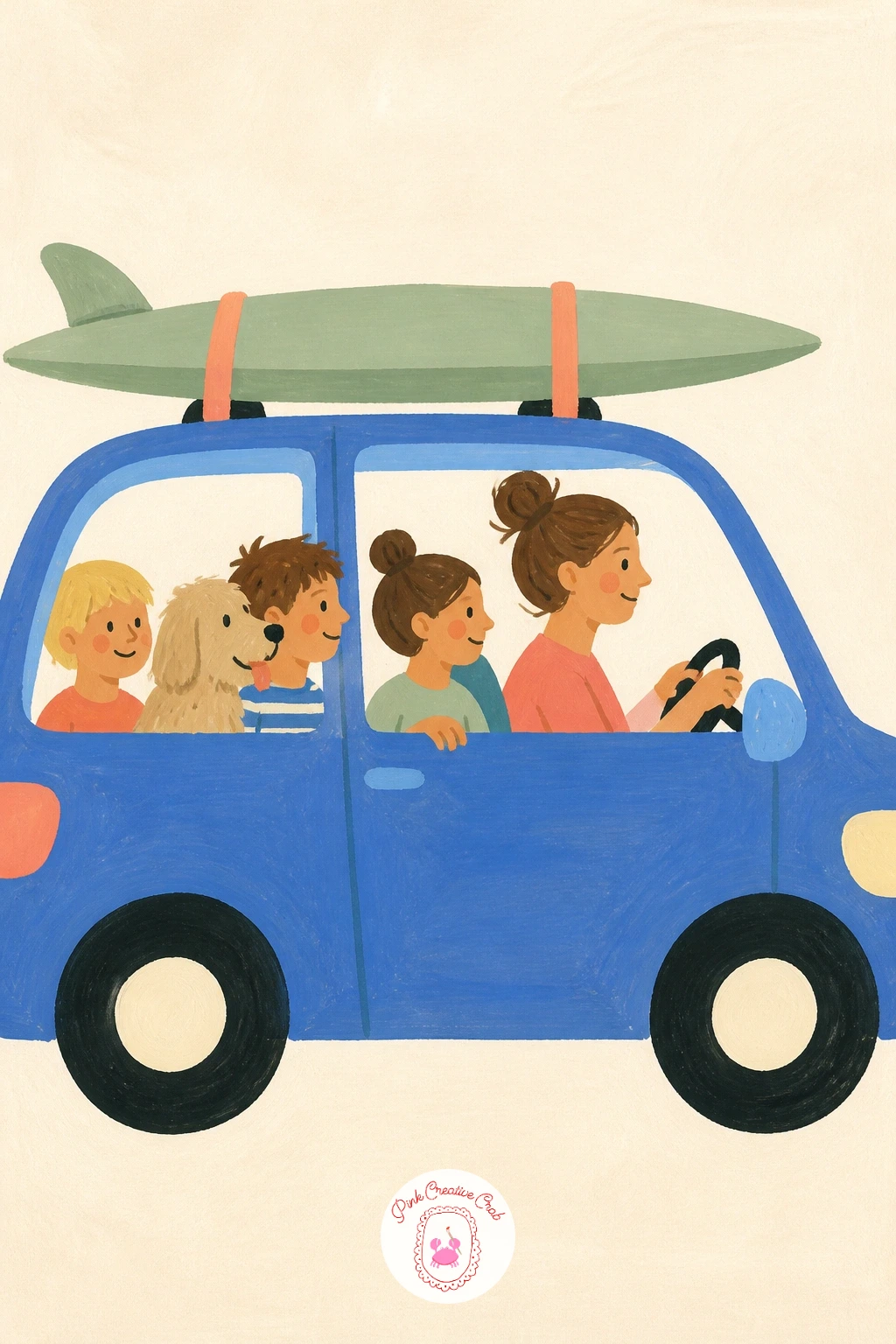
Pack everyone in for the beach drive: a mom at the wheel with kids and a dog visible through the car windows. Build the car body first as one simple cornflower shape seen from the side, then the windows as flat cream panes, filling each one with a small loose shape, a kid’s head here, a dog’s ears there, last.
Keep the car’s side profile simple and let the windows carry the story. Too much detail on the car itself (mirrors, door lines, wheel spokes) competes with the far more interesting cargo of kids and dog inside.
One small sage surfboard strapped to the roof signals “beach” instantly without needing any other scenery. A single dog ear or tongue sticking out a rear window does more storytelling than a fully painted dog would.
Try the quick version in ten minutes as just the car with silhouettes in the windows, or spend forty minutes adding a coastal road and a sliver of cornflower sea in the background.
Palette: Cornflower Blue, Sage Green, Coral Pink, Cream
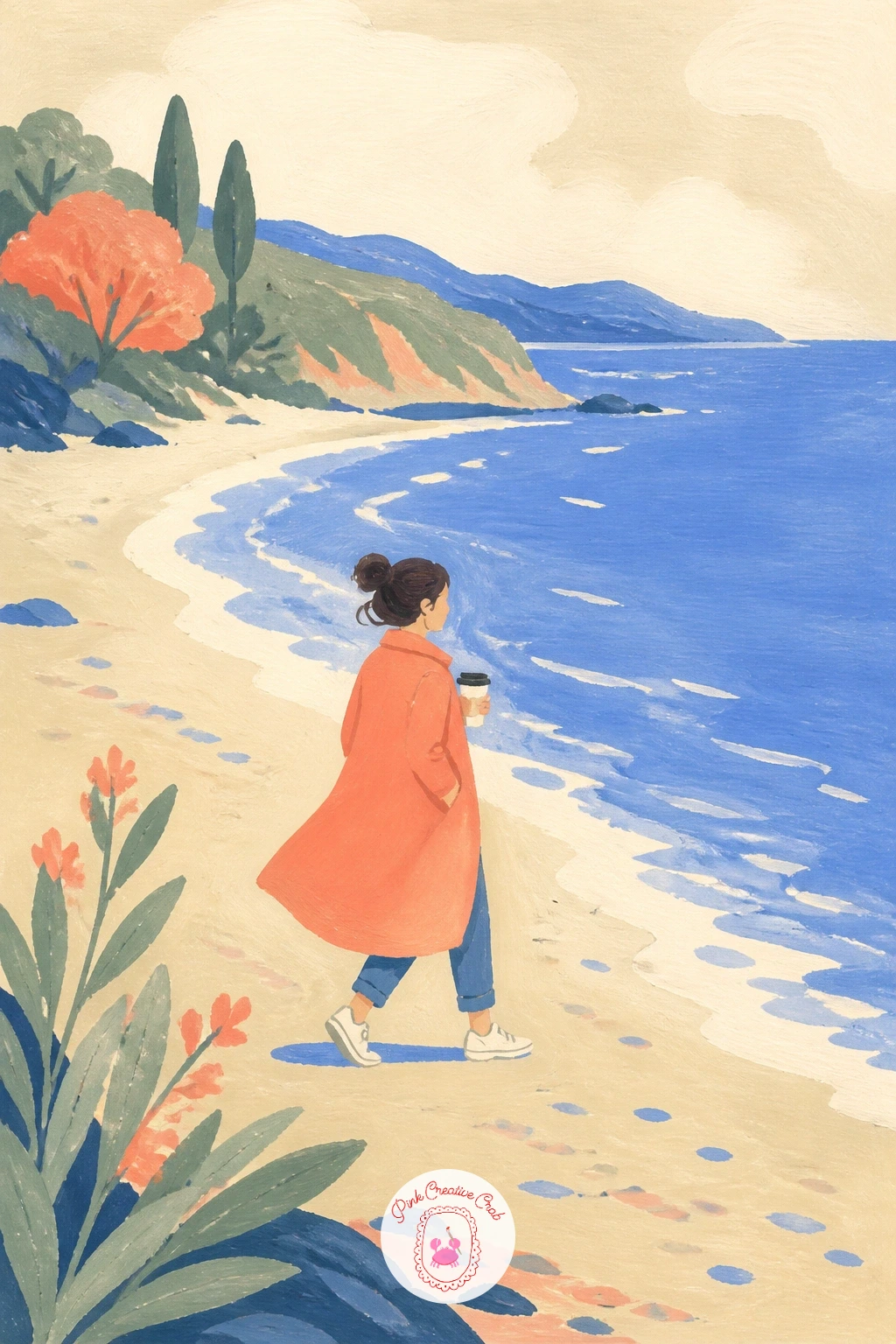
Give her a solo moment along the shoreline, takeaway coffee in hand, walking with the sea stretching out beside her. Paint the sea and sky as two flat cornflower bands of slightly different tone first, then the sand as a cream strip, and her walking figure last, small against the wide horizon to emphasize the quiet.
Scale is the whole mood here: keep her figure noticeably small within the frame, maybe a sixth of the page width, with plenty of open sea and sky around her. A figure that fills too much of the frame loses the sense of solitary space this scene is built on.
A few simple gull shapes, just small V marks, scattered in the sky add life without detail. Keep her coat color as the one warm coral note against all that cool blue, so the eye finds her immediately despite the small scale.
If beaches feel far away to reference, any wide river or lake shoreline gives the same flat horizon band to build from.
Palette: Cornflower Blue, Cream, Coral Pink, Sage Green
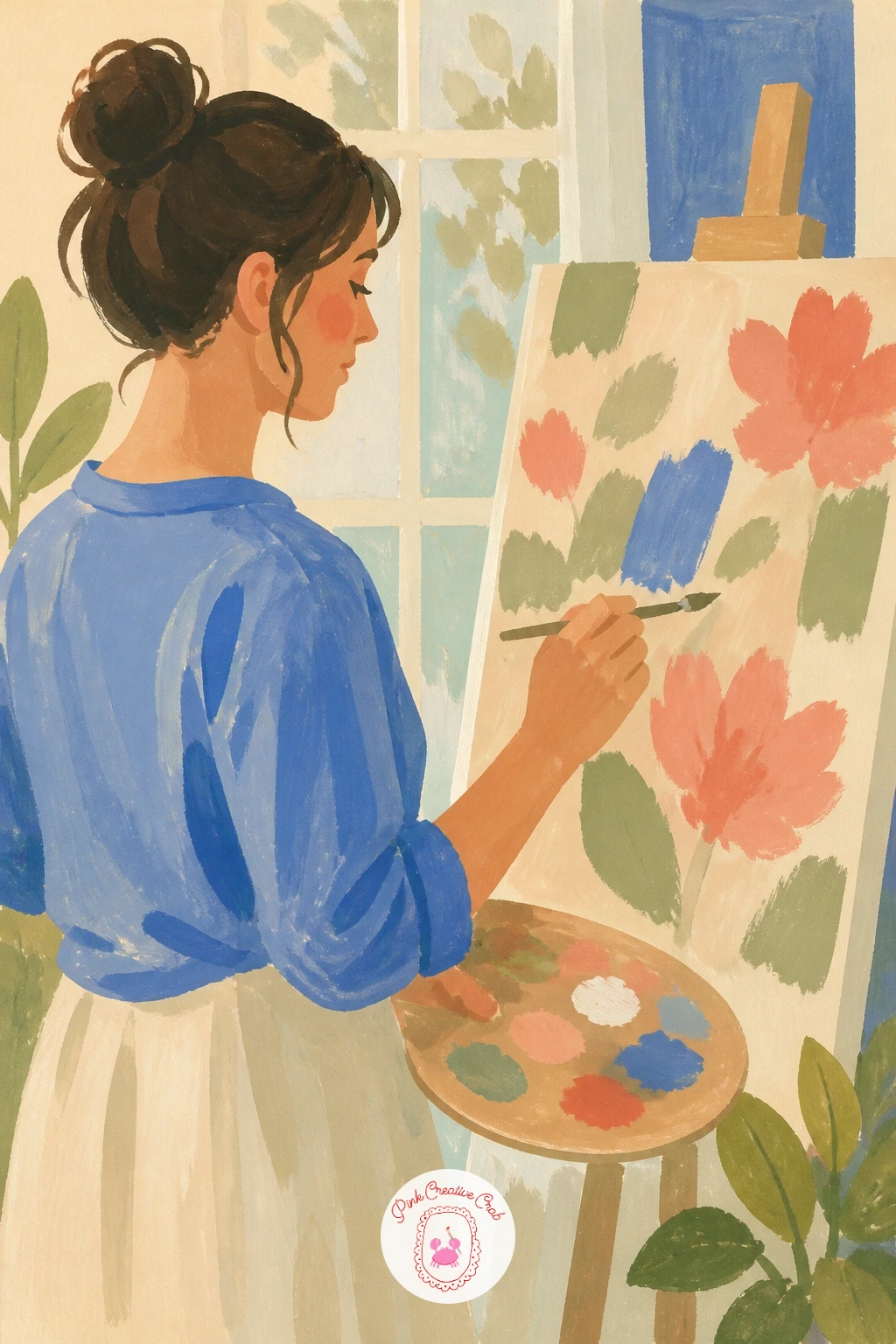
Give her the creative moment too: a mom painting at an easel in a sunny corner, palette in hand. Block the window light first as a soft cream and coral glow across one side of the room, then her standing figure at the easel, finishing with the small canvas and palette shapes last so they sit convincingly in her hands.
Keep the canvas on the easel showing just a loose hint of color, a few flat shapes rather than a detailed painting within the painting, since trying to render a tiny finished artwork inside this scene quickly overcomplicates it. A few coral and sage daubs read as “in progress” perfectly well.
Light from one window means one side of her face and the easel frame picks up warm cream tones while the room behind falls into cooler sage shadow. That single light decision gives the whole flat scene real depth without extra shading.
For more ideas on painting a creative corner like this one, the sketchbook background ideas article has useful approaches for simple interior light.
Palette: Cream, Coral Pink, Sage Green, Cornflower Blue
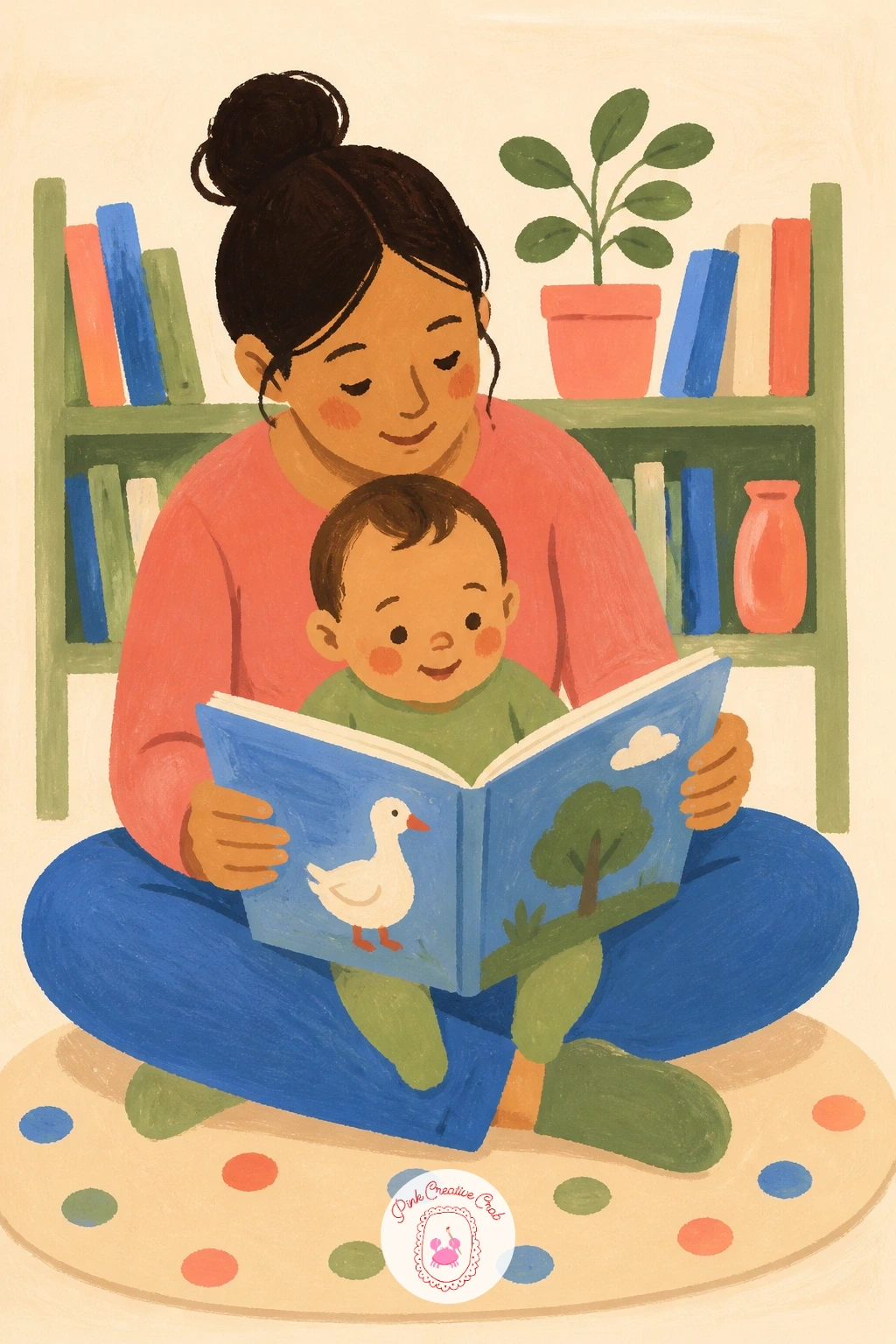
Move to a quieter public moment: a mom and baby seated on the floor at a library story time, a picture book open between them. Paint the floor and a simple low bookshelf as flat cream and sage shapes first, then her seated figure with the baby in her lap, finishing with the open book last, held low enough for the baby to see.
Keep the baby’s attention on the book rather than looking out at the viewer, with a small rounded head tipped forward and one hand reaching toward the page. That single gesture does most of the work of making the scene feel genuinely mid-story rather than posed.
A few other children’s heads peeking in from one side of the frame suggest a group story time without needing full figures painted. Keep them small, simplified and slightly out of focus in color intensity compared to the main pair.
If library shelves feel too architectural to draw today, a plain cream wall with one framed picture does the same job of suggesting an indoor public space.
Palette: Sage Green, Cream, Coral Pink, Cornflower Blue
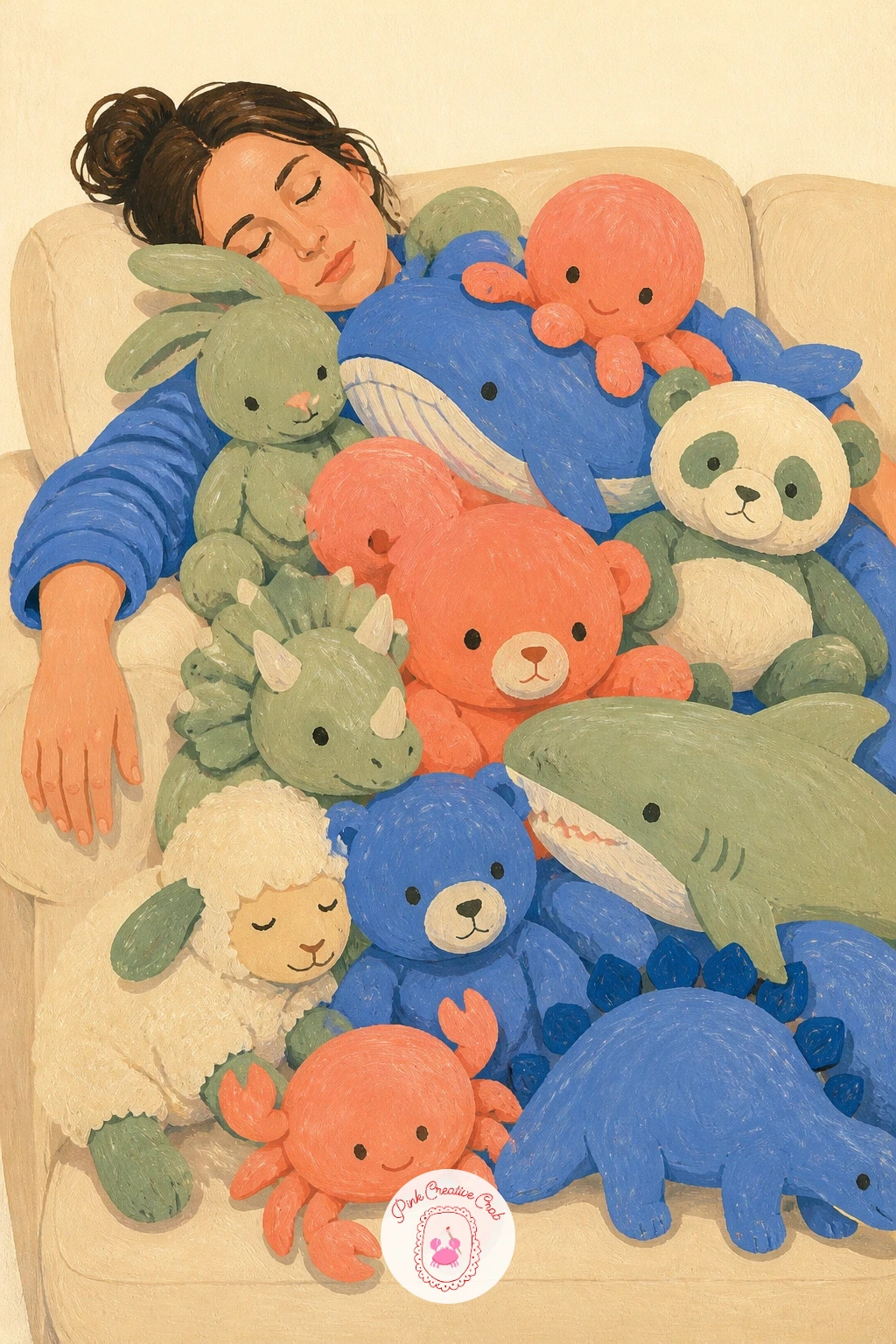
Let the exhaustion win completely here: a mom asleep on the sofa, buried under a small mountain of stuffed toys the kids piled on top of her. Paint the sofa as one cream shape first, then her sleeping figure tucked into the cushions, finishing with a scatter of coral, sage and cornflower stuffed animal shapes piled over her last.
Vary the stuffed toy shapes rather than repeating the same rounded bear three times. A floppy-eared rabbit shape, a round bear shape and one long sausage-shaped toy together read as a real haphazard pile rather than a tidy arrangement.
Keep her face completely relaxed, mouth slightly open, eyes shut with no eyebrow tension at all, which is the single detail that sells deep, genuine sleep rather than a light nap. One toy half covering her face adds to the humor without extra painting.
No real toys to reference, any plush animal photo online gives you enough simple shapes to adapt for the pile.
Palette: Cream, Coral Pink, Sage Green, Cornflower Blue
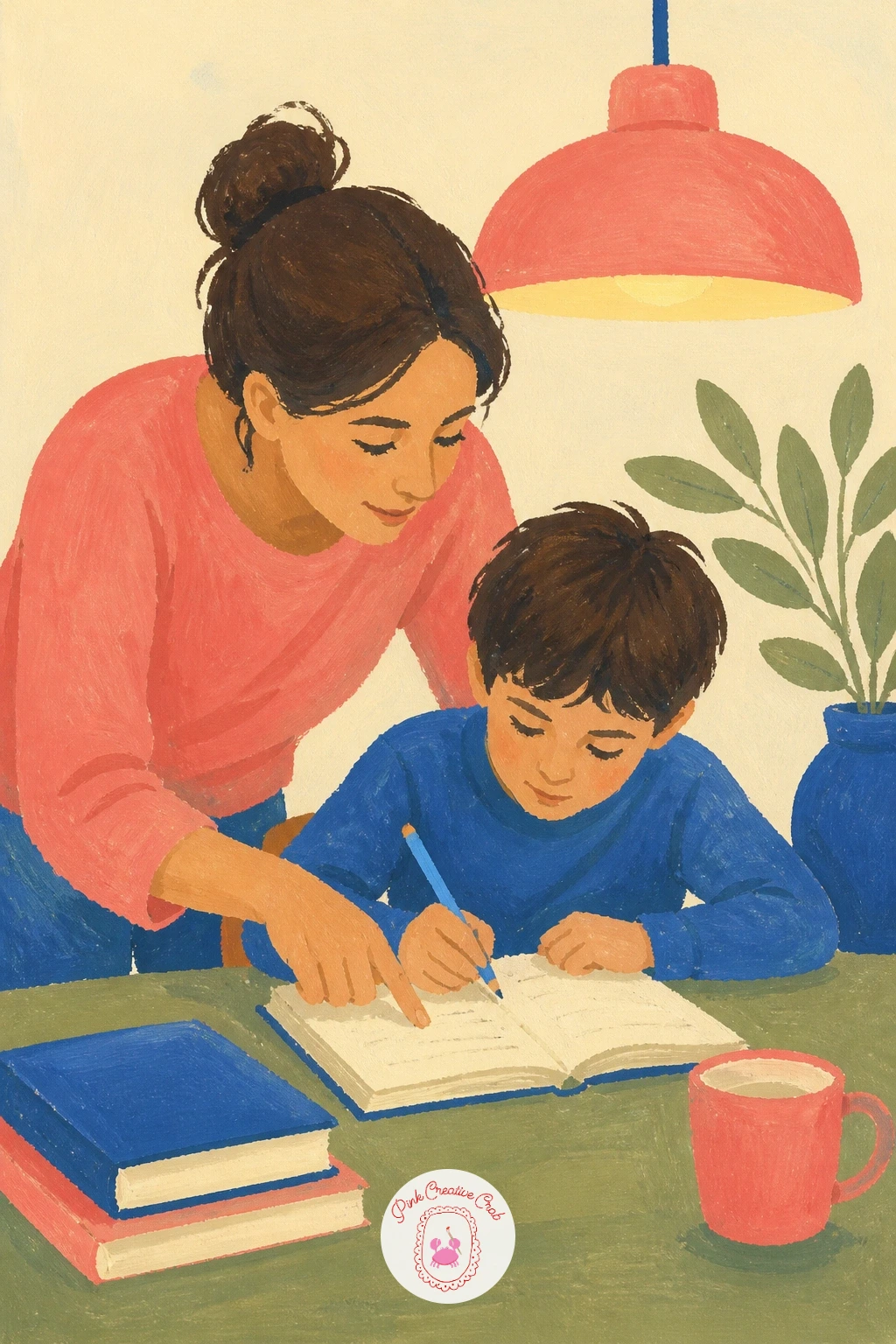
Shift to the kitchen table in the evening, where a mom leans in helping a child with homework spread across the surface. Block the table as a flat cream rectangle first, then the two figures leaning toward each other over an open notebook, finishing with a pencil, a few papers and a small lamp glow last.
Lean both figures toward the same point on the table, her elbow near the notebook and the child’s pencil hovering over it, since two figures leaning toward a shared focus is what reads as genuine collaboration rather than two people simply sitting near each other.
Keep the homework papers to simple flat cream rectangles with a few loose pencil lines rather than legible writing, since any readable text pulls unwanted focus and risks looking like real homework rather than an illustrated prop.
A small desk lamp with a warm coral glow pooling onto the table finishes the evening feel in one more flat shape.
Palette: Cream, Coral Pink, Cornflower Blue, Sage Green
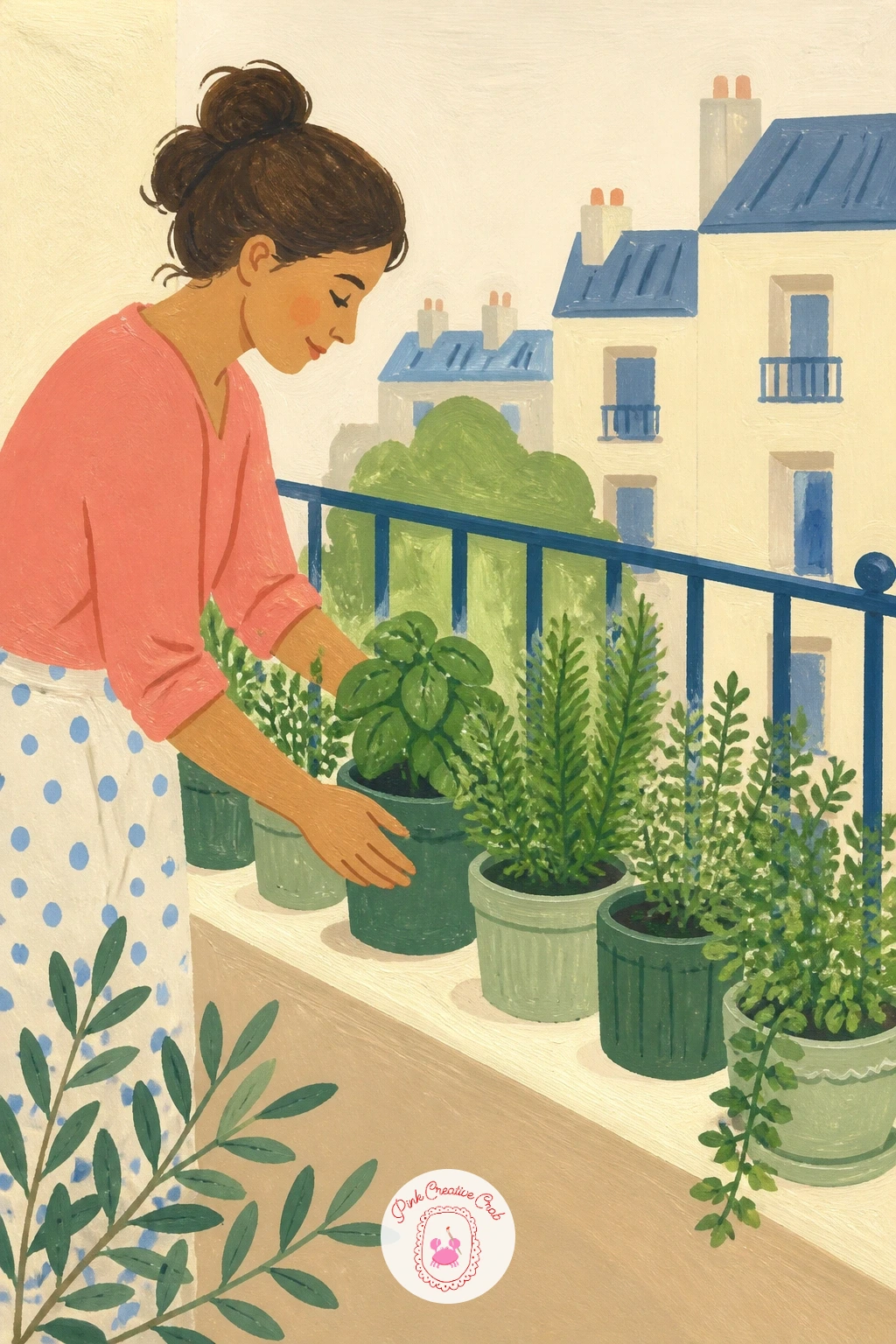
Take the garden scene up a level to a small apartment balcony, where a mom arranges herb pots along the railing. Paint the railing and balcony floor first as simple cornflower and cream shapes, then her kneeling or crouching figure arranging pots, finishing with a row of sage green herb shapes in cream pots last.
Keep each herb pot a slightly different flat green tone, basil a brighter sage, rosemary a deeper sage-grey, so the row reads as varied plants rather than one repeated shape copied along the railing. That small color shift does more work than any added leaf detail.
City rooftops or a glimpse of neighboring buildings beyond the railing ground the scene as urban rather than suburban garden, using just one or two simple building block shapes in a muted cornflower.
If a full balcony feels like too much setup, crop tight to just the railing, the pots and her hands working among them.
Palette: Sage Green, Cream, Cornflower Blue, Coral Pink
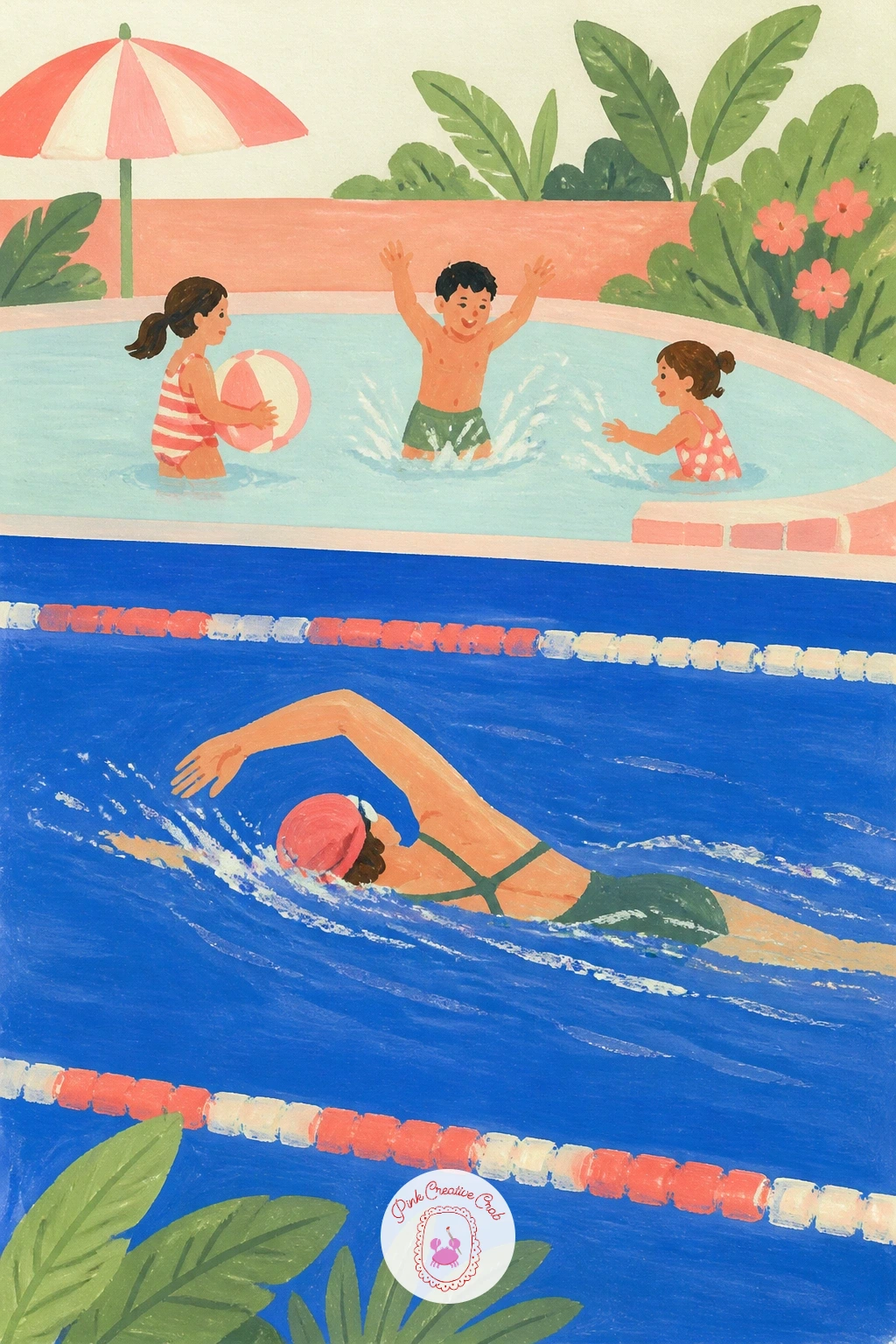
Head to the pool for a rare bit of exercise, mom swimming laps in the deeper water while kids splash in the shallow end nearby. Paint the pool as one large cornflower rectangle first, then her swimming figure mid-stroke in the deeper half, finishing with a couple of small kid shapes splashing in the shallow end last.
Keep her swimming stroke in one clear frozen moment, one arm extended forward and the other pulled back, rather than both arms symmetrical, which reads as floating rather than actively swimming. A small trail of white water behind her suggests real motion through the pool.
Give the shallow end a slightly lighter cream-cornflower tint than the deep end she swims in, which both separates the two zones visually and explains the scene without needing a sign or a rope line painted in.
No pool to reference directly, picture the two depth zones as simply two different shades of the same blue sitting side by side.
Palette: Cornflower Blue, Cream, Coral Pink, Sage Green
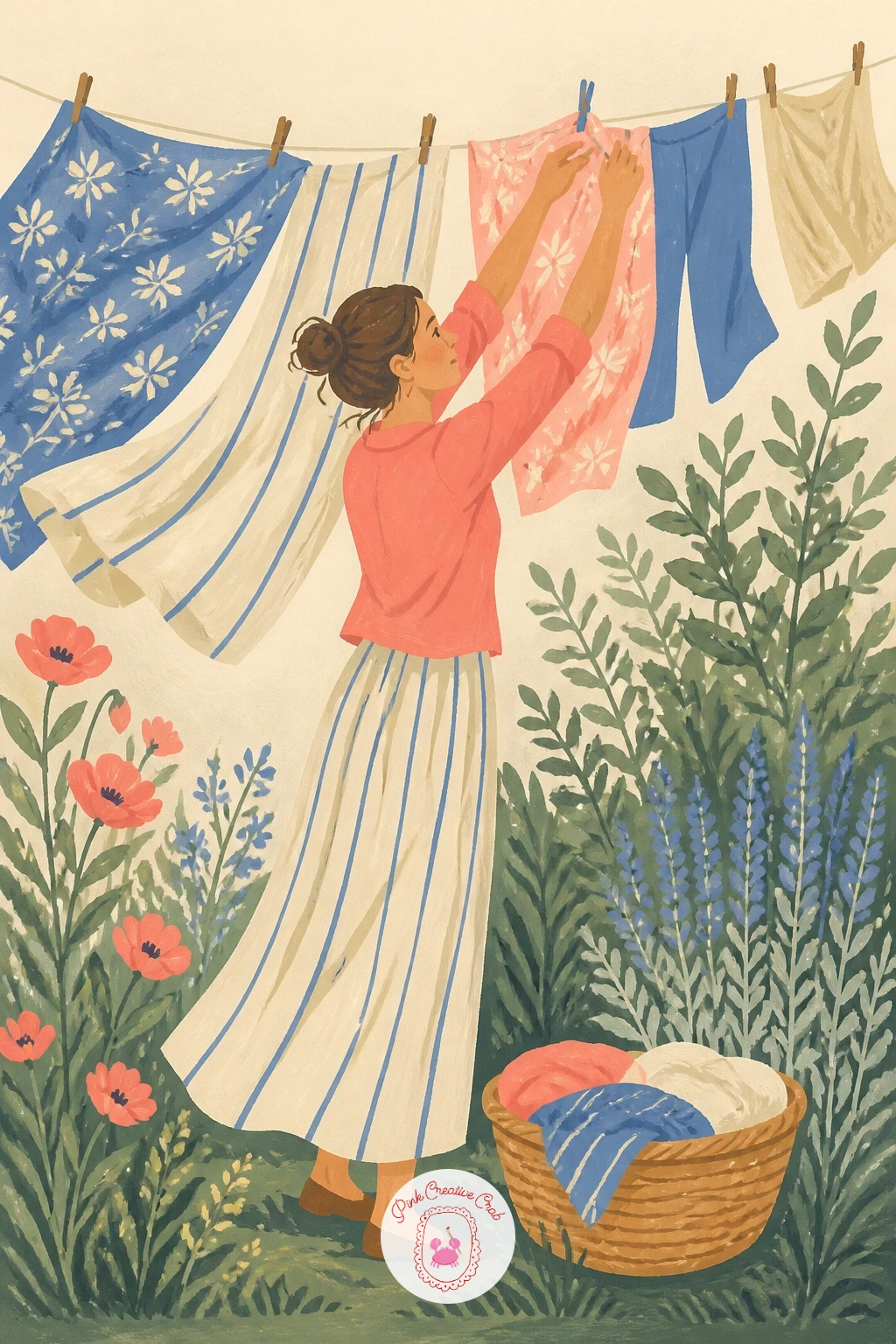
Return outdoors for a breezy laundry line scene, sheets and small clothes billowing beside her. Block the laundry line first as a simple diagonal cream rope strung between two posts, then hang a few flat coral and cornflower garment shapes along it, before adding her reaching figure pinning up the last item last.
Curve every hanging garment slightly to one side, the same direction, rather than leaving them hanging straight down, since that single consistent curve is what reads instantly as “breezy” without needing any wind lines drawn in the air.
Keep the garden behind her simple: a sage hedge or a few loose leaf shapes, nothing competing with the laundry line itself for attention. Her reaching arm, stretched up to the line with a clothespin in hand, is the clearest storytelling gesture in the whole scene.
If a full laundry line feels like too much, three or four garments and one bedsheet shape say the same thing with far less to paint.
Palette: Cream, Coral Pink, Cornflower Blue, Sage Green
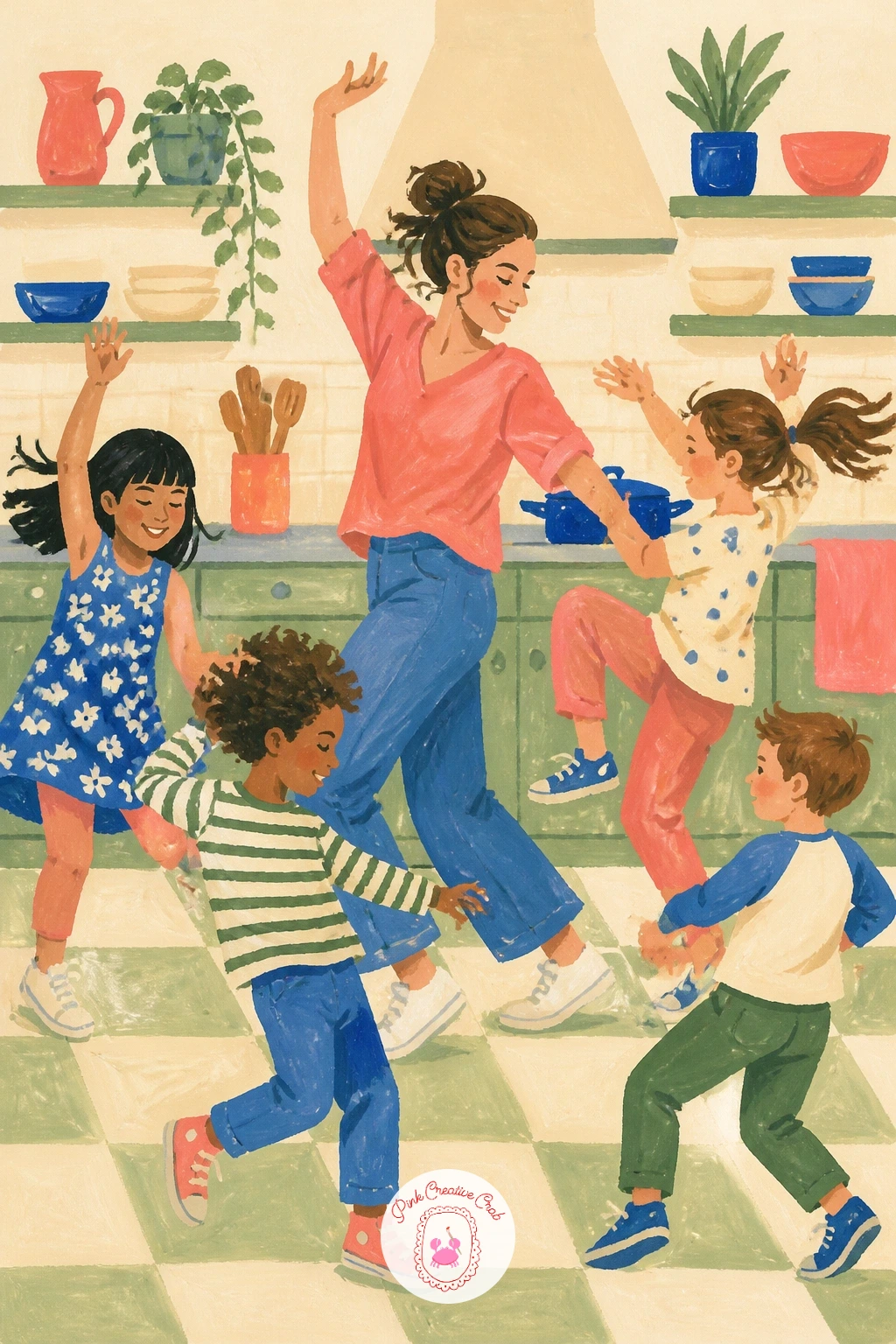
Bring the energy to its peak with a full kitchen dance party, mom and kids mid-move between the counters. Paint the kitchen as a simple cream and sage backdrop first, then build the dancing figures as a loose cluster of limbs in motion, her figure central and taller, kids smaller around her, finishing with one small speaker or phone shape last.
Give each dancer a different limb position entirely rather than matching poses, one arm thrown up, another leg kicked out, a third figure mid-spin, since variety across the small group is what sells genuine dancing rather than a posed lineup.
Keep the kitchen counters and cabinets simplified to flat blocks of cream and sage in the background, since too much kitchen detail competes with the far more interesting movement happening in front of it.
Try the quick version in ten minutes with just two figures mid-spin, or spend forty minutes adding the full group and a scattering of small motion lines around their limbs.
Palette: Coral Pink, Cream, Sage Green, Cornflower Blue
Close the day with three generations: a mom and grandma sharing tea on the porch while the kids play in the yard beyond. Paint the porch and two chairs first as simple cream and sage shapes, then the two seated women facing each other with teacups, finishing with the small playing children scattered in the yard last, loose and distant.
Give grandma a slightly more upright, composed posture than the mom beside her, who can lean back a little more loosely into her chair. That small posture difference between the two women does more to suggest generation and ease than any difference in clothing or color would.
Keep the children in the yard small, simple, and in motion poses, one running, one bending to pick something up, rather than standing still, which would make the background feel static next to the relaxed foreground conversation.
For more ideas on painting a quiet multigenerational garden scene like this, the mothers day junk journal pages article has related garden and teacup imagery worth a look.
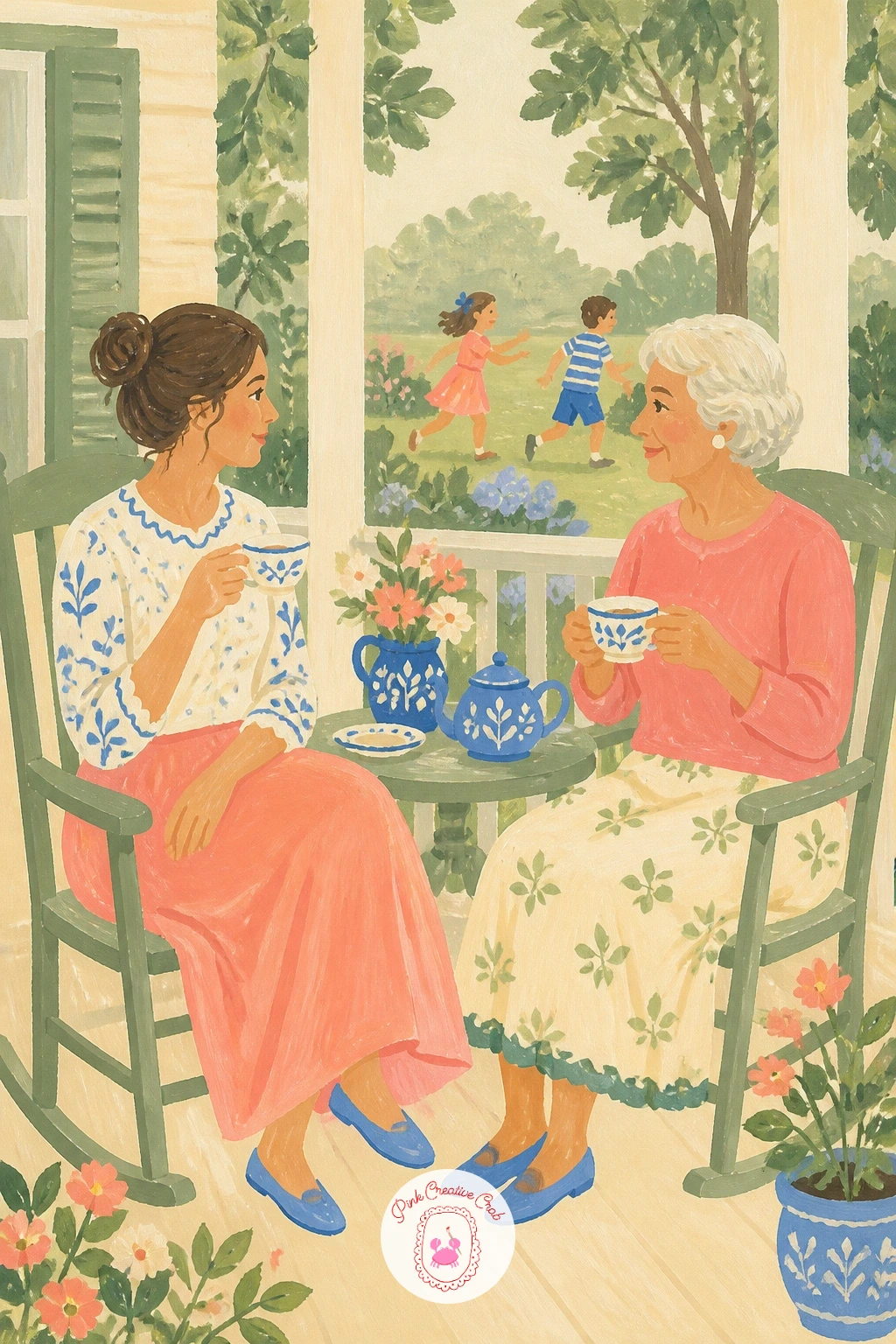
Palette: Sage Green, Cream, Coral Pink, Cornflower Blue
What to Do Next
Pick whichever moment matches your own day right now, coffee at dawn, the school run, or the stolen nap in the car, and start with a loose pencil outline on gouache paper before blocking in the big cream and sage shapes first. One scene, finished today, is plenty.
Frequently Asked Questions
What paint works best for a modern mothers day illustration like this?
Gouache gives the flattest, most matte finish for this style. It covers evenly in one or two layers and keeps edges crisp, which is exactly what a modern editorial scene needs.
How do I keep every scene looking like part of the same set?
Stick to one palette across all pieces. Using the same coral pink, cornflower blue, sage green and cream in every painting ties the whole series together even though each scene is different.
Do I need to draw a full pencil sketch first?
A light pencil outline of the big shapes helps, especially for figures in motion like running or dancing poses. Keep it loose, since gouache covers pencil lines completely once you start painting.
How do I make the figures look like they are mid-action rather than posed?
Compare limb angles before finishing the shape, one bent knee, one raised arm, a tilted head. Perfectly symmetrical poses read as standing still, while uneven, asymmetrical positions read as genuine movement.
What if I only have watercolor or acrylic, not gouache?
Acrylic diluted slightly gives a similar flat matte finish and works well as a swap. Watercolor is harder to flatten completely but can still work if you paint in solid, even washes rather than loose blending.
Have any thoughts?
Share your reaction or leave a quick response — we’d love to hear what you think!
-
 0
-
 0
-
 0
-
 0
-
 0
-
 0
