Cute mothers day cards get their charm from one simple choice: a mama animal curled, carrying or wading alongside her baby, nothing else competing for attention. Watercolor suits this kind of card perfectly, because a few soft washes and a little ink line can carry all the tenderness you want to send, without a single word needed on the front.
Below you will find twenty eight pairs, from a duck leading her ducklings across a pond to a whale gliding beside her calf, each one sized and paced to finish on a card blank in one sitting. Pick whichever mother and baby feel right for the person you are painting for, and work through the steps at your own speed.
Using these images: free for personal projects such as printing, coloring, cards, journals and gifts. Handmade items that include them may be sold up to 30 pieces per design. More than that is commercial use and is not permitted, and neither is selling or sharing the images themselves or passing them off as your own. Please ask before any other use.
Start with a mother duck leading three fluffy ducklings across a pond, since round bodies and a gentle curve of movement make this the easiest pairing on the list. Sketch her body as one tilted oval with a smaller oval head, then stack three tiny ovals behind her in a loose line, each one slightly smaller than the last.
Wash her body in dove grey with a hint of blush on the chest, leaving the paper white where the light catches her back, and drop warm yellow into the ducklings while the paper is still a touch damp so the color pools softly. Paint the pond as one flat wash of sky blue, pulling it in horizontal strokes so it reads as still water rather than waves.
The trick with a lineup like this is keeping all four birds roughly the same distance apart, so measure the gap between the mother’s tail and the first duckling with your brush handle, then repeat that gap twice more down the row.
Add ink lines last for the beaks, eyes and a few ripple lines under their bodies once everything is bone dry, and if you do not have yellow on hand, a light wash of raw sienna gives the same cozy duckling color.
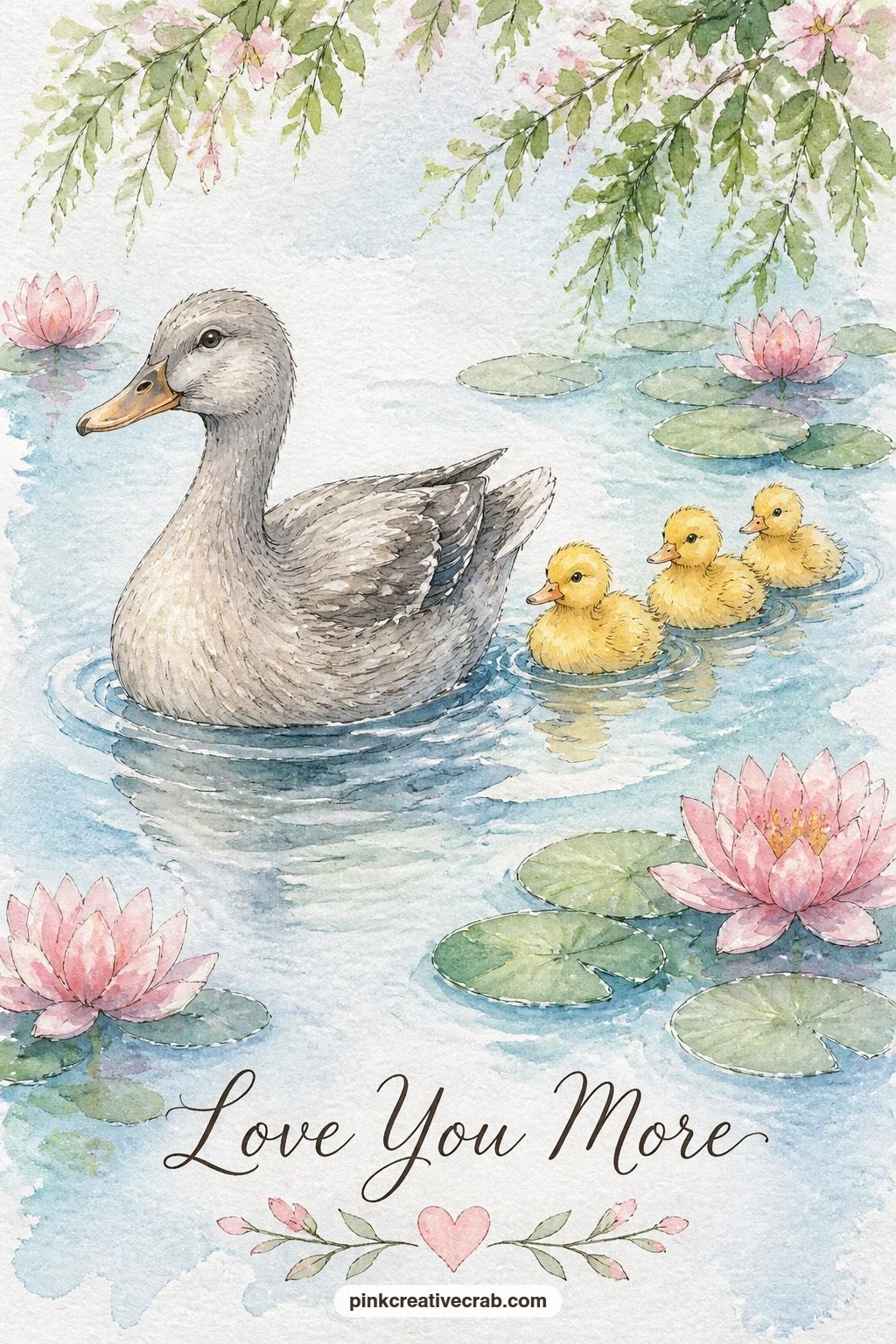
Palette: Dove Grey,Naples Yellow,Sky Blue,Blush Pink
Move from the pond to a basket indoors for a cat mom curled around two sleeping kittens, a pose built almost entirely from one big comma shaped wash. Paint her body as a loose crescent in warm grey, curving around an open space in the middle where the kittens will sit, and let the wash dry fully before you add them.
Drop the two kittens in as small tucked ovals, touching and overlapping slightly so they read as one warm huddle rather than two separate shapes. The basket underneath can be a quick dry brush sweep of sienna, dragging a half loaded brush sideways so the weave texture appears on its own without you drawing every line.
This pose goes wrong most often when the mother’s curve gets too stiff and round, so loosen your wrist and let the line wobble a little, since cats never curl in a perfect circle. If your grey paint looks flat, mix in a touch of blush or sky blue rather than reaching for black, which keeps the fur soft instead of harsh.
Finish with ink whisker lines and closed sleepy eyelids on all three, added only once the paint is completely dry so the ink stays crisp.
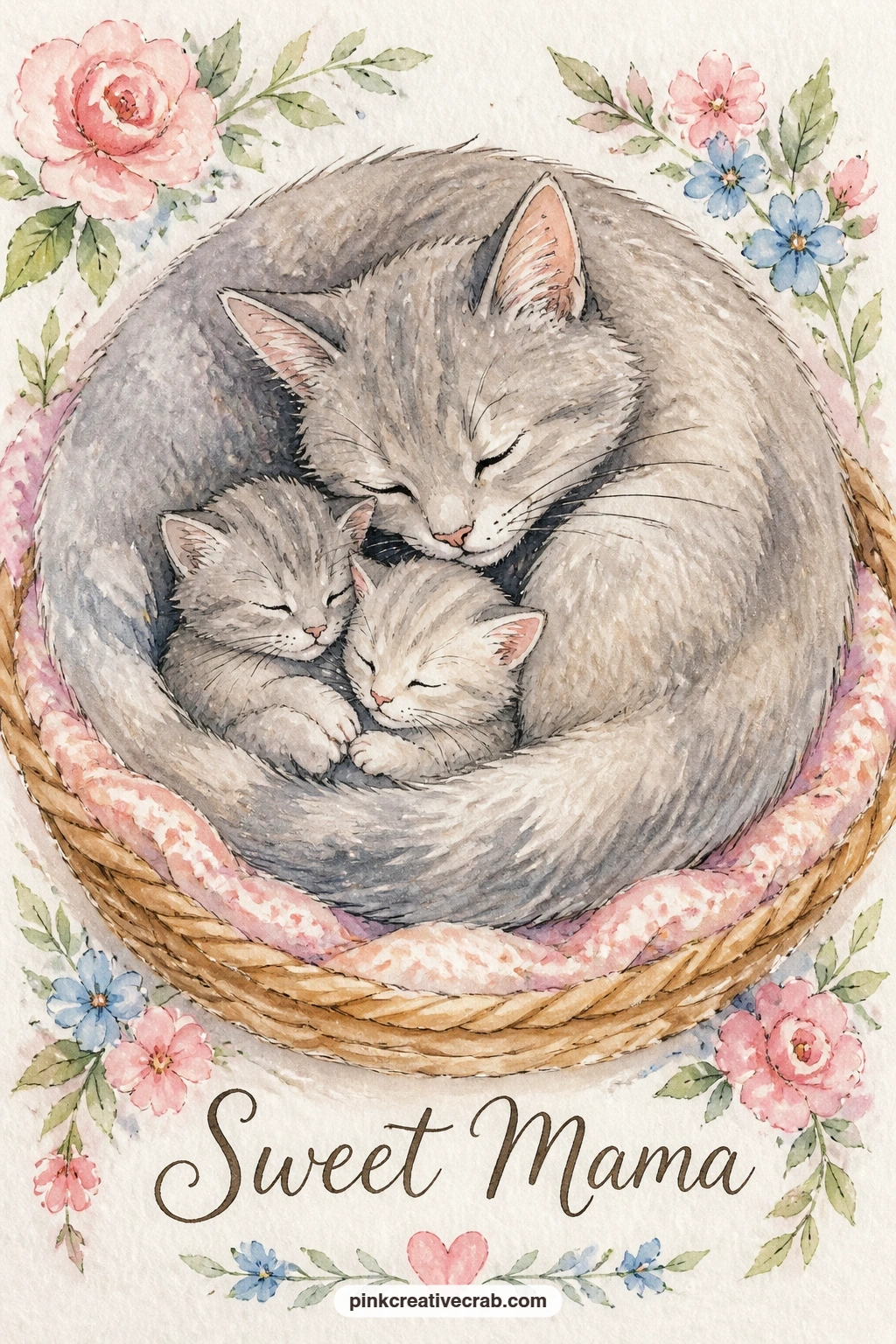
Palette: Payne’s Grey,Blush Pink,Raw Sienna,White
Look at a photo of a curled up cat before you start, since the tail usually tucks under the chin rather than lying flat, and that small detail sells the whole pose.
A mama elephant and her baby walking trunk to tail asks for a bit more patience with proportion, since the whole charm of the pose depends on getting the connection right. Draw the mother first as a large rounded body on thick straight legs, her trunk curving down and slightly forward, then place the baby just behind her so its small trunk can rest against her tail.
Measure the baby against the mother before you paint: her body should be roughly twice the baby’s height, and her ears about as wide as the baby’s whole body, which keeps the pair believable rather than cartoonish. Wash both in dove grey, using a slightly deeper mix for the mother and a lighter one for the baby so she reads as the larger, older shape even at a glance.
Where the trunk meets the tail is the part most likely to go wrong, so leave that small connecting curve until last and paint it in one confident stroke rather than several timid ones. If grey feels too cool for your card, warm the mix with a touch of raw sienna.
Add a scattering of small green leaves under their feet with a round brush loaded lightly, and finish ears and toenails in ink once dry.
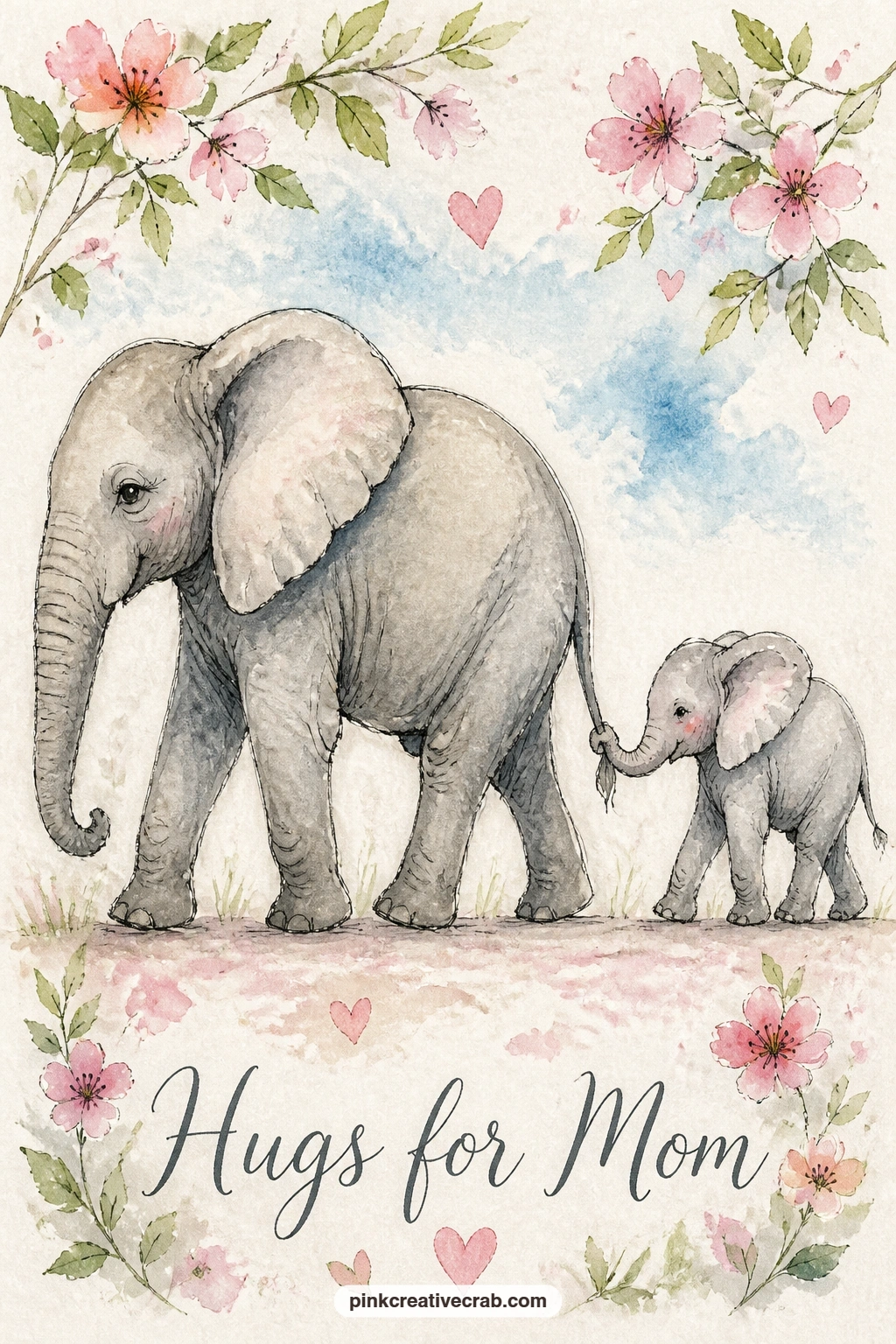
Palette: Dove Grey,Raw Sienna,Fresh Green,Payne’s Grey
Climb up into a eucalyptus tree for a koala mom carrying her baby on her back, a pairing that leans on perspective more than any other on this list. Paint the branch running diagonally across the card first, since everything else sits on top of it, then place the mother gripping it with round paw shapes and her baby peeking over her shoulder from slightly higher up.
Because she is seen mostly from behind and the baby from above her shoulder, keep the mother’s ears and nose only partly visible at the edge of her round face, which is what actually reads as “climbing” rather than “sitting.” Wash her fur in dove grey with a blush undertone on the ears, and leave soft white gaps between brushstrokes for the fluffy texture rather than trying to paint every hair.
Eucalyptus leaves go in with a two toned green, sap green on the shadow side of each leaf and a lighter mint on the lit side, since koalas almost always get photographed with light falling from above through the canopy. For more detail on painting this kind of fur texture, the guide to cute watercolor animals walks through a few useful brush techniques.
Finish with ink claws gripping the bark and a few small ink veins on the leaves.
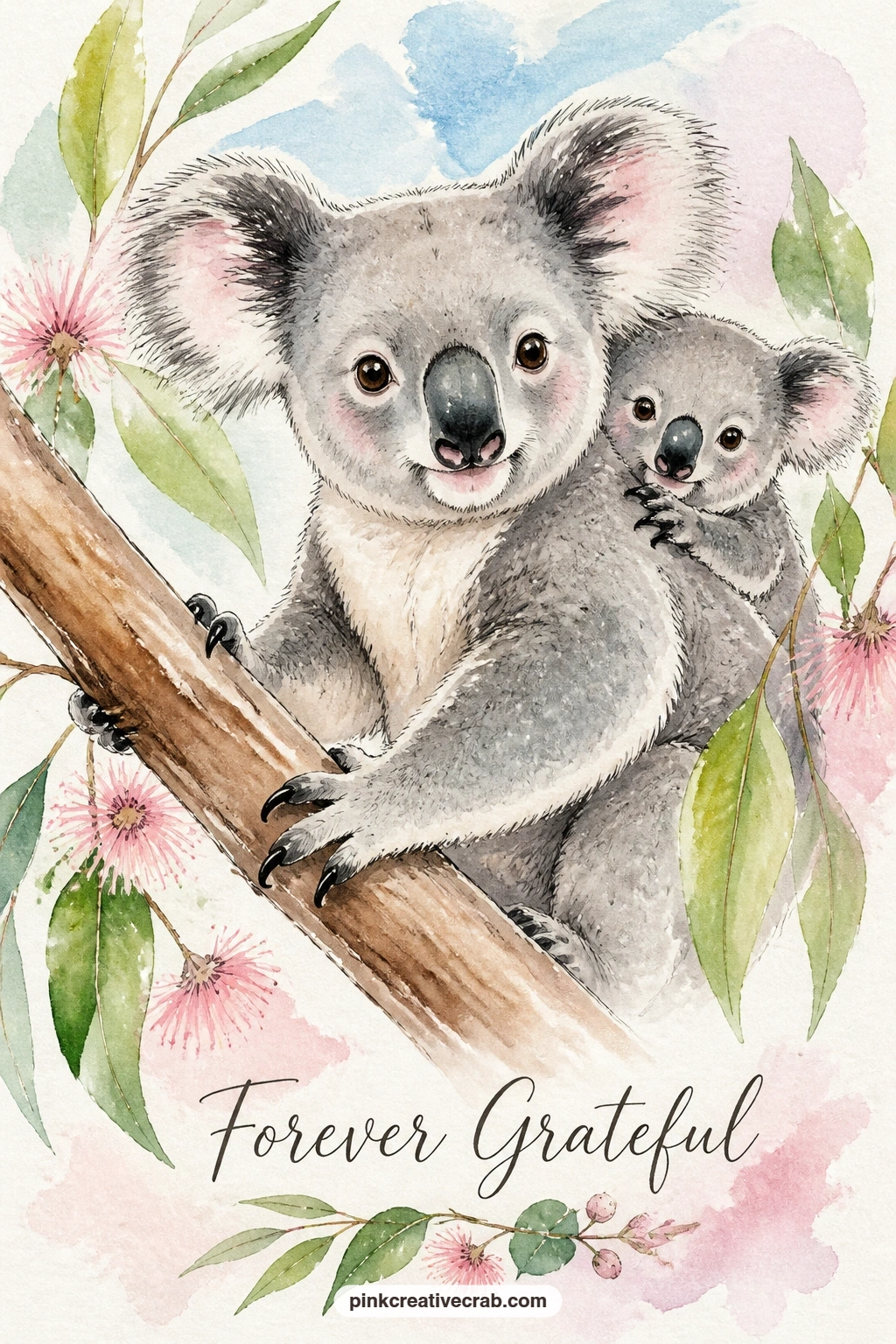
Palette: Dove Grey,Blush Pink,Sap Green,Mint Green
Settle back down to ground level with a sheep and her lamb lying in a meadow of daisies, a relaxed pose that gives your brush a rest after the climbing koalas. Build both bodies from cloud shaped clusters of small overlapping curves rather than one solid outline, dabbing a round brush repeatedly to suggest wool without drawing every curl.
Keep the lamb’s wool clusters noticeably smaller and tighter than the mother’s, since that size difference alone does most of the work of making them read as parent and baby. Wash the wool in a warm white left mostly as bare paper, with only the shadowed undersides touched in pale dove grey, and paint the faces and legs in a soft black or deep grey for contrast.
Daisies scattered around them are quick: a tiny circle of yellow with four or five white petal strokes around it, repeated loosely across the meadow rather than lined up neatly. If your wool clusters start looking too uniform and stiff, vary the pressure on your brush so some dabs are darker and some barely there.
You will find more lamb and farm animal poses in the watercolor sheep collection if this pairing becomes a favorite.
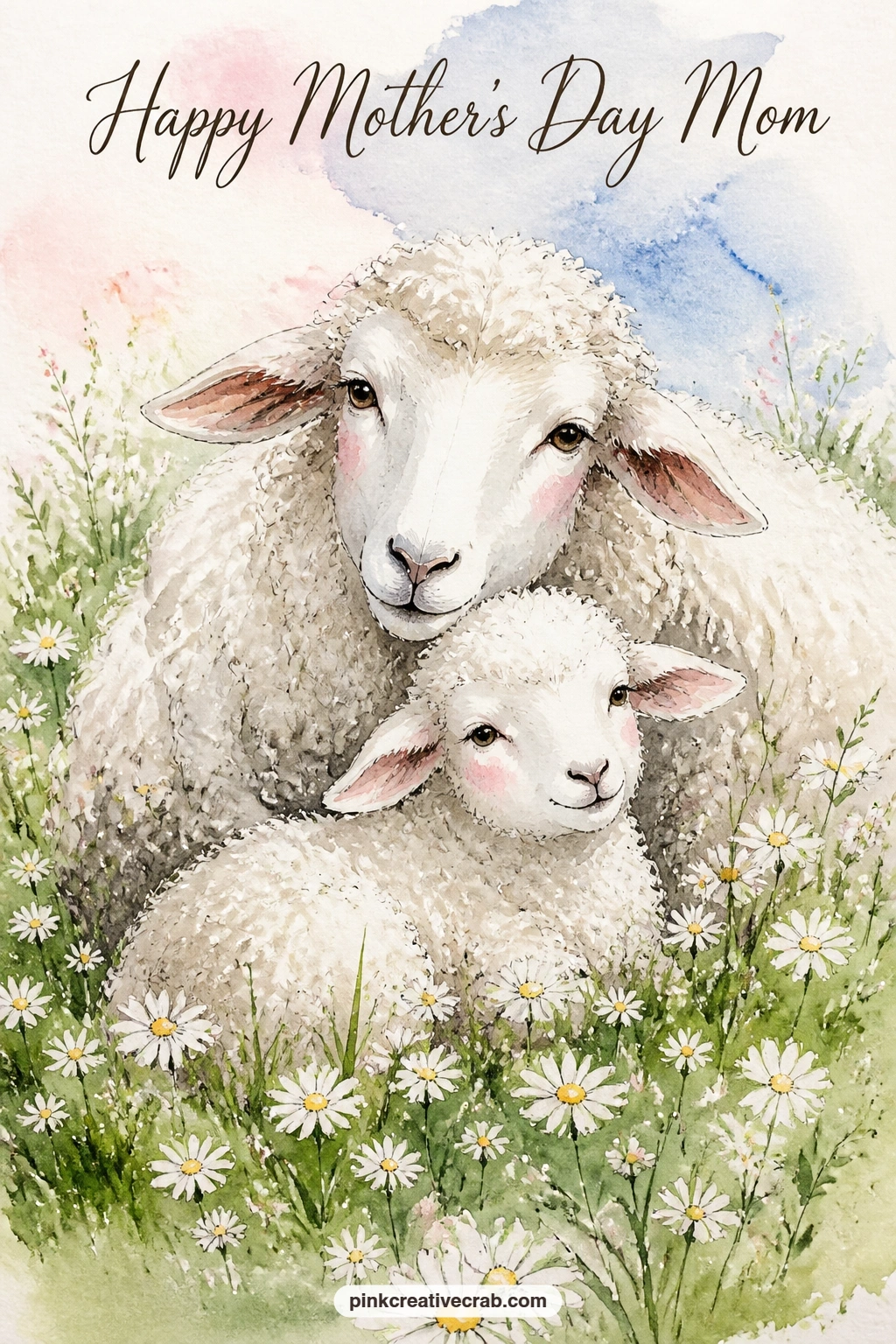
Palette: Dove Grey,Payne’s Grey,Fresh Green,Naples Yellow
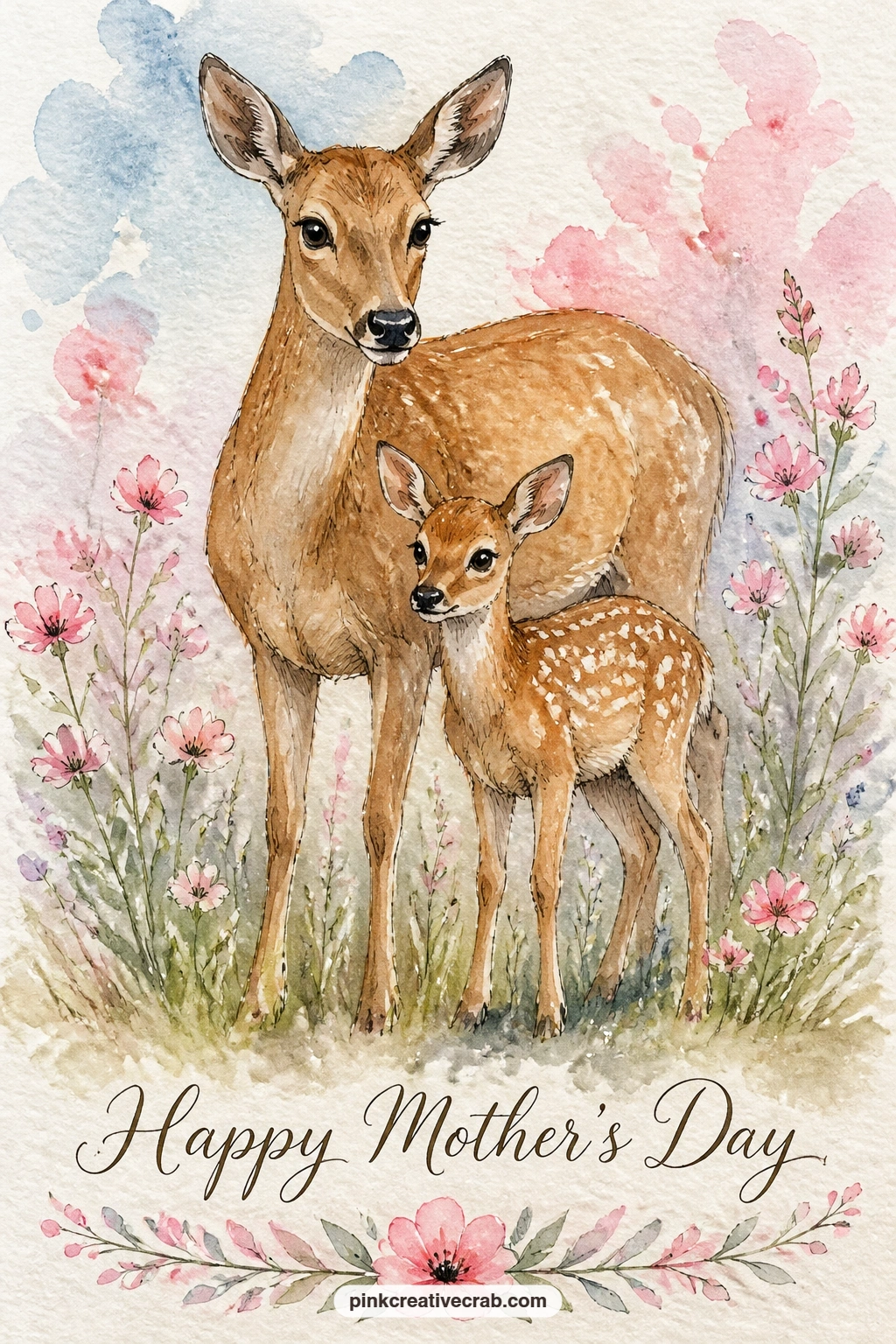
A mother deer and a spotted fawn in a flowery clearing brings back a little more structure after the loose sheep, since deer legs need to look slender and precise rather than woolly. Sketch both bodies on long thin legs first, checking that the fawn’s legs are proportionally longer relative to its body than the mother’s, which is true of real fawns and makes the pose feel accurate.
Wash the mother in warm raw sienna with a soft white belly, and keep the fawn a shade lighter with the same warm undertone so they clearly belong to each other. The white spots on the fawn are the detail everyone notices first, so reserve them with masking fluid before you wash the body color over the top, then peel it away once dry to reveal crisp white dots.
Flowers in the clearing can be loose pink and white dabs scattered at different heights, keeping them smaller near the deer’s legs and slightly larger toward the card edges for depth. If you do not have masking fluid, paint the spots in last with a small brush loaded with white gouache instead.
Finish both animals with ink eyes and a few short ink strokes along the back for texture.
You Will Need
- masking fluid
Palette: Raw Sienna,White,Blush Pink,Fresh Green
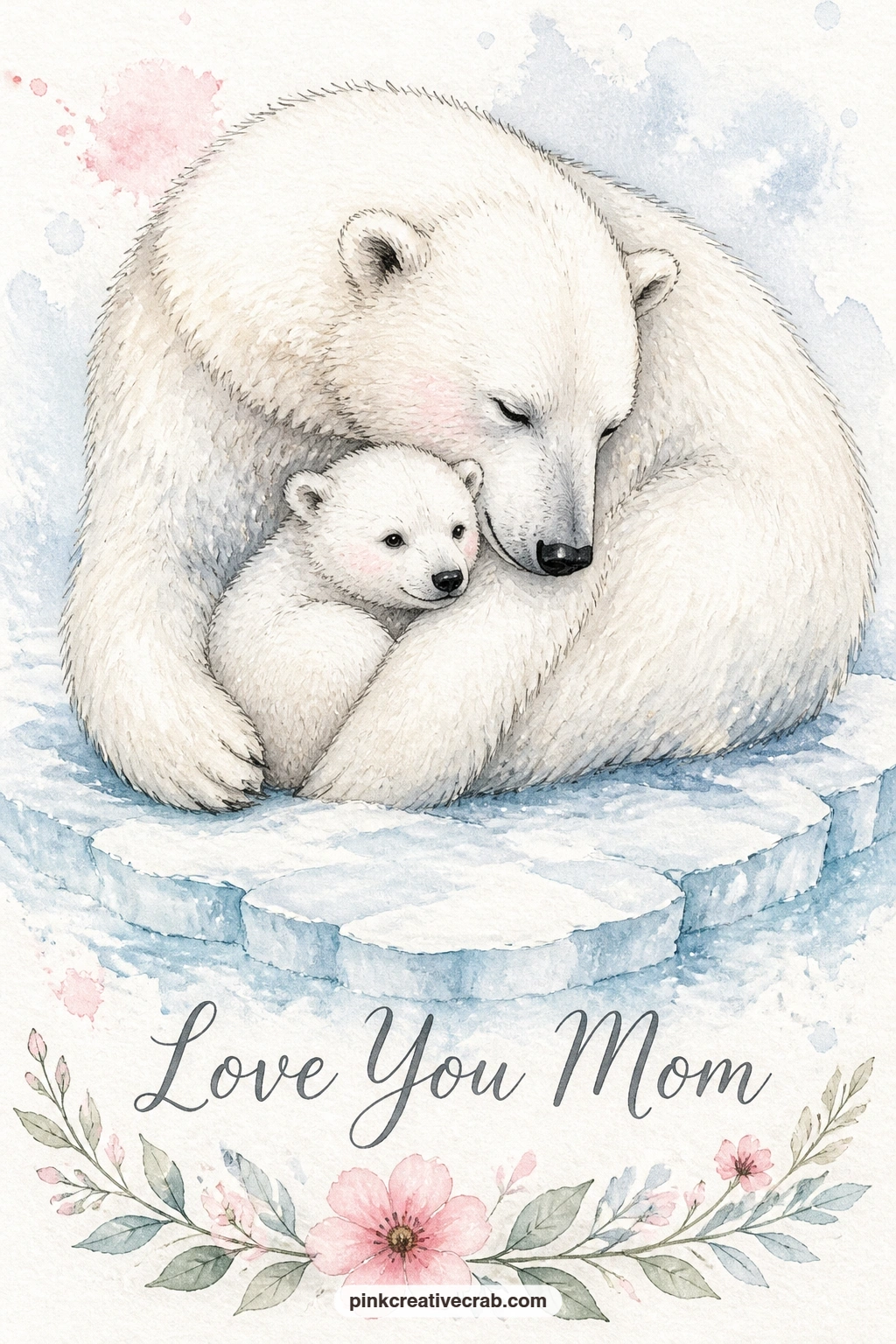
Cool the palette right down for a polar bear mom and cub snuggled on the ice, where the real challenge is painting white animals without losing them against white paper. Sketch both bodies as soft rounded mounds pressed close together, the cub tucked almost entirely against the mother’s chest, then mix a very pale blue grey wash for the shadow side of each body rather than painting them white at all.
Leave the lit sides of both bears as bare paper, and let that pale blue grey carry all the form, deepening it slightly where the cub meets the mother’s fur so the overlap reads clearly. The ice beneath them can be a flat wash of sky blue with a few jagged white cracks left unpainted, giving the ground its own texture without extra color.
If the bears start to vanish into the background, strengthen the shadow mix just along their outer edges, which is usually enough to pull them forward again. Swap masking fluid for a white gel pen if you prefer to add the ice cracks after painting rather than before.
Finish noses and eyes in a soft brown ink rather than black, which suits the gentleness of the scene.
You Will Need
- white gel pen
Palette: Pale Blue Grey,Sky Blue,White,Sepia
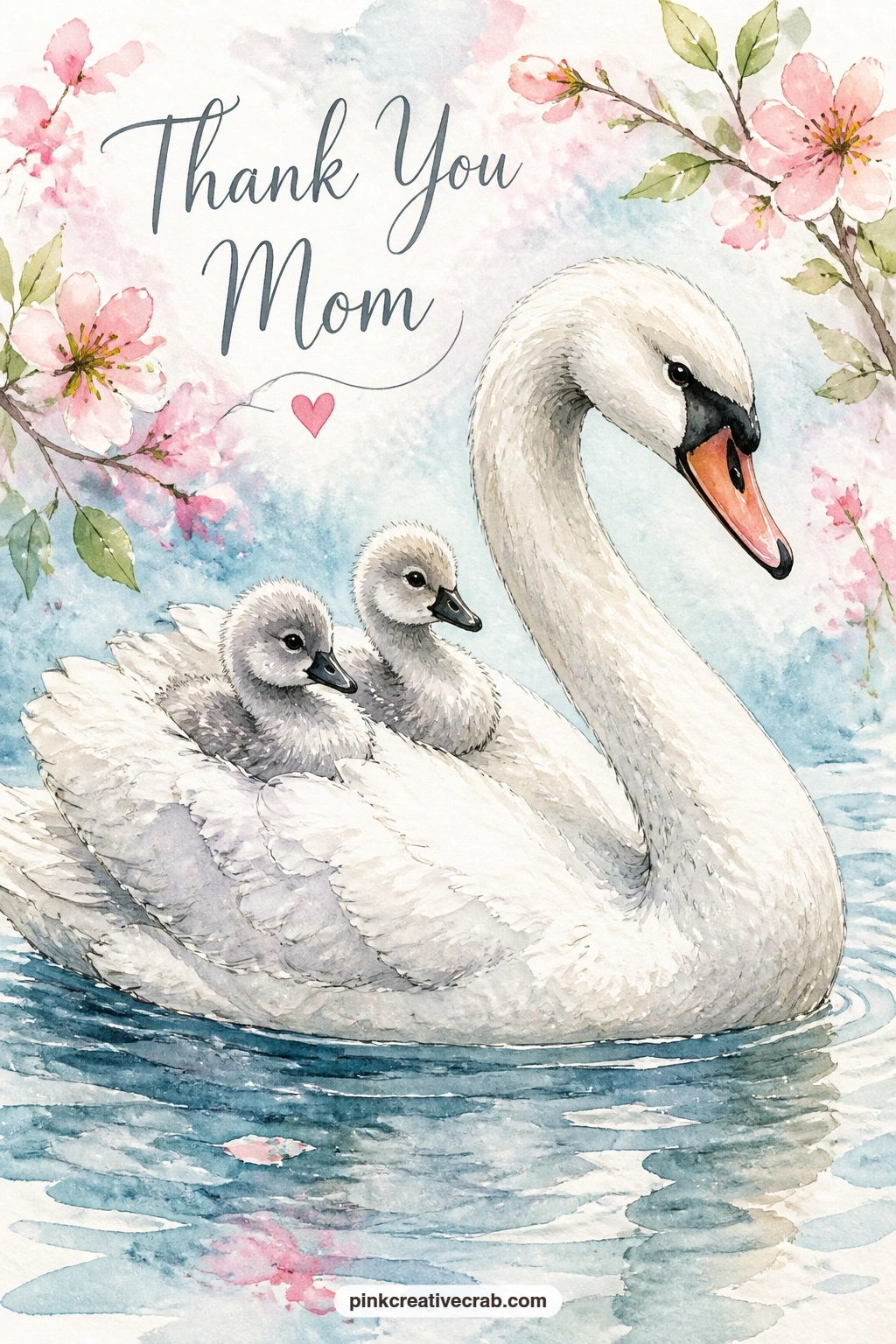
Glide from ice to open water for a swan gliding with two grey cygnets on her back, a pose that lives or dies on the curve of her neck. Paint the neck in one long S shaped stroke rather than several shorter ones, keeping the brush loaded enough that the line stays smooth from the head down to where it meets the body.
Leave her entire body as bare white paper, adding only the faintest grey shadow underneath where she sits in the water, and save your color for the two small grey cygnets tucked on her back. Keep the cygnets noticeably smaller and rounder than the swan’s own head, since that contrast is what makes them read as babies riding rather than adult birds crowding her.
Water beneath her can be a loose sky blue wash with a few white reflection lines left unpainted, pulled in gentle horizontal strokes to suggest calm water rather than waves. If the long neck stroke wobbles, a slightly larger brush with more water in the mix makes it easier to keep moving in one pass.
Add the orange beak and black eye markings last in ink and a touch of paint, which brings the whole bird to life.
Palette: White,Dove Grey,Sky Blue,Orange
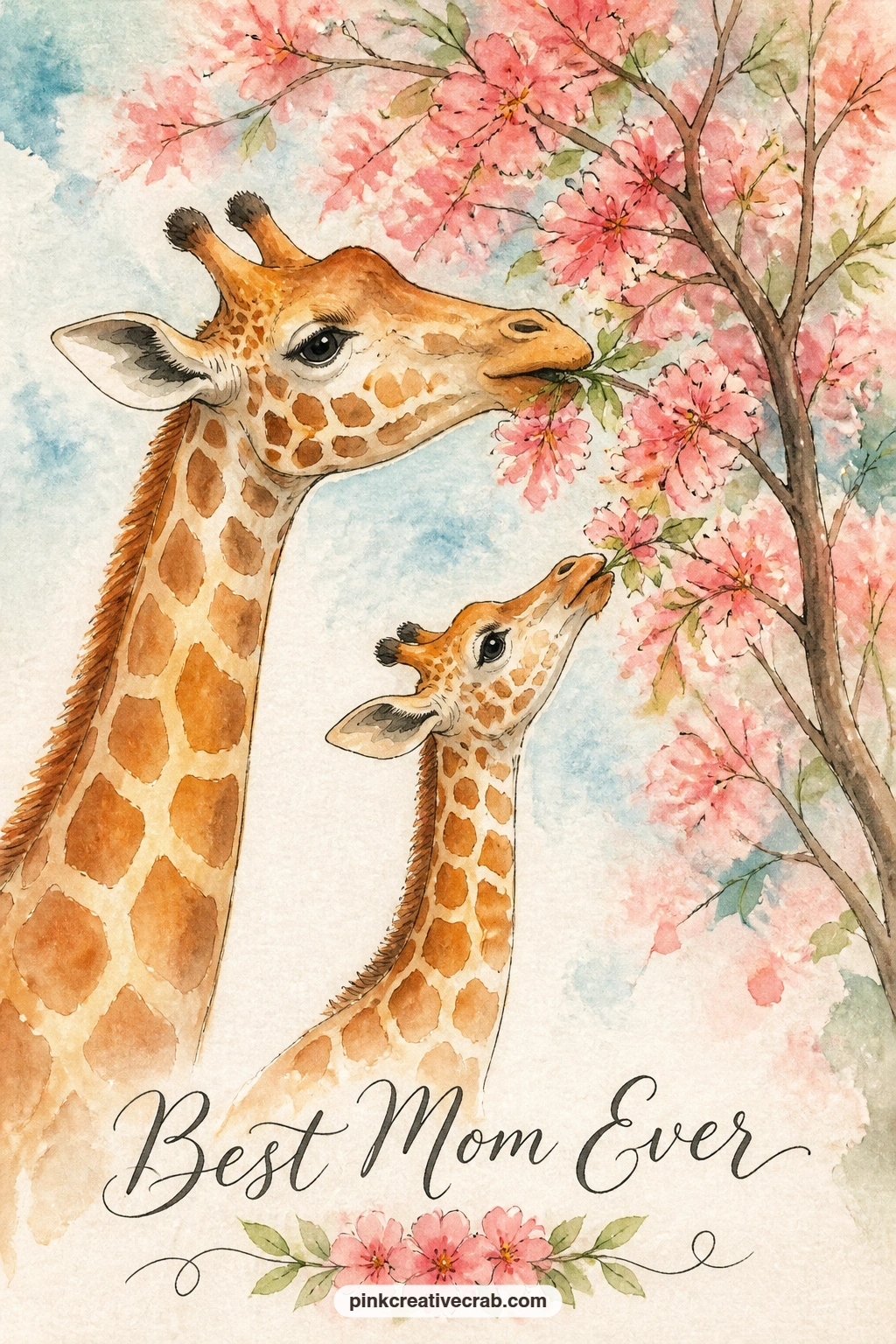
Stretch upward for a giraffe mom and calf nibbling a flowering tree, where perspective decides whether the pair looks believable or oddly flat. Place the mother’s head reaching up into the higher branches and the calf’s head reaching only to the lower ones, since that difference in eye level is what shows she is the taller, older animal without you needing to label anything.
Build both necks as long tapering shapes, wider at the base and narrower near the head, and keep the calf’s neck shorter in proportion to its body as well as its height. Wash the patches in warm raw sienna with gaps of white paper between them, since giraffe pattern reads better as scattered uneven shapes than as a tidy grid.
The tree can be a loose green canopy dabbed in with a nearly dry brush, scattered with small pink blossom dots where the branches are thinner. If the two necks start to look like identical twins, angle one slightly more than the other, which instantly separates them into two distinct animals.
Finish ossicones, eyes and leg lines in ink once every wash is fully dry.
Palette: Raw Sienna,White,Fresh Green,Blush Pink
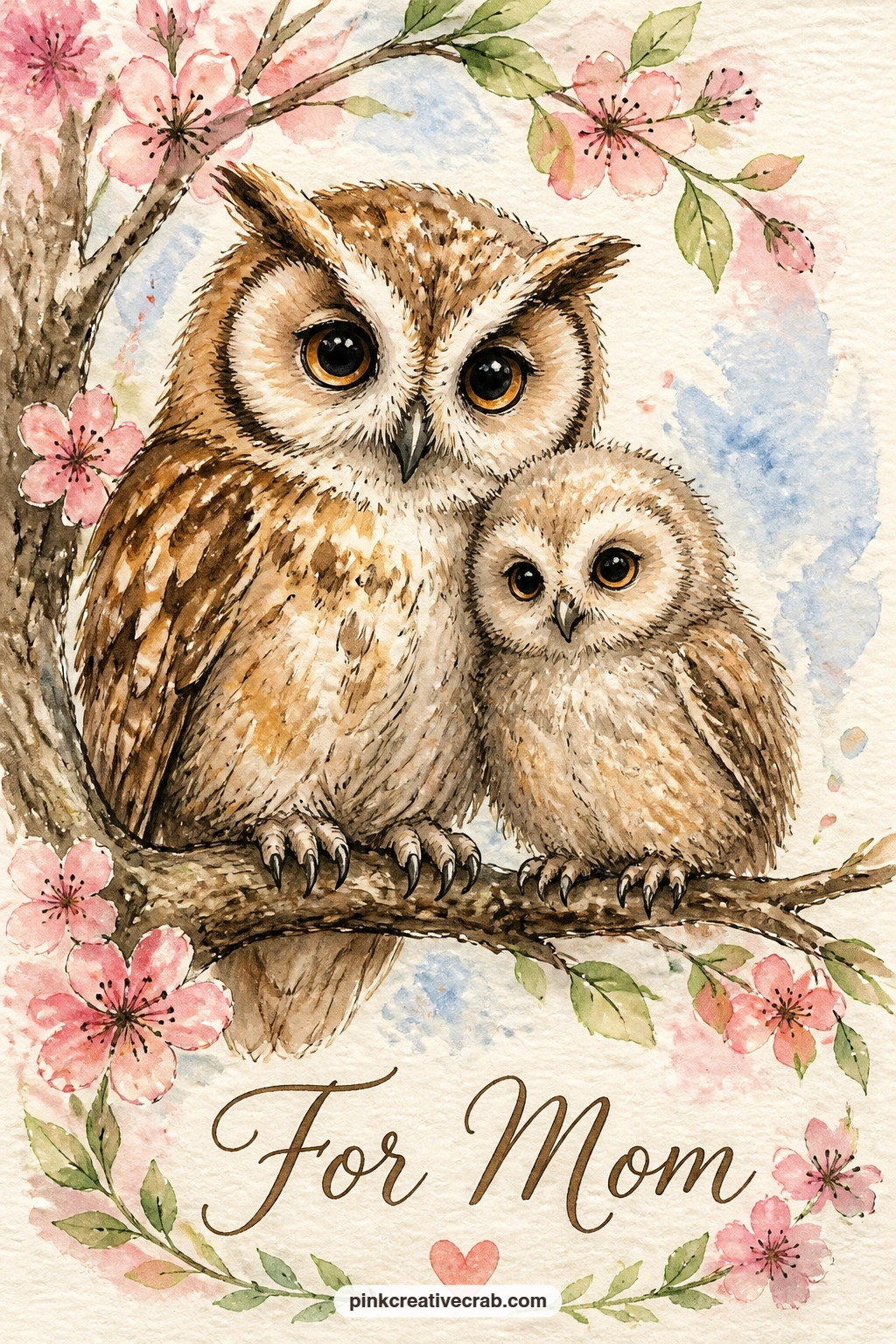
Come down to a quieter perch for a mother owl and owlet sharing a branch, a pose built almost entirely from two overlapping round shapes. Paint the mother’s body as one soft oval with a flattened base where she grips the branch, then tuck the smaller owlet oval right against her side, its head reaching only to about her chest.
Working wet into wet gives owls their soft feathered look, so wash the body color on first while the paper is still damp, then drop in slightly darker patches of the same color and let them bloom softly outward on their own. Dove grey and raw sienna mixed together make a warm owl brown that suits both birds, with the owlet kept a touch lighter and fluffier looking than the mother.
The branch underneath should be painted in one dry brush stroke so the bark texture appears without extra fuss, and the two round owl faces are what carry the whole card, so take your time with the ink details: large circular eyes, a small triangular beak and a few short feather strokes framing the face.
If wet into wet feels unpredictable, work on dry paper instead and simply layer soft, feathered brushstrokes by hand.
Palette: Raw Sienna,Dove Grey,White,Payne’s Grey
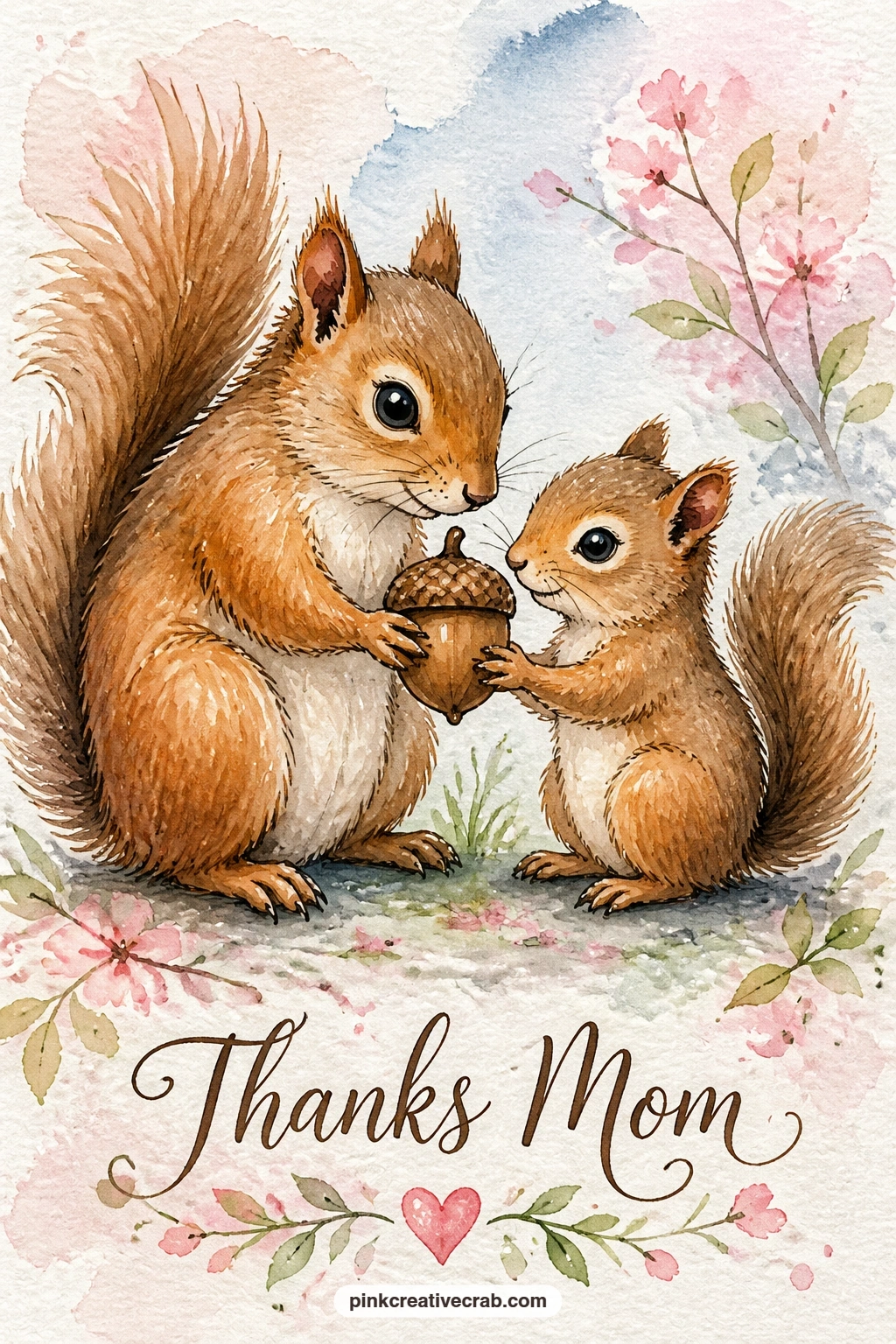
Bring the scale right down for a squirrel mom and baby holding one acorn together, the smallest, quickest pairing on this list and a nice one to practice tiny detail work. Sketch two seated squirrel bodies facing each other, tails curling up behind each one, with the single acorn placed between their front paws where both sets of paws can touch it.
Wash both bodies in warm raw sienna, keeping the baby’s wash lighter and its tail noticeably smaller and less bushy than the mother’s full curling tail. Ten minutes is enough for a simple version with flat washes and a quick ink outline, while a forty minute version adds individual fur strokes along the tail edges and a soft shadow where the two bodies meet.
The acorn itself is a tiny oval in warm brown with a textured cap added in short dry brush dashes, and it works best kept small enough that both pairs of paws genuinely look like they are sharing it rather than each holding a separate one. If raw sienna looks too orange on your paper, cool it slightly with a touch of grey.
Finish both faces with small ink eyes and whisker lines, keeping the whole pair well under the size of a typical card front so there is room to breathe around them.
Palette: Raw Sienna,Payne’s Grey,White,Fresh Green
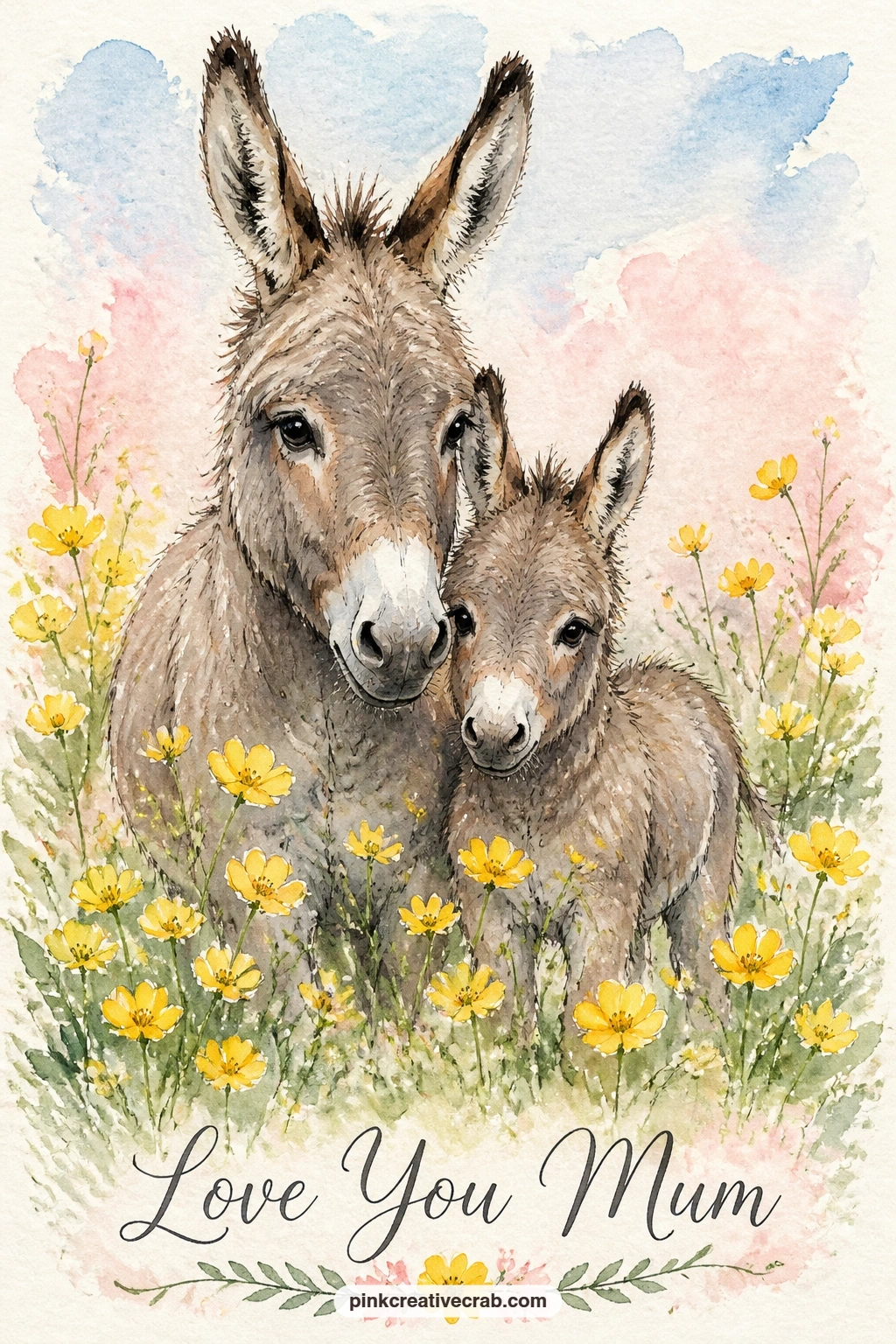
Head out to a sunny field for a donkey mom and foal among buttercups, where getting the ears right matters more than almost any other detail on this list. Draw both heads with notably long upright ears, the foal’s slightly shorter and more rounded at the tip since young donkey ears have not quite grown into their full length yet.
Wash the bodies in a warm grey brown, leaving the muzzle and belly areas as soft white, and keep the foal’s legs a little thinner and more awkward looking than the mother’s sturdier ones. Buttercups scattered around their hooves are quick dabs of bright yellow with a tiny green stem each, clustered more thickly near the bottom of the card and thinning out toward the edges.
If the ears end up looking too stiff or symmetrical, angle them slightly differently on each animal, since real donkeys rarely hold both ears pointed the same way. Swap the bright yellow for a softer Naples yellow if you want the buttercups to sit more gently behind the two main subjects.
Finish manes, tails and hoof lines in ink, keeping the line slightly broken and uneven for a shaggier, more lived in look.
Palette: Warm Grey,White,Naples Yellow,Fresh Green
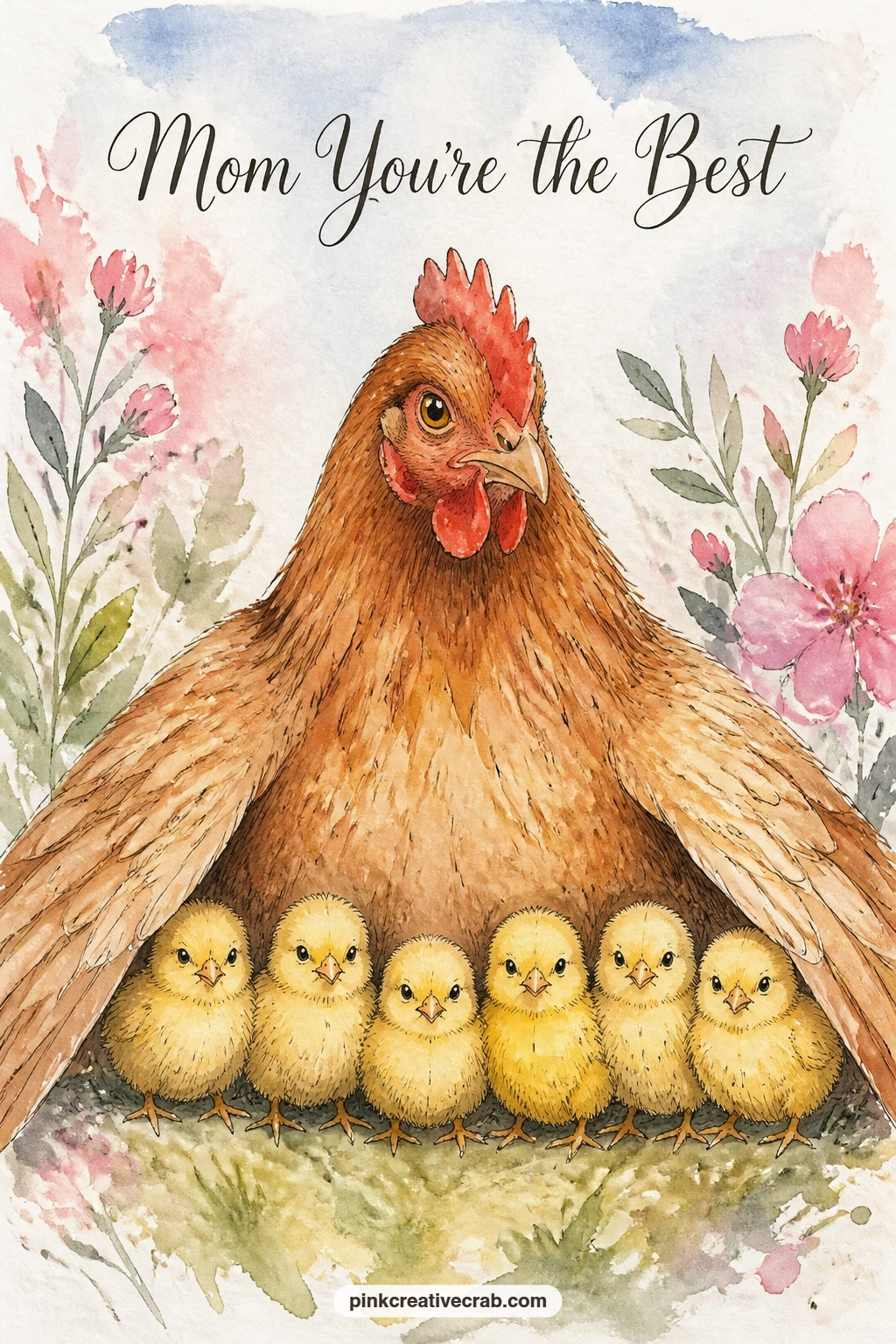
Settle into the farmyard for a hen with a row of yellow chicks under her wings, a classic pairing that earns its place for how satisfying it is to paint a whole brood in one sitting. Paint the hen’s body as one large rounded shape with her wings held slightly out and down, leaving gaps along the lower edge where small chick heads and bodies will peek through.
Wash her feathers in warm raw sienna with a soft white breast, then tuck in three or four tiny yellow chicks along the bottom edge, overlapping the hen’s wing line so they genuinely look sheltered underneath rather than lined up beside her. Keep every chick a slightly different size and angle, since a perfectly even row looks stiff while a slightly uneven one looks alive.
Her red comb and wattle are a good place for a small bright accent, since the rest of the palette stays soft and warm everywhere else. If yellow chicks feel too bright for your card, mute the mix with a touch of raw sienna until they read as warm cream instead.
Finish with ink lines for feather edges, beaks and small feet, added once everything is completely dry.
Palette: Raw Sienna,Naples Yellow,White,Cadmium Red
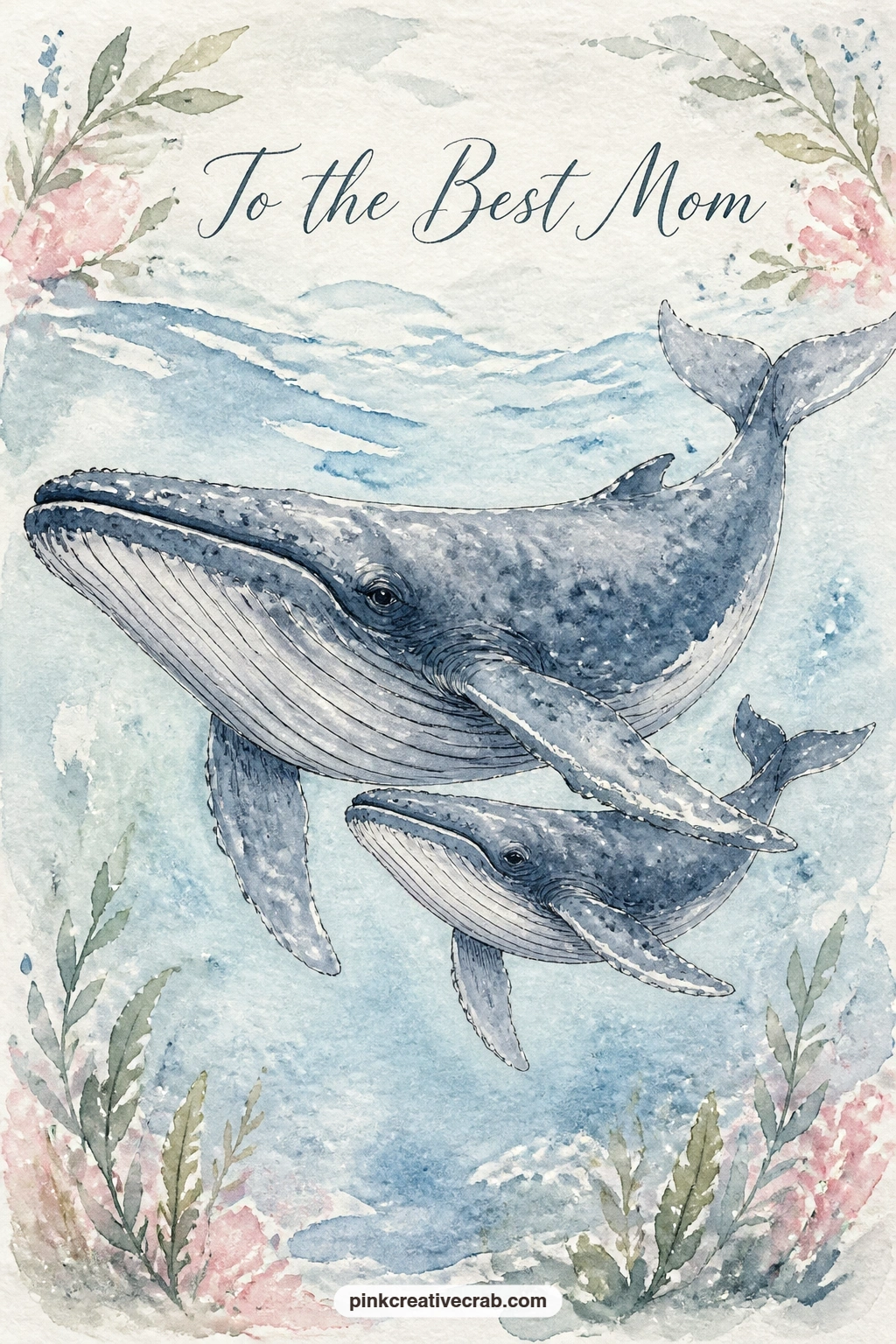
Move into open water for a whale and her calf swimming side by side, a pose that asks you to think about where they sit in the frame rather than measuring exact proportions. Place the mother slightly higher and larger in the composition with the calf just behind and below her, which reads instantly as the pair swimming together rather than two unrelated whales.
Wash both bodies in deep sky blue blended into dove grey along the back, leaving the undersides paler, and keep the calf’s body noticeably shorter and rounder than the mother’s longer, more streamlined shape. A faint water line can run behind them in a lighter blue wash, with a few loose white bubble shapes left unpainted trailing from the calf’s blowhole.
If the two whales start to blend together in the water, add a touch more white space between their outlines so each shape stays readable on its own. Swap the blue grey mix for a warmer grey if you would rather suggest a humpback than a blue whale.
Finish with fine ink lines along the throat pleats and a small eye on each whale, kept simple and calm.
Palette: Sky Blue,Dove Grey,White,Payne’s Grey
Return to land for a mother panda hugging her cub in the bamboo, a pose that leans heavily on strong black and white contrast rather than color blending. Sketch the mother sitting upright with her arms wrapped fully around the smaller cub pressed against her chest, keeping the hug the focus by overlapping their round black ear and leg shapes generously.
Paint the white patches first and let them dry completely, since painting black next to wet white invites the two to bleed together and lose their crisp edges. Once dry, fill in the black patches around the eyes, ears, arms and legs with a rich mixed black, leaving the white fur in those areas as bare paper throughout.
Bamboo stalks behind them are a few vertical strokes of fresh green with darker green joints added at intervals, kept loose and a little varied in height so they read as a stand rather than a fence. If the black areas look too flat, soften just the outer edges with a damp clean brush before the paint fully sets, which gives a gentler, furrier transition.
Finish both faces with ink eye outlines and a small triangle nose.
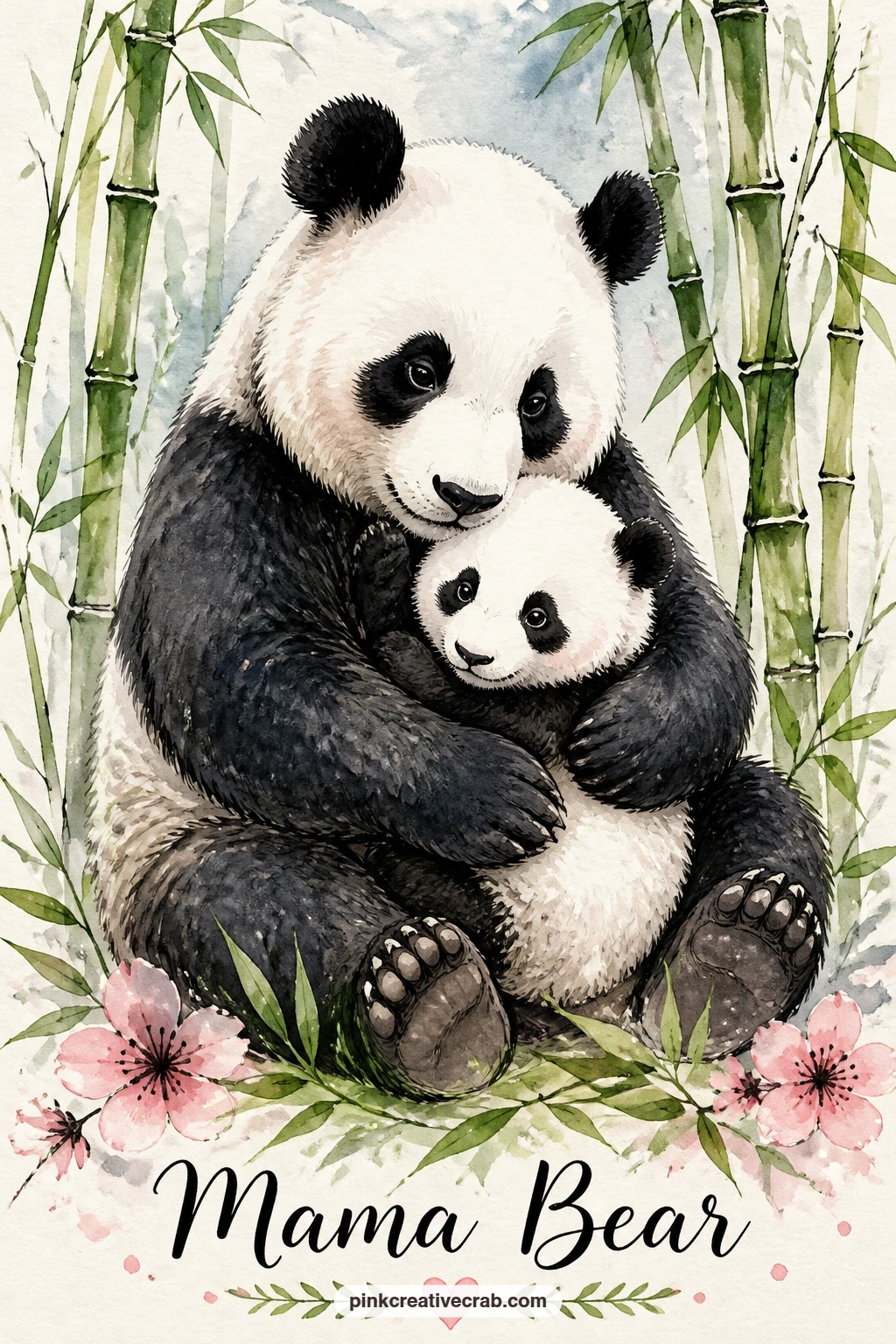
Palette: White,Payne’s Grey,Fresh Green,Sap Green
Paint the black patches in two thin layers rather than one thick one, which keeps the fur looking soft instead of flat and inky.
Dive underwater for a sea turtle mom and baby swimming over coral, where soft edges do most of the work of suggesting water without you needing to paint any actual waves. Draw both shells as domed ovals with a simple pattern of lines dividing them into sections, the baby’s shell kept noticeably smaller and its flippers shorter in proportion to its body.
Wash the shells in sap green blended with raw sienna, letting the two colors mix slightly on the paper rather than premixing them in the palette, which gives a natural mottled turtle shell look. Flippers trail softly behind each body in loose, slightly blurred strokes, suggesting gentle movement through water rather than stillness.
Coral underneath can be painted with a dry brush loaded with coral pink and pale orange, dragged upward in short branching strokes so the texture appears without careful drawing. If the shells look too smooth and plain, lift a little color out of the center of each section with a damp clean brush while still wet, leaving a soft highlight.
Finish with ink lines dividing the shell sections and small dot eyes on both turtles.
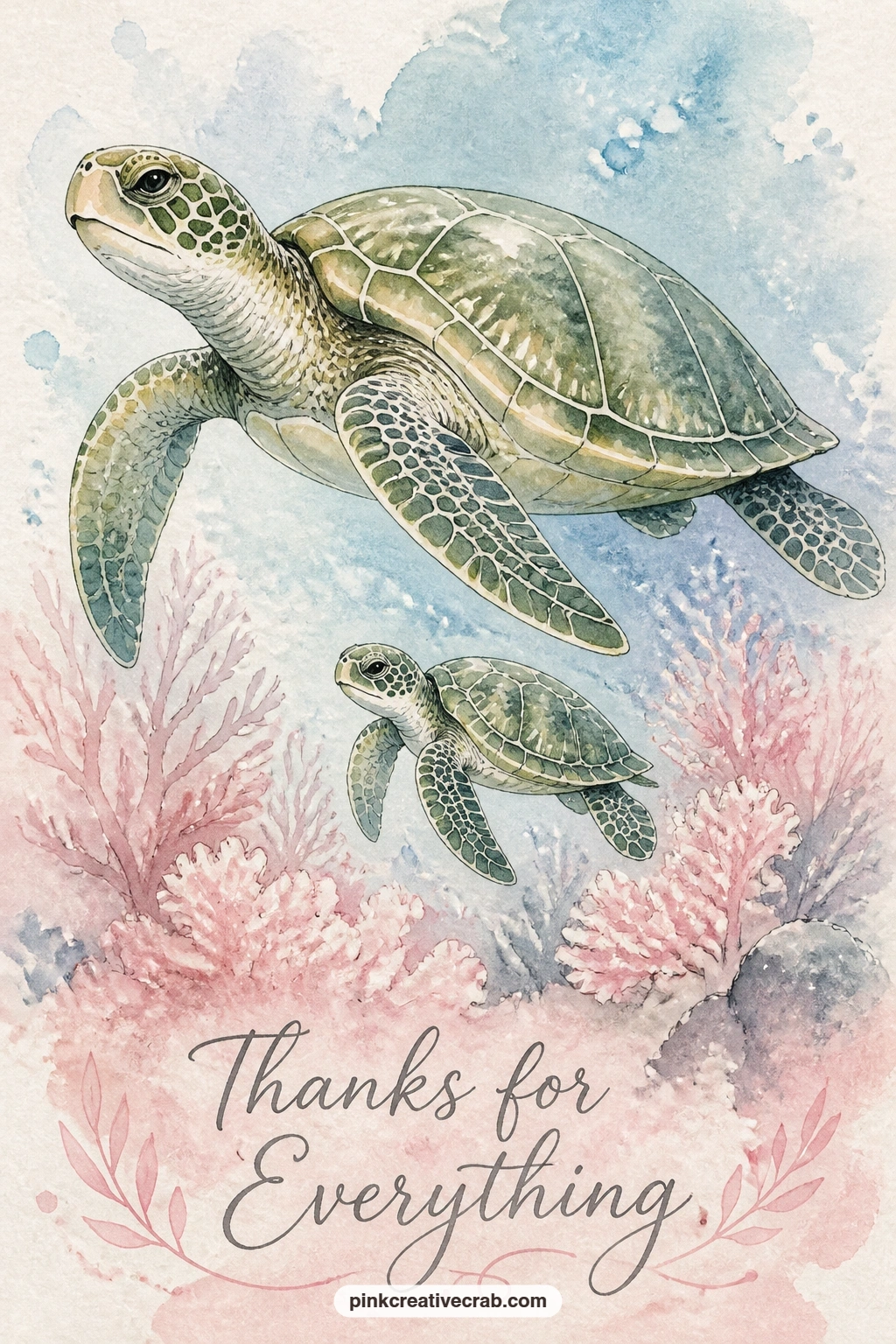
Palette: Sap Green,Raw Sienna,Coral Pink,Sky Blue
Slow right down for a sloth mom hanging from a branch with her baby on her tummy, a pose where getting the grip right matters more than any fine detail. Paint the branch running horizontally across the top of the card first, then build the mother’s body hanging beneath it with long curved arms wrapping up and over the branch on both sides.
Tuck the baby sloth against her belly with its own small arms wrapped around her rather than the branch, which is the detail that makes clear it is riding on her rather than hanging independently. Wash both in a warm beige grey, with the mother’s fur slightly shaggier looking thanks to a few dry brush strokes dragged downward along her arms and the baby’s fur kept smoother and softer.
Greenery around them can be a few large simple leaf shapes in sap green rather than a busy jungle, keeping the focus on the two sloths. If the long curved arms look stiff, loosen your sketch lines and let them droop a little more than feels natural, since sloths hang with far less tension in their limbs than most animals.
Finish both faces with the slightly sleepy half closed eyes sloths are known for, added in soft ink.
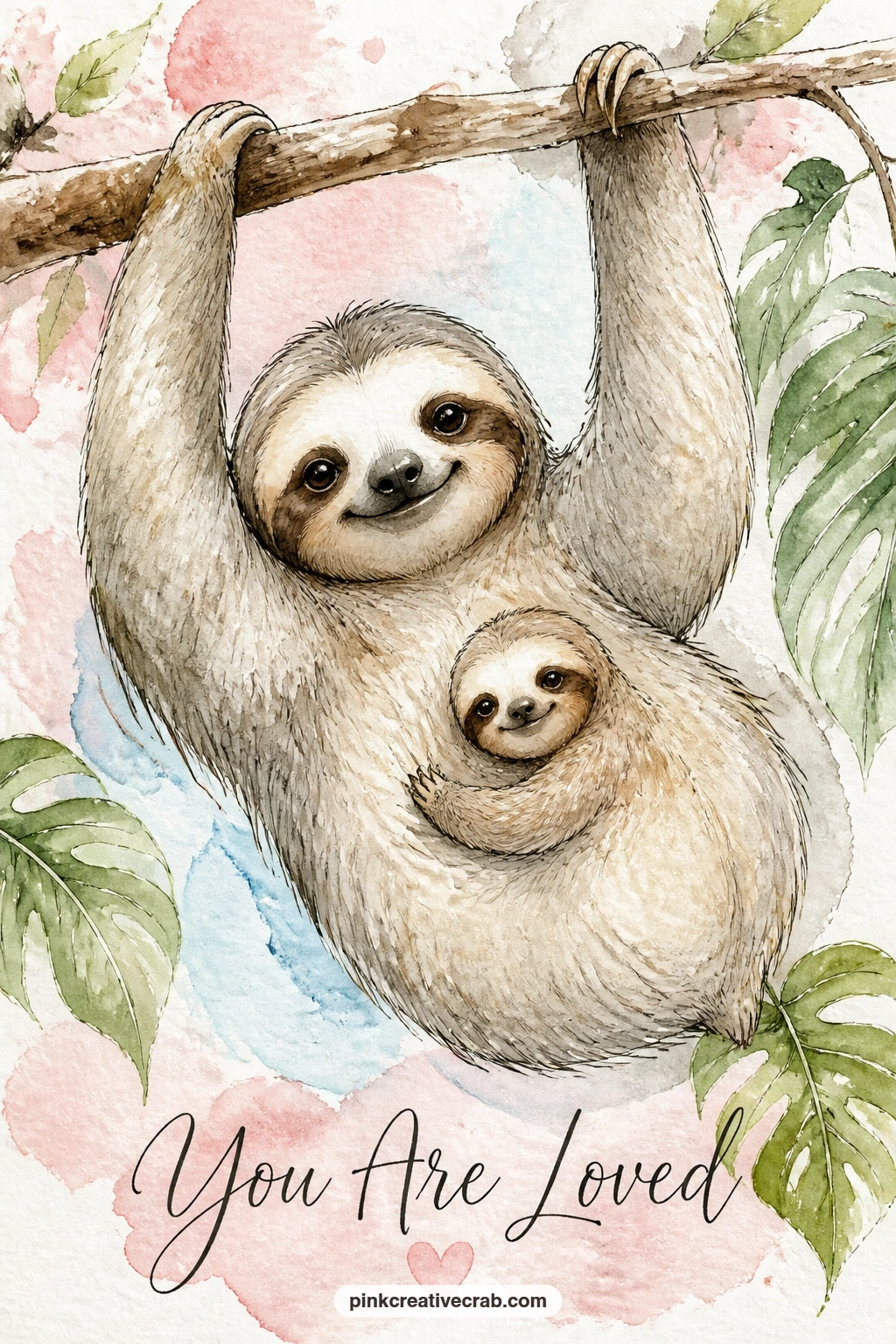
Palette: Warm Beige,Sap Green,Payne’s Grey,White
Shrink the scene right down for a mouse mom and baby sharing a strawberry under a leaf, a sweet, fast pairing that suits a smaller card or a corner of a larger one. Sketch two tiny round bodies facing each other with oversized round ears, the baby’s ears slightly smaller and its tail noticeably shorter and thinner than the mother’s.
Wash both bodies in a pale warm grey, keeping the paint thin enough that the white paper still glows through, since mice read as delicate rather than solid. The strawberry between them is painted in bright cadmium red with a few small white seed dots reserved by painting carefully around them, topped with a tiny green calyx, and a single large leaf arches over both mice like a small roof.
If the ears end up too large and cartoonish, pull them in slightly smaller and round the base where they meet the head, which keeps the mice looking sweet rather than silly. Swap the strawberry for a small red berry if you want an even quicker version.
Finish with fine ink whiskers, tiny paws and a thin tail curling behind each mouse.
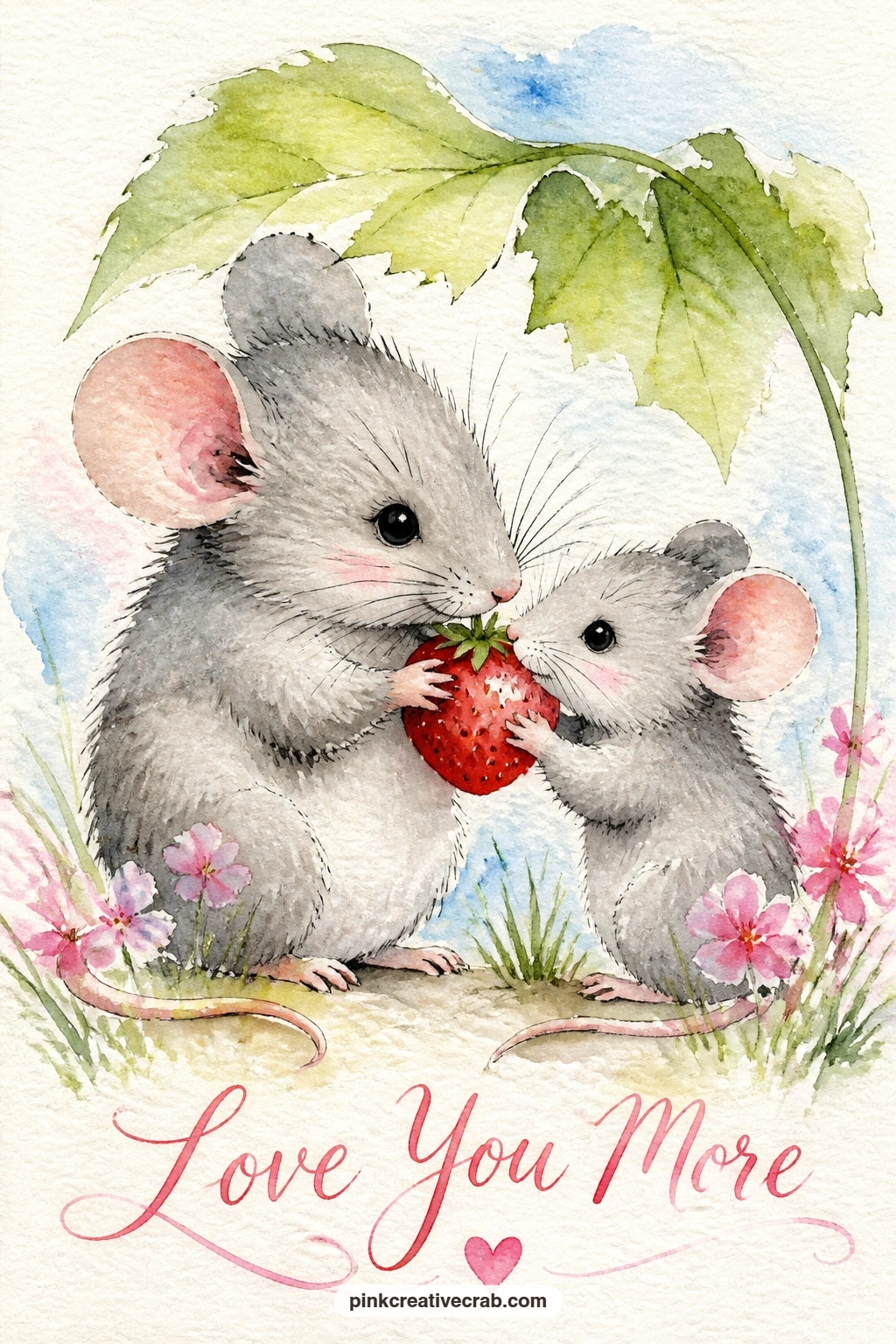
Palette: Warm Grey,Cadmium Red,Fresh Green,White
Haul out onto the rocks for a seal pup resting against its mother, where soft rounded bodies and good edge control carry the whole card. Build both as smooth elongated ovals lying close together, the pup tucked against the mother’s side with its head resting near her flipper, and keep the pup noticeably shorter and plumper looking in proportion to its own small flippers.
Wash the mother in a cool dove grey and the pup in a warmer cream, since real seal pups often have a different coat tone than their mothers at this age, and that contrast helps separate the two shapes clearly. While the washes are still slightly damp, lift a little color out with a dry clean brush along the tops of both bodies, creating soft highlights where light would naturally catch rounded, wet looking skin.
Rocks beneath them can be a few flat grey shapes with simple dry brush texture dragged across for roughness, kept lower in value than the seals so the animals stay the clear focus. If lifting color feels fiddly, simply leave a thin unpainted highlight line along the top of each body instead while painting.
Finish with ink dot spots scattered over the mother’s coat and small whisker dots on both faces.
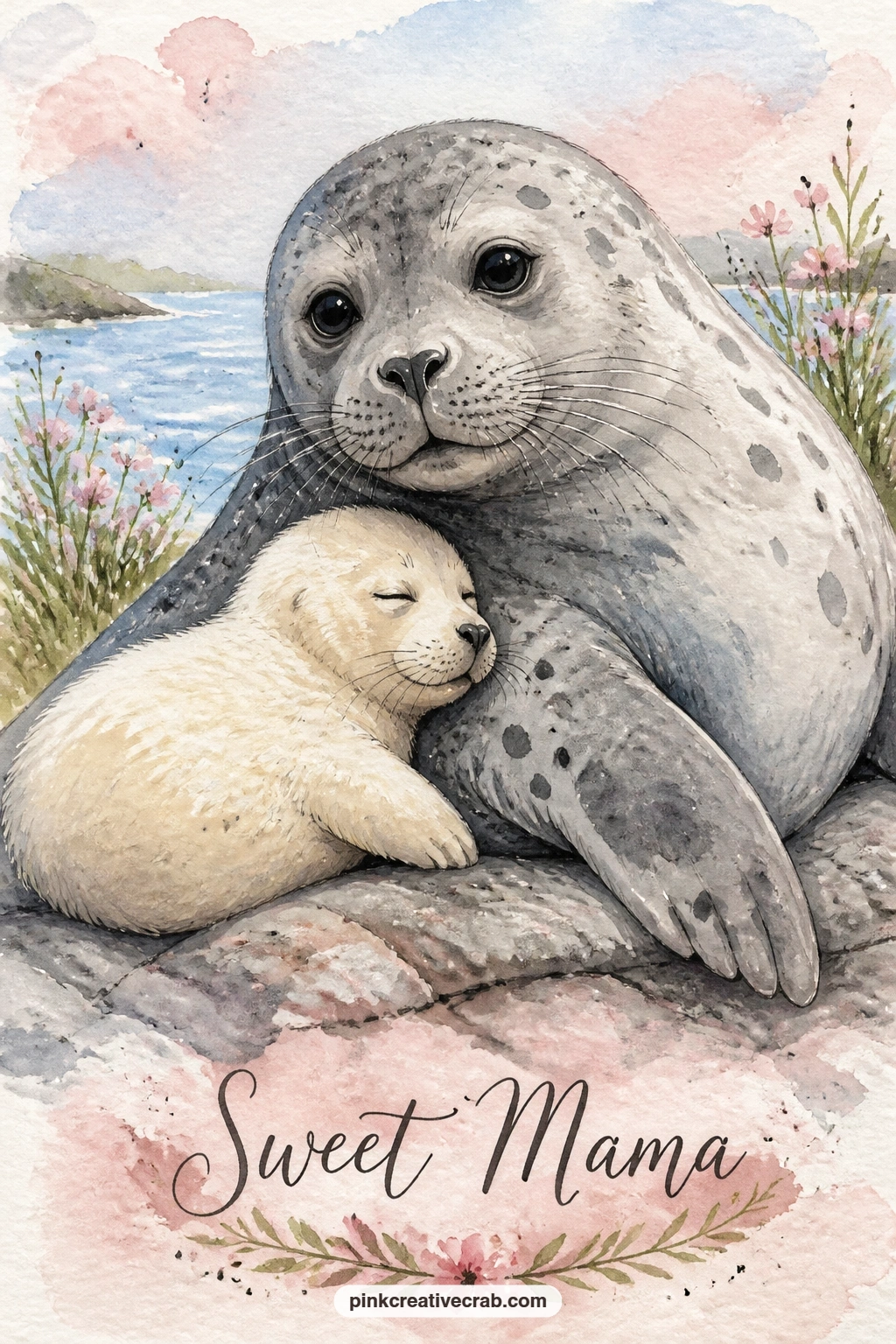
Palette: Dove Grey,Cream,Warm Grey,White
Zoom in close for a hummingbird mom feeding chicks in a tiny nest, a pose full of energy that benefits from a quick, loose approach rather than careful rendering. Paint the nest first as a small woven cup shape using dry brush strokes in raw sienna dragged in different directions, then tuck two or three tiny open beaked chick heads peeking over its rim.
The mother hovers just above the nest with her wings as soft blurred strokes rather than defined shapes, since real hummingbird wings move too fast to see clearly, and that blur also makes her look like she is genuinely hovering rather than perched. Her body is a small iridescent patch, best achieved by dropping a touch of blue or green into a wet wash of her base color and letting the two shimmer together rather than mixing them flat.
Ten minutes gives you a simple version with flat color and a quick ink outline, while forty minutes allows layered feather strokes on her chest and a softer blurred wing edge built from several light glazes. If the iridescent blend looks muddy, use less water and work faster before the first color sets.
Finish the chicks with wide open ink beaks and tiny closed eyes, the detail that makes them read as hungry and small.
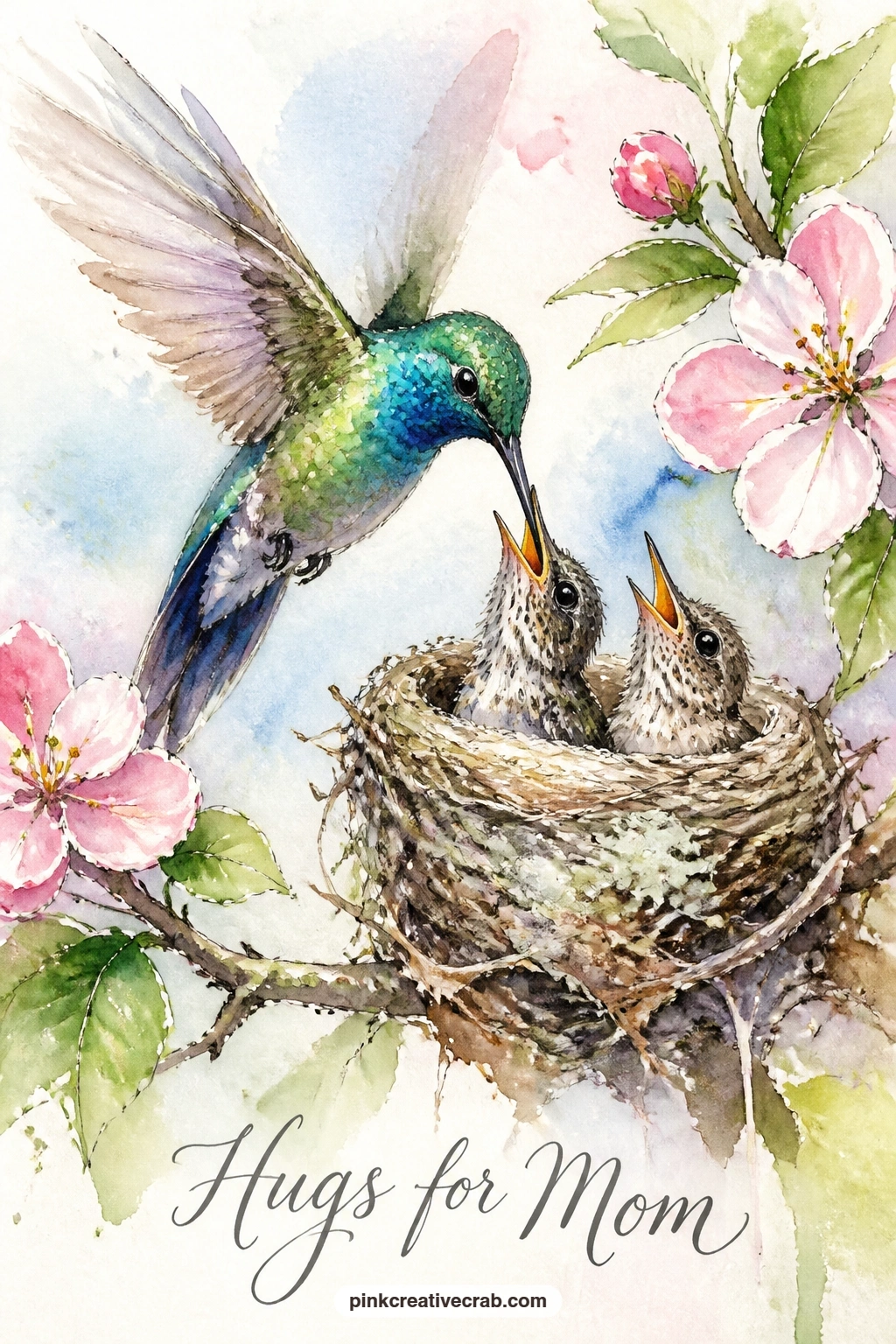
Palette: Raw Sienna,Sap Green,Sky Blue,Naples Yellow
Head back to the farmyard for a mother cow and calf in a field of clover, a gentle pairing that works well as a bigger, bolder card front. Sketch both bodies as large blocky rounded shapes on sturdy legs, the calf’s legs slightly knobbier and longer in proportion to its smaller body, which is a true detail of how young calves actually look a little gangly.
Wash the patches in warm raw sienna or deep brown against a white or cream base coat, planning the patch placement loosely on both animals before committing paint, since cow markings read better irregular and asymmetrical than neat. Keep the calf’s patches a touch smaller and fewer than the mother’s fuller pattern.
Clover underneath can be a scattering of small round green leaf clusters with a few tiny white blossom dots mixed through, painted after the cows so you can fit them naturally around the legs. If the patches look too scattered and busy, group two or three together on each body rather than spreading many small ones evenly across the whole shape.
Finish with ink lines for the patch edges, ears and a soft curling tail on each cow.
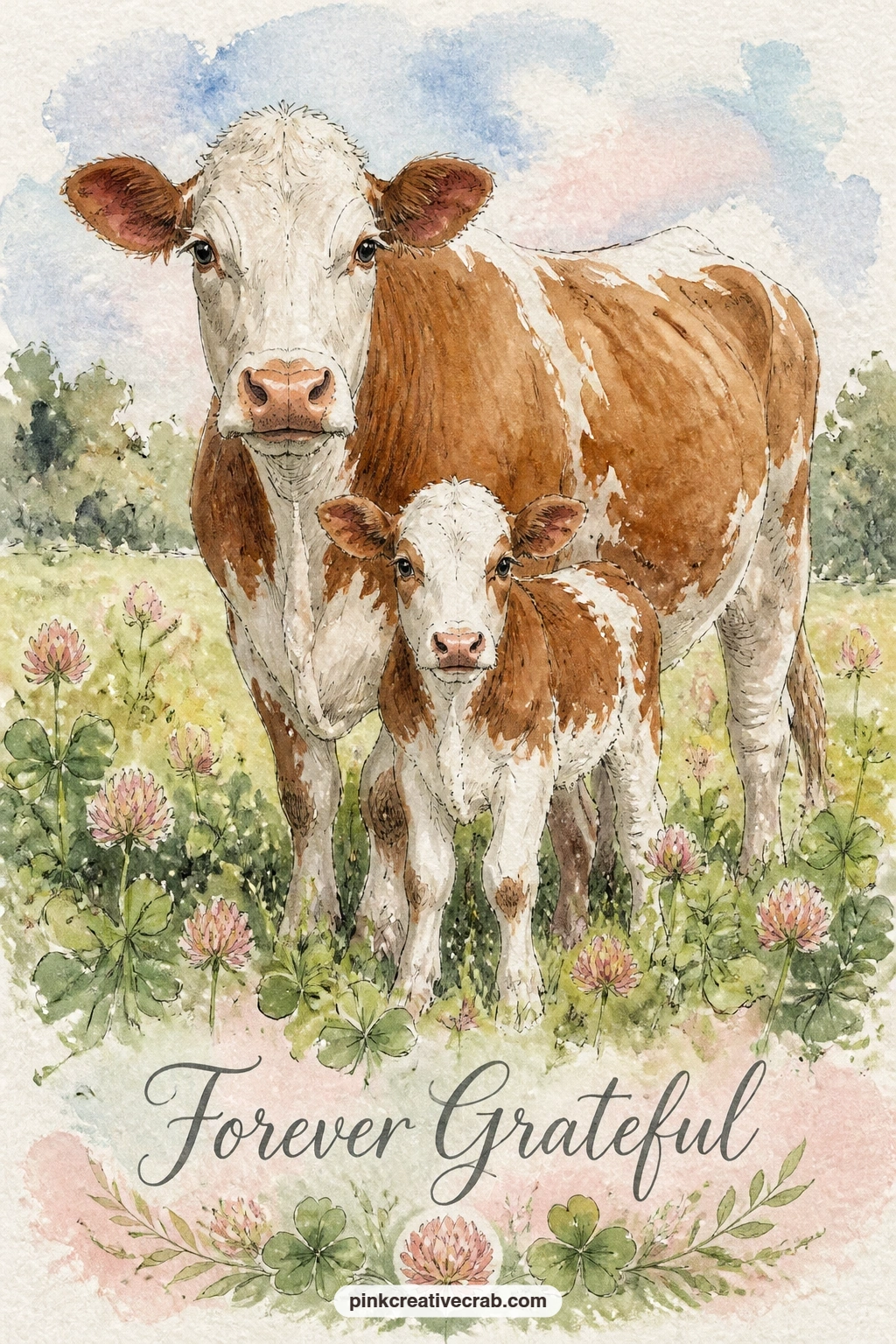
Palette: Raw Sienna,White,Fresh Green,Payne’s Grey
Climb a grassy hillside for a mother goat and two kids, a livelier composition than most on this list since you are now balancing three bodies instead of two. Place the mother standing steady in the middle with one kid close against her side and the second slightly apart, perhaps mid hop, which gives the group some movement without crowding the frame.
Wash all three in a similar warm cream or soft grey so they clearly belong together, varying only the size: the mother largest and sturdiest, both kids noticeably smaller with thinner, more delicate legs. Goat ears flop distinctively to the sides rather than standing upright like a deer’s, so pay attention to that droop when you add them, since it is one of the clearest signs of which animal you are painting.
The hillside beneath them can be a simple sloped green wash, darker at the bottom and lighter toward the top, giving a sense of rising ground without any detailed background. If three figures feel like too much to balance at once, paint the mother and the closer kid first and let them dry before adding the second kid, so you are never managing three wet edges at once.
Finish with ink hooves, floppy ear outlines and small facial details on all three.
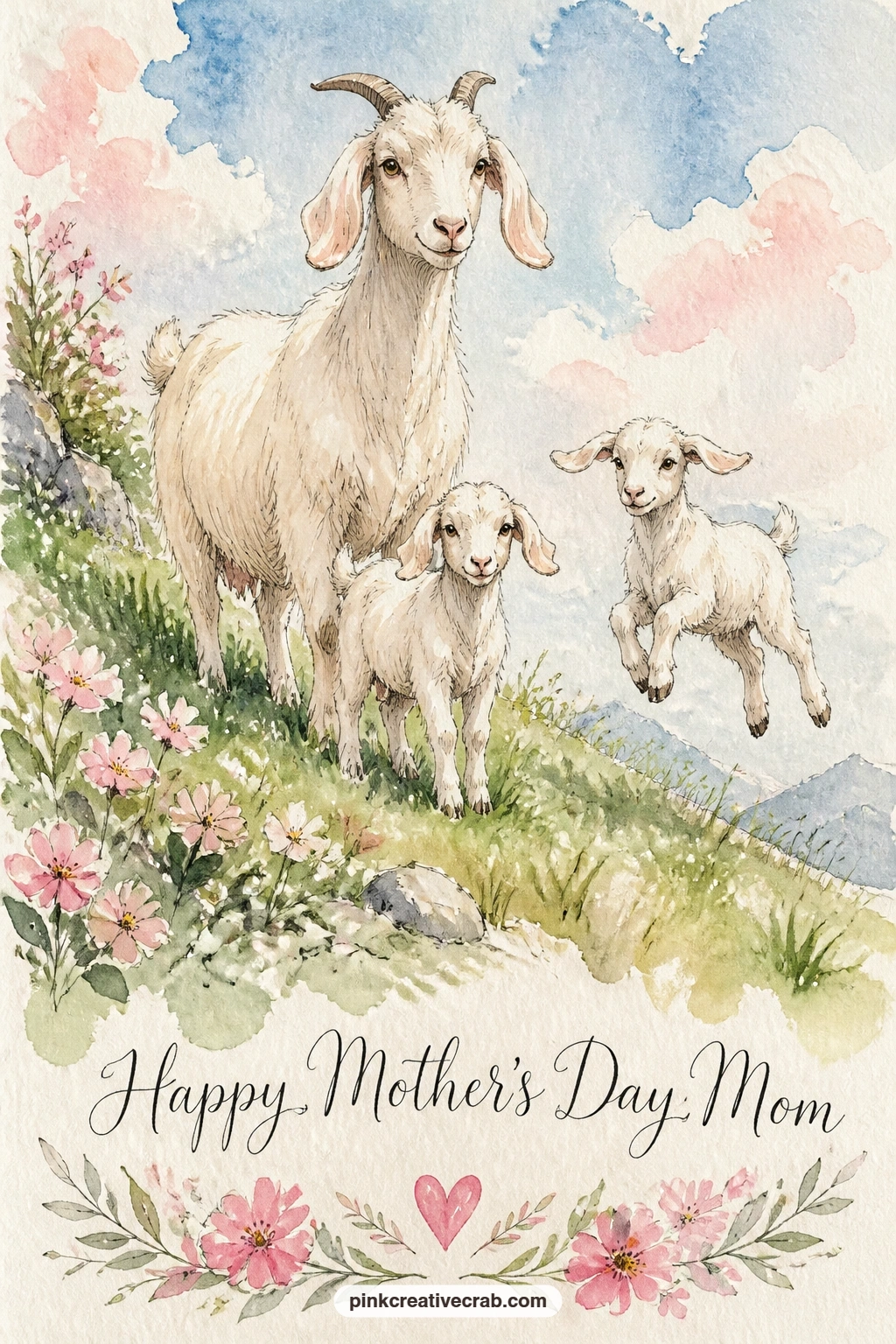
Palette: Cream,Warm Grey,Fresh Green,Sap Green
Gather everyone into one warm heap for a dog mom with a litter of puppies asleep together, a composition that rewards overlapping shapes generously rather than keeping every puppy separate. Paint the mother lying curved on her side first, then tuck four or five small puppy ovals against her belly and each other, letting their outlines overlap freely so the whole pile reads as one soft mass with small details poking out here and there.
Choose one warm color family for the whole group, such as raw sienna and cream, and vary only the proportion of each in every individual puppy so they feel related without looking identical. Leave small gaps of white paper between some of the puppies so the pile does not collapse into one undifferentiated blob, which is the mistake this pose falls into most often.
A blanket or basket edge underneath in a soft dove grey gives the pile somewhere to sit without competing for attention. If managing five overlapping wet shapes feels like too much at once, let the mother and two puppies dry fully before adding the remaining ones on top.
Finish with ink closed eyes, tiny paws and a few soft fur strokes along the edges of the pile, keeping details light since the heap itself is the main event.
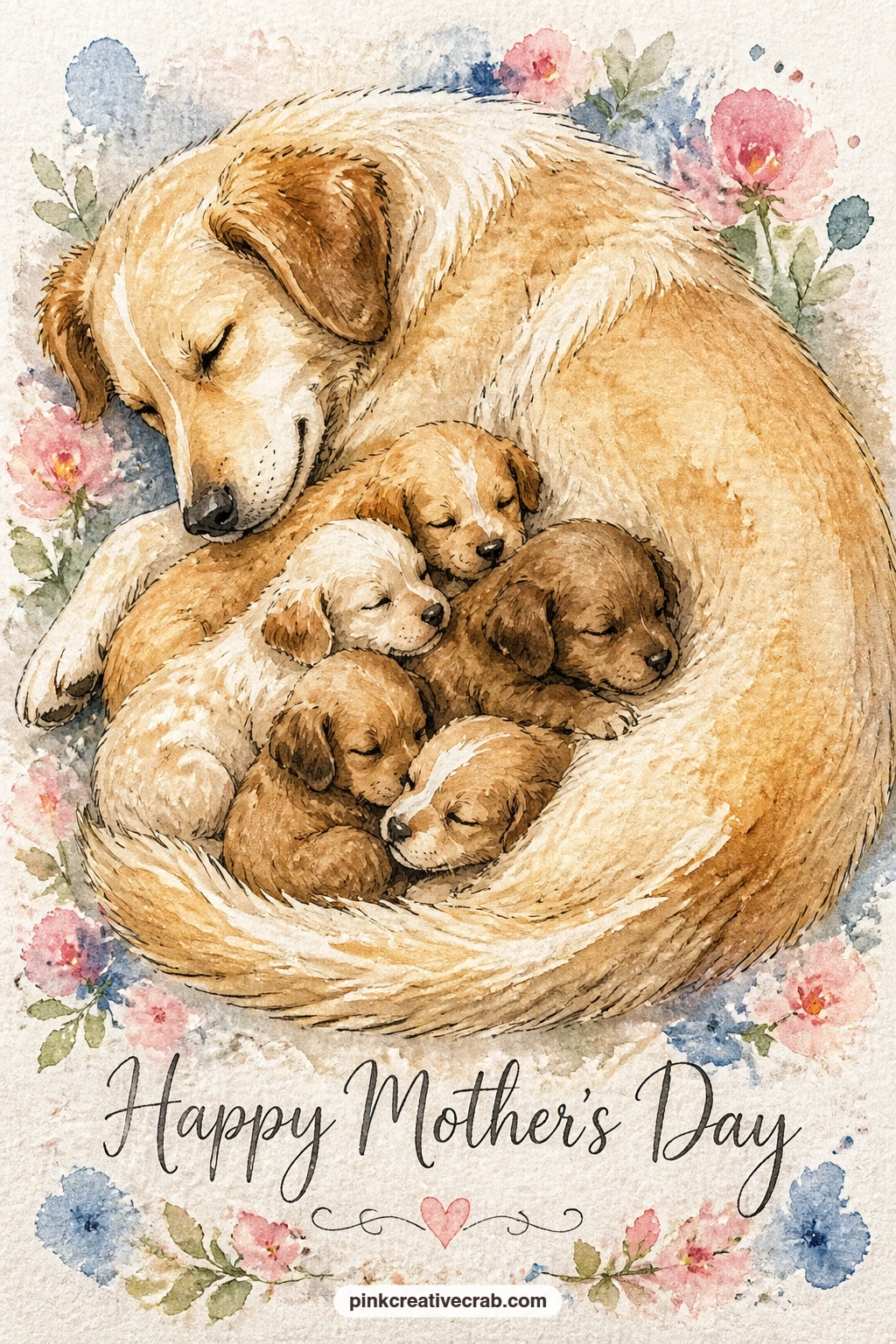
Palette: Raw Sienna,Cream,Dove Grey,White
Wade into a lily pond for a mother hippo and baby wallowing together, where only the upper halves of both bodies need to appear above the waterline. Sketch two rounded shapes with small ears and eyes near the top, keeping most of each body submerged and only the baby’s head and back breaking the surface near the mother’s shoulder.
Wash both in a cool violet grey, since hippo skin often carries a slight purple undertone rather than reading as flat brown or grey, and keep the baby’s visible portion noticeably smaller and rounder. The waterline itself is a loose horizontal wash of green, with a few simple lily pads painted as flat ovals and one or two white lily flowers dotted across the surface.
If the hippos start to look like plain grey blobs, add a touch more violet into the shadow areas under their chins and along the waterline, which gives the skin a believable warmth. Swap the violet grey for a simpler warm grey if that mix is not available in your palette.
Finish with ink lines for ears, nostrils and small eyes, plus a few ripple lines where the water meets both bodies.
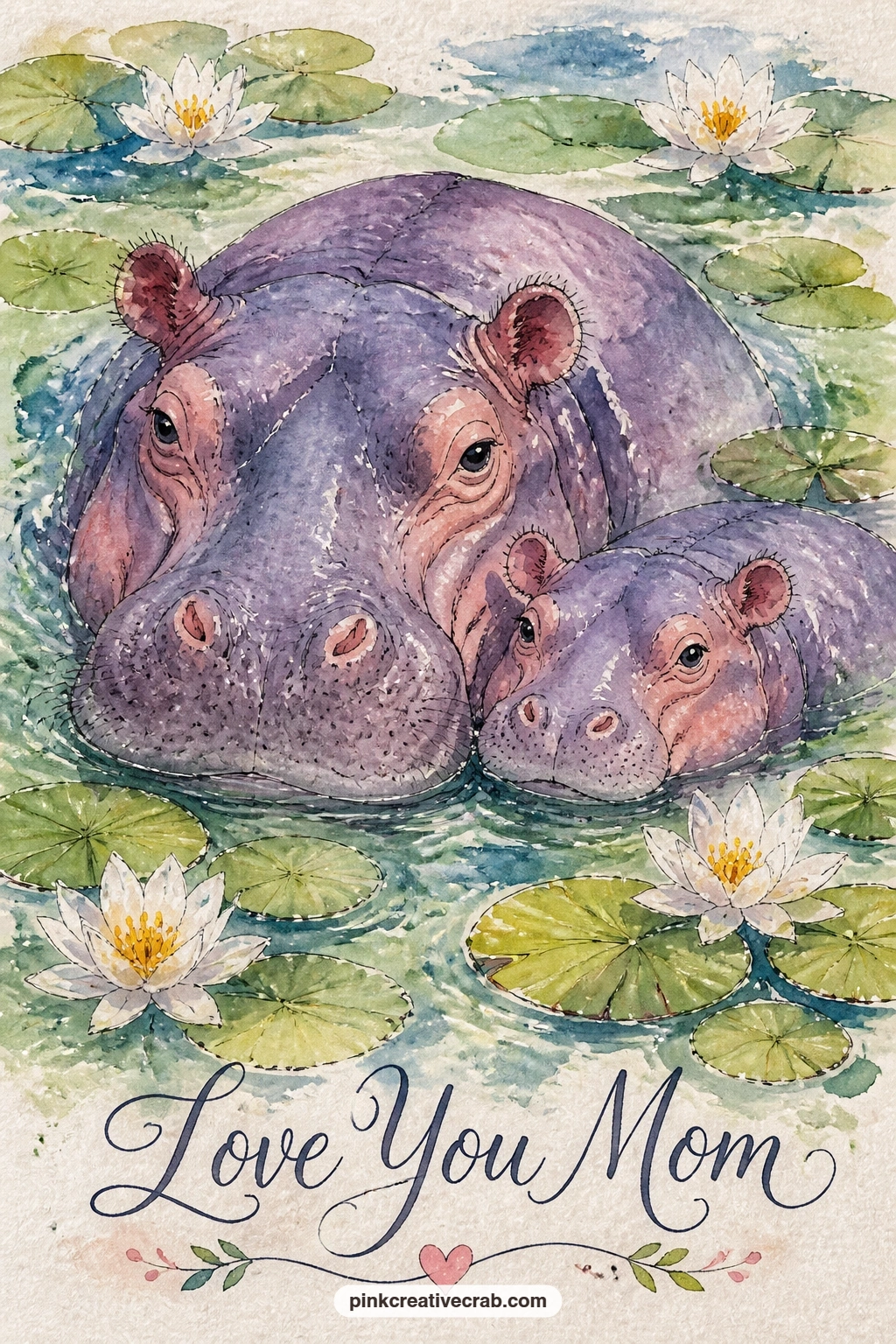
Palette: Violet Grey,Fresh Green,White,Sap Green
Step onto the savanna for a mother lion and cub nuzzling in tall grass, a pose where the mane gives you a natural place to loosen up and play with texture. Build the mother’s head first as a rounded shape, then surround it with a generous mane painted in choppy, overlapping strokes of raw sienna and deep brown rather than one even wash, so it has real movement and depth.
Nuzzle the smaller cub in against her chin or cheek, its own head noticeably rounder and softer looking with only faint hints of spots along its back, since lion cubs carry light spotting that fades as they grow. Keep the cub’s proportions compact and its legs shorter relative to its body than the mother’s longer, leaner build.
Tall grass behind them is a series of quick upward flicks in two shades of green, varying the height and angle of each stroke so it reads as windblown rather than planted in a row. If the mane ends up too neat and tidy, go back in with a dry brush once the base wash is dry and drag a few darker strokes outward for extra texture.
Finish both faces with ink eyes, nose and a few whisker lines.
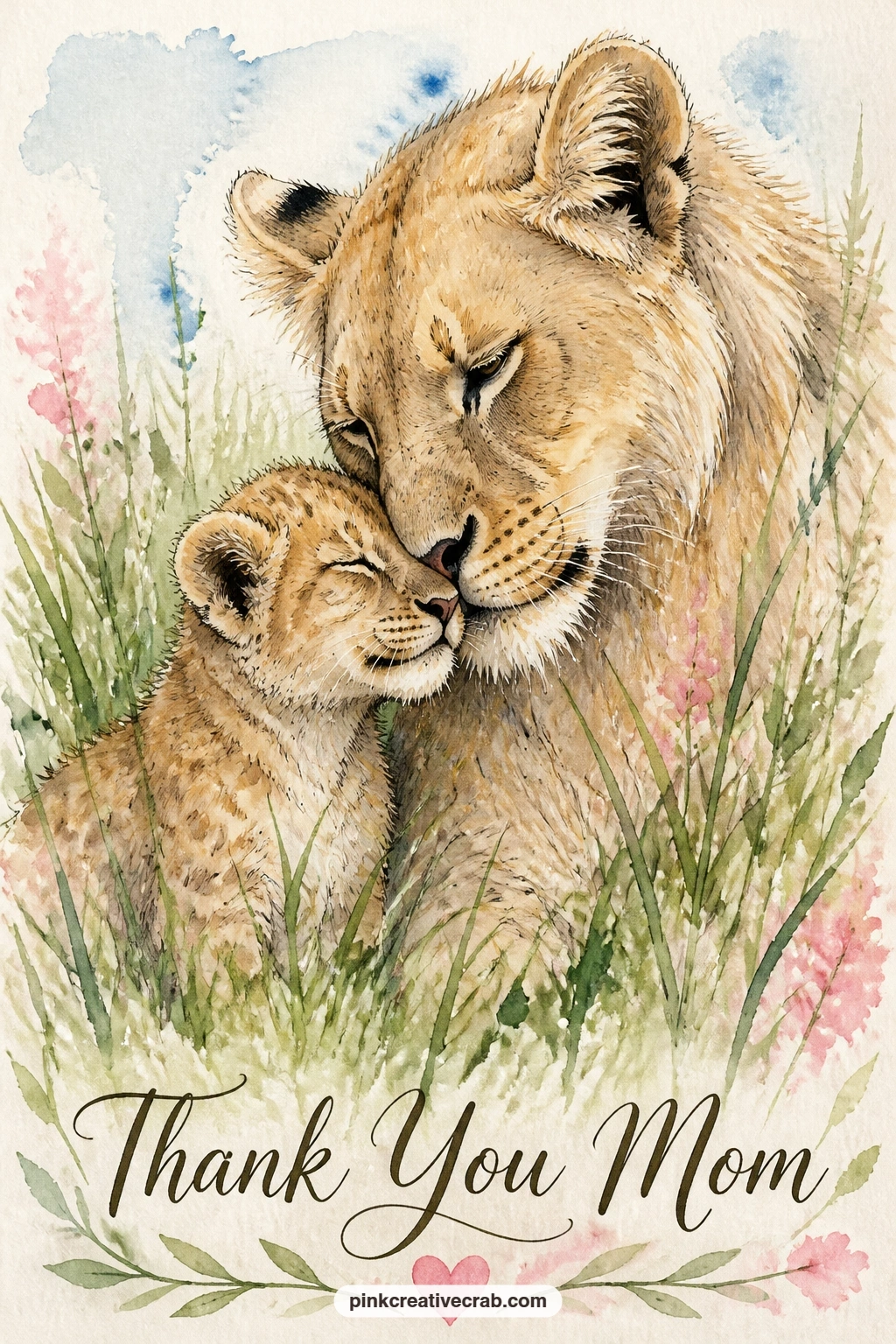
Palette: Raw Sienna,Payne’s Grey,Fresh Green,Sap Green
Bounce over to the outback for a mother kangaroo with a joey peeking out of her pouch, where getting the pouch opening right is the one detail to slow down for. Paint the mother’s body upright and sturdy on strong back legs and a thick tail for balance, then leave a soft curved gap in her belly wash where the pouch opening will sit before the joey’s head tucks into it.
Wash her in warm raw sienna with a paler cream belly, and keep the joey’s visible head and small paws a lighter, softer version of the same color so it reads as nestled inside rather than sitting separately in front of her. Only the joey’s head and perhaps one paw need to show, since a kangaroo pouch genuinely conceals most of the body at this age.
Ground beneath her can be a dry, warm wash of ochre with a few simple dry grass tufts flicked in with a nearly dry brush. If the pouch opening looks too much like a hole or pocket, soften its edge with a damp brush right after painting so it blends gently into her belly rather than looking cut out.
Finish with ink lines for her strong back legs, tail and the joey’s small curious face.
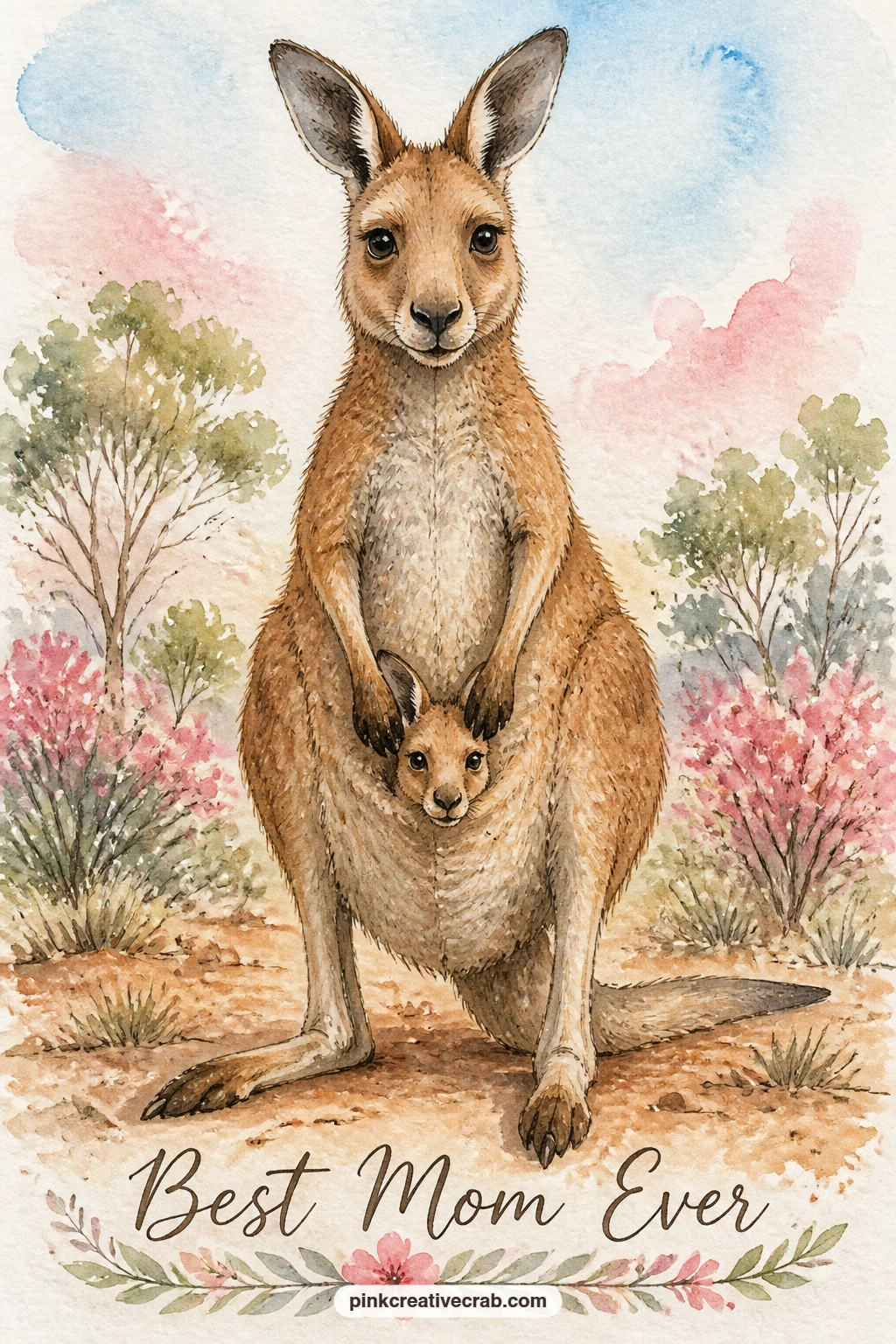
Palette: Raw Sienna,Cream,Ochre,Fresh Green
Wade into bright pink water for a flamingo mom and her grey chick, a pairing that leans fully into color contrast between the two generations. Paint the mother’s long curved neck and tall thin legs first in a confident, continuous stroke, since a flamingo’s elegance depends almost entirely on that one smooth curve rather than careful detail elsewhere.
Wash her body in deep pink blending into blush at the edges, and keep the chick beside her in a soft grey with none of the adult’s pink yet, since young flamingos are genuinely born grey before their feathers change color over time. Her legs should read as thin and almost impossibly long compared to the chick’s short, stubby ones, which is the comparison that makes the age gap obvious at a glance.
The water itself can borrow the same pink from her body in a much paler wash, reflecting her color back up around both birds and tying the whole card together. If the long neck curve feels tricky, practice it a few times on scrap paper first, moving your whole arm rather than just your wrist for a smoother line.
Finish with ink details on the curved beak, eye and a few ripple lines in the water.
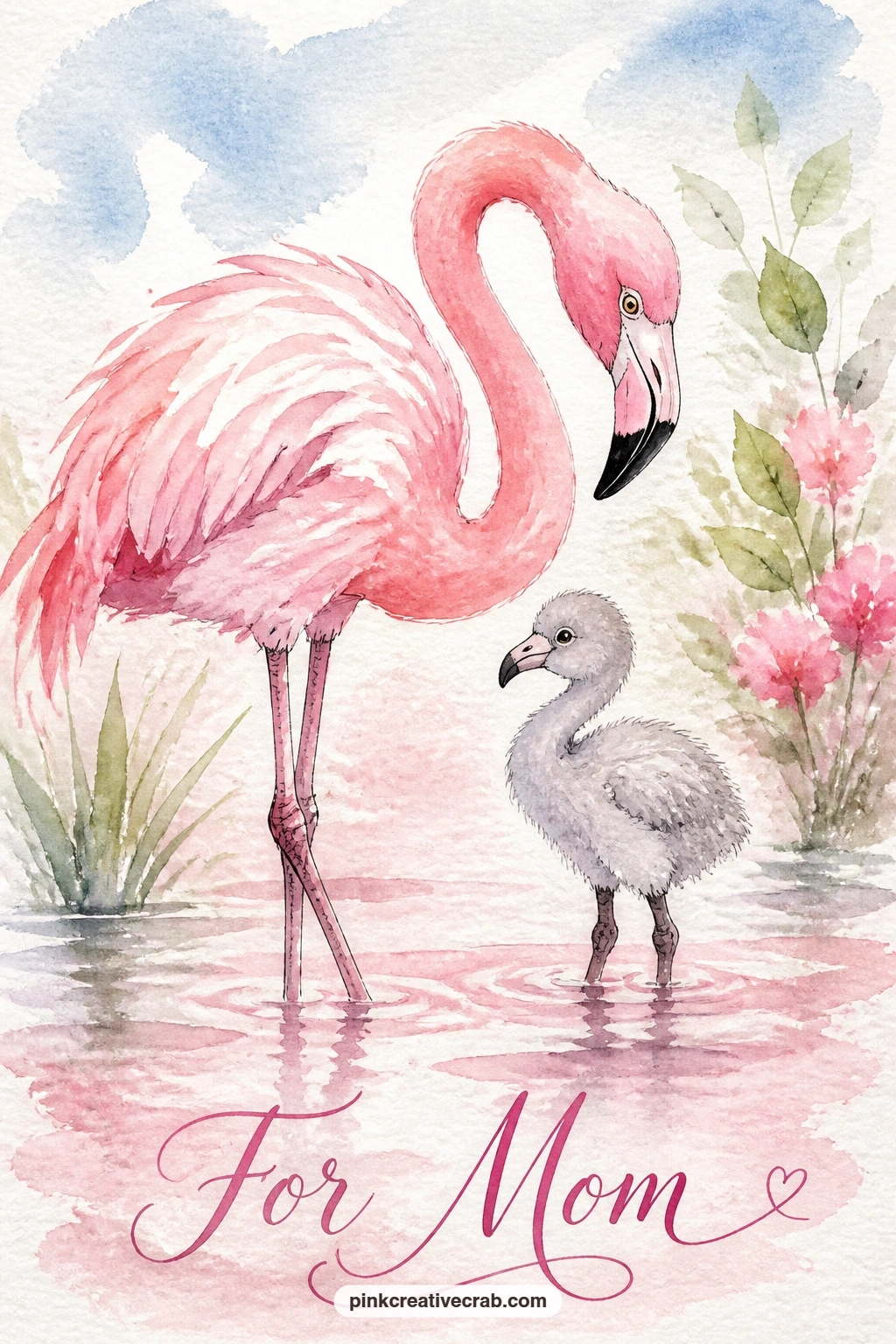
Palette: Deep Pink,Blush Pink,Dove Grey,Pale Pink
Close the set with a mother bird feeding three chicks in a nest, a fitting final card since it borrows a little from several ideas before it while standing on its own. Build the nest first as a woven cup using dry brush strokes dragged in crossing directions, then arrange three small open beaked chick heads along its rim at slightly different heights so the row feels natural rather than lined up.
The mother perches just above or beside the nest with a worm or small berry in her beak, her body painted in a simple warm grey brown and kept noticeably larger and calmer in posture than the eager, stretching chicks below her. Vary each chick’s open beak angle slightly, since three identical wide open mouths in a perfect row looks stiffer than three reaching at slightly different angles toward the food.
Once this pairing feels comfortable, try varying it next time with different nest heights, a different number of chicks, or swapping the mother for a different bird species entirely using the same basic layout. If three chicks feels like one too many to balance, two works just as well and keeps the composition a little calmer.
Finish with ink lines for the nest weave, tiny wing stubs and wide eager eyes on every chick.
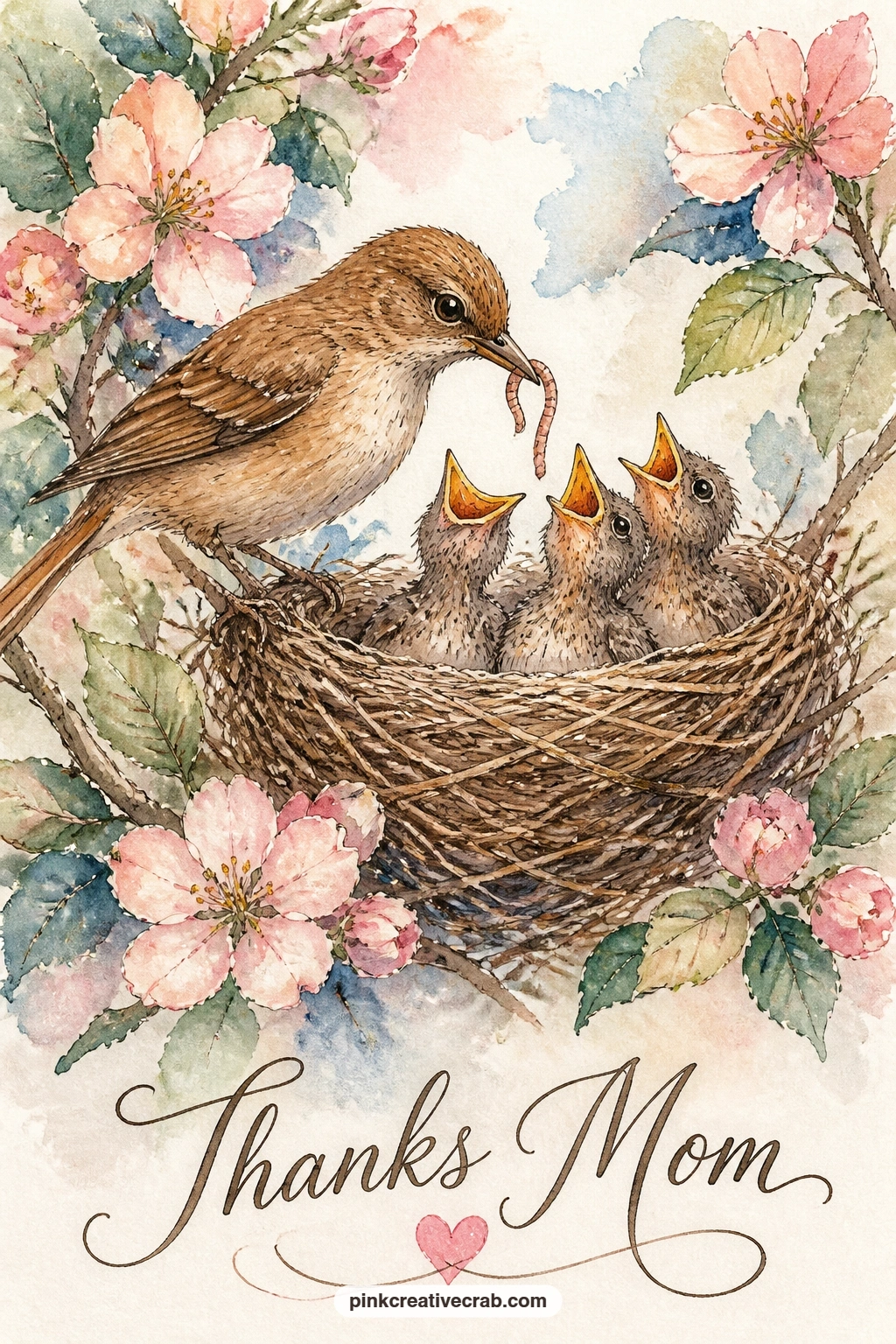
Palette: Raw Sienna,Payne’s Grey,Naples Yellow,Fresh Green
If you enjoyed building this whole set, the guide to watercolor animals has more outline templates worth tracing for future cards.
What to Do Next
Choose one pairing that matches the person you are painting for, lay out your palette of blush, grey, blue and green, and work through the steps on a scrap sheet first if the pose feels new. A card blank in cold press paper is ready whenever you are, and there is no reason not to make a few of these mama and baby pairs at once while your paints are already out.
Frequently Asked Questions
What paper works best for cute mothers day cards in watercolor?
Cold press watercolor paper in a weight of at least 140 pounds holds washes well without buckling. Precut card blanks in that weight save trimming time and go straight into an envelope once dry.
How do I keep two animals from blending into one blob?
Leave a thin line of bare white paper between the mother and baby wherever their bodies touch. Let one shape dry fully before painting the one right beside it so the edges stay separate rather than bleeding together.
Do I need fancy paints for this style of card?
No, a basic set of ten to twelve watercolors covers every idea here, since most mixes use just two or three colors blended on the page. A fine black or brown ink pen for details matters more than a large paint collection.
How long does one of these mama and baby cards actually take?
Most pairings here finish in twenty to forty minutes once the paint and ink are both fully dry. Simpler poses like the mouse and strawberry or squirrel and acorn can finish closer to ten minutes for a quick version.
What if I make a mistake on the card itself?
Paint the animals on a separate piece of watercolor paper first, then trim and glue the finished piece onto a plain card blank once dry. That way one wobbly wash does not mean starting the whole card over.
Have any thoughts?
Share your reaction or leave a quick response — we’d love to hear what you think!
-
 0
-
 0
-
 0
-
 0
-
 0
-
 0
