Mothers day painting ideas work best when the canvas is about her, not about painting in general: her garden, her teacup, her dog snoring on the rug, the porch light she leaves on for everyone who comes home late. That is the whole idea behind this list, and it is why every piece below points at something specific instead of a generic bouquet.
You will find her favorite places, her pets and a few soft mother and child scenes, all built from simple flat shapes in acrylic so you can finish one in a single sitting. Scroll through, pick the one that sounds most like her, and get your canvas out.
Using these images: free for personal projects such as printing, coloring, cards, journals and gifts. Handmade items that include them may be sold up to 30 pieces per design. More than that is commercial use and is not permitted, and neither is selling or sharing the images themselves or passing them off as your own. Please ask before any other use.
Start with mom’s garden path, the kind of subject that forgives a shaky hand because the eye reads the whole shape before it checks any one flower. Block in a pale sky at the top third, a sage green path running diagonally through the middle, and loose grass blocks in two shades of green on either side. Let that dry before you touch the flowers.
Use the tip of a round brush to dot in her favorite flowers along the path edges, rose pink, lemon yellow and a touch of sea blue, keeping every dot roughly the same size so the row reads as planted rather than scattered. This is where beginners overcrowd the path, so leave visible green between clusters.
Measure the path width at the bottom of the canvas and again two thirds up: the top should be noticeably narrower, that single comparison is what makes the path recede instead of looking flat. If you only have one green, mix lemon yellow into it for the lighter patches instead of buying a second tube.
Finish with a few taller stem lines in a darker green, added last so they sit crisply on top of the dry flower dots.
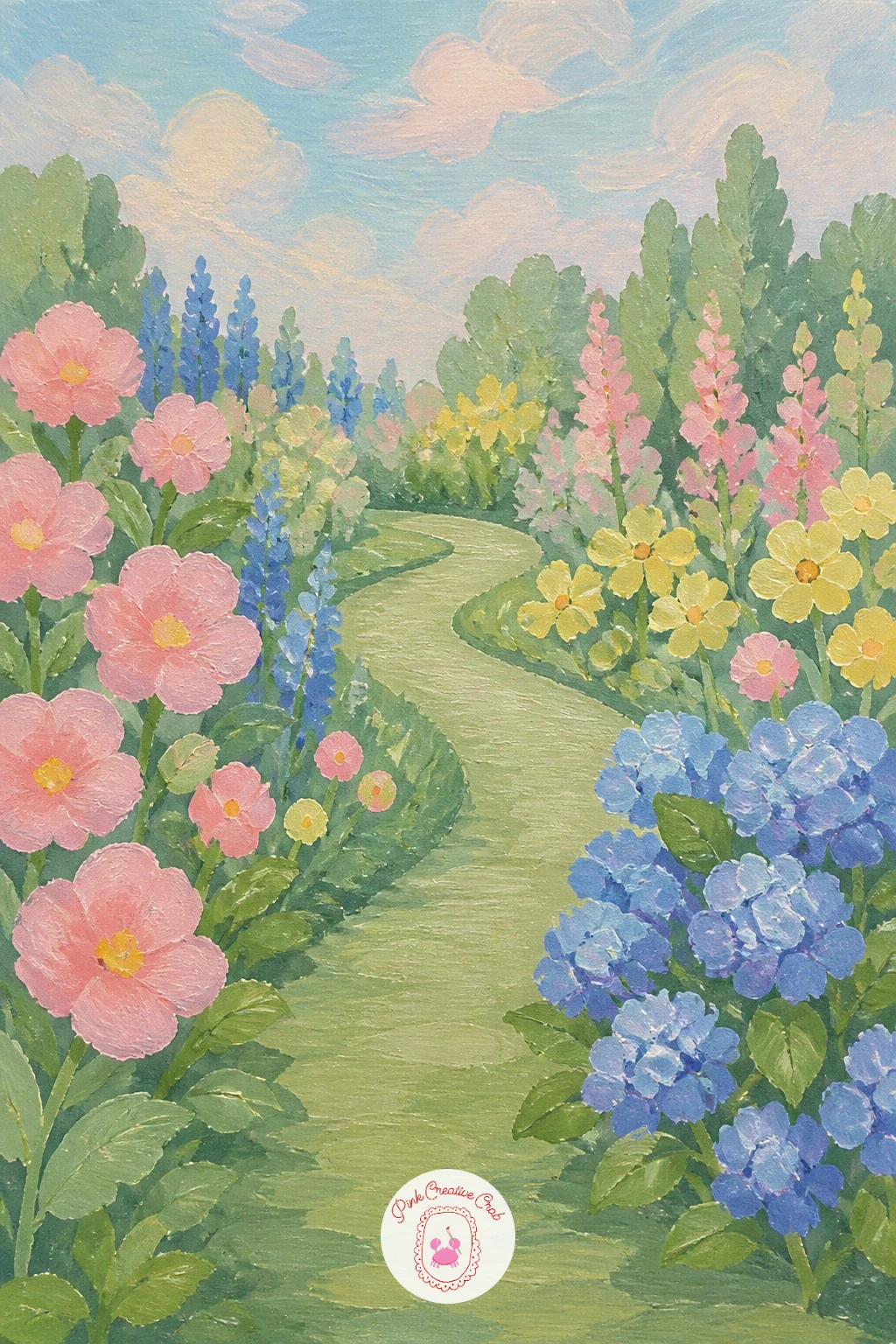
Palette: Sage Green,Soft Rose,Lemon Yellow,Sea Blue
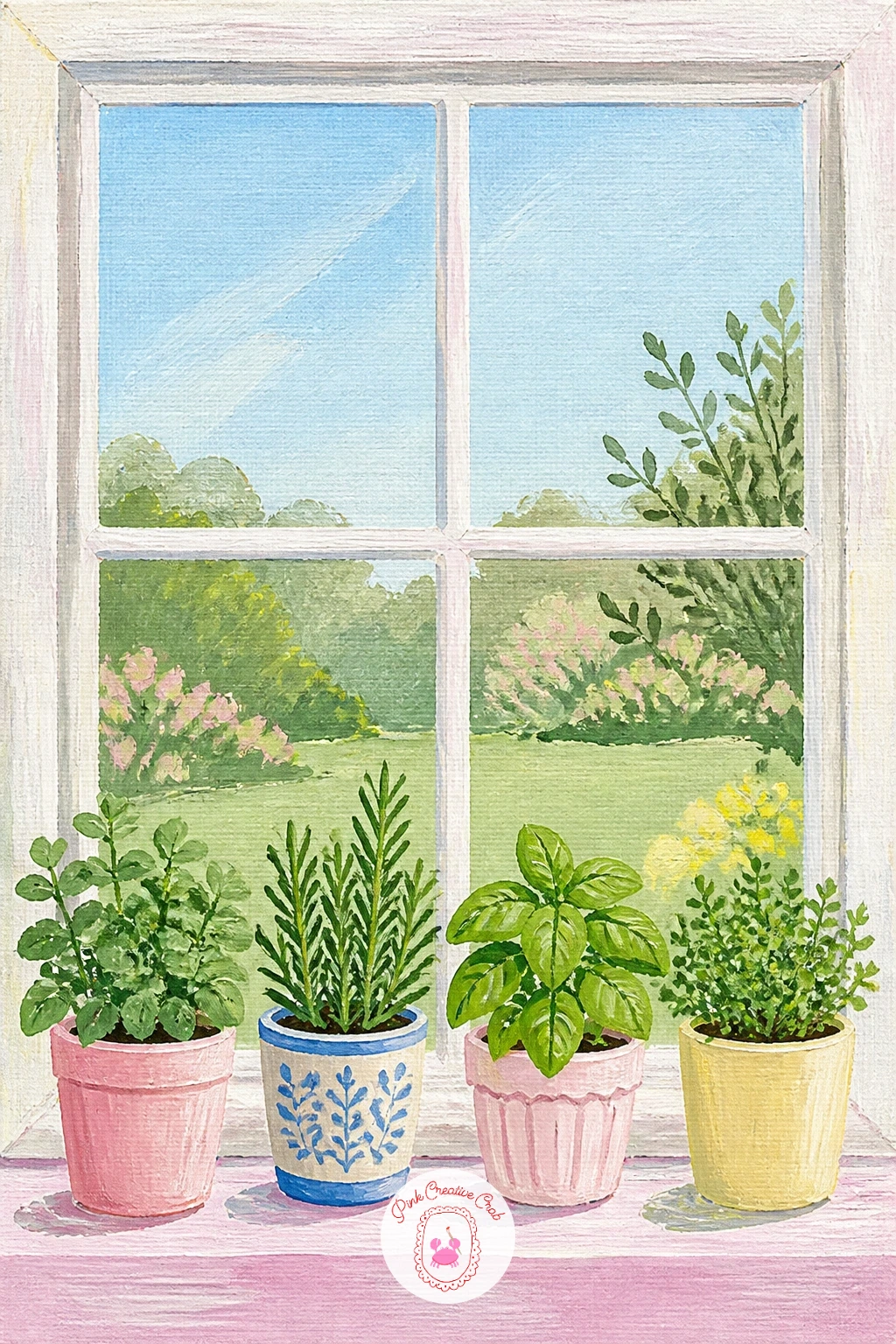
Her kitchen window is an easy next step because it is built from straight lines you can tape off before you paint. Mask the window frame with painter’s tape, block the sky and yard outside in soft blue and sage, then peel the tape once dry so the frame stays crisp white against the color on both sides.
Paint the sill as one flat lemon or cream block, then add two or three potted herbs along it using short upward dabs of a round brush, basil in rounder dabs, rosemary in thinner upright ones. Keep the yard beyond the glass loose and simple, just a tree shape and a fence line, so it reads as background and not a second painting competing with the herbs.
If the window looks flat once it is all in, add one line of a slightly darker blue along the top pane edge; that single shadow is what separates glass from open sky. No tape on hand, just paint the frame freehand with a thin flat brush and steady your wrist on the canvas edge.
Finish last with tiny lemon yellow dots for new herb growth catching the light.
You Will Need
- painter’s tape
Palette: Sea Blue,Sage Green,Lemon Yellow,Titanium White
The family home at dusk takes everything you just practiced with window frames and adds one warm light source, so keep that kitchen window fresh in mind. Block in a dusky sky first, blending a deep sea blue at the top into a soft pink near the horizon, then paint the house as one simple flat shape on top once that sky layer is dry.
Place the porch light as a small lemon yellow glow around the door, and let that be the brightest point on the whole canvas: every other color should sit a shade or two darker than it so the light actually reads as light.
Where beginners go wrong here is painting the whole house too bright, which flattens the dusk mood; keep the walls in a muted rose or sage and save full lemon yellow only for the glow itself and one or two window squares. A soft round brush with a light scumble of white over the yellow gives the porch light a gentle halo if you want it less sharp-edged.
Add a single tree silhouette beside the house last, painted in one flat dark shape with no branches picked out.
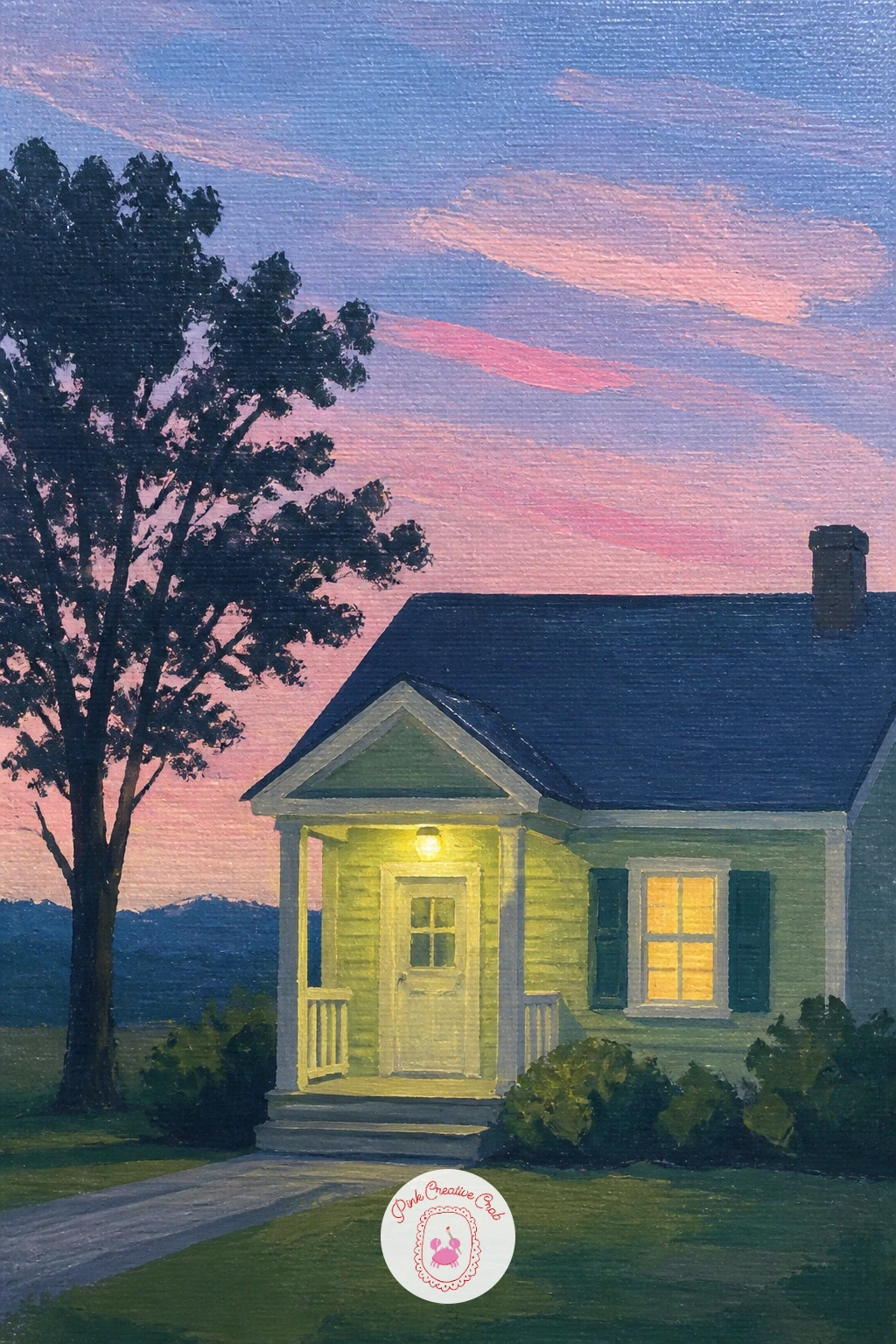
Palette: Sea Blue,Soft Rose,Lemon Yellow,Payne’s Grey
Her favorite teacup makes a lovely small gift canvas because it finishes in well under an hour. Draw the ellipse of the cup rim and the saucer lightly in pencil first, checking that the saucer ellipse is noticeably wider and flatter than the cup rim, that one comparison keeps the whole thing from tipping over visually.
Block the cup in a flat soft pink or sage, the saucer in a lighter shade of the same color family so they read as a set, and leave the inside of the cup a shade darker to suggest tea without painting any liquid shine. Add the mint sprig last with two or three simple leaf shapes and a thin stem, overlapping the cup edge slightly so it looks tucked in rather than floating.
The handle is where this usually goes wrong, painted too thin and spindly; give it real width, almost a quarter of the cup’s height, and it will hold up at a glance. No mint sprig handy to look at, a few sage green almond-shaped leaves read as mint just fine.
Finish with one thin white highlight line along the cup rim.
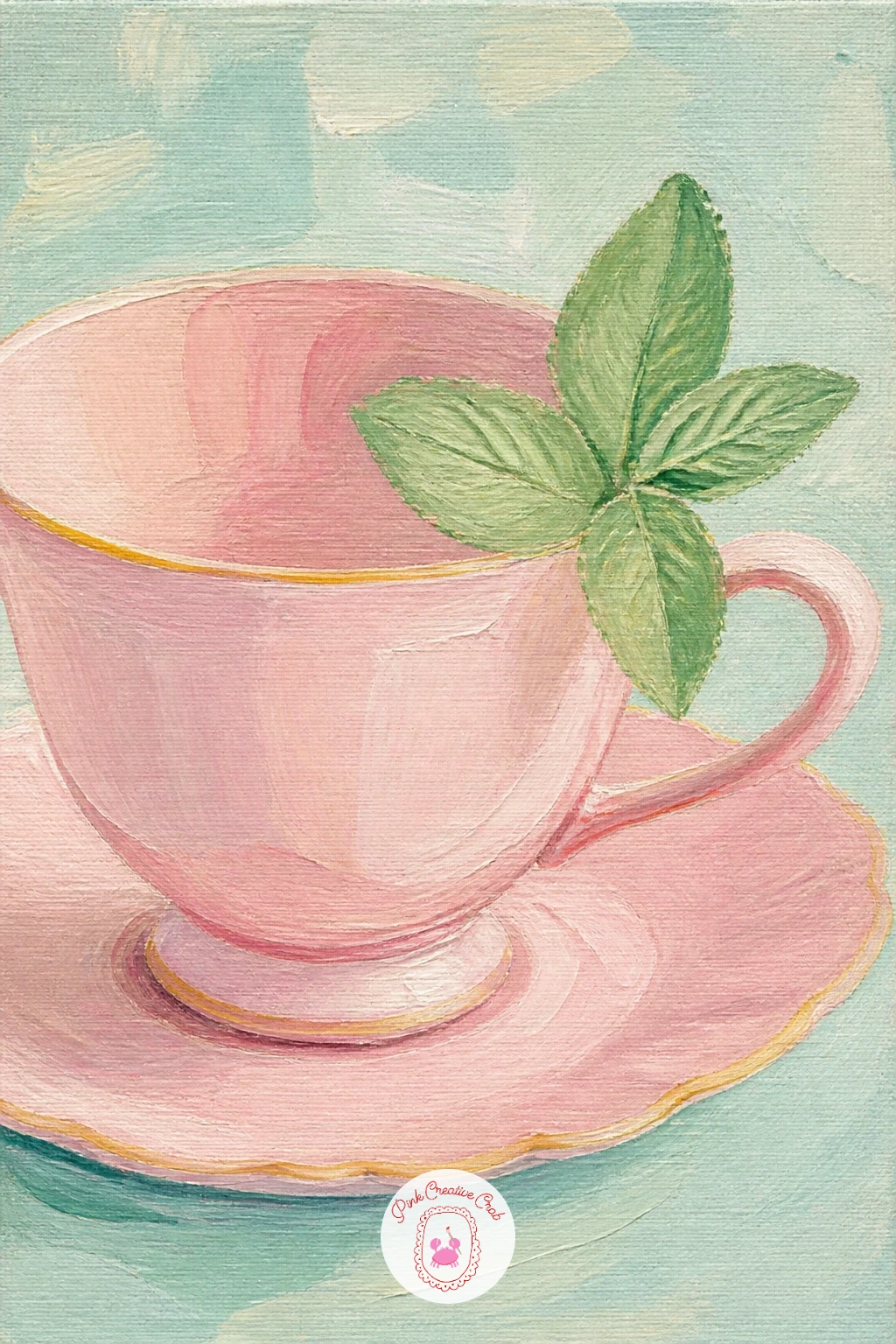
Palette: Soft Rose,Sage Green,Titanium White,Pale Pink
A seaside town she loves works as a stack of simple shapes, which makes it friendlier than it looks. Paint the sea and sky first as two flat bands, sea blue below and a paler blue above, then let that dry before stacking pastel house blocks up the hill in rows, each row slightly smaller than the one below it.
Vary the house colors between soft pink, sage and lemon so no two sit side by side in the same shade, and give each one a tiny triangle roof and one or two window dots, nothing more detailed than that. This is where it is tempting to paint every window and door; resist it, the charm comes from repetition of simple shapes, not individual detail.
Check the houses at the top of the hill against the ones at the bottom: they should be about half the size, that proportion is what sells the hillside. If you want a quicker version, skip individual windows entirely and just vary the roof colors instead.
Add a thin white line of surf where the sea meets the shore to finish.
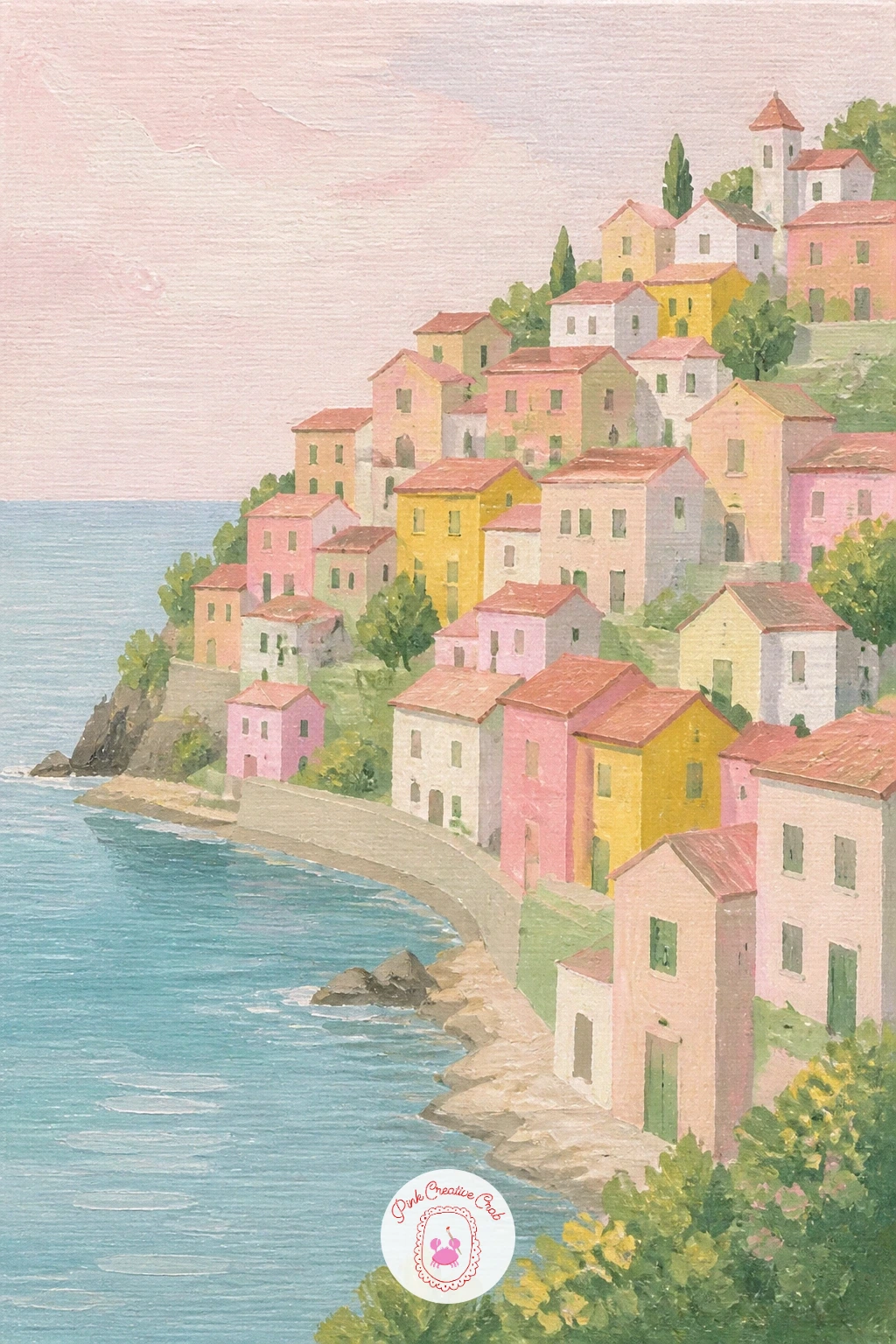
Palette: Sea Blue,Soft Rose,Lemon Yellow,Sage Green
A mother and child silhouette on the beach turns the sunset itself into the main event, so block that sky first and let the figures stay simple. Paint the sky in horizontal bands, warm pink near the horizon shifting up into soft sea blue, blending only where the bands meet.
Once dry, paint the figures as one flat dark silhouette shape, mother and child holding hands, standing low on the horizon line so the sky has room to breathe above them. Keep the shape simple, no facial features and no fingers, just the outline of a dress or skirt and two small legs for the child.
Beginners often place the figures dead center; shift them slightly left or right of the middle and the composition immediately feels more natural. A fine round brush gives you clean edges around the silhouette where it meets the bright sky.
Add a reflection strip of the sky colors in the wet sand below them to finish, just a few soft horizontal streaks.
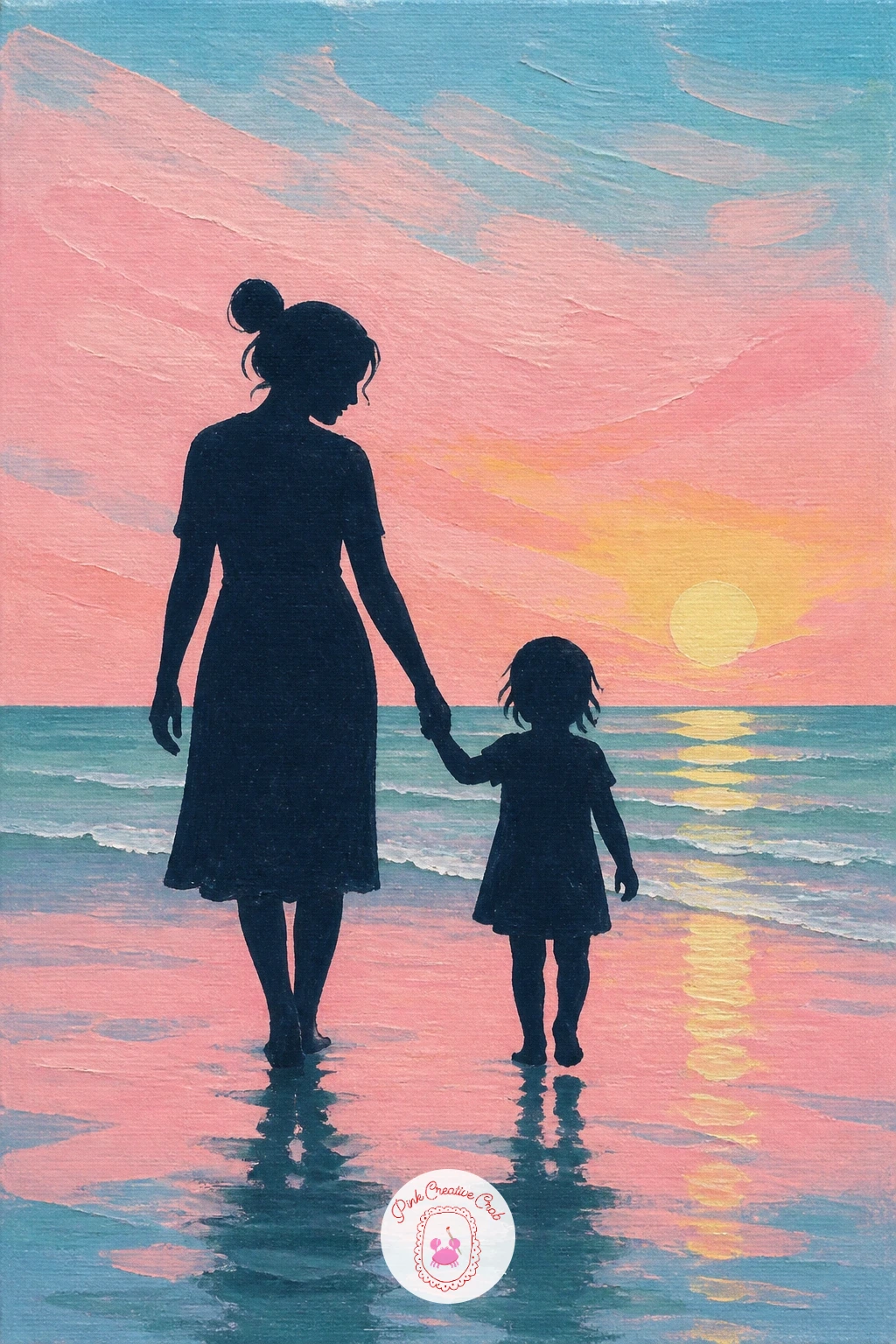
Palette: Soft Rose,Sea Blue,Payne’s Grey,Lemon Yellow
Her reading chair by the window is a cozy interior scene built from a handful of flat rectangles and one soft curved chair shape. Block the window light first, a pale rectangle of sky color behind everything else, then paint the chair as one rounded silhouette in a muted rose or sage sitting just in front of it.
Layer the blanket over one arm of the chair in a contrasting soft color with a few simple folds, and stack a short tower of books on the floor beside it using slightly uneven rectangle shapes so the stack feels lived-in rather than perfectly ruled.
The window light is the trickiest part: keep it the lightest value on the whole canvas, almost white at its center, fading gently into the wall color at the edges, and everything else in the room will read as softly lit by it. No blanket texture needed, two or three fold lines in a darker shade of the same color do the job.
Finish with one small plant on the windowsill for scale.
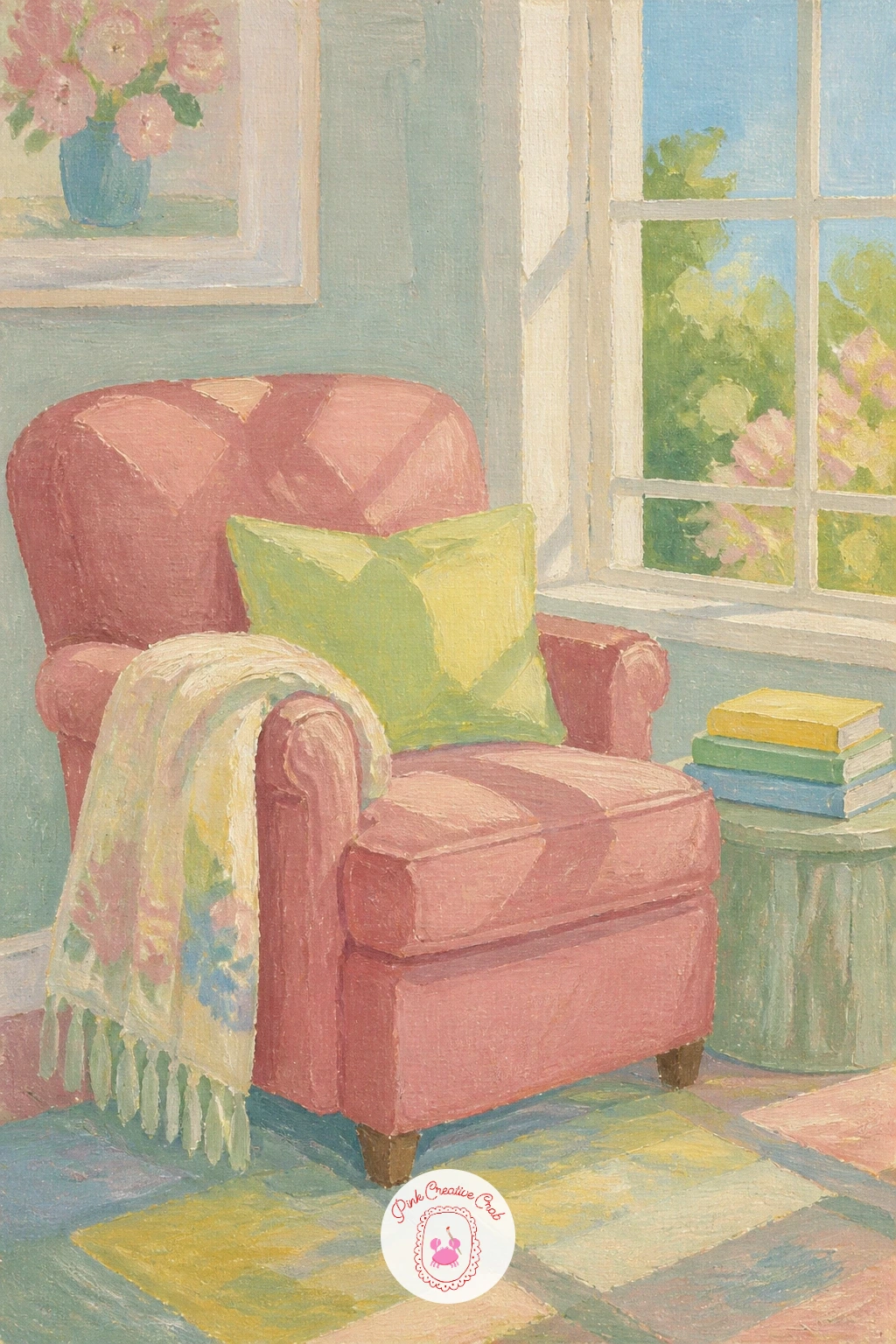
Palette: Soft Rose,Sage Green,Titanium White,Lemon Yellow
If you want more cozy interior practice after this one, the rainy day painting ideas list leans heavily on window light and soft indoor corners.
A quiet lake with a wooden dock gives you a clean horizon line to build everything else around. Paint the sky and the water as two flat halves of the canvas first, with the water a shade darker than the sky, then add the dock as a simple brown plank shape running out from one side toward the middle.
The red canoe is the focal point, so save it for last and keep it small relative to the dock, tied loosely at the end of the planks with one or two curved lines for the hull. A thin dry brush dragged horizontally across the water under the dock and canoe suggests a soft reflection without painting a mirror image.
Where this scene tends to go wrong is a dock that looks like it floats above the water instead of sitting on it; add a thin dark shadow line directly under the planks and it anchors immediately. No red paint on hand, a deep coral works just as well against the blues and greens.
Finish with a scatter of soft green treeline along the far shore.
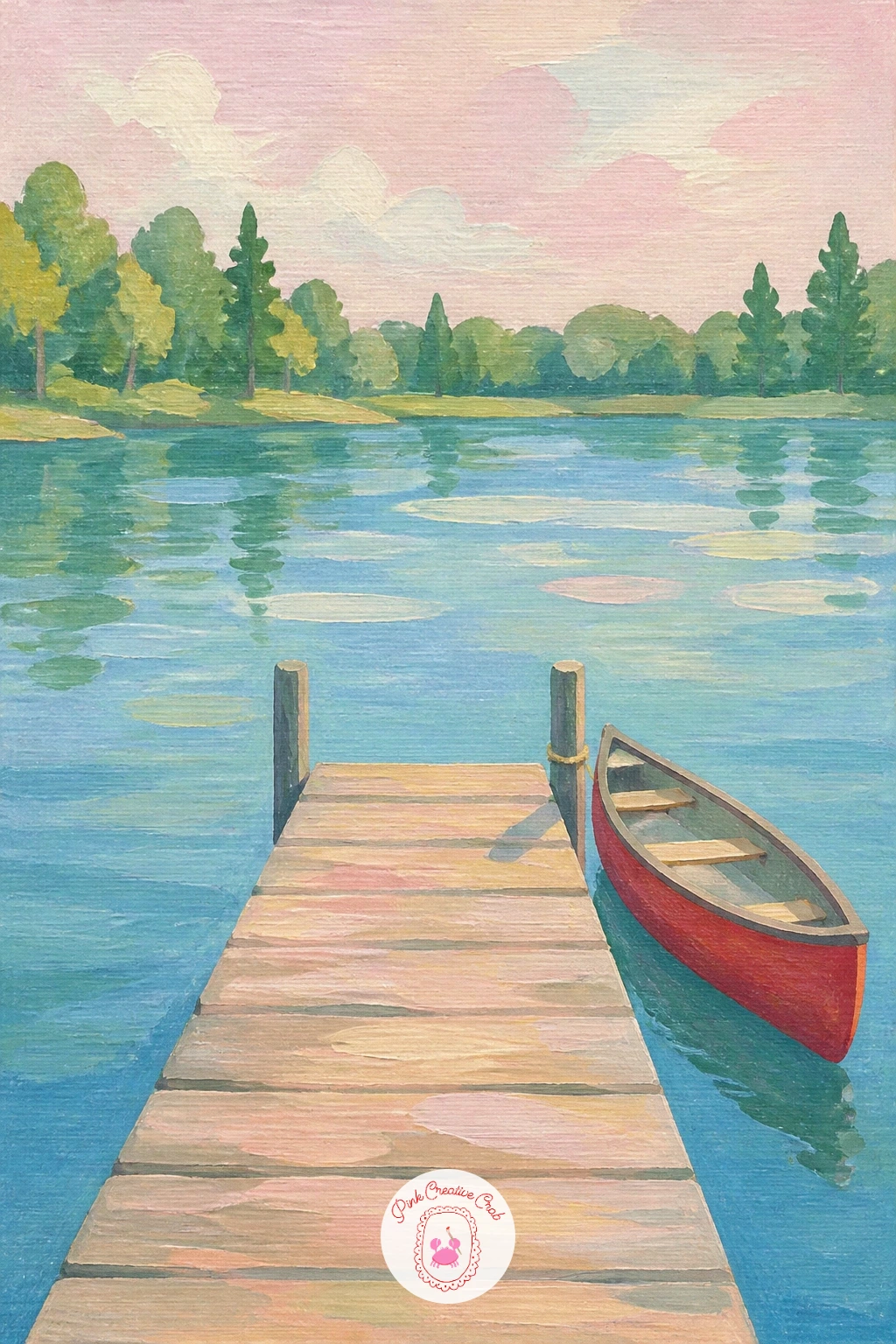
Palette: Sea Blue,Sage Green,Brick Red,Payne’s Grey
Her dog asleep on a patterned rug works best if you paint the rug first as a flat shape with two or three simple repeated motifs, diamonds or stripes in sage and rose, kept loose rather than perfectly even. Let that dry completely before the dog goes on top.
Paint the dog as one curled flat silhouette, checking that its body length roughly equals two head-widths so the curl reads as relaxed rather than oddly stretched. Keep the fur color to one or two flat tones, a warm tan or soft grey, and add just a few short brush strokes along the back for texture rather than painting every hair.
The ear shape is where resemblance lives, so look at a real photo of her dog and match whether the ears flop or stand before you commit to the breed’s generic shape. A dry, half-loaded round brush dragged lightly over the body edge softens it into the rug without a hard outline.
Finish with one small paw peeking out from the curl for personality.
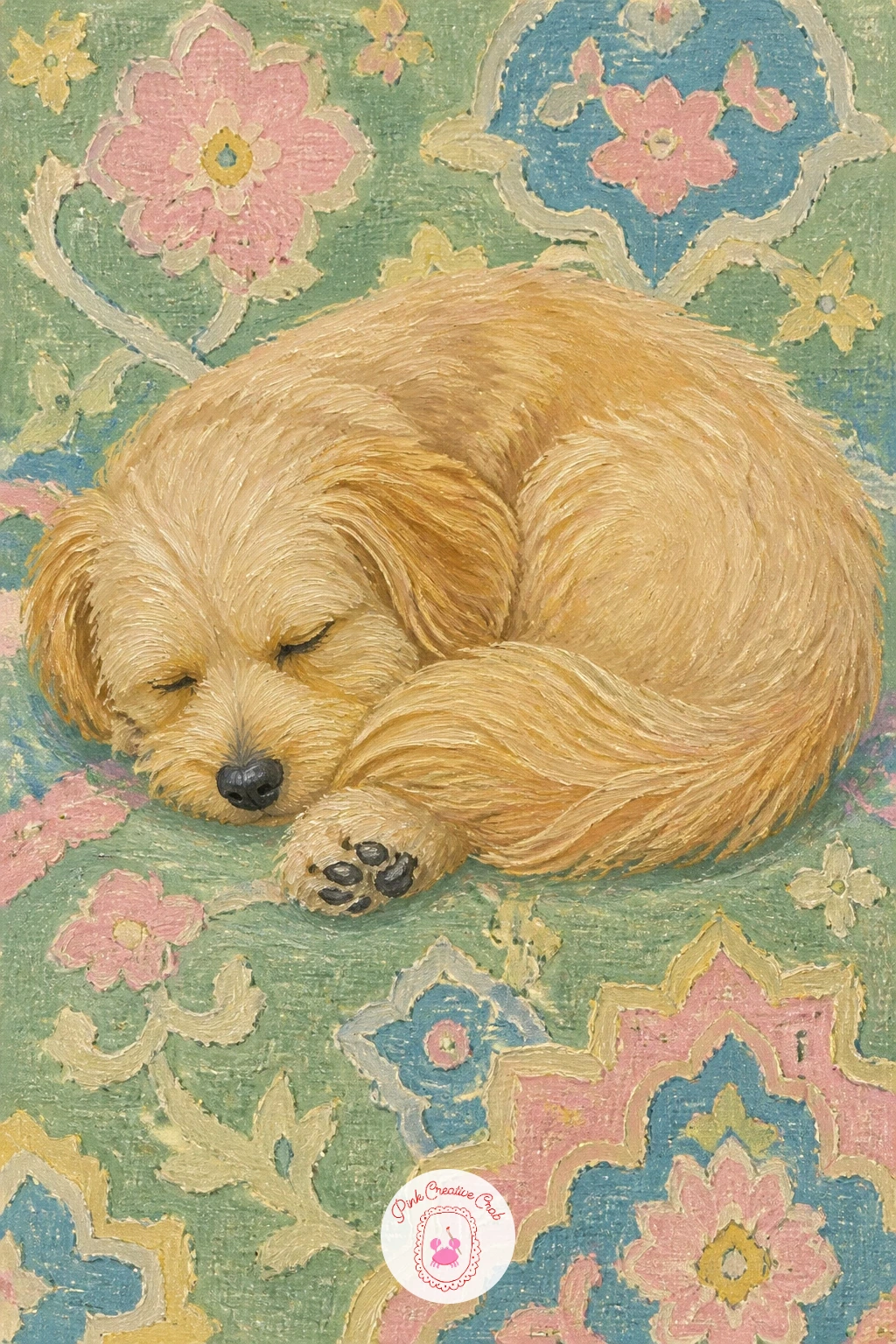
Palette: Sage Green,Soft Rose,Warm Tan,Titanium White
Her cat on a sunny windowsill picks up the same window light idea from the kitchen scene earlier, but now the cat is the whole story. Block the window and pale sky behind it first, then paint the cat sitting upright as one flat silhouette shape in profile, which is far easier to get proportionate than a front-facing pose.
Measure the cat’s head against its body: a sitting cat’s head is roughly a third of its total height, and keeping that ratio stops the finished shape from looking like a kitten or a stretched cartoon. Add two or three potted plants along the sill in sage green, varied in height so they frame the cat without hiding it.
Tails are the usual trouble spot, painted too thin and straight; curl it once around the cat’s front paws instead, which also helps the whole silhouette feel settled and warm. No real plant reference needed, simple oval leaf clusters on thin stems read as houseplants instantly.
Add one thin white whisker line on each side to finish.
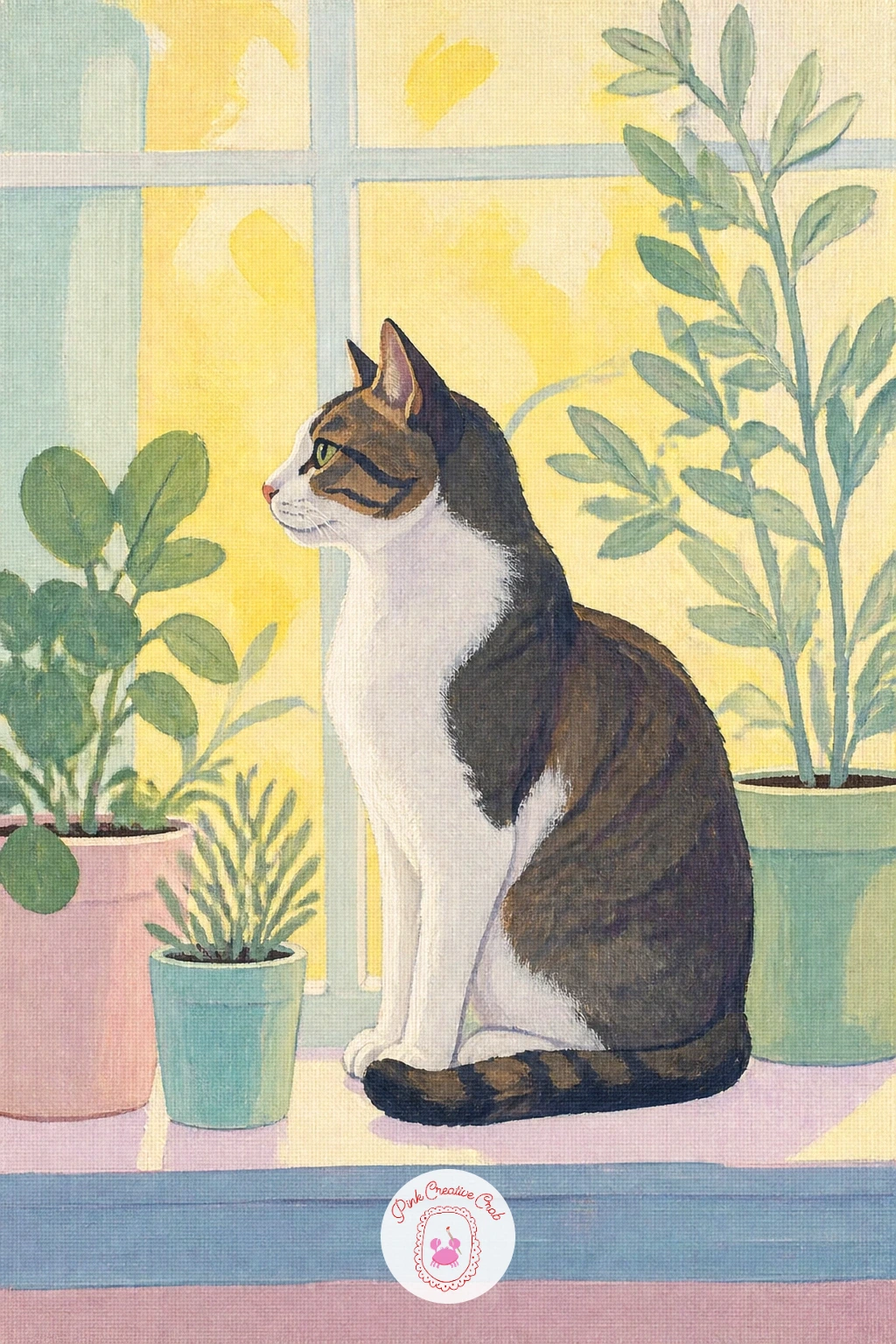
Palette: Payne’s Grey,Sage Green,Lemon Yellow,Titanium White
Her front door with its wreath makes a satisfying near-symmetrical subject, so block the door as one flat vertical rectangle centered in the canvas before anything else goes on. Paint the wall color around it in a soft contrasting shade, rose against a sage door or the reverse, so the door reads clearly as its own shape.
The wreath goes on top once the door is dry, built from a ring of small loose dabs in muted dried-flower colors, dusty pink, soft mustard and sage, rather than bright fresh tones. Keep the ring slightly uneven on purpose; a perfectly round wreath actually looks less handmade and less like dried flowers.
A thin gold or brass doorknob dot and a simple rectangle for a doormat ground the whole scene and stop it from floating. No dried flower reference on hand, mix lemon yellow with a touch of brown for that faded mustard tone instead of buying ochre.
Finish with a soft shadow under the wreath where it sits against the door.
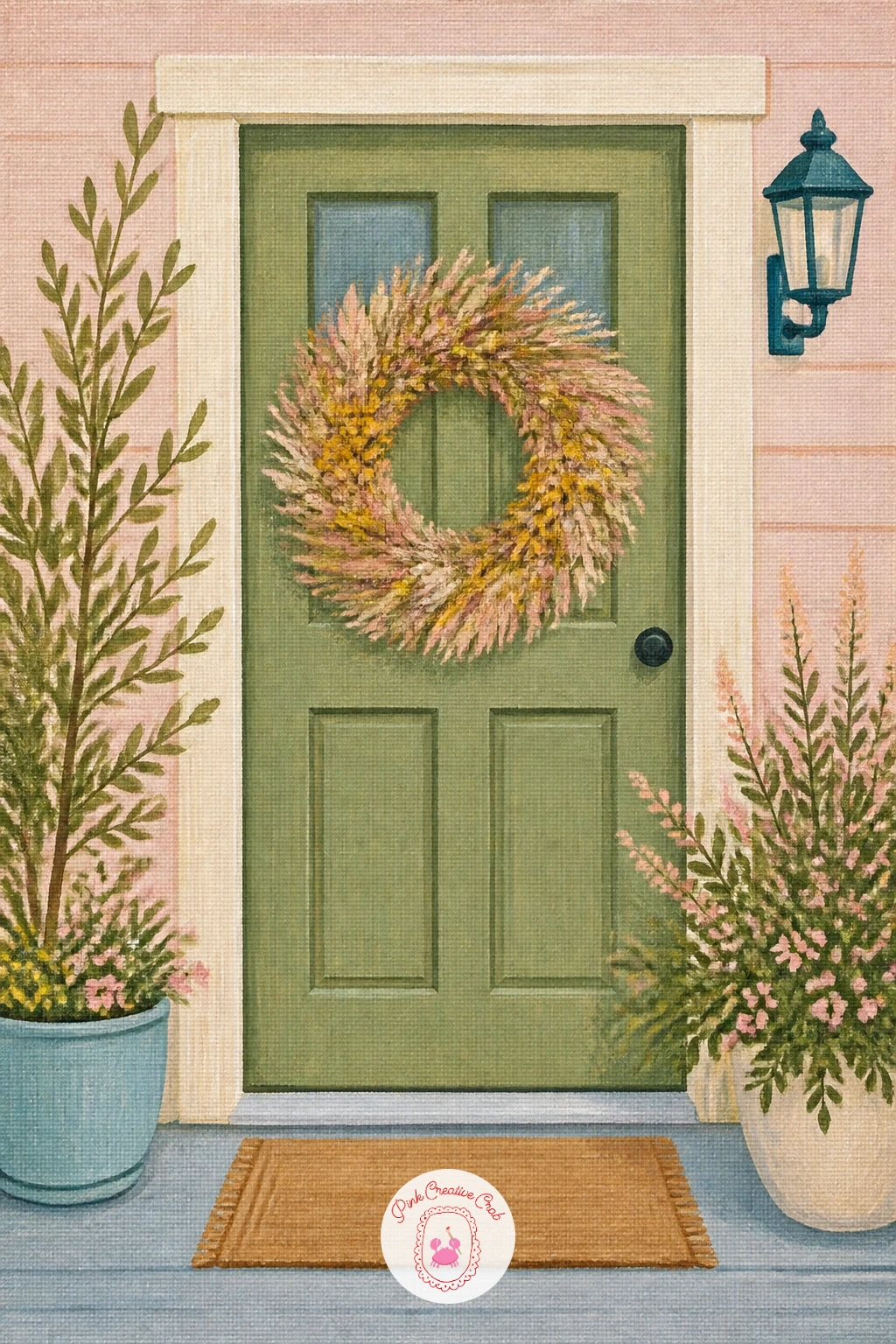
Palette: Sage Green,Dusty Rose,Mustard,Titanium White
A vintage sewing machine rewards patience with straight edges more than painting skill, so tape off the main body shape if you want crisp lines, or sketch it lightly in pencil first checking that the base is wider than the head is tall. Block the machine body in one flat dark tone, sage or a deep rose depending on how bold she likes things, then add the wheel and needle arm as simple curved and straight shapes on top.
Spools of thread scattered beside it are the fun part: paint each as a simple cylinder shape in a different soft color, lemon, rose, sage, with a thin dark line through the center hole. Keep them varied in height so they do not read as a repeated pattern.
The needle and thread line is where people overwork it; one thin pale line from the spool to the machine is plenty, do not try to paint stitching detail. If the machine shape feels intimidating, simplify it to its silhouette only and skip the wheel and dial details entirely.
Finish with one small highlight dot on the metal wheel.
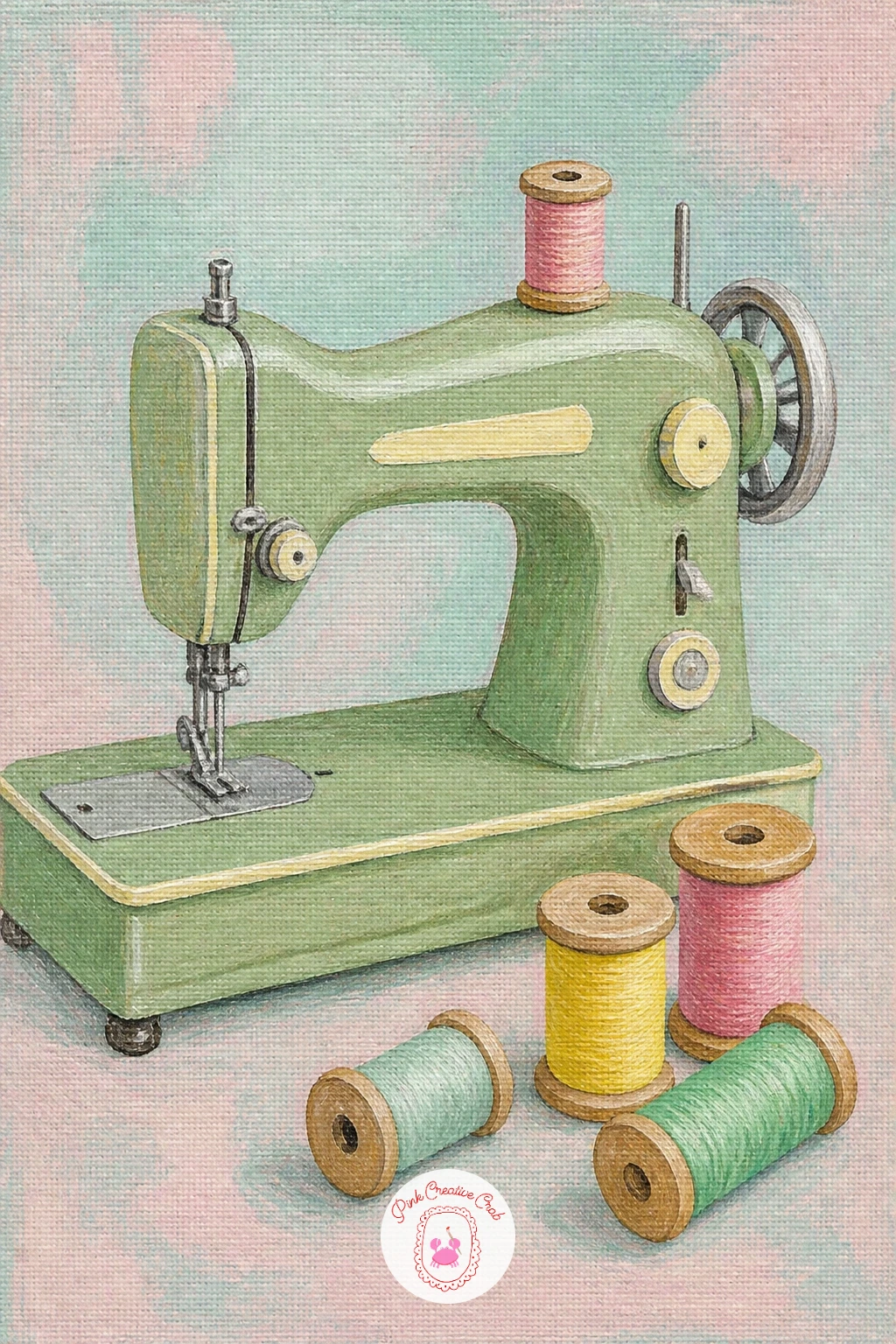
Palette: Sage Green,Soft Rose,Lemon Yellow,Payne’s Grey
A big hand holding a small hand works as a close, simple composition that carries a lot of warmth for very little detail. Sketch both hand shapes lightly in pencil first, checking that the small hand is roughly half the length of the big one, that single comparison keeps the scale believable.
Block each hand in flat soft pink with a slightly deeper rose in the gaps between fingers to separate them, then blend a touch of white along the top edge of each finger where light would naturally catch it. Keep the background a plain pale wash so nothing competes with the two shapes.
Fingers are where this goes wrong if they are drawn too stiff and straight; curl the small hand’s fingers slightly around the big one’s, which instantly reads as held rather than placed side by side. A soft round brush loaded with a touch of white, dry-dragged along the knuckle ridges, adds gentle shape without hard lines.
Finish with a faint heart shape floating softly in the background if you want one extra touch.
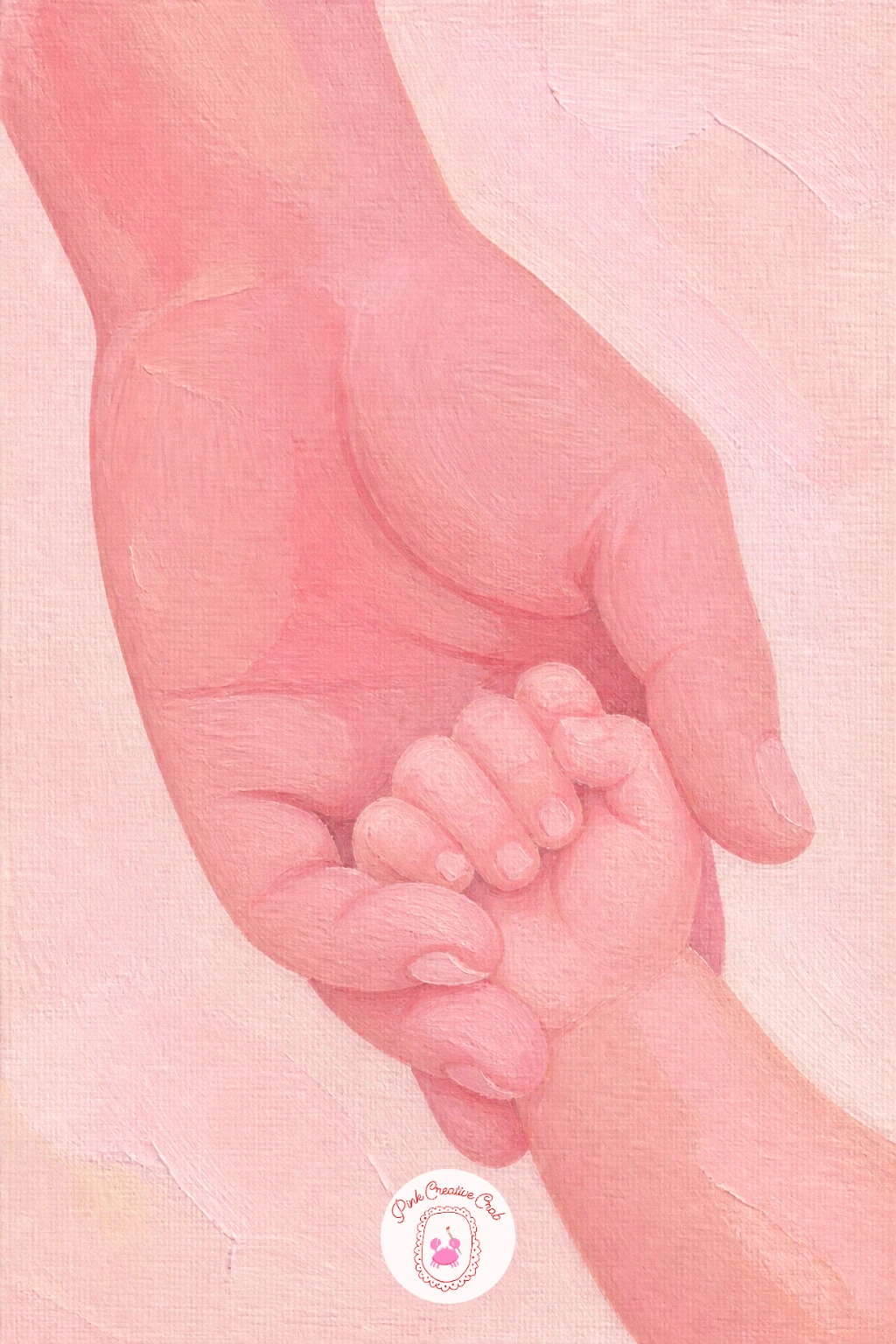
Palette: Soft Rose,Pale Pink,Titanium White,Sea Blue
A cozy reading nook with fairy lights builds on the window and chair ideas earlier, this time with the lights themselves as the star. Block the dark wall and shadowed corner first, a deep sage or dusky blue, so the lights will have something rich to glow against once they go on.
Paint the plant and any furniture shapes as flat silhouettes within that dark base, then once everything is dry, add the fairy lights as small lemon yellow dots scattered in a loose curved string, each with a tiny soft white halo dabbed around it with a nearly dry brush.
Too many lights painted too evenly looks like a grid instead of a string; vary the spacing and let a few dots sit closer together than others. No yellow paint small enough for fine dots, the tip of a cotton swab works as well as a brush for this.
Finish with one warm glow patch behind the plant leaves where the lights sit closest to it.
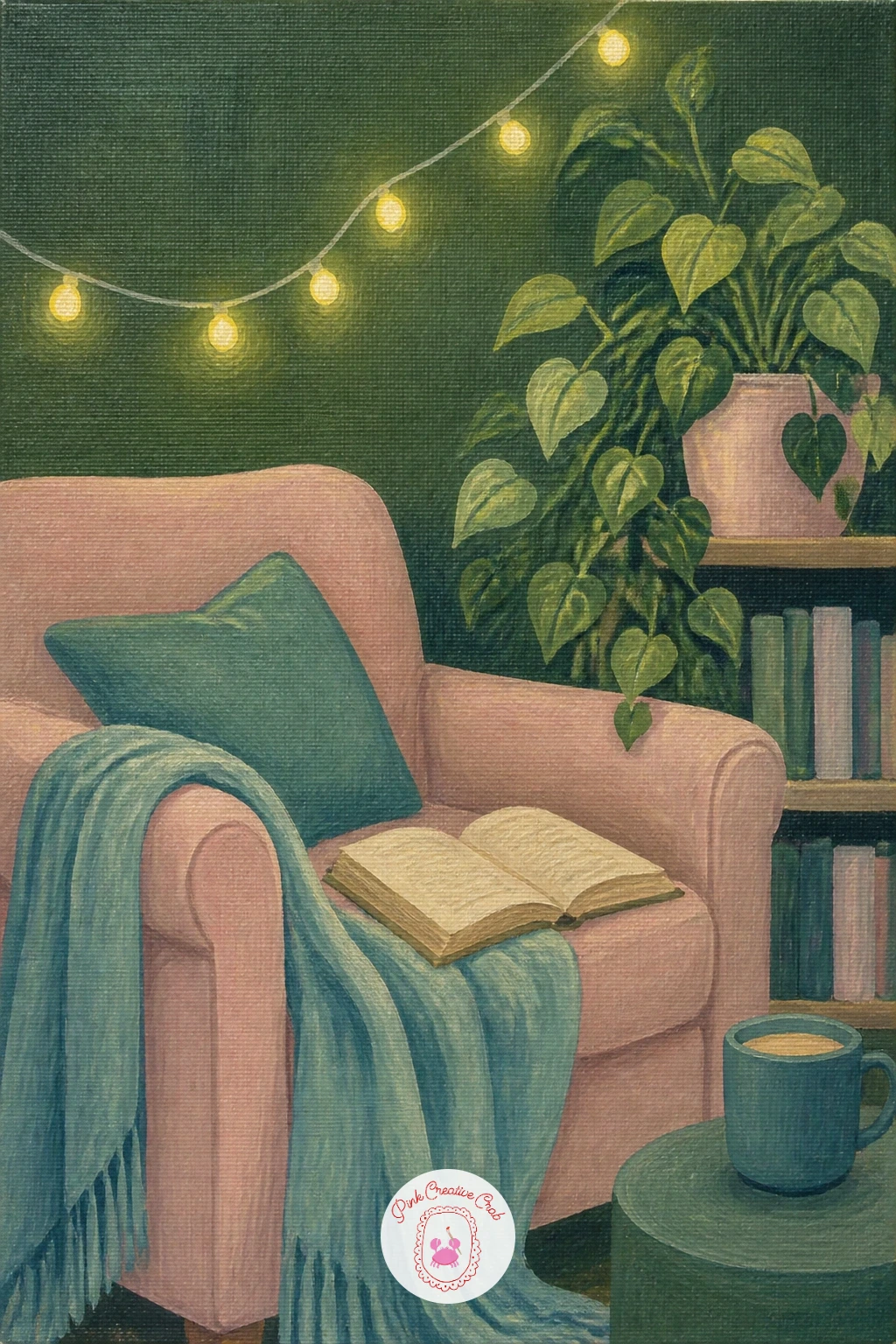
Palette: Sage Green,Lemon Yellow,Payne’s Grey,Titanium White
A lighthouse on a cliff pairs a tall simple shape with a wide calm sea, which makes a satisfying contrast once it is blocked in. Paint the sky and sea as two flat bands first, pale blue above and a slightly deeper sea blue below, then add the cliff as a solid dark sage or grey shape rising from one side.
The lighthouse itself is just a tall narrow cylinder with a small lantern room on top, painted in white or soft lemon against the cliff; keep the stripe detail, if you add one, to a single thin band rather than several. Measure the lighthouse height against the cliff it stands on: it should look rooted, roughly a third to half the cliff’s height, not towering awkwardly above it.
The lantern room glow is the detail that sells the whole scene, so add one small warm dot there last, after everything else is dry. No white paint left for stripes, cream or pale yellow reads just as clean against grey stone.
Finish with a few gentle wave lines at the base of the cliff.
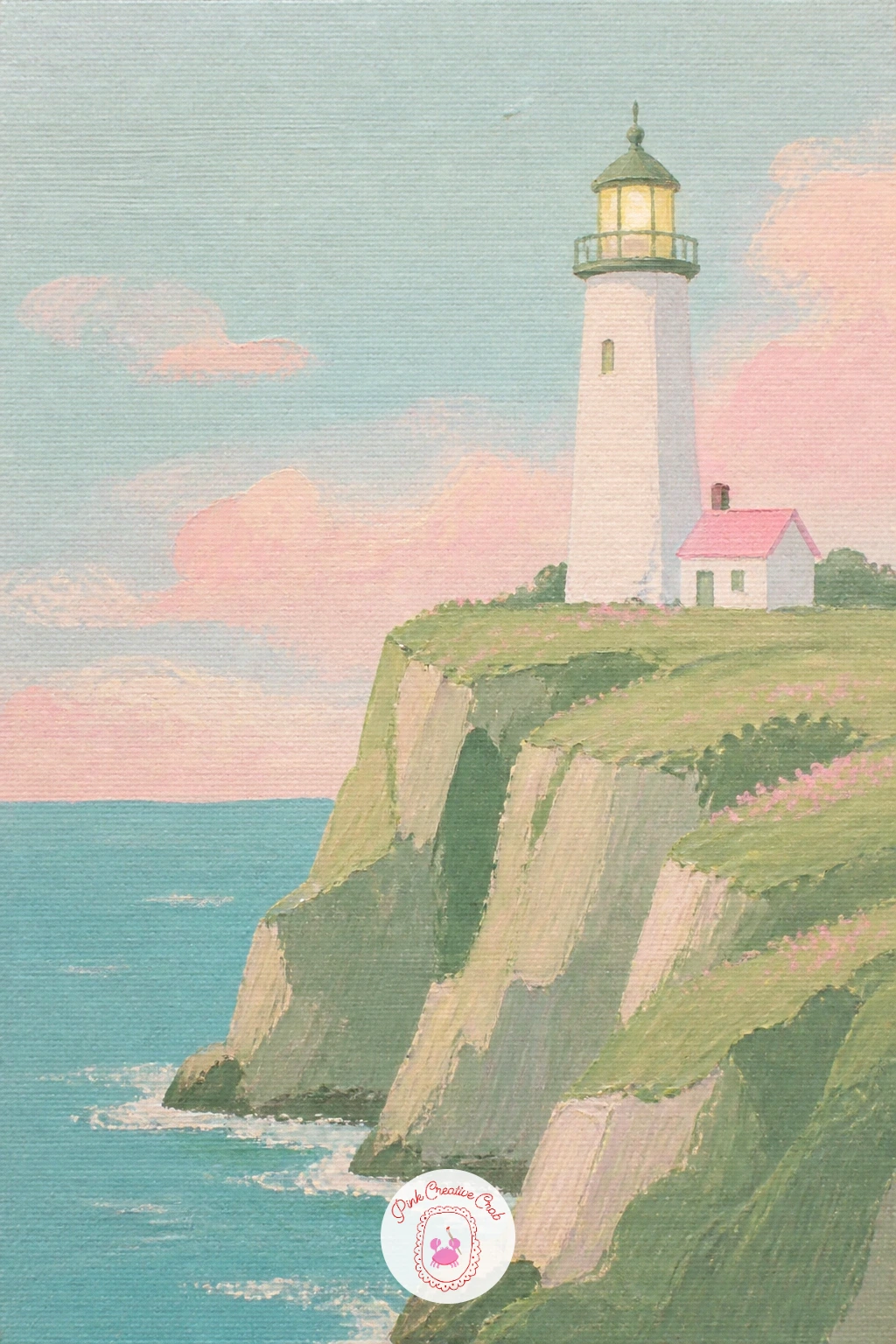
Palette: Sea Blue,Sage Green,Titanium White,Lemon Yellow
A tree with heart-shaped leaves and a rope swing turns a simple trunk shape into something personal the moment the swing goes on. Paint the trunk and main branches first in a flat warm brown, keeping the branch lines fairly simple, two or three forks rather than a tangle.
Build the canopy from loose heart shapes instead of round leaf blobs, clustering them in sage and a touch of deeper green so the tree reads as leafy without needing hundreds of individual marks. Let the canopy dry before adding the rope swing, two thin parallel lines hanging from a branch down to a simple flat wood seat.
Hearts painted too uniformly in size look stamped rather than grown; vary them, bigger toward the outer edges of the canopy and smaller tucked in near the trunk. A fine liner brush keeps the rope lines steady if your hand is not used to long straight strokes.
Finish with a few fallen heart leaves scattered on the ground beneath the swing.
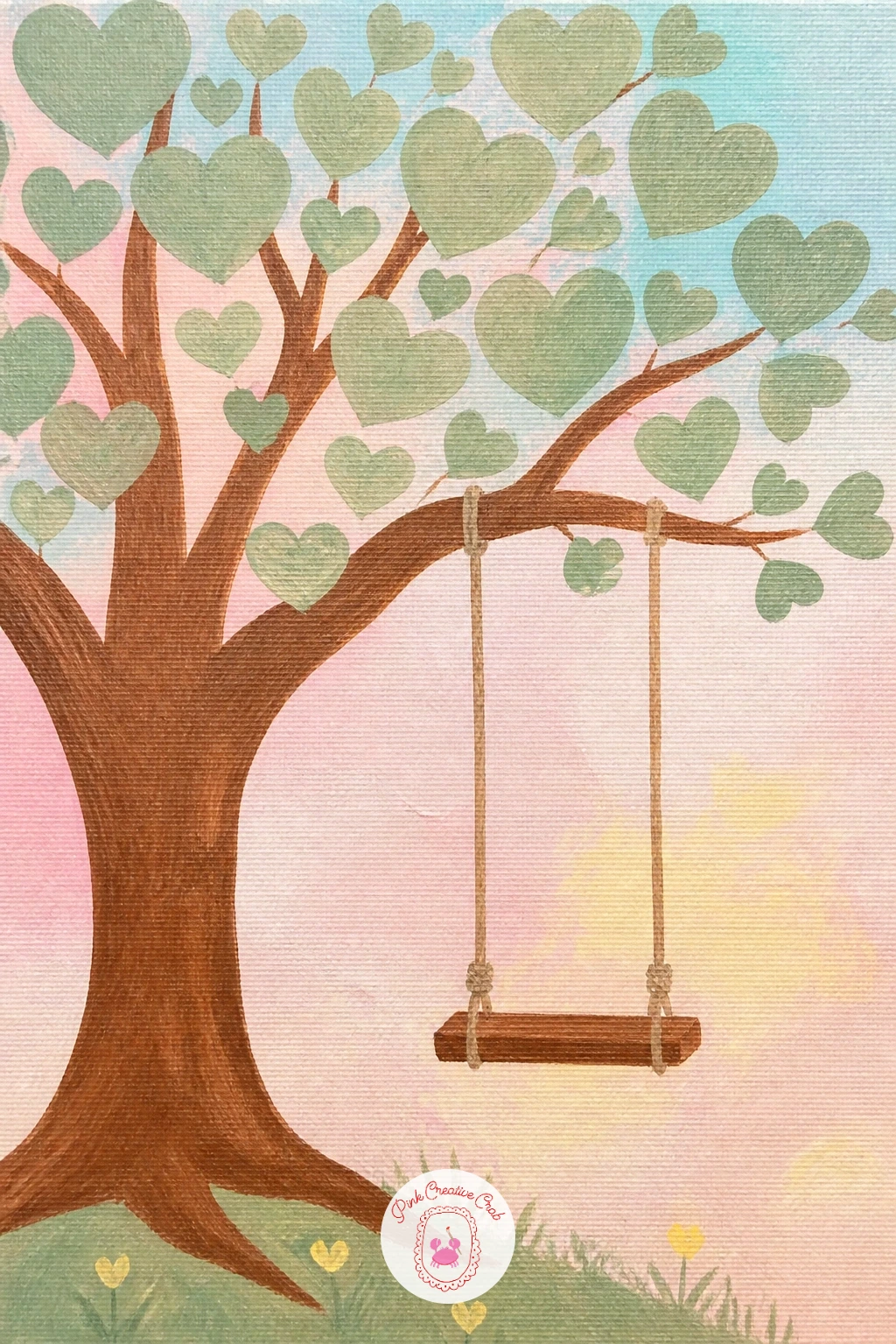
Palette: Sage Green,Warm Brown,Soft Rose,Lemon Yellow
A stack of cookbooks beside a vase of tulips makes a cheerful kitchen still life built from rectangles and simple curved flower shapes. Stack three or four flat book rectangles first, each a slightly different color and width, offsetting them a little so the pile looks settled rather than perfectly squared.
Paint the vase beside the stack as one simple rounded shape, then add the tulips on top once it is dry, each flower just a closed oval on a thin stem, no petals picked out individually. Keeping the tulip heads simple and closed, rather than open blooms, is what keeps this quick and still recognizable.
Books painted with visible spine text look fussy at this scale; a single thin line near the spine edge of each book is enough to suggest a cover without needing any lettering. No vase on hand to reference, a simple cylinder narrower at the top than the base reads as a vase instantly.
Finish with one or two loose leaves among the tulip stems.
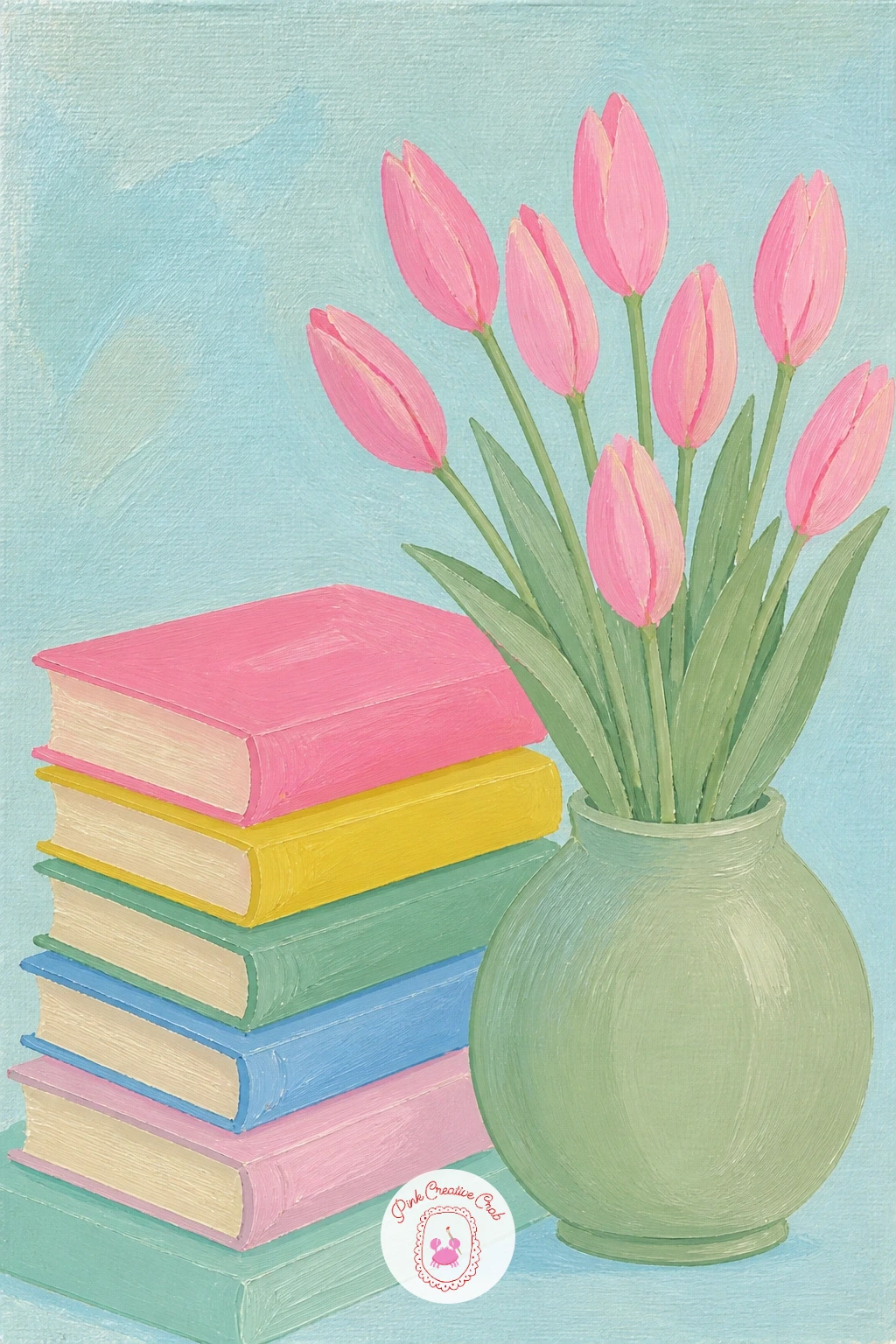
Palette: Soft Rose,Sage Green,Lemon Yellow,Sea Blue
If she keeps a real recipe shelf, the green painting ideas list has more sage kitchen corners worth borrowing for a second gift piece.
A Paris balcony with wrought iron rails gives you a chance to play with straight black linework against soft color, which reads instantly as that city even with very little detail. Block the wall and sky colors first, a pale rose or sage building face against a soft blue sky, then let that dry fully before the ironwork goes on top.
Paint the wrought iron railing as a series of simple thin curved lines, loosely repeated rather than perfectly matched, since real ironwork is never machine-even anyway. Add the flower box along the base of the railing in a flat wood tone, then dot in small flowers along its top edge in rose, lemon and white.
Ironwork painted too thick loses the delicate look that makes this subject work; use the very tip of a liner brush and thin the paint slightly with water for a finer line. No liner brush on hand, the edge of a flat brush turned sideways can draw a reasonably thin line too.
Finish with one shuttered window shape behind the railing for depth.
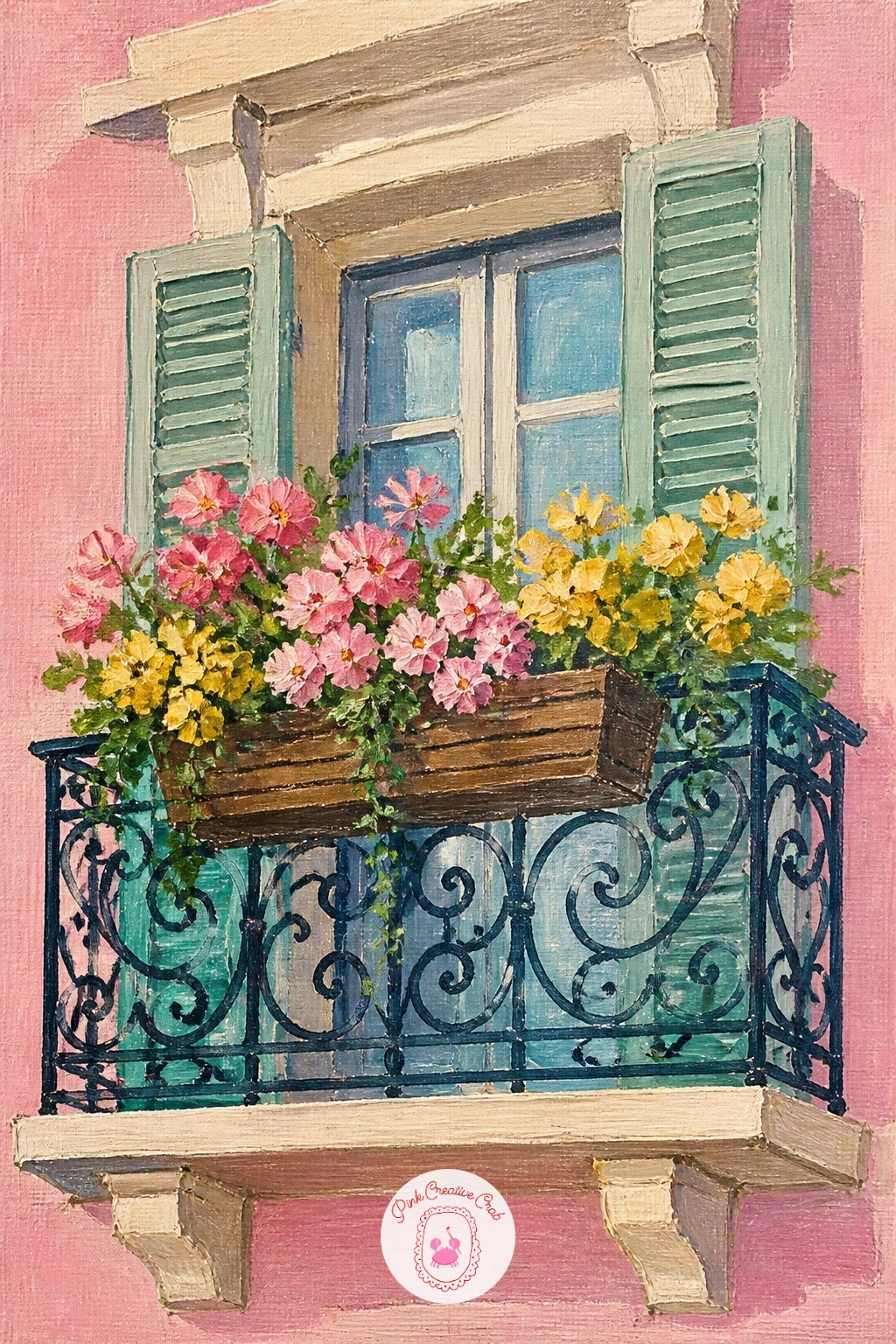
Palette: Soft Rose,Sea Blue,Payne’s Grey,Lemon Yellow
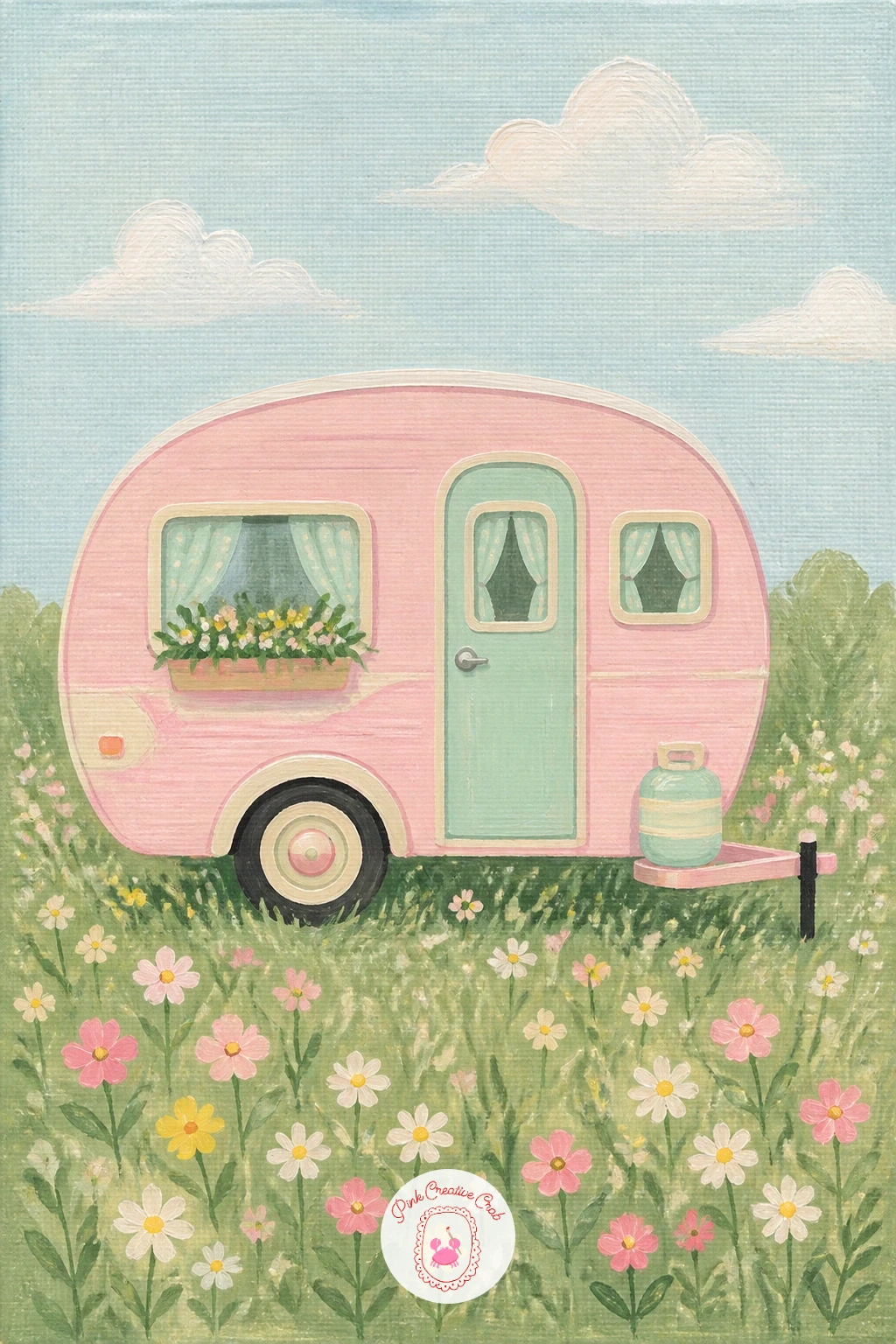
A pastel caravan parked by a field of wildflowers is a friendly rounded shape to practice after all those straight-edged buildings. Paint the caravan body as one simple rounded rectangle with a curved roofline, a flat door and one small round window, keeping the whole shape soft and toy-like rather than mechanically accurate.
Once the caravan is dry, build the wildflower field around its base from loose dabs of color, rose, lemon and white scattered through sage green grass, denser near the caravan wheels and thinning out toward the edges of the canvas. That thinning is what keeps the field from looking like a solid carpet.
The wheels are a common weak point, painted flat against the ground instead of sitting on it; add a thin dark shadow ellipse beneath each one and the caravan settles into the grass convincingly. No pastel color mixed yet for the body, a touch of white stirred into any main color instantly gives that soft caravan look.
Finish with a thin curl of smoke or a small chimney pipe on the roof if you want extra charm.
Palette: Soft Rose,Sage Green,Lemon Yellow,Sea Blue
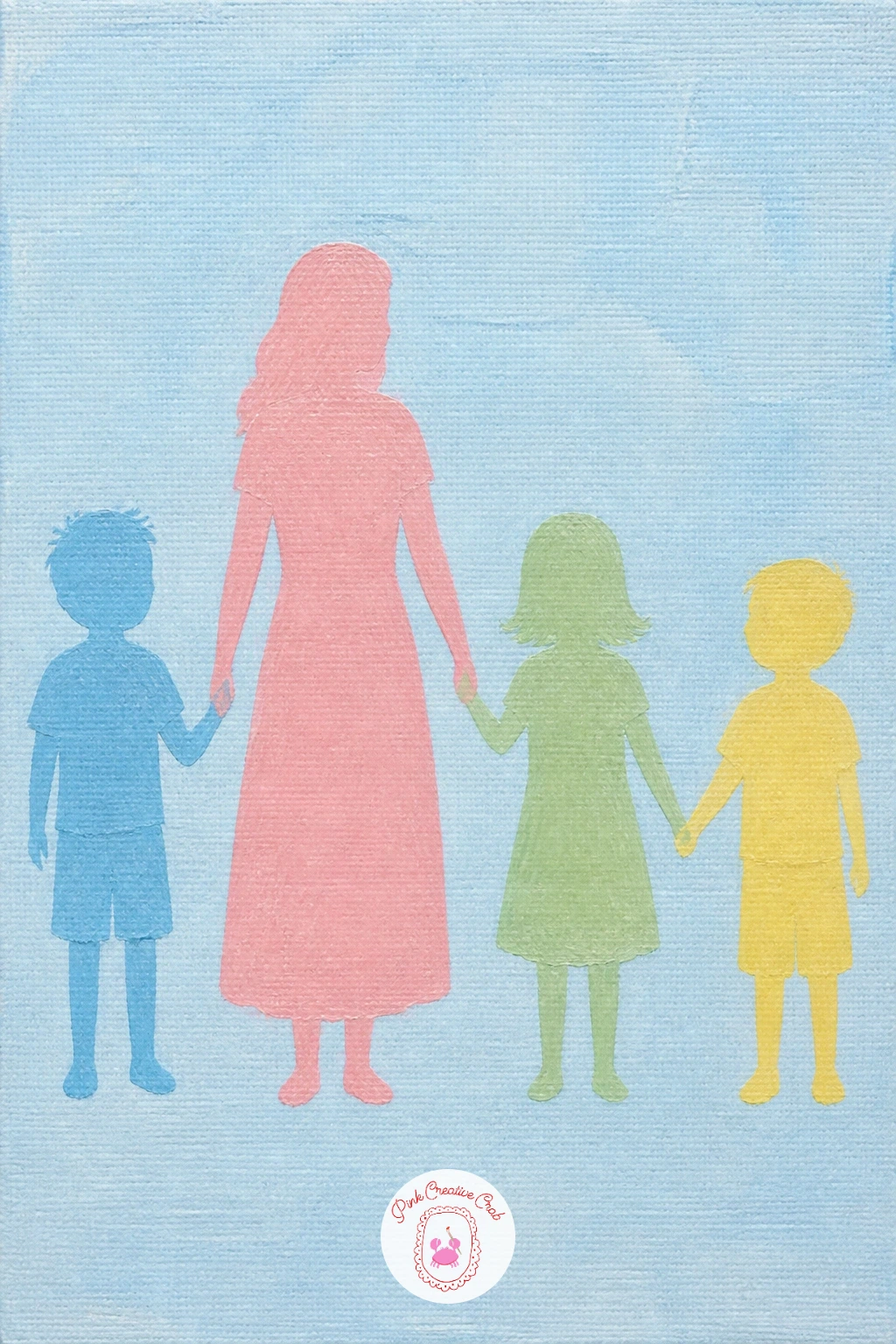
Mother and three kids as simple faceless figures turns a potentially tricky group portrait into an easy exercise in shape and spacing once you strip away any facial detail. Sketch five simple standing shapes first, mother tallest in the middle or at one end, three child shapes graduating down in height, each pair of hands overlapping slightly to show they are holding on.
Block each figure in one flat color, a different soft shade for each so the group reads as individuals even without faces, a dress-shaped silhouette for the mother and simple rounded shapes for the children. Keep every figure facing the same direction, which reads as a unified family walking together rather than a scattered lineup.
Spacing is the detail that makes or breaks this: overlap the figures’ shoulders slightly rather than lining them up with gaps, and the group holds together as one warm shape instead of four separate paintings. No five-figure confidence yet, start with mother and one child and add more once that pair feels balanced.
Finish with a plain pastel background, no scenery needed to let the figures carry the piece.
Palette: Soft Rose,Sage Green,Lemon Yellow,Sea Blue
For more ideas built around simple family figures like this one, the family painting ideas list has several worth comparing before you commit to a pose.
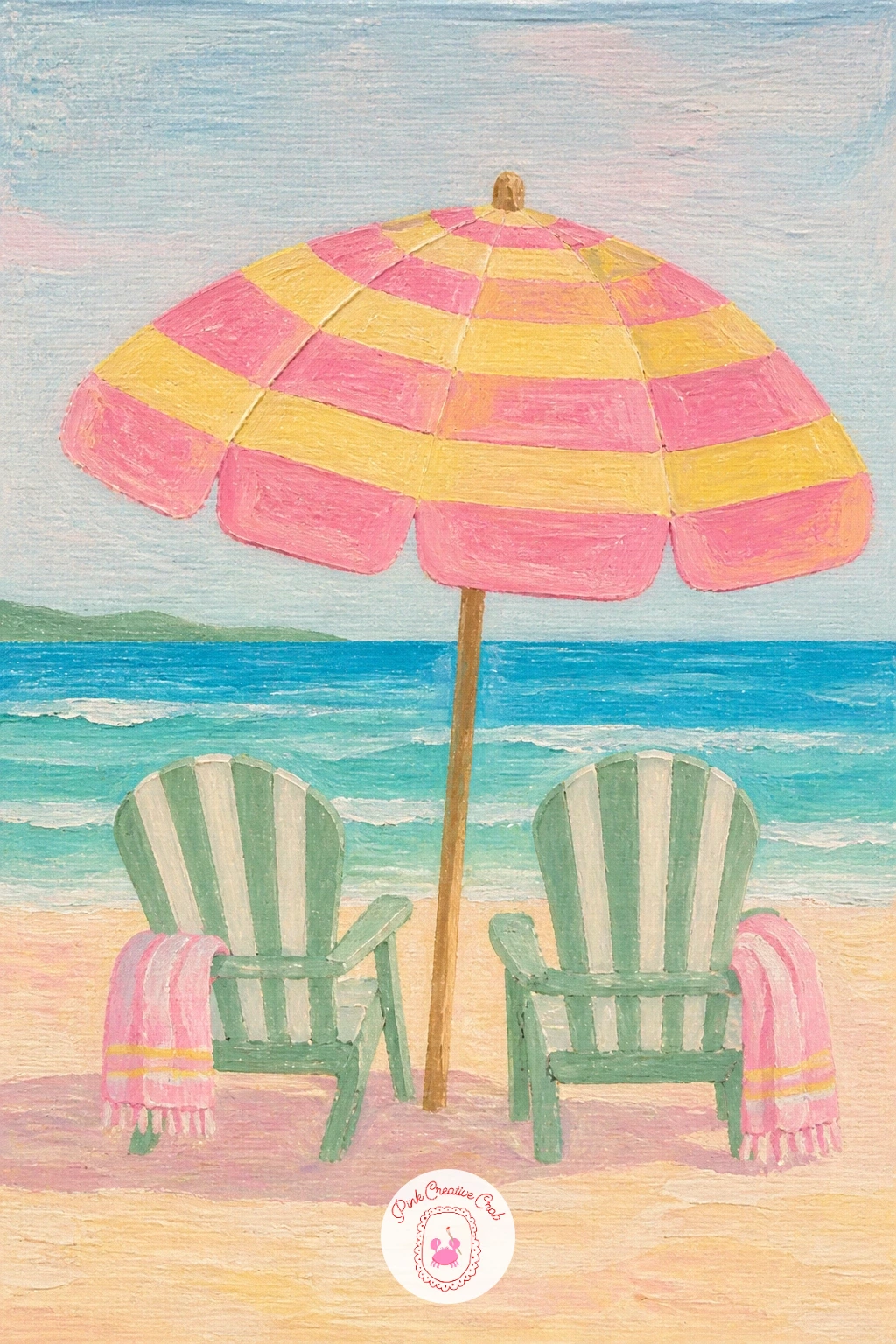
Her favorite beach with a striped umbrella and two chairs is a relaxed horizontal scene built mostly from flat bands and a couple of simple objects. Paint sand, sea and sky as three flat bands first, warm sand at the bottom, sea blue in the middle, a paler sky above, letting each band dry before the next goes over it.
Add the umbrella as a simple fan shape in alternating rose and lemon stripes, planted on a thin pole, then paint the two beach chairs tucked beneath it as basic flat shapes angled toward the sea. Keeping both chairs the same size and angle is what reads as a pair rather than two unrelated objects.
Stripes painted freehand tend to wander; load a thin brush fully and pull each stripe in one steady stroke from the umbrella’s center point outward rather than trying to correct a wobbly line halfway through. No striped reference needed, four or five evenly spaced wedges from the center do the job.
Finish with one small scattering of shells in the sand near the chairs.
Palette: Soft Rose,Lemon Yellow,Sea Blue,Warm Sand
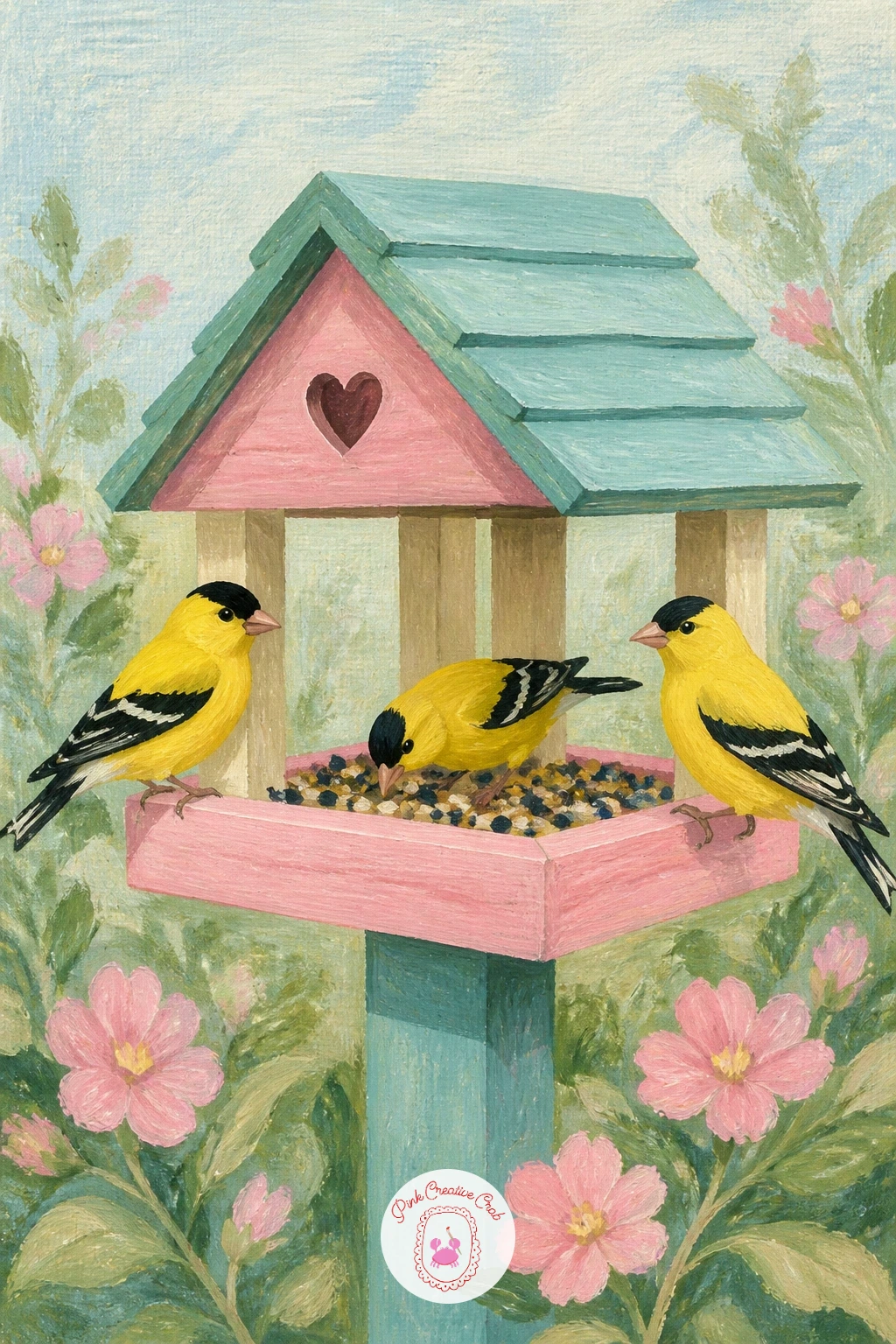
A bird feeder with finches visiting her garden is a small lively scene that rewards a light touch more than careful detail. Paint the feeder as a simple flat house shape on a thin post first, then build the garden behind it loosely in sage greens and a touch of rose for background flowers, kept soft so the birds stand out against it.
Add two or three finches once the feeder is dry, each just an oval body with a small round head and a short triangular beak, perched at different points on the feeder’s edges so they do not overlap awkwardly. A touch of lemon yellow on the breast is enough to read as a finch without needing exact species markings.
Birds painted too large next to the feeder look like they have landed on a dollhouse; keep each bird roughly a third the height of the feeder itself, that one comparison fixes most scale problems here. No fine detail brush for the beaks, the very tip of a liner brush loaded thinly does it.
Finish with a couple of seed scatter dots on the feeder’s tray.
Palette: Sage Green,Lemon Yellow,Warm Brown,Soft Rose
If she loves watching garden birds, the hummingbird painting ideas list makes a nice companion piece with brighter jewel tones.
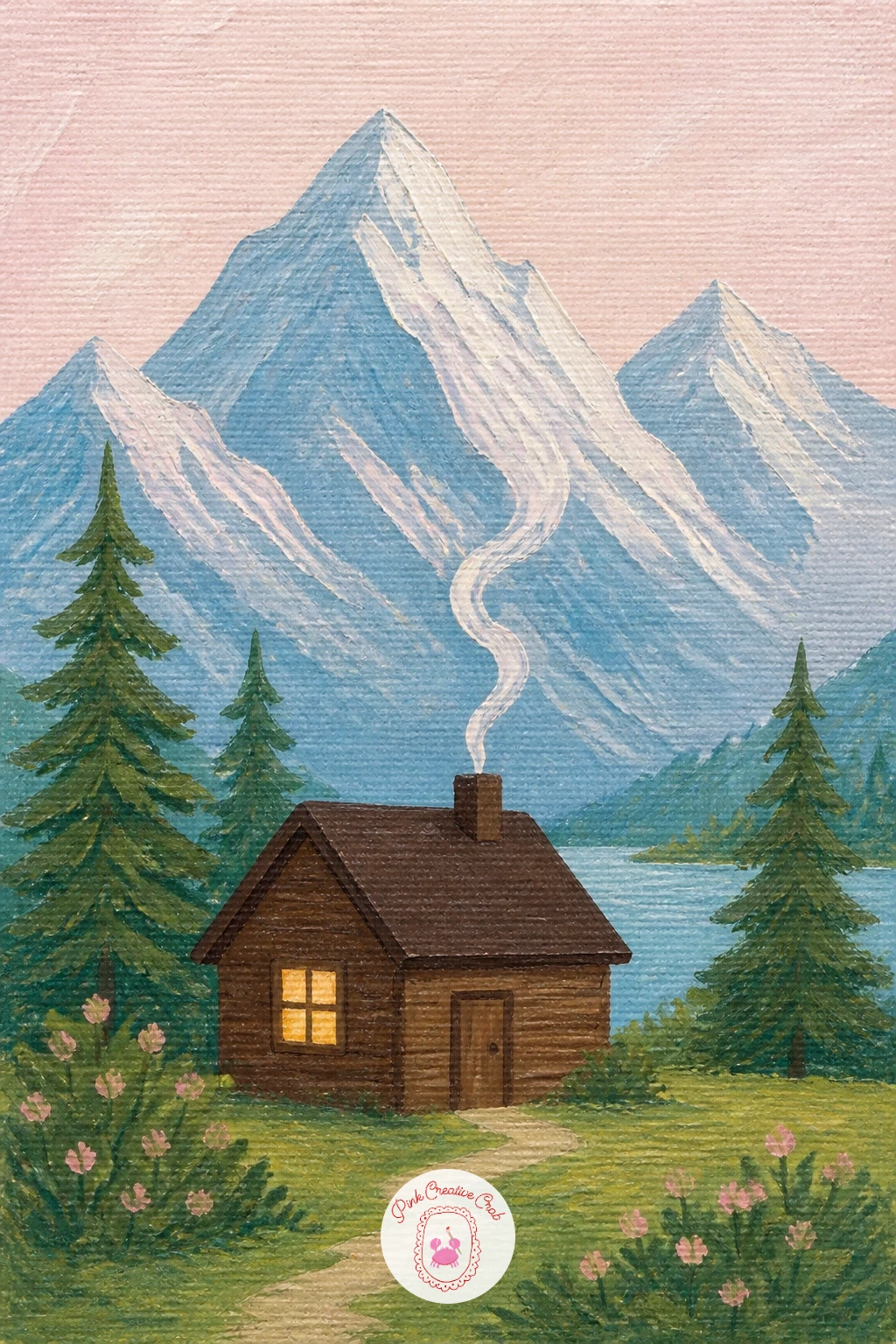
A mountain cabin with smoke curling from the chimney leans on the same light-source thinking as the porch at dusk, this time set against distant peaks instead of a yard. Block the mountain shapes first as flat overlapping triangles in receding shades of sea blue, each slightly paler than the one in front of it, which is what pushes the farthest peak back into the sky.
Paint the cabin low in the foreground as a simple flat shape with a steep triangular roof, then add one warm lemon window glow and a thin grey chimney. The smoke is the last mark on the canvas: a soft, slightly curved line in pale grey, thickest near the chimney and trailing to almost nothing as it rises.
Smoke painted as a hard solid shape looks like a flag rather than smoke; use a nearly dry brush and drag it upward in one light stroke so the edges stay soft and broken. No grey on hand for the smoke, white softened with a touch of blue works just as well against the sky.
Finish with a few dark evergreen shapes along the cabin’s base.
Palette: Sea Blue,Warm Brown,Lemon Yellow,Sage Green
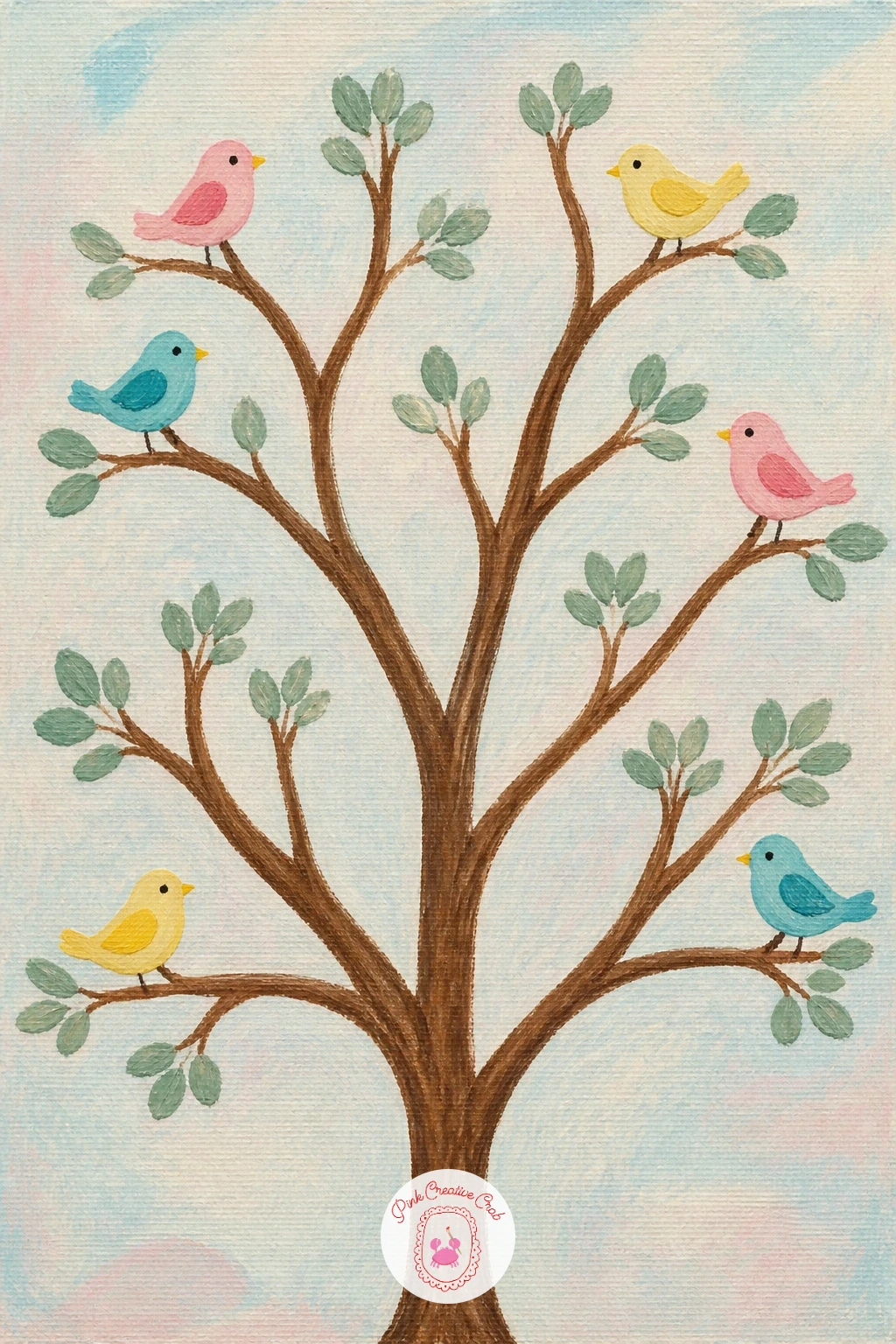
A family tree with little birds on each branch takes the heart-leaf tree idea from earlier and gives it a quieter, more symbolic feel. Paint the trunk and bare branch structure first in flat warm brown, keeping the branches fairly open and spaced rather than densely leafy, since the birds need clear room to perch.
Once dry, dot a few small simple leaf clusters along the branches in sage green, then add a small bird shape at the end of several branches, each just a rounded body and a tiny pointed tail, varied slightly in color between rose, lemon and sage so the family feels individual.
Birds crowded onto one branch read as cluttered rather than intentional; space them so each sits clearly on its own branch tip with room around it. No fine brush for the tiny beaks, a single confident dot of a toothpick dipped in paint works well at this small a scale.
Finish with a soft pale background so the branch structure stays the clear focus.
Palette: Warm Brown,Sage Green,Soft Rose,Lemon Yellow
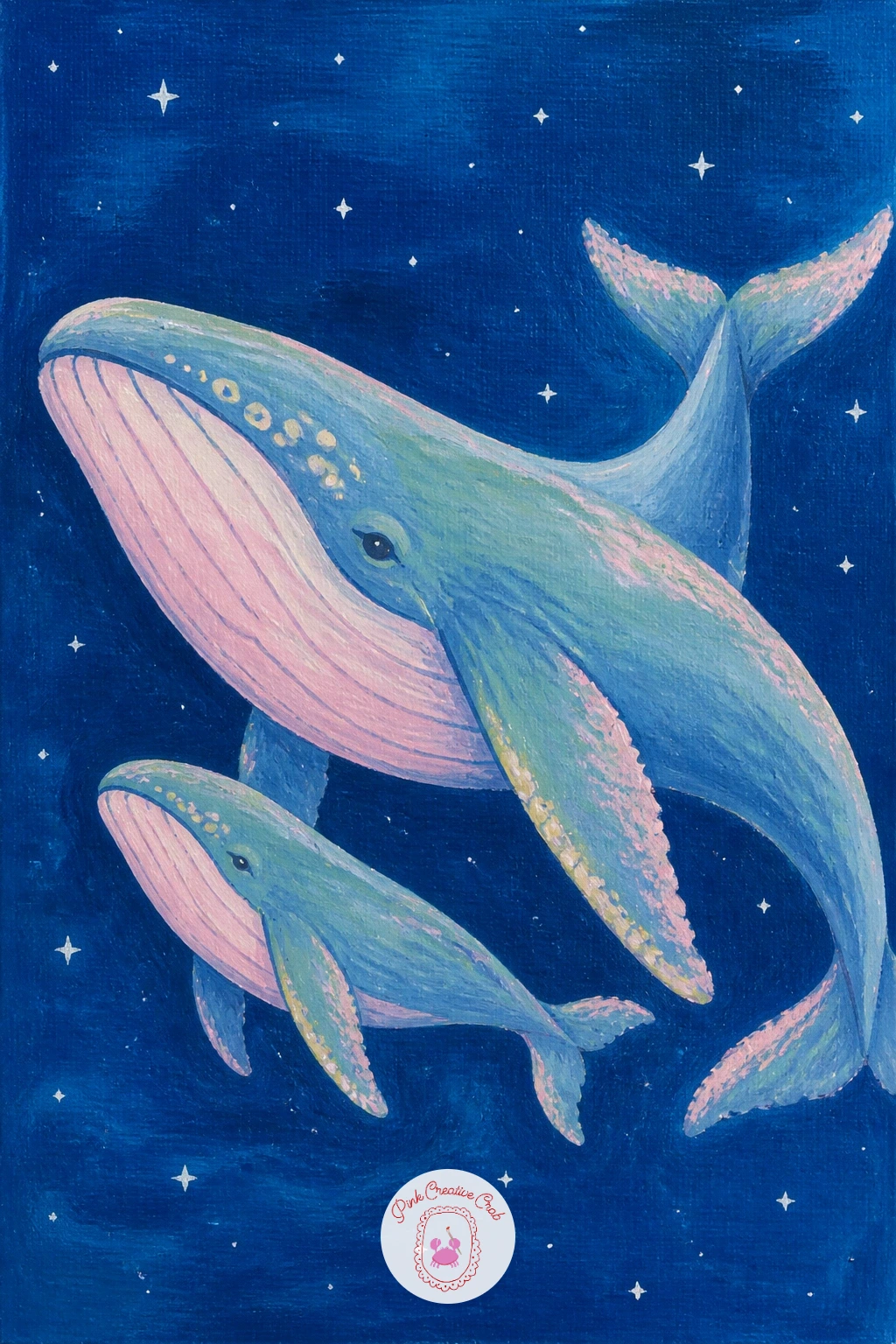
A mother whale and calf under a starry night sea is a gentle way to practice big smooth curves against a dark background. Block the night sea as a deep sea blue gradient first, darker toward the bottom of the canvas, and let it dry completely before the whales go on top so their edges stay clean.
Paint the mother whale as one large smooth curved shape swimming diagonally across the canvas, with the calf as a smaller matching curve tucked close beside her, roughly half her length, that proportion is what makes them read instantly as parent and young. Keep both shapes simple, a gentle tail fluke and no fine fin detail needed.
Whale shapes painted too straight along the belly look stiff; let the curve swell gently outward at the midpoint of the body before tapering to the tail, which gives the whole shape life. No fine brush for stars, the end of a brush handle dipped lightly in white dots them in cleanly.
Finish with a scatter of small white stars across the upper dark water.
Palette: Payne’s Grey,Sea Blue,Titanium White,Soft Rose
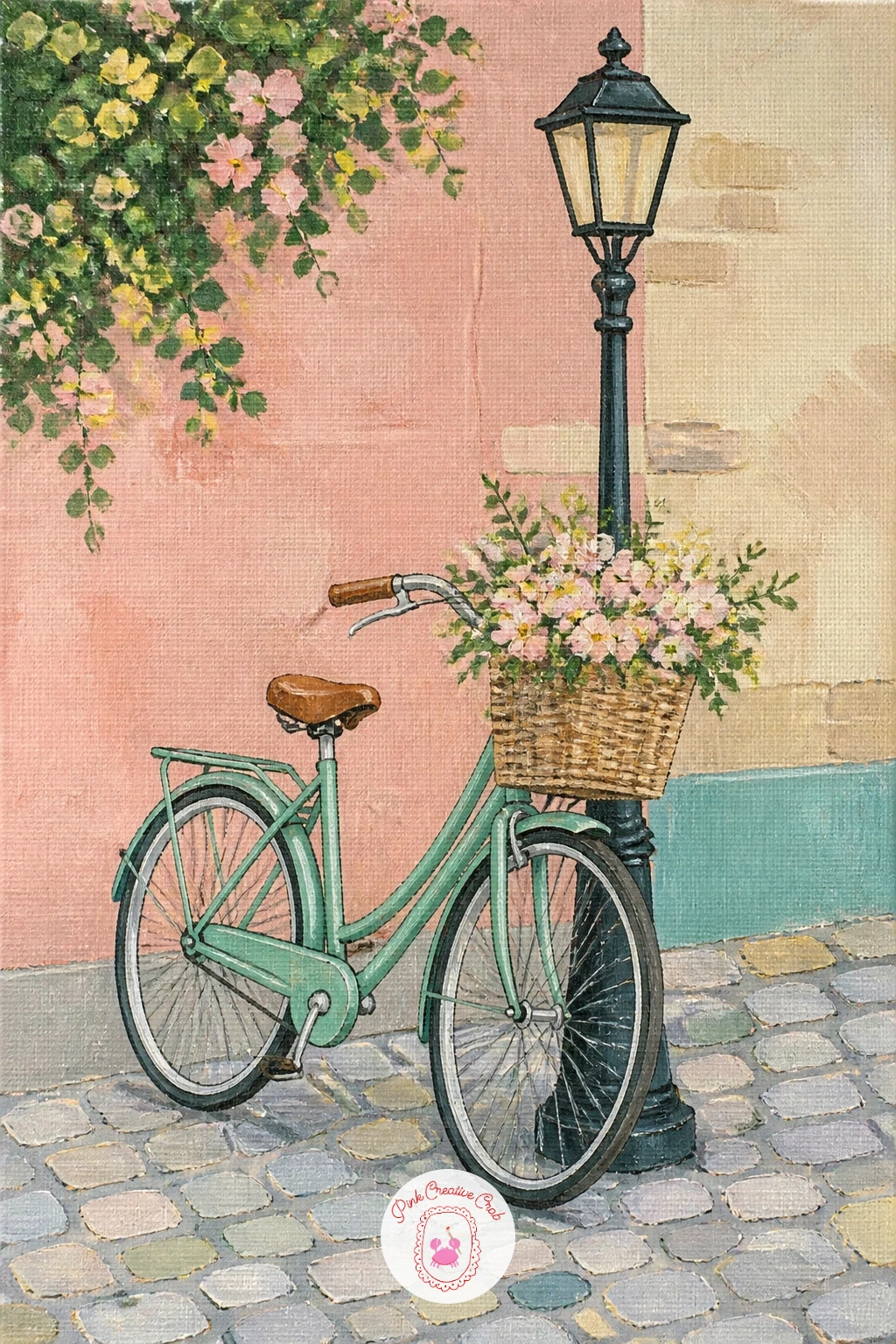
A bicycle leaning on a lamppost in an old town street works well after the ironwork practice from the Paris balcony idea, since both rely on confident thin lines. Paint the street wall and cobbled ground as flat background shapes first, soft rose or sage with a slightly darker ground tone, then let it dry before any linework goes over it.
Draw the lamppost as one simple vertical line with a small lantern shape on top, then build the bicycle from two overlapping circles for the wheels and a few connecting straight lines for the frame, leaning it against the post at a slight angle so it looks propped rather than floating upright.
Wheels drawn as perfect freehand circles rarely come out even; trace around a coin or a small lid for both wheels and the whole bicycle instantly looks balanced. No lid the right size, a bottle cap works for a smaller wheel scale too.
Finish with a small woven basket on the handlebars holding a couple of loose flowers.
You Will Need
- a coin or small lid to trace circles
Palette: Soft Rose,Sage Green,Payne’s Grey,Lemon Yellow
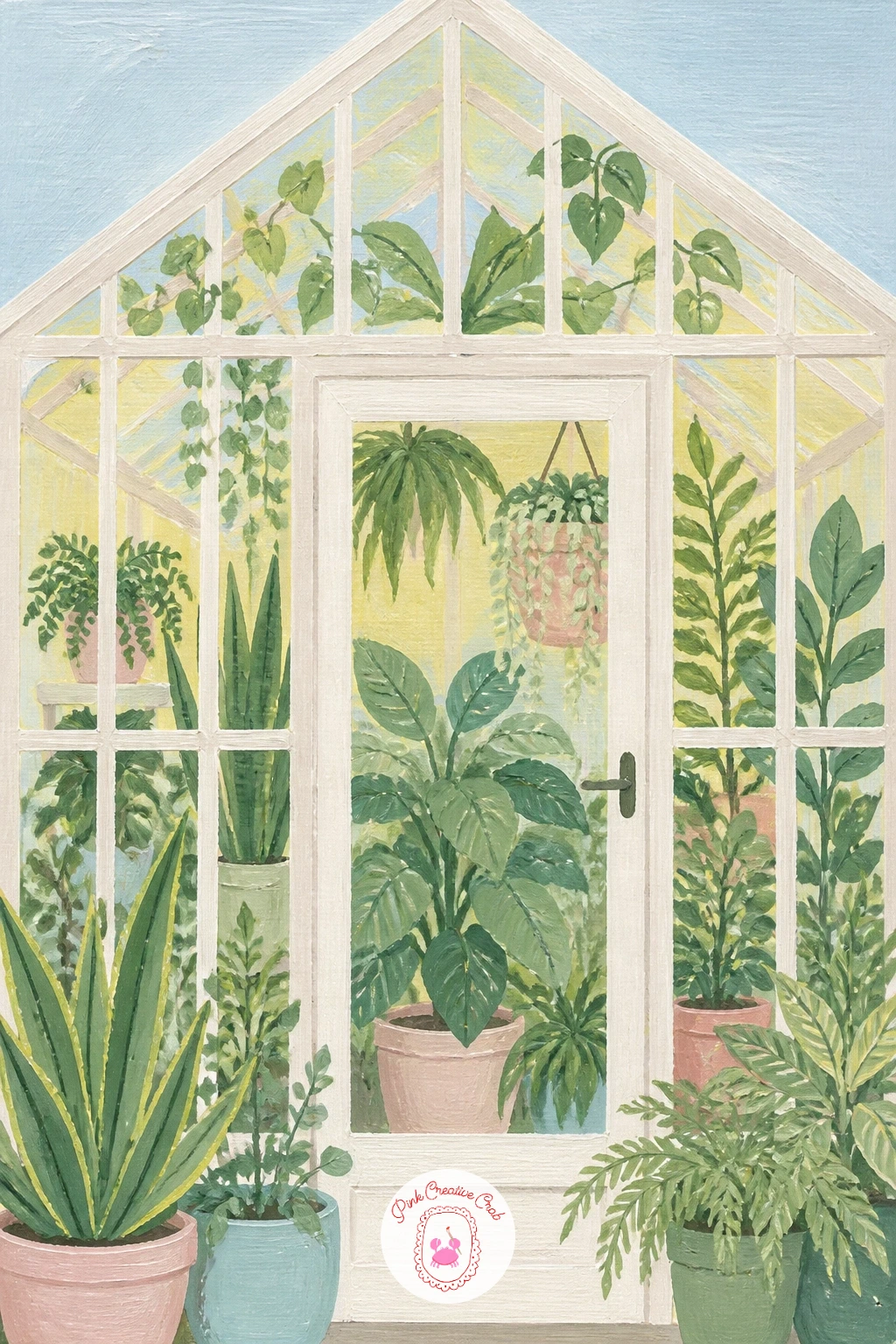
A greenhouse full of plants on a sunny afternoon gives you a grid of glass panes to tape off, which makes the whole structure feel more precise than it actually takes to paint. Mask a simple grid of rectangles for the greenhouse frame, block the glass panes in pale sky blue and lemon light tones, then peel the tape once dry for crisp white frame lines.
Fill the interior with layered plant silhouettes in varying heights of sage and deeper green, taller shapes toward the back, shorter potted ones nearer the front glass, so the depth reads clearly even though every shape stays flat. Overlapping two or three plant shapes slightly is what keeps the greenhouse from looking like a single sparse row.
Panes painted all the exact same shade flatten the whole structure; vary two or three of them slightly lighter where the sun hits directly, as if light is passing through unevenly. No tape for the grid, a ruler and a thin brush loaded with white can draw the frame lines freehand just as cleanly.
Finish with one small open door or vent shape for interest.
You Will Need
- painter’s tape
Palette: Sage Green,Lemon Yellow,Sea Blue,Titanium White
If she has a real plant collection worth painting next, the green painting ideas list is full of greenhouse and houseplant corners to borrow from.
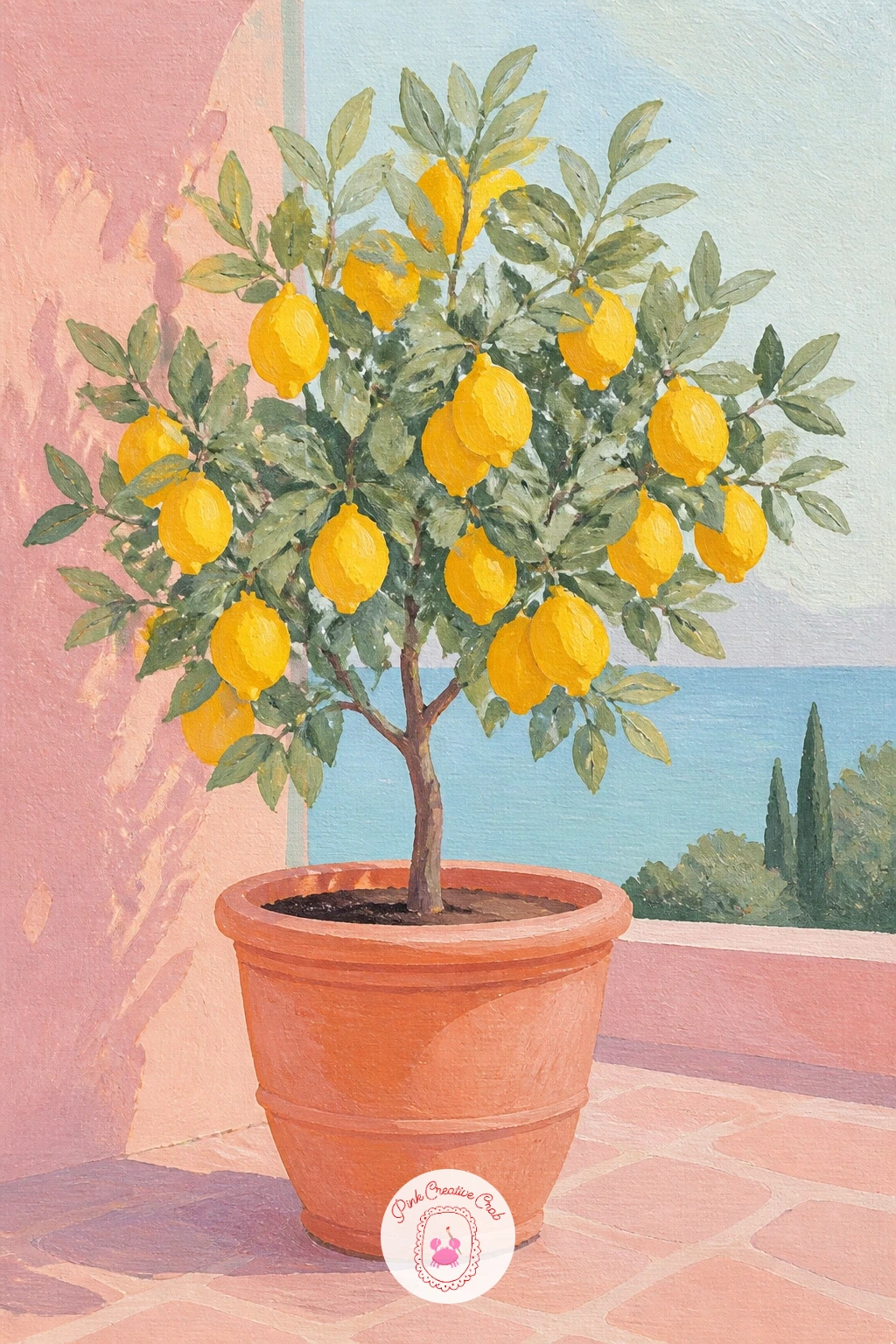
A lemon tree in a big pot on a terrace is a cheerful subject built from one strong trunk, a rounded canopy and a handful of bright fruit dots. Paint the pot first as a simple flat terracotta or sage cylinder, wider at the top than the base, then add the trunk rising from it in warm brown before the canopy goes on.
Build the canopy from loose rounded leaf clusters in sage green, keeping the overall shape slightly irregular rather than a perfect ball, since real citrus trees grow a little lopsided. Once the canopy is dry, dot in several lemons as simple ovals in bright lemon yellow, clustered a little more toward the outer edges where fruit naturally catches more light.
Too many evenly spaced lemons looks artificial; group two or three together in places and leave other areas of the canopy bare. No terracotta color mixed, a warm red-brown with a touch of white gets close enough for a small pot.
Finish with a thin cast shadow beneath the pot to settle it on the terrace.
Palette: Sage Green,Lemon Yellow,Terracotta,Warm Brown
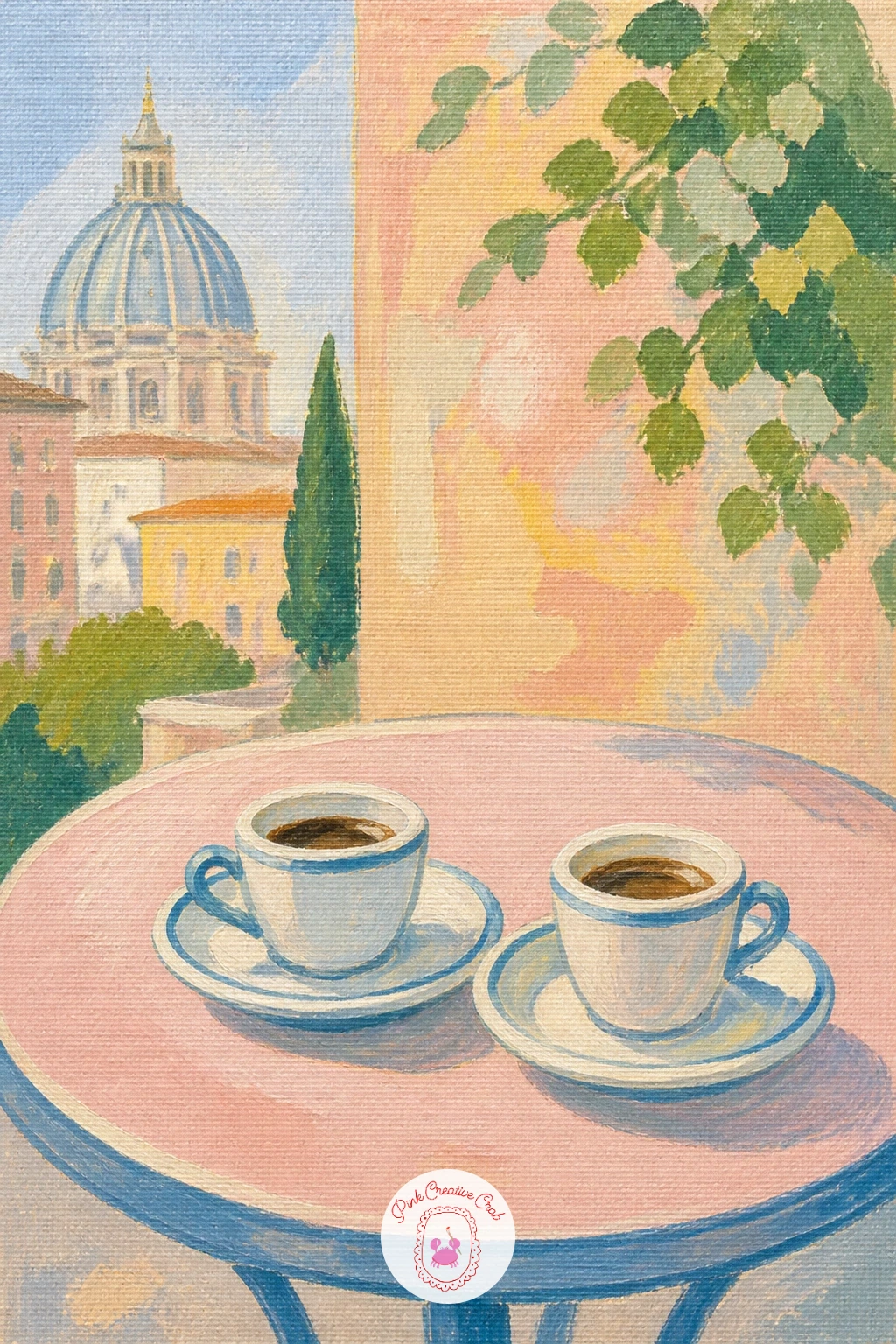
Two cups on a little café table on a street in Rome is a quiet, intimate scene that works well close up, filling most of the canvas with just the tabletop. Paint the table as a simple round or square flat shape first, a worn warm tone, then add the two cups and saucers on top once dry, checking that they sit at roughly equal size and distance from the table’s center so the pairing feels balanced.
Behind the table, keep the street simple, a soft warm wall color and maybe one hint of greenery or a shutter shape, blurred slightly smaller in scale than the cups so the eye stays on the table itself rather than wandering into the background. That size relationship between near and far objects is what gives the scene its sense of depth.
Cups painted with hard black outlines look stiff against a soft palette; instead define each cup’s edge with a slightly darker value of its own color rather than a separate outline color. No warm wall tone mixed yet, rose with a touch of yellow gets close to that sunbaked plaster look quickly.
Finish with a thin curl of steam rising from one cup.
Palette: Soft Rose,Lemon Yellow,Sage Green,Warm Brown
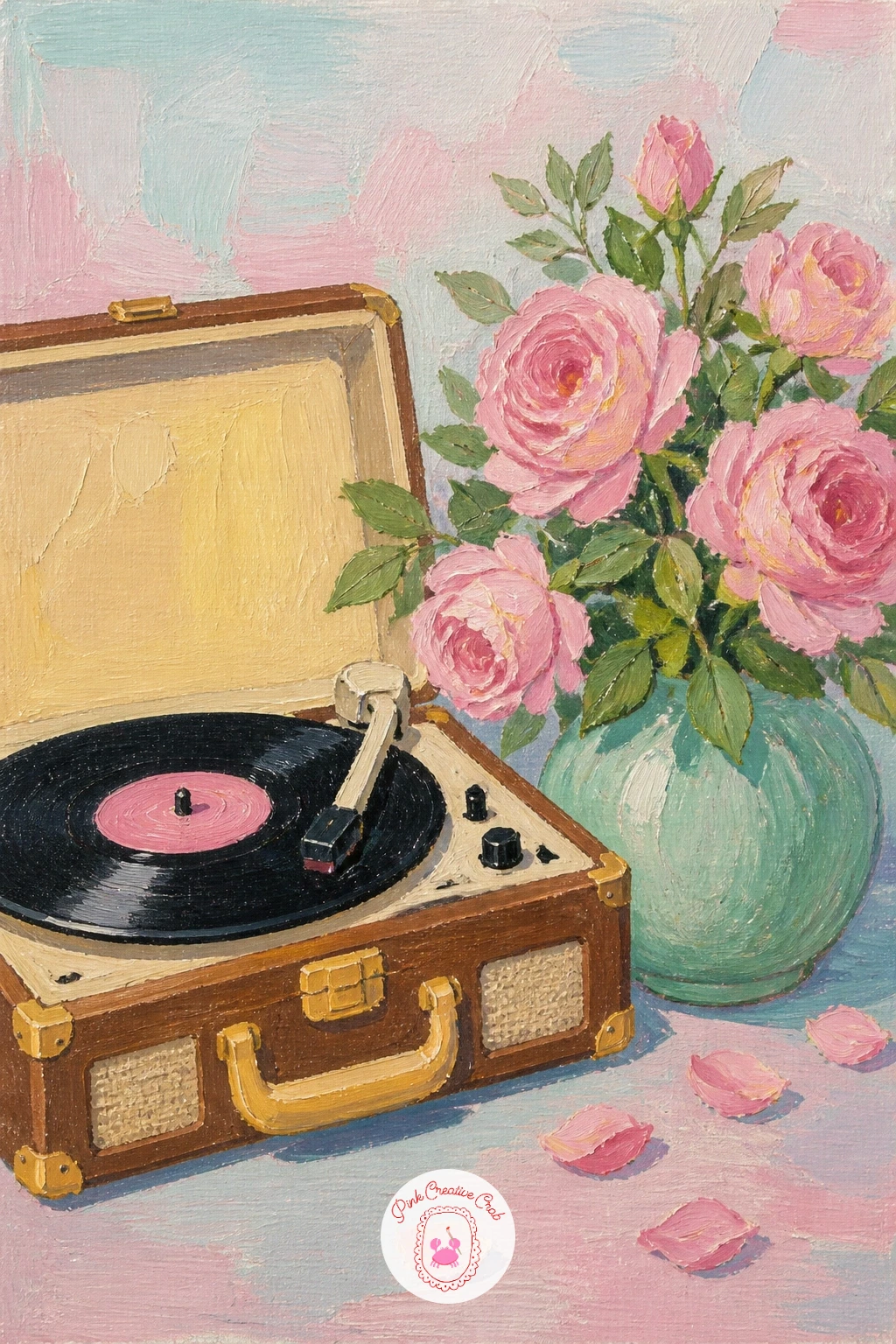
A vintage record player with a vase of roses beside it pairs a boxy machine shape with soft rounded flowers, a nice contrast once both are blocked in. Paint the record player body as a simple flat rectangle in warm brown or sage, then add the circular turntable and tonearm on top as one neat round shape with a thin diagonal line.
The vase of roses goes beside it once the player is dry, built the same way as the tulips idea earlier: a simple vase shape topped with a few closed or just-opening rose shapes in soft pink, each rose no more than a tight spiral of two or three curved strokes. Keeping the roses a touch looser than perfectly round petals is what reads as roses rather than generic round flowers.
The tonearm is a small detail that is easy to get wrong if it is too thick; use the liner brush tip again here, the same thin confident line that worked for the Paris ironwork. No sage or brown mixed for the player body, a deep muted red works just as well as a vintage finish color.
Finish with one or two fallen rose petals resting near the base of the vase.
Palette: Warm Brown,Soft Rose,Sage Green,Payne’s Grey
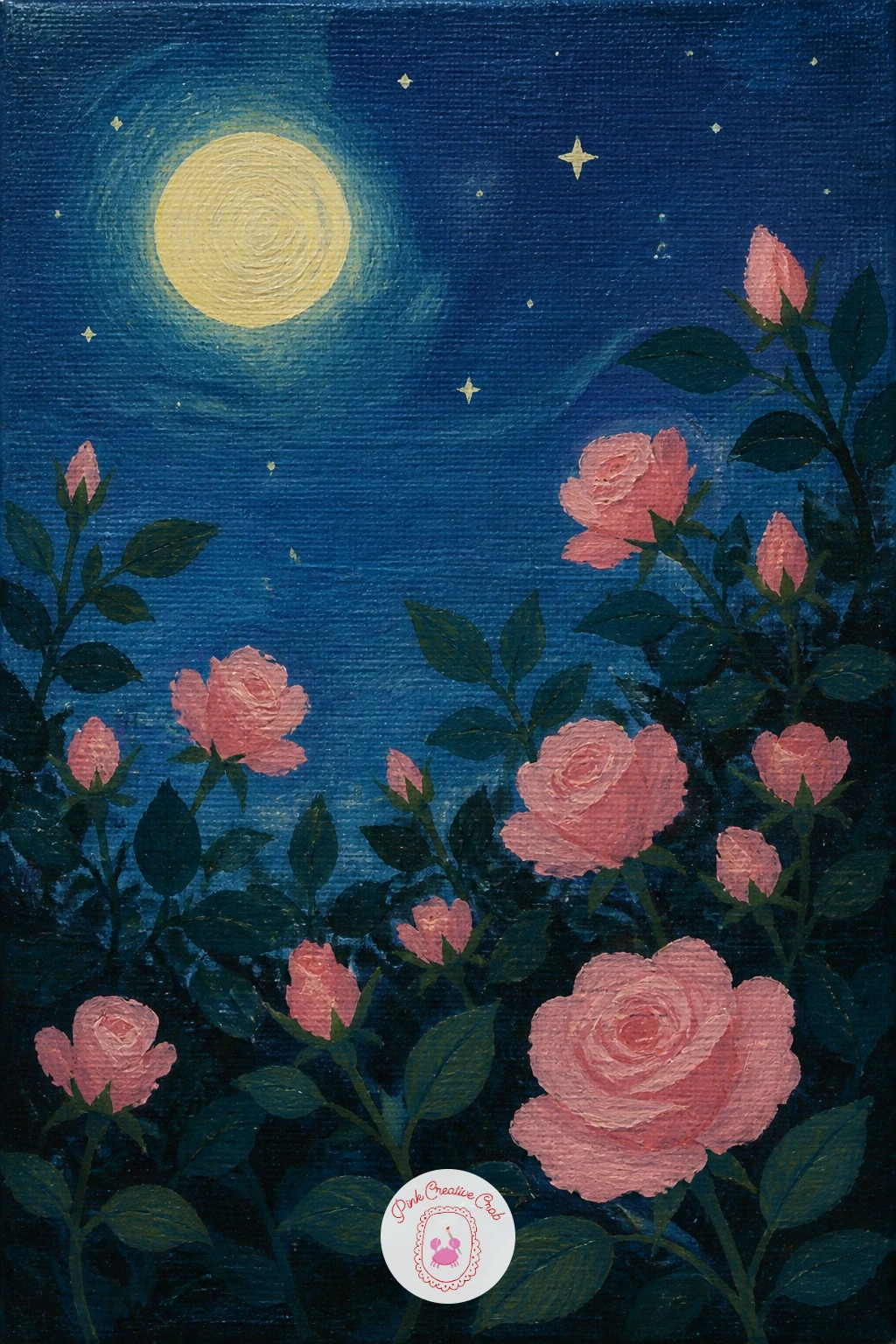
A moon over a quiet garden of blooming roses at night takes the rose shapes from the record player idea and sets them under a very different light. Block the night sky first as a deep sea blue to near-black gradient, then paint the moon as one soft pale circle, slightly off-center, with a faint glow halo blended gently around its edge while the sky is still a little wet.
Once the sky is fully dry, build the rose garden along the lower third of the canvas in silhouette, dark sage shapes for the bush forms with just a few rose heads picked out in a muted, moonlit pink rather than full daylight color, since everything under moonlight reads cooler and softer than it would in sun.
Painting the roses too brightly breaks the night mood instantly; keep every color in the garden a shade or two darker and cooler than you would use for a daytime version of the same flowers. No deep sea blue mixed for the sky, black with a little blue added gets close enough for a believable night tone.
Finish with a few soft stars scattered near the moon.
Palette: Payne’s Grey,Sea Blue,Soft Rose,Titanium White
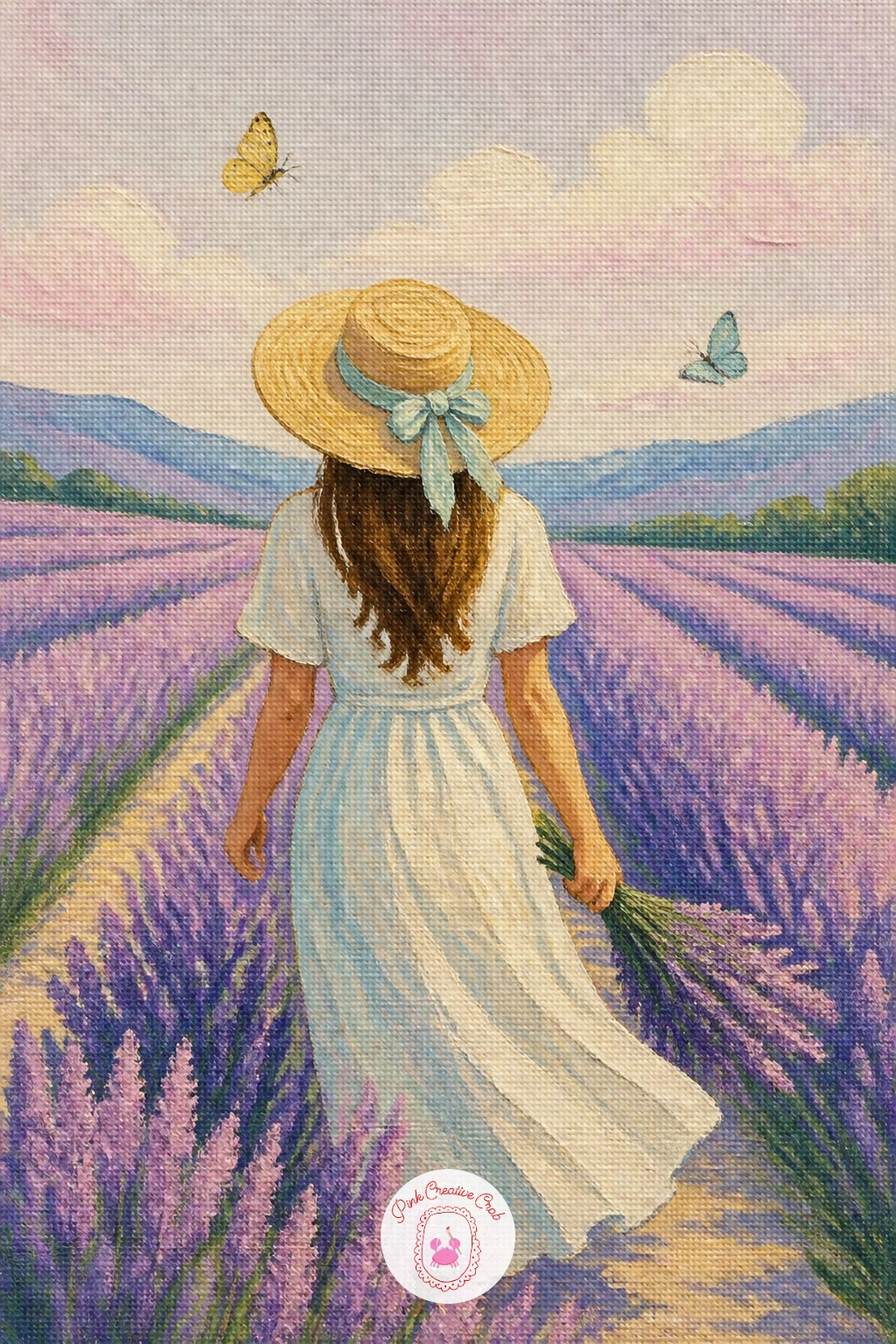
A field of lavender with a woman in a straw hat lets you practice a small figure against a wide, repetitive landscape without the figure needing any facial detail. Paint the sky and field in two broad flat bands first, pale sky above, then the lavender field below built from rows of short upward dashes in two shades of purple-pink, denser near the bottom of the canvas and thinning toward the horizon.
Add the woman as a simple flat silhouette standing or walking through the rows, her straw hat just an oval brim shape and a small rounded crown, her dress a loose simple triangle shape that lets the lavender color show faintly at its hem if you want that blended-in feeling.
Figures placed dead center in a wide field often look stranded; set her a third of the way across the canvas instead, with more open field on one side than the other, and the whole composition settles immediately. No purple-pink mixed for lavender, rose blended with a touch of sea blue gets close enough in a pinch.
Finish with one or two loose butterfly dots drifting above the rows.
Palette: Soft Rose,Sea Blue,Lemon Yellow,Warm Brown
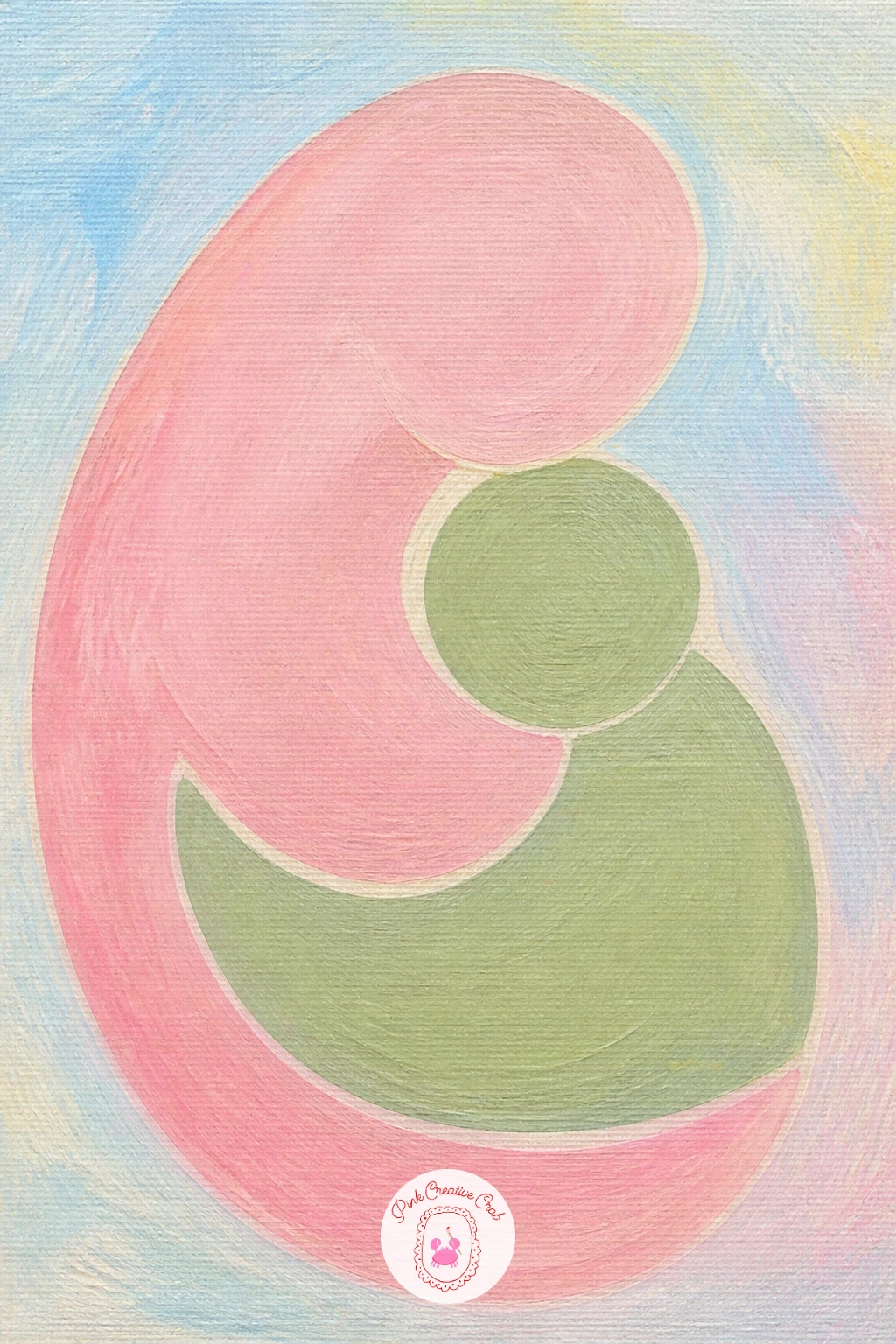
An abstract mother and child in soft overlapping curves closes the list with the loosest, most forgiving piece of all, since there is no realistic proportion to get wrong. Sketch two or three large overlapping curved shapes first, one clearly larger representing the mother, one smaller nestled into or against it representing the child, using nothing more specific than gentle rounded forms.
Block each curve in a different soft color from the palette, letting the edges overlap slightly so one shape melts into the next rather than sitting as separate cutouts; a slightly damp brush blended along just the overlap line, while both colors are still a little wet, gives that soft merging effect.
The temptation here is to add detail, a face or a hand, which pulls the piece out of abstraction; trust the curves alone to carry the warmth and keep every edge rounded, no sharp corners anywhere in the composition. No blending time before the paint dries, work in smaller sections and blend each overlap right after placing the second color.
Finish with one small warm accent shape, a tiny circle or curve in a contrasting color, tucked where the two main forms meet.
Palette: Soft Rose,Sea Blue,Sage Green,Lemon Yellow
For another gentle way to end a gift series, the easy acrylic painting ideas for beginners list has more soft abstract shapes that work well on a small canvas.
What to Do Next
Pick the idea that feels most like her, not the one that looks easiest in your head, and get a small canvas ready today. Sketch the main shapes lightly in pencil first, then work from background to foreground exactly as each idea describes, and you will have a finished gift by the end of the sitting.
Frequently Asked Questions
What size canvas works best for a mothers day painting gift?
A small canvas, around eight by ten inches, works best because it finishes in one sitting and still has room for a clear subject. Larger canvases need more paint and more drying time between layers.
Do I need to prime the canvas before painting these ideas?
Most pre-stretched canvases from the craft store already come primed and ready to paint. Check the label if you are unsure, and add one thin coat of gesso only if the surface feels rough or absorbent.
How do I keep the flat color blocks looking smooth and not streaky?
Load the brush fully and paint each shape in one or two confident passes rather than scrubbing back and forth. Letting each layer dry before adding the next also keeps colors from dragging into each other.
What if I do not have the exact paint colors listed for an idea?
Mix close substitutes from basic reds, blues, yellows and white rather than buying new tubes for one painting. A soft pink and white mix stands in for rose, and blue with a touch of green works for most sea tones.
How can I personalize these ideas so the painting feels like it is really for my mom?
Swap in her actual flower colors, her real dog’s fur color, or the specific shade of her front door before you start blocking in shapes. Small true details like these matter far more to her than painting skill.
Have any thoughts?
Share your reaction or leave a quick response — we’d love to hear what you think!
-
 0
-
 0
-
 0
-
 0
-
 0
-
 0
