An acrylic painting aesthetic lives in flat, soft color and a quiet mood: creamy neutrals, dusty pink, a little sage, the kind of canvas that looks like a still morning. These are the paintings that make a bedroom or a reading corner feel finished, and every one below is sized to sit on a dresser or lean against a stack of books.
Below you get 34 small scenes, from a cup of coffee on a windowsill to a girl curled up with a cat, arranged from the quickest to the ones that take a bit more patience. Pick whichever matches your shelf and your mood, mix your palette once, and let it carry you through the whole list.
Using these images: free for personal projects such as printing, coloring, cards, journals and gifts. Handmade items that include them may be sold up to 30 pieces per design. More than that is commercial use and is not permitted, and neither is selling or sharing the images themselves or passing them off as your own. Please ask before any other use.
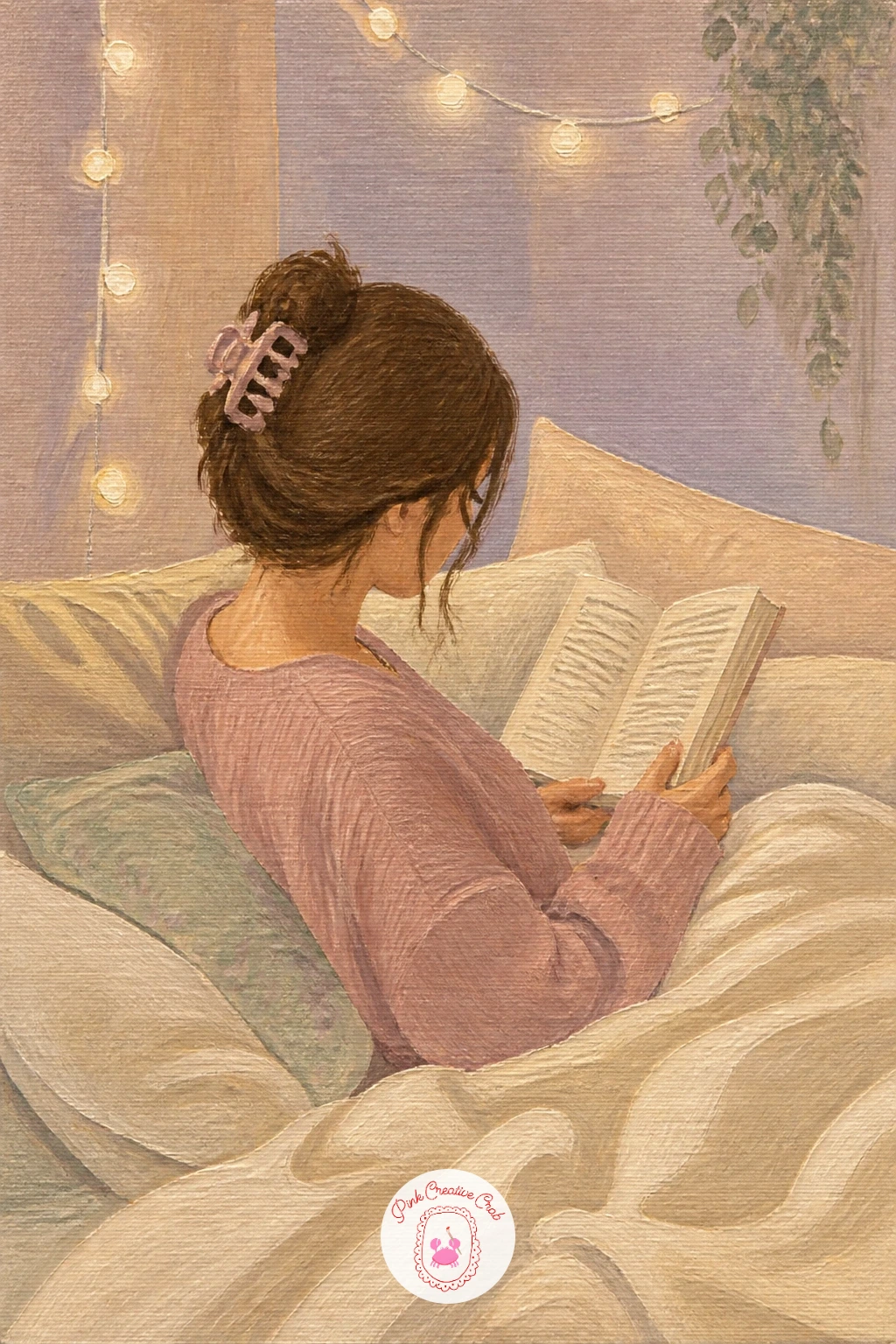
Start the whole project with a scene that only needs three simple shapes: a pillow, a hunched back, and an open book. Block the bedsheet and pillow in cream first with a flat brush, then add the girl as one soft rounded silhouette in a dusty pink or lilac sweater, her hair gathered up with a small claw clip shape on top.
Keep her face turned down toward the book so you never have to paint features, just the curve of a cheek and a loose strand of hair. Dot a few fairy lights above the bed with the end of a brush handle dipped in warm cream, then add a tiny white gel pen sparkle once the paint is dry.
If the figure looks stiff, soften the shoulder line with a dry brush sweep before it sets, since hard edges are what make a cozy pose look tense. No gel pen on hand, a thinned dab of white paint on a cotton bud does the same spark.
Paint the darkest fold of the blanket last so the whole bed does not read as one flat cream shape.
You Will Need
- white gel pen
Palette: Cream,Dusty Pink,Muted Lilac,Warm White
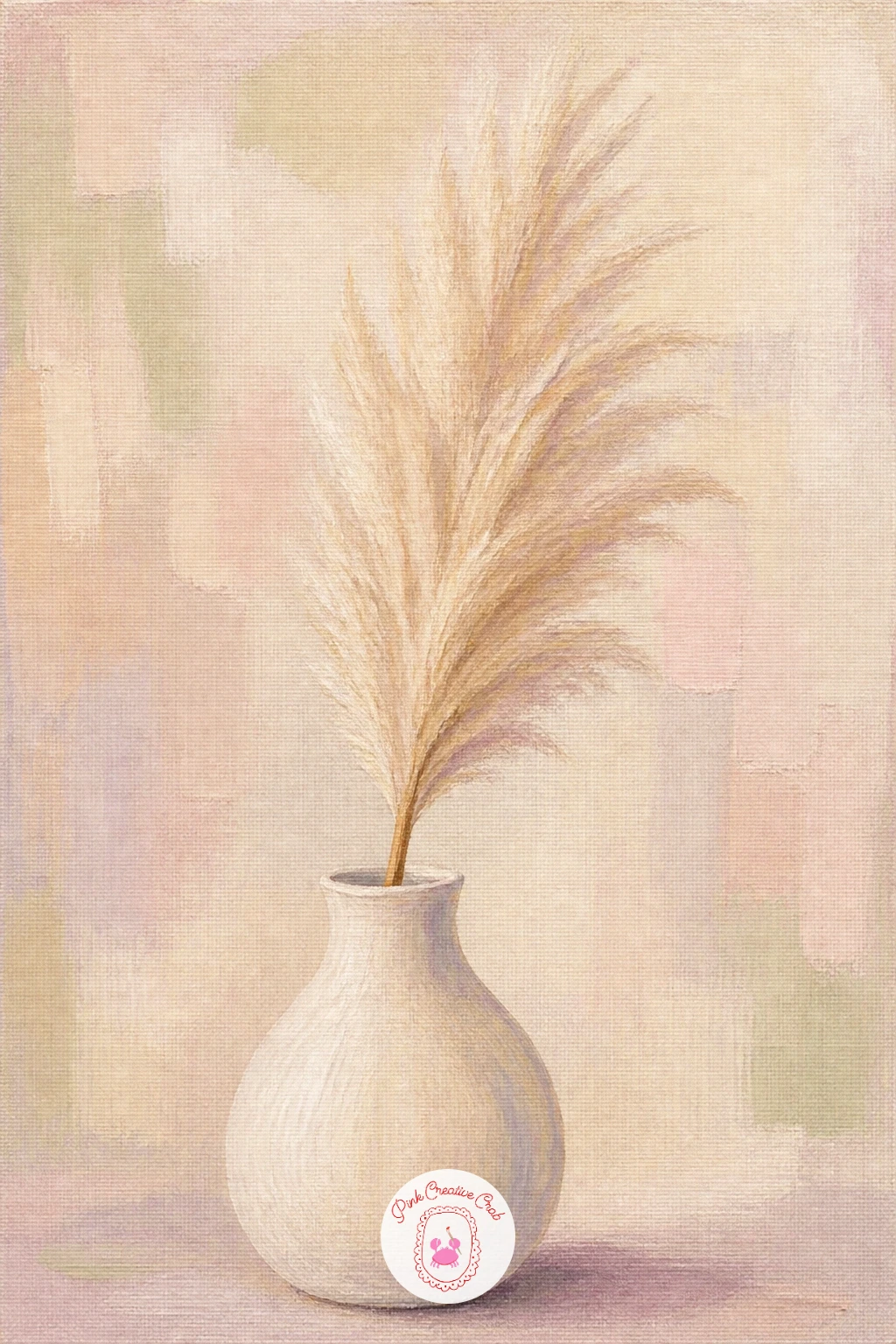
Move from a figure to a still object and keep the brushwork just as simple. Paint the ceramic vase first as one rounded cream shape with a slightly darker beige shadow on one side to give it form, then let it dry before touching the pampas.
Use the fine edge of a flat brush, or the end of an old fan brush if you have one, to flick short dry strokes upward in beige and warm cream for the pampas plume. Work from the base of the stem outward, overlapping the strokes loosely so the texture looks feathery rather than painted stroke by stroke.
If the plume turns into a solid blob, the fix is a kneaded eraser-style lift: while the paint is still damp, dab gently with a dry brush or paper towel to pull color back and open up gaps of pale background. No fan brush, an old toothbrush dragged sideways gives a similar broken edge.
Leave the background pale so the dry texture stays the star of the canvas.
You Will Need
- fan brush or old toothbrush
Palette: Beige,Warm Cream,Soft Taupe,Pale Background
This one trains your eye on proportion before you touch a brush, since a checkered pattern shows up every uneven square instantly. Lightly pencil a grid on the canvas first, keeping every square the same size by measuring one square with your brush handle and marking that length across the whole rug.
Paint the cream squares first and let them dry, then come back with dusty pink or sage squares in the gaps so the edges stay clean instead of muddy. Add the wavy mirror leaning against the wall above the rug, painting its frame as one continuous wobbling line rather than lots of small curves, which keeps the wave looking intentional.
If the grid drifts crooked partway through, a ruler edge held against wet paint and dragged gently straightens the worst offenders. No pencil for the grid, a dry brush loaded with very little paint marks faint guide lines just as well.
Finish with a thin reflection of pale wall color inside the mirror glass so it reads as glass, not a flat oval.
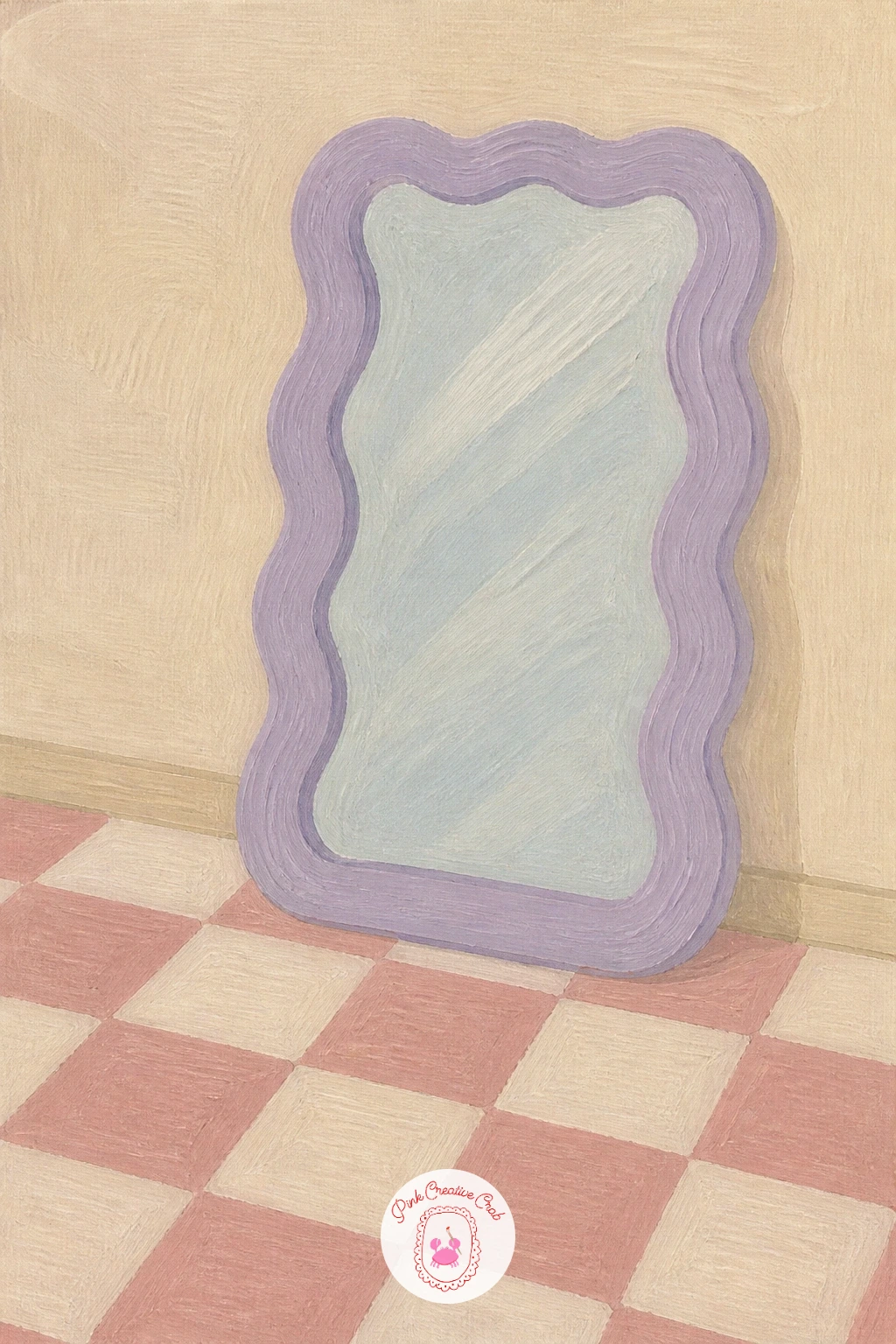
Palette: Cream,Dusty Pink,Soft Sage,Warm White
After the hard edges of the rug, this canvas is almost all soft shadow, which makes it a good one for practicing light direction. Decide where the window sits, off to one side works best, then paint every shadow in the sheets falling away from that same direction so the light feels consistent.
Block the whole canvas in warm cream first, then mix a slightly cooler grey-beige for the shadow folds and lay them in as soft diagonal bands rather than sharp lines. Keep the brightest highlight, a streak of near-white, running along the top edge of the main fold closest to the window.
If the folds start looking like stripes instead of fabric, break up the straight bands with a few shorter perpendicular strokes where the sheet bunches. No reference photo handy, picture one ray of light falling across a pillow at a low angle and let every shadow point the opposite way.
Paint the highlight last, in one confident stroke, so it stays crisp against the soft shadow.
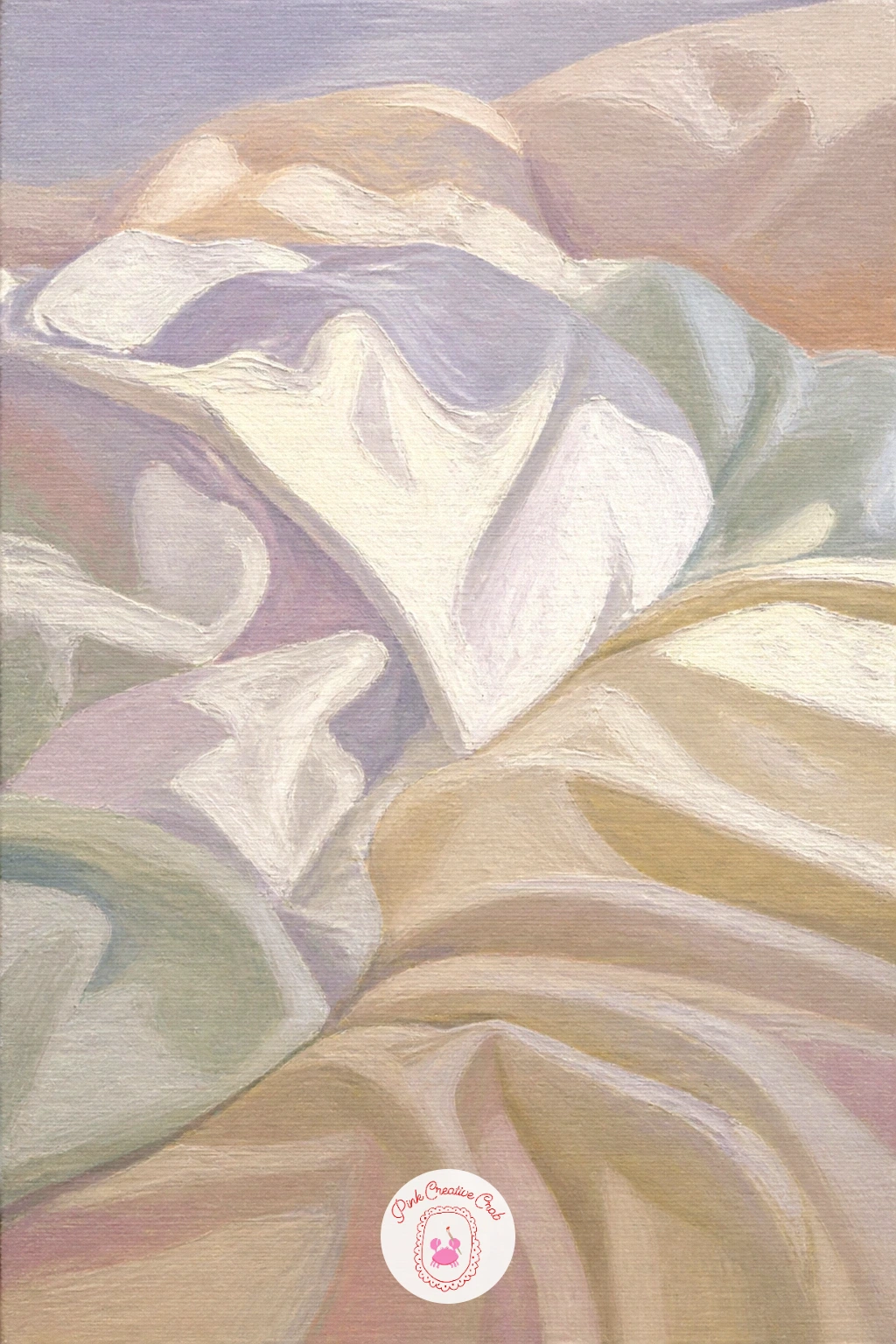
Palette: Warm Cream,Soft Grey Beige,Near White,Pale Gold
Small still objects like this reading glasses and book scene are forgiving because there is no figure to get wrong, just shapes and a little shine. Paint the open book first as two overlapping cream pages angled slightly, then let it dry before adding the glasses on top.
Build the glasses from two simple ovals for the lenses and two thin curved arms, painted in a soft taupe or dusty rose frame color. The tricky part is the lens shine, so save that for last: a tiny comma-shaped stroke of near-white on each lens, placed in the same corner on both, sells the glass instantly.
If the glasses look flat, add a thin grey shadow directly underneath where they rest on the page, which lifts them off the paper. No fine brush for the shine, the tip of a white gel pen gives a cleaner mark than a loaded brush will.
Keep the page lines faint and few, since too many lines make the book look busy instead of calm.
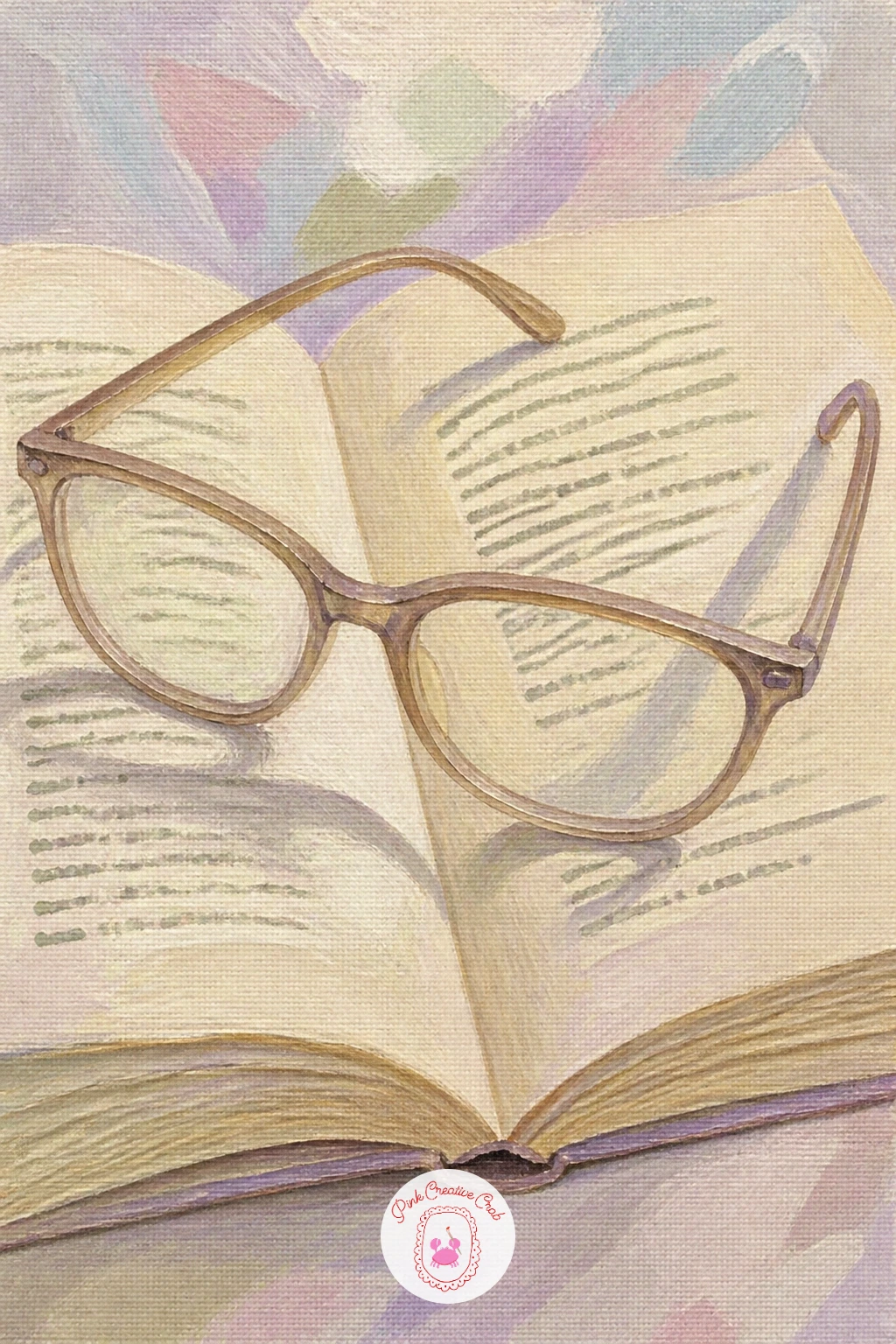
You Will Need
- white gel pen
Palette: Cream Page,Dusty Rose Frame,Soft Taupe,Near White
Bring a figure back in, but keep her cropped close so you only need to paint from the shoulders up and both hands. Block her sweater first in one soft cream shape with simple folds suggested by a few darker beige lines at the elbows, never more than that.
Paint the coffee cup next, a simple rounded shape held between both hands, then add the hands themselves as soft rounded forms wrapped around the cup rather than detailed fingers. This is where the picture usually goes wrong: too many finger lines make hands look stiff, so keep each hand to two or three gentle curves.
If her face feels like the hardest part, turn it slightly away or down toward the cup so you avoid painting eyes altogether, which keeps the whole mood soft and private. No reference for the pose, hold your own coffee cup for a moment and look down at how your hands actually wrap around it.
Finish with a thin curl of steam in pale grey rising from the cup.
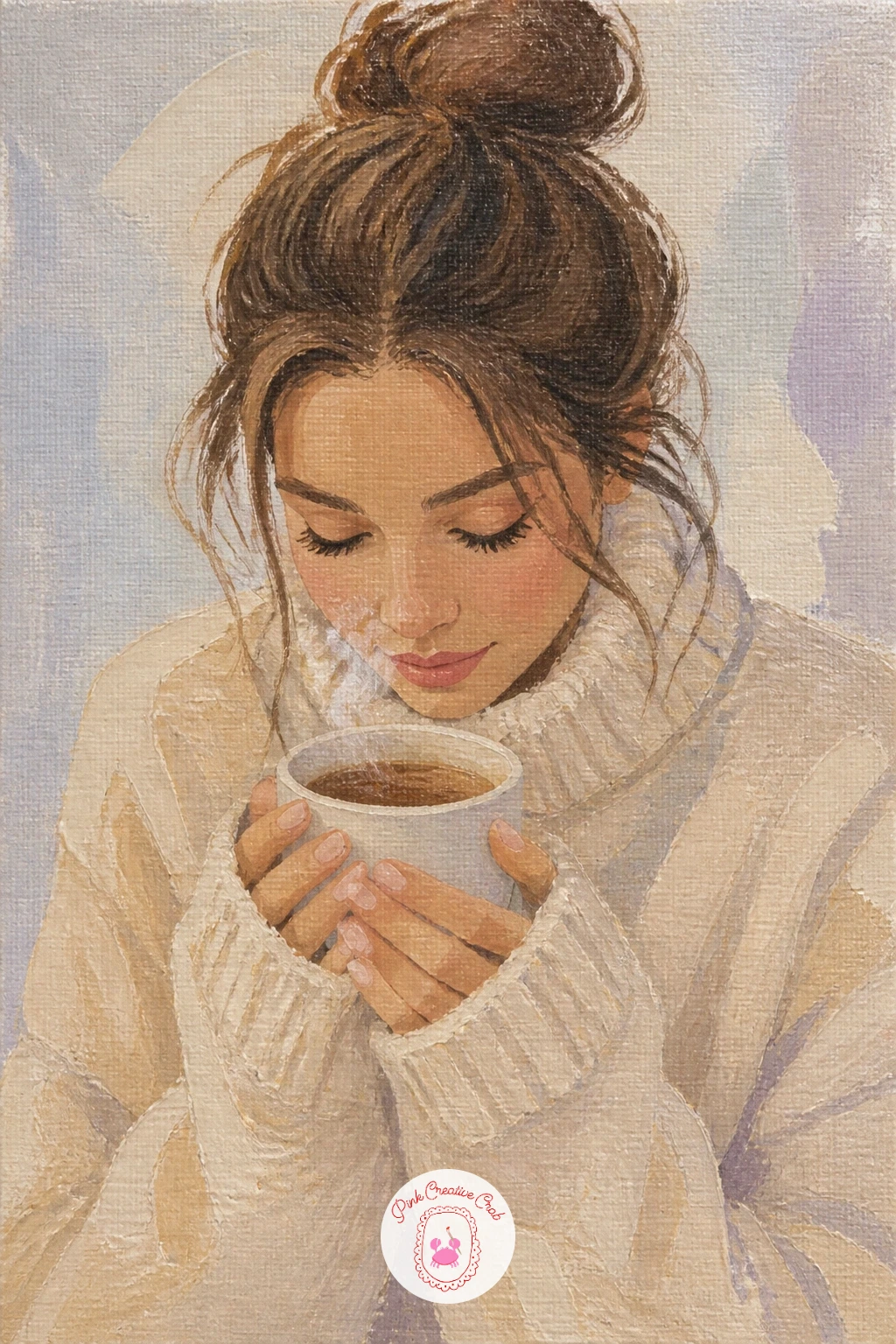
Palette: Cream Sweater,Soft Beige,Warm Skin Tone,Pale Grey
This still life rewards a bit of planning before paint touches canvas, since three small objects need to sit together without crowding. Sketch the round mirror first as a simple circle on a thin stand, then place the pearl string draped across the table edge and the lipstick standing just beside it.
Paint the tabletop and mirror frame in flat cream, then the mirror glass in a pale cool grey so it reads as reflective rather than solid. Add the pearls as a row of small white circles linked by a thin grey line, and the lipstick as one narrow cream tube with a dusty pink tip.
If the pearls look like a flat string of dots, a single tiny white gel pen highlight on the top of each one gives them roundness instantly. No gel pen, the handle end of a brush dipped lightly in white works for the same small dots.
Keep the background bare so these three objects stay the whole focus of the canvas.
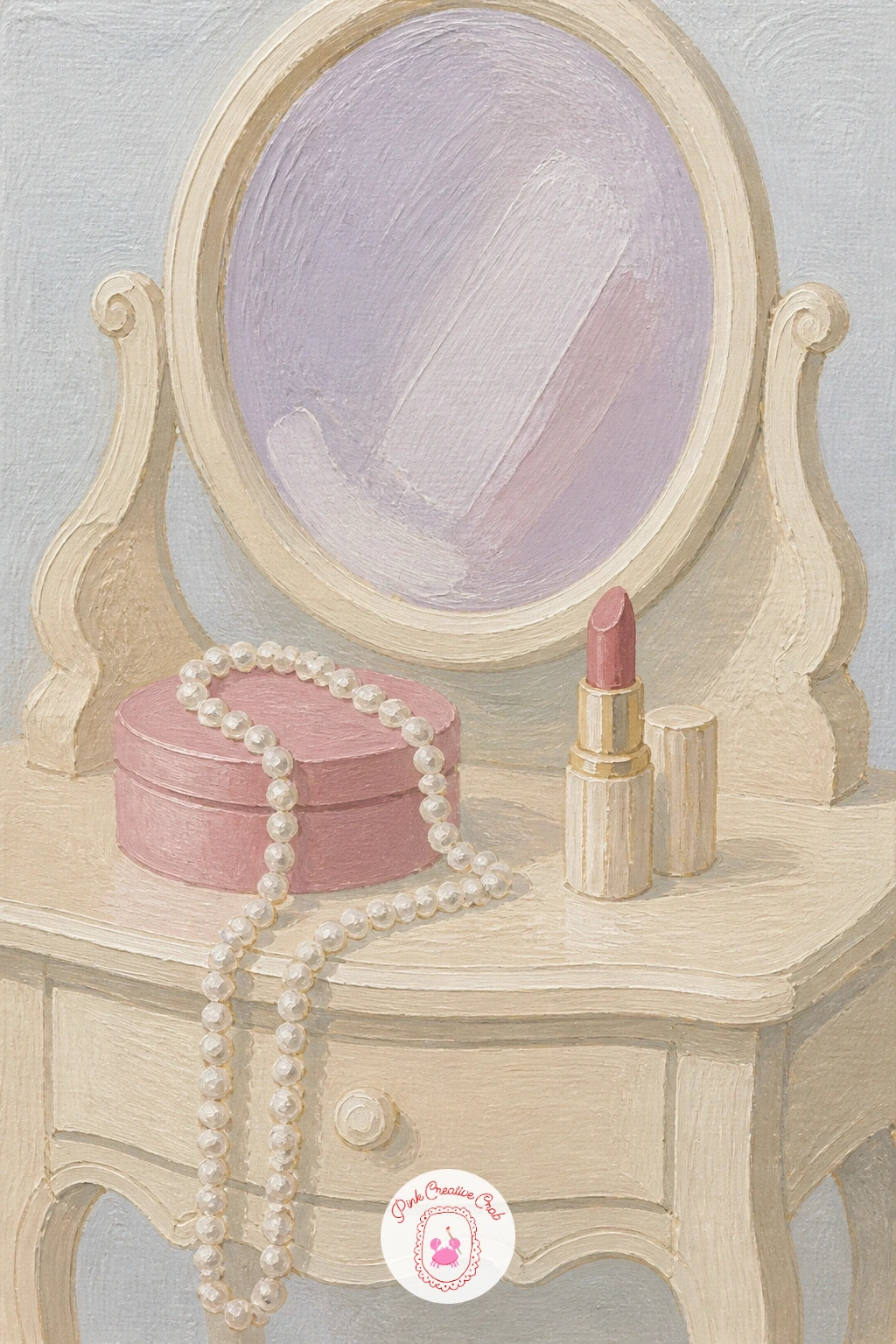
You Will Need
- white gel pen
Palette: Cream,Pale Grey,Dusty Pink,Warm White
Switch gears to a sunny corner scene, which gives you a chance to practice how light changes a simple composition. Decide the window sits just off canvas to one side, then let every shadow from the chair and plant fall the same direction so the corner feels believably lit.
Paint the rattan chair first as a simple woven outline, a few short curved strokes suggesting the weave rather than drawing every strand. Add the big leafy plant beside it with broad rounded leaf shapes in soft sage, overlapping two or three leaves rather than painting a dozen small ones.
If the rattan starts looking tangled, step back and simplify: three or four curved lines across the chair back read as woven cane far better than ten fussy ones. No sage green in your set, mix a little yellow into a cool green to soften it toward the right dusty tone.
Paint the brightest patch of sunlight on the floor last, in one loose triangle of warm cream.
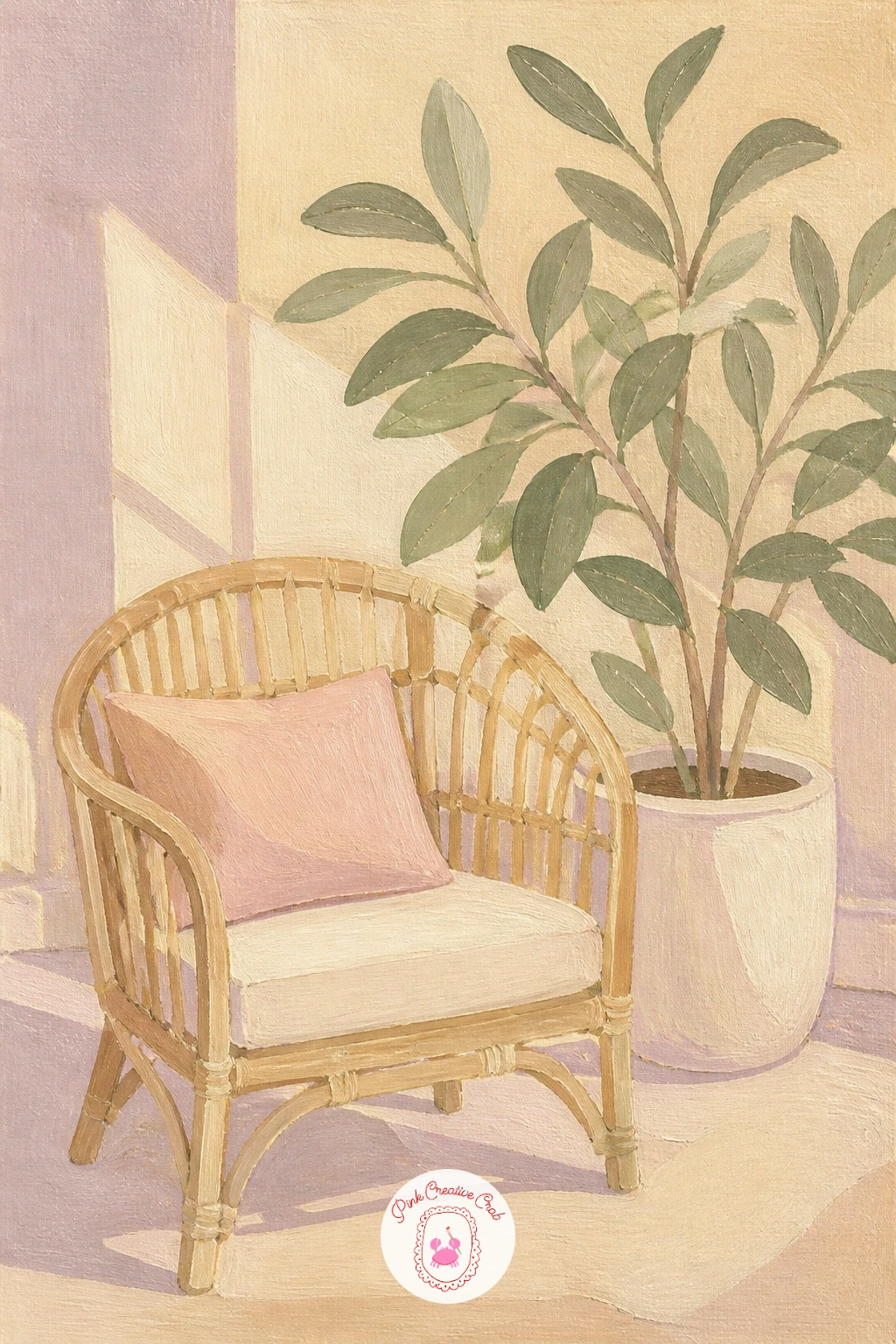
Palette: Soft Sage,Warm Beige,Cream,Pale Gold Light
Give yourself a break from objects and paint pure soft color in horizontal bands, which is the quickest way to a finished canvas on this list. Work wet into wet: lay a band of dusty pink at the horizon, then blend upward into pale lilac and downward into a warm sandy beige before any layer dries.
Use a wide flat brush in long horizontal strokes only, resisting the urge to blend in circles, which muddies the soft gradient you are after. Once the sky and sand are blocked, add one simple dark silhouette shape at the horizon line, a distant rock or a single post, to anchor the eye.
If the bands blend into mud instead of staying soft, you waited too long between colors: work fast, or mist the canvas lightly with water first to keep acrylic workable longer. No spray bottle, a slightly damp brush between color changes buys a similar window.
Finish with one thin streak of pale gold just above the horizon where the light is strongest.
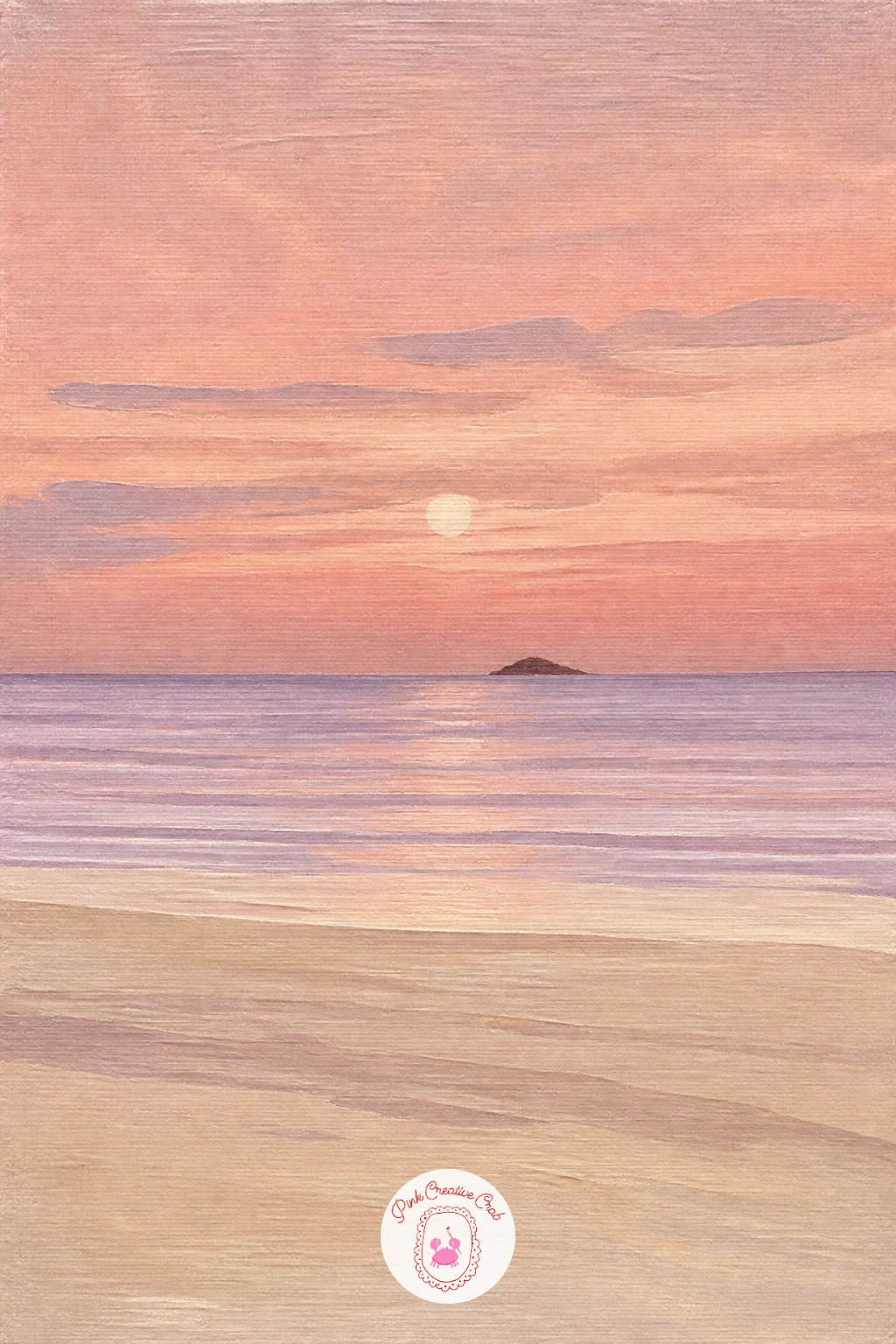
Palette: Dusty Pink,Pale Lilac,Sandy Beige,Pale Gold
For a bolder sky, this guide on acrylic sunset painting has more blending tricks worth trying once this soft version feels easy.
Return to a still life, but this time give the proportions a quick check before you commit to paint. Hold your brush up at arm’s length to measure the vase height against the stool, then mark that same ratio lightly on canvas so the vase does not end up towering over its own seat.
Paint the wooden stool first in warm honey brown with a flat brush, keeping the legs simple and slightly tapered, then add the cream ceramic vase once the stool is dry so the edges stay crisp. Build the dried flower heads from small clusters of dusty pink and soft rust dabs rather than individual petals, which reads as papery and dried instead of fresh.
If the stool looks like it is floating, add a soft shadow directly beneath its legs in grey-beige to ground it. No honey brown in your set, mix burnt sienna with a touch of white to get close.
Keep the flower clusters loose and uneven, since a perfectly round bouquet looks less like dried stems.
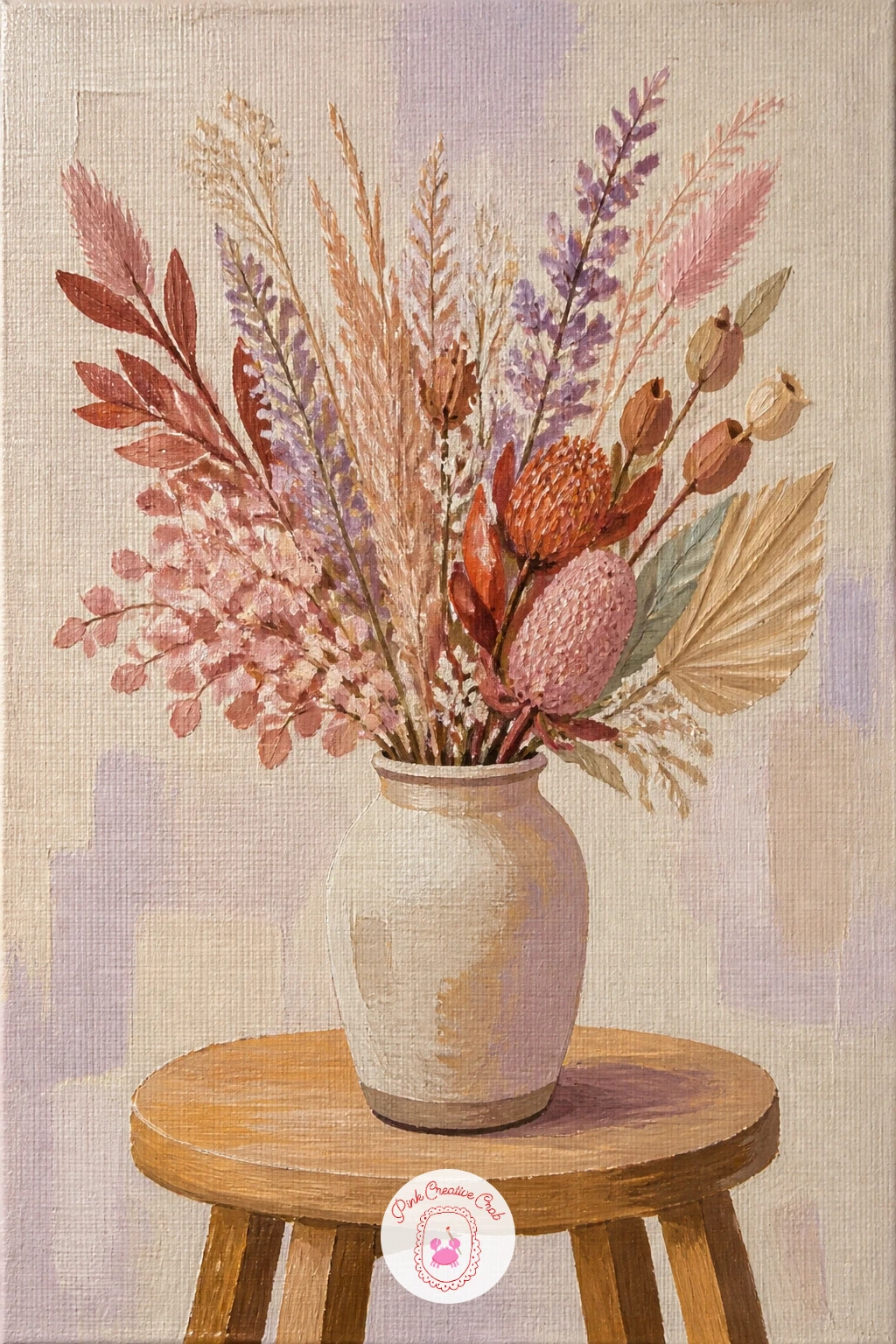
Palette: Honey Brown,Cream,Dusty Pink,Soft Rust
This scene inside a scene lets you paint a painter, which is a fun bit of layering if you keep it simple. Place the window first as a tall pale rectangle to one side, then stand the girl and her easel facing it so the light source is obvious and every shadow falls away from the glass.
Block her in as one soft silhouette in a cream or sage sweater, her arm raised slightly toward a small canvas on the easel, which you can leave almost blank or hint at with two or three tiny marks of color. Keep the easel itself to simple straight lines, a tripod shape, rather than fussy joinery.
If her raised arm looks awkward, shorten it: a shoulder-to-elbow line and a small hand shape near the canvas reads more naturally than a long stretched arm. No window light to reference, imagine the brightest value in the whole painting sitting right behind her, with everything else slightly dimmer.
Finish with pale light spilling across the floor from the window last.
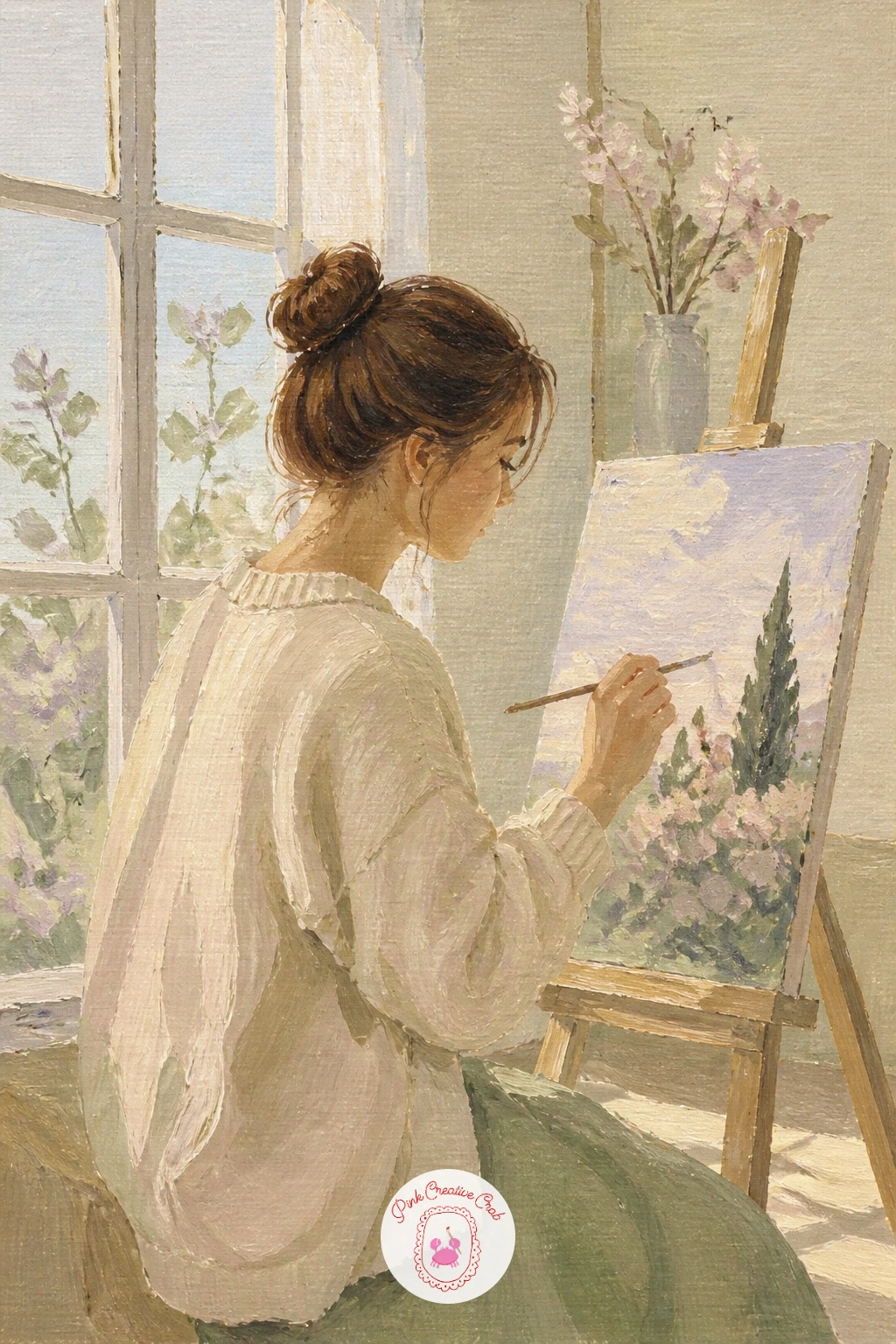
Palette: Soft Sage,Cream,Pale Window Light,Warm Beige
Keep the mood quiet with a cat curled at the foot of a bed, a subject that only needs a handful of soft curved shapes. Paint the cream throw blanket first as one soft folded mass, then let it dry before adding the cat so her shape sits clearly on top rather than blending in.
Build the sleeping cat from one continuous curved outline, tail wrapped around, nose tucked toward the paws, with no sharp angles anywhere in the pose. Use a slightly warmer beige or soft grey for her fur than the throw underneath so the two shapes separate clearly at a glance.
If the cat ends up looking like a flat blob, a few short dry-brush strokes along the back and tail, following the direction fur would actually lie, break up the silhouette just enough to suggest texture. No dry brush technique practiced before, load very little paint and drag fast and light rather than pressing down.
Add one tiny pink nose and closed eye line last, and stop there.
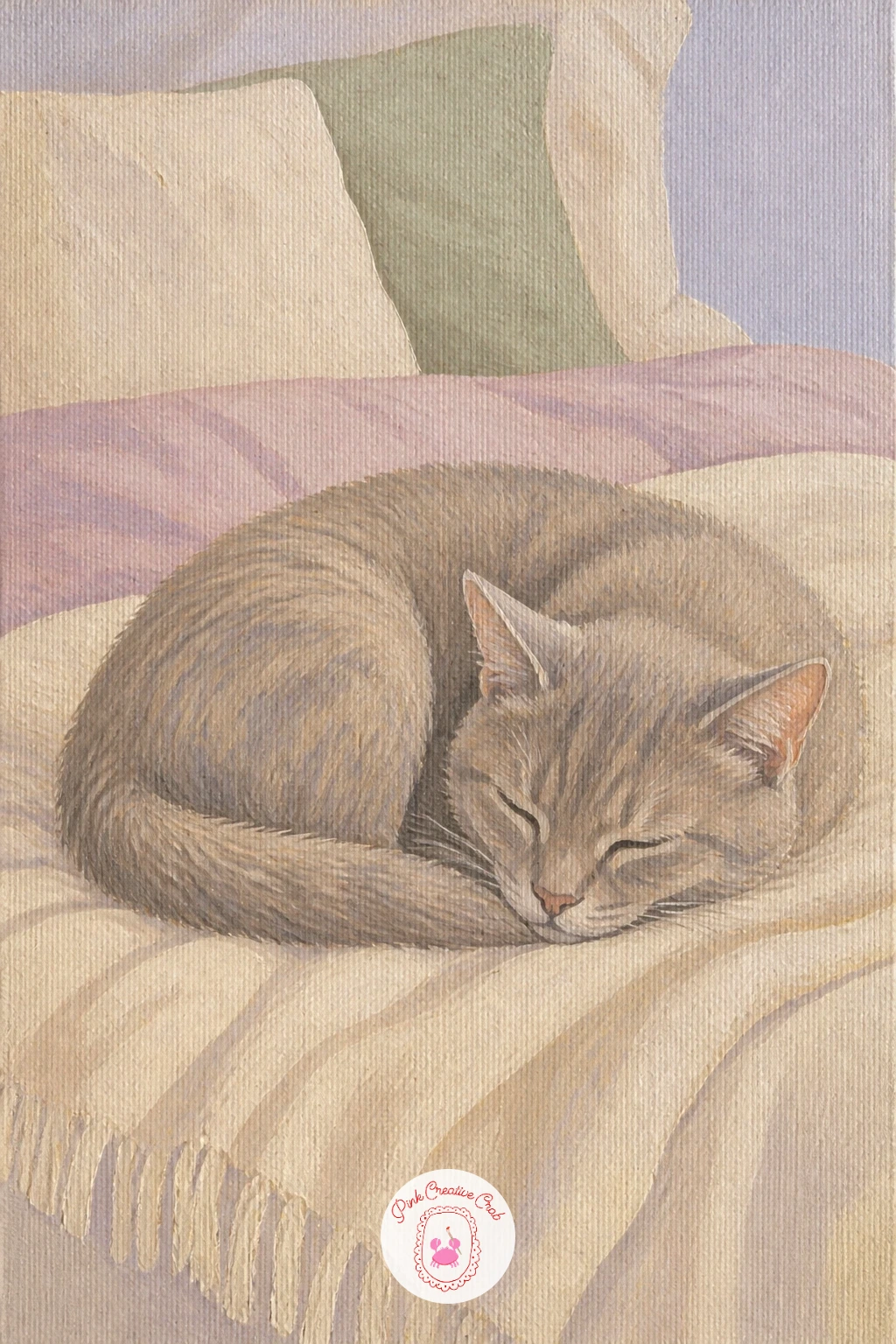
Palette: Cream Throw,Soft Grey,Warm Beige,Dusty Pink
Move outdoors for this one and let perspective do the heavy lifting: keep the horizon line low, below the middle of the canvas, so the sky and sea take up most of the space and the cliff feels high above the water. Place the girl small against that big sky, her white dress catching the strongest light in the whole painting.
Paint the sky and sea first in soft blue-lilac and dusty pink bands, then the cliff edge as one simple dark-beige shape beneath her feet. Add her last as a small silhouette in white with hair blowing to one side, which also tells the viewer which way the wind moves.
If she disappears into a sky that is too bright, outline her very faintly in a slightly warmer cream before filling the dress, which keeps her readable against pale color. No reference for the pose, a simple standing figure with arms relaxed at her sides works fine here.
Finish with one streak of warm light along the horizon behind her.
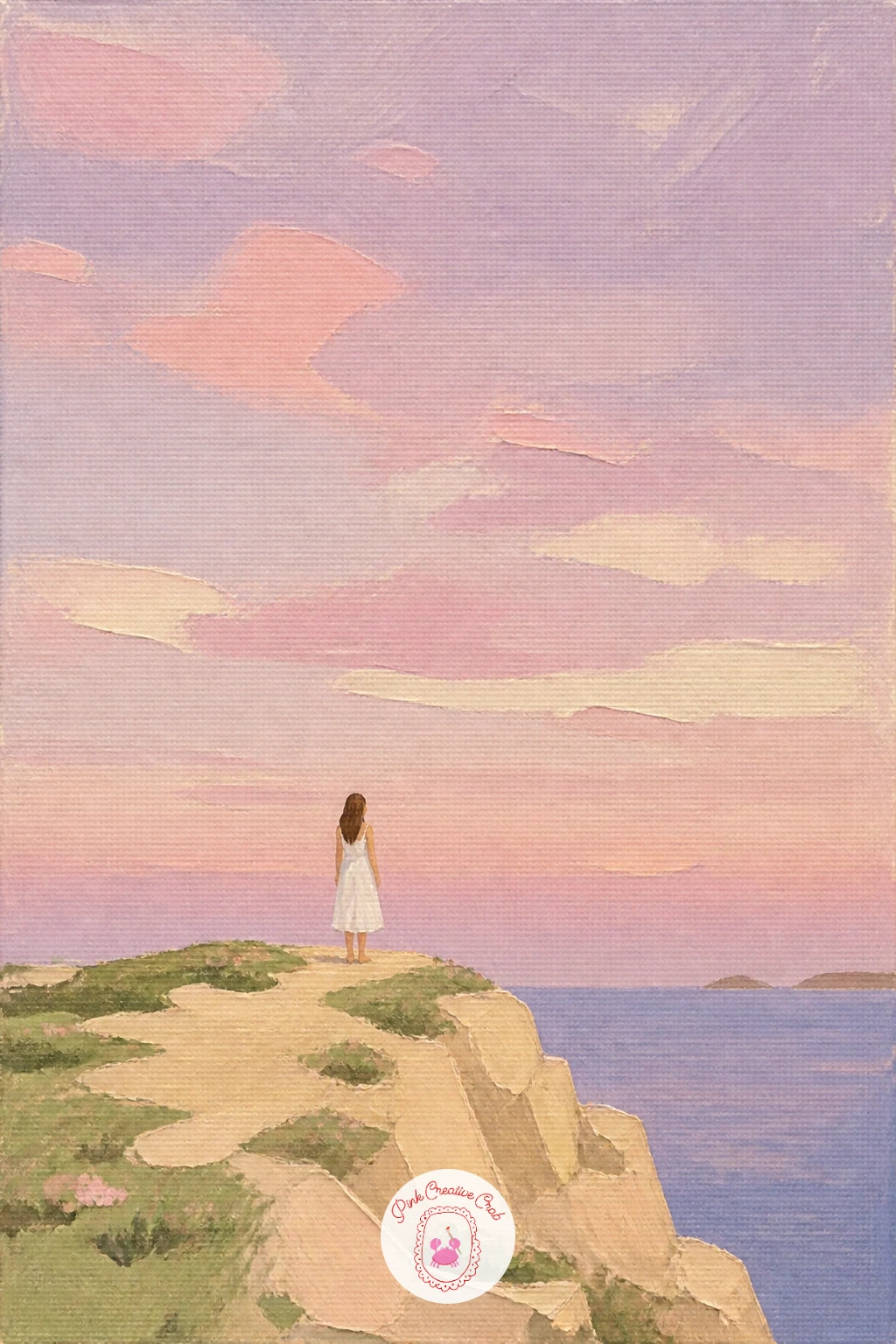
Palette: Pale Blue Lilac,Dusty Pink,Warm Beige Cliff,White
After a big outdoor scene, settle into a tiny tidy still life that only takes a handful of shapes. Paint the shelf itself as one thin horizontal plank first, then arrange three simple objects along it: a stack of soap bars, a rolled towel, and a small potted plant, leaving gaps of pale background between each.
Build the soap bars as simple rounded rectangles in cream and sage, the rolled towel as a soft cylinder in warm beige with a few curved lines to suggest the fold, and the plant as two or three simple leaf shapes rising from a small pot. Keep every object sitting on the same shelf line so nothing floats.
If the towel roll looks flat, add one soft shadow curve along its underside where it meets the shelf, which gives it roundness instantly. No sage paint mixed yet, a touch of green into your cream base gets you there fast.
Finish with a thin cast shadow beneath each object last, all falling the same direction.
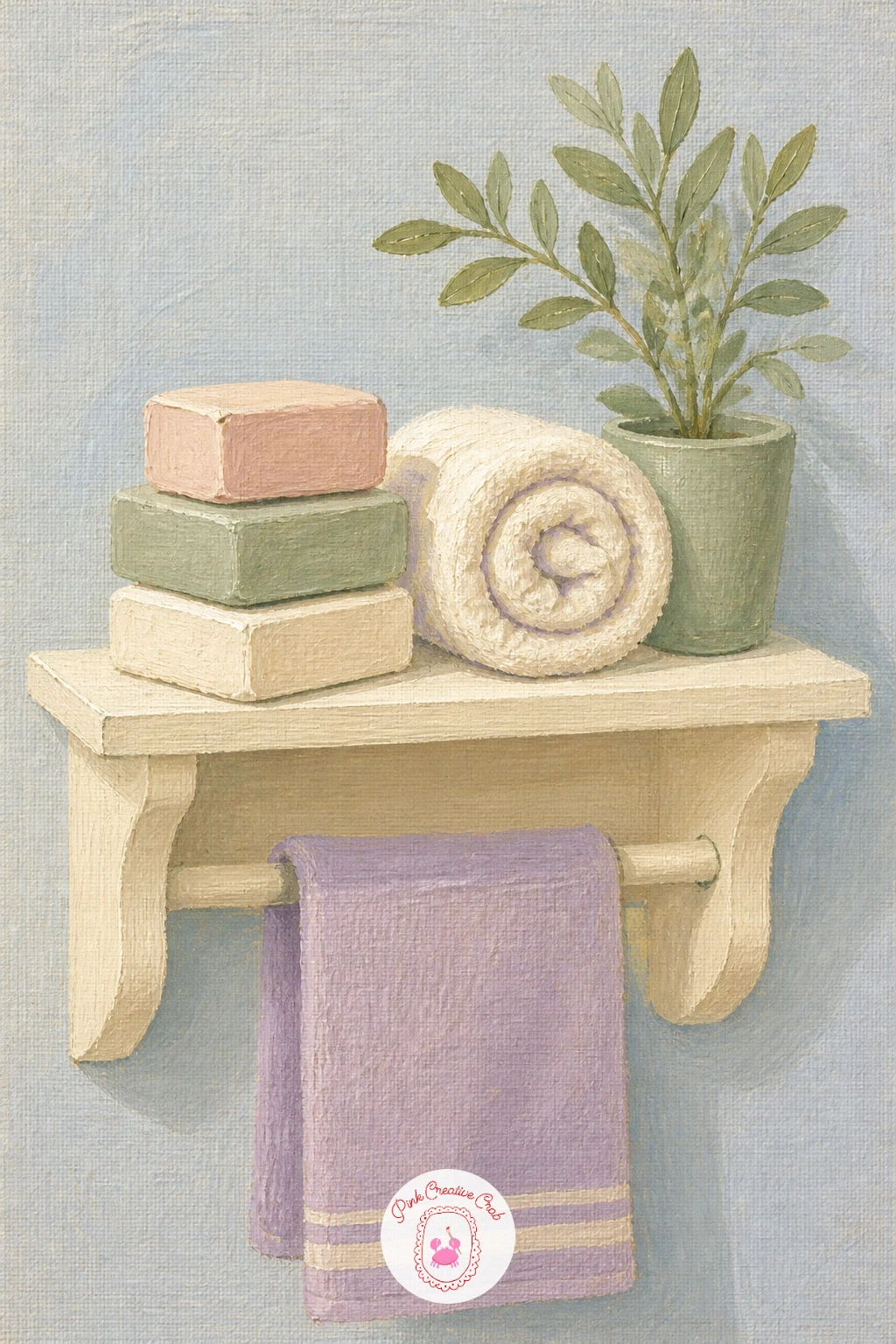
Palette: Cream,Soft Sage,Warm Beige,Pale Grey Shadow
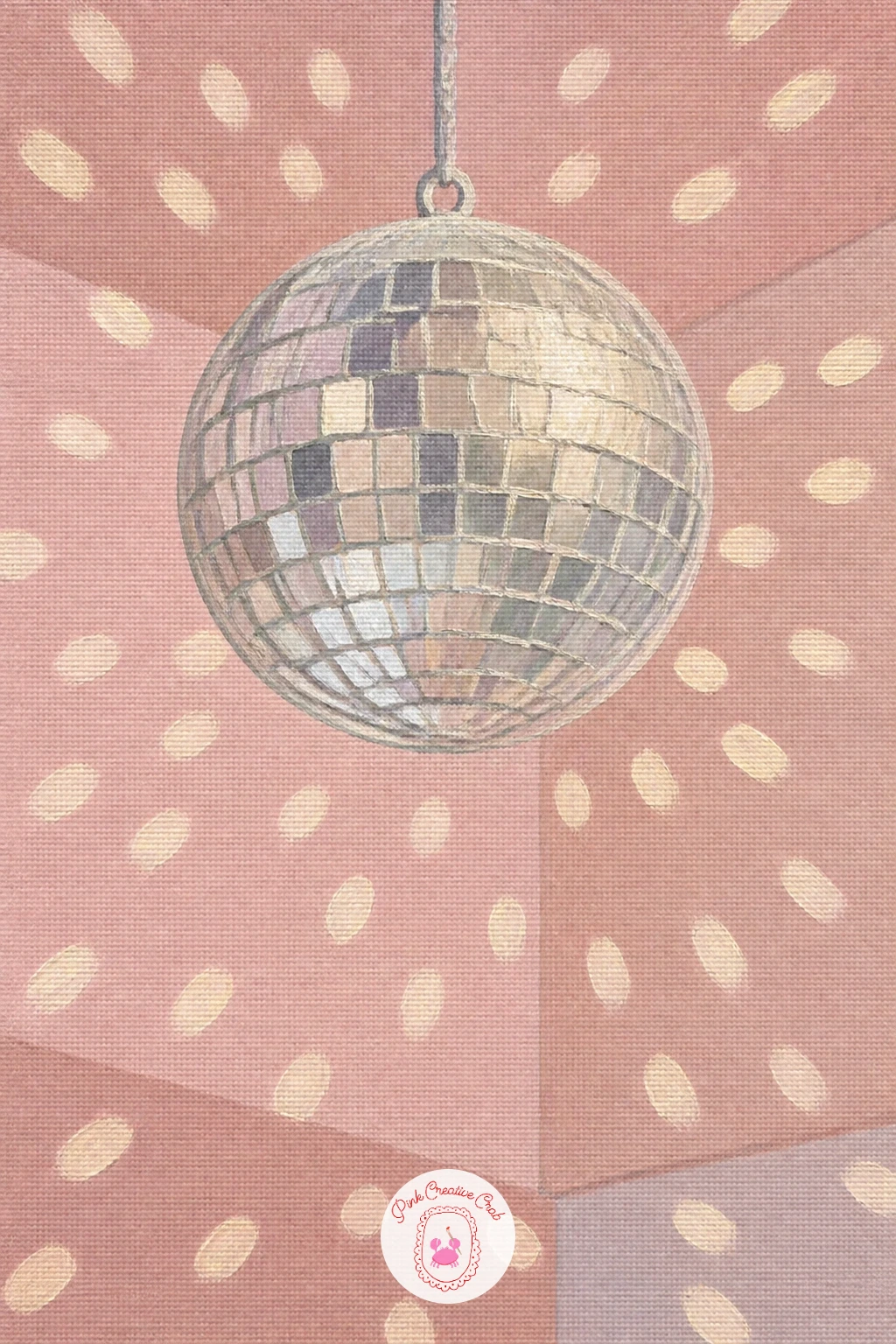
This is the one spot on the list where you get to add a little sparkle and break the soft flatness on purpose. Paint the pink room first as a flat wall in dusty rose, then add the disco ball as a simple circle in pale grey and cream, broken into small irregular facets rather than one smooth sphere.
Once the ball is dry, scatter small soft-edged ovals of cream light across the wall and floor, varying their size so the pattern feels random rather than evenly spaced. This is where it is easy to overdo it, so stop once you have a dozen or so spots and leave plenty of pink wall showing between them.
If the spots look harsh, soften just the edges with a barely damp brush before the paint fully sets, which keeps them glowing instead of stamped on. No fine brush for the facets, the corner of a flat brush dabbed lightly suggests them just as well.
Use a white gel pen for the two or three brightest sparkle points last.
You Will Need
- white gel pen
Palette: Dusty Rose,Pale Grey,Cream Light,Warm White
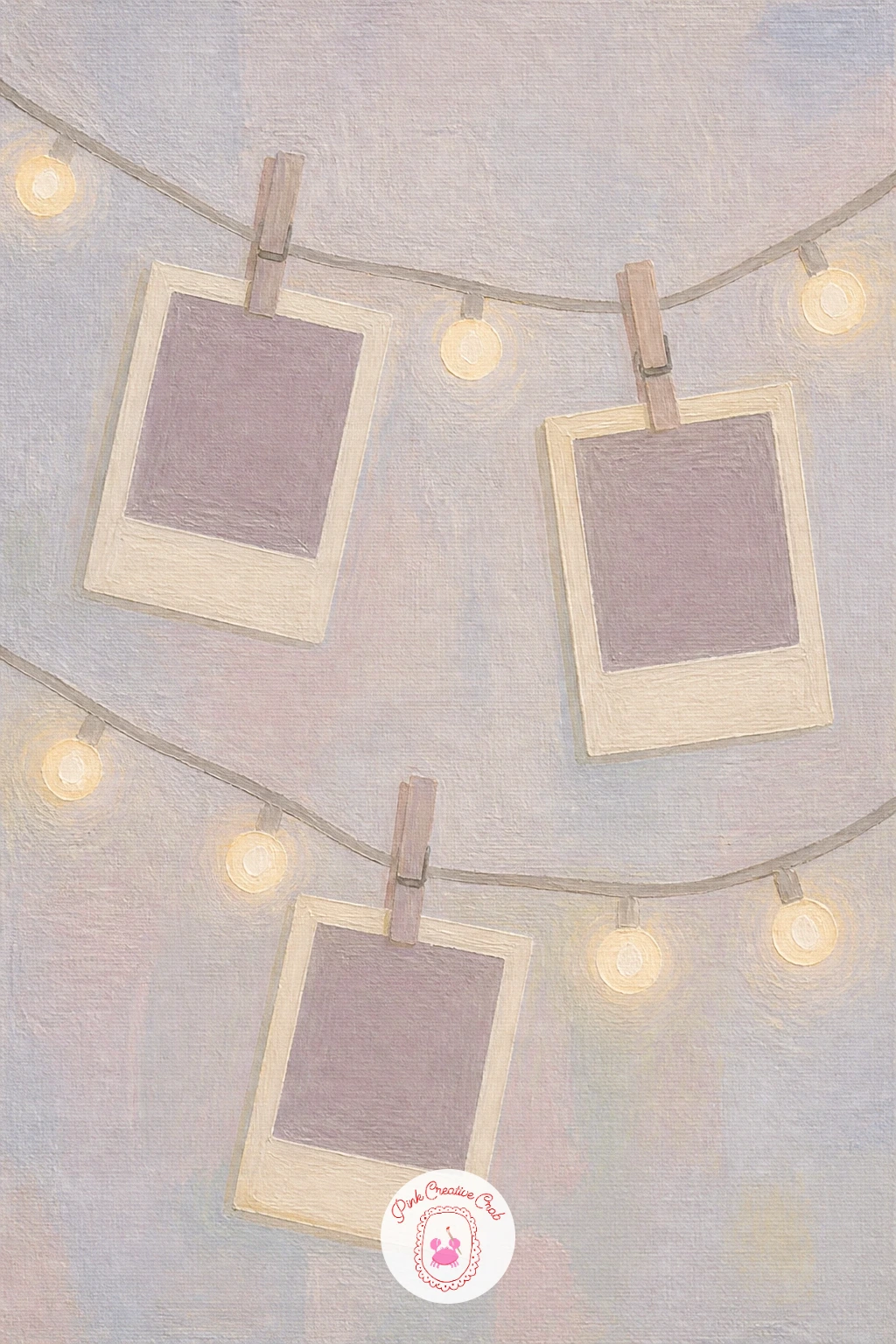
Keep the sparkle going with a string of fairy lights holding a few instant photos, a subject built entirely from small repeated shapes placed with care. Paint a loose curving string first in pale grey across the canvas, then add small warm cream dots along it for the lights, spacing them unevenly so the string feels relaxed rather than ruled.
Add two or three small white rectangles hanging from the string for the photo frames, leaving the inside of each blank or just a soft blur of color rather than a detailed scene, since a tiny readable photo is nearly impossible at this scale and not the point of the piece. Tilt each rectangle slightly differently so they look clipped on rather than glued flat.
If the string sags unevenly, redraw it faintly first with a dry brush before committing to paint, adjusting the curve until it feels natural. No white paint mixed thick enough, two thin coats cover cream better than one thick one.
Dot a gel pen sparkle beside two of the lights last.
You Will Need
- white gel pen
Palette: Pale Grey,Warm Cream,Warm White,Soft Beige
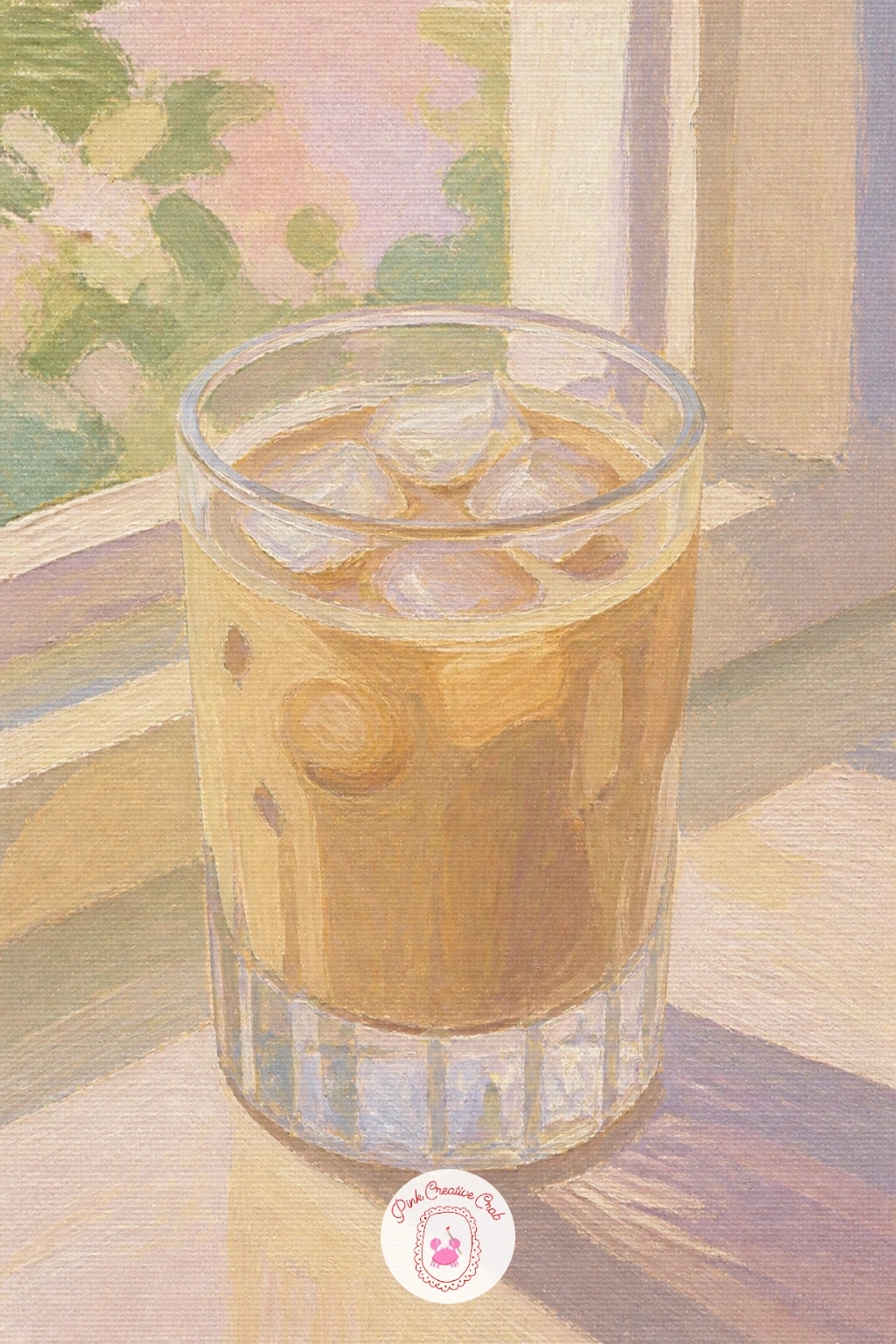
Glass and ice are a nice quick-version subject, so try the ten-minute route first: block the glass as one simple tall cylinder in pale grey, add a flat band of warm beige coffee at the top, and a scatter of small pale rectangles for ice, then stop.
For the forty-minute version, go back in once that base layer dries and add thin white gel pen lines down the side of the glass to suggest condensation, plus a tiny highlight on two or three ice cubes where the sunlight catches them hardest. Paint the windowsill itself in cream, with one soft shadow cast by the glass falling away from the light source.
If the ice cubes look like flat grey squares, round just the top corner of each one with a touch of near-white, which is enough to read as glassy. No gel pen for condensation lines, a dry brush with the lightest touch of white does a looser version.
Keep the background outside the window a single soft blur of warm color.
You Will Need
- white gel pen
Palette: Pale Grey Glass,Warm Beige Coffee,Cream Sill,Near White
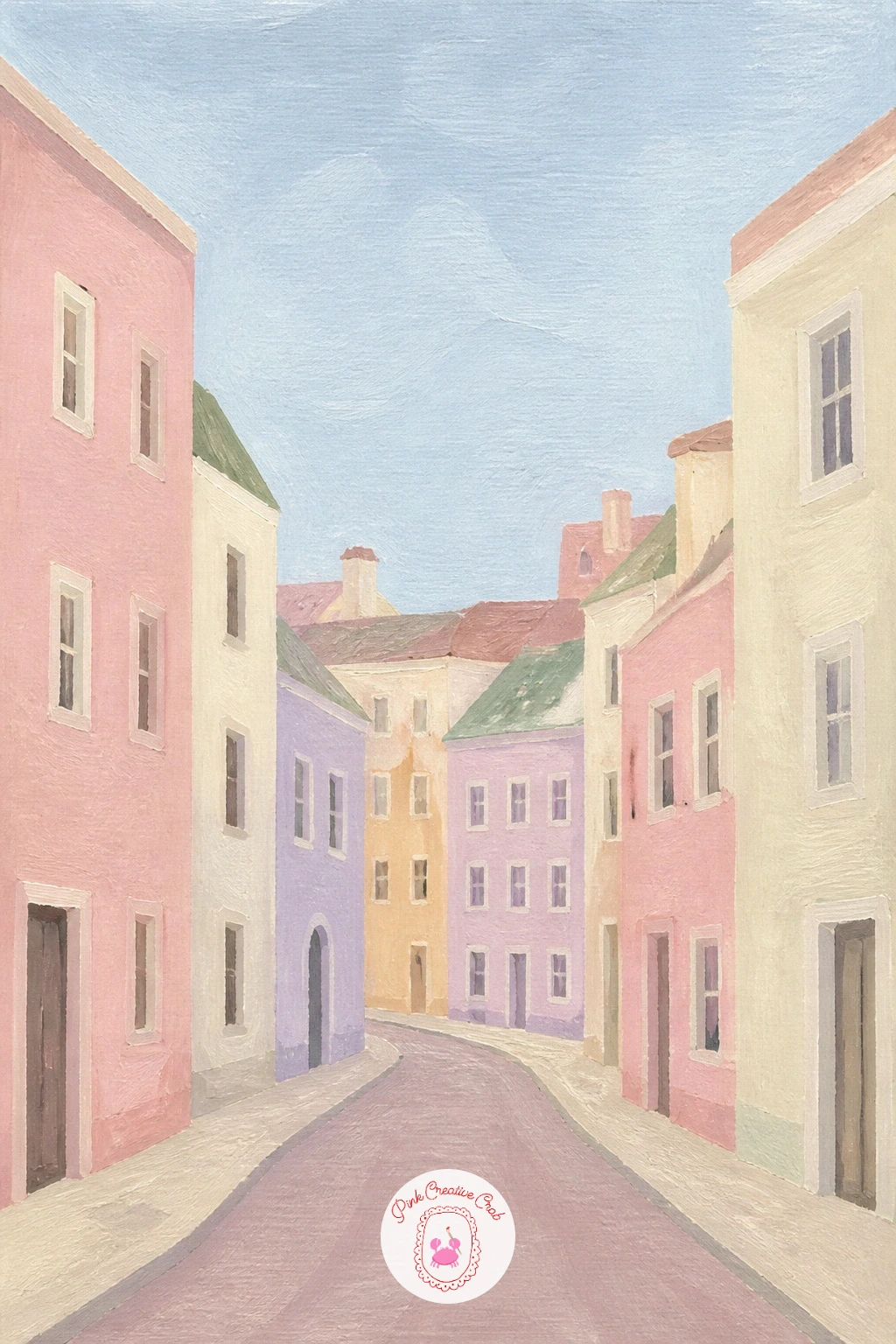
Step into a tiny cityscape, where the real trick is eye level, since it decides how much roofline versus street you show. Keep the eye level low, near the bottom third of the canvas, so the buildings rise tall and the pale sky takes up most of the space above them.
Block each building as one flat rectangle in cream, dusty pink or soft lilac, varying the heights so the skyline has an easy rhythm, then add a handful of small square windows per building rather than a precise grid. Keep every window the same simple shape so the street reads as calm, not busy.
If the buildings look like they are floating, run one continuous pale grey line along the bottom edge for the street, which grounds the whole row instantly. No ruler for straight edges, painter’s tape pressed along each roofline gives a crisp line when you peel it off.
Finish with one small awning shape in dusty pink over a single doorway.
You Will Need
- painter’s tape
Palette: Dusty Pink,Cream,Soft Lilac,Pale Grey Street
If city scenes like this one feel good to paint, the ideas in watercolor city painting translate easily into acrylic for more street scenes.
Flowers wrapped in paper are a popular pick for a reason, so give the proportions a quick check before you paint: the paper cone should take up roughly the bottom third of the canvas, with the rose heads filling most of the rest, not the other way around.
Paint the brown paper wrap first as one simple cone shape with a few soft creases, then build the roses above it from small overlapping curved strokes in dusty pink, working from the back blooms forward so each new rose slightly overlaps the last. Keep the leaves to a handful of soft sage shapes tucked between the roses, never a dozen tiny ones.
If the roses look flat, deepen just the center of two or three blooms with a touch of darker rose before the paint sets, which gives the illusion of petals curling inward. No brown paper color mixed, burnt umber lightened with a little cream gets close.
Finish with the string tying the wrap in one confident curved line last.
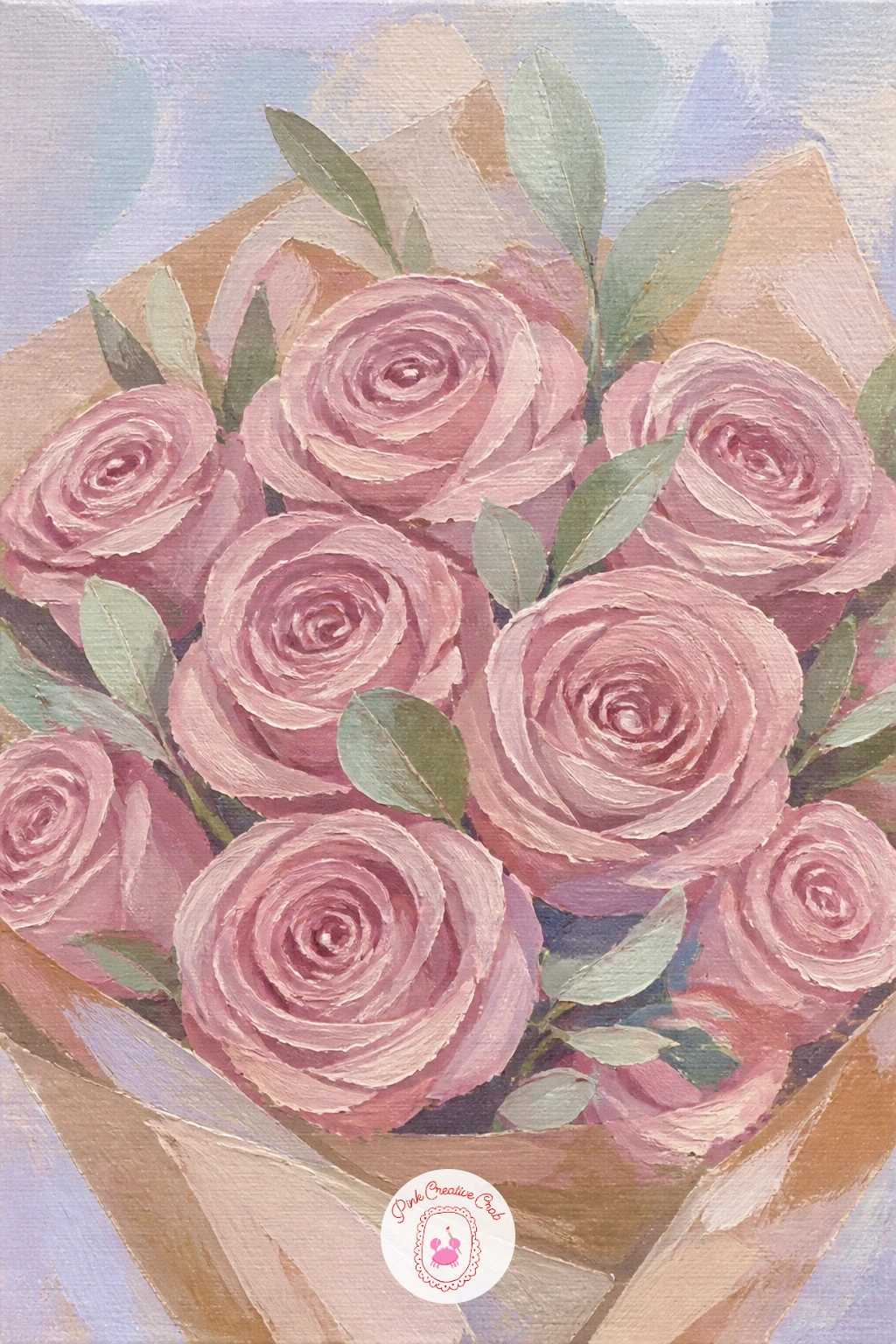
Palette: Dusty Pink,Brown Paper,Soft Sage,Deep Rose
For more rose and bouquet techniques, acrylic painting flowers for beginners covers petal shapes step by step.
Painting a figure from behind is one of the easiest ways to show a face without painting one, so lean into it here. Keep her hair as the main shape, long and loose, falling over a simple sweater silhouette, with her head tilted very slightly to suggest she is looking at something rather than straight ahead.
Paint the sunset sky first in soft bands of dusty pink and pale gold, then add her silhouette on top once that layer is dry, which keeps her edges clean against the glowing color. Build the hair from a few long curved strokes rather than lots of thin lines, letting the brush follow the direction it would actually fall.
If her silhouette looks stiff, round the shoulders slightly and drop one shoulder a touch lower than the other, which reads as relaxed instead of posed. No model to reference, stand in front of a mirror yourself and notice how your own shoulders sit when you are simply standing still.
Finish with one warm rim of light along the edge of her hair closest to the sun.
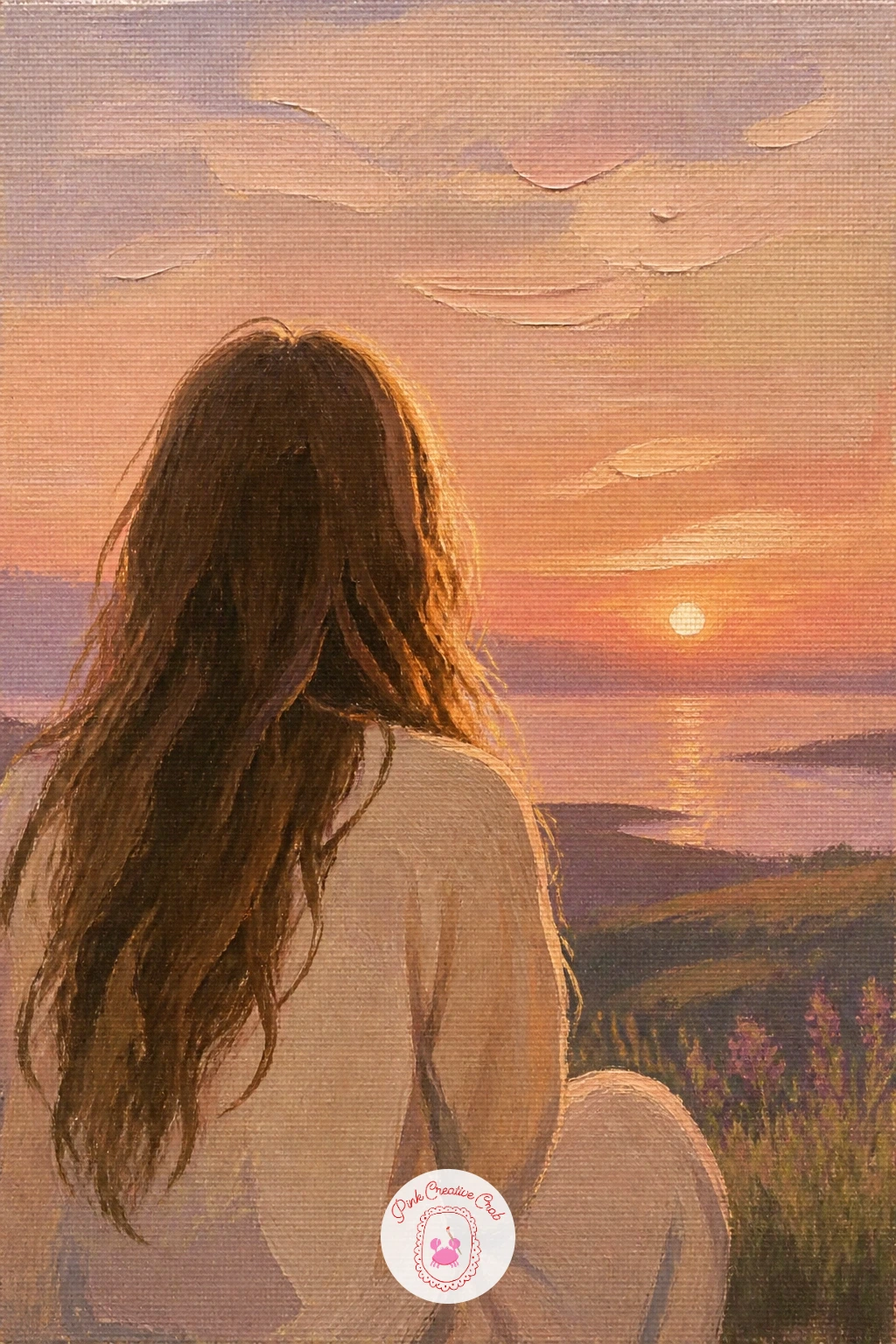
Palette: Dusty Pink Sky,Pale Gold,Soft Brown Hair,Warm Rim Light
This tabletop still life is a good one for practicing light direction again, now with two separate light sources: the window and the candle flames themselves. Decide the window light sits cool and soft from one side, while the candle glow sits warm and small right at the flame, and let the shadows on the linen reflect both.
Paint the linen tablecloth first in soft cream with a few loose folds, then add the two candles as simple white cylinders with small flame shapes in warm gold. Build the anemones last from simple rounded white petals around a small dark center, keeping each flower to five or six petal strokes at most.
If the flames look flat, add one tiny touch of warm orange right at the base of each one, fading up into pale yellow, which gives them a glow instead of a solid triangle. No dark paint for anemone centers, a touch of deep purple mixed with black reads better than pure black.
Finish with soft candlelight reflected faintly on the linen beneath each candle.
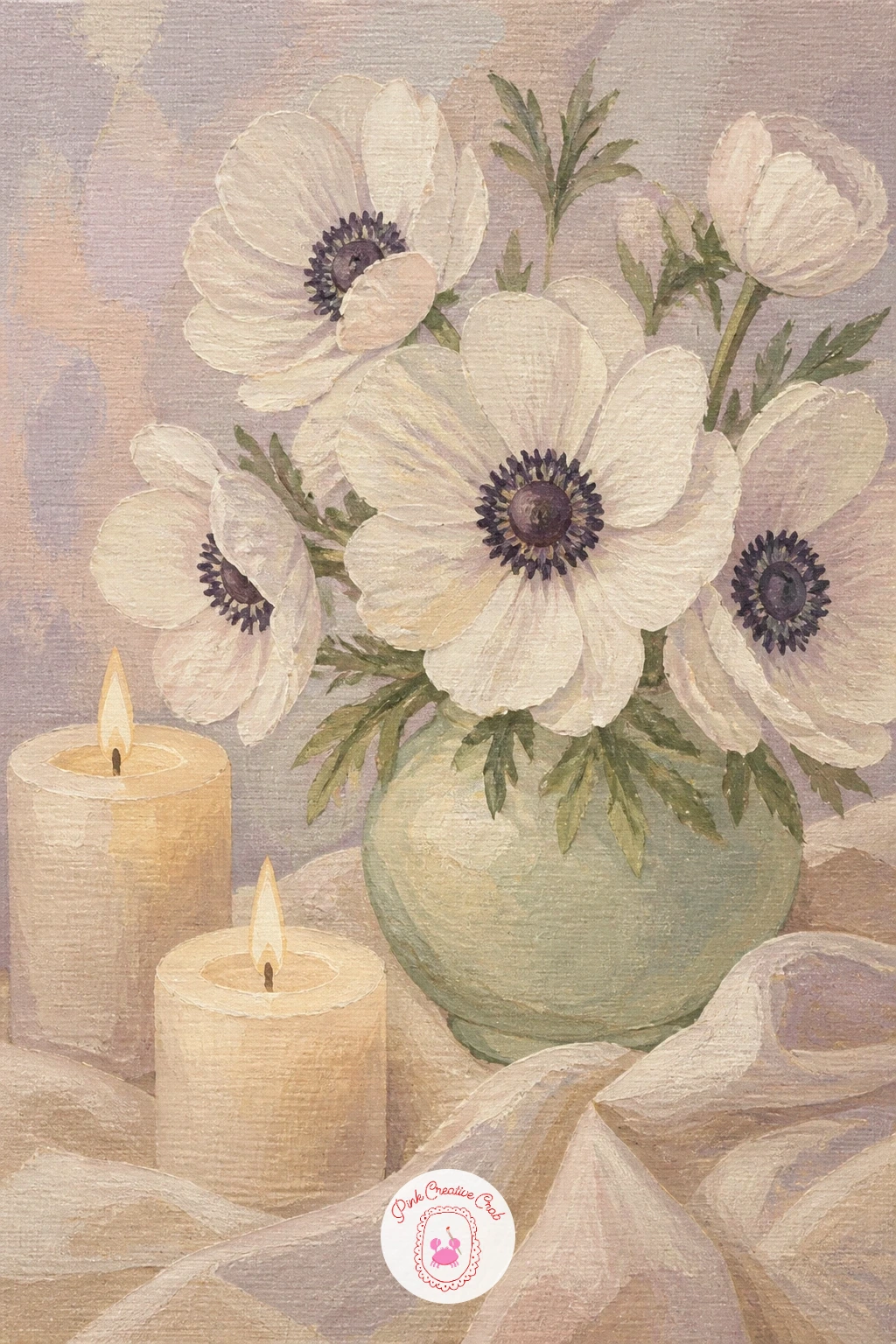
Palette: Cream Linen,Warm Candle Gold,White Petals,Deep Purple Center
Give yourself another quick sky painting, and this time let the palette do most of the work. Block the whole sky first in soft dusty pink fading up into pale lilac near the top, blending wet into wet with long diagonal strokes.
Once that base is dry, add a few soft cloud shapes in slightly lighter pink using a barely-loaded dry brush, dabbed rather than dragged, so the edges stay fluffy instead of streaky. Paint the crescent moon last as a simple curved shape in warm cream, keeping the curve clean with one confident stroke rather than several shaky ones.
If the moon’s curve comes out lopsided, a small plate or coin held against the canvas gives you a clean arc to trace lightly before painting over it. No dry brush technique down yet, a sponge dabbed lightly gives a similar soft cloud texture.
Add one small cream glow around the moon last, fading softly into the sky.
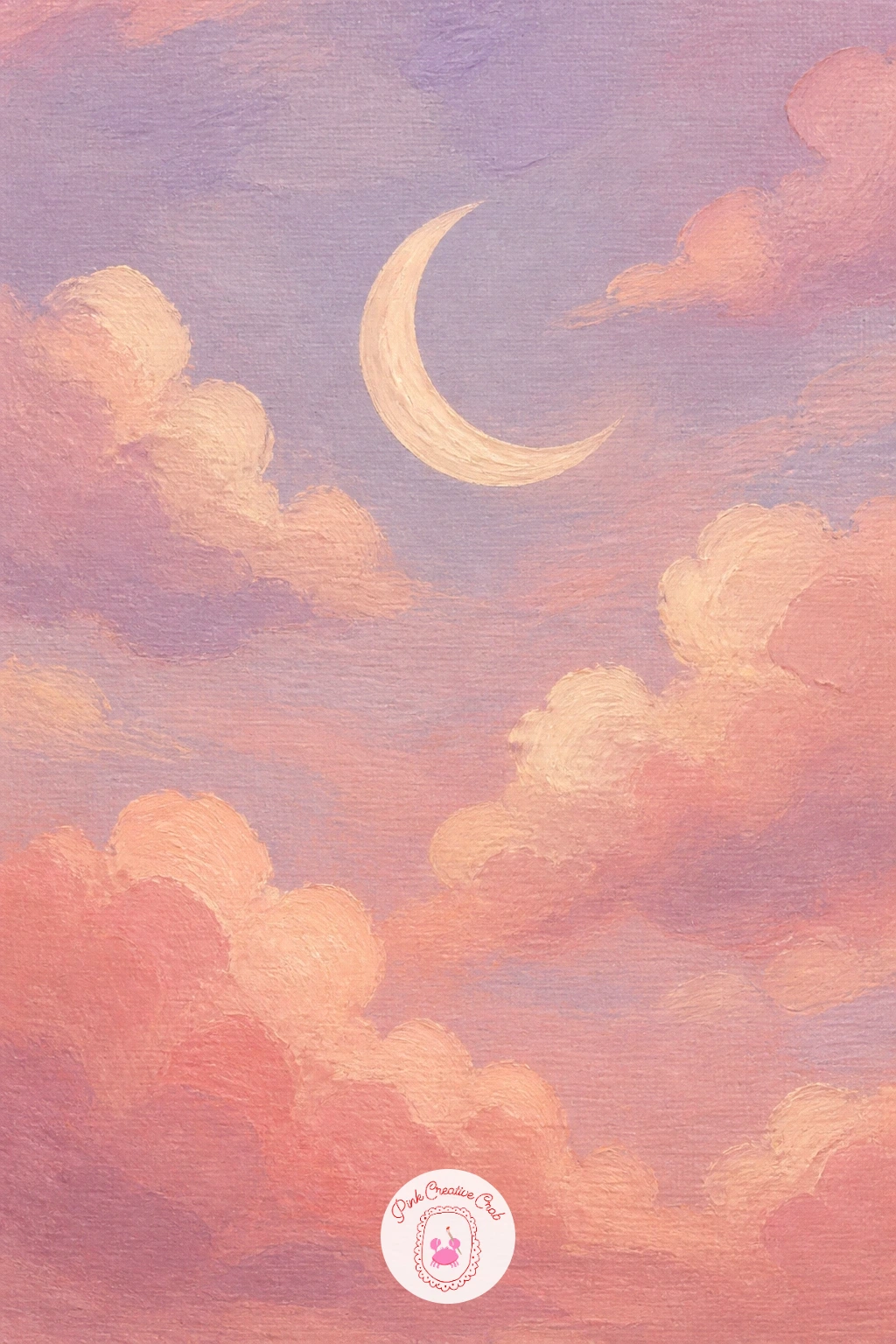
You Will Need
- small plate or coin to trace
Palette: Dusty Pink,Pale Lilac,Warm Cream Moon,Soft Pink Cloud
Bring the figure back for a quiet desk scene, and use it to practice the forty-minute version of a pose you have already simplified a few times on this list. For the quick version, block her in as one seated silhouette with an open journal and a pen, done in ten minutes with flat color only.
For the longer version, go back in once dry and add small details: a soft fold in her sweater sleeve where it bends to write, a faint shadow from the lamp beside her, and a few loose wavy lines on the journal page suggesting handwriting without it being readable. Keep the wooden desk simple, one flat warm-brown rectangle with straight legs.
If the seated pose looks too upright, drop her head slightly toward the page and round her upper back a touch, which reads as someone actually absorbed in writing. No lamp to paint for the light source, a single window glow from one side works just as well.
Finish with the pen held loosely in her hand last, a simple thin line.
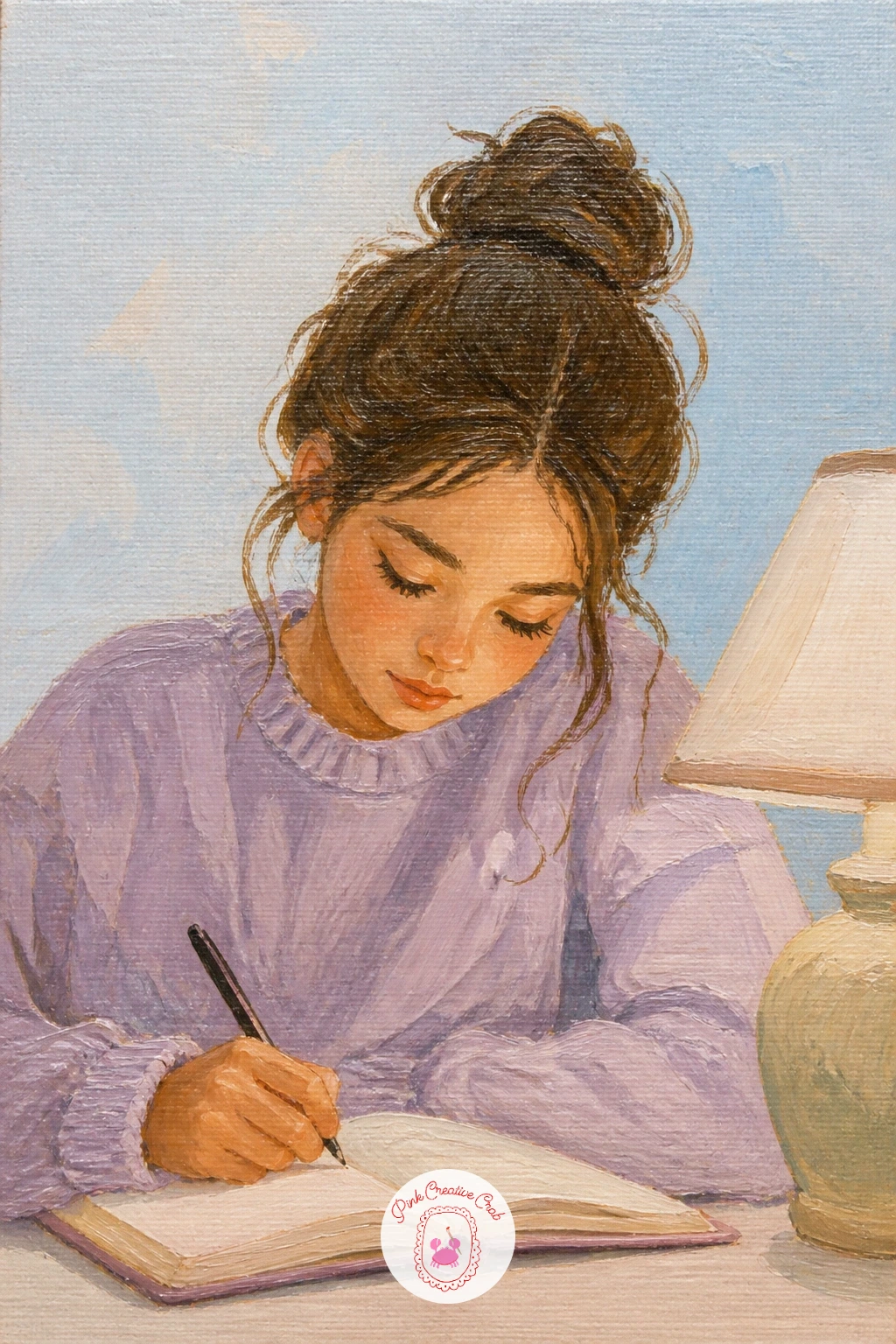
Palette: Soft Sweater Color,Warm Brown Desk,Cream Page,Pale Lamp Glow
After a figure, settle back into a simple object study that hangs rather than sits, which changes how the shadows fall. Paint the window frame faintly first as a guide, then hang the macrame holder from a single thin line at the top, letting the knotted pattern fall below it in a loose diamond shape.
Build the macrame from a handful of soft cream rope lines crossing over each other, not a dozen tightly woven knots, since a few clear crossings read better at this scale than an accurate weave. Add the trailing plant last, with leaves cascading downward and outward in soft sage, a few longer than others to break up the symmetry.
If the rope lines look too stiff and straight, curve each one very slightly, since rope never hangs perfectly straight even under tension. No macrame reference to work from, picture a simple fishing net draped loosely and borrow that same soft sag.
Finish with one patch of warm window light behind the leaves last.
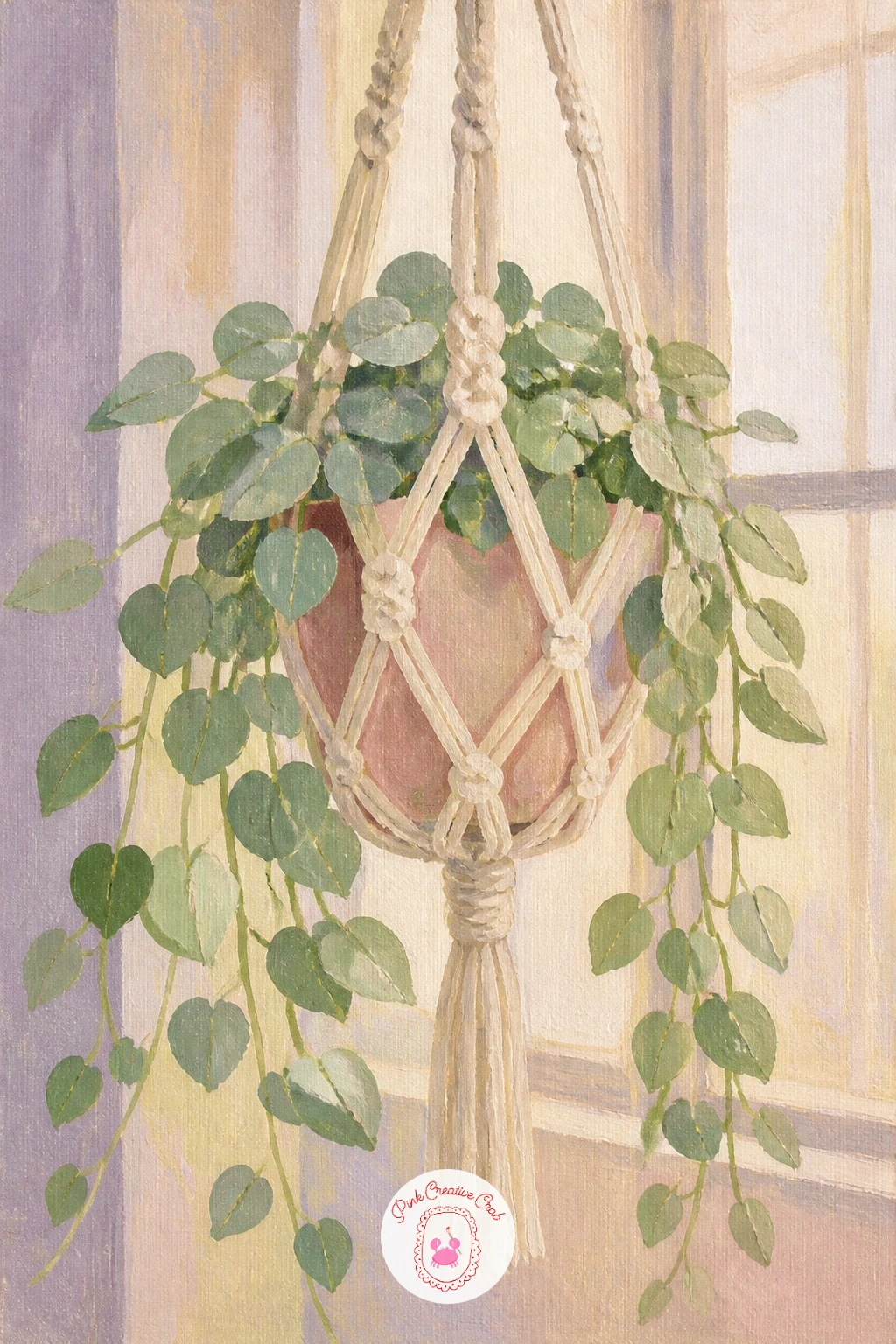
Palette: Cream Rope,Soft Sage,Pale Window Light,Warm Beige
This pairing of an everyday object with flowers is a nice one for varying your composition once you have painted a bouquet earlier on this list. Instead of a vase, let the wildflowers simply lie loose on the ground beside the sneakers, tied with nothing more than a thin stem wrapped around the bunch.
Paint the sneakers first as two simple rounded shapes in soft white with a few cream shadows in the folds of the fabric, keeping laces to two or three loose curved lines rather than a tightly drawn crisscross. Add the wildflowers beside them from small loose dabs of color, mixing dusty pink, pale yellow and soft lilac blooms rather than one single flower type.
If the sneakers look too stiff and boxy, round every corner slightly and add a soft shadow beneath each one where it meets the ground, which settles them into the scene. No pale yellow mixed, a touch of cream warmed with a little yellow ochre gets you there.
Finish with a few thin green stems linking the flowers to the ground last.
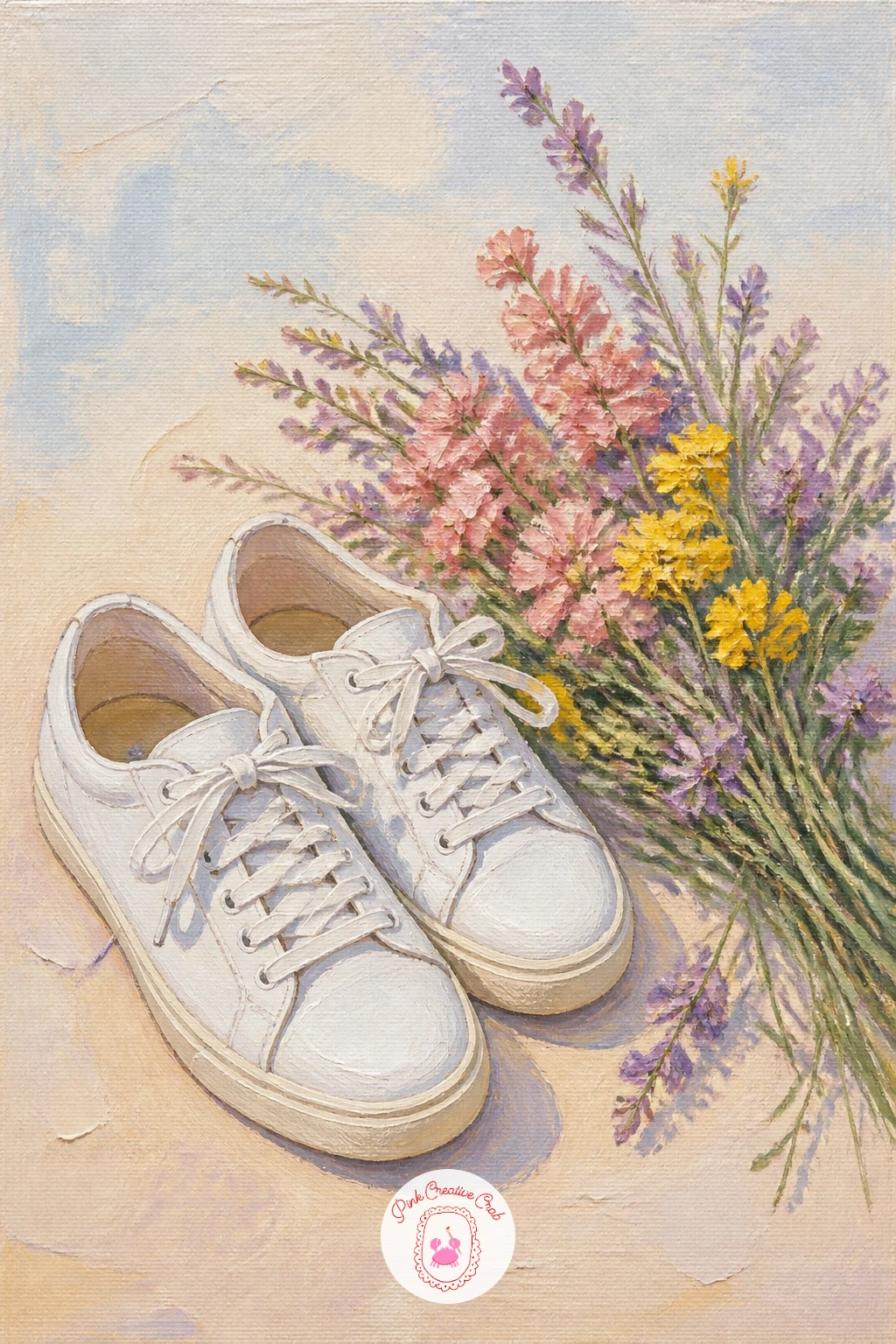
Palette: Soft White,Dusty Pink Bloom,Pale Yellow Bloom,Soft Lilac Bloom
Folded fabric is a quiet subject that teaches a lot about value in one sitting, since every fold is just a slightly different shade of the same color. Stack three or four simple rectangles on top of each other, cream, beige and soft taupe, each one slightly smaller than the one below so the stack tapers gently.
Paint the darkest shadow color first along the bottom edge of each fold, where one sweater meets the next, then build up to the lightest value on the top surface of each fold, working from dark to light rather than the other way around. Keep a faint rib texture on just one sweater using a few short vertical dry-brush lines, leaving the rest smooth.
If the stack looks like flat bricks instead of soft fabric, round the front corners of each fold slightly with a soft blending stroke before the paint sets. No taupe mixed, grey with a touch of brown and white gets close enough.
Finish with one soft cast shadow beneath the whole stack last.
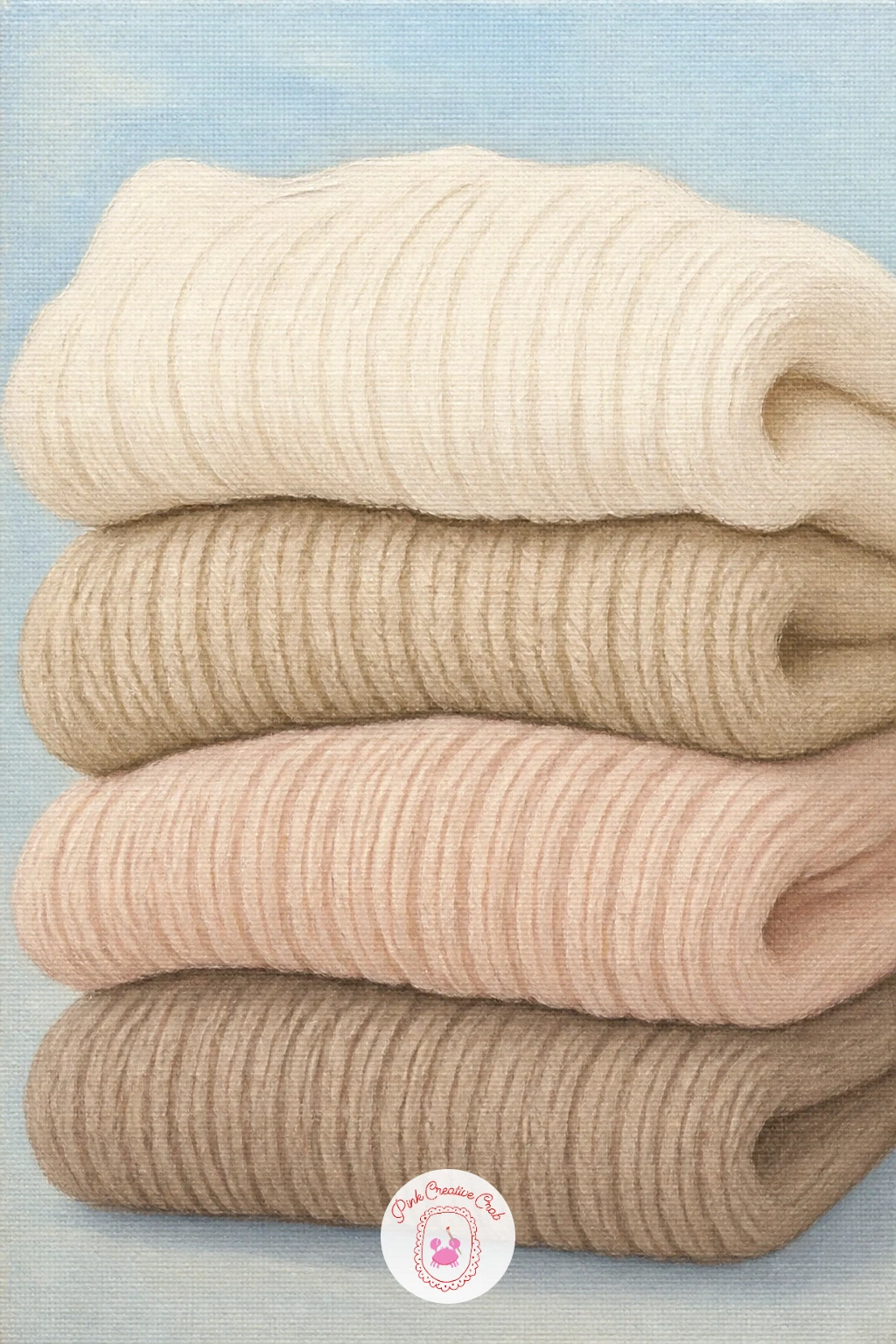
Palette: Cream,Soft Beige,Taupe,Shadow Grey
Figures in motion sound harder than they are if you measure the pose before you paint rather than guessing it freehand. Use your brush handle to compare the length of her torso against her arm’s reach in the pose you want, usually close to equal, which keeps the stretch believable instead of too long or short.
Paint the sunlit floor and wall first in warm cream with one soft diagonal beam of light crossing the room, then add her silhouette on top in a simple stretching pose, one arm reaching up and one leg grounded. Keep her in soft sage or dusty pink fitted clothing, painted as two simple shapes rather than fitted seams and folds.
If the pose looks off balance, check that her grounded foot sits roughly under her center of weight, not out to one side, which is the most common giveaway in a standing stretch. No pose reference, try the stretch yourself for a moment and notice where your own weight actually sits.
Finish with the light beam crossing directly behind her last, for contrast.
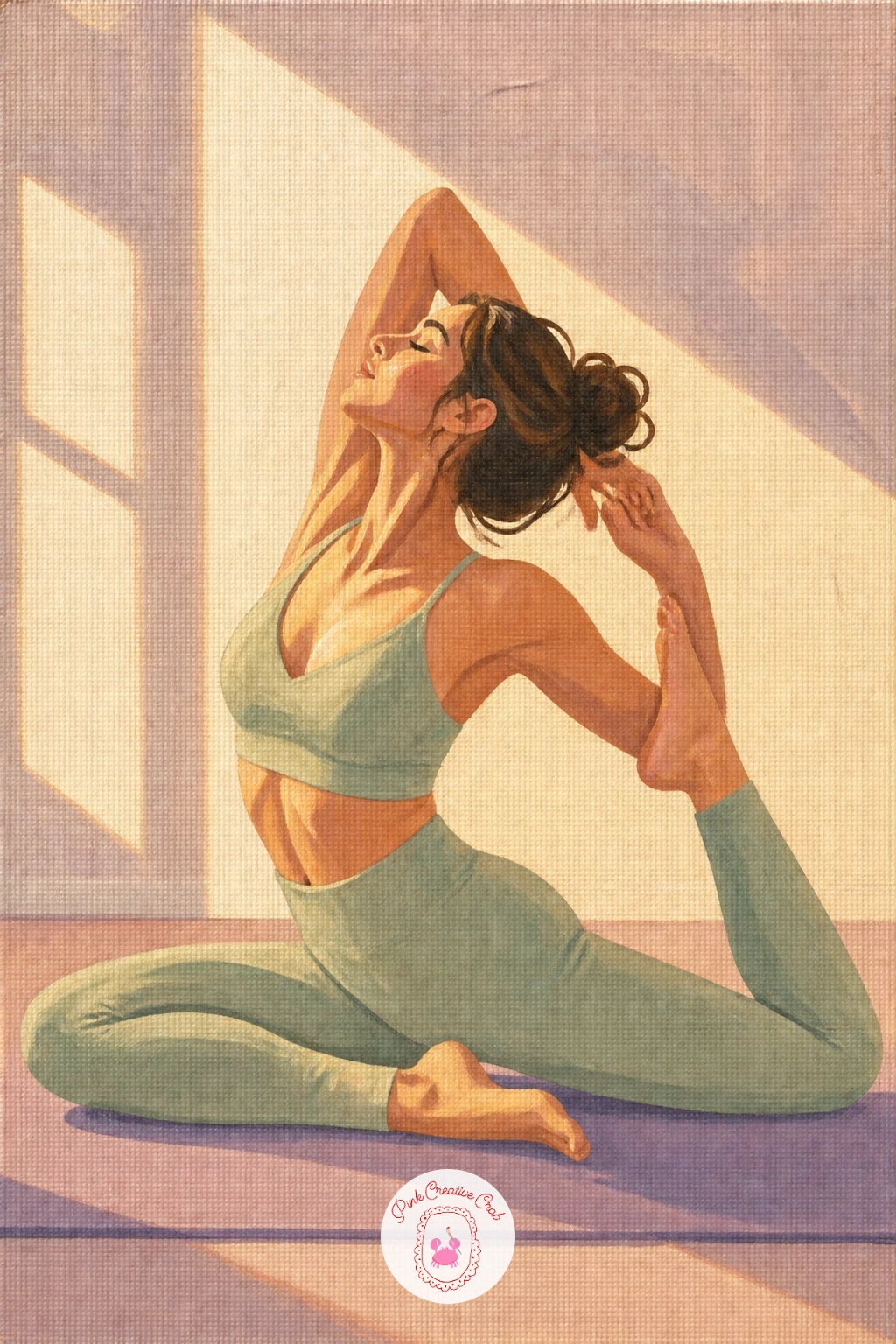
Palette: Warm Cream,Soft Sage Clothing,Dusty Pink Mat,Pale Light Beam,Warm Skin Tone
Small outdoor scenes like this balcony reward a quick version first, so block the whole thing in ten minutes: a simple railing, a round bistro table with two chairs, and a dusky sky behind, all in flat color with no detail yet.
For the forty-minute version, come back and add a string of small fairy lights along the railing, tiny cream dots spaced unevenly, plus one soft glow around a candle on the table. Deepen the sky gradually from dusty pink near the horizon into a cooler lilac-grey higher up, blending the two while both are still wet.
If the chairs and table look too perfectly matched and stiff, angle one chair slightly away from the table, as if someone just stood up from it, which adds life without adding any extra painting. No cream paint for the fairy lights, a white gel pen dotted along the railing after the paint dries works just as well.
Finish with the railing silhouette dark against the glowing sky last.
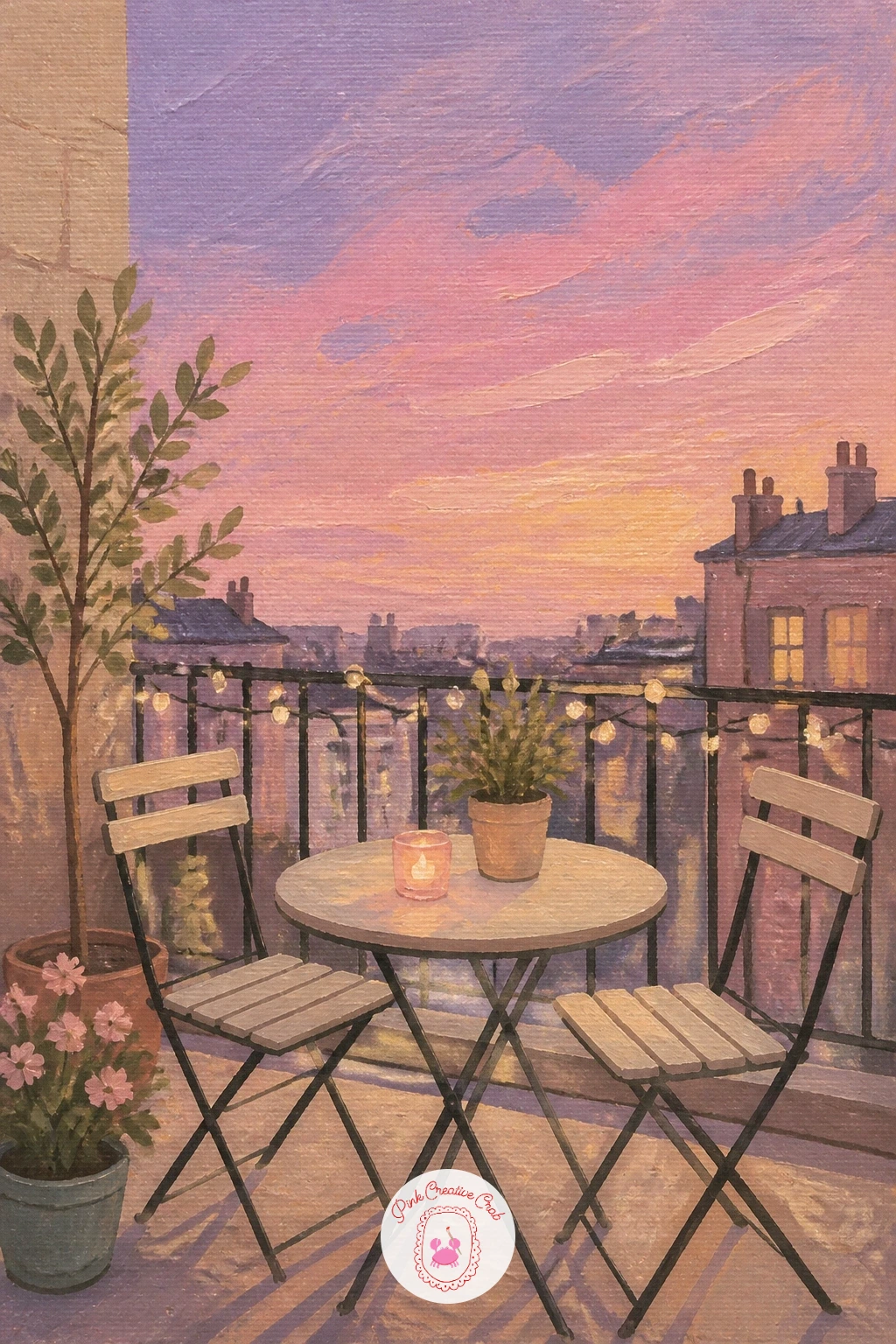
You Will Need
- white gel pen
Palette: Dusty Pink Sky,Lilac Grey,Warm Cream Light,Dark Railing
Framing a figure inside a window is a good perspective exercise, since the window edge becomes a hard straight line against her soft silhouette. Paint the train window first as a simple rectangle, slightly rounded at the corners, with a blurred pale landscape suggested behind the glass in soft horizontal streaks to imply motion.
Add her profile next, looking out to one side, hair and a silk scarf caught mid-movement with a few flowing curved lines rather than sharp folds. Keep her features minimal, just the suggestion of a nose and closed or lowered eyes, so the mood stays soft rather than detailed.
If the blurred landscape competes with her for attention, mute it further by adding a thin wash of pale grey over it once dry, which pushes it back behind the glass. No streaky brush effect yet, drag a dry brush loaded with pale paint fast and light in one direction for instant blur.
Finish with the scarf’s loose end trailing off the edge of the frame last.
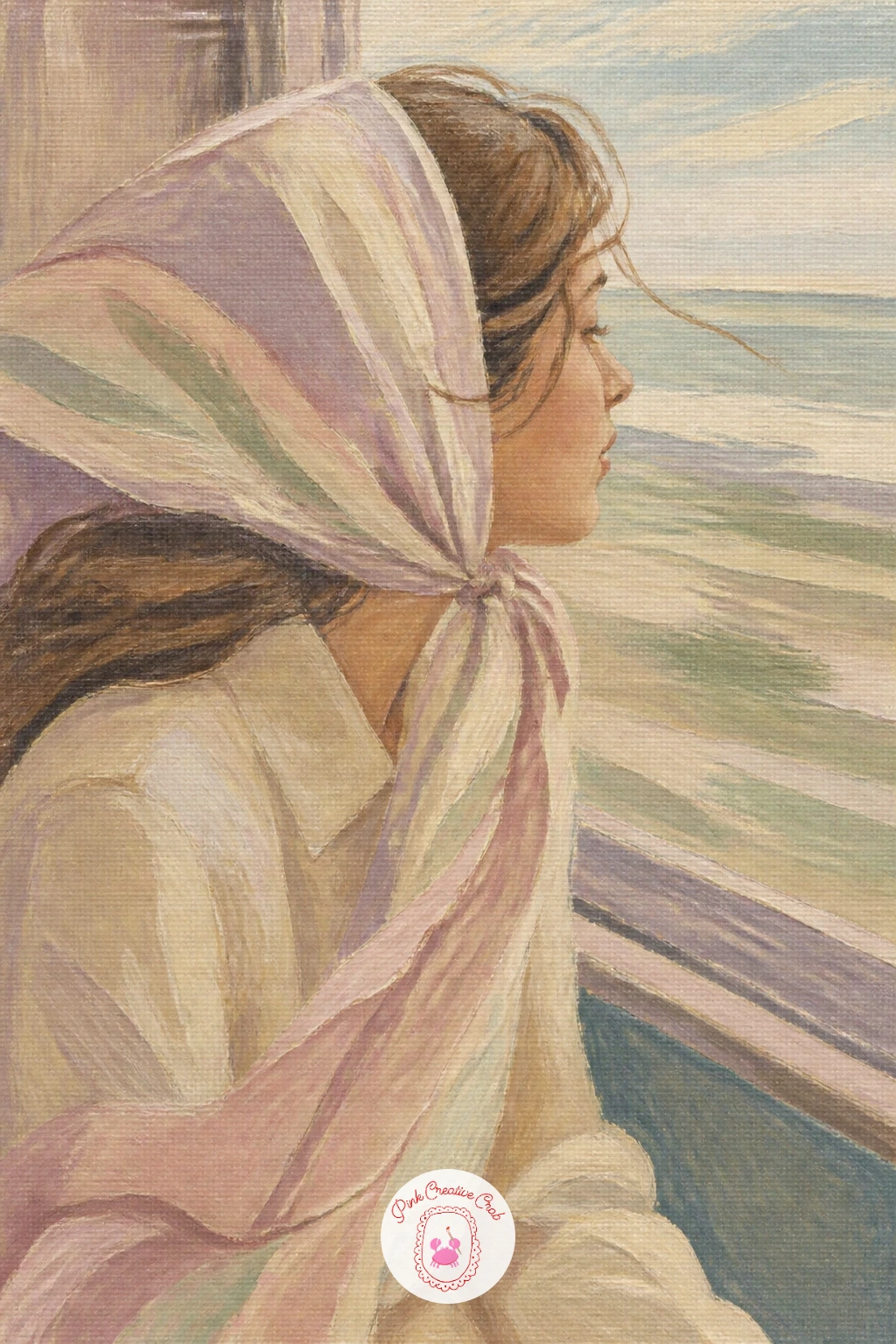
Palette: Pale Blurred Landscape,Dusty Pink Scarf,Warm Skin Tone,Soft Hair Brown
Reflections sound tricky but only need one rule followed carefully: whatever sits in front of the mirror gets repeated inside it, just slightly smaller and a touch softer in color. Paint the vintage mirror frame first in an ornate but simplified cream shape, a few curling edges rather than a fully carved pattern.
Add the vase of peach garden roses sitting in front of the mirror, then repeat a smaller, slightly paler version of the same vase and roses inside the glass, keeping the reflected version a shade cooler and less saturated than the real one. This contrast is what makes the glass read as glass rather than a second vase floating beside the first.
If the reflection ends up too identical to the original, mute it further with a thin wash of pale grey over just the reflected area once dry. No peach mixed yet, a touch of orange into cream with a hint of pink gets you close.
Finish with one soft highlight along the mirror’s glass edge last.
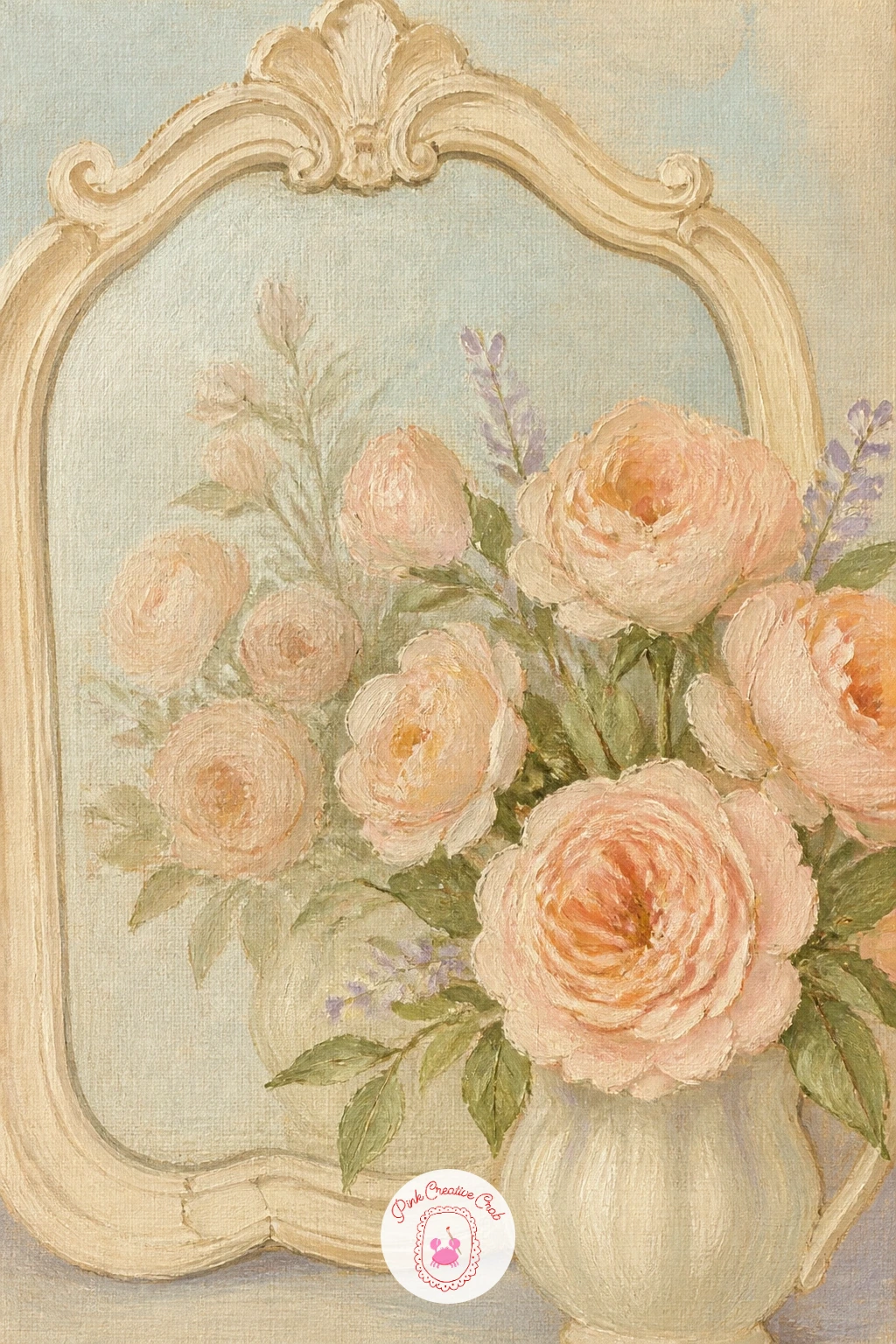
Palette: Peach Rose,Cream Frame,Pale Reflected Grey,Soft Sage Leaves
This canvas is mostly about soft layered whites, which makes the texture trick the real focus. Block the bed and pillows first in warm cream, then add the sheer canopy fabric draping down from above in a very thin, almost translucent wash of white, letting a little of the cream background show through it.
Build the sheer effect by keeping that top canopy layer thin and slightly uneven, never fully opaque, so it reads as fabric you could see through rather than a solid white shape. Add a few soft folds in the canopy with faint grey lines, kept loose and sparse.
If the sheer fabric ends up looking too solid, lift a little paint back off with a slightly damp brush or paper towel while it is still wet, thinning it until the bed behind starts to show faintly through. No thin wash mixed yet, add more water to your white paint than usual and test it on scrap first.
Finish with the canopy’s top tie or knot as one small shape last.
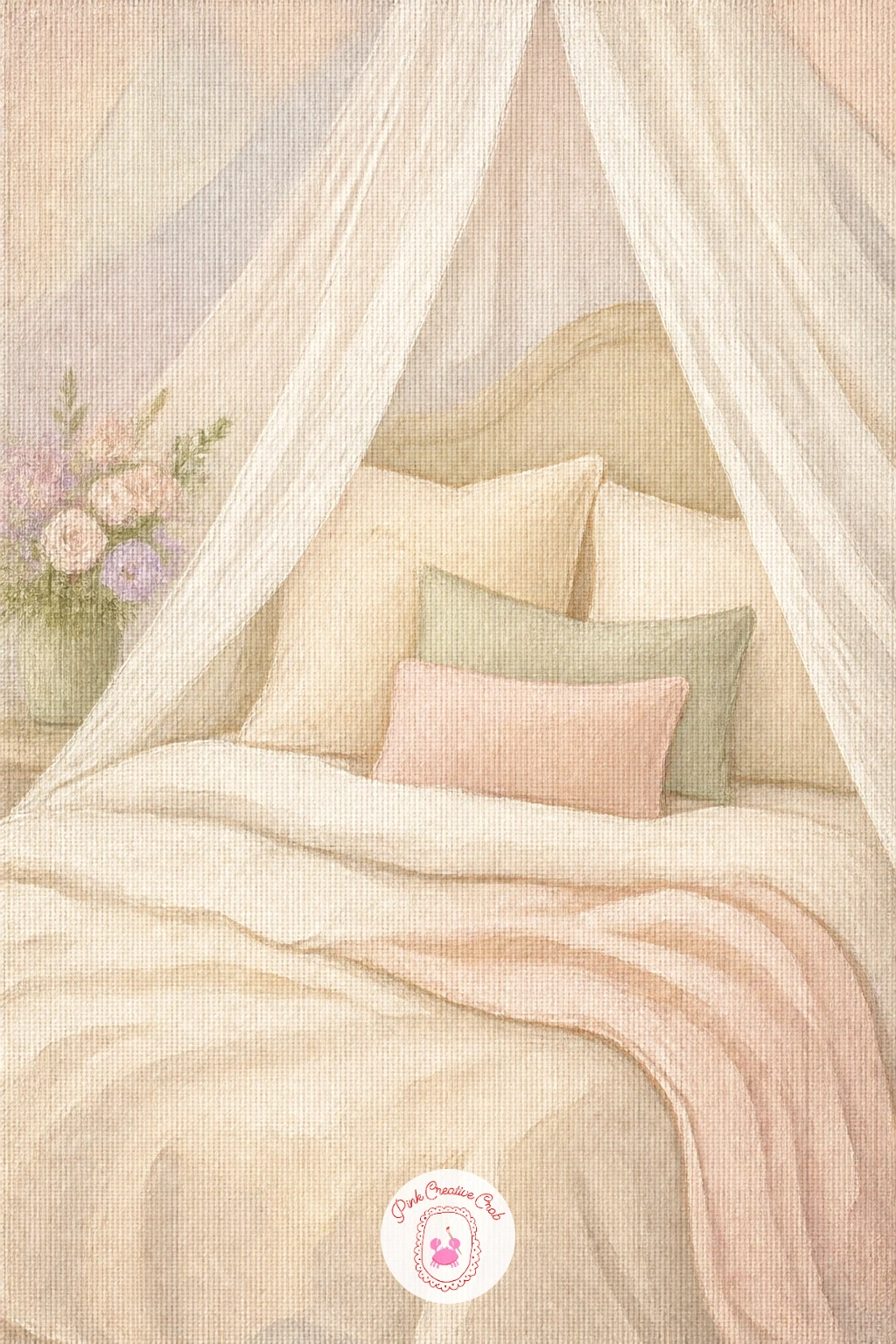
Palette: Warm Cream Bed,Sheer White,Pale Grey Fold,Soft Beige
End the still-life run with something small and quick, a nice one to vary once the first version feels easy. Paint a simple beige ceramic bowl first, then fill it with three or four seashell shapes, each a slightly different simple form, a spiral, a fan, a smooth oval, rather than four of the same shell repeated.
Add the folded linen napkin beside the bowl in soft off-white with two or three loose crease lines, keeping the fold simple rather than fussy. For next time, try swapping the shells for a small pile of smooth beach stones in soft grey tones, using the same bowl and napkin setup, which gives you a whole new piece from the same simple composition.
If the shells look too uniform, vary their size noticeably, one clearly larger than the rest, which breaks up the sameness instantly. No ceramic bowl reference handy, a simple curved rim and a darker interior shadow is all it needs to read as a bowl.
Finish with one soft shadow where the bowl meets the napkin last.
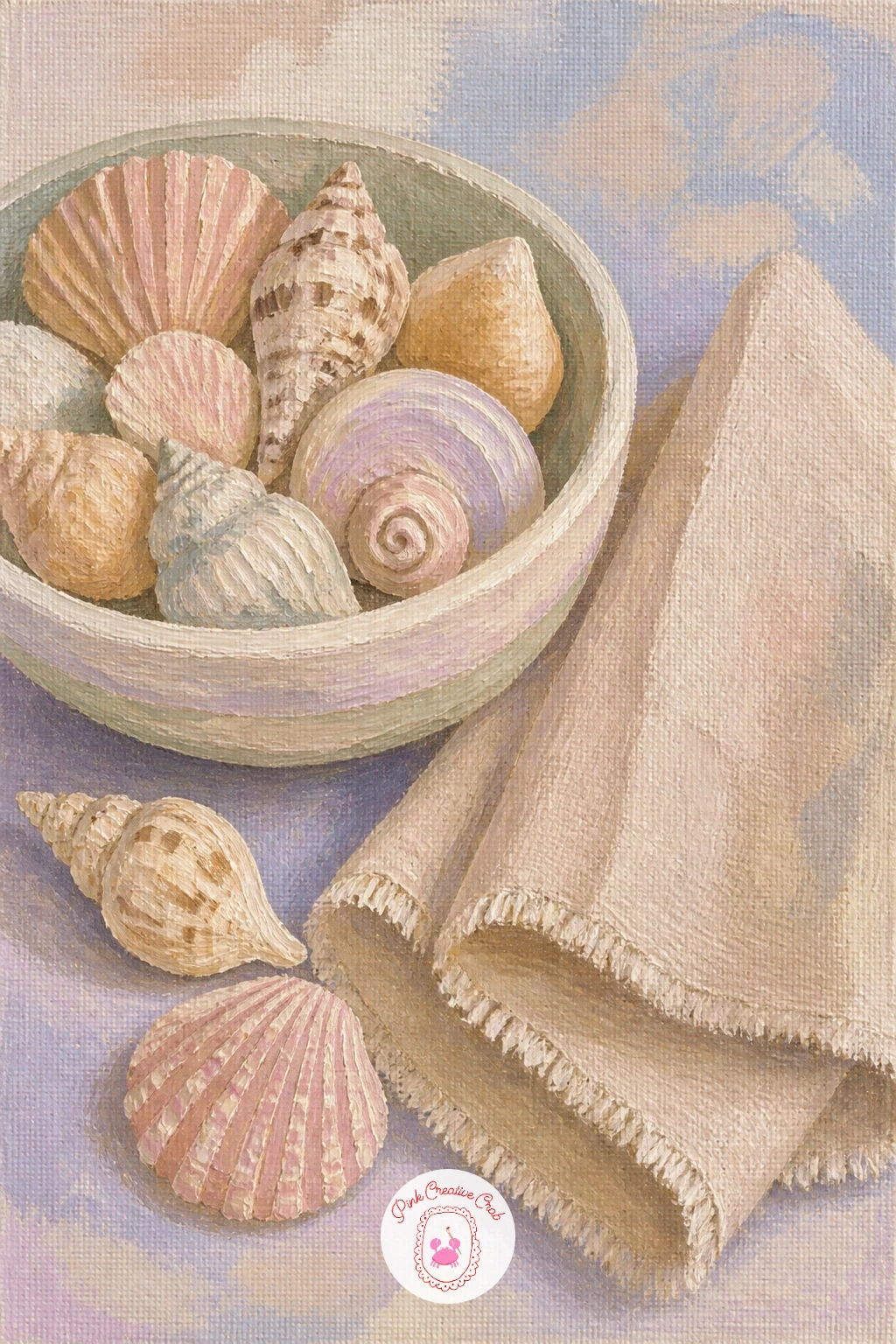
Palette: Beige Bowl,Soft Off White Napkin,Pale Shell Pink,Warm Grey Shell
Bring the cat back for a cozier pairing than the earlier sleeping scene, now with a figure curled beside her on a sofa. Block the sofa shape first in soft beige, then add the girl in a loose cream cardigan, knees drawn up, one arm resting over the cat curled in the crook of her lap.
Paint the cat as a small rounded shape nestled against her side, using the same soft curved approach from the earlier sleeping cat idea, tail tucked, no sharp edges anywhere. Keep her cardigan’s folds to a few soft diagonal lines at the elbow and knee, where the fabric actually bends.
If the two figures look separate rather than nestled together, overlap their edges more: let the cat’s back touch her arm, and her cardigan drape slightly over the cat’s tail, which ties the whole pose into one shape. No reference for the curled pose, picture how you would actually sit with a sleepy pet and let that guide the knees and arms.
Finish with one soft lamp glow warming the scene from one side last.
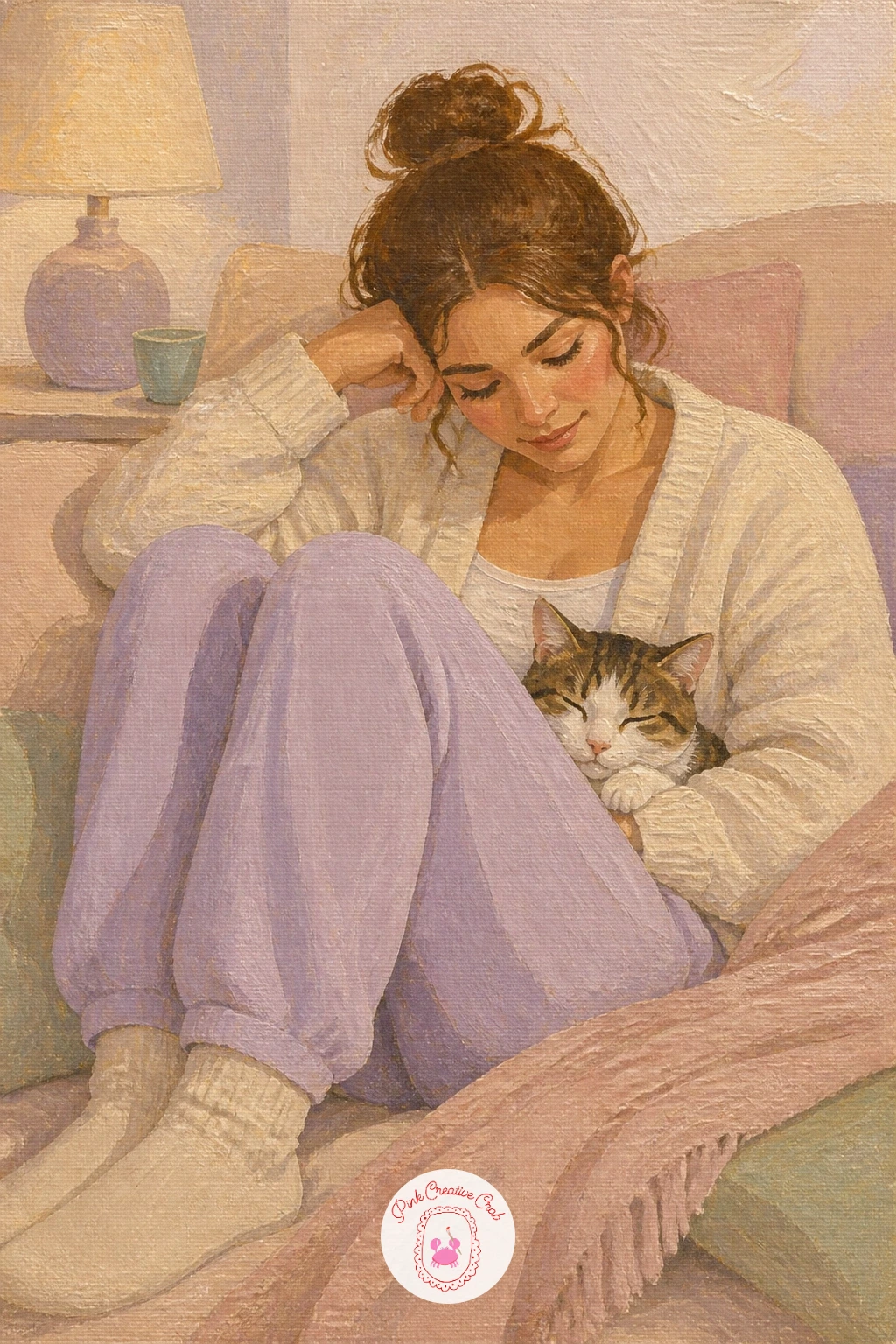
Palette: Cream Cardigan,Soft Beige Sofa,Warm Grey Cat,Pale Lamp Glow
Close the list with a composition built entirely from one strong shape: the arch itself frames everything else, so get that curve right before anything else goes on canvas. Mark the arch’s widest point and its height with light pencil guides first, checking the curve is even on both sides before you paint over it.
Paint the arch and surrounding wall in soft beige, then fill the doorway opening with a brighter sunlit courtyard beyond, warm cream and pale gold with a hint of greenery suggested by a few loose sage dabs. The contrast between the shaded beige wall and the bright opening is what gives this piece its depth, so keep the wall noticeably cooler and dimmer than the courtyard.
If the arch curve ends up lopsided, a plate or a bowl held against the canvas gives a clean line to trace before you commit any paint. No sage dabs defined yet, a few loose dots of green are enough to suggest distant plants without painting actual leaves.
Finish with a soft shadow along the inside edge of the arch last, to seat it into the wall.
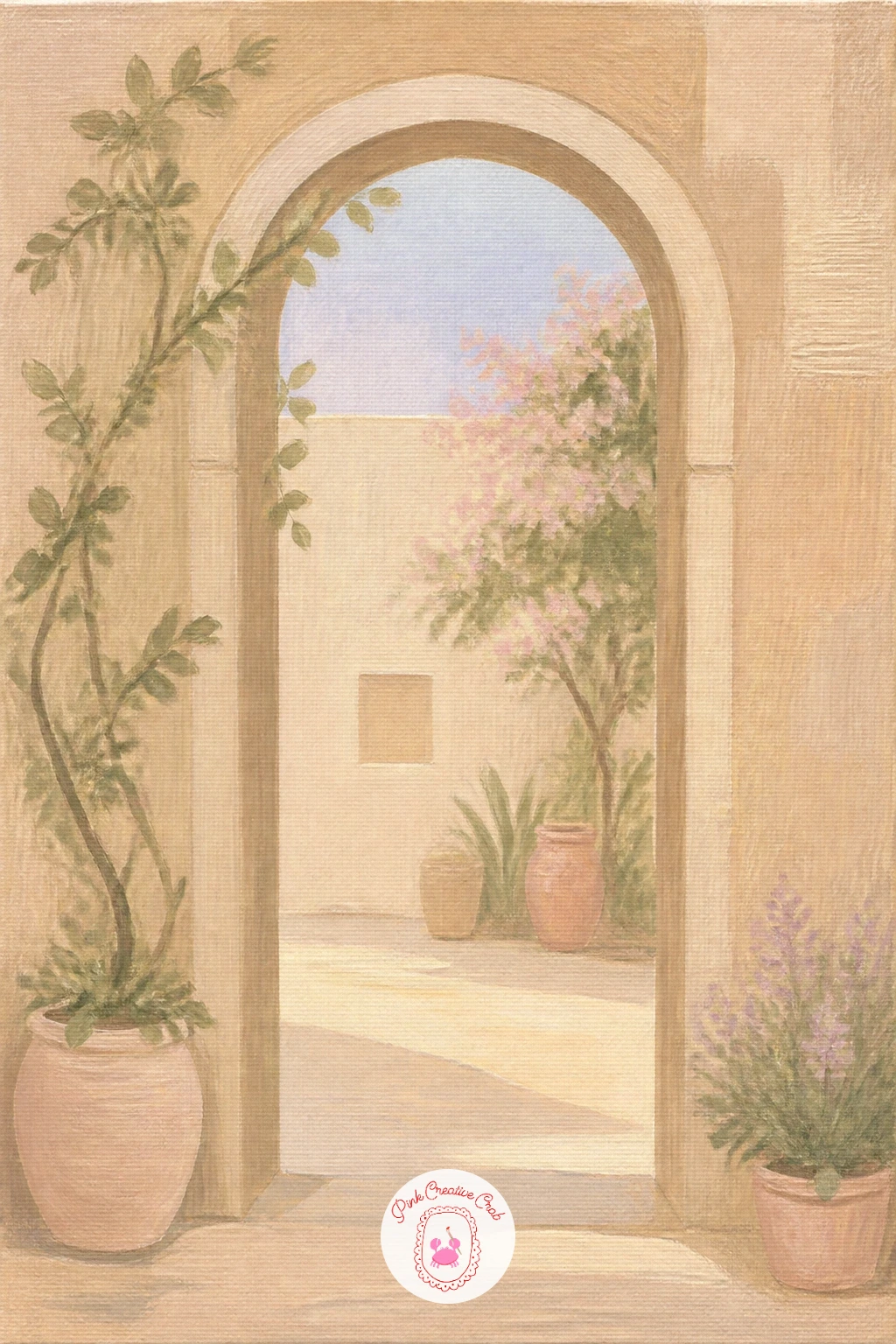
You Will Need
- plate or bowl to trace the arch
Palette: Soft Beige Wall,Warm Cream Courtyard,Pale Gold Light,Soft Sage Accent
If arches and architectural shapes interest you beyond this one, the techniques in acrylic painting scenery go further into depth and framing.
What to Do Next
Pick one idea that matches the corner you want to style, mix your cream, beige, dusty pink and sage before you start, and work on a small canvas so the whole piece finishes today. Keep the first few shapes loose and light in pencil, then build up flat color from background to foreground, saving the smallest highlight or shadow for last.
Frequently Asked Questions
What makes an acrylic painting look like this soft aesthetic style?
Flat, smooth color blocks in a narrow palette of cream, beige, dusty pink and soft sage give the look, with simple shapes and soft light rather than fine detail or strong contrast.
What size canvas works best for these paintings?
A small canvas, around eight by ten inches, suits this style well since it finishes in one sitting and fits easily on a shelf, dresser or desk without overwhelming the room.
How do I keep the colors from turning muddy?
Mix each soft tone on a palette before touching the canvas, work layer by layer letting each dry, and avoid blending more than two colors directly on the surface at once.
Do I need special brushes for this soft flat look?
A soft flat brush for blocking color and a smaller round brush for details cover nearly everything here, with a dry brush technique useful for texture like fur, rope or feathery flowers.
Can beginners really finish one of these in a single sitting?
Yes, since every idea on this list uses simplified shapes and a limited palette, most finish within thirty to sixty minutes once the colors are mixed and the composition is sketched lightly first.
Have any thoughts?
Share your reaction or leave a quick response — we’d love to hear what you think!
-
 0
-
 0
-
 0
-
 0
-
 0
-
 0
