A coffee illustration gives you everything a modern gouache painter wants in one small cup: a warm curved shape, a rising thread of steam, and an excuse to paint a whole little scene around it. Follow a single day of coffee from a frosted window seat through a snowy city street to a ski lodge counter and a steaming hot spring tray, and you have twenty-eight scenes that are cozy, graphic and genuinely quick to finish.
Every idea below keeps the same flat matte shapes and crisp edges, so once you have mixed your browns and icy blues you can move from one scene to the next without starting your palette over. Scroll through, pick whichever moment matches your mood today, and get painting.
Using these images: free for personal projects such as printing, coloring, cards, journals and gifts. Handmade items that include them may be sold up to 30 pieces per design. More than that is commercial use and is not permitted, and neither is selling or sharing the images themselves or passing them off as your own. Please ask before any other use.
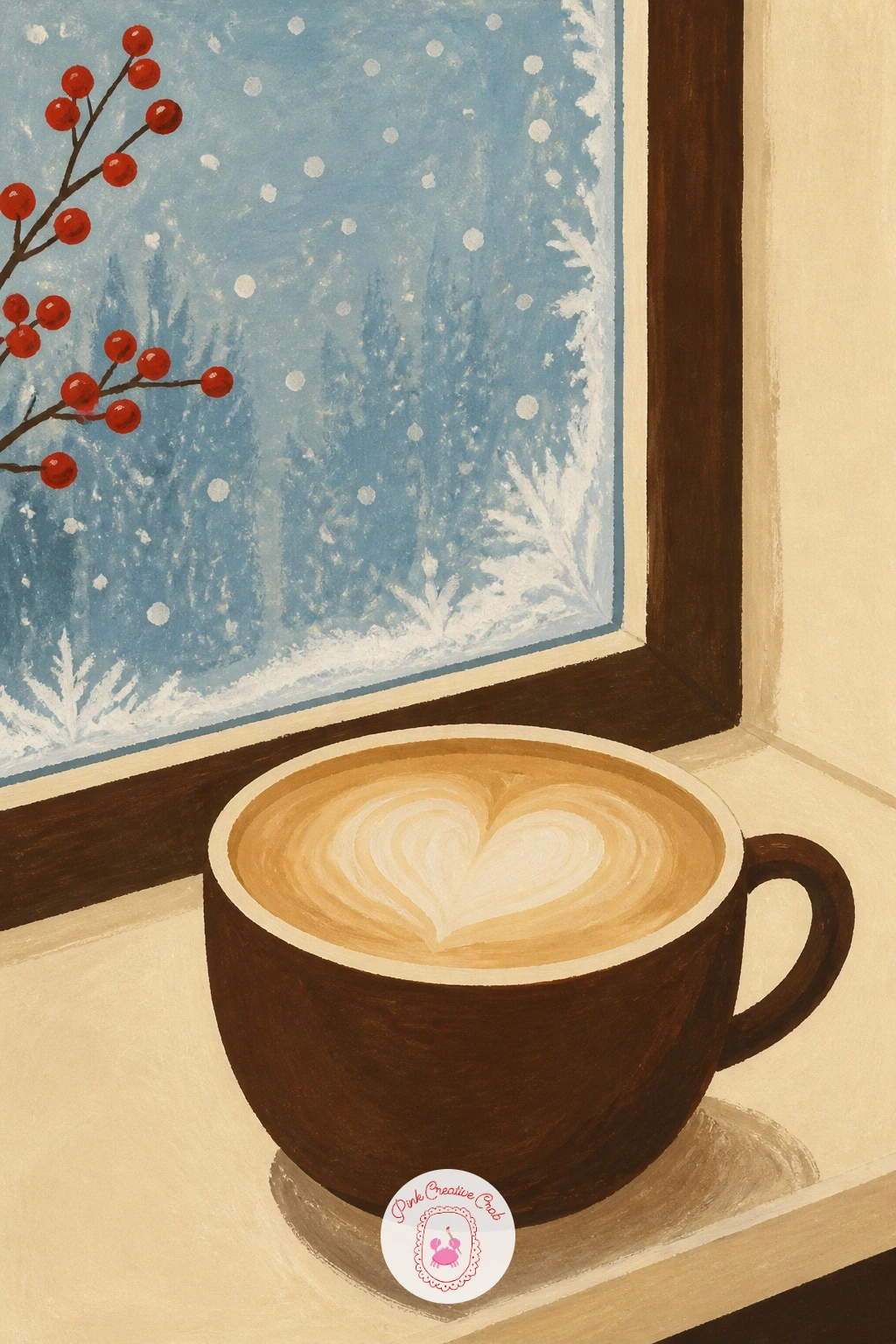
Start the whole series with the simplest cup in the set: a latte with heart foam art, sitting on a cafe window seat while snow falls outside. Block the window first as one flat icy blue rectangle, then paint the mug as a single warm cream shape with a curved handle before you touch the foam.
Mix one warm cream for the foam and drop the heart in with the tip of a round brush in one confident stroke, no going back over it twice or the edge turns muddy. Add the snow outside as small flat cream dots over the blue, not fussy flakes, and keep the windowsill a plain band of espresso brown to frame the cup.
If the heart wobbles, let it dry and paint a cleaner one in white gouache on top rather than scrubbing it out. Swap gouache for soft pastel on toned paper if that is what is in your kit today.
Measure the mug against the window behind it before you paint either, so the cup reads as a believable size sitting on the sill.
Palette: Icy Blue,Espresso Brown,Warm Cream,Cherry Red
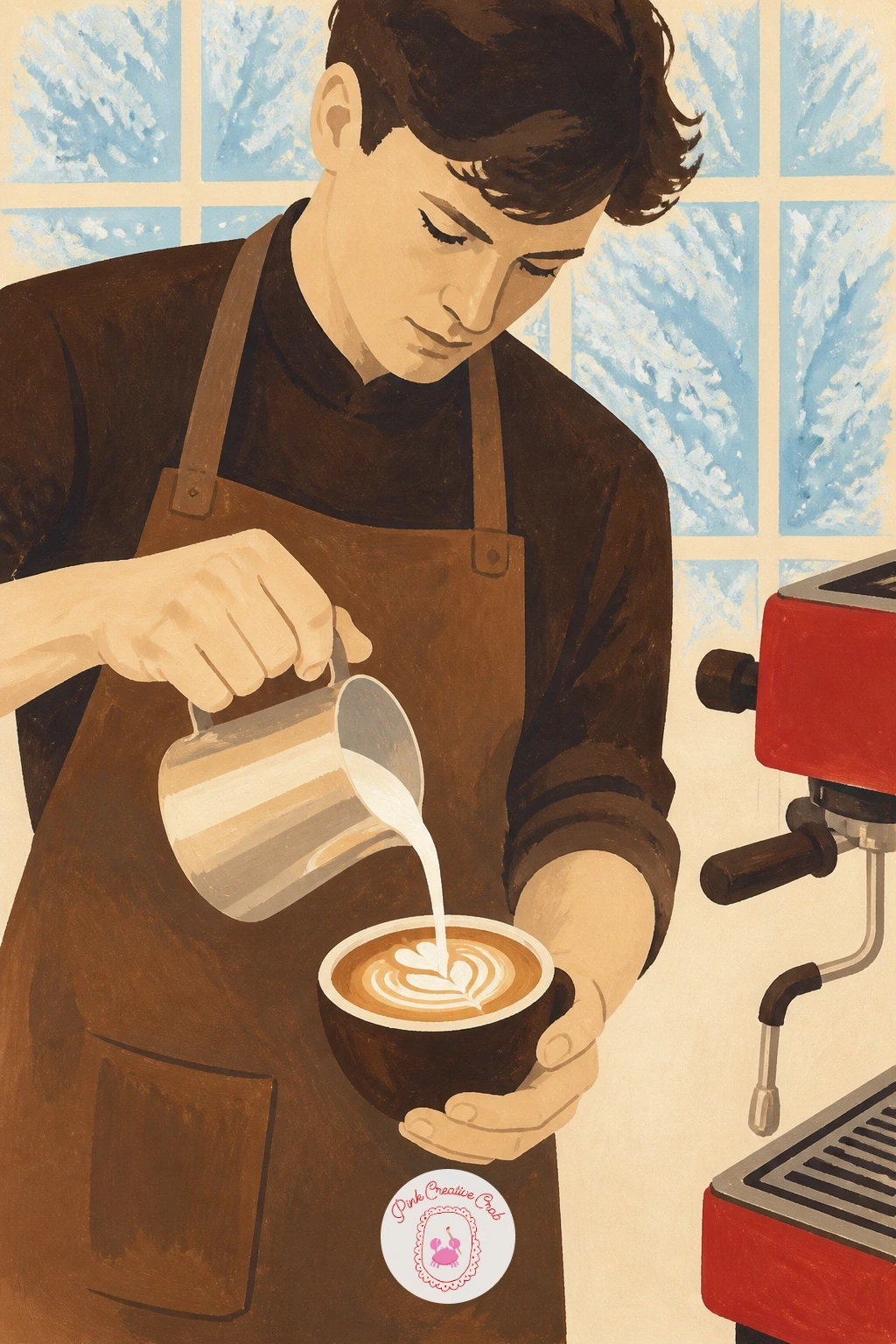
Move from the window seat to behind the counter, where a barista pours steamed milk into a cup against frosted glass. Block the counter and the barista’s apron as two large flat shapes first, espresso brown and cream, before you add the thin white stream of milk arcing down into the cup.
Paint the milk stream last and in one pass of white gouache loaded fairly thick, pulling the brush down in a single steady line. This is where eye level matters: set the counter at roughly the barista’s hip height and look slightly up at the face, which instantly makes the scene feel like you are standing on the customer side ordering.
If the pour line comes out shaky, thin it slightly with a clean damp brush while it is still wet rather than repainting the whole arc. No gouache in reach today, a white gel pen does the same thin line over dry paint.
Keep the frosted window behind as one flat pale blue shape so the pouring stays the clear focus.
Palette: Espresso Brown,Cream,Pale Frost Blue,Titanium White
Give the series its first full outdoor figure: a woman in a camel coat walking down a snowy street with two coffees held carefully in front of her. Sketch her as simple shapes, a rounded coat body, a scarf, two cup shapes held at chest height, before any color goes down.
Paint the coat as one flat camel shape and let it be the warmest note against the cool street, then add the two cups in cream with cherry red sleeves so they read instantly as coffee cups even at a glance. Work the snowy buildings behind her as simple flat blocks in icy blue and soft grey, kept plainer than she is so your eye lands on her first.
If her pose looks stiff, check that her front foot and both cups are not sitting in a perfectly straight line, a little stagger through the body reads as walking. Switch to gouache mixed thicker than usual if your coat color is drying patchy, it covers more evenly.
Keep her scarf a single bright note rather than patterned, it keeps the whole figure graphic and clean.
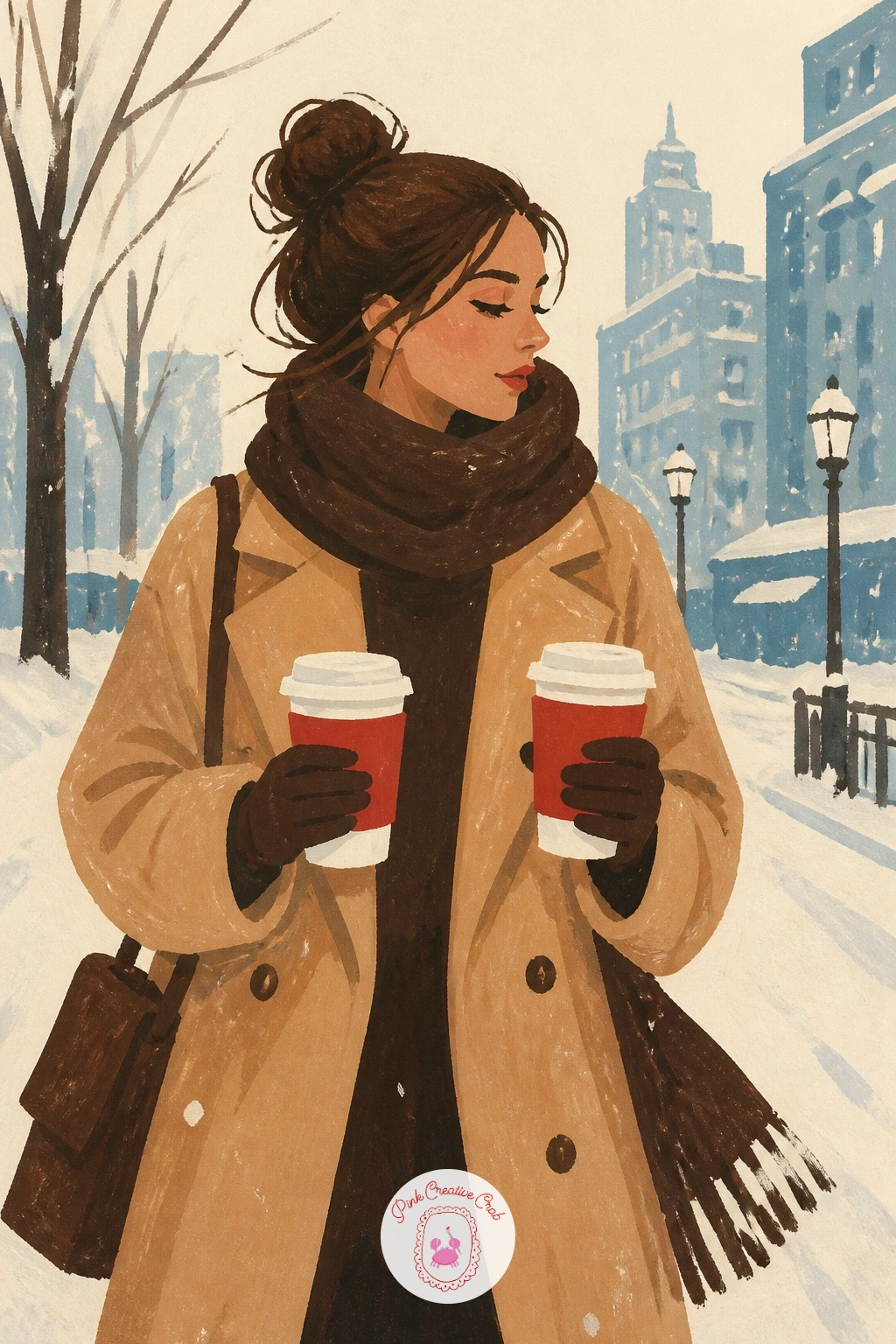
Palette: Camel,Cherry Red,Icy Blue,Cream
Bring the scene indoors to a snowy morning kitchen, where a moka pot bubbles on a gas stove. Build the pot from two simple stacked shapes, an octagonal base and a narrower top, in flat espresso brown with a thin cream highlight down one edge to suggest the metal catching light.
Work from the stove outward: paint the blue gas flame first as small flat shapes, then the pot sitting over it, then the window behind showing snow, so nothing overlaps awkwardly later. The steam curling from the spout is the trickiest part, paint it last with a nearly dry brush loaded with thin cream, dragged upward in one light stroke rather than outlined.
If the steam looks too solid, lift a little of it off with a damp cotton bud while the paint is still workable. No gas stove reference handy, any small blue flame shape under the pot reads correctly from a short visual memory of a kitchen hob.
Finish with one tiny cherry red detail, a mug waiting beside the pot, to tie the palette together.
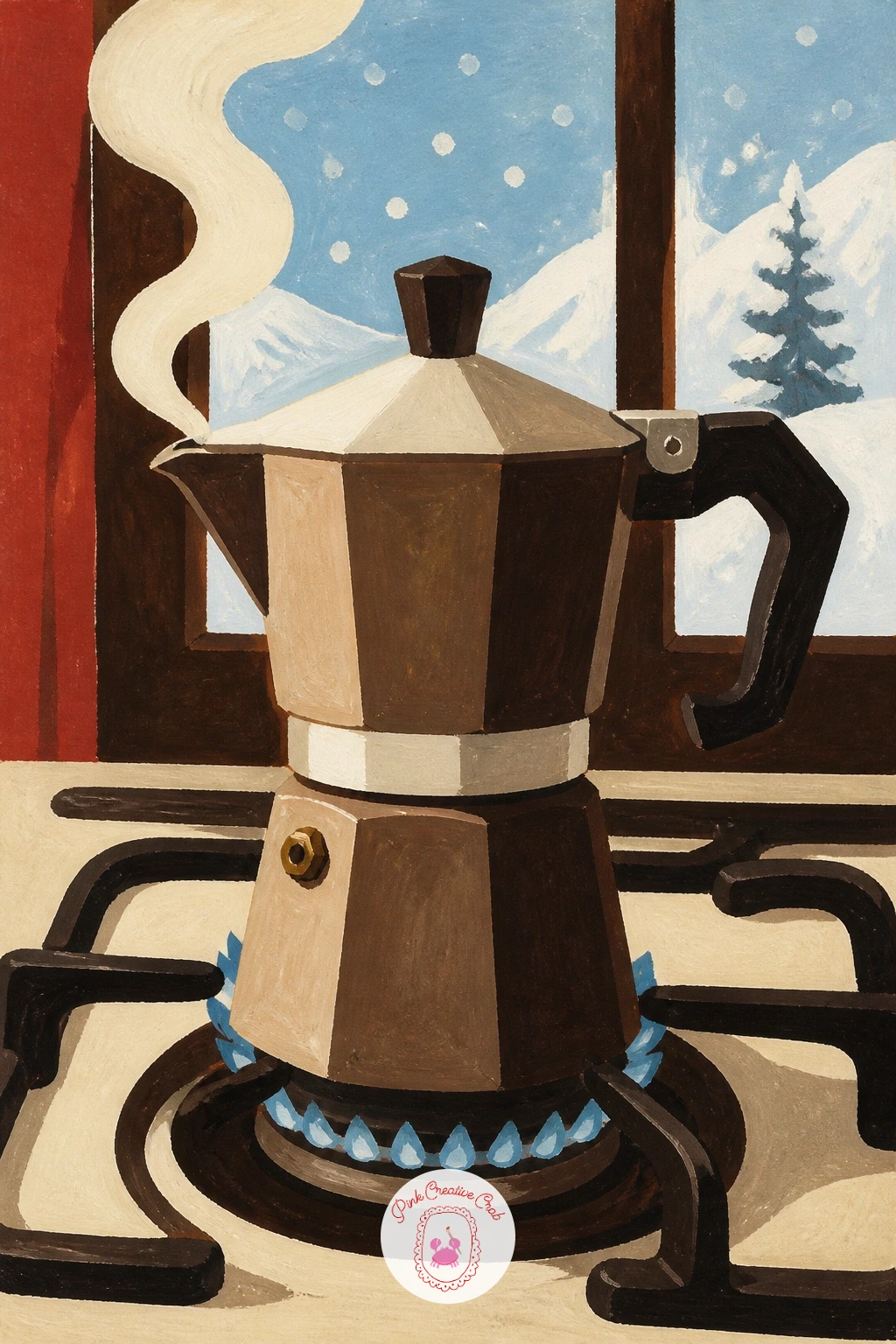
Palette: Espresso Brown,Flame Blue,Cream,Cherry Red
Climb up into the mountains now with a thermos cup of coffee resting on the railing of a ski chalet balcony. Paint the mountain view first as flat layered shapes, icy blue peaks fading to pale cream at the horizon, then add the wooden railing as a single warm brown band across the lower third.
Set the thermos cup on the railing last, keeping it small against the big view so the scale of the mountains reads clearly, this is the whole trick of this scene: a small warm object against a large cool backdrop. Steam rising from the cup can stay minimal, two or three soft curved white strokes is plenty against open sky.
If the mountains feel flat and lifeless, add one slightly darker blue shadow shape on their lower slopes to suggest the sun is low. Swap gouache for watercolor and masking fluid on the steam if you want a looser, more atmospheric version of the same scene.
Keep the sky paler near the mountains and slightly deeper at the top of the page for a simple sense of distance.
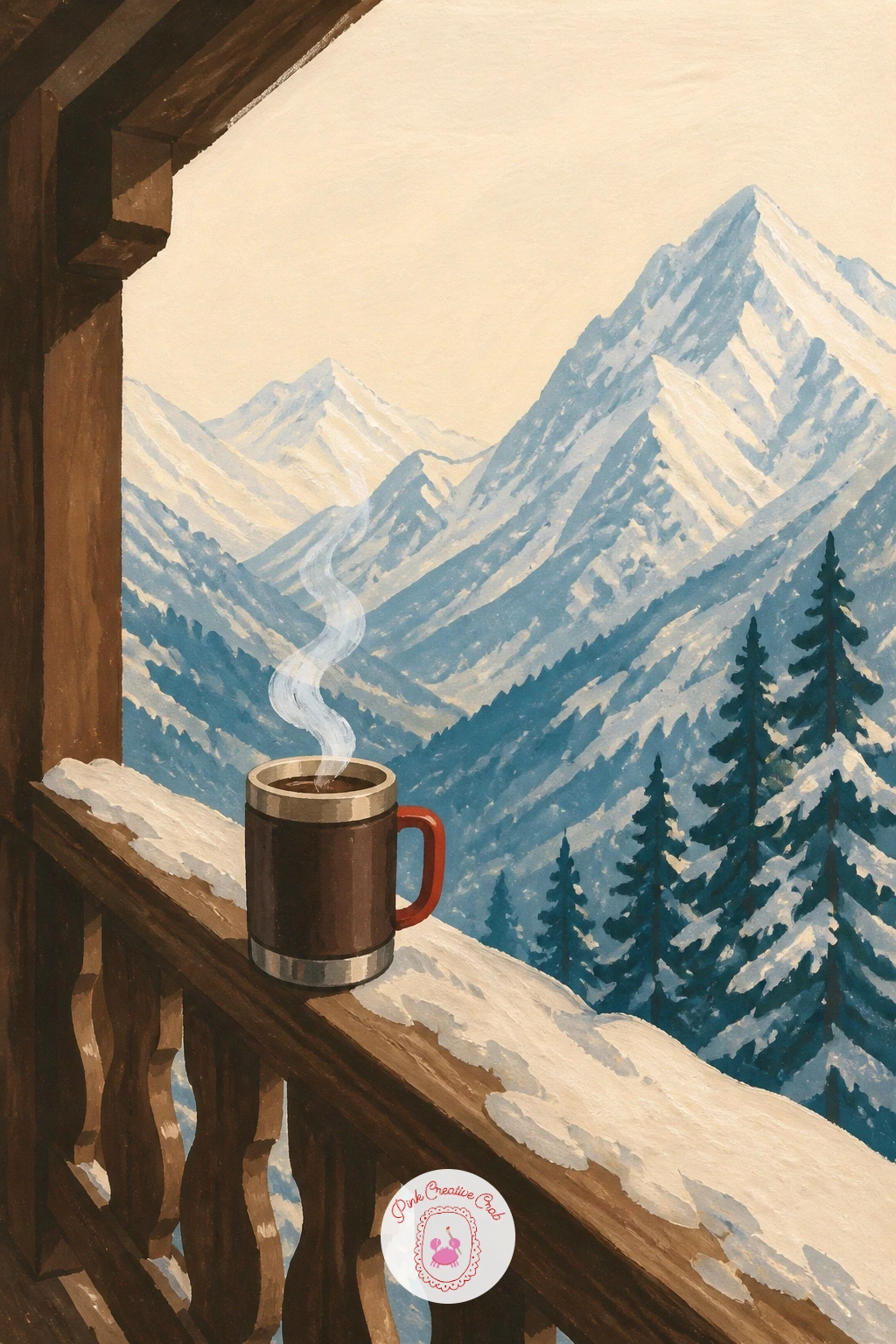
Palette: Mountain Blue,Pale Cream,Warm Wood Brown,Titanium White
Carry the mountain mood further with a skier standing at the top of a slope, paper cup of coffee in hand, looking out over the run. Block the figure as simple geometric shapes first, a rounded jacket, two ski poles, skis as two long flat strokes, before any detail goes in.
Compare the height of the figure against the slope behind to keep the scale honest, a skier standing at the top of a run usually looks fairly small against the landscape, not heroic and oversized. Paint the paper cup in cherry red as the one hot note in an otherwise cool, icy scene, it should be the first thing the eye catches even from across the room.
If the figure looks flat against the snow, add one soft blue shadow shape beneath the skis to ground them. No cherry red gouache mixed yet, any warm orange red works just as well for this single accent cup.
Keep the slope behind as broad, simple bands of white and pale blue rather than detailed snow texture.
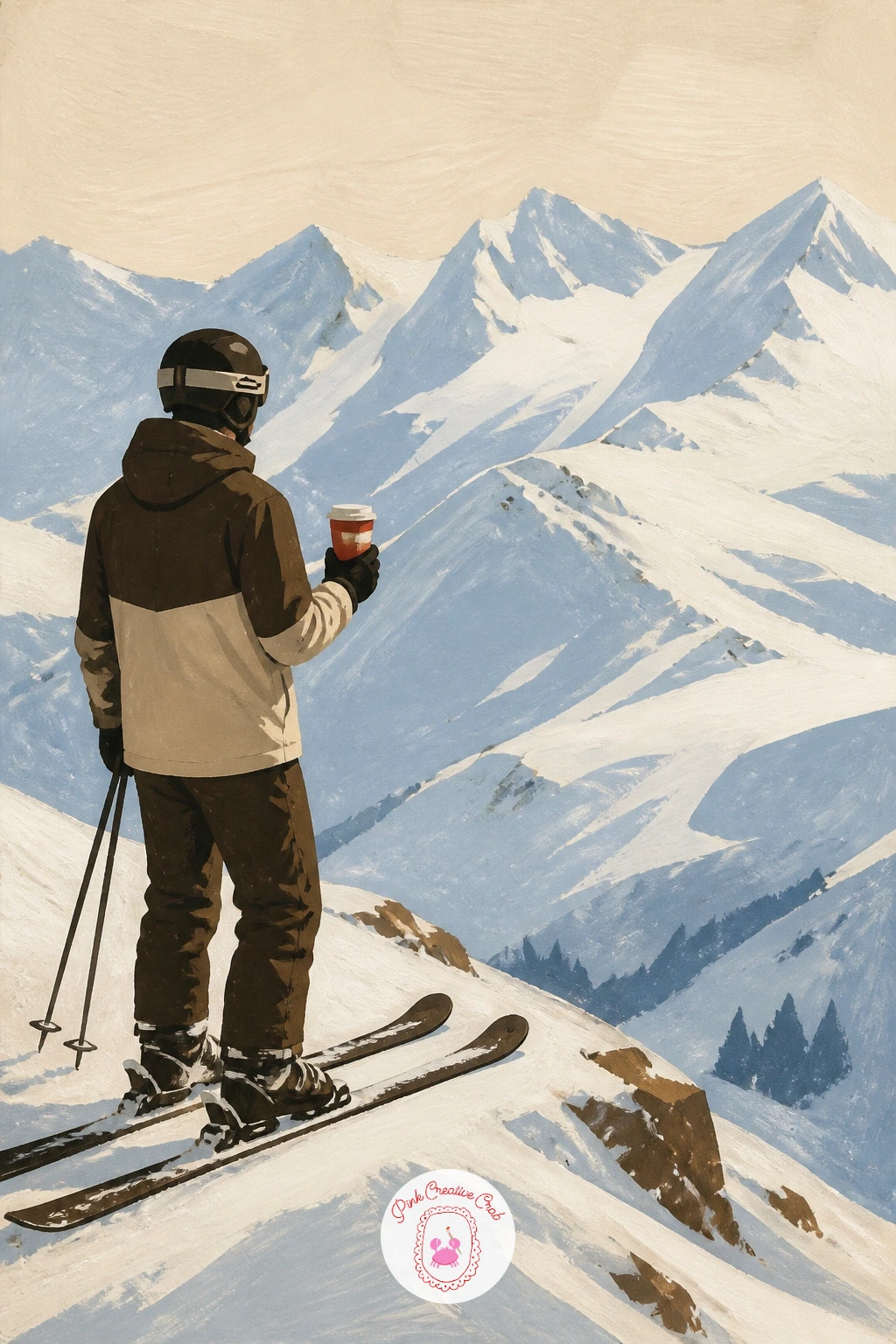
Palette: Cherry Red,Snow White,Pale Blue,Navy Jacket
Settle onto a cabin porch next, where a French press and two mugs sit on a wooden table with snowy pines behind. Paint the pines first as simple triangular shapes layered back into the distance, darkest green closest and paler further away, so the porch objects have somewhere to sit.
Build the French press from a tall cylinder shape with a thin plunger line and a small handle, keeping the glass part a cool pale blue grey rather than fully transparent detail. Here is where edges matter: press the mugs and the glass pot with a confident, almost cut out edge against the porch table rather than letting them blur into it, that crispness is what gives this whole style its modern print look.
If the French press looks lopsided, lightly pencil a vertical centerline before you paint it and keep both sides symmetrical around it. Swap two mugs for one if you prefer a quieter, single person version of this same porch scene.
Finish with a little steam from each mug to warm up the cool pine backdrop.
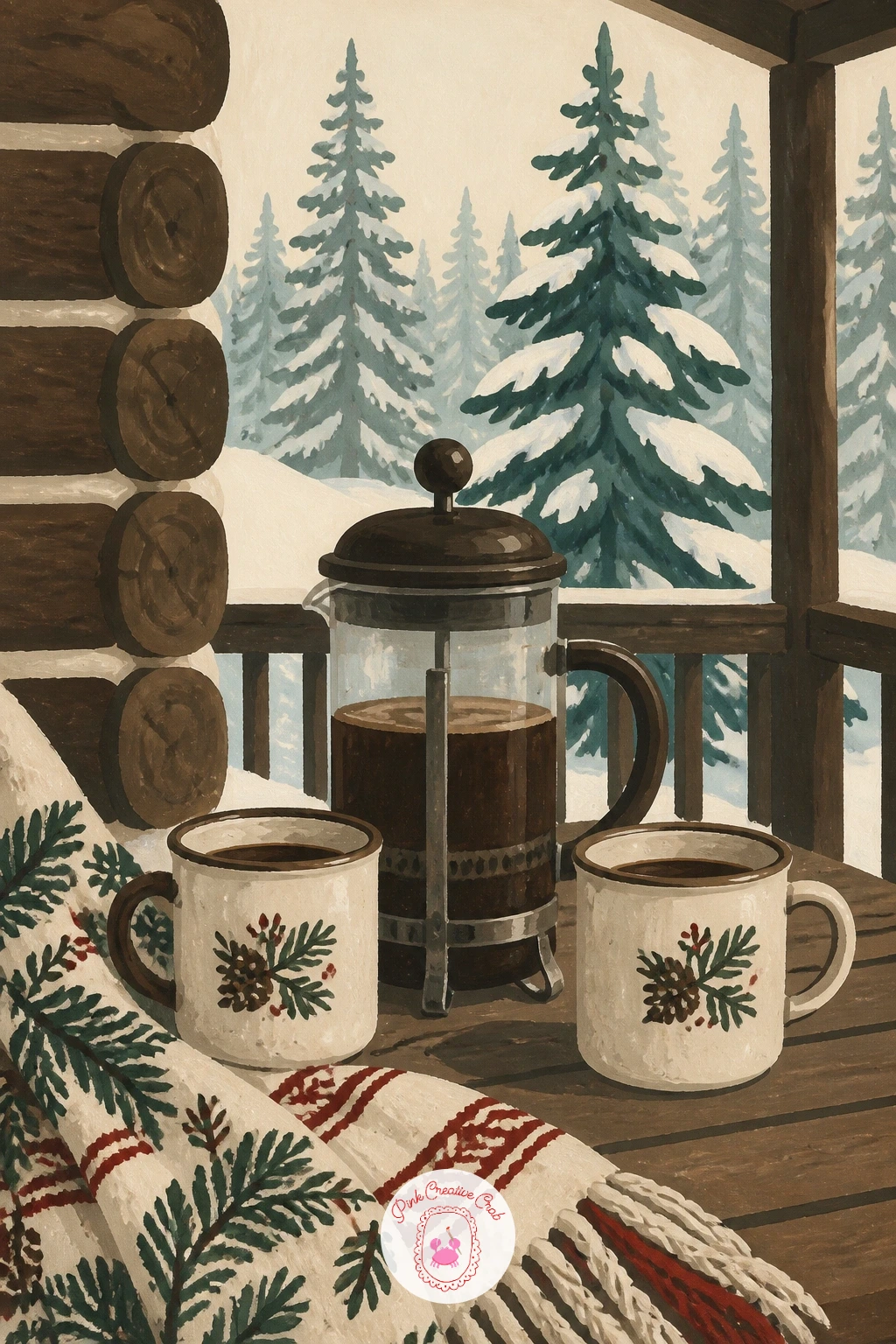
Palette: Pine Green,Pale Grey Blue,Wood Brown,Cream
Bring an animal into the kitchen with a cat curled beside a steaming mug on the breakfast table. Paint the cat as a single rounded loaf shape first, tail wrapped around the body, keeping the silhouette simple rather than drawing individual fur strands.
Compare the size of the cat’s head to the mug beside it before you commit to either, a mug usually sits roughly as tall as a curled cat’s shoulder, and getting that relationship right is what keeps the whole scene believable. Paint the mug in cherry red to contrast against a soft grey or ginger cat, with steam rising in two light cream strokes between them.
If the cat’s shape looks stiff, soften the outline where the tail meets the body so it reads as soft fur rather than a hard edge. No cat at hand to reference, picture a loaf of bread with ears and a tail for the basic proportions.
For more animal company in gouache or watercolor, the food watercolor illustration ideas page pairs well with this kind of cozy tabletop scene.
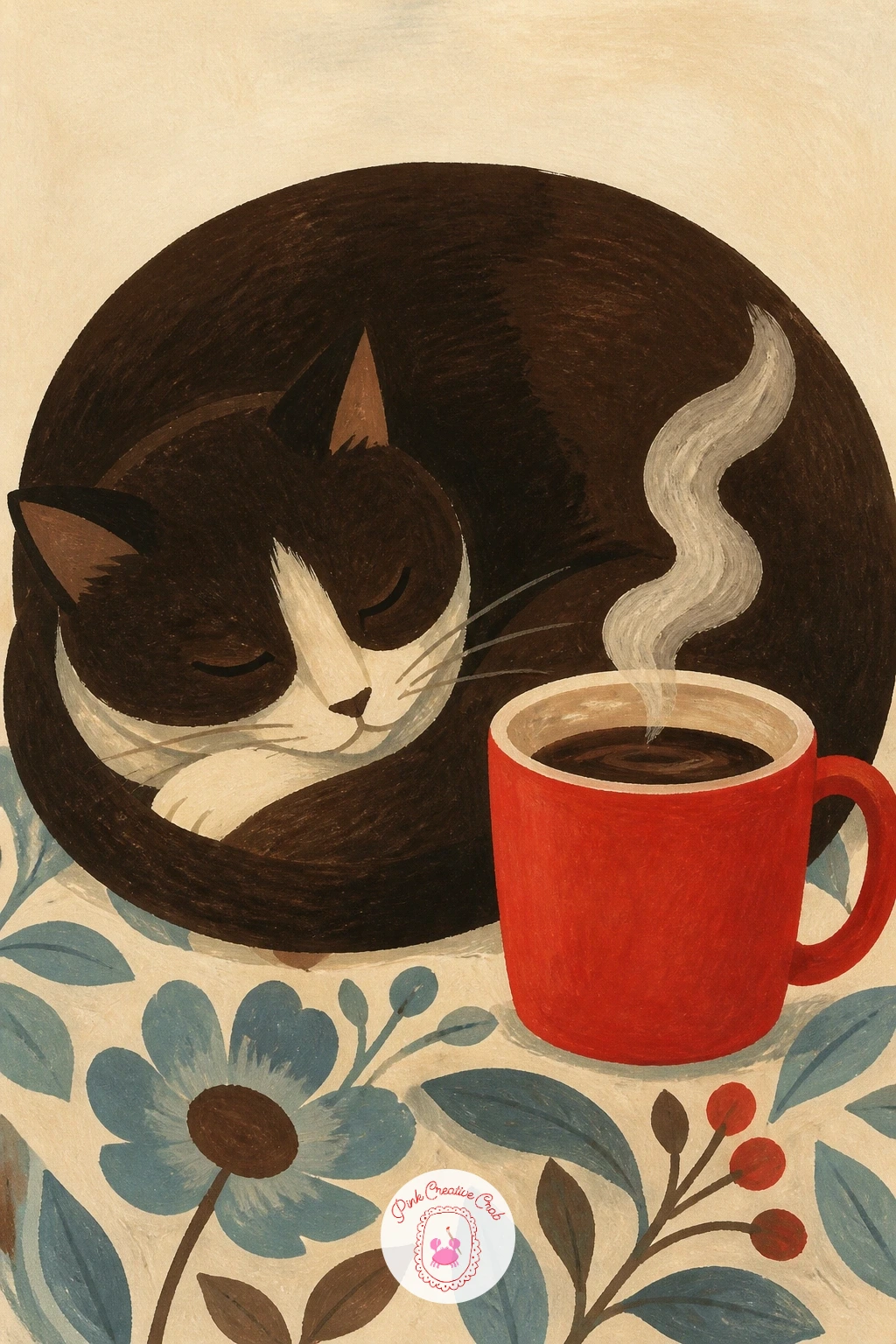
Palette: Warm Grey,Cherry Red,Cream,Soft Ginger
Slow the morning down with a pour-over coffee dripping through its filter on a kitchen counter in winter light. Paint the dripper and glass carafe as two simple stacked shapes, keeping the glass a pale icy blue so the dark coffee inside reads by contrast rather than outline.
The light source here does the real work: set a soft cream glow coming from one side, as if through a nearby window, and let it fall across the counter as a simple diagonal band, everything in that band goes a touch paler and everything outside it stays in the deeper espresso brown shadow. Paint the thin stream of coffee dripping into the carafe last, in one controlled line of dark brown.
If the drip line smudges, wait until the surrounding paint is fully dry before adding it, wet into wet here muddies the clean edge you want. Swap the glass carafe for a simple white ceramic mug if dripper glass feels fiddly to paint today.
Keep the counter itself a single flat cream shape so the light band reads clearly across it.
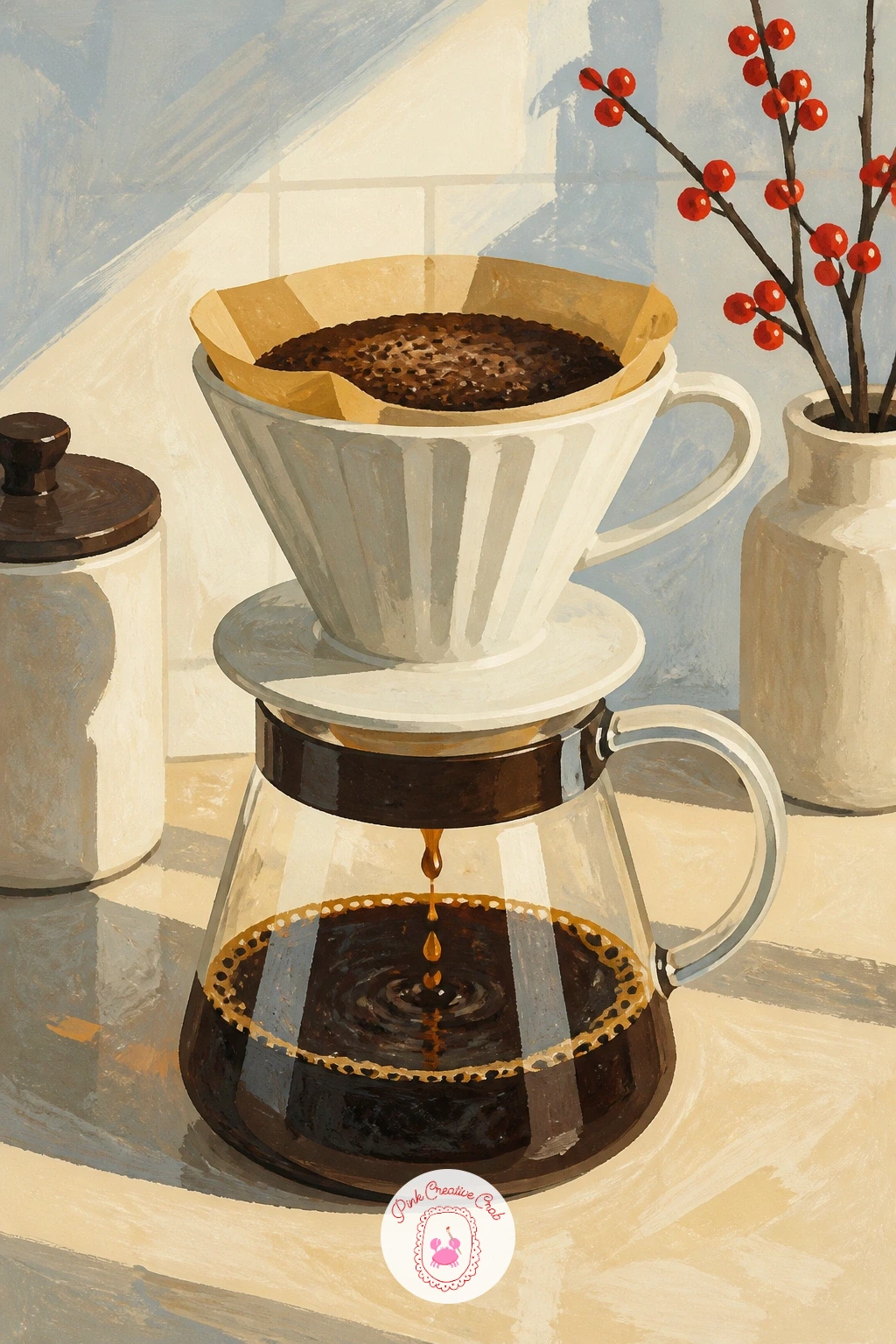
Palette: Espresso Brown,Icy Blue,Warm Cream,Soft Light Yellow
Head back out to a cafe table set with a cappuccino and a croissant on pale marble. Paint the marble surface first as a flat cream shape with just a few thin grey veins dragged in with a nearly dry brush, resisting the urge to add too many or it starts to look busy rather than elegant.
Build the croissant from a simple curved crescent shape with three or four short diagonal strokes for the layered top, and keep the cappuccino’s foam a slightly domed cream circle sitting just proud of the cup rim. This still life works well as a quick version, ten minutes is enough for the cup, saucer and croissant alone, while a fuller forty minute sitting lets you add the marble veining, a small spoon and a folded napkin for a richer composition.
If the croissant looks like a plain banana shape, taper both ends more sharply, that pointed curve is what reads as pastry rather than fruit. No marble reference in mind, pale grey veining on cream reads convincingly from imagination alone.
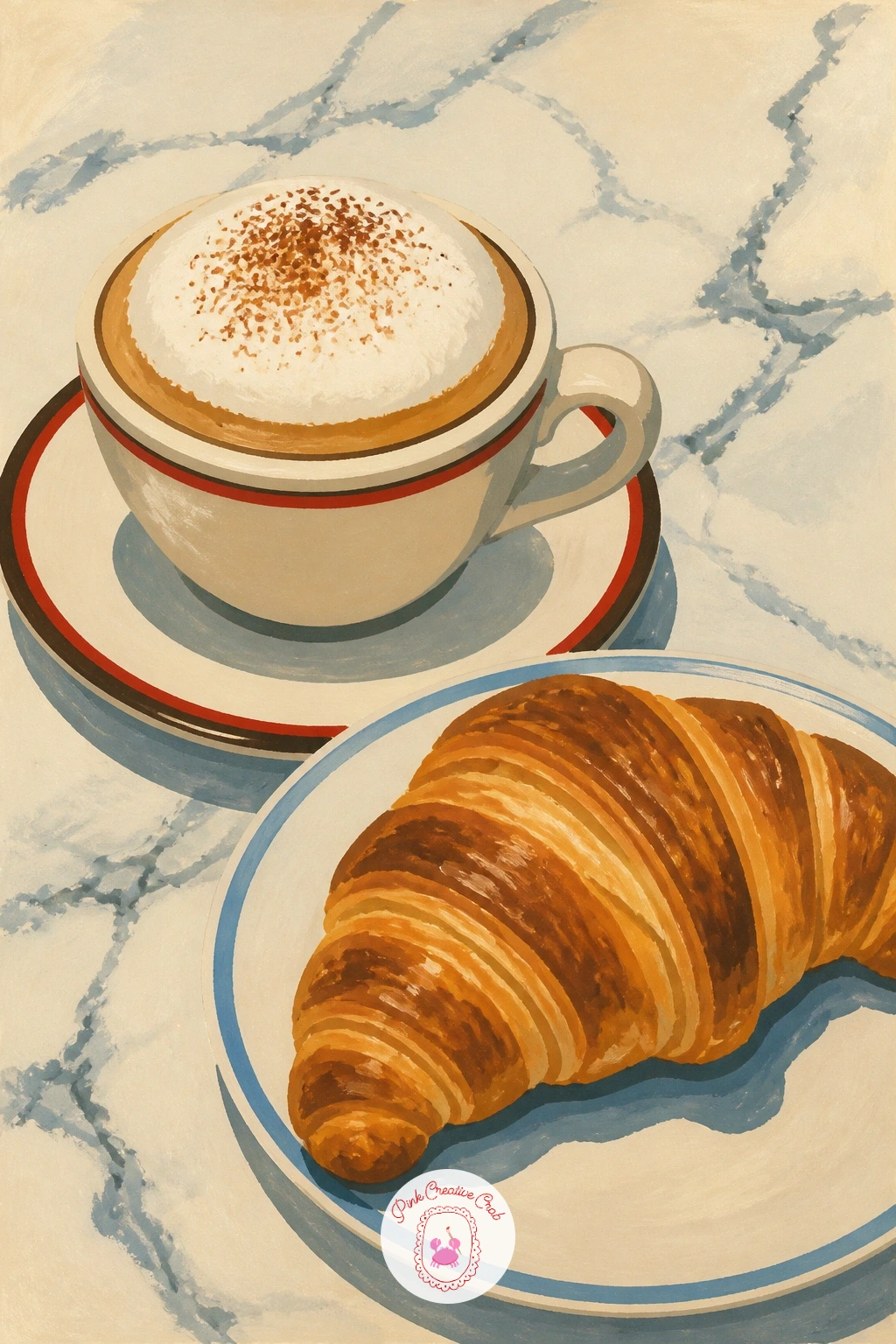
Palette: Marble Cream,Soft Grey,Golden Brown,Espresso Brown
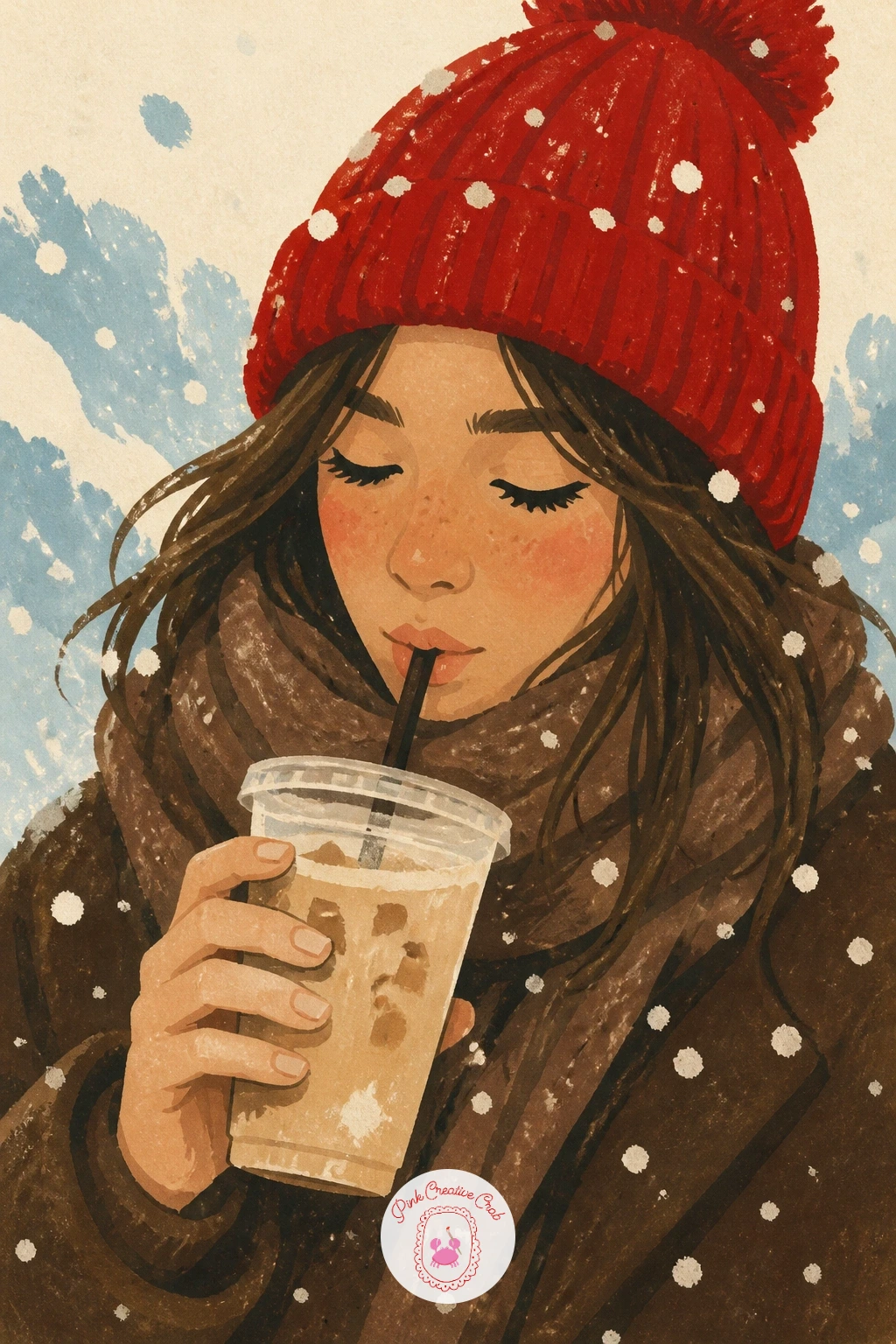
Add a playful contrast now with a girl in a beanie sipping an iced latte despite the snow falling around her. Block her face and beanie as simple rounded shapes first, then build the clear cup with its layered coffee and milk in bands of espresso brown and cream, topped with a few flat ice cube shapes.
Paint the ice cubes as small pale blue white rectangles with one straight highlight line each, that single crisp line is what sells them as ice rather than plain shapes. Her beanie in cherry red gives you the warm accent against all the cool blues and whites of the falling snow.
If the drink layers blur together, let the espresso layer dry fully before painting the lighter milk band above it so the two stay distinct. Swap the beanie color for any bright warm tone you already have mixed on your palette.
Keep the falling snow as a handful of flat dots rather than covering the whole background, a few is enough to read as snow.
Palette: Cherry Red,Icy Blue,Espresso Brown,Cream
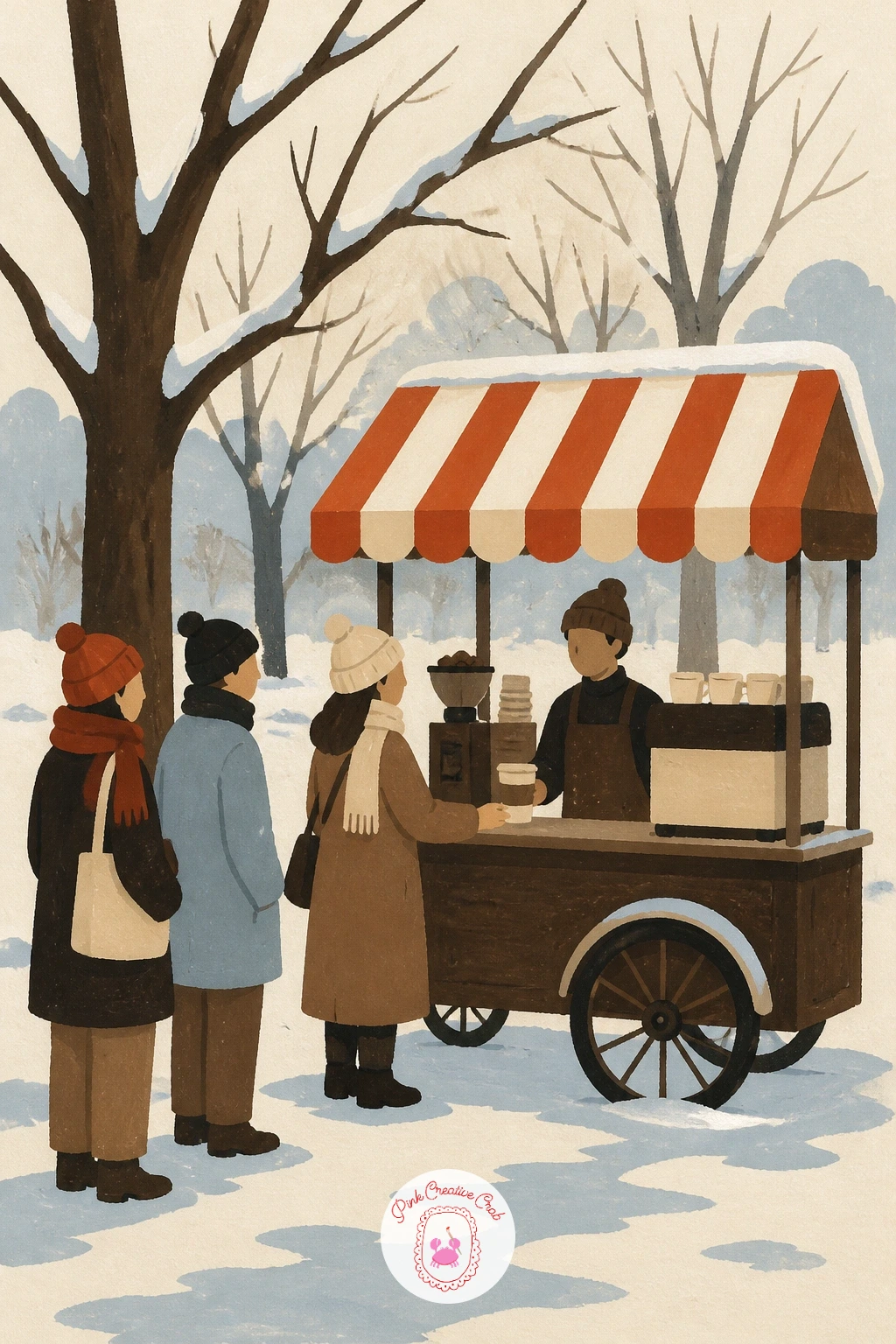
Widen the scene out to a small coffee cart in a snowy park with a short queue of people waiting. Paint the cart first as a simple boxy shape with a striped awning in cherry red and cream, then add the queue as three or four simplified figures, each just a rounded coat shape and a hint of a hat.
Vary the figures slightly in height and coat color so the queue reads as individual people rather than copies of one shape repeated, that small variation is the easiest way to add life to a crowd scene at this simple level. Keep the park trees behind bare and simple, a few dark trunks with light snow sitting on the branches.
If the queue looks crowded or confusing, reduce it to three figures and give them a little more space between each one. No awning stripes in your reference, a plain solid cherry red awning works just as well and keeps the cart reading clearly.
Once this scene works, try it again next time as a summer lemonade cart with the same simple composition.
Palette: Cherry Red,Cream,Bare Tree Brown,Snow White
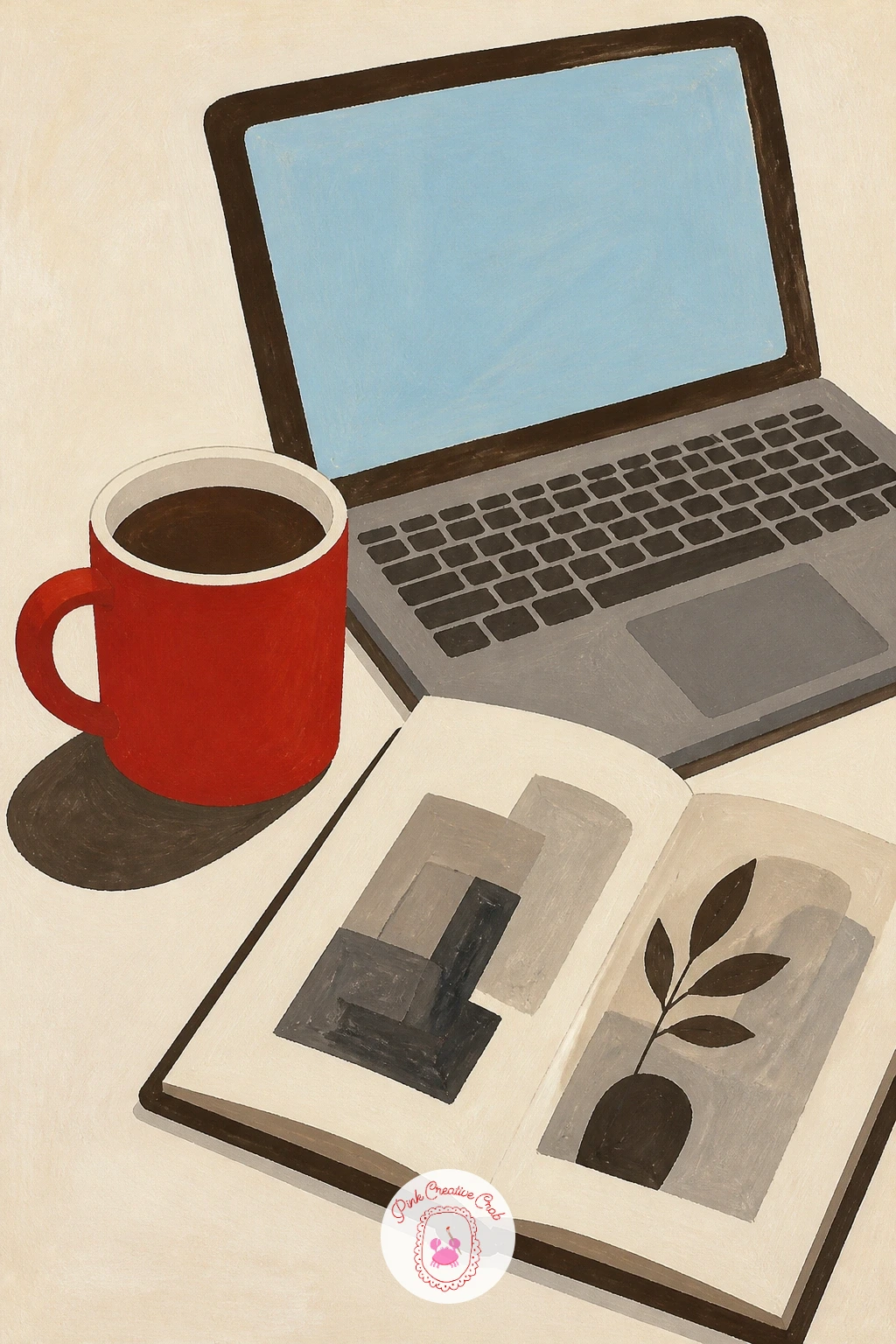
Bring the scene back to a quiet desk, where a mug of coffee sits beside a laptop and an open sketchbook. Arrange the three objects as a simple triangle across the page, mug closest, laptop angled slightly behind it, sketchbook tucked to one side, so the eye has a natural path to travel.
Paint the laptop as one flat dark grey shape with a pale blue glowing screen, and the sketchbook as a cream rectangle with a few loose pencil lines suggested rather than drawn in detail. The mug stays the warmest point in the scene, cherry red or deep brown, so it still reads as the subject even surrounded by desk objects.
If the composition feels cluttered, remove one object rather than adding more, a desk scene like this works better a little sparse than overly full. Swap the laptop for a stack of books if screens feel fussy to paint at this level.
Steam from the mug, kept to two soft curls, ties the whole still life together.
Palette: Dark Grey,Pale Blue Screen,Cream,Cherry Red
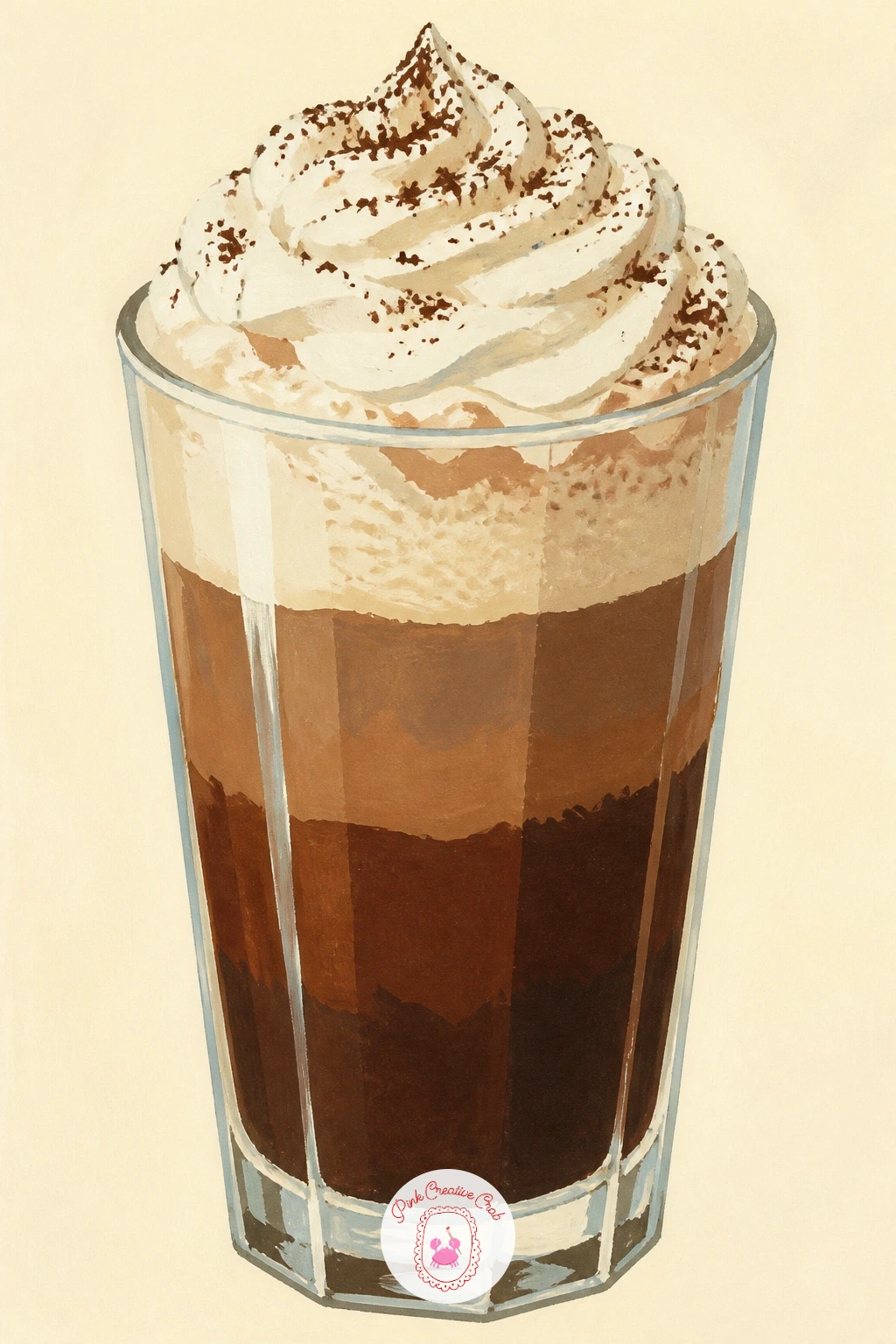
Treat yourself to the richest drink in the series: a mocha topped with whipped cream and a dusting of cocoa, served in a tall glass. Paint the glass as a simple tall cylinder, slightly narrower at the base, filled with layered bands of dark espresso brown and warmer chocolate brown before the cream goes on top.
The whipped cream wants a loose, almost dry brush texture rather than a smooth dome, drag a nearly dry brush of titanium white in short upward strokes so the surface looks genuinely whipped rather than flat and plastic. Finish with a scatter of tiny brown dots for cocoa dust, flicked on from the very tip of a round brush.
If the cocoa dust looks too even, add a few larger dots unevenly rather than a perfect grid, real dusting is never regular. No cocoa powder reference handy, think of it as the same scatter technique you would use for cinnamon or pepper on any other food painting.
Keep the glass edges crisp so the layered coffee bands inside stay readable.
You Will Need
- round brush for cocoa speckling
Palette: Dark Espresso,Chocolate Brown,Titanium White,Cocoa Dust Brown
Try the same whipped cream dry brush technique on a hot chocolate or an iced coffee float, it is useful across most layered drinks.
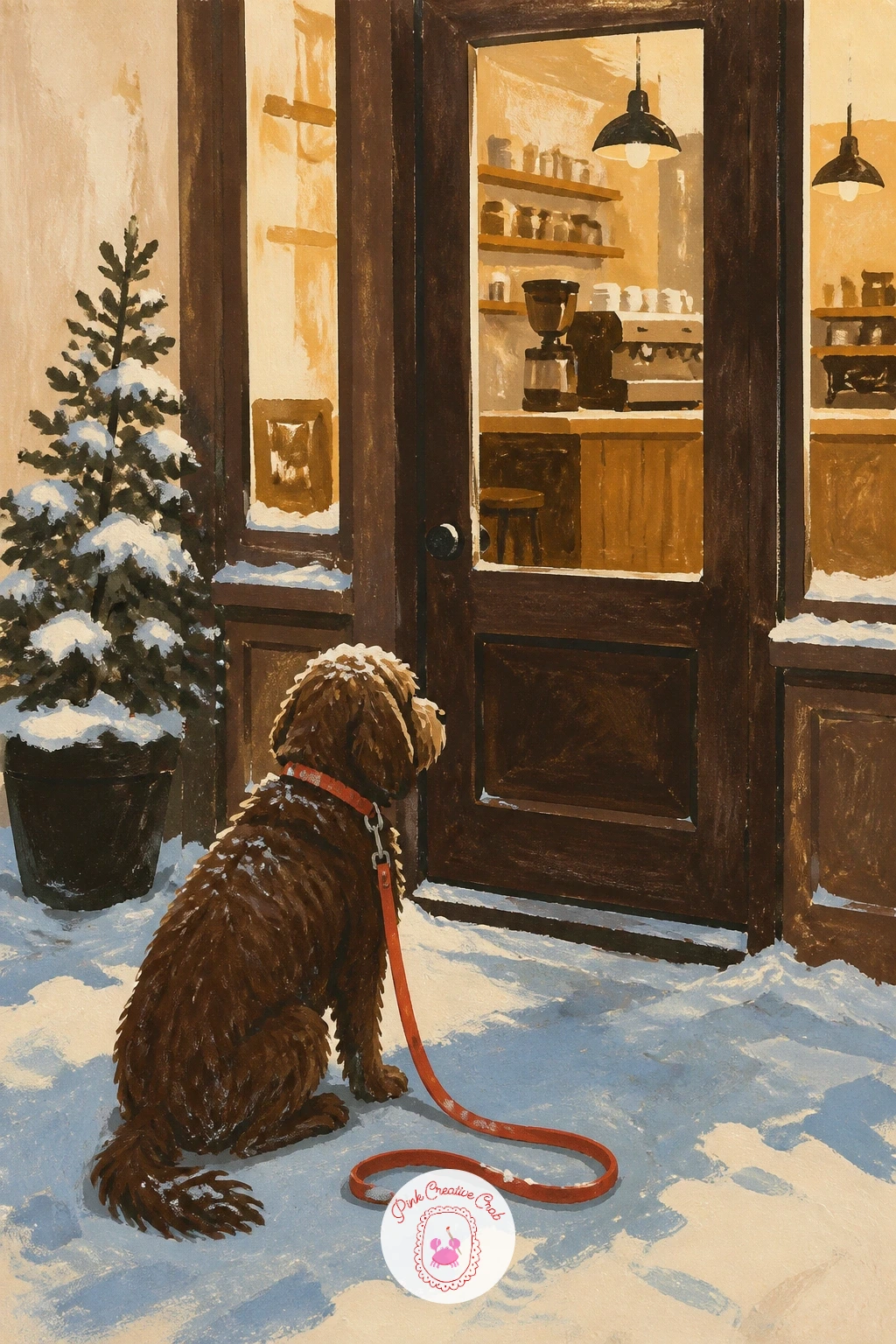
Step back outside for a dog tied up and waiting patiently by a coffee shop door in the snow. Build the dog from simple rounded shapes, an oval body, a round head, two triangular or floppy ears depending on the breed you choose, keeping detail minimal throughout.
Set the eye level low, roughly at the dog’s own height looking slightly up at the door, rather than looking down on it from above, this small shift makes the dog feel like the subject of the scene rather than a background detail. Paint the shop door and window behind in warm cream light spilling out onto the snow, a nice contrast to the cool blue shadows around the dog.
If the dog’s proportions look off, check that the head is not larger than about a third of the total body length, that ratio keeps most breeds looking right at this simple level. Swap the leash color for a cherry red lead to pick up the accent color used across the series.
A short patch of warm light falling from the doorway onto the snow finishes the mood nicely.
Palette: Warm Fur Brown,Icy Blue Shadow,Warm Window Cream,Cherry Red
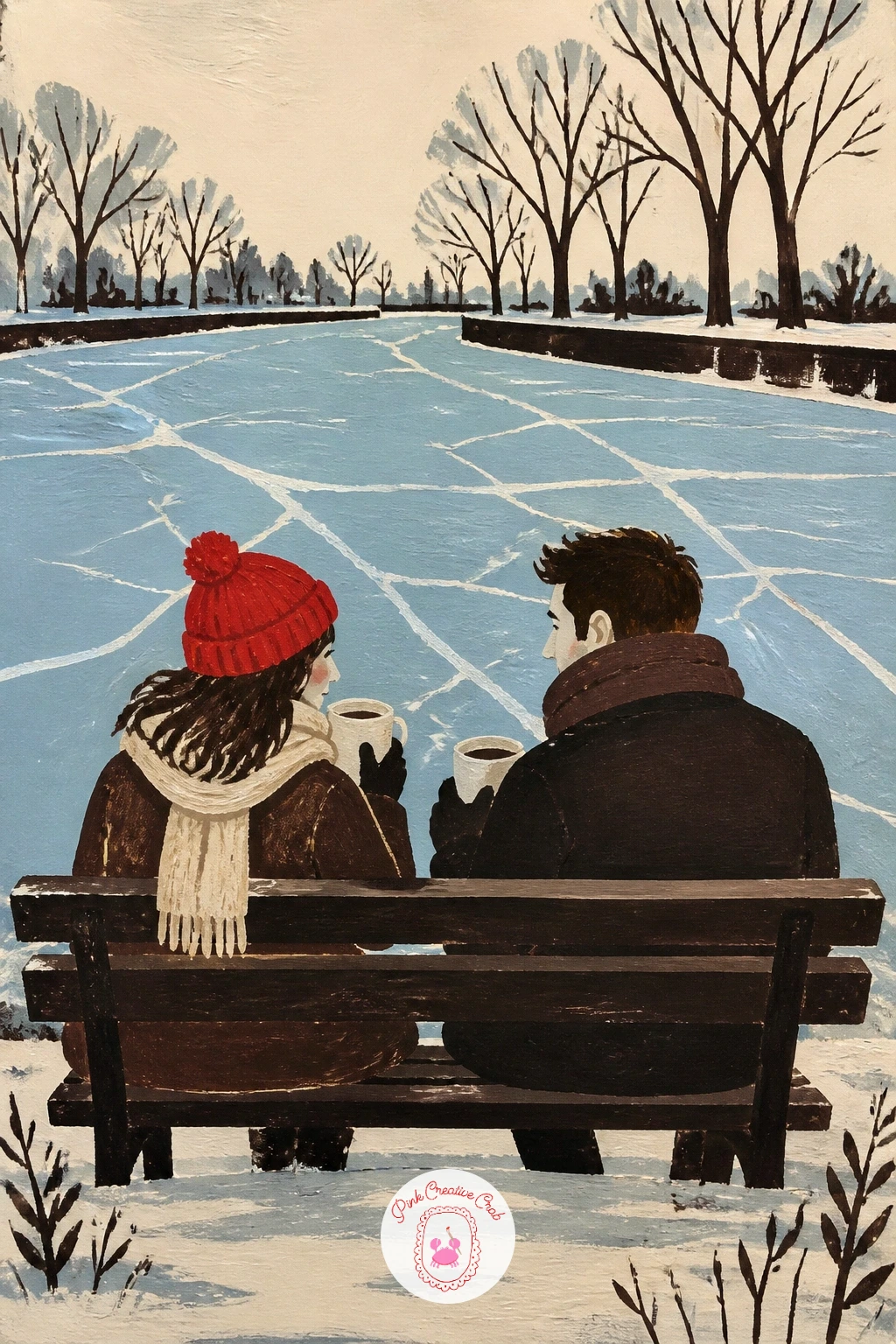
Move the scene to a bench by a frozen canal, where a couple shares one coffee between them. Paint the two figures first as simple overlapping shapes, close together on the bench, before adding the thin line of the canal and its icy surface behind them.
Give the frozen canal a few thin straight white lines across its flat icy blue surface to suggest the hard, reflective ice without painting every crack in detail. The shared cup between the couple is the quiet focal point, keep it smaller and simpler than either figure so it reads as a detail rather than competing with them.
If the two figures look too separate, overlap their coat shoulders slightly or have one arm resting along the back of the bench, small connections like that read as closeness. No canal nearby to reference, any flat frozen pond or river works exactly the same way in this composition.
Bare trees along the far bank, painted as simple dark silhouettes, give the scene depth without extra detail.
Palette: Icy Blue,Bench Brown,Coat Navy,Cherry Red
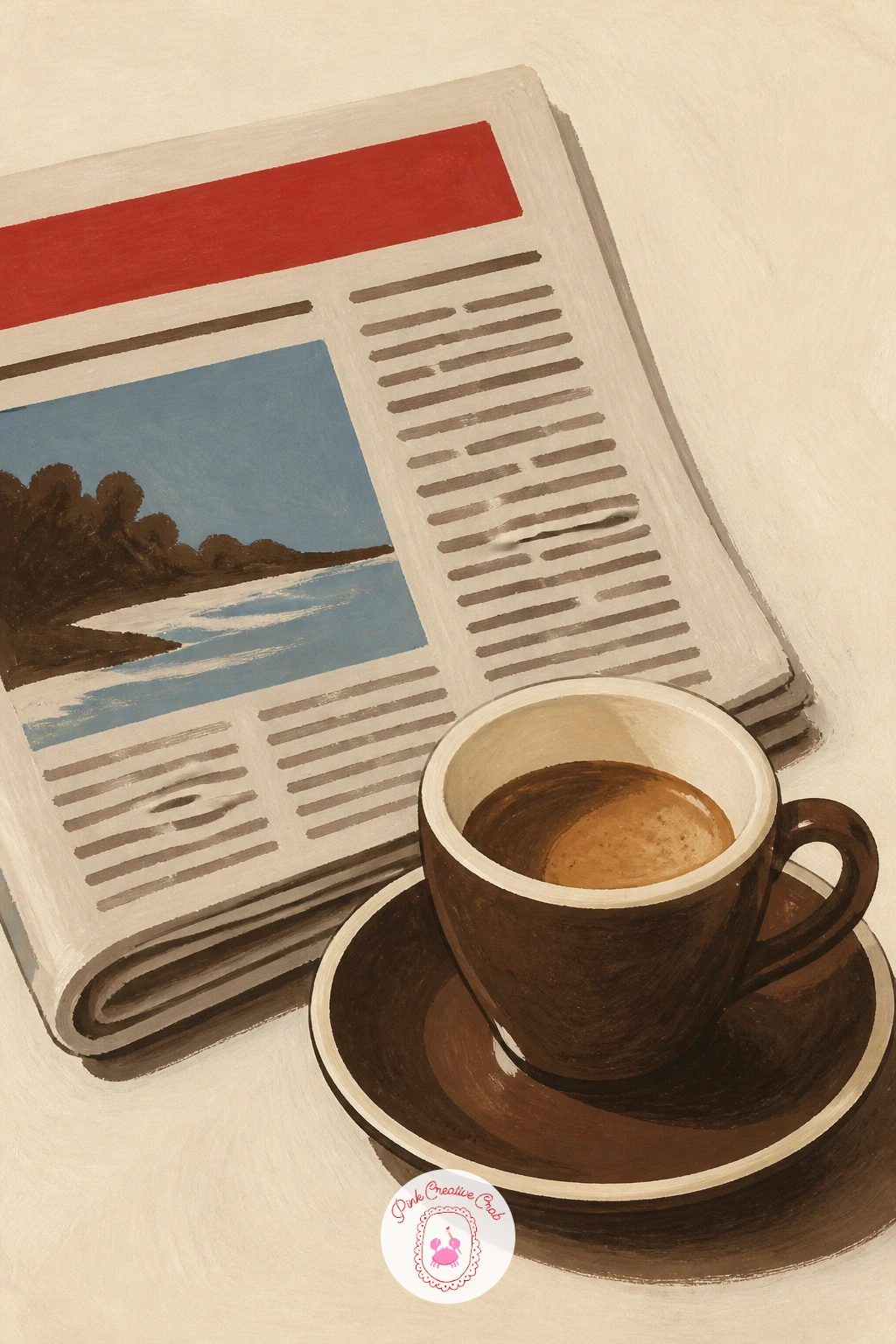
Slow right down with a quiet still life: an espresso cup on its saucer next to a folded Sunday newspaper. Paint the cup and saucer as two confident flat shapes, small and neat, with a thin cherry red stripe around the saucer rim if you want one accent of color against all the cream and brown.
The newspaper takes the most patience, suggest its text with loose horizontal pencil-thin lines rather than attempting to write anything readable, and keep its folded edges crisp and straight against the softer curves of the cup. This scene paints well as a quick ten minute study of just the cup and saucer, or stretches to forty minutes once you add the newspaper, a spoon and a small shadow beneath everything.
If the newspaper lines look too mechanical, vary their length slightly rather than ruling them all the same, it reads more like print at a glance. Swap the newspaper for a folded letter or a small notebook if paper texture feels fiddly today.
Keep the whole composition on a plain cream tabletop so nothing distracts from the simple shapes.
Palette: Espresso Brown,Cream,Soft Grey,Cherry Red
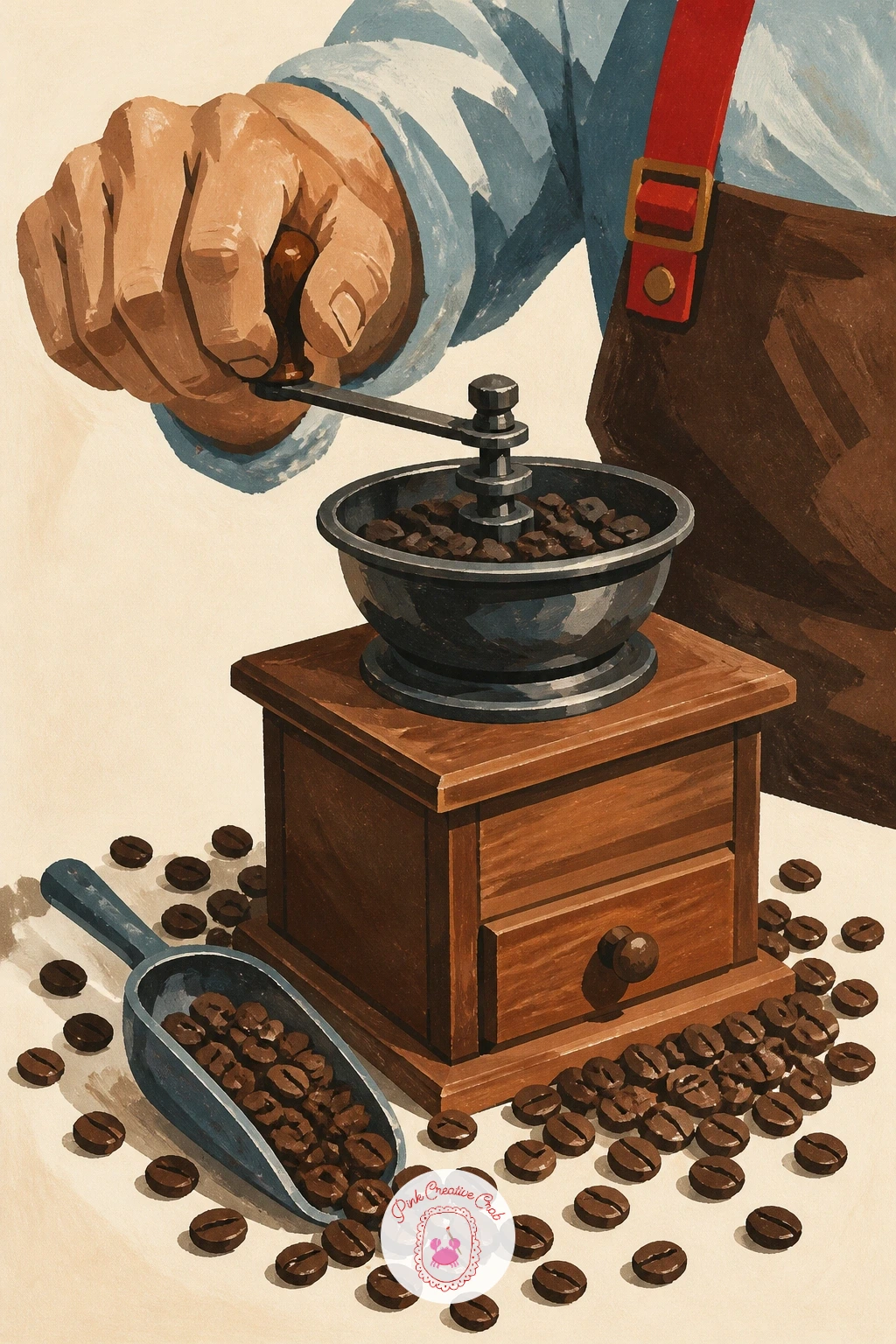
Return to the cabin for a man grinding coffee beans by hand at a wooden table. Paint the hand grinder first as a simple cylinder with a small side handle, keeping the mechanism suggested rather than drawn in mechanical detail.
Compare the size of his hand against the grinder before finishing either, a hand gripping the handle should look roughly the same width as the grinder body itself, getting that relationship right keeps the whole gesture believable. Scatter a few loose coffee beans beside the grinder in deep espresso brown, each just a small oval with one lighter highlight stroke.
If the grip looks awkward, simplify the hand to a rounded mitten shape wrapped around the handle rather than drawing individual fingers, it reads just as clearly at this scale. No wooden cabin table to reference, any plain warm brown surface carries the same cozy feeling.
A small pile of fresh grounds beside the grinder, painted as a soft dark smudge, finishes the action nicely.
Palette: Grinder Grey,Deep Espresso Brown,Wood Table Brown,Warm Skin Tone
Warm up after the slopes with a coffee and a slice of almond cake on a ski lodge counter. Paint the cake first as a simple wedge shape with a few scattered almond slivers in pale cream on top, keeping the slice clean edged rather than crumbly looking.
Set the coffee cup slightly behind the cake rather than directly beside it, that small overlap in depth makes the still life feel arranged rather than lined up in a flat row. The counter itself can stay a single warm wood brown shape, letting the pale cake and cream coffee foam stand out clearly against it.
If the almond slivers look like random dots, lay a few flat along the top edge of the wedge and a few tucked into the side, that small variation reads as scattered nuts rather than a pattern. Swap almond cake for a simple shortbread wedge if that is easier to shape confidently.
A small steam curl above the cup finishes the warm, just-off-the-slopes feeling.
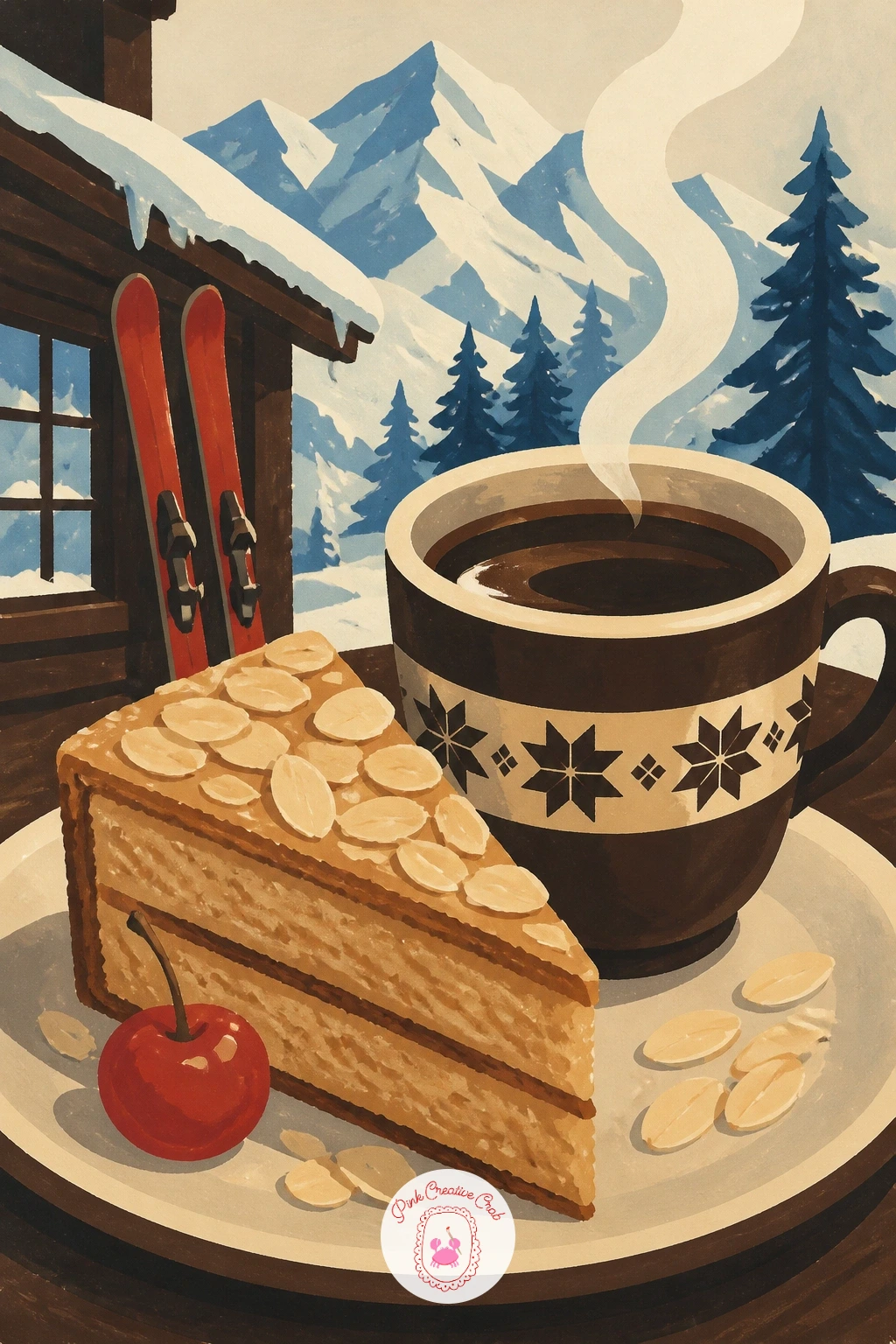
Palette: Golden Cake Brown,Almond Cream,Wood Counter Brown,Espresso Brown
Build a cozy reading corner next, with a mug of coffee steaming on top of a stack of books. Paint the stack first, three or four flat rectangles of different widths and colors so each book reads as separate, before setting the mug carefully centered on top.
Check that the mug sits convincingly within the top book’s edges rather than overhanging it, a small detail that keeps the whole stack looking stable rather than precarious. A soft blanket or cushion corner in the background, painted as one simple shape in cherry red or warm cream, adds coziness without extra detail.
If the books look too uniform, vary their widths and give one a slightly worn, rounded corner rather than keeping every edge perfectly sharp. No real stack to reference, three plain rectangles of varied size and color reads convincingly as books at this scale.
For more cozy reading and winter corners in a similar spirit, the winter painting ideas collection has plenty of companion scenes.
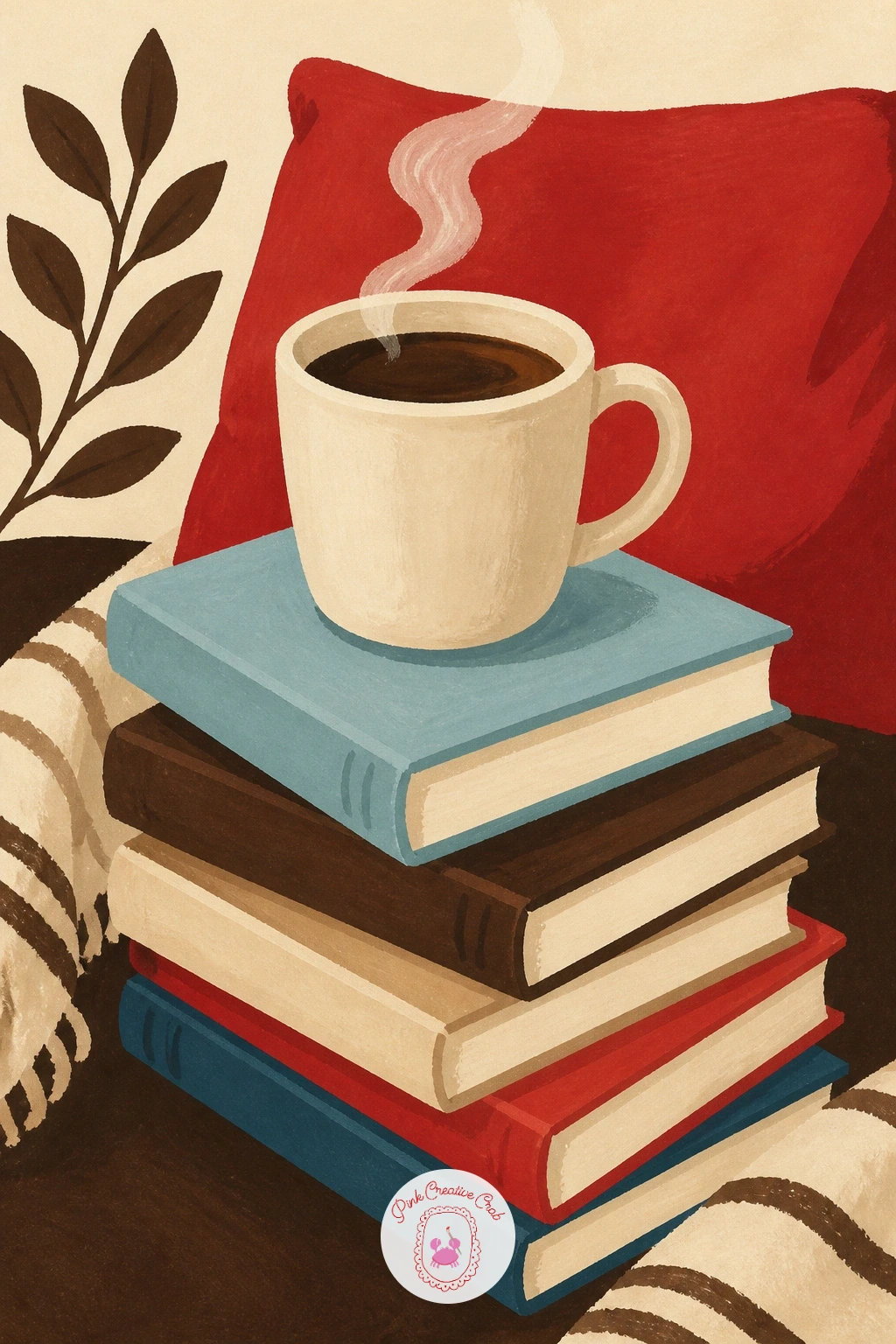
Palette: Book Red,Book Cream,Book Navy,Espresso Brown
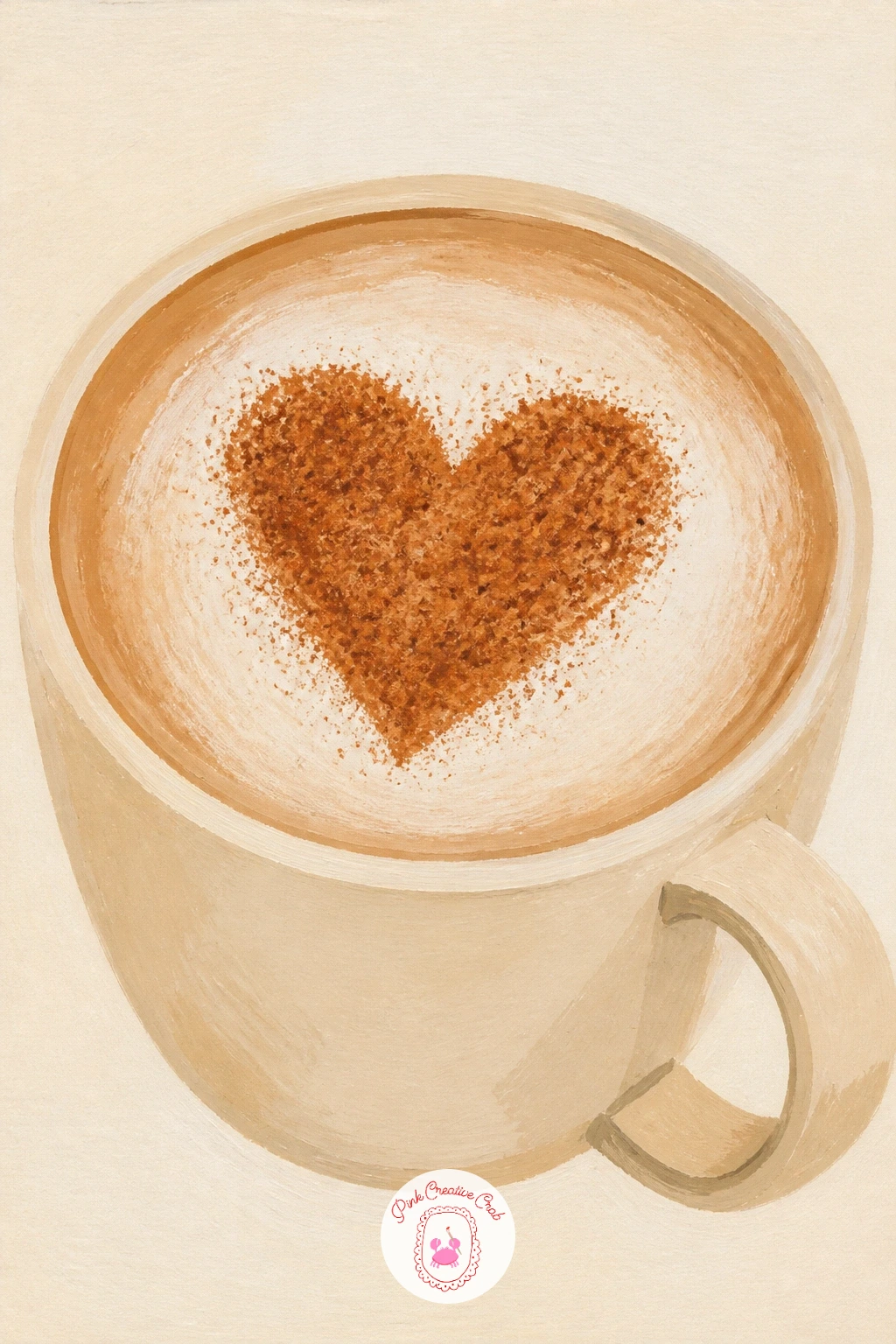
Return to the latte theme with a twist: an oat milk latte topped with a cinnamon heart dusted carefully onto the foam. Paint the cup first in a slightly paler, warmer cream than a dairy latte to suggest the oat milk’s different tone, then add the foam as a soft domed shape sitting just above the rim.
Lay a thin paper or card heart stencil cut from scrap paper over the dry foam, then flick a nearly dry brush of cinnamon brown across it and lift the stencil away for a crisp, clean heart shape rather than freehanding the outline. If the heart edge still looks fuzzy, clean it up afterward with a fine brush of white gouache around the border.
No stencil material handy, a steady hand and a round brush tip can paint the heart freehand in two curved strokes meeting at a point. Keep the cup’s handle simple and the saucer plain so the cinnamon heart stays the clear detail everyone notices first.
You Will Need
- small scrap paper for a stencil
Palette: Oat Cream,Cinnamon Brown,Espresso Brown,Titanium White
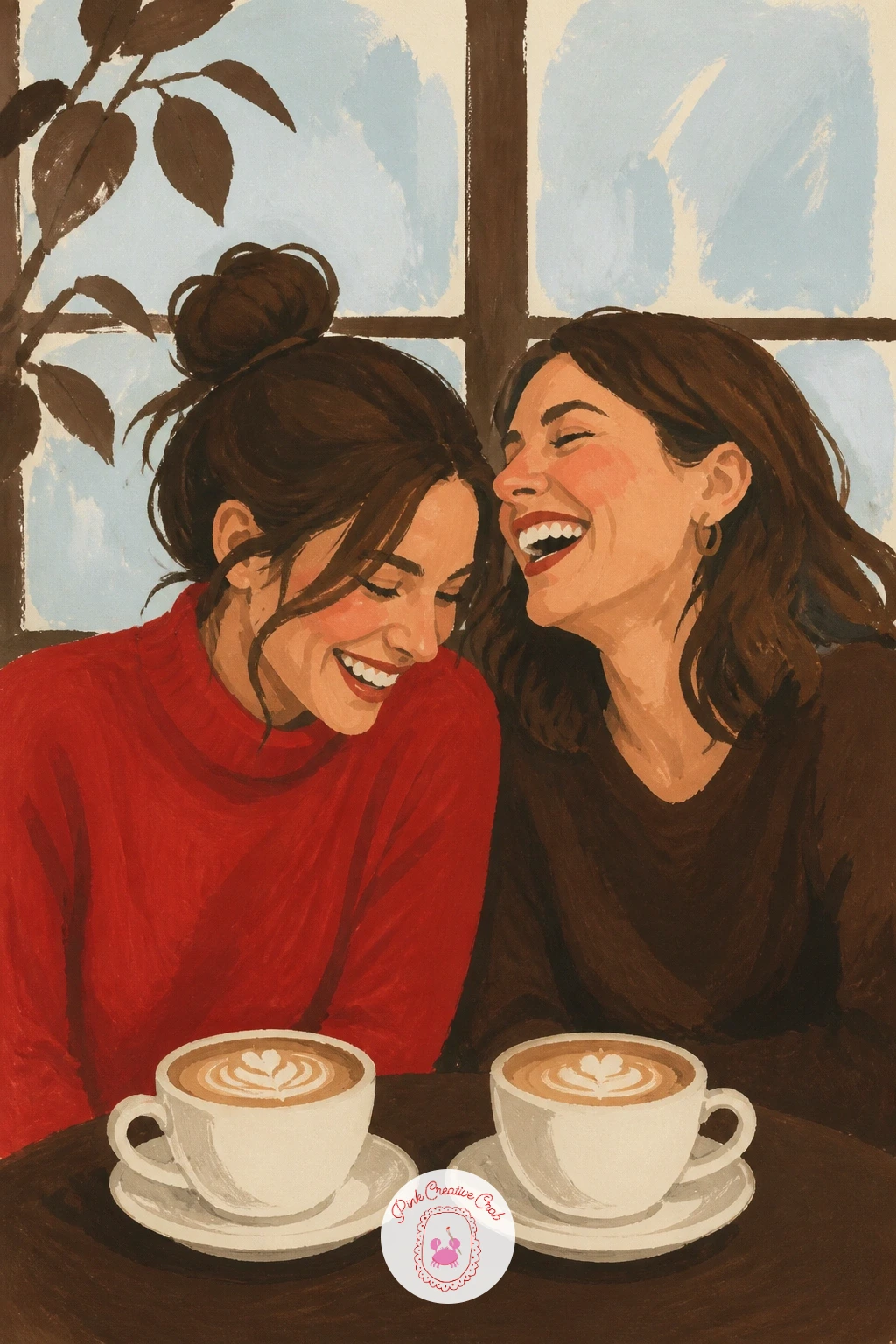
Fill a cafe table with life now: two friends laughing together over cappuccinos, fogged windows behind them. Build both figures from simple shapes first, leaning slightly toward each other across the table, which does more to suggest laughter and conversation than any facial detail could at this level.
Paint the fogged window behind them as one flat pale blue grey shape with a few soft cream smudges where condensation has gathered, rather than drawing individual droplets. Keep both cappuccinos matching in size and shape so the pair of cups echoes the pair of friends sitting over them.
If the two figures feel too stiff or formal, tilt one head slightly and raise one hand near the table, small gestures like that carry warmth without needing expressive faces. No real fogged glass to study, a plain pale wash with a few lighter smudges reads as condensation convincingly.
One cherry red scarf or sweater between the two figures ties the scene back to the palette running through the whole series.
Palette: Pale Fog Blue,Cherry Red,Warm Skin Tones,Espresso Brown
Zoom in close for a detail shot: two mittened hands wrapped around a warm mug during a morning walk. Paint the mittens first as two simple rounded shapes in cherry red or deep navy, overlapping slightly where they cup the mug between them.
Here the dry brush trick matters most: once the mug’s base color is dry, drag a nearly dry brush loaded with a little white gouache lightly over the knit texture of the mittens, just a few broken strokes rather than full coverage, to suggest wool without painting every stitch. Steam rising from the mug against a soft icy blue winter background finishes the cozy feeling.
If the mittens look too smooth and plastic, that dry brush pass is exactly the fix, add it in one light layer rather than scrubbing repeatedly which flattens the texture again. No mittens in your own reference, cup your own hands around a mug for a minute to check how the fingers actually wrap before you paint them.
Keep the background simple and soft so the close, warm detail of the hands stays the whole focus.
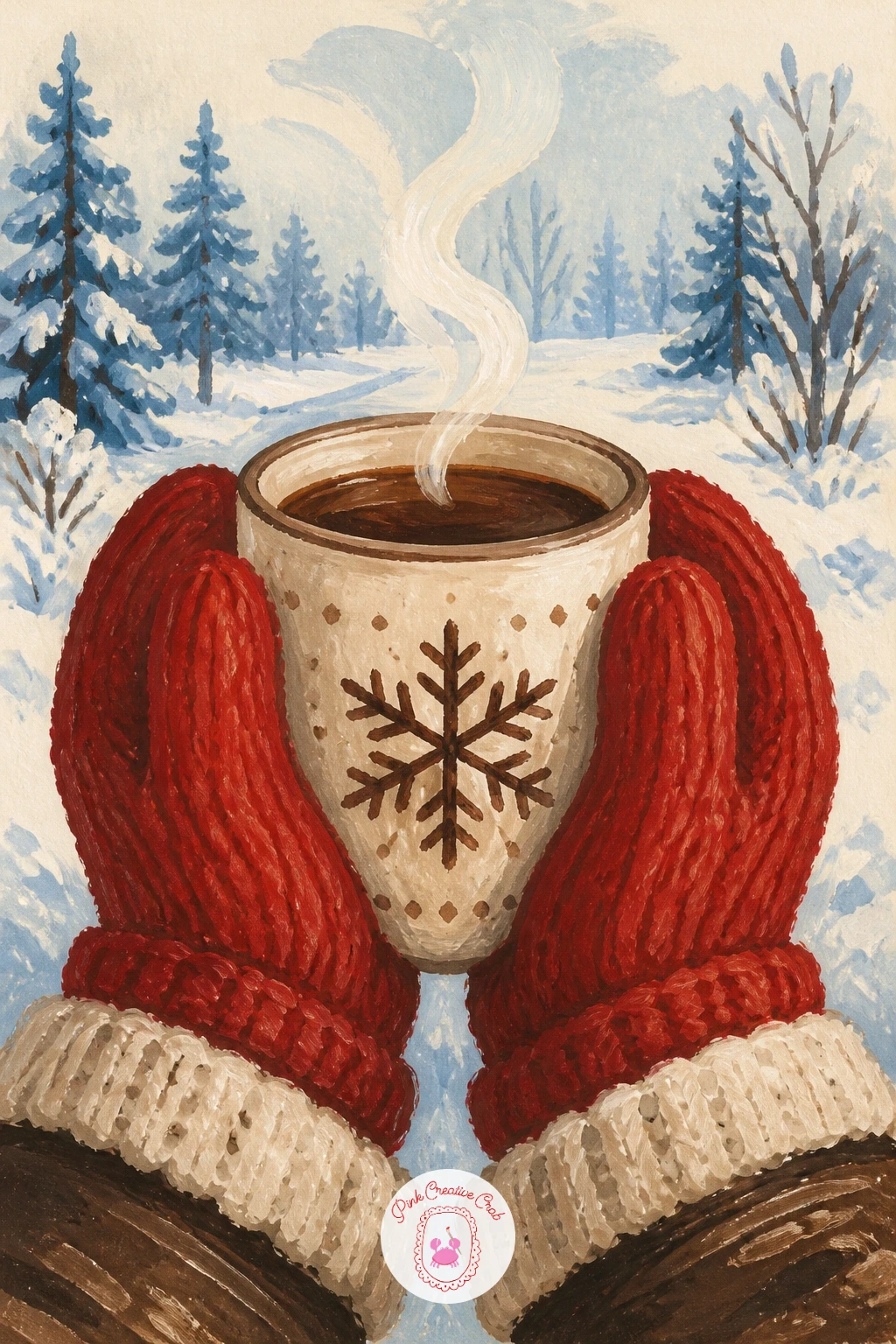
Palette: Cherry Red,Espresso Brown,Icy Blue,Titanium White
Spread a fuller table now for a Swedish fika, coffee and cardamom buns laid out together. Paint the buns first as simple spiral shapes, a coiled dough line in golden brown with a few darker pearl sugar dots scattered on top, before adding the coffee pot and cups around them.
Arrange everything in a loose, slightly asymmetrical group rather than a straight row, real table spreads rarely line up perfectly and the slight scatter reads as more natural and inviting. Keep the coffee pot a simple curved shape in cherry red or espresso brown, taller than the cups so it anchors the composition.
If the bun spirals look messy, paint the coil as one continuous curved line from the center outward rather than several separate strokes, it keeps the shape cleaner. No pearl sugar reference, small irregular white dots scattered unevenly across the top read just as well.
A simple cream tablecloth shape beneath everything ties the whole spread together.
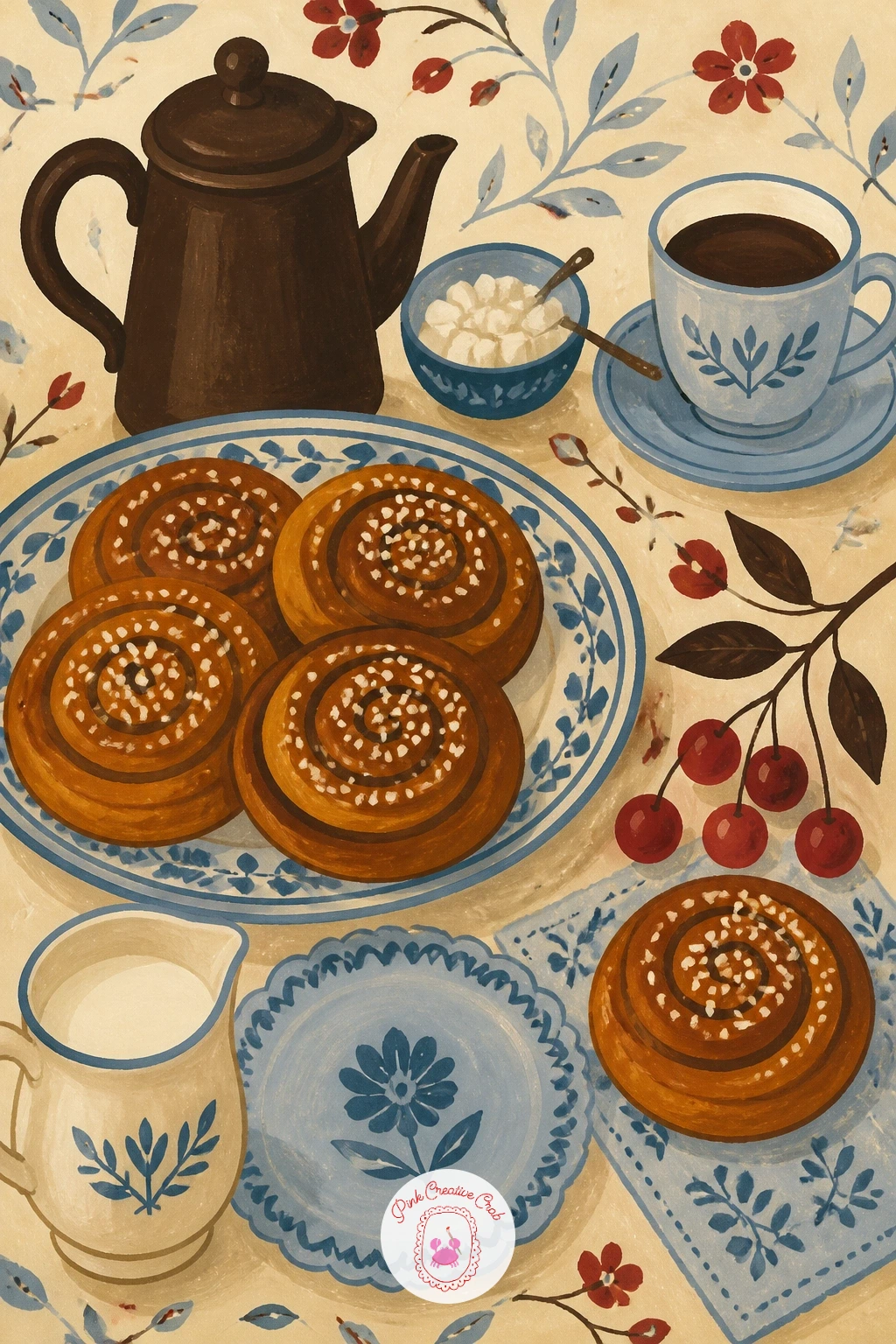
Palette: Golden Bun Brown,Cherry Red,Cream Tablecloth,Espresso Brown
Bring in a different tradition with a Turkish coffee pot and its tiny cups set on a brass tray. Paint the brass tray first as a flat warm gold shape with a thin decorative border suggested by just two or three simple curved lines, not a fully patterned surface.
Build the long handled pot from a narrow cone shape with a thin handle extending to one side, and keep the tiny cups genuinely small beside it, comparing their height to the pot’s handle is a useful check, they should sit well under half the pot’s total height. The deep, almost black coffee inside each small cup gives you a chance to use your darkest brown straight from the tube.
If the brass tray looks flat, add one soft warm highlight stroke along its rim in a lighter gold to suggest the metal catching light. No brass tray in mind, a round wooden tray works just as well with the same simple border treatment.
Keep the whole grouping centered and fairly small on the page, these objects read best a little compact rather than spread wide.
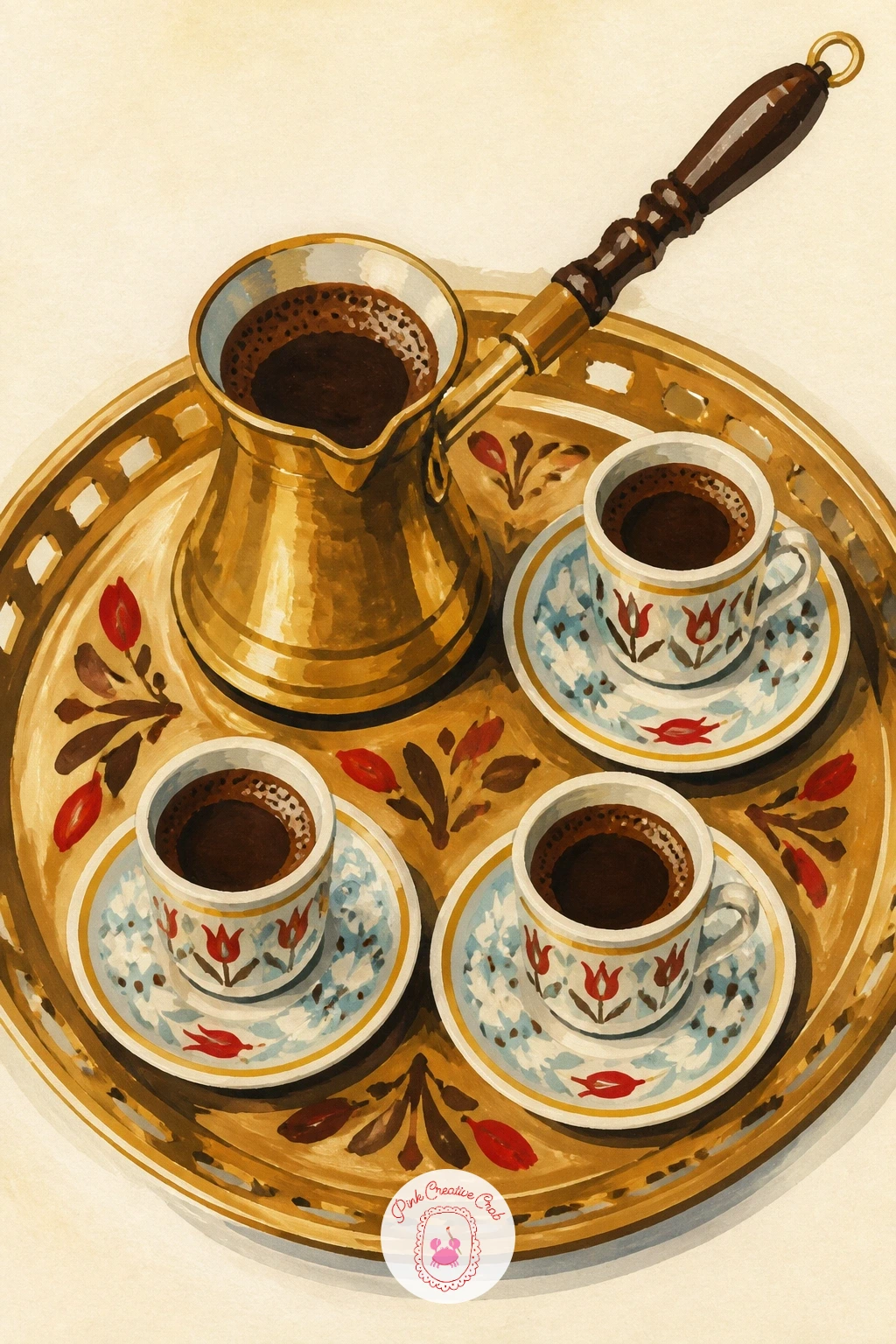
Palette: Brass Gold,Deep Coffee Black Brown,Cream,Cherry Red
Return once more to the counter, this time with a coffee shop cat fast asleep on a stool right beside the espresso machine. Paint the espresso machine first as a simple boxy shape with two or three flat chrome highlights, kept graphic rather than mechanically detailed.
Curl the sleeping cat into a loose oval on the stool beside it, tucking the head down into the body so the whole shape reads as relaxed and heavy with sleep. The contrast between the hard, shiny machine and the soft, rounded cat is the real subject here, so keep their textures clearly different: crisp flat planes for the metal, a single soft unbroken outline for the cat.
If the cat looks tense rather than sleeping, drop the head lower into the body and round the back more, a sleeping animal has almost no sharp angles anywhere. No espresso machine reference at hand, a simple box with a round portafilter handle on the front reads convincingly from memory.
One warm steam wisp rising behind the machine finishes the busy, cozy counter feeling.
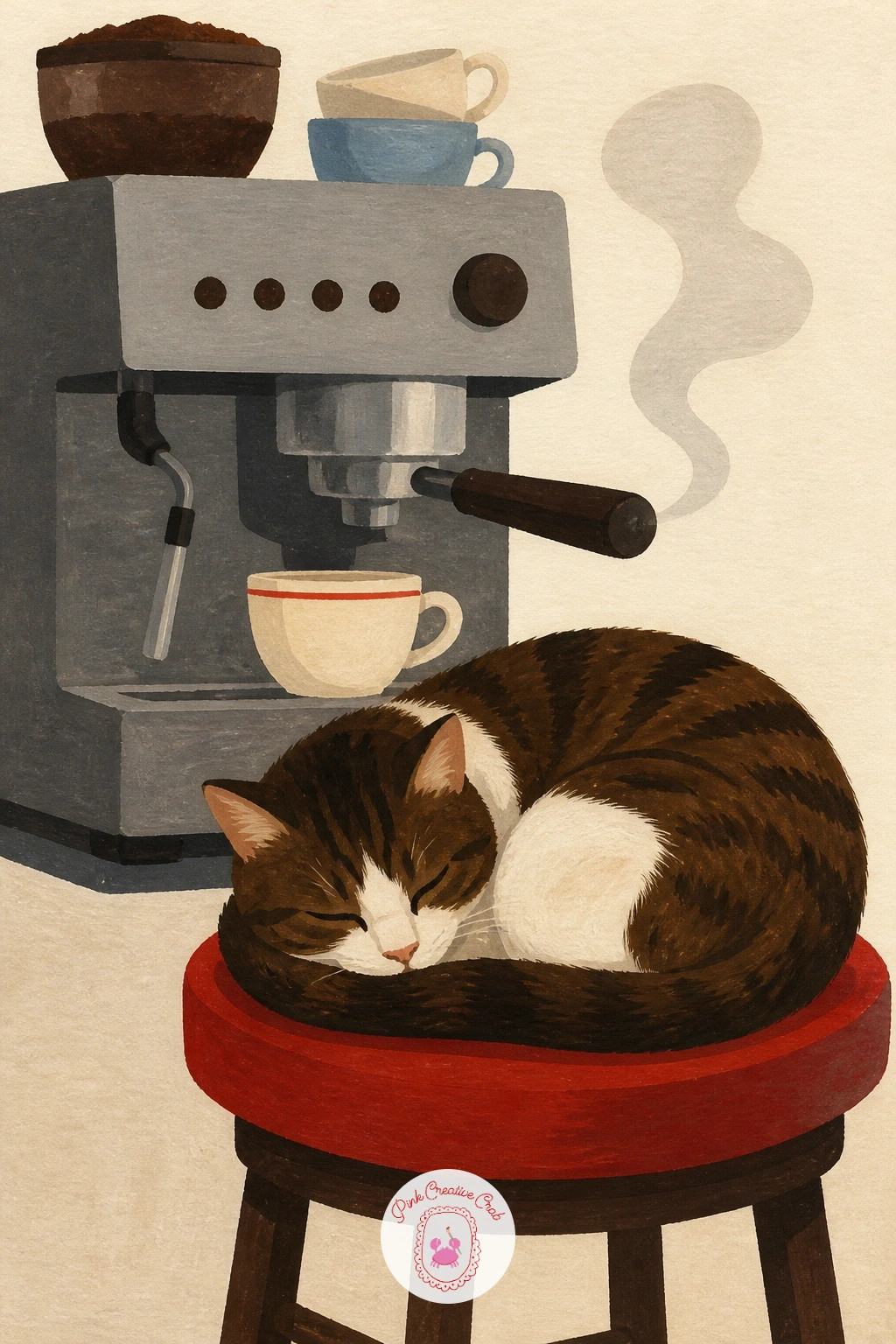
Palette: Chrome Grey,Espresso Brown,Warm Cat Grey,Cream
Pull back for a wider view: a mug of coffee on a windowsill while snow falls over rooftops outside. Paint the rooftop view first as simple layered triangular and rectangular shapes in soft greys and icy blue, keeping the furthest rooftops palest to suggest distance.
Set the mug on the windowsill in the foreground as the largest, warmest shape in the whole scene, cherry red or deep brown against all that cool outdoor color, so the eye settles there before wandering out to the view. Snow falling between the window and the rooftops can stay as a light scatter of small cream dots across the upper half of the scene only.
If the rooftops look muddled together, separate them with thin lighter lines along each roofline before filling the colors in, that keeps each building distinct even at a simple flat level. No rooftop view to reference, picture three or four simple box and triangle shapes at different heights, that is enough for a convincing skyline.
For more rooftop and window scenes in a similar cozy register, the coffee drawing lessons make a good companion project.
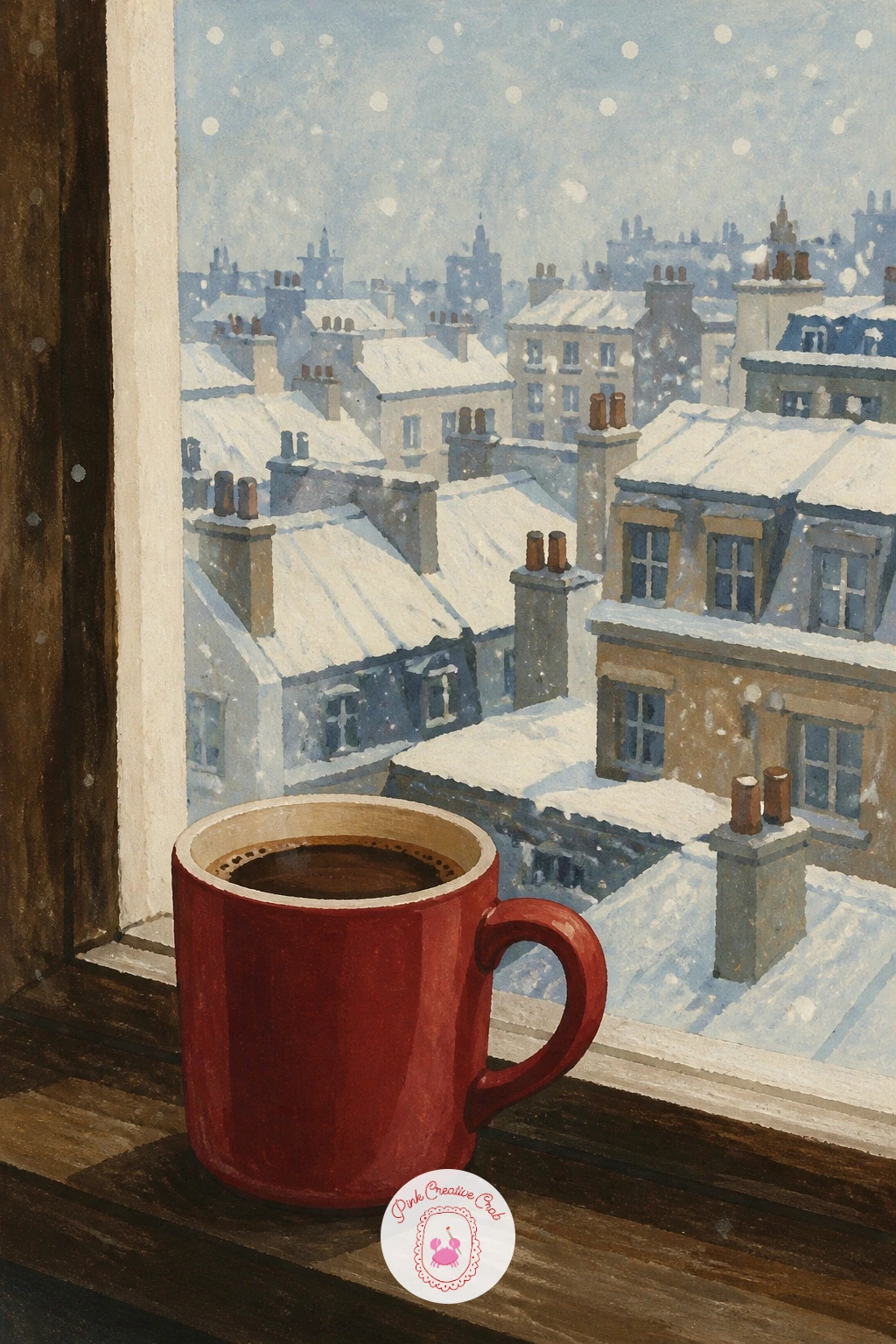
Palette: Icy Blue,Soft Grey,Cherry Red,Cream
Close the day with the most relaxed scene of all: coffee steaming on a tray at a hot spring inn, snowy mountains rising behind. Paint the mountains first as soft layered icy blue shapes fading paler toward the horizon, then the steam rising from the hot spring itself as loose, soft white curves drifting up from the lower edge of the page.
Set the tray with its cup in the foreground as a simple flat warm shape, small against the big snowy mountain backdrop, echoing the same small-warm-object-against-big-cool-view trick used back at the ski chalet balcony earlier in this list. Keep the tray itself plain, a flat wood brown rectangle, so it does not compete with either the steam or the mountains.
If the hot spring steam and the coffee steam start to look identical, make the spring’s steam broader and softer and the coffee’s steam thinner and more upright, that small difference keeps both readable at once. No mountain hot spring to reference, any snowy peak backdrop from earlier ideas in this list works just as well here.
This makes a calm, quiet subject to end the series on, and pairs nicely with the loose seasonal mood of the winter painting ideas for beginners if you want to keep the mountain mood going in another medium.
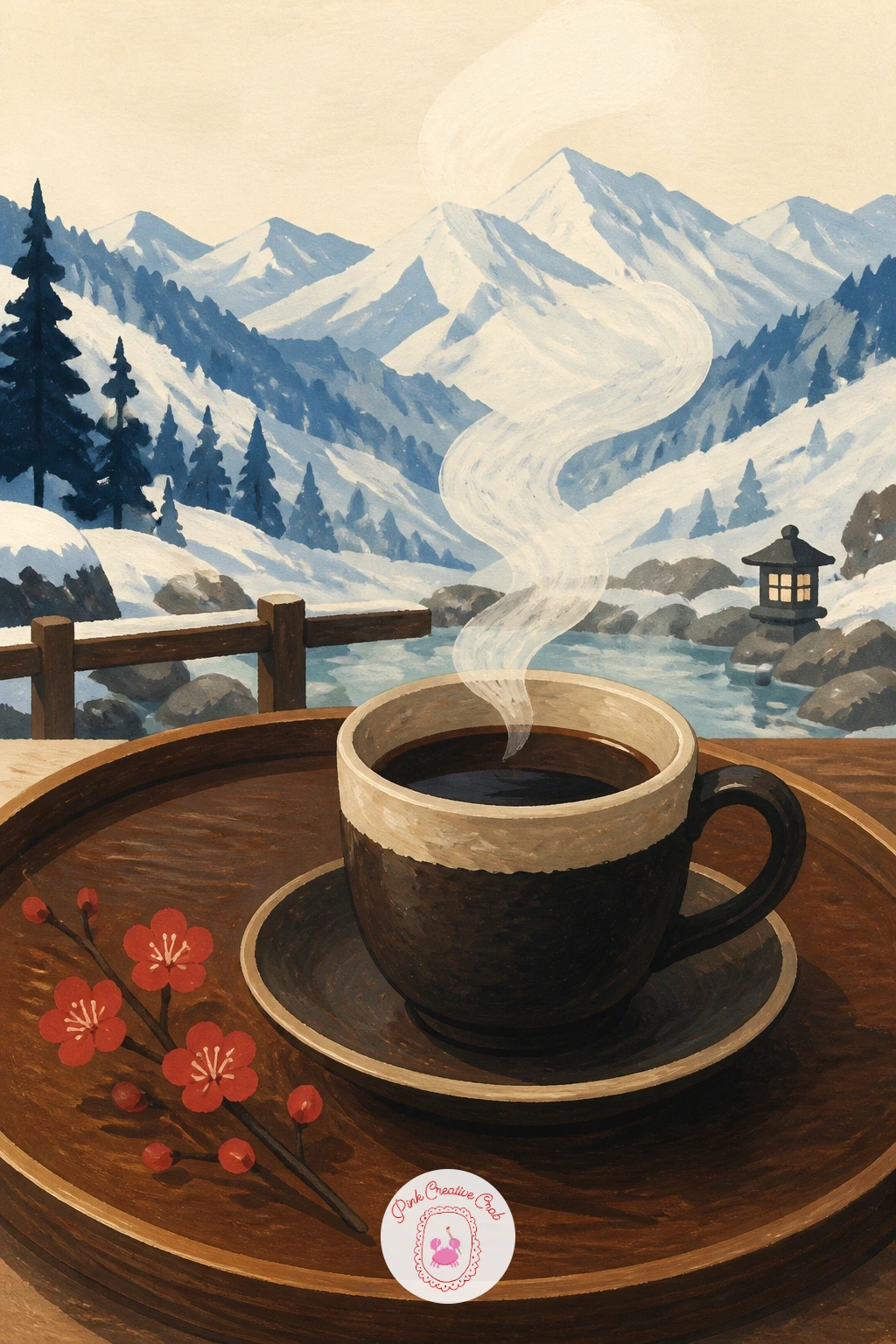
Palette: Mountain Blue,Pale Cream,Wood Tray Brown,Titanium White
What to Do Next
Pick whichever scene matches your own coffee mood today, pour your cream and espresso brown onto the palette, and start with the simplest shape in the picture, usually the cup itself. One finished piece from this list is often enough to settle the palette for the next, so working straight down the page from window seat latte to hot spring tray makes a satisfying little series by the end of winter.
Frequently Asked Questions
What paper works best for gouache coffee illustrations like these?
Smooth bristol or illustration board works best because it keeps the flat matte shapes crisp without the texture of watercolor paper breaking up the edges. Avoid heavily textured paper, it fights the clean, graphic look this style depends on.
How do you keep gouache edges crisp instead of fuzzy?
Let each shape dry fully before painting the one beside it, and load your brush with paint that is thick enough to cover in one or two strokes. Thin, watery gouache bleeds at the edges, so mix it closer to a creamy consistency.
What colors do I actually need for a coffee illustration palette?
A warm espresso brown, a lighter cream, an icy blue and one bright accent like cherry red cover almost every scene in this list. Mix variations of these four rather than buying many separate tubes.
How do I paint realistic looking steam in gouache?
Use a nearly dry brush loaded lightly with white or cream and drag it upward in one or two soft strokes rather than outlining a cloud shape. Too much paint or too many strokes makes steam look solid instead of rising.
Can I turn these coffee illustration ideas into a cohesive series?
Yes, keep the same four or five palette colors and the same flat, crisp edged style across every piece and they will read as one set even painted on different days. Working through this list in order naturally keeps that consistency.
Have any thoughts?
Share your reaction or leave a quick response — we’d love to hear what you think!
-
 0
-
0
-
0
-
0
-
0
-
0


