
Table of Contents
- Snow-Covered Pine Branch
- Frosted Pinecone Close-Up
- Icicles on a Windowpane
- Frosted Berries on a Branch
- Single Red Cardinal in Snow
- Frosted Spiderweb Close-Up
- Snowy Fence Line
- Snow-Draped Spruce Tree
- Birch Trees Against Pale Blue Sky
- Snowy Country Road
- Cardinal Pair on Snowy Branch
- Winter Hare Tracks in Snow
- Winter Moon Over Frozen Pond
- Owl on Frosted Branch
- Snowshoe Hare in Snowdrift
- Red Barn Under Heavy Snow
- Snowy Mailbox and Fence Post
- Snow-Covered Covered Bridge
- Winter Sunrise Over Hills
- Fox Crossing Snowy Field
- Snowy Owl in Flight
- Deer in Snowy Forest
- Frozen Lake at Sunset
- Snowy Pine Forest at Dusk
- Frosted Window with Pine View
- Snow Falling on Dark Pines
- Winter Birch Forest Path
- Frozen Waterfall
- Snow-Capped Mountain Lake
- Frozen River Bend
- Snowy Mountain Range
- Northern Lights Over Snowfield
- Lone Wolf in Winter Landscape
- Frequently Asked Questions
Winter painting ideas do not need snowmen or sleigh bells to feel like the season, and every subject on this list works from a reference photo at the kitchen table. Pick one, set up a canvas, and have a finished piece by the end of the afternoon.
This list runs from quick close-ups like a frosted pinecone up to fuller scenes like a frozen lake at sunset, so there is a fair starting point whether this is a first winter canvas or the tenth.
Using these images: free for personal projects such as printing, coloring, cards, journals and gifts. Handmade items that include them may be sold up to 30 pieces per design. More than that is commercial use and is not permitted, and neither is selling or sharing the images themselves or passing them off as your own. Please ask before any other use.
Snow-Covered Pine Branch
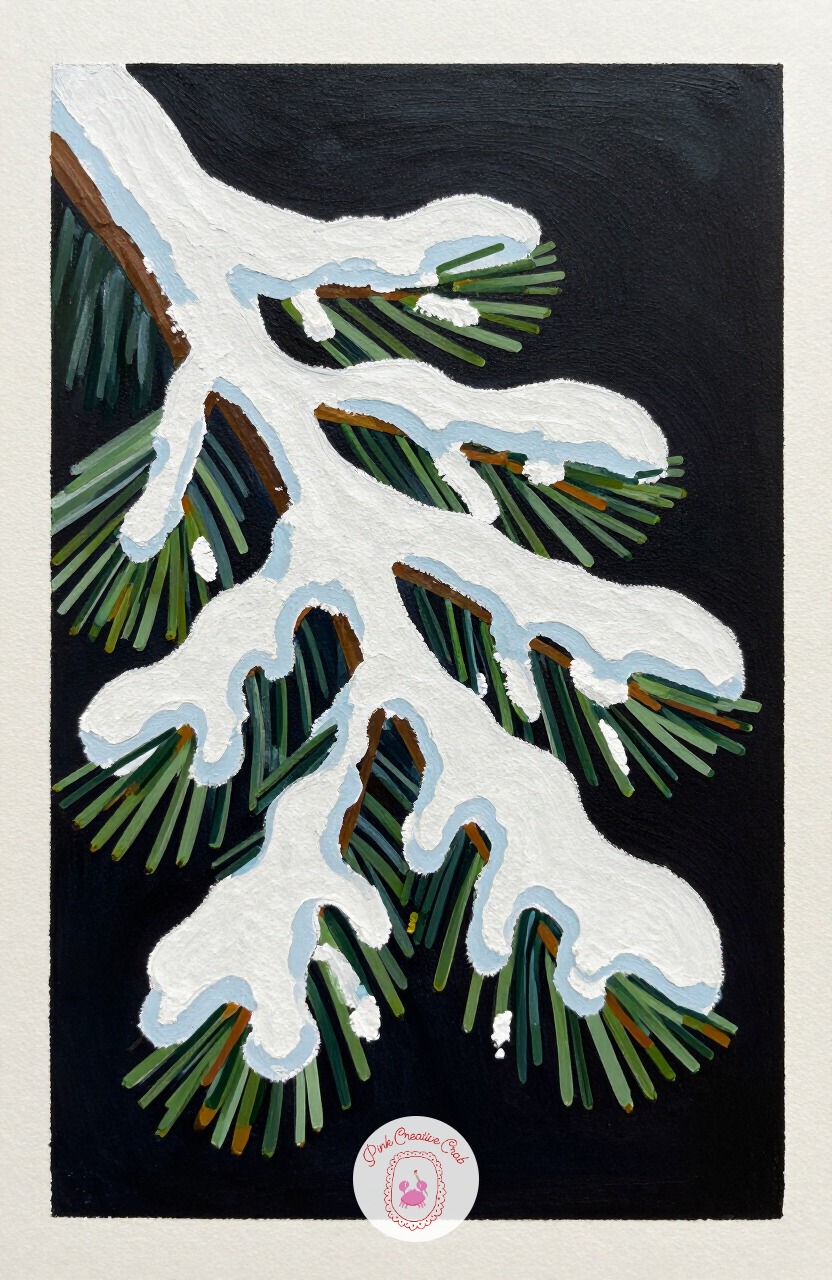
A single branch is the simplest way to start a winter canvas, and it fills the frame without asking for perspective or a horizon line. Pick one diagonal branch crossing the canvas rather than a full tree.
Block in the dark green needles first with a flat brush, then load a palette knife with thick titanium white and drag it along the top edge of the branch for snow clumps. Add a touch of pale blue under each clump for shadow. The usual mistake is painting the snow flat and even: let it pile unevenly, heavier in some spots than others.
Frosted Pinecone Close-Up
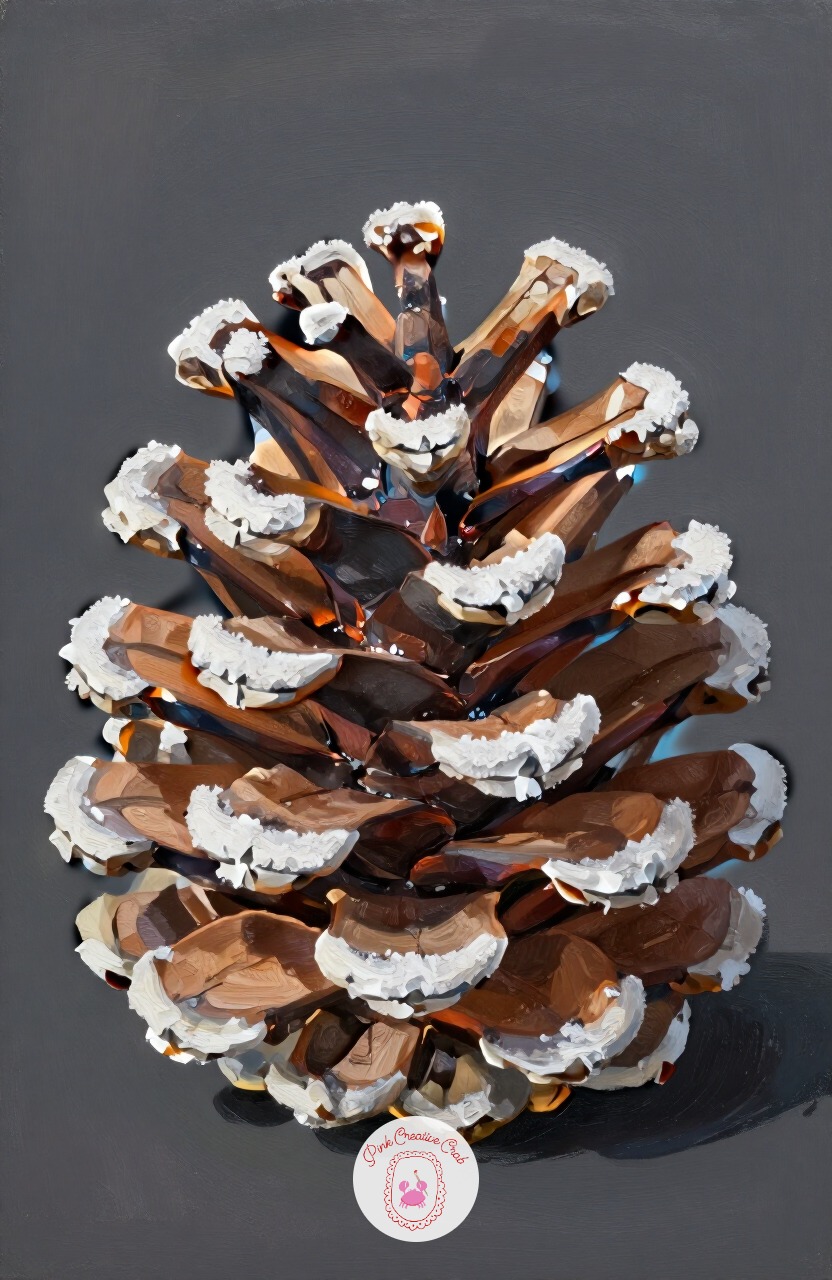
A pinecone close-up is forgiving because the shape is already irregular, so small unevenness only helps. Start with an elongated oval in burnt umber mixed with a little black for the base tone.
Layer individual scales with a smaller brush in lighter brown and raw sienna, working from the top down and letting each row overlap the one below. Finish by dabbing thinned titanium white with a stiff brush on the tips of the scales for frost. Avoid painting the frost as one solid white cap, it should look scattered and uneven across the surface.
Icicles on a Windowpane
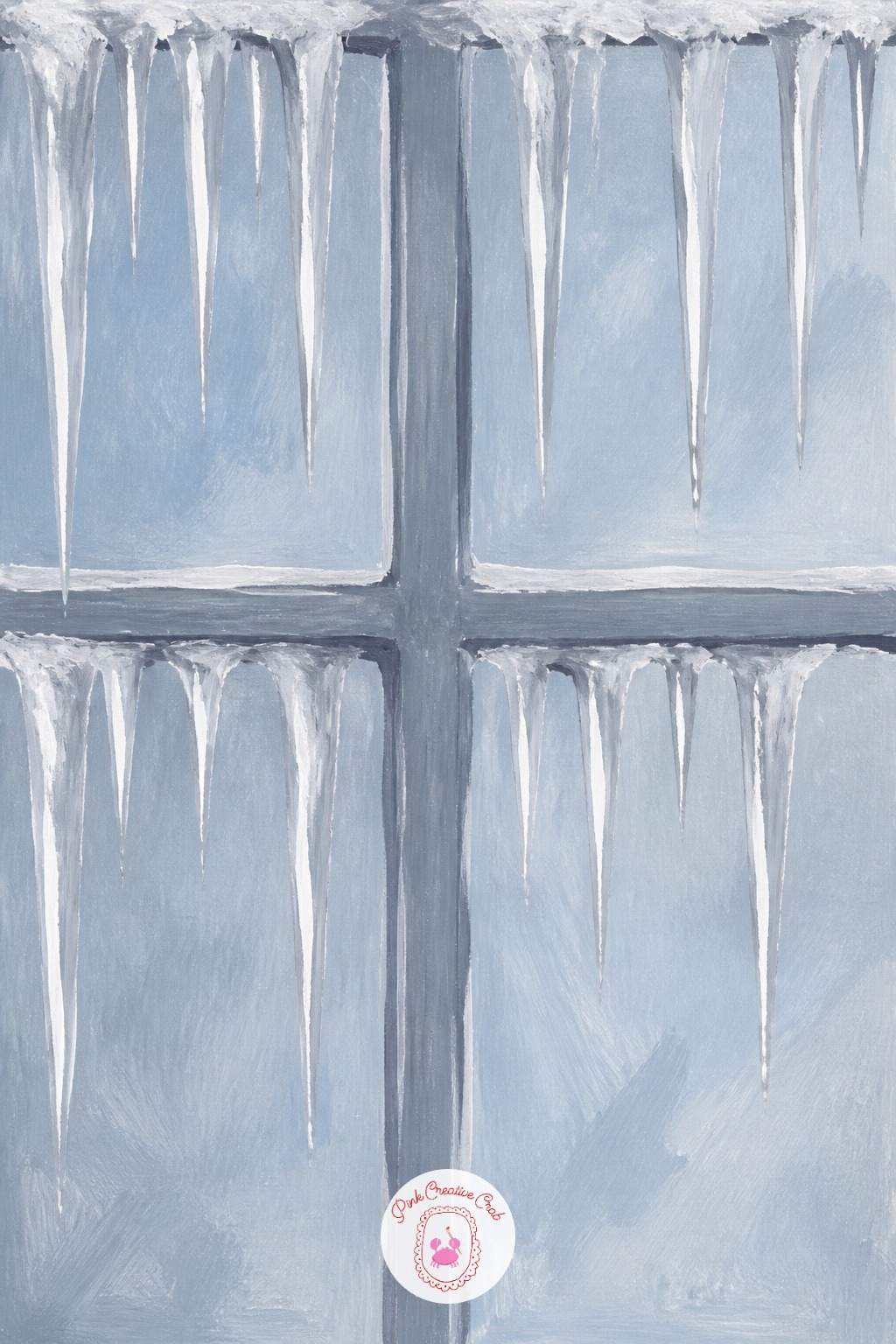
Icicles make a good close-up subject because the shapes are simple and the whole piece sits on one plane. For anyone still choosing a first project, this sits near the top of most easy acrylic painting ideas for a reason: a few vertical strokes and it already reads as ice.
Wash the background in pale blue-grey first and let it dry. Paint each icicle as a tapered vertical stroke, wide at the top and narrowing to a point, then add one hard white highlight line down one edge. The mistake to avoid is making every icicle the same width and length, which flattens them into stripes instead of ice.
Frosted Berries on a Branch
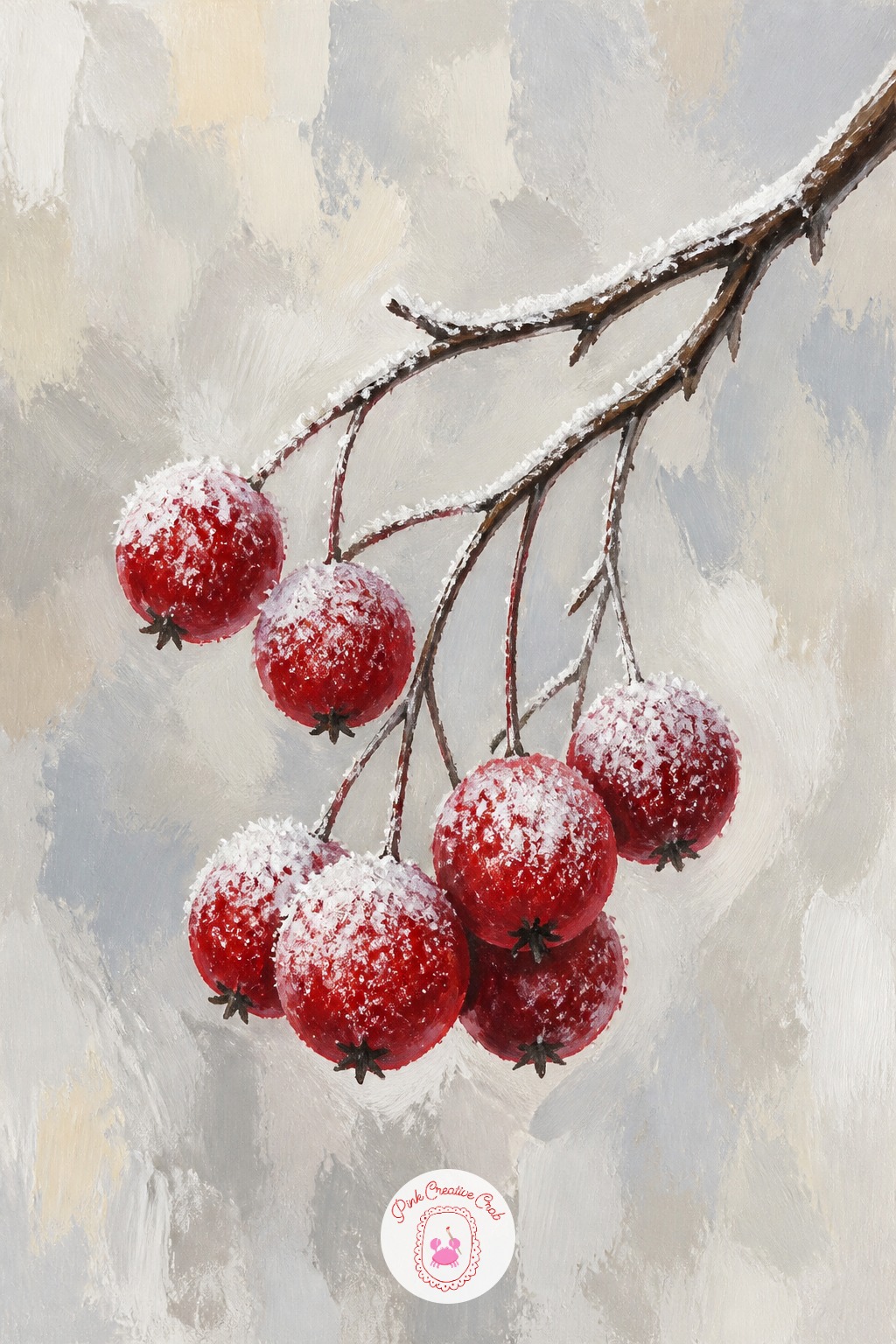
A cluster of winter berries gives a lot of color in a small space, which suits a quick sitting. Sketch a thin dark brown branch across the canvas, then add five or six small circles in cadmium red mixed with a touch of orange.
Shade the underside of each berry with a darker red-brown before adding a tiny white highlight dot on top. Finish with specks of thinned white flicked across the branch and berries for frost. Avoid spacing the berries in a perfectly even row, bunch them in twos and threes the way they grow in real clusters.
Single Red Cardinal in Snow
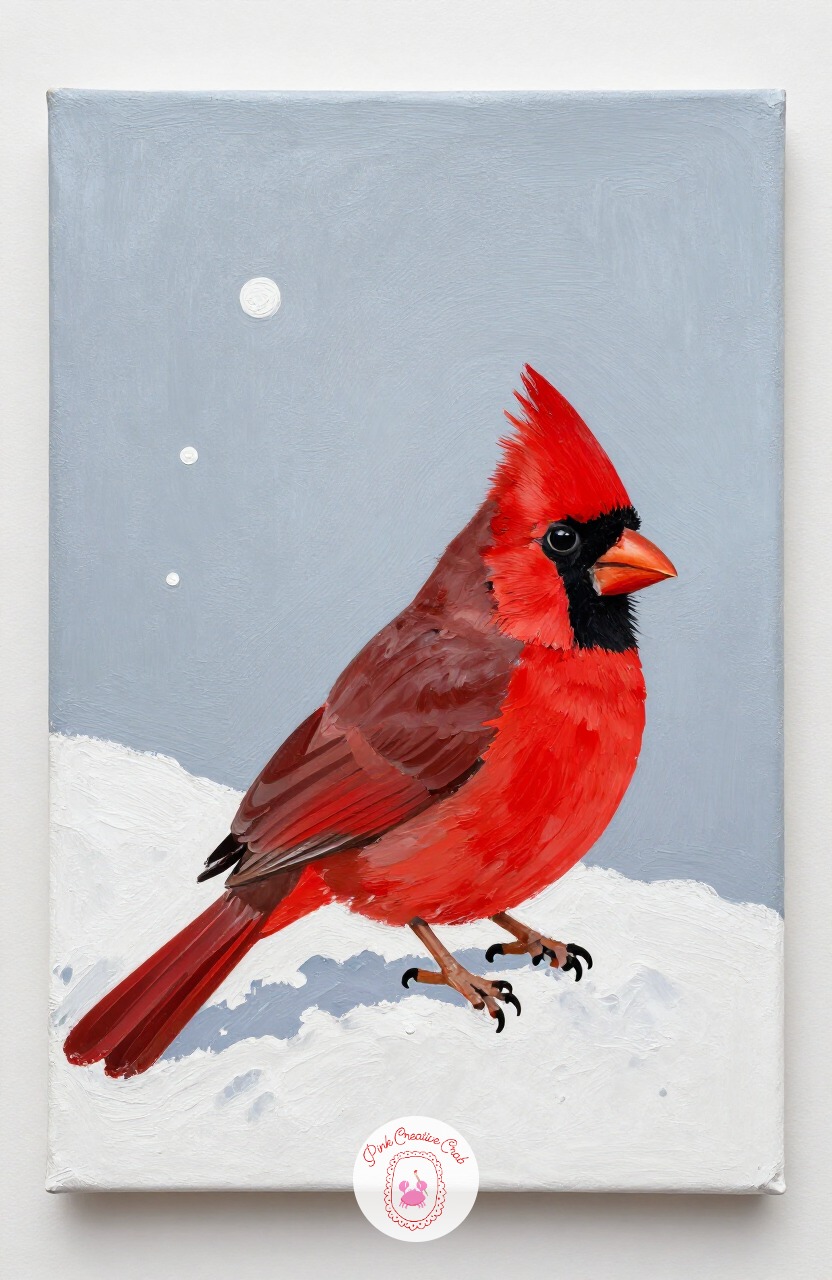
A cardinal against snow gives instant contrast with very little mixing, which makes it a satisfying one-sitting painting. Block the body as two overlapping ovals, one for the body and a smaller one for the head, in cadmium red.
Paint the black face mask and beak next, then shade the underside of the body with a mix of red and burnt umber to round the form. The background can be a loose wash of pale blue-grey with soft white snow shapes. The common mistake is leaving the red flat all over, so always keep one side darker than the other.
Frosted Spiderweb Close-Up
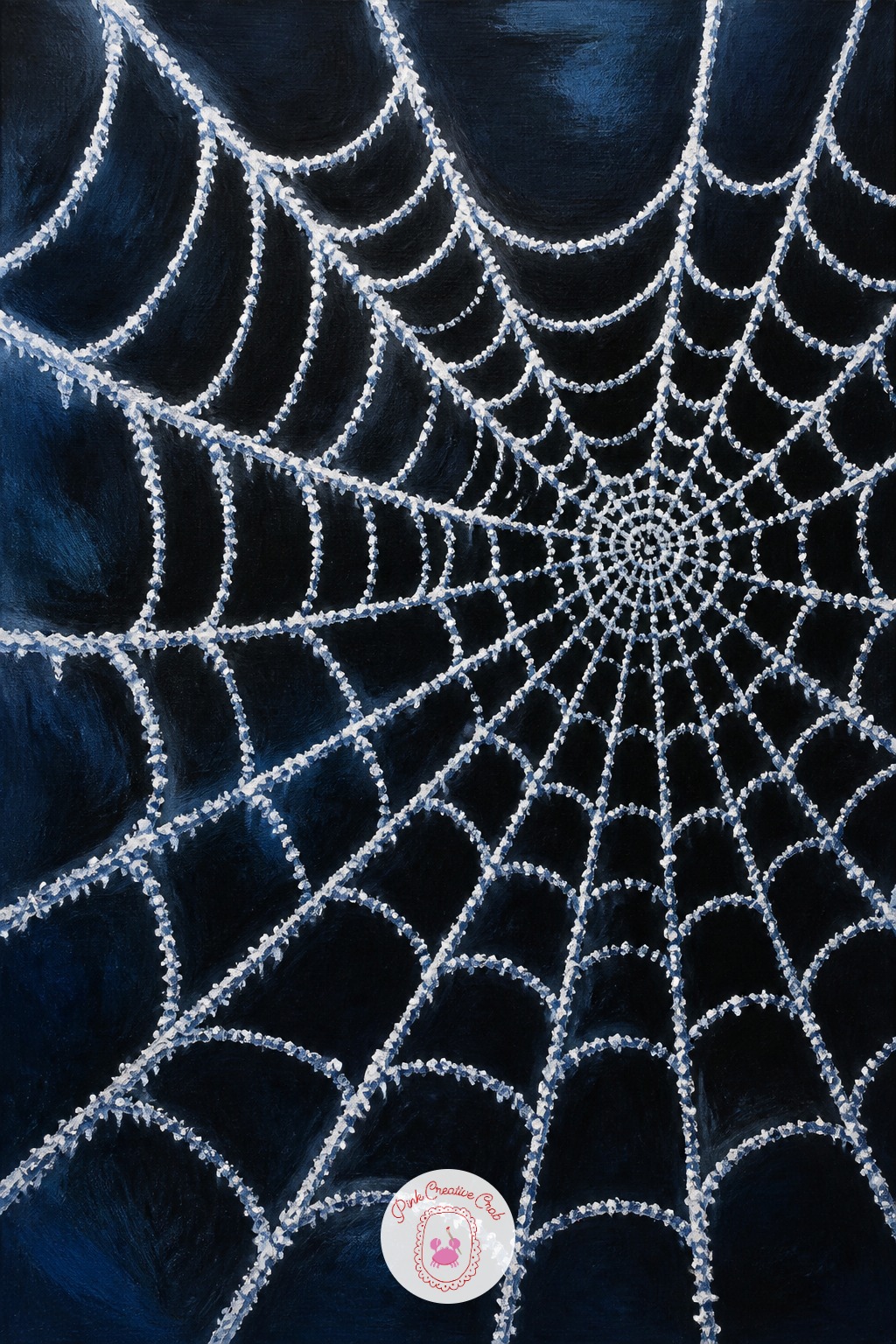
A frosted web is an unusual close-up subject and reads as striking against a near-black canvas. Wash the whole surface in dark navy mixed with a little black and let it dry completely before adding anything else.
Use a fine liner brush and thinned titanium white to paint radiating lines out from a center point, then connect them with slightly curved rings. Dab a few tiny white dots along the strands for frost beads. The mistake most painters make here is drawing the web lines too thick and too straight, so keep the brush loaded lightly and let the hand waver a little.
Snowy Fence Line
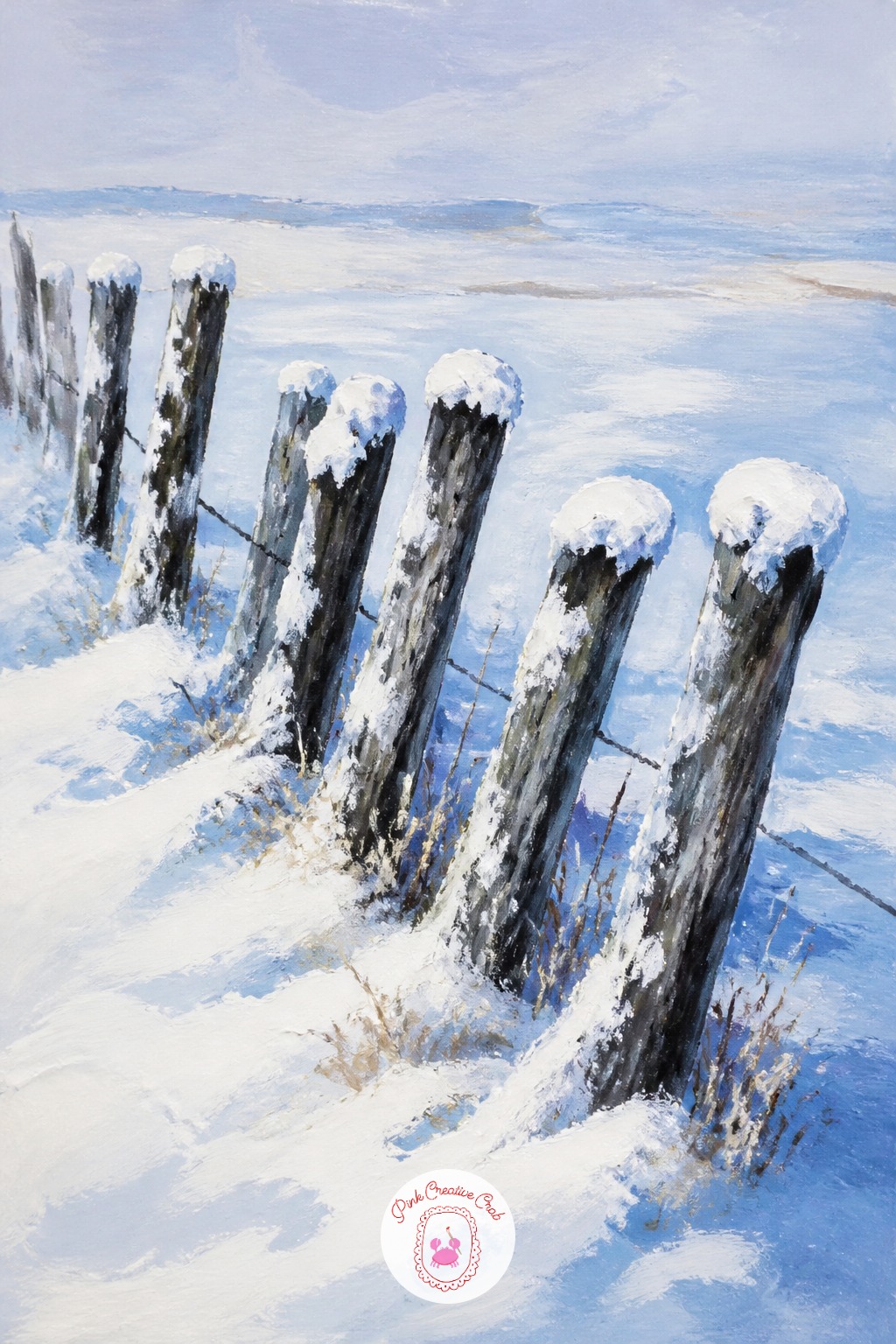
A fence line gives a landscape a sense of distance without needing a full scene behind it. Draw three or four posts at slightly different heights running diagonally across the lower half of the canvas.
Paint the posts in dark grey-brown, then use a palette knife to pile thick white along the top edge of each one and along the rail. Keep the background a loose, soft-focus wash of pale blue and white suggesting a snowy field. Avoid spacing the posts evenly or making them perfectly vertical, real fences lean and drift a little with age.
Snow-Draped Spruce Tree
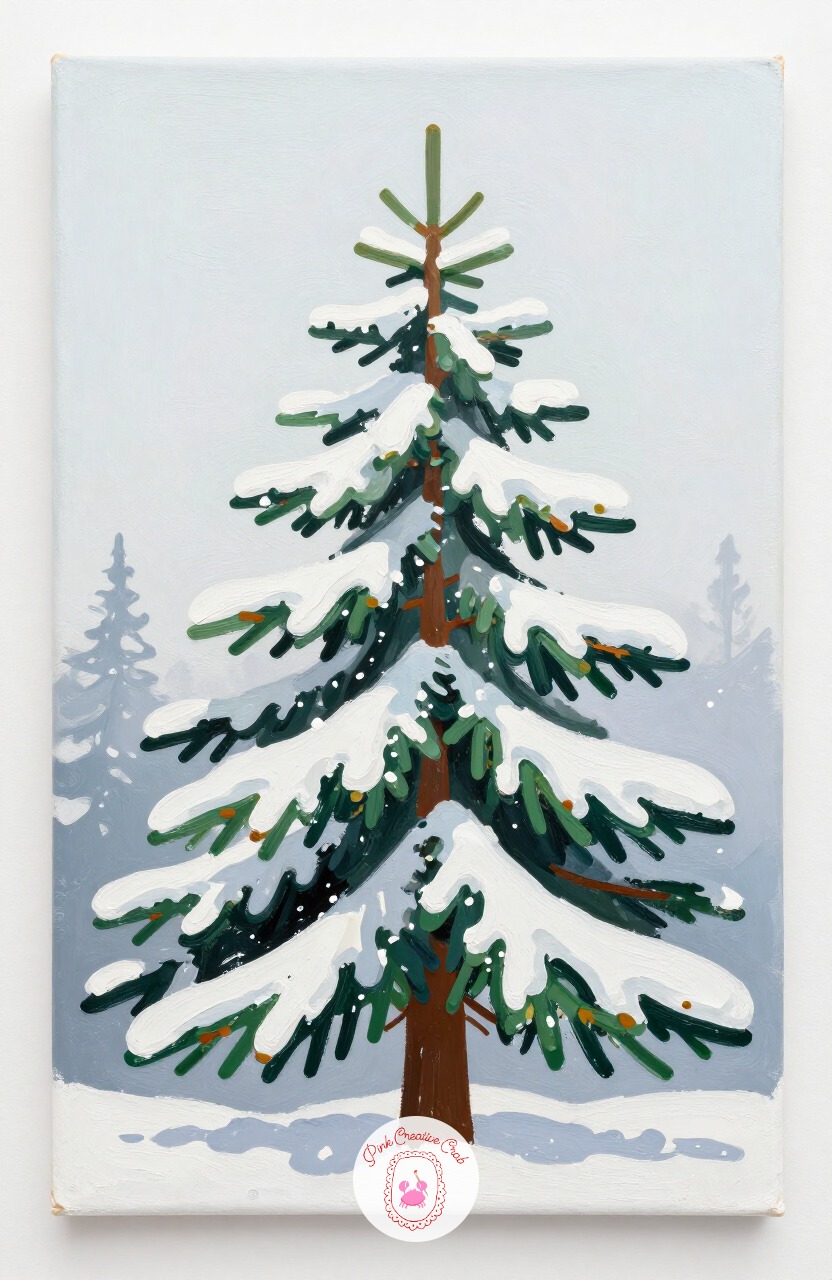
A single spruce standing alone is a good next step after the branch close-up, since it introduces a full triangular shape. Block in the dark green silhouette first with a large flat brush, keeping the outline uneven rather than a clean triangle.
Once dry, use a palette knife to add thick white snow along each branch tier, heaviest near the top where snow collects first. A pale sky wash behind the tree, applied before the tree itself, keeps the edges soft. The usual error is painting snow on every branch equally, leave some lower branches bare to keep it believable.
Birch Trees Against Pale Blue Sky
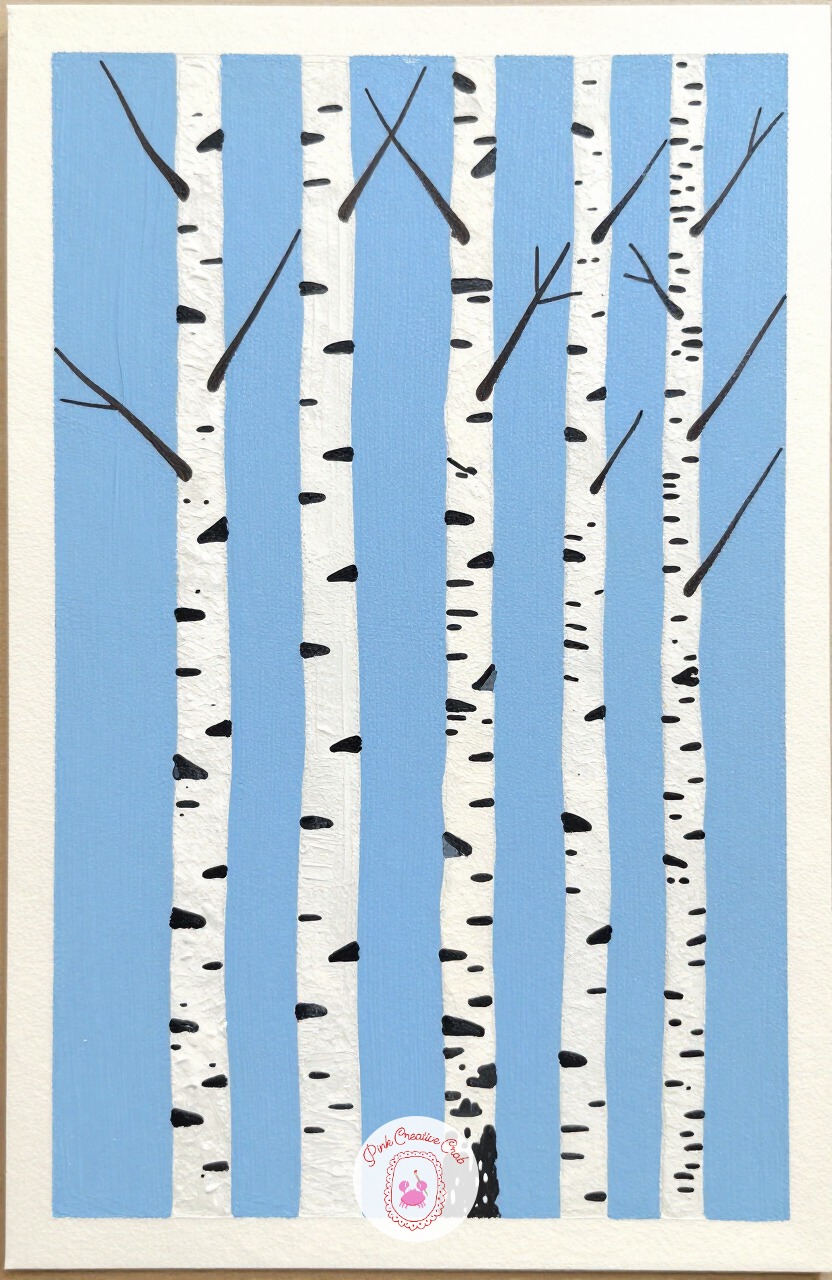
Birch trunks give a winter canvas instant structure, since their pale color stands out against almost any sky. Start with a pale blue sky wash covering the whole canvas and let it dry before adding anything on top.
Paint three or four vertical trunks in titanium white with a touch of grey, then add short horizontal black marks at random intervals for the bark texture. A few thin dark branches reaching up finish the trunks. The mistake to watch for is painting the trunks pure flat white, add a grey-blue shadow down one side of each trunk to give it roundness.
Snowy Country Road
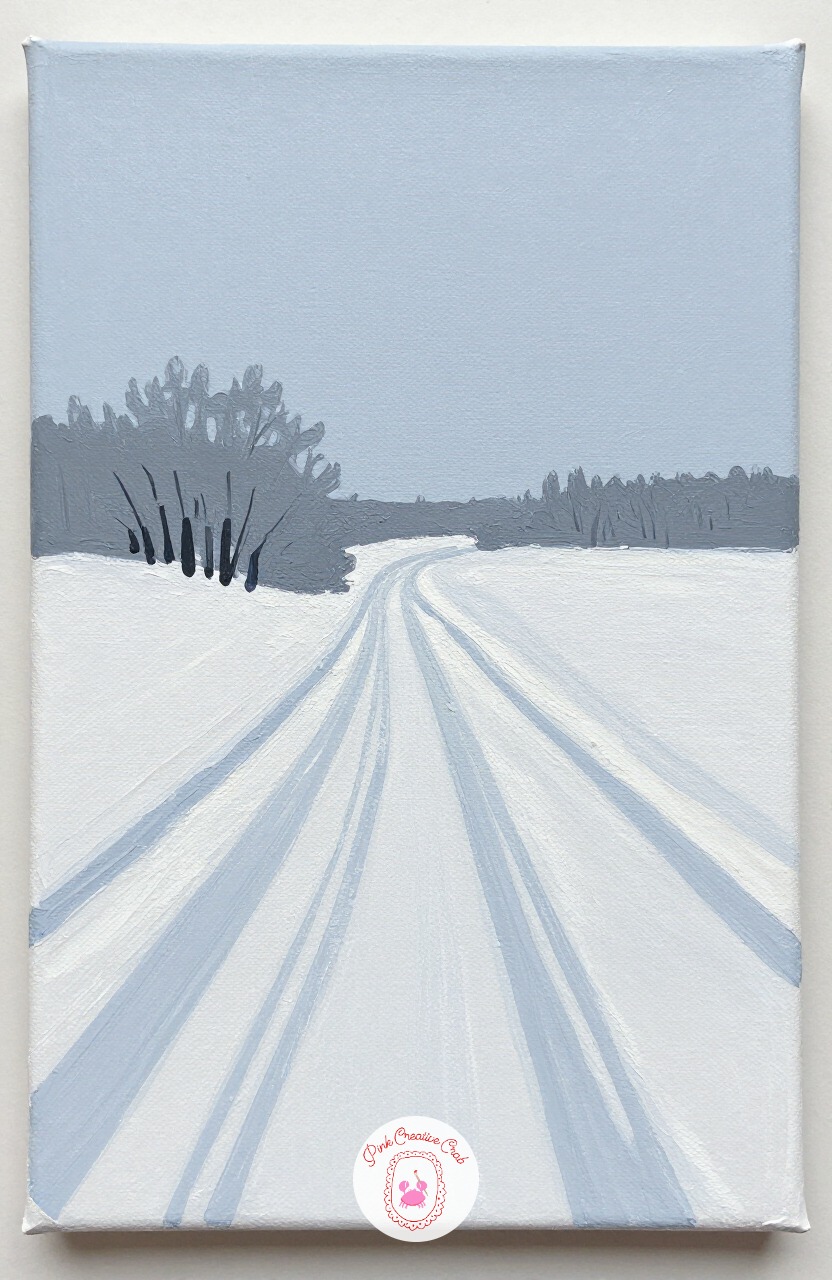
A road receding into the distance is an easy way to practice perspective without a complicated scene. Paint the sky and distant tree line first in soft blue-grey, then bring the road down the center of the canvas, narrowing as it reaches the horizon.
Use grey-blue for the shadowed snow banks on either side and leave the road itself a warmer, slightly yellowed white where it catches light. Finish with a scattering of small dark marks for roadside bushes. Avoid centering the road perfectly, pushing it slightly to one side makes the composition feel less stiff.
Cardinal Pair on Snowy Branch
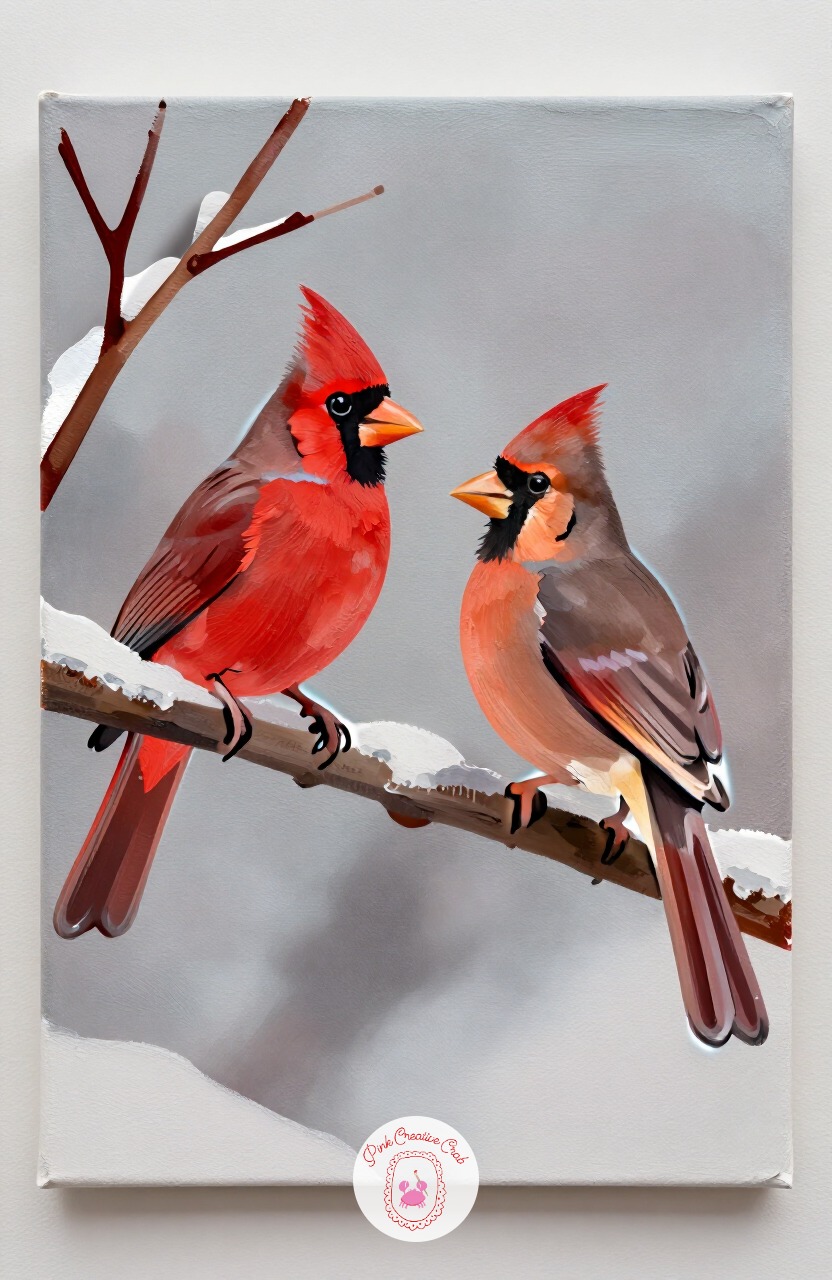
Painting two cardinals together, the brighter red male and the warmer brown-tan female, gives more to look at than a single bird without adding much difficulty. Block both birds as simple ovals on a snow-dusted branch, facing toward each other.
Paint the male in full cadmium red with a black mask, and the female in soft olive-brown with a touch of red only on the wings and crest. Keep the snow on the branch loaded thick with a palette knife. The mistake to avoid is making both birds the same size and color, the female should read clearly different from the male.
Winter Hare Tracks in Snow
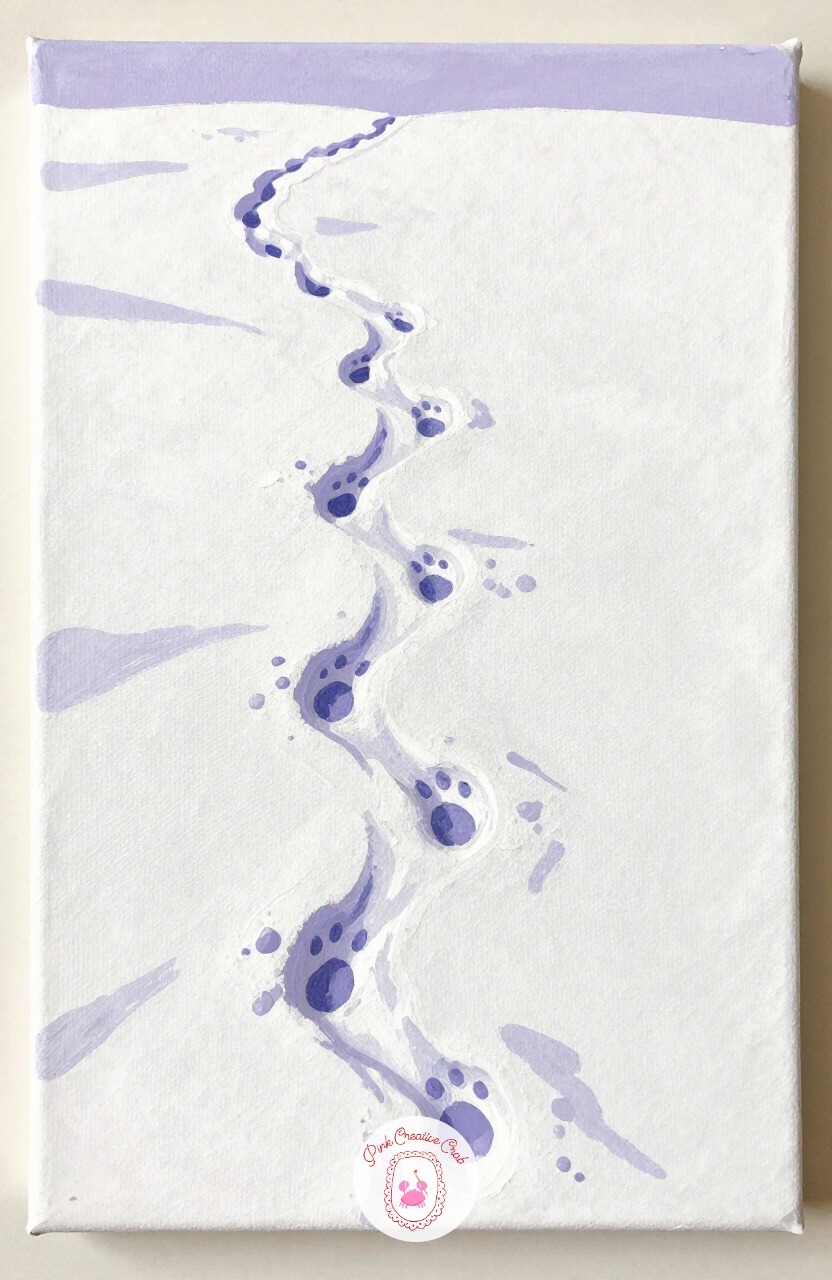
A ground-level view of tracks in the snow is a quieter subject that still tells a story without painting any animal. Fill most of the canvas with snow in titanium white, then mix a pale blue-violet for the shadowed dips and ridges across the surface.
Add a trail of paired paw prints leading from the foreground toward the top of the canvas, each print slightly smaller as it recedes. A few blades of dead grass poking through the snow add scale. The common mistake is painting the snow as flat white, the shadow color is what makes it read as snow rather than paper.
Winter Moon Over Frozen Pond
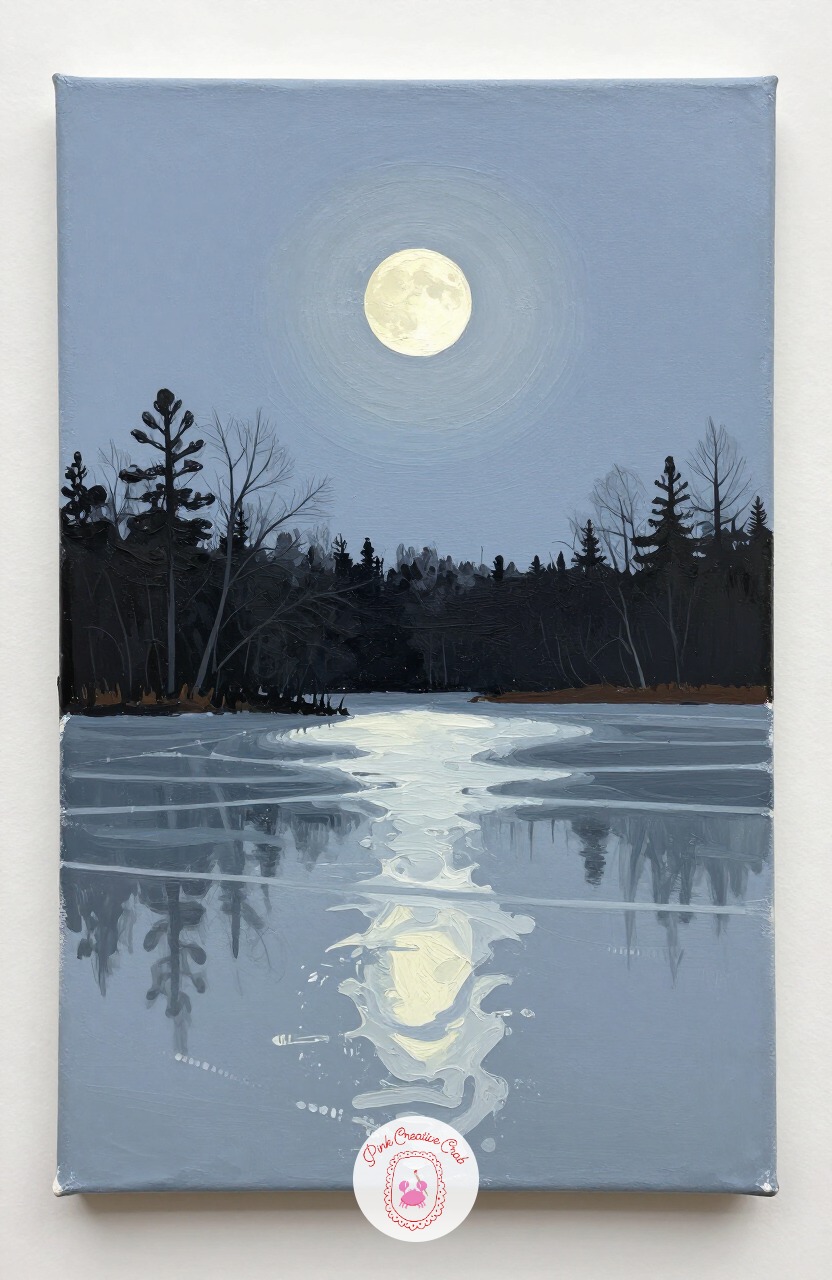
A night scene with a moon reflected on ice makes a strong canvas with a limited palette. Paint the sky first as a gradient from deep navy at the top to a paler blue near the horizon, then add a pale circle for the moon with a soft white glow blended around it.
Keep the trees around the pond as simple dark silhouettes. For the ice, pull streaky horizontal strokes of pale grey and white beneath the moon to suggest a reflection broken by frost. Avoid painting the ice as smooth as still water, winter ice should look streaked and slightly cracked.
Owl on Frosted Branch
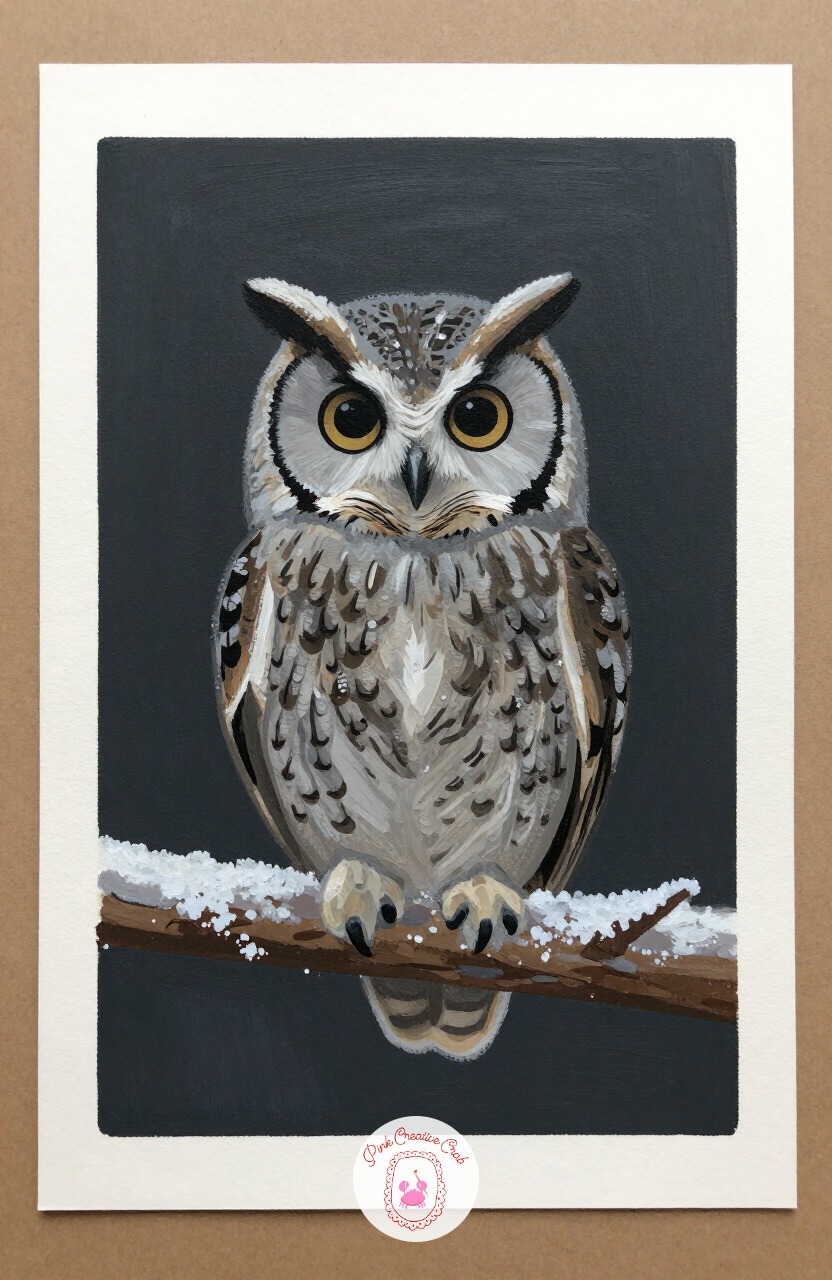
An owl is a satisfying animal subject because the body is mostly simple ovals before any feather detail goes in. Block the body as one large oval, add the round facial disc, then place two big round eyes close together near the top.
Once the base shapes are dry, use a dry, barely loaded brush to stipple feather texture in layers of grey, brown and white, working from the belly upward. Paint the branch beneath with thick white snow added last. The mistake that flattens most owl paintings is smooth, blended feathers, keep the dry brush texture visible instead.
Snowshoe Hare in Snowdrift
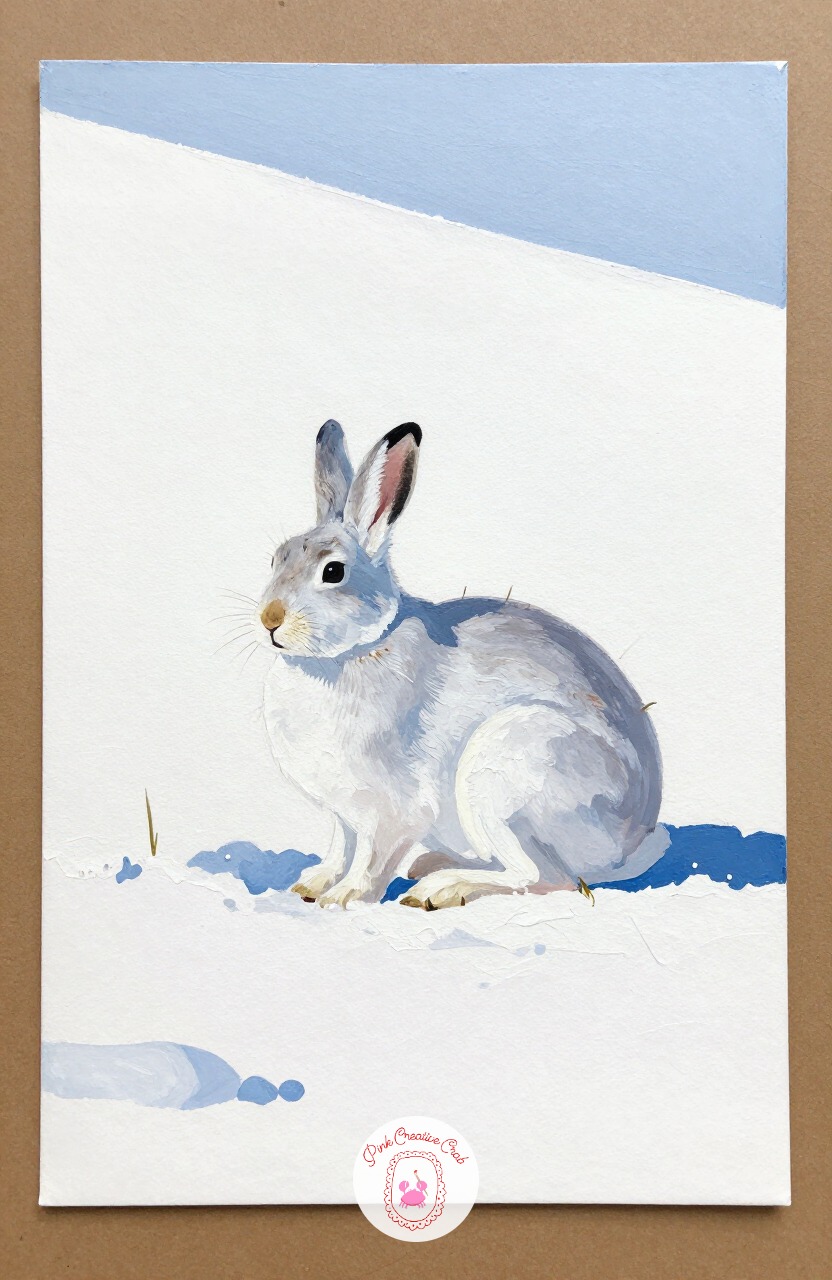
A white hare in snow is a good lesson in painting white on white, since the animal only reads clearly through shadow and edge work. Block the hare’s shape first in a very pale grey rather than pure white, leaving room to add brighter highlights later.
Paint a cool blue-grey shadow along the underside and back edge of the hare to separate it from the snow behind it, then add pink-toned ears and a few tufts of brown grass sticking through the drift. The common mistake is leaving the hare with no outline at all, it disappears completely without that shadow edge.
Red Barn Under Heavy Snow
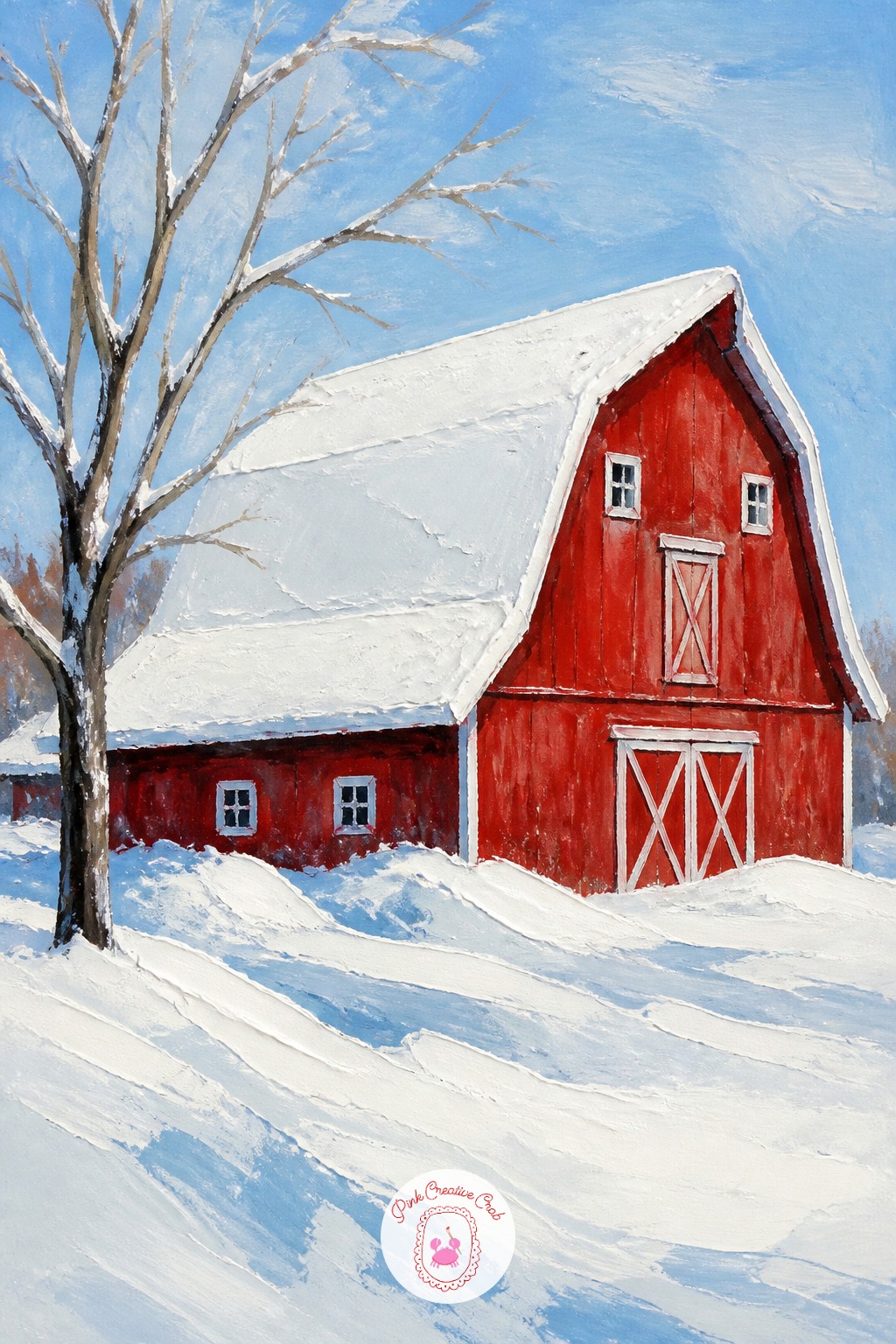
A red barn is one of the most requested winter painting ideas, pairing strong color with heavy snow for real contrast. Block the barn as a simple rectangle with a triangular roof in cadmium red mixed with a little burnt umber for depth.
Once the barn is dry, load a palette knife with thick titanium white and press it along the roofline and in drifts against the base of the walls, leaving the knife marks visible for texture. Add a bare tree beside the barn with a few thin branches. The usual mistake is painting roof snow as a flat white stripe, it should look mounded and uneven with knife texture doing the work.
Snowy Mailbox and Fence Post
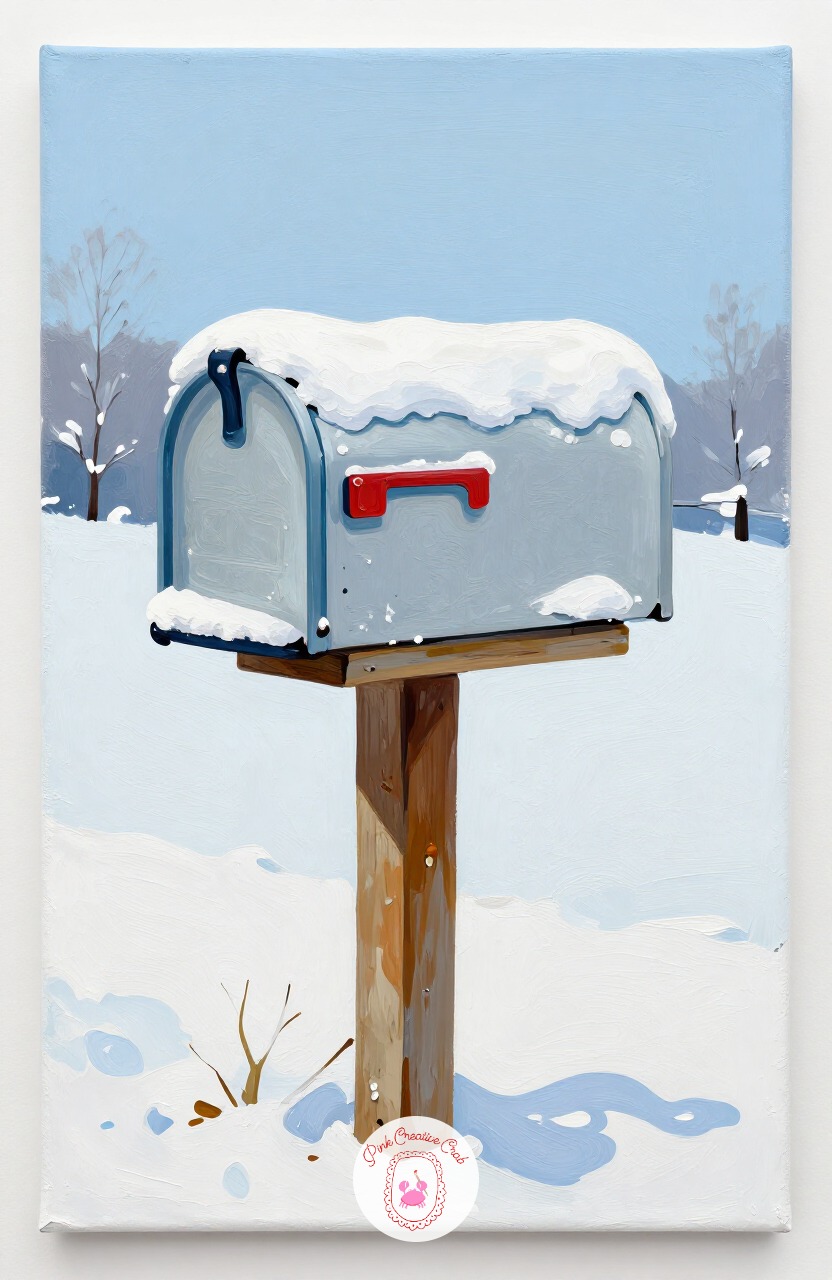
A mailbox on a snowy post is a small, quick subject that still carries a strong sense of place. Paint the post and box shape first in weathered grey or dark red, then add a thick cap of titanium white across the top with a palette knife.
Keep the field behind soft and out of focus with a loose blend of pale blue and white. A thin dark line low in the frame suggests a fence running off into the distance. The mistake to avoid is a snow cap that looks painted on thin, pile it on generously so it reads as real accumulation.
Snow-Covered Covered Bridge
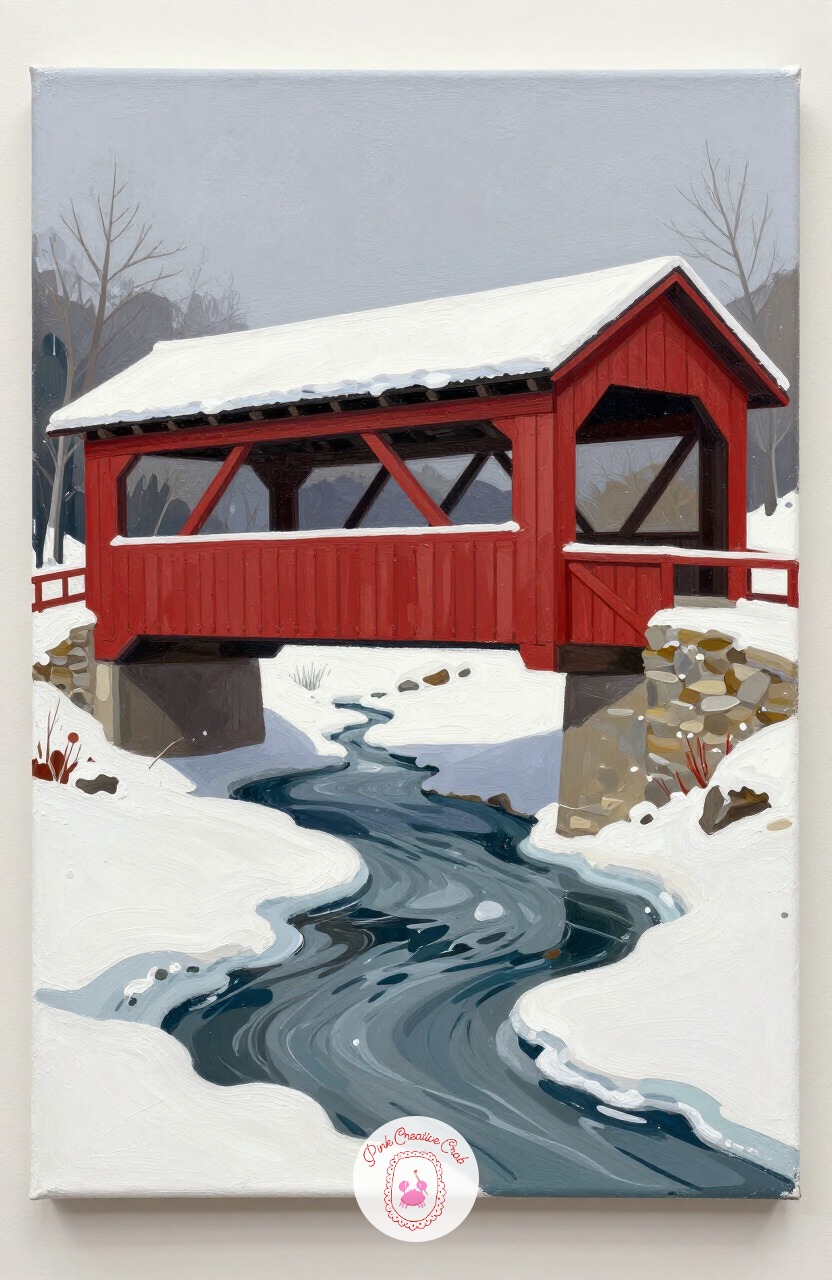
A covered bridge adds architecture to a winter canvas without demanding tight detail, since the shapes are mostly simple rectangles. Block the bridge body in weathered red-brown, with a sloped roof carrying a thick layer of white snow pressed on with a palette knife.
Keep the opening at the near end dark and fairly simple, a hint of structure inside is enough and avoids painting a full interior. Add a partly frozen stream beneath with patches of grey-white ice and a few dark openings of water. The common mistake is making the bridge opening too detailed, keep it dark and let the eye fill in the rest.
Winter Sunrise Over Hills
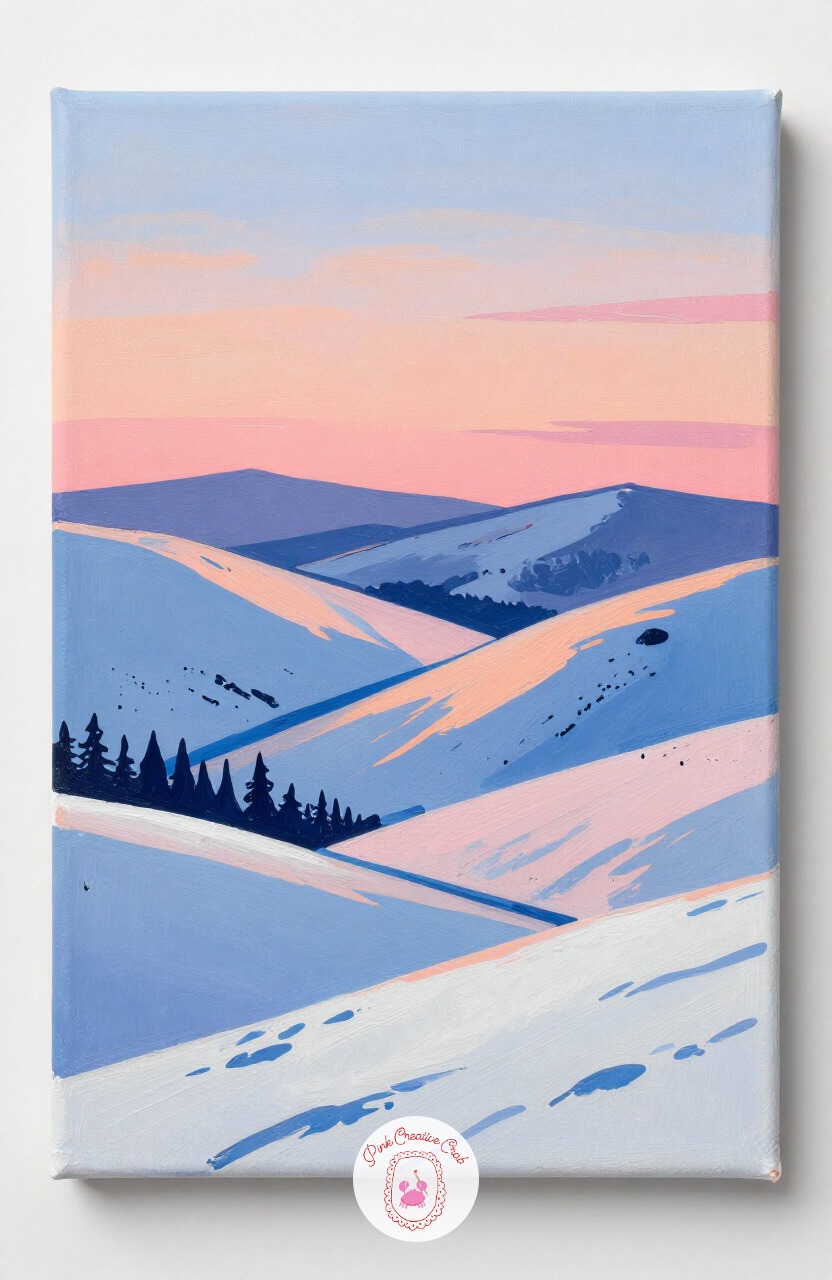
Rolling snowy hills under a sunrise sky bring warm and cool color together in one canvas. Paint the sky first as a soft gradient from peach and pink near the horizon up into pale blue, blending while both colors are still wet.
Shape the hills with long, low curves rather than sharp peaks, and paint the shadow sides in blue-violet rather than grey to keep the warmth of the light consistent. Readers who enjoy this kind of soft, graduated sky might also like these winter oil painting ideas for comparing how the two mediums handle the same light. The mistake to avoid here is painting the snow shadows grey, which kills the warm and cool contrast that makes a sunrise read.
Fox Crossing Snowy Field
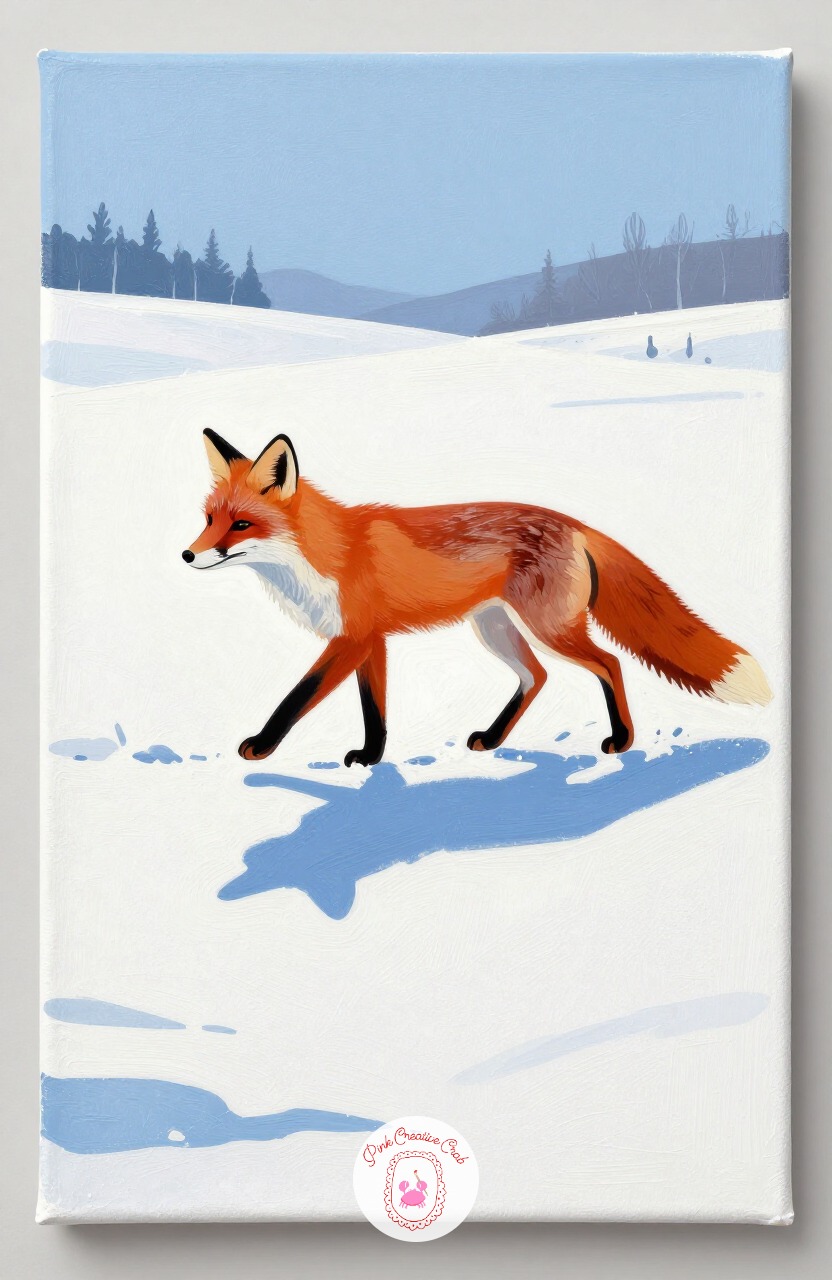
A fox mid-stride across open snow gives a landscape a clear focal point and a sense of motion. Block the body first in burnt orange with a lighter cream underbelly, keeping the legs long and the tail full.
Shade the back and legs with a darker rust mix, then add a few dry-brushed white strokes along the back to suggest fur catching the light. Paint a long blue shadow stretching away from the fox across the snow to anchor it in the scene. The common mistake is leaving the fox flat orange all over, the shadow and highlight strokes are what give it fur and form.
Snowy Owl in Flight
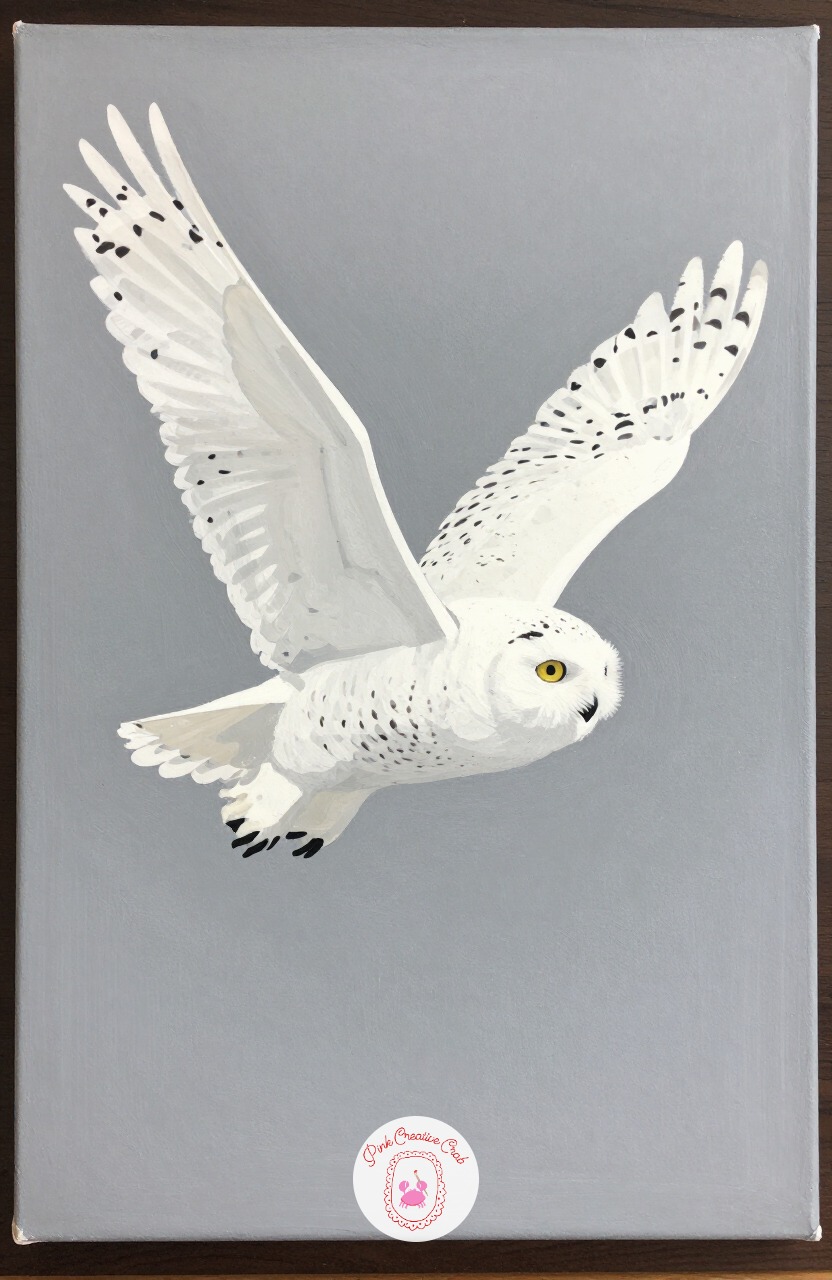
A snowy owl with wings spread is a different challenge from a perched owl, since the whole body reads through soft white on white. Block the wing and body shapes in pale grey first, keeping the wings wide and slightly bent at the tips.
Layer broken strokes of white and light grey over the wings with a dry brush to suggest feather rows, leaving a few darker grey flecks for the speckled markings. A soft grey winter sky behind keeps the owl visible without a hard outline. The mistake to avoid is painting stiff, straight wing edges, soften and blur the tips slightly to suggest motion.
Deer in Snowy Forest
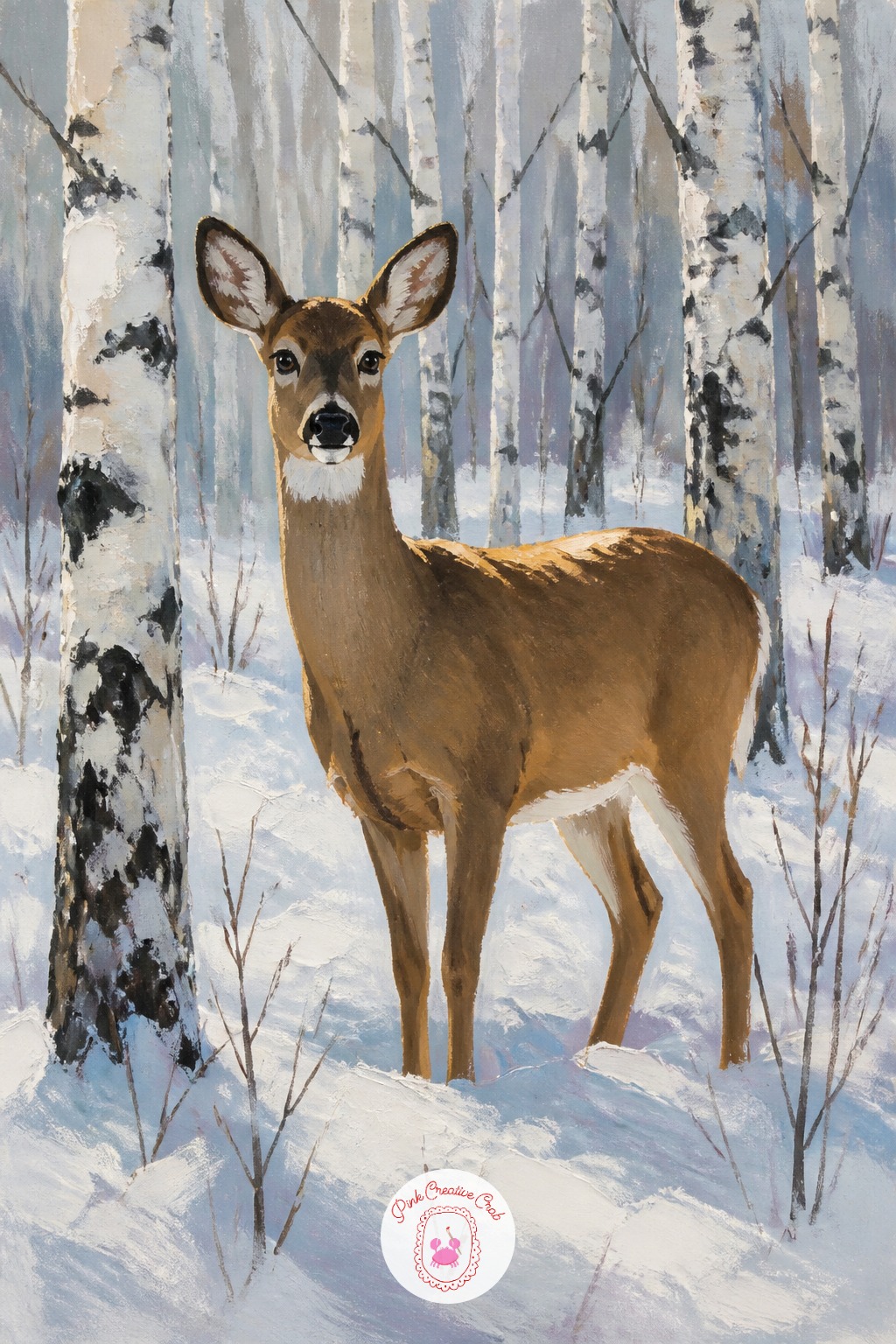
A deer standing among bare trunks brings an animal and a landscape together in one canvas. Block the body in warm grey-brown with a cream patch at the throat and under the tail, keeping the legs slim and the ears alert.
Paint the birch or pine trunks behind the deer loosely, keeping them soft-focus so the animal stays the sharpest element in the frame. Add a warm highlight along the deer’s back and shoulder to separate it from the cooler background. The common mistake is painting the deer too dark and flat, that warm highlight is what gives the coat life.
Frozen Lake at Sunset
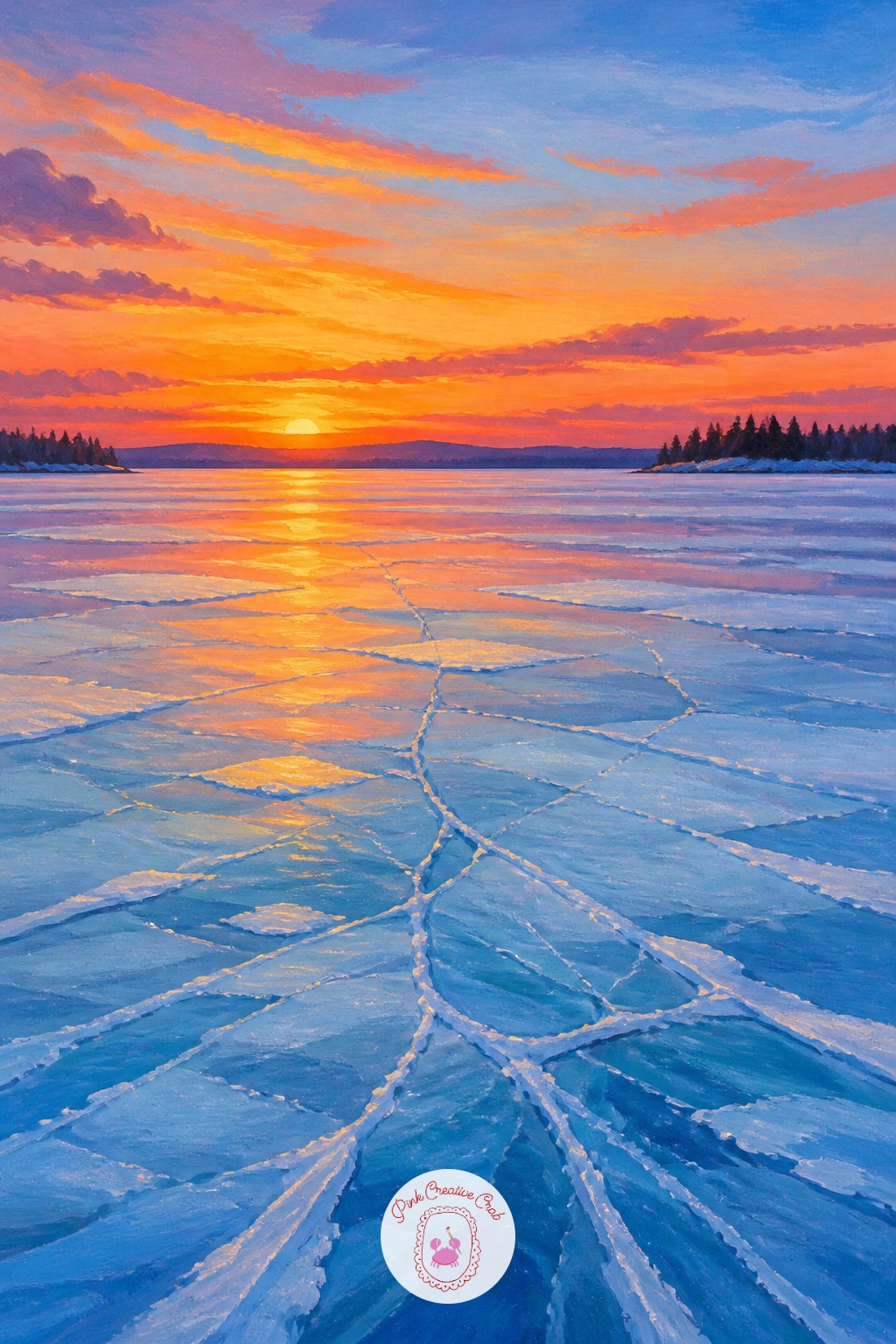
A wide frozen lake under a sunset sky is one of the most rewarding winter scenes to paint, pairing warm sky color with cool ice. Block the sky first in bands of orange, pink and pale lavender, blending the edges while wet.
Paint the ice beneath with horizontal dry-brush strokes in pale blue, white and a touch of the sky’s pink to suggest reflected light, then add a few darker cracks running across the surface with a fine brush. Keep the tree line along the far shore as simple dark silhouettes. The mistake to avoid is painting the ice as smooth and glassy as open water, it needs that broken, dry-brushed texture to read as frozen.
Snowy Pine Forest at Dusk
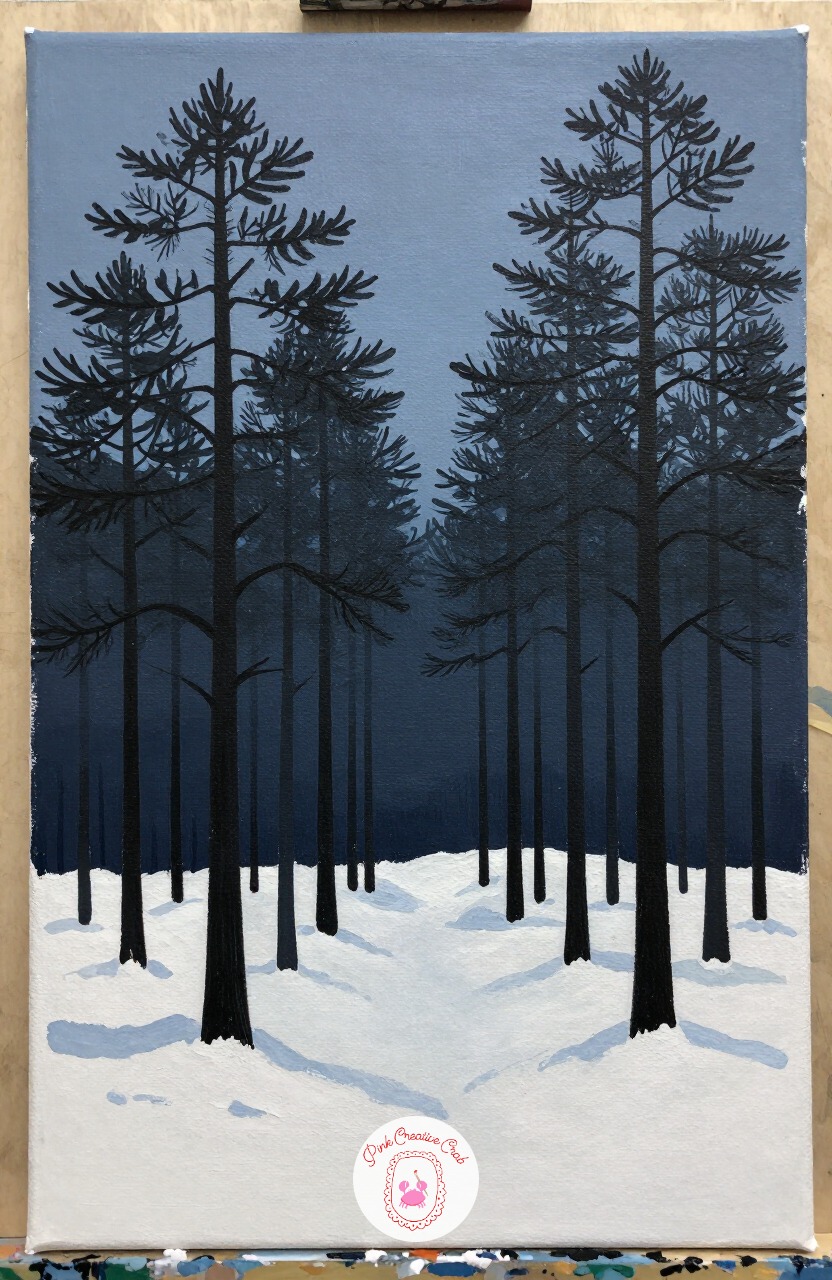
A row of pine silhouettes at dusk is a good lesson in depth using only value, no detail required. Paint the sky first in a soft gradient from blue-grey at the top to a paler, almost lilac tone near the horizon.
Add the pines as simple dark triangles, making the ones in front larger and darker and the ones further back smaller and lighter, almost blending into the sky. A light dusting of white flicked across the lower canvas suggests fresh snow on the ground. The common mistake is making every tree the same size and tone, which flattens the sense of distance completely.
Frosted Window with Pine View
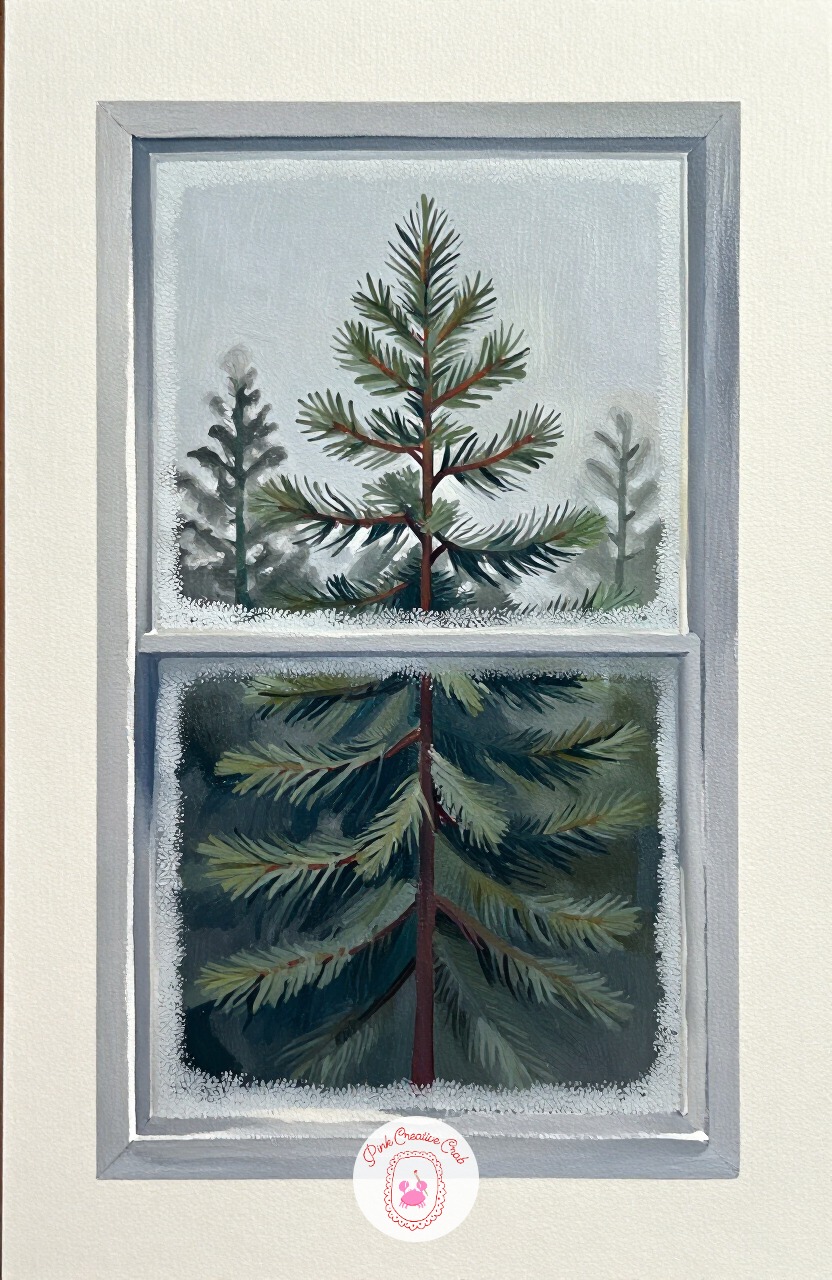
A window with frost at the edges and a pine view beyond makes an interesting close-up that combines texture with a loose landscape. Paint the background pines and sky first, keeping them soft and slightly blurred since they sit behind glass.
Once dry, add the window frame in simple straight lines, then use a fine brush loaded with thinned white to paint feathery frost patterns creeping in from the corners and edges. The mistake to avoid is covering the whole pane with frost, which blocks the view entirely, keep it concentrated at the edges and corners only.
Snow Falling on Dark Pines
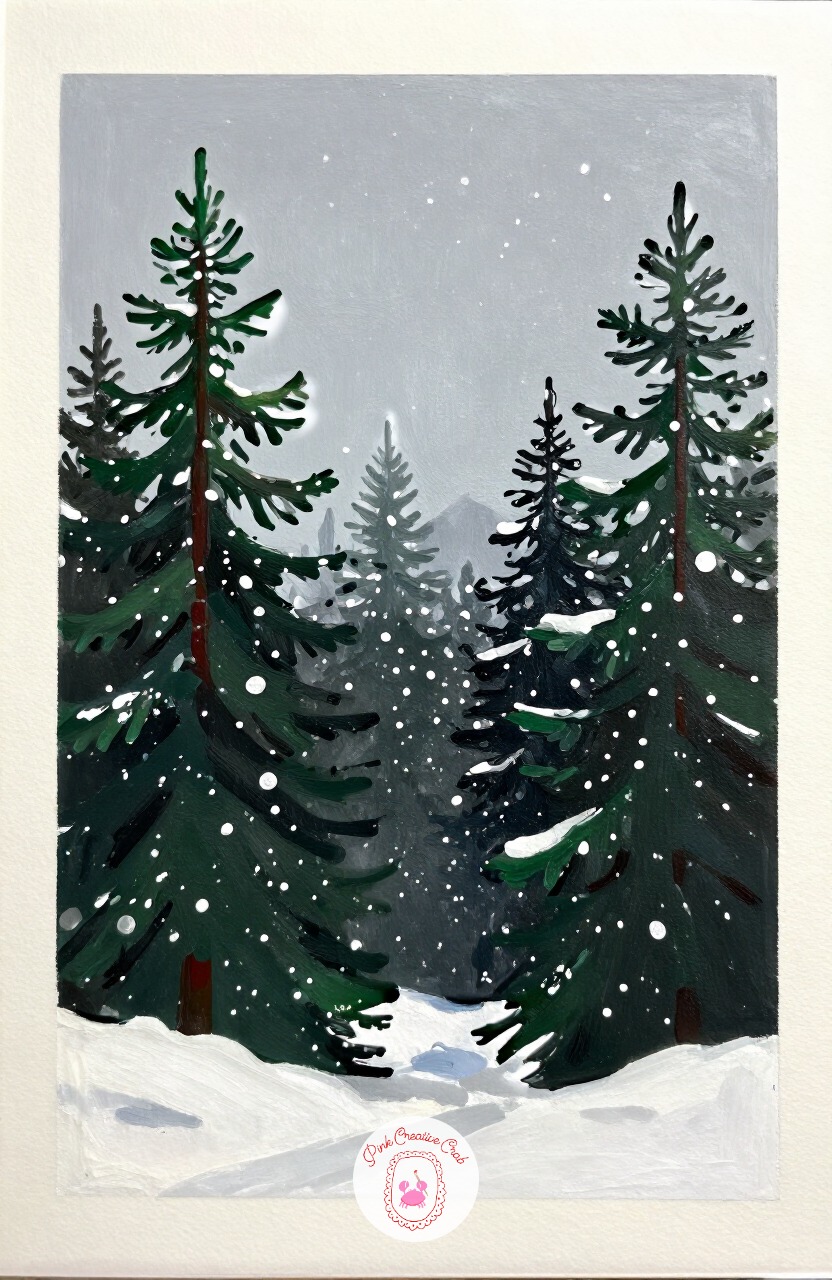
Falling snow against dark pines is a simple effect that adds a lot of atmosphere for very little extra work. Paint the pines first as solid dark green-black shapes against a pale grey sky, keeping the edges soft.
Once everything is dry, load an old stiff brush or a toothbrush lightly with thinned titanium white and flick it across the canvas to scatter snowflakes of different sizes. Add a few larger dots by hand with the tip of a round brush for variation. The common mistake is flicking snow in one even pass, go over it two or three times from different angles so the flakes do not line up.
Winter Birch Forest Path
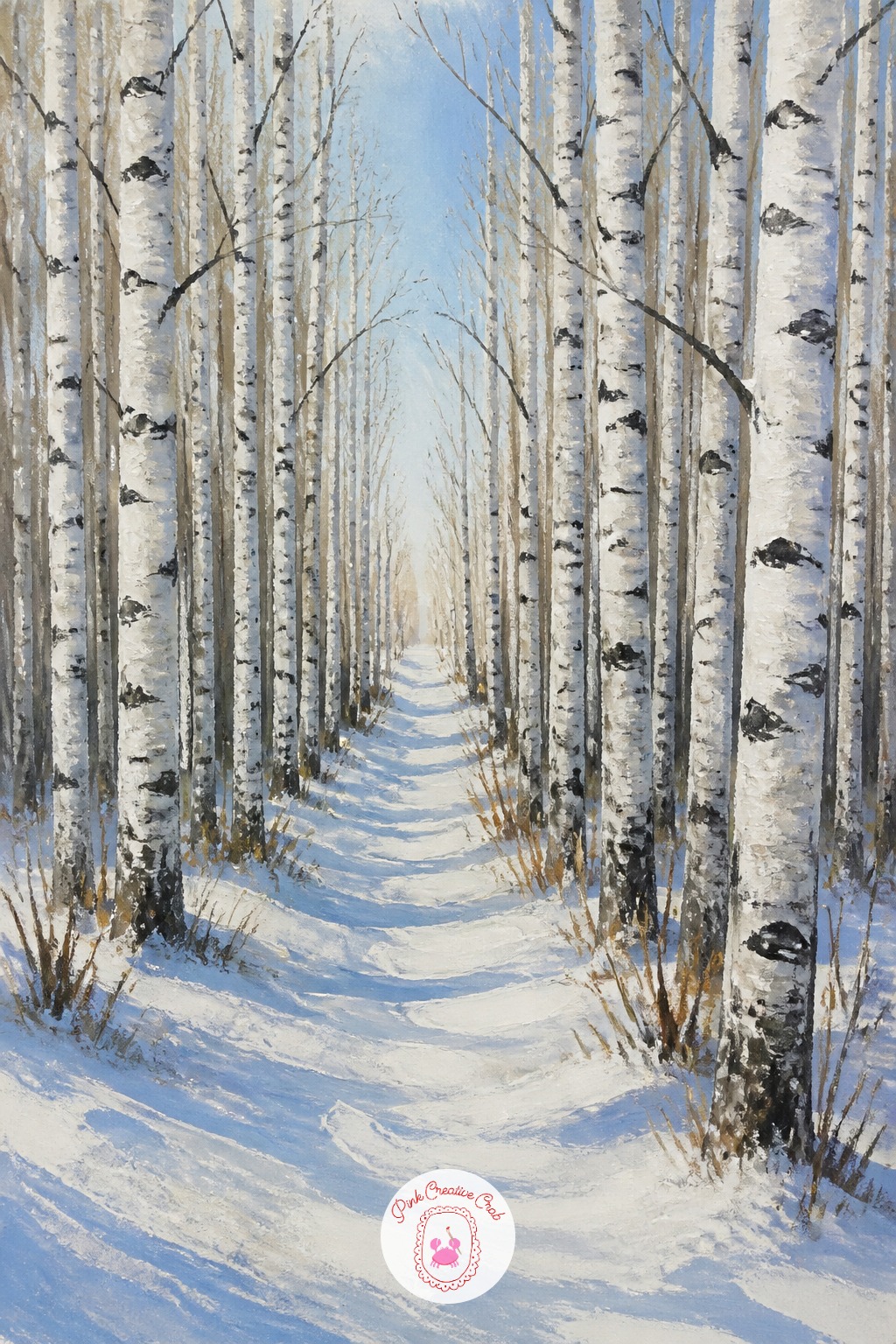
A path cutting through a stand of birch trees combines the trunk technique from earlier with a sense of walking into the scene. Lay in the pale sky glimpsed at the far end of the path first, then bring the snowy ground forward in warm and cool whites.
Paint the birch trunks at staggered heights and spacing on either side, each with a grey-blue shadow down one side. For the overall composition, the layout ideas in this guide to acrylic painting scenery are useful once this one feels comfortable. The mistake to avoid is lining the trunks up evenly like a fence, stagger them for a natural path through the trees.
Frozen Waterfall
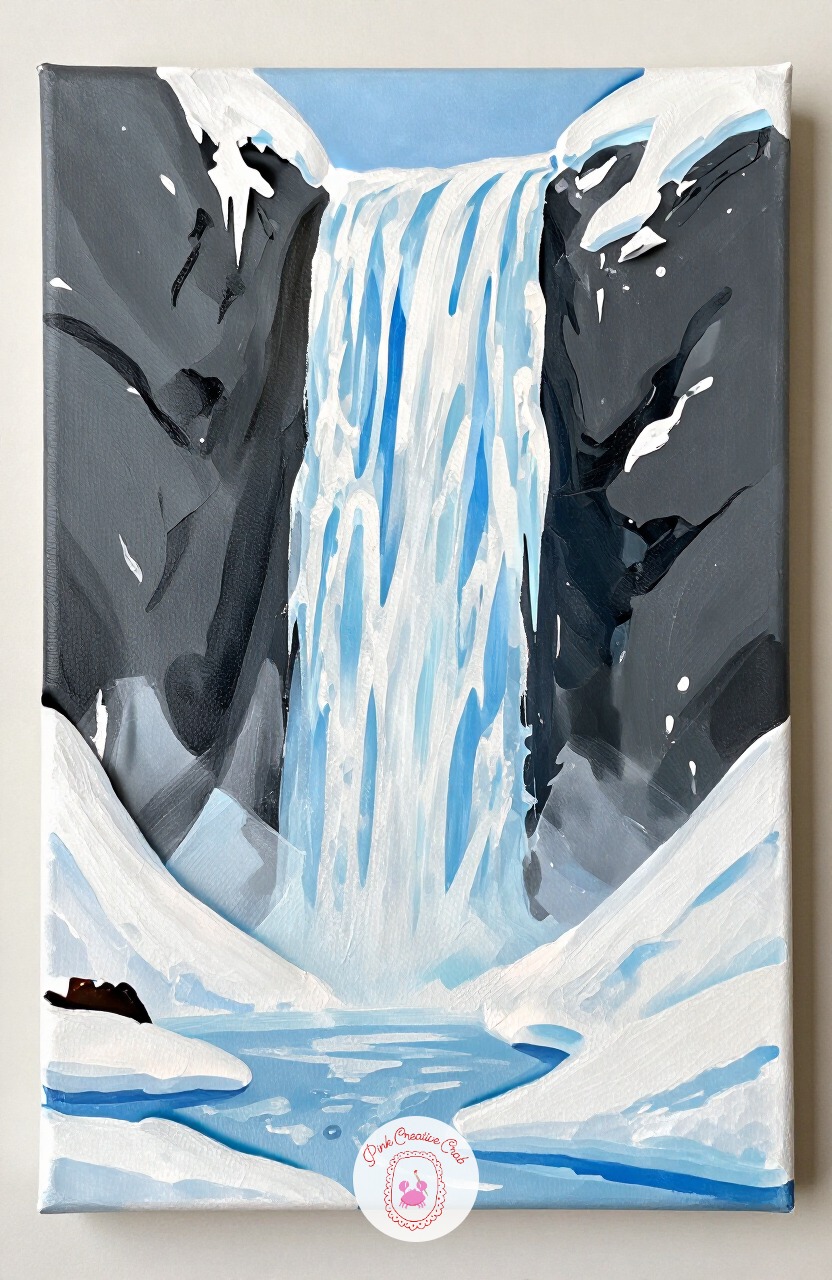
A waterfall frozen mid-drop is a striking subject built from simple vertical strokes rather than the usual soft curves of moving water. Block in the dark grey rock face first, then paint the frozen fall as a wide vertical band of white and pale blue.
Drag the brush in long downward strokes, letting some streaks of the darker rock show through for depth, then add a few icicle points hanging at the base. The mistake to avoid is painting the ice as one flat white column, those blue-grey streaks running through it are what make it read as solid rather than painted-on snow.
Snow-Capped Mountain Lake
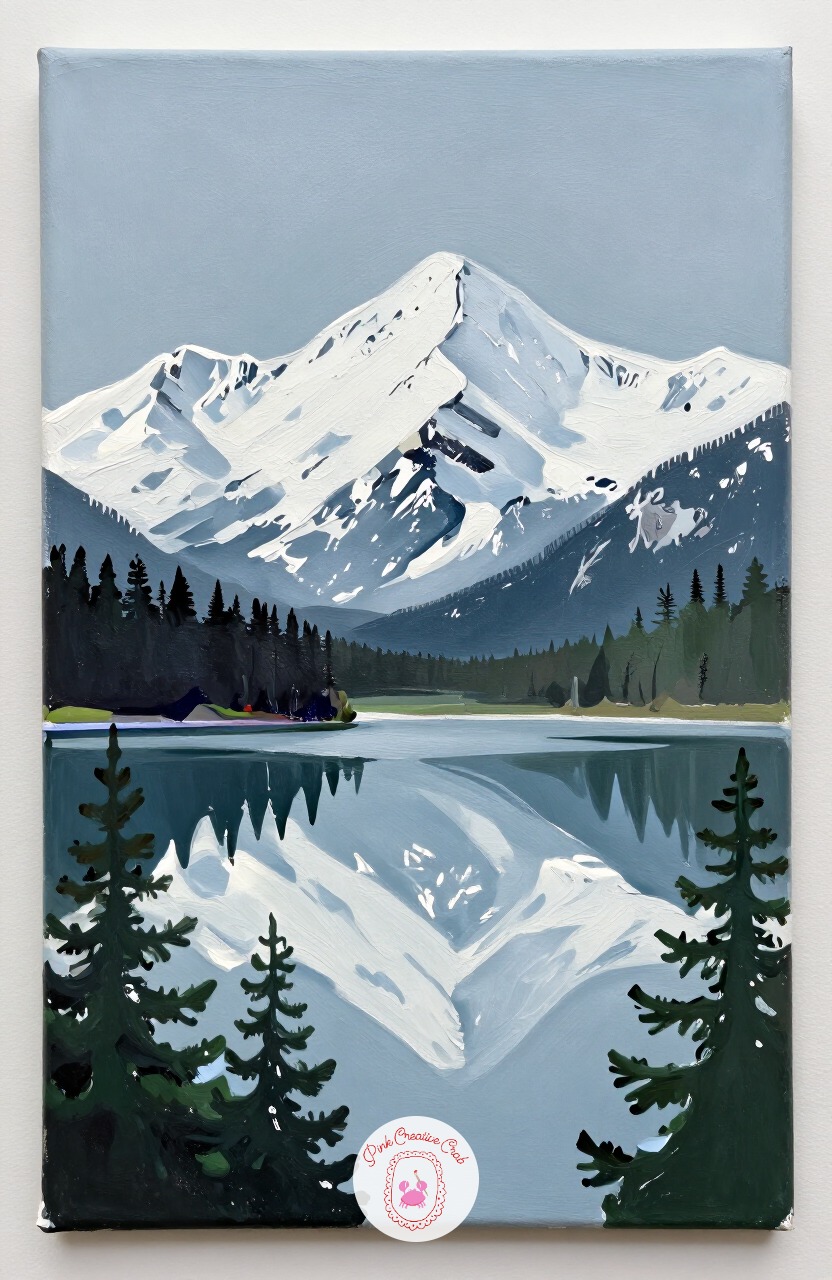
A still lake reflecting white-capped mountains pairs a distant landscape with a close, calm foreground. Paint the mountains first in pale blue-grey with white snow caps, keeping the shapes soft since they sit far back in the scene.
Bring the lake forward with a near mirror of the mountain colors, but pull the brush in loose vertical strokes rather than a crisp copy to suggest a slightly rippled surface. Frame the lower corners with a few pine trees in dark green. The common mistake is making the reflection too perfect and sharp, soften it so it reads as water rather than a second painting.
Frozen River Bend
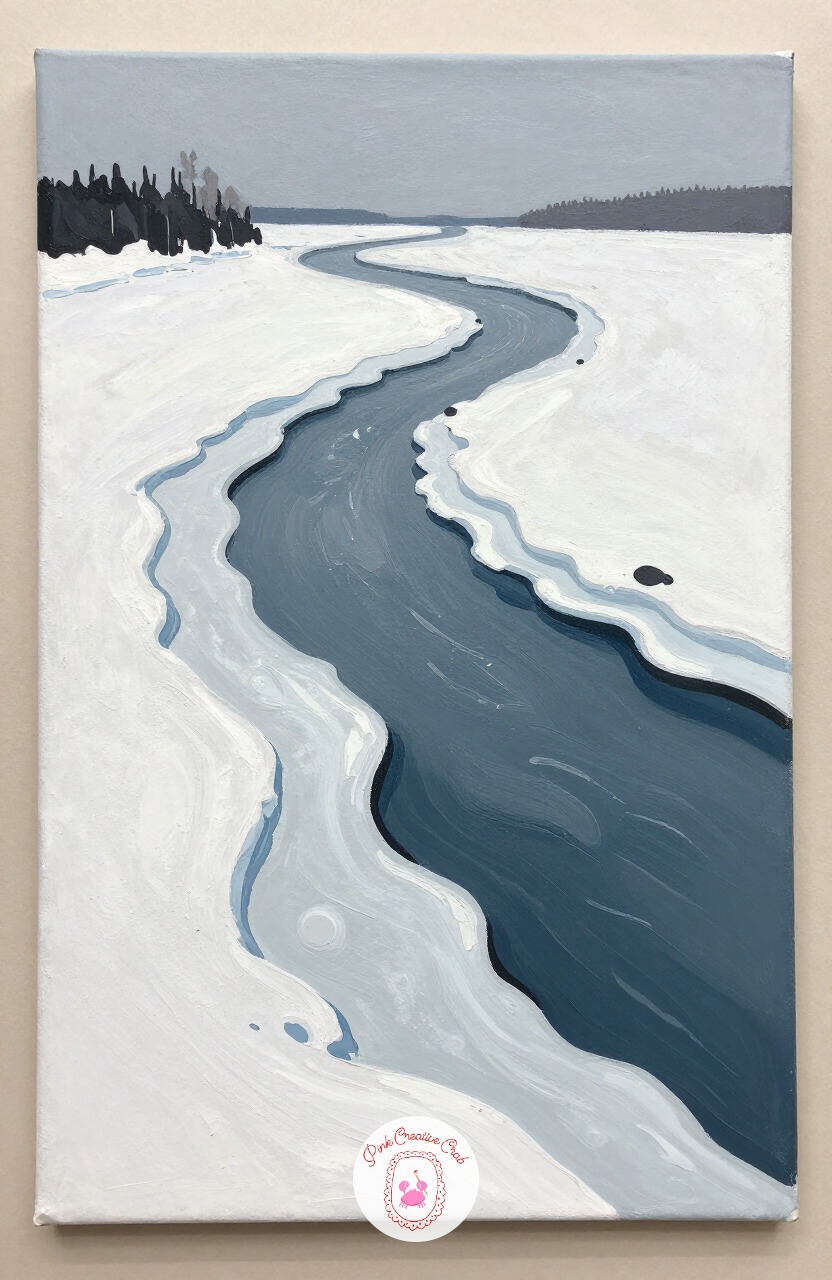
A winding river with patches of ice and open water gives a landscape real contrast between pale and dark areas. Shape the river as an S-curve moving from the foreground back into the distance, wider at the bottom of the canvas.
Paint most of the surface as pale grey-white ice, then leave two or three darker openings of exposed water in deep blue-grey where the current still moves. Snowy banks on either side can be built up with a palette knife for texture. The mistake to avoid is letting the ice and water blend into the same value, keep a clear, deliberate contrast between the two.
Snowy Mountain Range
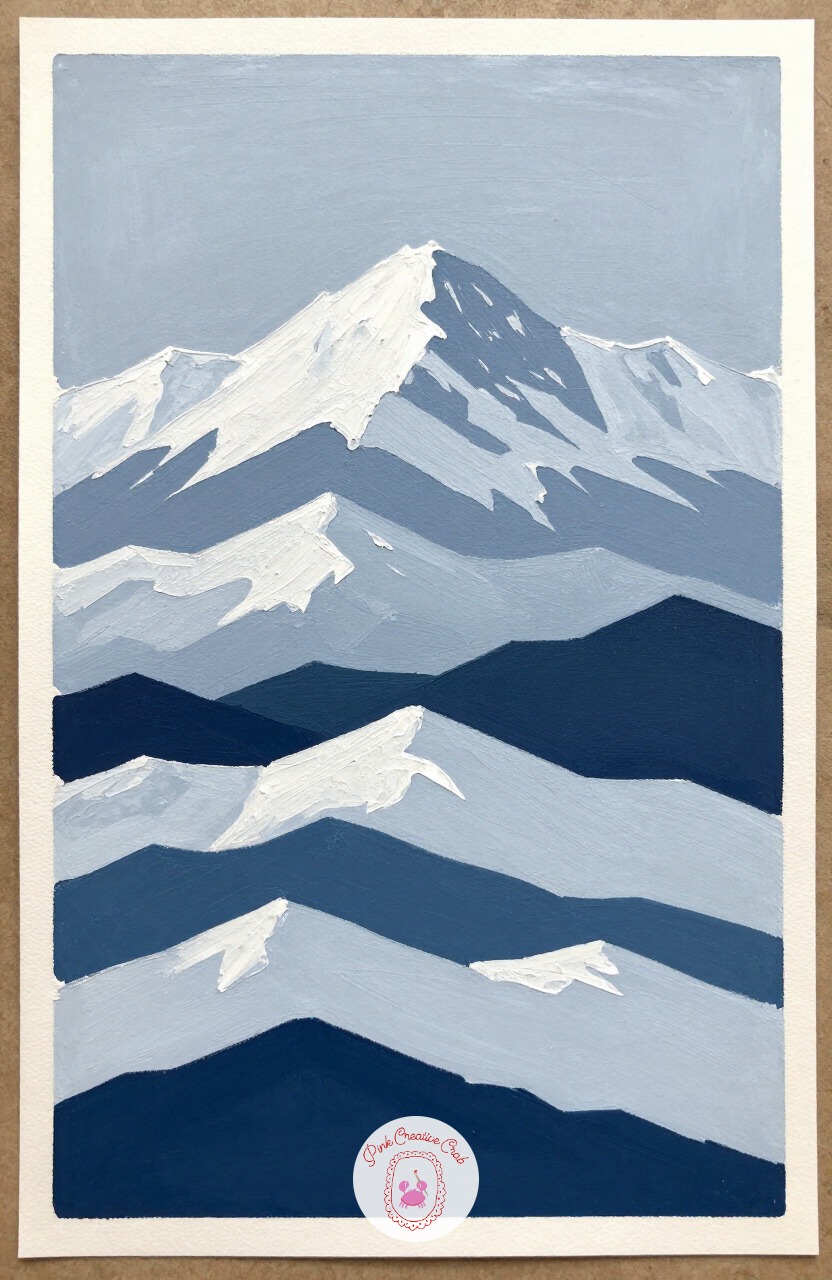
A range of mountains receding into the distance is a strong finishing piece for this list, building on the shading and layering practiced in the easier scenes. Block the furthest ridges first in the palest blue-grey, then work forward with each closer ridge slightly darker and more detailed.
Add snow caps with titanium white along the upper slopes, keeping the lines jagged rather than smooth. For more on handling the layered ridges and the atmospheric fade between them, the techniques in this guide on how to paint mountains in acrylic apply directly here. The mistake to avoid is making all the ridges the same value, the fade from dark to pale is what pushes the furthest peaks back.
Northern Lights Over Snowfield
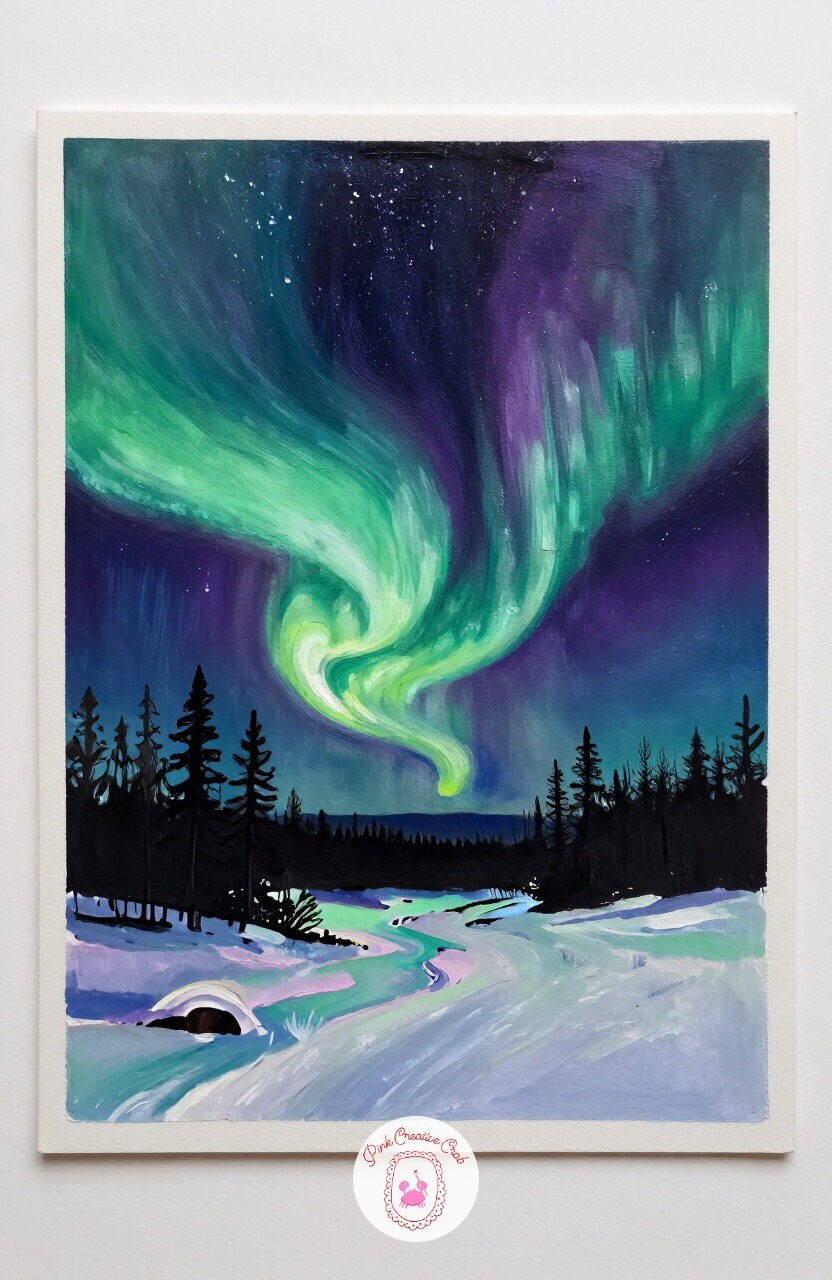
Painting the northern lights is a good way to practice soft color blending on a dark canvas. Start with a near-black sky at the top fading into deep green and violet lower down, blending the colors together while still wet rather than painting hard bands.
Add brighter streaks of green and a touch of pink with a dry brush, pulling the strokes in loose curves across the upper half of the canvas. Keep a simple dark treeline and snowfield along the bottom edge for scale. The mistake to avoid is painting the aurora with hard edges, it should glow and blur rather than sit as a solid shape.
Lone Wolf in Winter Landscape
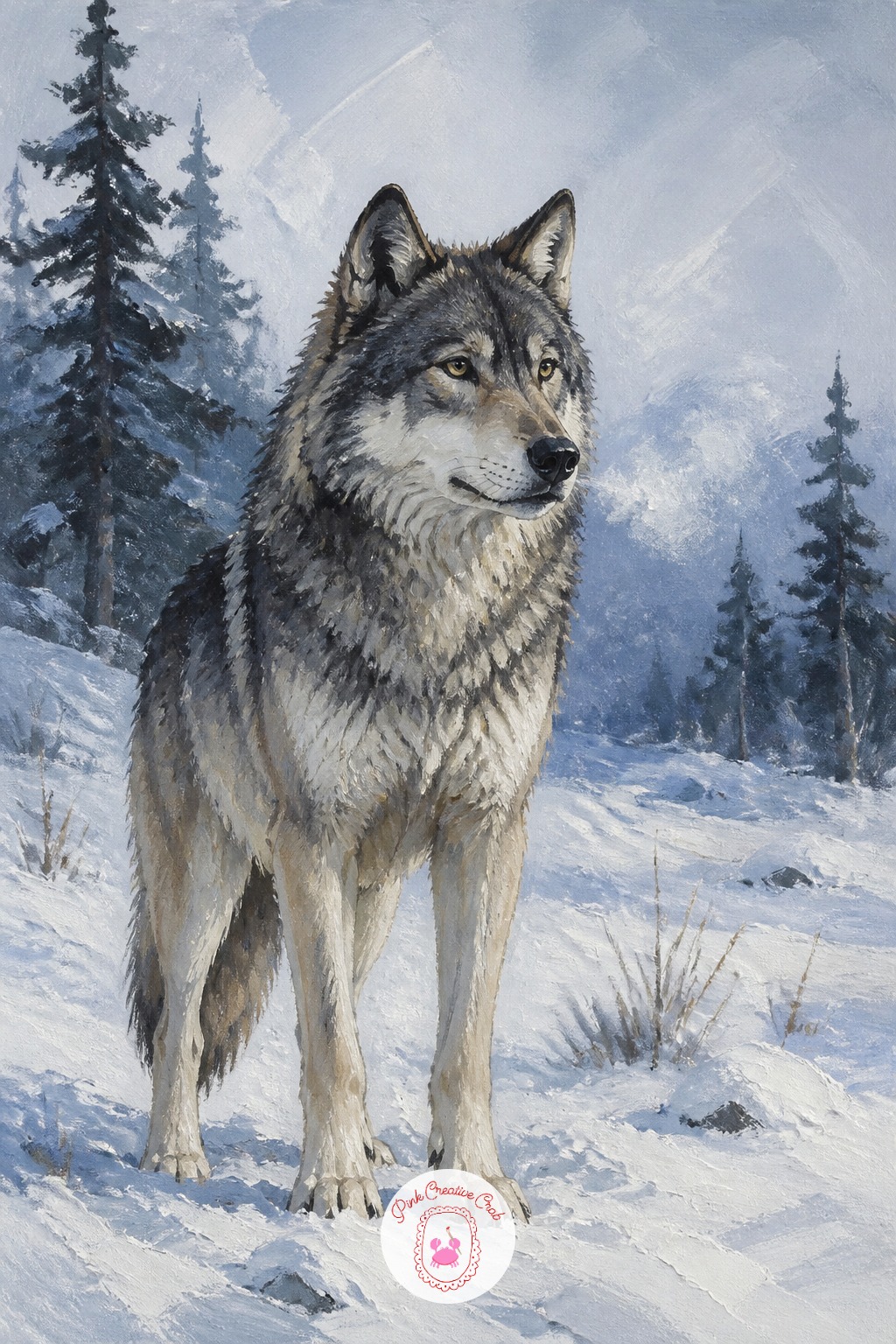
A single wolf standing in a snowy clearing makes a strong closing piece, pulling together the animal and landscape skills built up through the earlier ideas. Block the wolf’s body in cool grey with a slightly warmer belly and muzzle, keeping the stance alert and the head turned toward the viewer.
Use a dry brush to add directional fur strokes over the base color, working in the direction the fur actually grows rather than random marks. A pale puff of breath near the muzzle and a loose pine treeline behind finish the scene. The common mistake is painting the fur as one flat grey block, the dry brush strokes are what give the coat texture and direction.
What to Do Next
Pick one of these winter painting ideas, set a canvas on the table, and start with the simplest subject first, like the frosted pinecone or the single branch, before moving into a fuller scene like the frozen lake at sunset.
Frequently Asked Questions
What colors do I need to paint winter scenes in acrylic?
A small palette covers most winter subjects: titanium white, ultramarine or cobalt blue, a warm red, burnt umber, and a pale yellow for light. Mixing blue into white for shadows, rather than grey or black, keeps snow looking cold without turning the painting muddy.
How do I stop snow from looking flat and plain white?
Add shadow color. Mix a little blue or violet into white wherever snow dips or sits in shade, and keep pure white only for the brightest highlights facing the light. A palette knife also adds texture that plain white paint cannot.
Do these winter paintings need a toned canvas first?
Not always, but a light grey or pale blue underpainting helps, since pure white canvas can glare through thin paint and make snow look washed out. Letting a little of that tone peek through in shadow areas also saves blending time.
How long does it take to finish one of these winter painting ideas?
Most close-up and single-subject winter painting ideas finish in one to two hours including drying time between layers. Fuller scenes like the mountain range or the frozen lake at sunset may take a little longer if more blending is involved.
Can I paint these winter scenes from a photo instead of life?
Yes, and most painters work this way for winter subjects since outdoor animals and weather rarely sit still. Pick a photo with clear light direction so the shadows on the snow are obvious, that single detail does more for realism than any amount of extra detail elsewhere.
Have any thoughts?
Share your reaction or leave a quick response — we’d love to hear what you think!
-
 0
0 -
0
-
0
-
0
-
0
-
0


