Cute sketch ideas do not need a fancy setup, just a sharp pencil, a handful of clean colors and one small animal doing something silly. Every idea below gives you a single creature, one cozy prop, and enough room to draw it large and loose on the page so the personality has somewhere to live.
Scroll through and pick whichever one makes you smile first. You will find kittens in mugs, puppies in socks, ducklings in boots and plenty more, each one finishable in a single sitting with colored pencils you probably already own.
Using these images: free for personal projects such as printing, coloring, cards, journals and gifts. Handmade items that include them may be sold up to 30 pieces per design. More than that is commercial use and is not permitted, and neither is selling or sharing the images themselves or passing them off as your own. Please ask before any other use.
Start with a kitten peeking out of a coffee mug, since it is the easiest way to practice drawing a round head without worrying about a whole body. Sketch the mug first as a simple cylinder with an oval rim, then fit the kitten’s head and paws over the rim as if the rest of her is tucked inside.
Shade the mug in a flat sky blue or baby pink, leaving a bright white highlight where the light hits the curve. Build the fur with short, light strokes going in the direction the fur grows, darker at the ears and under the chin, lighter on top of the head where paper shows through.
The mug often ends up looking flat if you skip the ellipse at the rim, so always draw that oval lightly first even if the kitten covers most of it. If your blue pencil feels too dark, swap in lilac for a softer, dreamier mug.
Keep your first version simple: round head, two paws, one ear tip poking past the rim, and call it finished.
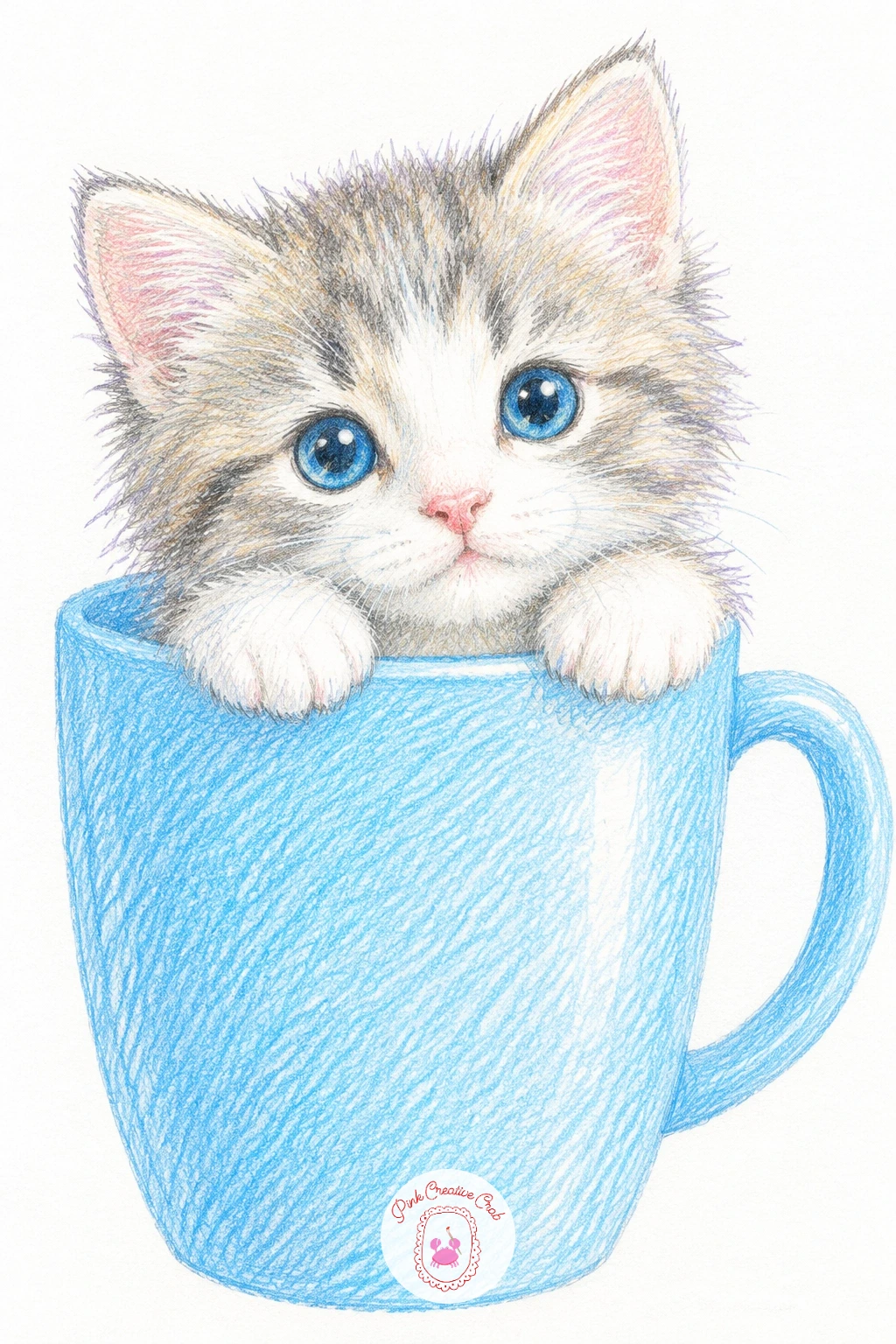
Palette: Sky Blue Light,Baby Pink,Warm Grey,White
Move from the kitten to a puppy tugging on a striped sock, a fun one for practicing motion in a still drawing. Draw the puppy’s body leaning back slightly, front paws braced, with the sock stretched between its teeth and one paw.
Lay down the sock stripes first in lemon yellow and mint, alternating bands, before you add the puppy’s fur color on top so the stripes stay crisp. Work the puppy’s fur in short curved strokes that follow the direction of the lean, heavier shading along the back leg that is pushing off.
The tug often reads as weak if the sock just sits flat, so angle it on a diagonal and crease the fabric where the puppy’s teeth grip it. No striped reference handy, just alternate two colors evenly, that reads as “stripes” on its own.
Finish with a few fly-away fur lines at the ears to sell the energy of the pull.
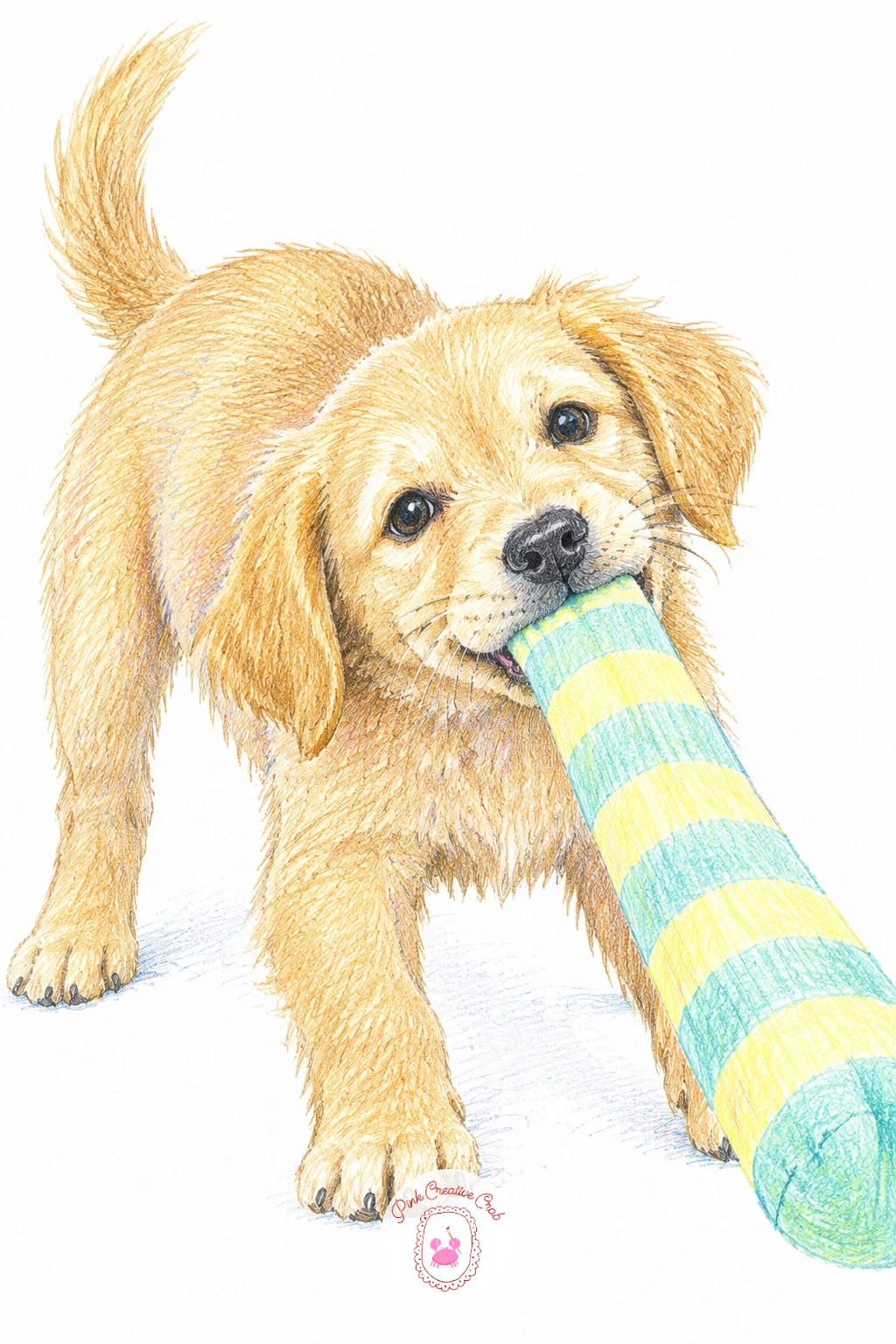
Palette: Lemon Yellow,Mint Green,Golden Tan,White
Settle things down a little with a duckling sitting in a rain boot, which is really just two simple shapes stacked together. Draw the boot first as a tall curved cylinder with a thick sole, then nest the duckling’s round body right inside the opening at the top.
Color the boot in a flat lilac or sky blue, keeping one clean white highlight stripe down its side, and save the yellow entirely for the duckling so the two shapes separate clearly. Shade the duckling’s body with tiny curved strokes, darker where the body curves into shadow against the boot’s rim.
This idea can look stiff if the boot sits bolt upright, so tilt it slightly to one side as though it was kicked off in a hurry. If you are after more texture ideas for boots themselves, the boots drawing list has plenty of shapes worth trying.
Ten minutes gets you a flat-colored boot and duckling; forty minutes lets you add puddle reflections underneath.
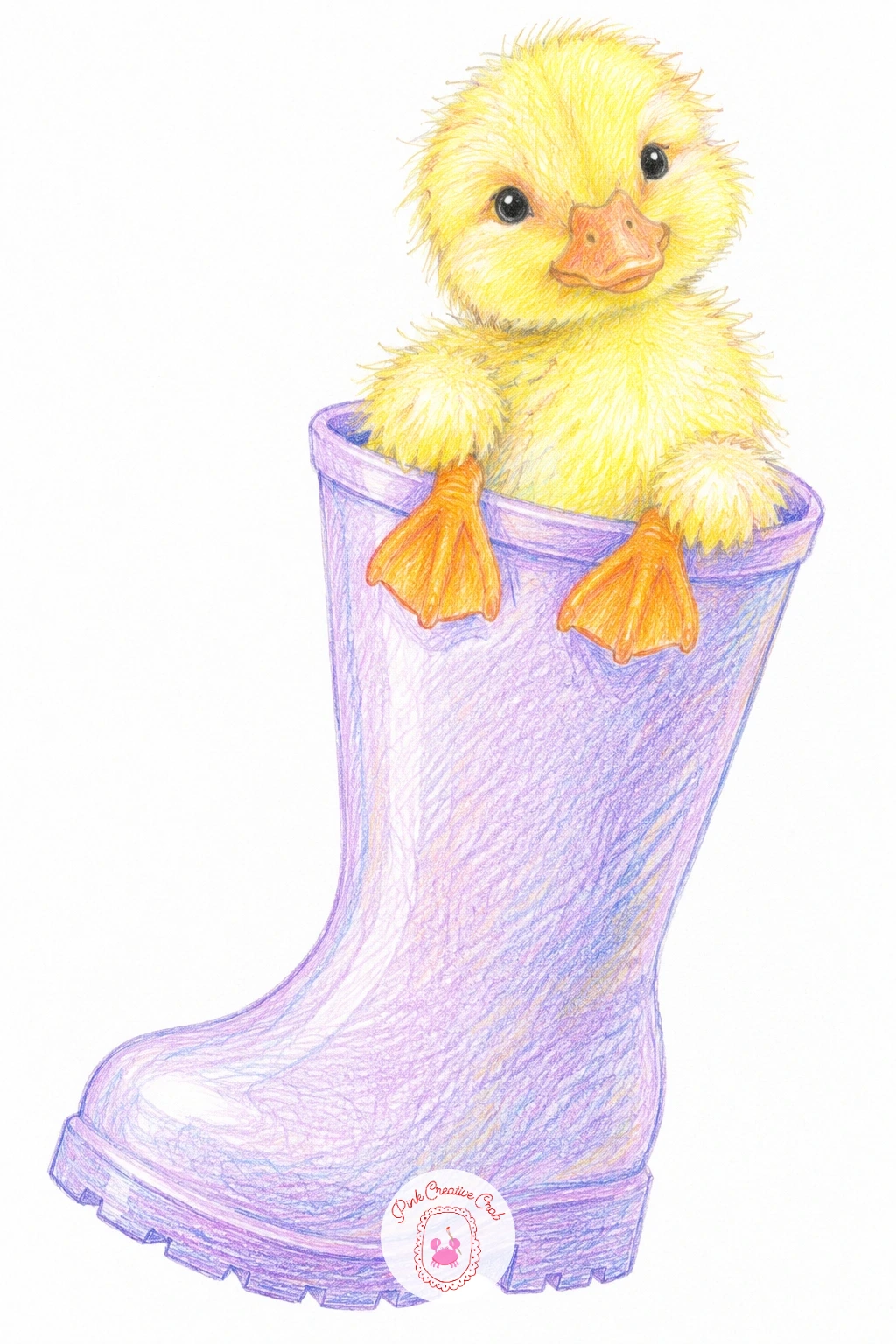
Palette: Lemon Yellow,Lilac,Sky Blue Light,Orange
Keep the cozy mood going with a hamster napping in a knitted slipper, a good subject for practicing texture against a soft round body. Block in the slipper shape first, a simple pouch with a cuffed opening, then curl the hamster’s body into it like a comma shape, nose tucked under one paw.
Give the slipper its knitted texture with a grid of short diagonal strokes in mint or baby pink, slightly uneven on purpose since hand-knit always looks a little wobbly. Shade the hamster in warm tan with soft hatching, keeping the cheeks extra round and the strokes very light since hamster fur reads softer than cat or dog fur.
The knit pattern can swallow the hamster if you make it too busy, so keep the stitches loose and simple, more suggestion than detail. No mint pencil on hand, a pale yellow cuff works just as well.
Leave the hamster’s eyes closed with just two short curved lines to keep the nap feeling peaceful.
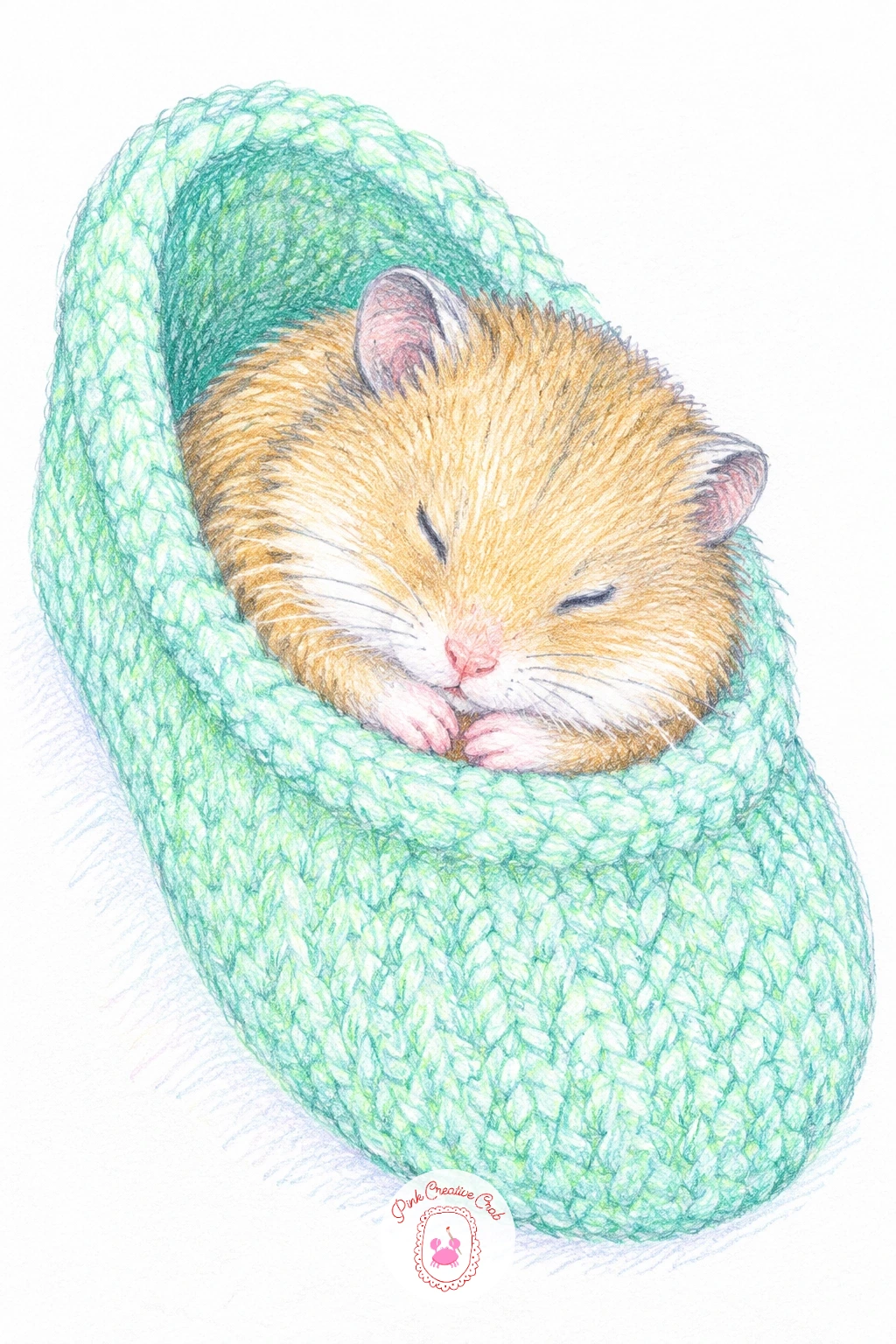
Palette: Mint Green,Warm Tan,Baby Pink,White
Try a small sketch ideas approach here too, keeping the whole drawing inside a tight little frame the size of your palm for extra coziness.
Pick up the energy again with a baby elephant splashing with its trunk, where the eye level you choose changes the whole feel of the splash. Draw the elephant from a low angle, as if you are kneeling at puddle height, so the trunk and the spray of water both rise above the horizon line of the puddle.
Shade the elephant’s body in soft grey with rounded cross-hatching to show the folds at the knees and trunk, keeping the belly lighter where light bounces up off the water. Add the splash last in quick white gaps and a few curved sky blue lines flicking upward from the trunk tip.
Elephants often look stiff if the legs are drawn too straight, so bend the front knee slightly and lift one back foot off the ground mid-splash. No grey pencil, a light lilac undertone works nicely for elephant skin too.
Keep the water droplets as simple small ovals rather than detailed splashes, that reads cleaner from a distance.
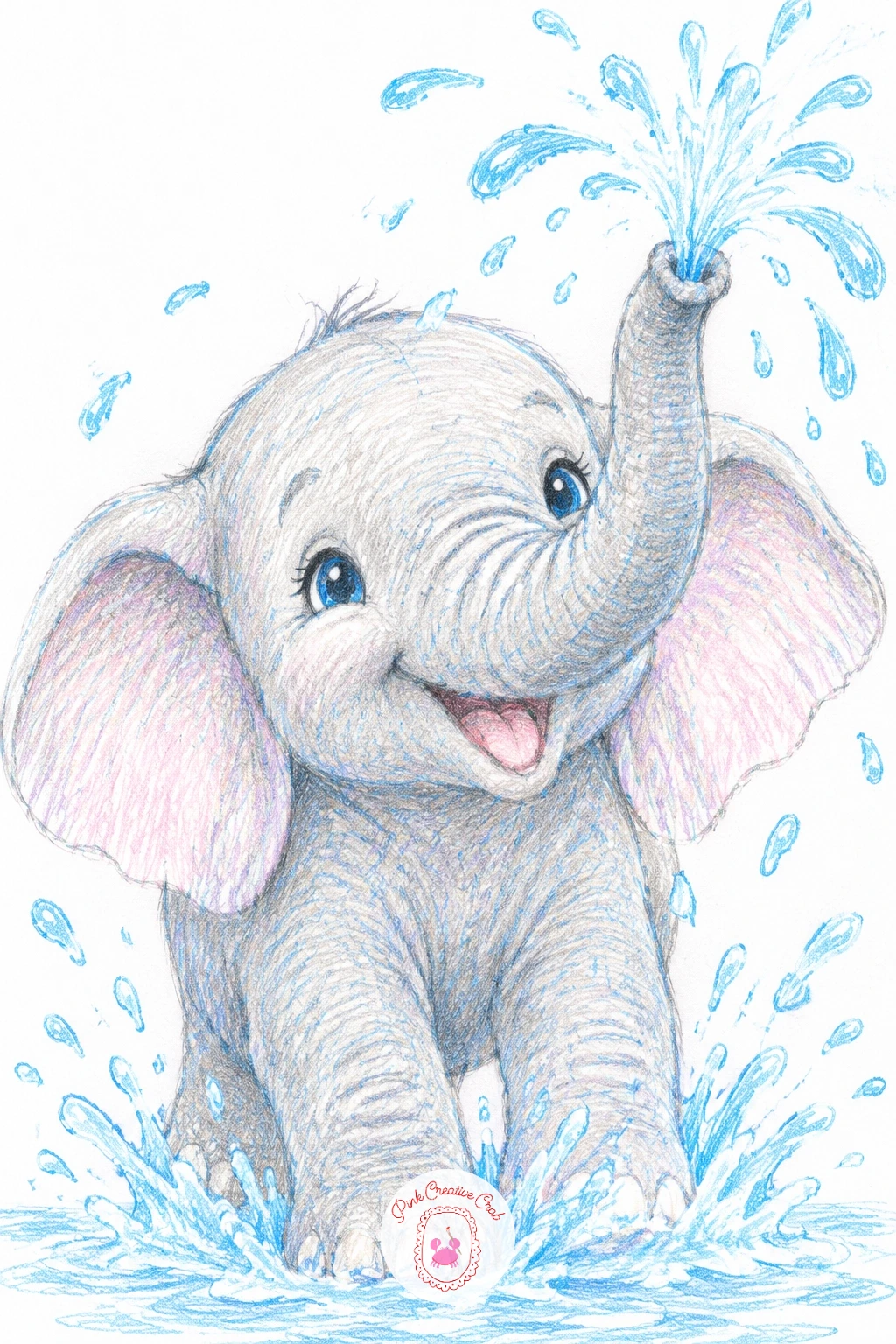
Palette: Warm Grey,Sky Blue Light,Lilac,White
Slow the pace with a sleepy koala hugging a branch, which hands you an easy compositional anchor since the branch runs diagonally through the whole page. Draw the branch first corner to corner, then wrap the koala’s round body and both arms around it so the pose feels like a real hug rather than a sit.
Build the koala’s fur with soft round hatching in warm grey, keeping the strokes very short around the big fuzzy ears where the fur sticks out furthest. Shade the branch in flat tan with a few darker knot marks, and leave the koala’s belly almost untouched white paper for contrast.
The hug reads weak if the arms do not actually wrap behind the branch, so draw the far arm’s fingers just visible on the other side. Swap the branch for a thick rolled towel if eucalyptus branches feel fiddly to shape.
Close the eyes with two soft curved lines so the whole pose feels like a nap mid-hug.
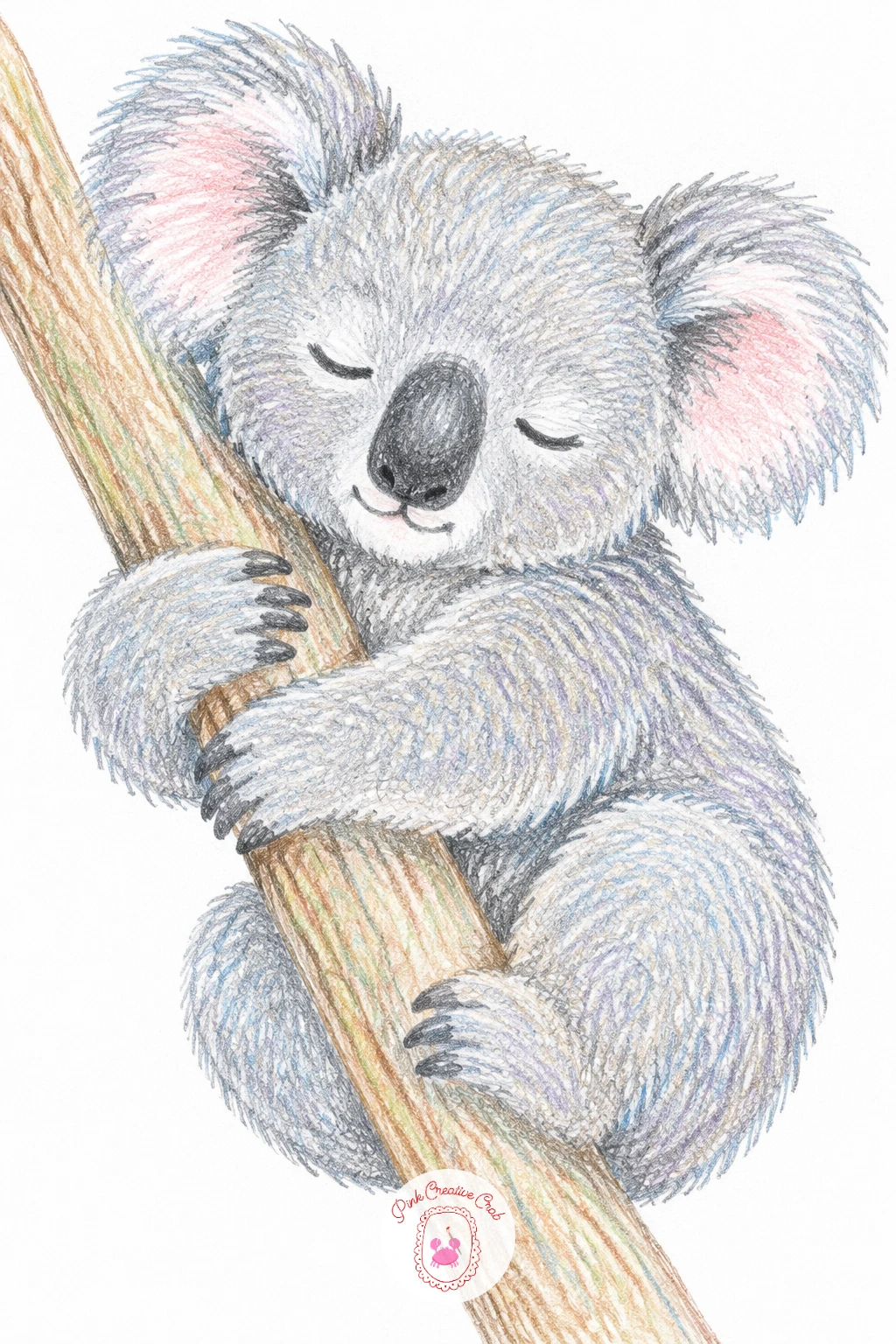
Palette: Warm Grey,Golden Tan,White,Charcoal Grey
Bring the energy back up with a kitten batting a ball of yarn, a nice chance to practice a quick ten-minute sketch versus a fuller forty-minute one. For the fast version, block the kitten mid-pounce with one paw raised, scribble the yarn ball as a loose tangle of mint or pink lines, and stop there.
For the longer version, shade the kitten’s fur properly in layered strokes, add a cast shadow under the paw, and let two or three loose yarn strands trail off the ball across the page. Either way, draw the yarn ball before the kitten’s raised paw so you know exactly where the paw needs to land.
The pounce looks flat if both back legs sit evenly, so lift one back paw slightly off the ground and angle the tail up for balance. No pink or mint pencil, any bright color works since the fun part is the looping scribble, not the shade.
Keep the yarn strands loose and a little messy on purpose, tidy loops look stiff.
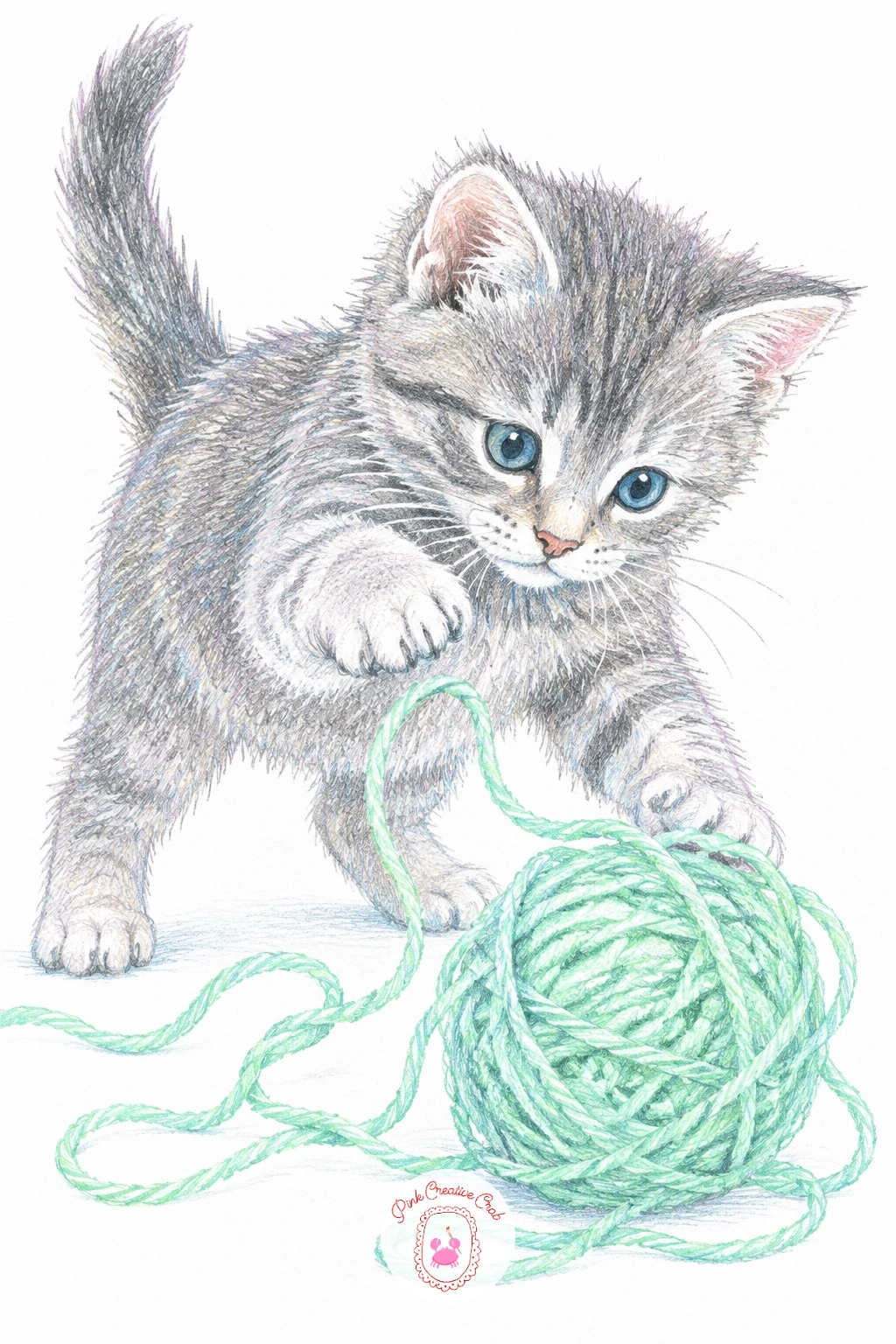
Palette: Baby Pink,Mint Green,Warm Grey,White
Follow the kitten with a chick wearing half an eggshell as a hat, a tiny character that works well drawn quite large since there is so little to it. Draw the egg shape first, split it with a jagged crack line about a third of the way down, then tuck the chick’s round fluffy head under the top half like a helmet.
Color the eggshell in warm white with just a hint of lemon shading inside the crack for depth, and keep the chick itself bright yellow with tiny soft tufts of fur sticking up through the gap in the shell. Shade the body with short round strokes, a touch of orange at the beak and feet for warmth.
The hat often looks pasted on if the crack edge is too smooth, so break the shell’s edge into small jagged points like real shell fragments. Swap the eggshell for a walnut half if you want a different texture to draw.
Give the chick two tiny dot eyes and a closed beak for the calmest, cutest expression.
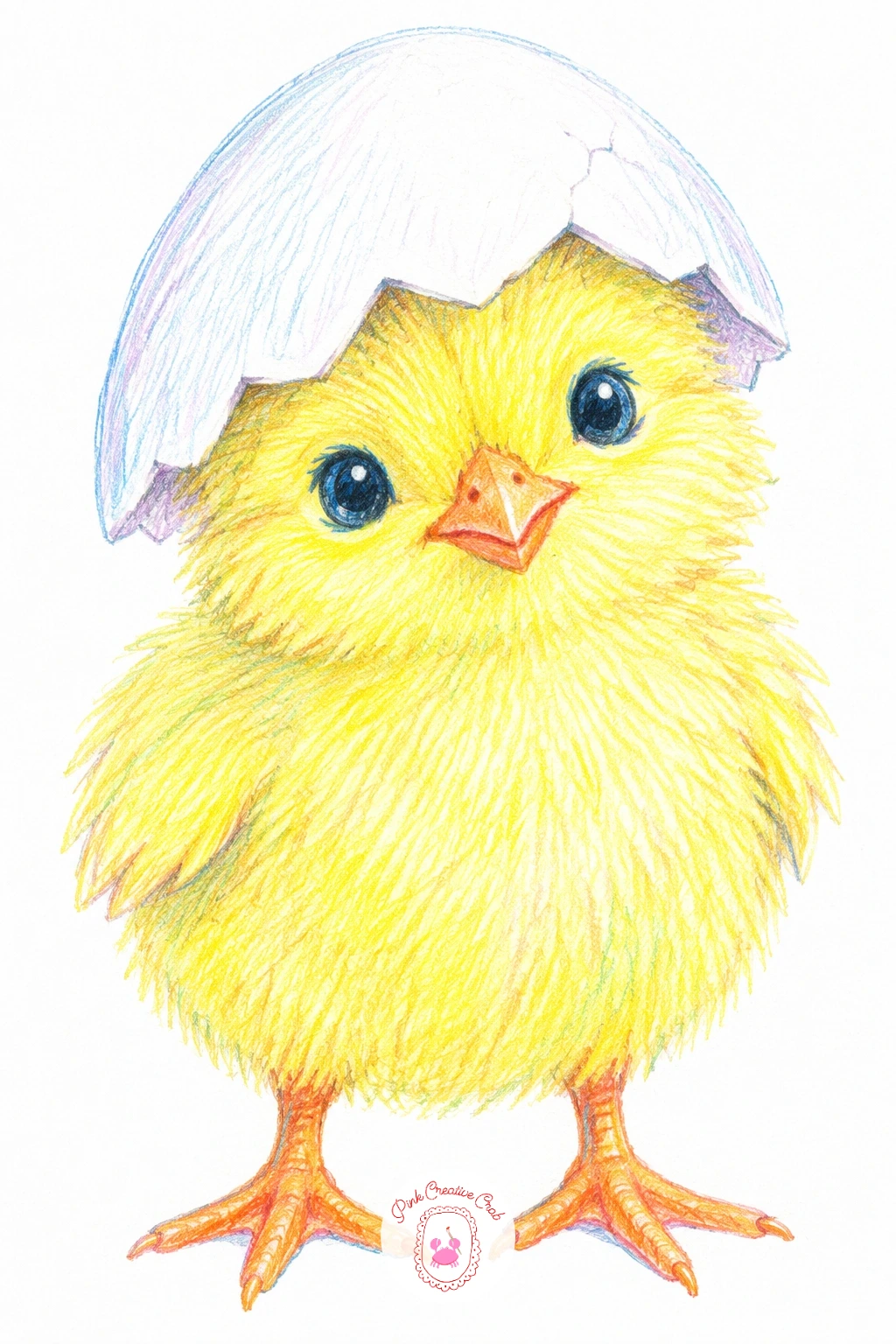
Palette: Lemon Yellow,Orange,Warm White,Golden Tan
Shrink the scale further with a mouse asleep in a teacup, where getting the proportion right is mostly about making the cup feel giant next to the mouse. Draw the teacup first as a simple rounded cup with a thin handle, sized about three times the length of the mouse’s curled body, then curl the mouse inside like a comma with its tail hanging over the rim.
Shade the teacup in pale lilac or mint with a thin gold-toned rim line, and keep the mouse itself in soft warm grey with very light short strokes since mouse fur is finer than cat or dog fur. A floral pattern on the cup is optional, two or three tiny dot flowers are enough to suggest china without overworking it.
The scale breaks if the cup handle is too small, so draw the handle a touch larger than feels natural, it reads correctly once the mouse is in place. No lilac on hand, pale sky blue makes just as pretty a teacup. This pairs nicely with other small sketch ideas if you want a whole page of tiny tucked-away creatures.
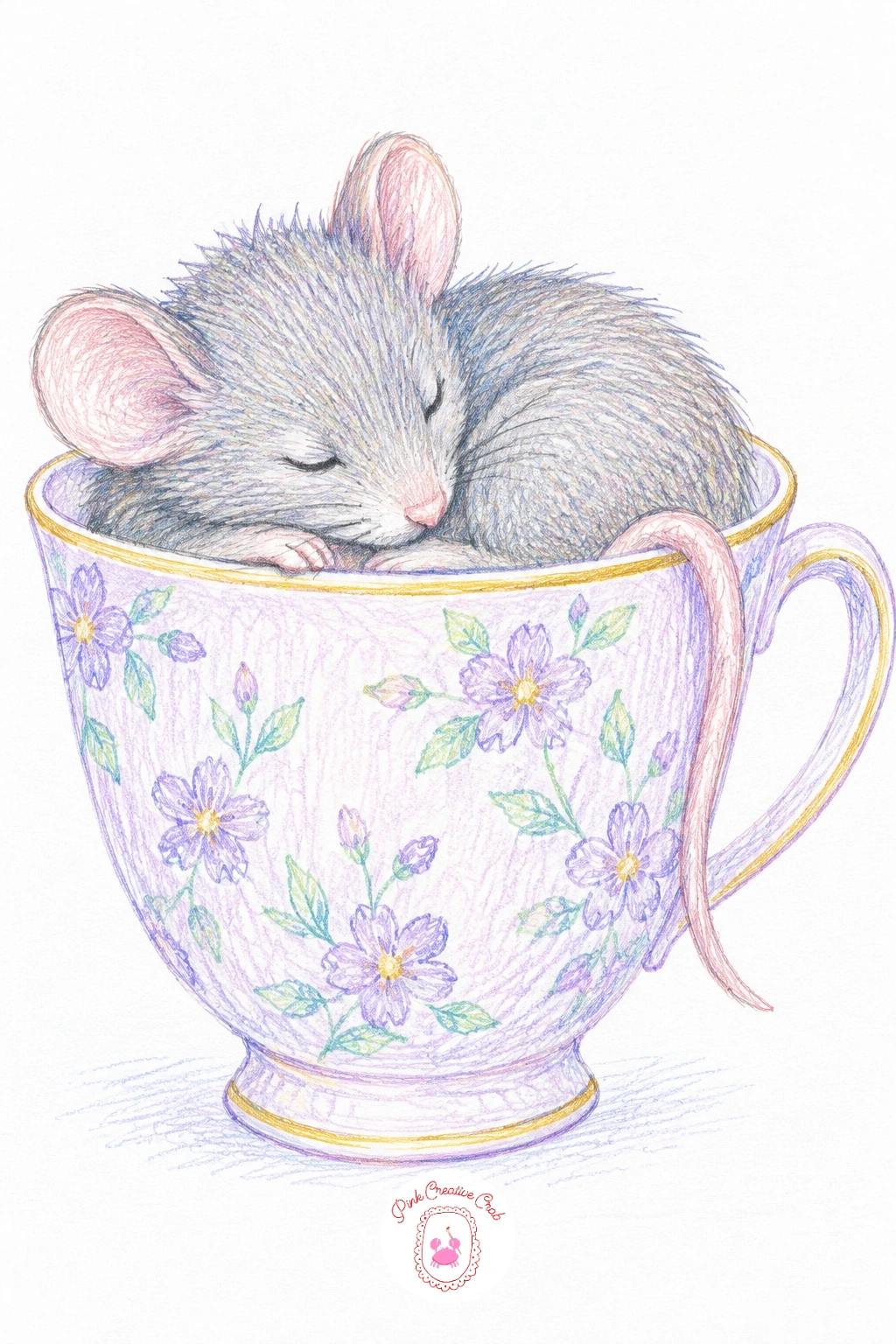
Palette: Lilac,Warm Grey,Golden Tan,White
Pick up the pace with a corgi in a little raincoat, a good subject for practicing how fabric sits over a short round body. Draw the corgi’s body first, keeping the legs short and stubby and the chest wide, then drape the raincoat over the back like a simple curved rectangle with a hood flap at the neck.
Color the raincoat in sky blue or lemon yellow with a flat even tone, leaving a thin white highlight line along the fold of the hood, and shade the exposed fur in tan and white patches with short choppy strokes typical of corgi coats. A few straight diagonal lines falling past the dog suggest light rain without drawing every drop.
The coat looks pasted on if it has no fold lines, so add two or three creases where the fabric bends at the shoulder and the base of the tail. Swap the raincoat for a simple sweater shape if rain gear feels fiddly.
Keep the ears perked straight up, that alone makes any corgi read as alert and happy.
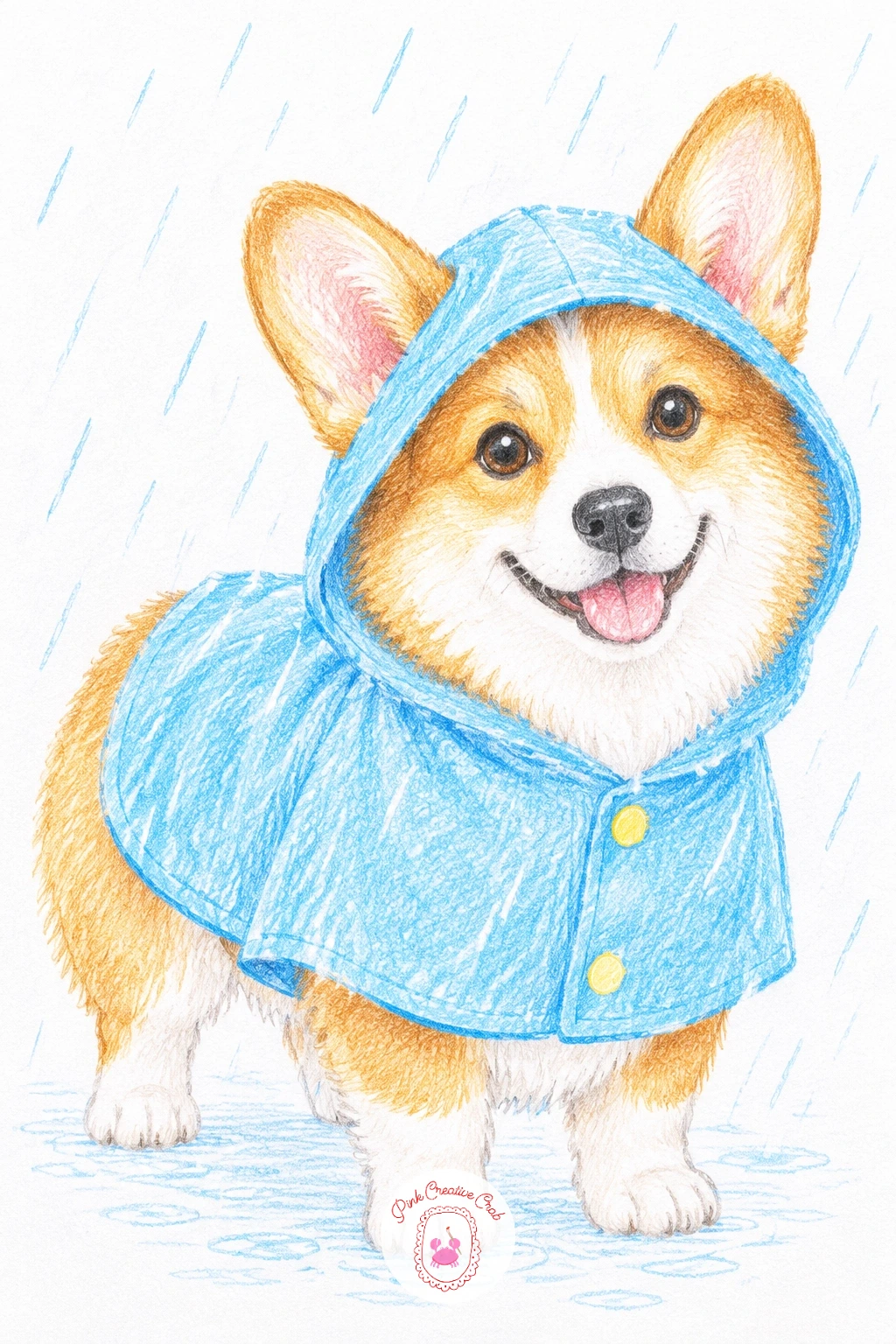
Palette: Sky Blue Light,Golden Tan,White,Lemon Yellow
Get a little messier with a piglet sitting in a mud puddle, which is a nice exercise in keeping texture loose rather than overworked. Draw the piglet’s round body first with its short legs tucked to the sides, then draw the puddle underneath as a simple flattened oval, wider than the piglet so it clearly spreads beyond the body.
Shade the piglet in soft pink with light round strokes, then add the mud as loose warm brown splatter marks along the belly and legs, scribbled rather than carefully placed. The puddle itself stays mostly a flat tan-grey tone with one or two white highlight patches to suggest the water’s surface.
The mud often looks like dirt smeared on top if you draw it too neatly, so vary the splatter sizes and let a few specks land outside the puddle’s edge. No brown pencil handy, mix warm grey and tan strokes layered loosely for the same muddy effect.
Give the piglet a small contented closed-eye smile, that is what sells the whole happy, messy scene.
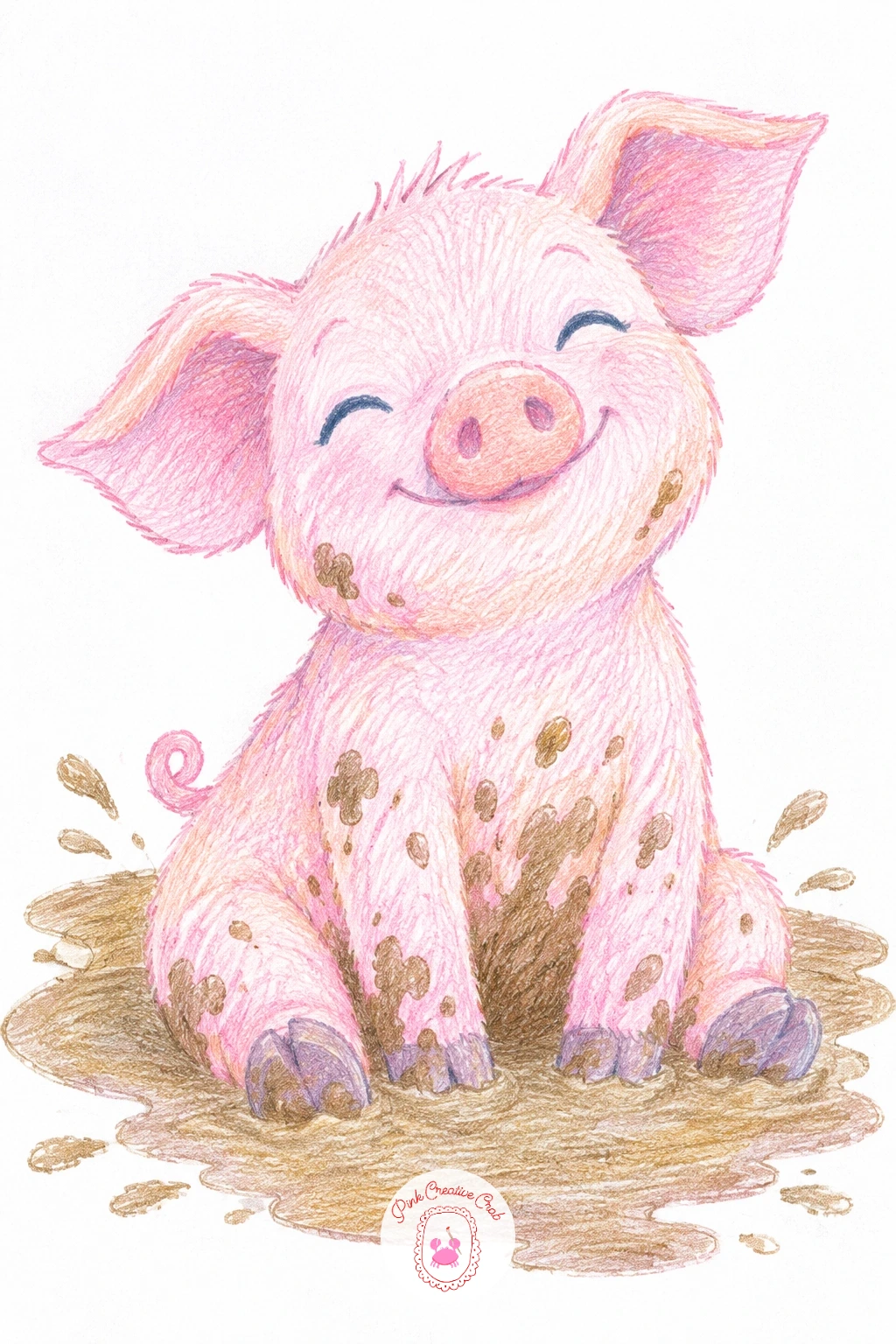
Palette: Baby Pink,Golden Tan,Warm Grey,White
Soften things again with a lamb wearing a flower crown, a lovely one to slow down on since the wool texture rewards a bit of patience. Draw the lamb’s body as one big rounded cloud shape first, then place the flower crown as a thin curved band across the top of the head between the two ears.
Build the wool with small overlapping loops and curls rather than straight hatching, mostly in white with warm grey shadow loops tucked underneath the belly and legs. Keep each little flower on the crown simple, five rounded petals in baby pink or lilac with a lemon yellow center dot, three or four flowers are plenty.
The wool reads flat if every loop is the same size, so vary the curls, bigger and looser on the back, smaller and tighter near the face. Swap daisies for simple dot flowers if petals feel fiddly to shape at this size.
Finish with tiny black dot eyes close together, that placement alone makes any lamb face read as gentle.
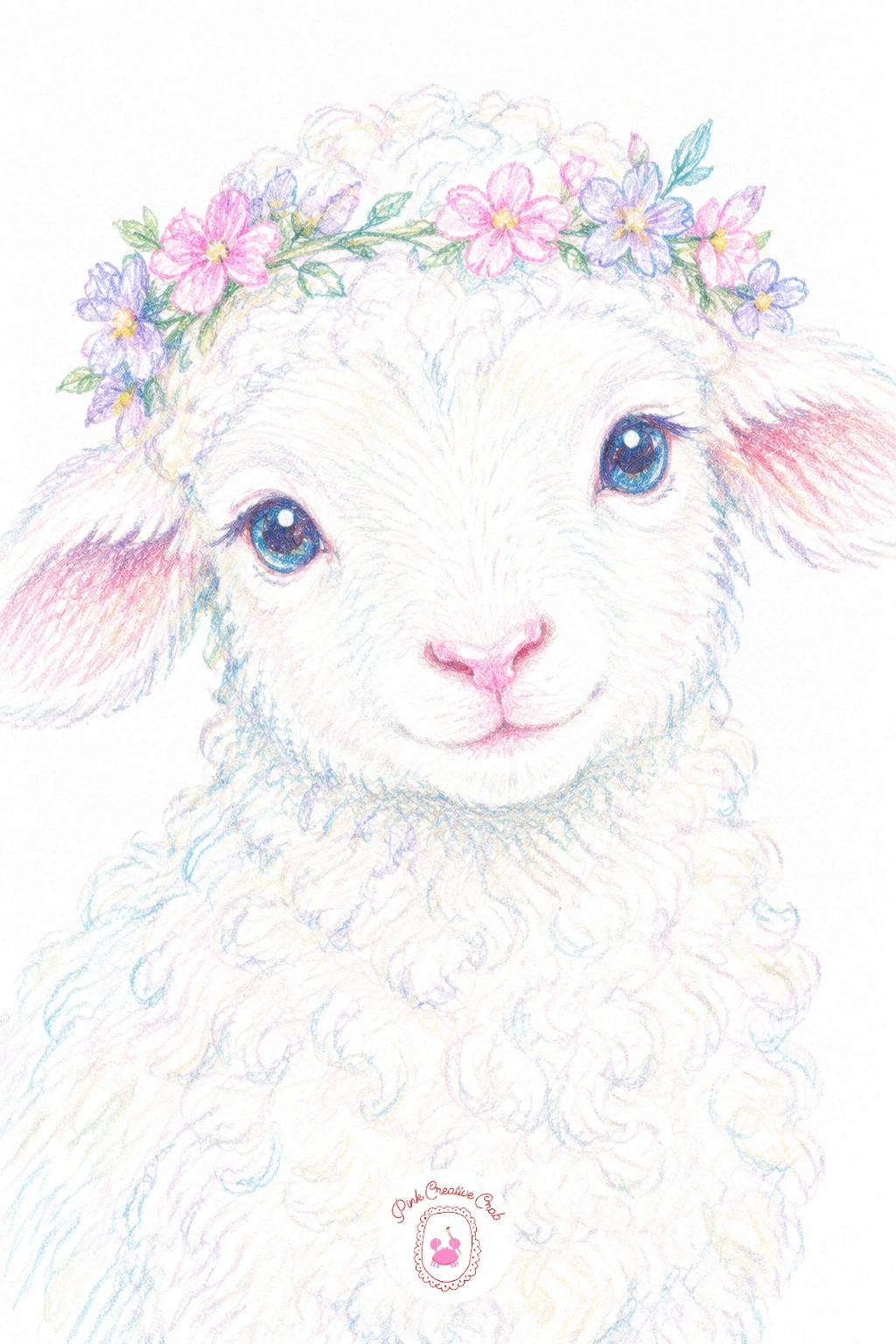
Palette: White,Warm Grey,Baby Pink,Lemon Yellow
Settle into a quieter pose with a kitten curled up inside a shoebox, which is mostly an exercise in drawing a convincing open box. Sketch the box first as a simple rectangle with the lid leaning against one side, angled slightly so you can see inside the opening, then curl the kitten’s body to fit the inside corner like it has claimed the space completely.
Shade the box in flat warm tan or lemon with a visible edge line where the cardboard folds meet, and keep the inside slightly darker than the outside to suggest shadow. The kitten itself gets soft round hatching, tail wrapped fully around the body, one ear flattened slightly from resting against the box wall.
The box can look like it is floating if you skip a small shadow line where it touches the ground, so add one thin curved shadow stroke along the base. No tan pencil on hand, pale grey makes a fine plain cardboard box too.
Leave a torn corner or flap on the box lid, small imperfections make it feel like a real, lived-in box.
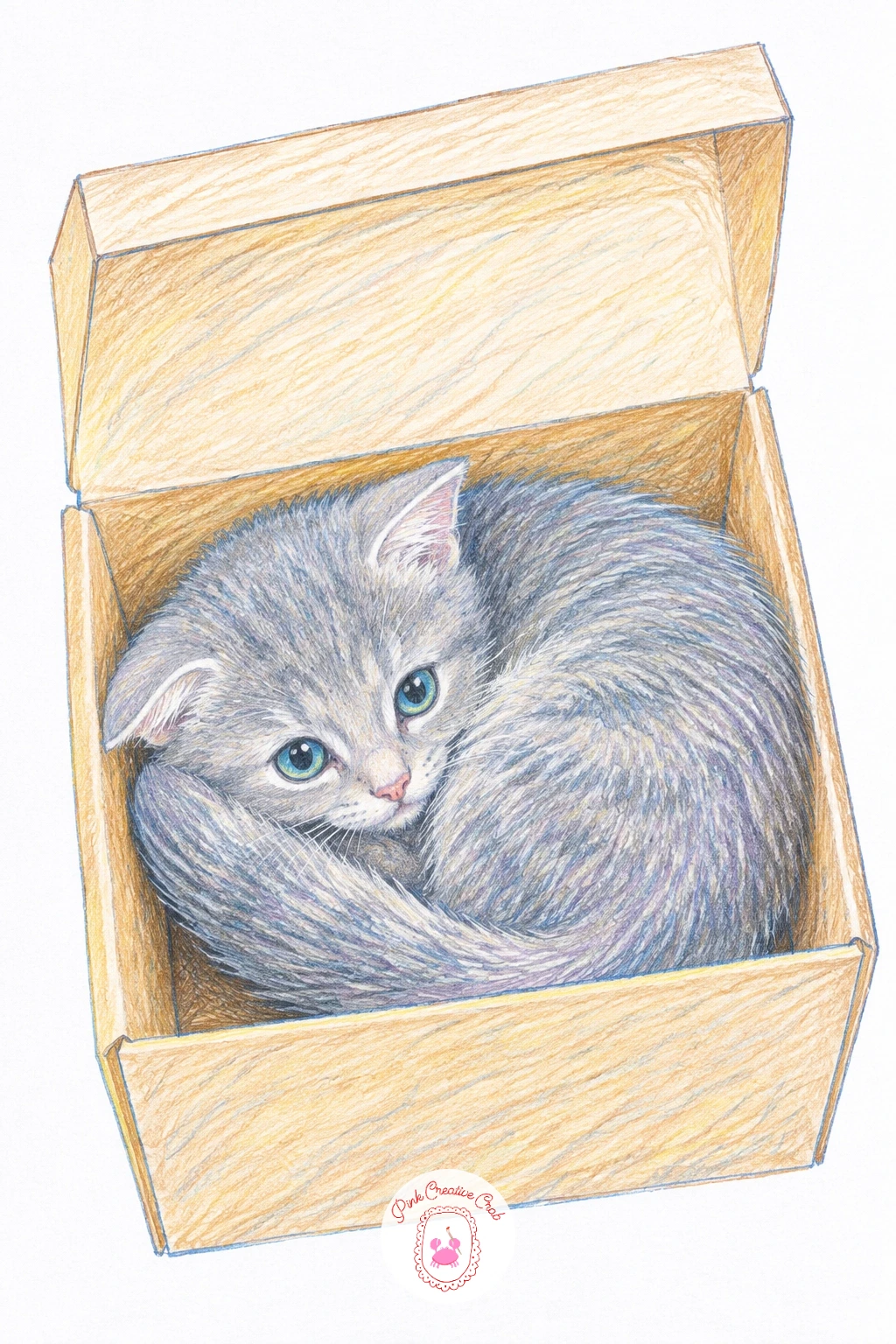
Palette: Golden Tan,Warm Grey,Warm Tan Dark,White
Lift the mood with a bear cub holding a balloon, where the main trick is getting the string to feel like it is actually connected to the paw. Draw the bear cub’s round body standing upright first, one arm raised, then draw the balloon well above the paw and connect it with a single curved string line, never a straight one, since a slight curve makes it feel light and floaty.
Shade the bear in warm brown with soft round strokes, lighter around the muzzle and belly, and color the balloon in a single bright flat tone like sky blue or baby pink with one small white highlight dot near the top.
The balloon looks stuck on if it sits too close to the paw, so leave real distance between paw and balloon, the string does the connecting work. No brown pencil, warm tan works just as well for a lighter cub.
Add a tiny knot shape at the base of the balloon before the string starts, that small detail convinces the eye it is tied, not glued.
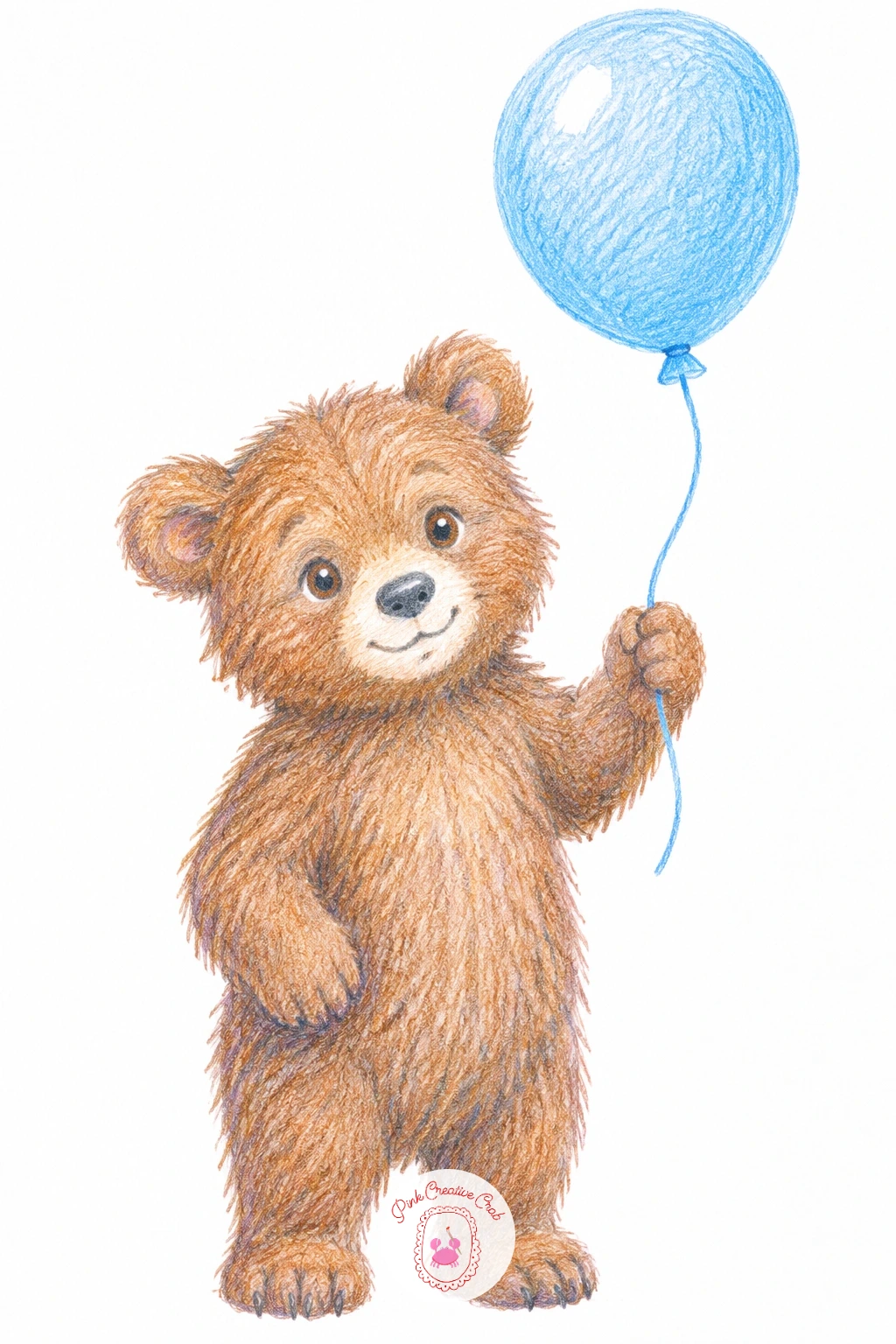
Palette: Golden Tan,Sky Blue Light,Baby Pink,White
Change pace with a frog sitting on a mushroom, a good subject for thinking about where the light sits since the mushroom cap casts a shadow right onto the frog’s back. Draw the mushroom first, a simple dome cap on a short thick stem, then perch the frog’s round body on top with its legs tucked under and toes gripping the curve of the cap.
Decide where your light comes from before shading, if it is from the upper left, the right side of both the mushroom cap and the frog’s body stays darker. Color the frog in mint or sap green with small round highlight dots left white on its back for that classic damp-skin look, and shade the mushroom cap in baby pink or lilac with tiny white dot spots scattered across it.
The frog often looks like it is floating above the mushroom if the feet do not actually wrap over the curve, so draw at least two toes visibly gripping down the side of the cap. No pink pencil for the mushroom, a warm red works too.
Keep the frog’s smile wide and simple, one curved line does the whole job.
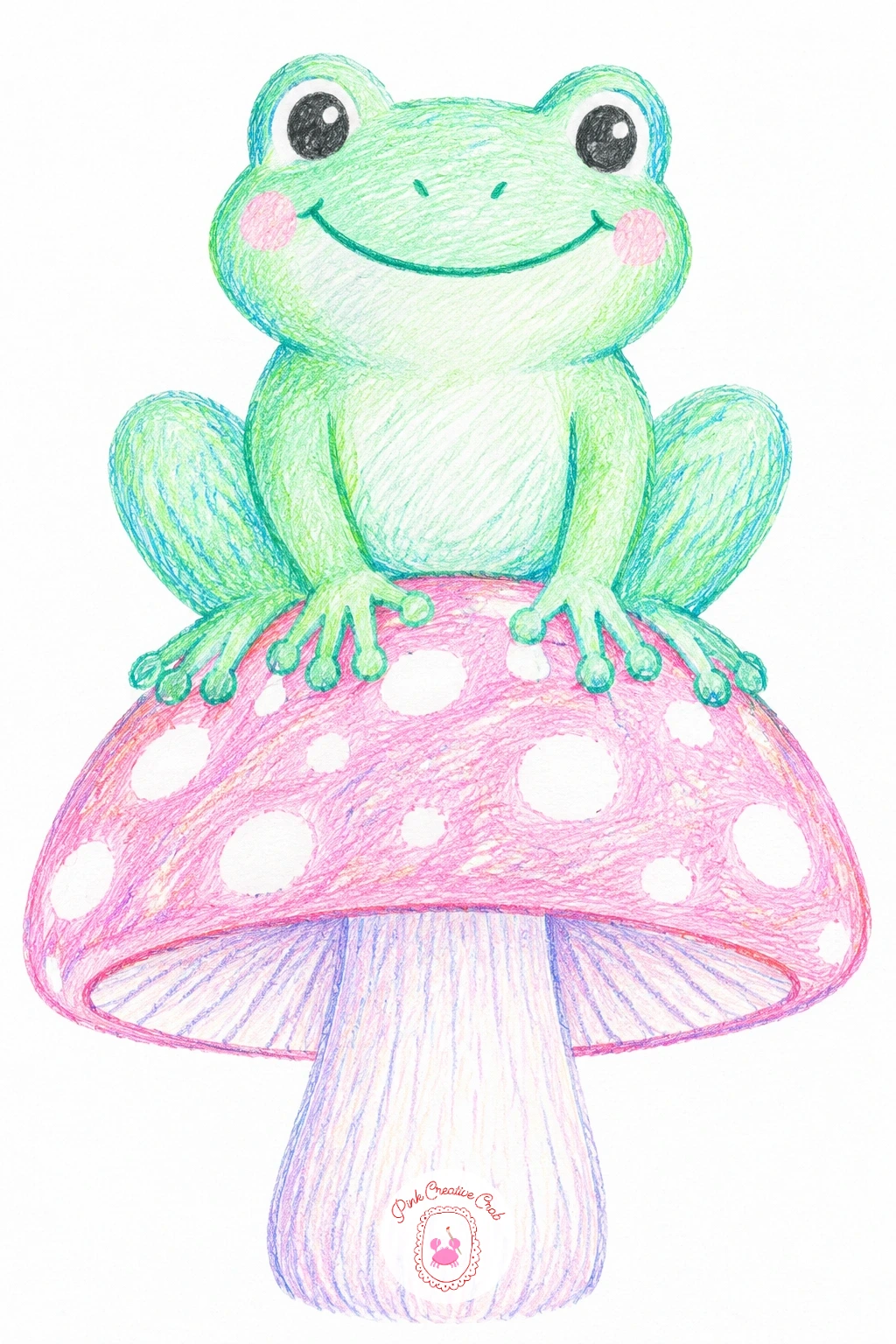
Palette: Mint Green,Baby Pink,Sap Green,White
Move to a baby owl in a knitted hat, where the real work for the hour you give it is deciding between a quick ten-minute version and a fuller one. The fast version blocks the owl as one round fluffy body with big eyes and a simple striped hat on top, flat colors, done.
The longer version adds proper feather texture in layered U-shaped strokes across the chest, a small pom-pom at the top of the hat, and soft shading under the wings where they fold against the body. Either way, draw the hat before the feathers around the face so the brim sits convincingly over the head rather than floating above it.
The hat looks too small if it perches on top like a lid, so pull it down slightly over the brow so a little of the owl’s forehead disappears underneath. Swap the stripes for a solid color if patterns feel fiddly at this size.
Big round eyes close together is the single fastest way to make any owl read as a baby.
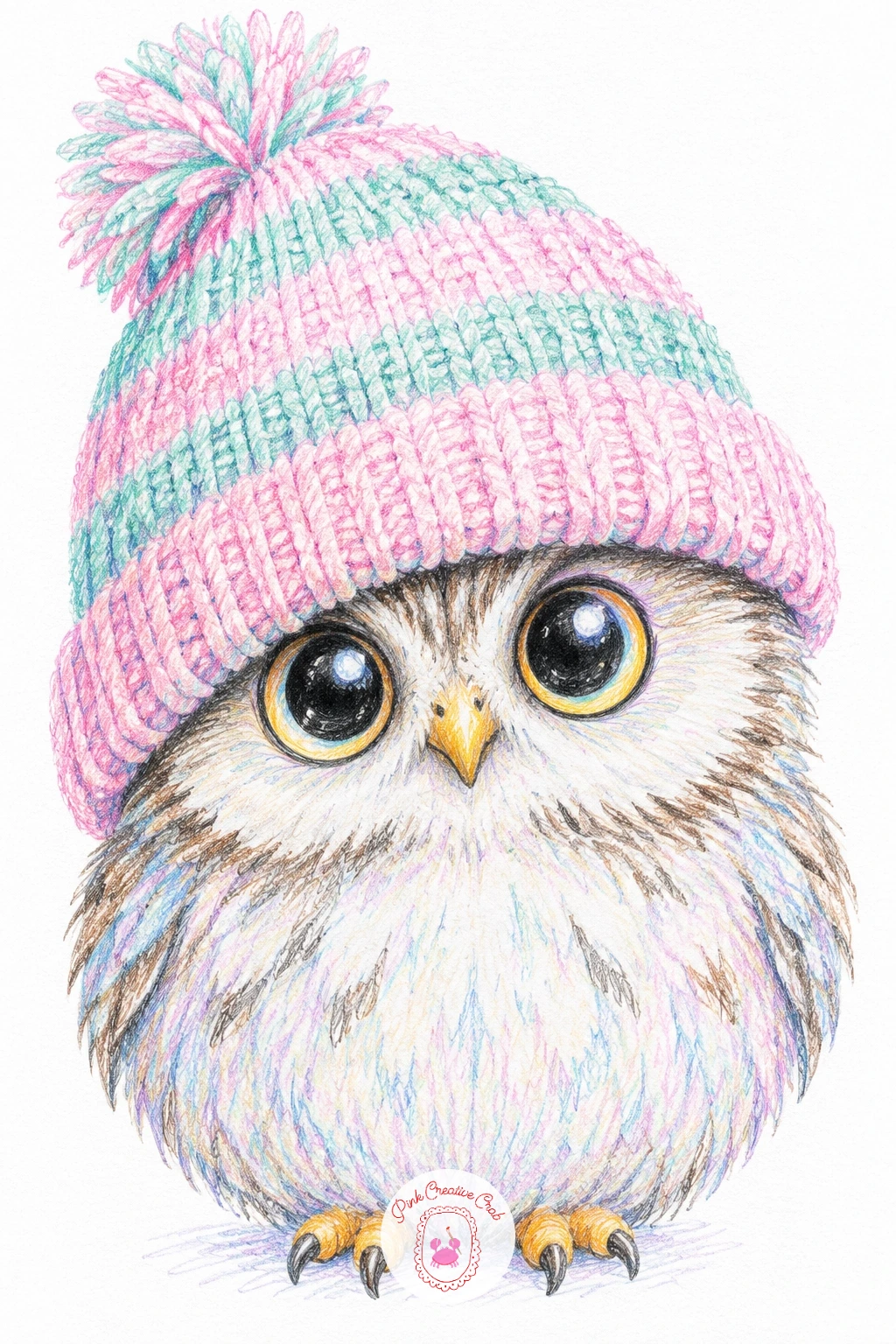
Palette: Golden Tan,Baby Pink,Mint Green,White
Rest things with a puppy asleep in a laundry basket, which is a nice chance to practice a woven texture without overdoing it. Draw the basket first as a simple wide bowl shape, then add a crisscross weave pattern around the sides in light, evenly spaced diagonal lines before the puppy goes in.
Curl the puppy’s body to fill most of the basket’s inside, paws tucked, and shade the fur in warm tan with soft round strokes, keeping the weave pattern visible only at the edges where the puppy does not cover it. A stray sock or small cloth draped over one side adds a lived-in touch without much extra work.
The weave can look like a grid if every line is perfectly straight, so let the diagonals bend very slightly to follow the basket’s curve. No tan pencil, golden yellow makes just as warm a puppy coat.
Keep the ears flopped flat and the eyes fully closed, that combination reads as deep, happy sleep.
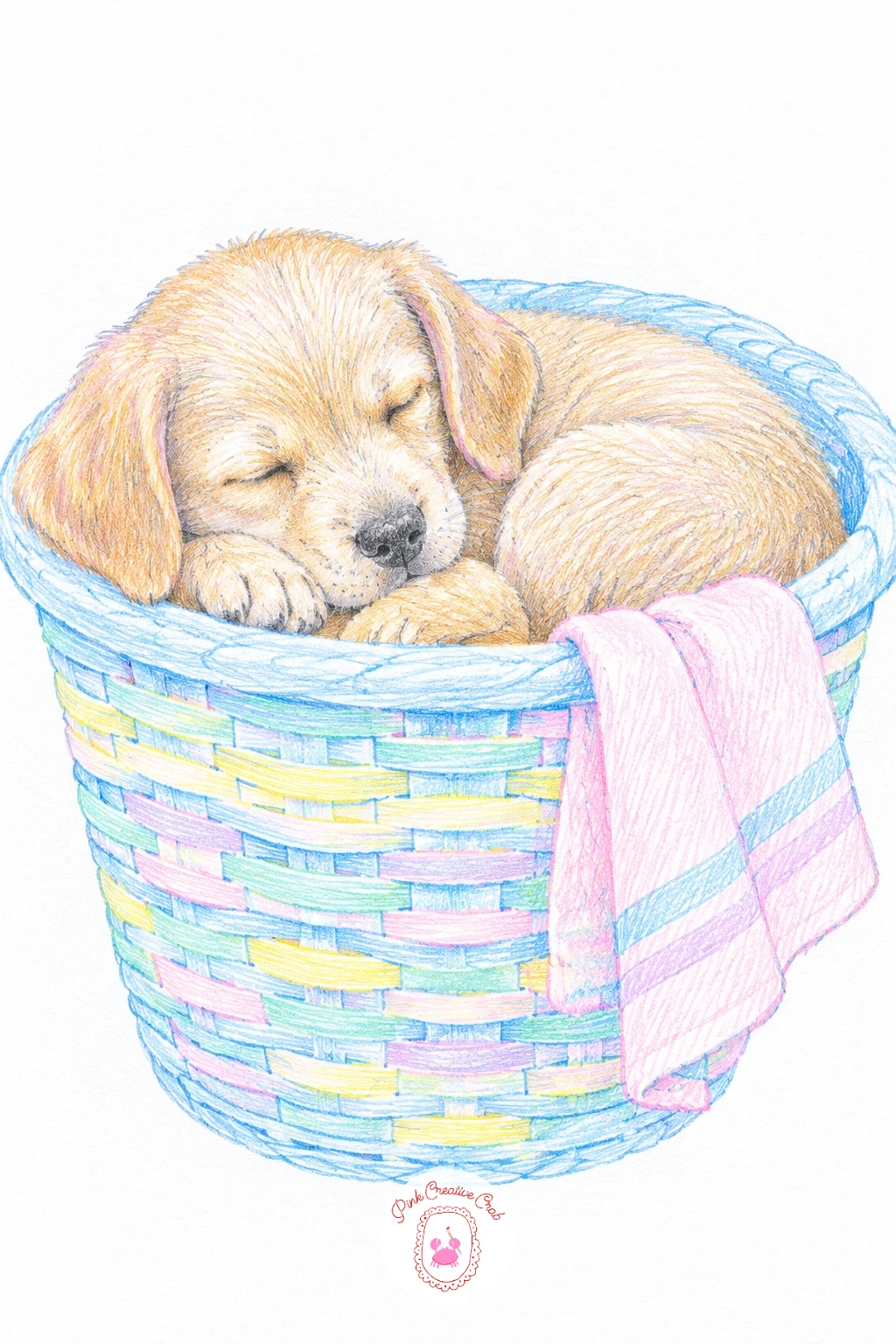
Palette: Golden Tan,Warm Grey,Lemon Yellow,White
Ease into a guinea pig wearing a tiny daisy chain, a subject that stays simple if you resist drawing every flower in full detail. Draw the guinea pig’s body as one soft rounded blob with no visible neck, since that short compact shape is exactly what makes guinea pigs read correctly, then drape the daisy chain loosely around the back of the neck.
Keep each daisy to five quick white petals around a lemon yellow center, four or five flowers linked by a thin green line is enough, more than that starts to clutter the small body. Shade the guinea pig’s fur in warm tan and white patches with short choppy strokes, a little longer and fluffier around the cheeks where guinea pig fur often puffs out.
The daisy chain disappears into the fur if you draw it flat against the body, so let it sit slightly raised with a thin shadow line underneath where it rests on the fur. No real daisy reference, five ovals around a dot works for any tiny flower at this scale.
Give the guinea pig small flat ears tucked close to the head, that is the detail that keeps the proportions convincing.
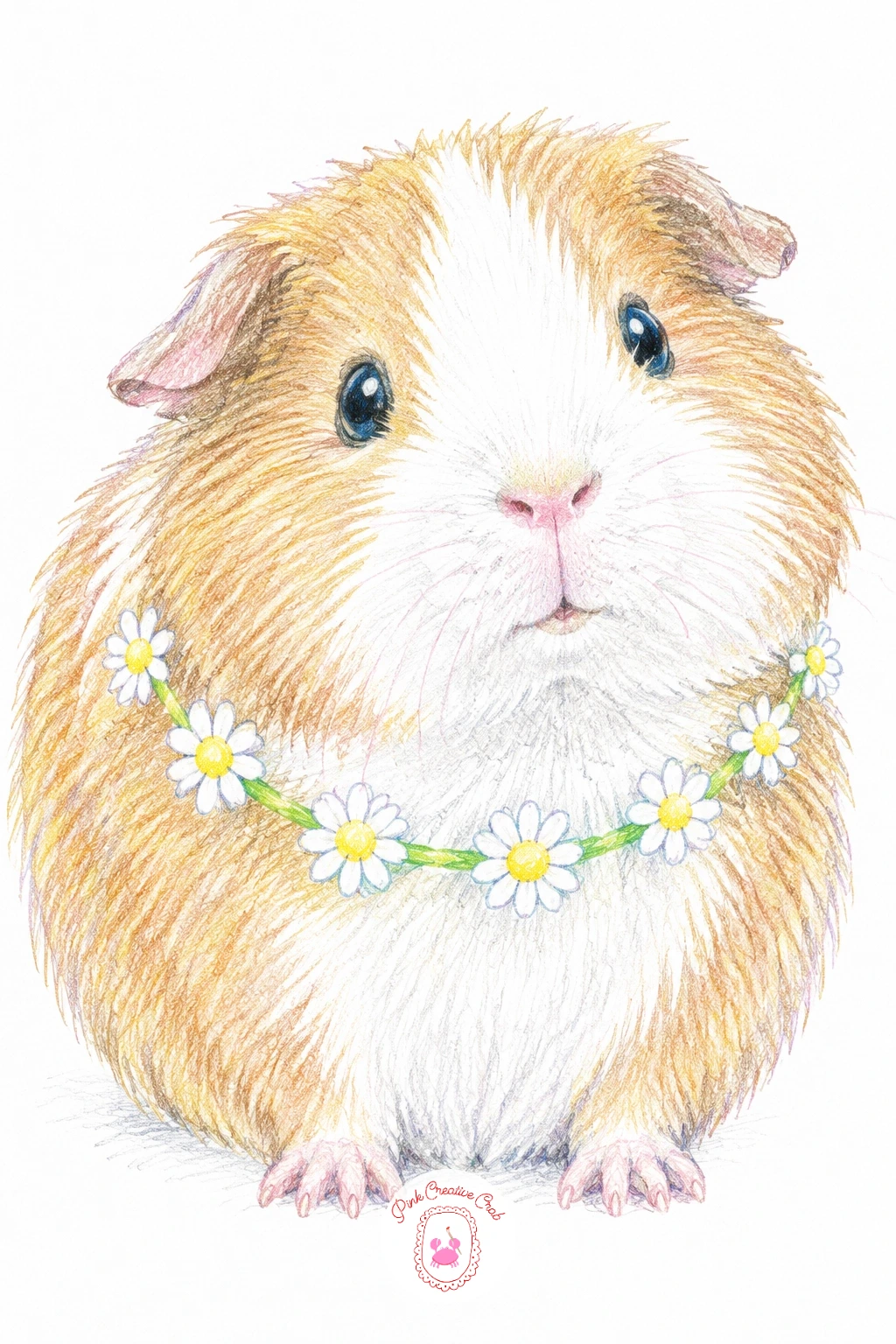
Palette: Golden Tan,White,Lemon Yellow,Sap Green
Slow right down with a snail with a flower growing on its shell, a subject built almost entirely around one good spiral. Draw the shell’s spiral first, starting at the center and winding outward in one continuous curved line, then build the snail’s soft body trailing out from the shell’s opening along a gentle curved path.
Shade the shell in warm tan or lilac with the spiral line kept visible as a slightly darker ridge, and plant one small simple flower, five petals and a dot center, right where the spiral ends at the top of the shell. The body stays mostly mint green or soft grey with a few horizontal texture lines near the head end.
The spiral often tightens into a mess if you rush it, so draw it slowly in one light pass before pressing any color in, and widen the gaps as you move outward. No lilac on hand, a pale pink shell looks just as sweet.
Two small stalks with tiny dot eyes on top finish the face in seconds.
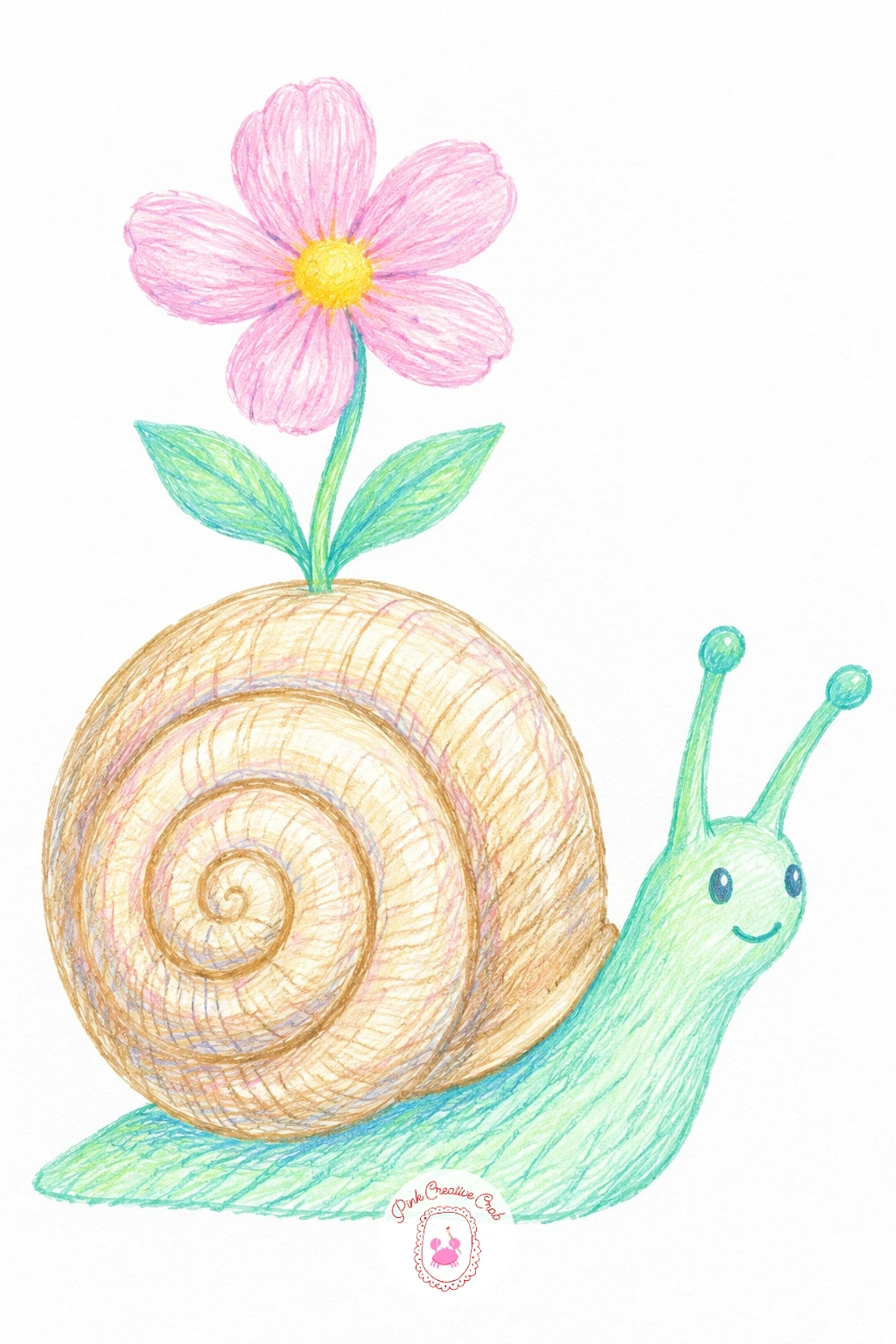
Palette: Golden Tan,Lilac,Mint Green,Baby Pink
Pick something a little trickier with a baby sloth hanging from a branch, where getting the proportion right means measuring the arms before you commit to the hang. Hold your pencil up to a reference or just eyeball it, the arms on a hanging sloth are roughly as long as the whole body, so draw the branch first, then stretch both arms up and over it before filling in the shorter torso and legs underneath.
Shade the sloth in warm grey-brown with long loose strokes running down the length of the arms to suggest its shaggy coat, keeping the face patch lighter and rounder since sloth faces read cuter when kept simple and pale. The branch itself stays flat tan with one or two knot marks for texture.
The hang looks unconvincing if the arms are too short, so err on the side of making them longer than feels natural, it almost always reads better. No grey-brown pencil, layer warm grey under a light tan for the same shaggy effect.
Curved claws hooked clearly over the top of the branch is the detail that sells the whole pose.
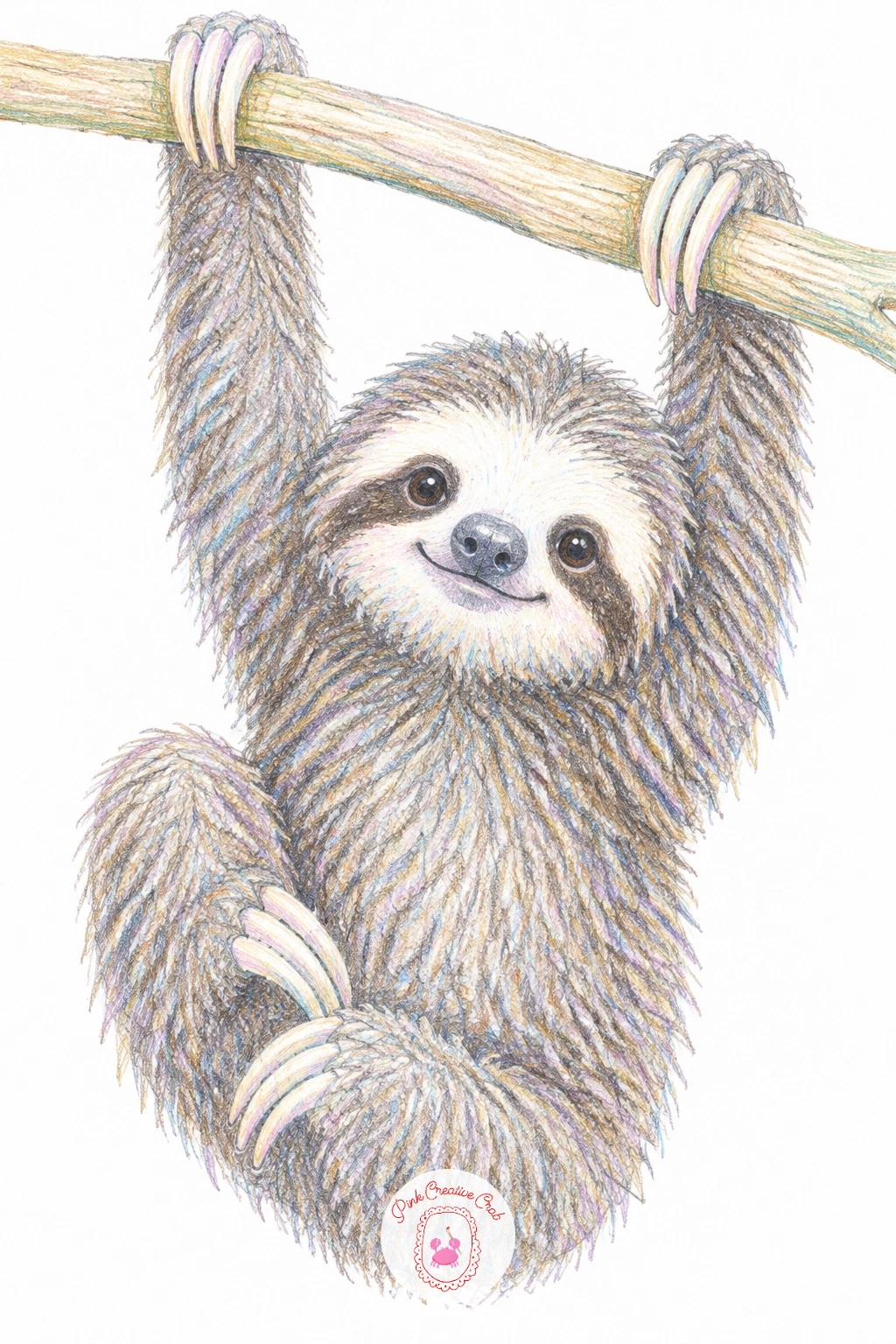
Palette: Warm Grey,Golden Tan,White,Warm Tan Dark
Return to something lighter with a kitten sitting in a flower pot, basically the mug idea from earlier but trading in the ceramic curve for a tapered terracotta shape. Draw the pot first as a simple trapezoid, wider at the top than the bottom, then tuck the kitten’s body inside with just the head, front paws and tail visible over the rim.
Shade the pot in warm terracotta tone using even diagonal strokes, leaving the rim lip a slightly lighter band, and add one or two small leaves or a single flower stem beside the kitten peeking from inside the pot too. Build the kitten’s fur in short soft strokes, keeping the overall shape round and compact since a kitten that reads as a tidy oval sits more convincingly inside a container shape.
The pot tips over visually if the base is drawn too narrow, so keep the bottom edge at least two thirds the width of the top rim. No terracotta pencil, warm orange mixed with a touch of brown gets you there.
One small flower leaning out beside the kitten’s ear finishes the whole scene without much extra work.
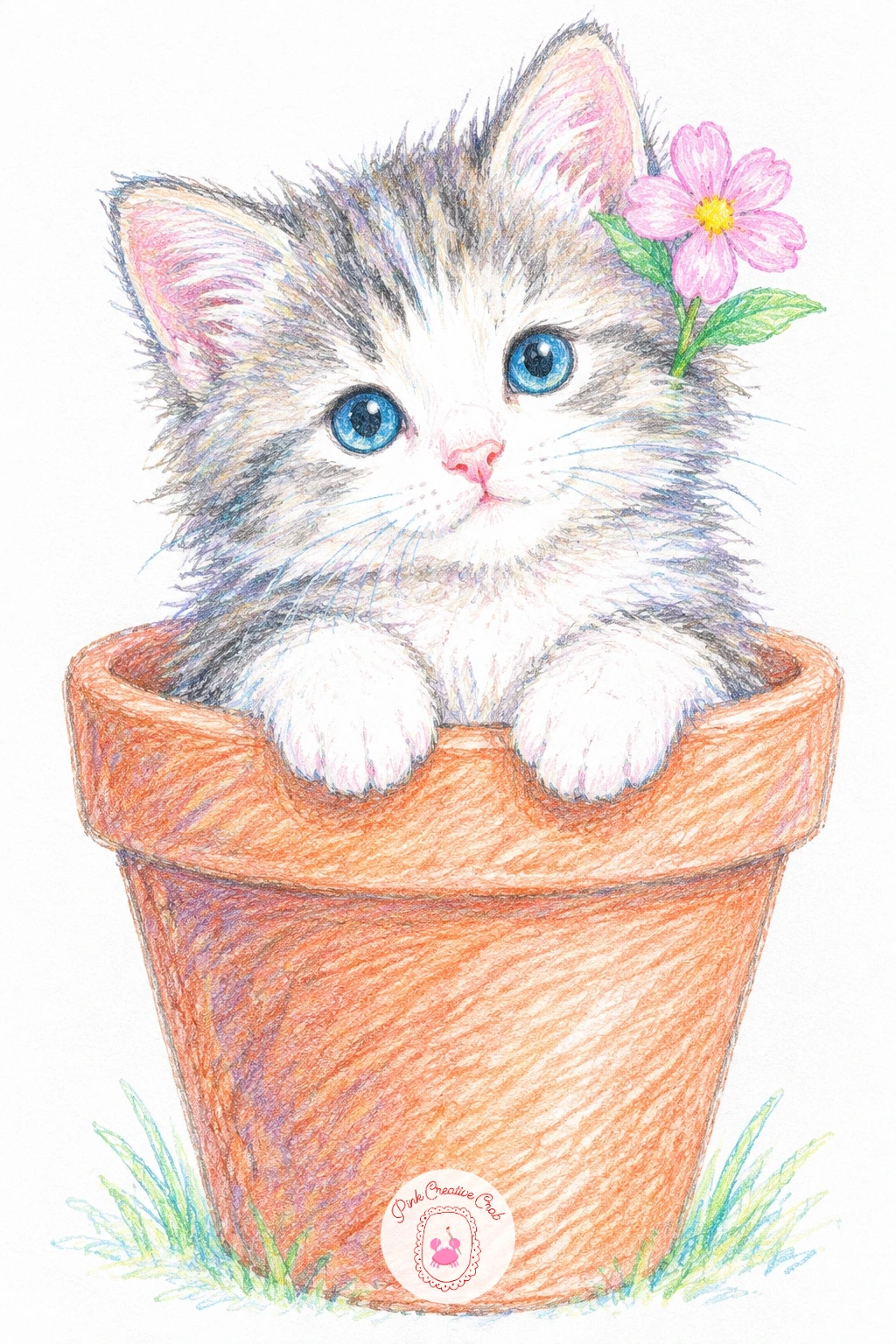
Palette: Golden Tan,Orange,Sap Green,Baby Pink
Step up to a slightly bigger composition with a duck and her ducklings walking in a line, which asks you to keep proportion consistent across several small bodies at once. Draw the mother duck first, largest and leading, then place two or three ducklings behind her in a gently curving line, each one slightly smaller than the one before it to suggest they are following in order.
Shade the mother in warm brown or grey with a little orange at the beak and feet, and keep the ducklings in flat lemon yellow with minimal shading since contrast between her detailed feathers and their simple round bodies helps the eye read the family grouping instantly.
The line looks stiff if everyone walks in a perfectly straight row, so stagger the ducklings slightly side to side like a real wobbly waddle. No brown pencil for the mother, warm grey works fine for a different duck breed. The duck painting list has more ideas if you want to keep exploring duck families in paint afterward.
Keep every beak pointed the same direction, that small bit of consistency is what makes the line feel like it is actually moving somewhere.
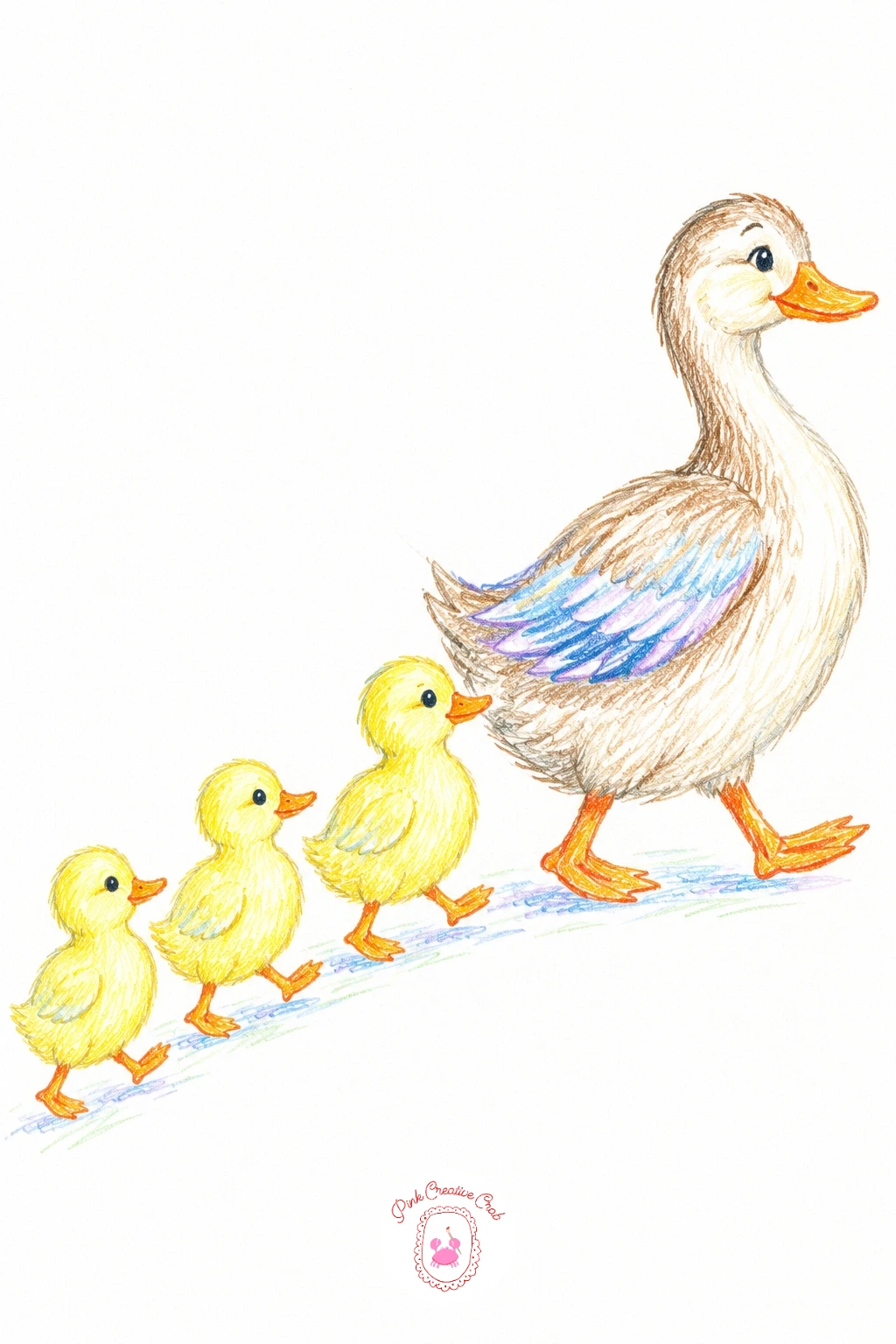
Palette: Lemon Yellow,Golden Tan,Orange,Warm Grey
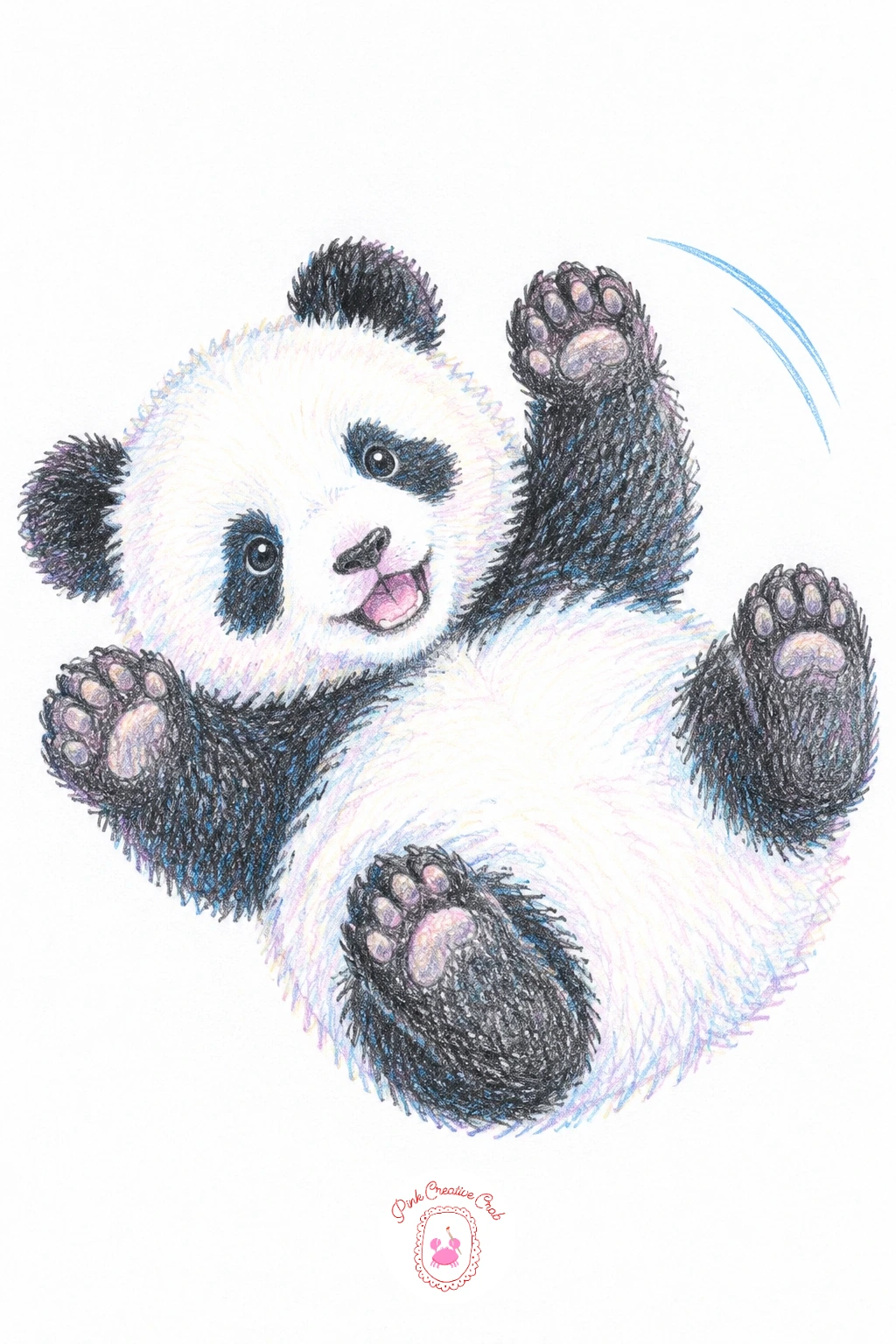
Lighten the mood with a panda cub rolling on its back, a fun pose to practice since the limbs point in every direction at once. Draw the body first as a round tumbling shape, belly up, then place all four paws reaching outward at different angles, two up and two out, to capture the mid-roll feeling rather than a posed sit.
Block the black and white patches in flat shapes before shading, ears, eye patches and limbs in solid black, body in white left mostly bare, then add just a touch of warm grey shadow where the white curves under the black patches.
The roll looks static if all four limbs point the same way, so vary the angles clearly, one paw up near the face, another kicked out to the side. No black pencil at full strength, layer charcoal grey heavily for the same patches if your black feels too flat and waxy.
A single curved motion line behind the body is all it takes to suggest the cub is still mid-tumble.
Palette: Charcoal Grey,White,Warm Grey,Sky Blue Light
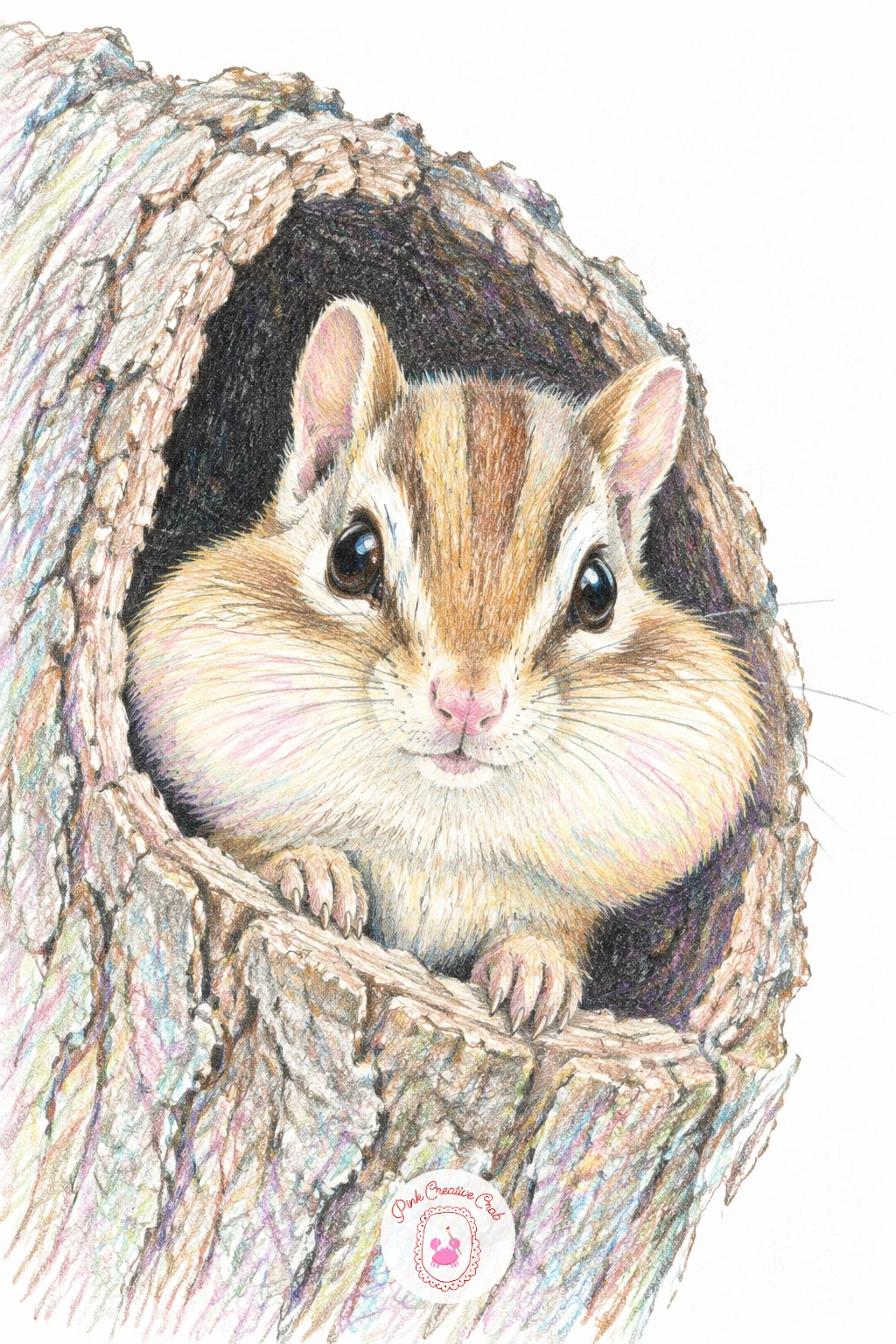
Work on texture with a chipmunk with full cheeks peeking from a log, where the trick for believable bark is a simple dry brush style hatching rather than smooth coverage. Draw the log first as a thick horizontal cylinder with a dark hollow opening, then place just the chipmunk’s head and front paws emerging from the hole, cheeks puffed out wide on both sides.
Shade the log with a pencil held at a slight angle, dragging it lightly over the paper so the strokes come out broken and uneven like real bark grain, darkest right around the hollow opening. Color the chipmunk in warm tan with two or three dark stripes running down from the head, and round out those cheeks noticeably wider than the rest of the face.
The hollow can look like a flat black circle if you do not vary its edge, so rough up the rim with small jagged marks rather than a clean curve. No stripe reference needed, two simple parallel lines down the back of the head read as chipmunk markings instantly.
Overfilled cheeks are the one detail that makes this subject instantly recognizable, so make them rounder than feels natural.
Palette: Golden Tan,Warm Tan Dark,Charcoal Grey,White
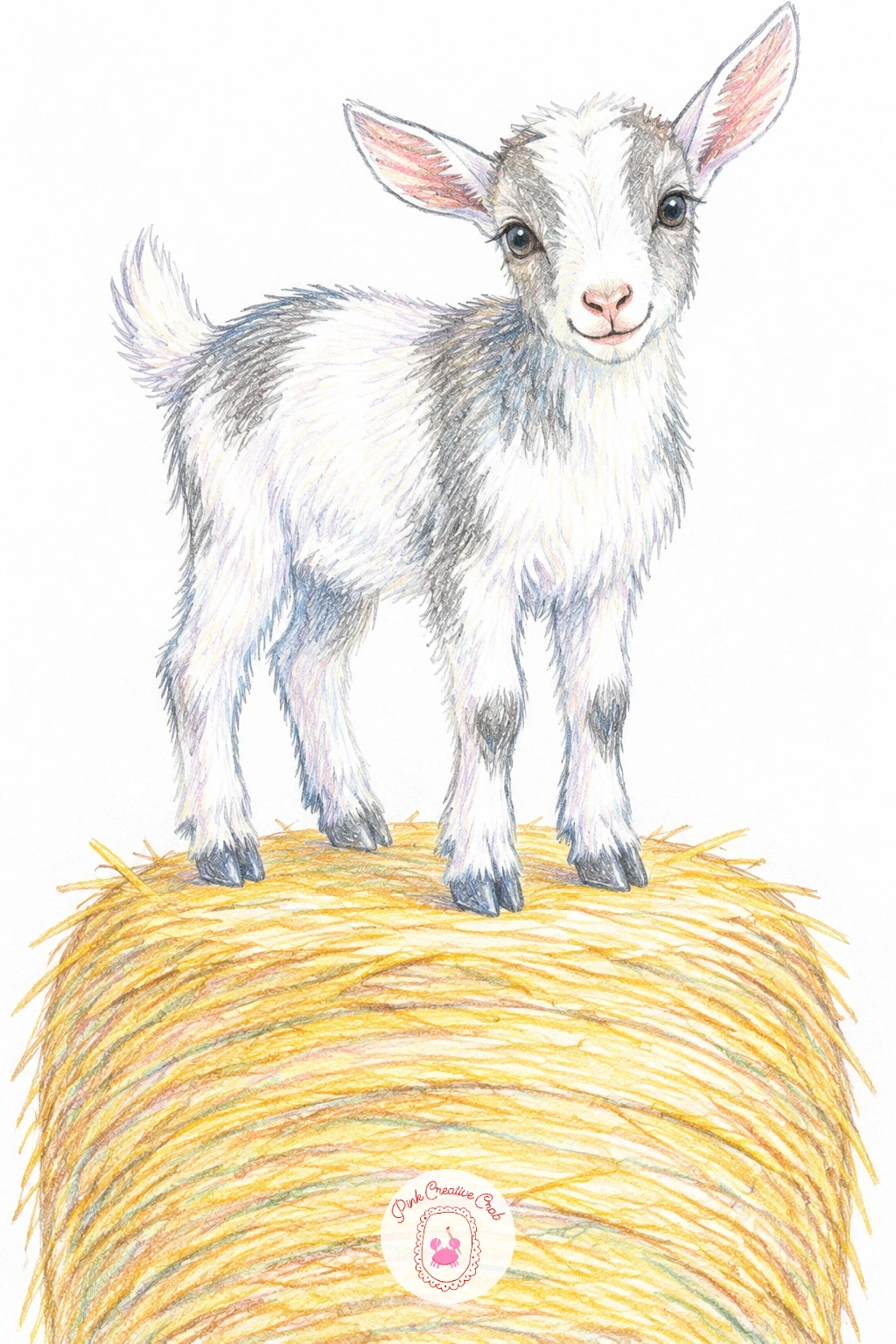
Go for a small landscape feel with a little goat standing on a hay bale, placing the animal slightly above your usual eye level since the raised hay bale changes how the legs and shadow sit. Draw the hay bale first as a simple rounded rectangle with horizontal texture lines, then stand the goat on top with all four legs clearly planted on the curved surface rather than floating above it.
Shade the hay in warm lemon and tan strokes running in loose horizontal bundles to suggest packed straw, and keep the goat in soft white and warm grey patches with short choppy strokes typical of a young goat’s coat.
The goat looks like it is hovering if its legs do not bend slightly to match the curve of the bale’s top, so angle the front legs a touch forward and the back legs a touch back. No tan pencil for the hay, golden yellow layered with a little warm grey gets a similar straw tone.
Small pointed ears held level, not drooping, keeps this goat looking alert and perky on its perch.
Palette: Lemon Yellow,Golden Tan,White,Warm Grey
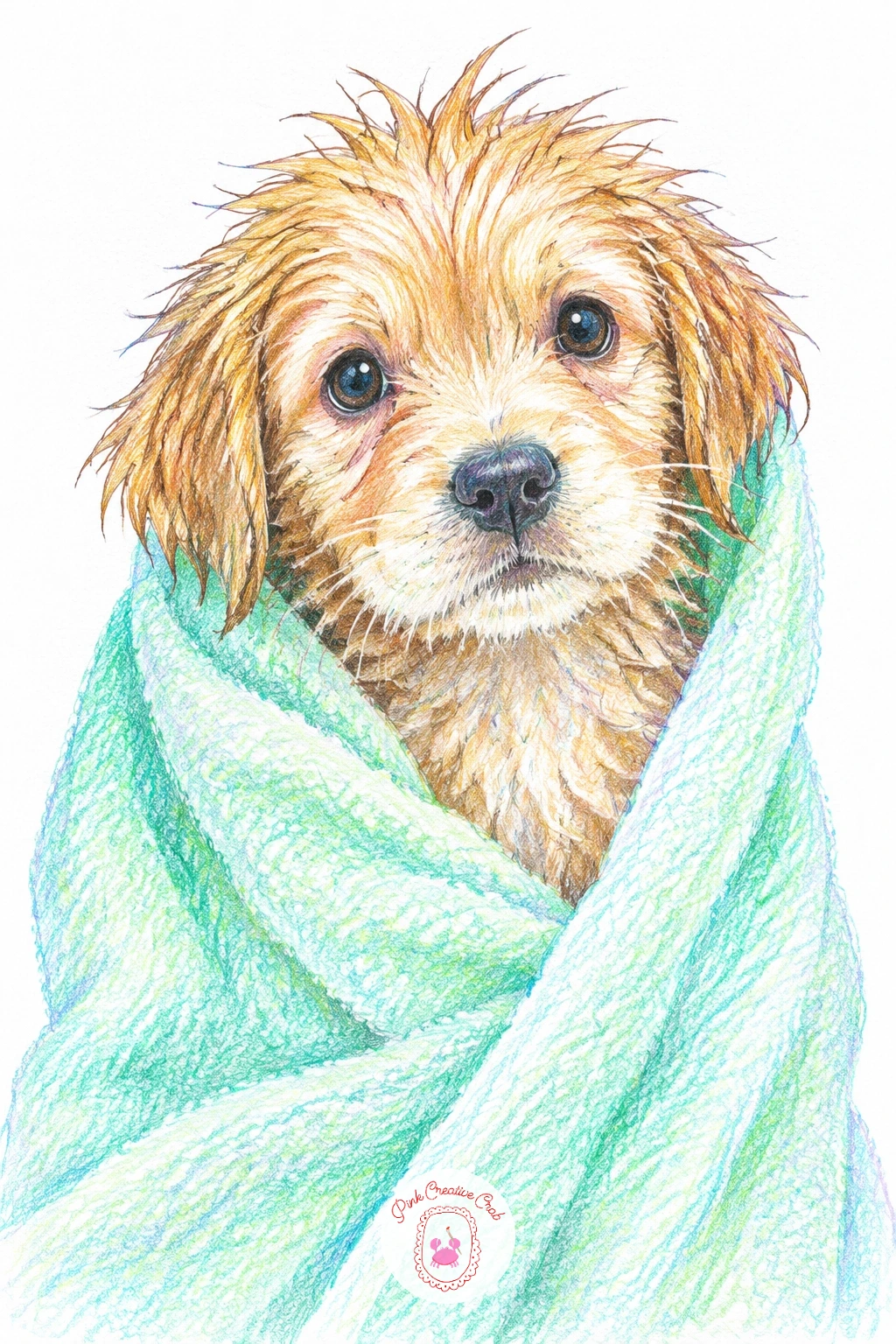
Cool back down with a puppy wrapped in a towel after a bath, a nice subject for softening edges rather than keeping every line crisp. Draw the puppy’s head poking out from the top of a simple rounded towel bundle, body fully hidden beneath the fabric, then shape the towel as loose overlapping folds rather than one smooth blob.
Use a kneaded eraser right after laying down the towel’s base color to lift soft highlight streaks along the folds, that lifted, softer edge reads exactly like damp terrycloth catching the light. Shade the puppy’s wet fur in slightly darker tan than usual with a few spiky clumped strands near the forehead to show it is still damp.
The towel can look stiff if every fold is the same size, so make one or two folds much larger and looser than the rest, draped rather than neat. No kneaded eraser on hand, leave a few streaks of bare white paper in the same spots instead for a similar soft highlight.
A tiny puddle of drips at the base finishes the whole just-out-of-the-bath feeling.
You Will Need
- kneaded eraser for lifting highlights
Palette: Mint Green,Golden Tan,White,Sky Blue Light
Stretch the proportions with a baby giraffe peeking over a fence, where the fun is in exaggerating just how long that neck needs to be. Draw the fence first as a simple row of three or four horizontal planks, then measure roughly: the giraffe’s neck should rise at least twice the height of the fence before the head appears over the top rail.
Shade the fence in flat warm tan with visible wood grain lines, and color the giraffe in lemon yellow with warm tan patches scattered unevenly across the neck, larger patches lower down and smaller ones near the head, which is how real giraffe markings taper.
The neck looks too short if you draw the head first and work down, so always build the fence, then the neck height, then the head last. No patch reference, scatter rounded blob shapes unevenly rather than in a repeating grid pattern.
Two small nubby horns on top of the head is the one detail that instantly reads as giraffe rather than any other long-necked animal.
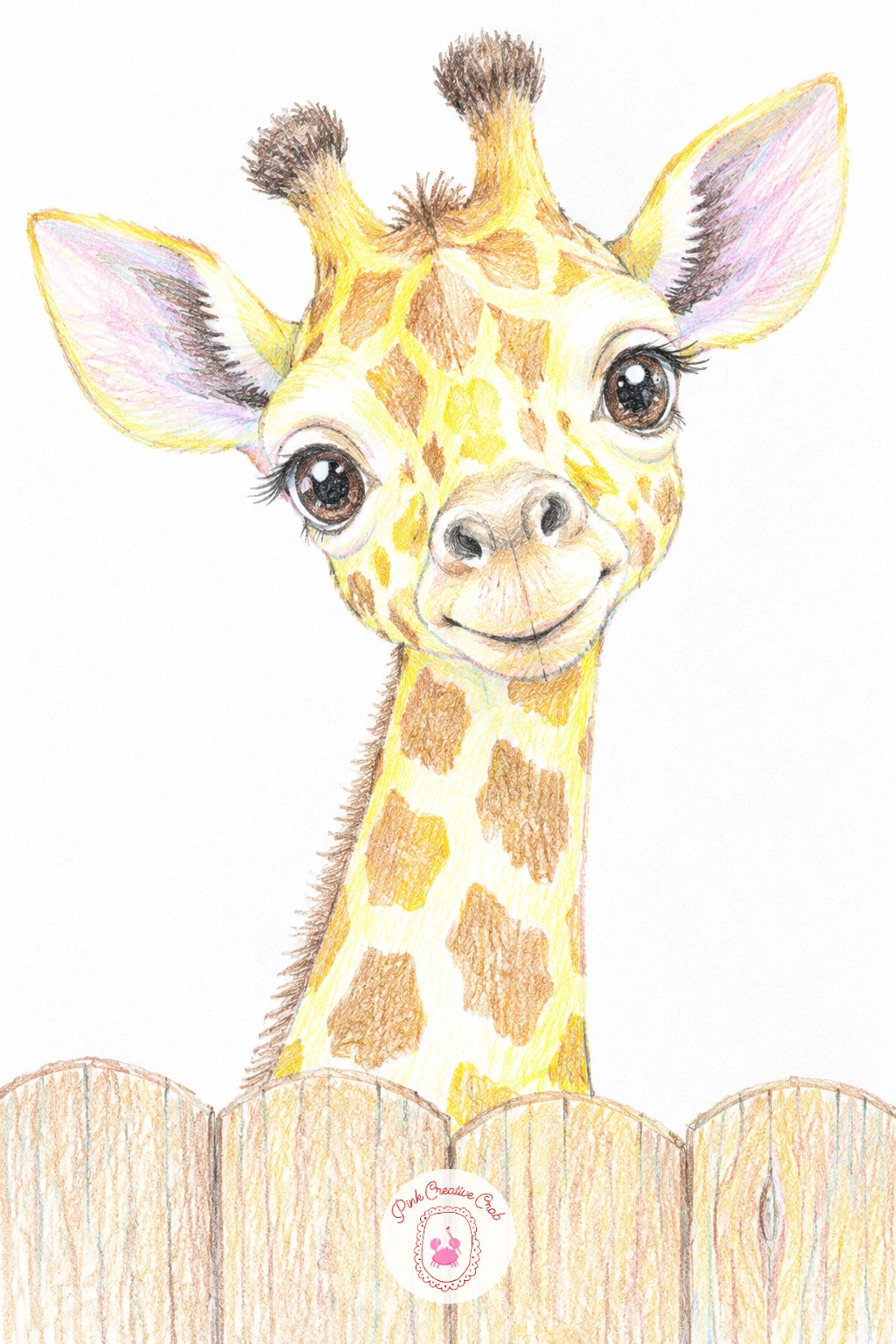
Palette: Lemon Yellow,Golden Tan,Warm Tan Dark,White
Revisit the container idea from earlier with a kitten peeking out of a teapot, this time with a curved spout and lid to play with instead of a plain mug. Draw the teapot’s rounded body first, add the spout curling out to one side and the small knobbed lid, then open the lid slightly askew so the kitten’s head can poke out through the gap.
Shade the teapot in baby pink or sky blue with a thin painted-looking line pattern near the base, and keep the kitten’s fur soft and pale so it contrasts gently against the stronger teapot color.
The lid often looks like it belongs to a different pot if it does not match the body’s curve, so sketch the lid as a small version of the same dome shape used for the body before you tilt it open. No pink or blue pencil, a warm cream teapot with just the kitten in color looks just as charming.
Steam is optional, two or three soft curved white lines rising from the spout add warmth without much extra effort.
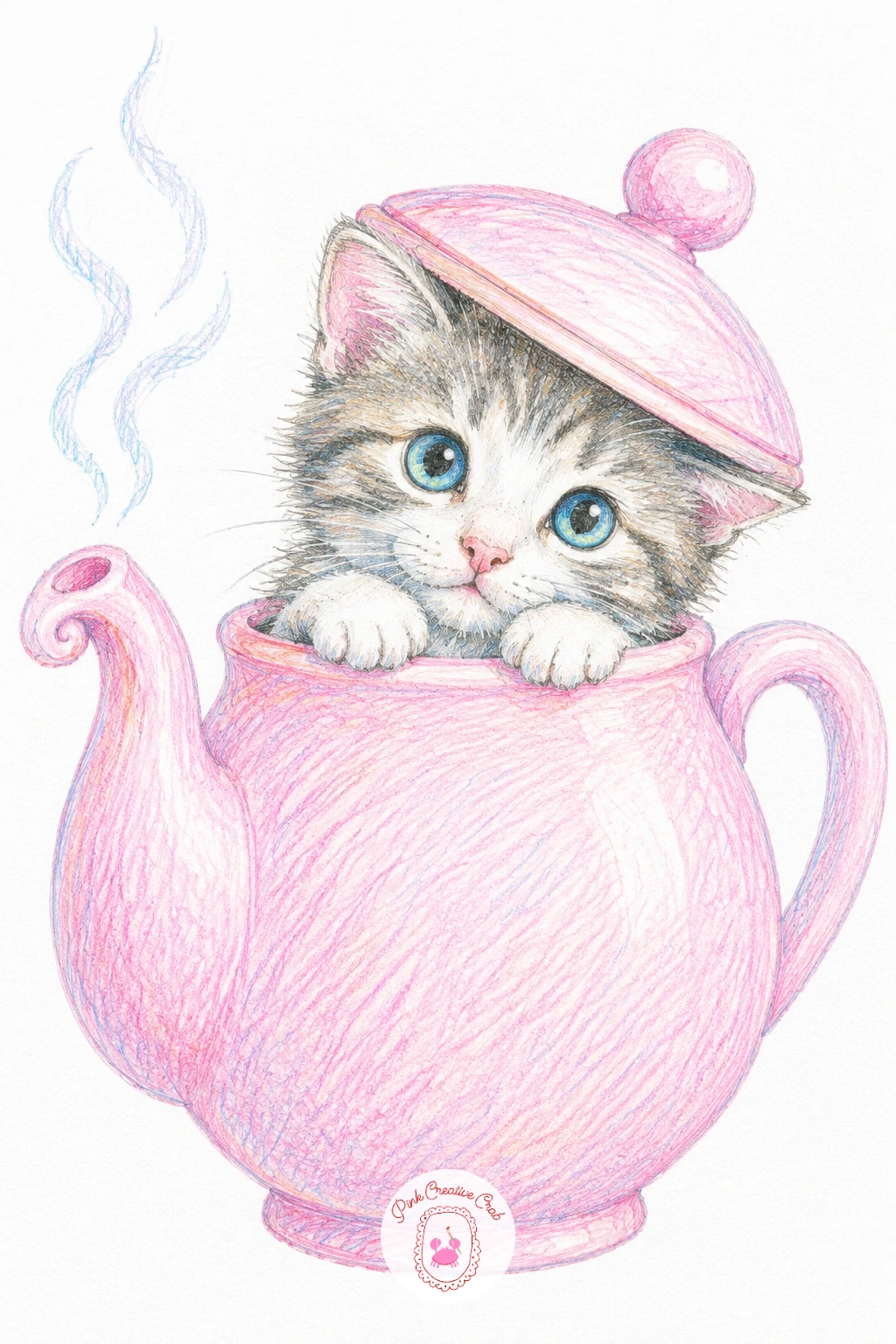
Palette: Baby Pink,Sky Blue Light,Warm Grey,White
If teapots feel fun to draw, the tea doodle list is full of related little teapot and mug characters worth sketching next.
Go small and detailed with a bee carrying a tiny bucket of pollen, a good one for a quick ten-minute sketch that can also stretch into a longer forty-minute study. The quick version blocks the bee’s round striped body, simple wing shapes, and a tiny bucket held under its front legs, flat colors throughout.
The longer version adds a visible vein pattern inside the translucent wings using a very light grey, soft fuzzy texture along the bee’s back with short flicked strokes, and individual pollen grains as tiny dots piled inside the bucket. Either way, draw the bucket before the legs so you can wrap the little legs convincingly around its handle.
The bee looks top heavy if the wings are drawn too large, so keep them about the same length as the body, angled slightly back. No yellow and black stripes feeling bold enough, warm tan stripes against cream work for a softer look.
Fill the bucket with lemon yellow pollen dots, that bright little detail is what makes the whole idea click into place.
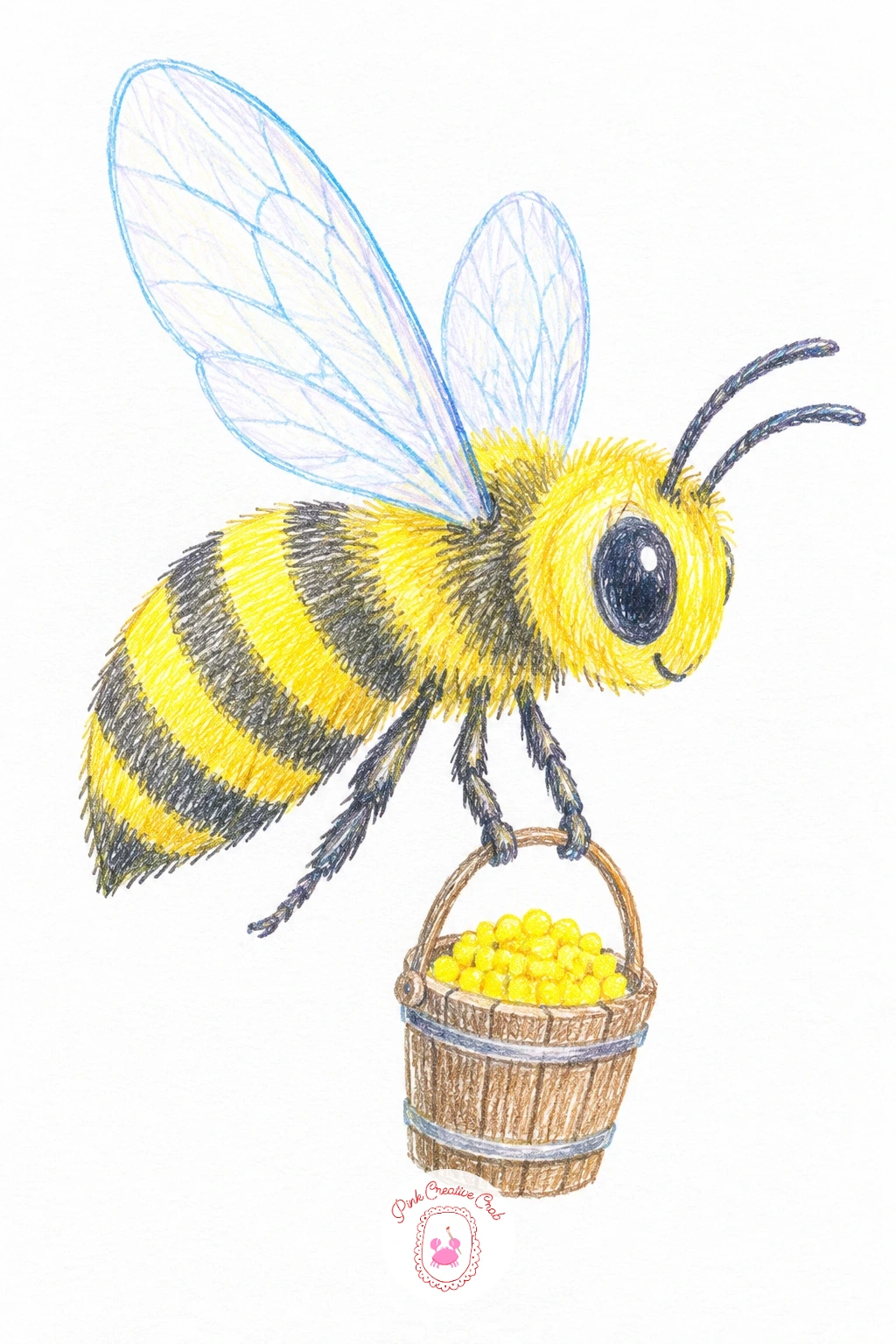
Palette: Lemon Yellow,Charcoal Grey,White,Golden Tan
Pair two small creatures together with a mouse riding on a snail, a fun variation on the earlier snail idea now carrying a tiny passenger. Draw the snail’s spiral shell and trailing body first exactly as before, then perch the mouse sitting upright on top of the shell, tiny paws gripping the ridge of the spiral like reins.
Shade the shell in warm tan with the spiral line kept visible, and color the mouse in soft grey with a long curved tail trailing down the side of the shell for balance. Keep the mouse’s body noticeably smaller in proportion to the shell than it would be standing on the ground, since the whole joke of this pairing depends on that size difference reading clearly.
The mouse looks like it is floating above the shell if its paws do not actually dip into the spiral’s grooves, so let at least one paw tuck slightly into a ridge line. No grey pencil, pale lilac makes an equally soft mouse coat.
A small determined expression, simple straight brow lines, sells the idea that this is a serious journey for the mouse.
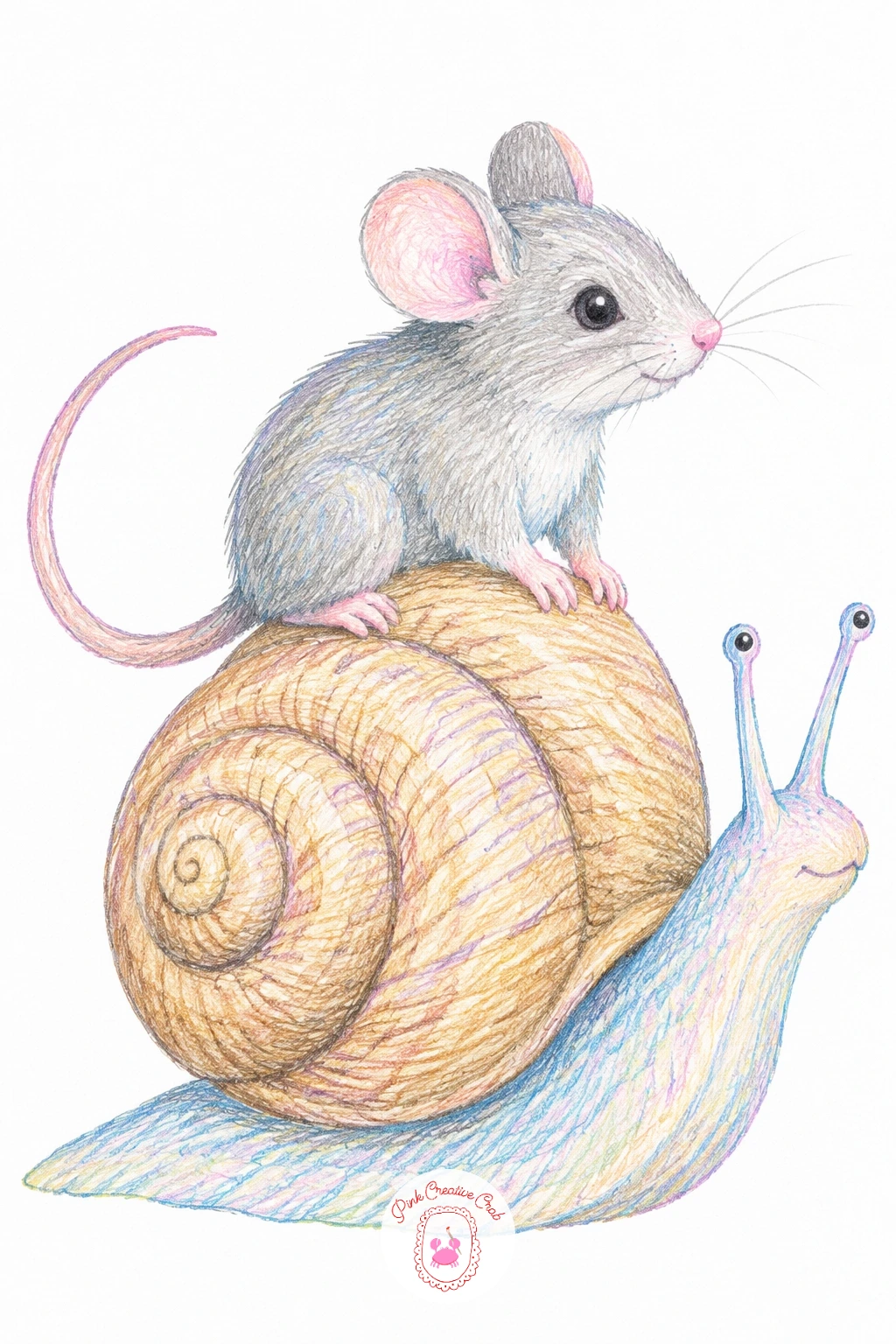
Palette: Golden Tan,Warm Grey,Lilac,White
Zoom in close with a ladybug sitting on a fingertip, which means drawing a convincing piece of a hand without needing the whole arm. Draw just the end segment of one finger, rounded at the tip with a simple curved nail line, then place the ladybug’s domed body right at the center of the fingertip, legs barely visible gripping the skin.
Shade the fingertip in a warm skin tone with very light, smooth strokes and one soft shadow line where the finger curves away from the light, and color the ladybug in a bright flat red or warm orange red with evenly spaced black dots and a simple split line down the center of the shell.
The ladybug looks like a sticker if it sits perfectly flat with no shadow, so add one small dark crescent shadow right where the body meets the fingertip. No bright red on hand, a deep orange red reads just as clearly as a ladybug at this size.
Keep the dot pattern slightly uneven rather than perfectly symmetrical, that small imperfection makes it feel hand drawn rather than printed.
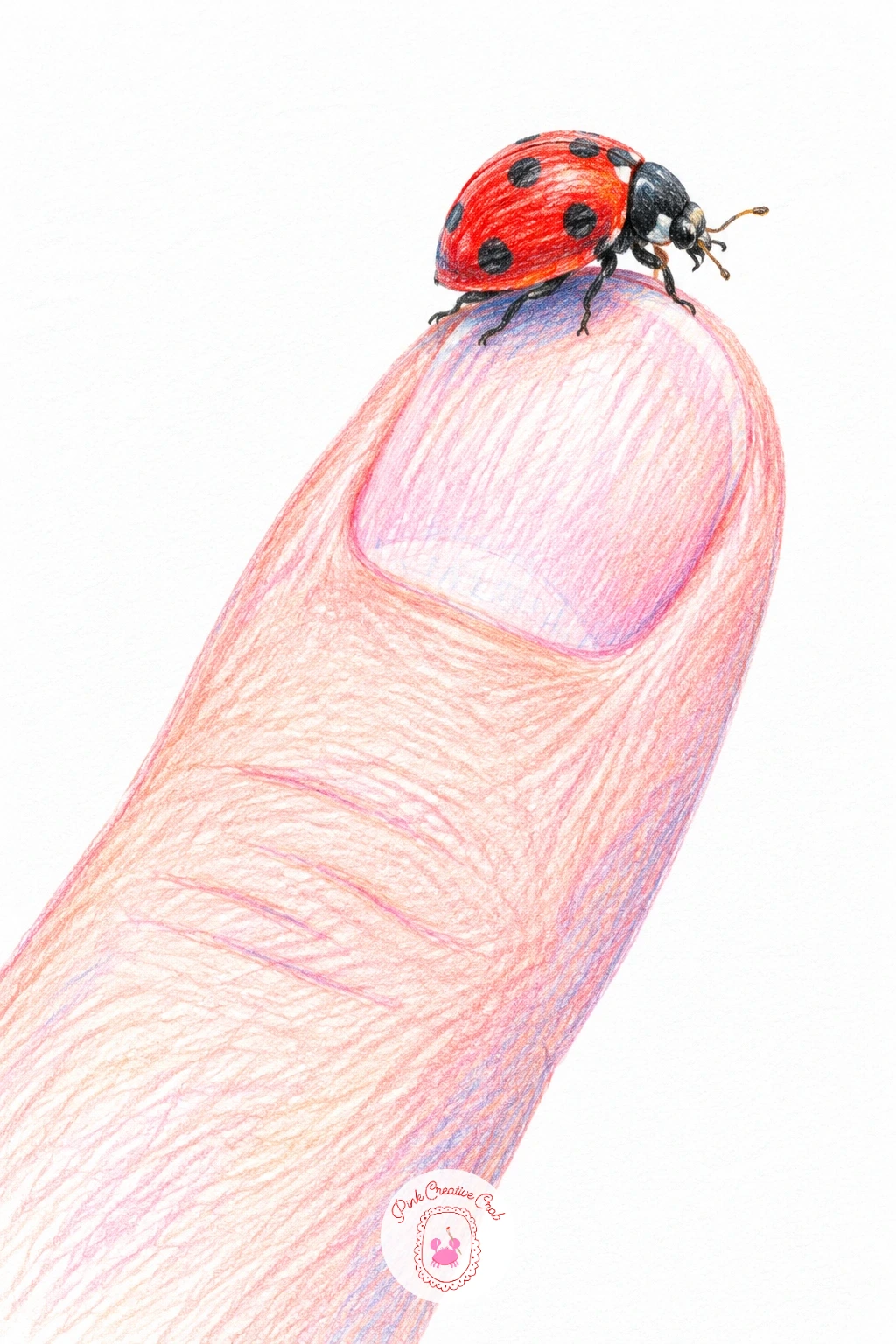
Palette: Warm Skin Tone,Orange Red,Charcoal Grey,White
Bring back a bigger smile with a quokka smiling with a leaf in its mouth, a subject almost entirely carried by one expression. Draw the quokka’s round compact body first, short legs and rounded ears tucked close, then place the leaf stem gently between the front teeth, angled slightly upward toward one cheek.
Shade the fur in warm tan and grey mixed together with soft short strokes, keeping the cheeks especially round and full since that roundness is most of what gives quokkas their famous happy look. Color the leaf in sap green with one lighter vein line down the middle.
The smile falls flat if the mouth line is too straight, so curve it upward more than feels natural at both corners, quokka smiles read as almost exaggerated in real reference too. No warm tan and grey mix on hand, a plain warm grey works fine on its own.
Small round dark eyes set high on the face, close together, finish the expression in just two marks.
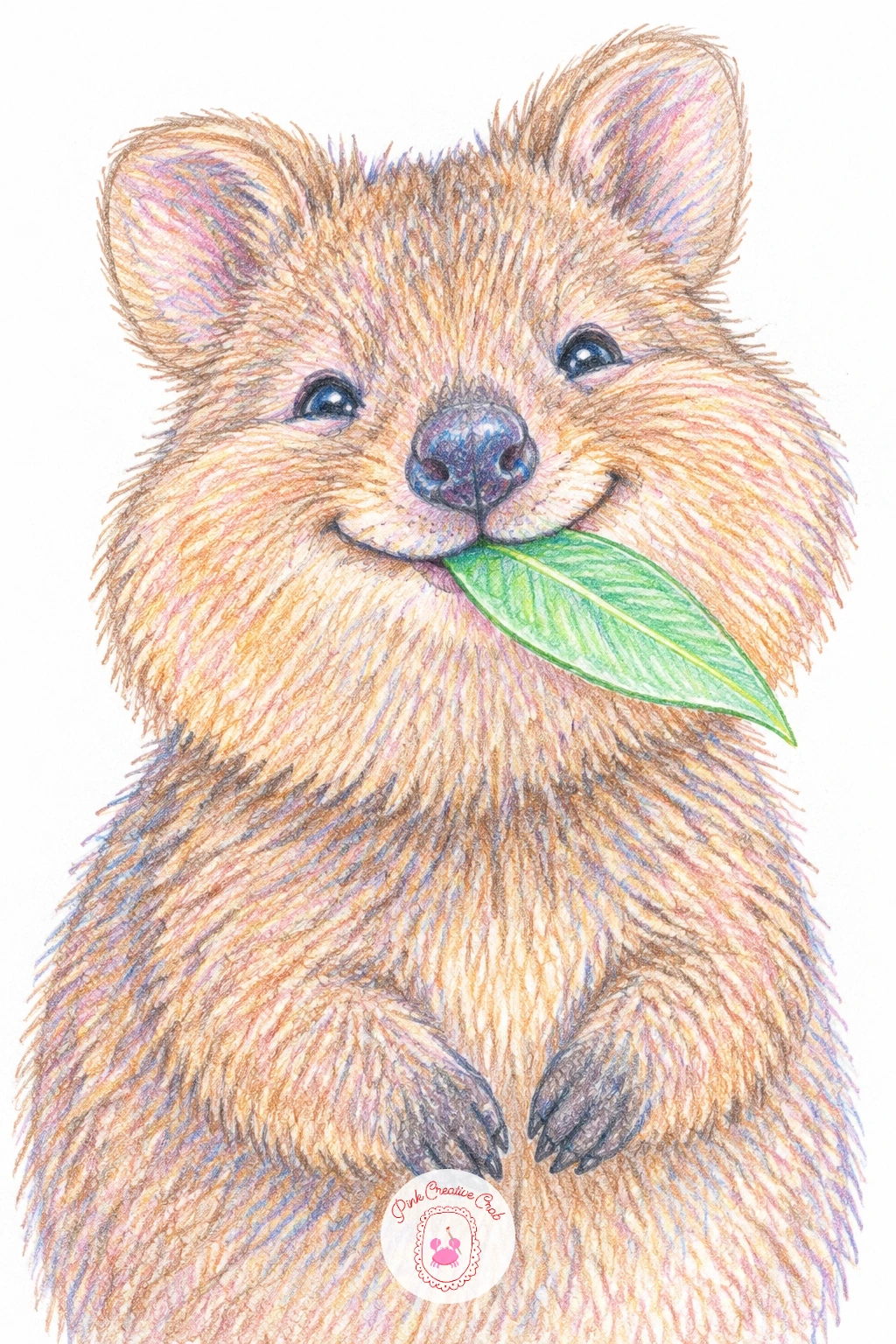
Palette: Golden Tan,Warm Grey,Sap Green,White
Open up a little landscape with a baby turtle crawling toward the waves, which lets you try drawing a horizon line for the first time in this list. Place the horizon roughly a third of the way down the page, draw a few simple wave shapes along it in sky blue, then put the turtle low in the foreground, body angled toward the water with two little trail marks dragging behind it in the sand.
Shade the shell in warm tan with a simple segmented pattern of curved lines, and keep the sand almost entirely bare white paper with just a few warm grey dot shadows under the turtle’s flippers to ground it.
The scene flattens out if the waves and the turtle are the same size relationship as each other on the page, so keep the turtle noticeably larger in the foreground than any wave shapes near the horizon. No sky blue on hand, mint green waves work just as well for a softer palette.
Two short drag lines behind the back flippers is all it takes to suggest the turtle is actually moving across the sand.
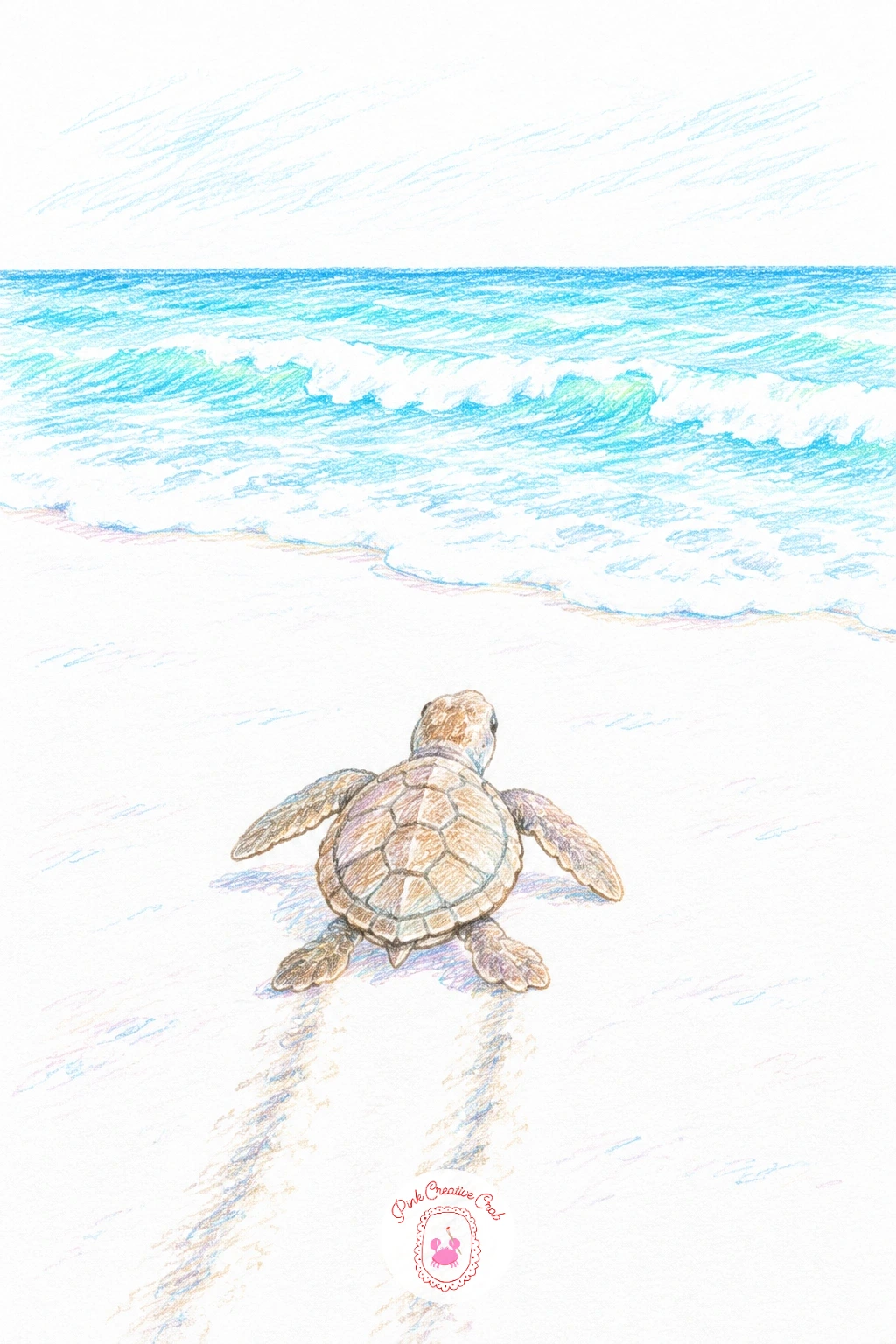
Palette: Golden Tan,Sky Blue Light,Warm Grey,White
Close the list out gently with a seal pup lying on a rock, a calm pose to end on after the busier scenes earlier in the list. Draw the rock first as a simple flattened boulder shape, then lay the seal pup’s long soft body across the top of it, flippers tucked close and the head resting sideways on the rock’s surface.
Shade the seal in soft grey with smooth, mostly blended strokes since seal skin reads smoothest and shiniest when the hatching stays light and even rather than choppy, keeping one highlight streak left bare along the back where light would catch the curve.
The pose looks uncomfortable if the head sits at the wrong angle, so rest the cheek flat against the rock rather than holding the neck upright. No warm grey pencil for the rock, a pale lilac grey gets the same cool, weathered stone look.
Closed eyes and a small content mouth line finish this one as a perfectly restful last page in your sketchbook.
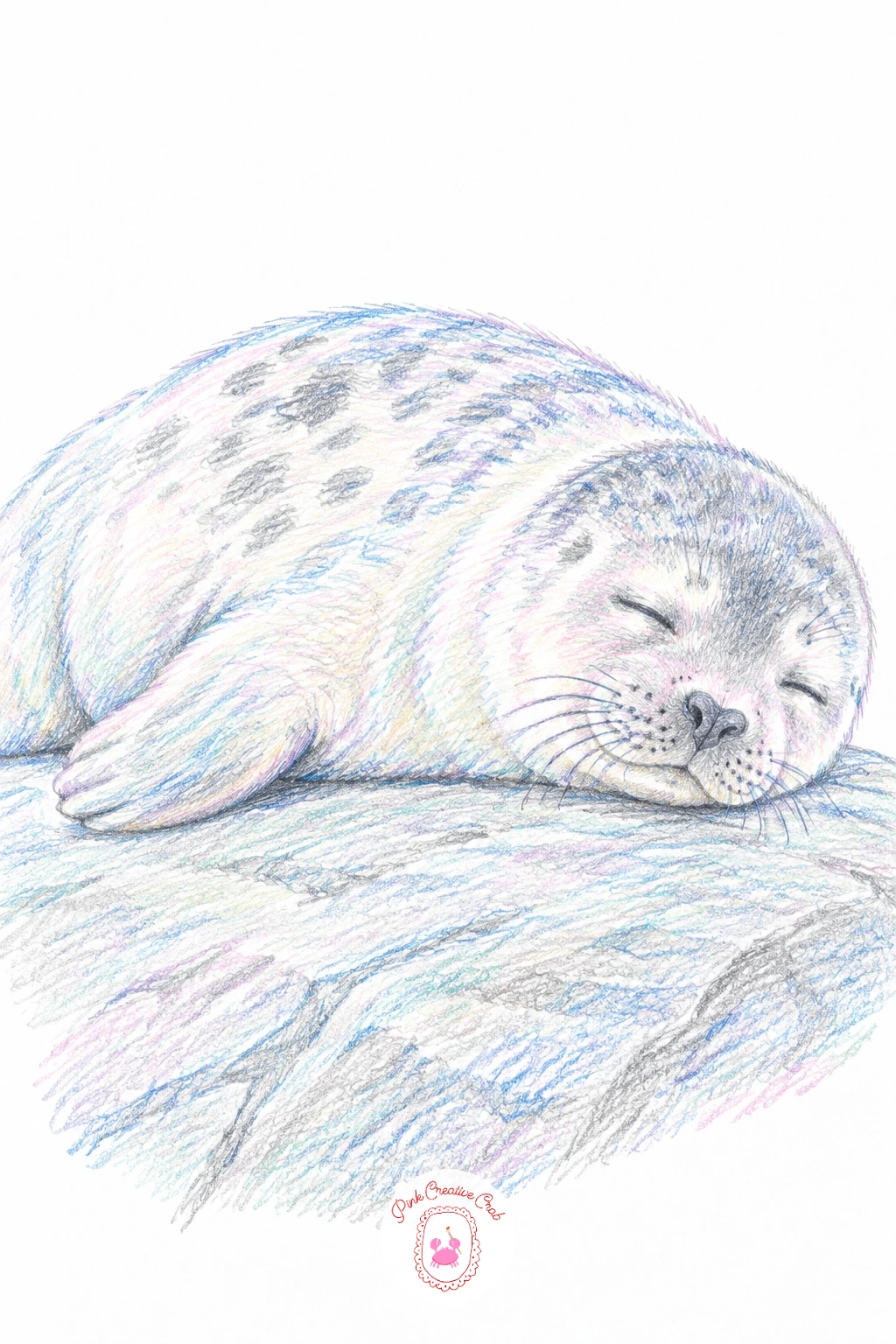
Palette: Warm Grey,Lilac,White,Sky Blue Light
What to Do Next
Pick whichever animal made you smile first, sharpen your pencils, and give yourself one sitting to finish it on a fresh sheet of bright white paper. Once that one feels good, the rest of the list is right here waiting for next time.
Frequently Asked Questions
What colored pencils work best for cute sketch ideas like these?
Any wax-based or oil-based colored pencil set with soft cores works well. Look for a range that includes clean pastel shades like baby pink, mint and sky blue, since those build the cozy look across this whole style.
How do you keep colored pencil fur from looking scratchy?
Build fur in several light layers of short strokes rather than pressing hard once. Follow the direction the fur actually grows, and leave small gaps of white paper between strokes near highlights so the texture stays soft, not scribbly.
Do I need to sketch these animals in pencil before adding color?
Yes, a light graphite or colored pencil sketch first keeps proportions correct before you commit to color. Keep the lines faint so they do not show through lighter shades, and erase any stray guidelines once the main shapes are set.
How can I make small animal drawings look less flat?
Add one consistent light source and shade the side away from it slightly darker on every surface, fur, prop and shadow alike. A single soft shadow under the animal also grounds it instantly on the page.
What is the easiest idea on this list to start with?
The kitten peeking out of a coffee mug is the simplest, since it only needs two basic shapes, a cylinder and a round head, making it a good warm-up before trying the busier poses later in the list.
Have any thoughts?
Share your reaction or leave a quick response — we’d love to hear what you think!
-
 0
-
0
-
0
-
0
-
0
-
0


