A bear illustration is the perfect excuse to paint something warm on a cold afternoon: round, soft shapes, a cup of something hot, a quilt pulled up to the chin. Gouache suits this world so well because its flat, matte color sits like a storybook page, and you never have to fight for coverage the way you do with watercolor.
Below you will find thirty two cozy bear scenes, from a single sleeping shape you can finish in ten minutes to fuller scenes with cubs, firelight and falling snow. Work through them in any order, but the early ones are the gentlest place to start if gouache still feels new in your hand.
Using these images: free for personal projects such as printing, coloring, cards, journals and gifts. Handmade items that include them may be sold up to 30 pieces per design. More than that is commercial use and is not permitted, and neither is selling or sharing the images themselves or passing them off as your own. Please ask before any other use.
Start with the easiest shape in the whole set: a brown bear curled into a comma, nose tucked near its tail, inside a rounded den under a snow covered hill. Sketch it lightly in pencil first, just two overlapping curves for the hill and den mouth, then the bear as one soft oval with small ears and a tucked paw.
Block in the hill in a pale cream and the den interior in a deeper chocolate brown so the bear reads clearly against it, then paint the bear itself in a warm honey brown, keeping every edge crisp once the gouache dries. Add a few white dots of snow outside the den mouth last, using the tip of a small round brush.
The usual trap here is a muddy edge where the den shadow meets the bear’s fur. If that happens, let the first layer dry completely and repaint the edge in one clean stroke rather than blending wet into wet.
If you do not have illustration board on hand, smooth cold press watercolor paper works just as well for this flat gouache style.
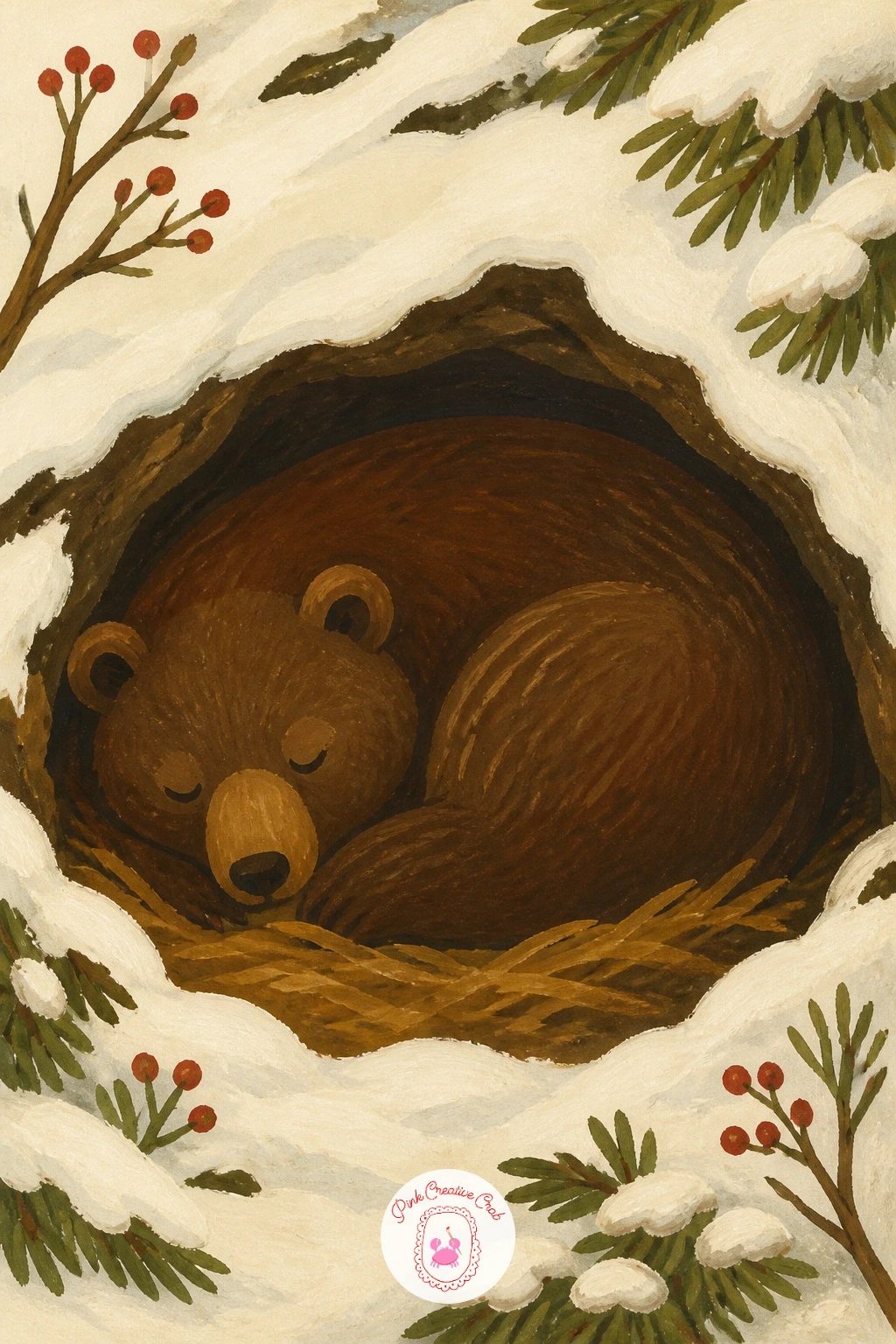
Palette: Chocolate Brown,Honey,Cream,Titanium White
Move from a sleeping shape to a standing one with this cheerful cub, wearing a cherry red knit hat while snow falls around it. Pencil in a simple pear shaped body, round head, and small triangle ears, then add the hat as a dome sitting slightly over the ears with a little pompom on top.
Paint the cub’s fur in honey brown first, leaving the hat area blank, then fill the hat in cherry red once the fur is dry so the edge stays sharp. A good trick for proportion: the hat should sit no lower than halfway down the ears, otherwise the cub looks swallowed by it rather than dressed for the cold.
Finish with small white gouache dots flicked from a dry brush for falling snow, keeping them scattered rather than even. If cherry red gouache is not in your set, mix a touch of white into a cadmium red to soften it slightly for a storybook feel.
Let the background stay plain cream so the hat is the one bright note on the page.
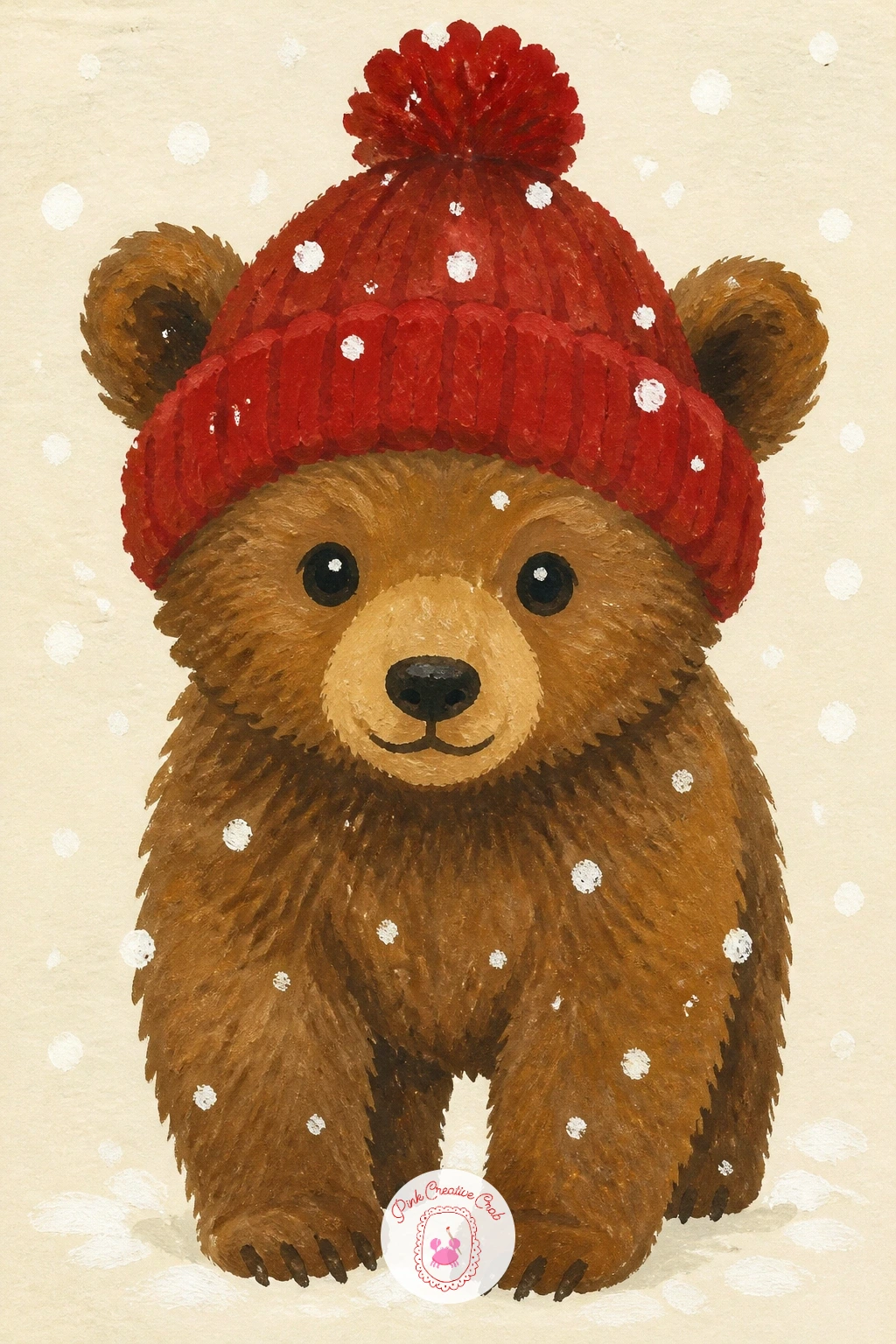
Palette: Honey,Cherry Red,Cream,Titanium White
Where does the light come from. That question drives this whole scene, so decide early that the lantern sits just to one side of the sleepy bear reading in its den, and let every shadow fall away from it.
Paint the den interior in a deep chocolate brown first, then add the lantern as a small cream glow with a ring of warmer honey around it before the bear goes on top. The bear itself, propped on one elbow with a book, gets its lit side in honey brown and its shadowed side a touch darker, mixed from the same brown with a little more chocolate stirred in.
The place this goes wrong is an evenly lit bear that looks flat despite the lantern being there. Keep the correction simple: paint the whole bear in the midtone first, then add just one strip of the darker shade down its back, away from the light.
No lantern reference handy? A simple glowing circle with a few straight light rays reads clearly enough in this flat style.
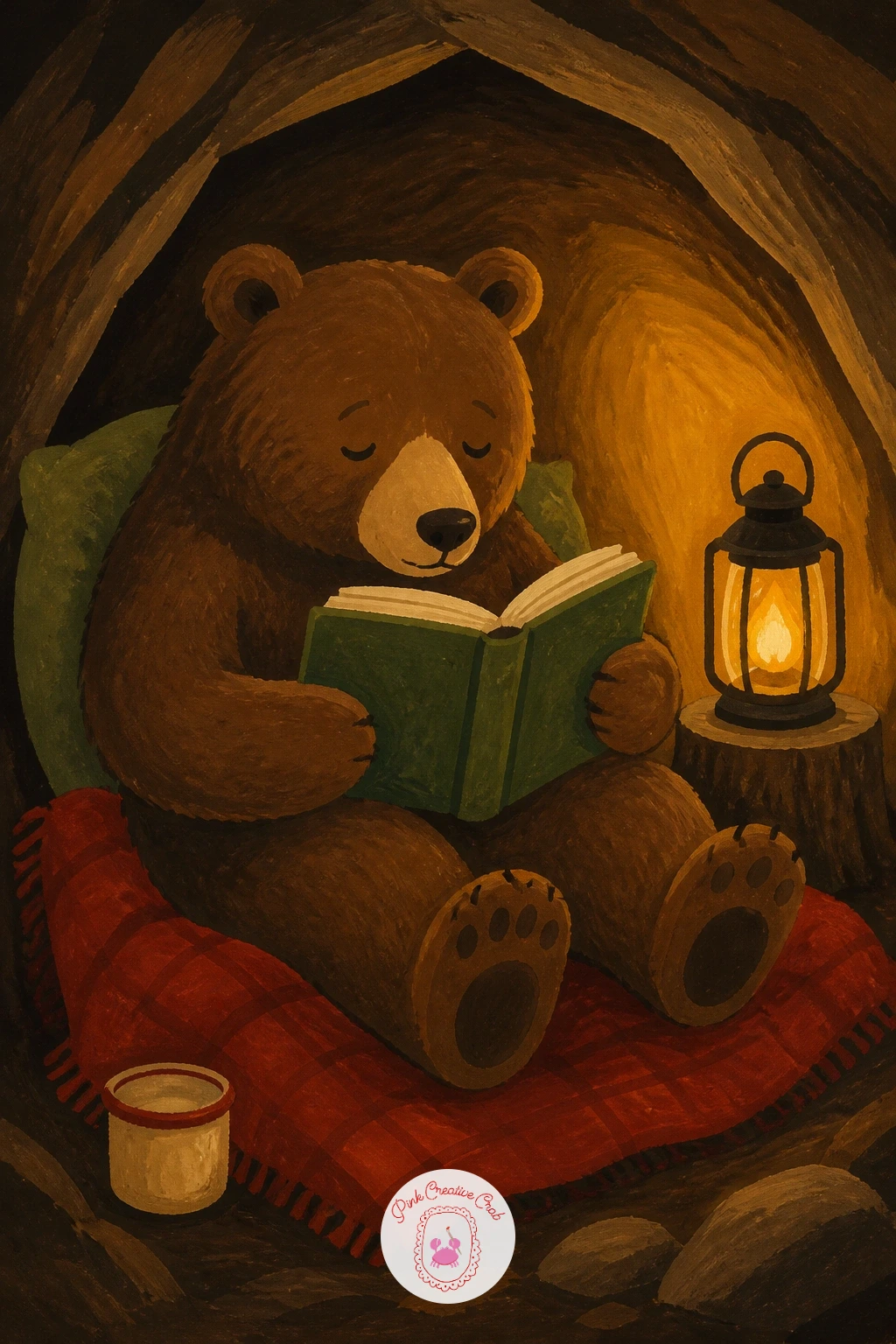
Palette: Chocolate Brown,Honey,Cream,Moss Green
Two bears having a snowy picnic gives you a chance to practice a small still life inside a bigger scene. Lay out the composition first in light pencil: a blanket shape low on the page, two seated bears facing each other, and a thermos with two little cups between them.
Paint the blanket in moss green with a few cream stripes, then the bears in honey brown, saving the thermos for last in a bright cherry red so it becomes the focal point of the whole picture. Keep the steam rising from the cocoa as just two or three soft curved white lines, not a cloud, to match the flat graphic style.
If the two bears start to look identical and stiff, tilt one head slightly and give the other a paw resting on its knee; small differences in pose carry a lot of personality at this scale.
This is a good one to revisit later with a different drink, a flask of tea perhaps, once the composition feels comfortable.
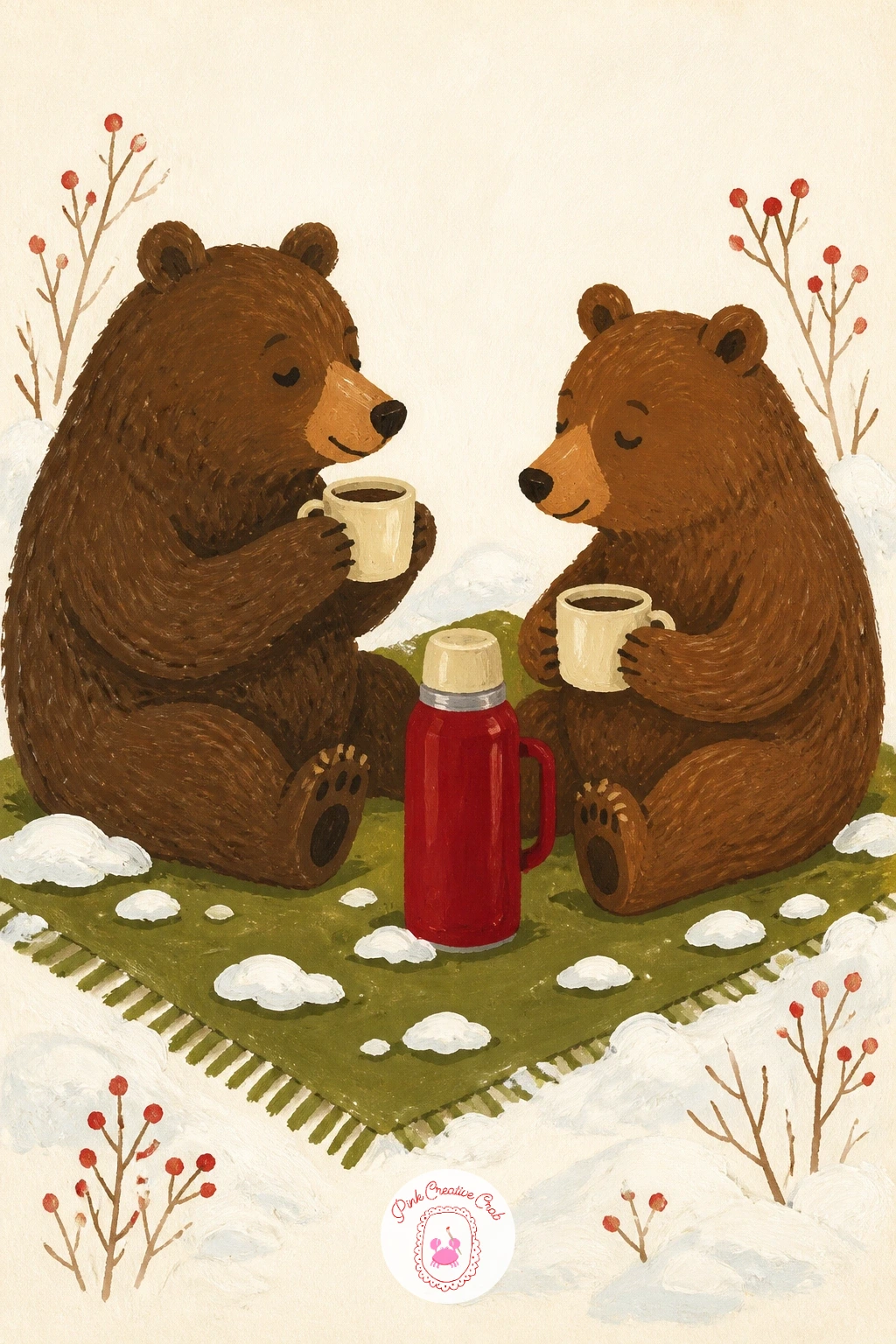
Palette: Honey,Moss Green,Cherry Red,Cream
Build this one as a single rounded unit rather than two separate bears glued together. Sketch the mother bear first as a large soft curve lying on her side, then nestle the cub’s smaller round shape right into the curve of her belly so the two outlines overlap like puzzle pieces.
Paint the mother in chocolate brown and the cub a shade lighter in honey, so the two still read as separate animals once the color goes on. Work the mother’s outline first and let it dry before painting the cub over the shared edge, which keeps that overlap crisp instead of smudged.
A quick measuring trick helps the proportions: the cub’s whole body should be roughly a third the length of the mother’s, which keeps it looking genuinely young rather than just a small adult.
Add one cream highlight on the mother’s shoulder to suggest soft fur catching a little light.
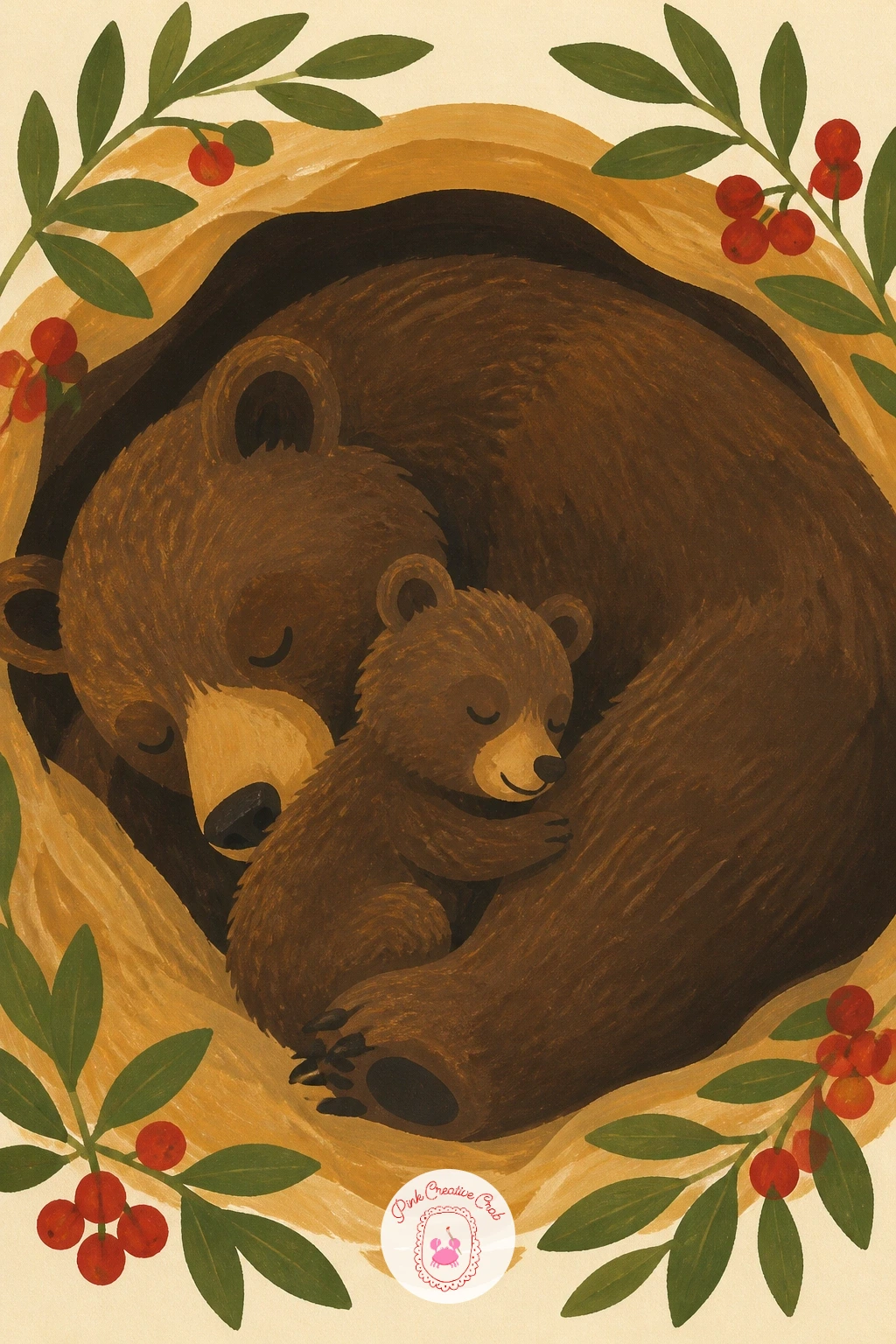
Palette: Chocolate Brown,Honey,Cream,Titanium White
Give this bear a clear little action: stuffing one last berry into its mouth before the long sleep. Start the sketch with the bear’s head tilted up slightly and one raised paw holding a small round berry close to its mouth, since that gesture is what tells the whole story.
Paint the bear’s body in honey brown, then the berry in a strong cherry red so it pops as the smallest but brightest shape on the page. A few scattered berries at the bear’s feet, painted smaller and a touch darker, round out the scene without adding much extra work.
Watch the paw and mouth placement, since if they do not quite meet the gesture reads as confused rather than purposeful. Pencil that connection in carefully before any paint goes down, and adjust it there rather than fixing it later in color.
Swap the berry for a small apple or acorn if red feels like too much for your palette that day.
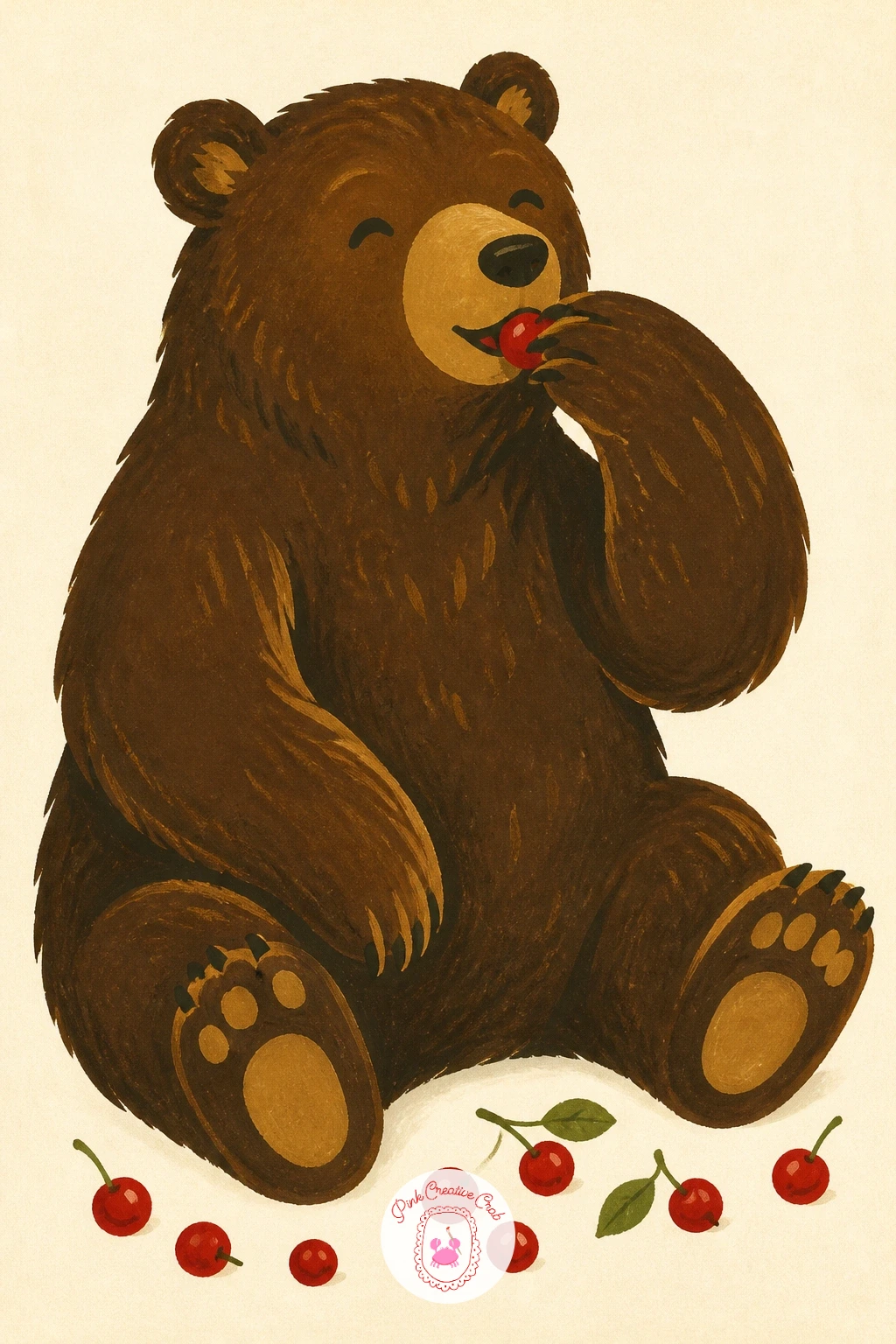
Palette: Honey,Cherry Red,Chocolate Brown,Cream
This scene adds motion to the usual sleepy bear subject, so lean into the diagonal. Sketch the bear mid stride, leaning forward with the quilt corner gripped in its teeth or paw, trailing back across the snow toward the den.
Block in the quilt first in a patchwork of small moss green, cherry red and cream rectangles, since painting the pattern before the bear goes over it keeps the edges where they overlap much cleaner. Then paint the bear in honey brown on top, letting a little of the quilt tuck behind its back leg.
If the patchwork squares start looking too even and stiff, vary two or three of them slightly in size; real quilts are never perfectly uniform and that small imperfection reads as handmade.
For a faster version, paint the quilt as only three or four wider stripes instead of a full patchwork grid.
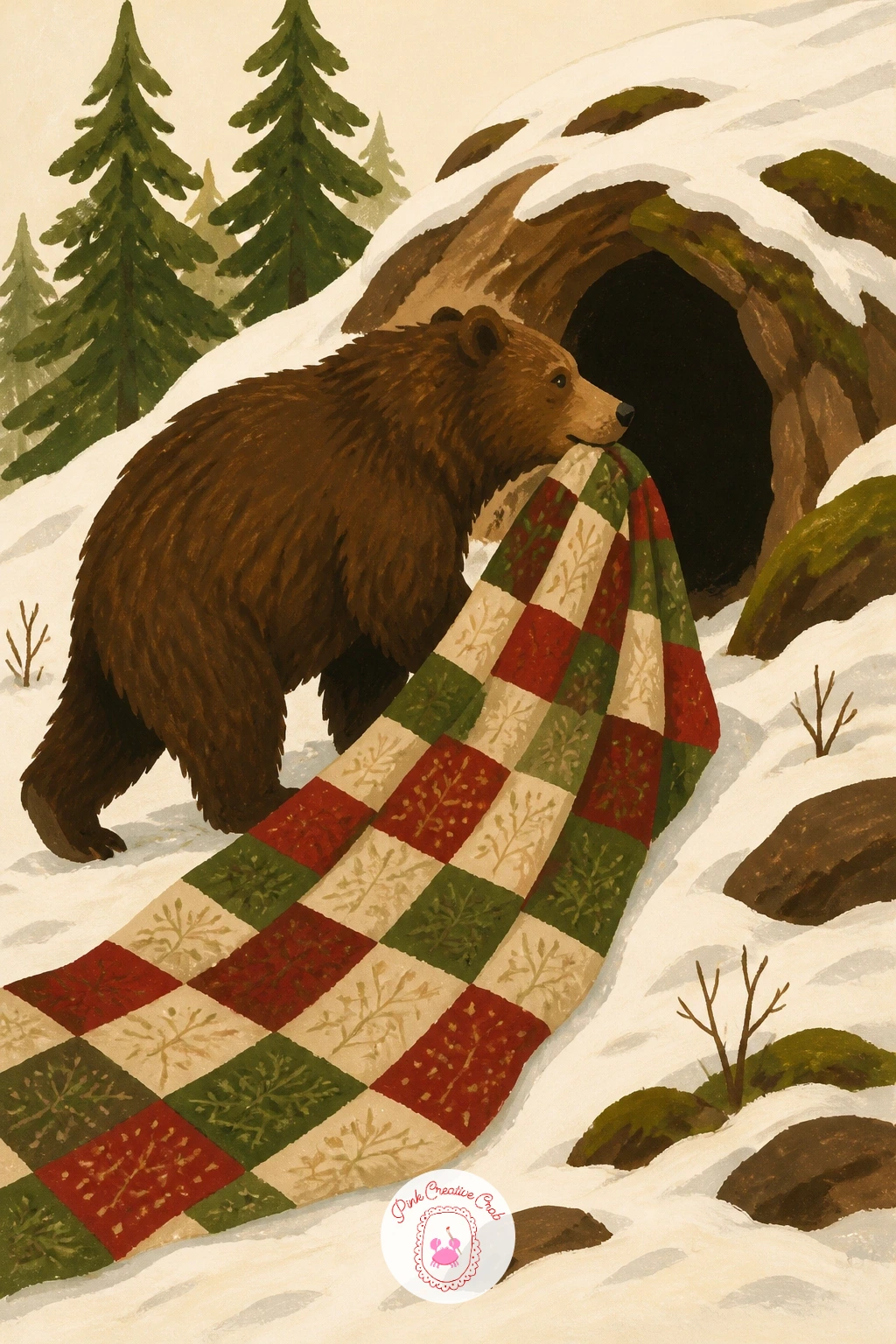
Palette: Moss Green,Cherry Red,Cream,Honey
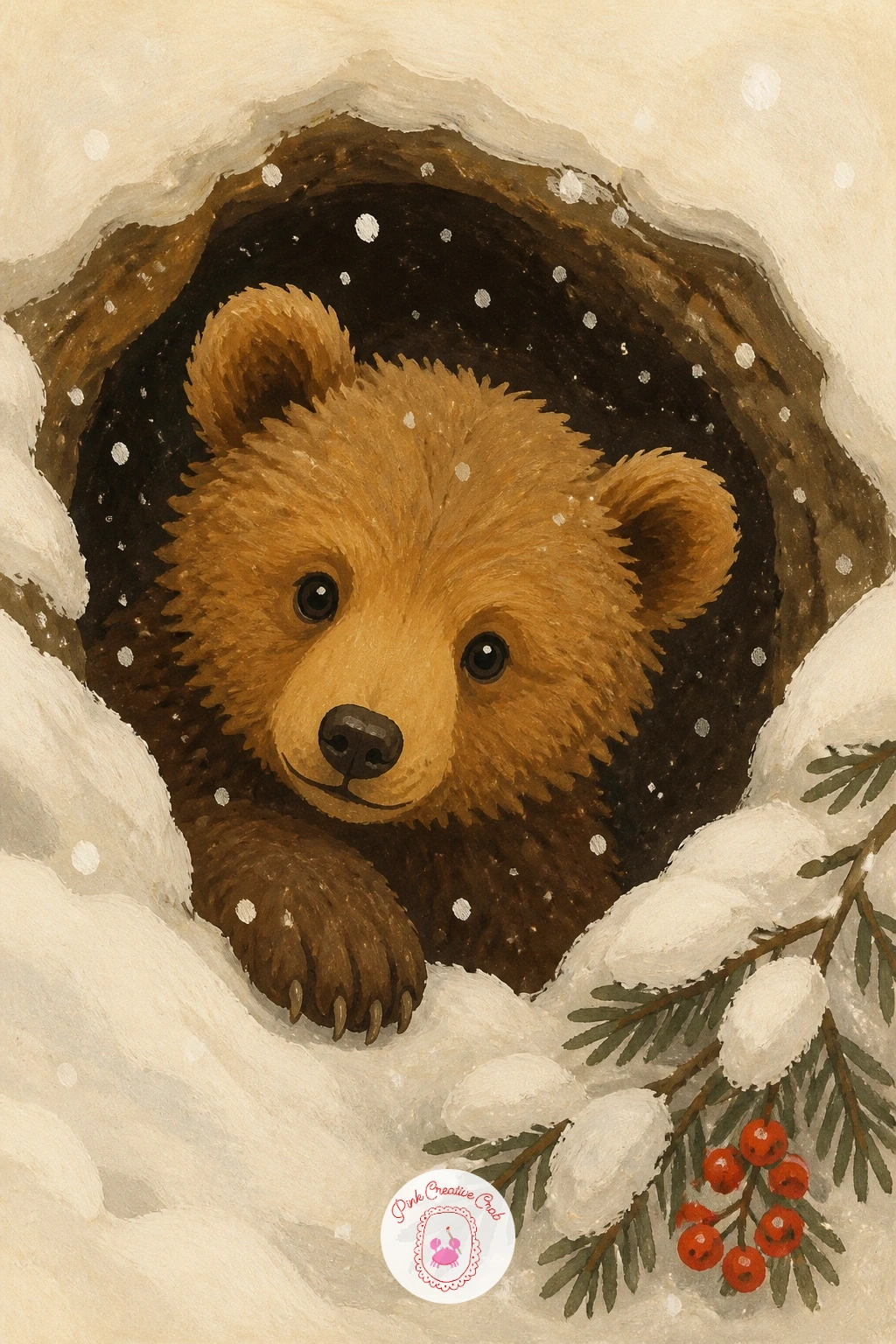
Set the eye level low for this one, right at the den mouth, so the viewer feels like they are peeking out alongside the cub. Sketch just the cub’s head and one paw emerging from a dark oval opening, with the rest of its body implied in shadow behind.
Paint the den opening in a near black chocolate brown first, then the cub’s face in honey brown with wide, round eyes looking up and out at the falling snow. Because the eye level sits low, keep the snowflakes falling mostly above and slightly past the cub rather than straight down onto it, which makes the flakes feel like they are drifting past an opening rather than painted onto a flat background.
If the dark den opening swallows too much of the cub’s face, lighten just the edge nearest the opening with a thin line of honey to pull the face forward.
Dot the snow with the end of a cotton swab if a fine round brush feels fiddly.
You Will Need
- cotton swabs for snow dots (optional)
Palette: Chocolate Brown,Honey,Cream,Titanium White
Here the challenge is small hands holding small needles, so simplify rather than fuss over detail. Sketch the bear seated upright, paws close together at chest height holding two short knitting needle lines, with a long striped scarf trailing down into its lap.
Paint the bear in honey brown and the woodstove behind it as a dark rounded shape with a little glow of orange at its door, then save the scarf for last so you can paint its stripes in alternating cherry red and cream over a dry background. Keep the needles as just two thin cream lines rather than trying to render real knitting detail, since at this scale suggestion reads better than accuracy.
If the paws look stiff holding the needles, round them slightly and overlap the fingers less precisely; a slightly loose paw shape feels warmer and more storybook than an anatomically careful one.
A plain single color scarf works just as well if stripes feel fussy today.
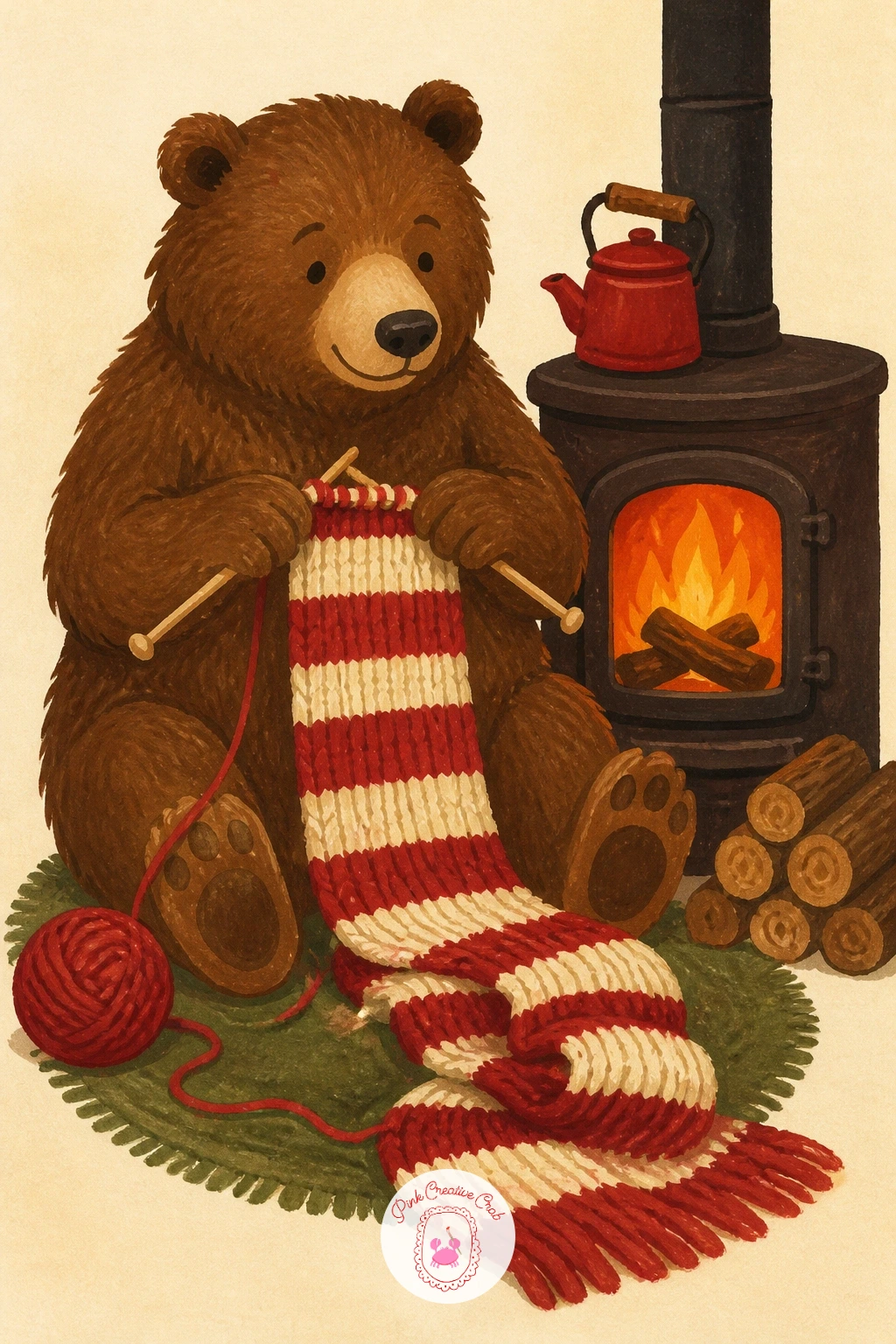
Palette: Honey,Cherry Red,Cream,Chocolate Brown
Give this cub a confident diagonal, since a sled scene lives or dies on its angle of motion. Sketch a simple curved hill line running from upper left to lower right, then place the cub sitting on a small wooden sled partway down, leaning back slightly with paws gripping the front edge.
Paint the snow hill first in cream with a soft shadow of pale blue grey along its curve, then the sled in a warm wood brown, and finally the cub in honey on top. A quick way to check the motion reads correctly: the cub’s ears and any loose fur should lean slightly backward, opposite the direction of travel, the same way hair blows back on a fast ride.
If the hill looks flat rather than sloped, add one curved shadow line just below the sled’s path to ground it in the snow.
For a quicker ten minute version, paint just the cub and sled without the full hill, letting cream background imply the snow.
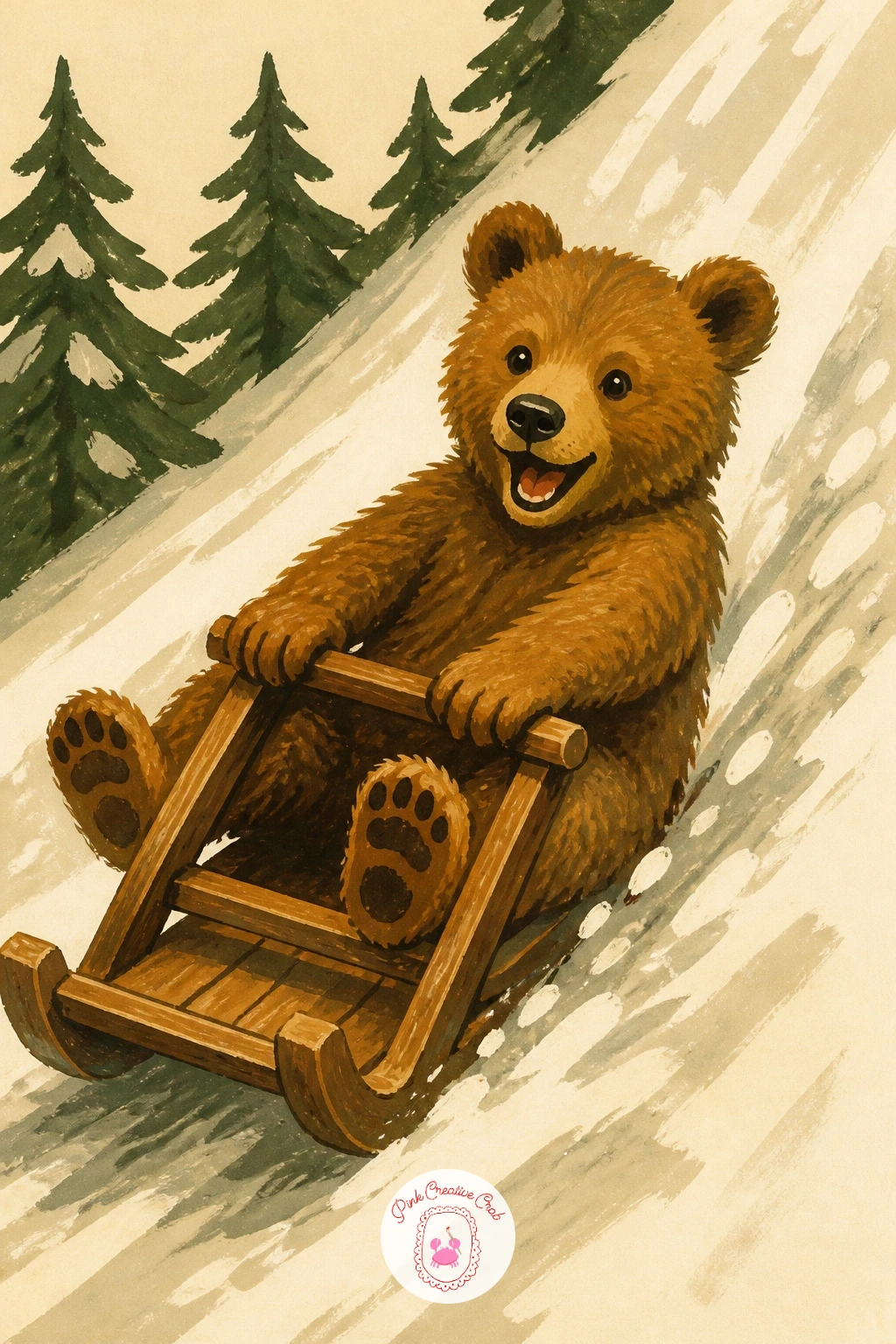
Palette: Cream,Honey,Chocolate Brown,Pale Blue Grey
Comic timing carries this picture, so exaggerate the yawn more than feels natural at first. Sketch the bear standing at the den mouth with its head tipped back and mouth open wide in a big round yawn shape, paws stretched up overhead.
Paint the bear’s body in honey brown, then the open mouth in a deep chocolate with a small pink tongue shape tucked inside, keeping that mouth shape rounded and soft rather than sharp or toothy to stay in the cozy storybook register. The den entrance behind the bear can stay a simple dark arch so it does not compete with the yawn as the main event.
The easiest way this goes wrong is an open mouth that reads as angry rather than sleepy; keep the eyes half closed and the eyebrows soft and low to tip the expression back toward drowsy.
Add a tiny cream star or two above the head if you want a touch of whimsy, since a little exaggeration suits this pose well.
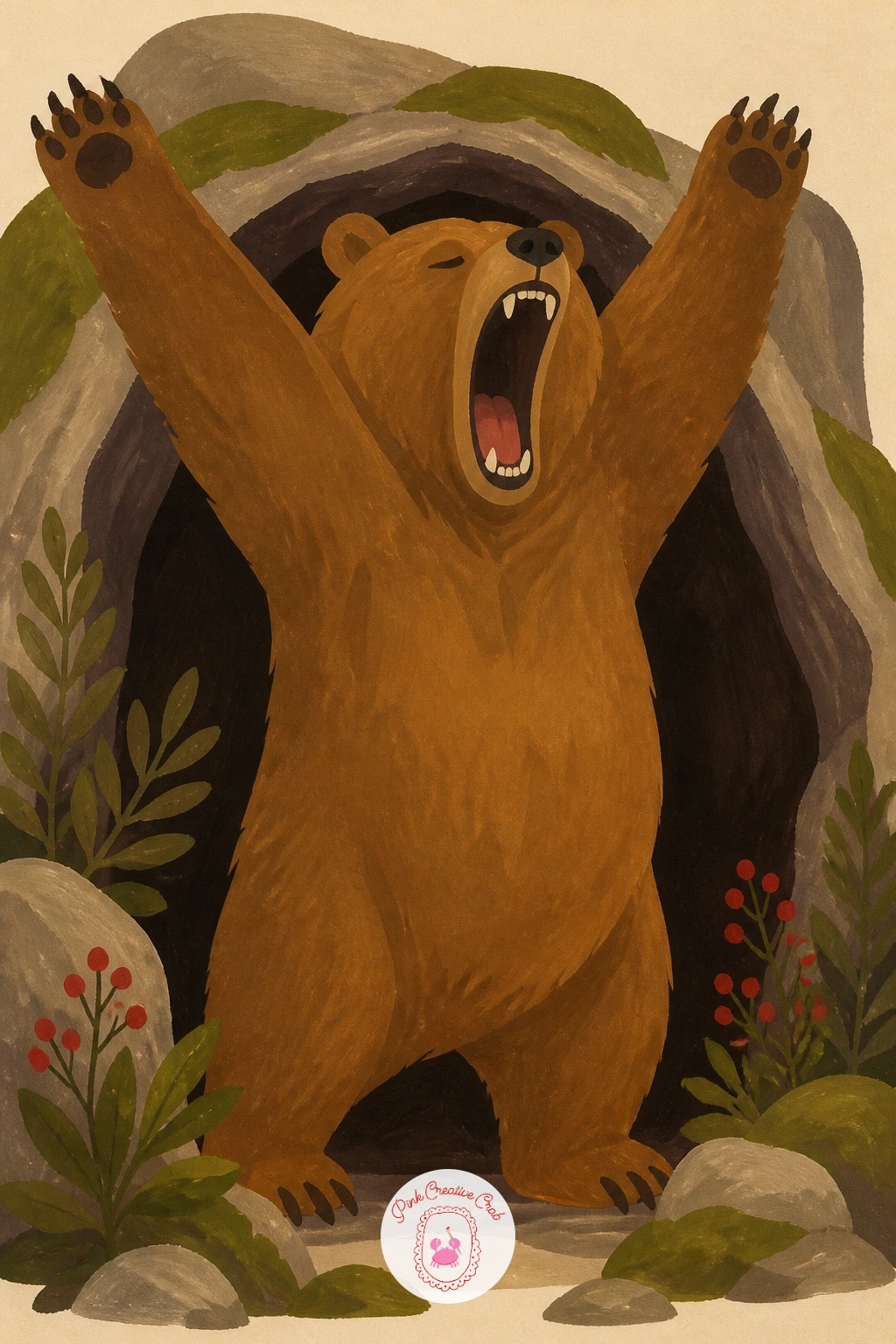
Palette: Honey,Chocolate Brown,Cherry Red,Cream
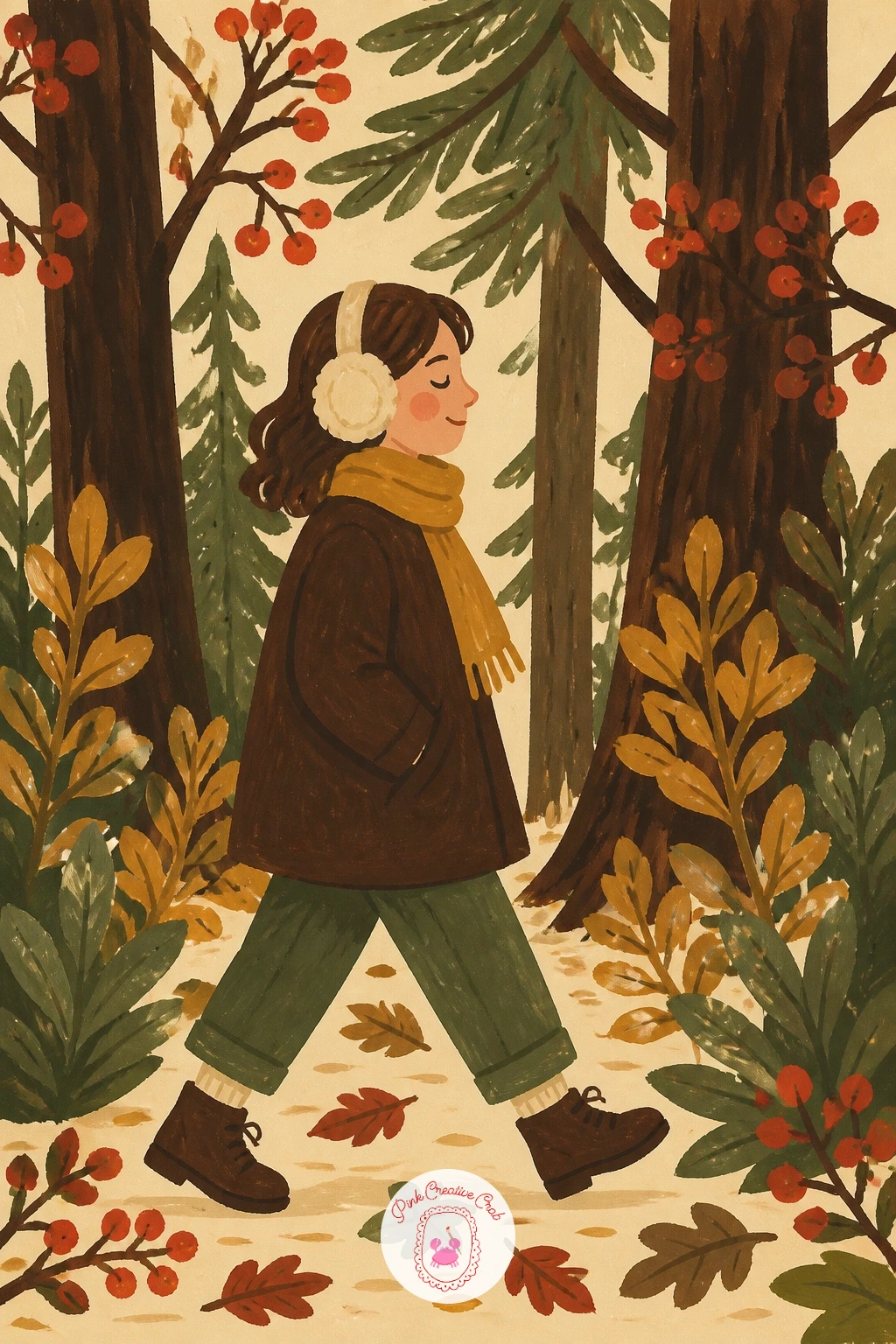
Set this bear mid stroll through a snowy forest, a simple way to practice a few background trees without overloading the page. Sketch the bear walking in profile first, then two or three simple triangular pine shapes behind it at different heights to suggest depth.
placeholder
What to Do Next
placeholder
Have any thoughts?
Share your reaction or leave a quick response — we’d love to hear what you think!
-
 0
-
0
-
0
-
0
-
0
-
0


