Cherry painting is the perfect excuse to sit down with a tube of cherry red gouache and make something cheerful before the kettle even boils. The cherry has carried its own little trend for years now, popping up on dresses, mugs and tote bags, and painting one yourself is far more satisfying than buying the print.
This list starts with cherries themselves, in a dozen small everyday scenes, then widens out into other cherry red things worth painting: lipstick, Vespas, rain boots, a mailbox with a love letter poking out. Every idea fits on one small page and finishes in a single sitting, so scroll down, pick whichever scene makes you smile first, and get your brush wet.
Using these images: free for personal projects such as printing, coloring, cards, journals and gifts. Handmade items that include them may be sold up to 30 pieces per design. More than that is commercial use and is not permitted, and neither is selling or sharing the images themselves or passing them off as your own. Please ask before any other use.
Start simple: a pair of cherries hanging from a girl’s ear like earrings is really just two circles and a stem, so it is a forgiving first subject for cherry painting. Sketch a simple ear and jaw line lightly in pencil, then block in the skin tone first so the cherries sit on top as the last, boldest shapes.
Paint each cherry as one flat circle of cherry red gouache, let it dry fully, then add a thin curved stem in deep green joining the two. Keep the earlobe small and the cherries slightly oversized compared to it, since that mismatch in scale is exactly what makes them read as jewelry rather than real fruit hanging in a tree.
If the circles come out uneven, fix it while the paint is still workable by softening one edge with a damp brush rather than scraping at it. Swap the skin tone for a plain cream background instead if faces feel tricky today.
Finish with one tiny white gouache highlight dot on each cherry so they catch the light like polished glass.
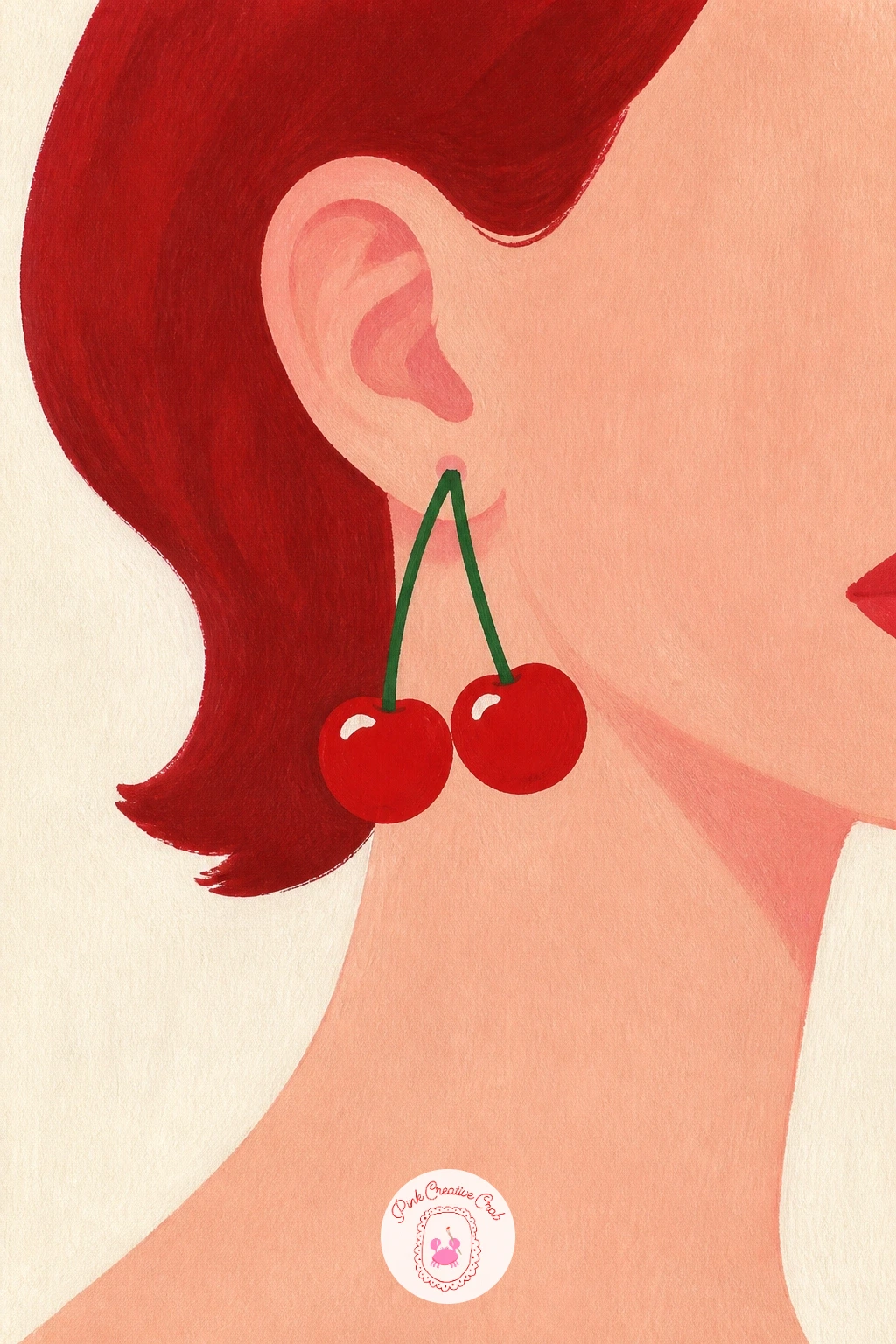
Palette: Cherry Red,Blush Pink,Deep Green,Cream
Move from jewelry to the kitchen with a cherry pie cooling on a checkered windowsill, a classic cherry painting scene that works beautifully in flat gouache. Paint the checkered cloth first as a grid of cream and cherry red squares, letting each square dry before its neighbor so the edges stay crisp rather than bleeding together.
Add the pie as a simple golden dome shape, then drop in the dark red filling peeking through a lattice top or a few cut vents. Finish with the windowsill ledge and a soft sky blue square of window behind it.
If the checker pattern wobbles, straighten it afterward with a fine brush loaded with cream to redraw the worst lines. No checkered reference handy? A plain cream sill with a single thin red stripe along the edge reads just as sweetly.
Steam lines in a pale grey, drawn as two or three soft wavy strokes above the pie, finish the whole scene off nicely.
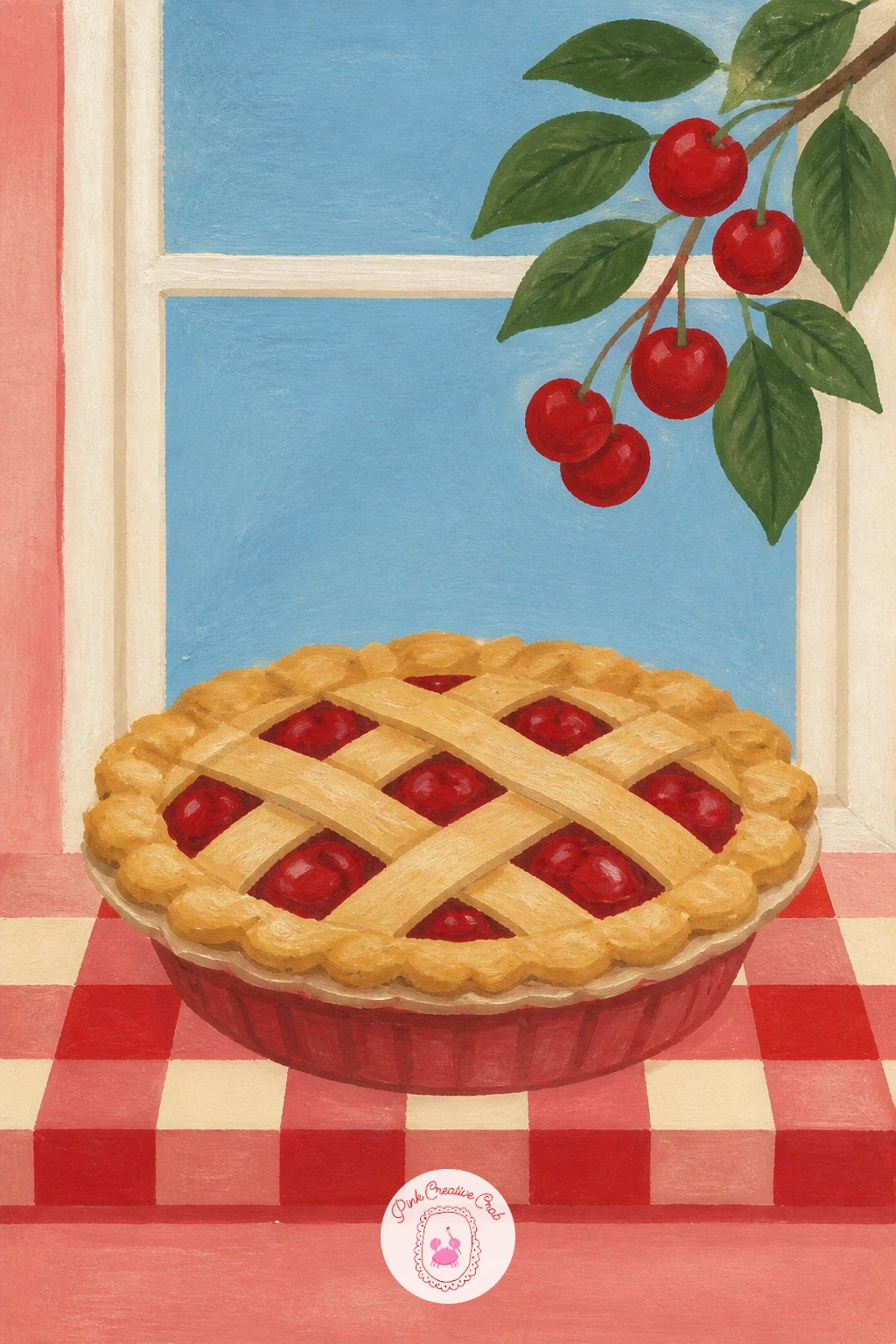
Palette: Cherry Red,Cream,Golden Ochre,Sky Blue
Give the scene a little story with a bowl of cherries on a striped tablecloth with a cat sniffing it, which adds life without adding difficulty. Lay the striped tablecloth down first in alternating cream and cherry red bands, then paint the bowl as one simple rounded shape sitting on top.
Build the cherries inside the bowl as a cluster of overlapping circles, darkest ones at the back, brightest ones catching the light at the front edge. Add the cat last in a simple sitting silhouette with its nose stretched toward the bowl, since that single gesture tells the whole joke.
If the cat’s proportions feel off, compare its head width to one cherry: a kitten head reads about three cherries wide, which keeps things in scale. No cat reference on hand? A small grey tabby shape with two triangle ears is simple enough to paint from memory.
Keep the cat’s fur in one flat color block, no texture lines, so it matches the clean graphic cherries beside it.
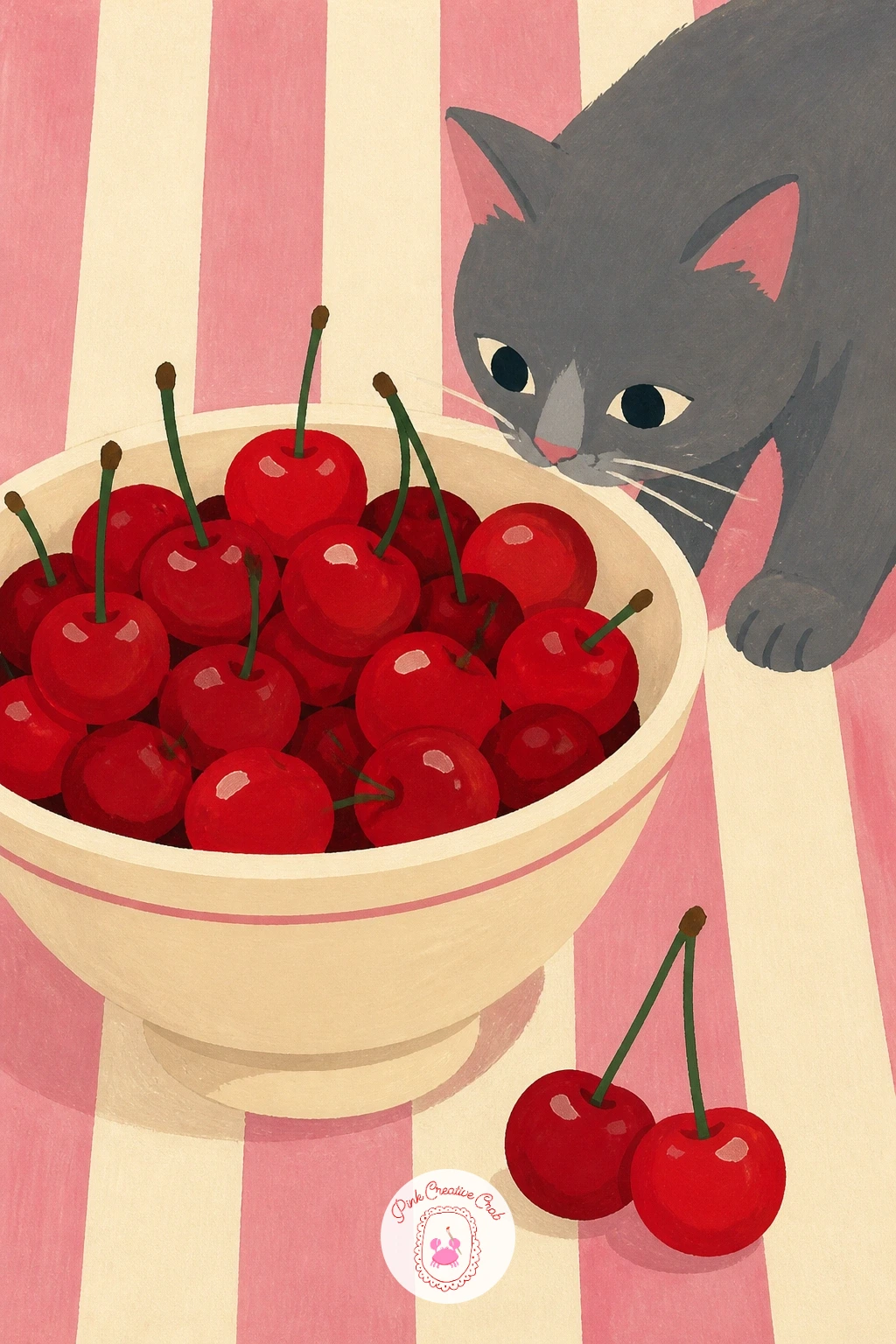
Palette: Cherry Red,Cream,Warm Grey,Deep Green
Look at real stacked fruit for reference, even a bag of apples, to see how overlapping circles of different sizes read as a believable pile.
Here is where proportion starts to matter: cherries spilling from a paper bag at a fruit stand needs the bag and the fruit to feel like they belong to the same hand, so measure the bag’s width first and let no single cherry be wider than a third of it. Paint the paper bag as one warm kraft brown trapezoid, folded top left open and torn slightly at one corner.
Build the spilling cherries as a cascading diagonal line, biggest and boldest near the bag’s mouth, smaller and more scattered as they tumble toward the table. A market stall plank or a wooden crate edge underneath grounds the whole composition.
If the cherries end up all the same size, go back in with a tiny brush and shrink the last two or three so the eye has somewhere to land. Swap the paper bag for a simple woven basket if kraft brown feels fussy to mix.
One leafy stem left attached to a cherry near the top adds a nice touch of deep green against all that red and brown.
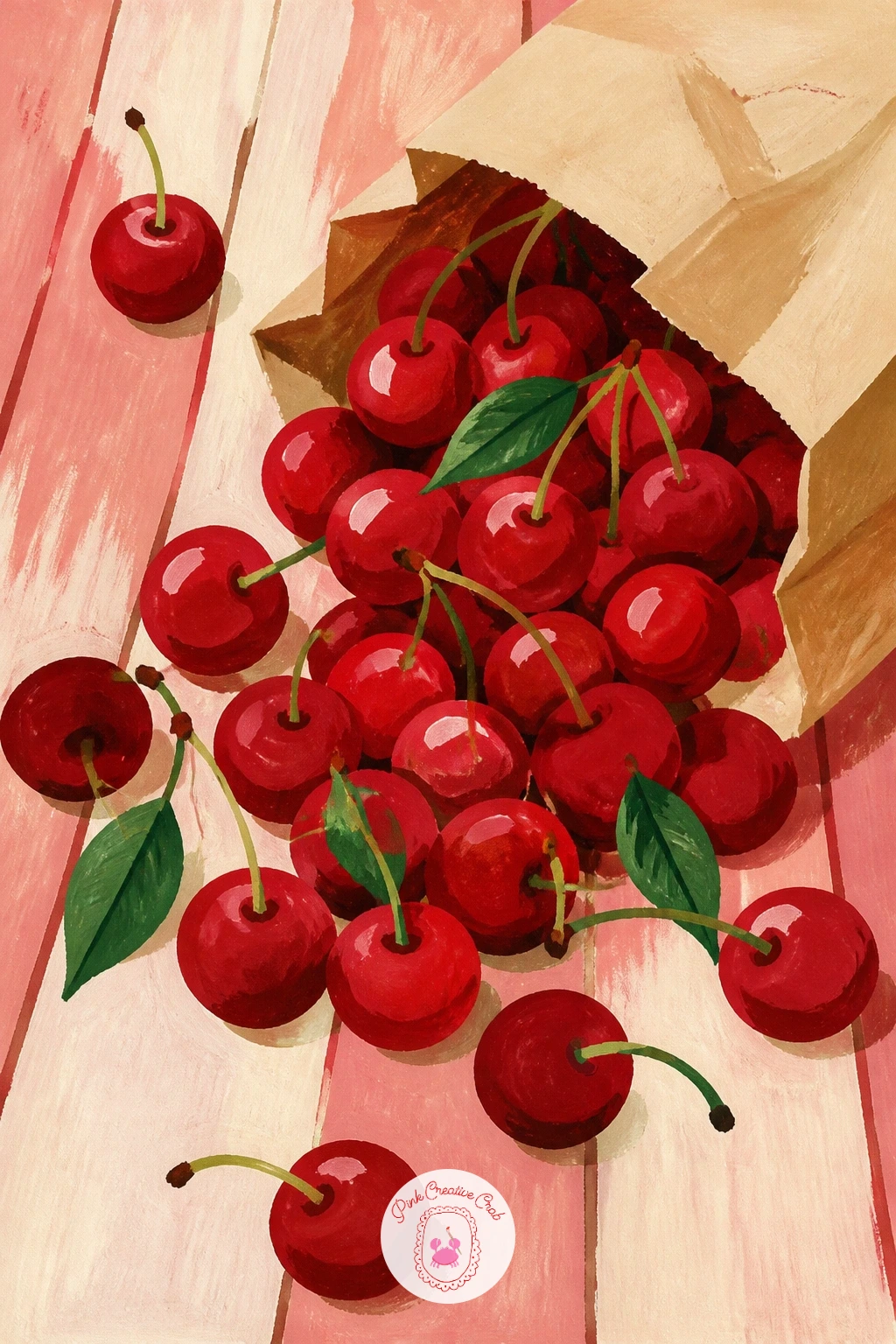
Palette: Cherry Red,Kraft Brown,Deep Green,Cream
Think about eye level here: a girl on a ladder picking cherries from a tree reads best if you paint her from slightly below, looking up, since that low angle makes the tree feel tall and the moment feel like a real summer afternoon. Place the horizon line low on the page, block in the tree canopy as a soft rounded mass of deep green, then add the ladder leaning into it at a steady diagonal.
Paint the girl simply, a dress shape and a straw hat, reaching one arm up into the leaves where a few bright cherries cluster. The light should come from one side, so keep that side of the dress and the canopy a touch paler to suggest sun.
If her proportions feel wrong on the ladder, sketch the rungs first as evenly spaced guides and let her feet and hands land exactly on them. No ladder reference handy? A simple basket on the ground beside the tree tells the same story with less drawing.
A scatter of fallen cherries at the tree’s base finishes the scene with almost no extra effort.
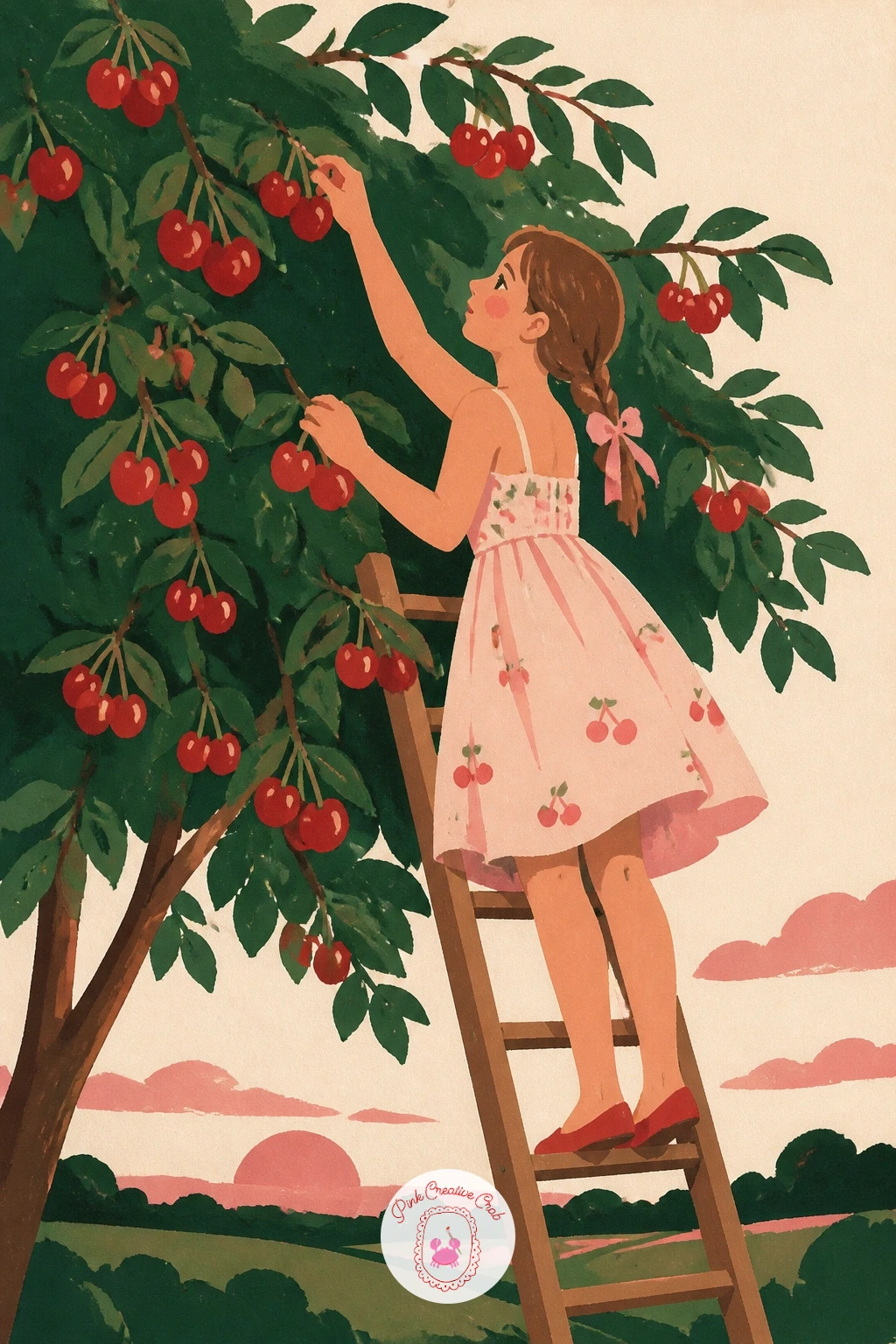
Palette: Cherry Red,Deep Green,Blush Pink,Cream
Here is a nice one for dry brush and crisp edges: a cherry soda in a glass bottle with a paper straw is mostly about getting that glass to read as glass. Paint the bottle shape first in a pale, almost transparent wash of cherry red, leaving a narrow vertical strip of bare cream paper down one side to suggest the glass catching light.
Once dry, drop a slightly deeper cherry red into the lower two thirds for the soda itself, and let that edge stay a little soft where the liquid line sits. Add the paper straw in cream with two thin red stripes, angled out the top.
If the bottle looks flat rather than round, darken a narrow strip down the opposite side from your highlight, which tricks the eye into reading it as cylindrical. No bottle reference to hand? A simple glass jar shape works just as well and paints even faster.
A few rising bubbles, tiny unpainted dots left as bare paper, make the soda feel fizzy with almost no work.
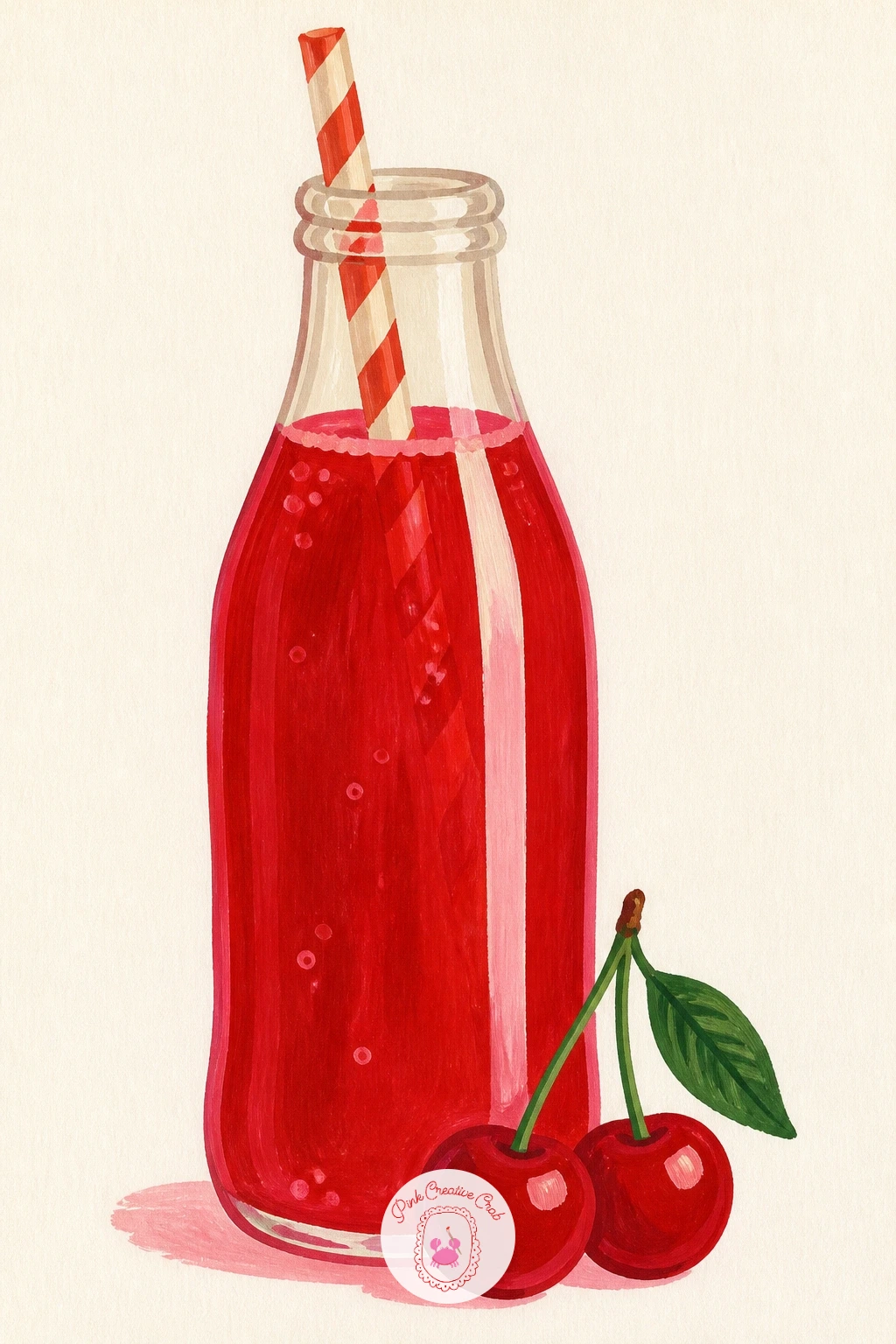
Palette: Cherry Red,Cream,Blush Pink
Quick version first: a cherry print dress drying on a washing line can be painted in about ten minutes as a simple flat dress silhouette in cream, pegged at the shoulders, with a handful of small cherry motifs scattered across the fabric. Block the dress shape in first, let it dry, then dot on the cherry print pattern last so the little fruits sit crisply on top.
The forty minute version adds a soft background: a pale sky wash behind the line, a second garment beside it, and a gentle shadow falling from the dress onto an implied wall or fence. That extra layer turns a simple garment study into a full little scene.
If the cherry print looks too scattered, lightly pencil a loose grid first and place one cherry pair near each intersection for rhythm. Swap the washing line for a hanger against a wall if clothespins feel fiddly to draw.
Keep every cherry motif identical in size and angle, since repetition is what makes a print pattern convincing.
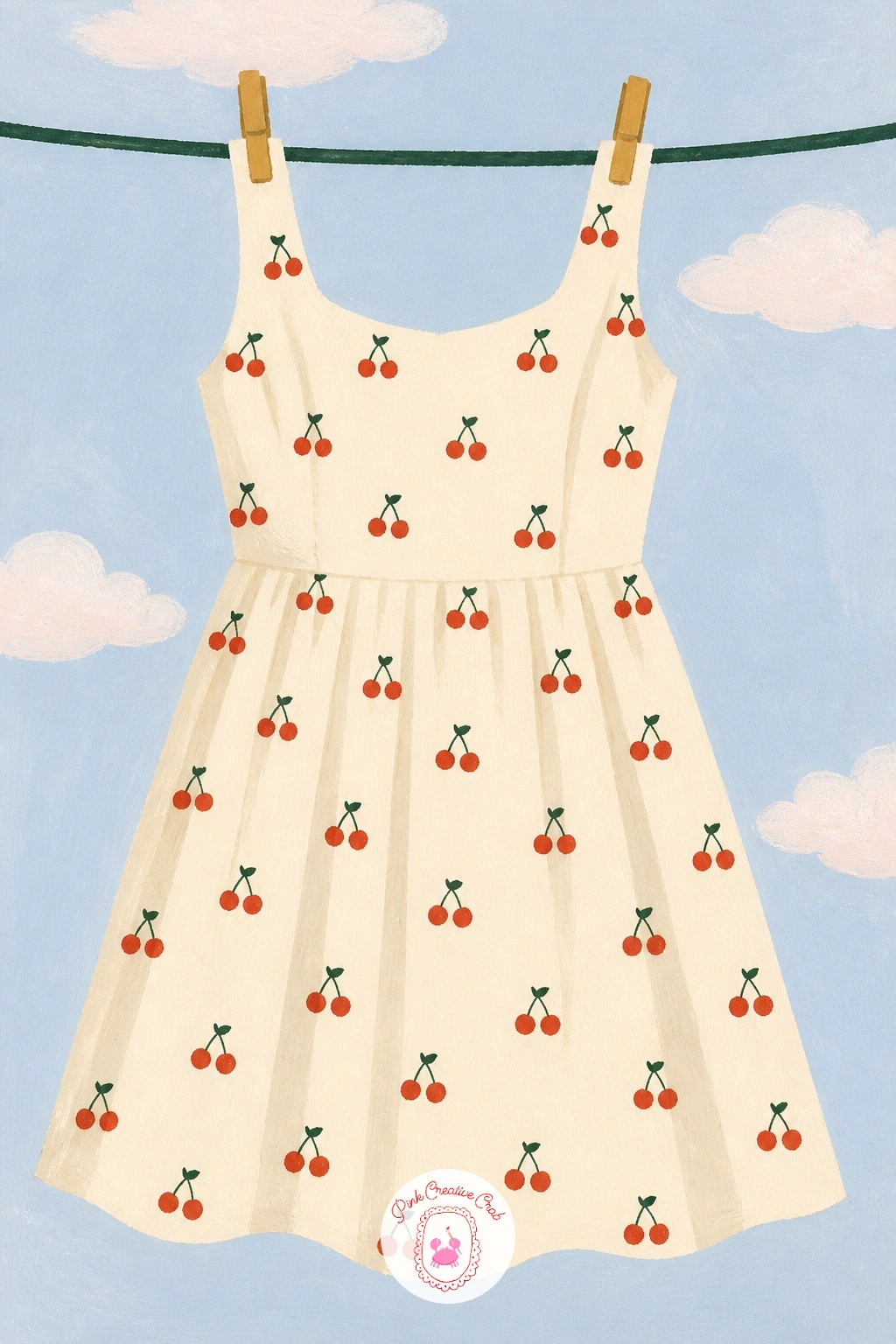
Palette: Cream,Cherry Red,Sky Blue,Deep Green
Edges are everything in this one: cherries floating in a bowl of ice water by a pool asks you to paint something both solid and transparent in the same small space. Paint the glass bowl first as a pale blush pink wash, then drop whole cherries in as flat cherry red circles sitting just under the rim line.
For the ice cubes, paint simple pale blue-white rectangles with one sharp white gouache highlight on a top corner of each, which is enough to suggest shine without any real blending. A sliver of blue pool water and a striped towel corner behind the bowl place the whole thing poolside instantly.
If the water looks muddy, keep your blue wash very pale and let the white paper do most of the work for sparkle. No pool scene wanted? A plain kitchen counter behind the bowl works just as well.
One cherry stem left floating loose on the surface adds a nice bit of movement to an otherwise still composition.
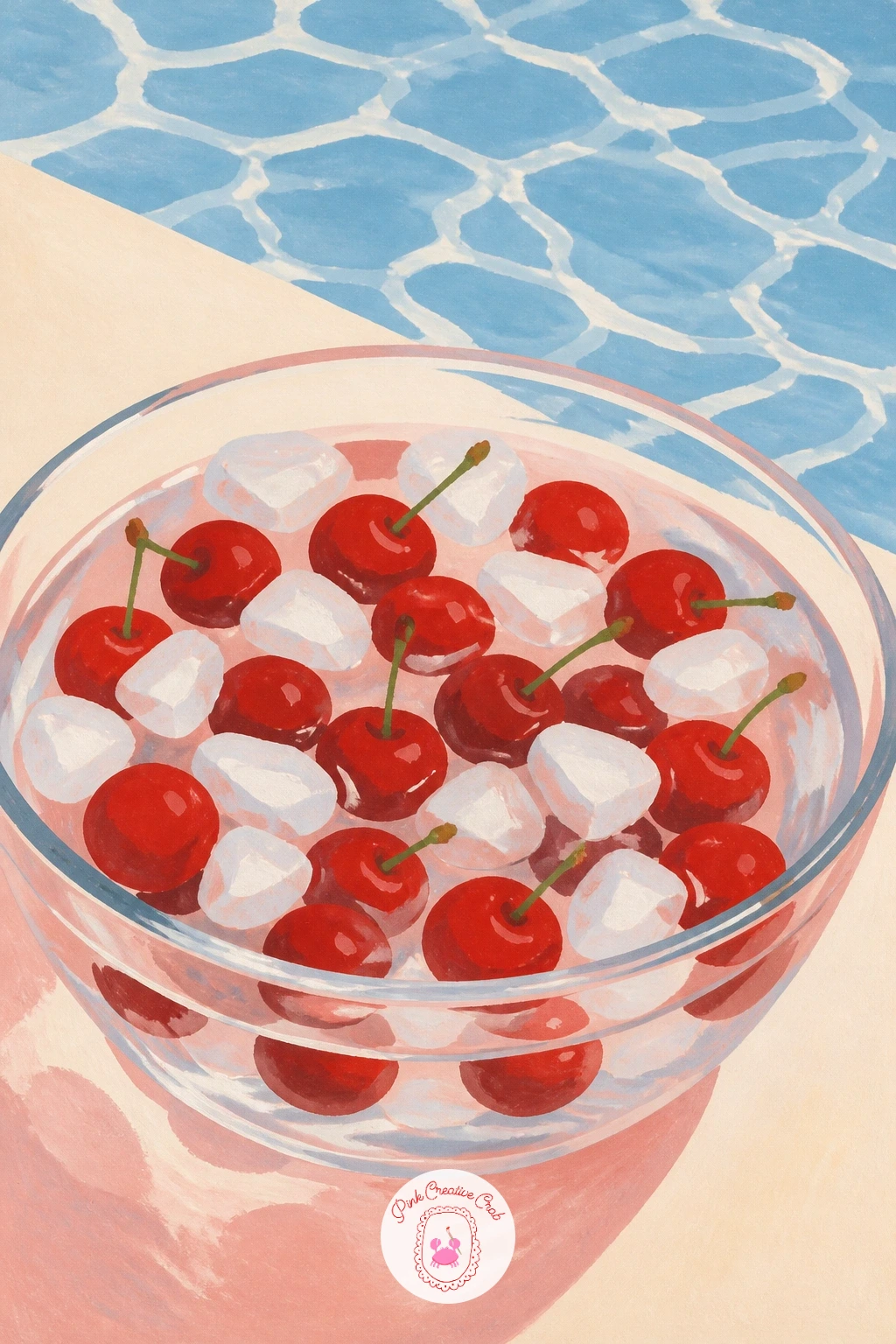
Palette: Cherry Red,Blush Pink,Sky Blue,Cream
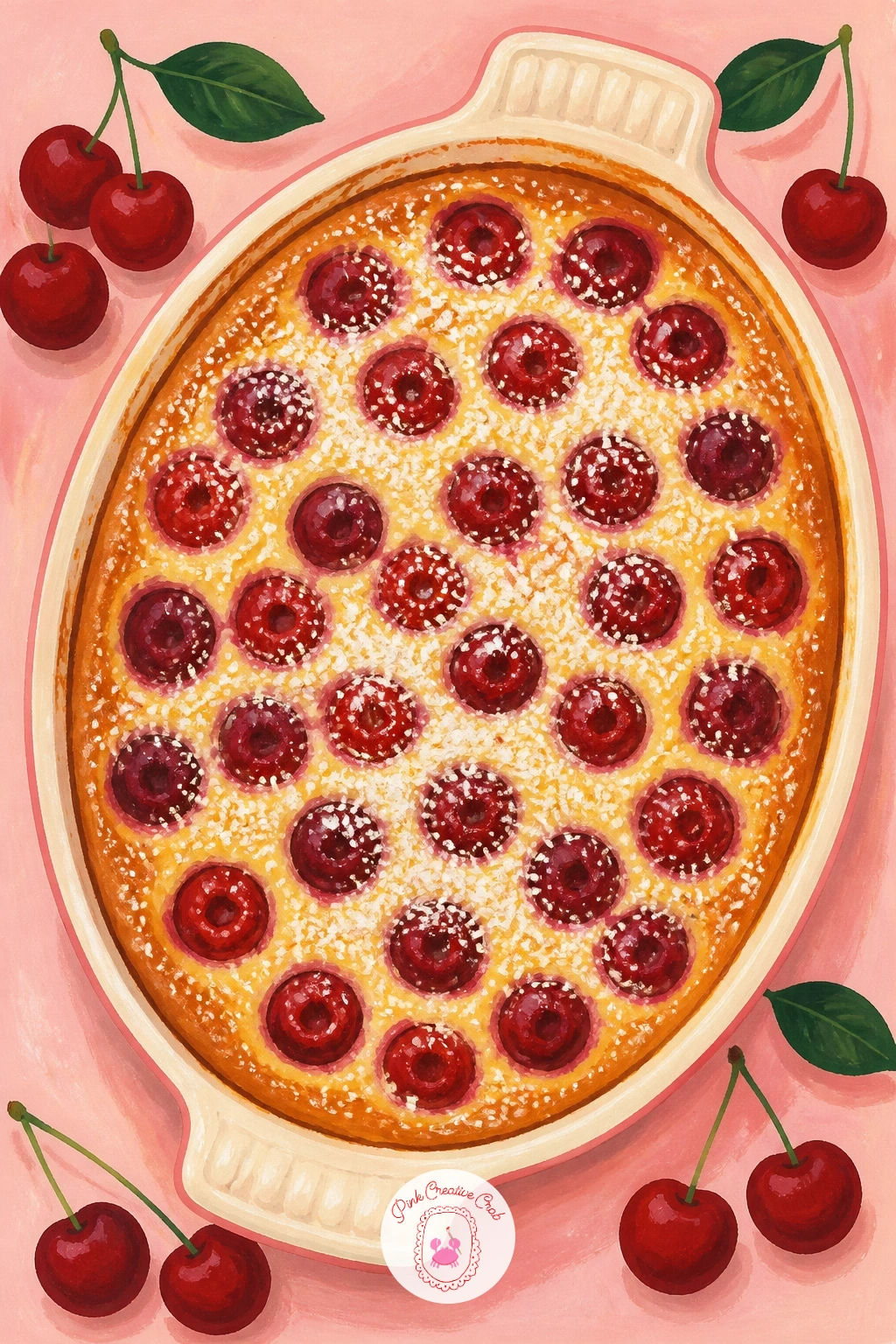
Once the soda and the pie feel comfortable, try a cherry clafoutis dusted with powdered sugar, which is really just a shallow round of baked custard with cherries peeking through. Paint the baking dish first as a simple oval, fill it with a soft cream and pale gold custard shape, then nestle a ring of whole cherries into the surface before it dries.
Once the base is dry, flick tiny dots of white gouache across the top for the powdered sugar dusting, holding the brush loosely so the dots land unevenly, the way real sugar falls. A linen napkin folded beside the dish adds a cozy prop with almost no extra effort.
If the sugar dots look too neat, soften the effect by adding a few larger, slightly smudged dots among the small ones. No white gouache on hand? A white gel pen flicked lightly over dry paint gives much the same dusted look.
Keep the dish itself in one flat warm tone so the sugar and cherries stay the star of the piece.
You Will Need
- white gouache or gel pen for the sugar dusting
Palette: Cherry Red,Golden Ochre,Cream,Deep Green
Watch where the light falls for this one: a bird stealing a cherry from a branch works best with the sun coming from one side, so the branch casts a soft shadow and the bird’s belly catches a touch of reflected warmth from the cherries below it. Sketch a simple perched bird shape first, round body, short beak, tail tilted up, then paint it in two flat tones, a darker back and a paler front.
Add the branch as one confident curved stroke in deep green-brown, then cluster a few cherry red circles along it, with one caught in the bird’s beak mid-steal. Leaves painted as simple pointed ovals fill any gaps without adding real detail work.
If the bird looks stiff, round out its belly a little more and angle the tail up rather than straight back, which instantly adds personality. No small bird reference handy? A simple robin or sparrow shape, which almost everyone can sketch from memory, works perfectly.
One cherry left slightly ajar from its stem, as if just plucked, sells the whole little theft.
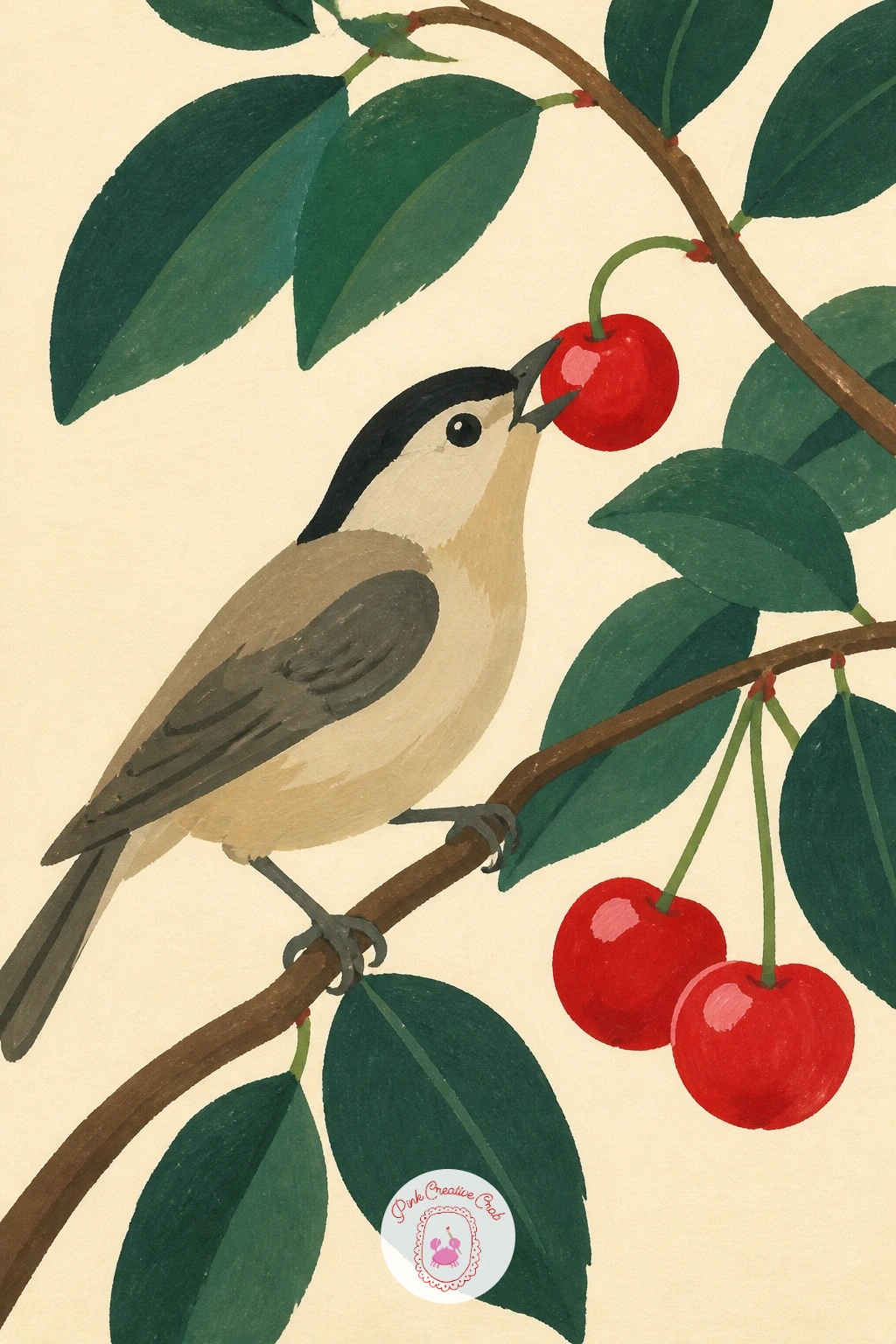
Palette: Cherry Red,Deep Green,Warm Grey,Cream
Here is a lovely still life challenge for texture and edges: cherry stems tied in a knot on a little plate has almost no color but plenty of character in its lines. Paint the small plate first as a simple cream or white circle with a thin red rim, then add the pitted cherries themselves, a few whole and a few halved, scattered across it.
The stems tied in a knot are the real star, so paint them last in deep green with a dry brush, dragging very little paint so the line breaks slightly and reads as a thin, slightly rough stem rather than a smooth ribbon. Let one knot sit proud in the center where the eye naturally lands.
If the knot shape confuses the brush, draw it first in pencil as a simple pretzel loop, then paint directly over those guide lines. No deep green paint mixed yet? A dark olive works just as well for stems.
Keep the cherry flesh a slightly deeper red than the whole fruit beside it, so cut and whole cherries read as different at a glance.
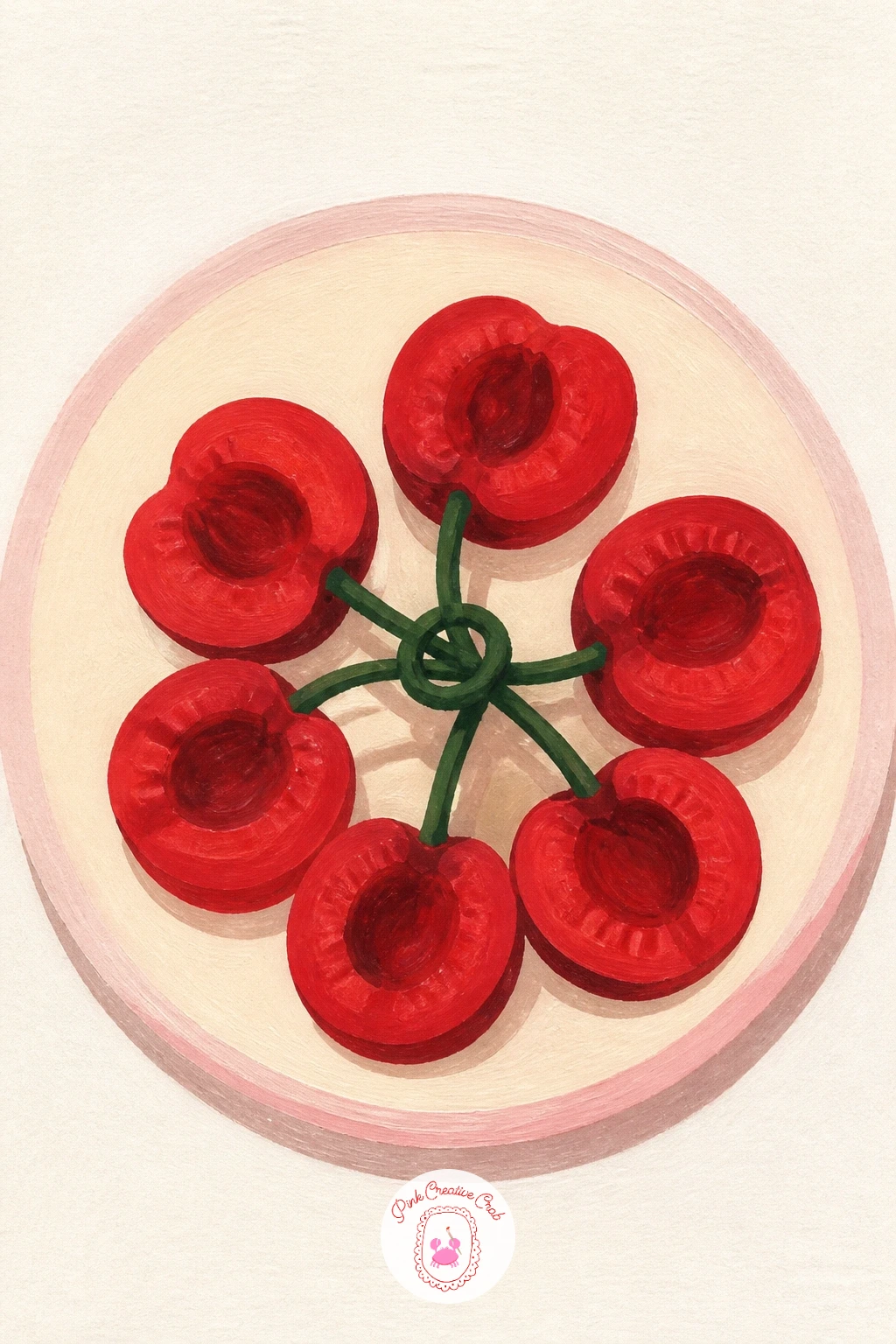
Palette: Cherry Red,Deep Green,Cream,Blush Pink
A dry, half loaded brush dragged lightly across the stems gives a broken, slightly rough line that reads far more like real stem than a smooth solid stroke.
Moving into the second half of the list, a cherry red lipstick and compact on a vanity tray trades fruit for beauty objects but keeps the same bold cherry red as the hero color. Paint the tray first as a simple oval or rectangle in blush pink or gold, then add the lipstick tube standing upright, a slim cylinder with the bullet of color peeking out in bright cherry red.
The compact sits beside it as a round shape with a thin gold rim line and a tiny circle of mirror suggested with a pale grey wash. A loose string of pearls or a single flower stem draped across the tray fills the composition without adding real difficulty.
If the lipstick bullet looks lumpy, keep its shape to one simple rounded dome rather than trying to carve facets into it. No gold paint mixed? A warm ochre yellow reads just as luxuriously against the cherry red.
One tiny white highlight dot on the compact’s mirror finishes the shine convincingly.
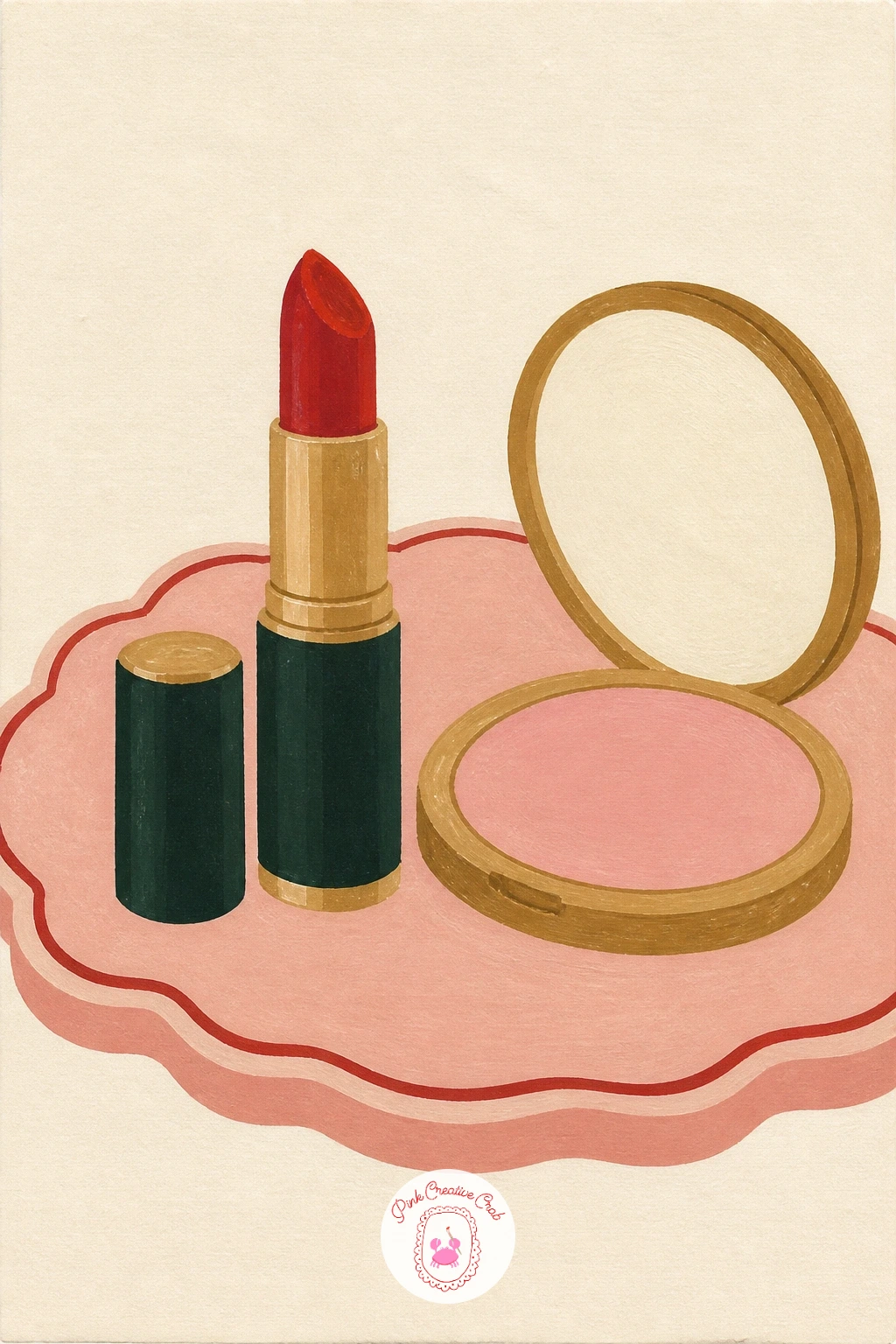
Palette: Cherry Red,Blush Pink,Golden Ochre,Warm Grey
Perspective carries this scene: a cherry red vintage car at a drive-in reads best painted from a gentle three-quarter angle rather than straight on, since that view shows both the curved hood and the rounded fender in one glance and makes the car feel parked rather than flat. Block the car body in first as one confident cherry red shape, keeping the roofline low and the fenders generously rounded in true vintage style.
Add the chrome trim as thin cream lines along the bumper and window edges, then paint the drive-in screen behind it as a simple pale rectangle glowing softly against a dusky sky. A string of fairy lights or a speaker post beside the car grounds the whole scene in its setting.
If the car’s proportions feel off, compare the wheel size to the body length: vintage cars read right when the wheels sit about a fifth of the total length. No drive-in screen wanted? Parking the car against a plain dusk sky works just as well.
Keep the chrome details to a few confident lines rather than many small ones, which keeps the flat gouache look intact.
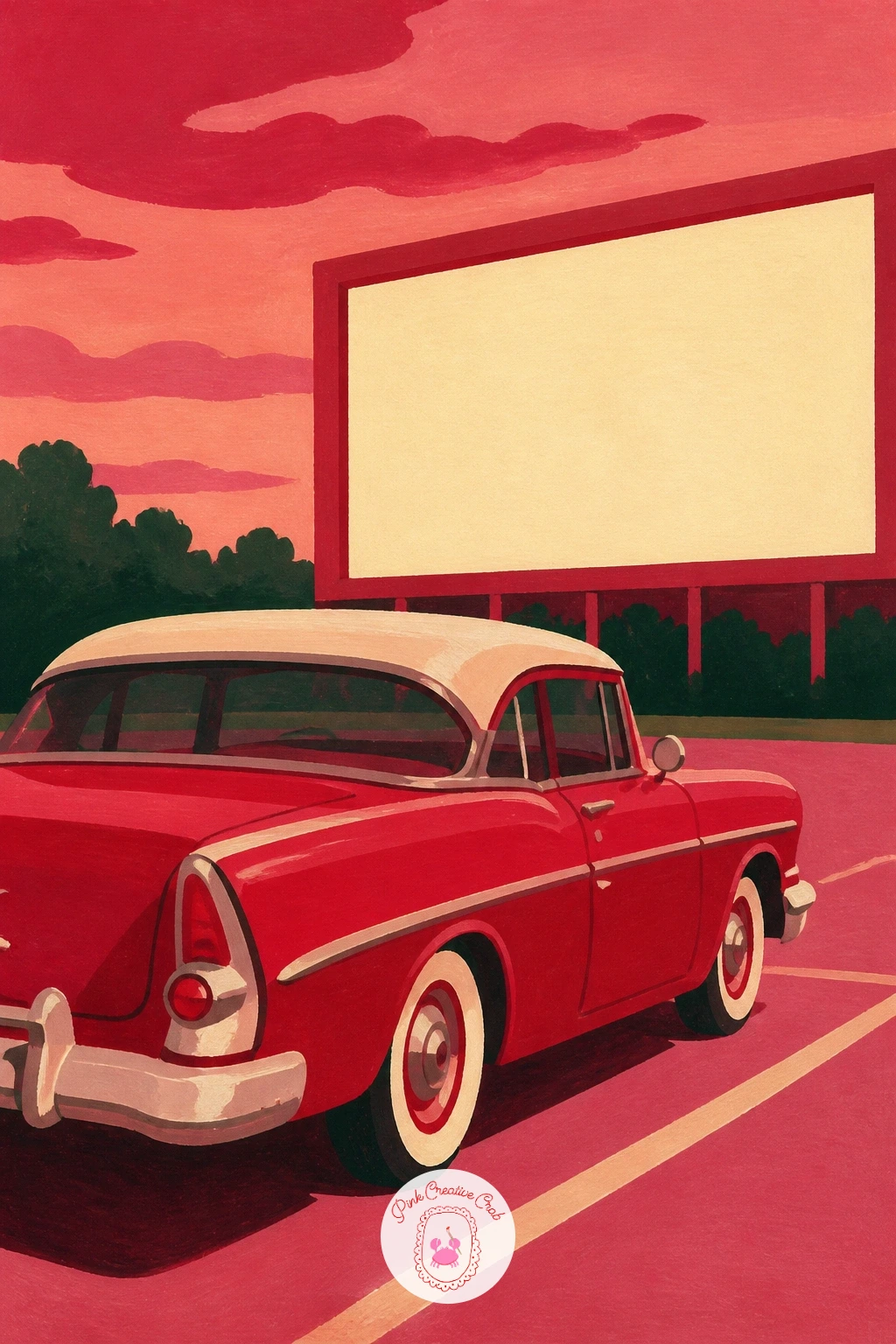
Palette: Cherry Red,Cream,Warm Grey,Deep Green
Keep the momentum going with red Mary Jane shoes on a doorstep, a small, cozy subject that paints quickly once the proportions are settled. Measure the shoe’s length against its own strap width first, since Mary Janes read correctly when the ankle strap sits roughly a third of the way up a shoe that is about twice as long as it is tall.
Block in the pair as two simple cherry red shapes, rounded toes, a thin strap across each with a tiny circle for the button. The doorstep beneath them can be a plain warm stone wash with a soft shadow cast to one side, which is enough to ground the shoes without extra detail.
If the strap buckle looks fiddly, simplify it to a single small dot rather than trying to paint real hardware. No doorstep setting appeals? A simple woven doormat corner works just as well underneath.
A scattering of fallen autumn leaves or a single potted plant beside the shoes adds warmth with very little extra painting.
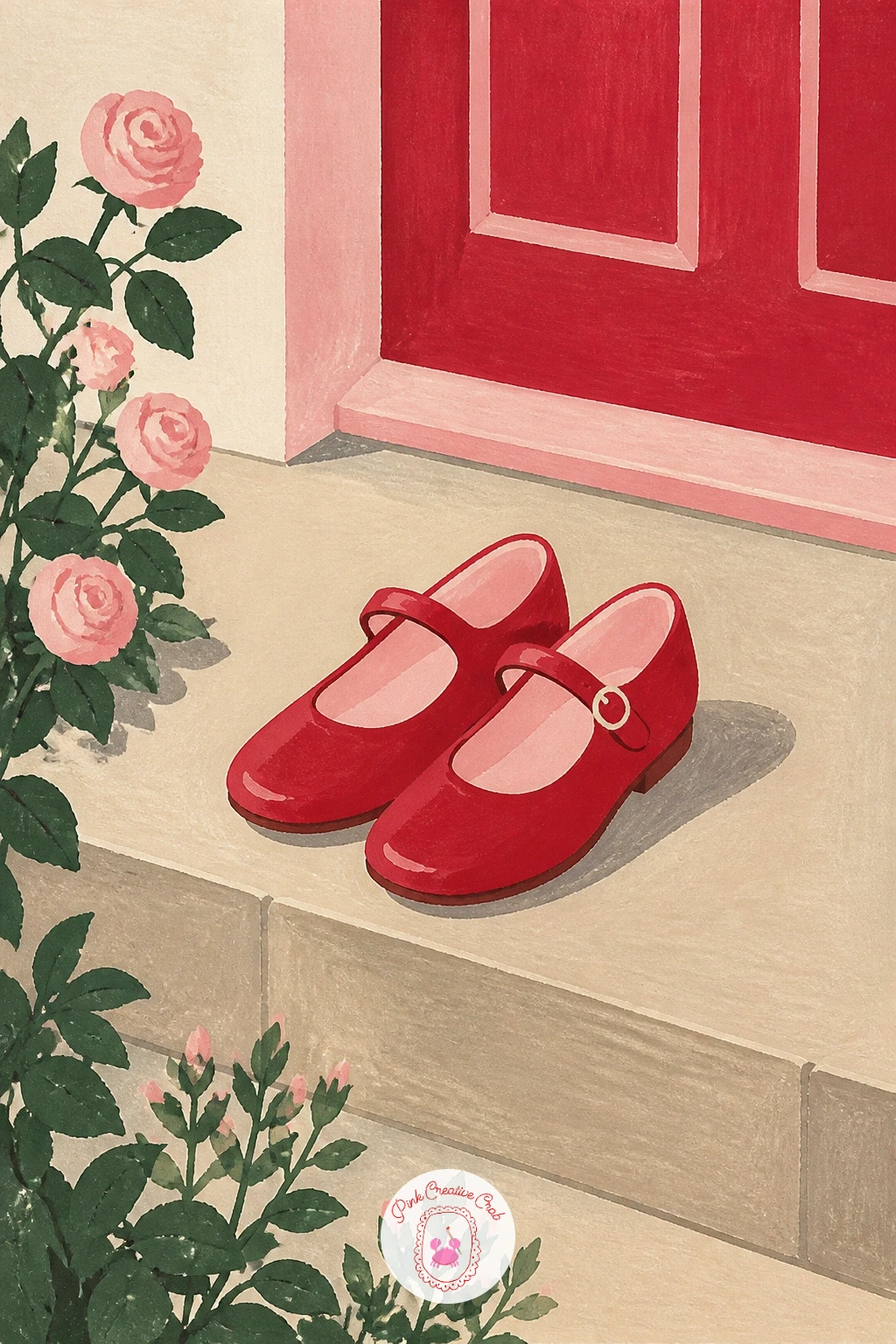
Palette: Cherry Red,Warm Grey,Cream,Deep Green
For texture and edges, a red enamel kettle on a stove is a lovely study in keeping shapes clean against a reflective surface. Paint the kettle body first as one bold cherry red shape, rounded and confident, then let it dry fully before adding the lighter enamel highlight, a simple curved stripe of cream or pale pink along the side catching the kitchen light.
The spout and handle go on last in a flat black or deep warm grey, kept thin and precise so they read as metal against the softer enamel body. A simple stovetop grid beneath, just a few straight cream lines on a grey ground, finishes the setting.
If the highlight stripe looks pasted on rather than part of the kettle’s curve, let it follow the kettle’s own rounded outline rather than running straight. No enamel red kettle reference handy? A simple teapot shape swaps in just as easily.
Keep the whole kettle in two or three flat tones at most, since that simplicity is what makes enamelware look so satisfying in gouache.
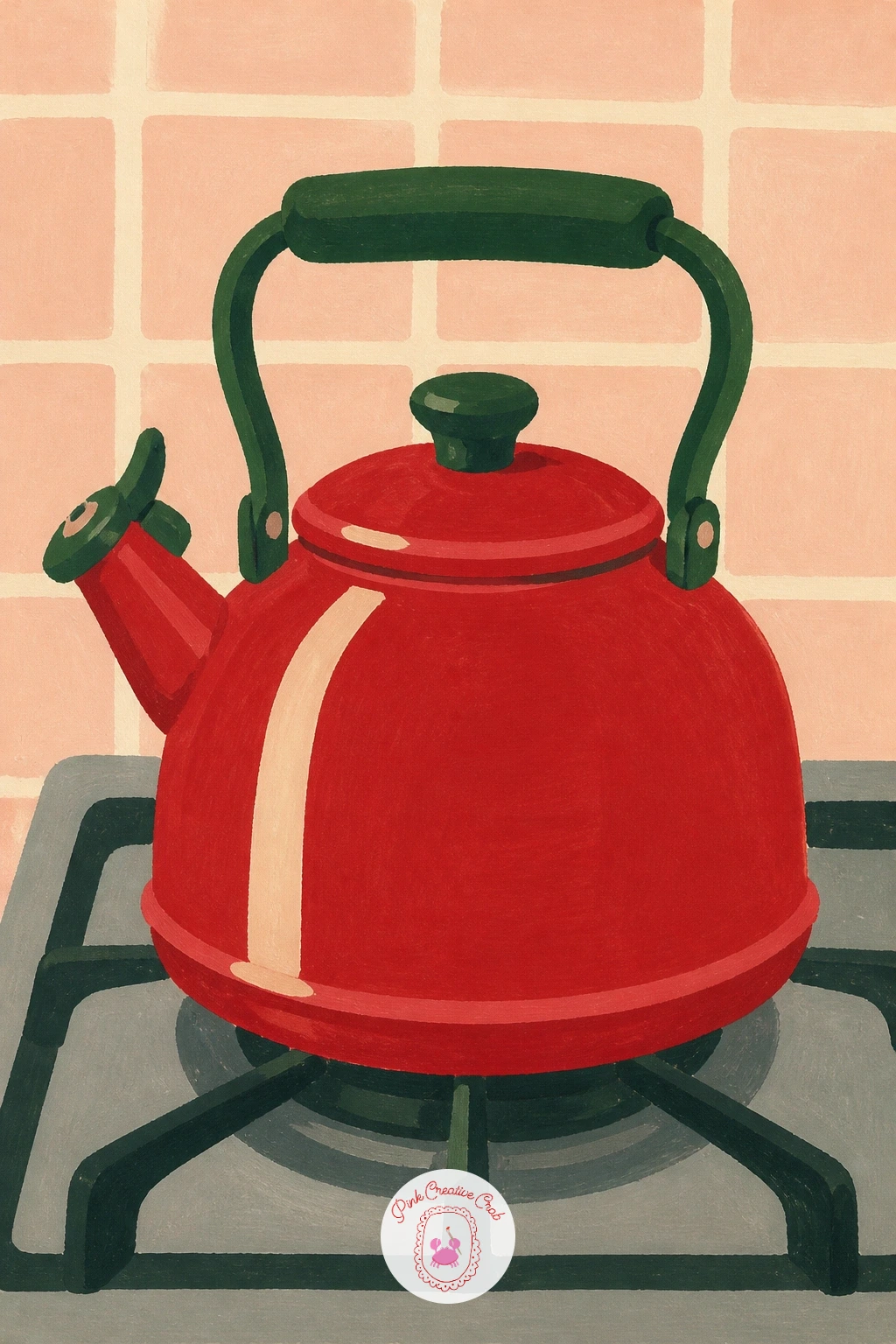
Palette: Cherry Red,Cream,Warm Grey,Blush Pink
Think about light and reflection here: a poppy red umbrella on a rainy crosswalk sits best under an overcast sky, where the umbrella becomes the single brightest, most saturated shape in an otherwise muted scene. Paint the sky and wet street first in soft greys and pale blues, then drop the umbrella dome in as one bold cherry red circle slightly off center.
A few thin white lines painted through the street suggest the crosswalk stripes, and a puddle reflection beneath the umbrella, a soft smudge of the same red, ties the whole composition together. Keep any figure under the umbrella minimal, just a coat hem and two shoes, so the umbrella stays the hero.
If the puddle reflection looks too solid, soften its edges while the paint is still damp by dragging a clean wet brush along one side. No crosswalk wanted? A simple wet pavement without stripes works just as well.
A single raindrop shape or two near the umbrella’s edge, left as small unpainted dots, finishes the rainy mood nicely.
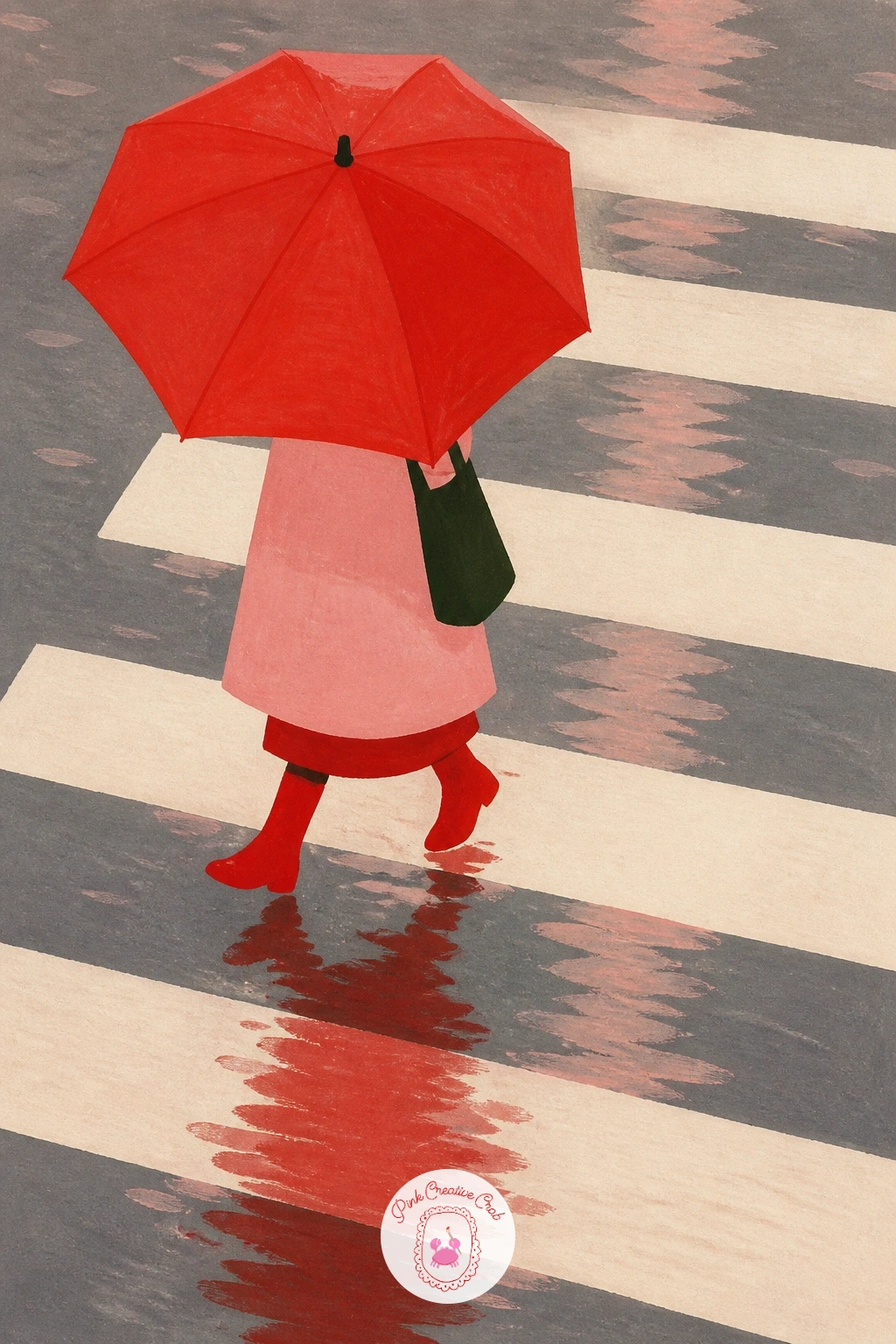
Palette: Cherry Red,Warm Grey,Sky Blue,Cream
Quick version first: a red rotary phone with a curly cord can be blocked in ten minutes as one simple cherry red body shape with a round dial and a receiver resting on top, the cord looped once beneath it. That alone makes a charming, graphic little vintage object study.
The forty minute version adds the dial numbers as tiny cream circles around the rotary wheel and a more elaborate curling cord, looped two or three times and shaded slightly darker on its underside to suggest real coiled plastic. A side table corner and a small lamp glow behind the phone turn the object study into a cozy little scene.
If the coiled cord looks tangled rather than springy, draw it first in pencil as a simple spiral guide before committing with paint. No rotary phone reference handy? A simple candlestick phone shape is an easy and equally charming swap.
Keep the cherry red body as one flat, unbroken shape so the phone reads as a clean vintage silhouette.
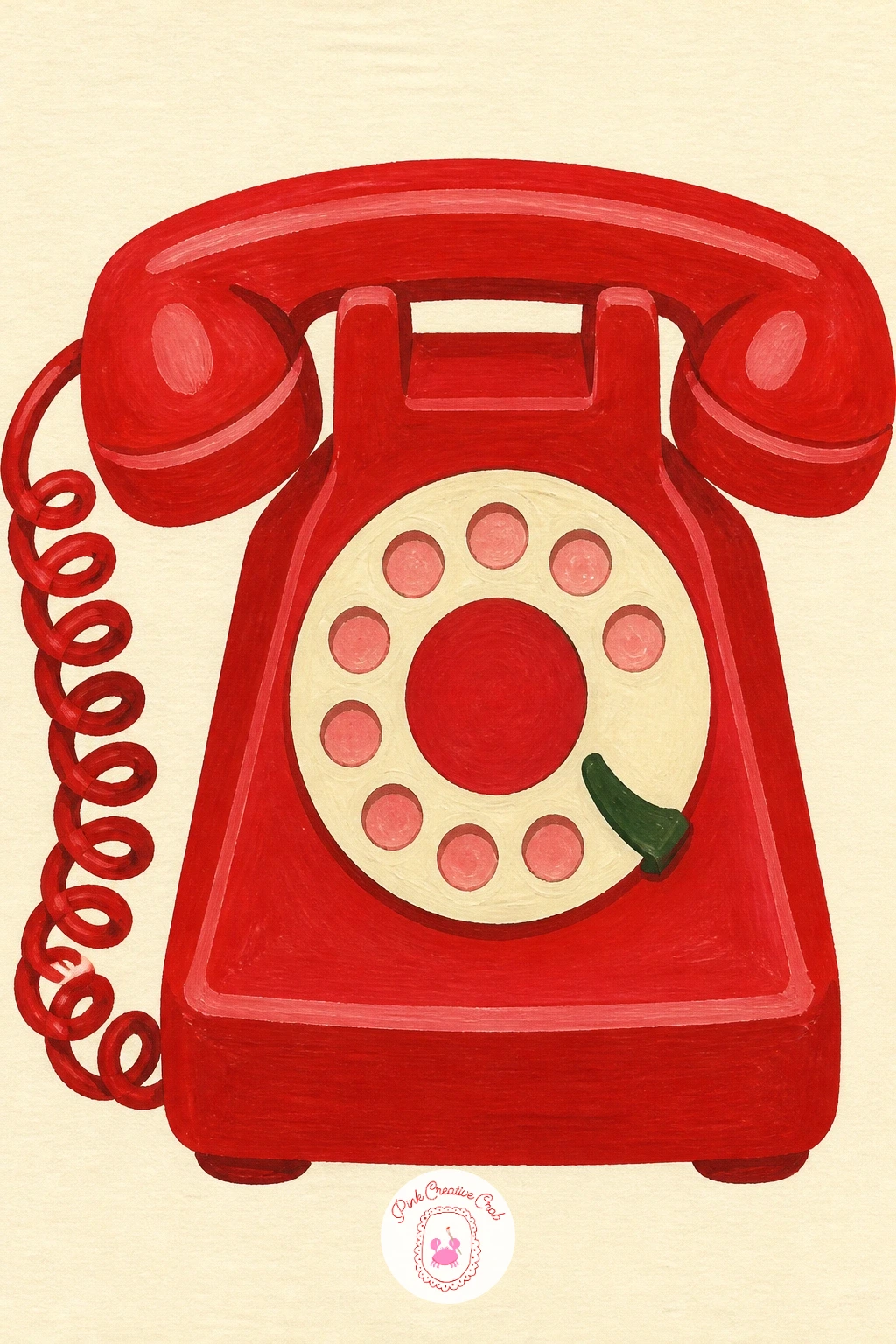
Palette: Cherry Red,Cream,Warm Grey,Golden Ochre
A red lacquer tray with two espresso cups is a quiet, elegant little still life that leans on crisp edges rather than detail. Paint the tray first as a simple rectangle or oval in deep cherry red, leaving one thin cream line along its rim to suggest the lacquered sheen catching light.
Add the two espresso cups as small white or cream cylinders with tiny saucers beneath, their dark coffee painted as a flat circle inside each rim. A sugar cube or a single biscuit resting beside the cups fills the tray without adding real complexity.
If the tray’s rim highlight looks too thick, thin it with a fine brush once dry rather than trying to paint it narrow from the start. No lacquer red tray reference handy? A plain black tray swaps in just as elegantly, letting the cherry red live in the cups’ saucers instead.
Keep both cups identical in size and angle, since that small repetition is what makes the pair feel deliberately paired rather than mismatched.
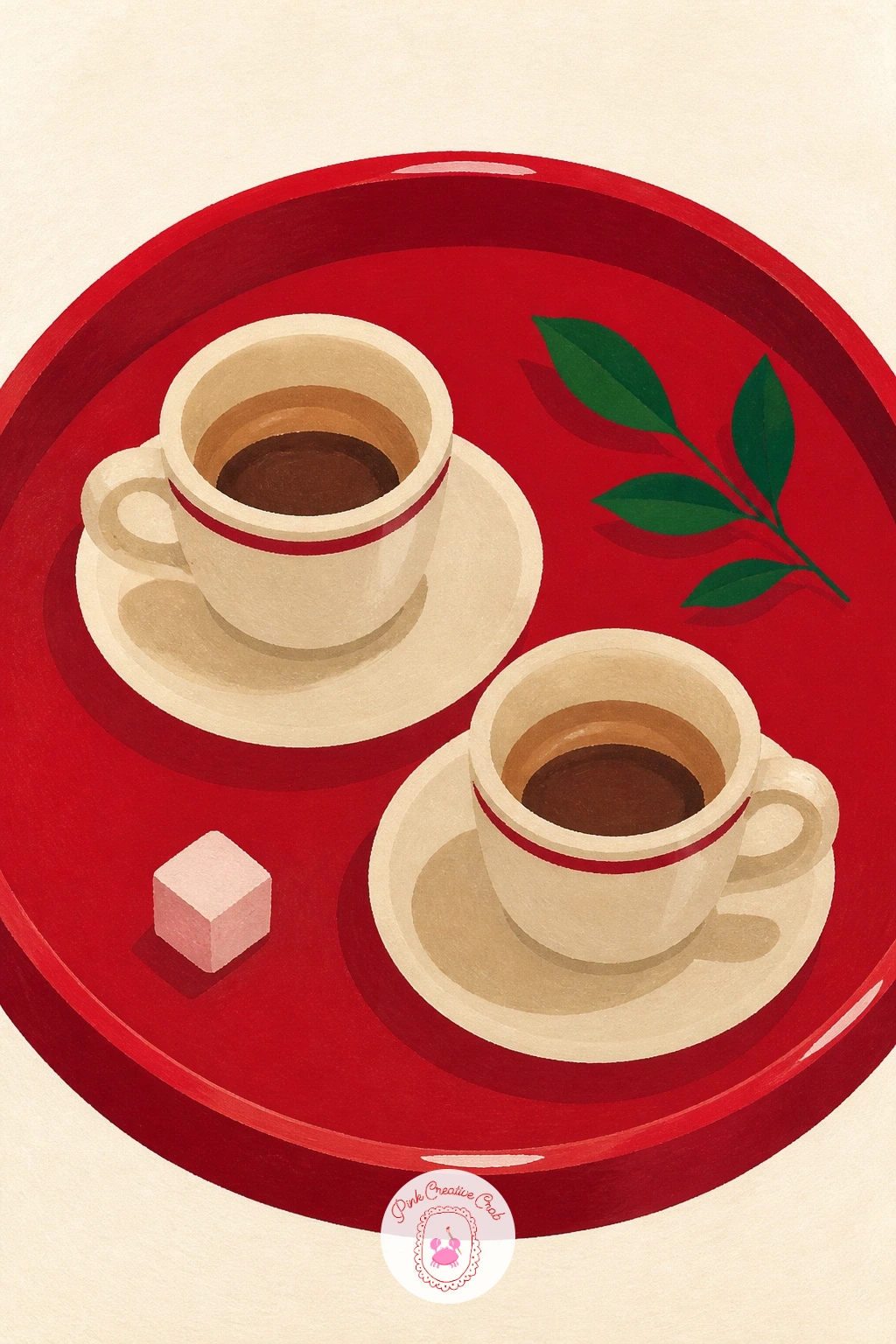
Palette: Cherry Red,Cream,Warm Grey,Golden Ochre
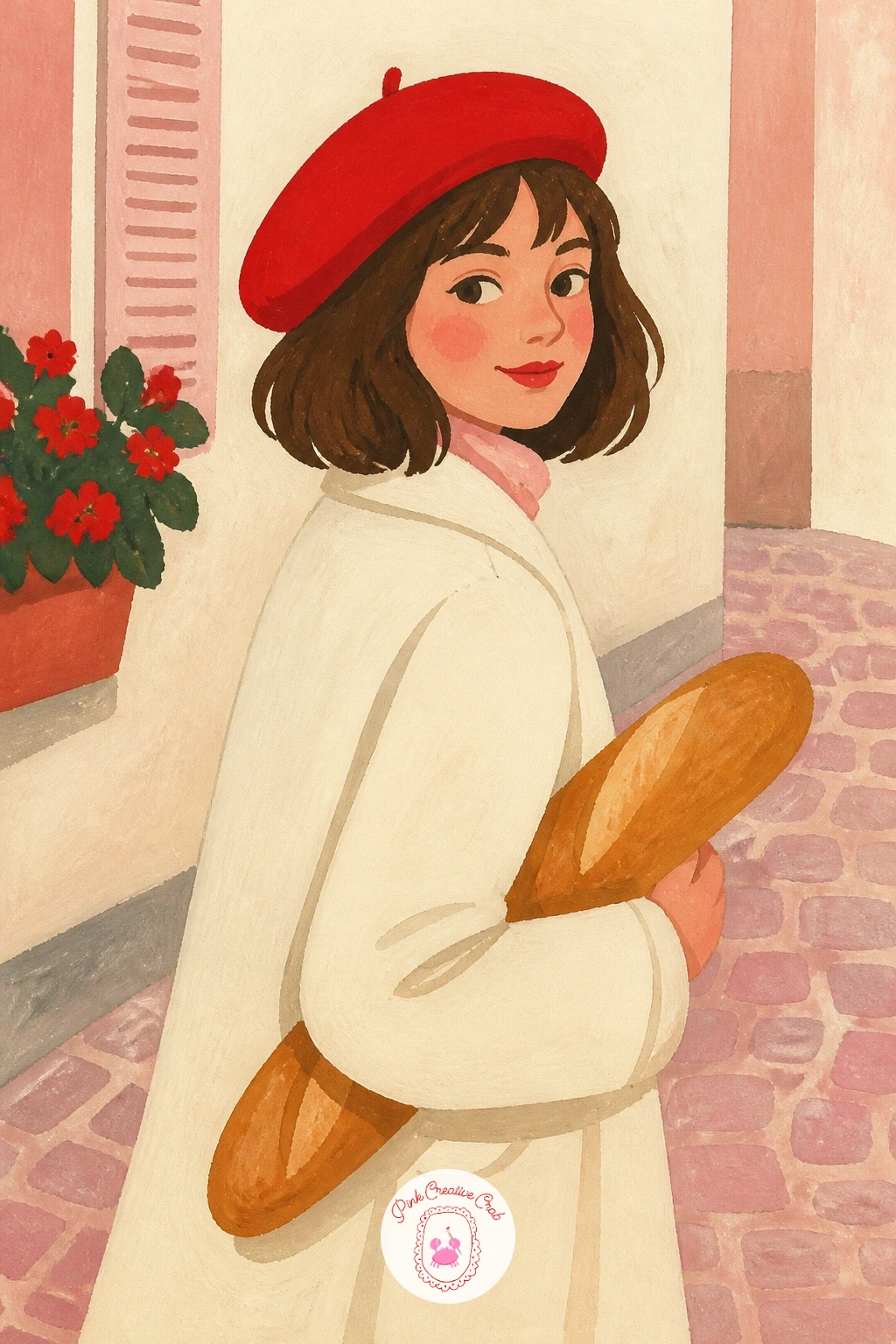
Eye level matters again here: a girl in a red beret carrying a baguette reads most charmingly from a gentle front-on or slight side view, at her own height rather than looking down, so she feels like a passerby rather than a doll. Block in her coat and figure first in a simple cream or blush silhouette, then add the beret last as one confident cherry red oval tilted to one side.
The baguette tucks under one arm as a long simple tapered shape in warm golden brown, its end poking out past her elbow for scale. A cobbled street line or a café awning glimpsed behind her places the whole scene in a little French corner without much extra painting.
If the beret looks flat rather than soft, add one small fold line in a slightly deeper red along its lower edge. No background wanted? A plain cream backdrop keeps her the clear focus.
Keep her face very simple, just a suggestion of features or none at all, so the red beret stays the star of the piece.
Palette: Cherry Red,Cream,Golden Ochre,Blush Pink
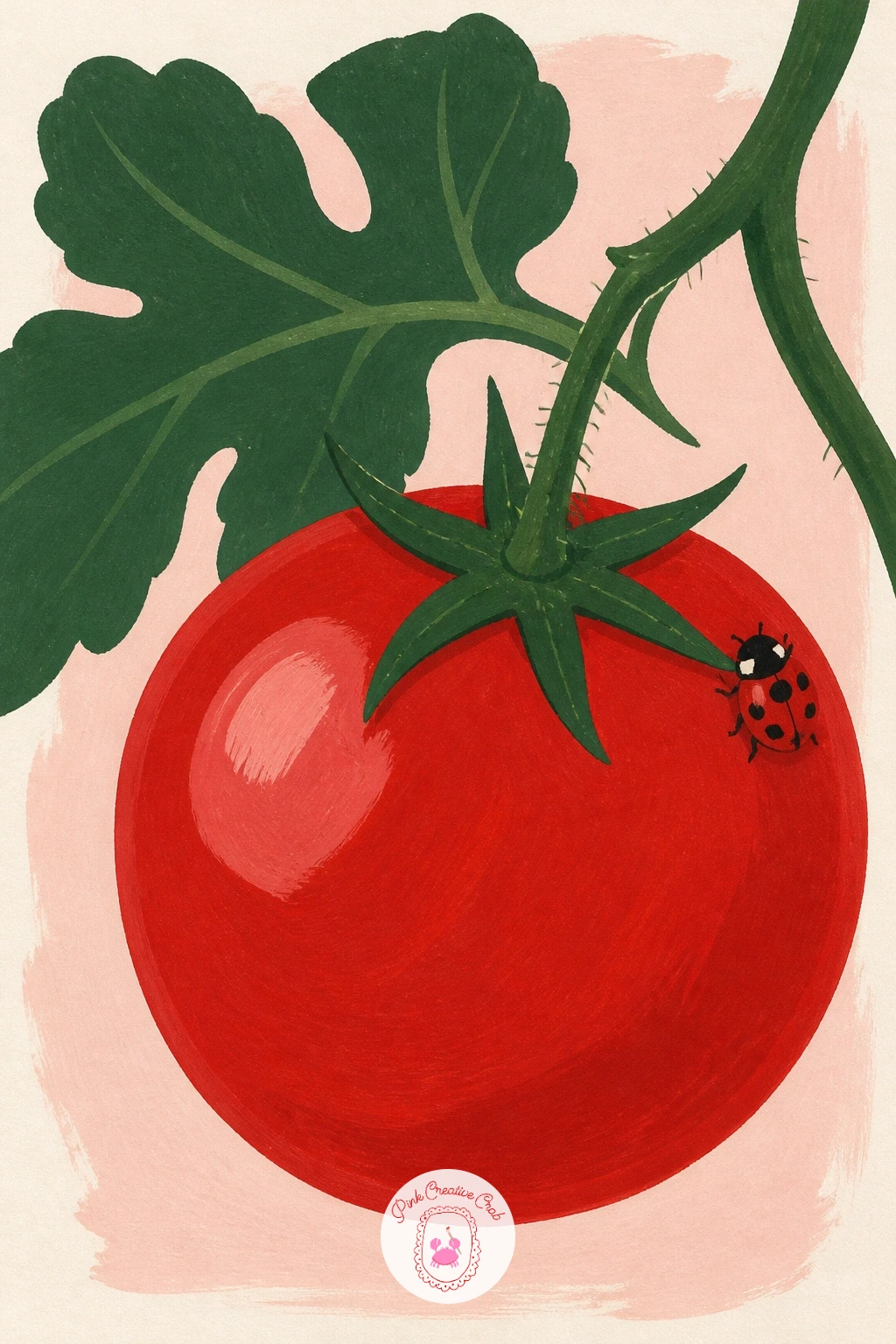
Back to the garden for proportion practice: a ripe tomato on the vine with a ladybird asks you to keep the ladybird small and precise against a bold, simple tomato shape, so measure it as roughly a tenth the width of the fruit before you paint either. Block the tomato in first as one round cherry red shape with a small green calyx at the top, then let it dry before adding the vine curling away to one side.
The ladybird perches last, painted as a tiny red oval with a single black line down its back and a few small dots, resting right at the edge where tomato meets leaf. A single curled leaf behind the fruit, painted in deep green with one lighter vein line, rounds out the little scene.
If the ladybird looks too big, shrink it rather than enlarging the tomato, since a tiny ladybird is what sells the scale of ripe, real fruit. No ladybird reference handy? A small bee shape tells a similar garden story.
Keep the tomato’s shine to one soft highlight rather than several, for a cleaner flat look.
Palette: Cherry Red,Deep Green,Cream,Warm Grey
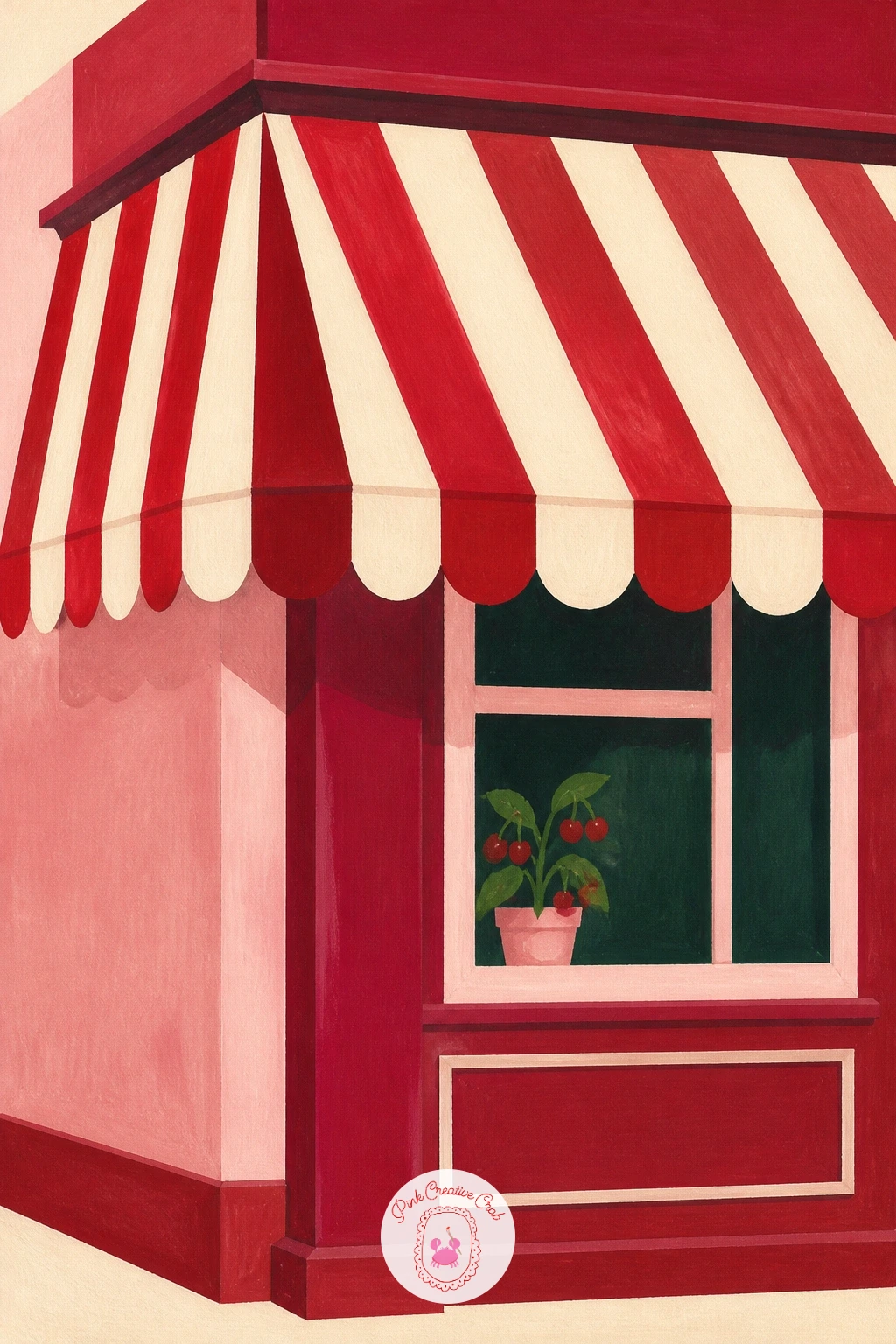
For this one, think about how light flattens a facade: a red striped awning over a corner shop sits best painted straight on, so the stripes stay perfectly parallel and the whole building reads like a tidy little print rather than a perspective exercise. Block the shopfront wall in first as a simple cream or pale wash, then add the awning as a scalloped or straight-edged shape striped in alternating cherry red and cream bands.
A simple window beneath the awning, filled with a few small suggested shapes, pots, jars, baskets, gives the shop a little life without demanding real detail work. A hanging sign or a potted plant by the door finishes the corner charmingly.
If the stripes drift out of parallel, rule them lightly in pencil first before committing with paint, since even a slight wobble reads immediately on a striped awning. No scalloped edge skills yet? A plain straight-edged awning works just as well and paints faster.
Keep the shopfront wall pale so the red striped awning stays the clear focal point of the piece.
Palette: Cherry Red,Cream,Deep Green,Warm Grey
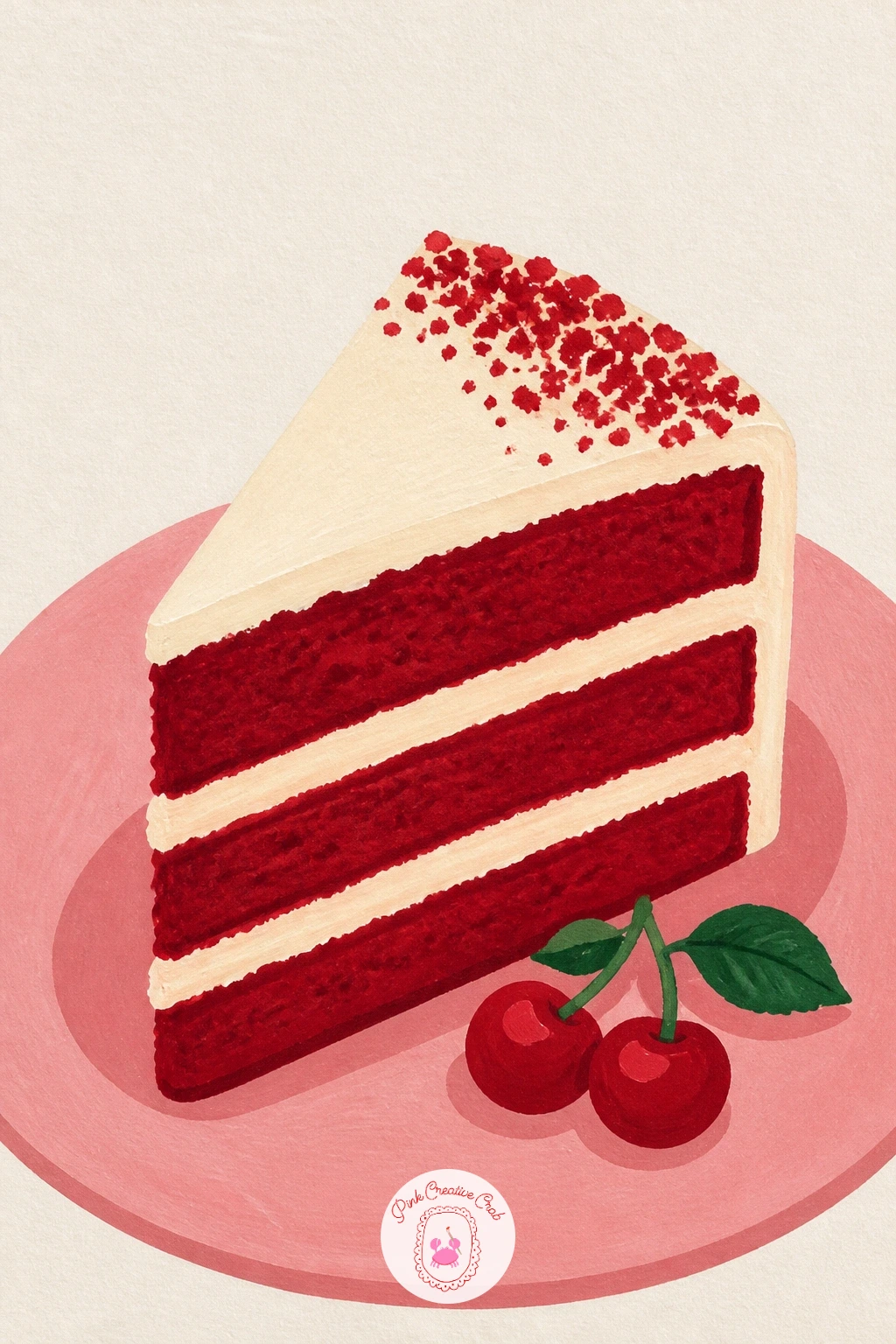
Keep the dessert theme going with a red velvet cake slice on a pink plate, a subject that is really just two or three stacked shapes once you break it down. Paint the plate first as a simple blush pink oval, then add the cake slice on top as a triangular stack, alternating bands of deep cherry red sponge and pale cream frosting between each layer.
A generous swirl of frosting on top, painted as one confident curved shape in white or pale cream, finishes the slice convincingly. A fork laid beside the plate or a few crumbs scattered across it add a lived-in, just-served feeling.
If the layers look uneven, measure the triangle’s height first and divide it into equal bands before painting, so each layer of cake and frosting stays consistent. No pink plate on hand? A plain white plate lets the red velvet color do all the talking.
Keep the cake’s edges crisp and slightly rounded rather than jagged, for that soft, bakery-fresh look.
Palette: Cherry Red,Cream,Blush Pink,Warm Grey
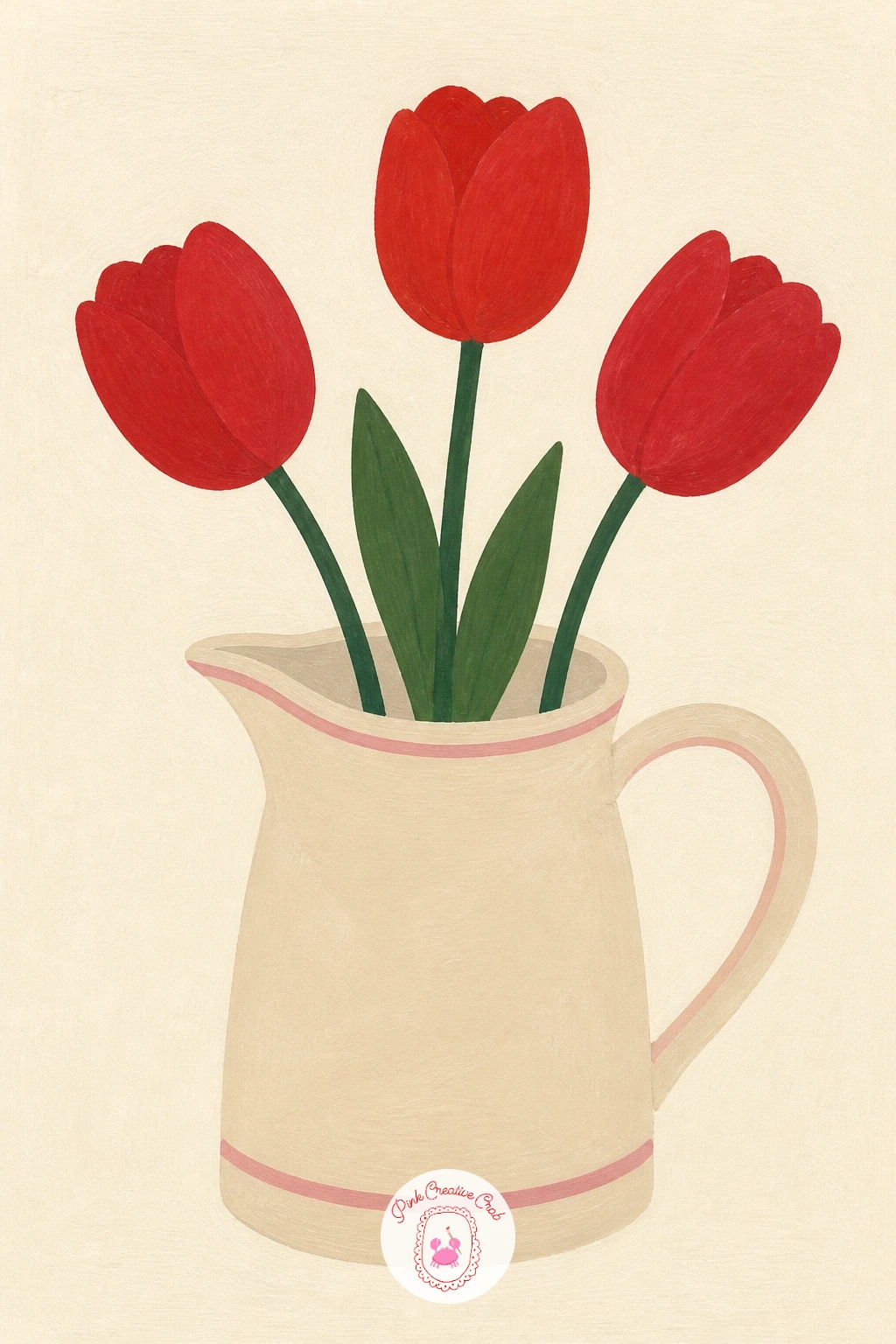
For something a little more painterly in gesture, red tulips in a milk jug lets you practice confident, curved brushstrokes while keeping the overall shape simple. Paint the milk jug first as one rounded cream or white vessel with a small spout and handle, then build the tulip stems upward from its rim in deep green, slightly curving for a natural, unposed look.
Each tulip head goes on last as a simple closed cup shape in cherry red, painted with one confident stroke per petal rather than many small fussy marks. Vary the heights and tilts of two or three blooms so the bunch feels gathered rather than lined up.
If the tulip heads look too rounded and lose their characteristic shape, taper the top of each one slightly to a soft point rather than a full circle. No milk jug handy? A simple glass jar works just as sweetly for this arrangement.
Keep the leaves to just one or two long curved shapes so the red tulip heads stay the clear stars.
Palette: Cherry Red,Deep Green,Cream,Blush Pink
If you enjoyed building these simple flower shapes, a wider look at gouache painting flowers for beginners has plenty more blooms to try next in the same flat style.
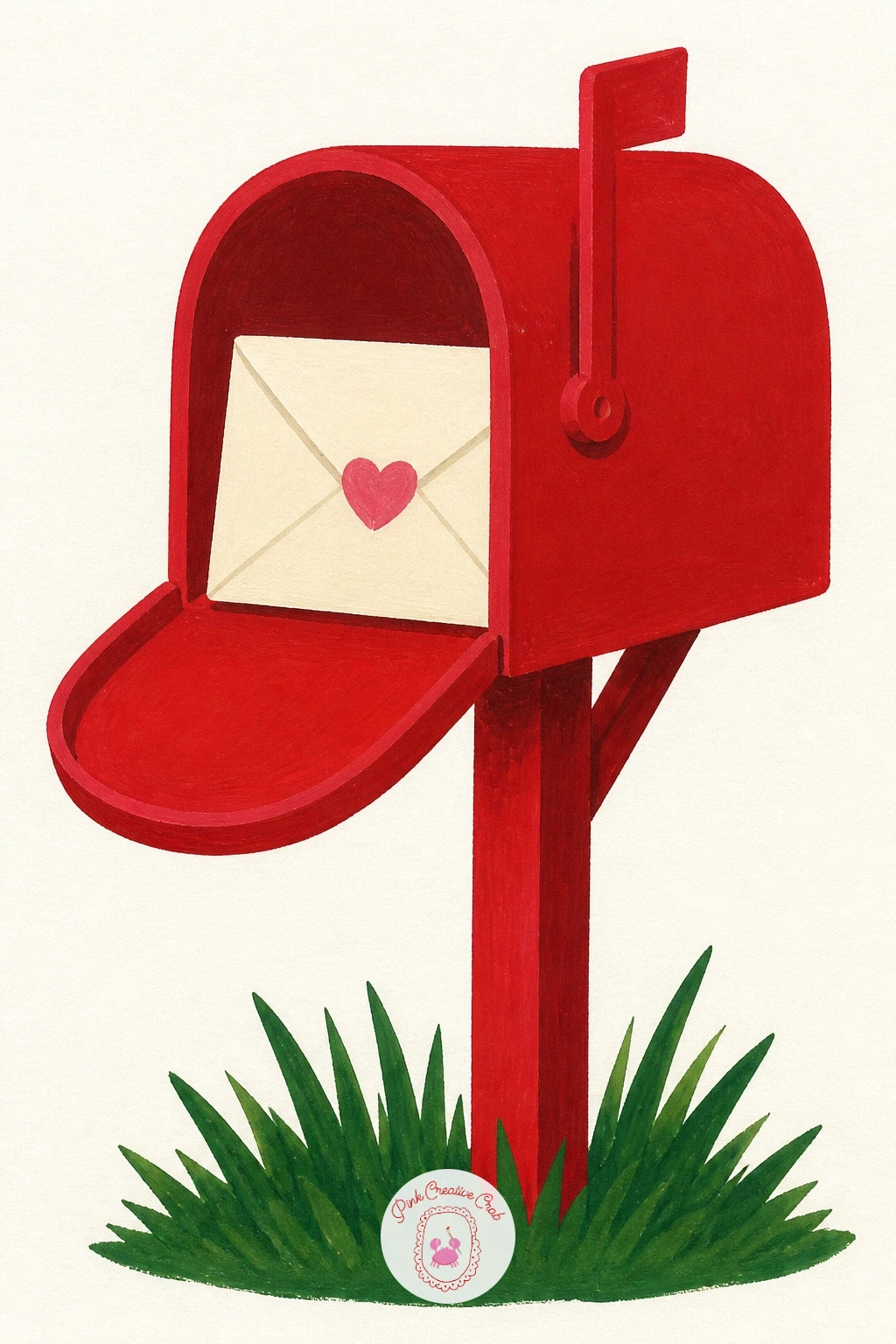
Here is a sweet little narrative subject: a red mailbox with a love letter sticking out tells its whole story in one small gesture, so keep the composition simple and let that letter do the talking. Paint the mailbox first as one solid cherry red box shape on a thin post, rounded gently at the top for that classic curved-lid look.
The letter peeks out from the slightly open lid as a simple cream envelope shape, with a tiny red heart or a flick of a red wax seal drawn on its corner. A patch of green grass or a scatter of small flowers at the post’s base roots the mailbox in a front yard setting.
If the envelope looks stiff, angle it slightly rather than perfectly straight, which makes it feel like it was just tucked in rather than placed with a ruler. No post and grass setting wanted? A plain cream background keeps the mailbox and letter the sole focus.
One small heart doodle on the envelope corner is all the extra charm this scene needs.
Palette: Cherry Red,Cream,Deep Green,Blush Pink
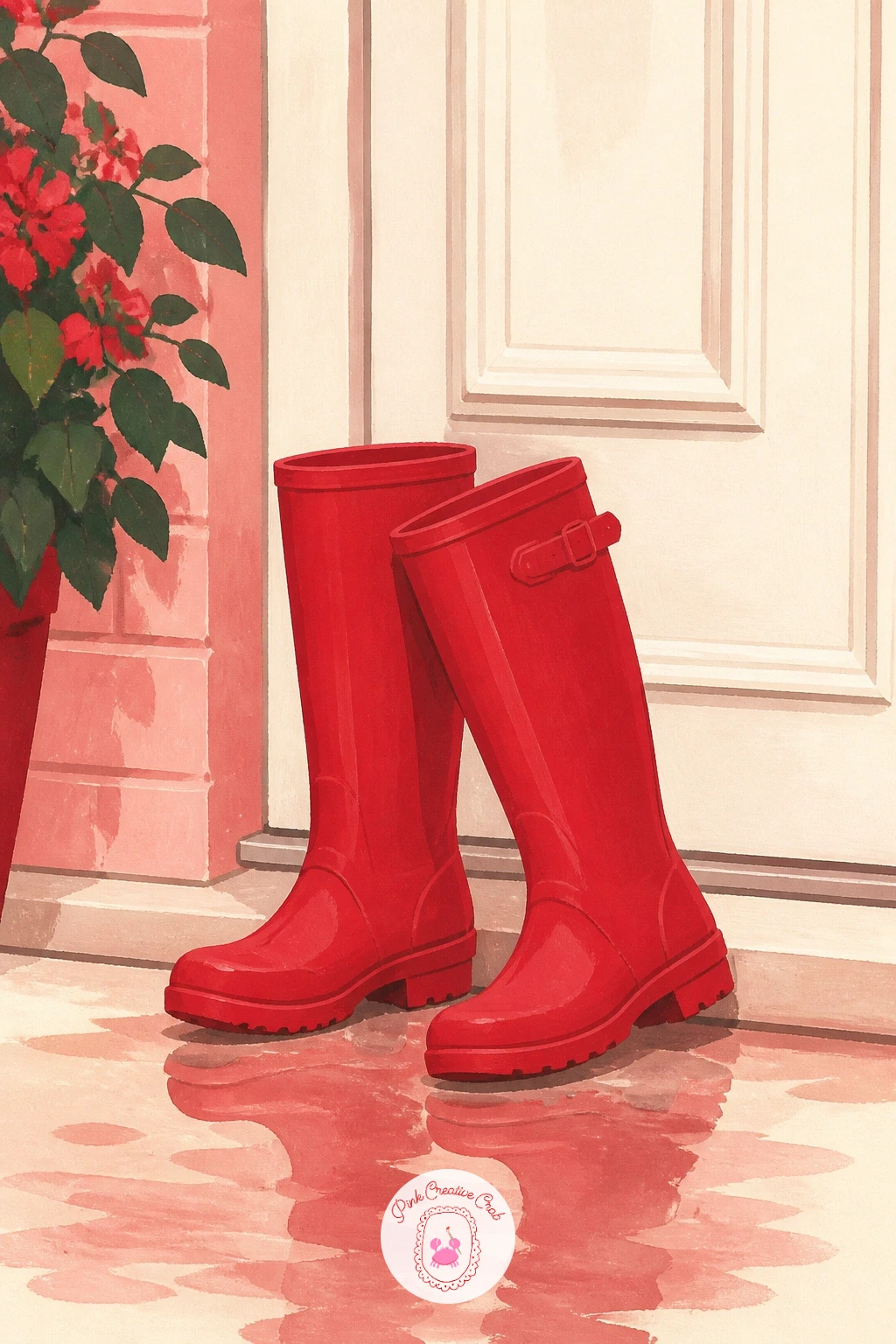
For a cozy, easy win, red rain boots by a front door builds on the same proportion thinking as the Mary Janes earlier, just taller and chunkier in shape. Measure the boot height against its own width at the ankle first, since rain boots read correctly when they stand noticeably taller than they are wide, unlike a low shoe.
Block the pair in as two simple cherry red cylinder shapes, rounded gently at the toe, with a thin cream band near the top rim for contrast. A doormat corner or a scatter of raindrops on the step beneath grounds the boots in their rainy-day setting.
If the boots look too stiff or symmetrical, angle one slightly against the other, as if just kicked off, rather than lining them up perfectly straight. No rainy doorstep wanted? A simple garden path setting works just as sweetly underneath.
A single small puddle reflection beneath the boots, painted as a soft smudge of the same red, finishes the damp mood nicely.
Palette: Cherry Red,Cream,Warm Grey,Deep Green
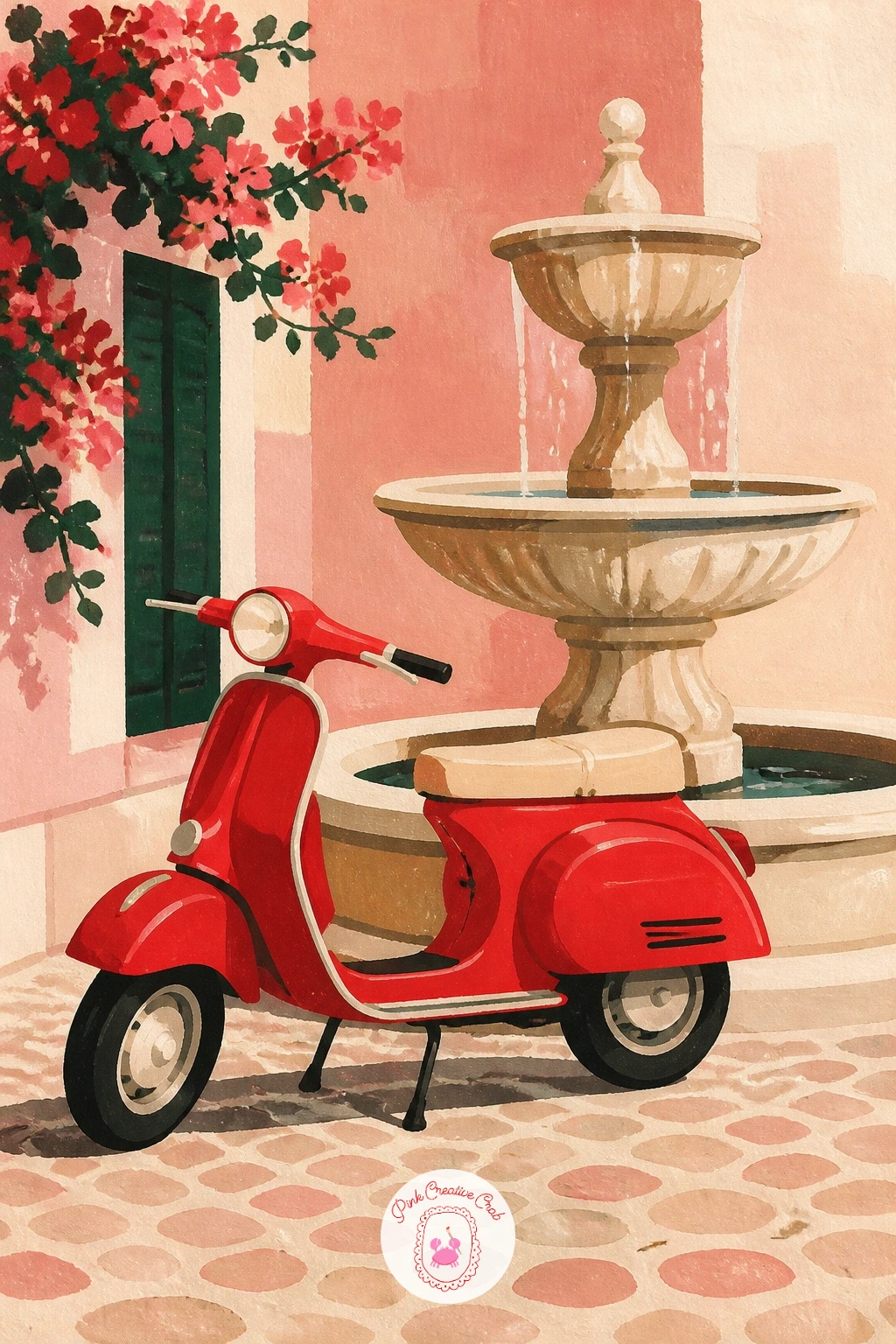
Perspective comes back into play here: a red Vespa parked by a fountain reads most charmingly from a slight side angle, low enough that the fountain rises gently behind it rather than towering over the scene. Block the Vespa in first as one rounded cherry red body shape, keeping the front shield curved and the seat low, then add the wheels and a simple round headlamp last.
The fountain behind it can be as simple as a tiered cream or stone shape with a few blue curved lines suggesting falling water, placed slightly off center so the Vespa stays the clear focus. A cobbled ground line and a hint of warm sunlight tie the scene together.
If the Vespa’s wheels look uneven, draw two simple guide circles in pencil first, matched in size, before painting over them. No fountain setting wanted? Parking the Vespa against a plain pale wall works just as charmingly.
Keep the chrome details, mirrors and headlamp rim, to a few confident thin lines rather than many fussy small ones.
Palette: Cherry Red,Cream,Sky Blue,Warm Grey
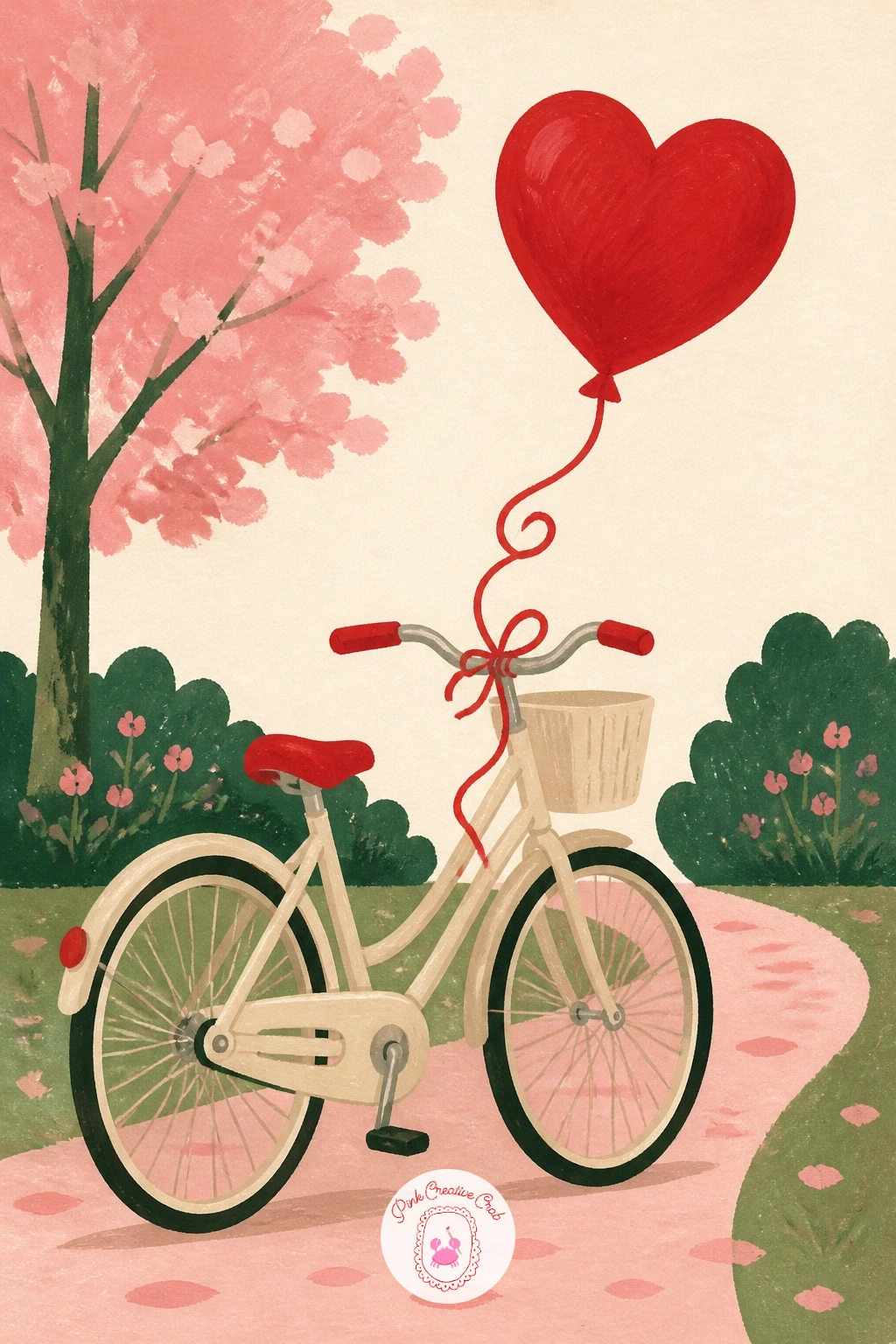
Quick version first: a red heart balloon tied to a bicycle can be painted in ten minutes as a simple bicycle silhouette in cream or warm grey with one bold cherry red heart shape floating above the handlebars on a thin curling string. That alone makes a charming, graphic little scene.
The forty minute version adds a woven basket on the handlebars with a few flowers spilling out, spoked wheels drawn with care, and a soft cobbled street or park path beneath the bicycle to place it somewhere specific. That extra time turns a quick sketch into a fuller little story.
If the heart balloon looks lopsided, paint two symmetrical curved lobes meeting at a point rather than trying to freehand the whole shape at once. No bicycle reference handy? A simple scooter or wagon swaps in just as sweetly for the same gesture.
Keep the balloon string loose and slightly curved rather than ruler straight, since that small detail is what makes it feel like it is actually floating.
Palette: Cherry Red,Warm Grey,Cream,Deep Green
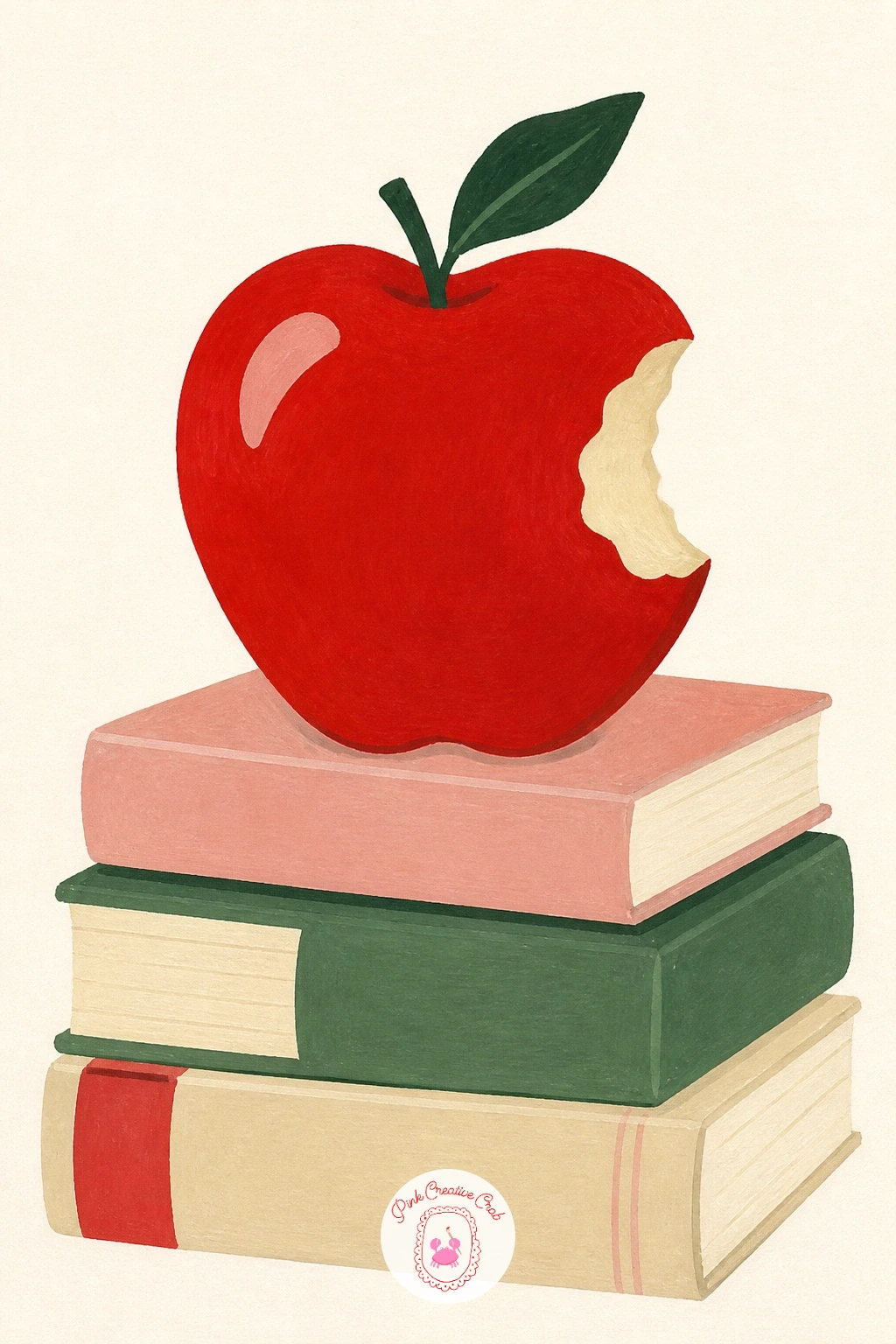
For variation practice, a red apple with one bite on a stack of books takes a subject you likely already know and nudges it somewhere new. Paint the stack of books first as a few simple rectangular blocks in varied muted colors, then add the apple on top as one bold cherry red rounded shape with a small stem and leaf.
The bite mark goes in last, a simple curved notch cut from one side with a slightly paler cream showing where the flesh is exposed. Vary the book spine colors and thicknesses so the stack feels like a real gathered pile rather than identical blocks.
If the bite mark looks too jagged, keep its edge smooth and rounded, since one clean curved notch reads far more convincingly than several small nibbles. No stack of books wanted? A single open notebook beneath the apple works just as well for a study or desk theme.
Next time, try swapping the apple for a pear or painting the same scene with the bite taken from a different side for a fresh variation.
Palette: Cherry Red,Cream,Deep Green,Warm Grey
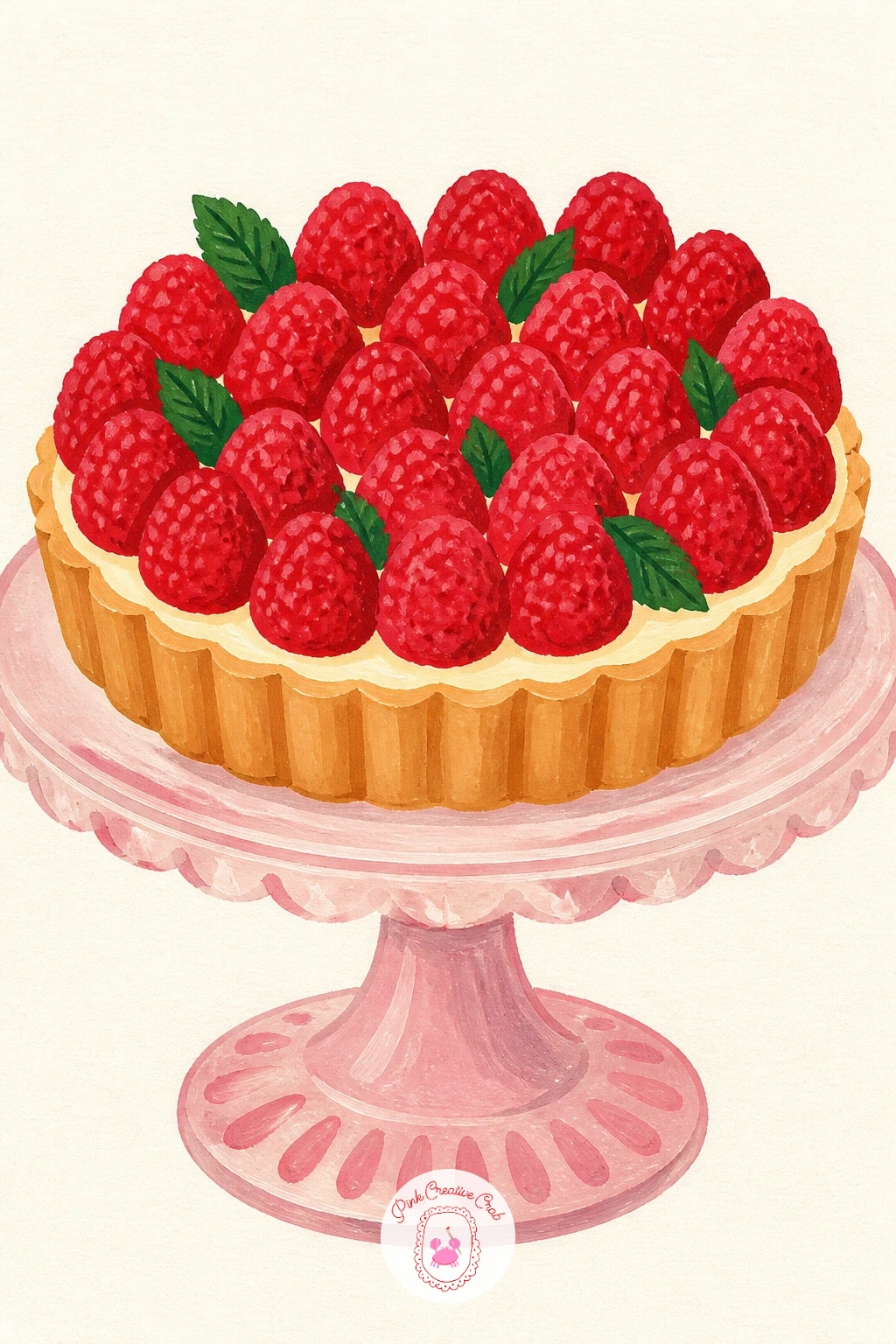
For a hands-on texture challenge, a raspberry tart on a glass cake stand asks you to suggest a cluster of tiny bumpy berries without painting every seed. Block in the tart shell first as a shallow golden circle, then fill it with a pale cream custard base before the berries go on top.
Paint the raspberries as small clustered circles in a rosy red, slightly deeper than cherry red to read as a different fruit, then once dry, stipple a few tiny cream dots onto each berry’s surface with a nearly dry brush to suggest the bumpy texture without outlining every seed. The glass cake stand beneath can be left mostly as pale cream and grey, with one or two thin curved highlight lines to suggest glass.
If the berries look too smooth and plain, that dry stipple step is the fix, so do not skip it even on a quick version. No glass stand on hand? A simple flat plate holds the tart just as nicely.
Keep the tart shell’s edge slightly uneven rather than perfectly round, for that homemade, hand-crimped look.
Palette: Cherry Red,Golden Ochre,Cream,Blush Pink
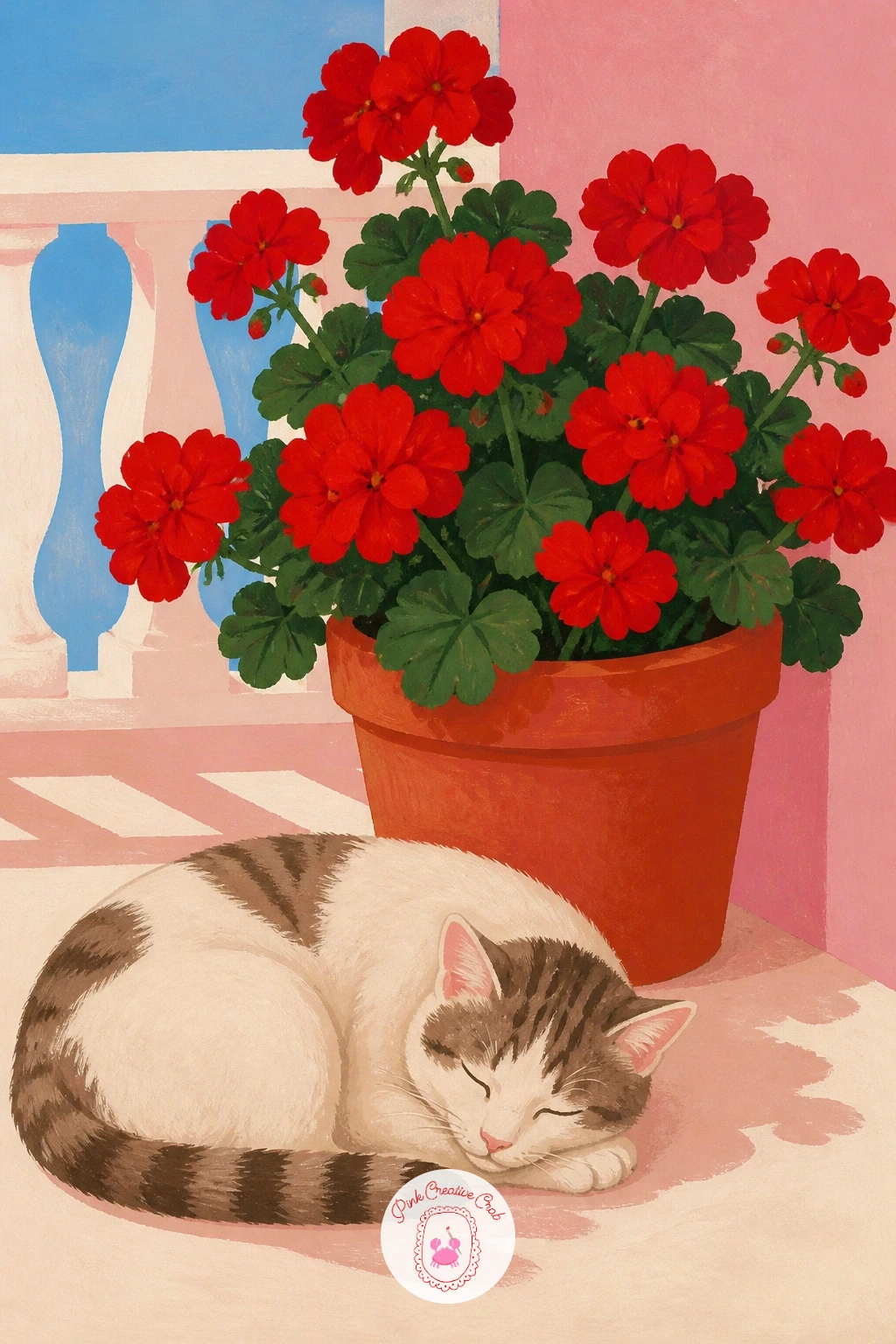
Almost at the finish line now: red geraniums on a balcony with a sleeping cat pairs a simple flower study with a relaxed little character, so build them in that order. Paint the window box or pot first in a warm terracotta, then add the geranium leaves as rounded green clusters before the flower heads go on top as small clustered dots of cherry red, grouped in rounded bunches rather than painted as individual petals.
The sleeping cat curls up beside the pot as one simple comma-shaped silhouette, tail wrapped around its body, eyes closed with just two short curved lines. A glimpse of balcony railing or a soft blue sky strip behind ties the whole scene together.
If the geranium clusters look too uniform, vary the size of each dotted flower head slightly and let a few spill just past the pot’s edge. No balcony setting wanted? A simple windowsill works just as sweetly for the same arrangement.
Keep the cat in one flat warm color with no internal lines, so it reads as peacefully asleep rather than fussed over.
Palette: Cherry Red,Deep Green,Terracotta,Sky Blue
Anyone who likes pairing a sleepy animal with a small cozy scene might enjoy animal doodle painting ideas for beginners for more quick character studies in the same spirit.
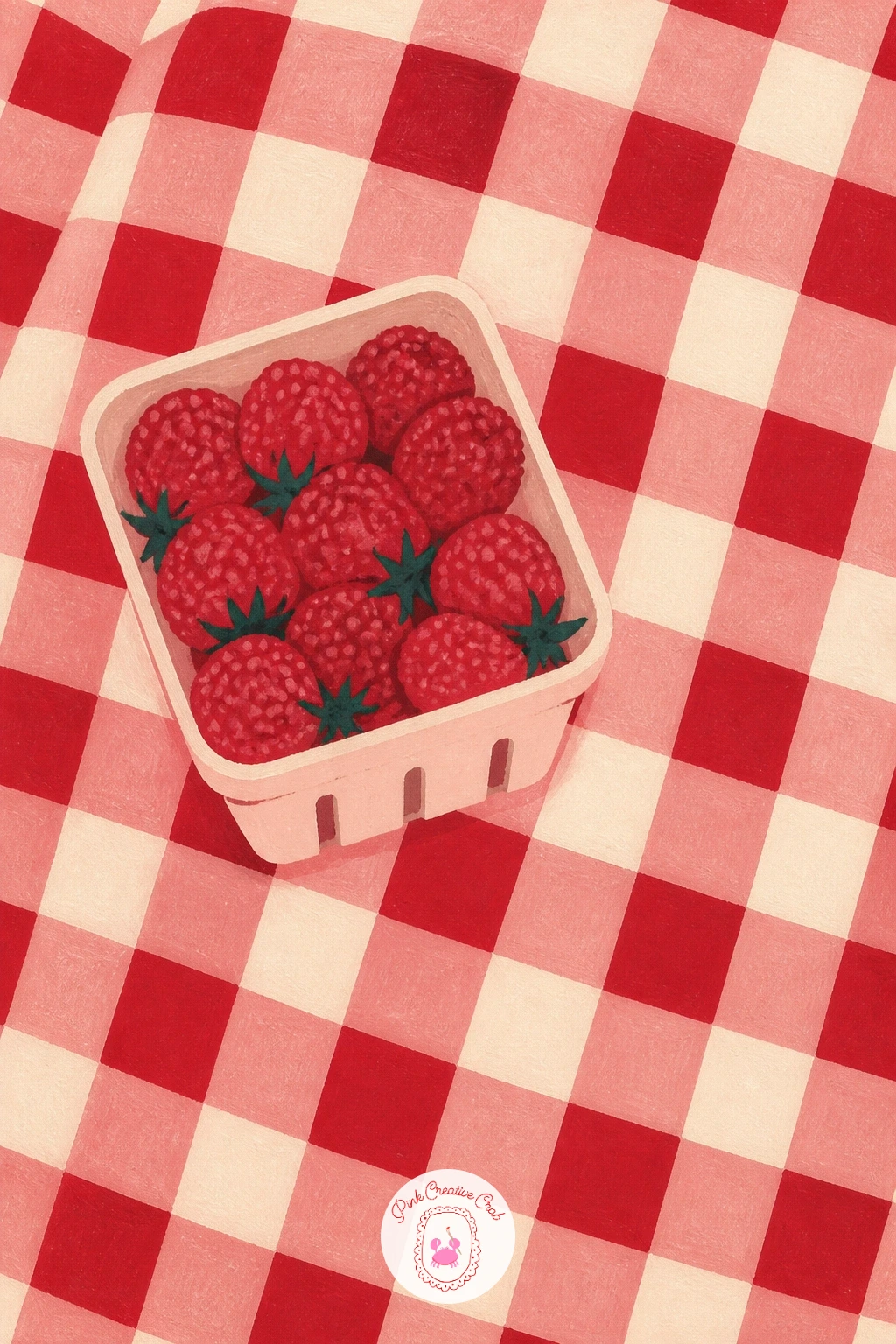
Finish the list the way it began, with fruit and fabric together: a red gingham picnic blanket with a punnet of raspberries pulls together the checkered pattern skill from the pie earlier and the berry texture trick from the tart. Paint the gingham blanket first, a grid of cherry red and cream squares, keeping every line ruled and even so the pattern reads crisply across the whole page.
Once the blanket is fully dry, add the small wooden or cardboard punnet on top as a simple rounded container, then fill it with clustered raspberry circles, stippled with tiny cream dots the same way as the tart berries, for a touch of real texture. A folded cream napkin or a single loose raspberry rolled onto the blanket beside the punnet adds a relaxed, just-set-down feeling.
If the gingham grid wobbles, pencil the full grid first and paint only after every line sits straight and evenly spaced. No gingham pattern wanted? A plain cherry red blanket with a cream stripe keeps the scene simple and just as pretty.
Keep the raspberries’ stippled texture light and scattered rather than heavy, so they stay soft against the bold graphic blanket beneath them.
Palette: Cherry Red,Cream,Blush Pink,Deep Green
For more ideas that lean into this same checkered, cozy picnic mood, gouache painting ideas for beginners has plenty of other small still life scenes worth trying next.
What to Do Next
Pick whichever scene caught your eye first, cut a small piece of paper to postcard size, and start there; the cherry earrings or the cherry soda bottle are the easiest places to begin if this is new to you. Keep the rest of the list bookmarked, since every idea here uses the same small cherry red palette and will feel quicker each time you return to it.
Frequently Asked Questions
What paint works best for cherry painting in this flat, graphic style?
Gouache works best because it dries matte and opaque, giving flat, confident color blocks with crisp edges rather than soft blended washes. Watercolor can work too if kept thick and undiluted, closer to gouache consistency.
What paper should a beginner use for these small cherry scenes?
A small block of cold press watercolor paper, around postcard size, holds gouache well without buckling. Smooth mixed media paper is a fine budget swap if watercolor paper is not on hand yet.
How do you keep gouache edges crisp instead of blurry?
Let each shape dry fully before painting the next one beside or on top of it. Working wet into dry, rather than wet into wet, is the main trick behind that flat, print-like look throughout this list.
What if cherry red gouache is not available in a paint set?
Mix a warm red, like cadmium red or pyrrole red, with a small touch of a cool red such as alizarin crimson or quinacridone magenta. Adjust until it reads as a deep, slightly dark cherry rather than a bright fire engine red.
Which cherry painting idea is best for a total beginner to start with?
The cherry earrings or the cherry soda bottle make the gentlest starting points, since both rely on just a few simple round and curved shapes. Save the vintage car and the Vespa for once a few of these feel comfortable.
Have any thoughts?
Share your reaction or leave a quick response — we’d love to hear what you think!
-
 0
-
0
-
0
-
0
-
0
-
0


