

Table of Contents
This greenhouse junk journal kit carries you through a glass house in spring, from seedling trays on a wooden bench to a wicker chair tucked among potted citrus. Inside you get 19 scene pages full of greenhouse life, 4 seamless background papers for covers and pockets, and 4 lined writing pages ready for your own notes on what is sprouting.
Print everything on matte cardstock heavy enough to take glue without buckling, run your printer on its best photo or highest quality setting, and trim close to the edge before you bind the pages into your journal.
Using these images: free for personal projects such as printing, coloring, cards, journals and gifts. Handmade items that include them may be sold up to 30 pieces per design. More than that is commercial use and is not permitted, and neither is selling or sharing the images themselves or passing them off as your own. Please ask before any other use.
The Glasshouse Itself
A Victorian glass greenhouse with white frames standing in a spring garden makes a strong opening page for any garden journal, the glass catching the early light.
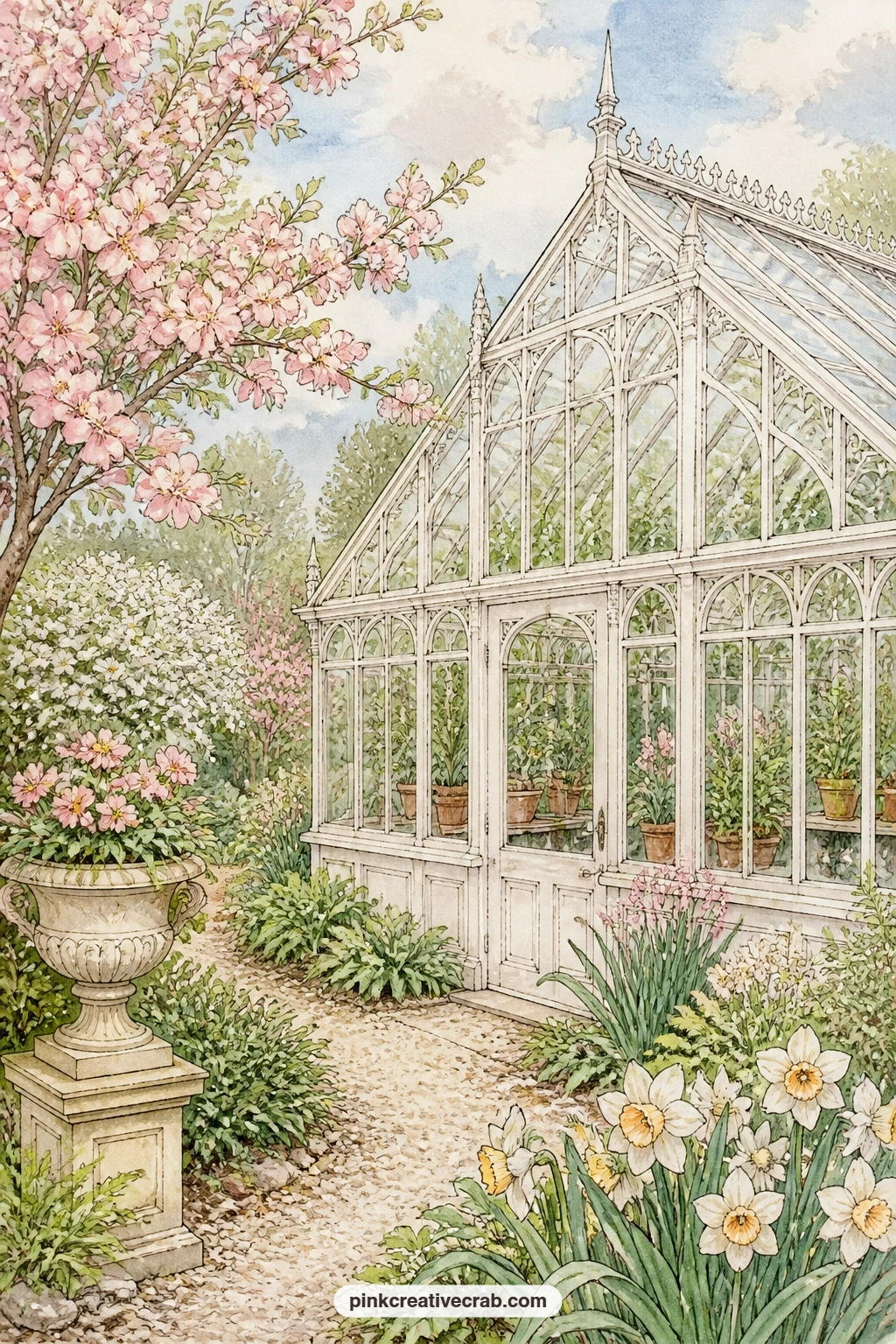
Pair this page with the mint seedling background further on: glue a strip of the pattern along the bottom edge as a border beneath the bench, so the trays look like they continue off the page.
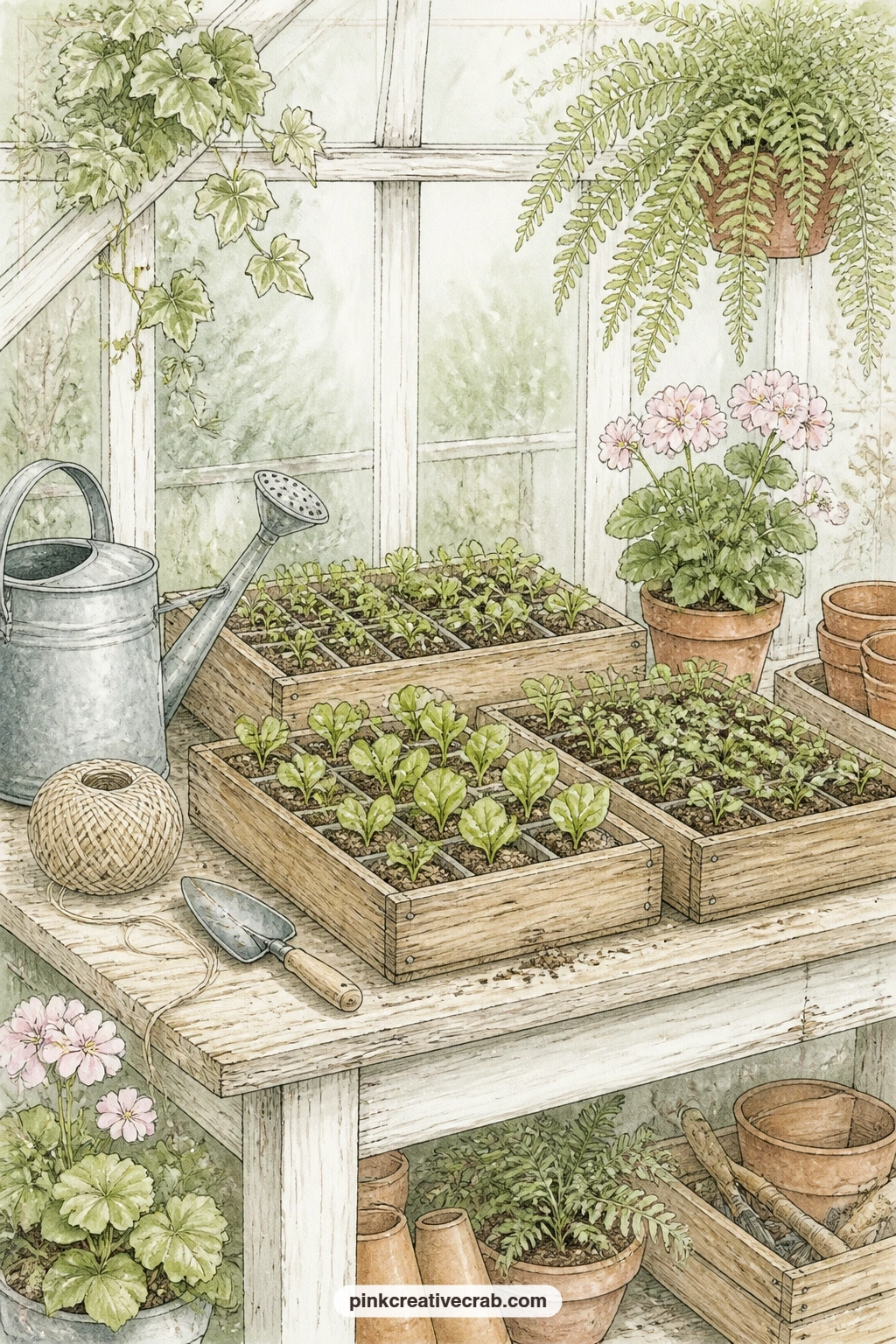
The trays themselves hold tiny green sprouts in neat rows, a good spot to note which seeds went in and when you expect them up.
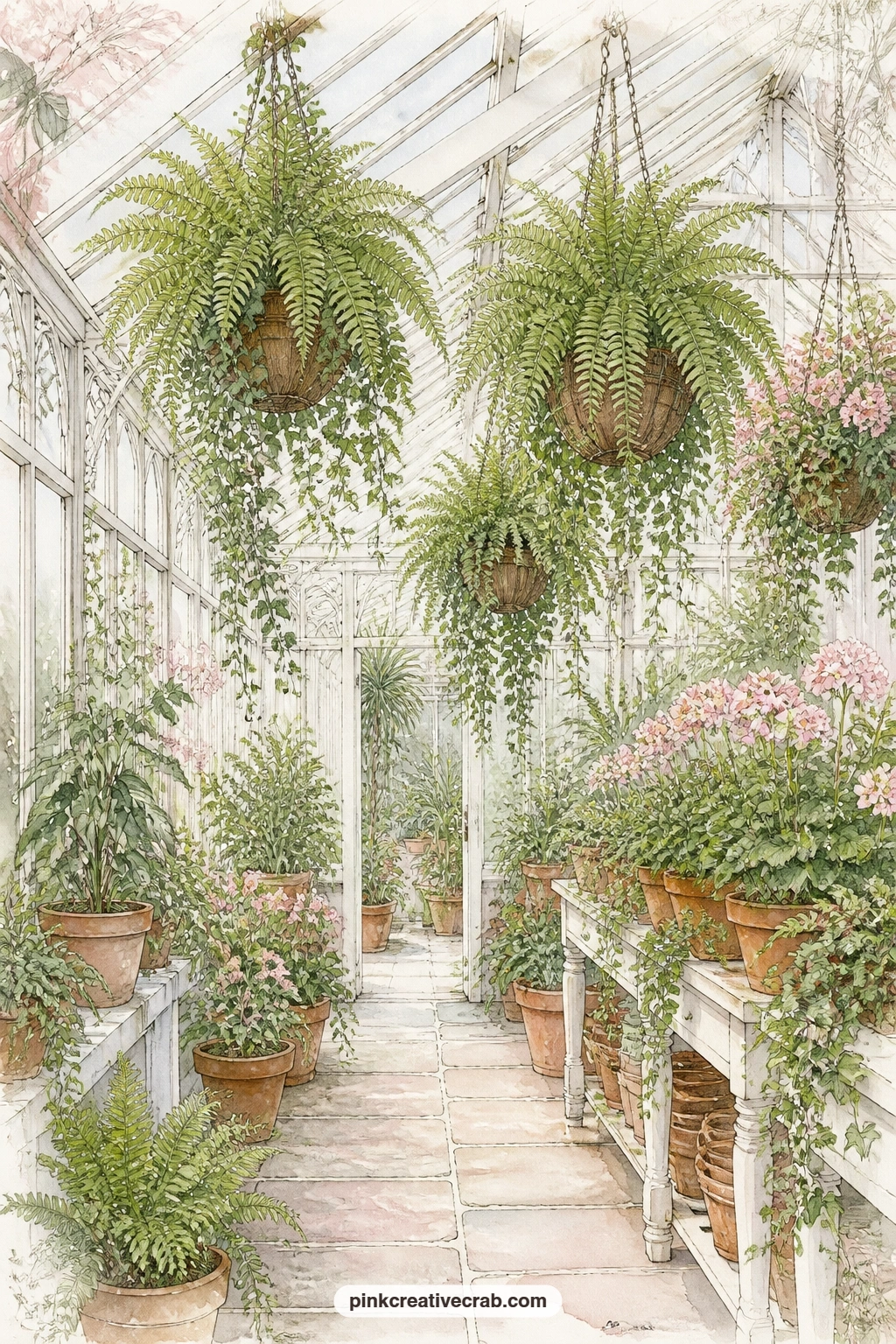
Trailing ivy and hanging ferns strung above a narrow greenhouse aisle give you a page heavy with green, perfect behind a photo of your own plant shelf or a pressed fern frond.
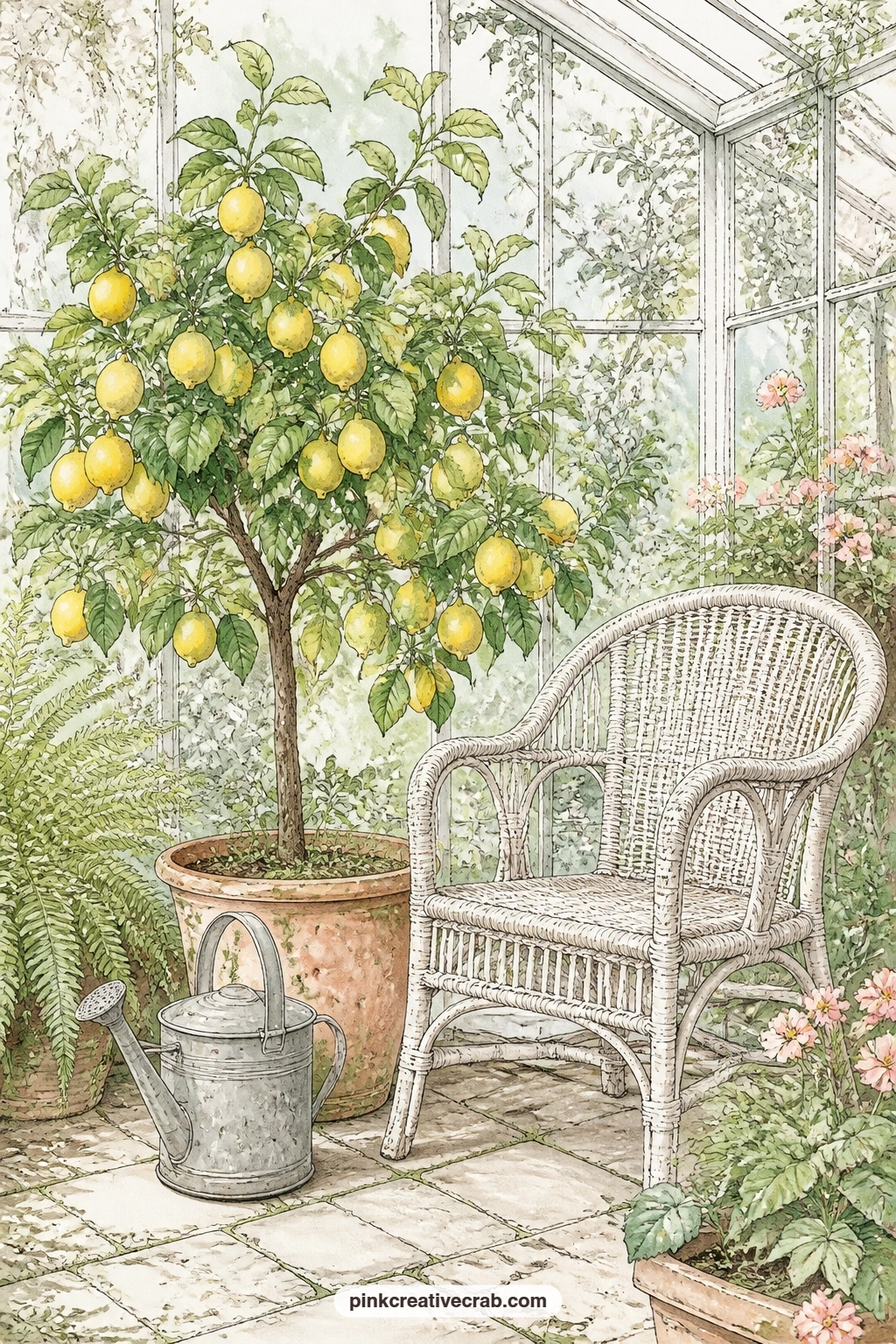
The usual mistake with a page like this is cramming it with too many pots: keep the lemon tree, the watering can and the wicker chair as the only three elements, and let the painted glass wall behind carry the rest of the space.
Leave the chair looking just sat-in, a small cushion dropped on the seat, so the page feels lived in rather than staged.
Flowers Under Glass
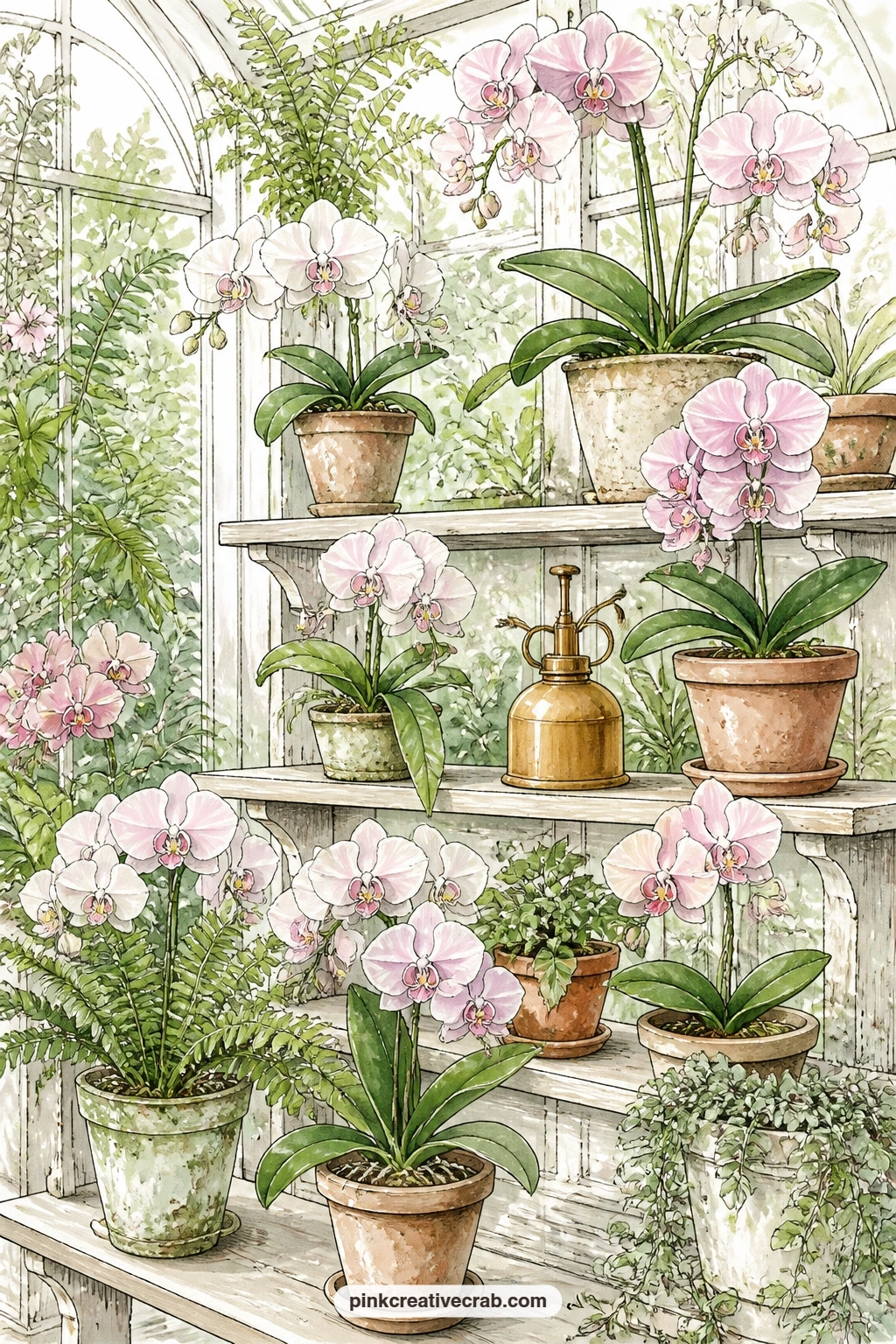
Who is this page for in a gift journal: the friend who fusses over orchids more than any other plant, since tiered shelves of blooms and a brass misting bottle sum up that particular devotion.
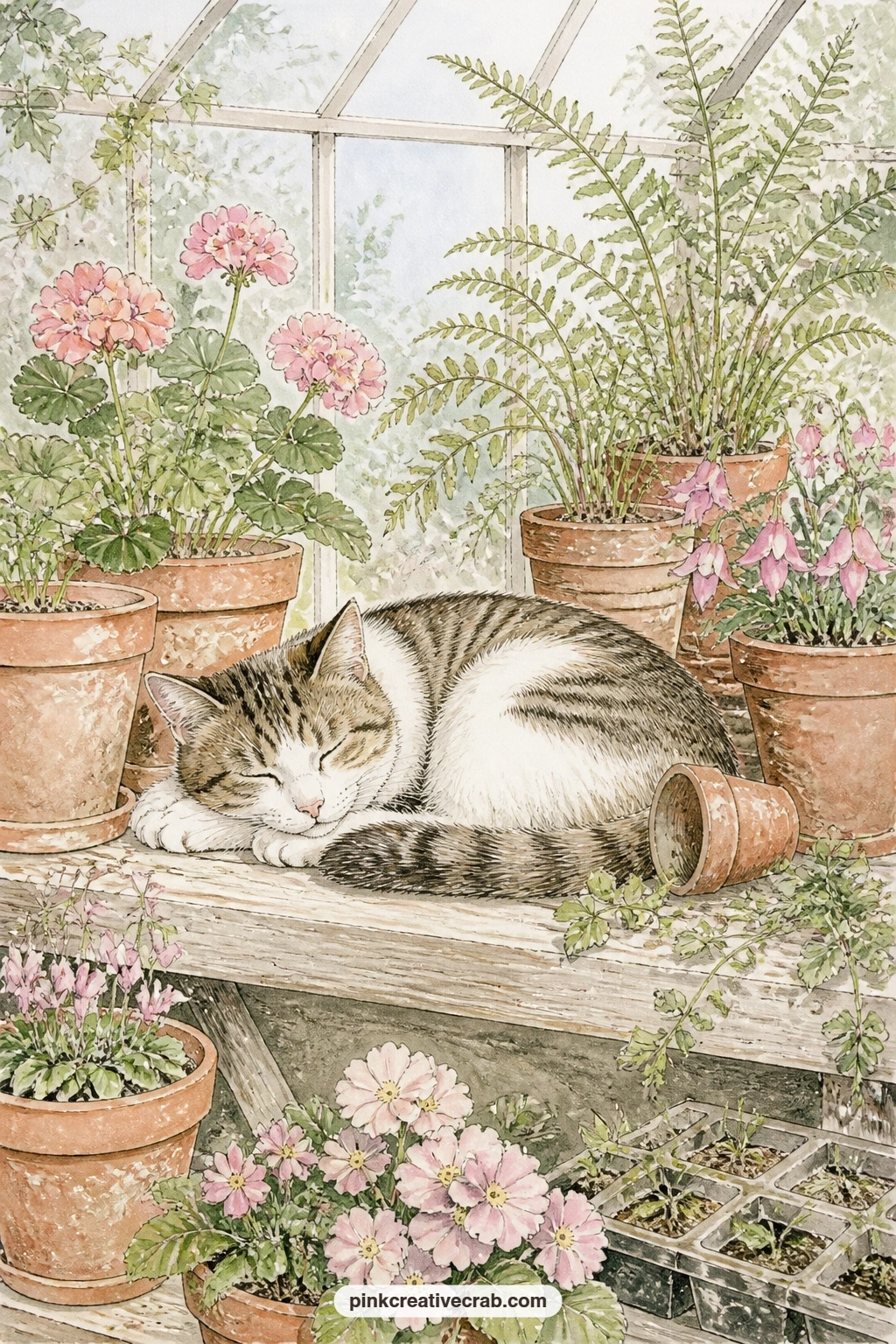
A cat dozing among sunlit pots on a greenhouse bench gives the kit its one animal page, curled between a row of terracotta and a patch of warm light falling through the glass.
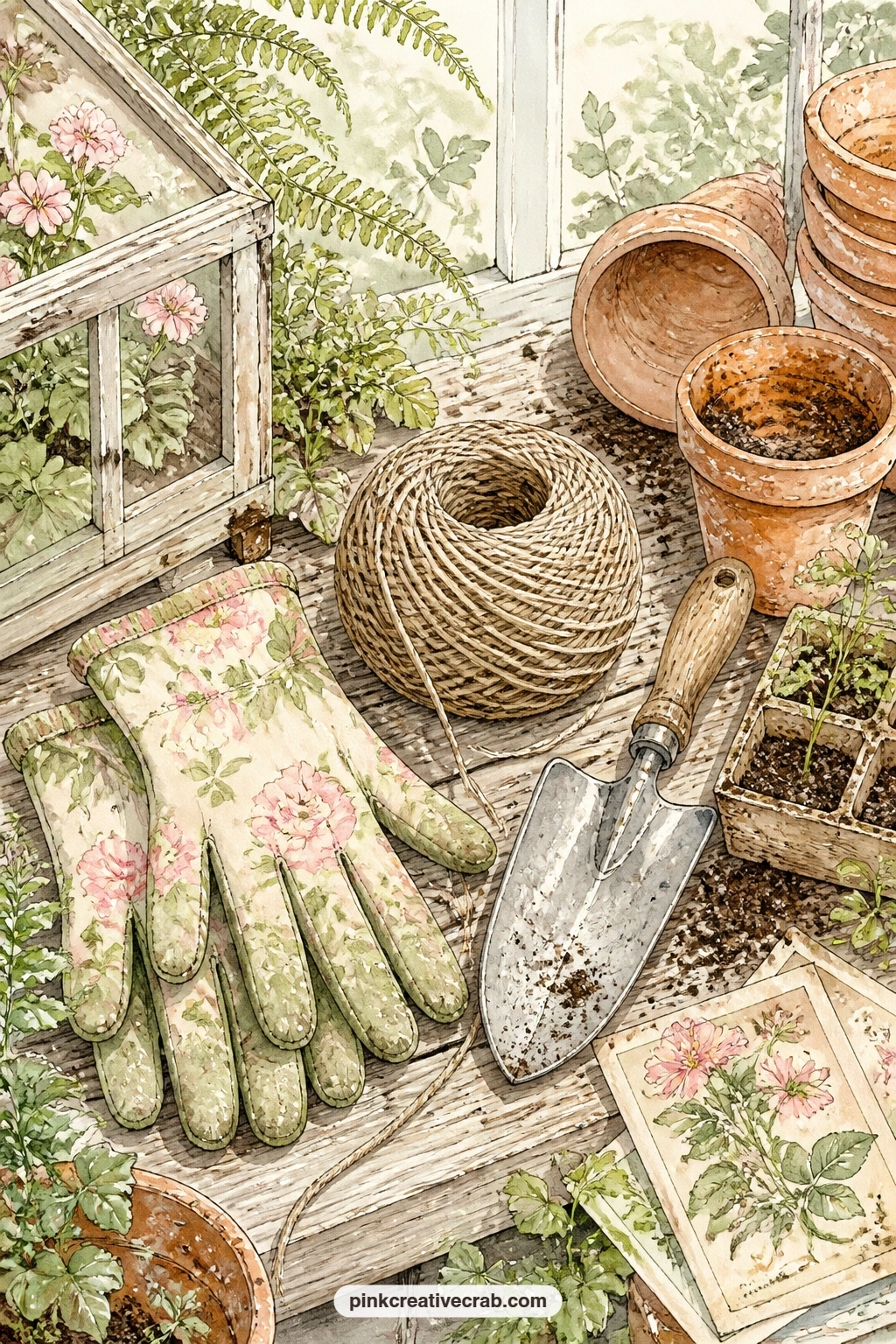
Five-minute version: if you are short on time, cut just the potting table section from this page and glue it straight onto a background sheet rather than mounting the whole page, and you still get the gloves, twine and trowel as a quick still life.
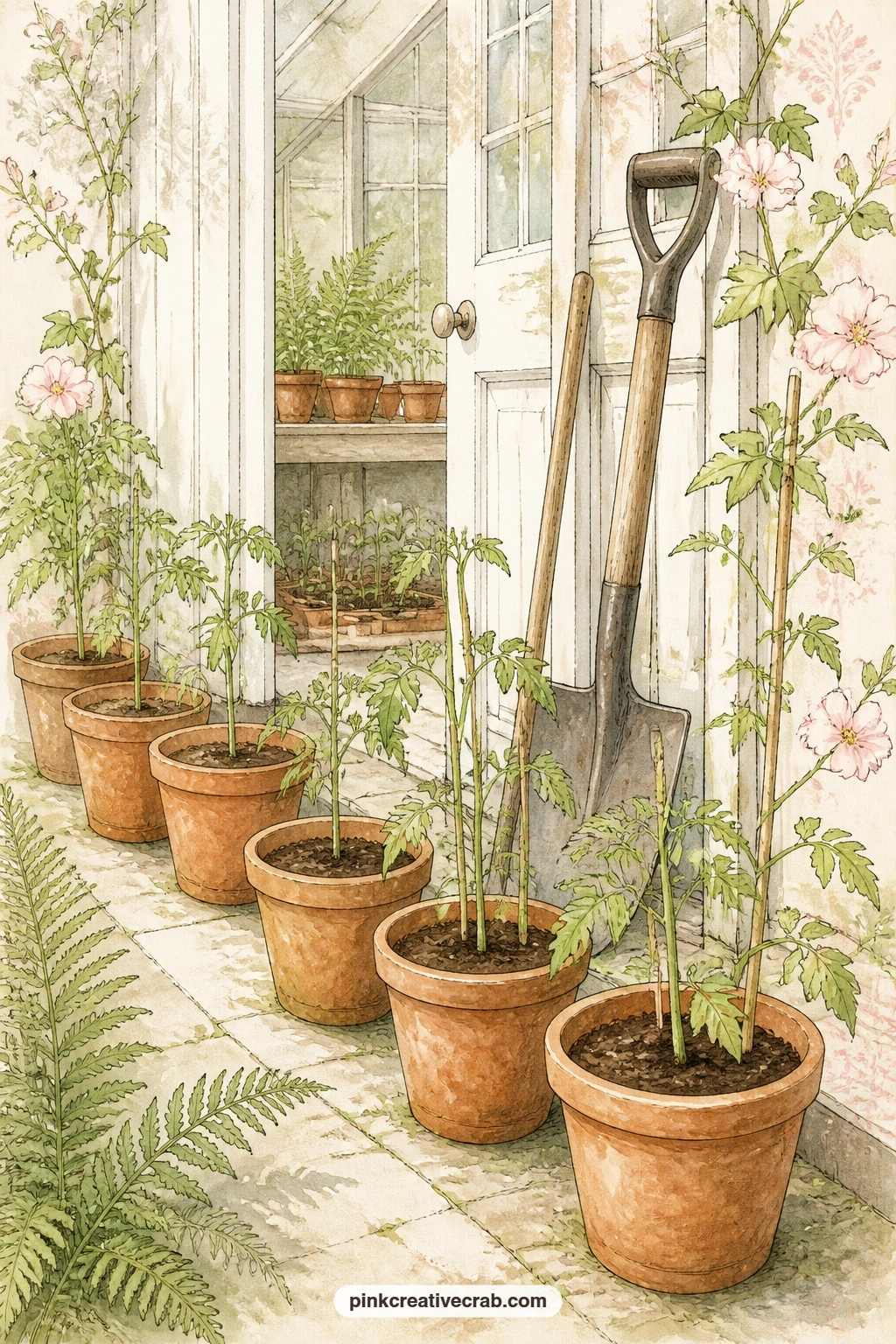
Tomato seedlings in clay pots lined up by a greenhouse door make a cheerful page for the start of the growing season, each pot a little different in height.
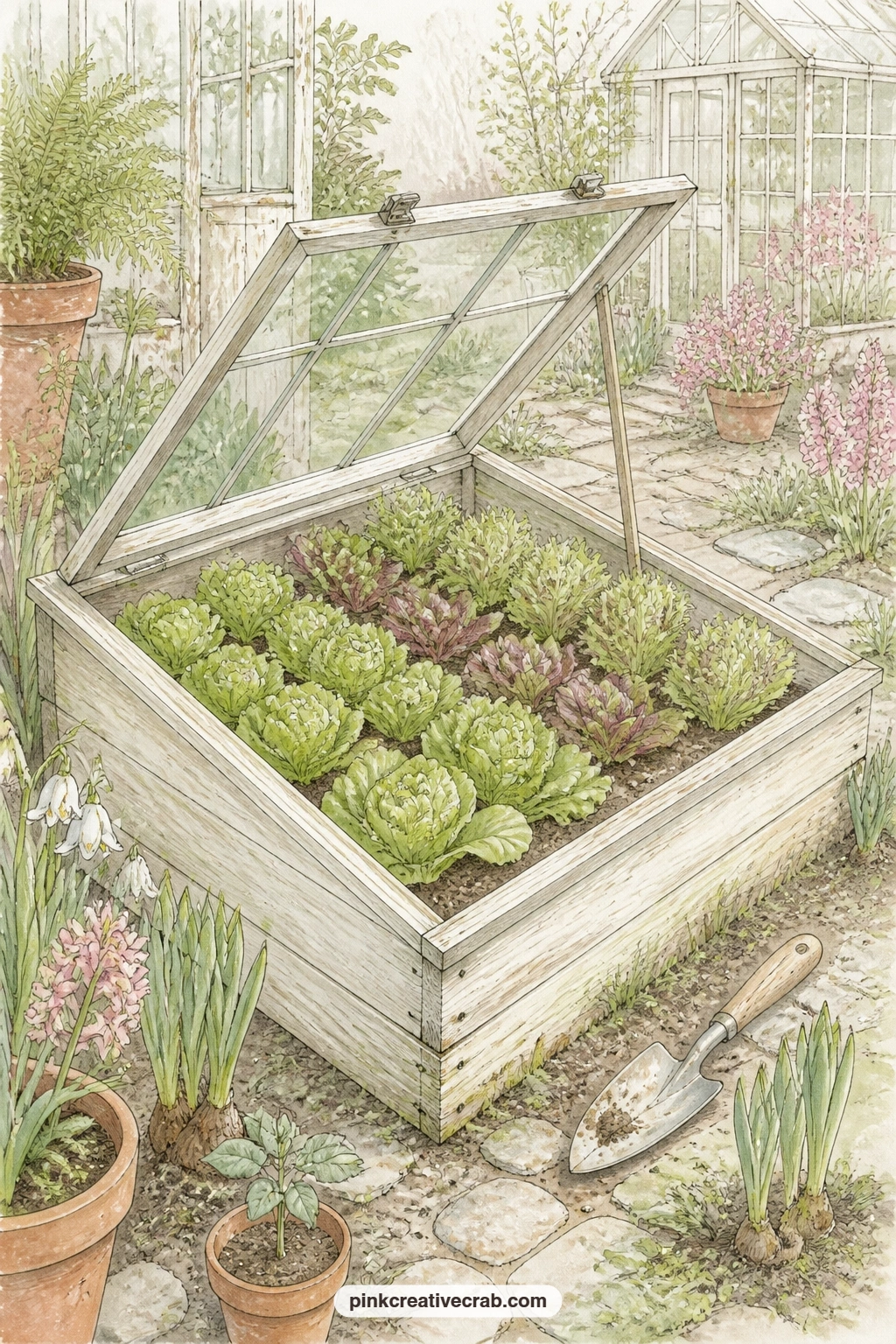
Place this page in a spread beside the tomato seedlings before it: the cold frame’s propped glass lid echoes the open greenhouse door, so the two pages read as one continuous bed of early spring planting.
Conservatory Corners
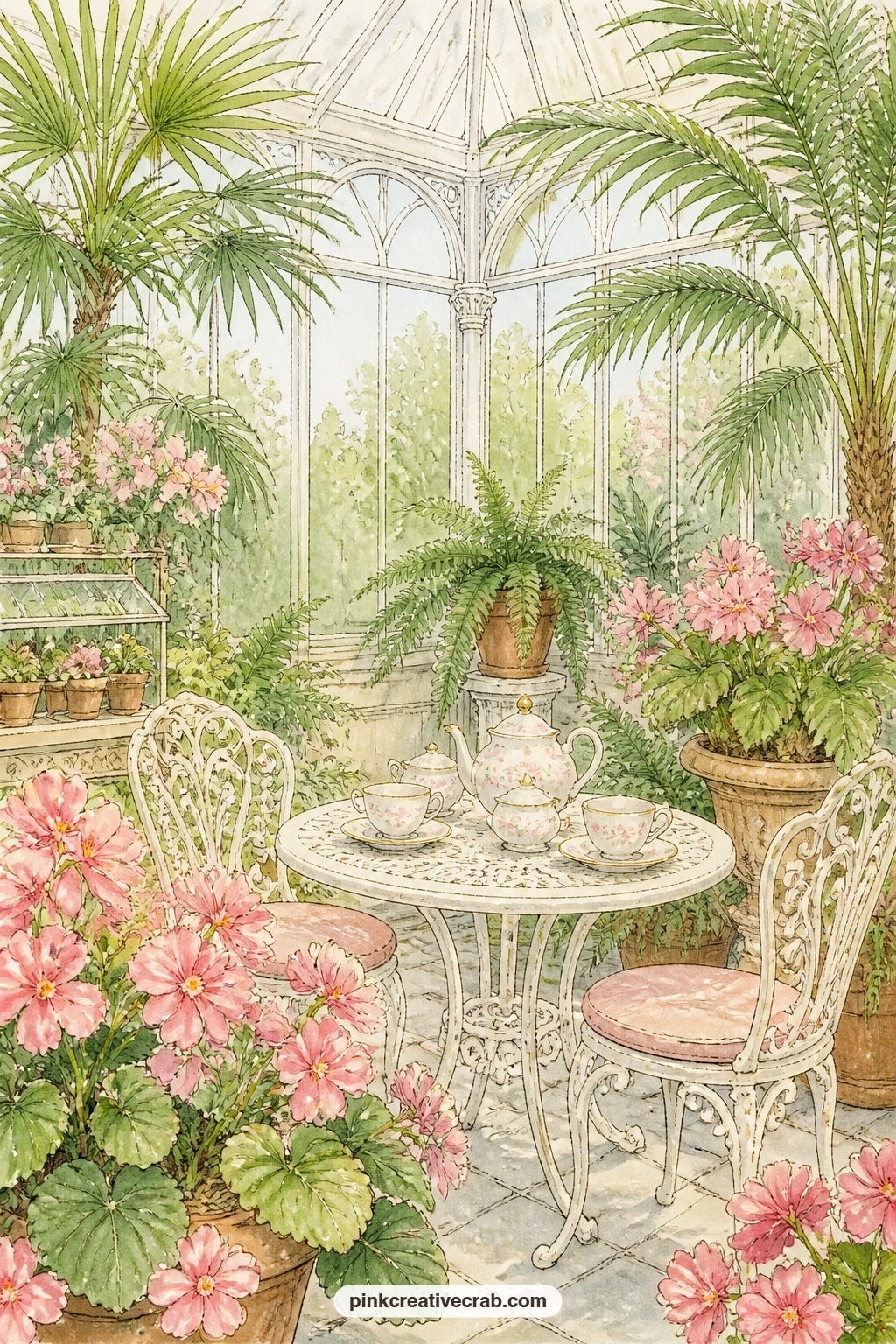
Write on it or tuck into it: a pressed begonia petal, a tea-stained napkin corner or a small handwritten menu card fit neatly beside the teacups on this conservatory table.
Palms and begonias crowd in around the table, giving the page the feel of a quiet afternoon spent somewhere green and warm.
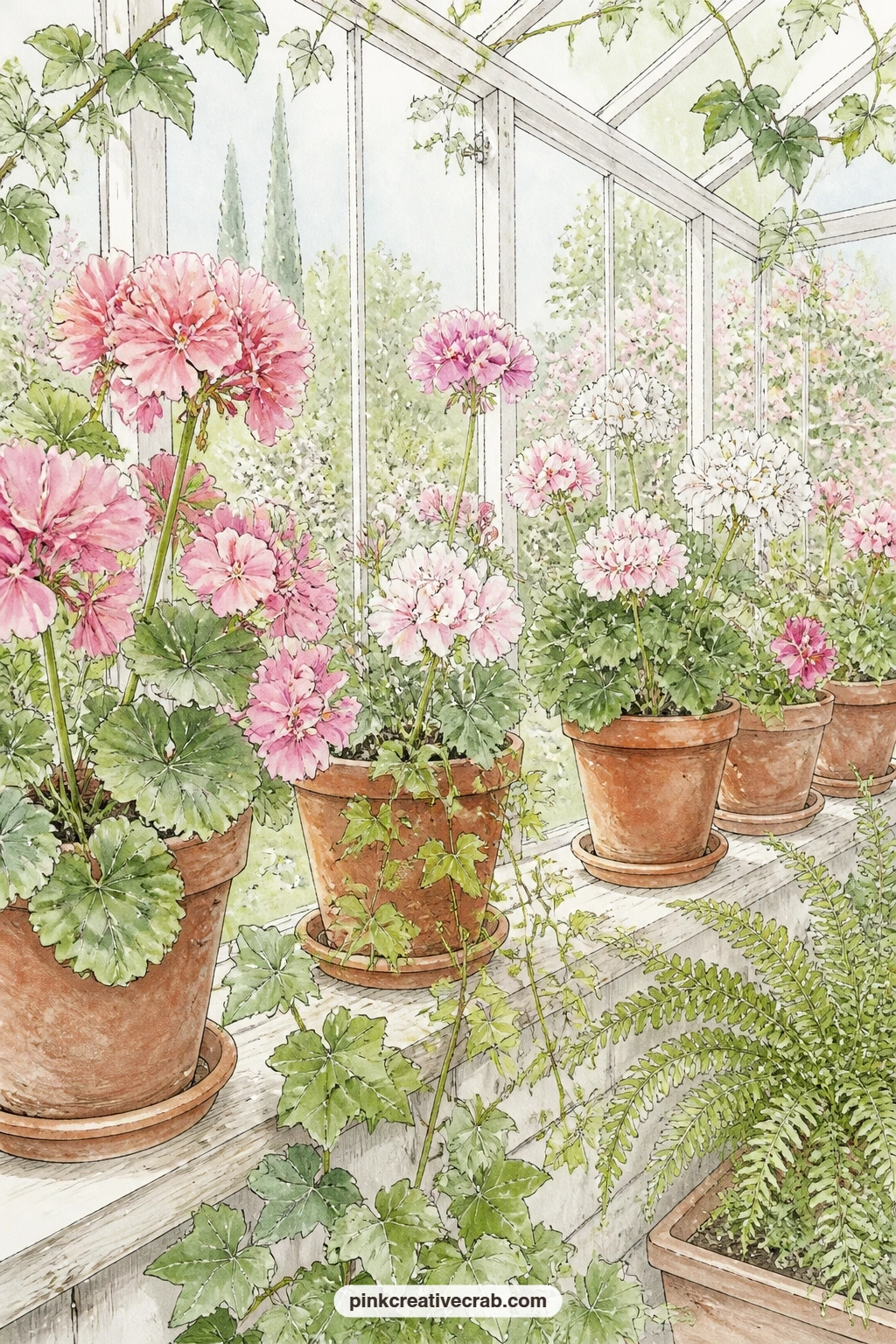
Pelargoniums in terracotta pots along a greenhouse windowsill, their blooms catching whatever light comes through the glass behind them, make a simple and useful page for any spread about flowering plants.
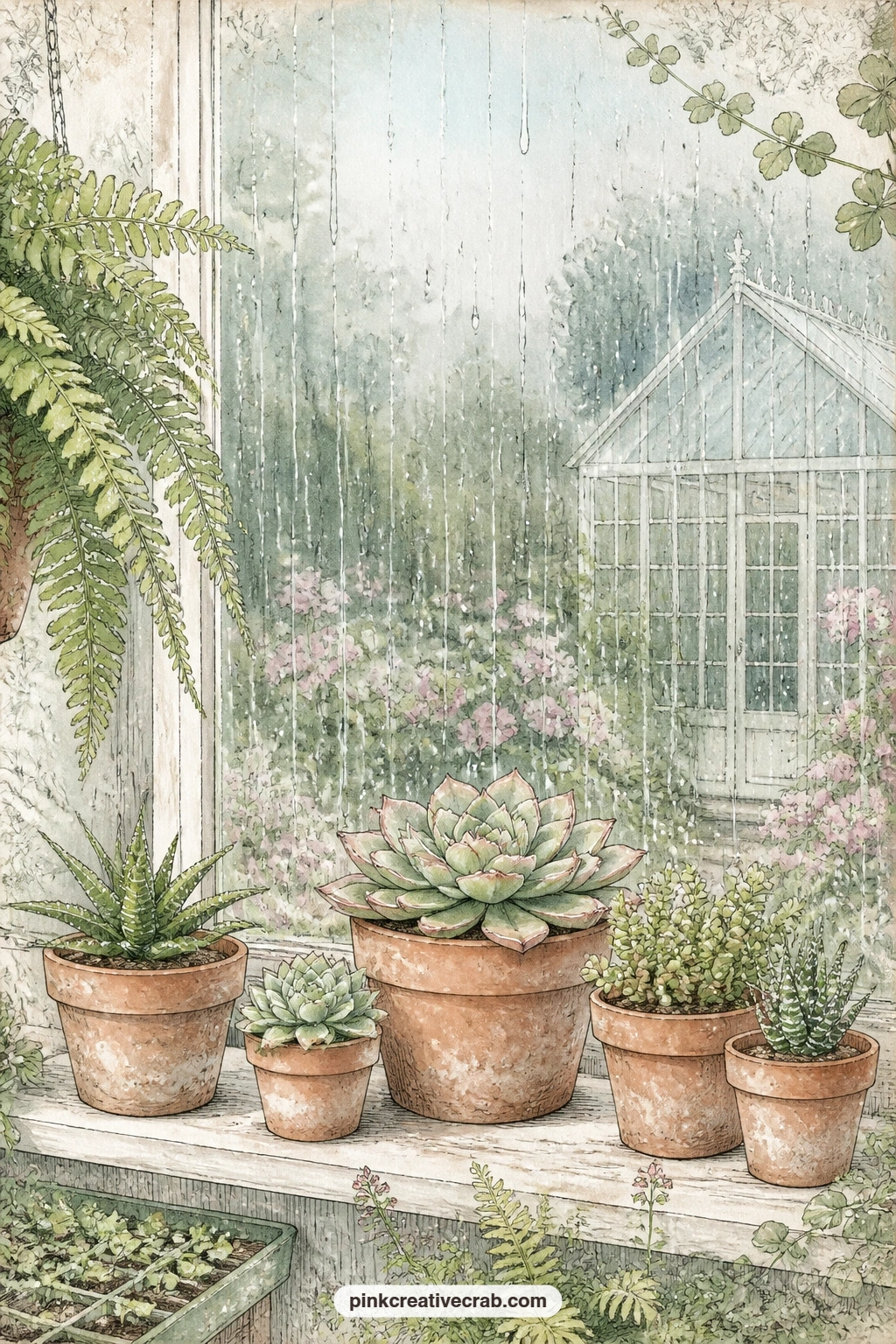
A question for the entry written here: what does the greenhouse sound like when rain runs down the glass and the succulents on the shelf inside sit dry and still.
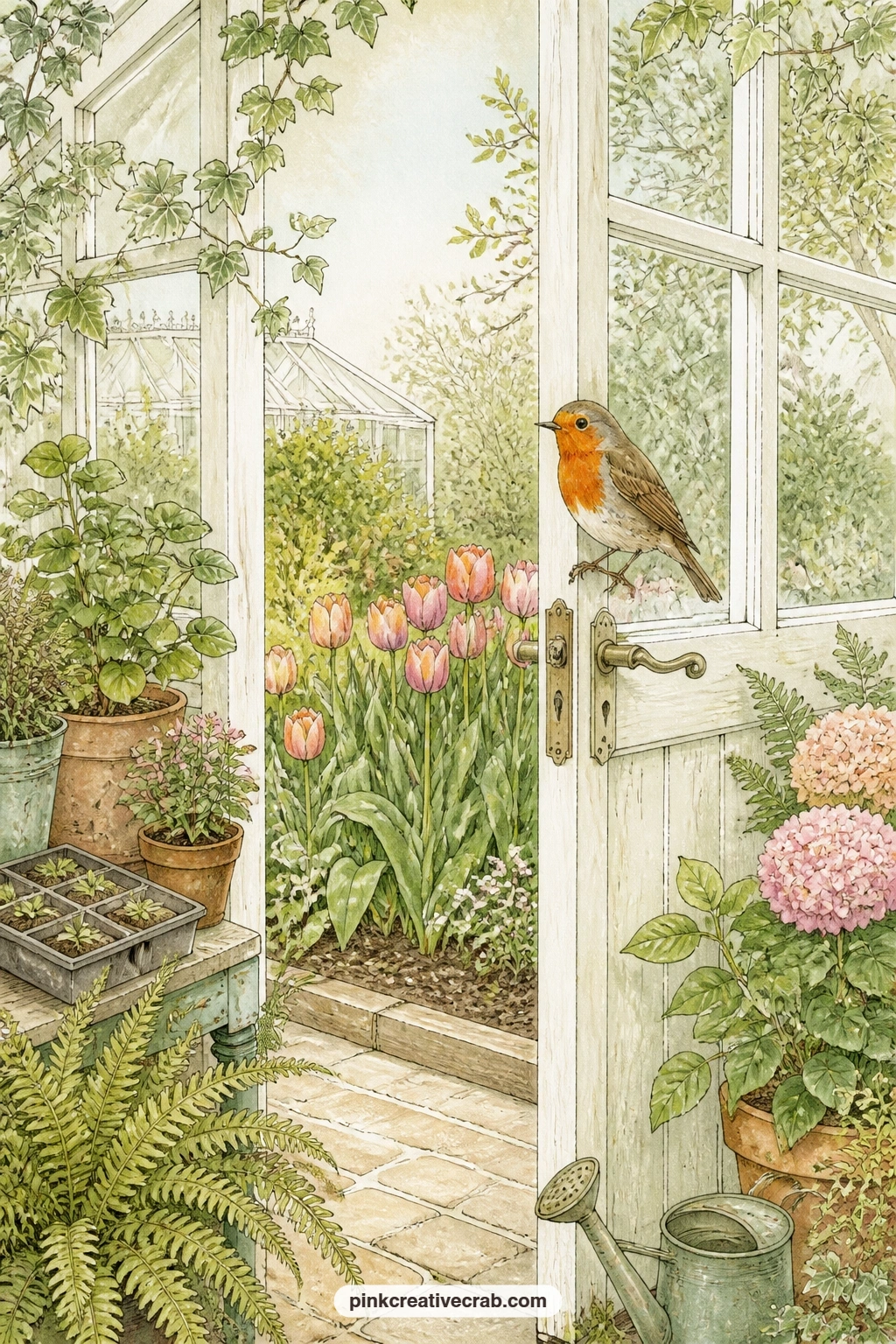
A robin perched on an open greenhouse door with spring tulips nearby is the kit’s second animal page, small and quiet against the white frame and the flowers below it.
Potting Table Pages
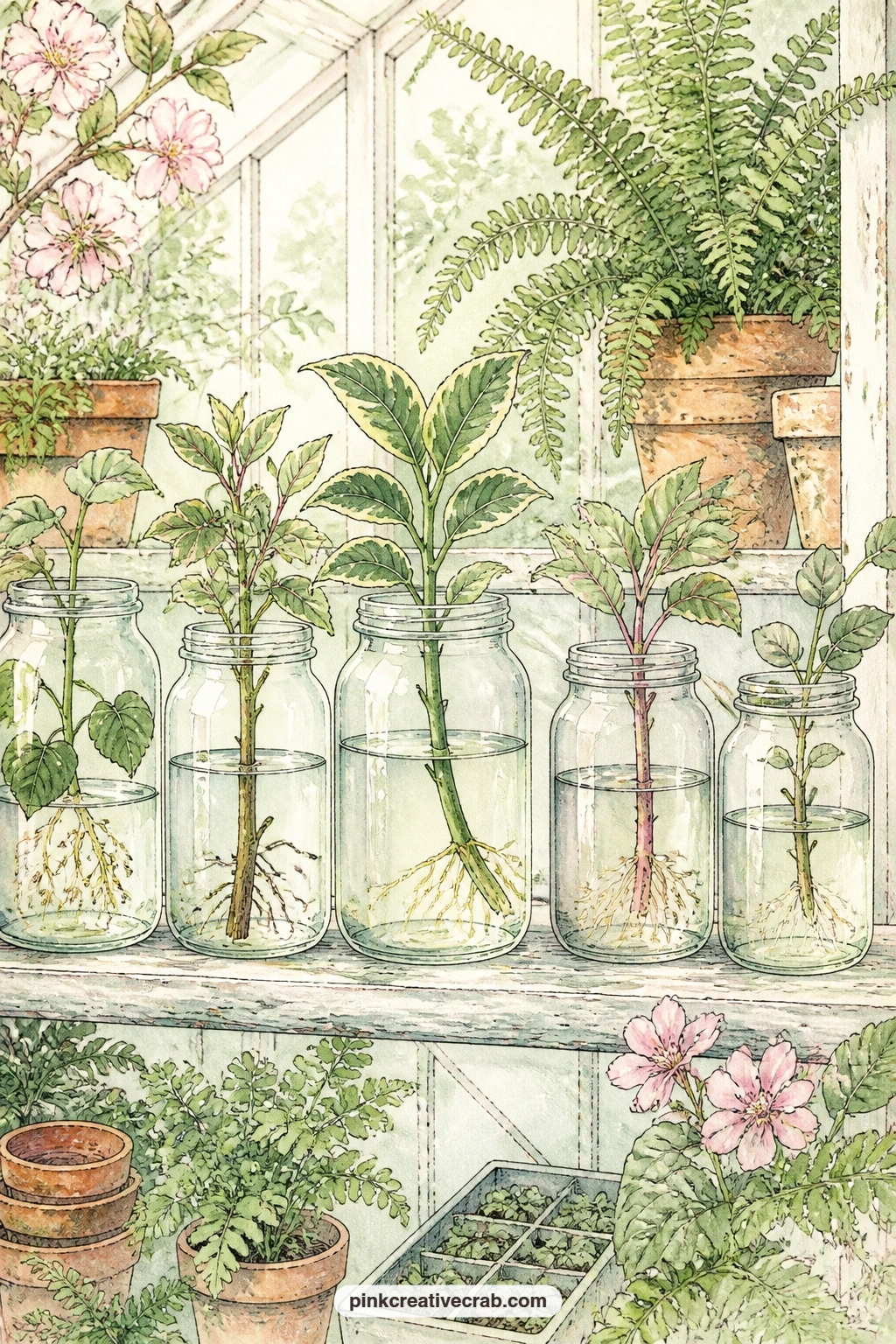
Pair this page with the cream fern background later in the set: slip a strip of that paper behind the jars as a backing card, and the terracotta tones in both pages sit well together.
Each jar holds a different cutting taking root, a good page for noting dates and which plants struck well from water alone.
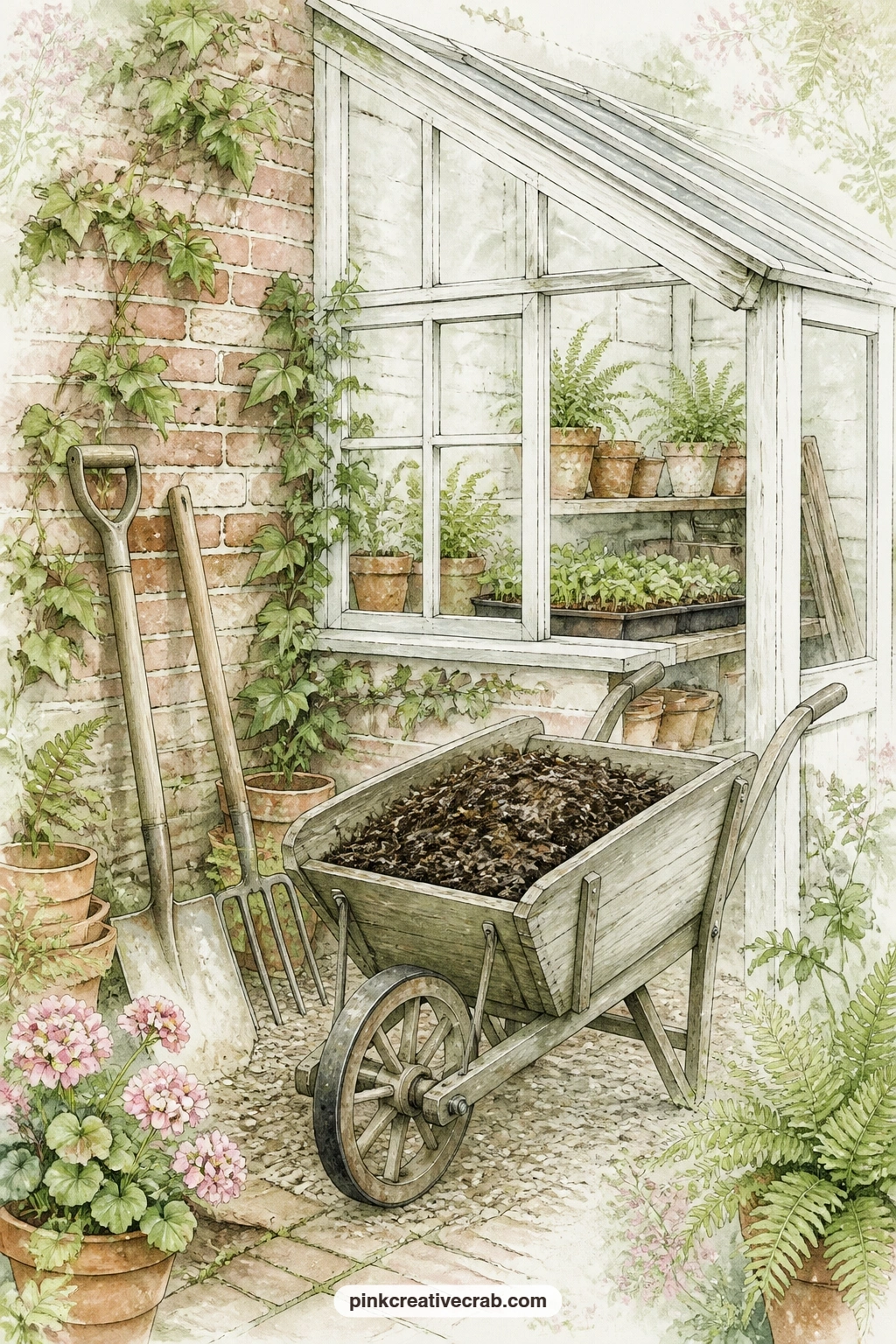
A wheelbarrow of dark compost stands beside a lean-to greenhouse built against an old brick wall, the brick giving the page a warmer tone than the glass pages around it.
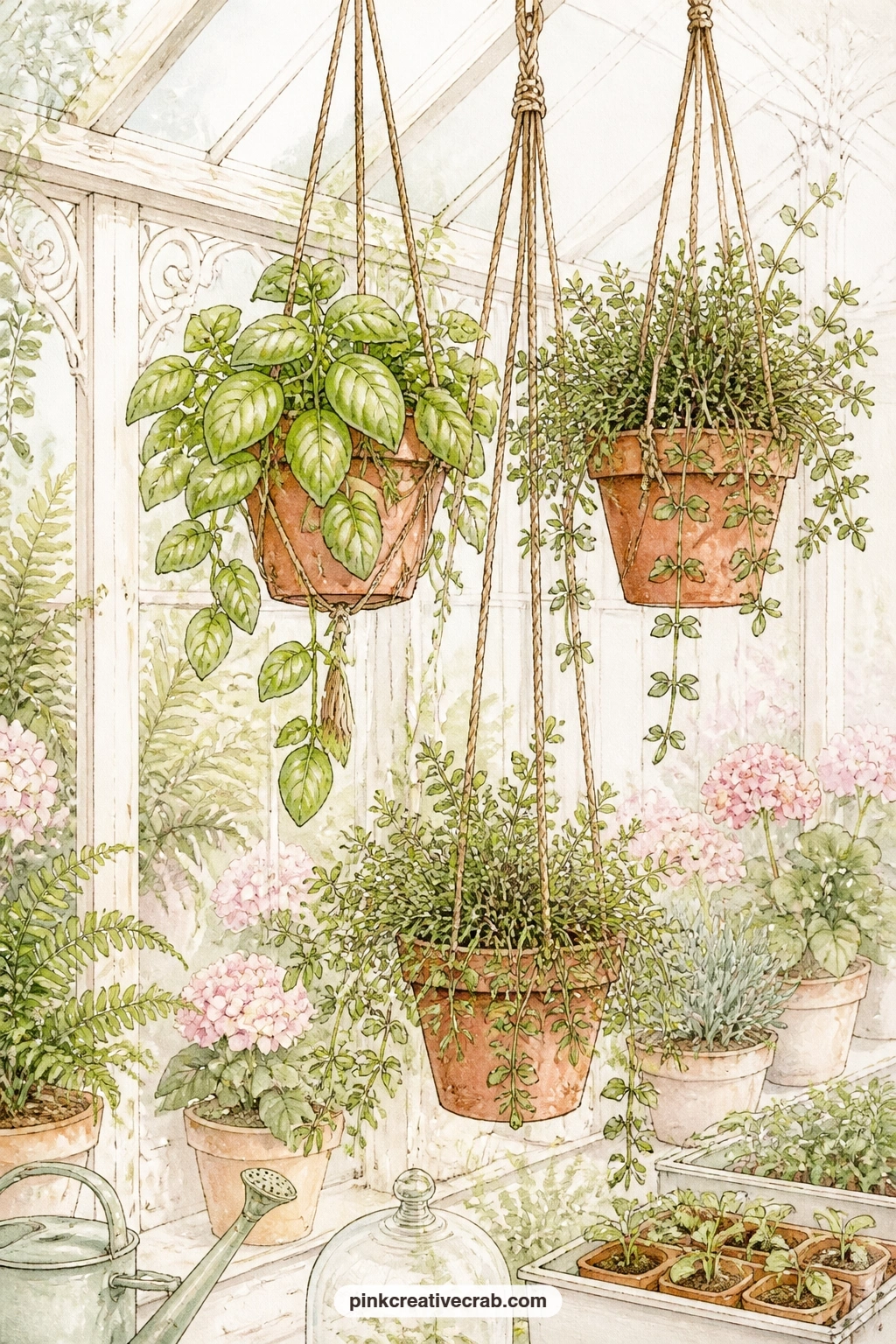
The usual mistake with herb pages is making every pot identical: give the basil broader leaves and the thyme a finer, trailing habit, and hang the pots at slightly different heights so the greenhouse shelf feels natural rather than arranged.
A few sprigs can hang loose below the pots too, as if ready for cutting into the kitchen.
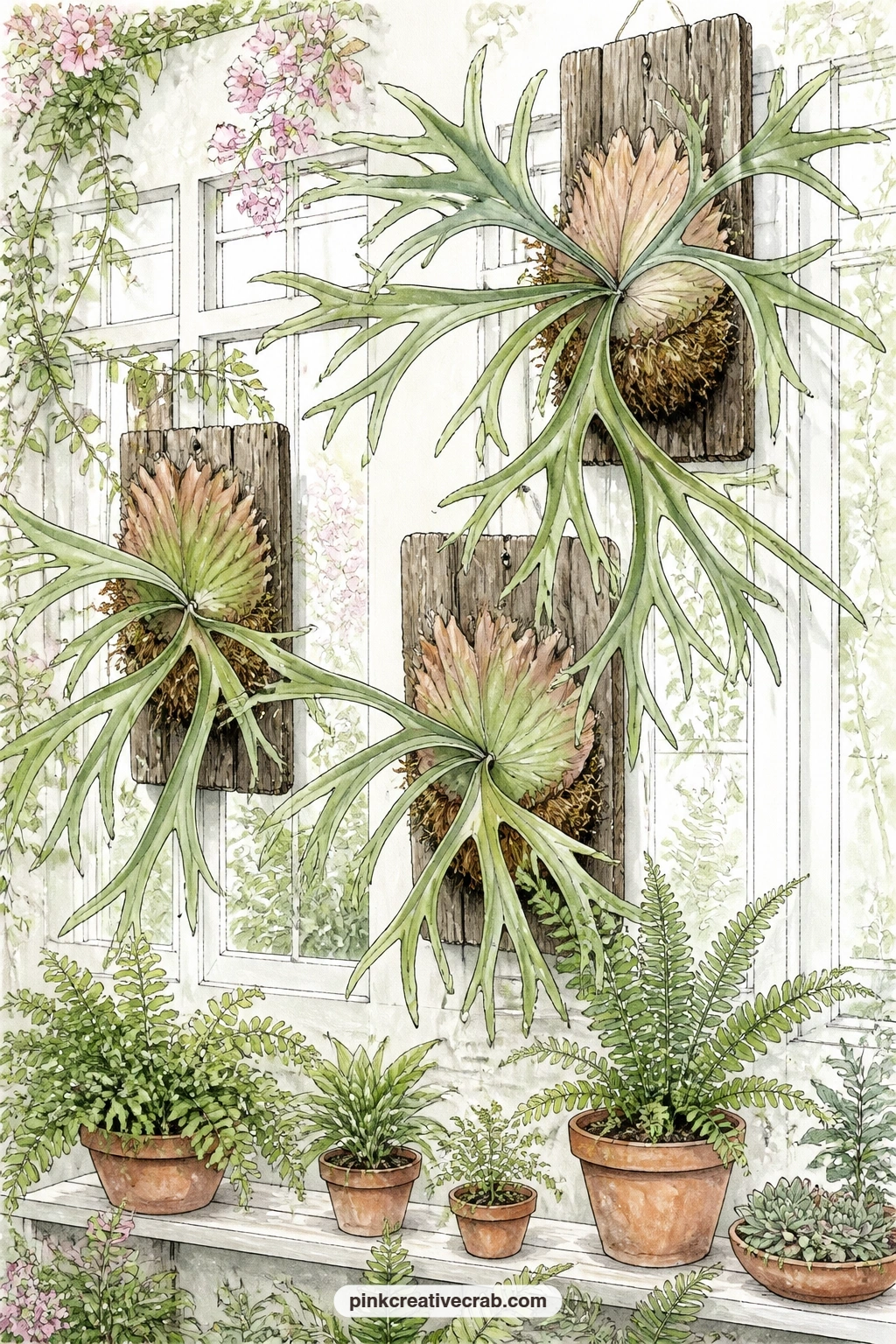
Staghorn ferns mounted on wooden boards along a greenhouse wall give the page an unusual, almost architectural shape, their antler-like fronds spreading out against the white frame behind them.
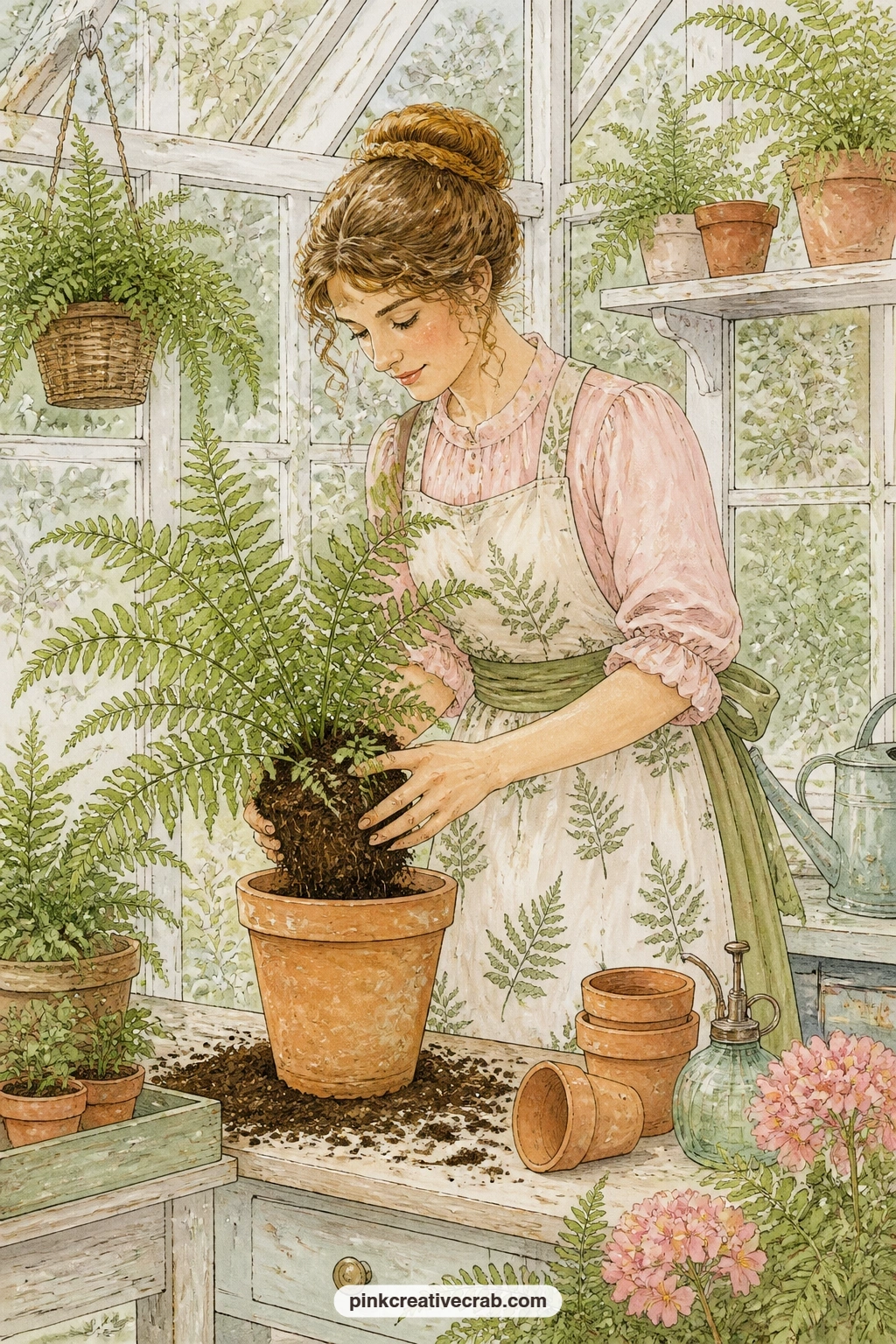
Garden Hands
Place this page beside the hanging ferns page earlier in the set: the two share the same green, ferny mood, and together they make a strong two-page spread about greenhouse foliage.
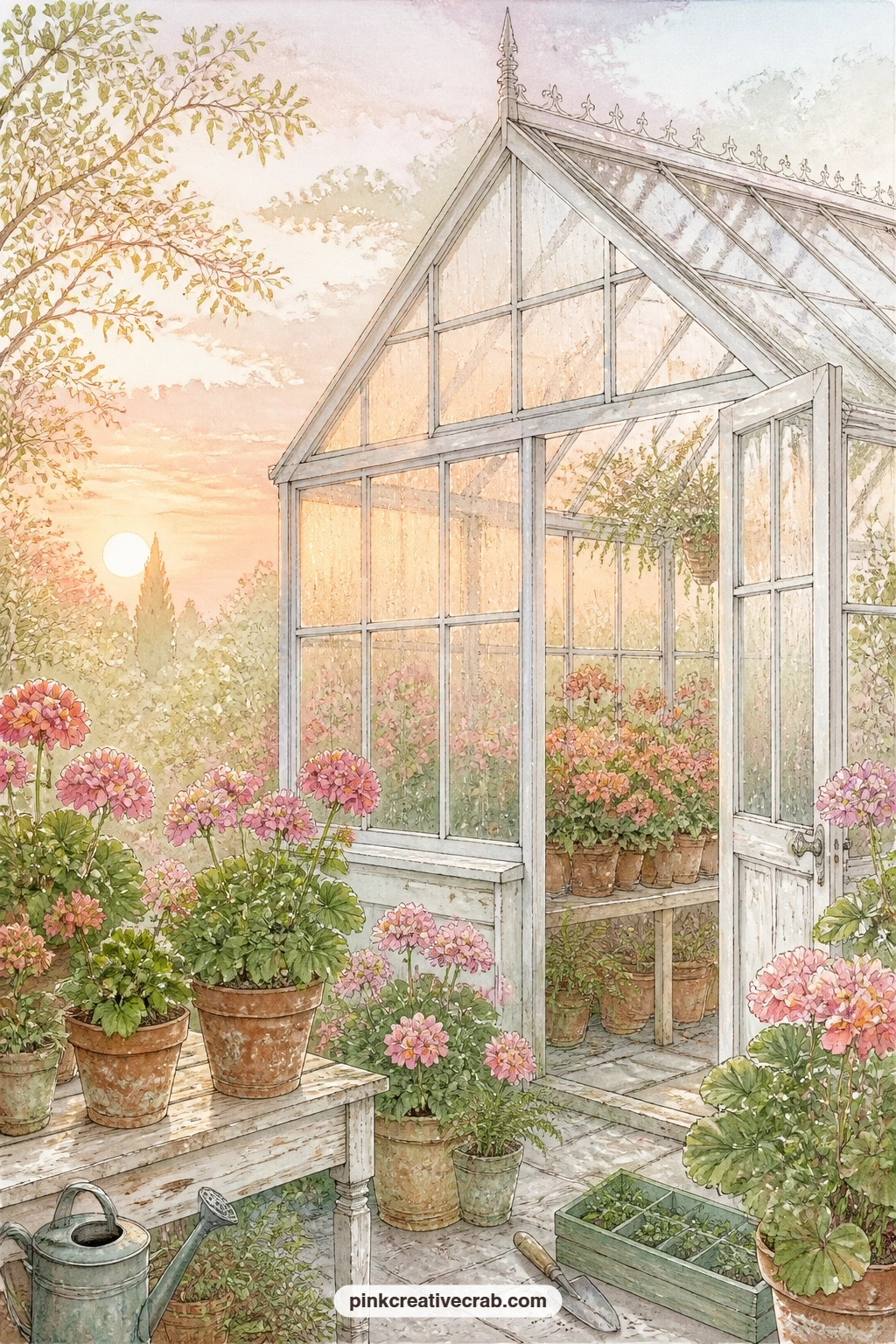
Greenhouse panes fogged with morning mist and a row of geraniums glowing faintly inside make a quiet closing scene, the light just beginning to warm the glass from outside.
Background Papers
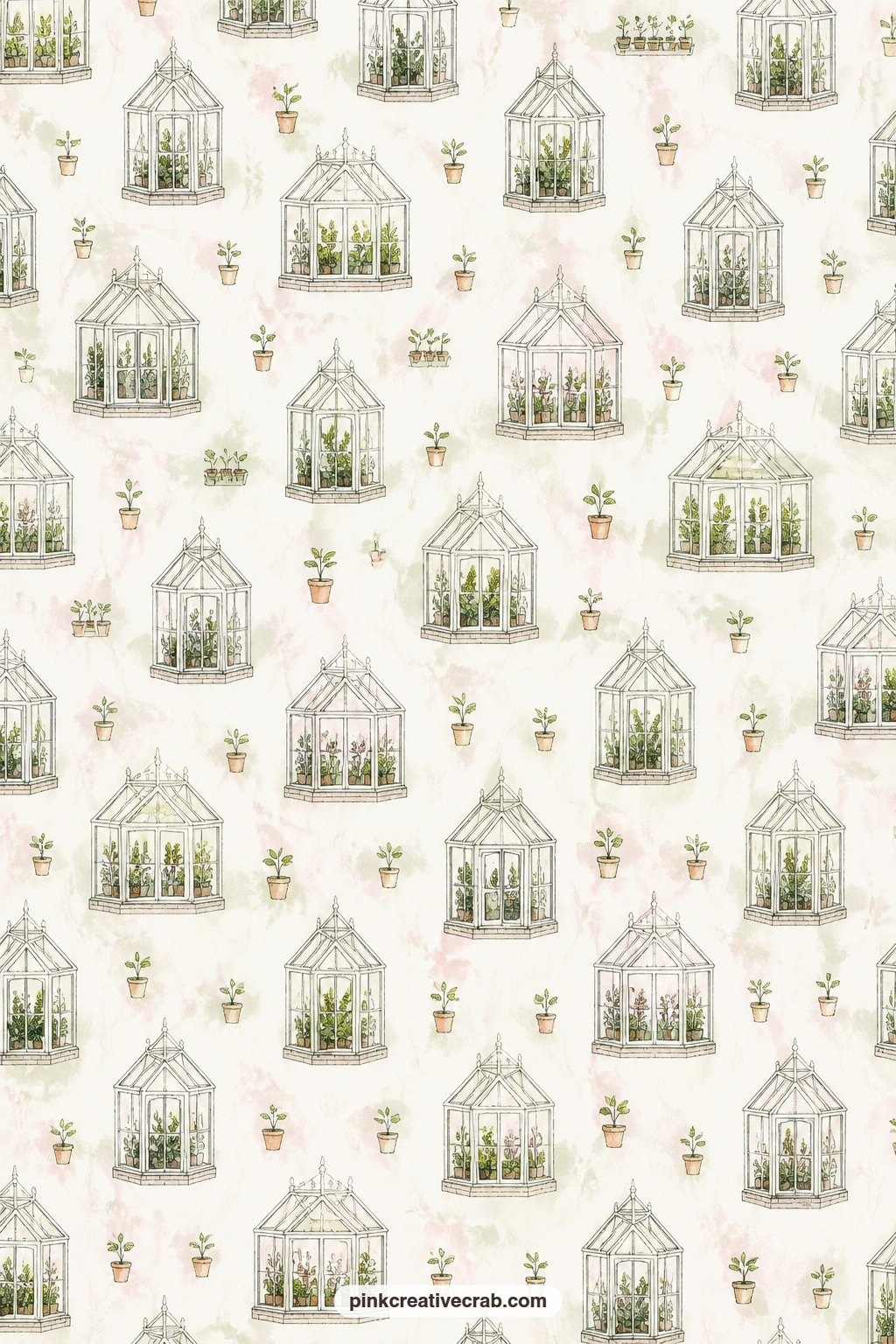
Small greenhouses and seedlings repeat across this mint paper, handy as a pocket lining, a cover for your journal, or a backing sheet behind any of the lighter scene pages.
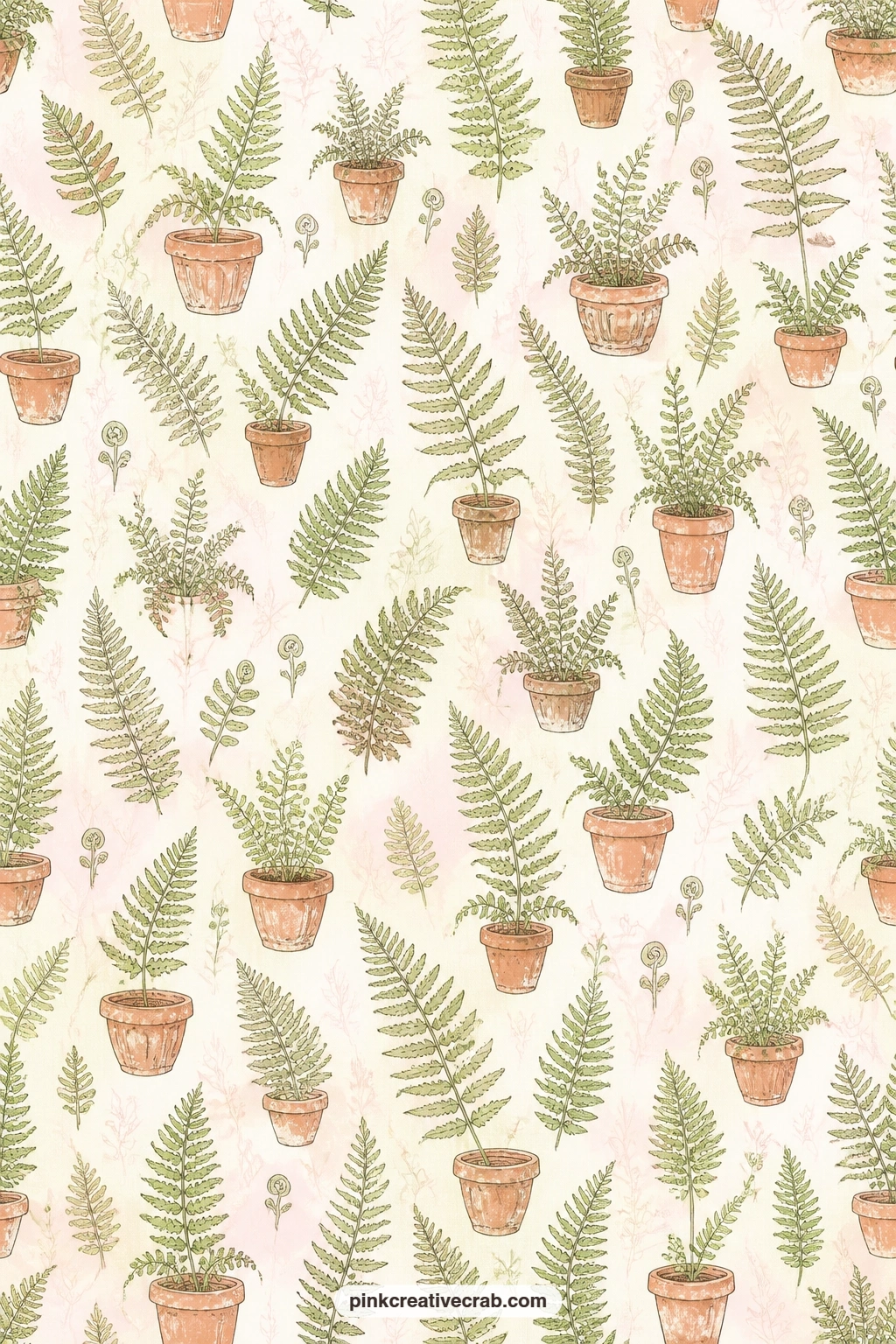
Fern fronds and small terracotta pots scatter across this cream background, good under a photo of your own garden, as a pocket lining, or folded into a simple cover wrap.
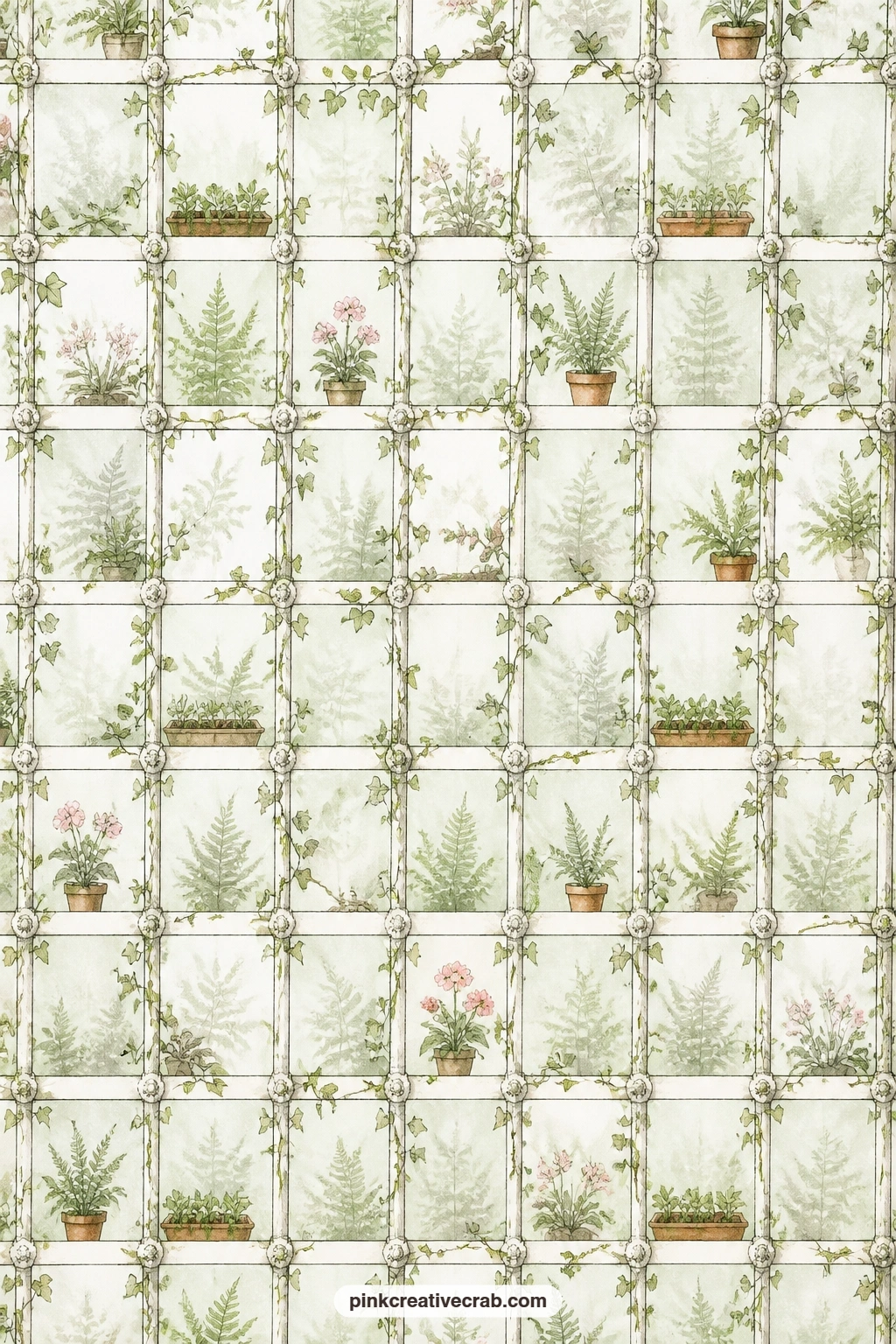
A grid of greenhouse window panes threaded with ivy covers this sage paper, well suited to a journal cover, a divider page, or the lining behind a pocket of pressed leaves.
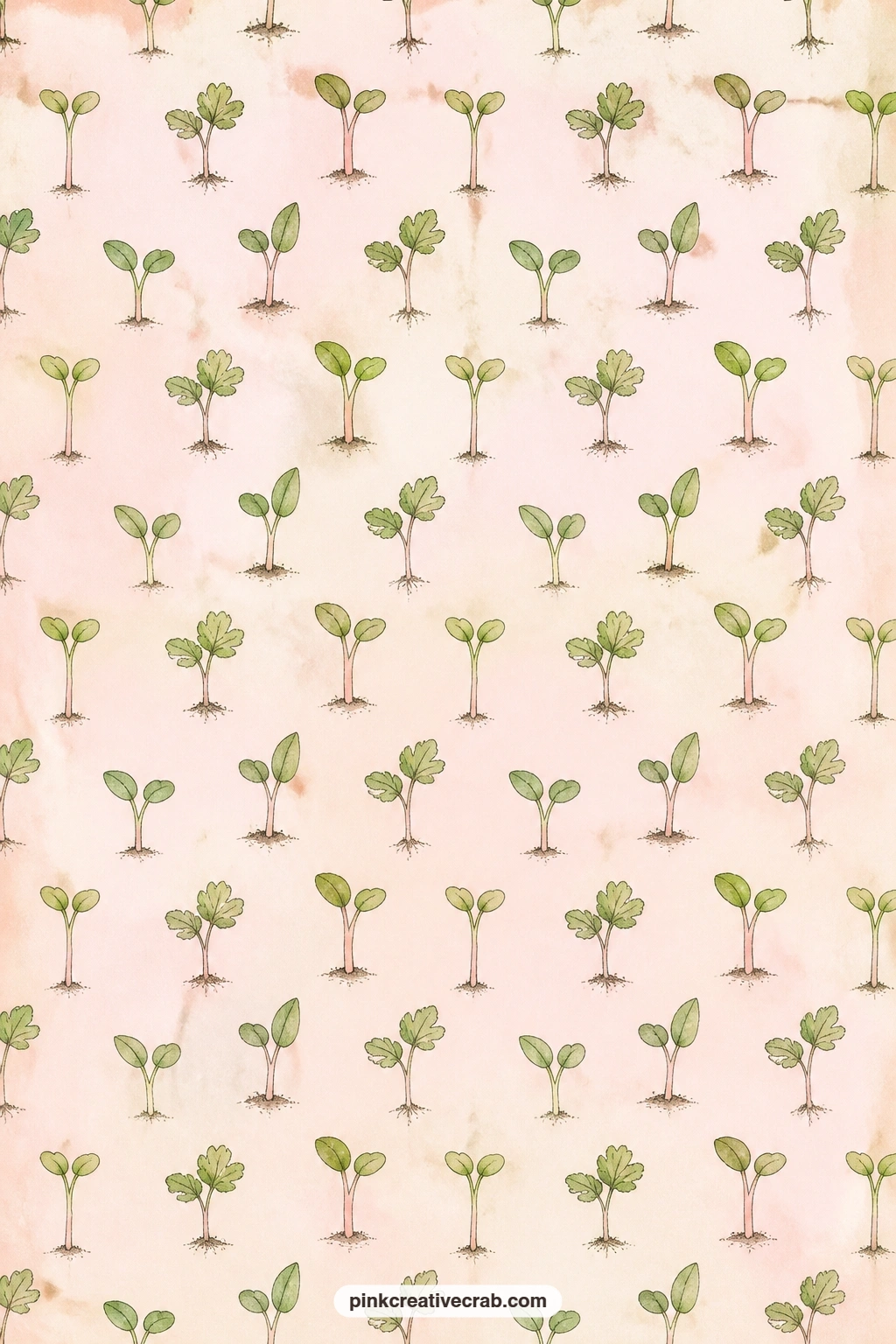
Little seedling sprouts repeat in loose rows across this soft peach paper, suited to a pocket lining, a cover for a seed-saving section, or backing for a lighter scene page.
Lined Writing Pages
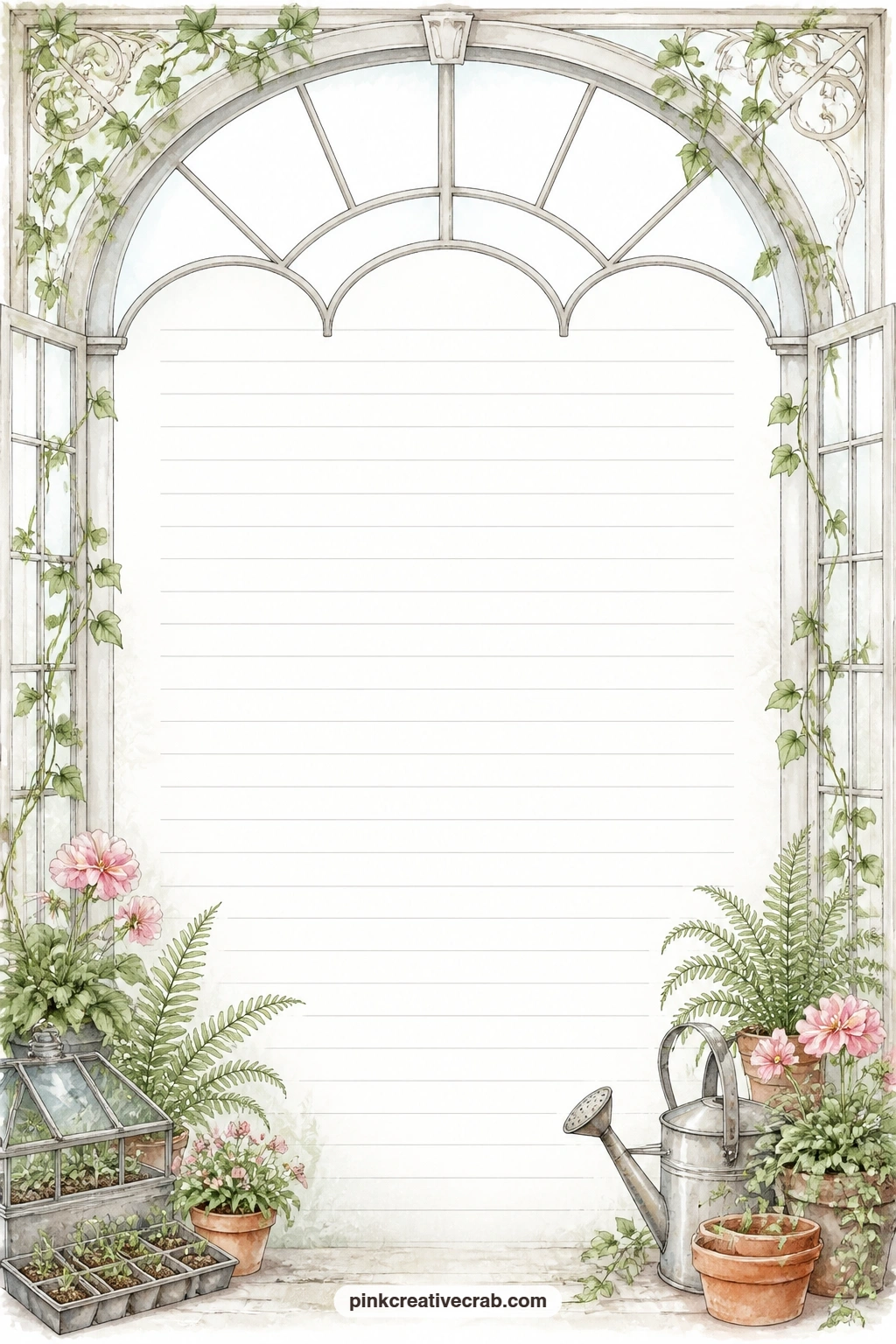
A greenhouse arched window frame borders this lined page, leaving the ruled lines free for a gift list of seeds and bulbs to buy, a short letter to next year’s garden, or notes on what bloomed first.
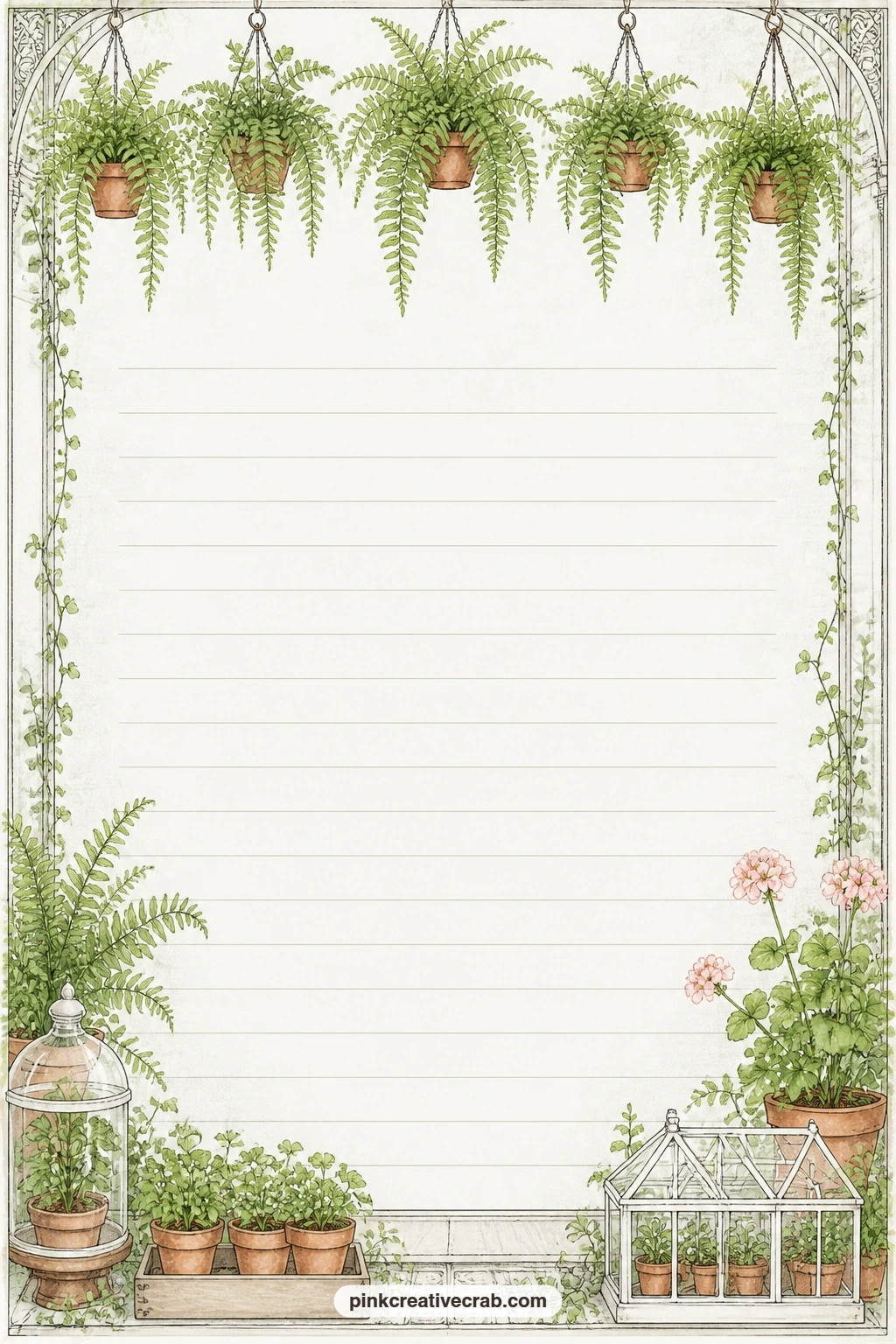
Hanging ferns trail along the top border of this lined page, a good spot for a watering schedule, a short description of today’s greenhouse weather, or a simple menu for a garden tea.
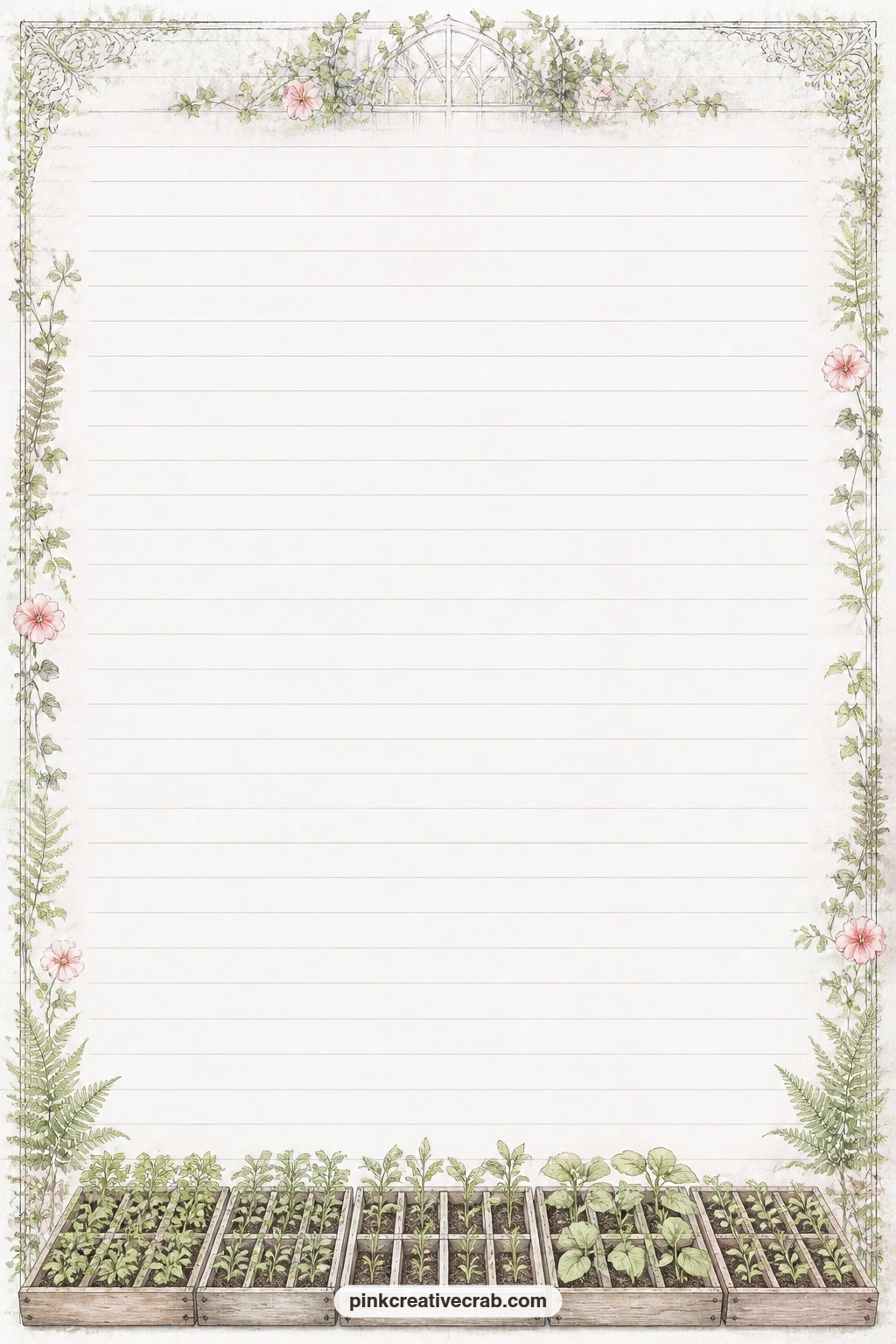
A row of seedling trays runs along the bottom border of this lined page, leaving room above for a planting list, a note on germination dates, or a letter to next year’s self about this year’s garden.
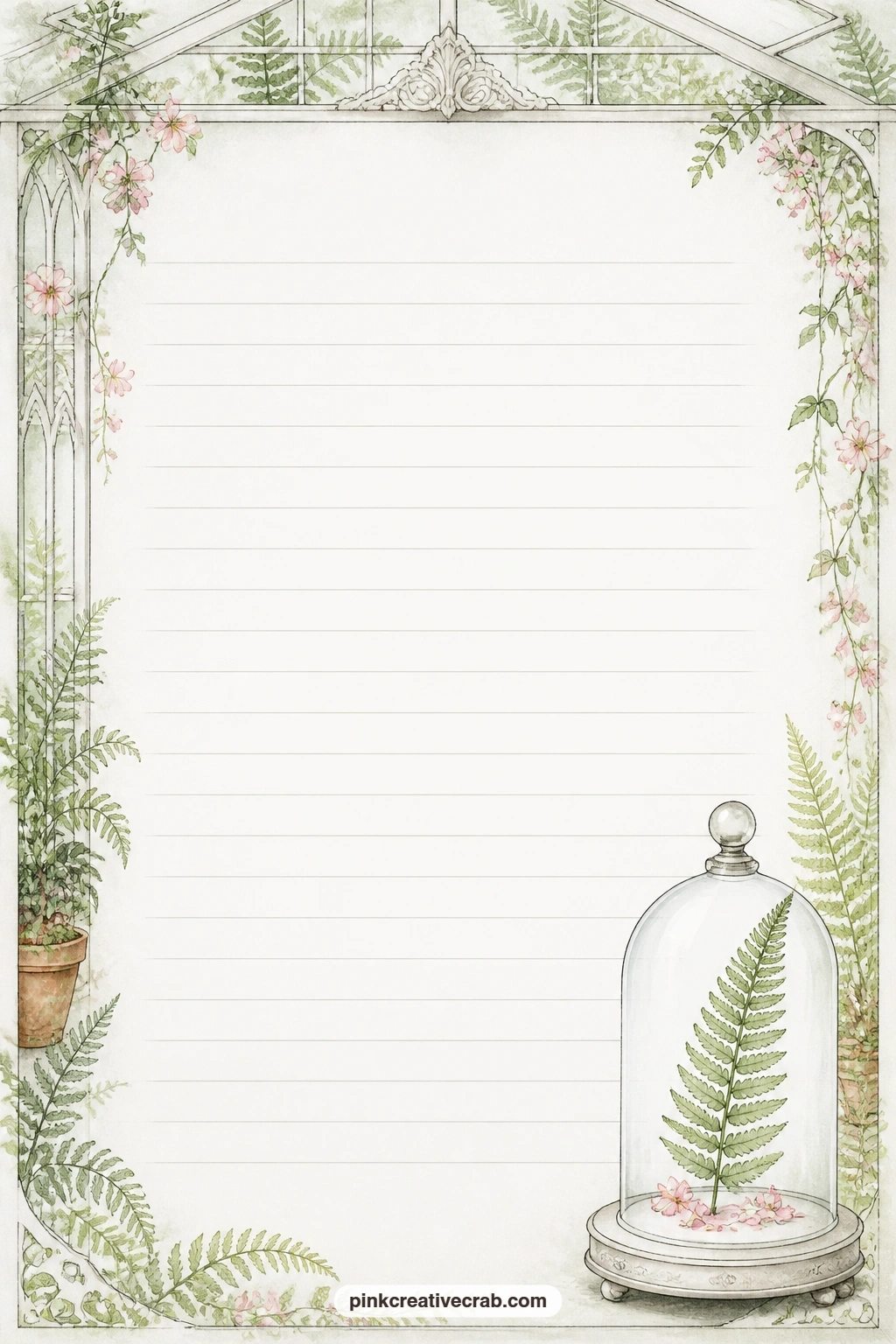
A small glass cloche and a fern frond sit tucked into one corner of this lined page, leaving the rest open for a gift list, a favourite recipe grown in the greenhouse, or a quick sketch note.
What to Do Next
Print the pages, trim them to your journal size, and start with the Victorian glasshouse scene as your opening spread before working through the ferns, pots and seedling trays behind it. For more garden-themed pages to mix in, the Peter Rabbit junk journal set and the dragonfly junk journal pages both pair well with this kit.
Frequently Asked Questions
What paper works best for a greenhouse junk journal kit?
Matte cardstock around 65 to 110 lb holds the ink well and takes glue without buckling or curling. Thinner paper works too if you plan to tea-stain or fold pages, since it takes those treatments more easily than heavy card.
What printer settings give the best results?
Set your printer to its highest quality or photo setting on matte or cardstock mode. This keeps the fine ink outlines crisp and stops the light watercolour washes from printing patchy or streaked.
What size should I print these pages?
Standard US Letter or A4 suits most journals and binds easily. For a pocket-sized journal, scale the pages down to about half size when you print, or trim them after printing to fit smaller covers.
What should I use to glue and trim the pages?
An acid-free glue stick keeps pages flat without wrinkling, and small precision scissors give cleaner edges than a craft knife for curved borders like the arched window frame page.
Can I color or add to these pages by hand?
Yes, fine tip pens work well for adding journaling dates, small notes or extra detail along the painted borders. Colored pencils can deepen shadows on the terracotta pots or greenhouse frames if you want more depth.
Have any thoughts?
Share your reaction or leave a quick response — we’d love to hear what you think!
-
 0
-
0
-
0
-
0
-
0
-
0


