Donut drawing is the kind of project that turns a spare hour into something you want to pin straight away: sweet, a little bit silly, and never short on charm. Every page below sets a donut inside a small scene, a coffee cup, a shop window, a sleepy pet, so you get a finished picture with a story in it, not just a shape floating on paper.
Work through these in order and you will move from a single glazed donut to fuller scenes with people, pets and striped tablecloths, all built the same easy way with flat gouache shapes and crisp edges. Scroll on, pick the one that is calling to you, and get your brush out.
Using these images: free for personal projects such as printing, coloring, cards, journals and gifts. Handmade items that include them may be sold up to 30 pieces per design. More than that is commercial use and is not permitted, and neither is selling or sharing the images themselves or passing them off as your own. Please ask before any other use.
Start the whole set with the one everyone pictures first: a pink glazed donut with sprinkles, painted big and centered so it fills the page like a logo. Pencil a simple ring first, two circles, one inside the other, before any paint touches the board, because a wobbly donut hole is the fastest way to lose the shape.
Block in the dough color first in a warm tan, let it dry fully, then lay the pink glaze on top in one confident flat layer so the edge stays crisp against the cream background. Drop the sprinkles last with the tip of a small round brush, little dashes of butter yellow, cherry red and white, turning the brush slightly on each one so they do not all point the same way.
If the glaze drip looks too neat, dab a few uneven blobs along the bottom edge before it dries, that is what makes glaze read as glaze. Swap the pink for a plain white glaze if that is what is in your paint box, the sprinkles still do all the work.
Keep your sprinkle colors to three at most so the donut stays graphic instead of busy.
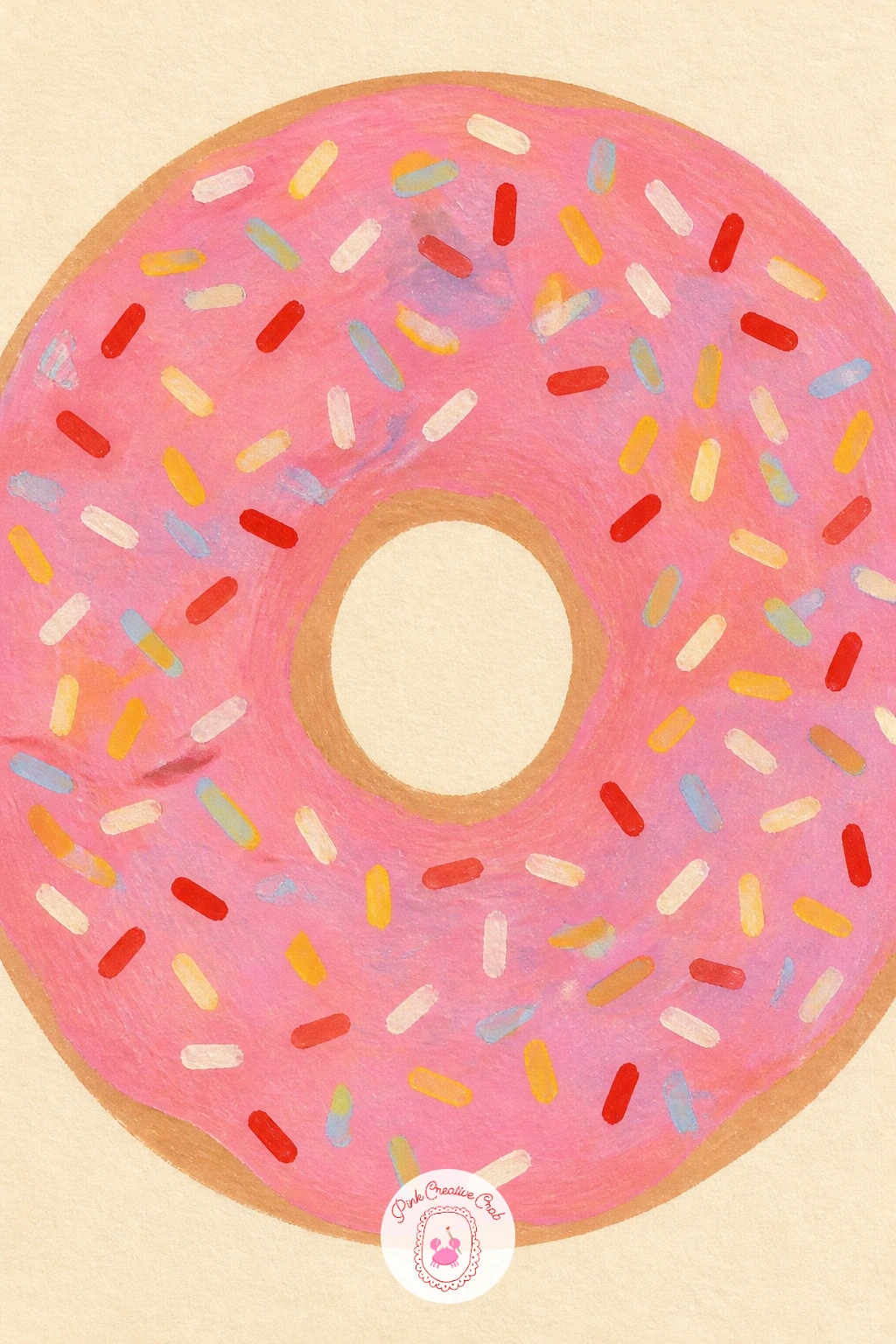
Palette: Rose Pink,Warm Tan,Cherry Red,Butter Yellow
Once one donut feels easy, try a box of a dozen donuts opened flat on the page, a grid of little rounds that lets you repeat shapes without repeating yourself. Lightly pencil a rectangle for the box lid standing open behind the rows, then a simple grid of twelve circles inside it, keeping every circle the same size with a coin or a cap as your template.
Paint the box itself first in a flat cardboard tan or soft white, then work donut by donut, varying the glaze color across pink, chocolate, lemon and plain sugar so the grid reads as a real assortment rather than twelve copies. Add sprinkles and drizzle only on three or four of them, that restraint is what keeps the whole box from turning into visual noise.
If the grid drifts out of line, fix it fast by painting a thin cream border between rows to disguise the gap. No donut cutter on hand? Trace a bottle cap or a spool of thread instead.
Vary this one next time by closing the box lid halfway so only six donuts peek out.
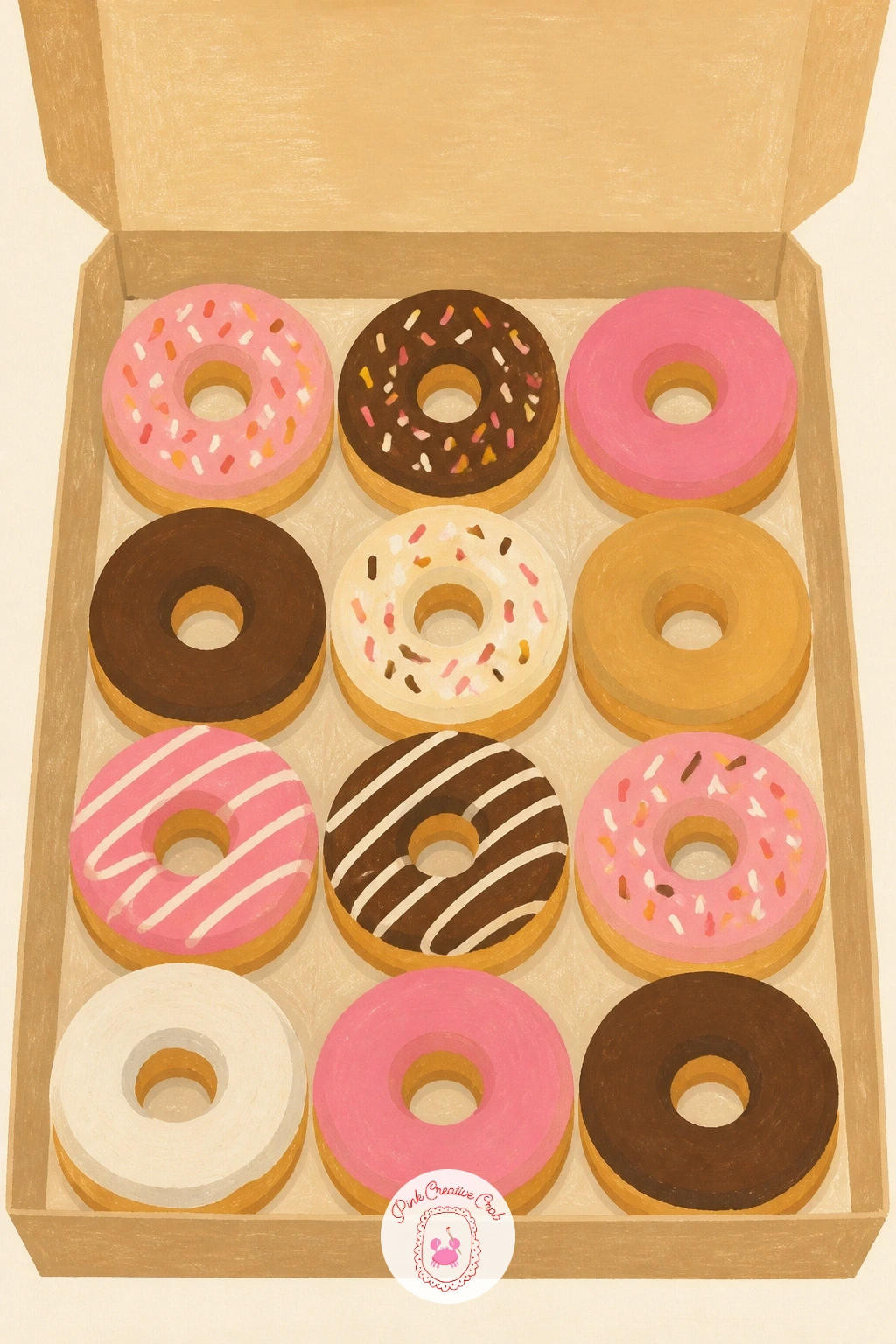
Palette: Cardboard Tan,Chocolate Brown,Rose Pink,Soft Cream
Bring in a whole setting with a donut shop counter, glass case up front, rows of donuts lined up behind it, maybe a little bell or a sign on the wall. Sketch the counter as a simple rectangle in one point perspective, the front edge nearest you drawn widest, everything behind it getting slightly smaller, which is the one trick that keeps a counter from looking flat and wrong.
Paint the counter and back wall first in two flat blocks of color, then the glass case as a pale, almost transparent rectangle over the donut rows so you can still see their shapes through it. Finish with a cherry red accent somewhere small, a sign, an awning edge, a cup, to pull the whole scene together.
If the perspective still looks off once it is painted, a thin dark line along the counter’s front edge usually fixes it by grounding the shape. No ruler nearby? A sturdy postcard makes a fine straight edge.
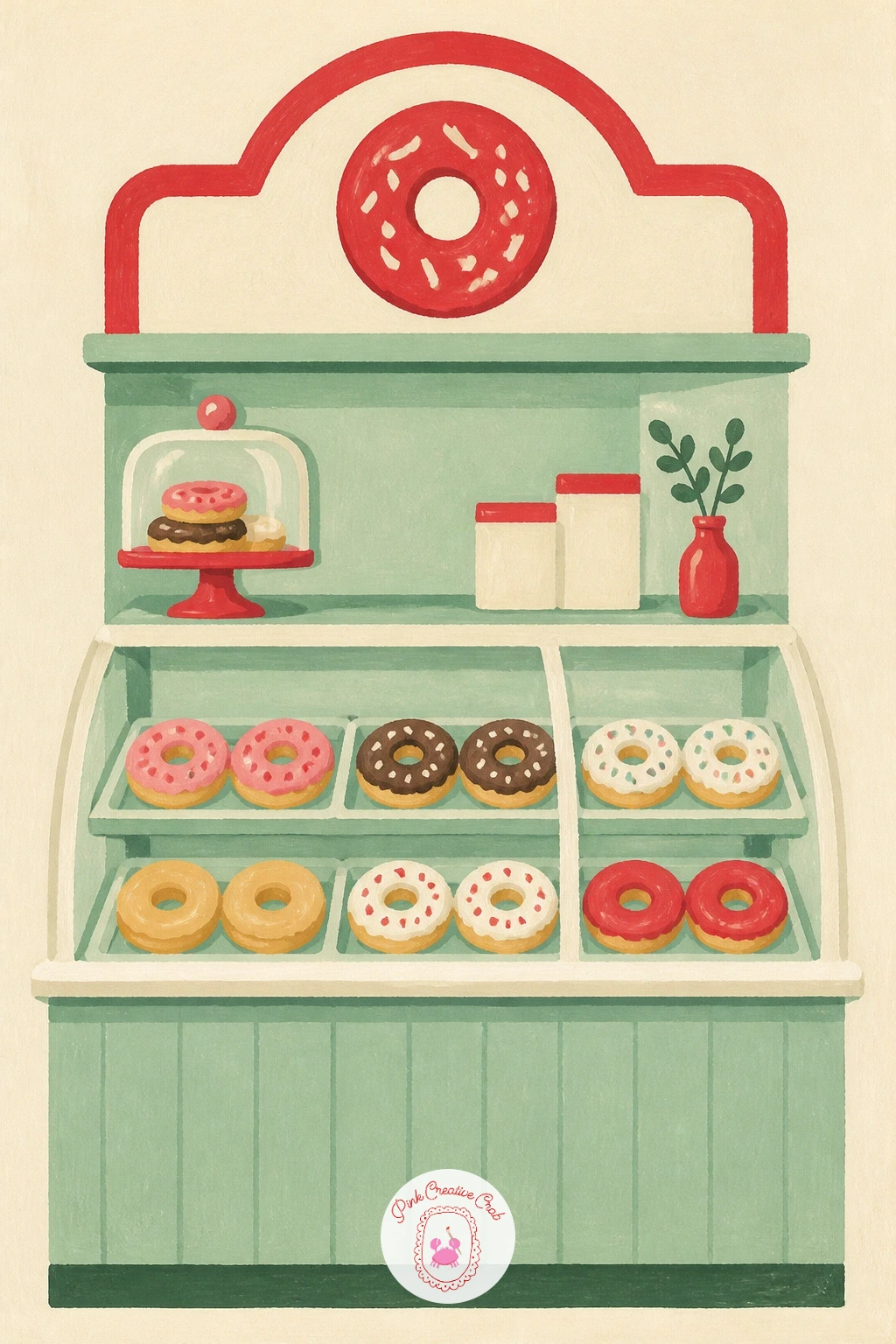
Palette: Mint Green,Cherry Red,Warm Tan,Soft Cream
A quick look at how coffee drawing handles cafe counters and glass cases is useful here before you paint your own.
Drop the polish for a second and paint a donut with a bite missing, which is honestly more fun to draw than a perfect one because it tells its own little story. Pencil the full ring first, then erase a clean curved notch out of one side before you paint, roughly a quarter of the donut’s edge, so the bite looks intentional rather than accidental.
Paint the dough and glaze as normal, then use a slightly darker tan along the inside of the bite mark to show the cut dough, which is the detail that sells the whole idea. Add a few loose crumbs scattered just below the donut, two or three flat little shapes, nothing fussy.
If the bite edge comes out too smooth, rough it up with tiny jagged pencil marks before you paint over them, a bite is never a perfect curve. Swap the bite for a smaller nibble if you want it to feel barely touched.
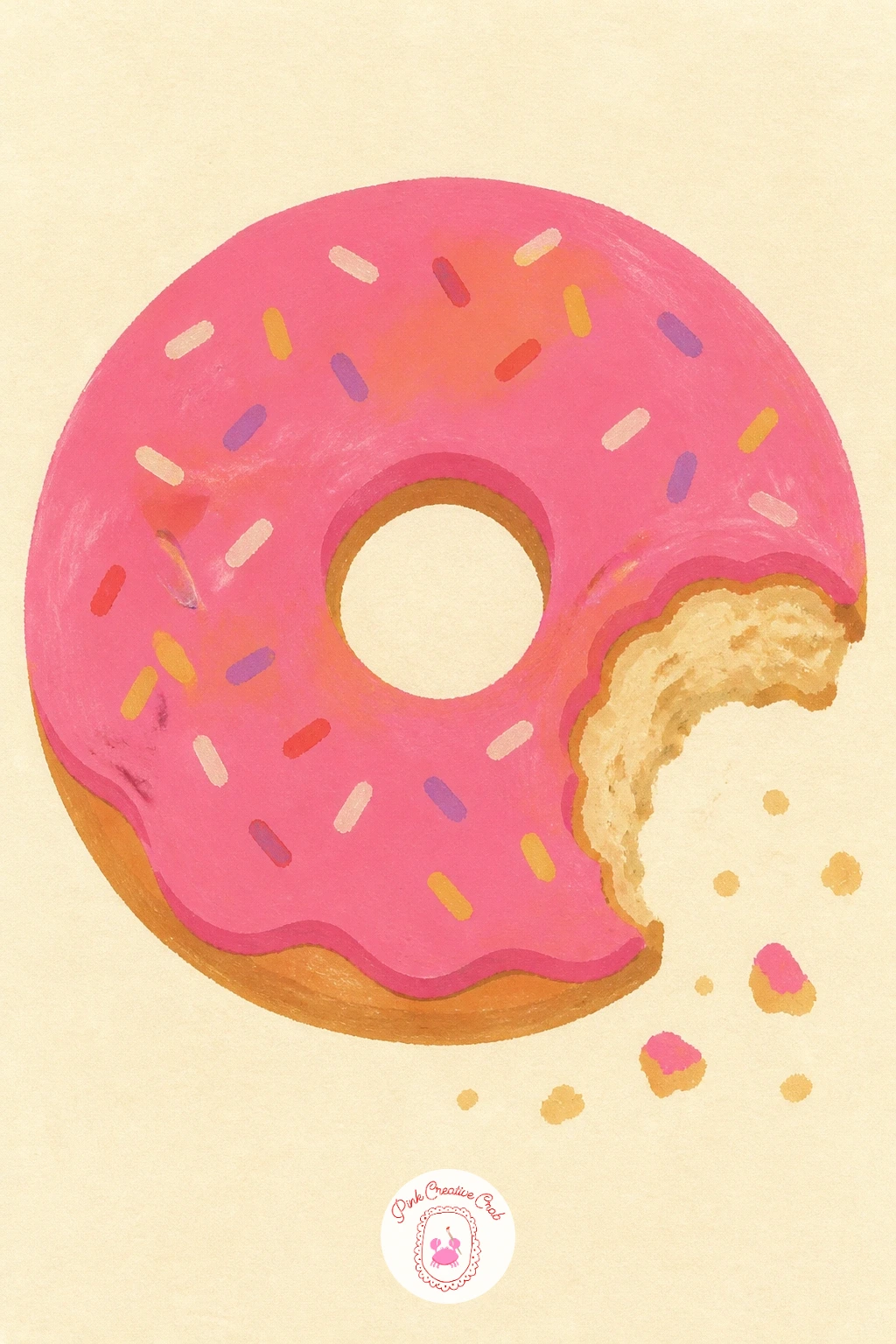
Palette: Warm Tan,Chocolate Brown,Rose Pink,Soft Cream
Stack things up with a donut tower, three or four donuts piled on top of each other like a tiny leaning monument, which is a fun test of balance on the page. Draw the bottom donut widest and lowest, then each one above slightly smaller and offset a touch to one side, the way a real stack leans before it tips.
Paint from the bottom donut up so each new shape can overlap the one below it cleanly, giving the stack real depth instead of four circles side by side. Keep one consistent light source, a soft shadow cast to the same side under each donut, so the whole tower feels like it is sitting in one room rather than four separate drawings glued together.
If the stack looks like it is floating, add a thin dark shadow shape under the base donut to plant it on the surface. Try varying the glaze color on each layer next time for a rainbow-stack version.
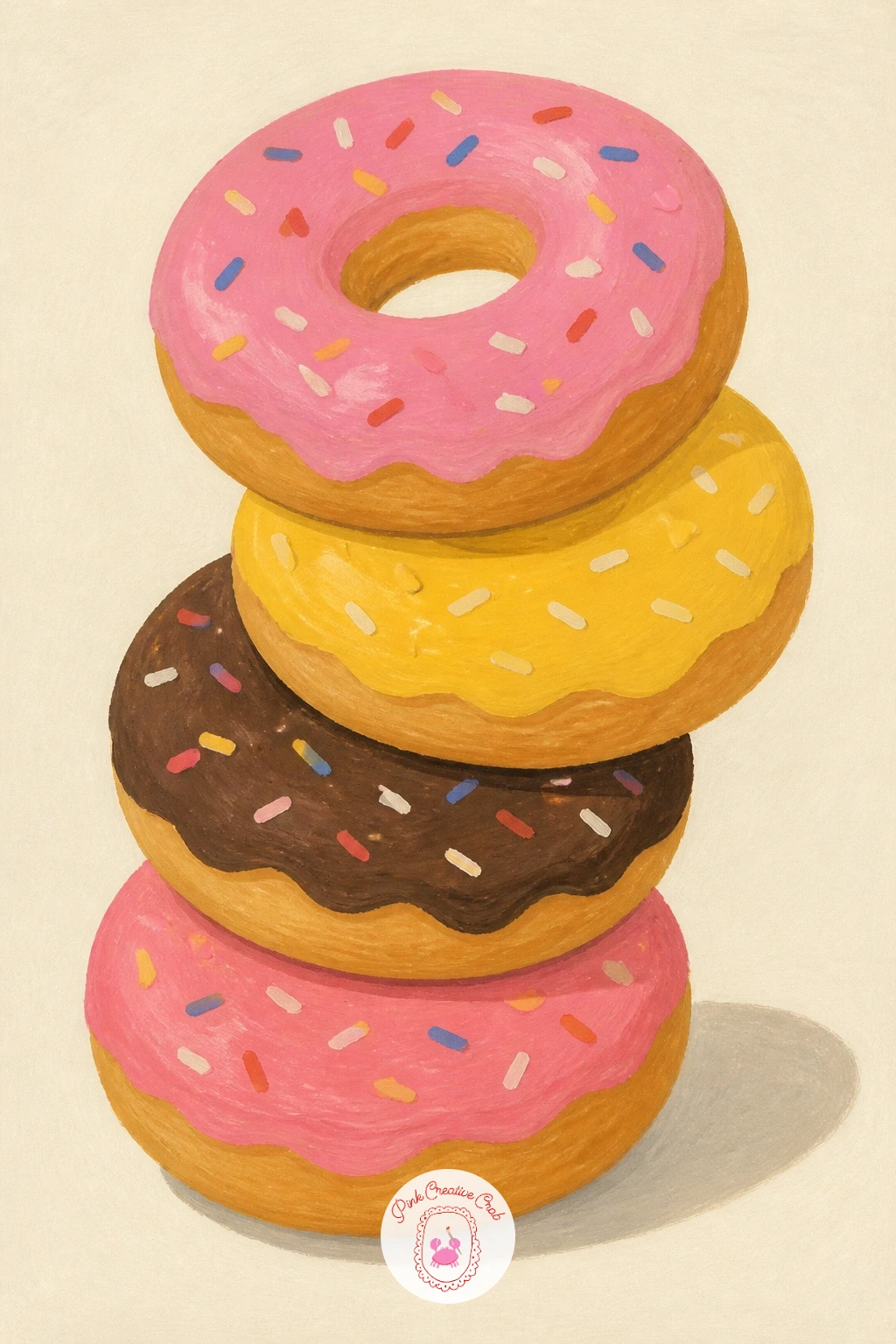
Palette: Rose Pink,Butter Yellow,Chocolate Brown,Soft Cream
Pair your donut with its favorite companion in a donut balanced on a coffee cup, the donut resting flat on top like a lid. Draw the cup first as a simple trapezoid narrower at the base, add a handle as one curved loop, then sit the donut ring right on the rim, overlapping the cup’s top edge slightly so it reads as resting rather than hovering.
Paint the cup in a flat solid color first, mug white or a soft terracotta, then the donut on top once the cup layer is dry so the edges stay crisp where they meet. A thin curl of steam above the cup, two or three soft wavy lines in pale grey, finishes the mood without adding real detail work.
If the donut slides off center in your sketch, a faint horizontal guideline across the cup’s rim keeps it sitting level. No terracotta in your set? A warm dusty pink mug works just as well.
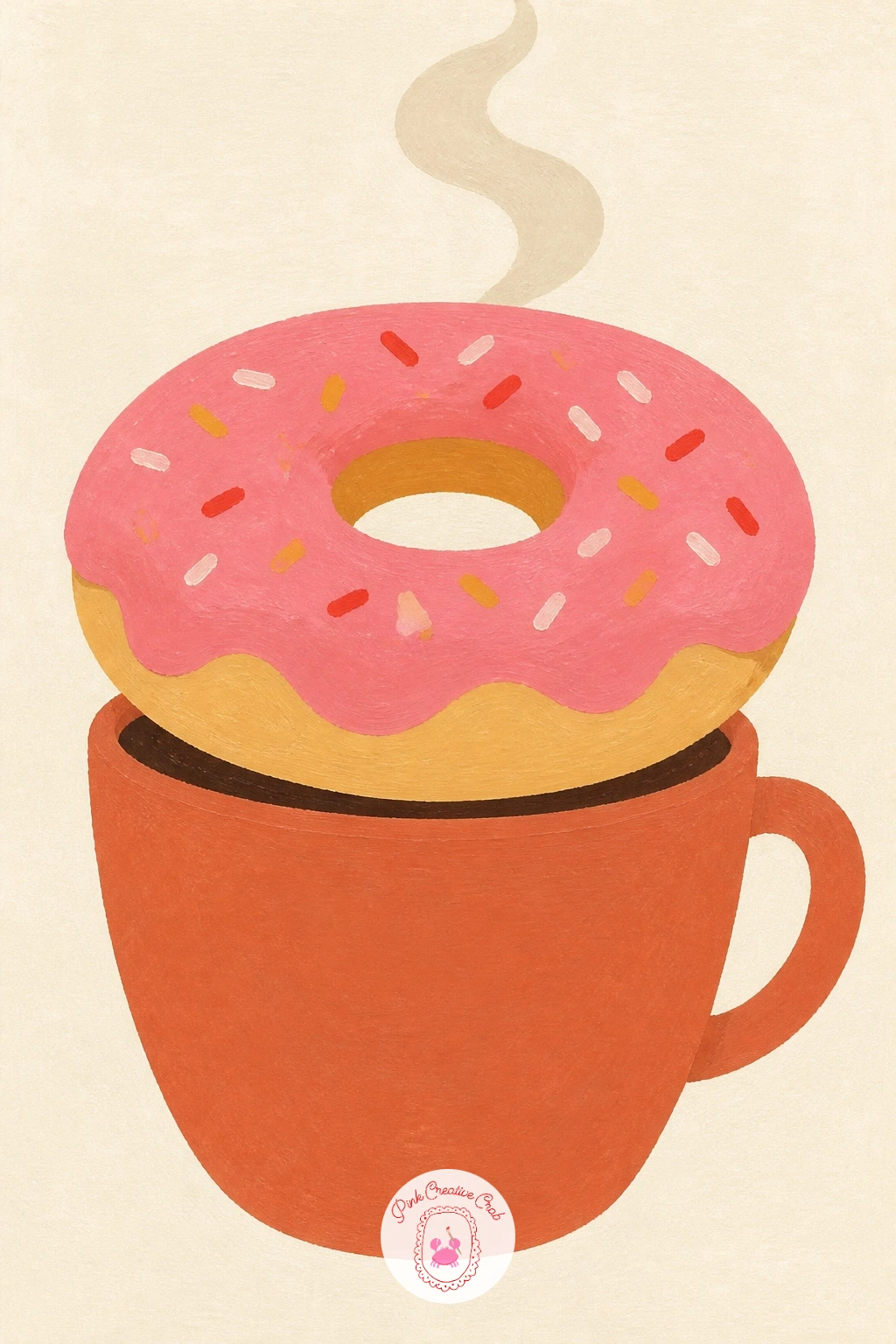
Palette: Terracotta,Rose Pink,Warm Tan,Soft Cream
Cut into the next one for a strawberry filled donut, shown cut in half so the jam center spills a little at the cut edge. Draw one whole donut and one half beside it, the half sliced straight down the middle so the cross section faces the viewer clearly.
Paint the outside glaze and sugar coating first on both pieces, then switch to a bright strawberry red for the filling inside the half, letting it bulge very slightly past the cut edge the way real jam does. A few tiny white dots over the filling suggest sugar without needing real texture work.
If the filling color bleeds into the dough around it, wait for each layer to dry fully before adding the next, gouache forgives almost everything once it is dry. Swap strawberry for raspberry red if you want a deeper, more jewel-toned filling.
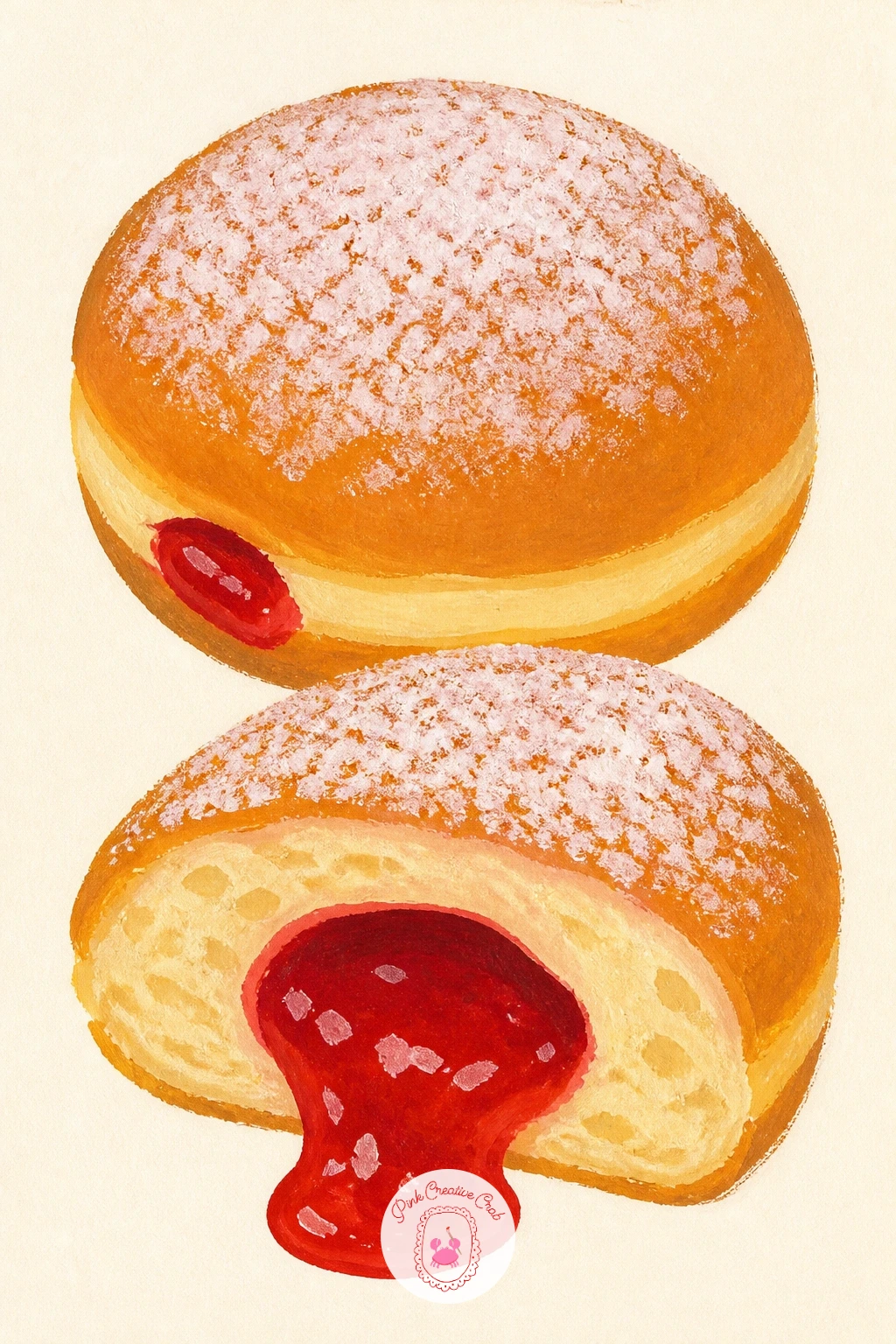
Palette: Strawberry Red,Warm Tan,Soft Cream,White
Bring in a calmer palette with a matcha donut, its glaze a soft earthy green that reads as a nice break from all the pink and red around it. Draw the ring as usual, then paint the glaze in a muted sage rather than a bright green, since matcha desserts lean dusty rather than neon.
Work the dough tan first, let it dry, then lay the matcha glaze over the top half of the donut only, leaving a thin tan rim showing at the bottom edge the way real glaze drips unevenly. A light dusting of darker green powder across the top, a few small irregular dots, adds the finishing matcha touch.
If the green looks too flat or cartoonish, mix a touch of warm tan into your green before painting, it mutes the color toward something more food-true. No sage green in your set? Mix a little yellow into a cool green until it dulls down.
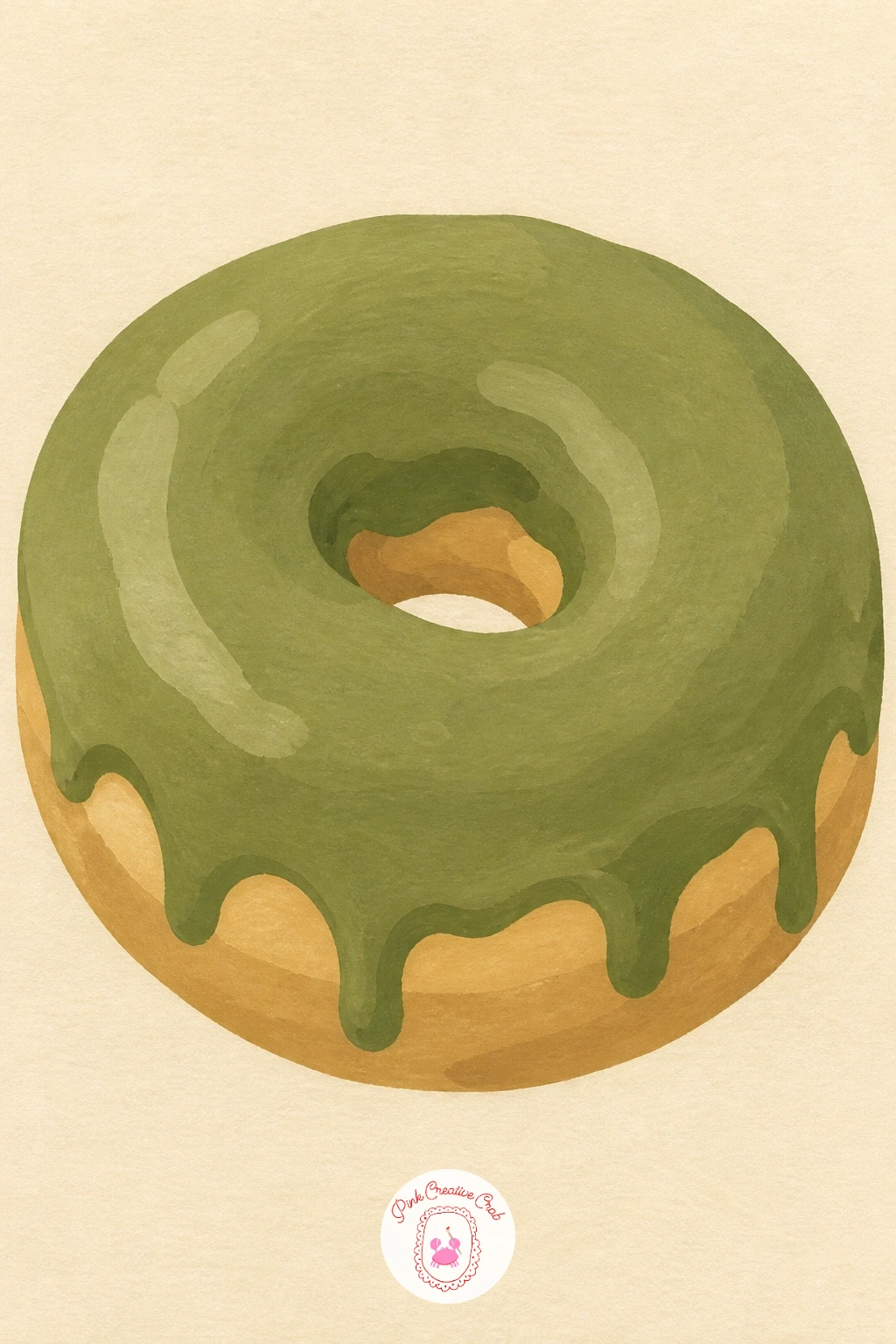
Palette: Sage Green,Warm Tan,Soft Cream,Chocolate Brown
Scale things way up for a giant donut pool float, bobbing on flat blue water with the sky as a plain backdrop. Draw the float as one large ring filling most of the upper page, water as a simple flat shape below it with a slightly wavy top edge to show the water line.
Paint the water first in a flat ocean blue, then the float on top once dry, its glaze and sprinkles painted exactly like a real donut but blown up large and slightly flattened since an inflatable sits lower and wider than a real pastry. A few white curved highlights on the water near the float’s edge suggest gentle ripples without any real wave detail.
If the float looks stiff, round off its hole slightly unevenly, a pool float is never a perfect circle once someone has used it. Try this one again later with a striped beach towel draped over one edge of the float.
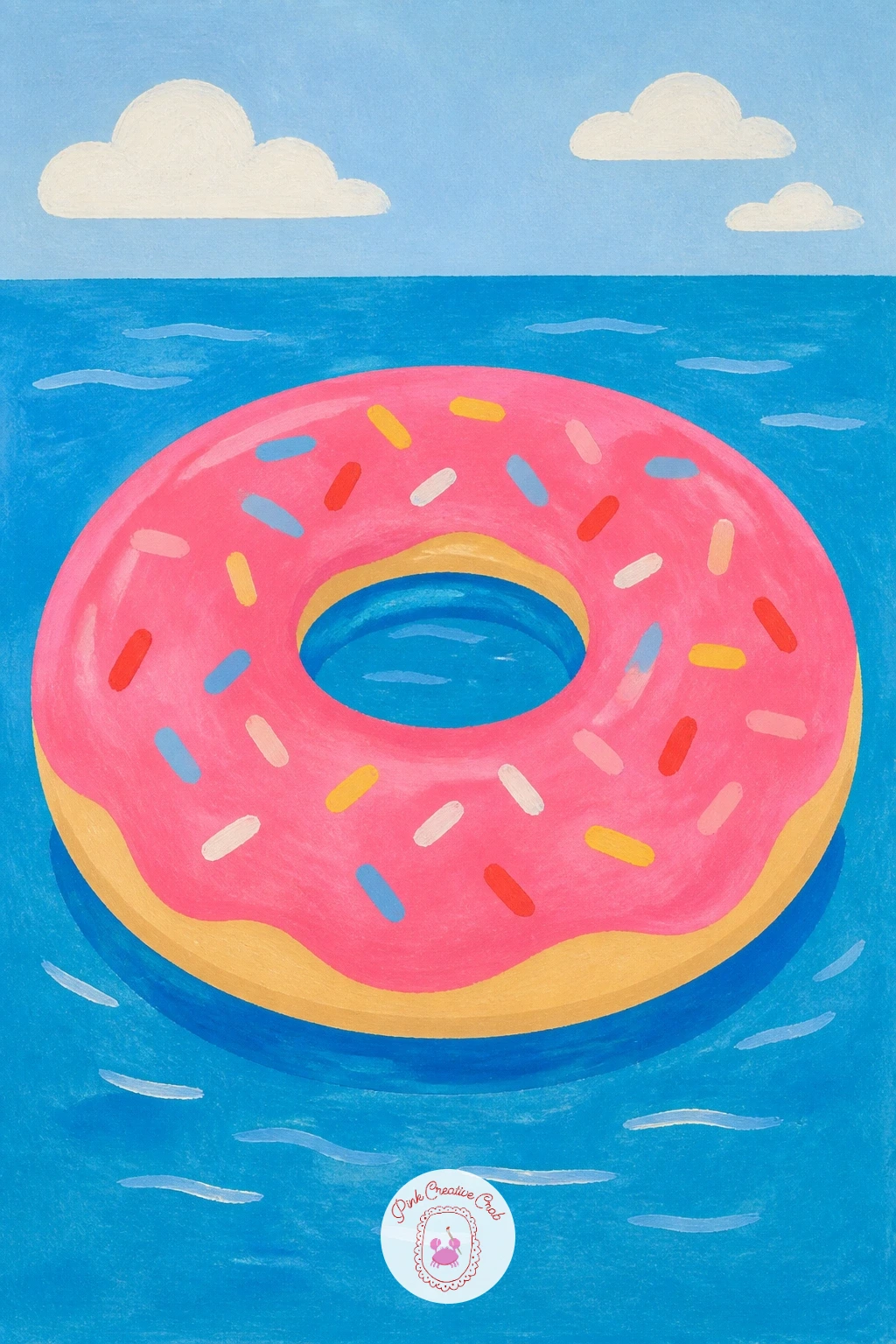
Palette: Ocean Blue,Rose Pink,Butter Yellow,White
Add a pet to the mix with a cat asleep in a donut bed, the donut shape reimagined as a cozy round cushion the cat curls into. Draw a plump donut-shaped ring first as the bed, then the cat as a simple curled oval shape nestled inside the ring, tail wrapped around, eyes closed.
Paint the bed in a soft glaze color just like a real donut, pink or caramel, then the cat in a flat solid color on top, keeping its outline simple, no fur texture needed at this scale. A few small z shapes floating above the cat’s head is an easy, charming way to show it sleeping without drawing anything complicated.
If the cat and bed shapes fight for attention, keep the cat’s color muted and let the bed stay the brighter, busier shape. Swap the cat for a small dog curled the same way if that suits your own pet better.
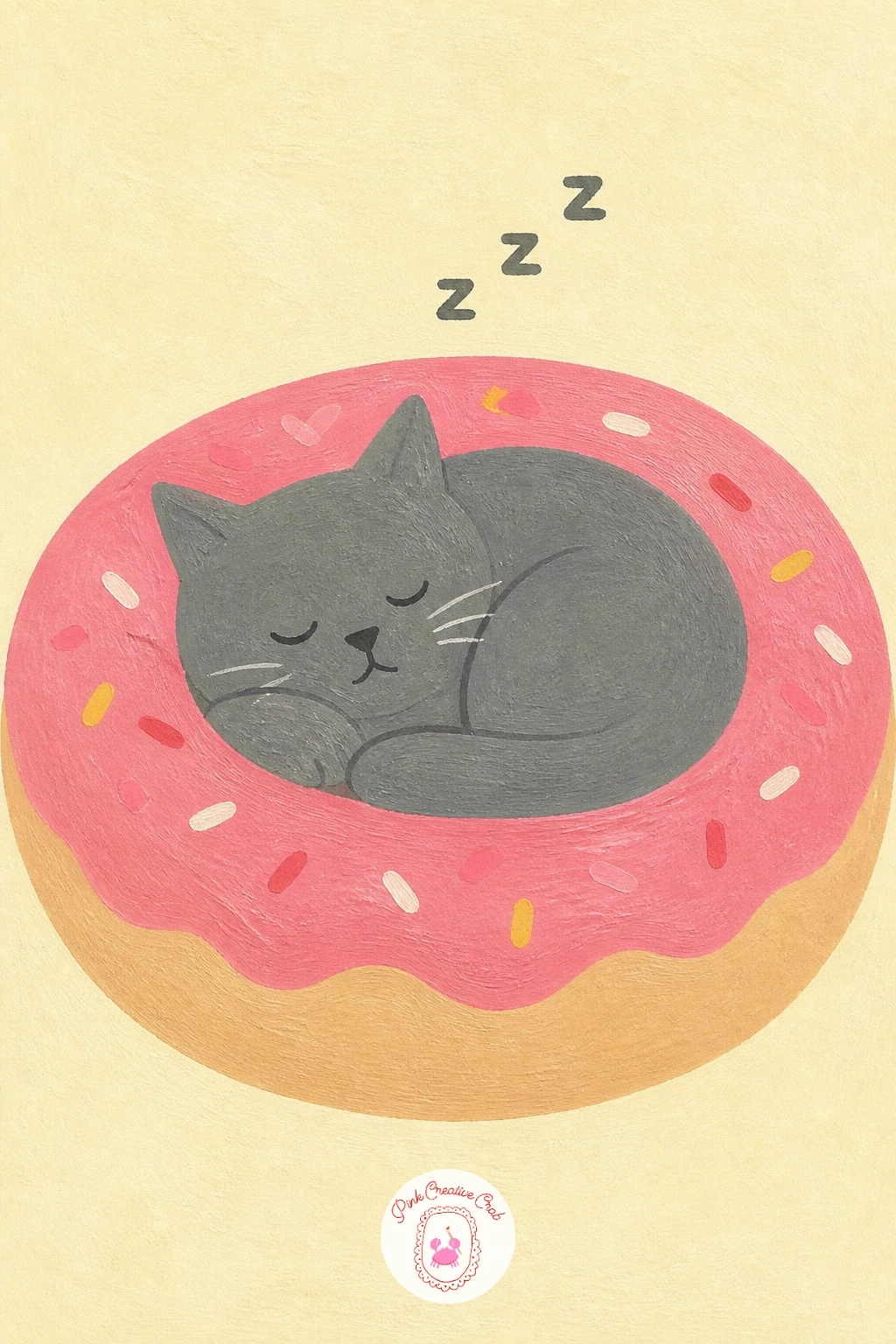
Palette: Rose Pink,Warm Grey,Soft Cream,Chocolate Brown
If you want more practice with curled-up poses first, the warm-up sketches in cat pencil drawing are a nice place to start.
Zoom out to a donut wall at a party, rows of donuts hung on little pegs against a backdrop, the kind of setup that photographs beautifully at a real celebration. Sketch a simple grid of short pegs sticking out from a flat wall shape, then hang a donut on each peg, their rings looped over the pegs rather than sitting flat.
Paint the wall background first in one flat pastel, then the pegs as thin tan lines, then the donuts last, varying their glaze colors across the grid so the wall reads as festive rather than repetitive. A string of small bunting flags or balloons along the top edge, painted as simple triangles and circles, finishes the party feeling fast.
If the pegs look too thick and clunky, thin them down with a fine brush once the paint is dry, pegs read better as a few confident lines. No bunting idea appealing? A simple banner shape works just as well strung across the top.
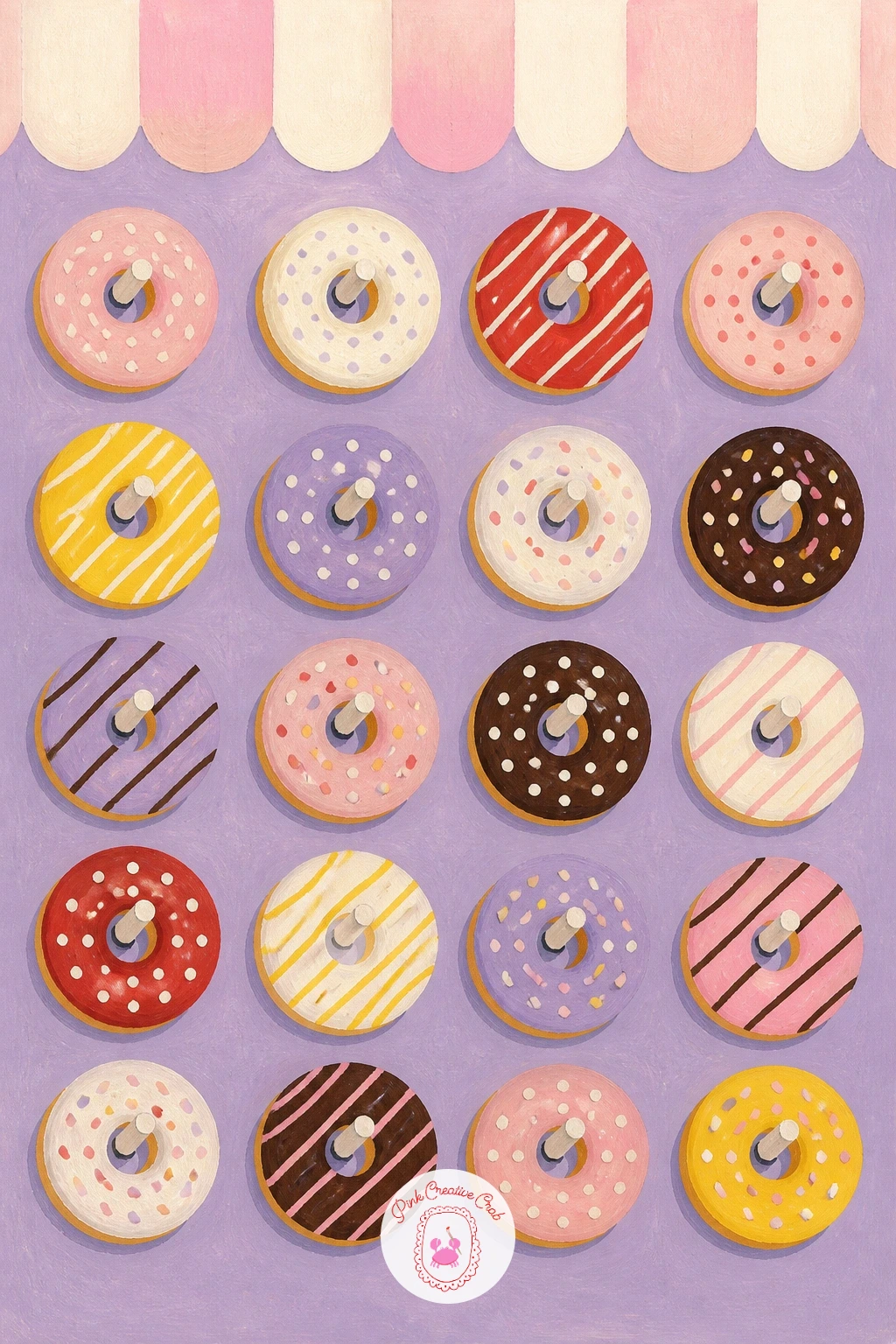
Palette: Pastel Lavender,Rose Pink,Butter Yellow,Warm Tan
Slow down for a cinnamon sugar donut, plain and rustic next to all the glazed shapes around it, its whole charm sitting in the texture of the coating. Draw the ring with a slightly uneven, hand formed edge rather than a perfect circle, since cake donuts are rarely as smooth as glazed ones.
Paint the base in a warm golden brown, then once dry, stipple small dots of white and pale tan across the surface using the tip of a dry brush, barely loaded with paint, to suggest the sugar coating without painting every grain. This dry brush dabbing is the one technique that makes a plain donut look genuinely coated rather than just pale.
If the dots clump together in one spot, space your dabs out with small gaps between them, real sugar coating is scattered, not solid. Swap white sugar dots for a cinnamon dusting in soft orange-brown if you want a warmer, spicier look.
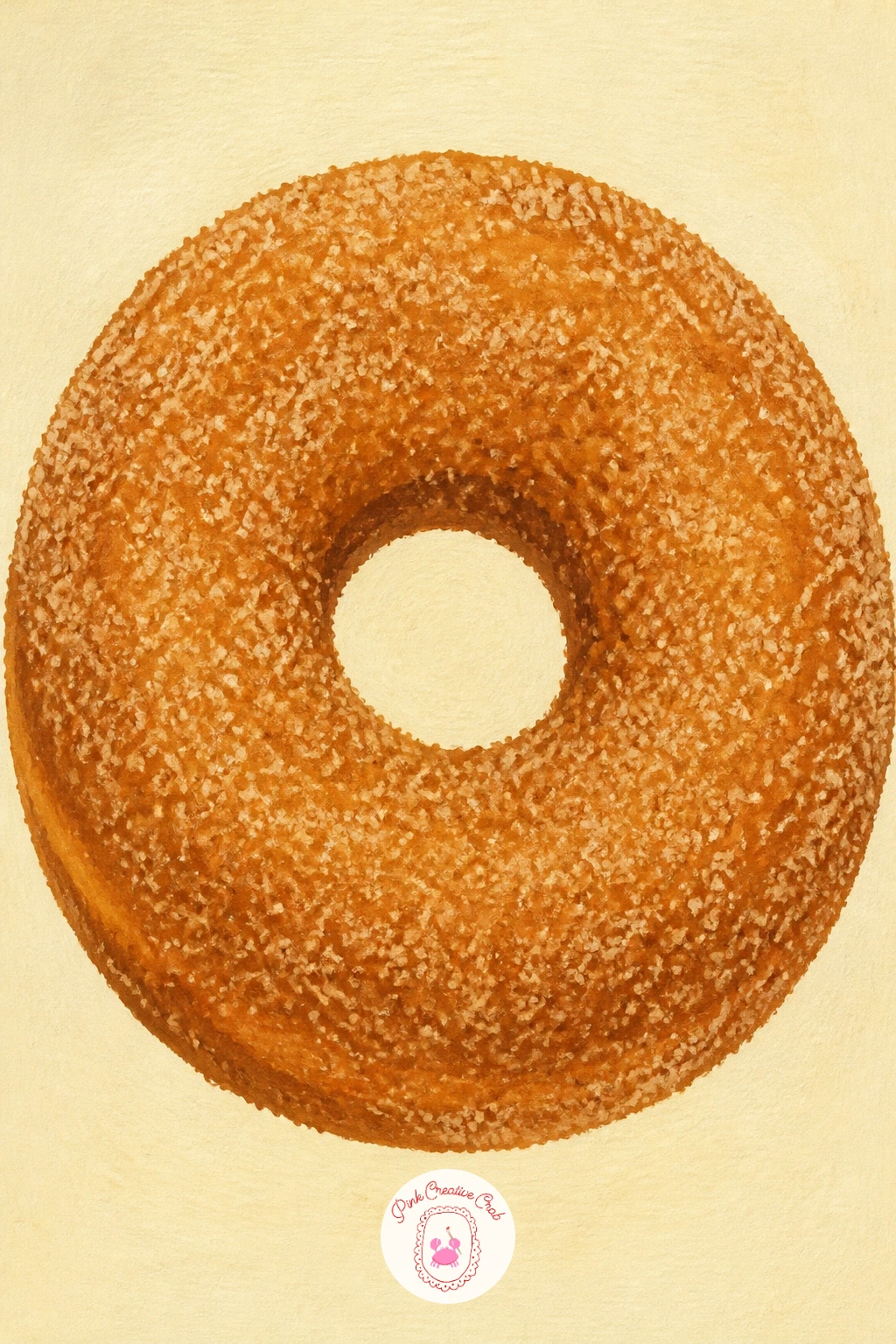
Palette: Golden Brown,White,Soft Cream,Cinnamon
Move to a boston cream donut, its flat chocolate top making a satisfying contrast with the pale custard hiding inside. Draw one whole donut with a flat top rather than a rounded dome, since this style is piped and filled rather than simply glazed, then draw a cut half beside it showing the custard center.
Paint the chocolate glaze on top as one clean flat shape with a slightly glossy highlight, a single curved stripe of white left unpainted or added with a gel pen, which instantly reads as glaze shine. On the cut half, paint the custard filling in a soft pale yellow, letting it peek slightly past the cut edge.
If the chocolate glaze dries looking dull rather than glossy, that white gel pen highlight stripe is what fixes it fastest, added right at the end. Keep the custard color pale and warm rather than bright yellow, it should look creamy, not like lemon curd.
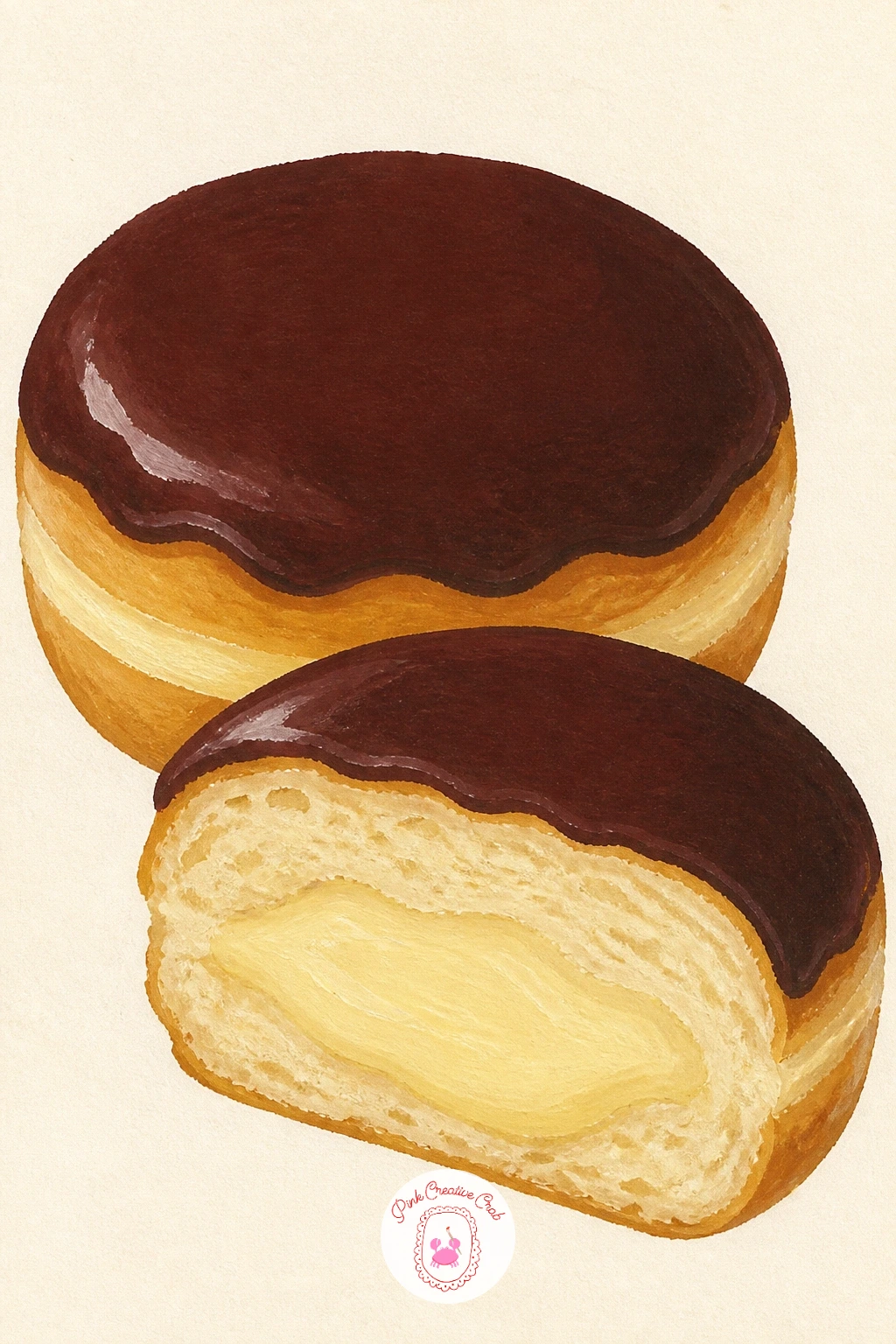
You Will Need
- white gel pen
Palette: Chocolate Brown,Pale Custard,Warm Tan,White
Widen the scene into a donut picnic, a small spread laid out on a blanket with a few donuts, a thermos and maybe a piece of fruit. Sketch the blanket first as a simple flat shape taking up the lower half of the page, then arrange three or four items loosely across it, keeping some space between each so the layout stays easy to read.
Paint the blanket in one flat color first, plain or lightly patterned, then each picnic item on top in its own solid color, donuts last since they are the stars and should sit brightest in the arrangement. A small cherry red accent, a thermos lid or a ribbon tied on a basket handle, pulls the whole spread together.
If the items start looking scattered rather than arranged, group them a little closer and let two or three overlap slightly, real picnics are rarely spaced out evenly. Swap the thermos for a simple glass jar if that fits your palette better.
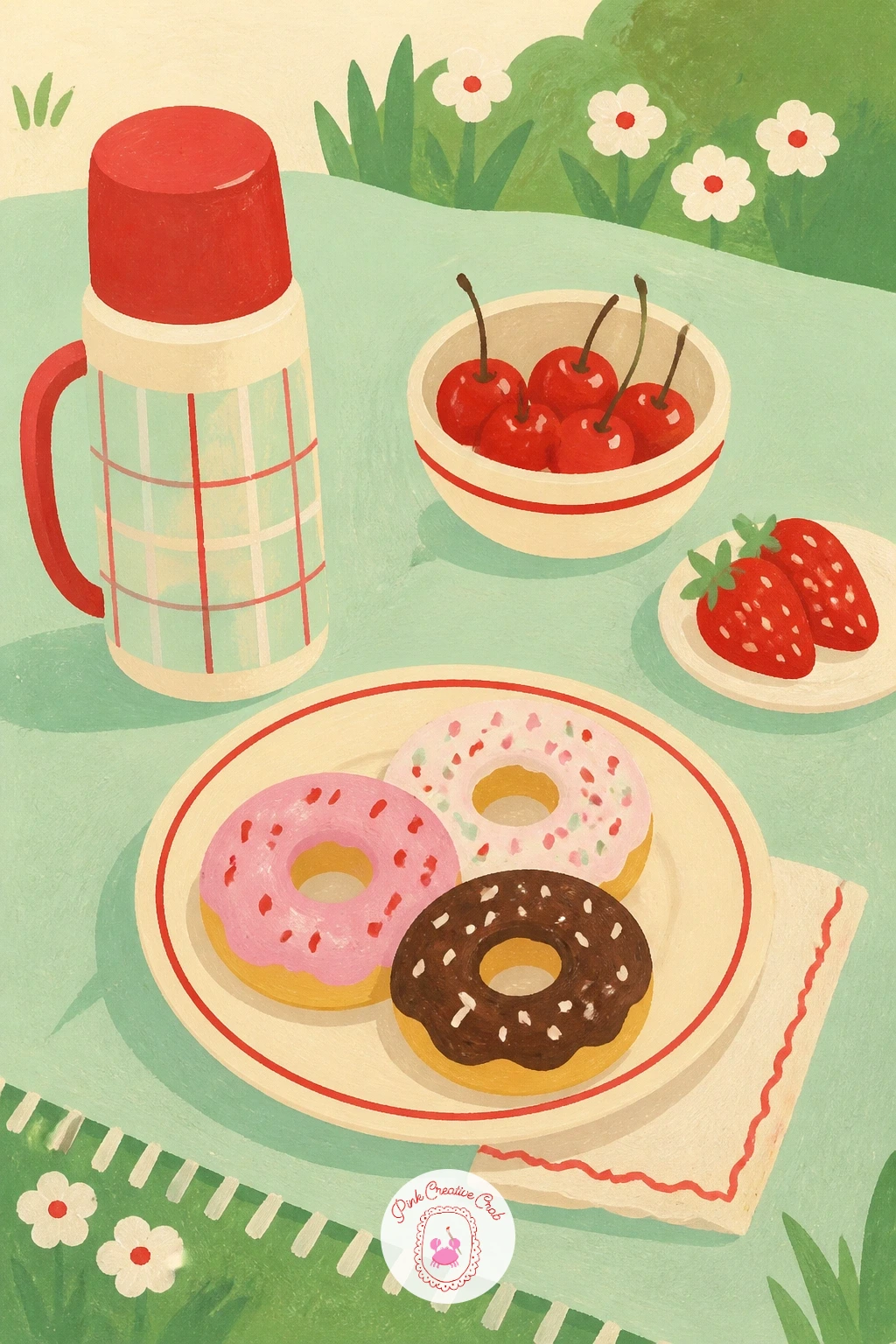
Palette: Mint Green,Rose Pink,Cherry Red,Soft Cream
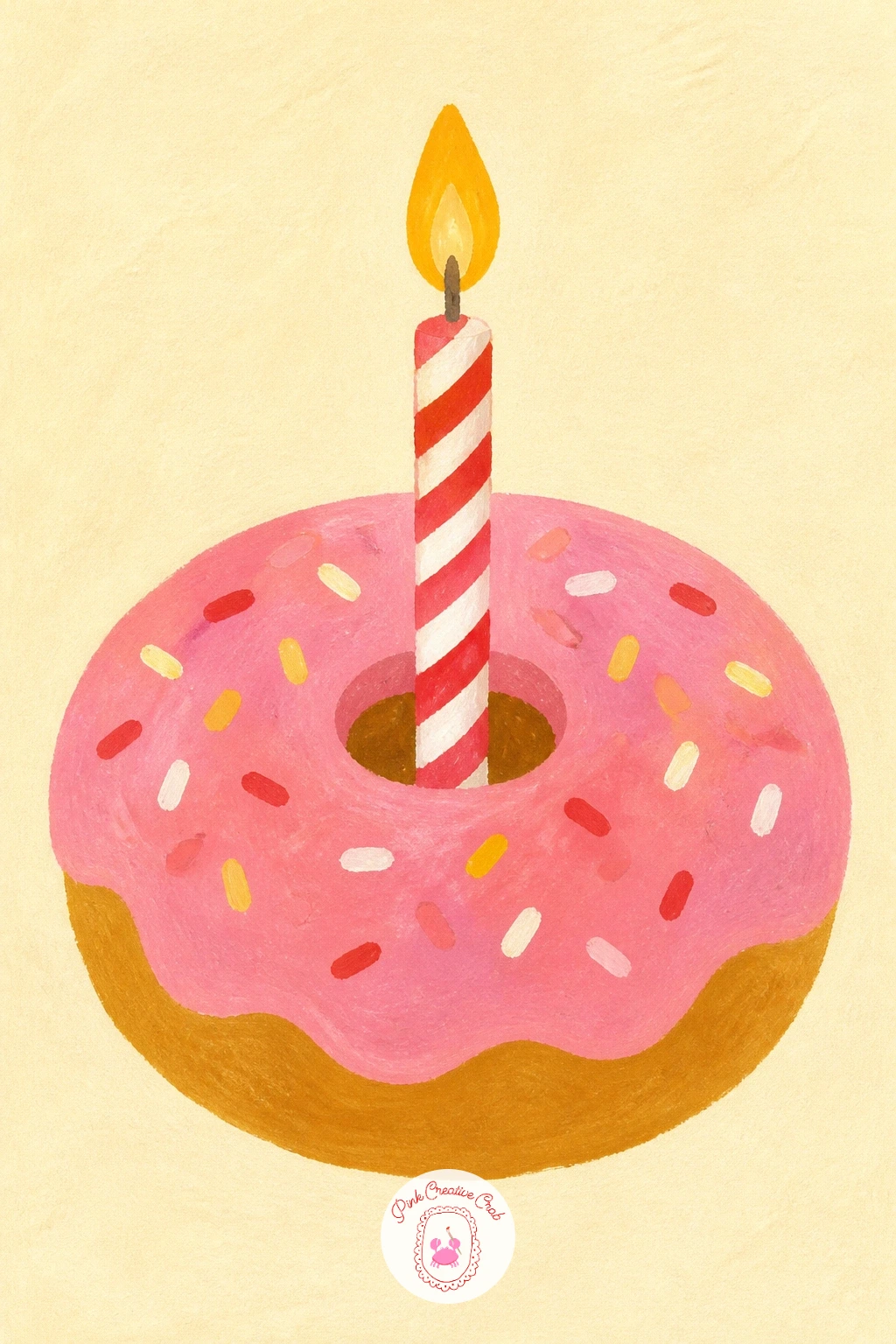
Turn one donut into a tiny celebration with a donut with a birthday candle, standing in for the cake in the sweetest possible way. Draw the donut as usual, then one thin candle pushed straight down into the top of the ring, its stick narrow and its flame a small simple teardrop shape above it.
Paint the donut first and let it dry fully before adding the candle, since the candle sits on top of the glaze and needs a clean edge to read clearly against it. The flame works best painted in two layers, a butter yellow base with a tiny white gel pen dot or short orange flick at its center for a bit of glow.
If the candle looks like it is floating rather than stuck in, add a small dark dot at its base where it meets the donut, a shadow anchors it instantly. Try two or three candles instead of one for a bigger birthday feeling.
You Will Need
- white gel pen
Palette: Rose Pink,Butter Yellow,White,Warm Tan
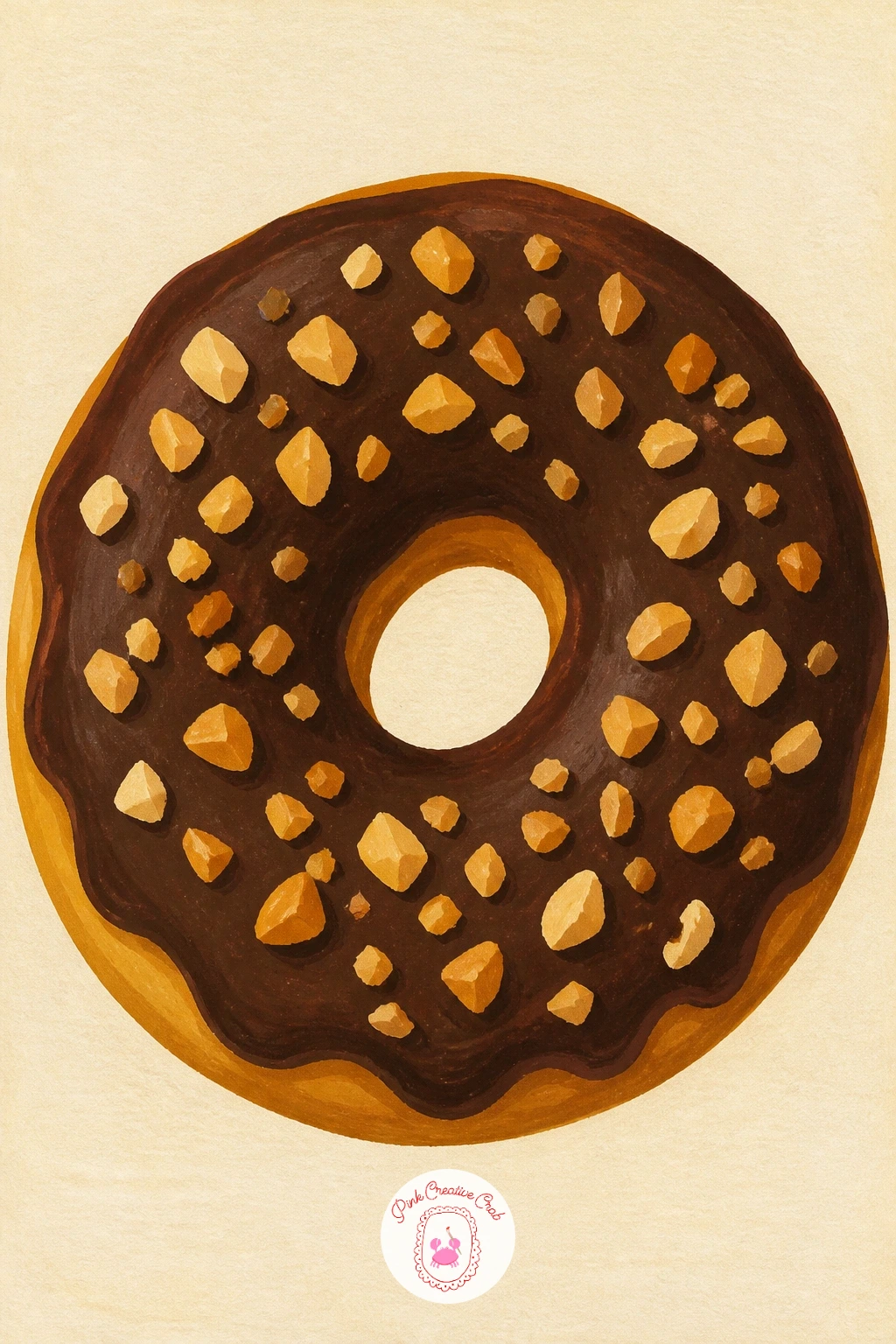
Roughen the surface up with a chocolate donut with nuts, its coating broken up by scattered chopped pieces across the top. Draw the ring, paint the chocolate glaze as a flat even layer first, and let it dry completely before adding a single nut piece.
Once dry, scatter small irregular nut shapes across the top in a warm tan brown, varying their size and angle so none look identical, since real chopped nuts never land the same way twice. A few tiny cream colored flecks dotted between the nut pieces suggest extra texture without any real detailed work.
If the nuts end up looking like neat little pebbles in a row, rotate your brush angle between each one and vary how close together they sit. Swap chopped nuts for a simple chocolate drizzle pattern if nuts are not your thing to paint.
Palette: Chocolate Brown,Warm Tan,Soft Cream,Dark Brown
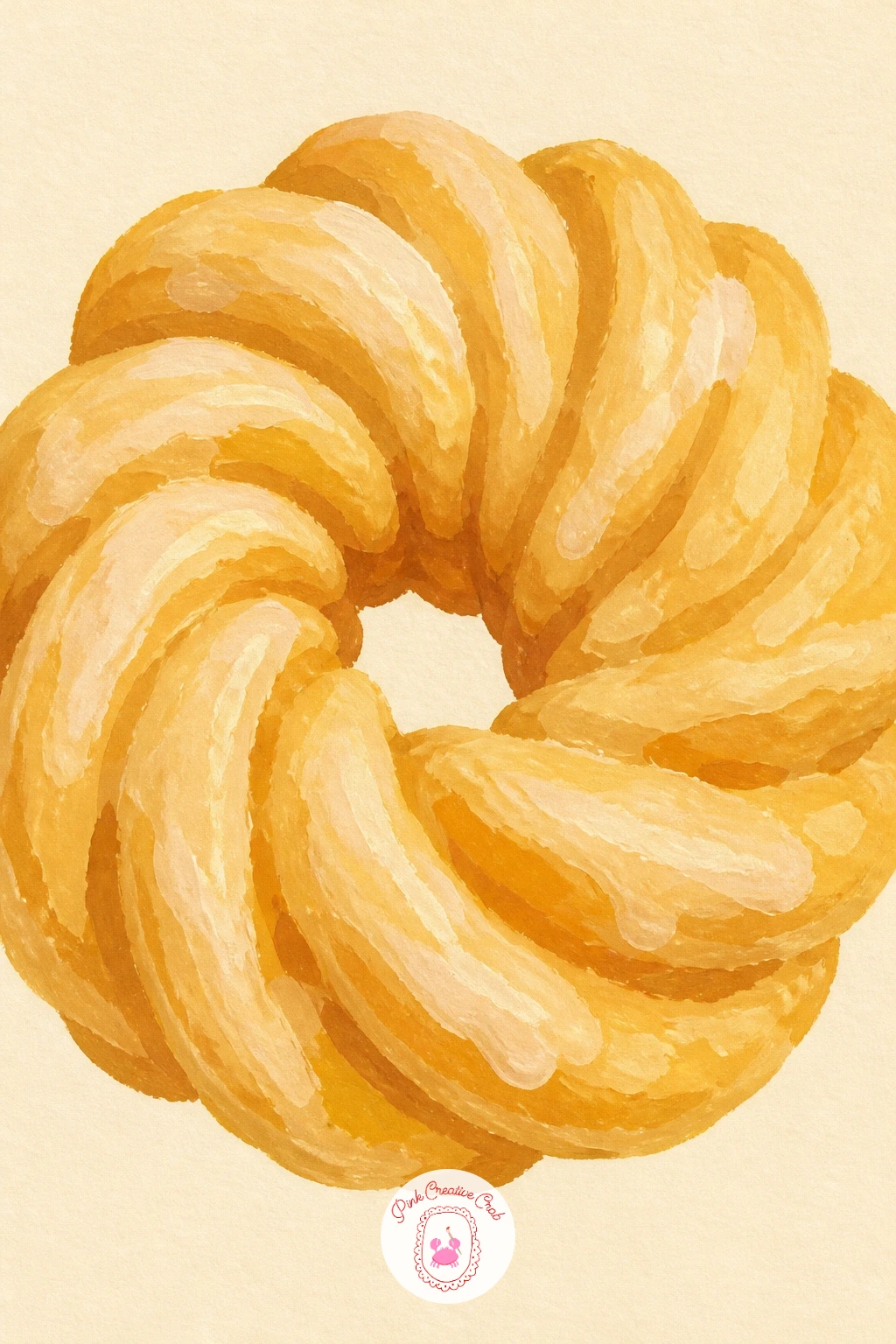
Try a different shape altogether with a cruller, its twisted ridged body making it the most fun outline in the whole list to draw. Rather than one simple ring, sketch a looping s-curve or twisted figure shape, built from a few overlapping curved strokes rather than one smooth line, since a cruller’s whole identity is its ridges.
Paint the base shape first in a flat golden tan, then once dry, add thin darker brown lines following the twist of the dough to suggest the ridged texture, keeping each line short and curved rather than one long stroke. A light glaze coat over the top in a pale white or honey tone finishes it with the classic cruller shine.
If the ridge lines flatten the shape instead of adding depth, make sure they curve with the twist rather than running straight across it. No honey glaze color handy? A simple pale cream works just as well over the ridges.
Palette: Golden Tan,Honey,Dark Brown,Soft Cream
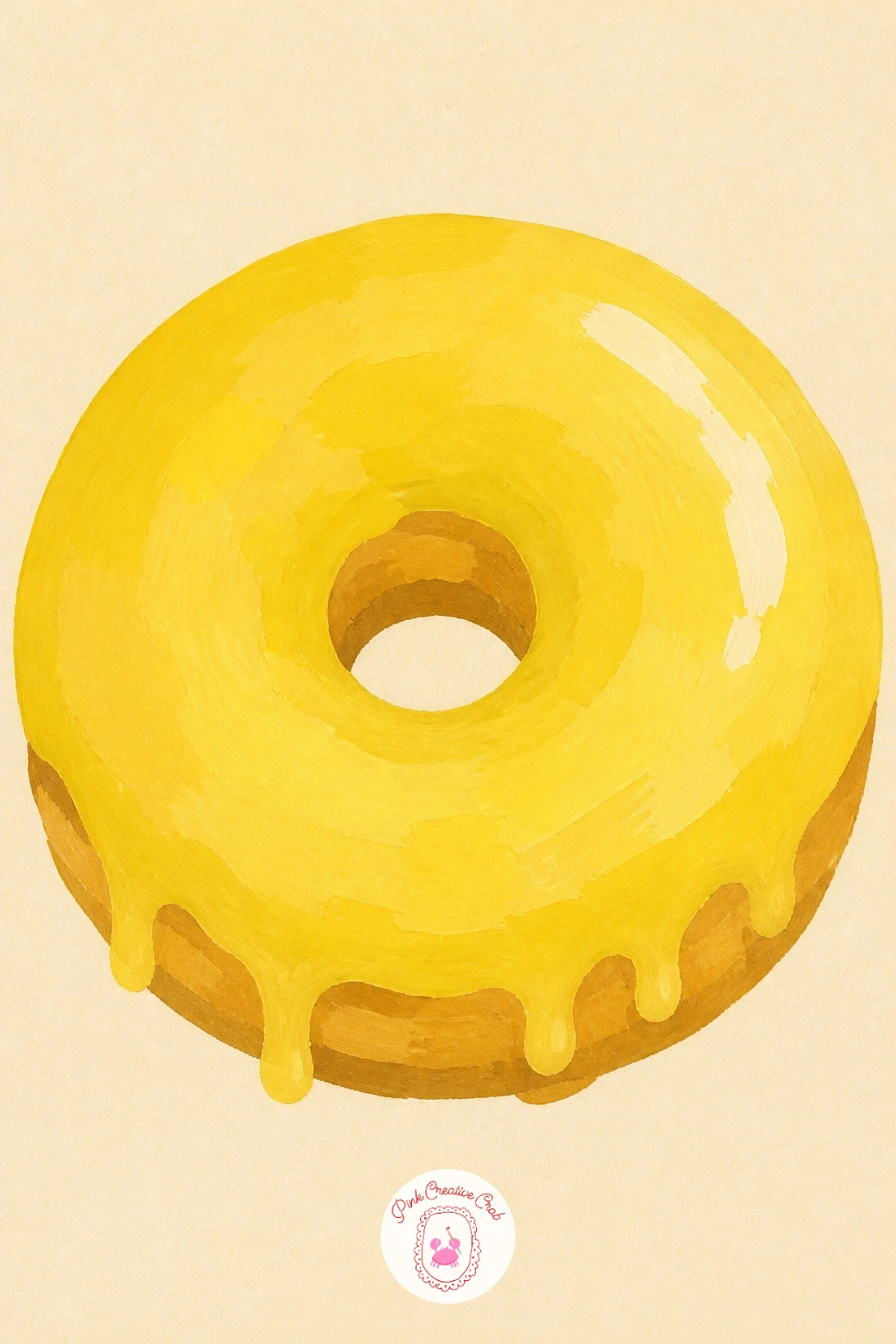
Brighten the page again with a lemon glazed donut, its glaze a clear sunny yellow that reads as fresh rather than heavy. Draw the ring as usual, then before painting, think about where the light falls: if your light source sits upper left, leave a small pale highlight shape untouched there on the glaze rather than painting it solid all the way across.
Paint the dough tan first, then the lemon glaze over it in flat yellow, leaving that one highlight patch as bare cream or the lightest tint of yellow you have. A few thin white drips along the lower edge, added last with a fine brush or gel pen, finish the glossy glaze look.
If the whole donut looks flat despite the highlight, deepen the yellow very slightly on the opposite side from your light source, that one shift is often all a flat shape needs. Swap lemon yellow for orange if you want it to read as orange glazed instead.
You Will Need
- white gel pen
Palette: Lemon Yellow,Warm Tan,Soft Cream,White
Go small with mini donuts in a paper bag, several tiny rings peeking out of the top of a simple brown paper bag folded open. Draw the bag first as a flat rectangle with a folded top edge, then three or four small donut rings nestled inside, only their top halves visible above the bag’s fold.
Paint the bag in a flat kraft brown first, including a few soft creases drawn as slightly darker lines to show where the paper folds. Add the mini donuts on top once the bag layer dries, each one a different simple glaze color so the handful peeking out feels varied even though you are only painting partial shapes.
If the donuts look like they are sitting on top of the bag rather than inside it, make sure the bag’s front fold overlaps the bottom of each donut shape slightly. No kraft brown mixed? A warm dusty orange works as a close stand in.
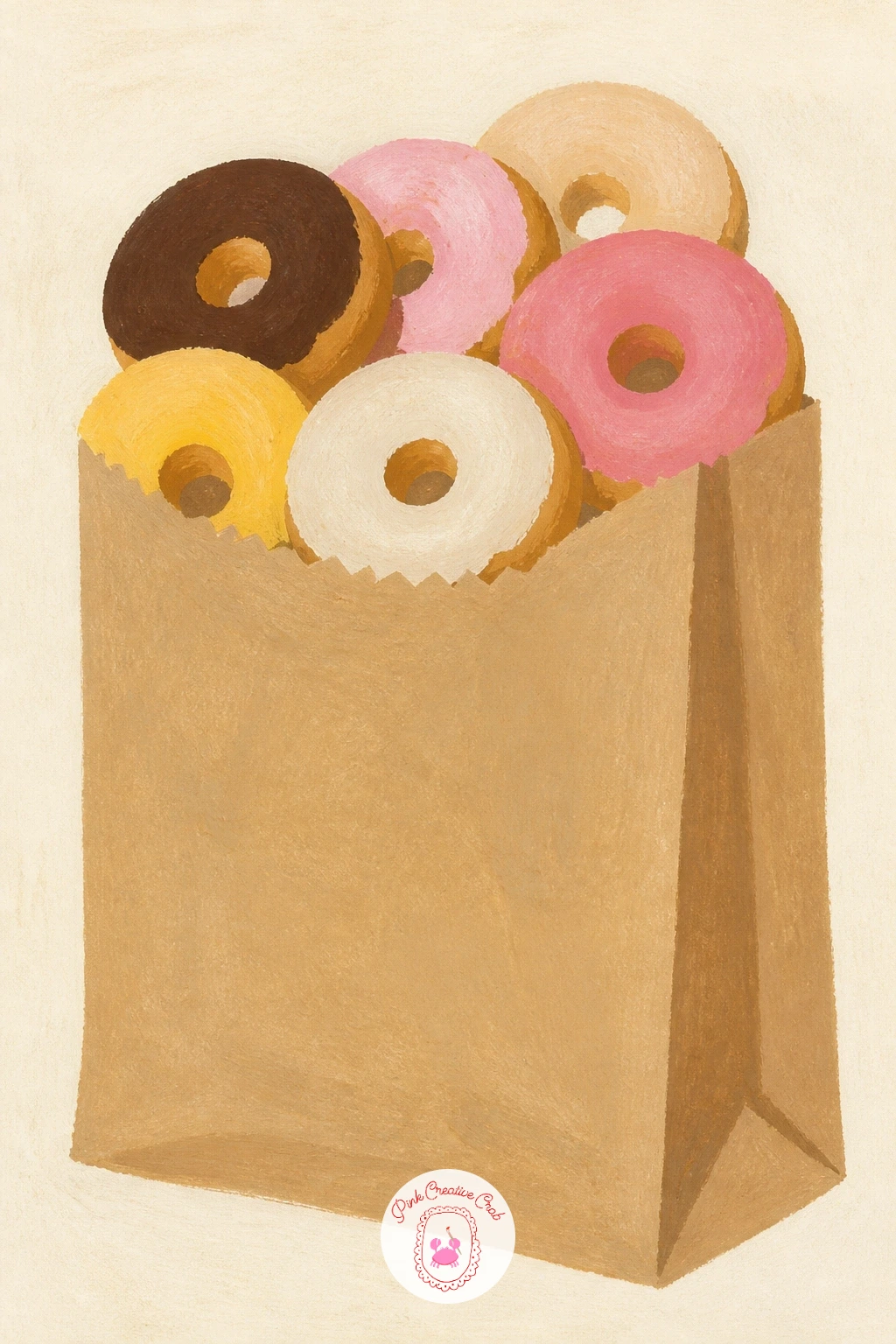
Palette: Kraft Brown,Rose Pink,Butter Yellow,Chocolate Brown
Build a whole little vehicle with a donut truck, a food truck shape with a giant donut painted or mounted on its roof as a sign. Sketch the truck body as a simple boxy rectangle on two round wheels, a serving window cut into one side, then a large donut ring sitting on top of the roof like a sign.
Paint the truck body first in one bold flat color, then the wheels in dark grey or black, then the roof-top donut last in its own bright glaze so it stands out clearly as the focal point of the whole scene. A tiny striped awning over the serving window, painted as a few alternating stripes, adds a nice shop feeling without much extra work.
If the truck looks stiff or boxy in a bad way, round off its corners slightly rather than drawing sharp right angles, food trucks are usually a little bulbous and friendly looking. Swap the truck color for butter yellow if you want it to match the roof-top donut’s accent tone.
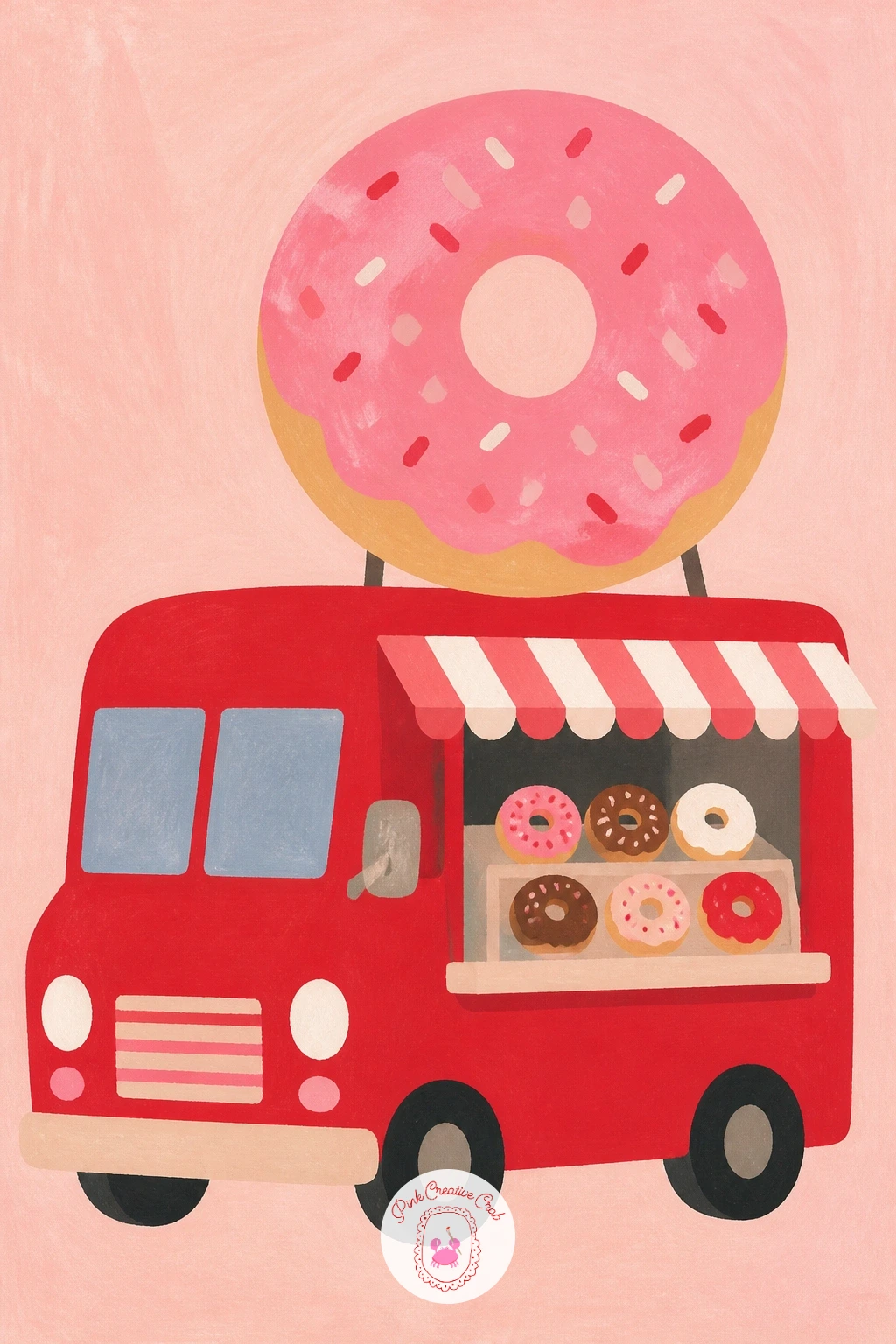
Palette: Cherry Red,Butter Yellow,Dark Grey,Rose Pink
Add a small human moment with a kid wearing a donut on a finger, the donut slipped over one raised finger the way kids do before they ever take a bite. Draw a simple, friendly figure, a round head, basic body shape, one arm raised with the donut ring slipped over the finger and held up at eye level.
Keep the figure’s features minimal, two dot eyes, a small curved smile, since this style works best with few details and a lot of charm in the pose rather than the face. Paint the figure’s clothing in one flat bright color, then the donut last, its glaze color the brightest thing in the whole piece so it stays the clear focal point.
If the raised arm looks stiff, bend the elbow slightly rather than drawing it straight, a small bend reads as far more natural and playful. Swap the standing pose for a seated one on a stool if you want a calmer feeling.
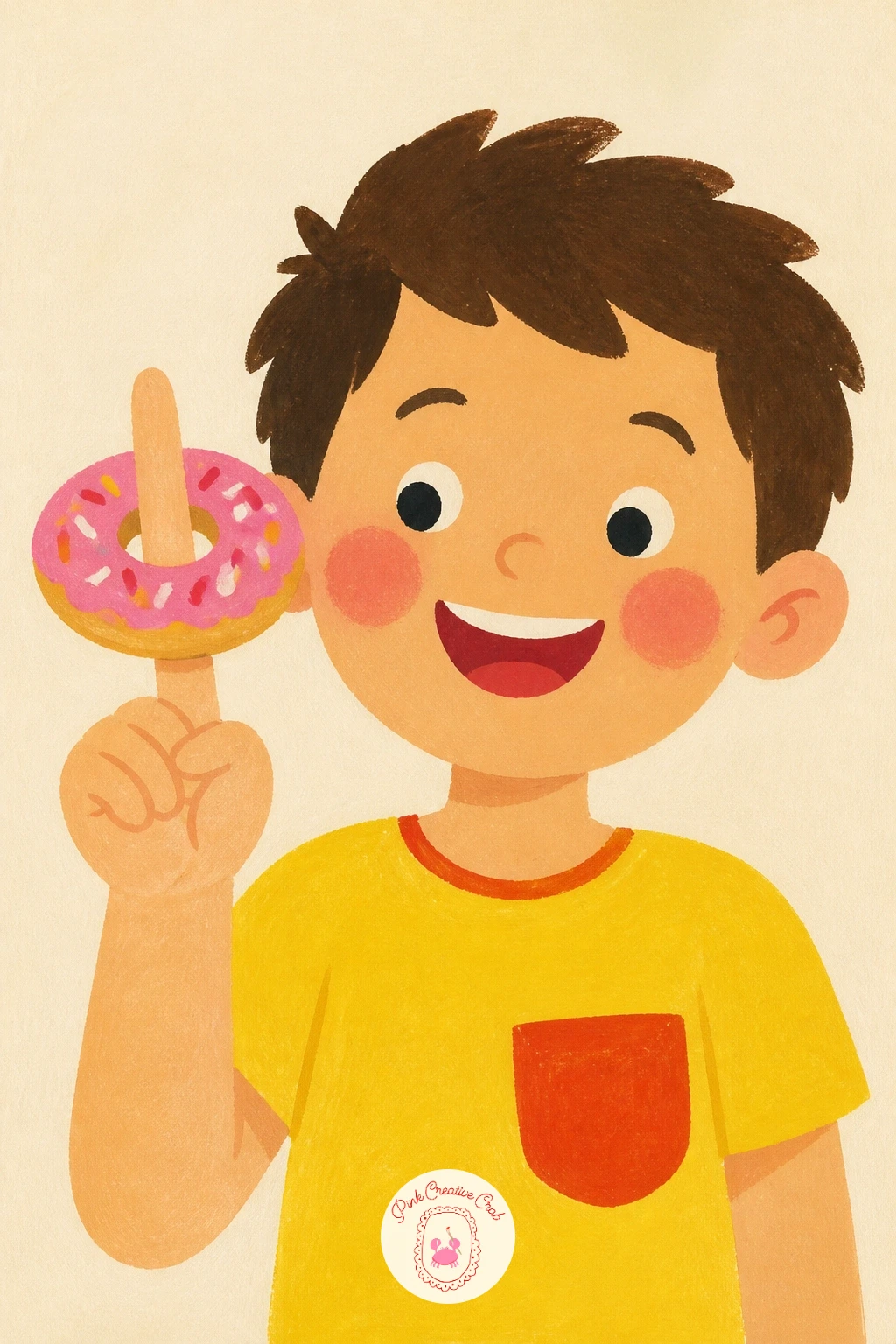
Palette: Butter Yellow,Rose Pink,Soft Cream,Dark Brown
For more practice with simple friendly figures and poses, the beginner poses in girl pencil drawing are worth a look.
Pair sweetness with something cool in a donut with a glass of milk, the two sitting side by side like an afternoon snack. Draw the donut on one side and a simple glass shape on the other, the glass a basic tapered rectangle filled most of the way up, leaving a thin strip of white glass rim unpainted at the very top.
Paint the milk first in a flat soft white or the palest grey-white, since pure white on white paper can disappear, then the glass outline in a thin pale grey line once the milk layer is dry. Paint the donut last so its bright glaze color becomes the clear star next to the calm, pale glass.
If the milk looks too flat and plain, add one thin curved highlight line down one side of the glass with white gel pen for a touch of shine. Swap milk for a cup of coffee if that fits your scene better, following the same glass-then-drink order.
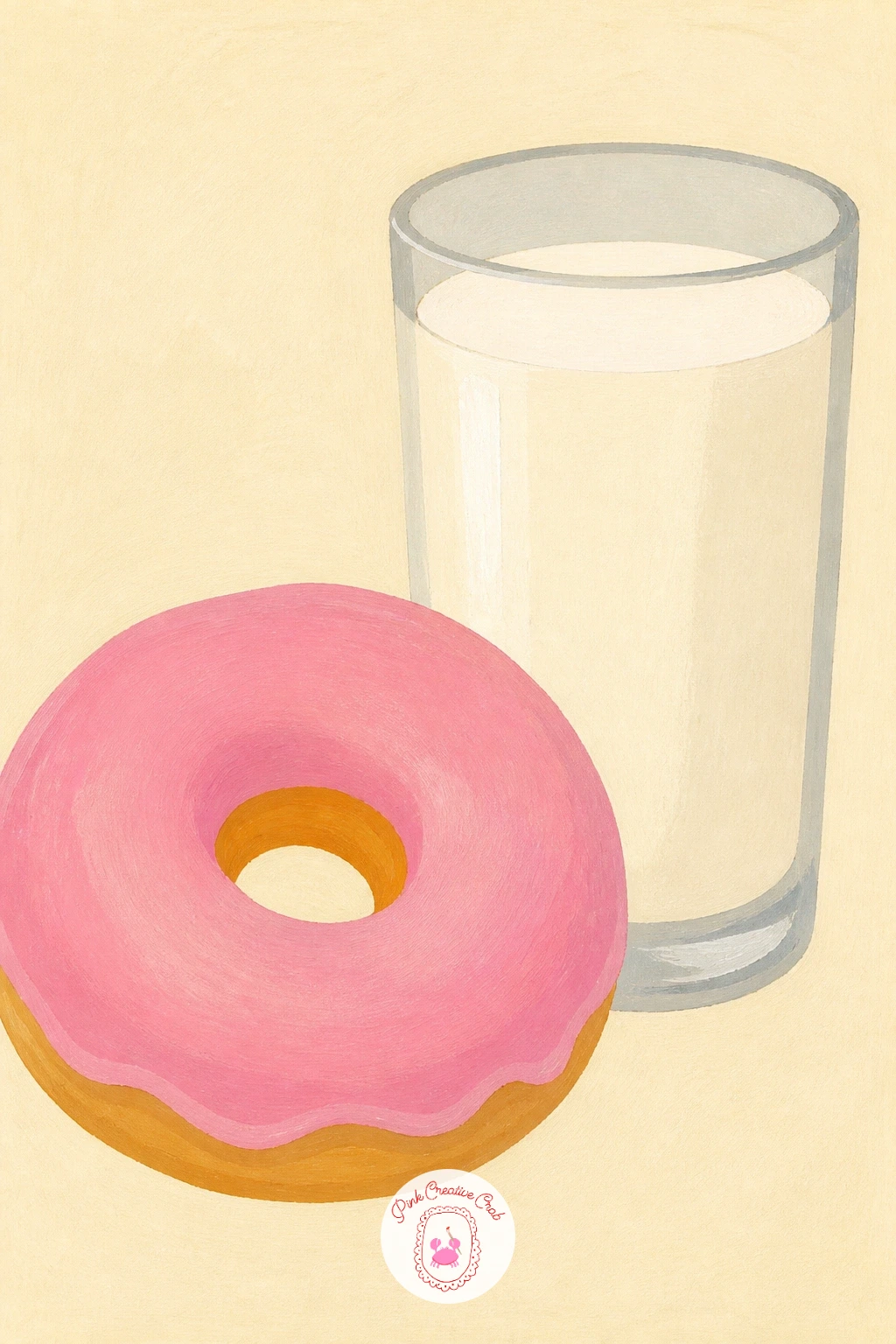
You Will Need
- white gel pen
Palette: Pale Grey,Rose Pink,Soft Cream,White
Return to a plainer finish with a powdered jam donut, its whole surface coated in white powdered sugar with jam peeking out from one small hole in the side. Draw the round donut shape, no center hole this time since jam donuts are filled rather than ring shaped, then a tiny dot or short line on one side marking where the jam was injected.
Paint the base dough in a pale golden tan, then once fully dry, dab white powdered sugar texture across the whole surface using a slightly dry brush, keeping the coverage uneven rather than flat and solid. A small drip of red jam at the injection point, just a few drops, finishes the story of what is hiding inside.
If the white powder covers the whole donut too evenly, leave a few small gaps of bare tan showing through, real powdered sugar is never perfectly even. No red jam color mixed? A deep berry purple reads just as well as a filling clue.
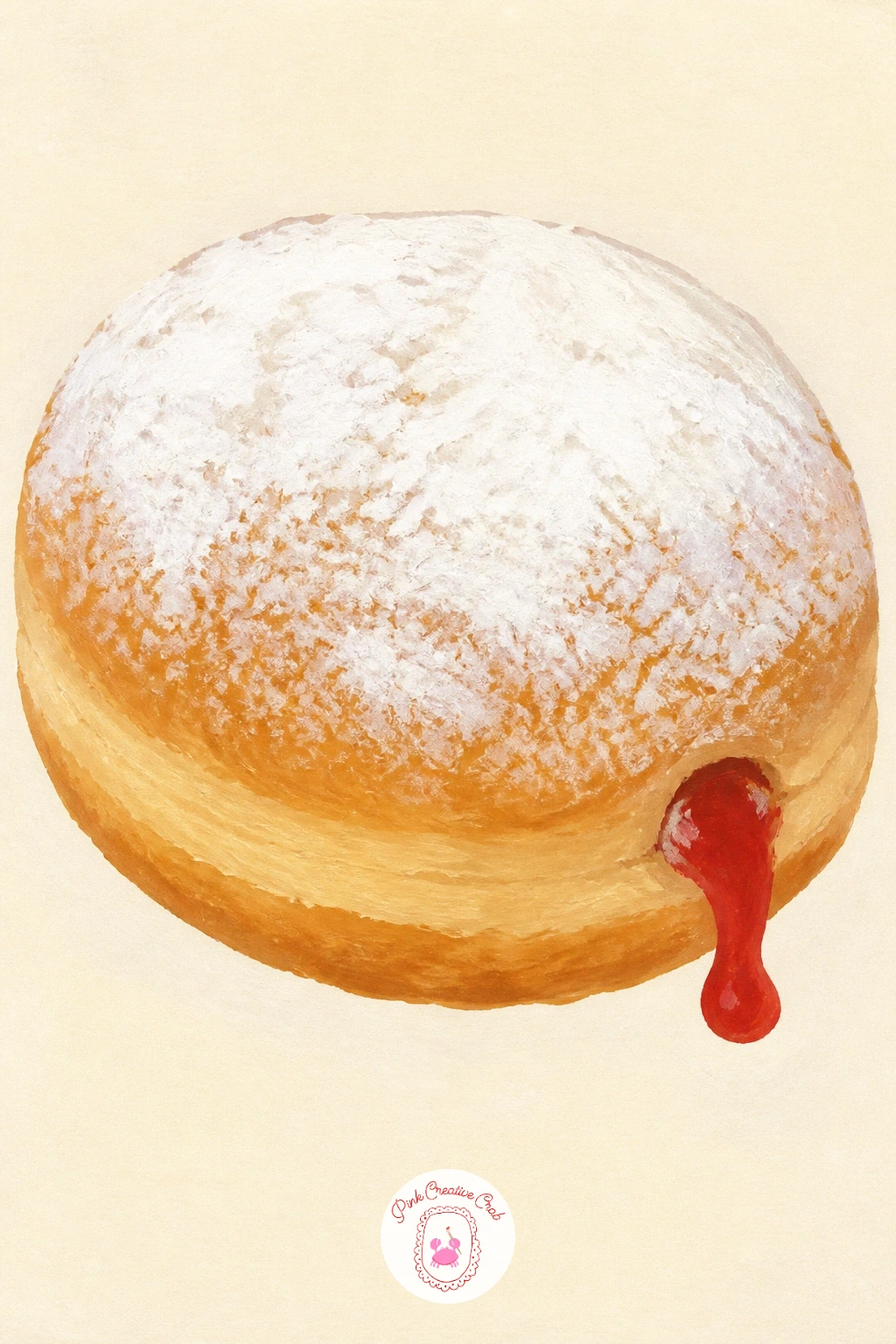
Palette: Pale Tan,White,Jam Red,Soft Cream
Soften the whole mood with a lavender donut with petals, its pale purple glaze scattered with a few tiny dried flower petals across the top. Draw the ring as usual, then scatter three or four small petal shapes loosely across the upper surface, varying their angle so they look dropped rather than arranged in a pattern.
Paint the glaze in a soft dusty lavender first as one flat layer, then once dry, paint each petal in a slightly deeper purple or soft pink, small enough that they read as a sprinkle of real flower rather than a cluttered decoration. A tiny white gel pen dot at the center of one or two petals adds just enough sparkle without overworking the surface.
If the petals look too uniform, vary their size noticeably, one slightly larger petal next to two smaller ones reads far more natural. Swap lavender petals for small dried rose petals in dusty pink if that suits your palette better.
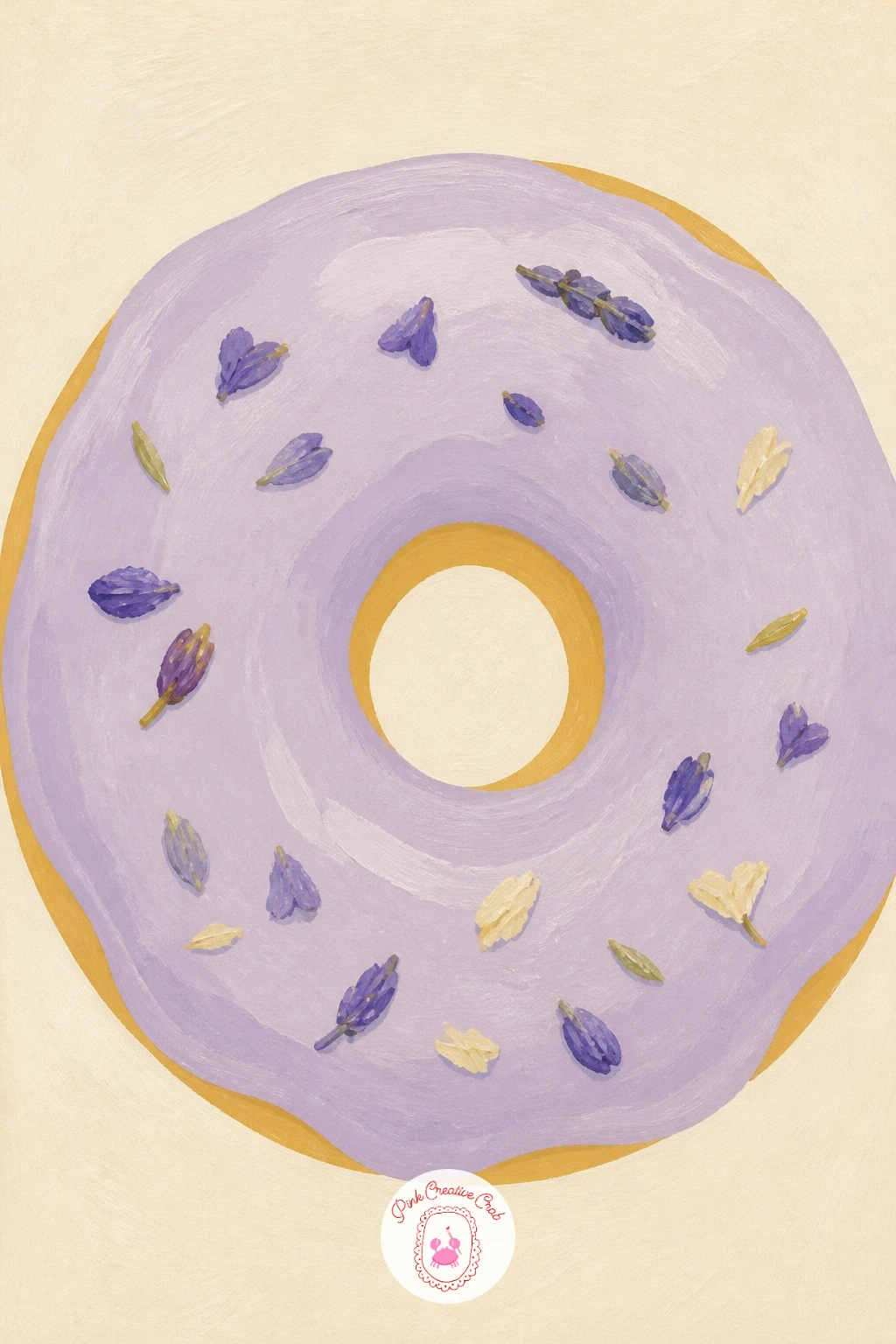
You Will Need
- white gel pen
Palette: Dusty Lavender,Deep Purple,Soft Cream,White
Combine two treats into one with a donut ice cream sandwich, a scoop of ice cream pressed between two donut halves like an oversized cookie sandwich. Draw two donut halves, flat cut sides facing each other, with a thick round scoop shape squeezed between them, slightly bulging out past the donut edges on both sides.
Paint the two donut halves first in matching glaze colors, then the ice cream scoop last in a contrasting flat color, a soft mint or strawberry pink, so it reads clearly as the filling rather than blending into the donut tones. A few drips of melting ice cream running down one side, painted as small soft curved shapes, add a nice bit of movement.
If the scoop looks squashed flat rather than bulging, round its visible edge outward slightly past where the donut halves meet. Swap the ice cream color for chocolate if you want the whole piece to read in warmer tones.
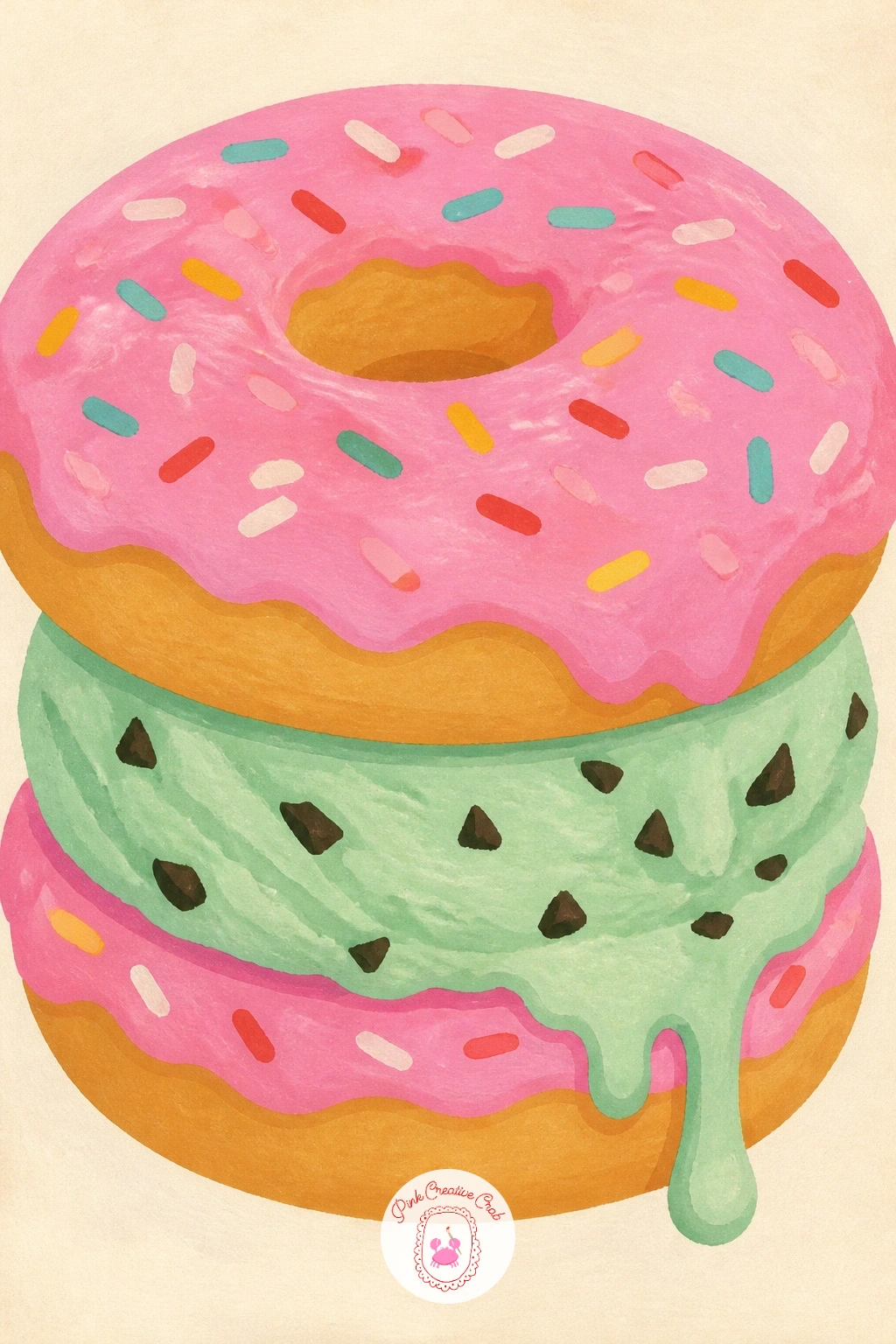
Palette: Mint Green,Rose Pink,Warm Tan,White
Step back into a bakery moment with a tray of fresh donuts, several resting loosely on a baking tray lined with paper, the kind of casual arrangement you would actually see pulled from an oven. Draw a simple flat tray shape first, then scatter four or five donuts across it at slightly different angles rather than in a neat grid, since fresh batches never line up perfectly.
Paint the tray and its paper lining first in two flat tones, a metal grey tray with a cream paper liner, then the donuts on top, varying their glaze colors so the tray reads as a true mixed batch. A faint steam line or two rising from one or two donuts suggests they just came out of the oven.
If the tray starts looking crowded, leave a little visible paper lining between each donut rather than packing them edge to edge. Swap the metal tray for a wooden board if that fits your kitchen palette better.
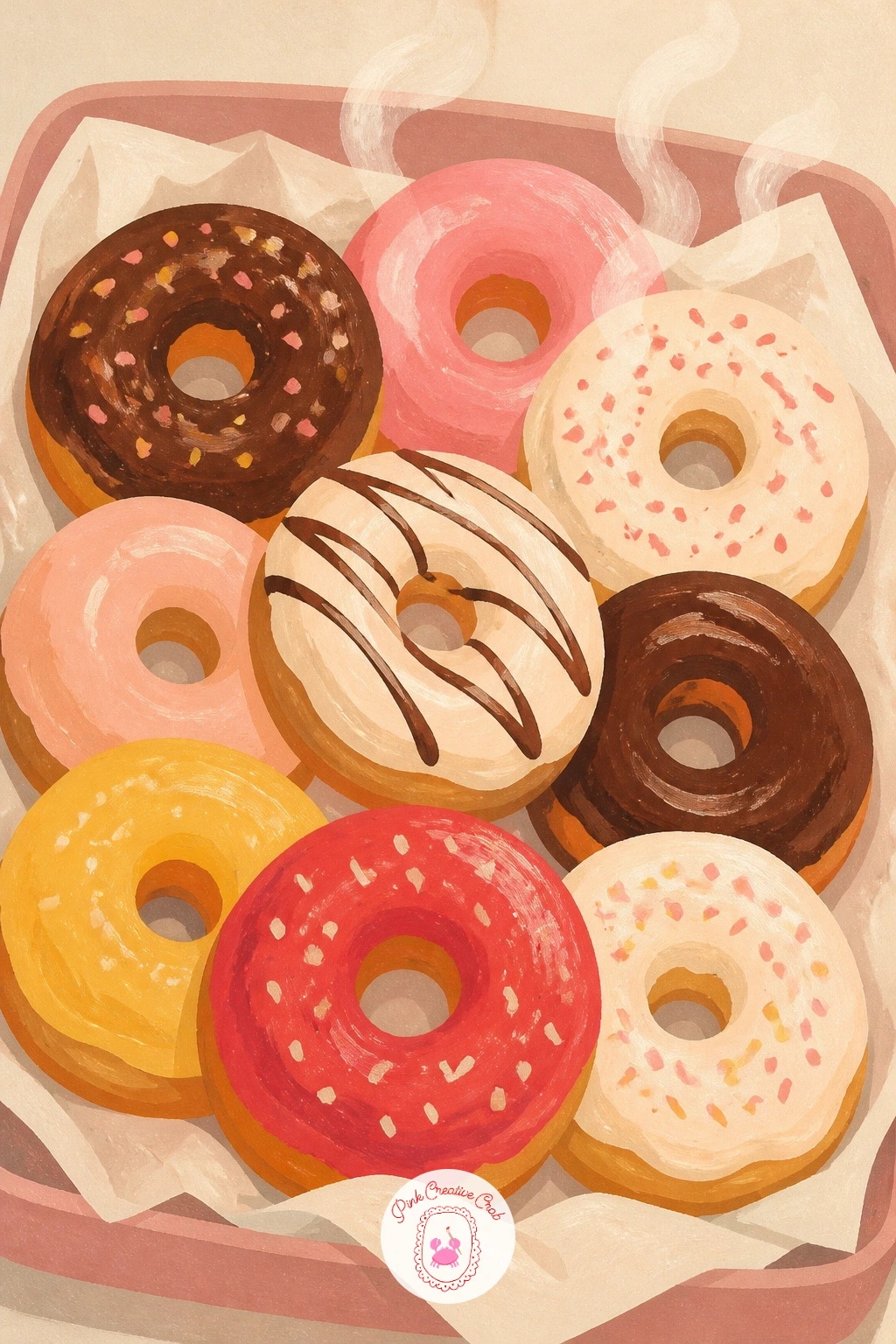
Palette: Metal Grey,Soft Cream,Rose Pink,Chocolate Brown
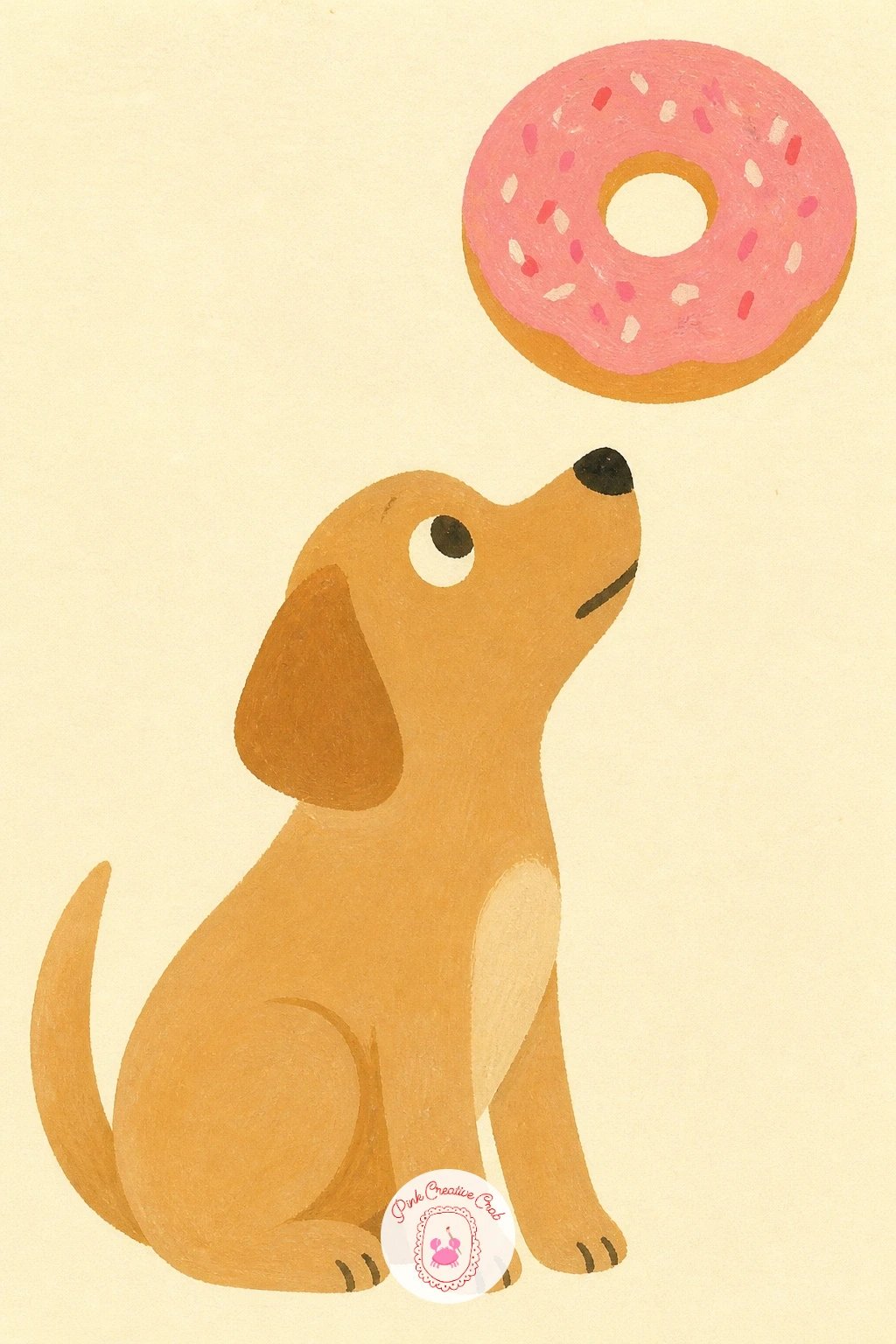
Bring the comedy in with a dog eyeing a donut, the dog sitting just below a donut held or placed slightly out of reach, its whole expression aimed upward. Draw the dog as a simple seated shape, round head tilted up, with the donut positioned above and slightly to one side so the two shapes create a clear visual line between them.
Keep the dog’s face minimal, two dot eyes looking upward and a small open mouth, since that tilt is what carries the whole joke rather than any detailed expression work. Paint the dog in one flat solid color, then the donut last in a bright glaze so it stays the clear object of attention in the scene.
If the dog’s gaze does not read clearly, add a thin dotted or implied line from its eyes toward the donut while sketching, then erase it before painting, just to check the angle works. Swap the sitting pose for one paw raised if you want a more pleading, hopeful feeling.
Palette: Warm Tan,Rose Pink,Soft Cream,Dark Brown
If this pose needs more warm up first, the seated poses in dog pencil drawing are a good match for this style.
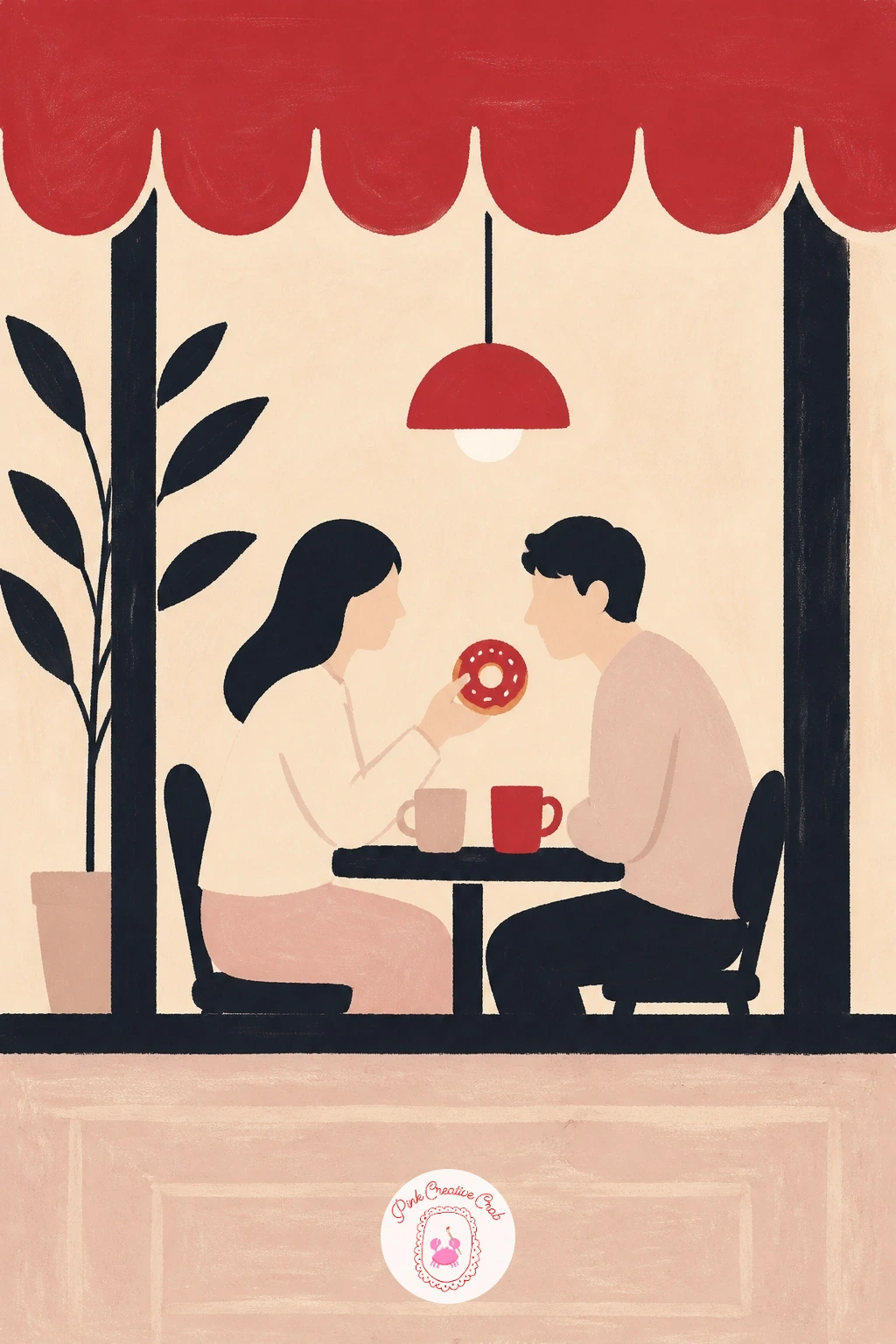
Frame a quieter scene with a donut date at a cafe window, two simple figures seated at a small table seen through a window shape, a donut and coffee between them. Draw the window first as a large rounded rectangle taking up most of the page, then the two seated figures inside it, kept small and simple against the window frame.
Paint the window frame in a flat color first, then the scene inside, the two figures, their small table and the donut between them, each as flat simple shapes rather than detailed portraits. A cherry red accent, a cup, a chair, a sign in the background, ties the little scene together.
If the figures feel too detailed or fussy against the simple frame, flatten their features down to basic shapes, a dot or two for a face is plenty at this scale. No window frame idea working? A simple café sign above the table reads just as clearly without needing glass at all.
Palette: Cherry Red,Warm Tan,Mint Green,Soft Cream
The framed cafe window scenes in watercolor and ink tutorial pair nicely with this kind of small two figure scene, worth a look for layout ideas.
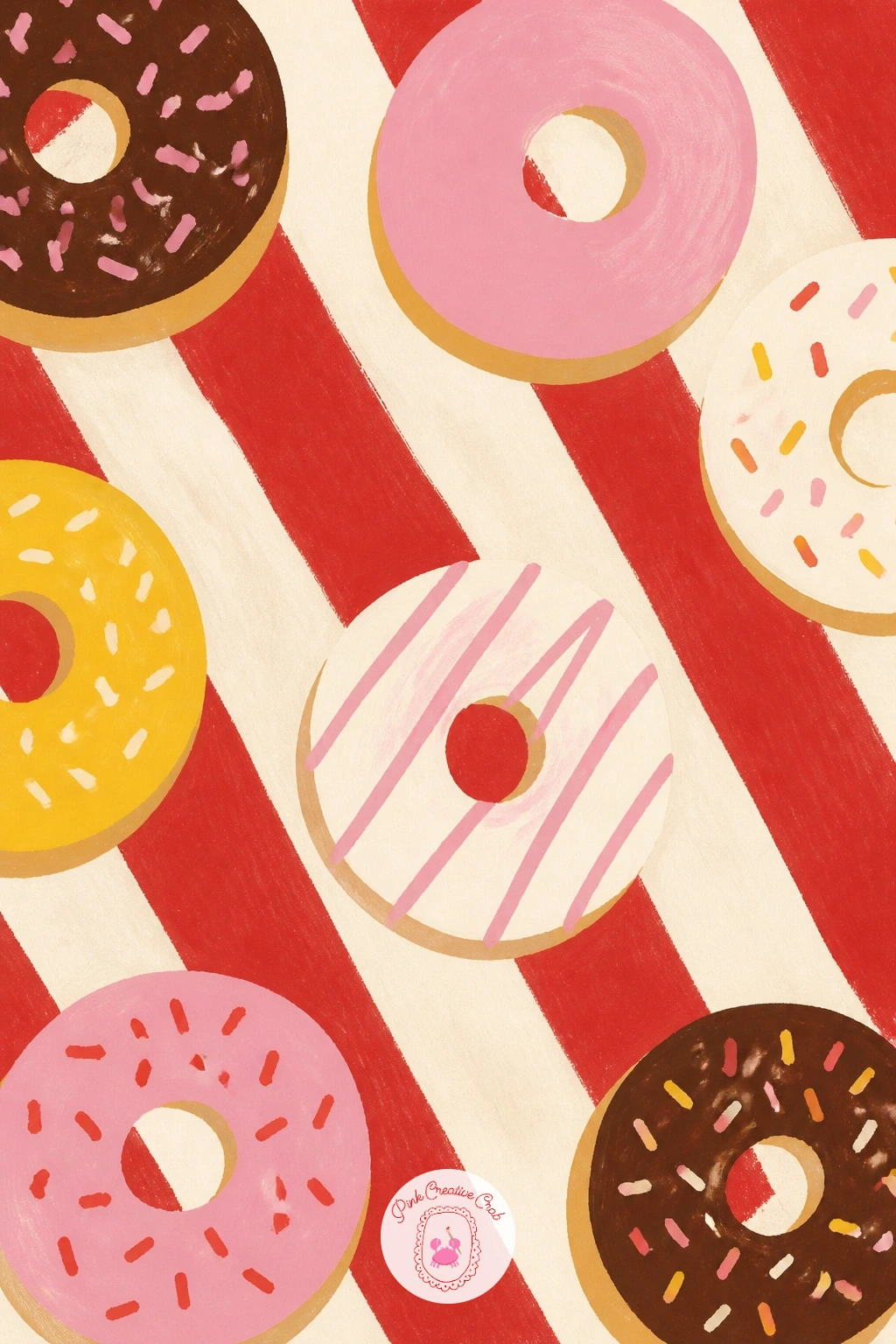
Close the set with donuts on a striped picnic cloth, a few donuts arranged loosely over a bold striped fabric pattern that gives the whole page a graphic, confident finish. Draw the cloth first as a flat shape covering the lower half of the page, then three or four donuts scattered across it at relaxed, slightly different angles.
Paint the striped pattern first, alternating two flat colors in even bands across the cloth, letting the stripes run in one clear direction rather than mixing directions which would fight with the donuts for attention. Paint the donuts last, directly over the finished stripes, so their shapes sit clearly on top of the pattern rather than blending into it.
If the stripes compete too much with the donuts once finished, go back and mute one of the two stripe colors slightly so the donuts stay the brighter, clearer focal point. Swap stripes for polka dots if that feels more like your own picnic cloth at home.
Palette: Cherry Red,White,Rose Pink,Butter Yellow
What to Do Next
Pick one idea that is pulling at you, the single glazed donut if this is your first try, the donut shop counter if you want something with more scene to sink into, and get it down on smooth paper before the moment passes. Keep your palette limited to three or four colors per piece and let the shapes stay flat and confident, that is what gives this whole set its charm.
Frequently Asked Questions
What paint works best for donut drawing in this flat, graphic style?
Gouache works best because it dries matte and opaque, giving clean flat color with crisp edges. Acrylic is a fine swap if that is what you already own, just thin it slightly less than you would for blending.
How do you keep the donut glaze looking glossy without shading?
Leave one small highlight patch unpainted or painted in the palest tint, rather than shading the whole surface. A single white gel pen stripe or dot added last does most of the glossy work.
What is the easiest donut drawing idea to start with?
A single glazed donut with sprinkles, painted large and centered, is the easiest starting point. It needs only two paint layers and a scattering of simple sprinkle dashes to look finished.
How do you stop donut drawings from all looking the same?
Vary the glaze color, the setting and the extra element around each donut, a cup, a pet, a shop counter. Changing just one of those three keeps every piece feeling like its own scene.
Do you need fine detail brushes for this style of donut drawing?
No, a basic round and flat brush covers nearly everything here since the style stays flat and graphic rather than detailed. A fine round brush is only needed for small touches like sprinkles or thin highlight lines.
Have any thoughts?
Share your reaction or leave a quick response — we’d love to hear what you think!
-
 0
-
0
-
0
-
0
-
0
-
0


