

Table of Contents
- Red Barn in a Field
- Snowy Mountains With Pine Trees
- Lake With a Rowboat
- Rolling Hills With One Tree
- Lighthouse on a Cliff
- Country Road With a Fence
- Windmill on a Hill
- Cottage by a Stream
- Wheat Field With a Farmhouse
- Lavender Field With a Tree
- Palm Beach
- Desert With a Cactus
- Waterfall Between Rocks
- Bridge Over a River
- Frequently Asked Questions
These watercolor landscape paintings give you fourteen simple scenes you can paint today, each built from a few big shapes instead of fussy detail. Every template comes as a pair: a finished painting to work from and a clean black outline you print and trace, so you never have to sketch a barn, a boat or a mountain range from a blank page.
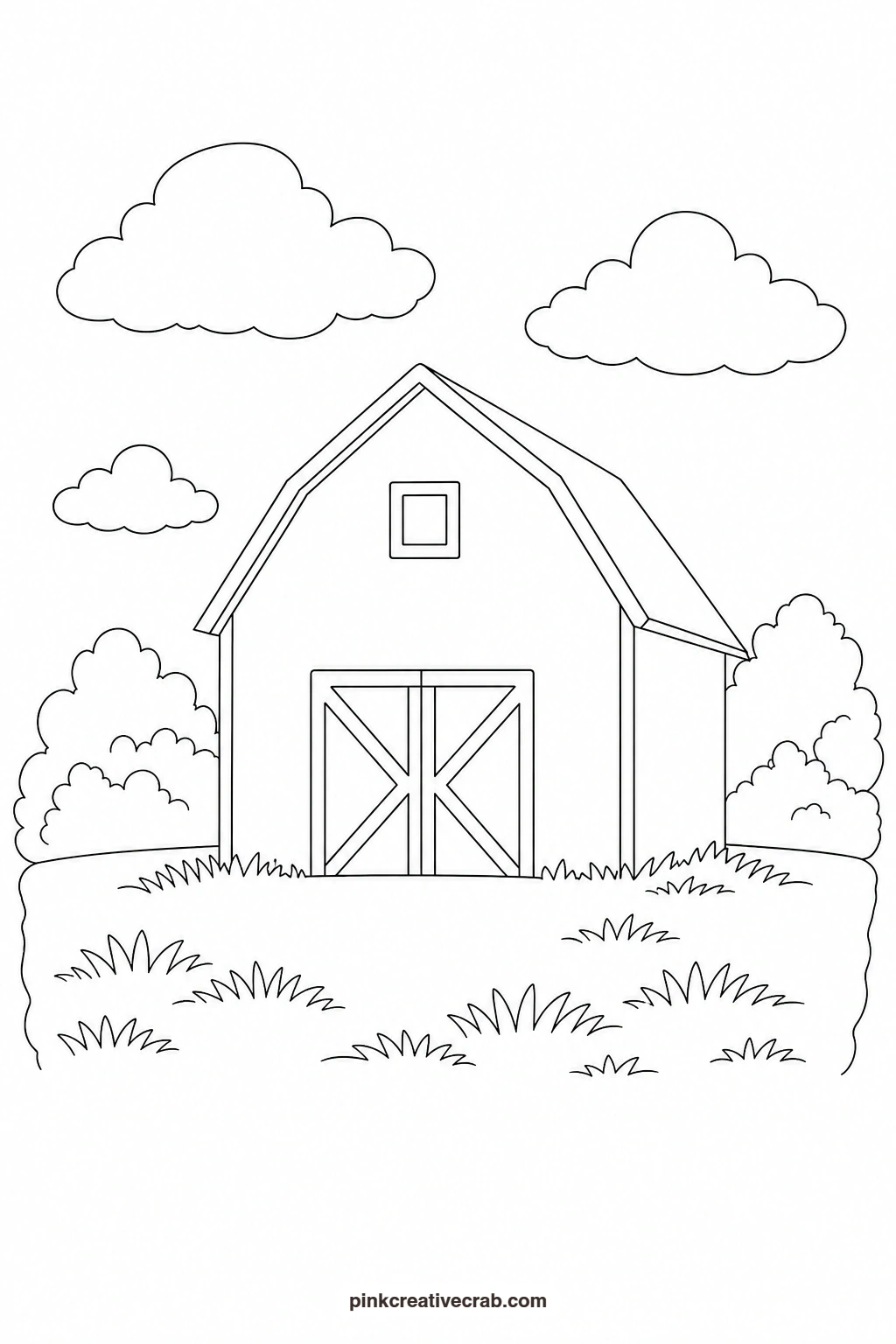
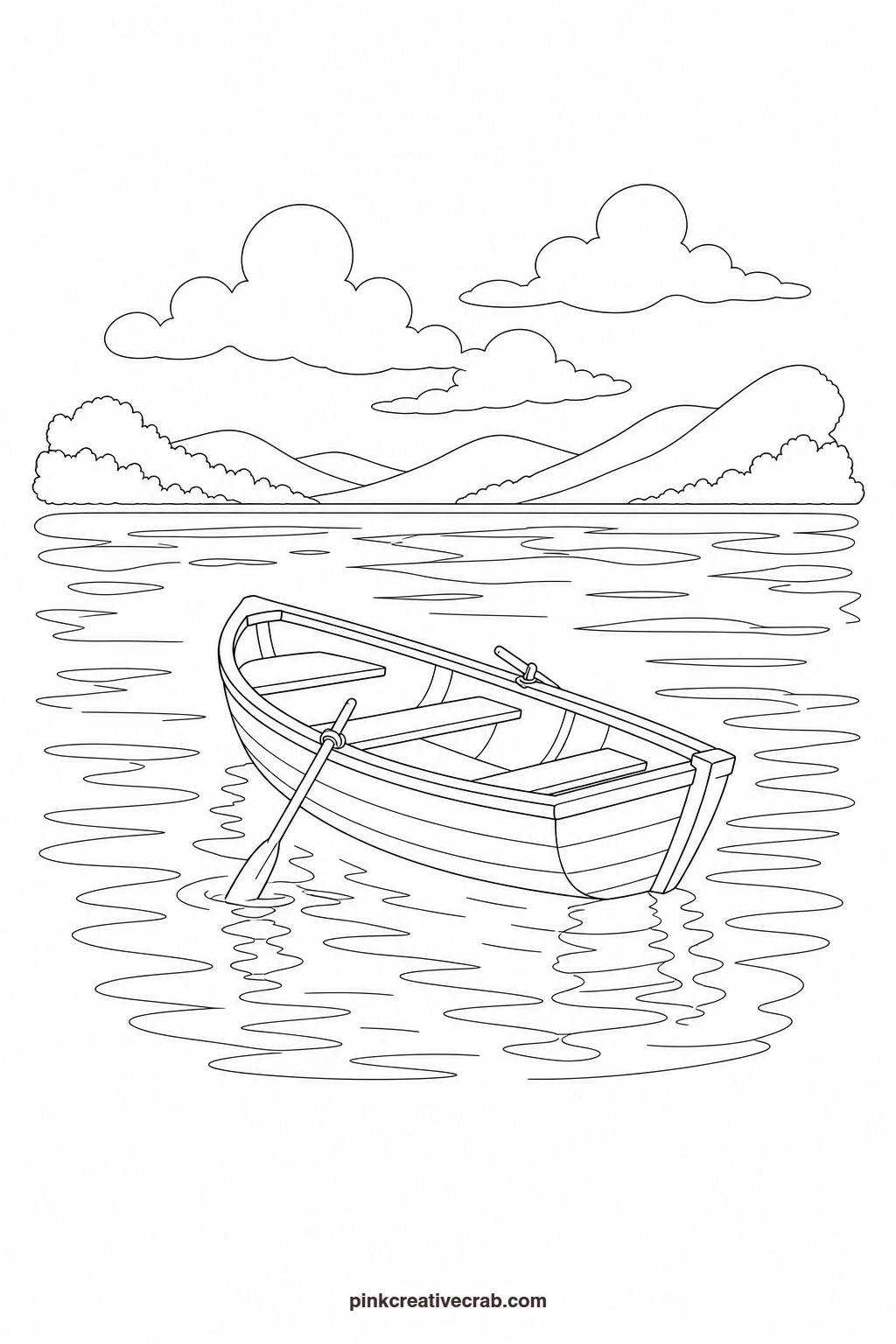
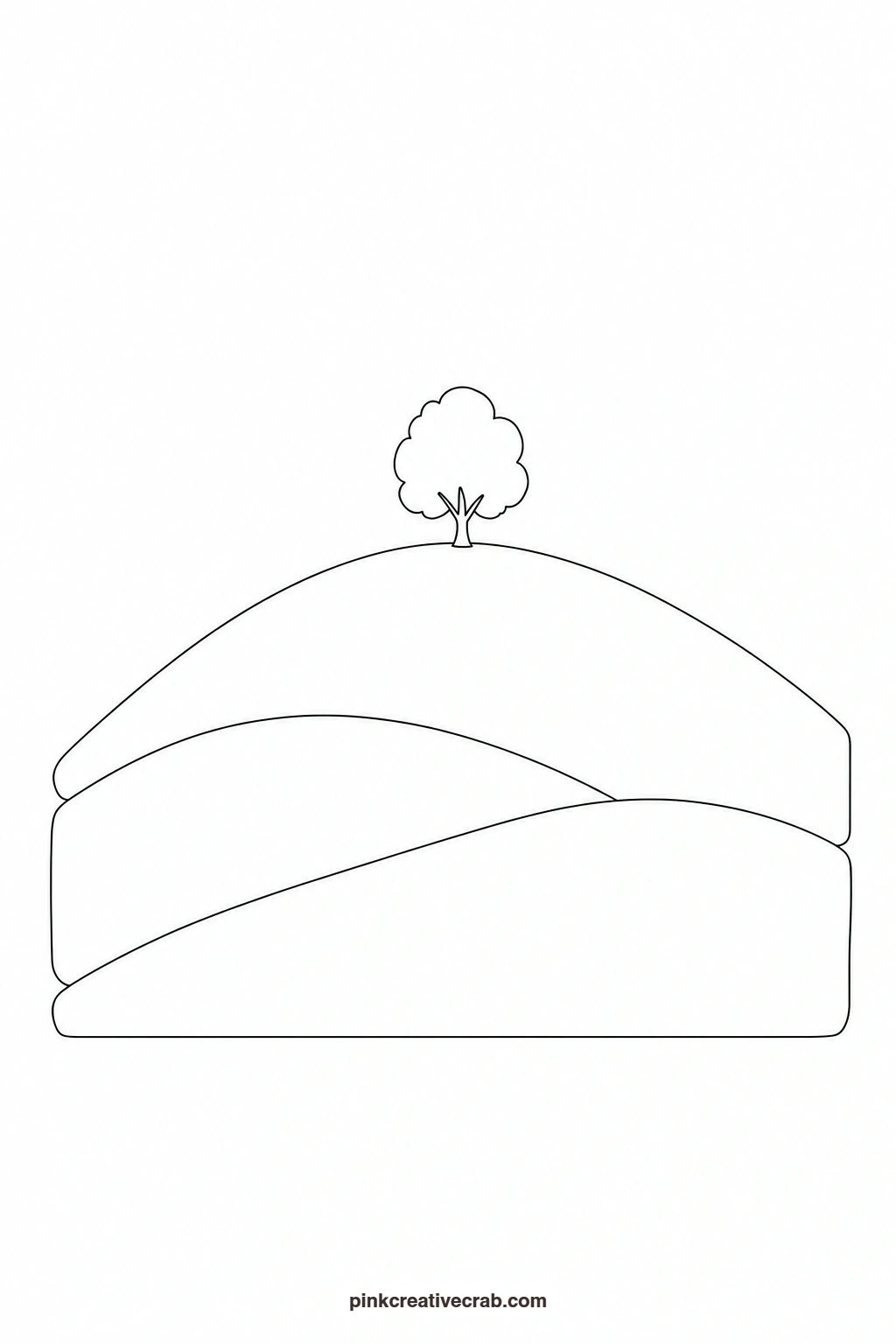
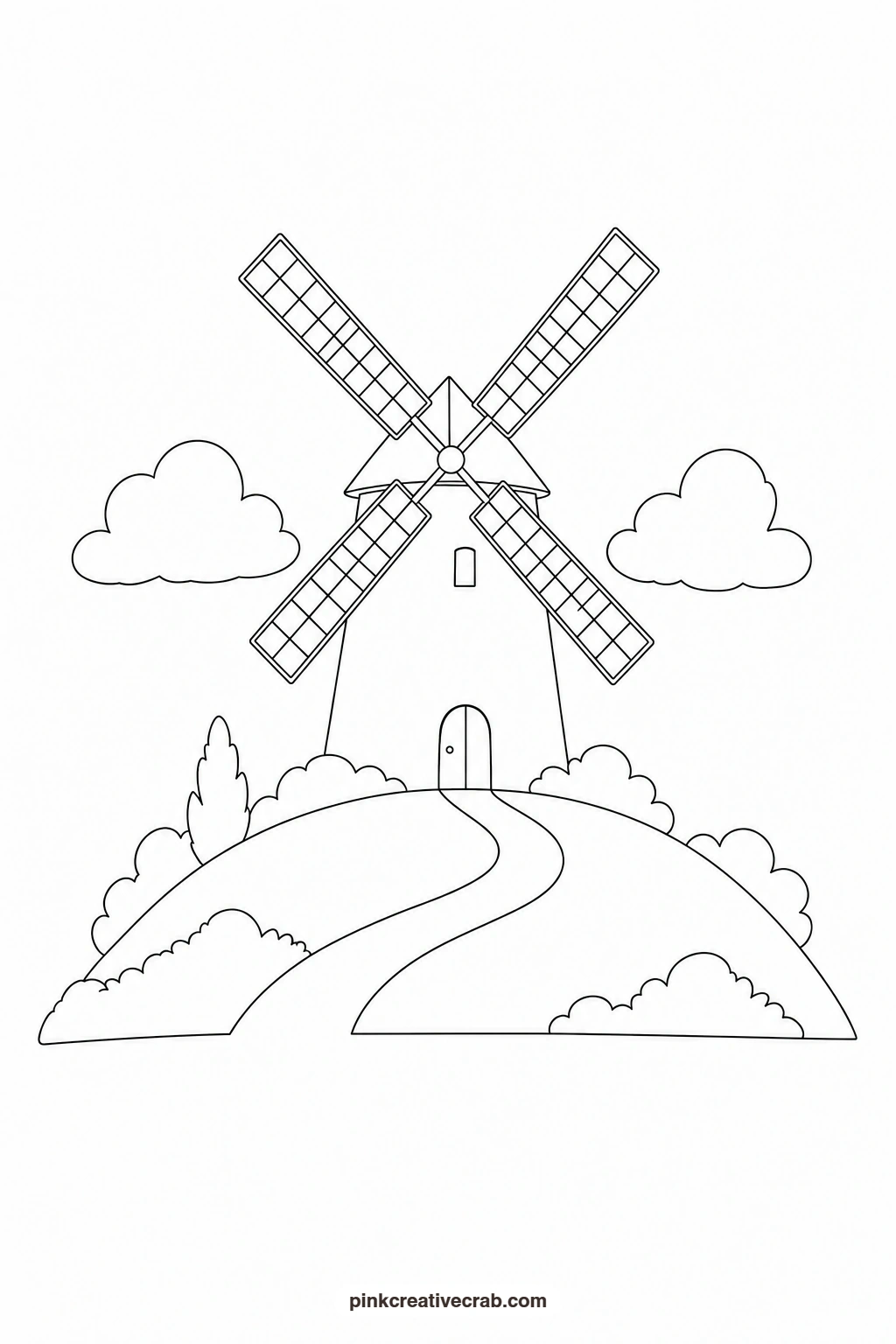
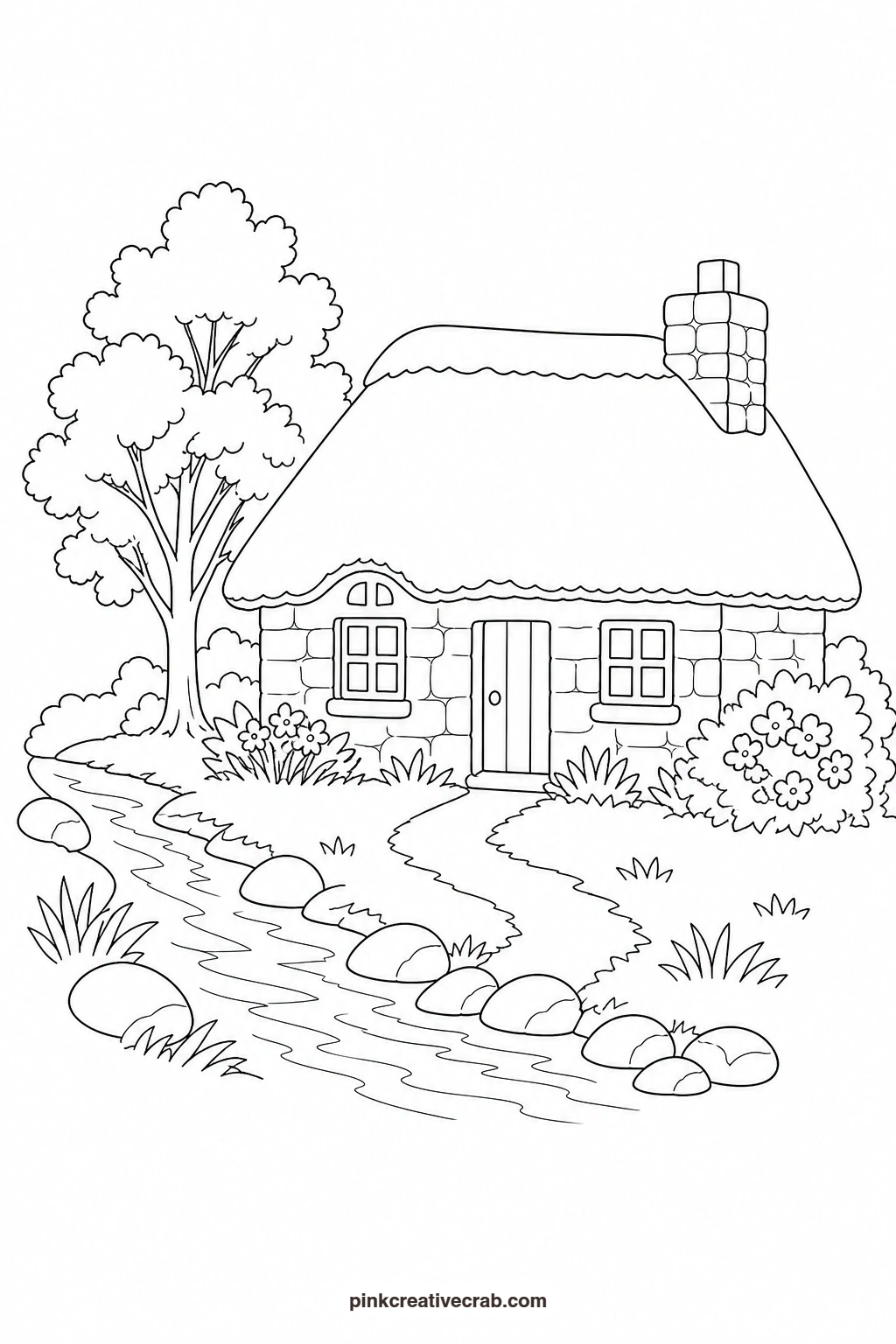
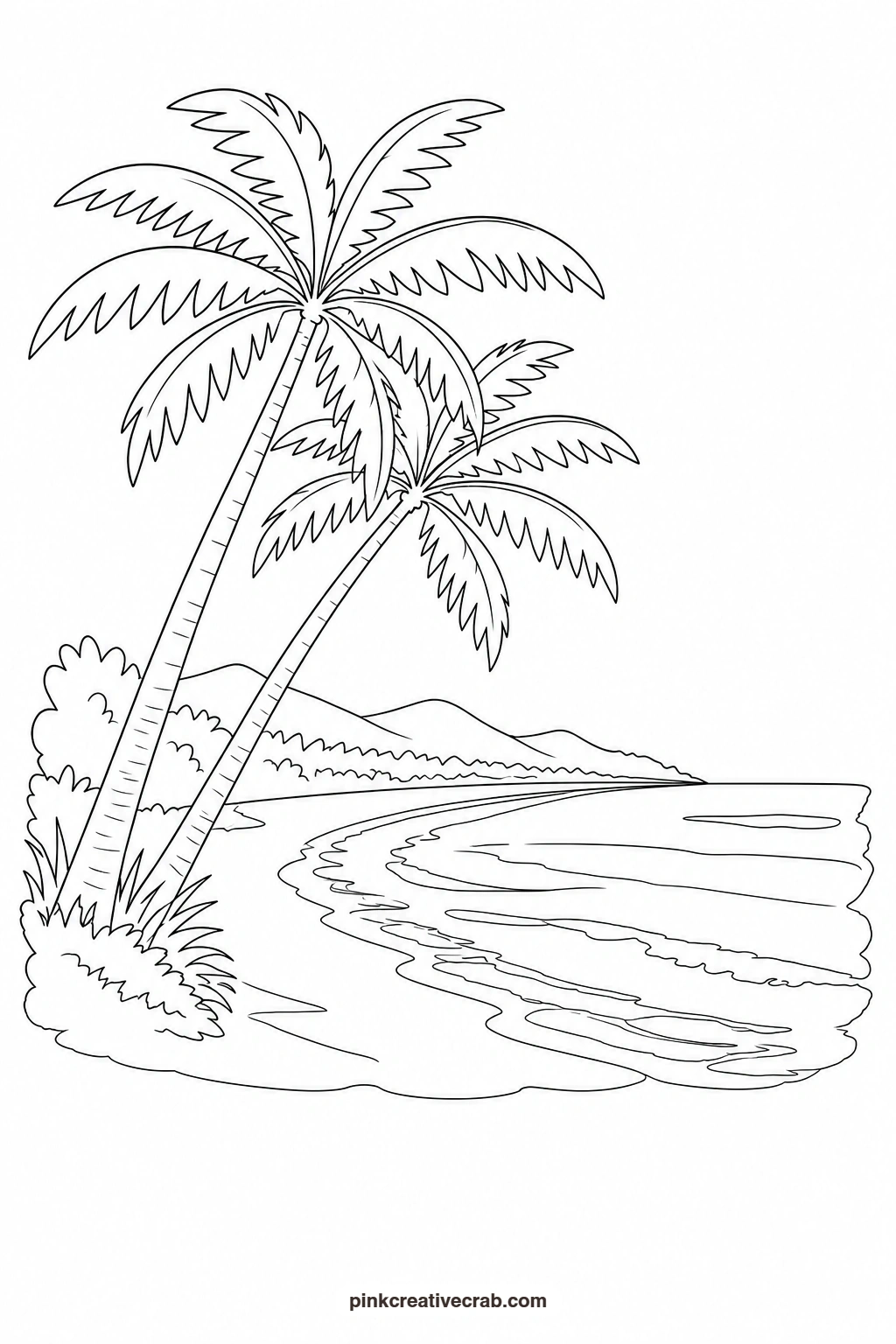
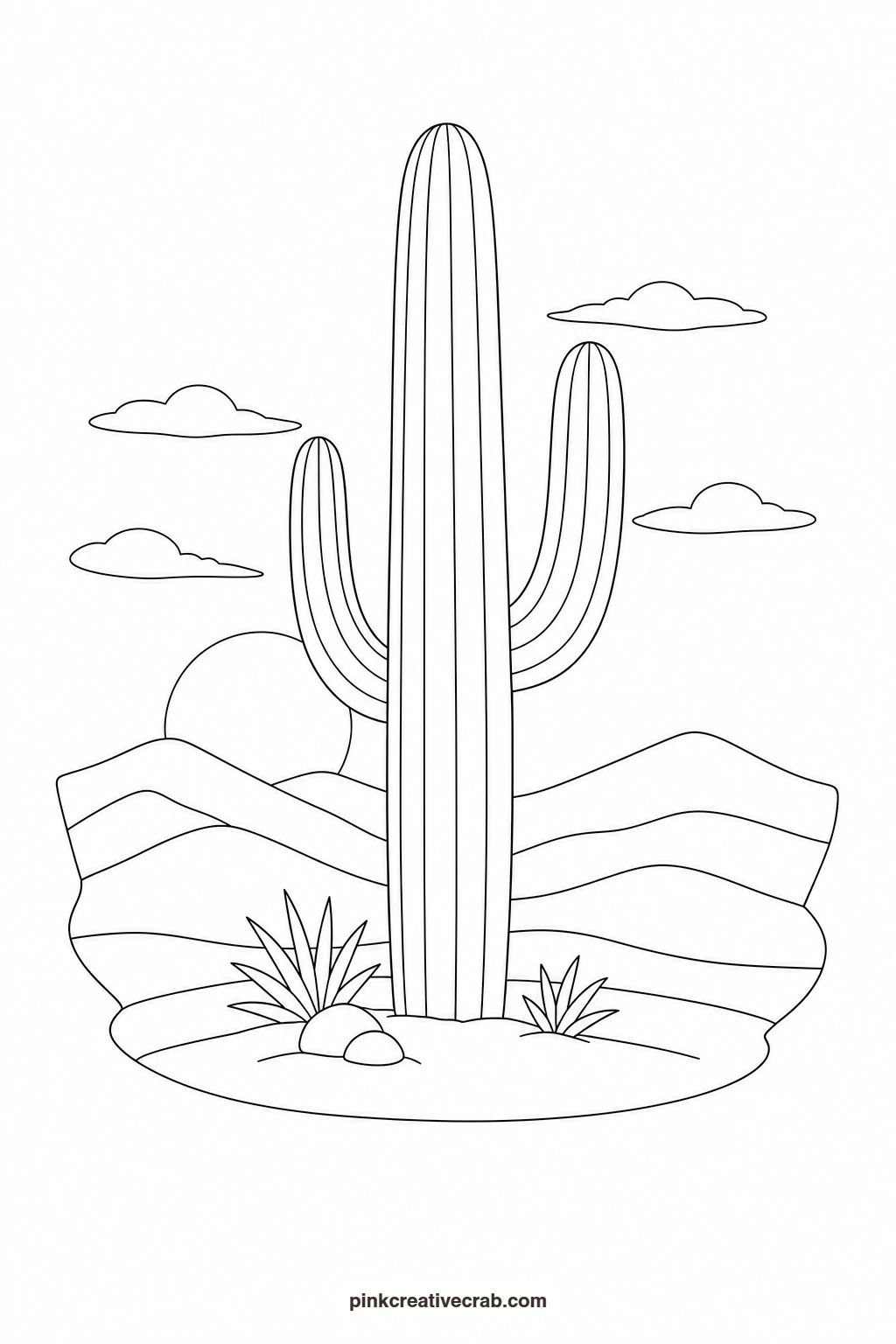
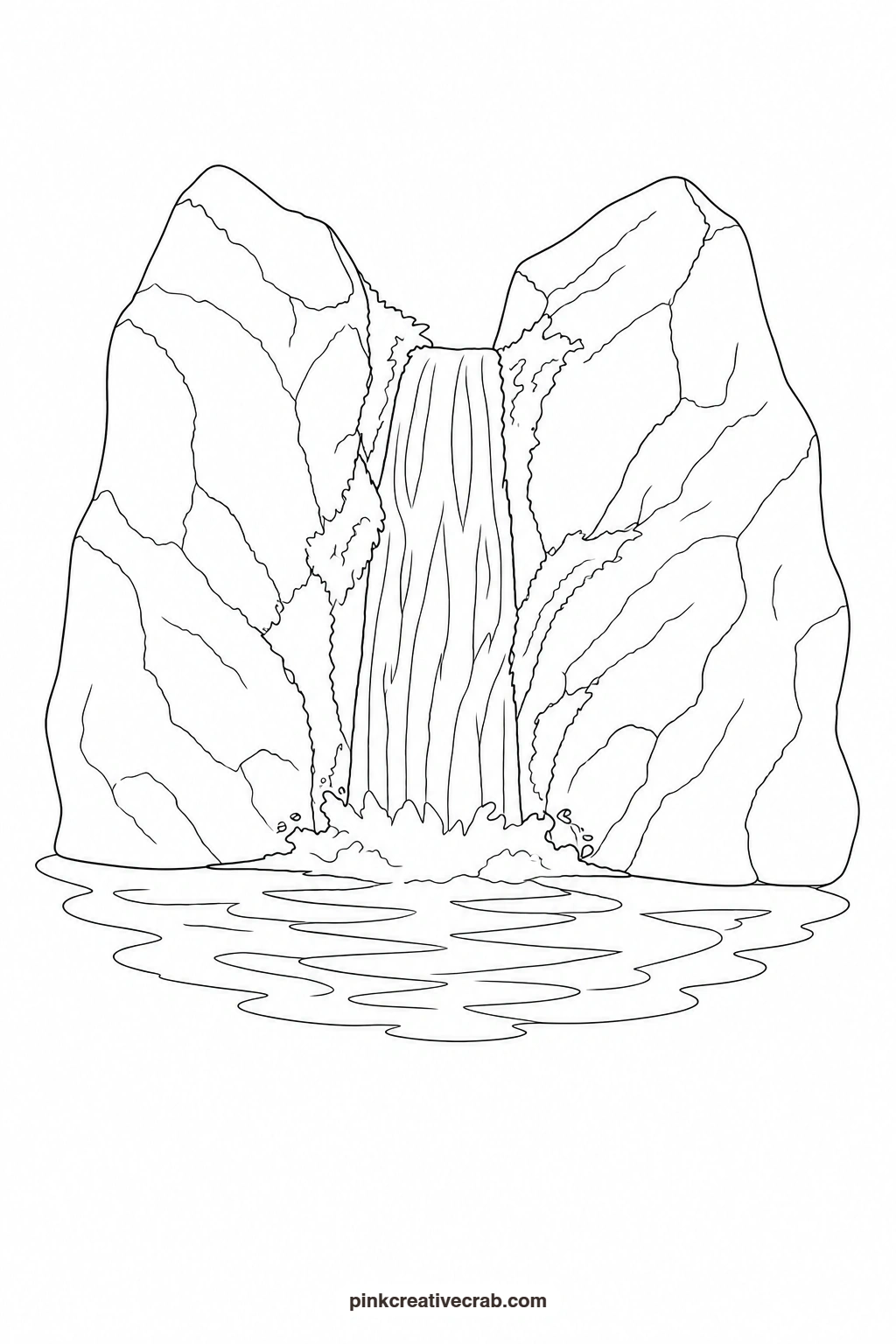
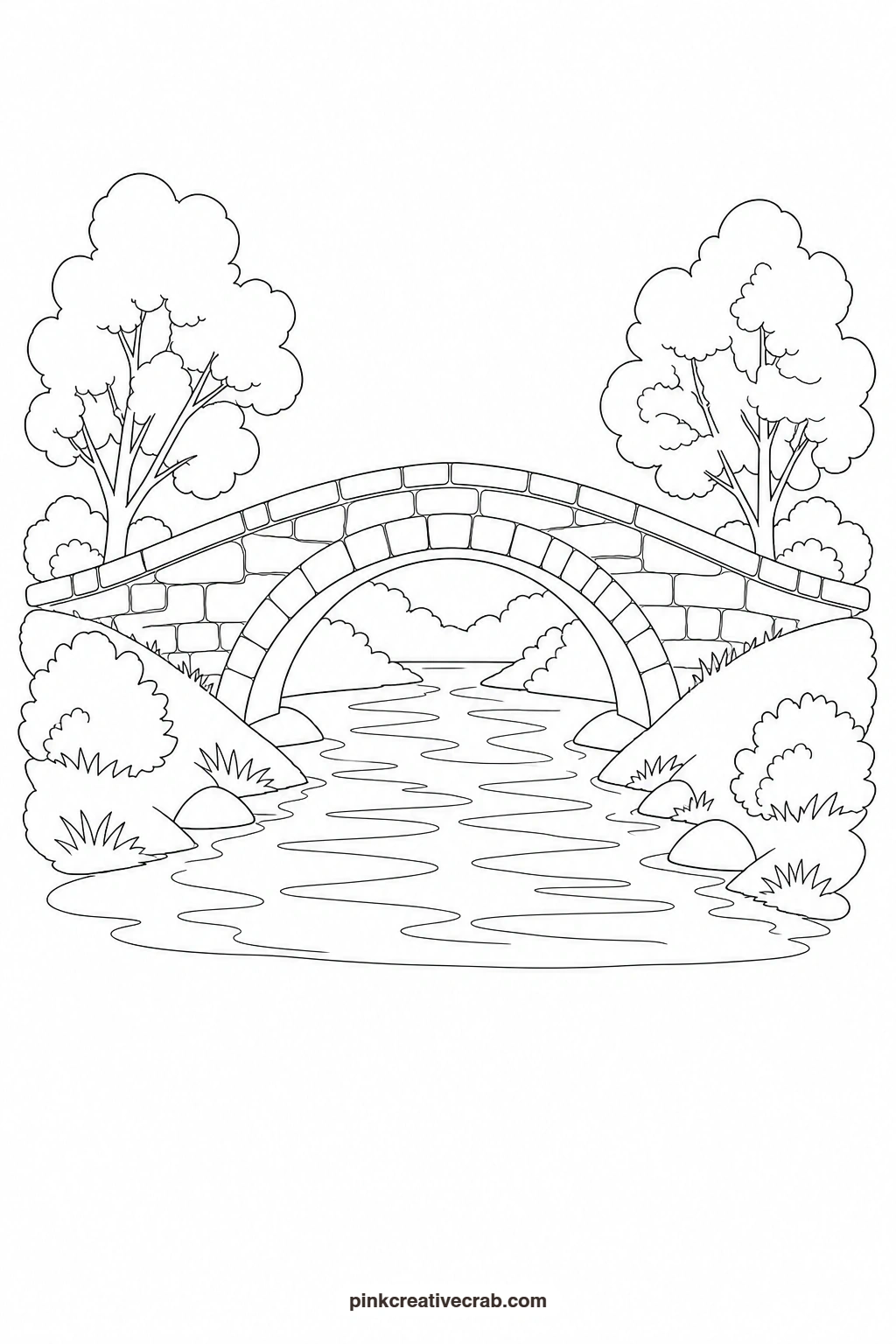
Print the outline at the size you want, then transfer it to your watercolor paper by holding both sheets against a sunny window or a light pad, or by sliding graphite transfer paper underneath and tracing the lines. Once the shapes sit on good paper, keep the finished example beside you and follow the colour order in each template as you paint.
Using these images: free for personal projects such as printing, coloring, cards, journals and gifts. Handmade items that include them may be sold up to 30 pieces per design. More than that is commercial use and is not permitted, and neither is selling or sharing the images themselves or passing them off as your own. Please ask before any other use.
Red Barn in a Field
Paint the sky first with a thin wash of Cerulean Blue, leaving a few soft white clouds untouched, then let it dry fully before moving on. Fill the barn with Cadmium Red, pulling the brush in one direction so the wash stays flat, and add the roof in Payne’s Grey while the red is dry so the edges stay crisp. Sweep Sap Green across the field in loose horizontal strokes, darker near the bottom, and finish with a thin Burnt Sienna line for the barn door to make the whole shape read clearly from across a room.
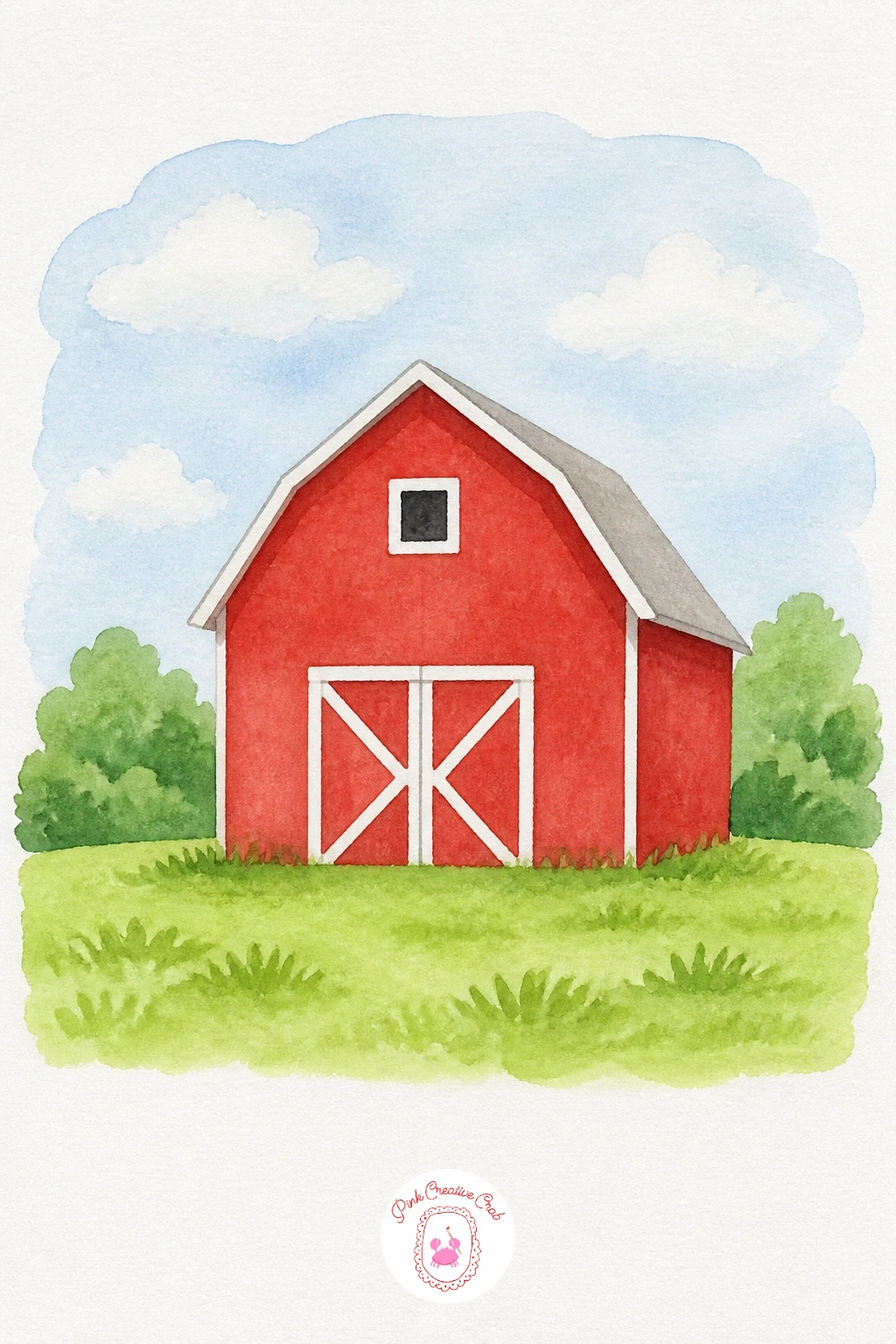
Palette: Cadmium Red,Cerulean Blue,Sap Green,Payne’s Grey,Burnt Sienna
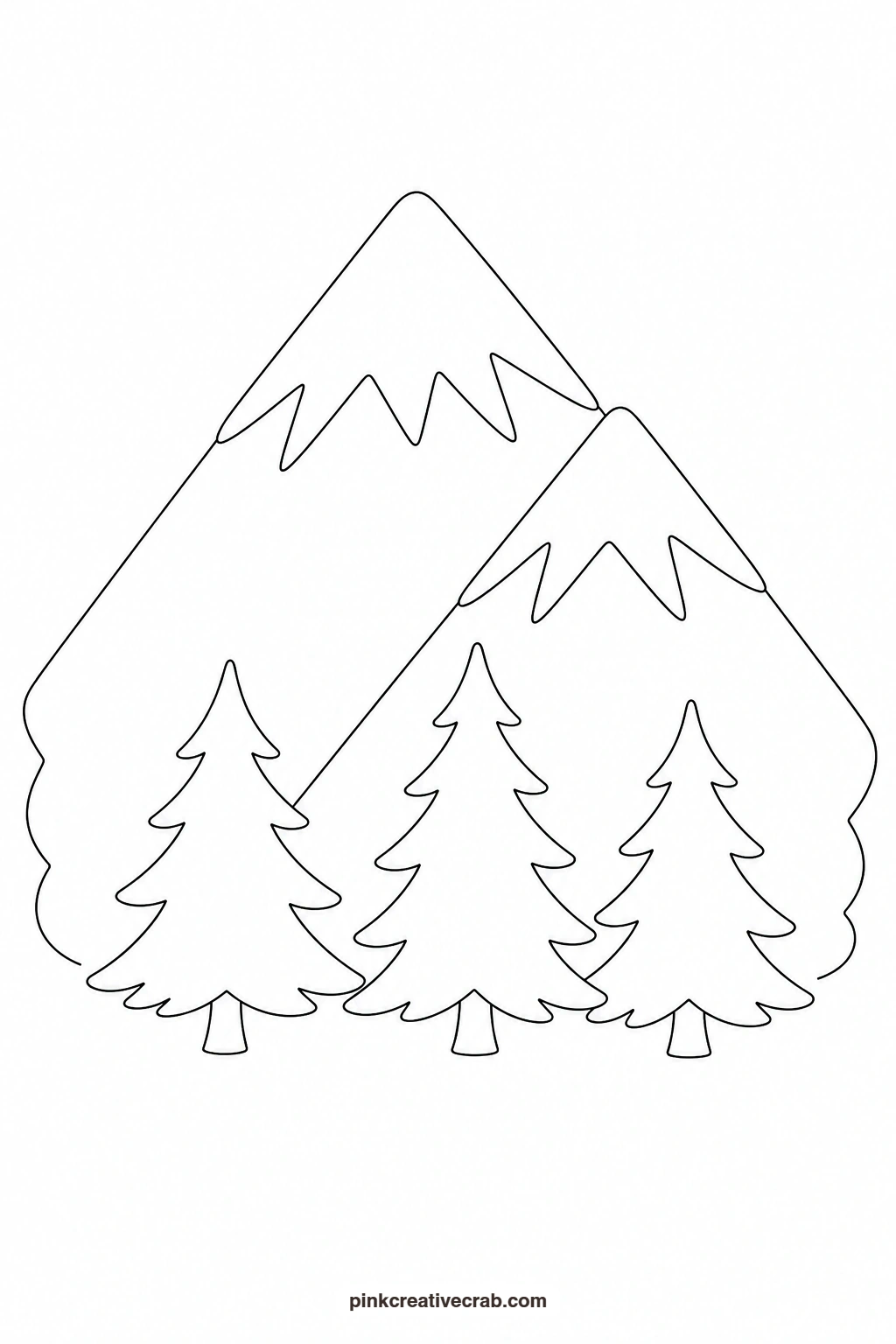
Snowy Mountains With Pine Trees
Wash the sky with a pale Lavender tint, then block in the far mountain with a light wash of Payne’s Grey while the sky is still slightly damp so the edge softens naturally. Paint the nearer mountain darker and leave jagged white peaks untouched for snow. Load the pine trees with Hunter Green using short downward strokes to suggest branches, and ground the whole scene with a thin strip of Titanium White left bare at the base for drifted snow.
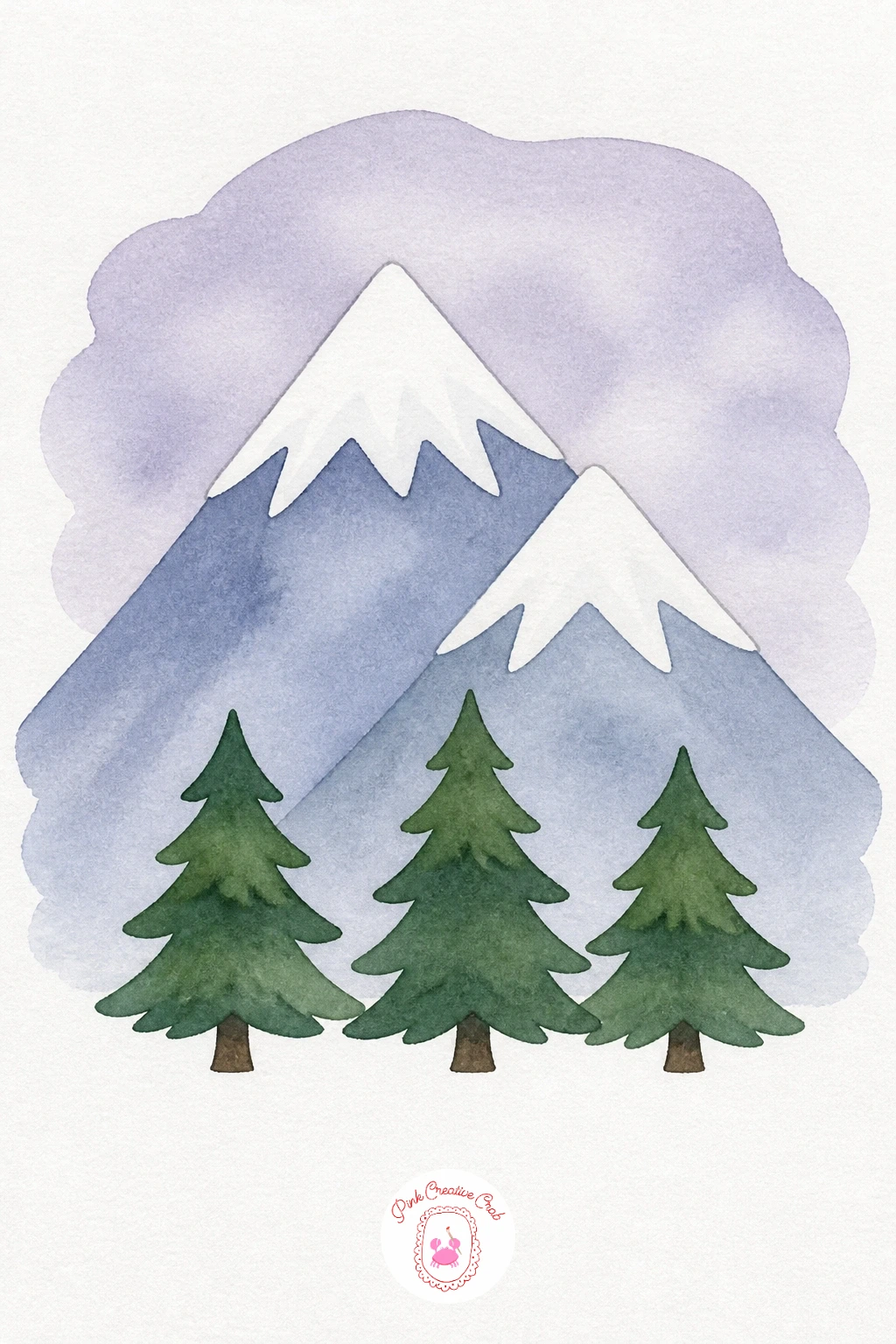
Palette: Payne’s Grey,Hunter Green,Lavender,Titanium White
Lake With a Rowboat
Start with a wash of Cerulean Blue across the water, pulling the brush in long flat horizontal strokes so the ripples stay calm rather than choppy. While that layer dries, paint the distant hills in a muted Sap Green along the top edge of the lake. Paint the rowboat in Burnt Sienna with a Payne’s Grey line along its rim, then drop a few short curved strokes of darker blue under the boat to suggest its reflection sitting on the water.
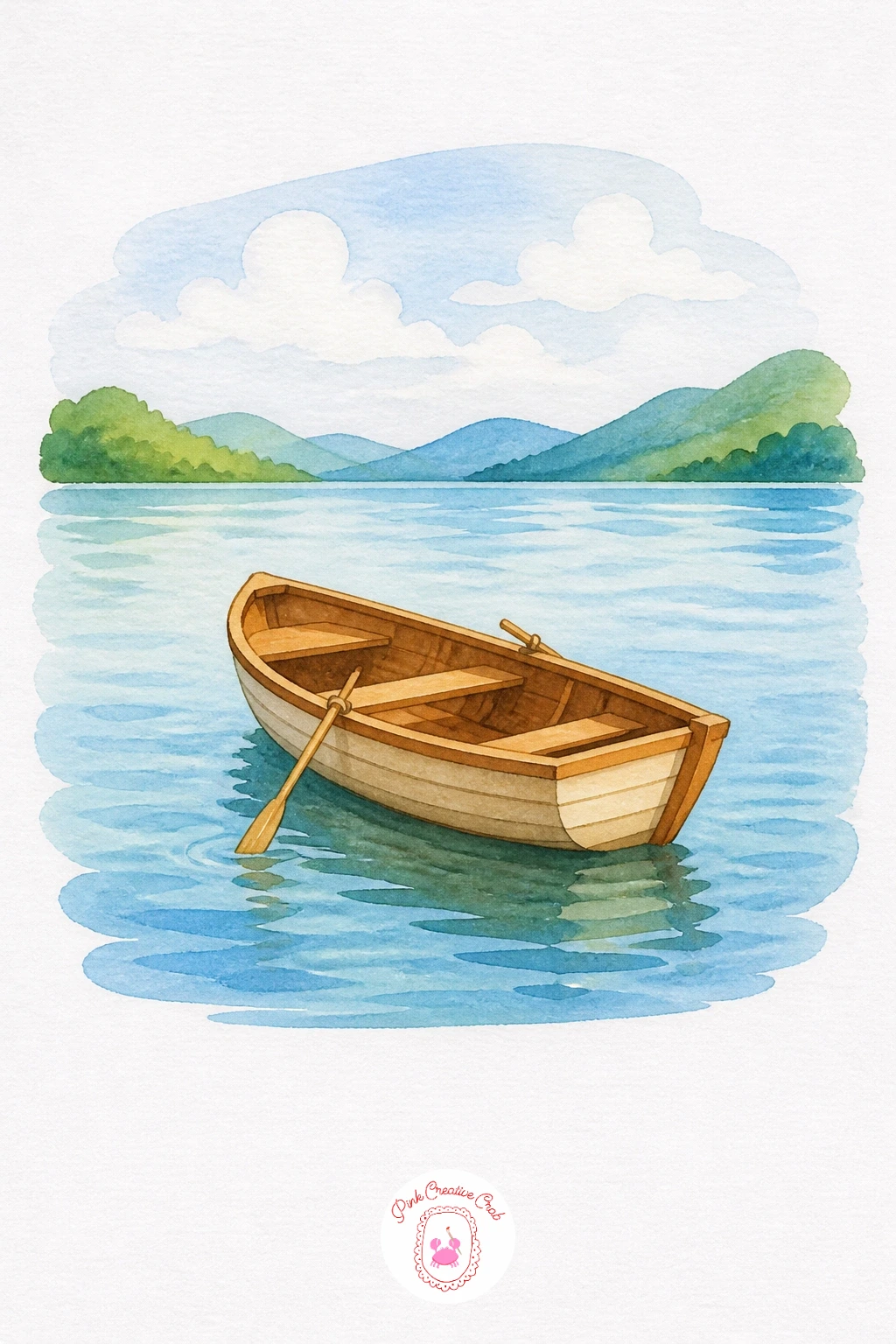
Palette: Cerulean Blue,Sap Green,Burnt Sienna,Payne’s Grey
Rolling Hills With One Tree
Lay a pale Cerulean Blue wash across the sky, then let it dry before painting the hills in overlapping bands of Sap Green and Olive Green, darkest in front and lightest furthest back, so the layers create depth without any extra lines. Paint the tree trunk in Burnt Sienna and dab the leafy top in a rounded cluster of darker green using the tip of the brush. This is a forgiving piece for a beginner, since uneven hill edges only make the rolling feel more natural.
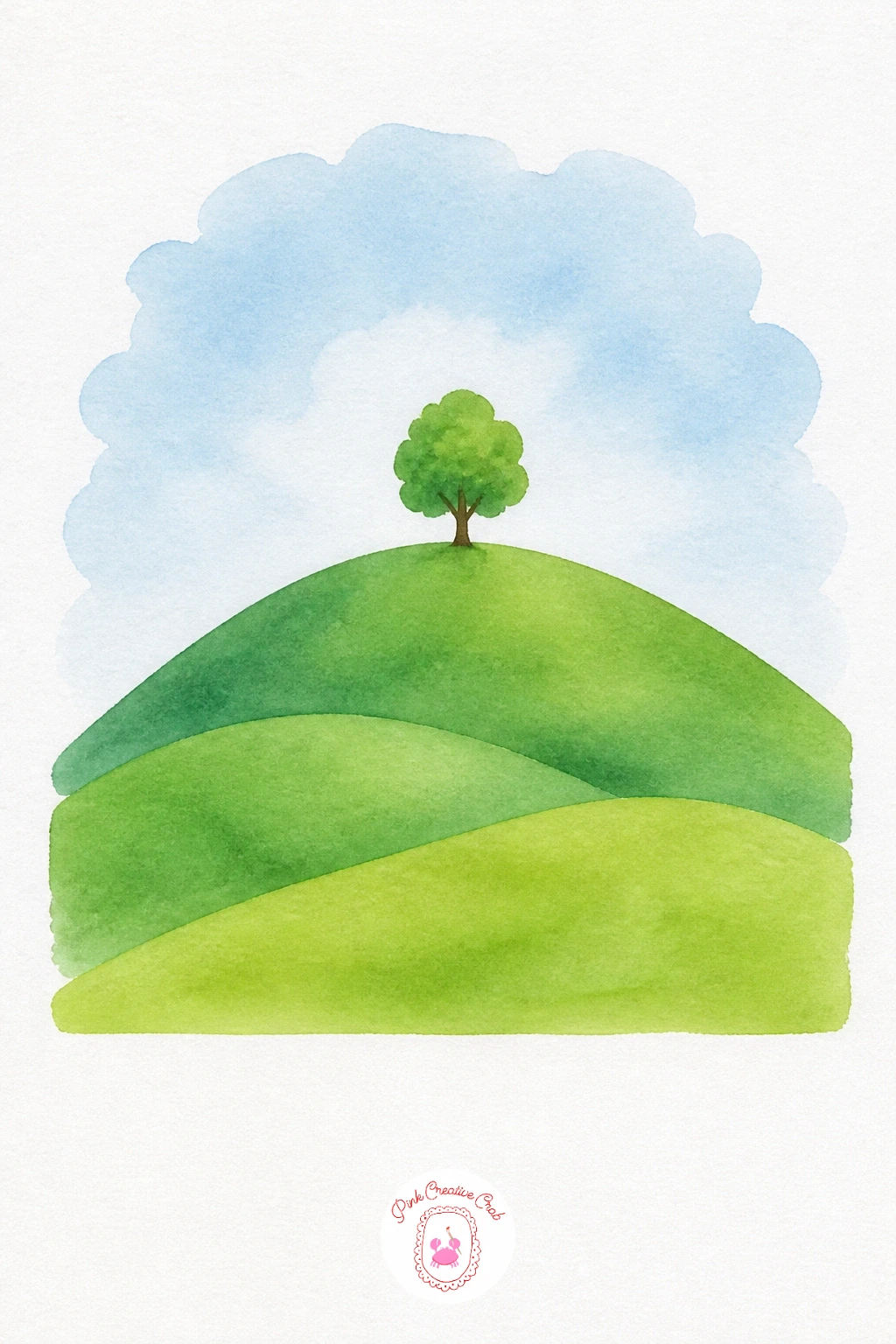
Palette: Sap Green,Olive Green,Cerulean Blue,Burnt Sienna
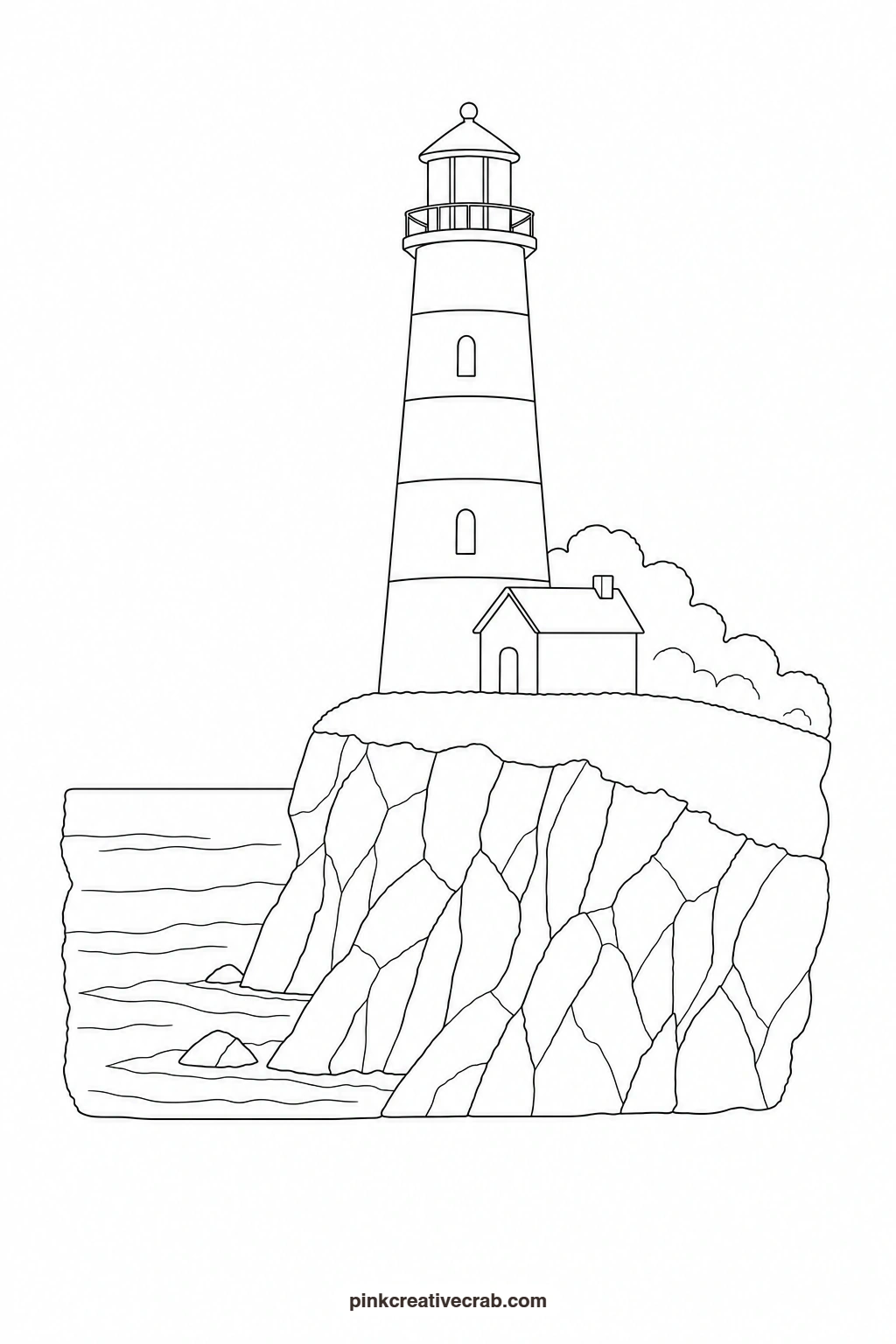
Lighthouse on a Cliff
Paint the sky and sea first with two separate washes of Cerulean Blue, the sea slightly deeper in tone, and leave a clean white gap where the cliff will sit. Fill the cliff with Burnt Sienna and Payne’s Grey blended wet into wet for a rocky feel. Leave the lighthouse body white, then add two or three Cadmium Red bands around it once the paper is fully dry so the stripes stay sharp, and finish with a small yellow dot at the top for the lantern room.
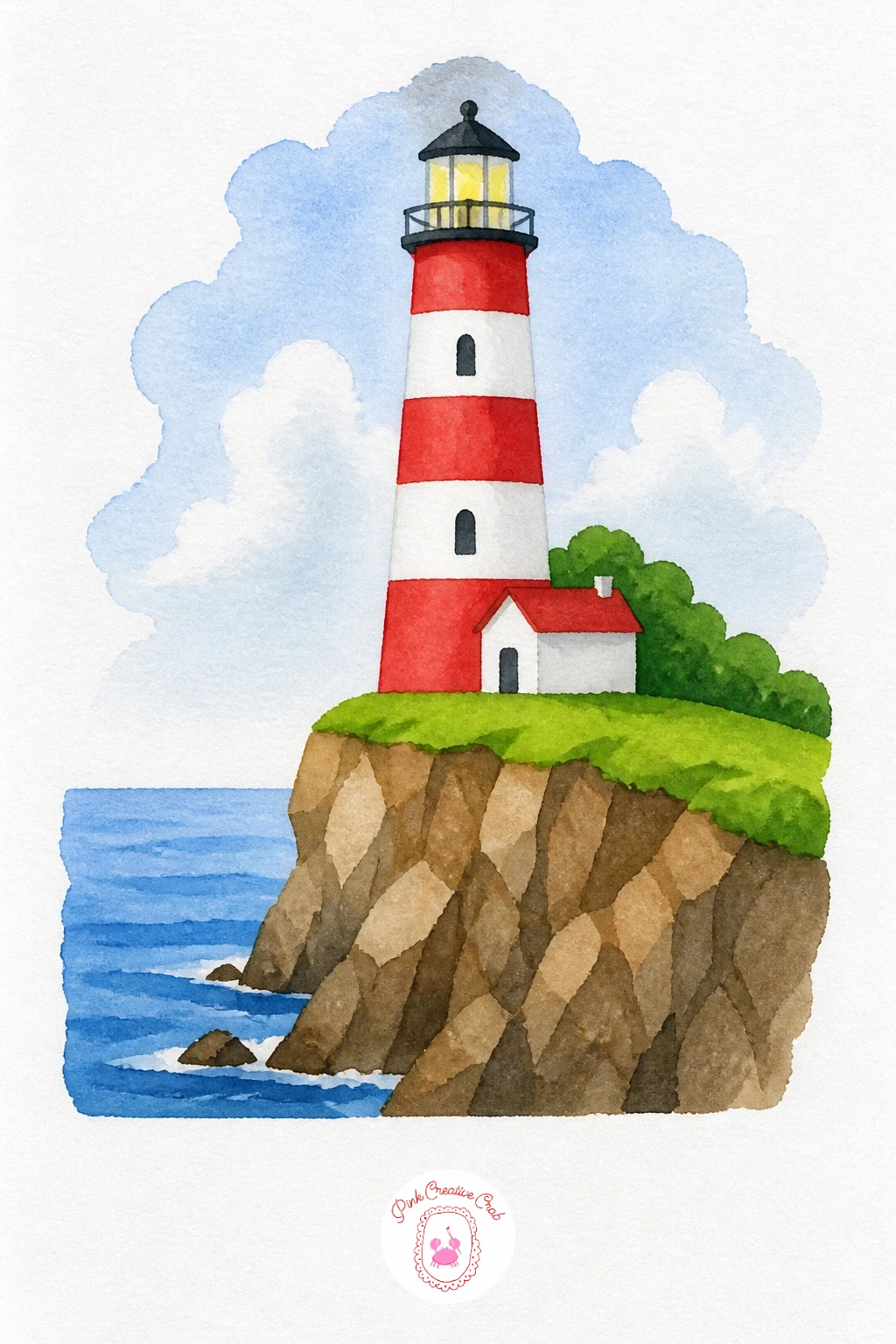
Palette: Cerulean Blue,Burnt Sienna,Payne’s Grey,Cadmium Red,Cadmium Yellow
If you enjoy coastal scenes, the ideas in 15 Easy Beach Watercolor Ideas You Can Paint in Under an Hour make a good companion set once this one is framed.
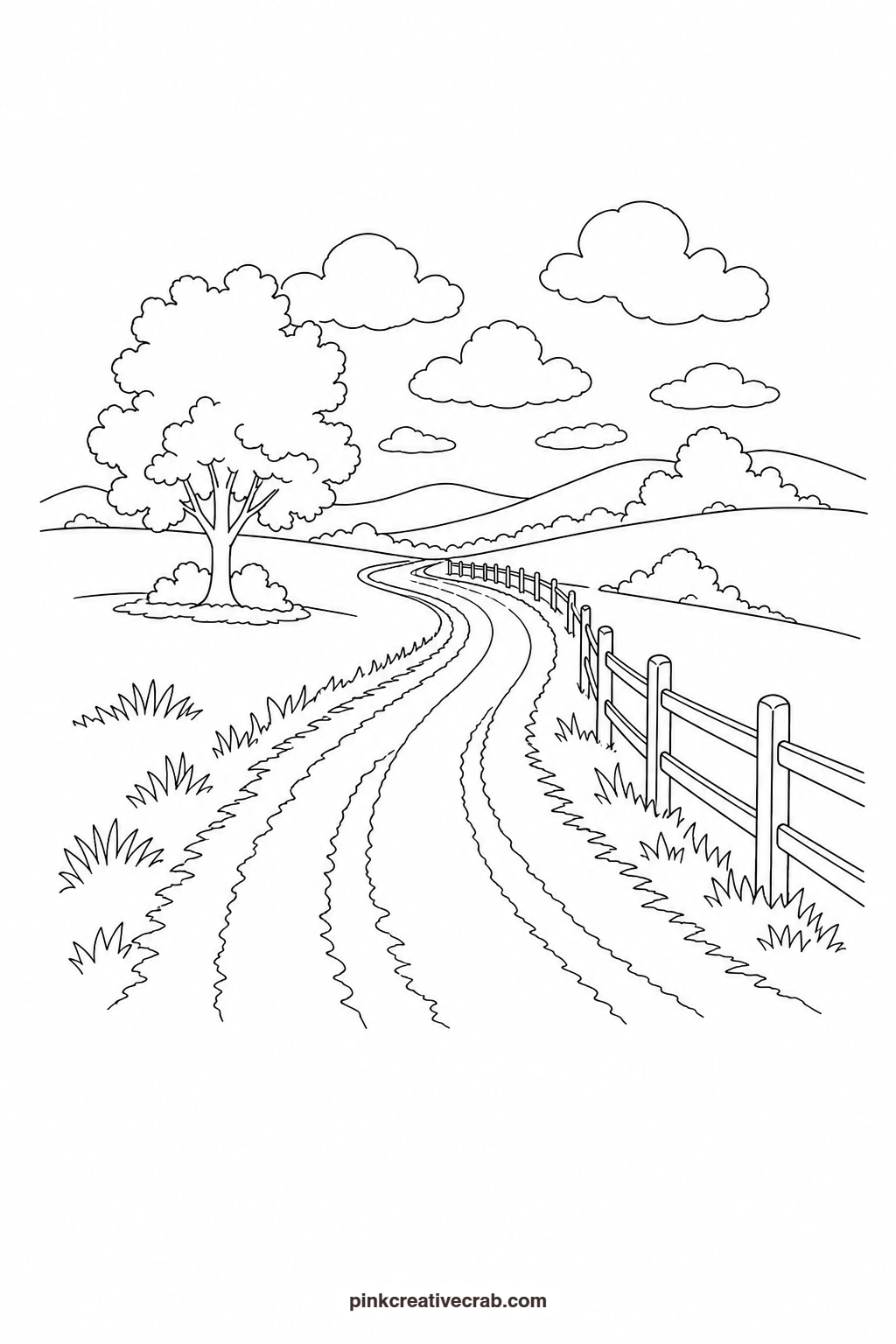
Country Road With a Fence
Wash the sky pale and let it dry, then paint the grass in Sap Green on both sides of the road, leaving the road itself bare white paper for now. Once dry, fill the road with a thin wash of Yellow Ochre so it reads warm against the green. Paint the fence posts in Burnt Sienna with a few short horizontal strokes for the rails, spacing them a little wider apart as they near the horizon so the road feels like it stretches back into the distance.
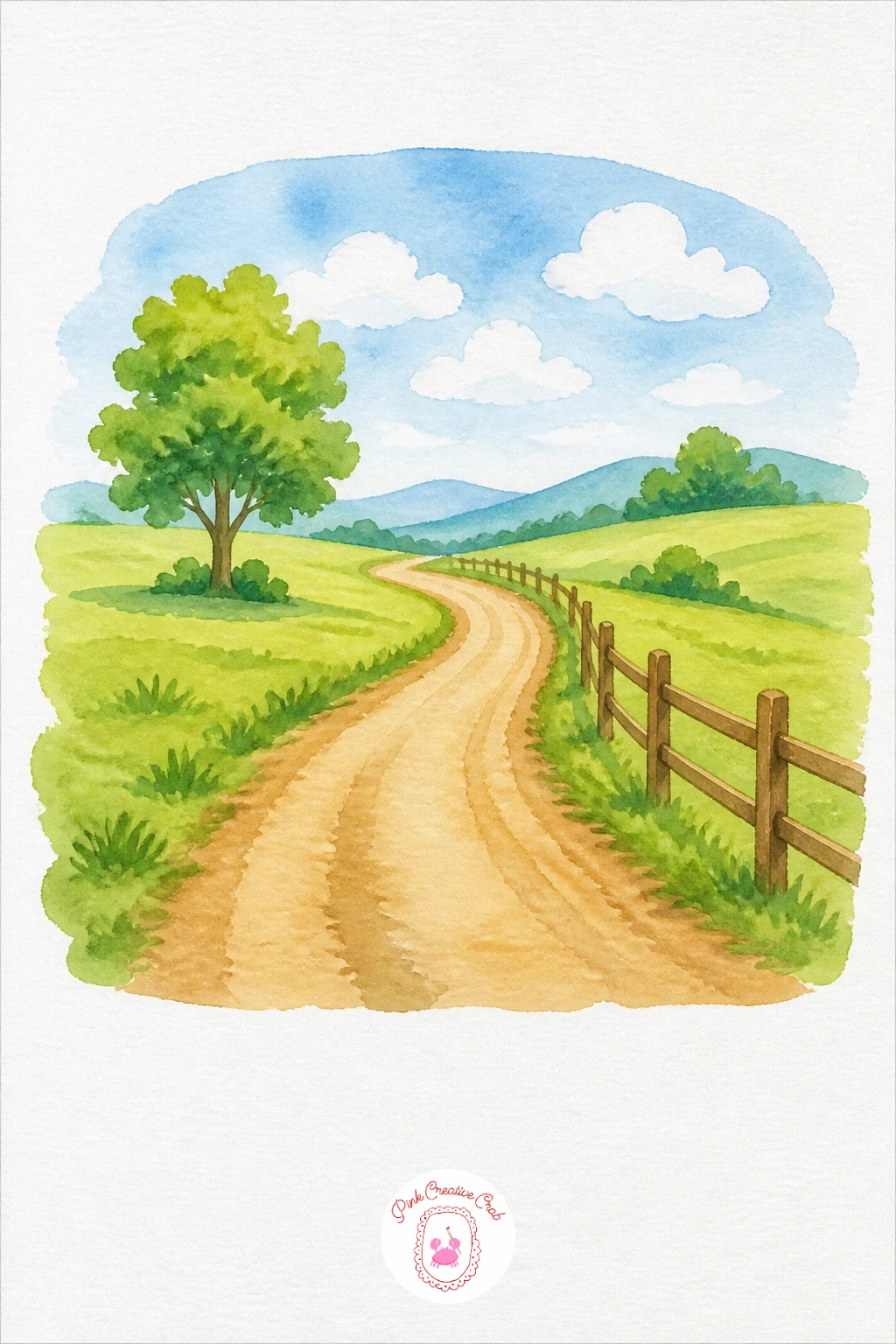
Palette: Sap Green,Yellow Ochre,Burnt Sienna
Windmill on a Hill
Paint the sky in a light Cerulean Blue wash, dabbing out a cloud shape or two with a dry tissue while it is still damp. Fill the hill with Sap Green in one confident sweep, then paint the windmill body in Titanium White left mostly bare, adding a Payne’s Grey outline once dry so the structure holds its shape. Paint the four blades in thin Burnt Sienna lines radiating from the center, and keep them even in length so the windmill reads as one clear, centered shape.
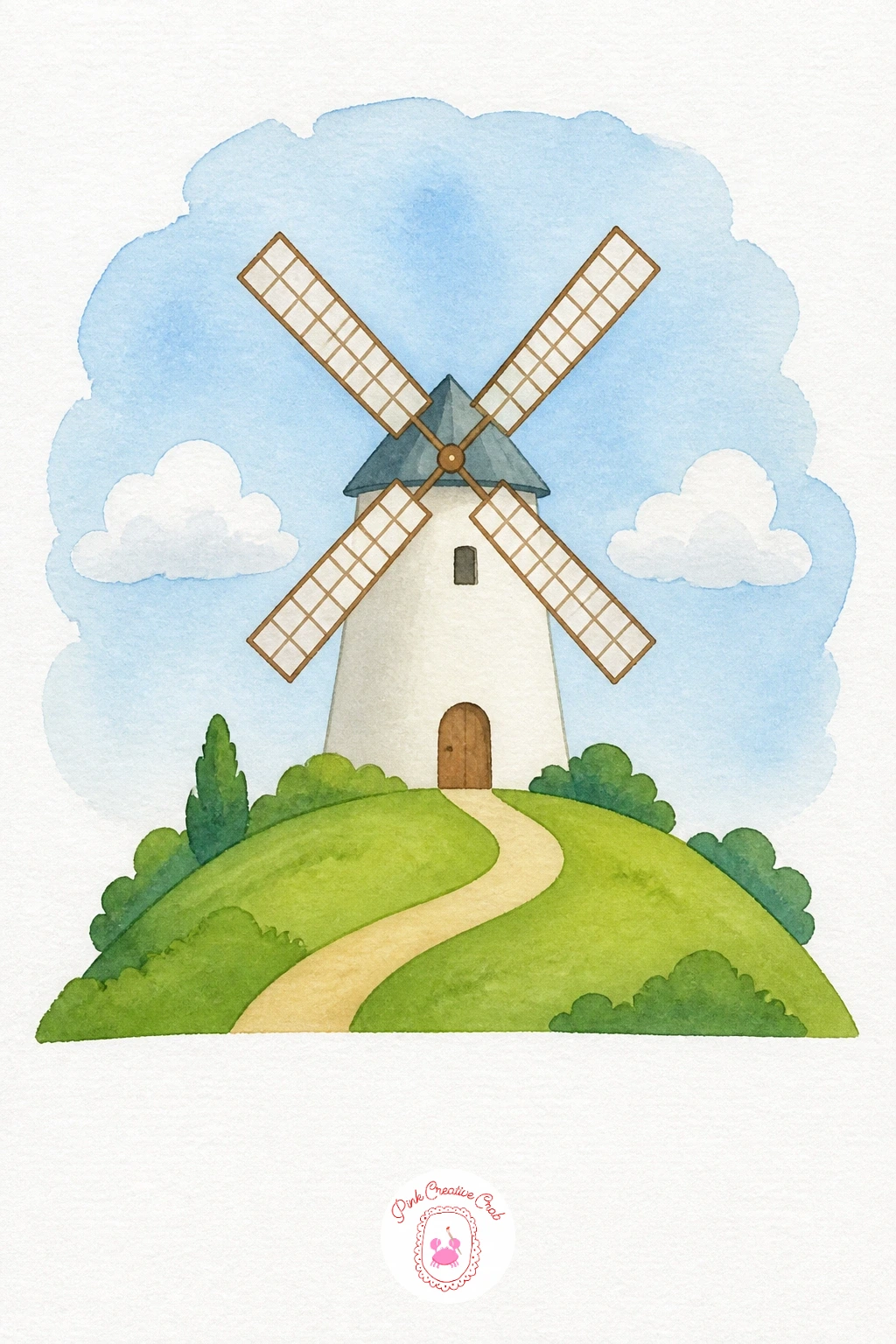
Palette: Cerulean Blue,Sap Green,Payne’s Grey,Burnt Sienna
Cottage by a Stream
Paint the roof in warm Yellow Ochre with short choppy strokes to suggest thatch, then fill the cottage walls in a pale Raw Umber wash once the roof is dry. Let the stream flow in a soft curving band of Cerulean Blue through the grass, which you paint in Sap Green around it. A few short strokes of Payne’s Grey along the stream’s edge, placed once everything else is dry, give the water a gentle sense of movement without needing fine detail.
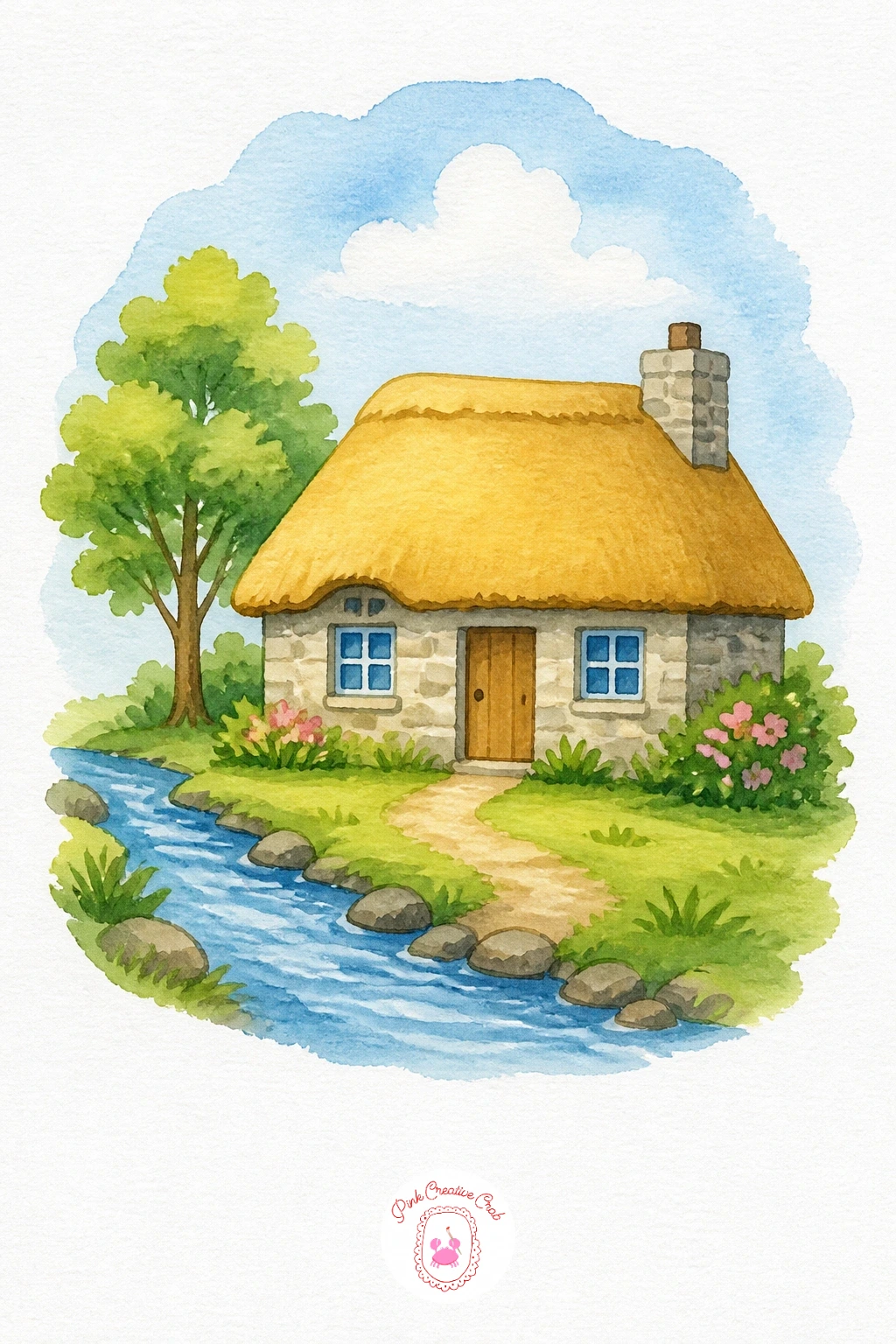
Palette: Yellow Ochre,Raw Umber,Cerulean Blue,Sap Green,Payne’s Grey
For more cottage scenes once you have the hang of this one, 11 Watercolor Cottagecore Cottage Paintings for the Dreamiest Wall Art has a full set of ideas in the same gentle style.
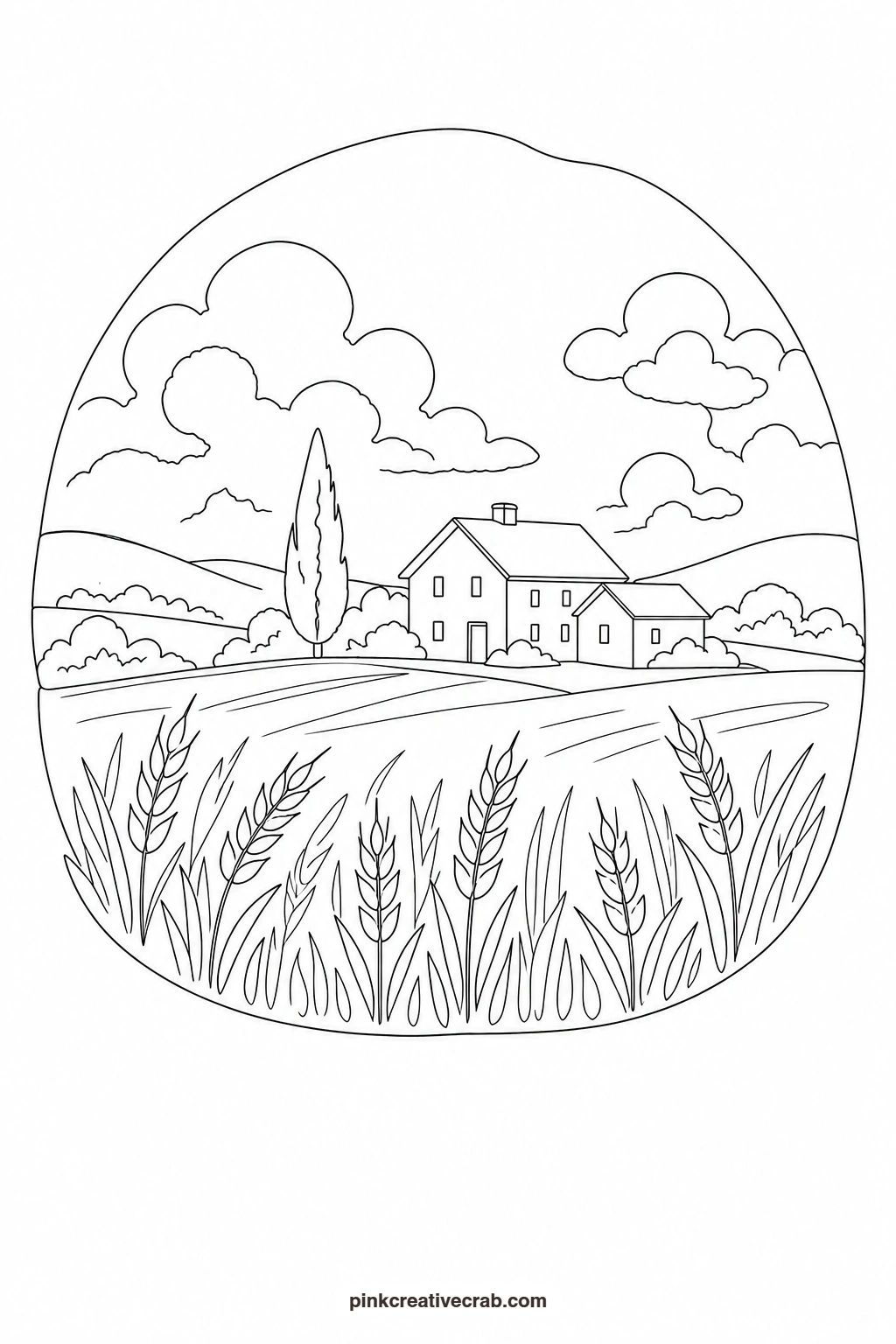
Wheat Field With a Farmhouse
Wash the sky pale blue and let it dry completely before the wheat, since any overlap will muddy the warm tones. Paint the wheat field in Yellow Ochre with upward flicking strokes so the texture feels like grain without drawing each stalk. Keep the farmhouse small and simple: white walls left bare, a Cadmium Red roof, and one thin Payne’s Grey line for the roofline, placed just off-center so the eye settles on the field first.
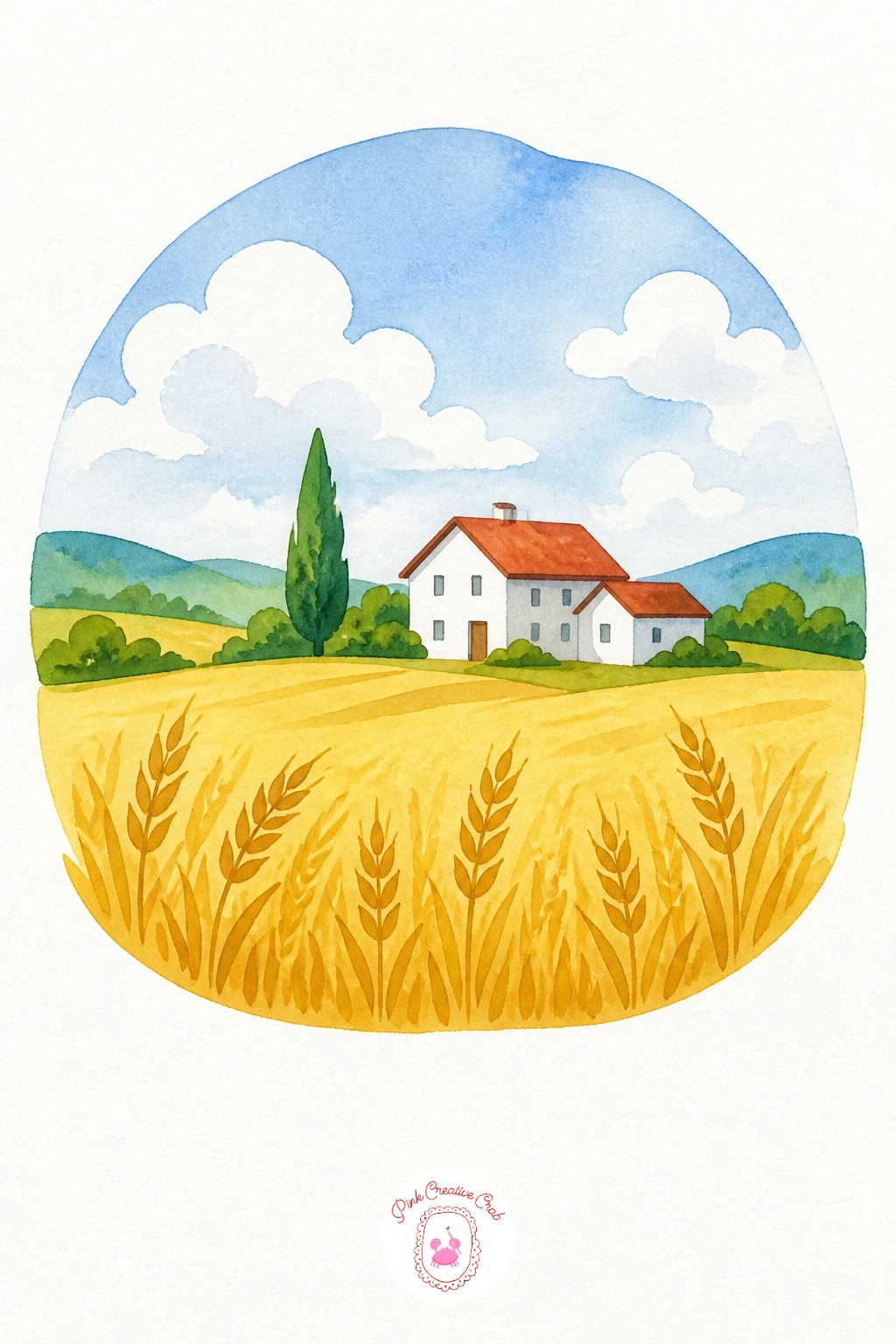
Palette: Yellow Ochre,Cadmium Red,Payne’s Grey,Cerulean Blue
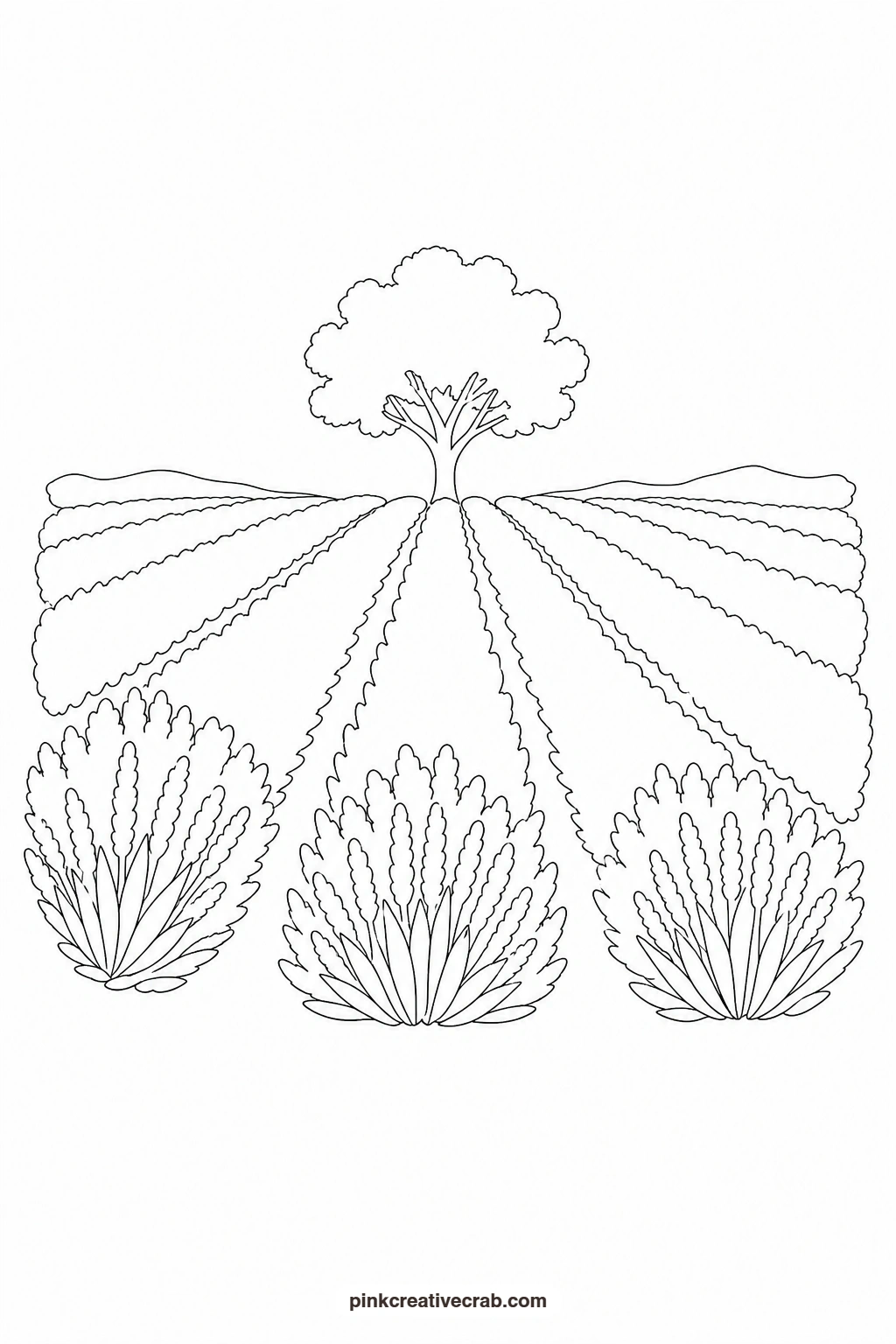
Lavender Field With a Tree
Paint the sky in a soft wash with a hint of pink mixed into the blue near the horizon for a warm glow. Fill the field with rows of Violet and Lavender, dragging the brush in short horizontal bands so each row reads slightly different in tone. Paint the one tree small and dark against the light sky using Hunter Green, which keeps it as the clear focal point even though the lavender rows take up most of the page.
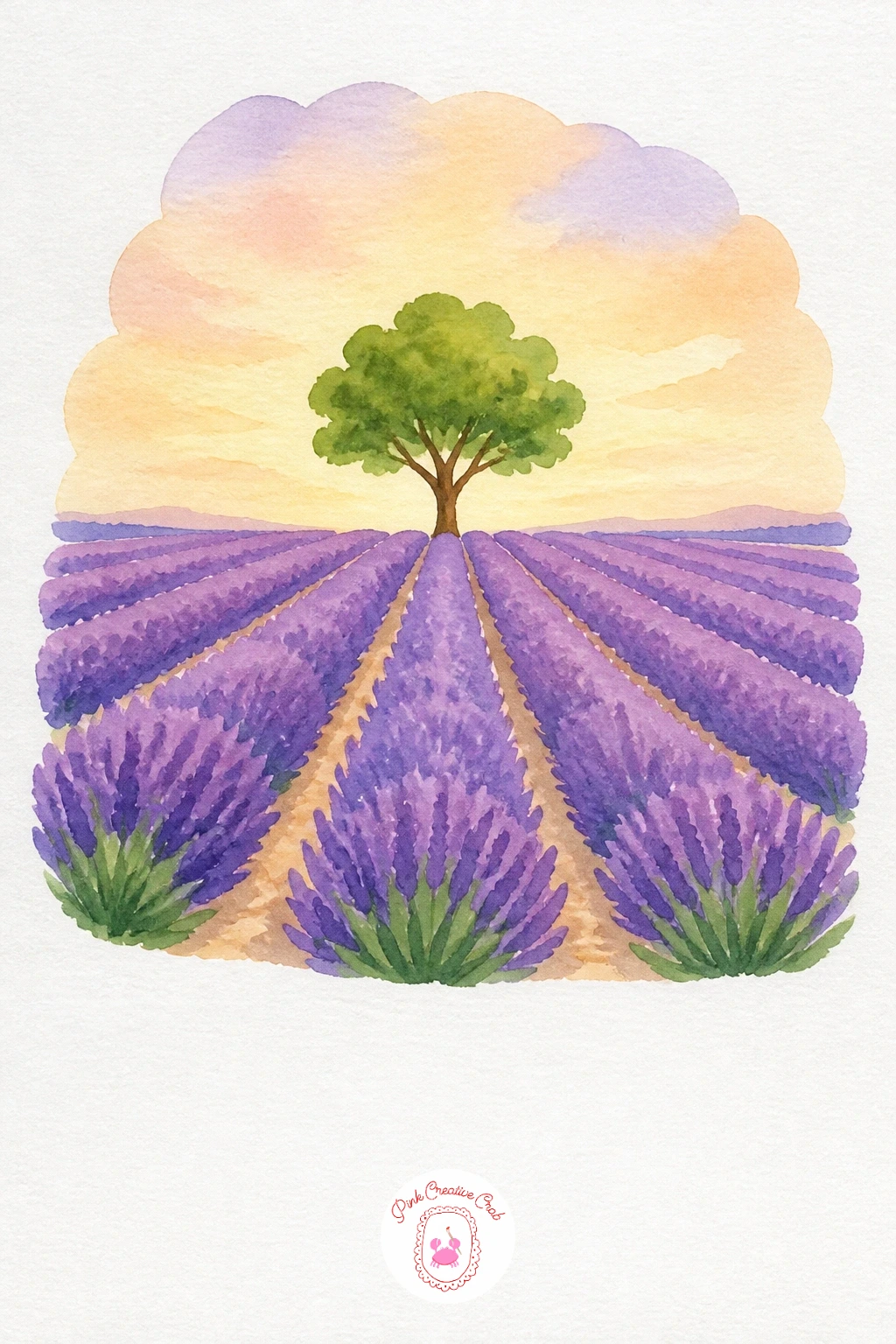
Palette: Violet,Lavender,Hunter Green,Burnt Sienna
Palm Beach
Paint the sea first in Turquoise with a slightly deeper line of Cerulean Blue near the horizon, then let it dry before adding the sand in a pale Yellow Ochre wash below it. Paint the palm trunks in Burnt Sienna with a slight lean, then add the fronds in Sap Green using quick curved strokes from a central point on each trunk. A thin white line of untouched paper where the sand meets the sea keeps the beach looking bright and sunlit.
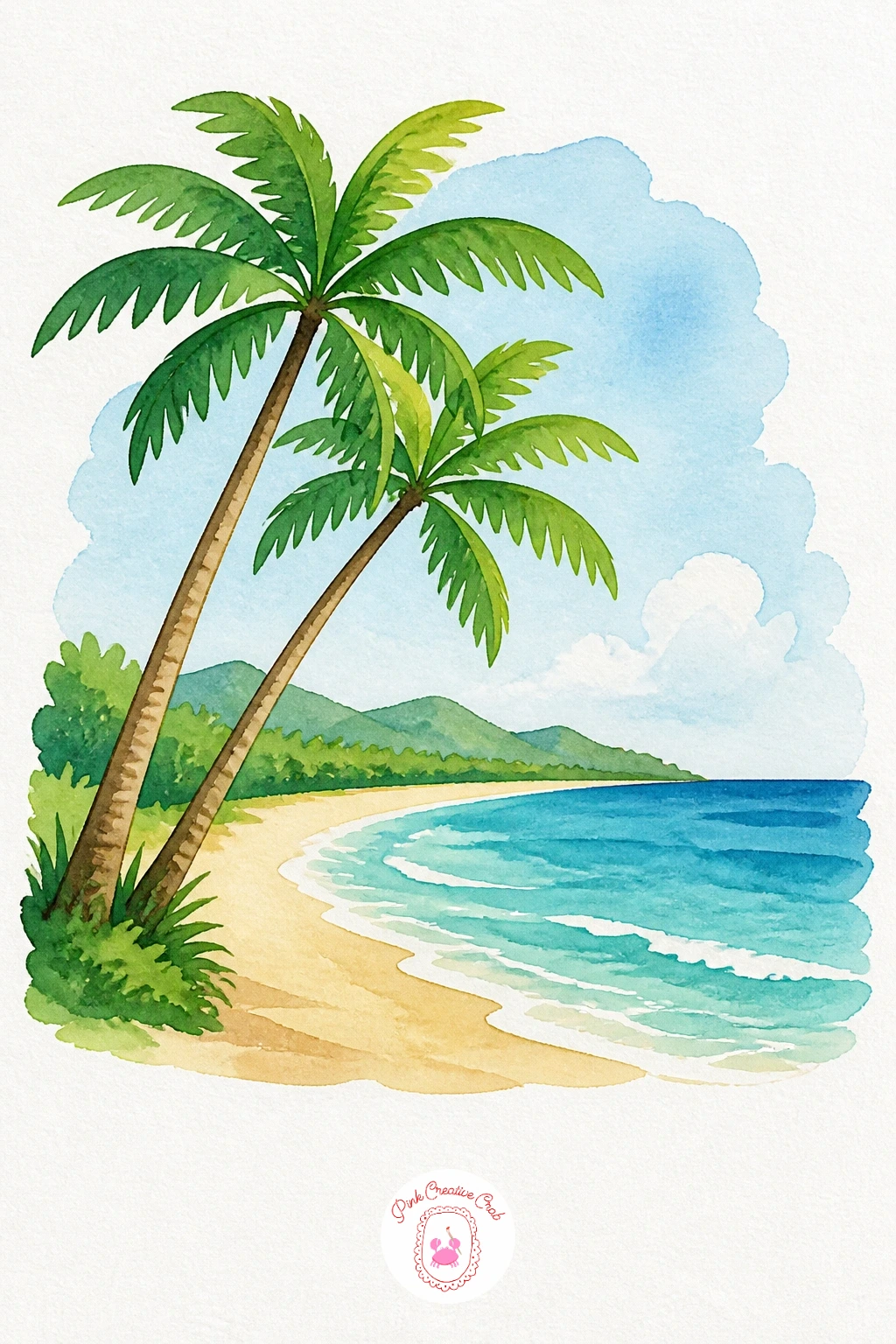
Palette: Turquoise,Cerulean Blue,Yellow Ochre,Sap Green,Burnt Sienna
If beach scenes are your thing, 15 Easy Beach Watercolor Ideas You Can Paint in Under an Hour has more coastal subjects to work through next.
Desert With a Cactus
Paint the sky in a warm blend of Cadmium Yellow fading into a soft Burnt Orange near the horizon, working wet into wet so the colours melt together without a hard line. Once dry, paint the dunes in a flatter Burnt Sienna wash. Paint the cactus in Hunter Green with a couple of simple curved arms, keeping the shape bold and solid rather than detailed, since one strong green silhouette against a warm sky is what makes this piece feel finished.
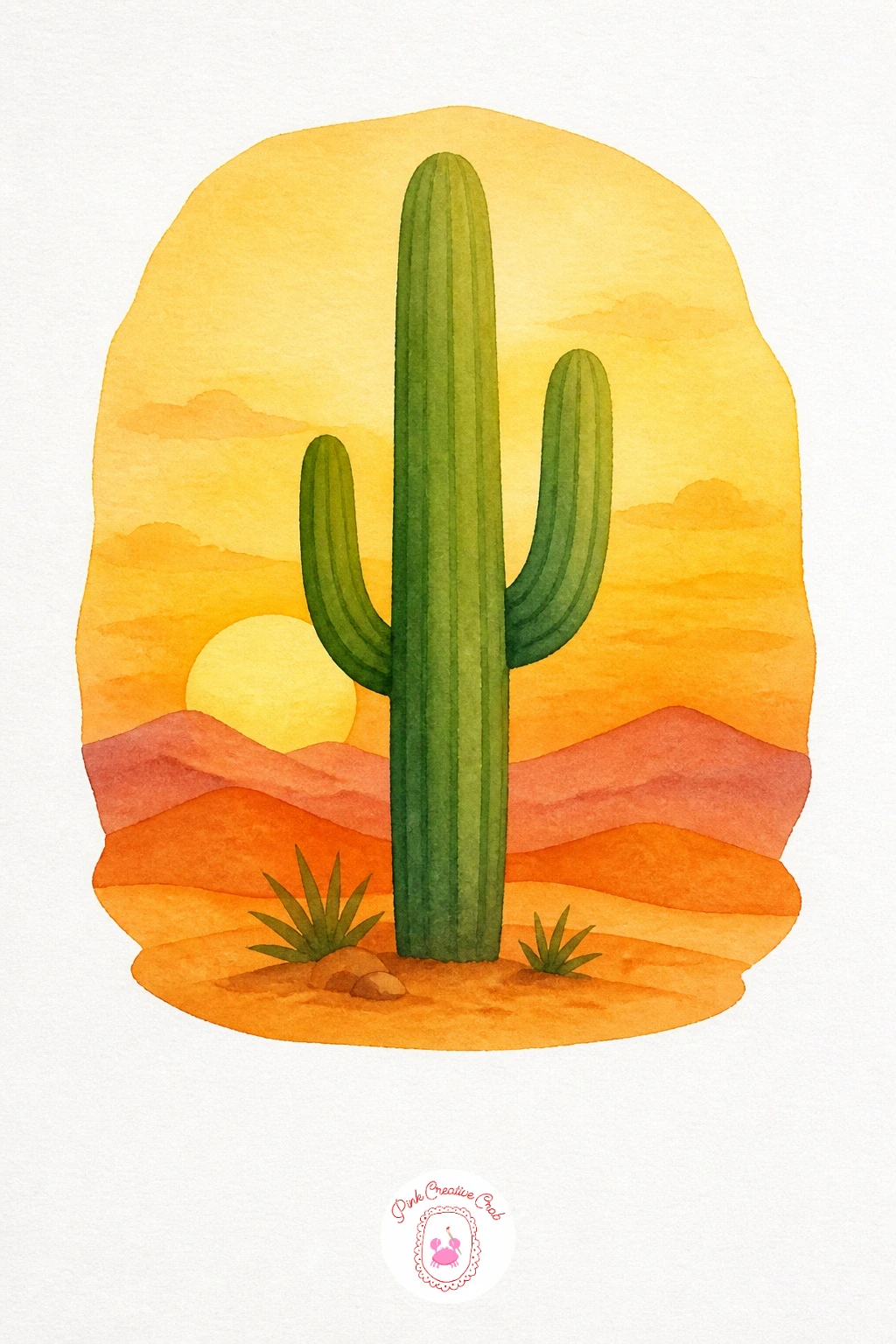
Palette: Cadmium Yellow,Burnt Orange,Burnt Sienna,Hunter Green
Waterfall Between Rocks
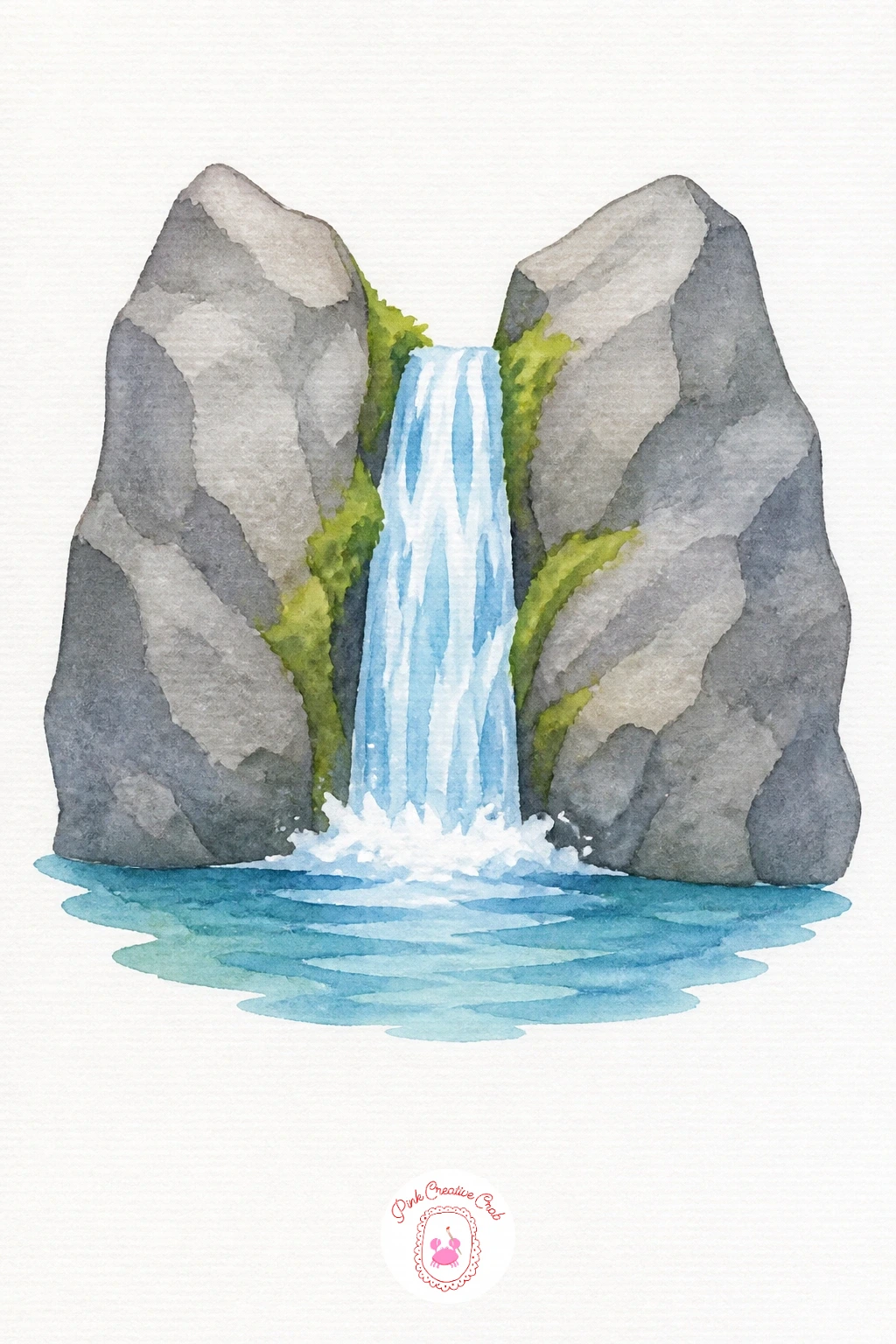
Mask off the waterfall shape with masking fluid first so the white paper stays protected, then paint the rocks around it in Payne’s Grey blended with a little Burnt Sienna for warmth. Once the rocks are dry, remove the masking fluid and add just a few thin vertical strokes of pale Cerulean Blue down the falls to suggest movement, leaving most of it white. A touch of Sap Green at the rock edges finishes the scene with a hint of moss.
You Will Need
- masking fluid
Palette: Payne’s Grey,Burnt Sienna,Cerulean Blue,Sap Green
Bridge Over a River
Paint the sky and river in matching pale Cerulean Blue washes so they feel connected, leaving the bridge arch as untouched white paper. Once dry, paint the bridge in Payne’s Grey, keeping the arch shape clean and simple with one steady curved stroke. Fill the banks on either side in Sap Green, and add a few short reflected strokes of grey under the arch in the water once everything else is dry, which grounds the bridge firmly over the river.
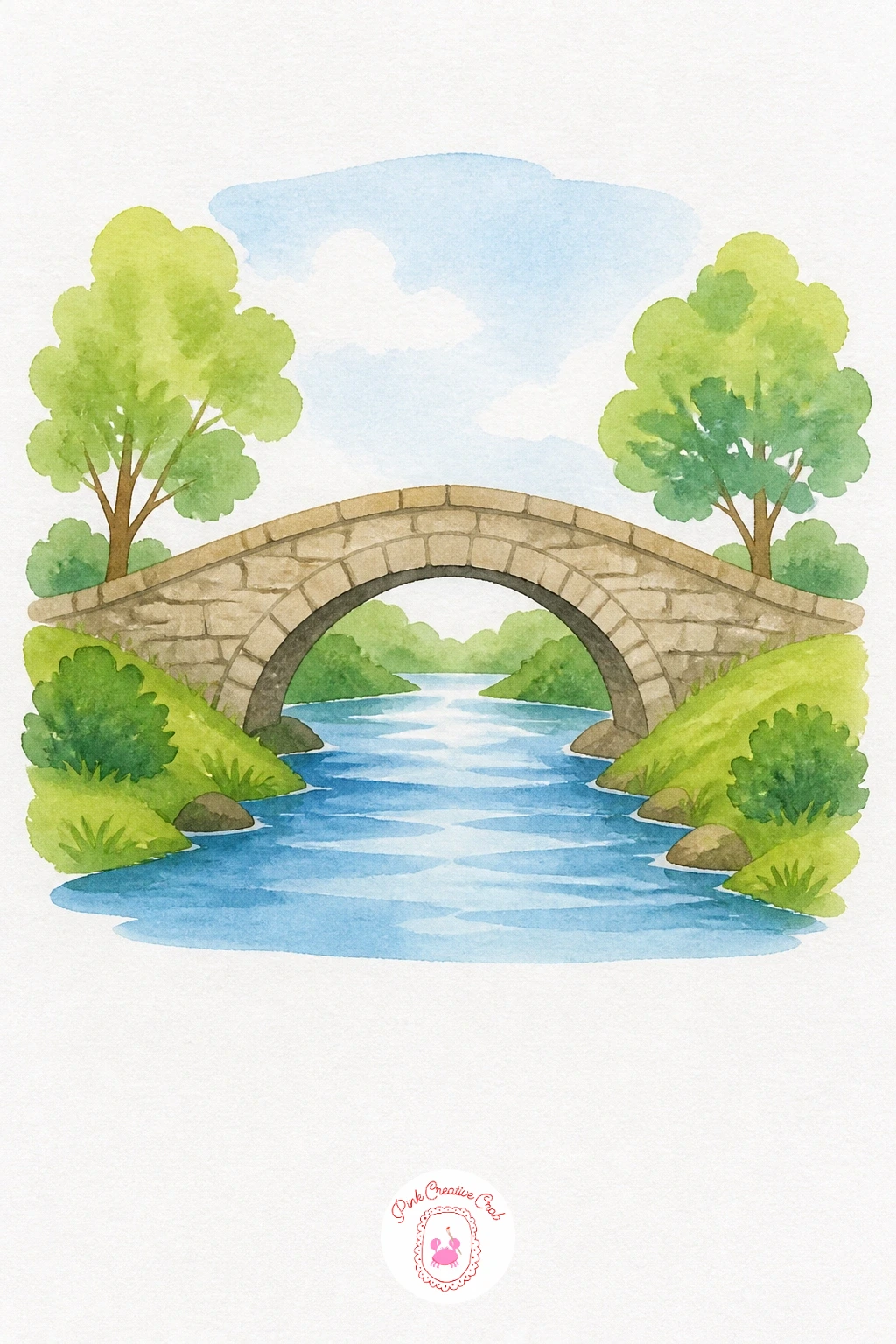
Palette: Cerulean Blue,Payne’s Grey,Sap Green
What to Do Next
Pick one scene, print its outline and transfer it to your watercolor paper today, then work through the colours in order with the finished example open beside you. Once you finish a few, keep the outlines on hand for a rainy afternoon when you want to paint without starting from a blank page.
Frequently Asked Questions
What size should I print the outline templates?
Print them at standard letter or A4 size to start, since that fits most watercolor pads without cropping. You can also scale the print settings up for a larger painting if you have bigger paper.
What paper works best for these watercolor landscapes?
Cold press watercolor paper at least 140lb holds washes well without buckling or pilling. Avoid regular printer paper for the final painting, since it cannot handle wet washes the way watercolor paper can.
How do I transfer the outline onto my watercolor paper?
Tape the printed outline and your watercolor paper together over a sunny window or light pad and trace the lines with a pencil. Graphite transfer paper slid between the two sheets works just as well on thicker paper.
Can I use colored pencils or markers instead of watercolor?
Yes, every outline works just as well for colored pencils or markers. Layer pencils lightly and build up colour gradually, or let markers dry between layers to avoid muddy overlaps.
What if I am not confident drawing the shapes freehand?
That is exactly what the outline templates solve, since you trace the shapes rather than draw them. Once the lines are transferred, you are only focused on choosing where each colour goes.
Have any thoughts?
Share your reaction or leave a quick response — we’d love to hear what you think!
-
 0
-
0
-
0
-
0
-
0
-
0


