Fall watercolor is at its best when it feels lived in: a cup going cold on a windowsill, a dog mid leap into a pile of leaves, smoke curling out of a cottage chimney. These are the small, warm moments that make autumn autumn, and they all sit comfortably inside a rust, ochre and sage palette that practically paints itself once you load the brush.
Below you will find 28 cozy scenes, each one built to finish in a single sitting, starting with the simplest washes and working up to pieces with more figures and detail. Pick whichever one matches your mood tonight, wet your paper, and let the colors bleed into each other the way autumn light bleeds into everything it touches.
Using these images: free for personal projects such as printing, coloring, cards, journals and gifts. Handmade items that include them may be sold up to 30 pieces per design. More than that is commercial use and is not permitted, and neither is selling or sharing the images themselves or passing them off as your own. Please ask before any other use.
Start with the girl in a sweater holding a latte, since she is mostly soft shapes and one small prop to keep the eye. Pencil in a simple standing figure loosely, oversized sweater, hair falling past the shoulders, cup held at chest height, then drop in falling leaves around her with a dry brush dabbed in ochre and rust.
Paint the sweater first in one wet wash of burgundy or sage so it dries as a soft, even block, then add the skin tone and hair once that layer is dry so colors do not bleed into each other. The latte cup is the one place you want a crisp edge: paint it last with a smaller brush so it reads as solid against all that softness.
Measure her head against her body before you commit to ink or a final wash. Two and a half heads tall for the visible torso and skirt keeps a cozy, slightly stylized proportion rather than an awkward stretched one.
If your paper buckles under the wet sweater wash, tape the edges down before you start or switch to a heavier block. Finish by flicking a loaded brush over the whole piece for a scatter of falling leaves.
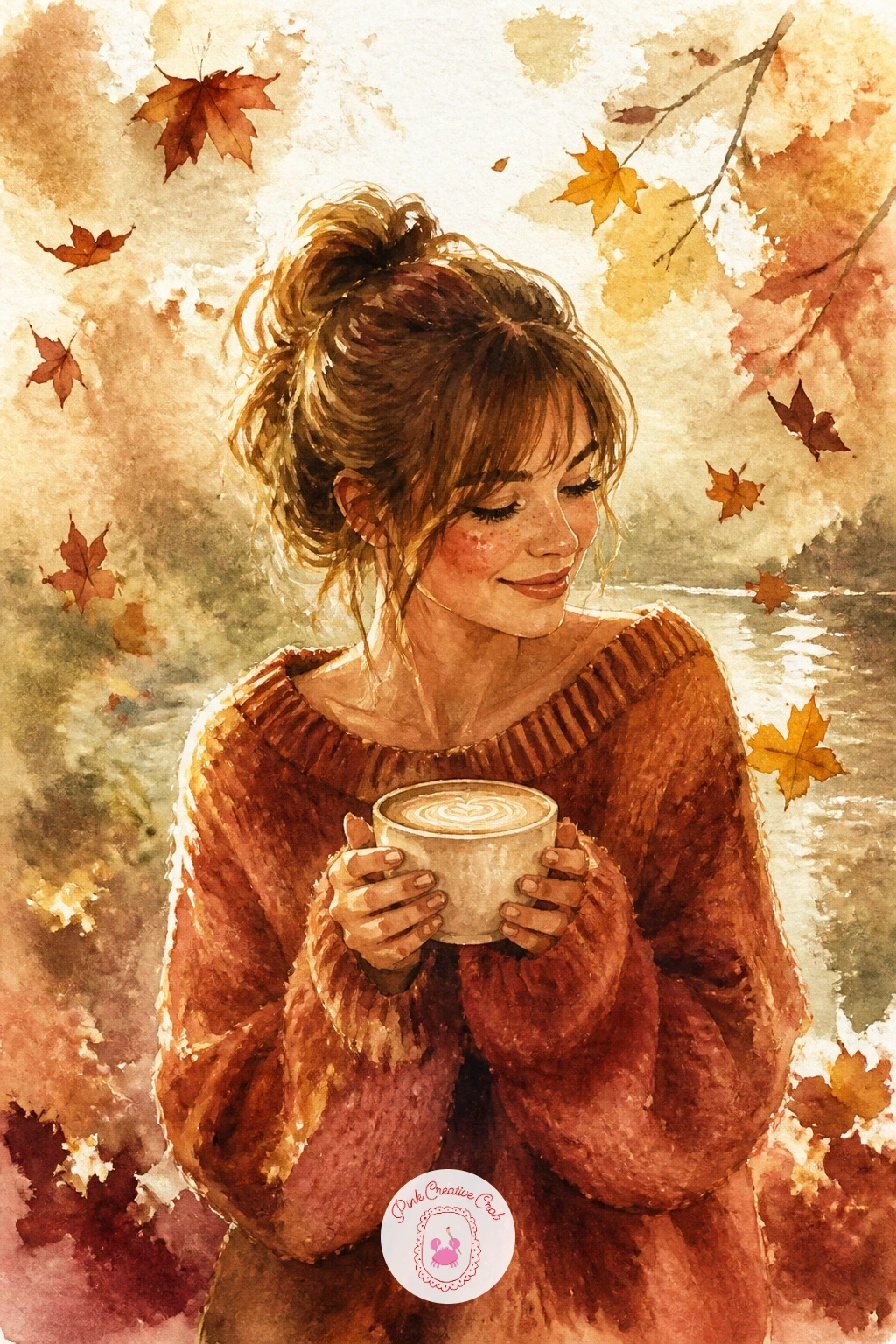
Palette: Burnt Sienna,Payne’s Grey,Raw Sienna,Sap Green
From a single figure, move out into a wider scene: an apple orchard with a wooden ladder leaning into one tree. Block in the sky first with a pale wash of cream and ochre, then drop rows of tree canopies in wet into wet using sage and burnt sienna so the greens and rusts bleed softly together.
Once the canopies dry, paint the trunks and the ladder with a thin, dry brush so they sit crisply against the soft background, and dot in tiny red apples with the tip of the brush. This contrast of soft trees and sharp trunk lines is what gives the orchard its depth.
Keep the ladder’s perspective simple: have both rails lean toward the same point near the top of the tree, never straight up and down, or it reads flat. A ladder leaning slightly away from you also looks more natural than one facing straight on.
If your orchard rows start blurring into mud, lift a little color out with a damp clean brush while still wet. One concrete tip: paint the farthest trees lighter and the nearest tree darkest to push the depth.
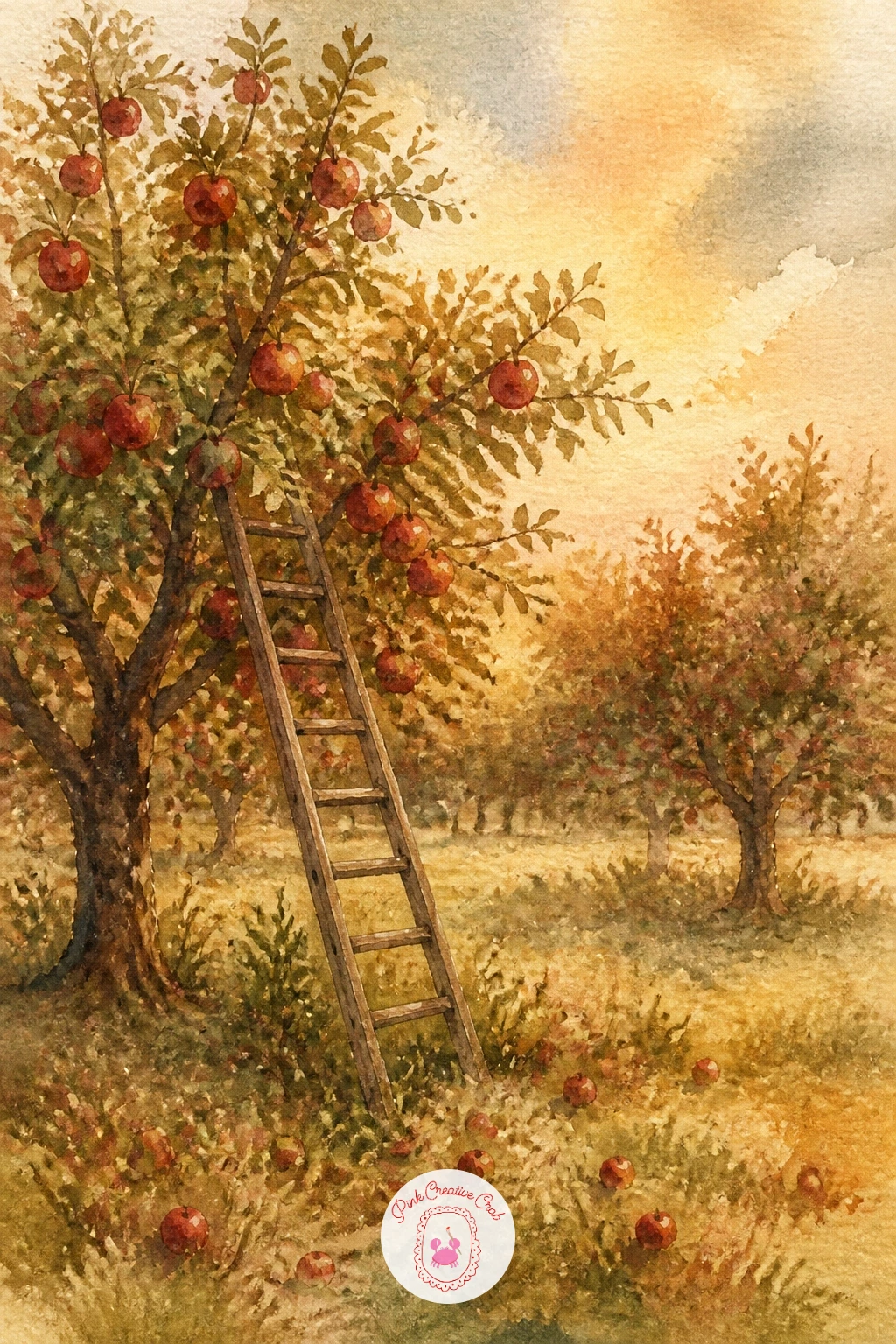
Palette: Raw Sienna,Sap Green,Burnt Sienna,Cadmium Red
Reference an actual ladder leaning against a tree if you have one nearby, it fixes the angle problem instantly and reads far more convincing than an imagined one.
Bring the scene in close for a cozy porch with pots of mums and a row of pumpkins on the steps. Sketch the porch structure loosely first, a railing, a few steps, maybe a door frame, then mass in the mum flowers as rounds of dabbed color rather than individual petals.
Paint the pumpkins next in warm ochre and burnt sienna, leaving a lighter strip where the light catches each one, and save the porch boards and railing for last with a dry, dragged brush so the wood grain shows through. This front to back order keeps the warm colors from muddying the structural lines.
If your first attempt at the pumpkins looks flat, this is normal: add one deeper burgundy shadow stroke on the side away from the light and a touch of cream highlight on the near side, and the round form appears instantly.
No mum flowers nearby to look at? Chrysanthemum pots are everywhere in autumn displays at garden centers, and a quick phone photo works just as well as painting from life. Finish with a single warm wash tying the porch shadows together.
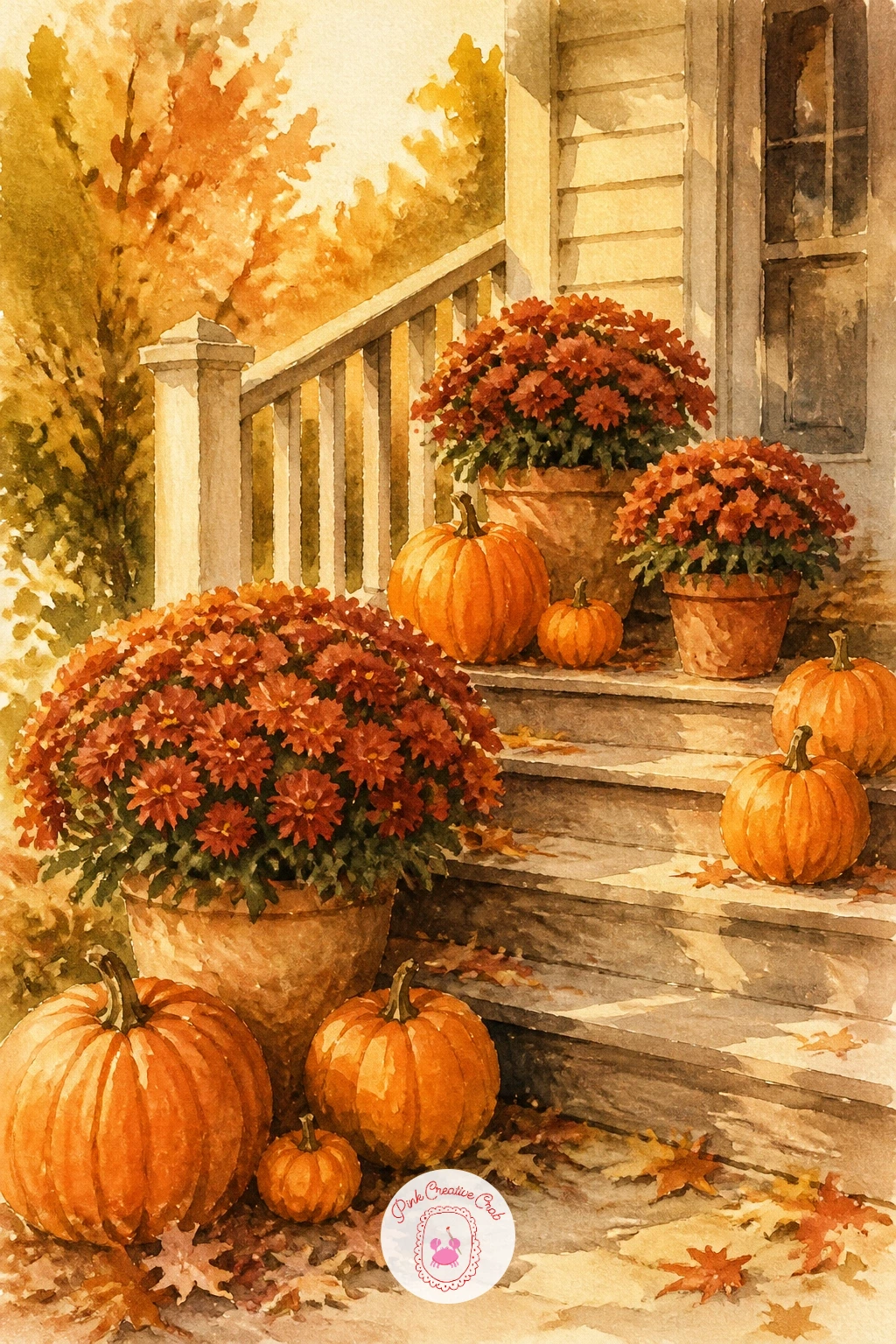
Palette: Burnt Sienna,Burgundy,Raw Sienna,Sap Green
Give yourself a loose, playful challenge with a dog jumping into a pile of leaves. Rough in the dog’s body as a few simple curved shapes in pencil, legs mid stride, ears flying, before you touch any paint, since the energy of this one depends on getting the pose right early.
Paint the leaf pile first as one big wet wash of rust, ochre and burnt sienna so the colors melt into each other, then once it is fully dry, paint the dog on top in a solid color so the edge against the leaves stays clean and the shape reads instantly.
The leaf pile is the place to loosen up: flick a dry, splayed brush through the wet wash to suggest leaves flying, or use the handle end of the brush to scratch out a few light lines while the paint is still damp.
Working against a deadline tonight? The quick version skips individual leaves entirely, just dog plus one loose rust blob. Given forty minutes, add flying leaf shapes mid air around the dog with small dry dabs.
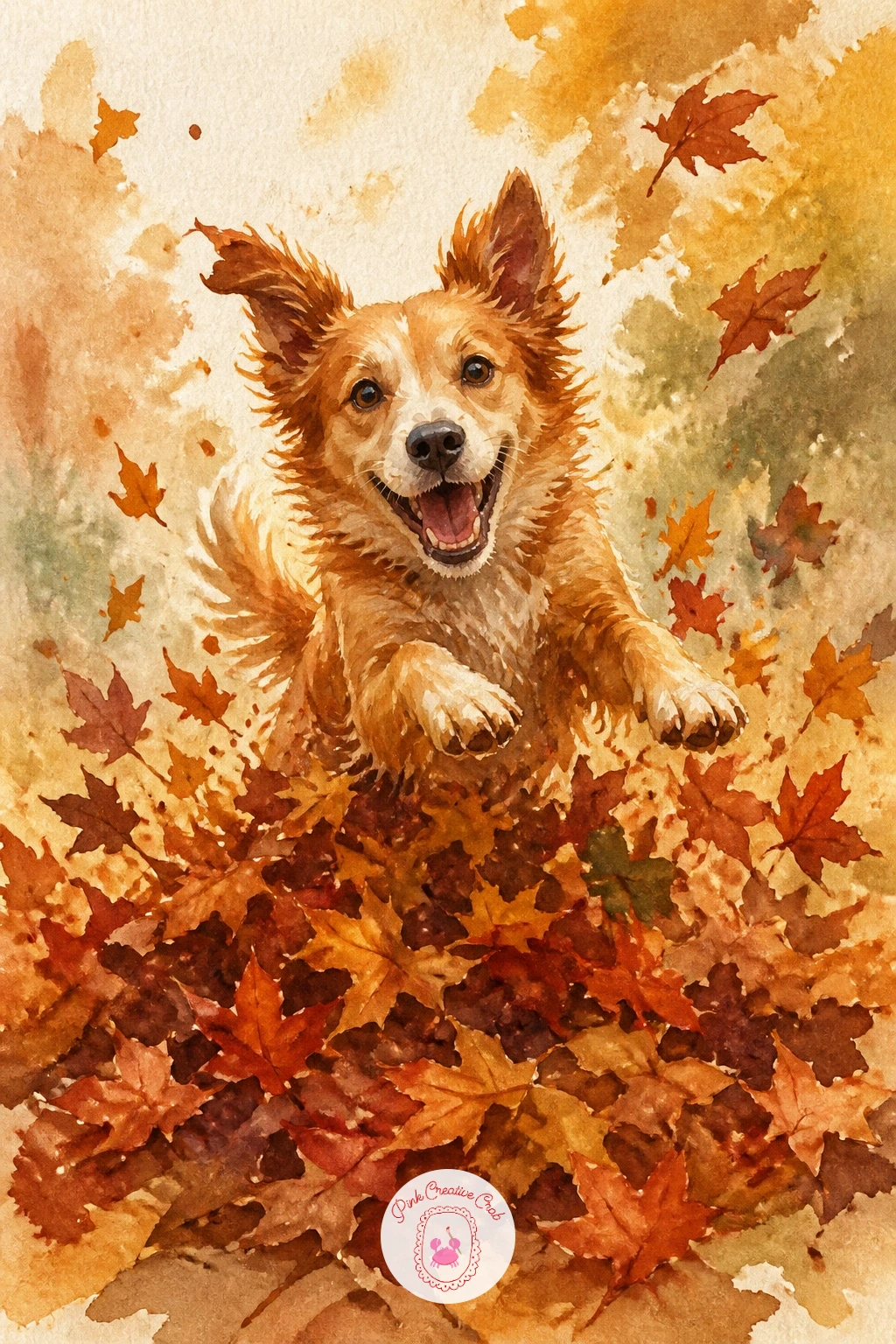
Palette: Raw Sienna,Burnt Sienna,Payne’s Grey,Burgundy
Settle into something quieter with a cinnamon apple pie cooling on a windowsill or table. Draw the pie dish as a simple ellipse, flatter than it feels natural to make it, since a too round ellipse is the single most common mistake with any circular object seen from an angle.
Wash in the golden crust first with raw sienna and a touch of burnt sienna for the darker crimped edges, then once dry, add the lattice strips on top with a small brush loaded with a slightly deeper tone so they sit above the base crust color.
A puff of steam rising from the pie adds real coziness: leave the paper bare in soft upward curls, or lift a little color out with a damp brush while the background behind it is still wet.
If you do not have a pie reference handy, any photo of a latticed pie works, the crimped edge pattern repeats the same way on every one. Finish with a small sprinkle of cinnamon-colored dots across the top crust.
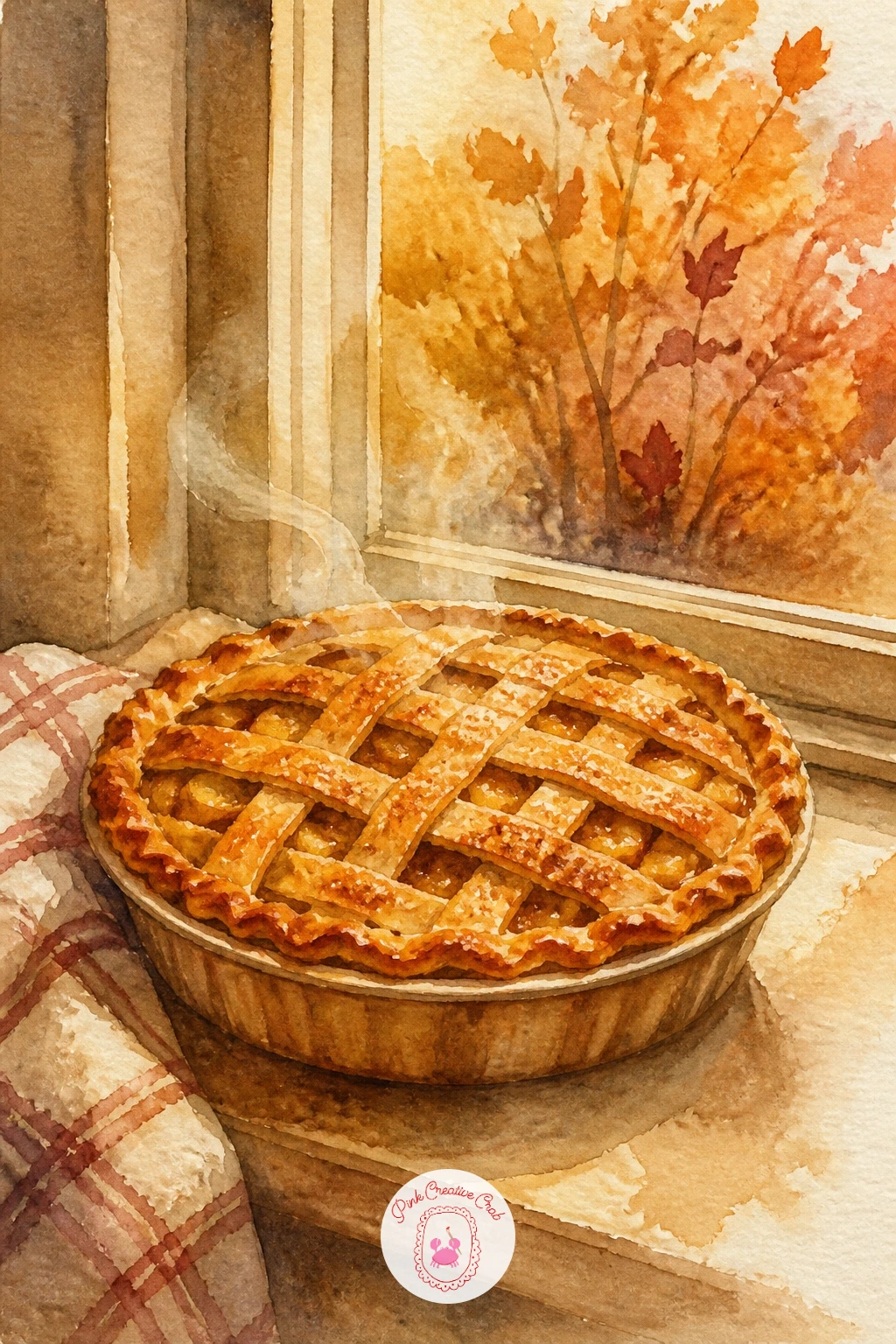
Palette: Raw Sienna,Burnt Sienna,Cream,Burgundy
Follow the pie with a calmer figure scene: a woman reading under a maple tree in full autumn color. Paint the canopy first as one loose, wet wash of burnt sienna, burgundy and ochre dropped in together so the colors bleed like real autumn leaves, then let it dry completely before adding the trunk and figure.
The figure sits small against the tree, so keep her simple: a seated shape, knees drawn up, a book held in both hands, painted in one or two flat colors so she reads clearly against the busy canopy behind her.
Light matters most here. Decide where the sun sits, usually filtering down through the leaves from one side, and leave small bare paper gaps in the canopy on that side to suggest light breaking through, with the opposite side painted denser and darker.
If the canopy wash dries too pale, you can always layer a second wet wash once the first is bone dry for richer color. No maple nearby to study? Any broad, round tree silhouette does the same job.
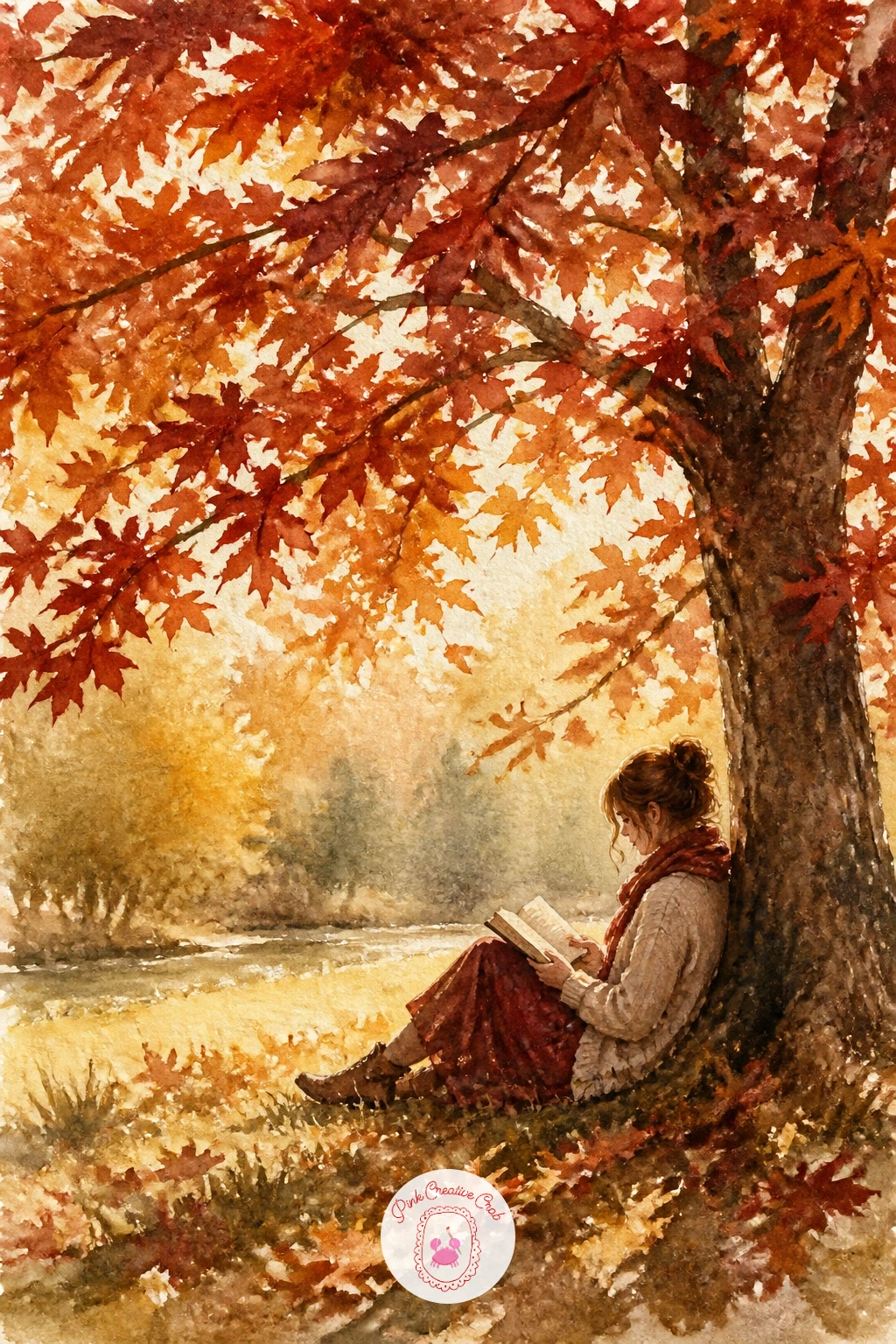
Palette: Burnt Sienna,Burgundy,Raw Sienna,Sap Green
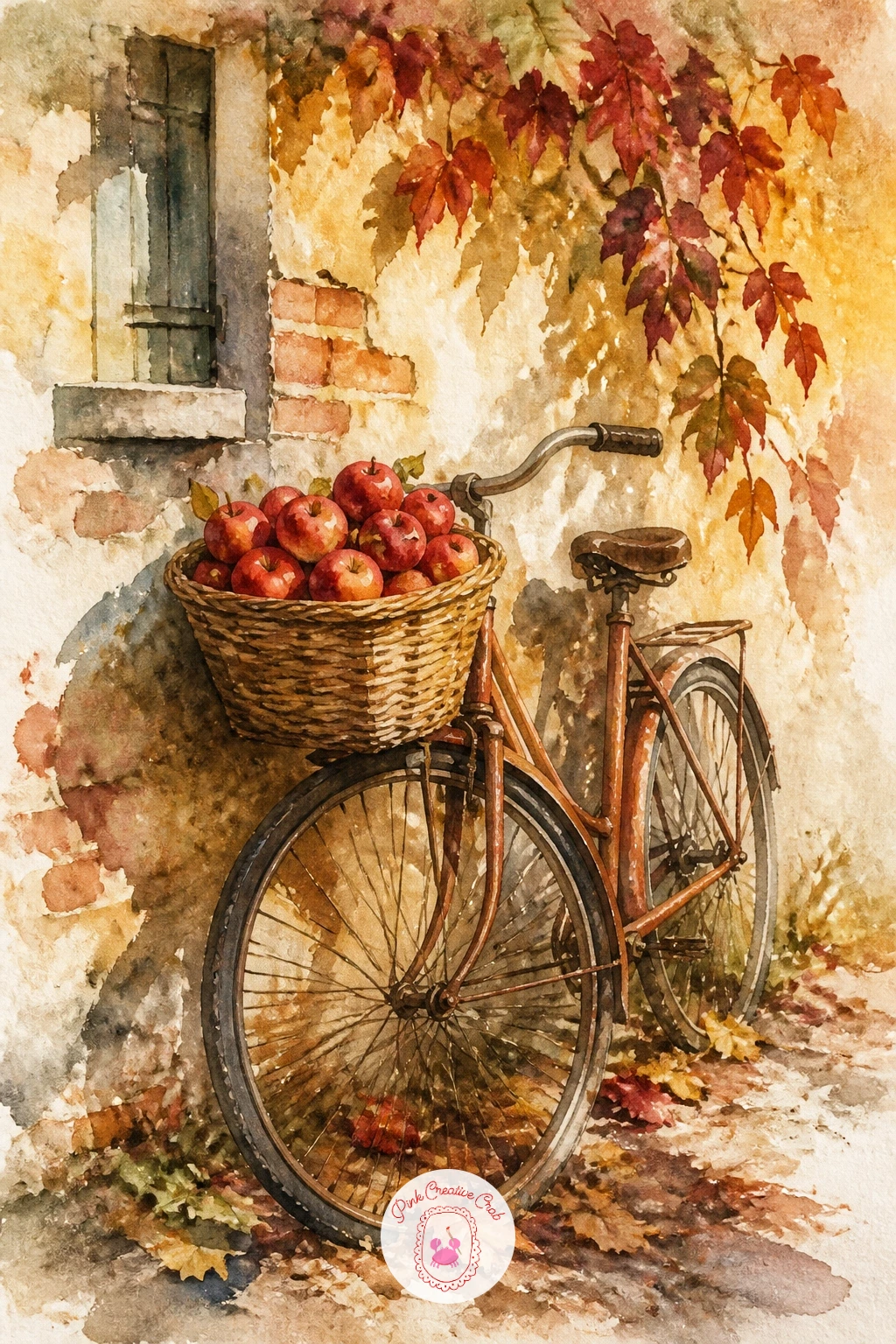
Move to a styled still life next with a basket of apples balanced on the front of a bicycle. Sketch the bicycle frame loosely with light pencil lines, since perfect bike mechanics do not matter here, only the general curve of the wheels and handlebars.
Compare the wheel size to the basket before you paint: the basket usually sits about one wheel wide, and keeping that relationship honest stops the whole bike from looking oddly scaled. Paint the wheels and frame in a thin wash of grey or burgundy, then the woven basket in ochre with small dry brush strokes to suggest the weave texture.
Apples go in last and small: a few rounds of red and burnt sienna with one pale highlight dot each, piled generously so they spill slightly over the basket rim.
If the bike frame comes out wobbly, a few loose leaves painted in front of it hide the join lines nicely. Swap a real bicycle reference for any photo online, the geometry is the same on every bike.
Palette: Payne’s Grey,Raw Sienna,Cadmium Red,Burnt Sienna
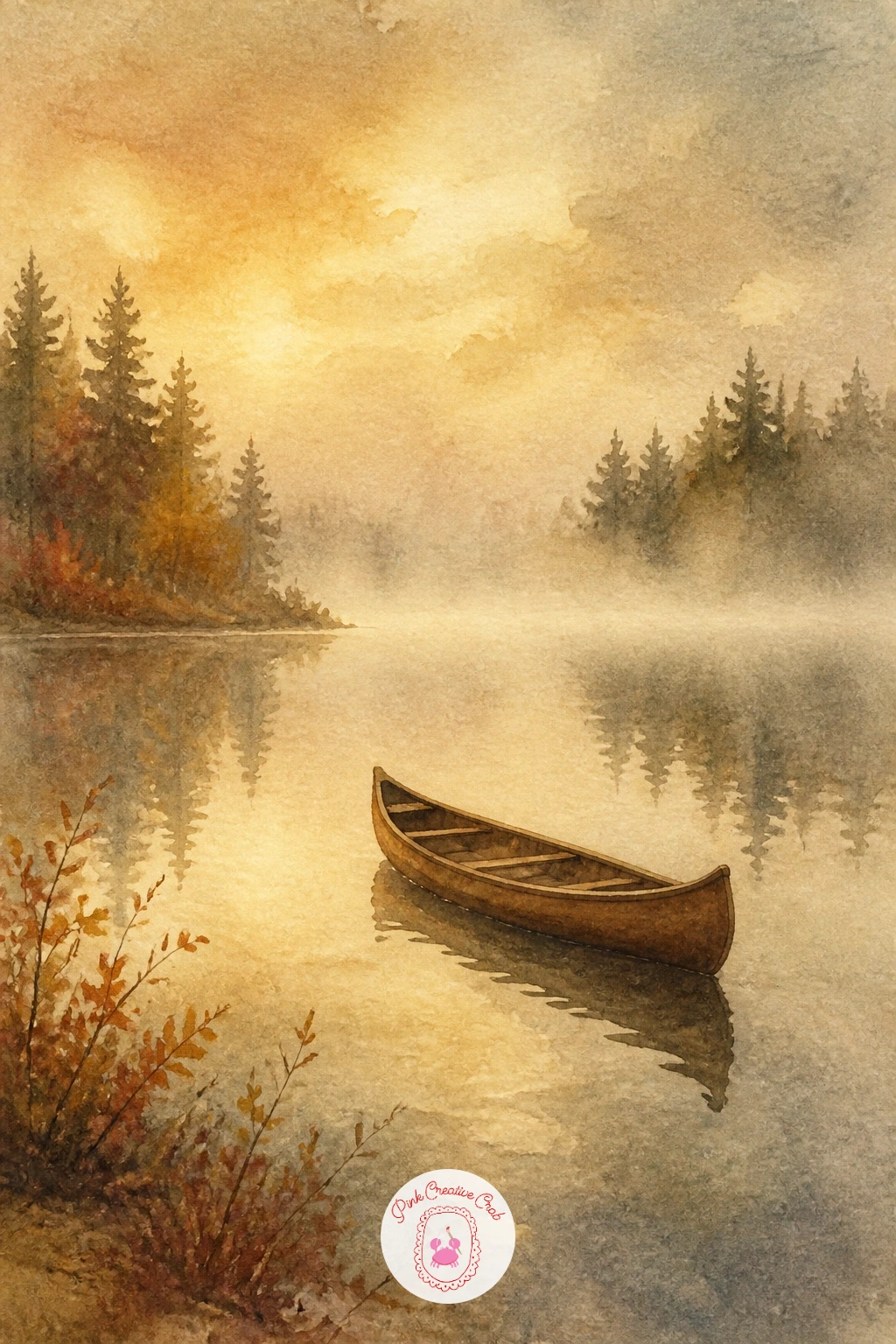
Shift into a quieter landscape with a foggy autumn lake and a lone canoe drifting near the shore. Wet the entire sky and water area first before any color touches the page, then drop in soft grey and ochre for the fog bank sitting low across the water, letting it bleed upward into pale sky.
Once that wash is dry, paint the distant tree line as one soft, slightly blurred band of burnt sienna and sage, keeping the edges fuzzy to read as fog rather than a hard horizon. The canoe is the one sharp shape in the whole piece, so save it for last and paint it with a small brush and confident, unbroken strokes.
Reflections under the canoe should be a vertical smear, not a mirror copy, since real water movement breaks reflections apart.
If the fog wash dries with hard edges instead of soft ones, lightly re-wet the area and blot gently with a tissue to soften it again. A damp sponge dabbed along the horizon also loosens up any stubborn line.
Palette: Payne’s Grey,Raw Sienna,Sap Green,Cream
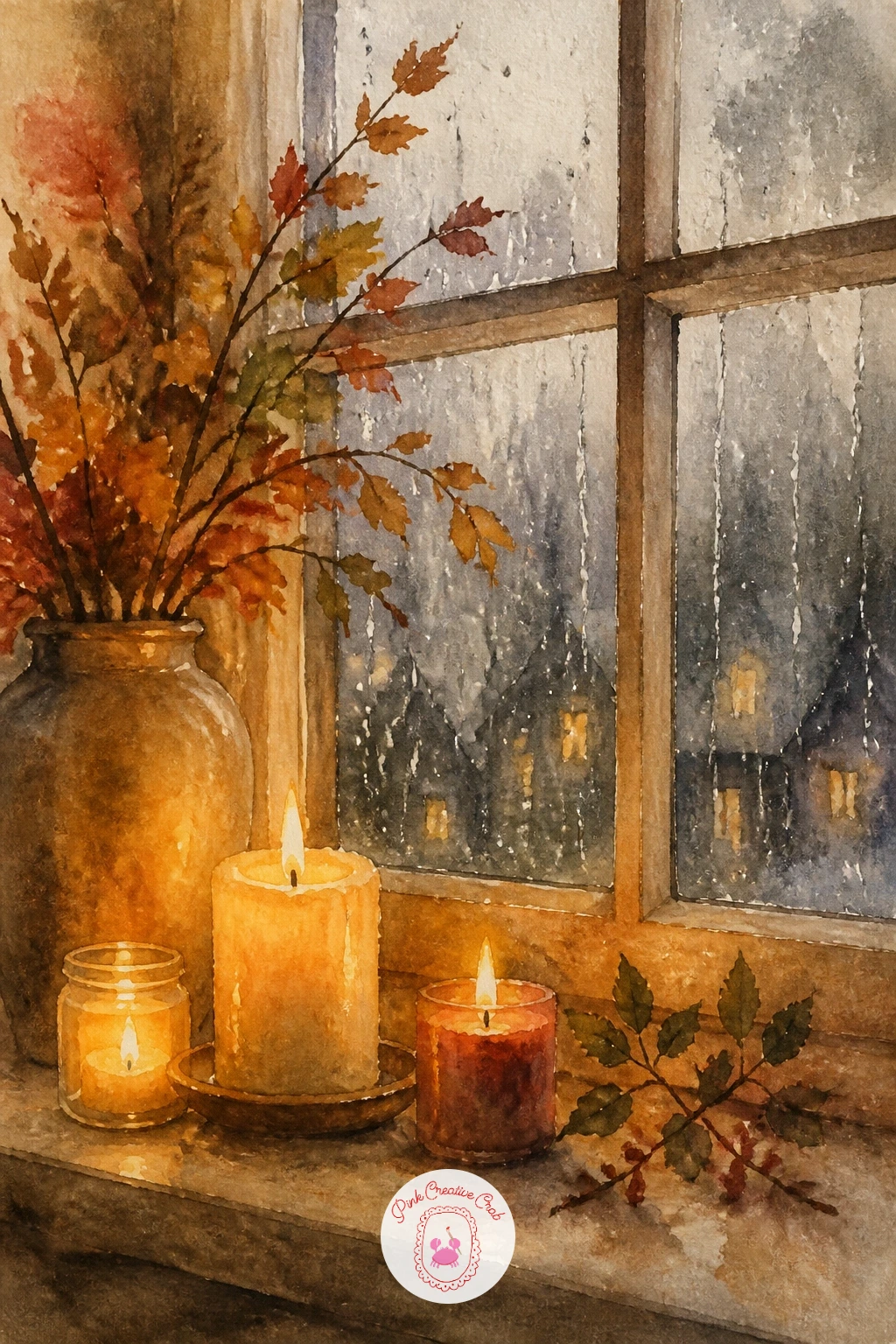
Bring the mood indoors with a cozy window scene, candles on the sill and rain streaking the glass outside. Paint the window frame first in a simple rectangle with pencil, then wash the glass pane in a cool grey blue so it reads as separate from the warm room implied around it.
While that pane wash is still damp, drag a dry brush or the flat edge of a palette knife downward in a few places to pull thin streaks through the wet paint, suggesting rain without drawing individual drops. Candles go on the sill once the window is dry: simple cream cylinders with a tiny warm glow painted around each flame in soft ochre.
The contrast between the cool window and the warm candlelight is what sells this piece, so keep those two temperatures clearly separate rather than blending them together.
No palette knife on hand? The edge of an old gift card dragged through wet paint makes the same streaked rain effect. For inspiration on glowing light against darker backgrounds, the easy watercolor skies ideas cover similar warm and cool contrasts.
Palette: Payne’s Grey,Cream,Raw Sienna,Sage
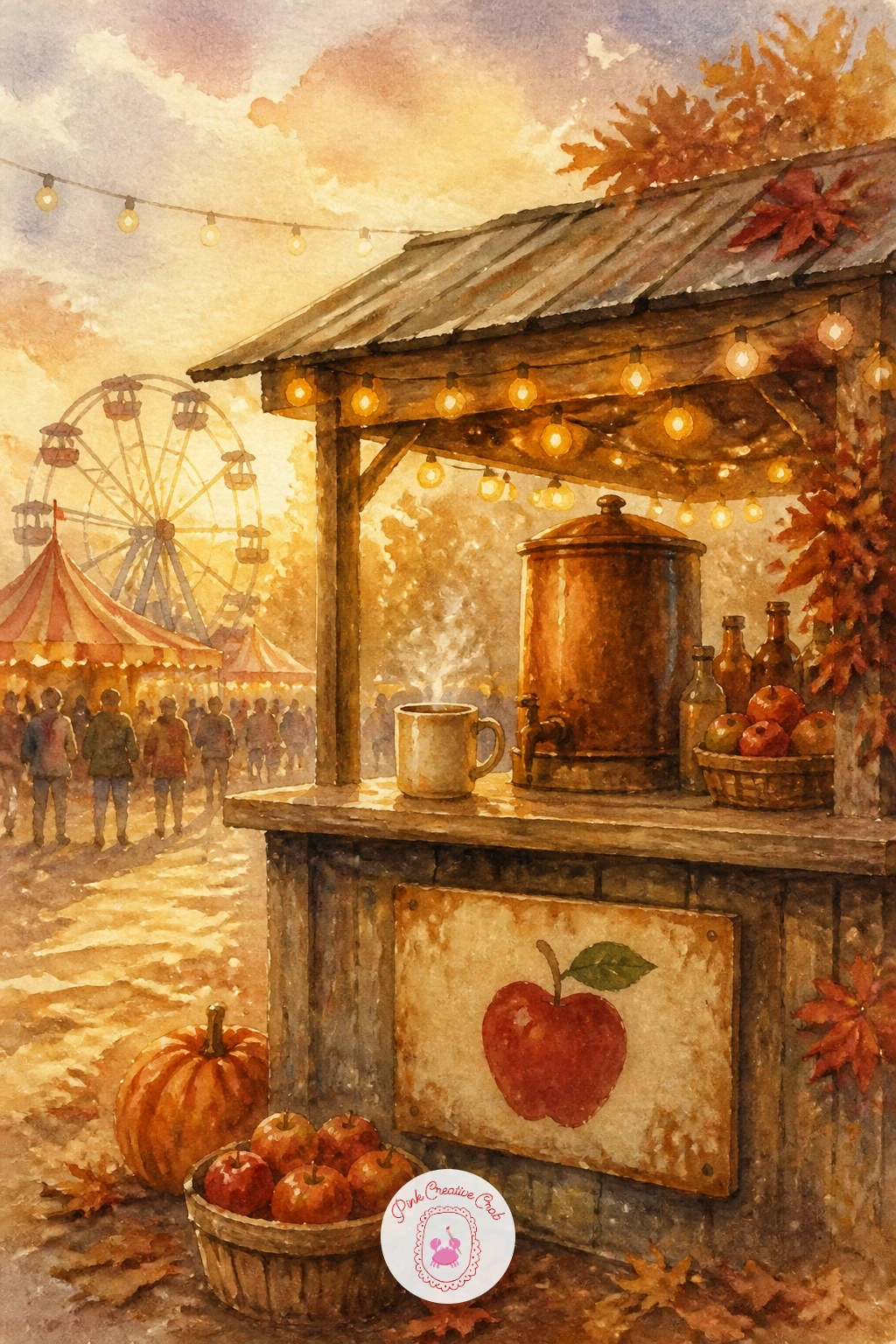
Add some life to the page with a hot cider stand at a fair, strings of bulbs overhead and a steaming mug on the counter. Sketch the stand as a simple wooden structure, a counter and a sign, then paint the background crowd and tents loosely as soft, suggested shapes rather than detailed figures, keeping all the focus on the stand itself.
Paint the wood counter in warm burnt sienna, then the cider mug and steam last in a small, controlled wash so it stays the brightest, sharpest thing in the piece. A row of tiny string lights can be left as small bare paper dots with a fine dark outline painted carefully around each one.
Working ten minutes tonight, paint just the stand and mug and skip the crowd behind it entirely. Given forty minutes, build out the background tents and a few loose figures in muted tones so the stand still reads as the star.
If the background shapes get too detailed and start competing with the stand, go back over them with a thin wash of grey to push them back visually.
Palette: Burnt Sienna,Raw Sienna,Payne’s Grey,Cream
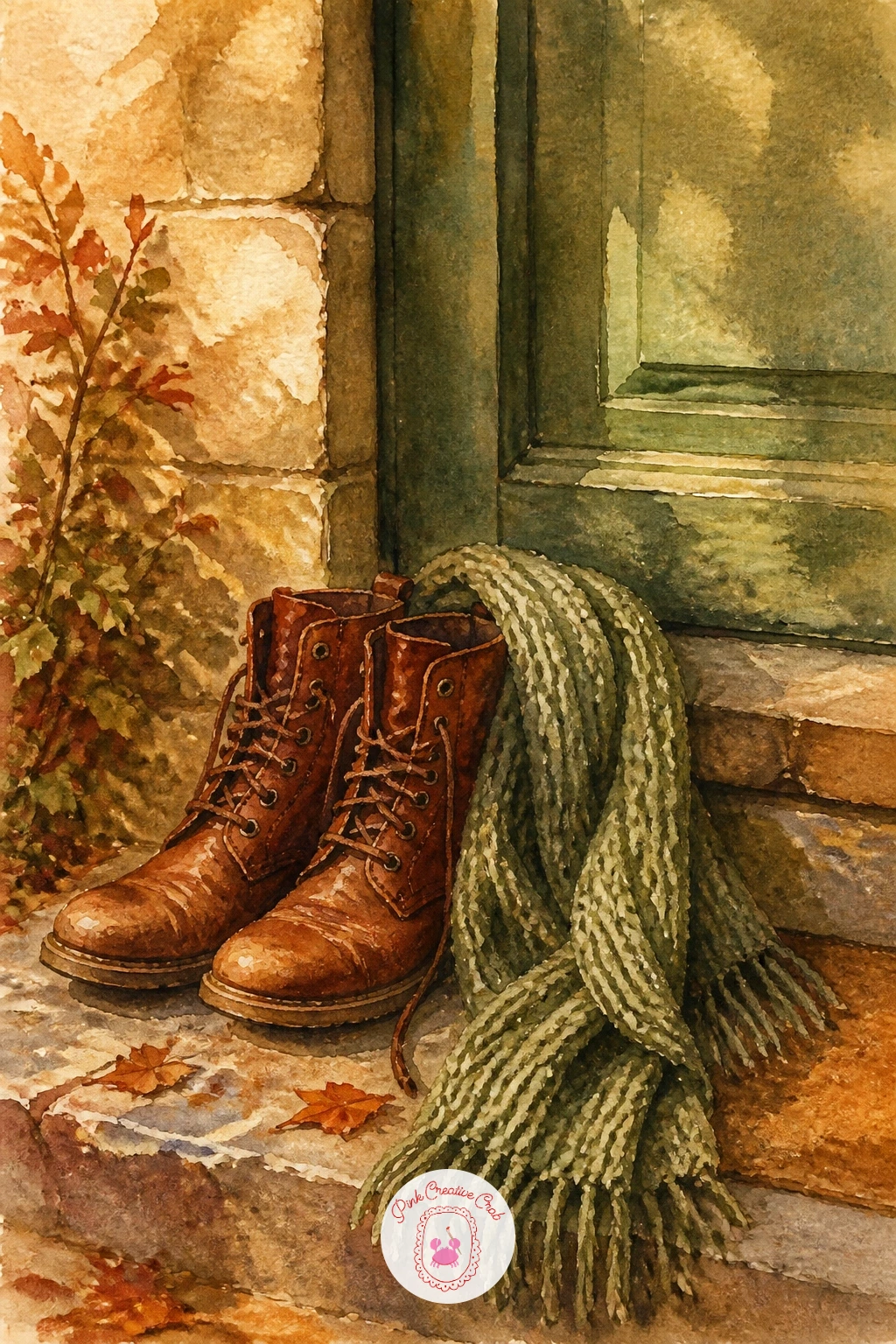
Narrow the focus right down for a still life of boots and a scarf by the door. Draw the boots first, since they give the piece its anchor, two simple leaning shapes rather than perfectly upright ones, which reads far more natural and lived in.
Paint the leather boots in burnt sienna and burgundy with a darker wash pooled at the base for shadow, then once dry, lay the scarf draped over or beside them in sage or ochre with loose, wavy folds. Fabric folds are mostly about value changes, not outline, so use a slightly darker wash in the dips of the fabric rather than drawing fold lines.
This is a good subject to practice edges on: keep the boots crisp where the light hits the leather and soften the edges in shadow by touching a damp brush to the still wet paint.
No real boots nearby? Any pair by your own front door works perfectly as reference, this is one of the easiest subjects to find without leaving the room.
Palette: Burnt Sienna,Burgundy,Sage,Raw Sienna
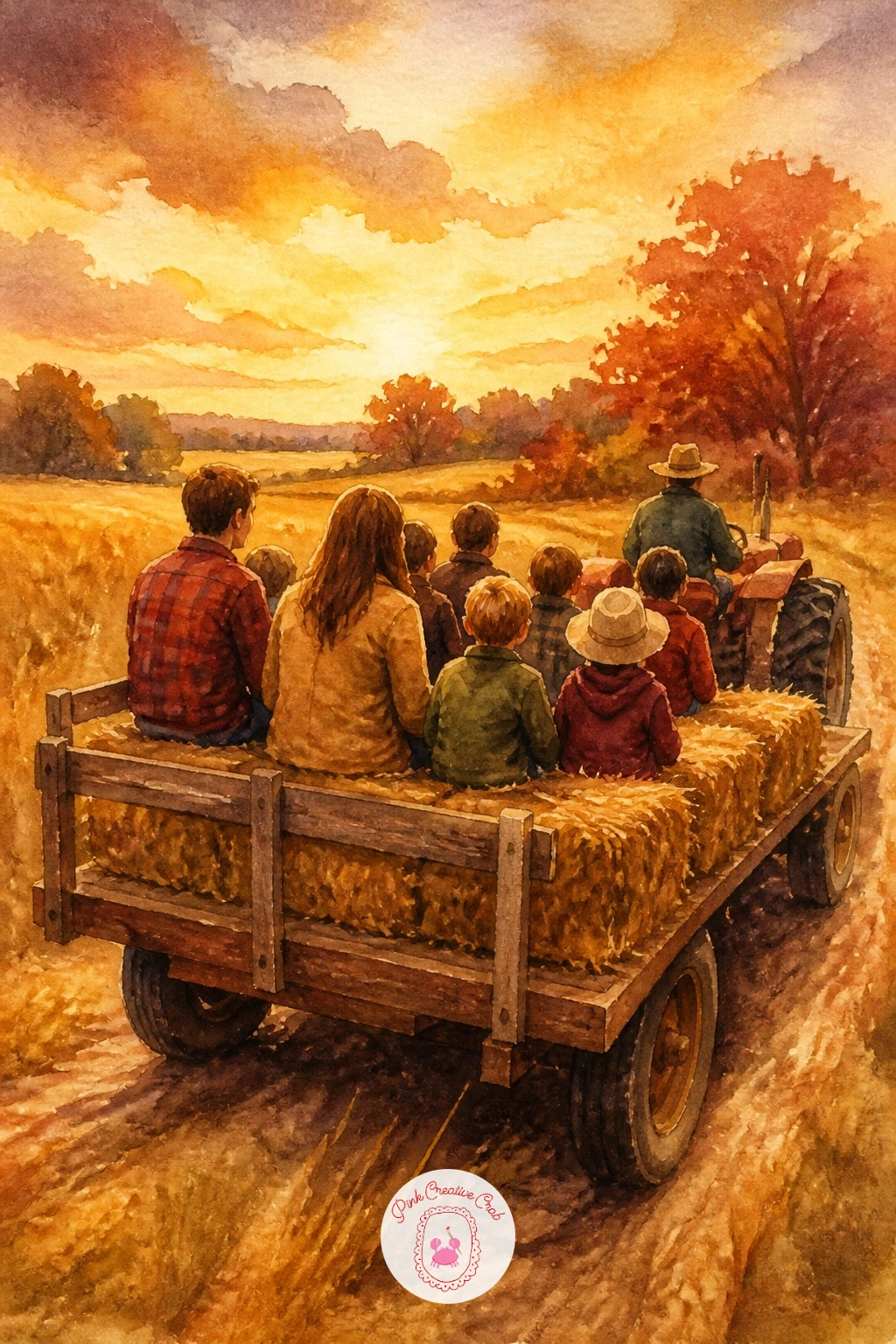
Widen out again for a hayride scene, a wagon loaded with hay bales and a few riders pulled by a tractor or horse. Keep the figures on the wagon minimal, simple seated shapes without faces, since this scene works on mood and color far more than individual detail.
Paint the field and sky first in one soft wash, then the wagon and hay bales in a slightly drier, more textured application, dabbing the brush rather than stroking it to suggest the rough straw surface. The wheels are the trickiest part: keep them as simple circles seen slightly from the side, flattened into ovals, never perfect circles unless the wagon faces you directly.
If the whole scene starts feeling flat, add one strong shadow shape under the wagon in a deeper grey or burgundy, it grounds the entire piece instantly.
Swap a tractor for a horse and cart if that suits your reference better, the composition principle stays identical either way. The easy farm animal watercolor ideas are worth a look if you want to add an animal into this scene.
Palette: Raw Sienna,Burnt Sienna,Payne’s Grey,Sage
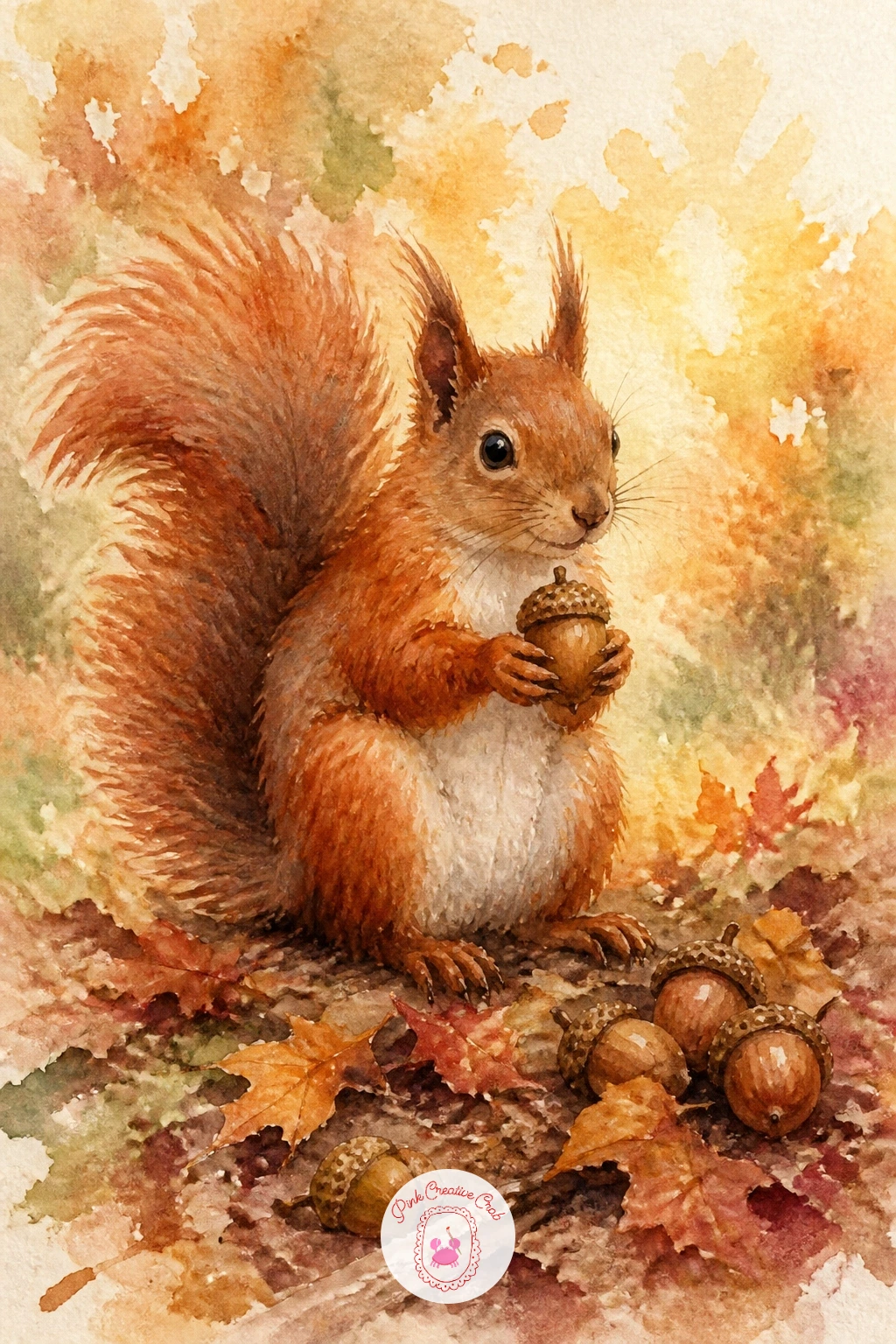
Bring in a small creature with a squirrel collecting acorns, cheeks full, paws gripping one more. Build the body from two overlapping ovals, a rounder body and a smaller head, before adding the tail as one big sweeping curve that often ends up larger than beginners expect.
Compare the tail to the body before committing to paint: a squirrel’s tail is roughly as long as its whole body plus head, and getting that proportion right is what makes the silhouette instantly readable. Paint the fur in warm burnt sienna and ochre with the tail slightly lighter and fluffier looking, achieved by dry brushing the outer edge rather than painting a hard line.
Acorns scattered nearby are simple ovals with a tiny textured cap, dabbed in with a dry brush loaded in burnt sienna and a touch of grey.
If the tail looks too stiff, soften its outer edge with a slightly damp brush while still wet to break up the silhouette. One tip worth keeping: always paint the eye as the very last mark, a single dark dot brings the whole animal to life.
Palette: Burnt Sienna,Raw Sienna,Payne’s Grey,Cream
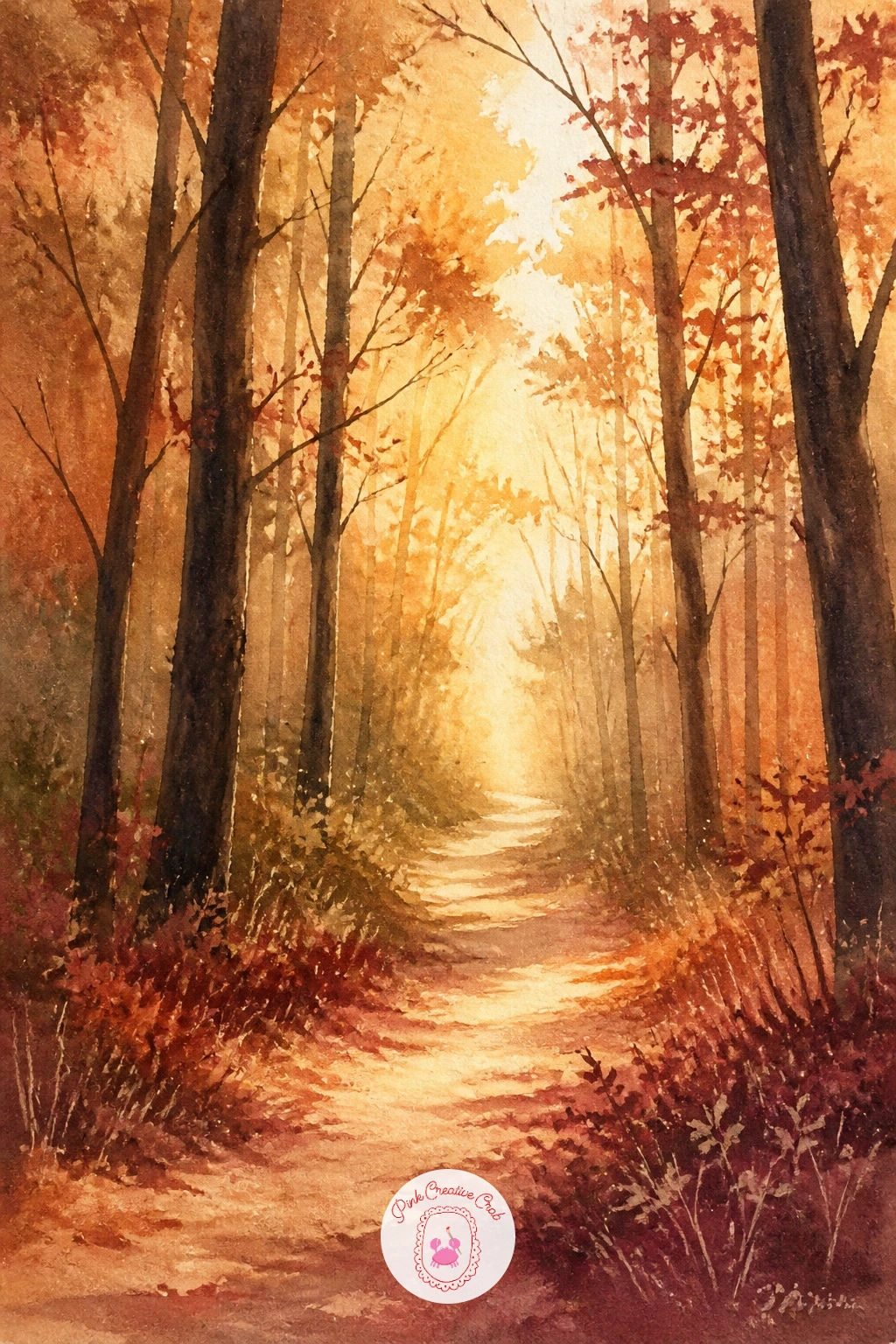
After the squirrel, pull back into the wider forest it lives in: a path cutting through trees in golden late afternoon light. Decide where the light source sits before you paint a single stroke, usually low and behind the trees here, since that choice decides which side of every trunk gets the warm highlight and which stays in shadow.
Paint the sky and background trees first as one soft wet wash in ochre and cream, letting the warmest, brightest color sit exactly where the light would be strongest, often center or slightly off to one side. Once dry, add the nearer tree trunks in a darker, drier wash, silhouetted dark against that glowing background, which is what gives forest scenes their depth.
The path itself is simply the lightest, most untouched strip of paper running through the middle, barely painted at all beyond a faint warm wash.
If the glow looks weak, deepen the trunks around it rather than brightening the glow itself, contrast does more work than extra color. For more on building light this way, see the easy watercolor landscapes guide.
Palette: Raw Sienna,Cream,Burnt Sienna,Payne’s Grey
Settle back into something small and simple with a mug of tea resting on a folded knitted blanket. Draw the mug as a simple cylinder shape, slightly wider at the top than the base, and resist the urge to make the opening a perfect circle, a shallow ellipse reads more convincing.
Paint the mug first in one solid color, leaving a bare highlight strip down one side, then once dry, build the blanket underneath with loose, overlapping strokes in two or three colors to suggest a knit or plaid pattern without painting every single stitch.
Steam rising from the mug is left as bare paper or lifted gently with a damp brush, the same trick used for the pie earlier in this list, so it feels consistent if you paint several pieces together.
If this is your first time painting folded fabric, keep the folds to just two or three major shapes rather than many small ones, it reads far more confident. Finish with one warm shadow cast by the mug onto the blanket.
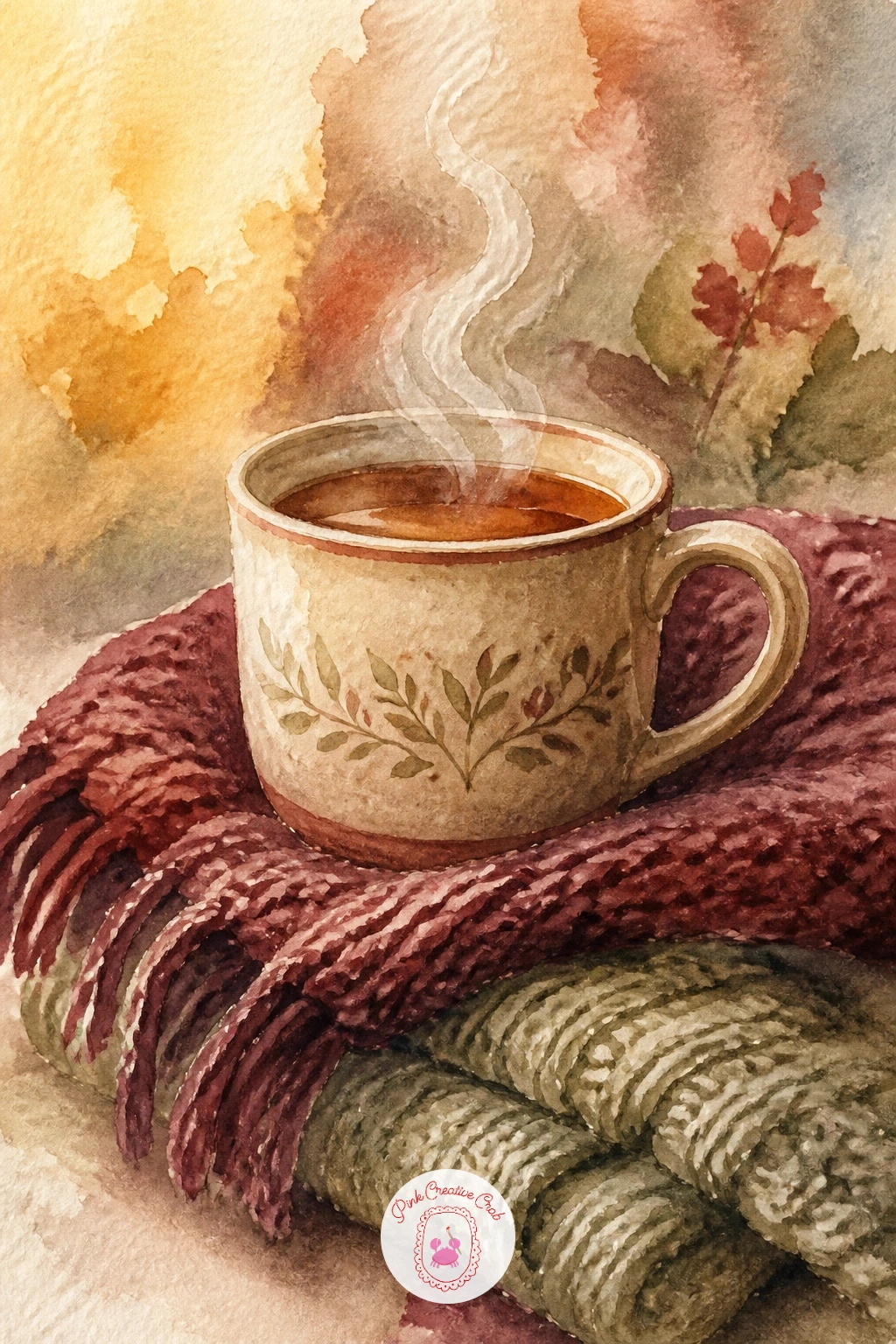
Palette: Burgundy,Sage,Cream,Raw Sienna
Return to a wild animal subject with a fox curled or walking through a carpet of red leaves. Build the fox’s head as a triangle with soft rounded corners, ears as two smaller triangles sitting high and alert, this simple shape language is what makes a fox instantly recognizable even loosely painted.
Paint the body in one warm orange red wash first, leaving the chest, chin and tail tip bare for the white markings, then add the darker leg and ear tips once the base coat is dry so they stay crisp rather than bleeding into the orange.
The leaves around the fox should echo the same orange and rust family so the fox nearly melts into its setting, broken up only by the white markings and a dark nose and eyes.
If the fox face looks off, check the eye placement sits roughly at the halfway point down the head shape, a common beginner mistake is placing them too high. The autumn sketchbook ideas are a good place to practice more quick animal studies like this one.
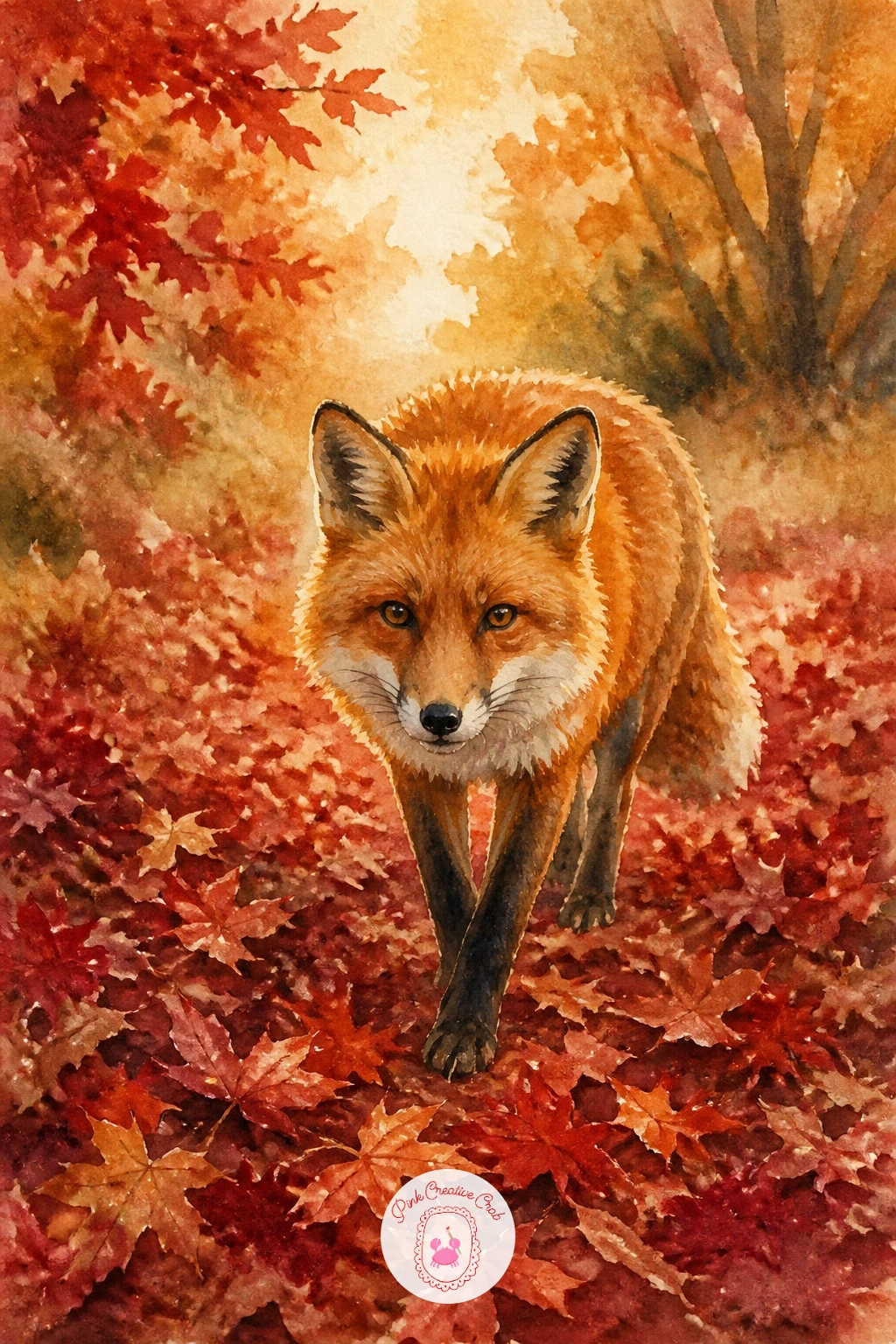
Palette: Cadmium Red,Burnt Sienna,Cream,Payne’s Grey
Bring the figure back into motion with a girl raking leaves into a pile across a yard. Pose her mid action, one arm extended with the rake, weight shifted onto one leg, since a static standing pose makes raking look more like posing for a photo than actually working.
Paint the leaf pile and scattered leaves first in one loose wet wash of rust and ochre so they spread naturally across the lower section of the page, then paint the figure on top once that layer is completely dry, keeping her clothing in one or two flat colors.
The rake itself is just a few thin lines, painted last with a fine brush so they stay crisp against everything else, with the tines as the final tiny marks added.
If her pose feels stiff, check that her weight sits clearly over one foot rather than centered between both, that single shift reads as movement instantly. Swap the rake for a leaf blower hose if that suits your own memory better, the pose principle stays the same.
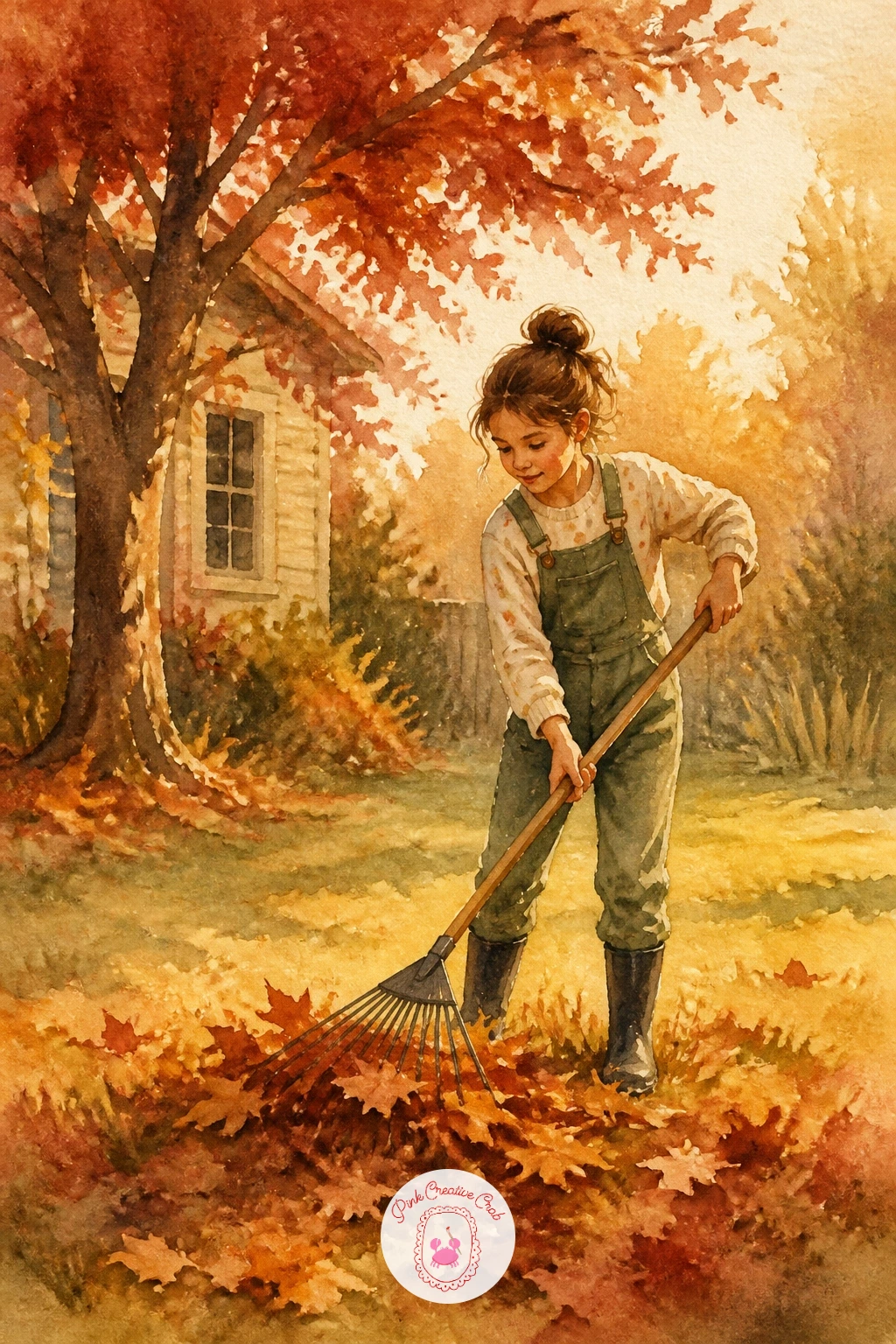
Palette: Raw Sienna,Burnt Sienna,Sage,Payne’s Grey
Shift to a decorative still life with an autumn wreath hung on a wooden door. Draw a light pencil circle as the base guide, then build the wreath outward from it with loose overlapping leaf shapes rather than tracing the circle itself, since a visible perfect circle under foliage looks stiff.
Paint the leaves in three or four rounds of color, rust, ochre and sage, dabbing with the brush tip rather than stroking, and let colors overlap wet into wet in places for natural variation. Once the wreath is dry, add a few small berries or pinecone shapes tucked into the gaps with a smaller brush.
The door behind it is the supporting actor: paint it in one flat, muted wash so the wreath’s warm colors pop forward against it, and keep any door hardware to a few simple dark marks.
If the wreath shape comes out lopsided, extra leaves dabbed into the thin side balance it out easily, nobody will notice the fix. For more styled holiday display ideas, the Christmas painting ideas use a similar wreath building technique.
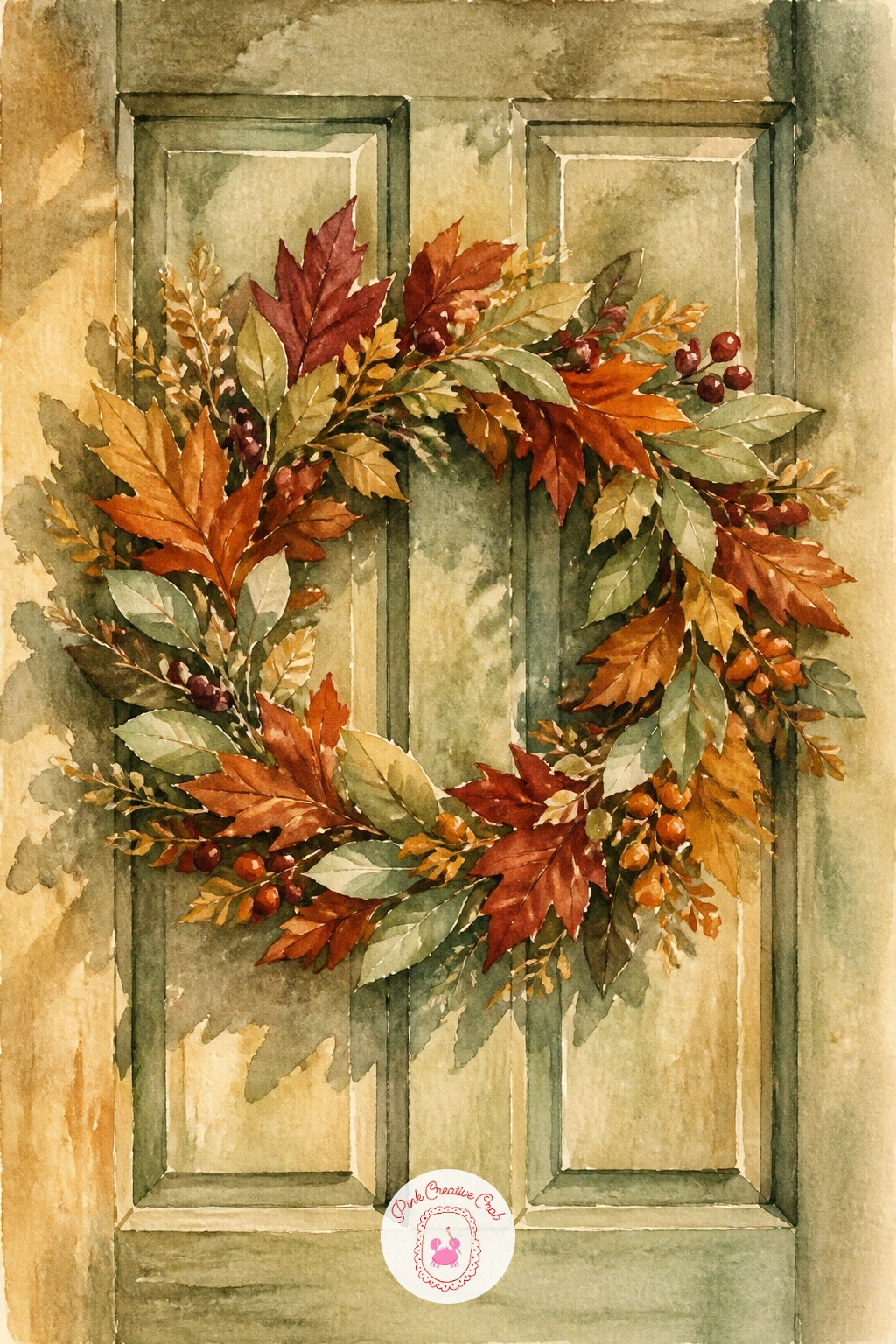
Palette: Burnt Sienna,Raw Sienna,Sage,Burgundy
Step into a cozy storefront with a bookshop window dressed for fall, pumpkins and books stacked behind the glass. Sketch the window frame and a few simple book spines first, varying their heights so the stack reads naturally rather than as a uniform block.
Paint the window glass with a soft grey blue wash, then once dry, add the display behind it in warmer tones, pumpkins in ochre and burnt sienna, book covers in a mix of burgundy and sage, keeping everything behind the glass slightly softer in edge than the frame itself to suggest it sits behind a pane.
A hanging sign or string lights above the window add a nice finishing touch, painted as small simple shapes so they do not compete with the main display.
If the books behind the glass look too crisp and pull focus from the window itself, soften their edges slightly with a damp brush once dry. A bookshop interior from the fall junk journal pages makes a nice companion piece if you enjoy this cozy storefront mood.
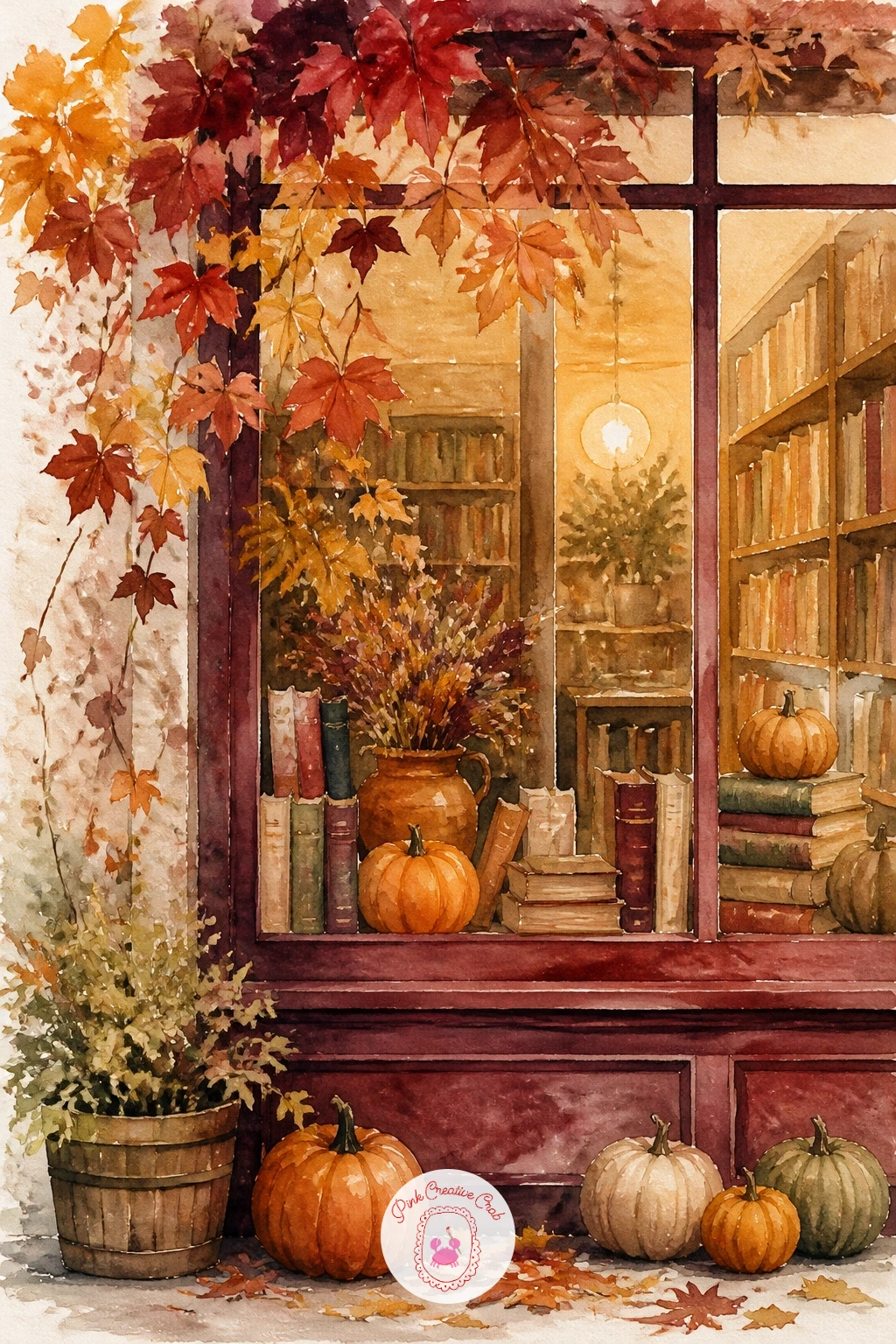
Palette: Payne’s Grey,Burgundy,Raw Sienna,Sage
Lay out a picnic scene next, a plaid blanket spread on grass with a basket and a few scattered leaves. Draw the blanket first as a simple rectangle seen at a slight angle, since a perfectly flat, head on blanket looks more like a tablecloth than something spread outdoors.
Paint the plaid pattern in two stages: a base wash in one color, left to dry completely, then thin crossing lines painted on top in a second and third color so the lines sit crisply over the base rather than bleeding into a muddy mix.
The picnic basket and any scattered apples or thermos go in last with small, controlled strokes, since they are the smallest and most detailed elements and need the steadiest hand.
If the plaid lines wobble, a ruler held lightly against the paper as a guide keeps them straighter without looking mechanical. No actual plaid blanket to reference? Any tartan scarf or search photo shows the same crossing line structure.
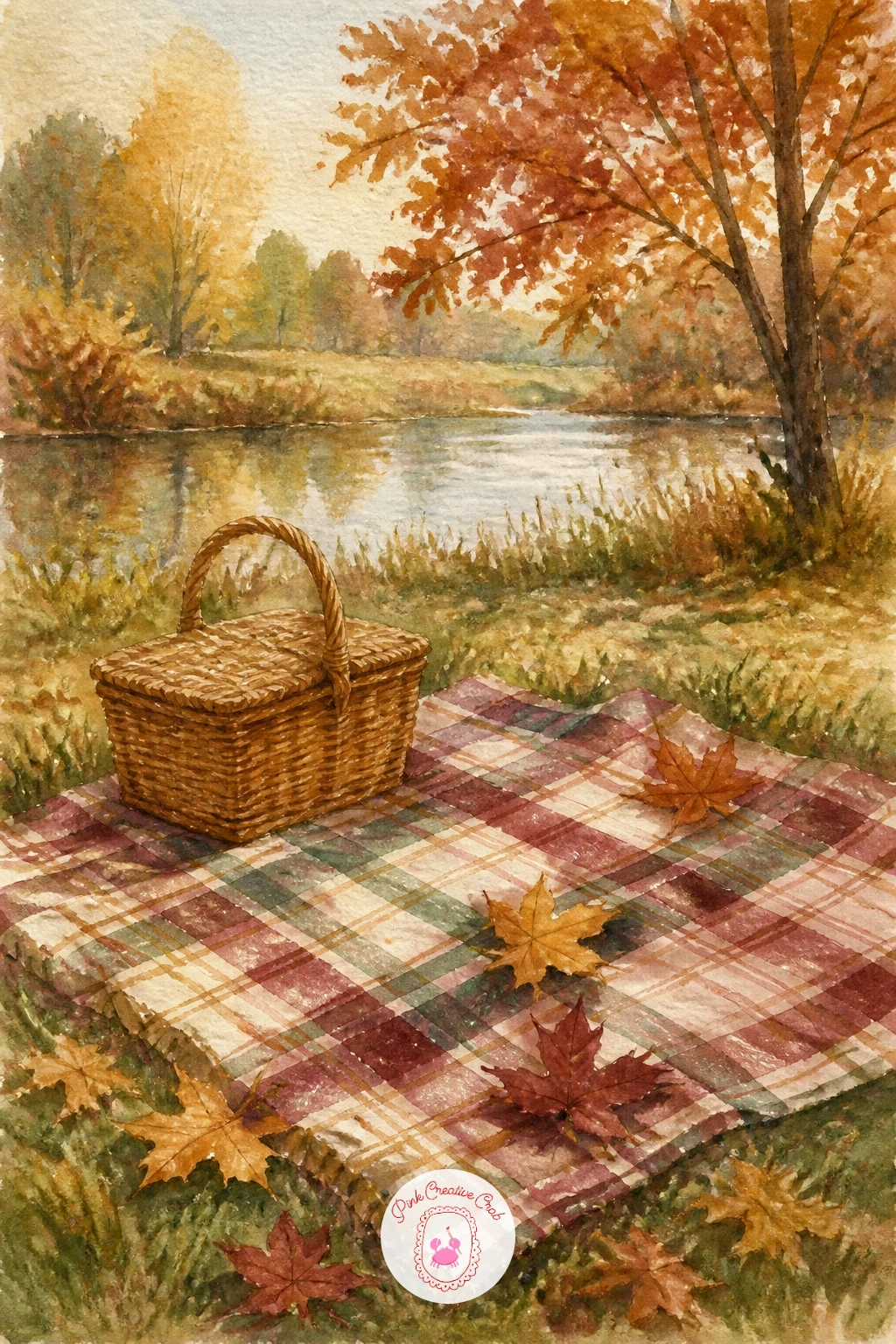
Palette: Burgundy,Sage,Raw Sienna,Cream
Move into a wider landscape with a field of sunflowers past their bloom, heads bowed and drying in the autumn sun. Paint the sky and field as one soft background wash first, then once dry, add the sunflower stalks as a loose repeated pattern of thin vertical lines, varying their height so the field feels natural rather than planted in a grid.
The dried flower heads themselves are small dabbed circles in deep ochre and burnt sienna, bowed downward rather than facing up the way fresh sunflowers do, which is the single detail that makes this read as late season rather than summer.
Keep the nearest flowers more detailed, with a visible dark seed head center, and let the distant ones blur into soft shapes with less definition.
If the field starts looking too repetitive, vary the spacing and tilt of a few stalks rather than keeping them all upright and evenly spaced. One tip for today: paint the foreground stalks last so they sit clearly in front of everything else.
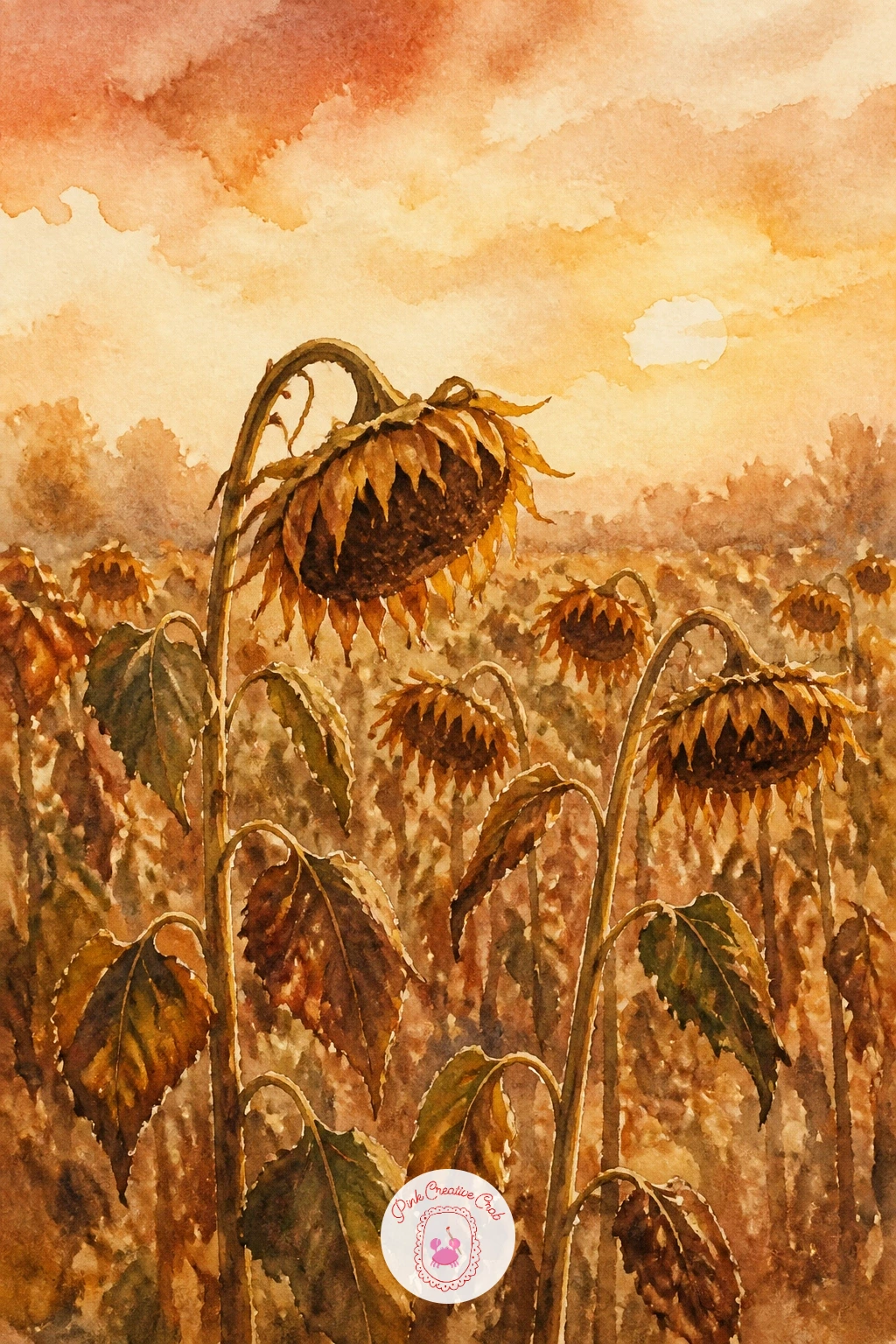
Palette: Raw Sienna,Burnt Sienna,Sage,Payne’s Grey
Build a small architectural scene with a stone or timber cottage, smoke curling from its chimney against an autumn tree line. Sketch the cottage shape simply, a rectangle body and triangle roof, before worrying about any texture, since getting the basic proportion right matters more than any detail added later.
Paint the sky and background trees first in a soft wash of ochre and sage, then once dry, paint the cottage walls and roof in a slightly deeper, drier wash so the structure reads solid against the softer background behind it.
Smoke is the last and softest mark on the page: lift a thin curling line out of a still damp sky wash with a clean damp brush, or simply leave a faint unpainted wisp if the sky has already dried.
If the cottage looks too stiff and geometric, soften one or two edges of the roofline with a damp brush to break up the hard architecture slightly. Windows glowing warm against the cooler walls add instant coziness with almost no extra effort.

Palette: Sage,Raw Sienna,Payne’s Grey,Cream
Bring a pet back in with a cat curled or perched on top of a pumpkin. Build the pumpkin first as a slightly flattened circle with a few vertical shading lines to suggest its ribbed shape, then let it dry fully before the cat goes anywhere near it.
Paint the cat on top in one or two flat colors, keeping the pose simple, a seated loaf shape or a curled sleeping one both work well and are forgiving for a confident beginner. Tuck its paws or tail around the pumpkin’s curve so the two shapes feel connected rather than just stacked.
Fur texture comes from a dry brush dragged lightly along the cat’s outer edge once the base color is dry, breaking up the silhouette just enough to read as soft rather than painted flat.
If the cat looks like it is floating above the pumpkin rather than sitting on it, add a small shadow where the two shapes meet. For more feline subjects at this level, the cat watercolor ideas are worth bookmarking.
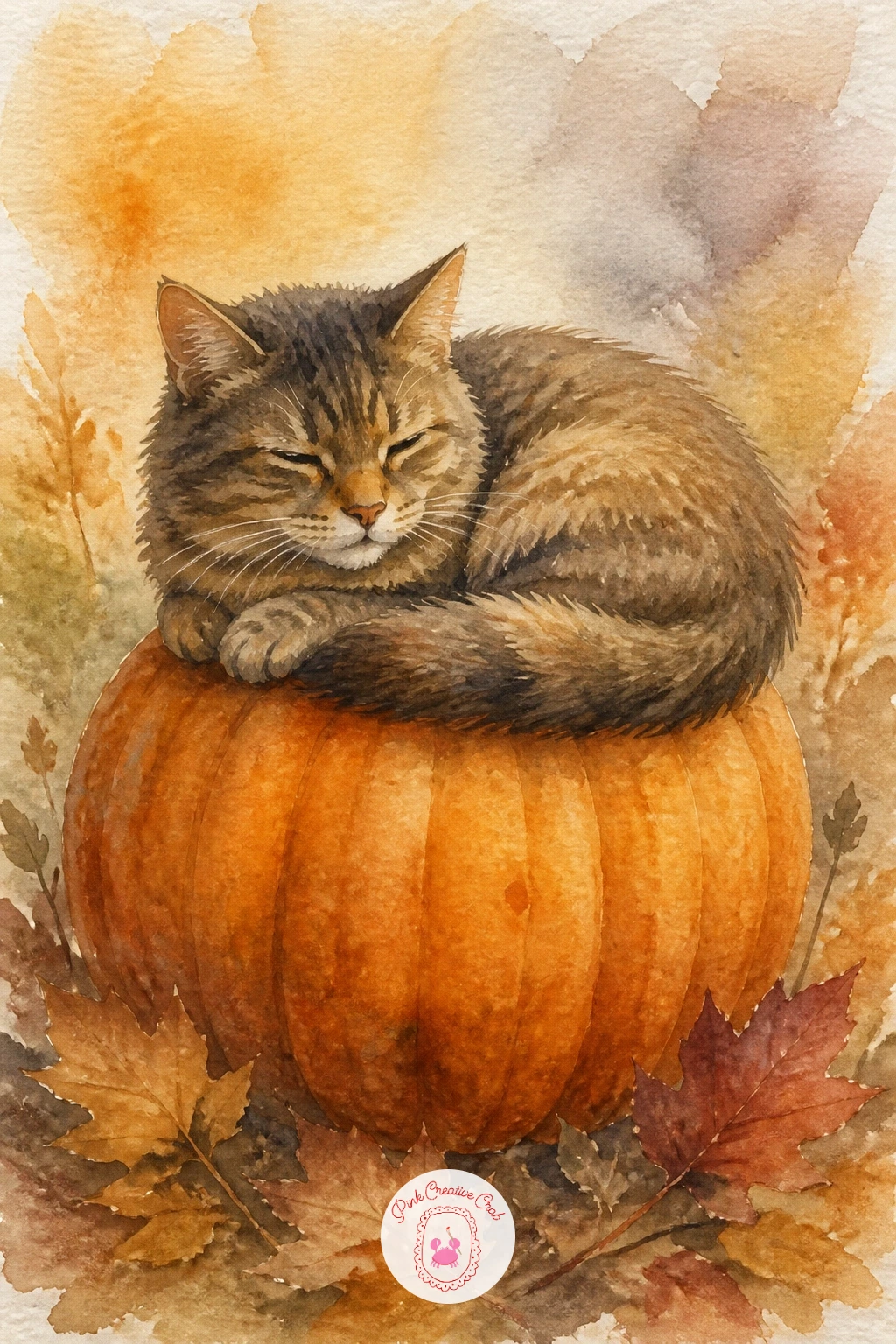
Palette: Raw Sienna,Burnt Sienna,Payne’s Grey,Cream
Widen the still life into a small scene with a farmers market stall piled with squash and gourds. Sketch a simple wooden crate or table shape first, then fill it with a loose pile of ovals and rounds in varying sizes before any color touches the page, since getting the pile’s silhouette right matters more than any single squash shape.
Paint the squash in a mix of ochre, burnt sienna and sage so the pile reads varied rather than uniform, letting a few colors bleed together wet into wet for natural variation between the vegetables.
The crate or stall structure goes in last with a dry brush for visible wood grain texture, kept deliberately looser than the squash so the produce stays the clear focus of the piece.
If the pile looks flat and uniform, add one deeper shadow wash underneath the whole group once everything is dry, grounding it instantly. The easy watercolor food ideas cover more produce still life setups like this one.
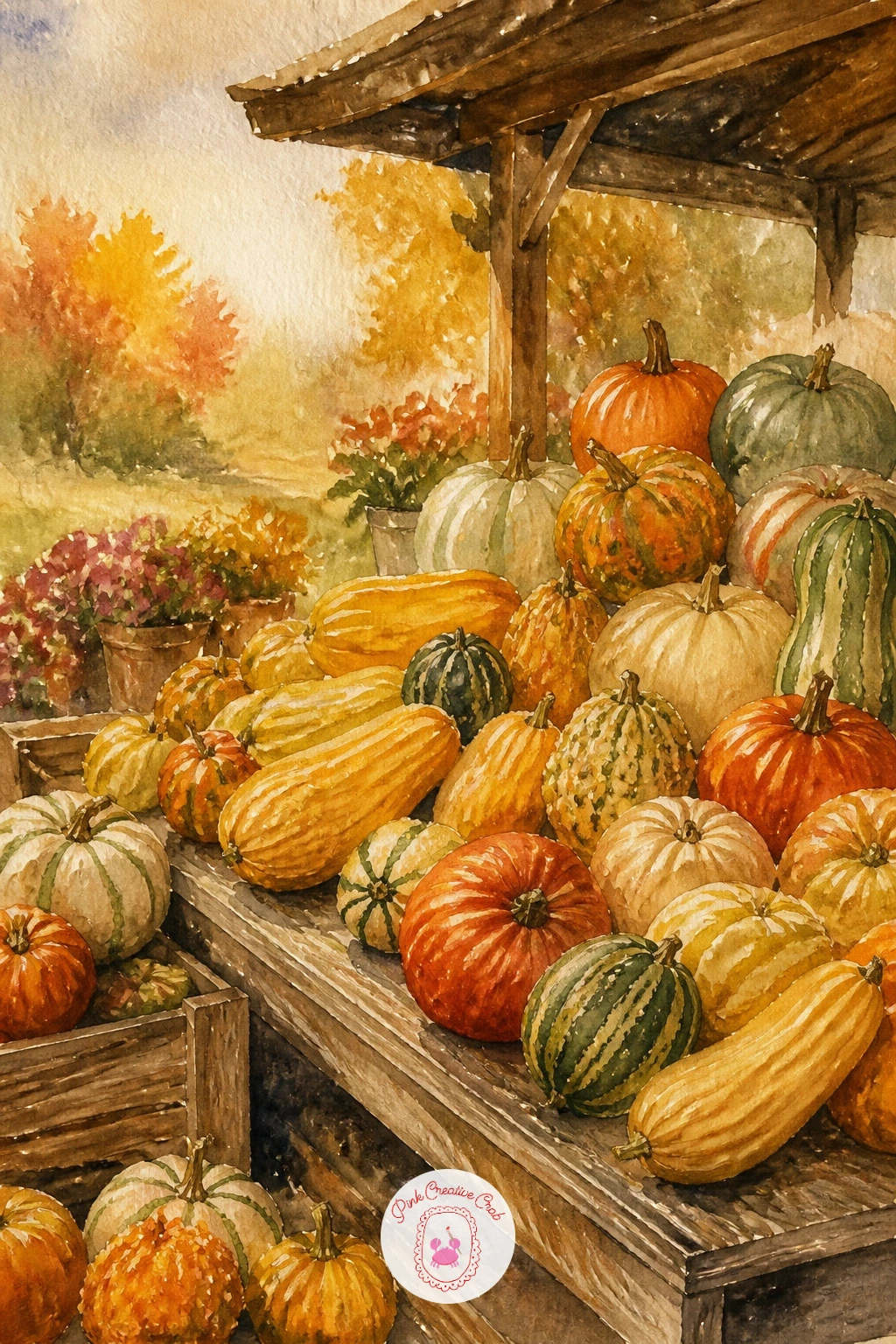
Palette: Raw Sienna,Burnt Sienna,Sage,Payne’s Grey
Settle on a quieter wildlife piece with an owl perched in a bare or half turned autumn tree. Build the owl’s body from one rounded oval shape, head and body nearly merged with barely a visible neck, which is the proportion detail that makes an owl silhouette instantly recognizable.
Paint the body in warm browns and ochre with a dry brush used for the feather texture around the edges, leaving the face disc paler and smoother so it stands out as the focal point against the textured body.
The eyes go in last and are the most important marks on the page: two confident dark circles painted with a small brush, slightly too large if anything, since an owl’s eyes read as dramatically oversized compared to its head.
If the feather texture looks too busy, simplify by dry brushing only the wing edges and leaving the chest area smoother. Branch and tree shapes behind the owl can stay loose and mostly bare, a few remaining leaves in rust is plenty.
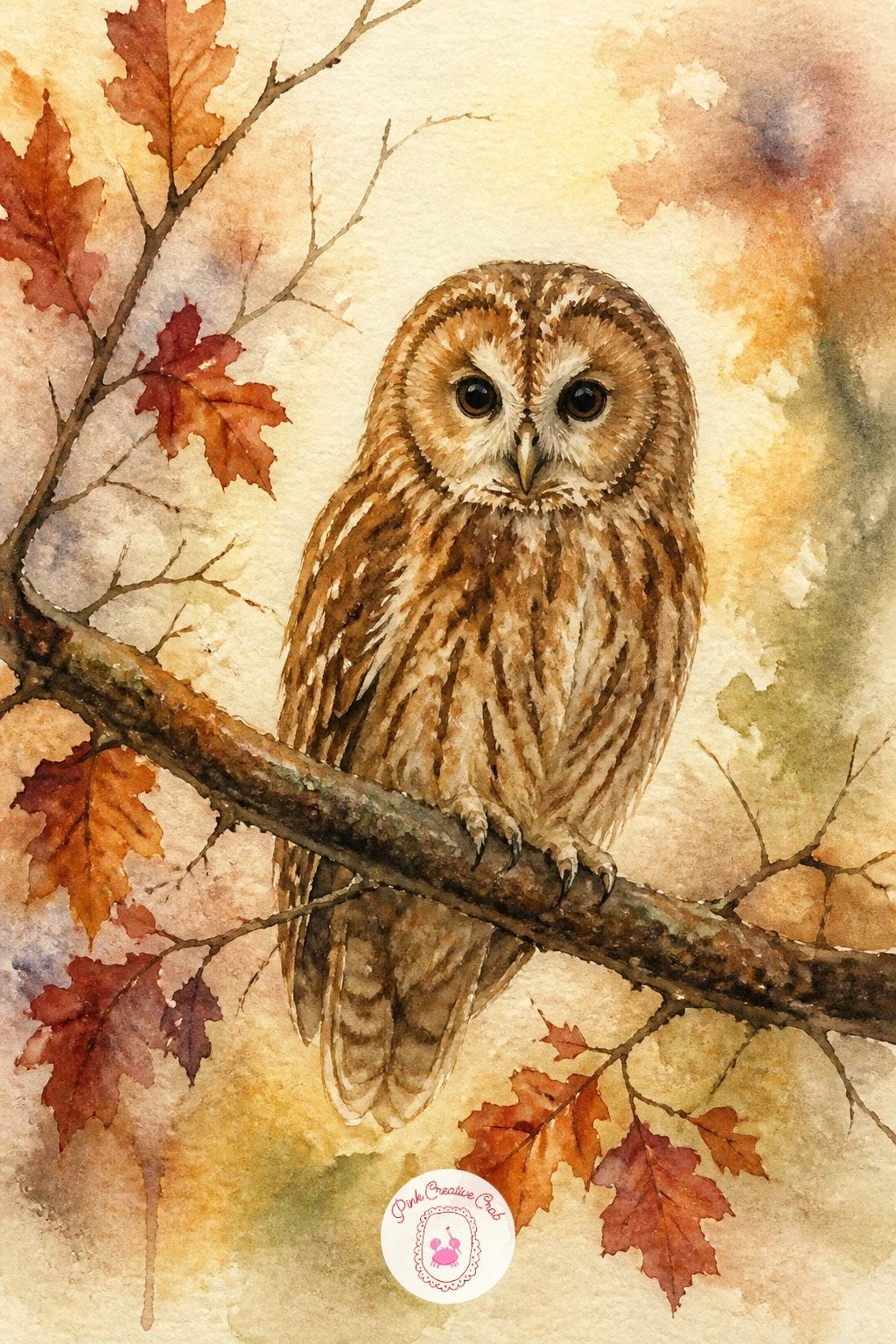
Palette: Burnt Sienna,Raw Sienna,Payne’s Grey,Cream
Bring the focus down to the forest floor with a woven basket full of foraged mushrooms and a few fallen leaves. Draw the basket shape first with its weave suggested through a few curved guide lines, then fill it loosely with a cluster of mushroom caps in varying sizes before adding any color.
Paint the mushroom caps in warm browns and burnt sienna, leaving the stems paler and the undersides a soft grey, then once dry, add the basket’s weave texture with a dry brush dragged in short overlapping strokes so it reads woven rather than solid.
A few fallen leaves tucked around the basket’s edge, painted in the same rust and ochre family as the mushrooms, help tie the whole cluster together into one warm, cohesive pile.
If the mushrooms all look identical, vary the cap shapes slightly, some rounder, some flatter, and tilt a few at different angles so the group feels gathered rather than lined up. A forest floor reference photo helps enormously if mushroom shapes are unfamiliar to paint.
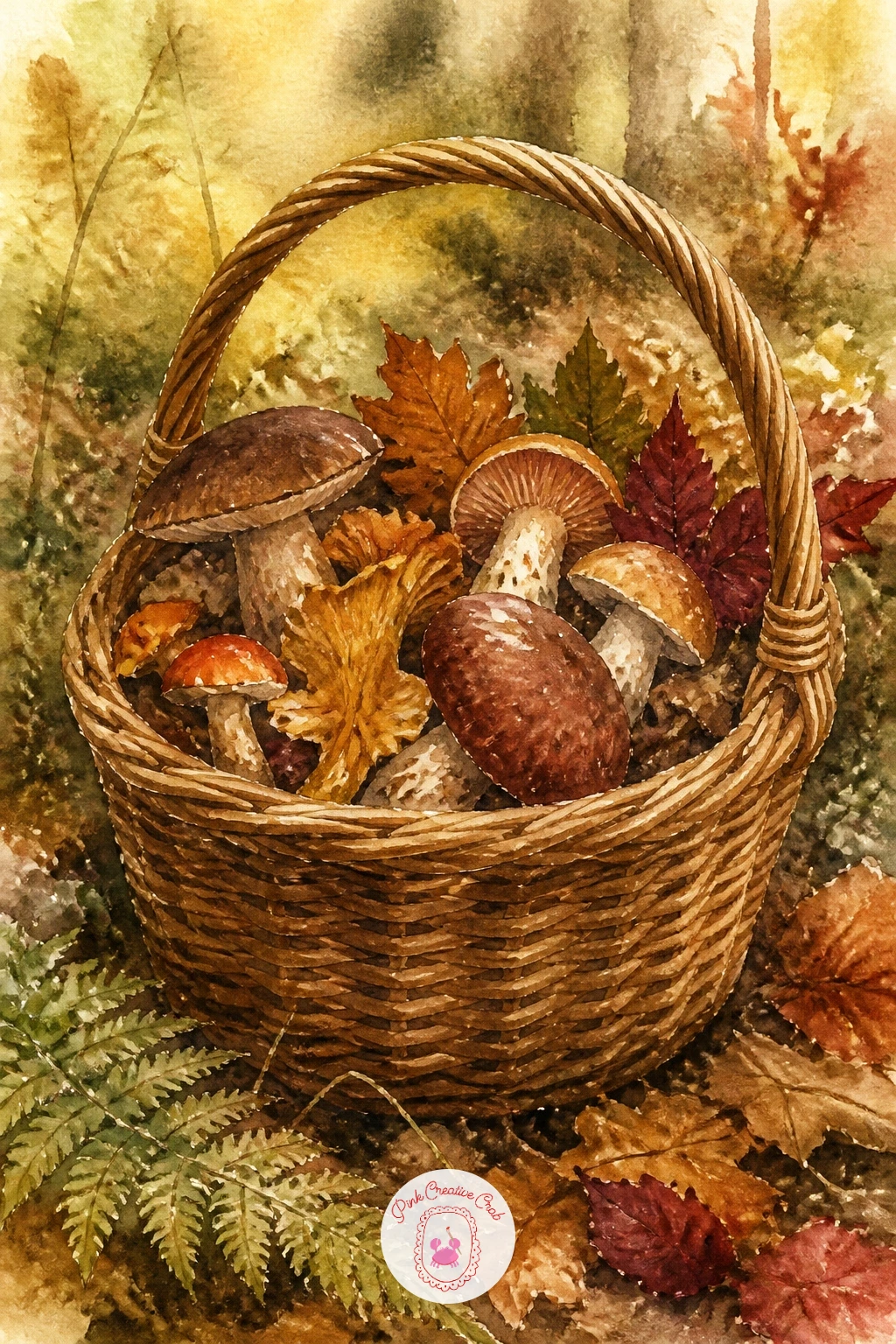
Palette: Burnt Sienna,Raw Sienna,Payne’s Grey,Cream
Lift the eye upward for a flock of geese flying in formation over a golden field below. Paint the sky and field first as one soft wash, warm ochre fading into a paler cream toward the horizon, then let it dry completely before any birds go in.
The geese themselves are the simplest shapes in this whole list, just small confident V marks made with one or two quick brush strokes each, painted in a dark silhouette color so they read instantly against the warm sky behind them.
Arrange them loosely in a V formation but avoid spacing them perfectly evenly, a slightly irregular spacing with one or two birds trailing behind looks far more like a real flock in motion.
If the formation looks too stiff or mechanical, remove one bird from the tidy line and place it slightly off to the side. Given forty minutes rather than ten, add a soft tree line or a single tree silhouette below to ground the composition.
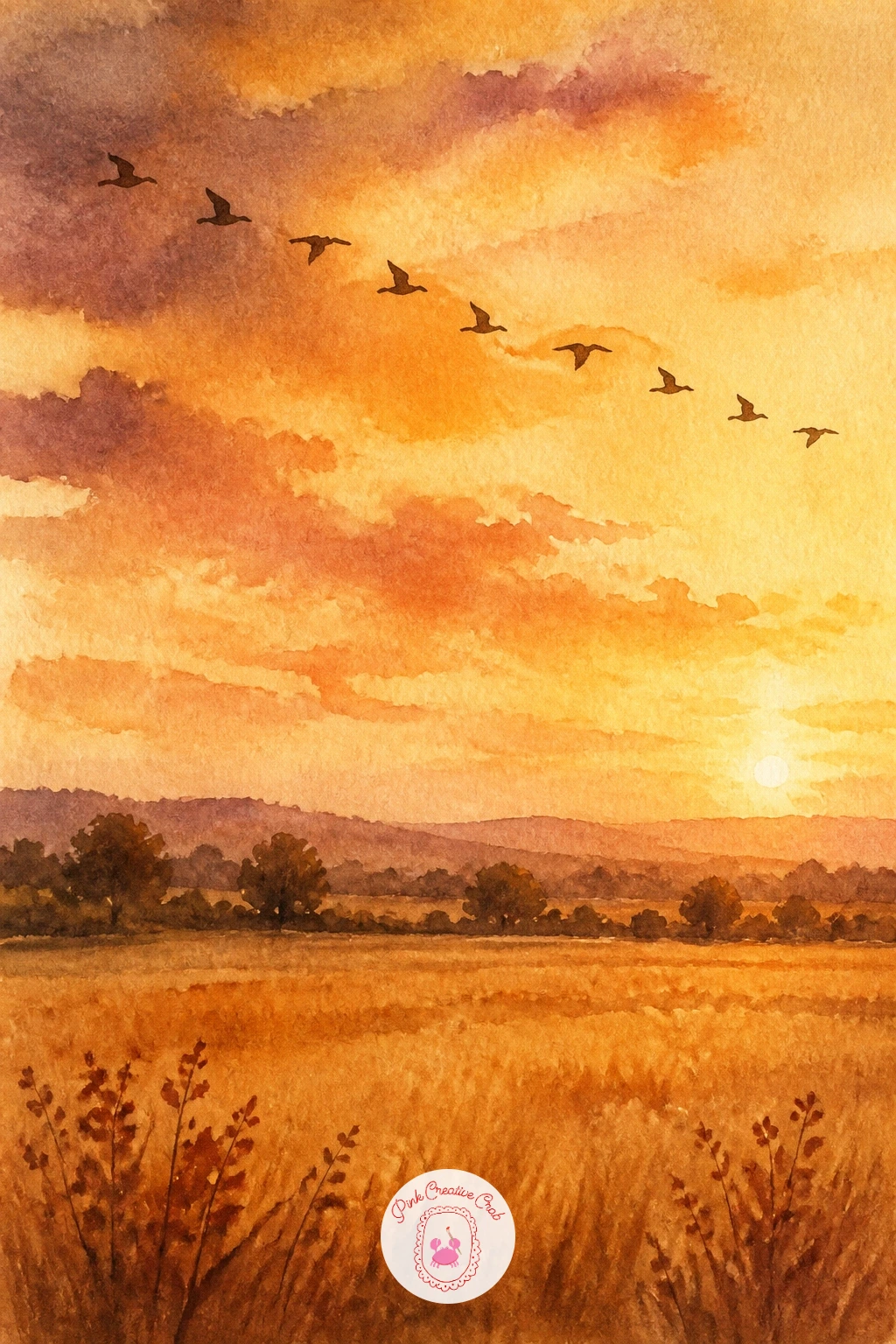
Palette: Raw Sienna,Cream,Payne’s Grey,Burnt Sienna
Close the list with something small and still: a lit candle beside a jar of dried flowers on a wooden table. Draw the candle and holder first as simple vertical shapes, then the jar beside it with a few dried stems rising out, bending gently rather than standing perfectly straight.
Paint the dried flowers in muted burgundy, sage and ochre, since dried stems lose their bright saturation, and this slightly faded palette is exactly what sells the dried rather than fresh look. The candle flame goes in last with the smallest brush, a tiny warm glow painted around it in soft ochre fading into the surrounding air.
The wooden table beneath everything is painted with a dry, dragged brush for grain texture, kept darker than the objects above it so the still life pops forward.
If the dried flowers look too stiff, vary the stem lengths and let one or two droop slightly over the jar’s edge. For more cozy tabletop pairings, browse the simple watercolor flowers ideas for dried arrangement inspiration.
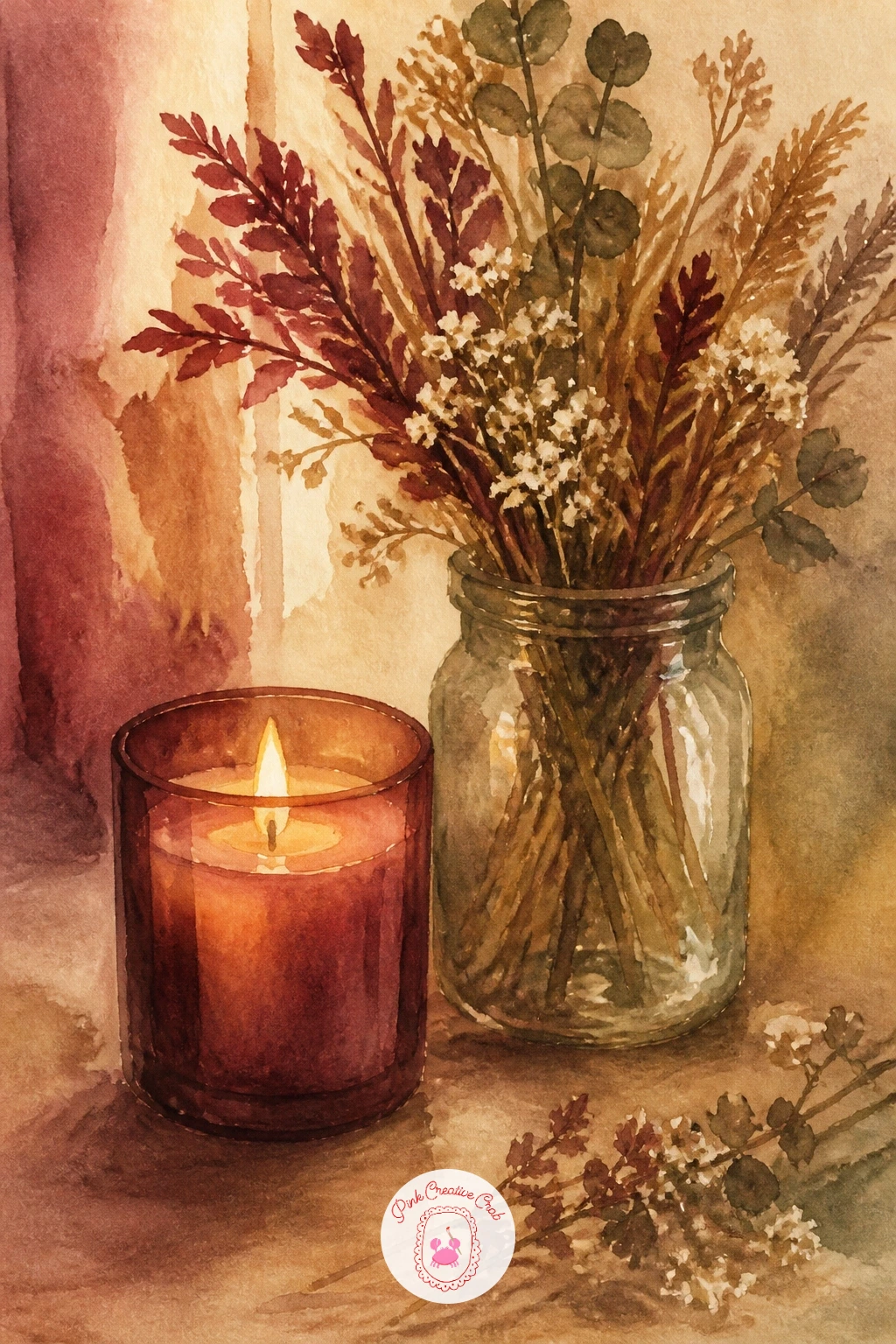
Palette: Burgundy,Sage,Raw Sienna,Cream
What to Do Next
Pick whichever scene matches tonight’s mood, tape down a sheet of cold press paper, and mix your rust and ochre before you start so the color is ready the moment the brush touches down. Start simple if this is new to you, the mug of tea or the boots by the door are forgiving first choices, and work up toward the orchard or the forest path once you feel steady.
Frequently Asked Questions
What colors make a good fall watercolor palette?
Rust, ochre, burgundy, sage and cream form a reliable fall palette. Burnt sienna and raw sienna carry most warm scenes, with Payne’s grey for shadows and sage for any green that needs muting down.
What paper works best for cozy fall watercolor scenes?
Cold press watercolor paper around 140lb handles both wet into wet skies and drier detail work well. It takes repeated washes without buckling too badly, especially if taped down first.
How do you keep watercolor scenes from looking muddy?
Let each layer dry fully before adding the next, and limit yourself to two or three colors mixed together at once. Muddy results usually come from adding too many wet colors on top of each other too soon.
Can beginners paint figures like the girl with a latte or raking leaves?
Yes, keep figures to simple flat shapes rather than detailed features. A loose pose with clear weight distribution reads more convincing than a tightly rendered but stiff one.
How long does one of these fall watercolor scenes take to finish?
Most finish in thirty to sixty minutes once you include drying time between washes. Simpler still life subjects like the mug of tea or boots by the door go faster than full landscape scenes.
Have any thoughts?
Share your reaction or leave a quick response — we’d love to hear what you think!
-
 0
-
0
-
0
-
0
-
0
-
0


