A leopard painting is the fastest way to get that gallery wall look everyone keeps pinning: a big confident cat, bold spots, and a background that works with almost any room. You already love the leopard print trend, so this list leans into it hard, with a pearl necklace, a velvet sofa and a Riviera promenade alongside the wilder scenes.
Below you will find 33 cats, leopards first and then their cousins, each one paintable in a single sitting with acrylic. Every idea gives you the order to paint in, where it tends to go wrong, and one tip to use today, so pick the one that matches your mood and get your palette out.
Using these images: free for personal projects such as printing, coloring, cards, journals and gifts. Handmade items that include them may be sold up to 30 pieces per design. More than that is commercial use and is not permitted, and neither is selling or sharing the images themselves or passing them off as your own. Please ask before any other use.
Start with leopard lounging on a branch, the picture that teaches every habit this whole list relies on. Sketch the branch first as one diagonal line across the canvas, then build the body as a long soft S draped over it, legs hanging loose on either side.
Block the body in camel with a flat brush before any spots go on, let it dry, then drop in the black rosette spots with a small round, leaving a lighter centre of camel showing inside each one. Painters usually space the spots too evenly: break the rhythm by clustering some and leaving gaps near the belly and face.
Keep the branch and blush background loose and flat so the cat stays the hero. If you only have craft paint instead of artist acrylic, add an extra coat, since craft paint tends to go on thinner and patchy.
Paint the face last, once the body spots are dry, so the eyes stay crisp and do not get muddied by nearby brushwork.
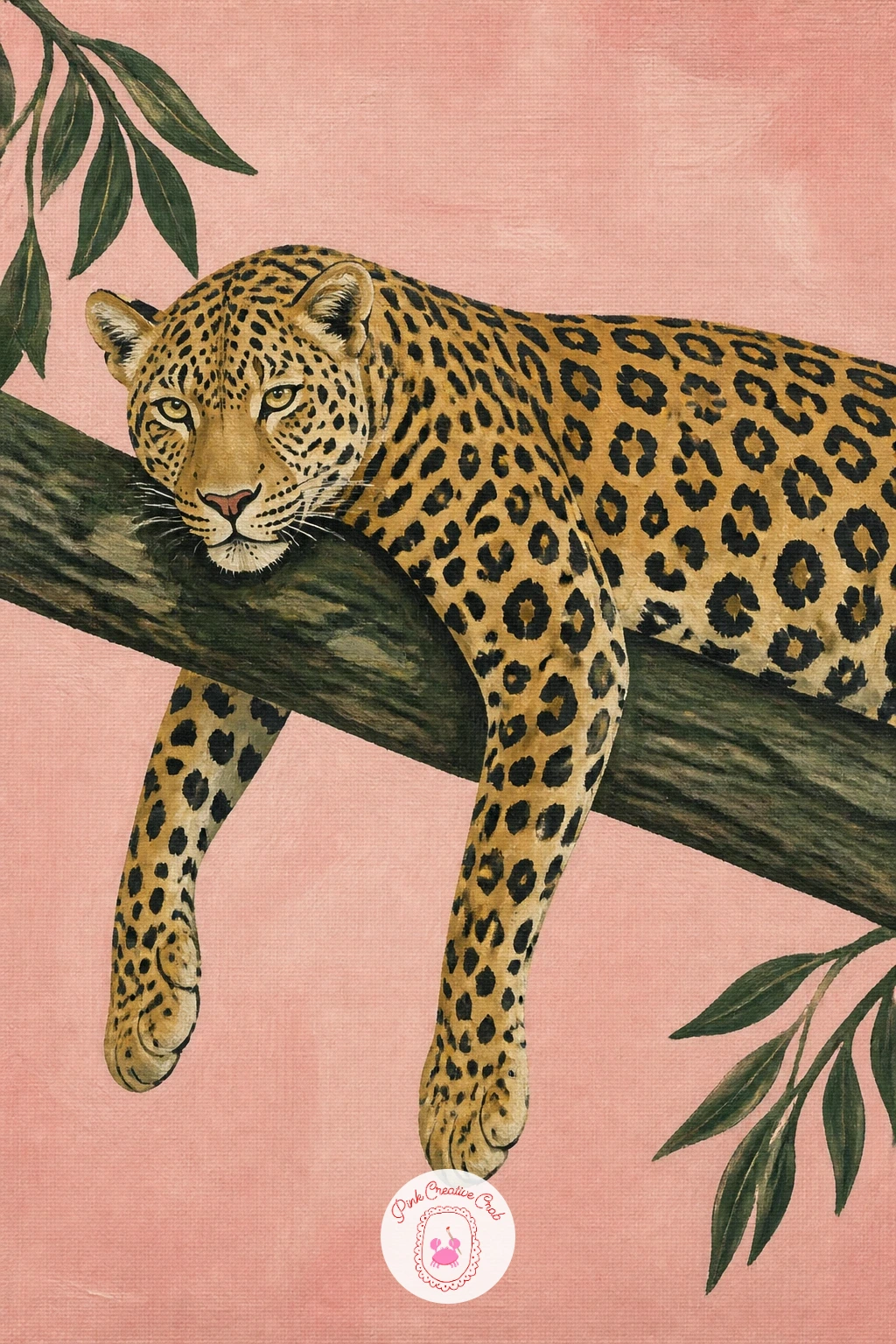
Palette: Camel,Mars Black,Blush Pink,Titanium White
Once you are comfortable with spots, try leopard in a pink jungle of banana leaves, where the background does as much work as the cat. Paint the big banana leaves first in jungle green and a softer sage, using long single brushstrokes so each leaf keeps a clean edge, then let them dry completely before the leopard goes on top.
Place the leopard sitting or walking low in the frame so the leaves can tower behind it, blocking the body in camel and adding spots once the base layer is dry. The common mistake here is painting the leaves and cat at the same time and getting green smeared into the fur, so always work background first, cat second.
If jungle green feels like too much commitment, swap in a single leaf shape repeated three or four times instead of a dense wall of foliage.
Finish with one or two blush pink leaves tucked among the green ones to tie the whole scene back to that pink jungle idea.
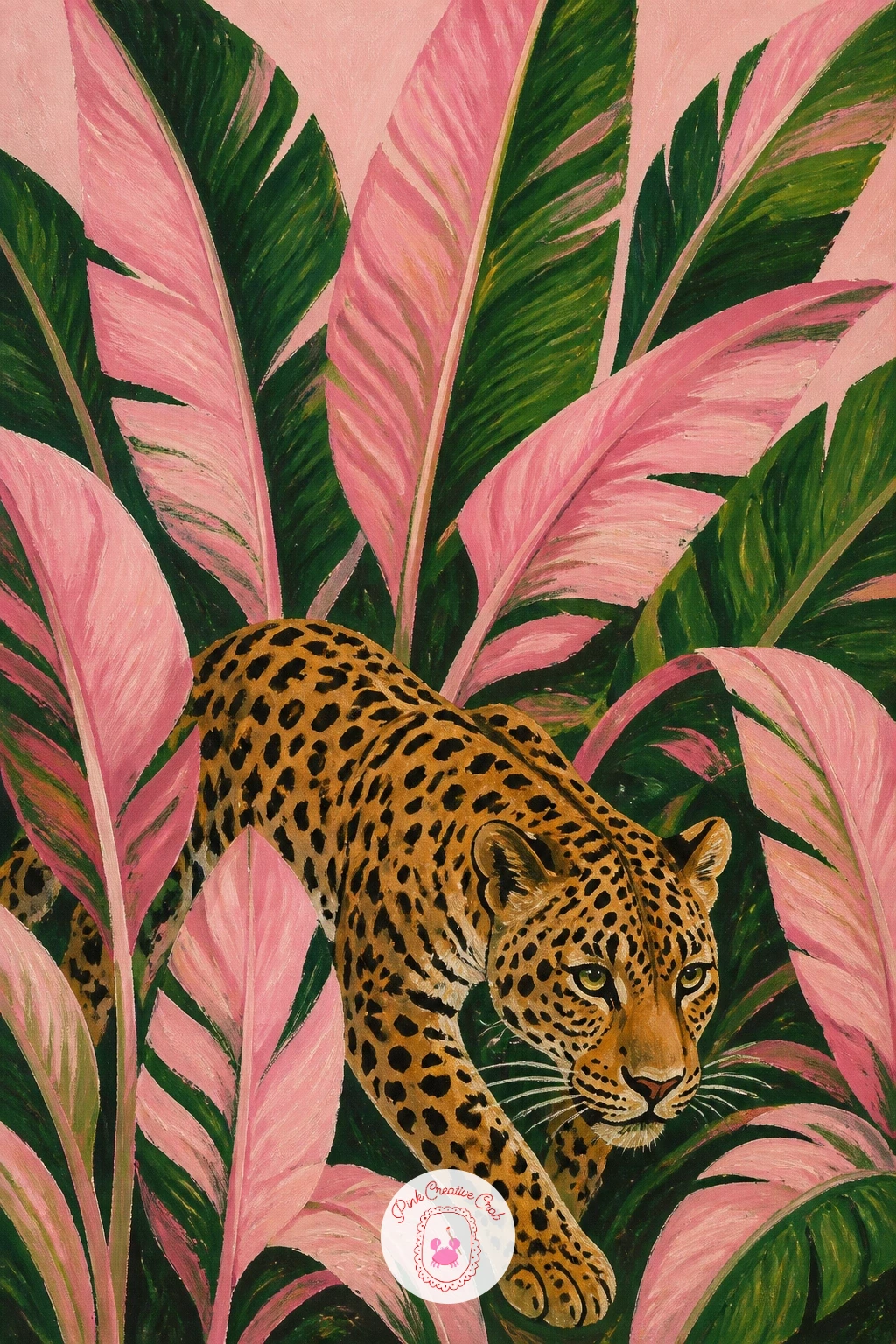
Palette: Jungle Green,Sage,Camel,Blush Pink,Mars Black
Give the leopard trend its full fashion treatment with leopard in a pearl necklace and sunglasses, a close up portrait that leans into the glam. Paint the face and shoulders large, filling most of the canvas, blocking the camel fur first and adding black rosettes once dry, leaving the muzzle and chin paler.
Add the sunglasses next as two flat black ovals with a single white highlight stroke on each lens, painted after the fur so the edges stay crisp. The pearls go on last as a row of small white dots with a tiny grey shadow under each one, which is what makes them read as round rather than flat.
This is a picture that goes wrong if the sunglasses get painted too early and the fur spots crowd into them, so always save accessories for the final stage.
If you do not have a fine liner for the pearl shadows, the tip of a dry round brush works just as well.
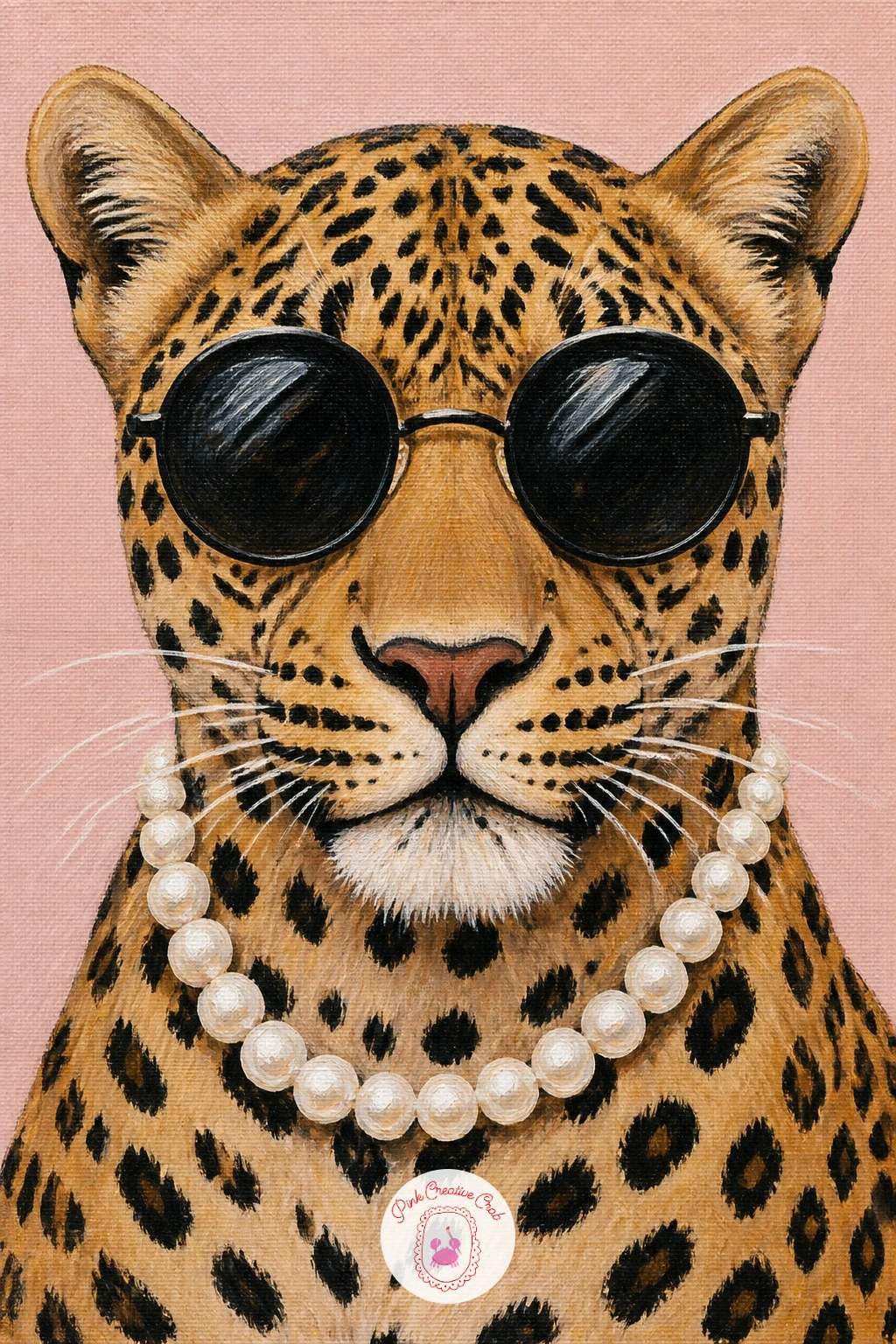
You Will Need
- fine liner or small round brush for pearls
Palette: Camel,Mars Black,Titanium White,Blush Pink
Switch palette completely for snow leopard on a rocky ledge, which swaps camel and black for soft greys and smoky rosettes. Block the ledge first in flat grey shapes using a palette knife or flat brush for hard angular edges, then paint the cat’s body over it in off white once the rock is dry.
Decide where the light comes from before adding any markings: if it falls from the left, keep the right side of the cat and the rock in shadow using a cooler grey, which gives the whole scene depth instead of looking flat. Add the smoky grey rosettes last with a soft dry brush rather than a sharp round, since snow leopard markings are blurrier than a regular leopard’s.
The eyes should go in last in pale grey blue, the one spot of color against all that grey and white.
If you don’t have a palette knife, crumple a scrap of cardstock and dab it to get the same rough rock texture.
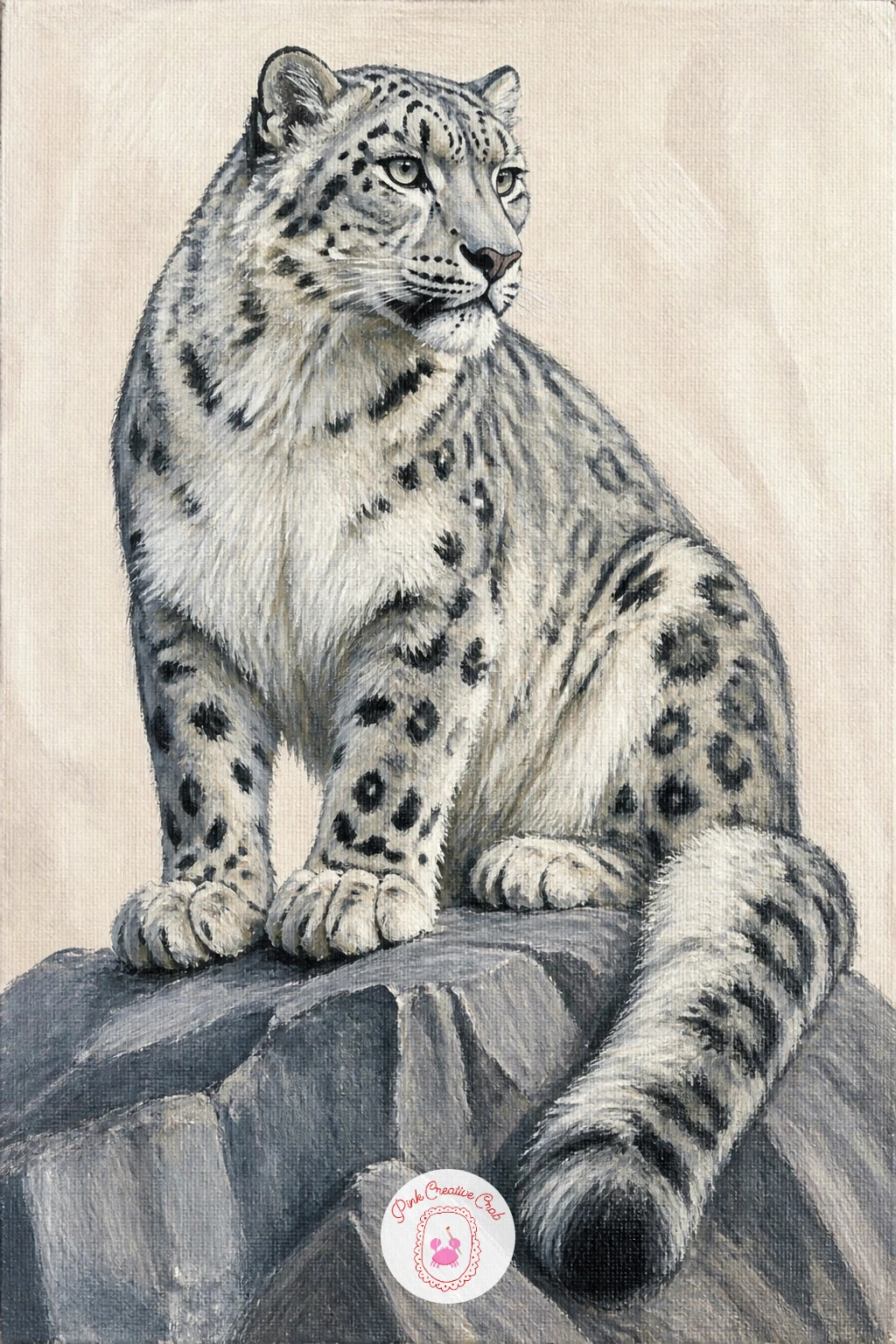
You Will Need
- palette knife (optional, for the rock texture)
Palette: Cool Grey,Titanium White,Payne’s Grey,Pale Blue
Bring in a little tenderness with leopard cub with its mother, a two figure composition that is easier than it looks if you plan the sizes first. Sketch the mother’s body large and low across the canvas, then the cub at roughly a third of her size tucked against her chest or paw, so the scale difference reads instantly.
Paint both cats in the same camel and black order as before, mother first since she’s the bigger shape, cub second, keeping the cub’s rosettes slightly smaller and softer to suggest younger fur. The composition tends to fail when the cub ends up the same size as an adult cat, so hold your brush up to the canvas and compare the two body lengths before committing to paint.
A beginner version can simplify the cub to a rounder, more cartoonish shape with fewer spots, which still reads clearly as a baby.
Finish by adding one small spot of white on each cat’s chest to connect them visually as a pair.
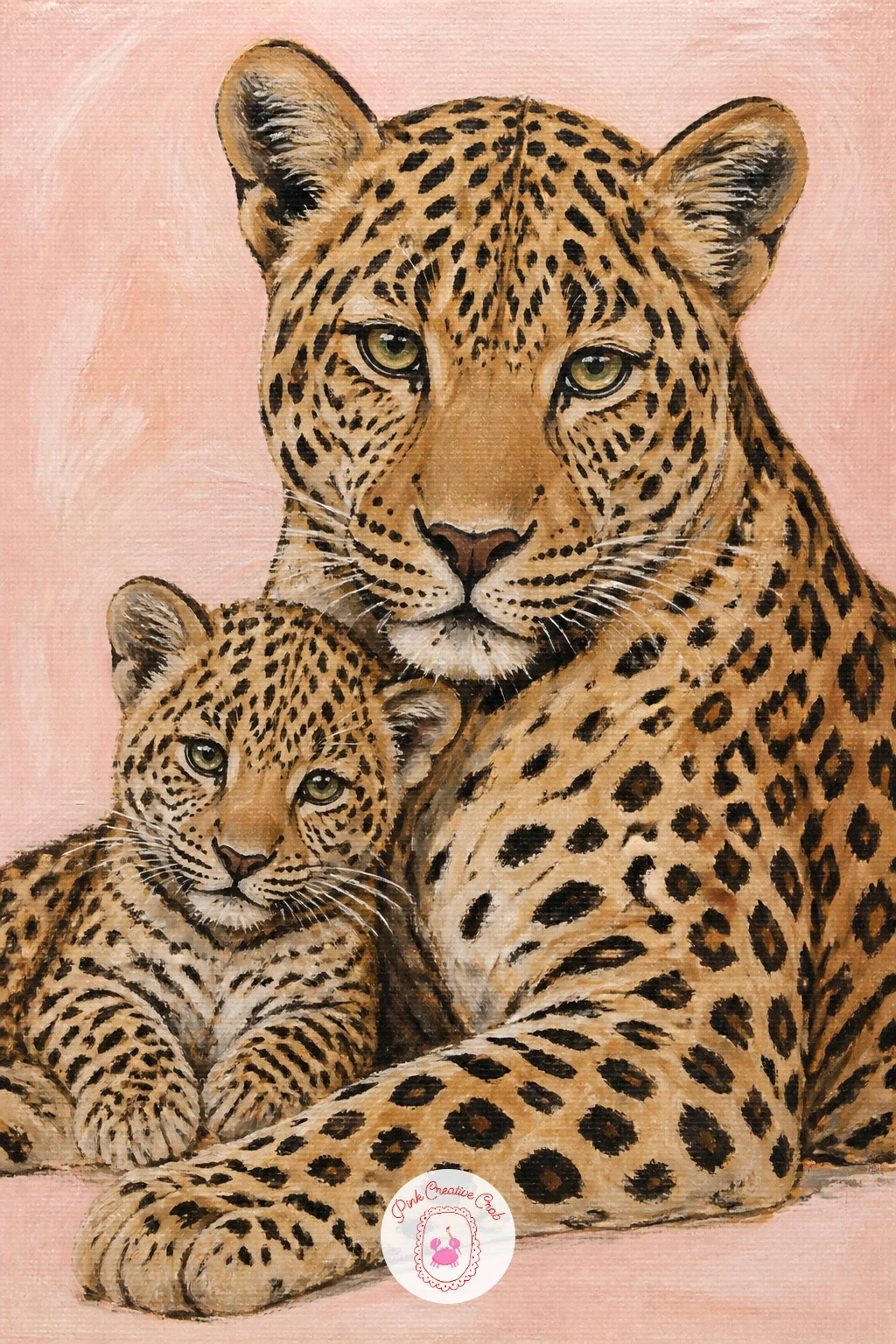
Palette: Camel,Mars Black,Titanium White,Blush Pink
Leopard drinking from a river adds a reflection, which is simpler to fake than it sounds. Paint the body first, head lowered toward the water line, then paint the river as a flat band of green blue beneath it before adding the mirror image of the cat’s head and neck upside down, slightly softened and darker than the original.
Keep the reflection loose and smudged rather than sharp, dragging a dry brush horizontally through the wet paint to break up the edge, which is exactly what real water does to a reflection. The usual error is painting the reflection as crisp as the cat itself, which flattens the whole illusion instantly.
Work wet into wet for the water so the colors blend softly, then let the top half dry fully before adding spots to the real leopard so they stay sharp by contrast.
No teal on hand? Mix jungle green with a touch of black for a similar river tone.
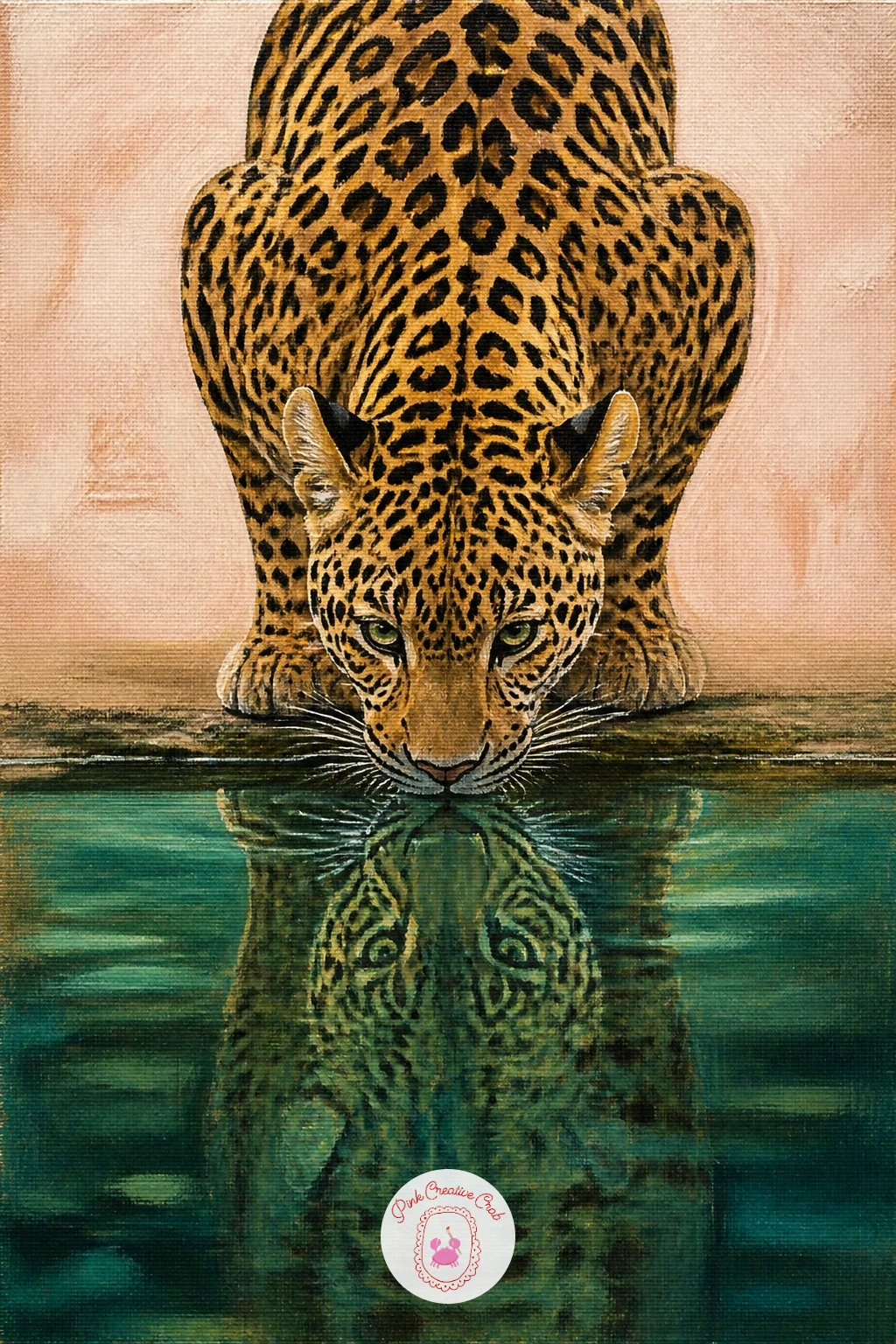
Palette: Camel,Teal,Mars Black,Blush Pink
For pure decor appeal, leopard on a velvet sofa in a living room turns the cat into the centerpiece of an interior scene. Paint the sofa first as a simple curved shape in a rich color like emerald or blush velvet, using thick confident strokes that leave visible brush texture to suggest the nap of the fabric.
Once the sofa is dry, paint the leopard stretched across the cushions in its usual camel and black order, letting one paw or the tail drape over the armrest for a relaxed, at home feel. Rooms painted too literally can swallow the cat, so keep everything beyond the sofa suggested rather than detailed: a hint of a wall color and nothing else.
This is a good one to try the ten minute version of, just the sofa silhouette and the cat in flat color, before spending forty minutes adding texture to both.
Finish with a cushion or throw pillow in a contrasting spot pattern to echo the leopard’s own markings.
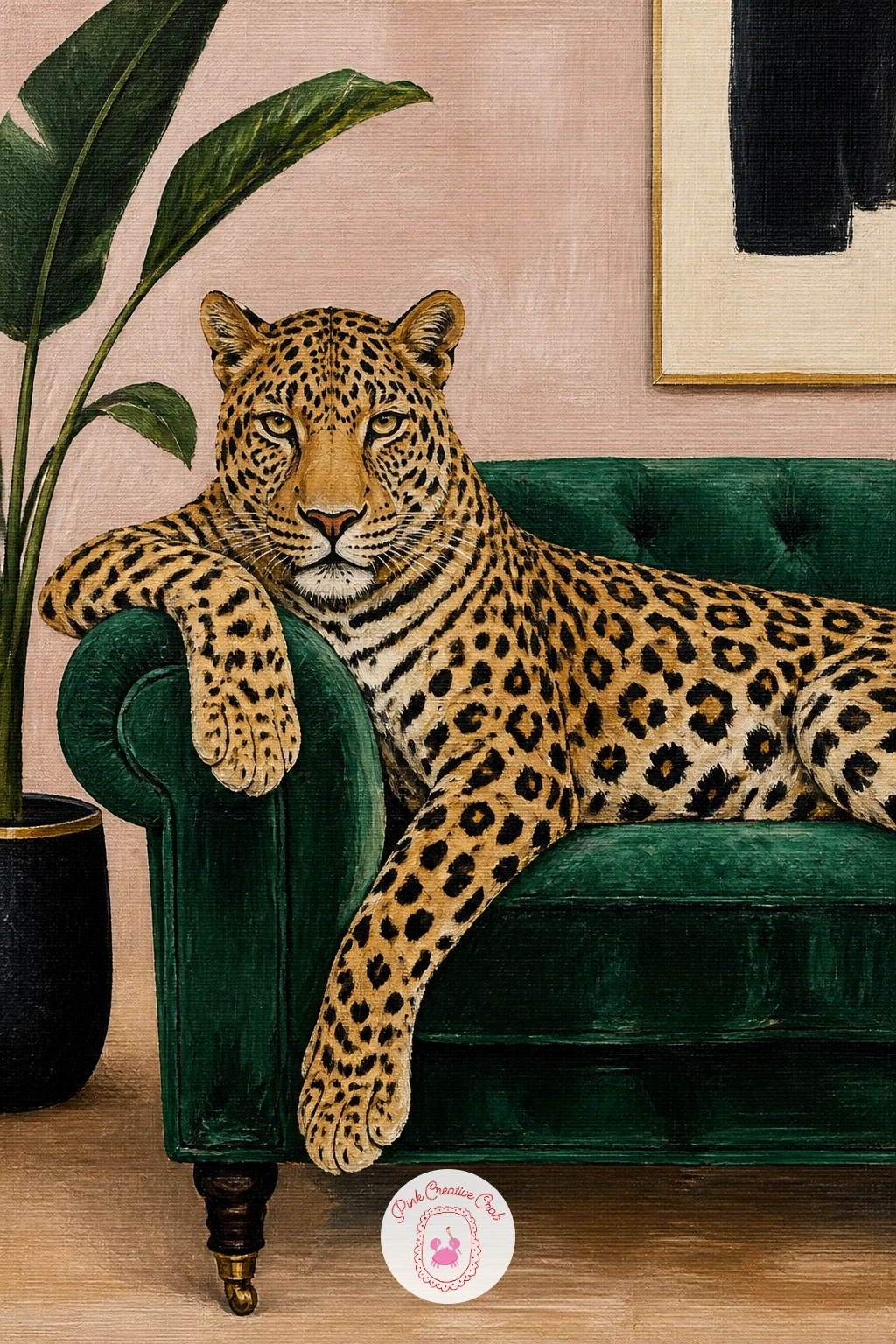
Palette: Emerald Velvet,Camel,Mars Black,Blush Pink
Try this one on a square canvas if you have one, since it mimics the look of real framed decor art sold in home stores.
Leopard walking along a Riviera promenade takes the cat out for a stroll past striped beach huts and a strip of turquoise sea. Block the background first in horizontal bands: pale sky, turquoise sea, cream promenade floor, each painted flat and left to dry before the cat goes on top.
Walk the leopard across the lower third of the canvas in profile, since a side view is far easier to get the proportions right on than a three quarter angle. Add a single striped beach hut or umbrella in camel and white stripes behind the cat to set the scene without cluttering it.
The composition reads as confused if the sea and sky bands are too similar in value, so make sure the turquoise sea is noticeably darker than the sky above it.
If you want more challenge, add the cat’s long shadow stretching across the promenade floor in a cool grey.
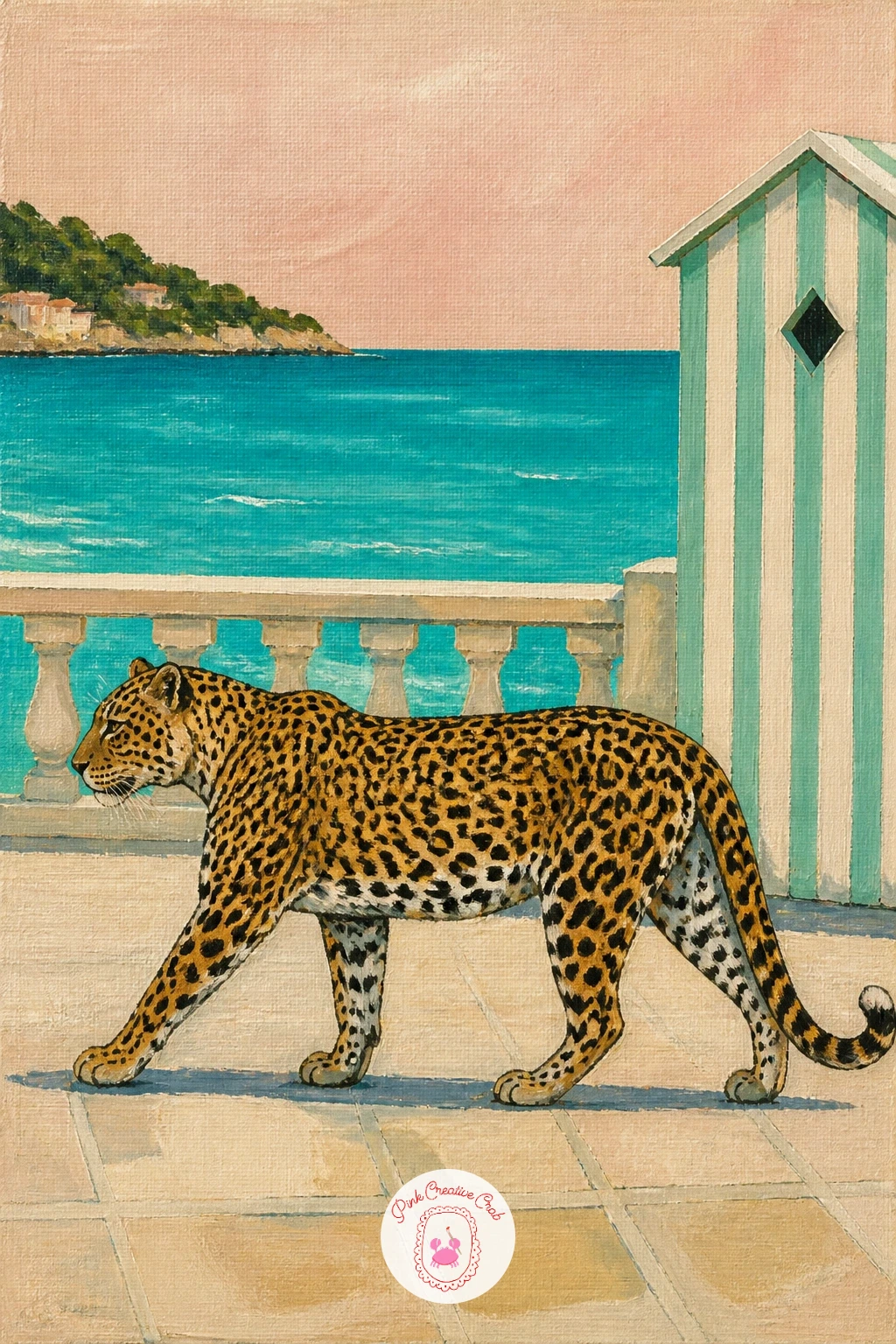
Palette: Turquoise,Cream,Camel,Mars Black
Slow the pace down with leopard curled up asleep, a soft, rounded composition that forgives an uneven hand better than any pose on this list. Sketch the body as one large tucked oval, tail wrapped around the paws, head resting low, then block the whole shape in camel before adding spots.
Because a sleeping cat has no sharp angles, keep every edge of your brushwork rounded and soft, which does most of the relaxed feeling for you. Painters sometimes still paint the eyes open out of habit, so double check the face shows only closed lids, a gentle curved line rather than an almond shape.
If this is your first time painting a full leopard, start here: there’s no challenging perspective or limb foreshortening to work out.
Finish with a few whisker lines in white, added last with a fine liner once everything else is fully dry.
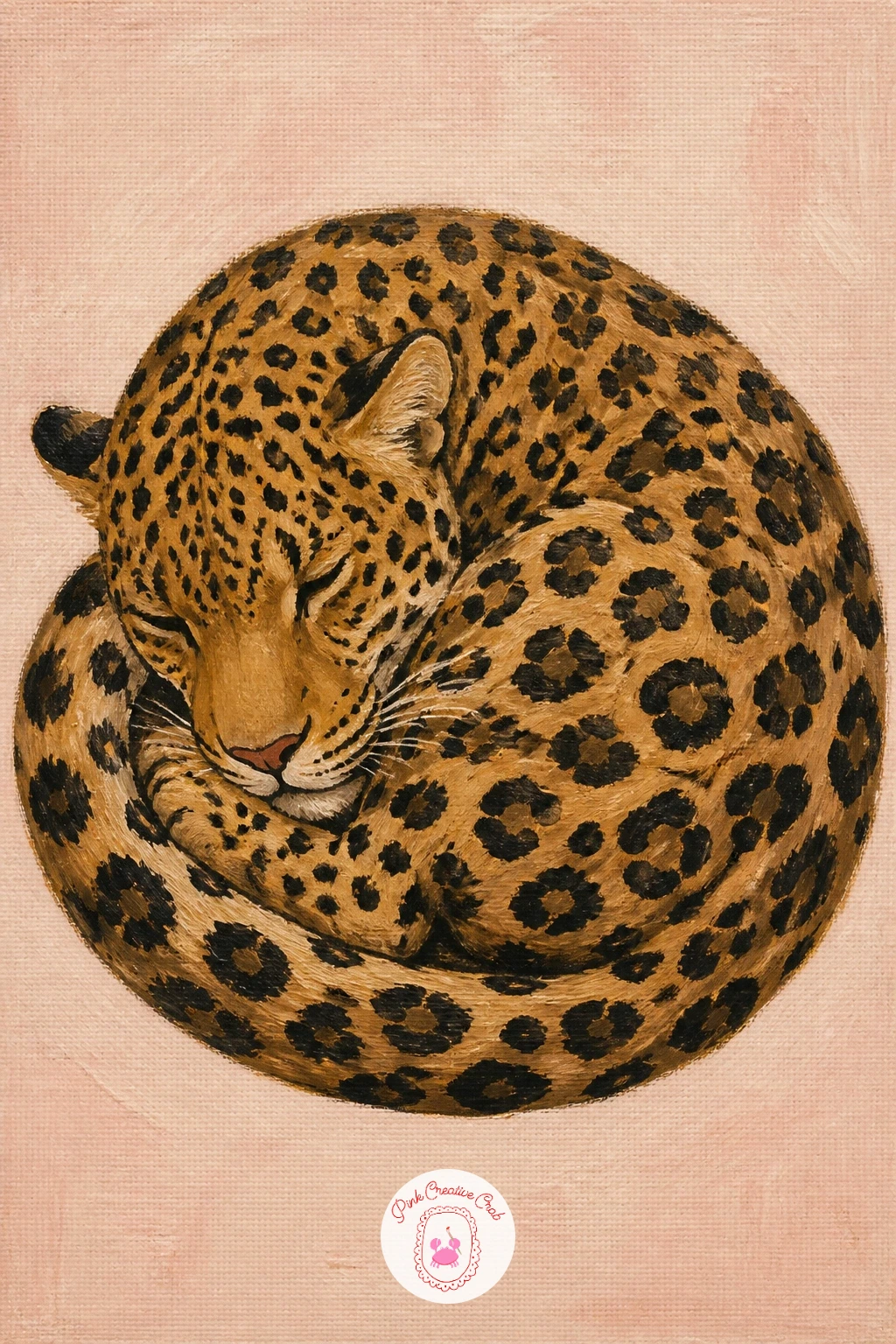
You Will Need
- fine liner or detail brush for whiskers
Palette: Camel,Mars Black,Titanium White,Blush Pink
Lean fully into the fashion joke with leopard next to a matching leopard print handbag, a still life style pairing that doubles down on the pattern. Paint the leopard sitting upright first, taking up most of the canvas, then add a small handbag beside its paw with the exact same spot pattern repeated at a smaller scale.
Keep the handbag’s shape simple, a rounded rectangle with a single strap, so the focus stays on matching its print to the leopard’s coat rather than getting the bag’s hardware accurate. This idea only works if the two spot patterns genuinely look related, so paint the cat’s rosettes first, then copy the same spacing and shape onto the bag afterward.
A gold clasp painted last in a single confident dot and line adds the glam detail that sells the joke.
If gold paint isn’t in your kit, mix a little white into camel for a pale metallic stand in.
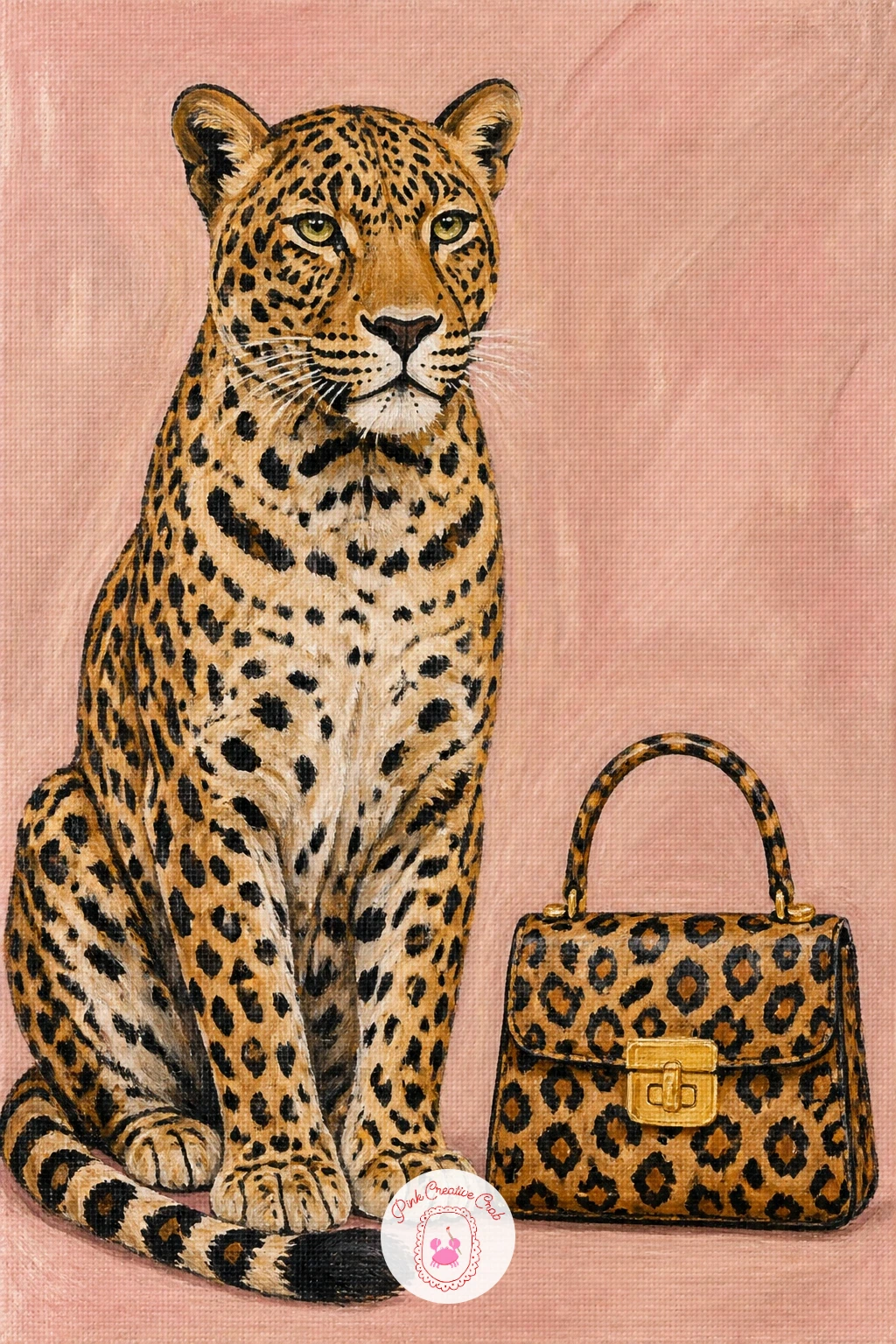
Palette: Camel,Mars Black,Gold,Blush Pink
Leopard stretching in golden grass is all about one dramatic line of movement. Sketch the spine first as a long arching curve, front paws stretched forward and low, back legs pushed up high, since this single line decides whether the stretch looks convincing before any paint goes down.
Paint the golden grass behind the cat first using quick upward flicks of a dry brush loaded with ochre and camel, leaving plenty of gaps for the cream background to show through. Once that’s dry, block the leopard over the top, keeping the stretch believable by checking that the front paws sit noticeably lower than the hips.
Flattened, static looking stretches usually come from skipping that spine curve step, so always draw the arch before the body volume.
Try the quick ten minute version with just a flat silhouette and grass flicks, then add rosettes and grass detail if you have more time.
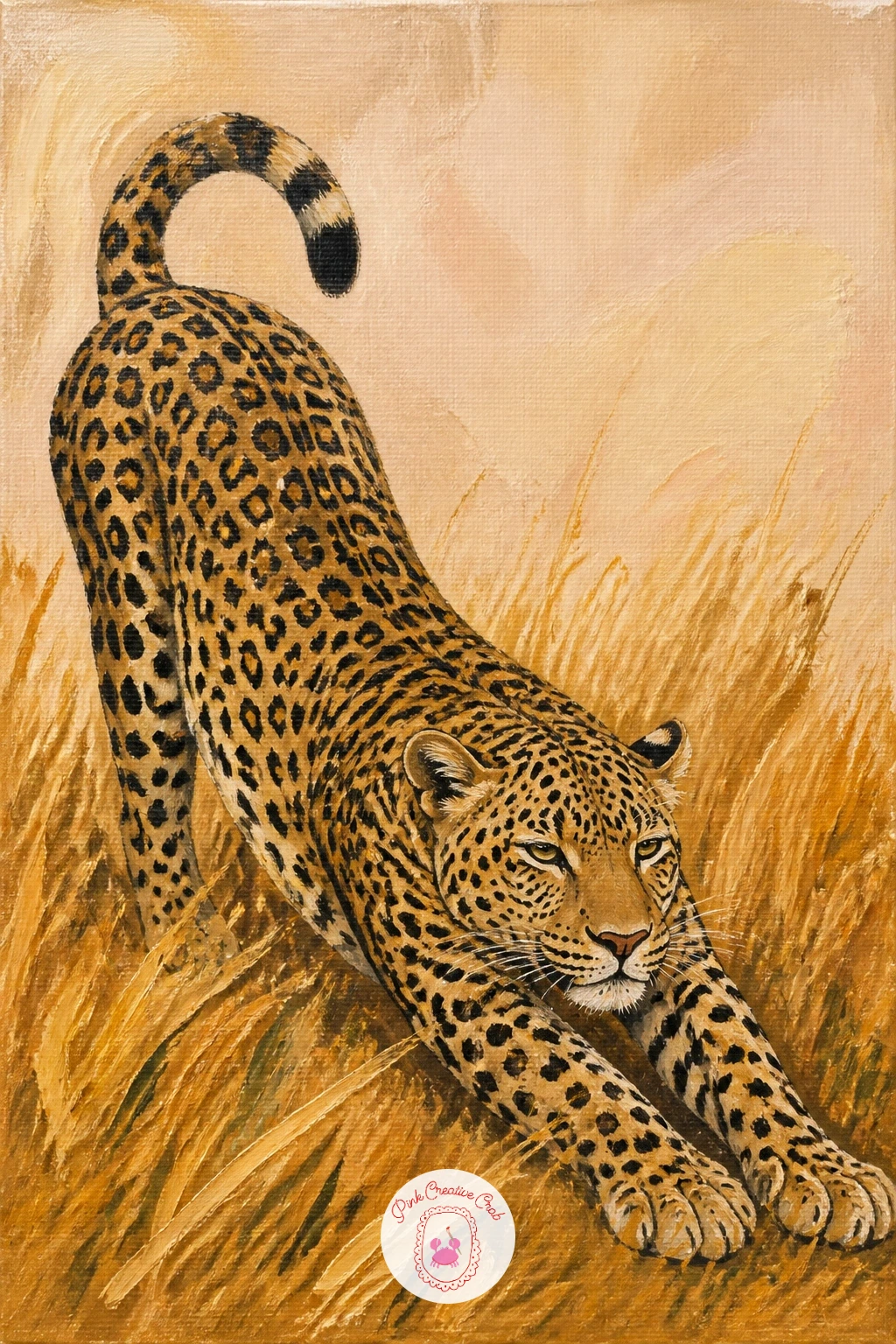
Palette: Ochre,Camel,Mars Black,Cream
For the boldest fashion crossover on this list, try a woman in a leopard coat walking beside a leopard, pairing a stylish figure with her wild counterpart. Paint the woman’s silhouette first in flat blocks, simplifying her coat, legs and hair into clean shapes rather than detailed features, since a loose graphic figure suits this style far better than a realistic portrait.
Give her coat the same camel and black spot treatment as the real leopard beside her, painted in the same order, base color first and rosettes once dry, so the two patterns clearly echo each other. Keep her face minimal, even just a suggested profile, so the leopard print connection stays the star of the piece rather than getting lost in facial detail.
Figures often go wrong at the legs, so keep her stance simple, one foot slightly ahead of the other in a calm walk.
If figures feel daunting, simplify her further into a flat silhouette shape with no inner detail at all.
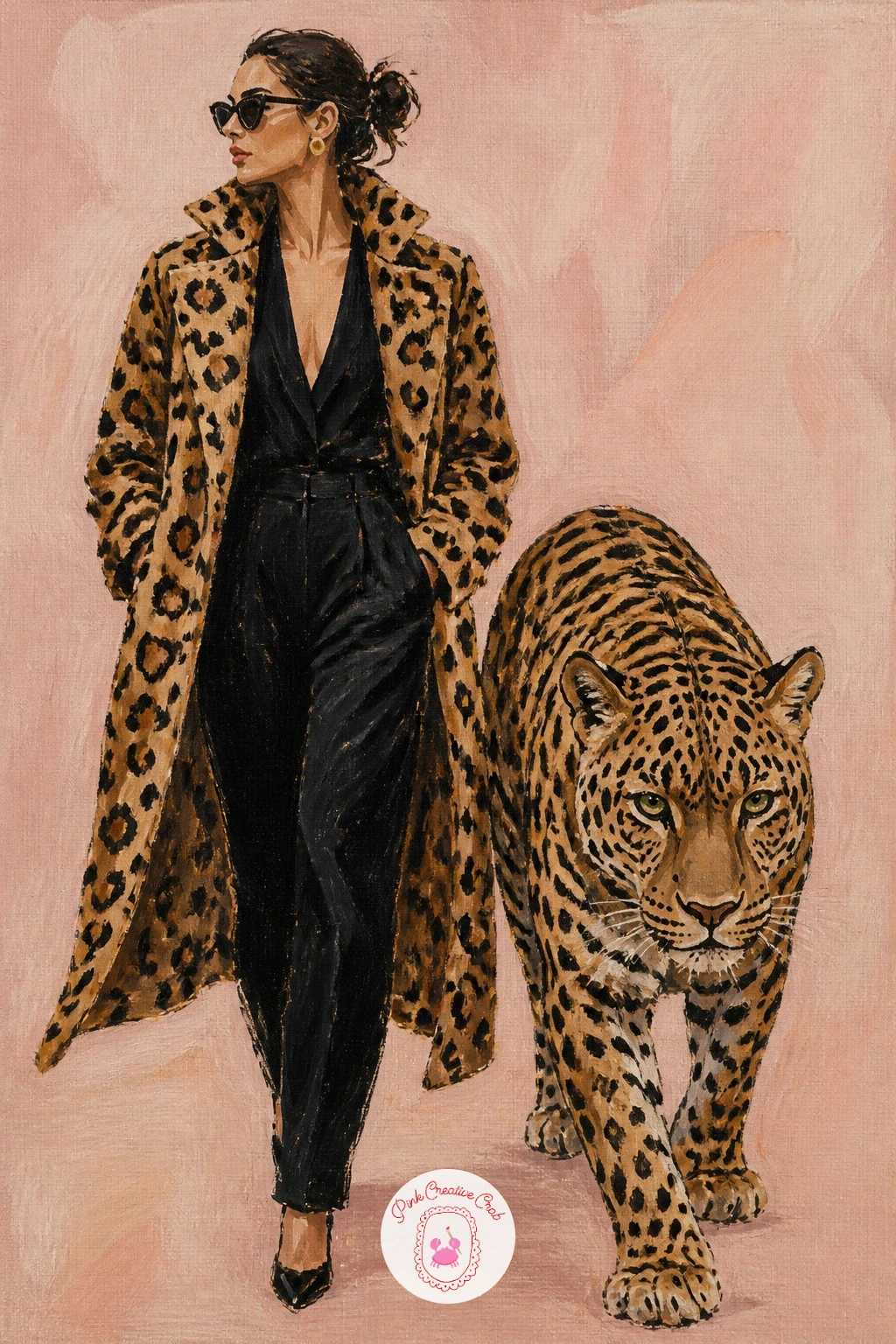
Palette: Camel,Mars Black,Blush Pink,Cream
If portraits of people usually frustrate you, this works just as well, and arguably looks more stylish, as two flat silhouettes side by side.
Close the leopard section with leopard on a hotel balcony, a scene that pairs the cat with wrought iron railings and a hint of a skyline. Paint the railing first as a simple repeated pattern of thin black verticals over a pale wall, keeping the spacing even since that regularity is what reads instantly as balcony railing.
Let that dry, then paint the leopard sitting or lying along the balcony floor in front of it, body partly overlapping the lowest rail to tie the two elements together. Add a soft suggestion of rooftops or sky in the gap beyond the railing, kept pale and hazy so it doesn’t compete with the cat.
Balconies look flat if the railing sits perfectly parallel to the canvas edge, so angle it very slightly for a touch of perspective.
If wrought iron detail feels fiddly, a fine liner pen laid over dry paint gives crisper lines than a loaded brush.
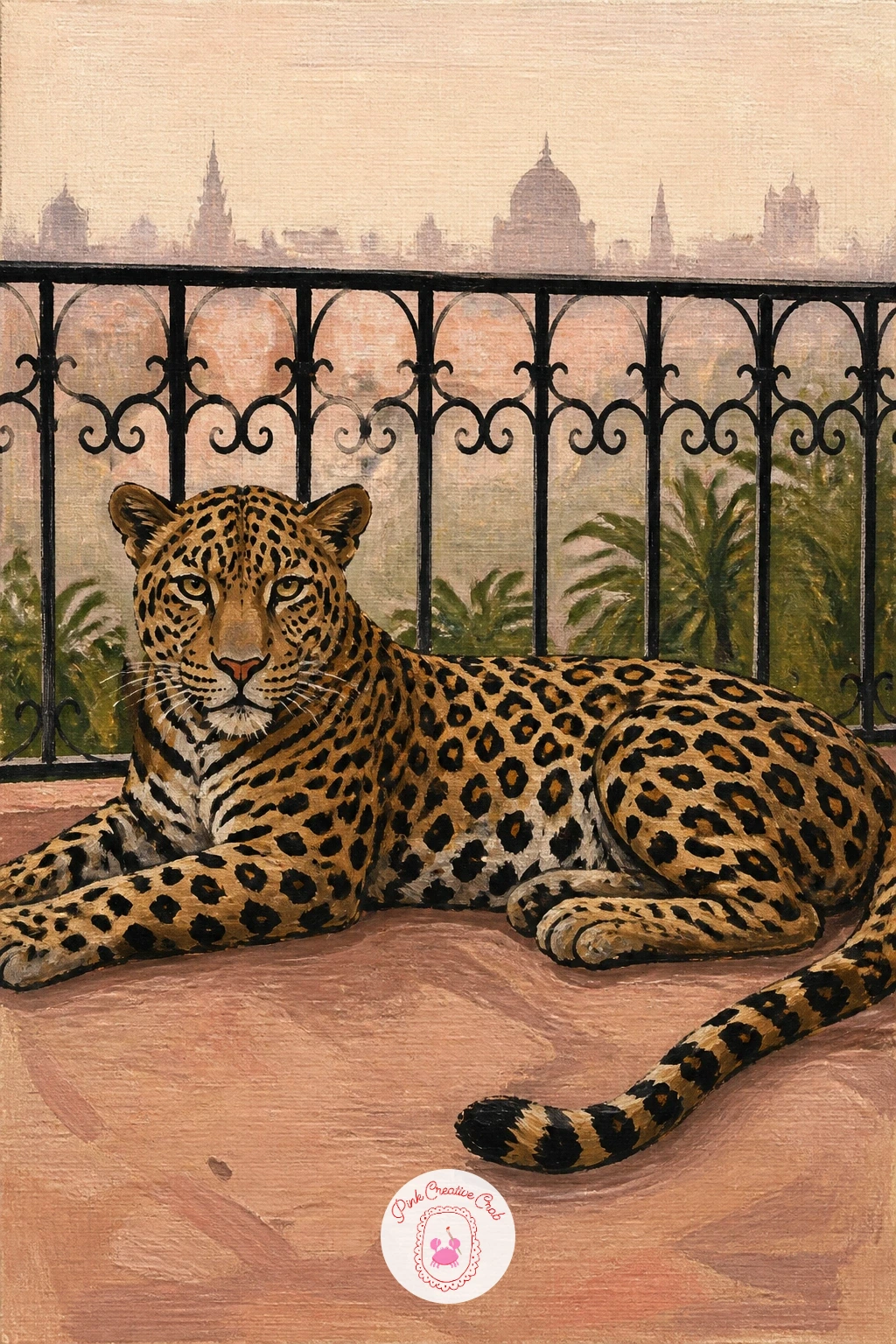
You Will Need
- fine liner for the railing detail
Palette: Camel,Mars Black,Cream,Pale Blue
Move into the other wild cats with tiger in a bamboo forest, where vertical stripes against vertical bamboo stalks make a striking pattern play. Paint the bamboo first, simple tall green stalks of varying width scattered across the canvas, leaving gaps of cream background between them so the scene doesn’t feel crowded.
Once dry, block the tiger’s body in orange over the bamboo, then add the black stripes last, following the curve of the body rather than painting them as straight lines, which is what makes them feel like they wrap around real muscle. The classic mistake is stripes that look pasted on flat, so always curve each one slightly to match the body contour beneath it.
Keep a patch of white on the chest and muzzle unstriped, which is true to a real tiger and also gives the eye a place to rest.
If straight bamboo stalks feel tricky freehand, lay down low tack tape as a guide and paint over it.
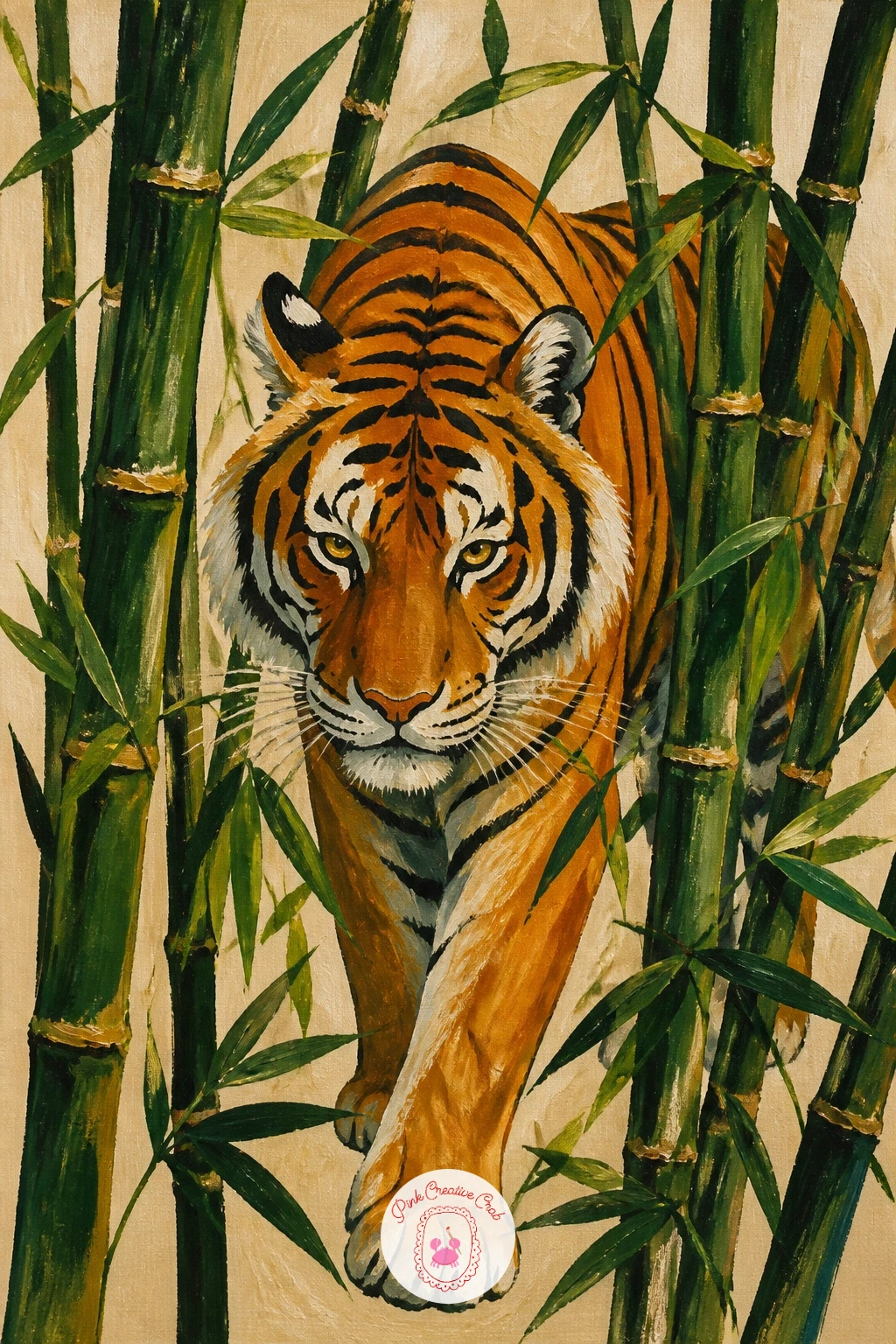
You Will Need
- low tack tape (optional, for straight bamboo lines)
Palette: Orange,Mars Black,Jungle Green,Titanium White
White tiger cub brings a softer palette and a rounder, younger body shape than the adult tiger before it. Keep the proportions distinctly cub like by making the head and paws noticeably oversized compared to the body, which is the single trick that reads as baby animal rather than small adult.
Block the body in a warm white rather than pure white, since pure white against a cream background can look harsh and flat, then add pale grey black stripes once dry, softer and less saturated than an adult tiger’s. Big round eyes placed slightly lower on the face than you’d expect also help sell the youthful look.
A common slip is painting the cub’s stripes with the same confidence as an adult’s, making it read as fully grown, so keep this cub’s marks a touch blurrier and sparser.
No warm white on hand? Mix titanium white with a tiny touch of camel.
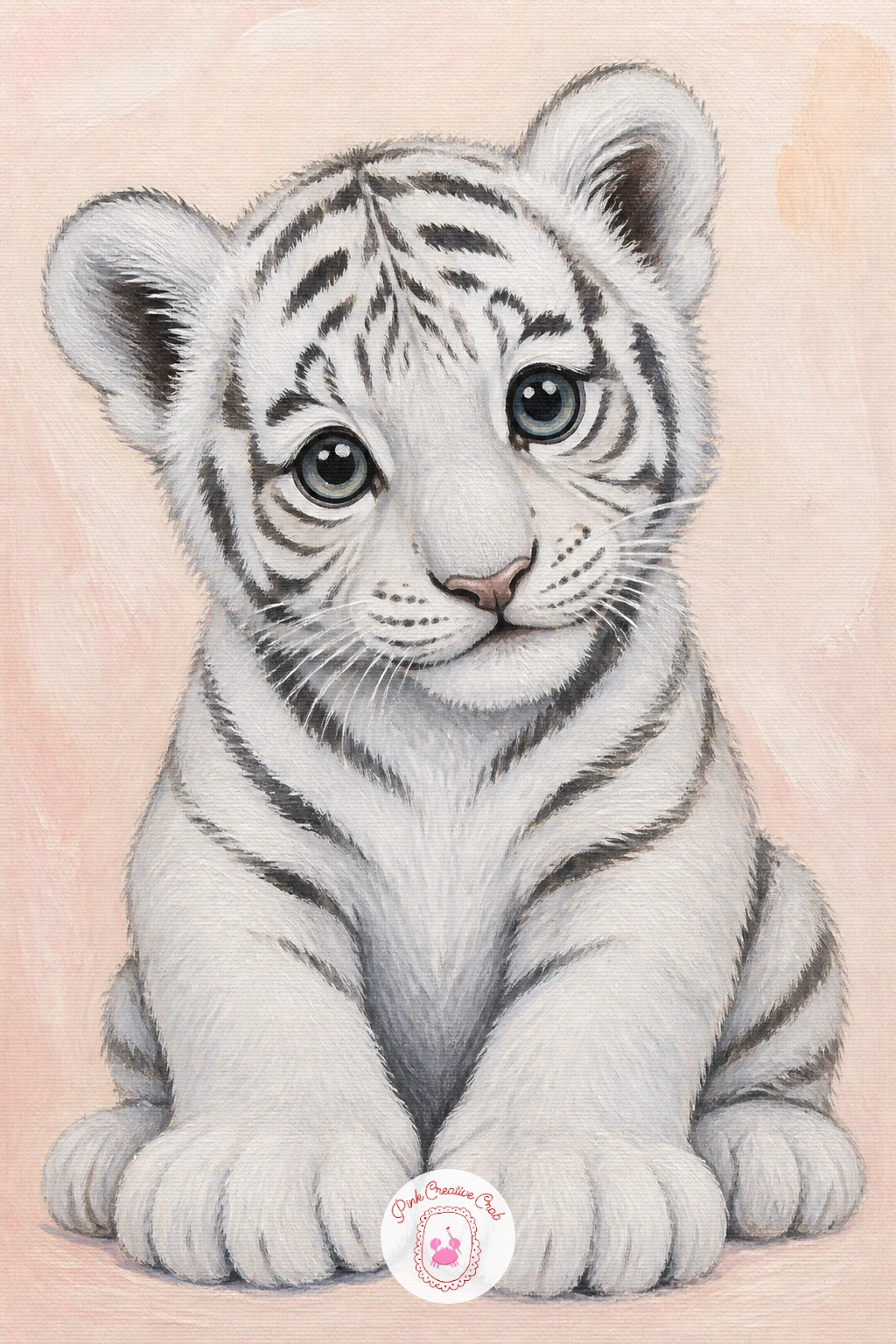
Palette: Warm White,Payne’s Grey,Pale Blue,Blush Pink
Cheetah sprinting across the plain is the action picture of this list, built entirely around a dynamic diagonal. Sketch the spine as a tight curve with all four legs stretched in opposite directions, front legs forward, back legs trailing, which is the pose that instantly reads as full speed.
Paint the body in a warm gold first, then add the cheetah’s signature solid black spots, smaller and more densely packed than a leopard’s rosettes, plus the two black tear lines running from eye to mouth that make this cat unmistakable. Motion lines or a streak of dust behind the back paws, added last in a dry drag of pale ochre, sell the speed even further.
Cheetahs painted standing still rather than mid stride lose all their drama, so always check the legs are at different stages of a stride before adding any spots.
If the full gallop feels ambitious, a simpler side view with just the legs extended still reads as running.
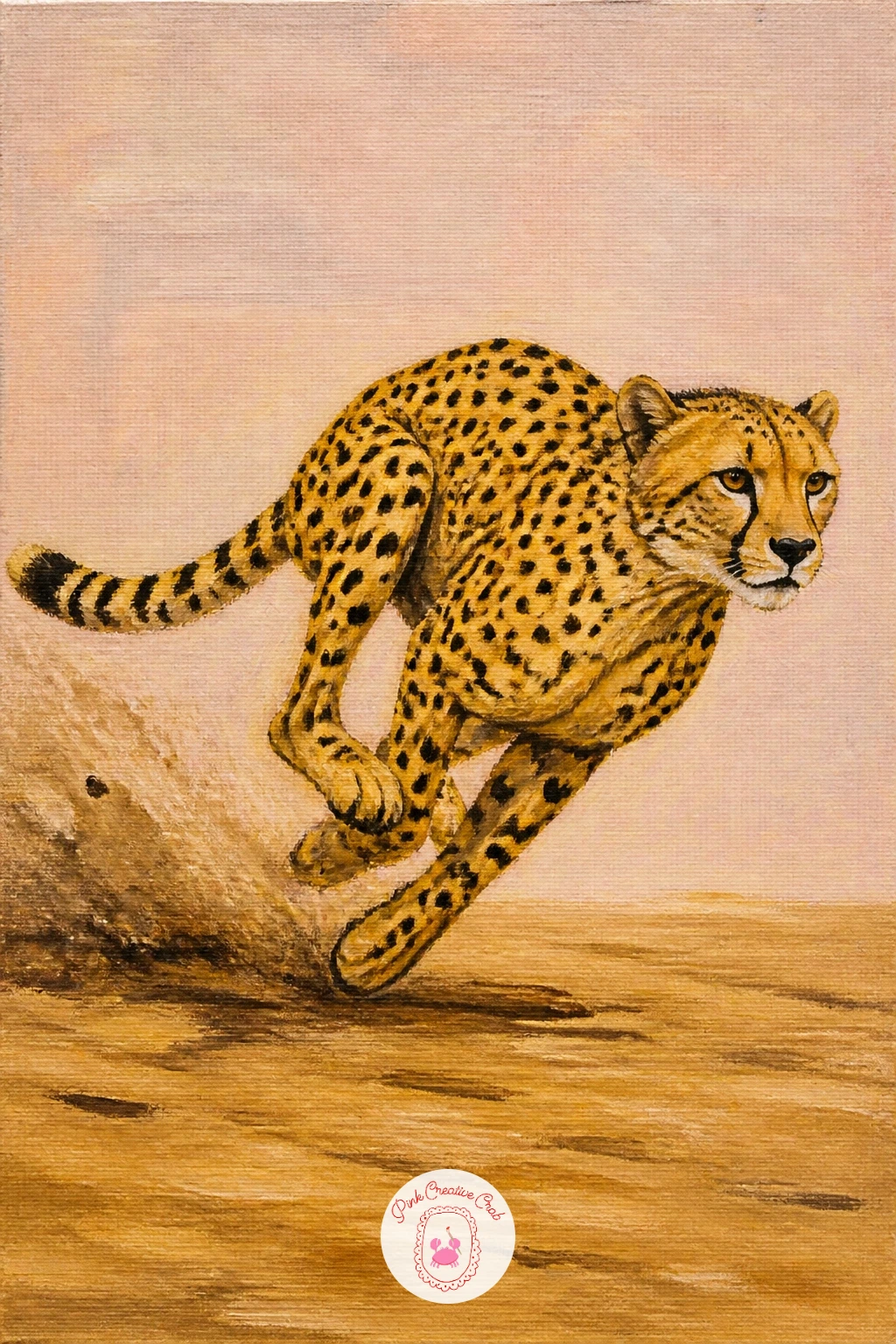
Palette: Gold,Mars Black,Ochre,Cream
Jaguar by a waterfall pairs a powerful stance with falling water, a good chance to practice loose wet into wet technique. Paint the waterfall first, a vertical band of white and pale blue dragged downward with a dry brush so streaks of canvas or background show through, giving the sense of falling movement.
Once that section is dry, paint the jaguar standing at the base in profile or three quarter view, blocking the body in gold before adding the open centered rosettes that distinguish a jaguar from a leopard, a black ring with a smaller black dot inside each one. Mist at the base of the falls, painted as a soft pale smudge behind the cat’s legs, helps ground it in the scene.
The waterfall reads as static if every streak runs at the same width, so vary the thickness as you drag the brush downward.
No white gel pen for final highlights on the water? A thinned dab of titanium white from a round brush does the same job.
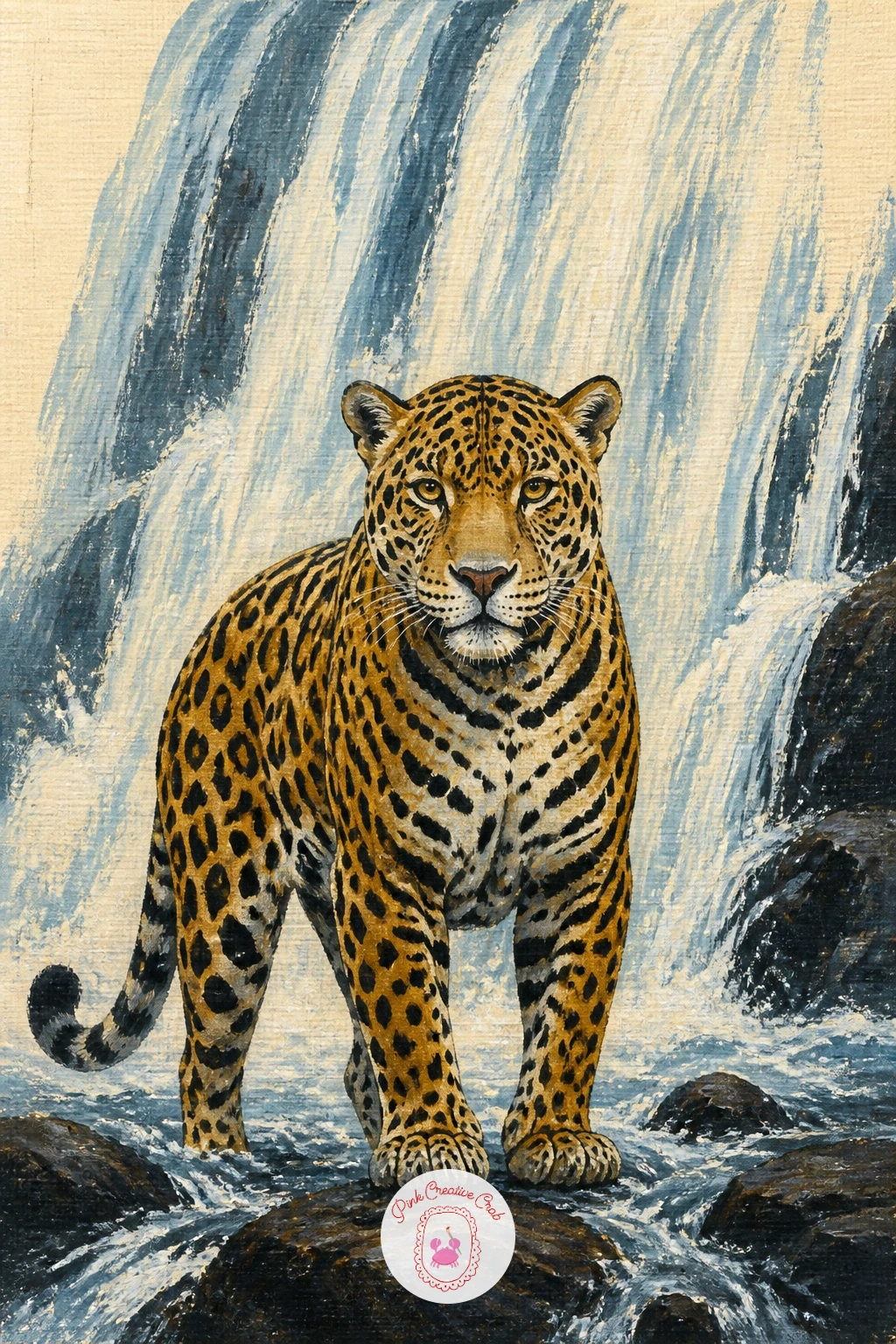
You Will Need
- white gel pen for water highlights (optional)
Palette: Gold,Mars Black,Pale Blue,Titanium White
Lynx in snowy pines leans on silhouette and texture rather than bold color, a nice change of pace after all that gold and camel. Paint a few simple dark green pine shapes in the background first, each one just a tall triangle with ragged edges, then dust the tips with a dry brush of white for a light snow catch.
Block the lynx’s body in a soft grey brown once the pines are dry, keeping the shape compact and sturdy, then use a kneaded eraser or a dry stiff brush dipped in white to lift texture along the edges of the fur, which mimics the lynx’s famously thick winter coat far better than a smooth painted edge would.
Don’t forget the tufted ear tips and short bobbed tail, the two features that make a lynx instantly recognizable against a plain wildcat shape.
If a kneaded eraser isn’t to hand, a dry flat brush scrubbed lightly over tacky paint lifts a similar soft edge.
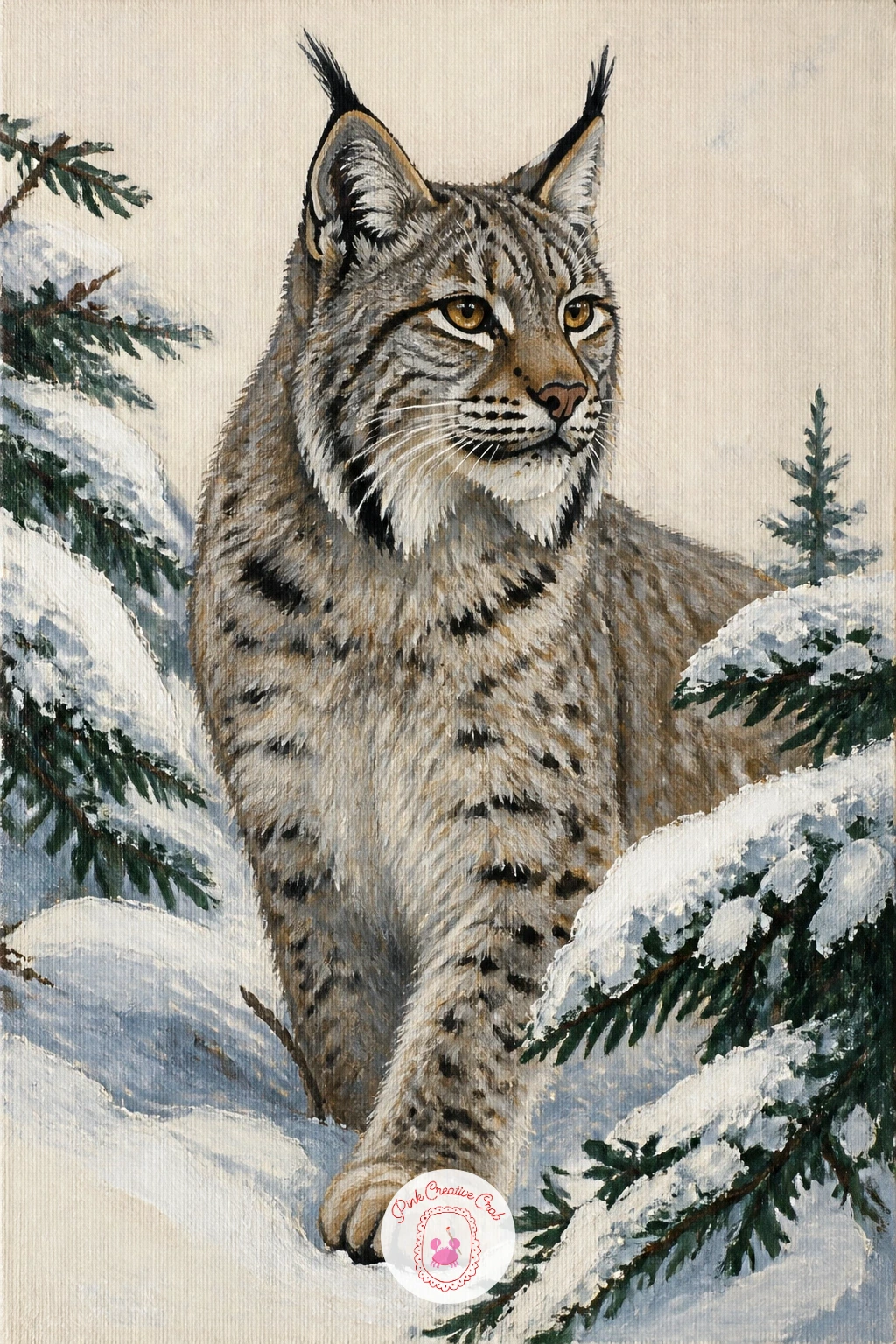
You Will Need
- kneaded eraser or dry stiff brush for texture lifting
Palette: Grey Brown,Payne’s Grey,Jungle Green,Titanium White
Serval in tall grass is about those famously enormous ears and a very upright, alert posture. Sketch the body first with the ears taking up noticeably more head space than you’d expect on any other cat, since getting that ear to head ratio right is what makes a serval read correctly rather than looking like a generic spotted cat.
Block the body in a warm gold, then add bold black spots that are larger and more spaced out than a cheetah’s, finishing with dark bars along the neck and shoulders where a serval’s pattern typically shifts from spots to stripes. Tall grass painted in loose vertical strokes around the legs, some golden and some in jungle green, helps ground the cat in its habitat.
If the ears come out too small, it’s worth repainting just that area before moving on, since the whole likeness hinges on it.
A simplified version can skip the neck stripes and keep spots only, which still reads clearly as a serval thanks to the ears.
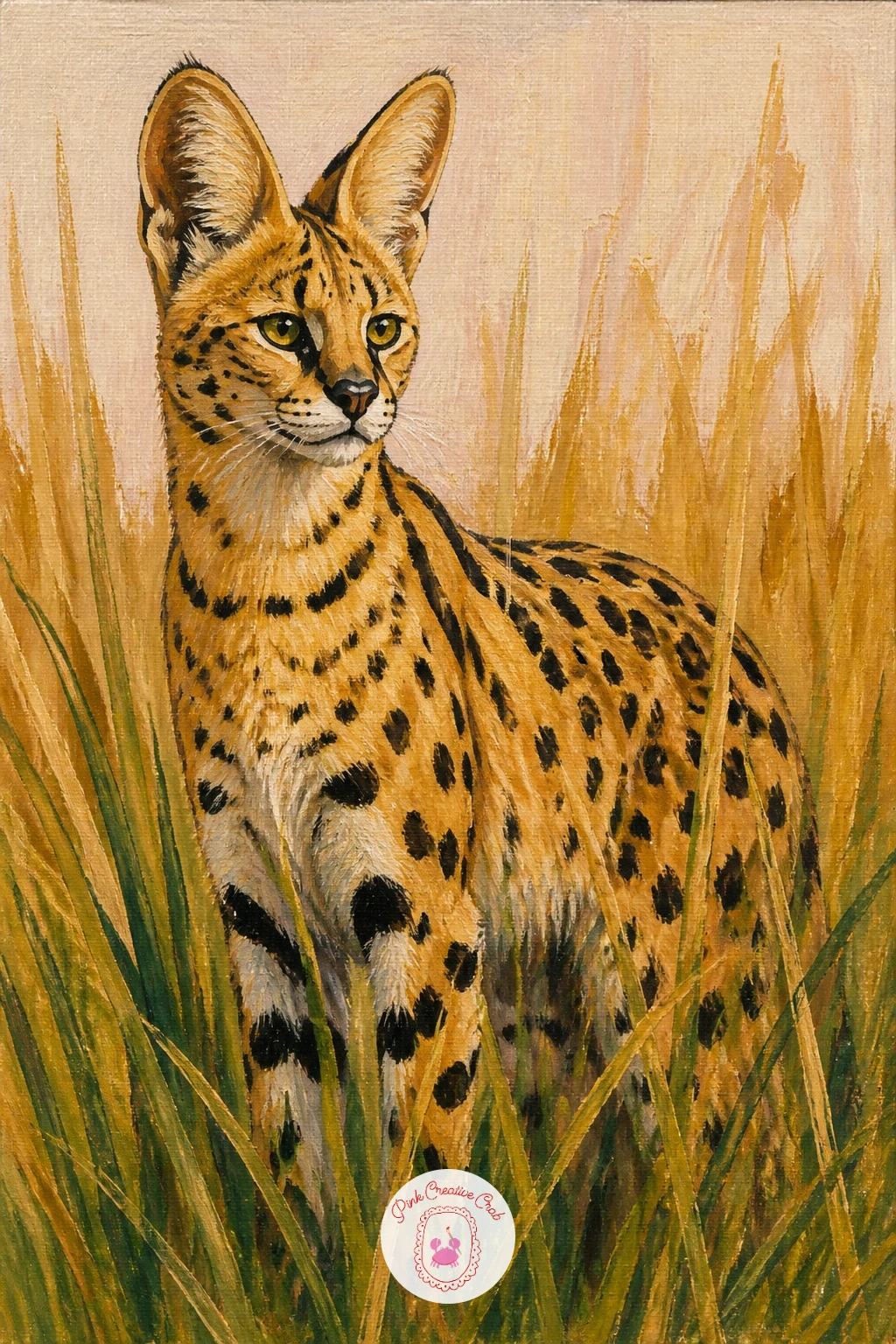
Palette: Gold,Mars Black,Jungle Green,Cream
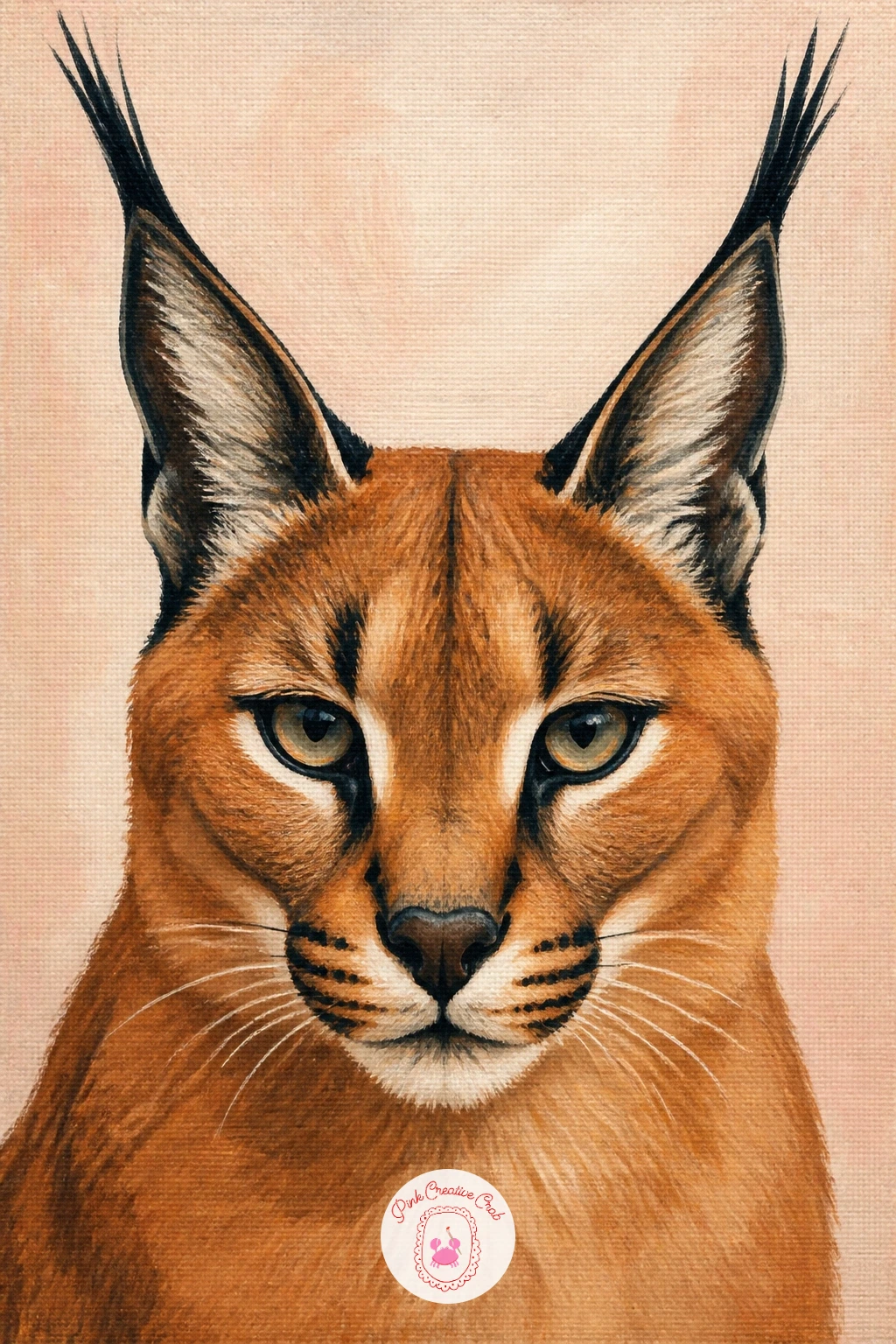
Caracal with tufted ears is a close up portrait built almost entirely on one feature: those long black ear tufts standing straight up. Block the face and shoulders first in a warm reddish tan, kept smooth and largely free of spots since caracals have a much plainer coat than a leopard or serval.
Paint the ears next, tall and pointed, then add the black tufts last with a fine liner or the very tip of a round brush, pulling each stroke upward in one confident motion so they taper naturally rather than looking stuck on. Black markings around the eyes and a pale muzzle finish the face and give it that sleek, slightly smug caracal expression.
Painted too thick or too short, the tufts lose their drama, so err on the side of longer, thinner strokes even if your hand wants to stop early.
If a liner pen skips on wet paint, let the base coat dry fully before adding the tufts.
You Will Need
- fine liner for ear tufts
Palette: Reddish Tan,Mars Black,Cream,Blush Pink
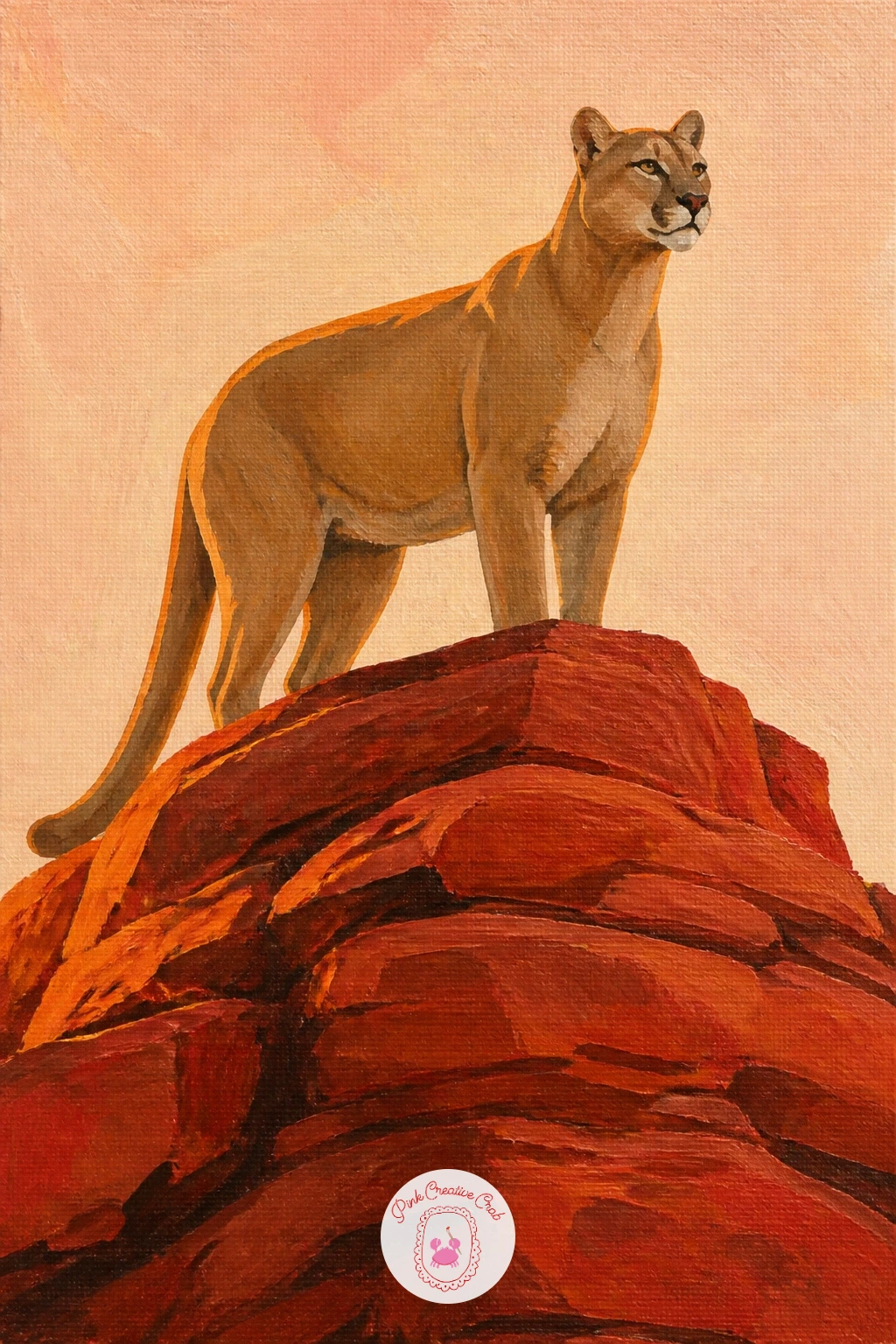
Puma on a canyon rock brings back strong eye level choices, this time from below looking up. Paint the canyon first as layered bands of warm red rock, using a palette knife or flat brush for hard geometric edges, then decide to place your horizon low on the canvas so the cat sits up high and looks genuinely imposing from below.
Block the puma’s body in a soft tan over the dried rock, keeping the coat almost entirely plain since pumas have no spots or stripes to speak of, just subtle shading along the back and legs to suggest muscle. A warm late afternoon light from one side, painted as a soft orange glow along the top edge of the cat’s back, adds drama without extra detail work.
Flattened pumas usually come from skipping that shading step, so don’t skip the darker tan along the legs and underside.
If warm red rock paint isn’t in your set, mix burnt sienna with a touch of white.
You Will Need
- palette knife (optional, for rock edges)
Palette: Burnt Sienna,Tan,Orange,Cream
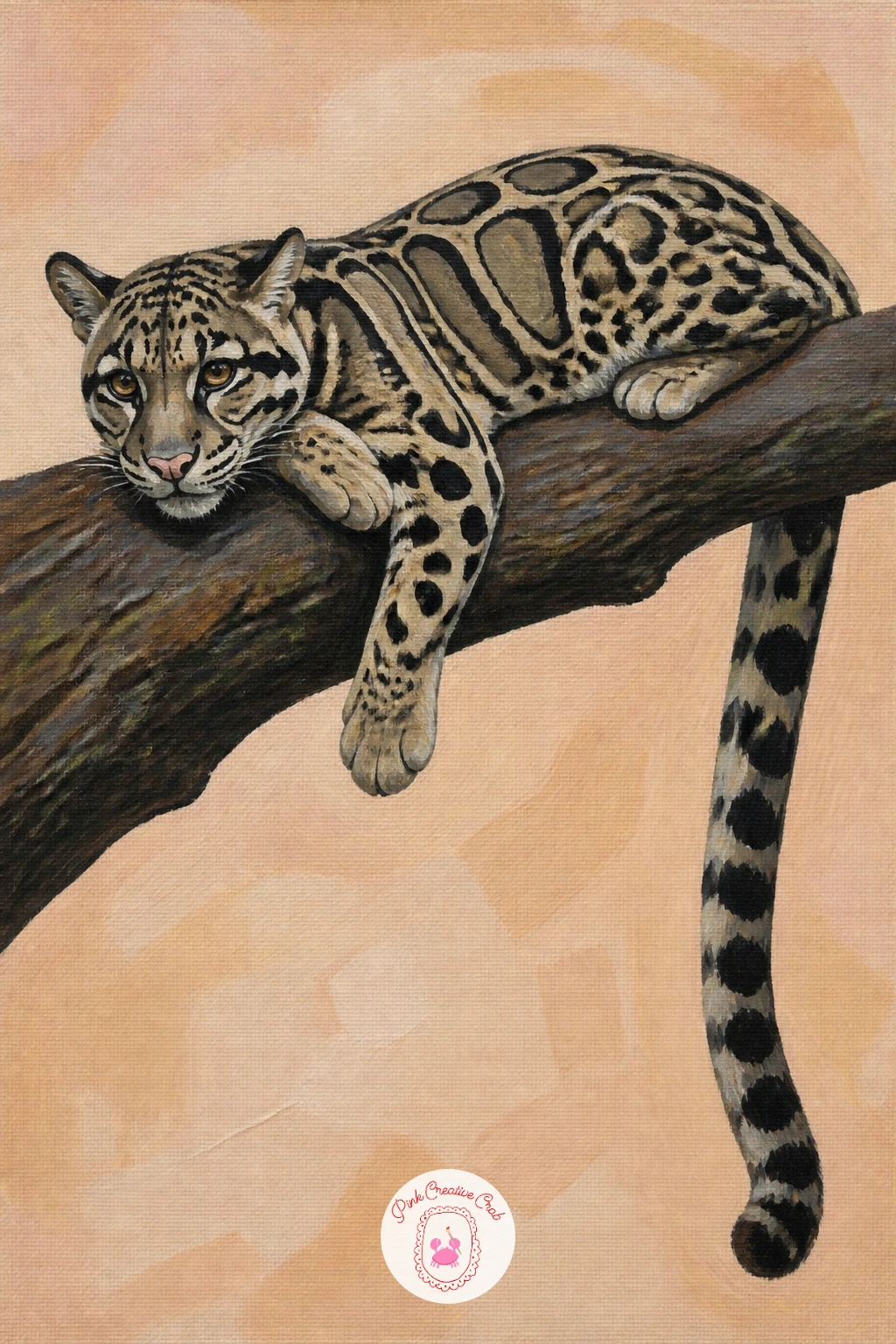
Clouded leopard on a branch pairs beautifully with the very first idea on this list, so if you enjoyed that one, this is its moodier cousin. Paint the branch and a few overhanging leaves first, then block the cat’s body lying flat along the branch in a soft grey tan, keeping the pose low and stretched rather than upright.
The clouded leopard’s markings are its whole personality: large irregular dark edged blotches rather than clean rosettes, so paint each one as an uneven cloud shape with a darker outline and a slightly lighter center, no two exactly alike. Its unusually long tail, nearly as long as its body, should wrap along or hang off the branch for scale.
Markings painted too neat and round lose the clouded leopard’s distinctive look, so keep every blotch a little lopsided on purpose.
For a quicker version, simplify to five or six larger cloud markings rather than covering the whole body in detail.
Palette: Grey Tan,Mars Black,Jungle Green,Cream
Lioness and her cubs at sunset is a warm, multi figure scene built around a glowing sky rather than markings. Paint the sunset background first, bands of orange, pink and deep red blended wet into wet, since this needs to dry before any animal shapes go in front of it.
Once dry, paint the lioness in silhouette or near silhouette, a solid warm brown shape with very little inner detail, then add two or three smaller cub silhouettes beside her at roughly half her height. Keeping the animals mostly flat and dark against that bright sky is what makes this composition work, so resist the urge to add fur detail that would only compete with the glow behind them.
The scene falls flat if the cubs are scattered randomly, so cluster them close to the lioness’s body for a sense of family.
If blending the sunset feels tricky, working on a slightly damp canvas gives you more time before the paint sets.
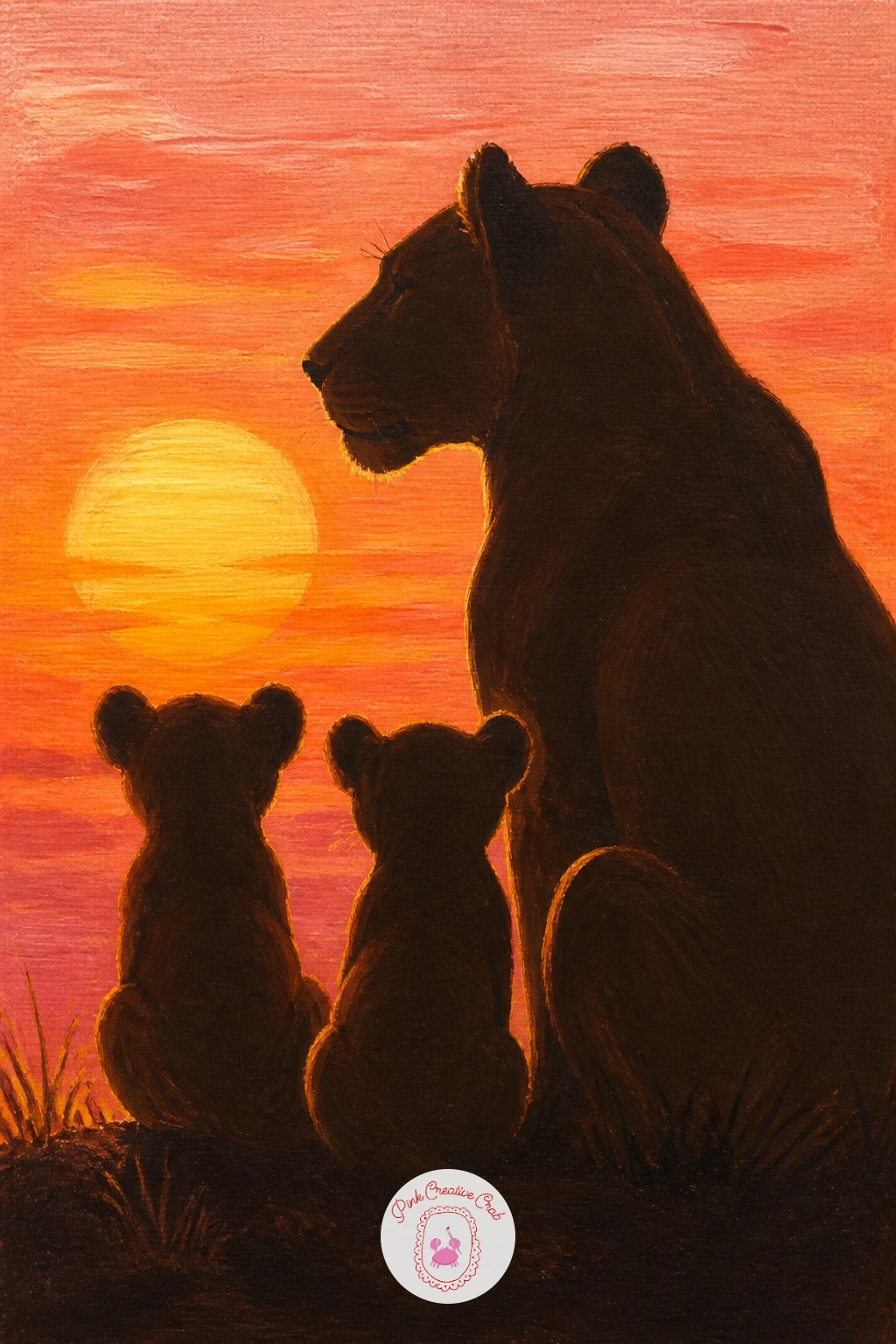
Palette: Orange,Blush Pink,Deep Red,Warm Brown
Black panther among pink flowers is the boldest contrast on this list, dark shape against bright bloom. Paint the flowers first, loose blush pink blossoms scattered across the canvas with a round brush, simple five petal shapes with a small dark center, then let them dry fully.
Block the panther over the top in a near flat black, but don’t use pure black alone, mix in a touch of deep green or blue so the body has subtle sheen rather than looking like a cutout silhouette. A single warm highlight along the top of the back and head, added last in a thinned grey, catches the light and keeps the shape from going dead flat.
Painted with pure matte black throughout, a panther loses all its form, so always keep that subtle sheen variation somewhere on the body.
If you don’t want to mix a custom black, a bottle of Payne’s grey layered thin over black gives the same soft sheen.
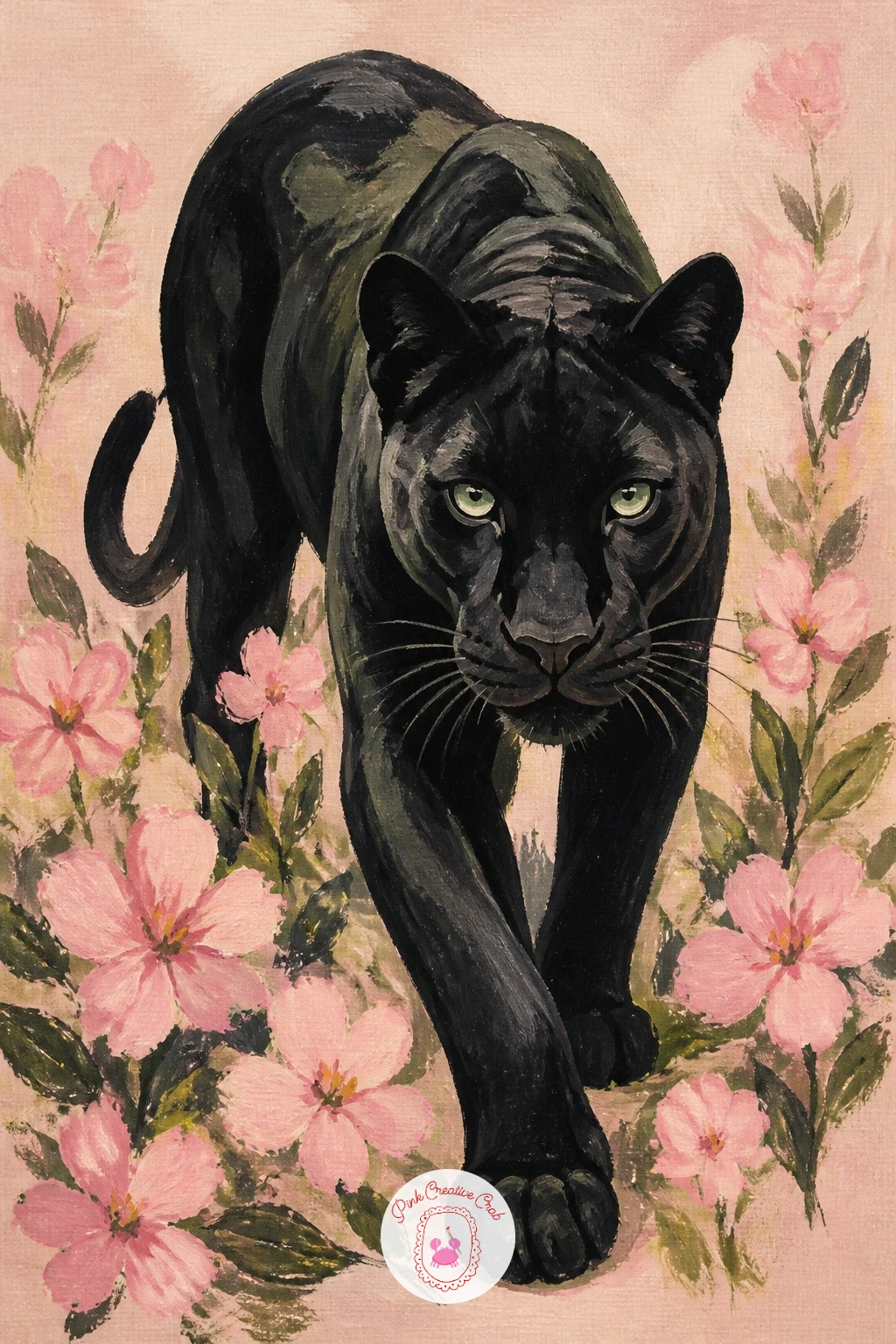
Palette: Mars Black,Payne’s Grey,Blush Pink,Jungle Green
Ocelot in a rainforest brings back dense foliage, this time paired with one of the most elegantly marked wild cats. Paint the leafy background first in several overlapping layers of jungle green, light to dark, letting each layer dry before adding the next so the leaf shapes stay distinct rather than muddying together.
Block the ocelot’s body in a warm cream gold, then paint its signature elongated dark blotches running lengthwise along the body in flowing lines rather than round spots, which is the detail that separates an ocelot from a leopard or jaguar. Small solid black spots on the head and legs, added last, finish the pattern.
If the layered leaves start looking too busy behind the cat, simplify by leaving a soft patch of plain pale green directly behind the body so the ocelot still stands out.
No deep green on hand? Mix jungle green with a touch of black for the shaded leaf layers.
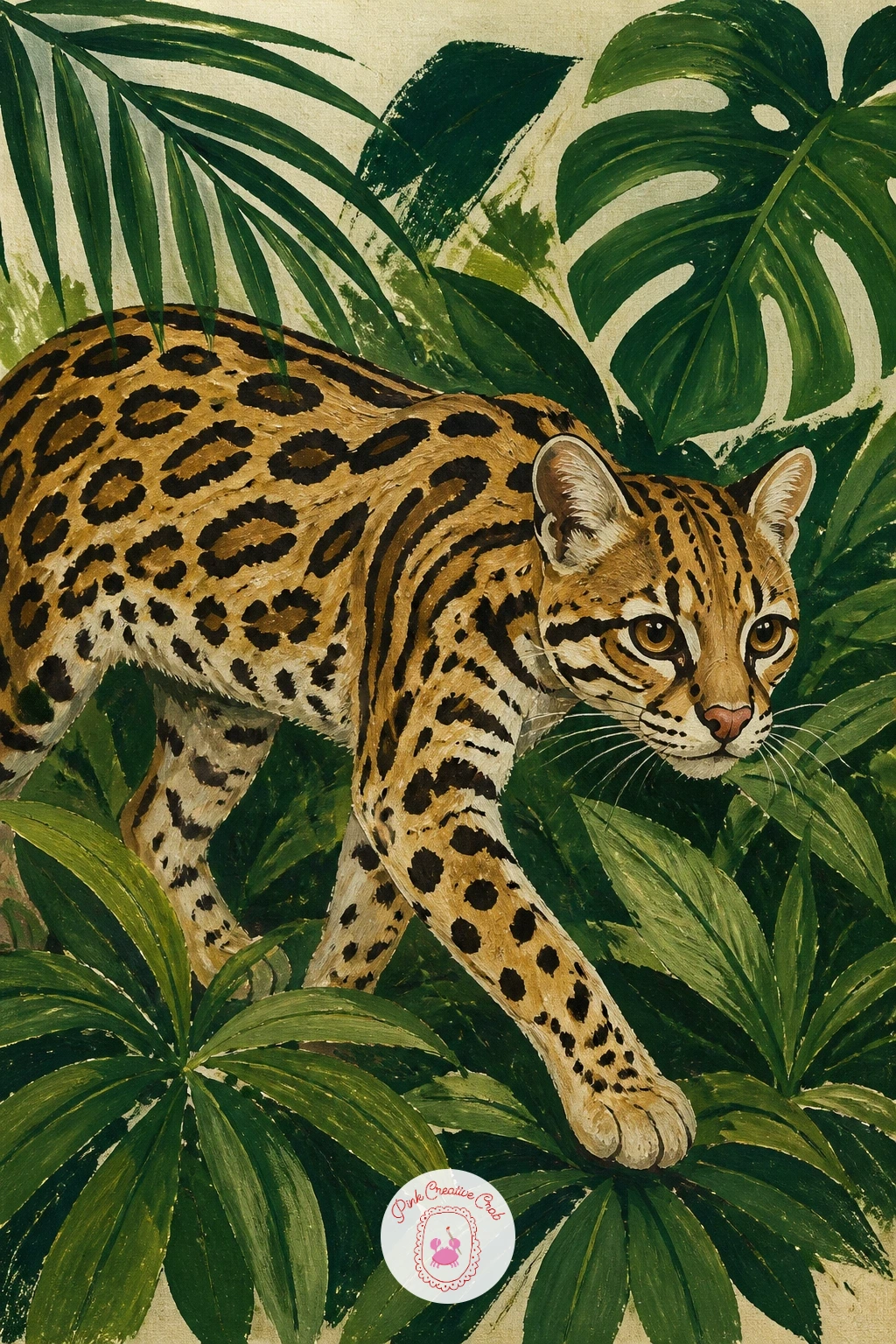
Palette: Jungle Green,Cream Gold,Mars Black,Sage
Sand cat in the dunes strips the palette right back to warm neutrals and soft curves. Paint the dunes first as a few overlapping curved bands of pale sand tones, light to dark, blended softly at the edges where they meet so the landscape feels smooth rather than striped.
Block the sand cat’s small rounded body in pale sandy gold once the dunes are dry, keeping markings minimal since this cat is famous for being almost perfectly camouflaged against its desert home, just a few faint stripes on the legs and tail rather than bold spots. Oversized paws and wide set eyes, painted a touch larger than you’d expect, capture this cat’s distinctive, almost comical face.
The scene loses its desert feel if the sand gets too many color shifts, so keep the dune palette to three tones at most.
If blending soft dune edges feels tricky, a slightly damp brush dragged along the boundary between two colors softens it instantly.
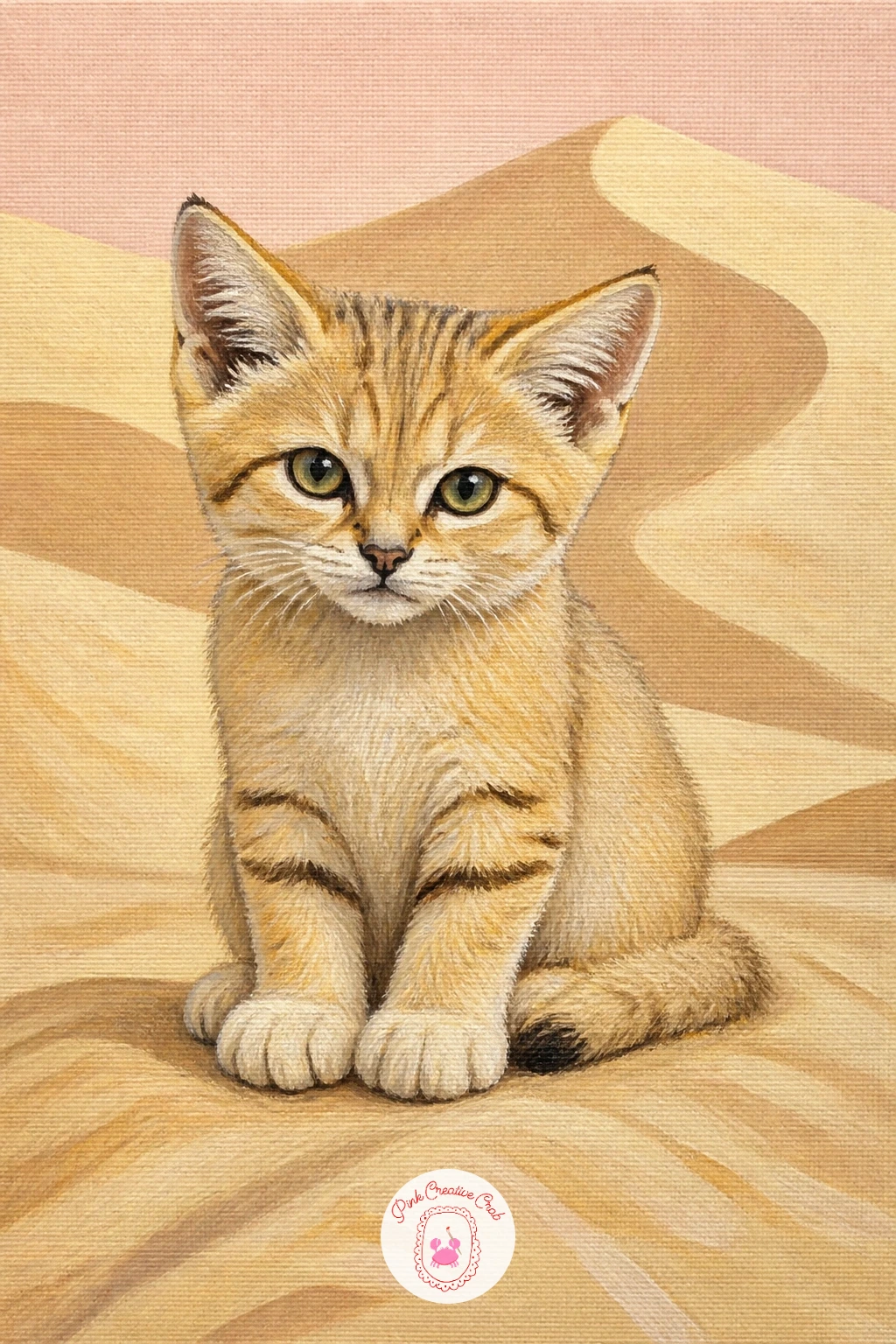
Palette: Sand,Pale Gold,Warm White,Ochre
Grumpy Pallas’s cat is the character piece on this list, built entirely around a flat, unimpressed expression. Block the round, extremely fluffy looking body first in a soft grey brown, keeping the overall shape nearly circular since this cat is famously stout and low to the ground compared to other wildcats.
Paint the face with low set round ears and narrow, slightly squinting eyes close together, which together create that signature grumpy look more than any amount of fur detail could. A dry brush dragged outward from the body edge in short choppy strokes suggests the extremely dense, wind blown fur this species is known for, far more effective here than a smooth painted outline.
If the face ends up looking surprised rather than grumpy, check the eyebrows: angling the fur above the eyes slightly downward toward the nose fixes it almost instantly.
A simplified beginner version can keep the body as one flat round shape with just the face detailed.
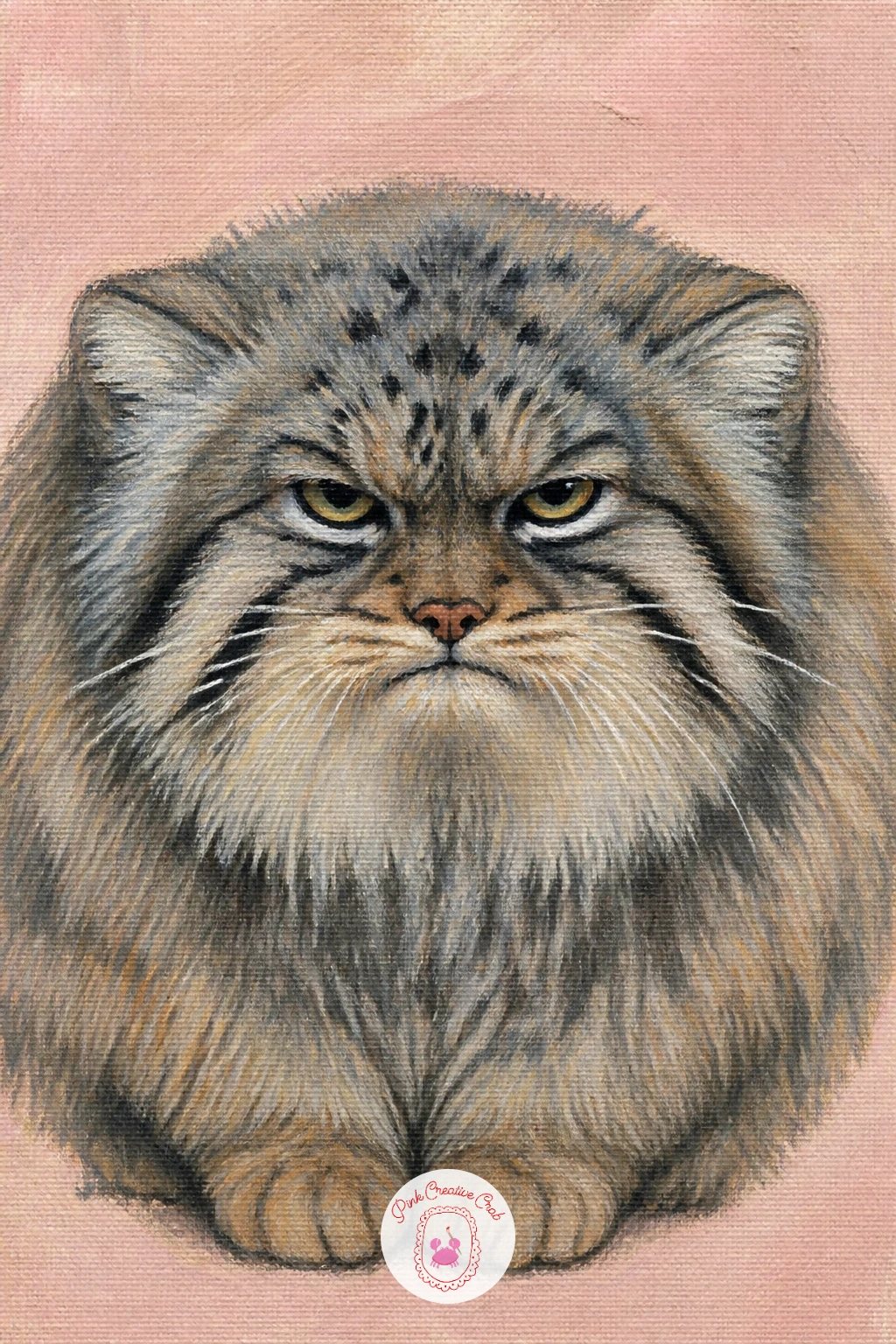
Palette: Grey Brown,Payne’s Grey,Cream,Mars Black
Look up a reference photo for this one specifically: the exact placement of the low ears and narrow eyes is what sells the grumpy expression.
Bobcat on a fence brings the wild cat theme into a more domestic setting, perched calmly on a simple wooden rail. Paint the fence first as two or three horizontal planks in a weathered brown, using a dry brush dragged along the wood grain direction for texture, then let it dry before the cat goes on top.
Block the bobcat’s body in a warm tan sitting or crouched along the top rail, adding dark spots and faint stripes on the legs once dry, lighter and more scattered than a leopard’s dense pattern. Its short bobbed tail, just a stub rather than a full length tail, is the single detail that confirms this is a bobcat and not a generic wildcat.
Cats painted standing too upright on a narrow rail look precarious rather than natural, so keep the body low and settled, weight sunk down over the fence line.
If dry brush wood grain feels fiddly, a few simple diagonal pencil lines under thin paint suggest the same texture.
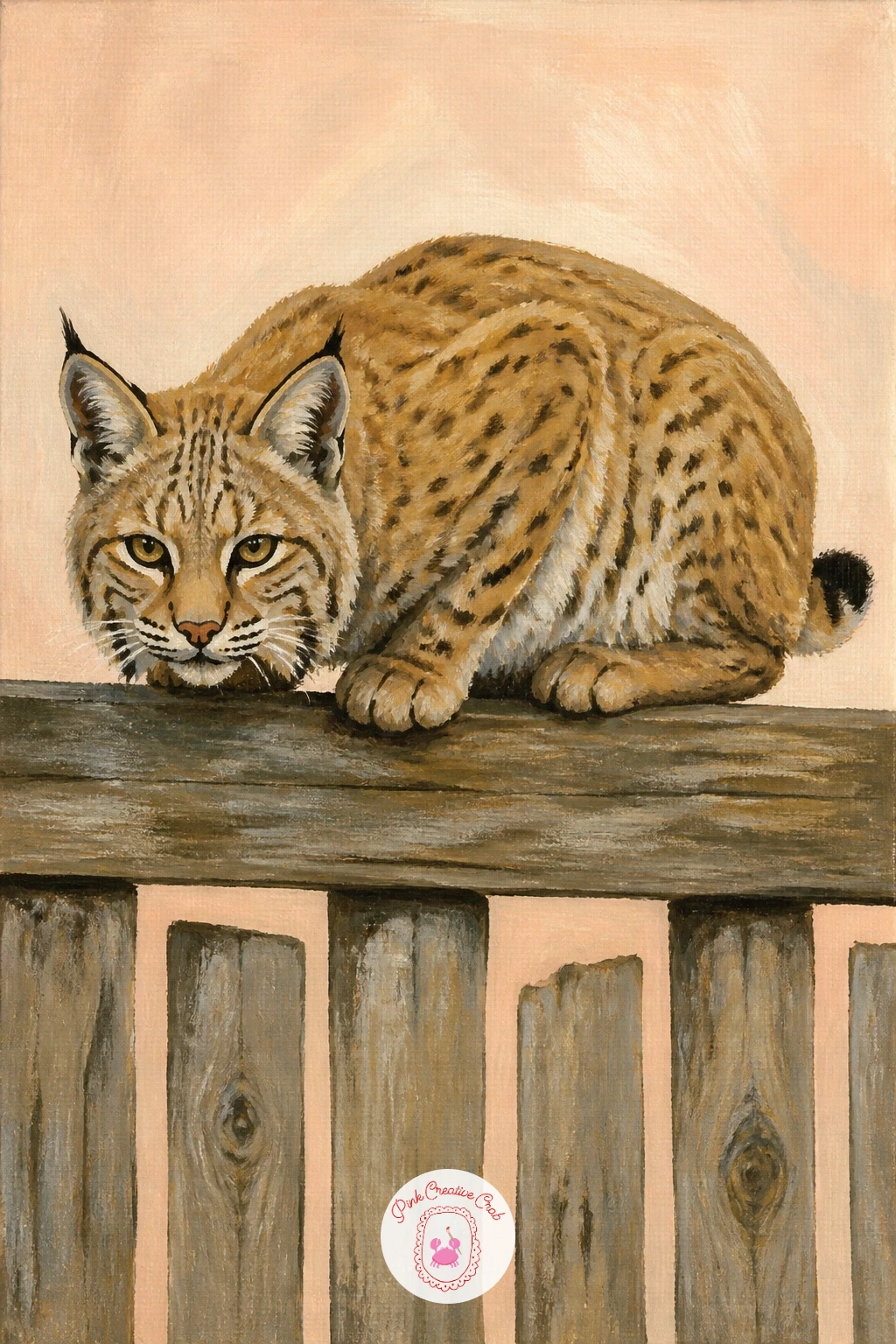
Palette: Weathered Brown,Tan,Mars Black,Cream
Fishing cat by a stream pairs a sturdy, stocky build with water, giving you another chance to practice that wet reflection trick from earlier in the list. Paint the stream first as a flat band of blue green with a few loose horizontal streaks of lighter color dragged through for movement, then let it dry.
Block the cat’s stocky, slightly flattened looking body in grey brown along the bank, crouched low with one paw extended toward the water as if about to swipe at a fish, a pose that instantly explains the name. Dark elongated spots running along the body, slightly blurred at the edges with a dry brush, finish the coat.
Cats painted too slender here lose the fishing cat’s distinctive stocky build, so keep the body wide and low rather than elegant and long.
No dry brush for soft spot edges? A slightly damp fingertip dabbed gently over wet paint softens an edge in a pinch.
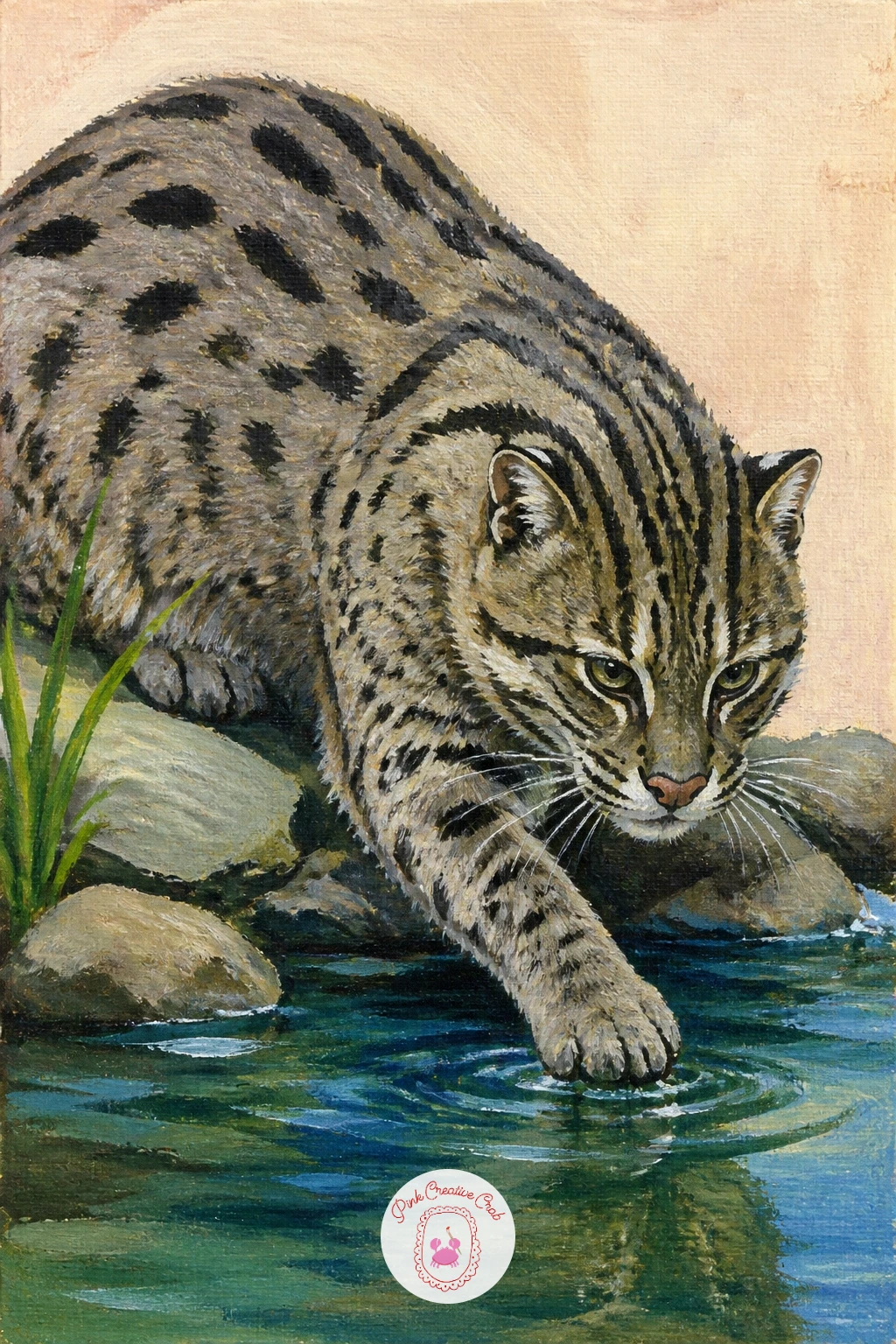
Palette: Grey Brown,Blue Green,Mars Black,Cream
Tiger swimming gives the stripe pattern from earlier a wet, dynamic twist. Paint the water first as a loose field of blue, dragging a dry brush in short choppy strokes to suggest ripples, then leave gaps of pale color where the water will catch light around the swimming body.
Once dry, paint the tiger’s head and upper back breaking the surface, orange with black stripes as before, but keep the lower body softened and partly obscured by a layer of translucent blue glazed over it, which reads instantly as submerged rather than floating on top. A small splash, dabbed in white near the front paws with a stiff dry brush, adds motion.
The tiger looks like it’s floating rather than swimming if the whole body stays fully visible and crisp, so always let some of it vanish under that water glaze.
If glazing feels new, thin your blue paint heavily with water or a bit of glazing medium before dragging it over the dried body.
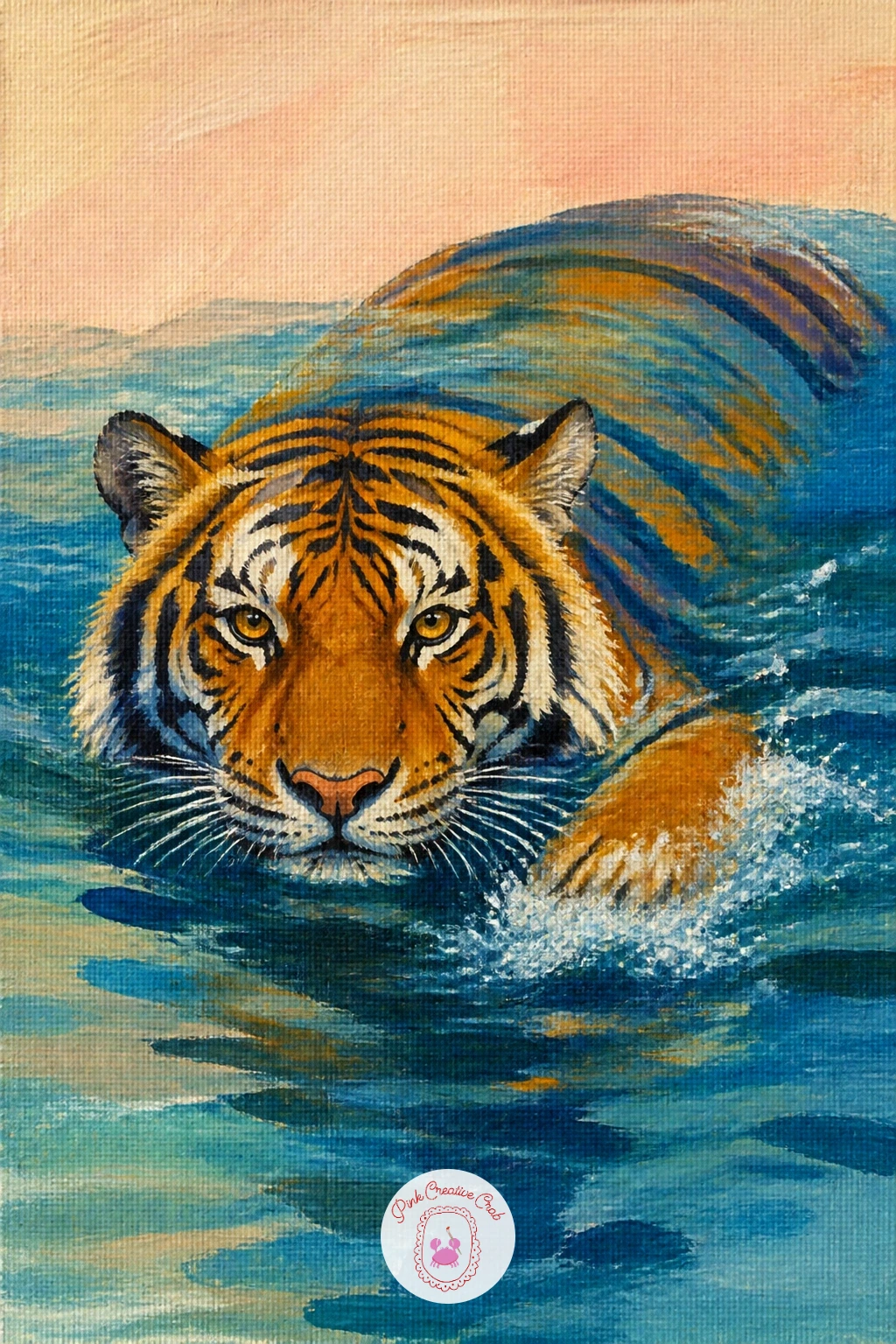
You Will Need
- glazing medium (optional, for the underwater effect)
Palette: Orange,Mars Black,Blue,Titanium White
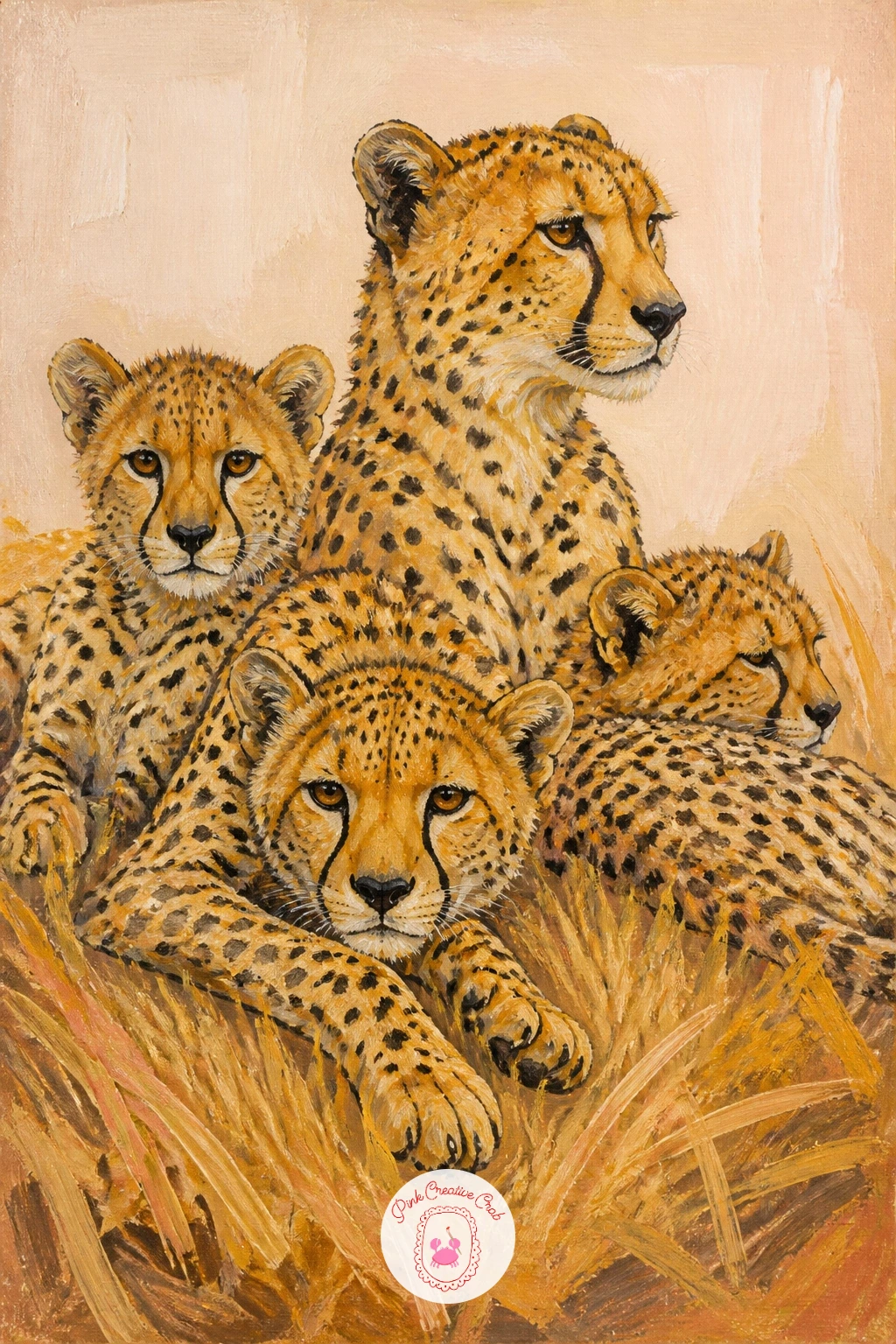
Cheetah family resting slows the earlier sprint right down into a calm group portrait. Sketch three or four cheetah shapes arranged in a loose cluster, some lying, one perhaps sitting upright on alert, varying the poses so the group doesn’t look like repeated copies of the same cat.
Block each body in the same warm gold as before, adding the small black spots and signature tear lines once dry, keeping the cubs if you include any noticeably smaller and rounder than the adults. Warm golden grass painted loosely around their paws ties the group into one shared ground rather than floating figures.
Groups like this go wrong when every cat faces the same direction, so turn at least one head a different way for a sense of a real, relaxed moment rather than a lineup.
If multiple full bodies feel like a lot for one sitting, simplify to just two cheetahs, one lying and one sitting.
Palette: Gold,Mars Black,Ochre,Cream
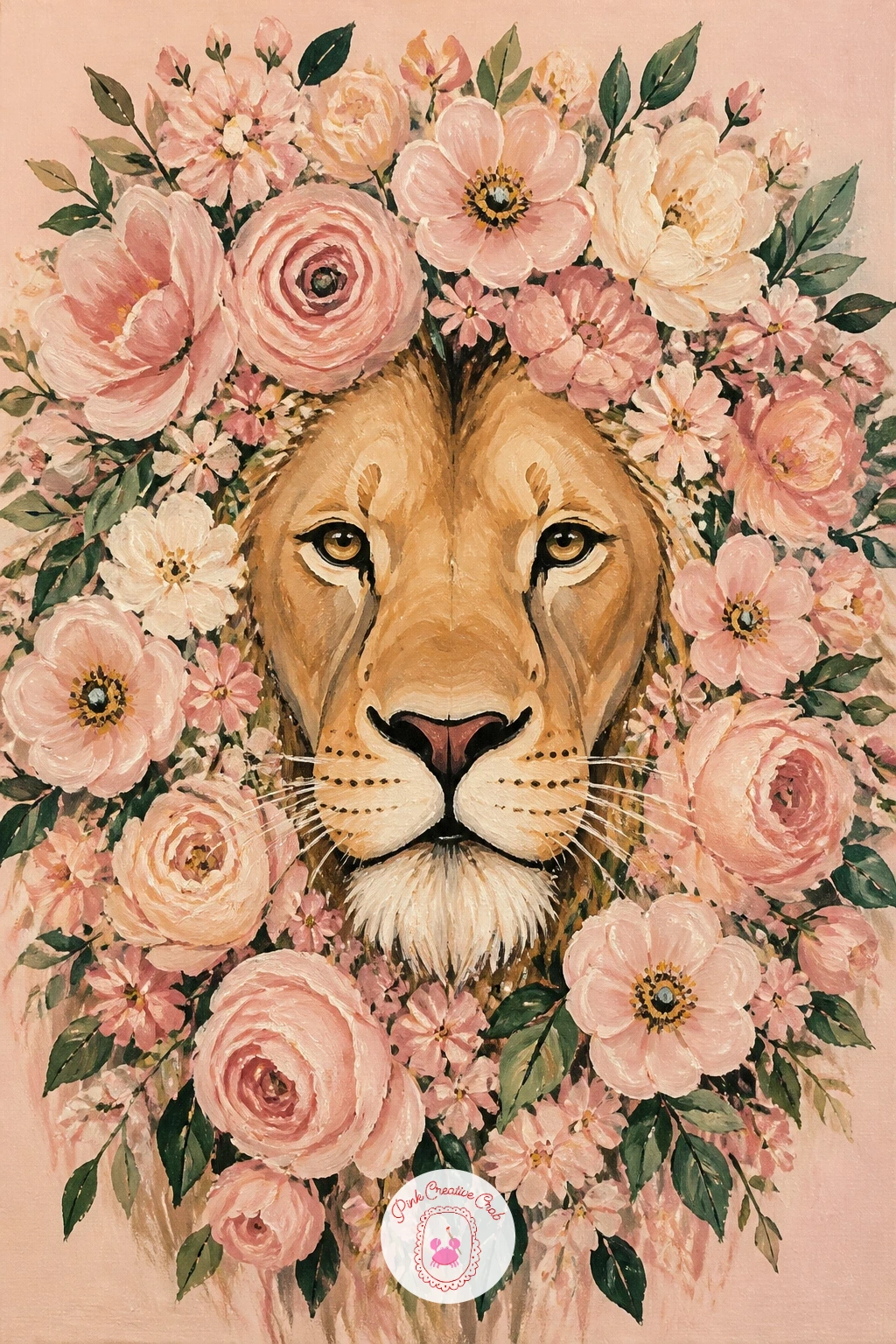
Lion with a mane of flowers takes the decor and fashion angle furthest, swapping real fur for a mane built entirely from painted blooms. Block the lion’s face in warm tan first, keeping the features simple and front facing, then build the mane outward from the head using small rounded petal shapes in blush pink, cream and a little jungle green for leaves, rather than the usual shaggy fur lines.
Vary the flower sizes as you go outward, smaller near the face and larger toward the outer edge of the mane, which keeps the whole shape from looking like a flat wreath. Painting every flower the exact same size is the main way this idea falls flat, so mix at least three different bloom sizes across the mane.
Leave the face itself simple and calm, since all the visual energy already lives in that floral mane.
If individual flowers feel slow to paint one by one, load the brush generously and dab in clusters of three or four petals at once.
Palette: Tan,Blush Pink,Cream,Jungle Green
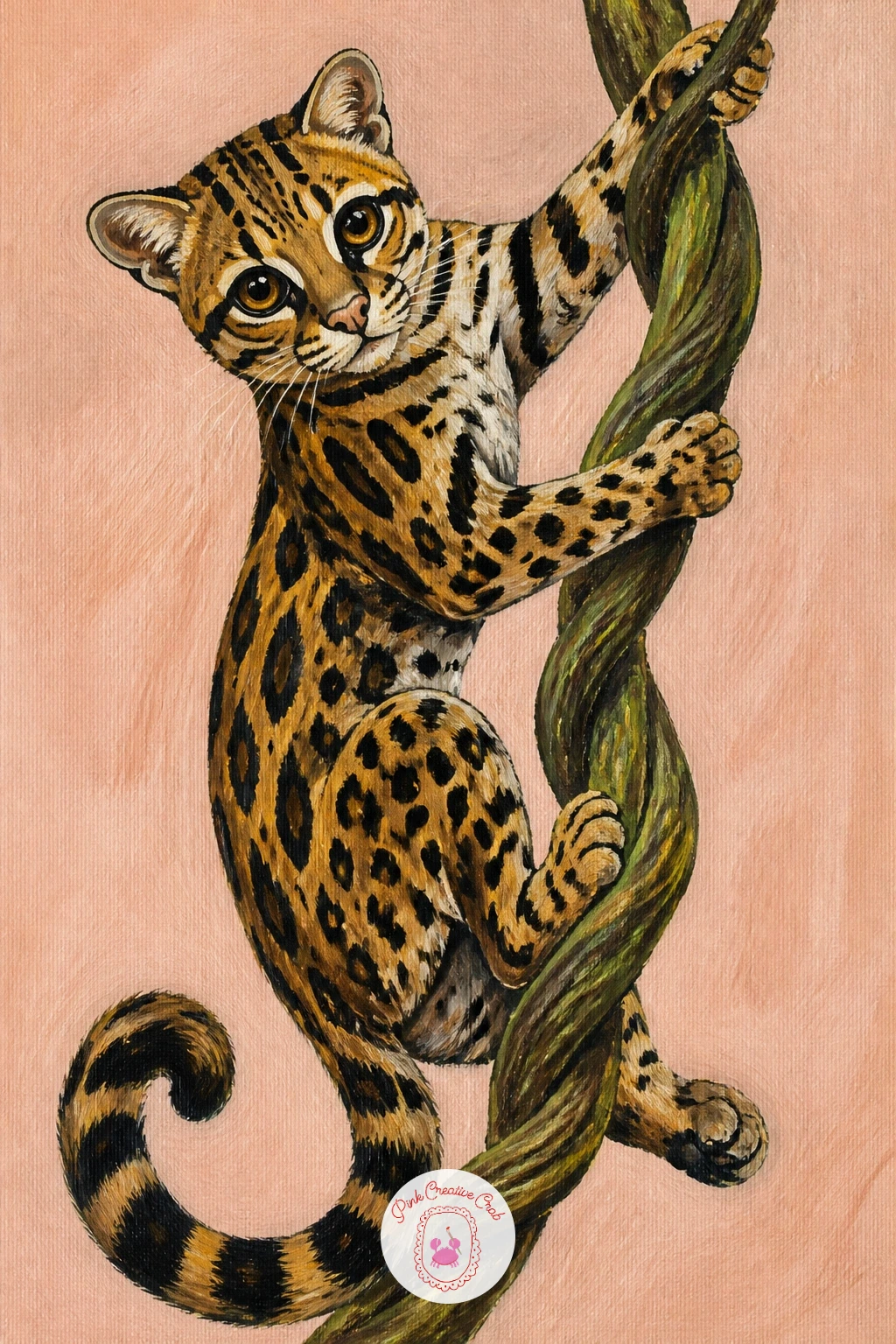
Close the whole list with margay climbing a vine, the most acrobatic pose of the set thanks to this cat’s famously flexible ankles that let it climb head first down trees. Paint a single curving vine diagonally across the canvas first, with a few simple leaves attached, then position the margay gripping it with all four paws, body twisted slightly as if mid climb rather than standing flat.
Block the body in warm gold with dark elongated blotches similar to the ocelot’s but smaller and denser, then add the margay’s notably large eyes, proportionally bigger than any other cat on this list, which gives it an appealing, slightly wide eyed expression.
Bodies painted straight and stiff lose the acrobatic feel entirely, so keep the spine curved and the paws gripping at different points along the vine rather than all in one line.
For a simpler version, skip the full climbing twist and paint the margay simply sitting on a horizontal branch instead.
Palette: Gold,Mars Black,Jungle Green,Cream
What to Do Next
Pick one cat that matches your mood today, grab a canvas and your camel, black and blush pink paints, and work through the base coat before anything else. If acrylic and bold brushwork feel new, the easy acrylic painting ideas for beginners are a gentle place to warm up your hand first.
Frequently Asked Questions
What paint works best for a leopard painting in this bold decor style?
Acrylic works best, since it dries fast and gives the flat, opaque color this style needs. Build the base coat first, let it dry fully, then add spots on top so they stay crisp rather than blending into wet fur color.
How do you paint realistic looking leopard spots?
Paint rosettes as an open ring of black with a touch of camel showing through the center, never a solid black blob. Vary the size and spacing across the body and cluster some near the shoulders for a natural, uneven rhythm.
What size canvas suits a leopard painting for a feature wall?
A larger canvas, around 16 by 20 or bigger, suits this bold maximalist style best, since the cat needs room to fill most of the frame. Smaller canvases work fine for close up portrait style ideas like the face and sunglasses piece.
How do you keep the background from competing with the cat?
Keep the background flat and limited to one or two colors, like blush or cream, painted before the animal goes on top. Save detail and contrast for the cat itself so it always reads as the clear focal point.
Is this list suitable for a first attempt at painting animals?
Yes, several ideas here are built for exactly that, especially the sleeping leopard and the grumpy Pallas’s cat, which avoid tricky perspective or limb angles. Start with one of the earlier ideas in the list and work up to the action poses later on.
Have any thoughts?
Share your reaction or leave a quick response — we’d love to hear what you think!
-
 0
-
0
-
0
-
0
-
0
-
0


