Pomegranate painting gives you everything a Mediterranean still life needs in one fruit: deep ruby reds, a leathery rind, and seeds that catch the light like tiny jewels. There is something satisfying about cutting one open on paper, watching the flat shapes of gouache sit side by side the way a tiled courtyard or a market stall does. These are quick, sunny subjects you can start and finish in one sitting, no fussy blending required.
Below you will find 27 ideas, starting with pomegranates in every mood (on a plate, on a tree, in a girl’s hands) before moving through figs, apricots, dates, melons, plums and more, each one set in its own sunny table, garden or market moment. Pick whichever one makes you want to reach for your brush first.
Using these images: free for personal projects such as printing, coloring, cards, journals and gifts. Handmade items that include them may be sold up to 30 pieces per design. More than that is commercial use and is not permitted, and neither is selling or sharing the images themselves or passing them off as your own. Please ask before any other use.
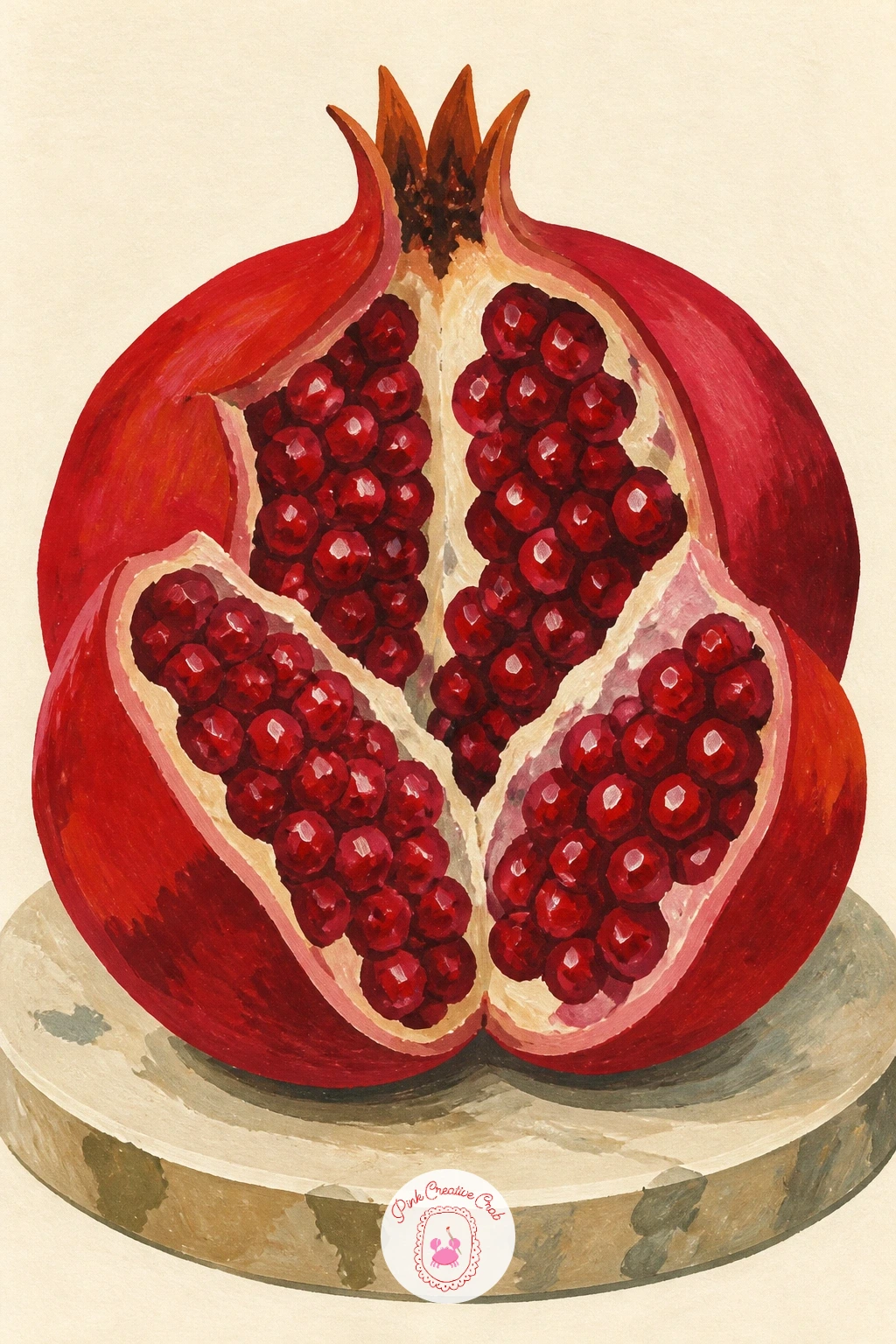
Start with the split pomegranate, the idea that teaches every trick this whole list depends on. Pencil a loose circle for the fruit and a simple oval for the marble plate underneath, then paint the plate first in a pale grey-cream so you have a clean background to cut the fruit into later.
Block the pomegranate halves in flat pomegranate red, leaving the torn opening as a rough, irregular shape rather than a neat wedge: real fruit never splits evenly. Once that red is dry, load a small round brush with a slightly darker red-violet and paint the seed clusters as tight little polygons, not circles, packing them close with thin cream gaps of paper showing between them.
The common mistake is making the seeds too round and too evenly spaced, which flattens the whole effect into a pattern. Break that up by varying seed size and letting some clusters crowd into shadow at the base of the fruit.
If you do not have a true pomegranate red, mix alizarin crimson with a touch of cadmium orange for the same warmth. Finish today by dotting a few seeds with white gel pen for the wet highlight that sells the whole fruit.
You Will Need
- white gel pen
Palette: Pomegranate Red,Seed Crimson,Cream Ground,Rind Olive
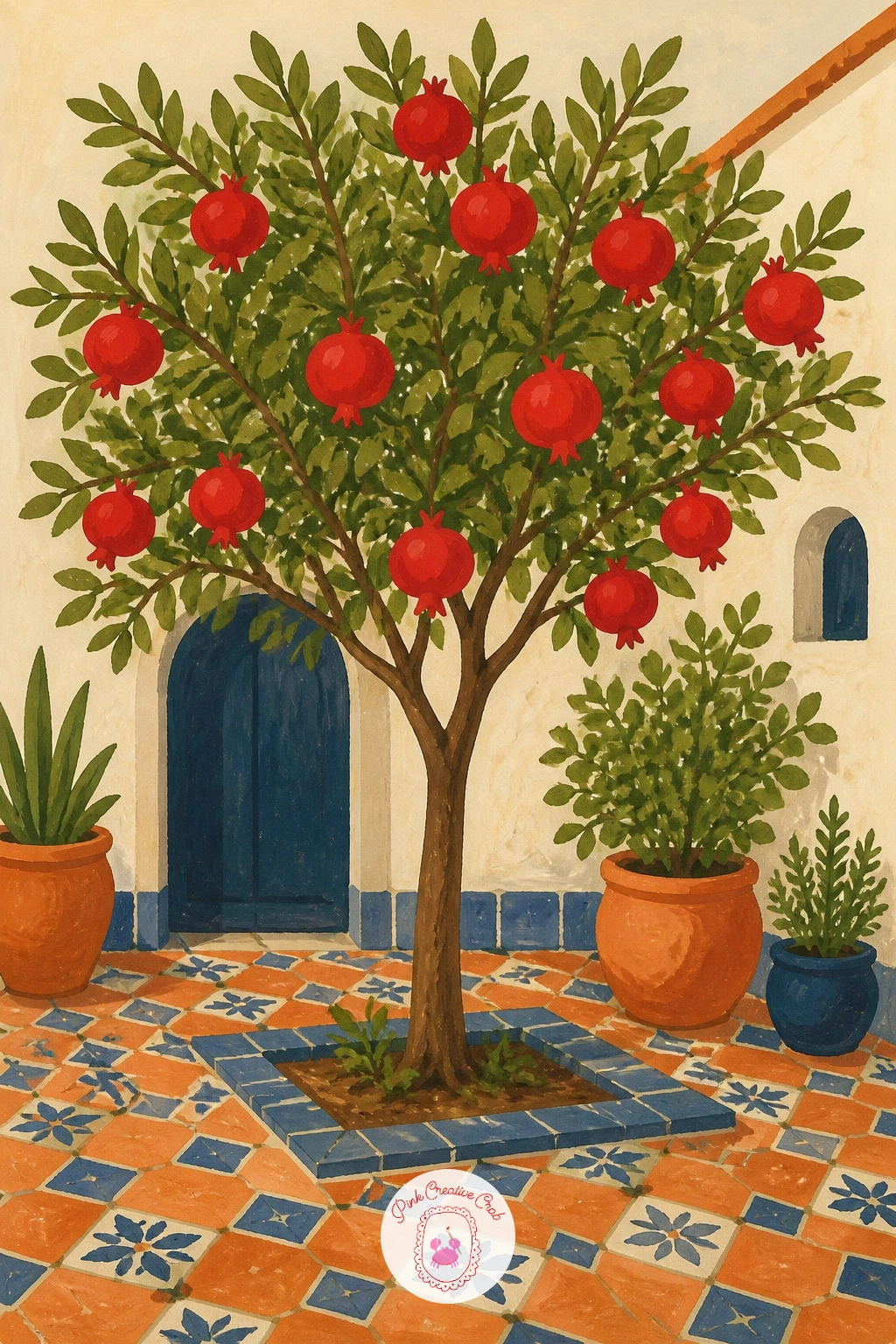
Widen out from the single fruit to a whole pomegranate tree, set against the geometric pattern of a tiled courtyard floor. Work on a larger sheet if you have one, since this idea needs room for both the canopy above and the tiles below.
Paint the sky-blue background first, then block in the tree canopy as a rounded olive green mass before the trunk, so the dark trunk lines sit crisply on top rather than fighting wet green. Add pomegranates as small red dots and ovals scattered through the leaves, more toward the outer edges where fruit naturally hangs in the light.
Here the trick is perspective: keep your eye level low, near the base of the trunk, so the courtyard tiles recede upward in simple diagonal rows rather than lying flat like a map. That single choice makes the whole scene feel like you are standing in it.
If patterned tiles feel fiddly, simplify them to two alternating colors in a loose grid. Readers who enjoy this kind of garden structure might also like the compositions in gouache painting landscapes for more ways to build a scene from flat shapes.
Palette: Terracotta Tile,Courtyard Blue,Canopy Olive,Pomegranate Red
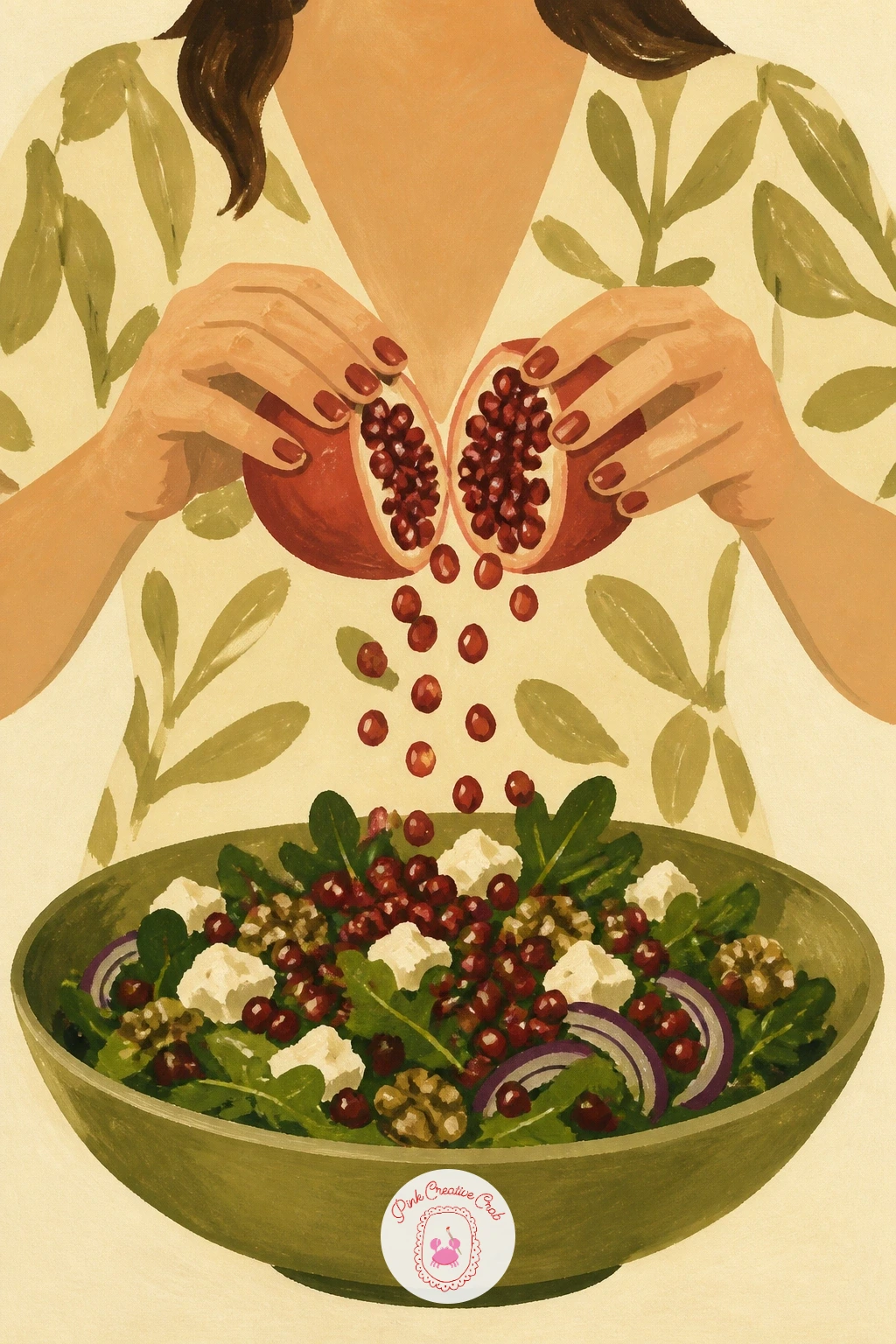
Bring a little story into the painting with a girl’s hands breaking a pomegranate open over a bowl of salad. Keep the figure simple: just two hands and forearms entering the frame from one side, painted in a warm skin tone with minimal shading, so the fruit stays the star.
Paint the salad bowl and its greens first in flat olive and cream tones, then the pomegranate half above it, torn open with a few seeds already falling in a loose arc toward the bowl. Those falling seeds are the hardest part: paint them as small dots of varying size along a gentle curve, not a straight line, so they read as motion rather than a sticker sheet.
If the hands feel intimidating, simplify them to soft rounded shapes with only a hint of knuckle lines in a darker tone, since a loose, confident hand reads better than an overworked one.
Give yourself about forty minutes for this one if you want the fuller scene; a ten-minute version can drop the hands entirely and just show the seeds mid-fall above the bowl. Either way, finish with a few bright seed highlights in white gel pen.
You Will Need
- white gel pen
Palette: Pomegranate Red,Salad Olive,Skin Warm Tan,Cream Ground
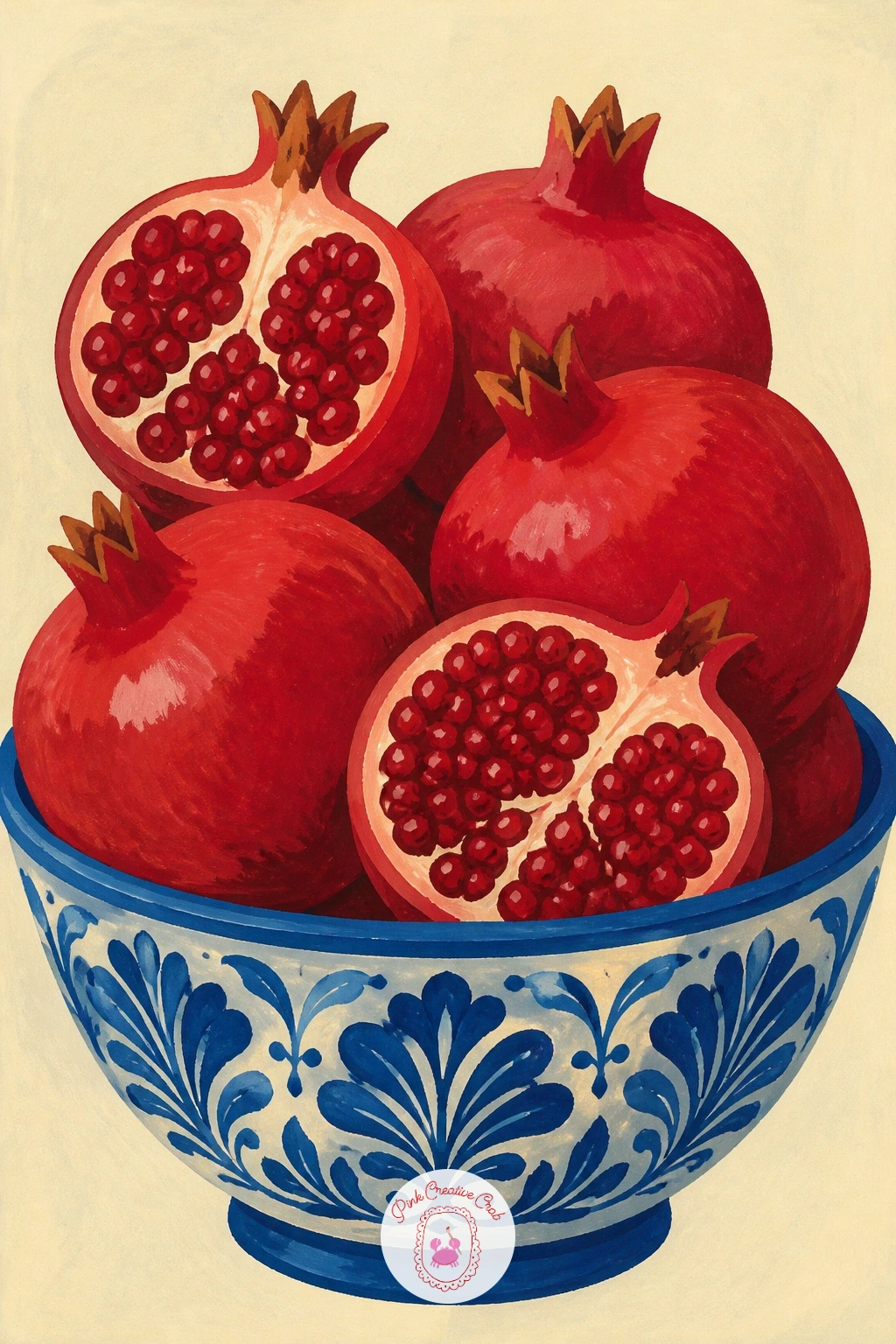
Settle into a calmer still life with pomegranates piled into a blue and white bowl, the kind of classic tabletop grouping that rewards patient shape-building. Paint the bowl first as a simple rounded form with a few confident blue brushstrokes for the pattern, rather than trying to copy an exact design.
Once the bowl is dry, stack two or three pomegranates on top in flat red and red-violet, overlapping their edges so the group reads as one solid mass rather than separate balls lined up in a row. Vary the red slightly between fruits so no two are identical.
Compare each pomegranate to the bowl’s width as you place it: if a single fruit looks wider than half the bowl’s mouth, it has grown too large and will throw off the whole grouping. Nudging that proportion right before you paint saves a repaint later.
No blue and white bowl at home to reference? A plain white mug works fine, since the pattern matters far less than the confident rounded shape underneath it. Finish with a thin cream outline where bowl meets fruit to keep the edges crisp.
Palette: Bowl Blue,Pomegranate Red,Seed Crimson,Cream Ground
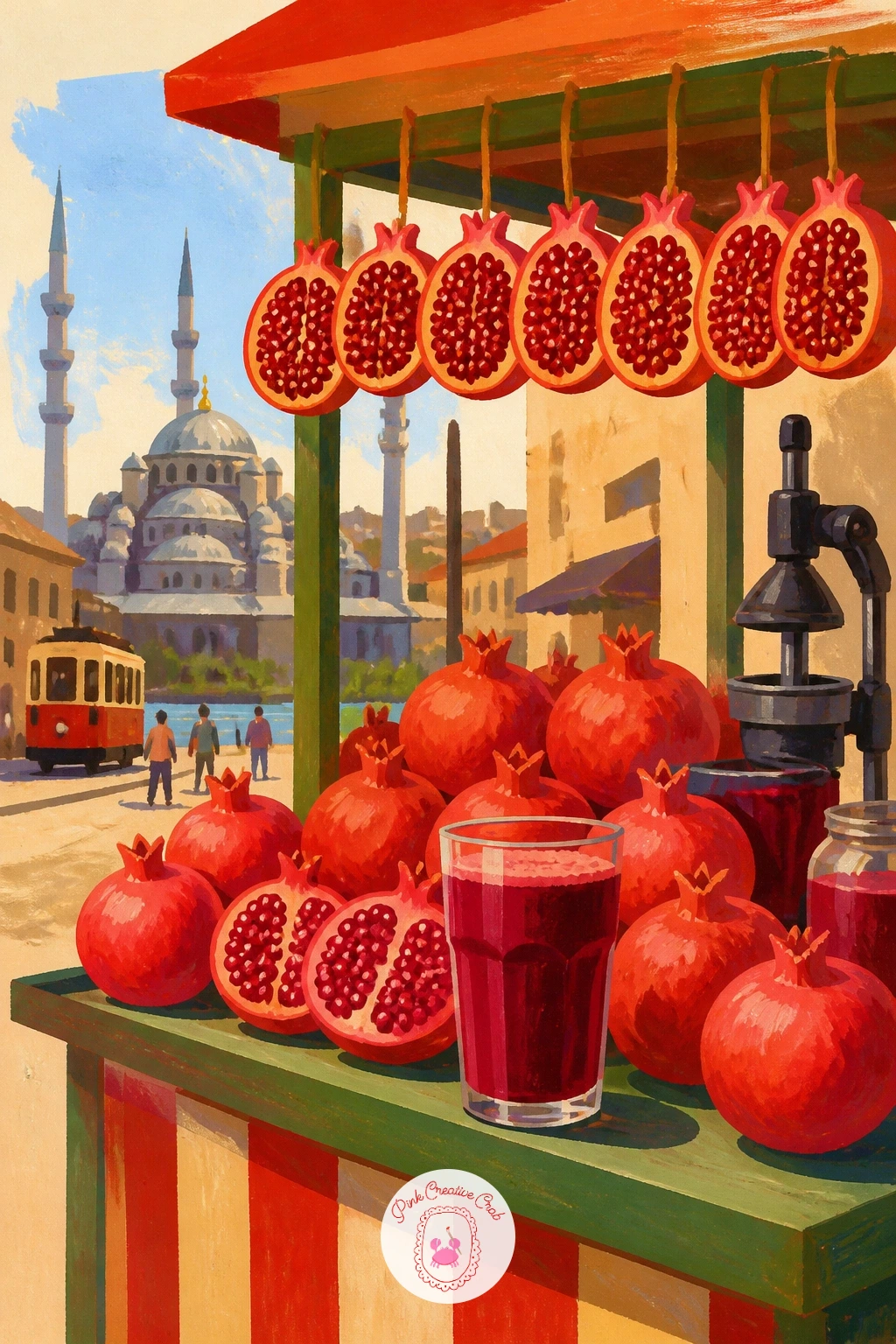
Turn a single fruit into a whole street scene with a pomegranate juice stand, strings of halved fruit hanging bright red against a cart or cloth backdrop. Block in the backdrop shape first in a muted tone so the hanging pomegranates can sit on top in strong, saturated red.
Paint the halved fruits as a repeating row of simple circles, each one split to show a flat cross-section of seeds, rather than trying to vary every single one: repetition is what makes a market stand read as a market stand. Add a glass or two of deep red juice in the foreground to anchor the scene.
Street scenes go wrong when every element gets equal detail and the eye has nowhere to land. Keep the juice glasses and one or two fruits sharp and detailed, and let the cart and background fade into looser, flatter shapes behind them.
If a full street feels like too much for one sitting, crop the idea down to just the hanging fruit and the juice glass, which still tells the whole story in ten minutes. Either way, a confident dark outline around the stand ties the busy shapes together.
Palette: Pomegranate Red,Juice Garnet,Stand Mustard,Cream Ground
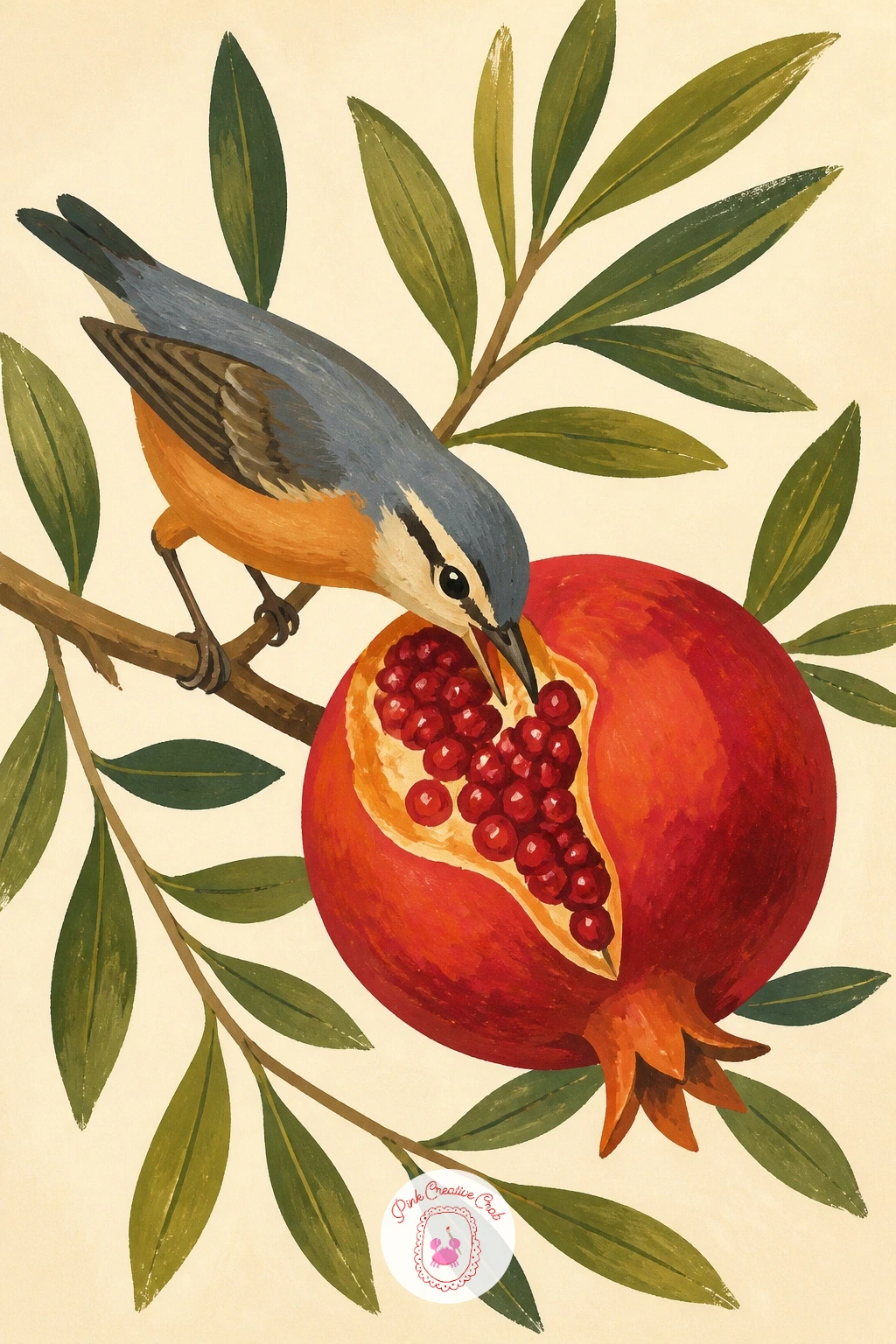
Add a little life to the orchard with a bird pecking at a pomegranate still on the branch. Paint the branch and a few simple leaf shapes first in olive green, then the pomegranate itself in red, split slightly where the bird has already broken into it.
For the bird, keep the body to two or three simple shapes: a rounded torso, a small head, and a short beak angled right into the fruit. A plain grey-blue or soft brown works well and keeps the focus on the red pomegranate rather than competing with it.
Light matters here: decide where your sun sits (upper left is an easy, flattering choice) and paint the top edges of the bird and fruit slightly lighter, with the undersides in a deeper shade, so the whole branch feels lit from one consistent direction.
If painting a bird feels daunting, a simple silhouette in one flat color, caught mid-peck, reads just as well as a detailed one at this scale. A dab of white gel pen for the eye brings it instantly to life.
You Will Need
- white gel pen
Palette: Pomegranate Red,Branch Olive,Bird Grey-Blue,Cream Ground
Move indoors to the breakfast table for pomegranate seeds scattered over a bowl of yogurt with honey. Paint the bowl of yogurt as one smooth off-white shape first, letting it dry fully, since any red painted too soon will bleed into a muddy pink.
Once dry, scatter the pomegranate seeds across the surface in loose clusters rather than an even sprinkle, leaving more bare yogurt showing near the bowl’s edge. Drizzle the honey last in a thin golden line, using a dry brush dragged lightly across the surface so it looks like it is actually pooling rather than painted flat.
That dry-brush drag is the trick worth practicing: load just a little paint, wipe most of it off on scrap paper, then pull the brush in one smooth curve for a broken, textured honey line.
If you do not have gold or yellow ochre gouache, mix a touch of white into raw sienna for a convincing honey tone. Keep the whole piece to this one small bowl for a true ten-minute version, and it still reads as a complete, finished still life.
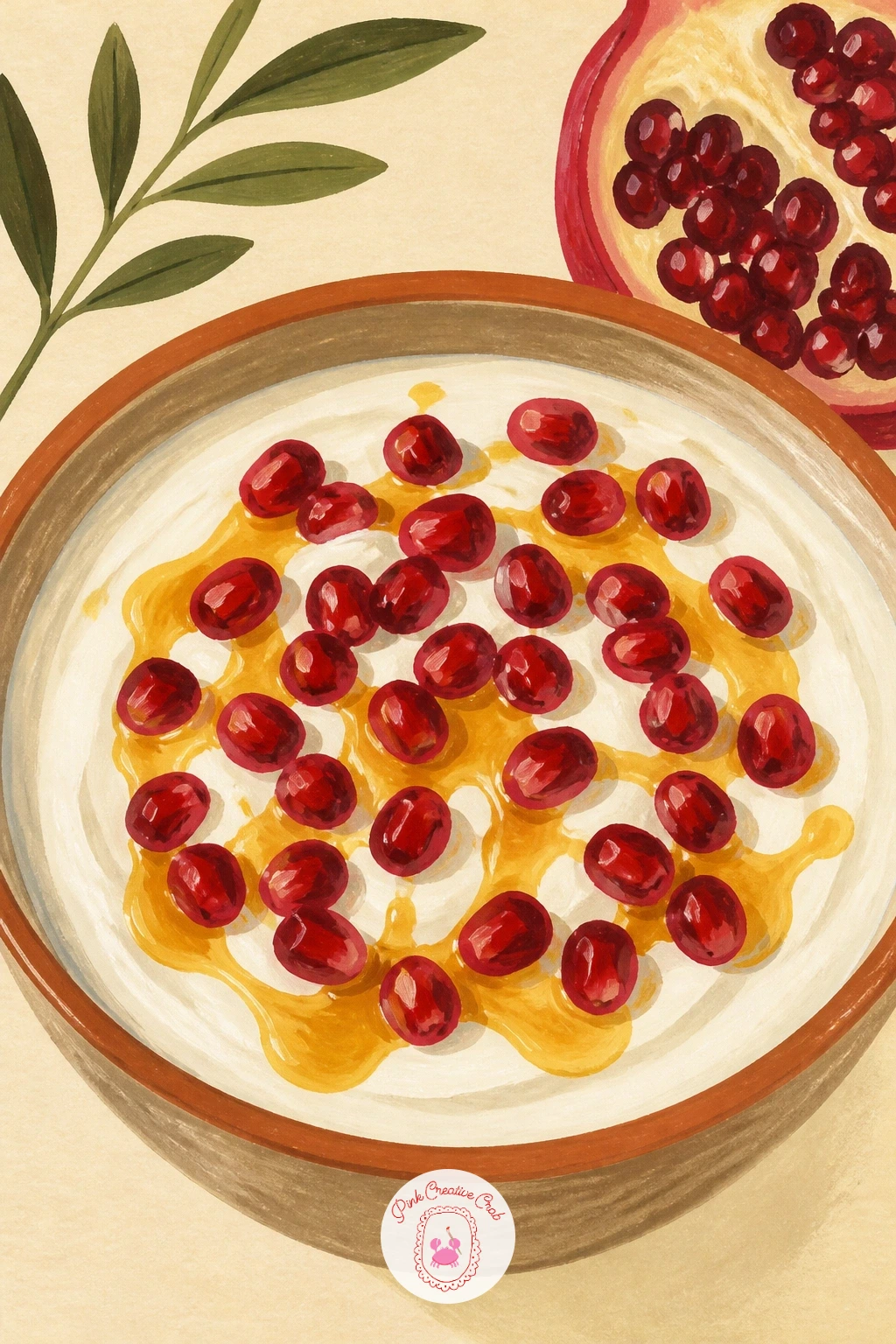
Palette: Yogurt Cream,Pomegranate Red,Honey Gold,Bowl Blue
Pair a single pomegranate with a brass jug for a quiet, elegant still life built on contrast. Paint the jug first in a warm gold-brown, keeping its highlight as one clean strip of bare cream paper rather than trying to blend a shine, since gouache holds flat color far better than it blends.
Bring the pomegranate in beside or slightly in front of the jug, overlapping its base just enough to anchor the two objects together as one grouping instead of two separate paintings side by side.
The edge where red fruit meets gold metal is where this piece can go wrong: paint the jug fully first and let it dry, then paint the pomegranate’s edge right up against it so the line stays crisp rather than muddy. A kneaded eraser can lift a stray pencil line once the paint is dry if your underdrawing peeks through.
No brass jug handy to look at? A teapot or vase in a warm metallic tone does the same compositional job. Finish with one thin white gel pen line to mark the jug’s rim and catch the light.
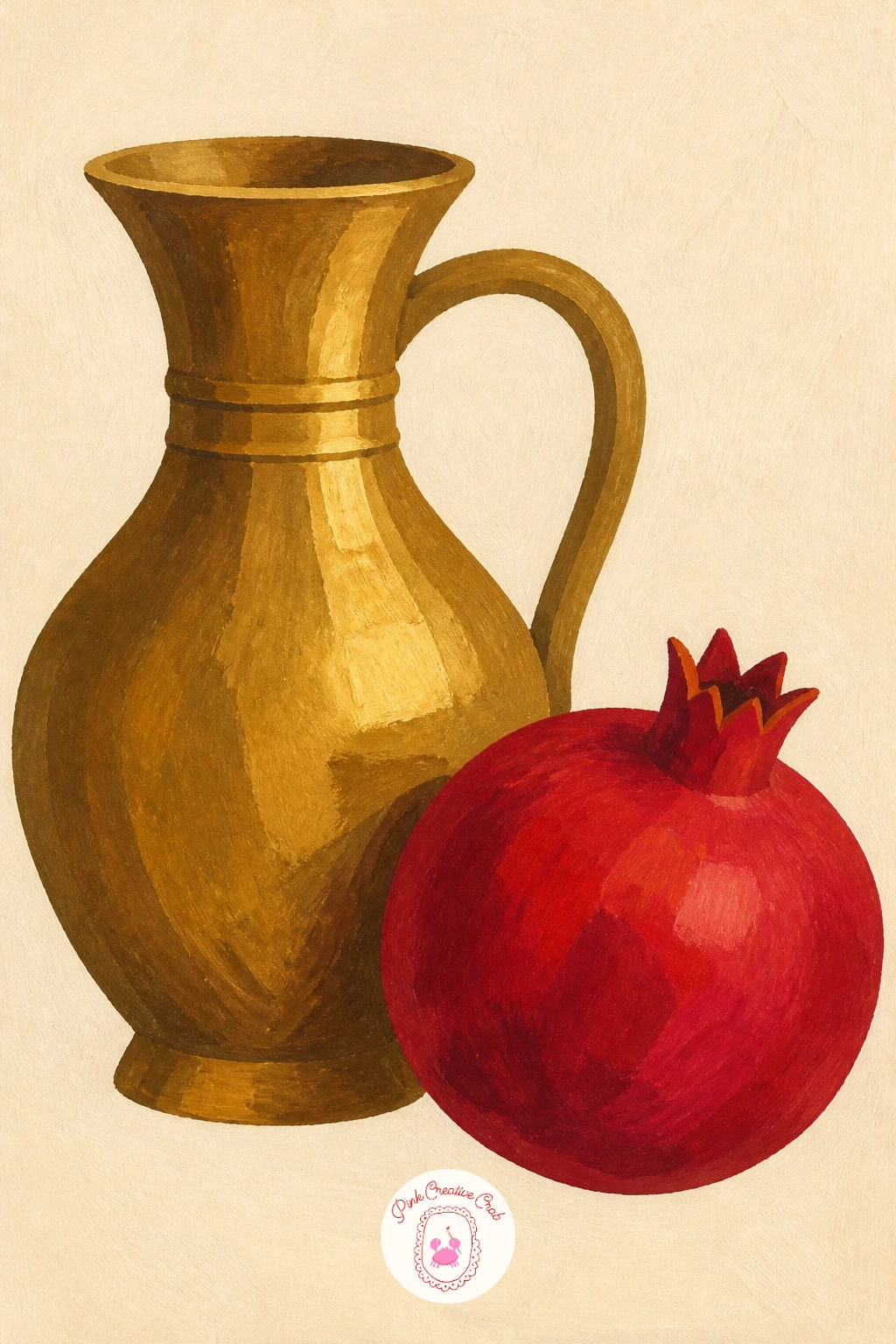
You Will Need
- white gel pen
Palette: Brass Gold,Pomegranate Red,Cream Ground,Shadow Umber
Close out the pomegranate section with a woven basket full of fruit set right at a doorstep, half in sun and half in shadow. Paint the doorstep and wall behind it first in simple flat tones, a warm terracotta or whitewashed cream, so the basket has somewhere to sit.
Build the basket next with short, repeated diagonal brushstrokes in two shades of tan, which reads as woven texture far faster than trying to paint individual reeds. Let that dry before piling pomegranates on top, overlapping them generously so the basket looks genuinely full rather than sparsely dotted.
Doorstep still lifes gain a lot from a simple cast shadow: paint one flat olive-grey shape stretching from the basket’s base in one direction only, which instantly grounds the whole grouping in sunlight.
If weaving texture feels fussy, a plain basket shape in flat tan with just a few darker lines at the rim still reads clearly at this scale. For more ways to arrange fruit in a container, the ideas in fruit basket drawing translate nicely into paint.
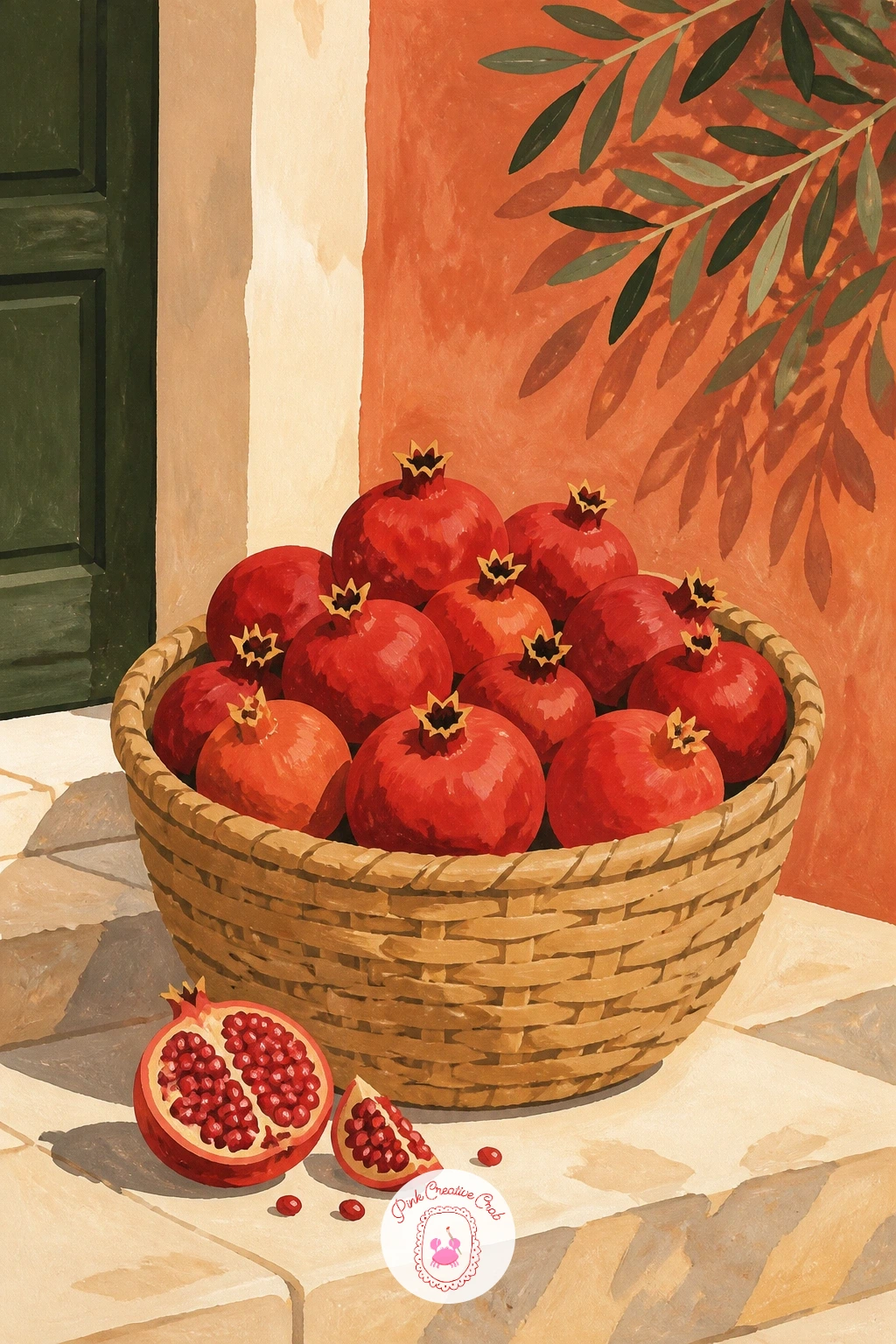
Palette: Basket Tan,Pomegranate Red,Doorstep Terracotta,Shadow Olive
Move from pomegranates into the rest of the Mediterranean table, starting with figs split open on a wooden board. Paint the board first as a flat warm brown with a few long, straight grain lines dragged on with a dry brush, then let it dry fully before adding fruit on top.
Paint each fig’s skin in deep fig purple, leaving the split interior as a separate shape in rosy pink-red dotted with tiny seed marks. The inside of a fig is where beginners often overwork the detail; a handful of small dots and one or two slightly darker specks says “fig” far more convincingly than trying to paint every seed.
Work from whole figs toward split ones across the board so the eye has an easy visual path, placing two or three in a loose row rather than scattering them evenly.
If fresh figs are not in season for reference, search for a simple photo, since the color shift from purple skin to pink flesh is the whole character of this fruit. Add a white gel pen fleck to the cut flesh for a touch of shine.
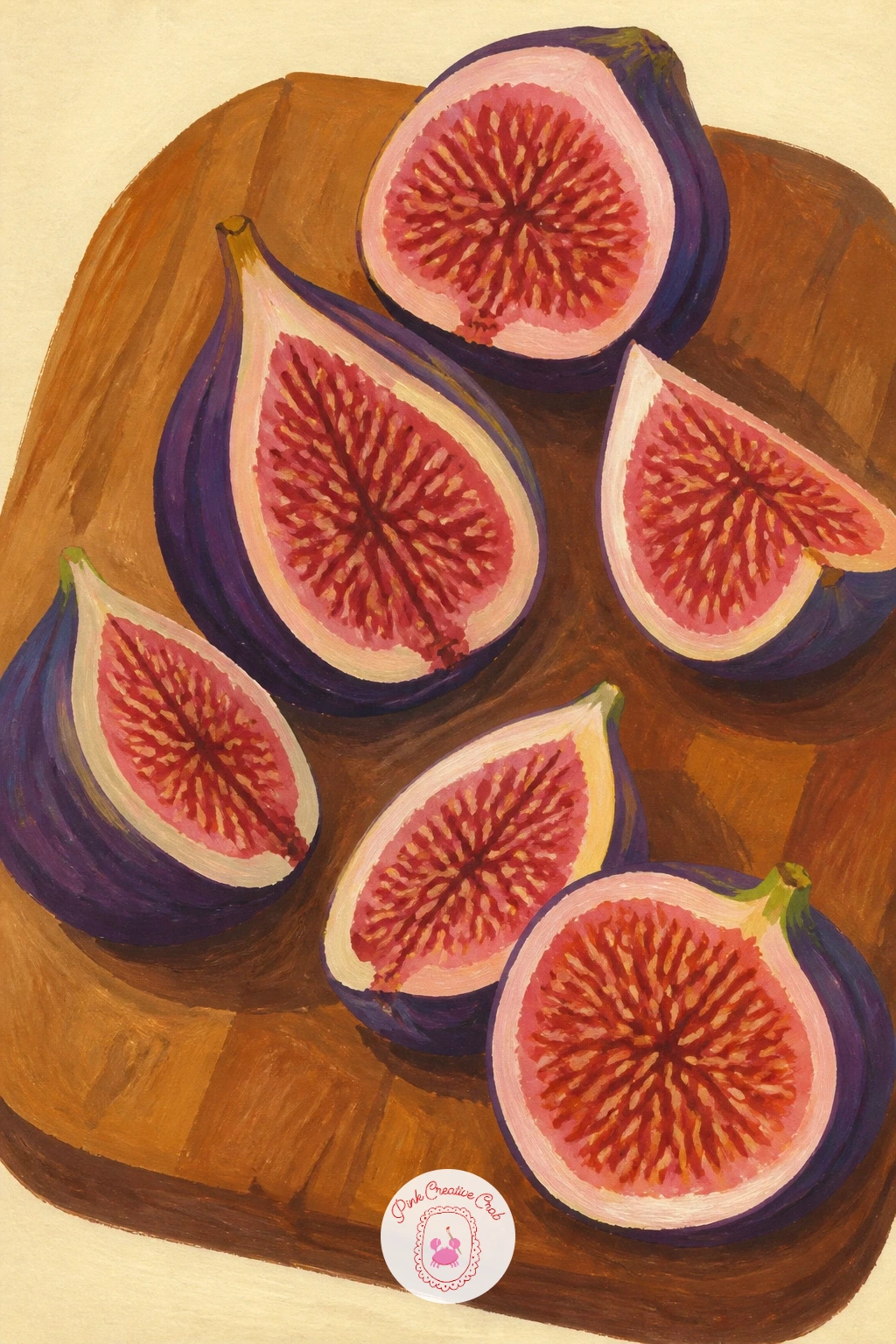
You Will Need
- white gel pen
Palette: Fig Purple,Fig Flesh Pink,Board Brown,Cream Ground
Widen the fig theme into a whole scene with a hammock strung under a fig tree, somewhere you can imagine spending a lazy afternoon. Paint the sky and ground as two simple flat bands first, then the tree canopy on top in rounded olive-green masses with a few fig shapes tucked among the leaves.
The hammock itself is just a gentle curved shape slung between two points; paint it in a warm striped fabric tone and keep the curve generous so it reads as fabric with weight rather than a stiff line.
Eye level does a lot of work in this scene: keep it low, near the ground, so the tree trunk rises tall above the hammock and the whole composition feels like you are lying in the shade looking up, rather than looking down on a toy-sized tree.
If a full landscape feels like a lot for one sitting, a ten-minute version can crop tightly to just the hammock and a few overhanging fig branches. For more shaded garden scenes built this way, see the ideas in gouache painting ideas for beginners.
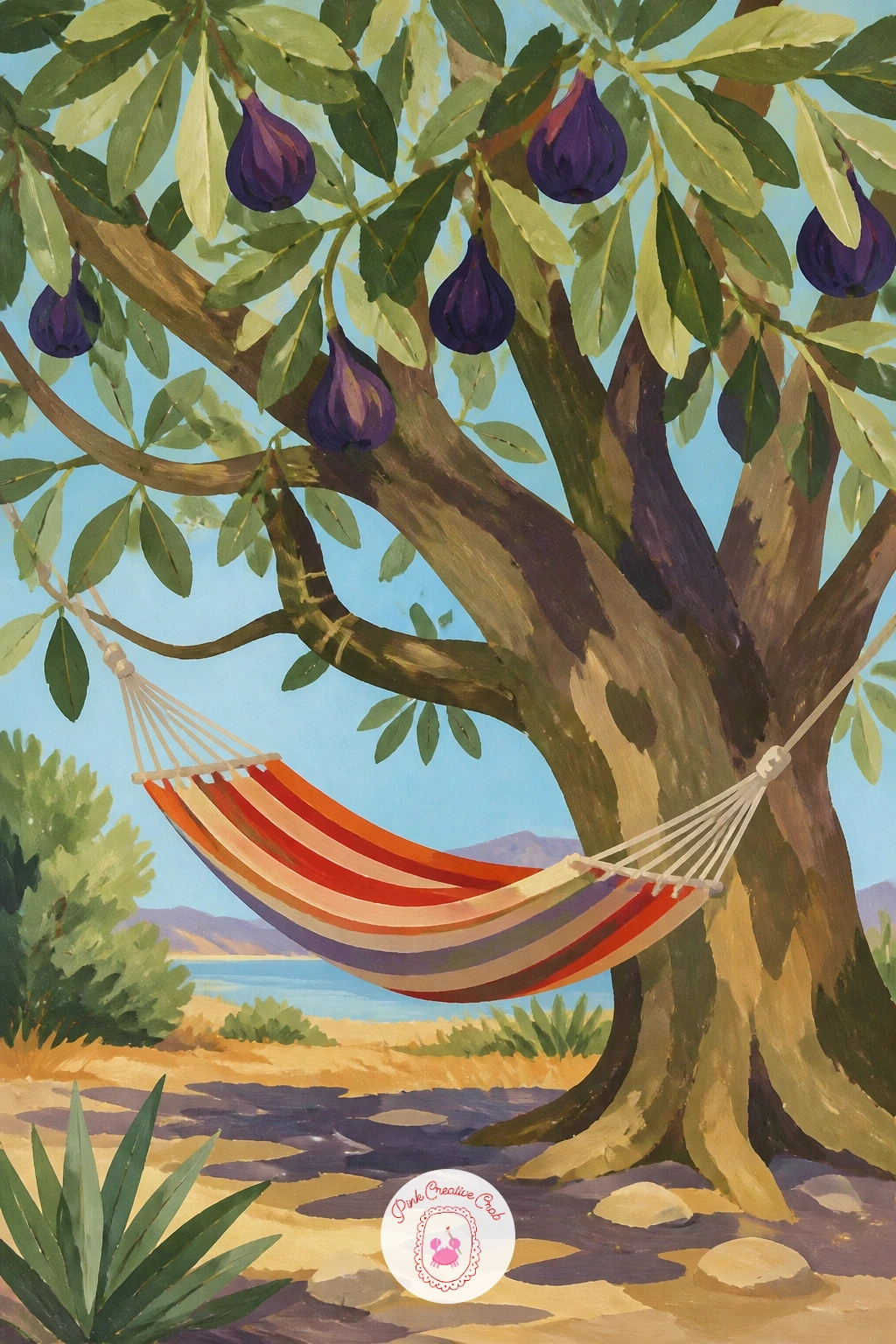
Palette: Fig Purple,Canopy Olive,Hammock Stripe,Sky Pale Blue
Bring in apricots next, tumbling out of a paper bag onto a table as though just carried home from a market. Paint the paper bag first in a soft kraft brown, leaving its top edge torn and irregular rather than a neat rectangle, since a perfectly folded bag looks stiff and unconvincing.
Spill the apricots out in a loose scatter, overlapping two or three near the bag’s mouth and letting one or two roll further away across the table. Paint them in flat apricot orange with a soft blush of warm pink-red on one side, the side nearest an imagined window or light source.
That blush is the whole trick of painting apricots convincingly: decide where the light comes from, then keep that blush consistent on every fruit so the scattered pieces still feel like one lit scene rather than random orange circles.
No kraft paper gouache mix on hand? A plain mix of yellow ochre and a touch of white gets close enough. Keep today’s version to just the bag and three or four apricots for a quick, satisfying finish.
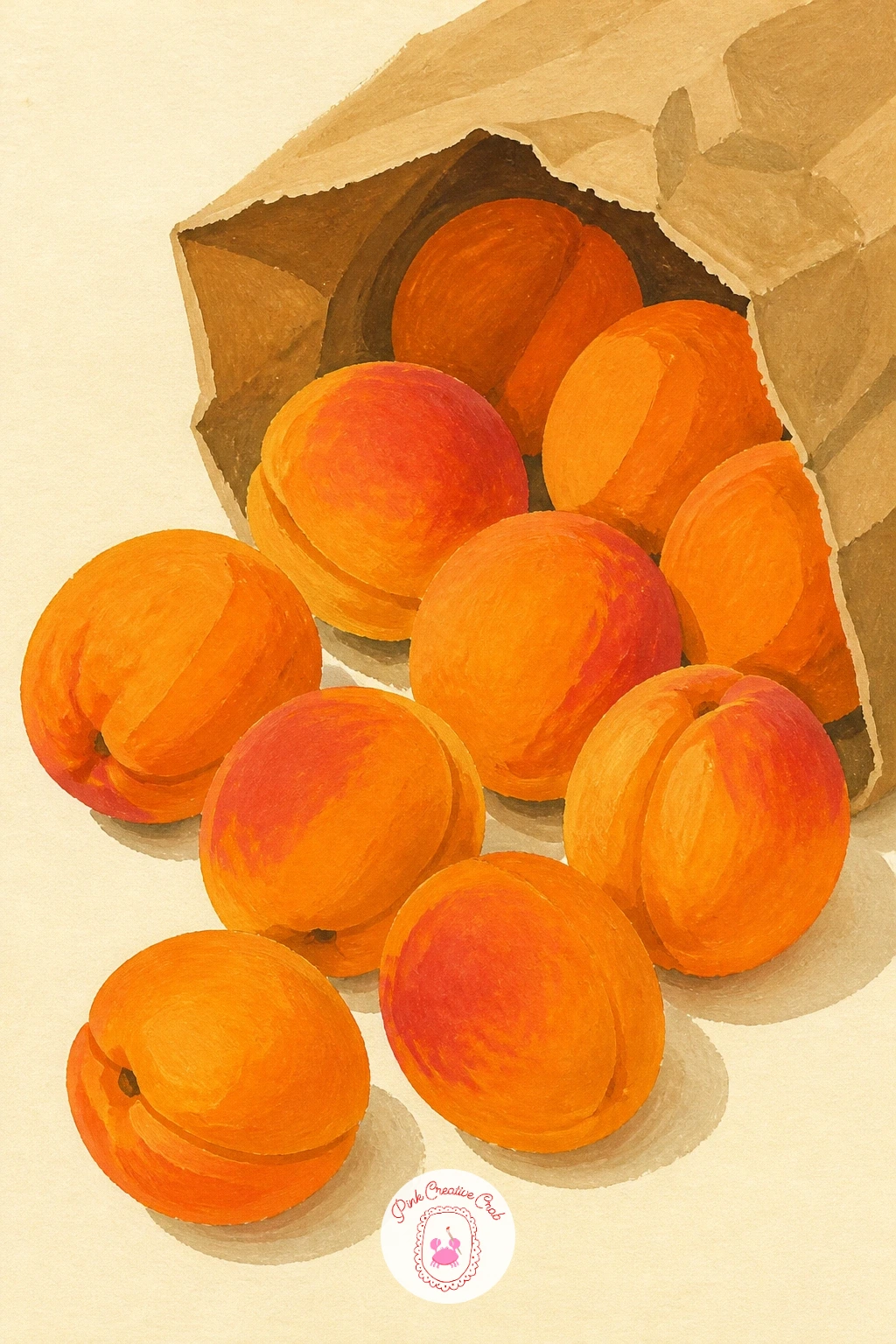
Palette: Apricot Orange,Apricot Blush,Kraft Brown,Cream Ground
Settle into a quieter mood with a bowl of dates beside a glass of mint tea. Paint the tea glass first: a simple tall shape filled with warm amber, a few sprigs of mint suggested as small pointed leaf shapes near the top, painted while the amber is dry so the green stays crisp.
Build the dates next in a small bowl or loose pile, using a deep reddish-brown with slightly wrinkled highlight lines in a lighter tone dragged on with a nearly dry brush. That dry-brush drag across each date is what suggests its soft, ridged skin without painting every wrinkle individually.
Keep the whole grouping small and close together, since dates and a tea glass sit naturally near each other on a low table and spreading them out across the page loses that cozy, intimate feeling.
If mint sprigs feel fiddly, two or three simple pointed leaf shapes convey the idea just as well as a detailed stem. Finish with a thin white gel pen highlight along the glass to suggest its shine.
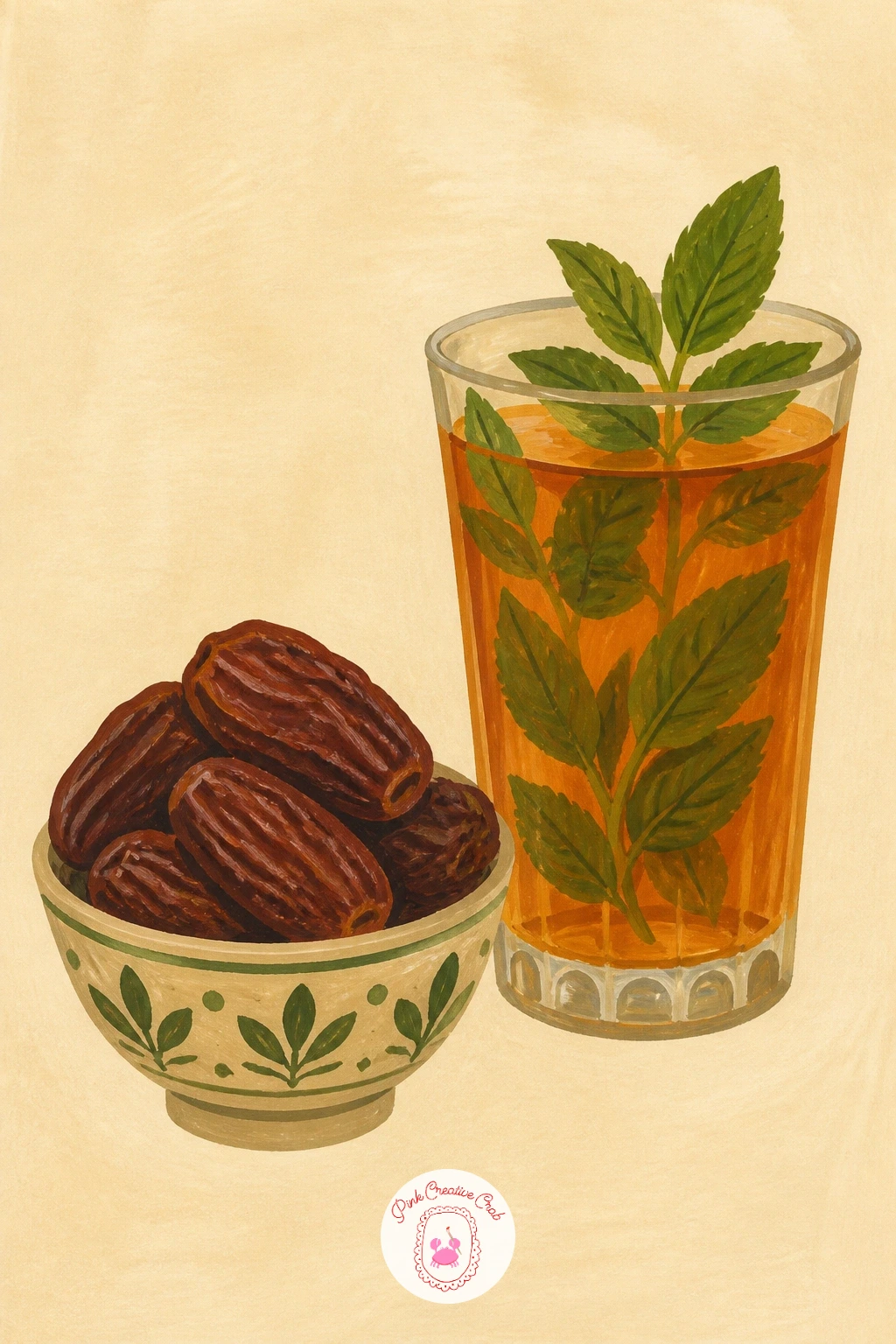
You Will Need
- white gel pen
Palette: Date Brown,Tea Amber,Mint Green,Cream Ground
Shift to autumn fruit with a few quinces lined up on a sunny windowsill, their lumpy golden shapes catching the light. Paint the windowsill and a hint of window frame first in a soft neutral tone, then bring in the quinces as irregular, slightly knobby ovals rather than smooth circles, since their charm is in that imperfect shape.
Use a warm yellow-green base color, then compare each quince to its neighbor as you paint: if one looks noticeably rounder or smaller than the rest, nudge its outline before the paint dries rather than fighting the proportion later.
A light fuzzy texture covers real quince skin, which you can suggest with a few short dry-brush strokes in a slightly paler tone across the sunlit side, leaving the shadow side smooth and flat.
If you cannot find quinces for reference, a photo of large yellow pears works as a stand-in for the lumpy silhouette. Keep the windowsill simple with one strong light-and-shadow division for a quick, satisfying finish today.
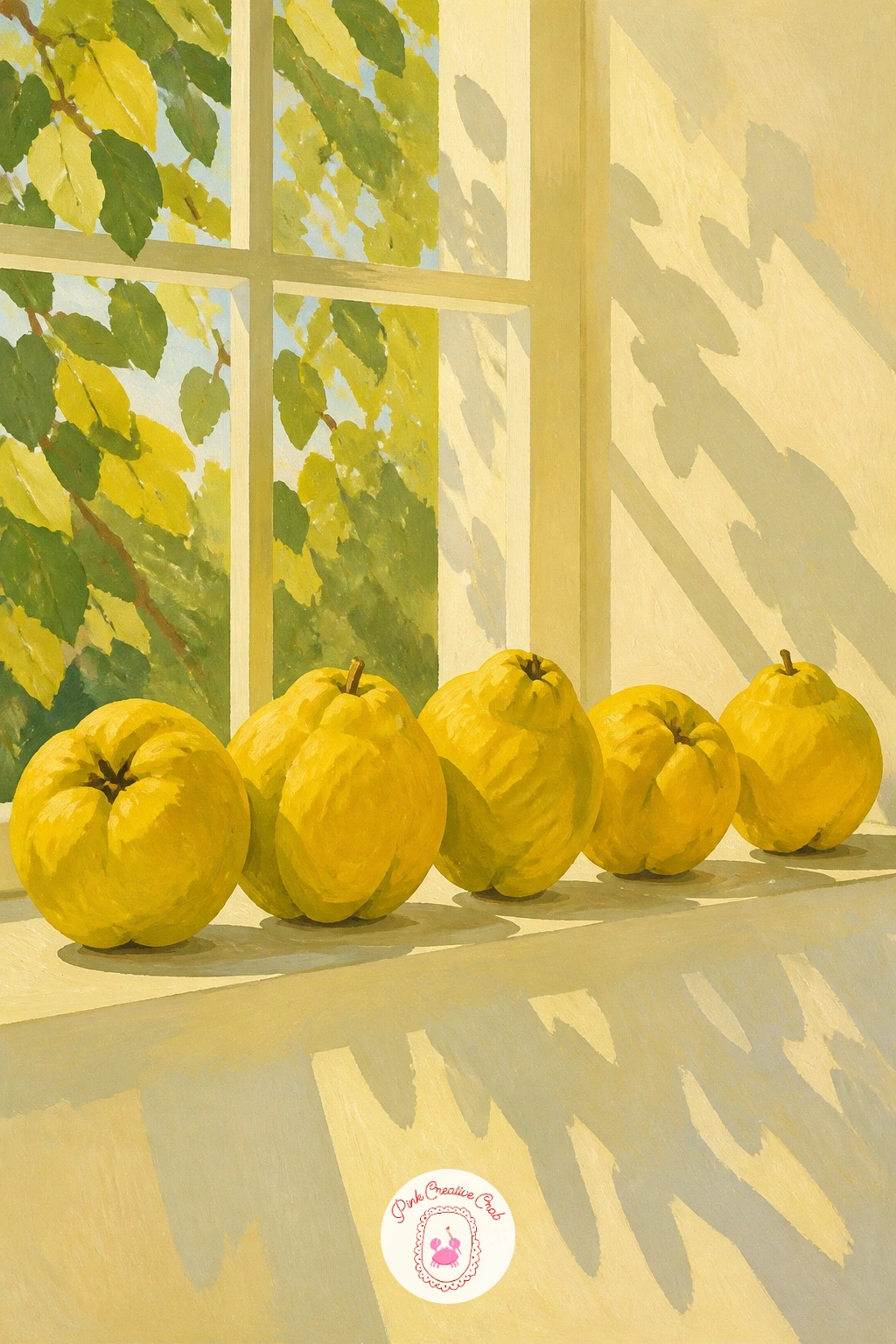
Palette: Quince Gold,Quince Green,Sill Cream,Shadow Grey
Try a more unusual composition next with persimmons hanging on strings to dry, a familiar autumn sight in Mediterranean and Asian kitchens alike. Paint a simple horizontal line or beam across the top of the page first, then let several thin strings drop down from it before adding fruit.
Paint each persimmon as a flattened orange-red sphere with a small dark stem crown at the top where the string attaches, repeating the shape down the row with slight variations in size and tilt so they do not look stamped from a single mold.
Hanging fruit relies on where your light source sits: if it comes from one side, paint a soft shadow on the opposite side of each persimmon and let the whole row share that same direction, which ties the group together as one lit scene.
If string feels hard to paint cleanly, a very fine brush or even the tip of a cocktail stick dipped in dark paint draws a cleaner line than a loaded brush. For a fast version, three hanging persimmons tell the whole story in ten minutes.
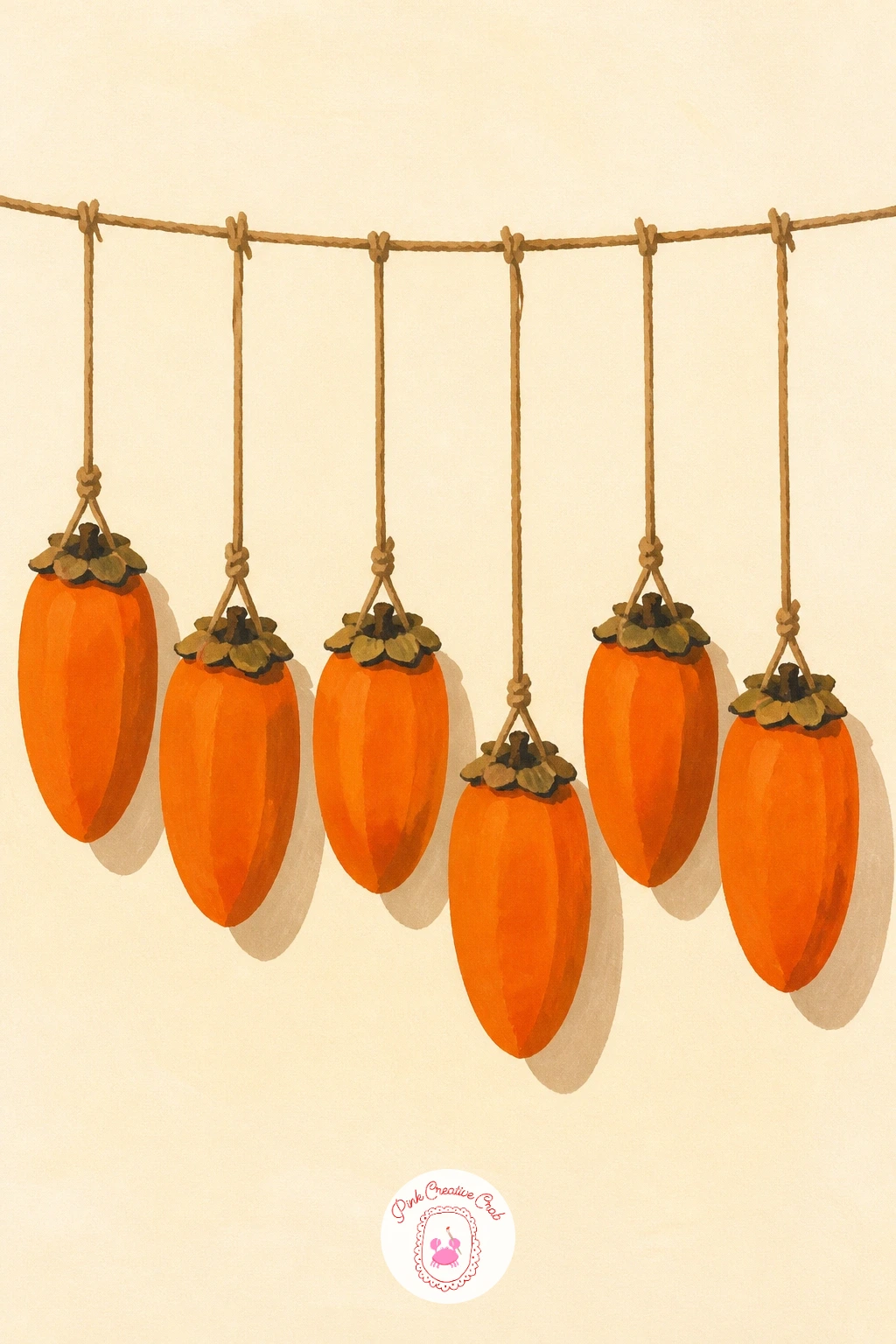
Palette: Persimmon Orange,Stem Brown,Cream Ground,Shadow Grey
Cool things down with a melon sliced open on a plate, the kind of simple, juicy subject that paints beautifully in flat gouache. Paint the rind first as a thin green-striped band around the fruit’s edge, then the pale flesh inside in a soft honeydew or cantaloupe tone depending on which melon you prefer.
Add a scatter of small seeds in the center in a muted cream-brown, clustering them loosely rather than spacing them evenly, since real seed clusters are never tidy. One slice cut away and laid flat beside the main piece adds a nice second shape to balance the composition.
A quick ten-minute version is just one whole slice; a fuller forty-minute version adds the second cut piece, a small pool of juice on the plate, and perhaps a few droplets using a flicked, loaded brush for texture.
If cantaloupe orange is not in your palette, mix a touch of apricot orange with white for a close match. Keep every edge crisp and flat rather than shaded, which matches this whole modern Mediterranean look.
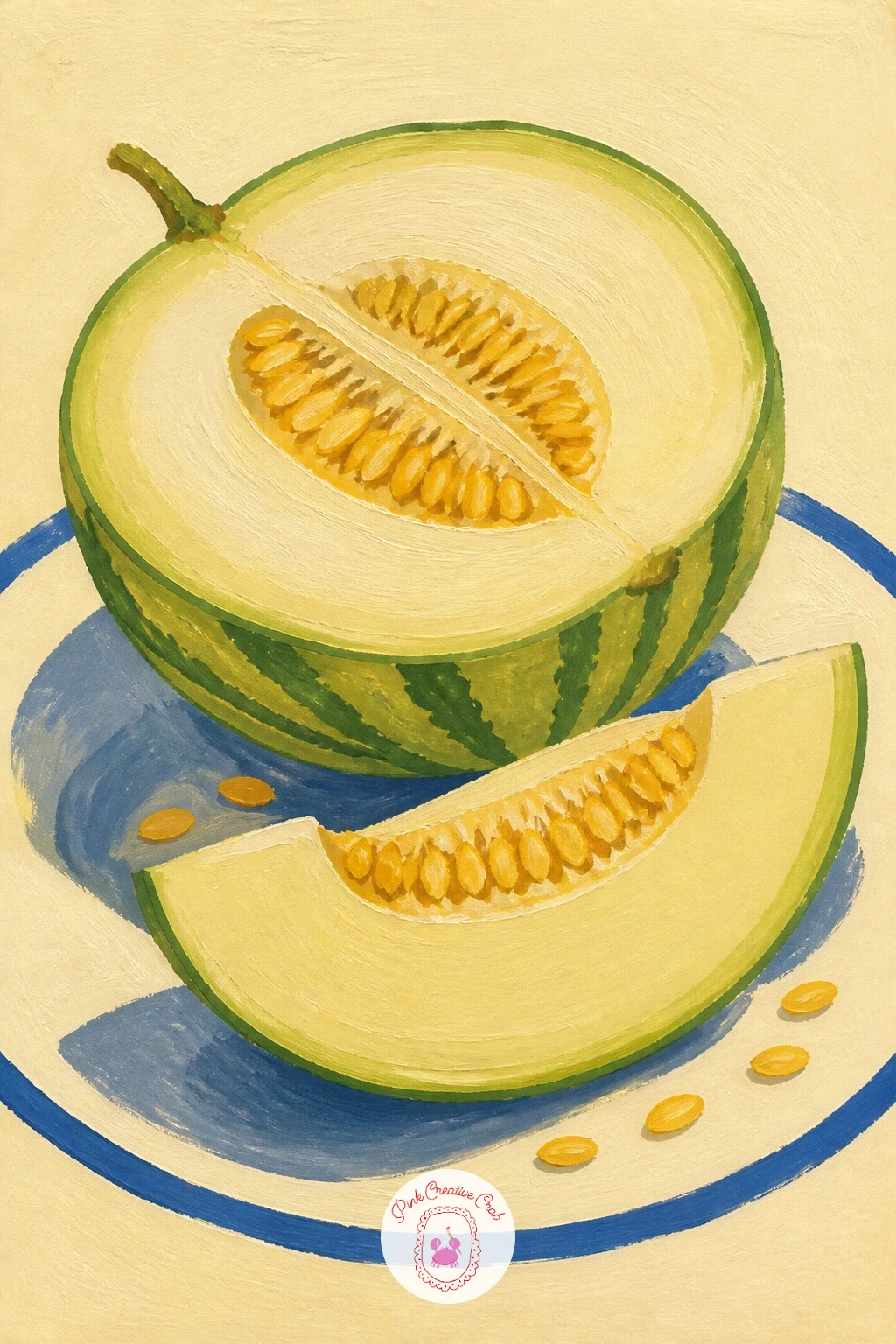
Palette: Melon Green,Melon Flesh,Seed Cream,Cream Ground
Look upward for this one, to grapes hanging from a pergola above a sunlit dinner table. Paint the pergola beams first as a few confident diagonal or crisscross shapes near the top of the page, establishing the perspective before anything else goes on.
Hang grape clusters from the beams in a deep purple-blue, building each cluster from small overlapping circles that get slightly smaller toward the bottom point of the bunch, which is the simplest way to make a hanging cluster feel like it has real weight and gravity.
Looking up through a pergola means the beams should converge slightly toward a vanishing point rather than running perfectly parallel, and the light filtering through the leaves should fall in dappled patches on the table below rather than one even wash.
If a full table setting feels like too much, crop in tight on just one grape cluster against the beams for a faster finish. For more ideas on painting outdoor, sunlit scenes like this, browse gouache painting landscapes.
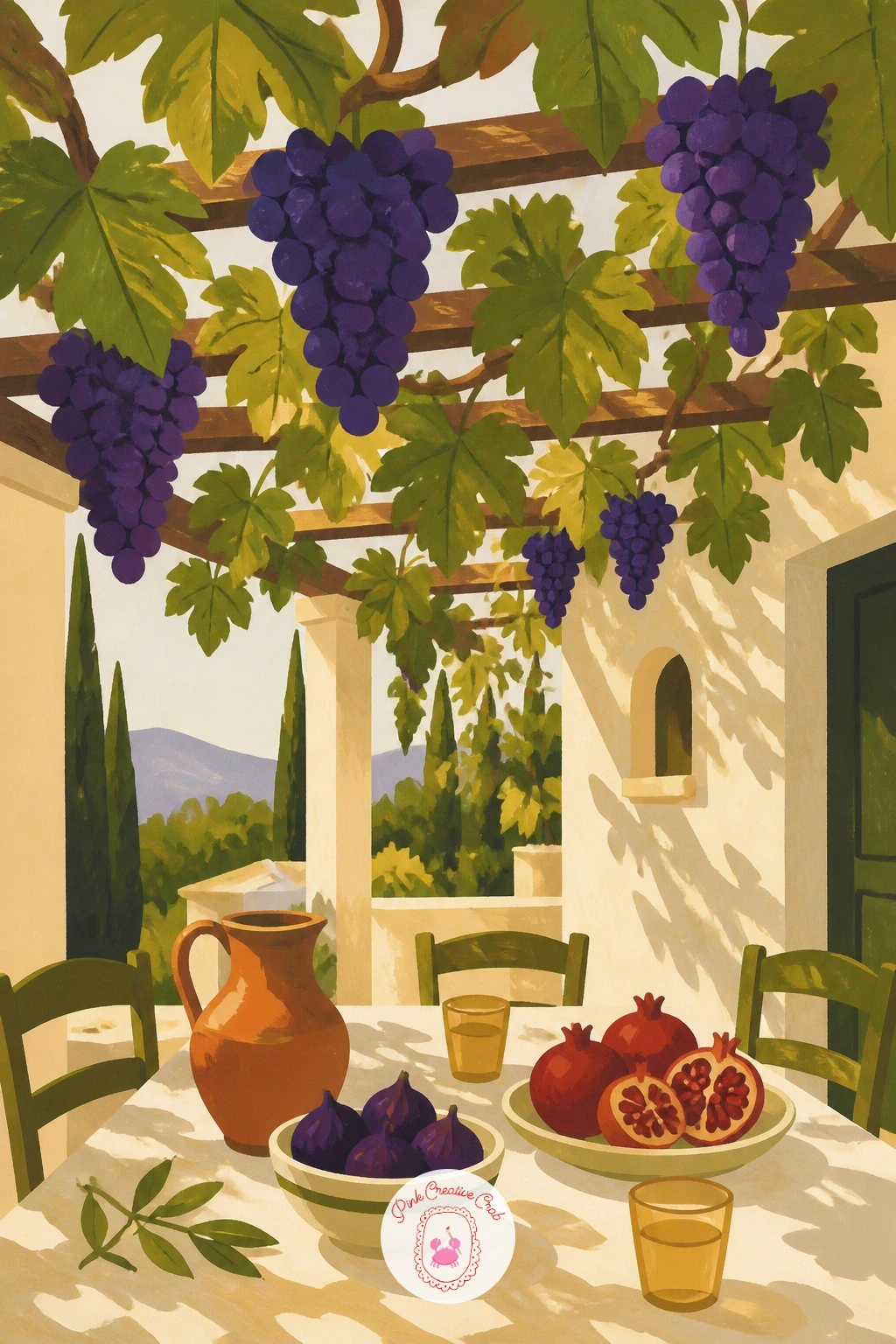
Palette: Grape Purple,Beam Brown,Leaf Olive,Table Cream
Set a basket of peaches on a low garden wall for a warm, simple outdoor still life. Paint the wall first in flat stone grey or terracotta, giving it just a few horizontal lines to suggest stacked stone blocks, then let it dry before the basket goes on top.
Pile peaches into the basket using soft rounded shapes in warm peach-pink, each one slightly different in tilt and size, with a small dimple line at the top of each fruit to suggest its stem crease. That tiny dimple does a lot of work in making a plain circle read as a peach rather than an apple or a ball.
A soft fuzzy edge separates peaches from smoother fruit; suggest it with a slightly broken, uneven outline rather than a hard smooth line, which gouache handles well if you keep the brush a little dry.
If garden stone walls are hard to find for reference, any low brick or rendered wall photo gives you the same simple structure. Finish with one warm shadow cast by the basket onto the wall to ground the whole scene.
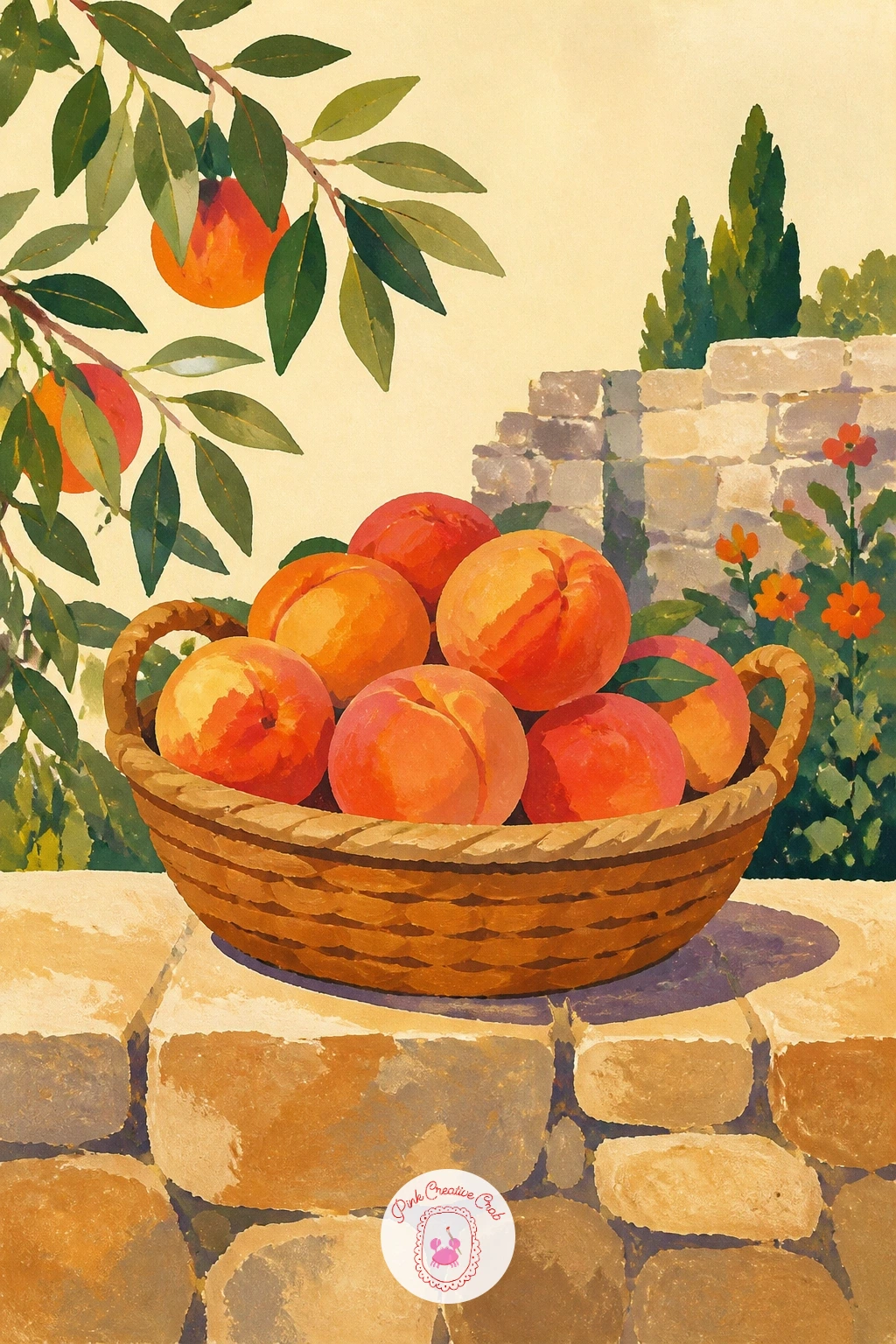
Palette: Peach Pink,Basket Tan,Wall Grey,Leaf Olive
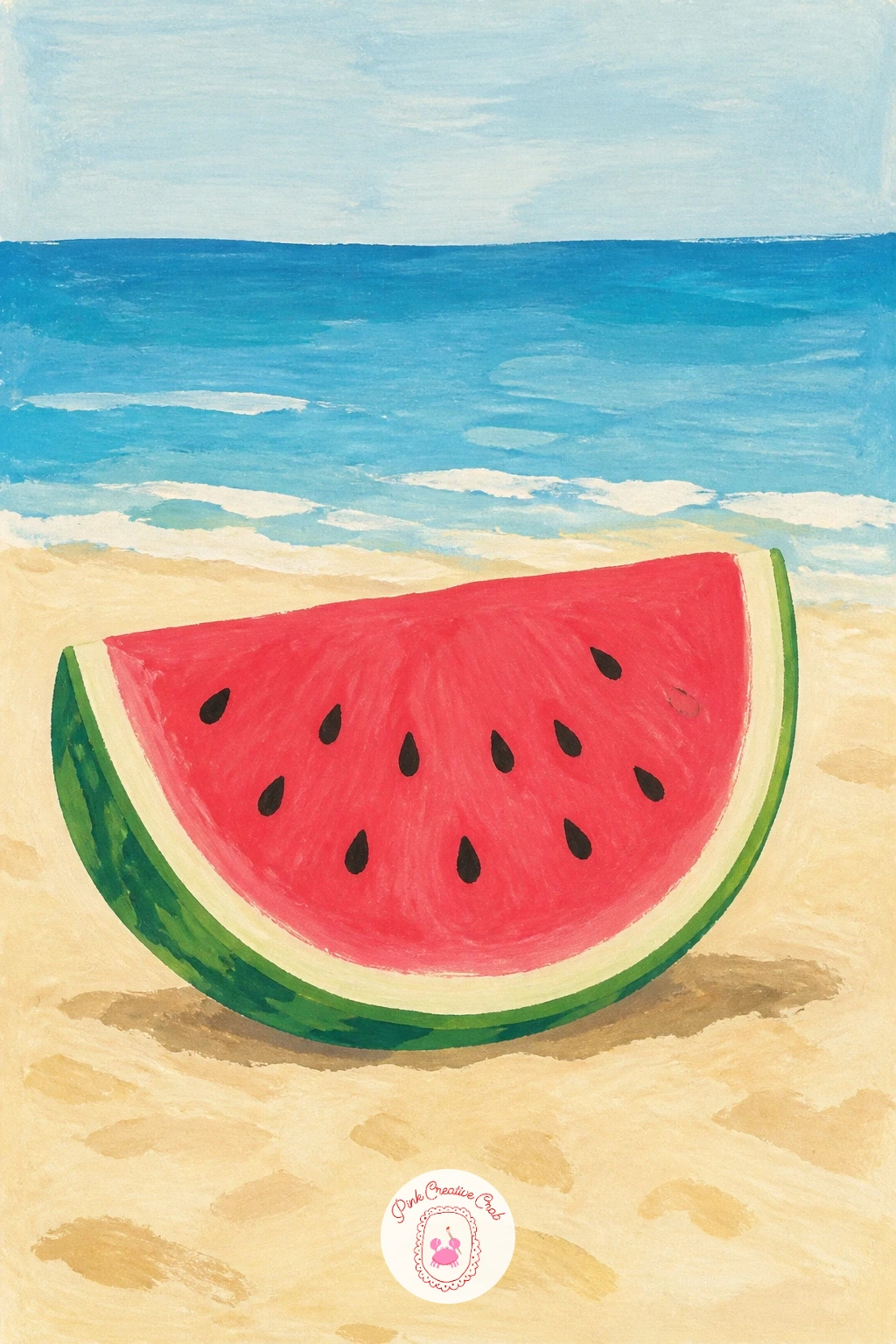
Head to the coast with a slice of watermelon set against sand and sea. Paint the background first in two simple flat bands, pale sandy cream below and soft ocean blue above, before the fruit goes anywhere near the page.
Once that is dry, paint the watermelon slice as a clean wedge: deep green rind, a thin white-cream ring, then bright pink-red flesh dotted with a handful of dark seeds. Keep the seed placement loose and slightly irregular rather than in tidy rows, which is where this subject tends to look stiff if overworked.
A beach scene relies on strong, flat color blocks rather than detail, so resist the urge to add texture to the sand or waves; two or three confident flat shapes in the background read as summer far better than a fussy, detailed shoreline.
If pink-red feels too bright straight from the tube, mix it down slightly with a touch of white for a juicier, less neon watermelon flesh. A few white gel pen dots on the rind suggest sea spray or simply catch the light.
You Will Need
- white gel pen
Palette: Watermelon Pink,Rind Green,Sand Cream,Ocean Blue
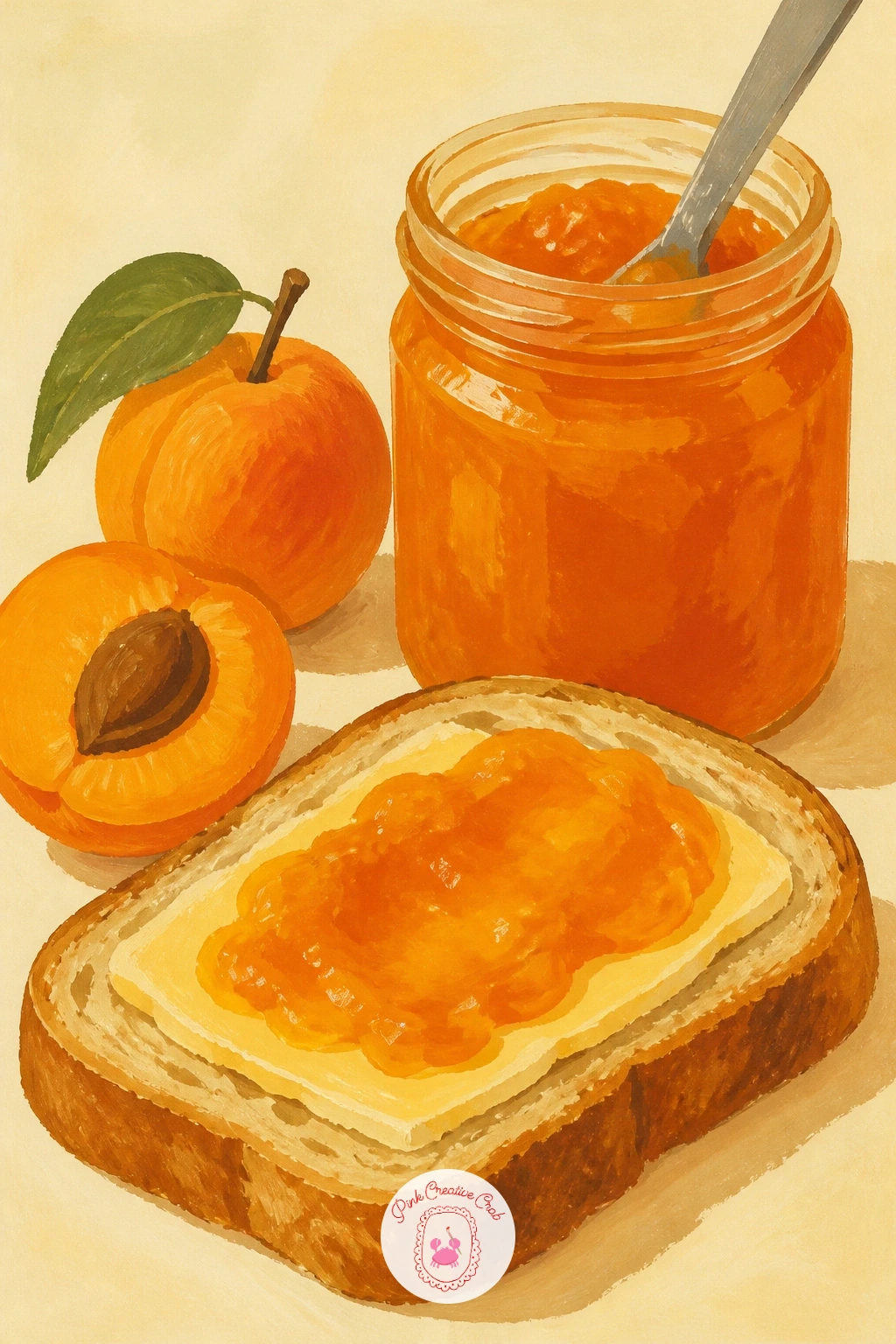
Bring the fruit indoors again for a cozy breakfast still life of apricot jam with bread and butter. Paint the bread slice first as a simple rounded rectangle in warm golden-brown, with a slightly darker crust edge, then the butter as a soft pale yellow patch melting slightly at its edges.
Add a small jar or dollop of apricot jam beside it in rich orange-red, using a dry brush dragged lightly across its surface to suggest the slight sheen jam has when fresh. A spoon resting across the jar, painted as one simple curved shape, finishes the grouping nicely.
Breakfast still lifes like this go wrong when everything ends up the same size and sits in a flat row; overlap the bread slightly in front of the jam jar instead, so the composition feels like one natural moment rather than objects lined up for inventory.
If you do not have a jam jar to reference, any small round or squat glass container works, since the warm orange color inside is what carries the idea. Ten minutes is plenty for just the bread and jam alone.
Palette: Jam Orange,Bread Gold,Butter Cream,Cream Ground
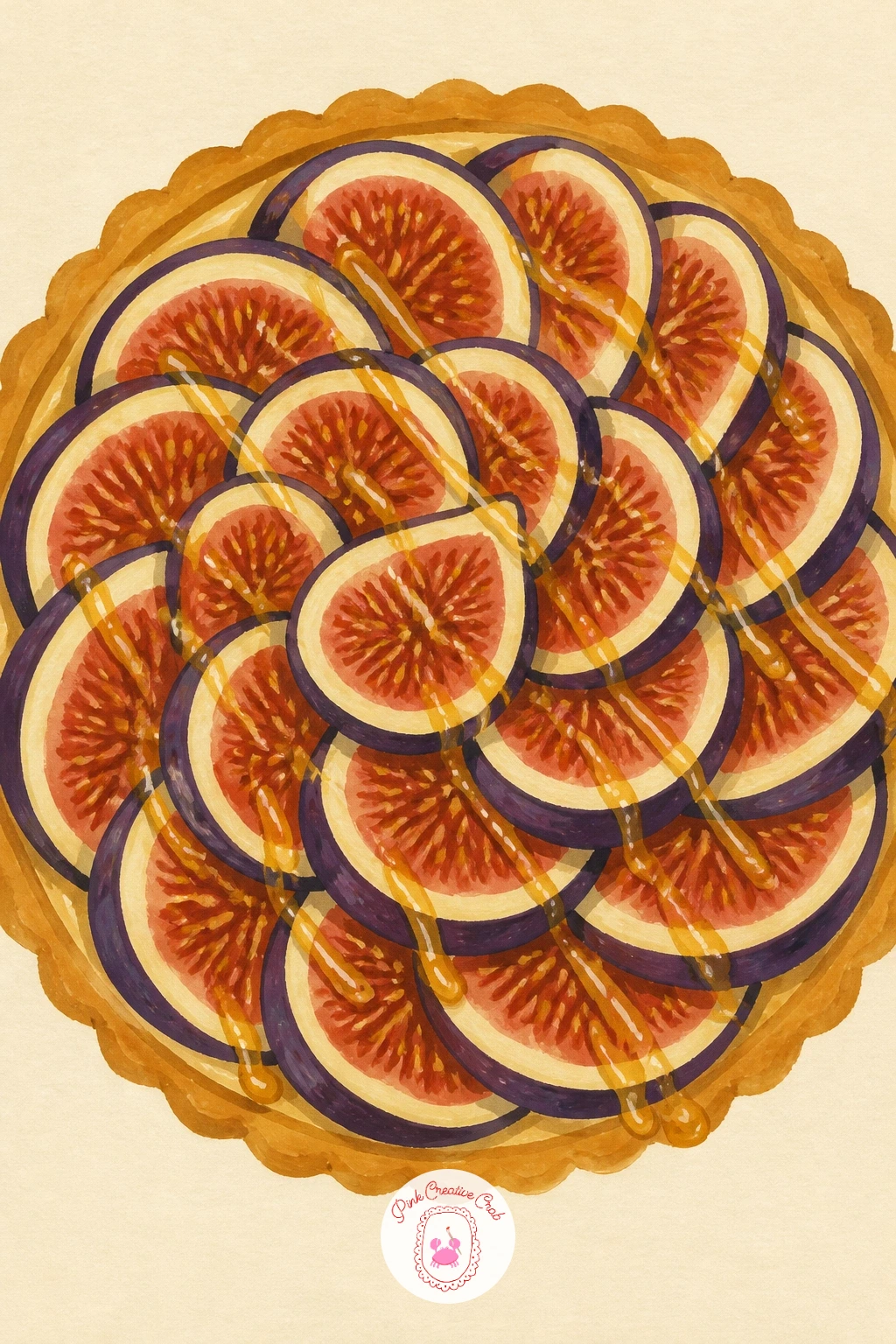
Turn the fig back into dessert with a fig tart drizzled with honey, a lovely subject for anyone who enjoys painting food with a bit of shine to it. Paint the tart base first as a flat golden-brown circle, then arrange sliced figs across the top in overlapping fan shapes, their purple skins and pink-seeded centers alternating around the circle.
Once the fig slices are dry, drizzle honey across the top using the same dry-brush drag technique as the yogurt bowl idea earlier: load a little gold paint, wipe most of it off, then pull the brush in loose zigzag lines across the tart’s surface.
The pastry base is where beginners often lose confidence, but a flat golden-brown circle with just a slightly darker, scalloped edge reads convincingly as tart pastry without any extra shading needed.
If your figs are not perfectly circular slices, uneven, slightly squashed shapes actually look more like a real tart, so there is no need to aim for identical fans. One white gel pen fleck on a honey drip catches the light nicely.
You Will Need
- white gel pen
Palette: Fig Purple,Fig Flesh Pink,Pastry Gold,Honey Gold
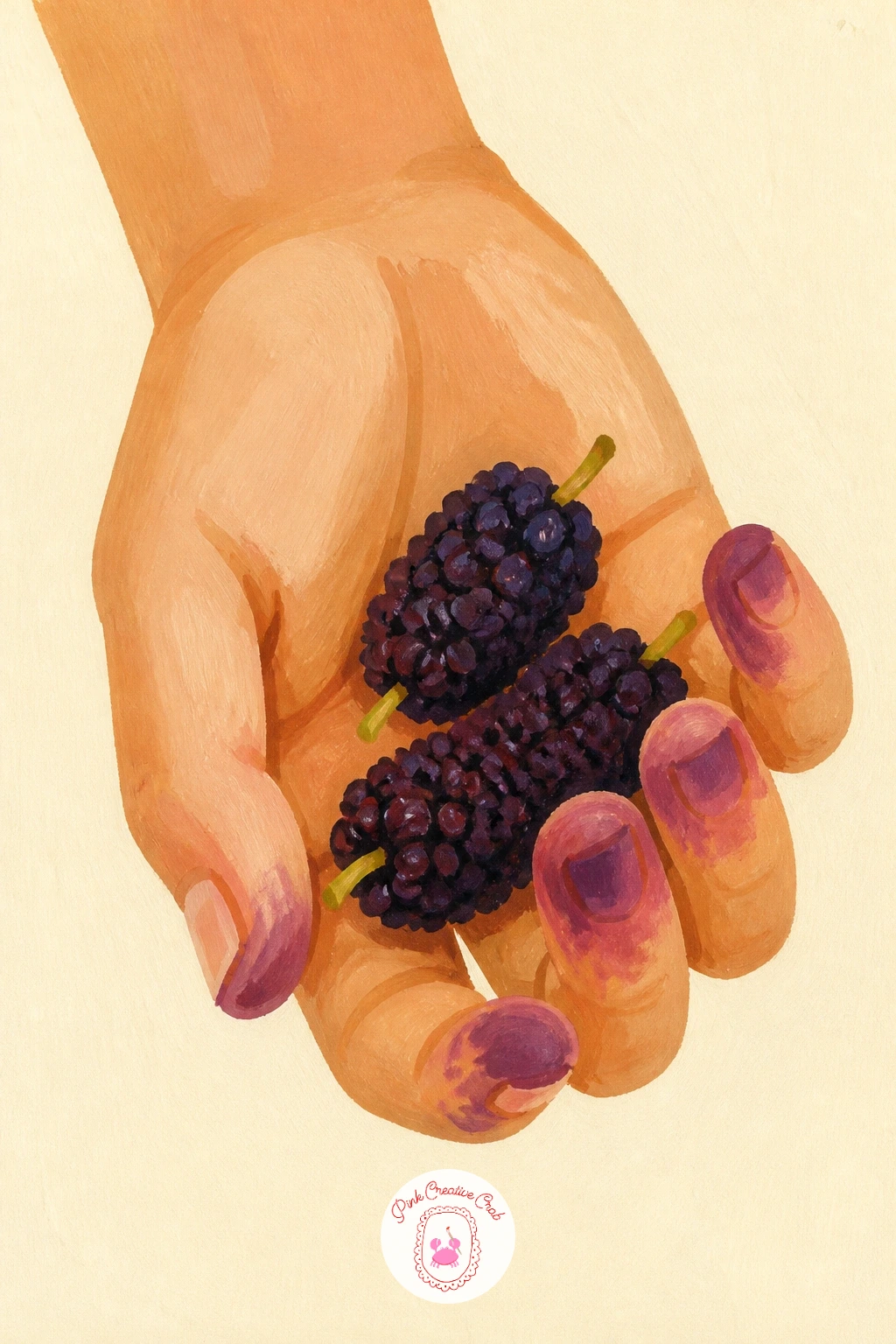
Paint a small, playful moment with mulberries staining a girl’s fingers deep purple, a detail anyone who has picked berries will recognize instantly. Paint the hand first as a simple, loosely shaded shape in warm skin tone, fingers slightly curled as if cupping a few berries.
Add the mulberries themselves as small clustered ovals in deep purple-black, a few resting in the palm and one or two fallen nearby. Then, once the hand is dry, paint the stain: a soft, slightly uneven patch of pale purple-pink over the fingertips, letting it fade out at the edges rather than stopping with a hard line.
That faded, soft-edged stain is the one hands-on trick worth practicing here: touch a nearly dry brush loaded with thin purple paint to the fingertip area and lift some of it immediately with a clean damp brush, which leaves a believable soft smudge rather than a solid blob.
If painting a full hand feels like a stretch, crop the idea down to just fingertips holding one or two berries. Either way, this is a quick, charming addition to the fruit series.
Palette: Mulberry Purple,Stain Pink-Purple,Skin Warm Tan,Cream Ground
Step into the sun-baked edge of the Mediterranean landscape with a prickly pear growing on its cactus pad. Paint the flat cactus pad first in olive green, keeping its outline slightly scalloped and irregular rather than a smooth oval, since real pads have a gently lumpy silhouette.
Add the prickly pear fruit itself growing from the pad’s edge in warm pink-orange, a small oval shape with a few tiny dark dots scattered across its surface to suggest the fine spines without painting every single one individually. Two or three fruits clustered together look more natural than one isolated piece.
Strong sun defines this subject, so decide where the light comes from and keep one whole side of the pad and fruit in a slightly darker olive-grey shadow tone, which gives the flat shapes real form without any blending.
If pink-orange prickly pear color feels hard to mix, apricot orange warmed slightly with a touch of red gets close. A quick version today can be just one pad and one fruit against a plain sky.
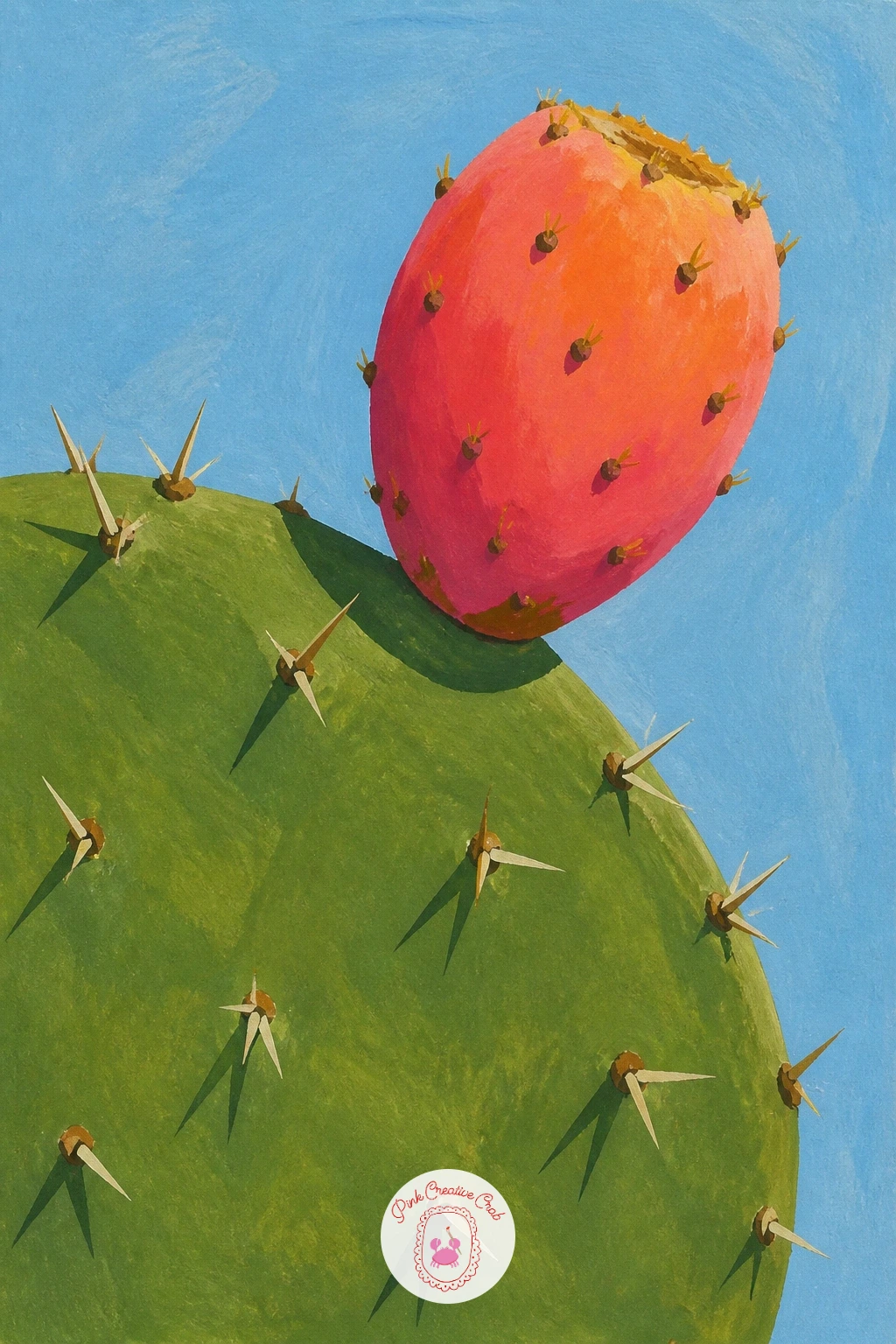
Palette: Cactus Olive,Prickly Pear Pink,Shadow Olive,Sky Pale Blue
Return briefly to the kitchen table for fig and goat cheese toast on a plate, a simple, satisfying food subject with plenty of color contrast. Paint the toast base first as a warm golden-brown rectangle with a slightly darker, uneven crust edge, then a creamy white smear of goat cheese across the top.
Add fig slices over the cheese in deep purple with pink-seeded centers, overlapping them slightly so they look pressed into the soft cheese rather than floating above it. A drizzle of honey or a few small olive-green herb flecks on top finishes the plate.
Toast subjects go wrong when the bread looks too flat and uniform; break up the surface with a few small, slightly darker dry-brush marks for toasted texture before the toppings go on, which gives the base some life underneath the fruit.
If goat cheese white feels too stark against the cream background, warm it very slightly with a touch of yellow ochre. This whole plate is an easy ten-minute piece, perfect for a quick practice session.
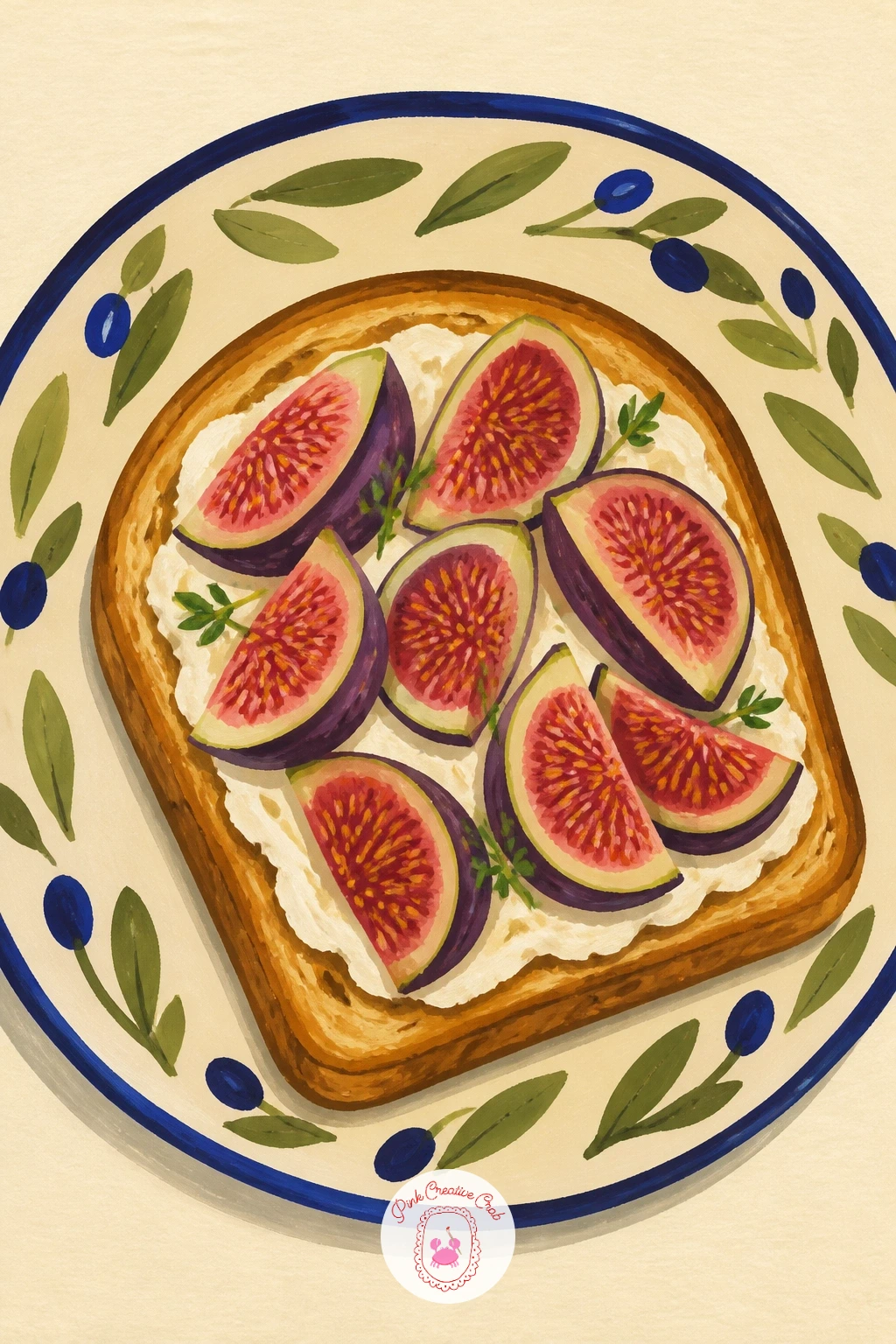
Palette: Fig Purple,Cheese Cream,Toast Gold,Herb Olive
Head back out to the market for a wooden crate packed with purple plums. Paint the crate first as a simple open box shape in warm brown, a few horizontal slats suggested with darker lines rather than fully rendered wood grain.
Fill the crate with plums as overlapping rounded shapes in deep purple-blue, each one given a small highlight streak in a lighter lavender tone to suggest its smooth, slightly dusty skin. Pack them close and let a few spill slightly over the crate’s edge for a fuller, more generous feel.
Compare the crate’s width to roughly four or five plums across as you plan the layout, which keeps the fruit in believable scale rather than drifting too large or too small as you work your way across the row.
If deep plum purple is not already mixed in your palette, combine ultramarine blue with a touch of alizarin crimson for a rich, convincing shade. Keep every plum’s highlight in the same direction for a cohesive, sunlit crate.
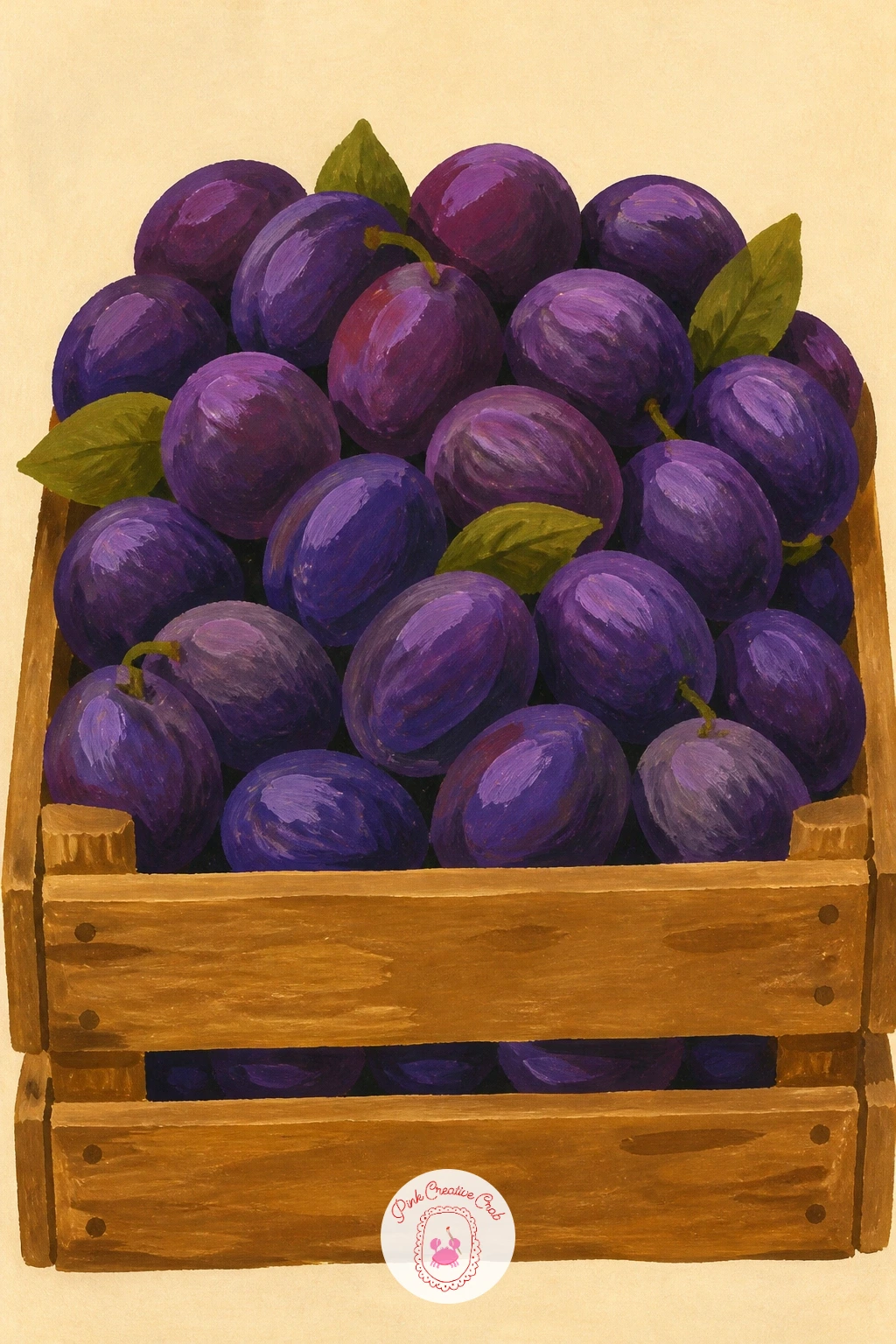
Palette: Plum Purple,Plum Highlight,Crate Brown,Cream Ground
Finish the fruit tree moments with a branch of loquats held up against a clear blue sky. Paint the sky first as one flat, confident wash of blue covering the whole background, then let it dry completely before the branch goes anywhere near it, since loquat orange needs a clean surface to sit on top of crisply.
Paint the branch and a few pointed leaves in olive green, then cluster small oval loquats in warm orange-yellow along its length, grouped in twos and threes the way real fruit clusters naturally rather than spaced in a perfectly even row.
A plain sky background means every edge matters, so keep the outline of leaves and fruit clean and slightly crisp against the blue, since any softness there reads as a mistake rather than atmosphere.
If loquats are unfamiliar, a photo of small apricots or kumquats on a branch gives you a close enough shape and color to work from. This is a quick, cheerful piece that suits a confident ten-minute sitting.
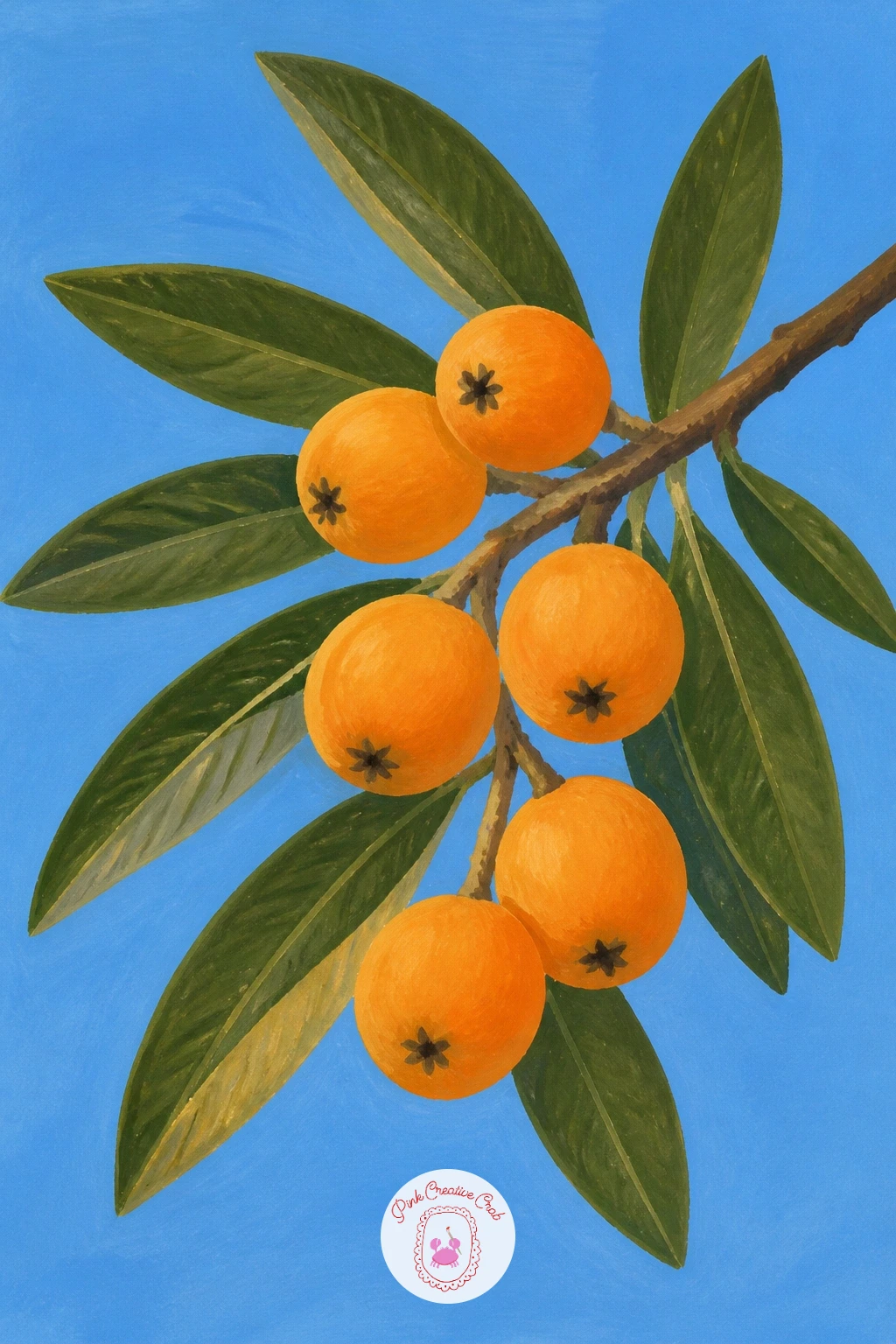
Palette: Loquat Orange,Leaf Olive,Sky Blue,Branch Brown
Close the series with a simple, elegant grouping of nectarines in a ceramic dish, a calm note to end on after all the busier market scenes. Paint the dish first as a plain rounded shape in a soft neutral tone, perhaps cream or pale blue, keeping it simple so the fruit carries all the color.
Nestle two or three nectarines into the dish, painted in warm red-orange with a soft blush where the color deepens toward one side, the same light-source logic used earlier for the apricots. A small dimple at the top of each fruit, just a short curved line, finishes the shape convincingly.
With this piece, think about what you might change next time: try the same simple arrangement with a different dish color, add a single leaf tucked beside the fruit, or shift the whole grouping onto a patterned cloth instead of a plain table for a bit more pattern practice.
If nectarine red-orange is hard to mix precisely, apricot orange deepened with a touch of alizarin crimson gets close enough. Keep today’s version to just the dish and fruit for a calm, complete finish.
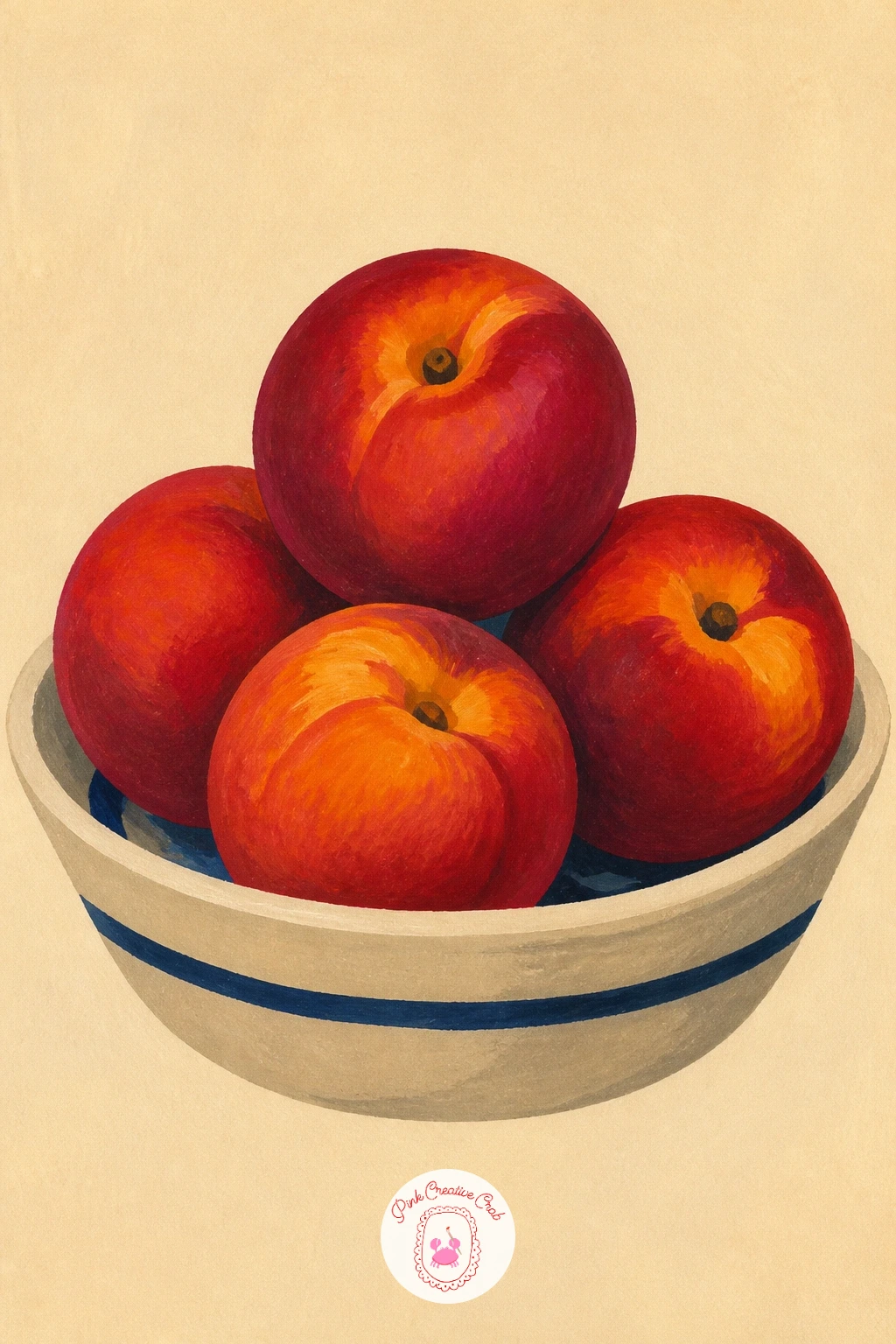
Palette: Nectarine Orange,Nectarine Blush,Dish Cream,Leaf Olive
Try the same dish with a lemon or two instead of nectarines next time, to see how a cooler yellow shifts the whole mood of the still life.
What to Do Next
Pick one idea from this list, whichever fruit is calling to you most right now, and start with its background or container first so the fruit itself goes on last and stays crisp. A cold press watercolor pad and a small set of gouache in these warm Mediterranean tones is all you need to finish something you are proud of today.
Frequently Asked Questions
What paint works best for pomegranate painting?
Gouache works best because it gives flat, matte color with sharp edges, ideal for the bold shapes a pomegranate needs. Acrylic is a close substitute if that is what you already own.
How do you paint realistic pomegranate seeds without it taking hours?
Mix alizarin crimson with a touch of cadmium orange for a warm, convincing pomegranate red. Add a little red-violet for the deeper seed clusters inside the fruit.
Can beginners really finish a Mediterranean fruit painting in one sitting?
Yes, because gouache dries fast and these subjects use only three or four flat color blocks per fruit. Starting with the simplest ideas on this list, like a single pomegranate or a bowl of nectarines, keeps the sitting short.
How do I stop my fruit paintings from looking flat and lifeless?
Pick one light direction and keep every shadow and highlight consistent with it across the whole piece. A single cast shadow or one blush of color on the lit side does more than extra detail.
Have any thoughts?
Share your reaction or leave a quick response — we’d love to hear what you think!
-
 0
-
0
-
0
-
0
-
0
-
0


