Table of Contents
This set of vintage flowers stickers gathers old roses, spring bulbs, wildflowers, Victorian posies and flowers in teacups across twenty nine sheets, each one built around its own small corner of the garden. You get cottage blooms, climbing vines, lace and ribbon motifs, pressed petals and hand-tinted bouquets, all drawn with the soft antique feel of an old botanical print.
Print the sheets on printable sticker paper for a true peel-and-stick set, or use plain paper and a glue stick if that is what you have on hand. Print at actual size rather than letting the printer scale the page, then cut around each piece leaving a thin white border so the ink edge stays protected.
Using these images: free for personal projects such as printing, coloring, cards, journals and gifts. Handmade items that include them may be sold up to 30 pieces per design. More than that is commercial use and is not permitted, and neither is selling or sharing the images themselves or passing them off as your own. Please ask before any other use.
Roses And Cottage Blooms
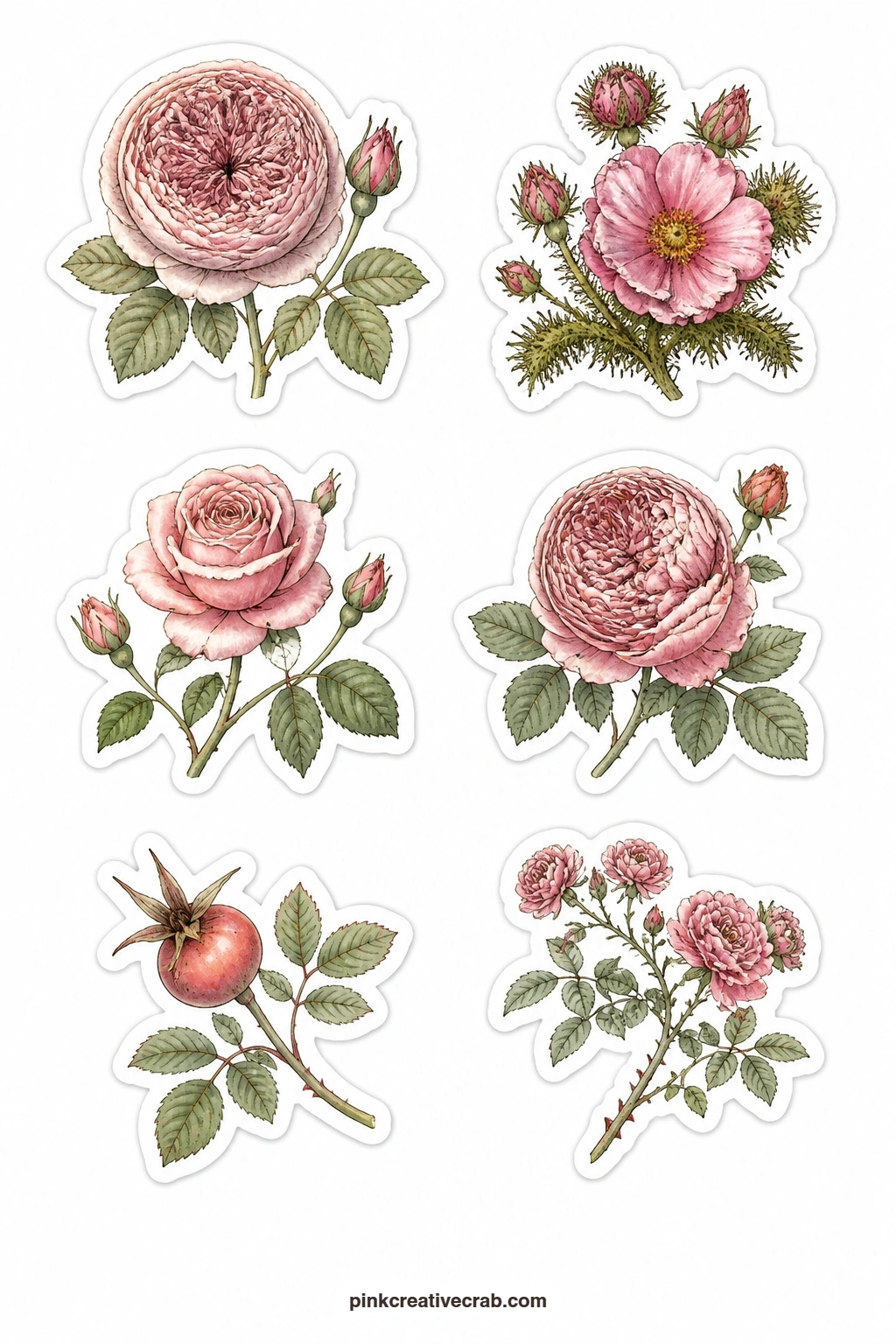
Six roses from an old cutting garden share this sheet: a full cabbage rose, a mossy moss rose, a slim tea rose, a layered damask rose, a small rose hip and a climbing rose on a short length of stem.
Each one reads as its own flower rather than a repeat of the last, so the set gives you real variety for rose-themed spreads. Keep a few of the smaller blooms loose in a tin for whenever a card needs one quick flower in the corner.
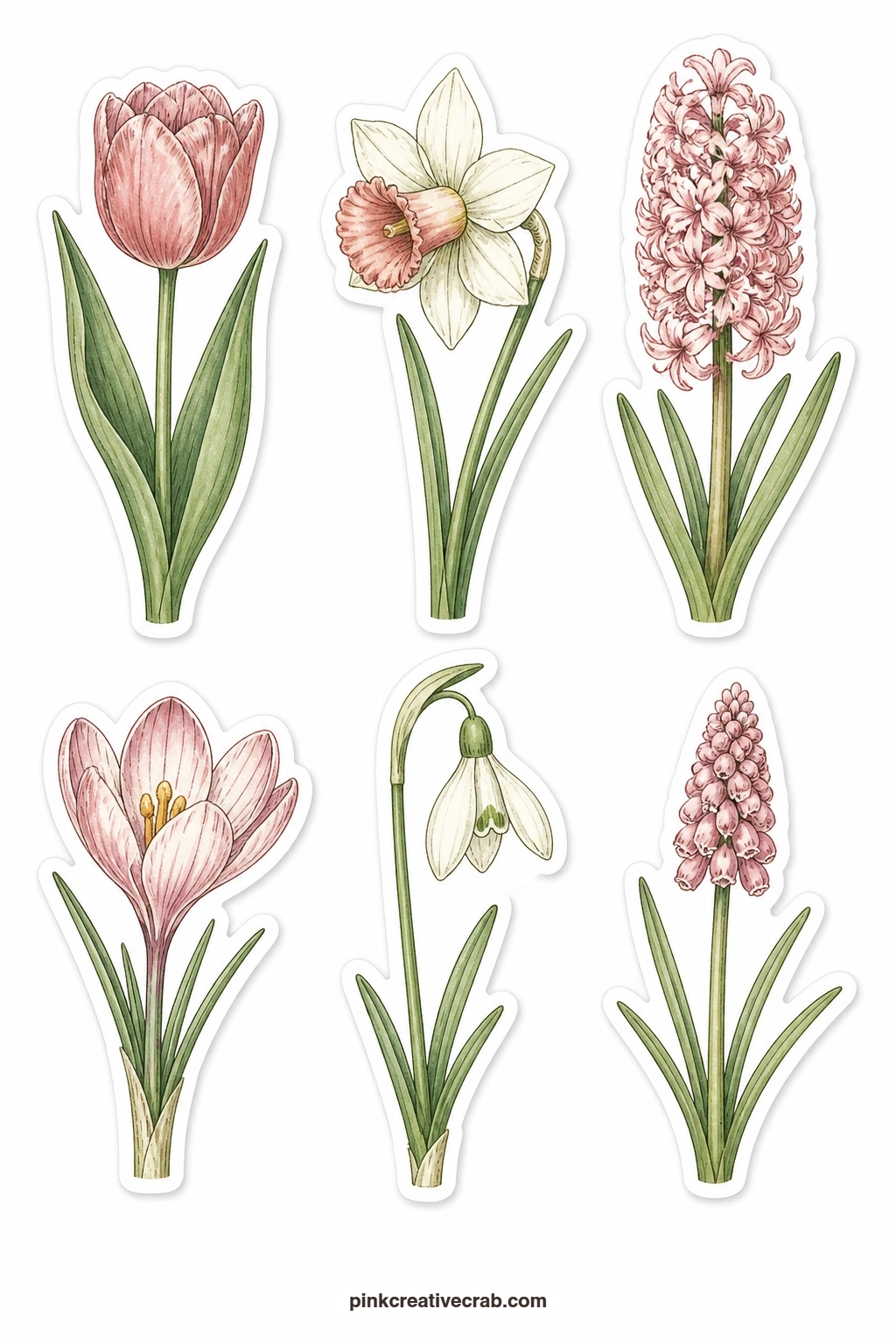
A tulip, a daffodil, a hyacinth spike, a crocus cup, a snowdrop and a grape hyacinth cluster fill this sheet with the first flowers of the year, each one its own sticker.
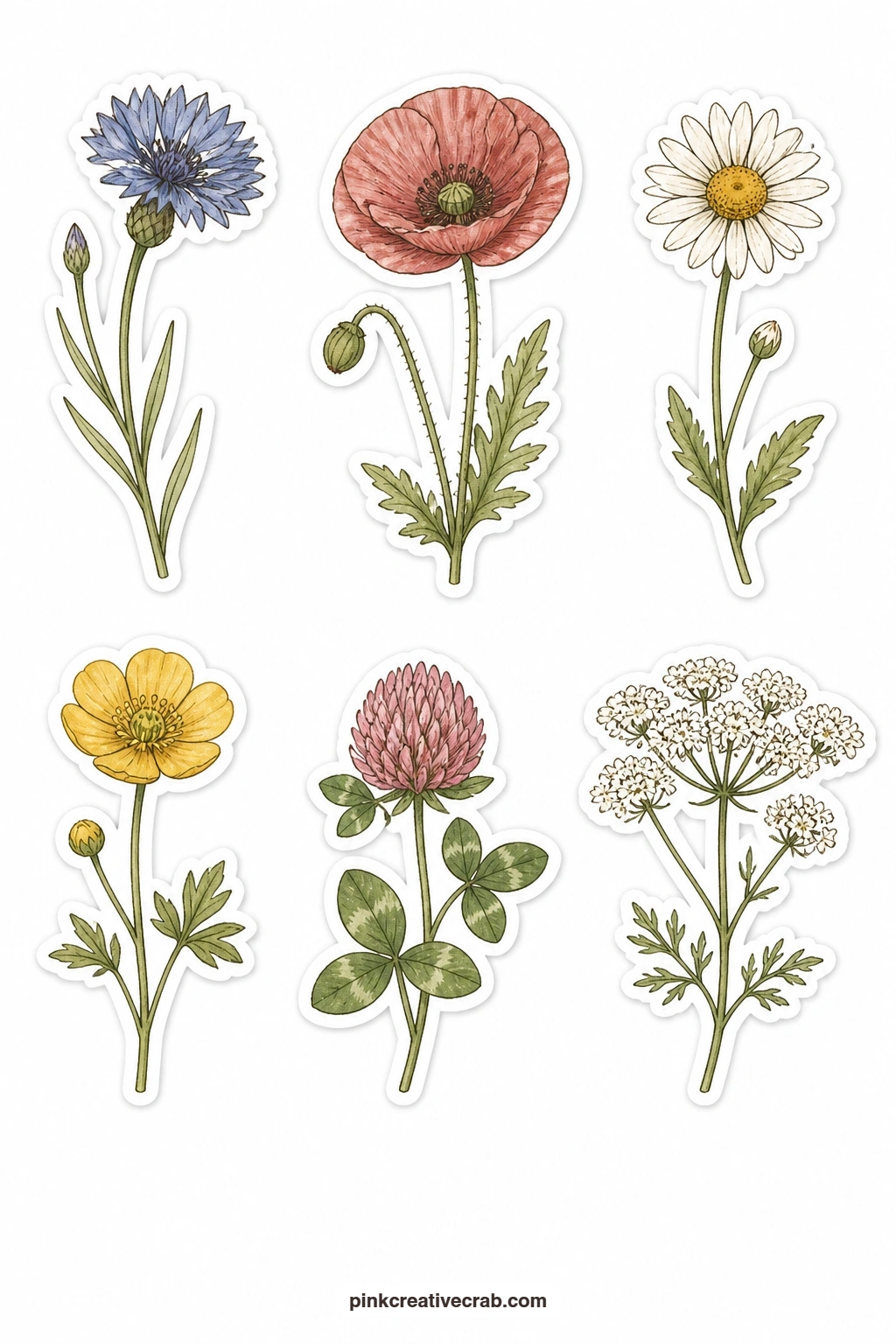
This sheet turns to the meadow for a cornflower, a poppy, a field daisy, a buttercup, a sprig of red clover and a cow parsley head, the kind of loose mix you might find pressed between the pages of an old book.
They work well scattered along a journal border where a tidier rose set would look too formal. Pair this sheet with the wildflower junk journal pages if you want a whole spread built around the same meadow feel.
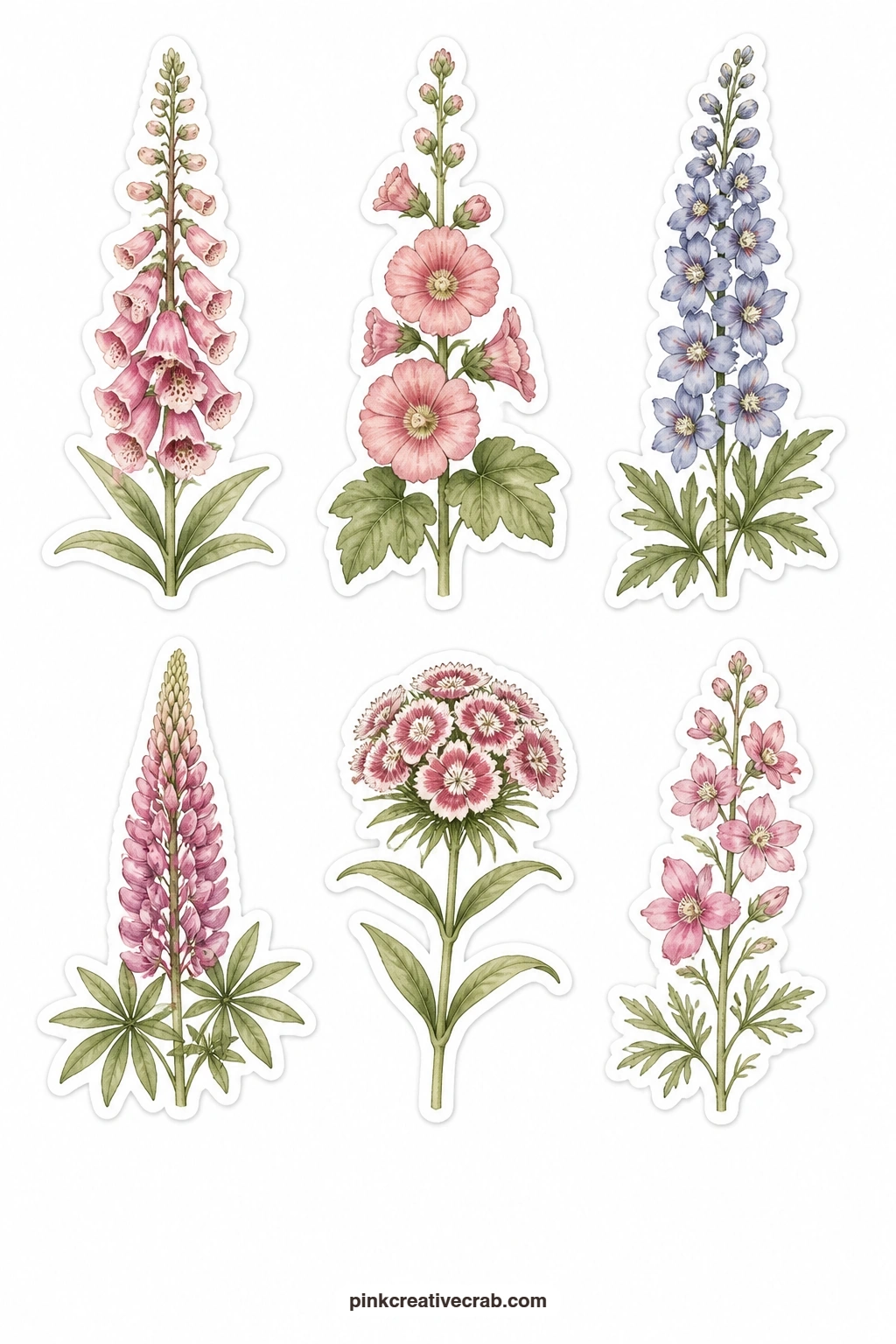
Tall cottage border flowers stand together here: a foxglove spike, a hollyhock, a delphinium, a lupine, a sweet william cluster and a larkspur, each tall stem cut as its own piece so it can run up the side of a page.
Posies And Vases
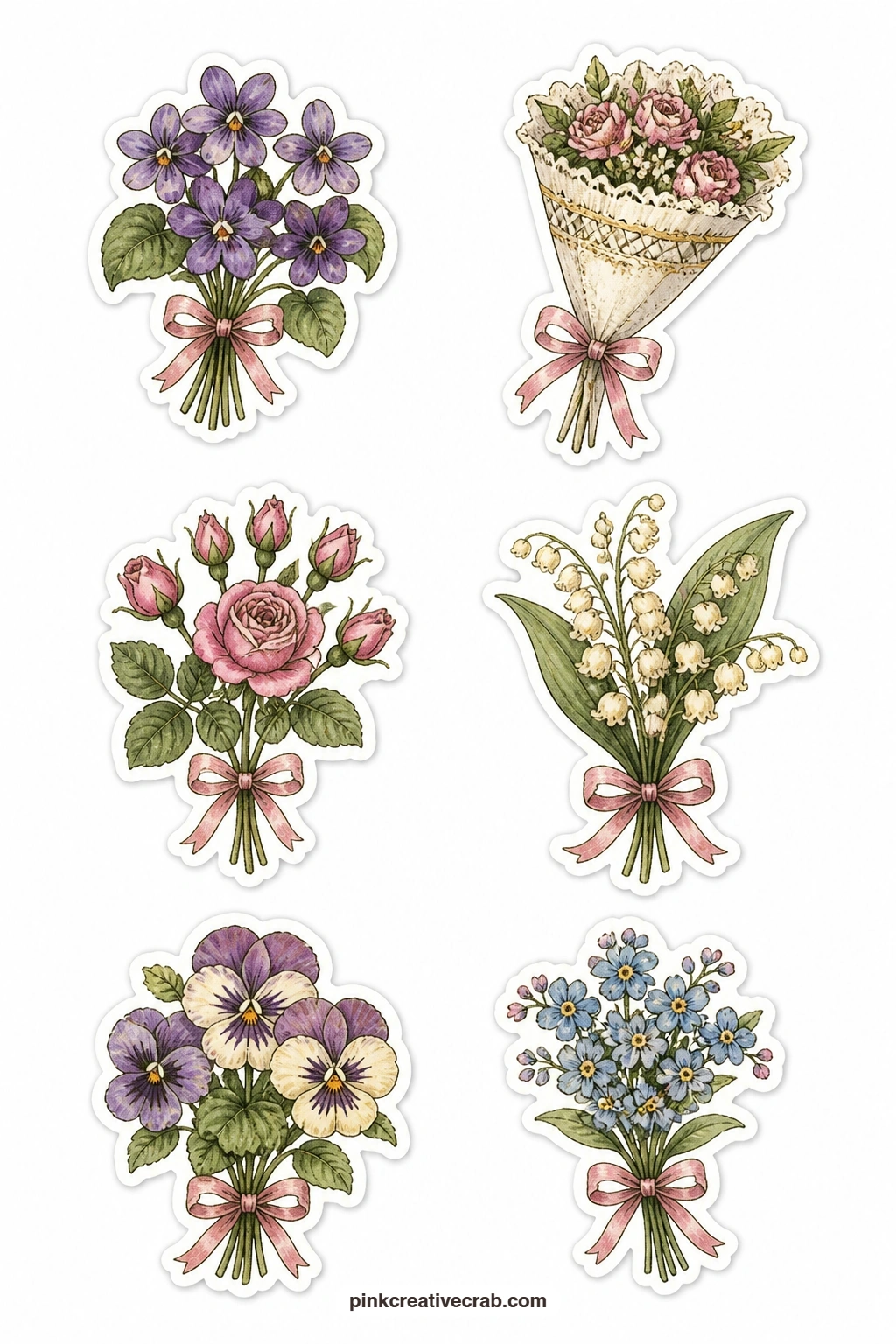
Six small tied bunches sit on this sheet, each one a different old-fashioned posy: a violet posy, a tussie mussie, a rosebud posy, a lily of the valley posy, a pansy posy and a forget-me-not bunch, all finished with a narrow paper wrap rather than loose stems.
These sit beautifully at the top corner of a letter or tucked beside a handwritten note. Leave a thin white edge when you cut them so the little tied wrap at the base stays crisp.
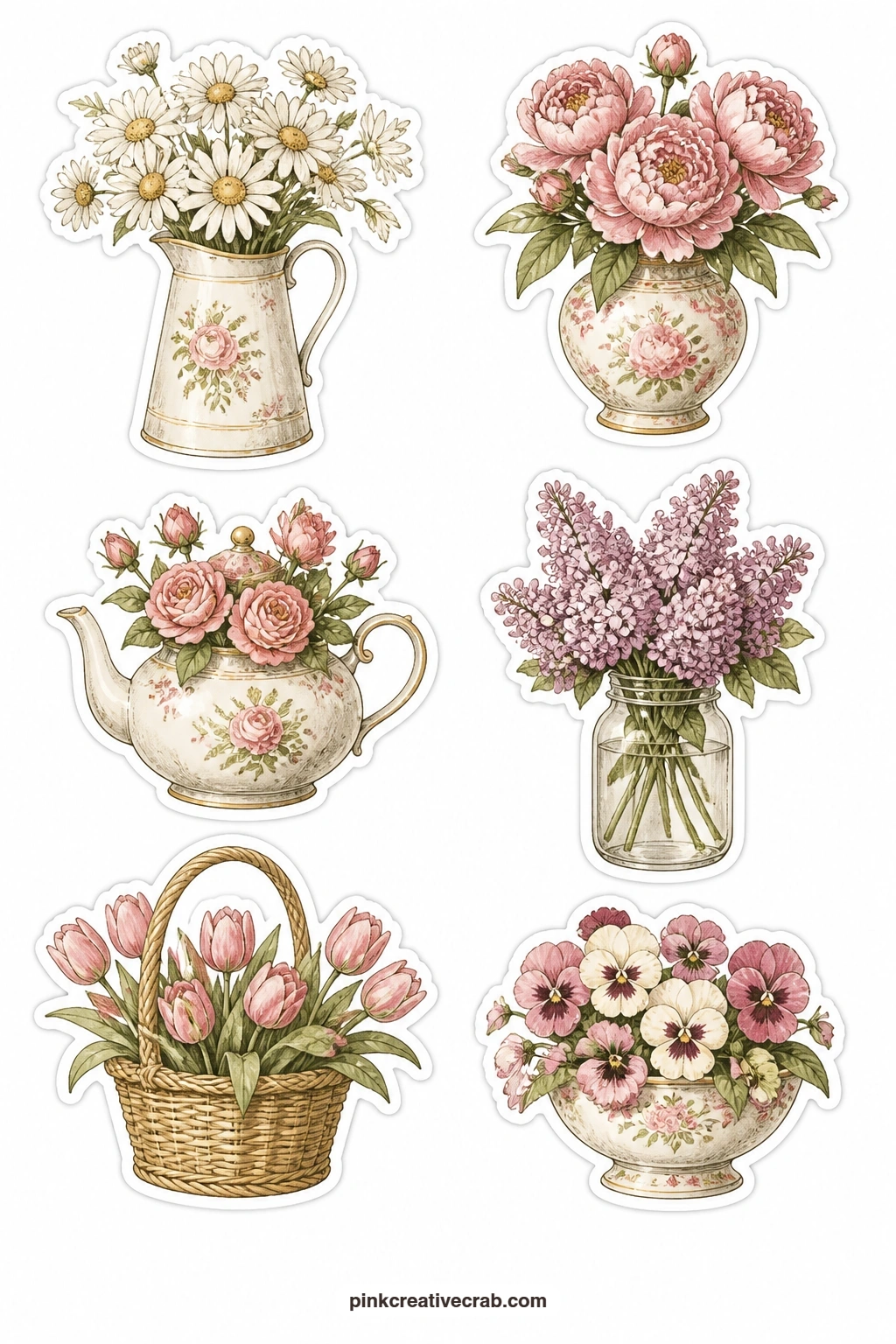
A jug of daisies, a vase of peonies, a teapot of roses, a jar of lilacs, a basket of tulips and a bowl of pansies bring six different containers to one sheet, each holding its own flowers rather than a repeated shape.
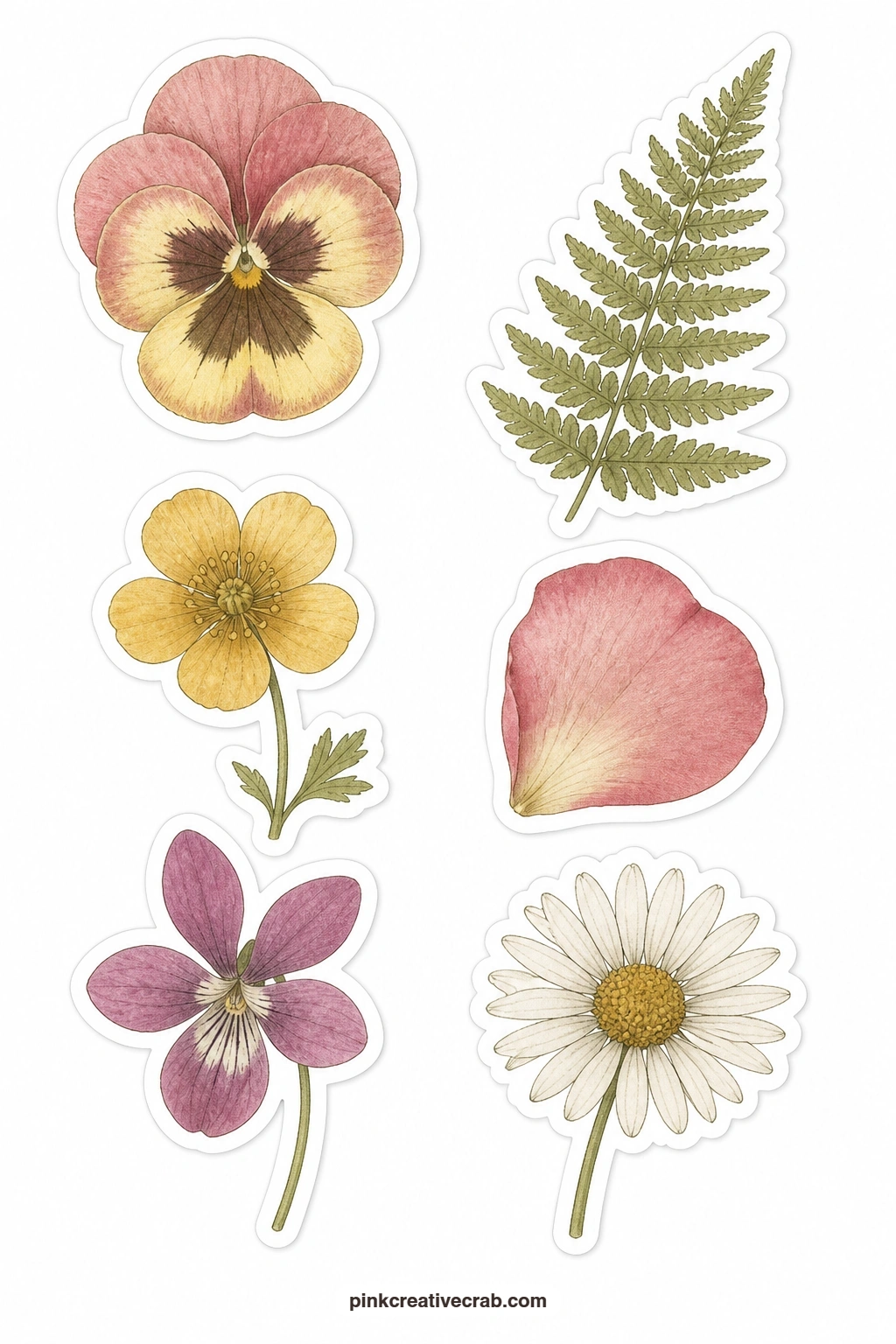
Flat and papery rather than full and round, this sheet gives you a pressed pansy, a pressed fern, a pressed buttercup, a pressed rose petal, a pressed violet and a pressed daisy, the kind of thin, faded shapes you would find tucked inside an old diary.
Printed on plain paper rather than glossy sticker stock, these look closest to the real thing, since the matte finish reads more like dried paper. If pressed botanicals are a theme you keep coming back to, the Emily Dickinson journal pages cover the same ground in full spreads.
Lilies And Vines
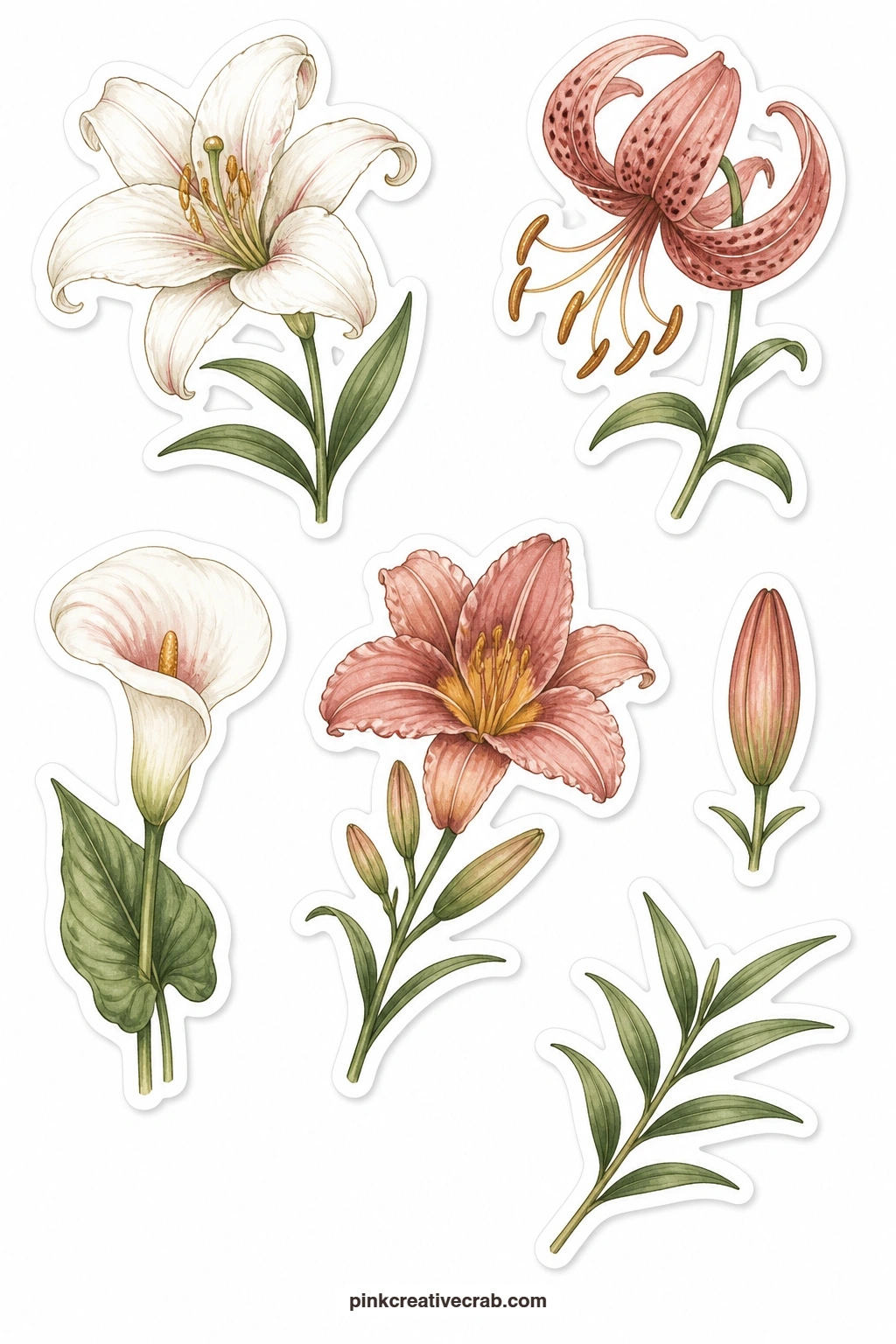
Six lilies in different forms share this sheet: a madonna lily, a tiger lily, a calla lily, a daylily, a closed lily bud and a lily stem with its leaves, so you have both open blooms and quieter detail pieces.
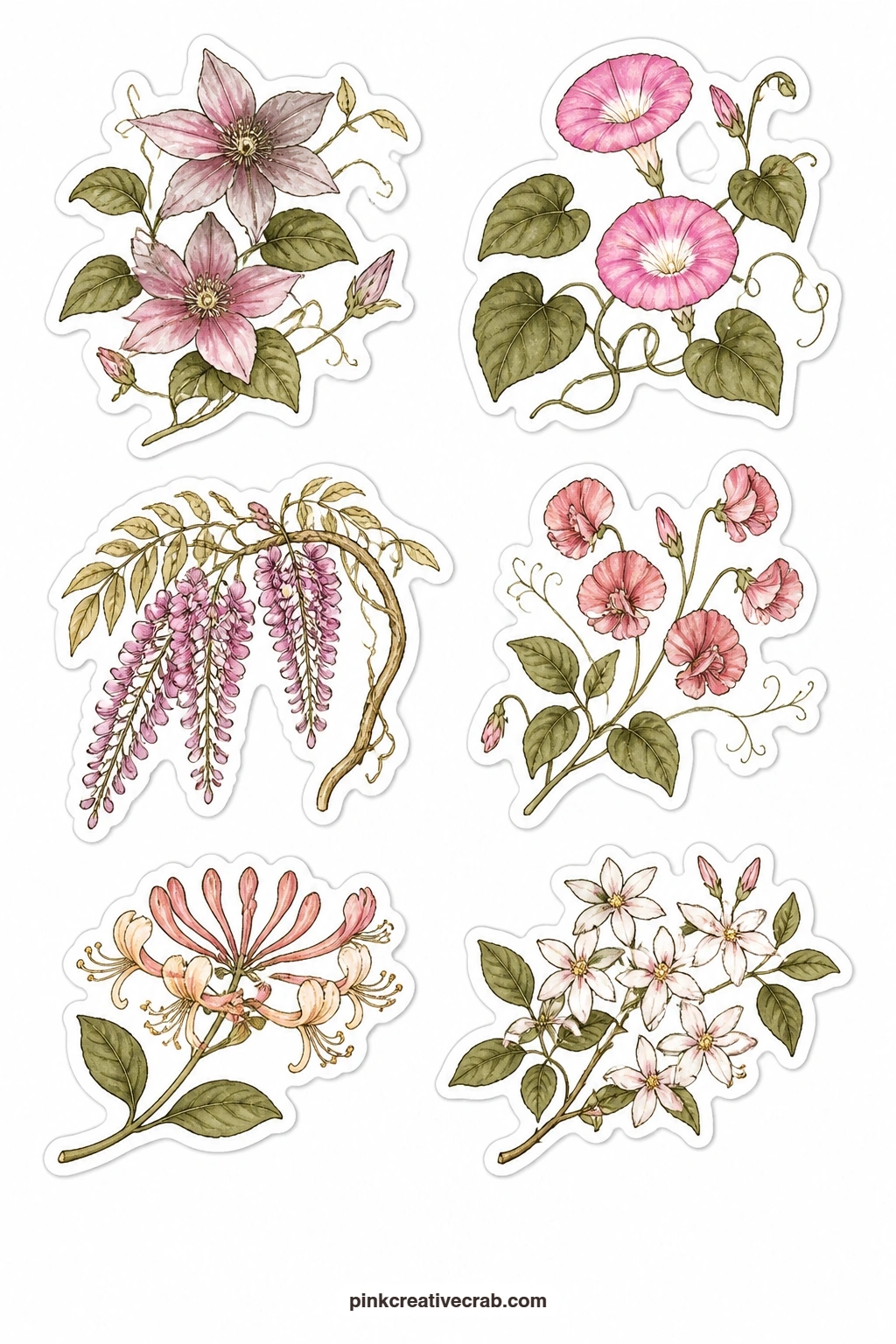
A clematis, a morning glory, a wisteria cluster, a sweet pea vine, a honeysuckle sprig and a jasmine sprig trail across this sheet, each vine cut short enough to sit along a page edge without needing to be trimmed down further.
Save a couple for the spine of a journal, where a trailing vine covers the fold nicely. The rest work well scattered loosely wherever a spread feels too empty along one side.
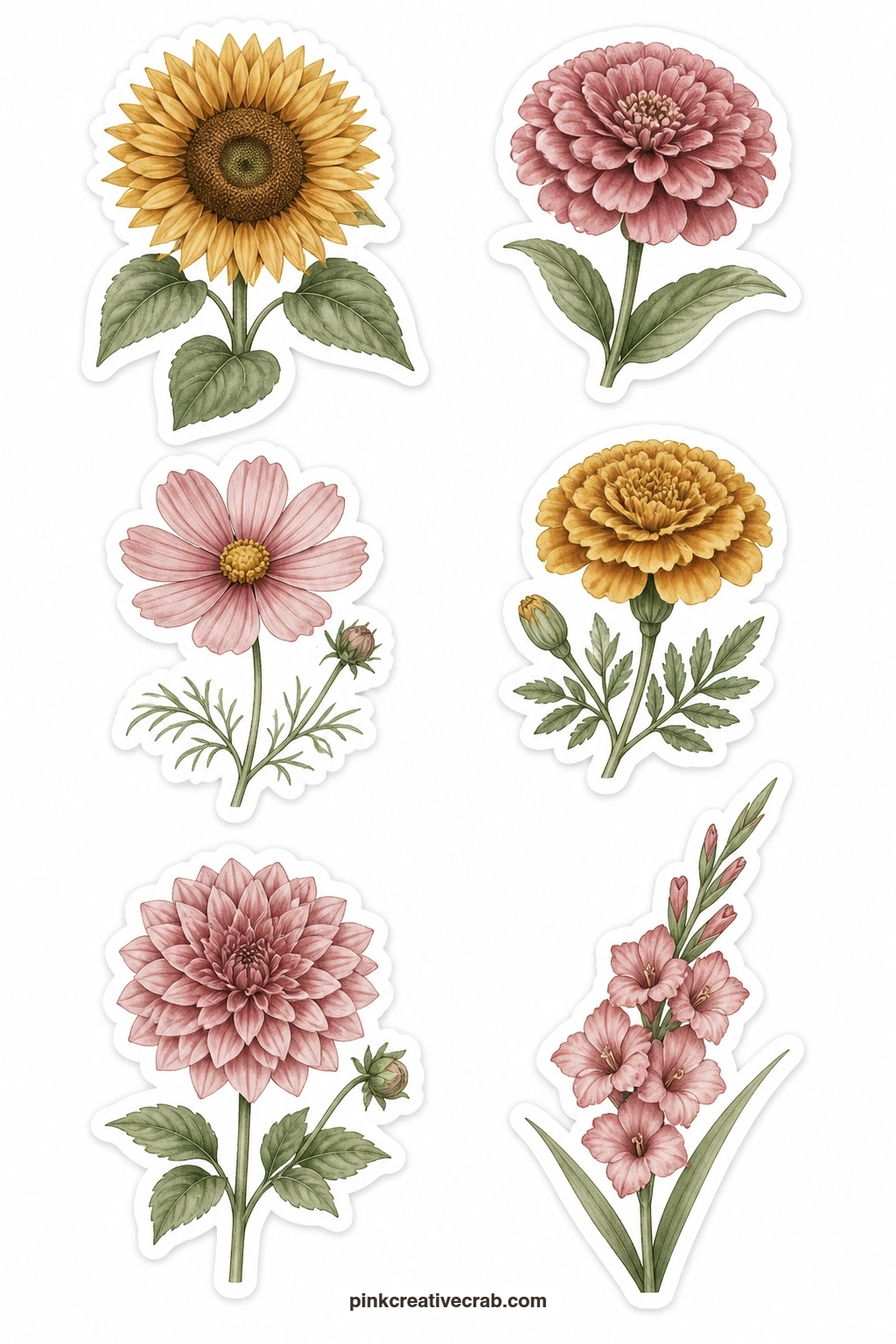
A sunflower, a zinnia, a cosmos, a marigold, a dahlia and a gladiolus spike bring the brighter part of the garden to this sheet, each a single stem cut cleanly from the next.
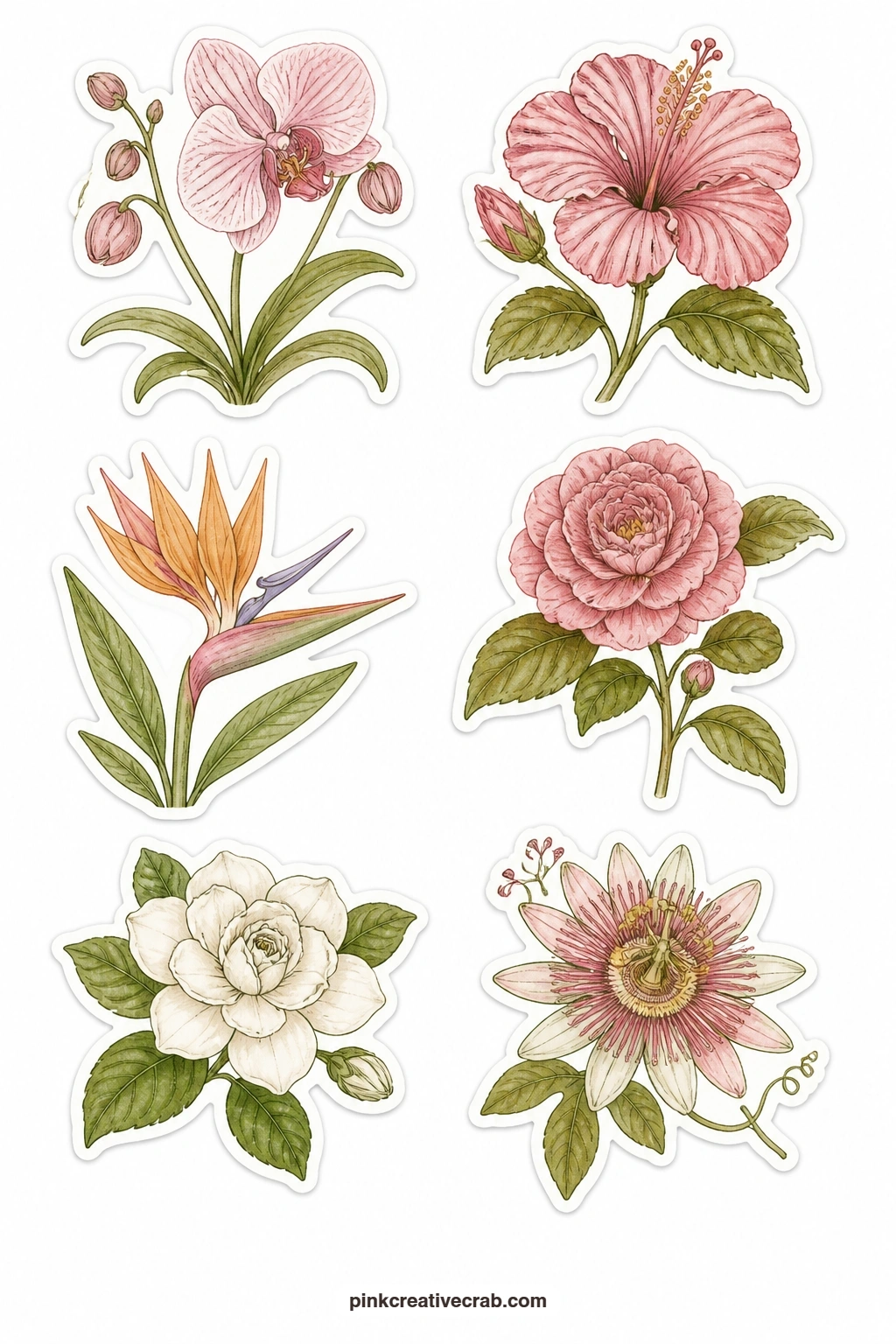
For something less common than a cottage garden offers, this sheet holds an orchid, a hibiscus, a bird of paradise, a camellia, a gardenia and a passionflower, six flowers that read as a little more exotic against the rest of the set.
Birds And Butterflies
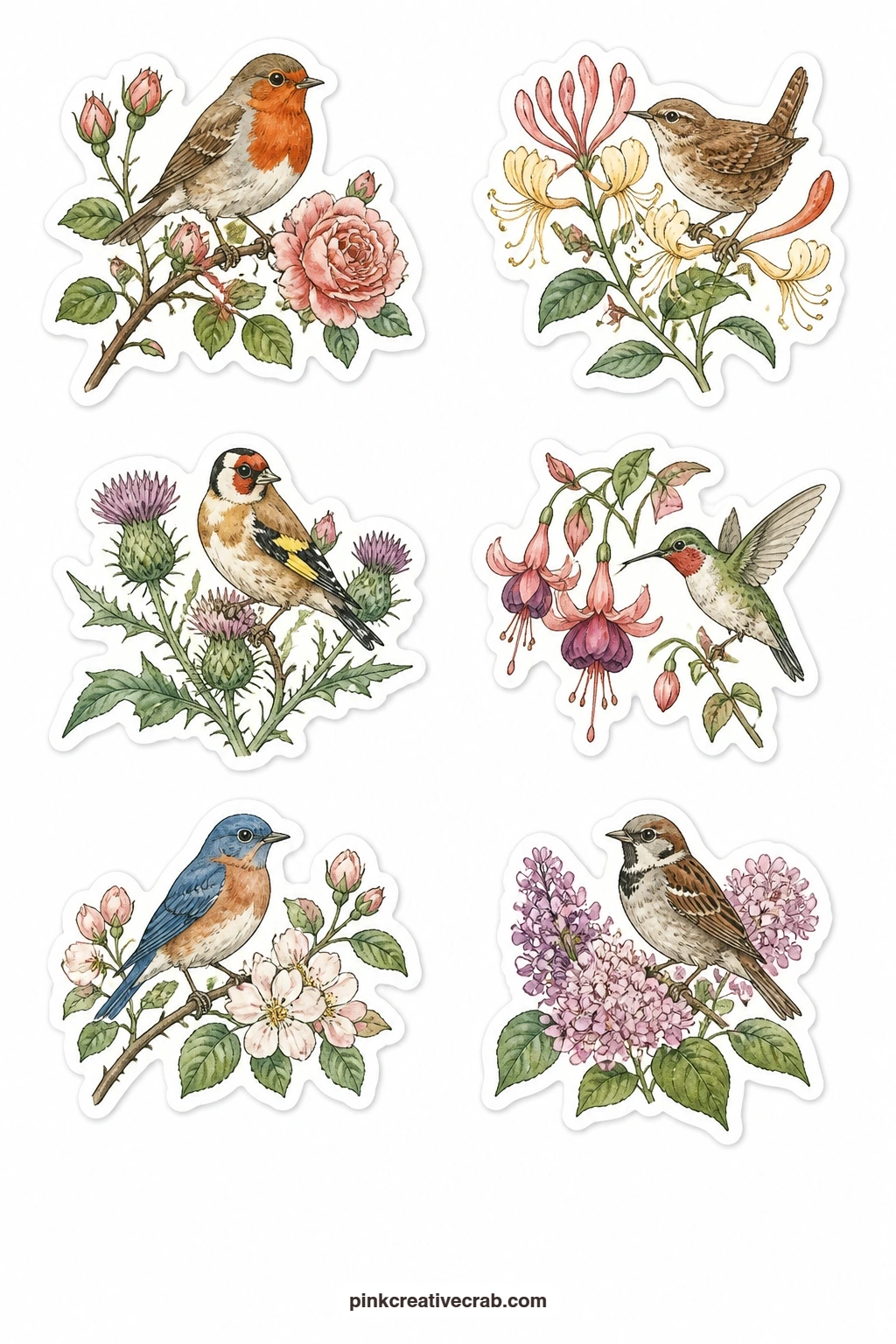
Six small scenes pair a bird with a bloom: a robin on a rose branch, a wren in honeysuckle, a goldfinch on a thistle, a hummingbird at a fuchsia, a bluebird on an apple blossom and a sparrow in lilac.
These make a sweet pair with the plain Old Roses sheet, since the rose branch here echoes the same flower in a fuller form elsewhere in the set. Use a craft knife rather than scissors for the small gaps between wing and branch, since scissors tend to round off those narrow spaces.
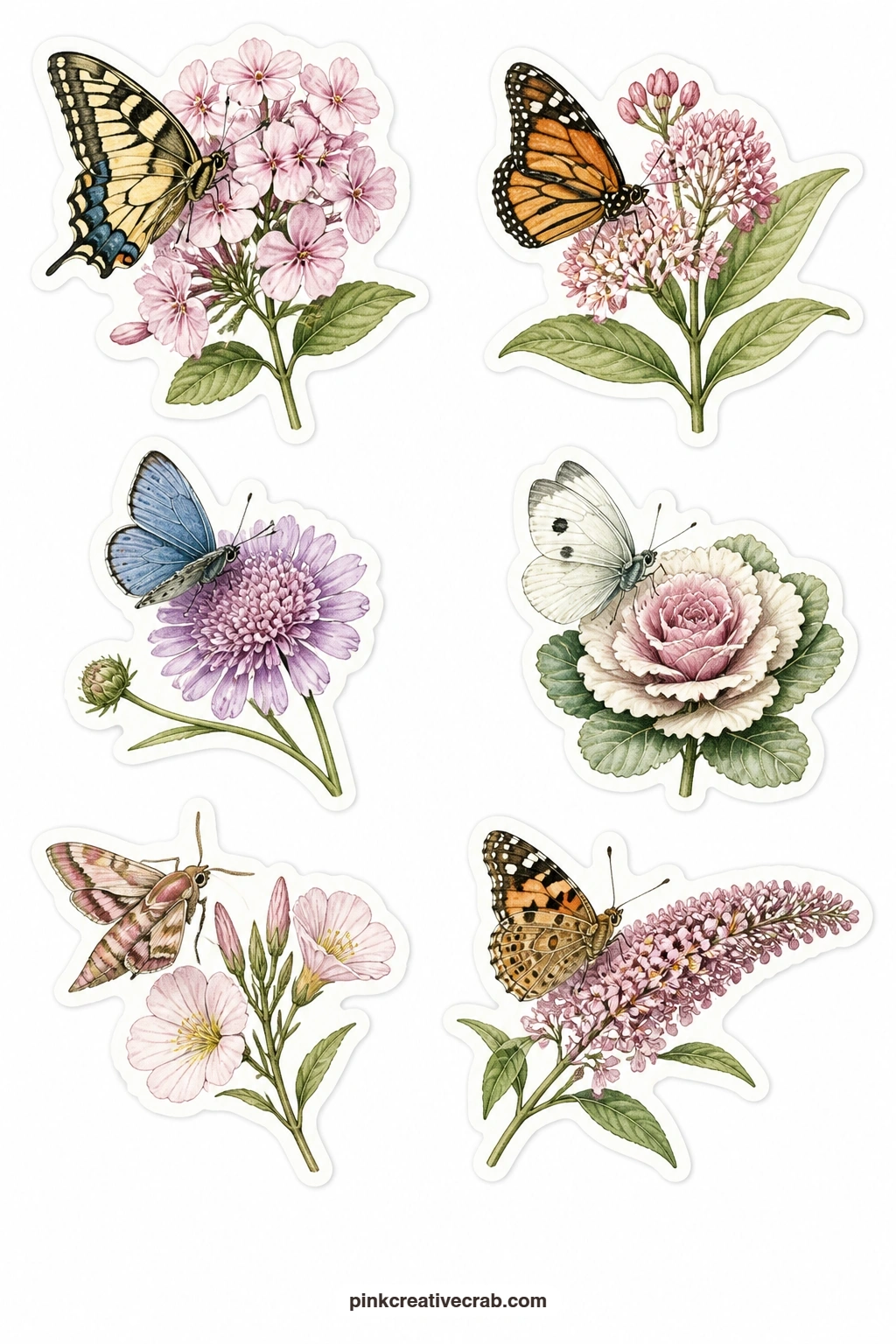
A swallowtail on a phlox, a monarch on a milkweed, a blue butterfly on a scabious, a white butterfly on a cabbage flower, a moth on an evening primrose and a painted lady on a buddleia fill out this sheet with six different pairings, none repeating a flower from the birds sheet.
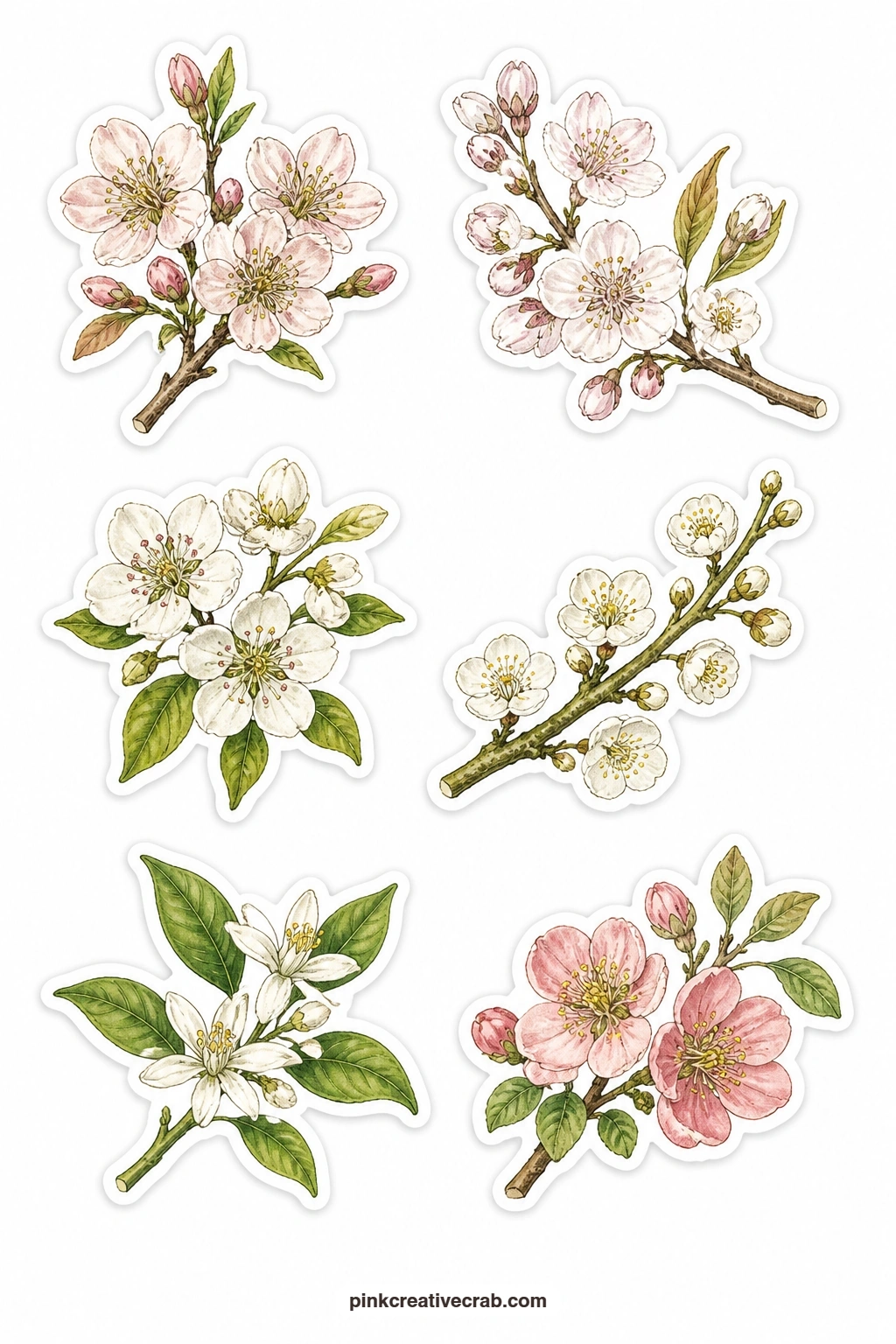
Light spring blossom covers this sheet with an almond blossom, a cherry blossom, a pear blossom, a plum blossom, an orange blossom and a quince blossom, six branches that stay soft and pale rather than bright.
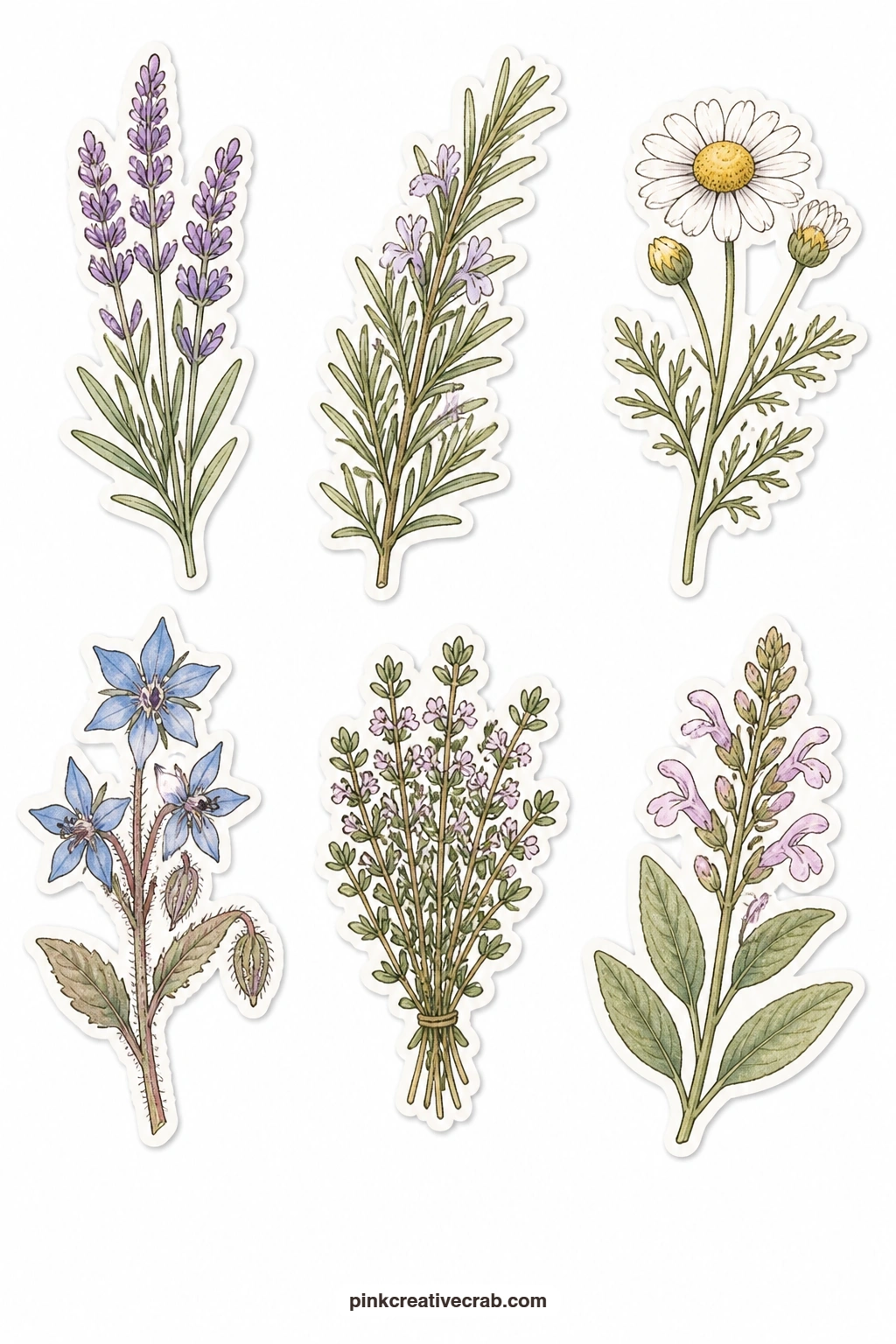
Give the sheet a quieter, greener feel with a lavender sprig, a rosemary sprig, a chamomile flower, a borage flower, a thyme bunch and a sage flower, herbs shown in bloom rather than as plain leaves.
Wreaths And Peonies
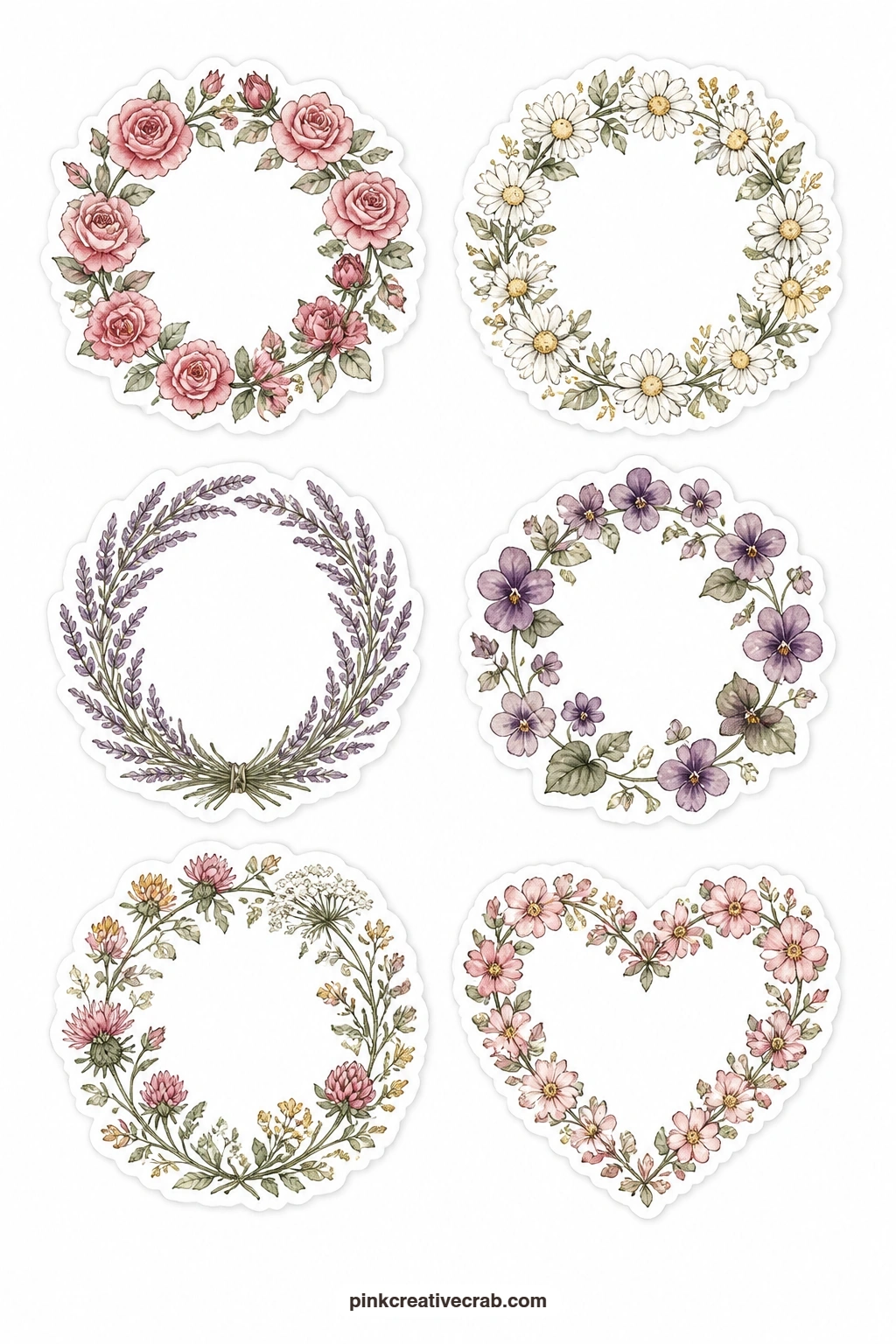
Wreaths this time instead of single stems: a rose wreath, a daisy wreath, a lavender wreath, a violet wreath, a wildflower wreath and a heart-shaped wreath, each one a closed ring you can set straight onto the front of a card.
A plain wreath reads well left mostly empty inside, so you can add a name or a short date right in the middle once it is stuck down. This sheet also works nicely as a stand-in frame for a small photograph in a planner.
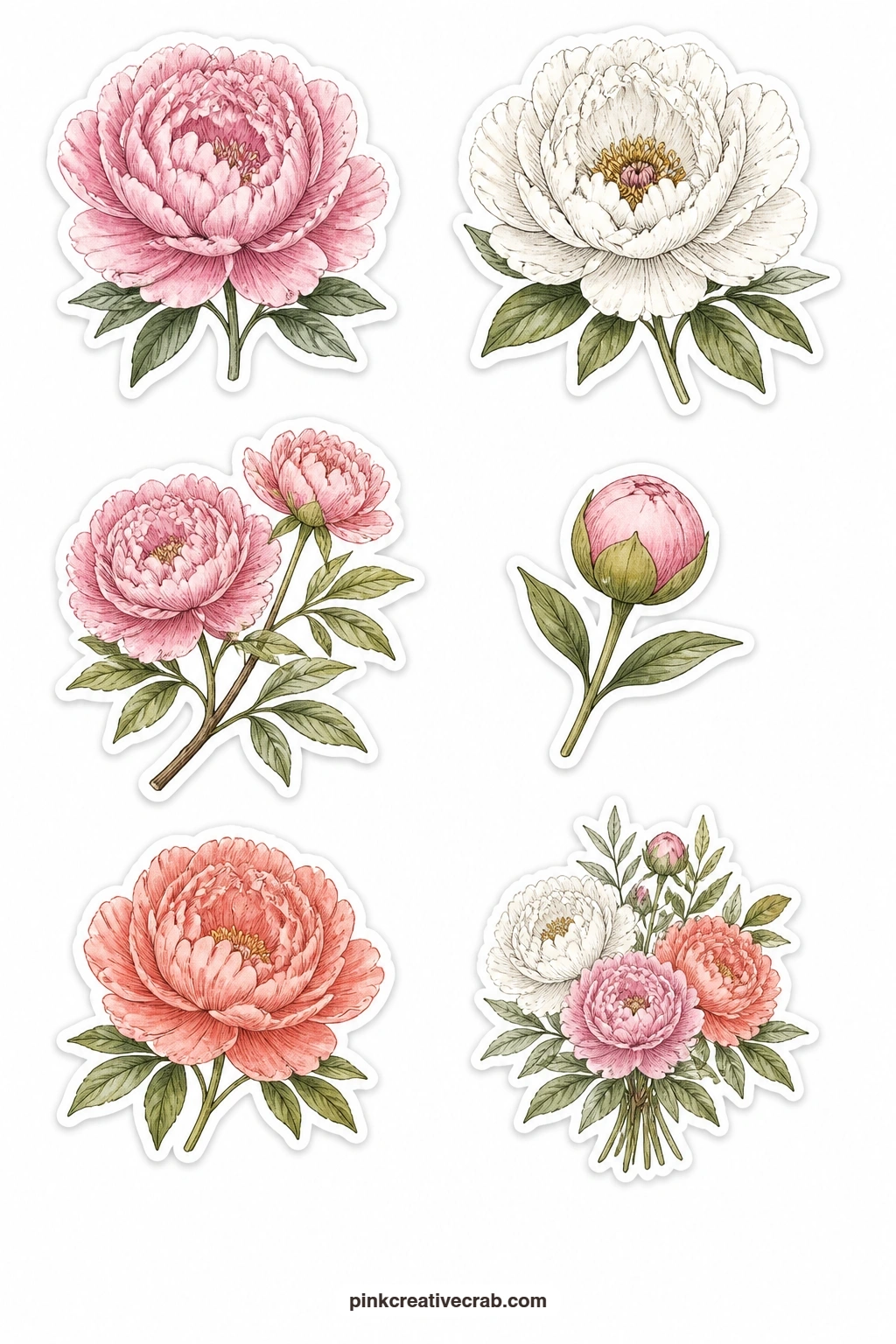
A pink peony, a white peony, a coral peony, a peony bud, a tree peony branch and a small peony bouquet give this sheet six takes on one flower, from a tight bud through to a full open bloom.
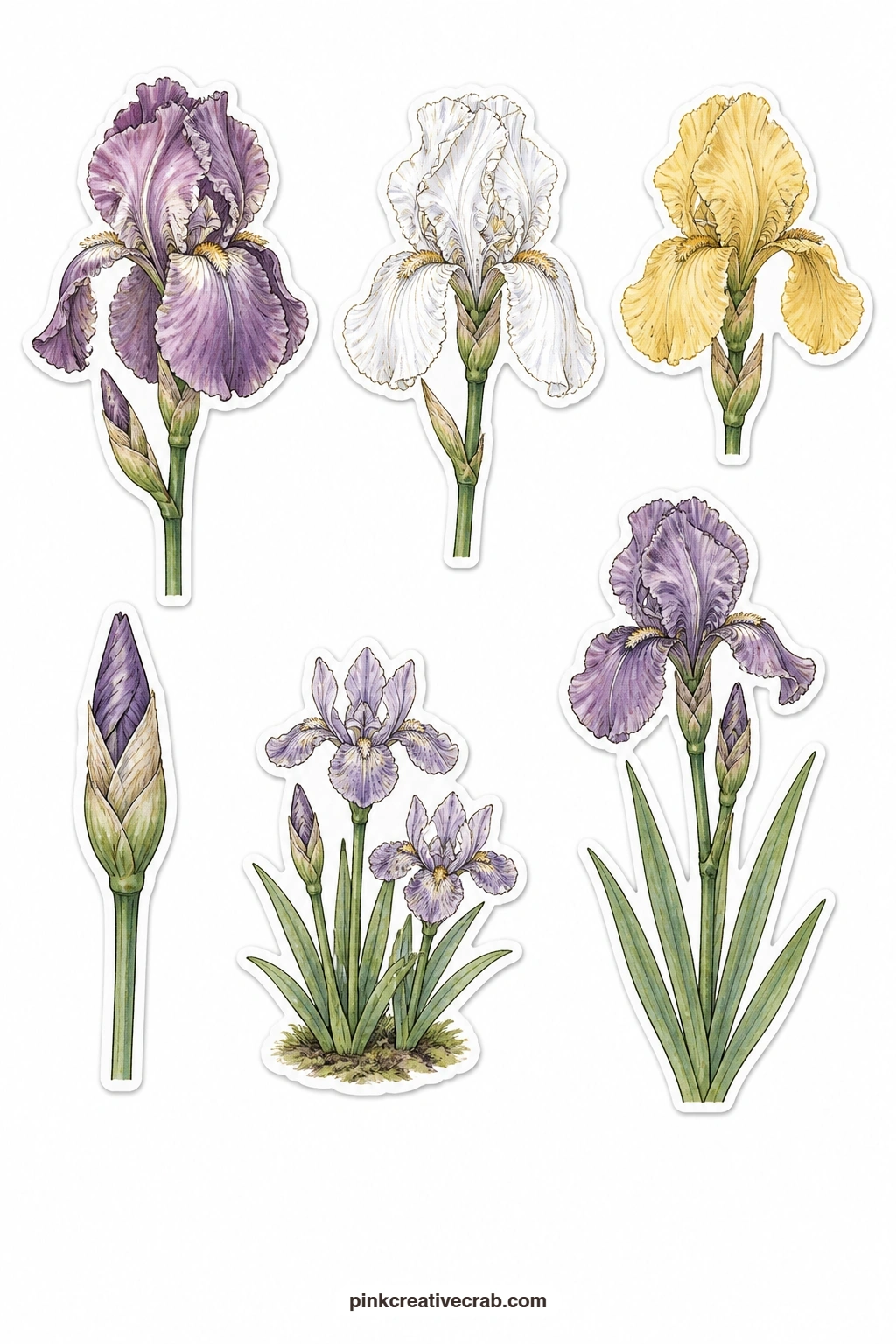
A purple iris, a white iris, a yellow iris, an iris bud, a dwarf iris and an iris with its leaves attached round out this sheet, six variations on one upright flower shape.
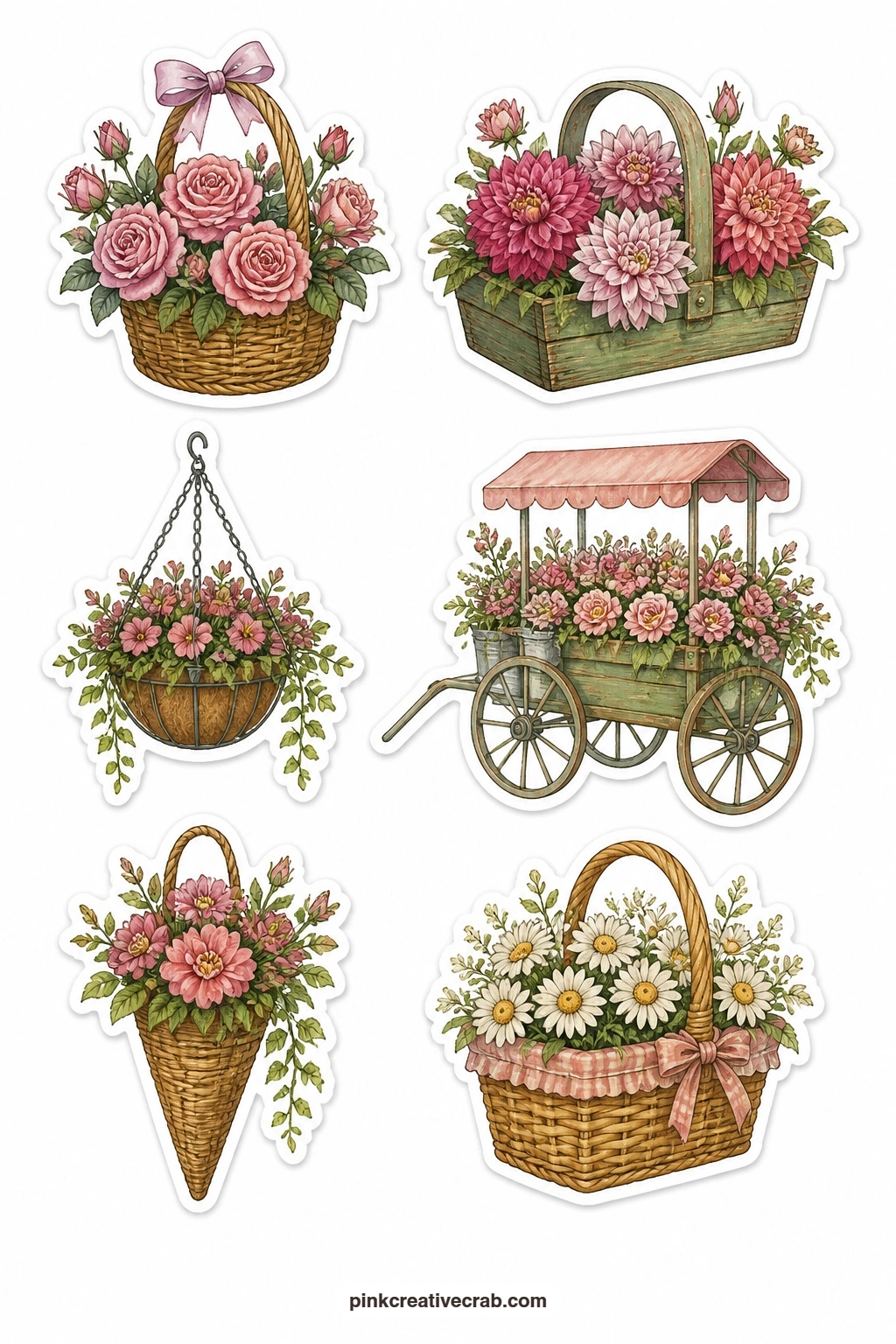
Six carried containers share this sheet: a wicker basket of roses, a trug of dahlias, a hanging basket, a flower cart, a woven cone basket and a picnic basket of daisies, each basket full but never crowded.
Symbolic And Decorative
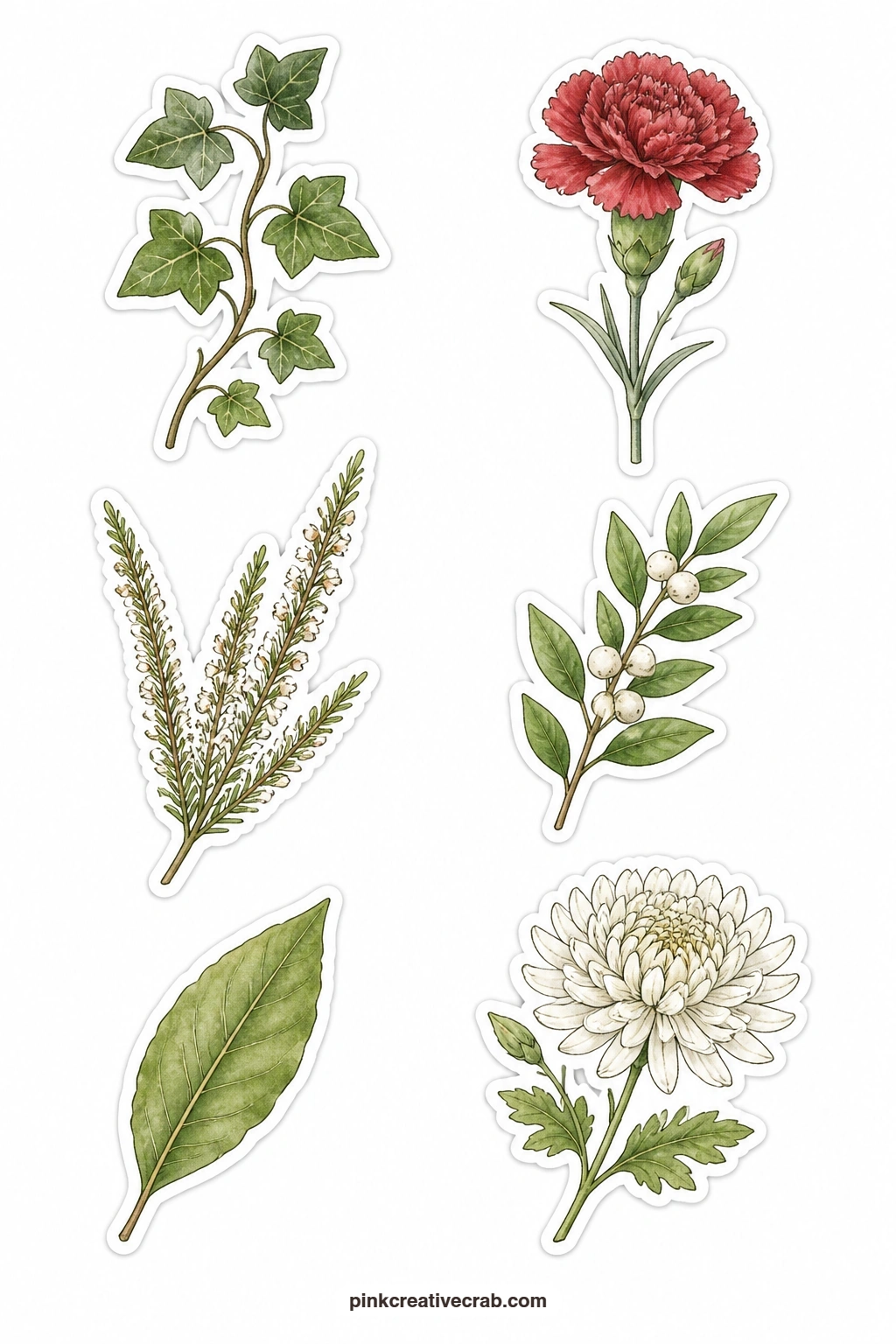
This sheet leans into old flower symbolism with an ivy sprig, a red carnation, a sprig of white heather, a sprig of myrtle, a bay leaf and a white chrysanthemum, six small pieces often used in Victorian keepsakes.
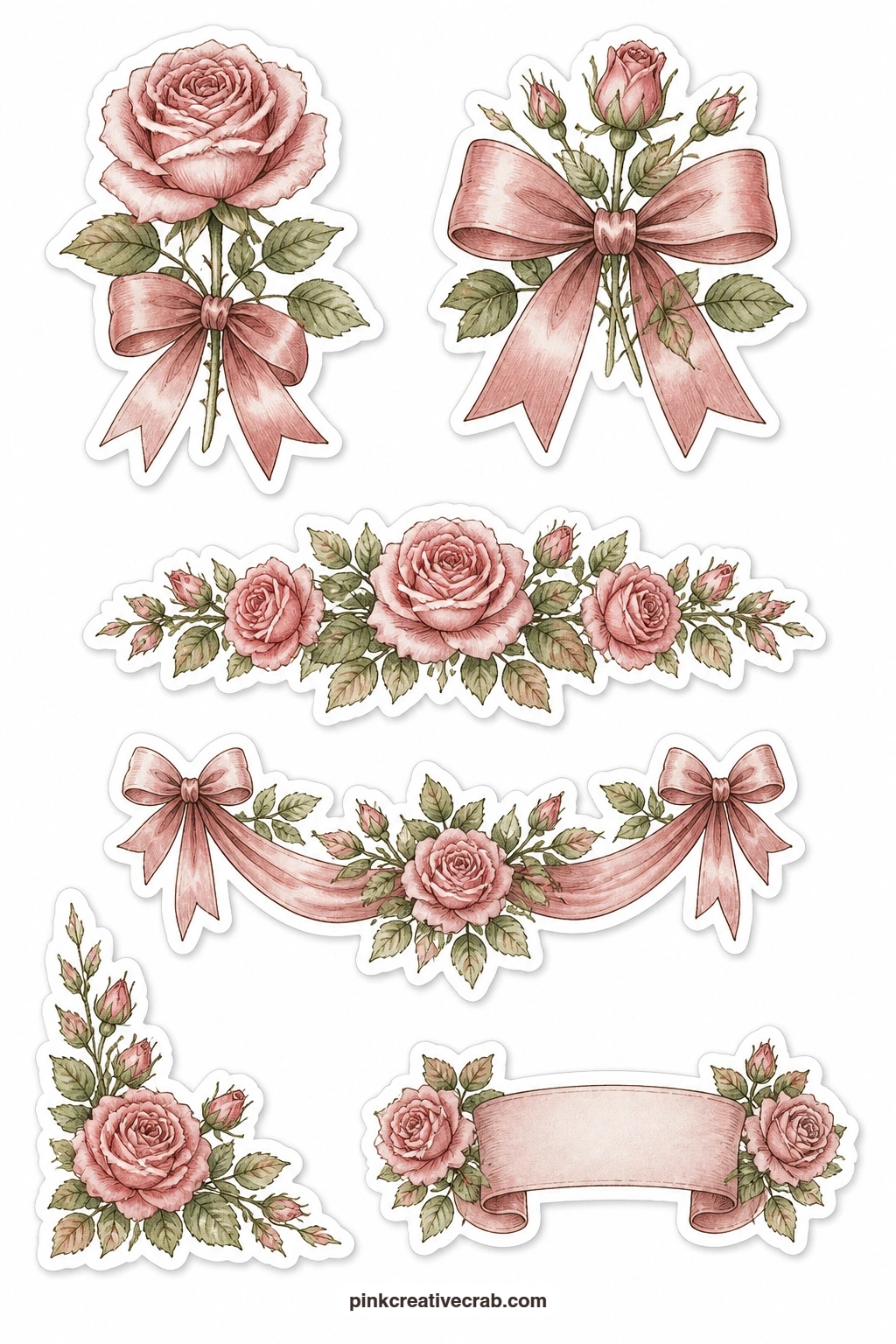
Roses get dressed up here with a rose tied in satin ribbon, a ribbon bow with rosebuds, a rose garland, a rose swag, a rose corner piece and a plain rose banner, giving you both flowers and small finishing touches for a page.
The rose corner and banner work especially well as a frame along the top of a planner week, while the garland and swag suit the base of a card. If roses and ribbons are the theme you want for a whole occasion, the Valentines junk journal pages build on the same idea.
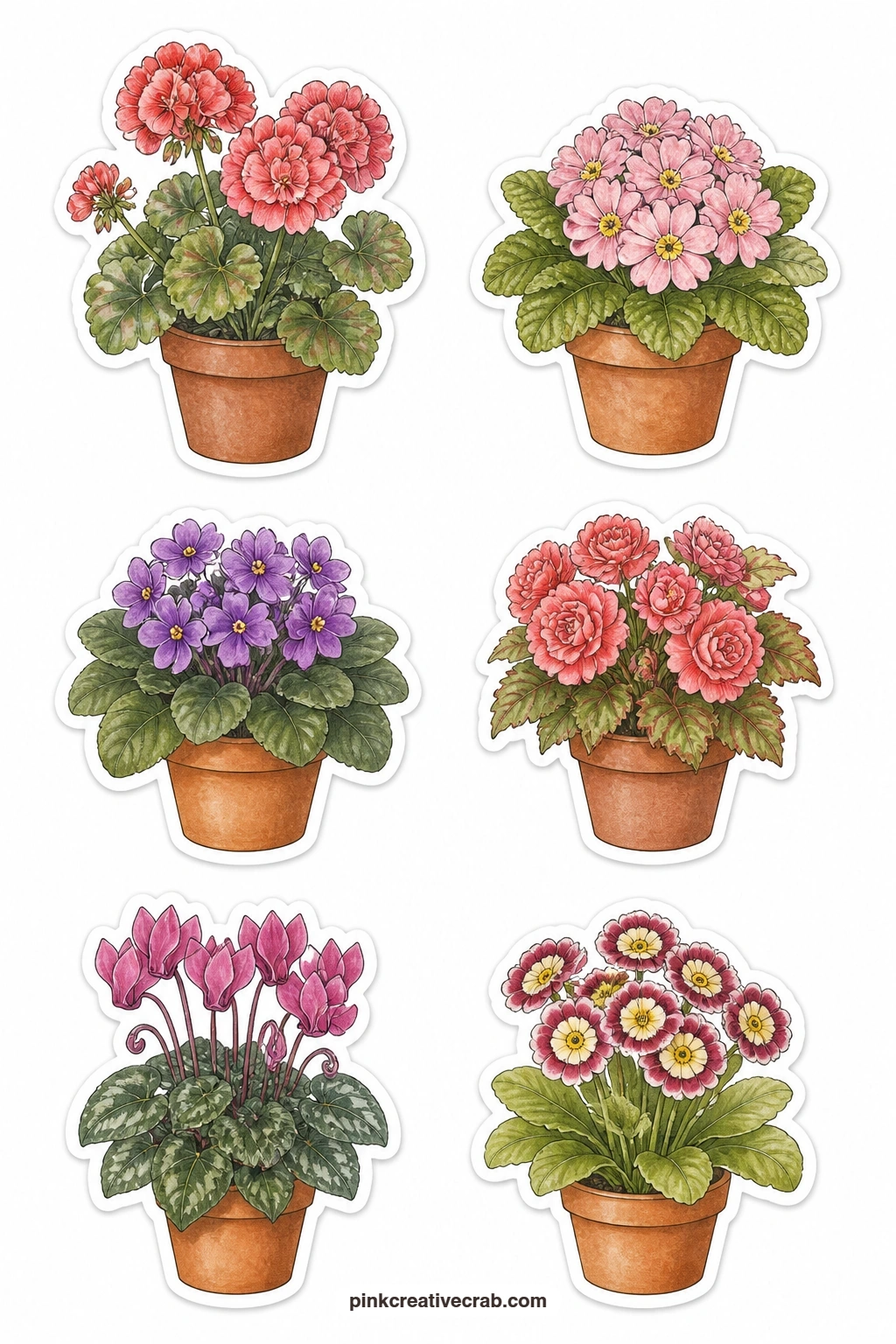
Six potted plants line up on this sheet: a terracotta pot of geraniums, a pot of primroses, a pot of African violets, a pot of begonias, a pot of cyclamen and a pot of auriculas, each in its own small clay pot.
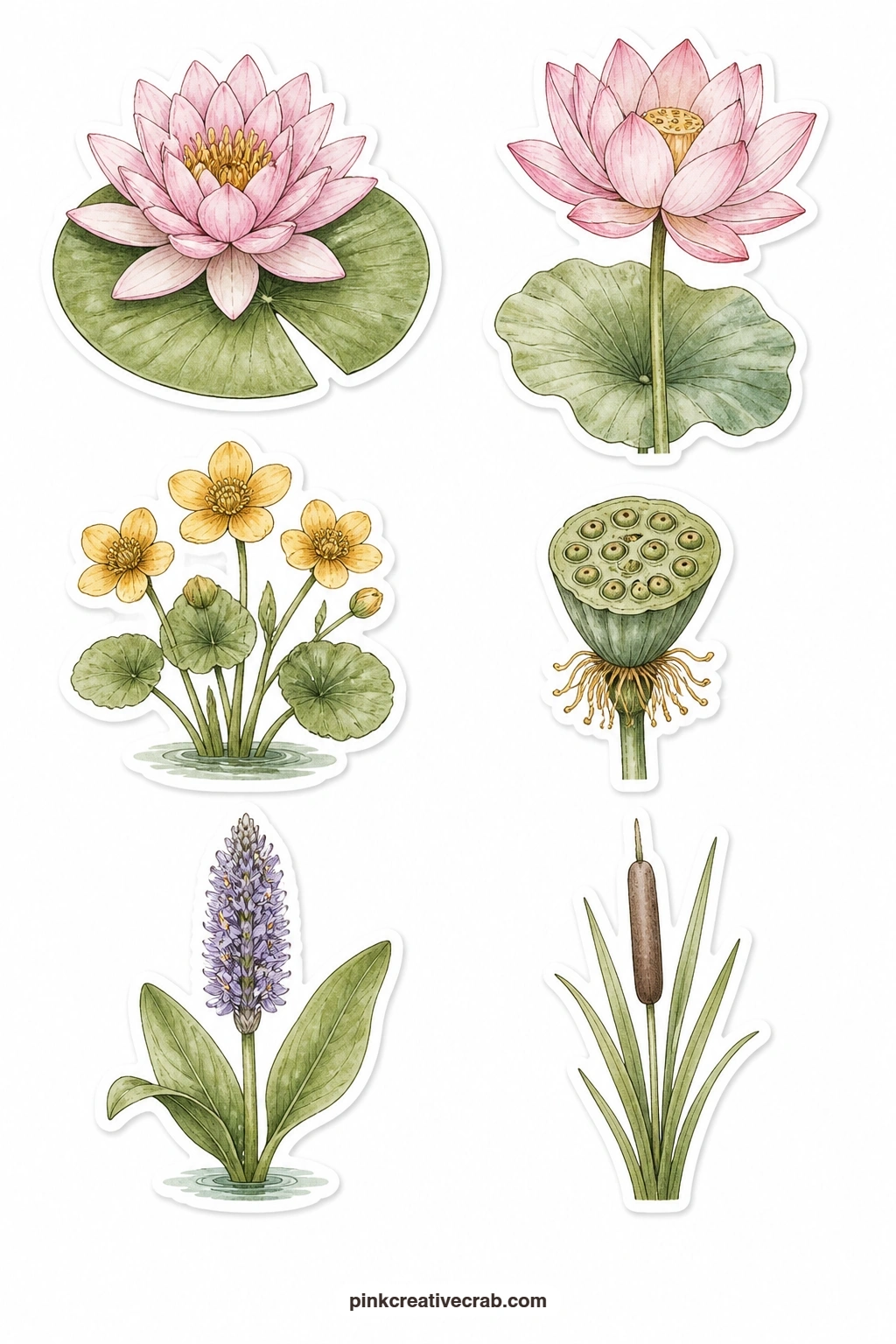
A water lily, a lotus, a marsh marigold, a lotus seed pod, a pickerel weed and a cattail bring a pond’s worth of plants to one sheet, six shapes that sit well together along the bottom edge of a page.
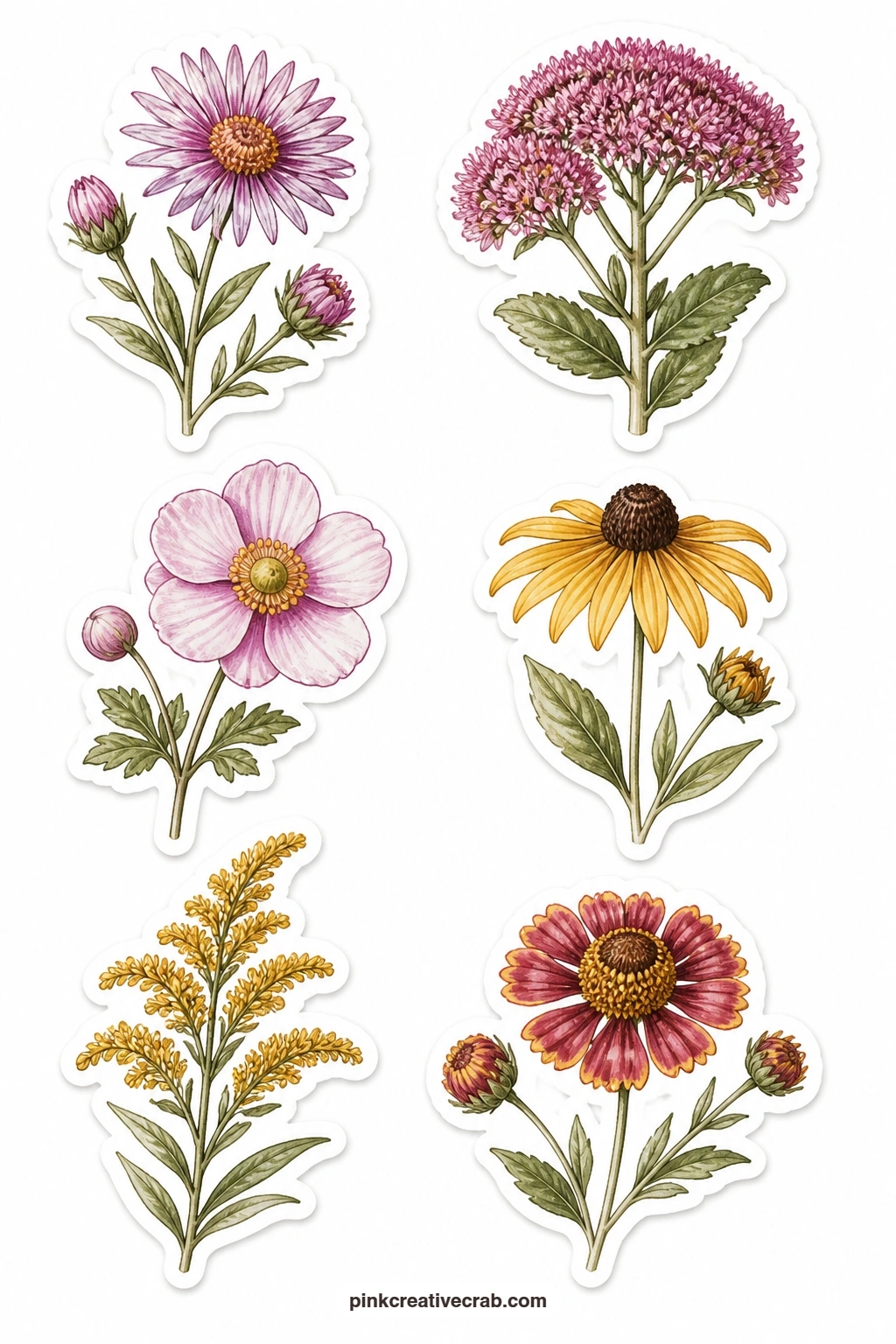
An aster, a sedum, a Japanese anemone, a rudbeckia, a goldenrod spray and a helenium close out the garden year on this sheet, six flowers that carry colour into the later months.
Lace And Bouquets
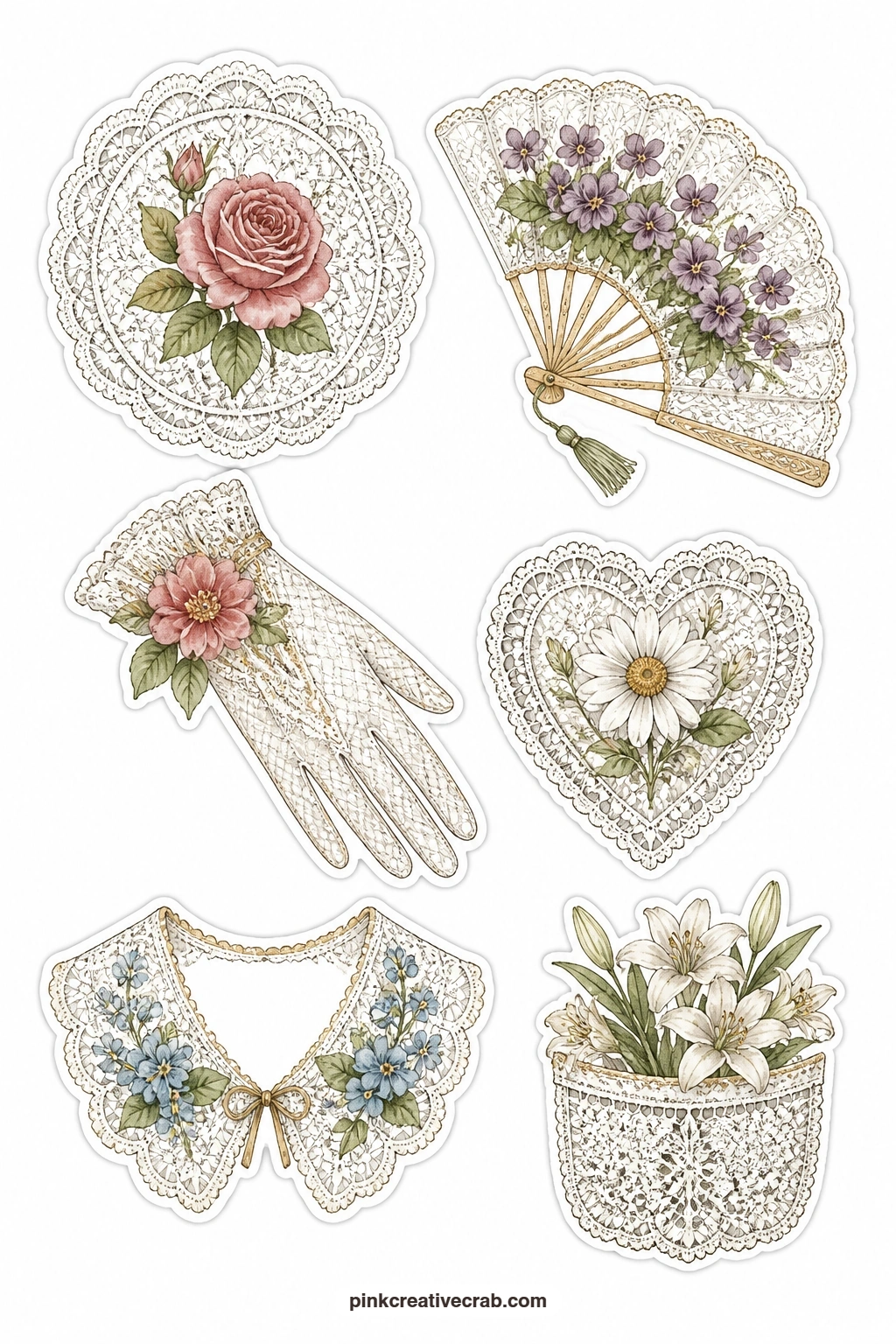
Lace meets flowers on this sheet: a lace doily with a rose, a lace fan with violets, a lace glove with a flower, a lace heart with a daisy, a lace collar with forget-me-nots and a lace pocket with lilies, each piece a small keepsake rather than a plain flower.
These suit a card for a wedding, an anniversary or any note that wants a softer, older feel than a plain bloom gives. On sticker paper the fine lace edges hold up well, so this is a good sheet to print that way rather than cutting by hand on plain paper.
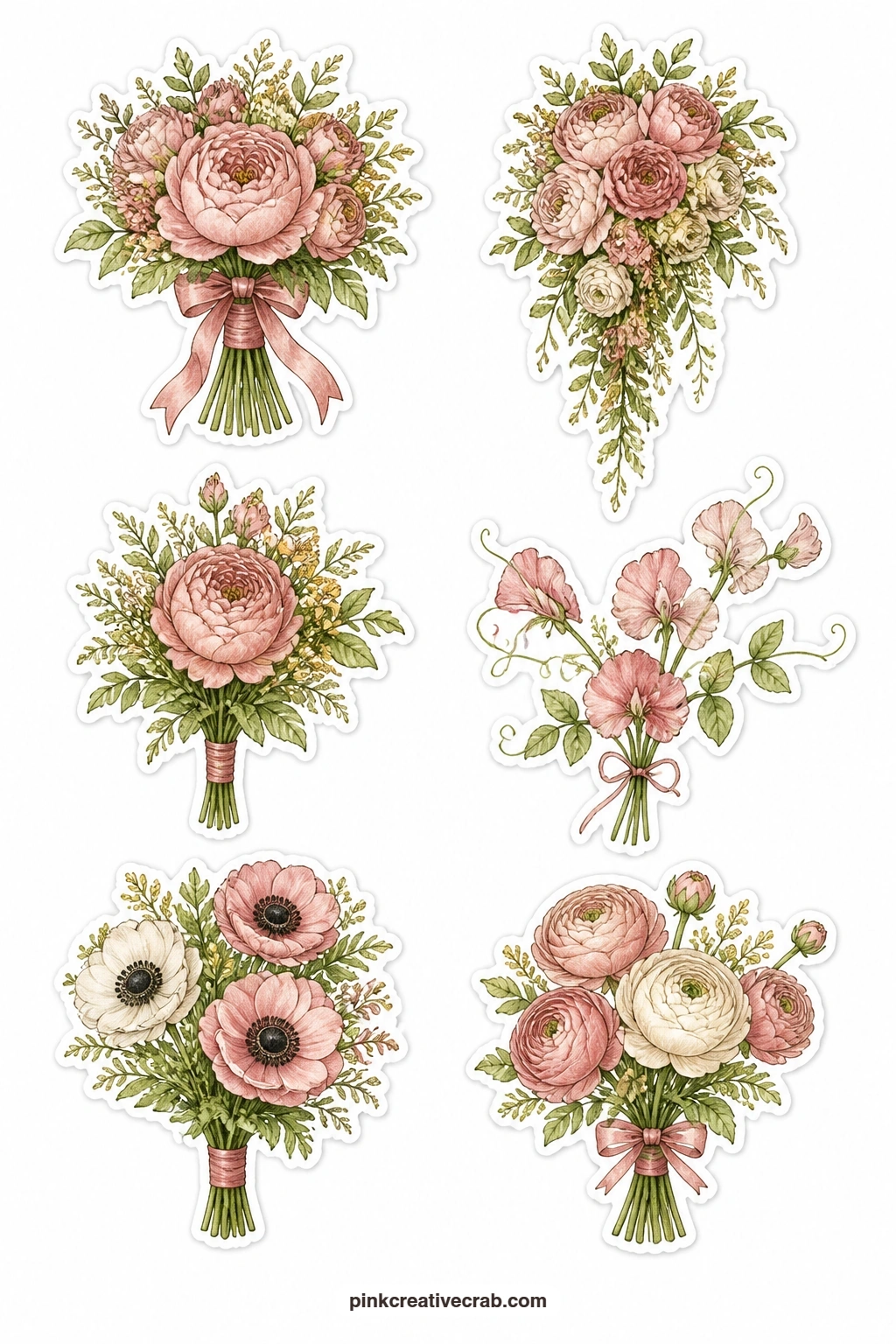
Six gathered arrangements fill this sheet: a bridal bouquet, a cascade bouquet, a nosegay, a spray of sweet peas, a bouquet of anemones and a bouquet of ranunculus, each tied and full rather than a single stem.
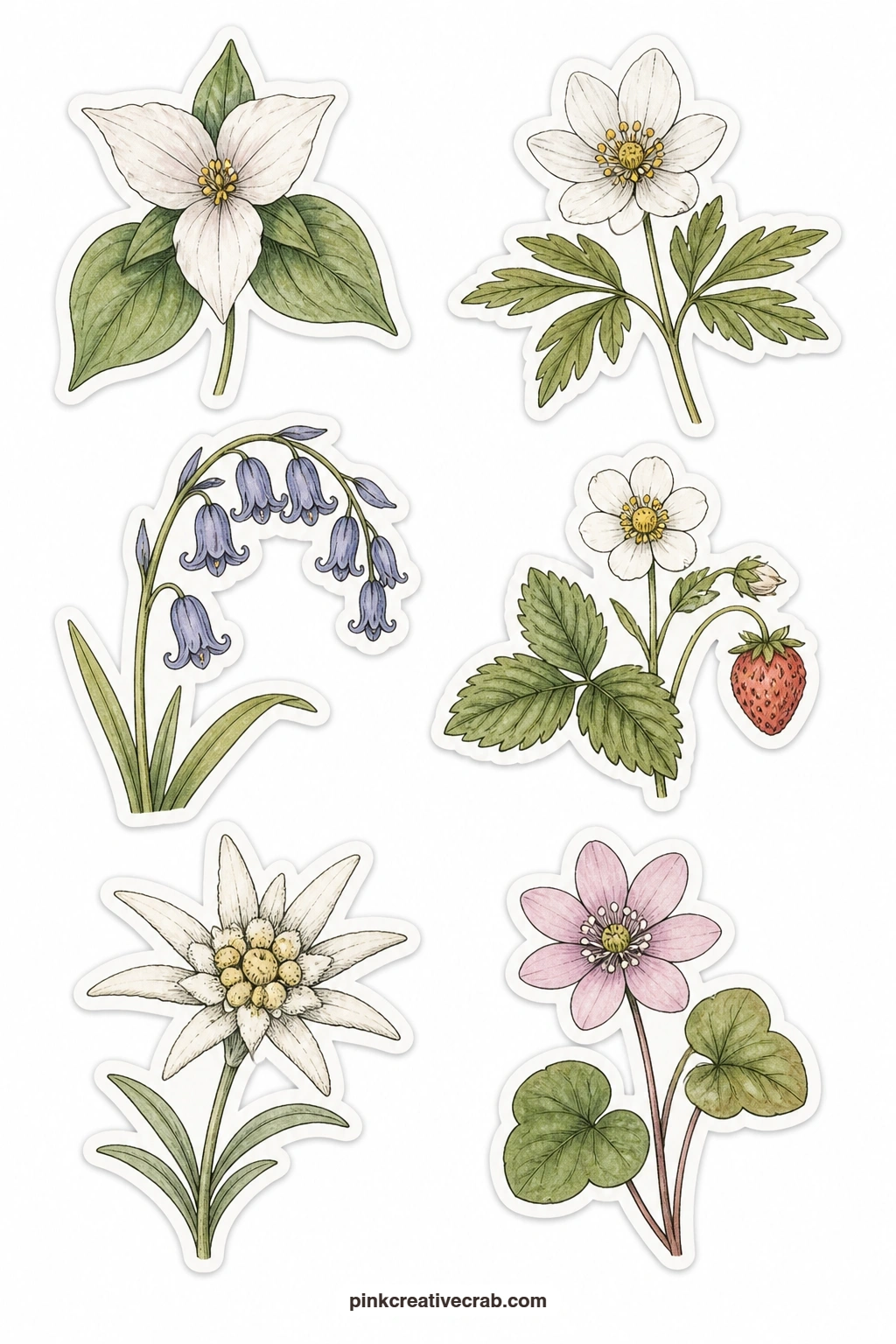
A trillium, a wood anemone, a bluebell, a wild strawberry flower, an edelweiss and a hepatica bring six shade-loving flowers to this sheet, quieter and smaller than the sunnier blooms elsewhere in the set.
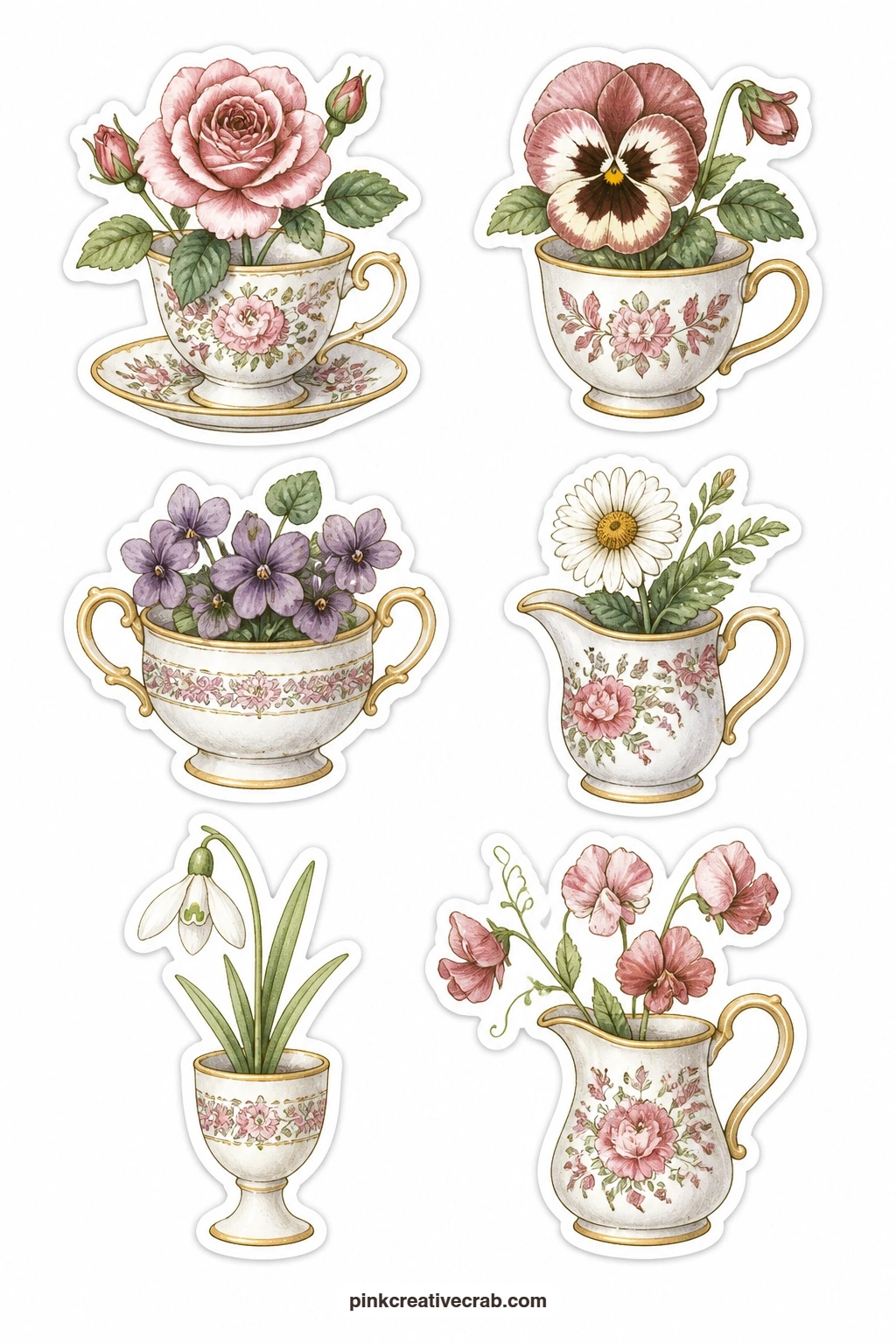
This sheet pairs small flowers with small china pieces: a rose in a teacup, a pansy in a cup, a violet in a sugar bowl, a daisy in a creamer, a snowdrop in an egg cup and a sweet pea in a jug, six tiny arrangements that suit a tea-themed spread.
Set one in the corner of a recipe card or beside a handwritten invitation for a casual afternoon. For a whole page built around the same idea, the Provence junk journal pages share a similarly soft, old-fashioned mood.
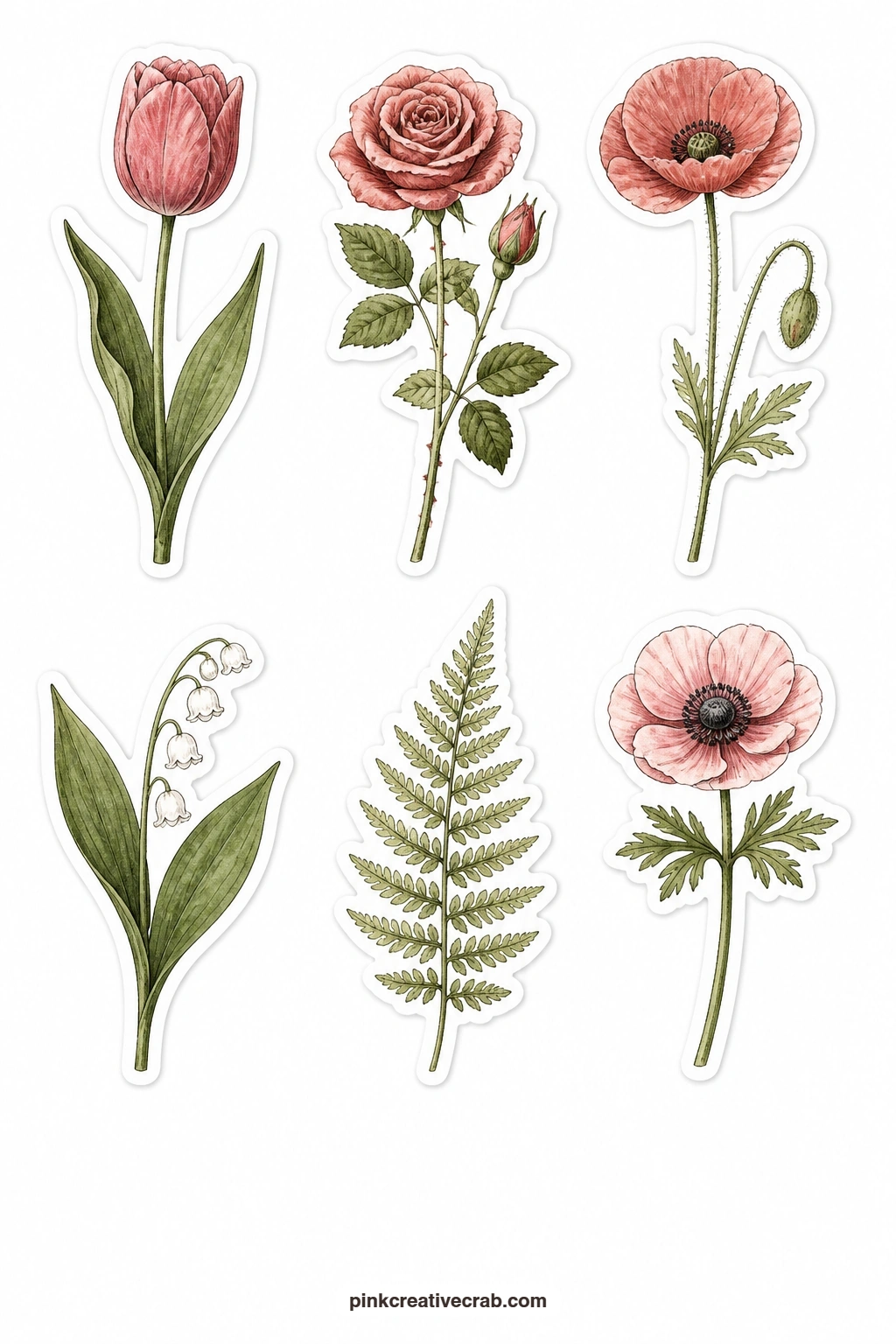
Closing out the set, this sheet keeps things plain with a tulip stem, a rose stem, a poppy stem, a lily of the valley stem, a fern frond and an anemone stem, six single pieces with nothing added, good for filling a narrow gap on any page.
What to Do Next
Pick one or two sheets to start with, print them at actual size and keep the rest ready for the next card or journal spread that needs a little old-fashioned garden on it.
Frequently Asked Questions
What paper works best for these vintage flowers stickers?
Printable sticker paper gives you a true peel-and-stick sheet, matte finish rather than glossy so the watercolour look stays soft. Plain paper with a glue stick works just as well if sticker paper is not on hand.
What printer settings should I use?
Print at actual size or 100 percent, never fit to page, so the flowers stay the size they were drawn. Choose the best or photo quality setting if your printer offers one, since it keeps the thin ink lines crisp.
How do I cut out the smaller sticker shapes?
Leave a thin white border around each piece rather than cutting right along the ink line, since it protects the edge from fraying. Small detail scissors handle most shapes, while a craft knife helps with tight inner curves like lace or wings.
Can I use these stickers on gifts as well as in journals?
Yes, they work well on gift wrap, small boxes and envelope seals, not only inside journals and planners. A single rose or wreath sticker also dresses up a plain card front in seconds.
How should I store leftover stickers between projects?
Keep uncut sheets flat in a folder and store cut pieces in a small tin or zip pouch sorted loosely by flower type. This keeps the thin paper edges from curling or tearing before you use them.
Have any thoughts?
Share your reaction or leave a quick response — we’d love to hear what you think!
-
 0
-
0
-
0
-
0
-
0
-
0


