

Table of Contents
An emily dickinson junk journal gathers her world onto paper without a single borrowed line: the herbarium she kept as a girl, the garden she tended at the Homestead, the small writing table where she worked by lamplight. This kit builds that world across 22 scene pages, 4 seamless backgrounds and 5 lined writing pages, moving from pressed flowers and bees to snow on the garden and a quiet lamp at night.
Print the set on heavyweight cream or ivory cardstock (around 90 to 110 lb) so ink does not bleed through, and run a test page first if your printer lets you choose a photo or high quality setting. Trim close to the edge with scissors or a paper cutter, since every page runs full bleed with no white border to guide you.
Using these images: free for personal projects such as printing, coloring, cards, journals and gifts. Handmade items that include them may be sold up to 30 pieces per design. More than that is commercial use and is not permitted, and neither is selling or sharing the images themselves or passing them off as your own. Please ask before any other use.
The Herbarium and Writing Table
Glue a real pressed flower or leaf straight onto this page, or tuck one into a vellum pocket beside the painted specimens so the page holds something your own hands gathered.
A dried violet, a clover head or even a grass blade from a walk works well here, and a short note on where it came from turns the page into a small record rather than only a picture.
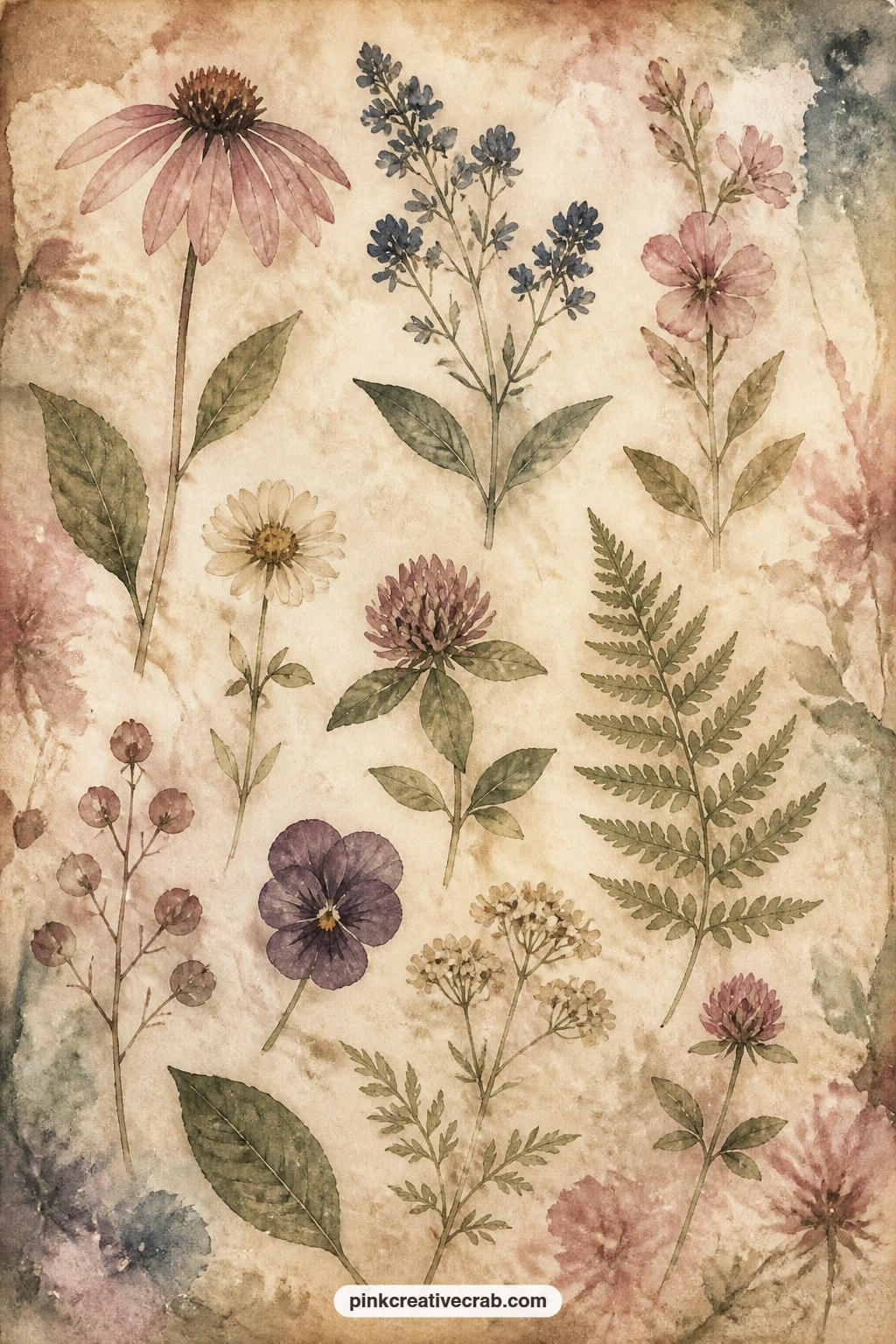
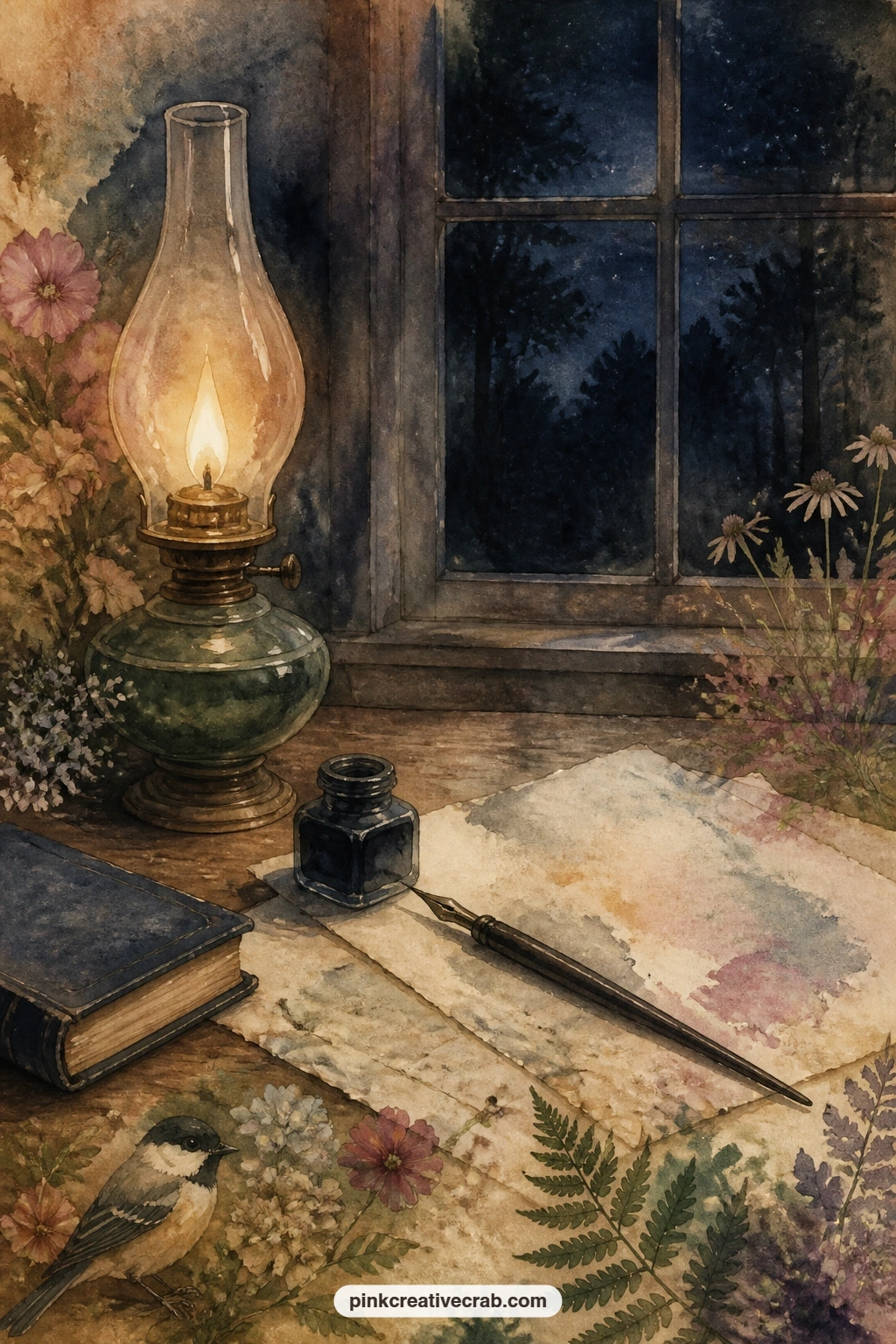
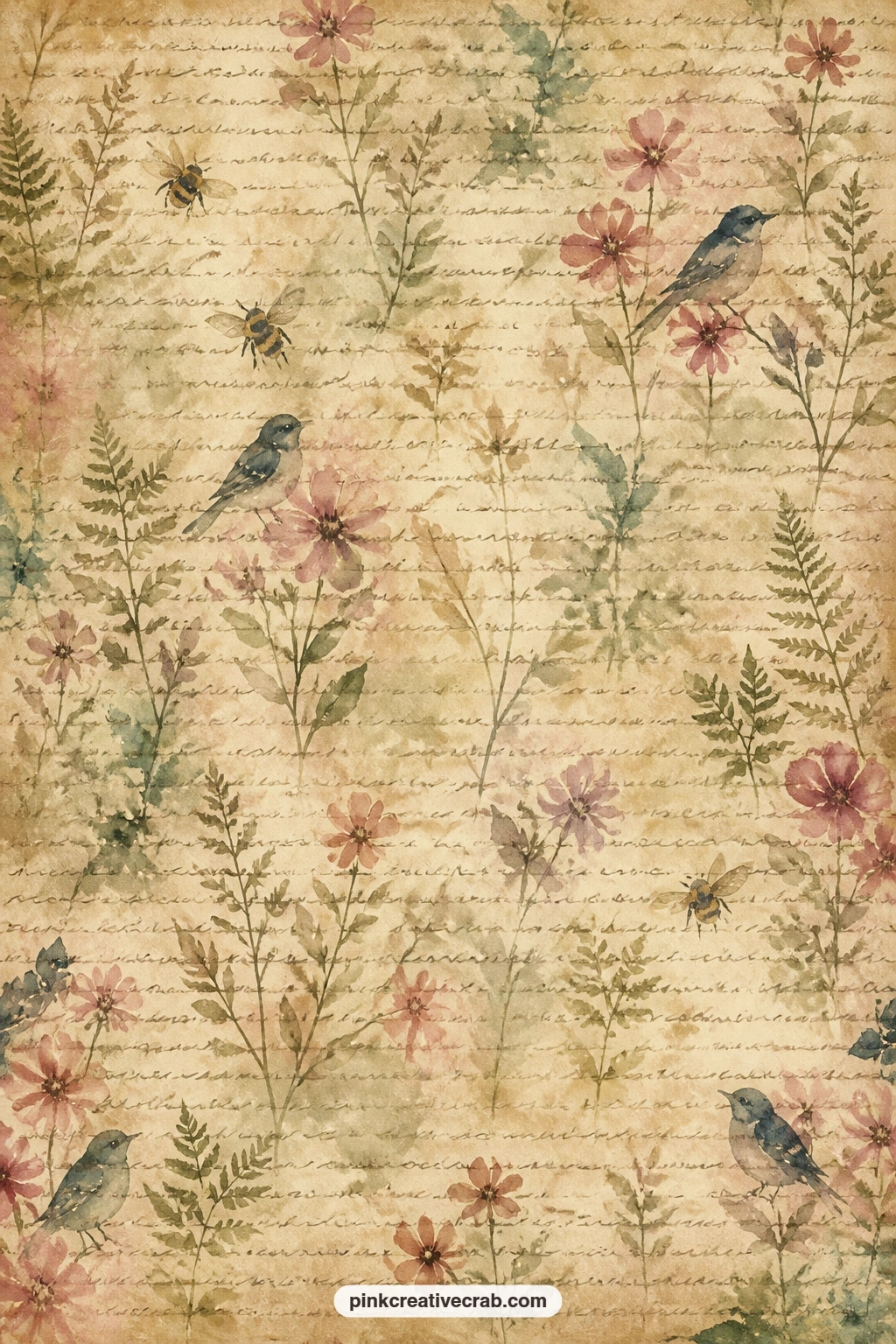
Pair this page with the faded handwriting texture background from this set, laying the writing table scene over a strip of that pattern as a frame or a facing page so the two feel like one spread.
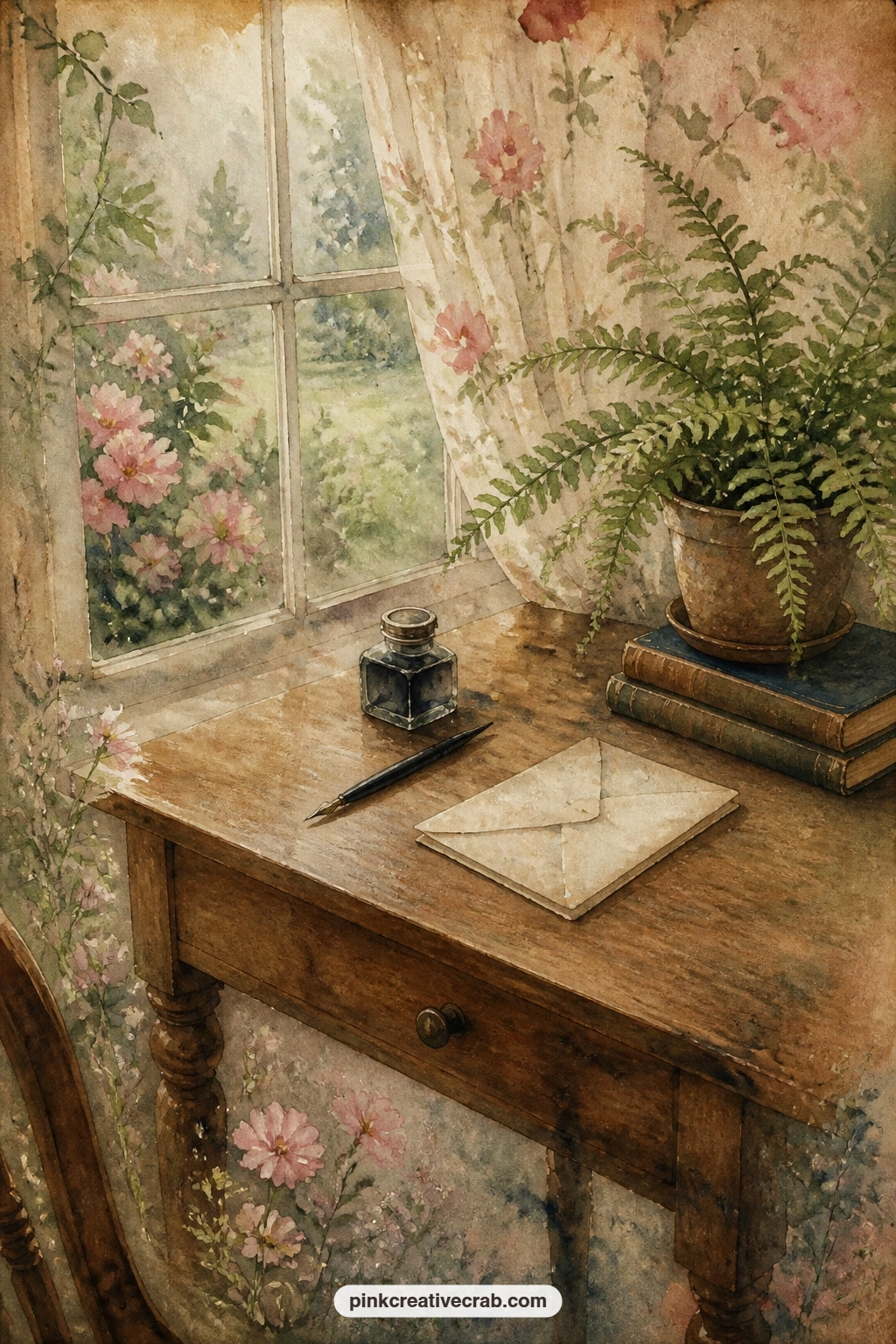
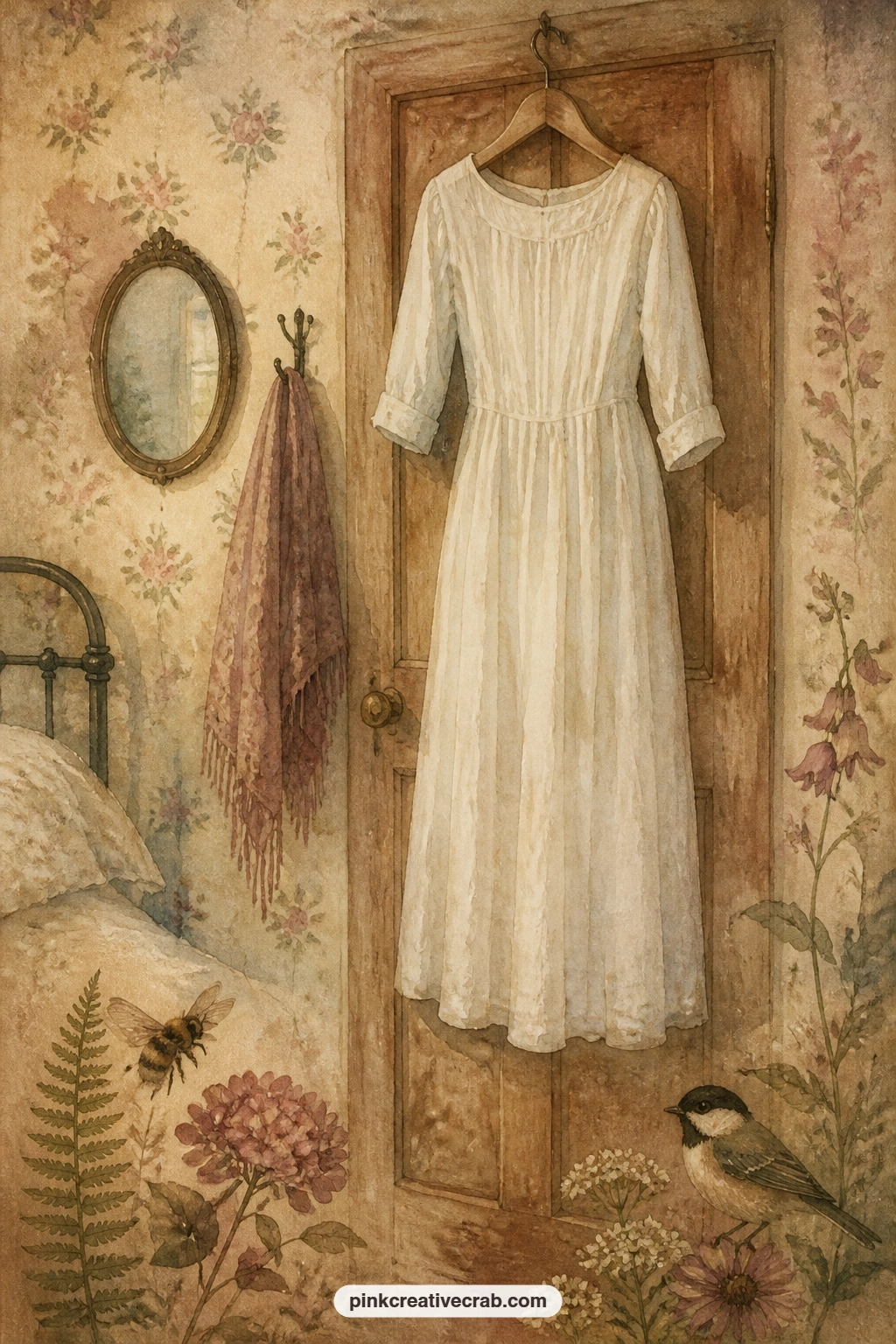
A plain white dress hangs on a closet door, simple enough to read as everyday or ceremonial depending on what story you give it next to this page.
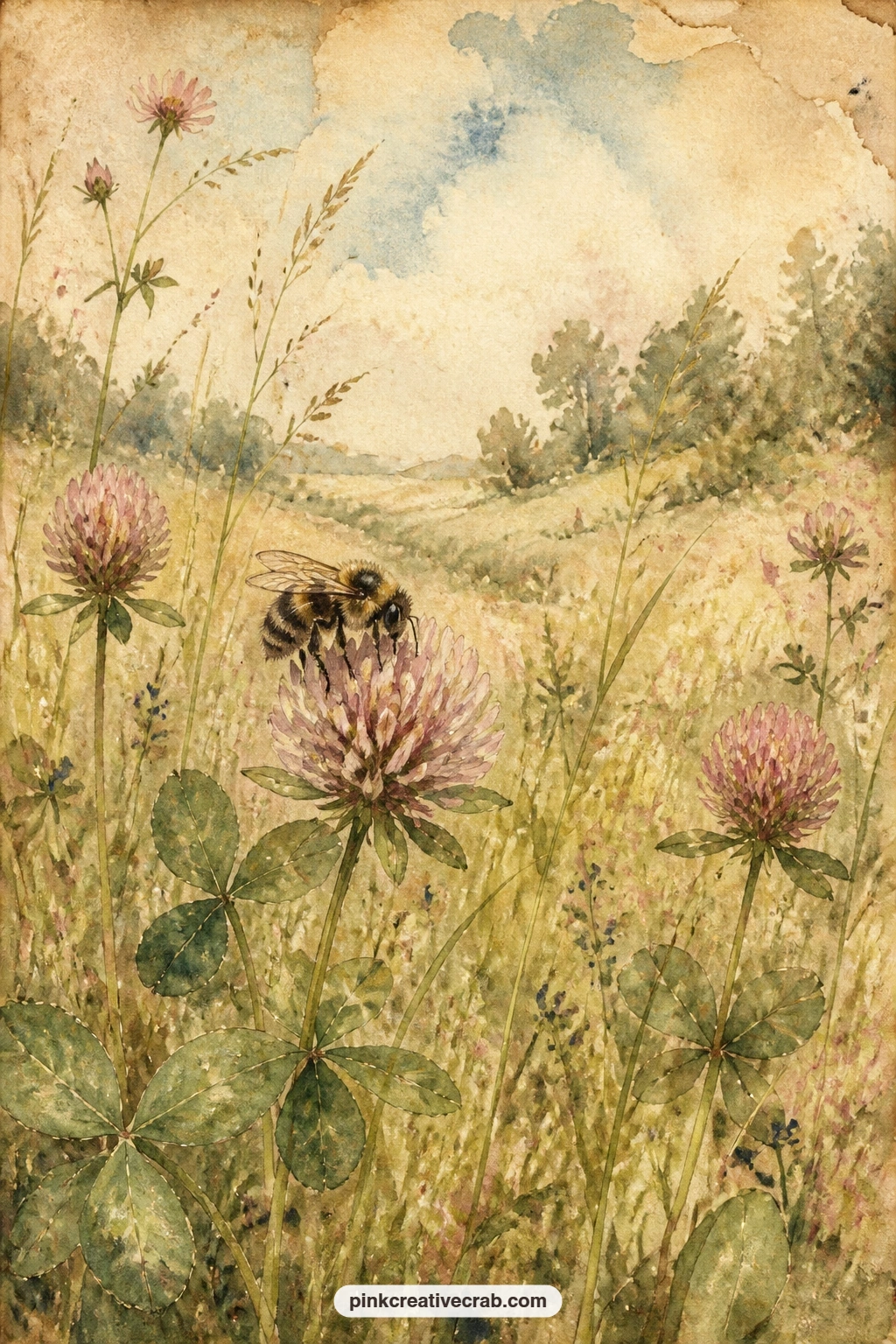
The usual mistake with a meadow page is cramming it with too many flowers until the bee disappears, so keep the clover loose and let the open grass around it carry most of the page.
A few stems leaning one direction and a soft wash of green behind them will do more than a dozen crowded blossoms ever could.
Garden And Homestead Views
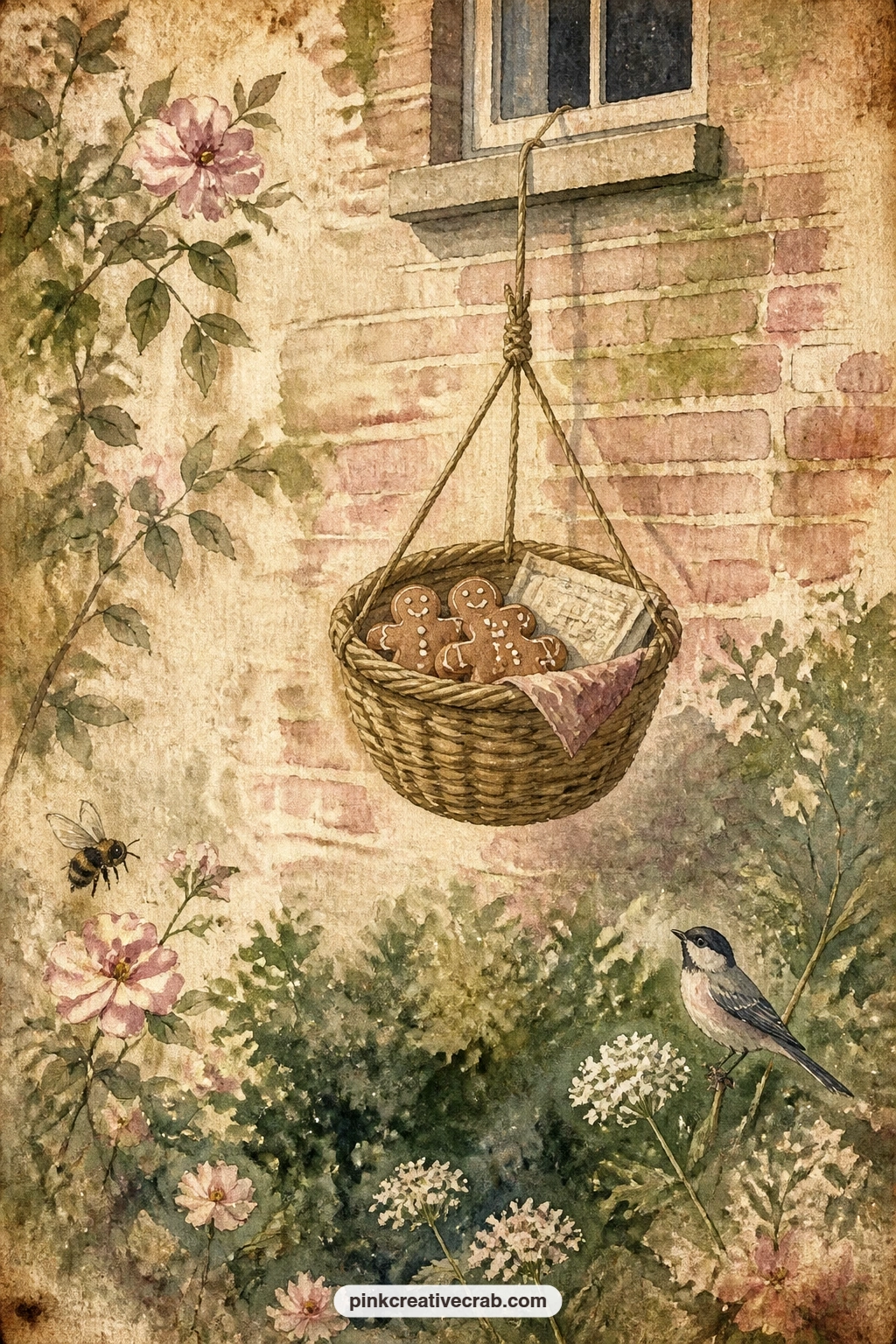
Think of this page for the reader in your gift journal who loves a small surprise tucked into daily life, since the basket and its string suggest a secret shared between neighbors.
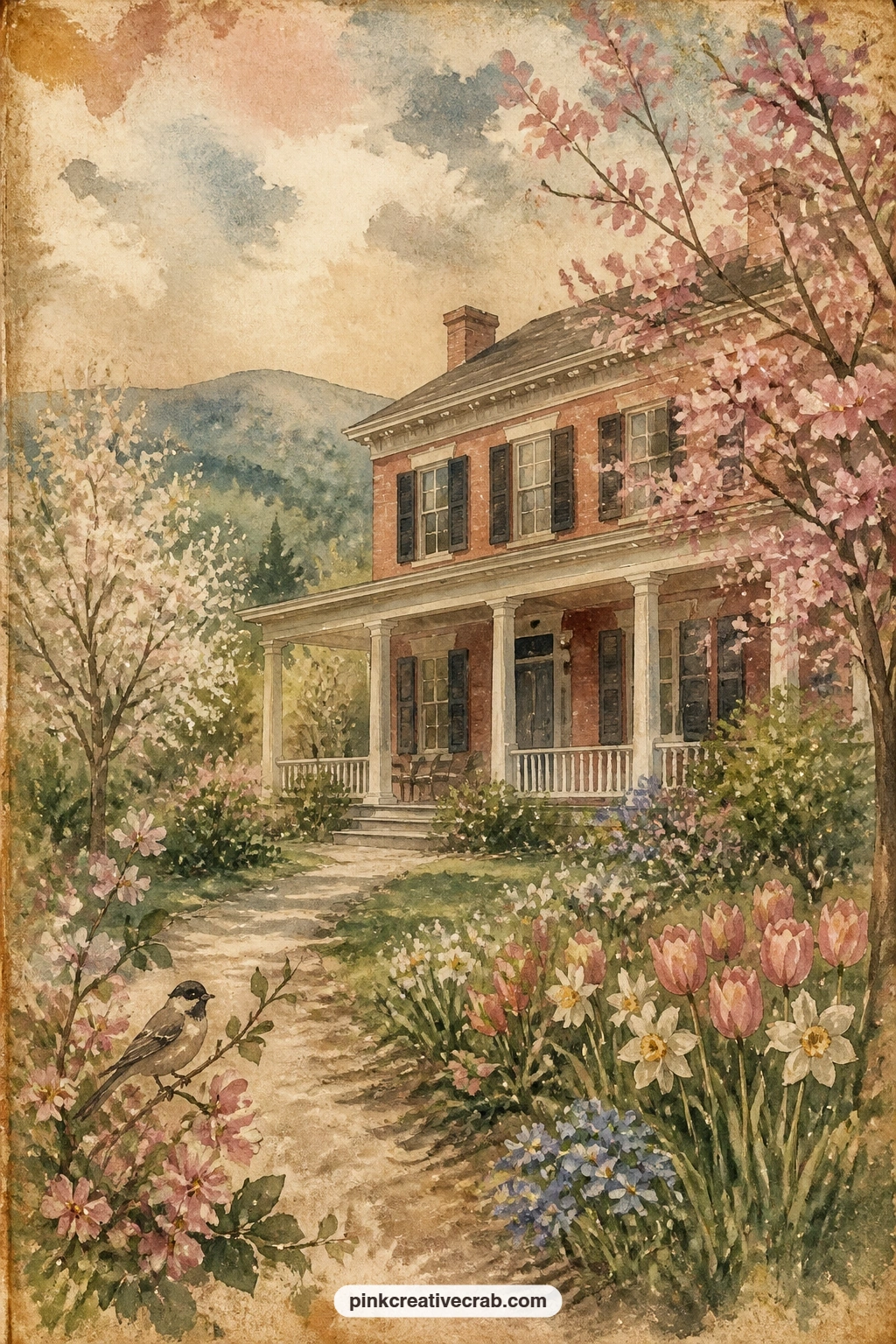
What would you ask this house if it could answer: a question about the garden it has watched grow, or about who last sat at its windows, makes a fitting prompt for the entry you write beside it.
Leave a line or two of space near the scene for whichever question comes to mind.
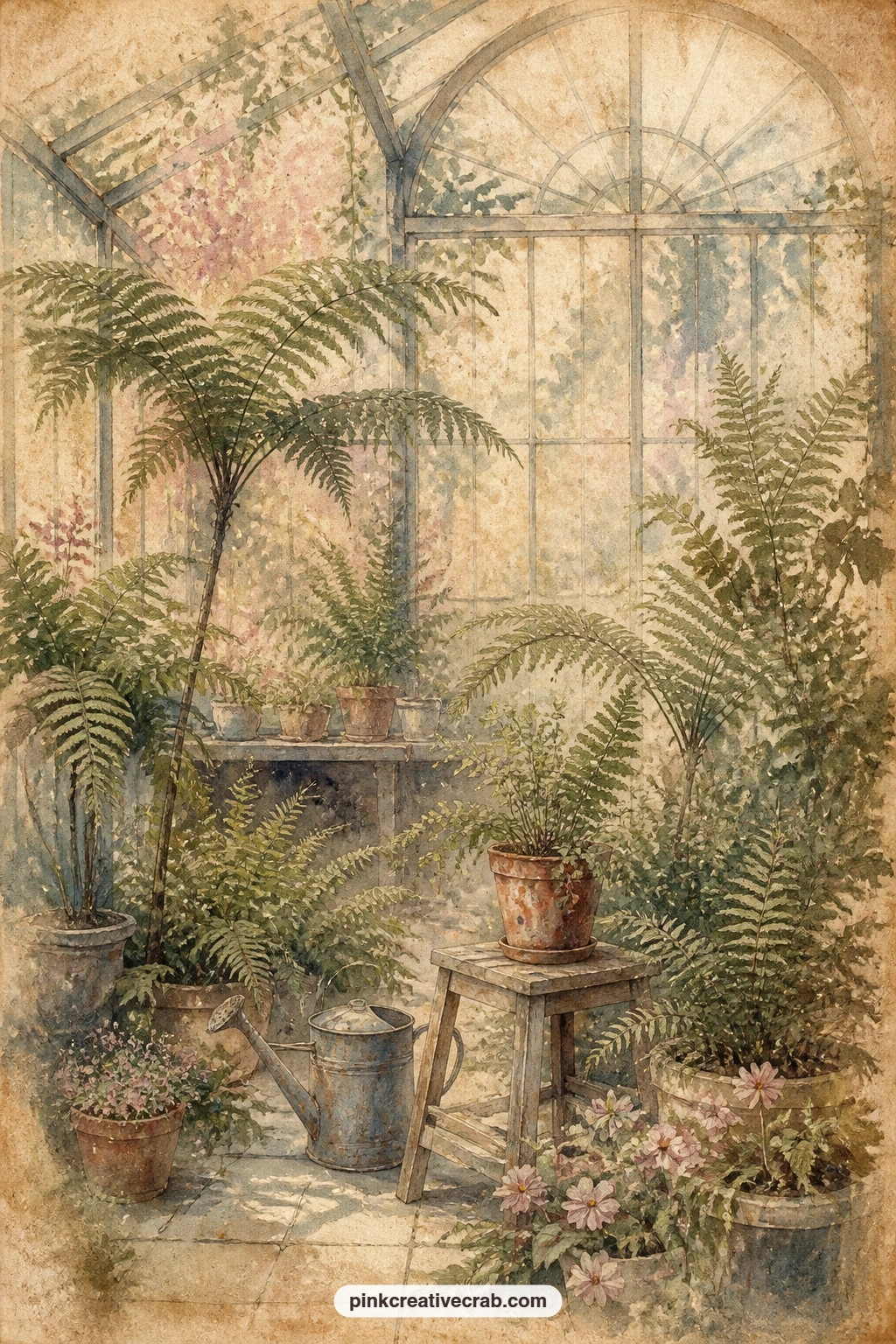
Tear the edge of this page roughly by hand rather than cutting it straight, since a torn border echoes glass panes and old growth better than a clean line ever could.
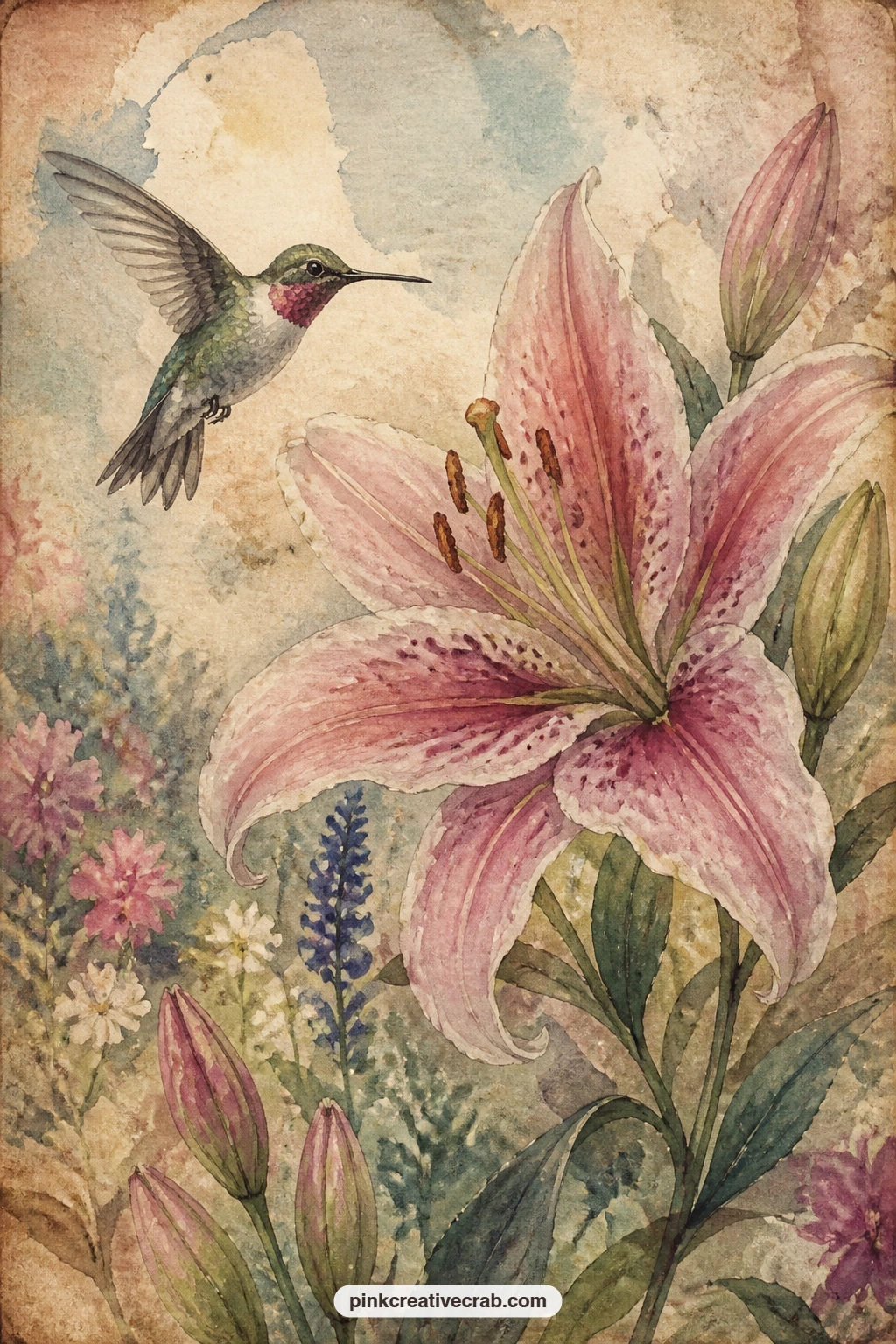
Ninety seconds of wingbeat and a lily trumpet wide open make the whole scene, with a scatter of smaller buds and leaves filling the garden bed behind the bird.
Stack this page beside the lamp and pen scene later in the journal, since both pages share the quiet work of writing by hand and look well facing each other across a spread.
A loose thread end trailing off the booklets gives the eye somewhere to land before it reaches the facing page.
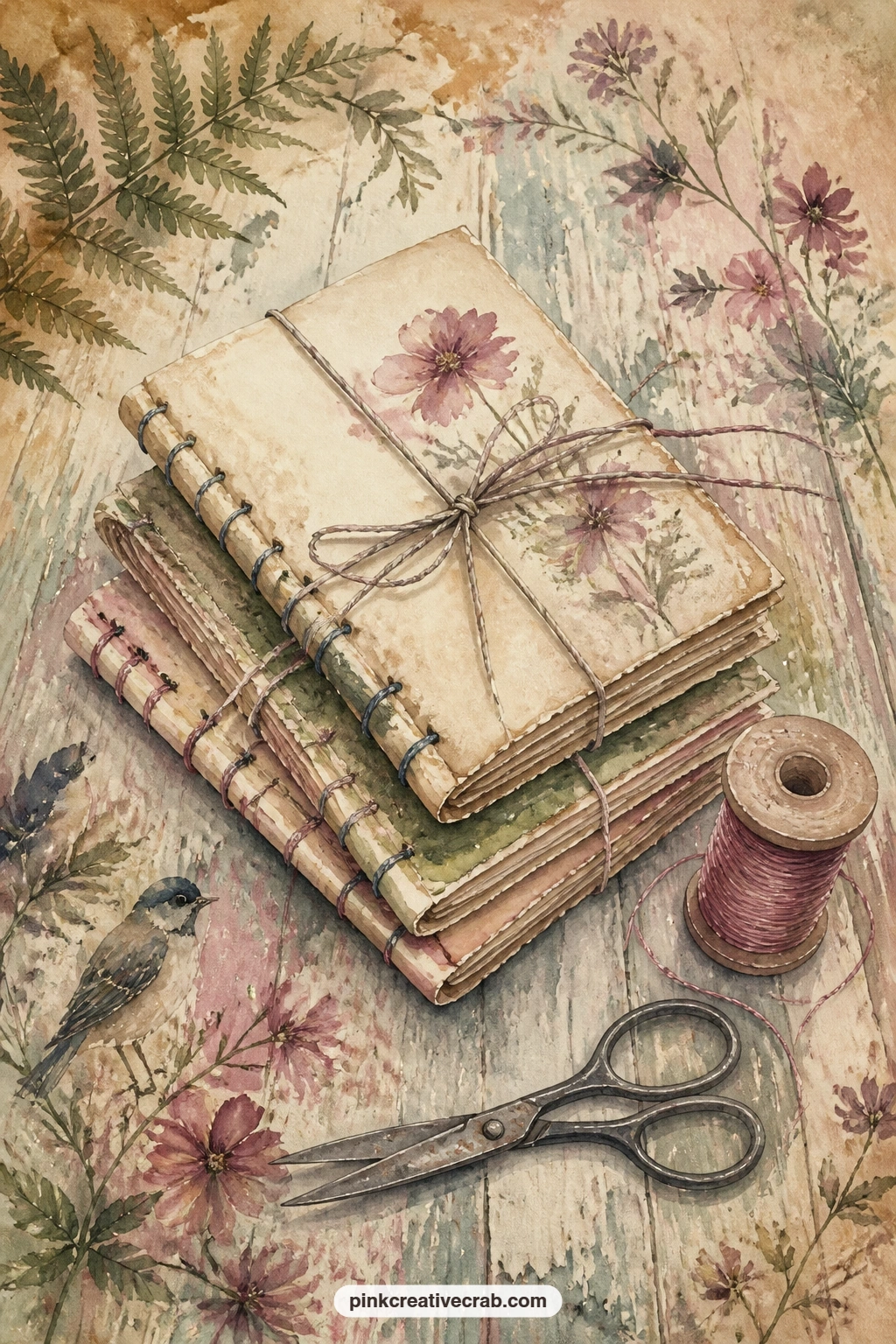
Pressed Flowers And Garden Birds
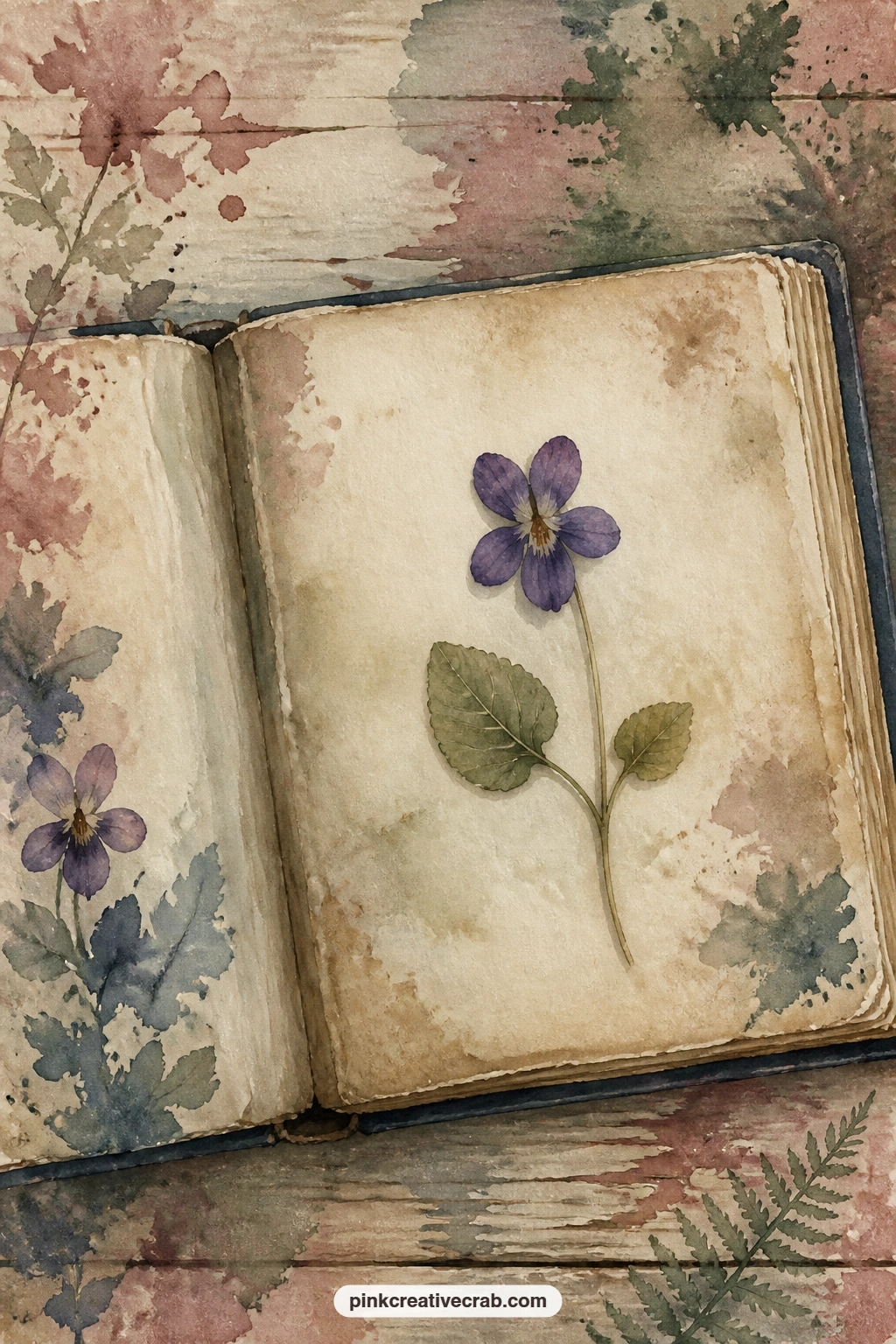
A single pressed violet lies flat inside an open book, its faint shadow and the worn page edges around it carrying the whole quiet scene.
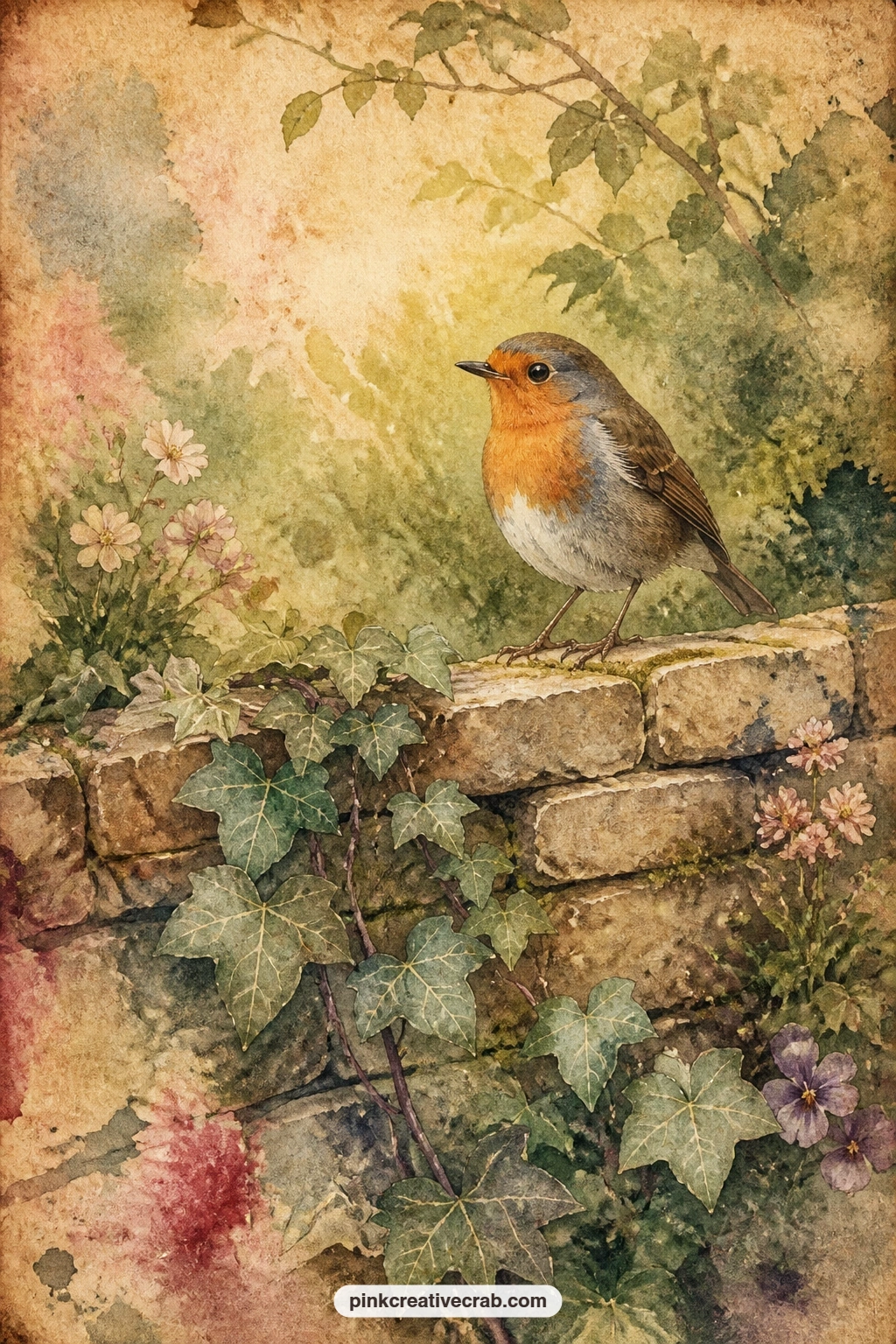
For the five minute version, paint or trace just the robin and a short stretch of stone wall, then let a quick wash of green stand in for the garden beyond instead of adding every leaf and vine.
The page still reads as finished with far less detail than it first seems to need.
Give this page a window cut into the desk surface, with a smaller painted scene of stars or a dark garden peeking through, so lifting the flap reveals a second quiet detail.
A branch of apple blossoms reaches past an open window frame, with a few petals drifting loose and a soft orchard view painted beyond the glass.
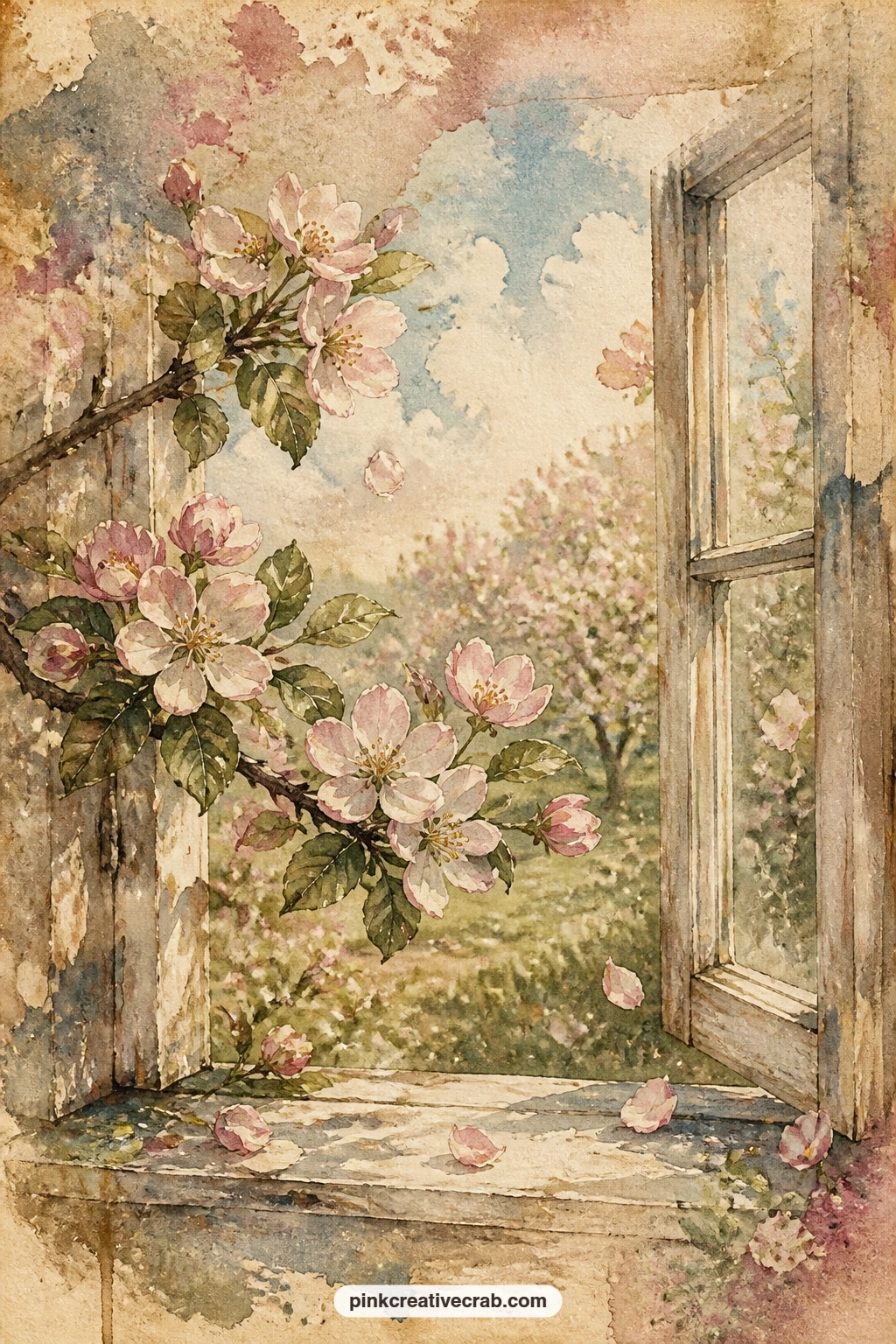
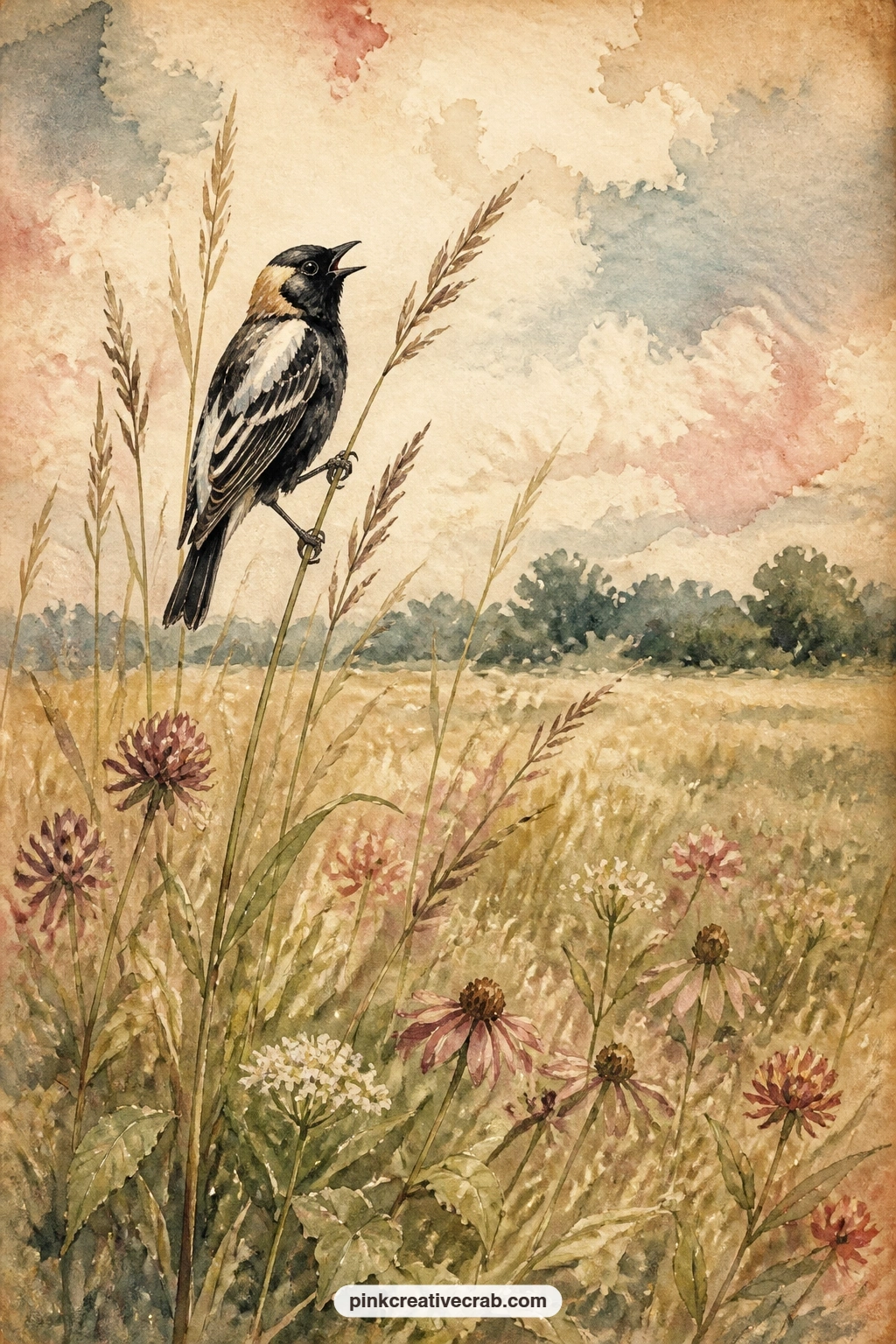
Try this prompt for the entry you write here: what sound from outdoors do you notice most without ever quite watching for it.
Leave space below the field scene for a few lines in answer, whether that means birdsong, rain or simply wind through grass.
Letters And Quiet Corners
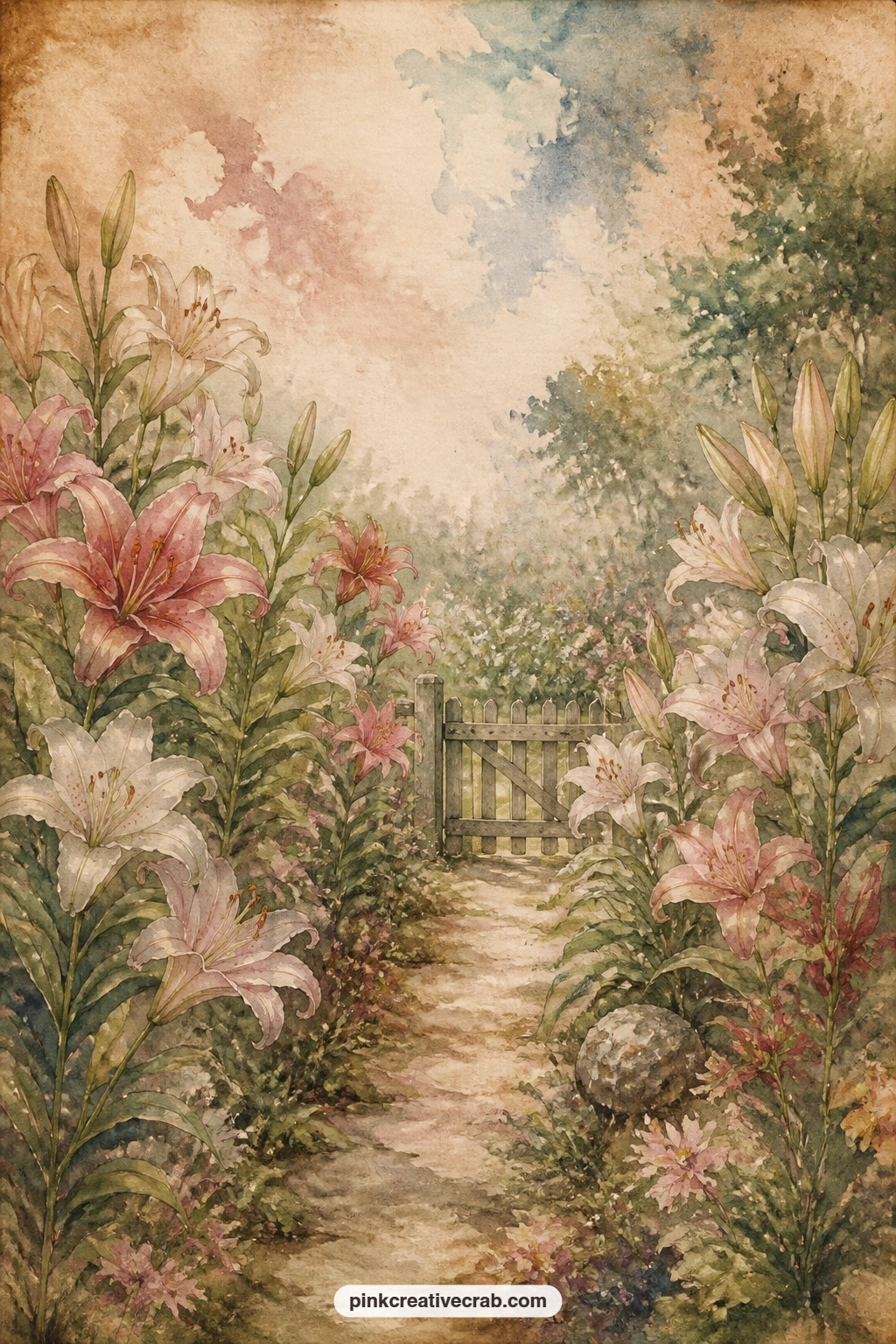
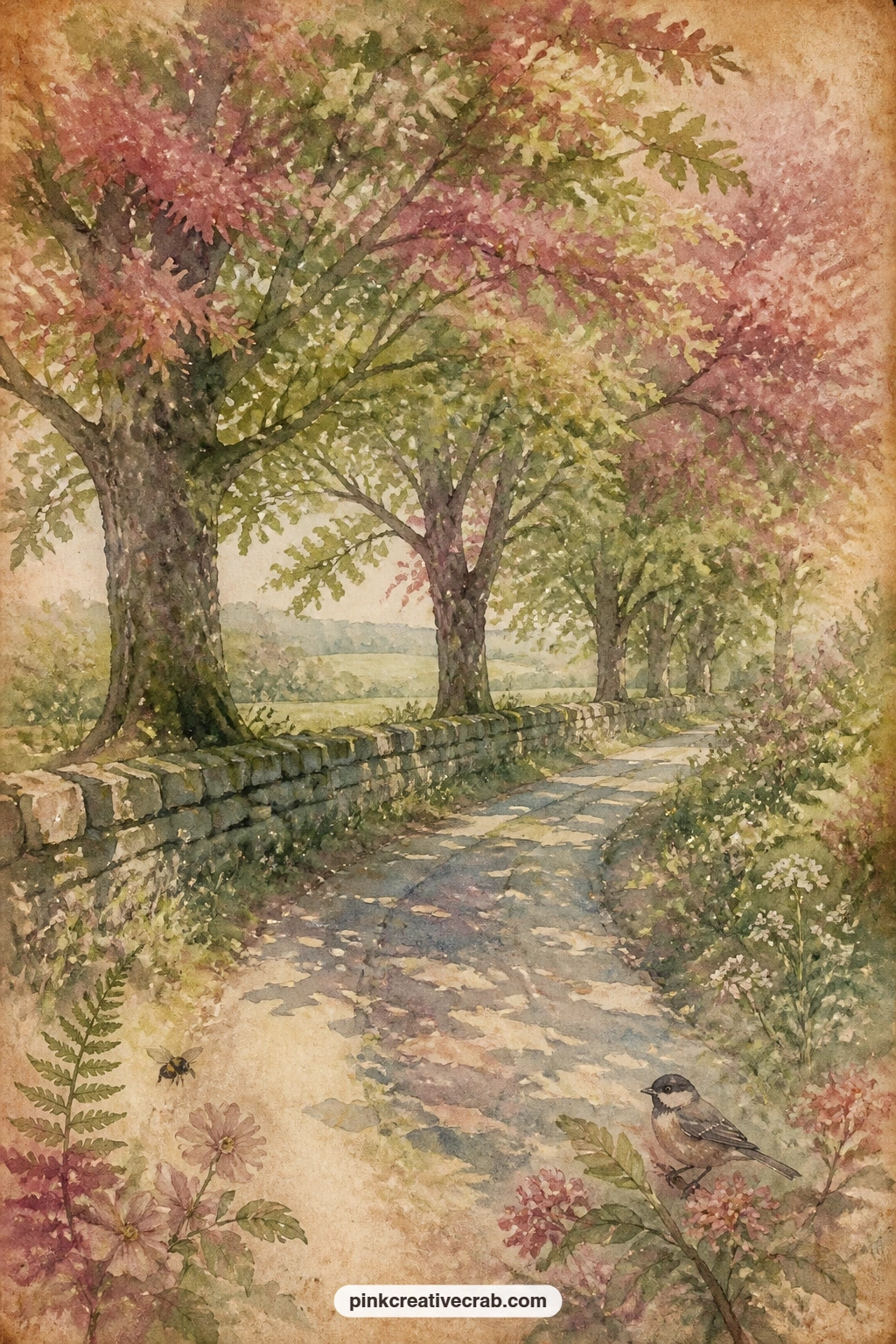
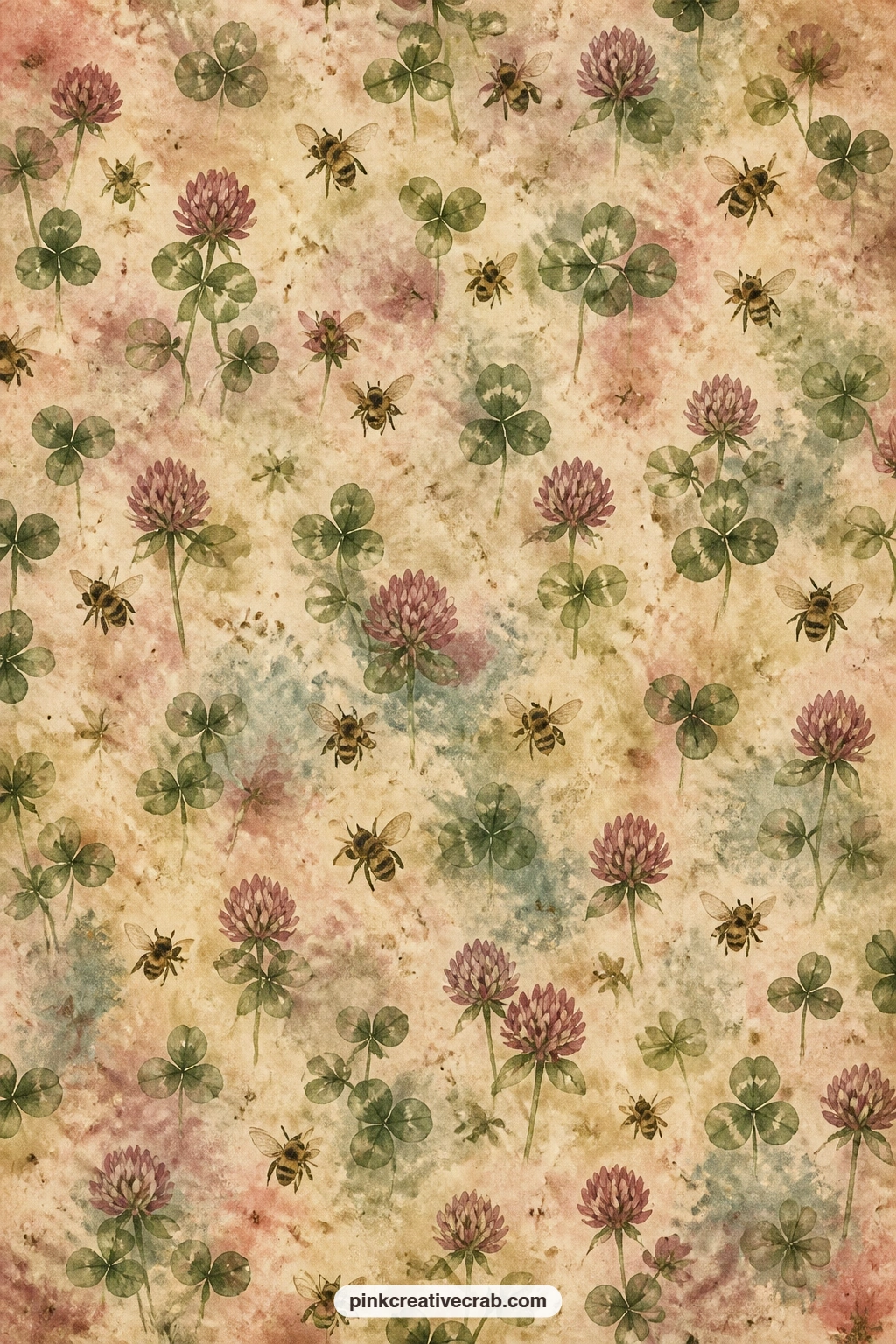
Pair this path with the bee and clover background from this set, using a strip of that pattern as a border strip along one side of the page to tie meadow and garden together.
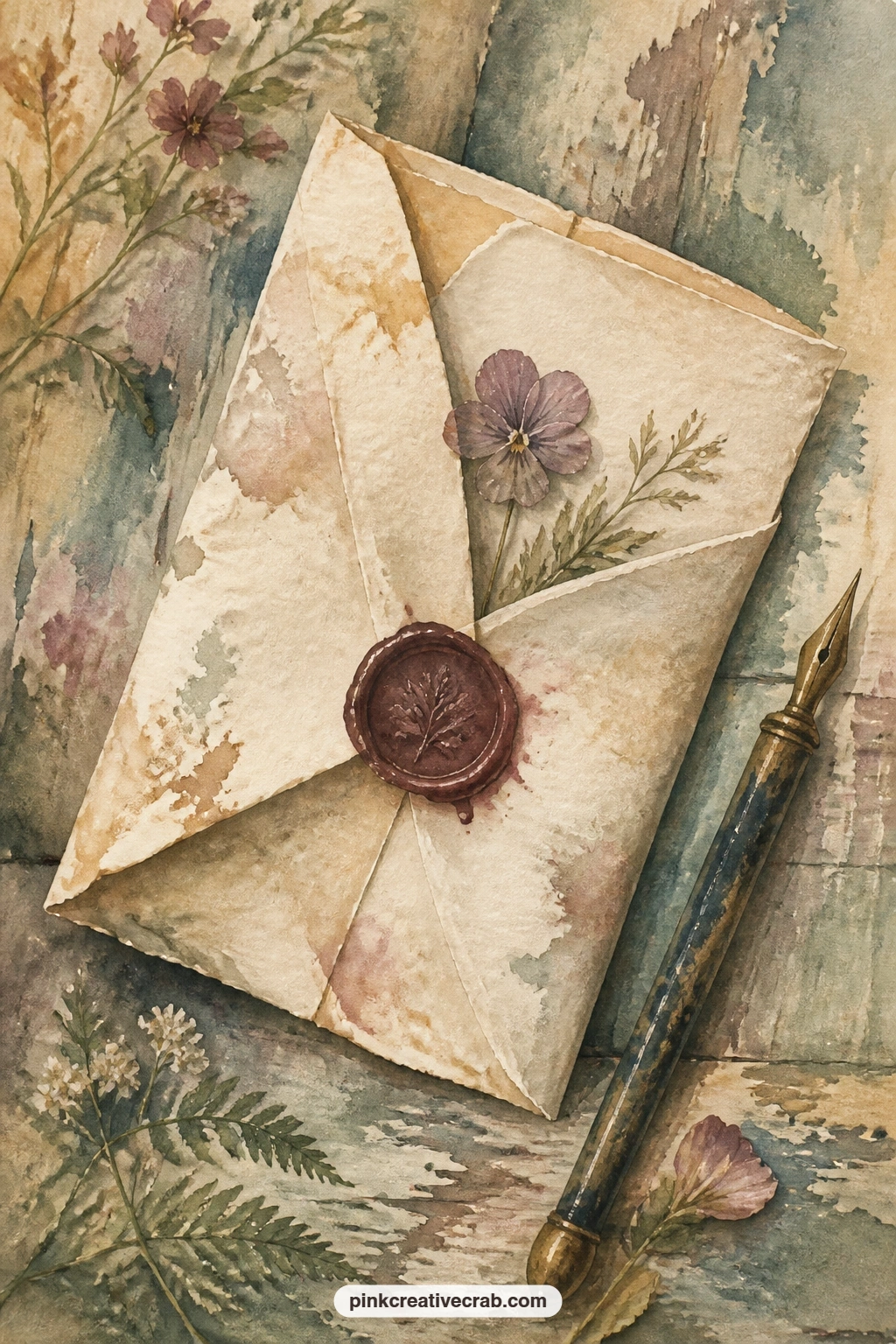
Fold this page down the center before gluing it in, so it opens like a real letter and the pressed flower painted inside stays a small surprise for whoever turns the page.
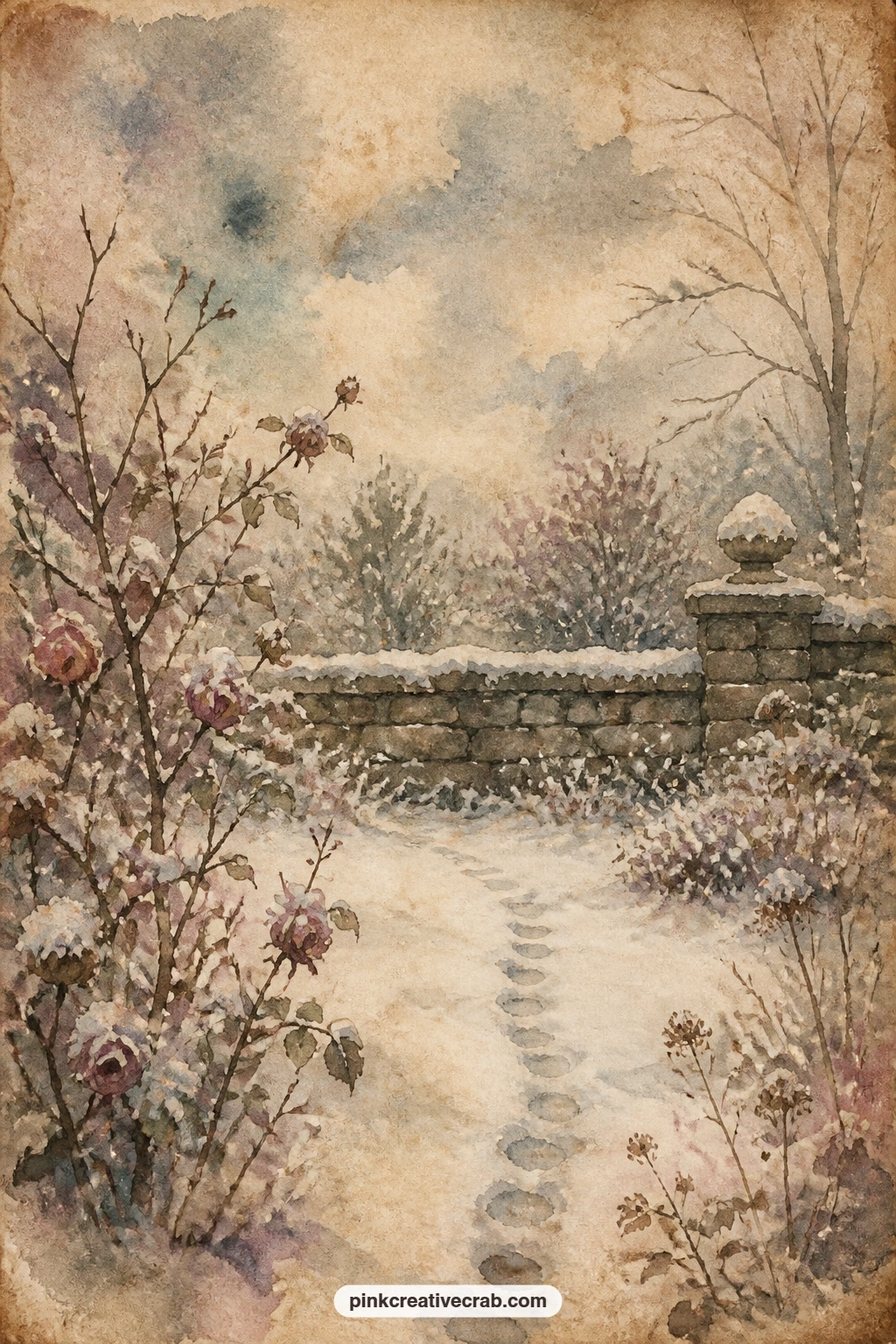
Give the reader who loves a quiet season this page, since bare branches under snow and a single set of footprints suit a journal built for slow winter afternoons.
It sits well near the back of a gift journal meant for a friend who keeps a reading nook by the window.
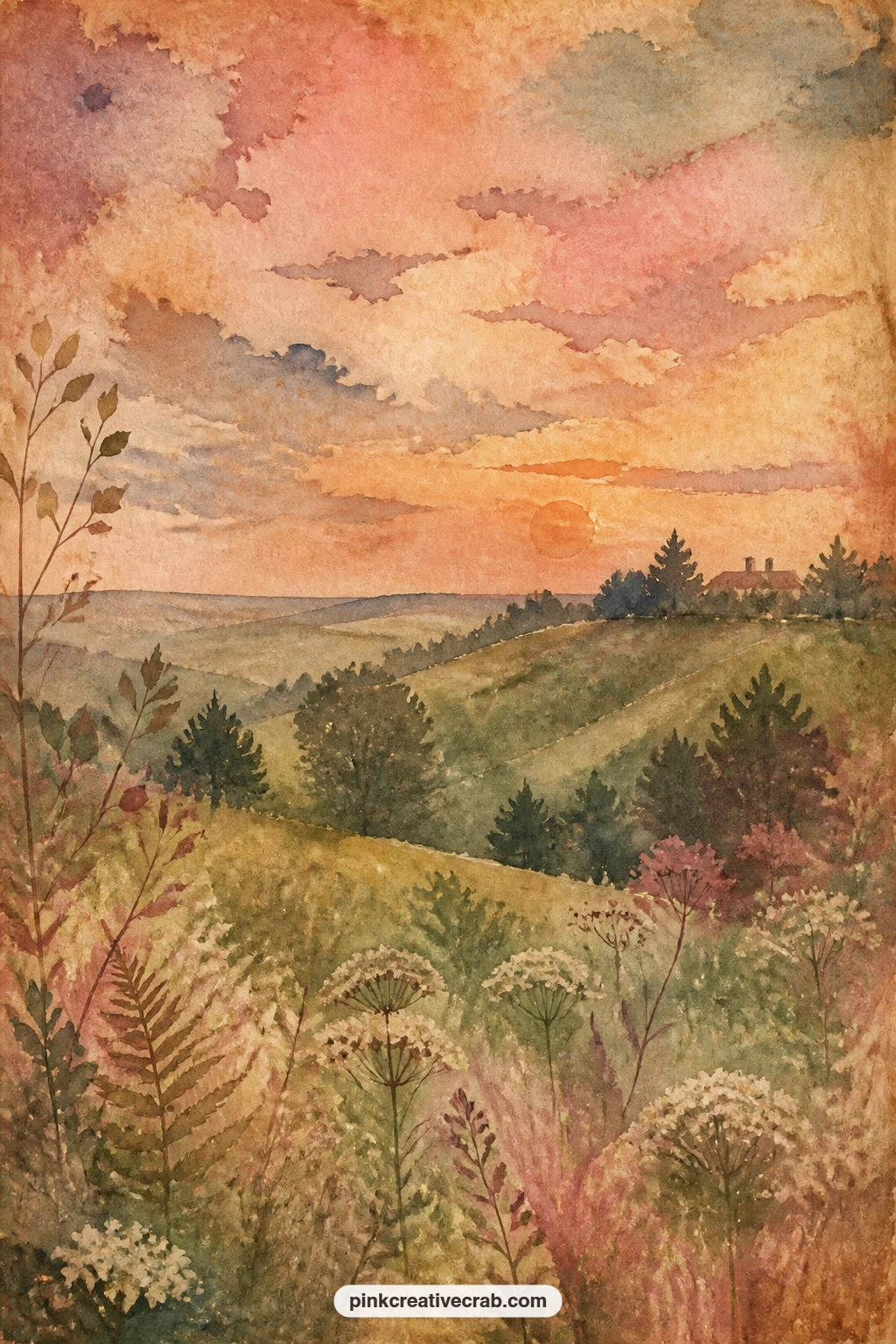
Rolling hills catch the last color of the day while a scatter of trees and a distant rooftop or two sit quietly along the horizon line.
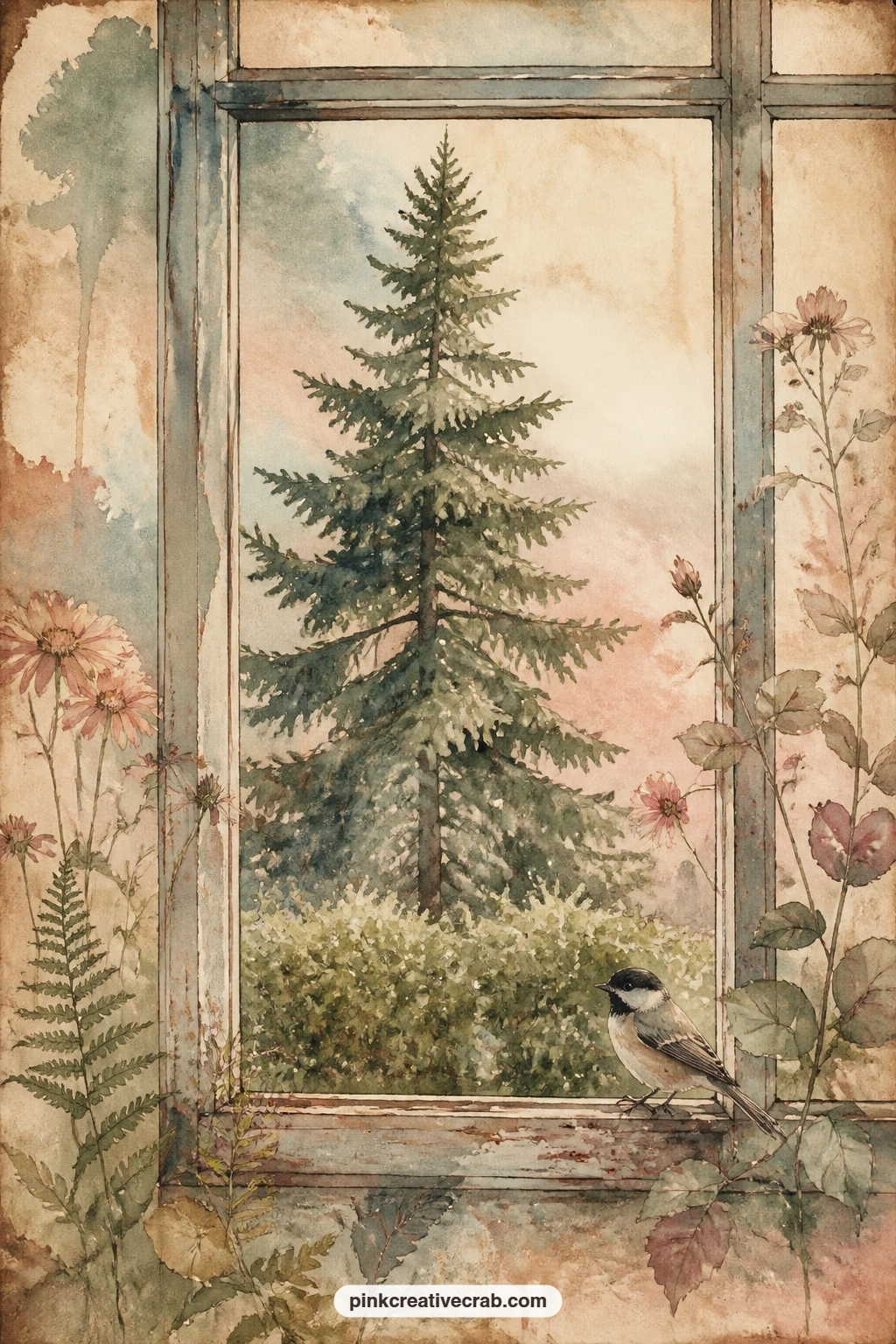
The usual mistake with a single tree page is leaving too much bare sky around it, so bring in a low hedge, a bird or a drift of snow at the base to keep the page from feeling empty.
A soft wash behind the tree does the rest of the work.
Tea Table Keepsakes
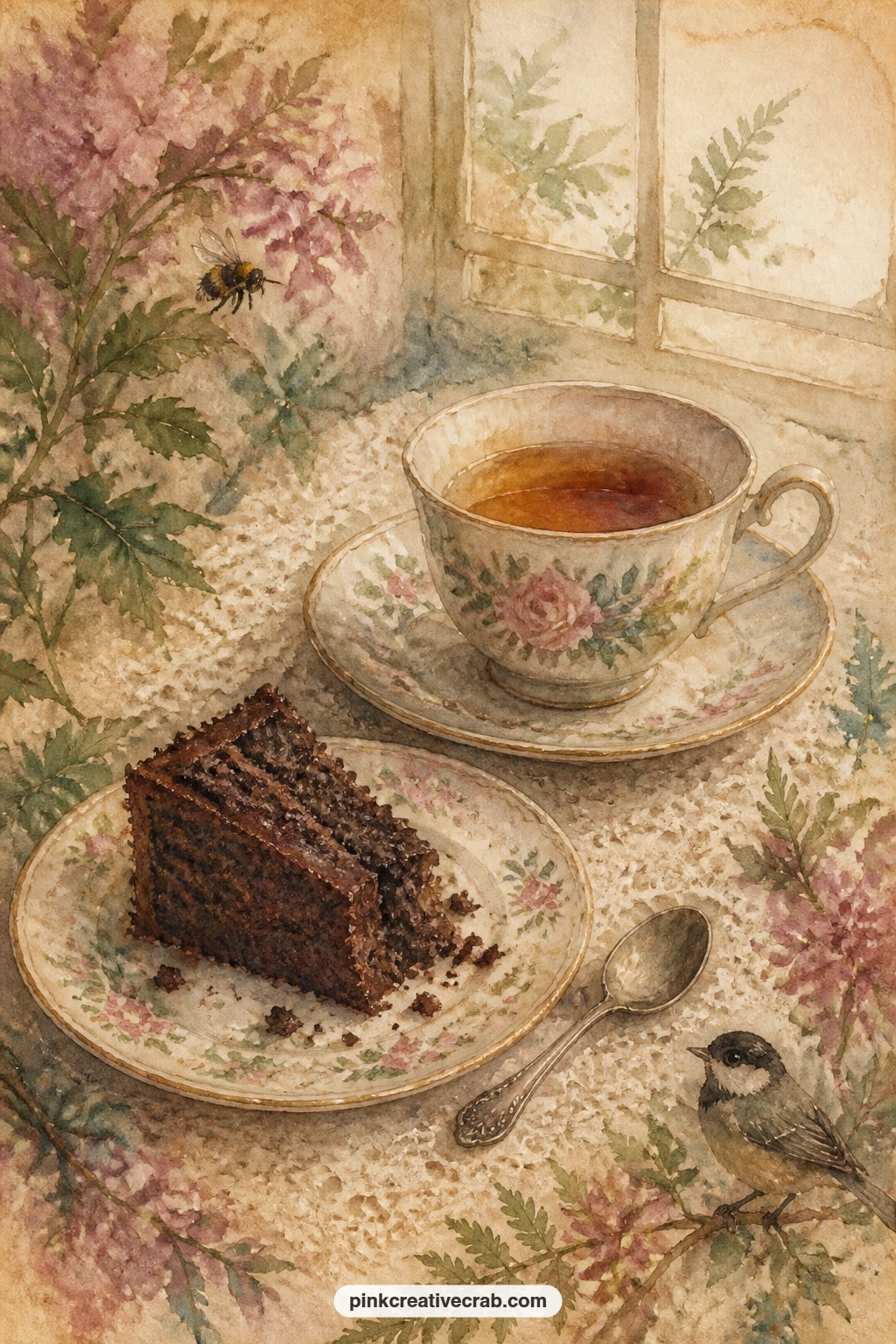
Tuck a small recipe card behind this page, whether for the black cake itself or for a favorite tea blend, so the page doubles as a spot to keep something you actually use.
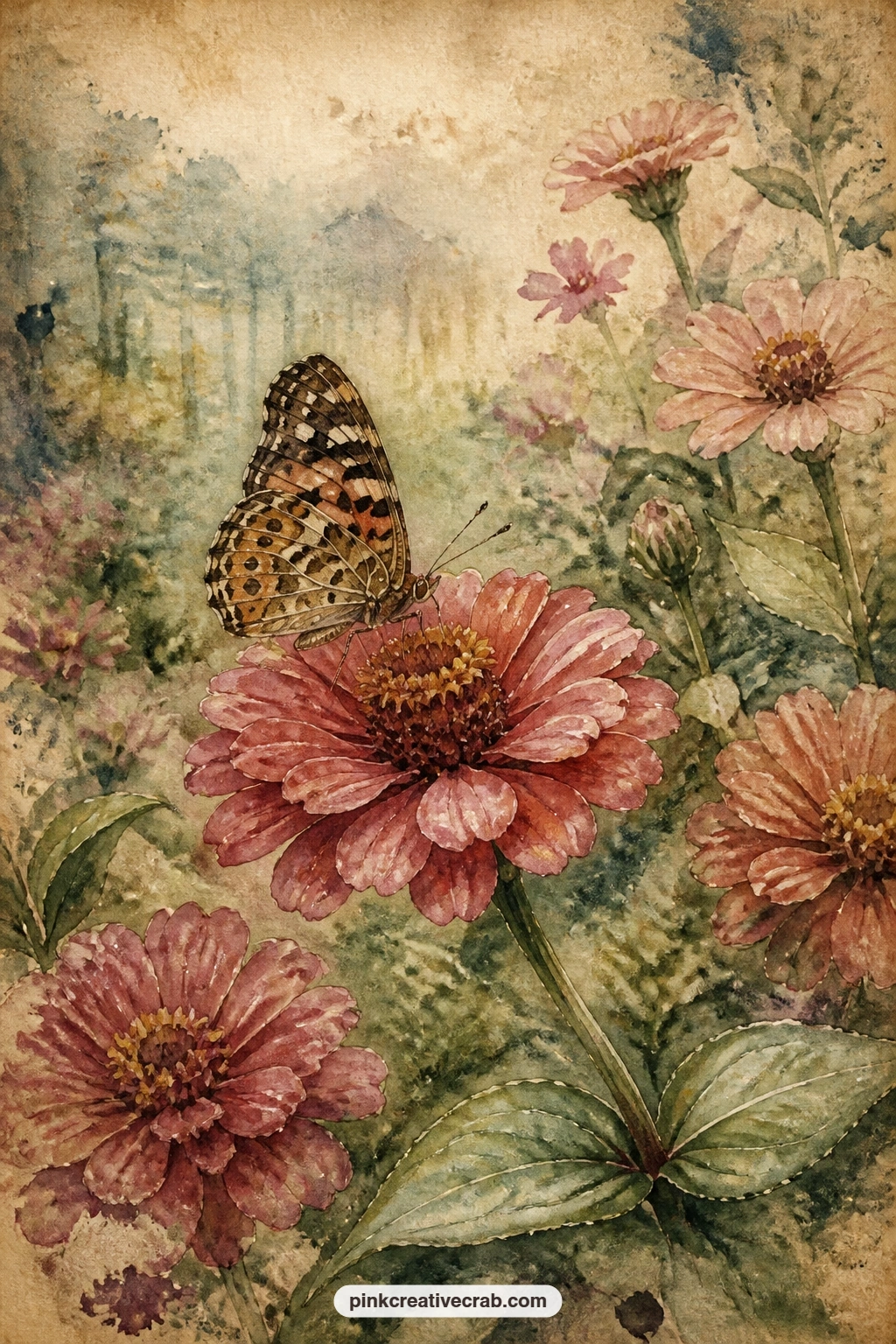
A butterfly rests on a bright zinnia bloom, with a few more zinnias and loose leaves filling the garden bed painted around it.
Tea-stain just the edges of this page before gluing it in, since a warm ring of color along a quiet road scene suggests years of travel better than crisp white paper ever could.
Let the stain dry fully before it goes anywhere near the journal spine.
Background Papers
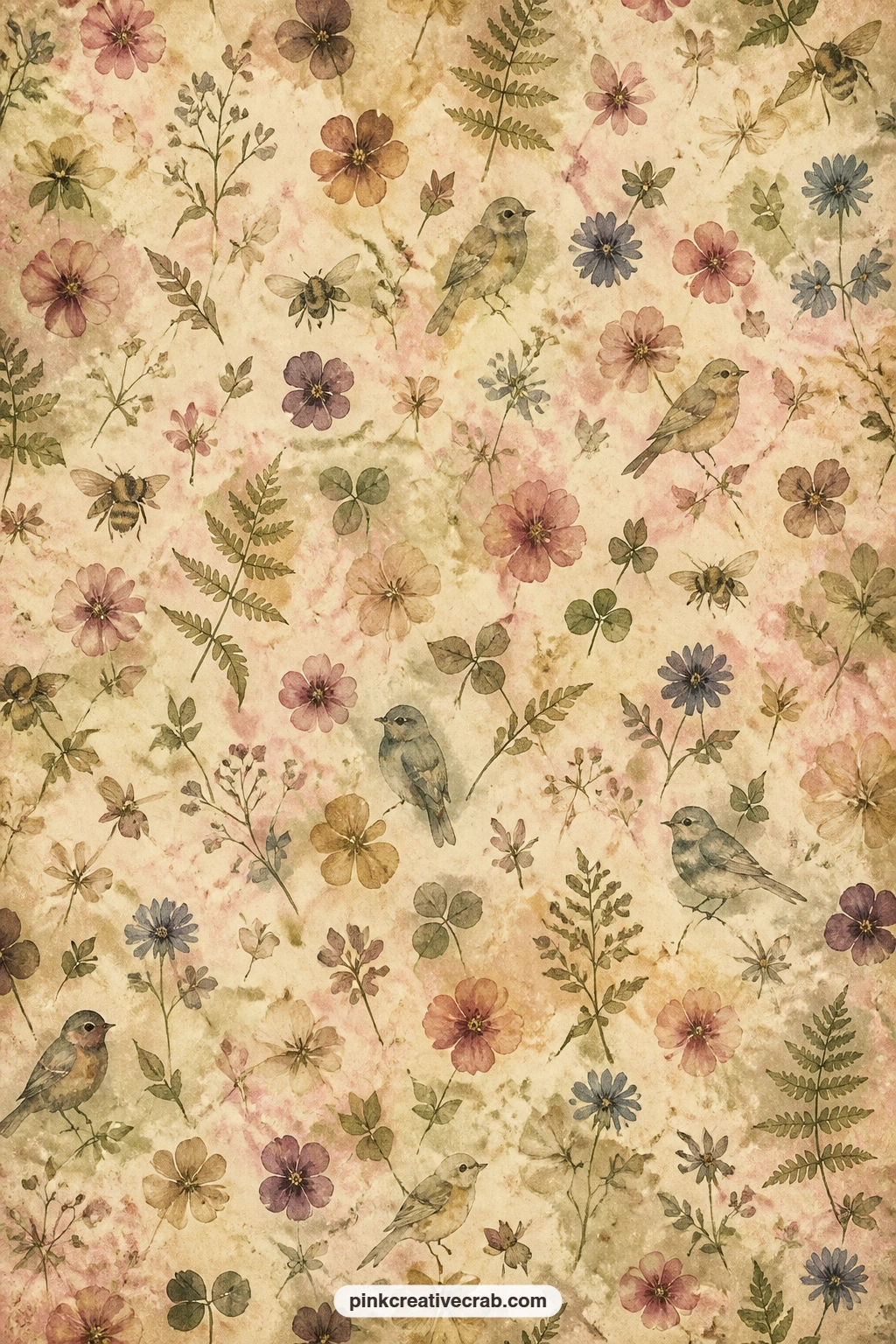
Use this pattern under a photo for a soft botanical mat, as a pocket lining tucked behind a herbarium page, or trimmed down for a journal cover in the set’s dusty rose and sage palette.
Try this one as a pocket lining behind the meadow scene page, a border strip along the garden path page, or a simple cover wrap for the whole journal.
Lay this behind the writing table or lamp and pen pages for a quiet layered look, use it as an envelope lining, or cut it down for small journal tags and tucked notes.
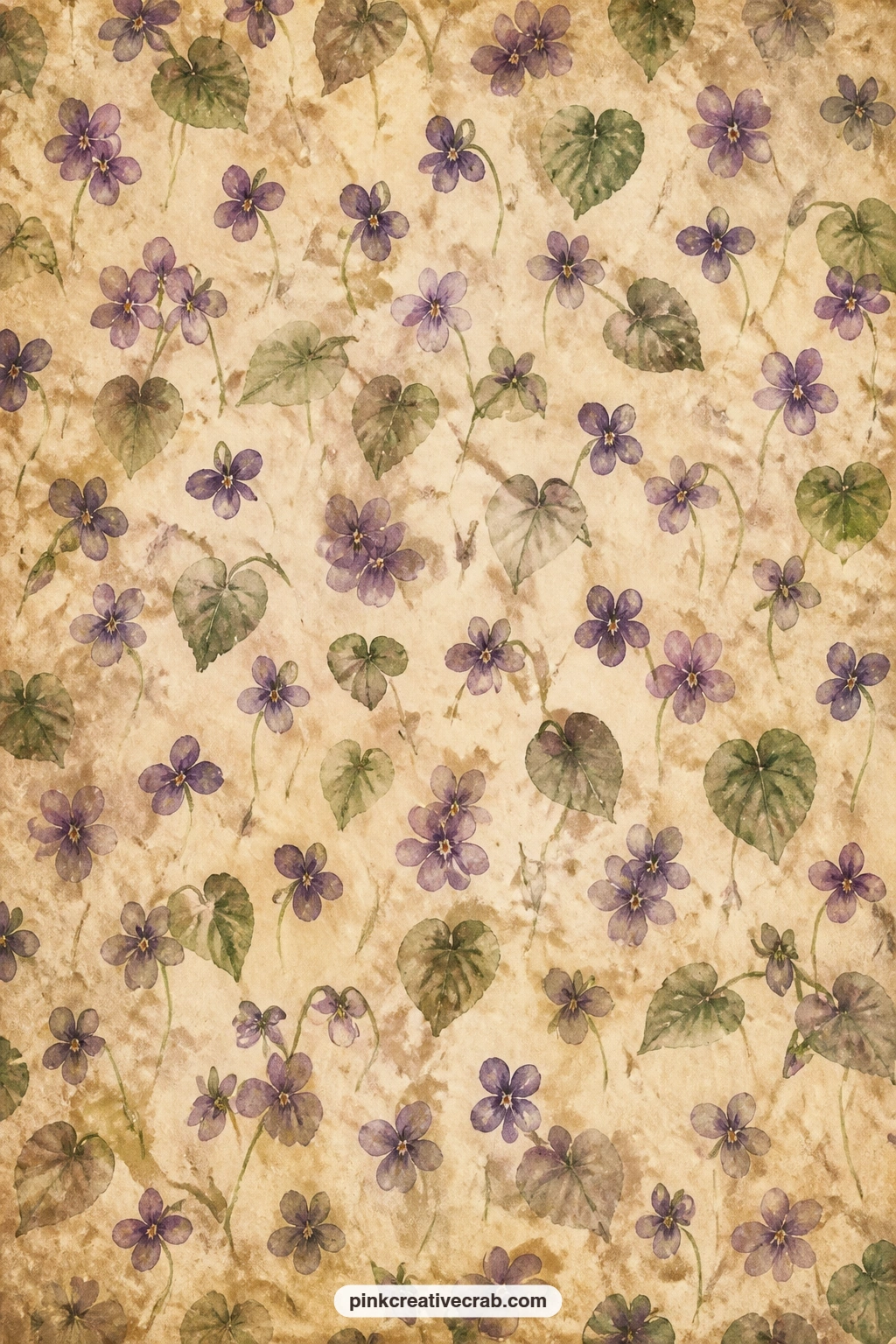
Set this under the pressed violet page as a soft frame, line a small pocket with it, or use a trimmed strip as a border along any lined writing page in this set.
Lined Writing Pages
Use the open lines here for a reading list of favorite poems, a record of flowers pressed that season, or a short letter addressed to your future self to read again later.
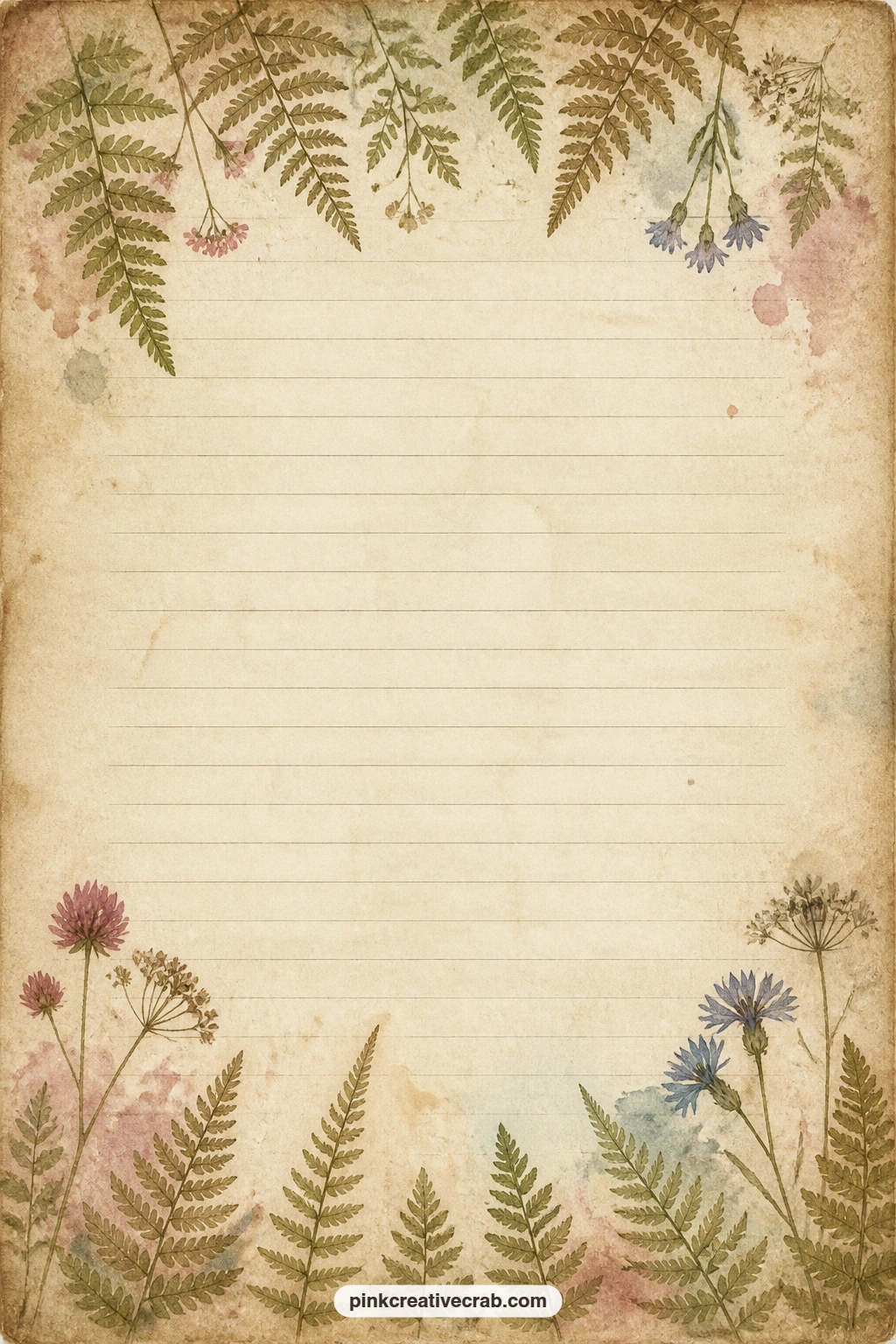
Write a garden task list here, a few lines about the weather that day, or a short note tucked in for whoever receives this journal as a gift.
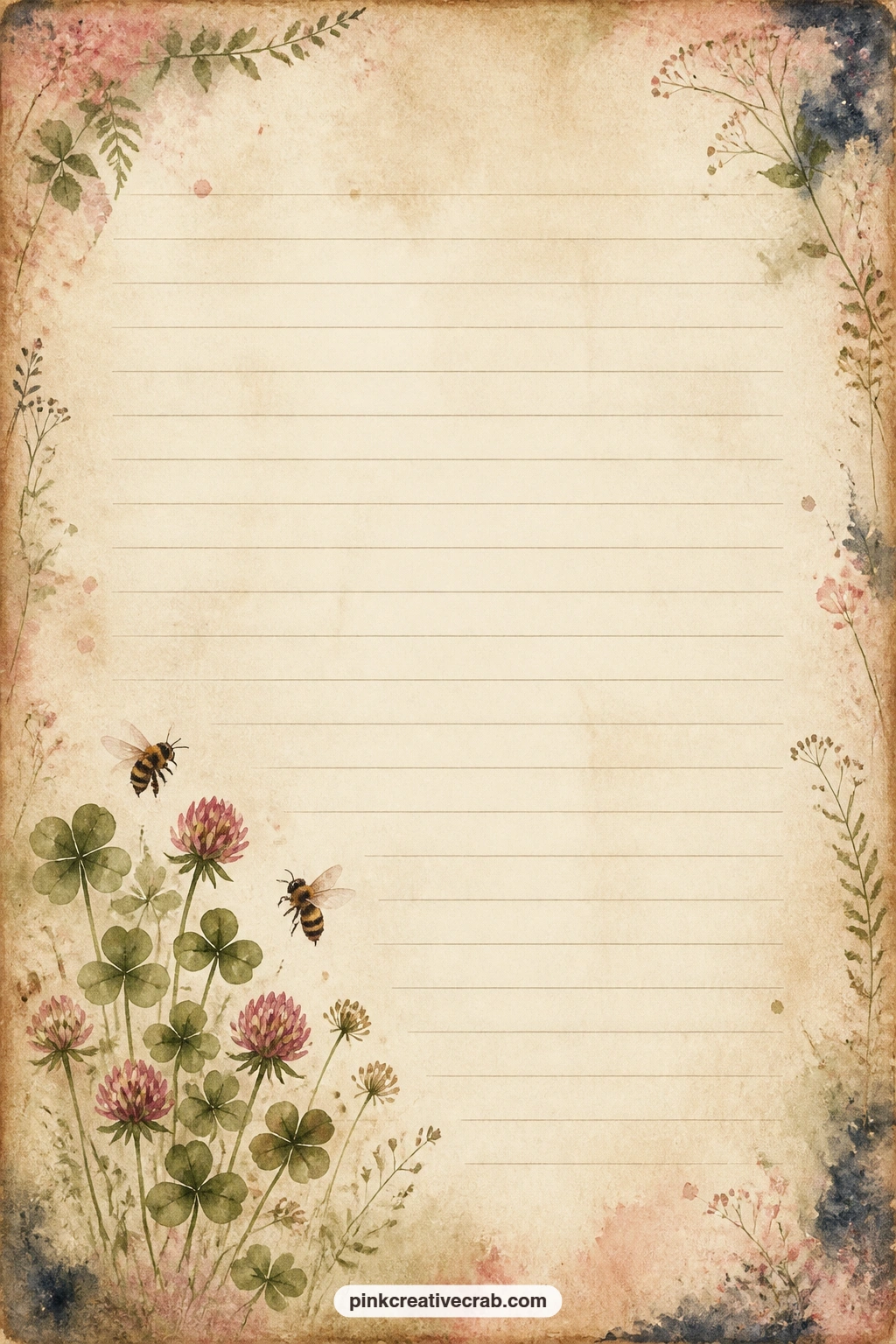
Keep a menu for a garden tea here, a short letter to next year, or a list of flowers you hope to plant when the season turns again.
Jot a short bird-watching log on this page, a few favorite lines about spring, or a simple gift list for someone who loves the garden as much as you do.
Leave room here for a packing list before a garden visit, a short recipe, or a note of thanks folded and tucked into the journal for later.
What to Do Next
Print the full set, sort the scene pages into their sections, and start gluing from the herbarium page forward, tucking a pressed flower or two of your own in along the way. For more botanical pages to mix in, the flower-themed junk journal pages and the secret garden junk journal set pair naturally with this one, and the butterfly pages or garden journal pages round the whole collection out nicely.
Frequently Asked Questions
What paper works best for an emily dickinson junk journal kit?
Heavyweight cream or ivory cardstock around 90 to 110 lb works best, since it holds ink without bleeding through and feels close to old writing paper. Thinner paper will wrinkle once glue or tea staining gets involved.
What printer settings should I use for these pages?
Choose your printer’s photo or high quality setting and let it use the full page with no auto-shrink option turned on. A quick test page first checks that colors print true before you run the whole set.
Do I need to trim the pages after printing?
Yes, since every page runs edge to edge with no white border built in. A paper trimmer gives the cleanest line, though sharp scissors work fine for a slightly softer, more handmade edge.
Can I add real pressed flowers to these pages?
Yes, and several pages are built with a small pocket or open space exactly for that. A flat dried flower or leaf glued lightly in place adds a personal layer the painted page alone cannot.
What size should I print the pages for a standard journal?
Standard US letter or A4 suits most handmade journals and folds down easily to A5 for a smaller book. Print at full page size first, then trim or fold once you know your journal’s finished dimensions.
Have any thoughts?
Share your reaction or leave a quick response — we’d love to hear what you think!
-
 0
-
0
-
0
-
0
-
0
-
0


