Simple painting ideas are the quickest way back to the canvas when a busy week has left you with no patience for fuss. Every piece here uses two or three colors, a lot of open space, and one small subject that sits quietly in the middle of it all, so there is no long list of steps to remember and no detail to get precious about.
Scroll through and pick whatever calms your eye first: a lone tree on a hill, a blue door, a single feather. Each one is built to finish in a sitting, on a small canvas, with the kind of flat color blocks that make a shelf of these look like a set even though no two are alike.
Using these images: free for personal projects such as printing, coloring, cards, journals and gifts. Handmade items that include them may be sold up to 30 pieces per design. More than that is commercial use and is not permitted, and neither is selling or sharing the images themselves or passing them off as your own. Please ask before any other use.
Start with the hill, not the tree. Load a flat brush with sage and pull one long curved stroke low across the canvas, leaving most of the space above it for a pale cream or soft blue sky.
Once the hill is dry, mark the tree’s position with a dot of paint rather than a pencil line: set it a little off center, never dead in the middle, so the eye has somewhere to travel. A simple trick for proportion keeps this from going wrong, hold your brush up at arm’s length and check that the tree’s height is roughly a third of the hill’s width, then paint the trunk as one thin vertical stroke and the canopy as a single rounded blob on top.
If the canopy comes out blotchy, let it dry and go over it with a second thin coat rather than fighting the wet paint. No sage on hand, a muted olive or dusty green from any brand works the same way.
Keep the sky free of clouds today, that empty pale space is what makes the small tree feel calm rather than lonely.
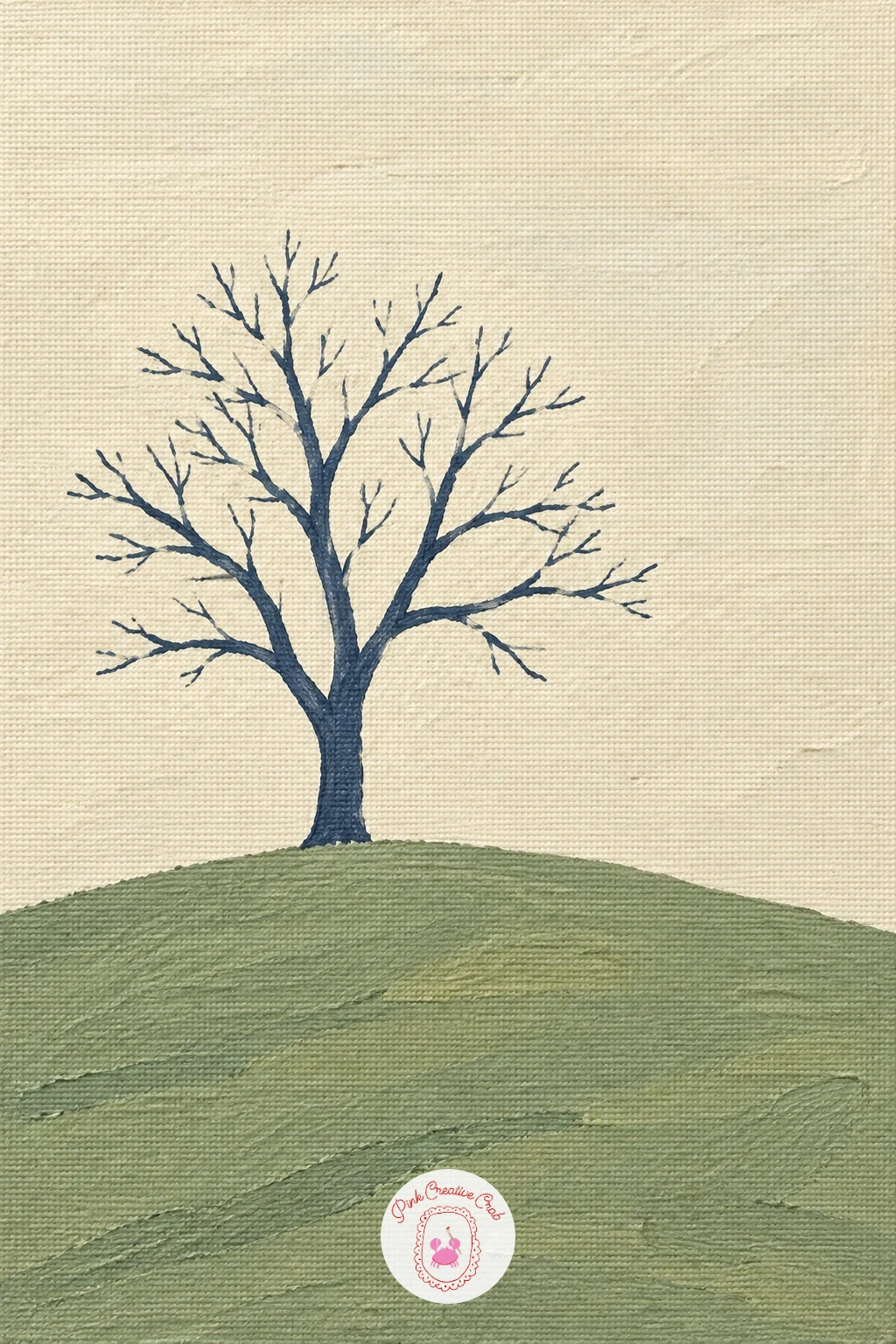
Palette: Sage Green,Soft Navy,Cream
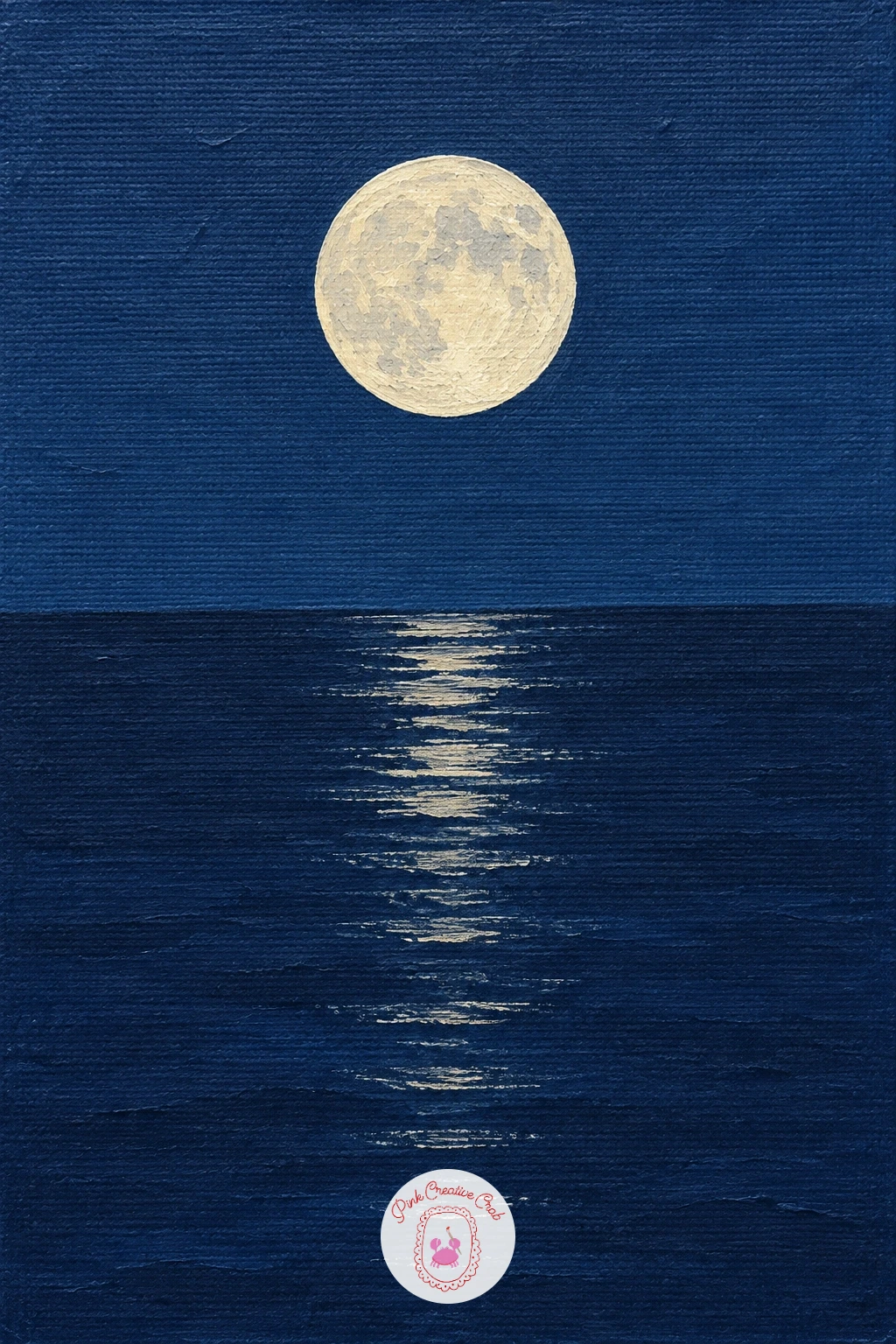
Following on from a simple land and sky, try a night scene built from only two blues. Paint the sea first, a deep navy block filling the bottom third of the canvas with one flat horizontal edge, and leave the top two thirds for a slightly lighter blue sky.
Where this picture usually goes wrong is the moon’s edge, a shaky circle pulls focus from the calm you are going for. Trace around a small jar lid or a coin in pencil before you paint so the circle stays clean, then fill it with a pale cream or soft white and let the two blues do the rest of the work.
For a touch of light on the water, drag a dry brush loaded with the pale moon color in one short horizontal stroke just below the moon, this is the hands-on trick that suggests reflection without any blending.
If you only have one blue in your kit, mix a touch of white into half of it to make the second shade.
You Will Need
- small jar lid or coin to trace the moon
Palette: Soft Navy,Pale Blue,Cream
Give yourself a rest from horizons and paint a single sprig of lavender laid flat across a cream background, as if resting on a table. Block in the cream field first and let it dry completely so the stem does not drag through wet paint.
Use a thin round brush for the stem, one steady diagonal line across the lower half of the canvas, then add the lavender heads as a row of small oval dabs along the top of the stem, slightly uneven in size since real sprigs never line up perfectly.
If you do not have a true lavender purple, mix a dusty rose with a touch of navy, it reads just as well against cream. Where beginners usually slip up is overcrowding the stem with too many dabs, six or seven ovals is plenty, leave gaps between some of them.
Keep every dab the same loose oval shape rather than trying to paint individual petals, that is what keeps this calm instead of fussy.
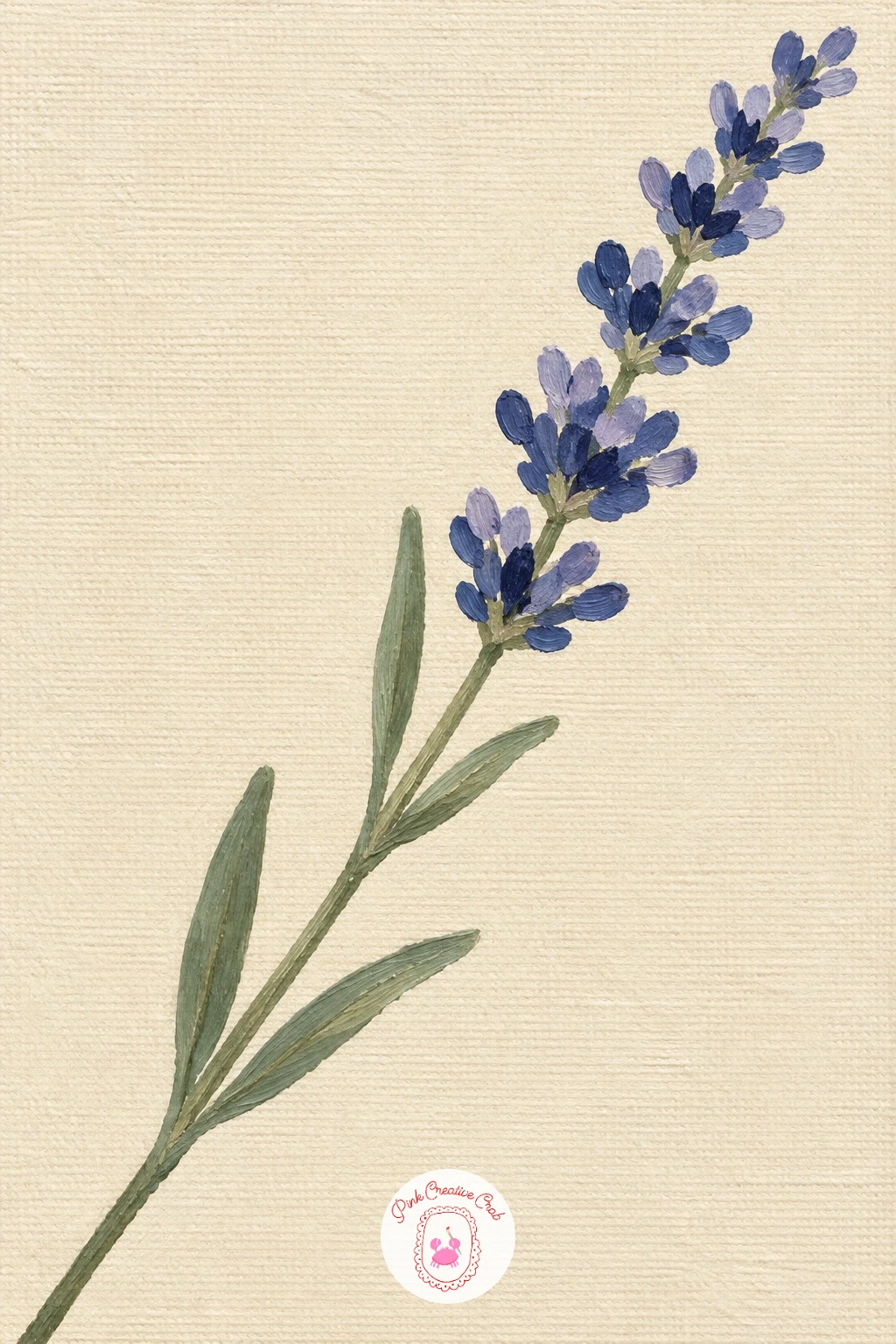
Palette: Cream,Dusty Rose,Soft Navy
Try this one on a long rectangular canvas if you have one, the horizontal shape suits a laid-flat sprig better than a square.
Move from a still object to a small moving scene: a lone figure holding a red umbrella on an empty grey street. Paint the street as one flat grey field covering the whole canvas, no buildings, no pavement lines, just the color.
Where the eye level sits matters here, keep the figure’s feet about a third of the way up from the bottom so the grey above reads as open air rather than a wall. Paint the figure as a simple dark silhouette, a rounded head and a straight coat shape with no visible hands or face, then add the umbrella as one half circle in red sitting just above the head, slightly tilted.
If the red umbrella looks too small to carry the whole painting, make it larger than feels natural, a bold red half circle is what this composition is built around.
No red on hand, rust works nearly as well and keeps the whole piece a touch warmer.
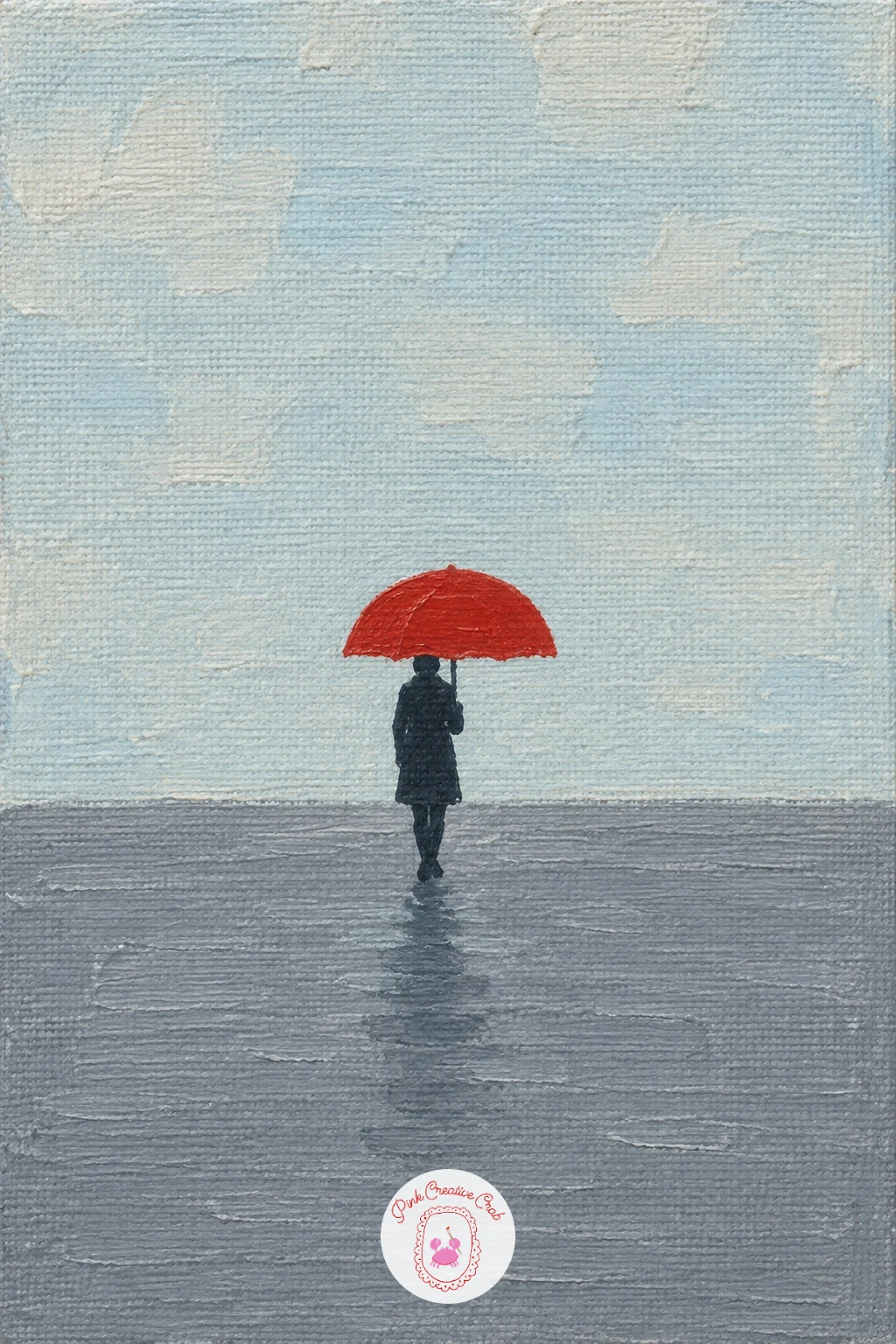
Palette: Grey,Rust Red,Soft Navy
After a moving figure, settle into something architectural and still: a blue door set into a plain white wall. Paint the wall first as one even white or cream block filling the canvas, letting it dry fully before you add the door.
Mark the door’s rectangle lightly in pencil before painting, keeping its width at about a third of the canvas and its height reaching close to the top edge, this one proportion check keeps the door from looking like a toy against the wall. Fill the rectangle with a flat navy or deeper blue, then use painter’s tape along the straight edges for a crisp line if your hand is not steady with a brush alone.
A single thin vertical line of a slightly darker blue down one side of the door suggests a frame without adding real detail. Skip the door handle entirely, it is the one thing most likely to clutter an otherwise calm wall.
If blue feels too cool for your palette today, dusty rose makes just as striking a door against white.
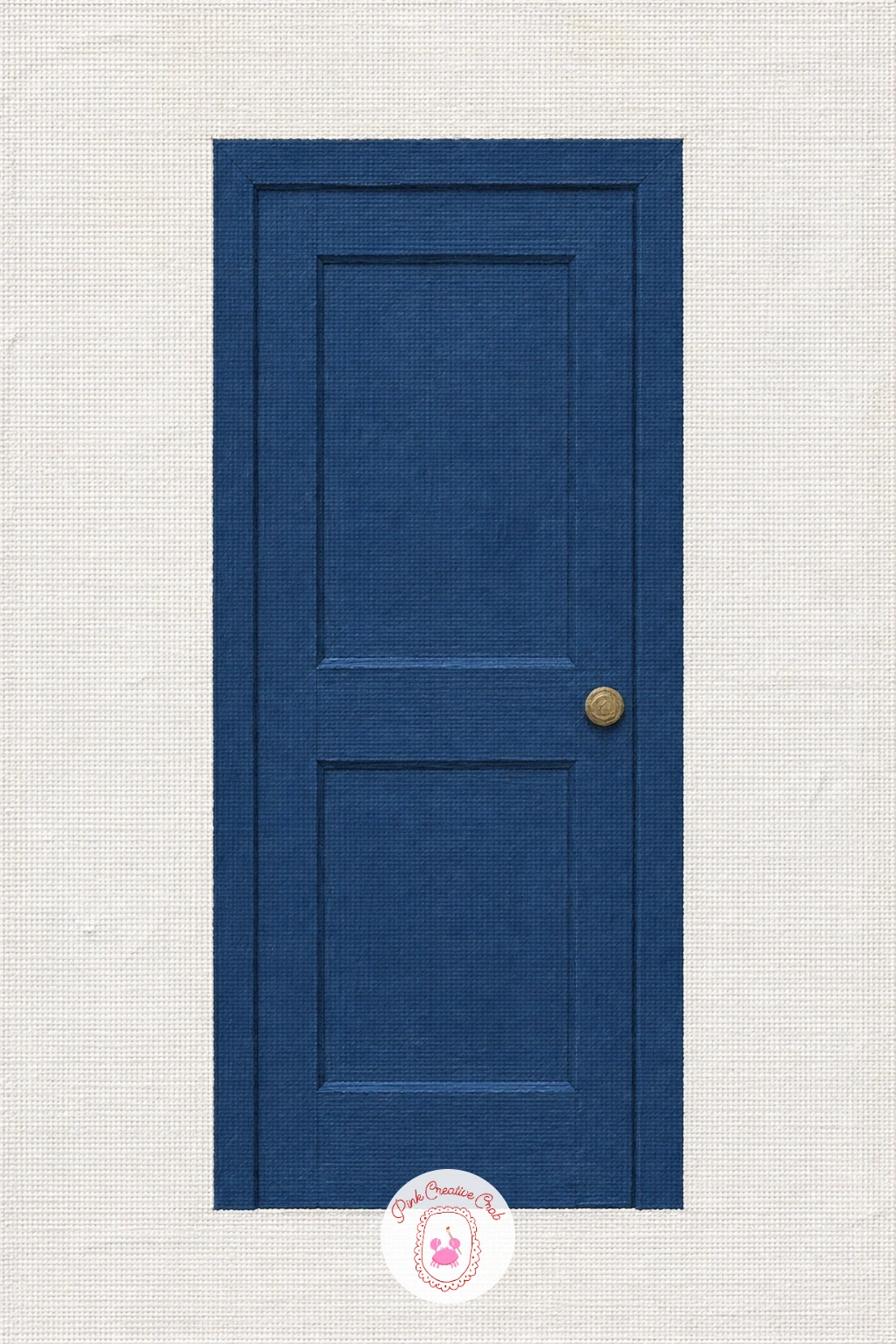
You Will Need
- painter’s tape for a crisp door edge
Palette: White,Soft Navy,Cream
Carry the same calm, still mood indoors with a white vase holding one green branch. Paint the background as a soft flat field first, cream or pale sage, then add the vase sitting low in the lower third of the canvas as a simple rounded shape, narrower at the top and wider at the base.
Here is where a dry brush earns its keep: once the vase is dry, drag a nearly dry flat brush loaded with a slightly darker white or grey along one side of it to suggest light falling across the curve, no blending needed. Paint the branch rising from the vase’s neck as one or two curved sage lines, then add just three or four small leaf shapes along it, leaving the rest of the branch bare.
If the branch looks stiff, curve it slightly rather than painting it as a straight stick, a small bend reads as more natural.
Working on a limited palette like this pairs well with other quiet still life studies, including the ideas in 21 easy acrylic painting ideas for beginners if you want to keep exploring single-stem subjects.
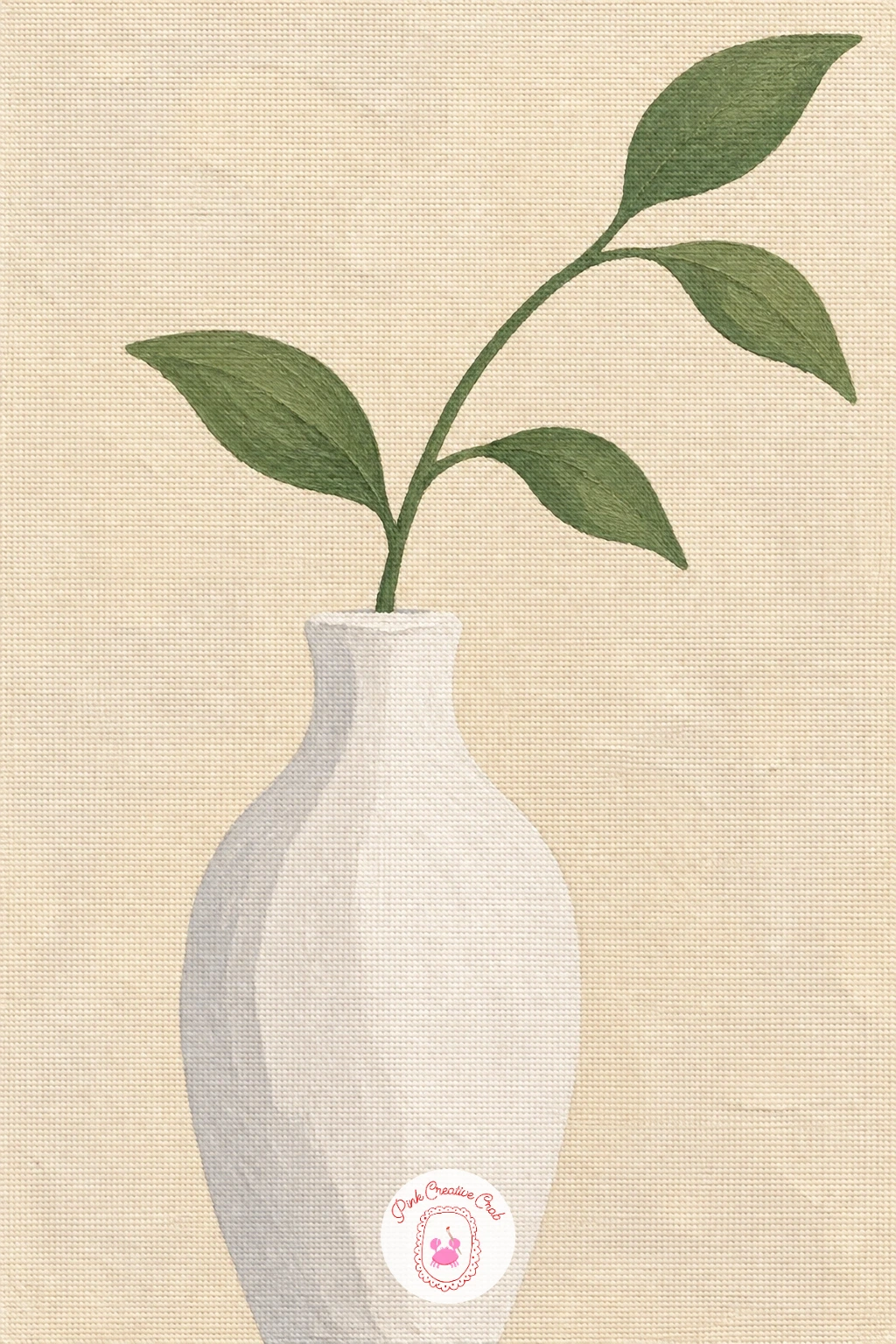
Palette: Cream,White,Sage Green
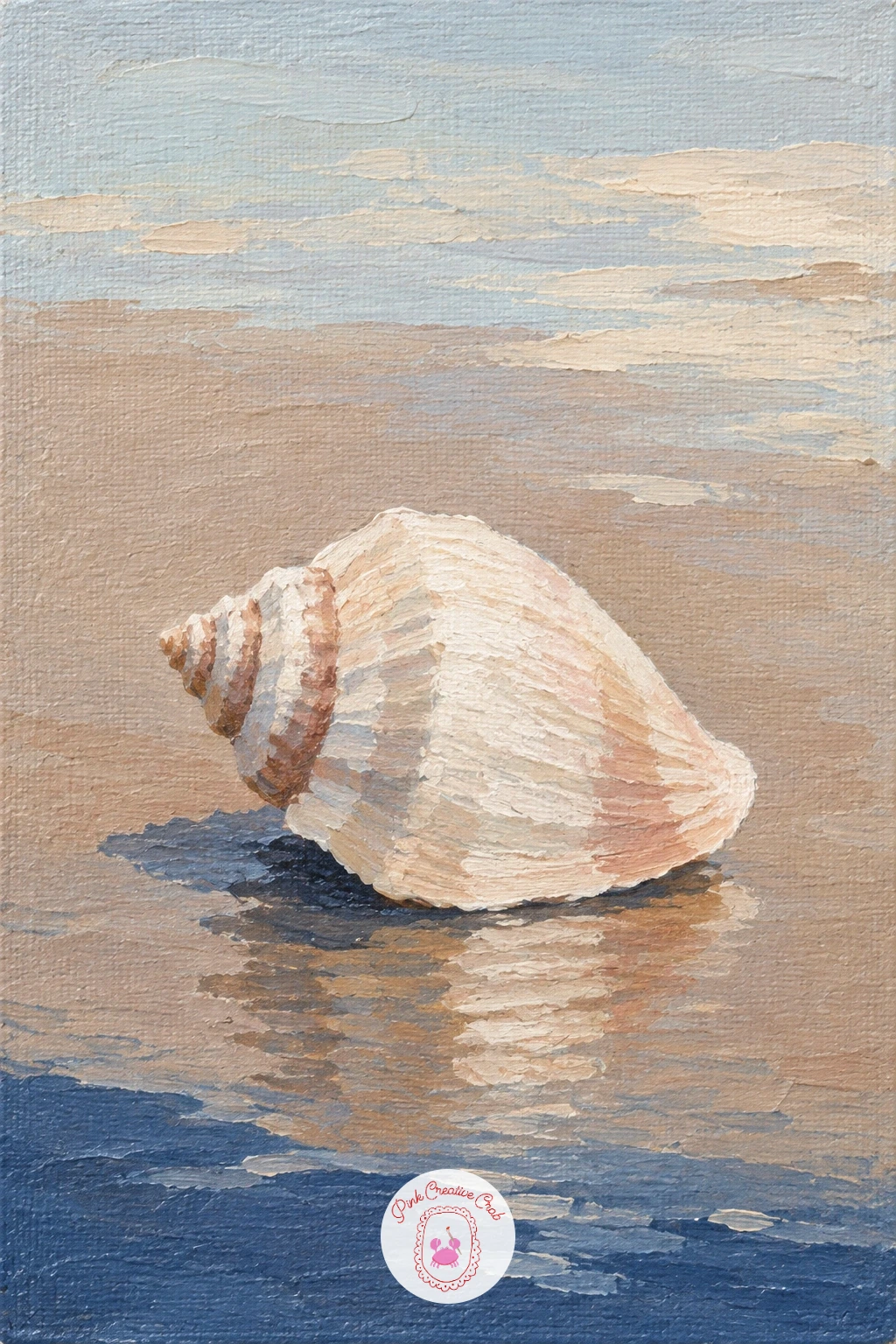
Head to the shore next with a single seashell resting on smooth wet sand. Block in the sand as one flat field in a warm cream or pale rust, then while it is still slightly tacky, drag a wide flat brush in one or two long horizontal strokes across the lower part of the canvas in a touch of soft navy, this suggests the wet sheen of sand near the waterline without painting actual water.
Paint the shell itself small and off center, a simple fan or spiral shape in white or pale rose, keeping the outline soft rather than sharply drawn. Where this one usually goes wrong is adding too many lines inside the shell to show ridges, two or three curved strokes are enough to read as a shell from a normal viewing distance.
If your sand color looks flat and lifeless, that quiet is exactly the point here, resist the urge to add shadows or extra shells.
No rust in your set, a warm ochre or ordinary burnt sienna gives the same sun-warmed sand tone.
Palette: Rust,White,Soft Navy
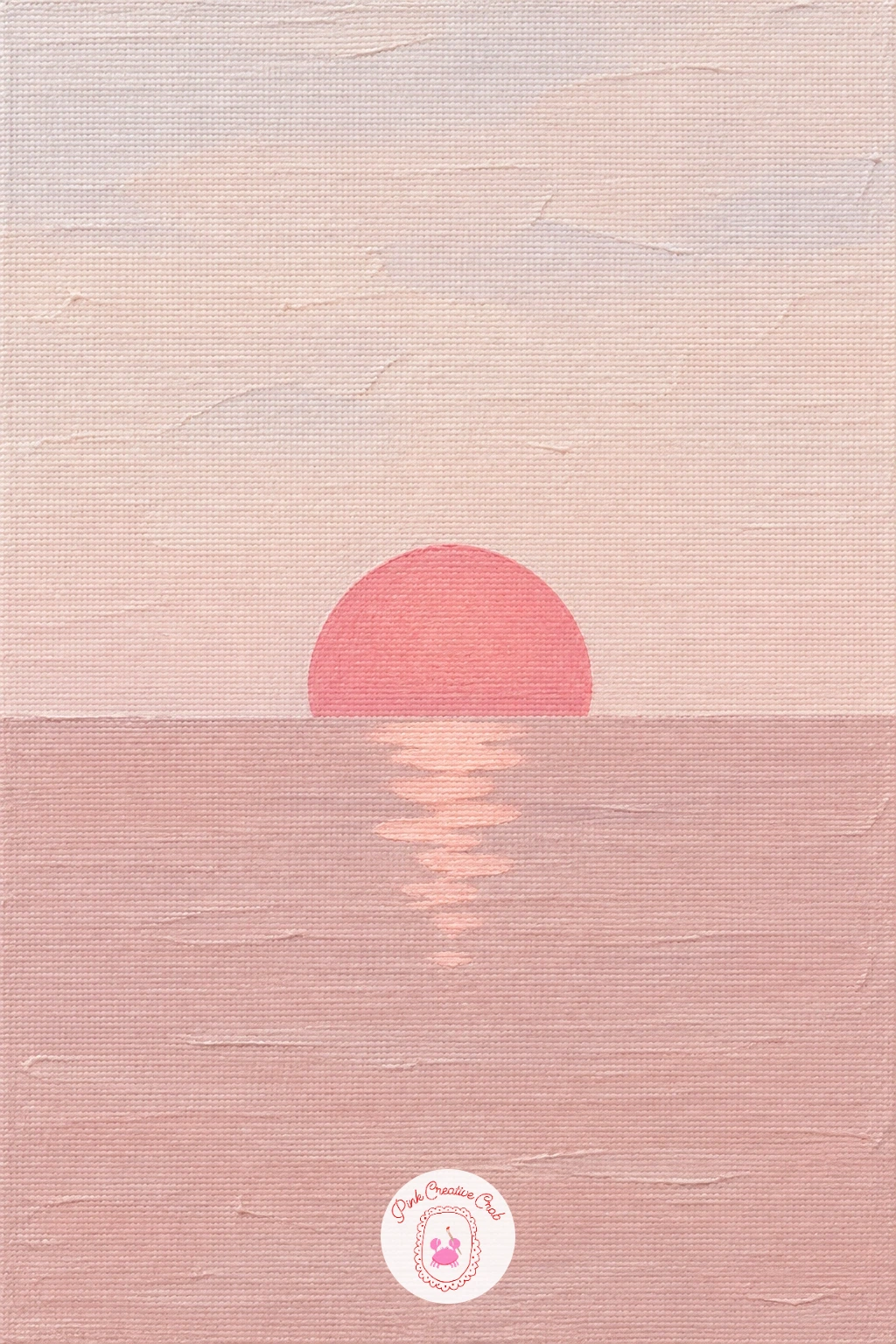
Return to the horizon with a pink sun setting into a pale sea, a composition built almost entirely on where you place one straight line. Paint the sky as a soft pale rose or cream field across the top two thirds of the canvas, then the sea as a slightly deeper tone across the bottom third, meeting the sky in one clean horizontal line.
The light source is the whole painting here, so decide early that the sun sits low, with its bottom edge touching or just crossing the horizon line, this is what makes a sunset read correctly rather than looking like a sun stuck in the middle of the sky. Trace a circle with a lid for a clean edge, then paint it in a warmer, more saturated pink than the sky around it so it glows against the softer tones.
A single thin vertical reflection stroke in the same pink, dragged straight down from the sun into the sea, finishes the effect without any extra blending.
If pink feels too sweet for your taste, swap it for rust and you get a warmer, more autumn-toned sunset instead.
You Will Need
- small jar lid or coin to trace the sun
Palette: Dusty Rose,Pale Rose,Cream
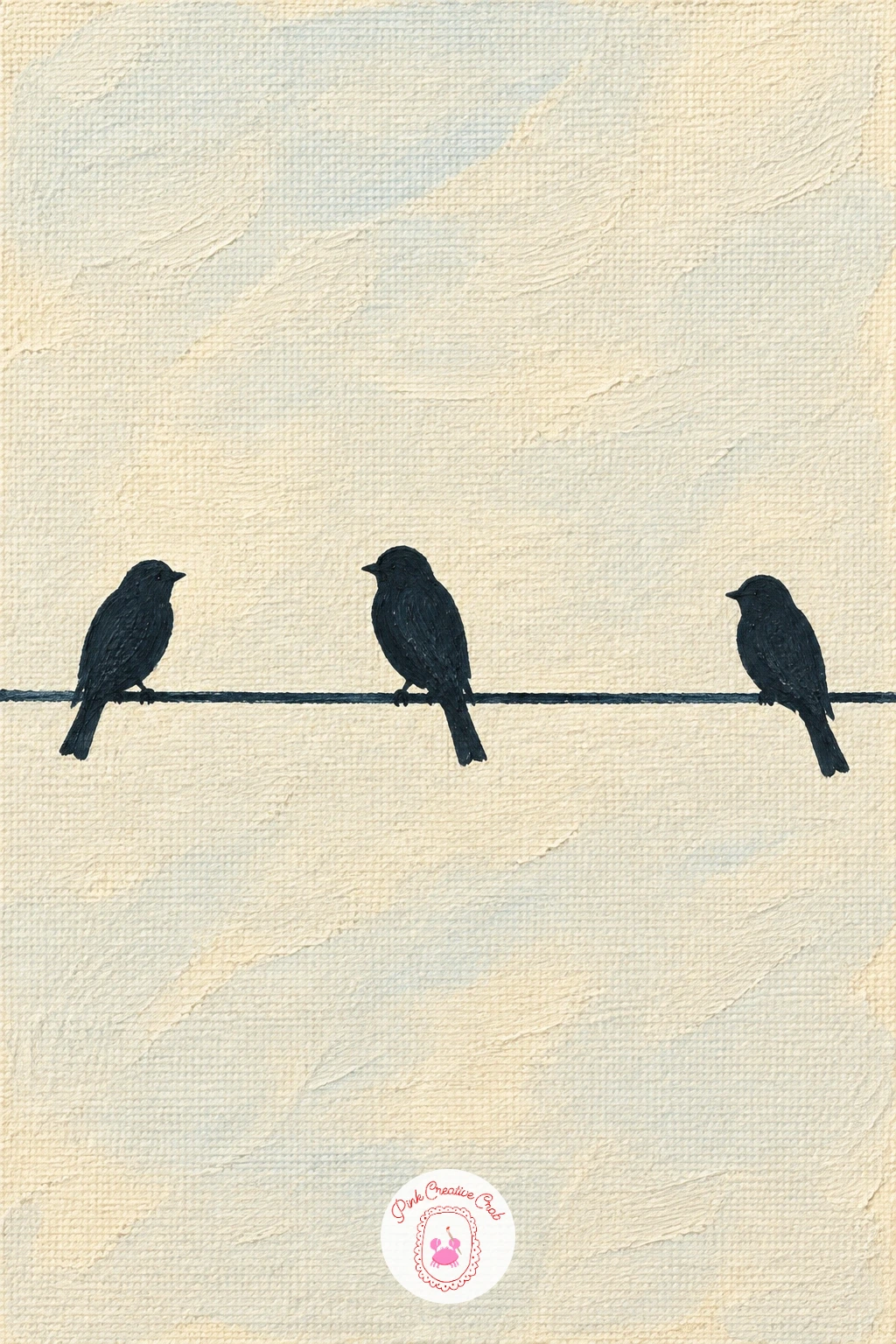
Switch to a graphic, almost silhouette approach for three black birds sitting on a long wire. Paint the background first, a wide pale sky in cream or soft blue filling the whole canvas, then let it dry fully before adding anything on top.
Use a ruler or the edge of a piece of tape to paint one thin straight line most of the way across the canvas, slightly below center, this is your wire and it needs to stay perfectly straight to read correctly. Paint the three birds as simple rounded black shapes perched along the line, varying their spacing so they do not look mechanically even, two close together and one further off works well.
Where beginners usually struggle is the birds’ feet, skip painting legs entirely and let each bird’s body shape simply touch the wire, it reads just as clearly and keeps the shapes clean.
If straight lines give you trouble by hand, painter’s tape laid down first gives you a perfectly crisp wire every time.
You Will Need
- painter’s tape or a ruler for the wire
Palette: Cream,Charcoal Black,Pale Blue
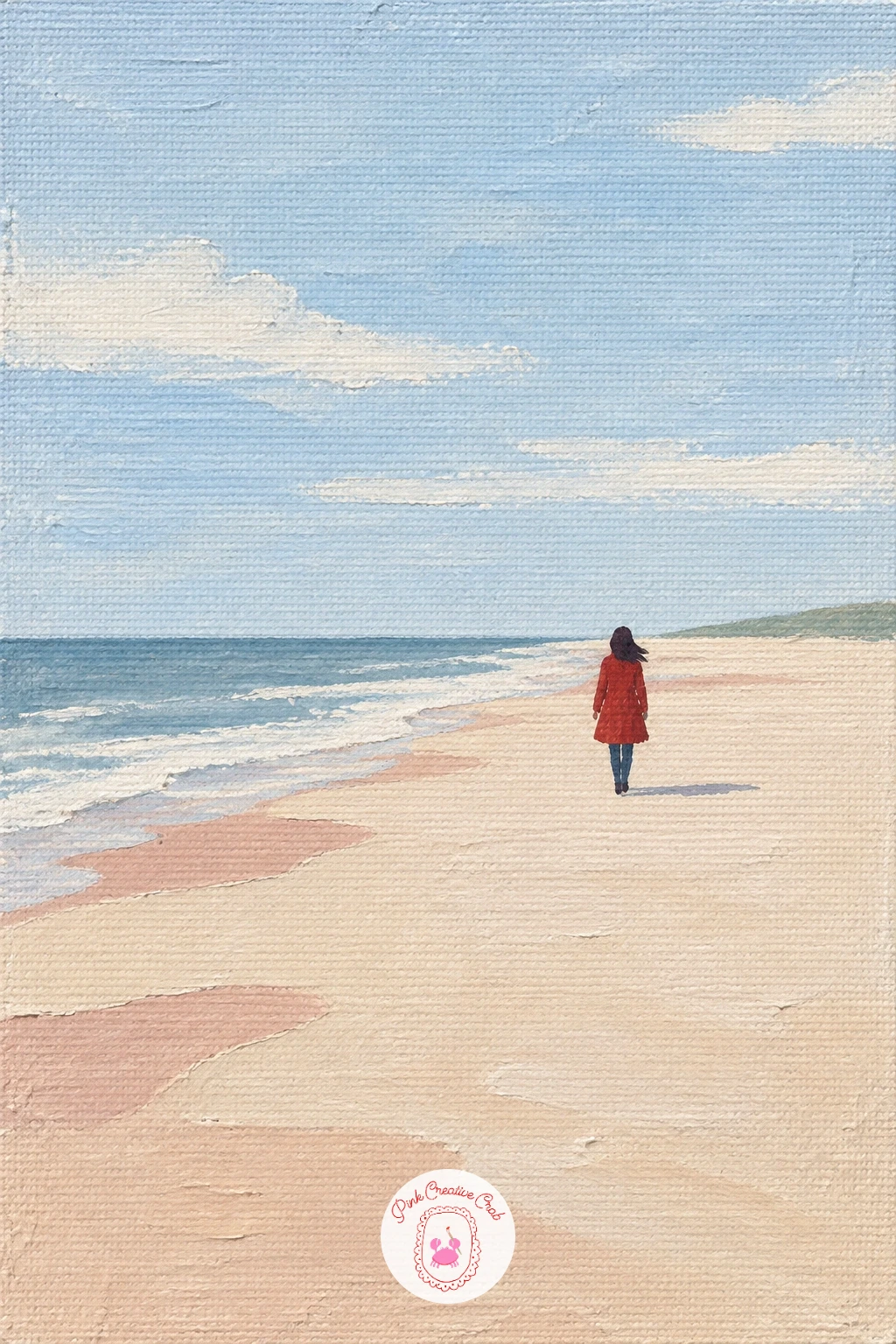
Bring a small figure back into a wide landscape with a girl in a red coat walking on a long empty beach. Paint the sand as a pale rust or cream field across the lower half of the canvas and the sky as a soft pale blue above it, meeting in one long flat horizon line.
For the quick version, paint the girl in under ten minutes as a simple dark coat shape with a small round head, no arms or facial features, standing small and off to one side so the beach around her feels large. The forty minute version adds one extra touch, a short trail of small dot footprints behind her in a slightly darker sand tone, which gives the whole scene a sense of a walk already underway.
Keep the red coat the only saturated color in the whole piece, everything else stays soft and muted so her small red shape is what the eye finds first.
If you want a change of mood, swap the red coat for soft navy and the same figure reads as a quieter, more wintery walk.
Palette: Cream,Rust Red,Pale Blue
Strip a landscape down to its simplest possible form with a canvas split exactly in half, a green hill below and a blue sky above. Lay a strip of painter’s tape straight across the middle of the canvas before you begin, this is the one trick that keeps the split perfectly even and avoids the wobbly horizon that a freehand line often produces.
Paint the sky half first in one flat pale blue, then the hill half in a single flat sage green, peeling the tape away once both are dry to reveal one crisp straight edge between them. There is no subject here beyond the split itself, so resist adding a tree, a cloud or a bird, the whole point is two calm fields of color meeting in one clean line.
If you want the smallest hint of variation, drag a dry brush of a slightly lighter green along the very top edge of the hill before the tape comes off, suggesting light without breaking the flatness.
No tape on hand, a steady hand and a long ruler held just above the canvas as a guide works nearly as well.
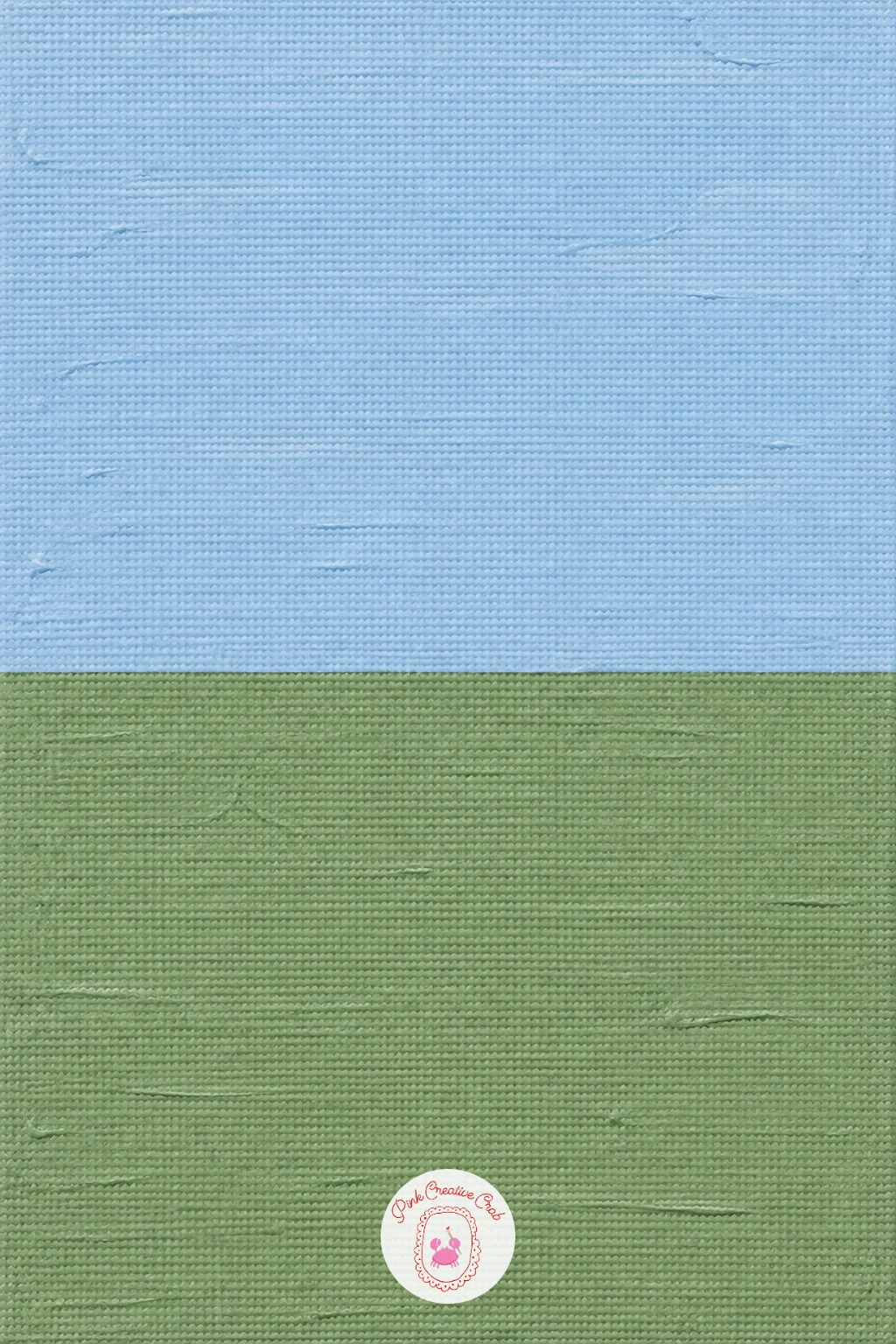
You Will Need
- painter’s tape for a straight horizon
Palette: Sage Green,Pale Blue
Drop down to something small and delicate after all that open sky: a single feather resting on a pale blue ground. Block in the background first in a flat soft blue, letting it dry completely, since the feather’s thin lines need a clean dry surface to sit on top of without dragging.
Paint the feather’s central spine as one slightly curved line, then add the barbs along each side as a series of short angled strokes working from the base up to the tip, getting progressively shorter and finer as you near the point. This is where a fine round brush and a light touch matter most, if the strokes come out too heavy and even, lighten your pressure and let a few barbs skip or break, real feathers are never perfectly uniform.
Keep the feather in cream or white against the blue so it reads as the one soft, quiet focal point in an otherwise empty field.
If your round brush is too thick for fine barbs, the corner edge of a flat brush can make surprisingly delicate lines too.
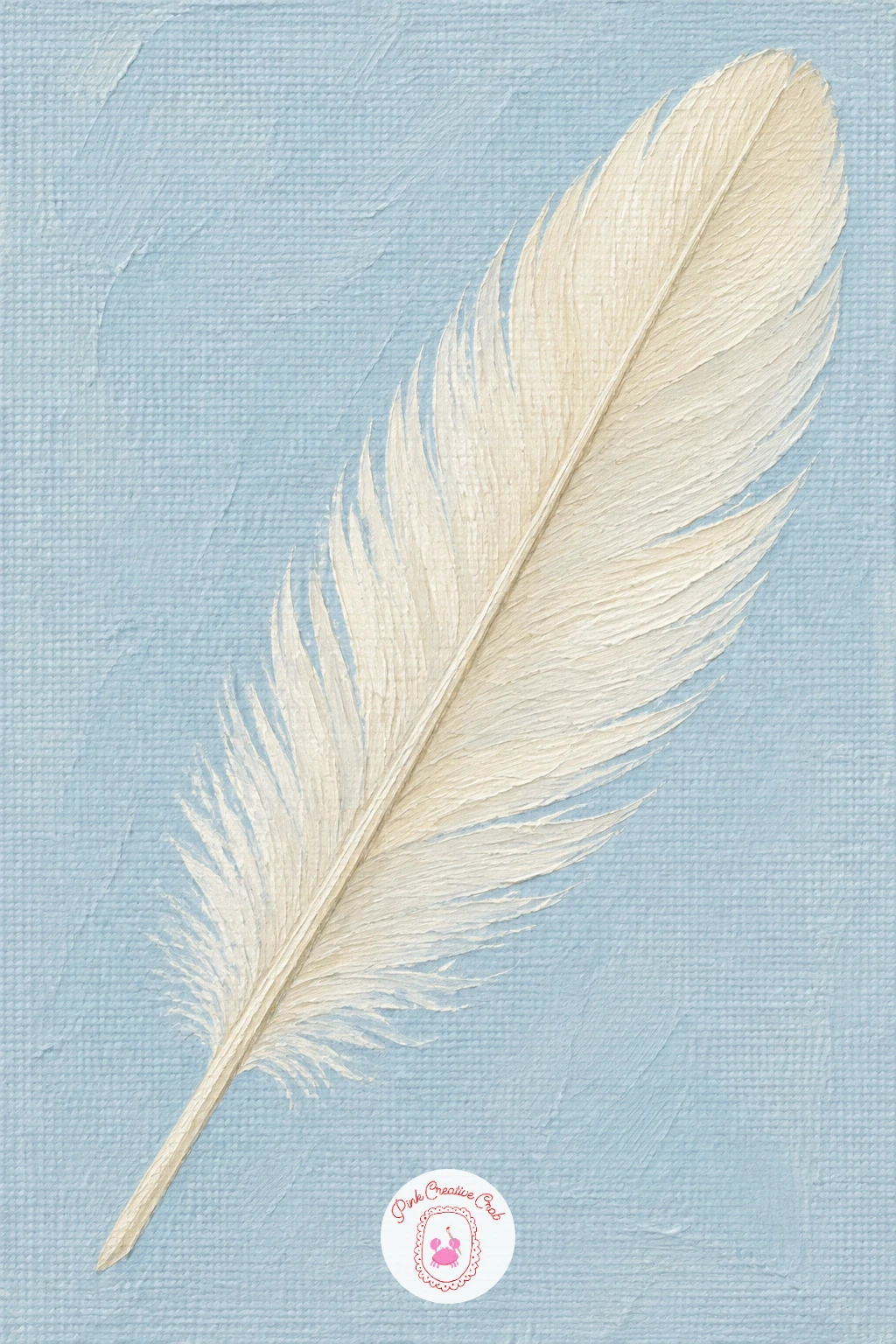
Palette: Pale Blue,Cream,Soft Navy
Keep the palette down to two colors for a white sheep standing alone in a green field. Paint the field first as one flat sage block covering most of the canvas, leaving only a thin strip of pale sky at the very top if you want a hint of horizon, or skip the sky entirely and let the green fill the whole frame for an even quieter effect.
Paint the sheep’s body as one soft rounded cloud-like shape in white, small and placed off center rather than in the middle, then add a small darker oval for the head and four short thin legs beneath the body. Where this one often goes wrong is making the body too smooth and uniform, a few small bumps around the edge of the white shape actually read as woolly texture better than a perfectly round outline would.
Dab a touch of pale grey into the shadow side of the body while the white is still wet, blending it just slightly to suggest the curve of the wool without any heavy shading.
If sage feels too bright, mute it down with a touch of cream mixed in before you start the field.
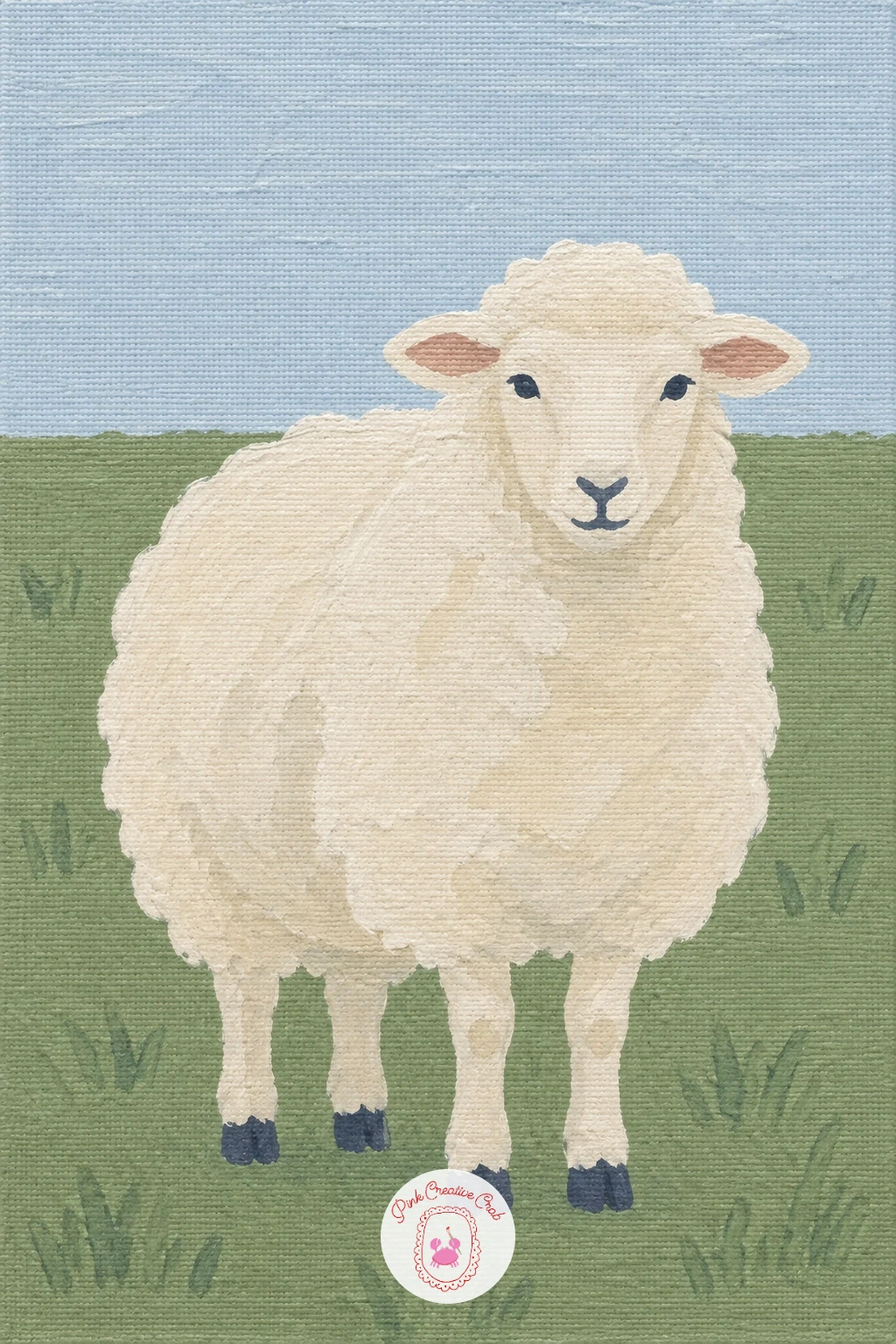
Palette: Sage Green,White,Pale Grey
Turn to something small and striking next, one dandelion seed head floating against a dark teal ground, where the dark background does most of the work. Block in the teal field first in one flat even coat, this deep color is what makes the pale seed head glow, so give it two coats if the first looks patchy.
Once fully dry, paint the round seed head as a cluster of tiny fine lines radiating out from a small central point, using a fine round brush and working outward in short flicks rather than long strokes, some lines a touch longer than others so the circle does not look too perfect. A thin stem trailing down from the base in a soft curve grounds the floating head in the lower part of the canvas.
If the radiating lines start to look like a solid blob rather than fine seeds, thin your white paint slightly with water so each flick stays delicate and separate.
No dark teal in your kit, mix navy with a touch of sage and you get a close enough stand-in.
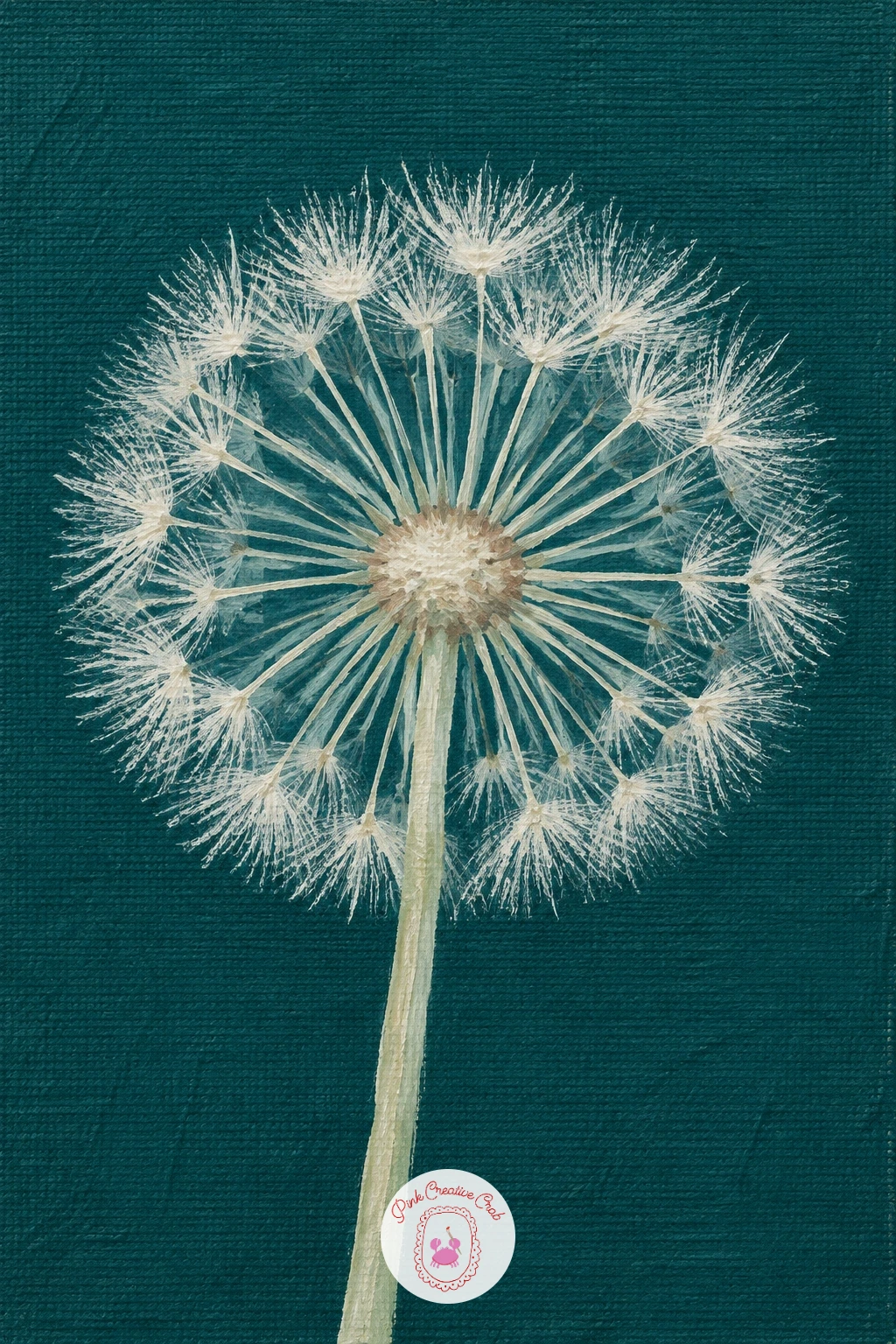
Palette: Dark Teal,White,Cream
Try painting the seed head slightly off a full circle, with a few seeds already drifting away to one side, for a touch of quiet motion.
Move into a small rural scene with a red barn standing under a flat grey sky. Paint the sky first as one even grey field across the top two thirds of the canvas, then a thin strip of cream or pale green ground along the very bottom.
For proportion, keep the barn small, no more than a quarter of the canvas width, and set it slightly off center so the grey sky around it feels wide and calm rather than crowded. Paint the barn as one simple rust red rectangle topped with a triangular roof in a darker rust or soft navy, then add a single small white or cream rectangle for a door, no windows, no visible grain or wood lines needed.
Where this one tends to go wrong is adding too much detail to the roofline, keep the triangle perfectly plain and resist the urge to paint shingles or texture.
If rust feels too warm against a grey sky, a deeper brick tone or even soft navy for the barn itself gives a cooler, equally calm version.
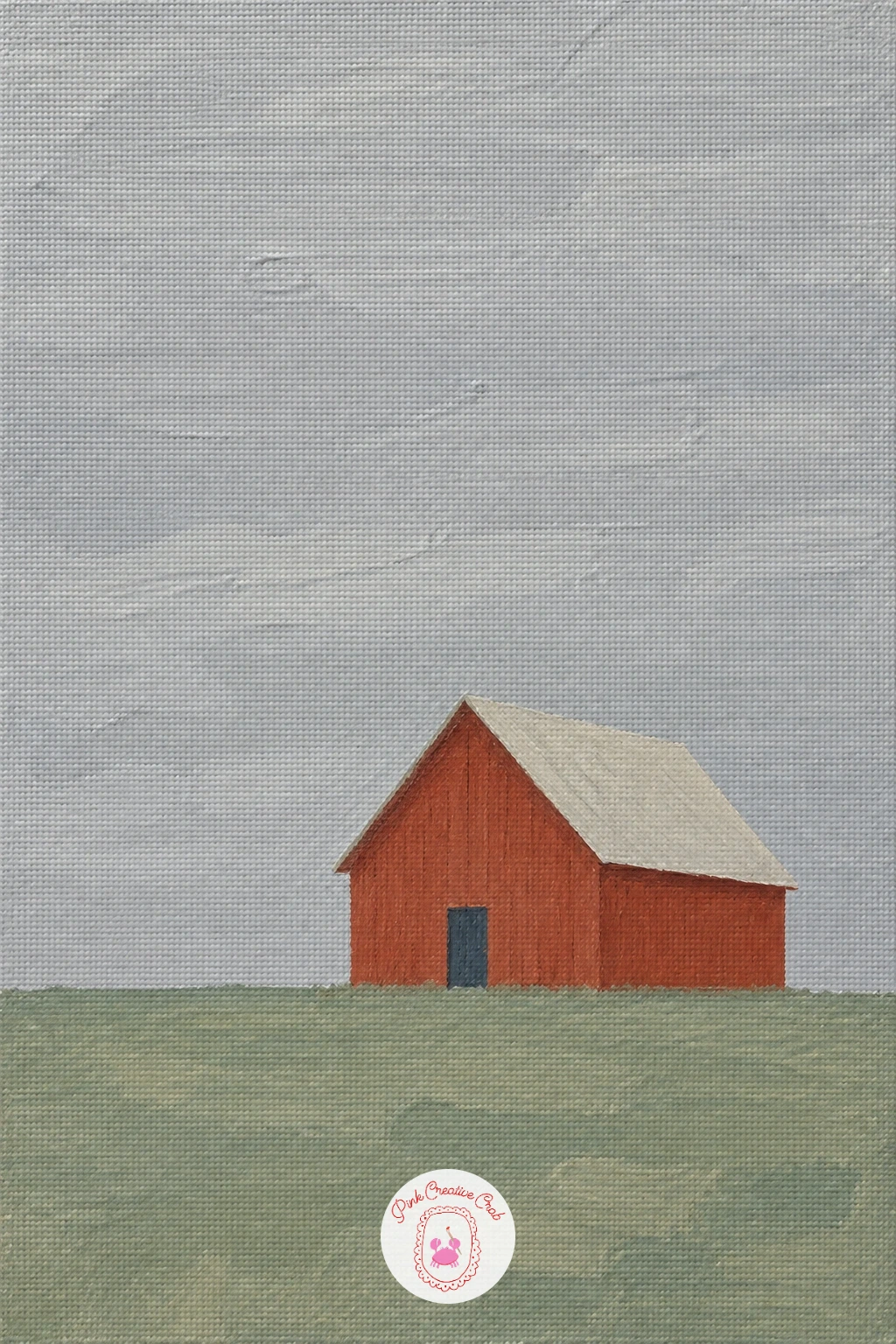
Palette: Rust Red,Grey,Cream
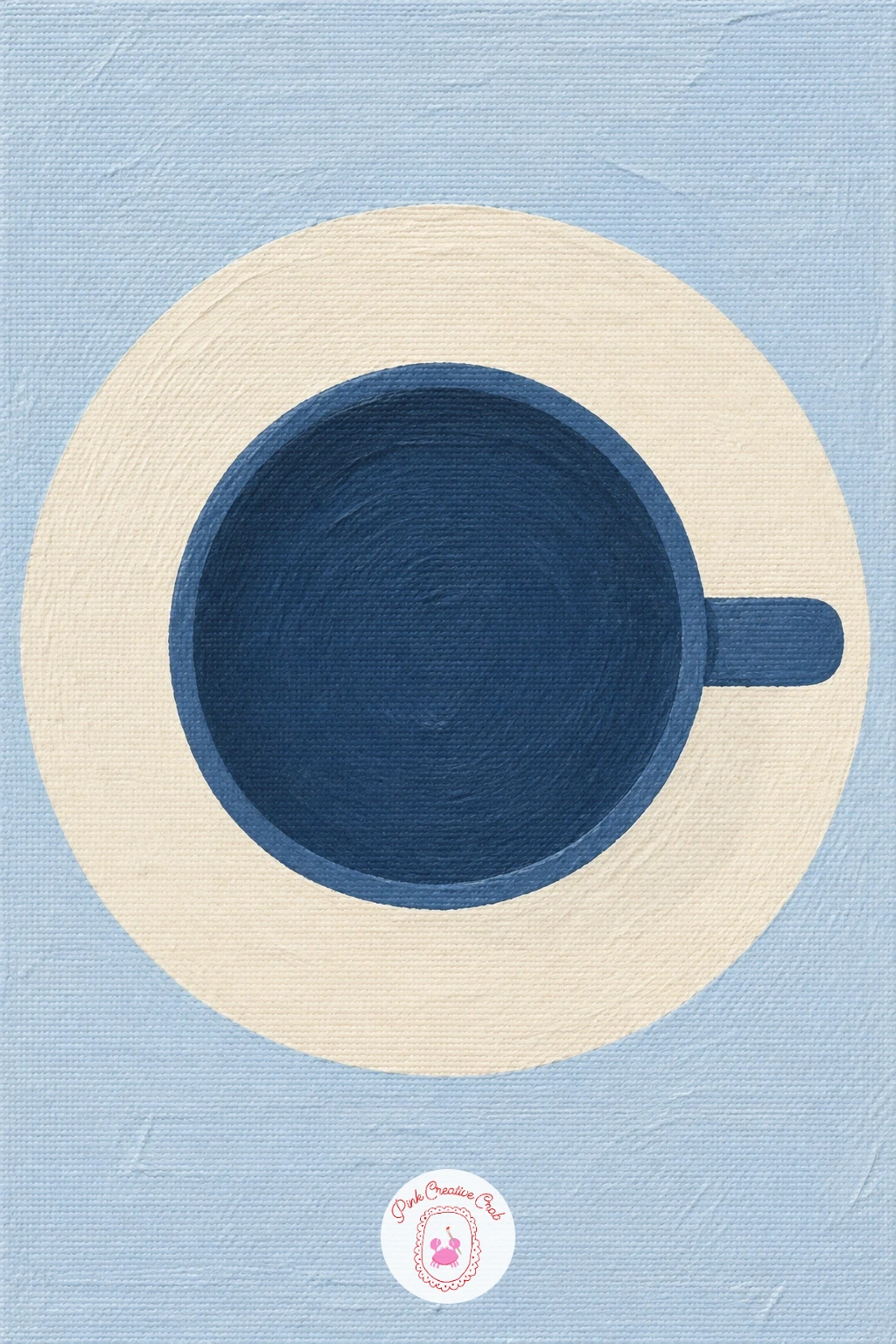
Shift the eye level entirely for a cup and saucer seen straight from above in two colors, a view that turns a familiar object into two simple circles. Paint the background first in a flat pale field, cream works well, then mark two circles with a lid or coin, a larger one for the saucer and a smaller one centered inside it for the cup’s rim.
Because you are looking straight down, there is no perspective to manage and no handle to draw unless you want one small curved shape peeking out from one side of the smaller circle. Fill the saucer ring in one flat color and the inner cup circle in a second, perhaps navy against cream, keeping both edges clean and crisp rather than painted freehand.
Where beginners often slip is making the two circles too close in size, leave a clear visible ring of saucer showing all the way around the cup so the two shapes read distinctly.
If you do not have a lid the right size, a roll of tape works just as well for tracing a clean circle.
You Will Need
- two different sized lids or coins to trace circles
Palette: Cream,Soft Navy
Give the canvas a sense of motion with a single paper airplane gliding across a wide blue sky. Block in the sky first as one flat pale blue field covering the entire canvas, and let it dry before adding the plane so its edges stay crisp.
Paint the airplane as a simple folded triangle shape in cream or white, angled slightly upward as if climbing, and place it off to one side rather than centered so the empty sky ahead of it suggests the distance still to travel. A thin, slightly curved line trailing behind the back point of the plane, fading as it goes, reads as a soft flight path without any extra fuss.
Where this idea can go wrong is making the plane too detailed, with folded panels and creases, when a single flat triangle with one angled fold line down the middle is all the shape needs to read clearly.
If cream feels too soft against your blue, white gives the plane a brighter, crisper pop instead.
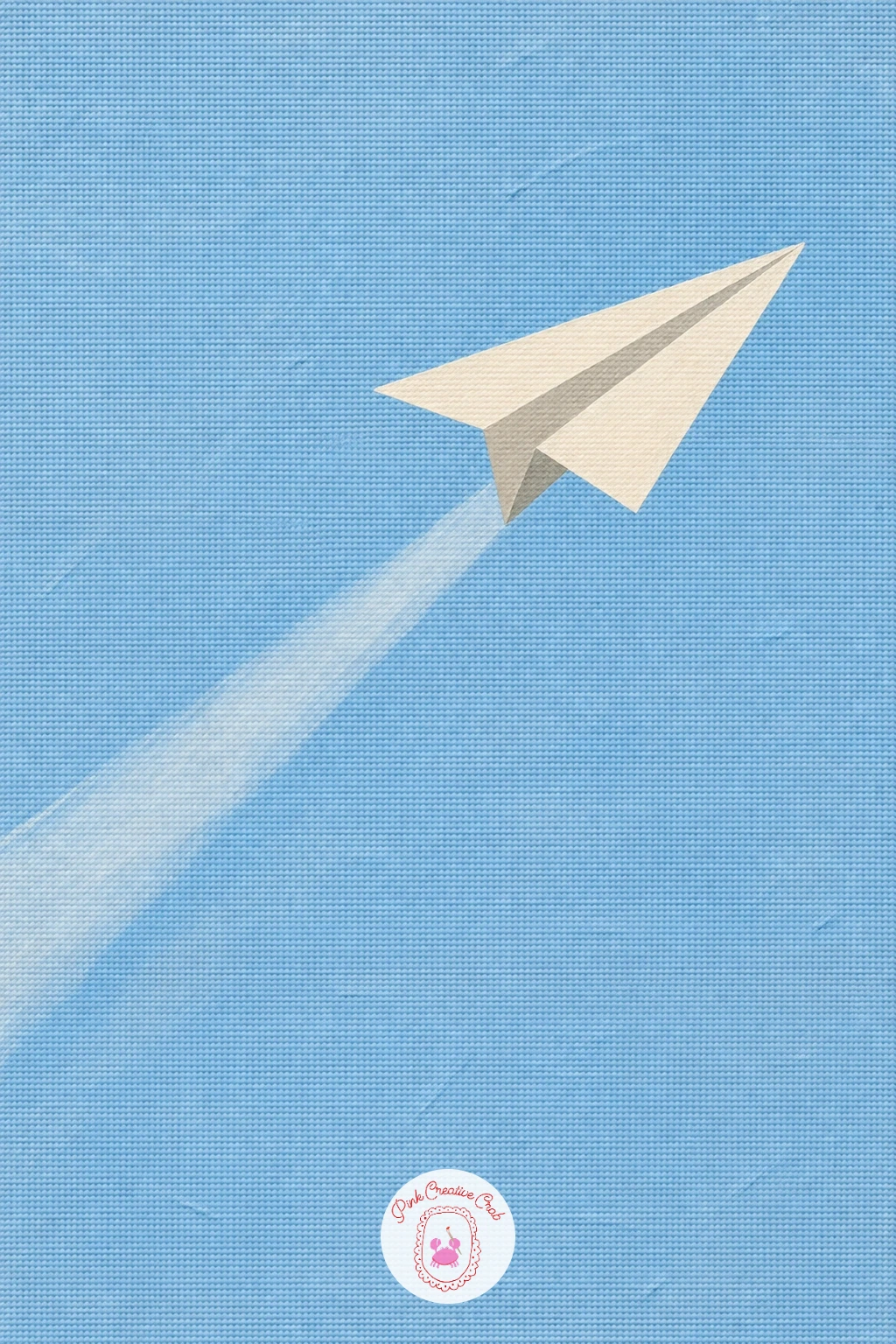
Palette: Pale Blue,Cream,White
Bring a warm note of color into a dark setting with one yellow leaf floating on still dark water. Paint the water first as a flat near-black navy or deep teal field filling the whole canvas, giving it two coats if needed for a really deep, even tone.
Once dry, paint the leaf small and off center in a warm mustard or ochre yellow, a simple pointed oval shape with one thin central vein line running down its length, this single leaf is the only warm color in the entire piece so it should read instantly against the dark field around it. A few short curved lines radiating out from the leaf’s edges in a slightly lighter version of the water color suggest small ripples without turning into a busy pattern.
Where this idea often goes wrong is adding too many ripple lines, two or three faint curves are enough, any more starts to compete with the leaf itself.
If mustard is not in your set, any warm ochre or ordinary ochre pencil mixed into yellow paint gets you there.
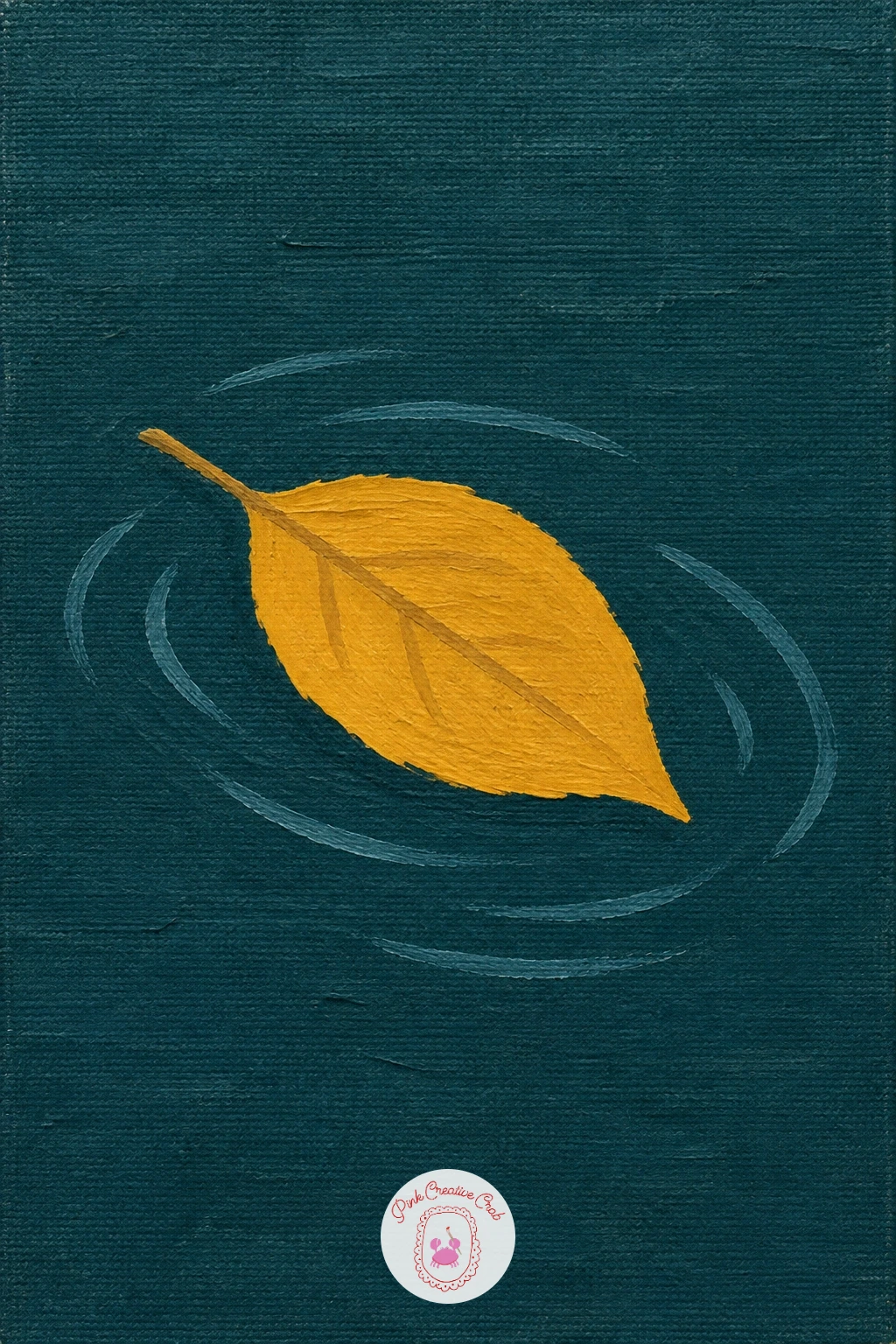
Palette: Dark Teal,Mustard Yellow,Soft Navy
Return to a small animal subject with a white cat curled into a neat circle on a blue ground. Paint the background first as one flat soft blue field, letting it dry fully so the cat’s soft edges do not drag into wet paint.
Build the cat’s body as one rounded oval shape first, then tuck a smaller circle for the head into one end of it, overlapping slightly, this is the measuring trick that keeps a curled cat from looking like two separate blobs stuck together. Add a thin curved tail wrapping around the outer edge of the body, and two small triangular ears at the top of the head, keeping every shape soft and rounded rather than sharp.
Where beginners usually struggle is the face, skip it entirely or add only two small closed-eye curves, a sleeping cat needs no more detail than that to read clearly.
If pure white looks too stark against the blue, warm it slightly with a touch of cream mixed in.
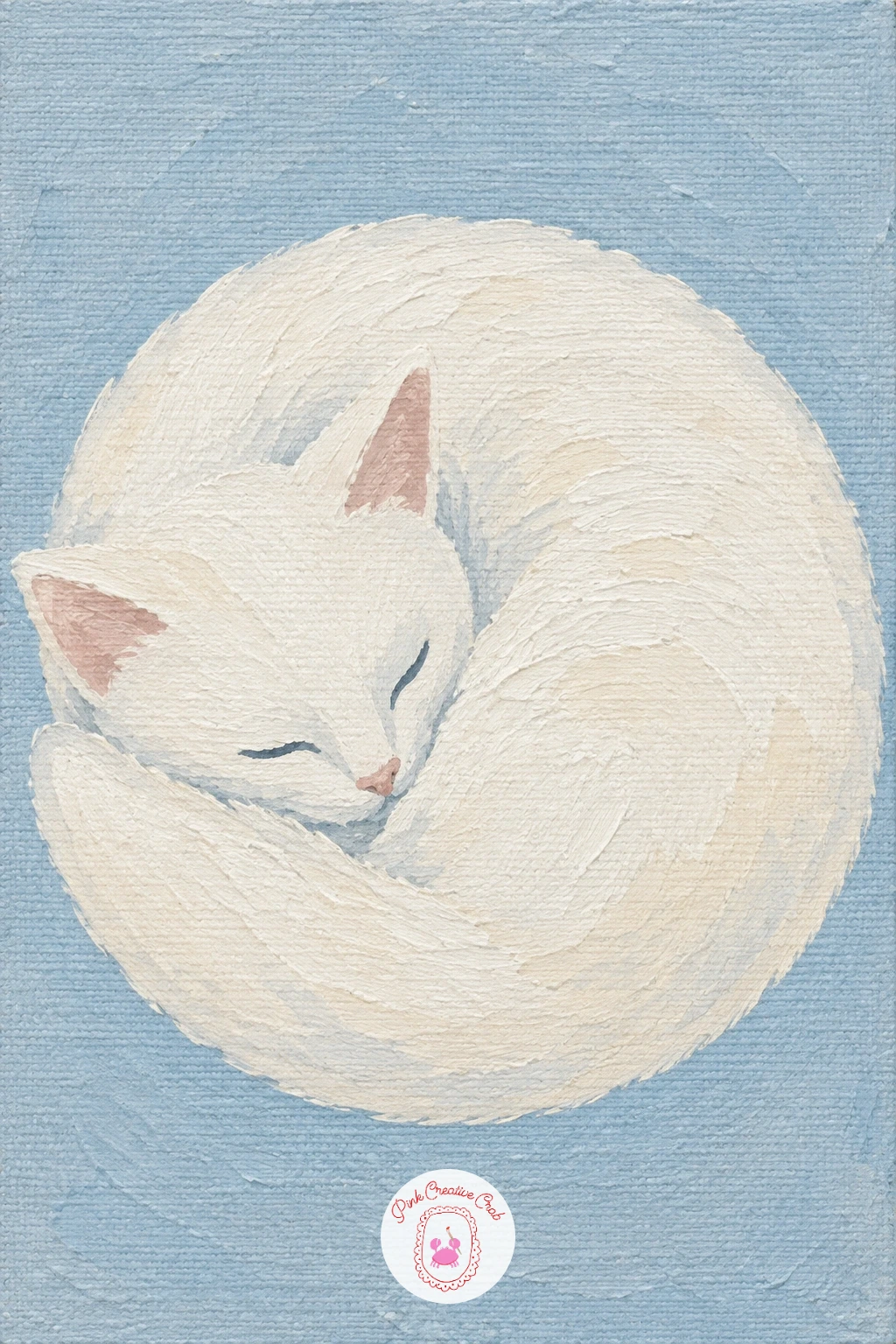
Palette: Pale Blue,White,Soft Navy
Look at a sleeping cat photo for how the tail wraps around the paws, that one curve is what sells the curled pose.
Move back indoors for an open window with a white curtain caught mid-breeze. Paint the wall first as one flat pale field, cream or soft rose, then mark the window frame as a simple rectangle slightly off center using painter’s tape for crisp straight edges.
Fill the window’s interior with a flat pale blue to suggest sky beyond, then peel the tape away once dry to reveal a clean frame. Paint the curtain next as one soft white shape draped from the top of the window, using a few loose curving strokes rather than straight lines to suggest fabric caught in a breeze, letting one edge billow slightly out past the frame’s edge for movement.
Where this idea usually goes wrong is painting the curtain too stiff and flat, a single curved fold along its length, done with a slightly darker white or pale grey, gives it just enough life without adding real fabric texture.
If you do not have tape for the frame, a ruler and a steady hand work just as well for the straight lines.
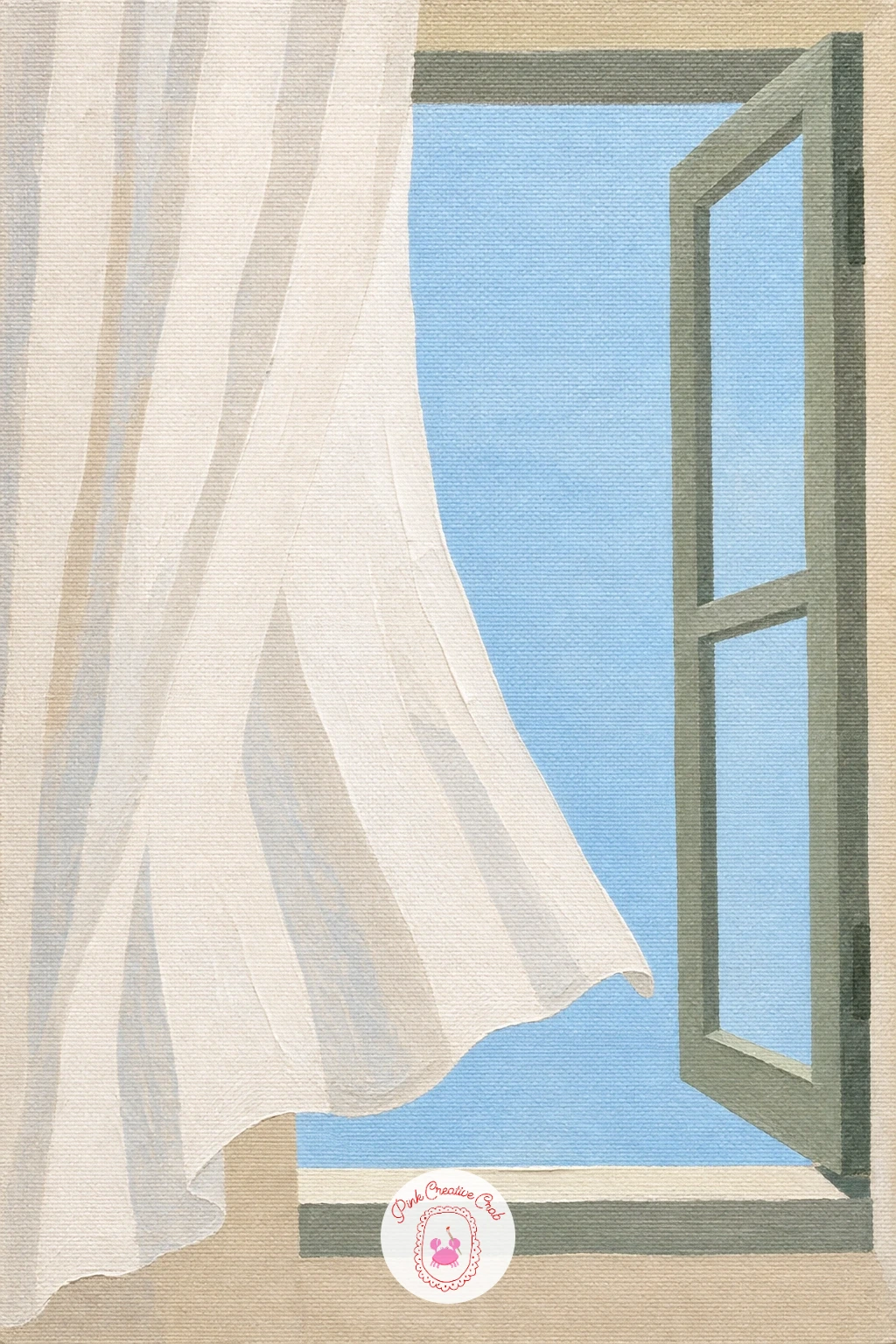
You Will Need
- painter’s tape for the window frame
Palette: Cream,White,Pale Blue
Keep the architectural mood going with a simple wooden ladder leaning against a plain white wall. Paint the wall first as one flat white or cream field across the whole canvas, letting it dry completely before adding the ladder on top.
Use a ruler or the edge of painter’s tape for the two long side rails of the ladder, angling them slightly inward at the top where they lean against the wall, then add four or five short horizontal rungs evenly spaced between them. A rust or warm brown tone for the wood keeps the ladder the one warm note against the cool white wall, and a thin darker line along one edge of each rail suggests the roundness of real wood without any real shading.
Where this one tends to go wrong is uneven rung spacing, lightly mark dots for each rung’s position before painting so they land at regular intervals.
If you do not have tape handy, drawing the two rails first in pencil and painting carefully inside the lines gets the same crisp result.
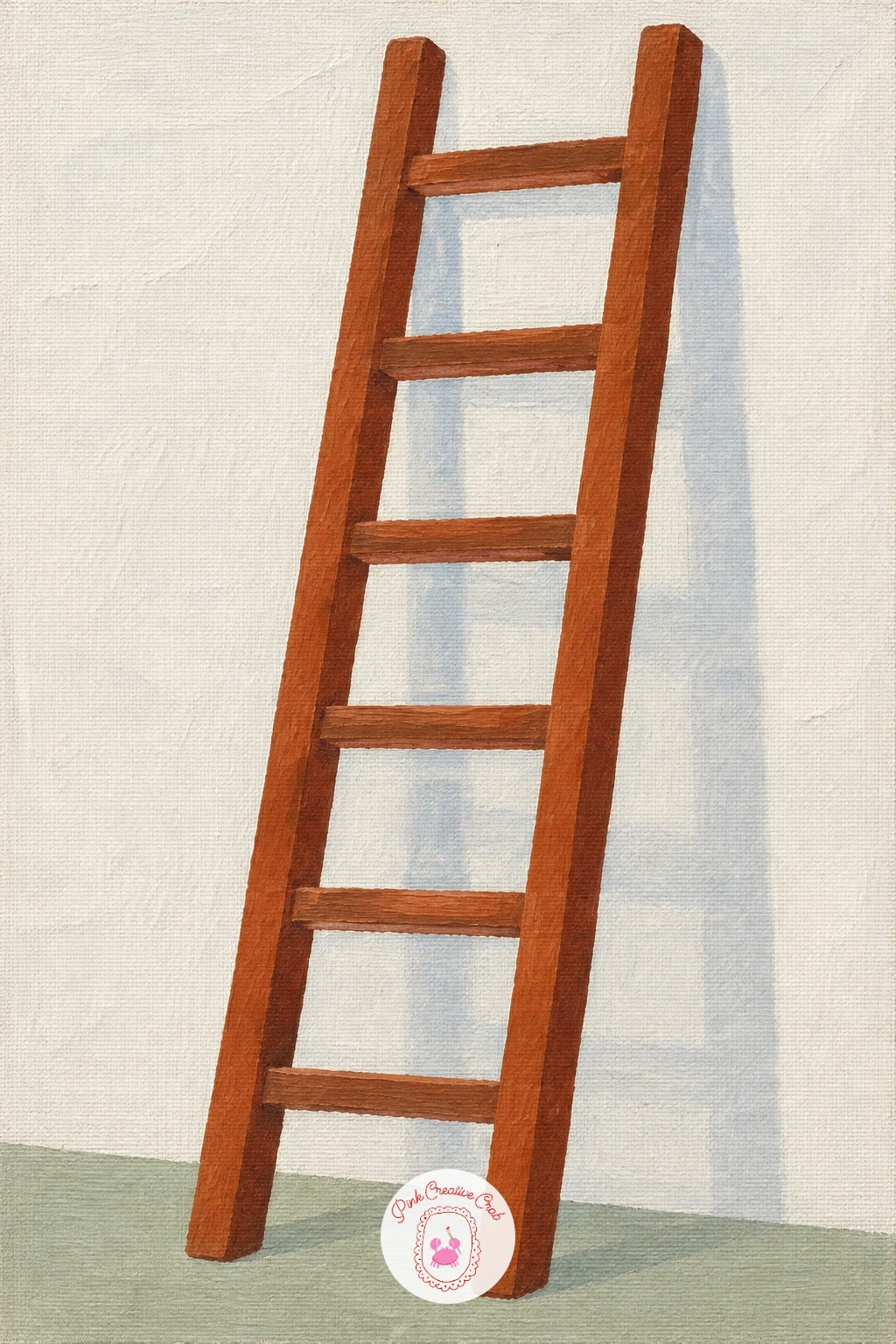
You Will Need
- painter’s tape or a ruler for straight rails
Palette: White,Rust Brown,Cream
Bring in some quiet symmetry with a single cloud reflected in a still lake. Split the canvas roughly in half with a flat pale blue sky on top and a slightly deeper blue lake below, meeting in one calm horizontal line.
Paint one soft rounded cloud shape in cream or white sitting in the upper half, then here is the trick that makes this composition work: paint almost the same cloud shape again directly below the horizon line in the lake, slightly softened and a touch more muted in color, as though seen through water rather than air. Keeping the reflected version looser and less crisp than the original cloud is what sells the sense of water rather than a second sky.
Where beginners often go wrong is making the reflection identical and equally crisp, a slightly wavy or softened outline on the lower cloud, done with a dry brush dragged lightly over it once dry, fixes that instantly.
If you want an even calmer version, skip the reflection’s edge definition entirely and let it read as a soft pale smudge.
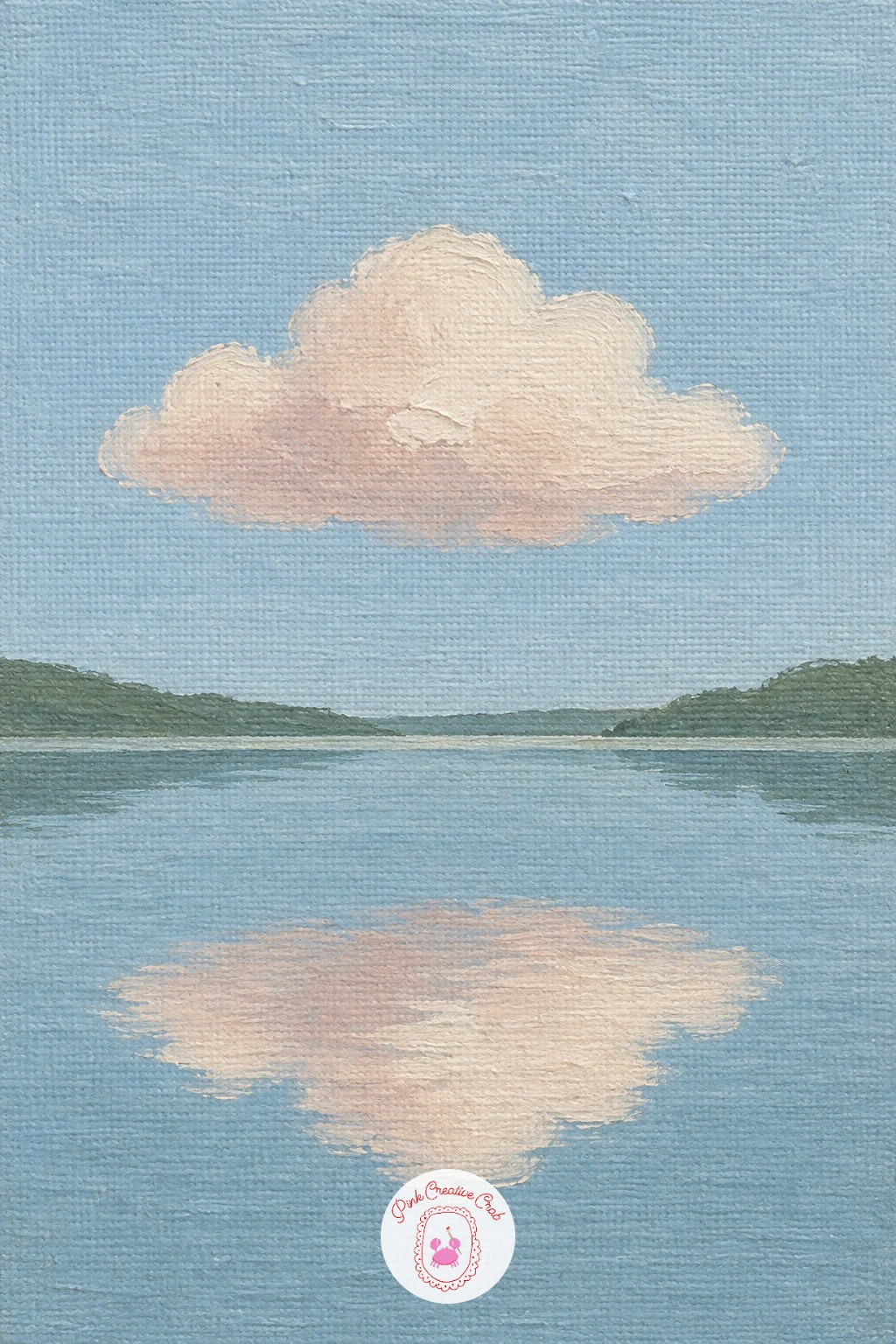
Palette: Pale Blue,Soft Navy,Cream
After all that solitary imagery, try a small scene of quiet company with two chairs facing the sea on a pale beach. Paint the beach as one flat cream or pale rust field across the lower half of the canvas and the sea as a soft navy or pale blue band above it, meeting the sky in one clean line near the top.
Place the two chairs small and side by side, facing away from the viewer toward the water, each one a simple rectangle seat with a slightly taller rectangle back and four thin short lines for legs, no fabric texture or folds needed. Keep a small, deliberate gap between the two chairs rather than pushing them together, that little space is part of what makes the scene feel calm rather than crowded.
Where this idea tends to go wrong is making the chairs too large relative to the beach around them, keep each one no taller than about a tenth of the canvas height so the wide quiet beach stays the real subject.
If you enjoy small scenes like this with a sense of place, the quiet dock and water compositions in 28 lake painting ideas of canoes, quiet docks and lakeside cabins work from a similar sense of calm.
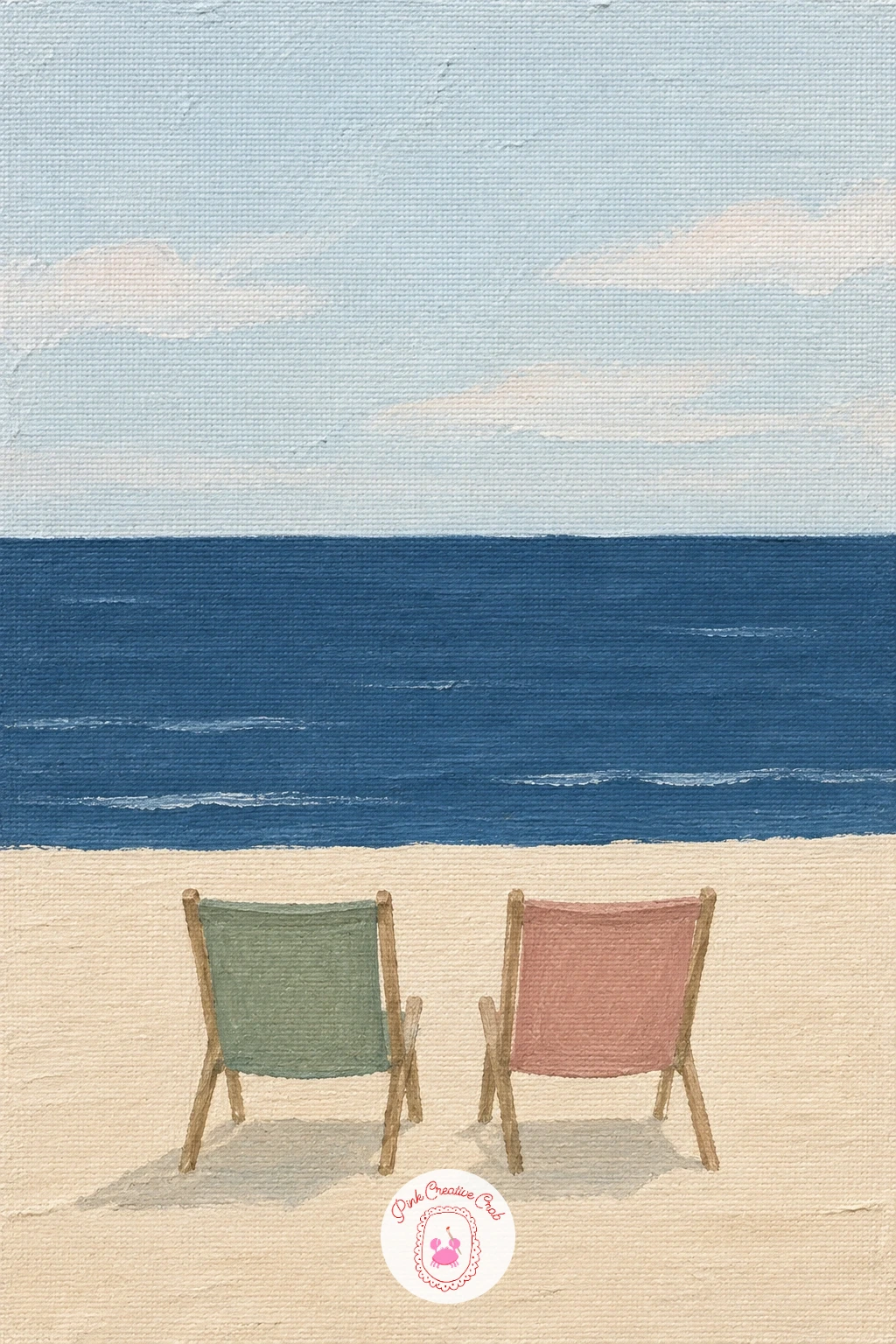
Palette: Cream,Soft Navy,Rust
Bring back a still life with a blue and white striped jug set against a plain sand-colored background. Paint the background first as one flat warm cream or pale rust field, then once dry, sketch the jug’s outline lightly in pencil, a simple rounded body narrowing at the neck with a small curved handle on one side and a pouring lip opposite it.
Fill the jug’s base shape in white first, then once that layer is dry, add the stripes as a series of even horizontal navy bands wrapped around the body, slightly curving to follow the jug’s round form rather than staying perfectly straight. This curve in the stripe lines is the one hands-on trick that makes a flat painted shape read as a rounded three-dimensional jug.
Where this idea usually goes wrong is painting stripes that are too thin and fussy, three or four bold navy bands read far more calmly than a dozen thin ones.
If you do not have a steady hand for the curved stripes, painter’s tape cut into short curved strips can guide each band before you paint inside it.
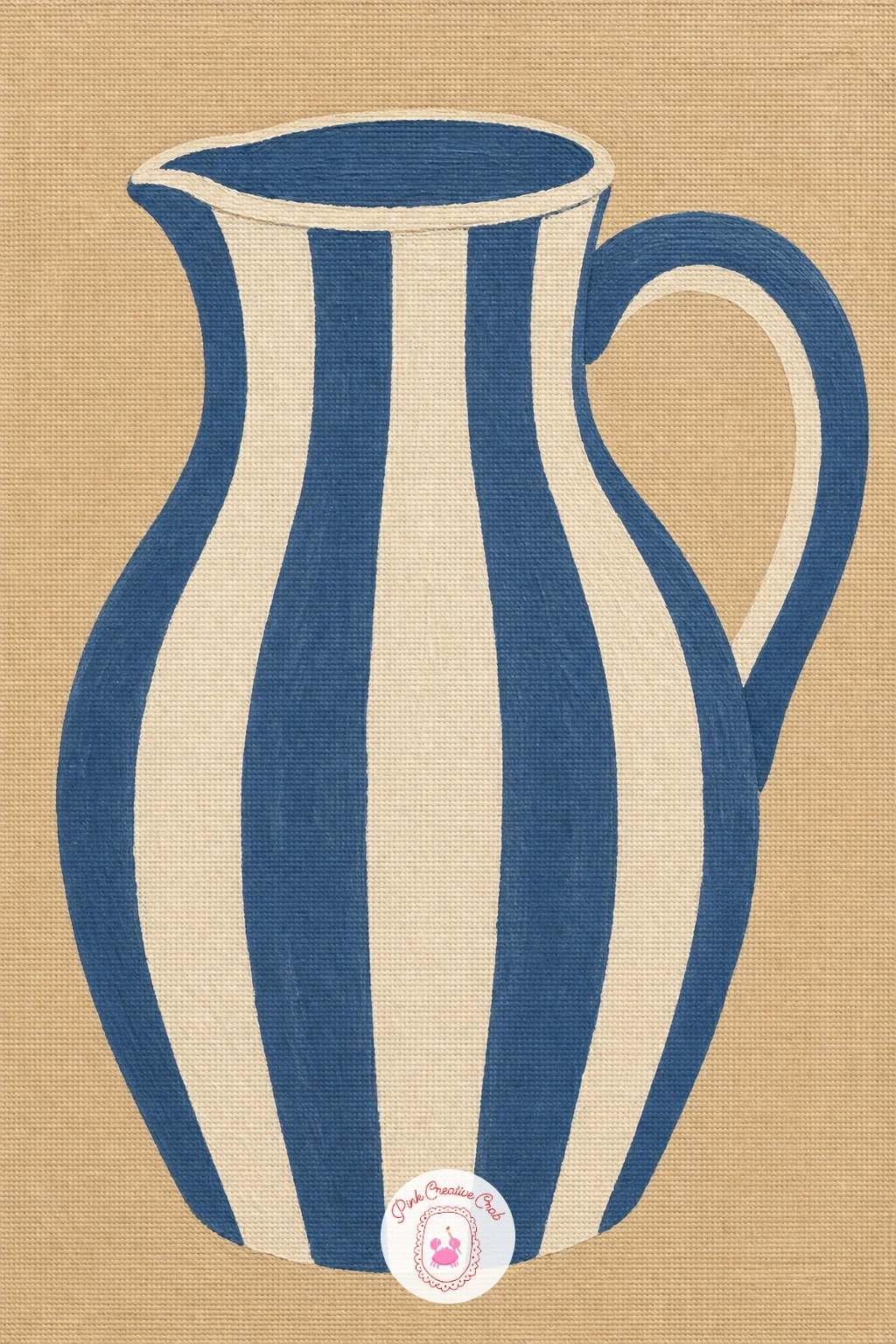
You Will Need
- painter’s tape for curved stripe guides
Palette: Cream,White,Soft Navy
Head back out to open water for a lone pine tree standing on a small rocky island. Paint the sea first as one flat navy or pale blue field filling most of the canvas, then add a small rocky mound rising from the water, a simple uneven oval in a muted grey or dusty rose sitting low and off to one side.
Paint the pine rising from the rock as one thin vertical trunk topped with a tall narrow triangle shape in a deep sage or navy green, the triangle slightly uneven along its edges rather than perfectly smooth, since real pines are never that tidy. Keep the whole island small relative to the wide sea around it, that scale difference is what gives the piece its sense of quiet isolation.
Where this one tends to go wrong is making the rock too smooth and round, a few short angled lines along its base suggest real stone texture without turning into a detailed study.
If sage green feels too bright against navy water, mute it by mixing in a touch of the navy itself before painting the tree.
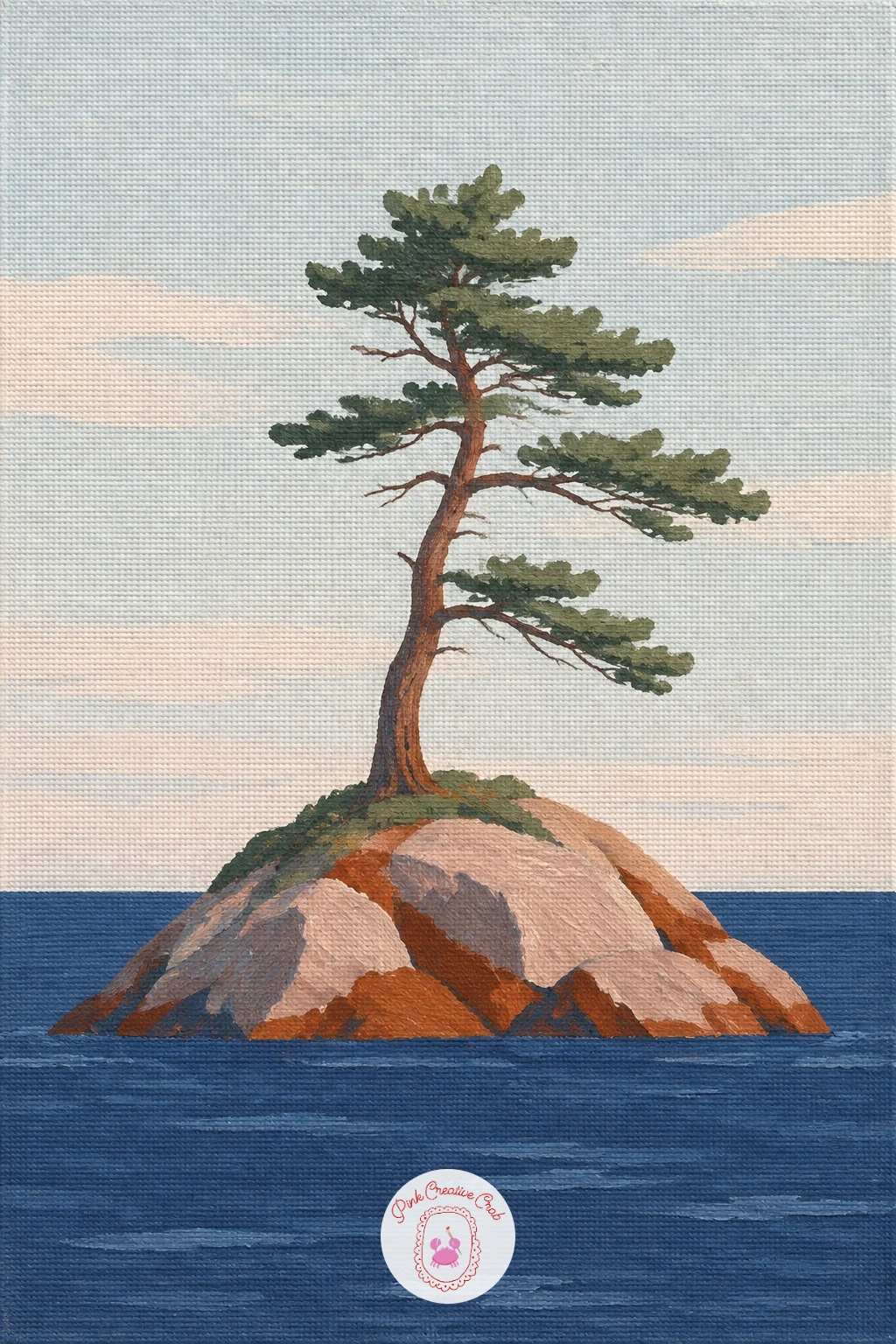
Palette: Soft Navy,Sage Green,Grey
Pare everything back even further for a single ripple ring spreading across still blue water, a painting built from almost nothing but circles. Paint the water as one flat navy or soft blue field across the entire canvas, giving it an even, smooth finish since this flat surface is the whole point of the piece.
Once dry, paint the ripple as two or three thin concentric circles radiating outward from one small point, using a lid or coin of increasing sizes to trace each ring so they stay evenly spaced and perfectly round. Keep the circles faint, a lighter tone of the same blue family rather than a sharply contrasting color, so they read as a gentle disturbance rather than a bold graphic pattern.
Where beginners usually go wrong is spacing the rings too evenly and mechanically, letting the gaps between circles grow very slightly larger as they move outward actually reads as more natural, since real ripples spread and fade.
If circles by hand feel shaky, a set of nested lids or a compass gives you a cleaner result every time.
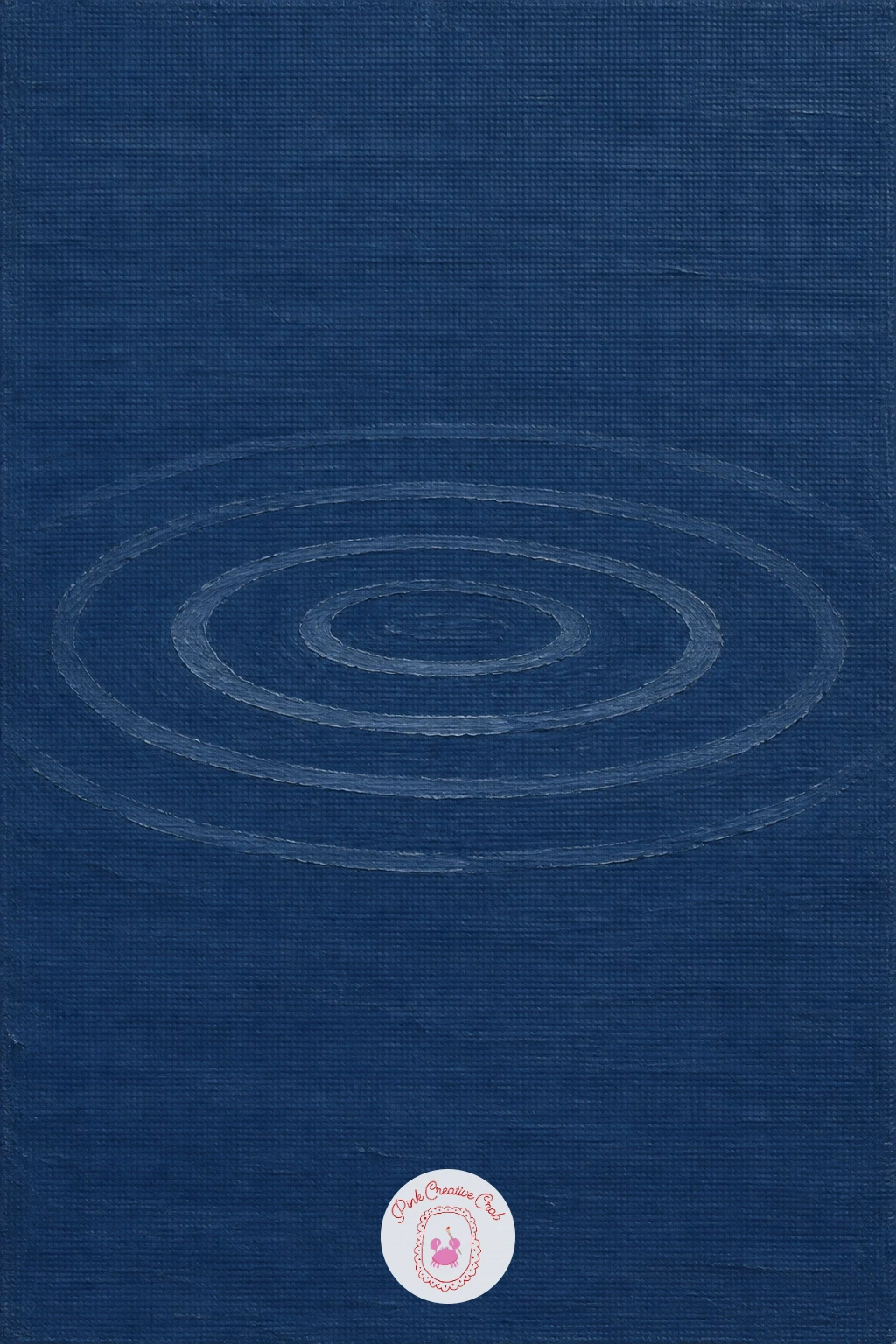
You Will Need
- a few different sized lids or a compass for the rings
Palette: Soft Navy,Pale Blue
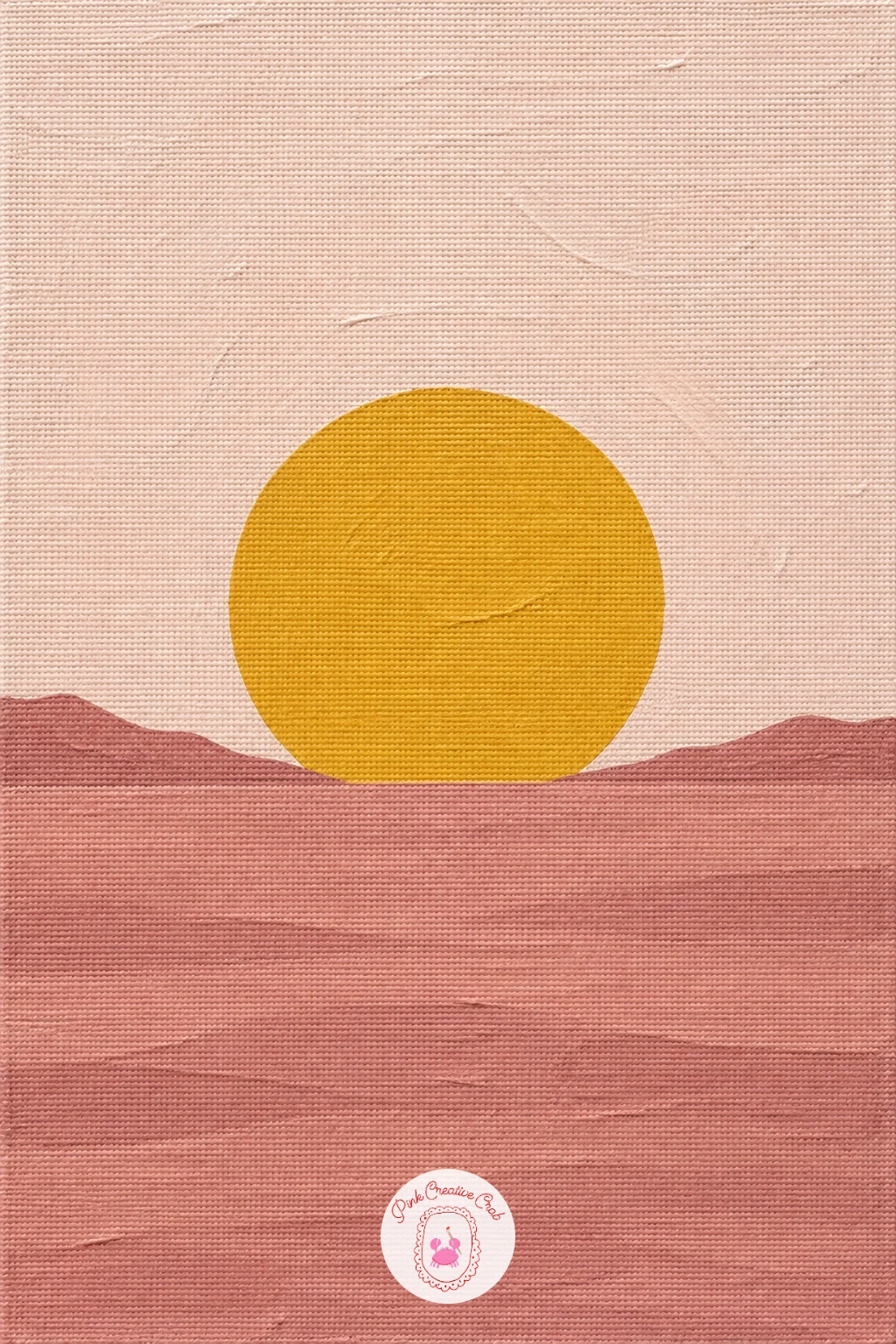
Close out with the warmest palette of the whole set, a round mustard sun hanging over a flat dusty rose desert. Paint the desert ground first as one even dusty rose field across the lower half of the canvas, then the sky above it in a slightly paler, warmer cream, meeting in one flat horizontal line.
Trace a clean circle with a lid for the sun, placing it so its bottom edge sits right on or just above the horizon, and fill it with a bold flat mustard yellow, the one saturated color in the whole piece. For the quick ten minute version, stop there, sun, ground, sky, three flat shapes and nothing else. The forty minute version adds one low rounded dune shape in a slightly deeper rose rising gently in the foreground, giving the flat desert a touch of real form.
Where this idea can go wrong is letting the mustard sun blend too softly into the cream sky around it, keep its edge crisp and its color noticeably more saturated so it holds its place as the clear focal point.
If mustard feels too strong, a softer ochre gives a gentler, more muted version of the same warm glow.
You Will Need
- small jar lid or coin to trace the sun
Palette: Dusty Rose,Mustard Yellow,Cream
What to Do Next
Pick whichever idea caught your eye first, that pull is usually the right one to start with. Tape off a small canvas, mix your two or three colors before you begin so you are not stopping mid-stroke, and let the empty space around your subject stay empty.
Frequently Asked Questions
What paint is best for simple painting ideas like these?
Acrylic paint on a small canvas works best because it dries fast, covers in flat even blocks, and forgives mistakes easily with a second coat, which suits quick two or three color pieces.
How do I keep a painting looking calm instead of busy?
Limit yourself to two or three colors and one small subject, then leave the rest of the canvas as open flat space rather than filling it with extra detail, shadows or background objects.
What size canvas suits these simple painting ideas?
A small canvas, around eight by ten inches or smaller, suits these best since the flat color blocks and single small subject fill that space quickly without needing to cover a large area.
How do I get really clean straight edges without a steady hand?
Painter’s tape is the easiest fix, press it down firmly along any straight line like a door, window frame or horizon, paint over it, then peel it away once the paint is fully dry.
Can I reuse the same two or three colors across several paintings?
Yes, sticking to a small shared palette like soft navy, dusty rose, sage, cream and rust across several pieces is what makes a group of these look cohesive when displayed together.
Have any thoughts?
Share your reaction or leave a quick response — we’d love to hear what you think!
-
 0
-
0
-
0
-
0
-
0
-
0


