Table of Contents
This set of easter egg coloring pages gathers big patterned eggs, nests tucked into blossom branches, a basket tied with a bow and a few chicks hatching into spring. Every page is a single clean outline, so the pattern sits right there waiting for color instead of fighting a busy background.
Print on plain copy paper for a quick stack to hand out, or switch to heavier cardstock if you plan to use markers that bleed through thinner sheets. A standard print quality setting is fine for all 22 pages, and a paper trimmer gives cleaner edges than scissors if you want to trim before framing or gluing one onto a card.
Using these images: free for personal projects such as printing, coloring, cards, journals and gifts. Handmade items that include them may be sold up to 30 pieces per design. More than that is commercial use and is not permitted, and neither is selling or sharing the images themselves or passing them off as your own. Please ask before any other use.
Big Patterned Eggs
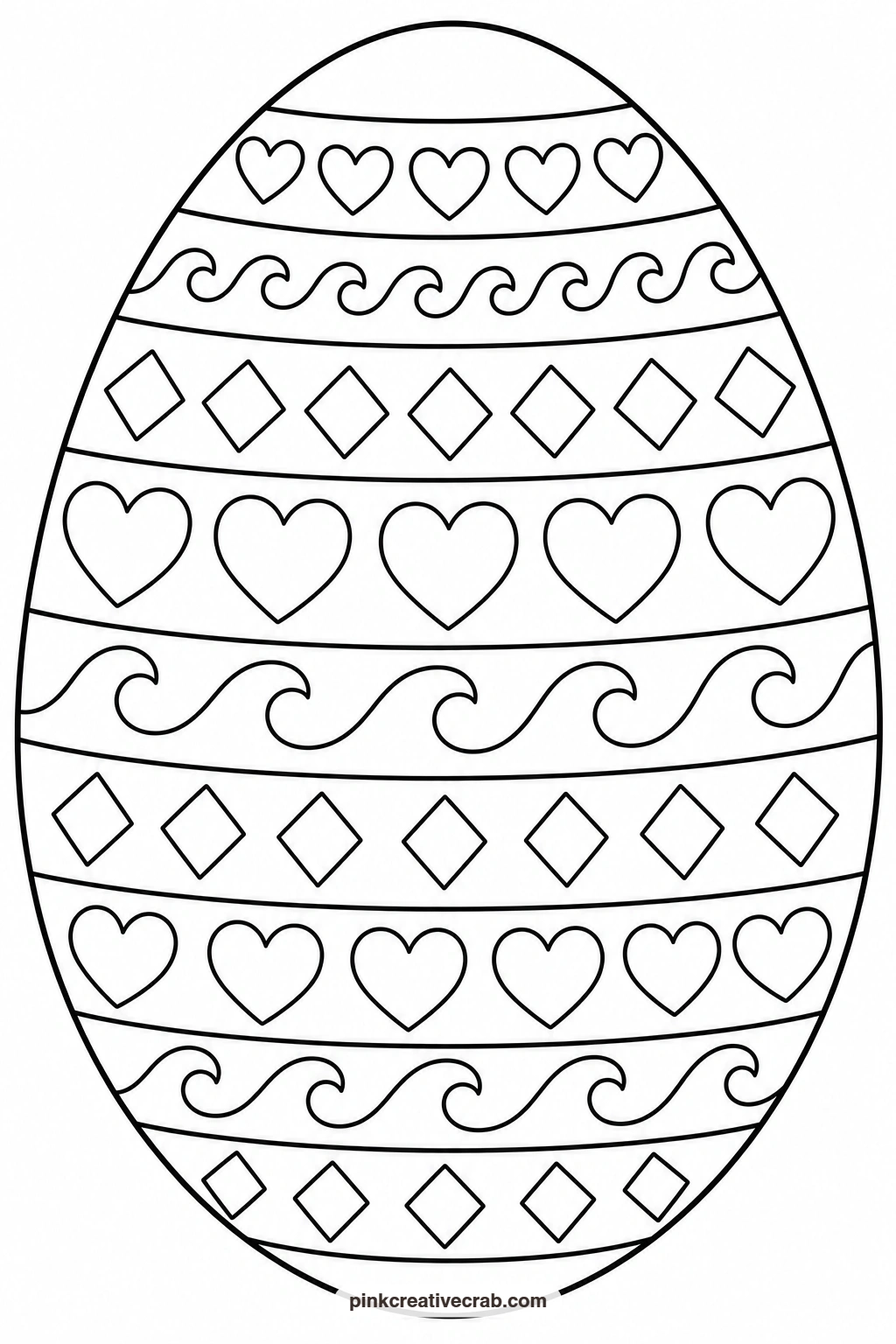
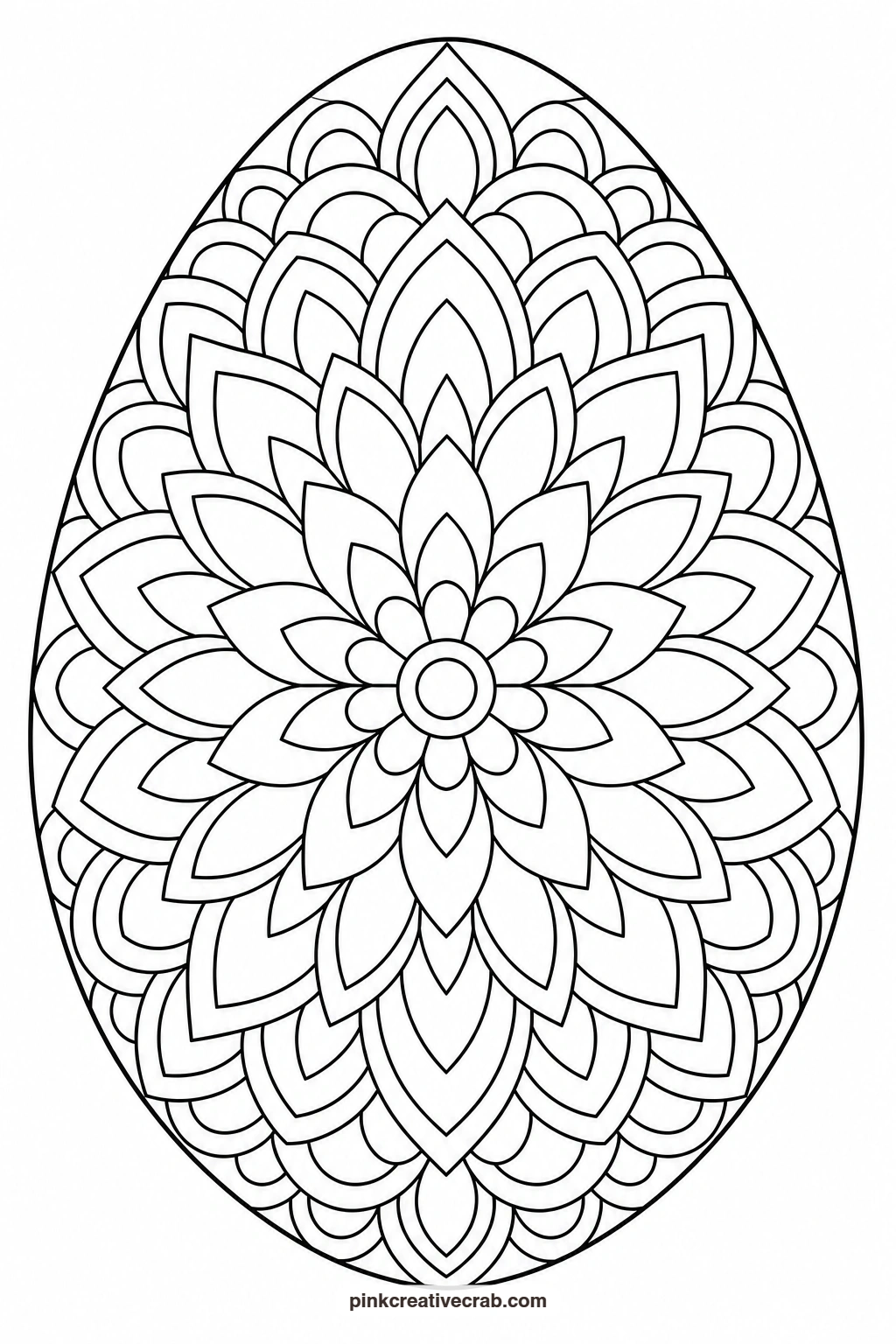
Fits a confident older child or an adult who likes a slow evening with a stack of colored pencils, since the large flowers and leaves give plenty of open space without any fiddly small sections to work around.
Start with the petals before moving out to the leaves, so the main shapes anchor the page and the smaller details feel like finishing touches rather than the starting point.
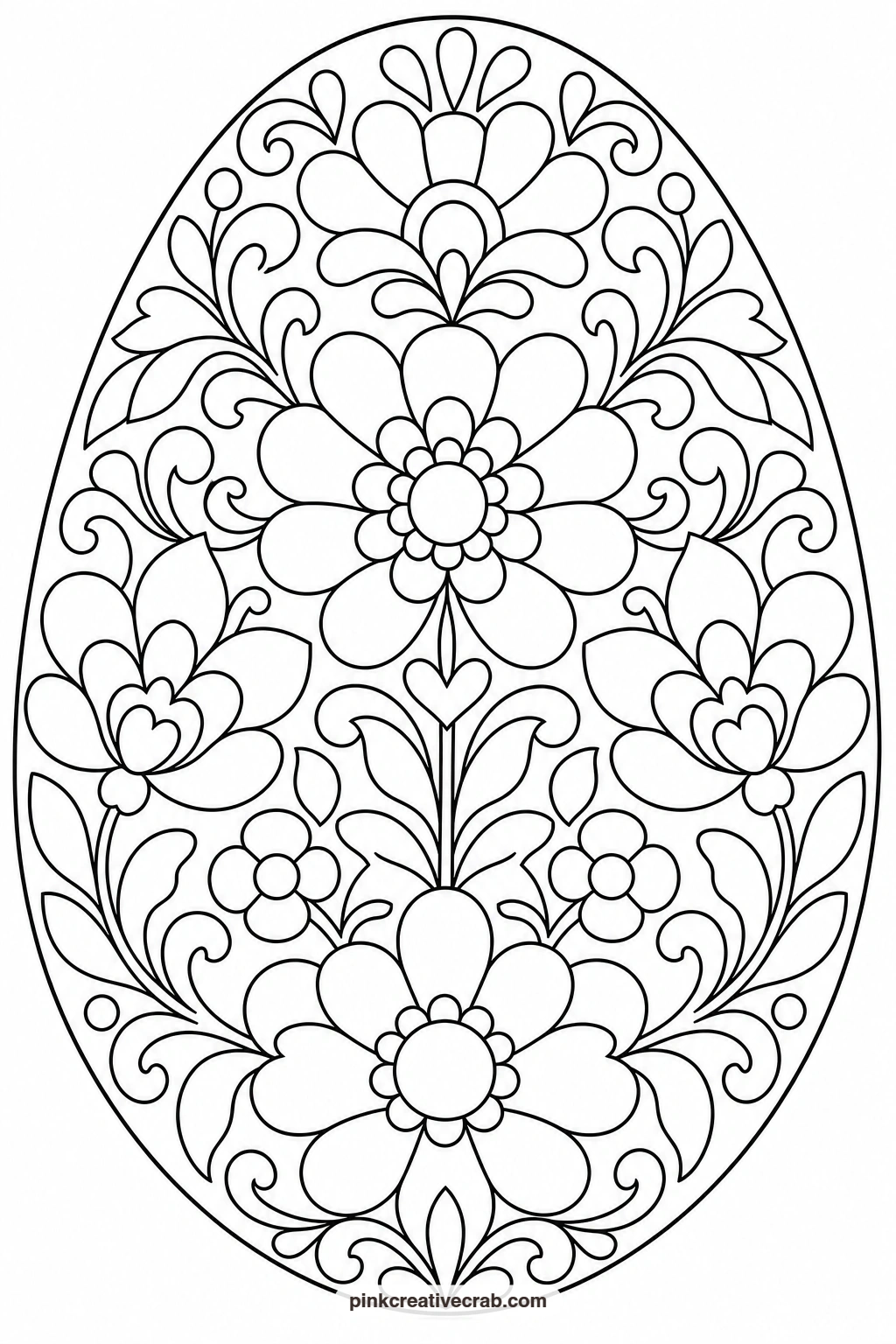
Wide horizontal bands of hearts, waves and diamonds wrap this egg from top to bottom, giving a clear stripe-by-stripe plan that suits anyone who likes to know exactly where one color ends and the next begins.
Gel pens or fine markers work well here, since the simple petals radiating out from the center stay crisp even in small sections, while colored pencil suits softer shading toward the edges.
Begin at the middle ring and work outward, the way you would on any mandala coloring page, so the pattern builds in even layers rather than in scattered patches.
A grid of simple squares and little stitch marks covers this egg like a quilt block, and leaving every other square white before adding color to the rest is a quick trick that makes the whole pattern read clearly from across a room.
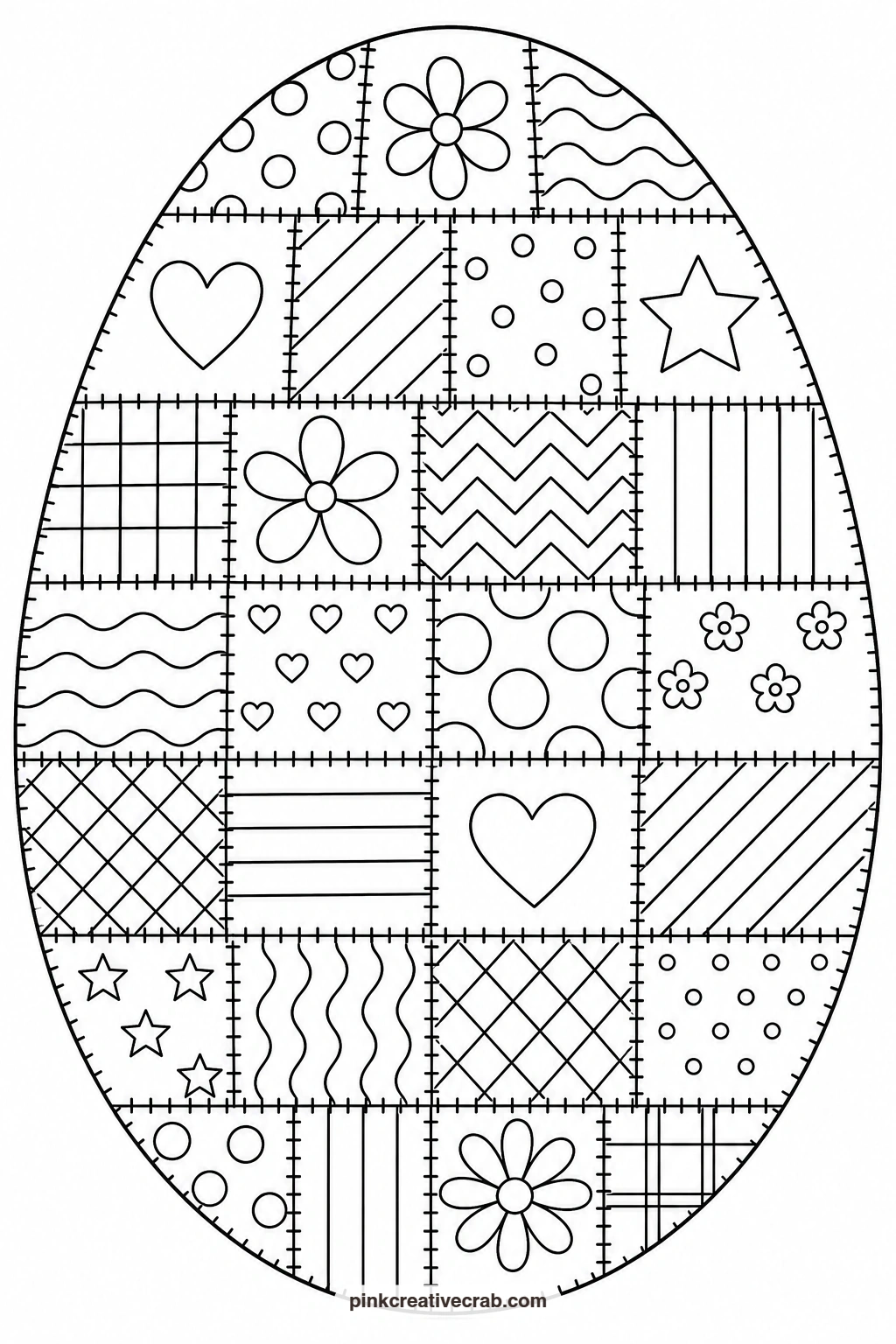
Pair this one with the mandala egg above if you want two large patterned eggs side by side on a shelf or a window, since both share the same scale and both read well from a distance.
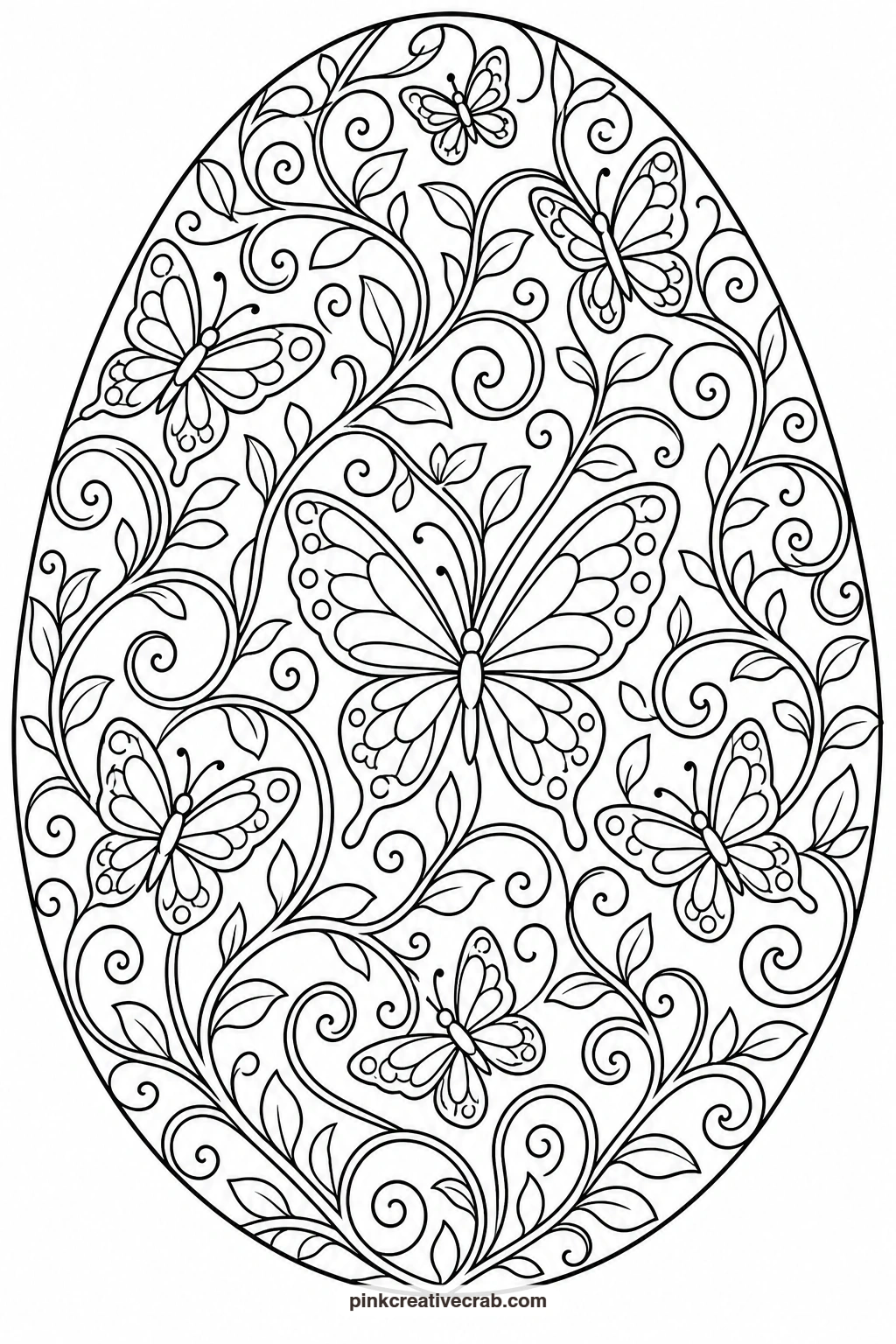
The swirling vines wrap right around the egg, so turning the page as you color keeps the lines smooth instead of choppy.
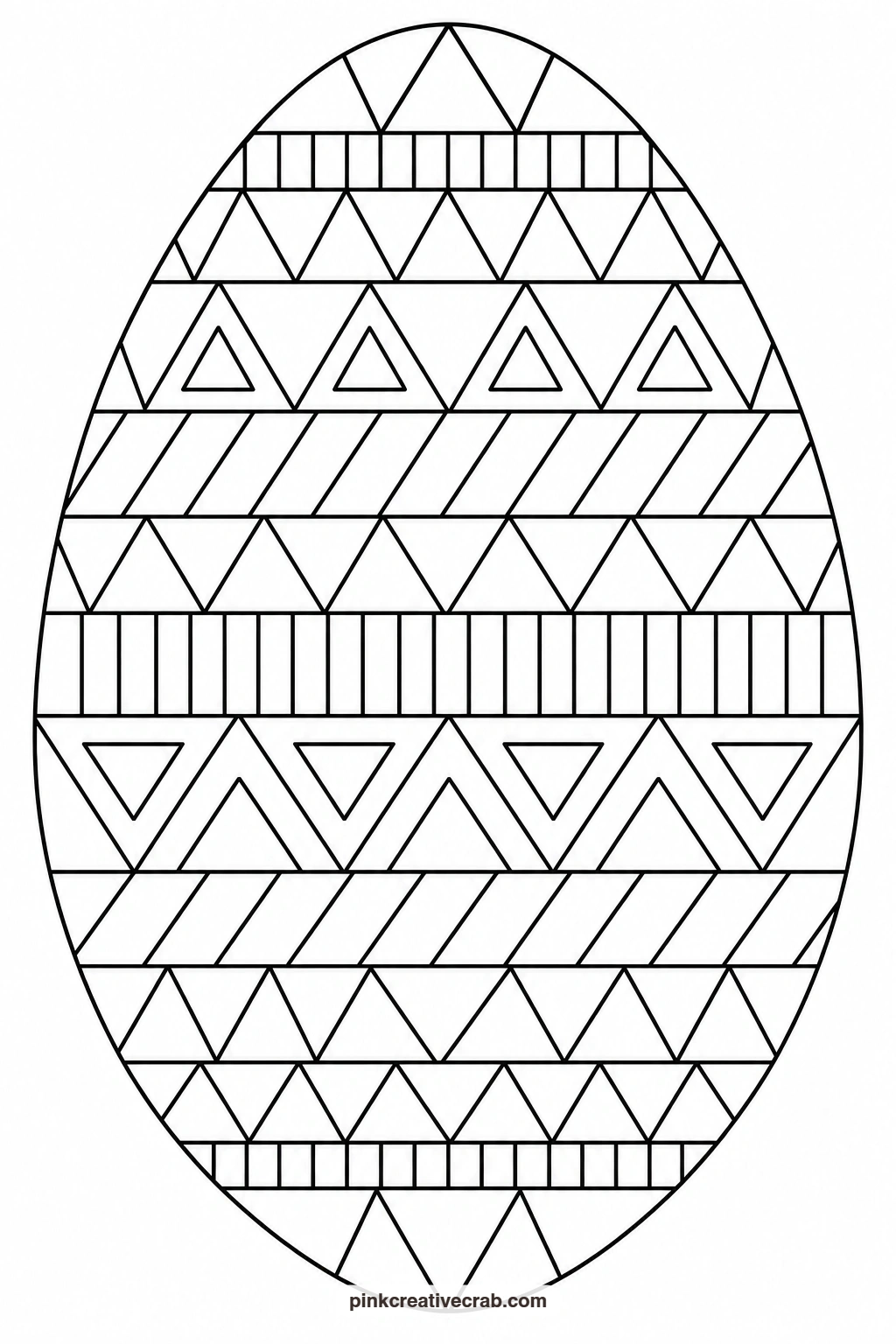
Rows of simple triangles and stripes split this egg into clear sections, and the usual mistake is coloring every triangle the same shade: alternate two or three colors instead and the pattern suddenly pops off the page.
Hatching and Chicks
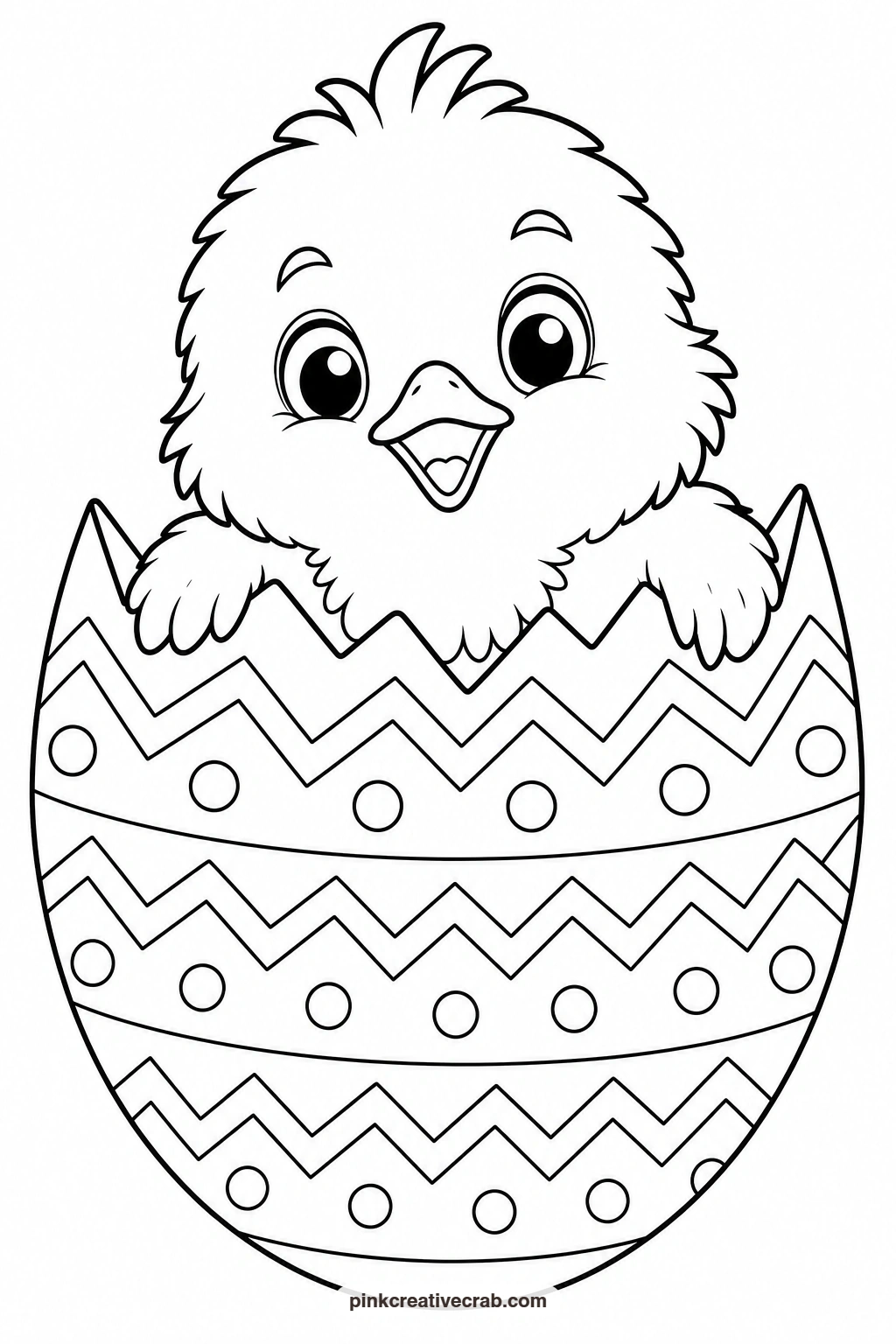
A good first page for a younger child, since the zigzags and dots sit in big simple shapes around a chick already halfway out of its shell, nothing here needs a steady hand.
Let a child name the chick out loud before coloring starts, a question like what color feathers does it want keeps little hands moving instead of staring at the blank page.
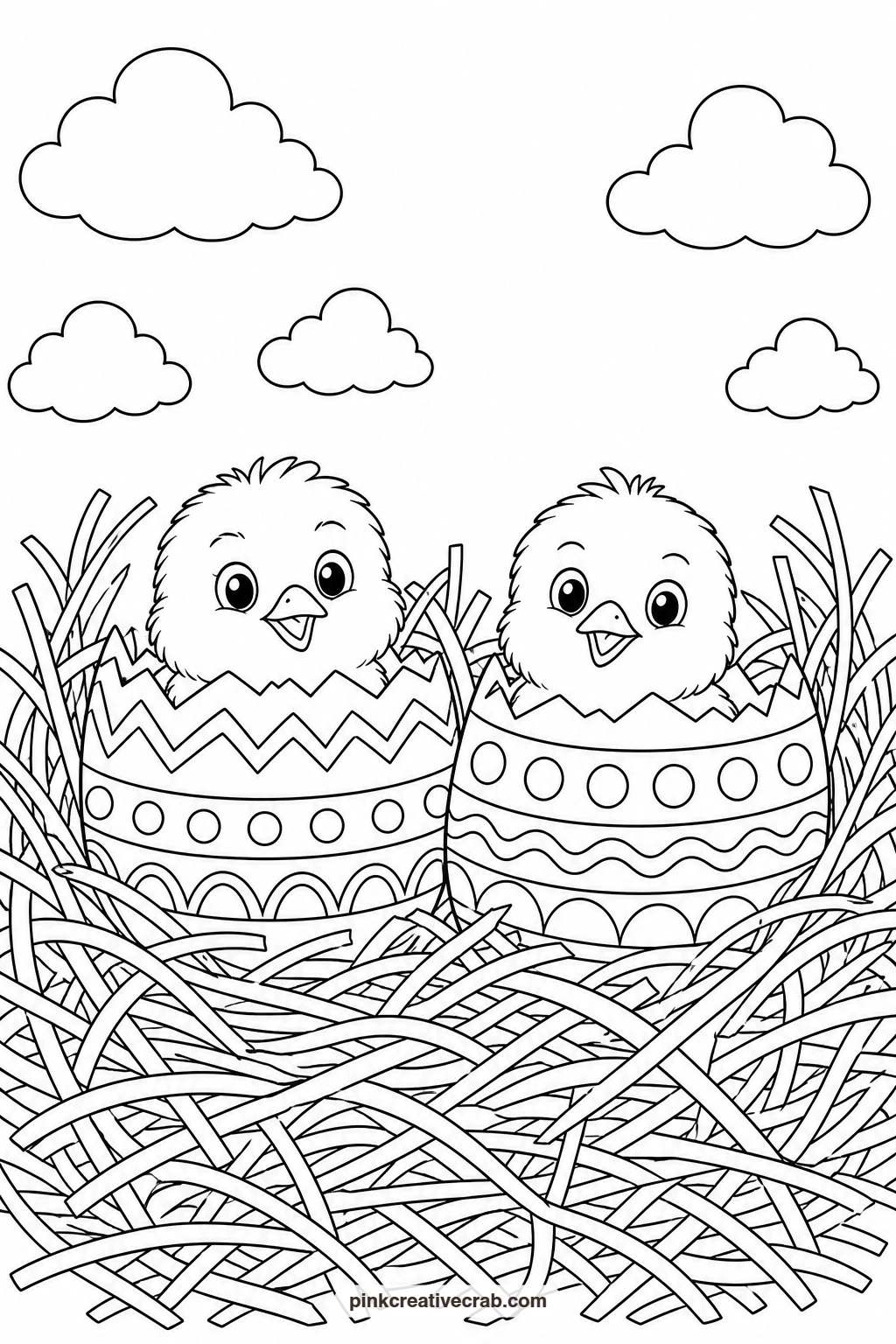
Two small chicks poke their heads out of eggs tucked into a loose nest of straw, a scene that works nicely as the center of a handmade card once it is colored and trimmed to size.
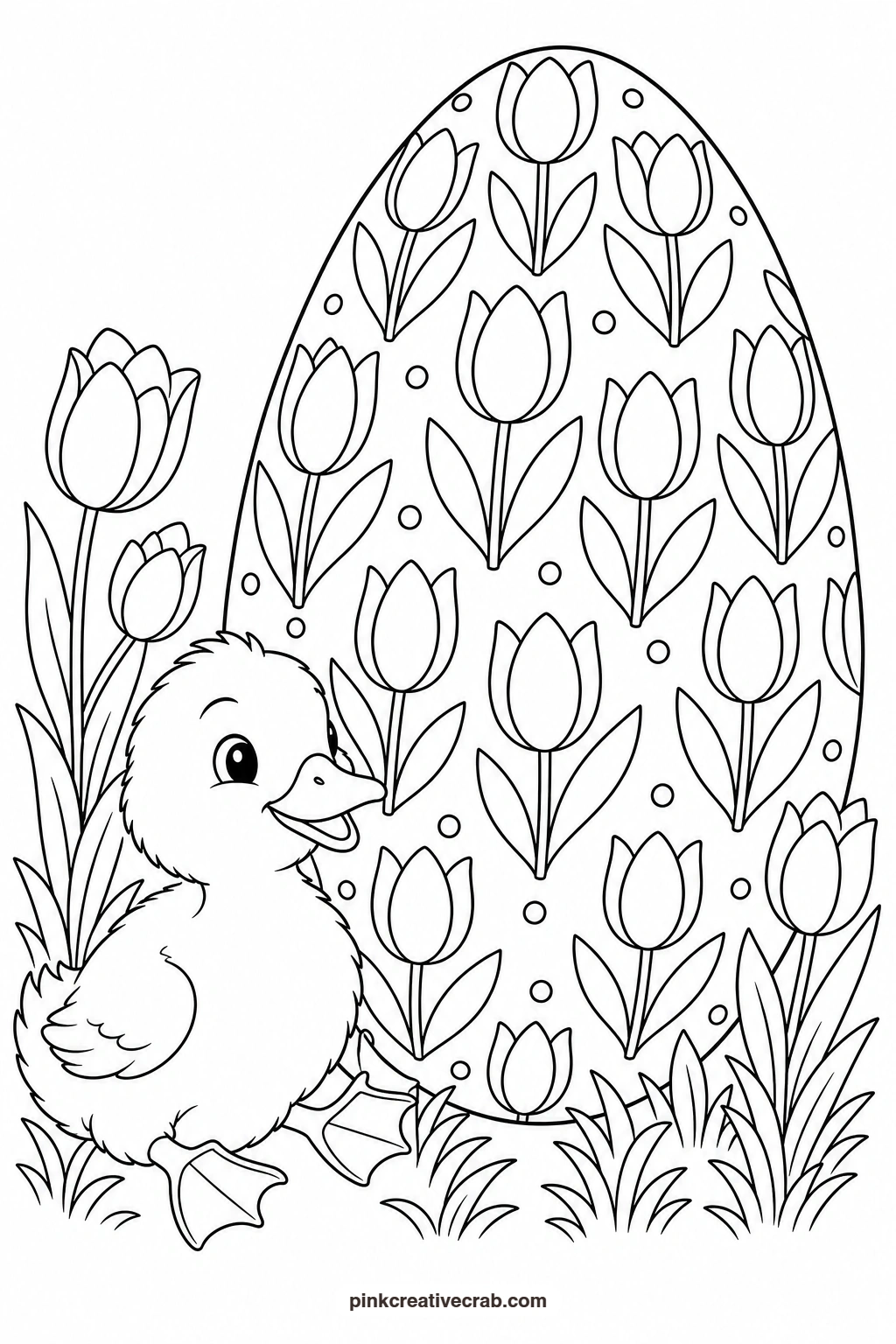
Yellow and orange pencil cover most of the duckling quickly, so the real slow part of this page is the giant tulip-patterned egg beside it, which rewards taking time over each flower.
Color the duckling first if patience runs short, then treat the egg as the part to finish later in a second sitting.
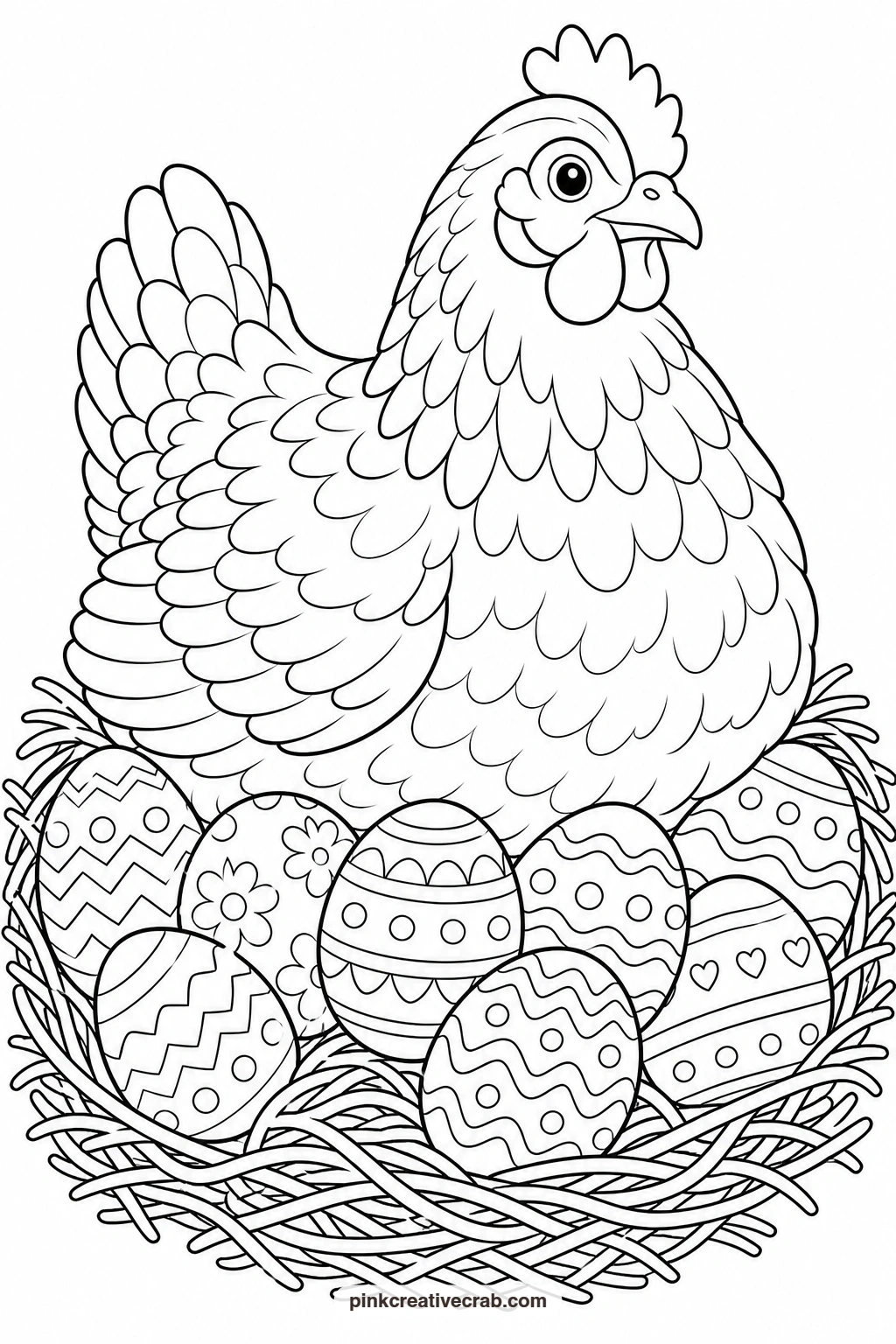
A plump hen sits proudly over a nest full of decorated eggs, feathers layered in simple curved lines that take blended colored pencil well, light strokes first and a darker shade worked into the shadows underneath her.
Nests and Branches
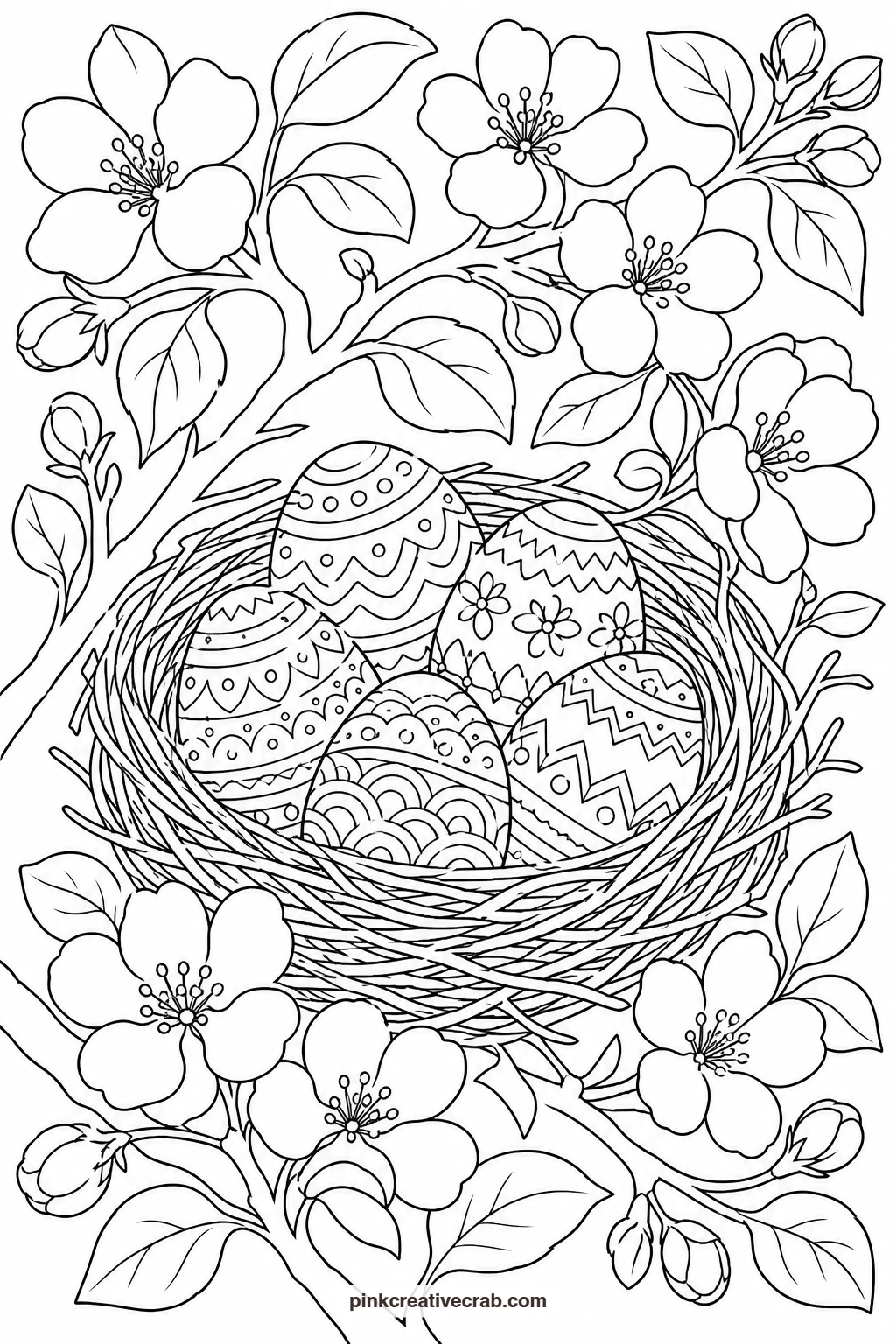
Sits well next to the sitting hen page above, since both share a nest full of eggs and swap easily between a quiet coloring session and a quick ten minute fill-in.
For the ten minute version, color only the eggs and leave the apple blossom branch and leaves in plain white, the contrast still reads as a finished spring scene.
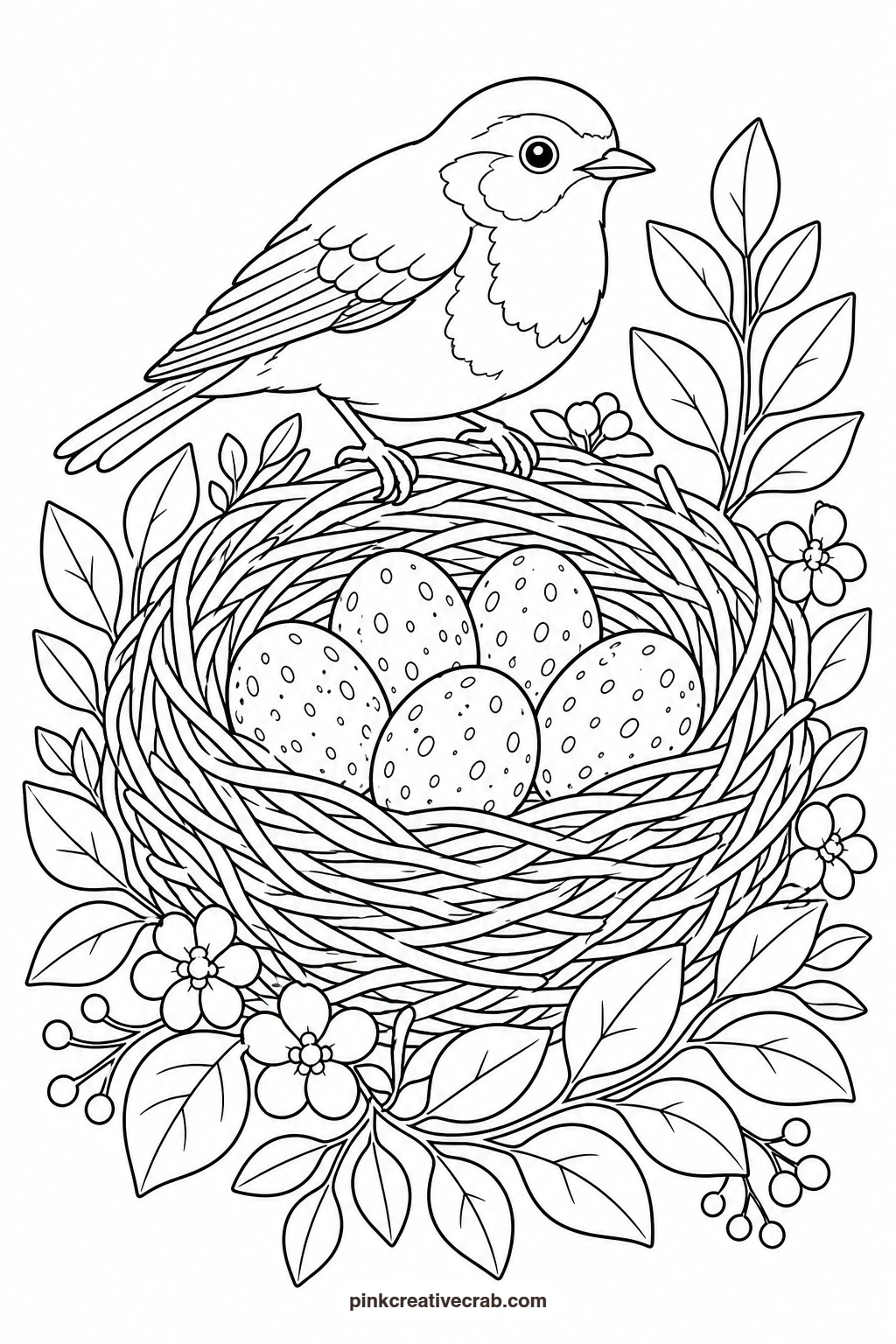
A robin perches on the rim of a nest full of speckled eggs, and a fine brown marker dotted lightly over the eggshells before filling in the base color gives a more convincing speckle than drawing dots after the fact.
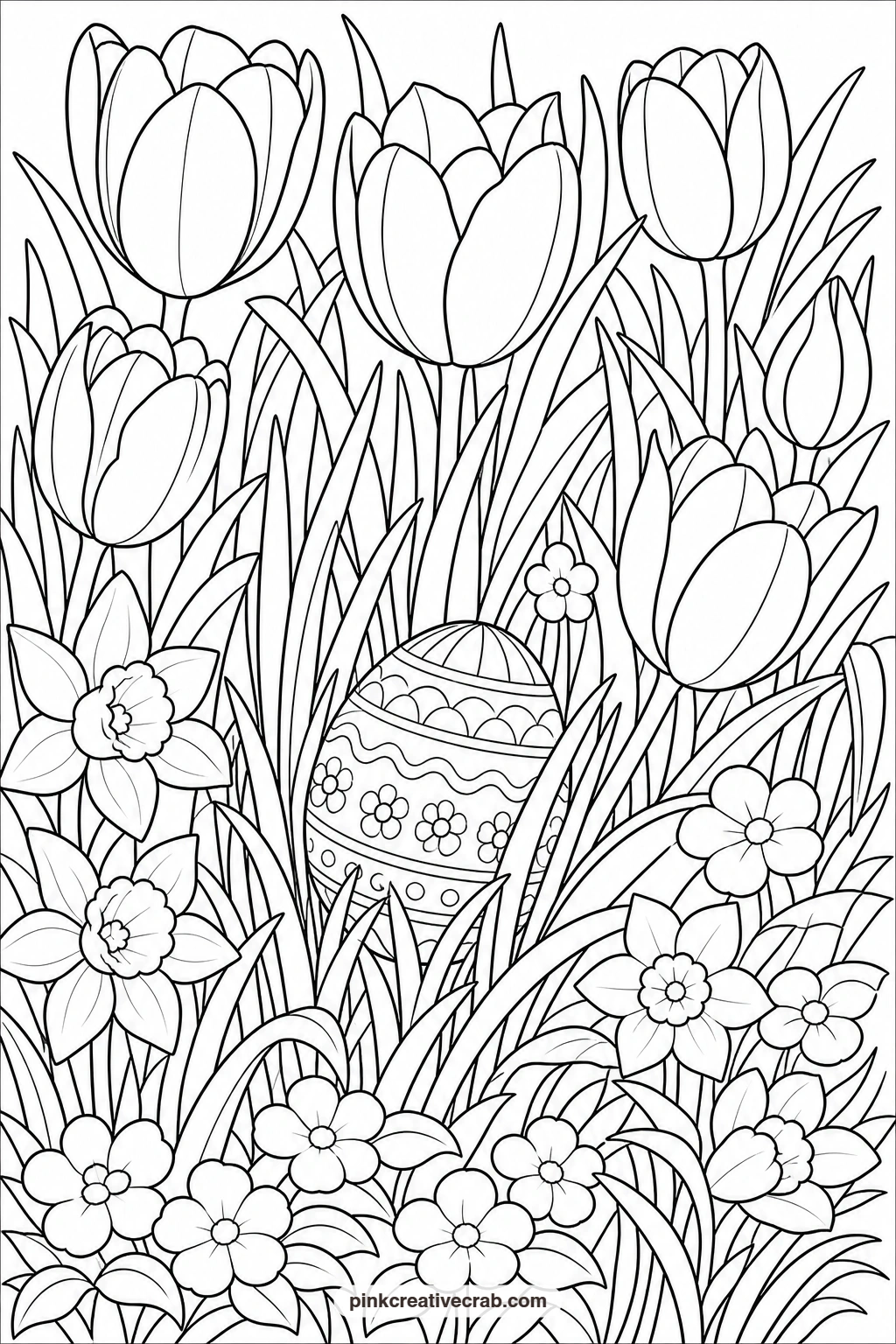
Works for a child who likes a small search as part of coloring, since the egg sits half hidden among tulips and grass rather than placed front and center on the page.
Ask a child to find the egg first and color it one bright color before touching any of the tulips around it.
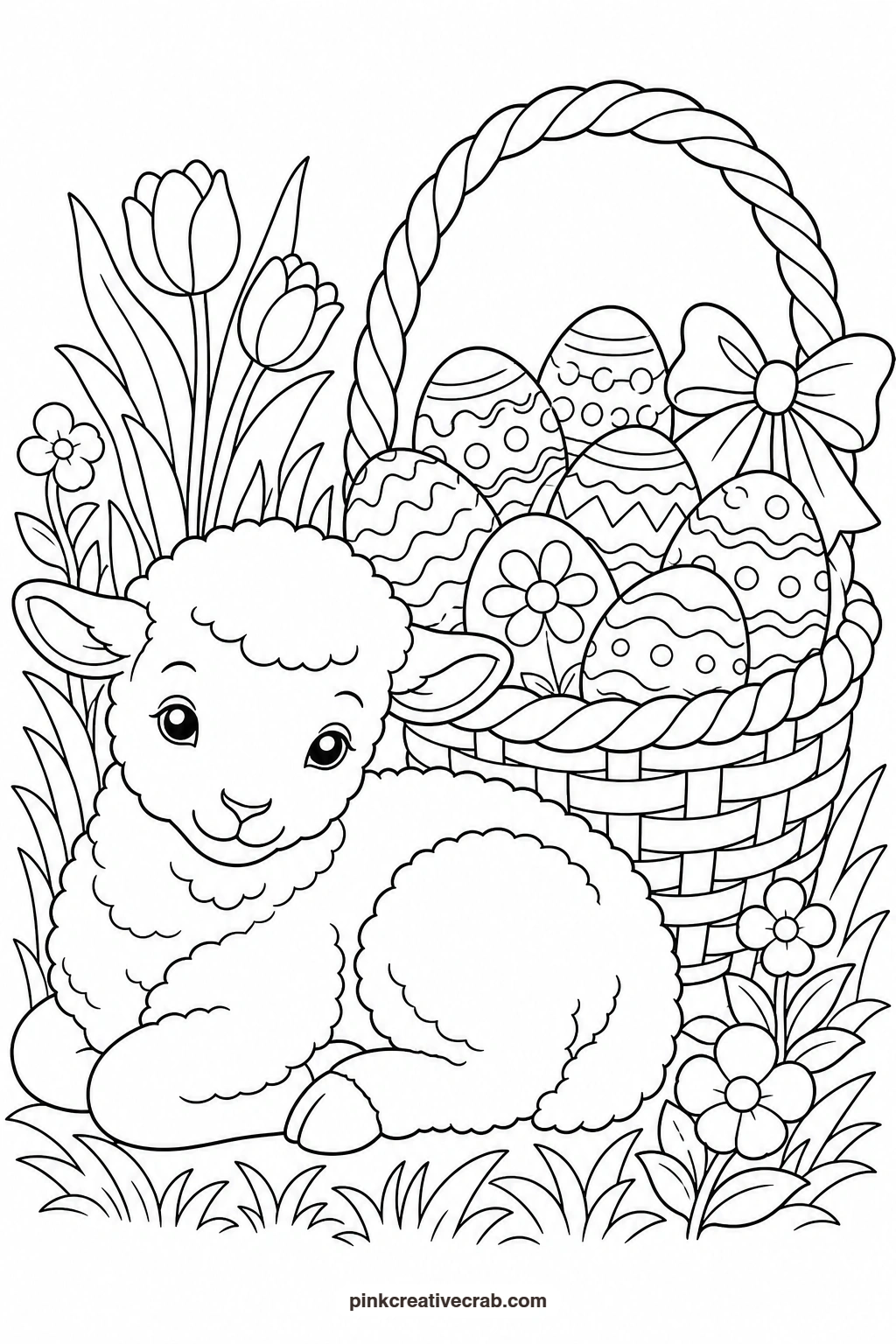
A lamb lies curled beside a basket of patterned eggs, soft and rounded shapes throughout that suit blending with colored pencil far more than a hard-edged marker, light strokes build the fleece texture gradually.
Baskets and Cups
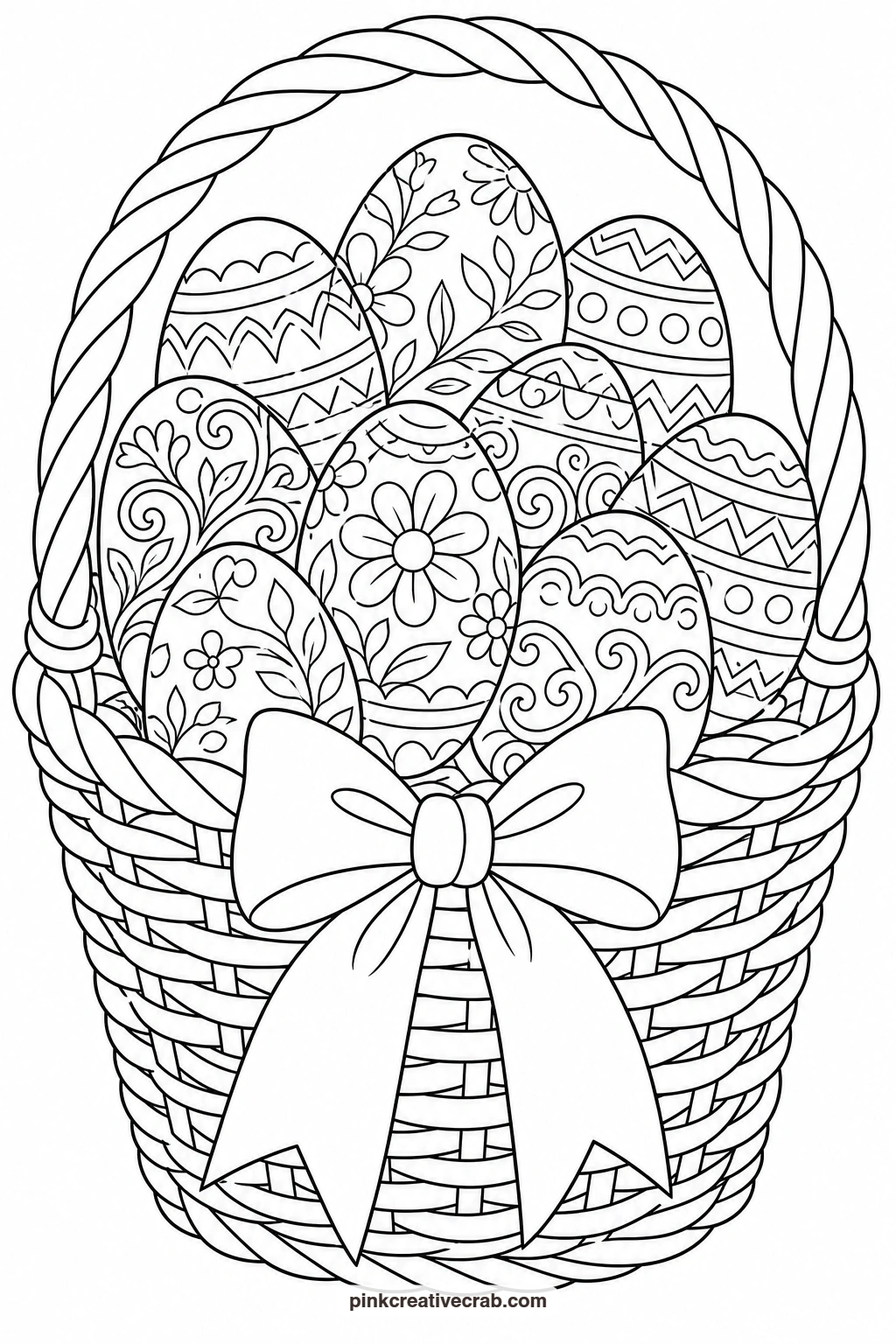
The strokes of a wicker basket run in tight repeating lines, so a fine tip pen or sharp pencil keeps them from blurring together, save the broad marker strokes for the bow and the eggs inside instead.
Color the bow last so it stands out as the brightest part of the page once every egg is filled in.
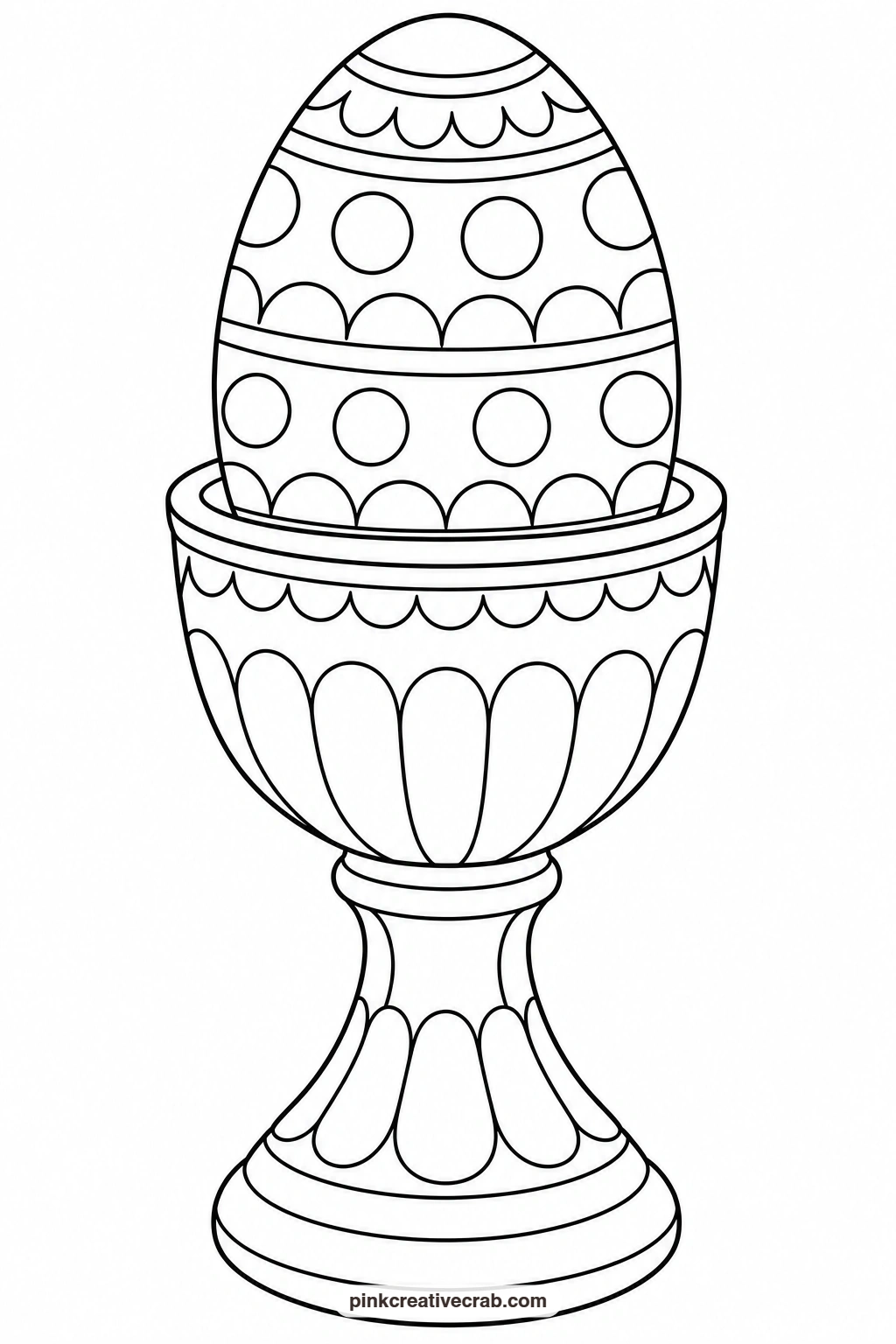
Polka dots and scallops decorate this egg as it sits upright in a tall egg cup, a simple enough pattern that a beginner can manage the whole page start to finish without needing to plan ahead.
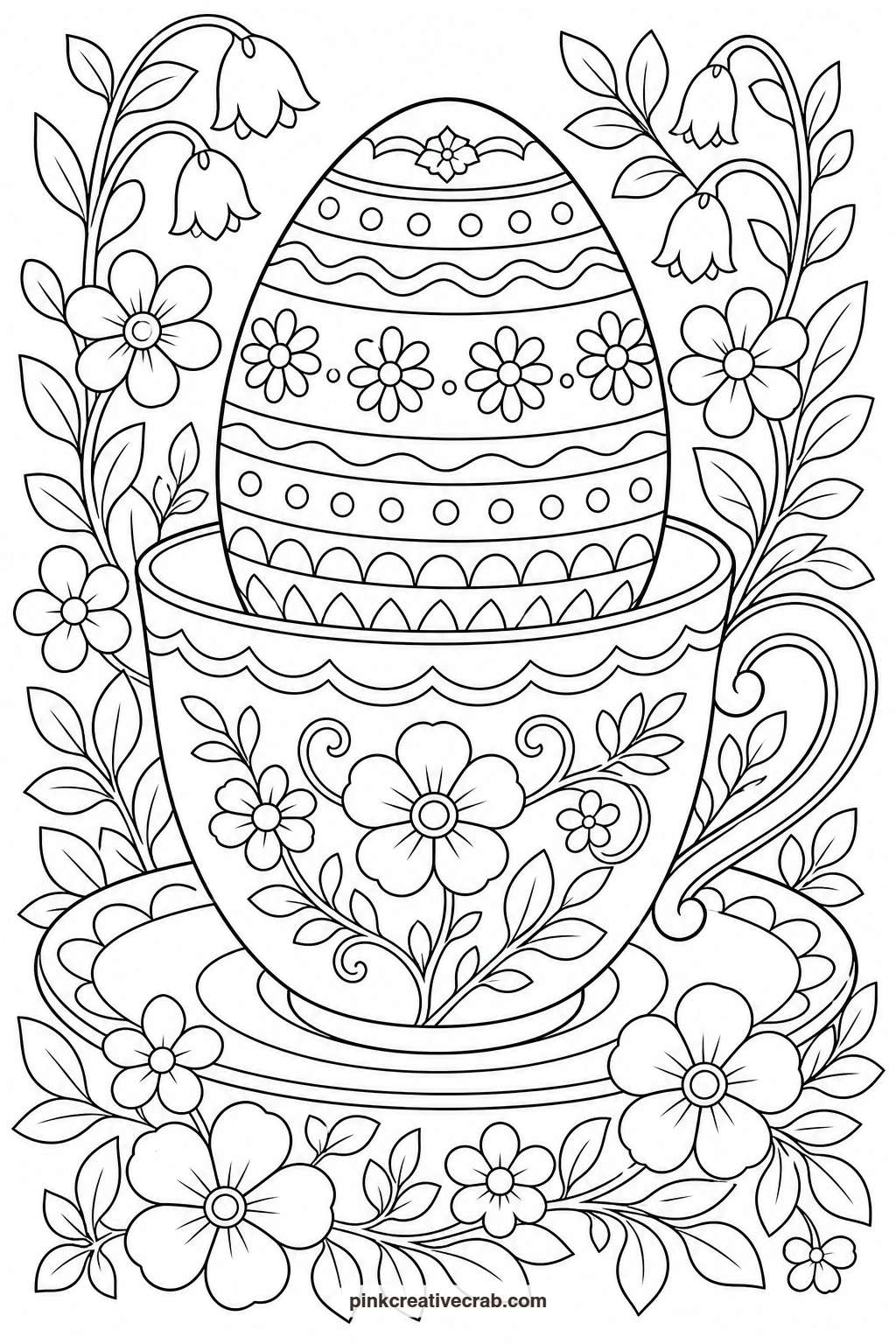
Pairs naturally with the egg cup page above, two small still life scenes that look good side by side once framed, or cut apart to use as separate gift tags.
Small spring flowers surround the teacup, so a light touch with colored pencil keeps them from overpowering the egg sitting in the center.
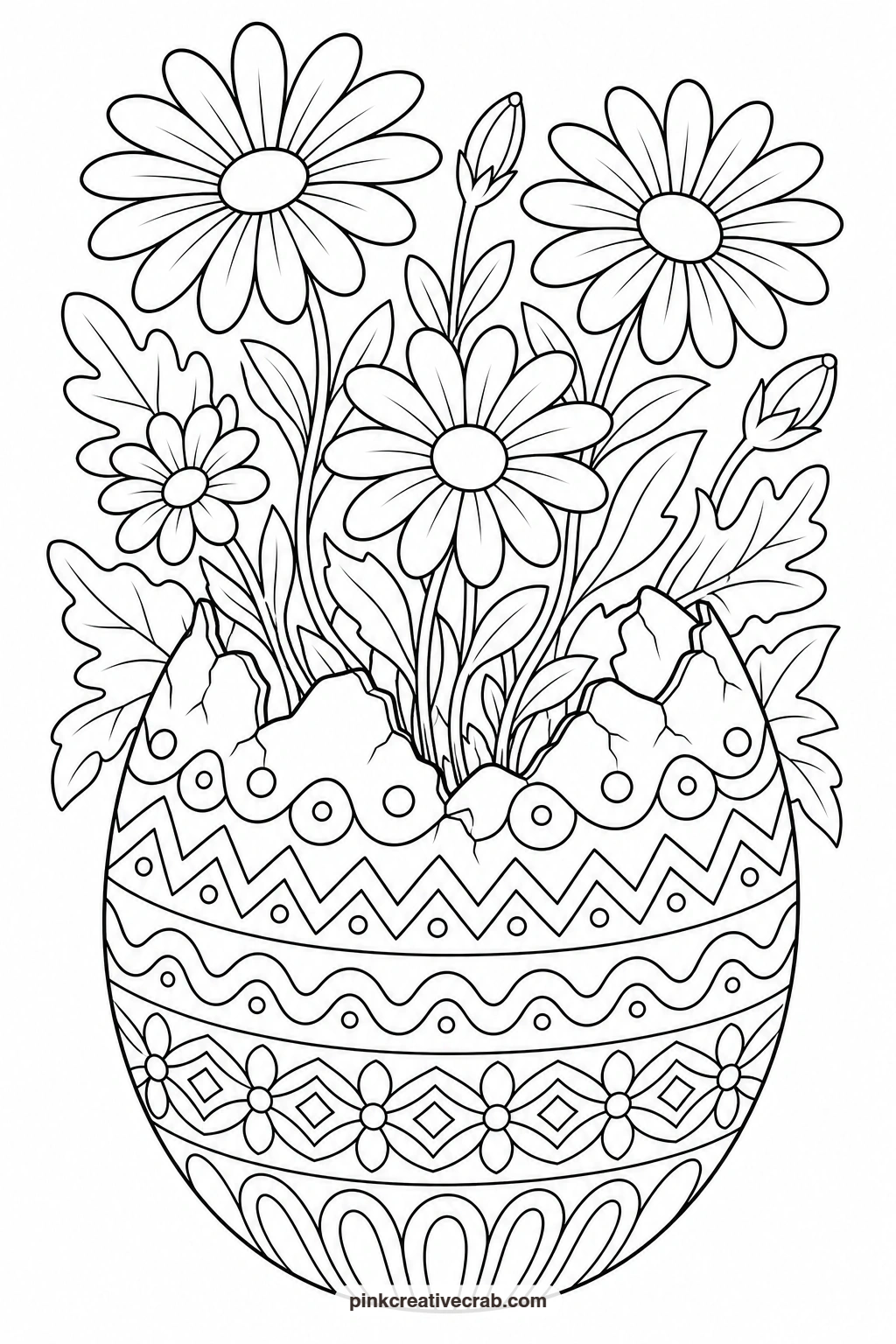
A cracked eggshell opens to reveal a tiny garden of daisies growing inside it, outline the crack itself first in a darker shade so it reads clearly before the daisies get their color.
Scenes in an Egg
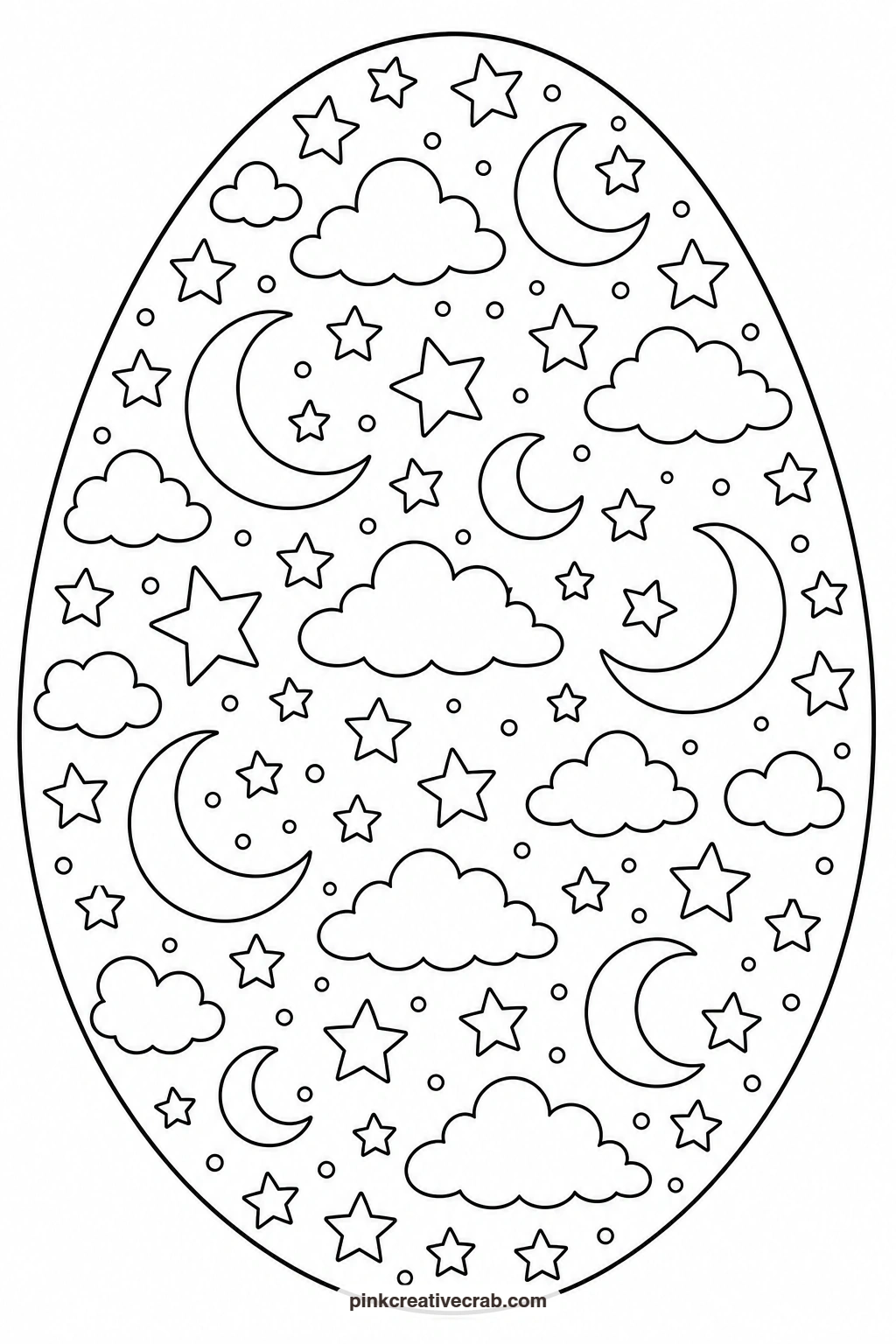
Stars, moons and little clouds decorate this egg in a scattered pattern that suits a mix of colors rather than one single palette, leave a few stars plain white against a deep colored sky for contrast.
Frame this one once colored, it reads nicely as a small night sky piece even outside of Easter.
A tall egg holds a tiny cottage scene inside its outline, roof, windows and a garden path all drawn in miniature, color the cottage itself before the egg’s outer border so the little scene stays the focus.

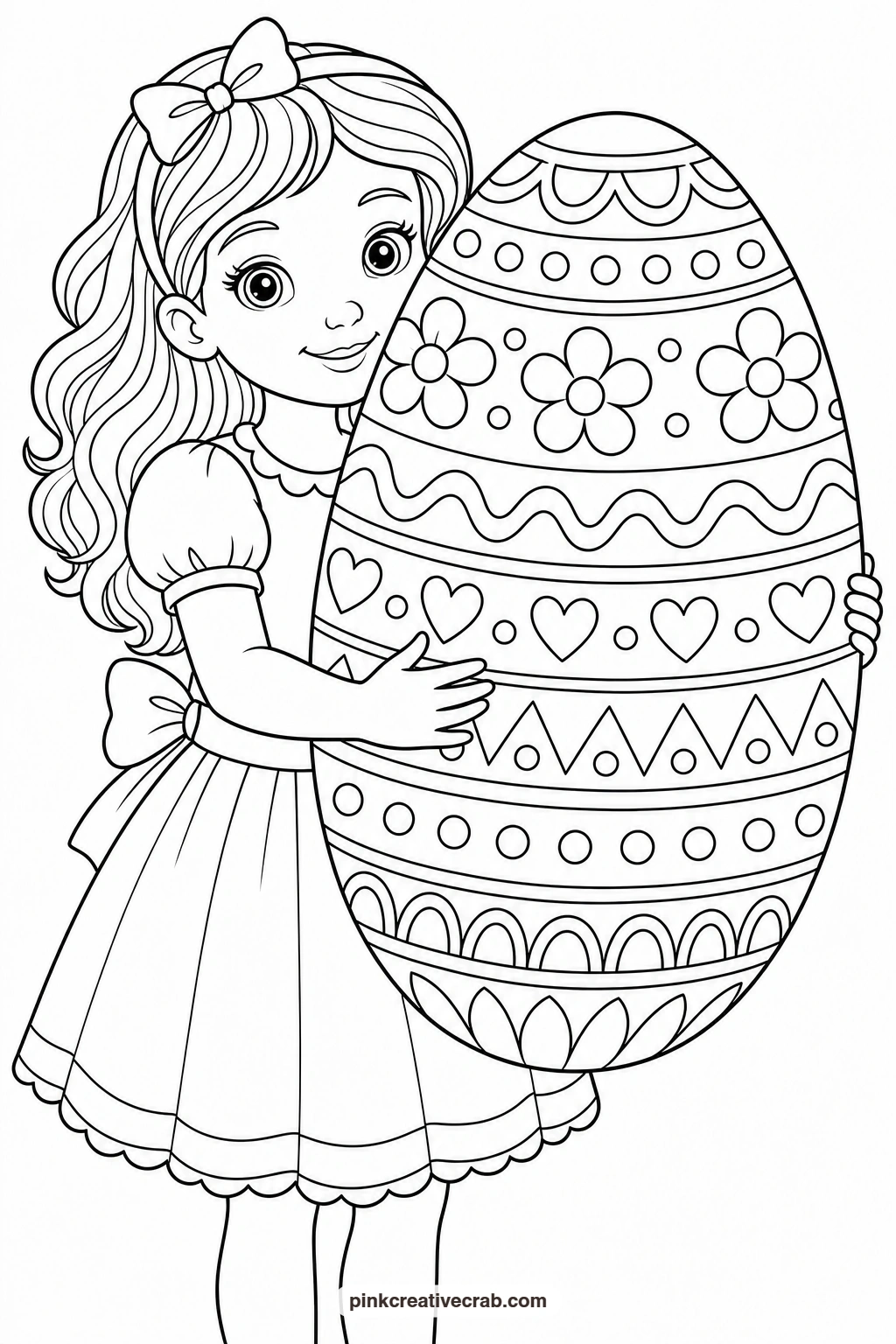
A girl wraps both arms around a giant decorated egg nearly as big as she is, a fun one to color as a gift for a grandparent since the scene feels like a small portrait rather than just a pattern to fill.
Color her dress first, then let the egg’s pattern pick up one or two of the same colors so the whole page feels tied together.
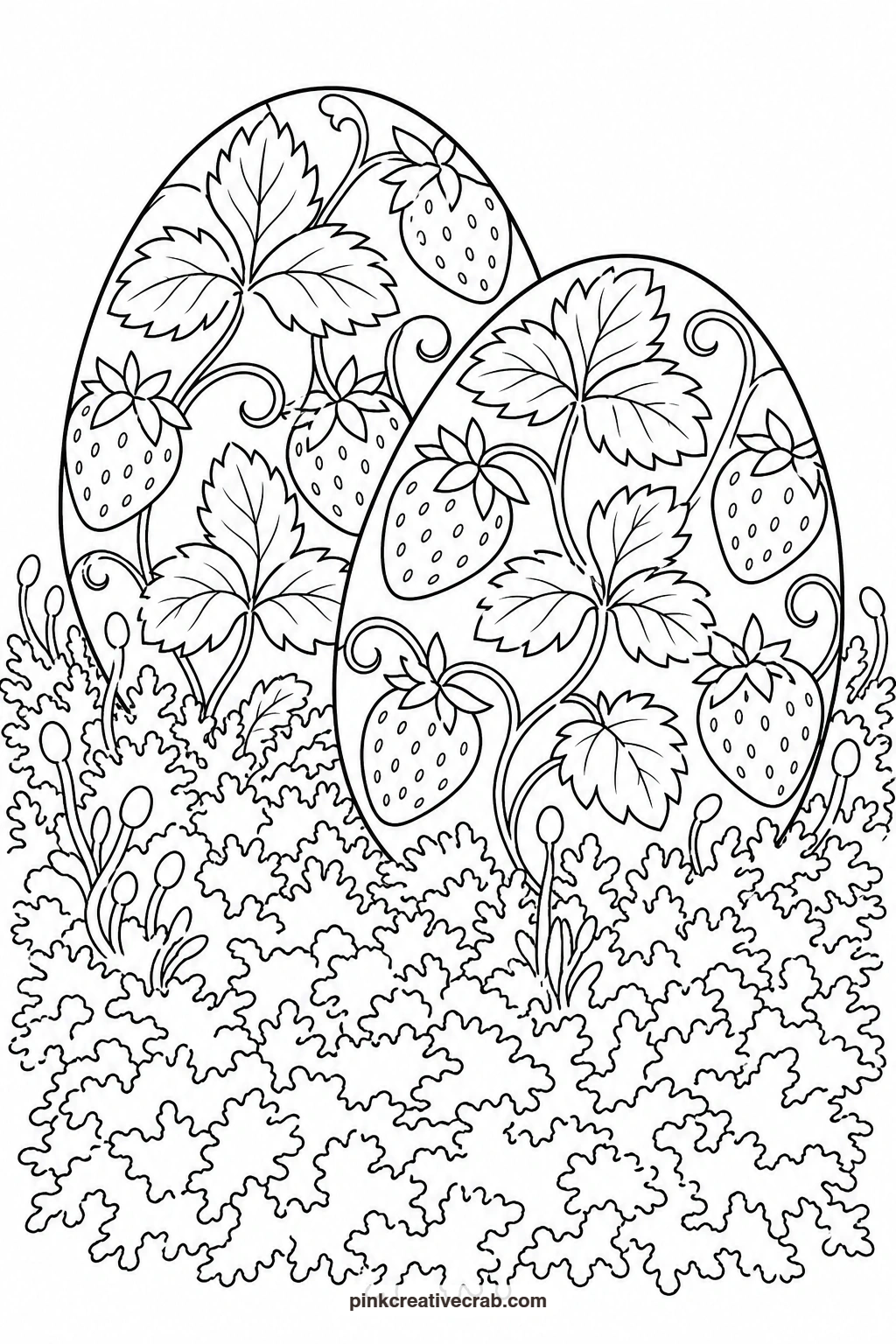
A pair of eggs patterned with strawberries and little leaves rest together in a bed of moss, a quick ten minute page if only the strawberries get color and the moss and leaf details stay in plain outline.
What to Do Next
Print the whole set at once for a full Easter coloring stack, or pull out just a few favorites to start, and keep the Easter drawings and Easter gift tags nearby for when a colored page is ready to become something more.
Frequently Asked Questions
What paper works best for printing these Easter egg coloring pages?
Plain copy paper works fine for pencils, while cardstock suits markers best since it resists bleed-through. Choose cardstock if you plan to trim a page for a card or tag once it is colored.
What printer settings give the cleanest lines?
A standard or normal print quality setting is enough for every page in this set. Avoid draft mode, since it can thin out the fine pattern lines on the more detailed eggs.
Can young kids color these pages too?
Yes, several pages here suit younger kids, especially the hatching chick egg and the egg cup page with simple polka dots. Save the mandala egg and the patchwork quilt egg for older kids or adults who enjoy smaller sections.
What should I color these pages with?
Fine tip markers and colored pencils both work well across this set. Colored pencils blend softly on the lamb and hen pages, while markers keep sharp edges on the geometric and banded eggs.
Can I turn a finished page into a card or tag?
Yes, trim a colored page down with a paper trimmer and glue it onto folded cardstock for a quick homemade card. The teacup egg, egg cup egg and strawberry eggs all work well at a smaller trimmed size.
Have any thoughts?
Share your reaction or leave a quick response — we’d love to hear what you think!
-
 0
-
 0
-
 0
-
 0
-
 0
-
 0
